EP0707599B1 - Regulierung der stellen-spezifischen rekombination durch stellen-spezifische fusionsproteine, die aus rekombinase und nuklearem rezeptor bestehen - Google Patents
Regulierung der stellen-spezifischen rekombination durch stellen-spezifische fusionsproteine, die aus rekombinase und nuklearem rezeptor bestehen Download PDFInfo
- Publication number
- EP0707599B1 EP0707599B1 EP94921628A EP94921628A EP0707599B1 EP 0707599 B1 EP0707599 B1 EP 0707599B1 EP 94921628 A EP94921628 A EP 94921628A EP 94921628 A EP94921628 A EP 94921628A EP 0707599 B1 EP0707599 B1 EP 0707599B1
- Authority
- EP
- European Patent Office
- Prior art keywords
- recombinase
- ligand
- recombination
- fusion protein
- nuclear receptor
- Prior art date
- Legal status (The legal status is an assumption and is not a legal conclusion. Google has not performed a legal analysis and makes no representation as to the accuracy of the status listed.)
- Expired - Lifetime
Links
Images




Classifications
-
- C—CHEMISTRY; METALLURGY
- C07—ORGANIC CHEMISTRY
- C07K—PEPTIDES
- C07K14/00—Peptides having more than 20 amino acids; Gastrins; Somatostatins; Melanotropins; Derivatives thereof
- C07K14/435—Peptides having more than 20 amino acids; Gastrins; Somatostatins; Melanotropins; Derivatives thereof from animals; from humans
- C07K14/705—Receptors; Cell surface antigens; Cell surface determinants
- C07K14/72—Receptors; Cell surface antigens; Cell surface determinants for hormones
- C07K14/721—Steroid/thyroid hormone superfamily, e.g. GR, EcR, androgen receptor, oestrogen receptor
-
- C—CHEMISTRY; METALLURGY
- C12—BIOCHEMISTRY; BEER; SPIRITS; WINE; VINEGAR; MICROBIOLOGY; ENZYMOLOGY; MUTATION OR GENETIC ENGINEERING
- C12N—MICROORGANISMS OR ENZYMES; COMPOSITIONS THEREOF; PROPAGATING, PRESERVING, OR MAINTAINING MICROORGANISMS; MUTATION OR GENETIC ENGINEERING; CULTURE MEDIA
- C12N9/00—Enzymes; Proenzymes; Compositions thereof; Processes for preparing, activating, inhibiting, separating or purifying enzymes
-
- C—CHEMISTRY; METALLURGY
- C07—ORGANIC CHEMISTRY
- C07K—PEPTIDES
- C07K2319/00—Fusion polypeptide
Definitions
- the present invention relates to the technical field of genetic manipulation, and more specifically, to the use of recombination-mediated DNA rearrangements and to the use of the regulatory potential of nuclear receptors.
- SSRs site-specific recombinases
- SSR induced DNA rearrangements must be regulated.
- Current implementation of the potential offered by SSRs is limited by the means available to regulate SSR activity.
- unregulated SSRs have been used. For example, after introduction of SSR target sites into cells, recombination has been induced by subsequent introduction of either FLP recombinase by transfection of DNA (4,9) or injection of CRE recombinase protein (12). That is, the intended recombination event was regulated merely by the time of introduction of an appropriate macromolecule.
- the problem underlying the present invention was to provide a regulated recombination system, wherein the disadvantages of the prior art are at least partially eliminated. More specifically, the problem was to provide a recombination system, wherein the recombination event can be induced independently from any tissue specific restrictions.
- This patent application describes an invention that regulates SSR activity, rather than its expression.
- any means of achieving and directing expression can be used, such as using ubiquitous or broadly active promoters and enhancers, as well as tissue specific or inducible promoters and enhancers.
- a fusion protein comprising a recombinase protein or a component of a recombinase complex, fused to part or all of a nuclear receptor, so that the amino acids that bind the ligand of said nuclear receptor are included, such that in cells or appropriate cell-free systems: (a) recombinase activity is inhibited in the absence of ligand binding to said ligand binding domain and (b) recombinase activity is induced or altered by binding of ligand to said ligand binding domain.
- the recombinase activity is altered by binding of ligand to ligand binding domain by a factor of at least 10, more preferably of at least 20 and most preferably of at least 40.
- the present invention resides in the regulation of SSR activity by fusing an SSR protein to the ligand binding domain (LBD) of a nuclear receptor.
- SSR-LBD fusion proteins comprise an amino acid sequence of SSRs physically attached to the amino acid sequence of an LBD of a nuclear receptor. That is, the invention is a fusion protein, comprising a recombinase protein, or a component of a recombinase complex, fused to the ligand binding domain of a nuclear receptor.
- the recombinase protein or a component of a recombinase complex is fused to the nuclear receptor or ligand binding domain thereof by means of genetic fusion, i.e.
- the SSR-LBD protein is a linear genetic fusion encoded by a single nucleic acid.
- the present invention also encompasses SSR-LBD fusion proteins which are linked by different means, e.g. through a spacer molecule having reactive groups thereon, which are covalently bound to each protein domain.
- the attachment of the SSR and LBD components can be achieved by making a DNA construct that encodes for the amino acid sequence of the SSR-LBD fusion protein with the LBD encoding DNA placed in the same reading frame as the SSR encoding DNA, preferably either at the amino or carboxy termini of the SSR protein (19). More preferably, the nuclear receptor or ligand binding domain thereof is fused to the C-terminus of the recombinase protein or component of a recombinase complex.
- the nuclear receptor or ligand binding domain thereof is fused to the recombinase protein or component of a recombinase complex through a peptide linker which mainly consists of hydrophilic acids and preferably has a length of 4 to 20 amino acids.
- SSR-LBD fusion proteins can coexist with target sites without recombination occurring since these proteins require ligand binding to the LBD for recombinase activity.
- recombinase activity of the SSR-LBD fusion protein in the absence of the relevant ligand, is at least 200x less active than wild type recombinase activity.
- recombinase activity is induced to more than 20% of wild type, that is, equal to or greater than 40x induction.
- nuclear receptor refers to a molecule, preferably a protein molecule, which may be glycosylated or unglycosylated, having the abilities to bind ligand and to be incorporated into a nucleus of a cell.
- nuclear receptor refers to those proteins that display functional or biochemical properties that are similar to the functional or biochemical properties displayed by the steroid hormone receptors with respect to ligand binding, for example, the dioxin receptor (Whitelaw, M.L., Göttiere, M., Gustafsson, J.-A. and Poellinger, L., (1993) EMBO J. 12, 4169-4179).
- nuclear receptor refers to those proteins that are related by their amino acid sequence to the LBDs of the steroid hormone receptors.
- the paper of Laudet et al. (1992) (Laudet, V., Hänni, C., Coll, J., Catzeflis, F. and Stehelin, D. (1992) EMBO J. 11, 1003-1013) describes an alignment of nuclear receptor amino acid sequences using standard methodologies. Included in the definition of nuclear receptors used here are also those proteins not listed in Laudet et al. but which can be included using the methods employed by Laudet et al..
- nuclear receptor also includes mutant derivatives of nuclear receptor amino acid sequences which retain sufficient relatedness to nuclear receptor amino acid sequences as to be identifiable as related using the methods employed by Laudet et al.
- the nuclear receptor which is fused to the recombinase protein is preferably a hormone receptor, e.g. a receptor recognized by steroids, vitamins or related ligands. Examples of suitable nuclear receptors are listed in reference 20, which is hereby incorporated by reference.
- the nuclear receptor is a steroid hormone receptor, more preferably, a glucocorticoid, estrogen, progesteron, or androgen receptor.
- the complete nuclear receptor is present; i.e. it is sufficient that the amino acids that bind the ligand are fused to the SSR.
- nuclear receptors Upon binding their relevant ligand, nuclear receptors become active, or altered, transcription factors.
- the cloning of cDNAs encoding members of the steroid receptor family of proteins revealed that they share amino acid sequence homology, in particular in the protein domain that binds ligand.
- the LBD can be separated from the rest of the protein and fused to other transcription factors conferring ligand regulation onto the resulting fusion proteins.
- the domain that binds ligand has been fused to other transcription factors and also to oncoproteins, rendering the fusion proteins dependent on the relevant ligand for activity (19,21-26). All characterised oncoproteins that have been experimentally regulated in this manner so far are also transcription factors.
- Transcription factors and oncoproteins are not enzymes in the classical sense and the regulation of their activities by steroids and LBDs described in references 19, 21-26, is essentially similar to the role that LBDs play in regulating steroid receptors.
- Prior attempts to extend the regulatory possibilities of the LBD fusion protein strategy beyond transcription factors and oncoproteins have yet to be reported.
- Attempts to regulate the enzyme activities of either ⁇ -galactosidase or dihydrofolate reductase by fusing them with the glucocorticoid LBD have been unsuccessful (D. Picard, public seminar given at EMBL, Heidelberg, Nov. 1991).
- the present invention extends the regulatory possibilities of the LBD fusion protein strategy beyond the currently documented transference of ligand regulation from nuclear receptors to other transcription factors, to include an enzyme activity, namely a site specific recombinase.
- site specific recombinase refers to any protein component of any recombinant system that mediates DNA rearrangements in a specific DNA locus, including site specific recombinases of the integrase or resolvase/invertase classes (13; Abremski, K.E. and Hoess, R.H. (1992) Protein Engineering 5, 87-91; Khan, E., Mack, J.P.G., Katz, R.A., Kulkosky, J.
- Preferred recombinase proteins which can be used in the fusion proteins according to the invention, are selected from the group consisting of: FLP recombinase, Cre recombinase, R recombinase from the Zygosaccharomyces rouxii plasmid pSR1, A recombinase from the Kluyveromyces drosophilarium plasmid pKD1, A recombinase from the Kluyveromyces waltii plasmid pKW1, any component of the ⁇ Int recombination system, any component of the Gin recombination system, or variants thereof.
- variant in this context refers to proteins which are derived from the above proteins by deletion, substitution and/or addition of amino acids and which retain their some or all of the function inherent in the protein from which they are derived. Specifically, the variant could retain the ability to act as a recombinase, or it could retain protein/protein or protein/DNA interactions critical to the recombination reaction, or to the regulation of the recombination reaction.
- FLP recombinase is fused to the LBD of the estrogen, glucocorticoid, progesterone or androgen receptors (20).
- Other preferred embodiments include fusing Cre recombinase or R recombinase, or SSRs from Kluyveromyces drosophilarium or Kluyveromyces waltii, to these LBDs.
- Another preferred embodiment involves regulating one or more components of an SSR complex to these LBDs, in particular, components of the ⁇ Int or Gin recombination systems.
- the invention in providing a means to regulate recombination, is however not limited to known recombinases and recombination complexes and is not limited to known nuclear receptor LBDs. Rather, the strategy of fusing recombinases, or components of recombination complexes, to LBDs of nuclear receptors is applicable to any fusion combination of these proteins which display the desired characteristics readily identifiable without undue experimentation on the part of a skilled person.
- a further subject-matter of the present invention is a nucleic acid which encodes the fusion protein according to the present invention.
- the nucleic acid is a DNA or RNA.
- a further subject-matter of the present invention is a recombinant vector comprising at least one copy of the nucleic acid as defined above.
- This recombinant vector may be a eukaryotic vector, a viral vector, or a prokaryotic vector, or a vector which can be maintained in eukaryotic and prokaryotic host cells.
- the recombinant vector is obtainable by inserting a nucleic acid encoding a SSR-LBD fusion protein into a suitable starting vector. Specific examples of suitable starting vectors are given for example in Molecular Cloning. A Laboratory Manual, 2nd edition, J. Sambrook et al. (1989), Cold Spring Harbor Laboratory Press, chapters 1, 2, 3, 4, 16 and 17.
- the vector of the present invention may be an extra-chromosomal vector or a vector which integrates into the genome of the host cell.
- Extra-chromosomal vectors e.g. circular plasmids are especially preferred.
- An example of a plasmid vector is the plasmid pHFE1 comprising a nucleic acid encoding a fusion of the FLP recombinase and the ligand binding domain of the estrogen receptor.
- the plasmid pHFE1 has been deposited at the Deutsche Sammlung von Mikroorganismen und Zellkulturen GmbH (DSM), Mascheroder Weg 1b, D-38124 Braunschweig on June 25, 1994 under the accession number DSM 9265 according to the requirements of the Budapest Treaty.
- a further subject-matter of the present invention is a cell containing a nucleic acid or a recombinant vector as defined above.
- the cell is stably transformed with the nucleic acid or the vector.
- Suitable cells are eukaryotic or prokaryotic cells.
- prokaryotic cells are gram-negative bacterial cells, especially E.coli cells.
- Examples of eukaryotic cells are mammalian cells, yeasts and trypanosomes.
- the invention separates the function of ligand binding from the functions of transcription factors, coupling ligand binding to recombinase activity. Thereby, the binding of ligand can be assessed by any means that measures recombinase activity.
- further embodiments of the invention include methods for determining the binding of ligand to the LBD of a nuclear receptor, comprising the steps of: (i) the introduction of the SSR-LBD fusion protein or the nucleic acid coding therefor into cells, or appropriate cell-free systems, that contain the DNA target sites for the SSR; (ii) administering the ligand or a mixture suspected to contain a ligand or ligands to be evaluated; if the ligand is not already present in the system; (iii) detecting the recombinase activity, if any, of the SSR-LBD by detecting, directly or indirectly, recombination or changes in the recombination rate between the DNA target sites.
- SSR-LBD fusion proteins into cells may be accomplished by transforming the cells with appropriate vectors containing a nucleic acid coding for the SSR-LBD fusion protein.
- the administration of the ligand to be evaluated is not necessary in systems which already contain the ligand and in which the ligand-concentration is determined by detecting recombination between DNA target sites.
- the invention also encompasses a method for regulating the recombination of DNA target sites, comprising the steps of: (a) providing cells or appropriate cell-free systems that contain DNA target sites for a site-specific recombinase, (b) contacting the DNA target sites with a fusion protein according to the present invention, which contacting may be accomplished by direct introduction of the protein or by transformation of a cell with the nucleic acid encoding the protein and expressing the nucleic acid to produce the protein, (c) effecting a recombination of said DNA target sites by contacting the fusion protein with a ligand for the nuclear receptor component of the fusion protein, e.g. by adding the ligand to the system at a predetermined time, or by effecting production of the ligand in the system at a predetermined time.
- Figure 1A depicts the plasmid, pNEO ⁇ GAL (thin line), integrated into the genome of 293 cells (thick line).
- FLP recombinase target sites FRTs
- FRTs FLP recombinase target sites
- the probe used for the Southern blot of Fig. 2 is also depicted.
- Figure 1B depicts the steps involved in the creation of plasmid pHFE1.
- Figure 2 shows a Southern blot of a timecourse of recombination occurring in the cell line P1.4.
- cells were lysed, DNA purified, restricted with NdeI, run on a 1.25% agarose gel and blotted to Biodyne B membranes by standard methodologies.
- the membrane was hybridized with the radioactively labelled probe depicted in Fig. 1A.
- the upper band shows the unrecombined integrated DNA and the lower the recombined band.
- Estradiol was dissolved in ethanol and the extreme right hand lane shows cells treated with the equivalent amount of ethanol, without estradiol, for 51 hours.
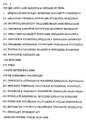
- Figure 3 shows the complete amino acid sequence of the SSR-LBD-fusion polypeptide encoded by the plasmid pHFE1.
- the FLP recombinase domain is located from amino acid 1-423.
- the linker peptide is located from amino acid 424-428.
- the estrogen binding domain is located from amino acid 429-773.
- Figure 4 shows the nucleic acid sequence coding for the SSR-LBD fusion polypeptide of Figure 3.
- the parts coding for the FLP recombinase domain, the linker peptide and the estrogen binding domain, respectively, are specified.
- the experiment involves two plasmids, one of which is the target for recombination, and the other is the recombinase expression plasmid.
- pNEO ⁇ GAL 9 was employed as the target plasmid.
- pNEO ⁇ GAL contains two FLP recombinase target sites (FRT) surrounding a gene encoding neomycin resistance (Fig. 1a).
- the expression plasmid, pHFE 1 carries two genes, one encoding an FLP recombinase-estrogen receptor LBD fusion protein and the other encoding hygromycin resistance (Fig. lb).
- the plasmid was constructed by standard cloning procedures using pBluescribe (Stratagene), pOG 44 (9), pHE63 (22) and pCNH2 (27).
- the stop codon of the FLP recombinase coding region present in p0G44 was mutated by oligonucleotide replacement to introduce BamH1, BsiW1 and EcoR1 sites and continue the open reading frame.
- the BamHI site in the estrogen receptor encoded by pHE63 was used to join the coding regions of FLP recombinase and estrogen receptor LBD. All of the estrogen receptor coding region carboxy to the BamHI site is present in the plasmid, including its stop codon.
- pNEO ⁇ GAL was introduced into 293 human embryonal kidney cells by electroporation (5 x 10 6 cells in 500 ⁇ l phosphate-buffered saline with 5 ⁇ g of ApaI linearised plasmid; 300 V at 125 ⁇ F in a 1 ml cuvette using a Bio-Rad Gene Pulser) and selection for neomycin resistance (G418, 0.4 mg/ml). Single colonies of resistant cells were cloned and characterised for incorporation of target plasmid DNA by Southern blotting.
- a clone, P1 showing integration of a single copy of target plasmid DNA was selected and transfected, using the calcium phosphate procedure, with the second plasmid, pHFE 1 (1 ⁇ g of XmnI linearised pHFE 1 was precipitated by the standard calcium phosphate method onto 10 7 P1 cells which were cultured in DMEM without phenol red, 10% charcoal stripped fetal calf serum).
- pHFE 1 1 ⁇ g of XmnI linearised pHFE 1 was precipitated by the standard calcium phosphate method onto 10 7 P1 cells which were cultured in DMEM without phenol red, 10% charcoal stripped fetal calf serum.
- Four clones resistant to both neomycin and hygromycin 0.4 mg/ml G418, 0.4 mg/ml hygromycin B
Landscapes
- Health & Medical Sciences (AREA)
- Life Sciences & Earth Sciences (AREA)
- Chemical & Material Sciences (AREA)
- Organic Chemistry (AREA)
- Zoology (AREA)
- Genetics & Genomics (AREA)
- Medicinal Chemistry (AREA)
- Bioinformatics & Cheminformatics (AREA)
- General Health & Medical Sciences (AREA)
- Engineering & Computer Science (AREA)
- Molecular Biology (AREA)
- Wood Science & Technology (AREA)
- Biochemistry (AREA)
- General Engineering & Computer Science (AREA)
- Toxicology (AREA)
- Biotechnology (AREA)
- Biomedical Technology (AREA)
- Endocrinology (AREA)
- Cell Biology (AREA)
- Immunology (AREA)
- Microbiology (AREA)
- Gastroenterology & Hepatology (AREA)
- Biophysics (AREA)
- Proteomics, Peptides & Aminoacids (AREA)
- Peptides Or Proteins (AREA)
- Micro-Organisms Or Cultivation Processes Thereof (AREA)
- Preparation Of Compounds By Using Micro-Organisms (AREA)
- Enzymes And Modification Thereof (AREA)
Claims (10)
- Fusionsprotein, umfassend ein Rekombinaseprotein oder eine Komponente eines Rekombinasekomplexes, fusioniert an einen Teil oder einen vollständigen nulearen Rezeptor, so daß die Aminosäuren, die den Liganden des nuklearen Rezeptors binden eingeschlossen sind, so daß in den Zellen oder geeigneten zellfreien Systemen:(a) Rekombinaseaktivität beim Fehlen von Ligandenbindung an die Ligandenbindungsdomäne inhibiert ist und(b) Rekombinaseaktivität durch Ligandenbindung an die Ligandenbindungsdomäne induziert oder verändert wird.
- Fusionsprotein nach Anspruch 1, worin der nukleare Rezeptors ein Wirbeltierglucocorticoid-, Östrogen-, Progesteron- oder Androgenrezeptor ist.
- Fusionsprotein nach Anspruch 1 oder 2, worin das Rekombinaseprotein oder die Komponente eines Rekombinasekomplexes ausgewählt ist aus der Gruppe, bestehend aus: FLP-Rekombinase, Cre-Rekombinase, R-Rekombinase von dem Zygosaccharomyces rouxii-Plasmid pSRl, A-Rekombinase von dem Kluyveromyces drosophilarium-Plasmid pKD1, A-Rekombinase von dem Kluyveromyces waltii-Plasmid pKW1, einer beliebigen Komponente des λ-Int-Rekombinationssystems, einer beliebigen Komponente des Gin-Rekombinationssystems oder einer Variante davon.
- Nukleinsäure, die das Fusionsprotein nach einem der Ansprüche 1-3 codiert.
- Rekombinanter Vektor, umfassend mindestens eine Kopie der Nukleinsäure nach Anspruch 4.
- Das Plasmid pHFE1 (DSM 9265)
- Zelle, enthaltend eine Nukleinsäure nach Anspruch 4 oder einen rekombinanten Vektor nach Anspruch 5 oder 6.
- Verfahren zum Bestimmen der Bindung eines Liganden an die Ligandenbindungsdomäne eines nuklearen Rezeptors, umfassend die Schritte:(a) Einführung des Fusionsproteins nach Anspruch 1-3, oder der Nukleinsäure nach Anspruch 4 in Zellen oder geeignete zellfreie Systeme, die DNA-Targetstellen zur Rekombination enthalten,(b) gegebenenfalls applizieren des Liganden oder eines Gemischs, von welchem angenommen wird, einen oder mehrere Liganden zu enthalten, die zu beurteilen sind,(c) Nachweisen der gegebenenfalls vorliegenden Rekombinaseaktivität des Fusionsproteins durch Nachweisen von Rekombination oder Veränderungen der Rekombinationsrate zwischen den DNA-Targetstellen.
- Verfahren zur Bestimmung des Einflusses von Mutationen in der Ligandenbindungsdomäne eines nuklearen Rezeptors auf seine Fähigkeit zur Ligandenbindung, umfassend die Schritte:(a) Einführen von Mutationen in die Ligandenbindungsdomäne des Fusionsproteins der Ansprüche 1-3,(b) Befolgen der Schritte (a) bis (c) von Anspruch 8.
- Verfahren zum Regulieren der Rekombination von DNA-Targetstellen, umfassend die Schritte:(a) Bereitstellen von Zellen oder geeigneten zellfreien Systemen, die DNA-Targetstellen für eine ortsspezifische Rekombinase enthalten,(b) Kontaktieren der DNA-Targetstellen mit einem Fusionsprotein gemäß einem der Ansprüche 1-3, und(c) Bewirken einer Rekombination der DNA-Targetstelle durch Kontaktieren des Fusionsproteins mit einem Liganden für die nukleare Rezeptorkomponente des Fusionsproteins.
Priority Applications (1)
| Application Number | Priority Date | Filing Date | Title |
|---|---|---|---|
| EP94921628A EP0707599B1 (de) | 1993-06-28 | 1994-06-28 | Regulierung der stellen-spezifischen rekombination durch stellen-spezifische fusionsproteine, die aus rekombinase und nuklearem rezeptor bestehen |
Applications Claiming Priority (4)
| Application Number | Priority Date | Filing Date | Title |
|---|---|---|---|
| EP93110298A EP0632054A1 (de) | 1993-06-28 | 1993-06-28 | Regulation stellenspezifischer Rekombination mittels stellungsspezifischer Rekombinase/Kernrezeptor-Fusionsproteine |
| EP93110298 | 1993-06-28 | ||
| PCT/EP1994/002088 WO1995000555A1 (en) | 1993-06-28 | 1994-06-28 | Regulation of site-specific recombination by site-specific recombinase/nuclear receptor fusion proteins |
| EP94921628A EP0707599B1 (de) | 1993-06-28 | 1994-06-28 | Regulierung der stellen-spezifischen rekombination durch stellen-spezifische fusionsproteine, die aus rekombinase und nuklearem rezeptor bestehen |
Publications (2)
| Publication Number | Publication Date |
|---|---|
| EP0707599A1 EP0707599A1 (de) | 1996-04-24 |
| EP0707599B1 true EP0707599B1 (de) | 1997-04-23 |
Family
ID=8213015
Family Applications (2)
| Application Number | Title | Priority Date | Filing Date |
|---|---|---|---|
| EP93110298A Withdrawn EP0632054A1 (de) | 1993-06-28 | 1993-06-28 | Regulation stellenspezifischer Rekombination mittels stellungsspezifischer Rekombinase/Kernrezeptor-Fusionsproteine |
| EP94921628A Expired - Lifetime EP0707599B1 (de) | 1993-06-28 | 1994-06-28 | Regulierung der stellen-spezifischen rekombination durch stellen-spezifische fusionsproteine, die aus rekombinase und nuklearem rezeptor bestehen |
Family Applications Before (1)
| Application Number | Title | Priority Date | Filing Date |
|---|---|---|---|
| EP93110298A Withdrawn EP0632054A1 (de) | 1993-06-28 | 1993-06-28 | Regulation stellenspezifischer Rekombination mittels stellungsspezifischer Rekombinase/Kernrezeptor-Fusionsproteine |
Country Status (9)
| Country | Link |
|---|---|
| US (1) | US6040430A (de) |
| EP (2) | EP0632054A1 (de) |
| JP (1) | JP2986915B2 (de) |
| AT (1) | ATE152123T1 (de) |
| AU (1) | AU7227994A (de) |
| CA (1) | CA2166198C (de) |
| DE (1) | DE69402863T2 (de) |
| ES (1) | ES2101552T3 (de) |
| WO (1) | WO1995000555A1 (de) |
Cited By (1)
| Publication number | Priority date | Publication date | Assignee | Title |
|---|---|---|---|---|
| DE10024740A1 (de) * | 2000-05-19 | 2001-11-29 | Mpb Cologne Gmbh Molecular Pla | Verfahren zur gesteuerten Eliminierung gewünschter DNA-Sequenzen in Wirtsorganismen |
Families Citing this family (42)
| Publication number | Priority date | Publication date | Assignee | Title |
|---|---|---|---|---|
| EP2322614A1 (de) * | 1995-06-07 | 2011-05-18 | Life Technologies Corporation | Rekombinatorische Klonierung unter Verwendung genmanipulierter Rekombinationsorte |
| US6964861B1 (en) | 1998-11-13 | 2005-11-15 | Invitrogen Corporation | Enhanced in vitro recombinational cloning of using ribosomal proteins |
| US6143557A (en) * | 1995-06-07 | 2000-11-07 | Life Technologies, Inc. | Recombination cloning using engineered recombination sites |
| US6720140B1 (en) * | 1995-06-07 | 2004-04-13 | Invitrogen Corporation | Recombinational cloning using engineered recombination sites |
| FR2749857B1 (fr) * | 1996-06-12 | 1998-08-14 | Centre Nat Rech Scient | Generation de molecules replicatives in vivo |
| US5851808A (en) | 1997-02-28 | 1998-12-22 | Baylor College Of Medicine | Rapid subcloning using site-specific recombination |
| EP1025217B1 (de) * | 1997-10-24 | 2006-10-04 | Invitrogen Corporation | Rekombinatorisches klonieren unter verwendung von nukleinsaüren mit rekombinationsstellen |
| US20030124555A1 (en) * | 2001-05-21 | 2003-07-03 | Invitrogen Corporation | Compositions and methods for use in isolation of nucleic acid molecules |
| CN101125873A (zh) * | 1997-10-24 | 2008-02-20 | 茵维特罗根公司 | 利用具重组位点的核酸进行重组克隆 |
| US7351578B2 (en) * | 1999-12-10 | 2008-04-01 | Invitrogen Corp. | Use of multiple recombination sites with unique specificity in recombinational cloning |
| US7102055B1 (en) | 1997-11-18 | 2006-09-05 | Pioneer Hi-Bred International, Inc. | Compositions and methods for the targeted insertion of a nucleotide sequence of interest into the genome of a plant |
| US5929301A (en) * | 1997-11-18 | 1999-07-27 | Pioneer Hi-Bred International | Nucleic acid sequence encoding FLP recombinase |
| WO1999025821A1 (en) | 1997-11-18 | 1999-05-27 | Pioneer Hi-Bred International, Inc. | Compositions and methods for genetic modification of plants |
| ES2256972T3 (es) | 1997-11-18 | 2006-07-16 | Pioneer Hi-Bred International, Inc. | Metodo novedoso para la integracion de un adn foraneo dentro de genomas de eucariotas. |
| US6720475B1 (en) | 1997-11-18 | 2004-04-13 | Pioneer Hi-Bred International, Inc. | Modified nucleic acid sequence encoding FLP recombinase |
| AU745238C (en) | 1997-11-18 | 2003-02-27 | Pioneer Hi-Bred International, Inc. | Mobilization of viral genomes from T-DNA using site-specific recombination systems |
| EP1173460B1 (de) * | 1999-03-02 | 2009-09-16 | Life Technologies Corporation | Zubereitungen und methoden zur verwendung in rekombinatorischem klonen von nukleinsäuren |
| GB9924604D0 (en) * | 1999-10-18 | 1999-12-22 | European Molecular Biology Lab Embl | Genetic switch |
| DE19956272B4 (de) * | 1999-11-23 | 2004-09-16 | Mpb Cologne Gmbh Molecular Plant & Protein Biotechnology | Verfahren zur gesteuerten Nach-Ernte-Produktion von Proteinen in Wirtsorganismen |
| NZ539430A (en) | 1999-12-10 | 2006-09-29 | Invitrogen Corp | Use of multiple recombination sites with unique specificity in recombinational cloning |
| EP1118668A1 (de) * | 2000-01-07 | 2001-07-25 | ARTEMIS Pharmaceuticals GmbH | Übertragung von Rekombinasen zur induzierbaren Genveränderung |
| US7244560B2 (en) | 2000-05-21 | 2007-07-17 | Invitrogen Corporation | Methods and compositions for synthesis of nucleic acid molecules using multiple recognition sites |
| DE10038573A1 (de) * | 2000-08-03 | 2002-02-21 | Mpb Cologne Gmbh Molecular Pla | Verfahren zur Selektion auf Wirtszellen mit eliminierten DNA-Sequenzen |
| US7198924B2 (en) * | 2000-12-11 | 2007-04-03 | Invitrogen Corporation | Methods and compositions for synthesis of nucleic acid molecules using multiple recognition sites |
| FR2814642B1 (fr) | 2000-10-03 | 2005-07-01 | Ass Pour Le Dev De La Rech En | Souris transgenique pour la recombinaison ciblee mediee par la cre-er modifiee |
| EP1322152A2 (de) * | 2000-10-03 | 2003-07-02 | ADEREGEM (Association pour le Développement de la Recherche en Génétique Moléculaire | Transgene maus zur gezielten rekombination vermittelt durch verändertes cre-er |
| US7560622B2 (en) | 2000-10-06 | 2009-07-14 | Pioneer Hi-Bred International, Inc. | Methods and compositions relating to the generation of partially transgenic organisms |
| JP2004531259A (ja) * | 2001-04-19 | 2004-10-14 | インヴィトロジェン コーポレーション | 核酸分子の組換えクローニングのための組成物および方法 |
| EP1264891A1 (de) * | 2001-05-31 | 2002-12-11 | Plant Research International B.V. | Veränderung des Pflanzen Genoms durch induzierbaren, ortsspezifischen Rekombination von Transgenen |
| JP2005521400A (ja) | 2002-03-29 | 2005-07-21 | シンジェンタ パーティシペーションズ アクチェンゲゼルシャフト | 植物におけるラムダインテグラーゼ媒介型組換え |
| JP2005532829A (ja) * | 2002-07-18 | 2005-11-04 | インヴィトロジェン コーポレーション | 組換え部位を含むウイルスベクター |
| WO2005028615A2 (en) * | 2003-06-26 | 2005-03-31 | Invitrogen Corporation | Methods and compositions for detecting promoter activity and expressing fusion proteins |
| WO2005054438A2 (en) * | 2003-12-01 | 2005-06-16 | Invitrogen Corporation | Nucleic acid molecules containing recombination sites and methods of using the same |
| US7935862B2 (en) | 2003-12-02 | 2011-05-03 | Syngenta Participations Ag | Targeted integration and stacking of DNA through homologous recombination |
| JP4485475B2 (ja) * | 2004-02-12 | 2010-06-23 | 独立行政法人科学技術振興機構 | 核内レセプターのアゴニスト・アンタゴニスト検出用プローブとそれを用いた核内レセプターに対するアゴニストおよびアンタゴニストのスクリーニング方法 |
| WO2008008160A2 (en) * | 2006-07-07 | 2008-01-17 | Fred Hutchinson Cancer Research Center | High efficiency flp site-specific recombination in mammalian cells using an optimized flp gene |
| JP6215196B2 (ja) | 2011-05-31 | 2017-10-18 | キージーン・エン・フェー | 有害生物耐性植物 |
| US20150059018A1 (en) | 2011-10-19 | 2015-02-26 | Keygene N.V. | Methods and compositions for producing drimenol |
| WO2014142647A1 (en) | 2013-03-14 | 2014-09-18 | Wageningen Universiteit | Fungals strains with improved citric acid and itaconic acid production |
| IL257831B2 (en) | 2015-09-04 | 2025-11-01 | Keygene Nv | Diplosporic garden |
| WO2020239984A1 (en) | 2019-05-29 | 2020-12-03 | Keygene N.V. | Gene for parthenogenesis |
| IL301700A (en) | 2020-10-13 | 2023-05-01 | Keygene Nv | Modified promoter of a parthenogenesis gene |
Family Cites Families (3)
| Publication number | Priority date | Publication date | Assignee | Title |
|---|---|---|---|---|
| EP0146050B1 (de) * | 1983-12-16 | 1990-07-04 | Denis M. Callewaert | Stellenselektiver Plasminogenaktivator und Verfahren zu seiner Herstellung und Verwendung |
| WO1993015191A1 (en) * | 1992-01-24 | 1993-08-05 | Life Technologies, Inc. | Modulation of enzyme activities in the in vivo cloning of dna |
| US5589362A (en) * | 1993-06-14 | 1996-12-31 | Basf Aktiengesellschaft | Tetracycline regulated transcriptional modulators with altered DNA binding specificities |
-
1993
- 1993-06-28 EP EP93110298A patent/EP0632054A1/de not_active Withdrawn
-
1994
- 1994-06-28 AU AU72279/94A patent/AU7227994A/en not_active Abandoned
- 1994-06-28 JP JP6521436A patent/JP2986915B2/ja not_active Expired - Lifetime
- 1994-06-28 DE DE69402863T patent/DE69402863T2/de not_active Expired - Lifetime
- 1994-06-28 AT AT94921628T patent/ATE152123T1/de not_active IP Right Cessation
- 1994-06-28 WO PCT/EP1994/002088 patent/WO1995000555A1/en not_active Ceased
- 1994-06-28 EP EP94921628A patent/EP0707599B1/de not_active Expired - Lifetime
- 1994-06-28 CA CA002166198A patent/CA2166198C/en not_active Expired - Lifetime
- 1994-06-28 ES ES94921628T patent/ES2101552T3/es not_active Expired - Lifetime
- 1994-06-28 US US08/564,264 patent/US6040430A/en not_active Expired - Lifetime
Cited By (1)
| Publication number | Priority date | Publication date | Assignee | Title |
|---|---|---|---|---|
| DE10024740A1 (de) * | 2000-05-19 | 2001-11-29 | Mpb Cologne Gmbh Molecular Pla | Verfahren zur gesteuerten Eliminierung gewünschter DNA-Sequenzen in Wirtsorganismen |
Also Published As
| Publication number | Publication date |
|---|---|
| EP0707599A1 (de) | 1996-04-24 |
| CA2166198A1 (en) | 1995-01-05 |
| ES2101552T3 (es) | 1997-07-01 |
| WO1995000555A1 (en) | 1995-01-05 |
| AU7227994A (en) | 1995-01-17 |
| JPH08511681A (ja) | 1996-12-10 |
| DE69402863D1 (de) | 1997-05-28 |
| US6040430A (en) | 2000-03-21 |
| DE69402863T2 (de) | 1997-07-31 |
| EP0632054A1 (de) | 1995-01-04 |
| ATE152123T1 (de) | 1997-05-15 |
| CA2166198C (en) | 2002-01-08 |
| JP2986915B2 (ja) | 1999-12-06 |
Similar Documents
| Publication | Publication Date | Title |
|---|---|---|
| EP0707599B1 (de) | Regulierung der stellen-spezifischen rekombination durch stellen-spezifische fusionsproteine, die aus rekombinase und nuklearem rezeptor bestehen | |
| Feil et al. | Regulation of Cre recombinase activity by mutated estrogen receptor ligand-binding domains | |
| EP0798378B1 (de) | Östrogen-Rezeptor | |
| US6100071A (en) | Receptors as novel inhibitors of vascular endothelial growth factor activity and processes for their production | |
| Goujon et al. | Cytoplasmic sequences of the growth hormone receptor necessary for signal transduction. | |
| EP0371820B1 (de) | Rezeptoren: ihre Identifizierung, Charakterisierung, Herstellung und Verwendung | |
| Pimental et al. | Dioxin receptor and C/EBP regulate the function of the glutathione S-transferase Ya gene xenobiotic response element | |
| US20110023137A1 (en) | Fusion protein comprising a caspase domain and a nuclear hormone receptor binding domain and methods and uses thereof | |
| JP2000505298A (ja) | 修飾された核グルココルチコイドレセプター、融合タンパク質、およびそのレセプターおよびその融合タンパク質をコードするdna断片 | |
| Zhang et al. | Role of the C terminus of the glucocorticoid receptor in hormone binding and agonist/antagonist discrimination. | |
| CA2429094A1 (en) | Improvement of homogeneity and secretion of recombinant proteins in mammalian systems | |
| EP1397382B1 (de) | Neue östrogenrezeptorligandenbindungsdomänen varianten und neue liganden und pharmazeutische zusammensetzungen | |
| JP6824594B2 (ja) | 合成遺伝子の設計方法 | |
| Wong et al. | Role of the N terminus in DNA recognition by the v-erb A protein, an oncogenic derivative of a thyroid hormone receptor. | |
| AU743329B2 (en) | Expression system for production of therapeutic proteins | |
| WO2001029231A2 (en) | Genetic switch | |
| EP1544307A1 (de) | Chimärer LAC9 Rezeptor und dessen Verwendungen | |
| HK1001978B (en) | Estrogen receptor | |
| JP2019187453A (ja) | 合成遺伝子の設計方法 | |
| CA2415350A1 (en) | Mutations of cryptic splice sites in cre and cre fused proteins for improvement of expression and inducibility | |
| CA2513157A1 (en) | Peroxisome proliferator-activated receptor | |
| CN101343326A (zh) | 一种以羟甲基戊二酰辅酶a还原酶为靶点的胆固醇代谢调控药物筛选系统及方法 |
Legal Events
| Date | Code | Title | Description |
|---|---|---|---|
| PUAI | Public reference made under article 153(3) epc to a published international application that has entered the european phase |
Free format text: ORIGINAL CODE: 0009012 |
|
| 17P | Request for examination filed |
Effective date: 19951208 |
|
| AK | Designated contracting states |
Kind code of ref document: A1 Designated state(s): AT BE CH DE DK ES FR GB GR IE IT LI LU MC NL PT SE |
|
| GRAG | Despatch of communication of intention to grant |
Free format text: ORIGINAL CODE: EPIDOS AGRA |
|
| 17Q | First examination report despatched |
Effective date: 19960628 |
|
| GRAH | Despatch of communication of intention to grant a patent |
Free format text: ORIGINAL CODE: EPIDOS IGRA |
|
| GRAH | Despatch of communication of intention to grant a patent |
Free format text: ORIGINAL CODE: EPIDOS IGRA |
|
| GRAA | (expected) grant |
Free format text: ORIGINAL CODE: 0009210 |
|
| AK | Designated contracting states |
Kind code of ref document: B1 Designated state(s): AT BE CH DE DK ES FR GB GR IE IT LI LU MC NL PT SE |
|
| PG25 | Lapsed in a contracting state [announced via postgrant information from national office to epo] |
Ref country code: NL Effective date: 19970423 Ref country code: GR Free format text: LAPSE BECAUSE OF FAILURE TO SUBMIT A TRANSLATION OF THE DESCRIPTION OR TO PAY THE FEE WITHIN THE PRESCRIBED TIME-LIMIT Effective date: 19970423 Ref country code: DK Effective date: 19970423 |
|
| REF | Corresponds to: |
Ref document number: 152123 Country of ref document: AT Date of ref document: 19970515 Kind code of ref document: T |
|
| REG | Reference to a national code |
Ref country code: CH Ref legal event code: NV Representative=s name: A. BRAUN, BRAUN, HERITIER, ESCHMANN AG PATENTANWAE Ref country code: CH Ref legal event code: EP |
|
| REF | Corresponds to: |
Ref document number: 69402863 Country of ref document: DE Date of ref document: 19970528 |
|
| PG25 | Lapsed in a contracting state [announced via postgrant information from national office to epo] |
Ref country code: LU Free format text: LAPSE BECAUSE OF NON-PAYMENT OF DUE FEES Effective date: 19970628 |
|
| REG | Reference to a national code |
Ref country code: ES Ref legal event code: FG2A Ref document number: 2101552 Country of ref document: ES Kind code of ref document: T3 |
|
| PG25 | Lapsed in a contracting state [announced via postgrant information from national office to epo] |
Ref country code: SE Effective date: 19970723 Ref country code: PT Effective date: 19970723 |
|
| ET | Fr: translation filed | ||
| REG | Reference to a national code |
Ref country code: IE Ref legal event code: FG4D Free format text: 73627 |
|
| NLV1 | Nl: lapsed or annulled due to failure to fulfill the requirements of art. 29p and 29m of the patents act | ||
| PG25 | Lapsed in a contracting state [announced via postgrant information from national office to epo] |
Ref country code: MC Effective date: 19971231 |
|
| PLBE | No opposition filed within time limit |
Free format text: ORIGINAL CODE: 0009261 |
|
| STAA | Information on the status of an ep patent application or granted ep patent |
Free format text: STATUS: NO OPPOSITION FILED WITHIN TIME LIMIT |
|
| 26N | No opposition filed | ||
| REG | Reference to a national code |
Ref country code: GB Ref legal event code: IF02 |
|
| PGFP | Annual fee paid to national office [announced via postgrant information from national office to epo] |
Ref country code: AT Payment date: 20060616 Year of fee payment: 13 |
|
| PGFP | Annual fee paid to national office [announced via postgrant information from national office to epo] |
Ref country code: IT Payment date: 20060630 Year of fee payment: 13 |
|
| PG25 | Lapsed in a contracting state [announced via postgrant information from national office to epo] |
Ref country code: AT Free format text: LAPSE BECAUSE OF NON-PAYMENT OF DUE FEES Effective date: 20070628 |
|
| REG | Reference to a national code |
Ref country code: CH Ref legal event code: PFA Owner name: EUROPEAN MOLECULAR BIOLOGY LABORATORY Free format text: EUROPEAN MOLECULAR BIOLOGY LABORATORY#MEYERHOFSTRASSE 1#D-69117 HEIDELBERG (DE) -TRANSFER TO- EUROPEAN MOLECULAR BIOLOGY LABORATORY#MEYERHOFSTRASSE 1#D-69117 HEIDELBERG (DE) |
|
| PG25 | Lapsed in a contracting state [announced via postgrant information from national office to epo] |
Ref country code: IT Free format text: LAPSE BECAUSE OF NON-PAYMENT OF DUE FEES Effective date: 20070628 |
|
| PGFP | Annual fee paid to national office [announced via postgrant information from national office to epo] |
Ref country code: ES Payment date: 20120627 Year of fee payment: 19 |
|
| PGFP | Annual fee paid to national office [announced via postgrant information from national office to epo] |
Ref country code: GB Payment date: 20130619 Year of fee payment: 20 Ref country code: IE Payment date: 20130621 Year of fee payment: 20 Ref country code: CH Payment date: 20130621 Year of fee payment: 20 Ref country code: DE Payment date: 20130415 Year of fee payment: 20 |
|
| PGFP | Annual fee paid to national office [announced via postgrant information from national office to epo] |
Ref country code: FR Payment date: 20130703 Year of fee payment: 20 |
|
| PGFP | Annual fee paid to national office [announced via postgrant information from national office to epo] |
Ref country code: BE Payment date: 20130619 Year of fee payment: 20 |
|
| BE20 | Be: patent expired |
Owner name: *EUROPEAN MOLECULAR BIOLOGY LABORATORY Effective date: 20140628 |
|
| REG | Reference to a national code |
Ref country code: CH Ref legal event code: PL |
|
| REG | Reference to a national code |
Ref country code: DE Ref legal event code: R071 Ref document number: 69402863 Country of ref document: DE |
|
| REG | Reference to a national code |
Ref country code: GB Ref legal event code: PE20 Expiry date: 20140627 |
|
| REG | Reference to a national code |
Ref country code: IE Ref legal event code: MK9A |
|
| PG25 | Lapsed in a contracting state [announced via postgrant information from national office to epo] |
Ref country code: GB Free format text: LAPSE BECAUSE OF EXPIRATION OF PROTECTION Effective date: 20140627 |
|
| PG25 | Lapsed in a contracting state [announced via postgrant information from national office to epo] |
Ref country code: IE Free format text: LAPSE BECAUSE OF EXPIRATION OF PROTECTION Effective date: 20140628 Ref country code: DE Free format text: LAPSE BECAUSE OF EXPIRATION OF PROTECTION Effective date: 20140701 |
|
| REG | Reference to a national code |
Ref country code: ES Ref legal event code: FD2A Effective date: 20141120 |
|
| PG25 | Lapsed in a contracting state [announced via postgrant information from national office to epo] |
Ref country code: ES Free format text: LAPSE BECAUSE OF EXPIRATION OF PROTECTION Effective date: 20140629 |