EP0710980A2 - Substrat SOI - Google Patents
Substrat SOI Download PDFInfo
- Publication number
- EP0710980A2 EP0710980A2 EP95117533A EP95117533A EP0710980A2 EP 0710980 A2 EP0710980 A2 EP 0710980A2 EP 95117533 A EP95117533 A EP 95117533A EP 95117533 A EP95117533 A EP 95117533A EP 0710980 A2 EP0710980 A2 EP 0710980A2
- Authority
- EP
- European Patent Office
- Prior art keywords
- silicon
- supporting substrate
- substrate
- active layer
- impurity
- Prior art date
- Legal status (The legal status is an assumption and is not a legal conclusion. Google has not performed a legal analysis and makes no representation as to the accuracy of the status listed.)
- Withdrawn
Links
Images



Classifications
-
- H—ELECTRICITY
- H10—SEMICONDUCTOR DEVICES; ELECTRIC SOLID-STATE DEVICES NOT OTHERWISE PROVIDED FOR
- H10P—GENERIC PROCESSES OR APPARATUS FOR THE MANUFACTURE OR TREATMENT OF DEVICES COVERED BY CLASS H10
- H10P36/00—Gettering within semiconductor bodies
- H10P36/03—Gettering within semiconductor bodies within silicon bodies
- H10P36/07—Gettering within semiconductor bodies within silicon bodies of silicon-on-insulator structures
-
- Y—GENERAL TAGGING OF NEW TECHNOLOGICAL DEVELOPMENTS; GENERAL TAGGING OF CROSS-SECTIONAL TECHNOLOGIES SPANNING OVER SEVERAL SECTIONS OF THE IPC; TECHNICAL SUBJECTS COVERED BY FORMER USPC CROSS-REFERENCE ART COLLECTIONS [XRACs] AND DIGESTS
- Y10—TECHNICAL SUBJECTS COVERED BY FORMER USPC
- Y10T—TECHNICAL SUBJECTS COVERED BY FORMER US CLASSIFICATION
- Y10T428/00—Stock material or miscellaneous articles
- Y10T428/24—Structurally defined web or sheet [e.g., overall dimension, etc.]
- Y10T428/24942—Structurally defined web or sheet [e.g., overall dimension, etc.] including components having same physical characteristic in differing degree
-
- Y—GENERAL TAGGING OF NEW TECHNOLOGICAL DEVELOPMENTS; GENERAL TAGGING OF CROSS-SECTIONAL TECHNOLOGIES SPANNING OVER SEVERAL SECTIONS OF THE IPC; TECHNICAL SUBJECTS COVERED BY FORMER USPC CROSS-REFERENCE ART COLLECTIONS [XRACs] AND DIGESTS
- Y10—TECHNICAL SUBJECTS COVERED BY FORMER USPC
- Y10T—TECHNICAL SUBJECTS COVERED BY FORMER US CLASSIFICATION
- Y10T428/00—Stock material or miscellaneous articles
- Y10T428/26—Web or sheet containing structurally defined element or component, the element or component having a specified physical dimension
- Y10T428/263—Coating layer not in excess of 5 mils thick or equivalent
- Y10T428/264—Up to 3 mils
- Y10T428/265—1 mil or less
-
- Y—GENERAL TAGGING OF NEW TECHNOLOGICAL DEVELOPMENTS; GENERAL TAGGING OF CROSS-SECTIONAL TECHNOLOGIES SPANNING OVER SEVERAL SECTIONS OF THE IPC; TECHNICAL SUBJECTS COVERED BY FORMER USPC CROSS-REFERENCE ART COLLECTIONS [XRACs] AND DIGESTS
- Y10—TECHNICAL SUBJECTS COVERED BY FORMER USPC
- Y10T—TECHNICAL SUBJECTS COVERED BY FORMER US CLASSIFICATION
- Y10T428/00—Stock material or miscellaneous articles
- Y10T428/31504—Composite [nonstructural laminate]
- Y10T428/31678—Of metal
Definitions
- the present invention relates to a silicon-on-insulator (SOI) substrate, which shows an improved feature for gettering heavy metals as contaminant.
- SOI silicon-on-insulator
- the silicon-on-insulator (SOI) substrate is useful to suppress problems of a latch-up phenomenon and a short channel effect which appear when the scaling down of the semiconductor device is progressed.
- the silicon-on-insulator (SOI) substrate is also attractive as allowing a high speed performance of the device at a low driving voltage.
- the progress of the scaling down of the device and the raising in the density of the integration of the semiconductor circuits can arise another problem of the contamination of a semiconductor active region by heavy metals such as Fe, Cu, Cr and Ni.
- the contamination is caused during the fabrication process.
- the contamination of the semiconductor active region can cause a reduction in the yield of the device, a deterioration of the device performances and a lowering of the reliability. Under these circumstances, the importance of the removal of the heavy metal contaminant from the semiconductor active region is now on the increase.
- An intrinsic gettering method uses, as getters, crystal defects or extraction generated by extracting oxygen from the silicon substrate.
- a back side gettering method uses, as getters, crystal defects generated by mechanical damages.
- a polysilicon gettering method uses a polysilicon layer as a getter.
- a phosphorus doping gettering method uses a diffusion layer highly doped with phosphorus as a getter. The getter is formed at the interior or the bottom of the silicon substrate. The heavy metal contaminant is captured by the getter during heat treatments in the fabrication processes of the device.
- the silicon active layer is separated by an insulating layer from a supporting substrate in which the heavy metal getter is formed.
- the insulating layer can prevent a diffusion of the heavy metal contaminant from the active region into the supporting substrate.
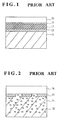
- FIG. 1 illustrates a structure of the SOI substrate.
- a first silicon oxide film 12 having a thickness of 1 micrometer is formed on a silicon supporting substrate 11.
- a gettering sink film 13 is formed on the first silicon oxide film 12.
- the gettering sink film 13 comprises a polysilicon film having a thickness of 500 manometers.
- the gettering sink film 13 acts as a getter for gettering the heavy metal contaminant.
- a second silicon oxide film 14 is formed on the gettering sink film 13.
- the second silicon oxide film 14 has a thickness of 20 manometers which is sufficiently thin for allowing the heavy metals to pass through the second silicon oxide film 14.
- a silicon active layer 15 is formed on the second silicon oxide film 14.
- FIG. 2 illustrates a structure of the SOI substrate.
- An insulating film 23 is partially formed on a silicon supporting substrate 21.
- a silicon active layer 21 is formed on the insulating film 23 so that the silicon active layer 21 is partially in contact with the silicon supporting substrate 21.
- the silicon supporting substrate 21 is subjected to the intrinsic gettering treatment so that the silicon supporting substrate 21 has crystal defects 22.
- the silicon supporting substrate 21 may be prepared as follows.
- a silicon supporting substrate 21 is having an oxygen concentration of 1.5 ⁇ 1018 atoms/cm3 is prepared and then subjected to a heat treatment at about 700°C in nitrogen atmosphere for 10-20 hours, thereby oxygen atoms are extracted from the supporting substrate.
- the crystal defects 22 are formed in the silicon supporting substrate 21.
- the heavy metal contaminant is diffused and moved from the silicon active layer 24 to the silicon supporting substrate 21.
- the crystal defects are used as the gettering.
- the heavy metal is captured by the gettering during the heat treatment.
- the above methods causes a super-saturation state of the heavy metal contaminant in the silicon active layer to thereby cause the extraction of the heavy metal contaminant.
- the heavy metal contaminant is captured by the getter.
- a low temperature below 750°C it is easy to cause the super-saturation state of the heavy metal contaminant.
- a high temperature above 800°C it is difficult to cause the super-saturation state of the heavy metal contaminant.
- the heavy metal contaminant is likely to elute from the getters in the supporting substrate.
- the reduction in the thickness of the insulating film is effective to facilitate the diffusion of the heavy metal contaminant from the silicon active layer to the supporting substrate.
- reduction in the thickness of the insulating film makes it difficult to keep the necessary insulating ability.
- the present invention provides an SOI substrate which comprises a silicon supporting substrate, an insulating film formed on the top of the silicon supporting substrate and a silicon active layer formed on the insulating film.
- the silicon supporting substrate is doped with an impurity at a concentration not less than 1 ⁇ 1017 atoms/cm3, provided that the impurity is kept in the solid solution state at a solidifying point of silicon.
- the impurity may comprise boron, phosphorus and arsenic.
- the silicon active layer has an impurity concentration not less than 1 ⁇ 1015 atoms/cm3, provided that the impurity concentration of the silicon supporting substrate is equal to 100 times or more of the impurity concentration of the silicon active layer.
- the insulating film between the silicon active layer and the silicon supporting substrate has a thickness which satisfy the following relationship. d ⁇ (Dt)/10 , where d is the thickness of the insulating film, t is the time of isothermal treatment of the SOI substrate and D is the diffusion coefficient.
- FIG. 1 is a cross sectional elevation view illustrative of the conventional SOI substrate.
- FIG. 2 is a cross sectional elevation view illustrative of the conventional SOI substrate.
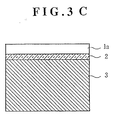
- FIGS. 3A-3C are cross sectional elevation views illustrative of novel SOI substrates in a sequential fabrication process in a first embodiment according to the present invention.
- FIG. 4 is a diagram illustrative of the variation in the density of crystal defects in the active layer versus the boron concentration of the silicon supporting substrate.
- FIG. 5 is a diagram illustrative of the densities of crystal defects in the active layer of the first embodiment and the comparative example.
- FIGS. 6A-6C are cross sectional elevation views illustrative of novel SOI substrates in a sequential fabrication process in a second embodiment according to the present invention.
- FIG. 7 is a diagram illustrative of the densities of crystal defects in the active layer of the second embodiment and the comparative example.
- FIG. 8 is a cross sectional elevation view illustrative of a novel SOI substrate in a third embodiment according to the present invention.
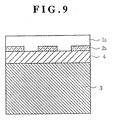
- FIG. 9 is a cross sectional elevation view illustrative of a novel SOI substrate in a third embodiment according to the present invention.
- an SOI substrate comprises a silicon supporting substrate, an insulating film formed on the top of the silicon supporting substrate and a silicon active layer formed on the insulating film.
- the silicon supporting substrate is doped with an impurity at a concentration not less than 1 ⁇ 1017 atoms/cm3, provided that the impurity is kept in the solid solution state at a solidifying point of silicon.
- the impurity may comprise boron, phosphorus and arsenic.
- the silicon active layer has an impurity concentration not less than 1 ⁇ 1015 atoms/cm3, provided that the impurity concentration of the silicon supporting substrate is equal to 100 times or more of the impurity concentration of the silicon active layer.
- the insulating film between the silicon active layer and the silicon supporting substrate has a thickness which satisfy the following relationship. d ⁇ (Dt)/10 , where d is the thickness of the insulating film, t is the time of isothermal treatment of the SOI substrate and D is the diffusion coefficient.
- Tile insulating film may be formed partially on the top of the silicon supporting substrate.
- the present invention utilizes the fact that the impurity doped in the silicon supporting substrate can raise the solid solubility of the heavy metals into the silicon supporting substrate.
- the impurity doped in the silicon supporting substrate can raise the gettering ability.
- the gettering ability depends on both the impurity concentration of the silicon supporting substrate and the temperature of the heat treatment for gettering process. The increase in the temperature of the heat treatment for the gettering process can raise the gettering ability. The increase in the impurity concentration of the supporting substrate can raise the gettering ability.
- the present invention is free from the problems described above. It is preferable to carry out the heat treatment for the gettering at a high temperature so that the diffusion of the heavy metals is encouraged sufficiently for passing through the insulating film.
- a first embodiment according to the present invention will be described, wherein a novel SOI substrate is provided.
- the novel SOI substrate is fabricated as follows. As illustrated in FIG. 3A, a p-type silicon substrate 1 has an impurity concentration of 1 ⁇ 1016 atoms/cm3. The silicon substrate 1 is subjected to a thermal oxidation thereby a silicon oxide film 2 having a thickness of about 0.5 micrometers is formed on the top of the silicon substrate 1.
- a silicon supporting substrate 3 is prepared by doping boron at a concentration of 1 ⁇ 1018 atoms/cm3 and then adhered on the surface of the silicon oxide film 2 by a heat treatment at 1100°C in the nitrogen atmosphere for 2 hours.
- the silicon oxide film 2 is thus sandwiched between the silicon supporting substrate 3 and the silicon substrate 1.
- the silicon substrate 1 is polished to form a silicon active layer 1a having a thickness of about 2 micrometers.
- the silicon active layer 1a is formed on the silicon oxide film 2 which is provided on the silicon supporting substrate 3 highly doped with boron.
- FIG. 4 illustrates the variation in the density of the crystal defects of the silicon supporting substrate 3 versus boron concentration of the silicon active layer 1a, provided that the boron concentration of the silicon active layer 1a is fixed at 1 ⁇ 1015 atoms/cm3.
- the contaminant comprises Cu.
- Cu is applied at a concentration of 1 ⁇ 1014 atoms/cm3 on the surface of the silicon active layer 1a of the SOI substrate.
- the SOI substrate is then subjected to a heat treatment at 900°C in the nitrogen atmosphere for 2 hours.
- the contaminant Cu is likely to be moved into the silicon supporting substrate 3.
- Some of the contaminant Cu remain in the silicon active layer 1a.
- the remaining Cu generates the crystal defects in the silicon active layer 1a.
- a small density of the crystal defects means the fact that a small number of the contaminant Cu atoms remain in the silicon active layer 1a.
- the boron concentration of the silicon supporting substrate 3 is increased from 1 ⁇ 1014 atoms/cm3 to 1 ⁇ 1019 atoms/cm3, the density of the crystal defects of the silicon supporting substrate 3 is reduced.
- the boron concentration of the silicon supporting substrate 3 is increased from 1 ⁇ 1015 atoms/cm3 to 1 ⁇ 1017 atoms/cm3, the density of the crystal defects of the silicon active layer 1a is reduced to about one tenth.
- the boron concentration of the silicon supporting substrate 3 achieves at about 1 ⁇ 1019 atoms/cm3, then the gettering of almost all of the Cu is obtained.
- the increase in the boron concentration of the silicon supporting substrate 3 can raise the amount of Cu in the solid solution state. This relationship is the same when the impurity comprises other atoms such as phosphorus, arsenic and antimony.
- a possible high impurity concentration of the silicon supporting substrate is preferable, but required not to beyond the critical concentration which is the maximum of the amount of impurity in the solid soluble to silicon at a solidifying point of silicon.
- Silicon is metal in the crucible set at 1420°C and then cooled down and solidified at the solidifying point.
- the solid soluble critical concentration of boron is about 6 ⁇ 1020 atoms/cm3.
- the solid soluble critical concentrations of phosphorus and arsenic are about 2 ⁇ 1020 atoms/cm3 and 4 ⁇ 1020 atoms/cm3.
- the heavy metal contaminant is distributed into the silicon active layer 1a and the silicon supporting substrate 3 on the biases of a constant segregation coefficient which depends on an impurity concentration ratio of the silicon active layer 1a to the silicon supporting substrate 1.
- the impurity concentration of the silicon supporting substrate is higher than the impurity concentration of the silicon active layer, then the amount of the heavy metal contaminant to be distributed into the silicon supporting substrate is larger than the amount of the heavy metal contaminant to be distributed into the silicon active layer 1a. Namely, the increase in the impurity concentration of the silicon supporting substrate can arise the gettering ability. It is preferable that the impurity concentration of the silicon supporting substrate is above 100 times of the impurity concentration of the silicon active layer.
- the SOI substrate of the first embodiment was compared to an SOI substrate of the comparative example.
- the silicon supporting substrate has a boron impurity concentration of 1 ⁇ 1016 atoms/cm3.
- the silicon oxide film has a thickness of 0.5 micrometers.
- the getter comprises the crystal defect generated by the oxygen extraction method.
- the SOI substrate is subjected to the Cu contamination.
- the SOI substrate of the present invention as illustrated in FIG. 5 shows a low density of the crystal defects in the silicon active layer 1a.
- the density is 1 ⁇ 102/cm3. This indicates that the gettering ability is high.
- the SOI substrate of the comparative example shows a high density of the crystal defects in the silicon active layer 1a.
- the density is 1 ⁇ 104 /cm3.This indicates that the gettering ability is low.
- MOS diodes are formed on the SOI substrates of the first embodiment and the comparative example respectively to measure minority carrier life times thereof.
- the minority carrier life time is 2200 ⁇ 300 microseconds.
- the minority carrier life time is 700 ⁇ 200 microseconds. This indicates that the SOI substrate of the first embodiment reduces the leakage of current of the device.
- DRAMs are formed on the SOI substrate of the first embodiment, the performance of the memory is superior and the device performance and the yield thereof are considerably improved.
- the contaminant comprises Fe, Ni and Cr.
- the impurity concentration of the silicon supporting substrate 3 is equal to or above 1 ⁇ 1017 atoms/cm3.
- the insulating film has a thickness which satisfy the following relationship. d ⁇ (Dt)/10 , where d is the thickness of the insulating film, t is the time of isothermal treatment of the SOI substrate and D is the diffusion coefficient.
- a second embodiment according to the present invention will be described, wherein a novel SOI substrate is provided.
- the novel SOI substrate is fabricated as follows. As illustrated in FIG. 6A, a p-type silicon substrate 1 has an impurity concentration of 1 ⁇ 1015 atoms/cm3. The silicon substrate 1 is subjected to a thermal oxidation thereby a silicon oxide film 2 having a thickness of about 0.5 micrometers is formed on the top of the silicon substrate 1.
- a silicon supporting substrate 3 is prepared by doping boron at a concentration of 1 ⁇ 1018 atoms/cm3.
- a silicon epitaxial layer 4 having a thickness of about 20 micrometers and a boron impurity concentration of 1 ⁇ 1016 atoms/cm3 is formed on the silicon supporting substrate 3. Thereafter, the silicon epitaxial layer 4 is then adhered on the surface of the silicon oxide film 2 by a heat treatment at 1100°C in the nitrogen atmosphere for 2 hours. The silicon oxide film 2 is thus sandwiched between the silicon supporting substrate 3 and the silicon substrate 1.
- the silicon substrate 1 is polished to form a silicon active layer 1a having a thickness of about 0.1 micrometers.
- the silicon active layer 1a is formed on the silicon oxide film 2 which is provided on the silicon supporting substrate 3 highly doped with boron.
- FIG. 4 illustrates the variation in the density of the crystal defects of the silicon supporting substrate 3 versus boron concentration of the silicon active layer 1a, provided that the boron concentration of the silicon active layer 1a is fixed at 1 ⁇ 1015 atoms/cm3.
- the contaminant comprises Cu.
- Cu is applied at a concentration of 1 ⁇ 1014 atoms/cm3 on the surface of the silicon active layer 1a of the SOI substrate.
- the SOI substrate is then subjected to a heat treatment at 900°C in the nitrogen atmosphere for 2 hours.
- the contaminant Cu is likely to be moved into the silicon supporting substrate 3.
- Some of the contaminant Cu remain in the silicon active layer 1a.
- the remaining Cu generates the crystal defects in the silicon active layer 1a.
- a small density of the crystal defects means the fact that a small number of the contaminant Cu atoms remain in the silicon active layer 1a.
- the boron concentration of the silicon supporting substrate 3 is increased from 1 ⁇ 1014 atoms/cm3 to 1 ⁇ 1019 atoms/cm3, the density of the crystal defects of the silicon supporting substrate 3 is reduced.
- the boron concentration of the silicon supporting substrate 3 is increased from 1 ⁇ 1015 atoms/cm3 to 1 ⁇ 1017 atoms/cm3, the density of the crystal defects of the silicon active layer 1a is reduced to about one tenth.
- the boron concentration of the silicon supporting substrate 3 achieves at about 1 ⁇ 1019 atoms/cm3, then the gettering of almost all of the Cu is obtained.
- the increase in the boron concentration of the silicon supporting substrate 3 can raise the amount of Cu in the solid solution state. This relationship is the same when the impurity comprises other atoms such as phosphorus, arsenic and antimony.
- a possible high impurity concentration of the silicon supporting substrate is preferable, but required not to beyond the critical concentration which is the maximum of the amount of impurity in the solid soluble to silicon at a solidifying point of silicon.
- Silicon is metal in the crucible set at 1420°C and then cooled down and solidified at the solidifying point.
- the solid soluble critical concentration of boron is about 6 ⁇ 1020 atoms/cm3.
- the solid soluble critical concentrations of phosphorus and arsenic are about 2 ⁇ 1020 atoms/cm3 and 4 ⁇ 1020 atoms/cm3.
- the heavy metal contaminant is distributed into the silicon active layer 1a and the silicon supporting substrate 3 on the biases of a constant segregation coefficient which depends on an impurity concentration ratio of the silicon active layer 1a to the silicon supporting substrate 1.
- the impurity concentration of the silicon supporting substrate is higher than the impurity concentration of the silicon active layer, then the amount of the heavy metal contaminant to be distributed into the silicon supporting substrate is larger than the amount of the heavy metal contaminant to be distributed into the silicon active layer 1a. Namely, the increase in the impurity concentration of the silicon supporting substrate can arise the gettering ability. It is preferable that the impurity concentration of the silicon supporting substrate is above 100 times of the impurity concentration of the silicon active layer.
- the SOI substrate of the second embodiment was compared to an SOI substrate of the comparative example.
- the silicon supporting substrate has a boron impurity concentration of 1 ⁇ 1016 atoms/cm3.
- the silicon oxide film has a thickness of 0.5 micrometers.
- the getter comprises the crystal defect generated by the Cu contamination at 1 ⁇ 1013 atoms/cm2 and subsequent heat treatment 1100°C in the nitrogen atmosphere for one hour.
- the SOI substrate of the present invention shows a low density of the crystal defects in the silicon active layer 1a.
- the density is 1 ⁇ 102 /cm3. This indicates that the gettering ability is high.
- the SOI substrate of the comparative example shows a high density of the crystal defects in the silicon active layer 1a.
- the density is above 1 ⁇ 104 /cm3. This indicates that the gettering ability is low.
- MOS diodes are formed on the SOI substrates of the first embodiment and the comparative example respectively to measure minority carrier life times thereof.
- the minority carrier life time is 1500 ⁇ 100 microseconds.
- the minority carrier life time is 500 ⁇ 150 microseconds. This indicates that the SOI substrate of the first embodiment reduces the leakage of current of the device.
- DRAMs are formed on the SOI substrate of the first embodiment, the performance of the memory is superior and the device performance and the yield thereof are considerably improved.
- the contaminant comprises Fe, Ni and Cr.
- the silicon epitaxial layer prevents boron atoms to move from the silicon supporting substrate 3 to the silicon active layer 1a.
- the impurity concentration of the silicon supporting substrate 3 is equal to or above 1 ⁇ 1017 atoms/cm3.
- the insulating film has a thickness which satisfy the following relationship. d ⁇ (Dt)/10 , where d is the thickness of the insulating film, t is the time of isothermal treatment of the SOI substrate and D is the diffusion coefficient.
- a third embodiment according to the present invention will be described, wherein a novel SOI substrate is provided.
- the novel SOI substrate is illustrated in FIG. 8.
- An insulating film 2a having a thickness in the range of 0.1 micrometers to 1.0 micrometer is selectively formed on the top of the silicon supporting substrate 3.
- the silicon supporting substrate is doped with boron at the same concentration as the first embodiment.
- a silicon active layer 1a having a thickness in the range of 10-50 micrometers is provided on the insulating film 2a so that the silicon active layer 1a is partially in contact with the silicon supporting substrate 3. This structure permits the diffusion of the heavy metal contaminant from the active layer 1a via the gaps of the silicon oxide film 2a to the silicon supporting substrate 3.
- a fourth embodiment according to the present invention will be described, wherein a novel SOI substrate is provided.
- the novel SOI substrate is illustrated in FIG. 9.
- a silicon epitaxial layer 4 is formed on the silicon supporting substrate 3.
- the silicon supporting substrate 3 is doped with boron at the same concentration as the first embodiment.
- An insulating film 2a having a thickness in the range of 0.1 micrometers to 1.0 micrometer is selectively formed on the top of the silicon epitaxial layer 4.
- a silicon active layer 1a having a thickness in the range of 10-50 micrometers is provided on the insulating film 2a so that the silicon active layer 1a is partially in contact with the silicon epitaxial layer 4.
- Partially providing the silicon oxide film permits the diffusion of the heavy metal contaminant from the active layer 1a via the gaps of the silicon oxide film 2a to the silicon supporting substrate 3.
- the silicon epitaxial layer 4 prevents the heavy metal contaminant to be diffused from the silicon supporting substrate 3 to the silicon active layer 1a.
Landscapes
- Recrystallisation Techniques (AREA)
- Metal-Oxide And Bipolar Metal-Oxide Semiconductor Integrated Circuits (AREA)
- Thin Film Transistor (AREA)
Applications Claiming Priority (2)
| Application Number | Priority Date | Filing Date | Title |
|---|---|---|---|
| JP272088/94 | 1994-11-07 | ||
| JP6272088A JP2755185B2 (ja) | 1994-11-07 | 1994-11-07 | Soi基板 |
Publications (2)
| Publication Number | Publication Date |
|---|---|
| EP0710980A2 true EP0710980A2 (fr) | 1996-05-08 |
| EP0710980A3 EP0710980A3 (fr) | 1998-09-30 |
Family
ID=17508922
Family Applications (1)
| Application Number | Title | Priority Date | Filing Date |
|---|---|---|---|
| EP95117533A Withdrawn EP0710980A3 (fr) | 1994-11-07 | 1995-11-07 | Substrat SOI |
Country Status (3)
| Country | Link |
|---|---|
| US (1) | US5753353A (fr) |
| EP (1) | EP0710980A3 (fr) |
| JP (1) | JP2755185B2 (fr) |
Cited By (3)
| Publication number | Priority date | Publication date | Assignee | Title |
|---|---|---|---|---|
| US7291538B2 (en) | 2001-09-26 | 2007-11-06 | Renesas Technology Corp. | Semiconductor memory device and manufacturing method of the same |
| EP1667218A4 (fr) * | 2003-09-08 | 2010-11-03 | Sumco Corp | Tranche de silicium sur isolant et son procede de fabrication |
| EP4213179A4 (fr) * | 2020-09-11 | 2025-04-16 | Shin-Etsu Handotai Co., Ltd. | Procédé de fabrication de tranche de silicium sur isolant (ssi) et tranche de ssi |
Families Citing this family (7)
| Publication number | Priority date | Publication date | Assignee | Title |
|---|---|---|---|---|
| AU5474299A (en) * | 1998-08-10 | 2000-03-06 | Memc Electronic Materials, Inc. | Process for preparation of silicon on insulator substrates with improved resistance to formation of metal precipitates |
| JP2000323484A (ja) | 1999-05-07 | 2000-11-24 | Mitsubishi Electric Corp | 半導体装置及び半導体記憶装置 |
| JP2000353797A (ja) | 1999-06-11 | 2000-12-19 | Mitsubishi Electric Corp | 半導体ウエハおよびその製造方法 |
| US6596570B2 (en) | 2001-06-06 | 2003-07-22 | International Business Machines Corporation | SOI device with reduced junction capacitance |
| JP4534412B2 (ja) * | 2002-06-26 | 2010-09-01 | 株式会社ニコン | 固体撮像装置 |
| JP2007134616A (ja) * | 2005-11-14 | 2007-05-31 | Nec Electronics Corp | Soi基板およびその製造方法 |
| JP7380517B2 (ja) * | 2020-10-21 | 2023-11-15 | 信越半導体株式会社 | Soiウェーハの製造方法及びsoiウェーハ |
Family Cites Families (20)
| Publication number | Priority date | Publication date | Assignee | Title |
|---|---|---|---|---|
| US4558507A (en) * | 1982-11-12 | 1985-12-17 | Nec Corporation | Method of manufacturing semiconductor device |
| US4591654A (en) * | 1983-07-18 | 1986-05-27 | Nippon Telegraph And Telephone Public Corporation | Solar cells based on indium phosphide |
| JPS60201666A (ja) * | 1984-03-27 | 1985-10-12 | Nec Corp | 半導体装置 |
| JPH0628296B2 (ja) * | 1985-10-17 | 1994-04-13 | 日本電気株式会社 | 半導体装置の製造方法 |
| JP2896141B2 (ja) * | 1987-02-26 | 1999-05-31 | 株式会社東芝 | 高耐圧半導体素子 |
| JPH0795568B2 (ja) * | 1987-04-27 | 1995-10-11 | 日本電気株式会社 | 半導体記憶装置 |
| JP2685819B2 (ja) * | 1988-03-31 | 1997-12-03 | 株式会社東芝 | 誘電体分離半導体基板とその製造方法 |
| JP2762462B2 (ja) * | 1988-05-31 | 1998-06-04 | ソニー株式会社 | 半導体基板の製造方法 |
| JPH0691263B2 (ja) * | 1988-10-19 | 1994-11-14 | 株式会社東芝 | 半導体装置の製造方法 |
| JPH02237121A (ja) * | 1989-03-10 | 1990-09-19 | Fujitsu Ltd | 半導体装置の製造方法 |
| JP2811798B2 (ja) * | 1989-09-07 | 1998-10-15 | ソニー株式会社 | 半導体基板の製造方法 |
| US5374846A (en) * | 1990-08-31 | 1994-12-20 | Nec Corporation | Bipolar transistor with a particular base and collector regions |
| JPH04199632A (ja) * | 1990-11-29 | 1992-07-20 | Fujitsu Ltd | Soiウエハ及びその製造方法 |
| US5293512A (en) * | 1991-02-13 | 1994-03-08 | Nec Corporation | Semiconductor device having a groove type isolation region |
| JPH05129309A (ja) * | 1991-10-31 | 1993-05-25 | Nec Corp | 張り合わせ基板 |
| US5229305A (en) * | 1992-02-03 | 1993-07-20 | Motorola, Inc. | Method for making intrinsic gettering sites in bonded substrates |
| JPH05251292A (ja) * | 1992-03-06 | 1993-09-28 | Nec Corp | 半導体装置の製造方法 |
| JP2908150B2 (ja) * | 1992-11-27 | 1999-06-21 | 日本電気株式会社 | Soi基板構造及びその製造方法 |
| JP3295171B2 (ja) * | 1993-04-07 | 2002-06-24 | 新日本製鐵株式会社 | 半導体基板の製造方法 |
| JPH0837286A (ja) * | 1994-07-21 | 1996-02-06 | Toshiba Microelectron Corp | 半導体基板および半導体基板の製造方法 |
-
1994
- 1994-11-07 JP JP6272088A patent/JP2755185B2/ja not_active Expired - Fee Related
-
1995
- 1995-11-07 US US08/554,720 patent/US5753353A/en not_active Expired - Fee Related
- 1995-11-07 EP EP95117533A patent/EP0710980A3/fr not_active Withdrawn
Non-Patent Citations (2)
| Title |
|---|
| SVEINBJORNSSON E.O. ET AL: "Phosphorus diffusion gettering of gold in silicon-the reversibility of the gettering process", JOURNAL OF APPLIED PHYSICS,, vol. 73, no. 11, 1 June 1993 (1993-06-01), USA, pages 7311 - 7321, XP000996848, DOI: doi:10.1063/1.354021 * |
| SZE S.M.: "VLSI Technology, Second Edition", 1988, MCGRAW-HILL, SG,SINGAPORE * |
Cited By (4)
| Publication number | Priority date | Publication date | Assignee | Title |
|---|---|---|---|---|
| US7291538B2 (en) | 2001-09-26 | 2007-11-06 | Renesas Technology Corp. | Semiconductor memory device and manufacturing method of the same |
| US7498207B2 (en) | 2001-09-26 | 2009-03-03 | Renesas Technology Corp. | Semiconductor memory device and manufacturing method of the same |
| EP1667218A4 (fr) * | 2003-09-08 | 2010-11-03 | Sumco Corp | Tranche de silicium sur isolant et son procede de fabrication |
| EP4213179A4 (fr) * | 2020-09-11 | 2025-04-16 | Shin-Etsu Handotai Co., Ltd. | Procédé de fabrication de tranche de silicium sur isolant (ssi) et tranche de ssi |
Also Published As
| Publication number | Publication date |
|---|---|
| JP2755185B2 (ja) | 1998-05-20 |
| EP0710980A3 (fr) | 1998-09-30 |
| JPH08139295A (ja) | 1996-05-31 |
| US5753353A (en) | 1998-05-19 |
Similar Documents
| Publication | Publication Date | Title |
|---|---|---|
| US5413679A (en) | Method of producing a silicon membrane using a silicon alloy etch stop layer | |
| US5414276A (en) | Transistors using crystalline silicon devices on glass | |
| JP2575545B2 (ja) | 半導体装置の製造方法 | |
| US5213986A (en) | Process for making thin film silicon-on-insulator wafers employing wafer bonding and wafer thinning | |
| US4548654A (en) | Surface denuding of silicon wafer | |
| US5298449A (en) | Semiconductor substrate having a silicon-on-insulator structure and method of fabricating the same | |
| EP0710980A2 (fr) | Substrat SOI | |
| JPH08116038A (ja) | 半導体装置及びその製造方法 | |
| JPH07283380A (ja) | 半導体基板及びその製造方法 | |
| WO1998005063A1 (fr) | Plaquette epitaxiale en silicium et son procede de fabrication | |
| CN1034893C (zh) | 去除硅中的杂质及提高其少数载流子寿命的方法 | |
| US6114223A (en) | Gettering regions and methods of forming gettering regions within a semiconductor wafer | |
| KR100288815B1 (ko) | 반도체기판의제조방법 | |
| US5985728A (en) | Silicon on insulator process with recovery of a device layer from an etch stop layer | |
| WO2007132266A1 (fr) | Perfectionnements dans le traitement de semiconducteur | |
| JP3171322B2 (ja) | Soi基板およびその製造方法 | |
| JP2010040931A (ja) | 半導体基板の製造方法及び半導体基板 | |
| JP3579069B2 (ja) | 半導体装置の製造方法 | |
| US7553713B2 (en) | Method of manufacturing semiconductor substrates and semiconductor devices | |
| JP3452122B2 (ja) | Soi基板の製造方法 | |
| JPH11307471A (ja) | Soi基板の製造方法 | |
| JP3091800B2 (ja) | Soi基板の製造方法 | |
| EP0706203A1 (fr) | Méthode de fabrication d'un substrat SOI | |
| IE52979B1 (en) | Method of manufacturing a semiconductor device | |
| JP3296307B2 (ja) | ゲッタリングサイト層を有する半導体装置及びその製造方法 |
Legal Events
| Date | Code | Title | Description |
|---|---|---|---|
| PUAI | Public reference made under article 153(3) epc to a published international application that has entered the european phase |
Free format text: ORIGINAL CODE: 0009012 |
|
| AK | Designated contracting states |
Kind code of ref document: A2 Designated state(s): DE FR NL |
|
| PUAL | Search report despatched |
Free format text: ORIGINAL CODE: 0009013 |
|
| AK | Designated contracting states |
Kind code of ref document: A3 Designated state(s): DE FR NL |
|
| 17P | Request for examination filed |
Effective date: 19990301 |
|
| 17Q | First examination report despatched |
Effective date: 20010502 |
|
| RAP1 | Party data changed (applicant data changed or rights of an application transferred) |
Owner name: NEC ELECTRONICS CORPORATION |
|
| STAA | Information on the status of an ep patent application or granted ep patent |
Free format text: STATUS: THE APPLICATION IS DEEMED TO BE WITHDRAWN |
|
| 18D | Application deemed to be withdrawn |
Effective date: 20040611 |