EP0793718B1 - Systeme de marquage moleculaire - Google Patents
Systeme de marquage moleculaire Download PDFInfo
- Publication number
- EP0793718B1 EP0793718B1 EP95941325A EP95941325A EP0793718B1 EP 0793718 B1 EP0793718 B1 EP 0793718B1 EP 95941325 A EP95941325 A EP 95941325A EP 95941325 A EP95941325 A EP 95941325A EP 0793718 B1 EP0793718 B1 EP 0793718B1
- Authority
- EP
- European Patent Office
- Prior art keywords
- polynucleotides
- oligonucleotide
- microparticles
- nucleotides
- population
- Prior art date
- Legal status (The legal status is an assumption and is not a legal conclusion. Google has not performed a legal analysis and makes no representation as to the accuracy of the status listed.)
- Expired - Lifetime
Links
- 239000002157 polynucleotide Substances 0.000 claims abstract description 181
- 108091033319 polynucleotide Proteins 0.000 claims abstract description 174
- 102000040430 polynucleotide Human genes 0.000 claims abstract description 173
- 238000000034 method Methods 0.000 claims abstract description 88
- 239000000758 substrate Substances 0.000 claims abstract description 20
- 108091034117 Oligonucleotide Proteins 0.000 claims description 140
- 239000011859 microparticle Substances 0.000 claims description 114
- 239000002773 nucleotide Substances 0.000 claims description 98
- 125000003729 nucleotide group Chemical group 0.000 claims description 97
- 239000012634 fragment Substances 0.000 claims description 79
- 230000000295 complement effect Effects 0.000 claims description 38
- 239000007790 solid phase Substances 0.000 claims description 38
- 239000000203 mixture Substances 0.000 claims description 34
- 108020004414 DNA Proteins 0.000 claims description 31
- JLCPHMBAVCMARE-UHFFFAOYSA-N [3-[[3-[[3-[[3-[[3-[[3-[[3-[[3-[[3-[[3-[[3-[[5-(2-amino-6-oxo-1H-purin-9-yl)-3-[[3-[[3-[[3-[[3-[[3-[[5-(2-amino-6-oxo-1H-purin-9-yl)-3-[[5-(2-amino-6-oxo-1H-purin-9-yl)-3-hydroxyoxolan-2-yl]methoxy-hydroxyphosphoryl]oxyoxolan-2-yl]methoxy-hydroxyphosphoryl]oxy-5-(5-methyl-2,4-dioxopyrimidin-1-yl)oxolan-2-yl]methoxy-hydroxyphosphoryl]oxy-5-(6-aminopurin-9-yl)oxolan-2-yl]methoxy-hydroxyphosphoryl]oxy-5-(6-aminopurin-9-yl)oxolan-2-yl]methoxy-hydroxyphosphoryl]oxy-5-(6-aminopurin-9-yl)oxolan-2-yl]methoxy-hydroxyphosphoryl]oxy-5-(6-aminopurin-9-yl)oxolan-2-yl]methoxy-hydroxyphosphoryl]oxyoxolan-2-yl]methoxy-hydroxyphosphoryl]oxy-5-(5-methyl-2,4-dioxopyrimidin-1-yl)oxolan-2-yl]methoxy-hydroxyphosphoryl]oxy-5-(4-amino-2-oxopyrimidin-1-yl)oxolan-2-yl]methoxy-hydroxyphosphoryl]oxy-5-(5-methyl-2,4-dioxopyrimidin-1-yl)oxolan-2-yl]methoxy-hydroxyphosphoryl]oxy-5-(5-methyl-2,4-dioxopyrimidin-1-yl)oxolan-2-yl]methoxy-hydroxyphosphoryl]oxy-5-(6-aminopurin-9-yl)oxolan-2-yl]methoxy-hydroxyphosphoryl]oxy-5-(6-aminopurin-9-yl)oxolan-2-yl]methoxy-hydroxyphosphoryl]oxy-5-(4-amino-2-oxopyrimidin-1-yl)oxolan-2-yl]methoxy-hydroxyphosphoryl]oxy-5-(4-amino-2-oxopyrimidin-1-yl)oxolan-2-yl]methoxy-hydroxyphosphoryl]oxy-5-(4-amino-2-oxopyrimidin-1-yl)oxolan-2-yl]methoxy-hydroxyphosphoryl]oxy-5-(6-aminopurin-9-yl)oxolan-2-yl]methoxy-hydroxyphosphoryl]oxy-5-(4-amino-2-oxopyrimidin-1-yl)oxolan-2-yl]methyl [5-(6-aminopurin-9-yl)-2-(hydroxymethyl)oxolan-3-yl] hydrogen phosphate Polymers Cc1cn(C2CC(OP(O)(=O)OCC3OC(CC3OP(O)(=O)OCC3OC(CC3O)n3cnc4c3nc(N)[nH]c4=O)n3cnc4c3nc(N)[nH]c4=O)C(COP(O)(=O)OC3CC(OC3COP(O)(=O)OC3CC(OC3COP(O)(=O)OC3CC(OC3COP(O)(=O)OC3CC(OC3COP(O)(=O)OC3CC(OC3COP(O)(=O)OC3CC(OC3COP(O)(=O)OC3CC(OC3COP(O)(=O)OC3CC(OC3COP(O)(=O)OC3CC(OC3COP(O)(=O)OC3CC(OC3COP(O)(=O)OC3CC(OC3COP(O)(=O)OC3CC(OC3COP(O)(=O)OC3CC(OC3COP(O)(=O)OC3CC(OC3COP(O)(=O)OC3CC(OC3COP(O)(=O)OC3CC(OC3COP(O)(=O)OC3CC(OC3CO)n3cnc4c(N)ncnc34)n3ccc(N)nc3=O)n3cnc4c(N)ncnc34)n3ccc(N)nc3=O)n3ccc(N)nc3=O)n3ccc(N)nc3=O)n3cnc4c(N)ncnc34)n3cnc4c(N)ncnc34)n3cc(C)c(=O)[nH]c3=O)n3cc(C)c(=O)[nH]c3=O)n3ccc(N)nc3=O)n3cc(C)c(=O)[nH]c3=O)n3cnc4c3nc(N)[nH]c4=O)n3cnc4c(N)ncnc34)n3cnc4c(N)ncnc34)n3cnc4c(N)ncnc34)n3cnc4c(N)ncnc34)O2)c(=O)[nH]c1=O JLCPHMBAVCMARE-UHFFFAOYSA-N 0.000 claims description 29
- 230000015572 biosynthetic process Effects 0.000 claims description 28
- 238000003786 synthesis reaction Methods 0.000 claims description 21
- 239000011324 bead Substances 0.000 claims description 20
- 239000002777 nucleoside Substances 0.000 claims description 17
- 239000002299 complementary DNA Substances 0.000 claims description 13
- 239000011521 glass Substances 0.000 claims description 12
- 108010014303 DNA-directed DNA polymerase Proteins 0.000 claims description 9
- 102000016928 DNA-directed DNA polymerase Human genes 0.000 claims description 9
- -1 nucleoside triphosphates Chemical class 0.000 claims description 9
- IJGRMHOSHXDMSA-UHFFFAOYSA-N Atomic nitrogen Chemical group N#N IJGRMHOSHXDMSA-UHFFFAOYSA-N 0.000 claims description 8
- 108020004635 Complementary DNA Proteins 0.000 claims description 7
- 125000004432 carbon atom Chemical group C* 0.000 claims description 7
- 238000002372 labelling Methods 0.000 claims description 7
- 108090000765 processed proteins & peptides Proteins 0.000 claims description 7
- 102000053602 DNA Human genes 0.000 claims description 6
- 239000004793 Polystyrene Substances 0.000 claims description 6
- 230000000694 effects Effects 0.000 claims description 6
- 229920002223 polystyrene Polymers 0.000 claims description 6
- 102000004196 processed proteins & peptides Human genes 0.000 claims description 6
- NINIDFKCEFEMDL-UHFFFAOYSA-N Sulfur Chemical group [S] NINIDFKCEFEMDL-UHFFFAOYSA-N 0.000 claims description 4
- QVGXLLKOCUKJST-UHFFFAOYSA-N atomic oxygen Chemical group [O] QVGXLLKOCUKJST-UHFFFAOYSA-N 0.000 claims description 4
- 239000013599 cloning vector Substances 0.000 claims description 4
- 125000005842 heteroatom Chemical group 0.000 claims description 4
- 229910052757 nitrogen Inorganic materials 0.000 claims description 4
- 229910052760 oxygen Inorganic materials 0.000 claims description 4
- 239000001301 oxygen Substances 0.000 claims description 4
- 239000001226 triphosphate Substances 0.000 claims description 4
- 235000011178 triphosphate Nutrition 0.000 claims description 4
- 108010010677 Phosphodiesterase I Proteins 0.000 claims description 3
- 125000003342 alkenyl group Chemical group 0.000 claims description 3
- 125000003545 alkoxy group Chemical group 0.000 claims description 3
- 125000000217 alkyl group Chemical group 0.000 claims description 3
- 125000003118 aryl group Chemical group 0.000 claims description 3
- 229920001184 polypeptide Polymers 0.000 claims description 3
- IWYRWIUNAVNFPE-UHFFFAOYSA-N Glycidaldehyde Chemical compound O=CC1CO1 IWYRWIUNAVNFPE-UHFFFAOYSA-N 0.000 claims description 2
- CERQOIWHTDAKMF-UHFFFAOYSA-M Methacrylate Chemical compound CC(=C)C([O-])=O CERQOIWHTDAKMF-UHFFFAOYSA-M 0.000 claims description 2
- 125000004122 cyclic group Chemical group 0.000 claims description 2
- 125000000623 heterocyclic group Chemical group 0.000 claims description 2
- 229920000642 polymer Polymers 0.000 claims description 2
- 238000005070 sampling Methods 0.000 claims description 2
- 239000005864 Sulphur Chemical group 0.000 claims 2
- 238000012163 sequencing technique Methods 0.000 abstract description 47
- 239000003153 chemical reaction reagent Substances 0.000 abstract description 13
- 239000002245 particle Substances 0.000 abstract description 8
- 239000000523 sample Substances 0.000 description 79
- 102000039446 nucleic acids Human genes 0.000 description 26
- 108020004707 nucleic acids Proteins 0.000 description 26
- 150000007523 nucleic acids Chemical class 0.000 description 26
- 238000011160 research Methods 0.000 description 25
- 238000009396 hybridization Methods 0.000 description 23
- 239000000178 monomer Substances 0.000 description 22
- 239000000126 substance Substances 0.000 description 20
- 150000001875 compounds Chemical class 0.000 description 17
- 239000005289 controlled pore glass Substances 0.000 description 17
- 125000005647 linker group Chemical group 0.000 description 13
- 102000003960 Ligases Human genes 0.000 description 12
- 108090000364 Ligases Proteins 0.000 description 12
- 230000008569 process Effects 0.000 description 12
- 102000004190 Enzymes Human genes 0.000 description 11
- 108090000790 Enzymes Proteins 0.000 description 11
- 239000013598 vector Substances 0.000 description 11
- YBJHBAHKTGYVGT-ZKWXMUAHSA-N (+)-Biotin Chemical compound N1C(=O)N[C@@H]2[C@H](CCCCC(=O)O)SC[C@@H]21 YBJHBAHKTGYVGT-ZKWXMUAHSA-N 0.000 description 10
- 102000012410 DNA Ligases Human genes 0.000 description 10
- 108010061982 DNA Ligases Proteins 0.000 description 10
- 238000013459 approach Methods 0.000 description 10
- 239000000872 buffer Substances 0.000 description 9
- 108020004999 messenger RNA Proteins 0.000 description 9
- 238000001712 DNA sequencing Methods 0.000 description 8
- 230000029087 digestion Effects 0.000 description 8
- 239000000499 gel Substances 0.000 description 8
- 238000007792 addition Methods 0.000 description 7
- 238000006243 chemical reaction Methods 0.000 description 7
- 238000003776 cleavage reaction Methods 0.000 description 7
- 238000001514 detection method Methods 0.000 description 7
- 125000003835 nucleoside group Chemical group 0.000 description 7
- 238000003752 polymerase chain reaction Methods 0.000 description 7
- 238000012545 processing Methods 0.000 description 7
- 230000007017 scission Effects 0.000 description 7
- 230000002194 synthesizing effect Effects 0.000 description 7
- 238000005406 washing Methods 0.000 description 7
- 101710163270 Nuclease Proteins 0.000 description 6
- 229960002685 biotin Drugs 0.000 description 6
- 239000011616 biotin Substances 0.000 description 6
- 150000008300 phosphoramidites Chemical class 0.000 description 6
- 108091008146 restriction endonucleases Proteins 0.000 description 6
- VLEIUWBSEKKKFX-UHFFFAOYSA-N 2-amino-2-(hydroxymethyl)propane-1,3-diol;2-[2-[bis(carboxymethyl)amino]ethyl-(carboxymethyl)amino]acetic acid Chemical compound OCC(N)(CO)CO.OC(=O)CN(CC(O)=O)CCN(CC(O)=O)CC(O)=O VLEIUWBSEKKKFX-UHFFFAOYSA-N 0.000 description 5
- 235000020958 biotin Nutrition 0.000 description 5
- 238000010367 cloning Methods 0.000 description 5
- 150000003833 nucleoside derivatives Chemical class 0.000 description 5
- 108090000623 proteins and genes Proteins 0.000 description 5
- 241001156002 Anthonomus pomorum Species 0.000 description 4
- 108010042407 Endonucleases Proteins 0.000 description 4
- IQFYYKKMVGJFEH-XLPZGREQSA-N Thymidine Chemical compound O=C1NC(=O)C(C)=CN1[C@@H]1O[C@H](CO)[C@@H](O)C1 IQFYYKKMVGJFEH-XLPZGREQSA-N 0.000 description 4
- 230000003321 amplification Effects 0.000 description 4
- 238000007796 conventional method Methods 0.000 description 4
- 230000002255 enzymatic effect Effects 0.000 description 4
- 230000005284 excitation Effects 0.000 description 4
- 239000007850 fluorescent dye Substances 0.000 description 4
- 239000000463 material Substances 0.000 description 4
- 238000003199 nucleic acid amplification method Methods 0.000 description 4
- 238000012552 review Methods 0.000 description 4
- KDCGOANMDULRCW-UHFFFAOYSA-N 7H-purine Chemical compound N1=CNC2=NC=NC2=C1 KDCGOANMDULRCW-UHFFFAOYSA-N 0.000 description 3
- 239000003298 DNA probe Substances 0.000 description 3
- 108010054576 Deoxyribonuclease EcoRI Proteins 0.000 description 3
- 108091093037 Peptide nucleic acid Proteins 0.000 description 3
- 238000004458 analytical method Methods 0.000 description 3
- 229910052799 carbon Inorganic materials 0.000 description 3
- 238000000576 coating method Methods 0.000 description 3
- 238000010276 construction Methods 0.000 description 3
- 230000008878 coupling Effects 0.000 description 3
- 238000010168 coupling process Methods 0.000 description 3
- 238000005859 coupling reaction Methods 0.000 description 3
- GNBHRKFJIUUOQI-UHFFFAOYSA-N fluorescein Chemical compound O1C(=O)C2=CC=CC=C2C21C1=CC=C(O)C=C1OC1=CC(O)=CC=C21 GNBHRKFJIUUOQI-UHFFFAOYSA-N 0.000 description 3
- 238000011068 loading method Methods 0.000 description 3
- 238000013507 mapping Methods 0.000 description 3
- 150000004712 monophosphates Chemical class 0.000 description 3
- 230000003287 optical effect Effects 0.000 description 3
- 150000004713 phosphodiesters Chemical class 0.000 description 3
- PTMHPRAIXMAOOB-UHFFFAOYSA-L phosphoramidate Chemical compound NP([O-])([O-])=O PTMHPRAIXMAOOB-UHFFFAOYSA-L 0.000 description 3
- 238000012216 screening Methods 0.000 description 3
- 238000000926 separation method Methods 0.000 description 3
- WGTODYJZXSJIAG-UHFFFAOYSA-N tetramethylrhodamine chloride Chemical compound [Cl-].C=12C=CC(N(C)C)=CC2=[O+]C2=CC(N(C)C)=CC=C2C=1C1=CC=CC=C1C(O)=O WGTODYJZXSJIAG-UHFFFAOYSA-N 0.000 description 3
- 238000013519 translation Methods 0.000 description 3
- 125000003088 (fluoren-9-ylmethoxy)carbonyl group Chemical group 0.000 description 2
- 108091032973 (ribonucleotides)n+m Proteins 0.000 description 2
- VGONTNSXDCQUGY-RRKCRQDMSA-N 2'-deoxyinosine Chemical compound C1[C@H](O)[C@@H](CO)O[C@H]1N1C(N=CNC2=O)=C2N=C1 VGONTNSXDCQUGY-RRKCRQDMSA-N 0.000 description 2
- MWBWWFOAEOYUST-UHFFFAOYSA-N 2-aminopurine Chemical compound NC1=NC=C2N=CNC2=N1 MWBWWFOAEOYUST-UHFFFAOYSA-N 0.000 description 2
- FWMNVWWHGCHHJJ-SKKKGAJSSA-N 4-amino-1-[(2r)-6-amino-2-[[(2r)-2-[[(2r)-2-[[(2r)-2-amino-3-phenylpropanoyl]amino]-3-phenylpropanoyl]amino]-4-methylpentanoyl]amino]hexanoyl]piperidine-4-carboxylic acid Chemical compound C([C@H](C(=O)N[C@H](CC(C)C)C(=O)N[C@H](CCCCN)C(=O)N1CCC(N)(CC1)C(O)=O)NC(=O)[C@H](N)CC=1C=CC=CC=1)C1=CC=CC=C1 FWMNVWWHGCHHJJ-SKKKGAJSSA-N 0.000 description 2
- DWRXFEITVBNRMK-UHFFFAOYSA-N Beta-D-1-Arabinofuranosylthymine Natural products O=C1NC(=O)C(C)=CN1C1C(O)C(O)C(CO)O1 DWRXFEITVBNRMK-UHFFFAOYSA-N 0.000 description 2
- 102100031780 Endonuclease Human genes 0.000 description 2
- 102000004533 Endonucleases Human genes 0.000 description 2
- 102100034343 Integrase Human genes 0.000 description 2
- UEZVMMHDMIWARA-UHFFFAOYSA-N Metaphosphoric acid Chemical compound OP(=O)=O UEZVMMHDMIWARA-UHFFFAOYSA-N 0.000 description 2
- FSYKKLYZXJSNPZ-UHFFFAOYSA-N N-methylaminoacetic acid Natural products C[NH2+]CC([O-])=O FSYKKLYZXJSNPZ-UHFFFAOYSA-N 0.000 description 2
- 229910019142 PO4 Inorganic materials 0.000 description 2
- XYFCBTPGUUZFHI-UHFFFAOYSA-N Phosphine Chemical compound P XYFCBTPGUUZFHI-UHFFFAOYSA-N 0.000 description 2
- 108091081062 Repeated sequence (DNA) Proteins 0.000 description 2
- 108010077895 Sarcosine Proteins 0.000 description 2
- OIRDTQYFTABQOQ-KQYNXXCUSA-N adenosine Chemical compound C1=NC=2C(N)=NC=NC=2N1[C@@H]1O[C@H](CO)[C@@H](O)[C@H]1O OIRDTQYFTABQOQ-KQYNXXCUSA-N 0.000 description 2
- 150000001413 amino acids Chemical class 0.000 description 2
- 238000003491 array Methods 0.000 description 2
- IQFYYKKMVGJFEH-UHFFFAOYSA-N beta-L-thymidine Natural products O=C1NC(=O)C(C)=CN1C1OC(CO)C(O)C1 IQFYYKKMVGJFEH-UHFFFAOYSA-N 0.000 description 2
- 239000001913 cellulose Substances 0.000 description 2
- 229920002678 cellulose Polymers 0.000 description 2
- 239000011248 coating agent Substances 0.000 description 2
- 238000004590 computer program Methods 0.000 description 2
- RGWHQCVHVJXOKC-SHYZEUOFSA-N dCTP Chemical compound O=C1N=C(N)C=CN1[C@@H]1O[C@H](CO[P@](O)(=O)O[P@](O)(=O)OP(O)(O)=O)[C@@H](O)C1 RGWHQCVHVJXOKC-SHYZEUOFSA-N 0.000 description 2
- VGONTNSXDCQUGY-UHFFFAOYSA-N desoxyinosine Natural products C1C(O)C(CO)OC1N1C(NC=NC2=O)=C2N=C1 VGONTNSXDCQUGY-UHFFFAOYSA-N 0.000 description 2
- 201000010099 disease Diseases 0.000 description 2
- 208000037265 diseases, disorders, signs and symptoms Diseases 0.000 description 2
- 238000013467 fragmentation Methods 0.000 description 2
- 238000006062 fragmentation reaction Methods 0.000 description 2
- 238000001502 gel electrophoresis Methods 0.000 description 2
- 230000002068 genetic effect Effects 0.000 description 2
- 125000003147 glycosyl group Chemical group 0.000 description 2
- 125000002887 hydroxy group Chemical group [H]O* 0.000 description 2
- 238000012986 modification Methods 0.000 description 2
- 230000004048 modification Effects 0.000 description 2
- 238000010369 molecular cloning Methods 0.000 description 2
- 239000003068 molecular probe Substances 0.000 description 2
- 125000001263 nucleosidyl group Chemical group 0.000 description 2
- NBIIXXVUZAFLBC-UHFFFAOYSA-K phosphate Chemical compound [O-]P([O-])([O-])=O NBIIXXVUZAFLBC-UHFFFAOYSA-K 0.000 description 2
- 239000010452 phosphate Substances 0.000 description 2
- 125000002467 phosphate group Chemical group [H]OP(=O)(O[H])O[*] 0.000 description 2
- 239000011148 porous material Substances 0.000 description 2
- 102000004169 proteins and genes Human genes 0.000 description 2
- 239000011535 reaction buffer Substances 0.000 description 2
- 238000009877 rendering Methods 0.000 description 2
- 238000010839 reverse transcription Methods 0.000 description 2
- 229940043230 sarcosine Drugs 0.000 description 2
- 229910052710 silicon Inorganic materials 0.000 description 2
- YZHUMGUJCQRKBT-UHFFFAOYSA-M sodium chlorate Chemical compound [Na+].[O-]Cl(=O)=O YZHUMGUJCQRKBT-UHFFFAOYSA-M 0.000 description 2
- 238000000527 sonication Methods 0.000 description 2
- 125000006850 spacer group Chemical group 0.000 description 2
- 239000011593 sulfur Chemical group 0.000 description 2
- 229910052717 sulfur Chemical group 0.000 description 2
- 230000001225 therapeutic effect Effects 0.000 description 2
- RYYWUUFWQRZTIU-UHFFFAOYSA-K thiophosphate Chemical compound [O-]P([O-])([O-])=S RYYWUUFWQRZTIU-UHFFFAOYSA-K 0.000 description 2
- 229940104230 thymidine Drugs 0.000 description 2
- YKBGVTZYEHREMT-KVQBGUIXSA-N 2'-deoxyguanosine Chemical compound C1=NC=2C(=O)NC(N)=NC=2N1[C@H]1C[C@H](O)[C@@H](CO)O1 YKBGVTZYEHREMT-KVQBGUIXSA-N 0.000 description 1
- CKTSBUTUHBMZGZ-SHYZEUOFSA-N 2'‐deoxycytidine Chemical compound O=C1N=C(N)C=CN1[C@@H]1O[C@H](CO)[C@@H](O)C1 CKTSBUTUHBMZGZ-SHYZEUOFSA-N 0.000 description 1
- CKTSBUTUHBMZGZ-ULQXZJNLSA-N 4-amino-1-[(2r,4s,5r)-4-hydroxy-5-(hydroxymethyl)oxolan-2-yl]-5-tritiopyrimidin-2-one Chemical compound O=C1N=C(N)C([3H])=CN1[C@@H]1O[C@H](CO)[C@@H](O)C1 CKTSBUTUHBMZGZ-ULQXZJNLSA-N 0.000 description 1
- NJIAKNWTIVDSDA-FQEVSTJZSA-N 7-[4-(1-methylsulfonylpiperidin-4-yl)phenyl]-n-[[(2s)-morpholin-2-yl]methyl]pyrido[3,4-b]pyrazin-5-amine Chemical compound C1CN(S(=O)(=O)C)CCC1C1=CC=C(C=2N=C(NC[C@H]3OCCNC3)C3=NC=CN=C3C=2)C=C1 NJIAKNWTIVDSDA-FQEVSTJZSA-N 0.000 description 1
- 108091093088 Amplicon Proteins 0.000 description 1
- 241000272517 Anseriformes Species 0.000 description 1
- 108090001008 Avidin Proteins 0.000 description 1
- 241000894006 Bacteria Species 0.000 description 1
- PCDQPRRSZKQHHS-XVFCMESISA-N CTP Chemical compound O=C1N=C(N)C=CN1[C@H]1[C@H](O)[C@H](O)[C@@H](COP(O)(=O)OP(O)(=O)OP(O)(O)=O)O1 PCDQPRRSZKQHHS-XVFCMESISA-N 0.000 description 1
- 241000282461 Canis lupus Species 0.000 description 1
- 108020004705 Codon Proteins 0.000 description 1
- HMFHBZSHGGEWLO-SOOFDHNKSA-N D-ribofuranose Chemical compound OC[C@H]1OC(O)[C@H](O)[C@@H]1O HMFHBZSHGGEWLO-SOOFDHNKSA-N 0.000 description 1
- 230000004543 DNA replication Effects 0.000 description 1
- CKTSBUTUHBMZGZ-UHFFFAOYSA-N Deoxycytidine Natural products O=C1N=C(N)C=CN1C1OC(CO)C(O)C1 CKTSBUTUHBMZGZ-UHFFFAOYSA-N 0.000 description 1
- 108010053770 Deoxyribonucleases Proteins 0.000 description 1
- 102000016911 Deoxyribonucleases Human genes 0.000 description 1
- 229920002307 Dextran Polymers 0.000 description 1
- 241000588724 Escherichia coli Species 0.000 description 1
- 241000701959 Escherichia virus Lambda Species 0.000 description 1
- WSFSSNUMVMOOMR-UHFFFAOYSA-N Formaldehyde Chemical compound O=C WSFSSNUMVMOOMR-UHFFFAOYSA-N 0.000 description 1
- 101710203526 Integrase Proteins 0.000 description 1
- 241000721701 Lynx Species 0.000 description 1
- OKIZCWYLBDKLSU-UHFFFAOYSA-M N,N,N-Trimethylmethanaminium chloride Chemical compound [Cl-].C[N+](C)(C)C OKIZCWYLBDKLSU-UHFFFAOYSA-M 0.000 description 1
- 206010028980 Neoplasm Diseases 0.000 description 1
- 108091028043 Nucleic acid sequence Proteins 0.000 description 1
- 239000004677 Nylon Substances 0.000 description 1
- YMGWFZKTJHQTLC-UHFFFAOYSA-N OP(O)(O)=S.OP(O)(S)=S Chemical compound OP(O)(O)=S.OP(O)(S)=S YMGWFZKTJHQTLC-UHFFFAOYSA-N 0.000 description 1
- 108020005187 Oligonucleotide Probes Proteins 0.000 description 1
- ABLZXFCXXLZCGV-UHFFFAOYSA-N Phosphorous acid Chemical compound OP(O)=O ABLZXFCXXLZCGV-UHFFFAOYSA-N 0.000 description 1
- 108091000080 Phosphotransferase Proteins 0.000 description 1
- 229920003171 Poly (ethylene oxide) Polymers 0.000 description 1
- 239000004952 Polyamide Substances 0.000 description 1
- 239000002202 Polyethylene glycol Substances 0.000 description 1
- 108010021757 Polynucleotide 5'-Hydroxyl-Kinase Proteins 0.000 description 1
- 102000008422 Polynucleotide 5'-hydroxyl-kinase Human genes 0.000 description 1
- 102000001253 Protein Kinase Human genes 0.000 description 1
- CZPWVGJYEJSRLH-UHFFFAOYSA-N Pyrimidine Chemical compound C1=CN=CN=C1 CZPWVGJYEJSRLH-UHFFFAOYSA-N 0.000 description 1
- 108010092799 RNA-directed DNA polymerase Proteins 0.000 description 1
- PYMYPHUHKUWMLA-LMVFSUKVSA-N Ribose Natural products OC[C@@H](O)[C@@H](O)[C@@H](O)C=O PYMYPHUHKUWMLA-LMVFSUKVSA-N 0.000 description 1
- 238000012300 Sequence Analysis Methods 0.000 description 1
- VYPSYNLAJGMNEJ-UHFFFAOYSA-N Silicium dioxide Chemical compound O=[Si]=O VYPSYNLAJGMNEJ-UHFFFAOYSA-N 0.000 description 1
- RZCIEJXAILMSQK-JXOAFFINSA-N TTP Chemical compound O=C1NC(=O)C(C)=CN1[C@H]1[C@H](O)[C@H](O)[C@@H](COP(O)(=O)OP(O)(=O)OP(O)(O)=O)O1 RZCIEJXAILMSQK-JXOAFFINSA-N 0.000 description 1
- 102000004357 Transferases Human genes 0.000 description 1
- 108090000992 Transferases Proteins 0.000 description 1
- 229920006243 acrylic copolymer Polymers 0.000 description 1
- 230000004913 activation Effects 0.000 description 1
- 239000002168 alkylating agent Substances 0.000 description 1
- 229940100198 alkylating agent Drugs 0.000 description 1
- HMFHBZSHGGEWLO-UHFFFAOYSA-N alpha-D-Furanose-Ribose Natural products OCC1OC(O)C(O)C1O HMFHBZSHGGEWLO-UHFFFAOYSA-N 0.000 description 1
- 238000000137 annealing Methods 0.000 description 1
- XKRFYHLGVUSROY-UHFFFAOYSA-N argon Substances [Ar] XKRFYHLGVUSROY-UHFFFAOYSA-N 0.000 description 1
- 229910052786 argon Inorganic materials 0.000 description 1
- 238000003556 assay Methods 0.000 description 1
- 108010058966 bacteriophage T7 induced DNA polymerase Proteins 0.000 description 1
- 238000002306 biochemical method Methods 0.000 description 1
- 230000000903 blocking effect Effects 0.000 description 1
- 238000005119 centrifugation Methods 0.000 description 1
- 239000003795 chemical substances by application Substances 0.000 description 1
- 239000010779 crude oil Substances 0.000 description 1
- OPTASPLRGRRNAP-UHFFFAOYSA-N cytosine Chemical class NC=1C=CNC(=O)N=1 OPTASPLRGRRNAP-UHFFFAOYSA-N 0.000 description 1
- 238000013480 data collection Methods 0.000 description 1
- 230000007812 deficiency Effects 0.000 description 1
- 239000005549 deoxyribonucleoside Substances 0.000 description 1
- 238000013461 design Methods 0.000 description 1
- NAGJZTKCGNOGPW-UHFFFAOYSA-K dioxido-sulfanylidene-sulfido-$l^{5}-phosphane Chemical compound [O-]P([O-])([S-])=S NAGJZTKCGNOGPW-UHFFFAOYSA-K 0.000 description 1
- 239000003814 drug Substances 0.000 description 1
- 229940000406 drug candidate Drugs 0.000 description 1
- 238000009509 drug development Methods 0.000 description 1
- 239000000975 dye Substances 0.000 description 1
- 239000003344 environmental pollutant Substances 0.000 description 1
- GATNOFPXSDHULC-UHFFFAOYSA-N ethylphosphonic acid Chemical compound CCP(O)(O)=O GATNOFPXSDHULC-UHFFFAOYSA-N 0.000 description 1
- 239000002360 explosive Substances 0.000 description 1
- 239000000835 fiber Substances 0.000 description 1
- 238000011049 filling Methods 0.000 description 1
- 239000012530 fluid Substances 0.000 description 1
- 230000005021 gait Effects 0.000 description 1
- 238000007429 general method Methods 0.000 description 1
- PCHJSUWPFVWCPO-UHFFFAOYSA-N gold Chemical compound [Au] PCHJSUWPFVWCPO-UHFFFAOYSA-N 0.000 description 1
- 239000010931 gold Substances 0.000 description 1
- 229910052737 gold Inorganic materials 0.000 description 1
- 238000010191 image analysis Methods 0.000 description 1
- 238000011534 incubation Methods 0.000 description 1
- 230000000977 initiatory effect Effects 0.000 description 1
- 230000003993 interaction Effects 0.000 description 1
- 238000002955 isolation Methods 0.000 description 1
- 239000004816 latex Substances 0.000 description 1
- 229920000126 latex Polymers 0.000 description 1
- 239000003446 ligand Substances 0.000 description 1
- 230000004807 localization Effects 0.000 description 1
- 238000007403 mPCR Methods 0.000 description 1
- 230000000873 masking effect Effects 0.000 description 1
- 238000005259 measurement Methods 0.000 description 1
- 238000002844 melting Methods 0.000 description 1
- 230000008018 melting Effects 0.000 description 1
- 239000012528 membrane Substances 0.000 description 1
- MYWUZJCMWCOHBA-VIFPVBQESA-N methamphetamine Chemical compound CN[C@@H](C)CC1=CC=CC=C1 MYWUZJCMWCOHBA-VIFPVBQESA-N 0.000 description 1
- 125000002496 methyl group Chemical group [H]C([H])([H])* 0.000 description 1
- 230000001035 methylating effect Effects 0.000 description 1
- 238000002156 mixing Methods 0.000 description 1
- 238000012544 monitoring process Methods 0.000 description 1
- 238000010606 normalization Methods 0.000 description 1
- 229920001778 nylon Polymers 0.000 description 1
- 239000002751 oligonucleotide probe Substances 0.000 description 1
- 238000002515 oligonucleotide synthesis Methods 0.000 description 1
- 230000005693 optoelectronics Effects 0.000 description 1
- 230000026731 phosphorylation Effects 0.000 description 1
- 238000006366 phosphorylation reaction Methods 0.000 description 1
- 230000000865 phosphorylative effect Effects 0.000 description 1
- 102000020233 phosphotransferase Human genes 0.000 description 1
- 239000004033 plastic Substances 0.000 description 1
- 229920003023 plastic Polymers 0.000 description 1
- 231100000719 pollutant Toxicity 0.000 description 1
- 229920002401 polyacrylamide Polymers 0.000 description 1
- 229920002647 polyamide Polymers 0.000 description 1
- 229920001223 polyethylene glycol Polymers 0.000 description 1
- 239000002243 precursor Substances 0.000 description 1
- 238000002360 preparation method Methods 0.000 description 1
- 230000002265 prevention Effects 0.000 description 1
- 125000006239 protecting group Chemical group 0.000 description 1
- 108060006633 protein kinase Proteins 0.000 description 1
- 125000000561 purinyl group Chemical group N1=C(N=C2N=CNC2=C1)* 0.000 description 1
- 230000002285 radioactive effect Effects 0.000 description 1
- 239000000376 reactant Substances 0.000 description 1
- 239000011541 reaction mixture Substances 0.000 description 1
- 230000001172 regenerating effect Effects 0.000 description 1
- 230000008439 repair process Effects 0.000 description 1
- 231100000812 repeated exposure Toxicity 0.000 description 1
- PYWVYCXTNDRMGF-UHFFFAOYSA-N rhodamine B Chemical compound [Cl-].C=12C=CC(=[N+](CC)CC)C=C2OC2=CC(N(CC)CC)=CC=C2C=1C1=CC=CC=C1C(O)=O PYWVYCXTNDRMGF-UHFFFAOYSA-N 0.000 description 1
- 239000002342 ribonucleoside Substances 0.000 description 1
- 238000007841 sequencing by ligation Methods 0.000 description 1
- 239000000741 silica gel Substances 0.000 description 1
- 229910002027 silica gel Inorganic materials 0.000 description 1
- 239000010703 silicon Substances 0.000 description 1
- 239000002356 single layer Substances 0.000 description 1
- 239000007787 solid Substances 0.000 description 1
- 239000000243 solution Substances 0.000 description 1
- 239000011534 wash buffer Substances 0.000 description 1
- UZVNCLCLJHPHIF-NOJKMYKQSA-J zinc;(1e)-2-(ethylcarbamoylamino)-n-methoxy-2-oxoethanimidoyl cyanide;manganese(2+);n-[2-(sulfidocarbothioylamino)ethyl]carbamodithioate Chemical compound [Mn+2].[Zn+2].[S-]C(=S)NCCNC([S-])=S.[S-]C(=S)NCCNC([S-])=S.CCNC(=O)NC(=O)C(\C#N)=N\OC UZVNCLCLJHPHIF-NOJKMYKQSA-J 0.000 description 1
Images



Classifications
-
- C—CHEMISTRY; METALLURGY
- C12—BIOCHEMISTRY; BEER; SPIRITS; WINE; VINEGAR; MICROBIOLOGY; ENZYMOLOGY; MUTATION OR GENETIC ENGINEERING
- C12Q—MEASURING OR TESTING PROCESSES INVOLVING ENZYMES, NUCLEIC ACIDS OR MICROORGANISMS; COMPOSITIONS OR TEST PAPERS THEREFOR; PROCESSES OF PREPARING SUCH COMPOSITIONS; CONDITION-RESPONSIVE CONTROL IN MICROBIOLOGICAL OR ENZYMOLOGICAL PROCESSES
- C12Q1/00—Measuring or testing processes involving enzymes, nucleic acids or microorganisms; Compositions therefor; Processes of preparing such compositions
- C12Q1/68—Measuring or testing processes involving enzymes, nucleic acids or microorganisms; Compositions therefor; Processes of preparing such compositions involving nucleic acids
-
- B—PERFORMING OPERATIONS; TRANSPORTING
- B01—PHYSICAL OR CHEMICAL PROCESSES OR APPARATUS IN GENERAL
- B01J—CHEMICAL OR PHYSICAL PROCESSES, e.g. CATALYSIS OR COLLOID CHEMISTRY; THEIR RELEVANT APPARATUS
- B01J19/00—Chemical, physical or physico-chemical processes in general; Their relevant apparatus
- B01J19/0046—Sequential or parallel reactions, e.g. for the synthesis of polypeptides or polynucleotides; Apparatus and devices for combinatorial chemistry or for making molecular arrays
-
- C—CHEMISTRY; METALLURGY
- C07—ORGANIC CHEMISTRY
- C07H—SUGARS; DERIVATIVES THEREOF; NUCLEOSIDES; NUCLEOTIDES; NUCLEIC ACIDS
- C07H21/00—Compounds containing two or more mononucleotide units having separate phosphate or polyphosphate groups linked by saccharide radicals of nucleoside groups, e.g. nucleic acids
-
- C—CHEMISTRY; METALLURGY
- C12—BIOCHEMISTRY; BEER; SPIRITS; WINE; VINEGAR; MICROBIOLOGY; ENZYMOLOGY; MUTATION OR GENETIC ENGINEERING
- C12N—MICROORGANISMS OR ENZYMES; COMPOSITIONS THEREOF; PROPAGATING, PRESERVING, OR MAINTAINING MICROORGANISMS; MUTATION OR GENETIC ENGINEERING; CULTURE MEDIA
- C12N15/00—Mutation or genetic engineering; DNA or RNA concerning genetic engineering, vectors, e.g. plasmids, or their isolation, preparation or purification; Use of hosts therefor
- C12N15/09—Recombinant DNA-technology
- C12N15/10—Processes for the isolation, preparation or purification of DNA or RNA
-
- C—CHEMISTRY; METALLURGY
- C12—BIOCHEMISTRY; BEER; SPIRITS; WINE; VINEGAR; MICROBIOLOGY; ENZYMOLOGY; MUTATION OR GENETIC ENGINEERING
- C12N—MICROORGANISMS OR ENZYMES; COMPOSITIONS THEREOF; PROPAGATING, PRESERVING, OR MAINTAINING MICROORGANISMS; MUTATION OR GENETIC ENGINEERING; CULTURE MEDIA
- C12N15/00—Mutation or genetic engineering; DNA or RNA concerning genetic engineering, vectors, e.g. plasmids, or their isolation, preparation or purification; Use of hosts therefor
- C12N15/09—Recombinant DNA-technology
- C12N15/10—Processes for the isolation, preparation or purification of DNA or RNA
- C12N15/1034—Isolating an individual clone by screening libraries
-
- C—CHEMISTRY; METALLURGY
- C12—BIOCHEMISTRY; BEER; SPIRITS; WINE; VINEGAR; MICROBIOLOGY; ENZYMOLOGY; MUTATION OR GENETIC ENGINEERING
- C12N—MICROORGANISMS OR ENZYMES; COMPOSITIONS THEREOF; PROPAGATING, PRESERVING, OR MAINTAINING MICROORGANISMS; MUTATION OR GENETIC ENGINEERING; CULTURE MEDIA
- C12N15/00—Mutation or genetic engineering; DNA or RNA concerning genetic engineering, vectors, e.g. plasmids, or their isolation, preparation or purification; Use of hosts therefor
- C12N15/09—Recombinant DNA-technology
- C12N15/10—Processes for the isolation, preparation or purification of DNA or RNA
- C12N15/1034—Isolating an individual clone by screening libraries
- C12N15/1065—Preparation or screening of tagged libraries, e.g. tagged microorganisms by STM-mutagenesis, tagged polynucleotides, gene tags
-
- C—CHEMISTRY; METALLURGY
- C12—BIOCHEMISTRY; BEER; SPIRITS; WINE; VINEGAR; MICROBIOLOGY; ENZYMOLOGY; MUTATION OR GENETIC ENGINEERING
- C12N—MICROORGANISMS OR ENZYMES; COMPOSITIONS THEREOF; PROPAGATING, PRESERVING, OR MAINTAINING MICROORGANISMS; MUTATION OR GENETIC ENGINEERING; CULTURE MEDIA
- C12N15/00—Mutation or genetic engineering; DNA or RNA concerning genetic engineering, vectors, e.g. plasmids, or their isolation, preparation or purification; Use of hosts therefor
- C12N15/09—Recombinant DNA-technology
- C12N15/63—Introduction of foreign genetic material using vectors; Vectors; Use of hosts therefor; Regulation of expression
-
- C—CHEMISTRY; METALLURGY
- C12—BIOCHEMISTRY; BEER; SPIRITS; WINE; VINEGAR; MICROBIOLOGY; ENZYMOLOGY; MUTATION OR GENETIC ENGINEERING
- C12Q—MEASURING OR TESTING PROCESSES INVOLVING ENZYMES, NUCLEIC ACIDS OR MICROORGANISMS; COMPOSITIONS OR TEST PAPERS THEREFOR; PROCESSES OF PREPARING SUCH COMPOSITIONS; CONDITION-RESPONSIVE CONTROL IN MICROBIOLOGICAL OR ENZYMOLOGICAL PROCESSES
- C12Q1/00—Measuring or testing processes involving enzymes, nucleic acids or microorganisms; Compositions therefor; Processes of preparing such compositions
- C12Q1/68—Measuring or testing processes involving enzymes, nucleic acids or microorganisms; Compositions therefor; Processes of preparing such compositions involving nucleic acids
- C12Q1/6809—Methods for determination or identification of nucleic acids involving differential detection
-
- C—CHEMISTRY; METALLURGY
- C12—BIOCHEMISTRY; BEER; SPIRITS; WINE; VINEGAR; MICROBIOLOGY; ENZYMOLOGY; MUTATION OR GENETIC ENGINEERING
- C12Q—MEASURING OR TESTING PROCESSES INVOLVING ENZYMES, NUCLEIC ACIDS OR MICROORGANISMS; COMPOSITIONS OR TEST PAPERS THEREFOR; PROCESSES OF PREPARING SUCH COMPOSITIONS; CONDITION-RESPONSIVE CONTROL IN MICROBIOLOGICAL OR ENZYMOLOGICAL PROCESSES
- C12Q1/00—Measuring or testing processes involving enzymes, nucleic acids or microorganisms; Compositions therefor; Processes of preparing such compositions
- C12Q1/68—Measuring or testing processes involving enzymes, nucleic acids or microorganisms; Compositions therefor; Processes of preparing such compositions involving nucleic acids
- C12Q1/6813—Hybridisation assays
- C12Q1/6816—Hybridisation assays characterised by the detection means
-
- C—CHEMISTRY; METALLURGY
- C12—BIOCHEMISTRY; BEER; SPIRITS; WINE; VINEGAR; MICROBIOLOGY; ENZYMOLOGY; MUTATION OR GENETIC ENGINEERING
- C12Q—MEASURING OR TESTING PROCESSES INVOLVING ENZYMES, NUCLEIC ACIDS OR MICROORGANISMS; COMPOSITIONS OR TEST PAPERS THEREFOR; PROCESSES OF PREPARING SUCH COMPOSITIONS; CONDITION-RESPONSIVE CONTROL IN MICROBIOLOGICAL OR ENZYMOLOGICAL PROCESSES
- C12Q1/00—Measuring or testing processes involving enzymes, nucleic acids or microorganisms; Compositions therefor; Processes of preparing such compositions
- C12Q1/68—Measuring or testing processes involving enzymes, nucleic acids or microorganisms; Compositions therefor; Processes of preparing such compositions involving nucleic acids
- C12Q1/6813—Hybridisation assays
- C12Q1/6827—Hybridisation assays for detection of mutation or polymorphism
-
- C—CHEMISTRY; METALLURGY
- C12—BIOCHEMISTRY; BEER; SPIRITS; WINE; VINEGAR; MICROBIOLOGY; ENZYMOLOGY; MUTATION OR GENETIC ENGINEERING
- C12Q—MEASURING OR TESTING PROCESSES INVOLVING ENZYMES, NUCLEIC ACIDS OR MICROORGANISMS; COMPOSITIONS OR TEST PAPERS THEREFOR; PROCESSES OF PREPARING SUCH COMPOSITIONS; CONDITION-RESPONSIVE CONTROL IN MICROBIOLOGICAL OR ENZYMOLOGICAL PROCESSES
- C12Q1/00—Measuring or testing processes involving enzymes, nucleic acids or microorganisms; Compositions therefor; Processes of preparing such compositions
- C12Q1/68—Measuring or testing processes involving enzymes, nucleic acids or microorganisms; Compositions therefor; Processes of preparing such compositions involving nucleic acids
- C12Q1/6813—Hybridisation assays
- C12Q1/6834—Enzymatic or biochemical coupling of nucleic acids to a solid phase
-
- C—CHEMISTRY; METALLURGY
- C12—BIOCHEMISTRY; BEER; SPIRITS; WINE; VINEGAR; MICROBIOLOGY; ENZYMOLOGY; MUTATION OR GENETIC ENGINEERING
- C12Q—MEASURING OR TESTING PROCESSES INVOLVING ENZYMES, NUCLEIC ACIDS OR MICROORGANISMS; COMPOSITIONS OR TEST PAPERS THEREFOR; PROCESSES OF PREPARING SUCH COMPOSITIONS; CONDITION-RESPONSIVE CONTROL IN MICROBIOLOGICAL OR ENZYMOLOGICAL PROCESSES
- C12Q1/00—Measuring or testing processes involving enzymes, nucleic acids or microorganisms; Compositions therefor; Processes of preparing such compositions
- C12Q1/68—Measuring or testing processes involving enzymes, nucleic acids or microorganisms; Compositions therefor; Processes of preparing such compositions involving nucleic acids
- C12Q1/6813—Hybridisation assays
- C12Q1/6834—Enzymatic or biochemical coupling of nucleic acids to a solid phase
- C12Q1/6837—Enzymatic or biochemical coupling of nucleic acids to a solid phase using probe arrays or probe chips
-
- C—CHEMISTRY; METALLURGY
- C12—BIOCHEMISTRY; BEER; SPIRITS; WINE; VINEGAR; MICROBIOLOGY; ENZYMOLOGY; MUTATION OR GENETIC ENGINEERING
- C12Q—MEASURING OR TESTING PROCESSES INVOLVING ENZYMES, NUCLEIC ACIDS OR MICROORGANISMS; COMPOSITIONS OR TEST PAPERS THEREFOR; PROCESSES OF PREPARING SUCH COMPOSITIONS; CONDITION-RESPONSIVE CONTROL IN MICROBIOLOGICAL OR ENZYMOLOGICAL PROCESSES
- C12Q1/00—Measuring or testing processes involving enzymes, nucleic acids or microorganisms; Compositions therefor; Processes of preparing such compositions
- C12Q1/68—Measuring or testing processes involving enzymes, nucleic acids or microorganisms; Compositions therefor; Processes of preparing such compositions involving nucleic acids
- C12Q1/6844—Nucleic acid amplification reactions
- C12Q1/6853—Nucleic acid amplification reactions using modified primers or templates
- C12Q1/6855—Ligating adaptors
-
- C—CHEMISTRY; METALLURGY
- C12—BIOCHEMISTRY; BEER; SPIRITS; WINE; VINEGAR; MICROBIOLOGY; ENZYMOLOGY; MUTATION OR GENETIC ENGINEERING
- C12Q—MEASURING OR TESTING PROCESSES INVOLVING ENZYMES, NUCLEIC ACIDS OR MICROORGANISMS; COMPOSITIONS OR TEST PAPERS THEREFOR; PROCESSES OF PREPARING SUCH COMPOSITIONS; CONDITION-RESPONSIVE CONTROL IN MICROBIOLOGICAL OR ENZYMOLOGICAL PROCESSES
- C12Q1/00—Measuring or testing processes involving enzymes, nucleic acids or microorganisms; Compositions therefor; Processes of preparing such compositions
- C12Q1/68—Measuring or testing processes involving enzymes, nucleic acids or microorganisms; Compositions therefor; Processes of preparing such compositions involving nucleic acids
- C12Q1/6869—Methods for sequencing
- C12Q1/6874—Methods for sequencing involving nucleic acid arrays, e.g. sequencing by hybridisation
-
- C—CHEMISTRY; METALLURGY
- C40—COMBINATORIAL TECHNOLOGY
- C40B—COMBINATORIAL CHEMISTRY; LIBRARIES, e.g. CHEMICAL LIBRARIES
- C40B80/00—Linkers or spacers specially adapted for combinatorial chemistry or libraries, e.g. traceless linkers or safety-catch linkers
-
- B—PERFORMING OPERATIONS; TRANSPORTING
- B01—PHYSICAL OR CHEMICAL PROCESSES OR APPARATUS IN GENERAL
- B01J—CHEMICAL OR PHYSICAL PROCESSES, e.g. CATALYSIS OR COLLOID CHEMISTRY; THEIR RELEVANT APPARATUS
- B01J2219/00—Chemical, physical or physico-chemical processes in general; Their relevant apparatus
- B01J2219/00274—Sequential or parallel reactions; Apparatus and devices for combinatorial chemistry or for making arrays; Chemical library technology
- B01J2219/00277—Apparatus
- B01J2219/00497—Features relating to the solid phase supports
- B01J2219/005—Beads
-
- B—PERFORMING OPERATIONS; TRANSPORTING
- B01—PHYSICAL OR CHEMICAL PROCESSES OR APPARATUS IN GENERAL
- B01J—CHEMICAL OR PHYSICAL PROCESSES, e.g. CATALYSIS OR COLLOID CHEMISTRY; THEIR RELEVANT APPARATUS
- B01J2219/00—Chemical, physical or physico-chemical processes in general; Their relevant apparatus
- B01J2219/00274—Sequential or parallel reactions; Apparatus and devices for combinatorial chemistry or for making arrays; Chemical library technology
- B01J2219/00277—Apparatus
- B01J2219/0054—Means for coding or tagging the apparatus or the reagents
- B01J2219/00572—Chemical means
-
- B—PERFORMING OPERATIONS; TRANSPORTING
- B01—PHYSICAL OR CHEMICAL PROCESSES OR APPARATUS IN GENERAL
- B01J—CHEMICAL OR PHYSICAL PROCESSES, e.g. CATALYSIS OR COLLOID CHEMISTRY; THEIR RELEVANT APPARATUS
- B01J2219/00—Chemical, physical or physico-chemical processes in general; Their relevant apparatus
- B01J2219/00274—Sequential or parallel reactions; Apparatus and devices for combinatorial chemistry or for making arrays; Chemical library technology
- B01J2219/00583—Features relative to the processes being carried out
- B01J2219/00603—Making arrays on substantially continuous surfaces
- B01J2219/00605—Making arrays on substantially continuous surfaces the compounds being directly bound or immobilised to solid supports
-
- B—PERFORMING OPERATIONS; TRANSPORTING
- B01—PHYSICAL OR CHEMICAL PROCESSES OR APPARATUS IN GENERAL
- B01J—CHEMICAL OR PHYSICAL PROCESSES, e.g. CATALYSIS OR COLLOID CHEMISTRY; THEIR RELEVANT APPARATUS
- B01J2219/00—Chemical, physical or physico-chemical processes in general; Their relevant apparatus
- B01J2219/00274—Sequential or parallel reactions; Apparatus and devices for combinatorial chemistry or for making arrays; Chemical library technology
- B01J2219/00583—Features relative to the processes being carried out
- B01J2219/00603—Making arrays on substantially continuous surfaces
- B01J2219/00605—Making arrays on substantially continuous surfaces the compounds being directly bound or immobilised to solid supports
- B01J2219/0061—The surface being organic
-
- B—PERFORMING OPERATIONS; TRANSPORTING
- B01—PHYSICAL OR CHEMICAL PROCESSES OR APPARATUS IN GENERAL
- B01J—CHEMICAL OR PHYSICAL PROCESSES, e.g. CATALYSIS OR COLLOID CHEMISTRY; THEIR RELEVANT APPARATUS
- B01J2219/00—Chemical, physical or physico-chemical processes in general; Their relevant apparatus
- B01J2219/00274—Sequential or parallel reactions; Apparatus and devices for combinatorial chemistry or for making arrays; Chemical library technology
- B01J2219/00583—Features relative to the processes being carried out
- B01J2219/00603—Making arrays on substantially continuous surfaces
- B01J2219/00605—Making arrays on substantially continuous surfaces the compounds being directly bound or immobilised to solid supports
- B01J2219/00612—Making arrays on substantially continuous surfaces the compounds being directly bound or immobilised to solid supports the surface being inorganic
-
- B—PERFORMING OPERATIONS; TRANSPORTING
- B01—PHYSICAL OR CHEMICAL PROCESSES OR APPARATUS IN GENERAL
- B01J—CHEMICAL OR PHYSICAL PROCESSES, e.g. CATALYSIS OR COLLOID CHEMISTRY; THEIR RELEVANT APPARATUS
- B01J2219/00—Chemical, physical or physico-chemical processes in general; Their relevant apparatus
- B01J2219/00274—Sequential or parallel reactions; Apparatus and devices for combinatorial chemistry or for making arrays; Chemical library technology
- B01J2219/00583—Features relative to the processes being carried out
- B01J2219/00603—Making arrays on substantially continuous surfaces
- B01J2219/00605—Making arrays on substantially continuous surfaces the compounds being directly bound or immobilised to solid supports
- B01J2219/00623—Immobilisation or binding
- B01J2219/00626—Covalent
-
- B—PERFORMING OPERATIONS; TRANSPORTING
- B01—PHYSICAL OR CHEMICAL PROCESSES OR APPARATUS IN GENERAL
- B01J—CHEMICAL OR PHYSICAL PROCESSES, e.g. CATALYSIS OR COLLOID CHEMISTRY; THEIR RELEVANT APPARATUS
- B01J2219/00—Chemical, physical or physico-chemical processes in general; Their relevant apparatus
- B01J2219/00274—Sequential or parallel reactions; Apparatus and devices for combinatorial chemistry or for making arrays; Chemical library technology
- B01J2219/00583—Features relative to the processes being carried out
- B01J2219/00603—Making arrays on substantially continuous surfaces
- B01J2219/00605—Making arrays on substantially continuous surfaces the compounds being directly bound or immobilised to solid supports
- B01J2219/00623—Immobilisation or binding
- B01J2219/0063—Other, e.g. van der Waals forces, hydrogen bonding
-
- B—PERFORMING OPERATIONS; TRANSPORTING
- B01—PHYSICAL OR CHEMICAL PROCESSES OR APPARATUS IN GENERAL
- B01J—CHEMICAL OR PHYSICAL PROCESSES, e.g. CATALYSIS OR COLLOID CHEMISTRY; THEIR RELEVANT APPARATUS
- B01J2219/00—Chemical, physical or physico-chemical processes in general; Their relevant apparatus
- B01J2219/00274—Sequential or parallel reactions; Apparatus and devices for combinatorial chemistry or for making arrays; Chemical library technology
- B01J2219/00583—Features relative to the processes being carried out
- B01J2219/00603—Making arrays on substantially continuous surfaces
- B01J2219/00605—Making arrays on substantially continuous surfaces the compounds being directly bound or immobilised to solid supports
- B01J2219/00632—Introduction of reactive groups to the surface
- B01J2219/00637—Introduction of reactive groups to the surface by coating it with another layer
-
- B—PERFORMING OPERATIONS; TRANSPORTING
- B01—PHYSICAL OR CHEMICAL PROCESSES OR APPARATUS IN GENERAL
- B01J—CHEMICAL OR PHYSICAL PROCESSES, e.g. CATALYSIS OR COLLOID CHEMISTRY; THEIR RELEVANT APPARATUS
- B01J2219/00—Chemical, physical or physico-chemical processes in general; Their relevant apparatus
- B01J2219/00274—Sequential or parallel reactions; Apparatus and devices for combinatorial chemistry or for making arrays; Chemical library technology
- B01J2219/00583—Features relative to the processes being carried out
- B01J2219/00603—Making arrays on substantially continuous surfaces
- B01J2219/00639—Making arrays on substantially continuous surfaces the compounds being trapped in or bound to a porous medium
- B01J2219/00641—Making arrays on substantially continuous surfaces the compounds being trapped in or bound to a porous medium the porous medium being continuous, e.g. porous oxide substrates
-
- B—PERFORMING OPERATIONS; TRANSPORTING
- B01—PHYSICAL OR CHEMICAL PROCESSES OR APPARATUS IN GENERAL
- B01J—CHEMICAL OR PHYSICAL PROCESSES, e.g. CATALYSIS OR COLLOID CHEMISTRY; THEIR RELEVANT APPARATUS
- B01J2219/00—Chemical, physical or physico-chemical processes in general; Their relevant apparatus
- B01J2219/00274—Sequential or parallel reactions; Apparatus and devices for combinatorial chemistry or for making arrays; Chemical library technology
- B01J2219/00583—Features relative to the processes being carried out
- B01J2219/00603—Making arrays on substantially continuous surfaces
- B01J2219/00646—Making arrays on substantially continuous surfaces the compounds being bound to beads immobilised on the solid supports
- B01J2219/00648—Making arrays on substantially continuous surfaces the compounds being bound to beads immobilised on the solid supports by the use of solid beads
-
- B—PERFORMING OPERATIONS; TRANSPORTING
- B01—PHYSICAL OR CHEMICAL PROCESSES OR APPARATUS IN GENERAL
- B01J—CHEMICAL OR PHYSICAL PROCESSES, e.g. CATALYSIS OR COLLOID CHEMISTRY; THEIR RELEVANT APPARATUS
- B01J2219/00—Chemical, physical or physico-chemical processes in general; Their relevant apparatus
- B01J2219/00274—Sequential or parallel reactions; Apparatus and devices for combinatorial chemistry or for making arrays; Chemical library technology
- B01J2219/00583—Features relative to the processes being carried out
- B01J2219/00603—Making arrays on substantially continuous surfaces
- B01J2219/00659—Two-dimensional arrays
-
- B—PERFORMING OPERATIONS; TRANSPORTING
- B01—PHYSICAL OR CHEMICAL PROCESSES OR APPARATUS IN GENERAL
- B01J—CHEMICAL OR PHYSICAL PROCESSES, e.g. CATALYSIS OR COLLOID CHEMISTRY; THEIR RELEVANT APPARATUS
- B01J2219/00—Chemical, physical or physico-chemical processes in general; Their relevant apparatus
- B01J2219/00274—Sequential or parallel reactions; Apparatus and devices for combinatorial chemistry or for making arrays; Chemical library technology
- B01J2219/00718—Type of compounds synthesised
- B01J2219/0072—Organic compounds
- B01J2219/00722—Nucleotides
-
- C—CHEMISTRY; METALLURGY
- C40—COMBINATORIAL TECHNOLOGY
- C40B—COMBINATORIAL CHEMISTRY; LIBRARIES, e.g. CHEMICAL LIBRARIES
- C40B40/00—Libraries per se, e.g. arrays, mixtures
- C40B40/04—Libraries containing only organic compounds
- C40B40/06—Libraries containing nucleotides or polynucleotides, or derivatives thereof
-
- C—CHEMISTRY; METALLURGY
- C40—COMBINATORIAL TECHNOLOGY
- C40B—COMBINATORIAL CHEMISTRY; LIBRARIES, e.g. CHEMICAL LIBRARIES
- C40B70/00—Tags or labels specially adapted for combinatorial chemistry or libraries, e.g. fluorescent tags or bar codes
Definitions
- the invention relates generally to methods for identifying, sorting, and/or tracking molecules, especially polynucleotides, with oligonucleotide labels, and more particularly, to a method of sorting polynucleotides by specific hybridization to oligonucleotide tags.
- oligonucleotides and their analogs are a fundamental process that is employed in a wide variety of research, medical, and industrial applications, including the identification of disease-related polynucleotides in diagnostic assays, screening for clones of novel target polynucleotides, identification of specific polynucleotides in blots of mixtures of polynucleotides, amplification of specific target polynucleotides, therapeutic blocking of inappropriately expressed genes, DNA sequencing, and the like, e.g.
- oligonucleotide tags are used to identify electrophoretically separated bands on a gel that consist of DNA fragments generated in the same sequencing reaction.
- DNA fragments from many sequencing reactions are separated on the same lane of a gel which is then blotted with separate solid phase materials on which the fragment bands from the separate sequencing reactions are visualized with oligonucleotide probes that specifically hybridize to complementary tags, Church et al, Science, 240: 185-188 (1988).
- oligonucleotide tags Similar uses of oligonucleotide tags have also been proposed for identifying explosives, potential pollutants, such as crude oil, and currency for prevention and detection of counterfeiting, e.g. reviewed by Dollinger, pages 265-274 in Mullis et al, editors, The Polymerase Chain Reaction (Birkhauser, Boston, 1994). More recently, systems employing oligonucleotide tags have also been proposed as a means of manipulating and identifying individual molecules in complex combinatorial chemical libraries, for example, as an aid to screening such libraries for drug candidates, Brenner and Lerner, Proc. Natl. Acad. Sci., 89: 5381-5383 (1992); Alper, Science, 264: 1399-1401 (1994); and Needels et al, Proc. Natl. Acad. Sci., 90: 10700-10704 (1993).
- oligonucleotide tags are attached to polynucleotides, and aliquots of each tagged polynucleotide are sequenced in a conventional manner, producing a plurality of different-length fragments, each containing a tag.
- the tagged fragments are then separated by size, typically on a sequencing gel, and the separated fragments on the gel are analyzed by hybridizing with complementary labeled probes. In this manner, the polynucleotide from which each fragment is derived can be identified.
- identifier tags made up of linked nucleotides to identify the sequence of monomers in a synthesized oligomer, typically a polypeptide.
- the tag is designed to include, in its oligonucleotide sequence, information corresponding to a monomer of the synthesized oligomer that is associated with the addition of the particular tag.
- the oligonucleotide identifier tag may be attached to the same support particle as the synthesized oligomer.
- Sibson (WO 95/20053) describes populations of beads on which oligonucleotides are synthesized in a mix-and-split process and used to capture polynucleotide fragments for sequencing.
- the oligonucleotides are synthesized such that only one type of oligonucleotide is found on a given bead, and the number of permutations of bases on the beads is expected to greatly outnumber the set of fragments to be sequenced.
- tagging schemes depend in large part on the success in achieving specific hybridization between a tag and its complementary probe. That is, for an oligonucleotide tag to successfully identify a substance, the number of false positive and false negative signals must be minimized. Unfortunately, such spurious signals are not uncommon because base pairing and base stacking free energies vary widely among nucleotides in a duplex or triplex structure. For example, a duplex consisting of a repeated sequence of deoxyadenine (A) and thymidine (T) bound to its complement may have less stability than an equal-length duplex consisting of a repeated sequence of deoxyguanidine (G) and deoxycytidine (C) bound to a partially complementary target containing a mismatch.
- A deoxyadenine
- T thymidine
- C deoxycytidine
- reagents such as tetramethylammonium chloride
- PCR polymerase chain reaction
- oligonucleotide-based tagging system which provided a large repertoire of tags, but which also minimized the occurrence of false positive and false negative signals without the need to employ special reagents for altering natural base pairing and base stacking free energy differences.
- a tagging system would find applications in many areas, including construction and use of combinatorial chemical libraries, large-scale mapping and sequencing of DNA, genetic identification, medical diagnostics, and the like.
- An object of my invention is to provide a molecular tagging system for tracking, retrieving, and identifying compounds.
- Another object of my invention is to provide a method for sorting identical molecules, or subclasses of molecules, especially polynucleotides, onto surfaces of solid phase materials by the specific hybridization of oligonucleotide tags and their complements.
- a further object of my invention is to provide a combinatorial chemical library whose member compounds are identified by the specific hybridization of oligonucleotide tags and their complements.
- a still further object of my invention is to provide a system for tagging and sorting many thousands of fragments, especially randomly overlapping fragments, of a target polynucleotide for simultaneous analysis and/or sequencing.
- Another object of my invention is to provide a rapid and reliable method for sequencing target polynucleotides having a length in the range of a few hundred basepairs to several tens of thousands of basepairs.
- An oligonucleotide tag of the invention consists of a plurality of subunits, each subunit consisting of an oligonucleotide of 3 to 6 nucleotides in length. Subunits of an oligonucleotide tag are selected from a minimally cross-hybridizing set. In such a set, a duplex or triplex consisting of a subunit of the set and the complement of any other subunit of the set contains at least two mismatches.
- a subunit of a minimally cross-hybridizing set at best forms a duplex or triplex having two mismatches with the complement of any other subunit of the same set.
- the number of oligonucleotide tags available in a particular embodiment depends on the number of subunits per tag and on the length of the subunit. The number is generally much less than the number of all possible sequences the length of the tag, which for a tag n nucleotides long would be 4 n . More preferably, subunits are oligonucleotides from 4 to 5 nucleotides in length.
- complements of oligonucleotide tags attached to a solid phase support are used to sort polynucleotides from a mixture of polynucleotides each containing a tag.
- complements of the oligonucleotide tags are synthesized on the surface of a solid phase support, such as a microscopic bead or a specific location on an array of synthesis locations on a single support, such that populations of identical sequences are produced in specific regions. That is, the surface of each support, in the case of a bead, or of each region, in the case of an array, is derivatized by only one type of complement which has a particular sequence.
- the population of such beads or regions contains a repertoire of complements with distinct sequences, the size of the repertoire depending on the number of subunits per oligonucleotide tag and the length of the subunits employed.
- the polynucleotides to be sorted each comprises an oligonucleotide tag in the repertoire, such that identical polynucleotides have the same tag and different polynucleotides have different tags. As explained more fully below, this condition is achieved by taking a sufficiently small sample of tagged polynucleotides from the full ensemble of tagged polynucleotides.
- subpopulations of identical polynucleotides are sorted onto particular beads or regions.
- the subpopulations of polynucleotides can then be manipulated on the solid phase support by micro-biochemical techniques.
- the method of my invention comprises the following steps: (a) attaching an oligonucleotide tag from a repertoire of tags to each molecule in a population of molecules (i) such that substantially all the same molecules or same subpopulation of molecules in the population have the same oligonucleotide tag attached and substantially all different molecules or different subpopulations of molecules in the population have different oligonucleotide tags attached and (ii) such that each oligonucleotide tag from the repertoire comprises a plurality of subunits and each subunit of the plurality consists of an oligonucleotide having a length from three to six nucleotides or from three to six basepairs, the subunits being selected from a minimally cross-hybridizing set; and (b) sorting the molecules or subpopulations of molecules of the population by specifically hybridizing the oligonucleotide tags with their respective complements.
- oligonucleotide tags to sort polynucleotides for parallel sequence determination.
- sequencing is carried out by the following steps: (a) generating from the target polynucleotide a plurality of fragments that cover the target polynucleotide; (b) attaching an oligonucleotide tag from a repertoire of tags to each fragment of the plurality (i) such that substantially all the same fragments have the same oligonucleotide tag attached and substantially all different fragments have different oligonucleotide tags attached and (ii) such that each oligonucleotide tag from the repertoire comprises a plurality of subunits and each subunit of the plurality consists of an oligonucleotide having a length from three to six nucleotides or from three to six basepairs, the subunits being selected from a minimally cross-hybridizing set:
- My invention overcomes a key deficiency of current methods of tagging or labeling molecules with oligonucleotides:
- the stability of any mismatched duplex or triplex between a tag and a complement to another tag is far lower than that of any perfectly matched duplex between the tag and its own complement.
- the problem of incorrect sorting because of mismatch duplexes of GC-rich tags being more stable than perfectly matched AT-rich tags is eliminated.
- my invention When used in combination with solid phase supports, such as microscopic beads, my invention provides a readily automated system for manipulating and sorting polynucleotides, particularly useful in large-scale parallel operations, such as large-scale DNA sequencing, wherein many target polynucleotides or many segments of a single target polynucleotide are sequenced and/or analyzed simultaneously.
- “Complement” or “tag complement” as used herein in reference to oligonucleotide tags refers to an oligonucleotide to which a oligonucleotide tag specifically hybridizes to form a perfectly matched duplex or triplex.
- the oligonucleotide tag may be selected to be either double stranded or single stranded.
- the term “complement” is meant to encompass either a double stranded complement of a single stranded oligonucleotide tag or a single stranded complement of a double stranded oligonucleotide tag.
- oligonucleotide includes linear oligomers of natural or modified monomers or linkages, including deoxyribonucleosides, ribonucleosides, ⁇ -anomeric forms thereof, peptide nucleic acids (PNAs), and the like, capable of specifically binding to a target polynucleotide by way of a regular pattern of monomer-to-monomer interactions, such as Watson-Crick type of base pairing, base stacking, Hoogsteen or reverse Hoogsteen types of base pairing, or the like.
- monomers are linked by phosphodiester bonds or analogs thereof to form oligonucleotides ranging in size from a few monomeric units, e.g.
- oligonucleotide is represented by a sequence of letters, such as "ATGCCTG,” it will be understood that the nucleotides are in 5' ⁇ 3' order from left to right and that "A” denotes deoxyadenosine, “C” denotes deoxycytidine, “G” denotes deoxyguanosine, and “T” denotes thymidine, unless otherwise noted.
- Analogs of phosphodiester linkages include phosphorothioate, phosphorodithioate, phosphoranilidate, phosphoramidate, and the like.
- oligonucleotides of the invention comprise the four natural nucleotides; however, they may also comprise non-natural nucleotide analogs. It is clear to those skilled in the art when oligonucleotides having natural or non-natural nucleotides may be employed, e.g. where processing by enzymes is called for, usually oligonucleotides consisting of natural nucleotides are required.
- the term means that the triplex consists of a perfectly matched duplex and a third strand in which every nucleotide undergoes Hoogsteen or reverse Hoogsteen association with a basepair of the perfectly matched duplex.
- a "mismatch" in a duplex between a tag and an oligonucleotide means that a pair or triplet of nucleotides in the duplex or triplex fails to undergo Watson-Crick and/or Hoogsteen and/or reverse Hoogsteen bonding.
- nucleoside includes the natural nucleosides, including 2'-deoxy and 2'-hydroxyl forms, e.g. as described in Kornberg and Baker, DNA Replication, 2nd Ed. (Freeman, San Francisco, 1992).
- "Analogs” in reference to nucleosides includes synthetic nucleosides having modified base moieties and/or modified sugar moieties, e.g. described by Scheit. Nucleotide Analogs (John Wiley, New York, 1980); Uhlman and Peyman. Chemical Reviews, 90: 543-584 (1990), or the like, with the only proviso that they are capable of specific hybridization.
- Such analogs include synthetic nucleosides designed to enhance binding properties, reduce degeneracy, increase specificity, and the like.
- the invention provides a method of labeling and sorting molecules, particularly polynucleotides, by the use of oligonucleotide tags.
- the oligonucleotide tags of the invention comprise a plurality of "words" or subunits selected from minimally cross-hybridizing sets of subunits. Subunits of such sets cannot form a duplex or triplex with the complement of another subunit of the same set with less than two mismatched nucleotides. Thus, the sequences of any two oligonucleotide tags of a repertoire that form duplexes will never be "closer" than differing by two nucleotides.
- sequences of any two oligonucleotide tags of a repertoire can be even "further" apart, e.g. by designing a minimally cross-hybridizing set such that subunits cannot form a duplex with the complement of another subunit of the same set with less than three mismatched nucleotides, and so on.
- greater specificity is achieved, but the total repertoire of tags is smaller.
- a trade off must be made between the degree of specificity desired and the size of repertoire desired.
- the invention is particularly useful in labeling and sorting polynucleotides for parallel operations, such as sequencing, fingerprinting or other types of analysis.
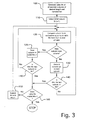
- nucleotide sequences of the subunits for any minimally cross-hybridizing set are conveniently enumerated by simple computer programs following the general algorithm illustrated in Fig. 3, and as exemplified by program minhx whose source code is listed in Appendix I.
- Minhx computes all minimally cross-hybridizing sets having subunits composed of three kinds of nucleotides and having length of four.
- the algorithm of Fig. 3 is implemented by first defining the characteristic of the subunits of the minimally cross-hybridizing set, i.e. length, number of base differences between members, and composition, e.g. do they consist of two, three, or four kinds of bases.
- a successive subunit Whenever a successive subunit has the required number of mismatches to be a member of the minimally cross-hybridizing set, it is saved in a new table M n+1 (125), that also contains subunits previously selected in prior passes through step 120.
- M 2 will contain S 1 : in the second set of comparisons
- M 3 will contain S 1 and S 2 : in the third set of comparisons
- M 4 will contain S 1 , S 2 , and S 3 : and so on.
- comparisons in table M j will be between S j and all successive subunits in M j . Note that each successive table M n+1 is smaller than its predecessors as subunits are eliminated in successive passes through step 130.
- minimally cross-hybridizing sets comprise subunits that make approximately equivalent contributions to duplex stability as every other subunit in the set. In this way, the stability of perfectly matched duplexes between every subunit and its complement is approximately equal.
- Guidance for selecting such sets is provided by published techniques for selecting optimal PCR primers and calculating duplex stabilities, e.g. Rychlik et al, Nucleic Acids Research, 17: 8543-8551 (1989) and 18: 6409-6412 (1990); Breslauer et al, Proc. Natl. Acad. Sci., 83: 3746-3750 (1986); Wetmur; Crit. Rev: Biochem. Mol. Biol., 26: 227-259 (1991);and the like.
- subunits may be provided that have the same terminal nucleotides.
- the sum of the base-stacking energies of all the adjoining terminal nucleotides will be the same, thereby reducing or climinating variability in tag melting temperatures.
- a preferred embodiment of minimally cross-hybridizing sets are those whose subunits are made up of three of the four natural nucleotides.
- the absence of one type of nucleotide in the oligonucleotide tags permits target polynucleotides to be loaded onto solid phase supports by use of the 3' ⁇ 5' exonuclease activity of a DNA polymerase.
- the following is an exemplary minimally cross-hybridizing set of subunits each comprising four nucleotides selected from the group consisting of A, G, and T: In this set, each member would form a duplex having three mismatched bases with the complement of every other member.
- oligonucleotide tags of the invention and their complements are conveniently synthesized on an automated DNA synthesizer, e.g. an Applied Biosystems, Inc. (Foster City, California) model 392 or 394 DNA/RNA Synthesizer, using standard chemistries, such as phosphoramidite chemistry, e.g. disclosed in the following references: Beaucage and Iyer, Tetrahedron, 48: 2223-2311 (1992); Molko et al, U.S. patent 4,980,460; Koster et al, U.S. patent 4,725,677; Caruthers et al, U.S.
- an automated DNA synthesizer e.g. an Applied Biosystems, Inc. (Foster City, California) model 392 or 394 DNA/RNA Synthesizer, using standard chemistries, such as phosphoramidite chemistry, e.g. disclosed in the following references: Beaucage and Iyer, Tetrahedron, 48: 22
- tags may comprise naturally occurring nucleotides that permit processing or manipulation by enzymes, while the corresponding tag complements may comprise non-natural nucleotide analogs, such as peptide nucleic acids, or like compounds, that promote the formation of more stable duplexes during sorting.
- repertoires of oligonucleotide tags and tag complements are preferably generated by subunit-wise synthesis via "split and mix" techniques, e.g. as disclosed in Shortle et al, International patent application EP 0638089.
- the basic unit of the synthesis is a subunit of the oligonucleotide tag.
- phosphoramidite chemistry is used and 3' phosphoramidite oligonucleotides are prepared for each subunit in a minimally cross-hybridizing set, e.g. for the set first listed above, there would be eight 4-mer 3'-phosphoramidites.
- Synthesis proceeds as disclosed by Shortle et al or in direct analogy with the techniques employed to generate diverse oligonucleotide libraries using nucleosidic monomers, e.g. as disclosed in Telenius et al, Genomics, 13: 718-725 (1992); Welsh et al, Nucleic Acids Research, 19: 5275-5279 (1991); Grothues et al, Nucleic Acids Research, 21: 1321-1322 (1993); Hartley, European patent application 90304496.4; Lam et al, Nature, 354: 82-84 (1991); Zuckerman et al, Int. J. Pept. Protein Research, 40: 498-507 (1992); and the like. Generally, these techniques simply call for the application of mixtures of the activated monomers to the growing oligonucleotide during the coupling steps.
- Double stranded forms of tags may be made by separately synthesizing the complementary strands followed by mixing under conditions that permit duplex formation.
- double stranded tags may be formed by first synthesizing a single stranded repertoire linked to a known oligonucleotide sequence that serves as a primer binding site. The second strand is then synthesized by combining the single stranded repertoire with a primer and extending with a polymerase. This latter approach is described in Oliphant et al, Gene, 44: 177-183 (1986).
- duplex tags may then be inserted into cloning vectors along with target polynucleotides for sorting and manipulation of the target polynucleotide in accordance with the invention.
- coding of tag sequences follows the same principles as for duplex-forming tags; however, there are further constraints on the selection of subunit sequences.
- third strand association via Hoogsteen type of binding is most stable along homopyrimidine-homopurine tracks in a double stranded target.
- base triplets form in T-A*T or C-G*C motifs (where "-" indicates Watson-Crick pairing and "*" indicates Hoogsteen type of binding); however, other motifs are also possible.
- Hoogsteen base pairing permits parallel and antiparallel orientations between the third strand (the Hoogsteen strand) and the purine-rich strand of the duplex to which the third strand binds, depending on conditions and the composition of the strands.
- nucleoside type e.g. whether ribose or deoxyribose nucleosides are employed
- base modifications e.g. methylated cytosine, and the like in order to maximize, or otherwise regulate, triplex stability as desired in particular embodiments, e.g. Roberts et al, Proc. Natl. Acad.
- Oligonucleotide tags of the invention may range in length from 12 to 60 nucleotides or basepairs. Preferably, oligonucleotide tags range in length from 18 to 40 nucleotides or basepairs. More preferably, oligonucleotide tags range in length from 25 to 40 nucleotides or basepairs.
- oligonucleotide tags are single stranded and specific hybridization occurs via Watson-Crick pairing with a tag complement.
- Oligonucleotide tags may be attached to many different classes of molecules by a variety of reactive functionalities well known in the art, e.g. Haugland, Handbook of Fluorescent Probes and Research Chemicals (Molecular Probes, Inc., Eugene, 1992); Khanna et al, U.S. patent 4,318,846; or the like.
- Table IV provides exemplary functionalities and counterpart reactive groups that may reside on oligonucleotide tags or the molecules of interest. When the functionalities and counterpart reactants are reacted together after activation in some cases, a linking group is formed.
- tags may be synthesized simultaneously with the molecules undergoing selection to form combinatorial chemical libraries.
- a class of molecules particularly convenient for the generation of combinatorial chemical libraries includes linear polymeric molecules of the form: - (M-L) n - wherein L is a linker moiety and M is a monomer that may selected from a wide range of chemical structures to provide a range of functions from serving as an inert non-sterically hindering spacer moiety to providing a reactive functionality which can serve as a branching point to attach other components, a site for attaching labels; a site for attaching oligonucleotides or other binding polymers for hybridizing or binding to a therapeutic target; or as a site for attaching other groups for affecting solubility, promotion of duplex and/or triplex formation, such as intercalators, alkylating agents, and the like.
- sequence, and therefore composition, of such linear polymeric molecules may be encoded within a polynucleotide attached to the tag, as taught by Brenner and Lerner (cited above).
- the tag itself or an additional coding segment can be sequenced directly--using a so-called "single base" approach described below--after releasing the molecule of interest, e.g. by restriction digestion of a site engineered into the tag.
- any molecule produced by a sequence of chemical reaction steps compatible with the simultaneous synthesis of the tag moieties can be used in the generation of combinatorial libraries.
- L is a phosphorus(V) linking group which may be phosphodiester, phosphotriester, methyl or ethyl phosphonate, phosphorothioate phosphorodithioate, phosphoramidate, or the like.
- V phosphorus(V) linking group
- linkages derived from phosphoramidite or hydrogen phosphonate precursors are preferred so that the linear polymeric units of the invention can be conveniently synthesized with commercial automated DNA synthesizers, e.g. Applied Biosystems, Inc. (Foster City, CA) model 394, or the like.
- n may vary significantly depending on the nature of M and L. Usually, n varies from about 3 to about 100. When M is a nucleoside or analog thereof or a nucleoside-sized monomer and L is a phosphorus(V) linkage, then n varies from about 12 to about 100. Preferably, when M is a nucleoside or analog thereof or a nucleoside-sized monomer and L is a phosphorus(V) linkage, then n varies from about 12 to about 40.
- Peptides are another preferred class of molecules to which tags of the invention are attached. Synthesis of peptide-oligonucleotide conjugates which may be used in the invention is taught in Nielsen et al, J. Am. Chem. Soc., 115: 9812-9813 (1993); Haralambidis et al (cited above) and International patent application PCT/AU88/004417; Truffert et al, Tetrahedron Letters, 35: 2353-2356 (1994); de la Torre et al, Tetrahedron Letters, 35: 2733-2736 (1994); and like references. Preferably, peptide-oligonucleotide conjugates are synthesized as described below. Peptides synthesized in accordance with the invention may consist of the natural amino acid monomers or non-natural monomers, including the D isomers of the natural amino acids and the like.
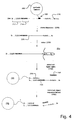
- Combinatorial chemical libraries employing tags of the invention are preferably prepared by the method disclosed in Nielsen et al (cited above) and illustrated in Figure 4 for a particular embodiment. Briefly, a solid phase support, such as CPG, is derivatized with a cleavable linker that is compatible with both the chemistry employed to synthesize the tags and the chemistry employed to synthesize the molecule that will undergo some selection process.
- tags are synthesized using phosphoramidite chemistry as described above and with the modifications recommended by Nielsen et al (cited above); that is.
- DMT-5'-O-protected 3'-phosphoramidite-derivatized subunits having methyl-protected phosphite and phosphate moieties are added in each synthesis cycle.
- Library compounds are preferably monomers having Fmoc--or equivalent--protecting groups masking the functionality to which successive monomer will be coupled.
- a suitable linker for chemistries employing both DMT and Fmoc protecting groups (referred to herein as a sarcosine linker) is disclosed by Brown et al. J. Chem. Soc. Chem. Commun., 1989: 891-893, which reference is incorporated by reference.
- Figure 4 illustrates a scheme for generating a combinatorial chemical library of peptides conjugated to oligonucleotide tags.
- Solid phase support 200 is derivatized by sarcosine linker 205 (exemplified in the formula below) as taught by Nielsen et al (cited above), which has an extended linking moiety to facilitate reagent access.
- CPG ( CPG )-NHC(O)CN(CH 3 )C(O)CH 2 CH 2 C(O)O(CH 2 ) 6 NHC(O)CH 2 (O-DMT)NC(O)- CH 2 O(CH 2 CH 2 O) 2 CH 2 CH 2 NHC(O)CH 2 O(CH 2 CH 2 O) 2 CH 2 CH 2 NH-Fmoc
- CPG represents a controlled-pore glass support
- DMT represents dimethoxytrityl
- Fmoc represents 9-fluorenylmethoxycarbonyl.
- an oligonucleotide segment 214 is synthesized initially so that in double stranded form a restriction endonuclease site is provided for cleaving the library compound after sorting onto a microparticle, or like substrate. Synthesis proceeds by successive alternative additions of subunits S 1 , S 2 , S 3 , and the like, to form tag 212, and their corresponding library compound monomers A 1 , A 2 , A 3 , and the like, to form library compound 216. A "split and mix" technique is employed to generate diversity.
- the subunits in a minimally cross-hybridizing set code for the monomer added in the library compound can unambiguously encode library compounds constructed from nine monomers. If some ambiguity is acceptable, then a single subunit may encode more than one monomer.
- tagged library compound 225 After synthesis is completed, the product is cleaved and deprotected (220) to form tagged library compound 225, which then undergoes selection 230, e.g. binding to a predetermined target 235, such as a protein.
- selection 230 e.g. binding to a predetermined target 235, such as a protein.
- the subset of library compounds recovered from selection process 230 is then sorted (240) onto a solid phase support 245 via their tag moieties (there complementary subunits and nucleotides are shown in italics).
- the conjugate is digested with the corresponding restriction endonuclease to cleave the library compound, a peptide in the example of Figure 4, from the oligonucleotide moiety.
- the sequence of the tag, and hence the identity of the library compound is then determined by the preferred single base sequencing technique of the invention, described below.
- Solid phase supports for use with the invention may have a wide variety of forms, including microparticles, beads, and membranes, slides, plates, micromachined chips, and the like.
- solid phase supports of the invention may comprise a wide variety of compositions, including glass, plastic, silicon, alkanethiolate-derivatized gold, cellulose, low cross-linked and high cross-linked polystyrene, silica gel, polyamide, and the like.
- either a population of discrete particles are employed such that each has a uniform coating, or population, of complementary sequences of the same tag (and no other), or a single or a few supports are employed with spatially discrete regions each containing a uniform coating, or population, of complementary sequences to the same tag (and no other).
- the area of the regions may vary according to particular applications; usually, the regions range in area from several ⁇ m 2 , e.g. 3-5, to several hundred ⁇ m 2 , e.g. 100-500.
- such regions are spatially discrete so that signals generated by events, e.g. fluorescent emissions, at adjacent regions can be resolved by the detection system being employed.
- Tag complements may be used with the solid phase support that they are synthesized on, or they may be separately synthesized and attached to a solid phase support for use, e.g. as disclosed by Lund et al, Nucleic Acids Research, 16: 10861-10880 (1988); Albretsen et al, Anal. Biochem., 189: 40-50 (1990); Wolf et al, Nucleic Acids Research. 15: 2911-2926 (1987); or Ghosh et al, Nucleic Acids Research, 15: 5353-5372 (1987).
- tag complements are synthesized on and used with the same solid phase support, which may comprise a variety of forms and include a variety of linking moieties.
- Such supports may comprise microparticles or arrays, or matrices, of regions where uniform populations of tag complements are synthesized.
- microparticle supports may be used with the invention, including microparticles made of controlled pore glass (CPG), highly cross-linked polystyrene, acrylic copolymers, cellulose, nylon, dextran, latex, polyacrolein, and the like, disclosed in the following exemplary references: Meth. Enzymol., Section A, pages 11-147, vol. 44 (Academic Press, New York, 1976): U.S. patents 4,678,814; 4,413,070; and 4,046;720; and Pon. Chapter 19, in Agrawal, editor, Methods in Molecular Biology, Vol.
- CPG controlled pore glass
- Microparticle supports further include commercially available nucleoside-derivatized CPG and polystyrene beads (e.g. available from Applied Biosystems, Foster City, CA): derivatized magnetic beads; polystyrene grafted with polyethylene glycol (e.g., TentaGelTM. Rapp Polymere, Tubingen Germany); and the like. Selection of the support characteristics, such as material, porosity, size, shape, and the like, and the type of linking moiety employed depends on the conditions under which the tags are used. For example, in applications involving successive processing with enzymes, supports and linkers that minimize steric hindrance of the enzymes and that facilitate access to substrate are preferred.
- microparticle support Other important factors to be considered in selecting the most appropriate microparticle support include size uniformity, efficiency as a synthesis support, degree to which surface area known, and optical properties, e.g. as explain more fully below, clear smooth beads provide instrumentational advantages when handling large numbers of beads on a surface.
- linking moieties for attaching and/or synthesizing tags on microparticle surfaces are disclosed in Pon et al, Biotechniques, 6:768-775 (1988); Webb, U.S. patent 4,659,774; Barany et al, International patent application EP 0546055; Brown et al, J. Chem. Soc. Commun., 1989: 891-893; Damha ct al, Nucleic Acids Research, 18: 3813-3821 (1990); Beattic et al, Clinical Chemistry, 39: 719-722 (1993); Maskos and Southern, Nucleic Acids Research, 20: 1679-1684 (1992); and the like.
- tag complements may also be synthesized on a single (or a few) solid phase support to form an array of regions uniformly coated with tag complements. That is, within each region in such an array the same tag complement is synthesized.
- Techniques for synthesizing such arrays are disclosed in McGall et al, International application WO 9322680; Pease et al, Proc. Natl. Acad. Sci., 91: 5022-5026 (1994); Southern and Maskos, International application EP 0386229; Maskos and Southern (cited above); Southern et al, Genomics, 13: 1008-1017 (1992); and Maskos and Southern, Nucleic Acids Research, 21: 4663-4669 (1993).
- the invention is implemented with microparticles or beads uniformly coated with complements of the same tag sequence.
- Microparticle supports and methods of covalently or noncovalently linking oligonucleotides to their surfaces are well known, as exemplified by the following references: Beaucage and Iyer (cited above); Gait, editor, Oligonucleotide Synthesis: A Practical Approach (IRL Press, Oxford, 1984); and the references cited above.
- the size and shape of a microparticle is not critical; however, microparticles in the size range of a few, e.g. 1-2, to several hundred, e.g. 200-1000 ⁇ m diameter are preferable, as they facilitate the construction and manipulation of large repertoires of oligonucleotide tags with minimal reagent and sample usage.
- CPG controlled-pore glass
- polystyrene supports are employed as solid phase supports in the invention.
- Such supports come available with base-labile linkers and initial nucleosides attached, e.g. Applied Biosystems (Foster City, CA).
- Applied Biosystems Foster City, CA
- microparticles having pore size between 500 and 1000 angstroms are employed.
- non-porous microparticles are employed for their optical properties, which may be advantageously used when tracking large numbers of microparticles on planar supports, such as a microscope slide.
- Particularly preferred non-porous microparticles are the glycidal methacrylate (GMA) beads available from Bangs Laboratories (Carmcl, IN).
- GMA glycidal methacrylate
- Such microparticles are useful in a variety of sizes and derivatized with a variety of linkage groups for synthesizing tags or tag complements.
- 5 ⁇ m diameter GMA beads are employed for massively parallel manipulations of tagged microparticles.
- An important aspect of the invention is the sorting of populations of identical polynucleotides, e.g. from a cDNA library, and their attachment to microparticles or separate regions of a solid phase support such that each microparticle or region has only a single kind of polynucleotide.
- This latter condition can be essentially met by ligating a repertoire of tags to a population of polynucleotides.
- the ligation products are then cloned, amplified, and sampled. Provided that the sample is sufficiently small, as explained more fully below, substantially all of the tag-polynucleotides conjugates of the resulting library will be unique. That is, each polynucleotide will have a unique tag, and vice versa.
- the polynucleotides are then sorted by hybridizing the tags to their complements
- a repertoire of oligonucleotide tags can be ligated to a population of polynucleotides in a number of ways, such as through direct enzymatic ligation, amplification, e.g. via PCR, using primers containing the tag sequences, and the like.
- the initial ligating step produces a very large population of tag-polynucleotide conjugates such that a single tag is generally attached to many different polynucleotides.
- the probability of obtaining "doubles,” i.e. the same tag on two different polynucleotides can be made negligible.
- the probability of obtaining a double in a sample can be estimated by a Poisson distribution since the number of conjugates in a sample will be large, e.g. on the order of thousands or more, and the probability of selecting a particular tag will be small because the tag repertoire is large, e.g. on the order of tens of thousand or more. Generally, the larger the sample the greater the probability of obtaining a double.
- substantially all in reference to attaching tags to molecules, especially polynucleotides, is meant to reflect the statistical nature of the sampling procedure employed to obtain a population of tag-molecule conjugates essentially free of doubles.
- the meaning of substantially all in terms of actual percentages of tag-molecule conjugates depends on how the tags are being employed.
- substantially all means that at least eighty percent of the tags have unique polynucleotides attached. More preferably, it means that at least ninety percent of the tags have unique polynucleotides attached. Still more preferably, it means that at least ninety-five percent of the tags have unique polynucleotides attached. And, most preferably, it means that at least ninety-nine percent of the tags have unique polynucleotides attached.
- oligonucleotides tags are attached by reverse transcribing the mRNA with a set of primers containing complements of tag sequences.
- An exemplary set of such primers could have the following sequence: where "[W,W,W,C] 9 " represents the sequence of an oligonucleotide tag of nine subunits of four nucleotides each and "[W,W,W,C]" represents the subunit sequences listed above, i.e. "W” represents T or A.
- the underlined sequences identify an optional restriction endonuclease site that can be used to release the polynucleotide from attachment to a solid phase support via the biotin, if one is employed.
- the complement attached to a microparticle could have the form:
- the mRNA is removed, e.g. by RNase H digestion, and the second strand of the cDNA is synthesized using, for example, a primer of the following form: where N is any one of A, T. G, or C: R is a purine-containing nucleotide, and Y is a pyrimidine-containing nucleotide.
- R is a purine-containing nucleotide
- Y is a pyrimidine-containing nucleotide.
- This particular primer creates a Bst Y 1 restriction site in the resulting double stranded DNA which, together with the Sal I site, facilitates cloning into a vector with, for example Bam HI and Xho I sites.
- the exemplary conjugate would have the form:
- the Bst Y 1 and Sal I digested fragments are cloned into a Bam HI-/Xho I-digested vector having the following single-copy restriction sites: This adds the Fok I site which will allow initiation of the sequencing process discussed more fully below.
- a general method for exposing the single stranded tag after amplification involves digesting a target polynucleotide-containing conjugate with the 3' ⁇ 5' exonuclease activity of T4 DNA polymerase, or a like enzyme.
- T4 DNA polymerase or a like enzyme.
- a single nucleoside triphosphate such a polymerase will cleave nucleotides from 3' recessed ends present on the non-template strand of a double stranded fragment until a complement of the single nucleoside triphosphate is reached on the template strand.
- the technique may also be used to preferentially methylate interior Fok I sites of a target polynucleotide while leaving a single Fok I site at the terminus of the polynucleotide unmethylated.
- the terminal Fok I site is rendered single stranded using a polymerase with deoxycytidine triphosphate.
- the double stranded portion of the fragment is then methylated, after which the single stranded terminus is filled in with a DNA polymerase in the presence of all four nucleoside triphosphates, thereby regenerating the Fok I site.
- this procedure can be generalized to endonucleases other than Fok I.
- the polynucleotides are mixed with microparticles containing the complementary sequences of the tags under conditions that favor the formation of perfectly matched duplexes between the tags and their complements.
- conditions that favor the formation of perfectly matched duplexes between the tags and their complements.
- the hybridization conditions are sufficiently stringent so that only perfectly matched sequences form stable duplexes. Under such conditions the polynucleotides specifically hybridized through their tags are ligated to the complementary sequences attached to the microparticles. Finally, the microparticles are washed to remove unligated polynucleotides.
- the density of tag complements on the microparticle surface is typically greater than that necessary for some sequencing operations. That is, in sequencing approaches that require successive treatment of the attached polynucleotides with a variety of enzymes, densely spaced polynucleotides may tend to inhibit access of the relatively bulky enzymes to the polynucleotides.
- the polynucleotides are preferably mixed with the microparticles so that tag complements are present in significant excess, e.g. from 10:1 to 100:1, or greater, over the polynucleotides. This ensures that the density of polynucleotides on the microparticle surface will not be so high as to inhibit enzyme access.
- the average inter-polynucleotide spacing on the microparticle surface is on the order of 30-100 nm.
- Guidance in selecting ratios for standard CPG supports and Ballotini beads (a type of solid glass support) is found in Maskos and Southern, Nucleic Acids Research, 20: 1679-1684 (1992).
- standard CPG beads of diameter in the range of 20-50 ⁇ m are loaded with about 10 5 polynucleotides
- GMA beads of diameter in the range of 5-10 ⁇ m are loaded with a few tens of thousand polynucleotide, e.g. 4 x 10 4 to 6 x 10 4 .
- the above method may be used to fingerprint mRNA populations when coupled with the parallel sequencing methodology described below.
- Partial sequence information is obtained simultaneously from a large sample, e.g. ten to a hundred thousand, of cDNAs attached to separate microparticles as described in the above method.
- the frequency distribution of partial sequences can identify mRNA populations from different cell or tissue types, as well as from diseased tissues, such as cancers.
- Such mRNA fingerprints are useful in monitoring and diagnosing disease states, e.g. International application PCT/US95/21944, which describes the use of express sequence tags (ESTs) for the same purpose.
- ESTs express sequence tags
- the present invention can be employed with conventional methods of DNA sequencing, e.g. as disclosed by Hultman et al, Nucleic Acids Research, 17: 4937-4946 (1989).
- sequencing of multiple polynucleotides see the following references: Cheeseman, U.S. patent 5,302,509; Tsicn et al, International application WO 91/06678; Rosenthal et al, International application WO 93/21340; Canard et al, Gene, 148: 1-6 (1994); and Metzker et al, Nucleic Acids Research, 22: 4259-4267 (1994).
- a "single base" method of DNA sequencing which is suitable for use with the present invention and which requires no electrophoretic separation of DNA fragments is described in International application EP 0703991.
- the method comprises the following steps: (a) ligating a probe to an end of the polynucleotide having a protruding strand to form a ligated complex, the probe having a complementary protruding strand to that of the polynucleotide and the probe having a nuclease recognition site; (b) removing unligated probe from the ligated complex; (c) identifying one or more nucleotides in the protruding strand of the polynucleotide by the identity of the ligated probe; (d) cleaving the ligated complex with a nuclease; and (e) repeating steps (a) through (d) until the nucleotide sequence of the polynucleotide is determined.
- identifying the one or more nucleotides can be carried out either before or after cleavage of the ligated complex from the target polynucleotide.
- the method further includes a step of methylating the target polynucleotide at the start of a sequencing operation.
- probes are double stranded DNA with a protruding strand at one end 10.
- the probes contain at least one nuclease recognition site 12 and a spacer region 14 between the recognition site and the protruding end 10.
- probes also include a label 16, which in this particular embodiment is illustrated at the end opposite of the protruding strand.
- the probes may be labeled by a variety of means and at a variety of locations, the only restriction being that the labeling means selected does not interfere with the ligation step or with the recognition of the probe by the nuclease.
- protruding strand 10 of the probe is a 5' or 3' end. However, it is important that the protruding strands of the target polynucleotide and probes be capable of forming perfectly matched duplexes to allow for specific ligation. If the protruding strands of the target polynucleotide and probe are different lengths the resulting gap can be filled in by a polymerase prior to ligation, e.g. as in "gap LCR" disclosed in Backman et al, European patent application EP 0439182.
- the number of nucleotides in the respective protruding strands are the same so that both strands of the probe and target polynucleotide are capable of being ligated without a filling step.
- the protruding strand of the probe is from 2 to 6 nucleotides long. As indicated below, the greater the length of the protruding strand, the greater the complexity of the probe mixture that is applied to the target polynucleotide during each ligation and cleavage cycle.
- the complementary strands of the probes are conveniently synthesized on an automated DNA synthesizer, e.g. an Applied Biosystems, Inc. (Foster City, California) model 392 or 394 DNA/RNA Synthesizer, using standard chemistries. After synthesis, the complementary strands are combined to form a double stranded probe.
- the protruding strand of a probe is synthesized as a mixture, so that every possible sequence is represented in the protruding portion. For example, if the protruding portion consisted of four nucleotides, in one embodiment four mixtures are prepared as follows: where the "NNNs" represent every possible 3-mer and the "Xs" represent the duplex forming portion of the strand.
- each of the four probes listed above contains 4 3 or 64 distinct sequences; or, in other words, each of the four probes has a degeneracy of 64.
- X 1 X 2 ... X i NNNA contains the following sequences:
- Such mixtures are readily synthesized using well known techniques, e.g. as disclosed in Telenius et al (cited above). Generally, these techniques simply call for the application of mixtures of the activated monomers to the growing oligonucleotide during the coupling steps where one desires to introduce the degeneracy. In some embodiments it may be desirable to reduce the degeneracy of the probes.
- degeneracy reducing analogs such as deoxyinosine, 2-aminopurine, or the like, e.g. as taught in Kong Thoo Lin et al, Nucleic Acids Research, 20: 5149-5152, or by U.S. patent 5,002,867.
- the duplex forming region of a probe is between about 12 to about 30 basepairs in length; more preferably, its length is between about 15 to about 25 basepairs.
- the 5' end of the probe may be phosphorylated in some embodiments.
- a 5' monophosphate can be attached to a second oligonucleotide either chemically or enzymatically with a kinase, e.g. Sambrook et al (cited above). Chemical phosphorylation is described by Horn and Urdea, Tetrahedron Lett., 27: 4705 (1986), and reagents for carrying out the disclosed protocols are commercially available, e.g. 5' Phosphate-ONTM from Clontech Laboratories (Palo Alto, California).
- probes may have the form: where the Y's are the complementary nucleotides of the X's and "p" is a monophosphate group.
- probes can be labeled in a variety of ways, including the direct or indirect attachment of radioactive moieties, fluorescent moieties, colorimetric moieties, chemiluminescent markers, and the like. Many comprehensive reviews of methodologies for labeling DNA and constructing DNA probes provide guidance applicable to constructing probes of the present invention.
- the probes arc labeled with one or more fluorescent dyes, e.g. as disclosed by Menchen et al, U.S. patent 5,188,934; Begot et al International application EP 04 96 749.
- a probe is ligated to an end of a target polynucleotide to form a ligated complex in each cycle of ligation and cleavage.
- the ligated complex is the double stranded structure formed after the protruding strands of the target polynucleotide and probe anneal and at least one pair of the identically oriented strands of the probe and target are ligated, i.e. are caused to be covalently linked to one another.
- Ligation can be accomplished either enzymatically or chemically. Chemical ligation methods are well known in the art, e.g.
- ligase in a standard protocol.
- Many ligases are known and are suitable for use in the invention, e.g. Lehman, Science, 186: 790-797 (1974); Engler et al, DNA Ligases, pages 3-30 in Boyer, editor, The Enzymes, Vol. 15B (Academic Press, New York, 1982); and the like.
- Preferred ligases include T4 DNA ligase, T7 DNA ligase, E.
- ligases require that a 5' phosphate group be present for ligation to the 3' hydroxyl of an abutting strand. This is conveniently provided for at least one strand of the target polynucleotide by selecting a nuclease which leaves a 5' phosphate, e.g. as Fok I.
- the step of ligating includes (i) ligating the probe to the target polynucleotide with a ligase so that a ligated complex is formed having a nick on one strand, (ii) phosphorylating the 5' hydroxyl at the nick with a kinase using conventional protocols, e.g. Sambrook et al (cited above), and (iii) ligating again to covalently join the strands at the nick, i.e. to remove the nick.
- An objective of the invention is to sort identical molecules, particularly polynucleotides, onto the surfaces of microparticles by the specific hybridization of tags and their complements. Once such sorting has taken place, the presence of the molecules or operations performed on them can be detected in a number of ways depending on the nature of the tagged molecule, whether microparticles are detected separately or in "batches,” whether repeated measurements are desired, and the like.
- the sorted molecules are exposed to ligands for binding, e.g. in drug development, or are subjected chemical or enzymatic processes, e.g. in polynucleotide sequencing. In both of these uses it is often desirable to simultaneously observe signals corresponding to such events or processes on large numbers of microparticles.
- Microparticles carrying sorted molecules lend themselves to such large scale parallel operations, e.g. as demonstrated by Lam et al (cited above).
- microparticles are spread on a planar substrate, e.g. a glass slide, for examination with a scanning system, such as described in International patent applications WO 9210587, EP 0476014, and WO 9522058.
- the scanning system should be able to reproducibly scan the substrate and to define the positions of each microparticle in a predetermined region by way of a coordinate system. In polynucleotide sequencing applications, it is important that the positional identification of microparticles be repeatable in successive scan steps.
- Substrate 300 and table 302 are operationally associated with microscope 306 having one or more objective lenses 308 which are capable of collecting and delivering light to microparticles fixed to substrate 300.
- Excitation beam 310 from light source 312, which is preferably a laser is directed to beam splitter 314, e.g. a dichroic mirror, which re-directs the beam through microscope 306 and objective lens 308 which, in turn, focuses the beam onto substrate 300.
- Lens 308 collects fluorescence 316 emitted from the microparticles and directs it through beam splitter 314 to signal distribution optics 318 which, in turn, directs fluorescence to one or more suitable opto-electronic devices for converting some fluorescence characteristic, e.g.
- Signal distribution optics 318 may comprise a variety of components standard in the art, such as bandpass filters, fiber optics, rotating mirrors, fixed position mirrors and lenses, diffraction gratings, and the like. As illustrated in Figure 5, signal distribution optics 318 directs fluorescence 316 to four separate photomultiplier tubes, 330, 332, 334, and 336, whose output is then directed to pre-amps and photon counters 350, 352, 354, and 356. The output of the photon counters is collected by computer 304, where it can be stored, analyzed, and viewed on video 360. Alternatively, signal distribution optics 318 could be a diffraction grating which directs fluorescent signal 318 onto a CCD array.
- the stability and reproducibility of the positional localization in scanning will determine, to a large extent, the resolution for separating closely spaced microparticles.
- the scanning systems should be capable of resolving closely spaced microparticles, e.g. separated by a particle diameter or less.
- the scanning system should at least have the capability of resolving objects on the order of 10-100 ⁇ m.
- Even higher resolution may be desirable in some embodiments, but with increase resolution, the time required to fully scan a substrate will increase; thus, in some embodiments a compromise may have to be made between speed and resolution.
- microparticle size and scanning system resolution are selected to permit resolution of fluorescently labeled microparticles randomly disposed on a plane at a density between about ten thousand to one hundred thousand microparticles per cm 2 .
- loaded microparticles can be fixed to the surface of a substrate in variety of ways.
- the fixation should be strong enough to allow the microparticles to undergo successive cycles of reagent exposure and washing without significant loss.
- the substrate is glass, its surface may be derivatized with an alkylamino linker using commercially available reagents, e.g. Pierce Chemical, which in turn may be cross-linked to avidin, again using conventional chemistries, to form an avidinated surface.
- Biotin moieties can be introduced to the loaded microparticles in a number of ways. For example, a fraction, e.g.
- the cloning vectors used to attach tags to polynucleotides are engineered to contain a unique restriction site (providing sticky ends on digestion) immediately adjacent to the polynucleotide insert at an end of the polynucleotide opposite of the tag.
- the site is excised with the polynucleotide and tag for loading onto microparticles. After loading, about 10-15 percent of the loaded polynucleotides will possess the unique restriction site distal from the microparticle surface.
- an appropriate double stranded adaptor containing a biotin moiety is ligated to the sticky end. The resulting microparticles are then spread on the avidinated glass surface where they become fixed via the biotin-avidin linkages.
- a mixture of probes is applied to the loaded microparticle: a fraction of the probes contain a type Ils restriction recognition site, as required by the sequencing method, and a fraction of the probes have no such recognition site, but instead contain a biotin moiety at its non-ligating end.
- the mixture comprises about 10-15 percent of the biotinylated probe.
- the DNA when DNA-loaded microparticles are applied to a glass substrate, the DNA may nonspecifically adsorb to the glass surface upon several hours, e.g. 24 hours, incubation to create a bond sufficiently strong to permit repeated exposures to reagents and washes without significant loss of microparticles.
- a glass substrate is a flow cell, which may comprise a channel etched in a glass slide.
- such a channel is closed so that fluids may be pumped through it and has a depth sufficiently close to the diameter of the microparticles so that a monolayer of microparticles is trapped within a defined observation region.
- the tagging system of the invention can be used with single base sequencing methods to sequence polynucleotides up to several kilobases in length.
- the tagging system permits many thousands of fragments of a target polynucleotide to be sorted onto one or more solid phase supports and sequenced simultaneously.
- a portion of each sorted fragment is sequenced in a stepwise fashion on each of the many thousands of loaded microparticles which are fixed to a common substrate--such as a microscope slide--associated with a scanning system or an image analysis system, such as described above.
- the size of the portion of the fragments sequenced depends of several factors, such as the number of fragments generated and sorted, the length of the target polynucleotide, the speed and accuracy of the single base method employed, the number of microparticles and/or discrete regions that may be monitored simultaneously; and the like.
- the sequence of the target polynucleotide is determined by collating the 12-50 base fragments via their overlapping regions, e.g. as described in U.S. patent 5,002,867.
- the length of the target polynucleotide is between I kilobase and 50 kilobases. More preferably, the length is between 10 kilobases and 40 kilobases.
- Lander and Waterman (cited above) provide guidance concerning the relationship among the number of fragments that are sequenced (i.e. the sample size), the amount of sequence information obtained from each fragment, and the probability that the target polynucleotide can be reconstructed from the partial sequences without gaps, or "islands.”
- maximal polynucleotide sizes that can be obtained for given sample sizes and sizes of fragment sequences are shown below: Size of Sample Approx.
- maximal target polynucleotide length 30 bases/fragment 50 bases/fragment 1,000 3 kilobases 4 kilobases 10,000 22 kilobases 32 kilobases 20,000 40 kilobases 65 kilobases 30,000 60 kilobases 85 kilobases 100,000 180 kilobases 300 kilobases
- Fragments may be generated from a target polynucleotide in a variety of ways, including so-called “directed” approaches where one attempts to generate sets of fragments covering the target polynucleotide with minimal overlap, and so-called “shotgun” approaches where randomly overlapping fragments are generated.
- "shotgun" approaches to fragment generation are employed because of their simplicity and inherent redundancy.
- randomly overlapping fragments that cover a target polynucleotide are generated in the following conventional "shotgun" sequencing protocol, e.g. as disclosed in Sambrook et al (cited above).
- “cover” in this context means that every portion of the target polynucleotide sequence is represented in each size range, e.g.
- the vector is expanded, purified and digested with the appropriate restriction enzymes to yield about 10-15 ⁇ g of purified insert.
- the protocol results in about 500-1000 subclones per microgram of starting DNA.
- the insert is separated from the vector fragments by preparative gel electrophoresis, removed from the gel by conventional methods, and resuspended in a standard buffer, such as TE (Tris-EDTA).
- the restriction enzymes selected to excise the insert from the vector preferably leave compatible sticky ends on the insert, so that the insert can be self-ligated in preparation for generating randomly overlapping fragments.
- the circularized DNA yields a better random distribution of fragments than linear DNA in the fragmentation methods employed below.
- the purified ligated insert is fragmented by a standard protocol, e.g. sonication or DNase 1 digestion in the presence of Mn ++ . After fragmentation the ends of the fragments are repair, e.g.
- fragments in the 300-500 basepair range are selected and eluted from the gel by conventional means, and ligated into a tag-carrying vector as described above to form a library of tag-fragment conjugates.
- a sample containing several thousand tag-fragment conjugates are taken from the library and expanded, after which the tag-fragment inserts are excised from the vector and prepared for specific hybridization to the tag complements on microparticles, as described above.
- multiple samples may be taken from the tag-fragment library and separately expanded, loaded onto microparticles and sequenced. The number of doubles selected will depend on the fraction of the tag repertoire represented in a sample. (The probability of obtaining triples--three different polynucleotides with the same tag-- or above can safely be ignored).
- Table V lists probabilities of obtaining doubles in a sample for given tag size, sample size, and repertoire diversity.
- nucleotides of each of the random fragments are simultaneously sequenced with a single base method.
- sequence of the target polynucleotide is then reconstructed by collating the partial sequences of the random fragments by way of their overlapping portions, using algorithms similar to those used for assembling contigs, or as developed for sequencing by hybridization, disclosed in the above references.
- kits of the invention include kits for carrying out the various embodiments of the invention.
- kits of the invention include a repertoire of tag complements attached to a solid phase support.
- kits of the invention may include the corresponding repertoire of tags, e.g. as primers for amplifying the polynucleotides to be sorted or as elements of cloning vectors which can also be used to amplify the polynucleotides to be sorted.
- the repertoire of tag complements are attached to microparticles. Kits may also contain appropriate buffers for enzymatic processing, detection chemistries, e.g.
- kits may also include substrates, such as a avidinated microscope slides, for fixing loaded microparticles for processing.
- Novel polynucleotides in a cDNA library can be identified by constructing a library of cDNA molecules attached to microparticles, as described above. A large fraction of the library, or even the entire library, can then be partially sequenced in parallel. After isolation of mRNA, and perhaps normalization of the population as taught by Soares et al, Proc. Natl. Acad.
- the following primer may by hybridized to the polyA tails for first strand synthesis with a reverse transcriptase using conventional protocols: where [W,W,W,C] 9 represents a tag as described above, "ACCAGCTGATC” is an optional sequence forming a restriction site in double stranded form, and "primer site” is a sequence common to all members of the library that is later used as a primer binding site for amplifying polynucleotides of interest by PCR.
- the double stranded fragments are inserted into a cloning vector as described above and amplified.
- the amplified library is then sampled and the sample amplified.
- the cloning vectors from the amplified sample are isolated, and the tagged cDNA fragments excised and purified.
- the fragments are methylated and sorted onto microparticles in accordance with the invention.
- the cloning vector is constructed so that the tagged cDNAs can be excised with an endonuclease, such as Fok I. that will allow immediate sequencing by the preferred single base method after sorting and ligation to microparticles.
- Stepwise sequencing is then carried out simultaneously on the whole library, or one or more large fractions of the library, in accordance with the invention until a sufficient number of nucleotides are identified on each cDNA for unique representation in the genome of the organism from which the library is derived.
- the library is derived from mammalian mRNA then a randomly selected sequence 14-15 nucleotides long is expected to have unique representation among the 2-3 thousand megabases of the typical mammalian genome.
- identification of far fewer nucleotides would be sufficient for unique representation in a library derived from bacteria, or other lower organisms.
- at least 20-30 nucleotides are identified to ensure unique representation and to permit construction of a suitable primer as described below.
- the tabulated sequences may then be compared to known sequences to identify unique cDNAs.
- Unique cDNAs are then isolated by conventional techniques, e.g. constructing a probe from the PCR amplicon produced with primers directed to the prime site and the portion of the cDNA whose sequence was determined. The probe may then be used to identify the cDNA in a library using a conventional screening protocol.
- a mixture of three target polynucleotide-tag conjugates are obtained as follows: First, the following six oligonucleotides are synthesized and combined pairwise to form tag 1, tag 2. and tag 3: where "p" indicates a monophosphate, the w i 's represent the subunits define in Table I, and the terms "(**)" represent their respective complements.
- a pUC19 is digested with Sal I and Hind III, the large fragment is purified, and separately ligated with tags 1, 2, and 3, to form pUC19-1, pUC19-2, and pUC 19-3, respectively.
- the three recombinants are separately amplified and isolated, after which pUC19-1 is digested with Hind III and Aat I, pUC19-2 is digested with Hind III and Ssp I, and pUC19-3 is digested with Hind III and Xmn I.
- the small fragments are isolated using conventional protocols to give three double stranded fragments about 250, 375, and 575 basepairs in length, respectively, and each having a recessed 3' strand adjacent to the tag and a blunt or 3' protruding strand at the opposite end.
- Approximately 12 nmoles of each fragment are mixed with 5 units T4 DNA polymerase in the manufacturer's recommended reaction buffer containing 33 ⁇ M deoxycytosine triphosphate.
- the reaction mixture is allowed to incubate at 37°C for 30 minutes, after which the reaction is stopped by placing on ice.
- the fragments are then purified by conventional means.
- CPG microparticles (37-74 mm particle size, 500 angstrom pore size, Pierce Chemical) are derivatized with the linker disclosed by Maskos and Southern, Nucleic Acids Research, 20: 1679-1684 (1992). After separating into three aliquots, the complements of tags 1, 2, and 3 are synthesized on the microparticles using a conventional automated DNA synthesizer, e.g. a model 392 DNA synthesizer (Applied Biosystems, Foster City, CA). Approximately 1 mg of each of the differently derivatized microparticles are placed in separate vessels.
- a conventional automated DNA synthesizer e.g. a model 392 DNA synthesizer (Applied Biosystems, Foster City, CA). Approximately 1 mg of each of the differently derivatized microparticles are placed in separate vessels.
- the T4 DNA polymerase-treated fragments excised from pUC19-1, -2, and -3 are resuspended in 50 ⁇ L of the manufacturer's recommended buffer for Taq DNA ligase (New England Biolabs). The mixture is then equally divided among the three vessels containing the 1 mg each of derivatized CPG microparticles. 5 units of Taq DNA ligase is added to each vessel, after which they are incubated at 55°C for 15 minutes. The reaction is stopped by placing on ice and the microparticles are washed several times by repeated centrifugation and resuspension in TE.
- microparticles are resuspended in Nde I reaction buffer (New England Biolabs) where the attached polynucleotides are digested.
- Nde I reaction buffer New England Biolabs
- the polynucleotide fragments released by Nde I digestion are fluorescently labeled by incubating with Sequenase DNA polymerase and fluorescein labeled thymidine triphosphate (Applied Biosystems, Foster City, CA).
- Sequenase DNA polymerase and fluorescein labeled thymidine triphosphate Applied Biosystems, Foster City, CA.
- the fragments are then separately analyzed on a nondenaturing polyacrylamide gel using an Applied Biosystems model 373 DNA sequencer.
- a repertoire of 36-mer tags consisting of nine 4-nucleotide subunits selected from Table I is prepared by separately synthesizing tags and tag complements by a split and mix approach, as described above.
- the repertoire is synthesized so as to permit ligation into a Sma I/Hind III digested M13mp19.
- one set of oligonucleotides begins with the addition of A followed by nine rounds of split and mix synthesis wherein the oligonucleotide is extended subunit-wise by 3'-phosphoramidite derivatived 4-mers corresponding to the subunits of Table I.
- the synthesis is then completed with the nucleotide-by-nucleotide addition of one half of the Sma I recognition site (GGG), two C's, and a 5'-monophosphate, e.g. via the Phosphate-ON reagent available from Clontech Laboratories (Palo Alto, CA).
- the other set of oligonucleotides begins with the addition of three C's (portion of the Sma I recognition site) and two G's, followed by nine rounds of split and mix synthesis wherein the oligonucleotide is extended by 3'-phosphoramidite derivatized 4-mers corresponding to the complements of the subunits of Table I.
- Synthesis is completed by the nucleotide-by-nucleotide addition of the Hind III recognition site and a 5'-monophosphate. After separation from the synthesis supports the oligonucleotides are mixed under conditions that permit formation of the following duplexes: The mixture of duplexes is then ligated into a Sma I/Hind III-digested M 13mp 19. A repertoire of tag complements are synthesized on CPG microparticles as described above.
- the adaptor is ligated into the Eco RI/Sma I digested M 13 described above.
- SV40 DNA is fragmented by sonication following the protocol set forth in Sambrook et al (cited above). The resulting fragments are repaired using standard protocols and separated by size. Fragments in the range of 300-500 basepairs are selected and ligated into the Sma I digested M13 described above to form a library of fragment-tag conjugates, which is then amplified. A sample containing several thousand different fragment-tag conjugates is taken from the library, further amplified, and the fragment-tag inserts are excised by digesting with Eco RI and Hind III. The excised fragment-tag conjugates are treated with T4 DNA polymerase in the presence of deoxycytidine triphosphate, as described in Example I, to expose the oligonucleotide tags for specific hybridization to the CPG microparticles.
- the loaded microparticles are treated with Fok I to produce a 4-nucleotide protruding strand of a predetermined sequence.
- a 10:1 mixture (probe 1:probe 2) of the following probes are ligated to the polynucleotides on microparticles.
- FAM represents a fluorescein dye attached to the 5'-hydroxyl of the top strand of Probe I through an aminophosphate linker available from Applied Biosystems (Aminolinker).
- the biotin may also be attached through an Aminolinker moiety and optionally may be further extended via polyethylene oxide linkers, e.g. Jaschke et al (cited above).
- the loaded microparticles are then deposited on the surface of an avidinated glass slide to which and from which reagents and wash solutions can be delivered and removed.
- the avidinated slide with the attached microparticles is examined with a scanning fluorescent microscope (e.g. Zeiss Axioskop equipped with a Newport Model PM500-C motion controller, a Spectra-Physics Model 2020 argon ion laser producing a 488 nm excitation beam, and a 520 nm long-pass emission filter, or like apparatus).
- the excitation beam and fluorescent emissions are delivered and collected, respectively, through the same objective lens.
- the excitation beam and collected fluorescence are separated by a dichroic mirror which directs the collected fluorescence through a series of bandpass filters and to photon-counting devices corresponding to the fluorophors being monitored, e.g. comprising Hamamatsu model 9403-02 photomultipliers, a Stanford Research Systems model SR445 amplifier and model SR430 multichannel scaler, and digital computer, e.g. a 486-based computer.
- the computer generates a two dimensional map of the slide which registers the positions of the microparticles.
- the polynucleotides on the attached microparticles undergo 20 cycles of probe ligation, washing, detection, cleavage, and washing, in accordance with the preferred single base sequencing methodology described below.
- the scanning system records the fluorescent emission corresponding the base identified at each microparticle. Reactions and washes below are generally carried out with manufacturer's (New England Biolabs') recommended buffers for the enzymes employed, unless otherwise indicated. Standard buffers are also described in Sambrook et al (cited above).
- TAMRA, FAM, ROX, and JOE are spectrally resolvable fluorescent labels attached by way of Aminolinker II (all being available from Applied Biosystems, Inc., Foster City, California); the bold faced nucleotides are the recognition site for Fok I endonuclease, and "N" represents any one of the four nucleotides, A, C, G, T.
- TAMRA tetramethylrhodamine
- FAM fluorescein
- ROX rhodamine X
- JOE 2',7'-dimethoxy-4',5'-dichlorofluorescein
- the above probes are incubated in approximately 5 molar excess of the target polynucleotide ends as follows: the probes are incubated for 60 minutes at 16°C with 200 units of T4 DNA ligase and the anchored target polynucleotide in T4 DNA ligase buffer; after washing, the target polynucleotide is then incubated with 100 units T4 polynucleotide kinase in the manufacturer's recommended buffer for 30 minutes at 37°C, washed, and again incubated for 30 minutes at 16°C with 200 units of T4 DNA ligase and the anchored target polynucleotide in T4 DNA ligase buffer.
- Washing is accomplished by successively flowing volumes of wash buffer over the slide, e.g. TE, disclosed in Sambrook et al (cited above). After the cycle of ligation-phosphorylation-ligation and a final washing, the attached microparticles are scanned for the presence of fluorescent label, the positions and characteristics of which are recorded by the scanning system.
- the labeled target polynucleotide i.e. the ligated complex
- the labeled target polynucleotide is then incubated with 10 units of Fok I in the manufacturer's recommended buffer for 30 minutes at 37°C, followed by washing in TE.
- Fok I 10 units of Fok I
- the target polynucleotide is shortened by one nucleotide on each strand and is ready for the next cycle of ligation and cleavage. The process is continued until twenty nucleotides are identified.
Landscapes
- Chemical & Material Sciences (AREA)
- Life Sciences & Earth Sciences (AREA)
- Organic Chemistry (AREA)
- Health & Medical Sciences (AREA)
- Engineering & Computer Science (AREA)
- Zoology (AREA)
- Wood Science & Technology (AREA)
- Genetics & Genomics (AREA)
- Proteomics, Peptides & Aminoacids (AREA)
- Biotechnology (AREA)
- Bioinformatics & Cheminformatics (AREA)
- General Engineering & Computer Science (AREA)
- Molecular Biology (AREA)
- Biochemistry (AREA)
- General Health & Medical Sciences (AREA)
- Physics & Mathematics (AREA)
- Microbiology (AREA)
- Biophysics (AREA)
- Analytical Chemistry (AREA)
- Biomedical Technology (AREA)
- Immunology (AREA)
- Plant Pathology (AREA)
- Crystallography & Structural Chemistry (AREA)
- Chemical Kinetics & Catalysis (AREA)
- Bioinformatics & Computational Biology (AREA)
- General Chemical & Material Sciences (AREA)
- Medicinal Chemistry (AREA)
- Measuring Or Testing Involving Enzymes Or Micro-Organisms (AREA)
- Pyrane Compounds (AREA)
- Saccharide Compounds (AREA)
- Magnetic Heads (AREA)
- Medicines Containing Antibodies Or Antigens For Use As Internal Diagnostic Agents (AREA)
- Transition And Organic Metals Composition Catalysts For Addition Polymerization (AREA)
- Investigating, Analyzing Materials By Fluorescence Or Luminescence (AREA)
- Control Of Driving Devices And Active Controlling Of Vehicle (AREA)
- Acyclic And Carbocyclic Compounds In Medicinal Compositions (AREA)
- Air Transport Of Granular Materials (AREA)
- Crystals, And After-Treatments Of Crystals (AREA)
- Physical Or Chemical Processes And Apparatus (AREA)
- Multiple-Way Valves (AREA)
Claims (42)
- Procédé pour trier des polynucléotides à partir d'une population de polynucléotides sur un ou plusieurs supports en phase solide, le procédé comprenant les étapes de :(a) attacher une étiquette oligonucléotidique d'un répertoire d'étiquettes choisies parmi un ensemble à hybridation croisée minimale qui s'étendent de 12 à 60 nucléotides et diffèrent l'une de l'autre par au moins trois nucléotides sur chaque polynucléotide dans une population de polynucléotides de sorte que tous les polynucléotides différents dans la population aient des étiquettes oligonucléotidiques différentes attachées, pour former une population de polynucléotides étiquetés ; et(b) trier les polynucléotides étiquetés en hybridant de manière spécifique les étiquettes oligonucléotidiques des polynucléotides étiquetés avec leurs compléments respectifs, les compléments respectifs étant attachés sous forme d'une population uniforme dans des régions spatialement discrètes d'un ou plusieurs supports en phase solide.
- Procédé selon la revendication 1, dans lequel chaque étiquette oligonucléotidique dudit répertoire comprend une pluralité de sous-unités et chaque sous-unité de la pluralité est constituée d'un oligonucléotide ayant une longueur de trois à six nucléotides ou de trois à six paires de bases, les sous-unités étant choisies parmi un ensemble à hybridation croisée minimale.
- Procédé selon la revendication 1 ou 2, dans lequel lesdits un ou plusieurs supports en phase solides sont des microparticules.
- Procédé selon l'une quelconque des revendications 1 à 3, dans lequel ladite étiquette oligonucléotidique et ledit complément sont des oligonucléotides simple brin.
- Procédé selon la revendication 3 ou 4, dans lequel ladite microparticule est choisie dans le groupe constitué de microparticules de verre, billes magnétiques, microparticules de glycidyl méthacrylate et microparticules de polystyrène.
- Procédé selon l'une quelconque des revendications 3 à 5, dans lequel ladite microparticule a un diamètre entre 1 et 100 µm.
- Procédé selon la revendication 1 ou 2, dans lequel ledit support en phase solide est un substrat plan ayant une pluralité de régions de surface spatialement discrètes ayant des populations uniformes desdits compléments attachées dessus.
- Procédé selon la revendication 7, dans lequel différentes desdites régions de surfaces spatialement discrètes de ladite pluralité ont des populations uniformes de différents desdits compléments.
- Procédé selon l'une quelconque des revendications 1 à 8, dans lequel lesdites étiquettes oligonucléotidiques forment des duplexes parfaitement appariés de stabilité égale.
- Procédé selon l'une quelconque des revendications 1 à 9, dans lequel :l'étape (a) d'attachement comprend l'échantillonnage de la population de polynucléotides étiquetés pour former une sous-population de polynucléotides étiquetés, la sous-population de polynucléotides étiquetés étant amplifiée avant ladite étape de triage (b) ; etladite étape de triage (b) comprend la formation de duplexes parfaitement appariés entre lesdites étiquettes oligonucléotidiques et leurs compléments respectifs sur lesdites un ou plusieurs supports en phase solide.
- Procédé selon l'une quelconque des revendications 1 à 10 pour classer une population de polynucléotides, dans lequel
ledit procédé comprend en outre la détermination de la séquence nucléotidique d'une partie de chaque polynucléotide après ladite étape de triage (b) ; et
le classement de la population par la distribution de fréquence des parties de séquences des polynucléotides. - Procédé selon l'une quelconque des revendications 1 à 10 pour déterminer la séquence nucléotidique d'un polynucléotide cible, dans lequel
ladite population de polynucléotides comprend une pluralité de fragments générés à partir du polynucléotide cible, la pluralité de fragments couvrant le polynucléotide cible ; et
ledit procédé comprend en outre la détermination de la séquence nucléotidique d'une partie de chaque fragment dans la pluralité après ladite étape de triage (b) ; et
la détermination de la séquence nucléotidique du polynucléotide cible en assemblant les séquences des fragments. - Procédé selon la revendication 12, dans lequel ladite pluralité de fragments comprend des fragments chevauchant de manière aléatoire desdits polynucléotides cibles.
- Procédé selon la revendication 12 ou 13, dans lequel ledit support en phase solide est une pluralité de microparticules, une population uniforme desdits compléments étant attachée à chacune, et dans lequel ladite partie de chacun desdits fragments comprend de 12 à 25 nucléotides.
- Procédé selon l'une quelconque des revendications 1 à 14, dans lequel après ladite étape de triage (b), ladite pluralité de microparticules sont fixées sur un substrat plan.
- Procédé selon la revendication 15, dans lequel ladite pluralité de microparticules sont disposées de manière aléatoire sur la surface dudit substrat plan à une densité d'entre environ 1000 microparticules à environ 100 mille microparticules par centimètre carré.
- Procédé pour attacher un ADN double brin étiqueté à un support en phase solide, le procédé comprenant les étapes de :fournir un brin 5' à une extrémité d'un ADN double brin étiqueté, un tel brin 5' étant composé de nucléotides choisis à partir d'un premier groupe constitué de trois, ou moins, types de nucléotides et un tel brin 5' ayant une longueur prédéterminée définie par un second nucléotide d'un type non présent dans le premier groupe, le second nucléotide étant positionné à l'extrémité 3' du brin 5' ;exposer l'extrémité de l'ADN double brin étiqueté à une ADN polymérase ayant une activité exonucléase 3'→5' en présence de nucléosides triphosphates du second nucléotide afin que le brin 5' soit digéré jusqu'à la position du second nucléotide pour produire un segment simple brin ; etattacher l'ADN double brin étiqueté à un support en phase solide en hybridant de manière spécifique le segment étiqueté simple brin à son complément attaché au support en phase solide.
- Procédé selon la revendication 17, dans lequel ladite ADN polymérase est l'ADN polymérase de T4.
- Procédé pour attacher des étiquettes oligonucléotidiques sur des polynucléotides dans une population, le procédé comprenant les étapes de :fournir un répertoire d'étiquettes oligonucléotidiques choisies parmi un ensemble à hybridation croisée minimale qui s'étend de 12 à 60 nucléotides et diffèrent l'une de l'autre par au moins trois nucléotides, ayant une taille supérieure à celle d'une population de polynucléotides ;ligaturer le répertoire d'étiquettes oligonucléotidiques à la population de polynucléotides pour former une population de conjugués étiquette-polynucléotide ; etprendre un échantillon de la population de conjugués étiquette-polynucléotide de sorte que tous les conjugués étiquette-polynucléotide dans l'échantillon ayant différents polynucléotides aient des étiquettes oligonucléotidiques différentes.
- Procédé selon la revendication 19, dans lequel ladite taille dudit répertoire d'étiquettes oligonucléotidiques et ladite taille dudit échantillon sont choisies de manière qu'au moins quatre-vingt dix pourcents desdits conjugués étiquette-polynucléotide soient uniques.
- Composition de matière comprenant :un support en phase solide ayant une ou plusieurs régions spatialement discrètes ; etune population uniforme de compléments d'étiquettes oligonucléotidiques attachée de manière covalente au support en phase solide dans au moins une des une ou plusieurs régions spatialement discrètes, les compléments d'étiquettes oligonucléotidiques étant choisis parmi un ensemble d'oligonucléotides à hybridation croisée minimale ayant une longueur dans l'intervalle de 12 à 60 nucléotides et chacun différant l'un de l'autre par au moins deux nucléotides.
- Composition selon la revendication 21, dans laquelle chacun desdits compléments d'étiquettes oligonucléotidiques comprend une pluralité de sous-unités de sorte que chaque sous-unité de la pluralité est constituée d'un oligonucléotide ayant une longueur de trois à six nucléotides, les sous-unités étant choisies parmi un ensemble à hybridation croisée minimale.
- Composition de matière selon la revendication 22, dans laquelle ladite pluralité desdites sous-unités est dans l'intervalle de 4 à 10.
- Composition de matière selon l'une quelconque des revendications 21 à 23, dans laquelle ledit support en phase solide est une pluralité de microparticules ayant chacune une région spatialement discrète unique.
- Composition selon l'une quelconque des revendications 21 à 24, dans laquelle lesdits compléments d'étiquettes oligonucléotidiques sont en outre choisis pour former des duplexes parfaitement appariés de stabilité égale.
- Composition selon l'une quelconque des revendications 21 à 23, dans laquelle lesdites régions spatialement discrètes sont des positions spécifiques sur un réseau de positions de synthèse sur un support unique.
- Composition de matière comprenant un mélange de microparticules, chaque microparticule ayant des polynucléotides étiquetés d'une population attachée à des compléments d'étiquettes sur ladite microparticule, de sorte que tous les polynucléotides étiquetés différents dans la population soient attachés à différentes microparticules, dans laquelle lesdits polynucléotides étiquetés sont choisis dans le groupe constitué d'ADNc et de fragments d'ADN génomique ; et lesdits compléments d'étiquettes sont choisis parmi un ensemble d'oligonucléotides à hybridation croisée minimale ayant une longueur dans l'intervalle de 12 à 60 nucléotides, chacun différant l'un de l'autre par au moins deux nucléotides.
- Composition selon la revendication 27, dans laquelle environ 105 desdits polynucléotides étiquetés sont attachés à chacune desdites microparticules.
- Composition selon la revendication 27 ou 28, dans laquelle la population a une taille dans l'intervalle de dix à cent mille.
- Banque d'ADNc comprenant une pluralité d'ADNc étiquetés attachés à des microparticules de sorte que tous les ADNc étiquetés différents de la banque soient attachés à différentes microparticules, dans laquelle(a) tous les polynucléotides différents ont des étiquettes oligonucléotidiques différentes attachées et(b) le répertoire d'étiquettes oligonucléotidiques est choisi dans le groupe d'oligonucléotides de la forme : S1, S2, S3...Sn dans lequel chacun de S1 à Sn est une sous-unité constituée d'un oligonucléotide ayant une longueur de trois à six nucléotides et étant choisi parmi un ensemble à hybridation croisée minimale, de sorte que chaque sous-unité diffère de toutes les autres sous-unités par au moins deux nucléotides, et n est dans l'intervalle de 4 à 10.
- Banque d'ADNc selon la revendication 30, dans laquelle ladite pluralité est entre dix mille et cent mille.
- Banque de fragments d'ADN génomique comprenant une pluralité de fragments d'ADN génomique étiquetés attachés à des microparticules de sorte que tous les différents fragments d'ADN génomique étiquetés de la banque sont attachés à différentes microparticules, dans laquelle(a) tous les différents polynucléotides ont différentes étiquettes oligonucléotidiques attachées et(b) le répertoire d'étiquettes oligonucléotidiques est choisi dans le groupe d'oligonucléotides de la forme : S1, S2, S3...Sn dans lequel chacun de S1 à Sn est une sous-unité constituée d'un oligonucléotide ayant une longueur de trois à six nucléotides et étant choisi parmi un ensemble à hybridation croisée minimale, de sorte que chaque sous-unité diffère de toutes les autres sous-unités par au moins deux nucléotides, et n est dans l'intervalle de 4 à 10.
- Banque selon la revendication 32, dans laquelle ladite pluralité de fragments d'ADN génomique est au moins 1000.
- Utilisation d'un répertoire d'étiquettes oligonucléotidiques dans un procédé pour marquer ou trier une molécule ou sous-population de molécules à partir d'une population de molécules en hybridant de manière spécifique les étiquettes oligonucléotidiques avec leurs compléments respectifs, dans laquelle(a) tous les différents polynucléotides ont différentes étiquettes oligonucléotidiques attachées et(b) le répertoire d'étiquettes oligonucléotidiques est choisi dans le groupe d'oligonucléotides de la forme : S1, S2, S3...Sn dans lequel chacun de S1 à Sn est une sous-unité constituée d'un oligonucléotide ayant une longueur de trois à six nucléotides et étant choisi parmi un ensemble à hybridation croisée minimale, de sorte que chaque sous-unité diffère de toutes les autres sous-unités par au moins deux nucléotides, et n est dans l'intervalle de 4 à 10.
- Utilisation selon la revendication 34 dans laquelle les étiquettes oligonucléotidiques sont des inserts d'un vecteur de clonage.
- Utilisation selon la revendication 34 ou 35 pour attacher une molécule ou une sous-population de molécules à un support en phase solide.
- Utilisation selon la revendication 36, dans laquelle le support en phase solide est une microparticule ayant, attachée dessus, une population uniforme des compléments, ou un substrat plan ayant une pluralité de régions de surface spatialement discrètes ayant, attachée dessus, une population uniforme des compléments.
- Utilisation selon la revendication 34 ou 35 pour déterminer la séquence nucléotidique d'un polynucléotide cible ou d'une pluralité de polynucléotides.
- Utilisation selon la revendication 34 ou 35 pour classer une population de polynucléotides.
- Utilisation selon la revendication 34 ou 35 pour détecter de nouvelles molécule d'ADNc dans une banque d'ADNc.
- Utilisation selon l'une quelconque des revendications 34 à 40 dans laquelle la molécule ou sous-population de molécules est un polynucléotide ou une sous-population de polynucléotides, un polypeptide ou une sous-population de polypeptides ou un polymère linéaire de la forme :
-(M-L)n-
dans laquelle :L est un fragment de liaison phosphore (V) ;M est une structure moléculaire organique à chaîne linéaire, cyclique, ou ramifiée contenant de 1 à 20 atomes de carbone et de 0 à 10 hétéroatomes choisis dans le groupe constitué de oxygène, azote et soufre ; etn est dans l'intervalle allant de 3 à 100. - Utilisation selon la revendication 41 dans laquelle M est alkyl, alkoxy, alkényl ou aryl contenant de 1 à 16 atomes de carbone, ou un hétérocycle ayant de 3 à 8 atomes de carbone et de 1 à 3 hétéroatomes choisis dans le groupe constitué de oxygène, azote et soufre.
Priority Applications (2)
| Application Number | Priority Date | Filing Date | Title |
|---|---|---|---|
| EP06007602A EP1724348A3 (fr) | 1994-10-13 | 1995-10-12 | Supports en phase solide avec un tag d'ANP et d'amidate |
| EP09008365A EP2110445A3 (fr) | 1994-10-13 | 1995-10-12 | Système de marquage moléculaire |
Applications Claiming Priority (5)
| Application Number | Priority Date | Filing Date | Title |
|---|---|---|---|
| US358810 | 1989-05-31 | ||
| US32234894A | 1994-10-13 | 1994-10-13 | |
| US322348 | 1994-10-13 | ||
| US08/358,810 US5604097A (en) | 1994-10-13 | 1994-12-19 | Methods for sorting polynucleotides using oligonucleotide tags |
| PCT/US1995/012791 WO1996012014A1 (fr) | 1994-10-13 | 1995-10-12 | Systeme de marquage moleculaire |
Related Child Applications (1)
| Application Number | Title | Priority Date | Filing Date |
|---|---|---|---|
| EP06007602A Division EP1724348A3 (fr) | 1994-10-13 | 1995-10-12 | Supports en phase solide avec un tag d'ANP et d'amidate |
Publications (2)
| Publication Number | Publication Date |
|---|---|
| EP0793718A1 EP0793718A1 (fr) | 1997-09-10 |
| EP0793718B1 true EP0793718B1 (fr) | 2006-04-12 |
Family
ID=26983370
Family Applications (3)
| Application Number | Title | Priority Date | Filing Date |
|---|---|---|---|
| EP06007602A Withdrawn EP1724348A3 (fr) | 1994-10-13 | 1995-10-12 | Supports en phase solide avec un tag d'ANP et d'amidate |
| EP95941325A Expired - Lifetime EP0793718B1 (fr) | 1994-10-13 | 1995-10-12 | Systeme de marquage moleculaire |
| EP09008365A Withdrawn EP2110445A3 (fr) | 1994-10-13 | 1995-10-12 | Système de marquage moléculaire |
Family Applications Before (1)
| Application Number | Title | Priority Date | Filing Date |
|---|---|---|---|
| EP06007602A Withdrawn EP1724348A3 (fr) | 1994-10-13 | 1995-10-12 | Supports en phase solide avec un tag d'ANP et d'amidate |
Family Applications After (1)
| Application Number | Title | Priority Date | Filing Date |
|---|---|---|---|
| EP09008365A Withdrawn EP2110445A3 (fr) | 1994-10-13 | 1995-10-12 | Système de marquage moléculaire |
Country Status (13)
| Country | Link |
|---|---|
| US (4) | US5604097A (fr) |
| EP (3) | EP1724348A3 (fr) |
| JP (6) | JP4206130B2 (fr) |
| KR (2) | KR970707279A (fr) |
| AT (1) | ATE323159T1 (fr) |
| AU (2) | AU712929B2 (fr) |
| CA (1) | CA2202167C (fr) |
| CZ (1) | CZ86697A3 (fr) |
| DE (1) | DE69534930T2 (fr) |
| FI (1) | FI971473A7 (fr) |
| HU (1) | HUT77916A (fr) |
| NO (1) | NO971644L (fr) |
| WO (1) | WO1996012014A1 (fr) |
Families Citing this family (535)
| Publication number | Priority date | Publication date | Assignee | Title |
|---|---|---|---|---|
| US5547839A (en) * | 1989-06-07 | 1996-08-20 | Affymax Technologies N.V. | Sequencing of surface immobilized polymers utilizing microflourescence detection |
| US5800992A (en) | 1989-06-07 | 1998-09-01 | Fodor; Stephen P.A. | Method of detecting nucleic acids |
| EP0834575B1 (fr) | 1990-12-06 | 2001-11-28 | Affymetrix, Inc. (a Delaware Corporation) | Identification d'acides nucléiques dans des échantillons |
| US7375198B2 (en) * | 1993-10-26 | 2008-05-20 | Affymetrix, Inc. | Modified nucleic acid probes |
| US6156501A (en) * | 1993-10-26 | 2000-12-05 | Affymetrix, Inc. | Arrays of modified nucleic acid probes and methods of use |
| WO2000033244A2 (fr) * | 1998-11-27 | 2000-06-08 | Synaptics (Uk) Limited | Capteur de position |
| USRE43097E1 (en) | 1994-10-13 | 2012-01-10 | Illumina, Inc. | Massively parallel signature sequencing by ligation of encoded adaptors |
| US6280935B1 (en) | 1994-10-13 | 2001-08-28 | Lynx Therapeutics, Inc. | Method of detecting the presence or absence of a plurality of target sequences using oligonucleotide tags |
| US6013445A (en) * | 1996-06-06 | 2000-01-11 | Lynx Therapeutics, Inc. | Massively parallel signature sequencing by ligation of encoded adaptors |
| US5846719A (en) | 1994-10-13 | 1998-12-08 | Lynx Therapeutics, Inc. | Oligonucleotide tags for sorting and identification |
| US6654505B2 (en) | 1994-10-13 | 2003-11-25 | Lynx Therapeutics, Inc. | System and apparatus for sequential processing of analytes |
| US6974666B1 (en) * | 1994-10-21 | 2005-12-13 | Appymetric, Inc. | Methods of enzymatic discrimination enhancement and surface-bound double-stranded DNA |
| US8236493B2 (en) * | 1994-10-21 | 2012-08-07 | Affymetrix, Inc. | Methods of enzymatic discrimination enhancement and surface-bound double-stranded DNA |
| AU718357B2 (en) * | 1995-06-07 | 2000-04-13 | Lynx Therapeutics, Inc. | Oligonucleotide tags for sorting and identification |
| EP0832287B1 (fr) * | 1995-06-07 | 2007-10-10 | Solexa, Inc | Marqueurs oligonuclotidiques servant a trier et a identifier |
| US5780231A (en) * | 1995-11-17 | 1998-07-14 | Lynx Therapeutics, Inc. | DNA extension and analysis with rolling primers |
| US6613508B1 (en) | 1996-01-23 | 2003-09-02 | Qiagen Genomics, Inc. | Methods and compositions for analyzing nucleic acid molecules utilizing sizing techniques |
| EP0880598A4 (fr) * | 1996-01-23 | 2005-02-23 | Affymetrix Inc | Evaluation rapide de difference d'abondance d'acides nucleiques, avec un systeme d'oligonucleotides haute densite |
| US6312893B1 (en) | 1996-01-23 | 2001-11-06 | Qiagen Genomics, Inc. | Methods and compositions for determining the sequence of nucleic acid molecules |
| US6027890A (en) * | 1996-01-23 | 2000-02-22 | Rapigene, Inc. | Methods and compositions for enhancing sensitivity in the analysis of biological-based assays |
| US6852487B1 (en) | 1996-02-09 | 2005-02-08 | Cornell Research Foundation, Inc. | Detection of nucleic acid sequence differences using the ligase detection reaction with addressable arrays |
| US6458530B1 (en) * | 1996-04-04 | 2002-10-01 | Affymetrix Inc. | Selecting tag nucleic acids |
| US5948615A (en) * | 1996-04-16 | 1999-09-07 | Hitachi, Ltd. | Method for analysis of nucleic acid and DNA primer sets for use therein |
| US7144119B2 (en) * | 1996-04-25 | 2006-12-05 | Bioarray Solutions Ltd. | System and method for programmable illumination pattern generation |
| US6958245B2 (en) | 1996-04-25 | 2005-10-25 | Bioarray Solutions Ltd. | Array cytometry |
| US7041510B2 (en) | 1996-04-25 | 2006-05-09 | Bioarray Solutions Ltd. | System and method for programmable illumination pattern generation |
| US6387707B1 (en) * | 1996-04-25 | 2002-05-14 | Bioarray Solutions | Array Cytometry |
| CA2255599C (fr) | 1996-04-25 | 2006-09-05 | Bioarray Solutions, Llc | Assemblage electrocinetique de particules proches des surfaces regule par la lumiere |
| US6048691A (en) * | 1996-05-13 | 2000-04-11 | Motorola, Inc. | Method and system for performing a binding assay |
| EP2369007B1 (fr) | 1996-05-29 | 2015-07-29 | Cornell Research Foundation, Inc. | Détection de différences entre des séquences d'acides nucléiques faisant appel à la réaction de détection par ligation en chaîne couplée à la réaction de polymérisation en chaîne |
| PL331513A1 (en) * | 1996-06-06 | 1999-07-19 | Lynx Therapeutics | Method of sequencing, by a ligand effect, specific encoded adapters and composition containing double-string oligonucleotidic adapters |
| AU4428497A (en) | 1996-09-20 | 1998-04-14 | James P. Demers | Spatially addressable combinatorial chemical arrays in cd-rom format |
| GB9620769D0 (en) * | 1996-10-04 | 1996-11-20 | Brax Genomics Ltd | Nucleic acid sequencing |
| US6258533B1 (en) * | 1996-11-01 | 2001-07-10 | The University Of Iowa Research Foundation | Iterative and regenerative DNA sequencing method |
| US5858671A (en) * | 1996-11-01 | 1999-01-12 | The University Of Iowa Research Foundation | Iterative and regenerative DNA sequencing method |
| US6133436A (en) | 1996-11-06 | 2000-10-17 | Sequenom, Inc. | Beads bound to a solid support and to nucleic acids |
| US6060240A (en) * | 1996-12-13 | 2000-05-09 | Arcaris, Inc. | Methods for measuring relative amounts of nucleic acids in a complex mixture and retrieval of specific sequences therefrom |
| US7622294B2 (en) | 1997-03-14 | 2009-11-24 | Trustees Of Tufts College | Methods for detecting target analytes and enzymatic reactions |
| US20030027126A1 (en) | 1997-03-14 | 2003-02-06 | Walt David R. | Methods for detecting target analytes and enzymatic reactions |
| GB9708606D0 (en) * | 1997-04-28 | 1997-06-18 | Webster Andrew | Sequencing |
| US6007990A (en) * | 1997-04-29 | 1999-12-28 | Levine; Robert A. | Detection and quantification of one or more nucleotide sequence target analytes in a sample using spatially localized target analyte replication |
| EP0981535A4 (fr) * | 1997-05-12 | 2000-11-29 | Life Technologies Inc | Procedes permettant de produire et de purifier les molecules d'acide nucleique |
| JP4294740B2 (ja) * | 1997-05-23 | 2009-07-15 | ソレクサ・インコーポレイテッド | 分析物の系列的プロセシングのためのシステムおよび装置 |
| US6969488B2 (en) * | 1998-05-22 | 2005-11-29 | Solexa, Inc. | System and apparatus for sequential processing of analytes |
| WO1998055657A1 (fr) * | 1997-06-05 | 1998-12-10 | Cellstore | Procedes et reactifs permettant d'indexer et de coder des acides nucleiques |
| US6096496A (en) * | 1997-06-19 | 2000-08-01 | Frankel; Robert D. | Supports incorporating vertical cavity emitting lasers and tracking apparatus for use in combinatorial synthesis |
| ATE289358T1 (de) | 1997-06-27 | 2005-03-15 | Lynx Therapeutics Inc | Verfahren zur restriktionskarten-analyse von polynukleotiden |
| WO1999004042A1 (fr) * | 1997-07-16 | 1999-01-28 | Burden David W | Conjugues oligonucleotide-peptide synthetiques et procedes d'utilisation |
| US6607878B2 (en) | 1997-10-06 | 2003-08-19 | Stratagene | Collections of uniquely tagged molecules |
| US6265163B1 (en) | 1998-01-09 | 2001-07-24 | Lynx Therapeutics, Inc. | Solid phase selection of differentially expressed genes |
| US6136537A (en) * | 1998-02-23 | 2000-10-24 | Macevicz; Stephen C. | Gene expression analysis |
| US6054276A (en) * | 1998-02-23 | 2000-04-25 | Macevicz; Stephen C. | DNA restriction site mapping |
| US6019896A (en) * | 1998-03-06 | 2000-02-01 | Molecular Dynamics, Inc. | Method for using a quality metric to assess the quality of biochemical separations |
| WO1999047643A1 (fr) * | 1998-03-18 | 1999-09-23 | Quark Biotech, Inc. | Methode de selection-soustraction utilisee dans l'identification de genes |
| AU3572799A (en) * | 1998-04-24 | 1999-11-16 | Genova Pharmaceuticals Corporation | Function-based gene discovery |
| US6780591B2 (en) | 1998-05-01 | 2004-08-24 | Arizona Board Of Regents | Method of determining the nucleotide sequence of oligonucleotides and DNA molecules |
| US7875440B2 (en) | 1998-05-01 | 2011-01-25 | Arizona Board Of Regents | Method of determining the nucleotide sequence of oligonucleotides and DNA molecules |
| CN1306629A (zh) * | 1998-05-13 | 2001-08-01 | 光谱科学公司 | 微型激光小珠及其结构,以及相关方法 |
| EP1090293B2 (fr) | 1998-06-24 | 2019-01-23 | Illumina, Inc. | Décodage de détecteurs matricels à microspheres |
| US7399844B2 (en) * | 1998-07-09 | 2008-07-15 | Agilent Technologies, Inc. | Method and reagents for analyzing the nucleotide sequence of nucleic acids |
| US20040106110A1 (en) * | 1998-07-30 | 2004-06-03 | Solexa, Ltd. | Preparation of polynucleotide arrays |
| US20100130368A1 (en) * | 1998-07-30 | 2010-05-27 | Shankar Balasubramanian | Method and system for sequencing polynucleotides |
| US6703228B1 (en) | 1998-09-25 | 2004-03-09 | Massachusetts Institute Of Technology | Methods and products related to genotyping and DNA analysis |
| EP1001037A3 (fr) * | 1998-09-28 | 2003-10-01 | Whitehead Institute For Biomedical Research | Pre-selection et isolement d'un polymorphisme de mononucleotide |
| CA2346989A1 (fr) * | 1998-10-19 | 2000-04-27 | The Board Of Trustees Of The Leland Stanford Junior University | Bibliotheque de chimie combinatoire a matrice d'adn |
| US6480791B1 (en) * | 1998-10-28 | 2002-11-12 | Michael P. Strathmann | Parallel methods for genomic analysis |
| EP1127161B1 (fr) * | 1998-11-02 | 2006-02-01 | Solexa, Inc | Technique permettant d'obtenir des ensembles de marqueurs oligonucleotidiques complementaires |
| WO2000034527A2 (fr) | 1998-12-11 | 2000-06-15 | The Regents Of The University Of California | Codes a barres moleculaires cibles et procedes d'utilisation |
| NO986133D0 (no) * | 1998-12-23 | 1998-12-23 | Preben Lexow | FremgangsmÕte for DNA-sekvensering |
| CA2372131A1 (fr) * | 1999-02-22 | 2000-08-31 | Sydney Brenner | Fragments d'adn polymorphes et leurs utilisations |
| GB9905807D0 (en) * | 1999-03-12 | 1999-05-05 | Amersham Pharm Biotech Uk Ltd | Analysis of differential gene expression |
| AU3519900A (en) * | 1999-03-19 | 2000-10-09 | Aclara Biosciences, Inc. | Methods for single nucleotide polymorphism detection |
| JP2002539849A (ja) * | 1999-03-26 | 2002-11-26 | ホワイトヘッド インスチチュート フォアー バイオメディカル リサーチ | ユニバーサルアレイ |
| JP2002540802A (ja) | 1999-04-06 | 2002-12-03 | イェール ユニバーシティ | 配列標識の固定されたアドレス分析 |
| US20060275782A1 (en) * | 1999-04-20 | 2006-12-07 | Illumina, Inc. | Detection of nucleic acid reactions on bead arrays |
| US6544732B1 (en) | 1999-05-20 | 2003-04-08 | Illumina, Inc. | Encoding and decoding of array sensors utilizing nanocrystals |
| EP1190100B1 (fr) | 1999-05-20 | 2012-07-25 | Illumina, Inc. | Decodage combinatoire de jeux d'acides nucleiques aleatoires |
| US20020042081A1 (en) * | 2000-10-10 | 2002-04-11 | Eric Henderson | Evaluating binding affinities by force stratification and force panning |
| US8080380B2 (en) * | 1999-05-21 | 2011-12-20 | Illumina, Inc. | Use of microfluidic systems in the detection of target analytes using microsphere arrays |
| US20030186311A1 (en) * | 1999-05-21 | 2003-10-02 | Bioforce Nanosciences, Inc. | Parallel analysis of molecular interactions |
| US8481268B2 (en) | 1999-05-21 | 2013-07-09 | Illumina, Inc. | Use of microfluidic systems in the detection of target analytes using microsphere arrays |
| US6573369B2 (en) * | 1999-05-21 | 2003-06-03 | Bioforce Nanosciences, Inc. | Method and apparatus for solid state molecular analysis |
| US20030073250A1 (en) * | 1999-05-21 | 2003-04-17 | Eric Henderson | Method and apparatus for solid state molecular analysis |
| US8137906B2 (en) | 1999-06-07 | 2012-03-20 | Sloning Biotechnology Gmbh | Method for the synthesis of DNA fragments |
| US6818395B1 (en) | 1999-06-28 | 2004-11-16 | California Institute Of Technology | Methods and apparatus for analyzing polynucleotide sequences |
| US7501245B2 (en) | 1999-06-28 | 2009-03-10 | Helicos Biosciences Corp. | Methods and apparatuses for analyzing polynucleotide sequences |
| US6465183B2 (en) | 1999-07-01 | 2002-10-15 | Agilent Technologies, Inc. | Multidentate arrays |
| WO2001012855A2 (fr) * | 1999-08-13 | 2001-02-22 | Yale University | Etiquette de sequence a codage binaire |
| CA2382157C (fr) | 1999-08-18 | 2012-04-03 | Illumina, Inc. | Compositions et procedes de preparation de solutions d'oligonucleotides |
| AU6788100A (en) * | 1999-08-20 | 2001-03-19 | Luminex Corporation | Liquid array technology |
| US7244559B2 (en) * | 1999-09-16 | 2007-07-17 | 454 Life Sciences Corporation | Method of sequencing a nucleic acid |
| US7211390B2 (en) * | 1999-09-16 | 2007-05-01 | 454 Life Sciences Corporation | Method of sequencing a nucleic acid |
| US6274320B1 (en) | 1999-09-16 | 2001-08-14 | Curagen Corporation | Method of sequencing a nucleic acid |
| WO2001020043A1 (fr) * | 1999-09-17 | 2001-03-22 | Affymetrix, Inc. | Procede d'analyse par regroupement de profils d'expression de genes |
| US6428957B1 (en) | 1999-11-08 | 2002-08-06 | Agilent Technologies, Inc. | Systems tools and methods of assaying biological materials using spatially-addressable arrays |
| US6235483B1 (en) * | 2000-01-31 | 2001-05-22 | Agilent Technologies, Inc. | Methods and kits for indirect labeling of nucleic acids |
| GB0002389D0 (en) | 2000-02-02 | 2000-03-22 | Solexa Ltd | Molecular arrays |
| WO2001057268A2 (fr) | 2000-02-07 | 2001-08-09 | Illumina, Inc. | Detection d'acides nucleiques et procedes utilisant l'amorçage universel |
| US7611869B2 (en) * | 2000-02-07 | 2009-11-03 | Illumina, Inc. | Multiplexed methylation detection methods |
| US8076063B2 (en) * | 2000-02-07 | 2011-12-13 | Illumina, Inc. | Multiplexed methylation detection methods |
| US7582420B2 (en) * | 2001-07-12 | 2009-09-01 | Illumina, Inc. | Multiplex nucleic acid reactions |
| DK1259643T3 (da) * | 2000-02-07 | 2009-02-23 | Illumina Inc | Fremgangsmåde til detektion af nukleinsyre ved anvendelse af universel priming |
| US7955794B2 (en) * | 2000-09-21 | 2011-06-07 | Illumina, Inc. | Multiplex nucleic acid reactions |
| US7361488B2 (en) * | 2000-02-07 | 2008-04-22 | Illumina, Inc. | Nucleic acid detection methods using universal priming |
| ATE412774T1 (de) | 2000-02-16 | 2008-11-15 | Illumina Inc | Parallele genotypisierung mehrerer patientenproben |
| US6783985B1 (en) | 2000-02-18 | 2004-08-31 | Elitra Pharmaceuticals Inc. | Gene disruption methodologies for drug target discovery |
| US6749756B1 (en) * | 2000-02-18 | 2004-06-15 | University Of Pittsburgh | Reaction and separation methods |
| US6897015B2 (en) * | 2000-03-07 | 2005-05-24 | Bioforce Nanosciences, Inc. | Device and method of use for detection and characterization of pathogens and biological materials |
| US7157564B1 (en) | 2000-04-06 | 2007-01-02 | Affymetrix, Inc. | Tag nucleic acids and probe arrays |
| US6839562B2 (en) * | 2000-04-11 | 2005-01-04 | Telecommunication Systems, Inc. | Intelligent delivery agent for short message distribution center |
| US6368801B1 (en) | 2000-04-12 | 2002-04-09 | Molecular Staging, Inc. | Detection and amplification of RNA using target-mediated ligation of DNA by RNA ligase |
| AU7125401A (en) * | 2000-05-19 | 2001-12-03 | David J Marshall | Materials and methods for detection of nucleic acids |
| WO2001094625A2 (fr) | 2000-06-06 | 2001-12-13 | Tm Bioscience Corporation | Fractions de capture pour acides nucleiques et leurs utilisations |
| DE60117556T2 (de) * | 2000-06-21 | 2006-11-02 | Bioarray Solutions Ltd. | Multianalytische molekularanalyse durch verwendung anwendungsspezifischer zufallspartikelarrays |
| US9709559B2 (en) | 2000-06-21 | 2017-07-18 | Bioarray Solutions, Ltd. | Multianalyte molecular analysis using application-specific random particle arrays |
| CA2411794A1 (fr) | 2000-06-30 | 2002-01-10 | Molecular Staging, Inc. | Amplification de signal par sondes lollipop |
| US6911204B2 (en) | 2000-08-11 | 2005-06-28 | Favrille, Inc. | Method and composition for altering a B cell mediated pathology |
| WO2002014553A2 (fr) * | 2000-08-11 | 2002-02-21 | Favrille, Inc. | Systeme d'identification par vecteur moleculaire |
| CA2419159A1 (fr) * | 2000-08-11 | 2002-02-21 | Agilix Corporation | Systemes de detection ultrasensibles |
| US7008769B2 (en) * | 2000-08-15 | 2006-03-07 | Bioforce Nanosciences, Inc. | Nanoscale molecular arrayer |
| GB0021367D0 (en) * | 2000-09-01 | 2000-10-18 | Sec Dep Of The Home Department | Improvements in and relating to marking |
| US7057704B2 (en) * | 2000-09-17 | 2006-06-06 | Bioarray Solutions Ltd. | System and method for programmable illumination pattern generation |
| AU1317502A (en) | 2000-10-14 | 2002-04-29 | Eragen Biosciences Inc | Solid support assay systems and methods utilizing non-standard bases |
| US20030045005A1 (en) * | 2000-10-17 | 2003-03-06 | Michael Seul | Light-controlled electrokinetic assembly of particles near surfaces |
| DE60131903T2 (de) * | 2000-10-24 | 2008-11-27 | The Board of Trustees of the Leland S. Stanford Junior University, Palo Alto | Direkte multiplex charakterisierung von genomischer dna |
| US20040018491A1 (en) * | 2000-10-26 | 2004-01-29 | Kevin Gunderson | Detection of nucleic acid reactions on bead arrays |
| WO2002061133A2 (fr) * | 2000-11-09 | 2002-08-08 | Yale University | Detection d'acide nucleique avec des sondes structurees |
| JP4516273B2 (ja) * | 2000-11-15 | 2010-08-04 | ミナーヴァ・バイオテクノロジーズ・コーポレーション | オリゴヌクレオチド識別子 |
| US20030180953A1 (en) * | 2000-12-29 | 2003-09-25 | Elitra Pharmaceuticals, Inc. | Gene disruption methodologies for drug target discovery |
| US20030049616A1 (en) * | 2001-01-08 | 2003-03-13 | Sydney Brenner | Enzymatic synthesis of oligonucleotide tags |
| US6958217B2 (en) * | 2001-01-24 | 2005-10-25 | Genomic Expression Aps | Single-stranded polynucleotide tags |
| US7226737B2 (en) | 2001-01-25 | 2007-06-05 | Luminex Molecular Diagnostics, Inc. | Polynucleotides for use as tags and tag complements, manufacture and use thereof |
| ES2382542T3 (es) * | 2001-01-25 | 2012-06-11 | Luminex Molecular Diagnostics, Inc. | Polinucleótidos para su utilización como etiquetas y complementos de etiqueta, fabricación y utilización de los mismos |
| DE60222628T2 (de) * | 2001-01-30 | 2008-07-17 | Solexa Ltd., Saffron Walden | Herstellung von matrizen aus polynukleotiden |
| JP2004523243A (ja) | 2001-03-12 | 2004-08-05 | カリフォルニア インスティチュート オブ テクノロジー | 非同期性塩基伸長によってポリヌクレオチド配列を分析するための方法および装置 |
| EP1390468A4 (fr) * | 2001-04-23 | 2004-09-22 | Elitra Pharmaceuticals Inc | Identification de genes essentiels d'aspergillus fumigatus, et procedes d'utilisation |
| EP1262563A3 (fr) * | 2001-05-31 | 2003-02-05 | Takara Bio Inc. | Méthode de fixation d'ADN sur une surface |
| US20070184436A1 (en) * | 2001-06-07 | 2007-08-09 | Joel Myerson | Generic capture probe arrays |
| EP1401850A1 (fr) | 2001-06-20 | 2004-03-31 | Nuevolution A/S | Derives nucleosidiques pour elaboration de bibliotheque combinatoire |
| US20060234231A1 (en) * | 2001-06-20 | 2006-10-19 | Nuevolution A/S | Microarrays displaying encoded molecules |
| US7262063B2 (en) | 2001-06-21 | 2007-08-28 | Bio Array Solutions, Ltd. | Directed assembly of functional heterostructures |
| AU2002329606A1 (en) * | 2001-07-17 | 2003-03-03 | Bioforce Nanosciences, Inc. | Combined molecular blinding detection through force microscopy and mass spectrometry |
| US6872529B2 (en) * | 2001-07-25 | 2005-03-29 | Affymetrix, Inc. | Complexity management of genomic DNA |
| US7297778B2 (en) * | 2001-07-25 | 2007-11-20 | Affymetrix, Inc. | Complexity management of genomic DNA |
| US7026123B1 (en) * | 2001-08-29 | 2006-04-11 | Pioneer Hi-Bred International, Inc. | UTR tag assay for gene function discovery |
| US7042488B2 (en) | 2001-09-27 | 2006-05-09 | Fujinon Corporation | Electronic endoscope for highlighting blood vessel |
| US20030148335A1 (en) * | 2001-10-10 | 2003-08-07 | Li Shen | Detecting targets by unique identifier nucleotide tags |
| US6767733B1 (en) | 2001-10-10 | 2004-07-27 | Pritest, Inc. | Portable biosensor apparatus with controlled flow |
| CA2497740C (fr) | 2001-10-15 | 2011-06-21 | Bioarray Solutions, Ltd. | Analyse multiplexee de loci polymorphes par une methode de detection basee sur le prolongement de la sonde |
| US7132236B2 (en) * | 2001-10-25 | 2006-11-07 | Agilent Technologies, Inc. | Composition and method for optimized hybridization using modified solutions |
| JPWO2003038091A1 (ja) * | 2001-10-29 | 2005-04-07 | 独立行政法人科学技術振興機構 | ミスハイブリダイゼーションを回避しうるオリゴヌクレオチド配列とその設計方法 |
| CA2466861A1 (fr) * | 2001-11-06 | 2003-07-10 | Agilix Corporation | Systemes de detection codes sensibles |
| EP1314783B1 (fr) * | 2001-11-22 | 2008-11-19 | Sloning BioTechnology GmbH | Oligonucléotides et leur utilisation dans la synthèse de gènes |
| GB0129012D0 (en) | 2001-12-04 | 2002-01-23 | Solexa Ltd | Labelled nucleotides |
| US20040020993A1 (en) * | 2001-12-28 | 2004-02-05 | Green Larry R. | Method for luminescent identification and calibration |
| US10731151B2 (en) | 2002-03-15 | 2020-08-04 | Nuevolution A/S | Method for synthesising templated molecules |
| AU2003214031A1 (en) * | 2002-03-15 | 2003-09-29 | Nuevolution A/S | An improved method for synthesising templated molecules |
| AU2003234255A1 (en) * | 2002-04-26 | 2003-11-10 | Lynx Therapeutics, Inc. | Constant length signatures for parallel sequencing of polynucleotides |
| US20040060987A1 (en) * | 2002-05-07 | 2004-04-01 | Green Larry R. | Digital image analysis method for enhanced and optimized signals in fluorophore detection |
| US20050239193A1 (en) * | 2002-05-30 | 2005-10-27 | Bioforce Nanosciences, Inc. | Device and method of use for detection and characterization of microorganisms and microparticles |
| WO2004001074A1 (fr) * | 2002-06-21 | 2003-12-31 | Lynx Therapeutics, Inc. | Procede de detection d'un adn etranger dans un genome hote |
| US20050186573A1 (en) * | 2002-07-24 | 2005-08-25 | Janeczko Richard A. | Polynucleotides for use as tags and tag complements in the detection of nucleic acid sequences |
| EP1539980B1 (fr) * | 2002-08-01 | 2016-02-17 | Nuevolution A/S | Synthese en plusieurs etapes de molecules synthetisees |
| US7414116B2 (en) | 2002-08-23 | 2008-08-19 | Illumina Cambridge Limited | Labelled nucleotides |
| WO2004018497A2 (fr) | 2002-08-23 | 2004-03-04 | Solexa Limited | Nucleotides modifies |
| US11008359B2 (en) | 2002-08-23 | 2021-05-18 | Illumina Cambridge Limited | Labelled nucleotides |
| US20040043384A1 (en) * | 2002-08-28 | 2004-03-04 | Oleinikov Andrew V. | In vitro protein translation microarray device |
| US7157228B2 (en) | 2002-09-09 | 2007-01-02 | Bioarray Solutions Ltd. | Genetic analysis and authentication |
| US8791053B2 (en) * | 2002-09-27 | 2014-07-29 | Mpm-Holding Aps | Spatially encoded polymer matrix |
| US20040259105A1 (en) * | 2002-10-03 | 2004-12-23 | Jian-Bing Fan | Multiplex nucleic acid analysis using archived or fixed samples |
| EP2348124B1 (fr) | 2002-10-30 | 2013-12-11 | Nuevolution A/S | Synthése de complexes bifonctionnels |
| US20040086892A1 (en) * | 2002-11-06 | 2004-05-06 | Crothers Donald M. | Universal tag assay |
| AU2003298655A1 (en) | 2002-11-15 | 2004-06-15 | Bioarray Solutions, Ltd. | Analysis, secure access to, and transmission of array images |
| WO2004056994A2 (fr) | 2002-12-19 | 2004-07-08 | Nuevolution A/S | Procedes de synthese guidee a fonction et structure quasi-selectives |
| US9487823B2 (en) | 2002-12-20 | 2016-11-08 | Qiagen Gmbh | Nucleic acid amplification |
| KR20050100367A (ko) * | 2003-01-02 | 2005-10-18 | 바이오포스 나노사이언스, 인크. | 소용적 샘플 내의 분자 분석용 방법 및 장치 |
| WO2004065550A2 (fr) * | 2003-01-17 | 2004-08-05 | Eragen Biosciences, Inc. | Amplification d'acides nucleiques au moyen de bases non standard |
| WO2004065000A1 (fr) * | 2003-01-21 | 2004-08-05 | Illumina Inc. | Moniteur de reactions chimiques |
| US7575865B2 (en) * | 2003-01-29 | 2009-08-18 | 454 Life Sciences Corporation | Methods of amplifying and sequencing nucleic acids |
| CA2513899C (fr) * | 2003-01-29 | 2013-03-26 | 454 Corporation | Procede d'amplification et de sequencage d'acides nucleiques |
| US20060134624A1 (en) * | 2003-02-06 | 2006-06-22 | Salerno John C | Polymerase-based protocols for the introductions of deletions and insertions |
| US20060228786A1 (en) * | 2003-02-06 | 2006-10-12 | Salerno John C | Polymerase-based protocols for the introduction of deletions and insertions |
| US20060234238A1 (en) * | 2003-02-06 | 2006-10-19 | Salerno John C | Polymerase-based protocols for generating chimeric oligonucleotides |
| US20060257876A1 (en) * | 2003-02-06 | 2006-11-16 | Rensselaer Polytechnis Institute | Polymerase-based protocols for generating chimeric and combinatorial... |
| US20070026397A1 (en) | 2003-02-21 | 2007-02-01 | Nuevolution A/S | Method for producing second-generation library |
| WO2004074501A2 (fr) * | 2003-02-21 | 2004-09-02 | Nuevolution A/S | Procede permettant d'obtenir des informations structurelles sur une molecule codee |
| US6943768B2 (en) | 2003-02-21 | 2005-09-13 | Xtellus Inc. | Thermal control system for liquid crystal cell |
| US7915201B2 (en) | 2003-03-20 | 2011-03-29 | Nuevolution A/S | Ligational encoding of small molecules |
| US20060078893A1 (en) * | 2004-10-12 | 2006-04-13 | Medical Research Council | Compartmentalised combinatorial chemistry by microfluidic control |
| GB0307428D0 (en) * | 2003-03-31 | 2003-05-07 | Medical Res Council | Compartmentalised combinatorial chemistry |
| US8043834B2 (en) | 2003-03-31 | 2011-10-25 | Qiagen Gmbh | Universal reagents for rolling circle amplification and methods of use |
| GB0307403D0 (en) | 2003-03-31 | 2003-05-07 | Medical Res Council | Selection by compartmentalised screening |
| AU2004227353B2 (en) * | 2003-04-01 | 2010-02-25 | Luminex Corporation | Polymerase inhibitor and method of using same |
| US7195875B2 (en) * | 2003-04-18 | 2007-03-27 | Beckman Coulter, Inc. | Oligonucleotide pairs for multiplexed binding assays |
| JP2004355294A (ja) * | 2003-05-29 | 2004-12-16 | National Institute Of Advanced Industrial & Technology | 情報担体としてのdna符号の設計方法 |
| US20040259118A1 (en) * | 2003-06-23 | 2004-12-23 | Macevicz Stephen C. | Methods and compositions for nucleic acid sequence analysis |
| EP1660858A4 (fr) * | 2003-07-21 | 2007-10-24 | Amplified Proteomics Inc | Detection d'analytes multiplexee |
| WO2005026686A2 (fr) * | 2003-09-09 | 2005-03-24 | Compass Genetics, Llc | Plate-forme analytique multiplexee |
| EP1685380A2 (fr) * | 2003-09-18 | 2006-08-02 | Parallele Bioscience, Inc. | Systeme et procedes pour renforcer les rapports signal/bruit dans les mesures par microreseaux |
| US7927796B2 (en) * | 2003-09-18 | 2011-04-19 | Bioarray Solutions, Ltd. | Number coding for identification of subtypes of coded types of solid phase carriers |
| US11118215B2 (en) * | 2003-09-18 | 2021-09-14 | Nuevolution A/S | Method for obtaining structural information concerning an encoded molecule and method for selecting compounds |
| CA2539824C (fr) * | 2003-09-22 | 2015-02-03 | Xinwen Wang | Polyelectrolyte immobilise en surface a plusieurs groupes fonctionnels pouvant se lier de maniere covalente a des biomolecules |
| US20050089916A1 (en) * | 2003-10-28 | 2005-04-28 | Xiongwu Xia | Allele assignment and probe selection in multiplexed assays of polymorphic targets |
| CA2544041C (fr) | 2003-10-28 | 2015-12-08 | Bioarray Solutions Ltd. | Optimisation de l'analyse de l'expression genique a l'aide de sondes de capture immobilisees |
| CA2544202C (fr) | 2003-10-29 | 2012-07-24 | Bioarray Solutions Ltd. | Analyse multiplexee d'acide nucleique par fragmentation d'adn bicatenaire |
| US20050094807A1 (en) * | 2003-11-04 | 2005-05-05 | John Silzel | Accuracy array assay system and method |
| EP1687406B1 (fr) * | 2003-11-10 | 2010-01-27 | Geneohm Sciences, Inc. | Procede de detection d'acides nucleiques avec sensibilite accrue |
| US7169560B2 (en) | 2003-11-12 | 2007-01-30 | Helicos Biosciences Corporation | Short cycle methods for sequencing polynucleotides |
| EP1701785A1 (fr) | 2004-01-07 | 2006-09-20 | Solexa Ltd. | Reseaux moleculaires modifies |
| WO2005071110A2 (fr) * | 2004-01-23 | 2005-08-04 | Lingvitae As | Amelioration des reactions de ligature de polynucleotides |
| ES2353302T3 (es) | 2004-01-23 | 2011-03-01 | Sloning Biotechnology Gmbh | Producción enzimática de novo de moléculas de ácido nucleico. |
| WO2005081776A2 (fr) * | 2004-01-30 | 2005-09-09 | Eragen Biosciences, Inc. | Substances et procedes de detection du syndrome respiratoire aigu severe (sras) |
| US20080108515A1 (en) * | 2004-02-10 | 2008-05-08 | Gormley Niall A | Arrayed polynucleotides |
| GB0402895D0 (en) * | 2004-02-10 | 2004-03-17 | Solexa Ltd | Arrayed polynucleotides |
| WO2005080604A2 (fr) * | 2004-02-12 | 2005-09-01 | Compass Genetics, Llc | Analyse genetique par tri specifique de sequences |
| WO2005078122A2 (fr) * | 2004-02-17 | 2005-08-25 | Nuevolution A/S | Methode d'elimination visant a un enrichissement par hybridation de mesappariements |
| WO2005080605A2 (fr) | 2004-02-19 | 2005-09-01 | Helicos Biosciences Corporation | Procedes et kits pour analyser des sequences de polynucleotides |
| WO2005085477A1 (fr) * | 2004-03-02 | 2005-09-15 | Orion Genomics Llc | Fragmentation enzymatique differentielle par l'amplification de genome entier |
| DE602005017370D1 (de) | 2004-03-22 | 2009-12-10 | Nuevolution As | Ligationscodierung unter verwendung von oligonukleotidbausteinen |
| EP1582599A1 (fr) * | 2004-03-31 | 2005-10-05 | Takara Bio Inc. | Procédé de purification de microsphères |
| US20050221339A1 (en) * | 2004-03-31 | 2005-10-06 | Medical Research Council Harvard University | Compartmentalised screening by microfluidic control |
| US20050266447A1 (en) * | 2004-04-19 | 2005-12-01 | Pioneer Hi-Bred International, Inc. | Method for identifying activators of gene transcription |
| WO2005111242A2 (fr) * | 2004-05-10 | 2005-11-24 | Parallele Bioscience, Inc. | Etablissement numerique de profils pour des populations de polynucleotides |
| US7622281B2 (en) * | 2004-05-20 | 2009-11-24 | The Board Of Trustees Of The Leland Stanford Junior University | Methods and compositions for clonal amplification of nucleic acid |
| US7476734B2 (en) | 2005-12-06 | 2009-01-13 | Helicos Biosciences Corporation | Nucleotide analogs |
| US7635562B2 (en) | 2004-05-25 | 2009-12-22 | Helicos Biosciences Corporation | Methods and devices for nucleic acid sequence determination |
| EP2290073A3 (fr) | 2004-05-28 | 2011-08-31 | Asuragen, Inc. | Procédés et compositions impliquant du microARN |
| US7363170B2 (en) * | 2004-07-09 | 2008-04-22 | Bio Array Solutions Ltd. | Transfusion registry network providing real-time interaction between users and providers of genetically characterized blood products |
| US20060019304A1 (en) * | 2004-07-26 | 2006-01-26 | Paul Hardenbol | Simultaneous analysis of multiple genomes |
| US7848889B2 (en) | 2004-08-02 | 2010-12-07 | Bioarray Solutions, Ltd. | Automated analysis of multiplexed probe-target interaction patterns: pattern matching and allele identification |
| EP1623996A1 (fr) * | 2004-08-06 | 2006-02-08 | Deutsches Krebsforschungszentrum Stiftung des öffentlichen Rechts | Procédé amélioré de selection d'une protéine desirée d'une bibliothéque. |
| US7642055B2 (en) | 2004-09-21 | 2010-01-05 | Applied Biosystems, Llc | Two-color real-time/end-point quantitation of microRNAs (miRNAs) |
| US7968287B2 (en) * | 2004-10-08 | 2011-06-28 | Medical Research Council Harvard University | In vitro evolution in microfluidic systems |
| US20060099626A1 (en) * | 2004-10-27 | 2006-05-11 | Harbury Pehr B | DNA-templated combinatorial library device and method for use |
| EP2302055B1 (fr) | 2004-11-12 | 2014-08-27 | Asuragen, Inc. | Procédés et compositions impliquant l'ARNmi et des molécules inhibitrices de l'ARNmi |
| ATE390562T1 (de) * | 2004-11-19 | 2008-04-15 | Ebm Papst St Georgen Gmbh & Co | Anordnung mit einem luefter und einer pumpe |
| US7220549B2 (en) | 2004-12-30 | 2007-05-22 | Helicos Biosciences Corporation | Stabilizing a nucleic acid for nucleic acid sequencing |
| US7482120B2 (en) | 2005-01-28 | 2009-01-27 | Helicos Biosciences Corporation | Methods and compositions for improving fidelity in a nucleic acid synthesis reaction |
| EP2230316A1 (fr) | 2005-02-01 | 2010-09-22 | AB Advanced Genetic Analysis Corporation | Sequencage nucléotidique comprenant des cycles sucessifs de fromation duplex |
| EP2241637A1 (fr) | 2005-02-01 | 2010-10-20 | AB Advanced Genetic Analysis Corporation | Sequençage nucléotidique comprenant des cycles successifs de formation duplex |
| CA2596117A1 (fr) * | 2005-02-03 | 2006-08-10 | Perkinelmer Las, Inc. | Systemes de detection ultrasensible utilisant des signaux multidimensionnels |
| US7407757B2 (en) * | 2005-02-10 | 2008-08-05 | Population Genetics Technologies | Genetic analysis by sequence-specific sorting |
| US7393665B2 (en) | 2005-02-10 | 2008-07-01 | Population Genetics Technologies Ltd | Methods and compositions for tagging and identifying polynucleotides |
| US20060204971A1 (en) * | 2005-03-11 | 2006-09-14 | Varde Shobha A | Oligonucleotides for multiplexed binding assays |
| WO2006099604A2 (fr) * | 2005-03-16 | 2006-09-21 | Compass Genetics, Llc | Procedes et compositions pour releves de mesures sur de multiples plate-formes analytiques |
| WO2006101913A2 (fr) * | 2005-03-18 | 2006-09-28 | Eragen Biosciences, Inc. | Procedes destines a detecter des especes et des sous-especes multiples de neiserria |
| US8309303B2 (en) | 2005-04-01 | 2012-11-13 | Qiagen Gmbh | Reverse transcription and amplification of RNA with simultaneous degradation of DNA |
| US8486629B2 (en) | 2005-06-01 | 2013-07-16 | Bioarray Solutions, Ltd. | Creation of functionalized microparticle libraries by oligonucleotide ligation or elongation |
| US8293472B2 (en) | 2005-06-07 | 2012-10-23 | Luminex Corporation | Methods for detection and typing of nucleic acids |
| EP3257949A1 (fr) | 2005-06-15 | 2017-12-20 | Complete Genomics Inc. | Analyse d'acide nucléique par des mélanges aléatoires de fragments non chevauchants |
| WO2007025594A1 (fr) * | 2005-07-07 | 2007-03-08 | Pamgene Bv | Procédé de détection et de quantification d’acides nucléiques cibles dans un échantillon |
| US20070172429A1 (en) * | 2005-08-12 | 2007-07-26 | Xiaolian Gao | Labeling compositions and methods of use for deterrent trackability |
| US7666593B2 (en) | 2005-08-26 | 2010-02-23 | Helicos Biosciences Corporation | Single molecule sequencing of captured nucleic acids |
| EP1762627A1 (fr) | 2005-09-09 | 2007-03-14 | Qiagen GmbH | Procédé pour l'activation d'acides nucléiques pour effectuer une réaction d'une polymérase |
| PT3305900T (pt) | 2005-12-01 | 2021-10-27 | Nuevolution As | Métodos de codificação enzimática para síntese eficaz de bibliotecas grandes |
| WO2007081385A2 (fr) | 2006-01-11 | 2007-07-19 | Raindance Technologies, Inc. | Dispositifs microfluidiques et leurs procédés d'utilisation dans la formation et le contrôle de nanoréacteurs |
| WO2007087310A2 (fr) * | 2006-01-23 | 2007-08-02 | Population Genetics Technologies Ltd. | Analyses d'acides nucléiques au moyen de marques de séquences |
| WO2007087312A2 (fr) * | 2006-01-23 | 2007-08-02 | Population Genetics Technologies Ltd. | Décompte moléculaire |
| US7397546B2 (en) | 2006-03-08 | 2008-07-08 | Helicos Biosciences Corporation | Systems and methods for reducing detected intensity non-uniformity in a laser beam |
| US20070264694A1 (en) * | 2006-04-07 | 2007-11-15 | Eragen Biosciences, Inc. | Use of non-standard bases and proximity effects for gene assembly and conversion of non-standard bases to standard bases during dna synthesis |
| CN101495654A (zh) * | 2006-04-19 | 2009-07-29 | 阿普里拉股份有限公司 | 无凝胶珠基测序的试剂、方法和文库 |
| EP2530167A1 (fr) | 2006-05-11 | 2012-12-05 | Raindance Technologies, Inc. | Dispositifs microfluidiques |
| US9562837B2 (en) | 2006-05-11 | 2017-02-07 | Raindance Technologies, Inc. | Systems for handling microfludic droplets |
| US7910695B2 (en) * | 2006-06-29 | 2011-03-22 | The Invention Science Fund I, Llc | Methods for arbitrary peptide synthesis |
| US7879975B2 (en) * | 2006-06-29 | 2011-02-01 | The Invention Science Fund I, Llc | Methods for arbitrary peptide synthesis |
| US7777002B2 (en) * | 2006-06-29 | 2010-08-17 | The Invention Science Fund I, Llc | Methods for arbitrary peptide synthesis |
| US7993873B2 (en) * | 2006-06-29 | 2011-08-09 | The Invention Science Fund I, Llc | Apparatus for arbitrary peptide synthesis |
| US7923533B2 (en) * | 2006-06-29 | 2011-04-12 | The Invention Science Fund I, Llc | Methods for arbitrary peptide synthesis |
| EP2077912B1 (fr) | 2006-08-07 | 2019-03-27 | The President and Fellows of Harvard College | Tensioactifs fluorocarbonés stabilisateurs d'émulsions |
| US20090002703A1 (en) * | 2006-08-16 | 2009-01-01 | Craig Edward Parman | Methods and systems for quantifying isobaric labels and peptides |
| US8053191B2 (en) | 2006-08-31 | 2011-11-08 | Westend Asset Clearinghouse Company, Llc | Iterative nucleic acid assembly using activation of vector-encoded traits |
| US20090131348A1 (en) | 2006-09-19 | 2009-05-21 | Emmanuel Labourier | Micrornas differentially expressed in pancreatic diseases and uses thereof |
| WO2008036776A2 (fr) | 2006-09-19 | 2008-03-27 | Asuragen, Inc. | Gènes régulés mir-15, mir-26, mir -31,mir -145, mir-147, mir-188, mir-215, mir-216 mir-331, mmu-mir-292-3p et voies de signalisation utiles comme cibles dans une intervention thérapeutique |
| CN102851369B (zh) | 2006-12-13 | 2015-01-21 | 卢米耐克斯公司 | 用于实时pcr多重分析的系统和方法 |
| WO2008097559A2 (fr) | 2007-02-06 | 2008-08-14 | Brandeis University | Manipulation de fluides et de réactions dans des systèmes microfluidiques |
| US8592221B2 (en) | 2007-04-19 | 2013-11-26 | Brandeis University | Manipulation of fluids, fluid components and reactions in microfluidic systems |
| AR066922A1 (es) | 2007-06-08 | 2009-09-23 | Monsanto Technology Llc | Metodos de mejoramiento molecular del germoplasma de una planta por secuenciamiento dirigido |
| EP2171097A2 (fr) * | 2007-06-29 | 2010-04-07 | Population Genetics Technologies LTD. | Procédés et compositions pour isoler des variantes de séquences d'acides nucléiques |
| US8124336B2 (en) * | 2007-09-26 | 2012-02-28 | Population Genetics Technologies Ltd | Methods and compositions for reducing the complexity of a nucleic acid sample |
| EP2215245A2 (fr) * | 2007-11-02 | 2010-08-11 | Luminex Molecular Diagnostics, Inc. | Épreuve biologique de détection de cible s'effectuant en une seule étape |
| EP2218019A4 (fr) * | 2007-11-02 | 2012-04-18 | Hunch Inc | Installation interactive de conseil à apprentissage automatique |
| US8815576B2 (en) * | 2007-12-27 | 2014-08-26 | Lawrence Livermore National Security, Llc. | Chip-based sequencing nucleic acids |
| US9115352B2 (en) | 2008-03-31 | 2015-08-25 | Sloning Biotechnology Gmbh | Method for the preparation of a nucleic acid library |
| US9249455B2 (en) * | 2008-04-18 | 2016-02-02 | Luminex Corporation | Methods for detection and quantification of small RNA |
| JP2009268665A (ja) * | 2008-05-07 | 2009-11-19 | Canon Inc | 吸入装置 |
| WO2009137807A2 (fr) | 2008-05-08 | 2009-11-12 | Asuragen, Inc. | Compositions et procédés liés à la modulation de miarn de néovascularisation ou d’angiogenèse |
| WO2010003132A1 (fr) | 2008-07-02 | 2010-01-07 | Illumina Cambridge Ltd. | Utilisation de populations de billes dans la fabrication de matrices sur des surfaces |
| EP4047367A1 (fr) | 2008-07-18 | 2022-08-24 | Bio-Rad Laboratories, Inc. | Procedé de détection d'analytes cibles au moyens des bibliothèques de gouttelettes |
| US12038438B2 (en) | 2008-07-18 | 2024-07-16 | Bio-Rad Laboratories, Inc. | Enzyme quantification |
| WO2010028288A2 (fr) | 2008-09-05 | 2010-03-11 | Aueon, Inc. | Procédés pour la stratification et l’annotation des options de traitement médicamenteux contre le cancer |
| EP2364368B1 (fr) | 2008-11-07 | 2014-01-15 | Sequenta, Inc. | Procédés de surveillance de maladies par analyse de séquence |
| US9528160B2 (en) | 2008-11-07 | 2016-12-27 | Adaptive Biotechnolgies Corp. | Rare clonotypes and uses thereof |
| US9506119B2 (en) | 2008-11-07 | 2016-11-29 | Adaptive Biotechnologies Corp. | Method of sequence determination using sequence tags |
| US8628927B2 (en) | 2008-11-07 | 2014-01-14 | Sequenta, Inc. | Monitoring health and disease status using clonotype profiles |
| US8748103B2 (en) | 2008-11-07 | 2014-06-10 | Sequenta, Inc. | Monitoring health and disease status using clonotype profiles |
| US9394567B2 (en) | 2008-11-07 | 2016-07-19 | Adaptive Biotechnologies Corporation | Detection and quantification of sample contamination in immune repertoire analysis |
| US9365901B2 (en) | 2008-11-07 | 2016-06-14 | Adaptive Biotechnologies Corp. | Monitoring immunoglobulin heavy chain evolution in B-cell acute lymphoblastic leukemia |
| US8691510B2 (en) | 2008-11-07 | 2014-04-08 | Sequenta, Inc. | Sequence analysis of complex amplicons |
| ES2726702T3 (es) | 2009-01-15 | 2019-10-08 | Adaptive Biotechnologies Corp | Perfilado de la inmunidad adaptativa y métodos para la generación de anticuerpos monoclonales |
| ES2638324T3 (es) | 2009-02-13 | 2017-10-19 | X-Chem, Inc. | Métodos de creación y examen de bibliotecas codificadas por ADN |
| WO2010111231A1 (fr) | 2009-03-23 | 2010-09-30 | Raindance Technologies, Inc. | Manipulation de gouttelettes microfluidiques |
| CN102625850B (zh) | 2009-04-03 | 2014-11-26 | 蒂莫西·Z·刘 | 多重核酸检测方法和系统 |
| US12129514B2 (en) | 2009-04-30 | 2024-10-29 | Molecular Loop Biosolutions, Llc | Methods and compositions for evaluating genetic markers |
| EP2425240A4 (fr) | 2009-04-30 | 2012-12-12 | Good Start Genetics Inc | Procédés et compositions d'évaluation de marqueurs génétiques |
| EP2248914A1 (fr) | 2009-05-05 | 2010-11-10 | Max-Planck-Gesellschaft zur Förderung der Wissenschaften e.V. | Utilisation d'endonucléases à restriction de classe IIB dans des applications de séquençage de 2ème génération |
| WO2010151416A1 (fr) | 2009-06-25 | 2010-12-29 | Fred Hutchinson Cancer Research Center | Procédé de mesure de l'immunité adaptative |
| US9587270B2 (en) | 2009-06-29 | 2017-03-07 | Luminex Corporation | Chimeric primers with hairpin conformations and methods of using same |
| US20110059453A1 (en) * | 2009-08-23 | 2011-03-10 | Affymetrix, Inc. | Poly(A) Tail Length Measurement by PCR |
| US10385391B2 (en) | 2009-09-22 | 2019-08-20 | President And Fellows Of Harvard College | Entangled mate sequencing |
| US10520500B2 (en) | 2009-10-09 | 2019-12-31 | Abdeslam El Harrak | Labelled silica-based nanomaterial with enhanced properties and uses thereof |
| CA2778449C (fr) * | 2009-10-23 | 2017-06-20 | Luminex Corporation | Amorces d'amplification avec des bases non-standard ayant une specificite de reaction augmentee |
| US9315857B2 (en) | 2009-12-15 | 2016-04-19 | Cellular Research, Inc. | Digital counting of individual molecules by stochastic attachment of diverse label-tags |
| US8835358B2 (en) | 2009-12-15 | 2014-09-16 | Cellular Research, Inc. | Digital counting of individual molecules by stochastic attachment of diverse labels |
| US10837883B2 (en) | 2009-12-23 | 2020-11-17 | Bio-Rad Laboratories, Inc. | Microfluidic systems and methods for reducing the exchange of molecules between droplets |
| US10351905B2 (en) | 2010-02-12 | 2019-07-16 | Bio-Rad Laboratories, Inc. | Digital analyte analysis |
| US9399797B2 (en) | 2010-02-12 | 2016-07-26 | Raindance Technologies, Inc. | Digital analyte analysis |
| US9366632B2 (en) | 2010-02-12 | 2016-06-14 | Raindance Technologies, Inc. | Digital analyte analysis |
| EP4484577A3 (fr) | 2010-02-12 | 2025-03-26 | Bio-Rad Laboratories, Inc. | Analyse numérique d'analyte |
| EP2542678B1 (fr) | 2010-03-04 | 2017-04-12 | InteRNA Technologies B.V. | Molécule de miarn définie par sa source et ses utilisations thérapeutiques pour cancers associés à l'emt |
| EP3540059A1 (fr) | 2010-04-16 | 2019-09-18 | Nuevolution A/S | Complexes bifonctionnels et procédés de fabrication et d'utilisation de tels complexes |
| US20110262989A1 (en) | 2010-04-21 | 2011-10-27 | Nanomr, Inc. | Isolating a target analyte from a body fluid |
| US8841104B2 (en) | 2010-04-21 | 2014-09-23 | Nanomr, Inc. | Methods for isolating a target analyte from a heterogeneous sample |
| US9476812B2 (en) | 2010-04-21 | 2016-10-25 | Dna Electronics, Inc. | Methods for isolating a target analyte from a heterogeneous sample |
| US8278049B2 (en) * | 2010-04-26 | 2012-10-02 | Ann & Robert H. Lurie Children's Hospital of Chicago | Selective enrichment of CpG islands |
| EP2567226B1 (fr) | 2010-05-06 | 2016-08-10 | Adaptive Biotechnologies Corporation | Surveillance de l'état de santé et du stade d'une maladie à l'aide de profils de clonotype |
| US8828688B2 (en) | 2010-05-27 | 2014-09-09 | Affymetrix, Inc. | Multiplex amplification methods |
| EP2591106A1 (fr) | 2010-07-06 | 2013-05-15 | InteRNA Technologies B.V. | Miarn et ses utilisations diagnostiques et thérapeutiques pour des maladies ou des états associés au mélanome, ou pour des maladies ou des états associés à la voie braf activée |
| ES2523140T3 (es) | 2010-09-21 | 2014-11-21 | Population Genetics Technologies Ltd. | Aumento de la confianza en las identificaciones de alelos con el recuento molecular |
| EP2619329B1 (fr) | 2010-09-24 | 2019-05-22 | The Board of Trustees of The Leland Stanford Junior University | Capture directe, amplification et séquençage d'adn cible à l'aide d'amorces immobilisées |
| WO2012050920A1 (fr) * | 2010-09-29 | 2012-04-19 | Illumina, Inc. | Compositions et procédés de séquençage d'acides nucléiques |
| US9562897B2 (en) | 2010-09-30 | 2017-02-07 | Raindance Technologies, Inc. | Sandwich assays in droplets |
| EP2633069B1 (fr) * | 2010-10-26 | 2015-07-01 | Illumina, Inc. | Procédés de séquençage |
| WO2012064975A1 (fr) | 2010-11-12 | 2012-05-18 | Gen9, Inc. | Puces à protéines et leurs procédés d'utilisation et de fabrication |
| CN103502448B (zh) | 2010-11-12 | 2017-03-29 | Gen9股份有限公司 | 核酸合成的方法和设备 |
| BR112013012265A2 (pt) | 2010-11-17 | 2016-08-02 | Asuragen Inc | mirnas como biomarcadores para distinguir neoplasmas de tireoide benignos de malignos |
| US9163281B2 (en) | 2010-12-23 | 2015-10-20 | Good Start Genetics, Inc. | Methods for maintaining the integrity and identification of a nucleic acid template in a multiplex sequencing reaction |
| EP2474617A1 (fr) | 2011-01-11 | 2012-07-11 | InteRNA Technologies BV | MIR pour traiter une nouvelle angiogenèse |
| EP3412778A1 (fr) | 2011-02-11 | 2018-12-12 | Raindance Technologies, Inc. | Procédés permettant de former des gouttelettes mélangées |
| WO2012112804A1 (fr) | 2011-02-18 | 2012-08-23 | Raindance Technoligies, Inc. | Compositions et méthodes de marquage moléculaire |
| EP2681566A2 (fr) | 2011-02-28 | 2014-01-08 | University of Iowa Research Foundation | Changements d'hormone antimullérienne dans la grossesse et prédiction d'évolution indésirable de grossesse et du sexe |
| US10501779B2 (en) | 2011-05-12 | 2019-12-10 | President And Fellows Of Harvard College | Oligonucleotide trapping |
| EP3216872B1 (fr) | 2011-06-02 | 2020-04-01 | Bio-Rad Laboratories, Inc. | Quantification d'enzyme |
| US8841071B2 (en) | 2011-06-02 | 2014-09-23 | Raindance Technologies, Inc. | Sample multiplexing |
| CN103732744A (zh) * | 2011-06-15 | 2014-04-16 | Gen9股份有限公司 | 制备性体外克隆的方法 |
| US9752176B2 (en) | 2011-06-15 | 2017-09-05 | Ginkgo Bioworks, Inc. | Methods for preparative in vitro cloning |
| US8658430B2 (en) | 2011-07-20 | 2014-02-25 | Raindance Technologies, Inc. | Manipulating droplet size |
| LT2944693T (lt) | 2011-08-26 | 2019-08-26 | Gen9, Inc. | Kompozicijos ir būdai, skirti nukleorūgščių didelio tikslumo sąrankai |
| IN2014CN02574A (fr) | 2011-09-07 | 2015-06-26 | Chem Inc X | |
| US10385475B2 (en) | 2011-09-12 | 2019-08-20 | Adaptive Biotechnologies Corp. | Random array sequencing of low-complexity libraries |
| WO2013040251A2 (fr) | 2011-09-13 | 2013-03-21 | Asurgen, Inc. | Méthodes et compositions incluant mir-135b, permettant de faire la distinction entre un cancer du pancréas et une maladie pancréatique bénigne |
| KR20140066782A (ko) | 2011-09-29 | 2014-06-02 | 루미넥스 코포레이션 | 가수분해 프로브 |
| CA2852665A1 (fr) | 2011-10-17 | 2013-04-25 | Good Start Genetics, Inc. | Methodes d'identification de mutations associees a des maladies |
| EP2768982A4 (fr) | 2011-10-21 | 2015-06-03 | Adaptive Biotechnologies Corp | Quantification de génomes de cellules immunitaires adaptatives dans un mélange complexe de cellules |
| WO2013063519A1 (fr) | 2011-10-26 | 2013-05-02 | Asuragen, Inc. | Procédés et compositions faisant intervenir des taux d'expression de miarn pour distinguer des kystes pancréatiques |
| WO2013063544A1 (fr) | 2011-10-27 | 2013-05-02 | Asuragen, Inc. | Miarn en tant que biomarqueurs de diagnostic pour distinguer des tumeurs thyroïdiennes bénignes de malignes |
| US9499865B2 (en) | 2011-12-13 | 2016-11-22 | Adaptive Biotechnologies Corp. | Detection and measurement of tissue-infiltrating lymphocytes |
| WO2013096802A1 (fr) | 2011-12-22 | 2013-06-27 | Ibis Biosciences, Inc. | Amorces d'amplification et procédés associés |
| EP3309262B1 (fr) | 2012-02-24 | 2019-09-25 | Bio-Rad Laboratories, Inc. | Marquage et préparation d'échantillon pour le séquençage |
| CA2865575C (fr) | 2012-02-27 | 2024-01-16 | Cellular Research, Inc. | Compositions et trousses pour le comptage moleculaire |
| EP2820174B1 (fr) | 2012-02-27 | 2019-12-25 | The University of North Carolina at Chapel Hill | Procédés et utilisations d'étiquettes moléculaires |
| WO2013128281A1 (fr) | 2012-02-28 | 2013-09-06 | Population Genetics Technologies Ltd | Procédé de fixation d'une contre-séquence à un échantillon d'acides nucléiques |
| EP3372694A1 (fr) | 2012-03-05 | 2018-09-12 | Adaptive Biotechnologies Corporation | Détermination de chaînes de récepteur immunitaire appariées de sous-unités à adaptation de fréquence |
| US9150853B2 (en) | 2012-03-21 | 2015-10-06 | Gen9, Inc. | Methods for screening proteins using DNA encoded chemical libraries as templates for enzyme catalysis |
| US8209130B1 (en) | 2012-04-04 | 2012-06-26 | Good Start Genetics, Inc. | Sequence assembly |
| US8812422B2 (en) | 2012-04-09 | 2014-08-19 | Good Start Genetics, Inc. | Variant database |
| US10227635B2 (en) | 2012-04-16 | 2019-03-12 | Molecular Loop Biosolutions, Llc | Capture reactions |
| CA2871505C (fr) | 2012-04-24 | 2021-10-12 | Gen9, Inc. | Procedes de tri d'acides nucleiques et de clonage in vitro multiplex preparatoire |
| EP2844768B1 (fr) | 2012-04-30 | 2019-03-13 | Raindance Technologies, Inc. | Analyse d'analyte numérique |
| HUE029357T2 (en) | 2012-05-08 | 2017-02-28 | Adaptive Biotechnologies Corp | Preparations and devices for measuring and calibrating amplification distortion in multiplex PCR reactions |
| US9012022B2 (en) | 2012-06-08 | 2015-04-21 | Illumina, Inc. | Polymer coatings |
| WO2013188756A1 (fr) | 2012-06-15 | 2013-12-19 | The University Of Chicago | Immuno-essais multiplexés quantitatifs faisant intervenir des oligonucléotides |
| IL236303B (en) | 2012-06-25 | 2022-07-01 | Gen9 Inc | Methods for high-throughput nucleic acid assembly and sequencing |
| WO2014007623A1 (fr) | 2012-07-03 | 2014-01-09 | Interna Technologies B.V. | Portefeuille de diagnostic et ses utilisations |
| SG10201907347YA (en) | 2012-07-13 | 2019-09-27 | X Chem Inc | Dna-encoded libraries having encoding oligonucleotide linkages not readable by polymerases |
| US10876152B2 (en) | 2012-09-04 | 2020-12-29 | Guardant Health, Inc. | Systems and methods to detect rare mutations and copy number variation |
| US20160040229A1 (en) | 2013-08-16 | 2016-02-11 | Guardant Health, Inc. | Systems and methods to detect rare mutations and copy number variation |
| US11913065B2 (en) | 2012-09-04 | 2024-02-27 | Guardent Health, Inc. | Systems and methods to detect rare mutations and copy number variation |
| CN104781421B (zh) | 2012-09-04 | 2020-06-05 | 夸登特健康公司 | 检测稀有突变和拷贝数变异的系统和方法 |
| EP3330384B1 (fr) | 2012-10-01 | 2019-09-25 | Adaptive Biotechnologies Corporation | Évaluation de l'immunocompétence par la diversité adaptative du récepteur immunitaire et la caractérisation de la clonalité |
| WO2014055117A1 (fr) | 2012-10-04 | 2014-04-10 | Asuragen, Inc. | Micro-arn diagnostiques utilisés dans le diagnostic différentiel de lésions kystiques pancréatiques de découverte fortuite |
| US9476089B2 (en) | 2012-10-18 | 2016-10-25 | President And Fellows Of Harvard College | Methods of making oligonucleotide probes |
| US9365896B2 (en) | 2012-10-19 | 2016-06-14 | Agilent Technologies, Inc. | Addition of an adaptor by invasive cleavage |
| WO2015160439A2 (fr) | 2014-04-17 | 2015-10-22 | Adaptive Biotechnologies Corporation | Quantification de génomes de cellules de l'immunité acquise dans un mélange complexe de cellules |
| US9804069B2 (en) | 2012-12-19 | 2017-10-31 | Dnae Group Holdings Limited | Methods for degrading nucleic acid |
| US9434940B2 (en) | 2012-12-19 | 2016-09-06 | Dna Electronics, Inc. | Methods for universal target capture |
| US9995742B2 (en) | 2012-12-19 | 2018-06-12 | Dnae Group Holdings Limited | Sample entry |
| US9599610B2 (en) | 2012-12-19 | 2017-03-21 | Dnae Group Holdings Limited | Target capture system |
| US9551704B2 (en) | 2012-12-19 | 2017-01-24 | Dna Electronics, Inc. | Target detection |
| US10000557B2 (en) | 2012-12-19 | 2018-06-19 | Dnae Group Holdings Limited | Methods for raising antibodies |
| US10597710B2 (en) | 2012-12-21 | 2020-03-24 | New England Biolabs, Inc. | Ligase activity |
| US10597650B2 (en) | 2012-12-21 | 2020-03-24 | New England Biolabs, Inc. | Ligase activity |
| US9683230B2 (en) | 2013-01-09 | 2017-06-20 | Illumina Cambridge Limited | Sample preparation on a solid support |
| EP2971159B1 (fr) | 2013-03-14 | 2019-05-08 | Molecular Loop Biosolutions, LLC | Procédés d'analyse d'acides nucléiques |
| CA2907377A1 (fr) | 2013-03-15 | 2014-09-18 | Baylor Research Institute | Biomarqueurs de miarn a base de tissu et de sang pour le diagnostic, le pronostic et le potentiel predictif de metastases dans le cancer colorectal |
| US9540685B2 (en) | 2013-03-15 | 2017-01-10 | President And Fellows Of Harvard College | Methods of identifying homologous genes using FISH |
| US9944992B2 (en) | 2013-03-15 | 2018-04-17 | The University Of Chicago | Methods and compositions related to T-cell activity |
| WO2014139596A1 (fr) | 2013-03-15 | 2014-09-18 | Illumina Cambridge Limited | Nucléosides ou nucléotides modifiés |
| US9758835B2 (en) | 2013-03-15 | 2017-09-12 | Baylor Research Institute | Ulcerative colitis (UC)-associated colorectal neoplasia markers |
| US20160068894A1 (en) | 2013-04-04 | 2016-03-10 | Georgia State University Research Foundation, Inc. | RNA Microchip Detection Using Nanoparticle-Assisted Signal Amplification |
| WO2014172288A2 (fr) | 2013-04-19 | 2014-10-23 | Raindance Technologies, Inc. | Analyse d'analyte numérique |
| SG11201508985VA (en) | 2013-05-23 | 2015-12-30 | Univ Leland Stanford Junior | Transposition into native chromatin for personal epigenomics |
| WO2014197377A2 (fr) | 2013-06-03 | 2014-12-11 | Good Start Genetics, Inc. | Procédés et systèmes pour stocker des données de lecture de séquence |
| EP3011056B1 (fr) | 2013-06-19 | 2019-03-06 | Luminex Corporation | Analyse de sonde d'hydrolyse multiplexée en temps réel |
| US9708657B2 (en) | 2013-07-01 | 2017-07-18 | Adaptive Biotechnologies Corp. | Method for generating clonotype profiles using sequence tags |
| CN105555971B (zh) | 2013-08-09 | 2017-08-29 | 卢米耐克斯公司 | 用于在核酸测定中改善熔链分辨和多重性的探针 |
| CA3112661A1 (fr) | 2013-08-19 | 2015-02-26 | Abbott Molecular Inc. | Analogues nucleotidique |
| ES2764096T3 (es) | 2013-08-19 | 2020-06-02 | Abbott Molecular Inc | Bibliotecas de secuenciación de próxima generación |
| KR102758333B1 (ko) | 2013-08-28 | 2025-01-23 | 벡톤 디킨슨 앤드 컴퍼니 | 대량의 동시 단일 세포 분석 |
| US11901041B2 (en) | 2013-10-04 | 2024-02-13 | Bio-Rad Laboratories, Inc. | Digital analysis of nucleic acid modification |
| US9582877B2 (en) | 2013-10-07 | 2017-02-28 | Cellular Research, Inc. | Methods and systems for digitally counting features on arrays |
| US10851414B2 (en) | 2013-10-18 | 2020-12-01 | Good Start Genetics, Inc. | Methods for determining carrier status |
| EP3058096A1 (fr) | 2013-10-18 | 2016-08-24 | Good Start Genetics, Inc. | Procédés d'évaluation d'une région génomique d'un sujet |
| WO2015060609A2 (fr) | 2013-10-21 | 2015-04-30 | 주식회사 바이오이즈 | Procédé et appareil d'analyse de biomolécules à l'aide d'oligonucléotide |
| EP3062252A4 (fr) | 2013-10-22 | 2017-06-07 | KIM, Sung-Chun | Marqueur pour générer des informations de liaison sur des biomolécules et des acides nucléiques, procédé de préparation afférent, et procédé et appareil d'analyse de biomolécule les utilisant |
| US9944977B2 (en) | 2013-12-12 | 2018-04-17 | Raindance Technologies, Inc. | Distinguishing rare variations in a nucleic acid sequence from a sample |
| ES2660989T3 (es) | 2013-12-28 | 2018-03-27 | Guardant Health, Inc. | Métodos y sistemas para detectar variantes genéticas |
| WO2015103367A1 (fr) | 2013-12-31 | 2015-07-09 | Raindance Technologies, Inc. | Système et procédé de détection d'une espèce d'arn |
| WO2015105179A1 (fr) | 2014-01-10 | 2015-07-16 | 国立大学法人京都大学 | Micropuce à arn pour la détection d'interaction entre une protéine et un arn contenant une conformation |
| WO2015134787A2 (fr) | 2014-03-05 | 2015-09-11 | Adaptive Biotechnologies Corporation | Procédés dans lesquels on utilise des molécules synthétiques contenant des randomères |
| US10066265B2 (en) | 2014-04-01 | 2018-09-04 | Adaptive Biotechnologies Corp. | Determining antigen-specific t-cells |
| US11390921B2 (en) | 2014-04-01 | 2022-07-19 | Adaptive Biotechnologies Corporation | Determining WT-1 specific T cells and WT-1 specific T cell receptors (TCRs) |
| US11053548B2 (en) | 2014-05-12 | 2021-07-06 | Good Start Genetics, Inc. | Methods for detecting aneuploidy |
| EP3180449B1 (fr) | 2014-08-11 | 2019-10-09 | Luminex Corporation | Sondes pour une discrimination de fusion et un multiplexage améliorés dans des analyses d'acide nucléiques |
| US10093967B2 (en) | 2014-08-12 | 2018-10-09 | The Regents Of The University Of Michigan | Detection of nucleic acids |
| US10174383B2 (en) | 2014-08-13 | 2019-01-08 | Vanadis Diagnostics | Method of estimating the amount of a methylated locus in a sample |
| WO2016025818A1 (fr) | 2014-08-15 | 2016-02-18 | Good Start Genetics, Inc. | Systèmes et procédés pour une analyse génétique |
| EP3183358B1 (fr) | 2014-08-19 | 2020-10-07 | President and Fellows of Harvard College | Systèmes guidés par arn pour sonder et cartographier des acides nucléiques |
| EP3842544A1 (fr) * | 2014-09-05 | 2021-06-30 | QIAGEN GmbH | Préparation d'amplicons ligaturés à un adaptateur |
| WO2016040446A1 (fr) | 2014-09-10 | 2016-03-17 | Good Start Genetics, Inc. | Procédés permettant la suppression sélective de séquences non cibles |
| JP2017536087A (ja) | 2014-09-24 | 2017-12-07 | グッド スタート ジェネティクス, インコーポレイテッド | 遺伝子アッセイのロバストネスを増大させるためのプロセス制御 |
| US10040048B1 (en) | 2014-09-25 | 2018-08-07 | Synthego Corporation | Automated modular system and method for production of biopolymers |
| CA3002133A1 (fr) | 2014-10-17 | 2016-04-21 | Good Start Genetics, Inc. | Criblage genetique de pre-implantation et detection d'aneuploidie |
| CA2966201A1 (fr) | 2014-10-29 | 2016-05-06 | Adaptive Biotechnologies Corp. | Detection simultanee hautement multiplexee d'acides nucleiques codant pour des heterodimeres de recepteurs de l'immunite adaptative apparies a partir de nombreux echantillons |
| US10000799B2 (en) | 2014-11-04 | 2018-06-19 | Boreal Genomics, Inc. | Methods of sequencing with linked fragments |
| US10246701B2 (en) | 2014-11-14 | 2019-04-02 | Adaptive Biotechnologies Corp. | Multiplexed digital quantitation of rearranged lymphoid receptors in a complex mixture |
| AU2015353581A1 (en) | 2014-11-25 | 2017-06-15 | Adaptive Biotechnologies Corporation | Characterization of adaptive immune response to vaccination or infection using immune repertoire sequencing |
| WO2016112073A1 (fr) | 2015-01-06 | 2016-07-14 | Good Start Genetics, Inc. | Criblage de variants structuraux |
| EP3245304B1 (fr) | 2015-01-16 | 2021-06-30 | Seqwell, Inc. | Code à barres itératif normalisé et séquençage de collections d'adn |
| EP3259371B1 (fr) | 2015-02-19 | 2020-09-02 | Becton, Dickinson and Company | Analyse à haut rendement de cellules uniques combinant des informations protéomiques et génomiques |
| US10246702B1 (en) | 2015-02-23 | 2019-04-02 | New England Biolabs, Inc. | Compositions and methods for labeling target nucleic acid molecules |
| CA2976580A1 (fr) | 2015-02-24 | 2016-09-01 | Adaptive Biotechnologies Corp. | Methodes pour le diagnostic d'une maladie infectieuse et la determination du statut hla a l'aide du sequencage du repertoire immunitaire |
| WO2016138496A1 (fr) | 2015-02-27 | 2016-09-01 | Cellular Research, Inc. | Codage à barres moléculaire à adressage spatial |
| WO2016160844A2 (fr) | 2015-03-30 | 2016-10-06 | Cellular Research, Inc. | Procédés et compositions pour codage à barres combinatoire |
| EP3277294B1 (fr) | 2015-04-01 | 2024-05-15 | Adaptive Biotechnologies Corp. | Procédé d'identification des récepteurs de lymphocytes t spécifiques à compatibilité humaine pour une cible antigénique |
| EP4582556A3 (fr) | 2015-04-23 | 2025-10-08 | Becton, Dickinson and Company | Procédés et compositions pour l'amplification de transcriptome entier |
| WO2016196229A1 (fr) | 2015-06-01 | 2016-12-08 | Cellular Research, Inc. | Méthodes de quantification d'arn |
| EP3307908B1 (fr) | 2015-06-09 | 2019-09-11 | Life Technologies Corporation | Procédés pour le marquage moléculaire |
| US10647981B1 (en) | 2015-09-08 | 2020-05-12 | Bio-Rad Laboratories, Inc. | Nucleic acid library generation methods and compositions |
| JP6940484B2 (ja) | 2015-09-11 | 2021-09-29 | セルラー リサーチ, インコーポレイテッド | ライブラリー正規化のための方法および組成物 |
| KR102753113B1 (ko) | 2015-09-18 | 2025-01-09 | 바나디스 다이아그노스틱스 | Dna 샘플의 분석을 위한 프로브 세트 및 이의 사용 방법 |
| US10465232B1 (en) | 2015-10-08 | 2019-11-05 | Trace Genomics, Inc. | Methods for quantifying efficiency of nucleic acid extraction and detection |
| SG11201805119QA (en) | 2015-12-17 | 2018-07-30 | Guardant Health Inc | Methods to determine tumor gene copy number by analysis of cell-free dna |
| US9931638B2 (en) | 2016-02-24 | 2018-04-03 | Latonya Stewart | Garbage disposal cleaning system |
| US10961573B2 (en) | 2016-03-28 | 2021-03-30 | Boreal Genomics, Inc. | Linked duplex target capture |
| WO2017168332A1 (fr) | 2016-03-28 | 2017-10-05 | Boreal Genomics, Inc. | Capture de cible duplex liée |
| JP7129343B2 (ja) | 2016-05-02 | 2022-09-01 | ベクトン・ディキンソン・アンド・カンパニー | 正確な分子バーコーディング |
| US10301677B2 (en) | 2016-05-25 | 2019-05-28 | Cellular Research, Inc. | Normalization of nucleic acid libraries |
| ES2979395T3 (es) | 2016-05-26 | 2024-09-25 | Becton Dickinson Co | Métodos de ajuste del recuento de etiquetas moleculares |
| US10240196B2 (en) | 2016-05-27 | 2019-03-26 | Agilent Technologies, Inc. | Transposase-random priming DNA sample preparation |
| US10640763B2 (en) | 2016-05-31 | 2020-05-05 | Cellular Research, Inc. | Molecular indexing of internal sequences |
| US10202641B2 (en) | 2016-05-31 | 2019-02-12 | Cellular Research, Inc. | Error correction in amplification of samples |
| US11046995B2 (en) | 2016-08-16 | 2021-06-29 | The Regents Of The University Of California | Method for finding low abundance sequences by hybridization (FLASH) |
| US11198910B2 (en) | 2016-09-02 | 2021-12-14 | New England Biolabs, Inc. | Analysis of chromatin using a nicking enzyme |
| US10428325B1 (en) | 2016-09-21 | 2019-10-01 | Adaptive Biotechnologies Corporation | Identification of antigen-specific B cell receptors |
| WO2018057928A1 (fr) | 2016-09-23 | 2018-03-29 | Grail, Inc. | Procédés de préparation et d'analyse de bibliothèques de séquençage d'acide nucléique acellulaire |
| CN109791157B (zh) | 2016-09-26 | 2022-06-07 | 贝克顿迪金森公司 | 使用具有条形码化的寡核苷酸序列的试剂测量蛋白质表达 |
| IL266197B2 (en) | 2016-10-24 | 2024-03-01 | Geneinfosec Inc | Hiding information contained within nucleic acids |
| US10822651B2 (en) | 2016-10-28 | 2020-11-03 | Grail, Inc. | Methods for single-stranded nucleic acid library preparation |
| US11164659B2 (en) | 2016-11-08 | 2021-11-02 | Becton, Dickinson And Company | Methods for expression profile classification |
| JP7228510B2 (ja) | 2016-11-08 | 2023-02-24 | ベクトン・ディキンソン・アンド・カンパニー | 細胞標識分類の方法 |
| US11268137B2 (en) | 2016-12-09 | 2022-03-08 | Boreal Genomics, Inc. | Linked ligation |
| EP3551768B1 (fr) | 2016-12-12 | 2024-03-06 | Grail, LLC | Procédés de marquage et d'amplification de molécules matrices d'arn destinés à préparer des bibliothèques de séquençage |
| WO2018119399A1 (fr) | 2016-12-23 | 2018-06-28 | Grail, Inc. | Procédés de préparation de banque à haute efficacité au moyen d'adaptateurs bicaténaire |
| ES2961580T3 (es) | 2017-01-13 | 2024-03-12 | Cellular Res Inc | Revestimiento hidrófilo de canales de fluidos |
| CN110382708A (zh) | 2017-02-01 | 2019-10-25 | 赛卢拉研究公司 | 使用阻断性寡核苷酸进行选择性扩增 |
| WO2018165309A1 (fr) | 2017-03-08 | 2018-09-13 | The Regents Of The University Of Michigan | Détection d'analytes |
| US11274344B2 (en) | 2017-03-30 | 2022-03-15 | Grail, Inc. | Enhanced ligation in sequencing library preparation |
| WO2018183942A1 (fr) | 2017-03-31 | 2018-10-04 | Grail, Inc. | Préparation de banques améliorées et leur utilisation pour la correction d'erreurs basées sur le séquençage et/ou l'identification de variants |
| WO2018183897A1 (fr) | 2017-03-31 | 2018-10-04 | Grail, Inc. | Efficacité plus élevée de capture de cibles à l'aide d'un déploiement de sondes |
| US10914729B2 (en) | 2017-05-22 | 2021-02-09 | The Trustees Of Princeton University | Methods for detecting protein binding sequences and tagging nucleic acids |
| US11459603B2 (en) * | 2017-05-23 | 2022-10-04 | Rutgers, The State University Of New Jersey | Target mediated in situ signal amplification with dual interacting hairpin probes |
| CN110719959B (zh) | 2017-06-05 | 2021-08-06 | 贝克顿迪金森公司 | 针对单细胞的样品索引 |
| WO2018229547A1 (fr) | 2017-06-15 | 2018-12-20 | Genome Research Limited | Séquençage duplex à l'aide de molécules répétées directes |
| US11180804B2 (en) | 2017-07-25 | 2021-11-23 | Massachusetts Institute Of Technology | In situ ATAC sequencing |
| US20190076814A1 (en) | 2017-09-11 | 2019-03-14 | Synthego Corporation | Biopolymer synthesis system and method |
| CN111566212A (zh) | 2017-11-03 | 2020-08-21 | 因特尔纳技术有限公司 | miRNA分子,等同物,安塔够妙或其来源用于治疗和/或诊断与神经元缺陷相关的病症和/或疾病或用于神经元生成和/或再生 |
| WO2019104155A2 (fr) | 2017-11-22 | 2019-05-31 | The University Of Chicago | Évaluation sonde chimique-dépendante de l'activité protéique et ses utilisations |
| US11254980B1 (en) | 2017-11-29 | 2022-02-22 | Adaptive Biotechnologies Corporation | Methods of profiling targeted polynucleotides while mitigating sequencing depth requirements |
| WO2019113506A1 (fr) | 2017-12-07 | 2019-06-13 | The Broad Institute, Inc. | Procédés et compositions pour multiplexer un séquençage de noyaux isolés et de cellules isolées |
| US11414656B2 (en) | 2017-12-15 | 2022-08-16 | Grail, Inc. | Methods for enriching for duplex reads in sequencing and error correction |
| EP3728636B1 (fr) | 2017-12-19 | 2024-09-11 | Becton, Dickinson and Company | Particules associées à des oligonucléotides |
| WO2019126803A1 (fr) | 2017-12-22 | 2019-06-27 | Grail, Inc. | Suppression des erreurs par des méthodes améliorées de préparation de bibliothèques |
| EP3731959B1 (fr) | 2017-12-29 | 2025-10-08 | Clear Labs, Inc. | Dispositif automatisé d'amorçage et de chargement de bibliothèque |
| EP3553182A1 (fr) | 2018-04-11 | 2019-10-16 | Université de Bourgogne | Méthode de détection d'anomalies génétiques somatiques, combinaison de sondes de capture et d'un kit de détection |
| CN112272710A (zh) | 2018-05-03 | 2021-01-26 | 贝克顿迪金森公司 | 高通量多组学样品分析 |
| JP7358388B2 (ja) | 2018-05-03 | 2023-10-10 | ベクトン・ディキンソン・アンド・カンパニー | 反対側の転写物末端における分子バーコーディング |
| KR102209178B1 (ko) * | 2018-07-17 | 2021-01-29 | 이윤경 | 유전체 및 유전체 정보의 보존 및 활용을 위한 방법 |
| US12098419B2 (en) | 2018-08-23 | 2024-09-24 | Ncan Genomics, Inc. | Linked target capture and ligation |
| ES2992135T3 (es) | 2018-10-01 | 2024-12-09 | Becton Dickinson Co | Determinar secuencias de transcripción 5 |
| US11932849B2 (en) | 2018-11-08 | 2024-03-19 | Becton, Dickinson And Company | Whole transcriptome analysis of single cells using random priming |
| SG11202105441WA (en) | 2018-12-13 | 2021-06-29 | Dna Script | Direct oligonucleotide synthesis on cells and biomolecules |
| US11492660B2 (en) | 2018-12-13 | 2022-11-08 | Becton, Dickinson And Company | Selective extension in single cell whole transcriptome analysis |
| EP4538389A3 (fr) | 2019-01-03 | 2025-07-30 | Ncan Genomics, Inc. | Capture de cible liée |
| WO2020141143A1 (fr) | 2019-01-03 | 2020-07-09 | Dna Script | Synthèse monotope d'ensembles d'oligonucléotides |
| US11371076B2 (en) | 2019-01-16 | 2022-06-28 | Becton, Dickinson And Company | Polymerase chain reaction normalization through primer titration |
| ES2945227T3 (es) | 2019-01-23 | 2023-06-29 | Becton Dickinson Co | Oligonucleótidos asociados con anticuerpos |
| WO2020167920A1 (fr) | 2019-02-14 | 2020-08-20 | Cellular Research, Inc. | Amplification de transcriptome entier et ciblé hybride |
| ES2953889T3 (es) | 2019-03-14 | 2023-11-16 | Genome Res Ltd | Método para secuenciar una repetición directa |
| EP3947727A4 (fr) | 2019-04-05 | 2023-01-04 | Board of Regents, The University of Texas System | Procédés et applications pour le codage à barres de cellules |
| JP7566775B2 (ja) | 2019-04-12 | 2024-10-15 | ザ リージェンツ オブ ザ ユニバーシティ オブ カリフォルニア | 筋肉量及び酸化的代謝を増加させるための組成物及び方法 |
| US11965208B2 (en) | 2019-04-19 | 2024-04-23 | Becton, Dickinson And Company | Methods of associating phenotypical data and single cell sequencing data |
| CN120099137A (zh) | 2019-07-22 | 2025-06-06 | 贝克顿迪金森公司 | 单细胞染色质免疫沉淀测序测定 |
| JP7522189B2 (ja) | 2019-11-08 | 2024-07-24 | ベクトン・ディキンソン・アンド・カンパニー | 免疫レパートリーシーケンシングのための完全長v(d)j情報を得るためのランダムプライミングの使用 |
| WO2021146219A1 (fr) | 2020-01-13 | 2021-07-22 | Becton, Dickinson And Company | Capture de cellules à l'aide d'oligonucléotides contenant de la du |
| US11649497B2 (en) | 2020-01-13 | 2023-05-16 | Becton, Dickinson And Company | Methods and compositions for quantitation of proteins and RNA |
| WO2021155057A1 (fr) | 2020-01-29 | 2021-08-05 | Becton, Dickinson And Company | Puits à code-barres pour la cartographie spatiale de cellules individuelles par séquençage |
| WO2021173719A1 (fr) | 2020-02-25 | 2021-09-02 | Becton, Dickinson And Company | Sondes bi-spécifiques permettant l'utilisation d'échantillons monocellulaires en tant que contrôle de compensation de couleur unique |
| US11661625B2 (en) | 2020-05-14 | 2023-05-30 | Becton, Dickinson And Company | Primers for immune repertoire profiling |
| US12157913B2 (en) | 2020-06-02 | 2024-12-03 | Becton, Dickinson And Company | Oligonucleotides and beads for 5 prime gene expression assay |
| US11932901B2 (en) | 2020-07-13 | 2024-03-19 | Becton, Dickinson And Company | Target enrichment using nucleic acid probes for scRNAseq |
| US12391940B2 (en) | 2020-07-31 | 2025-08-19 | Becton, Dickinson And Company | Single cell assay for transposase-accessible chromatin |
| WO2023012521A1 (fr) | 2021-08-05 | 2023-02-09 | Inivata Limited | Procédé hautement sensible pour détecter l'adn cancéreux dans un échantillon |
| WO2022029688A1 (fr) | 2020-08-05 | 2022-02-10 | Inivata Ltd. | Méthode hautement sensible de détection d'adn de cancer dans un échantillon |
| EP4247967A1 (fr) | 2020-11-20 | 2023-09-27 | Becton, Dickinson and Company | Profilage de protéines hautement exprimées et faiblement exprimées |
| CN116685850A (zh) | 2020-12-15 | 2023-09-01 | 贝克顿迪金森公司 | 单细胞分泌组分析 |
| US12576400B2 (en) | 2021-01-08 | 2026-03-17 | Cellanome, Inc. | Methods for incubating and analyzing a cell in a compartment of a fluidic device |
| AU2022205377A1 (en) | 2021-01-08 | 2023-07-20 | Cellanome, Inc. | Devices and methods for analyzing biological samples |
| WO2023059599A1 (fr) | 2021-10-04 | 2023-04-13 | F. Hoffmann-La Roche Ag | Compression d'appel de base en ligne |
| EP4547839A1 (fr) | 2022-06-30 | 2025-05-07 | Kapa Biosystems, Inc. | Régulation de la taille des inserts de la banque de séquençage par tagmentation à l'aide de protéines de type histone d'origine archéenne |
| WO2024028794A1 (fr) | 2022-08-02 | 2024-02-08 | Temple Therapeutics BV | Méthodes de traitement de troubles de l'endomètre et de l'hyperprolifération ovarienne |
| WO2025104680A1 (fr) | 2023-11-17 | 2025-05-22 | Friedrich Miescher Institute For Biomedical Research | Accessibilité de l'adn pour l'évaluation de la fertilité masculine |
| WO2025158200A1 (fr) | 2024-01-25 | 2025-07-31 | Pixelgen Technologies Ab | Procédé de cartographie spatiale de cibles cellulaires |
| WO2025212586A1 (fr) | 2024-04-02 | 2025-10-09 | Roche Sequencing Solutions, Inc. | Lectures consensus inramasse à haut débit |
| WO2025248505A1 (fr) | 2024-05-31 | 2025-12-04 | Wayne State University | Méthodes de traitement de troubles d'hyperprolifération endométriale et ovarienne |
| WO2026019976A1 (fr) | 2024-07-17 | 2026-01-22 | The Broad Institute, Inc. | Agent de réticulation covalent universel pour conjugués anticorps-oligo |
Citations (1)
| Publication number | Priority date | Publication date | Assignee | Title |
|---|---|---|---|---|
| WO1995020053A1 (fr) * | 1994-01-21 | 1995-07-27 | Medical Research Council | Sequençage d'acides nucleiques |
Family Cites Families (60)
| Publication number | Priority date | Publication date | Assignee | Title |
|---|---|---|---|---|
| US4046720A (en) | 1974-01-17 | 1977-09-06 | California Institute Of Technology | Crosslinked, porous, polyacrylate beads |
| US4318846A (en) | 1979-09-07 | 1982-03-09 | Syva Company | Novel ether substituted fluorescein polyamino acid compounds as fluorescers and quenchers |
| US4458066A (en) | 1980-02-29 | 1984-07-03 | University Patents, Inc. | Process for preparing polynucleotides |
| US4415732A (en) | 1981-03-27 | 1983-11-15 | University Patents, Inc. | Phosphoramidite compounds and processes |
| US4973679A (en) | 1981-03-27 | 1990-11-27 | University Patents, Inc. | Process for oligonucleo tide synthesis using phosphormidite intermediates |
| US4413070A (en) | 1981-03-30 | 1983-11-01 | California Institute Of Technology | Polyacrolein microspheres |
| US4678814A (en) | 1981-03-30 | 1987-07-07 | California Institute Of Technology | Polyacrolein microspheres |
| US4948882A (en) | 1983-02-22 | 1990-08-14 | Syngene, Inc. | Single-stranded labelled oligonucleotides, reactive monomers and methods of synthesis |
| DE3329892A1 (de) | 1983-08-18 | 1985-03-07 | Köster, Hubert, Prof. Dr., 2000 Hamburg | Verfahren zur herstellung von oligonucleotiden |
| US5206143A (en) | 1985-11-01 | 1993-04-27 | Smithkline Beecham Corporation | Method and reagents for performing subset analysis using quantitative differences in fluorescence intensity |
| US4659774A (en) | 1985-11-01 | 1987-04-21 | American Hoechst Corporation | Support for solid-phase oligonucleotide synthesis |
| US5093232A (en) | 1985-12-11 | 1992-03-03 | Chiron Corporation | Nucleic acid probes |
| US4855225A (en) | 1986-02-07 | 1989-08-08 | Applied Biosystems, Inc. | Method of detecting electrophoretically separated oligonucleotides |
| FR2596761B1 (fr) | 1986-04-08 | 1988-05-20 | Commissariat Energie Atomique | Derives de nucleosides et leur utilisation pour la synthese d'oligonucleotides |
| US5091519A (en) | 1986-05-01 | 1992-02-25 | Amoco Corporation | Nucleotide compositions with linking groups |
| ZA877772B (en) * | 1986-10-23 | 1988-04-20 | Amoco Corporation | Target and background capture methods and apparatus for affinity assays |
| SE458968B (sv) | 1987-06-16 | 1989-05-22 | Wallac Oy | Biospecifikt analysfoerfarande foer flera analyter i vilket ingaar partikelraekning och maerkning med fluorescerande maerksubstanser |
| US4942124A (en) * | 1987-08-11 | 1990-07-17 | President And Fellows Of Harvard College | Multiplex sequencing |
| EP0304845A3 (fr) * | 1987-08-28 | 1991-03-06 | Profile Diagnostic Sciences Inc. | Procédé et composition pour déterminer l'expression des gènes |
| WO1989003849A1 (fr) | 1987-10-28 | 1989-05-05 | Howard Florey Institute Of Experimental Physiology | Conjugues d'oligonucleotide-polyamide |
| US5104791A (en) | 1988-02-09 | 1992-04-14 | E. I. Du Pont De Nemours And Company | Particle counting nucleic acid hybridization assays |
| SE8801070D0 (sv) | 1988-03-23 | 1988-03-23 | Pharmacia Ab | Method for immobilizing a dna sequence on a solid support |
| US5002867A (en) | 1988-04-25 | 1991-03-26 | Macevicz Stephen C | Nucleic acid sequence determination by multiple mixed oligonucleotide probes |
| GB8822228D0 (en) * | 1988-09-21 | 1988-10-26 | Southern E M | Support-bound oligonucleotides |
| US5512439A (en) | 1988-11-21 | 1996-04-30 | Dynal As | Oligonucleotide-linked magnetic particles and uses thereof |
| JPH02299598A (ja) * | 1989-04-14 | 1990-12-11 | Ro Inst For Molecular Genetics & Geneteic Res | 微視的サイズの別個の粒子と結合している核酸試料中のごく短い配列の全部または一部のオリゴヌクレチドプローブとのハイブリダイゼーションによる決定法 |
| US5043272A (en) | 1989-04-27 | 1991-08-27 | Life Technologies, Incorporated | Amplification of nucleic acid sequences using oligonucleotides of random sequence as primers |
| US5143854A (en) | 1989-06-07 | 1992-09-01 | Affymax Technologies N.V. | Large scale photolithographic solid phase synthesis of polypeptides and receptor binding screening thereof |
| US5547839A (en) * | 1989-06-07 | 1996-08-20 | Affymax Technologies N.V. | Sequencing of surface immobilized polymers utilizing microflourescence detection |
| US5302509A (en) * | 1989-08-14 | 1994-04-12 | Beckman Instruments, Inc. | Method for sequencing polynucleotides |
| US5366860A (en) | 1989-09-29 | 1994-11-22 | Applied Biosystems, Inc. | Spectrally resolvable rhodamine dyes for nucleic acid sequence determination |
| WO1991006678A1 (fr) | 1989-10-26 | 1991-05-16 | Sri International | Sequençage d'adn |
| US5188934A (en) | 1989-11-14 | 1993-02-23 | Applied Biosystems, Inc. | 4,7-dichlorofluorescein dyes as molecular probes |
| WO1991007092A1 (fr) | 1989-11-17 | 1991-05-30 | Applied Biosystems, Inc. | Polyphosphates d'alkyle et d'alcenyle et leurs derives de thiophosphate et de selenophosphate utilises comme agents antiviraux |
| CA2035010C (fr) | 1990-01-26 | 1996-12-10 | Keith C. Backman | Methode d'amplification des acides nucleiques cibles applicable aux reactions en chaine a la polymerase et a la ligase |
| CA2036946C (fr) * | 1990-04-06 | 2001-10-16 | Kenneth V. Deugau | Molecules de liaison pour indexation |
| US5650489A (en) * | 1990-07-02 | 1997-07-22 | The Arizona Board Of Regents | Random bio-oligomer library, a method of synthesis thereof, and a method of use thereof |
| JP3306063B2 (ja) * | 1990-08-24 | 2002-07-24 | イグジス, インコーポレイテッド | ランダムコドンを有するオリゴヌクレオチドを合成する方法 |
| DE69120821T2 (de) | 1990-08-31 | 1997-01-23 | The Regents Of The University Of Minnesota, Minneapolis, Minn. | Polyethylenglykol-Derivate für Festphasenanwendungen |
| EP0834575B1 (fr) * | 1990-12-06 | 2001-11-28 | Affymetrix, Inc. (a Delaware Corporation) | Identification d'acides nucléiques dans des échantillons |
| JPH057490A (ja) * | 1991-05-25 | 1993-01-19 | Sumitomo Electric Ind Ltd | Dna断片の分取法 |
| WO1993002360A1 (fr) | 1991-07-16 | 1993-02-04 | Transmed Biotech Incorporated | Procedes et compositions d'analyse simultanee d'analytes multiples |
| WO1993005183A1 (fr) * | 1991-09-09 | 1993-03-18 | Baylor College Of Medicine | Procede et dispositif pour la determination rapide du sequençage d'adn ou d'arn au moyen d'une methode de sequençage par addition de base |
| US5770358A (en) * | 1991-09-18 | 1998-06-23 | Affymax Technologies N.V. | Tagged synthetic oligomer libraries |
| CA2119927A1 (fr) | 1991-09-27 | 1993-04-01 | Michael Y.-X. Ma | Conjugues de polynucleotides formant duplex |
| US5412087A (en) * | 1992-04-24 | 1995-05-02 | Affymax Technologies N.V. | Spatially-addressable immobilization of oligonucleotides and other biological polymers on surfaces |
| FI943054A7 (fi) * | 1991-12-24 | 1994-08-22 | Tepnel Medical Ltd | Nukleiinihapposekvenssien manipulointi |
| EP0675966B1 (fr) * | 1992-02-19 | 2004-10-06 | The Public Health Research Institute Of The City Of New York, Inc. | Nouvelles configurations d'oligonucleotides et utilisation de ces configurations pour le tri, l'isolement, le sequen age et la manipulation des acides nucleiques |
| CA2133554C (fr) * | 1992-04-15 | 2009-07-14 | David R. Shortle | Synthese de collections diverses et utiles d'oligonucleotides |
| GB9208733D0 (en) | 1992-04-22 | 1992-06-10 | Medical Res Council | Dna sequencing method |
| US5541061A (en) * | 1992-04-29 | 1996-07-30 | Affymax Technologies N.V. | Methods for screening factorial chemical libraries |
| DE69313611T2 (de) | 1992-07-02 | 1998-01-08 | Erkki Soini | Biospezifisches multiparameter-analyseverfahren |
| GB9214873D0 (en) * | 1992-07-13 | 1992-08-26 | Medical Res Council | Process for categorising nucleotide sequence populations |
| WO1994002515A1 (fr) * | 1992-07-21 | 1994-02-03 | Bunsen Rush Laboratories Inc. | Modeles de bibliotheques d'oligomeres et procedes s'y rapportant |
| KR100310939B1 (ko) * | 1992-10-01 | 2002-06-20 | 추후제출 | 태그로암호화한복합조합화학라이브러리 |
| US5482836A (en) * | 1993-01-14 | 1996-01-09 | The Regents Of The University Of California | DNA purification by triplex-affinity capture and affinity capture electrophoresis |
| GB9315847D0 (en) * | 1993-07-30 | 1993-09-15 | Isis Innovation | Tag reagent and assay method |
| US5631734A (en) | 1994-02-10 | 1997-05-20 | Affymetrix, Inc. | Method and apparatus for detection of fluorescently labeled materials |
| EP1813684A3 (fr) | 1994-02-14 | 2009-11-18 | Smithkline Beecham Corporation | Gènes s'y exprimant différemment chez des sujets sains et des sujets malades |
| US5552278A (en) | 1994-04-04 | 1996-09-03 | Spectragen, Inc. | DNA sequencing by stepwise ligation and cleavage |
-
1994
- 1994-12-19 US US08/358,810 patent/US5604097A/en not_active Expired - Lifetime
-
1995
- 1995-06-07 US US08/478,238 patent/US5635400A/en not_active Expired - Lifetime
- 1995-06-07 US US08/484,712 patent/US5654413A/en not_active Ceased
- 1995-10-12 AT AT95941325T patent/ATE323159T1/de not_active IP Right Cessation
- 1995-10-12 KR KR1019970702433A patent/KR970707279A/ko not_active Ceased
- 1995-10-12 CA CA002202167A patent/CA2202167C/fr not_active Expired - Fee Related
- 1995-10-12 HU HU9801187A patent/HUT77916A/hu unknown
- 1995-10-12 EP EP06007602A patent/EP1724348A3/fr not_active Withdrawn
- 1995-10-12 FI FI971473A patent/FI971473A7/fi not_active IP Right Cessation
- 1995-10-12 WO PCT/US1995/012791 patent/WO1996012014A1/fr not_active Ceased
- 1995-10-12 JP JP51329896A patent/JP4206130B2/ja not_active Expired - Lifetime
- 1995-10-12 CZ CZ97866A patent/CZ86697A3/cs unknown
- 1995-10-12 EP EP95941325A patent/EP0793718B1/fr not_active Expired - Lifetime
- 1995-10-12 DE DE69534930T patent/DE69534930T2/de not_active Expired - Lifetime
- 1995-10-12 AU AU42778/96A patent/AU712929B2/en not_active Ceased
- 1995-10-12 EP EP09008365A patent/EP2110445A3/fr not_active Withdrawn
-
1996
- 1996-06-06 KR KR1019970709024A patent/KR19990022543A/ko not_active Abandoned
-
1997
- 1997-04-10 NO NO971644A patent/NO971644L/no not_active Application Discontinuation
-
1999
- 1999-08-02 US US09/366,081 patent/USRE39793E1/en not_active Expired - Lifetime
- 1999-10-04 AU AU52663/99A patent/AU784741B2/en not_active Ceased
-
2003
- 2003-10-08 JP JP2003350142A patent/JP4480380B2/ja not_active Expired - Lifetime
-
2004
- 2004-09-08 JP JP2004261709A patent/JP2005052146A/ja not_active Withdrawn
- 2004-11-01 JP JP2004318624A patent/JP4480544B2/ja not_active Expired - Lifetime
-
2006
- 2006-05-01 JP JP2006128002A patent/JP2006320321A/ja active Pending
-
2008
- 2008-03-03 JP JP2008052711A patent/JP4712822B2/ja not_active Expired - Lifetime
Patent Citations (1)
| Publication number | Priority date | Publication date | Assignee | Title |
|---|---|---|---|---|
| WO1995020053A1 (fr) * | 1994-01-21 | 1995-07-27 | Medical Research Council | Sequençage d'acides nucleiques |
Also Published As
Similar Documents
| Publication | Publication Date | Title |
|---|---|---|
| EP0793718B1 (fr) | Systeme de marquage moleculaire | |
| AU718357B2 (en) | Oligonucleotide tags for sorting and identification | |
| US6352828B1 (en) | Oligonucleotide tags for sorting and identification | |
| EP0832287B1 (fr) | Marqueurs oligonuclotidiques servant a trier et a identifier | |
| US6280935B1 (en) | Method of detecting the presence or absence of a plurality of target sequences using oligonucleotide tags | |
| EP0786014B1 (fr) | Sequen age massivement parallele de polynucleotides tries | |
| CA2441634A1 (fr) | Systeme de marquage moleculaire |
Legal Events
| Date | Code | Title | Description |
|---|---|---|---|
| PUAI | Public reference made under article 153(3) epc to a published international application that has entered the european phase |
Free format text: ORIGINAL CODE: 0009012 |
|
| 17P | Request for examination filed |
Effective date: 19970513 |
|
| AK | Designated contracting states |
Kind code of ref document: A1 Designated state(s): AT BE CH DE DK ES FR GB GR IE IT LI LU MC NL PT SE |
|
| 17Q | First examination report despatched |
Effective date: 20030912 |
|
| GRAP | Despatch of communication of intention to grant a patent |
Free format text: ORIGINAL CODE: EPIDOSNIGR1 |
|
| GRAS | Grant fee paid |
Free format text: ORIGINAL CODE: EPIDOSNIGR3 |
|
| GRAA | (expected) grant |
Free format text: ORIGINAL CODE: 0009210 |
|
| AK | Designated contracting states |
Kind code of ref document: B1 Designated state(s): AT BE CH DE DK ES FR GB GR IE IT LI LU MC NL PT SE |
|
| PG25 | Lapsed in a contracting state [announced via postgrant information from national office to epo] |
Ref country code: NL Free format text: LAPSE BECAUSE OF FAILURE TO SUBMIT A TRANSLATION OF THE DESCRIPTION OR TO PAY THE FEE WITHIN THE PRESCRIBED TIME-LIMIT Effective date: 20060412 Ref country code: IT Free format text: LAPSE BECAUSE OF FAILURE TO SUBMIT A TRANSLATION OF THE DESCRIPTION OR TO PAY THE FEE WITHIN THE PRESCRIBED TIME-LIMIT;WARNING: LAPSES OF ITALIAN PATENTS WITH EFFECTIVE DATE BEFORE 2007 MAY HAVE OCCURRED AT ANY TIME BEFORE 2007. THE CORRECT EFFECTIVE DATE MAY BE DIFFERENT FROM THE ONE RECORDED. Effective date: 20060412 Ref country code: AT Free format text: LAPSE BECAUSE OF FAILURE TO SUBMIT A TRANSLATION OF THE DESCRIPTION OR TO PAY THE FEE WITHIN THE PRESCRIBED TIME-LIMIT Effective date: 20060412 |
|
| REG | Reference to a national code |
Ref country code: GB Ref legal event code: FG4D |
|
| REG | Reference to a national code |
Ref country code: CH Ref legal event code: EP |
|
| RAP2 | Party data changed (patent owner data changed or rights of a patent transferred) |
Owner name: SOLEXA, INC |
|
| REF | Corresponds to: |
Ref document number: 69534930 Country of ref document: DE Date of ref document: 20060524 Kind code of ref document: P |
|
| REG | Reference to a national code |
Ref country code: IE Ref legal event code: FG4D |
|
| NLT2 | Nl: modifications (of names), taken from the european patent patent bulletin |
Owner name: SOLEXA, INC Effective date: 20060419 |
|
| PG25 | Lapsed in a contracting state [announced via postgrant information from national office to epo] |
Ref country code: SE Free format text: LAPSE BECAUSE OF FAILURE TO SUBMIT A TRANSLATION OF THE DESCRIPTION OR TO PAY THE FEE WITHIN THE PRESCRIBED TIME-LIMIT Effective date: 20060712 Ref country code: DK Free format text: LAPSE BECAUSE OF FAILURE TO SUBMIT A TRANSLATION OF THE DESCRIPTION OR TO PAY THE FEE WITHIN THE PRESCRIBED TIME-LIMIT Effective date: 20060712 |
|
| PG25 | Lapsed in a contracting state [announced via postgrant information from national office to epo] |
Ref country code: ES Free format text: LAPSE BECAUSE OF FAILURE TO SUBMIT A TRANSLATION OF THE DESCRIPTION OR TO PAY THE FEE WITHIN THE PRESCRIBED TIME-LIMIT Effective date: 20060723 |
|
| REG | Reference to a national code |
Ref country code: CH Ref legal event code: NV Representative=s name: VOSSIUS & PARTNER |
|
| REG | Reference to a national code |
Ref country code: CH Ref legal event code: PFA Owner name: SOLEXA, INC. Free format text: SOLEXA, INC#3832 BAY CENTER PLAZA#HAYWARD, CA 94545 (US) -TRANSFER TO- SOLEXA, INC.#25861 INDUSTRIAL BLVD.#HAYWARD, CA 94545 (US) |
|
| RAP2 | Party data changed (patent owner data changed or rights of a patent transferred) |
Owner name: SOLEXA, INC. |
|
| PG25 | Lapsed in a contracting state [announced via postgrant information from national office to epo] |
Ref country code: PT Free format text: LAPSE BECAUSE OF FAILURE TO SUBMIT A TRANSLATION OF THE DESCRIPTION OR TO PAY THE FEE WITHIN THE PRESCRIBED TIME-LIMIT Effective date: 20060912 |
|
| NLV1 | Nl: lapsed or annulled due to failure to fulfill the requirements of art. 29p and 29m of the patents act | ||
| PG25 | Lapsed in a contracting state [announced via postgrant information from national office to epo] |
Ref country code: IE Free format text: LAPSE BECAUSE OF NON-PAYMENT OF DUE FEES Effective date: 20061012 |
|
| PG25 | Lapsed in a contracting state [announced via postgrant information from national office to epo] |
Ref country code: MC Free format text: LAPSE BECAUSE OF NON-PAYMENT OF DUE FEES Effective date: 20061031 |
|
| REG | Reference to a national code |
Ref country code: FR Ref legal event code: CA |
|
| ET | Fr: translation filed | ||
| PLBE | No opposition filed within time limit |
Free format text: ORIGINAL CODE: 0009261 |
|
| STAA | Information on the status of an ep patent application or granted ep patent |
Free format text: STATUS: NO OPPOSITION FILED WITHIN TIME LIMIT |
|
| 26N | No opposition filed |
Effective date: 20070115 |
|
| BECA | Be: change of holder's address |
Owner name: *SOLEXA INC.25861 INDUSTRIAL BLVD, HAYWARD, CA 945 Effective date: 20060412 |
|
| REG | Reference to a national code |
Ref country code: CH Ref legal event code: PCAR Free format text: VOSSIUS & PARTNER;NADELBERG 3;4051 BASEL (CH) |
|
| PG25 | Lapsed in a contracting state [announced via postgrant information from national office to epo] |
Ref country code: GR Free format text: LAPSE BECAUSE OF FAILURE TO SUBMIT A TRANSLATION OF THE DESCRIPTION OR TO PAY THE FEE WITHIN THE PRESCRIBED TIME-LIMIT Effective date: 20060713 |
|
| PG25 | Lapsed in a contracting state [announced via postgrant information from national office to epo] |
Ref country code: LU Free format text: LAPSE BECAUSE OF NON-PAYMENT OF DUE FEES Effective date: 20061012 |
|
| PGFP | Annual fee paid to national office [announced via postgrant information from national office to epo] |
Ref country code: GB Payment date: 20141008 Year of fee payment: 20 Ref country code: CH Payment date: 20141014 Year of fee payment: 20 Ref country code: DE Payment date: 20141007 Year of fee payment: 20 Ref country code: FR Payment date: 20141008 Year of fee payment: 20 |
|
| PGFP | Annual fee paid to national office [announced via postgrant information from national office to epo] |
Ref country code: IT Payment date: 20141014 Year of fee payment: 20 |
|
| PGFP | Annual fee paid to national office [announced via postgrant information from national office to epo] |
Ref country code: BE Payment date: 20141013 Year of fee payment: 20 |
|
| REG | Reference to a national code |
Ref country code: DE Ref legal event code: R071 Ref document number: 69534930 Country of ref document: DE |
|
| REG | Reference to a national code |
Ref country code: CH Ref legal event code: PL |
|
| REG | Reference to a national code |
Ref country code: GB Ref legal event code: PE20 Expiry date: 20151011 |
|
| PG25 | Lapsed in a contracting state [announced via postgrant information from national office to epo] |
Ref country code: GB Free format text: LAPSE BECAUSE OF EXPIRATION OF PROTECTION Effective date: 20151011 |