EP0805685B1 - Neue fungizide cyclohexapeptide - Google Patents
Neue fungizide cyclohexapeptide Download PDFInfo
- Publication number
- EP0805685B1 EP0805685B1 EP96908446A EP96908446A EP0805685B1 EP 0805685 B1 EP0805685 B1 EP 0805685B1 EP 96908446 A EP96908446 A EP 96908446A EP 96908446 A EP96908446 A EP 96908446A EP 0805685 B1 EP0805685 B1 EP 0805685B1
- Authority
- EP
- European Patent Office
- Prior art keywords
- compound
- alkyl
- vii
- seq
- formula
- Prior art date
- Legal status (The legal status is an assumption and is not a legal conclusion. Google has not performed a legal analysis and makes no representation as to the accuracy of the status listed.)
- Expired - Lifetime
Links
- 0 CC(C(*(N(CC(*)C1*)C1C(NC(*(CC(C(NC(C(*)O)C(N(CC(C1)O)C1C(NC1C(*c(cc2)cc(*)c2O)O)=O)=O)=O)N**)O)O)=O)=O)NC1=O)O Chemical compound CC(C(*(N(CC(*)C1*)C1C(NC(*(CC(C(NC(C(*)O)C(N(CC(C1)O)C1C(NC1C(*c(cc2)cc(*)c2O)O)=O)=O)=O)N**)O)O)=O)=O)NC1=O)O 0.000 description 6
- QYNTUCVZHFZSDI-LPTREQFFSA-N CCC(C)CC(C)CCCCCCCCC(N[C@@H](C[C@H]([C@@H](CNC(CN)=O)NC([C@H]([C@H](CC1)O)N1C([C@H]([C@@H](CCN)O)NC([C@H]([C@@H]([C@H](c(cc1)ccc1O)O)O)NC([C@H](C[C@H](C1)O)N1C([C@H]([C@@H](C)O)N1)=O)=O)=O)=O)=O)O)C1=O)=O Chemical compound CCC(C)CC(C)CCCCCCCCC(N[C@@H](C[C@H]([C@@H](CNC(CN)=O)NC([C@H]([C@H](CC1)O)N1C([C@H]([C@@H](CCN)O)NC([C@H]([C@@H]([C@H](c(cc1)ccc1O)O)O)NC([C@H](C[C@H](C1)O)N1C([C@H]([C@@H](C)O)N1)=O)=O)=O)=O)=O)O)C1=O)=O QYNTUCVZHFZSDI-LPTREQFFSA-N 0.000 description 1
- LQOLITLAFXKGRP-WMXFSOFKSA-N C[C@H]([C@@H](C(N(C[C@@H](C1)O)[C@@H]1C(N[C@@H]([C@@H]([C@H](c(cc1)ccc1O)O)O)C(N[C@@H]([C@@H](CCN)O)C(N(CC[C@@H]1O)[C@@H]1C(N[C@H](CN)[C@@H](C[C@@H]1N)O)=O)=O)=O)=O)=O)NC1=O)O Chemical compound C[C@H]([C@@H](C(N(C[C@@H](C1)O)[C@@H]1C(N[C@@H]([C@@H]([C@H](c(cc1)ccc1O)O)O)C(N[C@@H]([C@@H](CCN)O)C(N(CC[C@@H]1O)[C@@H]1C(N[C@H](CN)[C@@H](C[C@@H]1N)O)=O)=O)=O)=O)=O)NC1=O)O LQOLITLAFXKGRP-WMXFSOFKSA-N 0.000 description 1
Classifications
-
- C—CHEMISTRY; METALLURGY
- C07—ORGANIC CHEMISTRY
- C07K—PEPTIDES
- C07K7/00—Peptides having 5 to 20 amino acids in a fully defined sequence; Derivatives thereof
- C07K7/50—Cyclic peptides containing at least one abnormal peptide link
- C07K7/54—Cyclic peptides containing at least one abnormal peptide link with at least one abnormal peptide link in the ring
- C07K7/56—Cyclic peptides containing at least one abnormal peptide link with at least one abnormal peptide link in the ring the cyclisation not occurring through 2,4-diamino-butanoic acid
-
- A—HUMAN NECESSITIES
- A61—MEDICAL OR VETERINARY SCIENCE; HYGIENE
- A61P—SPECIFIC THERAPEUTIC ACTIVITY OF CHEMICAL COMPOUNDS OR MEDICINAL PREPARATIONS
- A61P31/00—Antiinfectives, i.e. antibiotics, antiseptics, chemotherapeutics
-
- A—HUMAN NECESSITIES
- A61—MEDICAL OR VETERINARY SCIENCE; HYGIENE
- A61P—SPECIFIC THERAPEUTIC ACTIVITY OF CHEMICAL COMPOUNDS OR MEDICINAL PREPARATIONS
- A61P31/00—Antiinfectives, i.e. antibiotics, antiseptics, chemotherapeutics
- A61P31/04—Antibacterial agents
-
- A—HUMAN NECESSITIES
- A61—MEDICAL OR VETERINARY SCIENCE; HYGIENE
- A61P—SPECIFIC THERAPEUTIC ACTIVITY OF CHEMICAL COMPOUNDS OR MEDICINAL PREPARATIONS
- A61P31/00—Antiinfectives, i.e. antibiotics, antiseptics, chemotherapeutics
- A61P31/10—Antimycotics
-
- A—HUMAN NECESSITIES
- A61—MEDICAL OR VETERINARY SCIENCE; HYGIENE
- A61K—PREPARATIONS FOR MEDICAL, DENTAL OR TOILETRY PURPOSES
- A61K38/00—Medicinal preparations containing peptides
Definitions
- the present invention is directed to novel cyclohexapeptide compounds which are useful as antifungal and anti-Pneumocystis agents.
- C-5-orn 4-hydroxyornithine component
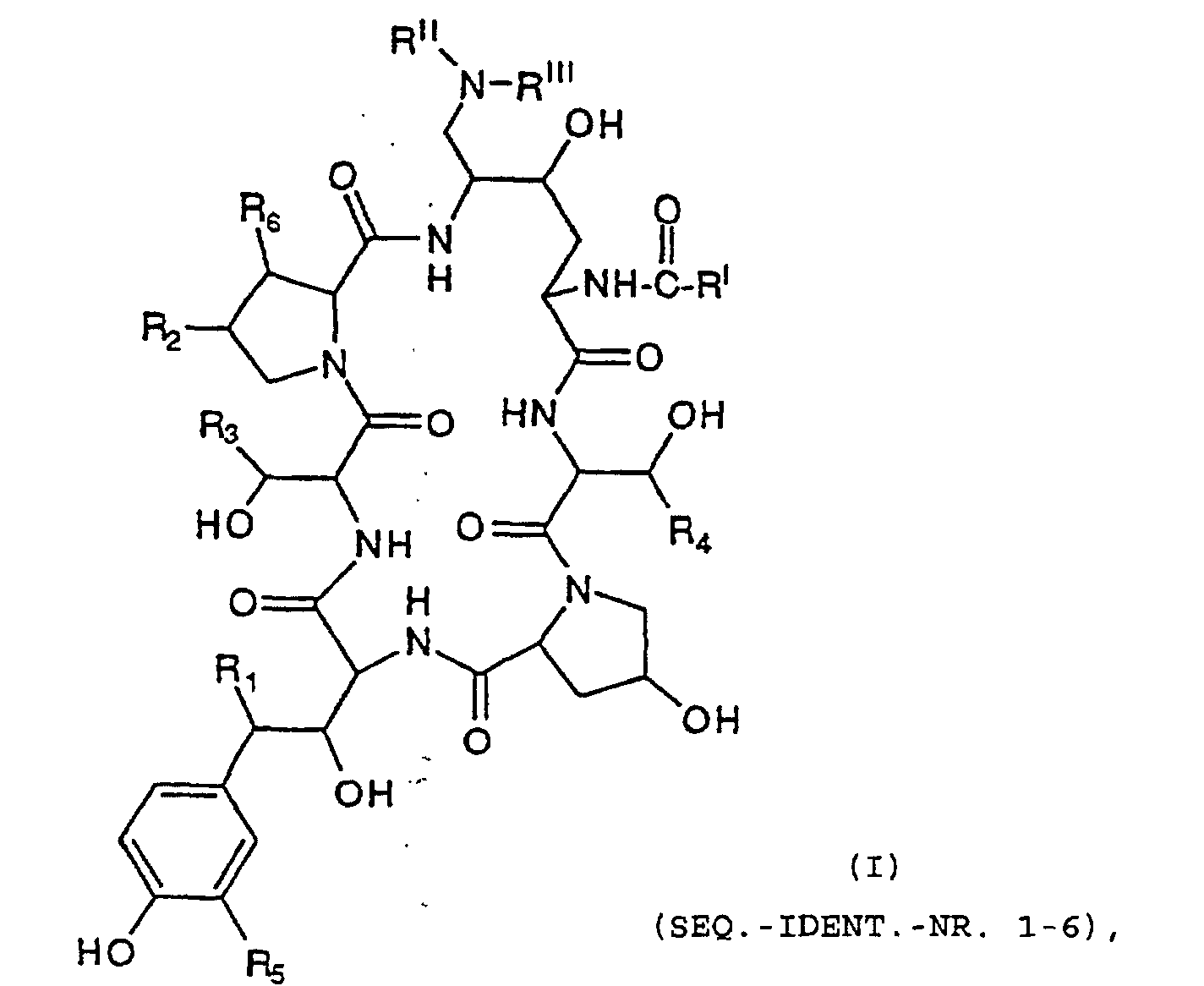
- Preferred embodiments of the invention are those of Compound I wherein
- the compounds of this invention may be formulated into pharmaceutical compositions which are comprised of the compounds of formula I or II in combination with a pharmaceutically acceptable carrier.
- the compounds of this invention are useful in treating fungal infections such as those caused by Candida and Aspergillus and for the treatment and prevention of infections caused by Pneumocystis carinii . These infections are often found in immunocomprised patients such as those suffering with AIDS.
- alkyl refers to straight, branched or cyclic chain hydrocarbon groups, e.g., methyl, ethyl, n-propyl, isopropyl, n-butyl, pentyl, hexyl, heptyl, cyclopentyl, cyclohexyl, cyclohexylmethyl and the like.
- cycloalkyl refers to a species of alkyl containing from 3 to 15 carbon atoms without alternating or resonating double bonds between carbon atoms.
- alkenyl refers to groups such as, e.g., vinyl, 1-propene-2-yl, 1-butene-4-yl, 2-buten-4-yl, 1-pentene-5-yl and the like.
- alkoxy refer to straight or branched chain oxyalkyl groups such as, e.g., methoxy, ethoxy, butoxy, heptoxy, dodecyloxy, and the like.
- the compounds of the present invention are generally obtained as mixtures of stereoisomeric forms in which one form usually predominates. Conditions may be adjusted by means within the normal skill of the skilled artisan to obtain predominantly the desired isomer.
- the compounds with preferred stereoisomeric form designated herein as the "normal” form are those in which the group at the "C-5-orn" position is below the plane at the said position.
- the designation "epi” has been employed for those compounds in which the group at the "C-5-om" position is above the plane.
- Pharmaceutically acceptable salts suitable as acid addition salts are those from acids such as hydrochloric, hydrobromic, phosphoric, sulfuric, maleic, citric, acetic, tartaric, succinic, oxalic, malic, glutamic and the like, and include other acids related to the pharmaceutically acceptable salts listed in Journal of Pharmaceutical Science , 66 :2 (1977).
- acyl substituent at the 2-position on the 4-hydroxyornithine nitrogen contains an aromatic chain, it differs from natural products and known compounds.
- the aromatic chain disclosed contains one to three phenyl groups further extended by substituents in the para position.
- the compounds of the present invention are soluble in water, lower alcohols, and polar aprotic solvents such as N,N-dimethylformamide (DMF), dimethyl sulfoxide (DMSO) and pyridine. They are insoluble in solvents such as diethyl ether and acetonitrile.
- polar aprotic solvents such as N,N-dimethylformamide (DMF), dimethyl sulfoxide (DMSO) and pyridine. They are insoluble in solvents such as diethyl ether and acetonitrile.
- the compounds of the present invention are useful as an antibiotic, especially as an antifungal agent or as an antiprotozoal agent.
- antifungal agents they are useful for the control of both filamentous fungi and yeasts. They are especially adaptable to be employed for the treatment of mycotic infections in mammals, especially those caused by Candida species such as C . albicans , C . tropicalis and C . pseudotropicalis , Cryptococcus species such as C . neoformans and Aspergillus species such as A . fumigatus , A . flavus and A . niger. They are also useful for the treatment and/or prevention of Pneumocystis carinii pneumonia to which immune-compromised patients are especially susceptible as hereinafter described.
- the structural aspect which distinguishes the compounds of the present invention from previously disclosed cyclohexapeptides is the carbon attached to the cyclohexapeptide ring at the 5-carbon of the 4-hydroxyornithine residue.
- the compounds of the present invention may be prepared from cyclohexapeptides having the formula by a series of reactions in which the oxygen atom at the "C-5-om" (which also may be referred to as the hemiaminal position) is ultimately replaced by carbon.
- the starting materials may be natural products or modified natural products as subsequently described.
- a compound where R 1 is OH, R 2 is H, R 3 is CH 2 CONH 2 , R 4 is CH 3 , R 5 is H and R 6 is OH and R I is dimethyltridecyl has been identified in the literature as pneumocandin B o ; a similar compound where R 2 is CH 3 , has been identified as pneumocandin A o and a third compound where R 2 is OH and R 6 is H has been identified as pneumocandin C o ( J . Antibiotics 45 :1855-60, Dec. 1992).
- a similar compound where R 2 and R 6 are OH and R I is dimethyltridecyl has been identified as pneumocandin D o ( J . Antibiotics 47:755-764, July 1994).
- R 3 When in the starting compound, R 3 is H, CH 3 or CH 2 CONH 2 , they may be directly employed.
- Step A the starting material, Compound A, an alkylthiol or arylthiol and acid are caused to react in an aprotic solvent under anhydrous conditions for time sufficient for reaction to take place with the formation of Compound B (Seq ID Nos. 13-18), listed in the following table.
- Aminoethanethiol has been found to be especially useful for this step.
- Compound R 3 R 4 Sulfur Intermediate SEQ ID NO. B-1 H CH 3 13 B-2 CH 3 CH 3 14 B-3 All Others CH 3 15 B-4 H H 16 B-5 CH 3 H 17 B-6 All Others H 18
- suitable acids include strong organic acid and mineral acids.
- strong organic acids are camphorsulfonic acid, p-toluenesulfonic acid, trifluoroacetic acid and methanesulfonic acid.
- Mineral acids include hydrochloric acid and hydrobromic acid. Camphorsulfonic acid is preferred.
- Suitable solvents include DMF, DMSO, 1-methyl-2-pyrrolidinone and hexamethyl phosphoric triamide (HMPA). DMF or DMSO is preferred.
- the reaction is generally carried out at ambient temperature to 60°C for about 3 hours to about 10 days.
- the cyclohexapeptide compound, the thiol compound and acid are stirred together in a suitable solvent until the reaction is substantially complete.
- the reaction mixture then is diluted with water and flash chromatographed on reverse phase resins using 10 to 40 percent acetonitrile/water (containing 0.1% trifluoroacetic acid) as eluant.
- Trifluoroacetic acid may hereinafter be designated "TFA”.
- the fractions containing the desired product may be concentrated and lyophilized and the lyophilized material purified by preparative high performance liquid chromatography (HPLC).
- Step B Compound C (Seq ID Nos. 13-18), a sulfone is obtained by the oxidation of Compound B.
- Suitable oxidizing agents or oxidants include "OXONE" (KHSO 5 •KHSO 4 •K 2 SO 4 2:1:1, Aldrich Chemicals), metachloroperoxybenzoic acid, and peroxyacetic acid.
- the sequence ID of Compound C is the same as that of Compound B since the atom attached to the hemiaminal carbon is still sulfur.
- the sequence IDs of the sulfones are as follows: Compound R 3 R 4 Sulfone SEQ ID NO. C-1 H CH 3 13 C-2 CH 3 CH 3 14 C-3 All Others CH 3 15 C-4 H H 16 C-5 CH 3 H 17 C-6 All Others H 18
- the oxidation of the thioether (Compound B) to the sulfone (Compound C) is carried out with about two molar amounts of the oxidant.
- the product is a sulfoxide which may then be converted to the sulfone.
- the sulfoxides may be employed as an intermediate in the formation of the nitrile but the sulfone is preferred. A slight excess over the two molar amount of the oxidizing agent is employed.
- the reaction is carried out in an aqueous medium, preferably a mixture of acetonitrile and water. About equal amounts are preferred although a range of 1:9 to 9:1 may be employed.
- the oxidant is added to a solution of Compound B (Seq ID Nos. 13-18) in 1:1 acetonitrile/water and the mixture allowed to stand at ambient temperature for time sufficient to complete the reaction to obtain Compound C generally from about 30 minutes to one hour.
- the compound is recovered from the reaction mixture by diluting with water and chromatographing. Reverse phase (C18) flash column chromatography is suitable in this purification step.
- the preferred eluting agent is 30-45 percent acetonitrile/water (0.1% TFA) in 5 percent step gradients.
- the appropriate fractions are lyophilized to recover the desired sulfone intermediate, Compound C (Seq ID Nos. 13-18).
- the intermediate tends to be labile, thus the isolation should be carried out as rapidly as possible.
- the reaction mixture can be lyophilized and the crude sulfone used as is in the subsequent step.
- Compound C may be converted to a compound having a carbon directly attached to the "C-5-orn".
- reaction of Compound C with an alkali metal cyanide produces a nitrile at that position (Compound D).
- the nitrile can subsequently be reacted with sodium borohydride and cobaltous chloride to afford the aminoalkyl substituent which may be converted into a substituted amine as subsequently described.
- Compound D is an important intermediate for most of the compounds of the present invention. Sequence ID Nos. for Compound D, the nitrile, are listed in the following table: Compound R 3 R 4 Nitrile SEQ ID NO. D-1 H CH 3 19 D-2 CH 3 CH 3 20 D-3 All Others CH 3 21 D-4 H H 22 D-5 CH 3 H 23 D-6 All Others H 24
- the nitrile may be obtained by adding alkali metal cyanide while stirring at ambient temperature to a solution of the sulfone in an aprotic solvent for time sufficient to complete the reaction with the formation of the cyanide as determined by HPLC analysis.
- the reaction mixture then may be diluted with water and then chromatographed to separate the desired nitrile (Compound D) from the reaction mixture.
- Reverse-phase (C18) flash column chromatography using 20-60% acetonitrile/water (0.1% TFA) in 10% step gradients is suitable for this procedure.
- the reduction may be carried out employing either chemical or catalytic reduction.
- chemical reduction is employed, hydride or hydride combinations have been found useful.
- Sodium borohydride with cobaltous chloride in alcoholic solvent has been found to be particularly useful. When this combination of reagents is used, from about 5 to 50 molar equivalents of sodium borohydride and from 2 to 20 molar equivalents of cobaltous chloride are used for each molar amount of the nitrile.
- reducing agents such as Raney nickel, sodium cyanoborohydride, aluminum hydride, diborane, diisobutyl aluminum hydride and the like may also be used. Frequently these reducing agents are used in combination with a Lewis acid such as cobaltous chloride or aluminum chloride as in the present combination of sodium borohydride and cobaltous chloride.
- Catalytic hydrogenation also may be carried out over a variety of catalysts including palladium on carbon, platinum oxide or rhodium on alumina. Low pressure catalytic reduction over Pd/C as the catalyst is especially preferred.
- Typical solvents depending on the reagent include alcohols, especially methanol and ethanol; dimethylformamide, pyridine, tetrahydrofuran or other ethers.
- the amine thus obtained may be converted into an acylated amine by conventional means using a CBZ protected amino acid to obtain, after deprotection, Compound I where R II is COCH(NH 2 )(CH 2 ) 1-4 NH 2 and R III is H.
- Compound I where R II and/or R III are alkyl may be prepared using any suitable known procedure for preparing secondary or tertiary amines.
- the carbon may be introduced by formylating, followed by reduction of the hydroxymethyl group with sodium cyanoborohydride or other reducing agent.
- alkylation may be carried out by causing an appropritately substituted alkyl halide to react with the amine in an aprotic solvent in the presence of a base.
- the invention also embraces quaternary ammonium salts of formula (II). These may be prepared by treatment of an amine with an alkyl halide and base in a protic or aprotic solvent. A typical procedure would be to add excess methyl iodide to a solution of the amine and sodium bicarbonate in DMF at room temperature. The product may be isolated by diluting with H 2 O followed by C18 HPLC.
- the invention also embraces acid addition salts.
- the compound in the normal course of isolation is obtained as an acid addition salt. Generally, it is as a trifluoroacetic acid or acetic acid salt.
- the salt thus obtained may be dissolved in water and passed through an anion exchange column bearing the desired anion.
- the eluate containing the desired salt may be concentrated to recover the salt as a solid product.
- the compounds of the present invention are water soluble in their protonated or permanently charged quaternary forms. This is an advantage over the neutral, uncharged echinocandins which are not water soluble.
- the compounds of the present invention are active against many fungi and particularly against Candida species.
- the antifungal properties may be illustrated with the minimum fungicidal concentration (MFC) determination against certain Candida organisms in a microbroth dilution assay carried out in a Yeast Nitrogen Base (DIFCO) medium with 1% dextrose (YNBD).
- MFC minimum fungicidal concentration
- DMSO dimethyl sulfoxide
- the drug stock was brought to a concentration of 512 ⁇ g/ml by dilution in water such that the final DMSO concentration was about 10 percent.
- the solution was then dispensed via a multichannel pipetter into the first column of a 96-well plate (each well containing 0.075 ml of YNBD), resulting in a drug concentration of 256 ⁇ g/ml.
- Compounds in the first column were diluted 2-fold across the rows yielding final drug concentration ranging from 256 ⁇ g/ml to 0.12 ⁇ g/ml.
- MFC minimum fungicidal concentration
- the in vivo effectiveness of the compounds against fungi may be seen in the following assay.
- the assay was then carried out by administering aqueous solutions of Compound I-A at various concentrations intraperitoneally (I.P.), twice daily (b.i.d.) for four consecutive days to 18 to 20 gram female DBA/2 mice, which previously had been infected with Candida albicans (MY 1055) in the manner described above. Distilled water was administered I.P. to C. albicans challenged mice as controls. After seven days, the mice were sacrificed by carbon dioxide gas, paired kidneys were removed aseptically and placed in sterile polyethylene bags containing 5 milliliters of sterile saline.
- the kidneys were homogenized in the bags, serially diluted in sterile saline and aliquots spread on the surface of SDA plates. The plates were incubated at 35°C for 48 hours and yeast colonies enumerated for determination of colony forming units (CFU) per gram of kidneys.
- CFU colony forming units
- the compounds of the present invention are also active against Aspergillus species.
- the in vivo effectiveness of the compounds against Aspergillus may be seen in the following assay.
- Conidia of Aspergillus fumigatus MF 5668 were washed from the surface of several (3-4) 3-5 day SDA slant cultures with sterile saline plus 0.01% Tween 20. The conidia suspension was quantitated by hemacytometer count and adjusted to the appropriate concentration in sterile saline.
- mice Female DBA/2 mice were challenged I.V. with 1.40 x 10 6 conidia/mouse. Within fifteen minutes after challenge, aqueous solutions of Compound I-A were administered intraperitoneally (I.P.) at various concentrations twice daily (b.i.d.) for a total of five days. The required dose of Compound I-A to increase the 28-day survival rate by at least 50% over untreated controls was 0.02 mg/kg.
- a harmful and potentially fatal side reaction of a number of drugs including certain antibiotically active echinocandin compounds is red blood cell lysis. This is not seen in compounds having the present nuclei which is another advantage of the compounds of this invention.
- the compounds of the present invention may also be useful for inhibiting or alleviating Pneumocystis carinii infections in immune-compromised patients.
- the efficacy of the compounds of the present invention for therapeutic or anti-infection purposes may be demonstrated in studies on immunosuppressed rats.
- Sprague-Dawley rats (weighing approximately 250 grams) were immunosuppressed with dexamethasone in the drinking water (2.0 mg/L) and maintained on a low protein diet for seven weeks to induce the development of Pneumocystis pneumonia from a latent infection. Before drug treatment, two rats were sacrificed to confirm the presence of Pneumocystis carinii pneumonia (PCP). Five rats (weighing approximately 150 grams) were injected twice daily for four days subcutaneously (sc) with Compound I-A in 0.25 ml of vehicle (distilled water). A vehicle control was also carried out. All animals continued to receive dexamethasone in the drinking water and low protein diet during the treatment period.
- PCP Pneumocystis carinii pneumonia
- compositions contain at least a therapeutic antifungal or antipneumocystis amount of the active compound.
- the composition contains at least 1% by weight of Compound I or II.
- Concentrate compositions suitable for dilutions prior to use may contain 90% or more by weight.
- the compositions include compositions suitable for oral, topical, parenteral (including intraperitoneal, subcutaneous, intramuscular, and intravenous), nasal, and suppository administration, or insufflation.
- the compositions may be prepacked by intimately mixing Compound I or II with the components suitable for the medium desired.
- compositions formulated for oral administration may be liquid or solid compositions.
- the therapeutic agent may be formulated with liquid carriers such as water, glycols, oils, alcohols, and the like, and for solid preparations such as capsules and tablets, with solid carriers such as starches, sugars, ethyl cellulose, calcium and sodium carbonate, calcium phosphate, kaolin, talc, lactose, generally with a lubricant such as calcium stearate, together with binders disintegrating agents and the like.
- liquid carriers such as water, glycols, oils, alcohols, and the like
- solid preparations such as capsules and tablets, with solid carriers such as starches, sugars, ethyl cellulose, calcium and sodium carbonate, calcium phosphate, kaolin, talc, lactose, generally with a lubricant such as calcium stearate, together with binders disintegrating agents and the like.
- solid carriers such as starches, sugars, ethyl cellulose, calcium and sodium carbon
- compositions may be formulated for injection and may take such forms as suspensions, solutions or emulsions in oily or aqueous vehicles such as 0.85 percent sodium chloride or 5 percent dextrose in water and may contain formulating agents such as suspending, stabilizing and/or dispersing agents. Buffering agents as well as additives such as saline or glucose may be added to make the solutions isotonic.
- the compound may also be solubilized in alcohol/propylene glycol or polyethylene glycol for drip intravenous administration.
- These compositions also may be presented in unit dosage form in ampoules or in multidose containers, preferable with added preservative.
- the active ingredients may be in powder form for reconstituting with a suitable vehicle prior to administration.
- unit dosage form refers to physically discrete units, each unit containing a predetermined quantity of active ingredient calculated to produce the desired therapeutic effect in association with the pharmaceutical carrier.
- unit dosage forms are tablets, capsules, pills, powder packets, wafers, measured units in ampules or in multidose containers and the like.
- a unit dosage of the present invention will generally contain from 100 to 200 milligrams of one of the compounds.
- any method of administration may be employed.
- oral or intravenous administration is usually employed.
- the compounds of the present inventions are conveniently delivered in the form of an aerosol spray presentation from pressurized packs or nebulizers.
- the preferred delivery system for inhalation is a metered dose inhalation (MDI) aerosol, which may be formulated as a suspension or solution of Compound I or II in suitable propellants, such as fluorocarbons or hydrocarbons.
- suitable propellants such as fluorocarbons or hydrocarbons.
- propellants are those which do not damage the ozone layer.
- the compounds of the present invention may be employed as tablets, capsules, topical compositions, insufflation powders, suppositories and the like, the solubility of the compounds of the present invention in water and aqueous media render them adaptable for use in injectible formulations and also in liquid compositions suitable for aerosol sprays.
- Trifluoroacetic acid (0.4 ml, 5.3 mmol) was added to a solution of (22.9 g, 21.1 mmol) and 2-aminoethanethiol hydrochloride (47.9 g, 422 mmol) in 100 ml of anhydrous N,N-dimethylformamide at 60°C. After a period of 4h, the reaction mixture was cooled to room temperature and diluted with 400 ml of H 2 O. Filtration of the resulting solution was followed by pump-injection of the filtrate onto a Waters Delta Pak C18-100 ⁇ radial cartridge (47mm x 30 cm) at a rate of 50 ml/min.
- a seed culture was prepared by inoculating a 50-ml portion of Luria-Bertani medium in a 250 ml flask with a loopful of the bacterium and the culture was incubated for about 24 hours at 27°C with constant shaking.
- Cells for the deacylation were grown by inoculating 15 liters of Luria-Bertani medium in a stirred fermentor with 30 ml of the seed culture and incubating with agitation of 400 rpm and aeration at 7.5 liters/min. at 28°C for 20 to 24 hours.
- the cells were washed with 50 mM potassium phosphate buffer, pH 7.5 and resuspended in about 4 liters of the same buffer.
- the suspension was equilibrated to 37°C to obtain the deacylating enzyme.
- the bisamine from Example 2.(3.5 g) is dissolved in 900 ml of distilled water and added slowly over a 1 hour period to 2 liters of the suspension of P . acidovorans cells from Part A.
- the resulting mixture is maintained at 37°C while stirring at about 300 rpm without aeration.
- the deacylation mixture is cleared of P . acidovorans cells by centrifugation and the nucleus is isolated from the supernatant by C18-high pressure liquid chromatography.
- reaction mixture is diluted with water (3.5 ml) and the product is isolated by C18 solid-phase extraction eluting initially with CH 3 CN/H 2 O and then CH 3 OH.
- a solution of the crude bis-CBZ terphenyl intermediate from Part A in methanol (10 ml) and glacial acetic acid (4 ml) is hydrogenated under balloon pressure in the presence of 10% Pd/C for a period of 1.75 hours.
- the reaction mixture is filtered through a bed of diatomaceous earth to remove the catalyst, rinsing with MeOH. The filtrate is concentrated in vacuo .
- reaction mixture is diluted with water (3.5 ml) and the product is isolated by C18 solid-phase extraction eluting initially with CH 3 CN/H 2 O and then CH 3 OH.
- a solution of the crude bis-CBZ octyloxynaphthoyl intermediate from Part A in methanol and glacial acetic acid (2.5:1) is hydrogenated under balloon pressure in the presence of 10% Pd/C for a period of 1.75 hours.
- the reaction mixture is filtered through a bed of diatomaceous earth to remove the catalyst, rinsing with MeOH. The filtrate is concentrated in vacuo .
- 1000 compressed tablets each containing 500 mg of the compound of Example 4 are prepared from the following formulation: Compound Grams Compound of Example 4 500 Starch 750 Dibasic calcium phosphate, hydrous 5000 Calcium stearate 2.5
- the finely powdered ingredients are mixed well and granulated with 10 percent starch paste. The granulation is dried and compressed into tablets.
- a uniform mixture of the ingredients is prepared by blending and used to fill two-piece hard gelatin capsules.
- An aerosol composition may be prepared having the following formulation: Per Canister Compound of Example 4 24 mg Lecithin NF Liquid Concd. 1.2 mg Trichlorofluoromethane, NF 4.026 g Dichlorodifluoromethane, NF 12.15 g
- 250 milliliters of an injectible solution may be prepared by conventional procedures having the following formulation: Dextrose 12.5 g Water 250 ml Compound of Example 4 400 mg
- the ingredients are blended and thereafter sterilized for use.
- R I is dimethyltridecyl and R 1 is OH
- R 2 is H
- R 3 is CH 2 CONH 2
- R 4 is CH 3
- R 6 is OH
- R 3 is H and R I is 11-methyltridecyl may be produced by cultivating Aspergillus sydowi in nutrient medium as descirbed in J .
- Antibiotics XL No. 3) p.28 (1987).
- R 3 is CH 3 and R I is linoleyl may be produced by cultivating Aspergillus nidulans NRRL 11440 in nutrient medium as described in U.S. Patent No. 4,288,549 issued September 8, 1981.
- R 3 is CH 2 CN
- Compounds in which R 3 is CH 2 CN may be produced by the reaction of a compound having a carboxamide group in the corresponding position with excess cyanuric chloride in an aprotic solvent.
- Molecular sieves may be employed in this reaction. After completion of the reaction, the sieves, if employed, are removed, and the filtrate concentrated to obtain the nitrile compound as more fully described in U.S. Patent No. 5,348,940 issued September 20, 1994.
- R 3 is CH 2 CH 2 NH 2
- R 3 is CH 2 CH 2 NH 2
- Starting materials in which R I is a different group from that of the natural product may be obtained by deacylating the lipophilic group of the natural product by subjecting the natural product in a nutrient medium to a deacylating enzyme until substantial deacylation occurs, said enzyme having first been obtained by cultivating a microorganism of the family Pseudomondaceae or Actinoplanaceae , as described in Experentia 34, 1670 (1978) or U.S. Patent No. 4,293,482, recovering the deacylated cyclopeptide, and thereafter acylating the deacylated cyclopepetide by mixing together with an appropriate active ester R I COX to obtain Compound A with the desired acyl group.
- the active esters R I COX may be prepared by methods known to the skilled chemist as illustrated in the following examples. Although any active ester is appropriate, the compounds are illustrated with pentafluorophenyl esters.
- terphenylcarboxylic acid esters may be prepared through the following sequence of reactions, illustrated with a specific example as follows:
- Part A 4-(4-n-Pentyloxyphenyl) bromobenzene
- Part B 4-(4-n-Pentyloxyphenyl)phenylboronic acid
- the biphenylcarboxylic acid esters may be obtained through the following sequence of reactions illustrated as follows:
- Pentafluorophenol (11.5 mmol) is added at 0° to a mixture of 10.5 mmol 4'-n-octyloxy[1,1'-biphenyl]-4-ylcarboxylic acid and 10.5 mmol of dicyclohexylcarbodiimide in ethyl acetate. The mixture is stirred at 25°C for a period of 18 hours whereupon a precipitate is formed.
- reaction mixture is filtered, the filtrate washed with water and brine and dried, the solvent removed in vacuo to obtain pentafluorophenyl 4'-n-octyloxy[1,1'-biphenyl]-4-ylcarboxylate, C 27 H 25 F 5 O 3 , M.W. 492.5.
- the reaction is neutralized with 2N HCl and is extracted with ethyl acetate.
- the ethyl acetate layer is dried with MgSO 4 , filtered and the solvent vaporized under reduced pressure.
- the desired product is obtained in substantially pure form by column chromatography.
- the carboxylic acid (1.0 eq) and dicyclohexylcarbodiimide (1.0 eq) are dissolved in ethyl acetate and the solution is cooled to 0°C.
- Pentafluorophenol (1.05 eq) is added, the ice bath then is removed and the reaction stirred at ambient temperature for 18-24 h.
- An equal volume of ether is added, the mixture is filtered and the solvent removed in vacuo .
Landscapes
- Health & Medical Sciences (AREA)
- Chemical & Material Sciences (AREA)
- Organic Chemistry (AREA)
- Medicinal Chemistry (AREA)
- General Health & Medical Sciences (AREA)
- Life Sciences & Earth Sciences (AREA)
- General Chemical & Material Sciences (AREA)
- Nuclear Medicine, Radiotherapy & Molecular Imaging (AREA)
- Chemical Kinetics & Catalysis (AREA)
- Pharmacology & Pharmacy (AREA)
- Oncology (AREA)
- Animal Behavior & Ethology (AREA)
- Communicable Diseases (AREA)
- Public Health (AREA)
- Veterinary Medicine (AREA)
- Biochemistry (AREA)
- Biophysics (AREA)
- Genetics & Genomics (AREA)
- Molecular Biology (AREA)
- Proteomics, Peptides & Aminoacids (AREA)
- Peptides Or Proteins (AREA)
- Medicines That Contain Protein Lipid Enzymes And Other Medicines (AREA)
- Preparation Of Compounds By Using Micro-Organisms (AREA)
Claims (19)
- Eine Verbindung mit der Formelworin
- R1
- H oder OH ist;
- R2
- H, CH3 oder OH ist;
- R3
- H, CH3, CH2CONH2, CH2CN, CH2CH2NRIIRIII, CH2CH2N(RIV)3 +X- oder CH2CH2NH(C=NH)RVII ist;
- R4
- H oder CH3 ist;
- R5
- H, OH oder OSO3H ist;
- R6
- H oder OH ist;
- RI
- C9-C21-Alkyl,
C9-C21-Alkenyl,
C1-C10-Alkoxyphenyl,
C1-C10-Alkoxynaphthyl oderist,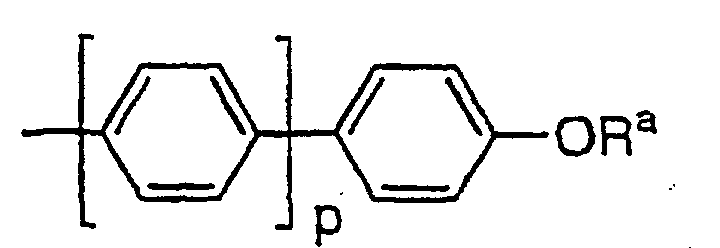
- Ra
- C1-C10-Alkyl oder (CH2)qNRbRc ist, wobei Rb und Rc unabhängig H, C1-C10-Alkyl
sind oder Rb und Rc zusammen mit dem Stickstoffatom
sind,

- Rd
- C1-C16-Alkyl, Cyclohexylmethyl, Phenyl oder Benzyl ist,
- p
- 1 oder 2 ist und
- q
- 2, 3 oder 4 ist;
- RII
- H, C1-C4-Alkyl, (CH2)2-4OH, C=NH(RVII), (CH2)2-4NRVRVI, (CH2)2-4N(RIV)3 +X-,
(CH2)2-4NH(C=NH)RVII, (CH2)1-4CH(NRVRVI)(CH2)1-4NRVRVI,
(CH2)2-4NRV(CH2)2-4NRVRVI, CO(CH2)1-4NRVRVI, COCH(NRVRVI) (CH2)1-4NRVRVI ist; - RIII
- H, C1-C4-Alkyl, (CH2)2-4NRVRVI, (CH2)2-4N(RIV)3 +X-, (CH2)2-4NH(C=NH)RVII,
(CH2)1-4CH(NRVRVI)(CH2)1-4NRVRVI, (CH2)2-4NRV(CH2)2-4NRVRVI ist oder - RII und RIII
- zusammen -(CH2)4-, -(CH2)5-, -(CH2)2O(CH2)2- oder -(CH2)2NH(CH2)2-sind;
- RIV
- C1-C4-Alkyl ist;
- RV
- H oder C1-C4-Alkyl ist;
- RVI
- H oder C1-C4-Alkyl ist;
- RVII
- H, C1-C4-Alkyl oder NH2 ist;
- x
- Cl, Br oder I ist; oder
- Eine Verbindung mit der Formelworin

- R1
- H oder OH ist;
- R2
- H, CH3 oder OH ist;
- R3
- H, CH3, CH2CONH2, CH2CN, CH2CH2NRIIRIII, CH2CH2N(RIV)3 +X- oder CH2CH2NH(C=NH) RVII ist;
- R4
- H oder CH3 ist;
- R5
- H, OH oder OSO3H ist;
- R6
- H oder OH ist;
- RI
- C9-C21-Alkyl,
C9-C21-Alkenyl,
C1-C10-Alkoxyphenyl,
C1-C10-Alkoxynaphthyl oderist,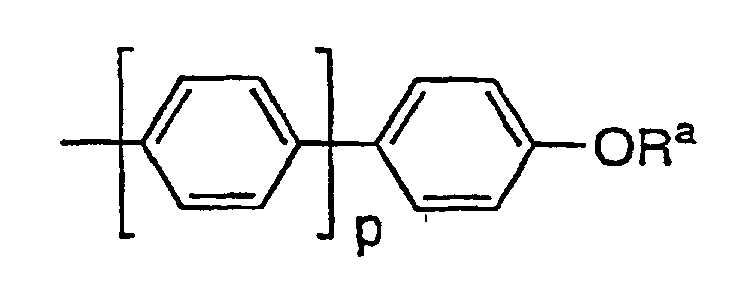
- Ra
- C1-C10-Alkyl oder (CH2)qNRbRc ist, wobei Rb und Rc unabhängig H, C1-C10-Alkyl
sind oder Rb und Rc zusammen mit dem Stickstoffatom
sind,

- Rd
- C1-C16-Alkyl, Cyclohexylmethyl, Phenyl oder Benzyl ist,
- p
- 1 oder 2 ist,
- q
- 2, 3 oder 4 ist;
- RIV
- C1-C4-Alkyl ist und
- x
- Cl, Br oder I ist.
- Die wie in Anspruch 1 definierte Verbindung, worin
- R1
- OH ist;
- R2
- H ist;
- R3
- CH2CH2NH2, CH2CH2N(CH3)3 +I- oder CH2CH2NH(C=NH)NH2 ist;
- R4
- CH3 ist;
- R5
- H ist;
- R6
- OH ist;
- RI
- 9,11-Dimethyltridecyl ist;
- RII
- H, C1-C4-Alkyl, (CH2)2-4OH, C=NH(RVII), (CH2)2-4NRVRVI, (CH2)2-4N(RIV)3 +X-,
(CH2)2-4NH(C=NH)RVII, (CH2)1-4CH(NRVRVI)(CH2)1-4NRVRVI,
(CH2)2-4NRV(CH2)2-4NRVRVI, CO(CH2)1-4NRVRVI, COCH(NRVRVI)(CH2)1-4NRVRVI ist und - RIII
- H, C1-C4-Alkyl, (CH2)2-4NRVRVI, (CH2)2-4N(RIV)3 +X-, (CH2)2-4NH(C=NH)RVII,
(CH2)1-4CH(NRVRVI)(CH2)1-4NRVRVI, (CH2)2-4NRV(CH2)2-4NRVRVI ist.
- Die wie in Anspruch 2 definierte Verbindung, worin
- R1
- OH ist;
- R2
- H ist;
- R3
- CH2CH2NH2, CH2CH2N(CH3)3 +I- oder CH2CH2NH(C=NH)NH2 ist;
- R4
- CH3 ist;
- Rs
- H ist;
- R6
- OH ist;
- RI
- 9,11-Dimethyltridecyl ist;
- RIV
- CH3 ist und
- X
- I ist.
- Eine Verbindung mit der Formelworin

- R1
- H oder OH ist;
- R2
- H, CH3 oder OH ist;
- R3
- H, CH3, CH2CONH2, CH2CN, CH2CH2NRIIRIII, CH2CH2N(RIV)3 +X- oder CH2CH2NH(C=NH)RVII ist;
- R4
- H oder CH3 ist;
- R5
- H, OH oder OSO3H ist;
- R6
- H oder OH ist;
- RII
- H, C1-C4-Alkyl, (CH2)2-4OH, C=NH(RVII), (CH2)2-4NRVRVI, (CH2)2-4N(RIV)3 +X-,
(CH2)2-4NH(C=NH)RVII, (CH2)1-4CH(NRVRVI)(CH2)1-4NRVRVI,
(CH2)2-4NRV(CH2)2-4NRVRVI, CO(CH2)1-4NRVRVI, COCH(NRVRVI)(CH2)1-4NRVRVI ist; - RIII
- H, C1-C4-Alkyl, (CH2)2-4NRVRVI, (CH2)2-4N(RIV)3 +X-, (CH2)2-4NH(C=NH)RVII,
(CH2)1-4CH(NRVRVI)(CH2)1-4NRVRVI, (CH2)2-4NRV(CH2)2-4NRVRVI ist oder RVII, - RII und RIII
- zusammen -(CH2)4-, -(CH2)5-, -(CH2)2O(CH2)2- oder -(CH2)2NH(CH2)2-sind;
- RIV
- C1-C4-Alkyl ist;
- RV
- H oder C1-C4-Alkyl ist;
- RVI
- H oder C1-C4-Alkyl ist;
- RVII
- H, C1-C4-Alkyl oder NH2 ist;
- X
- Cl, Br oder I ist; oder
- Die wie in Anspruch 1 definierte Verbindung mit der Formeloder ein pharmazeutisch annehmbares Salz davon.

- Die wie in Anspruch 1 definierte Verbindung mit der Formeloder ein pharmazeutisch annehmbares Salz davon.

- Die wie in Anspruch 1 definierte Verbindung mit der Formeloder ein pharmazeutisch annehmbares Salz davon.

- Die wie in Anspruch 2 definierte Verbindung mit der Formel

- Die wie in Anspruch 1 definierte Verbindung mit der Formeloder ein pharmazeutisch annehmbares Salz davon.

- Die wie in Anspruch 1 definierte Verbindung mit der Formeloder ein pharmazeutisch annehmbares Salz davon.

- Die wie in Anspruch 5 definierte Verbindung mit der Formel

- Eine antifungale Zusammensetzung, die eine wirksame Menge einer wie in Anspruch 1 definierten Verbindung und einen pharmazeutisch annehmbaren Träger dafür enthält.
- Eine Zusammensetzung gemäß Anspruch 13 in einer Einheitsdosisform, in der die Verbindung nach Anspruch 1 in einer Menge von 10 mg bis 200 Milligramm vorliegt.
- Die Verwendung einer wie in Anspruch 1 definierten Verbindung zur Herstellung eines Medikaments zur Behandlung von Pilzinfektionen.
- Die Verwendung einer wie in Anspruch 1 definierten Verbindung zur Herstellung eines Medikaments zur Behandlung von Pilzinfektionen, die durch Candida sp. hervorgerufen werden.
- Die Verwendung einer wie in Anspruch 1 definierten Verbindung zur Herstellung eines Medikaments zur Behandlung von Pilzinfektionen, die durch Aspergillus sp. hervorgerufen werden.
- Die Verwendung einer wie in Anspruch 1 definierten Verbindung zur Herstellung eines Medikaments zur Behandlung einer Pneumocystis-carinii-Infektion.
- Die Verwendung einer wie in Anspruch 1 definierten Verbindung zur Herstellung eines Medikaments zur Prävention einer Pneumocystis-carinii-Infektion.
Applications Claiming Priority (3)
| Application Number | Priority Date | Filing Date | Title |
|---|---|---|---|
| US378687 | 1982-05-17 | ||
| US37868795A | 1995-01-26 | 1995-01-26 | |
| PCT/US1996/000921 WO1996022784A1 (en) | 1995-01-26 | 1996-01-22 | Novel antifungal cyclohexapeptides |
Publications (3)
| Publication Number | Publication Date |
|---|---|
| EP0805685A1 EP0805685A1 (de) | 1997-11-12 |
| EP0805685A4 EP0805685A4 (de) | 1998-04-29 |
| EP0805685B1 true EP0805685B1 (de) | 2001-09-26 |
Family
ID=23494135
Family Applications (1)
| Application Number | Title | Priority Date | Filing Date |
|---|---|---|---|
| EP96908446A Expired - Lifetime EP0805685B1 (de) | 1995-01-26 | 1996-01-22 | Neue fungizide cyclohexapeptide |
Country Status (11)
| Country | Link |
|---|---|
| US (1) | US5854213A (de) |
| EP (1) | EP0805685B1 (de) |
| JP (1) | JP2966936B2 (de) |
| AT (1) | ATE206054T1 (de) |
| AU (1) | AU691743B2 (de) |
| CA (1) | CA2211138A1 (de) |
| DE (1) | DE69615535T2 (de) |
| DK (1) | DK0805685T3 (de) |
| ES (1) | ES2162039T3 (de) |
| PT (1) | PT805685E (de) |
| WO (1) | WO1996022784A1 (de) |
Families Citing this family (17)
| Publication number | Priority date | Publication date | Assignee | Title |
|---|---|---|---|---|
| UA72200C2 (uk) | 1997-12-10 | 2005-02-15 | Авентіс Фарма С.А. | Похідні ехінокандину, спосіб їх одержання, їх застосування, проміжні сполуки та фармацевтична композиція |
| FR2772028B1 (fr) * | 1997-12-10 | 2000-02-04 | Hoechst Marion Roussel Inc | Nouveaux derives de l'echinocandine, leur procede de preparation et leur application comme fongicides |
| FR2784993B1 (fr) * | 1998-10-26 | 2002-10-31 | Hoechst Marion Roussel Inc | Nouveaux derives de l'echinocandine, leur procede de preparation et leur application comme fongicides |
| JP2003501488A (ja) * | 1999-06-11 | 2003-01-14 | ネオルックス コーポレイション | 骨髄抑制のための高投与量放射性核種錯体 |
| US7094885B2 (en) | 1999-07-11 | 2006-08-22 | Neorx Corporation | Skeletal-targeted radiation to treat bone-associated pathologies |
| DE60040989D1 (de) * | 1999-07-27 | 2009-01-15 | Aventis Pharma Gmbh | Cyclohexapeptide, deren herstellung und verwendung in pharmazeutische zusammensetzungen |
| ATE267582T1 (de) * | 2000-01-20 | 2004-06-15 | Basilea Pharmaceutica Ag | Nasal verabreichbare cyclische antimykotische peptidzusammensetzungen |
| EP1390081A2 (de) | 2001-01-08 | 2004-02-25 | Neorx Corporation | Therapeutische und diagnostische verbindungen, zusammenstellungen und methoden |
| US6914045B2 (en) * | 2001-04-25 | 2005-07-05 | Wyeth Holdings Corporation | Glycopeptide antibiotics |
| AU2002303480A1 (en) * | 2001-04-25 | 2002-11-05 | Wyeth Holdings Corporation | Glycopeptide antibiotics |
| WO2003051403A1 (en) | 2001-12-13 | 2003-06-26 | Dow Global Technologies Inc. | Treatment of osteomyelitis with radiopharmaceuticals |
| KR101331984B1 (ko) | 2010-12-09 | 2013-11-25 | 종근당바이오 주식회사 | 카스포펀진 제조방법 및 그의 신규 중간체 |
| ES2645074T3 (es) | 2011-03-03 | 2017-12-04 | Cidara Therapeutics, Inc. | Agentes antifúngicos y sus usos |
| RU2639483C2 (ru) | 2012-03-19 | 2017-12-21 | Сидара Терапьютикс, Инк. | Режимы дозирования для соединений класса эхинокандинов |
| CN108883152A (zh) | 2016-01-08 | 2018-11-23 | 奇达拉治疗公司 | 防止和治疗肺孢子虫感染的方法 |
| WO2017161016A1 (en) | 2016-03-16 | 2017-09-21 | Cidara Therapeutics, Inc. | Dosing regimens for treatment of fungal infections |
| US11197909B2 (en) | 2017-07-12 | 2021-12-14 | Cidara Therapeutics, Inc. | Compositions and methods for the treatment of fungal infections |
Family Cites Families (14)
| Publication number | Priority date | Publication date | Assignee | Title |
|---|---|---|---|---|
| BE851310A (fr) * | 1976-02-12 | 1977-08-10 | Sandoz Sa | Nouveaux derives de la tetrahydro-equinocandine b |
| DE2742435A1 (de) * | 1976-09-28 | 1978-04-06 | Sandoz Ag | Aminoalkylaether der peptide tetrahydro- sl 7810/f-ii, s 31794/f-1, aculeacin a und tetrahydroechinocandin b, ihre verwendung und herstellung |
| US5166135A (en) * | 1988-09-12 | 1992-11-24 | Merck & Company, Inc. | Method for the control of pneumocystis carinii |
| US5194377A (en) | 1989-06-30 | 1993-03-16 | Merck & Co., Inc. | Antibiotic agent |
| US5202309A (en) | 1989-06-30 | 1993-04-13 | Merck & Co., Inc. | Antibiotic cyclopeptide fermentation product |
| GB8925593D0 (en) * | 1989-11-13 | 1990-01-04 | Fujisawa Pharmaceutical Co | Fr901379 substance and preparation thereof |
| IE990233A1 (en) * | 1990-06-18 | 2000-11-15 | Fujisawa Pharmaceutical Co | New Polypeptide Compound and a Process for Preparation thereof |
| EP0486011A3 (en) * | 1990-11-16 | 1992-07-15 | Fujisawa Pharmaceutical Co., Ltd. | Pharmaceutical composition against pneumocystis carinii |
| US6030944A (en) * | 1991-10-01 | 2000-02-29 | Merck & Co., Inc. | Cyclohexapeptidyl bisamine compounds |
| NZ247149A (en) * | 1992-03-19 | 1996-10-28 | Lilly Co Eli | Cyclic peptide antifungal agents and compositions thereof |
| US5378804A (en) * | 1993-03-16 | 1995-01-03 | Merck & Co., Inc. | Aza cyclohexapeptide compounds |
| US6268338B1 (en) * | 1993-04-30 | 2001-07-31 | Merck & Co., Inc. | Cyclohexapeptidyl amine compounds |
| US5516757A (en) * | 1994-09-16 | 1996-05-14 | Merck & Co., Inc. | Semi-synthetic lipopeptides, compositions containing said lipopeptides, and methods of use |
| US5516756A (en) * | 1994-10-31 | 1996-05-14 | Merck & Co., Inc. | Aza cyclohexapeptide compounds |
-
1996
- 1996-01-22 WO PCT/US1996/000921 patent/WO1996022784A1/en not_active Ceased
- 1996-01-22 ES ES96908446T patent/ES2162039T3/es not_active Expired - Lifetime
- 1996-01-22 DK DK96908446T patent/DK0805685T3/da active
- 1996-01-22 AU AU51681/96A patent/AU691743B2/en not_active Ceased
- 1996-01-22 EP EP96908446A patent/EP0805685B1/de not_active Expired - Lifetime
- 1996-01-22 PT PT96908446T patent/PT805685E/pt unknown
- 1996-01-22 AT AT96908446T patent/ATE206054T1/de not_active IP Right Cessation
- 1996-01-22 CA CA002211138A patent/CA2211138A1/en not_active Abandoned
- 1996-01-22 JP JP8522987A patent/JP2966936B2/ja not_active Expired - Lifetime
- 1996-01-22 DE DE69615535T patent/DE69615535T2/de not_active Expired - Fee Related
-
1997
- 1997-06-06 US US08/870,744 patent/US5854213A/en not_active Expired - Fee Related
Also Published As
| Publication number | Publication date |
|---|---|
| DK0805685T3 (da) | 2001-11-19 |
| US5854213A (en) | 1998-12-29 |
| DE69615535T2 (de) | 2002-05-02 |
| JPH10505100A (ja) | 1998-05-19 |
| EP0805685A4 (de) | 1998-04-29 |
| JP2966936B2 (ja) | 1999-10-25 |
| AU5168196A (en) | 1996-08-14 |
| AU691743B2 (en) | 1998-05-21 |
| PT805685E (pt) | 2002-02-28 |
| DE69615535D1 (de) | 2001-10-31 |
| WO1996022784A1 (en) | 1996-08-01 |
| ES2162039T3 (es) | 2001-12-16 |
| CA2211138A1 (en) | 1996-08-01 |
| EP0805685A1 (de) | 1997-11-12 |
| ATE206054T1 (de) | 2001-10-15 |
Similar Documents
| Publication | Publication Date | Title |
|---|---|---|
| CA2118757C (en) | Aza cyclohexapeptide compounds | |
| EP0805685B1 (de) | Neue fungizide cyclohexapeptide | |
| US5516756A (en) | Aza cyclohexapeptide compounds | |
| AU674233B2 (en) | Cyclohexapeptidyl aminoalkyl ethers | |
| EP0781141B1 (de) | Azazyklohexapeptid-verbindungen | |
| CA2079171C (en) | Cyclohexapeptidyl propanolamine compounds | |
| US5514651A (en) | Aza cyclohexapeptide compounds | |
| WO1994025050A1 (en) | Cyclohexapeptidyl propanolamine compounds | |
| US5854212A (en) | Cyclohexapeptidyl bisamine compound, compositions containing said compound and methods of use | |
| CA2197209C (en) | Aza cyclohexapeptide compounds | |
| WO1997017365A1 (en) | Cyclohexapeptidyl bisamine compound, compositions containing said compound and methods of use | |
| HK1008674B (en) | Aza cyclohexapeptide compounds |
Legal Events
| Date | Code | Title | Description |
|---|---|---|---|
| PUAI | Public reference made under article 153(3) epc to a published international application that has entered the european phase |
Free format text: ORIGINAL CODE: 0009012 |
|
| 17P | Request for examination filed |
Effective date: 19970826 |
|
| AK | Designated contracting states |
Kind code of ref document: A1 Designated state(s): AT BE CH DE DK ES FR GB GR IE IT LI LU NL PT SE |
|
| A4 | Supplementary search report drawn up and despatched |
Effective date: 19980311 |
|
| AK | Designated contracting states |
Kind code of ref document: A4 Designated state(s): AT BE CH DE DK ES FR GB GR IE IT LI LU NL PT SE |
|
| 17Q | First examination report despatched |
Effective date: 20000126 |
|
| GRAG | Despatch of communication of intention to grant |
Free format text: ORIGINAL CODE: EPIDOS AGRA |
|
| GRAG | Despatch of communication of intention to grant |
Free format text: ORIGINAL CODE: EPIDOS AGRA |
|
| GRAH | Despatch of communication of intention to grant a patent |
Free format text: ORIGINAL CODE: EPIDOS IGRA |
|
| GRAH | Despatch of communication of intention to grant a patent |
Free format text: ORIGINAL CODE: EPIDOS IGRA |
|
| GRAA | (expected) grant |
Free format text: ORIGINAL CODE: 0009210 |
|
| AK | Designated contracting states |
Kind code of ref document: B1 Designated state(s): AT BE CH DE DK ES FR GB GR IE IT LI LU NL PT SE |
|
| REF | Corresponds to: |
Ref document number: 206054 Country of ref document: AT Date of ref document: 20011015 Kind code of ref document: T |
|
| REG | Reference to a national code |
Ref country code: CH Ref legal event code: NV Representative=s name: E. BLUM & CO. PATENTANWAELTE Ref country code: CH Ref legal event code: EP |
|
| REF | Corresponds to: |
Ref document number: 69615535 Country of ref document: DE Date of ref document: 20011031 |
|
| REG | Reference to a national code |
Ref country code: IE Ref legal event code: FG4D |
|
| REG | Reference to a national code |
Ref country code: DK Ref legal event code: T3 |
|
| PGFP | Annual fee paid to national office [announced via postgrant information from national office to epo] |
Ref country code: CH Payment date: 20011212 Year of fee payment: 7 |
|
| REG | Reference to a national code |
Ref country code: ES Ref legal event code: FG2A Ref document number: 2162039 Country of ref document: ES Kind code of ref document: T3 |
|
| PGFP | Annual fee paid to national office [announced via postgrant information from national office to epo] |
Ref country code: FR Payment date: 20011221 Year of fee payment: 7 |
|
| REG | Reference to a national code |
Ref country code: GB Ref legal event code: IF02 |
|
| PGFP | Annual fee paid to national office [announced via postgrant information from national office to epo] |
Ref country code: LU Payment date: 20020117 Year of fee payment: 7 |
|
| PG25 | Lapsed in a contracting state [announced via postgrant information from national office to epo] |
Ref country code: AT Free format text: LAPSE BECAUSE OF NON-PAYMENT OF DUE FEES Effective date: 20020122 Ref country code: IE Free format text: LAPSE BECAUSE OF NON-PAYMENT OF DUE FEES Effective date: 20020122 Ref country code: GB Free format text: LAPSE BECAUSE OF NON-PAYMENT OF DUE FEES Effective date: 20020122 Ref country code: DK Free format text: LAPSE BECAUSE OF NON-PAYMENT OF DUE FEES Effective date: 20020122 |
|
| PG25 | Lapsed in a contracting state [announced via postgrant information from national office to epo] |
Ref country code: SE Free format text: LAPSE BECAUSE OF NON-PAYMENT OF DUE FEES Effective date: 20020123 Ref country code: ES Free format text: LAPSE BECAUSE OF NON-PAYMENT OF DUE FEES Effective date: 20020123 |
|
| PGFP | Annual fee paid to national office [announced via postgrant information from national office to epo] |
Ref country code: BE Payment date: 20020123 Year of fee payment: 7 |
|
| PGFP | Annual fee paid to national office [announced via postgrant information from national office to epo] |
Ref country code: GR Payment date: 20020131 Year of fee payment: 7 |
|
| ET | Fr: translation filed | ||
| REG | Reference to a national code |
Ref country code: PT Ref legal event code: SC4A Free format text: AVAILABILITY OF NATIONAL TRANSLATION Effective date: 20011205 |
|
| REG | Reference to a national code |
Ref country code: GR Ref legal event code: EP Ref document number: 20010402296 Country of ref document: GR |
|
| PG25 | Lapsed in a contracting state [announced via postgrant information from national office to epo] |
Ref country code: NL Free format text: LAPSE BECAUSE OF NON-PAYMENT OF DUE FEES Effective date: 20020801 Ref country code: DE Free format text: LAPSE BECAUSE OF NON-PAYMENT OF DUE FEES Effective date: 20020801 |
|
| PLBE | No opposition filed within time limit |
Free format text: ORIGINAL CODE: 0009261 |
|
| STAA | Information on the status of an ep patent application or granted ep patent |
Free format text: STATUS: NO OPPOSITION FILED WITHIN TIME LIMIT |
|
| EUG | Se: european patent has lapsed |
Ref document number: 96908446.6 |
|
| GBPC | Gb: european patent ceased through non-payment of renewal fee |
Effective date: 20020122 |
|
| 26N | No opposition filed | ||
| NLV4 | Nl: lapsed or anulled due to non-payment of the annual fee |
Effective date: 20020801 |
|
| REG | Reference to a national code |
Ref country code: IE Ref legal event code: MM4A |
|
| PG25 | Lapsed in a contracting state [announced via postgrant information from national office to epo] |
Ref country code: LU Free format text: LAPSE BECAUSE OF NON-PAYMENT OF DUE FEES Effective date: 20030122 |
|
| PG25 | Lapsed in a contracting state [announced via postgrant information from national office to epo] |
Ref country code: LI Free format text: LAPSE BECAUSE OF NON-PAYMENT OF DUE FEES Effective date: 20030131 Ref country code: CH Free format text: LAPSE BECAUSE OF NON-PAYMENT OF DUE FEES Effective date: 20030131 Ref country code: BE Free format text: LAPSE BECAUSE OF NON-PAYMENT OF DUE FEES Effective date: 20030131 |
|
| PG25 | Lapsed in a contracting state [announced via postgrant information from national office to epo] |
Ref country code: PT Free format text: LAPSE BECAUSE OF NON-PAYMENT OF DUE FEES Effective date: 20030731 |
|
| PG25 | Lapsed in a contracting state [announced via postgrant information from national office to epo] |
Ref country code: GR Free format text: LAPSE BECAUSE OF NON-PAYMENT OF DUE FEES Effective date: 20030804 |
|
| REG | Reference to a national code |
Ref country code: CH Ref legal event code: PL |
|
| PG25 | Lapsed in a contracting state [announced via postgrant information from national office to epo] |
Ref country code: FR Free format text: LAPSE BECAUSE OF NON-PAYMENT OF DUE FEES Effective date: 20030930 |
|
| REG | Reference to a national code |
Ref country code: FR Ref legal event code: ST |
|
| REG | Reference to a national code |
Ref country code: ES Ref legal event code: FD2A Effective date: 20030211 |
|
| PG25 | Lapsed in a contracting state [announced via postgrant information from national office to epo] |
Ref country code: IT Free format text: LAPSE BECAUSE OF NON-PAYMENT OF DUE FEES Effective date: 20050122 |
|
| PG25 | Lapsed in a contracting state [announced via postgrant information from national office to epo] |
Ref country code: PT Free format text: LAPSE BECAUSE OF NON-PAYMENT OF DUE FEES Effective date: 20020122 |