EP0822093A2 - Feuille de nettoyage sensible à la pression et méthode de nettoyage d'un dispositif de formation d'image - Google Patents
Feuille de nettoyage sensible à la pression et méthode de nettoyage d'un dispositif de formation d'image Download PDFInfo
- Publication number
- EP0822093A2 EP0822093A2 EP97113327A EP97113327A EP0822093A2 EP 0822093 A2 EP0822093 A2 EP 0822093A2 EP 97113327 A EP97113327 A EP 97113327A EP 97113327 A EP97113327 A EP 97113327A EP 0822093 A2 EP0822093 A2 EP 0822093A2
- Authority
- EP
- European Patent Office
- Prior art keywords
- pressure
- cleaning
- adhesive layer
- sensitive adhesive
- porous screen
- Prior art date
- Legal status (The legal status is an assumption and is not a legal conclusion. Google has not performed a legal analysis and makes no representation as to the accuracy of the status listed.)
- Granted
Links
Images
Classifications
-
- B—PERFORMING OPERATIONS; TRANSPORTING
- B08—CLEANING
- B08B—CLEANING IN GENERAL; PREVENTION OF FOULING IN GENERAL
- B08B7/00—Cleaning by methods not provided for in a single other subclass or a single group in this subclass
- B08B7/0028—Cleaning by methods not provided for in a single other subclass or a single group in this subclass by adhesive surfaces
-
- B—PERFORMING OPERATIONS; TRANSPORTING
- B41—PRINTING; LINING MACHINES; TYPEWRITERS; STAMPS
- B41J—TYPEWRITERS; SELECTIVE PRINTING MECHANISMS, i.e. MECHANISMS PRINTING OTHERWISE THAN FROM A FORME; CORRECTION OF TYPOGRAPHICAL ERRORS
- B41J29/00—Details of, or accessories for, typewriters or selective printing mechanisms not otherwise provided for
- B41J29/17—Cleaning arrangements
-
- G—PHYSICS
- G11—INFORMATION STORAGE
- G11B—INFORMATION STORAGE BASED ON RELATIVE MOVEMENT BETWEEN RECORD CARRIER AND TRANSDUCER
- G11B23/00—Record carriers not specific to the method of recording or reproducing; Accessories, e.g. containers, specially adapted for co-operation with the recording or reproducing apparatus ; Intermediate mediums; Apparatus or processes specially adapted for their manufacture
- G11B23/50—Reconditioning of record carriers; Cleaning of record carriers ; Carrying-off electrostatic charges
-
- G—PHYSICS
- G11—INFORMATION STORAGE
- G11B—INFORMATION STORAGE BASED ON RELATIVE MOVEMENT BETWEEN RECORD CARRIER AND TRANSDUCER
- G11B5/00—Recording by magnetisation or demagnetisation of a record carrier; Reproducing by magnetic means; Record carriers therefor
- G11B5/41—Cleaning of heads
-
- G—PHYSICS
- G11—INFORMATION STORAGE
- G11B—INFORMATION STORAGE BASED ON RELATIVE MOVEMENT BETWEEN RECORD CARRIER AND TRANSDUCER
- G11B25/00—Apparatus characterised by the shape of record carrier employed but not specific to the method of recording or reproducing, e.g. dictating apparatus; Combinations of such apparatus
- G11B25/04—Apparatus characterised by the shape of record carrier employed but not specific to the method of recording or reproducing, e.g. dictating apparatus; Combinations of such apparatus using flat record carriers, e.g. disc, card
-
- Y—GENERAL TAGGING OF NEW TECHNOLOGICAL DEVELOPMENTS; GENERAL TAGGING OF CROSS-SECTIONAL TECHNOLOGIES SPANNING OVER SEVERAL SECTIONS OF THE IPC; TECHNICAL SUBJECTS COVERED BY FORMER USPC CROSS-REFERENCE ART COLLECTIONS [XRACs] AND DIGESTS
- Y10—TECHNICAL SUBJECTS COVERED BY FORMER USPC
- Y10T—TECHNICAL SUBJECTS COVERED BY FORMER US CLASSIFICATION
- Y10T428/00—Stock material or miscellaneous articles
- Y10T428/14—Layer or component removable to expose adhesive
-
- Y—GENERAL TAGGING OF NEW TECHNOLOGICAL DEVELOPMENTS; GENERAL TAGGING OF CROSS-SECTIONAL TECHNOLOGIES SPANNING OVER SEVERAL SECTIONS OF THE IPC; TECHNICAL SUBJECTS COVERED BY FORMER USPC CROSS-REFERENCE ART COLLECTIONS [XRACs] AND DIGESTS
- Y10—TECHNICAL SUBJECTS COVERED BY FORMER USPC
- Y10T—TECHNICAL SUBJECTS COVERED BY FORMER US CLASSIFICATION
- Y10T428/00—Stock material or miscellaneous articles
- Y10T428/14—Layer or component removable to expose adhesive
- Y10T428/1471—Protective layer
-
- Y—GENERAL TAGGING OF NEW TECHNOLOGICAL DEVELOPMENTS; GENERAL TAGGING OF CROSS-SECTIONAL TECHNOLOGIES SPANNING OVER SEVERAL SECTIONS OF THE IPC; TECHNICAL SUBJECTS COVERED BY FORMER USPC CROSS-REFERENCE ART COLLECTIONS [XRACs] AND DIGESTS
- Y10—TECHNICAL SUBJECTS COVERED BY FORMER USPC
- Y10T—TECHNICAL SUBJECTS COVERED BY FORMER US CLASSIFICATION
- Y10T428/00—Stock material or miscellaneous articles
- Y10T428/14—Layer or component removable to expose adhesive
- Y10T428/1476—Release layer
-
- Y—GENERAL TAGGING OF NEW TECHNOLOGICAL DEVELOPMENTS; GENERAL TAGGING OF CROSS-SECTIONAL TECHNOLOGIES SPANNING OVER SEVERAL SECTIONS OF THE IPC; TECHNICAL SUBJECTS COVERED BY FORMER USPC CROSS-REFERENCE ART COLLECTIONS [XRACs] AND DIGESTS
- Y10—TECHNICAL SUBJECTS COVERED BY FORMER USPC
- Y10T—TECHNICAL SUBJECTS COVERED BY FORMER US CLASSIFICATION
- Y10T428/00—Stock material or miscellaneous articles
- Y10T428/17—Three or more coplanar interfitted sections with securing means
-
- Y—GENERAL TAGGING OF NEW TECHNOLOGICAL DEVELOPMENTS; GENERAL TAGGING OF CROSS-SECTIONAL TECHNOLOGIES SPANNING OVER SEVERAL SECTIONS OF THE IPC; TECHNICAL SUBJECTS COVERED BY FORMER USPC CROSS-REFERENCE ART COLLECTIONS [XRACs] AND DIGESTS
- Y10—TECHNICAL SUBJECTS COVERED BY FORMER USPC
- Y10T—TECHNICAL SUBJECTS COVERED BY FORMER US CLASSIFICATION
- Y10T428/00—Stock material or miscellaneous articles
- Y10T428/18—Longitudinally sectional layer of three or more sections
-
- Y—GENERAL TAGGING OF NEW TECHNOLOGICAL DEVELOPMENTS; GENERAL TAGGING OF CROSS-SECTIONAL TECHNOLOGIES SPANNING OVER SEVERAL SECTIONS OF THE IPC; TECHNICAL SUBJECTS COVERED BY FORMER USPC CROSS-REFERENCE ART COLLECTIONS [XRACs] AND DIGESTS
- Y10—TECHNICAL SUBJECTS COVERED BY FORMER USPC
- Y10T—TECHNICAL SUBJECTS COVERED BY FORMER US CLASSIFICATION
- Y10T428/00—Stock material or miscellaneous articles
- Y10T428/18—Longitudinally sectional layer of three or more sections
- Y10T428/183—Next to unitary sheet of equal or greater extent
-
- Y—GENERAL TAGGING OF NEW TECHNOLOGICAL DEVELOPMENTS; GENERAL TAGGING OF CROSS-SECTIONAL TECHNOLOGIES SPANNING OVER SEVERAL SECTIONS OF THE IPC; TECHNICAL SUBJECTS COVERED BY FORMER USPC CROSS-REFERENCE ART COLLECTIONS [XRACs] AND DIGESTS
- Y10—TECHNICAL SUBJECTS COVERED BY FORMER USPC
- Y10T—TECHNICAL SUBJECTS COVERED BY FORMER US CLASSIFICATION
- Y10T428/00—Stock material or miscellaneous articles
- Y10T428/24—Structurally defined web or sheet [e.g., overall dimension, etc.]
- Y10T428/24058—Structurally defined web or sheet [e.g., overall dimension, etc.] including grain, strips, or filamentary elements in respective layers or components in angular relation
- Y10T428/24074—Strand or strand-portions
- Y10T428/24091—Strand or strand-portions with additional layer[s]
- Y10T428/24099—On each side of strands or strand-portions
- Y10T428/24107—On each side of strands or strand-portions including mechanically interengaged strands, strand-portions or strand-like strips
-
- Y—GENERAL TAGGING OF NEW TECHNOLOGICAL DEVELOPMENTS; GENERAL TAGGING OF CROSS-SECTIONAL TECHNOLOGIES SPANNING OVER SEVERAL SECTIONS OF THE IPC; TECHNICAL SUBJECTS COVERED BY FORMER USPC CROSS-REFERENCE ART COLLECTIONS [XRACs] AND DIGESTS
- Y10—TECHNICAL SUBJECTS COVERED BY FORMER USPC
- Y10T—TECHNICAL SUBJECTS COVERED BY FORMER US CLASSIFICATION
- Y10T428/00—Stock material or miscellaneous articles
- Y10T428/24—Structurally defined web or sheet [e.g., overall dimension, etc.]
- Y10T428/24355—Continuous and nonuniform or irregular surface on layer or component [e.g., roofing, etc.]
- Y10T428/24438—Artificial wood or leather grain surface
-
- Y—GENERAL TAGGING OF NEW TECHNOLOGICAL DEVELOPMENTS; GENERAL TAGGING OF CROSS-SECTIONAL TECHNOLOGIES SPANNING OVER SEVERAL SECTIONS OF THE IPC; TECHNICAL SUBJECTS COVERED BY FORMER USPC CROSS-REFERENCE ART COLLECTIONS [XRACs] AND DIGESTS
- Y10—TECHNICAL SUBJECTS COVERED BY FORMER USPC
- Y10T—TECHNICAL SUBJECTS COVERED BY FORMER US CLASSIFICATION
- Y10T428/00—Stock material or miscellaneous articles
- Y10T428/24—Structurally defined web or sheet [e.g., overall dimension, etc.]
- Y10T428/24479—Structurally defined web or sheet [e.g., overall dimension, etc.] including variation in thickness
-
- Y—GENERAL TAGGING OF NEW TECHNOLOGICAL DEVELOPMENTS; GENERAL TAGGING OF CROSS-SECTIONAL TECHNOLOGIES SPANNING OVER SEVERAL SECTIONS OF THE IPC; TECHNICAL SUBJECTS COVERED BY FORMER USPC CROSS-REFERENCE ART COLLECTIONS [XRACs] AND DIGESTS
- Y10—TECHNICAL SUBJECTS COVERED BY FORMER USPC
- Y10T—TECHNICAL SUBJECTS COVERED BY FORMER US CLASSIFICATION
- Y10T428/00—Stock material or miscellaneous articles
- Y10T428/24—Structurally defined web or sheet [e.g., overall dimension, etc.]
- Y10T428/24479—Structurally defined web or sheet [e.g., overall dimension, etc.] including variation in thickness
- Y10T428/2457—Parallel ribs and/or grooves
-
- Y—GENERAL TAGGING OF NEW TECHNOLOGICAL DEVELOPMENTS; GENERAL TAGGING OF CROSS-SECTIONAL TECHNOLOGIES SPANNING OVER SEVERAL SECTIONS OF THE IPC; TECHNICAL SUBJECTS COVERED BY FORMER USPC CROSS-REFERENCE ART COLLECTIONS [XRACs] AND DIGESTS
- Y10—TECHNICAL SUBJECTS COVERED BY FORMER USPC
- Y10T—TECHNICAL SUBJECTS COVERED BY FORMER US CLASSIFICATION
- Y10T428/00—Stock material or miscellaneous articles
- Y10T428/24—Structurally defined web or sheet [e.g., overall dimension, etc.]
- Y10T428/24802—Discontinuous or differential coating, impregnation or bond [e.g., artwork, printing, retouched photograph, etc.]
- Y10T428/24893—Discontinuous or differential coating, impregnation or bond [e.g., artwork, printing, retouched photograph, etc.] including particulate material
- Y10T428/24909—Free metal or mineral containing
-
- Y—GENERAL TAGGING OF NEW TECHNOLOGICAL DEVELOPMENTS; GENERAL TAGGING OF CROSS-SECTIONAL TECHNOLOGIES SPANNING OVER SEVERAL SECTIONS OF THE IPC; TECHNICAL SUBJECTS COVERED BY FORMER USPC CROSS-REFERENCE ART COLLECTIONS [XRACs] AND DIGESTS
- Y10—TECHNICAL SUBJECTS COVERED BY FORMER USPC
- Y10T—TECHNICAL SUBJECTS COVERED BY FORMER US CLASSIFICATION
- Y10T428/00—Stock material or miscellaneous articles
- Y10T428/28—Web or sheet containing structurally defined element or component and having an adhesive outermost layer
-
- Y—GENERAL TAGGING OF NEW TECHNOLOGICAL DEVELOPMENTS; GENERAL TAGGING OF CROSS-SECTIONAL TECHNOLOGIES SPANNING OVER SEVERAL SECTIONS OF THE IPC; TECHNICAL SUBJECTS COVERED BY FORMER USPC CROSS-REFERENCE ART COLLECTIONS [XRACs] AND DIGESTS
- Y10—TECHNICAL SUBJECTS COVERED BY FORMER USPC
- Y10T—TECHNICAL SUBJECTS COVERED BY FORMER US CLASSIFICATION
- Y10T428/00—Stock material or miscellaneous articles
- Y10T428/28—Web or sheet containing structurally defined element or component and having an adhesive outermost layer
- Y10T428/2848—Three or more layers
-
- Y—GENERAL TAGGING OF NEW TECHNOLOGICAL DEVELOPMENTS; GENERAL TAGGING OF CROSS-SECTIONAL TECHNOLOGIES SPANNING OVER SEVERAL SECTIONS OF THE IPC; TECHNICAL SUBJECTS COVERED BY FORMER USPC CROSS-REFERENCE ART COLLECTIONS [XRACs] AND DIGESTS
- Y10—TECHNICAL SUBJECTS COVERED BY FORMER USPC
- Y10T—TECHNICAL SUBJECTS COVERED BY FORMER US CLASSIFICATION
- Y10T428/00—Stock material or miscellaneous articles
- Y10T428/31504—Composite [nonstructural laminate]
- Y10T428/31551—Of polyamidoester [polyurethane, polyisocyanate, polycarbamate, etc.]
- Y10T428/31645—Next to addition polymer from unsaturated monomers
- Y10T428/31649—Ester, halide or nitrile of addition polymer
Definitions
- the present invention relates to a pressure-sensitive cleaning sheet, a method of using the same, an image-forming material having a cleaning part, and a method of cleaning an image-forming apparatus.
- These are useful for, e.g., the cleaning of the magnetic reading parts and magnetic-card transport parts of apparatuses accepting various magnetic cards, such as reader/writers for rewritable cards and magnetic-card public telephones, the cleaning of the thermal printing head parts of thermal transfer printers, and the cleaning of the thermal heads and/or transport rollers of various recorders such as thermal recorders, printers for newspapers and journals, OA apparatus printers, and photographic printers.
- the magnetic reading part and the magnetic-card transport part are gradually fouled due to foreign matters adherent to magnetic cards, such as sebaceous or oily secretions from fingers and dust particles.
- the fouling may finally results in a reading failure.
- the magnetic reading part and the magnetic-card transport part need to be cleaned periodically.
- thermal transfer printers there are cases where the thermal head part is fouled by the ink ribbon to cause blurring, etc.
- the thermal head part hence needs to be cleaned periodically.
- Image-forming apparatuses such as the printers of word processors and facsimile telegraphs and bar code printers employ image-forming materials such as ink ribbons and toners.
- image-forming materials such as ink ribbons and toners.
- ink ribbon in which the thermal head should be brought into contact with the ink ribbon, there is a problem that foreign matters adhere to the heating part of the thermal head and accumulate thereon as the number of contacts increases, resulting in troubles in image formation.
- the image-forming apparatuses employing heat-sensitive recording media have the same troubles.
- the transport rollers of the above image-forming apparatuses also are fouled by the adhesion of dust particles present in the surrounding atmosphere and of paper dust, etc., resulting in transport troubles.
- printers for newspapers or journals, photographic printers, and the like which frequently employ paper as an image-receiving material, there is a problem that paper dust adheres to the rolls and accumulates thereon as the number of times of use increases, resulting in transport troubles.
- Prior art cleaning techniques proposed so far include: a method in which a cleaning sheet of any-of various card sizes which comprises a substrate sheet having a mere pressure-sensitive adhesive layer on one or both sides thereof is inserted into an apparatus accepting magnetic cards, whereby dust particles and other foreign matters adherent to the magnetic reading part and the magnetic-card transport part are transferred to the pressure-sensitive adhesive surface; and a method in which a cleaning sheet comprising a substrate sheet and a liquid-absorbing layer, e.g., a cloth or a nonwoven fabric, disposed on one or both sides of the substrate through a pressure-sensitive adhesive layer is inserted into an apparatus accepting magnetic cards after the liquid-absorbing layer is impregnated with a solvent such as acetone or an alcohol or with water, whereby dust particles and other foreign matters adherent to the magnetic reading part and the card transport part are wiped away with the solvent-impregnated layer of the cleaning card (see, for example, JP-A-U-5-90608).
- a solvent such as acetone or an alcohol or with water
- cleaning with the above-described cleaning card impregnated with a solvent is disadvantageous in that the working atmosphere becomes worse due to solvent vapor and the use of a solvent may damage the magnetic reading part or transport part or may cause other troubles.
- JP-A-U-64-30259 and JP-A-63-8136 (the term "JP-A" as used herein means an "unexamined published Japanese patent application"), in which a body to be transported, such as ink sheets, having a pressure-sensitive adhesive layer for cleaning as a part thereof is used.
- this prior art cleaning technique also has the same problems as the above, and is still unsatisfactory.
- a first object of the present invention is to provide a pressure-sensitive cleaning sheet with which cleaning can be easily and smoothly conducted highly efficiently while satisfactorily preventing adhesive transfer.
- the object is to provide a pressure-sensitive cleaning sheet with which fouling substances can be easily removed, for example, from the magnetic reading part or magnetic-card transport part of an apparatus accepting magnetic cards and from the thermal head part of the printing part of a thermal transfer printer.
- a second object of the present invention is to provide a roll-form image-forming material which has a specific cleaning part and with which not only fouling substances can be removed from an image-forming apparatus without stopping the same, but the number of times of disassembling/cleaning can be reduced.
- the present invention provides a pressure-sensitive cleaning sheet comprising a substrate, a pressure-sensitive adhesive layer formed on one or both sides of the substrate, and a porous screen disposed on the pressure-sensitive adhesive layer, the cleaning sheet being substantially non-tacky when the cleaning sheet surface is kept in a non-pressed state, under which the porous screen is projecting from the surface of the pressure-sensitive adhesive layer, and the cleaning sheet exhibiting tackiness when the cleaning sheet surface is kept in a pressed state, under which the pressure-sensitive adhesive layer appears on the sheet surface through the openings of the porous screen to thereby have a surface which is on almost the same level as the surface of the porous screen.
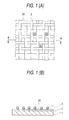
- Fig. 1 (A) is a plane view illustrating an embodiment of the pressure-sensitive cleaning sheet according to the present invention.
- Fig. 1 (B) is a sectional view taken on the line B-B of Fig. 1 (A).
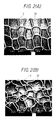
- Figs. 2 (A) and 2 (B) are microphotographs (scanning electron microscope photographs) showing yarn patterns on the surfaces of other embodiments of the pressure-sensitive cleaning sheet according to the present invention.
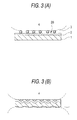
- Figs. 3 (A) and 3 (B) are sectional views illustrating the states of a pressure-sensitive cleaning sheet according to the present invention which is being used in respective stages.
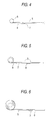
- Fig. 4 is a diagrammatic view of a roll-form image forming material according to the present invention.
- Fig. 5 is a diagrammatic view of another roll-form image forming material according to the present invention.
- Fig. 6 is a diagrammatic view of still another roll-form image forming material according to the present invention.
- Fig. 1 (A) is a plan view illustrating an embodiment of the pressure-sensitive cleaning sheet according to the present invention.
- Fig. 1 (B) is a sectional view taken on the line B-B of Fig. 1 (A).
- numeral 1 denotes a sheet-form substrate.
- the substrate has such a flexural modulus that it can almost completely recover its original flat shape after being bent during use as described later.
- the sheet-form substrate 1 include sheets of plastics such as poly(ethylene terephthalate), polypropylene, and polyvinyl chloride, papers (in particular, resin-impregnated papers), synthetic papers, and laminates of these.
- the thickness of the sheet is not particularly limited, and may be suitably decided according to, e.g., the thicknesses of the insertion openings of apparatuses.
- the substrate usually has a thickness of about from 12 ⁇ m to 2.0 mm. The preferred range of the thickness thereof is about from 50 ⁇ m to 1.0 mm from the standpoints of the sizes of the insertion openings of apparatuses, hardness suitable for handling, etc.
- Numeral 2 denotes a pressure-sensitive adhesive layer formed on at least one side of the sheet-form substrate 1.
- the material of the pressure-sensitive adhesive layer 2 is not particularly limited, and examples thereof include synthetic rubbers, such as acrylic, styrene, and silicone rubbers, and natural rubber.
- the thickness of the pressure-sensitive adhesive layer 2 is preferably smaller than that of the porous screen described below, especially desirably by about 10 to 50%. If the pressure-sensitive adhesive layer has too large a thickness, there is a fear that the pressure-sensitive adhesive may protrude on the porous screen.
- Numeral 3 denotes a porous screen disposed on the surface of the pressure-sensitive adhesive layer 2.
- the porous screen include woven fabrics, nonwoven fabrics, papers, plastic nets, and knit fabrics.
- knit fabrics such as those shown in Fig. 2 (A) and (B) (having an average yarn thickness of, e.g., from 10 to 300 ⁇ m), from the standpoint that such fabrics are effective in enhancing elasticity in the thickness direction due to the yarn intersections thereof.
- the material of the porous screen is not particularly limited. Examples thereof include polyesters, polypropylenes, Tetoron, and mixtures of these.
- numeral 20 denotes the exposed pressure-sensitive adhesive layer surface which appears on the sheet surface through the openings of the porous screen 3.
- the ratio of the area S 1 of the exposed pressure-sensitive adhesive layer surface 20 to the area S 2 of the non-exposed pressure-sensitive adhesive layer surface which the porous screen 3 covers, S 1 /S 2 is generally from 50/1 to 1/10, preferably from 20/1 to 1/5, more preferably from 10/1 to 1/3. If the ratio S 1 /S 2 exceeds 50, it is not ensured that the cleaning sheet is substantially non-tacky when the sheet is in a non-pressed state, which will be described below. On the other hand, if that ratio is below 1/10, the cleaning sheet hardly exhibits tackiness when the sheet is in a pressed state, which will be described below.
- the pressure-sensitive cleaning sheet of the present invention is brought into contact with a member to be cleaned 4, in such a manner that the porous screen 3 comes into contact with the member 4 at a contact pressure of substantially zero as shown in Fig. 3 (A), the member to be cleaned 4 is prevented from coming into contact with the exposed pressure-sensitive adhesive layer surface 20. This is because the porous screen 3 is projecting from the surface of the pressure-sensitive adhesive layer 2. As a result, the pressure-sensitive cleaning sheet 2 is substantially non-tacky.
- substantially non-tacky used herein means that the cleaning sheet feels non-tacky by the light touch.
- the cleaning sheet desirably has a moderate adhesive strength. This is because if a cleaning sheet having too high an adhesive strength is used for the cleaning of an apparatus, the sheet may damage the surface of the transport rubber rollers or other parts of the apparatus or may cause adhesive transfer.
- the adhesive strength (at 23°C) of the cleaning sheet is usually 5 kg/20 mm or lower, preferably about from 2 kg/20 mm to 200 g/20 mm.
- the adhesive strength of a cleaning sheet is herein determined through a test in which the cleaning sheet on which a porous screen has not been disposed is applied to a stainless-steel plate by pressing the sheet against the plate by rolling a 2-kg roller forward and backward once on the sheet, and the resultant test piece is immediately subjected to 180° peeling at a peel rate of 300 mm/min.
- the member 4 is separated from the exposed pressure-sensitive adhesive layer surface 20. Upon the separation, dust particles and other foreign matters adherent to the surface of the member to be cleaned 4 are transferred to the exposed pressure-sensitive adhesive layer surface 20, whereby the surface of the member to be cleaned 4 is cleaned. In this case, a tensile force is applied to the interface between the exposed pressure-sensitive adhesive layer surface 20 and the member to be cleaned 4 during the peeling of the surface 20 from the member 4.
- the exposed pressure-sensitive adhesive layer surface 20 is held in place by the mesh structure of the porous screen 3, whereby the tensile stress f exerted on the interface between the exposed pressure-sensitive adhesive layer surface 20 and the substrate 1 is reduced accordingly.
- the exposed pressure-sensitive adhesive layer surface 20 can be satisfactorily prevented from being separated from the substrate 1 and being transferred to the member to be cleaned 4 (i.e., prevented from causing adhesive transfer).
- the member 4 After the exposed pressure-sensitive adhesive layer surface 20 is brought into contact with the member to be cleaned 4 with pressing, the member 4 is separated from the exposed pressure-sensitive adhesive layer surface 20, upon which separation the cleaning sheet is released from pressing. Since the substrate, pressure-sensitive adhesive layer, and porous screen 3 which are components of the cleaning sheet of the present invention each has moderate elasticity, the cleaning sheet recovers from deformation upon release from pressing. As a result, the porous screen sheet 3 projects from the surface of the exposed pressure-sensitive adhesive layer 20 as shown in Fig. 3 (A), and the cleaning sheet hence comes again to be substantially non-tacky.
- the upper and lower transport members are in contact with each other while being pressed against each other since these members are generally made of a rubbery elastomer. Because the cleaning sheet passes between the upper and lower transport members which are being pressed against each other, the sheet is deformed by the pressing and the rubber elastomer members for transport are also deformed simultaneously. As a result, the exposed pressure-sensitive adhesive layer surface comes into contact with the members to be cleaned. After passing through the transport part, the sheet recovers its original shape mainly due to the rigidity of the substrate.
- the cleaning sheet inserted thereinto is pressed by means of a press roller against the part to be cleaned, and thus comes into a pressed state. Since the press roller also is made of a rubbery elastomer, the cleaning card is deformed and the exposed pressure-sensitive adhesive layer surface comes into contact with the part to be cleaned, as in the above case.
- the present invention produces the following effect besides the above.
- the part to be cleaned 4 is wiped with the surface of the porous screen 3.
- fouling substances are wiped off and caught by the pressure-sensitive adhesive layer 2.
- This effect is pronounced especially when the cleaning sheet is thick (like the cash card type) and less apt to be deformed.
- the total thickness of the pressure-sensitive cleaning sheet according to the present invention may be suitably decided according to the size of the insertion opening of the apparatus to be cleaned.
- the total thickness of the cleaning sheet is usually about from 200 to 320 ⁇ m.
- the cleaning of, for example, the magnetic reading part and magnetic-card transport part of a reader/writer for rewritable cards or a thermal head part for thermal printing with the pressure-sensitive cleaning sheet according to the present invention is conducted as follows.
- the card type pressure-sensitive cleaning sheet hereinafter referred to as cleaning card
- the cleaning card is inserted into the card insertion opening.
- the cleaning card is in a non-pressed state and hence is substantially non-tacky.
- the insertion is accomplished exceedingly smoothly.
- the cleaning card inserted is drawn into the apparatus by means of draw rolls, and passes through the magnetic-card transport part. During the passing, the surface of the porous screen, which is in contact with the transport part, is pressed and the card surface exhibits tackiness as described above. Thus, with the passing of the cleaning card, the magnetic-card transport part is cleaned. The cleaning card subsequently comes into contact with the surface of the magnetic reading part. As a result, the reading part surface is wiped with the porous screen to separate fouling substances from the surface. The fouling substances come into contact with the exposed pressure-sensitive adhesive layer surface and are thus removed.
- the cleaning card is sent to the card takeout opening by means of the rotational force of the draw rolls.
- the cleaning card is thus separated from the magnetic-card transport part and magnetic reading part or from the thermal head part without causing adhesive transfer.
- the cleaning card When used for the cleaning of an apparatus in which the passageway extending from the card insertion opening to the card takeout opening has a bent part, the cleaning card recovers its flat shape immediately after passing through the bent part because the cleaning card is highly elastic as long as the sheet-form substrate thereof has a thickness of about from 50 to 350 ⁇ m. Therefore, the cleaning card can pass smoothly through the bent part and the subsequent passageway part.
- the pressure-sensitive cleaning sheet of the present invention can have a constitution comprising a sheet-form substrate, a pressure-sensitive adhesive layer formed on each side of the substrate, and a porous screen disposed on each pressure-sensitive adhesive layer. Cleaning with this cleaning sheet can be conducted, for example, in such a manner that one side of the sheet is used in the first insertion and the other side thereof is used in the second insertion.
- the pressure-sensitive cleaning sheet according to the present invention is usable for the cleaning of the magnetic reading parts, magnetic-card transport parts, and other parts of apparatuses accepting various magnetic cards, such as, e.g., public telephones, automatic checking and collecting machines, and ticket dispensers accepting cards such as Orange Cards (which are used in Japan), IC card readers, cash dispensers, and prepaid card machines.
- the cleaning sheet of the present invention is also usable for the cleaning of the printing parts and transport parts, e.g., draw rolls, of various printers and copiers of the thermal transfer and other types. In such applications, the pressure under which the cleaning sheet exhibits tackiness is generally 30 g/cm 2 or more.
- the present invention furthermore provides a roll-form image-forming material having a cleaning part, which comprises a pressure-sensitive adhesive layer having a porous screen disposed thereon.
- the cleaning part is substantially non-tacky when the cleaning part surface is kept in a non-pressed state, under which the porous screen is projecting from the surface of the pressure-sensitive adhesive layer.
- the cleaning part exhibits tackiness when the cleaning part surface is kept in a pressed state, under which the pressure-sensitive adhesive layer appears on the cleaning part surface through the openings of the porous screen to thereby have a surface which is on almost the same level as the surface of the porous screen.
- Examples of the image-forming material of the present invention include heat-sensitive recording papers, ink ribbons, photographic printing papers, and other general printing materials which each has the above-described specific cleaning part as a part thereof. These image-forming materials are not particularly limited in the position where the cleaning part has been disposed and in methods for forming the cleaning part.
- a cleaning part 8 can be connected with a connecting tape 7 or the like to an image-forming material 5, such as a roll-form ink ribbon or printing material, at the front end of the material 5 wound around a core 6 (Fig. 4), or somewhere between the front and rear ends thereof (Fig. 5), or at the rear end thereof (Fig. 6).
- the connection is preferably conducted in such a manner that the image-forming material 5 does not overlap the cleaning part 8, from the standpoint of cleaning efficiency, etc.
- the pressure-sensitive cleaning sheet according to the present invention is substantially non-tacky in a non-pressed state, and exhibits tackiness upon pressing. Upon release from the pressing, the cleaning sheet recovers the substantially non-tacky properties or weak tackiness. Therefore, the cleaning sheet can be smoothly inserted into an apparatus accepting magnetic cards. During the passing thereof through the magnetic reading part and magnetic-card transport part, the cleaning sheet is in a pressed state and is capable of efficiently cleaning these parts by means of the sufficiently high adhesive strength thereof. When the cleaning sheet has passed through the transport part, it is released from pressing and thus recovers the substantially non-tacky properties. Hence, the cleaning sheet can be smoothly taken out.
- the cleaning sheet is extremely useful for the cleaning of, e.g., magnetic reading parts, magnetic-card transport parts, and the printing parts of various printers.
- the roll-form image forming material of the present invention has the following effects.
- the thermal head and transport rollers can be cleaned automatically during use without stopping the apparatus. Hence, the number of times of disassembling/cleaning can be considerably reduced.
- a layer of an acrylic pressure-sensitive adhesive obtained by copolymerizing a mixture consisting of 90 parts by weight of 2-ethylhexyl acrylate, 10 parts by weight of acrylic acid, and 300 parts by weight of ethyl acetate
- the knit fabric shown in Fig. 2 (A) (made of a polyester; average yarn thickness, 45 ⁇ m) was adhered as a porous screen to the pressure-sensitive adhesive layer by pressing with an iron roll at 130°C.
- the resultant structure was cut into a card size to obtain a card type pressure-sensitive cleaning sheet.
- the adhesive strength of this cleaning sheet as determined by the method described hereinabove was 850 g/20 mm.
- a card type pressure-sensitive cleaning sheet was obtained in the same manner as in Example 1, except that the porous screen was replaced with the knit fabric shown in Fig. 2 (B) (made of a polyester; average yarn thickness, 45 ⁇ m).
- the adhesive strength of this cleaning sheet as determined by the method described hereinabove was 850 g/20 mm.
- a card type pressure-sensitive cleaning sheet was obtained in the same manner as in Example 1, except that the pressure-sensitive adhesive was replaced with a synthetic rubber pressure-sensitive adhesive (obtained by compounding 100 parts by weight on a solid basis of a 50 wt% toluene solution of a styrene-isoprene-styrene polymer (Kraton 1107, manufactured by Shell Kagaku K.K., Japan) with 150 parts by weight of a tackifier (Marukarez H700M, manufactured by Maruzen Petrochemical Co., Ltd., Japan) and 3 parts by weight of an antioxidant).
- a synthetic rubber pressure-sensitive adhesive obtained by compounding 100 parts by weight on a solid basis of a 50 wt% toluene solution of a styrene-isoprene-styrene polymer (Kraton 1107, manufactured by Shell Kagaku K.K., Japan) with 150 parts by weight of a tackifier (Marukarez H700M
- the adhesive strength of this cleaning sheet as determined by the method described hereinabove was 1,800 g/20 mm.
- a card type pressure-sensitive cleaning sheet was obtained in the same manner as in Example 1, except that the porous screen was replaced with a polyester woven fabric having a lattice pattern such as that shown in Fig. 1.
- the adhesive strength of this cleaning sheet as determined by the method described hereinabove was 850 g/20 mm.
- a card type pressure-sensitive cleaning sheet was obtained in the same manner as in Example 1, except that the porous screen was omitted.
- a card type pressure-sensitive cleaning sheet was obtained in the same manner as in Example 3, except that the porous screen was omitted.
- the cleaning sheets of the Comparative Examples each showed considerable adhesive transfer to the card insertion opening and card takeout opening, and the percentage of insertion failures and takeout failures was as high as about 97%.
- Cleaning sheets were obtained in the same manner as in Examples 1 and 2, except that the substrate was replaced with a poly(ethylene terephthalate) sheet having a thickness of 50 ⁇ m. These cleaning sheets were cut into the same width as an ink ribbon for bar code (Dura Ink H, manufactured by Nitto Denko Corporation), and then connected to the ink ribbon (length, 300 m) with a connecting tape (Splicing Tape No. 31B, manufactured by Nitto Denko Corporation; width, 30 mm) in the manners shown in Figs. 4, 5, and 6. Each resultant ribbon was wound up. Thus, roll-form ink ribbons having a cleaning part were obtained.
- ink ribbon for bar code Liura Ink H, manufactured by Nitto Denko Corporation
- a connecting tape Splicing Tape No. 31B, manufactured by Nitto Denko Corporation; width, 30 mm
- the thus-obtained ink-ribbons having a cleaning part each was mounted on a bar code printer (Dura Printer R, manufactured by Nitto Denko Corporation), and continuously used for one week. As a result, no ink blurring occurred. On the other hand, an ink ribbon having no cleaning part was used in the same manner. As a result, ink blurring occurred in 24-hour continuous use.
- a bar code printer Dura Printer R, manufactured by Nitto Denko Corporation
Landscapes
- Accessory Devices And Overall Control Thereof (AREA)
- Cleaning In General (AREA)
Applications Claiming Priority (6)
| Application Number | Priority Date | Filing Date | Title |
|---|---|---|---|
| JP20459396 | 1996-08-02 | ||
| JP204593/96 | 1996-08-02 | ||
| JP20459396 | 1996-08-02 | ||
| JP9903497A JPH1097710A (ja) | 1996-08-02 | 1997-04-16 | 粘着式クリーニングシート、クリーニング部を有する画像形成材料、及び画像形成装置のクリーニング方法 |
| JP9903497 | 1997-04-16 | ||
| JP99034/97 | 1997-04-16 |
Publications (3)
| Publication Number | Publication Date |
|---|---|
| EP0822093A2 true EP0822093A2 (fr) | 1998-02-04 |
| EP0822093A3 EP0822093A3 (fr) | 1999-06-30 |
| EP0822093B1 EP0822093B1 (fr) | 2003-04-16 |
Family
ID=26440157
Family Applications (1)
| Application Number | Title | Priority Date | Filing Date |
|---|---|---|---|
| EP19970113327 Expired - Lifetime EP0822093B1 (fr) | 1996-08-02 | 1997-08-01 | Feuille de nettoyage sensible à la pression et méthode de nettoyage d'un dispositif de formation d'image |
Country Status (4)
| Country | Link |
|---|---|
| US (2) | US6555192B1 (fr) |
| EP (1) | EP0822093B1 (fr) |
| JP (1) | JPH1097710A (fr) |
| DE (1) | DE69720882T2 (fr) |
Cited By (4)
| Publication number | Priority date | Publication date | Assignee | Title |
|---|---|---|---|---|
| WO1999056963A1 (fr) * | 1998-05-01 | 1999-11-11 | Moore U.S.A., Inc. | Carte de nettoyage pour imprimante integree a une bande d'etiquettes imprimables |
| WO2001015146A1 (fr) * | 1999-08-20 | 2001-03-01 | Josef Bareis | Carte autonettoyante |
| WO2005010264A1 (fr) * | 2003-07-18 | 2005-02-03 | 3M Innovative Properties Company | Lingette nettoyante et procede de fabrication correspondant |
| CN107626688A (zh) * | 2016-07-19 | 2018-01-26 | 富泰华工业(深圳)有限公司 | 一种自动清洁屏幕的电子装置 |
Families Citing this family (30)
| Publication number | Priority date | Publication date | Assignee | Title |
|---|---|---|---|---|
| JP3981246B2 (ja) * | 2001-05-02 | 2007-09-26 | 日東電工株式会社 | クリーニングシ―ト、クリーニング機能付き搬送部材、及びこれらを用いた基板処理装置のクリーニング方法 |
| CN101402091B (zh) * | 2003-04-14 | 2012-09-19 | 日东电工株式会社 | 清洁片、具有清洁功能的承载元件和基片处理设备的清洁方法 |
| US20050125928A1 (en) * | 2003-12-16 | 2005-06-16 | Pitney Bowes Inc. | Optical sensor cleaner |
| JP2008507375A (ja) * | 2004-07-26 | 2008-03-13 | ザ プロクター アンド ギャンブル カンパニー | クリーニング用具、クリーニング用具を含むクリーニングシステム、及び硬質表面をクリーニングするための方法 |
| JP4219358B2 (ja) * | 2005-08-31 | 2009-02-04 | シャープ株式会社 | クリーニング部材及びこれを用いた画像形成装置 |
| US7430895B2 (en) * | 2005-11-18 | 2008-10-07 | International Business Machines Corporation | Apparatus and method for inspecting quality of molded foam parts |
| US20070136967A1 (en) * | 2005-12-20 | 2007-06-21 | 3M Innovative Properties Company | Adhesive wipe |
| US20070246066A1 (en) * | 2006-04-21 | 2007-10-25 | Hao Chang | Method for cleaning an automatic process device |
| BRPI0816639A2 (pt) * | 2007-10-10 | 2015-03-10 | 3M Innovative Properties Co | "artigos e métodos de mascaramento ou proteção de um substrato" |
| WO2009111655A2 (fr) | 2008-03-05 | 2009-09-11 | Kcl Licensing Inc. | Pansement et procédé permettant d’exercer une pression réduite sur un site tissulaire et de recueillir et de stocker un fluide qui en provient |
| EP2371916A1 (fr) * | 2008-12-04 | 2011-10-05 | Nitto Denko Corporation | Ruban adhésif double face sensible à la pression pour module de cellule solaire |
| US8814842B2 (en) | 2010-03-16 | 2014-08-26 | Kci Licensing, Inc. | Delivery-and-fluid-storage bridges for use with reduced-pressure systems |
| CN111419540A (zh) | 2011-12-16 | 2020-07-17 | 凯希特许有限公司 | 可释放的医用布单 |
| US10940047B2 (en) | 2011-12-16 | 2021-03-09 | Kci Licensing, Inc. | Sealing systems and methods employing a hybrid switchable drape |
| EP3092990B1 (fr) | 2012-11-16 | 2020-03-11 | KCI Licensing, Inc. | Procédé de fabrication d'un drap médical avec couches adhésives à motifs |
| JP6100539B2 (ja) * | 2013-01-25 | 2017-03-22 | 株式会社ニトムズ | 有機質汚れ除去用粘着クリーナー |
| US10946124B2 (en) | 2013-10-28 | 2021-03-16 | Kci Licensing, Inc. | Hybrid sealing tape |
| WO2015065616A1 (fr) | 2013-10-30 | 2015-05-07 | Kci Licensing, Inc. | Pansement ayant une interface de scellement étanche et de rétention |
| EP3821859A1 (fr) | 2013-10-30 | 2021-05-19 | 3M Innovative Properties Co. | Pansement avec des perforations de taille différente |
| WO2015065612A1 (fr) | 2013-10-30 | 2015-05-07 | Kci Licensing, Inc. | Système d'absorption et de dissipation d'un condensat |
| US11026844B2 (en) | 2014-03-03 | 2021-06-08 | Kci Licensing, Inc. | Low profile flexible pressure transmission conduit |
| CN106535842B (zh) | 2014-06-05 | 2020-07-17 | 凯希特许有限公司 | 具有流体获取和分配特征的敷料 |
| EP3233001B1 (fr) | 2014-12-17 | 2020-06-17 | KCI Licensing, Inc. | Pansement avec capacité de mise en décharge |
| EP3574877B1 (fr) | 2015-05-08 | 2022-08-17 | 3M Innovative Properties Company | Pansement à faible acuité doté d'une pompe intégrée |
| EP3741335B1 (fr) * | 2015-09-01 | 2023-05-24 | KCI Licensing, Inc. | Pansement présentant une force d'apposition accrue |
| US10973694B2 (en) | 2015-09-17 | 2021-04-13 | Kci Licensing, Inc. | Hybrid silicone and acrylic adhesive cover for use with wound treatment |
| JP2017196588A (ja) * | 2016-04-28 | 2017-11-02 | フジコピアン株式会社 | クリーニングシート |
| JP6779453B2 (ja) * | 2016-06-01 | 2020-11-04 | フジコピアン株式会社 | クリーニングシート |
| JP6779452B2 (ja) * | 2016-06-01 | 2020-11-04 | フジコピアン株式会社 | クリーニングシート |
| JP7358176B2 (ja) * | 2019-10-08 | 2023-10-10 | 株式会社ニトムズ | 清掃用シートおよび清掃具 |
Family Cites Families (10)
| Publication number | Priority date | Publication date | Assignee | Title |
|---|---|---|---|---|
| US3889310A (en) * | 1973-11-23 | 1975-06-17 | Victor Barouh | Typewriter correction device employing an adhesive ribbon |
| JPS62244677A (ja) * | 1986-04-16 | 1987-10-26 | Nec Corp | クリ−ニングテ−プ |
| JPH01242278A (ja) * | 1988-03-25 | 1989-09-27 | Canon Inc | インクシート及び熱転写記録装置 |
| AU612922B2 (en) | 1989-01-24 | 1991-07-18 | Tokyo Electric Co. Ltd. | Method for cleaning a thermal head |
| JP2606743B2 (ja) * | 1989-09-30 | 1997-05-07 | 金井 宏之 | クリーニングシート |
| US5153964A (en) * | 1990-01-12 | 1992-10-13 | Norman J. Olson | Machine optics and paper path cleaner |
| JPH04173289A (ja) * | 1990-11-06 | 1992-06-19 | Ricoh Co Ltd | サーモクロミックフイルム記録帯 |
| US5227844A (en) * | 1991-10-03 | 1993-07-13 | The Texwipe Company | Cleaning sheet and method for cleaning paper path feed roller surfaces |
| JPH0929191A (ja) * | 1995-07-17 | 1997-02-04 | Nitto Denko Corp | カ−ド型粘着式クリ−ナ及びその使用方法 |
| US5736470A (en) * | 1996-06-25 | 1998-04-07 | Omega Research, Inc. | Pressure sensitive adhesive article and method of making |
-
1997
- 1997-04-16 JP JP9903497A patent/JPH1097710A/ja active Pending
- 1997-08-01 EP EP19970113327 patent/EP0822093B1/fr not_active Expired - Lifetime
- 1997-08-01 DE DE69720882T patent/DE69720882T2/de not_active Expired - Lifetime
- 1997-08-01 US US08/904,868 patent/US6555192B1/en not_active Expired - Fee Related
-
2000
- 2000-06-13 US US09/592,992 patent/US6457200B1/en not_active Expired - Fee Related
Cited By (6)
| Publication number | Priority date | Publication date | Assignee | Title |
|---|---|---|---|---|
| WO1999056963A1 (fr) * | 1998-05-01 | 1999-11-11 | Moore U.S.A., Inc. | Carte de nettoyage pour imprimante integree a une bande d'etiquettes imprimables |
| US6129019A (en) * | 1998-05-01 | 2000-10-10 | Moore U.S.A., Inc. | Printer cleaning card integrated into web of printable labels |
| WO2001015146A1 (fr) * | 1999-08-20 | 2001-03-01 | Josef Bareis | Carte autonettoyante |
| WO2005010264A1 (fr) * | 2003-07-18 | 2005-02-03 | 3M Innovative Properties Company | Lingette nettoyante et procede de fabrication correspondant |
| US7560398B2 (en) | 2003-07-18 | 2009-07-14 | 3M Innovative Properties Company | Cleaning wipe and method of manufacture |
| CN107626688A (zh) * | 2016-07-19 | 2018-01-26 | 富泰华工业(深圳)有限公司 | 一种自动清洁屏幕的电子装置 |
Also Published As
| Publication number | Publication date |
|---|---|
| US6457200B1 (en) | 2002-10-01 |
| EP0822093A3 (fr) | 1999-06-30 |
| US6555192B1 (en) | 2003-04-29 |
| EP0822093B1 (fr) | 2003-04-16 |
| JPH1097710A (ja) | 1998-04-14 |
| DE69720882T2 (de) | 2003-11-13 |
| DE69720882D1 (de) | 2003-05-22 |
Similar Documents
| Publication | Publication Date | Title |
|---|---|---|
| EP0822093B1 (fr) | Feuille de nettoyage sensible à la pression et méthode de nettoyage d'un dispositif de formation d'image | |
| EP0144199A2 (fr) | Dispositif de nettoyage pour tête d'enregistrement magnétographique | |
| JPH11202463A (ja) | 写真感光材料の搬送ローラ用クリーニングテープ | |
| EP1114785B1 (fr) | Ensemble de séparation à lame | |
| US5035175A (en) | Mimeographic printing apparatus and clamping device therefor | |
| JP3330476B2 (ja) | アダプタケースとそのアダプタケースをインクリボン装着に用いる券処理装置 | |
| JP4205254B2 (ja) | 粘着式クリーニングシート | |
| JPH11224414A (ja) | 機器用クリーニングテープもしくはシート | |
| JPH11232621A (ja) | クリーニング用粘着テープもしくはラベル | |
| JPH11224413A (ja) | クリーニング部を有する記録原紙 | |
| JP3268618B2 (ja) | 画像支持体再生装置 | |
| JP3059623U (ja) | 用 紙 | |
| JP2001010617A (ja) | ラベルの除去装置 | |
| US5735616A (en) | Printing mechanism with means for preventing contact between ink ribbon and drive IC of thermal head | |
| JP3529120B2 (ja) | ロール状複合台紙なしラベル | |
| CA2132151A1 (fr) | Feuille de nettoyage pour appareil a balayage | |
| JP4484323B2 (ja) | 画像・情報記録装置 | |
| JP3594156B2 (ja) | ピックアップローラ清掃治具 | |
| JPH0929191A (ja) | カ−ド型粘着式クリ−ナ及びその使用方法 | |
| JPH0677991B2 (ja) | 段ボール印刷機に用いる紙粉除去シート | |
| JP2583605Y2 (ja) | クリーニングシート | |
| JPH01154758A (ja) | 印刷機の紙粉除去装置 | |
| JP2607418Y2 (ja) | ラベル貼付装置 | |
| JPH02210381A (ja) | 電子写真装置 | |
| JPH05333613A (ja) | 圧力解除機構 |
Legal Events
| Date | Code | Title | Description |
|---|---|---|---|
| PUAI | Public reference made under article 153(3) epc to a published international application that has entered the european phase |
Free format text: ORIGINAL CODE: 0009012 |
|
| AK | Designated contracting states |
Kind code of ref document: A2 Designated state(s): DE FR GB |
|
| AX | Request for extension of the european patent |
Free format text: AL;LT;LV;RO;SI |
|
| PUAL | Search report despatched |
Free format text: ORIGINAL CODE: 0009013 |
|
| AK | Designated contracting states |
Kind code of ref document: A3 Designated state(s): AT BE CH DE DK ES FI FR GB GR IE IT LI LU MC NL PT SE |
|
| AX | Request for extension of the european patent |
Free format text: AL;LT;LV;RO;SI |
|
| 17P | Request for examination filed |
Effective date: 19991115 |
|
| AKX | Designation fees paid |
Free format text: DE FR GB |
|
| GRAH | Despatch of communication of intention to grant a patent |
Free format text: ORIGINAL CODE: EPIDOS IGRA |
|
| GRAH | Despatch of communication of intention to grant a patent |
Free format text: ORIGINAL CODE: EPIDOS IGRA |
|
| GRAA | (expected) grant |
Free format text: ORIGINAL CODE: 0009210 |
|
| AK | Designated contracting states |
Designated state(s): DE FR GB |
|
| REG | Reference to a national code |
Ref country code: GB Ref legal event code: FG4D |
|
| REF | Corresponds to: |
Ref document number: 69720882 Country of ref document: DE Date of ref document: 20030522 Kind code of ref document: P |
|
| ET | Fr: translation filed | ||
| PLBE | No opposition filed within time limit |
Free format text: ORIGINAL CODE: 0009261 |
|
| STAA | Information on the status of an ep patent application or granted ep patent |
Free format text: STATUS: NO OPPOSITION FILED WITHIN TIME LIMIT |
|
| 26N | No opposition filed |
Effective date: 20040119 |
|
| PGFP | Annual fee paid to national office [announced via postgrant information from national office to epo] |
Ref country code: FR Payment date: 20080818 Year of fee payment: 12 |
|
| PGFP | Annual fee paid to national office [announced via postgrant information from national office to epo] |
Ref country code: GB Payment date: 20080813 Year of fee payment: 12 |
|
| GBPC | Gb: european patent ceased through non-payment of renewal fee |
Effective date: 20090801 |
|
| REG | Reference to a national code |
Ref country code: FR Ref legal event code: ST Effective date: 20100430 |
|
| PG25 | Lapsed in a contracting state [announced via postgrant information from national office to epo] |
Ref country code: FR Free format text: LAPSE BECAUSE OF NON-PAYMENT OF DUE FEES Effective date: 20090831 |
|
| PG25 | Lapsed in a contracting state [announced via postgrant information from national office to epo] |
Ref country code: GB Free format text: LAPSE BECAUSE OF NON-PAYMENT OF DUE FEES Effective date: 20090801 |
|
| PGFP | Annual fee paid to national office [announced via postgrant information from national office to epo] |
Ref country code: DE Payment date: 20100728 Year of fee payment: 14 |
|
| REG | Reference to a national code |
Ref country code: DE Ref legal event code: R119 Ref document number: 69720882 Country of ref document: DE Effective date: 20120301 |
|
| PG25 | Lapsed in a contracting state [announced via postgrant information from national office to epo] |
Ref country code: DE Free format text: LAPSE BECAUSE OF NON-PAYMENT OF DUE FEES Effective date: 20120301 |