EP0859549B1 - Schadpilzbekämpfung mit der kombination eines die atmung am cytochrom-komplex iii hemmenden wirkstoffes mit einem amid - Google Patents
Schadpilzbekämpfung mit der kombination eines die atmung am cytochrom-komplex iii hemmenden wirkstoffes mit einem amid Download PDFInfo
- Publication number
- EP0859549B1 EP0859549B1 EP96933362A EP96933362A EP0859549B1 EP 0859549 B1 EP0859549 B1 EP 0859549B1 EP 96933362 A EP96933362 A EP 96933362A EP 96933362 A EP96933362 A EP 96933362A EP 0859549 B1 EP0859549 B1 EP 0859549B1
- Authority
- EP
- European Patent Office
- Prior art keywords
- methyl
- alkyl
- phenyl
- halogen
- formula
- Prior art date
- Legal status (The legal status is an assumption and is not a legal conclusion. Google has not performed a legal analysis and makes no representation as to the accuracy of the status listed.)
- Expired - Lifetime
Links
- 0 CC1C(*)CC=CC1C Chemical compound CC1C(*)CC=CC1C 0.000 description 8
- ZOTBXTZVPHCKPN-HTXNQAPBSA-N Cc(cccc1)c1OCc(cccc1)c1/C(/C(OC)=O)=N\OC Chemical compound Cc(cccc1)c1OCc(cccc1)c1/C(/C(OC)=O)=N\OC ZOTBXTZVPHCKPN-HTXNQAPBSA-N 0.000 description 1
Classifications
-
- A—HUMAN NECESSITIES
- A01—AGRICULTURE; FORESTRY; ANIMAL HUSBANDRY; HUNTING; TRAPPING; FISHING
- A01N—PRESERVATION OF BODIES OF HUMANS OR ANIMALS OR PLANTS OR PARTS THEREOF; BIOCIDES, e.g. AS DISINFECTANTS, AS PESTICIDES OR AS HERBICIDES; PEST REPELLANTS OR ATTRACTANTS; PLANT GROWTH REGULATORS
- A01N25/00—Biocides, pest repellants or attractants, or plant growth regulators, characterised by their forms, or by their non-active ingredients or by their methods of application, e.g. seed treatment or sequential application; Substances for reducing the noxious effect of the active ingredients to organisms other than pests
- A01N25/02—Biocides, pest repellants or attractants, or plant growth regulators, characterised by their forms, or by their non-active ingredients or by their methods of application, e.g. seed treatment or sequential application; Substances for reducing the noxious effect of the active ingredients to organisms other than pests containing liquids as carriers, diluents or solvents
-
- A—HUMAN NECESSITIES
- A01—AGRICULTURE; FORESTRY; ANIMAL HUSBANDRY; HUNTING; TRAPPING; FISHING
- A01N—PRESERVATION OF BODIES OF HUMANS OR ANIMALS OR PLANTS OR PARTS THEREOF; BIOCIDES, e.g. AS DISINFECTANTS, AS PESTICIDES OR AS HERBICIDES; PEST REPELLANTS OR ATTRACTANTS; PLANT GROWTH REGULATORS
- A01N25/00—Biocides, pest repellants or attractants, or plant growth regulators, characterised by their forms, or by their non-active ingredients or by their methods of application, e.g. seed treatment or sequential application; Substances for reducing the noxious effect of the active ingredients to organisms other than pests
- A01N25/08—Biocides, pest repellants or attractants, or plant growth regulators, characterised by their forms, or by their non-active ingredients or by their methods of application, e.g. seed treatment or sequential application; Substances for reducing the noxious effect of the active ingredients to organisms other than pests containing solids as carriers or diluents
-
- A—HUMAN NECESSITIES
- A01—AGRICULTURE; FORESTRY; ANIMAL HUSBANDRY; HUNTING; TRAPPING; FISHING
- A01N—PRESERVATION OF BODIES OF HUMANS OR ANIMALS OR PLANTS OR PARTS THEREOF; BIOCIDES, e.g. AS DISINFECTANTS, AS PESTICIDES OR AS HERBICIDES; PEST REPELLANTS OR ATTRACTANTS; PLANT GROWTH REGULATORS
- A01N43/00—Biocides, pest repellants or attractants, or plant growth regulators containing heterocyclic compounds
- A01N43/34—Biocides, pest repellants or attractants, or plant growth regulators containing heterocyclic compounds having rings with one nitrogen atom as the only ring hetero atom
- A01N43/40—Biocides, pest repellants or attractants, or plant growth regulators containing heterocyclic compounds having rings with one nitrogen atom as the only ring hetero atom six-membered rings
-
- A—HUMAN NECESSITIES
- A01—AGRICULTURE; FORESTRY; ANIMAL HUSBANDRY; HUNTING; TRAPPING; FISHING
- A01N—PRESERVATION OF BODIES OF HUMANS OR ANIMALS OR PLANTS OR PARTS THEREOF; BIOCIDES, e.g. AS DISINFECTANTS, AS PESTICIDES OR AS HERBICIDES; PEST REPELLANTS OR ATTRACTANTS; PLANT GROWTH REGULATORS
- A01N61/00—Biocides, pest repellants or attractants, or plant growth regulators containing substances of unknown or undetermined composition, e.g. substances characterised only by the mode of action
-
- A—HUMAN NECESSITIES
- A01—AGRICULTURE; FORESTRY; ANIMAL HUSBANDRY; HUNTING; TRAPPING; FISHING
- A01N—PRESERVATION OF BODIES OF HUMANS OR ANIMALS OR PLANTS OR PARTS THEREOF; BIOCIDES, e.g. AS DISINFECTANTS, AS PESTICIDES OR AS HERBICIDES; PEST REPELLANTS OR ATTRACTANTS; PLANT GROWTH REGULATORS
- A01N2300/00—Combinations or mixtures of active ingredients covered by classes A01N27/00 - A01N65/48 with other active or formulation relevant ingredients, e.g. specific carrier materials or surfactants, covered by classes A01N25/00 - A01N65/48
Definitions
- the present invention relates to agents for combating Harmful fungi and methods for combating harmful fungi under Use of such means.
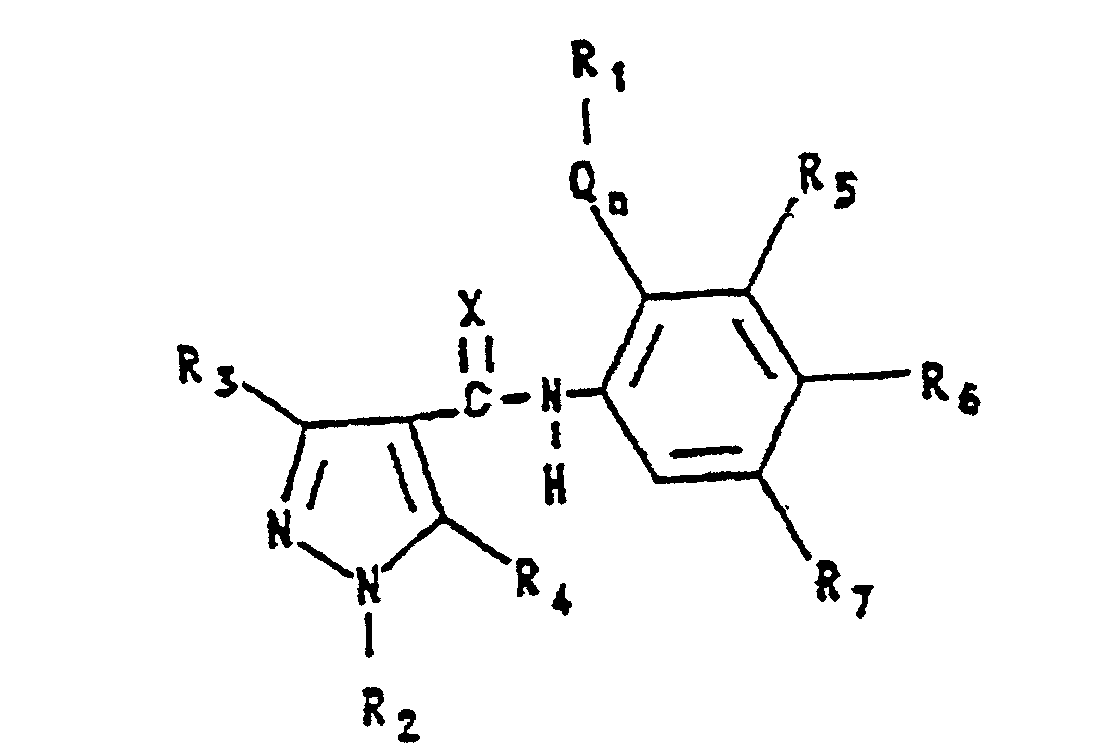
- EP-A-545 099 describes anilide compounds of the formula in which A represents phenyl which is substituted in the 2-position by methyl, trifluoromethyl, chlorine, bromine or iodine or certain aromatic or non-aromatic heterocyclic radicals which may be substituted by methyl, chlorine or trifluoromethyl and R represents certain aliphatic or cycloaliphatic radicals, which may optionally be substituted by halogen, or phenyl which is optionally substituted by C 1 -C 4 alkyl, C 1 -C 4 alkoxy, C 1 -C 4 alkylthio or halogen. These compounds are useful for combating botrytis.
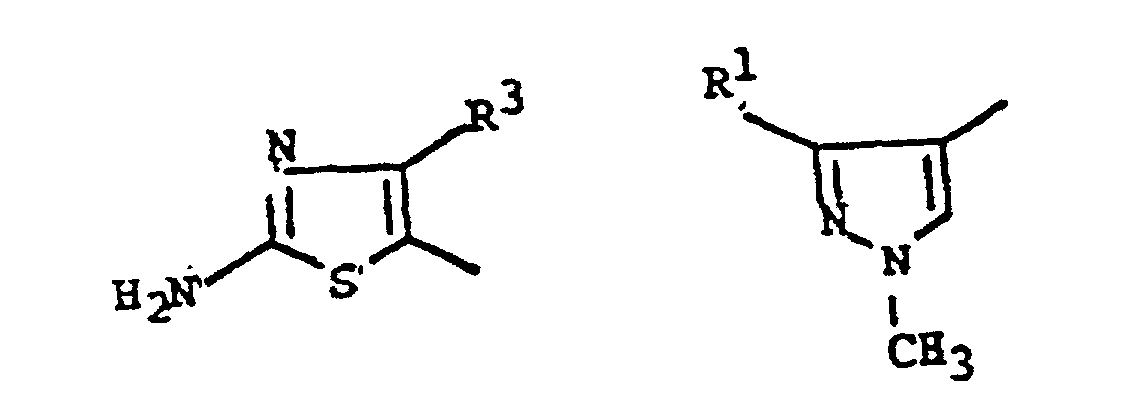
- EP-A-589 301 describes anilide compounds of the same formula, in which A denotes a cyclic radical of the formulas: wherein R 1 is hydrogen or C 1 -C 4 alkyl; R 2 represents halogen or C 1 -C 4 alkyl; R 3 represents C 1 -C 4 alkyl or C 1 -C 4 haloalkyl; n represents 1 or 2; and R has essentially the meanings given above. These compounds are also useful for the treatment of botrytis.
- the present invention is therefore based on the object improved ability to control harmful fungi and in particular To provide botrytis.
- the agents according to the invention act synergistically and are therefore to combat harmful fungi and especially botrytis suitable. It can be assumed that this is due to the fact that the Fungus is a side path when breathing is inhibited at cytochrome complex III of alternative breathing, so that no complete killing the mushrooms are done. That would mean the amide compounds Formula II inhibit alternative breathing. It is therefore assume that the combination of the two active substances Breathing through the cytochrome complex III as well as the alternative Inhibits breathing so that the fungi are completely killed.
- halogen represents fluorine, Chlorine, bromine and iodine and especially for fluorine, chlorine and bromine.
- alkyl includes straight chain and branched alkyl groups. These are preferably straight-chain or branched C 1 -C 12 -alkyl and in particular C 1 -C 6 -alkyl groups.
- alkyl groups are alkyl such as in particular methyl, ethyl, propyl, 1-methylethyl, butyl, 1-methylpropyl, 2-methylpropyl, 1,1-dimethylethyl, n-pentyl, 1-methylbutyl, 2-methylbutyl, 3-methylbutyl, 1, 2-dimethylpropyl, 1,1-dimethylpropyl, 2,2-dimethylpropyl, 1-ethylpropyl, n-hexyl, 1-methylpentyl, 2-methylpentyl, 3-methylpentyl, 4-methylpentyl, 1,2-dimethylbutyl, 1,3- Dimethylbutyl, 2,3-dimethylbutyl, 1,1-dimethylbutyl,
- Haloalkyl stands for an alkyl group as defined above, which with one or more halogen atoms, in particular fluorine and Chlorine, partially or fully halogenated. Preferably 1 to 3 halogen atoms are present, the difluoromethyl / or the trifluoromethyl group is particularly preferred.
- alkyl group and haloalkyl group apply in a corresponding manner to the alkyl and haloalkyl group in alkoxy, haloalkoxy, alkylthio, haloalkylthio, Alkylsulfinyl and alkylsulfonyl.
- the alkenyl group includes straight chain and branched alkenyl groups. These are preferably straight-chain or branched C 3 -C 12 alkenyl groups and in particular C 3 -C 6 alkenyl groups.
- alkenyl groups are 2-propenyl, 2-butenyl, 3-butenyl, 1-methyl-2-propenyl, 2-methyl-2-propenyl, 2-pentenyl, 3-pentenyl, 4-pentenyl, 1-methyl-2- butenyl, 2-methyl-2-butenyl, 3-methyl-2-butenyl, 1-methyl-3-butenyl, 2-methyl-3-butenyl, 3-methyl-3-butenyl, 1,1-dimethyl-2- propenyl, 1,2-dimethyl-2-propenyl, 1-ethyl-2-propenyl, 2-hexenyl, 3-hexenyl, 4-hexenyl, 5-hexenyl, 1-methyl-2-pentenyl, 2-methyl-2- pentenyl
- the alkenyl group can contain one or more halogen atoms, especially fluorine and chlorine, partially or completely halogenated his. It preferably has 1 to 3 halogen atoms.
- the alkynyl group includes straight-chain and branched alkynyl groups. These are preferably straight-chain and branched C 3 -C 12 alkynyl groups and in particular C 3 -C 6 alkynyl groups.
- alkynyl groups are 2-propynyl, 2-butynyl, 3-butynyl, 1-methyl-2-propynyl, 2-pentynyl, 3-pentynyl, 4-pentynyl, 1-methyl-3-butynyl, 2-methyl-3- butynyl, 1-methyl-2-butynyl, 1,1-dimethyl-2-propynyl, 1-ethyl-2-propynyl, 2-hexynyl, 3-hexynyl, 4-alkynyl, 5-hexynyl, 1-methyl- 2-pentynyl, 1-methyl-3-pentynyl, 1-methyl-4-pentynyl, 2-methyl-3-pentyn
- the cycloalkyl group is preferably a C 3 -C 6 cycloalkyl group, such as cyclopropyl, cyclobutyl, cyclopentyl or cyclohexyl. If the cycloalkyl group is substituted, it preferably has 1 to 3 C 1 -C 4 alkyl radicals as substituents.
- Cycloalkenyl preferably represents a C 4 -C 6 cycloalkenyl group, such as cyclobutenyl, cyclopentenyl or cyclohexenyl. If the cycloalkenyl group is substituted, it preferably has 1 to 3 C 1 -C 4 alkyl radicals as substituents.
- a cycloalkoxy group is preferably a C 5 -C 6 cycloalkoxy group, such as cyclopentyloxy or cyclohexyloxy. If the cycloalkoxy group is substituted, it preferably has 1 to 3 C 1 -C 4 alkyl radicals as substituents.
- the cycloalkenyloxy group is preferably a C 5 -C 6 cycloalkenyloxy group, such as cyclopentyloxy or cyclohexyloxy. If the cycloalkenyloxy group is substituted, it preferably has 1 to 3 C 1 -C 4 alkyl radicals as substituents.
- Aryl is preferably phenyl.
- Hetaryl is preferably a 5- or 6-membered aromatic Heterocycle, which has 1, 2 or 3 heteroatoms, the are independently selected from N, O and S.
- Hetaryl is preferably a 5- or 6-membered aromatic Heterocycle, which has 1, 2 or 3 heteroatoms, the are independently selected from N, O and S.
- pyridinyl pyrimidinyl, thiazolyl, Pyrazolyl, oxazolyl, isoxazole, isothiazolyl, imidazolyl, Pyrrolyl, furanyl, thienyl or triazolyl.
- Heterocyclyl is preferably a 5- or 6-membered, saturated or unsaturated heterocycle, the 1, 2 or 3 Has heteroatoms which are selected independently of one another under N, O and S.
- these are the dihydro, Tetrahydro and hexahydro derivatives of those mentioned under "Hetaryl" Leftovers.
- a in formula II represents a phenyl group
- this one, two or three of the above-mentioned substituents in have any position.
- substituents independently selected from alkyl, difluoromethyl, Trifluoromethyl and halogen, especially chlorine, bromine and Iodine.
- the phenyl group particularly preferably has a substituent in 2 position.
- A represents a 5-membered heterocycle, it is especially a furyl, thiazolyl, pyrazolyl, Imidazolyl, oxazolyl, thienyl, triazolyl or thiadiazolyl radical or the corresponding dihydro or tetrahydro derivatives from that.
- a thiazolyl or pyrazolyl radical is preferred.
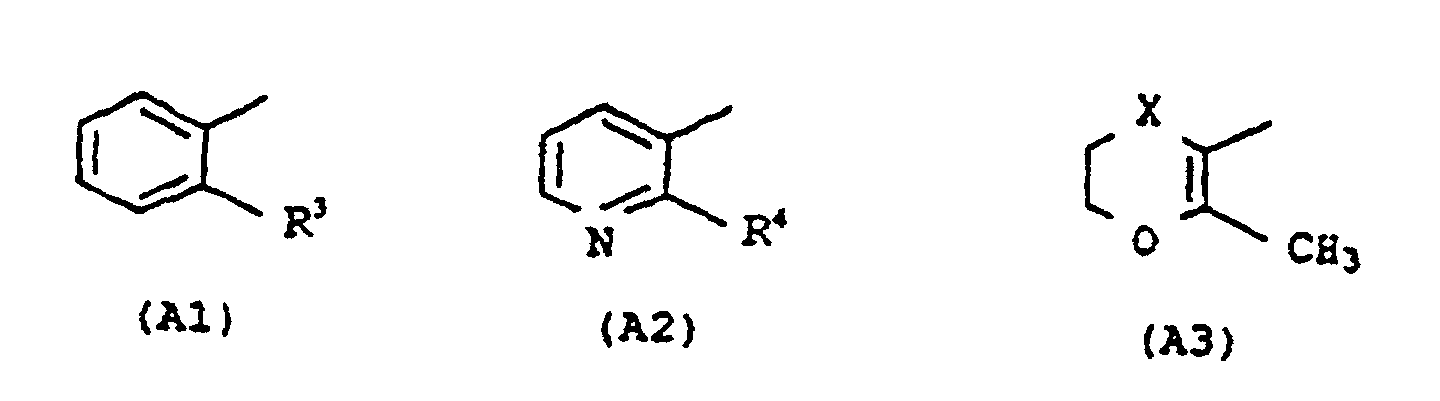
- A represents a 6-membered heterocycle, it is in particular a pyridyl radical or a radical of the formula: wherein one of the radicals X and Y is 0, S or NR 9 , where R 9 is H or alkyl and the other of the radicals X and Y is CH 2 , S, SO, SO 2 or NR 9 .
- the dashed line means that there may be a double bond.
- the 6-membered aromatic heterocycle is particularly preferably a pyridyl radical, in particular a 3-pyridyl radical, or a radical of the formula where X is CH 2 , S, SO or SO 2 .
- heterocyclic radicals mentioned can optionally be 1, 2 or 3 of the above-mentioned substituents, these Substituents are preferably selected independently of one another under alkyl, halogen, difluoromethyl or trifluoromethyl.
- the radical R 1 in the formula II preferably represents a hydrogen atom.
- the radical R 2 in the formula II preferably represents a phenyl radical.
- R 2 preferably has at least one substituent, which is particularly preferably present in the 2-position.
- the substituent is preferably selected from alkyl, cycloalkyl, cycloalkenyl, halogen or phenyl.
- the substituents of the radical R 2 can in turn be substituted.
- the aliphatic or cycloaliphatic substituents can be partially or completely halogenated, in particular fluorinated or chlorinated. They preferably have 1, 2 or 3 fluorine or chlorine atoms. If the substituent of the radical R 2 is a phenyl group, this can preferably be substituted by 1 to 3 halogen atoms, in particular chlorine atoms, and / or by a radical which is preferably selected from alkyl and alkoxy.
- the phenyl group is particularly preferably substituted with a halogen atom in the p-position, ie the particularly preferred substituent of the radical R 2 is a p-halogen-substituted phenyl radical.
- the radical R 2 can also be condensed with a saturated 5-membered ring, which ring in turn can have 1 to 3 alkyl substituents.
- R 2 stands for indanyl, thiaindanyl and oxaindanyl, for example. Indanyl and 2-oxaindanyl, which are bonded to the nitrogen atom in particular via the 4-position, are preferred.
- Hetaryl and aryl can in turn have 1, 2 or 3 substituents which are selected independently of one another from halogen, haloalkyl (in particular CF 3 and CHF 2 ), phenyl, CN, Phenoxy, alkyl, alkoxy and haloalkoxy.
- R ⁇ represents phenyl, pyridyl or pyrimidyl, which optionally has 1, 2 or 3 substituents which are independently selected from alkyl, alkoxy, halogen, haloalkoxy, CF 3 and CHF 2 ;
- R ⁇ represents alkyl, alkenyl or alkynyl, where these groups can be partially or completely halogenated and / or can carry 1, 2 or 3 of the following radicals: cyano, alkoxy, cycloalkyl.
- Particularly suitable active ingredients I are in the tables below compiled.
- the Agents according to the invention as an amide compound a compound of Formula II, in which A has the following meanings: Phenyl, pyridyl, dihydropyranyl, dihydrooxathiinyl, dihydrooxathiinyl oxide, Dihydrooxathiinyl dioxide, furyl, thiazolyl, pyrazolyl or oxazolyl, these groups having 1, 2 or 3 substituents can have, which are selected independently of one another among alkyl, halogen, difluoromethyl and trifluoromethyl.
- the agents according to the invention contain, as amide compound, a compound of the formula II in which R 2 represents a phenyl group which is optionally substituted by 1, 2 or 3 of the abovementioned substituents.
- the agents according to the invention contain as the amide compound a compound of the formula II in which R 2 represents a phenyl group which has one of the following substituents in the 2-position: C 3 -C 6 alkyl, C 5 -C 6 cycloalkenyl, C 5 -C 6 cycloalkyloxy, C 5 -C 6 cycloalkenyloxy, these groups being substituted by 1, 2 or 3 C 1 -C 4 alkyl groups can be substituted
- Phenyl which has 1 to 5 halogen atoms and / or 1 to 3 groups which are selected independently of one another from C 1 -C 4 alkyl, C 1 -C 4 haloalkyl, C 1 -C 4 alkoxy, C 1 -C 4 -haloalkoxy, C 1 -C 4 -alkylthio and C 1 -C 4 -haloalkylthio is substituted,
- Indanyl or oxaindanyl which is optionally substituted by 1, 2 or 3 C 1 -C 4 alkyl groups.
- Amide compounds which can be used are described in EP-A-545 099 and 589 301, to which reference is hereby made in full.
- the preparation of the amide compounds of formula I is for example known from EP-A-545 099 or 589 301 or can according to analog procedures.
- the active ingredients are used in a weight ratio that is in the range of 20: 1 to 1:20, in particular 10: 1 to 1:10.
- the invention also relates to a method for combating of harmful fungi, which is characterized in that the Fungi, their habitat or those to be protected from fungal attack Materials, plants, seeds, soils, surfaces or spaces with one treated as defined above, using the Active substances simultaneously, namely together or separately, or can be done in succession.
- the agents according to the invention can, for example, in the form of directly sprayable solutions, powders, suspensions, also high-proof aqueous, oily or other suspensions or Dispersions, emulsions, oil dispersions, pastes, dusts, Scattering agents or granules by spraying, atomizing, dusting, Scatter or pour.
- the application forms depend on the purposes; they should in any case, the finest possible distribution of the inventive Ensure active ingredients.
- the plants are usually sprayed with the active ingredients or pollinated or the seeds of the plants with the active ingredients treated.
- the formulations are prepared in a known manner, e.g. by stretching the active ingredient with solvents and / or Carriers, if desired using emulsifiers and dispersants, being in the case of water as Diluents also other organic solvents as auxiliary solvents can be used.
- solvents such as aromatics (e.g. xylene), chlorinated aromatics (e.g. chlorobenzenes), paraffins (e.g. petroleum fractions), alcohols (e.g. methanol, butanol), ketones (e.g. cyclohexanone), amines (e.g. ethanolamine, dimethylformamide) and water
- Carriers such as natural stone powder (e.g.
- Kaolins, clays, talc, chalk) and synthetic stone powder e.g. highly disperse silica, silicates
- Emulsifiers such as non-ionic and anionic emulsifiers (e.g. polyoxyethylene fatty alcohol ether, Alkyl sulfonates and aryl sulfonates) and dispersants such as lignin sulfite liquor and methyl cellulose.
- alkali, alkaline earth, Ammonium salts of aromatic sulfonic acids e.g. Lignin, phenol, Naphthalene and dibutylnaphthalenesulfonic acid, as well as from Fatty acids, alkyl and alkylarylsulfonates, alkyl, lauryl ether and Fatty alcohol sulfates, and salts of sulfated hexa-, hepta- and Octadecanols, as well as fatty alcohol glycol ethers, condensation products sulfonated naphthalene and its derivatives with formaldehyde, Condensation products of naphthalene or naphthalene sulfonic acids with phenol and formaldehyde, polyoxyethylene octylphenol ether, ethoxylated isoctyl, octyl or nonylphenol, Alkylphenol, tributylphenyl polyglycol ether
- Powders, materials for spreading and dusts can be mixed or combined Grinding the active substances with a solid Carrier are manufactured.
- Granules e.g. Coating, impregnation and homogeneous granules can be produced by binding the active ingredients to solid carriers become.
- Solid carriers are mineral earths such as silica gel, Silicas, silica gels, silicates, talc, kaolin, limestone, Lime, chalk, bolus, loess, clay, dolomite, diatomaceous earth, Calcium and magnesium sulfate, magnesium oxide, ground plastics, Fertilizers, such as ammonium sulfate, ammonium phosphate, ammonium nitrate, Ureas and herbal products such as cereal flour, Tree bark, wood and nutshell flour, cellulose powder or other solid carriers.
- the agents according to the invention are notable for excellent Efficacy against a wide range of plant pathogens Mushrooms, especially against botrytis. They are partly systemically effective (i.e. they can be derived from the treated plant absorbed without loss of effectiveness and possibly in the plant can be transported) and can be used as leaf and soil fungicides be used.
- the remedies are applied by looking at the mushrooms or the front Fungal attack to protect seeds, plants, materials or the soil with a fungicidally effective amount of the active ingredients treated.
- the application takes place before or after the infection of the materials, Plants or seeds through the mushrooms.
- the agents can also be used in material protection (wood protection) e.g. against Paecilomyces variotii.
- the fungicidal compositions generally contain between 0.1 and 95, preferably between 0.5 and 90 wt .-% active ingredient.
- the application rates depend on the type of effect desired between 0.02 and 3 kg of active ingredient per ha.
- amounts of active ingredient are generally used from 0.001 to 50 g, preferably 0.01 to 10 g per kilogram Seed needed.
- the agents according to the invention can be used as Fungicides also contain other active ingredients, e.g. Herbicides, Insecticides, growth regulators, fungicides or fertilizers.
- active ingredients e.g. Herbicides, Insecticides, growth regulators, fungicides or fertilizers.
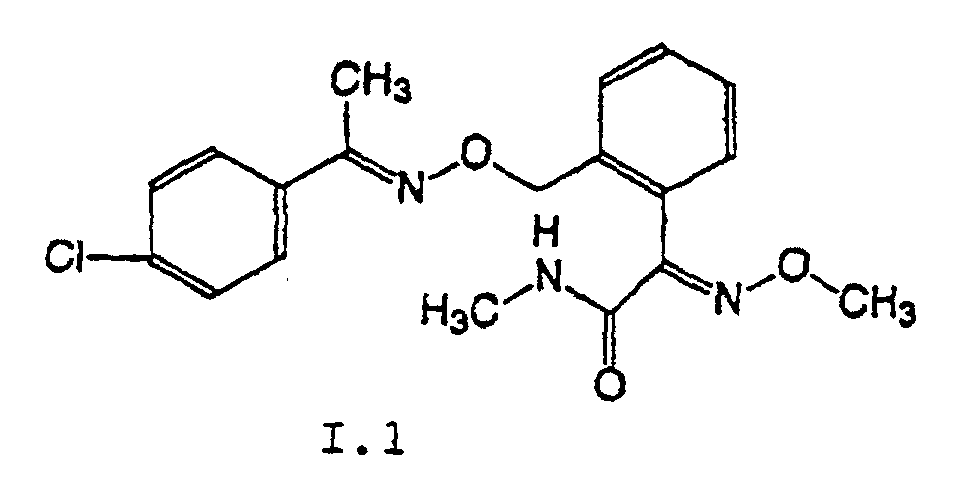
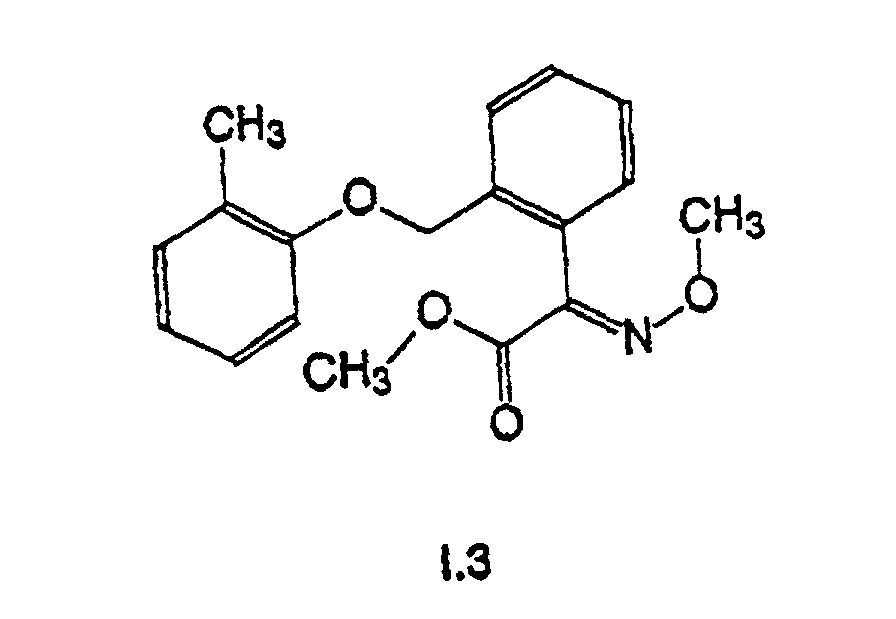
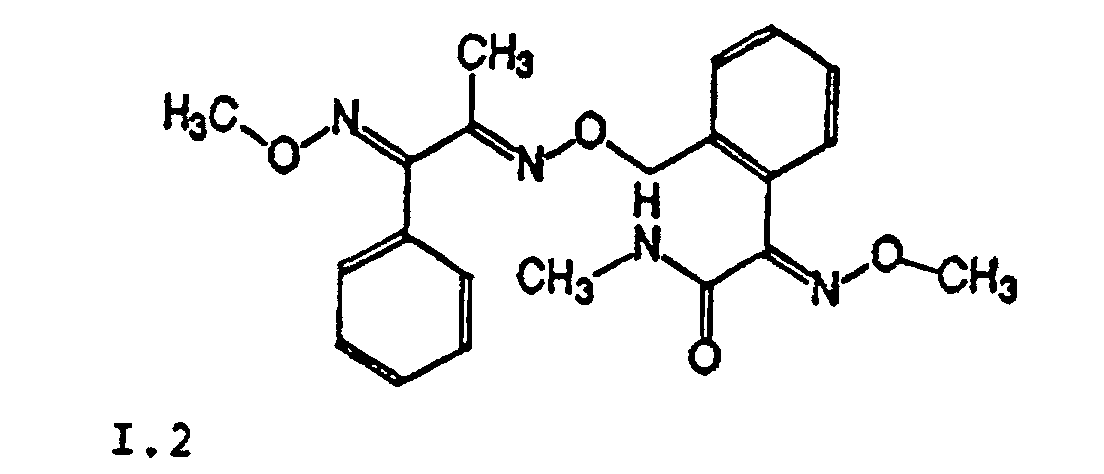
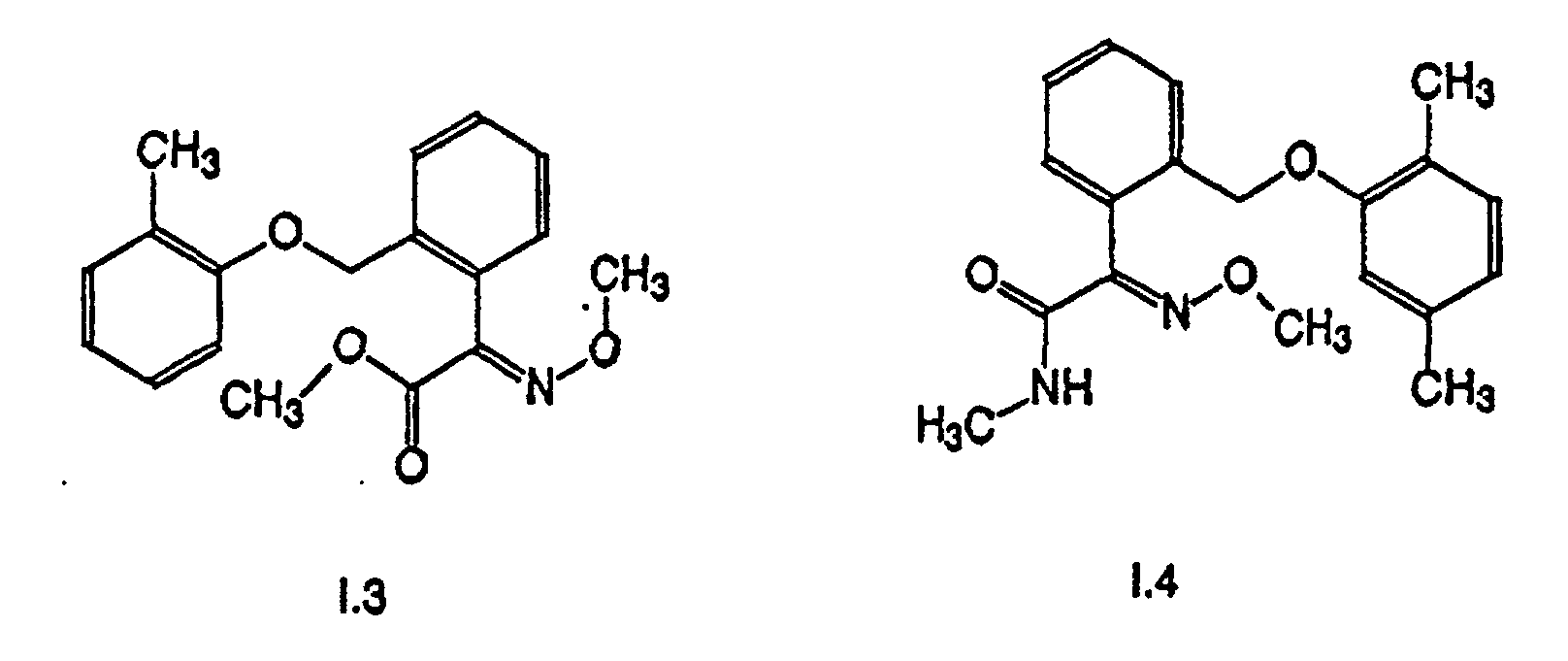
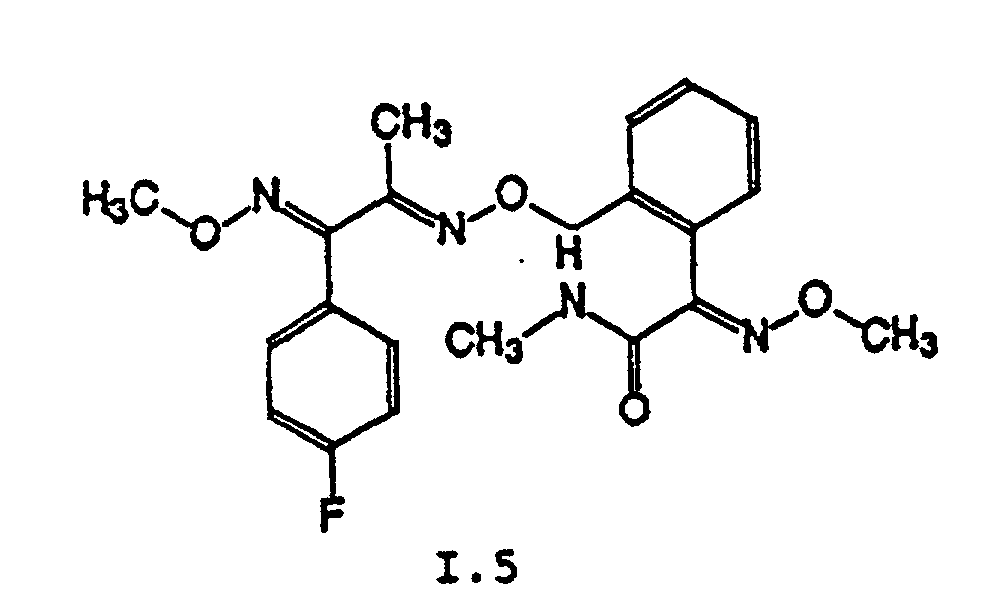
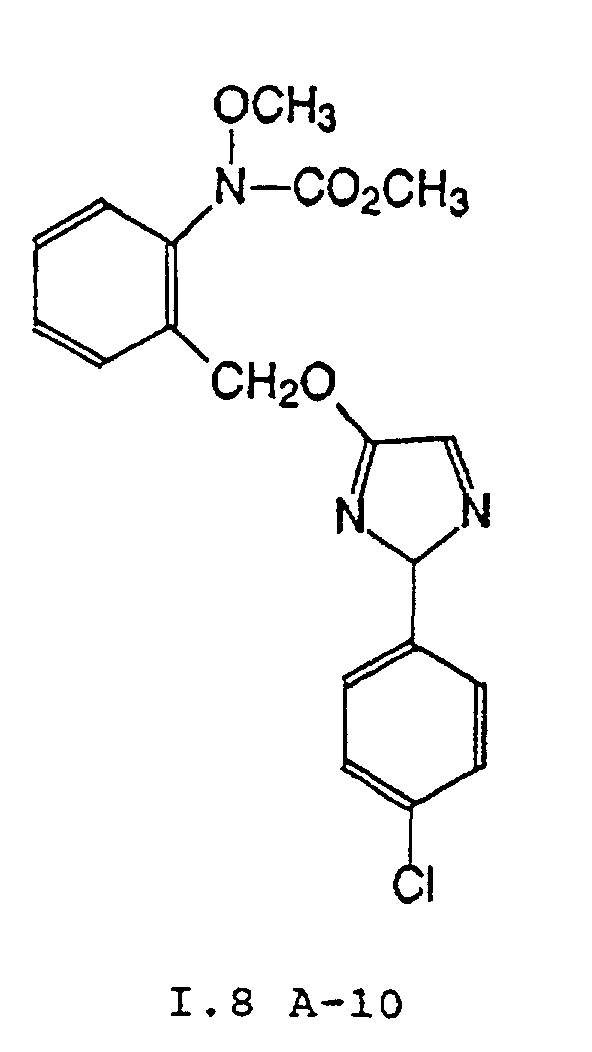
- the synergistic effect of the agents according to the invention is illustrated by the following application examples, the active compounds I being the compounds of the formulas I.1 to I.5 and as amide compounds, the compounds of the formulas II.1 and II.2 come into use.
- Pepper seedlings of the variety "Neusiedler Ideal Elite" were after 4-5 leaves had developed well, with aqueous suspensions, the 80% active ingredient and 20% emulsifier in the Contained dry substance, sprayed to runoff. After drying of the spray coating, the plants were exposed to a conidia of the fungus Botrytis cinerea and sprayed at 22-24 ° C placed in a chamber with high humidity. After 5 Days had the disease on the untreated control plants developed so strongly that the resulting leaf necrosis the majority of the leaves covered (infestation 96%).
Landscapes
- Life Sciences & Earth Sciences (AREA)
- Health & Medical Sciences (AREA)
- General Health & Medical Sciences (AREA)
- Wood Science & Technology (AREA)
- Environmental Sciences (AREA)
- Engineering & Computer Science (AREA)
- Dentistry (AREA)
- Pest Control & Pesticides (AREA)
- Agronomy & Crop Science (AREA)
- Zoology (AREA)
- Plant Pathology (AREA)
- Toxicology (AREA)
- Agricultural Chemicals And Associated Chemicals (AREA)
- Plural Heterocyclic Compounds (AREA)
- Pyridine Compounds (AREA)
- Pharmaceuticals Containing Other Organic And Inorganic Compounds (AREA)
- Acyclic And Carbocyclic Compounds In Medicinal Compositions (AREA)
Description


- A
- für eine Arylgruppe oder einen aromatischen oder nichtaromatischen,
5- oder 6-gliedrigen Heterocyclus, der 1
bis 3 Heteroatome aufweist, die ausgewählt sind unter
O, N und S, steht;
wobei die Arylgruppe oder der Heterocyclus gegebenenfalls 1, 2 oder 3 Substituenten aufweisen kann, die unabhängig voneinander ausgewählt sind unter Alkyl, Halogen, CHF2, CF3, Alkoxy, Halogenalkoxy, Alkylthio, Alkylsulfinyl und Alkylsulfonyl; - R1
- für ein Wasserstoffatom, Alkyl oder Alkoxy steht;
- R2
- für eine Phenyl- oder Cycloalkylgruppe steht, die gegebenenfalls 1 bis 3 Substituenten aufweist, die unabhängig voneinander ausgewählt sind unter Phenyl, Alkenyl, Alkinyl, Alkenyloxy, Alkinyloxy, Cycloalkyl, Cycloalkenyl, Cycloalkyloxy und Cycloalkenyloxy, und die zusätzlich durch 1 oder mehrere Halogenatome substituiert sein kann, wobei die aliphatischen und cycloaliphatischen Reste partiell oder vollständig halogeniert sein können und/oder die cycloaliphatischen Reste durch 1 bis 3 Alkylgruppen substituiert sein können und wobei die Phenylgruppe ihrerseits 1 bis 5 Halogenatome und/- oder 1 bis 3 Substituenten aufweisen kann, die unabhängig voneinander ausgewählt sind unter Alkyl, Halogenalkyl, Alkoxy, Halogenalkoxy, Alkylthio und Halogen-alkylthio, und wobei die amidische Phenylgruppe gegebenenfalls mit einem gesättigten 5-gliedrigen Ring kondensiert ist, der gegebenenfalls durch 1 oder mehrere Alkylgruppen substituiert ist und/oder ein Heteroatom, ausgewählt unter O und S, aufweisen kann, ausgenommen die Verbindung der Formel II, worin



- R'
- für -C[CO2CH3]=CHOCH3, -C[CO2CH3]=NOCH3, -C[CONHCH3]=NOCH3, -C[CO2CH3]=CHCH3, -C[CO2CH3]=CHCH2CH3, -C[COCH3]=NOCH3, -C[COCH2CH3]=VOCH3, -N(OCH3)-CO2CH3, -N(CH3)-CO2CH3 oder -N(CH2CH3)-CO2CH3 steht;
- R"
- für einen organischen Rest, welcher direkt oder über
eine Oxy-, Mercapto-, Amino-, oder Alkylaminogruppe
gebunden ist, steht oder
zusammen mit einer Gruppe X und dem Ring Q bzw. T, an den sie gebunden sind, ein ggf. substituiertes bicyclisches, partiell oder vollständig ungesättigtes System, welches neben Kohlenstoffringgliedern 1, 2 oder 3 Heteroatome, unabhängig ausgewählt unter Sauerstoff, Schwefel und Stickstoff, enthalten kann; - Rx
- für -OC[CO2CH3]=CHOCH3, -OC[CO2CH3]=CHCH3, -OC [CO2CH3]=CHCH2CH3, -SC[CO2CH3]=CHOCH3, -SC[CO2CH3]=CHCH3, -SC[CO2CH3]=CHCH2CH3, -N(CH3)C[CO2CH3]=CHOCH3, -N(CH3)C[CO2CH3]=NOCH3, -CH2C[CO2CH3]=CHOCH3, -CH2C[CO2CH3]=NOCH3 oder -CH2C[CONHCH3]=NOCH3 steht;
- Ry
- für Sauerstoff, Schwefel, =CH- oder =N- steht;
- n
- für 0, 1, 2 oder 3 steht, wobei die Reste X gleich oder verschieden sein können, wenn n > 1 ist;
- x
- für Cyano, Nitro, Halogen, Alkyl, Halogenalkyl, Alkoxy,
Halogenalkoxy, Alkylthio steht oder
wenn n > 1 ist, eine an zwei benachbarte C-Atome des Phenylrings gebundene C3-C5-Alkylen-, C3-C5-Alkenylen-, Oxy-C2-C4-alkylen-, Oxy-C1-C3-alkylenoxy-, Oxy-C2-C4-alkenylen-, Oxy-C2-C4-alkenylenoxy- oder Butadiendiylgruppe bedeutet, wobei diese Ketten ihrerseits ein bis drei Reste tragen können, die unabhängig voneinander ausgewählt sind unter Halogen, Alkyl, Halogenalkyl, Alkoxy, Halogenalkoxy und Alkylthio; - Y
- für =C- oder -N- steht;
- Q
- für Phenyl, Pyrrolyl, Thienyl, Furyl, Pyrazolyl, Imidazolyl, Oxazolyl, Isoxazolyl, Thiazolyl, Thiadiazolyl, Triazolyl, Pyridinyl, 2-Pyridonyl, Pyrimidinyl oder Triazinyl steht; und
- T
- für Phenyl, Oxazolyl, Thiazolyl, Thiadiazolyl, Oxadiazolyl, Pyridinyl, Pyrimidinyl oder Triazinyl steht.
oder R" für
- Rδ
- für Wasserstoff, Cyano, Halogen, Alkyl, Alkoxy, Alkylthio, Alkylamino, Di-Alkylamino, Alkenyl, Alkenyloxy, Alkenylthio, Alkenylamino, N-Alkenyl-N-alkylamino, Alkinyl, Alkinyloxy, Alkinylthio, Alkinylamino, N-Alkinyl-N-alkylamino, wobei die Kohlenwasserstoffreste dieser Gruppen partiell oder vollständig halogeniert sein können und/ oder 1, 2 oder 3 Reste tragen können, die unabhängig ausgewählt sind unter Cyano, Nitro, Hydroxy, Alkoxy, Halogenalkoxy, Alkoxycarbonyl, Alkylthio, Alkylamino, Di-alkylamino, Alkenyloxy, Cycloalkyl, Cycloalkyloxy, Heterocyclyl, Heterocyclyloxy, Aryl, Aryloxy, Aryl-alkoxy, Hetaryl, Hetaryloxy und Hetarylalkoxy, wobei die cyclischen Reste ihrerseits partiell oder vollständig halogeniert sein können und/oder 1, 2 oder 3 Gruppen tragen können, die unabhängig ausgewählt sind unter Cyano, Nitro, Hydroxy, Alkyl, Halogenalkyl, Cycloalkyl, Alkoxy, Halogenalkoxy, Alkoxycarbonyl, Alkylthio, Alkylamino, Di-alkylamino, Alkenyl und Alkenyloxy;
R" eine der folgenden Bedeutungen besitzt:
worin Rα für Alkyl steht; und
Rβ für Phenyl, das gegebenenfalls 1, 2 oder 3 Substituenten aufweist, die unabhängig voneinander augewählt sind unter Alkyl, Halogen, CF3 und CHF2, oder für Pyrimidinyl steht, das gegebenenfalls durch 1 oder 2 Alkoxyreste substituiert ist;
worin Rγ für Alkyl, Alkoxy oder Halogen steht; Rδ für Alkyl, Cyano, Halogen, Alkoxy, Alkenyl oder Phenyl, das gegebenenfalls durch 1, 2 oder 3 Halogenatome substituiert ist, steht; und
Rε für Alkyl steht.
| Nr. | ggf. subst. (Het)aryl | Literatur |
| I.1A-1 | 2-CH3-C6H4 | EP-A 226 917 |
| I.1A-2 | 2,5-(CH3)2-C6H3 | EP-A 226 917 |
| I.1A-3 | 2-CH3, 4-C[CH3]=NOCH3-C6H3 | EP-A 386 561 |
| I.1A-4 | 2-CH2CH2CH3, 6-CF3-pyrimidin-4-yl | EP-A 407 873 |
| I.1A-5 | 2,4-(CH3)2-C6H3 | EP-A 226 917 |
| Nr. | ggf. subst. (Het)aryl | Literatur |
| I.1B-1 | C6H5 | EP-A 178 826 |
| I.1B-2 | 6-[2-CN-C6H4-O]-pyrimidin-4-yl | EP-A 382 375 |
| Nr. | ggf. subst. (Het)aryl | Literatur |
| I.1C-1 | 1-(2, 4-Cl2-C6H3), 5-CF3-pyrazol-4yl | EP-A 528 245 |
| I.1C-2 | 1-(4-Cl-C6H4)-pyrazol-4-yl | EP-A 378 755 |
| I.1C-3 | 3-CF3-C6H4 | EP-A 203 606 |
| I.1C-4 | 3-Cl-C6H4 | EP-A 203 606 |
| I.1C-5 | 4-C6H5-C6H4 | EP-A 203 606 |
| Nr. | Rα | Rβ | Literatur |
| I.1D-1 | CH3 | 4-Cl-C6H4 | EP-A 370 629 |
| I.1D-2 | CH3 | 3-CF3-C6H4 | EP-A 370 629 |
| I.1D-3 | CH3 | 4-OCH2CH3-pyrimidin-2yl | WO-A 92/18,487 |
| Nr. | Rγ | Rδ | Rε | Literatur |
| I.1-1 | CH3 | CH3 | CH3 | WO-A 95/21153 |
| I.1E-2 | CH3 | CH3 | CH2CH3 | WO-A 95/21153 |
| I.1E-3 | CH3 | C6H5 | CH3 | WO-A 95/21153 |
| I.1E-4 | CH3 | C6H5 | CH2CH3 | WO-A 95/21153 |
| I.1E-5 | CH3 | 4-Cl-C6H4 | CH3 | WO-A 95/21153 |
| I.1E-6 | CH3 | 4-Cl-C6H4 | CH2CH3 | WO-A 95/21153 |
| Nr. | ggf. subst. (Het)aryl | Literatur |
| I.2A-1 | 2-CH3-C6H4 | EP-A 253 213 |
| I.2A-2 | 2,5-(CH3)2-C6H3 | EP-A 400 417 |
| I.2A-3 | 2,4-(CH3)2-C6H3 | EP-A 400 417 |
| I.2A-4 | 2,3,5-(CH3)3-C6H2 | EP-A 400 417 |
| I.2A-5 | 2-Cl, 5-CH3-C6H3 | EP-A 400 417 |
| I.1A-6 | 2-CH3, 4-C[CH3]=NOCH3-C6H3 | EP-A 386 561 |
| Nr. | ggf. subst. (Het)aryl | Literatur |
| I.2B-1 | C6H5 | EP-A 253 213 |
| I.2B-2 | 6-[2-CN-C6H4-O]-pyrimidin-4-yl | EP-A 468 684 |
| Nr. | Rα | Rβ | Literatur |
| I.2C-1 | CH3 | 4-Cl-C6H4 | EP-A 463 488 |
| I.2C-2 | CH3 | 3-Cl-C6H4 | EP-A 463 488 |
| I.2C-3 | CH3 | 4-CF3-C6H4 | EP-A 463 488 |
| I.2C-4 | CH3 | 3-CF3-C6H4 | EP-A 463 488 |
| I.2C-5 | CH3 | 4-CH3-C6H4 | EP-A 463 488 |
| I.2C-6 | CH3 | 4-OCH2CH3-pyrimidin-2-yl | EP-A 472 300 |
| I.2C-7 | CH3 | 3,5-Cl2-C6H3 | EP-A 463 488 |
| Nr. | Rγ | Rδ | Rε | Literatur |
| I.2D-1 | CH3 | CH3 | CH3 | WO-A 95/21153 |
| I.2D-2 | CH3 | CH3 | CH2CH3 | WO-A 95/21153 |
| I.2D-3 | CH3 | C6H5 | CH3 | WO-A 95/21153 |
| I.2D-4 | CH3 | C6H5 | CH2CH3 | WO-A 95/21153 |
| I.2D-5 | CH3 | 4-Cl-C6H4 | CH3 | WO-A 95/21153 |
| I.2D-6 | CH3 | 4-Cl-C6H4 | CH2CH3 | WO-A 95/21153 |
| Nr. | ggf. subst. (Het)aryl | Literatur |
| I.3A-1 | 2-CH3-C6H4 | EP-A 477 631 |
| I.3A-2 | 2,5-(CH3)2-C6H3 | EP-A 477 631 |
| I.3A-3 | 2,4-(CH3)2-C6H3 | EP-A 477 631 |
| I.3A-4 | 2,3,5-(CH3)3-C6H2 | EP-A 477 631 |
| I.3A-5 | 2-CH3, 4-C[CH3]=NOCH3-C6H3 | EP-A 579 124 |
| I.3A-6 | 1-[4-Cl-C6H4]-pyrazol-3-yl | WO-A 94/19331 |
| I.3A-7 | 1-[2,4-Cl2-C6H3]-pyrazol-3-yl | WO-A 94/19331 |
| Nr. | ggf. subst. (Het)aryl | Literatur |
| I.3B-1 | C6H5 | EP-A 398 692 |
| I.3B-2 | 6-[2-CN-C6H4-O]-pyrimidin-4-yl | GB-A 2 253 624 |
| Nr. | ggf. subst. (Het)aryl | Literatur |
| I.3C-1 | 1-[2,4-Cl2-C6H3], 5-CF3-pyrazol-4yl | DE-A 44 23 615.8 |
| Nr. | Rα | Rβ | Literatur |
| I.3D-1 | CH3 | 4-Cl-C6H4 | EP-A 463 488 |
| I.3D-2 | CH3 | 3-Cl3-C6H4 | EP-A 463 488 |
| I.3D-3 | CH3 | 4-CF3-C6H4 | EP-A 585 751 |
| I.3D-4 | CH3 | 3-CF3-C6H4 | EP-A 585 751 |
| I.3D-5 | CH3 | 4-CH3-C6H4 | EP-A 463 488 |
| I.3D-6 | CH3 | 3,5-Cl2-C6H3 | EP-A 463 488 |
| I.3D-7 | CH3 | 2-OCH2CH3-pyrimidin-2yl | WO-A 92/13,830 |
| Nr. | Rγ | Rδ | Rε | Literatur |
| I.3E-1 | CH3 | CH3 | CH3 | WO-A 95/21154 |
| I.3E-2 | CH3 | CH3 | CH2CH3 | WO-A 95/21154 |
| I.3E-3 | CH3 | C6H5 | CH3 | WO-A 95/21154 |
| I.3E-4 | CH3 | C6H5 | CH2CH3 | WO-A 95/21154 |
| I.3E-5 | CH3 | 4-Cl-C6H4 | CH3 | WO-A 95/21154 |
| I.3E-6 | CH3 | 4-Cl-C6H4 | CH2CH3 | WO-A 95/21154 |
| I.3E-7 | CH3 | 4-F-C6H4 | CH3 | WO-A 95/21154 |
| Nr. | ggf. subst. (Het)aryl | Literatur |
| I.4A-1 | 2-CH3-C6H4 | EP-A 280 185 |
| I.4A-2 | 2,5-(CH3)2-C6H3 | EP-A 513 580 |
| I.4A-3 | 2,4-(CH3)2-C6H3 | EP-A 513 580 |
| I.4A-4 | 2,3,5-(CH3)3-C6H2 | EP-A 513 580 |
| I.4A-5 | 2-Cl, 5-CH3-C6H3 | EP-A 513 580 |
| I.4A-6 | 2-CH3, 4-C[CH3]=NOCH3-C6H3 | EP-A 513 580 |
| I.4A-7 | 1-[4-Cl-C6H4]-pyrazol-3-yl | DE-A 44 15 483.6 |
| Nr. | ggf. subst. (Het)aryl | Literatur |
| I.4B-1 | C6H5 | EP-A 513 580 |
| Nr. | Rγ | Rδ | Rε | Literatur |
| I.4C-1 | CH3 | CH3 | CH3 | WO-A 95/21153 |
| I.4C-2 | CH3 | CH3 | CH2CH3 | WO-A 95/21153 |
| I.4C-3 | CH3 | C6H5 | CH3 | WO-A 95/21153 |
| I.4C-4 | CH3 | C6H5 | CH2CH3 | WO-A 95/21153 |
| I.4C-5 | CH3 | 4-Cl-C6H4 | CH3 | WO-A 95/21153 |
| I.4C-6 | CH3 | 4-Cl-C6H4 | CH2CH3 | WO-A 95/21153 |
| Nr. | ggf. subst. (Het)aryl | Literatur |
| I.5A-1 | 2-CH3-C6H4 | EP-A 513 580 |
| I.5A-2 | 2,5-(CH3)2-C6H3 | EP-A 513 580 |
| I.5A-3 | 2,4-(CH3)2-C6H3 | EP-A 513 580 |
| I.5A-4 | 2,3,5-(CH3)3-C6H2 | EP-A 513 580 |
| I.5A-5 | 2-Cl, 5-CH3-C6H3 | EP-A 513 580 |
| I.5A-6 | 2-CH3, 4-C[CH3]=NOCH3-C6H3 | EP-A 513 580 |
| Nr. | ggf. subst. (Het)aryl | Literatur |
| I.5B-1 | C6H5 | EP-A 513 580 |
| Nr. | Rγ | Rδ | Rε | Literatur |
| I.5C-1 | CH3 | CH3 | CH3 | WO-A 95/21153 |
| I.5C-2 | CH3 | CH3 | CH2CH3 | WO-A 95/21153 |
| I.5C-3 | CH3 | C6H5 | CH3 | WO-A 95/21153 |
| I.5C-4 | CH3 | C6H5 | CH2CH3 | WO-A 95/21153 |
| I.5C-5 | CH3 | 4-Cl-C6H4 | CH3 | WO-A 95/21153 |
| I.5C-6 | CH3 | 4-Cl-C6H4 | CH2CH3 | WO-A 95/21153 |
| Nr. | ggf. subst. (Het)aryl | Literatur |
| I.6A-1 | 2-CH3-C6H4 | EP-A 498 188 |
| I.6A-2 | 2,5-(CH3)2-C6H3 | EP-A 498 188 |
| I.6A-3 | 2,4-(CH3)2-C6H3 | EP-A 498 188 |
| I.6A-4 | 2,3,5-(CH3)3-C6H2 | EP-A 498 188 |
| I.6A-5 | 2-CH3, 4-C[CH3]=NOCH3-C6H3 | EP-A 498 188 |
| Nr. | ggf. subst. (Het)aryl | Literatur |
| I.6B-1 | C6H5 | EP-A 498 188 |
| I.6B-2 | 6-[2-CN-C6H4-O]-pyrimidin-4-yl | EP-A 498 188 |
| Nr. | ggf. subst. (Het)aryl | Literatur |
| I.7A-1 | 2-CH3-C6H4 | EP-A 498 188 |
| I.7A-2 | 2,5-(CH3)2-C6H3 | EP-A 498 188 |
| I.7A-3 | 2,4-(CH3)2-C6H3 | EP-A 498 188 |
| I.7A-4 | 2,3,5-(CH3)3-C6H2 | EP-A 498 188 |
| I.7A-5 | 2-CH3, 4-C[CH3]=NOCH3-C6H3 | EP-A 498 188 |
| Nr. | ggf. subst. (Het)aryl | Literatur |
| I.7B-1 | C6H5 | EP-A 498 188 |
| I.7B-2 | 6-[2-CN-C6H4-O]-pyrimidin-4-yl | EP-A 498 188 |
| Nr. | ggf. subst. (Het)aryl | Literatur |
| I.8A-1 | 2-CH3-C6H4 | WO-A 93/15,046 |
| I.8A-2 | 2,5-(CH3)2-C6H3 | WO-A 93/15,046 |
| I.8A-3 | 2,4-(CH3)2-C6H3 | WO-A 93/15,046 |
| I.8A-4 | 2,3,5-(CH3)3-C6H2 | WO-A 93/15,046 |
| I.8A-5 | 2-Cl, 5-CH3-C6H3 | WO-A 93/15,046 |
| I.8A-6 | 2-CH3, 4-C[CH3]=NOCH3-C6H3 | WO-A 93/15,046 |
| I.8A-7 | 2-CH3, 4-C[CH3]=NOCH2CH3-C6H3 | WO-A 93/15,046 |
| I.8A-8 | 2-CH3, 4-C[CH2CH3]=NOCH3-C6H3 | WO-A 93/15,046 |
| I.8A-9 | 2-CH3, 4-C[CH2CH3]=NOCH2CH3-C6H3 | WO-A 93/15,046 |
| I.8A-10 | 1-[4-Cl-C6H4]-pyrazol-3-yl | DE-A 44 23 612.3 |
| Nr. | Rα | Rβ | Literatur |
| I.8B-1 | CH3 | 3,5-Cl2-C6H3 | WO-A 93/15,046 |
C3-C6-Alkyl, C5-C6-Cycloalkenyl, C5-C6-Cycloalkyloxy, C5-C6-Cycloalkenyloxy, wobei diese Gruppen durch 1, 2 oder 3 C1-C4-Alkyl-gruppen substituiert sein können,
- A
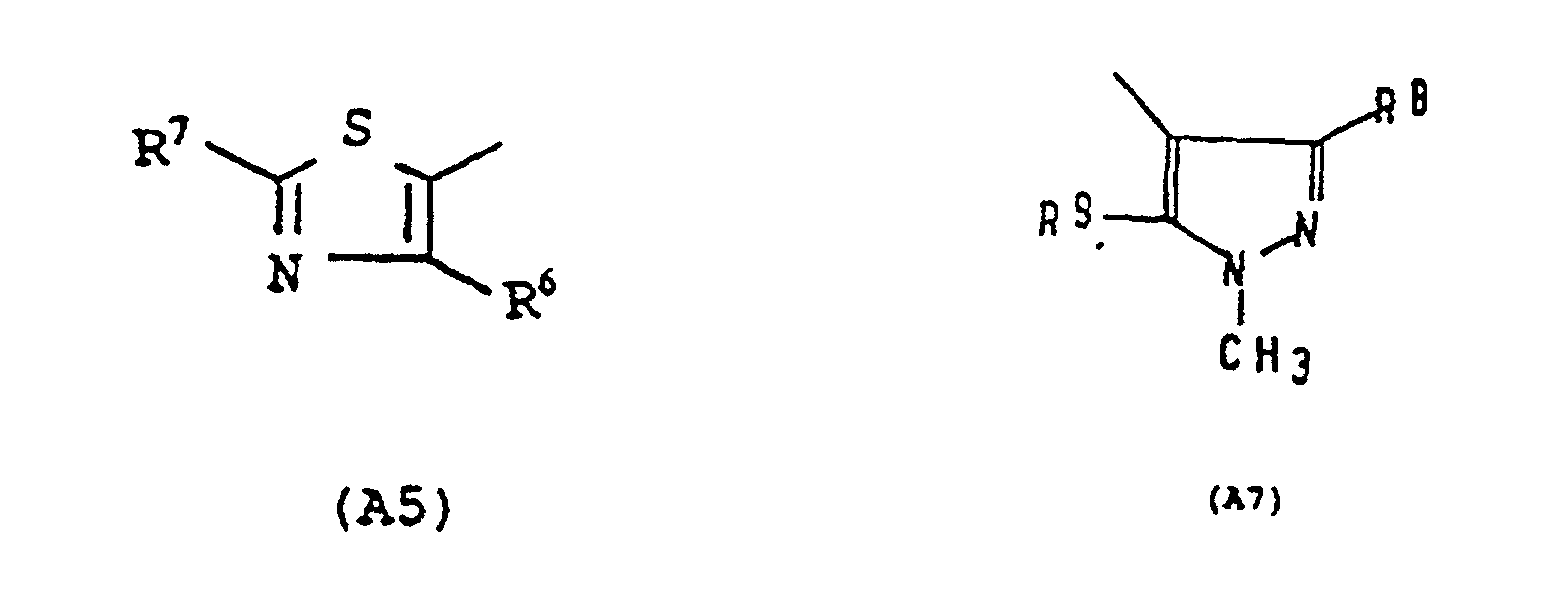
- für
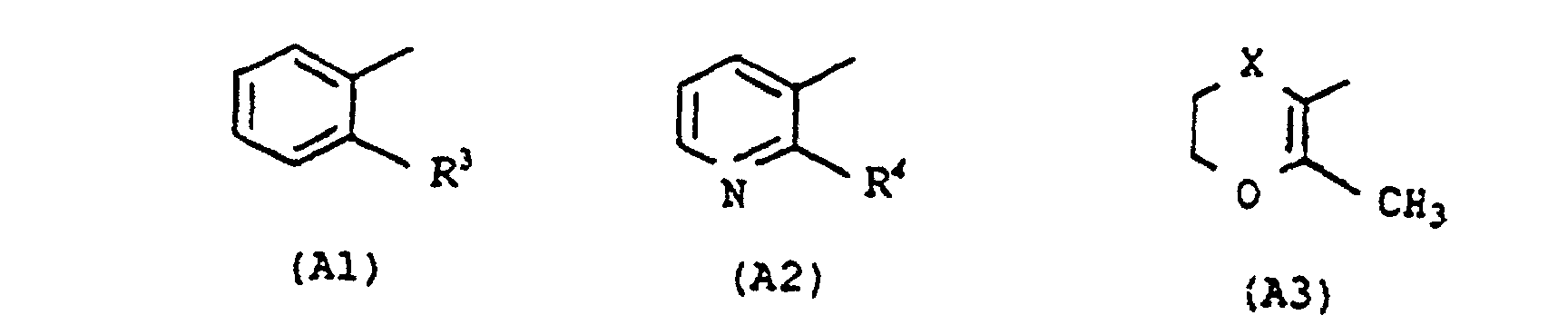
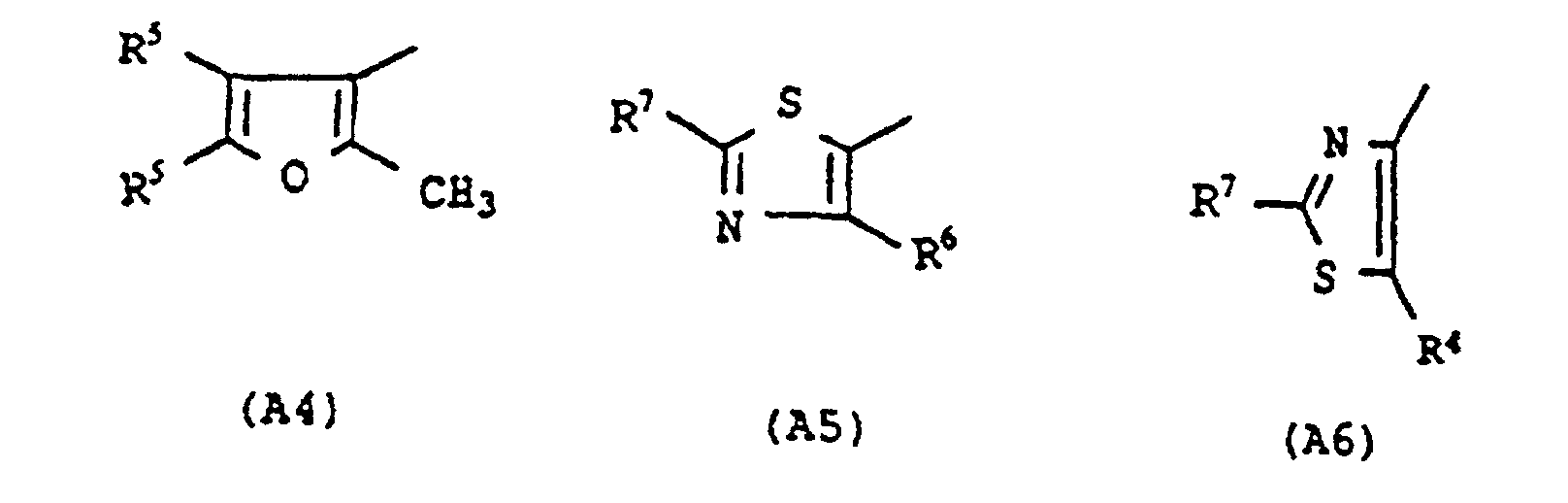 steht;
- X
- für Methylen, Schwefel, Sulfinyl oder Sulfonyl (SO2) steht,
- R3
- für Methyl, Difluormethyl, Trifluormethyl, Chlor, Brom oder Jod steht,
- R4
- für Trifluormethyl oder Chlor steht,
- R5
- für Wasserstoff oder Methyl steht,
- R6
- für Methyl, Difluormethyl, Trifluormethyl oder Chlor steht,
- R7
- für Wasserstoff, Methyl oder Chlor steht,
- R8
- für Methyl, Difluormethyl oder Trifluormethyl steht,
- R9
- für Wasserstoff, Methyl, Difluormethyl, Trifluormethyl oder Chlor steht,
- R10
- für C1-C4-Alkyl, C1-C4-Alkoxy, C1-C4-Alkylthio oder Halogen steht.

- R4
- für Halogen steht und
- R11
- für Phenyl steht, das durch Halogen substituiert ist.

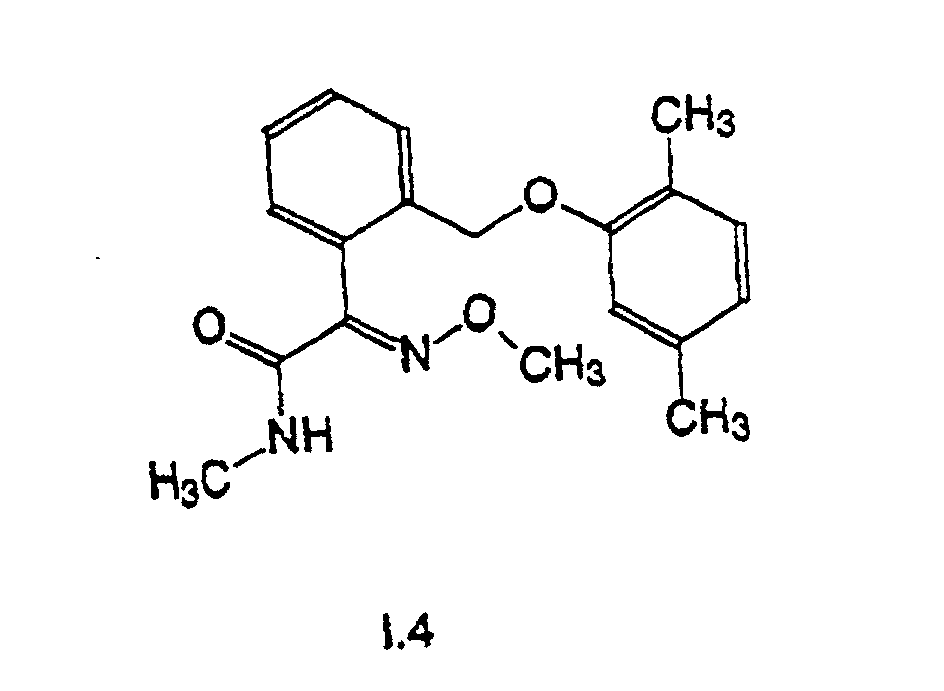
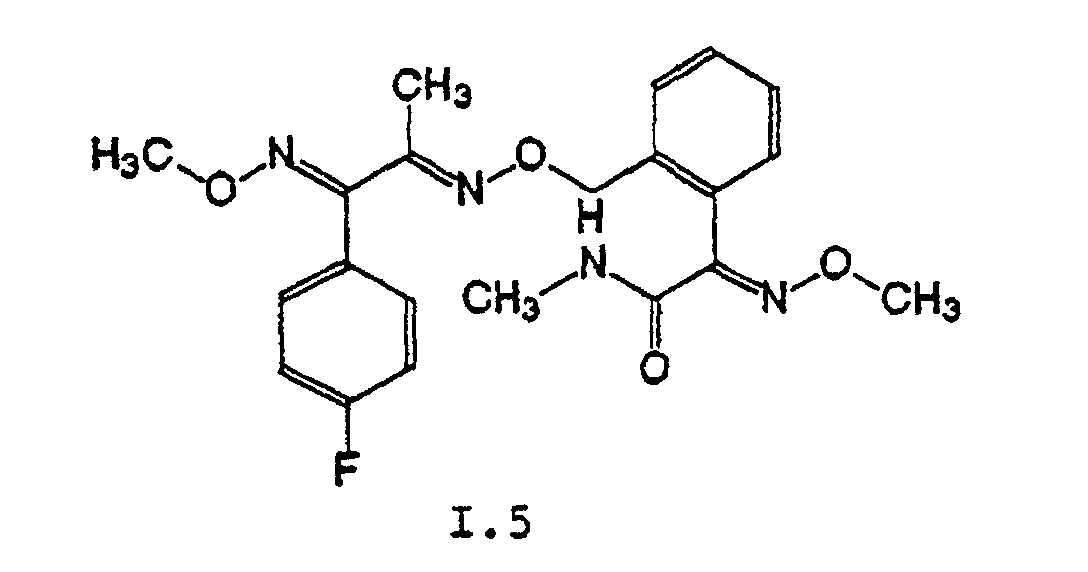
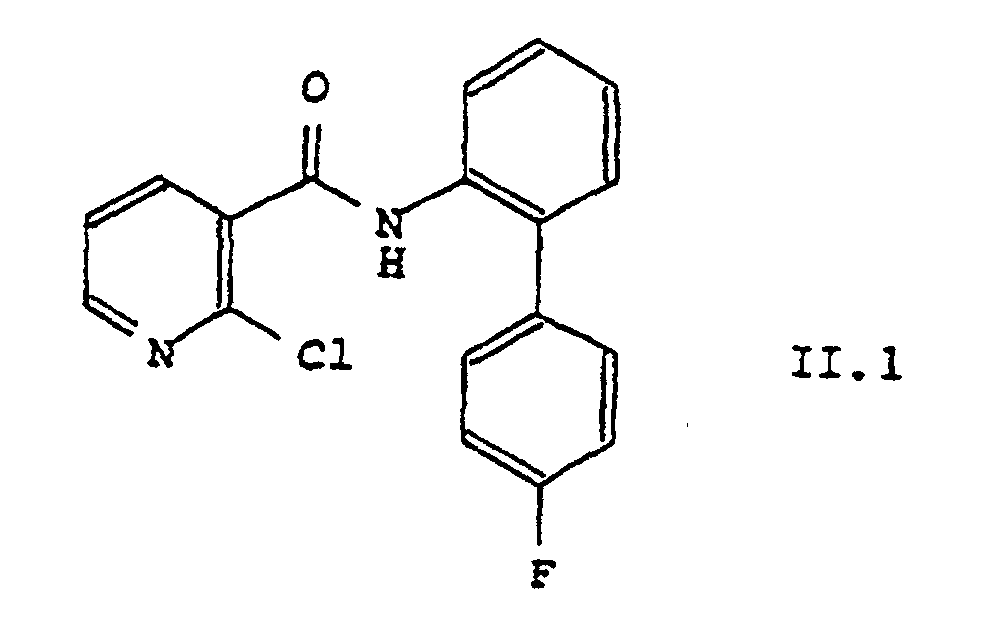


| Wirkstoff | Wirkstoffkonzentration in ppm | Wirkungsgrad in % der Kontrolle | ||
| I.1-I.5 | II.2 | beobachtet | berechnet | |
| Kontrolle (unbehandelt) | 0 | |||
| II.2 | -- | 24 6 1,5 | 87 79 28 | -- |
| I.1 | 2 0,5 | -- | 0 0 | -- |
| I.2 | 2 0,5 | -- | 0 0 | -- |
| I.3 | 2 0,5 | -- | 0 0 | -- |
| I.4 | 2 0,5 | -- | 0 0 | -- |
| I.5 | 2 0,5 | -- | 0 0 | -- |
| I.1 + II.2 | 2 0,5 | 6 1,5 | 100 100 | 87 79 |
| I.2 + II.2 | 2 0,5 | 6 1,5 | 100 99 | 87 79 |
| I.3 + II.2 | 2 0,5 | 6 1,5 | 100 99 | 87 79 |
| I.4 + II.2 | 2 0,5 | 6 1,5 | 100 100 | 87 79 |
| I.5 + II.2 | 2 0,5 | 6 1,5 | 99 90 | 87 79 |


Claims (11)
- Mittel zur Bekämpfung von Schadpilzen, enthaltend in einem festen oder flüssigen TrägerA) mindestens einen die Atmung am Cytochrom-Komplex III hemmenden Wirkstoff der Formel Iworin

- R'
- für -C[CO2CH3]=CHOCH3, -C[CO2CH3]=NOCH3, -C[CONHCH3]=NOCH3, -C[CO2CH3]=CHCH3, -C[CO2CH3]=CHCH2CH3, -C[COCH3]=NOCH3, -C[COCH2CH3]=NOCH3, -N(OCH3)-CO2CH3, -N(CH3)-CO2CH3 oder -N(CH2CH3)-CO2CH3 steht;
- R''
- eine der folgenden Bedeutungen besitzt:
- a) Phenyloxymethylen, Pyridinyloxymethylen, Pyrimidinyloxymethylen oder Pyrazolyloxymethylen, wobei der aromatische Rest gegebenenfalls 1, 2 oder 3 Substituenten aufweist, die unabhängig voneinander ausgewählt sind unter Alkyl, Halogen, CF3, CHF2, -C(CH3)=NOCH3, und Phenyl, das gegebenenfalls mit 1, 2 oder 3 Halogenatomen und/oder Alkylgruppen substituiert ist;
- b) Phenoxy oder Pyrimidinyloxy, das gegebenenfalls mit 1, 2 oder 3 Halogenatomen oder einem Phenoxyrest, der gegebenenfalls einen Halogen- oder Cyanosubstituenten aufweist, substituiert ist;
- c) CH2ON=CRαRβ,
worin Rα für Alkyl steht; und Rβ für Phenyl steht, das gegebenenfalls 1, 2 oder 3 Substituenten aufweist, die unabhängig voneinander ausgewählt sind unter Alkyl, Halogen, CF3 und CHF2; - d) CH2ON=CRγCRδ=NOR∈ ,
worin Rγ für Alkyl steht;
- Rδ für Alkyl oder Phenyl, das gegebenenfalls durch 1, 2 oder 3 Halogenatome substituiert ist, steht; und
- R∈ für Alkyl oder Alkenyl steht;
B) mindestens eine Amidverbindung der Formel II- A
- für Pyridyl, Thiazolyl, Pyrazolyl oder Oxazolyl steht, wobei diese Gruppen 1, 2 oder 3 Substituenten aufweisen können, die unabhängig voneinander ausgewählt sind unter Alkyl, Halogen, Difluormethyl und Trifluormethyl;
- R1
- für ein Wasserstoffatom, Alkyl oder Alkoxy steht;
- R2
- für eine Phenyl- oder Cycloalkylgruppe steht, die gegebenenfalls einen Phenylsubstituenten aufweist, wobei der Phenylsubstituent 1 bis 5 Halogenatome und/oder 1 bis 3 Alkylsubstituenten aufweisen kann.
- Mittel nach Anspruch 1, wobei R' für C[CO2CH3]=CHCH3 oder C[CONHCH3]=NOCH3 steht.
- Mittel nach Anspruch 1, das als Wirkstoff der Formel I eine Verbindung der folgenden Formeln enthält:

- Mittel nach einem der Ansprüche 1 bis 3, das als Amidverbindung eine Verbindung der Formel II enthält, in welcher der Rest A für eine der folgenden Gruppen steht:Pyridin-3-yl, das gegebenenfalls in 2-Stellung durch Halogen, Methyl, Difluormethyl, Trifluormethyl, Methoxy, Me-thylthio, Methylsulfinyl oder Methylsulfonyl substituiert ist;Thiazol-5-yl, das gegebenenfalls in 2- und/oder 4-Stellung durch Methyl, Chlor, Difluormethyl oder Trifluormethyl substituiert ist;Thiazol-4-yl, das gegebenenfalls in 2- und/oder 5-Stellung durch Methyl, Chlor, Difluormethyl oder Trifluormethyl substituiert ist;1-Methylpyrazol-4-yl, das gegebenenfalls in 3- und/oder 5-Stellung durch Methyl, Chlor, Difluormethyl oder Trifluormethyl substituiert ist; oderOxazol-5-yl, das gegebenenfalls in 2- und/oder 4-Stellung durch Methyl oder Chlor substituiert ist.
- Mittel nach einem der vorhergehenden Ansprüche, das als Amidverbindung eine Verbindung der Formel II enthält, worin R2 für eine Phenylgruppe steht, die gegebenenfalls substituiert ist durch den in Anspruch 1 genannten Substituenten.
- Mittel nach Anspruch 5, wobei R2 für eine Phenylgruppe steht, die in 2-Stellung durch den in Anspruch 1 genannten Substituenten substituiert ist.
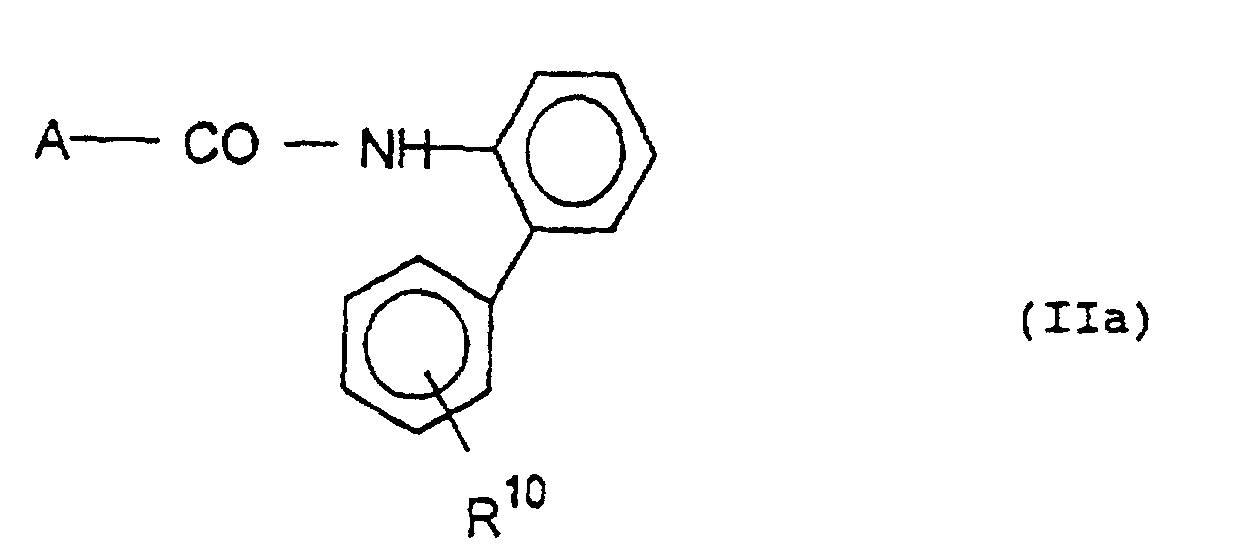
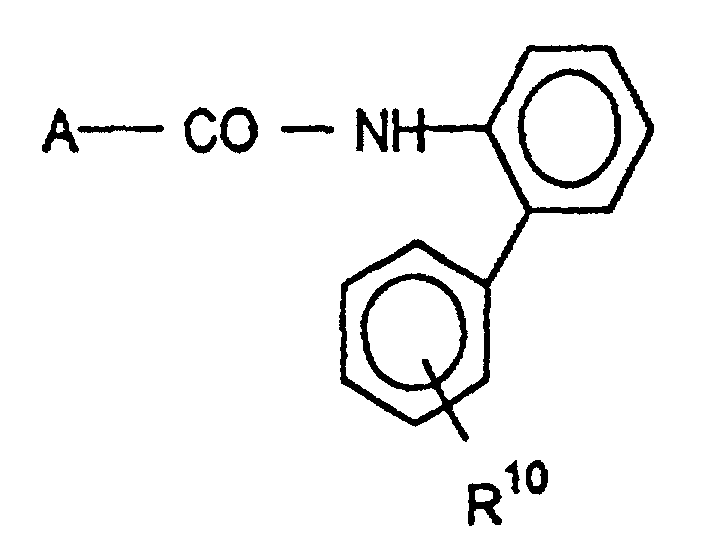
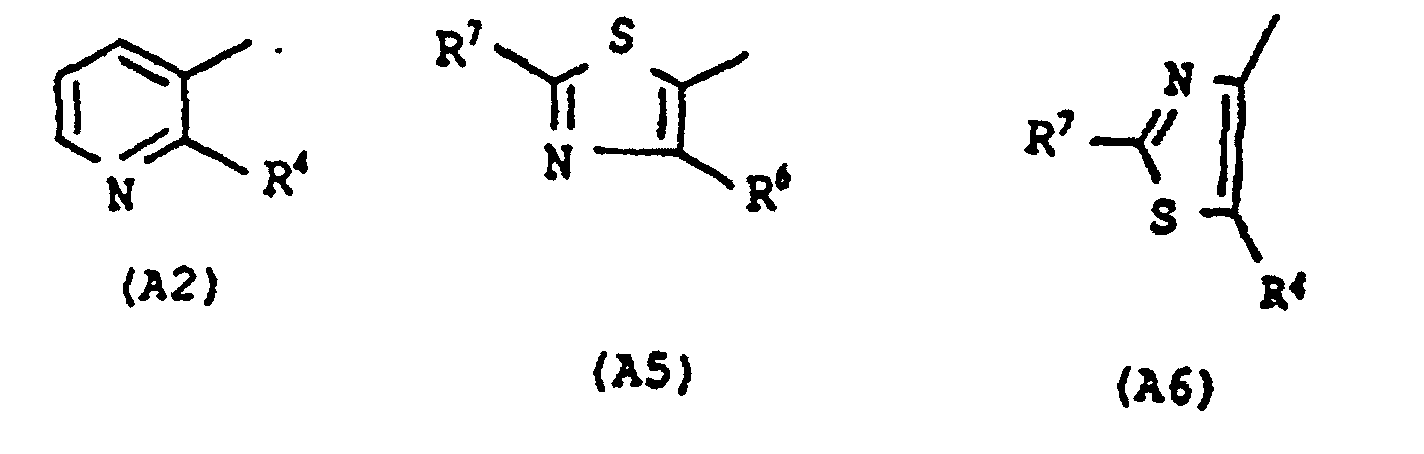
- Mittel nach einem der vorhergehenden Ansprüche, das als Amidverbindung eine Verbindung der Formel IIa enthält:worin A für
 steht;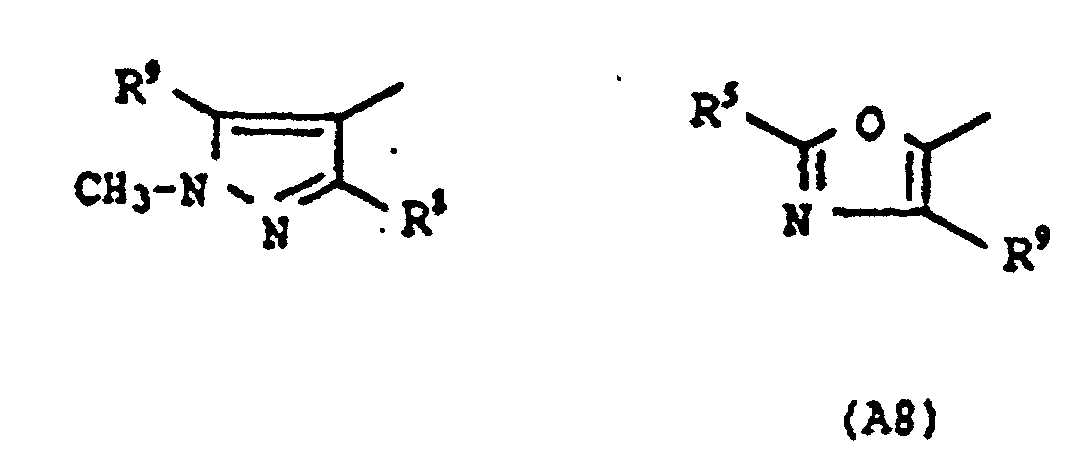
- R4
- für Trifluormethyl oder Chlor steht,
- R6
- für Methyl, Difluormethyl, Trifluormethyl oder Chlor steht,
- R7
- für Wasserstoff, Methyl oder Chlor steht,
- R8
- für Methyl, Difluormethyl oder Trifluormethyl steht,
- R9
- für Wasserstoff, Methyl, Difluormethyl, Trifluormethyl oder Chlor steht,
- R10
- für C1-C4-Alkyl oder Halogen steht.
- Mittel nach einem der Ansprüche 1 bis 7, das als Amidverbindung eine Verbindung der Formel IIb enthältworin

- R4
- für Halogen steht und
- R11
- für Phenyl steht, das durch Halogen substituiert ist.
- Mittel nach einem der Ansprüche 1 bis 8, das als Amidverbindung eine Verbindung der nachfolgenden Formeln enthält:

- Mittel nach einem der vorhergehenden Ansprüche, das in zwei Teilen konditioniert ist, wobei der eine Teil den Wirkstoff der Formel I in einem festen oder flüssigen Träger enthält und der andere Teil die Amidverbindung der Formel II in einem festen oder flüssigen Träger enthält.
- Verfahren zur Bekämpfung von Schadpilzen, dadurch gekennzeichnet, daß man die Pilze, deren Lebensraum oder die vor Pilzbefall zu schützenden Materialien, Pflanzen, Samen, Böden, Flächen oder Räume mit einem Mittel gemäß einem der Ansprüche 1 bis 10 behandelt, wobei die Anwendung der Wirkstoffe gleichzeitig, und zwar gemeinsam oder getrennt oder nacheinander erfolgen kann.
Applications Claiming Priority (3)
| Application Number | Priority Date | Filing Date | Title |
|---|---|---|---|
| DE19535366 | 1995-09-22 | ||
| DE19535366 | 1995-09-22 | ||
| PCT/EP1996/004151 WO1997010716A1 (de) | 1995-09-22 | 1996-09-23 | Schadpilzbekämpfung mit der kombination eines die atmung am cytochrom-komplex iii hemmenden wirkstoffes mit einem amid |
Publications (2)
| Publication Number | Publication Date |
|---|---|
| EP0859549A1 EP0859549A1 (de) | 1998-08-26 |
| EP0859549B1 true EP0859549B1 (de) | 2001-08-16 |
Family
ID=7772956
Family Applications (1)
| Application Number | Title | Priority Date | Filing Date |
|---|---|---|---|
| EP96933362A Expired - Lifetime EP0859549B1 (de) | 1995-09-22 | 1996-09-23 | Schadpilzbekämpfung mit der kombination eines die atmung am cytochrom-komplex iii hemmenden wirkstoffes mit einem amid |
Country Status (27)
| Country | Link |
|---|---|
| US (1) | US6169056B1 (de) |
| EP (1) | EP0859549B1 (de) |
| JP (2) | JP4104087B2 (de) |
| KR (1) | KR100458740B1 (de) |
| CN (1) | CN1230080C (de) |
| AR (1) | AR003641A1 (de) |
| AT (1) | ATE204134T1 (de) |
| AU (1) | AU721957B2 (de) |
| BR (1) | BR9610574A (de) |
| CA (1) | CA2230140C (de) |
| CZ (1) | CZ297522B6 (de) |
| DE (3) | DE122004000016I2 (de) |
| DK (1) | DK0859549T3 (de) |
| ES (1) | ES2162096T3 (de) |
| FR (1) | FR06C0033I2 (de) |
| GR (1) | GR3036850T3 (de) |
| HU (1) | HU226271B1 (de) |
| IL (1) | IL123632A (de) |
| MX (1) | MX211504B (de) |
| NL (1) | NL350017I2 (de) |
| NZ (1) | NZ319577A (de) |
| PL (1) | PL186862B1 (de) |
| PT (1) | PT859549E (de) |
| SK (1) | SK283107B6 (de) |
| TW (1) | TW384208B (de) |
| WO (1) | WO1997010716A1 (de) |
| ZA (1) | ZA967964B (de) |
Families Citing this family (36)
| Publication number | Priority date | Publication date | Assignee | Title |
|---|---|---|---|---|
| DE19615977A1 (de) * | 1996-04-22 | 1997-10-23 | Basf Ag | Mittel und Verfahren zur Bekämpfung von Schadpilzen |
| EA001425B1 (ru) * | 1996-08-30 | 2001-02-26 | Басф Акциенгезельшафт | Фунгицидные смеси |
| DK0933996T3 (da) * | 1996-10-17 | 2001-10-08 | Basf Ag | Fremgangsmåde til bekæmpelse af skadelige svampe i kulturplanter |
| GB9718366D0 (en) | 1997-08-29 | 1997-11-05 | Ciba Geigy Ag | Novel combinations |
| BR9816357B1 (pt) * | 1997-12-18 | 2014-01-14 | Mistura fungicida, e, processo para controlar fungos nocivos | |
| TW464471B (en) * | 1997-12-18 | 2001-11-21 | Basf Ag | Fungicidal mixtures based on amide compounds and pyridine derivatives |
| EA003284B1 (ru) * | 1997-12-18 | 2003-04-24 | Басф Акциенгезельшафт | Синергетические фунгицидные смеси на основе производных n-фенилникотинамида |
| TW491686B (en) * | 1997-12-18 | 2002-06-21 | Basf Ag | Fungicidal mixtures based on amide compounds and tetrachloroisophthalonitrile |
| TW450788B (en) * | 1997-12-18 | 2001-08-21 | Basf Ag | Fungicidal mixtures based on amide compounds and benzimidazoles or precursors which release them |
| HUP0004342A3 (en) | 1997-12-18 | 2002-11-28 | Basf Ag Ag | Synergetic fungicidal mixture containing (het)aryl carboxamide and (+)-(2-chlorophenyl)-(4-chlorophenyl)-(5-pyrimidyl)-methanol and its use |
| EP1228691A3 (de) | 1997-12-18 | 2002-08-14 | Basf Aktiengesellschaft | Fungizide Mischungen auf der Basis von Pyridincarboxamidverbindungen |
| EA003395B1 (ru) * | 1997-12-18 | 2003-04-24 | Басф Акциенгезельшафт | Фунгицидная смесь на базе амидных соединений и производных морфолина, способ борьбы с фитопатогенными грибами |
| UA70327C2 (uk) * | 1998-06-08 | 2004-10-15 | Баєр Акціенгезельшафт | Спосіб боротьби з фітопатогенними хворобами сільськогосподарських рослин та фунгіцидна композиція |
| DE10063046A1 (de) * | 2000-12-18 | 2002-06-20 | Basf Ag | Fungizide Mischungen |
| MXPA03005634A (es) * | 2001-01-16 | 2003-10-06 | Basf Ag | Mezclas fungicidas. |
| CZ301674B6 (cs) * | 2001-01-18 | 2010-05-19 | Basf Aktiengesellschaft | Fungicidní smesi |
| CA2505495A1 (en) | 2002-11-15 | 2004-06-03 | Basf Aktiengesellschaft | Fungicidal mixtures based on a triazolopyrimidine derivative and amide compounds |
| AP2006003533A0 (en) * | 2003-08-26 | 2006-02-28 | Basf Ag | Method of plant growth promotion using amide compounds. |
| DE10347090A1 (de) * | 2003-10-10 | 2005-05-04 | Bayer Cropscience Ag | Synergistische fungizide Wirkstoffkombinationen |
| AU2005244421A1 (en) * | 2004-05-13 | 2005-11-24 | Basf Aktiengesellschaft | Fungicide mixtures made from a triazolopyrimidine derivative and biphenylamides |
| GB0418047D0 (en) | 2004-08-12 | 2004-09-15 | Syngenta Participations Ag | Fungicidal compositions |
| GB0422399D0 (en) * | 2004-10-08 | 2004-11-10 | Syngenta Participations Ag | Fungicidal compositions |
| GB0422401D0 (en) * | 2004-10-08 | 2004-11-10 | Syngenta Participations Ag | Fungicidal compositions |
| GB0422400D0 (en) * | 2004-10-08 | 2004-11-10 | Syngenta Participations Ag | Fungicidal compositions |
| PE20070409A1 (es) * | 2005-06-29 | 2007-05-07 | Basf Ag | Mezclas fungicidas con base en bifenilamidas de acido pirazolcarboxilico disustituidas en 2,4 |
| US20090239748A1 (en) * | 2005-06-30 | 2009-09-24 | Basf Aktiengesellschaft | Fungicidal Mixtures Based on 2,5-Disubstituted N-Biphenylpyrazolcarboxamides |
| WO2007003564A1 (de) * | 2005-07-01 | 2007-01-11 | Basf Aktiengesellschaft | Fungizide mischungen auf der basis von 3,5-disubstituierten pyrazolcarbonsäurebiphenylamiden |
| US20090042725A1 (en) * | 2005-07-01 | 2009-02-12 | Basf Aktiengesellschaft | Fungicidal Mixtures Based on 3,5-Disubstituted N-Biphenyl-Pyrazolcarboxamides |
| WO2007003644A1 (de) * | 2005-07-06 | 2007-01-11 | Basf Aktiengesellschaft | Fungizide mischungen auf der basis von 1-methylpyrazol-4-ylcarbonsäureaniliden |
| DE102005035300A1 (de) * | 2005-07-28 | 2007-02-01 | Bayer Cropscience Ag | Synergistische fungizide Wirkstoffkombinationen |
| MX2008000801A (es) * | 2005-08-05 | 2008-03-18 | Basf Ag | Mezclas fungicidas que contienen anilidas sustituidas de acido 1-metilpirazol-4-ilcarboxilico. |
| PL383990A1 (pl) | 2007-12-07 | 2009-06-08 | Stanisław Rogut | Sposób i układ przetwarzania odpadów, zwłaszcza komunalnych, oraz komponenty paliwa energetycznego |
| US8770137B2 (en) * | 2012-01-09 | 2014-07-08 | Jing Nan Traffic Engineering Co., Ltd. | Structure of traffic cone |
| US9120259B2 (en) * | 2013-04-15 | 2015-09-01 | Jing Nan Traffic Engineering Co., Ltd. | Counterweight structure of a traffic cone |
| EP3047731A1 (de) | 2015-01-21 | 2016-07-27 | Basf Se | Verfahren zur Bekämpfung von Sojabohnenrost mittels Behandlung von Sojabohnen mit (2E)-2-[3-substituierten-2 [[(E)-[(2E)-2-Alkoxyimino-1-Methyl-2-Phenyl-Ethylidene]Amino]Oxymethyl]Phenyl]-2-Methoxymin-N-Methyl-Acet-Amiden |
| CN106397422B (zh) * | 2016-08-29 | 2018-06-08 | 南京农业大学 | 含手性噁唑啉的烟酰胺类化合物及作为农用杀菌剂的用途 |
Family Cites Families (15)
| Publication number | Priority date | Publication date | Assignee | Title |
|---|---|---|---|---|
| DE3623921A1 (de) * | 1986-07-16 | 1988-01-21 | Basf Ag | Oximether und diese enthaltende fungizide |
| GB8617648D0 (en) | 1986-07-18 | 1986-08-28 | Ici Plc | Fungicides |
| GB8903019D0 (en) * | 1989-02-10 | 1989-03-30 | Ici Plc | Fungicides |
| EP0394631A3 (de) * | 1989-04-25 | 1991-07-31 | Nissan Chemical Industries Ltd. | Fungizidzusammensetzung zum Gebrauch in der Landwirtschaft und im Gartenbau |
| IL103614A (en) | 1991-11-22 | 1998-09-24 | Basf Ag | Carboxamides for controlling botrytis and certain novel such compounds |
| US5223526A (en) | 1991-12-06 | 1993-06-29 | Monsanto Company | Pyrazole carboxanilide fungicides and use |
| DE4231517A1 (de) | 1992-09-21 | 1994-03-24 | Basf Ag | Carbonsäureanilide, Verfahren zu ihrer Herstellung und sie enthaltende Mittel zur Bekämpfung von Schadpilzen |
| FR2711040B1 (fr) | 1993-10-14 | 1996-09-06 | Rhone Poulenc Agrochimie | Associations fongicides à base d'un phénylbenzamide. |
| TW305743B (de) * | 1993-11-04 | 1997-05-21 | Sumitomo Chemical Co | |
| JP3349566B2 (ja) * | 1993-11-25 | 2002-11-25 | 日本バイエルアグロケム株式会社 | 農園芸用殺菌剤組成物 |
| EP0741970B1 (de) | 1993-12-02 | 2002-04-24 | Sumitomo Chemical Company Limited | Bakterizide zusammensetzung |
| JPH07304607A (ja) * | 1994-05-13 | 1995-11-21 | Sumitomo Chem Co Ltd | 殺菌剤組成物 |
| JPH07330516A (ja) * | 1994-06-08 | 1995-12-19 | Sumitomo Chem Co Ltd | 殺菌剤組成物 |
| JP3470399B2 (ja) * | 1994-07-14 | 2003-11-25 | 住友化学工業株式会社 | 殺菌剤組成物 |
| DE59504001D1 (de) | 1994-07-21 | 1998-11-26 | Basf Ag | Verfahren zur bekämpfung von schadpilzen |
-
1996
- 1996-09-18 TW TW085111421A patent/TW384208B/zh not_active IP Right Cessation
- 1996-09-20 ZA ZA9607964A patent/ZA967964B/xx unknown
- 1996-09-20 AR ARP960104445A patent/AR003641A1/es active IP Right Grant
- 1996-09-23 DE DE200412000016 patent/DE122004000016I2/de active Active
- 1996-09-23 JP JP51240197A patent/JP4104087B2/ja not_active Expired - Lifetime
- 1996-09-23 SK SK381-98A patent/SK283107B6/sk not_active IP Right Cessation
- 1996-09-23 DK DK96933362T patent/DK0859549T3/da active
- 1996-09-23 PL PL96325972A patent/PL186862B1/pl unknown
- 1996-09-23 HU HU9802728A patent/HU226271B1/hu active Protection Beyond IP Right Term
- 1996-09-23 CZ CZ0088198A patent/CZ297522B6/cs not_active IP Right Cessation
- 1996-09-23 CN CNB961971045A patent/CN1230080C/zh not_active Expired - Lifetime
- 1996-09-23 WO PCT/EP1996/004151 patent/WO1997010716A1/de not_active Ceased
- 1996-09-23 EP EP96933362A patent/EP0859549B1/de not_active Expired - Lifetime
- 1996-09-23 DE DE59607511T patent/DE59607511D1/de not_active Expired - Lifetime
- 1996-09-23 US US09/043,513 patent/US6169056B1/en not_active Expired - Lifetime
- 1996-09-23 CA CA002230140A patent/CA2230140C/en not_active Expired - Lifetime
- 1996-09-23 IL IL12363296A patent/IL123632A/xx not_active IP Right Cessation
- 1996-09-23 DE DE122005000048C patent/DE122005000048I2/de active Active
- 1996-09-23 ES ES96933362T patent/ES2162096T3/es not_active Expired - Lifetime
- 1996-09-23 AT AT96933362T patent/ATE204134T1/de active
- 1996-09-23 PT PT96933362T patent/PT859549E/pt unknown
- 1996-09-23 AU AU72129/96A patent/AU721957B2/en not_active Expired
- 1996-09-23 NZ NZ319577A patent/NZ319577A/xx not_active IP Right Cessation
- 1996-09-23 BR BR9610574A patent/BR9610574A/pt not_active IP Right Cessation
- 1996-09-23 KR KR19980702110A patent/KR100458740B1/ko not_active Expired - Lifetime
-
1998
- 1998-03-19 MX MX9802157A patent/MX211504B/es unknown
-
2001
- 2001-10-09 GR GR20010401714T patent/GR3036850T3/el unknown
-
2004
- 2004-02-09 NL NL350017C patent/NL350017I2/nl unknown
-
2006
- 2006-10-27 FR FR06C0033C patent/FR06C0033I2/fr active Active
-
2007
- 2007-10-12 JP JP2007266434A patent/JP2008069168A/ja not_active Withdrawn
Also Published As
Similar Documents
| Publication | Publication Date | Title |
|---|---|---|
| WO1997010716A1 (de) | Schadpilzbekämpfung mit der kombination eines die atmung am cytochrom-komplex iii hemmenden wirkstoffes mit einem amid | |
| EP0862366B1 (de) | Schadpilzbekämpfung mit der kombination eines die atmung am cytochrom-komplex iii hemmenden wirkstoffes mit fenazaquin | |
| EP0849994B1 (de) | Mittel und verfahren zur bekämpfung von schadpilzen | |
| EP0900016B1 (de) | Mittel und verfahren zur bekämpfung von schadpilzen | |
| EP0902620B1 (de) | Mittel und verfahren zur bekämpfung von schadpilzen | |
| KR100447361B1 (ko) | 유해 균류의 억제제 및 억제방법 | |
| MXPA98008488A (en) | Compositions and method for controlling noci fungi | |
| MXPA98001683A (en) | Compositions and methods to control mushrooms harmful |
Legal Events
| Date | Code | Title | Description |
|---|---|---|---|
| PUAI | Public reference made under article 153(3) epc to a published international application that has entered the european phase |
Free format text: ORIGINAL CODE: 0009012 |
|
| 17P | Request for examination filed |
Effective date: 19980309 |
|
| AK | Designated contracting states |
Kind code of ref document: A1 Designated state(s): AT BE CH DE DK ES FI FR GB GR IE IT LI NL PT SE |
|
| GRAG | Despatch of communication of intention to grant |
Free format text: ORIGINAL CODE: EPIDOS AGRA |
|
| 17Q | First examination report despatched |
Effective date: 20000927 |
|
| GRAG | Despatch of communication of intention to grant |
Free format text: ORIGINAL CODE: EPIDOS AGRA |
|
| GRAG | Despatch of communication of intention to grant |
Free format text: ORIGINAL CODE: EPIDOS AGRA |
|
| GRAH | Despatch of communication of intention to grant a patent |
Free format text: ORIGINAL CODE: EPIDOS IGRA |
|
| GRAH | Despatch of communication of intention to grant a patent |
Free format text: ORIGINAL CODE: EPIDOS IGRA |
|
| GRAA | (expected) grant |
Free format text: ORIGINAL CODE: 0009210 |
|
| AK | Designated contracting states |
Kind code of ref document: B1 Designated state(s): AT BE CH DE DK ES FI FR GB GR IE IT LI NL PT SE |
|
| REF | Corresponds to: |
Ref document number: 204134 Country of ref document: AT Date of ref document: 20010915 Kind code of ref document: T |
|
| REG | Reference to a national code |
Ref country code: CH Ref legal event code: NV Representative=s name: SCHMAUDER & PARTNER AG PATENTANWALTSBUERO Ref country code: CH Ref legal event code: EP |
|
| REF | Corresponds to: |
Ref document number: 59607511 Country of ref document: DE Date of ref document: 20010920 |
|
| REG | Reference to a national code |
Ref country code: DK Ref legal event code: T3 |
|
| REG | Reference to a national code |
Ref country code: IE Ref legal event code: FG4D Free format text: GERMAN |
|
| GBT | Gb: translation of ep patent filed (gb section 77(6)(a)/1977) |
Effective date: 20011003 |
|
| REG | Reference to a national code |
Ref country code: ES Ref legal event code: FG2A Ref document number: 2162096 Country of ref document: ES Kind code of ref document: T3 |
|
| REG | Reference to a national code |
Ref country code: GB Ref legal event code: IF02 |
|
| ET | Fr: translation filed | ||
| REG | Reference to a national code |
Ref country code: GR Ref legal event code: EP Ref document number: 20010401714 Country of ref document: GR |
|
| REG | Reference to a national code |
Ref country code: PT Ref legal event code: SC4A Free format text: AVAILABILITY OF NATIONAL TRANSLATION Effective date: 20011109 |
|
| PLBE | No opposition filed within time limit |
Free format text: ORIGINAL CODE: 0009261 |
|
| STAA | Information on the status of an ep patent application or granted ep patent |
Free format text: STATUS: NO OPPOSITION FILED WITHIN TIME LIMIT |
|
| 26N | No opposition filed | ||
| REG | Reference to a national code |
Ref country code: FR Ref legal event code: ST |
|
| REG | Reference to a national code |
Ref country code: FR Ref legal event code: ST |
|
| REG | Reference to a national code |
Ref country code: DE Ref legal event code: 8364 Ref document number: 59607511 Country of ref document: DE Kind code of ref document: A |
|
| REG | Reference to a national code |
Ref country code: FR Ref legal event code: RN Ref country code: FR Ref legal event code: FC |
|
| REG | Reference to a national code |
Ref country code: NL Ref legal event code: AC1 Spc suppl protection certif: 350017 Filing date: 20040209 |
|
| REG | Reference to a national code |
Ref country code: DE Ref legal event code: V448 Ref document number: 59607511 Country of ref document: DE Free format text: PRODUCT NAME: MISCHUNGEN ENTHALTEND BOSCALID MIT KRESOXIM-METHYL; REGISTRATION NO/DATE: 5203-00, 20040209 Spc suppl protection certif: 12 2004 000 016 Filing date: 20040424 |
|
| REG | Reference to a national code |
Ref country code: DE Ref legal event code: R065 Ref document number: 59607511 Country of ref document: DE Free format text: PRODUCT NAME: MISCHUNGEN ENTHALTEND BOSCALID MIT KRESOXIM-METHYL; AUTHORISATION NO/DATE: 5203-00 20040209; 12 504 N 20031212 Spc suppl protection certif: 122004000016 |
|
| REG | Reference to a national code |
Ref country code: AT Ref legal event code: ESZA Ref document number: 204134 Country of ref document: AT Kind code of ref document: T Free format text: PRODUCT NAME: BOSCALID + KRESOXIM-METHYL Spc suppl protection certif: SZ 9/2004 Filing date: 20040512 |
|
| REG | Reference to a national code |
Ref country code: DE Ref legal event code: V448 Ref document number: 59607511 Country of ref document: DE Free format text: PRODUCT NAME: MISCHUNGEN ENTHALTEND BOSCALID MIT DIMOXYSTROBIN; REGISTRATION NO/DATE: 5533-00, 20050527 Spc suppl protection certif: 12 2005 000 048 Filing date: 20050913 |
|
| REG | Reference to a national code |
Ref country code: DE Ref legal event code: R065 Ref document number: 59607511 Country of ref document: DE Free format text: PRODUCT NAME: MISCHUNGEN ENTHALTEND BOSCALID MIT DIMOXYSTROBIN; AUTHORISATION NO/DATE: 5533-00 20050527 Spc suppl protection certif: 122005000048 |
|
| REG | Reference to a national code |
Ref country code: AT Ref legal event code: ESZA Ref document number: 204134 Country of ref document: AT Kind code of ref document: T Free format text: PRODUCT NAME: DIMOXYSTROBIN UND BOSCALID Spc suppl protection certif: SZ 35/2005 Filing date: 20051017 |
|
| REG | Reference to a national code |
Ref country code: FR Ref legal event code: CP Free format text: PRODUCT NAME: BOSCALID; KRESOXIM-METHYL; NAT. REGISTRATION NO/DATE: 2060085 20060630; FIRST REGISTRATION: NL - 471835 20031212 Spc suppl protection certif: 06C0033 Filing date: 20061027 |
|
| REG | Reference to a national code |
Ref country code: FR Ref legal event code: C1 Free format text: PRODUCT NAME: KRESOXIM-METHYL ET BOSCALID; REGISTRATION NO/DATE IN FRANCE: 2060085 DU 20060630; REGISTRATION NO/DATE AT EEC: 471835 DU 20031212 Spc suppl protection certif: 06C0033 Filing date: 20061027 |
|
| REG | Reference to a national code |
Ref country code: FR Ref legal event code: CP |
|
| REG | Reference to a national code |
Ref country code: AT Ref legal event code: EEZF Ref document number: 204134 Country of ref document: AT Kind code of ref document: T Free format text: PRODUCT NAME: DIMOXYSTROBIN UND BOSCALID Spc suppl protection certif: SZ 35/2005 Filing date: 20051017 Extension date: 20200527 Effective date: 20070727 Ref country code: AT Ref legal event code: EEZF Ref document number: 204134 Country of ref document: AT Kind code of ref document: T Free format text: PRODUCT NAME: BOSCALID + KRESOXIM-METHYL Spc suppl protection certif: SZ 9/2004 Filing date: 20040512 Extension date: 20181212 Effective date: 20070727 |
|
| REG | Reference to a national code |
Ref country code: DE Ref legal event code: 8327 Ref document number: 59607511 Country of ref document: DE Owner name: BASF SE, 67063 LUDWIGSHAFEN, DE |
|
| REG | Reference to a national code |
Ref country code: DE Ref legal event code: R078 Ref document number: 59607511 Country of ref document: DE Free format text: PRODUCT NAME: MISCHUNGEN ENTHALTEND BOSCALID MIT DIMOXYSTROBIN; AUTHORISATION NO/DATE: 5533-00 20050527 Spc suppl protection certif: 122005000048 Ref country code: DE Ref legal event code: R078 Ref document number: 59607511 Country of ref document: DE Free format text: PRODUCT NAME: MISCHUNGEN ENTHALTEND BOSCALID MIT KRESOXIM-METHYL; AUTHORISATION NO/DATE: 5203-00 20040209; 12 504 N 20031212 Spc suppl protection certif: 122004000016 |
|
| REG | Reference to a national code |
Ref country code: ES Ref legal event code: PC2A |
|
| REG | Reference to a national code |
Ref country code: CH Ref legal event code: PCAR Free format text: SCHMAUDER & PARTNER AG PATENT- UND MARKENANWAELTE VSP;ZWAENGIWEG 7;8038 ZUERICH (CH) |
|
| REG | Reference to a national code |
Ref country code: FR Ref legal event code: C2 Free format text: PRODUCT NAME: KRESOXIM-MENTHYL ET BOSCALID; REGISTRATION NO/DATE IN FRANCE: 2060085 DU 20060630; REGISTRATION NO/DATE AT EEC: 471835 DU 20031212 Spc suppl protection certif: 06C0033 Filing date: 20061027 Extension date: 20181212 Ref country code: FR Ref legal event code: AV |
|
| REG | Reference to a national code |
Ref country code: DE Ref legal event code: R067 Ref document number: 59607511 Country of ref document: DE Free format text: PRODUCT NAME: MISCHUNGEN ENTHALTEND BOSCALID MIT DIMOXYSTROBIN; AUTHORISATION NO/DATE: 5533-00 20050527 Spc suppl protection certif: 122005000048 |
|
| PGFP | Annual fee paid to national office [announced via postgrant information from national office to epo] |
Ref country code: CH Payment date: 20100930 Year of fee payment: 15 |
|
| REG | Reference to a national code |
Ref country code: FR Ref legal event code: AV Spc suppl protection certif: 06C0033 |
|
| REG | Reference to a national code |
Ref country code: DE Ref legal event code: V457 Ref document number: 59607511 Country of ref document: DE Free format text: PRODUCT NAME: MISCHUNGEN ENTHALTEND BOSCALID MIT DIMOXYSTROBIN; REGISTRATION NO/DATE: 5533-00, 20050527 Spc suppl protection certif: 12 2005 000 048 Filing date: 20050913 Ref country code: DE Ref legal event code: R069 Ref document number: 59607511 Country of ref document: DE Free format text: PRODUCT NAME: MISCHUNGEN ENTHALTEND BOSCALID MIT DIMOXYSTROBIN; AUTHORISATION NO/DATE: 5533-00 20050527 Spc suppl protection certif: 122005000048 |
|
| PGFP | Annual fee paid to national office [announced via postgrant information from national office to epo] |
Ref country code: SE Payment date: 20100924 Year of fee payment: 15 Ref country code: FI Payment date: 20100928 Year of fee payment: 15 |
|
| REG | Reference to a national code |
Ref country code: DE Ref legal event code: R067 Ref document number: 59607511 Country of ref document: DE Free format text: PRODUCT NAME: MISCHUNGEN ENTHALTEND BOSCALID MIT KRESOXIM-METHYL; NAT. REGISTRATION NO/DATE: 5203-00 20040209; FIRST REGISTRATION: NL 12 504 N 20031212 Spc suppl protection certif: 122004000016 Filing date: 20040424 Expiry date: 20160924 Extension date: 20181212 Ref country code: DE Ref legal event code: R067 Ref document number: 59607511 Country of ref document: DE Free format text: PRODUCT NAME: MISCHUNGEN ENTHALTEND BOSCALID MIT KRESOXIM-METHYL; AUTHORISATION NO/DATE: 5203-00 20040209; 12 504 N 20031212 Spc suppl protection certif: 122004000016 |
|
| REG | Reference to a national code |
Ref country code: DE Ref legal event code: R069 Ref document number: 59607511 Country of ref document: DE Free format text: PRODUCT NAME: MISCHUNGEN ENTHALTEND BOSCALID MIT KRESOXIM-METHYL; AUTHORISATION NO/DATE: 5203-00 20040209; 12 504 N 20031212 Spc suppl protection certif: 122004000016 |
|
| REG | Reference to a national code |
Ref country code: DE Ref legal event code: R069 Ref document number: 59607511 Country of ref document: DE Free format text: PRODUCT NAME: MISCHUNGEN ENTHALTEND BOSCALID MIT KRESOXIM-METHYL; NAT. REGISTRATION NO/DATE: 5203-00 20040209; FIRST REGISTRATION: NL 12 504 N 20031212 Spc suppl protection certif: 122004000016 Filing date: 20040424 Expiry date: 20160924 Extension date: 20181212 Effective date: 20110314 |
|
| REG | Reference to a national code |
Ref country code: CH Ref legal event code: PL |
|
| PG25 | Lapsed in a contracting state [announced via postgrant information from national office to epo] |
Ref country code: FI Free format text: LAPSE BECAUSE OF NON-PAYMENT OF DUE FEES Effective date: 20110923 |
|
| REG | Reference to a national code |
Ref country code: SE Ref legal event code: EUG |
|
| PG25 | Lapsed in a contracting state [announced via postgrant information from national office to epo] |
Ref country code: CH Free format text: LAPSE BECAUSE OF NON-PAYMENT OF DUE FEES Effective date: 20110930 Ref country code: LI Free format text: LAPSE BECAUSE OF NON-PAYMENT OF DUE FEES Effective date: 20110930 |
|
| PG25 | Lapsed in a contracting state [announced via postgrant information from national office to epo] |
Ref country code: SE Free format text: LAPSE BECAUSE OF NON-PAYMENT OF DUE FEES Effective date: 20110924 |
|
| PGFP | Annual fee paid to national office [announced via postgrant information from national office to epo] |
Ref country code: AT Payment date: 20130926 Year of fee payment: 18 |
|
| REG | Reference to a national code |
Ref country code: AT Ref legal event code: MM01 Ref document number: 204134 Country of ref document: AT Kind code of ref document: T Effective date: 20140923 |
|
| PG25 | Lapsed in a contracting state [announced via postgrant information from national office to epo] |
Ref country code: AT Free format text: LAPSE BECAUSE OF NON-PAYMENT OF DUE FEES Effective date: 20140923 |
|
| REG | Reference to a national code |
Ref country code: FR Ref legal event code: PLFP Year of fee payment: 20 |
|
| PGFP | Annual fee paid to national office [announced via postgrant information from national office to epo] |
Ref country code: PT Payment date: 20150914 Year of fee payment: 20 Ref country code: GB Payment date: 20150930 Year of fee payment: 20 Ref country code: IE Payment date: 20150929 Year of fee payment: 20 |
|
| PGFP | Annual fee paid to national office [announced via postgrant information from national office to epo] |
Ref country code: GR Payment date: 20150925 Year of fee payment: 20 Ref country code: FR Payment date: 20150928 Year of fee payment: 20 |
|
| PGFP | Annual fee paid to national office [announced via postgrant information from national office to epo] |
Ref country code: DK Payment date: 20150925 Year of fee payment: 20 |
|
| PGFP | Annual fee paid to national office [announced via postgrant information from national office to epo] |
Ref country code: DE Payment date: 20151130 Year of fee payment: 20 Ref country code: IT Payment date: 20150925 Year of fee payment: 20 |
|
| PGFP | Annual fee paid to national office [announced via postgrant information from national office to epo] |
Ref country code: ES Payment date: 20151027 Year of fee payment: 20 Ref country code: BE Payment date: 20150930 Year of fee payment: 20 Ref country code: NL Payment date: 20150928 Year of fee payment: 20 |
|
| REG | Reference to a national code |
Ref country code: FR Ref legal event code: SPAY Free format text: PRODUCT NAME: BOSCALID; KRESOXIM-METHYL; NAT. REGISTRATION NO/DATE: 2060085 20060630; FIRST REGISTRATION: NL - 471835 20031212 Spc suppl protection certif: 06C0033 Filing date: 20061027 Year of fee payment: 1 Extension date: 20181212 |
|
| REG | Reference to a national code |
Ref country code: DE Ref legal event code: R071 Ref document number: 59607511 Country of ref document: DE |
|
| REG | Reference to a national code |
Ref country code: DK Ref legal event code: EUP Effective date: 20160923 |
|
| REG | Reference to a national code |
Ref country code: NL Ref legal event code: MK Effective date: 20160922 |
|
| REG | Reference to a national code |
Ref country code: GB Ref legal event code: PE20 Expiry date: 20160922 |
|
| PG25 | Lapsed in a contracting state [announced via postgrant information from national office to epo] |
Ref country code: GB Free format text: LAPSE BECAUSE OF EXPIRATION OF PROTECTION Effective date: 20160922 |
|
| REG | Reference to a national code |
Ref country code: IE Ref legal event code: MK9A |
|
| PG25 | Lapsed in a contracting state [announced via postgrant information from national office to epo] |
Ref country code: PT Free format text: LAPSE BECAUSE OF EXPIRATION OF PROTECTION Effective date: 20160930 |
|
| REG | Reference to a national code |
Ref country code: ES Ref legal event code: FD2A Effective date: 20170102 |
|
| PG25 | Lapsed in a contracting state [announced via postgrant information from national office to epo] |
Ref country code: IE Free format text: LAPSE BECAUSE OF EXPIRATION OF PROTECTION Effective date: 20160923 |
|
| REG | Reference to a national code |
Ref country code: GR Ref legal event code: MA Ref document number: 20010401714 Country of ref document: GR Effective date: 20160924 |
|
| PG25 | Lapsed in a contracting state [announced via postgrant information from national office to epo] |
Ref country code: ES Free format text: LAPSE BECAUSE OF EXPIRATION OF PROTECTION Effective date: 20160924 |
|
| REG | Reference to a national code |
Ref country code: FR Ref legal event code: SPAY Free format text: PRODUCT NAME: BOSCALID; KRESOXIM-METHYL; NAT. REGISTRATION NO/DATE: 2060085 20060630; FIRST REGISTRATION: NL - 471835 20031212 Spc suppl protection certif: 06C0033 Filing date: 20061027 Year of fee payment: 2 Extension date: 20181212 |
|
| REG | Reference to a national code |
Ref country code: AT Ref legal event code: SPCN Ref document number: 204134 Country of ref document: AT Kind code of ref document: T Free format text: PRODUCT NAME: BOSCALID + KRESOXIM-METHYL; REGISTRATION NO/DATE: 12504 20031212 Spc suppl protection certif: 9/2004 Filing date: 20040512 Expiry date: 20160923 Extension date: 20181212 Effective date: 20160923 Ref country code: AT Ref legal event code: SPCN Ref document number: 204134 Country of ref document: AT Kind code of ref document: T Free format text: PRODUCT NAME: DIMOXYSTROBIN UND BOSCALID; REGISTRATION NO/DATE: 5533-00 20050527 Spc suppl protection certif: 35/2005 Filing date: 20051017 Expiry date: 20160923 Extension date: 20200527 Effective date: 20160923 |
|
| REG | Reference to a national code |
Ref country code: FR Ref legal event code: SPAY Free format text: PRODUCT NAME: BOSCALID; KRESOXIM-METHYL; NAT. REGISTRATION NO/DATE: 2060085 20060630; FIRST REGISTRATION: NL - 471835 20031212 Spc suppl protection certif: 06C0033 Filing date: 20061027 Year of fee payment: 3 Extension date: 20181212 |
|
| REG | Reference to a national code |
Ref country code: NL Ref legal event code: SPCX Free format text: PRODUCT NAME: BOSCALID EN KRESOXIM-METHYL; REGISTRATION NO/DATE: 12504 N 20031212 Spc suppl protection certif: 350017 Filing date: 20040209 Expiry date: 20160922 Extension date: 20181211 Ref country code: DE Ref legal event code: R071 Ref document number: 59607511 Country of ref document: DE Free format text: PRODUCT NAME: MISCHUNGEN ENTHALTEND BOSCALID MIT KRESOXIM-METHYL; NAT. REGISTRATION NO/DATE: 5203-00 20040209; FIRST REGISTRATION: NL 12 504 N 20031212 Spc suppl protection certif: 122004000016 Filing date: 20040424 Expiry date: 20160924 Extension date: 20181212 Ref country code: DE Ref legal event code: SP71 Ref document number: 59607511 Country of ref document: DE Free format text: PRODUCT NAME: MISCHUNGEN ENTHALTEND BOSCALID MIT KRESOXIM-METHYL; AUTHORISATION NO/DATE: 5203-00 20040209; 12 504 N 20031212 Spc suppl protection certif: 122004000016 |
|
| REG | Reference to a national code |
Ref country code: BE Ref legal event code: SPCG Free format text: PRODUCT NAME: BOSCALID + DIMOXYSTROBINE; AUTHORISATION NUMBER AND DATE: 5533-00 20160401 Spc suppl protection certif: 2016C/037 Filing date: 20160715 Expiry date: 20160923 Extension date: 20200527 Effective date: 20170616 Ref country code: BE Ref legal event code: SPCF Free format text: PRODUCT NAME: BOSCALID + DIMOXYSTROBINE; AUTHORISATION NUMBER AND DATE: 5533-00 20160401 Spc suppl protection certif: 2016C/037 Filing date: 20160715 Expiry date: 20160923 |
|
| REG | Reference to a national code |
Ref country code: DE Ref legal event code: R071 Ref document number: 59607511 Country of ref document: DE Free format text: PRODUCT NAME: MISCHUNGEN ENTHALTEND BOSCALID MIT DIMOXYSTROBIN; REGISTRATION NO/DATE: 5533-00 20050527 Spc suppl protection certif: 122005000048 Filing date: 20050913 Expiry date: 20160924 Extension date: 20200527 Ref country code: DE Ref legal event code: SP71 Ref document number: 59607511 Country of ref document: DE Free format text: PRODUCT NAME: MISCHUNGEN ENTHALTEND BOSCALID MIT DIMOXYSTROBIN; AUTHORISATION NO/DATE: 5533-00 20050527 Spc suppl protection certif: 122005000048 |
|
| REG | Reference to a national code |
Ref country code: BE Ref legal event code: SPCX Free format text: PRODUCT NAME: BOSCALID + DIMOXYSTROBINE; AUTHORISATION NUMBER AND DATE: 10468P/B 20160401 Spc suppl protection certif: 2016C/037 Extension date: 20200527 |