EP0872448A2 - Solution solide d'hydroxide de métaux, solution solide d'oxide de métaux et procédés pour leur production - Google Patents
Solution solide d'hydroxide de métaux, solution solide d'oxide de métaux et procédés pour leur production Download PDFInfo
- Publication number
- EP0872448A2 EP0872448A2 EP98302872A EP98302872A EP0872448A2 EP 0872448 A2 EP0872448 A2 EP 0872448A2 EP 98302872 A EP98302872 A EP 98302872A EP 98302872 A EP98302872 A EP 98302872A EP 0872448 A2 EP0872448 A2 EP 0872448A2
- Authority
- EP
- European Patent Office
- Prior art keywords
- solid solution
- planes
- metal oxide
- major axis
- axis diameter
- Prior art date
- Legal status (The legal status is an assumption and is not a legal conclusion. Google has not performed a legal analysis and makes no representation as to the accuracy of the status listed.)
- Granted
Links
Images


Classifications
-
- C—CHEMISTRY; METALLURGY
- C01—INORGANIC CHEMISTRY
- C01G—COMPOUNDS CONTAINING METALS NOT COVERED BY SUBCLASSES C01D OR C01F
- C01G3/00—Compounds of copper
-
- C—CHEMISTRY; METALLURGY
- C01—INORGANIC CHEMISTRY
- C01F—COMPOUNDS OF THE METALS BERYLLIUM, MAGNESIUM, ALUMINIUM, CALCIUM, STRONTIUM, BARIUM, RADIUM, THORIUM, OR OF THE RARE-EARTH METALS
- C01F5/00—Compounds of magnesium
- C01F5/02—Magnesia
-
- C—CHEMISTRY; METALLURGY
- C01—INORGANIC CHEMISTRY
- C01F—COMPOUNDS OF THE METALS BERYLLIUM, MAGNESIUM, ALUMINIUM, CALCIUM, STRONTIUM, BARIUM, RADIUM, THORIUM, OR OF THE RARE-EARTH METALS
- C01F5/00—Compounds of magnesium
- C01F5/02—Magnesia
- C01F5/06—Magnesia by thermal decomposition of magnesium compounds
- C01F5/08—Magnesia by thermal decomposition of magnesium compounds by calcining magnesium hydroxide
-
- C—CHEMISTRY; METALLURGY
- C01—INORGANIC CHEMISTRY
- C01F—COMPOUNDS OF THE METALS BERYLLIUM, MAGNESIUM, ALUMINIUM, CALCIUM, STRONTIUM, BARIUM, RADIUM, THORIUM, OR OF THE RARE-EARTH METALS
- C01F5/00—Compounds of magnesium
- C01F5/14—Magnesium hydroxide
-
- C—CHEMISTRY; METALLURGY
- C01—INORGANIC CHEMISTRY
- C01F—COMPOUNDS OF THE METALS BERYLLIUM, MAGNESIUM, ALUMINIUM, CALCIUM, STRONTIUM, BARIUM, RADIUM, THORIUM, OR OF THE RARE-EARTH METALS
- C01F5/00—Compounds of magnesium
- C01F5/14—Magnesium hydroxide
- C01F5/16—Magnesium hydroxide by treating magnesia, e.g. calcined dolomite, with water or solutions of salts not containing magnesium
-
- C—CHEMISTRY; METALLURGY
- C01—INORGANIC CHEMISTRY
- C01G—COMPOUNDS CONTAINING METALS NOT COVERED BY SUBCLASSES C01D OR C01F
- C01G45/00—Compounds of manganese
- C01G45/20—Compounds containing manganese, with or without oxygen or hydrogen, and containing one or more other elements
- C01G45/24—Hydroxides
-
- C—CHEMISTRY; METALLURGY
- C01—INORGANIC CHEMISTRY
- C01G—COMPOUNDS CONTAINING METALS NOT COVERED BY SUBCLASSES C01D OR C01F
- C01G49/00—Compounds of iron
-
- C—CHEMISTRY; METALLURGY
- C01—INORGANIC CHEMISTRY
- C01G—COMPOUNDS CONTAINING METALS NOT COVERED BY SUBCLASSES C01D OR C01F
- C01G51/00—Compounds of cobalt
- C01G51/80—Compounds containing cobalt, with or without oxygen or hydrogen, and containing one or more other elements
- C01G51/84—Hydroxides
-
- C—CHEMISTRY; METALLURGY
- C01—INORGANIC CHEMISTRY
- C01G—COMPOUNDS CONTAINING METALS NOT COVERED BY SUBCLASSES C01D OR C01F
- C01G53/00—Compounds of nickel
- C01G53/80—Compounds containing nickel, with or without oxygen or hydrogen, and containing one or more other elements
- C01G53/84—Hydroxides
-
- C—CHEMISTRY; METALLURGY
- C01—INORGANIC CHEMISTRY
- C01G—COMPOUNDS CONTAINING METALS NOT COVERED BY SUBCLASSES C01D OR C01F
- C01G9/00—Compounds of zinc
-
- C—CHEMISTRY; METALLURGY
- C01—INORGANIC CHEMISTRY
- C01P—INDEXING SCHEME RELATING TO STRUCTURAL AND PHYSICAL ASPECTS OF SOLID INORGANIC COMPOUNDS
- C01P2002/00—Crystal-structural characteristics
- C01P2002/50—Solid solutions
- C01P2002/52—Solid solutions containing elements as dopants
- C01P2002/54—Solid solutions containing elements as dopants one element only
-
- C—CHEMISTRY; METALLURGY
- C01—INORGANIC CHEMISTRY
- C01P—INDEXING SCHEME RELATING TO STRUCTURAL AND PHYSICAL ASPECTS OF SOLID INORGANIC COMPOUNDS
- C01P2004/00—Particle morphology
- C01P2004/01—Particle morphology depicted by an image
- C01P2004/03—Particle morphology depicted by an image obtained by SEM
-
- C—CHEMISTRY; METALLURGY
- C01—INORGANIC CHEMISTRY
- C01P—INDEXING SCHEME RELATING TO STRUCTURAL AND PHYSICAL ASPECTS OF SOLID INORGANIC COMPOUNDS
- C01P2004/00—Particle morphology
- C01P2004/20—Particle morphology extending in two dimensions, e.g. plate-like
- C01P2004/22—Particle morphology extending in two dimensions, e.g. plate-like with a polygonal circumferential shape
-
- C—CHEMISTRY; METALLURGY
- C01—INORGANIC CHEMISTRY
- C01P—INDEXING SCHEME RELATING TO STRUCTURAL AND PHYSICAL ASPECTS OF SOLID INORGANIC COMPOUNDS
- C01P2004/00—Particle morphology
- C01P2004/30—Particle morphology extending in three dimensions
- C01P2004/41—Particle morphology extending in three dimensions octahedron-like
-
- C—CHEMISTRY; METALLURGY
- C01—INORGANIC CHEMISTRY
- C01P—INDEXING SCHEME RELATING TO STRUCTURAL AND PHYSICAL ASPECTS OF SOLID INORGANIC COMPOUNDS
- C01P2004/00—Particle morphology
- C01P2004/54—Particles characterised by their aspect ratio, i.e. the ratio of sizes in the longest to the shortest dimension
-
- C—CHEMISTRY; METALLURGY
- C01—INORGANIC CHEMISTRY
- C01P—INDEXING SCHEME RELATING TO STRUCTURAL AND PHYSICAL ASPECTS OF SOLID INORGANIC COMPOUNDS
- C01P2004/00—Particle morphology
- C01P2004/60—Particles characterised by their size
- C01P2004/61—Micrometer sized, i.e. from 1-100 micrometer
-
- C—CHEMISTRY; METALLURGY
- C01—INORGANIC CHEMISTRY
- C01P—INDEXING SCHEME RELATING TO STRUCTURAL AND PHYSICAL ASPECTS OF SOLID INORGANIC COMPOUNDS
- C01P2004/00—Particle morphology
- C01P2004/60—Particles characterised by their size
- C01P2004/62—Submicrometer sized, i.e. from 0.1-1 micrometer
-
- C—CHEMISTRY; METALLURGY
- C01—INORGANIC CHEMISTRY
- C01P—INDEXING SCHEME RELATING TO STRUCTURAL AND PHYSICAL ASPECTS OF SOLID INORGANIC COMPOUNDS
- C01P2006/00—Physical properties of inorganic compounds
- C01P2006/12—Surface area
Definitions
- the present invention relates to a magnesium hydroxide solid solution, a magnesium oxide solid solution and processes for their production.
- magnesium hydroxides fine crystals are formed in aggregates having an average secondary particle diameter of about 10 to 100 micrometers.
- Magnesium oxides formed by using such aggregates as materials have not been homogeneous in terms of particle diameter. For this reason, when the above magnesium hydroxides and magnesium oxides are used as additives for resins, there are disadvantages in that they exhibit poor dispersibility, do not function sufficiently as additives, and tend to destroy physical properties inherent in resins themselves.
- the above-mentioned conventional magnesium hydroxides, magnesium oxides, magnesium hydroxide solid solutions, magnesium oxide solid solutions, and magnesium hydroxide and magnesium oxide solid solutions having high aspect ratios are crystals having a thin and hexagonal-prism-like form, although their crystal sizes vary from small to large. Therefore, when they are kneaded into synthetic resins as additives, problems may be caused such as productivity deteriorates and high density filling cannot be performed due to increase in viscosity of the resins, as well as deterioration in fluidity and processability and a low speed molding. Besides, depending on the resins used, dispersibility in the resins may deteriorate due to factors concerning the shapes of the above solid solutions so that, occasionally, they do not function sufficiently as additives.
- the present invention was made under such circumstances.
- the present invention aims to provide a metal hydroxide solid solution and a metal oxide solid solution which are improved in terms of fluidity, processability and the like when kneaded into resins and the like, and processes for their production.
- a metal hydroxide solid solution represented by the following formula (1); Mg 1-x M 2+ x (OH) 2 wherein M 2+ denotes at least one divalent metal ion selected from Mn 2+ , Fe 2+ , Co 2+ , Ni 2+ , Cu 2+ and Zn 2+ and x denotes a number in the range of 0.01 ⁇ x ⁇ 0.5, with a crystal form which is an octahedron comprising upper and lower parallel basal planes and six peripheral pyramidal planes, the pyramidal planes consisting of upward-inclined planes and downward-inclined planes which are alternatively located, the ratio of the major axis diameter of the basal plane to the thickness between the upper and lower basal planes (major axis diameter/thickness) being 1 to 9.
- M 2+ denotes at least one divalent metal ion selected from Mn 2+ , Fe 2+ , Co 2+ , Ni 2+ , Cu 2+ and Zn 2+
- x denote
- M 2+ denotes at least one divalent metal ion selected from Mn 2+ , Fe 2+ , Co 2+ , Ni 2+ , Cu 2+ and Zn 2
- Mg 1-x M 2+ x O wherein M 2+ denotes at least one divalent metal ion selected from Mn 2+ , Fe 2+ , Co 2+ , Ni 2+ , Cu 2+ and Zn 2+ and x denotes a number in the range of 0.01 ⁇ x ⁇ 0.5.
- the crystal form is an octahedron comprising upper and lower parallel basal planes and six peripheral pyramidal planes, the pyramidal planes consisting of upward-inclined planes and downward-inclined planes which are alternatively located, and the ratio of the major axis diameter of the basal plane to the thickness between the upper and lower basal planes (major axis diameter/thickness) is 1 to 9. Therefore, in the present invention, the crystal form has a completely different crystal habit from the thin and hexagonal-prism crystal of the conventional metal hydroxide solid solution, and, in addition, crystal growth in the direction of the thickness is high.
- the metal hydroxide solid solution of the present invention when the metal hydroxide solid solution of the present invention is kneaded into a synthetic resin as an additive, fluidity and processability of the resin are improved and the molding speed is improved, by which productivity becomes excellent while the filling property is also improved. As a result, dispersibility in the resin becomes good, and when the metal hydroxide solid solutions of the present invention are used as additives for flame retardants, ultraviolet ray absorbents, reinforcing materials, radiating agents and the like, for resins, they may exhibit those functions sufficiently.
- the major axis diameter of the basal plane is 0.1 to 10 ⁇ m in average
- fluidity and processability are further improved so that productivity in resin molding and the like becomes excellent.
- M 2+ in the above formula (1) is Zn 2+
- the degree of whiteness is improved and also ultraviolet ray absorbency becomes excellent by solid-soluting Zn 2+ in Mg(OH) 2 .
- the crystal form is an octahedron comprising upper and lower parallel basal planes and six peripheral pyramidal planes, the pyramidal planes consisting of upward-inclined planes and downward-inclined planes which are alternatively located, and the ratio of the major axis diameter of the basal plane to the thickness between the upper and lower basal planes (major axis diameter/thickness) is 1 to 9. Therefore, in the present invention, the crystal form has a completely different crystal habit from those of the conventional oxide and metal hydroxide, and, in addition, crystal growth in the direction of the thickness is excellent.
- the metal oxide solid solution of the present invention when the metal oxide solid solution of the present invention is kneaded into a synthetic resin as an additive, fluidity and processability of the resin are improved and the molding speed is improved, by which productivity becomes excellent while the filling property is also improved. As a result, dispersibility in the resin becomes better, and when the metal oxide solid solutions of the present invention are used as additives for flame retardants, ultraviolet ray absorbents, reinforcing materials, radiating agents and the like, for resins, they may exhibit those functions sufficiently.
- the major axis diameter of the basal plane is 0.1 to 10 ⁇ m in average
- fluidity and processability are further improved so that productivity in resin molding and the like becomes excellent.
- M 2+ in the above formula (2) is Zn 2+
- the degree of whiteness is improved and also the ultraviolet ray absorbency becomes excellent by solid-soluting Zn 2+ in MgO.
- a metal hydroxide solid solution according to the present invention is represented by the following formula (1), wherein divalent metal ions denoted by M 2+ are solid-soluted in Mg(OH) 2 .
- x denotes a number in the range of 0.01 ⁇ x ⁇ 0.5.
- Such a metal hydroxide solid solution has the same crystal habit as that of magnesium hydroxide and has a cadmium iodate type habit of hexagonal system.
- a metal oxide solid solution according to the present invention is represented by the following formula (2), wherein divalent metal ions denoted by M 2+ are solid-soluted in MgO.
- x denotes a number in the range of 0.01 ⁇ x ⁇ 0.5.
- Such a metal oxide solid solution has the same crystal habit as that of standard magnesium oxide and has a sodium chloride type habit of cubic system. However, it is an oxide maintaining a skeleton of the above hydroxide solid solution.
- M 2+ denotes at least one divalent metal ion selected from Mn 2+ , Fe 2+ , Co 2+ , Ni 2+ , Cu 2+ and Zn 2+ .
- Zn 2+ is particularly preferred since solid-soluting Zn 2+ in Mg(OH) 2 or MgO improves the degree of whiteness as well as imparts an excellent ultraviolet ray absorbency to the solid solutions.
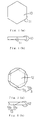
- each of the metal hydroxide solid solution and the metal oxide solid solution according to the present invention is an octahedron comprising upper and lower parallel basal planes and six peripheral pyramidal planes, the pyramidal planes consisting of upward-inclined planes and downward-inclined planes which are alternatively located.
- conventional magnesium hydroxide and magnesium hydroxide solid solution have crystal habits of hexagonal system, and, as shown in Figs. 1 (a) and (b), they have a hexagonal-prism form whose periphery is surrounded by upper and lower planes 10 shown as a (00 ⁇ 1) plane according to Miller and Bravais indices and six prismatic planes 11 belonging to a plane of a form of ⁇ 10 ⁇ 0 ⁇ . They also have a thin and hexagonal-prism form since crystal growth in the direction of [001] (C-axis) is lower.
- each of their peripheries is surrounded by upper and lower planes 12 shown as a (00 ⁇ 1) plane and six pyramidal planes 13 belonging to a plane of a form of ⁇ 10-1 ⁇ , due to crystal habit control in crystal growth.
- the pyramidal planes 13 consist of upward-inclined planes 13a of a (10 ⁇ 1) plane and the like and downward-inclined planes 13b of a (10 ⁇ -1) plane and the like which are alternatively located, thereby providing an octahedron having an unique crystal habit.
- the metal hydroxide solid solution and the metal oxide solid solution according to the present invention include crystals having a regular octahedron form. Namely, it is preferable that the ratio of the major axis diameter of the basal plane to the thickness between the upper and lower basal planes (major axis diameter/thickness) is 1 to 9. A more preferable upper limit for the ratio of the major axis diameter to the thickness is 7. Regarding Miller and Bravais indices, "1 bar" is shown as "-1".
- the six planes surrounding each periphery of the metal hydroxide solid solution and the metal oxide solid solution of the present invention are the pyramidal planes belonging to ⁇ 10 ⁇ 1 ⁇ , as described above, is known from the following. Namely, when observed with a scanning electron microscope from the direction of C-axis, crystals of the metal hydroxide solid solution and the metal oxide solid solution of the present invention show a three-fold rotation symmetry in which the rotation axis is C-axis. Moreover, the values in terms of angles between the (10 ⁇ 1) planes and the ⁇ 10 ⁇ 1 ⁇ planes calculated by using the measured values of lattice constant according to a powder X-ray diffraction are almost the same as the measured values in terms of the angles according to the observations with the scanning electron microscope.
- a ratio of a half width B 110 of a peak for a (110) plane according to the powder X-ray diffraction and a half width B 001 of a peak for a (001) plane (B 110 /B 001 ) is not less than 1.4. It is confirmed, from the above, that the crystallinity in the direction of C-axis is good and the thickness has grown. That is, in crystals of the conventional magnesium hydroxide and the like, the crystals have not grown in the direction of C-axis and the peaks for the (001) planes are broad so that the half widths B 001 become wider, thereby making (B 110 /B 001 ) values small.
- the metal hydroxide solid solution and the metal oxide solid solution of the present invention have the crystal forms having completely different crystal habits from those of the conventional ones, and the crystal growth in the direction of C-axis is conspicuous.
- the solid solutions of the present invention have novel crystal shapes which have not conventionally been seen.
- Average particle diameters of the metal hydroxide solid solution and the metal oxide solid solution of the present invention are preferably in the range from 0.1 to 10 ⁇ m.
- a more preferable lower limit of the average particle diameter is 0.5 ⁇ m, and 1 ⁇ m is most preferable.
- a more preferable upper limit of the average particle diameter is 5 ⁇ m, and 3 ⁇ m is most preferable.
- the metal hydroxide solid solution according to the present invention may be produced, for example, in the following manner. First, a water soluble M 2+ compound is added to an aqueous solution of magnesium hydroxide so as to prepare partially-solid-soluted hydroxide as raw material. The thus obtained raw material then is burned at a temperature ranging from 800 to 1500°C, preferably from 1000 to 1300°C so as to prepare a composite metal oxide.
- the resultant composite metal oxide may be represented by the following formula (3), and has a BET specific surface area of not more than 10 m 2 /g, preferably not more than 5 m 2 /g.
- the metal hydroxide solid solution of the present invention may be obtained by hydrating the composite metal oxide in a system of an aqueous medium, in which about 0.1 to 6 mol%, based on the composite metal oxide, of at least one of carboxylic acid, metal salt of carboxylic acid, inorganic acid and metal salt of inorganic acid coexists, with strong stirring at a temperature of not less than 40°C.
- M 2+ denotes at least one divalent metal ion selected from Mn 2+ , Fe 2+ , Co 2+ , Ni 2+ , Cu 2+ and Zn 2+ . Especially, Zn 2+ is preferable among them.
- the raw material is not limited to the partially-solid-soluted hydroxide obtained in the above-described method. Any raw materials, with which composite metal oxide can be obtained by burning, are included.
- a composite metal hydroxide obtained by a coprecipitation method a mixture of one kind selected from magnesium hydroxide, magnesium oxide and magnesium carbonate and one kind selected from M 2+ hydroxide, M 2+ oxide and M 2 + salts, and the like.
- a strong stirring is preferable, and a strong high shear stirring is more preferable. It is preferable to perform such stirring with, for example, a rotating blade-type stirrer at a rotating tip speed for moving blades of not less than 5 m/s. It is more preferable to rotate at not less than 7 m/s. Besides, it is preferable to use a turbine blade shape, a DS impeller blade shape or the like, which is strong in shearing, as a shape for the stirring blade.
- carboxylic acids there are no specific restrictions as to the types of the carboxylic acids which can be used.
- they may include monocarboxylic acids, oxycarboxylic acids (oxyacids) and the like.
- the monocarboxylic acids may include, for example, formic acid, acetic acid, propionic acid, butyric acid, valeric acid, caproic acid, acrylic acid, crotonic acid and the like.
- the oxymonocarboxylic acids (oxyacids) may include, for example, glycolic acid, lactic acid, hydroacrylic acid, ⁇ -oxybutyric acid, glyceric acid, salicylic acid, benzoic acid, gallic acid and the like.
- the metal salts of the carboxylic acids there are no specific restriction to the types of the metal salts. Preferably, they may be magnesium acetate, zinc acetate and the like.
- the inorganic acids there are no specific restriction as to the type of the inorganic acids which can be used.
- they may be nitric acids, hydrochloric acids and the like.
- the metal salts of the inorganic acids there are no specific restriction as to the types of the metal salts.
- they may be magnesium nitrate, zinc nitrate and the like.
- the metal oxide solid solution of the present invention may be produced by burning the metal hydroxide solid solution obtained in the above manner at about not less than 400°C, preferably at 500 to 1200°C.
- the metal hydroxide solid solution and the metal oxide solid solution of the present invention may exhibit functions such as affinity for resins, acid resistance, water repellency, ultraviolet ray absorbency and the like by being subjected to a variety of surface treatments.
- the metal hydroxide solid solution and the metal oxide solid solution of the present invention have good dispersibility in resins as described above and, even if the functions are imparted by surface treatments, they may exhibit those functions sufficiently.
- the surface treatment agents for improving the affinity of the solid solutions for resins may, for example, include a higher fatty acid and its alkali metal salt, phosphoric ester, silane coupling agents, fatty acid esters of polyhydric alcohol, and the like.
- a silica coating in which methyl silicate and/or ethyl silicate are hydrolyzed silicic acid metallic salt coating in which burning at about 500 to 1000°C is conducted after silica coating, coatings with silicone oil, polyfluoroalkyl phosphate and the like are conducted.
- titanyl sulfate is hydrolyzed and titanium dioxide coating is conducted.
- the resultant burned material was added to a 20-liter vessel containing 10 liters of acetic acid (0.01 mol/liter) in such a manner that the oxide concentration was 100 g/liter.
- the resultant material was stirred with a high-speed stirrer (Homomixer, manufactured by Tokusyu Kika Kogyo Co., Ltd.) at a rotating speed for turbine blades of 10 m/s, and subjected to hydration treatment for 4 hours at 90°C.
- the reactant was passed through a 500-mesh sieve, and subsequently was filtered, washed with water and dried so as to produce a metal hydroxide solid solution of the present invention.
- the resultant metal hydroxide solid solution crystal was octahedral in shape having pyramidal planes on their periphery.
- the major axis diameter of the basal plane was about 1.2 ⁇ m and the thickness between the basal planes was about 0.36 ⁇ m. Therefore, the ratio of the major axis diameter to the thickness (major axis diameter/thickness) was 3.3.
- the scanning electron microphotograph of the above metal hydroxide solid solution is shown in Fig. 4.
- the diffraction pattern thereof was the same as that of magnesium hydroxide except that the diffraction pattern slightly shifted to a lower angle side. Consequently, it is found that the solid solution had a cadmium hydroxide type habit of a hexagonal system.
- the resultant material was stirred with an edge turbine blade-type stirrer at a rotating speed for edge turbine blades of 12 m/s, and subjected to hydration treatment for 6 hours at 90°C.
- the reactant was passed through the 500-mesh sieve, and subsequently was filtered, washed with water and dried so as to produce a metal hydroxide solid solution of the present invention.
- the resultant metal hydroxide solid solution crystal was an octahedron in shape having pyramidal planes on its periphery.
- the major axis diameter of a basal plane was about 2.4 ⁇ m and the thickness between the basal planes was about 0.37 ⁇ m. Therefore, the ratio of the major axis diameter to the thickness (major axis diameter/thickness) was 6.5.
- the scanning electron microphotograph of the above metal hydroxide solid solution is shown in Fig. 5.
- the diffraction pattern thereof was the same as that of magnesium hydroxide except that the diffraction pattern slightly shifted to a lower angle side. Consequently, it is found that the solid solution had a cadmium hydroxide type habit of hexagonal system.
- the resultant burned material was added to a 20-liter vessel containing 10 liters of n-butyric acid (0.08 mol/liter) in such a manner that the oxide concentration was 100 g/liter.
- the resultant material was stirred with a high-speed stirrer (Homomixer, manufactured by Tokusyu Kika Kogyo Co., Ltd.) at a rotating speed for turbine blades of 10 m/s, and subjected to hydration treatment for 4 hours at 90°C.
- the reactant was passed through a 500-mesh sieve, and subsequently was filtered, washed with water and dried so as to produce a metal hydroxide solid solution of the present invention.
- the resultant metal hydroxide solid solution crystal was an approximate regular octahedron in shape, with the major axis diameter of the basal plane about 2.5 ⁇ m and the thickness between the basal planes about 2.2 ⁇ m. Therefore, the ratio of the major axis diameter to the thickness (major axis diameter/thickness) was 1.1.
- the scanning electron microphotograph of the above metal hydroxide solid solution is shown in Fig. 6.
- the diffraction pattern thereof was the same as that of magnesium hydroxide except that the diffraction pattern slightly shifted to a lower angle side. Consequently, it is found that the solid solution had a cadmium hydroxide type habit of hexagonal system.
- Example 1 The metal hydroxide solid solution obtained in Example 1 was burned in an electric furnace for 2 hours at 900°C so as to produce a metal oxide solid solution of the present invention.
- the resultant metal oxide solid solution crystal was an octahedron in shape having pyramidal planes on its periphery.
- the major axis diameter of a basal plane was about 1.2 ⁇ m and the thickness between the basal planes was about 0.36 ⁇ m. Therefore, the ratio of the major axis diameter to the thickness (major axis diameter/thickness) was 3.3.
- the scanning electron microphotograph of the above metal oxide solid solution is shown in Fig. 7.
- the diffraction pattern thereof was the same as that of magnesium oxide except that the diffraction pattern slightly shifted to a lower angle side. Consequently, it is found that the solid solution had a cadmium hydroxide type habit of hexagonal system.
- the resultant metal hydroxide solid solution crystal was an octahedron in shape having pyramidal planes on its periphery.
- the major axis diameter of a basal plane was about 1.1 ⁇ m and the thickness between the basal planes was about 0.51 ⁇ m. Therefore, the ratio of the major axis diameter to the thickness (major axis diameter/thickness) was 2.2.
- the scanning electron microphotograph of the above metal oxide solid solution is shown in Fig. 8.
- the diffraction pattern thereof was the same as that of magnesium hydroxide except that the diffraction pattern slightly shifted to a lower angle side. Consequently, it is found that the solid solution had a cadmium hydroxide type habit of hexagonal system.
- the resultant metal hydroxide solid solution crystal was an octahedron in shape having pyramidal planes on its periphery.
- the major axis diameter of a basal plane was about 1.0 ⁇ m and the thickness between the basal planes was about 0.69 ⁇ m. Therefore, the ratio of the major axis diameter to the thickness (major axis diameter/thickness) was 1.4.
- the scanning electron microphotograph of the above metal oxide solid solution is shown in Fig. 9.
- the diffraction pattern thereof was the same as that of magnesium hydroxide except that the diffraction pattern slightly shifted to a lower angle side. Consequently, it is found that the solid solution had a cadmium hydroxide type habit of hexagonal system.
- the resultant metal hydroxide solid solution crystal was an octahedron in shape having pyramidal planes on its periphery.
- the major axis diameter of a basal plane was about 1.1 ⁇ m and the thickness between the basal planes was about 0.31 ⁇ m. Therefore, the ratio of the major axis diameter to the thickness (major axis diameter/thickness) was 3.5.
- the scanning electron microphotograph of the above metal oxide solid solution is shown in Fig. 10.
- the diffraction pattern thereof was the same as that of magnesium hydroxide except that the diffraction pattern slightly shifted to a lower angle side. Consequently, it is found that the solid solution had a cadmium hydroxide type habit of hexagonal system.
- the resultant metal hydroxide solid solution crystal was an octahedron in shape having pyramidal planes on its periphery.
- the major axis diameter of a basal plane was about 1.0 ⁇ m and the thickness between the basal planes was about 0.52 ⁇ m. Therefore, the ratio of the major axis diameter to the thickness (major axis diameter/thickness) was 1.9.
- the scanning electron microphotograph of the above metal oxide solid solution is shown in Fig. 11.
- the diffraction pattern thereof was the same as that of magnesium hydroxide except that the diffraction pattern slightly shifted to a lower angle side. Consequently, it is found that the solid solution had a cadmium hydroxide type habit of hexagonal system.
- the resultant metal hydroxide solid solution crystal was an octahedron in shape having pyramidal planes on its periphery.
- the major axis diameter of a basal plane was about 1.2 ⁇ m and the thickness between the basal planes was about 0.59 ⁇ m. Therefore, the ratio of the major axis diameter to the thickness (major axis diameter/thickness) was 2.0.
- the scanning electron microphotograph of the above metal oxide solid solution is shown in Fig. 12.
- the diffraction pattern thereof was the same as that of magnesium hydroxide except that the diffraction pattern slightly shifted to a lower angle side. Consequently, it is found that the solid solution had a cadmium hydroxide type habit of hexagonal system.
- the resultant burned material was added to a 20-liter vessel containing 10 liters of acetic acid (0.15 mol/liter) in such a manner that the oxide concentration was 100 g/liter.
- the resultant material was stirred with a propeller blade type stirrer at a rotating speed for propeller blades of 4 m/s, and subjected to hydration treatment for 4 hours at 90°C.
- the reactant was passed through a 500-mesh sieve, and subsequently was filtered, washed with water and dried so as to produce a dried material.
- the resultant dried material had a thin and hexagonal-prism crystal form.
- the major axis diameter of a basal plane was about 5.5 ⁇ m and the thickness between the basal planes was about 0.40 ⁇ m. Therefore, the ratio of the major axis diameter to the thickness (major axis diameter/thickness) was 13.8.
- the scanning electron microphotograph of the above metal hydroxide solid solution is shown in Fig. 8.
- the diffraction pattern thereof was the same as that of magnesium hydroxide except that the diffraction pattern slightly shifted to a lower angle side.
- the thus obtained dried material had a thin and hexagonal-prism crystal form.
- the major axis diameter of a basal plane was about 0.66 ⁇ m and the thickness between the basal planes was about 0.18 ⁇ m. Therefore, the ratio of the major axis diameter to the thickness (major axis diameter/thickness) was 3.7.
- the scanning electron microphotograph of the above metal hydroxide solid solution is shown in Fig. 9.
- the diffraction pattern thereof was the same as that of magnesium hydroxide except that the diffraction pattern slightly shifted to a lower angle side.
- the crystal form has a completely different crystal habit from the thin and hexagonal-prism crystal of the conventional metal hydroxide solid solution, and, in addition, crystal growth in the direction of the thickness is excellent.
- the metal hydroxide solid solution of the present invention when the metal hydroxide solid solution of the present invention is kneaded into a synthetic resin as an additive, fluidity and processability of the resin are improved and the molding speed is improved, by which productivity becomes excellent while the filling property is also improved.
- the major axis diameter of the basal plane is 0.1 to 10 ⁇ m in average
- fluidity and processability are further improved so that the productivity in resin molding and the like becomes excellent.
- M 2+ in the above formulae (1) and (2) is Zn 2+
- the degree of whiteness is improved and also the ultraviolet ray absorbency becomes excellent by solid-soluting Zn 2+ in Mg(OH) 2 and MgO, respectively.
Landscapes
- Chemical & Material Sciences (AREA)
- Organic Chemistry (AREA)
- Inorganic Chemistry (AREA)
- Life Sciences & Earth Sciences (AREA)
- Geology (AREA)
- Physics & Mathematics (AREA)
- Thermal Sciences (AREA)
- Inorganic Compounds Of Heavy Metals (AREA)
- Compounds Of Alkaline-Earth Elements, Aluminum Or Rare-Earth Metals (AREA)
- Oxygen, Ozone, And Oxides In General (AREA)
Applications Claiming Priority (3)
| Application Number | Priority Date | Filing Date | Title |
|---|---|---|---|
| JP114305/97 | 1997-04-15 | ||
| JP11430597 | 1997-04-15 | ||
| JP11430597 | 1997-04-15 |
Publications (3)
| Publication Number | Publication Date |
|---|---|
| EP0872448A2 true EP0872448A2 (fr) | 1998-10-21 |
| EP0872448A3 EP0872448A3 (fr) | 1998-11-25 |
| EP0872448B1 EP0872448B1 (fr) | 2000-09-06 |
Family
ID=14634555
Family Applications (1)
| Application Number | Title | Priority Date | Filing Date |
|---|---|---|---|
| EP98302872A Expired - Lifetime EP0872448B1 (fr) | 1997-04-15 | 1998-04-14 | Solution solide d'hydroxide de métaux, solution solide d'oxide de métaux et procédés pour leur production |
Country Status (10)
| Country | Link |
|---|---|
| US (1) | US6254847B1 (fr) |
| EP (1) | EP0872448B1 (fr) |
| KR (1) | KR100353095B1 (fr) |
| CN (1) | CN1129630C (fr) |
| DE (1) | DE69800285T2 (fr) |
| ES (1) | ES2149630T3 (fr) |
| IL (1) | IL124061A (fr) |
| MY (1) | MY126581A (fr) |
| RU (1) | RU2196105C2 (fr) |
| TW (1) | TW400306B (fr) |
Cited By (2)
| Publication number | Priority date | Publication date | Assignee | Title |
|---|---|---|---|---|
| EP1661876B1 (fr) * | 2004-11-05 | 2013-01-09 | Kabushiki Kaisha Kaisui Kagaku Kenkyujo | Méthode d'amélioration des sols |
| CN114702059A (zh) * | 2021-12-30 | 2022-07-05 | 南京大学 | 一种具有复合结构的二元氢氧化物纳米管及其制备方法 |
Families Citing this family (8)
| Publication number | Priority date | Publication date | Assignee | Title |
|---|---|---|---|---|
| ATE358101T1 (de) * | 1998-12-14 | 2007-04-15 | Kyowa Chem Ind Co Ltd | Magnesiumhydroxid teilchen, verfahren zur herstellung derselben und harz diese enthaltend |
| MY135745A (en) * | 2000-08-30 | 2008-06-30 | Nitto Denko Corp | Microporous soundproofing material |
| FR2888243B1 (fr) * | 2005-07-06 | 2007-09-14 | Michelin Soc Tech | Composition de caoutchouc pour pneumatique renforcee de plaquettes d'hydroxyde de magnesium. |
| JP5181219B2 (ja) * | 2005-07-13 | 2013-04-10 | 日立化成株式会社 | 封止用エポキシ樹脂組成物及び電子部品装置 |
| US8349409B2 (en) * | 2006-01-31 | 2013-01-08 | Brother Kogyo Kabushiki Kaisha | Pattern forming method, method for forming composite-metal oxide film and method for coating two-liquid reaction curing type adhesive |
| MX340604B (es) * | 2010-10-12 | 2016-07-18 | Sea Water Chemical Inst Inc * | Hidroxido de magnesio con alta relacion de aspecto. |
| JP5992846B2 (ja) * | 2013-02-13 | 2016-09-14 | タテホ化学工業株式会社 | 高い比表面積を有する棒状の水酸化マグネシウム粒子、及び棒状の酸化マグネシウム粒子、並びにそれらの製造方法 |
| TWI636613B (zh) * | 2013-07-18 | 2018-09-21 | 日商東曹股份有限公司 | 鎳-錳系複合氧氫氧化物及其製造方法、以及其用途 |
Family Cites Families (9)
| Publication number | Priority date | Publication date | Assignee | Title |
|---|---|---|---|---|
| US3508869A (en) * | 1966-11-04 | 1970-04-28 | Dow Chemical Co | Novel crystalline mg(oh)2 and mgo and methods of preparation |
| US3841925A (en) * | 1973-09-12 | 1974-10-15 | Morton Norwich Products Inc | Magnesium oxide steel coating composition and process |
| US5401442A (en) | 1991-02-06 | 1995-03-28 | Kabushiki Kaisha Kaisui Kagau Kenkyujo | Composite metal hydroxide and its use |
| JPH085990B2 (ja) * | 1991-02-06 | 1996-01-24 | 株式会社海水化学研究所 | 難燃剤、および難燃性樹脂および/またはゴム組成物 |
| JP3157545B2 (ja) * | 1991-06-06 | 2001-04-16 | 株式会社海水化学研究所 | 繊維状複合金属水酸化物およびその製造法 |
| US5344636A (en) * | 1991-11-27 | 1994-09-06 | Kabushiki Kaisha Kaisui Kagaku Kenkyujo | Anti-microorganism agent and anti-microorganism resin or rubber composition |
| JP3733599B2 (ja) * | 1993-08-11 | 2006-01-11 | 住友化学株式会社 | 金属酸化物粉末およびその製造方法 |
| JP2966755B2 (ja) | 1995-03-17 | 1999-10-25 | タテホ化学工業株式会社 | 高アスペクト比金属水酸化物または金属酸化物固溶体およびそれらの製造方法 |
| MY115740A (en) | 1995-08-03 | 2003-08-30 | Tateho Kagaku Kogyo Kk | A method of producing composite metal hydroxide, composite metal hydroxide obtained thereby and a flame retardant high-molecular composition obtained thereby and therewith |
-
1998
- 1998-04-10 IL IL12406198A patent/IL124061A/xx unknown
- 1998-04-13 MY MYPI98001627A patent/MY126581A/en unknown
- 1998-04-14 DE DE69800285T patent/DE69800285T2/de not_active Expired - Fee Related
- 1998-04-14 EP EP98302872A patent/EP0872448B1/fr not_active Expired - Lifetime
- 1998-04-14 TW TW087105595A patent/TW400306B/zh not_active IP Right Cessation
- 1998-04-14 ES ES98302872T patent/ES2149630T3/es not_active Expired - Lifetime
- 1998-04-14 RU RU98106939/12A patent/RU2196105C2/ru not_active IP Right Cessation
- 1998-04-15 KR KR1019980013381A patent/KR100353095B1/ko not_active Expired - Lifetime
- 1998-04-15 CN CN98106623A patent/CN1129630C/zh not_active Expired - Lifetime
- 1998-04-15 US US09/060,213 patent/US6254847B1/en not_active Expired - Lifetime
Cited By (2)
| Publication number | Priority date | Publication date | Assignee | Title |
|---|---|---|---|---|
| EP1661876B1 (fr) * | 2004-11-05 | 2013-01-09 | Kabushiki Kaisha Kaisui Kagaku Kenkyujo | Méthode d'amélioration des sols |
| CN114702059A (zh) * | 2021-12-30 | 2022-07-05 | 南京大学 | 一种具有复合结构的二元氢氧化物纳米管及其制备方法 |
Also Published As
| Publication number | Publication date |
|---|---|
| IL124061A (en) | 2001-01-11 |
| CN1196362A (zh) | 1998-10-21 |
| US6254847B1 (en) | 2001-07-03 |
| DE69800285D1 (de) | 2000-10-12 |
| DE69800285T2 (de) | 2001-01-04 |
| KR19980081407A (ko) | 1998-11-25 |
| TW400306B (en) | 2000-08-01 |
| CN1129630C (zh) | 2003-12-03 |
| RU2196105C2 (ru) | 2003-01-10 |
| KR100353095B1 (ko) | 2002-11-18 |
| EP0872448A3 (fr) | 1998-11-25 |
| EP0872448B1 (fr) | 2000-09-06 |
| ES2149630T3 (es) | 2000-11-01 |
| MY126581A (en) | 2006-10-31 |
Similar Documents
| Publication | Publication Date | Title |
|---|---|---|
| EP0872448B1 (fr) | Solution solide d'hydroxide de métaux, solution solide d'oxide de métaux et procédés pour leur production | |
| EP0459399B1 (fr) | Carbonate de calcium monodispersé de type vaterite, méthode pour fabrication et méthode pour contrôler la croissance des particules et la forme | |
| KR100200082B1 (ko) | 합성금속 수산화물 및 이를 함유하는 물 | |
| EP2423166B1 (fr) | Particules d'oxyde de zinc columnaires et leur procédé de fabrication | |
| EP1462475B1 (fr) | Particules d'hydrotalcite à base de Mg-Zn-Al et composition de résine les contenant | |
| WO2010002059A1 (fr) | Procédé de préparation de plaquettes d'hématite, plaquette d'hématite préparée en l'employant, et pigment de plaquette d'hématite comprenant la plaquette d'hématite | |
| CN101555387A (zh) | 一种核壳结构的稀土抛光材料及其制备方法 | |
| US5102650A (en) | Method of preparing needle-like conductive zinc oxide | |
| CN101920977A (zh) | 一种片状纳米氧化镁的制备方法 | |
| EP0654447B1 (fr) | Particules d'oxyde électroconducteurs et procédé pour leur fabrication | |
| JP2966755B2 (ja) | 高アスペクト比金属水酸化物または金属酸化物固溶体およびそれらの製造方法 | |
| JP3314388B2 (ja) | 水酸化インジウム、酸化インジウム及びito焼結体の製造方法 | |
| JP3432134B2 (ja) | 金属水酸化物固溶体および金属酸化物固溶体ならびにこれらの製法 | |
| KR20010086374A (ko) | 복합 다염기성염, 그의 제조방법 및 용도 | |
| CN116947095B (zh) | 一种高太阳光反射率氯氧化铋微球及其制备方法和应用 | |
| RU98106939A (ru) | Твердый раствор гидроксида металла, твердый раствор оксида металла и способы их получения | |
| JPH04362012A (ja) | 高分散性水酸化マグネシウムの製造方法 | |
| JP2767484B2 (ja) | 微粒子状金属酸化物の製造方法 | |
| US11591520B2 (en) | Alumina hydrate particles, flame retardant, resin composition and electric wire/cable | |
| HK1016628A (en) | Solid solutions of metal hydroxide and oxide, and preparation thereof | |
| KR20090003140A (ko) | 지르코니아 졸의 제조방법 | |
| KR920002340B1 (ko) | 폴리에스테르 필름용 중합물의 제조방법 | |
| CN1273385C (zh) | 碳酸钡纳米晶的制备方法 | |
| JPH03197315A (ja) | 水酸化マグネシウム結晶の成長方法 | |
| JPH03197314A (ja) | 水酸化マグネシウム結晶の成長方法 |
Legal Events
| Date | Code | Title | Description |
|---|---|---|---|
| PUAI | Public reference made under article 153(3) epc to a published international application that has entered the european phase |
Free format text: ORIGINAL CODE: 0009012 |
|
| PUAL | Search report despatched |
Free format text: ORIGINAL CODE: 0009013 |
|
| AK | Designated contracting states |
Kind code of ref document: A2 Designated state(s): BE DE ES FR GB IT |
|
| AX | Request for extension of the european patent |
Free format text: AL;LT;LV;MK;RO;SI |
|
| AK | Designated contracting states |
Kind code of ref document: A3 Designated state(s): AT BE CH CY DE DK ES FI FR GB GR IE IT LI LU MC NL PT SE |
|
| AX | Request for extension of the european patent |
Free format text: AL;LT;LV;MK;RO;SI |
|
| 17P | Request for examination filed |
Effective date: 19990312 |
|
| 17Q | First examination report despatched |
Effective date: 19990428 |
|
| AKX | Designation fees paid |
Free format text: BE DE ES FR GB IT |
|
| GRAG | Despatch of communication of intention to grant |
Free format text: ORIGINAL CODE: EPIDOS AGRA |
|
| GRAG | Despatch of communication of intention to grant |
Free format text: ORIGINAL CODE: EPIDOS AGRA |
|
| GRAG | Despatch of communication of intention to grant |
Free format text: ORIGINAL CODE: EPIDOS AGRA |
|
| GRAH | Despatch of communication of intention to grant a patent |
Free format text: ORIGINAL CODE: EPIDOS IGRA |
|
| GRAH | Despatch of communication of intention to grant a patent |
Free format text: ORIGINAL CODE: EPIDOS IGRA |
|
| GRAA | (expected) grant |
Free format text: ORIGINAL CODE: 0009210 |
|
| AK | Designated contracting states |
Kind code of ref document: B1 Designated state(s): BE DE ES FR GB IT |
|
| ET | Fr: translation filed | ||
| REF | Corresponds to: |
Ref document number: 69800285 Country of ref document: DE Date of ref document: 20001012 |
|
| REG | Reference to a national code |
Ref country code: ES Ref legal event code: FG2A Ref document number: 2149630 Country of ref document: ES Kind code of ref document: T3 |
|
| ITF | It: translation for a ep patent filed | ||
| PLBE | No opposition filed within time limit |
Free format text: ORIGINAL CODE: 0009261 |
|
| STAA | Information on the status of an ep patent application or granted ep patent |
Free format text: STATUS: NO OPPOSITION FILED WITHIN TIME LIMIT |
|
| 26N | No opposition filed | ||
| REG | Reference to a national code |
Ref country code: GB Ref legal event code: IF02 |
|
| PGFP | Annual fee paid to national office [announced via postgrant information from national office to epo] |
Ref country code: FR Payment date: 20080312 Year of fee payment: 11 Ref country code: ES Payment date: 20080520 Year of fee payment: 11 Ref country code: DE Payment date: 20080417 Year of fee payment: 11 |
|
| PGFP | Annual fee paid to national office [announced via postgrant information from national office to epo] |
Ref country code: BE Payment date: 20080616 Year of fee payment: 11 Ref country code: IT Payment date: 20080428 Year of fee payment: 11 |
|
| PGFP | Annual fee paid to national office [announced via postgrant information from national office to epo] |
Ref country code: GB Payment date: 20080416 Year of fee payment: 11 |
|
| BERE | Be: lapsed |
Owner name: *TATEHO CHEMICAL INDUSTRIES CO. LTD Effective date: 20090430 |
|
| GBPC | Gb: european patent ceased through non-payment of renewal fee |
Effective date: 20090414 |
|
| REG | Reference to a national code |
Ref country code: FR Ref legal event code: ST Effective date: 20091231 |
|
| PG25 | Lapsed in a contracting state [announced via postgrant information from national office to epo] |
Ref country code: DE Free format text: LAPSE BECAUSE OF NON-PAYMENT OF DUE FEES Effective date: 20091103 |
|
| PG25 | Lapsed in a contracting state [announced via postgrant information from national office to epo] |
Ref country code: GB Free format text: LAPSE BECAUSE OF NON-PAYMENT OF DUE FEES Effective date: 20090414 Ref country code: FR Free format text: LAPSE BECAUSE OF NON-PAYMENT OF DUE FEES Effective date: 20091222 |
|
| PG25 | Lapsed in a contracting state [announced via postgrant information from national office to epo] |
Ref country code: BE Free format text: LAPSE BECAUSE OF NON-PAYMENT OF DUE FEES Effective date: 20090430 |
|
| REG | Reference to a national code |
Ref country code: ES Ref legal event code: FD2A Effective date: 20090415 |
|
| PG25 | Lapsed in a contracting state [announced via postgrant information from national office to epo] |
Ref country code: ES Free format text: LAPSE BECAUSE OF NON-PAYMENT OF DUE FEES Effective date: 20090415 |
|
| PG25 | Lapsed in a contracting state [announced via postgrant information from national office to epo] |
Ref country code: IT Free format text: LAPSE BECAUSE OF NON-PAYMENT OF DUE FEES Effective date: 20090414 |