EP0889055A1 - Acide hyaluronique oligosulfate - Google Patents
Acide hyaluronique oligosulfate Download PDFInfo
- Publication number
- EP0889055A1 EP0889055A1 EP98900165A EP98900165A EP0889055A1 EP 0889055 A1 EP0889055 A1 EP 0889055A1 EP 98900165 A EP98900165 A EP 98900165A EP 98900165 A EP98900165 A EP 98900165A EP 0889055 A1 EP0889055 A1 EP 0889055A1
- Authority
- EP
- European Patent Office
- Prior art keywords
- sulfated
- molecular weight
- oligohyaluronate
- hyaluronic acid
- acid
- Prior art date
- Legal status (The legal status is an assumption and is not a legal conclusion. Google has not performed a legal analysis and makes no representation as to the accuracy of the status listed.)
- Ceased
Links
Images
Classifications
-
- C—CHEMISTRY; METALLURGY
- C08—ORGANIC MACROMOLECULAR COMPOUNDS; THEIR PREPARATION OR CHEMICAL WORKING-UP; COMPOSITIONS BASED THEREON
- C08B—POLYSACCHARIDES; DERIVATIVES THEREOF
- C08B37/00—Preparation of polysaccharides not provided for in groups C08B1/00 - C08B35/00; Derivatives thereof
- C08B37/006—Heteroglycans, i.e. polysaccharides having more than one sugar residue in the main chain in either alternating or less regular sequence; Gellans; Succinoglycans; Arabinogalactans; Tragacanth or gum tragacanth or traganth from Astragalus; Gum Karaya from Sterculia urens; Gum Ghatti from Anogeissus latifolia; Derivatives thereof
- C08B37/0063—Glycosaminoglycans or mucopolysaccharides, e.g. keratan sulfate; Derivatives thereof, e.g. fucoidan
- C08B37/0072—Hyaluronic acid, i.e. HA or hyaluronan; Derivatives thereof, e.g. crosslinked hyaluronic acid (hylan) or hyaluronates
-
- A—HUMAN NECESSITIES
- A61—MEDICAL OR VETERINARY SCIENCE; HYGIENE
- A61K—PREPARATIONS FOR MEDICAL, DENTAL OR TOILETRY PURPOSES
- A61K8/00—Cosmetics or similar toiletry preparations
- A61K8/18—Cosmetics or similar toiletry preparations characterised by the composition
- A61K8/72—Cosmetics or similar toiletry preparations characterised by the composition containing organic macromolecular compounds
- A61K8/73—Polysaccharides
- A61K8/735—Mucopolysaccharides, e.g. hyaluronic acid; Derivatives thereof
-
- A—HUMAN NECESSITIES
- A61—MEDICAL OR VETERINARY SCIENCE; HYGIENE
- A61P—SPECIFIC THERAPEUTIC ACTIVITY OF CHEMICAL COMPOUNDS OR MEDICINAL PREPARATIONS
- A61P29/00—Non-central analgesic, antipyretic or antiinflammatory agents, e.g. antirheumatic agents; Non-steroidal antiinflammatory drugs [NSAID]
-
- A—HUMAN NECESSITIES
- A61—MEDICAL OR VETERINARY SCIENCE; HYGIENE
- A61Q—SPECIFIC USE OF COSMETICS OR SIMILAR TOILETRY PREPARATIONS
- A61Q19/00—Preparations for care of the skin
-
- A—HUMAN NECESSITIES
- A61—MEDICAL OR VETERINARY SCIENCE; HYGIENE
- A61Q—SPECIFIC USE OF COSMETICS OR SIMILAR TOILETRY PREPARATIONS
- A61Q19/00—Preparations for care of the skin
- A61Q19/08—Anti-ageing preparations
Definitions
- This invention relates to sulfated oligohyaluronates.
- the sulfated oligohyaluronates of the present invention are particularly useful as active ingredients in the technical fields of cosmetics and dermatology.
- Hyaluronic acid is a straight-chain high-molecular polysaccharide composed of ⁇ -D-N-acetylglucosamine and ⁇ -D-glucuronic acid which are alternately joined by covalent bonds. Because of its rather easy availability among mucopolysaccharides and its unique physicochemical and physiological properties, hyaluronic acid itself and its various derivatives are being used for therapeutic and cosmetic purposes. Moreover, a variety of new uses thereof have been proposed.
- hyaluronic acid sulfate which is a derivative of hyaluronic acid exhibits a powerful anti-inflammatory effect on an inflammation mediated by selectin serving as an adhesion factor, and have proposed a new type of anti-inflammatory agent (Japanese Patent Application No. 40309/'96 and International Publication of PCT Application No. WO96/24362).
- hyaluronic acid itself and its derivatives utilize their properties resulting from macromolecules having a molecular weight of several hundreds of thousands or greater than one million.
- applications e.g., external preparations
- hyaluronic acid and its derivatives which consist of macromolecules as described above may not always be used advantageously.
- Chondroitins are composed of disaccharide repeating units comprising N-acetyl-D-galactosamine and D-glucuronic acid, and they are epimers of hyaluronic acid in which the hydroxyl group at the 4-position of ⁇ -D-N-acetylglucosamine constituting the repeating units has a different steric configuration.
- hyaluronic acid sulfate is readily available and, moreover, has very interesting physiological activities as described above. Thus, it would be desirable to provide such a compound having excellent permeability through the tissues of living organisms.
- an object of the present invention is to provide a hyaluronic acid derivative having improved permeability through the tissues of living organisms (in particular, the skin) while substantially retaining the physiological activities and physicochemical properties possessed by high-molecular weight hyaluronic acid sulfate.
- hyaluronic acid sulfate in the form of an oligomer having a viscosity-average molecular weight of not greater than about 10,000 has excellent skin permeability similarly to unsulfated hyaluronic acid, and it also exhibits moisture-retaining properties and certain physiological activities.
- a sulfated oligohyaluronate having a viscosity-average molecular weight of greater than 10,000 and up to about 50,000 may be suitably used in external preparations for application to the skin. Furthermore, such sulfated oligohyaluronates are not described in the existing technical literature.
- the present invention provides a sulfated oligohyaluronate composed of repeating units represented by the following formula (I) or a salt thereof.
- the average value of n in the above formula (I) corresponds not only to the peak value of an oligomer mixture showing substantial monodispersity, but also to the peak value of an oligomer mixture showing polydispersity. That is, the sulfated oligohyaluronates of the present invention include any oligomer mixture in which, when the distribution of the molecular weights of oligomers is estimated, for example, from the intrinsic viscosity, the peak value of the distribution falls within the range of 1,000 to 50,000.
- the sulfated oligohyaluronates of the present invention include any oligomer mixture in which, on the basis of all oligomers (and not the repeating units of each oligomer), 10 to 90% of the hydrogen atoms of all hydroxyl groups present in the hyaluronic acid oligomers are replaced by SO 3 H groups. Accordingly, the SO 3 H groups may be unevenly distributed in the oligomers. However, it is usually preferable from the viewpoint of preparation and use that the SO 3 H groups are evenly distributed through the molecule.
- oligohyaluronic acid sulfate molecule composed of repeating units represented by formula (I)
- a hydrogen atom, an SO 3 H group, or a sugar residue derived from either ⁇ -D-N-acetylglucosamine or ⁇ -D-glucuronic acid in formula (I) is covalently bonded to the indicated oxygen atom.
- sulfated oligohyaluronates having a hydrogen atom or an SO 3 H group covalently bonded to either end of the molecule are preferred.
- oligohyaluronic acids used as starting materials for the sulfated oligohyaluronates of the present material may conveniently be prepared by treating high-molecular weight hyaluronic acid with hyaluronidase.
- the aforesaid numeral n should preferably have a value corresponding to a viscosity-average molecular weight of 1,000 to 10,000 and more preferably 2,000 to 7,000, though the present invention is not limited thereto.
- the reason for this is that such a sulfated oligohyaluronate exhibits suitable skin permeability and, moreover, has a certain moisture-retaining effect.
- the sulfated oligohyaluronate should preferably have a value of n corresponding to a viscosity-average molecular weight of 5,000 or less.
- the number of repeating units (n) in formula (I) may vary with the degree of substitution of SO 3 H groups, i.e., the degree of sulfation. However, n typically has a value of about 6 to 10. For the purpose of application to the skin, a sulfated oligohyaluronate composed of such a number of repeating units and having a degree of sulfation of 20 to 50% is especially preferred.
- the sulfated oligohyaluronates of the present invention may also exist in the form of salts with an alkali metal or alkaline earth, preferably sodium, potassium or lithium, or salts with ammonia or an organic amine.
- the sulfated oligohyaluronates may be prepared from the corresponding oligohyaluronic acids according to a per se known sulfation process.
- the corresponding salts may be prepared by subjecting the resulting sulfated products to a salt forming process using a hydroxide or carbonate of an alkali metal, or ammonia or an organic amine.
- An oligohyaluronic acid may be prepared by subjecting high-molecular weight hyaluronic acid (for example, with a molecular weight of 2,000 kDa) obtained from any of various natural sources to a treatment under high shear stresses or a treatment with an enzyme (hyaluronidase) (see, for example, A. Sattor et al., J. Invest. Dermatol., Vol. 103: 576-579, 1994).
- the enzyme treatment is favorable in that an oligohyaluronic acid having a narrow molecular weight distribution can be obtained by properly choosing the enzyme activity used and the reaction time used.
- a substantially monodisperse oligohyaluronic acid can be obtained by resorting to a treatment such as gel filtration or fractional precipitation using an organic solvent such as acetone.
- the oligohyaluronic acid thus obtained may be converted into a sulfated oligohyaluronate in accordance with the present invention by treating it according to a per se known sulfation process.
- a sulfuric acid-trimethylamine complex as the sulfating agent.
- the proportion of the aforesaid sulfating agent to the oligohyaluronic acid may be arbitrarily chosen according to the desired degree of sulfation.
- the reaction may be carried out in an aprotic solvent (e.g., dimethylformamide) at a temperature of 50 to 60°C for a period of time ranging from several tens of hours to several days.
- an aprotic solvent e.g., dimethylformamide
- the sulfated oligohyaluronate so formed can be purified according to a process which is per se known in the purification of oligosaccharides and, if necessary, involves gel filtration or fractional precipitation using acetone.
- the salt-forming reaction may be carried out either before or after the above-described purification process.
- the sulfated oligohyaluronates obtained in the above-described manner exhibit certain moisture-retaining properties and skin permeability and, moreover, have the effect of inhibiting the local stratification of, for example, the epidermis. Furthermore, the characteristic feature which decisively distinguishes the sulfated oligohyaluronates from the sulfated products of chondroitins is that the sulfated oligohyaluronates can stay long in the skin at a high concentration through the medium of the hyaluronic acid receptors (CD 44 ) of cutaneous fibroblasts, and thereby exert their action. Accordingly, they can be used as active ingredients at least in the fields of cosmetics and dermatology.
- CD 44 hyaluronic acid receptors
- the sulfated oligohyaluronates of the present invention have excellent skin permeability and, moreover, can inhibit local stratification leading to the atrophy and keratinization of the epidermis. Furthermore, similarly to high-molecular weight hyaluronic acid sulfate, the sulfated oligohyaluronates of the present invention are essentially effective in preventing the infiltration of leukocytes into tissues and can hence be used for the prophylaxis or treatment of contact dermatitis and dark skin and for an atopic skin, a tender skin and the like.
- Example 1 Preparation of an oligohyaluronic acid from hyaluronic acid
- the resulting reaction mixture was enclosed again in a Spectra/Pore 6 and dialyzed against distilled water until the pH of the outer liquid became equal to that of distilled water.
- the inner liquid was transferred to a Spitz type centrifuge tube, sodium acetate was added so as to give a concentration of 1 wt.%, and 5 parts of acetone was added.
- the precipitated hyaluronic acid sulfate was recovered by centrifugation (purification according to the acetone precipitation method).
- the above-described procedure was further repeated twice, and the resulting product was dried in vacuo to give about 1.2 g of a white powder of sulfated oligohyaluronate in an about 50% yield.
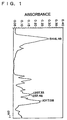
- the sulfur content of the sulfated oligohyaluronate thus obtained was determined according to the flask combustion-dimethylsulfonazo III titration method, and the degree of sulfation was calculated from the measured value. Thus, it was found that about 20% of all hydroxyl groups present in the oligohyaluronic acid used as the starting material had been sulfated (and this corresponded to a molecular weight of about 4, 100 Da). Moreover, using an FT-IR spectrophotometer (Magna IR-550; manufactured by NICOLET Co., Ltd.), the aforesaid white powder was analyzed according to the KBr method, and the infrared absorption spectrum thus obtained is shown in FIG. 1.
- Example 2 The procedure of Example 2 was repeated except that the ratio of the hyaluronic acid to the sulfuric acid trioxide-trimethylamine complex was changed from 1:2 to 1:5 and 1:10.
- oligohyaluronic acid sulfates having a degree of sulfation of 50% (corresponding to a molecular weight of about 5,000 Da; Example 3) and a degree of sulfation of 80-90% (corresponding to a molecular weight of about 6,000 Da; Example 4) were obtained in about 50% and about 60% yields, respectively.
- each of the sulfated oligohyaluronates obtained in the above Examples 2, 3 and 4 was dialyzed through a routinely used dialysis membrane (i.e., a cellulose tube having a cut-off molecular weight of 10,000 Da).
- the sulfated oligohyaluronate present in the outer liquid was determined according to the cetyl pyridinium chloride (CPC) precipitation method.
- Example 2 The product of Example 2 (having a degree of sulfation of 20%) was detected in the outer liquid after the lapse of a dialysis time of only 5 minutes. Since the concentration in the outer liquid came to equilibrium with the concentration in the inner liquid after the lapse of one night, this product is believed to be freely permeable through the dialysis membrane.
- Example 3 (having a degree of sulfation of 50%) was scarcely detected in the outer liquid after the lapse of a dialysis time of 5 minutes. After the lapse of one night, about 1/3 of the sulfated oligohyaluronate present in the inner liquid was detected in the outer liquid. This indicates that the dialysis rate of the product of Example 3 having a higher degree of sulfation is suppressed as compared with the product of Example 2.
- Example 4 (having a degree of sulfation of 80-90%) became slightly turbid after being dialyzed overnight, indicating that this product is hardly permeable through the aforesaid dialysis membrane.
- a keratinization-inhibiting effect is known as one of their effects on the epidermis. Since normal epidermal cells show an acceleration of keratinization dependent on calcium concentration, the degree of keratinization can be evaluated by using a change caused by a variation in calcium concentration as an index.
- the PAM212 cell may be employed as an index for local stratification dependent on calcium ion That is, in the following experiment, retinol was used as a positive control for significantly inhibiting local stratification induced at a high calcium concentration, and its effect was compared with the effect of a hyaluronic acid derivative.
- the PAM212 cell is a cell strain established from the keratinized cutaneous cells of a BALB/C mouse.
- PAM212 cells were prepared at a density of 4 x 10 4 cells per well and inoculated into 24 wells [Specifically, using a 2 ml pipet, one drop (50 ⁇ l) of a cell suspension containing 80 x 10 4 cells per ml was added to each well. Moreover, using a 10 ml pipet, 0.5 ml of a culture medium was added to each well. Then, the four sides of the 24 wells were tapped so as to distribute the cells uniformly.] The culture medium was EMEM/10% untreated serum.
- the cells were grown by standing culture for 2 days. After 80-90% confluency was reached, each test drug was added and its effect was compared with that of retinol.
- the drugs were previously prepared as 2(w/v)% aqueous solutions. Immediately before use, they were diluted tenfold with dimethyl sulfoxide (DMSO) to prepare 2 x 10 -1 %, 2 x 10 -2 % and 2 x 10 -3 % DMSO solutions (drug-in-DMSO solutions). 5 ⁇ l each of these drug-in-DMSO solutions were added per milliliter of the culture medium to give final drug concentrations of 10 -3 %, 10 -4 % and 10 -5 %. Similarly, DMSO and retinol (at a final concentration of 10 -7 M) were added.
- the culture medium used was EMEM/5% defatted serum.
- the number of local stratification spots produced 24 hours after the addition of each drug was counted, and compared with the results obtained with DMSO and retinol.
- the number of local stratification spots obtained with DMSO was taken as 100%, and the degree of inhibition (%) by retinol was determined.
- each drug was rated as markedly effective, effective, indeterminable or ineffective when the degree of inhibition by the drug was 80-100%, 60-80%, 40-60% or less than 40%, respectively.
- this oligohyaluronic acid showed 81.1 ⁇ 14.1% at a concentration of 10 -3 % while the control group showed 100.1 ⁇ 10.6%.
- This drug had no local stratification-inhibiting effect. (Retinol showed 9.5 ⁇ 2.1% at a concentration of 10 -7 %.)
- the sulfated oligohyaluronates of the present invention which have certain skin permeability and can inhibit local stratification are useful, for example, as active ingredients for cosmetics.
Landscapes
- Health & Medical Sciences (AREA)
- Life Sciences & Earth Sciences (AREA)
- Chemical & Material Sciences (AREA)
- General Health & Medical Sciences (AREA)
- Animal Behavior & Ethology (AREA)
- Public Health (AREA)
- Veterinary Medicine (AREA)
- Organic Chemistry (AREA)
- Medicinal Chemistry (AREA)
- Chemical Kinetics & Catalysis (AREA)
- Engineering & Computer Science (AREA)
- Materials Engineering (AREA)
- Polymers & Plastics (AREA)
- Biochemistry (AREA)
- Birds (AREA)
- Epidemiology (AREA)
- Molecular Biology (AREA)
- Pharmacology & Pharmacy (AREA)
- Nuclear Medicine, Radiotherapy & Molecular Imaging (AREA)
- Pain & Pain Management (AREA)
- Rheumatology (AREA)
- General Chemical & Material Sciences (AREA)
- Dermatology (AREA)
- Polysaccharides And Polysaccharide Derivatives (AREA)
- Cosmetics (AREA)
- Pharmaceuticals Containing Other Organic And Inorganic Compounds (AREA)
Applications Claiming Priority (3)
| Application Number | Priority Date | Filing Date | Title |
|---|---|---|---|
| JP9013223A JPH10195107A (ja) | 1997-01-10 | 1997-01-10 | オリゴ硫酸化ヒアルロン酸 |
| JP13223/97 | 1997-01-10 | ||
| PCT/JP1998/000018 WO1998030595A1 (fr) | 1997-01-10 | 1998-01-07 | Acide hyaluronique oligosulfate |
Publications (2)
| Publication Number | Publication Date |
|---|---|
| EP0889055A1 true EP0889055A1 (fr) | 1999-01-07 |
| EP0889055A4 EP0889055A4 (fr) | 2000-04-26 |
Family
ID=11827187
Family Applications (1)
| Application Number | Title | Priority Date | Filing Date |
|---|---|---|---|
| EP98900165A Ceased EP0889055A4 (fr) | 1997-01-10 | 1998-01-07 | Acide hyaluronique oligosulfate |
Country Status (4)
| Country | Link |
|---|---|
| EP (1) | EP0889055A4 (fr) |
| JP (1) | JPH10195107A (fr) |
| KR (1) | KR20000064523A (fr) |
| WO (1) | WO1998030595A1 (fr) |
Cited By (18)
| Publication number | Priority date | Publication date | Assignee | Title |
|---|---|---|---|---|
| WO2009013162A1 (fr) * | 2007-07-23 | 2009-01-29 | Istituto Scientifico Di Chimica E Biochimica 'g. Ronzoni' | Procédé de préparation d'hyaluronates sulfatés inhibiteurs de l'héparanase et produits obtenus de cette façon |
| ITPD20090135A1 (it) * | 2009-05-14 | 2010-11-15 | Fidia Farmaceutici | Nuovi agenti regolatori dell'attivita' citochinica |
| ITPD20090134A1 (it) * | 2009-05-14 | 2010-11-15 | Fidia Farmaceutici | Nuovi medicamenti ad uso topico a base di acido ialuronico solfatato come agente attivante o inibente l'attivita' citochinica |
| US20110281819A1 (en) * | 2009-02-02 | 2011-11-17 | Otsuka Pharmaceutical Co., Ltd. | Low-molecular polysulfated hyaluronic acid derivative and medicine containing same |
| US8329673B2 (en) | 2008-04-04 | 2012-12-11 | University Of Utah Research Foundation | Alkylated semi synthetic glycosaminoglycosan ethers, and methods for making and using thereof |
| US8367818B2 (en) | 2006-02-24 | 2013-02-05 | Q.P. Corporation | Low molecular weight hyaluronic acid and/or salt thereof, and cosmetic preparation, pharmaceutical composition, and food composition each using same |
| US8933054B2 (en) | 2005-03-22 | 2015-01-13 | Q.P. Corporation | Low molecular weight hyaluronic acid and/or salt thereof, method for producing same, and cosmetic preparation and food composition containing same |
| US9522162B2 (en) | 2011-03-23 | 2016-12-20 | University Of Utah Research Foundation | Methods for treating or preventing urological inflammation |
| US10179147B2 (en) | 2010-06-08 | 2019-01-15 | University Of Utah Research Foundation | Applications of partially and fully sulfated hyaluronan |
| US11274165B2 (en) | 2017-02-28 | 2022-03-15 | Oji Holdings Corporation | Pentosan polysulfate, pharmaceutical composition, and anticoagulant |
| US11278485B2 (en) | 2017-05-31 | 2022-03-22 | Oji Holdings Corporation | Moisturizing topical preparation |
| US11286272B2 (en) | 2016-08-31 | 2022-03-29 | Oji Holdings Corporation | Production method for acidic xylooligosaccharide, and acidic xylooligosaccharide |
| US11312790B2 (en) | 2016-08-31 | 2022-04-26 | Oji Holdings Corporation | Production method for pentosan polysulfate |
| US11337994B2 (en) | 2016-09-15 | 2022-05-24 | University Of Utah Research Foundation | In situ gelling compositions for the treatment or prevention of inflammation and tissue damage |
| US11344570B2 (en) | 2017-12-20 | 2022-05-31 | Oji Holdings Corporation | Pentosan polysulfate and medicine containing pentosan polysulfate |
| US11390693B2 (en) | 2017-09-12 | 2022-07-19 | Oji Holdings Corporation | Pentosan polysulfate and method for producing pentosan polysulfate |
| WO2024164213A1 (fr) * | 2023-02-09 | 2024-08-15 | 谢彦晖 | Traitement de la dermatite atopique avec de l'interleukine 2 modifiée par du polyéthylène glycol, un glucocorticoïde et de l'acide hyaluronique |
| US12109225B2 (en) | 2018-11-13 | 2024-10-08 | Glycomira Therapeutics, Inc. | Methods for potentiating cancer treatment using ionizing radiation |
Families Citing this family (4)
| Publication number | Priority date | Publication date | Assignee | Title |
|---|---|---|---|---|
| WO2000069917A1 (fr) * | 1999-05-18 | 2000-11-23 | Maruho Kabushikikaisha | Compositions medicinales destinees a inhiber le systeme kallikreine-kinine ou la phospholipase a¿2? |
| JP2006182933A (ja) * | 2004-12-28 | 2006-07-13 | Nippon Barrier Free:Kk | ムコ多糖類粉末の製造方法 |
| KR101132114B1 (ko) * | 2009-09-15 | 2012-04-05 | 일동제약주식회사 | 히알루론산의 분자량을 조절하는 방법 |
| CN116515012B (zh) * | 2023-06-29 | 2023-10-13 | 五赫兹新生(北京)医疗科技有限公司 | 透明质酸衍生物及其制备方法和应用 |
Family Cites Families (5)
| Publication number | Priority date | Publication date | Assignee | Title |
|---|---|---|---|---|
| US2599172A (en) * | 1948-11-29 | 1952-06-03 | Searle & Co | Sulfuric acid esters of hyaluronic acid and processes for the production thereof |
| JPS5629597A (en) * | 1979-08-21 | 1981-03-24 | Seikagaku Kogyo Co Ltd | Alkyl glycoside of constituent unit disaccharide of acid mucopolysaccharide and oligosaccharide consisting of said disaccharide, and preparation thereof |
| JPH01272511A (ja) * | 1988-04-21 | 1989-10-31 | Tokyo Sankei Kagaku:Kk | 化粧品用添加剤 |
| JP3047058B2 (ja) * | 1993-10-26 | 2000-05-29 | マルホ株式会社 | 硫酸化多糖含有油中水型乳化組成物 |
| FR2719846B1 (fr) * | 1994-05-13 | 1996-08-09 | Simer Laboratoires Science Mer | Oligosaccharides de galactanes sulfates et composition cosmétique ou pharmaceutique à usage topique externe contenant lesdits oligosaccharides de galactanes sulfates. |
-
1997
- 1997-01-10 JP JP9013223A patent/JPH10195107A/ja not_active Withdrawn
-
1998
- 1998-01-07 EP EP98900165A patent/EP0889055A4/fr not_active Ceased
- 1998-01-07 KR KR1019980706129A patent/KR20000064523A/ko not_active Withdrawn
- 1998-01-07 WO PCT/JP1998/000018 patent/WO1998030595A1/fr not_active Ceased
Cited By (30)
| Publication number | Priority date | Publication date | Assignee | Title |
|---|---|---|---|---|
| US8933054B2 (en) | 2005-03-22 | 2015-01-13 | Q.P. Corporation | Low molecular weight hyaluronic acid and/or salt thereof, method for producing same, and cosmetic preparation and food composition containing same |
| US8367818B2 (en) | 2006-02-24 | 2013-02-05 | Q.P. Corporation | Low molecular weight hyaluronic acid and/or salt thereof, and cosmetic preparation, pharmaceutical composition, and food composition each using same |
| EP2025687A1 (fr) * | 2007-07-23 | 2009-02-18 | Istituto Scientifico di Chimica E Biochimica "G Ronzoni | Processus de préparation d'hyaluronates sulfonés à inhibition d'héparanase et produit obtenu correspondant |
| WO2009013162A1 (fr) * | 2007-07-23 | 2009-01-29 | Istituto Scientifico Di Chimica E Biochimica 'g. Ronzoni' | Procédé de préparation d'hyaluronates sulfatés inhibiteurs de l'héparanase et produits obtenus de cette façon |
| US9549945B2 (en) | 2008-04-04 | 2017-01-24 | University Of Utah Research Foundation | Use of alkylated semi-synthetic glycosaminoglycosan ethers for the treatment of inflammation |
| US8329673B2 (en) | 2008-04-04 | 2012-12-11 | University Of Utah Research Foundation | Alkylated semi synthetic glycosaminoglycosan ethers, and methods for making and using thereof |
| US8993536B2 (en) * | 2009-02-02 | 2015-03-31 | Otsuka Chemical Co., Ltd. | Low-molecular polysulfated hyaluronic acid derivative and medicine containing same |
| US20110281819A1 (en) * | 2009-02-02 | 2011-11-17 | Otsuka Pharmaceutical Co., Ltd. | Low-molecular polysulfated hyaluronic acid derivative and medicine containing same |
| US9808482B2 (en) | 2009-05-14 | 2017-11-07 | Fidia Farmaceutici S.P.A. | Sulphated hyaluronic acids as regulator agents of the cytokine activity |
| US10548918B2 (en) | 2009-05-14 | 2020-02-04 | Fidia Farmaceutici S.P.A. | Sulphated hyaluronic acids as regulator agents of the cytokine activity |
| WO2010130468A1 (fr) * | 2009-05-14 | 2010-11-18 | Fidia Farmaceutici S.P.A. | Nouveaux médicaments à usage topique à base d'acide hyaluronique sulfaté comme agent d'activation ou d'inhibition de l'activité cytokinique |
| US9504708B2 (en) | 2009-05-14 | 2016-11-29 | Fidia Farmaceutici S.P.A. | Medicines for topic use based on sulfated hyaluronic acid as activating or inhibiting agent of the cytokine activity |
| US11198741B2 (en) | 2009-05-14 | 2021-12-14 | Fidia Farmaceutici S.P.A. | Medicines for topic use based on sulfated hyaluronic acid as activating or inhibiting agent of the cytokine activity |
| ITPD20090134A1 (it) * | 2009-05-14 | 2010-11-15 | Fidia Farmaceutici | Nuovi medicamenti ad uso topico a base di acido ialuronico solfatato come agente attivante o inibente l'attivita' citochinica |
| ITPD20090135A1 (it) * | 2009-05-14 | 2010-11-15 | Fidia Farmaceutici | Nuovi agenti regolatori dell'attivita' citochinica |
| EP3417855A1 (fr) * | 2009-05-14 | 2018-12-26 | Fidia Farmaceutici S.p.A. | Compositions pharmaceutiques pour usage topique à base d'acide hyaluronique sulfaté comme promoteur de l'absorption cutanee |
| WO2010130466A1 (fr) * | 2009-05-14 | 2010-11-18 | Fidia Farmaceutici S.P.A. | Acides hyaluroniques sulfatés comme agents de régulation de l'activité cytokinique |
| US10435483B2 (en) | 2009-05-14 | 2019-10-08 | Fidia Farmaceutici S.P.A. | Medicines for topic use based on sulfated hyaluronic acid as activating or inhibiting agent of the cytokine activity |
| US10179147B2 (en) | 2010-06-08 | 2019-01-15 | University Of Utah Research Foundation | Applications of partially and fully sulfated hyaluronan |
| US10226481B2 (en) | 2011-03-23 | 2019-03-12 | University Of Utah Research Foundation | Pharmaceutical compositions composed of low molecular weight sulfated hyaluronan |
| US9522162B2 (en) | 2011-03-23 | 2016-12-20 | University Of Utah Research Foundation | Methods for treating or preventing urological inflammation |
| US11286272B2 (en) | 2016-08-31 | 2022-03-29 | Oji Holdings Corporation | Production method for acidic xylooligosaccharide, and acidic xylooligosaccharide |
| US11312790B2 (en) | 2016-08-31 | 2022-04-26 | Oji Holdings Corporation | Production method for pentosan polysulfate |
| US11337994B2 (en) | 2016-09-15 | 2022-05-24 | University Of Utah Research Foundation | In situ gelling compositions for the treatment or prevention of inflammation and tissue damage |
| US11274165B2 (en) | 2017-02-28 | 2022-03-15 | Oji Holdings Corporation | Pentosan polysulfate, pharmaceutical composition, and anticoagulant |
| US11278485B2 (en) | 2017-05-31 | 2022-03-22 | Oji Holdings Corporation | Moisturizing topical preparation |
| US11390693B2 (en) | 2017-09-12 | 2022-07-19 | Oji Holdings Corporation | Pentosan polysulfate and method for producing pentosan polysulfate |
| US11344570B2 (en) | 2017-12-20 | 2022-05-31 | Oji Holdings Corporation | Pentosan polysulfate and medicine containing pentosan polysulfate |
| US12109225B2 (en) | 2018-11-13 | 2024-10-08 | Glycomira Therapeutics, Inc. | Methods for potentiating cancer treatment using ionizing radiation |
| WO2024164213A1 (fr) * | 2023-02-09 | 2024-08-15 | 谢彦晖 | Traitement de la dermatite atopique avec de l'interleukine 2 modifiée par du polyéthylène glycol, un glucocorticoïde et de l'acide hyaluronique |
Also Published As
| Publication number | Publication date |
|---|---|
| JPH10195107A (ja) | 1998-07-28 |
| KR20000064523A (ko) | 2000-11-06 |
| WO1998030595A1 (fr) | 1998-07-16 |
| EP0889055A4 (fr) | 2000-04-26 |
Similar Documents
| Publication | Publication Date | Title |
|---|---|---|
| EP0889055A1 (fr) | Acide hyaluronique oligosulfate | |
| US5008253A (en) | Sulfoamino derivatives of chondroitin sulfates of dermatan sulfate and of hyaluronic acid and their pharmacological properties | |
| US6387413B1 (en) | Hyaluronic acid gel, a method of its production and medical material containing it | |
| RU2099353C1 (ru) | N,о-сульфатированные гепарозаны, способ их получения и фармацевтическая композиция, обладающая антитромботической активностью | |
| Domard et al. | Chitosan: structure-properties relationship and biomedical applications | |
| FI94778B (fi) | Menetelmä hyaluronihappoestereistä tai niiden suoloista koostuvien kalvojen tai kuitujen valmistamiseksi sekä ei-terapeuttisesti käytettävät hyaluronihappoestereistä tai niiden suoloista valmistetut kuidut ja kalvot | |
| AU623232B2 (en) | Novel compositions containing hyaluronic acid associates and a process for preparing same | |
| EP1270599B1 (fr) | Sulfate de chondroitine isole a partir de saumon | |
| US5384398A (en) | High molecular mass N,O-sulphated heparosans, process for their preparation and the pharmaceutical compositions which contain them | |
| ITMI981367A1 (it) | Agenti e loro composizioni per il trattamento dei capelli | |
| KR101571385B1 (ko) | 산성 다당체의 부티르산-포름산 에스테르 혼합물, 및 그의 제조 및 피부 화장료로서의 용도 | |
| JPH069707A (ja) | 高アセチル化率ヒアルロン酸及びその製造方法 | |
| HU226949B1 (en) | A process for preparing a hyaluronic acid fraction having a low polydispersion index | |
| JPH0971602A (ja) | 低分子量アセチル化ヒアルロン酸及び皮膚柔軟化剤 | |
| US5246702A (en) | Process for the purification of commercial carrageenins | |
| JPH0442401B2 (fr) | ||
| JP4958368B2 (ja) | 架橋ヒアルロン酸 | |
| JP2009516765A (ja) | 新規ヒアルロン酸誘導体、その製造方法及びその使用 | |
| AU2008207952A1 (en) | Methyl esters of hyaluronic acid | |
| JPH10237105A (ja) | 多糖類、その製造方法及びこれを配合した化粧品 | |
| Ninomiya et al. | Bacterial polysaccharide from Bacillus polymyxa No. 271 | |
| JP3982937B2 (ja) | 化粧料 | |
| JP2611956B2 (ja) | 皮膚化粧料 | |
| JPS61501923A (ja) | 美容分野に利用できるグリコサミノグリカン重合体 | |
| WO2024141003A1 (fr) | Dérivé d'acide hyaluronique, procédé de préparation s'y rapportant et son utilisation |
Legal Events
| Date | Code | Title | Description |
|---|---|---|---|
| PUAI | Public reference made under article 153(3) epc to a published international application that has entered the european phase |
Free format text: ORIGINAL CODE: 0009012 |
|
| 17P | Request for examination filed |
Effective date: 19980903 |
|
| AK | Designated contracting states |
Kind code of ref document: A1 Designated state(s): DE FR GB IT |
|
| A4 | Supplementary search report drawn up and despatched |
Effective date: 20000310 |
|
| AK | Designated contracting states |
Kind code of ref document: A4 Designated state(s): DE FR GB IT |
|
| RIC1 | Information provided on ipc code assigned before grant |
Free format text: 7C 08B 37/08 A, 7A 61K 7/48 B |
|
| 17Q | First examination report despatched |
Effective date: 20001006 |
|
| GRAG | Despatch of communication of intention to grant |
Free format text: ORIGINAL CODE: EPIDOS AGRA |
|
| STAA | Information on the status of an ep patent application or granted ep patent |
Free format text: STATUS: THE APPLICATION HAS BEEN REFUSED |
|
| 18R | Application refused |
Effective date: 20020913 |