EP0916678A2 - Procédé de coagulation de sang - Google Patents
Procédé de coagulation de sang Download PDFInfo
- Publication number
- EP0916678A2 EP0916678A2 EP98203383A EP98203383A EP0916678A2 EP 0916678 A2 EP0916678 A2 EP 0916678A2 EP 98203383 A EP98203383 A EP 98203383A EP 98203383 A EP98203383 A EP 98203383A EP 0916678 A2 EP0916678 A2 EP 0916678A2
- Authority
- EP
- European Patent Office
- Prior art keywords
- papain
- blood
- fab
- column
- sterile
- Prior art date
- Legal status (The legal status is an assumption and is not a legal conclusion. Google has not performed a legal analysis and makes no representation as to the accuracy of the status listed.)
- Withdrawn
Links
Images





Classifications
-
- C—CHEMISTRY; METALLURGY
- C12—BIOCHEMISTRY; BEER; SPIRITS; WINE; VINEGAR; MICROBIOLOGY; ENZYMOLOGY; MUTATION OR GENETIC ENGINEERING
- C12N—MICROORGANISMS OR ENZYMES; COMPOSITIONS THEREOF; PROPAGATING, PRESERVING, OR MAINTAINING MICROORGANISMS; MUTATION OR GENETIC ENGINEERING; CULTURE MEDIA
- C12N9/00—Enzymes; Proenzymes; Compositions thereof; Processes for preparing, activating, inhibiting, separating or purifying enzymes
- C12N9/14—Hydrolases (3)
- C12N9/48—Hydrolases (3) acting on peptide bonds (3.4)
- C12N9/50—Proteinases, e.g. Endopeptidases (3.4.21-3.4.25)
- C12N9/52—Proteinases, e.g. Endopeptidases (3.4.21-3.4.25) derived from bacteria or Archaea
-
- A—HUMAN NECESSITIES
- A61—MEDICAL OR VETERINARY SCIENCE; HYGIENE
- A61P—SPECIFIC THERAPEUTIC ACTIVITY OF CHEMICAL COMPOUNDS OR MEDICINAL PREPARATIONS
- A61P31/00—Antiinfectives, i.e. antibiotics, antiseptics, chemotherapeutics
-
- A—HUMAN NECESSITIES
- A61—MEDICAL OR VETERINARY SCIENCE; HYGIENE
- A61P—SPECIFIC THERAPEUTIC ACTIVITY OF CHEMICAL COMPOUNDS OR MEDICINAL PREPARATIONS
- A61P31/00—Antiinfectives, i.e. antibiotics, antiseptics, chemotherapeutics
- A61P31/04—Antibacterial agents
-
- C—CHEMISTRY; METALLURGY
- C07—ORGANIC CHEMISTRY
- C07K—PEPTIDES
- C07K16/00—Immunoglobulins [IG], e.g. monoclonal or polyclonal antibodies
- C07K16/06—Immunoglobulins [IG], e.g. monoclonal or polyclonal antibodies from serum
- C07K16/065—Purification, fragmentation
-
- C—CHEMISTRY; METALLURGY
- C07—ORGANIC CHEMISTRY
- C07K—PEPTIDES
- C07K16/00—Immunoglobulins [IG], e.g. monoclonal or polyclonal antibodies
- C07K16/18—Immunoglobulins [IG], e.g. monoclonal or polyclonal antibodies against material from animals or humans
- C07K16/24—Immunoglobulins [IG], e.g. monoclonal or polyclonal antibodies against material from animals or humans against cytokines, lymphokines or interferons
- C07K16/241—Tumor Necrosis Factors
-
- C—CHEMISTRY; METALLURGY
- C07—ORGANIC CHEMISTRY
- C07K—PEPTIDES
- C07K16/00—Immunoglobulins [IG], e.g. monoclonal or polyclonal antibodies
- C07K16/44—Immunoglobulins [IG], e.g. monoclonal or polyclonal antibodies against material not provided for elsewhere, e.g. haptens, metals, DNA, RNA, amino acids
-
- C—CHEMISTRY; METALLURGY
- C12—BIOCHEMISTRY; BEER; SPIRITS; WINE; VINEGAR; MICROBIOLOGY; ENZYMOLOGY; MUTATION OR GENETIC ENGINEERING
- C12N—MICROORGANISMS OR ENZYMES; COMPOSITIONS THEREOF; PROPAGATING, PRESERVING, OR MAINTAINING MICROORGANISMS; MUTATION OR GENETIC ENGINEERING; CULTURE MEDIA
- C12N9/00—Enzymes; Proenzymes; Compositions thereof; Processes for preparing, activating, inhibiting, separating or purifying enzymes
- C12N9/14—Hydrolases (3)
- C12N9/48—Hydrolases (3) acting on peptide bonds (3.4)
- C12N9/50—Proteinases, e.g. Endopeptidases (3.4.21-3.4.25)
-
- A—HUMAN NECESSITIES
- A61—MEDICAL OR VETERINARY SCIENCE; HYGIENE
- A61K—PREPARATIONS FOR MEDICAL, DENTAL OR TOILETRY PURPOSES
- A61K38/00—Medicinal preparations containing peptides
-
- C—CHEMISTRY; METALLURGY
- C07—ORGANIC CHEMISTRY
- C07K—PEPTIDES
- C07K2317/00—Immunoglobulins specific features
- C07K2317/50—Immunoglobulins specific features characterized by immunoglobulin fragments
- C07K2317/55—Fab or Fab'
Definitions
- the present invention relates to the production and use of immunoglobulin Fab fragments.
- Antibodies are formed as part of the immune response to a microorganism or foreign macromolecule. They are immunoglobulins (Ig) and are used extensively in clinical practice for the diagnosis, monitoring, prevention and treatment of an increasing number of diseases.
- Ig immunoglobulins
- the basic unit from which all antibody molecules are formed was elucidated by Porter (1959) Biochem J. 73 , 119-126, using specific proteolytic enzymes.
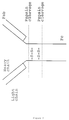
- the most important of the immunoglobulins, IgG comprises two heavy and two light chains with the former being coupled at their hinge region by disulphide linkages. Cleavage with papain above these linkages releases two antibody binding fragments (Fab) and a crystalline fragment (Fc) as shown in Figure 1. Cleavage with pepsin, below the hinge results in a somewhat smaller Fc fragment and a single F(ab') 2 fragment with two binding sites as shown in Figure 1.
- Each Fab fragment contains both a light chain and part of a heavy chain, and includes the sequences responsible for specific binding to a microorganism or foreign macromolecule.
- the Fc consists of the remainder of the two heavy chains; this is the site to which complement, macrophages and polymorphonuclear white blood cells can bind.
- the two heavy chains (but not the light chains) are different for each class of antibody ie IgG, IgM, IgA and IgE.
- IgG is the dominant circulating immunoglobulin in terms of concentration. It consists of a single basic immunoglobulin unit and, characteristically, has a high affinity for its specific antigen. Further details of antibody structure and function are disclosed in Roitt (1991) Essential Immunology, 7th Edition, Blackwell Scientific Publications, Oxford.
- Fab fragments relies on papain digestion.
- the digestion procedure involves incubation of a solution of papain with a substantially pure preparation of immunoglobulins under defined conditions of pH, temperature and co-factors (such as cysteine and ethylene diamine tetra-acetic acid; EDTA) which serve to activate the enzyme and bind its inhibitors, respectively.
- EDTA ethylene diamine tetra-acetic acid
- One aspect of the invention provides a method of preparing polyclonal immunoglobulin Fab fragments comprising cleaving immunoglobulin molecules, characterised in that the cleaving is carried out on immunoglobulins in blood, serum or plasma.
- the cleaving is carried out, and the Fab fragments are subsequently isolated, in a closed, sterile environment.
- the cleaving is conveniently carried out by contacting papain or a catalytic fragment or mutant thereof, or an equivalent enzyme, with the blood. However, it may alternatively be carried out by any other means, since the point of the invention is to cleave the immunoglobulin in blood, serum or plasma; how the cleavage is achieved is immaterial and unrelated to the fact that the cleavage is carried out in blood, serum or plasma.
- equivalent enzyme we simply mean an enzyme which cleaves Fab fragments from immunoglobulins in substantially the same way as papain.
- chymopapain is an equivalent enzyme.
- the preparation of fully active chymopapain, free of contaminating proteinases, is disclosed in Buttle et al (1990) Biol. Chem . Hoppe-Seyler 371 , 1083-1088 and incorporated herein by way of reference. See in particular the Materials and Methods section on pages 1084 to 1085.
- blood hereinafter to mean “blood, serum or plasma”, unless the context indicates otherwise.
- the number of transfers between sterile containers should be reduced, and preferably the blood is collected through a sterile needle into a sterile container, and all subsequent steps, including sterile filtration and ampouling of the product take place within the same sterile environment.
- the sterile containers are interconnected via tubes fitted with suitable locks and valves.
- one preferred embodiment of the invention provides a method of preparing immunoglobulin Fab fragments from blood in a closed, sterile environment comprising (1) immunizing an animal, (2) bleeding the animal aseptically into a sterile, pyrogen-free container, (3) contacting the whole blood with papain or an equivalent enzyme and (4) removing cellular components and much of the Fc.
- the animal to be immunized may be a sheep, a goat, a horse or other mammal. It is preferable that the animal is a sheep, and that it is free of scrapie and zoonotic viruses.
- the immunogen may be a polypeptide, a polypeptide fragment, a synthetic peptide, a polysaccharide, a glycoprotein, a hapten or any other molecule capable of giving rise to a humoral immune response. It is preferable that peptides and haptens are conjugated to carrier molecules such as keyhole limpet haemocyanin or albumin.
- the immunogen is administered with an adjuvant such as Freund's complete adjuvant or Freund's incomplete adjuvant or others well known in the art.
- adjuvant such as Freund's complete adjuvant or Freund's incomplete adjuvant or others well known in the art.
- the immunogen is recombinant tumour necrosis factor ⁇ (TNF ⁇ ).
- the immunogen is a tricyclic antidepressant, for example nortriptyline.
- the animal is immunized according to a set schedule, with amounts of immunogen selected on the basis of dose response studies.
- a specific immunization schedule is given in the Examples. Once adequate circulating antibody levels of at least 1 g/l, more preferably 2 g/l and still more preferably 3 g/l or more are achieved following immunization, the animal is bled.
- the animal is bled through a sterile needle and sterile tube into a sterile container.
- a sterile needle and sterile tube into a sterile container.
- 19 or 21 gauge needles and tubes are used, but a wider gauge may be desirable when faster bleeding is required.
- a blood pack typically a double pack.
- 10 ml of blood is taken per kg of body weight of animal, but this may vary depending on the titre of the specific antibodies present in the blood.
- the sterile container contains a known amount of papain, the amount dependent on the amount of whole blood to be digested.
- Papain is commercially available from, for example, E. Merck. Inc, Darmstadt, Germany and other suppliers of biochemical reagents.
- the papain is substantially pure.
- Substantially pure papain can be prepared by an affinity purification method as described by Buttle et al (1989) Biochem. J . 261 , 469-476.
- substantially pure chymopapain as disclosed by Buttle et al (1990) Biol. Chem. Hoppe-Seyler 371 , 1083-1088, is used.
- the amount of papain used to digest whole blood will vary according to the purity and specific activity of the papain. It is preferred that between 0.5 g and 2.5 g of Merck 6000 USP-U/mg papain is used per 100 ml of blood, most preferably 1.5 g/100 ml.
- L-cysteine and EDTA disodium salt in combination with papain in order to enhance the activity of the papain, and to chelate inhibitors of papain.
- Other sulphydryl agents may be used instead of L-cysteine.
- L-cysteine is added at a concentration of between 0.5 g and 2 g per 100 ml of blood, preferably at about 1 g per 100 ml blood.
- EDTA disodium salt
- EDTA disodium salt
- Papain digestion is usually carried out for between 3 and 5 hours, and at a temperature of 37°C. It is preferred that the digestion is carried out with pH between 6 and 8; pH 7.5 is most preferred.
- the cellular components are removed by centrifugation. It is desirable to inactivate papain at the end of the digestion period by the addition of iodoacetamide, a cysteine proteinase inhibitor. Other cysteine proteinase inhibitors may be used. Incubation for longer than 5 hours, using 1.5 g of papain per 100 ml, may lead to undesirable haemolysis.
- the remaining mixture will contain (1) specific Fab directed against the immunogen of interest; (2) non-specific Fab directed against numerous other epitopes and of no interest; (3) all other serum proteins (including albumin but excluding intact 1 g) and other contaminants; and (4) inactivated papain.
- the papain is immobilized on a support.
- liquid phase digestion can be carried out as described above, in some circumstances it is desirable that the papain is immobilized on a support.
- Suitable supports are well known particularly in the field of column chromatography and include agarose, polyacrylamide, agarose/polyacrylamide co-polymers, dextran, cellulose, polypropylene, polycarbonate, glass, paper or the like. It is preferred that the solid support is cellulose and that the papain is chemically cross-linked thereto.
- the solid support may take the form of granules or powder or gel that is suitable for use in column chromatography.
- the papain may be joined to the solid support in a variety of ways.
- a straightforward way to chemically cross-link papain to a solid support is if the support is previously activated with cyanogen bromide (CNBr) as disclosed by Axen et al (1967) Nature 258 , 598-599.
- CNBr activated supports react rapidly at pH 8-9 with free amino groups in the papain to give a covalently linked product.
- the solid support is agarose
- the CNBr-activated agarose is CNBr-activated Sepharose 6MB available from Pharmacia Inc.
- the solid support is in a form suitable for preparation into columns such as those used for column chromatography, it will be appreciated that the papain can be used in the "solid phase" in other situations.
- the solid support is formulated into a substrate such as a disc or sinter or floor of a suitable container.
- the IgG-containing material blood, serum or plasma
- the solid support may be placed in a centrifuge tube and the IgG-containing material applied.
- the tube is centrifuged and the solid support precipitated.
- the solid support containing the papain can be washed and reused with further amounts of IgG-containing material.
- the support is cellulose. It is further preferred if the cellulose has between 0.1 mg and 20 mg of papain per g immobilized thereon.
- immobilised papain may be particularly advantageous since the immobilized enzyme can be reused, and the use of a potentially toxic enzyme inhibitor to stop the enzymatic reaction can be avoided, as the immobilized enzyme can be simply removed physically.
- a separate aspect of the invention provides a method of making Fab fragments comprising contacting IgG with papain or an equivalent enzyme characterised in that the papain or an equivalent enzyme is immobilised on a solid support.
- IgG is provided as solution at a greater concentration than is found in serum.
- Solutions of partially purified IgG can be prepared by, for example, sodium sulphate precipitation of serum as described in more detail in the Examples.
- an additional step of substantially purifying the specific Fab fragments by binding the said fragments to their ligand, removing the unbound material, and separating the said fragments from the said ligand is performed.
- this step can be performed when the papain has been used in the liquid phase or used when immobilized to a support, it is preferred if it is used when the papain has been used in the liquid phase.
- the specific activity of the Fab fragment may then be increased by affinity purification.
- the polyclonal Fab fragments are passed over an inert matrix to which has been bound the Fab fragment-specific ligand.
- Specific Fab molecules in the mixture bind to the ligand while the remainder, accounting for up to 95% of the total Fab fragment present, pass through and are discarded. Consequently, such a process may reduce the effective amount of proteins to be used in a therapeutic dose, by as much as 95%.
- These purified Fab are then typically either lyophilised or liquid filled into ampoules depending on their intended use.
- the specific ligand may comprise the immunogen, or at least the smallest fragment thereof that binds the said Fab fragment, or it may be a synthetic peptide containing the epitope recognised by the said Fab fragment, or it may comprise the said epitope in any other polypeptide or it may comprise the hapten or analogue thereof.
- This step eliminates Fab fragments and antibody to irrelevant epitopes, contaminating proteins (such as albumin and papain), and other potentially toxic molecules.
- contaminating proteins such as albumin and papain
- ion-exchange chromatography can also be used.
- a further embodiment of the invention provides a method of preparing immunoglobulin Fab fragments in a closed, sterile environment comprising (1) immunizing an animal, (2) bleeding the animal aseptically into a sterile, pyrogen-free container, (3) preparing plasma from the blood, (4) contacting the plasma with papain or an equivalent enzyme and optionally (5) substantially purifying the specific Fab fragments by binding the said fragments to their ligand, removing the unbound material and separating the said fragments from the said ligand.
- Plasma may be prepared from the whole blood by adding between 0.5 g and 2 g (preferably 1 g) EDTA (disodium salt) per 100 ml of whole blood which prevents the blood clotting. The blood is then centrifuged at 2500 x g for 30 minutes at 4°C to separate the plasma from the blood cells.
- EDTA sodium salt
- Papain may be added to the plasma at between 1.0 g and 5.0 g (preferably 2.5 g) per 100 ml of starting whole blood, and digestion may be carried out for up to 24 hours, at a temperature of 37°C. It is preferred that the digestion is carried out with pH between 6 and 8; pH 7.5 is most preferred. Papain may be inhibited by iodoacetamide at the end of the digestion period. It is preferred that EDTA and L-cysteine are present during papain digestion, but is not essential.
- the specific Fab are affinity-purified as disclosed.
- a further embodiment of the invention provides a method of preparing immunoglobulin Fab fragments in a closed, sterile environment comprising (1) immunizing an animal, (2) bleeding the animal aseptically into a sterile pyrogen-free container, (3) preparing serum from the blood, (4) contacting the serum with papain or an equivalent enzyme and optionally (5) substantially purifying the specific Fab fragments by binding the said fragments to their ligand, removing the unbound material, and separating the said fragments from the ligand.
- Serum may be prepared by allowing whole blood to stand for 1 hour at room temperature and then centrifuging at 2500 x g for 30 minutes at 4°C.
- Papain between 0.5 g and 3.0 g (preferably 1.5 g), EDTA (disodium salt) between 0.25 g and 1.0 g (preferably 0.5 g) and L-cysteine, between 0.15 g and 0.6 g (preferably 0.3 g) may be added to the serum for each 100 ml of whole blood, and digestion may be carried out for up to 24 hours, and at a temperature of 37°C. It is preferred that the digestion is carried out with pH between 6 and 8; pH 7.5 is most preferred. It is also preferred if EDTA and L-cysteine are present during papain digestion, but it is not essential.
- the specific antibodies are then affinity purified as disclosed above.
- nortriptyline-specific antibodies the animal is immunized with nortriptyline bound to a carrier, and which may be in combination with an adjuvant, and is subsequently bled.
- Fab fragments are generated using any of the methods of the invention, and affinity purification of the said drug-specific Fab fragments is performed using an affinity column to which is bound nortriptyline.
- a nortriptyline affinity column is readily produced by attaching nortriptyline to Sepharose 4B (Trademark; Pharmacia LKB Biotechnology), and is used by methods well known in the art. Specific Fab fragments bind to this column and may be eluted from the affinity column by changing the pH, ionic strength or nature of the solvent.
- nortriptyline is used as an immunogen and Fab fragments which bind nortriptyline are affinity purified using nortriptyline as a ligand.
- the animal is immunized with TNF ⁇ , preferably rhTNF ⁇ , or a peptide representing a TNF ⁇ epitope thereof, which may be in combination with an adjuvant, and is subsequently bled.
- Fab fragments are generated using any of the methods of the invention and affinity purification of the said cytokine-specific Fab fragments is performed using an affinity column to which is bound TNF ⁇ or a peptide representing an anti-TNF ⁇ Fab fragment binding epitope thereof.
- rhTNF ⁇ we mean recombinant DNA-derived human TNF ⁇ .
- TNF ⁇ affinity column is readily produced by attaching TNF ⁇ , preferably rhTNF ⁇ , to a CNBr-activated Sepharose 4B column using methods well known in the art. Specific Fab fragments bind to this column and may be eluted by changing the pH, ionic strength or nature of the solvent.
- TNF ⁇ is used as an immunogen and Fab fragments which bind TNF ⁇ are affinity purified using TNF ⁇ as the ligand.
- a further aspect of the invention provides Fab fragments reactive towards TNF ⁇ .
- Fab fragments produced from papain digestion of whole blood, plasma or serum may be useful in many areas of medicine, dependent on the specificity of the said Fab fragments.
- Fab fragments may be used as anti-venoms if the immunogen is a venom, or analogue thereof, or as anti-toxins if the immunogen is a toxin, or analogue thereof.
- the Fab fragments of the invention are used to treat human patients and, in particular, we have found Fab fragments reactive towards TNF ⁇ useful in treating septic shock in humans.
- a further aspect of the invention provides a method of clotting blood comprising placing blood into a container and moving said container so that the blood platelets are damaged by contacting an inner surface of the container. When platelets are damaged the blood begins to clot.
- greater than 70% of the blood is clotted by the process.
- Preferably greater than 80% or greater than 95% is clotted. Clotting can be readily observed by visual inspection.
- the blood is collected in a sterile, pyrogen-free cylindrical container of glass or plastic.
- a sterile, pyrogen-free cylindrical container of glass or plastic Conveniently, conventional blood bags are used and placed inside a cylindrical bottle.
- the container is rotated at between 5 and 25 rpm.
- the container is between 10 and 20 cm in diameter. A diameter of about 12 cm is preferred and rotation speed of between 10 rpm and 20 rpm, most preferably 12 rpm. It is preferred if the container is rotated at between 4° and room temperature for about 20 to 30 min. Room temperature of 20°C to 25°C is preferred.
- Room temperature of 20°C to 25°C is preferred.
- the rotation speed is too great frothing will occur, and if rotation is too slow, then the platelets are not damaged and clotting will not occur very quickly.
- a further aspect of the invention provides a process for preparing Fab fragments comprising (i) clotting blood by the "speed clotting" method described above, (ii) preparing an immunoglobulin fraction, (iii) contacting the said immunoglobulin with papain or a functionally equivalent enzyme and (iv) a further step to substantially purify the Fab fragment.
- An immunoglobulin fraction can be prepared by well known methods from the supernatant produced after clotting has occurred.
- the Fab fragment can be substantially purified by standard chromatography steps. Cation exchange chromatography is particularly preferred.
- the process of producing Fab fragments described using the "speed clotting" method is particularly suited for the veterinary market because of its cost-savings compared with other Fab production methods. Because of the shorter process times involved antiserum can be prepared easily within a working day from a large number of immunized animals, for example, blood from 120 sheep can be processed in a single day.
- the vials should be new, dust free and treated with sialinating fluid 48 hours in advance to prevent adhesion of the immunogen to the vials.
- Fresh sialinating solution needs to be made up every 24 hours.
- Sialinating is carried out in the following way:
- the immunogen is then dissolved in 0.9% saline.
- the solution is then mixed by end-over-end rotation for a minimum of 30 minutes.
- the amount of saline used is F as described below.
- the prepared immunogen solution is aliquoted into vials using sterile pipettes and a Pipetteman (Trademark) device.
- TNF ⁇ compared with the salt content has to be taken into account when weighing immunogen.
- Example 2 Immunization, sample and bleed protocol for anti-TNF ⁇ sheep
- the table gives a year's fortnightly schedule of the immunization dose administered, the volume of bleed and the processing of individual samples or pooled samples for the production sheep immunized against TNF- ⁇ .
- a sample is taken from each animal prior to primary immunization. This level is the background level in each sheep.
- Dried papaya latex 14 g was added to water, 0°C, to 20% (w/v) in a contained environment, and stirred for 1 h.
- HCl (1M) was added to pH 1.5, with stirring, over a 1 h period.
- the preparation was centrifuged (12000 x g, 30 min, 4°C) and the pellet discarded.
- NaOH (1M) was added to the supernatant at 0°C, with stirring, to pH 7.0.
- the resulting mixture was then centrifuged as above and the pellet was discarded.
- the supernatant was dialysed against two changes of 30 vol. of water at 4°C.
- the S-Sepharose column was run using the FPLC system at a flow rate of 10 ml/min. It was equilibrated in potassium phosphate buffer (50 mM with respect to K + ) containing 1 mM EDTA, pH 7.2. The dialysed supernatant (above) was filtered (0.2 ⁇ m) and applied to the column, which was then washed with the potassium phosphate buffer until A 280 returned to baseline. A gradient (0.175 mM K + /ml) up to 0.6M [potassium] phosphate with 1 mM EDTA, pH 7.2, was applied, and fractions (25 ml) were collected.
- Ethanediol was added to the pool to 33% (v/v), followed by cysteine to 5 mM.
- the solution was mixed thoroughly, allowed to stand at 4°C for 20 min, and applied to the Sepharose-ECH-Ala-PheSc column at a flow rate of 10 ml x cm -2 x h -1 .
- the column was washed with 7 bed vol. of 50 mM sodium phosphate, 1 mM EDTA, pH 6.8 in 33% (v/v) ethanediol. Active enzyme was then eluted in 3 bed vol. of 50 mM sodium acetate.
- papain Dried papaya latex
- J.E. Siebel Sons Co. Inc. 4055 West Peterson Ave., Chicago, IL 60646, USA.
- ECH Sepharose 4B the S-Sepharose High Performance 35/100 Biopilot prepacked column and other equipment for chromatography were from Pharmacia LKB Biotechnology, Milton Keynes, UK.
- Compound E-64 and iodoacetic acid (99%) were from Sigma Chemical Co. Ltd., Dorset BH17 7NH, UK.
- the pH electrode was type GK 2401 from Radiometer, Crawley RH10 2PY, UK., who also supplied the pH standard buffers at pH values 1.09, 4.01 and 7.00 (25°C).
- a column (4 ml bed volume) of Sepharose-Ahx-Gly-Phe-NHCH 2 CN was prewashed with 12 ml of 50 mM sodium citrate buffer in water/ethanediol (2:1, v/v), pH 4.5 (elution buffer), followed by 12 ml of 50 mM sodium phosphate buffer containing 1 mM EDTA in water/ethanediol (2:1, v/v), pH 6.8 (application buffer).
- Spray-dried latex (0.5 g) was dissolved in 10 ml of application buffer. The solution was clarified by filtration (0.22 ⁇ m pore size), and the protein concentration was determined. Dithiothreitol was added to 2 mM final concentration, and the mixture was kept at 0°C for 20 min. A 80 mg portion of the latex protein was applied to the column (38 ml/ph per cm 2 ) at 20°C, followed by 8 ml of application buffer and then 8 ml of elution buffer. 4 ml (1 bed volume) of elution buffer containing 50 mM hydroxyethyl disulphide was applied, the flow was stopped and the column was left overnight at 20°C. Elution with the hydroxyethyl disulphide solution was then resumed for a further 10 ml, before the column was re-equilibrated in application buffer. Fractions (1 ml) were collected throughout.
- Peak 2 from the affinity column was loaded on to the Mono S HR 5/5 column of the Pharmacia f.p.l.c. system.
- the dithiothreitol or hydroxyethyl disulphide had washed through, and the A 280 had returned to baseline, the proteins were eluted with a gradient of sodium acetate/acetic acid buffer, pH 5.0.
- Peak 2 The material that had bound to the affinity column produced two major protein peaks on cation-exchange (peak 2) chromatography. Peak a, eluted at about 0.17 M Na + , displayed high activity against both Bz-Arg-NHPhNO 2 and azocasein. This protein was subsequently shown to react with a monospecific antiserum to papain and therefore represents substantially pure papain. Peak a was collected, dialysed into 1 mM EDTA, freeze-dried and stored at -20°C.
- Example 5 Materials and Methods for papain digestion of whole blood, plasma and serum
- SDS-gel electrophoresis aliquots (2 ⁇ l) were electrophoresed on 7.5% sodium dodecyl sulphate (SDS)-polyacrylamide gels under non-reducing conditions. Before application to the gels, samples were prepared in 50 ⁇ l sample buffer (0.5 mol tris/HCl buffer pH 7.5 containing 2% SDS, 10% glycerol and 0.01% bromophenol blue) and boiled for 5 min. A protein solution (Bio-Rad Laboratories, USA) was also run to calibrate each gel according to molecular weight markers.
- sample buffer 0.5 mol tris/HCl buffer pH 7.5 containing 2% SDS, 10% glycerol and 0.01% bromophenol blue
- the optimum amount of papain to add is 15 g/l; although less could be used by increasing the incubation time, problems with haemolysis may result. There was substantially no advantage in using 25 g/l, as there was only a proportionately small increase in the amount of immunoglobulin digested.
- pH 7.5 is preferred.
- Example 7 Papain digestion of whole blood, plasma and serum in a closed system
- the process comprises the following main stages:
- the starting material (whole blood, plasma and serum were successfully used), derived from sheep immunized with nortriptyline, was aseptically collected into a sterile and pyrogen-free container, conveniently a double blood pack (Baxter Health Care Ltd, Egham, Surrey).
- the bag where digestion takes placed may be either prefilled or injected later with a sterile preparation of papain, EDTA and L-cysteine (either powder or water-based solution are suitable).
- the material was mixed thoroughly but gently and incubated at 37°C for a minimum period of 3 and a maximum of 5 hours. It is preferred if this incubation time is not extended any further because it may lead to haemolysis when whole blood is used as starting material.
- L-cysteine (5 g) and EDTA disodium salt (7.5 g) were dissolved in 50 ml sterile saline in one compartment of a sterile double blood pack.
- Papain (12.5 g) was added and the mixture was allowed to stand for 10 minutes before mixing. Sheep were bled and the blood (500 ml) was directly collected into one compartment of the blood pack with gentle mixing.
- EDTA EDTA
- 50 ml sterile saline 50 ml sterile saline in one compartment of a sterile double blood pack.
- Blood 500 ml was collected with gentle mixing. The blood was allowed to stand for 30 minutes before centrifugation at 2500 x g for 30 minutes at 4°C. Plasma was transferred to the second compartment of the double blood pack.
- the second compartment contained L-cysteine (5 g) and papain (12.5 g); the mixture was allowed to stand for 10 minutes before gentle mixing.
- blood 500 ml
- EDTA 2.5 g
- L-cysteine 1.5 g
- the digestion mixtures were incubated at 37°C for periods ranging from 3-5 hours.
- the blood bag is then centrifuged at 2600 xg for 45 minutes at 4°C to remove cells (where necessary) and precipitated Fe component.
- the supernatant, containing the digested immunoglobulin(s) is transferred through the sealed tube to the second compartment of the double blood pack, in the case of whole blood, or from the second compartment to a fresh single or double blood pack in the case of plasma or serum.
- the column is regenerated and sterilized by any conventional method such as treatment with sodium hydroxide.
- the matrix used in these experiments is nortriptyline covalently attached to Sepharose 4B (Pharmacia LKB Biotechnology, Milton Keynes, Bucks) as nortriptyline had been used as the immunogen.
- the semi-purified material obtained from the first ion-exchange column was applied directly, without any pre-treatment, and through a sealed tube, to an affinity column to allow the binding of specific Fab.
- SP resin Bio-Rad Laboratories Ltd, Hemel Hempstead, Hertfordshire
- This step also serves as a tailored equilibration of the final product into the required medium since Fab can be eluted from this exchanger by various techniques including those that utilise an upward gradient of pH, ionic strength, or both, of the eluting buffer.
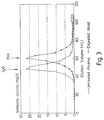
- Figure 7 shows a fluoroimmunoassay.
- Nortriptyline was fluorescently labelled and the binding of antibody or antibody fragment measured by the quenching of fluorescence. The results indicate that after papain digestion blood, serum and plasma have the same binding characteristics as native, untreated serum.
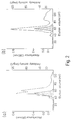
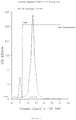
- Figure 2(a) shows the elution of antibody activity (shaded region) from untreated plasma IgG elutes at approximately 50 ml elution volume.
- Figure 2(b) shows the elution of antibody activity (shaded region) from digested whole blood after centrifugation.
- Fab elutes at approximately 60 ml elution volume.
- Example 8 Alternative method of preparing Fab fragments in a closed system
- Immunised sheep are bled, via the jugular vein, into sterile, pyrogen free plastic bags containing pyrogen free papain (0.2% by weight), EDTA (0.5% by weight) and cysteine (0.3% by weight). This mixture is incubated for a minimum of 18 hours at 37°C to complete digestion of the IgG and then centrifuged (3500 rpm) to pellet the red cells and crystalized Fc fragments. A variable proportion, but not all, of the papain may precipitate at this stage and is also removed by centrifugation.
- the supernatant from each bag is then siphoned into a separate plastic transfer bag, which, when full, is connected to an ultrafiltration system.
- the system is fitted with 10 kD membranes which allow the passage of low molecular weight proteins and salt but which retain Fab molecules.
- the Fab solution is washed with low molarity buffer (ammonium acetate, 50 mM, pH 4.0) or saline (0.9%) depending on the method of further purification.
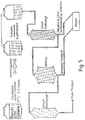
- the concentration of the Fab is brought up to between 40-60 g/l and filled into plastic bags prior to further purification (see Figure 8).
- the total Fab solution (in ammonium acetate buffer) is applied to a cation exchange column (BioRad MacroPrep S although a weaker binding column may be used) where the majority of the Fab (> 80%) binds.
- the column, and thereby the bound Fab is then washed with three column volumes of buffer (ammonium acetate pH 4.0) to sanitize the product and remove potential contamination by prion or virus.
- the bound total Fab is eluted by washing the column with the application buffer containing sodium chloride (0.5M).
- the eluted Fab is then ultrafiltered and washed with saline to remove ammonium acetate buffer, concentrated as required and pumped into a sterile plastic transfer bag. This bag may be connected directly to the filling machine.
- the product is terminally filtered, filled and finally filled and lyophilized.
- the ion exchange column is sanitized between runs using sodium hydroxide (1.0M) and then re-equilibrated with ammonium acetate buffer ready for the next cycle.
- the Fab solution in saline is applied to an agarose affinity column comprising antigen bound via and iso-urea linkage ( Figure 10) to cyanogen-bromide activated Sepharose 4B or via an amine linkage to controlled pore glass.
- the Fab solution is recirculated through the column for 18h at room temperature during which time antigen specific Fab bind to the affinity matrix ligand.
- Non-specific Fab is washed from the column using saline (0.9%), the column being washed until the absorbance (280 nm) of the washings drops to the original preload value (Figure 11).
- Specific Fab is eluted by washing the column with glycine buffer (10-100 mM depending on the project, pH 2.5) containing sodium chloride (0.9%). The eluted Fab is then finished and filled as described in schedule A.
- the affinity column is re-equilibrated using phosphate buffer (pH 8.0, 10-100 mM depending on the project) and then washed with saline prior to the next cycle.
- the columns are sanitized between runs using guanidine hydrochloride (6.0M).
- Solid phase papain (1 g) was first activated with saline containing L-cysteine and EDTA and then 450 mg sheep IgG (ratio papain to IgG 1:10) was added and the reaction was left to proceed at 37°C for 15 hours. Then the product was separated by centrifugation and its purity checked on FPLC and SDS Page. Reusability of the coupled enzymes was also investigated: After each IgG digestion the solid phase papain was washed with saline and stored at 4°C for reuse under the same conditions as above.
- Sepharose 4B is purchased as an activated material
- the cellulose must first be activated with CDI in acetone.
- Cellulose (10 g) was activated with CDI (1.25 g) in 50 ml acetone at ambient temperature for 60 minutes with vigorous mixing.
- the activated imidazole-carbamate cellulose was recovered by filtration over a glass microfibre filter, washed with three 100 ml aliquots of acetone and air-dried for 20 minutes.
- "Merck” papain 160 mg weight based on protein concentration
- 80 ml Na-bicarbonate buffer was added and the reaction was left to proceed at ambient temperature with mixing for 16 hours. Washing and blocking of the remaining active sites were performed according to "Pharmacia” method. About 50 percent of the enzymes were incorporated in this experiment (7 mg crude papain coupled to every gram of cellulose).
- the product was assessed by: means of (L-BAPNA) assay, its ability to cleave sheep IgG and its reusability (under the same conditions as for Sepharose 4B).
- Papain is successfully immobilized on both CNBr-activated Sepharose 4B and CDI-activated cellulose.
- the amount of crude enzymes coupled to cellulose was about ten times less than that coupled to Sepharose.
- the two behaved in similar manner when used to cleave sheep IgG giving as pure Fab as that produced in liquid phase digestions when analysed on FPLC and SDS Page.
- the studies of reusability and stability indicate that both supports can be reused with satisfactory results more than ten times (over 90% digestion in each run). Both showed loss of activity after about one month, a phenomenon also seen with papain from Merck in solution.
- cysteine proteases were covalently linked to each of the solid supports, leaching was ⁇ 0.1 % and the product Fab after each digestion was free of enzymes (as checked by L-BAPNA assay).
- Example 10 Alternative method for immobilization of Merck Papain 30 000 USP on microgranular cellulose powder
- Protein immobilization on microgranular cellulose can be achieved in two steps:
- the activated imidazolyl-carbamate cellulose is recovered by filtration over a glass microfibre filter (Whatman GF/B, retention efficiency 1 ⁇ m), and washed with three 100 ml aliquots of acetone. The activated cellulose is then allowed to air-dry (30 min under laminar flow) and stored in a tightly sealed container at -20 until required for protein coupling.
- a glass microfibre filter Whatman GF/B, retention efficiency 1 ⁇ m
- the mixture (cellulose + enzyme) is centrifuged for 10 min at 2000 rpm, 25°C, supernatant and solid support are separated and ethanolamine (30 ml, pH 8) is added to the solid support. Blocking is carried-out at room temperature for 2 hours after which the solid support is washed with coupling buffer followed by acetate buffer and again coupling buffer using the suction filter (G3 and Whatman GF/B). Store the enzyme-cellulose conjugate in 30 ml coupling buffer at 4-8°C.
- Enzyme coupled to the cellulose is estimated by determining the protein concentration before coupling and subtracting the protein recovered (supernatant concentration) after coupling. Papain coupled to the cellulose is assumed to be the difference between these values.
- Example 11 Polyclonal antibody processing using "speed clotting" and digestion with immobilized papain
- Immunized sheep are bled into sterile, pyrogen free plastic bags and the serum then speed clotted by placing the bags into a cylindrical plastic former and rolling for a minimum of twenty minutes (see Example 13). After this time bags are suspended and serum siphoned off to a transfer bag. When all serum has been removed, transfer lines are clipped to prevent transfer of red cells. The serum is then sterile filtered and transferred, by peristaltic pump to a closed stainless steel mixing vessel where it is warmed to 25°C and then mixed with an equal volume of sodium sulphate (36%, 25°C) to precipitate the immunoglobulin fraction of the serum.
- the precipitate which is predominantly IgG, is then pelleted in a continuous centrifuge and washed with two volumes of sodium sulphate (18%, 25°C). The washed precipitate is resuspended in a half volume of saline (0.9%) and then pumped into a transfer bag to await further processing.
- the IgG preparation is further digested to Fab fragments using a solid-phases papain method.
- Low endotoxin papain is coupled to cellulose using the method described in Example 10.
- a papain-cellulose slurry is then transferred, by peristaltic pump to a plastic bag and the enzyme activated by addition of EDTA (0.2%) and cysteine (2.8%) in saline (0.9%). Activation is performed for one hour at 37°C after which time the bag is centrifuged and the supernatant removed by siphoning as above.
- the IgG solution is then added by peristaltic pump and the mixture incubated at 37°C.
- Example 12 Preparation of anti-TNF ⁇ Fab fragments from partially purified IgG
- Sheep are immunised according to a set schedule with amounts of rhTNF ⁇ selected on the basis of dose response studies and as disclosed in Example 1.
- the sheep are bled aseptically into sterile and pyrogen-free glass bottles; clotting is accelerated by use of a roll-bottle technique; the bottles are centrifuged; and the serum is collected by aspiration in a laminar flow cabinet, subjected to 0.2 ⁇ m filtration and stored at -20°C.
- Antisera from different animals are pooled and their immunoglobulins precipitated at 25°C with sodium sulphate to separate them from most other serum proteins including albumin.
- the immunoglobulins which largely comprise antibodies of the IgG class, are washed with sterile sodium sulphate and resuspended in saline.
- Papain digestion The next step is cleavage of the antibodies into Fab and Fc using papain activated with cysteine and EDTA. This is carried out under conditions that ensure the complete degradation of intact IgG. The crystalline Fc is removed by centrifugation. The supernatant after papain digestion and centrifugation will contain: (1) specific Fab directed against the soluble antigen of interest; (2) non-specific Fab directed against numerous other epitopes and of no value for therapy; (3) small amounts of protein (including albumin) and other contaminants; and (4) inactivated papain.
- Affinity Purification Affinity purification of human tumour necrosis factor (anti-TNF) Fab fragment is performed using a cross-linked agarose (Sepharose) medium to which rTNF ⁇ (recombinant human TNF ⁇ ) has been bound. An iso-urea linkage is used to couple the rTNF ⁇ to the medium.
- anti-TNF anti-TNF
- All buffers must be sterile and pyrogen free (see SOP 0.2, preparation of sterile, non-pyrogenic buffers for therapeutic manufacture).
- Procedure When making columns for therapeutic manufacture, all procedures should be performed under laminar flow in class 100 conditions and all equipment should be sterile and pyrogen free.
- the required amount of freeze-dried Sepharose powder should be weighed out into a plastic Nalgene bottle and suspended in HCl (ice cold). The gel swells immediately and should be washed for 15 minutes on a sintered glass filter with the same solution (200 ml/g of gel). The solution should be added in several aliquots and the gel should be dried, after the final aliquot, until cracks appear in the surface.
- the TNF ligand (5 mg/g of gel to be used) should be dissolved in sodium bicarbonate buffer (0.1M, pH 8.3, 7 ml/g of gel to be used) in a plastic Nalgene bottle. Once dissolved, an aliquot (0.25% of the total) should be taken and then the air dried gel should be added, taking care not to splash the ligand solution from the bottle. The mixture should then be rotated, end over end, at 4°C overnight.
- Blocking the active groups on the gel after coupling overnight, the gel solution should be transferred back to the glass sinter funnel and the ligand solution aspirated and collected. The gel should then be washed with 200 ml of ethanolamine. All washings should be collected.
- the gel should then be transferred to a Nalgene bottle containing ethanolamine (1.0M, pH 8.0) and the mixture rotated overnight as before.
- the blocked gel should be transferred to the sinter funnel and the ethanolamine solution sucked off and collected.
- the gel should then be washed with coupling buffer (bicarbonate) followed by acetate buffer, then coupling buffer a second time. All washings should be collected.
- the gel may now be transferred and packed into the column housing and washed thoroughly with saline (0.9%).
- the coupling efficiency should be determined by measuring the amount of protein in the washings and comparing this with the initial ligand solution aliquot.
- the Fab solution is circulated at a flow rate of 1 ml/minute for a minimum of two hours at 18°C.
- the ovine rTNF ⁇ Fab fragment bound to the support is removed by washing the column with glycine (10 mM, pH 2.5).
- the eluent is collected into citrate buffer (0.6M, pH 8.0: 2.5% final concentration) and stored in Nalgene, 2 liter disposable collection bottles. Samples are taken for QC testing (GF FPLC, pH, protein concentration, sterility and LAL testing).
- Affinity columns are re-equilibrated using phosphate buffer (10 mM, pH 7.3) until the eluant pH returns to approximately pH 5.5. The column is then equilibrated with saline (0.9%) to prepare for the next cycle.
- Example 13 Method of clotting blood ("roll-bottle” technique or “speed-clotting")
- the site for venepuncture is prepared in an aseptic manner by the use of cotton wool with surgical spirit. It is important that the surgical spirit is allowed to dry before the needle is inserted to avoid problems of haemolysis.
- Blood is collected from the vein as rapidly as possible into suitably prepared containers. Whilst, high grade glass bottles were used for the initial studies (Grade A Plasma Scandinava bleed bottles, Neville & Moore), the process can use commercially available plastic serum collection units.
- Bottles are prepared by washing with detergent, followed by an acid rinse and finally a clean water rinse. After drying the bottles are capped with foil and dry heat sterilized (180°C, min 6 hours) to destroy endotoxins. 10 mL of sterile, endotoxin-low physiological saline (Baxter Healthcare) is then added to each bottle under sterile laminar flow. Bottles are further foil capped and autoclaved (121°C, 20 min). Following venepuncture, approximately 350 mL of blood is collected into each of the bottles, after puncturing the foil cap.
- the bottles are immediately screwcapped and transferred to apparatus (Bellco Biotechnology, Vineland, New Jersey) at ambient temperature which rolls the bottles placed on their sides. This permits maximum contact of the Hageman Factor and platelets with the inside wall of the bottles, thus initiating blood clot formation via the intrinsic pathway.
- apparatus Bellco Biotechnology, Vineland, New Jersey
- the bottles are rolled for a minimum of 20 min at approximately 12 rpm. This results in the formation of a clearly visible and distinguishable clot.
- bottles are balanced and centrifuged at 1200 rpm (Beckman J6) for 30 minutes. Following centrifugation the bottles are sprayed with industrial methylated spirits to destroy any possible surface bacterial contaminants and allowed to dry under laminar flow.
- the caps are removed under laminar flow and the partitioned antiserum aspirated off the clot using a sterile aspiration needle connected to a peristaltic pump.
- the aspirated antiserum is filtered through a two stage depth filtration train to 0.2 ⁇ m, into sterile pyrogen free containers. Samples are taken for Quality Control and the bulk immediately frozen to -20°C in double skinned sterile plasma bags (Coloreed).
- the whole process from blood collection to antiserum freezing can easily be completed following GMP within a normal working day.
Landscapes
- Chemical & Material Sciences (AREA)
- Health & Medical Sciences (AREA)
- Organic Chemistry (AREA)
- Life Sciences & Earth Sciences (AREA)
- Genetics & Genomics (AREA)
- Medicinal Chemistry (AREA)
- General Health & Medical Sciences (AREA)
- Molecular Biology (AREA)
- Biochemistry (AREA)
- Biophysics (AREA)
- Wood Science & Technology (AREA)
- Zoology (AREA)
- Bioinformatics & Cheminformatics (AREA)
- Immunology (AREA)
- Engineering & Computer Science (AREA)
- Proteomics, Peptides & Aminoacids (AREA)
- Microbiology (AREA)
- Biotechnology (AREA)
- General Engineering & Computer Science (AREA)
- Biomedical Technology (AREA)
- Nuclear Medicine, Radiotherapy & Molecular Imaging (AREA)
- Oncology (AREA)
- Chemical Kinetics & Catalysis (AREA)
- General Chemical & Material Sciences (AREA)
- Communicable Diseases (AREA)
- Pharmacology & Pharmacy (AREA)
- Animal Behavior & Ethology (AREA)
- Public Health (AREA)
- Veterinary Medicine (AREA)
- Medicines Containing Antibodies Or Antigens For Use As Internal Diagnostic Agents (AREA)
- Peptides Or Proteins (AREA)
- Medicines That Contain Protein Lipid Enzymes And Other Medicines (AREA)
- Medicines Containing Material From Animals Or Micro-Organisms (AREA)
- Medical Preparation Storing Or Oral Administration Devices (AREA)
- Preparation Of Compounds By Using Micro-Organisms (AREA)
- Pens And Brushes (AREA)
- Memory System Of A Hierarchy Structure (AREA)
- Diaphragms For Electromechanical Transducers (AREA)
Applications Claiming Priority (5)
| Application Number | Priority Date | Filing Date | Title |
|---|---|---|---|
| GB939311507A GB9311507D0 (en) | 1993-06-03 | 1993-06-03 | Antibody fragments |
| GB9311507 | 1993-06-03 | ||
| GB9402593A GB9402593D0 (en) | 1994-02-10 | 1994-02-10 | Antibody fragments |
| GB9402593 | 1994-02-10 | ||
| EP94917088A EP0703925B1 (fr) | 1993-06-03 | 1994-06-03 | Production de fragments d'anticorps |
Related Parent Applications (1)
| Application Number | Title | Priority Date | Filing Date |
|---|---|---|---|
| EP94917088A Division EP0703925B1 (fr) | 1993-06-03 | 1994-06-03 | Production de fragments d'anticorps |
Publications (2)
| Publication Number | Publication Date |
|---|---|
| EP0916678A2 true EP0916678A2 (fr) | 1999-05-19 |
| EP0916678A3 EP0916678A3 (fr) | 1999-05-26 |
Family
ID=26303001
Family Applications (3)
| Application Number | Title | Priority Date | Filing Date |
|---|---|---|---|
| EP94917088A Expired - Lifetime EP0703925B1 (fr) | 1993-06-03 | 1994-06-03 | Production de fragments d'anticorps |
| EP94917087A Expired - Lifetime EP0701571B1 (fr) | 1993-06-03 | 1994-06-03 | Utilisation de fragments d'anticorps en therapie |
| EP98203383A Withdrawn EP0916678A3 (fr) | 1993-06-03 | 1994-06-03 | Procédé de coagulation de sang |
Family Applications Before (2)
| Application Number | Title | Priority Date | Filing Date |
|---|---|---|---|
| EP94917088A Expired - Lifetime EP0703925B1 (fr) | 1993-06-03 | 1994-06-03 | Production de fragments d'anticorps |
| EP94917087A Expired - Lifetime EP0701571B1 (fr) | 1993-06-03 | 1994-06-03 | Utilisation de fragments d'anticorps en therapie |
Country Status (16)
| Country | Link |
|---|---|
| US (2) | US5733742A (fr) |
| EP (3) | EP0703925B1 (fr) |
| JP (1) | JP2953782B2 (fr) |
| AT (2) | ATE183513T1 (fr) |
| AU (2) | AU678483B2 (fr) |
| CA (1) | CA2163032C (fr) |
| DE (2) | DE69420137T2 (fr) |
| DK (2) | DK0701571T3 (fr) |
| ES (2) | ES2108460T3 (fr) |
| FI (1) | FI955798L (fr) |
| GB (1) | GB2294267B (fr) |
| GR (2) | GR3025133T3 (fr) |
| NO (1) | NO954643L (fr) |
| NZ (1) | NZ266838A (fr) |
| RU (1) | RU2139092C1 (fr) |
| WO (2) | WO1994029347A1 (fr) |
Families Citing this family (210)
| Publication number | Priority date | Publication date | Assignee | Title |
|---|---|---|---|---|
| ATE183513T1 (de) | 1993-06-03 | 1999-09-15 | Therapeutic Antibodies Inc | Herstellung von antikörperfragmenten |
| GB9501683D0 (en) | 1995-01-27 | 1995-03-15 | Glaxo Group Ltd | Substances and their uses |
| US5646036A (en) * | 1995-06-02 | 1997-07-08 | Genentech, Inc. | Nucleic acids encoding hepatocyte growth factor receptor antagonist antibodies |
| US5686292A (en) | 1995-06-02 | 1997-11-11 | Genentech, Inc. | Hepatocyte growth factor receptor antagonist antibodies and uses thereof |
| US6214344B1 (en) | 1995-06-02 | 2001-04-10 | Genetech, Inc. | Hepatocyte growth factor receptor antagonists and uses thereof |
| GB9517538D0 (en) * | 1995-08-26 | 1995-10-25 | Therapeutic Antibodies Inc | Production and therapeutic combinations, of antibodies |
| US6090382A (en) * | 1996-02-09 | 2000-07-18 | Basf Aktiengesellschaft | Human antibodies that bind human TNFα |
| US6998116B1 (en) | 1996-01-09 | 2006-02-14 | Genentech, Inc. | Apo-2 ligand |
| US6030945A (en) * | 1996-01-09 | 2000-02-29 | Genentech, Inc. | Apo-2 ligand |
| MX336813B (es) | 1996-02-09 | 2016-02-02 | Abbvie Biotechnology Ltd | Anticuerpos humanos que ligan el tnfa humano. |
| CA2249206A1 (fr) | 1996-04-01 | 1997-10-09 | Genentech, Inc. | Polypeptides de l'apoptose apo-2l1 et apo-3 |
| JP2000515735A (ja) * | 1996-07-03 | 2000-11-28 | ジェネンテック インコーポレーテッド | 肝細胞成長因子レセプターアゴニスト |
| US6462176B1 (en) | 1996-09-23 | 2002-10-08 | Genentech, Inc. | Apo-3 polypeptide |
| US6136958A (en) * | 1996-09-30 | 2000-10-24 | Genentech, Inc. | Antibodies to vertebrate smoothened proteins |
| US5990281A (en) | 1996-09-30 | 1999-11-23 | Genentech, Inc. | Vertebrate smoothened proteins |
| US6342369B1 (en) | 1997-05-15 | 2002-01-29 | Genentech, Inc. | Apo-2-receptor |
| US6291643B1 (en) | 1997-06-05 | 2001-09-18 | Board Of Reports, The University Of Texas System | Apaf-1 an activator of caspase-3 |
| IL133122A0 (en) | 1997-06-18 | 2001-03-19 | Genentech Inc | Apo-2dcr polypeptides |
| JP2002508962A (ja) | 1998-01-15 | 2002-03-26 | ジェネンテク・インコーポレイテッド | Apo−2リガンド |
| ATE443723T1 (de) | 1998-06-12 | 2009-10-15 | Genentech Inc | Monoklonale antikörper, kreuz-reaktive antikörper und deren produktionsverfahren |
| US7192698B1 (en) | 1999-08-17 | 2007-03-20 | Purdue Research Foundation | EphA2 as a diagnostic target for metastatic cancer |
| US6927203B1 (en) | 1999-08-17 | 2005-08-09 | Purdue Research Foundation | Treatment of metastatic disease |
| GB0013810D0 (en) * | 2000-06-06 | 2000-07-26 | Celltech Chiroscience Ltd | Biological products |
| DE60136816D1 (de) | 2000-07-27 | 2009-01-15 | Genentech Inc | Sequentielle verabreichung von cpt-11 und apo-2l polypeptid |
| US7101976B1 (en) | 2000-09-12 | 2006-09-05 | Purdue Research Foundation | EphA2 monoclonal antibodies and methods of making and using same |
| EP1326892A2 (fr) | 2000-10-12 | 2003-07-16 | University of Rochester | Compositions inhibant la proliferation de cellules cancereuses |
| US6709655B2 (en) | 2001-02-28 | 2004-03-23 | Instituto Bioclon, S.A. De C.V. | Pharmaceutical composition of F(ab1)2 antibody fragments and a process for the preparation thereof |
| CA2817619A1 (fr) | 2001-06-08 | 2002-12-08 | Abbott Laboratories (Bermuda) Ltd. | Methodes pour administrer des anticorps anti-tnf.alpha. |
| US20050069549A1 (en) | 2002-01-14 | 2005-03-31 | William Herman | Targeted ligands |
| WO2003065997A2 (fr) | 2002-02-06 | 2003-08-14 | Vicor Technologies, Inc. | Molecules anti-infarcissement |
| JP2005521429A (ja) | 2002-03-25 | 2005-07-21 | ユーエービー リサーチ ファウンデーション | Fcレセプターホモログ、試薬およびこれらの使用 |
| ES2365210T3 (es) | 2002-06-14 | 2011-09-26 | Government Of The United States Of America, As Represented By The Secretary, Department Of Health | Procedimientos de tratamiento y prevención de colitis en la que se implican la il-13 y los linfocitos t citolíticos naturales. |
| EP1575992A4 (fr) | 2002-08-05 | 2007-02-21 | Univ Rochester | Proteines chimeres a domaine de transduction proteique/domaine desaminase, composes associes et utilisations correspondantes |
| MY150740A (en) | 2002-10-24 | 2014-02-28 | Abbvie Biotechnology Ltd | Low dose methods for treating disorders in which tnf? activity is detrimental |
| EP1576351A4 (fr) | 2002-11-26 | 2010-06-23 | Univ Utah Res Found | Materiaux microporeux, procedes, et articles permettant de localiser et de quantifier des analytes |
| US7597936B2 (en) | 2002-11-26 | 2009-10-06 | University Of Utah Research Foundation | Method of producing a pigmented composite microporous material |
| US7335759B2 (en) * | 2002-12-02 | 2008-02-26 | Universidad Nacional Autónoma de Méxica (UNAM) | Recombinant immunogens for the generation of antivenoms to the venom of scorpions of the genus Centruroides |
| US7285269B2 (en) * | 2002-12-02 | 2007-10-23 | Amgen Fremont, Inc. | Antibodies directed to tumor necrosis factor |
| US7141015B2 (en) * | 2003-05-09 | 2006-11-28 | Bernard Joseph Ruane | Expandable and pivotally adjustable surgical retractor |
| EP1651266B1 (fr) * | 2003-07-25 | 2010-03-03 | Laboratorios Silanes, S.A. de C.V. | Administration de fragments d'anticorps f(ab')2 anti-tnf-alpha |
| FR2859725B1 (fr) * | 2003-09-16 | 2006-03-10 | Neovacs | Procede a haut rendement pour l'obtention d'anticorps humains neutralisant l'activite biologique d'une cytokine humaine |
| EP1711517A4 (fr) | 2004-01-21 | 2008-02-13 | Univ Utah Res Found | CANAL SODIQUE NAv1.7 MUTANT ET PROCEDES ASSOCIES |
| PT1730191E (pt) | 2004-03-30 | 2011-10-04 | Glaxo Group Ltd | Imunoglobulina que se liga a hosm |
| TW201705980A (zh) | 2004-04-09 | 2017-02-16 | 艾伯維生物技術有限責任公司 | 用於治療TNFα相關失調症之多重可變劑量療法 |
| TWI307630B (en) | 2004-07-01 | 2009-03-21 | Glaxo Group Ltd | Immunoglobulins |
| CA2575402A1 (fr) | 2004-08-05 | 2006-02-09 | Genentech, Inc. | Antagonistes anti-cmet humanises |
| US8029783B2 (en) | 2005-02-02 | 2011-10-04 | Genentech, Inc. | DR5 antibodies and articles of manufacture containing same |
| US7381802B2 (en) * | 2005-04-15 | 2008-06-03 | Universidad Nacional Autónoma De México (UNAM) | Human antibodies that specifically recognize the toxin Cn2 from Centruroides noxius scorpion venom |
| CN101193910A (zh) | 2005-04-15 | 2008-06-04 | 健泰科生物技术公司 | HGFβ链变体 |
| NZ595225A (en) | 2005-05-16 | 2013-05-31 | Abbott Biotech Ltd | Use of tnf inhibitor for treatment of erosive polyarthritis |
| AU2005332058B2 (en) | 2005-05-19 | 2011-12-01 | The Government Of The United States Of America, As Represented By The Secretary, Department Of Health And Human Services, Centers For Disease Control And Prevention | Functional epitopes of Streptococcus pneumoniae PsaA antigen and uses thereof |
| EP1806365A1 (fr) | 2006-01-05 | 2007-07-11 | Boehringer Ingelheim International GmbH | Anticorps spécifiques pour la protéine alpha d'activation de fibroblastes et leurs immunoconjugués |
| US8470965B2 (en) | 2006-03-01 | 2013-06-25 | University Of Utah Research Foundation | Methods and compositions related to cyclic peptide synthesis |
| CA2644952A1 (fr) | 2006-03-01 | 2007-09-13 | The University Of Utah Research Foundation | Procedes et compositions relatifs a la synthese de peptides cycliques |
| CN102887955A (zh) | 2006-04-05 | 2013-01-23 | 艾博特生物技术有限公司 | 抗体纯化 |
| US9399061B2 (en) | 2006-04-10 | 2016-07-26 | Abbvie Biotechnology Ltd | Methods for determining efficacy of TNF-α inhibitors for treatment of rheumatoid arthritis |
| WO2008063213A2 (fr) | 2006-04-10 | 2008-05-29 | Abbott Biotechnology Ltd. | Compositions destinées au traitement de la polyarthrite psoriasique et leurs applications |
| US9605064B2 (en) | 2006-04-10 | 2017-03-28 | Abbvie Biotechnology Ltd | Methods and compositions for treatment of skin disorders |
| CA2656347A1 (fr) | 2006-07-03 | 2008-01-10 | Charles David Adair | Composition servant a moduler l'expression de molecules d'adherence cellulaire |
| US8999317B2 (en) | 2006-11-01 | 2015-04-07 | University Of Rochester | Methods and compositions related to the structure and function of APOBEC3G |
| JP2010514839A (ja) | 2007-01-03 | 2010-05-06 | バーナム インスティテュート フォー メディカル リサーチ | クロット結合化合物に関連する方法および組成物 |
| US10094836B2 (en) | 2007-01-08 | 2018-10-09 | The United States Of America, As Represented By The Secretary, Department Of Health & Human Services | SLCO1B3 genotype |
| US9896511B2 (en) | 2007-01-10 | 2018-02-20 | The United States Of America, As Represented By The Secretary, Dept. Of Health And Human Services | Antibodies that bind to TL1A and methods of treating inflammatory or autoimmune disease comprising administering such antibodies |
| US8097588B2 (en) | 2007-02-08 | 2012-01-17 | Sanford-Burnham Medical Research Institute | Trophinin-binding peptides and uses thereof |
| EP2478766A3 (fr) | 2007-05-09 | 2012-08-15 | Burnham Institute for Medical Research | Ciblage de protéinases hôtes en tant que stratégie thérapeutique contre des pathogènes viraux et bactériens |
| CN101688194B (zh) | 2007-05-23 | 2013-09-11 | Uab研究基金会 | 去毒的肺炎球菌神经氨酸酶及其用途 |
| US20100303813A1 (en) | 2007-06-08 | 2010-12-02 | Biogen Idec Ma Inc. | Biomarkers for predicting anti-tnf responsiveness or non-responsiveness |
| WO2008154543A2 (fr) | 2007-06-11 | 2008-12-18 | Abbott Biotechnology Ltd. | Procédés de traitement de l'arthrite idiopathique juvénile |
| PE20090368A1 (es) | 2007-06-19 | 2009-04-28 | Boehringer Ingelheim Int | Anticuerpos anti-igf |
| PE20140196A1 (es) | 2007-08-09 | 2014-03-19 | Boehringer Ingelheim Int | Anticuerpos anti-cd37 |
| WO2010070380A2 (fr) | 2007-12-03 | 2010-06-24 | The Government Of The United States Of America, As Represented By The Secretary, Department Of Health Of Human Services, National Institutes Of Health | Compositions doc1 et méthodes de traitement du cancer |
| CA2711984A1 (fr) | 2008-01-15 | 2009-07-23 | Abbott Gmbh & Co. Kg | Composition de proteine pulverisee et procedes de fabrication de celle-ci |
| ES2532896T5 (es) | 2008-05-14 | 2018-03-20 | Immatics Biotechnologies Gmbh | Péptidos del MHC de clase II novedosos y potentes derivados de survivina y neurocan |
| AU2008360658B2 (en) | 2008-08-15 | 2015-02-19 | The United States Of America, As Represented By The Secretary, Department Of Health And Human Services | S0X9, prostaglandin D2 and retinoic acid for treating pigmentary conditions and melanoma |
| EP4071169A2 (fr) | 2008-08-25 | 2022-10-12 | Dana Farber Cancer Institute, Inc. | Épitope d'hémagglutinine de la grippe conservé et anticorps associés |
| RS53782B1 (sr) | 2008-10-01 | 2015-06-30 | Immatics Biotechnologies Gmbh | Preparati tumor-asociranih peptida i odgovarajuća antikancerska vakcina za tretman glioblastoma (gbm) i drugih kancera |
| US20120070443A1 (en) | 2008-12-02 | 2012-03-22 | University Of Utah Research Foundation | Pde1 as a target therapeutic in heart disease |
| NZ597692A (en) | 2008-12-12 | 2013-08-30 | Boehringer Ingelheim Int | Anti-IGF antibodies |
| UY32341A (es) | 2008-12-19 | 2010-07-30 | Glaxo Group Ltd | Proteínas de unión antígeno novedosas |
| WO2011020107A2 (fr) | 2009-08-14 | 2011-02-17 | Georgetown University | Compositions et méthodes de dépistage et de traitement du cancer du sein |
| JP2013507365A (ja) | 2009-10-07 | 2013-03-04 | サンフォード−バーナム メディカル リサーチ インスティテュート | 血餅結合脂質化合物に関する方法および組成物 |
| US20110110942A1 (en) | 2009-11-12 | 2011-05-12 | Genentech, Inc. | Method of promoting dendritic spine density |
| WO2011080050A2 (fr) | 2009-12-11 | 2011-07-07 | Novartis Ag | Molécules de liaison |
| CA2784145A1 (fr) | 2009-12-18 | 2011-06-23 | Sanford-Burnham Medical Research Institute | Methodes et compositions associees aux composes de liaison aux caillots |
| AR079944A1 (es) | 2010-01-20 | 2012-02-29 | Boehringer Ingelheim Int | Anticuerpo neutralizante de la actividad de un anticoagulante |
| PE20170687A1 (es) | 2010-01-28 | 2017-06-13 | Glaxo Group Ltd | Proteinas de enlace a cd127 |
| US20110207789A1 (en) | 2010-02-19 | 2011-08-25 | Ye Fang | Methods related to casein kinase ii (ck2) inhibitors and the use of purinosome-disrupting ck2 inhibitors for anti-cancer therapy agents |
| UA108227C2 (xx) | 2010-03-03 | 2015-04-10 | Антигензв'язуючий білок | |
| GB201004551D0 (en) | 2010-03-19 | 2010-05-05 | Immatics Biotechnologies Gmbh | NOvel immunotherapy against several tumors including gastrointestinal and gastric cancer |
| US20110293629A1 (en) | 2010-05-14 | 2011-12-01 | Bastid Jeremy | Methods of Treating and/or Preventing Cell Proliferation Disorders with IL-17 Antagonists |
| AR081556A1 (es) | 2010-06-03 | 2012-10-03 | Glaxo Group Ltd | Proteinas de union al antigeno humanizadas |
| CN103201290B (zh) | 2010-06-14 | 2016-09-28 | 莱克拉生物医学股份公司 | S100a4抗体及其治疗用途 |
| WO2012023938A1 (fr) | 2010-08-19 | 2012-02-23 | West Pharmaceutical Services, Inc. | Gaine d'aiguille rigide |
| US9051619B2 (en) | 2011-03-25 | 2015-06-09 | Florida Agricultural and Mechanical University (FAMU) | Methods and compositions for prostate cancer metastasis |
| PE20140964A1 (es) | 2011-03-30 | 2014-08-17 | Boehringer Ingelheim Int | Antidotos anticoagulantes |
| PL221015B1 (pl) * | 2011-04-11 | 2016-02-29 | Akademia Medyczna Im Piastów Śląskich | Sposób otrzymywania inhibitorów cysteinowych peptydaz o czystości elektroforetycznej z materiałów biologicznych |
| US9062106B2 (en) | 2011-04-27 | 2015-06-23 | Abbvie Inc. | Methods for controlling the galactosylation profile of recombinantly-expressed proteins |
| WO2012161856A1 (fr) | 2011-05-20 | 2012-11-29 | Government Of The United States, As Represented By The Secretary, Department Of Health And Human Services | Blocage des interactions tl1a-dr3 pour améliorer la pathologie des maladies médiées par les cellules t et anticorps afférents |
| AR086823A1 (es) | 2011-06-30 | 2014-01-22 | Genentech Inc | Formulaciones de anticuerpo anti-c-met, metodos |
| US9846159B2 (en) | 2011-09-30 | 2017-12-19 | Sarcotein Diagnostics, Llc | BIN1 expression as a marker of cancer |
| US20130122005A1 (en) | 2011-10-27 | 2013-05-16 | Paul Adam | Anticancer combination therapy |
| US9177997B2 (en) | 2011-12-13 | 2015-11-03 | Sony Corporation | Memory device |
| US9067990B2 (en) | 2013-03-14 | 2015-06-30 | Abbvie, Inc. | Protein purification using displacement chromatography |
| WO2013158279A1 (fr) | 2012-04-20 | 2013-10-24 | Abbvie Inc. | Procédés de purification de protéines pour réduire des espèces acides |
| WO2013158273A1 (fr) | 2012-04-20 | 2013-10-24 | Abbvie Inc. | Procédés de modulation de la distribution de variant de lysine c-terminal |
| WO2013176754A1 (fr) | 2012-05-24 | 2013-11-28 | Abbvie Inc. | Nouvelle purification d'anticorps au moyen de chromatographie à interaction hydrophobe |
| IN2015MN00001A (fr) | 2012-06-08 | 2015-10-16 | Univ Kinki | |
| EP2870238A4 (fr) | 2012-07-05 | 2016-03-09 | Ohio State Innovation Foundation | Compositions et procédés associés à des vaccins viraux |
| HK1211981A1 (en) | 2012-09-02 | 2016-06-03 | Abbvie Inc. | Methods to control protein heterogeneity |
| US9512214B2 (en) | 2012-09-02 | 2016-12-06 | Abbvie, Inc. | Methods to control protein heterogeneity |
| US9376489B2 (en) | 2012-09-07 | 2016-06-28 | Novartis Ag | IL-18 binding molecules |
| US20140094383A1 (en) | 2012-10-02 | 2014-04-03 | Ohio State Innovation Foundation | Tethered Lipoplex nanoparticle Biochips And Methods Of Use |
| MX367136B (es) | 2012-10-18 | 2019-08-06 | Inosan Biopharma S A Star | Proceso para purificar fragmentos de anticuerpos polivalentes derivados de plasma hiperinmune. |
| WO2014085821A2 (fr) | 2012-11-30 | 2014-06-05 | The Regents Of The University Of California | Anticorps entièrement humains et fragments reconnaissant la protéine c-met humaine |
| US20140255413A1 (en) | 2013-03-07 | 2014-09-11 | Boehringer Ingelheim International Gmbh | Combination therapy for neoplasia treatment |
| HK1207960A1 (en) | 2013-03-12 | 2016-02-19 | Abbvie Inc. | Human antibodies that bind human tnf-alpha and methods of preparing the same |
| US9017687B1 (en) | 2013-10-18 | 2015-04-28 | Abbvie, Inc. | Low acidic species compositions and methods for producing and using the same using displacement chromatography |
| US9499614B2 (en) | 2013-03-14 | 2016-11-22 | Abbvie Inc. | Methods for modulating protein glycosylation profiles of recombinant protein therapeutics using monosaccharides and oligosaccharides |
| WO2014159579A1 (fr) | 2013-03-14 | 2014-10-02 | Abbvie Inc. | Anticorps anti-tnfα ayant mutés et leurs procédés d'utilisation |
| WO2014201118A2 (fr) | 2013-06-11 | 2014-12-18 | Sanford-Burnham Medical Research Institute | Compositions et méthodes de traitement ciblé de l'endométriose |
| TWI636065B (zh) | 2013-08-05 | 2018-09-21 | 伊瑪提克斯生物科技有限公司 | 新穎肽類,細胞及其用於治療多種腫瘤的用途,其製造方法及包含其等之醫藥組成物 |
| US9598667B2 (en) | 2013-10-04 | 2017-03-21 | Abbvie Inc. | Use of metal ions for modulation of protein glycosylation profiles of recombinant proteins |
| US9085618B2 (en) | 2013-10-18 | 2015-07-21 | Abbvie, Inc. | Low acidic species compositions and methods for producing and using the same |
| US9181337B2 (en) | 2013-10-18 | 2015-11-10 | Abbvie, Inc. | Modulated lysine variant species compositions and methods for producing and using the same |
| US8946395B1 (en) | 2013-10-18 | 2015-02-03 | Abbvie Inc. | Purification of proteins using hydrophobic interaction chromatography |
| GB201319446D0 (en) | 2013-11-04 | 2013-12-18 | Immatics Biotechnologies Gmbh | Personalized immunotherapy against several neuronal and brain tumors |
| WO2015069459A1 (fr) | 2013-11-05 | 2015-05-14 | Novartis Ag | Composés organiques |
| US20150139988A1 (en) | 2013-11-15 | 2015-05-21 | Abbvie, Inc. | Glycoengineered binding protein compositions |
| RU2016141385A (ru) | 2014-03-24 | 2018-04-28 | Дженентек, Инк. | Лечение рака антагонистами с-мет и их корреляция с экспрессией hgf |
| US10247729B2 (en) | 2014-05-05 | 2019-04-02 | Microbplex, Inc. | Media elaborated with newly synthesized antibodies (MENSA) and uses thereof |
| GB201408255D0 (en) | 2014-05-09 | 2014-06-25 | Immatics Biotechnologies Gmbh | Novel immunotherapy against several tumours of the blood, such as acute myeloid leukemia (AML) |
| GB201411037D0 (en) | 2014-06-20 | 2014-08-06 | Immatics Biotechnologies Gmbh | Novel immunotherapy against several tumors of the blood, in particular chronic lymphoid leukemai (CLL) |
| WO2016059602A2 (fr) | 2014-10-16 | 2016-04-21 | Glaxo Group Limited | Méthodes de traitement du cancer et compositions associées |
| GB201501017D0 (en) | 2014-12-23 | 2015-03-04 | Immatics Biotechnologies Gmbh | Novel peptides and combination of peptides for use in immunotherapy against hepatocellular carcinoma (HCC) and other cancers |
| MA49156A (fr) | 2014-12-23 | 2020-03-25 | Immatics Biotechnologies Gmbh | Nouveaux peptides et combinaison de peptides à utiliser dans l'immunothérapie contre le carcinome hépatocellulaire (hcc) et d'autres cancers |
| WO2016141088A1 (fr) | 2015-03-02 | 2016-09-09 | Sarcotein Diagnostics, Llc | Expression de bin1 13+/17+ à utiliser en tant que marqueur de troubles cardiaques |
| LT3388075T (lt) | 2015-03-27 | 2023-11-10 | Immatics Biotechnologies Gmbh | Nauji peptidai ir peptidų deriniai, skirti naudoti imunoterapijai prieš įvairius navikus (seq id 25 - mrax5-003) |
| GB201505585D0 (en) | 2015-03-31 | 2015-05-13 | Immatics Biotechnologies Gmbh | Novel peptides and combination of peptides and scaffolds for use in immunotherapy against renal cell carinoma (RCC) and other cancers |
| GB201507030D0 (en) | 2015-04-24 | 2015-06-10 | Immatics Biotechnologies Gmbh | Immunotherapy against lung cancers, in particular NSCLC |
| GB201507719D0 (en) | 2015-05-06 | 2015-06-17 | Immatics Biotechnologies Gmbh | Novel peptides and combination of peptides and scaffolds thereof for use in immunotherapy against colorectal carcinoma (CRC) and other cancers |
| MA54884A (fr) | 2015-07-01 | 2022-01-12 | Immatics Biotechnologies Gmbh | Neuartige peptide und kombination aus peptiden zur verwendung in der immuntherapie gegen ovarialkarzinom und andere karzinome |
| GB201511546D0 (en) | 2015-07-01 | 2015-08-12 | Immatics Biotechnologies Gmbh | Novel peptides and combination of peptides for use in immunotherapy against ovarian cancer and other cancers |
| CR20230563A (es) | 2015-07-06 | 2024-01-22 | Immatics Biotechnologies Gmbh | NUEVOS PÉPTIDOS Y COMBINACIÓN DE PÉPTIDOS PARA USAR EN INMUNOTERAPIA CONTRA EL CÁNCER ESOFÁGICO Y OTROS CÁNCERES (Divisional Exp. 2017-0579) |
| GB201513921D0 (en) | 2015-08-05 | 2015-09-23 | Immatics Biotechnologies Gmbh | Novel peptides and combination of peptides for use in immunotherapy against prostate cancer and other cancers |
| GB201522667D0 (en) | 2015-12-22 | 2016-02-03 | Immatics Biotechnologies Gmbh | Novel peptides and combination of peptides for use in immunotherapy against breast cancer and other cancers |
| GB201602918D0 (en) | 2016-02-19 | 2016-04-06 | Immatics Biotechnologies Gmbh | Novel peptides and combination of peptides for use in immunotherapy against NHL and other cancers |
| IL302705A (en) | 2016-03-01 | 2023-07-01 | Immatics Biotechnologies Gmbh | Peptides, combinations of peptides, cell-based drugs for use in immunotherapy against bladder cancer and other types of cancer |
| GB201603987D0 (en) | 2016-03-08 | 2016-04-20 | Immatics Biotechnologies Gmbh | Uterine cancer treatments |
| WO2017160587A1 (fr) | 2016-03-16 | 2017-09-21 | Abeome Corporation | Anticorps monoclonaux neutralisants dirigés contre l'il-25 et leurs utilisations |
| CN109071605A (zh) | 2016-04-06 | 2018-12-21 | 伊玛提克斯生物技术有限公司 | 用于aml和其他癌症免疫治疗的新型肽和肽组合物 |
| RS61510B1 (sr) | 2016-05-18 | 2021-03-31 | Boehringer Ingelheim Int | Anti pd-1 i anti-lag3 antitela za lečenje kancera |
| TWI796299B (zh) | 2016-08-26 | 2023-03-21 | 德商英麥提克生物技術股份有限公司 | 用於頭頸鱗狀細胞癌和其他癌症免疫治療的新型肽和支架 |
| DK3523416T3 (da) | 2016-10-05 | 2025-03-03 | Univ Central Florida Res Found Inc | Fremgangsmåder og sammensætninger relateret til nk-celle- og anti-pdl1-kræftbehandlinger |
| EP3360898A1 (fr) | 2017-02-14 | 2018-08-15 | Boehringer Ingelheim International GmbH | Molécules bispécifiques présentant une immunoréactivité par rapport à tnf-related apoptosis-inducing ligand receptor 2 et à cadherin 17 pour le traitement du cancer |
| WO2018118887A1 (fr) | 2016-12-22 | 2018-06-28 | Wake Forest University Health Sciences | Agents ciblant sirpgamma destinés à être utilisés dans le traitement du cancer |
| WO2018138257A1 (fr) | 2017-01-27 | 2018-08-02 | Immatics Biotechnologies Gmbh | Nouveaux peptides et combinaison de peptides à utiliser en immunothérapie contre le cancer de l'ovaire et d'autres cancers |
| GB201701404D0 (en) * | 2017-01-27 | 2017-03-15 | Micropharm Ltd | Therapies for treating inflammatory disorders |
| KR20230166145A (ko) | 2017-03-15 | 2023-12-06 | 옥스포드 바이오메디카(유케이) 리미티드 | 방법 |
| ES2963046T3 (es) | 2017-03-20 | 2024-03-25 | Vaccinex Inc | Tratamiento del cáncer con un anticuerpo contra la semaforina-4d combinado con un agente modulador epigenético |
| ES2963635T3 (es) | 2017-03-28 | 2024-04-01 | Ohio State Innovation Foundation | Vacunas de péptido PD1 humano y usos de las mismas |
| EP3385699A1 (fr) | 2017-04-07 | 2018-10-10 | Universitat Rovira i Virgili | Dispositif optofluidique et procédé de détection de cellules tumorales circulantes |
| BR112019020959A2 (pt) | 2017-04-10 | 2020-05-05 | Immatics Biotechnologies Gmbh | peptídeos e combinações dos mesmos para uso na imunoterapia contra câncer |
| EA201992416A1 (ru) | 2017-04-10 | 2020-02-25 | Имматикс Байотекнолоджиз Гмбх | Пептиды и комбинации пептидов для применения в иммунотерапии лейкозов и других видов рака |
| WO2018189148A1 (fr) | 2017-04-10 | 2018-10-18 | Immatics Biotechnologies Gmbh | Peptides et combinaisons de peptides destinés à être utilisés en immunothérapie anticancéreuse |
| MX2019015879A (es) | 2017-07-07 | 2020-02-07 | Immatics Biotechnologies Gmbh | Nuevos peptidos y nuevas combinacones de peptidos para el uso en la inmunoterapia contra el cancer de pulmon, incluyendo el nsclc, el sclc y otros canceres. |
| US10800823B2 (en) | 2017-07-07 | 2020-10-13 | Immatics Biotechnologies Gmbh | Peptides and combination of peptides for use in immunotherapy against lung cancer, including NSCLC, SCLC and other cancers |
| AU2018298971B2 (en) | 2017-07-14 | 2025-01-23 | Cancer Research Technology Limited | Analysis of HLA alleles in tumours and the uses thereof |
| US12025615B2 (en) | 2017-09-15 | 2024-07-02 | Arizona Board Of Regents On Behalf Of Arizona State University | Methods of classifying response to immunotherapy for cancer |
| WO2019070108A1 (fr) | 2017-10-02 | 2019-04-11 | Laboratorios Silanes S.A. De C.V. | Processus à haut rendement pour la production d'antivenins à partir de fragments d'anticorps f(ab') 2 |
| US12053523B2 (en) | 2017-12-13 | 2024-08-06 | North Carolina State University | Compositions comprising chemotherapeutic agents and checkpoint inhibitors and methods of use |
| DE102018107224A1 (de) | 2018-02-21 | 2019-08-22 | Immatics Biotechnologies Gmbh | Peptide und Kombinationen von Peptiden nicht-kanonischen Ursprungs zur Verwendung in der Immuntherapie gegen verschiedene Krebsarten |
| TW202016131A (zh) | 2018-05-16 | 2020-05-01 | 德商英麥提克生物技術股份有限公司 | 用於抗癌免疫治療的肽 |
| EP3569618A1 (fr) | 2018-05-19 | 2019-11-20 | Boehringer Ingelheim International GmbH | Antagonisation d'anticorps cd73 |
| WO2019236590A1 (fr) | 2018-06-04 | 2019-12-12 | University Of Maryland, Baltimore | Méthodes de prévention d'une lésion rénale aiguë |
| US10925947B2 (en) | 2018-06-29 | 2021-02-23 | Immatics Biotechnologies Gmbh | A*03 restricted peptides for use in immunotherapy against cancers and related methods |
| CA3104664A1 (fr) | 2018-06-29 | 2020-01-02 | North Carolina State University | Gel immunotherapeutique biosensible pulverise in situ pour un traitement post-chirurgical |
| TW202019955A (zh) | 2018-07-31 | 2020-06-01 | 德商英麥提克生物技術股份有限公司 | B*07 限制肽和肽組合的抗癌免疫治療和相關方法 |
| TW202028224A (zh) | 2018-09-17 | 2020-08-01 | 德商英麥提克生物技術股份有限公司 | B*44限制肽在抗癌免疫治療的用途和相關方法 |
| TW202024121A (zh) | 2018-09-18 | 2020-07-01 | 德商英麥提克生物技術股份有限公司 | A*01 限制肽和肽組合物在抗癌免疫治療中的用途和相關方法 |
| EP4588483A3 (fr) | 2018-10-03 | 2025-09-24 | University of Pittsburgh- Of the Commonwealth System of Higher Education | Synnotch adaptateur covalent et récepteurs d'antigènes chimériques (cars) pour ciblage d'antigène programmable |
| GB201818477D0 (en) | 2018-11-13 | 2018-12-26 | Emstopa Ltd | Tissue plasminogen activator antibodies and method of use thereof |
| WO2020115223A1 (fr) | 2018-12-05 | 2020-06-11 | Katholieke Universiteit Leuven | S100a4 utilisable en tant que marqueur de traitement par la spironolactone, la pioglitazone et la metformine |
| TW202039535A (zh) | 2018-12-18 | 2020-11-01 | 德商英麥提克生物技術股份有限公司 | B*08限制肽和肽組合物抗癌免疫治療和相關方法 |
| WO2020139782A1 (fr) | 2018-12-27 | 2020-07-02 | University Of Utah Research Foundation | Compositions et procédés utiles dans la détection et le traitement de la sclérose en plaques et d'autres maladies démyélinisantes |
| WO2020206233A1 (fr) | 2019-04-04 | 2020-10-08 | Vanderbilt University | Anticorps thérapeutiques pour le traitement du cancer du poumon |
| WO2020225549A1 (fr) | 2019-05-06 | 2020-11-12 | The Francis Crick Institute Limited | Procédé de prévention de l'inflammation |
| CA3135592A1 (fr) | 2019-05-20 | 2020-11-26 | Xiaochao Ma | Agents therapeutiques pour la protoporphyrie erythropoietique (ppe) et la protoporphyrie liee au chromosome x (plx) |
| IL288779B2 (en) | 2019-06-21 | 2025-11-01 | Vaccinex Inc | Combination therapy with semaphorin-4d blockade (sema4d) and dc1 therapy |
| US12594278B2 (en) | 2019-07-16 | 2026-04-07 | Children's National Medical Center | Method for treatment of muscular dystrophy |
| BR112022005044A2 (pt) | 2019-09-17 | 2022-07-05 | Ohio State Innovation Foundation | Peptídeo quimérico, peptídeo sintético, composição farmacêutica, anticorpo, método de tratamento |
| MX2022003195A (es) | 2019-09-18 | 2022-04-11 | Molecular Templates Inc | Moleculas de union a pd-l1 que comprenden andamios de la subunidad a de la toxina shiga. |
| WO2021055816A1 (fr) | 2019-09-18 | 2021-03-25 | Molecular Templates, Inc. | Molécules de liaison pd-l1 comprenant des échafaudages de la sous-unité a de la shiga-toxine |
| TWI878355B (zh) | 2019-10-02 | 2025-04-01 | 德商百靈佳殷格翰國際股份有限公司 | 用於癌症治療之多重專一性結合蛋白 |
| WO2021067550A1 (fr) | 2019-10-02 | 2021-04-08 | Arizona Board Of Regents On Behalf Of Arizona State University | Procédés et compositions pour identifier des néo-antigènes destinés à être utilisés dans le traitement et la prévention du cancer |
| EP4093884A4 (fr) | 2020-01-24 | 2024-05-15 | Vanderbilt University | Méthodes d'identification d'anticorps de blocage de ligand et de détermination de la puissance d'anticorps |
| JP7785693B2 (ja) | 2020-05-08 | 2025-12-15 | ノボキュア ゲーエムベーハー | 多能性幹細胞に交流電場を印加する組成物及び方法 |
| WO2021236658A1 (fr) | 2020-05-19 | 2021-11-25 | Boehringer Ingelheim International Gmbh | Molécules de liaison pour le traitement du cancer |
| WO2021237055A1 (fr) | 2020-05-21 | 2021-11-25 | Ohio State Innovation Foundation | Dérivés lipidiques fonctionnels et leurs utilisations |
| DE102020125465A1 (de) | 2020-09-29 | 2022-03-31 | Immatics Biotechnologies Gmbh | Amidierte Peptide und ihre deamidierten Gegenstücke, die durch nicht-HLA-A*02-Moleküle präsentiert werden, zur Verwendung in der Immuntherapie gegen verschiedene Krebsarten |
| DE102020125457A1 (de) | 2020-09-29 | 2022-03-31 | Immatics Biotechnologies Gmbh | Amidierte Peptide und ihre deamidierten Gegenstücke, die durch HLA-A*02-Moleküle präsentiert werden, zur Verwendung in der Immuntherapie gegen verschiedene Krebsarten |
| TW202229312A (zh) | 2020-09-29 | 2022-08-01 | 德商英麥提克生物技術股份有限公司 | 由非hla-a*02顯露以用於不同類型癌症之免疫治療的醯胺化肽及其脫醯胺化對應物 |
| EP4232474A1 (fr) | 2020-10-21 | 2023-08-30 | Boehringer Ingelheim International GmbH | Molécules de liaison anti-vegf et anti-trkb bispécifiques pour le traitement de maladies oculaires |
| EP4262858A1 (fr) | 2020-12-16 | 2023-10-25 | Molecular Templates, Inc. | Méthodes cliniques pour l'utilisation d'une molécule de liaison pd-l1 comprenant un effecteur de toxine de shiga |
| TW202241925A (zh) | 2021-01-15 | 2022-11-01 | 德商英麥提克生物技術股份有限公司 | 用於不同類型癌症免疫治療的hla展示肽 |
| JP2024523033A (ja) | 2021-06-17 | 2024-06-25 | ベーリンガー インゲルハイム インターナショナル ゲゼルシャフト ミット ベシュレンクテル ハフツング | 新規の三重特異的結合分子 |
| US20250011405A1 (en) | 2021-11-19 | 2025-01-09 | Lykera Biomed, S.A. | Treatment and diagnosis of diseases associated to pathogenic fibrosis |
| CN114132883B (zh) * | 2021-11-29 | 2023-12-22 | 义乌市奥飞创意设计有限公司 | 一种可降低气溶胶污染的血清蛋白抑制剂注射装载设备 |
| IL317689A (en) | 2022-07-15 | 2025-02-01 | Boehringer Ingelheim Int | Binding molecules for cancer treatment |
| EP4615874A1 (fr) | 2022-11-10 | 2025-09-17 | Immuvia Inc | Anticorps bispécifiques cytotoxiques se liant à dr5 et muc16 et leurs utilisations |
| WO2025040598A2 (fr) | 2023-08-18 | 2025-02-27 | Immatics Biotechnologies Gmbh | Peptides affichés par cmh destinés à être utilisés en immunothérapie contre différents types de cancer |
Family Cites Families (37)
| Publication number | Priority date | Publication date | Assignee | Title |
|---|---|---|---|---|
| NL186239B (nl) * | 1975-06-05 | Hoechst Ag | Werkwijze voor de bereiding van een geneesmiddel met antiflogistische en/of analgetische werking, alsmede werkwijze voor de bereiding van een 2-hydroxyethylideencyaanazijnzuuranilide geschikt voor toepassing bij deze werkwijze. | |
| US4381295A (en) * | 1979-04-26 | 1983-04-26 | Ortho Pharmaceutical Corporation | Monoclonal antibody to human helper T cells and methods of preparing same |
| US4822776A (en) | 1981-09-08 | 1989-04-18 | The Rockefeller University | Lipoprotein lipase suppression by endotoxin-induced mediator (shock assay) |
| US4603106A (en) * | 1982-02-22 | 1986-07-29 | The Rockefeller University | Lipoprotein lipase suppression by endotoxin-induced mediator (shock assay) |
| JPS58501544A (ja) | 1981-09-08 | 1983-09-16 | ザ ロツクフエラ− ユニヴア−シテイ | エンドトキシン誘発メディエ−タ−(ショック検定)によるリポプロティンリパ−ゼの抑圧 |
| GB8308235D0 (en) | 1983-03-25 | 1983-05-05 | Celltech Ltd | Polypeptides |
| CA1260828A (fr) | 1983-07-04 | 1989-09-26 | Masakazu Iwai | Agent prophylactique et therapeutique contre les ulceres gastrointestinaux |
| DE3342870A1 (de) | 1983-11-26 | 1985-06-05 | Boehringer Mannheim Gmbh, 6800 Mannheim | Digitalis-antikoerper, verfahren zu ihrer herstellung und ihre verwendung zur therapie von digitalis-intoxikationen |
| US4879226A (en) | 1984-04-06 | 1989-11-07 | Asahi Kasei Kogyo Kabushiki Kaisha | Novel human physiologically active polypeptide |
| US5672347A (en) * | 1984-07-05 | 1997-09-30 | Genentech, Inc. | Tumor necrosis factor antagonists and their use |
| US4849352A (en) * | 1984-10-09 | 1989-07-18 | Sullivan John B | Antibody purification process |
| US4684623A (en) | 1985-05-02 | 1987-08-04 | The Board Of Trustees Of The Cetus Corporation | Use of tumor necrosis factor as a weight regulator |
| EP0613006A1 (fr) | 1985-08-16 | 1994-08-31 | The Rockefeller University | Anticorps contre cachectin et essais immunologiques |
| US4870163A (en) | 1985-08-29 | 1989-09-26 | New York Blood Center, Inc. | Preparation of pure human tumor necrosis factor and hybridomas producing monoclonal antibodies to human tumor necrosis factor |
| US4918163A (en) * | 1985-09-27 | 1990-04-17 | Pfizer Inc. | Monoclonal antibodies specific for lipid-A determinants of gram negative bacteria |
| US4731244A (en) * | 1985-11-13 | 1988-03-15 | Ortho Pharmaceutical Corporation | Monoclonal antibody therapy |
| AU616161B2 (en) | 1986-10-09 | 1991-10-24 | Neorx Corporation | Methods for improved targeting of antibody, antibody fragments, hormones and other targeting agents, and conjugates thereof |
| US5183657A (en) * | 1988-03-11 | 1993-02-02 | Celltech Limited | Antibodies for use in antilymphocyte antibody therapy |
| GB8805792D0 (en) * | 1988-03-11 | 1988-04-13 | Celltech Ltd | Medicaments |
| DE3823804A1 (de) * | 1988-07-14 | 1990-01-18 | Basf Ag | Neutralisation der in vitro und in vivo toxischen eigenschaften von tnf-(alpha) durch monoklonale antikoerper und den davon abgeleiteten fragmenten |
| NZ229922A (en) * | 1988-07-18 | 1992-04-28 | Chiron Corp | Monoclonal antibodies specifically binding cachectin (tumor necrosis factor) and compositions |
| WO1990001950A1 (fr) | 1988-08-19 | 1990-03-08 | Celltech Limited | Produits pharmaceutiques pour therapie anti-neoplastique |
| ATE147634T1 (de) | 1988-12-19 | 1997-02-15 | American Cyanamid Co | Produkte zur behandlung des endotoxin -schocks bei einem säugetier |
| GB8905400D0 (en) | 1989-03-09 | 1989-04-19 | Jonker Margreet | Medicaments |
| JP3443119B2 (ja) * | 1989-08-07 | 2003-09-02 | ペプテック リミテッド | 腫瘍壊死因子結合リガンド |
| GB8918232D0 (en) * | 1989-08-10 | 1989-09-20 | Opal Stephen M | Pharmaceutical product for the treatment of septic shock |
| WO1991007986A1 (fr) * | 1989-12-04 | 1991-06-13 | Schering Corporation | Methode de traitement de choc septique |
| US5110913A (en) * | 1990-05-25 | 1992-05-05 | Miles Inc. | Antibody purification method |
| GB9023783D0 (en) * | 1990-11-01 | 1990-12-12 | Celltech Ltd | Pharmaceutical product |
| GB9028123D0 (en) * | 1990-12-28 | 1991-02-13 | Erba Carlo Spa | Monoclonal antibodies against human tumor necrosis factor alpha |
| EP1857553A1 (fr) * | 1991-03-18 | 2007-11-21 | New York University | Anticorps monoclonaux et chimériques spécifiques pour le facteur onconécrosant humain |
| US5656272A (en) | 1991-03-18 | 1997-08-12 | New York University Medical Center | Methods of treating TNF-α-mediated Crohn's disease using chimeric anti-TNF antibodies |
| ES2196002T3 (es) | 1991-07-25 | 2003-12-16 | Idec Pharma Corp | Anticuerpos recombinantes para terapia humana. |
| WO1993011793A1 (fr) * | 1991-12-17 | 1993-06-24 | Schering Corporation | Utilisation de la combinaison du facteur de necrose anti-tumeur et de l'interleukine-6 dans le traitement du choc septique |
| CA2146647C (fr) | 1992-10-08 | 2009-05-05 | Marc Feldmann | Traitement d'affections auto-immunes et inflammatoires |
| WO1994010980A1 (fr) | 1992-11-16 | 1994-05-26 | Corporation Of Mercer University | Compositions comprenant des anticorps de neutralisation microencapsules |
| ATE183513T1 (de) | 1993-06-03 | 1999-09-15 | Therapeutic Antibodies Inc | Herstellung von antikörperfragmenten |
-
1994
- 1994-06-03 AT AT94917088T patent/ATE183513T1/de not_active IP Right Cessation
- 1994-06-03 RU RU96101193A patent/RU2139092C1/ru active
- 1994-06-03 GB GB9524064A patent/GB2294267B/en not_active Expired - Fee Related
- 1994-06-03 DK DK94917087.2T patent/DK0701571T3/da active
- 1994-06-03 DE DE69420137T patent/DE69420137T2/de not_active Expired - Fee Related
- 1994-06-03 WO PCT/GB1994/001209 patent/WO1994029347A1/fr not_active Ceased
- 1994-06-03 WO PCT/GB1994/001210 patent/WO1994029348A2/fr not_active Ceased
- 1994-06-03 DK DK94917088T patent/DK0703925T3/da active
- 1994-06-03 ES ES94917087T patent/ES2108460T3/es not_active Expired - Lifetime
- 1994-06-03 DE DE69405102T patent/DE69405102T2/de not_active Expired - Lifetime
- 1994-06-03 US US08/256,053 patent/US5733742A/en not_active Expired - Fee Related
- 1994-06-03 AU AU68524/94A patent/AU678483B2/en not_active Ceased
- 1994-06-03 US US08/256,155 patent/US6193969B1/en not_active Expired - Lifetime
- 1994-06-03 EP EP94917088A patent/EP0703925B1/fr not_active Expired - Lifetime
- 1994-06-03 EP EP94917087A patent/EP0701571B1/fr not_active Expired - Lifetime
- 1994-06-03 FI FI955798A patent/FI955798L/fi unknown
- 1994-06-03 JP JP7501460A patent/JP2953782B2/ja not_active Expired - Fee Related
- 1994-06-03 ES ES94917088T patent/ES2138662T3/es not_active Expired - Lifetime
- 1994-06-03 AT AT94917087T patent/ATE157100T1/de not_active IP Right Cessation
- 1994-06-03 AU AU68525/94A patent/AU6852594A/en not_active Abandoned
- 1994-06-03 EP EP98203383A patent/EP0916678A3/fr not_active Withdrawn
- 1994-06-03 NZ NZ266838A patent/NZ266838A/en not_active IP Right Cessation
- 1994-06-03 CA CA002163032A patent/CA2163032C/fr not_active Expired - Fee Related
-
1995
- 1995-11-17 NO NO954643A patent/NO954643L/no not_active Application Discontinuation
-
1997
- 1997-10-22 GR GR970402765T patent/GR3025133T3/el unknown
-
1999
- 1999-10-07 GR GR990402504T patent/GR3031415T3/el unknown
Also Published As
Similar Documents
| Publication | Publication Date | Title |
|---|---|---|
| EP0703925B1 (fr) | Production de fragments d'anticorps | |
| US4075193A (en) | Process for producing intravenous immune globulin | |
| US4318902A (en) | Concentrated immunoglobulin solution suited for intravenous administration | |
| PT703922E (pt) | Processo de producao de concentrado de imunoglobulinas g | |
| JPH01156910A (ja) | 高分子溶液中の細菌内毒素混入物の減少法 | |
| JPH06107561A (ja) | 静脈内相容性免疫グロブリン− g− 製剤の製造方法 | |
| US5132406A (en) | Method of producing immunoglobulin preparations for intravenous injection | |
| Muronetz et al. | Isolation of antigens and antibodies by affinity chromatography | |
| RU2627162C2 (ru) | Получение иммуноглобулинов с пониженным содержанием тромбогенных агентов и иммуноглобулиновая композиция | |
| US5328834A (en) | Method for preparing immunoglobulin fragments | |
| IL121900A (en) | A method for the purification of immunoglobulins | |
| Fernandes et al. | Preparation of a stable intravenous gamma‐globulin: process design and scale‐up | |
| WO1986006727A1 (fr) | PREPARATION D'IgG MONOMERE | |
| CA2076557C (fr) | Methode de purification du facteur xiii, anticorps monoclonaux diriges contre le facteur xiiia, preparation et utilisation | |
| Scherberich et al. | Isolation of kidney brush border gamma-glutamyl transpeptidase from urine by specific antibody gel chromatography | |
| JPS62114919A (ja) | 静注用免疫グロブリンの製法 | |
| JPS62244441A (ja) | 抗体固定化担体 | |
| EP0341733A2 (fr) | Isolement du HBsAg par chromatographie d'immuno-affinité avec l'anticorps anti-idiotypique comme agent d'élution | |
| Webber et al. | Separation of catalase from phenylalanine hydroxylase: Use of a Sepharose anti-catalase IgG affinity matrix | |
| JP2714817B2 (ja) | ウロキナーゼ前駆体の製造方法 | |
| JP2002335958A (ja) | コンドロイチナーゼ画分 | |
| JPH01258700A (ja) | 血液凝固第4因子の精製方法 | |
| JP2007275077A (ja) | コンドロイチナーゼabcに対するモノクローナル抗体 | |
| JPH0761935A (ja) | 静注用免疫グロブリン製剤の製造方法 | |
| JPS6141548B2 (fr) |
Legal Events
| Date | Code | Title | Description |
|---|---|---|---|
| PUAI | Public reference made under article 153(3) epc to a published international application that has entered the european phase |
Free format text: ORIGINAL CODE: 0009012 |
|
| PUAL | Search report despatched |
Free format text: ORIGINAL CODE: 0009013 |
|
| 17P | Request for examination filed |
Effective date: 19981016 |
|
| AC | Divisional application: reference to earlier application |
Ref document number: 703925 Country of ref document: EP |
|
| AK | Designated contracting states |
Kind code of ref document: A2 Designated state(s): AT BE CH DE DK ES FR GB GR IE IT LI LU MC NL PT SE |
|
| AK | Designated contracting states |
Kind code of ref document: A3 Designated state(s): AT BE CH DE DK ES FR GB GR IE IT LI LU MC NL PT SE |
|
| 17Q | First examination report despatched |
Effective date: 20000518 |
|
| STAA | Information on the status of an ep patent application or granted ep patent |
Free format text: STATUS: THE APPLICATION IS DEEMED TO BE WITHDRAWN |
|
| 18D | Application deemed to be withdrawn |
Effective date: 20000929 |