EP0923229A2 - Transmission de signal de télécopie avec suppression de modulations et démodulations multiples à travers une connection - Google Patents
Transmission de signal de télécopie avec suppression de modulations et démodulations multiples à travers une connection Download PDFInfo
- Publication number
- EP0923229A2 EP0923229A2 EP98309620A EP98309620A EP0923229A2 EP 0923229 A2 EP0923229 A2 EP 0923229A2 EP 98309620 A EP98309620 A EP 98309620A EP 98309620 A EP98309620 A EP 98309620A EP 0923229 A2 EP0923229 A2 EP 0923229A2
- Authority
- EP
- European Patent Office
- Prior art keywords
- signal
- fax
- facsimile signal
- machine
- modulator
- Prior art date
- Legal status (The legal status is an assumption and is not a legal conclusion. Google has not performed a legal analysis and makes no representation as to the accuracy of the status listed.)
- Granted
Links
Images


Classifications
-
- H—ELECTRICITY
- H04—ELECTRIC COMMUNICATION TECHNIQUE
- H04N—PICTORIAL COMMUNICATION, e.g. TELEVISION
- H04N1/00—Scanning, transmission or reproduction of documents or the like, e.g. facsimile transmission; Details thereof
- H04N1/32—Circuits or arrangements for control or supervision between transmitter and receiver or between image input and image output device, e.g. between a still-image camera and its memory or between a still-image camera and a printer device
- H04N1/333—Mode signalling or mode changing; Handshaking therefor
- H04N1/33307—Mode signalling or mode changing; Handshaking therefor prior to start of transmission, input or output of the picture signal only
-
- H—ELECTRICITY
- H04—ELECTRIC COMMUNICATION TECHNIQUE
- H04N—PICTORIAL COMMUNICATION, e.g. TELEVISION
- H04N1/00—Scanning, transmission or reproduction of documents or the like, e.g. facsimile transmission; Details thereof
- H04N1/00095—Systems or arrangements for the transmission of the picture signal
- H04N1/001—Systems or arrangements for the transmission of the picture signal specially adapted for transmission via digital wireline networks
Definitions
- the present invention relates to a system and method for suppressing multiple modulation and demodulation of a facsimile signal in a telecommunications network.
- PBXs digital private branch exchanges
- mod-demod modulator-demodulator
- fax facsimile
- the mod-demod machines provide for a savings in bandwidth and thus transmission cost by demodulating a fax signa! down to a baseband level before passing it across connections in the network and by subsequently remodulating the signal for transmission to a PBX.
- one mod-demod machine of each tandem pair demodulates a 64k bits per second (bps) pulse code modulation (PCM) signal down to a baseband level for transmission to other mod-demod machines in the network.
- PCM pulse code modulation
- the other mod-demod machine of the pair remodulates the baseband signal back to a 64k bps PCM signal for subsequent transmission in the network.
- modulation and demodulation introduce distortion and delay into a signal, and when a signal is subjected to repeated modulation and demodulation cycles, each cycle adds distortion and delay.
- Repeated modulation and demodulation of a fax signal often results when a connection established within a telecommunications network includes more than one PBX.
- the increased amount of distortion resulting from repeated modulation and demodulation is undesirable, as it may result in a loss of data or errors in transmitted data.
- a mod-demod machine consistent with the present invention receives a protocol message related to a fax signal and places itself in a mode in response to the protocol message.
- the mod-demod machine also receives the fax signal and processes the fax signal according to the mode.
- a method consistent with the present invention for transmitting a fax signal through a mod-demod machine receives a protocol message related to a fax signal and places the mod-demod machine in a mode in response to the protocol message. The method receives the fax signal and processes the fax signal according to the mode.
- An article of manufacture consistent with the present invention for controlling modulation and demodulation of a fax signal transmitted through a network with multiple mod-demod machines includes a computer-readable medium with computer-readable information.
- the information includes a protocol message for transmitting an associated fax signal, and the protocol message includes a computer-readable mode signal for use by a mod-demod machine in controlling modulation and demodulation of the associated fax signal.
- FIG. 1 is a diagram of an exemplary telecommunications network.
- FIG. 2 is a diagram of a frame structure for use in transmitting fax information according to International Telecommunication Union, Telecommunication Standardization Sector, Recommendation T.30.
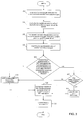
- FIG. 3 is a flow chart of a process for transmitting a fax signal with suppression of multiple modulation and demodulation across a connection.
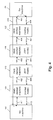
- FIG. 4 is a diagram showing the steps of transmitting a fax signal in a network having mod-demod machines operating in alternate and normal modes.
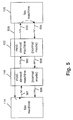
- FIG. 5 is a diagram showing the steps of transmitting a fax signal in a network having mod-demod machines operating in a normal mode.
- the apparatus includes an alternate transmission mode providing for the suppression.
- the mode referred to as a tandem pass-through (TPT) mode, has a mod-demod machine that transmits a fax signal as is, without demodulation or remodulation.
- TPT tandem pass-through
- a network preferably performs only one modulation and demodulation cycle across the connection between the originating and destination fax machines to minimize distortion and delay.
- a mod-demod machine implements this alternate mode by inserting a signal or code into the fax protocol messages transmitted between two fax machines. It uses a known fax protocol to carry the mod-demod information across a connection in a fax communication for suppressing multiple modulation and demodulation. This known protocol was established by the Telecommunication Standardization Sector of the International Telecommunication Union (ITU-T) and is known as ITU-T Recommendation T.30: Terminal Equipment and Protocols for Telematic Services; Procedures for Document Facsimile Transmission in the General Switched Telephone Network (March 1993).
- ITU-T Telecommunication Standardization Sector of the International Telecommunication Union
- FIG. 1 is a diagram of an exemplary digital telecommunications network. It includes fax machines 100, 114, and 126, digital PBXs 102, 112, and 124, mod-demod machines 104, 110, 116, and 122, multiplexer-demultiplexer (mux-demux) machines 106, 108, 118, and 120. Fax machines 100, 114, and 126 are connected with PBXs 102, 112, and 124, respectively, for routing their signals through the network. The PBXs typically transmit process the signals as PCM signals.
- PBXs 102 and 112 are interfaced by mod-demod machine pair 104 and 110, which may demodulate a PCM signal to a baseband level for transmission to a mux-demux machine, and remodulate a baseband level signal to a PCM signal for transmission to a PBX.
- Mux-demux pair 106 and 108 receive the demodulated signal and perform multiplexing and demultiplexing of the signal, typically to save bandwidth along a particular transmission path.
- PBXs 112 and 124 are likewise interfaced by mod-demod machine pair 116 and 122, which may demodulate a PCM signal to a baseband level for transmission to a mux-demux machine and remodulate a baseband level signal to a PCM signal for transmission to a PBX.
- Mux-demux pair 118 and 120 receive the demodulated signal and perform multiplexing and demultiplexing of the signal.
- connections between components provide for various types of signal transmission.
- the connections 105, 109, 117, and 121 between a mod-demod machine and a mux-demux machine represent a low bit rate demodulated fax signal such as a 9600 bps signal.
- the connections 101, 103, 111, 113, 115, 123, and 125 interfacing the PBX's represent, for example, a 64k bps signal.
- the connections 107 and 119 between the mux-demux machines represent a high bit rate signal such as a high speed telecommunication facility signal. Examples provided below explain fax signal transmission through this network.
- FIG. 2 is a diagram of a fax frame structure protocol according to ITU-T Recommendation T.30.
- Machines in a network may transmit protocol messages according to this protocol for transmitting related fax signals.
- Frame structure 200 referred to as a high level data link control (HDLC) frame structure, contains several frames, including a preamble 201 and a binary coded information frame 202.
- Preamble 201 precedes binary coded signaling when a new transmission of information begins in any direction. It ensures that all elements of the communication channel (e.g., echo suppressors) are properly conditioned so that subsequent data may pass unimpaired.
- Binary coded information frame 202 includes a non-standard facilities (NSF) frame 203, a called subscriber identification frame 204, and a digital identification frame 205.
- NSF non-standard facilities
- NSF frame 203 includes optional user-defined information for specific user requirements not covered by the T.30 standard. As this frame is a non-standard frame, the information within it is not required for transmission according to ITU-T Recommendation T.30.
- NSF frame 203 preferably includes a signal or code identifying a working mode of a particular mod-demod machine. That mode signal or code encompasses any type of computer-readable identification of a working or operational mode. It may identify an alternate TPT mode by using, for example, a digitized number, preferably a number not used by the ITU-T Recommendation T.30. Other numbers may also be used to identify other possible working modes.
- Called subscriber identification frame 204 includes an optional signal that may be used to provide the specific identity of a called subscriber by its international telephone number.
- Digital identification frame 205 includes several fields.
- Flag fields 206, 207 and 213 are an eight-bit HDLC flag sequence used to denote the beginning and end of the frame. For the fax transmission procedure, the flag sequence is used to establish bit and frame synchronization. The trailing flag of one frame may also be the leading flag of the following frame. Continued transmission of the flag sequence may be used, for example, to signal to a distant fax machine that the machine remains on-line but is not presently prepared to proceed with the fax transmission procedure.
- Address field 208 provides for identification of specific fax machines in a multi-point arrangement.
- Control field 209 an eight-bit HDLC field, provides the capability of encoding the commands and responses unique to the fax control procedures.
- the HDLC information field includes fields 210 and 211.
- Fax control field 210 is defined as the first eight or sixteen bits of the HDLC information field, and it contains the complete information concerning the type of information being exchanged and the position of the overall sequence.
- Fax control field 210 includes a digital identification signal (DIS), characterizing the standard capabilities of the called fax machine.
- DIS digital identification signal
- Variable length fax information field 211 contains specific information for the control and message interchange between two fax machines.
- Frame checking sequence field 212 is used for error detection and correction.
- Fax information field 211 includes field 214 identifying group 1 or group 2 modulation capabilities within a particular network and a field 215 identifying basic and additional group 3 modulation capabilities. These group modulation capabilities are defined in ITU-T Recommendation T.30.
- Components in a network may include a computer-readable medium, such as a computer memory, for storing this protocol and the information in its frames or storing other protocols.
- the components may then modify the protocol by, for example, inserting information into the NSF frame for subsequent transmission and communication of working modes.
- FIG. 3 is a flowchart of a process for suppressing multiple modulation and demodulation across a connection in a digital telecommunications network.
- This example of such a process uses the fax protocol as defined by ITU-T Recommendation T.30. It is possible to use a protocol unique to a particular type of fax machine, but one advantage of using the T.30 protocol is that it works with fax machines that may not be compatible.
- the process begins with the initial negotiation or handshaking sequence between the originating and destination fax machines.
- the originating fax machine calls a destination fax machine and sends a protocol message or an HDLC frame structure signal, described above.
- the destination fax machine answers the call and returns the frame structure signal through the network (step 301).
- mod-demod machines in the answering direction replace the content of the NSF frame with codes indicating a TPT working mode (step 302).
- the originating fax machine sends the fax data and another frame structure signal (step 303). Because of the initial negotiation including the information in the NSF frame, each mod-demod machine can determine whether to operate in TPT mode or in a normal mode.
- the mod-demod machines in the originating direction receive the transmitted data plus frame structure and replace the content of the NSF frame with codes indicating a TPT mode for transmission of the fax data (step 309).
- each mod-demod machine determines a working mode by examining the NSF frame (step 305). In particular, it determines its working mode by first determining if it received a TPT mode signal in both the answering direction when the frame structure signal was returned and again in the originating direction when another frame structure signal was transmitted along with the fax data (step 305).
- TPT mode signal If it did not receive TPT mode signals in both directions, it operates in a normal mode and performs a modulation or demodulation depending upon where it is in the network (step 306), and it transmits the data plus frame structure including a TPT mode signal in the NSF frame for the next mod-demod machine in the network (step 309).
- the mod-demod machine did receive TPT mode signals in both directions, it next determines if it supports the modulation scheme in the network (step 307). It may determine the modulation scheme by examination of particular frames in the protocol, as described above. If it does not support that scheme, it reverts to a normal mode and performs modulation or demodulation (step 306). Otherwise, it operates in a TPT mode, passing the data as is without modulation or demodulation (step 308), and transmitting the data plus frame structure with a TPT mode signal in the NSF frame to the next element in the network (step 309).
- fax machine 126 transmits a frame structure signal through the network to fax machine 100.
- Fax machine 100 answers by sending a frame structure signal back to fax machine 126.
- the mod-demod machines in the answering direction, machines 104, 110, 116, and 122 insert into the NSF frame a TPT mode signal.
- Fax machine 126 then sends the fax data along with another frame structure in the originating direction.
- Mod-demod machine 122 demodulates the data in the originating direction before transmitting it to mux-demux 120.
- Mod-demod machines 110 and 116 operate in a TPT mode, assuming they support the network modulation scheme, as they are between mod-demod machines 104 and 122. Therefore, they need not remodulate the fax information signal, and they transmit the data as is to PBX 112 and mux-demux 108. In this manner, mod-demod machines 104 and 122 act essentially as a tandem pair, while mod-demod machines 110 and 116 operate in a TPT mode.
- FIG. 4 is a diagram showing more specifically how the mod-demod machines in this example modify the transmitted frame signal.
- Fax machine 126 initially transmits a frame structure signal 400 to fax machine 100 as part the negotiation sequence.
- Fax machine 100 returns a frame structure signal 401, at which point the NSF frame structure typically contains no working mode information.
- Signal 401 is shown as a normal mode signal (N) in quotes, meaning that the signal transmitted by the fax machine would typically contain no working mode signal, and a mod-demod machine would interpret that signal as a normal mode.
- N normal mode signal
- Mod-demod machine 104 inserts a TPT mode signal 402 into the NSF frame and transmits the frame structure signal to mod-demod machine 110.
- Mod-demod machine 110 stores information identifying that it received a TPT mode signal in the answering direction, and it also inserts a TPT mode signal 403 into the NSF frame and transmits the frame structure signal to mod-demod machine 116.
- Mod-demod machines 116 and 122 likewise store an indication of the received TPT mode signal and insert their own TPT mode signals 404 and 405, respectively, into the NSF frame transmitted in the answering direction.
- Fax machine 126 then returns another frame structure signal 406 along with the fax data
- Mod-demod machine 122 receives that signal, which typically contains no working mode information in the NSF frame. Because mod-demod machine 122 did not receive a TPT mode signal, it operates in normal mode, demodulating the transmitted data. It also inserts a TPT mode signal 407 into the NSF frame transmitted in the originating direction with the fax data. Mod-demod machine 116 receives the frame structure signal including the TPT mode signal 407. Because mod-demod machine 116 received a TPT mode signal in both the answering and originating directions (signals 403 and 407, respectively), it operates in a TPT mode, assuming that it supports the network modulation scheme. It may determine such support from other frames in the frame structure signal, as described above.
- Mod-demod machine 116 also inserts a TPT mode signal 408 into the NSF frame of the signal it transmits to mod-demod machine 110.
- Mod-demod machine 110 also operates in a TPT mode, having received TPT mode signals in the answering and originating direction (signals 402 and 408, respectively). It also inserts a TPT mode signal 409 into the NSF frame of the signal it transmits to mod-demod machine 104.
- Mod-demod machine 104 determines that, although it received a TPT mode signal 409 in the originating direction, it did not receive a TPT mode signal in the answering direction. Rather, it received signal 401 from fax machine 100, which included no such code in the NSF frame. Therefore, mod-demod machine 104 operates in normal mode, remodulating the fax signal before transmitting it to fax machine 100. It also inserts a TPT mode signal 410 in the NSF frame of the signal it transmits.
- fax machine 126 sends a frame structure signal to fax machine 114 as part of the negotiation sequence.
- Fax machine 114 replies with a frame structure signal, and in the answering direction mod-demod machines 116 and 122 insert in the NSF frame TPT mode signals. Fax machine 126 then transmits the data and another frame structure signal.
- mod-demod machine 122 demodulates the fax signal from fax machine 126
- mod-demod machine 116 remodulates the fax signal before transmitting it to PBX 112 and fax machine 114.
- FIG. 5 is a diagram showing more specifically how the mod-demod machines in this example modify the transmitted frame structure signal.
- Fax machine 126 initially transmits a frame structure signal 500 to fax machine 114 as part the negotiation sequence.
- Fax machine 114 returns a frame structure signal 501, at which point the NSF frame structure typically contains no working mode information, indicating a normal working mode.
- Mod-demod machine 116 inserts a TPT mode signal 502 into the NSF frame and transmits the frame structure signal to mod-demod machine 122.
- Mod-demod machine 122 stores information identifying that it received a TPT mode signal in the answering direction, and it also inserts a TPT mode signal 503 into the NSF frame and transmits the frame structure signal to fax machine 126.
- Fax machine 126 then returns another frame structure signal 504 along with the fax data.
- Mod-demod machine 122 receives that signal, which typically contains no working mode information in the NSF frame, indicating a normal working mode. Because mod-demod machine 122 did not receive a TPT mode signal, it operates in normal mode, demodulating the transmitted data. It also inserts a TPT mode signal 505 into the NSF frame transmitted in the originating direction with the fax data. Mod-demod machine 116 receives the frame structure signal including the TPT mode signal 505. Although mod-demod machine 116 received TPT mode signal 505 in the originating direction, it received no TPT mode signal in the answering direction. Rather, it received signal 501 indicating a normal mode.
- mod-demod machine 116 remodulates the fax signal before transmitting it to fax machine 114.
- Mod-demod machine 116 also includes a TPT mode signal 506 in the frame structure signal that it transmits. Accordingly, when a mod-demod machine receives TPT mode signals in both the answering and originating directions, it knows that it may operate in TPT mode. This type of handshaking essentially involves receiving a TPT mode signal in one direction of protocol transmission and operating in a TPT mode if a reply TPT mode signal is received in the other direction.
- the invention may be summarised as an apparatus and method for suppressing multiple modulation and demodulation of a facsimile signal in a digital telecommunications network.
- the apparatus either modulates/demodulates or passes through a facsimile message according to a protocol in the message.
Landscapes
- Engineering & Computer Science (AREA)
- Multimedia (AREA)
- Signal Processing (AREA)
- Facsimile Transmission Control (AREA)
- Communication Control (AREA)
- Facsimiles In General (AREA)
Applications Claiming Priority (2)
| Application Number | Priority Date | Filing Date | Title |
|---|---|---|---|
| US08/989,647 US6327053B1 (en) | 1997-12-12 | 1997-12-12 | Facsimile signal transmission with suppression of multiple modulation and demodulation across a connection |
| US989647 | 1997-12-12 |
Publications (3)
| Publication Number | Publication Date |
|---|---|
| EP0923229A2 true EP0923229A2 (fr) | 1999-06-16 |
| EP0923229A3 EP0923229A3 (fr) | 2000-05-10 |
| EP0923229B1 EP0923229B1 (fr) | 2008-04-02 |
Family
ID=25535321
Family Applications (1)
| Application Number | Title | Priority Date | Filing Date |
|---|---|---|---|
| EP98309620A Expired - Lifetime EP0923229B1 (fr) | 1997-12-12 | 1998-11-24 | Transmission de signal de télécopie avec suppression de modulations et démodulations multiples à travers une connection |
Country Status (4)
| Country | Link |
|---|---|
| US (1) | US6327053B1 (fr) |
| EP (1) | EP0923229B1 (fr) |
| CA (1) | CA2254774C (fr) |
| DE (1) | DE69839324T2 (fr) |
Families Citing this family (2)
| Publication number | Priority date | Publication date | Assignee | Title |
|---|---|---|---|---|
| US6104505A (en) * | 1997-04-30 | 2000-08-15 | Ricoh Company, Ltd. | Method and apparatus for routing data information conveyed in a facsimile message |
| US7209264B2 (en) * | 2002-12-20 | 2007-04-24 | International Business Machines Corporation | Pre-connection telephony data signal exchanges |
Family Cites Families (21)
| Publication number | Priority date | Publication date | Assignee | Title |
|---|---|---|---|---|
| JPS59215174A (ja) | 1983-05-20 | 1984-12-05 | Canon Inc | フアクシミリ装置 |
| US4924480A (en) | 1988-03-11 | 1990-05-08 | American Telephone And Telegraph Company | Codecs with suppression of multiple encoding/decodings across a connection |
| JP2722347B2 (ja) * | 1988-07-11 | 1998-03-04 | 株式会社リコー | ファクシミリ装置 |
| JP2845377B2 (ja) * | 1989-07-20 | 1999-01-13 | キヤノン株式会社 | 通信端末装置およびその制御方法 |
| US5418628A (en) | 1989-12-22 | 1995-05-23 | Perkins; John L. | Integrated data communication system |
| US5268770A (en) | 1990-01-16 | 1993-12-07 | Media Interface Co., Ltd. | System and a method for facsimile transmission |
| JPH03214841A (ja) * | 1990-01-19 | 1991-09-20 | Fujitsu Ltd | パケット通信手順によるモデムプール方式 |
| EP0478205B1 (fr) | 1990-09-27 | 1996-08-21 | AT&T Corp. | Appareil pour la transmission numérique d'appels fac-similés utilisant détection et regénération de tonalité de protection contre l'écho |
| US5216519A (en) | 1990-09-27 | 1993-06-01 | At&T Bell Laboratories | Echo protection tone detection and regeneration for digital transmission of facsimile calls |
| US5307174A (en) * | 1991-01-11 | 1994-04-26 | Mitsubishi Denki Kabushiki Kaisha | High efficiency facsimile transmission apparatus |
| US5249218A (en) * | 1992-04-06 | 1993-09-28 | Spectrum Information Technologies, Inc. | Programmable universal interface system |
| JP2546113B2 (ja) | 1992-12-17 | 1996-10-23 | 村田機械株式会社 | ファクシミリ装置 |
| US5742639A (en) * | 1994-05-13 | 1998-04-21 | Westinghouse Electric Corporation | Mobile terminal apparatus and method for a satellite communication system |
| US5711012A (en) * | 1994-08-01 | 1998-01-20 | Paradyne Corporation | Cellular phone interface for a simultaneous voice/data modem |
| US5461488A (en) | 1994-09-12 | 1995-10-24 | Motorola, Inc. | Computerized facsimile (FAX) system and method of operation |
| JP2697642B2 (ja) | 1994-11-24 | 1998-01-14 | 日本電気株式会社 | Atm音声符号化装置 |
| US5752199A (en) * | 1995-12-18 | 1998-05-12 | Paradyne Corporation | Method and apparatus for sending faxes over analog cellular |
| US5784633A (en) * | 1996-03-12 | 1998-07-21 | International Business Machines Corporation | System for obtaining status data unrelated to user data path from a modem and providing control data to the modem without interrupting user data flow |
| US5751796A (en) * | 1996-06-21 | 1998-05-12 | Paradyne Corporation | Rapid startup protocol for communication between a plurality of modems |
| US5878078A (en) * | 1996-08-15 | 1999-03-02 | Ericsson Inc | Pass-through modem supporting both analog and digital cellular data communications |
| US5966663A (en) * | 1997-01-14 | 1999-10-12 | Ericsson Messaging Systems Inc. | Data communications protocol for facilitating communications between a message entry device and a messaging center |
-
1997
- 1997-12-12 US US08/989,647 patent/US6327053B1/en not_active Expired - Lifetime
-
1998
- 1998-11-19 CA CA002254774A patent/CA2254774C/fr not_active Expired - Fee Related
- 1998-11-24 DE DE69839324T patent/DE69839324T2/de not_active Expired - Lifetime
- 1998-11-24 EP EP98309620A patent/EP0923229B1/fr not_active Expired - Lifetime
Also Published As
| Publication number | Publication date |
|---|---|
| EP0923229A3 (fr) | 2000-05-10 |
| DE69839324D1 (de) | 2008-05-15 |
| US6327053B1 (en) | 2001-12-04 |
| CA2254774A1 (fr) | 1999-06-12 |
| CA2254774C (fr) | 2003-05-20 |
| DE69839324T2 (de) | 2008-07-03 |
| EP0923229B1 (fr) | 2008-04-02 |
Similar Documents
| Publication | Publication Date | Title |
|---|---|---|
| EP0382416B1 (fr) | Service de fac-similé | |
| US5517324A (en) | Method and system for increasing the compatibility of a fax machine | |
| US5752199A (en) | Method and apparatus for sending faxes over analog cellular | |
| US4888766A (en) | Multi-terminal control system | |
| WO1995026097A1 (fr) | Reseau de telecopieurs a commutation par paquets et son procede d'exploitation | |
| US4771335A (en) | Method and apparatus for sending data | |
| ES2251037T3 (es) | Interfaz de red digital para equipo de fax analogico. | |
| US6327053B1 (en) | Facsimile signal transmission with suppression of multiple modulation and demodulation across a connection | |
| US7639403B2 (en) | Technique for connecting fax machines with advanced capabilities over a network which is not adapted to handle certain protocols | |
| US7310160B2 (en) | Facsimile communication apparatus and method permitting reliable V.17 communication | |
| JPH08167985A (ja) | ファクシミリ通信方法の高速化方法 | |
| EP0426336B1 (fr) | Compression d'un signal fac-similé PCM pour transmission dans un système de commutation progiciel | |
| EP0478205B1 (fr) | Appareil pour la transmission numérique d'appels fac-similés utilisant détection et regénération de tonalité de protection contre l'écho | |
| Teramura et al. | Experimental facsimile communication system on packet switched data network | |
| JP3046117B2 (ja) | 通信方式 | |
| JPH02150166A (ja) | ファクシミリ装置 | |
| JP3114373B2 (ja) | G4ファクシミリ装置 | |
| JPH07264378A (ja) | ファクシミリ装置 | |
| JPH033449A (ja) | 電子交換機 | |
| JP2000270190A (ja) | 通信システム及び通信装置及び通信方法 | |
| JPH1155487A (ja) | ファックス送信システム | |
| JPH04280570A (ja) | Isdn網における着呼側ファクシミリ装置の通信制御方式 | |
| JPH04220866A (ja) | 中継同報方式 | |
| McCullough | CCITT standardization for digital facsimile | |
| JPH11155057A (ja) | 通信端末装置 |
Legal Events
| Date | Code | Title | Description |
|---|---|---|---|
| PUAI | Public reference made under article 153(3) epc to a published international application that has entered the european phase |
Free format text: ORIGINAL CODE: 0009012 |
|
| AK | Designated contracting states |
Kind code of ref document: A2 Designated state(s): DE FR GB |
|
| AX | Request for extension of the european patent |
Free format text: AL;LT;LV;MK;RO;SI |
|
| RAP3 | Party data changed (applicant data changed or rights of an application transferred) |
Owner name: NORTEL NETWORKS CORPORATION |
|
| PUAL | Search report despatched |
Free format text: ORIGINAL CODE: 0009013 |
|
| AK | Designated contracting states |
Kind code of ref document: A3 Designated state(s): AT BE CH CY DE DK ES FI FR GB GR IE IT LI LU MC NL PT SE |
|
| AX | Request for extension of the european patent |
Free format text: AL;LT;LV;MK;RO;SI |
|
| RIC1 | Information provided on ipc code assigned before grant |
Free format text: 7H 04N 1/333 A, 7H 04N 1/00 B, 7H 04N 1/32 B |
|
| RAP1 | Party data changed (applicant data changed or rights of an application transferred) |
Owner name: NORTEL NETWORKS LIMITED |
|
| 17P | Request for examination filed |
Effective date: 20001110 |
|
| AKX | Designation fees paid |
Free format text: DE FR GB |
|
| RAP1 | Party data changed (applicant data changed or rights of an application transferred) |
Owner name: NORTEL NETWORKS LIMITED |
|
| GRAP | Despatch of communication of intention to grant a patent |
Free format text: ORIGINAL CODE: EPIDOSNIGR1 |
|
| GRAS | Grant fee paid |
Free format text: ORIGINAL CODE: EPIDOSNIGR3 |
|
| GRAA | (expected) grant |
Free format text: ORIGINAL CODE: 0009210 |
|
| AK | Designated contracting states |
Kind code of ref document: B1 Designated state(s): DE FR GB |
|
| REG | Reference to a national code |
Ref country code: GB Ref legal event code: FG4D |
|
| REF | Corresponds to: |
Ref document number: 69839324 Country of ref document: DE Date of ref document: 20080515 Kind code of ref document: P |
|
| ET | Fr: translation filed | ||
| PLBE | No opposition filed within time limit |
Free format text: ORIGINAL CODE: 0009261 |
|
| STAA | Information on the status of an ep patent application or granted ep patent |
Free format text: STATUS: NO OPPOSITION FILED WITHIN TIME LIMIT |
|
| 26N | No opposition filed |
Effective date: 20090106 |
|
| PGFP | Annual fee paid to national office [announced via postgrant information from national office to epo] |
Ref country code: FR Payment date: 20141027 Year of fee payment: 17 Ref country code: DE Payment date: 20141201 Year of fee payment: 17 Ref country code: GB Payment date: 20141027 Year of fee payment: 17 |
|
| REG | Reference to a national code |
Ref country code: DE Ref legal event code: R119 Ref document number: 69839324 Country of ref document: DE |
|
| GBPC | Gb: european patent ceased through non-payment of renewal fee |
Effective date: 20151124 |
|
| REG | Reference to a national code |
Ref country code: FR Ref legal event code: ST Effective date: 20160729 |
|
| PG25 | Lapsed in a contracting state [announced via postgrant information from national office to epo] |
Ref country code: GB Free format text: LAPSE BECAUSE OF NON-PAYMENT OF DUE FEES Effective date: 20151124 Ref country code: DE Free format text: LAPSE BECAUSE OF NON-PAYMENT OF DUE FEES Effective date: 20160601 |
|
| PG25 | Lapsed in a contracting state [announced via postgrant information from national office to epo] |
Ref country code: FR Free format text: LAPSE BECAUSE OF NON-PAYMENT OF DUE FEES Effective date: 20151130 |