EP0973052B1 - Faseroptische Kupplungshülse mit Positionierungshilfe - Google Patents
Faseroptische Kupplungshülse mit Positionierungshilfe Download PDFInfo
- Publication number
- EP0973052B1 EP0973052B1 EP99305636A EP99305636A EP0973052B1 EP 0973052 B1 EP0973052 B1 EP 0973052B1 EP 99305636 A EP99305636 A EP 99305636A EP 99305636 A EP99305636 A EP 99305636A EP 0973052 B1 EP0973052 B1 EP 0973052B1
- Authority
- EP
- European Patent Office
- Prior art keywords
- fiber optic
- optic connector
- sleeve
- passageway
- connector sleeve
- Prior art date
- Legal status (The legal status is an assumption and is not a legal conclusion. Google has not performed a legal analysis and makes no representation as to the accuracy of the status listed.)
- Expired - Lifetime
Links
- 239000000835 fiber Substances 0.000 title claims description 225
- 239000013307 optical fiber Substances 0.000 claims description 14
- 238000003780 insertion Methods 0.000 claims description 7
- 230000037431 insertion Effects 0.000 claims description 7
- 230000001186 cumulative effect Effects 0.000 claims description 6
- 238000000465 moulding Methods 0.000 description 13
- 230000003287 optical effect Effects 0.000 description 6
- 238000004519 manufacturing process Methods 0.000 description 4
- 239000000463 material Substances 0.000 description 2
- 230000000694 effects Effects 0.000 description 1
- 238000009434 installation Methods 0.000 description 1
- 230000013011 mating Effects 0.000 description 1
- 238000000034 method Methods 0.000 description 1
Images

Classifications
-
- G—PHYSICS
- G02—OPTICS
- G02B—OPTICAL ELEMENTS, SYSTEMS OR APPARATUS
- G02B6/00—Light guides; Structural details of arrangements comprising light guides and other optical elements, e.g. couplings
- G02B6/24—Coupling light guides
- G02B6/36—Mechanical coupling means
- G02B6/38—Mechanical coupling means having fibre to fibre mating means
- G02B6/3807—Dismountable connectors, i.e. comprising plugs
- G02B6/381—Dismountable connectors, i.e. comprising plugs of the ferrule type, e.g. fibre ends embedded in ferrules, connecting a pair of fibres
- G02B6/3826—Dismountable connectors, i.e. comprising plugs of the ferrule type, e.g. fibre ends embedded in ferrules, connecting a pair of fibres characterised by form or shape
- G02B6/3831—Dismountable connectors, i.e. comprising plugs of the ferrule type, e.g. fibre ends embedded in ferrules, connecting a pair of fibres characterised by form or shape comprising a keying element on the plug or adapter, e.g. to forbid wrong connection
-
- G—PHYSICS
- G02—OPTICS
- G02B—OPTICAL ELEMENTS, SYSTEMS OR APPARATUS
- G02B6/00—Light guides; Structural details of arrangements comprising light guides and other optical elements, e.g. couplings
- G02B6/24—Coupling light guides
- G02B6/36—Mechanical coupling means
- G02B6/38—Mechanical coupling means having fibre to fibre mating means
- G02B6/3807—Dismountable connectors, i.e. comprising plugs
- G02B6/389—Dismountable connectors, i.e. comprising plugs characterised by the method of fastening connecting plugs and sockets, e.g. screw- or nut-lock, snap-in, bayonet type
- G02B6/3893—Push-pull type, e.g. snap-in, push-on
Definitions
- the present invention relates generally to fiber optic connector sleeves and, more particularly, to fiber optic connector sleeves having positioning ribs for facilitating the insertion and alignment of one or more fiber optic connectors.
- Fiber optic connector sleeves are frequently utilized to facilitate the mating of one or more fiber optic connectors.
- a pair of fiber optic connectors can be inserted into the opposed ends of a fiber optic connector sleeve.
- the fiber optic connector sleeve serves to align the fiber optic connectors to some degree such that the optical fibers upon which the fiber optic connectors are mounted are also appropriately aligned.
- fiber optic connector sleeves can be mounted to a patch panel or within an enclosure or like so as to align a pair of fiber optic connectors inserted into opposite ends of the fiber optic connector sleeve.
- fiber optic connector sleeves can also be adapted to receive only a single fiber optic connector inserted through one end thereof. Even in this instance, however, the fiber optic connector sleeve is adapted to align the optical fiber(s) upon which the fiber optic connector is mounted with optical fiber(s), an optical signal source or other optical components that are mounted in a predefined aligned relationship to the fiber optic connector sleeve.
- a fiber optic connector that is adapted to receive only a single fiber optic connector can be mounted to an enclosure or a housing, such as the housing of a computer or a telephone, in order to optically connect the optical fibers upon which the fiber optic connector is mounted with optical components within the enclosure or housing.
- fiber optic connector sleeves can have a variety of shapes and sizes
- typical fiber optic connector sleeves for multifiber connectors such as MTP connectors
- MTP connectors are rectangular in lateral cross-section and define a lengthwise extending passageway that also has a generally rectangular shape in lateral cross-section.
- these conventional fiber optic connector sleeves can receive and align fiber optic connectors having an outer housing with a corresponding rectangular shape in lateral cross-section.
- Conventional fiber optic connector sleeves are molded from a plastic material.
- the lengthwise extending passageway must generally have some draft or be tapered at least somewhat in a lengthwise extending direction in order to permit the mold pins to be removed from the passageway once the fiber optic connector sleeve has been molded thereabout.
- the outer housings of the fiber optic connectors that are inserted into these conventional fiber optic connector sleeves are not tapered so as to match the passageway defined by the connector sleeve. As such, some movement of the fiber optic connectors relative to the fiber optic connector sleeve is permitted, thereby reducing the precision with which a conventional fiber optic connector sleeve aligns the fiber optic connector.
- the sidewalls of a conventional fiber optic connector sleeve generally bow inward following removal of the molding pins. As will be apparent, this bowing of the sidewalls of a fiber optic connector sleeve further reduces the precision with which a fiber optic connector sleeve can align fiber optic connectors.
- multifiber connectors typically include guide pins which extend outwardly from the ferrule of one of the multifiber connectors for insertion into corresponding openings defined by the ferrule of the other fiber optic connector.
- conventional fiber optic connector sleeves generally provide a relatively coarse alignment for the fiber optic connectors, while the guide pins that extend between the respective ferrules provide for the precise alignment of the fiber optic connectors.
- some fiber optic connector sleeves may fail to sufficiently align the fiber optic connectors such that the guide pins of one fiber optic connector can readily engage the corresponding openings defined by the ferrule of the other fiber optic connector.
- the problems created by this misalignment are particularly evident for the smaller fiber optic connectors, such as mini-MTP connectors which include mini-MT ferrules.
- these fiber optic connectors generally include much smaller guide pins which extend outwardly from the ferrule of one fiber optic connector for engaging the much smaller openings defined by the ferrule of the other fiber optic connector.
- misalignment such as misalignment created by bowing of the sidewalls of the fiber optic connector sleeve or tapering of the passageway defined by the fiber optic connector sleeve, can result in significant misalignment of the fiber optic connectors and, more particularly, the optical fibers upon which the fiber optic connectors are mounted.
- US 5,386,487 discloses a fiber optic connector sleeve assembly having a passageway adapted to receive and align a correspondingly shaped fiber optic connector assembly therein.
- JP-A-9-258065 discloses a fiber optic connector sleeve having an internal passageway provided with a lengthwise extending recessed groove defined therein which is adapted for receiving a fiber optic connector within the sleeve.
- fiber optic connector sleeves are widely available, it would nevertheless be desirable to provide a fiber optic connector sleeve which can align the fiber optic connectors inserted into the fiber optic connector sleeve with more precision.
- a fiber optic connector sleeve which could be manufactured, such as by molding, without impairing or otherwise reducing the alignment provided by the fiber optic connector sleeve, such as by requiring the features utilized for alignment to be tapered.
- a fiber optic connector sleeve is provided according to the present invention which precisely aligns fiber optic connectors and which can be readily manufactured, such as by molding, without impairing the alignment precision provided by the fiber optic connector sleeve.
- the present invention there is provided a fiber optic connector sleeve as described in Claim 1. Owing to the tapering sidewalls, the manufacturing and, more particularly, the molding of the fiber optic connector sleeve is facilitated the molding pins about which the fiber optic connector sleeve is molded can be readily withdrawn from the fiber optic connector sleeve following the molding process, even though the positioning ribs are untapered.
- the cumulative width of the recessed interior sidewalls for the sleeve-housing in lateral cross-section is preferably greater than the cumulative width of the positioning ribs in lateral cross-section such that sufficient draft is provided by the fiber optic connector sleeve of the present invention to remove the molding pins.
- the sleeve housing includes a plurality of walls that intersect to define a plurality of corners.
- the sleeve housing can have a generally rectangular shape in lateral cross-section so as to define four corners.
- the fiber optic connector sleeve of one advantageous embodiment includes four positioning ribs disposed in respective ones of the four corners of the passageway. Regardless of the number of positioning ribs, each positioning rib of one advantgeous embodiment has an L-shape in lateral cross-section so as to include a first portion that extends lengthwise along one of the walls that define the respective corner and a second portion that extends lengthwise along the other of the walls that define the respective corners.
- each positioning rib extends parallel to the lengthwise extending axis of the passageway and is untapered.
- the positioning ribs can engage corresponding portions of the untapered outer housing of a fiber optic connector, such as the corner portions of the outer housing of a fiber optic connector, as the fiber optic connector is inserted into the fiber optic connector sleeve, thereby controllably positioning the fiber optic connector within the fiber optic connector sleeve and appropriately aligning the optical fiber upon which the fiber optic connector is mounted with other optical fibers.
- the fiber optic connector sleeve of the present invention which includes a sleeve housing having positioning ribs extending lengthwise therethrough provides precise alignment for fiber optic connectors inserted into the fiber optic connector sleeve, including relatively small or miniature fiber optic connectors.
- the fiber optic connector sleeve of the present invention can be readily manufactured, such as by molding, without impairing the precision with which the resulting fiber optic connector sleeve aligns fiber optic connectors.
- the tolerances to which the recessed interior sidewalls are constructed can be relaxed since the recessed interior sidewalls do not contact the fiber optic connector, thereby further simplifying the manufacturing process.
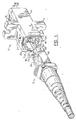
- fiber optic connector sleeve 10 according to one advantageous embodiment of the present invention is illustrated.
- the term "fiber optic connector sleeve” as used herein is intended to also encompass jacks, adapters or the like and can therefore be readily configured to receive only a single fiber optic connector through one end of the fiber optic connector sleeve and to align the optical fibers upon which the fiber optic connector is mounted with other optical fibers or optical elements that are disposed in a fixed position relative to the fiber optic connector sleeve.
- the fiber optic connector sleeve can be embodied as a jack that is mounted to the housing of a computer or a telephone so as to receive a single fiber optic connector and to align the optical fibers upon which the fiber optic connector is mated with optical fibers or other optical components within the housing.
- the fiber optic connector sleeve 10 is shown to be unattached for purposes of illustration, the fiber optic connector sleeve is typically mounted, such as to a patch panel or within an enclosure or the like, for receiving one and, more commonly, a pair of fiber optic connectors.
- the fiber optic connector sleeve can include a pair of flanges 11 that extend outwardly from a medial portion of the fiber optic connector sleeve for facilitating mounting of the fiber optic connector sleeve to a patch panel or the like.
- the fiber optic connector sleeve 10 includes a sleeve housing 14 defining a lengthwise extending passageway 16 for receiving the leading or forward end of a fiber optic connector 12 .
- the passageway defined by the sleeve housing is adapted to receive the outer housing 18 of the fiber optic connector. While the fiber optic connector sleeve could be used in conjunction with single fiber connectors, the fiber optic connector sleeve of the present invention is particularly well suited for receiving and aligning multifiber connectors.
- the sleeve housing 14 includes sidewalls that define a lengthwise extending passageway 16 .
- the sleeve housing can be shaped so as to define a passageway having a variety of shapes in lateral cross-section, including a passageway having a generally circular shape in lateral cross-section for receiving a generally cylindrical fiber optic connector 12.
- the passageway has a generally rectangular shape in lateral cross-section so as to define four corners.
- the sleeve housing 14 includes a plurality of positioning ribs 20 extending lengthwise through the passageway 16 .
- the positioning ribs generally extend lengthwise from the opposed ends of the fiber optic connector sleeve 10 to a medial portion of the fiber optic connector sleeve.
- the positioning ribs can extend lengthwise through the entire fiber optic connector sleeve, the positioning ribs typically terminate or are interrupted in a medial portion of the fiber optic connector sleeve which includes various other alignment features, such as the projections 21 which are designed to engage corresponding castellations 19 defined by the forward end of the fiber optic connector.
- the positioning ribs 20 engage the fiber optic connector 12 and position the fiber optic connector within the fiber optic connector sleeve 10 .
- the positioning ribs engage corresponding portions of the outer housing 18 of the fiber optic connector in order to appropriately position the fiber optic connector within the fiber optic connector sleeve.
- the positioning ribs extend into the passageway 16 from locations proximate at least two corners of the passageway. More preferably, the positioning ribs extend into the passageway from each of the corners of the passageway in order to align the fiber optic connector within the passageway defined by the fiber optic connector sleeve.
- the sleeve housing 14 which defines a passageway having a generally rectangular shape in lateral cross-section with four corners, the sleeve housing preferably includes four positioning ribs located proximate respective ones of the four corners of the passageway.
- the sleeve housing 14 of one advantageous embodiment includes positioning ribs 20 which have a L-shape in lateral cross-section.
- each positioning rib of this advantageous embodiment includes a first portion that extends lengthwise along one of the walls that define the respective corner and a second portion that extends lengthwise along the other wall that defines the respective corner.
- the positioning ribs can engage corresponding corners of the outer housing 18 of the fiber optic connector 12 that is inserted through the end of the fiber optic connector sleeve 10 and can serve essentially as a track to guide the fiber optic connector lengthwise through the passageway 16 defined by the fiber optic conneccor sleeve.
- the positioning ribs 20 preferably extend parallel to a lengthwise extending axis 16a defined by the passageway 16 .
- the positioning ribs are therefore untapered in a lengthwise extending direction.
- the positioning ribs will serve to engage and align a fiber optic connector 12 having an untapered outer housing 18 throughout the length of the fiber optic connector sleeve 10 .
- the portions of the positioning ribs immediately adjacent the opposed ends of the fiber optic connector sleeve can be beveled or chamfered in order to provide a lead-in feature that facilitates insertion of the fiber optic connector into the fiber optic connector sleeve.
- the sleeve housing 14 of the fiber optic connector sleeve 10 of the present invention also includes interior sidewalls 22 extending between the positioning ribs 20 that are recessed relative to the positioning ribs. By being recessed relative to the positioning ribs, these interior sidewalls of the sleeve housing facilitate insertion of the fiber optic connector 12 into the fiber optic connector sleeve 10 by providing clearance between the fiber optic connector and the fiber optic connector sleeve so that the recessed interior sidewalls do not frictionally engage or otherwise contact the outer housing 18 of the fiber optic connector.
- the fiber optic connector is precisely aligned within the fiber optic connector sleeve even without engagement of the outer housing of the fiber optic connector by the recessed interior sidewalls of the sleeve housing.
- the interior sidewalls 22 of the sleeve housing 14 can have increased or otherwise more relaxed tolerances since the recessed interior sidewalls do not contribute to the alignment of the fiber optic connector 12 within the fiber optic connector sleeve 10 .
- the design of the fiber optic connector sleeve of the present invention facilitates its manufacture due to the increased acceptable tolerances for the recessed interior sidewalls.
- the fiber optic connector sleeve 10 of the present invention is preferably molded from a plastic material by molding about mold pins which define the passageway 16 through the sleeve housing 14 of the resulting fiber optic connector sleeve. Since the positioning ribs 20 are untapered so as to engage and provide alignment for the fiber optic connector 12 throughout the length of the fiber optic connector sleeve, the recessed interior sidewalls 22 of the sleeve housing are preferably tapered in a lengthwise extending direction.
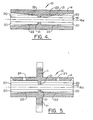
- the recessed interior sidewalls of the sleeve housing preferably taper inwardly in a lengthwise extending direction from an end portion of the sleeve housing toward a medial portion of the sleeve housing as shown in Figures 4 and 5.
- the recessed interior sidewalls provide draft such that the mold pins can be removed from the passageway following molding of the fiber optic connector sleeve about the mold pins.
- the recessed interior sidewalls can be tapered or sloped at a variety of angles
- the recessed interior sidewalls of one advantageous embodiment are tapered at an angle of about 1/4° relative to the lengthwise extending axis 16a defined by the passageway.
- the cumulative width of the recessed interior sidewalls 22 of the sleeve housing 14 in lateral cross-section is preferably greater than the cumulative width of the positioning ribs 20 in lateral cross-section.
- a greater percentage of the surface area of the interior sidewalls which define the passageway of the sleeve housing is preferably comprised of the recessed interior sidewalls than the positioning ribs.
- any bowing of the walls of the sleeve housing following molding of the fiber optic connector sleeve 10 will primarily effect the recessed interior sidewalls of the sleeve housing. Since these recessed interior sidewalls are spaced from the outer housing 18 of any fiber optic connector 12 inserted into the fiber optic connector sleeve, bowing of the recessed interior sidewalls will not generally affect the alignment of the fiber optic connector within the fiber optic connector sleeve, i.e., the amount of bowing will generally be less than the amount by which the interior sidewalls are recessed relative to the positioning ribs. For this additional reason, the alignment provided by the fiber optic connector sleeve of the present invention is therefore further improved relative to conventional fiber optic connector sleeves.
- a fiber optic connector 12 such as the multifiber connector illustrated in Figure 1 can be inserted through an end portion of the fiber optic connector sleeve.
- the alignment key of the fiber optic connector is initially aligned with a correspondingly enlarged portion of the passageway 16 and the fiber optic connector is thereafter inserted into the passageway.
- the fiber optic connector and, more particularly, the corners of the outer housing 18 of the fiber optic connector are engaged by the positioning ribs 20 of the sleeve housing 14 of the fiber optic connector sleeve and are guided through the passageway during insertion of the fiber optic connector into the fiber optic connector sleeve.
- the positioning ribs serve to align the fiber optic connector 12 with another fiber optic connector inserted through the opposite end of the fiber optic connector sleeve 10 or with other optical elements.
- the optical fibers upon which the fiber optic connectors are mated can be aligned.
- the alignment afforded by the positioning ribs of the fiber optic connector sleeve of the present invention effectively aligns the guide pins of one fiber optic connector with corresponding openings defined by the ferrule of the other fiber optic connector, thereby further aligning the optical fibers upon which the fiber optic connectors are mounted.
- the sleeve housing of the fiber optic connector sleeve can also define a window 24 for receiving a corresponding latch 26 of the fiber optic connector in order to secure the fiber optic connector within the fiber optic connector sleeve following its insertion therein.
- the fiber optic connector sleeve 10 of the present invention which includes a sleeve housing 14 having lengthwise extending positioning ribs 20 provides precise alignment for fiber optic connectors 12 inserted into the fiber optic connector sleeve, including relatively small or miniature fiber optic connectors.
- the fiber optic connector sleeve of the present invention can be readily manufactured, such as by molding, without impairing the precision with which the resulting fiber optic connector sleeve aligns fiber optic connectors.
- the tolerances to which the recessed interior sidewalls are constructed can be relaxed since the recessed interior sidewalls do not generally contact the fiber optic connector, thereby further simplifying the manufacturing process.
Landscapes
- Physics & Mathematics (AREA)
- General Physics & Mathematics (AREA)
- Optics & Photonics (AREA)
- Mechanical Coupling Of Light Guides (AREA)
Claims (6)
- Lichtleiter-Verbinderhülse (10), die umfasst:ein Hülsengehäuse (14), das einen in Längsrichtung verlaufenden Durchlass (16) zum Aufnehmen wenigstens eines Teils eines Lichtleiterverbinders (12) aufweist, wobei der Durchlass, der durch das Hülsengehäuse gebildet wird, im Querschnitt eine Vielzahl von Ecken aufweist,wobei das Hülsengehäuse eine Vielzahl von Positionierrippen (20) umfasst, die sich in Längsrichtung durch den Durchlass (16) hindurch erstrecken, um mit dem Lichtleiterverbinder (12) in Eingriff zu kommen und den Lichtleiterverbinder in der Lichtleiter-Verbinderhülse (10) zu positionieren, und sich die Positionierrippen von Positionen aus in den Durchlass hinein erstrecken, die nahe an wenigstens zwei der Ecken des Durchlasses liegen, und dadurch gekennzeichnet, dass innere Seitenwände (22) des Hülsengehäuses (14), die sich zwischen den Positionierrippen (20) erstrecken, relativ zu den Positionierrippen vertieft sind und sich in einer Längsrichtung von einem Endabschnitt des Hülsengehäuses aus auf einen Mittelabschnitt des Hülsengehäuses zu verjüngen.
- Lichtleiter-Verbinderhülse nach Anspruch 1, dadurch gekennzeichnet, dass das Hülsengehäuse (1) eine Vielzahl von Wänden umfasst, die einander schneiden und so die Vielzahl von Ecken bilden, wobei sich eine Positionierrippe (20) in wenigstens zwei der Ecken des Durchlasses befindet und im Querschnitt eine L-Form hat und jede Positionierrippe umfasst:einen ersten Abschnitt, der sich in Längsrichtung entlang einer der Wände erstreckt, die die Ecke bilden; undeinen zweiten Abschnitt, der sich in Längsrichtung entlang der anderen der Wände erstreckt, die die Ecke bilden.
- Lichtleiter-Verbinderhülse nach Anspruch 1 oder 2, dadurch gekennzeichnet, dass der Durchlass (16), der durch das Hülsengehäuse (14) gebildet wird, im Querschnitt eine im Allgemeinen rechteckige Form hat, die vier Ecken bildet, und wobei das Hülsengehäuse (14) vier Positionierrippen umfasst, die in jeweiligen der vier Ecken des Durchlasses angeordnet sind.
- Lichtleiter-Verbinderhülse nach einem der Ansprüche 1 bis 3, dadurch gekennzeichnet, dass der Durchlass (16) eine in Längsrichtung verlaufende Achse (16a) aufweist und wobei sich die Positionierrippen (20) parallel zu der in Längsrichtung verlaufenden Achse des Durchlasses erstrecken, so dass sich die Positionierrippen (20) nicht verjüngen.
- Lichtleiter-Verbinderhülse nach einem der Ansprüche 1 bis 4, dadurch gekennzeichnet, dass die kumulative Breite der vertieften inneren Seitenwände (22) des Hülsengehäuses (14) im Querschnitt größer ist als die kumulative Breite der Positionierrippen (20) im Querschnitt.
- Lichtleiter-Verbinderhülse (10) nach Anspruch 1, wobei das Hülsengehäuse (14) einen in Längsrichtung verlaufenden Durchlass (16) zum Aufnehmen wenigstens eines Teils eines Mehrfachfaser-Mini-MTP-Verbinders aufweist, der zur Anbringung an den Endabschnitten einer Vielzahl von Lichtleitfasern eingerichtet ist,
wobei die Vielzahl von Positionierrippen (20) dazu dienen, mit dem Mehrfachfaser-Mini-MTP-Verbinder in Eingriff zu kommen und den Mehrfachfaser-Mini-MTP-Verbinder in der Lichtleiter-Verbinderhülse (10) zu positionieren, und durch die sich nach innen verjüngenden Seitenwände verhindert wird, dass der Mini-MTP-Verbinder während der Einführung des Mehrfachfaser-Mini-MTP-Verbinders in die Lichtleiter-Verbinderhülse mit den inneren Seitenwänden in Eingriff kommt.
Applications Claiming Priority (2)
| Application Number | Priority Date | Filing Date | Title |
|---|---|---|---|
| US09/118,440 US6130977A (en) | 1998-07-17 | 1998-07-17 | Fiber optic connector sleeve having positioning ribs |
| US118440 | 1998-07-17 |
Publications (3)
| Publication Number | Publication Date |
|---|---|
| EP0973052A2 EP0973052A2 (de) | 2000-01-19 |
| EP0973052A3 EP0973052A3 (de) | 2000-03-01 |
| EP0973052B1 true EP0973052B1 (de) | 2007-01-10 |
Family
ID=22378602
Family Applications (1)
| Application Number | Title | Priority Date | Filing Date |
|---|---|---|---|
| EP99305636A Expired - Lifetime EP0973052B1 (de) | 1998-07-17 | 1999-07-15 | Faseroptische Kupplungshülse mit Positionierungshilfe |
Country Status (5)
| Country | Link |
|---|---|
| US (1) | US6130977A (de) |
| EP (1) | EP0973052B1 (de) |
| JP (1) | JP2000047063A (de) |
| CA (1) | CA2278067C (de) |
| DE (1) | DE69934745T2 (de) |
Families Citing this family (26)
| Publication number | Priority date | Publication date | Assignee | Title |
|---|---|---|---|---|
| JP3301597B2 (ja) * | 1997-09-30 | 2002-07-15 | タイコエレクトロニクスアンプ株式会社 | 同軸コネクタ及びそれを使用する同軸コネクタ組立体 |
| US6464408B1 (en) | 1998-12-28 | 2002-10-15 | Computer Crafts, Inc. | Fiber optic connectors |
| CA2302068A1 (en) * | 1999-04-01 | 2000-10-01 | Michael De Jong | Fiber optic connector sleeve |
| US6419400B1 (en) | 2000-04-07 | 2002-07-16 | Panduit Corp. | Fiber optic sleeve with drafted corner-wall sections |
| US6357930B1 (en) * | 2000-04-07 | 2002-03-19 | Panduit Corp. | Reversible connector sleeve with a breakway tab |
| US6354746B1 (en) * | 2000-05-22 | 2002-03-12 | Fiberon Technologies, Inc. | Plug and receptacle connection for optical fiber cables |
| US8807843B2 (en) | 2000-07-17 | 2014-08-19 | Tyco Electronics Corporation | Connector system with physical security feature |
| US6960025B2 (en) | 2000-07-17 | 2005-11-01 | Tyco Electronics Corporation | Connector and receptacle containing a physical security feature |
| US9625649B2 (en) | 2000-07-17 | 2017-04-18 | Commscope Technologies Llc | Connector system with physical security feature |
| US6510262B2 (en) | 2000-12-15 | 2003-01-21 | Agilent Technologies, Inc. | Optical systems for Z-axis alignment of fiber, lens and source arrays |
| EP1281994A1 (de) * | 2001-07-30 | 2003-02-05 | Agilent Technologies, Inc. (a Delaware corporation) | Sender/Empfänger-Stecker |
| US6905256B2 (en) * | 2001-11-20 | 2005-06-14 | Harris Corporation | Optical connector adapter for interfacing single or multichannel waveguide devices to fiber and method of forming same |
| US7234874B2 (en) * | 2001-11-20 | 2007-06-26 | Harris Corporation | Optical connector adapter for connecting optical pump sources to optical waveguides and method of forming same |
| US7300216B2 (en) * | 2001-11-20 | 2007-11-27 | Harris Corporation | Optical connector adapter for interfacing a beam splitter/combiner to optical waveguides and method of forming the same |
| US6869297B2 (en) * | 2003-01-17 | 2005-03-22 | Panduit Corp. | Connector door having overtravel stops |
| US7048447B1 (en) * | 2003-03-21 | 2006-05-23 | Photuris, Inc. | Optical connector |
| JP4523874B2 (ja) * | 2005-06-01 | 2010-08-11 | ホシデン株式会社 | 光コネクタ |
| US7390203B2 (en) * | 2006-10-11 | 2008-06-24 | Ortronics, Inc. | Secure fiber optic network keyed connector assembly |
| US20080131055A1 (en) * | 2006-12-04 | 2008-06-05 | Parkman L Edward | Keyed push-pull type fiber optic connection system |
| US7654849B2 (en) * | 2007-03-22 | 2010-02-02 | Edwards Lifesciences Corporation | Releasably locking auto-aligning fiber optic connector |
| US7540667B2 (en) | 2007-08-01 | 2009-06-02 | Ortronics, Inc. | Positional differentiating connector assembly |
| CN104335091A (zh) | 2012-03-20 | 2015-02-04 | 康宁光电通信有限责任公司 | 具有镜片的简化光纤连接器和用于制造所述光纤连接器的方法 |
| US9106013B2 (en) * | 2012-12-18 | 2015-08-11 | Nvidia Corporation | Externally latching I/O cable |
| WO2016085672A1 (en) * | 2014-11-26 | 2016-06-02 | Corning Optical Communications LLC | Transceivers using a pluggable optical body |
| EP3387715B1 (de) | 2015-12-08 | 2021-05-12 | Panduit Corp. | Verschlossene rj45-buchsen sowie zugehörige kommunikationssysteme |
| EP4492108A3 (de) | 2018-04-06 | 2025-04-09 | US Conec, Ltd | Flexibler push-pull-stiefel und crimpkörper für faseroptischen verbinder |
Family Cites Families (18)
| Publication number | Priority date | Publication date | Assignee | Title |
|---|---|---|---|---|
| DE7612933U1 (de) * | 1976-04-24 | 1976-09-09 | Cannon Electric Gmbh, 7056 Beutelsbach | Kupplungsgehaeuse fuer lichtleitkabel |
| US4410365A (en) * | 1981-08-28 | 1983-10-18 | Glukhovsky Viktor D | Binder |
| JPS61114641A (ja) * | 1984-11-09 | 1986-06-02 | Fujitsu Ltd | 複合端末装置画面制御方式 |
| JPH0668569B2 (ja) * | 1985-09-06 | 1994-08-31 | 日本電信電話株式会社 | 光フアイバ多心一括コネクタ |
| JPS6269213A (ja) * | 1985-09-20 | 1987-03-30 | Sumitomo Electric Ind Ltd | 光コネクタ |
| JPS63239408A (ja) * | 1987-03-27 | 1988-10-05 | Fujikura Ltd | 光フアイバコネクタの接続切替方法 |
| JPH0195081A (ja) * | 1987-10-06 | 1989-04-13 | Nec Corp | プリンタのフロントインサータ |
| JPH0818465B2 (ja) * | 1987-10-23 | 1996-02-28 | 日立マクセル株式会社 | 感熱転写体 |
| JPH0481106A (ja) * | 1990-07-24 | 1992-03-13 | Mitsubishi Electric Corp | アンテナ装置 |
| AU635172B2 (en) * | 1991-05-13 | 1993-03-11 | Nippon Telegraph & Telephone Corporation | Multifiber optical connector plug with low reflection and low insertion loss |
| AU660859B2 (en) * | 1992-11-26 | 1995-07-06 | Diamond S.A. | Sleeve portion for an optical fibre plug connector |
| US5386487A (en) * | 1993-09-27 | 1995-01-31 | The Whitaker Corporation | Apparatus for maintaining plug assemblies of optical fiber connectors in a side by side relation with float therebetween |
| EP0729048B1 (de) * | 1995-02-21 | 1998-04-15 | Diamond S.A. | Steckeranordnung bestehend aus wenigstens zwei optischen Steckern |
| US5638474A (en) * | 1995-08-30 | 1997-06-10 | Lucent Technologies Inc. | Anti-snag latch assembly for a connector |
| US5647043A (en) * | 1995-10-12 | 1997-07-08 | Lucent Technologies, Inc. | Unipartite jack receptacle |
| JPH09258065A (ja) * | 1996-03-21 | 1997-10-03 | Sumitomo Wiring Syst Ltd | 光中継装置 |
| US5719977A (en) * | 1996-04-23 | 1998-02-17 | Lucent Technologies Inc. | Optical connector with immovable ferrule |
| AU719299B2 (en) * | 1996-08-08 | 2000-05-04 | Diamond S.A. | Plug portion for an optical fiber connector |
-
1998
- 1998-07-17 US US09/118,440 patent/US6130977A/en not_active Expired - Lifetime
-
1999
- 1999-07-15 EP EP99305636A patent/EP0973052B1/de not_active Expired - Lifetime
- 1999-07-15 DE DE69934745T patent/DE69934745T2/de not_active Expired - Lifetime
- 1999-07-16 CA CA2278067A patent/CA2278067C/en not_active Expired - Fee Related
- 1999-07-19 JP JP11204783A patent/JP2000047063A/ja active Pending
Also Published As
| Publication number | Publication date |
|---|---|
| DE69934745T2 (de) | 2007-10-11 |
| CA2278067C (en) | 2010-01-26 |
| EP0973052A2 (de) | 2000-01-19 |
| US6130977A (en) | 2000-10-10 |
| CA2278067A1 (en) | 2000-01-17 |
| EP0973052A3 (de) | 2000-03-01 |
| DE69934745D1 (de) | 2007-02-22 |
| JP2000047063A (ja) | 2000-02-18 |
Similar Documents
| Publication | Publication Date | Title |
|---|---|---|
| CA2278067C (en) | Fiber optic connector sleeve having positioning ribs | |
| US11385413B2 (en) | Device for an optical-fiber connection | |
| US6350062B2 (en) | Multifiber ferrule defining alignment holes having a tapered lead-in portion | |
| US6149313A (en) | Gender selectable fiber optic connector and associated fabrication method | |
| US5317663A (en) | One-piece SC adapter | |
| EP1148366B1 (de) | Glasfaserstecker mit Exzentrizitätsanpassung | |
| AU707686B2 (en) | Optical connector with immovable ferrule | |
| US6287017B1 (en) | Optical connector ferrule, method of manufacturing the same, and optical connector using the same | |
| EP0660144B1 (de) | Optischer Stecker | |
| EP0118804A2 (de) | Faseroptisches Verbindungsstück | |
| US20020126960A1 (en) | Connector and receptacle containing a physical security feature | |
| US20030156796A1 (en) | Connector housing for fiber-optic module | |
| US20090290839A1 (en) | Optical fiber connector and adapter | |
| EP1081517B1 (de) | Steckerstift für optischen stecker, methode zu seiner herstellung und optischer stecker mit einem solchen steckerstift | |
| US6264375B1 (en) | Fiber optic connector ferrule and method of making the same | |
| US6485195B2 (en) | Ferrule and fiber optic connector housing having enlarged shoulders | |
| EP1020745A2 (de) | Faseroptischer Stecker kompatibel mit einem MTRJ-Stecker und mit einem im wesentlichen zylindrischen Steckerstift | |
| US6419400B1 (en) | Fiber optic sleeve with drafted corner-wall sections | |
| EP1109040B1 (de) | Steckerstift, bestehend aus einem ersten und zweiten Körperteil mit unterschiedlichen nominalen Breiten, sowie entsprechende Giessform und Herstellungsverfahren | |
| US20230168438A1 (en) | Fiber optic adapter | |
| EP1298470B1 (de) | Faseroptisches Steckverbindersystem | |
| US20050058401A1 (en) | Keyed adapter and connector | |
| JP3689859B2 (ja) | 光コネクタ用フェルール | |
| US7004643B1 (en) | Fiber optic coupling device |
Legal Events
| Date | Code | Title | Description |
|---|---|---|---|
| PUAI | Public reference made under article 153(3) epc to a published international application that has entered the european phase |
Free format text: ORIGINAL CODE: 0009012 |
|
| PUAL | Search report despatched |
Free format text: ORIGINAL CODE: 0009013 |
|
| AK | Designated contracting states |
Kind code of ref document: A2 Designated state(s): DE FR GB IT |
|
| AX | Request for extension of the european patent |
Free format text: AL;LT;LV;MK;RO;SI |
|
| AK | Designated contracting states |
Kind code of ref document: A3 Designated state(s): AT BE CH CY DE DK ES FI FR GB GR IE IT LI LU MC NL PT SE |
|
| AX | Request for extension of the european patent |
Free format text: AL;LT;LV;MK;RO;SI |
|
| 17P | Request for examination filed |
Effective date: 20000830 |
|
| AKX | Designation fees paid |
Free format text: DE FR GB IT |
|
| 17Q | First examination report despatched |
Effective date: 20001122 |
|
| GRAP | Despatch of communication of intention to grant a patent |
Free format text: ORIGINAL CODE: EPIDOSNIGR1 |
|
| GRAS | Grant fee paid |
Free format text: ORIGINAL CODE: EPIDOSNIGR3 |
|
| GRAA | (expected) grant |
Free format text: ORIGINAL CODE: 0009210 |
|
| AK | Designated contracting states |
Kind code of ref document: B1 Designated state(s): DE FR GB IT |
|
| RAP1 | Party data changed (applicant data changed or rights of an application transferred) |
Owner name: SIECOR OPERATIONS, LLC |
|
| REG | Reference to a national code |
Ref country code: GB Ref legal event code: FG4D |
|
| REF | Corresponds to: |
Ref document number: 69934745 Country of ref document: DE Date of ref document: 20070222 Kind code of ref document: P |
|
| ET | Fr: translation filed | ||
| PLBE | No opposition filed within time limit |
Free format text: ORIGINAL CODE: 0009261 |
|
| STAA | Information on the status of an ep patent application or granted ep patent |
Free format text: STATUS: NO OPPOSITION FILED WITHIN TIME LIMIT |
|
| 26N | No opposition filed |
Effective date: 20071011 |
|
| PG25 | Lapsed in a contracting state [announced via postgrant information from national office to epo] |
Ref country code: IT Free format text: LAPSE BECAUSE OF FAILURE TO SUBMIT A TRANSLATION OF THE DESCRIPTION OR TO PAY THE FEE WITHIN THE PRESCRIBED TIME-LIMIT Effective date: 20070110 |
|
| PGFP | Annual fee paid to national office [announced via postgrant information from national office to epo] |
Ref country code: FR Payment date: 20120731 Year of fee payment: 14 |
|
| PGFP | Annual fee paid to national office [announced via postgrant information from national office to epo] |
Ref country code: DE Payment date: 20130729 Year of fee payment: 15 |
|
| PGFP | Annual fee paid to national office [announced via postgrant information from national office to epo] |
Ref country code: GB Payment date: 20130729 Year of fee payment: 15 |
|
| REG | Reference to a national code |
Ref country code: FR Ref legal event code: ST Effective date: 20140331 |
|
| PG25 | Lapsed in a contracting state [announced via postgrant information from national office to epo] |
Ref country code: FR Free format text: LAPSE BECAUSE OF NON-PAYMENT OF DUE FEES Effective date: 20130731 |
|
| REG | Reference to a national code |
Ref country code: DE Ref legal event code: R119 Ref document number: 69934745 Country of ref document: DE |
|
| GBPC | Gb: european patent ceased through non-payment of renewal fee |
Effective date: 20140715 |
|
| PG25 | Lapsed in a contracting state [announced via postgrant information from national office to epo] |
Ref country code: DE Free format text: LAPSE BECAUSE OF NON-PAYMENT OF DUE FEES Effective date: 20150203 |
|
| REG | Reference to a national code |
Ref country code: DE Ref legal event code: R119 Ref document number: 69934745 Country of ref document: DE Effective date: 20150203 |
|
| PG25 | Lapsed in a contracting state [announced via postgrant information from national office to epo] |
Ref country code: GB Free format text: LAPSE BECAUSE OF NON-PAYMENT OF DUE FEES Effective date: 20140715 |