EP1027888B1 - Dispositif osmotique pour délivrer des dispersions solides amorphes des médicaments - Google Patents
Dispositif osmotique pour délivrer des dispersions solides amorphes des médicaments Download PDFInfo
- Publication number
- EP1027888B1 EP1027888B1 EP00300572A EP00300572A EP1027888B1 EP 1027888 B1 EP1027888 B1 EP 1027888B1 EP 00300572 A EP00300572 A EP 00300572A EP 00300572 A EP00300572 A EP 00300572A EP 1027888 B1 EP1027888 B1 EP 1027888B1
- Authority
- EP
- European Patent Office
- Prior art keywords
- drug
- dosage form
- agent
- coating
- cellulose
- Prior art date
- Legal status (The legal status is an assumption and is not a legal conclusion. Google has not performed a legal analysis and makes no representation as to the accuracy of the status listed.)
- Expired - Lifetime
Links
- 239000003814 drug Substances 0.000 title claims abstract description 363
- 229940079593 drug Drugs 0.000 title claims abstract description 361
- 239000006185 dispersion Substances 0.000 title description 63
- 239000007787 solid Substances 0.000 title description 22
- 230000003204 osmotic effect Effects 0.000 title description 21
- 238000000576 coating method Methods 0.000 claims abstract description 128
- 239000002552 dosage form Substances 0.000 claims abstract description 120
- 239000011248 coating agent Substances 0.000 claims abstract description 110
- XLYOFNOQVPJJNP-UHFFFAOYSA-N water Substances O XLYOFNOQVPJJNP-UHFFFAOYSA-N 0.000 claims abstract description 43
- 239000007962 solid dispersion Substances 0.000 claims abstract description 40
- 238000013270 controlled release Methods 0.000 claims abstract description 16
- 230000003628 erosive effect Effects 0.000 claims abstract description 8
- 238000001125 extrusion Methods 0.000 claims abstract description 8
- 230000004941 influx Effects 0.000 claims abstract description 3
- 239000000203 mixture Substances 0.000 claims description 87
- 229920000642 polymer Polymers 0.000 claims description 55
- 229920002301 cellulose acetate Polymers 0.000 claims description 43
- 239000012528 membrane Substances 0.000 claims description 40
- -1 poly(acrylic) Polymers 0.000 claims description 32
- 239000003795 chemical substances by application Substances 0.000 claims description 28
- 229920003171 Poly (ethylene oxide) Polymers 0.000 claims description 22
- 239000011324 bead Substances 0.000 claims description 19
- 239000002357 osmotic agent Substances 0.000 claims description 19
- 239000000546 pharmaceutical excipient Substances 0.000 claims description 17
- 229920001223 polyethylene glycol Polymers 0.000 claims description 17
- 150000002148 esters Chemical class 0.000 claims description 15
- 229920003088 hydroxypropyl methyl cellulose Polymers 0.000 claims description 14
- 239000001866 hydroxypropyl methyl cellulose Substances 0.000 claims description 14
- 235000010979 hydroxypropyl methyl cellulose Nutrition 0.000 claims description 14
- 229920000036 polyvinylpyrrolidone Polymers 0.000 claims description 14
- 235000013855 polyvinylpyrrolidone Nutrition 0.000 claims description 14
- 239000011148 porous material Substances 0.000 claims description 14
- 239000004815 dispersion polymer Substances 0.000 claims description 13
- 210000004369 blood Anatomy 0.000 claims description 12
- 239000008280 blood Substances 0.000 claims description 12
- 229920001477 hydrophilic polymer Polymers 0.000 claims description 11
- 125000005456 glyceride group Chemical class 0.000 claims description 10
- 229920000639 hydroxypropylmethylcellulose acetate succinate Polymers 0.000 claims description 10
- 229920001451 polypropylene glycol Polymers 0.000 claims description 10
- 210000001035 gastrointestinal tract Anatomy 0.000 claims description 9
- 230000015572 biosynthetic process Effects 0.000 claims description 8
- 150000003839 salts Chemical class 0.000 claims description 8
- 239000002253 acid Substances 0.000 claims description 7
- 239000002775 capsule Substances 0.000 claims description 7
- 229920002678 cellulose Polymers 0.000 claims description 7
- 239000008109 sodium starch glycolate Substances 0.000 claims description 7
- 229920003109 sodium starch glycolate Polymers 0.000 claims description 7
- 229940079832 sodium starch glycolate Drugs 0.000 claims description 7
- 229920002134 Carboxymethyl cellulose Polymers 0.000 claims description 6
- 229920000623 Cellulose acetate phthalate Polymers 0.000 claims description 6
- 229920002845 Poly(methacrylic acid) Polymers 0.000 claims description 6
- 235000010948 carboxy methyl cellulose Nutrition 0.000 claims description 6
- 229940081734 cellulose acetate phthalate Drugs 0.000 claims description 6
- 238000005553 drilling Methods 0.000 claims description 6
- 150000002170 ethers Chemical class 0.000 claims description 6
- 229940031704 hydroxypropyl methylcellulose phthalate Drugs 0.000 claims description 6
- 230000036961 partial effect Effects 0.000 claims description 6
- 125000001436 propyl group Chemical group [H]C([*])([H])C([H])([H])C([H])([H])[H] 0.000 claims description 6
- VGKDLMBJGBXTGI-SJCJKPOMSA-N sertraline Chemical compound C1([C@@H]2CC[C@@H](C3=CC=CC=C32)NC)=CC=C(Cl)C(Cl)=C1 VGKDLMBJGBXTGI-SJCJKPOMSA-N 0.000 claims description 6
- 229960002073 sertraline Drugs 0.000 claims description 6
- ILJSQTXMGCGYMG-UHFFFAOYSA-N triacetic acid Chemical compound CC(=O)CC(=O)CC(O)=O ILJSQTXMGCGYMG-UHFFFAOYSA-N 0.000 claims description 6
- 229920003169 water-soluble polymer Polymers 0.000 claims description 6
- 239000001993 wax Substances 0.000 claims description 6
- 229920002153 Hydroxypropyl cellulose Polymers 0.000 claims description 5
- 239000004372 Polyvinyl alcohol Substances 0.000 claims description 5
- 239000003242 anti bacterial agent Substances 0.000 claims description 5
- 229920001577 copolymer Polymers 0.000 claims description 5
- 235000010977 hydroxypropyl cellulose Nutrition 0.000 claims description 5
- 229920003132 hydroxypropyl methylcellulose phthalate Polymers 0.000 claims description 5
- 229920002451 polyvinyl alcohol Polymers 0.000 claims description 5
- 239000001267 polyvinylpyrrolidone Substances 0.000 claims description 5
- 239000004094 surface-active agent Substances 0.000 claims description 5
- FYGDTMLNYKFZSV-URKRLVJHSA-N (2s,3r,4s,5s,6r)-2-[(2r,4r,5r,6s)-4,5-dihydroxy-2-(hydroxymethyl)-6-[(2r,4r,5r,6s)-4,5,6-trihydroxy-2-(hydroxymethyl)oxan-3-yl]oxyoxan-3-yl]oxy-6-(hydroxymethyl)oxane-3,4,5-triol Chemical compound O[C@@H]1[C@@H](O)[C@H](O)[C@@H](CO)O[C@H]1OC1[C@@H](CO)O[C@@H](OC2[C@H](O[C@H](O)[C@H](O)[C@H]2O)CO)[C@H](O)[C@H]1O FYGDTMLNYKFZSV-URKRLVJHSA-N 0.000 claims description 4
- ROJNYKZWTOHRNU-UHFFFAOYSA-N 2-chloro-4,5-difluoro-n-[[2-methoxy-5-(methylcarbamoylamino)phenyl]carbamoyl]benzamide Chemical compound CNC(=O)NC1=CC=C(OC)C(NC(=O)NC(=O)C=2C(=CC(F)=C(F)C=2)Cl)=C1 ROJNYKZWTOHRNU-UHFFFAOYSA-N 0.000 claims description 4
- QTBSBXVTEAMEQO-UHFFFAOYSA-M Acetate Chemical compound CC([O-])=O QTBSBXVTEAMEQO-UHFFFAOYSA-M 0.000 claims description 4
- 229920002498 Beta-glucan Polymers 0.000 claims description 4
- 108010010803 Gelatin Proteins 0.000 claims description 4
- 229920000663 Hydroxyethyl cellulose Polymers 0.000 claims description 4
- 239000004793 Polystyrene Substances 0.000 claims description 4
- JUJWROOIHBZHMG-UHFFFAOYSA-N Pyridine Chemical compound C1=CC=NC=C1 JUJWROOIHBZHMG-UHFFFAOYSA-N 0.000 claims description 4
- 229940121363 anti-inflammatory agent Drugs 0.000 claims description 4
- 239000002260 anti-inflammatory agent Substances 0.000 claims description 4
- 230000000118 anti-neoplastic effect Effects 0.000 claims description 4
- 239000003146 anticoagulant agent Substances 0.000 claims description 4
- 239000002220 antihypertensive agent Substances 0.000 claims description 4
- 239000000164 antipsychotic agent Substances 0.000 claims description 4
- 239000011230 binding agent Substances 0.000 claims description 4
- 229920006217 cellulose acetate butyrate Polymers 0.000 claims description 4
- 229920003086 cellulose ether Polymers 0.000 claims description 4
- 235000010947 crosslinked sodium carboxy methyl cellulose Nutrition 0.000 claims description 4
- 239000008273 gelatin Substances 0.000 claims description 4
- 229920000159 gelatin Polymers 0.000 claims description 4
- 229940014259 gelatin Drugs 0.000 claims description 4
- 235000019322 gelatine Nutrition 0.000 claims description 4
- 235000011852 gelatine desserts Nutrition 0.000 claims description 4
- 230000010030 glucose lowering effect Effects 0.000 claims description 4
- 201000001881 impotence Diseases 0.000 claims description 4
- 229920002492 poly(sulfone) Polymers 0.000 claims description 4
- 229920006393 polyether sulfone Polymers 0.000 claims description 4
- 229920002223 polystyrene Polymers 0.000 claims description 4
- 239000002195 soluble material Substances 0.000 claims description 4
- 125000005591 trimellitate group Chemical group 0.000 claims description 4
- JNYAEWCLZODPBN-JGWLITMVSA-N (2r,3r,4s)-2-[(1r)-1,2-dihydroxyethyl]oxolane-3,4-diol Chemical class OC[C@@H](O)[C@H]1OC[C@H](O)[C@H]1O JNYAEWCLZODPBN-JGWLITMVSA-N 0.000 claims description 3
- FUQOTYRCMBZFOL-UHFFFAOYSA-N 5-chloro-1H-indole-2-carboxylic acid Chemical compound ClC1=CC=C2NC(C(=O)O)=CC2=C1 FUQOTYRCMBZFOL-UHFFFAOYSA-N 0.000 claims description 3
- NIXOWILDQLNWCW-UHFFFAOYSA-N acrylic acid group Chemical group C(C=C)(=O)O NIXOWILDQLNWCW-UHFFFAOYSA-N 0.000 claims description 3
- 150000001408 amides Chemical class 0.000 claims description 3
- 230000007131 anti Alzheimer effect Effects 0.000 claims description 3
- 230000003276 anti-hypertensive effect Effects 0.000 claims description 3
- 230000003110 anti-inflammatory effect Effects 0.000 claims description 3
- 229940121375 antifungal agent Drugs 0.000 claims description 3
- 239000000739 antihistaminic agent Substances 0.000 claims description 3
- 229940034982 antineoplastic agent Drugs 0.000 claims description 3
- 239000003963 antioxidant agent Substances 0.000 claims description 3
- 239000003443 antiviral agent Substances 0.000 claims description 3
- 239000002249 anxiolytic agent Substances 0.000 claims description 3
- 239000002876 beta blocker Substances 0.000 claims description 3
- 229940097320 beta blocking agent Drugs 0.000 claims description 3
- 235000010980 cellulose Nutrition 0.000 claims description 3
- 239000001913 cellulose Substances 0.000 claims description 3
- 239000000945 filler Substances 0.000 claims description 3
- 150000002334 glycols Chemical class 0.000 claims description 3
- 239000003326 hypnotic agent Substances 0.000 claims description 3
- 239000003112 inhibitor Substances 0.000 claims description 3
- 239000000314 lubricant Substances 0.000 claims description 3
- 150000007524 organic acids Chemical class 0.000 claims description 3
- 235000005985 organic acids Nutrition 0.000 claims description 3
- 229920000570 polyether Polymers 0.000 claims description 3
- 229920000098 polyolefin Polymers 0.000 claims description 3
- 229920000136 polysorbate Polymers 0.000 claims description 3
- 229920001290 polyvinyl ester Polymers 0.000 claims description 3
- 229920001289 polyvinyl ether Polymers 0.000 claims description 3
- 229920001291 polyvinyl halide Polymers 0.000 claims description 3
- 125000000391 vinyl group Chemical group [H]C([*])=C([H])[H] 0.000 claims description 3
- 229920002554 vinyl polymer Polymers 0.000 claims description 3
- AHOUBRCZNHFOSL-YOEHRIQHSA-N (+)-Casbol Chemical compound C1=CC(F)=CC=C1[C@H]1[C@H](COC=2C=C3OCOC3=CC=2)CNCC1 AHOUBRCZNHFOSL-YOEHRIQHSA-N 0.000 claims description 2
- RTHCYVBBDHJXIQ-MRXNPFEDSA-N (R)-fluoxetine Chemical compound O([C@H](CCNC)C=1C=CC=CC=1)C1=CC=C(C(F)(F)F)C=C1 RTHCYVBBDHJXIQ-MRXNPFEDSA-N 0.000 claims description 2
- IXPNQXFRVYWDDI-UHFFFAOYSA-N 1-methyl-2,4-dioxo-1,3-diazinane-5-carboximidamide Chemical compound CN1CC(C(N)=N)C(=O)NC1=O IXPNQXFRVYWDDI-UHFFFAOYSA-N 0.000 claims description 2
- VIZBSVDBNLAVAW-UHFFFAOYSA-N 3,6-dimethyl-n-pentan-3-yl-2-(2,4,6-trimethylphenoxy)pyridin-4-amine Chemical compound CCC(CC)NC1=CC(C)=NC(OC=2C(=CC(C)=CC=2C)C)=C1C VIZBSVDBNLAVAW-UHFFFAOYSA-N 0.000 claims description 2
- 229920001817 Agar Polymers 0.000 claims description 2
- 229920000856 Amylose Polymers 0.000 claims description 2
- 208000023275 Autoimmune disease Diseases 0.000 claims description 2
- 229920001747 Cellulose diacetate Polymers 0.000 claims description 2
- 229920002284 Cellulose triacetate Polymers 0.000 claims description 2
- 229920001661 Chitosan Polymers 0.000 claims description 2
- 102000008186 Collagen Human genes 0.000 claims description 2
- 108010035532 Collagen Proteins 0.000 claims description 2
- 229920000858 Cyclodextrin Polymers 0.000 claims description 2
- 229920002307 Dextran Polymers 0.000 claims description 2
- 229920001353 Dextrin Polymers 0.000 claims description 2
- 239000004375 Dextrin Substances 0.000 claims description 2
- 229920000161 Locust bean gum Polymers 0.000 claims description 2
- 239000000020 Nitrocellulose Substances 0.000 claims description 2
- 208000027089 Parkinsonian disease Diseases 0.000 claims description 2
- 206010034010 Parkinsonism Diseases 0.000 claims description 2
- AHOUBRCZNHFOSL-UHFFFAOYSA-N Paroxetine hydrochloride Natural products C1=CC(F)=CC=C1C1C(COC=2C=C3OCOC3=CC=2)CNCC1 AHOUBRCZNHFOSL-UHFFFAOYSA-N 0.000 claims description 2
- 229920000148 Polycarbophil calcium Polymers 0.000 claims description 2
- 229920002472 Starch Polymers 0.000 claims description 2
- XTXRWKRVRITETP-UHFFFAOYSA-N Vinyl acetate Chemical compound CC(=O)OC=C XTXRWKRVRITETP-UHFFFAOYSA-N 0.000 claims description 2
- NNLVGZFZQQXQNW-ADJNRHBOSA-N [(2r,3r,4s,5r,6s)-4,5-diacetyloxy-3-[(2s,3r,4s,5r,6r)-3,4,5-triacetyloxy-6-(acetyloxymethyl)oxan-2-yl]oxy-6-[(2r,3r,4s,5r,6s)-4,5,6-triacetyloxy-2-(acetyloxymethyl)oxan-3-yl]oxyoxan-2-yl]methyl acetate Chemical compound O([C@@H]1O[C@@H]([C@H]([C@H](OC(C)=O)[C@H]1OC(C)=O)O[C@H]1[C@@H]([C@@H](OC(C)=O)[C@H](OC(C)=O)[C@@H](COC(C)=O)O1)OC(C)=O)COC(=O)C)[C@@H]1[C@@H](COC(C)=O)O[C@@H](OC(C)=O)[C@H](OC(C)=O)[C@H]1OC(C)=O NNLVGZFZQQXQNW-ADJNRHBOSA-N 0.000 claims description 2
- FJWGYAHXMCUOOM-QHOUIDNNSA-N [(2s,3r,4s,5r,6r)-2-[(2r,3r,4s,5r,6s)-4,5-dinitrooxy-2-(nitrooxymethyl)-6-[(2r,3r,4s,5r,6s)-4,5,6-trinitrooxy-2-(nitrooxymethyl)oxan-3-yl]oxyoxan-3-yl]oxy-3,5-dinitrooxy-6-(nitrooxymethyl)oxan-4-yl] nitrate Chemical compound O([C@@H]1O[C@@H]([C@H]([C@H](O[N+]([O-])=O)[C@H]1O[N+]([O-])=O)O[C@H]1[C@@H]([C@@H](O[N+]([O-])=O)[C@H](O[N+]([O-])=O)[C@@H](CO[N+]([O-])=O)O1)O[N+]([O-])=O)CO[N+](=O)[O-])[C@@H]1[C@@H](CO[N+]([O-])=O)O[C@@H](O[N+]([O-])=O)[C@H](O[N+]([O-])=O)[C@H]1O[N+]([O-])=O FJWGYAHXMCUOOM-QHOUIDNNSA-N 0.000 claims description 2
- SPEUIVXLLWOEMJ-UHFFFAOYSA-N acetaldehyde dimethyl acetal Natural products COC(C)OC SPEUIVXLLWOEMJ-UHFFFAOYSA-N 0.000 claims description 2
- 239000008272 agar Substances 0.000 claims description 2
- 229940124325 anabolic agent Drugs 0.000 claims description 2
- 239000003263 anabolic agent Substances 0.000 claims description 2
- 239000003098 androgen Substances 0.000 claims description 2
- 230000000954 anitussive effect Effects 0.000 claims description 2
- 230000003474 anti-emetic effect Effects 0.000 claims description 2
- 230000000843 anti-fungal effect Effects 0.000 claims description 2
- 239000000883 anti-obesity agent Substances 0.000 claims description 2
- 229940127090 anticoagulant agent Drugs 0.000 claims description 2
- 229940127219 anticoagulant drug Drugs 0.000 claims description 2
- 239000002111 antiemetic agent Substances 0.000 claims description 2
- 229960005475 antiinfective agent Drugs 0.000 claims description 2
- 229940125710 antiobesity agent Drugs 0.000 claims description 2
- 229940124584 antitussives Drugs 0.000 claims description 2
- 239000003699 antiulcer agent Substances 0.000 claims description 2
- DQXBYHZEEUGOBF-UHFFFAOYSA-N but-3-enoic acid;ethene Chemical compound C=C.OC(=O)CC=C DQXBYHZEEUGOBF-UHFFFAOYSA-N 0.000 claims description 2
- 239000003489 carbonate dehydratase inhibitor Substances 0.000 claims description 2
- 150000005323 carbonate salts Chemical class 0.000 claims description 2
- 230000003177 cardiotonic effect Effects 0.000 claims description 2
- 235000010418 carrageenan Nutrition 0.000 claims description 2
- 229920001525 carrageenan Polymers 0.000 claims description 2
- 239000000679 carrageenan Substances 0.000 claims description 2
- 229940113118 carrageenan Drugs 0.000 claims description 2
- 239000003638 chemical reducing agent Substances 0.000 claims description 2
- 239000002475 cognitive enhancer Substances 0.000 claims description 2
- 229920001436 collagen Polymers 0.000 claims description 2
- 239000003218 coronary vasodilator agent Substances 0.000 claims description 2
- 229940097362 cyclodextrins Drugs 0.000 claims description 2
- 239000000850 decongestant Substances 0.000 claims description 2
- 235000019425 dextrin Nutrition 0.000 claims description 2
- 239000002934 diuretic Substances 0.000 claims description 2
- 230000001882 diuretic effect Effects 0.000 claims description 2
- 239000003136 dopamine receptor stimulating agent Substances 0.000 claims description 2
- 229940005501 dopaminergic agent Drugs 0.000 claims description 2
- 229960001389 doxazosin Drugs 0.000 claims description 2
- RUZYUOTYCVRMRZ-UHFFFAOYSA-N doxazosin Chemical compound C1OC2=CC=CC=C2OC1C(=O)N(CC1)CCN1C1=NC(N)=C(C=C(C(OC)=C2)OC)C2=N1 RUZYUOTYCVRMRZ-UHFFFAOYSA-N 0.000 claims description 2
- 239000002895 emetic Substances 0.000 claims description 2
- 239000005038 ethylene vinyl acetate Substances 0.000 claims description 2
- 239000000796 flavoring agent Substances 0.000 claims description 2
- 235000019634 flavors Nutrition 0.000 claims description 2
- 229960002464 fluoxetine Drugs 0.000 claims description 2
- 229940125695 gastrointestinal agent Drugs 0.000 claims description 2
- 239000004083 gastrointestinal agent Substances 0.000 claims description 2
- ZJJXGWJIGJFDTL-UHFFFAOYSA-N glipizide Chemical compound C1=NC(C)=CN=C1C(=O)NCCC1=CC=C(S(=O)(=O)NC(=O)NC2CCCCC2)C=C1 ZJJXGWJIGJFDTL-UHFFFAOYSA-N 0.000 claims description 2
- 229960001381 glipizide Drugs 0.000 claims description 2
- 150000004676 glycans Chemical class 0.000 claims description 2
- 238000007373 indentation Methods 0.000 claims description 2
- HYIMSNHJOBLJNT-UHFFFAOYSA-N nifedipine Chemical compound COC(=O)C1=C(C)NC(C)=C(C(=O)OC)C1C1=CC=CC=C1[N+]([O-])=O HYIMSNHJOBLJNT-UHFFFAOYSA-N 0.000 claims description 2
- 229960001597 nifedipine Drugs 0.000 claims description 2
- 229920001220 nitrocellulos Polymers 0.000 claims description 2
- 235000016709 nutrition Nutrition 0.000 claims description 2
- 239000003002 pH adjusting agent Substances 0.000 claims description 2
- 229960002296 paroxetine Drugs 0.000 claims description 2
- 125000000951 phenoxy group Chemical group [H]C1=C([H])C([H])=C(O*)C([H])=C1[H] 0.000 claims description 2
- 239000000049 pigment Substances 0.000 claims description 2
- 229920001200 poly(ethylene-vinyl acetate) Polymers 0.000 claims description 2
- 229920000058 polyacrylate Polymers 0.000 claims description 2
- 229950005134 polycarbophil Drugs 0.000 claims description 2
- 229920002338 polyhydroxyethylmethacrylate Polymers 0.000 claims description 2
- 229920000056 polyoxyethylene ether Polymers 0.000 claims description 2
- 229920001282 polysaccharide Polymers 0.000 claims description 2
- 239000005017 polysaccharide Substances 0.000 claims description 2
- 229920002635 polyurethane Polymers 0.000 claims description 2
- 239000004814 polyurethane Substances 0.000 claims description 2
- 229960001289 prazosin Drugs 0.000 claims description 2
- IENZQIKPVFGBNW-UHFFFAOYSA-N prazosin Chemical compound N=1C(N)=C2C=C(OC)C(OC)=CC2=NC=1N(CC1)CCN1C(=O)C1=CC=CO1 IENZQIKPVFGBNW-UHFFFAOYSA-N 0.000 claims description 2
- UMJSCPRVCHMLSP-UHFFFAOYSA-N pyridine Natural products COC1=CC=CN=C1 UMJSCPRVCHMLSP-UHFFFAOYSA-N 0.000 claims description 2
- 239000000932 sedative agent Substances 0.000 claims description 2
- 230000001624 sedative effect Effects 0.000 claims description 2
- 235000010413 sodium alginate Nutrition 0.000 claims description 2
- 239000000661 sodium alginate Substances 0.000 claims description 2
- 229940005550 sodium alginate Drugs 0.000 claims description 2
- 229940032147 starch Drugs 0.000 claims description 2
- 239000008107 starch Substances 0.000 claims description 2
- 235000019698 starch Nutrition 0.000 claims description 2
- 150000005846 sugar alcohols Polymers 0.000 claims description 2
- 229960002906 trimazosin Drugs 0.000 claims description 2
- YNZXWQJZEDLQEG-UHFFFAOYSA-N trimazosin Chemical compound N1=C2C(OC)=C(OC)C(OC)=CC2=C(N)N=C1N1CCN(C(=O)OCC(C)(C)O)CC1 YNZXWQJZEDLQEG-UHFFFAOYSA-N 0.000 claims description 2
- PNVNVHUZROJLTJ-UHFFFAOYSA-N venlafaxine Chemical compound C1=CC(OC)=CC=C1C(CN(C)C)C1(O)CCCCC1 PNVNVHUZROJLTJ-UHFFFAOYSA-N 0.000 claims description 2
- 229960004688 venlafaxine Drugs 0.000 claims description 2
- 229920001285 xanthan gum Polymers 0.000 claims description 2
- 235000010493 xanthan gum Nutrition 0.000 claims description 2
- 239000000230 xanthan gum Substances 0.000 claims description 2
- 229940082509 xanthan gum Drugs 0.000 claims description 2
- UHVMMEOXYDMDKI-JKYCWFKZSA-L zinc;1-(5-cyanopyridin-2-yl)-3-[(1s,2s)-2-(6-fluoro-2-hydroxy-3-propanoylphenyl)cyclopropyl]urea;diacetate Chemical compound [Zn+2].CC([O-])=O.CC([O-])=O.CCC(=O)C1=CC=C(F)C([C@H]2[C@H](C2)NC(=O)NC=2N=CC(=CC=2)C#N)=C1O UHVMMEOXYDMDKI-JKYCWFKZSA-L 0.000 claims description 2
- 229960000607 ziprasidone Drugs 0.000 claims description 2
- MVWVFYHBGMAFLY-UHFFFAOYSA-N ziprasidone Chemical compound C1=CC=C2C(N3CCN(CC3)CCC3=CC=4CC(=O)NC=4C=C3Cl)=NSC2=C1 MVWVFYHBGMAFLY-UHFFFAOYSA-N 0.000 claims description 2
- 239000002202 Polyethylene glycol Substances 0.000 claims 5
- HSHXDCVZWHOWCS-UHFFFAOYSA-N N'-hexadecylthiophene-2-carbohydrazide Chemical compound CCCCCCCCCCCCCCCCNNC(=O)c1cccs1 HSHXDCVZWHOWCS-UHFFFAOYSA-N 0.000 claims 4
- 239000001768 carboxy methyl cellulose Substances 0.000 claims 3
- 239000008112 carboxymethyl-cellulose Substances 0.000 claims 3
- 239000004354 Hydroxyethyl cellulose Substances 0.000 claims 2
- 235000019447 hydroxyethyl cellulose Nutrition 0.000 claims 2
- 239000001863 hydroxypropyl cellulose Substances 0.000 claims 2
- BNRNXUUZRGQAQC-UHFFFAOYSA-N sildenafil Chemical compound CCCC1=NN(C)C(C(N2)=O)=C1N=C2C(C(=CC=1)OCC)=CC=1S(=O)(=O)N1CCN(C)CC1 BNRNXUUZRGQAQC-UHFFFAOYSA-N 0.000 claims 2
- 108010004032 Bromelains Proteins 0.000 claims 1
- 229940122072 Carbonic anhydrase inhibitor Drugs 0.000 claims 1
- 229920008347 Cellulose acetate propionate Polymers 0.000 claims 1
- 239000001856 Ethyl cellulose Substances 0.000 claims 1
- ZZSNKZQZMQGXPY-UHFFFAOYSA-N Ethyl cellulose Chemical compound CCOCC1OC(OC)C(OCC)C(OCC)C1OC1C(O)C(O)C(OC)C(CO)O1 ZZSNKZQZMQGXPY-UHFFFAOYSA-N 0.000 claims 1
- 235000010627 Phaseolus vulgaris Nutrition 0.000 claims 1
- 244000046052 Phaseolus vulgaris Species 0.000 claims 1
- 239000004365 Protease Substances 0.000 claims 1
- GUGOEEXESWIERI-UHFFFAOYSA-N Terfenadine Chemical compound C1=CC(C(C)(C)C)=CC=C1C(O)CCCN1CCC(C(O)(C=2C=CC=CC=2)C=2C=CC=CC=2)CC1 GUGOEEXESWIERI-UHFFFAOYSA-N 0.000 claims 1
- RFUZHZOLHOAGIX-UHFFFAOYSA-N acetic acid;2-chloroacetic acid Chemical compound CC(O)=O.OC(=O)CCl RFUZHZOLHOAGIX-UHFFFAOYSA-N 0.000 claims 1
- JVIUIOWKTNJXAJ-UHFFFAOYSA-N acetic acid;2-ethoxy-2-oxoacetic acid Chemical compound CC(O)=O.CCOC(=O)C(O)=O JVIUIOWKTNJXAJ-UHFFFAOYSA-N 0.000 claims 1
- YMNMXQILQOXZPB-UHFFFAOYSA-N acetic acid;4-methylbenzenesulfonic acid Chemical compound CC(O)=O.CC1=CC=C(S(O)(=O)=O)C=C1 YMNMXQILQOXZPB-UHFFFAOYSA-N 0.000 claims 1
- WOOJRPBCEMEHLS-UHFFFAOYSA-N acetic acid;butane-1-sulfonic acid Chemical compound CC(O)=O.CCCCS(O)(=O)=O WOOJRPBCEMEHLS-UHFFFAOYSA-N 0.000 claims 1
- IYKJEILNJZQJPU-UHFFFAOYSA-N acetic acid;butanedioic acid Chemical compound CC(O)=O.OC(=O)CCC(O)=O IYKJEILNJZQJPU-UHFFFAOYSA-N 0.000 claims 1
- GJAYYEWRFJQMQK-UHFFFAOYSA-N acetic acid;ethyl carbamate Chemical compound CC(O)=O.CCOC(N)=O GJAYYEWRFJQMQK-UHFFFAOYSA-N 0.000 claims 1
- CBICCXFXCXELAR-UHFFFAOYSA-N acetic acid;ethyl hydrogen carbonate Chemical compound CC(O)=O.CCOC(O)=O CBICCXFXCXELAR-UHFFFAOYSA-N 0.000 claims 1
- ZXPJBQLFCRVBDR-UHFFFAOYSA-N acetic acid;methanesulfonic acid Chemical compound CC(O)=O.CS(O)(=O)=O ZXPJBQLFCRVBDR-UHFFFAOYSA-N 0.000 claims 1
- MFOPEVCFSVUADB-UHFFFAOYSA-N acetic acid;methyl carbamate Chemical compound CC(O)=O.COC(N)=O MFOPEVCFSVUADB-UHFFFAOYSA-N 0.000 claims 1
- 239000003470 adrenal cortex hormone Substances 0.000 claims 1
- 235000010443 alginic acid Nutrition 0.000 claims 1
- 229920000615 alginic acid Polymers 0.000 claims 1
- 230000000879 anti-atherosclerotic effect Effects 0.000 claims 1
- 230000001387 anti-histamine Effects 0.000 claims 1
- 230000000842 anti-protozoal effect Effects 0.000 claims 1
- 239000004599 antimicrobial Substances 0.000 claims 1
- 239000003904 antiprotozoal agent Substances 0.000 claims 1
- 230000003115 biocidal effect Effects 0.000 claims 1
- 235000019835 bromelain Nutrition 0.000 claims 1
- 229920003064 carboxyethyl cellulose Polymers 0.000 claims 1
- RKHQGWMMUURILY-UHRZLXHJSA-N cortivazol Chemical compound C([C@H]1[C@@H]2C[C@H]([C@]([C@@]2(C)C[C@H](O)[C@@H]1[C@@]1(C)C2)(O)C(=O)COC(C)=O)C)=C(C)C1=CC1=C2C=NN1C1=CC=CC=C1 RKHQGWMMUURILY-UHRZLXHJSA-N 0.000 claims 1
- PCHPORCSPXIHLZ-UHFFFAOYSA-N diphenhydramine hydrochloride Chemical compound [Cl-].C=1C=CC=CC=1C(OCC[NH+](C)C)C1=CC=CC=C1 PCHPORCSPXIHLZ-UHFFFAOYSA-N 0.000 claims 1
- 229920001249 ethyl cellulose Polymers 0.000 claims 1
- 235000019325 ethyl cellulose Nutrition 0.000 claims 1
- 235000019422 polyvinyl alcohol Nutrition 0.000 claims 1
- 229960003310 sildenafil Drugs 0.000 claims 1
- 238000000034 method Methods 0.000 abstract description 23
- 208000037265 diseases, disorders, signs and symptoms Diseases 0.000 abstract description 3
- 201000010099 disease Diseases 0.000 abstract description 2
- 208000035475 disorder Diseases 0.000 abstract 1
- 239000011162 core material Substances 0.000 description 115
- 239000003826 tablet Substances 0.000 description 86
- 239000000243 solution Substances 0.000 description 55
- 239000002904 solvent Substances 0.000 description 45
- CSCPPACGZOOCGX-UHFFFAOYSA-N Acetone Chemical compound CC(C)=O CSCPPACGZOOCGX-UHFFFAOYSA-N 0.000 description 42
- 239000000463 material Substances 0.000 description 32
- HQKMJHAJHXVSDF-UHFFFAOYSA-L magnesium stearate Chemical compound [Mg+2].CCCCCCCCCCCCCCCCCC([O-])=O.CCCCCCCCCCCCCCCCCC([O-])=O HQKMJHAJHXVSDF-UHFFFAOYSA-L 0.000 description 30
- 238000012360 testing method Methods 0.000 description 22
- 238000013103 analytical ultracentrifugation Methods 0.000 description 19
- 238000004090 dissolution Methods 0.000 description 18
- 239000012530 fluid Substances 0.000 description 15
- 239000000017 hydrogel Substances 0.000 description 15
- 235000019359 magnesium stearate Nutrition 0.000 description 15
- 230000008569 process Effects 0.000 description 15
- 238000001694 spray drying Methods 0.000 description 15
- 238000013268 sustained release Methods 0.000 description 14
- 239000012730 sustained-release form Substances 0.000 description 14
- 238000001727 in vivo Methods 0.000 description 13
- 235000002639 sodium chloride Nutrition 0.000 description 13
- 239000002245 particle Substances 0.000 description 11
- 239000007921 spray Substances 0.000 description 11
- FAPWRFPIFSIZLT-UHFFFAOYSA-M Sodium chloride Chemical compound [Na+].[Cl-] FAPWRFPIFSIZLT-UHFFFAOYSA-M 0.000 description 10
- 238000000338 in vitro Methods 0.000 description 10
- KRKNYBCHXYNGOX-UHFFFAOYSA-N citric acid Chemical compound OC(=O)CC(O)(C(O)=O)CC(O)=O KRKNYBCHXYNGOX-UHFFFAOYSA-N 0.000 description 9
- 238000012377 drug delivery Methods 0.000 description 9
- UFVKGYZPFZQRLF-UHFFFAOYSA-N hydroxypropyl methyl cellulose Chemical compound OC1C(O)C(OC)OC(CO)C1OC1C(O)C(O)C(OC2C(C(O)C(OC3C(C(O)C(O)C(CO)O3)O)C(CO)O2)O)C(CO)O1 UFVKGYZPFZQRLF-UHFFFAOYSA-N 0.000 description 9
- 239000000725 suspension Substances 0.000 description 9
- 230000002209 hydrophobic effect Effects 0.000 description 8
- ZUAAPNNKRHMPKG-UHFFFAOYSA-N acetic acid;butanedioic acid;methanol;propane-1,2-diol Chemical compound OC.CC(O)=O.CC(O)CO.OC(=O)CCC(O)=O ZUAAPNNKRHMPKG-UHFFFAOYSA-N 0.000 description 7
- 239000000306 component Substances 0.000 description 7
- 238000001035 drying Methods 0.000 description 7
- 239000004615 ingredient Substances 0.000 description 7
- 238000005507 spraying Methods 0.000 description 7
- LFQSCWFLJHTTHZ-UHFFFAOYSA-N Ethanol Chemical compound CCO LFQSCWFLJHTTHZ-UHFFFAOYSA-N 0.000 description 6
- XEKOWRVHYACXOJ-UHFFFAOYSA-N Ethyl acetate Chemical compound CCOC(C)=O XEKOWRVHYACXOJ-UHFFFAOYSA-N 0.000 description 6
- PEDCQBHIVMGVHV-UHFFFAOYSA-N Glycerine Chemical compound OCC(O)CO PEDCQBHIVMGVHV-UHFFFAOYSA-N 0.000 description 6
- OKKJLVBELUTLKV-UHFFFAOYSA-N Methanol Chemical compound OC OKKJLVBELUTLKV-UHFFFAOYSA-N 0.000 description 6
- HEMHJVSKTPXQMS-UHFFFAOYSA-M Sodium hydroxide Chemical compound [OH-].[Na+] HEMHJVSKTPXQMS-UHFFFAOYSA-M 0.000 description 6
- CZMRCDWAGMRECN-UGDNZRGBSA-N Sucrose Chemical compound O[C@H]1[C@H](O)[C@@H](CO)O[C@@]1(CO)O[C@@H]1[C@H](O)[C@@H](O)[C@H](O)[C@@H](CO)O1 CZMRCDWAGMRECN-UGDNZRGBSA-N 0.000 description 6
- 229930006000 Sucrose Natural products 0.000 description 6
- 239000000654 additive Substances 0.000 description 6
- 230000000052 comparative effect Effects 0.000 description 6
- 230000002496 gastric effect Effects 0.000 description 6
- 230000001965 increasing effect Effects 0.000 description 6
- 239000002609 medium Substances 0.000 description 6
- 229960004793 sucrose Drugs 0.000 description 6
- GUBGYTABKSRVRQ-XLOQQCSPSA-N Alpha-Lactose Chemical compound O[C@@H]1[C@@H](O)[C@@H](O)[C@@H](CO)O[C@H]1O[C@@H]1[C@@H](CO)O[C@H](O)[C@H](O)[C@H]1O GUBGYTABKSRVRQ-XLOQQCSPSA-N 0.000 description 5
- CIWBSHSKHKDKBQ-JLAZNSOCSA-N Ascorbic acid Chemical compound OC[C@H](O)[C@H]1OC(=O)C(O)=C1O CIWBSHSKHKDKBQ-JLAZNSOCSA-N 0.000 description 5
- YMWUJEATGCHHMB-UHFFFAOYSA-N Dichloromethane Chemical compound ClCCl YMWUJEATGCHHMB-UHFFFAOYSA-N 0.000 description 5
- GUBGYTABKSRVRQ-QKKXKWKRSA-N Lactose Natural products OC[C@H]1O[C@@H](O[C@H]2[C@H](O)[C@@H](O)C(O)O[C@@H]2CO)[C@H](O)[C@@H](O)[C@H]1O GUBGYTABKSRVRQ-QKKXKWKRSA-N 0.000 description 5
- 241001465754 Metazoa Species 0.000 description 5
- TVXBFESIOXBWNM-UHFFFAOYSA-N Xylitol Natural products OCCC(O)C(O)C(O)CCO TVXBFESIOXBWNM-UHFFFAOYSA-N 0.000 description 5
- 239000003125 aqueous solvent Substances 0.000 description 5
- 238000013461 design Methods 0.000 description 5
- 238000001704 evaporation Methods 0.000 description 5
- 239000008187 granular material Substances 0.000 description 5
- 239000008101 lactose Substances 0.000 description 5
- 239000007788 liquid Substances 0.000 description 5
- HEBKCHPVOIAQTA-UHFFFAOYSA-N meso ribitol Natural products OCC(O)C(O)C(O)CO HEBKCHPVOIAQTA-UHFFFAOYSA-N 0.000 description 5
- 238000002156 mixing Methods 0.000 description 5
- 238000012545 processing Methods 0.000 description 5
- 239000011780 sodium chloride Substances 0.000 description 5
- 239000005720 sucrose Substances 0.000 description 5
- 239000000811 xylitol Substances 0.000 description 5
- 235000010447 xylitol Nutrition 0.000 description 5
- HEBKCHPVOIAQTA-SCDXWVJYSA-N xylitol Chemical compound OC[C@H](O)[C@@H](O)[C@H](O)CO HEBKCHPVOIAQTA-SCDXWVJYSA-N 0.000 description 5
- 229960002675 xylitol Drugs 0.000 description 5
- IAZDPXIOMUYVGZ-UHFFFAOYSA-N Dimethylsulphoxide Chemical compound CS(C)=O IAZDPXIOMUYVGZ-UHFFFAOYSA-N 0.000 description 4
- 229920000168 Microcrystalline cellulose Polymers 0.000 description 4
- 238000009792 diffusion process Methods 0.000 description 4
- 239000013583 drug formulation Substances 0.000 description 4
- 230000008020 evaporation Effects 0.000 description 4
- 239000007789 gas Substances 0.000 description 4
- 239000012729 immediate-release (IR) formulation Substances 0.000 description 4
- 238000011065 in-situ storage Methods 0.000 description 4
- 238000004519 manufacturing process Methods 0.000 description 4
- 230000007246 mechanism Effects 0.000 description 4
- 229940016286 microcrystalline cellulose Drugs 0.000 description 4
- 235000019813 microcrystalline cellulose Nutrition 0.000 description 4
- 239000008108 microcrystalline cellulose Substances 0.000 description 4
- 239000012071 phase Substances 0.000 description 4
- 239000000843 powder Substances 0.000 description 4
- 230000003381 solubilizing effect Effects 0.000 description 4
- 235000000346 sugar Nutrition 0.000 description 4
- 150000008163 sugars Chemical class 0.000 description 4
- ZWEHNKRNPOVVGH-UHFFFAOYSA-N 2-Butanone Chemical compound CCC(C)=O ZWEHNKRNPOVVGH-UHFFFAOYSA-N 0.000 description 3
- WEVYAHXRMPXWCK-UHFFFAOYSA-N Acetonitrile Chemical compound CC#N WEVYAHXRMPXWCK-UHFFFAOYSA-N 0.000 description 3
- FBPFZTCFMRRESA-KVTDHHQDSA-N D-Mannitol Chemical compound OC[C@@H](O)[C@@H](O)[C@H](O)[C@H](O)CO FBPFZTCFMRRESA-KVTDHHQDSA-N 0.000 description 3
- WQZGKKKJIJFFOK-GASJEMHNSA-N Glucose Natural products OC[C@H]1OC(O)[C@H](O)[C@@H](O)[C@@H]1O WQZGKKKJIJFFOK-GASJEMHNSA-N 0.000 description 3
- 241000282412 Homo Species 0.000 description 3
- 241000124008 Mammalia Species 0.000 description 3
- 229930195725 Mannitol Natural products 0.000 description 3
- 239000004698 Polyethylene Substances 0.000 description 3
- 229920002125 Sokalan® Polymers 0.000 description 3
- FEWJPZIEWOKRBE-UHFFFAOYSA-N Tartaric acid Natural products [H+].[H+].[O-]C(=O)C(O)C(O)C([O-])=O FEWJPZIEWOKRBE-UHFFFAOYSA-N 0.000 description 3
- YXFVVABEGXRONW-UHFFFAOYSA-N Toluene Chemical compound CC1=CC=CC=C1 YXFVVABEGXRONW-UHFFFAOYSA-N 0.000 description 3
- 150000007513 acids Chemical class 0.000 description 3
- 238000004458 analytical method Methods 0.000 description 3
- 229940088710 antibiotic agent Drugs 0.000 description 3
- 229940030600 antihypertensive agent Drugs 0.000 description 3
- 239000012736 aqueous medium Substances 0.000 description 3
- 239000007864 aqueous solution Substances 0.000 description 3
- WQZGKKKJIJFFOK-VFUOTHLCSA-N beta-D-glucose Chemical compound OC[C@H]1O[C@@H](O)[C@H](O)[C@@H](O)[C@@H]1O WQZGKKKJIJFFOK-VFUOTHLCSA-N 0.000 description 3
- 238000005119 centrifugation Methods 0.000 description 3
- 235000015165 citric acid Nutrition 0.000 description 3
- 239000008199 coating composition Substances 0.000 description 3
- 150000001875 compounds Chemical class 0.000 description 3
- 230000001419 dependent effect Effects 0.000 description 3
- LOKCTEFSRHRXRJ-UHFFFAOYSA-I dipotassium trisodium dihydrogen phosphate hydrogen phosphate dichloride Chemical compound P(=O)(O)(O)[O-].[K+].P(=O)(O)([O-])[O-].[Na+].[Na+].[Cl-].[K+].[Cl-].[Na+] LOKCTEFSRHRXRJ-UHFFFAOYSA-I 0.000 description 3
- 238000001914 filtration Methods 0.000 description 3
- 239000008103 glucose Substances 0.000 description 3
- 238000005213 imbibition Methods 0.000 description 3
- 239000000594 mannitol Substances 0.000 description 3
- 235000010355 mannitol Nutrition 0.000 description 3
- 150000002894 organic compounds Chemical class 0.000 description 3
- 239000002953 phosphate buffered saline Substances 0.000 description 3
- 229920000573 polyethylene Polymers 0.000 description 3
- 238000000634 powder X-ray diffraction Methods 0.000 description 3
- 238000007711 solidification Methods 0.000 description 3
- 230000008023 solidification Effects 0.000 description 3
- 239000000126 substance Substances 0.000 description 3
- 230000002459 sustained effect Effects 0.000 description 3
- 230000008961 swelling Effects 0.000 description 3
- 239000011975 tartaric acid Substances 0.000 description 3
- 235000002906 tartaric acid Nutrition 0.000 description 3
- 229960001367 tartaric acid Drugs 0.000 description 3
- 230000001225 therapeutic effect Effects 0.000 description 3
- GVJHHUAWPYXKBD-UHFFFAOYSA-N (±)-α-Tocopherol Chemical compound OC1=C(C)C(C)=C2OC(CCCC(C)CCCC(C)CCCC(C)C)(C)CCC2=C1C GVJHHUAWPYXKBD-UHFFFAOYSA-N 0.000 description 2
- QPFMBZIOSGYJDE-UHFFFAOYSA-N 1,1,2,2-tetrachloroethane Chemical compound ClC(Cl)C(Cl)Cl QPFMBZIOSGYJDE-UHFFFAOYSA-N 0.000 description 2
- VBICKXHEKHSIBG-UHFFFAOYSA-N 1-monostearoylglycerol Chemical compound CCCCCCCCCCCCCCCCCC(=O)OCC(O)CO VBICKXHEKHSIBG-UHFFFAOYSA-N 0.000 description 2
- FEWJPZIEWOKRBE-JCYAYHJZSA-N Dextrotartaric acid Chemical compound OC(=O)[C@H](O)[C@@H](O)C(O)=O FEWJPZIEWOKRBE-JCYAYHJZSA-N 0.000 description 2
- ULGZDMOVFRHVEP-RWJQBGPGSA-N Erythromycin Chemical compound O([C@@H]1[C@@H](C)C(=O)O[C@@H]([C@@]([C@H](O)[C@@H](C)C(=O)[C@H](C)C[C@@](C)(O)[C@H](O[C@H]2[C@@H]([C@H](C[C@@H](C)O2)N(C)C)O)[C@H]1C)(C)O)CC)[C@H]1C[C@@](C)(OC)[C@@H](O)[C@H](C)O1 ULGZDMOVFRHVEP-RWJQBGPGSA-N 0.000 description 2
- DGAQECJNVWCQMB-PUAWFVPOSA-M Ilexoside XXIX Chemical compound C[C@@H]1CC[C@@]2(CC[C@@]3(C(=CC[C@H]4[C@]3(CC[C@@H]5[C@@]4(CC[C@@H](C5(C)C)OS(=O)(=O)[O-])C)C)[C@@H]2[C@]1(C)O)C)C(=O)O[C@H]6[C@@H]([C@H]([C@@H]([C@H](O6)CO)O)O)O.[Na+] DGAQECJNVWCQMB-PUAWFVPOSA-M 0.000 description 2
- KFZMGEQAYNKOFK-UHFFFAOYSA-N Isopropanol Chemical compound CC(C)O KFZMGEQAYNKOFK-UHFFFAOYSA-N 0.000 description 2
- CKLJMWTZIZZHCS-REOHCLBHSA-N L-aspartic acid Chemical compound OC(=O)[C@@H](N)CC(O)=O CKLJMWTZIZZHCS-REOHCLBHSA-N 0.000 description 2
- TWRXJAOTZQYOKJ-UHFFFAOYSA-L Magnesium chloride Chemical compound [Mg+2].[Cl-].[Cl-] TWRXJAOTZQYOKJ-UHFFFAOYSA-L 0.000 description 2
- CSNNHWWHGAXBCP-UHFFFAOYSA-L Magnesium sulfate Chemical compound [Mg+2].[O-][S+2]([O-])([O-])[O-] CSNNHWWHGAXBCP-UHFFFAOYSA-L 0.000 description 2
- NTIZESTWPVYFNL-UHFFFAOYSA-N Methyl isobutyl ketone Chemical compound CC(C)CC(C)=O NTIZESTWPVYFNL-UHFFFAOYSA-N 0.000 description 2
- UIHCLUNTQKBZGK-UHFFFAOYSA-N Methyl isobutyl ketone Natural products CCC(C)C(C)=O UIHCLUNTQKBZGK-UHFFFAOYSA-N 0.000 description 2
- FXHOOIRPVKKKFG-UHFFFAOYSA-N N,N-Dimethylacetamide Chemical compound CN(C)C(C)=O FXHOOIRPVKKKFG-UHFFFAOYSA-N 0.000 description 2
- LRHPLDYGYMQRHN-UHFFFAOYSA-N N-Butanol Chemical compound CCCCO LRHPLDYGYMQRHN-UHFFFAOYSA-N 0.000 description 2
- SECXISVLQFMRJM-UHFFFAOYSA-N N-Methylpyrrolidone Chemical compound CN1CCCC1=O SECXISVLQFMRJM-UHFFFAOYSA-N 0.000 description 2
- 239000002033 PVDF binder Substances 0.000 description 2
- JGSARLDLIJGVTE-MBNYWOFBSA-N Penicillin G Chemical compound N([C@H]1[C@H]2SC([C@@H](N2C1=O)C(O)=O)(C)C)C(=O)CC1=CC=CC=C1 JGSARLDLIJGVTE-MBNYWOFBSA-N 0.000 description 2
- 239000004952 Polyamide Substances 0.000 description 2
- 229920002562 Polyethylene Glycol 3350 Polymers 0.000 description 2
- 239000004743 Polypropylene Substances 0.000 description 2
- WCUXLLCKKVVCTQ-UHFFFAOYSA-M Potassium chloride Chemical compound [Cl-].[K+] WCUXLLCKKVVCTQ-UHFFFAOYSA-M 0.000 description 2
- CDBYLPFSWZWCQE-UHFFFAOYSA-L Sodium Carbonate Chemical compound [Na+].[Na+].[O-]C([O-])=O CDBYLPFSWZWCQE-UHFFFAOYSA-L 0.000 description 2
- WBWWGRHZICKQGZ-UHFFFAOYSA-N Taurocholic acid Natural products OC1CC2CC(O)CCC2(C)C2C1C1CCC(C(CCC(=O)NCCS(O)(=O)=O)C)C1(C)C(O)C2 WBWWGRHZICKQGZ-UHFFFAOYSA-N 0.000 description 2
- MUMGGOZAMZWBJJ-DYKIIFRCSA-N Testostosterone Chemical compound O=C1CC[C@]2(C)[C@H]3CC[C@](C)([C@H](CC4)O)[C@@H]4[C@@H]3CCC2=C1 MUMGGOZAMZWBJJ-DYKIIFRCSA-N 0.000 description 2
- WYURNTSHIVDZCO-UHFFFAOYSA-N Tetrahydrofuran Chemical compound C1CCOC1 WYURNTSHIVDZCO-UHFFFAOYSA-N 0.000 description 2
- XSQUKJJJFZCRTK-UHFFFAOYSA-N Urea Chemical compound NC(N)=O XSQUKJJJFZCRTK-UHFFFAOYSA-N 0.000 description 2
- 238000010521 absorption reaction Methods 0.000 description 2
- 230000000996 additive effect Effects 0.000 description 2
- FPIPGXGPPPQFEQ-OVSJKPMPSA-N all-trans-retinol Chemical compound OC\C=C(/C)\C=C\C=C(/C)\C=C\C1=C(C)CCCC1(C)C FPIPGXGPPPQFEQ-OVSJKPMPSA-N 0.000 description 2
- 230000003444 anaesthetic effect Effects 0.000 description 2
- 230000000844 anti-bacterial effect Effects 0.000 description 2
- 229940125715 antihistaminic agent Drugs 0.000 description 2
- 239000002246 antineoplastic agent Substances 0.000 description 2
- 235000006708 antioxidants Nutrition 0.000 description 2
- 235000010323 ascorbic acid Nutrition 0.000 description 2
- 239000011668 ascorbic acid Substances 0.000 description 2
- 229960005070 ascorbic acid Drugs 0.000 description 2
- 235000003704 aspartic acid Nutrition 0.000 description 2
- 238000000889 atomisation Methods 0.000 description 2
- 230000009286 beneficial effect Effects 0.000 description 2
- OQFSQFPPLPISGP-UHFFFAOYSA-N beta-carboxyaspartic acid Natural products OC(=O)C(N)C(C(O)=O)C(O)=O OQFSQFPPLPISGP-UHFFFAOYSA-N 0.000 description 2
- 239000000872 buffer Substances 0.000 description 2
- 239000007853 buffer solution Substances 0.000 description 2
- 239000008366 buffered solution Substances 0.000 description 2
- DKPFZGUDAPQIHT-UHFFFAOYSA-N butyl acetate Chemical compound CCCCOC(C)=O DKPFZGUDAPQIHT-UHFFFAOYSA-N 0.000 description 2
- CJZGTCYPCWQAJB-UHFFFAOYSA-L calcium stearate Chemical compound [Ca+2].CCCCCCCCCCCCCCCCCC([O-])=O.CCCCCCCCCCCCCCCCCC([O-])=O CJZGTCYPCWQAJB-UHFFFAOYSA-L 0.000 description 2
- 229920006184 cellulose methylcellulose Polymers 0.000 description 2
- WZNRVWBKYDHTKI-UHFFFAOYSA-N cellulose, acetate 1,2,4-benzenetricarboxylate Chemical compound OC1C(O)C(O)C(CO)OC1OC1C(CO)OC(O)C(O)C1O.OC1C(O)C(O)C(CO)OC1OC1C(CO)OC(O)C(O)C1O.CC(=O)OCC1OC(OC(C)=O)C(OC(C)=O)C(OC(C)=O)C1OC1C(OC(C)=O)C(OC(C)=O)C(OC(C)=O)C(COC(C)=O)O1.CC(=O)OCC1OC(OC(C)=O)C(OC(C)=O)C(OC(C)=O)C1OC1C(OC(C)=O)C(OC(C)=O)C(OC(C)=O)C(COC(C)=O)O1.OC(=O)C1=CC(C(=O)O)=CC=C1C(=O)OCC1C(OC2C(C(OC(=O)C=3C(=CC(=CC=3)C(O)=O)C(O)=O)C(OC(=O)C=3C(=CC(=CC=3)C(O)=O)C(O)=O)C(COC(=O)C=3C(=CC(=CC=3)C(O)=O)C(O)=O)O2)OC(=O)C=2C(=CC(=CC=2)C(O)=O)C(O)=O)C(OC(=O)C=2C(=CC(=CC=2)C(O)=O)C(O)=O)C(OC(=O)C=2C(=CC(=CC=2)C(O)=O)C(O)=O)C(OC(=O)C=2C(=CC(=CC=2)C(O)=O)C(O)=O)O1 WZNRVWBKYDHTKI-UHFFFAOYSA-N 0.000 description 2
- 238000001816 cooling Methods 0.000 description 2
- 230000003111 delayed effect Effects 0.000 description 2
- 235000014113 dietary fatty acids Nutrition 0.000 description 2
- FLKPEMZONWLCSK-UHFFFAOYSA-N diethyl phthalate Chemical compound CCOC(=O)C1=CC=CC=C1C(=O)OCC FLKPEMZONWLCSK-UHFFFAOYSA-N 0.000 description 2
- 238000000113 differential scanning calorimetry Methods 0.000 description 2
- 239000007884 disintegrant Substances 0.000 description 2
- ADEBPBSSDYVVLD-UHFFFAOYSA-N donepezil Chemical compound O=C1C=2C=C(OC)C(OC)=CC=2CC1CC(CC1)CCN1CC1=CC=CC=C1 ADEBPBSSDYVVLD-UHFFFAOYSA-N 0.000 description 2
- 238000009509 drug development Methods 0.000 description 2
- 230000000694 effects Effects 0.000 description 2
- 239000000194 fatty acid Substances 0.000 description 2
- 229930195729 fatty acid Natural products 0.000 description 2
- 230000004907 flux Effects 0.000 description 2
- 238000009472 formulation Methods 0.000 description 2
- 125000003976 glyceryl group Chemical group [H]C([*])([H])C(O[H])([H])C(O[H])([H])[H] 0.000 description 2
- 238000005469 granulation Methods 0.000 description 2
- 230000003179 granulation Effects 0.000 description 2
- 229940093915 gynecological organic acid Drugs 0.000 description 2
- IPCSVZSSVZVIGE-UHFFFAOYSA-N hexadecanoic acid Chemical compound CCCCCCCCCCCCCCCC(O)=O IPCSVZSSVZVIGE-UHFFFAOYSA-N 0.000 description 2
- 230000002706 hydrostatic effect Effects 0.000 description 2
- 230000000147 hypnotic effect Effects 0.000 description 2
- 230000000968 intestinal effect Effects 0.000 description 2
- KWGKDLIKAYFUFQ-UHFFFAOYSA-M lithium chloride Chemical compound [Li+].[Cl-] KWGKDLIKAYFUFQ-UHFFFAOYSA-M 0.000 description 2
- 238000002844 melting Methods 0.000 description 2
- 230000008018 melting Effects 0.000 description 2
- GTCAXTIRRLKXRU-UHFFFAOYSA-N methyl carbamate Chemical compound COC(N)=O GTCAXTIRRLKXRU-UHFFFAOYSA-N 0.000 description 2
- 239000000693 micelle Substances 0.000 description 2
- 238000003801 milling Methods 0.000 description 2
- 239000012046 mixed solvent Substances 0.000 description 2
- 239000000178 monomer Substances 0.000 description 2
- GLDOVTGHNKAZLK-UHFFFAOYSA-N octadecan-1-ol Chemical compound CCCCCCCCCCCCCCCCCCO GLDOVTGHNKAZLK-UHFFFAOYSA-N 0.000 description 2
- XNLICIUVMPYHGG-UHFFFAOYSA-N pentan-2-one Chemical compound CCCC(C)=O XNLICIUVMPYHGG-UHFFFAOYSA-N 0.000 description 2
- 230000035699 permeability Effects 0.000 description 2
- 239000006187 pill Substances 0.000 description 2
- 210000002381 plasma Anatomy 0.000 description 2
- 239000004584 polyacrylic acid Substances 0.000 description 2
- 229920002647 polyamide Polymers 0.000 description 2
- 229920000728 polyester Polymers 0.000 description 2
- 229920001155 polypropylene Polymers 0.000 description 2
- 239000004810 polytetrafluoroethylene Substances 0.000 description 2
- 229920001343 polytetrafluoroethylene Polymers 0.000 description 2
- 229920002981 polyvinylidene fluoride Polymers 0.000 description 2
- 238000002360 preparation method Methods 0.000 description 2
- BDERNNFJNOPAEC-UHFFFAOYSA-N propan-1-ol Chemical compound CCCO BDERNNFJNOPAEC-UHFFFAOYSA-N 0.000 description 2
- 238000010791 quenching Methods 0.000 description 2
- GHBFNMLVSPCDGN-UHFFFAOYSA-N rac-1-monooctanoylglycerol Chemical compound CCCCCCCC(=O)OCC(O)CO GHBFNMLVSPCDGN-UHFFFAOYSA-N 0.000 description 2
- 210000002966 serum Anatomy 0.000 description 2
- 239000002002 slurry Substances 0.000 description 2
- 235000015424 sodium Nutrition 0.000 description 2
- 239000011734 sodium Substances 0.000 description 2
- 229910052708 sodium Inorganic materials 0.000 description 2
- GEHJYWRUCIMESM-UHFFFAOYSA-L sodium sulfite Chemical compound [Na+].[Na+].[O-]S([O-])=O GEHJYWRUCIMESM-UHFFFAOYSA-L 0.000 description 2
- 239000006104 solid solution Substances 0.000 description 2
- 238000000935 solvent evaporation Methods 0.000 description 2
- 239000011877 solvent mixture Substances 0.000 description 2
- 241000894007 species Species 0.000 description 2
- 239000006228 supernatant Substances 0.000 description 2
- 238000009492 tablet coating Methods 0.000 description 2
- 239000002700 tablet coating Substances 0.000 description 2
- WBWWGRHZICKQGZ-GIHLXUJPSA-N taurocholic acid Chemical compound C([C@@H]1C[C@H]2O)[C@@H](O)CC[C@]1(C)[C@@H]1[C@@H]2[C@@H]2CC[C@@H]([C@@H](CCC(=O)NCCS(O)(=O)=O)C)[C@@]2(C)[C@H](O)C1 WBWWGRHZICKQGZ-GIHLXUJPSA-N 0.000 description 2
- 239000012085 test solution Substances 0.000 description 2
- 229940124597 therapeutic agent Drugs 0.000 description 2
- BLSQLHNBWJLIBQ-OZXSUGGESA-N (2R,4S)-terconazole Chemical compound C1CN(C(C)C)CCN1C(C=C1)=CC=C1OC[C@@H]1O[C@@](CN2N=CN=C2)(C=2C(=CC(Cl)=CC=2)Cl)OC1 BLSQLHNBWJLIBQ-OZXSUGGESA-N 0.000 description 1
- OJRHUICOVVSGSY-RXMQYKEDSA-N (2s)-2-chloro-3-methylbutan-1-ol Chemical compound CC(C)[C@H](Cl)CO OJRHUICOVVSGSY-RXMQYKEDSA-N 0.000 description 1
- FFTVPQUHLQBXQZ-KVUCHLLUSA-N (4s,4as,5ar,12ar)-4,7-bis(dimethylamino)-1,10,11,12a-tetrahydroxy-3,12-dioxo-4a,5,5a,6-tetrahydro-4h-tetracene-2-carboxamide Chemical compound C1C2=C(N(C)C)C=CC(O)=C2C(O)=C2[C@@H]1C[C@H]1[C@H](N(C)C)C(=O)C(C(N)=O)=C(O)[C@@]1(O)C2=O FFTVPQUHLQBXQZ-KVUCHLLUSA-N 0.000 description 1
- GMVPRGQOIOIIMI-UHFFFAOYSA-N (8R,11R,12R,13E,15S)-11,15-Dihydroxy-9-oxo-13-prostenoic acid Natural products CCCCCC(O)C=CC1C(O)CC(=O)C1CCCCCCC(O)=O GMVPRGQOIOIIMI-UHFFFAOYSA-N 0.000 description 1
- BGRJTUBHPOOWDU-NSHDSACASA-N (S)-(-)-sulpiride Chemical compound CCN1CCC[C@H]1CNC(=O)C1=CC(S(N)(=O)=O)=CC=C1OC BGRJTUBHPOOWDU-NSHDSACASA-N 0.000 description 1
- TWBNMYSKRDRHAT-RCWTXCDDSA-N (S)-timolol hemihydrate Chemical compound O.CC(C)(C)NC[C@H](O)COC1=NSN=C1N1CCOCC1.CC(C)(C)NC[C@H](O)COC1=NSN=C1N1CCOCC1 TWBNMYSKRDRHAT-RCWTXCDDSA-N 0.000 description 1
- OGPIBXIQNMQSPY-FDDCHVKYSA-N (S,S)-tubulozole Chemical compound C1=CC(NC(=O)OCC)=CC=C1SC[C@H]1O[C@](CN2C=NC=C2)(C=2C(=CC(Cl)=CC=2)Cl)OC1 OGPIBXIQNMQSPY-FDDCHVKYSA-N 0.000 description 1
- UOCLXMDMGBRAIB-UHFFFAOYSA-N 1,1,1-trichloroethane Chemical compound CC(Cl)(Cl)Cl UOCLXMDMGBRAIB-UHFFFAOYSA-N 0.000 description 1
- WSLDOOZREJYCGB-UHFFFAOYSA-N 1,2-Dichloroethane Chemical compound ClCCCl WSLDOOZREJYCGB-UHFFFAOYSA-N 0.000 description 1
- KNKRKFALVUDBJE-UHFFFAOYSA-N 1,2-dichloropropane Chemical compound CC(Cl)CCl KNKRKFALVUDBJE-UHFFFAOYSA-N 0.000 description 1
- DMBUODUULYCPAK-UHFFFAOYSA-N 1,3-bis(docosanoyloxy)propan-2-yl docosanoate Chemical compound CCCCCCCCCCCCCCCCCCCCCC(=O)OCC(OC(=O)CCCCCCCCCCCCCCCCCCCCC)COC(=O)CCCCCCCCCCCCCCCCCCCCC DMBUODUULYCPAK-UHFFFAOYSA-N 0.000 description 1
- RYHBNJHYFVUHQT-UHFFFAOYSA-N 1,4-Dioxane Chemical compound C1COCCO1 RYHBNJHYFVUHQT-UHFFFAOYSA-N 0.000 description 1
- VWXFUOAKGNJSBI-UHFFFAOYSA-N 1-[4,4-bis(4-fluorophenyl)butyl]-4-[2-(2,6-dichloroanilino)-2-oxoethyl]piperazine-2-carboxamide Chemical compound C1CN(CCCC(C=2C=CC(F)=CC=2)C=2C=CC(F)=CC=2)C(C(=O)N)CN1CC(=O)NC1=C(Cl)C=CC=C1Cl VWXFUOAKGNJSBI-UHFFFAOYSA-N 0.000 description 1
- OKMWKBLSFKFYGZ-UHFFFAOYSA-N 1-behenoylglycerol Chemical compound CCCCCCCCCCCCCCCCCCCCCC(=O)OCC(O)CO OKMWKBLSFKFYGZ-UHFFFAOYSA-N 0.000 description 1
- ARIWANIATODDMH-AWEZNQCLSA-N 1-lauroyl-sn-glycerol Chemical compound CCCCCCCCCCCC(=O)OC[C@@H](O)CO ARIWANIATODDMH-AWEZNQCLSA-N 0.000 description 1
- JSZOAYXJRCEYSX-UHFFFAOYSA-N 1-nitropropane Chemical compound CCC[N+]([O-])=O JSZOAYXJRCEYSX-UHFFFAOYSA-N 0.000 description 1
- LEZWWPYKPKIXLL-UHFFFAOYSA-N 1-{2-(4-chlorobenzyloxy)-2-(2,4-dichlorophenyl)ethyl}imidazole Chemical compound C1=CC(Cl)=CC=C1COC(C=1C(=CC(Cl)=CC=1)Cl)CN1C=NC=C1 LEZWWPYKPKIXLL-UHFFFAOYSA-N 0.000 description 1
- FPIPGXGPPPQFEQ-UHFFFAOYSA-N 13-cis retinol Natural products OCC=C(C)C=CC=C(C)C=CC1=C(C)CCCC1(C)C FPIPGXGPPPQFEQ-UHFFFAOYSA-N 0.000 description 1
- GCKMFJBGXUYNAG-UHFFFAOYSA-N 17alpha-methyltestosterone Natural products C1CC2=CC(=O)CCC2(C)C2C1C1CCC(C)(O)C1(C)CC2 GCKMFJBGXUYNAG-UHFFFAOYSA-N 0.000 description 1
- VZSRBBMJRBPUNF-UHFFFAOYSA-N 2-(2,3-dihydro-1H-inden-2-ylamino)-N-[3-oxo-3-(2,4,6,7-tetrahydrotriazolo[4,5-c]pyridin-5-yl)propyl]pyrimidine-5-carboxamide Chemical compound C1C(CC2=CC=CC=C12)NC1=NC=C(C=N1)C(=O)NCCC(N1CC2=C(CC1)NN=N2)=O VZSRBBMJRBPUNF-UHFFFAOYSA-N 0.000 description 1
- ACTOXUHEUCPTEW-BWHGAVFKSA-N 2-[(4r,5s,6s,7r,9r,10r,11e,13e,16r)-6-[(2s,3r,4r,5s,6r)-5-[(2s,4r,5s,6s)-4,5-dihydroxy-4,6-dimethyloxan-2-yl]oxy-4-(dimethylamino)-3-hydroxy-6-methyloxan-2-yl]oxy-10-[(2s,5s,6r)-5-(dimethylamino)-6-methyloxan-2-yl]oxy-4-hydroxy-5-methoxy-9,16-dimethyl-2-o Chemical compound O([C@H]1/C=C/C=C/C[C@@H](C)OC(=O)C[C@@H](O)[C@@H]([C@H]([C@@H](CC=O)C[C@H]1C)O[C@H]1[C@@H]([C@H]([C@H](O[C@@H]2O[C@@H](C)[C@H](O)[C@](C)(O)C2)[C@@H](C)O1)N(C)C)O)OC)[C@@H]1CC[C@H](N(C)C)[C@@H](C)O1 ACTOXUHEUCPTEW-BWHGAVFKSA-N 0.000 description 1
- JIVPVXMEBJLZRO-CQSZACIVSA-N 2-chloro-5-[(1r)-1-hydroxy-3-oxo-2h-isoindol-1-yl]benzenesulfonamide Chemical compound C1=C(Cl)C(S(=O)(=O)N)=CC([C@@]2(O)C3=CC=CC=C3C(=O)N2)=C1 JIVPVXMEBJLZRO-CQSZACIVSA-N 0.000 description 1
- JRMAQQQTXDJDNC-UHFFFAOYSA-M 2-ethoxy-2-oxoacetate Chemical compound CCOC(=O)C([O-])=O JRMAQQQTXDJDNC-UHFFFAOYSA-M 0.000 description 1
- ZNQVEEAIQZEUHB-UHFFFAOYSA-N 2-ethoxyethanol Chemical compound CCOCCO ZNQVEEAIQZEUHB-UHFFFAOYSA-N 0.000 description 1
- DUHUCHOQIDJXAT-OLVMNOGESA-N 3-hydroxy-(3-α,5-α)-Pregnane-11,20-dione Chemical compound C([C@@H]1CC2)[C@H](O)CC[C@]1(C)[C@@H]1[C@@H]2[C@@H]2CC[C@H](C(=O)C)[C@@]2(C)CC1=O DUHUCHOQIDJXAT-OLVMNOGESA-N 0.000 description 1
- WZRJTRPJURQBRM-UHFFFAOYSA-N 4-amino-n-(5-methyl-1,2-oxazol-3-yl)benzenesulfonamide;5-[(3,4,5-trimethoxyphenyl)methyl]pyrimidine-2,4-diamine Chemical compound O1C(C)=CC(NS(=O)(=O)C=2C=CC(N)=CC=2)=N1.COC1=C(OC)C(OC)=CC(CC=2C(=NC(N)=NC=2)N)=C1 WZRJTRPJURQBRM-UHFFFAOYSA-N 0.000 description 1
- PZVGOWIIHCUHAO-UHFFFAOYSA-N 5-(2-chlorophenyl)-1,3,4-thiadiazole-2-sulfonamide Chemical compound S1C(S(=O)(=O)N)=NN=C1C1=CC=CC=C1Cl PZVGOWIIHCUHAO-UHFFFAOYSA-N 0.000 description 1
- QOYHHIBFXOOADH-UHFFFAOYSA-N 8-[4,4-bis(4-fluorophenyl)butyl]-1-phenyl-1,3,8-triazaspiro[4.5]decan-4-one Chemical compound C1=CC(F)=CC=C1C(C=1C=CC(F)=CC=1)CCCN1CCC2(C(NCN2C=2C=CC=CC=2)=O)CC1 QOYHHIBFXOOADH-UHFFFAOYSA-N 0.000 description 1
- 239000005541 ACE inhibitor Substances 0.000 description 1
- BSYNRYMUTXBXSQ-UHFFFAOYSA-N Aspirin Chemical compound CC(=O)OC1=CC=CC=C1C(O)=O BSYNRYMUTXBXSQ-UHFFFAOYSA-N 0.000 description 1
- IJGRMHOSHXDMSA-UHFFFAOYSA-N Atomic nitrogen Chemical compound N#N IJGRMHOSHXDMSA-UHFFFAOYSA-N 0.000 description 1
- ONAIRGOTKJCYEY-XXDXYRHBSA-N CCCCCCCCCCCCCCCCCC(O)=O.O[C@H]1[C@H](O)[C@@H](CO)O[C@@]1(CO)O[C@@H]1[C@H](O)[C@@H](O)[C@H](O)[C@@H](CO)O1 Chemical compound CCCCCCCCCCCCCCCCCC(O)=O.O[C@H]1[C@H](O)[C@@H](CO)O[C@@]1(CO)O[C@@H]1[C@H](O)[C@@H](O)[C@H](O)[C@@H](CO)O1 ONAIRGOTKJCYEY-XXDXYRHBSA-N 0.000 description 1
- AUJXLBOHYWTPFV-BLWRDSOESA-N CS[C@H]1SC[C@H]2N(C)C(=O)[C@@H](C)NC(=O)[C@H](COC(=O)[C@@H](C(C)C)N(C)C(=O)[C@@H]1N(C)C(=O)[C@@H](C)NC(=O)[C@H](COC(=O)[C@@H](C(C)C)N(C)C2=O)NC(=O)c1cnc2ccccc2n1)NC(=O)c1cnc2ccccc2n1 Chemical compound CS[C@H]1SC[C@H]2N(C)C(=O)[C@@H](C)NC(=O)[C@H](COC(=O)[C@@H](C(C)C)N(C)C(=O)[C@@H]1N(C)C(=O)[C@@H](C)NC(=O)[C@H](COC(=O)[C@@H](C(C)C)N(C)C2=O)NC(=O)c1cnc2ccccc2n1)NC(=O)c1cnc2ccccc2n1 AUJXLBOHYWTPFV-BLWRDSOESA-N 0.000 description 1
- UXVMQQNJUSDDNG-UHFFFAOYSA-L Calcium chloride Chemical compound [Cl-].[Cl-].[Ca+2] UXVMQQNJUSDDNG-UHFFFAOYSA-L 0.000 description 1
- BCZXFFBUYPCTSJ-UHFFFAOYSA-L Calcium propionate Chemical compound [Ca+2].CCC([O-])=O.CCC([O-])=O BCZXFFBUYPCTSJ-UHFFFAOYSA-L 0.000 description 1
- ZKLPARSLTMPFCP-UHFFFAOYSA-N Cetirizine Chemical compound C1CN(CCOCC(=O)O)CCN1C(C=1C=CC(Cl)=CC=1)C1=CC=CC=C1 ZKLPARSLTMPFCP-UHFFFAOYSA-N 0.000 description 1
- GHXZTYHSJHQHIJ-UHFFFAOYSA-N Chlorhexidine Chemical compound C=1C=C(Cl)C=CC=1NC(N)=NC(N)=NCCCCCCN=C(N)N=C(N)NC1=CC=C(Cl)C=C1 GHXZTYHSJHQHIJ-UHFFFAOYSA-N 0.000 description 1
- RKWGIWYCVPQPMF-UHFFFAOYSA-N Chloropropamide Chemical compound CCCNC(=O)NS(=O)(=O)C1=CC=C(Cl)C=C1 RKWGIWYCVPQPMF-UHFFFAOYSA-N 0.000 description 1
- FBPFZTCFMRRESA-FSIIMWSLSA-N D-Glucitol Natural products OC[C@H](O)[C@H](O)[C@@H](O)[C@H](O)CO FBPFZTCFMRRESA-FSIIMWSLSA-N 0.000 description 1
- CIWBSHSKHKDKBQ-DUZGATOHSA-N D-araboascorbic acid Natural products OC[C@@H](O)[C@H]1OC(=O)C(O)=C1O CIWBSHSKHKDKBQ-DUZGATOHSA-N 0.000 description 1
- FBPFZTCFMRRESA-JGWLITMVSA-N D-glucitol Chemical compound OC[C@H](O)[C@@H](O)[C@H](O)[C@H](O)CO FBPFZTCFMRRESA-JGWLITMVSA-N 0.000 description 1
- 235000019739 Dicalciumphosphate Nutrition 0.000 description 1
- WDJUZGPOPHTGOT-OAXVISGBSA-N Digitoxin Natural products O([C@H]1[C@@H](C)O[C@@H](O[C@@H]2C[C@@H]3[C@@](C)([C@@H]4[C@H]([C@]5(O)[C@@](C)([C@H](C6=CC(=O)OC6)CC5)CC4)CC3)CC2)C[C@H]1O)[C@H]1O[C@@H](C)[C@H](O[C@H]2O[C@@H](C)[C@@H](O)[C@@H](O)C2)[C@@H](O)C1 WDJUZGPOPHTGOT-OAXVISGBSA-N 0.000 description 1
- LTMHDMANZUZIPE-AMTYYWEZSA-N Digoxin Natural products O([C@H]1[C@H](C)O[C@H](O[C@@H]2C[C@@H]3[C@@](C)([C@@H]4[C@H]([C@]5(O)[C@](C)([C@H](O)C4)[C@H](C4=CC(=O)OC4)CC5)CC3)CC2)C[C@@H]1O)[C@H]1O[C@H](C)[C@@H](O[C@H]2O[C@@H](C)[C@H](O)[C@@H](O)C2)[C@@H](O)C1 LTMHDMANZUZIPE-AMTYYWEZSA-N 0.000 description 1
- IIUZTXTZRGLYTI-UHFFFAOYSA-N Dihydrogriseofulvin Natural products COC1CC(=O)CC(C)C11C(=O)C(C(OC)=CC(OC)=C2Cl)=C2O1 IIUZTXTZRGLYTI-UHFFFAOYSA-N 0.000 description 1
- MHNSPTUQQIYJOT-SJDTYFKWSA-N Doxepin Hydrochloride Chemical compound Cl.C1OC2=CC=CC=C2C(=C/CCN(C)C)/C2=CC=CC=C21 MHNSPTUQQIYJOT-SJDTYFKWSA-N 0.000 description 1
- 108010009858 Echinomycin Proteins 0.000 description 1
- 108010066671 Enalaprilat Proteins 0.000 description 1
- JOYRKODLDBILNP-UHFFFAOYSA-N Ethyl urethane Chemical compound CCOC(N)=O JOYRKODLDBILNP-UHFFFAOYSA-N 0.000 description 1
- 239000005715 Fructose Substances 0.000 description 1
- 229930091371 Fructose Natural products 0.000 description 1
- RFSUNEUAIZKAJO-ARQDHWQXSA-N Fructose Chemical compound OC[C@H]1O[C@](O)(CO)[C@@H](O)[C@@H]1O RFSUNEUAIZKAJO-ARQDHWQXSA-N 0.000 description 1
- WHUUTDBJXJRKMK-UHFFFAOYSA-N Glutamic acid Natural products OC(=O)C(N)CCC(O)=O WHUUTDBJXJRKMK-UHFFFAOYSA-N 0.000 description 1
- 102000007390 Glycogen Phosphorylase Human genes 0.000 description 1
- 108010046163 Glycogen Phosphorylase Proteins 0.000 description 1
- UXWOXTQWVMFRSE-UHFFFAOYSA-N Griseoviridin Natural products O=C1OC(C)CC=C(C(NCC=CC=CC(O)CC(O)C2)=O)SCC1NC(=O)C1=COC2=N1 UXWOXTQWVMFRSE-UHFFFAOYSA-N 0.000 description 1
- SQUHHTBVTRBESD-UHFFFAOYSA-N Hexa-Ac-myo-Inositol Natural products CC(=O)OC1C(OC(C)=O)C(OC(C)=O)C(OC(C)=O)C(OC(C)=O)C1OC(C)=O SQUHHTBVTRBESD-UHFFFAOYSA-N 0.000 description 1
- 229940122957 Histamine H2 receptor antagonist Drugs 0.000 description 1
- 239000007836 KH2PO4 Substances 0.000 description 1
- WTDRDQBEARUVNC-LURJTMIESA-N L-DOPA Chemical group OC(=O)[C@@H](N)CC1=CC=C(O)C(O)=C1 WTDRDQBEARUVNC-LURJTMIESA-N 0.000 description 1
- WTDRDQBEARUVNC-UHFFFAOYSA-N L-Dopa Natural products OC(=O)C(N)CC1=CC=C(O)C(O)=C1 WTDRDQBEARUVNC-UHFFFAOYSA-N 0.000 description 1
- WHUUTDBJXJRKMK-VKHMYHEASA-N L-glutamic acid Chemical compound OC(=O)[C@@H](N)CCC(O)=O WHUUTDBJXJRKMK-VKHMYHEASA-N 0.000 description 1
- ARIWANIATODDMH-UHFFFAOYSA-N Lauric acid monoglyceride Natural products CCCCCCCCCCCC(=O)OCC(O)CO ARIWANIATODDMH-UHFFFAOYSA-N 0.000 description 1
- NNJVILVZKWQKPM-UHFFFAOYSA-N Lidocaine Chemical compound CCN(CC)CC(=O)NC1=C(C)C=CC=C1C NNJVILVZKWQKPM-UHFFFAOYSA-N 0.000 description 1
- 108010007859 Lisinopril Proteins 0.000 description 1
- GQYIWUVLTXOXAJ-UHFFFAOYSA-N Lomustine Chemical compound ClCCN(N=O)C(=O)NC1CCCCC1 GQYIWUVLTXOXAJ-UHFFFAOYSA-N 0.000 description 1
- AFVFQIVMOAPDHO-UHFFFAOYSA-M Methanesulfonate Chemical compound CS([O-])(=O)=O AFVFQIVMOAPDHO-UHFFFAOYSA-M 0.000 description 1
- VVQNEPGJFQJSBK-UHFFFAOYSA-N Methyl methacrylate Chemical compound COC(=O)C(C)=C VVQNEPGJFQJSBK-UHFFFAOYSA-N 0.000 description 1
- GCKMFJBGXUYNAG-HLXURNFRSA-N Methyltestosterone Chemical compound C1CC2=CC(=O)CC[C@]2(C)[C@@H]2[C@@H]1[C@@H]1CC[C@](C)(O)[C@@]1(C)CC2 GCKMFJBGXUYNAG-HLXURNFRSA-N 0.000 description 1
- UEQUQVLFIPOEMF-UHFFFAOYSA-N Mianserin Chemical compound C1C2=CC=CC=C2N2CCN(C)CC2C2=CC=CC=C21 UEQUQVLFIPOEMF-UHFFFAOYSA-N 0.000 description 1
- DDUHZTYCFQRHIY-UHFFFAOYSA-N Negwer: 6874 Natural products COC1=CC(=O)CC(C)C11C(=O)C(C(OC)=CC(OC)=C2Cl)=C2O1 DDUHZTYCFQRHIY-UHFFFAOYSA-N 0.000 description 1
- SNIOPGDIGTZGOP-UHFFFAOYSA-N Nitroglycerin Chemical compound [O-][N+](=O)OCC(O[N+]([O-])=O)CO[N+]([O-])=O SNIOPGDIGTZGOP-UHFFFAOYSA-N 0.000 description 1
- 239000000006 Nitroglycerin Substances 0.000 description 1
- 229910019142 PO4 Inorganic materials 0.000 description 1
- 235000021314 Palmitic acid Nutrition 0.000 description 1
- XBDQKXXYIPTUBI-UHFFFAOYSA-M Propionate Chemical compound CCC([O-])=O XBDQKXXYIPTUBI-UHFFFAOYSA-M 0.000 description 1
- MUPFEKGTMRGPLJ-RMMQSMQOSA-N Raffinose Natural products O(C[C@H]1[C@@H](O)[C@H](O)[C@@H](O)[C@@H](O[C@@]2(CO)[C@H](O)[C@@H](O)[C@@H](CO)O2)O1)[C@@H]1[C@H](O)[C@@H](O)[C@@H](O)[C@@H](CO)O1 MUPFEKGTMRGPLJ-RMMQSMQOSA-N 0.000 description 1
- IWUCXVSUMQZMFG-AFCXAGJDSA-N Ribavirin Chemical compound N1=C(C(=O)N)N=CN1[C@H]1[C@H](O)[C@H](O)[C@@H](CO)O1 IWUCXVSUMQZMFG-AFCXAGJDSA-N 0.000 description 1
- PMZURENOXWZQFD-UHFFFAOYSA-L Sodium Sulfate Chemical compound [Na+].[Na+].[O-]S([O-])(=O)=O PMZURENOXWZQFD-UHFFFAOYSA-L 0.000 description 1
- DBMJMQXJHONAFJ-UHFFFAOYSA-M Sodium laurylsulphate Chemical compound [Na+].CCCCCCCCCCCCOS([O-])(=O)=O DBMJMQXJHONAFJ-UHFFFAOYSA-M 0.000 description 1
- HVUMOYIDDBPOLL-XWVZOOPGSA-N Sorbitan monostearate Chemical compound CCCCCCCCCCCCCCCCCC(=O)OC[C@@H](O)[C@H]1OC[C@H](O)[C@H]1O HVUMOYIDDBPOLL-XWVZOOPGSA-N 0.000 description 1
- 239000004187 Spiramycin Substances 0.000 description 1
- 235000021355 Stearic acid Nutrition 0.000 description 1
- KDYFGRWQOYBRFD-UHFFFAOYSA-N Succinic acid Natural products OC(=O)CCC(O)=O KDYFGRWQOYBRFD-UHFFFAOYSA-N 0.000 description 1
- 239000004098 Tetracycline Substances 0.000 description 1
- GFBKORZTTCHDGY-UWVJOHFNSA-N Thiothixene Chemical compound C12=CC(S(=O)(=O)N(C)C)=CC=C2SC2=CC=CC=C2\C1=C\CCN1CCN(C)CC1 GFBKORZTTCHDGY-UWVJOHFNSA-N 0.000 description 1
- RTAQQCXQSZGOHL-UHFFFAOYSA-N Titanium Chemical compound [Ti] RTAQQCXQSZGOHL-UHFFFAOYSA-N 0.000 description 1
- MUPFEKGTMRGPLJ-UHFFFAOYSA-N UNPD196149 Natural products OC1C(O)C(CO)OC1(CO)OC1C(O)C(O)C(O)C(COC2C(C(O)C(O)C(CO)O2)O)O1 MUPFEKGTMRGPLJ-UHFFFAOYSA-N 0.000 description 1
- 229930003427 Vitamin E Natural products 0.000 description 1
- 238000002441 X-ray diffraction Methods 0.000 description 1
- UYWNJNXEHSUWLE-HFWGUVFESA-N [(2R)-3-hexadecanoyloxy-2-[(Z)-octadec-9-enoxy]propyl] 2-(trimethylazaniumyl)ethyl phosphate Chemical compound CCCCCCCCCCCCCCCC(=O)OC[C@H](COP([O-])(=O)OCC[N+](C)(C)C)OCCCCCCCC\C=C/CCCCCCCC UYWNJNXEHSUWLE-HFWGUVFESA-N 0.000 description 1
- BZKPWHYZMXOIDC-UHFFFAOYSA-N acetazolamide Chemical compound CC(=O)NC1=NN=C(S(N)(=O)=O)S1 BZKPWHYZMXOIDC-UHFFFAOYSA-N 0.000 description 1
- 229960000571 acetazolamide Drugs 0.000 description 1
- 125000000218 acetic acid group Chemical group C(C)(=O)* 0.000 description 1
- KXKVLQRXCPHEJC-UHFFFAOYSA-N acetic acid trimethyl ester Natural products COC(C)=O KXKVLQRXCPHEJC-UHFFFAOYSA-N 0.000 description 1
- DPXJVFZANSGRMM-UHFFFAOYSA-N acetic acid;2,3,4,5,6-pentahydroxyhexanal;sodium Chemical compound [Na].CC(O)=O.OCC(O)C(O)C(O)C(O)C=O DPXJVFZANSGRMM-UHFFFAOYSA-N 0.000 description 1
- 229960001466 acetohexamide Drugs 0.000 description 1
- VGZSUPCWNCWDAN-UHFFFAOYSA-N acetohexamide Chemical group C1=CC(C(=O)C)=CC=C1S(=O)(=O)NC(=O)NC1CCCCC1 VGZSUPCWNCWDAN-UHFFFAOYSA-N 0.000 description 1
- 229960001138 acetylsalicylic acid Drugs 0.000 description 1
- 229960004150 aciclovir Drugs 0.000 description 1
- MKUXAQIIEYXACX-UHFFFAOYSA-N aciclovir Chemical compound N1C(N)=NC(=O)C2=C1N(COCCO)C=N2 MKUXAQIIEYXACX-UHFFFAOYSA-N 0.000 description 1
- 229920006397 acrylic thermoplastic Polymers 0.000 description 1
- 230000002411 adverse Effects 0.000 description 1
- 150000001298 alcohols Chemical class 0.000 description 1
- 229960003305 alfaxalone Drugs 0.000 description 1
- 150000008051 alkyl sulfates Chemical class 0.000 description 1
- 229940045714 alkyl sulfonate alkylating agent Drugs 0.000 description 1
- 150000008052 alkyl sulfonates Chemical class 0.000 description 1
- 229960000711 alprostadil Drugs 0.000 description 1
- 230000004075 alteration Effects 0.000 description 1
- CEGOLXSVJUTHNZ-UHFFFAOYSA-K aluminium tristearate Chemical compound [Al+3].CCCCCCCCCCCCCCCCCC([O-])=O.CCCCCCCCCCCCCCCCCC([O-])=O.CCCCCCCCCCCCCCCCCC([O-])=O CEGOLXSVJUTHNZ-UHFFFAOYSA-K 0.000 description 1
- 229940063655 aluminum stearate Drugs 0.000 description 1
- ZPBWCRDSRKPIDG-UHFFFAOYSA-N amlodipine benzenesulfonate Chemical compound OS(=O)(=O)C1=CC=CC=C1.CCOC(=O)C1=C(COCCN)NC(C)=C(C(=O)OC)C1C1=CC=CC=C1Cl ZPBWCRDSRKPIDG-UHFFFAOYSA-N 0.000 description 1
- 229960004005 amlodipine besylate Drugs 0.000 description 1
- 229960000723 ampicillin Drugs 0.000 description 1
- AVKUERGKIZMTKX-NJBDSQKTSA-N ampicillin Chemical compound C1([C@@H](N)C(=O)N[C@H]2[C@H]3SC([C@@H](N3C2=O)C(O)=O)(C)C)=CC=CC=C1 AVKUERGKIZMTKX-NJBDSQKTSA-N 0.000 description 1
- 229940030486 androgens Drugs 0.000 description 1
- 229940044094 angiotensin-converting-enzyme inhibitor Drugs 0.000 description 1
- 229940124339 anthelmintic agent Drugs 0.000 description 1
- 239000000921 anthelmintic agent Substances 0.000 description 1
- 230000000326 anti-hypercholesterolaemic effect Effects 0.000 description 1
- 230000002924 anti-infective effect Effects 0.000 description 1
- 230000000561 anti-psychotic effect Effects 0.000 description 1
- 229940125681 anticonvulsant agent Drugs 0.000 description 1
- 239000001961 anticonvulsive agent Substances 0.000 description 1
- 239000000935 antidepressant agent Substances 0.000 description 1
- 229940005513 antidepressants Drugs 0.000 description 1
- 239000003472 antidiabetic agent Substances 0.000 description 1
- 239000003429 antifungal agent Substances 0.000 description 1
- 229940006133 antiglaucoma drug and miotics carbonic anhydrase inhibitors Drugs 0.000 description 1
- 229940082988 antihypertensives serotonin antagonists Drugs 0.000 description 1
- 229940005529 antipsychotics Drugs 0.000 description 1
- 239000003420 antiserotonin agent Substances 0.000 description 1
- 239000003434 antitussive agent Substances 0.000 description 1
- 229940121357 antivirals Drugs 0.000 description 1
- 230000000949 anxiolytic effect Effects 0.000 description 1
- 229940005530 anxiolytics Drugs 0.000 description 1
- 229960004046 apomorphine Drugs 0.000 description 1
- VMWNQDUVQKEIOC-CYBMUJFWSA-N apomorphine Chemical compound C([C@H]1N(C)CC2)C3=CC=C(O)C(O)=C3C3=C1C2=CC=C3 VMWNQDUVQKEIOC-CYBMUJFWSA-N 0.000 description 1
- 239000007900 aqueous suspension Substances 0.000 description 1
- 229960005261 aspartic acid Drugs 0.000 description 1
- 230000000712 assembly Effects 0.000 description 1
- 238000000429 assembly Methods 0.000 description 1
- GXDALQBWZGODGZ-UHFFFAOYSA-N astemizole Chemical compound C1=CC(OC)=CC=C1CCN1CCC(NC=2N(C3=CC=CC=C3N=2)CC=2C=CC(F)=CC=2)CC1 GXDALQBWZGODGZ-UHFFFAOYSA-N 0.000 description 1
- 229960001770 atorvastatin calcium Drugs 0.000 description 1
- 229960004099 azithromycin Drugs 0.000 description 1
- MQTOSJVFKKJCRP-BICOPXKESA-N azithromycin Chemical compound O([C@@H]1[C@@H](C)C(=O)O[C@@H]([C@@]([C@H](O)[C@@H](C)N(C)C[C@H](C)C[C@@](C)(O)[C@H](O[C@H]2[C@@H]([C@H](C[C@@H](C)O2)N(C)C)O)[C@H]1C)(C)O)CC)[C@H]1C[C@@](C)(OC)[C@@H](O)[C@H](C)O1 MQTOSJVFKKJCRP-BICOPXKESA-N 0.000 description 1
- IWVTXAGTHUECPN-ANBBSHPLSA-N bacampicillin hydrochloride Chemical compound [H+].[Cl-].C1([C@@H](N)C(=O)N[C@H]2[C@@H]3N(C2=O)[C@H](C(S3)(C)C)C(=O)OC(C)OC(=O)OCC)=CC=CC=C1 IWVTXAGTHUECPN-ANBBSHPLSA-N 0.000 description 1
- 238000000498 ball milling Methods 0.000 description 1
- 229940125717 barbiturate Drugs 0.000 description 1
- HNYOPLTXPVRDBG-UHFFFAOYSA-N barbituric acid Chemical compound O=C1CC(=O)NC(=O)N1 HNYOPLTXPVRDBG-UHFFFAOYSA-N 0.000 description 1
- 230000004888 barrier function Effects 0.000 description 1
- 239000002585 base Substances 0.000 description 1
- 229960000686 benzalkonium chloride Drugs 0.000 description 1
- CADWTSSKOVRVJC-UHFFFAOYSA-N benzyl(dimethyl)azanium;chloride Chemical compound [Cl-].C[NH+](C)CC1=CC=CC=C1 CADWTSSKOVRVJC-UHFFFAOYSA-N 0.000 description 1
- 229960002537 betamethasone Drugs 0.000 description 1
- UREBDLICKHMUKA-DVTGEIKXSA-N betamethasone Chemical compound C1CC2=CC(=O)C=C[C@]2(C)[C@]2(F)[C@@H]1[C@@H]1C[C@H](C)[C@@](C(=O)CO)(O)[C@@]1(C)C[C@@H]2O UREBDLICKHMUKA-DVTGEIKXSA-N 0.000 description 1
- 230000000975 bioactive effect Effects 0.000 description 1
- 229920001400 block copolymer Polymers 0.000 description 1
- 238000009835 boiling Methods 0.000 description 1
- QDHFHIQKOVNCNC-UHFFFAOYSA-N butane-1-sulfonic acid Chemical compound CCCCS(O)(=O)=O QDHFHIQKOVNCNC-UHFFFAOYSA-N 0.000 description 1
- KDYFGRWQOYBRFD-NUQCWPJISA-N butanedioic acid Chemical compound O[14C](=O)CC[14C](O)=O KDYFGRWQOYBRFD-NUQCWPJISA-N 0.000 description 1
- 235000010410 calcium alginate Nutrition 0.000 description 1
- 239000000648 calcium alginate Substances 0.000 description 1
- 229960002681 calcium alginate Drugs 0.000 description 1
- 239000001110 calcium chloride Substances 0.000 description 1
- 229910001628 calcium chloride Inorganic materials 0.000 description 1
- 239000001506 calcium phosphate Substances 0.000 description 1
- 235000013539 calcium stearate Nutrition 0.000 description 1
- 239000008116 calcium stearate Substances 0.000 description 1
- OKHHGHGGPDJQHR-YMOPUZKJSA-L calcium;(2s,3s,4s,5s,6r)-6-[(2r,3s,4r,5s,6r)-2-carboxy-6-[(2r,3s,4r,5s,6r)-2-carboxylato-4,5,6-trihydroxyoxan-3-yl]oxy-4,5-dihydroxyoxan-3-yl]oxy-3,4,5-trihydroxyoxane-2-carboxylate Chemical compound [Ca+2].O[C@@H]1[C@H](O)[C@H](O)O[C@@H](C([O-])=O)[C@H]1O[C@H]1[C@@H](O)[C@@H](O)[C@H](O[C@H]2[C@H]([C@@H](O)[C@H](O)[C@H](O2)C([O-])=O)O)[C@H](C(O)=O)O1 OKHHGHGGPDJQHR-YMOPUZKJSA-L 0.000 description 1
- 238000004364 calculation method Methods 0.000 description 1
- 239000007894 caplet Substances 0.000 description 1
- 239000004202 carbamide Substances 0.000 description 1
- 235000013877 carbamide Nutrition 0.000 description 1
- 229960000954 carbenicillin indanyl sodium Drugs 0.000 description 1
- JLQUFIHWVLZVTJ-UHFFFAOYSA-N carbosulfan Chemical compound CCCCN(CCCC)SN(C)C(=O)OC1=CC=CC2=C1OC(C)(C)C2 JLQUFIHWVLZVTJ-UHFFFAOYSA-N 0.000 description 1
- QFWPXOXWAUAYAB-XZVIDJSISA-M carindacillin sodium Chemical compound [Na+].N([C@H]1[C@H]2SC([C@@H](N2C1=O)C([O-])=O)(C)C)C(=O)C(C(=O)OC=1C=C2CCCC2=CC=1)C1=CC=CC=C1 QFWPXOXWAUAYAB-XZVIDJSISA-M 0.000 description 1
- 229960001803 cetirizine Drugs 0.000 description 1
- 230000008859 change Effects 0.000 description 1
- JCKYGMPEJWAADB-UHFFFAOYSA-N chlorambucil Chemical compound OC(=O)CCCC1=CC=C(N(CCCl)CCCl)C=C1 JCKYGMPEJWAADB-UHFFFAOYSA-N 0.000 description 1
- 229960004630 chlorambucil Drugs 0.000 description 1
- 229960004782 chlordiazepoxide Drugs 0.000 description 1
- ANTSCNMPPGJYLG-UHFFFAOYSA-N chlordiazepoxide Chemical compound O=N=1CC(NC)=NC2=CC=C(Cl)C=C2C=1C1=CC=CC=C1 ANTSCNMPPGJYLG-UHFFFAOYSA-N 0.000 description 1
- 229960003260 chlorhexidine Drugs 0.000 description 1
- FOCAUTSVDIKZOP-UHFFFAOYSA-M chloroacetate Chemical compound [O-]C(=O)CCl FOCAUTSVDIKZOP-UHFFFAOYSA-M 0.000 description 1
- 229940089960 chloroacetate Drugs 0.000 description 1
- 229960001761 chlorpropamide Drugs 0.000 description 1
- 229960001523 chlortalidone Drugs 0.000 description 1
- DERZBLKQOCDDDZ-JLHYYAGUSA-N cinnarizine Chemical compound C1CN(C(C=2C=CC=CC=2)C=2C=CC=CC=2)CCN1C\C=C\C1=CC=CC=C1 DERZBLKQOCDDDZ-JLHYYAGUSA-N 0.000 description 1
- 229960000876 cinnarizine Drugs 0.000 description 1
- DCSUBABJRXZOMT-IRLDBZIGSA-N cisapride Chemical compound C([C@@H]([C@@H](CC1)NC(=O)C=2C(=CC(N)=C(Cl)C=2)OC)OC)N1CCCOC1=CC=C(F)C=C1 DCSUBABJRXZOMT-IRLDBZIGSA-N 0.000 description 1
- 229960005132 cisapride Drugs 0.000 description 1
- DCSUBABJRXZOMT-UHFFFAOYSA-N cisapride Natural products C1CC(NC(=O)C=2C(=CC(N)=C(Cl)C=2)OC)C(OC)CN1CCCOC1=CC=C(F)C=C1 DCSUBABJRXZOMT-UHFFFAOYSA-N 0.000 description 1
- 229960004106 citric acid Drugs 0.000 description 1
- AGOYDEPGAOXOCK-KCBOHYOISA-N clarithromycin Chemical compound O([C@@H]1[C@@H](C)C(=O)O[C@@H]([C@@]([C@H](O)[C@@H](C)C(=O)[C@H](C)C[C@](C)([C@H](O[C@H]2[C@@H]([C@H](C[C@@H](C)O2)N(C)C)O)[C@H]1C)OC)(C)O)CC)[C@H]1C[C@@](C)(OC)[C@@H](O)[C@H](C)O1 AGOYDEPGAOXOCK-KCBOHYOISA-N 0.000 description 1
- 229960002626 clarithromycin Drugs 0.000 description 1
- 229940047766 co-trimoxazole Drugs 0.000 description 1
- 229920001688 coating polymer Polymers 0.000 description 1
- 210000001072 colon Anatomy 0.000 description 1
- 238000004891 communication Methods 0.000 description 1
- 238000007906 compression Methods 0.000 description 1
- 230000006835 compression Effects 0.000 description 1
- 238000007796 conventional method Methods 0.000 description 1
- 239000008358 core component Substances 0.000 description 1
- 238000004132 cross linking Methods 0.000 description 1
- 229940124581 decongestants Drugs 0.000 description 1
- NEFBYIFKOOEVPA-UHFFFAOYSA-K dicalcium phosphate Chemical compound [Ca+2].[Ca+2].[O-]P([O-])([O-])=O NEFBYIFKOOEVPA-UHFFFAOYSA-K 0.000 description 1
- 229940038472 dicalcium phosphate Drugs 0.000 description 1
- 229910000390 dicalcium phosphate Inorganic materials 0.000 description 1
- DOBMPNYZJYQDGZ-UHFFFAOYSA-N dicoumarol Chemical group C1=CC=CC2=C1OC(=O)C(CC=1C(OC3=CC=CC=C3C=1O)=O)=C2O DOBMPNYZJYQDGZ-UHFFFAOYSA-N 0.000 description 1
- 229960001912 dicoumarol Drugs 0.000 description 1
- HIZKPJUTKKJDGA-UHFFFAOYSA-N dicumarol Natural products O=C1OC2=CC=CC=C2C(=O)C1CC1C(=O)C2=CC=CC=C2OC1=O HIZKPJUTKKJDGA-UHFFFAOYSA-N 0.000 description 1
- 235000013681 dietary sucrose Nutrition 0.000 description 1
- WDJUZGPOPHTGOT-XUDUSOBPSA-N digitoxin Chemical compound C1[C@H](O)[C@H](O)[C@@H](C)O[C@H]1O[C@@H]1[C@@H](C)O[C@@H](O[C@@H]2[C@H](O[C@@H](O[C@@H]3C[C@@H]4[C@]([C@@H]5[C@H]([C@]6(CC[C@@H]([C@@]6(C)CC5)C=5COC(=O)C=5)O)CC4)(C)CC3)C[C@@H]2O)C)C[C@@H]1O WDJUZGPOPHTGOT-XUDUSOBPSA-N 0.000 description 1
- 229960000648 digitoxin Drugs 0.000 description 1
- SBZXBUIDTXKZTM-UHFFFAOYSA-N diglyme Chemical compound COCCOCCOC SBZXBUIDTXKZTM-UHFFFAOYSA-N 0.000 description 1
- LTMHDMANZUZIPE-PUGKRICDSA-N digoxin Chemical compound C1[C@H](O)[C@H](O)[C@@H](C)O[C@H]1O[C@@H]1[C@@H](C)O[C@@H](O[C@@H]2[C@H](O[C@@H](O[C@@H]3C[C@@H]4[C@]([C@@H]5[C@H]([C@]6(CC[C@@H]([C@@]6(C)[C@H](O)C5)C=5COC(=O)C=5)O)CC4)(C)CC3)C[C@@H]2O)C)C[C@@H]1O LTMHDMANZUZIPE-PUGKRICDSA-N 0.000 description 1
- 229960005156 digoxin Drugs 0.000 description 1
- LTMHDMANZUZIPE-UHFFFAOYSA-N digoxine Natural products C1C(O)C(O)C(C)OC1OC1C(C)OC(OC2C(OC(OC3CC4C(C5C(C6(CCC(C6(C)C(O)C5)C=5COC(=O)C=5)O)CC4)(C)CC3)CC2O)C)CC1O LTMHDMANZUZIPE-UHFFFAOYSA-N 0.000 description 1
- MZDOIJOUFRQXHC-UHFFFAOYSA-N dimenhydrinate Chemical compound O=C1N(C)C(=O)N(C)C2=NC(Cl)=N[C]21.C=1C=CC=CC=1C(OCCN(C)C)C1=CC=CC=C1 MZDOIJOUFRQXHC-UHFFFAOYSA-N 0.000 description 1
- 229960004993 dimenhydrinate Drugs 0.000 description 1
- PSHRANCNVXNITH-UHFFFAOYSA-N dimethylamino acetate Chemical compound CN(C)OC(C)=O PSHRANCNVXNITH-UHFFFAOYSA-N 0.000 description 1
- 229910001873 dinitrogen Inorganic materials 0.000 description 1
- 238000007598 dipping method Methods 0.000 description 1
- 238000007922 dissolution test Methods 0.000 description 1
- 229960003530 donepezil Drugs 0.000 description 1
- 229960002861 doxepin hydrochloride Drugs 0.000 description 1
- HALQELOKLVRWRI-VDBOFHIQSA-N doxycycline hyclate Chemical compound O.[Cl-].[Cl-].CCO.O=C1C2=C(O)C=CC=C2[C@H](C)[C@@H]2C1=C(O)[C@]1(O)C(=O)C(C(N)=O)=C(O)[C@@H]([NH+](C)C)[C@@H]1[C@H]2O.O=C1C2=C(O)C=CC=C2[C@H](C)[C@@H]2C1=C(O)[C@]1(O)C(=O)C(C(N)=O)=C(O)[C@@H]([NH+](C)C)[C@@H]1[C@H]2O HALQELOKLVRWRI-VDBOFHIQSA-N 0.000 description 1
- 229960001172 doxycycline hyclate Drugs 0.000 description 1
- 239000003937 drug carrier Substances 0.000 description 1
- 210000001198 duodenum Anatomy 0.000 description 1
- 229960003913 econazole Drugs 0.000 description 1
- 230000008030 elimination Effects 0.000 description 1
- 238000003379 elimination reaction Methods 0.000 description 1
- 229960002680 enalaprilat Drugs 0.000 description 1
- LZFZMUMEGBBDTC-QEJZJMRPSA-N enalaprilat (anhydrous) Chemical compound C([C@H](N[C@@H](C)C(=O)N1[C@@H](CCC1)C(O)=O)C(O)=O)CC1=CC=CC=C1 LZFZMUMEGBBDTC-QEJZJMRPSA-N 0.000 description 1
- 230000002708 enhancing effect Effects 0.000 description 1
- KAQKFAOMNZTLHT-VVUHWYTRSA-N epoprostenol Chemical group O1C(=CCCCC(O)=O)C[C@@H]2[C@@H](/C=C/[C@@H](O)CCCCC)[C@H](O)C[C@@H]21 KAQKFAOMNZTLHT-VVUHWYTRSA-N 0.000 description 1
- 229960001123 epoprostenol Drugs 0.000 description 1
- 235000010350 erythorbic acid Nutrition 0.000 description 1
- 239000004318 erythorbic acid Substances 0.000 description 1
- 229960003276 erythromycin Drugs 0.000 description 1
- IFDFMWBBLAUYIW-UHFFFAOYSA-N ethane-1,2-diol;ethyl acetate Chemical compound OCCO.CCOC(C)=O IFDFMWBBLAUYIW-UHFFFAOYSA-N 0.000 description 1
- 125000001033 ether group Chemical group 0.000 description 1
- MVPICKVDHDWCJQ-UHFFFAOYSA-N ethyl 3-pyrrolidin-1-ylpropanoate Chemical compound CCOC(=O)CCN1CCCC1 MVPICKVDHDWCJQ-UHFFFAOYSA-N 0.000 description 1
- NPUKDXXFDDZOKR-LLVKDONJSA-N etomidate Chemical compound CCOC(=O)C1=CN=CN1[C@H](C)C1=CC=CC=C1 NPUKDXXFDDZOKR-LLVKDONJSA-N 0.000 description 1
- 229960001690 etomidate Drugs 0.000 description 1
- 238000011156 evaluation Methods 0.000 description 1
- 229960001596 famotidine Drugs 0.000 description 1
- XUFQPHANEAPEMJ-UHFFFAOYSA-N famotidine Chemical group NC(N)=NC1=NC(CSCCC(N)=NS(N)(=O)=O)=CS1 XUFQPHANEAPEMJ-UHFFFAOYSA-N 0.000 description 1
- 150000004665 fatty acids Chemical class 0.000 description 1
- 150000002191 fatty alcohols Chemical class 0.000 description 1
- 239000000706 filtrate Substances 0.000 description 1
- 239000012847 fine chemical Substances 0.000 description 1
- 229960004884 fluconazole Drugs 0.000 description 1
- RFHAOTPXVQNOHP-UHFFFAOYSA-N fluconazole Chemical compound C1=NC=NN1CC(C=1C(=CC(F)=CC=1)F)(O)CN1C=NC=N1 RFHAOTPXVQNOHP-UHFFFAOYSA-N 0.000 description 1
- 238000009477 fluid bed granulation Methods 0.000 description 1
- YLRFCQOZQXIBAB-RBZZARIASA-N fluoxymesterone Chemical compound C1CC2=CC(=O)CC[C@]2(C)[C@]2(F)[C@@H]1[C@@H]1CC[C@](C)(O)[C@@]1(C)C[C@@H]2O YLRFCQOZQXIBAB-RBZZARIASA-N 0.000 description 1
- 229960001751 fluoxymesterone Drugs 0.000 description 1
- SYTBZMRGLBWNTM-UHFFFAOYSA-N flurbiprofen Chemical compound FC1=CC(C(C(O)=O)C)=CC=C1C1=CC=CC=C1 SYTBZMRGLBWNTM-UHFFFAOYSA-N 0.000 description 1
- 229960002390 flurbiprofen Drugs 0.000 description 1
- 229960003532 fluspirilene Drugs 0.000 description 1
- 230000037406 food intake Effects 0.000 description 1
- 230000004927 fusion Effects 0.000 description 1
- WIGCFUFOHFEKBI-UHFFFAOYSA-N gamma-tocopherol Natural products CC(C)CCCC(C)CCCC(C)CCCC1CCC2C(C)C(O)C(C)C(C)C2O1 WIGCFUFOHFEKBI-UHFFFAOYSA-N 0.000 description 1
- 229940127208 glucose-lowering drug Drugs 0.000 description 1
- 239000004220 glutamic acid Substances 0.000 description 1
- 235000013922 glutamic acid Nutrition 0.000 description 1
- 229940049654 glyceryl behenate Drugs 0.000 description 1
- 229940087068 glyceryl caprylate Drugs 0.000 description 1
- 229940075507 glyceryl monostearate Drugs 0.000 description 1
- 229960003711 glyceryl trinitrate Drugs 0.000 description 1
- 238000000227 grinding Methods 0.000 description 1
- DDUHZTYCFQRHIY-RBHXEPJQSA-N griseofulvin Chemical compound COC1=CC(=O)C[C@@H](C)[C@@]11C(=O)C(C(OC)=CC(OC)=C2Cl)=C2O1 DDUHZTYCFQRHIY-RBHXEPJQSA-N 0.000 description 1
- 229960002867 griseofulvin Drugs 0.000 description 1
- 238000004128 high performance liquid chromatography Methods 0.000 description 1
- 239000003485 histamine H2 receptor antagonist Substances 0.000 description 1
- 239000007970 homogeneous dispersion Substances 0.000 description 1
- 229930195733 hydrocarbon Natural products 0.000 description 1
- 150000002430 hydrocarbons Chemical class 0.000 description 1
- 229920001600 hydrophobic polymer Polymers 0.000 description 1
- 229920013821 hydroxy alkyl cellulose Polymers 0.000 description 1
- ZQDWXGKKHFNSQK-UHFFFAOYSA-N hydroxyzine Chemical compound C1CN(CCOCCO)CCN1C(C=1C=CC(Cl)=CC=1)C1=CC=CC=C1 ZQDWXGKKHFNSQK-UHFFFAOYSA-N 0.000 description 1
- 229960003220 hydroxyzine hydrochloride Drugs 0.000 description 1
- 229940126904 hypoglycaemic agent Drugs 0.000 description 1
- 239000007943 implant Substances 0.000 description 1
- 230000006872 improvement Effects 0.000 description 1
- 238000010348 incorporation Methods 0.000 description 1
- 230000002401 inhibitory effect Effects 0.000 description 1
- 150000007529 inorganic bases Chemical class 0.000 description 1
- 229910010272 inorganic material Inorganic materials 0.000 description 1
- 239000011147 inorganic material Substances 0.000 description 1
- CDAISMWEOUEBRE-GPIVLXJGSA-N inositol Chemical compound O[C@H]1[C@H](O)[C@@H](O)[C@H](O)[C@H](O)[C@@H]1O CDAISMWEOUEBRE-GPIVLXJGSA-N 0.000 description 1
- 229960000367 inositol Drugs 0.000 description 1
- 229940026239 isoascorbic acid Drugs 0.000 description 1
- JMMWKPVZQRWMSS-UHFFFAOYSA-N isopropanol acetate Natural products CC(C)OC(C)=O JMMWKPVZQRWMSS-UHFFFAOYSA-N 0.000 description 1
- 229940011051 isopropyl acetate Drugs 0.000 description 1
- GWYFCOCPABKNJV-UHFFFAOYSA-M isovalerate Chemical compound CC(C)CC([O-])=O GWYFCOCPABKNJV-UHFFFAOYSA-M 0.000 description 1
- FPCCSQOGAWCVBH-UHFFFAOYSA-N ketanserin Chemical compound C1=CC(F)=CC=C1C(=O)C1CCN(CCN2C(C3=CC=CC=C3NC2=O)=O)CC1 FPCCSQOGAWCVBH-UHFFFAOYSA-N 0.000 description 1
- 229960005417 ketanserin Drugs 0.000 description 1
- 150000002576 ketones Chemical class 0.000 description 1
- 229960001375 lactose Drugs 0.000 description 1
- 239000007942 layered tablet Substances 0.000 description 1
- 239000012633 leachable Substances 0.000 description 1
- 238000002386 leaching Methods 0.000 description 1
- ZCGOMHNNNFPNMX-KYTRFIICSA-N levocabastine Chemical compound C1([C@@]2(C(O)=O)CCN(C[C@H]2C)[C@@H]2CC[C@@](CC2)(C#N)C=2C=CC(F)=CC=2)=CC=CC=C1 ZCGOMHNNNFPNMX-KYTRFIICSA-N 0.000 description 1
- 229960001120 levocabastine Drugs 0.000 description 1
- 229960004194 lidocaine Drugs 0.000 description 1
- 229940057995 liquid paraffin Drugs 0.000 description 1
- 239000007791 liquid phase Substances 0.000 description 1
- RLAWWYSOJDYHDC-BZSNNMDCSA-N lisinopril Chemical compound C([C@H](N[C@@H](CCCCN)C(=O)N1[C@@H](CCC1)C(O)=O)C(O)=O)CC1=CC=CC=C1 RLAWWYSOJDYHDC-BZSNNMDCSA-N 0.000 description 1
- 229960002394 lisinopril Drugs 0.000 description 1
- INHCSSUBVCNVSK-UHFFFAOYSA-L lithium sulfate Inorganic materials [Li+].[Li+].[O-]S([O-])(=O)=O INHCSSUBVCNVSK-UHFFFAOYSA-L 0.000 description 1
- 235000010420 locust bean gum Nutrition 0.000 description 1
- 239000000711 locust bean gum Substances 0.000 description 1
- 229960002247 lomustine Drugs 0.000 description 1
- RDOIQAHITMMDAJ-UHFFFAOYSA-N loperamide Chemical compound C=1C=CC=CC=1C(C=1C=CC=CC=1)(C(=O)N(C)C)CCN(CC1)CCC1(O)C1=CC=C(Cl)C=C1 RDOIQAHITMMDAJ-UHFFFAOYSA-N 0.000 description 1
- 229960001571 loperamide Drugs 0.000 description 1
- 239000003120 macrolide antibiotic agent Substances 0.000 description 1
- 229910001629 magnesium chloride Inorganic materials 0.000 description 1
- 229940037627 magnesium lauryl sulfate Drugs 0.000 description 1
- 229910052943 magnesium sulfate Inorganic materials 0.000 description 1
- 235000019341 magnesium sulphate Nutrition 0.000 description 1
- HBNDBUATLJAUQM-UHFFFAOYSA-L magnesium;dodecyl sulfate Chemical compound [Mg+2].CCCCCCCCCCCCOS([O-])(=O)=O.CCCCCCCCCCCCOS([O-])(=O)=O HBNDBUATLJAUQM-UHFFFAOYSA-L 0.000 description 1
- 230000014759 maintenance of location Effects 0.000 description 1
- 229960001855 mannitol Drugs 0.000 description 1
- 239000011159 matrix material Substances 0.000 description 1
- 238000005259 measurement Methods 0.000 description 1
- 230000004060 metabolic process Effects 0.000 description 1
- 229960003955 mianserin Drugs 0.000 description 1
- 230000003278 mimic effect Effects 0.000 description 1
- 229960004023 minocycline Drugs 0.000 description 1
- 229950008080 mioflazine Drugs 0.000 description 1
- 239000001788 mono and diglycerides of fatty acids Substances 0.000 description 1
- CQDGTJPVBWZJAZ-UHFFFAOYSA-N monoethyl carbonate Chemical compound CCOC(O)=O CQDGTJPVBWZJAZ-UHFFFAOYSA-N 0.000 description 1
- 229910000402 monopotassium phosphate Inorganic materials 0.000 description 1
- WQEPLUUGTLDZJY-UHFFFAOYSA-N n-Pentadecanoic acid Natural products CCCCCCCCCCCCCCC(O)=O WQEPLUUGTLDZJY-UHFFFAOYSA-N 0.000 description 1
- YKYONYBAUNKHLG-UHFFFAOYSA-N n-Propyl acetate Natural products CCCOC(C)=O YKYONYBAUNKHLG-UHFFFAOYSA-N 0.000 description 1
- GOQYKNQRPGWPLP-UHFFFAOYSA-N n-heptadecyl alcohol Natural products CCCCCCCCCCCCCCCCCO GOQYKNQRPGWPLP-UHFFFAOYSA-N 0.000 description 1
- VWPOSFSPZNDTMJ-UCWKZMIHSA-N nadolol Chemical compound C1[C@@H](O)[C@@H](O)CC2=C1C=CC=C2OCC(O)CNC(C)(C)C VWPOSFSPZNDTMJ-UCWKZMIHSA-N 0.000 description 1
- 229960004255 nadolol Drugs 0.000 description 1
- 239000002159 nanocrystal Substances 0.000 description 1
- 230000007935 neutral effect Effects 0.000 description 1
- MCSAJNNLRCFZED-UHFFFAOYSA-N nitroethane Chemical compound CC[N+]([O-])=O MCSAJNNLRCFZED-UHFFFAOYSA-N 0.000 description 1
- QIQXTHQIDYTFRH-UHFFFAOYSA-N octadecanoic acid Chemical compound CCCCCCCCCCCCCCCCCC(O)=O QIQXTHQIDYTFRH-UHFFFAOYSA-N 0.000 description 1
- OQCDKBAXFALNLD-UHFFFAOYSA-N octadecanoic acid Natural products CCCCCCCC(C)CCCCCCCCC(O)=O OQCDKBAXFALNLD-UHFFFAOYSA-N 0.000 description 1
- 150000007530 organic bases Chemical class 0.000 description 1
- BEZZFPOZAYTVHN-UHFFFAOYSA-N oxfendazole Chemical compound C=1C=C2NC(NC(=O)OC)=NC2=CC=1S(=O)C1=CC=CC=C1 BEZZFPOZAYTVHN-UHFFFAOYSA-N 0.000 description 1
- 229960004454 oxfendazole Drugs 0.000 description 1
- 229940056360 penicillin g Drugs 0.000 description 1
- 230000000737 periodic effect Effects 0.000 description 1
- 239000012466 permeate Substances 0.000 description 1
- 235000020030 perry Nutrition 0.000 description 1
- 238000000614 phase inversion technique Methods 0.000 description 1
- 238000005191 phase separation Methods 0.000 description 1
- DDBREPKUVSBGFI-UHFFFAOYSA-N phenobarbital Chemical group C=1C=CC=CC=1C1(CC)C(=O)NC(=O)NC1=O DDBREPKUVSBGFI-UHFFFAOYSA-N 0.000 description 1
- 229960002695 phenobarbital Drugs 0.000 description 1
- NBIIXXVUZAFLBC-UHFFFAOYSA-K phosphate Chemical compound [O-]P([O-])([O-])=O NBIIXXVUZAFLBC-UHFFFAOYSA-K 0.000 description 1
- 239000010452 phosphate Substances 0.000 description 1
- 150000003904 phospholipids Chemical class 0.000 description 1
- 239000006069 physical mixture Substances 0.000 description 1
- 230000036470 plasma concentration Effects 0.000 description 1
- 239000004014 plasticizer Substances 0.000 description 1
- 229920003229 poly(methyl methacrylate) Polymers 0.000 description 1
- 229920001495 poly(sodium acrylate) polymer Polymers 0.000 description 1
- 238000012643 polycondensation polymerization Methods 0.000 description 1
- 229920005862 polyol Polymers 0.000 description 1
- 150000003077 polyols Chemical class 0.000 description 1
- 229920000915 polyvinyl chloride Polymers 0.000 description 1
- 239000004800 polyvinyl chloride Substances 0.000 description 1
- 239000001103 potassium chloride Substances 0.000 description 1
- 235000011164 potassium chloride Nutrition 0.000 description 1
- GNSKLFRGEWLPPA-UHFFFAOYSA-M potassium dihydrogen phosphate Chemical compound [K+].OP(O)([O-])=O GNSKLFRGEWLPPA-UHFFFAOYSA-M 0.000 description 1
- OTYBMLCTZGSZBG-UHFFFAOYSA-L potassium sulfate Chemical compound [K+].[K+].[O-]S([O-])(=O)=O OTYBMLCTZGSZBG-UHFFFAOYSA-L 0.000 description 1
- 229910052939 potassium sulfate Inorganic materials 0.000 description 1
- 235000011151 potassium sulphates Nutrition 0.000 description 1
- 229960005205 prednisolone Drugs 0.000 description 1
- OIGNJSKKLXVSLS-VWUMJDOOSA-N prednisolone Chemical compound O=C1C=C[C@]2(C)[C@H]3[C@@H](O)C[C@](C)([C@@](CC4)(O)C(=O)CO)[C@@H]4[C@@H]3CCC2=C1 OIGNJSKKLXVSLS-VWUMJDOOSA-N 0.000 description 1
- 229940002612 prodrug Drugs 0.000 description 1
- 239000000651 prodrug Substances 0.000 description 1
- 230000000069 prophylactic effect Effects 0.000 description 1
- 229940090181 propyl acetate Drugs 0.000 description 1
- GMVPRGQOIOIIMI-DWKJAMRDSA-N prostaglandin E1 Chemical group CCCCC[C@H](O)\C=C\[C@H]1[C@H](O)CC(=O)[C@@H]1CCCCCCC(O)=O GMVPRGQOIOIIMI-DWKJAMRDSA-N 0.000 description 1
- AUJXLBOHYWTPFV-UHFFFAOYSA-N quinomycin A Natural products CN1C(=O)C(C)NC(=O)C(NC(=O)C=2N=C3C=CC=CC3=NC=2)COC(=O)C(C(C)C)N(C)C(=O)C2N(C)C(=O)C(C)NC(=O)C(NC(=O)C=3N=C4C=CC=CC4=NC=3)COC(=O)C(C(C)C)N(C)C(=O)C1CSC2SC AUJXLBOHYWTPFV-UHFFFAOYSA-N 0.000 description 1
- MUPFEKGTMRGPLJ-ZQSKZDJDSA-N raffinose Chemical compound O[C@H]1[C@H](O)[C@@H](CO)O[C@@]1(CO)O[C@@H]1[C@H](O)[C@@H](O)[C@H](O)[C@@H](CO[C@@H]2[C@@H]([C@@H](O)[C@@H](O)[C@@H](CO)O2)O)O1 MUPFEKGTMRGPLJ-ZQSKZDJDSA-N 0.000 description 1
- 238000007712 rapid solidification Methods 0.000 description 1
- 239000013557 residual solvent Substances 0.000 description 1
- 235000020944 retinol Nutrition 0.000 description 1
- 229960003471 retinol Drugs 0.000 description 1
- 239000011607 retinol Substances 0.000 description 1
- 238000001223 reverse osmosis Methods 0.000 description 1
- 238000005070 sampling Methods 0.000 description 1
- CDAISMWEOUEBRE-UHFFFAOYSA-N scyllo-inosotol Natural products OC1C(O)C(O)C(O)C(O)C1O CDAISMWEOUEBRE-UHFFFAOYSA-N 0.000 description 1
- 238000000926 separation method Methods 0.000 description 1
- 230000000697 serotonin reuptake Effects 0.000 description 1
- DEIYFTQMQPDXOT-UHFFFAOYSA-N sildenafil citrate Chemical group OC(=O)CC(O)(C(O)=O)CC(O)=O.CCCC1=NN(C)C(C(N2)=O)=C1N=C2C(C(=CC=1)OCC)=CC=1S(=O)(=O)N1CCN(C)CC1 DEIYFTQMQPDXOT-UHFFFAOYSA-N 0.000 description 1
- 229960002639 sildenafil citrate Drugs 0.000 description 1
- 210000000813 small intestine Anatomy 0.000 description 1
- 150000003384 small molecules Chemical class 0.000 description 1
- 229910000029 sodium carbonate Inorganic materials 0.000 description 1
- 235000017550 sodium carbonate Nutrition 0.000 description 1
- 229960002668 sodium chloride Drugs 0.000 description 1
- 235000019333 sodium laurylsulphate Nutrition 0.000 description 1
- RYYKJJJTJZKILX-UHFFFAOYSA-M sodium octadecanoate Chemical compound [Na+].CCCCCCCCCCCCCCCCCC([O-])=O RYYKJJJTJZKILX-UHFFFAOYSA-M 0.000 description 1
- 229940045902 sodium stearyl fumarate Drugs 0.000 description 1
- 229910052938 sodium sulfate Inorganic materials 0.000 description 1
- 235000011152 sodium sulphate Nutrition 0.000 description 1
- 235000010265 sodium sulphite Nutrition 0.000 description 1
- 239000001587 sorbitan monostearate Substances 0.000 description 1
- 235000011076 sorbitan monostearate Nutrition 0.000 description 1
- 229940035048 sorbitan monostearate Drugs 0.000 description 1
- 239000000600 sorbitol Substances 0.000 description 1
- 235000010356 sorbitol Nutrition 0.000 description 1
- 238000005563 spheronization Methods 0.000 description 1
- 238000012421 spiking Methods 0.000 description 1
- 238000009987 spinning Methods 0.000 description 1
- 229960001294 spiramycin Drugs 0.000 description 1
- 235000019372 spiramycin Nutrition 0.000 description 1
- 229930191512 spiramycin Natural products 0.000 description 1
- LXMSZDCAJNLERA-ZHYRCANASA-N spironolactone Chemical compound C([C@@H]1[C@]2(C)CC[C@@H]3[C@@]4(C)CCC(=O)C=C4C[C@H]([C@@H]13)SC(=O)C)C[C@@]21CCC(=O)O1 LXMSZDCAJNLERA-ZHYRCANASA-N 0.000 description 1
- 229960002256 spironolactone Drugs 0.000 description 1
- 229910001220 stainless steel Inorganic materials 0.000 description 1
- 239000010935 stainless steel Substances 0.000 description 1
- 239000008117 stearic acid Substances 0.000 description 1
- 230000003637 steroidlike Effects 0.000 description 1
- KDYFGRWQOYBRFD-UHFFFAOYSA-L succinate(2-) Chemical compound [O-]C(=O)CCC([O-])=O KDYFGRWQOYBRFD-UHFFFAOYSA-L 0.000 description 1
- 229960004940 sulpiride Drugs 0.000 description 1
- 239000000829 suppository Substances 0.000 description 1
- 238000013269 sustained drug release Methods 0.000 description 1
- 230000009747 swallowing Effects 0.000 description 1
- 239000000454 talc Substances 0.000 description 1
- 229910052623 talc Inorganic materials 0.000 description 1
- 229960000580 terconazole Drugs 0.000 description 1
- RBTVSNLYYIMMKS-UHFFFAOYSA-N tert-butyl 3-aminoazetidine-1-carboxylate;hydrochloride Chemical compound Cl.CC(C)(C)OC(=O)N1CC(N)C1 RBTVSNLYYIMMKS-UHFFFAOYSA-N 0.000 description 1
- ISXSCDLOGDJUNJ-UHFFFAOYSA-N tert-butyl prop-2-enoate Chemical compound CC(C)(C)OC(=O)C=C ISXSCDLOGDJUNJ-UHFFFAOYSA-N 0.000 description 1
- 229960003604 testosterone Drugs 0.000 description 1
- 229960002180 tetracycline Drugs 0.000 description 1
- 235000019364 tetracycline Nutrition 0.000 description 1
- 229930101283 tetracycline Natural products 0.000 description 1
- 229940072172 tetracycline antibiotic Drugs 0.000 description 1
- 150000003522 tetracyclines Chemical class 0.000 description 1
- YLQBMQCUIZJEEH-UHFFFAOYSA-N tetrahydrofuran Natural products C=1C=COC=1 YLQBMQCUIZJEEH-UHFFFAOYSA-N 0.000 description 1
- 239000004308 thiabendazole Substances 0.000 description 1
- 235000010296 thiabendazole Nutrition 0.000 description 1
- 229960004546 thiabendazole Drugs 0.000 description 1
- WJCNZQLZVWNLKY-UHFFFAOYSA-N thiabendazole Chemical compound S1C=NC(C=2NC3=CC=CC=C3N=2)=C1 WJCNZQLZVWNLKY-UHFFFAOYSA-N 0.000 description 1
- 229960000882 thiothixene hydrochloride Drugs 0.000 description 1
- 229960004605 timolol Drugs 0.000 description 1
- JOXIMZWYDAKGHI-UHFFFAOYSA-N toluene-4-sulfonic acid Chemical compound CC1=CC=C(S(O)(=O)=O)C=C1 JOXIMZWYDAKGHI-UHFFFAOYSA-N 0.000 description 1
- 150000003626 triacylglycerols Chemical class 0.000 description 1
- JOFWLTCLBGQGBO-UHFFFAOYSA-N triazolam Chemical compound C12=CC(Cl)=CC=C2N2C(C)=NN=C2CN=C1C1=CC=CC=C1Cl JOFWLTCLBGQGBO-UHFFFAOYSA-N 0.000 description 1
- 229960003386 triazolam Drugs 0.000 description 1
- 229960005041 troleandomycin Drugs 0.000 description 1
- LQCLVBQBTUVCEQ-QTFUVMRISA-N troleandomycin Chemical compound O1[C@@H](C)[C@H](OC(C)=O)[C@@H](OC)C[C@@H]1O[C@@H]1[C@@H](C)C(=O)O[C@H](C)[C@H](C)[C@H](OC(C)=O)[C@@H](C)C(=O)[C@@]2(OC2)C[C@H](C)[C@H](O[C@H]2[C@@H]([C@H](C[C@@H](C)O2)N(C)C)OC(C)=O)[C@H]1C LQCLVBQBTUVCEQ-QTFUVMRISA-N 0.000 description 1
- LNPDTQAFDNKSHK-UHFFFAOYSA-N valdecoxib Chemical compound CC=1ON=C(C=2C=CC=CC=2)C=1C1=CC=C(S(N)(=O)=O)C=C1 LNPDTQAFDNKSHK-UHFFFAOYSA-N 0.000 description 1
- 229960002004 valdecoxib Drugs 0.000 description 1
- NQPDZGIKBAWPEJ-UHFFFAOYSA-N valeric acid Chemical compound CCCCC(O)=O NQPDZGIKBAWPEJ-UHFFFAOYSA-N 0.000 description 1
- 229940124549 vasodilator Drugs 0.000 description 1
- 239000003071 vasodilator agent Substances 0.000 description 1
- 229940100050 virazole Drugs 0.000 description 1
- 238000011179 visual inspection Methods 0.000 description 1
- 229940088594 vitamin Drugs 0.000 description 1
- 229930003231 vitamin Natural products 0.000 description 1
- 239000011782 vitamin Substances 0.000 description 1
- 235000013343 vitamin Nutrition 0.000 description 1
- 235000019165 vitamin E Nutrition 0.000 description 1
- 229940046009 vitamin E Drugs 0.000 description 1
- 239000011709 vitamin E Substances 0.000 description 1
- 229920003176 water-insoluble polymer Polymers 0.000 description 1
- 238000009736 wetting Methods 0.000 description 1
- XOOUIPVCVHRTMJ-UHFFFAOYSA-L zinc stearate Chemical compound [Zn+2].CCCCCCCCCCCCCCCCCC([O-])=O.CCCCCCCCCCCCCCCCCC([O-])=O XOOUIPVCVHRTMJ-UHFFFAOYSA-L 0.000 description 1
Images
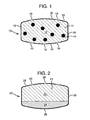
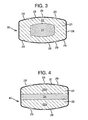
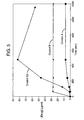


Classifications
-
- A—HUMAN NECESSITIES
- A61—MEDICAL OR VETERINARY SCIENCE; HYGIENE
- A61K—PREPARATIONS FOR MEDICAL, DENTAL OR TOILETRY PURPOSES
- A61K9/00—Medicinal preparations characterised by special physical form
- A61K9/0002—Galenical forms characterised by the drug release technique; Application systems commanded by energy
- A61K9/0004—Osmotic delivery systems; Sustained release driven by osmosis, thermal energy or gas
-
- A—HUMAN NECESSITIES
- A61—MEDICAL OR VETERINARY SCIENCE; HYGIENE
- A61P—SPECIFIC THERAPEUTIC ACTIVITY OF CHEMICAL COMPOUNDS OR MEDICINAL PREPARATIONS
- A61P13/00—Drugs for disorders of the urinary system
-
- A—HUMAN NECESSITIES
- A61—MEDICAL OR VETERINARY SCIENCE; HYGIENE
- A61P—SPECIFIC THERAPEUTIC ACTIVITY OF CHEMICAL COMPOUNDS OR MEDICINAL PREPARATIONS
- A61P25/00—Drugs for disorders of the nervous system
- A61P25/18—Antipsychotics, i.e. neuroleptics; Drugs for mania or schizophrenia
-
- A—HUMAN NECESSITIES
- A61—MEDICAL OR VETERINARY SCIENCE; HYGIENE
- A61P—SPECIFIC THERAPEUTIC ACTIVITY OF CHEMICAL COMPOUNDS OR MEDICINAL PREPARATIONS
- A61P29/00—Non-central analgesic, antipyretic or antiinflammatory agents, e.g. antirheumatic agents; Non-steroidal antiinflammatory drugs [NSAID]
-
- A—HUMAN NECESSITIES
- A61—MEDICAL OR VETERINARY SCIENCE; HYGIENE
- A61P—SPECIFIC THERAPEUTIC ACTIVITY OF CHEMICAL COMPOUNDS OR MEDICINAL PREPARATIONS
- A61P9/00—Drugs for disorders of the cardiovascular system
- A61P9/12—Antihypertensives
-
- A—HUMAN NECESSITIES
- A61—MEDICAL OR VETERINARY SCIENCE; HYGIENE
- A61K—PREPARATIONS FOR MEDICAL, DENTAL OR TOILETRY PURPOSES
- A61K9/00—Medicinal preparations characterised by special physical form
- A61K9/14—Particulate form, e.g. powders, Processes for size reducing of pure drugs or the resulting products, Pure drug nanoparticles
- A61K9/141—Intimate drug-carrier mixtures characterised by the carrier, e.g. ordered mixtures, adsorbates, solid solutions, eutectica, co-dried, co-solubilised, co-kneaded, co-milled, co-ground products, co-precipitates, co-evaporates, co-extrudates, co-melts; Drug nanoparticles with adsorbed surface modifiers
- A61K9/146—Intimate drug-carrier mixtures characterised by the carrier, e.g. ordered mixtures, adsorbates, solid solutions, eutectica, co-dried, co-solubilised, co-kneaded, co-milled, co-ground products, co-precipitates, co-evaporates, co-extrudates, co-melts; Drug nanoparticles with adsorbed surface modifiers with organic macromolecular compounds
-
- A—HUMAN NECESSITIES
- A61—MEDICAL OR VETERINARY SCIENCE; HYGIENE
- A61K—PREPARATIONS FOR MEDICAL, DENTAL OR TOILETRY PURPOSES
- A61K9/00—Medicinal preparations characterised by special physical form
- A61K9/20—Pills, tablets, discs, rods
- A61K9/2072—Pills, tablets, discs, rods characterised by shape, structure or size; Tablets with holes, special break lines or identification marks; Partially coated tablets; Disintegrating flat shaped forms
- A61K9/2077—Tablets comprising drug-containing microparticles in a substantial amount of supporting matrix; Multiparticulate tablets
-
- A—HUMAN NECESSITIES
- A61—MEDICAL OR VETERINARY SCIENCE; HYGIENE
- A61K—PREPARATIONS FOR MEDICAL, DENTAL OR TOILETRY PURPOSES
- A61K9/00—Medicinal preparations characterised by special physical form
- A61K9/20—Pills, tablets, discs, rods
- A61K9/2072—Pills, tablets, discs, rods characterised by shape, structure or size; Tablets with holes, special break lines or identification marks; Partially coated tablets; Disintegrating flat shaped forms
- A61K9/2086—Layered tablets, e.g. bilayer tablets; Tablets of the type inert core-active coat
- A61K9/209—Layered tablets, e.g. bilayer tablets; Tablets of the type inert core-active coat containing drug in at least two layers or in the core and in at least one outer layer
Definitions
- Exemplary sustained release dosage forms have included an osmotic tablet comprising a semipermeable wall surrounding a compartment containing the drug and a layer of swellable hydrogel, with the crystalline drug being delivered through a passageway in the semipermeable wall by swelling of the hydrogel, as described in U.S. Patent No. 4,327,725 ; another osmotic tablet comprising a wall permeable to an exterior fluid but impermeable to the drug, the wall surrounding a compartment containing two osmotic agents, two expandable polymers and the drug, as described in U.S. Patent No. 4,612,008 ; drug dispersed in a swellable hydrogel matrix core that releases the drug by diffusion into the environment of use, as described in U.S.
- Patent no. 4,624,848 a hydrogel reservoir containing a multiplicity of tiny pills wherein each tiny pill consists of a wall surrounding a drug core, as described in U.S. Patent no. 4,851,232 ; and a two-layered tablet wherein one layer is drug mixed with a hydrogel and the other layer is a hydrogel, as described in U.S. Patent No. 5,516,527 .
- One sustained release dosage form consists of a coated tablet with a core of a solid dispersion of drug in a swellable polyoxamer hydrogel that releases the drug by diffusion from the swollen tablet mass and by erosion of the tablet surface, as described in PCT Application No. 97/02017 .
- US Patent no. 5,736,159 describes a controlled release tablet comprising a core which includes a drug, an osmotic agent, a polymeric binder and a water-swellable polymer, and a membrane coating around the core.
- US Patent no. 5,035,897 describes a controlled release tablet which comprises a compartment surronded by a wall.
- the compartment contains two layers.
- the first layer comprises granules of a water-soluble or unsaluble drug and a hydroxyalkylcellulose, which granules are coated with polyvinylpyrrolidone.
- the second layer comprises a composition that imbibes water and swells so as to expel the drug-containing granules through an exit passageway in the wall surrounding the compartment.
- Solid dispersion dosage forms may be formed by solvent evaporation, by spray drying, by spraying drug solution onto the carrier in a fluidized bed granulator, by twin screw extrusion, by melt fusion, by mechanical admixture such as by ball milling and by mechanical admixture at an elevated but non-melting temperature.
- PCT Application No. 93/11749 European Patent Application No. 0 552 708 ; U.S. Patent No. 5,456,923 ; Chowdary et al., 32 Indian Drugs 477 (1995 ); Dangprasirt et al., 21 Drug Development & Ind. Pharm. 2323 (1995 ); and Goracinova et al., 22 Drug Development & Ind. Pharm. 255 (1996 ).
- the dosage form suffers either from slow and incomplete release in cases when drug is released by diffusion through a membrane coating due to the inherent low solubility of the drug; conversely, where drug is released from such a dosage form by erosion of the polyoxamer, drug release is non-zero order and variable, being dependent on the patient's fed state and gastric retention time.
- the polyoxamer dispersion polymers disclosed are highly hydrophilic and generally require aqueous solvents for dissolution, these polymers cannot be used to form dispersions with hydrophobic drugs via solvent processing as it is difficult or impossible to dissolve the drug and polymer in a common solvent.
- the present invention comprises a controlled release dosage form as defined in claim 1. Particular embodiments are defined in the dependent claims.
- At least a major portion of the drug i.e ., at least 60% is amorphous (as opposed to crystalline). More preferably, substantially all of the drug, i.e ., at least about 75%, is amorphous. Most preferably, essentially all of the drug, i.e ., at least about 90% is amorphous.
- drug is conventional, denoting a compound having beneficial, prophylactic, and/or therapeutic properties when administered to an animal, especially a human.
- FIGS. 1-4 are schematics of exemplary embodiments of the invention.
- FIGS. 5-7 are graphs comprising plots of release rates of various drugs delivered by the controlled release device of the present invention and of comparative release rates for various controls.
- a dosage form specifically designed to provide controlled release by an extrusion-type mechanism of a "low solubility" (defined below) drug that utilizes a core of such a drug in the form of a solid dispersion wherein a major portion of the drug is in an amorphous form.
- a major portion of the drug means that at least 60% of the drug in the dispersion is in the amorphous form, rather than the crystalline form.
- the drug in the dispersion is substantially amorphous.
- substantially amorphous means that the amount of the drug in crystalline form does not exceed 25% as measured by powder X-ray diffraction analysis or by differential scanning calorimetry or by any other standard quantitative measurement. More preferably, the drug in the dispersion is essentially amorphous. As used herein, “essentially amorphous” means that the amount of the drug in crystalline form does not exceed 10% as measured by the methods previously described.
- extrusion as it relates to the drug delivery mechanism is intended to convey an expulsion or forcing out of some or all of the core through at least one delivery port.
- at least one delivery port is meant one or more holes, slits, passageways, channels or pores that may range in size from 0.1 to more than 2000 ⁇ m in diameter that permit release of drug from the dosage form.
- the drug may be delivered by the extrusion either in the form of a suspension of solids in water or primarily as a solution of the drug, to the extent dissolution has taken place in the core.
- the form of the device may be any conventional form, including a tablet, a capsule, a caplet, a bead, a multiparticulate, powders for suspension or unit dosage packages or combinations thereof, and is generally useful in mammals and particularly useful for therapeutic uses in humans.
- Drug is released to the environment of use such as the gastro-intestinal (GI) tract as a result of the influx of water into the core and the resulting extrusion of an aqueous solution or suspension of the drug through one or more delivery ports or pores in the coating.
- the solid amorphous drug dispersion can either (1) dissolve in the core and be delivered primarily as a solution; or (2) be delivered as a solid suspension and dissolve in the GI tract following delivery. Since the solubility of a given drug is often pH-dependent, the device of the present invention is appropriate for delivery of any drug the solubility of which falls into the ranges noted herein.
- Reference to the "release” of drug as used herein means (1) transport of drug from the interior of the dosage form to its exterior when the dosage form is a tablet, or from the interior to the exterior of the beads or granules when the dosage form includes multiparticulates, such that it contacts the fluid within a mammal's GI tract following delivery or (2) transport of drug from the interior of the dosage form such that it contacts a test medium for evaluation of the dosage form by an in vitro test.
- Reference to a "use environment” can thus be either to in vivo GI fluids or to an in vitro test medium.
- “Introduction" to a use environment includes either by ingestion or swallowing or use of implants or suppositories, where the use environment is in vivo , or being placed in a test medium where the use environment is in vitro .
- the device comprises essentially two components: (1) a drug- and osmotic agent-containing core; and (2) a coating.
- the core comprises an amorphous solid dispersion of drug that contains an osmotic agent such as one or more osmogens and/or osmopolymers, and optionally contains solubility-enhancing agents and other excipients.
- the coating is preferably polymeric, is water-permeable, has at least one delivery port therein and does not dissolve or erode in the environment of use.
- the dosage form of the present invention generally provides controlled delivery of the drug and in turn (1) the bioavailability of the drug is enhanced relative to a comparable dosage form where the drug is present in its undispersed state and (2) the time at which a maximum drug concentration (C max ) in an in vitro or in vivo environment of use is attained is delayed by from 30 minutes to 24 hours.
- C max maximum drug concentration
- undispersed is meant that the drug is not formed into a solid amorphous dispersion. Rather, undispersed drug is simply the crystalline drug alone in its thermodynamically most stable form unless a crystalline form of the drug is unknown, in which case the control is the amorphous drug alone.
- dosage forms of the invention provide one or more of the following features:
- the dosage forms of the present invention can be evaluated in vitro by placing the dosage form into a test medium such that if all the drug dissolved, this theoretical concentration would exceed the equilibrium concentration of the undispersed drug in the same test medium by a factor of at least 2.
- concentration of dissolved drug is typically measured as a function of time by sampling the drug and plotting concentration versus time so that the C max can be ascertained.
- the test solution is either filtered or centrifuged.
- Dissolved drug is typically taken as that material that either passes a 0.45 ⁇ m syringe filter or, alternatively, the material that remains in the supernatant following centrifugation.
- Filtration can be conducted using a 13 mm, 0.45 ⁇ m polyvinylidine difluoride syringe filter sold by Scientific Resources under the trademark TITAN ® . Centrifugation is typically carried out in a polypropylene microcentrifuge tube by centrifuging at 13,000 G for 60 seconds. Other similar filtration or centrifugation methods can be employed and useful results obtained. For example, using other types of microfilters may yield values somewhat higher or lower ( ⁇ 10-40%) than that obtained with the filter specified above but will still allow identification of preferred dispersions.
- dissolved drug encompasses not only monomeric solvated drug molecules but also a wide range of species such as polymer/drug assemblies that have submicron dimensions such as drug aggregates, aggregates of mixtures of polymer and drug, micelles, polymeric micelles, colloidal particles or nanocrystals, polymer/drug complexes, and other such drug-containing species that are present in the filtrate or supernatant in the specified dissolution test.
- Dosage forms of the present invention can also be tested in vivo in animals or humans using conventional methods for making such a determination.
- An in vivo test such as a crossover study, may be used to determine whether a test dosage form provides an enhanced drug concentration in the blood (serum or plasma) versus time area under the curve (AUC in vivo ) for a test subject dosed with the test dosage form relative to the AUC in vivo for a test subject dosed with a control dosage form as described above.
- test dosage form is dosed to half a group of 12 or more humans and, after an appropriate washout period (e.g ., one week) the same subjects are dosed with a "control dosage form” that comprises an equivalent quantity of undispersed drug as the "test dosage form.”
- control dosage form that comprises an equivalent quantity of undispersed drug as the "test dosage form.”
- the other half of the group is dosed with the control dosage form first, followed by the test dosage form.
- the bioavailability is measured as the AUC determined for each group.
- AUC in vivo determinations can be made by plotting the blood serum or blood plasma concentration of drug along the ordinate (y-axis) versus time along the abscissa (x-axis).
- AUC in vivo values represent a number of values taken from all of the subjects in a patient test population and are, therefore, mean values averaged over the entire test population.
- FIGS. 1-4 Four exemplary dosage form arrangements are schematically shown in FIGS. 1-4 .
- the drug in its pure state may be crystalline or amorphous, but when dispersed in the solid dispersion polymer a major portion of the drug is preferably in an amorphous or non-crystalline state, such that its non-crystalline nature is demonstrable by X-ray diffraction analysis or by differential scanning calorimetry.
- the dispersion may contain from about 5 to 90 wt% drug, preferably 20 to 70 wt%.
- the drug is a "low-solubility drug,” meaning that the drug has a minimum aqueous solubility of 40 mg/mL or less at a physiologically relevant pH (e.g ., pH 1-8).
- the drug may be either substantially water-insoluble, meaning that the drug has a minimum water solubility of less than 10 micrograms/mL at a physiologically relevant pH or sparingly water-soluble, that is, has a minimum aqueous solubility of about 10 micrograms/mL up to about 1 to 2 mg/mL, or even moderate solubility, such as a minimum aqueous solubility as high as about 20 to 40 mg/mL.
- the drug has a dose-to-aqueous solubility ratio greater than about 5 mL, where the drug solubility is the minimum value observed in any physiologically relevant aqueous solution, including unbuffered water and USP simulated gastric and intestinal buffered solutions.
- the drug solubility is the minimum value observed in any physiologically relevant aqueous solution, including unbuffered water and USP simulated gastric and intestinal buffered solutions.
- the invention may be applied to drugs with solubility as high as 20 to 40 mg/mL. This is particularly true when it is desired to deliver a solution of the drug.
- the dose-to-aqueous solubility ratio may be as low as 1 mL.
- the drug may be employed in the form of its pharmaceutically acceptable salts as well as in anhydrous, hydrated, and solvated forms and in the form of prodrugs.
- Preferred classes of drugs include, but are not limited to, antihypertensives, antianxiety agents, antidepressants, barbituates, anticlotting agents, anticonvulsants, blood glucose-lowering agents, decongestants, antihistamines, antitussives, antineoplastics, beta blockers, antiinflammatories antipsychotic agents, cognitive enhancers, cholesterol-reducing agents, antiobesity agents, autoimmune disorders agents, anti-impotence agents, antibacterial and antifungal agents, hypnotic agents, anti-Parkinsonism agents, anti-Alzheimer's Disease agents, antibiotics and antiviral agents.
- antihypertensives include prazosin, nifedipine, trimazosin and doxazosin; a specific example of a blood glucose-lowering agent is glipizide; a specific example of an anti-impotence agent is sildenafil citrate; specific examples of antineoplastics include chlorambucil, lomustine and echinomycin; a specific example of an imidazole-type antineoplastic is tubulazole; specific examples of antiinflammatory agents include betamethasone, prednisolone, aspirin, flurbiprofen and (+)-N- ⁇ 4-[3-(4-fluorophenoxy)phenoxy]-2-cyclopenten-1-yl ⁇ -N-hyroxyurea; a specific example of a barbiturate is phenobarbital; specific examples of antivirals include acyclovir and
- drugs deliverable by the invention are the glucose-lowering drug chlorpropamide, the anti-fungal fluconazole, the anti-hypercholesterolemic atorvastatin calcium, the antipsychotic thiothixene hydrochloride, the anxiolytics hydroxyzine hydrochloride and doxepin hydrochloride, the anti-hypertensive amlodipine besylate, the antiinflammatories iroxicam, valdecoxib and celicoxib, and the antibiotics carbenicillin indanyl sodium, becampicillin hydrochloride, troleandomycin and doxycycline hyclate.
- Suitable polymers for forming the solid dispersion of drug are preferably polymeric, concentration-enhancing, non-aqueous solvent-processable and inert.
- non-aqueous solvent is meant solvents comprising ⁇ 30 wt% water.
- non-aqueous solvent-processable the polymer is capable of being processed with the drug in a common non-aqueous solvent to form the solid dispersion, i.e ., it is generally adaptable to techniques utilizing non-aqueous solvents in the formation of solid dispersions. Such techniques include evaporation, spray-drying, or spray coating.
- the polymer has a preferred solubility in the non-aqueous solvent of at least 0.1 mg/mL, more preferably greater than 1 mg/mL and most preferably greater than 10 mg/mL.
- This property is critical for forming the solid amorphous dispersion of the drug and dispersion polymer via solvent processing as the drug and dispersion polymer must be dissolved in a common solvent and such solvents cannot be substantially aqueous as the drugs by definition have a relatively low aqueous solubility.
- Such dispersion polymers are aqueous-soluble in the sense that they are sufficiently soluble ( ⁇ 1 mg/mL) in at least a portion of the 1 to 8 pH range that they exhibit a "concentration enhancing" property.
- concentration-enhancing is meant the concentration of the pure drug in aqueous media is substantially increased when formed into a solid dispersion with the polymer, the concentration enhancement being on the order of at least 20%.
- inert is meant not adversely reactive or bioactive, yet still capable of positively affecting the drug's bioavailability.
- the amount of the polymer present in the dispersion generally ranges from about 10 to about 95 wt%, preferably 30 to 80 wt%.
- the dispersion polymers used herein are selected from hydroxypropylmethylcellulose (HPMC), hydroxypropylmethylcellulose phthalate (HPMCP), hydroxypropylmethylcellulose acetate succinate (HPMCAS), cellulose acetate phthalate (CAP), cellulose acetate trimellitate (CAT), and mixtures thereof.
- amorphous solid dispersion of drug is prepared by solvent processing.
- a major portion of the drug is virtually always in an amorphous state, usually substantially all (>75%) is in that state, and often essentially all (>90%) of the drug is in an amorphous state.
- amorphous state is meant the drug may be present in the dispersion in any of three broad classes of forms: (a) in discrete, drug-rich domains; (b) homogeneously distributed therein, i.e., a solid solution; or (c) any state or combination of states between the extremes of (a) and (b).
- the dispersion is formed by dissolving the drug and dispersion polymer in a common solvent, then removing the solvent by spray-drying the mixture.
- Spray-drying processes and equipment are described generally in Perry's Chemical Engineers' Handbook, pages 20-54 to 20-57 (6th Ed. 1984 ). More details on spray-drying processes and equipment are reviewed by Marshal in 50 Chem. Eng. Prog. Monogr. series 2 (1954 ).
- spray-drying in connection with the present invention is used conventionally and broadly refers to a process involving breaking up liquid mixtures into small droplets (atomization) and rapidly removing solvent from the mixtures in a spray-drying apparatus where there is a strong driving force for evaporation of solvent from the droplets.
- the droplets In the case of spray-drying, the droplets generally dry prior to impinging on a surface, thus forming particles of solid amorphous dispersion on the order of 1 to 100 micrometers in diameter.
- the strong driving force for solvent evaporation is generally provided by maintaining the partial pressure of solvent in the spray-drying apparatus well below the vapor pressure of the solvent at the temperature of the drying droplets.
- a solution of drug and a dispersion polymer such as HPMCAS in acetone may be suitably spray-dried by spraying the solution at a temperature of 50°C (the vapor pressure of acetone at 50°C is about 0.8 atm) into a chamber held at 0.01 to 0.2 atm total pressure by connecting the outlet to a vacuum pump.
- a solution may be sprayed into a chamber where it is mixed with nitrogen gas at a temperature of 80°C to 250°C and pressure of 1.0 to 1.2 atm.
- the temperature and flow rate of the drying gas is chosen so that dispersion polymer/drug solution droplets are dry enough by the time they reach the wall of the apparatus that they are essentially solid, so that they form a fine powder and do not stick to the apparatus wall.
- the actual length of time to achieve this level of dryness depends on the size of the droplets. Droplet sizes generally are larger than about 1 ⁇ m in diameter, with 5 to 100 ⁇ m being typical.
- the large surface-to-volume ratio for the droplets and the large driving force for evaporation of solvent leads to actual drying times of a few seconds or less.
- Solidification times should be less than 100 seconds, preferably less than a few seconds, and more preferably less than 1 second. In general, to achieve such rapid solidification of the drug/polymer solution, it is preferred that the diameter of droplets formed during the spray-drying process are less then 100 ⁇ m, preferably less than 50 ⁇ m, and most preferably less than 25 ⁇ m. The so-formed solid particles resulting from solidification of these droplets generally tend to be 2 to 40 ⁇ m in diameter.
- the solid powder typically remains in the spray-drying chamber for 5 to 60 seconds, evaporating more solvent.
- the final solvent content of the solid dispersion as it exits the dryer should be low, since low solvent content tends to reduce the mobility of drug molecules in the dispersion, thereby improving its stability.
- the residual solvent content of the dispersion should be less than 10 wt% and preferably less than 2 wt%.
- the solution spray-dried to form the polymer/drug dispersion can be quite simple, containing only drug and polymer in a solvent.
- the weight ratio of polymer to drug in the solution ranges from 0.1 to 20 and preferably from 0.5 to 5. However, when the drug dose is low (less than 20 mg), the ratio may be even more than 5.
- excipients may be added to the spray solution, either co-dissolved in the solvent along with the drug and dispersion polymer or suspended in the solution to form a slurry.
- excipients may include: acids, bases or buffers to modify the ionic state and dissolution properties of the resulting dispersion; fillers, binders, disintegrants or other materials to improve the tableting process or final properties of the tablet; antioxidants to improve the dispersion's stability; osmotic agents, including both osmotically effective solutes such as sugars, salts and polyols and water-swellable hydrophilic polymers; and surfactants to affect the wetting or dissolution rate of the tablet core.
- Solvents suitable for spray-drying may be essentially any organic compound or mixtures of an organic compound and water in which the drug and polymer are mutually soluble. Because the invention utilizes low water solubility drugs, water alone is generally not a suitable solvent. However, mixtures of water and organic compounds are often suitable.
- the solvent is also relatively volatile with a boiling point of 150°C or less. However, in those cases where the solubility of the drug in the volatile solvent is low, it may be desirable to include a small amount, say 2 to 25 wt%, of a low volatility solvent such as N-methylpyrrolidone (NMP), dimethylsulfoxide (DMSO) or dimethylacetamide (DMAc) in order to enhance drug solubility.
- NMP N-methylpyrrolidone
- DMSO dimethylsulfoxide
- DMAc dimethylacetamide
- Preferred solvents include alcohols such as methanol, ethanol, n-propanol, isopropanol, and butanol; ketones such as acetone, methyl ethyl ketone and methyl isobutyl ketone; esters such as ethyl acetate and propylacetate; and various other solvents such as acetonitrile, methylene chloride, toluene, and 1,1,1-trichloroethane.
- alcohols such as methanol, ethanol, n-propanol, isopropanol, and butanol
- ketones such as acetone, methyl ethyl ketone and methyl isobutyl ketone
- esters such as ethyl acetate and propylacetate
- various other solvents such as acetonitrile, methylene chloride, toluene, and 1,1,1-trichloroethane.
- the core of the drug delivery device of the present invention includes an "osmotic agent.”
- osmotic agent is meant any agent which creates a driving force for transport of water from the environment of use into the core of the device.
- exemplary osmotic agents are water-swellable hydrophilic polymers, and osmogens (or osmagens).
- the core may include water-swellable hydrophilic polymers, both ionic and nonionic, often referred to as “osmopolymers” and “hydrogels.”
- the amount of water-swellable hydrophilic polymers present in the core may range from about 5 to about 80 wt%, preferably 10 to 50 wt%.
- Exemplary materials include hydrophilic vinyl and acrylic polymers, polysaccharides such as calcium alginate, PEO, PEG, PPG, poly(2-hydroxyethyl methacrylate), poly(acrylic) acid, poly(methacrylic) acid, PVP and crosslinked PVP, PVA, PVA/PVP copolymers and PVA/PVP copolymers with hydrophobic monomers such as methyl methacrylate, vinyl acetate, and the like, hydrophilic polyurethanes containing large PEO blocks, sodium croscarmellose, carrageenan, HEC, HPC, HPMC, CMC and CEC, sodium alginate, polycarbophil, gelatin, xanthan gum, and sodium starch glycolate.
- polysaccharides such as calcium alginate, PEO, PEG, PPG, poly(2-hydroxyethyl methacrylate), poly(acrylic) acid, poly(methacrylic) acid, PVP and crosslinked PVP, PVA, PVA/PVP
- hydrogels comprising interpenetrating networks of polymers which may be formed by addition or by condensation polymerization, the components of which may comprise hydrophilic and hydrophobic monomers such as those just mentioned.
- Preferred polymers for use as the water-swellable hydrophilic polymers include PEO, PEG, PVP, sodium croscarmellose, HPMC, sodium starch glycolate, polyacrylic acid and crosslinked versions or mixtures thereof.
- the osmotic agent and the dispersion polymer can comprise the same polymeric material.
- osmotically effective solutes any water-soluble compound that is commonly referred to in the pharmaceutical arts as an “osmogen” or an “osmagent.”
- the amount of osmogen present in the core may range from about 2 to about 70 wt%, preferably 10 to 50 wt%.
- suitable osmogens are water-soluble organic acids, salts and sugars that are capable of imbibing water to thereby effect an osmotic pressure gradient across the barrier of the surrounding coating.
- Typical useful osmogens include magnesium sulfate, magnesium chloride, calcium chloride, sodium chloride, lithium chloride, potassium sulfate, sodium carbonate, sodium sulfite, lithium sulfate, potassium chloride, sodium sulfate, mannitol, xylitol, urea, sorbitol, inositol, raffinose, sucrose, glucose, fructose, lactose, citric acid, succinic acid, tartaric acid, and mixtures thereof.
- Particularly preferred osmogens are glucose, lactose, sucrose, mannitol, xylitol and sodium chloride.
- the solid dispersion core may include a wide variety of additives and excipients that enhance drug solubility or that promote stability, tableting or processing of the dispersion.
- additives and excipients include tableting aids, surfactants, water-soluble polymers, pH modifiers, fillers, binders, pigments, disintegrants, antioxidants, lubricants and flavorants.
- microcrystalline cellulose examples include microcrystalline cellulose; metallic salts of acids such as aluminum stearate, calcium stearate, magnesium stearate, sodium stearate, and zinc stearate; fatty acids, hydrocarbons and fatty alcohols such as stearic acid, palmitic acid, liquid paraffin, stearyl alcohol, and palmitol; fatty acid esters such as glyceryl (mono- and di-) stearates, triglycerides, glyceryl (palmiticstearic) ester, sorbitan monostearate, saccharose monostearate, saccharose monopalmitate, and sodium stearyl fumarate; alkyl sulfates such as sodium lauryl sulfate and magnesium lauryl sulfate; polymers such as polyethylene glycols, polyoxethylene glycols, and polytetrafluoroethylene; and inorganic materials such as talc and dicalcium phosphate; sugars such as
- the core may also include solubility-enhancing agents that promote the water solubility of the drug, present in an amount ranging from about 5 to about 50 wt%.
- solubility-enhancing agents include surfactants; pH control agents such as buffers, organic acids and organic acid salts and organic and inorganic bases; glycerides; partial glycerides; glyceride derivatives; polyoxyethylene and polyoxypropylene ethers and their copolymers; sorbitan esters; polyoxyethylene sorbitan esters; carbonate salts; alkyl sulfonates; and cyclodextrins.
- solubility-enhancing and other additives may be added directly to the spray-drying solution such that the additive is dissolved or suspended in the solution as a slurry.
- additives may be added following the spray-drying process to aid in forming the final dosage form.
- the essential constraints on the coating are that it be water-permeable, have at least one port for the delivery of drug, and be non-dissolving and non-eroding during release of the drug formulation, such that drug is substantially entirely delivered through the delivery port(s) or pores as opposed to delivery primarily via permeation through the coating material itself.
- delivery port is meant any passageway, opening or pore whether made mechanically, by laser drilling, by pore formation either during the coating process or in situ during use or by rupture during use.
- Coating should be present in an amount ranging from about 5 to 30 wt%, preferably 10 to 20 wt% relative to the core weight.
- a preferred form of coating is a semipermeable polymeric membrane that has the port(s) formed therein either prior to or during use. Thickness of such a polymeric membrane may vary between about 20 and 800 ⁇ m, and is preferably in the range of 100 to 500 ⁇ m.
- the delivery port(s) should generally range in size from 0.1 to 3000 ⁇ m or greater, preferably on the order of 50 to 3000 ⁇ m in diameter.
- Such port(s) may be formed post-coating by mechanical or laser drilling or may be formed in situ by rupture of the coatings; such rupture may be controlled by intentionally incorporating a relatively small weak portion into the coating.
- Delivery ports may also be formed in situ by erosion of a plug of water-soluble material or by rupture of a thinner portion of the coating over an indentation in the core.
- delivery ports may be formed during coating, as in the case of asymmetric membrane coatings of the type disclosed in U.S. Patent Nos. 5,612,059 and 5,698,220 .
- a particularly preferred embodiment is a collection of beads that may be of essentially identical or of a variable composition. Drug is primarily released from such beads following rupture of the coating and, following rupture, such release may be gradual or relatively sudden.
- the composition may be chosen such that the beads rupture at various times following administration, resulting in the overall release of drug being sustained for a desired duration.
- Coatings may be dense, microporous or "asymmetric," having a dense region supported by a thick porous region such as those disclosed in U.S. Patent Nos. 5,612,059 and 5,698,220 .
- the coating is dense the coating is composed of a water-permeable material.
- the coating is porous, it may be composed of either a water-permeable or a water-impermeable material.
- water permeates through the pores of the coating as either a liquid or a vapor.
- Examples of osmotic devices that utilize such dense coatings include U.S. Patent Nos. 3,995,631 and 3,845,770 .
- Such dense coatings are permeable to the external fluid such as water and may be composed of any of the materials mentioned in these patents as well as other water-permeable polymers known in the art.
- the membranes may also be porous as disclosed in U.S. Patent Nos. 5,654,005 and 5,458,887 or even be formed from water-resistant polymers.
- U.S. Patent No. 5,120,548 describes another suitable process for forming coatings from a mixture of a water-insoluble polymer and a leachable water-soluble additive.
- the porous membranes may also be formed by the addition of pore-formers as disclosed in U.S. Patent No. 4,612,008 .
- vapor-permeable coatings may even be formed from extremely hydrophobic materials such as polyethylene or polyvinylidenefluoride that, when dense, are essentially water-impermeable, as long as such coatings are porous.
- Materials useful in forming the coating include various grades of acrylics, vinyls, ethers, polyamides, polyesters and cellulosic derivatives that are water-permeable and water-insoluble at physiologically relevant pHs, or are susceptible to being rendered water-insoluble by chemical alteration such as by crosslinking.
- suitable polymers (or crosslinked versions) useful in forming the coating include plasticized, unplasticized and reinforced cellulose acetate (CA), cellulose diacetate, cellulose triacetate, CA propionate, cellulose nitrate, cellulose acetate butyrate (CAB), CA ethyl carbamate, CAP, CA methyl carbamate, CA succinate, cellulose acetate trimellitate (CAT), CA dimethylaminoacetate, CA ethyl carbonate, CA chloroacetate, CA ethyl oxalate, CA methyl sulfonate, CA butyl sulfonate, CA p-toluene sulfonate, agar acetate, amylose triacetate, beta glucan acetate, beta glucan triacetate, acetaldehyde dimethyl acetate, triacetate of locust bean gum, hydroxlated ethylenevinylacetate, EC, PEG, PPG, PEG/
- a preferred coating composition comprises a cellulosic polymer, in particular cellulose ethers, cellulose esters and cellulose ester-ethers, i.e ., cellulosic derivatives having a mixture of ester and ether substituents, such as HPMCP.
- a cellulosic polymer in particular cellulose ethers, cellulose esters and cellulose ester-ethers, i.e ., cellulosic derivatives having a mixture of ester and ether substituents, such as HPMCP.
- Another preferred class of coating materials are poly(acrylic) acids and esters, poly(methacrylic) acids and esters, and copolymers thereof.
- a more preferred coating composition comprises cellulose acetate.
- An even more preferred coating comprises a cellulosic polymer and PEG.
- a most preferred coating comprises cellulose acetate and PEG.
- Coating is conducted in conventional fashion, typically by dissolving the coating material in a solvent and then coating by dipping, spray-coating or preferably by pan-coating.
- a preferred coating solution contains 5 to 15 wt% polymer.
- Typical solvents useful with the cellulosic polymers mentioned above include acetone, methyl acetate, ethyl acetate, isopropyl acetate, n-butyl acetate, methyl isobutyl ketone, methyl propyl ketone, ethylene glycol monoethyl ether, ethylene glycol monoethyl acetate, methylene dichloride, ethylene dichloride, propylene dichloride, nitroethane, nitropropane, tetrachloroethane, 1,4-dioxane, tetrahydrofuran, diglyme, and mixtures thereof.
- Pore-formers and non-solvents such as water, glycerol and ethanol
- plasticizers such as diethyl phthalate
- Pore-formers and their use in fabricating coatings are described in U.S. Patent No. 5,612,059 .
- Coatings may also be hydrophobic microporous layers wherein the pores are substantially filled with a gas and are not wetted by the aqueous medium but are permeable to water vapor, as disclosed in U.S. Patent No. 5,798,119 .
- Such hydrophobic but water-vapor permeable coatings are typically composed of hydrophobic polymers such as polyalkenes, polyacrylic acid derivatives, polyethers, polysulfones, polyethersulfones, polystyrenes, polyvinyl halides, polyvinyl esters and ethers, natural waxes and synthetic waxes.
- hydrophobic microporous coating materials include polystyrene, polysulfones, polyethersulfones, polyethylene, polypropylene, polyvinyl chloride, polyvinylidene fluoride and polytetrafluoroethylene.
- Such hydrophobic coatings can be made by known phase inversion methods using any of vapor-quench, liquid quench, thermal processes, leaching soluble material from the coating or by scintering coating particles. In thermal processes, a solution of polymer in a latent solvent is brought to liquid-liquid phase separation in a cooling step. When evaporation of the solvent is not prevented, the resulting membrane will typically be porous.
- Such coating processes may be conducted by the processes disclosed in U.S. Patent Nos. 4,247,498 ; 4,490,431 and 4,744,906 .
- sustained release osmotic dosage forms of this invention comprises an osmotic drug-containing tablet which is surrounded by an asymmetric membrane, where said asymmetric membrane possesses one or more thin dense regions in addition to less dense porous regions.
- This type of membrane similar to those used in the reverse-osmosis industry, generally allows higher osmotic fluxes of water than can be obtained with a dense membrane.
- a drug formulation e.g . a tablet
- This asymmetric membrane comprises a semipermeable polymeric material, that is, a material which is permeable to water, and substantially impermeable to salts and organic solutes such as drugs.
- Materials useful for forming such an asymmetric semipermeable membrane include polyamides, polyesters and cellulose derivatives. Preferred are cellulose ethers and esters. Especially preferred are CA, CAB and EC. Especially useful materials include those which spontaneously form one or more exit passageways, either during manufacturing or when placed in an environment of use. These preferred materials comprise porous polymers, the pores of which are formed by phase inversion during manufacturing, as described above, or by dissolution of a water-soluble component present in the membrane.
- the asymmetric membrane is formed by a phase-inversion process.
- the coating polymer e.g ., EC or CA
- a mixed solvent system comprising a mixture of solvents (e.g ., acetone) and non-solvents (e.g ., water) for the polymer.
- the components of the mixed solvent are chosen such that the solvent (e.g . acetone) is more volatile than the non-solvent (e.g . water).
- the solvent component of the solvent mixture evaporates more quickly than the non-solvent.
- This change in solvent composition during drying causes the solution to separate into two phases so that, when solid, the polymer on the tablet is a porous solid with a thin dense outer region.
- This outer region possesses multiple pores through which drug can be delivered as a solution or a suspension of drug particles, which particles may be crystalline, amorphous or a drug/polymer dispersion.
- the polymer/solvent/non-solvent mixture is sprayed onto a bed of tablets in a tablet-coating apparatus such as a Freund HCT-60 tablet coater.
- a tablet-coating apparatus such as a Freund HCT-60 tablet coater.
- the tablet is coated with thick porous regions, and with a final outer thin dense region.
- the drug may be incorporated into the dispersion in its neutral form or as a salt. It is often desirable to include one or more solubilizing excipients, such as ascorbic acid, erythorbic acid, citric acid, tartaric acid, glutamic acid, aspartic acid, glycerides, partial glycerides, glyceride derivatives, PEG, PEG esters, PPG esters, polyhydric alcohol esters, polyoxyethylene ethers, sorbitan esters, polyoxyethylene sorbitan esters, saccharide esters, phospholipids, polyethylene oxide-polypropylene oxide block co-polymers.
- solubilizing excipients such as ascorbic acid, erythorbic acid, citric acid, tartaric acid, glutamic acid, aspartic acid, glycerides, partial glycerides, glyceride derivatives, PEG, PEG esters, PPG esters, polyhydric alcohol esters, polyoxyethylene ether
- solubilizing excipients ascorbic acid, aspartic acid, citric acid, tartaric acid, glyceryl monocaprylate, glyceryl monostearate, glycerol monolaurate, and C8-C10 partial glycerides.
- the solid dispersion core imbibes water through the coating from the environment of use such as the GI tract so as to increase the pressure within the core.
- the pressure difference between the core and the device's exterior drives the delivery of the core's contents.
- the drug formulation is extruded out of the core through the delivery port(s) into the environment of use, either primarily as a solution of drug or as a suspension of drug; when delivered as a suspension, the drug formulation subsequently dissolves in the GI tract.
- a preferred embodiment of osmotic delivery devices consists of a drug layer containing the substantially amorphous drug/polymer dispersion and a sweller layer that comprises a water-swellable polymer, with a coating surrounding the drug and sweller layer.
- Each layer may contain other excipients such as tableting aids, osmagents, surfactants, water-soluble polymers and water-swellable polymers.
- Such osmotic delivery devices may be fabricated in various geometries including bilayer, wherein the core comprises a drug layer and a sweller layer adjacent to each other; trilayer, wherein the core comprises a sweller layer "sandwiched" between two drug layers; and concentric, wherein the core comprises a central sweller composition surrounded by the drug layer.
- the coating of such a tablet comprises a membrane permeable to water but substantially impermeable to drug and excipients contained within.
- the coating contains one or more exit passageways or ports in communication with the drug-containing layer(s) for delivering the drug dispersion composition.
- the drug-containing layer(s) of the core contains the drug dispersion composition (including optional osmagents and hydrophilic water-soluble polymers), while the sweller layer consists of an expandable hydrogel, with or without additional osmotic agents.
- Such delivery devices are exemplified in FIG. 4 and Example 3 (tri-layer), FIG. 2 and Example 4 (bi-layer) and in FIG. 3 and Example 5 (concentric).
- the tablet When placed in an aqueous medium, the tablet imbibes water through the membrane, causing the composition to form a dispensable aqueous composition, and causing the hydrogel layer to expand and push against the drug dispersion-containing composition, forcing the composition out of the exit passageway.
- the composition can swell, aiding in forcing the drug out the passageway.
- Drug can be delivered from this type of delivery system either dissolved or dispersed in the composition that is expelled from the exit passageway.
- the rate of drug delivery is controlled by such factors as the permeability and thickness of the coating, the osmotic pressure of the drug-containing layer, the degree of hydrophilicity of the hydrogel layer, and the surface area of the device.
- the thickness of the coating will reduce the release rate, while any of the following will increase the release rate: increasing the permeability of the coating; increasing the hydrophilicity of the hydrogel layer; increasing the osmotic pressure of the drug-containing layer; or increasing the device's surface area.
- Exemplary materials useful in forming the drug dispersion-containing composition include HPMC, PEO and PVP and other pharmaceutically acceptable carriers.
- osmagents such as sugars or salts, especially sucrose, lactose, xylitol, mannitol, or sodium chloride, may be added.
- Materials which are useful for forming the hydrogel layer include sodium CMC, PEO, poly (acrylic acid), sodium (polyacrylate), sodium croscarmelose, sodium starch glycolate, PVP, crosslinked PVP, and other high molecular weight hydrophilic materials. Particularly useful are PEO polymers having an average molecular weight from about 5,000,000 to about 7,500,000 daltons.
- the dosage form provides a maximum drug concentration (MDC) in a use environment that is at least 1.2-fold that of an equivalent control dosage form except that the drug is in undispersed form.
- MDC maximum drug concentration
- the dosage form contains homogeneous dispersions (which are preferred)
- the MDC value obtained when a large amount of drug is dosed can be higher for such dispersions relative to dispersions for which at least a portion of the drug is present as a drug-rich amorphous or crystalline phase.
- the dosage form of the present invention when tested in vitro in a physiologically relevant aqueous solution, for dissolution times of from 90 to 1200 minutes, provides an AUC value at least 1.25-fold that measured for an equivalent dosage form containing an equivalent quantity of undispersed drug.
- the dosage form when administered to a use environment, also provides, for dissolution times of from 90 to 1200 minutes, an AUC value that is at least 1.25-fold that observed when an equivalent quantity of undispersed drug is dosed.
- the delivery port(s) or exit passageway(s) may be located on the side of the tablet containing the drug composition or may be on both sides of the tablet or even on the edge of the tablet so as to connect both the drug layer and the sweller layer with the exterior of the device.
- the exit passageway(s) may be produced by mechanical means or by laser drilling, or by creating a difficult-to-coat region on the tablet by use of special tooling during tablet compression or by other means.
- the rate of drug delivery from the device may be optimized so as to provide a method of delivering drug to a mammal for optimum therapeutic effect.
- Osmotic systems can also be made with a homogeneous core surrounded by a semipermeable membrane coating.
- Drug dispersions can be incorporated into a tablet core that also contains other excipients that provide sufficient osmotic driving force and optionally solubilizing excipients such as acids or surfactant-type compounds.
- a semipermeable membrane coating can be applied via conventional tablet-coating techniques such as using a pan coater.
- a drug delivery passageway can then be formed in this coating by drilling a hole in the coating, either by use of a laser or other mechanical means. Alternatively, the passageway may be formed by rupturing a portion of the coating or by creating a region on the tablet that is difficult to coat, as described above.
- sustained release osmotic dosage forms of the invention includes drug dispersion-containing multiparticulates coated with a water-permeable membrane; the polymer may be dense, porous or asymmetric as described above.
- Such multiparticulates are prepared by, for example, melt-congealing from a spinning disk, extrusion/spheronization or fluid bed granulation, or by coating seed cores with a mixture of drug and a water-soluble polymer, as described above.
- Drug-containing multiparticulates may be homogeneous or layered with a drug dispersion surrounding the seed core.
- Such multiparticulates are then spray-coated with a substantially water-permeable coating comprising a solution of a polymer in a mixture of a solvent and, depending on the coating type desired, a non-solvent, as described above.
- a substantially water-permeable coating comprising a solution of a polymer in a mixture of a solvent and, depending on the coating type desired, a non-solvent, as described above.
- This spray-coating operation is preferably carried out in a fluid bed coating apparatus, for example, a Glatt GPCG-5 fluid bed coater (Glatt Air, Ramsey, New Jersey).
- the polymer used for forming the semipermeable membrane is chosen as described above.
- Osmotic capsules can be made using the same or similar components to those described above for osmotic tablets and multiparticulates.
- the capsule shell or portion of the capsule shell can be semipermeable and made of materials described above.
- the capsule can then be filled either by a powder or liquid consisting of drug dispersion, excipients that imbibe water to provide osmotic potential, and/or a water-swellable polymer, or optionally solubilizing excipients.
- the capsule core can also be made such that it has a bilayer or multilayer composition analogous to the bilayer, trilayer or concentric geometries described above.
- Coated swellable tablets comprise a tablet core comprising drug dispersion and a swelling material, preferably a hydrophilic polymer, coated with a membrane which contains holes or pores through which, in the aqueous use environment, the hydrophilic polymer can extrude and carry out the drug composition.
- the membrane may contain polymeric or low molecular weight water-soluble "porosigens" which dissolve in the aqueous use environment, providing pores through which the hydrophilic polymer and drug may extrude.
- porosigens are water-soluble polymers such as HPMC and low molecular weight compounds such as glycerol, sucrose, glucose, and sodium chloride.
- pores may be formed in the coating by drilling holes in the coating using a laser or other mechanical means.
- the membrane material may comprise any film-forming polymer, including polymers which are water permeable or impermeable, providing that the membrane deposited on the tablet core is porous or contains water-soluble porosigens or possesses a macroscopic hole for water ingress and drug release.
- Multiparticulates (or beads) may be similarly prepared, with a drug dispersion/swellable material core, coated by a porous or porosigen-containing membrane.
- Embodiments of this class of sustained release dosage forms may also be multilayered, as described in EP 378 404 A2 .
- the dosage form may additionally comprise an immediate-release layer of the same or a different drug in crystalline, amorphous or dispersion form.
- the dosage forms of the present invention are useful in treating a variety of conditions and diseases including those exemplified herein, by administering the dosage forms described herein to a patient or person in need of such treatment.
- Exemplary dosage forms of the present invention comprising a batch of solid dispersion ("SD") of 10 wt% sparingly soluble drug and 90 wt% polymer was made by mixing the drug [R-(R*,S*)]-5-chloro-N-[2-hydroxy-3-[methoxymethylamino)-3-1-(phenylmethyl)propyl]propyl]-1H-indole-2-carboxamide (a glycogen phosphorylase inhibitor) (hereinafter referred to as "Drug 1”) having a water solubility of 1 ⁇ g/mL, in the solvent acetone together with a "medium fine” (MF) grade of HPMCAS (AQUOT, Shinetsu, Tokyo, Japan) to form a solution.
- SD solid dispersion
- MF medium fine
- the solution comprised 0.27 wt% Drug 1, 2.43 wt% polymer and 97.3 wt% solvent. This solution was then spray-dried by directing an atomizing spray via a rotary atomizer at 18 psi and a 100 g/min feed rate into a stainless steel chamber of a Niro portable spray-dryer maintained at 120°C at the inlet and 68°C at the outlet. Portions of the dispersion were held back and subjected to powder X-ray diffraction analysis and so verified the drug to be in an essentially amorphous, non-crystalline state.
- the resulting solid particles had an average diameter of 5 to 20 ⁇ m.
- the particles were then mixed with 15 wt% of the tableting aid microcrystalline cellulose (PROSOLV, Edward Mendell Co., Patterson, New York), 30 wt% of the hydrogel PEO having an average MW OF 600,000 daltons, 4 wt% of the tableting aid HPC (KLUCEL LXF, Hercules, Wilmington, Delaware), 20 wt% of the osmotically effective solute lactose, and 1 wt% of the lubricant magnesium stearate and blended for 40 minutes to render the mixture homogeneous.
- the tableting aid microcrystalline cellulose PROSOLV, Edward Mendell Co., Patterson, New York
- HPC tableting aid HPC
- the so-formed homogeneous core mixture contained 30 wt% of the solid dispersion, so that this core mixture contained 3 wt% Drug 1.
- This homogeneous core mixture was formed into tablet cores in a tableting press at proximately 17800N (4000 lbs) of compressive force using 10.3 mm (13/32-inch) tooling.
- the tablet cores were then coated with CA (Eastman Fine Chemicals, CA 398-10, Kingsport, Tennessee) by pan-coating the same in a coating composition comprising 7 wt% CA, 3 wt% PEG having an average MW of 3350 daltons in an acetone/water mixture (68 wt%/22 wt%) and then drying the same in a convective oven at 50° C.
- CA Eastman Fine Chemicals, CA 398-10, Kingsport, Tennessee
- This coating was examined by SEM and shown to contain alternating regions of (1) thick and porous, and (2) dense and thin, generally having the morphology shown in U.S. Patent No. 5,612,059 .
- the finished weight of the core was 500 mg, while the dry coating weight was 79 mg (15.8 wt%). Twelve 0.9 mL diameter holes were then mechanically drilled in the coating of each tablet face to provide 24 delivery ports per tablet.
- Control A a coated and drilled core was prepared that had the same composition in all respects except that no HPMCAS was present and the drug was in crystalline form.
- Control B A second control (Control B), was prepared that consisted of the identical solid dispersion alone.
- a Model Fasted Duodenum (MFD) solution was prepared to mimic the chemical environment of the small intestine, the solution comprising a phosphate-buffered saline solution containing 14.7 mM sodium taurocholic acid and 2.8 mM of 1-palmitoyl-2-oleyl-sn-glycero-3-phosphocholine with a pH of 6.5.
- Example 1 The mechanism of delivery of drug from the coated SD of the present invention (Example 1) was studied by periodic visual inspection of the tablet during drug release and revealed an imbibition of water into the core that gradually caused a swelling of the core, followed by a fairly steady extrusion of "worm"-like sections of water-swollen core material through the delivery ports, with the coating remaining intact, indicating no dissolving or eroding of the coating.
- a solid amorphous dispersion comprising 33.3 wt% of a different glycogen phosphorylase inhibitor, namely 5-chloro-1H-indole-2-carboxylic acid[1S)-benzyl-3-((3R,4S)-dihydroxypyrrolidin-1-yl-)-(2R)-hydroxy-3-oxypropyl]amide ("Drug 2") having a water solubility of 80 ⁇ m/mL and 66.7 wt% of the same grade of HPMCAS used in Example 1 was prepared in substantially the same way as in Example 1 except as follows: concentrations of drug and polymer in the spray solution were at 2.5 wt% and 5.0 wt%, respectively; the inlet temperature was 179°C and the outlet temperature was 70°C; the feed rate was 200 g/min and a 2-fluid nozzle was used.
- concentrations of drug and polymer in the spray solution were at 2.5 wt% and 5.0 wt%, respectively; the inlet temperature was 179
- the solid dispersion thus formed was mixed with the other tableting excipients as in Example 1 such that the final composition was 28 wt% solid drug dispersion, 22 wt% xylitol containing 1.5 wt% CMC (XYLITAB 200, American Xyrofin, Shaumberg, Illinois), 29 wt% PEO having an average MW of 600,000 daltons, 20 wt% of the osmopolymer sodium starch glycolate (EXPLOTAB, Edward Mendell Co., Patterson, New York) and 1 wt% magnesium stearate. Tablets from this homogeneous core mixture were prepared as in Example 1, each having a core weight of 500 mg. The substantially amorphous state of the drug in the dispersion was confirmed by powder x-ray diffraction analysis.
- Example 1 These cores were coated as in Example 1 with CA from a coating solution comprising 7 wt% CA, 3 wt% PEG having an average MW of 3350 daltons, 5 wt% water and 85 wt% acetone, the dry coating weight amounting to 57.5 mg (11.5 wt% of tablet core).
- the resulting coating was dense and substantially nonporous.
- Five 0.9 mL diameter delivery ports were drilled in the coating as in Example 1, for a total of 10 delivery ports for each tablet.
- Controls C and D were prepared.
- Control C comprised 280 mg of the identical solid amorphous dispersion of drug with no tableting excipients and no coating
- Control D comprised a physical mixture of 93 mg of crystalline drug and 186 mg of HPMCAS-MF.
- the dosage form of the present invention exhibits true controlled release of drug as compared to the uncoated solid drug dispersion, as the uncoated dispersion (Control C) released essentially all drug in less than an hour, generally regarded as an undesirable "spiking" of drug dosing.
- the concentration of drug achieved by the device of the present invention (967 ⁇ g/mL) exceeds the maximum solubility of the crystalline drug (Control D) (482 ⁇ g/mL) by a factor of two.
- Example 2 The mechanism of release from the coated solid dispersion of the invention was studied as in Example 1, and confirmed that the coating neither dissolved nor eroded, while the solid dispersion in the core was extruded as a solid dispersion which thereafter dissolved in the combined gastric/MFD solution.
- This example illustrates the inventive delivery of Drug 2 except that the core of the tablet was a "trilayer" design of the type depicted in FIG. 4 .
- the core comprised two compositions; a sweller layer between two essentially identical drug layers.
- the drug was in the form of a solid dispersion of identical composition to that of Example 2.
- the drug layers were composed of 26.25 wt% solid dispersion, 35 wt% XYLITAB 200, 32.5 wt% PEO with an average MW of 600,000 daltons, 5.0 wt% EXPLOTAB and 1.25 wt% magnesium stearate.
- the sweller layer was composed of 74 wt% EXPLOTAB, 25 wt% PROSOLV 90 and 1 wt% magnesium stearate. Tablets were formed by first mechanically mixing the above drug layer ingredients until homogeneous, compressing to a hardness of 39 N (4 Kponds) and then milling to a size of 800 ⁇ m or less. 200 mg of the drug layer mixture were then placed into the bottom of a standard 9.5 mm (3/8-inch) die and lightly tamped. Then 100 mg of the sweller layer mixture was placed in the die on top of the drug layer and lightly tamped. Finally, an additional 200 mg of the drug layer mixture was placed in the die on top of the sweller layer. The tablet was then compressed to a hardness of 98 to 137 N. (10 to 14 Kponds) with the tooling described in Example 1.
- the resulting trilayer core thus had a total weight of 500 mg and contained 105 mg of solid dispersion, 35 mg of which was Drug 2.
- the trilayer core was then coated and ports drilled as in Example 2 except that the coating weight was 11.8 wt% of the core weight.
- Control E consisting of 35 mg of crystalline Drug 2 was prepared.
- the dissolution of drug was studied by placing two of the trilayer tablets and Control E each in 35 ml of a phosphate buffered saline (PBS) solution composed of 6 mM KH 2 PO 4 , 5 mM NaOH, 60 mM KC1 and 30 mM NaCl.
- PBS phosphate buffered saline
- Drug concentration over time was determined as in Example 1 and the results are shown in Table 3.
- the data for the trilayer tablet is the average of the values for the two tablets tested.
- This example illustrates a method for making a dosage form of the present invention in a bilayer core geometry of the type depicted in FIG. 2 .
- the bilayer core consists of a drug layer and a sweller layer.
- the following materials may be blended and wet-granulated in a mixer: 50 g to 200 g of the drug dispersion of Example 2; 250 g to 325 g of a PEO having an average MW of about 200,000 daltons; 10 to 30 g of an HPMC having an average MW of about 11,300; and 0 to 10 g of magnesium stearate.
- the sweller layer may be formed by wet-granulating the following materials: 110 g to 140 g of PEO having an average MW of about 5,000,000 to 7,500,000 daltons; 5 to 25 g of an HPMC having a MW of about 11,300 daltons; 40 g to 70 g sucrose; and 0 to 10 g magnesium stearate.
- the bilayer core is formed by first placing 50 mg to 300 mg of the sweller layer granulation into the bottom of a 9.5 mm (3/8-inch) die and then lightly tamping the material. On top of this sweller layer is then placed 50 mg to 300 mg of the drug layer granulation. The tablet is then compressed to a hardness of 59 to 147N. (6 to 15 Kponds).
- the resulting bilayer cores are then coated with a semipermeable coating comprising 50% to 98% CA having an acetyl content of about 32 to 40 wt% and from 2 to 50% PEG having an average MW of about 3,350 daltons.
- a semipermeable coating comprising 50% to 98% CA having an acetyl content of about 32 to 40 wt% and from 2 to 50% PEG having an average MW of about 3,350 daltons.
- at least one exit passageway from 500 to 2,000 ⁇ m in diameter is formed on the drug layer face of the tablet.
- the core consists of a sweller composition central core surrounded by the drug composition.
- 100 to 200 mg of the wet-granulated sweller mixture of Example 3 is placed in the bottom of a 6.4 mm (1/4-inch) die and compressed to a hardness of about 39 to 59N (4 to 6 Kponds).
- 200 to 300 mg of the drug-containing composition of Example 3 is then placed in the bottom of a 10.3 mm (13/32-inch) die and leveled by hand using a spatula.
- the previously formed central core is then placed on top of the layer of drug-containing composition at its center and then an additional 200 to 300 mg of the same composition is placed on top of and around the central core.
- the material is then compressed to a hardness of 98 to 137N (10 to 14 Kponds) to form a concentric design tablet core, which is then coated with a semipermeable coating as described in Example 3. Finally, at least one exit passageway from 500 to 2,000 ⁇ m in diameter is formed on each face of the coated tablet.
- This example illustrates the delivery of an SD of Drug 1 and HPMCAS-MF from a tablet wherein the core is of the tri-layer design depicted in FIG. 4 .
- the core was made up of two compositions: a sweller layer between two essentially identical drug layers, each drug layer comprising an SD prepared as in Example 1, except that the SD contained 67 wt% Drug 1 and 33 wt% HPMCAS-MF.
- the drug layers comprised 9.56 wt% SD, 38.4 wt% XYLITAB 200, 37.3 wt% PEO with an average MW of 600,000 daltons, 13.5 wt% EXPLOTAB, and 1.24 wt% magnesium stearate.
- the sweller layer was 74.5 wt% EXPLOTAB, 25 wt% microcrystalline cellulose (AVICEL PH 200, FMC Corporation, Philadelphia, Pennsylvania) and 0.5 wt% magnesium stearate. Tablets were formed by mechanically mixing the drug layer ingredients until homogeneous. The sweller layer ingredients were then mixed until homogeneous.
- Tablets were formed by first placing 200 mg of the drug layer mixture in a standard 10.3 mm (13/32-inch) die and tamping lightly. Then, 100 mg of the sweller layer mixture were placed in the same die on top of the first drug layer, followed by 200 mg of a second drug layer mixture, and compressing to a hardness of 98N (10 Kp).
- the resulting tri-layer core thus had a total weight of 500 mg and contained 38.25 mg of SD.
- the SD was determined to have a Drug 1 activity and potency of 65.4% and 90.5%, respectively.
- the tri-layer core contained 122.6 mg of Drug 1.
- the tri-layer core was then coated and ports drilled as in Example 2, except that the coating weight was 12.9% of the core weight.
- Control F consisting of 22.64 mg of crystalline Drug 1
- the dissolution of drug was studied by placing two each of the tri-layer tablets and Control F preparations containing an equal amount of Drug 1 in 50 ml of the MFD solution of Example 1. Drug concentration over time was determined as in Example 1 and the results are shown in Table 4.
- the data for the tri-layer tablet is the average of the values for the two tablets tested.
- This example illustrates the delivery of Drug 2 from a tablet wherein the core is of the bi-layer design shown in FIG. 2 .
- the core comprised a sweller layer and a drug layer.
- the drug layer was in the form of an SD comprising 50 wt% of Drug 2 having a water solubility of 80 ⁇ g/mL and 50% HPMCAS-MF.
- the SD was prepared in essentially the same way as Example 1 except that the spray solution comprised 7.5 wt% Drug 2, 7.5 wt% polymer and 85 wt% 95:5 acetone:H 2 O. This solution was spray-dried using an external mix 2-fluid atomizer with an atomizing gas feed rate of 460 g/min and a 200 g/min solution feed rate with an inlet temperature of 195°C and an outlet temperature of 70°C.
- the resulting solid particles had an average diameter of approximately 50 ⁇ m.
- the drug layer comprised 44.4 wt% SD, 26.1 wt% XYLITAB 200, 25.2 wt% PEO with an average MW of 600,000 daltons, 3.5 wt% EXPLOTAB, and 0.8 wt% magnesium stearate.
- the sweller layer was 74.5 wt% EXPLOTAB, 25 wt% PROSOLV 90, and 0.5 wt% magnesium stearate. Tablets were formed by first mechanically mixing the drug layer ingredients until homogeneous, compressing the same into lightly compacted tablets, and grinding the resulting tablets to particles less than 16 mesh in size. The sweller layer ingredients were then mixed until homogeneous.
- Tablets were formed by first placing 450 mg of drug layer mixture in a standard 12 mm (15/32-inch) die and tamping lightly, then placing 150 mg of the sweller layer mixture in the die on top of the drug layer and compressing to a hardness of 147N (15 Kp).
- the resulting bi-layer core thus had a total weight of 600 mg and contained 199.8 mg SD, 99.9 mg of which was Drug 2.
- This core was then coated and ports drilled as in Example 2, except that the coating weight was 8.9% of the core weight, and five 900 ⁇ m holes were drilled on the drug layer side only.
- Control G consisting of 100 mg of crystalline Drug 2 was prepared.
- the dissolution of drug was studied by placing one each of the bi-layer tablet and Control G preparation containing an equal amount of Drug 2 in 50 ml of the phosphate-buffered solution of Example 3 (pH 7.2, osmotic pressure 5.3 atm) to simulate an intestinal environment of use.
- Drug concentration over time was determined as in Example 1, and the results are shown in Table 5.
- Exemplary dosage forms of the present invention for sertraline were made with a bi-layer core geometry of the type depicted in FIG. 2 .
- the bi-layer core consisted of a layer of a sertraline-containing composition and a layer of a water-swellable composition.
- the sertraline-containing composition was in the form of a solid dispersion comprising 50 wt% of the drug and 50 wt% HPMCP-55.
- the solid dispersion was prepared in essentially the same way as in Example 1 except as follows: the solution comprised 2.5 wt% drug, 2.5 wt% polymer, 47.5 wt% methanol, and 47.5 wt% acetone. This solution was spray-dried using a 2-fluid nozzle with an atomization pressure of 1.8 bar and a 193 g/min feed rate.
- the inlet temperature was maintained at 230°C and the outlet temperature was 72°C.
- the drug layer was composed of 41.15 wt% solid dispersion, 26.75 wt% XYLITAB 200, 26.75 wt% PEO with an average MW of 600,000 daltons, 4.33 wt% EXPLOTAB, and 1.02 wt% magnesium stearate.
- the sweller layer was composed of 74.66 wt% EXPLOTAB, 24.73 wt% PROSOLV 90, 0.47 wt% magnesium stearate, and 0.14 wt% Red Lake #40. Tablets were formed by first combining the above drug layer ingredients, precompressing, and milling in a comill at 1100 rpm (screen size 1.9 mm (0.075 inch)).
- the sweller layer ingredients were combined without the magnesium stearate, blended 20 minutes in a Turbula mixer, then blended again for 4 minutes with magnesium stearate.
- Each tablet was made using 550 mg drug layer and 150 mg sweller layer, and compressed to a hardness of 113N (11.5 Kp).
- the resulting bilayer core thus had a total weight of 700 mg and contained 226.3 mg of solid dispersion, 113.2 of which was sertraline.
- the bilayer core was then coated and ports drilled as previously described, except that the coating weight was 9.3% of the core weight, and one 700 ⁇ m hole was drilled.
- Control H consisting of 111.4 mg of the crystalline drug.
- the dissolution of drug was studied by placing the bilayer tablet and Control H each in 40 ml of MFD solution. Drug concentration over time was determined as in Example 1, and the results are shown in Table 6.
- the data shows that the drug was gradually released from the bilayer tablet, reaching a maximum concentration after about 6 hours and demonstrating sustained release of the drug.
- the MDC achieved by the bilayer tablet was 566 ⁇ g/mL, higher than the 401 ⁇ g/mL observed for pure crystalline drug.
- the AUC for the bilayer tablet was 1.8 times the AUC for the control.
- Multiparticulates that provide controlled-release of a drug formed as a solid amorphous dispersion can be made by making drug-containing cores via a melt-congealing process and then applying a water-permeable coating around these cores.
- a drug dispersion made as in Example 1 is mixed with glyceryl behenate (COMPRITOL 888 ATO, Gattefosse Corporation, Westwood, New Jersey) and PEO with an average MW of 600,000 daltons.
- This mixture consists of 50 wt% COMPRITOL, 25 wt% PEO, and 25 wt% drug dispersion and is mixed in a stirred and heated vessel.
- the mixture is heated to 85°C, melting the COMPRITOL and forming a suspension of PEO and drug dispersion.
- This suspension is pumped to a rotary atomizer to form droplets that solidify upon cooling to form drug dispersion-containing beads.
- the suspension is pumped to the rotating disc of the atomizer at a rate of about 1 kg/hr and at a rotary speed of approximately 3600 rpm.
- the solidified beads are collected and sieved to remove fines and any large particles or clumps.
- a water-permeable coating is then applied to these beads via a conventional fluid bed coating process.
- a coating solution consisting of 7 wt% CA 389-10, PEG 3350, and 18 wt% water dissolved in acetone is prepared in a stirred vessel.
- the coating solution is spray-coated onto the beads via a bottom-spray fluid bed coater fitted with a Wurster insert.
- Coating solution is applied until a coating weight of approximately 15 wt% (relative to core weight) is achieved.
- Drug delivery ports are formed in the environment of use by imbibition of water into the bead cores, causing the core material to swell and rupture the coating. The core material is then extruded out through the rupture in the coating, providing controlled release of the drug dispersion.
- Multiparticulates that provide controlled release of a drug formed as a solid amorphous dispersion can be made by making drug-containing cores via a spray-coating process and then applying a water-permeable coating around these cores.
- a drug solution is spray-coated onto seed cores via a conventional fluid bed coating process.
- the drug solution consists of 1 wt% drug, 1 wt% PEO with an average MW of 600,000 daltons, and 3 wt% HPMCAS dissolved in acetone.
- This drug solution is coated onto microcrystalline cellulose spheres (CELPHERE CP-507, FMC Corporation, Philadelphia, Pennsylvania) having a nominal diameter of 600 ⁇ m in a fluid bed coater fitted with a Wurster insert. Coating is applied to the cores until a coating weight of approximately 100 wt% compared to the original weight of the cores is achieved. An amorphous drug dispersion is formed via this spray-coating process that also forms drug-containing beads.
- a water-permeable coating is then applied to these beads via a conventional fluid bed coating process.
- a coating solution consisting of 7 wt% CA 389-10, PEG 3350, and 18 wt% water dissolved in acetone is prepared in a stirred vessel.
- the coating solution is spray-coated onto the beads via a bottom-spray fluid bed coater fitted with a Wurster insert.
- Coating solution is applied until a coating weight of approximately 15 wt% compared to the original weight of the beads is achieved.
- Drug delivery ports are formed in these coatings in the environment of use by imbibition of water into the bead cores, causing the core material to swell and rupture the coating. The core material is then extruded out through the rupture in the coating, providing controlled release of the drug dispersion.
Landscapes
- Health & Medical Sciences (AREA)
- Pharmacology & Pharmacy (AREA)
- Engineering & Computer Science (AREA)
- Bioinformatics & Cheminformatics (AREA)
- Veterinary Medicine (AREA)
- Public Health (AREA)
- Chemical & Material Sciences (AREA)
- General Health & Medical Sciences (AREA)
- Medicinal Chemistry (AREA)
- Animal Behavior & Ethology (AREA)
- Life Sciences & Earth Sciences (AREA)
- General Chemical & Material Sciences (AREA)
- Organic Chemistry (AREA)
- Nuclear Medicine, Radiotherapy & Molecular Imaging (AREA)
- Chemical Kinetics & Catalysis (AREA)
- Biomedical Technology (AREA)
- Cardiology (AREA)
- Pain & Pain Management (AREA)
- Rheumatology (AREA)
- Psychiatry (AREA)
- Heart & Thoracic Surgery (AREA)
- Neurology (AREA)
- Neurosurgery (AREA)
- Epidemiology (AREA)
- Urology & Nephrology (AREA)
- Medicinal Preparation (AREA)
- Acyclic And Carbocyclic Compounds In Medicinal Compositions (AREA)
- Pharmaceuticals Containing Other Organic And Inorganic Compounds (AREA)
Claims (40)
- Forme pharmaceutique à libération contrôlée, comprenant :(a) un noyau comprenant un agent osmotique et un médicament sous la forme d'une dispersion de solides, séchée par atomisation, du dit médicament dans un polymère de dispersion choisi parmi l'hydroxypropylméthylcellulose, le phtalate d'hydroxypropylméthylcellulose, l'acétate succinate d'hydroxypropylméthylcellulose, l'acétate phtalate de cellulose, l'acétate trimellitate de cellulose et leurs mélanges, dans laquelle le médicament a une solubilité en milieu aqueux de 40 mg/ml ou moins à un pH physiologiquement approprié, au moins 60 % du dit médicament étant amorphes ; et(b) un enrobage à peu près perméable à l'eau autour dudit noyau, comportant au moins un orifice d'évacuation, ledit enrobage contrôlant l'afflux d'eau dans ledit noyau à partir d'un environnement d'utilisation aqueux, de façon à provoquer l'expulsion d'au moins une partie du dit noyau à travers ledit au moins un orifice d'évacuation dans ledit environnement aqueux d'utilisation, ledit enrobage étant non soluble et non érodable au cours de la libération du dit médicament.
- La forme pharmaceutique de la revendication 1, dans laquelle au moins 75 % du dit médicament sont amorphes.
- La forme pharmaceutique de la revendication 1, dans laquelle au moins 90 % du dit médicament sont amorphes.
- La forme pharmaceutique de la revendication 1, dans laquelle ledit enrobage est une membrane de polymère.
- La forme pharmaceutique de la revendication 4, dans laquelle ladite membrane de polymère est semiperméable.
- La forme pharmaceutique de la revendication 4, dans laquelle ladite membrane de polymère est poreuse.
- La forme pharmaceutique de la revendication 4, dans laquelle ladite membrane de polymère comprend au moins une membrane asymétrique.
- La forme pharmaceutique de la revendication 7, dans laquelle ledit au moins un orifice d'évacuation comprend des pores dans ledit enrobage.
- La forme pharmaceutique de la revendication 1, dans laquelle ledit au moins un orifice d'évacuation est formé par forage au laser.
- La forme pharmaceutique de la revendication 1, dans laquelle ledit au moins un orifice d'évacuation est formé dans ledit environnement d'utilisation.
- La forme pharmaceutique de la revendication 10, dans laquelle le dit au moins un orifice d'évacuation est formé par l'érosion d'un bouchon d'une matière soluble dans l'eau.
- La forme pharmaceutique de la revendication 10, dans laquelle ledit enrobage peut être rompu pour former ledit au moins un orifice d'évacuation.
- La forme pharmaceutique de la revendication 12, dans laquelle ledit au moins un orifice d'évacuation est formé par rupture d'une relativement petite partie dudit enrobage.
- La forme pharmaceutique de la revendication 13, dans laquelle ladite rupture a lieu dans une partie relativement mince dudit enrobage par-une indentation dans le dit noyau.
- La forme pharmaceutique de la revendication 4, dans laquelle ledit enrobage est formé à partir d'un polymère choisi parmi le groupe consistant en les acides et les esters poly(acryliques) ; les copolymères des acides et des esters poly(acryliques) et poly(méthacryliques) ; les esters de cellulose ; les éthers de cellulose ; et les esters/éthers de cellulose.
- La forme pharmaceutique de la revendication 4, dans laquelle ledit enrobage est formé à partir d'un polymère choisi parmi le groupe consistant en le polyéthylène glycol, le polypropylène glycol, les copolymères de polyéthylène glycol et de polypropylène glycol, la poly (vinylpyrrolidone), l'éthyl cellulose, l'hydroxyéthyl cellulose, l'hydroxypropyl cellulose, le carboxyméthyl cellulose, le carboxyméthyléthyl cellulose, l'amidon, le dextrane, la dextrine, le chitosane, le collagène, la gélatine, la bromélaïne, l'acétate de cellulose, l'acétate de cellulose non plastifié, l'acétate de cellulose plastifié, l'acétate de cellulose renforcé, l'acétate phtalate de cellulose, l'acétate trimellitate de cellulose, l'hydroxypropylméthylcellulose, le phtalate d'hydroxypropylméthylcellulose, l'acétate succinate d'hydroxypropylméthylcellulose, l'acétate trimellitate d'hydroxypropylméthylcellulose, le nitrate de cellulose, le diacétate de cellulose, le triacétate de cellulose, l'acétate de gélose, le triacétate d'amylose, l'acétate de bêta glucane, le triacétate de bêta glucane, le diméthyl acétate d'acétaldéhyde, l'éthyl carbamate acétate de cellulose, l'acétate phtalate de cellulose, l'acétate méthyl carbamate de cellulose, acétate succinate de cellulose, l'acétate diméthaminoacétate de cellulose, l'acétate éthyl carbonate de cellulose, l'acétate chloroacétate de cellulose, l'acétate éthyl oxalate de cellulose, l'acétate méthyl sulfonate de cellulose, l'acétate butyl sulfonate de cellulose, l'acétate proprionate de cellulose, l'acétate p-toluène sulfonate de cellulose, le triacétate de gomme de caroube, l'acétate de cellulose avec de l'hydroxyéthyl cellulose acétylée, l'éthylène acétate de vinyle hydroxylé, l'acétate butyrate de cellulose, les polyalcènes, les polyéthers, les polysulfones, les polyéthersulfones, les polystyrènes, les polyhalogénures de vinyle, les polyesters et les polyéthers de vinyle, les cires naturelles et les cires synthétiques.
- La forme pharmaceutique de la revendication 1, sous une forme choisie parmi le groupe consistant en un comprimé, une capsule, un grain et une collection d'au moins deux types de grains ayant des propriétés de libération de médicament différentes, et dans laquelle l'environnement d'utilisation est un tube digestif humain.
- La forme pharmaceutique de la revendication 1, dans laquelle ledit agent osmotique est choisi parmi le groupe consistant en un soluté à effet osmotique et un polymère hydrophile gonflable à l'eau.
- La forme pharmaceutique de la revendication 18, dans laquelle ledit agent osmotique est gonflable à l'eau, et à peu près séparé de ladite dispersion de solides.
- La forme pharmaceutique de la revendication 19, dans laquelle ledit agent osmotique et ladite dispersion de solides sont dans des couches discrètes respectives.
- La forme pharmaceutique de la revendication 20, dans laquelle ledit agent osmotique est dans une première couche, et ladite dispersion de solides est dans une deuxième couche.
- La forme pharmaceutique de la revendication 21, contenant une dispersion de solides dans une troisième couche, ledit agent osmotique étant entre ladite première couche et ladite deuxième couche.
- La forme pharmaceutique de la revendication 19, dans laquelle ladite dispersion de solides entoure ledit agent osmotique.
- La forme pharmaceutique de la revendication 1, dans laquelle ledit agent osmotique et ledit polymère de dispersion sont les mêmes.
- La forme pharmaceutique de la revendication 18, dans laquelle ledit polymère hydrophile gonflable à l'eau est choisi parmi le groupe consistant en les polymères vinyliques et acryliques hydrophiles, les polysaccharide alginates, le polyoxyde d'éthylène, le polyéthylène glycol, le polypropylène glycol, le polyméthacrylate de 2-hydroxyéthyle, l'acide polyacrylique, l'acide polyméthacrylique, la polyvinyl pyrrolidone, la polyvinyl pyrrolidone réticulée, l'alcool polyvinylique, les copolymères de polyvinyl pyrrolidone et d'alcool polyvinylique, l'acétate de vinyle, les polyuréthanes hydrophiles contenant de grands segments de polyoxyde d'éthylène, la carragénine, l'hydroxyéthylcellulose, l'hydroxypropylcellulose, l'hydroxypropylméthylcellulose, la carboxyméthylcellulose, la carboxyléthylcellulose, l'alginate de sodium, le polycarbophile, la gélatine, la gamme de xanthane, la crosscarmellose sodique et l'amidon glycolate de sodium.
- La forme pharmaceutique de la revendication 25, dans laquelle ledit polymère hydrophile est choisi parmi le groupe consistant en le polyoxyde d'éthylène, le polyéthylène glycol, la carboxyméthylcellulose, la polyvinylpyrrolidone, l'hydroxypropylméthylcellulose, l'acide polyacrylique, l'acide polyacrylique réticulé, la crosscarmellose sodique et l'amidon glycolate de sodium.
- La forme pharmaceutique de la revendication 1, dans laquelle ledit noyau comprend, en outre, un agent d'accroissement de solubilité.
- La forme pharmaceutique de la revendication 27, dans laquelle ledit agent d'accroissement de solubilité est choisi parmi le groupe consistant en les acides organiques et les sels d'acide organique ; les glycérides partiels ; les glycérides ; les dérivés de glycéride ; les esters de polyéthylène glycol ; les esters de polypropylène glycol ; les esters de polyol ; les éthers de polyoxyéthylène ; les esters de sorbitanne ; les esters de polyoxyéthylène sorbitanne ; les sels de type carbonate ; et les cyclodextrines.
- La forme pharmaceutique de la revendication 1, dans laquelle, avant la formation de ladite dispersion de solides, ledit médicament est amorphe.
- La forme pharmaceutique de la revendication 1, dans laquelle, avant la formation de ladite dispersion de solides, ledit médicament est cristallin.
- La forme pharmaceutique de la revendication 1, dans laquelle ledit noyau comprend, en outre, des excipients.
- La forme pharmaceutique de la revendication 31, dans laquelle lesdits excipients sont choisis parmi le groupe consistant en les tensio-actifs, les polymères solubles dans l'eau, les modificateurs de pH, les charges, les liants, les pigments, les lubrifiants, les antioxydants et les agents aromatisants.
- La forme pharmaceutique de la revendication 1, dans laquelle ledit médicament est choisi parmi le groupe consistant en un agent antihypertenseur, et un agent anxiolytique, un agent anticoagulant, un agent de diminution du glucose sanguin, un agent décongestionnant, un agent antihistaminique, un agent antitussif, un anti-inflammatoire, un agent antiathéroscléreux, un agent anti-psychotique, un agent d'accroissement de la cognition, un agent de diminution du cholestérol, un agent antiobésité, un agent contre les troubles autoimmuns, un agent hypnotique, un agent antiparkinsonien, un antibiotique, un agent antiviral, un agent contre l'impuissance, un agent antinéoplasique, un sédatif, un barbiturique, un agent nutritionnel, un bêta bloquant, un émétique, un antiémétique, un diurétique, un anticoagulant, un cardiotonique, un androgène, un corticoïde, un anabolisant, un antidépresseur, un anti-infectieux, un vasodilatateur coronaire, un inhibiteur d'anhydrase carbonique, un agent antifongique, un agent antiprotozoaire, un agent gastro-intestinal, un agent dopaminergique, un agent contre la maladie d'Alzheimer, un agent antiulcéreux, un inhibiteur de plaquettes, et un inhibiteur de glycogène phosphorylase.
- La forme pharmaceutique de la revendication 33, dans laquelle ledit médicament est un agent antihypertenseur choisi parmi le groupe consistant en la prazosine, la nifédipine, la trimazosine et la doxazosine.
- La forme pharmaceutique de la revendication 33, dans laquelle ledit médicament est l'agent antipsychotique ziprasidone.
- La forme pharmaceutique de la revendication 33, dans laquelle ledit médicament est l'agent de diminution du glucose sanguin glipizide.
- La forme pharmaceutique de la revendication 33, dans laquelle ledit médicament est un agent contre l'impuissance choisi parmi le groupe consistant en le sildénafil et les sels pharmaceutiquement acceptables de celui-ci.
- La forme pharmaceutique de la revendication 33, dans laquelle ledit médicament est l'agent anti-inflammatoire (+)-N-{4-[3-(4-fluorophénoxy) phénoxy]-2-cyclopentén-1-yl}-N-hydroxyurée.
- La forme pharmaceutique de la revendication 33, dans laquelle ledit médicament est un agent antidépresseur choisi parmi le groupe consistant en la fluoxétine, la paroxétine, la venlafaxine, la sertraline, la [3,6-diméthyl-2-(2,4,6 triméthyl-phénoxy)-pyridin-4-yl]-(1-éthylpropyl)-amine et la 3,5-diméthyl-4-(3'-pentoxy)-2-(2',4',6'-triméthylphénoxy)pyridine.
- La forme pharmaceutique de la revendication 33, dans laquelle ledit médicament est un inhibiteur de glycogène phosphorylase choisi parmi le groupe consistant en le [R-(R'S')]-5-chloro-N-[2-hydroxy-3-[méthoxyméthylamino]-3-oxo-1-(phénylméthyl)propyl] propyl]-1H-indole-2-carboxamide et le [(1S)-benzyl-3 ((3R,4S)-dihydroxypyrrolidin-1-yl)-(2R)-hydroxy-3-oxypropyl]amide de l'acide 5-chloro-1H-indole-2-carboxylique.
Applications Claiming Priority (2)
| Application Number | Priority Date | Filing Date | Title |
|---|---|---|---|
| US11940699P | 1999-02-10 | 1999-02-10 | |
| US119406P | 1999-02-10 |
Publications (3)
| Publication Number | Publication Date |
|---|---|
| EP1027888A2 EP1027888A2 (fr) | 2000-08-16 |
| EP1027888A3 EP1027888A3 (fr) | 2001-02-28 |
| EP1027888B1 true EP1027888B1 (fr) | 2009-06-10 |
Family
ID=22384248
Family Applications (1)
| Application Number | Title | Priority Date | Filing Date |
|---|---|---|---|
| EP00300572A Expired - Lifetime EP1027888B1 (fr) | 1999-02-10 | 2000-01-26 | Dispositif osmotique pour délivrer des dispersions solides amorphes des médicaments |
Country Status (6)
| Country | Link |
|---|---|
| EP (1) | EP1027888B1 (fr) |
| JP (1) | JP2000229846A (fr) |
| AT (1) | ATE433318T1 (fr) |
| BR (1) | BR0000358A (fr) |
| CA (1) | CA2298238C (fr) |
| DE (1) | DE60042352D1 (fr) |
Cited By (6)
| Publication number | Priority date | Publication date | Assignee | Title |
|---|---|---|---|---|
| US8808745B2 (en) | 2001-09-21 | 2014-08-19 | Egalet Ltd. | Morphine polymer release system |
| US8920838B2 (en) | 2006-08-03 | 2014-12-30 | Horizon Pharma Ag | Delayed-release glucocorticoid treatment of rheumatoid disease |
| US9005660B2 (en) | 2009-02-06 | 2015-04-14 | Egalet Ltd. | Immediate release composition resistant to abuse by intake of alcohol |
| US9023394B2 (en) | 2009-06-24 | 2015-05-05 | Egalet Ltd. | Formulations and methods for the controlled release of active drug substances |
| US9044402B2 (en) | 2012-07-06 | 2015-06-02 | Egalet Ltd. | Abuse-deterrent pharmaceutical compositions for controlled release |
| US9393192B2 (en) | 2002-07-29 | 2016-07-19 | Alza Corporation | Methods and dosage forms for controlled delivery of paliperidone and risperidone |
Families Citing this family (51)
| Publication number | Priority date | Publication date | Assignee | Title |
|---|---|---|---|---|
| ES2111065T5 (es) * | 1991-04-16 | 2005-06-16 | Nippon Shinyaku Company, Limited | Procedimiento para producir una dispersion solida. |
| WO2001047498A2 (fr) * | 1999-12-23 | 2001-07-05 | Pfizer Products Inc. | Forme de dosage d'un medicament stratifie entraine par un hydrogel |
| DK1242055T3 (da) * | 1999-12-23 | 2008-07-21 | Pfizer Prod Inc | Hydrogelstyret doseringsform til lægemidler |
| YU43702A (sh) | 1999-12-23 | 2004-11-25 | Pfizer Products Inc. | Farmaceutske kompozicije koje obezbeđuju povećanje koncentracije leka |
| US6352721B1 (en) | 2000-01-14 | 2002-03-05 | Osmotica Corp. | Combined diffusion/osmotic pumping drug delivery system |
| US6753011B2 (en) | 2000-01-14 | 2004-06-22 | Osmotica Corp | Combined diffusion/osmotic pumping drug delivery system |
| AR028253A1 (es) | 2000-03-16 | 2003-04-30 | Pfizer Prod Inc | Inhibidores de la glucogeno fosforilasa |
| US20030086972A1 (en) * | 2000-08-09 | 2003-05-08 | Appel Leah E. | Hydrogel-driven drug dosage form |
| MXPA03011784A (es) * | 2001-06-22 | 2004-04-02 | Pfizer Prod Inc | Composiciones farmaceuticas de dispersiones de farmacos y polimeros neutros. |
| CA2450762A1 (fr) | 2001-06-22 | 2003-01-03 | Pfizer Products Inc. | Preparations pharmaceutiques comprenant des medicaments faiblement solubles et/ou sensibles a l'acide et des polymeres acides neutralises |
| JP3980851B2 (ja) * | 2001-08-30 | 2007-09-26 | 有限会社ゴトーコーポレーション | 固型製剤、その製造方法、及び食品 |
| WO2003024429A1 (fr) * | 2001-09-21 | 2003-03-27 | Egalet A/S | Systeme de liberation a base de polymere |
| TWI252111B (en) * | 2001-12-14 | 2006-04-01 | Solvay Pharm Gmbh | Matrix film tablet with controlled release of a natural mixture of conjugated estrogens |
| PL372247A1 (en) | 2002-02-01 | 2005-07-11 | Pfizer Products Inc. | Method for making homogeneous spray-dried solid amorphous drug dispersions utilizing modified spray-drying apparatus |
| CN1688291A (zh) | 2002-02-01 | 2005-10-26 | 辉瑞产品公司 | 含有固体药物分散体的即刻释放剂型 |
| DE60320940D1 (de) | 2002-02-01 | 2008-06-26 | Pfizer Prod Inc | Pharmazeutische zusammensetzungen amorpher dispersionen von wirkstoffen und lipophiler mikrophasenbildender materialien |
| EP1469830A2 (fr) | 2002-02-01 | 2004-10-27 | Pfizer Products Inc. | Procede de fabrication de dispersions medicamenteuses amorphes solides homogenes sechees par pulverisation au moyen de buses de projection |
| EP1478349A1 (fr) * | 2002-02-21 | 2004-11-24 | Amarin Development AB | Methode d'administration de particules a dimensions nanometriques provenant d'une substance active contenue dans une composition pharmaceutique a diffusion regulee et a usage par voie orale |
| JP4303196B2 (ja) * | 2002-04-26 | 2009-07-29 | 泰彦 田畑 | ゼラチン誘導体および該誘導体からなる高分子ミセル |
| US7605231B2 (en) | 2002-04-26 | 2009-10-20 | Yasuhiko Tabata | Gelatin derivatives and high-molecular micelle comprising the derivatives |
| CA2484874A1 (fr) * | 2002-05-06 | 2003-11-13 | Ranbaxy Laboratories Limited | Systeme monocompartiment d'administration de medicament a regulation osmotique |
| AU2003269744A1 (en) * | 2002-05-15 | 2003-12-02 | Sun Pharmaceutical Industries Limited | Oral osmotic controlled drug delivery system |
| ES2300628T3 (es) * | 2002-12-20 | 2008-06-16 | Pfizer Products Inc. | Formas de dosificacion que comprenden un inhibidor de cetp y un inhibidor de la hmg-coa reductasa. |
| SI1631251T1 (sl) | 2003-04-24 | 2011-10-28 | Jagotec Ag | Tableta z zakasnjenim sproščanjem in definirano geometrijo jedra |
| US20050186276A1 (en) * | 2003-07-17 | 2005-08-25 | Pfizer Inc | Pharmaceutical formulations |
| CL2004001884A1 (es) | 2003-08-04 | 2005-06-03 | Pfizer Prod Inc | Procedimiento de secado por pulverizacion para la formacion de dispersiones solidas amorfas de un farmaco y polimeros. |
| CA2534371A1 (fr) * | 2003-08-04 | 2005-02-10 | Pfizer Products Inc. | Formes posologiques d'inhibiteurs de la proteine de transfert d'ester de cholesteryle et d'inhibiteurs de la hmg-coa-reductase |
| JP2007501218A (ja) | 2003-08-04 | 2007-01-25 | ファイザー・プロダクツ・インク | 非晶質薬物の吸着物および親油性ミクロ相形成物質の医薬組成物 |
| KR20060092255A (ko) | 2003-09-26 | 2006-08-22 | 알자 코포레이션 | 고도의 약물적재를 제공하는 약물코팅제 및 그의 제조방법 |
| DE602004032149D1 (de) * | 2003-09-26 | 2011-05-19 | Alza Corp | Oros-push-stick für die kontrollierte abgabe von wirkstoffen |
| US6984403B2 (en) * | 2003-12-04 | 2006-01-10 | Pfizer Inc. | Azithromycin dosage forms with reduced side effects |
| US8541026B2 (en) | 2004-09-24 | 2013-09-24 | Abbvie Inc. | Sustained release formulations of opioid and nonopioid analgesics |
| WO2006072878A1 (fr) * | 2005-01-07 | 2006-07-13 | Ranbaxy Laboratories Limited | Formes posologiques orales de sertraline possedant une taille de particule controlee, et leurs procedes de preparation |
| US20080145427A1 (en) * | 2005-02-03 | 2008-06-19 | Alfred Berchielli | Dosage Forms Providing Controlled and Immediate Release of Cholesteryl Ester Transfer Protein Inhibitors and Immediate Release of Hmg-Coa Reductase Inhibitors |
| JP2006290821A (ja) * | 2005-04-13 | 2006-10-26 | Yoshiki Takeuchi | 小孔カプセル |
| EP1893178A1 (fr) * | 2005-05-31 | 2008-03-05 | Pfizer Products Incorporated | Compositions pharmaceutiques d'inhibiteurs de la proteine de transfert d'ester de cholesteryle et d'inhibiteurs de la reductase hmg-coa |
| JP5153629B2 (ja) * | 2005-08-02 | 2013-02-27 | ルピン・リミテッド | 選択的セロトニン再取り込み阻害剤の新規の制御放出組成物 |
| US8821928B2 (en) | 2007-06-04 | 2014-09-02 | Egalet Ltd. | Controlled release pharmaceutical compositions for prolonged effect |
| SMT202000093T1 (it) * | 2009-06-16 | 2020-03-13 | Pfizer | Forme di dosaggio di apixaban |
| CN102573813B (zh) * | 2009-08-18 | 2013-11-06 | 国立大学法人东北大学 | 持续药物传递系统 |
| US9364441B2 (en) * | 2013-05-23 | 2016-06-14 | Barlean's Organic Oils, Llc | Rotary die system |
| JP6455293B2 (ja) * | 2015-04-21 | 2019-01-23 | ニプロ株式会社 | セルトラリン及び/又はその薬学上許容しうる塩を含む製剤 |
| US20190099377A1 (en) * | 2017-10-02 | 2019-04-04 | Powder Pharma Coating Inc. | Method for dry powder coating osmotic drug delivery system |
| TW202019402A (zh) * | 2018-07-24 | 2020-06-01 | 德商拜耳廠股份有限公司 | 可口服之修飾釋放藥物劑型 |
| US20210283046A1 (en) * | 2018-07-24 | 2021-09-16 | Bayer Aktiengesellschaft | Pharmaceutical dosage form which can be administered orally and has modified release |
| IL291452B1 (en) * | 2019-09-18 | 2026-06-01 | Bristol Myers Squibb Co | Dosage forms for TYK2 inhibitors |
| CA3188796A1 (fr) * | 2020-07-07 | 2022-01-13 | Atxa Therapeutics Limited | Formulations d'antagoniste du recepteur du thromboxane |
| US20240325388A1 (en) * | 2020-09-18 | 2024-10-03 | Bristol-Myers Squibb Company | Dosage forms for tyk2 inhibitors comprising swellable cores |
| EP4780462A1 (fr) | 2023-09-21 | 2026-07-29 | Takeda Pharmaceutical Company Limited | Inhibiteurs de tyk2 destinés à être utilisés dans le traitement d'une maladie inflammatoire de l'intestin |
| WO2026033474A1 (fr) | 2024-08-08 | 2026-02-12 | Takeda Pharmaceutical Company Limited | Composés deutérés et leurs utilisations |
| CN121270318B (zh) * | 2025-10-27 | 2026-07-03 | 广东海纳百川环保科技有限公司 | 一种有机肥料及其制备方法 |
Family Cites Families (11)
| Publication number | Priority date | Publication date | Assignee | Title |
|---|---|---|---|---|
| US4327725A (en) | 1980-11-25 | 1982-05-04 | Alza Corporation | Osmotic device with hydrogel driving member |
| US4612008A (en) | 1983-05-11 | 1986-09-16 | Alza Corporation | Osmotic device with dual thermodynamic activity |
| JPS61227524A (ja) * | 1985-03-30 | 1986-10-09 | Tooa Eiyoo Kk | プラゾシン製剤及びその製法 |
| JP2528706B2 (ja) * | 1988-05-30 | 1996-08-28 | ゼリア新薬工業株式会社 | ジヒドロピリジン化合物の製剤組成物 |
| IL92966A (en) * | 1989-01-12 | 1995-07-31 | Pfizer | Dispensing devices powered by hydrogel |
| US5035897A (en) * | 1989-09-05 | 1991-07-30 | Alza Corporation | Dosage form for delivering soluble or insoluble drugs |
| JPH04364129A (ja) * | 1990-10-26 | 1992-12-16 | Asahi Chem Ind Co Ltd | 6−置換アルコキシキノキサリン誘導体含有医薬組成物およびその製造法 |
| AU4314196A (en) * | 1994-12-21 | 1996-07-10 | Yamanouchi Pharmaceutical Co., Ltd. | Solid composition with improved solubility and absorbability |
| US5736159A (en) * | 1995-04-28 | 1998-04-07 | Andrx Pharmaceuticals, Inc. | Controlled release formulation for water insoluble drugs in which a passageway is formed in situ |
| US5654005A (en) * | 1995-06-07 | 1997-08-05 | Andrx Pharmaceuticals, Inc. | Controlled release formulation having a preformed passageway |
| PT901786E (pt) * | 1997-08-11 | 2007-08-07 | Pfizer Prod Inc | Disperções farmacêuticas sólidas com biodisponibilidade melhorada |
-
2000
- 2000-01-26 AT AT00300572T patent/ATE433318T1/de not_active IP Right Cessation
- 2000-01-26 DE DE60042352T patent/DE60042352D1/de not_active Expired - Lifetime
- 2000-01-26 EP EP00300572A patent/EP1027888B1/fr not_active Expired - Lifetime
- 2000-02-09 CA CA002298238A patent/CA2298238C/fr not_active Expired - Lifetime
- 2000-02-10 JP JP2000033132A patent/JP2000229846A/ja active Pending
- 2000-02-10 BR BR0000358-1A patent/BR0000358A/pt not_active Application Discontinuation
Cited By (8)
| Publication number | Priority date | Publication date | Assignee | Title |
|---|---|---|---|---|
| US8808745B2 (en) | 2001-09-21 | 2014-08-19 | Egalet Ltd. | Morphine polymer release system |
| US9393192B2 (en) | 2002-07-29 | 2016-07-19 | Alza Corporation | Methods and dosage forms for controlled delivery of paliperidone and risperidone |
| US8920838B2 (en) | 2006-08-03 | 2014-12-30 | Horizon Pharma Ag | Delayed-release glucocorticoid treatment of rheumatoid disease |
| US9504699B2 (en) | 2006-08-03 | 2016-11-29 | Hznp Limited | Delayed-release glucocorticoid treatment of rheumatoid disease |
| US9005660B2 (en) | 2009-02-06 | 2015-04-14 | Egalet Ltd. | Immediate release composition resistant to abuse by intake of alcohol |
| US9358295B2 (en) | 2009-02-06 | 2016-06-07 | Egalet Ltd. | Immediate release composition resistant to abuse by intake of alcohol |
| US9023394B2 (en) | 2009-06-24 | 2015-05-05 | Egalet Ltd. | Formulations and methods for the controlled release of active drug substances |
| US9044402B2 (en) | 2012-07-06 | 2015-06-02 | Egalet Ltd. | Abuse-deterrent pharmaceutical compositions for controlled release |
Also Published As
| Publication number | Publication date |
|---|---|
| EP1027888A2 (fr) | 2000-08-16 |
| DE60042352D1 (de) | 2009-07-23 |
| CA2298238C (fr) | 2005-10-25 |
| EP1027888A3 (fr) | 2001-02-28 |
| CA2298238A1 (fr) | 2000-08-10 |
| ATE433318T1 (de) | 2009-06-15 |
| BR0000358A (pt) | 2001-08-21 |
| JP2000229846A (ja) | 2000-08-22 |
Similar Documents
| Publication | Publication Date | Title |
|---|---|---|
| US6706283B1 (en) | Controlled release by extrusion of solid amorphous dispersions of drugs | |
| CA2298238C (fr) | Liberation controlee par extrusion de dispersions solides amorphes de medicaments | |
| US7235260B2 (en) | Pharmaceutical compositions of a sparingly soluble glycogen phosphorylase inhibitor | |
| EP1027887B1 (fr) | Dispositif pour la libération du principe actif contrôlée par la matrice | |
| EP1242055B1 (fr) | Forme de dosage de medicament entraine par un hydrogel | |
| US20040052845A1 (en) | Hydrogel-driven drug dosage form | |
| JP5285913B2 (ja) | 経口投与できる固体の放出改変型医薬投与形 | |
| US20080299188A1 (en) | Controlled release dosage forms combining immediate release and sustainted release of low-solubility drug | |
| WO2021014360A1 (fr) | Formes posologiques à libération modifiée par voie orale | |
| CA2578474A1 (fr) | Formes posologiques a liberation controlee combinant une liberation immediate et une liberation prolongee d'un medicament a faible solubilite | |
| WO2007057762A2 (fr) | Forme posologique a liberation controlee | |
| MXPA00001418A (en) | Osmotic system for delivery of solid amorphous dispersions of drugs | |
| WO2024213341A1 (fr) | Formes posologiques à libération prolongée comprenant des complexes de composés à faible solubilité, et leurs procédés de préparation | |
| MXPA00001417A (en) | Matrix controlled release device |
Legal Events
| Date | Code | Title | Description |
|---|---|---|---|
| PUAI | Public reference made under article 153(3) epc to a published international application that has entered the european phase |
Free format text: ORIGINAL CODE: 0009012 |
|
| 17P | Request for examination filed |
Effective date: 20000214 |
|
| AK | Designated contracting states |
Kind code of ref document: A2 Designated state(s): AT BE CH CY DE DK ES FI FR GB GR IE IT LI LU MC NL PT SE |
|
| AX | Request for extension of the european patent |
Free format text: AL;LT;LV;MK;RO;SI |
|
| PUAL | Search report despatched |
Free format text: ORIGINAL CODE: 0009013 |
|
| AK | Designated contracting states |
Kind code of ref document: A3 Designated state(s): AT BE CH CY DE DK ES FI FR GB GR IE IT LI LU MC NL PT SE |
|
| AX | Request for extension of the european patent |
Free format text: AL;LT;LV;MK;RO;SI |
|
| AKX | Designation fees paid |
Free format text: AT BE CH CY DE DK ES FI FR GB GR IE IT LI LU MC NL PT SE |
|
| 17Q | First examination report despatched |
Effective date: 20060330 |
|
| GRAP | Despatch of communication of intention to grant a patent |
Free format text: ORIGINAL CODE: EPIDOSNIGR1 |
|
| GRAS | Grant fee paid |
Free format text: ORIGINAL CODE: EPIDOSNIGR3 |
|
| GRAA | (expected) grant |
Free format text: ORIGINAL CODE: 0009210 |
|
| AK | Designated contracting states |
Kind code of ref document: B1 Designated state(s): AT BE CH CY DE DK ES FI FR GB GR IE IT LI LU MC NL PT SE |
|
| REG | Reference to a national code |
Ref country code: GB Ref legal event code: FG4D |
|
| REG | Reference to a national code |
Ref country code: CH Ref legal event code: EP |
|
| REG | Reference to a national code |
Ref country code: IE Ref legal event code: FG4D |
|
| REF | Corresponds to: |
Ref document number: 60042352 Country of ref document: DE Date of ref document: 20090723 Kind code of ref document: P |
|
| PG25 | Lapsed in a contracting state [announced via postgrant information from national office to epo] |
Ref country code: FI Free format text: LAPSE BECAUSE OF FAILURE TO SUBMIT A TRANSLATION OF THE DESCRIPTION OR TO PAY THE FEE WITHIN THE PRESCRIBED TIME-LIMIT Effective date: 20090610 Ref country code: AT Free format text: LAPSE BECAUSE OF FAILURE TO SUBMIT A TRANSLATION OF THE DESCRIPTION OR TO PAY THE FEE WITHIN THE PRESCRIBED TIME-LIMIT Effective date: 20090610 |
|
| NLV1 | Nl: lapsed or annulled due to failure to fulfill the requirements of art. 29p and 29m of the patents act | ||
| PG25 | Lapsed in a contracting state [announced via postgrant information from national office to epo] |
Ref country code: NL Free format text: LAPSE BECAUSE OF FAILURE TO SUBMIT A TRANSLATION OF THE DESCRIPTION OR TO PAY THE FEE WITHIN THE PRESCRIBED TIME-LIMIT Effective date: 20090610 Ref country code: SE Free format text: LAPSE BECAUSE OF FAILURE TO SUBMIT A TRANSLATION OF THE DESCRIPTION OR TO PAY THE FEE WITHIN THE PRESCRIBED TIME-LIMIT Effective date: 20090910 |
|
| PG25 | Lapsed in a contracting state [announced via postgrant information from national office to epo] |
Ref country code: ES Free format text: LAPSE BECAUSE OF FAILURE TO SUBMIT A TRANSLATION OF THE DESCRIPTION OR TO PAY THE FEE WITHIN THE PRESCRIBED TIME-LIMIT Effective date: 20090921 |
|
| PG25 | Lapsed in a contracting state [announced via postgrant information from national office to epo] |
Ref country code: BE Free format text: LAPSE BECAUSE OF FAILURE TO SUBMIT A TRANSLATION OF THE DESCRIPTION OR TO PAY THE FEE WITHIN THE PRESCRIBED TIME-LIMIT Effective date: 20090610 |
|
| PG25 | Lapsed in a contracting state [announced via postgrant information from national office to epo] |
Ref country code: PT Free format text: LAPSE BECAUSE OF FAILURE TO SUBMIT A TRANSLATION OF THE DESCRIPTION OR TO PAY THE FEE WITHIN THE PRESCRIBED TIME-LIMIT Effective date: 20091010 |
|
| RAP2 | Party data changed (patent owner data changed or rights of a patent transferred) |
Owner name: BEND RESEARCH, INC |
|
| PLBE | No opposition filed within time limit |
Free format text: ORIGINAL CODE: 0009261 |
|
| STAA | Information on the status of an ep patent application or granted ep patent |
Free format text: STATUS: NO OPPOSITION FILED WITHIN TIME LIMIT |
|
| PG25 | Lapsed in a contracting state [announced via postgrant information from national office to epo] |
Ref country code: DK Free format text: LAPSE BECAUSE OF FAILURE TO SUBMIT A TRANSLATION OF THE DESCRIPTION OR TO PAY THE FEE WITHIN THE PRESCRIBED TIME-LIMIT Effective date: 20090610 |
|
| 26N | No opposition filed |
Effective date: 20100311 |
|
| REG | Reference to a national code |
Ref country code: GB Ref legal event code: 732E Free format text: REGISTERED BETWEEN 20100506 AND 20100512 |
|
| REG | Reference to a national code |
Ref country code: FR Ref legal event code: TP |
|
| PG25 | Lapsed in a contracting state [announced via postgrant information from national office to epo] |
Ref country code: MC Free format text: LAPSE BECAUSE OF NON-PAYMENT OF DUE FEES Effective date: 20100131 |
|
| REG | Reference to a national code |
Ref country code: CH Ref legal event code: PL |
|
| PG25 | Lapsed in a contracting state [announced via postgrant information from national office to epo] |
Ref country code: CH Free format text: LAPSE BECAUSE OF NON-PAYMENT OF DUE FEES Effective date: 20100131 Ref country code: GR Free format text: LAPSE BECAUSE OF FAILURE TO SUBMIT A TRANSLATION OF THE DESCRIPTION OR TO PAY THE FEE WITHIN THE PRESCRIBED TIME-LIMIT Effective date: 20090911 Ref country code: LI Free format text: LAPSE BECAUSE OF NON-PAYMENT OF DUE FEES Effective date: 20100131 |
|
| PG25 | Lapsed in a contracting state [announced via postgrant information from national office to epo] |
Ref country code: IT Free format text: LAPSE BECAUSE OF FAILURE TO SUBMIT A TRANSLATION OF THE DESCRIPTION OR TO PAY THE FEE WITHIN THE PRESCRIBED TIME-LIMIT Effective date: 20090610 |
|
| PG25 | Lapsed in a contracting state [announced via postgrant information from national office to epo] |
Ref country code: CY Free format text: LAPSE BECAUSE OF FAILURE TO SUBMIT A TRANSLATION OF THE DESCRIPTION OR TO PAY THE FEE WITHIN THE PRESCRIBED TIME-LIMIT Effective date: 20090610 |
|
| PG25 | Lapsed in a contracting state [announced via postgrant information from national office to epo] |
Ref country code: LU Free format text: LAPSE BECAUSE OF NON-PAYMENT OF DUE FEES Effective date: 20100126 |
|
| REG | Reference to a national code |
Ref country code: DE Ref legal event code: R082 Ref document number: 60042352 Country of ref document: DE Representative=s name: GRAETTINGER MOEHRING VON POSCHINGER PATENTANWA, DE Ref country code: DE Ref legal event code: R081 Ref document number: 60042352 Country of ref document: DE Owner name: BEND RESEARCH, INC., BEND, US Free format text: FORMER OWNER: PFIZER PRODUCTS INC., GROTON, CONN., US |
|
| REG | Reference to a national code |
Ref country code: FR Ref legal event code: PLFP Year of fee payment: 17 |
|
| REG | Reference to a national code |
Ref country code: FR Ref legal event code: PLFP Year of fee payment: 18 |
|
| REG | Reference to a national code |
Ref country code: FR Ref legal event code: PLFP Year of fee payment: 19 |
|
| PGFP | Annual fee paid to national office [announced via postgrant information from national office to epo] |
Ref country code: IE Payment date: 20181219 Year of fee payment: 20 |
|
| PGFP | Annual fee paid to national office [announced via postgrant information from national office to epo] |
Ref country code: GB Payment date: 20181212 Year of fee payment: 20 Ref country code: FR Payment date: 20181221 Year of fee payment: 20 |
|
| PGFP | Annual fee paid to national office [announced via postgrant information from national office to epo] |
Ref country code: DE Payment date: 20181218 Year of fee payment: 20 |
|
| REG | Reference to a national code |
Ref country code: DE Ref legal event code: R071 Ref document number: 60042352 Country of ref document: DE |
|
| REG | Reference to a national code |
Ref country code: GB Ref legal event code: PE20 Expiry date: 20200125 |
|
| REG | Reference to a national code |
Ref country code: IE Ref legal event code: MK9A |
|
| PG25 | Lapsed in a contracting state [announced via postgrant information from national office to epo] |
Ref country code: IE Free format text: LAPSE BECAUSE OF EXPIRATION OF PROTECTION Effective date: 20200126 Ref country code: GB Free format text: LAPSE BECAUSE OF EXPIRATION OF PROTECTION Effective date: 20200125 |