EP1122268B1 - Polymerzusammensetzung zur Vernetzung von Novolakharze - Google Patents
Polymerzusammensetzung zur Vernetzung von Novolakharze Download PDFInfo
- Publication number
- EP1122268B1 EP1122268B1 EP00103693.8A EP00103693A EP1122268B1 EP 1122268 B1 EP1122268 B1 EP 1122268B1 EP 00103693 A EP00103693 A EP 00103693A EP 1122268 B1 EP1122268 B1 EP 1122268B1
- Authority
- EP
- European Patent Office
- Prior art keywords
- weight percent
- novolac
- resin
- polymer
- composition
- Prior art date
- Legal status (The legal status is an assumption and is not a legal conclusion. Google has not performed a legal analysis and makes no representation as to the accuracy of the status listed.)
- Expired - Lifetime
Links
- 229920003986 novolac Polymers 0.000 title claims description 195
- 229920000642 polymer Polymers 0.000 title claims description 180
- 239000000203 mixture Substances 0.000 title claims description 153
- VKYKSIONXSXAKP-UHFFFAOYSA-N hexamethylenetetramine Chemical compound C1N(C2)CN3CN1CN2C3 VKYKSIONXSXAKP-UHFFFAOYSA-N 0.000 claims description 171
- ISWSIDIOOBJBQZ-UHFFFAOYSA-N phenol group Chemical group C1(=CC=CC=C1)O ISWSIDIOOBJBQZ-UHFFFAOYSA-N 0.000 claims description 149
- WSFSSNUMVMOOMR-UHFFFAOYSA-N Formaldehyde Chemical group O=C WSFSSNUMVMOOMR-UHFFFAOYSA-N 0.000 claims description 111
- 239000000178 monomer Substances 0.000 claims description 99
- 235000010299 hexamethylene tetramine Nutrition 0.000 claims description 86
- 239000004312 hexamethylene tetramine Substances 0.000 claims description 86
- 229920005989 resin Polymers 0.000 claims description 79
- 239000011347 resin Substances 0.000 claims description 79
- 239000003795 chemical substances by application Substances 0.000 claims description 75
- 238000000034 method Methods 0.000 claims description 57
- 150000001412 amines Chemical class 0.000 claims description 48
- QGZKDVFQNNGYKY-UHFFFAOYSA-N Ammonia Chemical compound N QGZKDVFQNNGYKY-UHFFFAOYSA-N 0.000 claims description 31
- 239000003054 catalyst Substances 0.000 claims description 20
- 238000002156 mixing Methods 0.000 claims description 20
- 229910021529 ammonia Inorganic materials 0.000 claims description 15
- 239000000945 filler Substances 0.000 claims description 15
- 150000002989 phenols Chemical class 0.000 claims description 8
- 239000002253 acid Substances 0.000 claims description 5
- 230000007935 neutral effect Effects 0.000 claims description 4
- 239000002657 fibrous material Substances 0.000 claims description 3
- 238000004519 manufacturing process Methods 0.000 claims description 3
- 239000000463 material Substances 0.000 claims description 3
- 239000011819 refractory material Substances 0.000 claims description 3
- 125000002485 formyl group Chemical class [H]C(*)=O 0.000 claims 10
- 239000007864 aqueous solution Substances 0.000 claims 3
- 125000000325 methylidene group Chemical group [H]C([H])=* 0.000 claims 2
- 239000003960 organic solvent Substances 0.000 claims 1
- 238000001723 curing Methods 0.000 description 114
- 238000006243 chemical reaction Methods 0.000 description 60
- 229920003987 resole Polymers 0.000 description 58
- 239000007787 solid Substances 0.000 description 54
- 238000004132 cross linking Methods 0.000 description 50
- 150000001299 aldehydes Chemical class 0.000 description 39
- 235000019256 formaldehyde Nutrition 0.000 description 36
- 229960004279 formaldehyde Drugs 0.000 description 36
- 238000000113 differential scanning calorimetry Methods 0.000 description 35
- OKKJLVBELUTLKV-UHFFFAOYSA-N Methanol Chemical compound OC OKKJLVBELUTLKV-UHFFFAOYSA-N 0.000 description 18
- VYPSYNLAJGMNEJ-UHFFFAOYSA-N Silicium dioxide Chemical compound O=[Si]=O VYPSYNLAJGMNEJ-UHFFFAOYSA-N 0.000 description 16
- 230000009257 reactivity Effects 0.000 description 15
- 238000010992 reflux Methods 0.000 description 15
- 238000013035 low temperature curing Methods 0.000 description 14
- AXCZMVOFGPJBDE-UHFFFAOYSA-L calcium dihydroxide Chemical group [OH-].[OH-].[Ca+2] AXCZMVOFGPJBDE-UHFFFAOYSA-L 0.000 description 13
- 239000000920 calcium hydroxide Substances 0.000 description 13
- 229910001861 calcium hydroxide Inorganic materials 0.000 description 13
- 235000011116 calcium hydroxide Nutrition 0.000 description 13
- 230000000052 comparative effect Effects 0.000 description 13
- 238000000465 moulding Methods 0.000 description 13
- XLYOFNOQVPJJNP-UHFFFAOYSA-N water Substances O XLYOFNOQVPJJNP-UHFFFAOYSA-N 0.000 description 13
- 239000004576 sand Substances 0.000 description 11
- 230000000694 effects Effects 0.000 description 10
- 229920001568 phenolic resin Polymers 0.000 description 10
- 239000000047 product Substances 0.000 description 10
- 239000005011 phenolic resin Substances 0.000 description 9
- 238000002360 preparation method Methods 0.000 description 8
- 239000002002 slurry Substances 0.000 description 8
- 239000004033 plastic Substances 0.000 description 7
- 229920003023 plastic Polymers 0.000 description 7
- 238000004821 distillation Methods 0.000 description 6
- 230000007613 environmental effect Effects 0.000 description 6
- 239000004744 fabric Substances 0.000 description 6
- 239000000835 fiber Substances 0.000 description 6
- 239000007788 liquid Substances 0.000 description 6
- WSFSSNUMVMOOMR-NJFSPNSNSA-N methanone Chemical group O=[14CH2] WSFSSNUMVMOOMR-NJFSPNSNSA-N 0.000 description 6
- QWVGKYWNOKOFNN-UHFFFAOYSA-N o-cresol Chemical compound CC1=CC=CC=C1O QWVGKYWNOKOFNN-UHFFFAOYSA-N 0.000 description 6
- 229910001220 stainless steel Inorganic materials 0.000 description 6
- 239000010935 stainless steel Substances 0.000 description 6
- -1 surface coatings Substances 0.000 description 6
- 229920000877 Melamine resin Polymers 0.000 description 5
- 238000004458 analytical method Methods 0.000 description 5
- 239000011521 glass Substances 0.000 description 5
- 239000000155 melt Substances 0.000 description 5
- 238000012552 review Methods 0.000 description 5
- 239000000126 substance Substances 0.000 description 5
- RZRNAYUHWVFMIP-KTKRTIGZSA-N 1-oleoylglycerol Chemical compound CCCCCCCC\C=C/CCCCCCCC(=O)OCC(O)CO RZRNAYUHWVFMIP-KTKRTIGZSA-N 0.000 description 4
- 239000011230 binding agent Substances 0.000 description 4
- RZRNAYUHWVFMIP-HXUWFJFHSA-N glycerol monolinoleate Natural products CCCCCCCCC=CCCCCCCCC(=O)OC[C@H](O)CO RZRNAYUHWVFMIP-HXUWFJFHSA-N 0.000 description 4
- 239000000395 magnesium oxide Substances 0.000 description 4
- CPLXHLVBOLITMK-UHFFFAOYSA-N magnesium oxide Inorganic materials [Mg]=O CPLXHLVBOLITMK-UHFFFAOYSA-N 0.000 description 4
- AXZKOIWUVFPNLO-UHFFFAOYSA-N magnesium;oxygen(2-) Chemical compound [O-2].[Mg+2] AXZKOIWUVFPNLO-UHFFFAOYSA-N 0.000 description 4
- 125000001570 methylene group Chemical group [H]C([H])([*:1])[*:2] 0.000 description 4
- 230000035484 reaction time Effects 0.000 description 4
- WGTYBPLFGIVFAS-UHFFFAOYSA-M tetramethylammonium hydroxide Chemical compound [OH-].C[N+](C)(C)C WGTYBPLFGIVFAS-UHFFFAOYSA-M 0.000 description 4
- 239000004753 textile Substances 0.000 description 4
- 239000002023 wood Substances 0.000 description 4
- WVDDGKGOMKODPV-UHFFFAOYSA-N Benzyl alcohol Chemical compound OCC1=CC=CC=C1 WVDDGKGOMKODPV-UHFFFAOYSA-N 0.000 description 3
- 229920000742 Cotton Polymers 0.000 description 3
- LYCAIKOWRPUZTN-UHFFFAOYSA-N Ethylene glycol Chemical compound OCCO LYCAIKOWRPUZTN-UHFFFAOYSA-N 0.000 description 3
- WMFOQBRAJBCJND-UHFFFAOYSA-M Lithium hydroxide Chemical compound [Li+].[OH-] WMFOQBRAJBCJND-UHFFFAOYSA-M 0.000 description 3
- MUBZPKHOEPUJKR-UHFFFAOYSA-N Oxalic acid Chemical compound OC(=O)C(O)=O MUBZPKHOEPUJKR-UHFFFAOYSA-N 0.000 description 3
- KWYUFKZDYYNOTN-UHFFFAOYSA-M Potassium hydroxide Chemical compound [OH-].[K+] KWYUFKZDYYNOTN-UHFFFAOYSA-M 0.000 description 3
- HEMHJVSKTPXQMS-UHFFFAOYSA-M Sodium hydroxide Chemical compound [OH-].[Na+] HEMHJVSKTPXQMS-UHFFFAOYSA-M 0.000 description 3
- 150000001875 compounds Chemical class 0.000 description 3
- 238000002474 experimental method Methods 0.000 description 3
- 235000013312 flour Nutrition 0.000 description 3
- 239000002655 kraft paper Substances 0.000 description 3
- 239000005340 laminated glass Substances 0.000 description 3
- 239000011541 reaction mixture Substances 0.000 description 3
- 239000011800 void material Substances 0.000 description 3
- AZUYLZMQTIKGSC-UHFFFAOYSA-N 1-[6-[4-(5-chloro-6-methyl-1H-indazol-4-yl)-5-methyl-3-(1-methylindazol-5-yl)pyrazol-1-yl]-2-azaspiro[3.3]heptan-2-yl]prop-2-en-1-one Chemical compound ClC=1C(=C2C=NNC2=CC=1C)C=1C(=NN(C=1C)C1CC2(CN(C2)C(C=C)=O)C1)C=1C=C2C=NN(C2=CC=1)C AZUYLZMQTIKGSC-UHFFFAOYSA-N 0.000 description 2
- AWNXKZVIZARMME-UHFFFAOYSA-N 1-[[5-[2-[(2-chloropyridin-4-yl)amino]pyrimidin-4-yl]-4-(cyclopropylmethyl)pyrimidin-2-yl]amino]-2-methylpropan-2-ol Chemical compound N=1C(NCC(C)(O)C)=NC=C(C=2N=C(NC=3C=C(Cl)N=CC=3)N=CC=2)C=1CC1CC1 AWNXKZVIZARMME-UHFFFAOYSA-N 0.000 description 2
- IKHGUXGNUITLKF-UHFFFAOYSA-N Acetaldehyde Chemical compound CC=O IKHGUXGNUITLKF-UHFFFAOYSA-N 0.000 description 2
- VHUUQVKOLVNVRT-UHFFFAOYSA-N Ammonium hydroxide Chemical compound [NH4+].[OH-] VHUUQVKOLVNVRT-UHFFFAOYSA-N 0.000 description 2
- OKTJSMMVPCPJKN-UHFFFAOYSA-N Carbon Chemical compound [C] OKTJSMMVPCPJKN-UHFFFAOYSA-N 0.000 description 2
- 239000004640 Melamine resin Substances 0.000 description 2
- 229930040373 Paraformaldehyde Natural products 0.000 description 2
- NBIIXXVUZAFLBC-UHFFFAOYSA-N Phosphoric acid Chemical compound OP(O)(O)=O NBIIXXVUZAFLBC-UHFFFAOYSA-N 0.000 description 2
- NBBJYMSMWIIQGU-UHFFFAOYSA-N Propionic aldehyde Chemical compound CCC=O NBBJYMSMWIIQGU-UHFFFAOYSA-N 0.000 description 2
- 229910000831 Steel Inorganic materials 0.000 description 2
- QAOWNCQODCNURD-UHFFFAOYSA-N Sulfuric acid Chemical compound OS(O)(=O)=O QAOWNCQODCNURD-UHFFFAOYSA-N 0.000 description 2
- 239000003377 acid catalyst Substances 0.000 description 2
- 239000004760 aramid Substances 0.000 description 2
- 229920003235 aromatic polyamide Polymers 0.000 description 2
- HUMNYLRZRPPJDN-UHFFFAOYSA-N benzaldehyde Chemical compound O=CC1=CC=CC=C1 HUMNYLRZRPPJDN-UHFFFAOYSA-N 0.000 description 2
- 239000006227 byproduct Substances 0.000 description 2
- 238000005266 casting Methods 0.000 description 2
- 239000000919 ceramic Substances 0.000 description 2
- 238000000576 coating method Methods 0.000 description 2
- 238000009833 condensation Methods 0.000 description 2
- 239000003431 cross linking reagent Substances 0.000 description 2
- 239000012530 fluid Substances 0.000 description 2
- HYBBIBNJHNGZAN-UHFFFAOYSA-N furfural Chemical compound O=CC1=CC=CO1 HYBBIBNJHNGZAN-UHFFFAOYSA-N 0.000 description 2
- 239000003365 glass fiber Substances 0.000 description 2
- 238000010438 heat treatment Methods 0.000 description 2
- 239000003607 modifier Substances 0.000 description 2
- 239000011101 paper laminate Substances 0.000 description 2
- 229920002866 paraformaldehyde Polymers 0.000 description 2
- GHMLBKRAJCXXBS-UHFFFAOYSA-N resorcinol Chemical class OC1=CC=CC(O)=C1 GHMLBKRAJCXXBS-UHFFFAOYSA-N 0.000 description 2
- 239000000377 silicon dioxide Substances 0.000 description 2
- 239000002904 solvent Substances 0.000 description 2
- 239000010959 steel Substances 0.000 description 2
- 229920001169 thermoplastic Polymers 0.000 description 2
- 239000003039 volatile agent Substances 0.000 description 2
- 238000003809 water extraction Methods 0.000 description 2
- JOLVYUIAMRUBRK-UHFFFAOYSA-N 11',12',14',15'-Tetradehydro(Z,Z-)-3-(8-Pentadecenyl)phenol Natural products OC1=CC=CC(CCCCCCCC=CCC=CCC=C)=C1 JOLVYUIAMRUBRK-UHFFFAOYSA-N 0.000 description 1
- ZSDGHWLLLGYAJV-AHEHSYJASA-N 2-[(E)-[(E)-3-[1-(2-nitrophenyl)pyrrol-2-yl]prop-2-enylidene]amino]guanidine Chemical compound NC(N)=N\N=C\C=C\C1=CC=CN1C1=CC=CC=C1[N+]([O-])=O ZSDGHWLLLGYAJV-AHEHSYJASA-N 0.000 description 1
- YLKVIMNNMLKUGJ-UHFFFAOYSA-N 3-Delta8-pentadecenylphenol Natural products CCCCCCC=CCCCCCCCC1=CC=CC(O)=C1 YLKVIMNNMLKUGJ-UHFFFAOYSA-N 0.000 description 1
- PZASAAIJIFDWSB-CKPDSHCKSA-N 8-[(1S)-1-[8-(trifluoromethyl)-7-[4-(trifluoromethyl)cyclohexyl]oxynaphthalen-2-yl]ethyl]-8-azabicyclo[3.2.1]octane-3-carboxylic acid Chemical compound FC(F)(F)C=1C2=CC([C@@H](N3C4CCC3CC(C4)C(O)=O)C)=CC=C2C=CC=1OC1CCC(C(F)(F)F)CC1 PZASAAIJIFDWSB-CKPDSHCKSA-N 0.000 description 1
- ZTQSAGDEMFDKMZ-UHFFFAOYSA-N Butyraldehyde Chemical compound CCCC=O ZTQSAGDEMFDKMZ-UHFFFAOYSA-N 0.000 description 1
- 229920000049 Carbon (fiber) Polymers 0.000 description 1
- JOLVYUIAMRUBRK-UTOQUPLUSA-N Cardanol Chemical compound OC1=CC=CC(CCCCCCC\C=C/C\C=C/CC=C)=C1 JOLVYUIAMRUBRK-UTOQUPLUSA-N 0.000 description 1
- FAYVLNWNMNHXGA-UHFFFAOYSA-N Cardanoldiene Natural products CCCC=CCC=CCCCCCCCC1=CC=CC(O)=C1 FAYVLNWNMNHXGA-UHFFFAOYSA-N 0.000 description 1
- 241000282346 Meles meles Species 0.000 description 1
- GRYLNZFGIOXLOG-UHFFFAOYSA-N Nitric acid Chemical compound O[N+]([O-])=O GRYLNZFGIOXLOG-UHFFFAOYSA-N 0.000 description 1
- 229920000784 Nomex Polymers 0.000 description 1
- BLRPTPMANUNPDV-UHFFFAOYSA-N Silane Chemical compound [SiH4] BLRPTPMANUNPDV-UHFFFAOYSA-N 0.000 description 1
- 229920002522 Wood fibre Polymers 0.000 description 1
- 150000007513 acids Chemical class 0.000 description 1
- 230000004913 activation Effects 0.000 description 1
- 239000000853 adhesive Substances 0.000 description 1
- 230000001070 adhesive effect Effects 0.000 description 1
- 150000008044 alkali metal hydroxides Chemical class 0.000 description 1
- 229910000272 alkali metal oxide Inorganic materials 0.000 description 1
- 229910001860 alkaline earth metal hydroxide Inorganic materials 0.000 description 1
- 229910000287 alkaline earth metal oxide Inorganic materials 0.000 description 1
- 229910000147 aluminium phosphate Inorganic materials 0.000 description 1
- 239000000908 ammonium hydroxide Substances 0.000 description 1
- 150000003934 aromatic aldehydes Chemical class 0.000 description 1
- 239000012298 atmosphere Substances 0.000 description 1
- RQPZNWPYLFFXCP-UHFFFAOYSA-L barium dihydroxide Chemical compound [OH-].[OH-].[Ba+2] RQPZNWPYLFFXCP-UHFFFAOYSA-L 0.000 description 1
- 229910001863 barium hydroxide Inorganic materials 0.000 description 1
- 239000002585 base Substances 0.000 description 1
- 239000004917 carbon fiber Substances 0.000 description 1
- PTFIPECGHSYQNR-UHFFFAOYSA-N cardanol Natural products CCCCCCCCCCCCCCCC1=CC=CC(O)=C1 PTFIPECGHSYQNR-UHFFFAOYSA-N 0.000 description 1
- 239000007795 chemical reaction product Substances 0.000 description 1
- 239000011248 coating agent Substances 0.000 description 1
- 230000005494 condensation Effects 0.000 description 1
- 150000001896 cresols Chemical class 0.000 description 1
- 230000001419 dependent effect Effects 0.000 description 1
- 238000001514 detection method Methods 0.000 description 1
- 230000003292 diminished effect Effects 0.000 description 1
- 238000004090 dissolution Methods 0.000 description 1
- 238000009826 distribution Methods 0.000 description 1
- 238000011156 evaluation Methods 0.000 description 1
- SLGWESQGEUXWJQ-UHFFFAOYSA-N formaldehyde;phenol Chemical compound O=C.OC1=CC=CC=C1 SLGWESQGEUXWJQ-UHFFFAOYSA-N 0.000 description 1
- 239000007789 gas Substances 0.000 description 1
- 229910021397 glassy carbon Inorganic materials 0.000 description 1
- 239000010439 graphite Substances 0.000 description 1
- 229910002804 graphite Inorganic materials 0.000 description 1
- 230000005484 gravity Effects 0.000 description 1
- 230000007062 hydrolysis Effects 0.000 description 1
- 238000006460 hydrolysis reaction Methods 0.000 description 1
- 229910052500 inorganic mineral Inorganic materials 0.000 description 1
- 238000010030 laminating Methods 0.000 description 1
- 239000011159 matrix material Substances 0.000 description 1
- 229910052751 metal Inorganic materials 0.000 description 1
- 239000002184 metal Substances 0.000 description 1
- 239000010445 mica Substances 0.000 description 1
- 229910052618 mica group Inorganic materials 0.000 description 1
- 235000010755 mineral Nutrition 0.000 description 1
- 239000011707 mineral Substances 0.000 description 1
- 238000005065 mining Methods 0.000 description 1
- 239000012778 molding material Substances 0.000 description 1
- 230000003472 neutralizing effect Effects 0.000 description 1
- 229910017604 nitric acid Inorganic materials 0.000 description 1
- 239000004763 nomex Substances 0.000 description 1
- 235000019645 odor Nutrition 0.000 description 1
- 150000007524 organic acids Chemical class 0.000 description 1
- 235000005985 organic acids Nutrition 0.000 description 1
- 150000007530 organic bases Chemical class 0.000 description 1
- 150000002894 organic compounds Chemical class 0.000 description 1
- 235000006408 oxalic acid Nutrition 0.000 description 1
- QNGNSVIICDLXHT-UHFFFAOYSA-N para-ethylbenzaldehyde Natural products CCC1=CC=C(C=O)C=C1 QNGNSVIICDLXHT-UHFFFAOYSA-N 0.000 description 1
- 239000002245 particle Substances 0.000 description 1
- 230000001105 regulatory effect Effects 0.000 description 1
- 238000007086 side reaction Methods 0.000 description 1
- 229910000077 silane Inorganic materials 0.000 description 1
- 238000010186 staining Methods 0.000 description 1
- 238000003756 stirring Methods 0.000 description 1
- 238000003860 storage Methods 0.000 description 1
- 238000000859 sublimation Methods 0.000 description 1
- 230000008022 sublimation Effects 0.000 description 1
- 239000012209 synthetic fiber Substances 0.000 description 1
- 229920002994 synthetic fiber Polymers 0.000 description 1
- 235000012222 talc Nutrition 0.000 description 1
- 238000012360 testing method Methods 0.000 description 1
- 229920005992 thermoplastic resin Polymers 0.000 description 1
- 229920001187 thermosetting polymer Polymers 0.000 description 1
- 239000004416 thermosoftening plastic Substances 0.000 description 1
- LENZDBCJOHFCAS-UHFFFAOYSA-N tris Chemical compound OCC(N)(CO)CO LENZDBCJOHFCAS-UHFFFAOYSA-N 0.000 description 1
- 238000005292 vacuum distillation Methods 0.000 description 1
- 125000002256 xylenyl group Chemical class C1(C(C=CC=C1)C)(C)* 0.000 description 1
- XOOUIPVCVHRTMJ-UHFFFAOYSA-L zinc stearate Chemical compound [Zn+2].CCCCCCCCCCCCCCCCCC([O-])=O.CCCCCCCCCCCCCCCCCC([O-])=O XOOUIPVCVHRTMJ-UHFFFAOYSA-L 0.000 description 1
Images
Classifications
-
- C—CHEMISTRY; METALLURGY
- C08—ORGANIC MACROMOLECULAR COMPOUNDS; THEIR PREPARATION OR CHEMICAL WORKING-UP; COMPOSITIONS BASED THEREON
- C08G—MACROMOLECULAR COMPOUNDS OBTAINED OTHERWISE THAN BY REACTIONS ONLY INVOLVING UNSATURATED CARBON-TO-CARBON BONDS
- C08G14/00—Condensation polymers of aldehydes or ketones with two or more other monomers covered by at least two of the groups C08G8/00 - C08G12/00
- C08G14/02—Condensation polymers of aldehydes or ketones with two or more other monomers covered by at least two of the groups C08G8/00 - C08G12/00 of aldehydes
- C08G14/04—Condensation polymers of aldehydes or ketones with two or more other monomers covered by at least two of the groups C08G8/00 - C08G12/00 of aldehydes with phenols
- C08G14/06—Condensation polymers of aldehydes or ketones with two or more other monomers covered by at least two of the groups C08G8/00 - C08G12/00 of aldehydes with phenols and monomers containing hydrogen attached to nitrogen
-
- C—CHEMISTRY; METALLURGY
- C08—ORGANIC MACROMOLECULAR COMPOUNDS; THEIR PREPARATION OR CHEMICAL WORKING-UP; COMPOSITIONS BASED THEREON
- C08G—MACROMOLECULAR COMPOUNDS OBTAINED OTHERWISE THAN BY REACTIONS ONLY INVOLVING UNSATURATED CARBON-TO-CARBON BONDS
- C08G8/00—Condensation polymers of aldehydes or ketones with phenols only
- C08G8/04—Condensation polymers of aldehydes or ketones with phenols only of aldehydes
- C08G8/08—Condensation polymers of aldehydes or ketones with phenols only of aldehydes of formaldehyde, e.g. of formaldehyde formed in situ
- C08G8/10—Condensation polymers of aldehydes or ketones with phenols only of aldehydes of formaldehyde, e.g. of formaldehyde formed in situ with phenol
-
- C—CHEMISTRY; METALLURGY
- C08—ORGANIC MACROMOLECULAR COMPOUNDS; THEIR PREPARATION OR CHEMICAL WORKING-UP; COMPOSITIONS BASED THEREON
- C08G—MACROMOLECULAR COMPOUNDS OBTAINED OTHERWISE THAN BY REACTIONS ONLY INVOLVING UNSATURATED CARBON-TO-CARBON BONDS
- C08G8/00—Condensation polymers of aldehydes or ketones with phenols only
- C08G8/28—Chemically modified polycondensates
-
- C—CHEMISTRY; METALLURGY
- C08—ORGANIC MACROMOLECULAR COMPOUNDS; THEIR PREPARATION OR CHEMICAL WORKING-UP; COMPOSITIONS BASED THEREON
- C08L—COMPOSITIONS OF MACROMOLECULAR COMPOUNDS
- C08L61/00—Compositions of condensation polymers of aldehydes or ketones; Compositions of derivatives of such polymers
- C08L61/34—Condensation polymers of aldehydes or ketones with monomers covered by at least two of the groups C08L61/04, C08L61/18 and C08L61/20
-
- C—CHEMISTRY; METALLURGY
- C09—DYES; PAINTS; POLISHES; NATURAL RESINS; ADHESIVES; COMPOSITIONS NOT OTHERWISE PROVIDED FOR; APPLICATIONS OF MATERIALS NOT OTHERWISE PROVIDED FOR
- C09D—COATING COMPOSITIONS, e.g. PAINTS, VARNISHES OR LACQUERS; FILLING PASTES; CHEMICAL PAINT OR INK REMOVERS; INKS; CORRECTING FLUIDS; WOODSTAINS; PASTES OR SOLIDS FOR COLOURING OR PRINTING; USE OF MATERIALS THEREFOR
- C09D161/00—Coating compositions based on condensation polymers of aldehydes or ketones; Coating compositions based on derivatives of such polymers
- C09D161/34—Condensation polymers of aldehydes or ketones with monomers covered by at least two of the groups C09D161/04, C09D161/18 and C09D161/20
-
- C—CHEMISTRY; METALLURGY
- C09—DYES; PAINTS; POLISHES; NATURAL RESINS; ADHESIVES; COMPOSITIONS NOT OTHERWISE PROVIDED FOR; APPLICATIONS OF MATERIALS NOT OTHERWISE PROVIDED FOR
- C09J—ADHESIVES; NON-MECHANICAL ASPECTS OF ADHESIVE PROCESSES IN GENERAL; ADHESIVE PROCESSES NOT PROVIDED FOR ELSEWHERE; USE OF MATERIALS AS ADHESIVES
- C09J161/00—Adhesives based on condensation polymers of aldehydes or ketones; Adhesives based on derivatives of such polymers
- C09J161/34—Condensation polymers of aldehydes or ketones with monomers covered by at least two of the groups C09J161/04, C09J161/18 and C09J161/20
Definitions
- This invention relates to processes for curing novolac resins and for preparing curable novolac compositions.
- phenolic resins have been used in applications as diverse as molding compositions, surface coatings, adhesives, laminating resins, casting resins and binders.
- phenolic resins have been a preferred choice as a molding material for precision moldings that must function in hostile environments because phenolic resins react to form cross-linked structures with excellent dimensional, chemical and thermal stability at elevated temperature.
- Phenolic resins are thermosetting resins produced by the condensation of an aromatic alcohol with an aldehyde wherein water is produced as a byproduct.
- the aromatic alcohol is phenol and the aldehyde is formaldehyde, but substituted phenols and higher aldehydes have been used to produce phenolic resins with specific properties such as reactivity and flexibility.
- the variety of phenolic resins available is quite large as the aldehyde to aromatic alcohol ratio, the reaction temperature and the catalyst selected can be varied,
- Phenolic resins fall into two broad classes: resole (single stage) resins and novolac (two stage) resins.
- Resole resins are typically produced with a phenol, a molar excess of formaldehyde and an alkaline catalyst. The reaction is controlled to create a non-cross-linked resin that is cured by heat without additional catalysts to form a three dimensional cross-linked insoluble, infusible polymer.
- novolac resins are typically produced with formaldehyde, a molar excess of phenol, and an acid catalyst. The reaction produces a thermoplastic polymer that can be melted but will not cross-link upon the application of heat alone. The resulting novolac thermoplastic resin can be cross-linked by the addition of a novolac curing agent.
- novolac resins include formaldehyde, paraformaldehyde and hexamethylenetetramine.
- the most common curing agent is hexamethylenetetramine, which reacts upon heating to yield ammonia and cured resin.
- These curing agents complete the cross-linking reaction to convert a thermoplastic novolac resin to an insoluble infusible state.
- each of these novolac curing agents has certain disadvantages. For instance, where hexamethylenetetramine or formaldehyde are used to cure a novolac resin, volatile reaction products are emitted during the cure reaction.
- novolac curing agents like hexamethylenetetramine typically require curing temperatures as high as 150°C. Cure temperatures can be lowered by the addition of acids, but this often introduces other problems such as die staining, die sticking and sublimation of organic acids into the atmosphere.
- Melamine resins have also been used as a curing agent for novolac resins. (See, for example. U.S. Patent No. 5,648.404 .)
- melamine resins typically require either an acid catalyst or elevated temperatures to cure a novolac resin.
- melamine resin curing agents tend to cure novolac resins more slowly than hexamethylenetetramine and tend to produce a lesser extent of cure, and frequently produce formaldehyde as a side reaction.
- Resole resins have also been used as a curing agent for novolac resins. (See, for example, U.S. Patent No. 4,745,024 .)
- resole resins have a limited shelf life which can severely limit product reactivity after a resole resin has been stored for a period of time as short as three months.
- resole resins have an even shorter shelf life when mixed with a novolac resin. The limited shelf life is caused by self-condensation in the resole resin wherein phenolic nuclei are bridged by methylene groups.
- resole resin curing agents may not be suitable for manufacturers that wish to purchase resole curing agents in large quantities and place the resole curing agents in inventory for later use.
- a second drawback with resole resins is that they may contain significant free phenol and formaldehyde levels that may present environmental concerns for some manufacturers. Specifically, conventional resole resins typically contain 4-6 % free phenol and may contain free formaldehyde levels of approximately 1 %.
- a final disadvantage of using resole resins to cure a novolac resin is that a fairly large amount of resole is required to achieve a reasonable crosslink density. Typical formulas are 50 % resole or more.
- novolac resin curing agents Because of the recognized disadvantages with formaldehyde, hexamethylenetetramine, melamine resin and resole resin novolac curing agents, there has been a search for alternative novolac resin curing agents.
- One proposed alternative novolac resin curing agent is a benzoxaxine polymer disclosed in U.S. Patent No. 5,910,521 . However, it is believed that this polymer may not present an optimum cost effective alternative to known novolac curing agents.
- U.S. patent No. 4,624,984 discloses a moldable composition suitable for the preparation of vitreous carbon. This document involves curing a novolac with a resole. Only small amounts of a nitrogen containing compound (hexamethylenetetramine or aqueous ammonia) are added to aid in the hardening of a resole.
- a nitrogen containing compound hexamethylenetetramine or aqueous ammonia
- U.S. patent No. 4,942,217 exclusively deals with resole resins. A process for curing a novolac resin or for preparing a curable novolac composition is not mentioned in this document.
- U.S. patent No. 4,157,993 discloses resin-coated sand compositions. In this context, this patent involves curing a novolac with a resole. However, also according to this document, only very small amounts of a nitrogen containing compound (hexamine) are added to aid in the hardening of a resole.
- hexamine nitrogen containing compound
- novolac resin curing agents that emit limited volatile compounds, such as ammonia, during the novolac cure reaction, that have low levels of free phenol and formaldehyde, that have extended shelf life, and that have lower temperatures for cure activation.
- the aldehyde to phenolic monomer molar ratio in the reaction is at least about 1.0 : 1, and preferably is at least about 2.0 : 1.
- the aldehyde is formaldehyde
- the phenolic monomer is selected from the group consisting of phenol, substituted phenols, and mixtures thereof, with phenol itself being the most preferred phenolic monomer.
- the unreacted phenolic monomer in a polymer composition used in a process in accordance with the present invention may be adjusted to levels less than about 3.0 weight percent.
- the unreacted phenolic monomer in the polymer composition is less than about 1.0 weight percent, and most preferably, the unreacted phenolic monomer in the polymer composition is less than 0.5 weight percent.
- the low unreacted phenolic monomer levels of the polymer composition can be particularly advantageous for manufacturers that presently use conventional resoles for curing novolac resins.
- conventional resole curing agents typically contain 4-6% free phenol and that phenol emissions and discharges are regulated by certain environmental protection agencies.
- the free phenol may be liberated as a gas during curing, or may be discharged into process water in the case of slurry molding processes.
- manufacturers often must use pollution control equipment to control phenol emissions and discharges and comply with various regulations.
- the polymer composition is also effective at curing novolac resins when the unreacted phenolic monomer in the composition is greater than about 3.0 weight percent.
- the unreacted aldehyde in a polymer composition used in a process in accordance with the present invention may be adjusted to levels less than about 0.1 weight percent. This is also particularly advantageous in that the formaldehyde levels in many products are subject to various environmental regulations including reporting requirements. By replacing a conventional resole with the polymer curing agent used in a process of the present invention, a manufacturer may be able to more easily comply with certain environmental regulations.
- the reduced levels of phenolic monomer and formaldehyde in the polymer may also reduce the odors emitted by products molded with a composition including a novolac resin and the polymer curing agent.
- the polymer used in a process of the invention unlike conventional resole curing agents, has an indefinite shelf life in both the pure form and when blended with novolac resins.
- Experimental data indicates that samples of the polymer will remain essentially unchanged for over a year. Without intending to be bound by theory, it is believed that by reacting a phenolic monomer with a molar excess of an aldehyde and an amine, the available crosslinking sites in the polymer are depleted, yielding a substantially inactive polymer.
- An unexpected result is that the substantially inactive curing agent polymer lowers the cure temperature of a novolac resin compared to novolac resins cured with other conventional novolac resin curing agents.
- Another unexpected result is that the amount of curing agent required for cure is less than the amount of conventional resole resin required for a similar degree of cure. This is particularly advantageous in that resole resins can be quite expensive due to the smaller batch sizes used in production and lower yields.
- an effective amount of the polymer is mixed with a solid novolac resin or a solution of a novolac resin to replace conventional curing agents.
- An effective amount is the amount of the crosslinking polymer composition required to yield the desired extent of cure.
- the resulting curable novolac composition may then be cured in the conventional manner.
- the curable novolac composition prepared with the curing agent polymer composition may include an additional curing agent that supplies methylene bridging groups, such as hexamethylenetetramine.
- the polymer also acts as a cure accelerator and a flow modifier.
- an effective amount of the polymer is mixed with a solid or liquid novolac resin and at least one filler to produce a curable composition.
- Novolac resins and fillers commonly used in curable compositions are suitable for use in this application of the polymer.
- Non-limiting examples of fillers are glass fibers, carbon fibers, graphite fibers, ceramic fibers, mica, days, talcs, cellulosic fibers such as wood flour and cotton fibers, organic fibers such as aromatic polyamide fibers, as well as ground, cured phenolic resins and compounds.
- a preferred procedure for making a novolac curing agent polymer composition used in a process in accordance with the invention involves blending a phenolic monomer with an aldehyde source and enough water to keep the mixture fluid.
- the mixture is then cooled to a safe temperature (typically less than 40°C) and a neutral or basic catalyst is added to the mixture.
- the temperature of the mixture is raised to react the phenolic monomer and the aldehyde to obtain an intermediate resin.
- an acid may be added to neutralize any basic catalyst.
- a reactive amine is then added to the intermediate resin and reacted until the amine is sufficiently consumed, Water may then be removed to obtain a desired viscosity. Solvents can also be added to obtain the desired fluid properties.
- the reaction is carried out in a reaction vessel equipped with a heater, a mixer, and a reflux condenser connected to a vacuum source. During the reaction, the heater and vacuum are manipulated so that the reaction mixture refluxes at a desired reaction temperature. Water and other volatiles may be removed by vacuum distillation.
- reaction times and temperatures may vary and are somewhat dependent on the basic catalyst selected.
- the purpose of preparing the intermediate resin is to consume the phenolic monomer and to tie in the aldehyde so that it is not lost during distillation.
- the extent of reaction is a function of the reaction time and temperature. Longer reaction times are required for lower reaction temperatures.
- the phenolic monomer is phenol
- the aldehyde is formaldehyde
- the basic catalyst is calcium hydroxide
- typical reaction temperatures and reaction times may vary from 2-6 hours at 70°C to 20-60 minutes at 90°C.
- the intermediate resin should have a lower extent of reaction. Water is removed just until the desired viscosity is obtained. Typically, the final viscosity is in the range of 5 poise to 500 poise.
- a liquid novolac curing agent polymer composition can also be obtained by adding a suitable. solvent to the resin such as methanol, ethylene glycol or the like. If a solid novolac curing agent polymer composition is desired, the final reaction after adding the amine must be at a higher temperature than the target melt point. At higher reaction temperatures, the target melt point will be reached in less time. For practical handling, the softening point of a solid novolac curing agent polymer composition should be above 70°C. Typical softening points range from 70°C to 120°C.
- the term "phenolic monomer” and the term “aldehyde” each have established meanings of scope in the art of phenolic resins and are used throughout this disclosure and claims in accordance with their art established meanings.
- the "phenolic monomer” can be a phenol, a substituted phenol, a mixture of substituted phenols, or a mixture of phenol and substituted phenols.
- a preferred phenolic monomer is phenol itself.
- Non-limiting examples of substituted phenols are cresol isomers, resorcinol, xylenol isomers, cardanol, and the like.
- aldehyde has reference to organic compounds containing the characteristic group: R-CHO.
- the aldehyde is aqueous formaldehyde or paraformaldehyde.
- suitable aldehydes include: aliphatic aldehydes, such as propionic aldehyde, butylaldehyde, acetaldehyde and the like; aromatic aldehydes such as benzaldehyde and the like: cyclic aldehydes such as furfural; and mixtures thereof.
- the neutral or basic catalyst may be a mineral base such as an alkali metal hydroxide, an alkaline earth metal hydroxide, an alkali metal oxide, or an alkaline earth metal oxide.
- Non-limiting examples include: calcium hydroxide, magnesium oxide, barium hydroxide, sodium hydroxide, potassium hydroxide, and lithium hydroxide.
- the basic catalyst may also be an organic base such as ammonia, hexamethylenetetramine, trishydroxymethylaminomethane.
- the mole ratio of the basic catalyst to the phenolic monomer is preferably about 0.01:1 to about 0.03:1.
- the acid may be any acid suitable for neutralizing the basic catalyst. Non-limiting examples are oxalic acid, sulfuric acid, phosphoric acid, and nitric acid.
- the reactive amine may be hexamethylenetetramine, ammonia, or a source of ammonia.
- the total aldehyde to total phenolic monomer molar ratio should be at least about 1.0:1, but if less than 1% unreacted phenolic monomer is desired in the final novolac curing agent polymer composition, the total aldehyde to total phenolic monomer molar ratio should not be less than about 2:1. It should be appreciated that the total aldehyde to total phenolic monomer ratio refers to the total amount of phenolic monomer present before a reaction, including any mixture of phenols.
- the total amine to total phenolic monomer molar ratio controls the reactivity of the final novolac curing agent polymer composition.
- a measurable boost in reactivity with a novolac resin compared to the reactivity of a standard resole towards the same novolac resin, can be obtained with a total amine to total phenolic monomer molar ratio of at least about 0.12:1.
- Higher total amine to total phenolic monomer molar ratios increase the reactivity.
- the total amine to total phenolic monomer molar ratios must be four times larger than when the amine is hexamethylenetetramine, i.e., at least about 0.48:1.
- a novolac curing agent polymer composition used in a process in accordance with the invention may be stored separately for later blending with a novolac resin, or may be blended in an effective amount with a novolac resin to form a curable novolac composition.
- the curable novolac composition includes about 20 weight percent to about 98 weight percent of the novolac resin and about 2 weight percent to about 80 weight percent of the polymer composition.
- the curable novolac composition may also include a curing agent that supplies methylene bridging groups such as hexamethylenetetramine.
- the curing agent is hexamethylenetetramine and is present in the curable novolac composition in an amount of less than about 26 weight percent hexamethylenetetramine.
- a novolac curing agent polymer composition used in a process in accordance with the invention may also be blended with a novolac resin and at least one filler to form a curable composition.
- the filler is selected from the group consisting of cellulosic materials, fiber materials, refractory materials, and mixtures thereof.
- the curable composition includes about 20 weight percent to about 98 weight percent of the novolac resin and about 2 weight percent to about 80 weight percent of the polymer composition.
- the curable composition may also include a curing agent that supplies methylene bridging groups such as hexamethylenetetramine.
- the curing agent is hexamethylenetetramine and is present in the curable composition in an amount of less than about 26 weight percent hexamethylenetetramine
- Examples 1 to 13 describe the preparation of a crosslinking polymer.
- Examples 1a-11a describe the use of the crosslinking polymers prepared in Examples 1-11 in the curing of a novolac resin (i.e., Example 1a describes the use of the polymer prepared in Example 1 in the curing of a novolac resin,
- Example 2a describes the use of the polymer prepared in Example 2 in the curing of a novolac resin, etc.).
- Example 14 describes the curing of a novolac resin using a blend of hexamethylenetetramine and a crosslinking polymer in accordance with the invention.
- Example 15 is a comparative example that describes the curing of a novolac resin using hexamethylenetetramine.
- Examples 16 and 16a are comparative examples that describe the curing of a novolac resin using a conventional solid resole.
- Example 17 describes the curing of a crosslinking polymer.
- Example 18 is a comparative example that describes the curing of a conventional solid resole
- Example 19 shows the effect of aldehyde and amine to phenolic monomer molar ratios on unreacted free phenol in a polymer.
- Example 20 shows the effect of the amine to phenolic monomer molar ratio on the reactivity of a polymer.
- Example 21 shows the effect of a blend of a conventional novolac curing agent and a polymer on the curing of a novolac resin.
- Examples 22-30 demonstrate the use of a polymer in a molding composition.
- Example 31 demonstrates the use of a polymer in the binding of foundry sand.
- Example 32 demonstrates the use of a polymer in the preparation of a paper laminate.
- Example 33 demonstrates the use of a polymer in the preparation of a fabric cloth laminate.
- Example 34 demonstrates the use of a polymer in the preparation of a glass fiber laminate.
- Example 35 demonstrates the use of a polymer in the binding of felt materials.
- Example 36 demonstrates the use of a polymer in the preparation of propant sands. The examples are not intended to limit the invention in any way.
- reaction vessel was opened and 684 grams (4.88 moles) hexamethylenetetramine was added in a slurry with 852 grams water, together with 18.0 grams (0.0505 moles) glycerolmonooleate.
- the pressure in the reaction mass was then reduced to 9.7 mm absolute pressure and the mass distilled to a final temperature of 95°C, adjusting the agitator power and speed so as to not overload the capabilities of the agitator.
- the power load on the agitator drive reached 110-120 watts at a speed setting of 5
- the resin was discharged to pans in layers approximately 1.5-2.5 inches thick and allowed to cool.
- the yield was found to be 2486 grams.
- the melt point was 85°C.
- the unreacted phenol was measured to be 0.37%.
- the product had a maximum rate of reaction as measured by DSC at 204°C when measured alone.
- reaction vessel was opened and 600 grams (4.28 moles) hexamethylenetetramine was added in a slurry with 800 grams water, together with 15.0 grams (0.0421 moles) glycerolmonooleate.
- the pressure in the reaction mass was then reduced to 9.7 mm,absolute pressure and the mass distilled to a final temperature of 100°C, adjusting the agitator power and speed so as to not overload the capabilities of the agitator.
- the power load on the agitator drive reached 110-120 watts at a speed setting of 5
- the resin was discharged to pans in layers approximately 1.5-2.5 inches thick and allowed to cool.
- the yield was found to be 2020 grams, The melt point was 83°C. The unreacted phenol was measured to be 0.75%. The product had a maximum rate of reaction, as measured by DSC, at 161 °C when measured alone.
- reaction vessel was opened and 324 grams (2.31 moles) hexamethylenetetramine was added dry.
- the pressure in the reaction mass was then reduced to 9.7 cm. and the mass distilled to a final temperature of 100°C, adjusting the agitator power and speed so as to not overload the capabilities of the agitator.
- the power load on the agitator drive reached 110-120 watts at a speed setting of 5
- the resin was discharged to pans in layers approximately 1.5-2.5 inches thick and allowed to cool.
- the yield was found to be 2100 grams.
- the melt point was 89°C.
- the unreacted phenol was measured to be 0.85%.
- the product had a maximum rate of reaction, as measured by DSC, at 144°C when measured alone.
- the reflux condenser was then switched to a receiver attached to a vacuum source.
- the pressure in the reaction mass was then reduced to 9.7 mm absolute pressure and the mass distilled to a final temperature of 99°C, adjusting the agitator power and speed so as to not overload the capabilities of the agitator.
- the power load on the agitator drive reached 110-120 watts at a speed setting of 5
- the resin was discharged to pans in layers approximately 1.5-2.5 inches thick and allowed to cool.
- the yield was found to be 1357 grams.
- the melt point was 77°C.
- the unreacted phenol was measured to be 5.4%.
- the product had a maximum rate of reaction, as measured by DSC, at 158°C when measured alone.
- the yield was found to be 1936 grams.
- the melt point was 73°C.
- the unreacted phenol was measured to be 0.41%.
- the product had a maximum rate of reaction, as measured by DSC, at 211°C when measured alone.
- the yield was found to be 2995 grams.
- the viscosity was 24 poise.
- a cross-linking polymer was prepared using the procedure of Example 1 with:
- a cross-linking polymer was prepared using the procedure of Example 1 with:
- a cross-linking polymer was prepared using the procedure of Example 1 with:
- a cross-linking polymer was prepared using the procedure of Example 1 with:
- a cross-linking polymer was prepared using the procedure of Example 1 with:
- a cross-linking polymer was prepared using the procedure of Example 1 with:
- a cross-linking polymer was prepared using the procedure of Example 1 with
- DSC Differential Scanning Calorimetry
- no hexamethylenetetramine was detected by water extraction.
- a mixture of 25 parts by weight of the cross-linking polymer prepared in Example 2 and 100 parts by weight of a solid novolac resin analogous to the solid novolac resin commercially available as Plenco® 13157 novolac resin had a maximum rate of reaction, as measured by DSC, at 140°C.
- the low temperature cure peak area was 6.7 cal./g.
- a mixture of 25 parts by weight of the cross-linking polymer prepared in Example 3 and 100 parts by weight of a solid novolac resin analogous to the solid novolac resin commercially available as Plenco® 13157 novolac resin had a maximum rate of reaction, as measured by DSC, at 135°C.
- the low temperature cure peak area was 2.4 cal./g.
- a mixture of 25 parts by weight of the cross-linking polymer prepared in Example 4 and 100 parts by weight of a solid novolac resin analogous to the solid novolac resin commercially available as Plenco® 13157 novolac resin had a maximum rate of reaction, as measured by DSC, at 136°C.
- the low temperature cure peak area was 7.3 cal./g.
- a mixture of 25 parts by weight of the cross-linking polymer prepared in Example 5 and 100 parts by weight of a solid novolac resin analogous to the solid novolac resin commercially available as Plenco® 13157 novolac resin had a maximum rate of reaction, as measured by DSC, at 134°C.
- the low temperature cure peak area was 7.4 cal./g.
- a mixture of 25 parts by weight of the cross-linking polymer prepared in Example 7 and 100 parts by weight of a solid novolac resin analogous to the solid novolac resin commercially available as Plenco® 13157 novolac resin had a maximum rate of reaction, as measured by DSC, at 136°C.
- the low temperature cure peak area was 2.35 cal./g.
- a mixture of 25 parts by weight of the cross-linking polymer prepared in Example 8 and 100 parts by weight of a solid novolac resin analogous to the solid novolac resin commercially available as Plenco® 13157 novolac resin had a maximum rate of reaction, as measured by DSC, at 143°C.
- the low temperature cure peak area was 4.8 cal.lg..
- a mixture of 25 parts by weight of the cross-linking polymer prepared in Example 9 and 100 parts by weight of a solid novolac resin analogous to the solid novolac resin commercially available as Plenco® 13157 novolac resin had a first cure peak, as measured by DSC, at 136°C.
- the low temperature cure peak area was 0.4 cal./g.
- a mixture of 25 parts by weight,of the cross-linking polymer prepared in Example 10 and 100 parts by weight of a solid novolac resin analogous to the solid novolac resin commercially available as Plenco® 13157 novolac resin had a maximum rate of reaction, as measured by DSC, at 144°C.
- the low temperature cure peak area was 8.53 cal./g.
- a mixture of 10 parts by weight of the cross-linking polymer prepared in Example 11 and 100 parts by weight of a solid novolac resin analogous to the solid novolac resin commercially available as Plenco® 13157 novolac resin had a maximum rate of reaction, as measured by DSC, at 142°C.
- the low temperature cure peak area was 7.4 cal./g.
- a mixture of 12 parts by weight of the cross-linking polymer prepared in Example 1, 10 parts by weight of hexamethylenetetramine, and 100 parts by weight of a solid novolac resin analogous to the solid novolac resin commercially available as Plenco® 13157 novolac resin had a maximum rate of reaction, as measured by DSC, at 146°C.
- the low temperature cure peak area was 9.21 cal./g and the total cure area was 19.18 cal./g.
- a mixture of 10 parts by weight of hexamethylenetetramine and 100 parts by weight of a solid novolac resin analogous to the solid novolac resin commercially available as Plenco® 13157 novolac resin had a maximum rate of reaction, as measured by DSC, at 150°C.
- the low temperature cure peak area was 10.14 cal./g and the total cure area was 22.68 cal./g.
- a mixture of 52 parts by weight of a solid resole resin analogous to the resole resin commercially available as Plenco® 12114 resole resin and 100 parts by weight of a solid novolac resin analogous to the solid novolac resin commercially available as Plenco® 13157 novolac resin had a maximum rate of reaction, as measured by DSC, at 170°C. The total cure area was 25.00 cal./g.
- a polymer is advantageous when employed as a curing agent for novolac resins. It is particularly advantageous in that the polymer may be used to crosslink a novolac resin without the addition of hexamethylenetetramine and with no hexamethylenetetramine detected by water extraction.
- the polymer accelerates the cure of a novolac resin, compared to hexamethylenetetramine due to a lower temperature cure onset and a lower temperature cure peak.
- the polymer also accelerates the cure of a novolac resin, compared to conventional resole resins due to a lower temperature cure peak.
- the polymer also accelerates the cure of a novolac resin already containing hexamethylenetetramine by lowering the cure onset and cure peak temperatures.
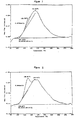
- Figure 1 it can be seen that a lower cure peak appears at 135.78°C when the amine to phenolic monomer mole ratio in the polymer is 0.11. As the amine to phenolic monomer mole ratio in the polymer is increased to 0.18 as in Figure 2 , the lower cure peak at 135.8°C becomes greater.
- the curing temperature of a crosslinking polymer prepared in Example 11 (which had an unreacted free phenol level of 0.2%) was evaluated using DSC, and had a maximum rate of reaction, as measured by DSC, at 243°C.
- the low temperature cure peak area was 35.5 cal./g and the total cure area was 74.05 cal./g.
- the curing temperature of a solid resole resin analogous to the resole resin commercially available as Plenco® 12114 resole resin (which had an unreacted free phenol level of 6%) was evaluated using DSC, and had a maximum rate of reaction, as measured by DSC, at 161 °C.
- the low temperature cure peak area was 18.89 cal./g and the total cure area was 40.41 cal./g.
- a polymer is advantageous when employed as a curing agent for novolac resins. It is particularly advantageous in that the polymer has very little reactivity towards itself, yet can retain high reactivity towards novolac resins as shown in Examples 1a-11a.
- the low reactivity of the polymer towards itself is shown by the very high cure temperature of the pure crosslinking resin of Example 17, compared to the cure of a conventional resole resin in Example 18.
- Cross-linking polymers were prepared as Examples 20(a)-20(r) using the procedure of Example 1 with a formaldehyde to phenol monomer molar ratio and a hexamethylenetetramine (HMTA) to phenol molar ratio as shown in Table 3.
- HMTA hexamethylenetetramine
- the curing of a mixture of the cross-linking polymer prepared in Examples 20(a)-20(r) and 100 parts by weight of a solid novolac resin analogous to the solid novolac resin commercially available as Plenco® 13157 novolac resin were evaluated by DSC to measure the cure area and cure temperature. The results are shown in Table 3.
- the reactivity of a polymer can be controlled by adjusting the amine to phenolic monomer molar ratio. Specifically, at an amine to phenolic monomer molar ratio of at least about 0.12:1, a polymer can be used to cure a novolac resin at a lower temperature compared to conventional novolac curing agents.
- the curing of a novolac resin can be accelerated by using a curing agent including a polymer and a conventional curing agent such as hexamethylenetetramine.
- the amount of crosslinking in a novolac resin can be controlled by adjusting the amount of a polymer and the amount of a conventional curing agent in a curing agent blend used to cure the novolac resin.
- the crosslinking polymer composition can be used to cure novolac resins and has particular utility in curing novolac binders.
- the polymer composition can be substituted for hexamethylenetetramine as a curing/cross linking agent for novolac resins.
- the polymer composition can also be substituted for resoles as a curing/cross linking agent for novolac resins.
- the polymer composition can be used in combination hexamethylenetetramine and/or resoles as a cure accelerator and a flow modifier.
- Non-limiting examples of applications include: binding of recycled cellulosic felt used in the automotive industry; binding of refractory materials; binding of fiber materials; binding of molding compositions; binding of friction products such as brake pads, and the binding of foundry sands and oil field propant sands.
- Methods of applying and using conventional curing agents such as hexamethylenetetramine and resole resins, can be used in the application of the crosslinking polymer composition.
- the polymer composition may be supplied in liquid or solid form. Those skilled in the art will recognize that an effective amount of the composition can be mixed with dry or liquid novolac resins to replace conventional curing agents.
- An effective amount Is the amount of crosslinking polymer composition required to yield the desired extent of cure.
- the polymer Because of the low free phenol levels and the low formaldehyde levels associated with the crosslinking polymer composition, processes employing the curing agent have greatly diminished environmental impact. In addition, the polymer has extended shelf life when stored alone or admixed with novolac resins.
- the crosslinking polymer composition is particularly advantageous in: the curing of novolac resins that are used as a binder in a thermally insulating matrix, such as glass, ceramic, wood, cotton or synthetic fibers, where a lower novolac cure temperature is desirable; applications that use a novolac resin in an aqueous slurry where a curing agent such as hexamethylenetetramine is lost through dissolution and hydrolysis; and the curing of novolac resins where volatile emissions, such as ammonia, must be controlled.
- a thermally insulating matrix such as glass, ceramic, wood, cotton or synthetic fibers
- molding compositions were prepared using: (1) a solid novolac resin analogous to the solid novolac resin commercially available as Plenco® 13157 novolac resin, a filler, and hexamethylenetetramine (HMTA) as a curing agent; and (2) a solid novolac resin analogous to the solid novolac resin commercially available as Plenco® 13157 novolac resin, a filler, and a crosslinking polymer composition as a curing agent.
- the parts by weight of each of the components of each molding composition and the physical and chemical properties of the molded product after molding and cure are shown as Examples 22-30 in Table 5.
- a 100 gram portion of the solution from Example 6 was added to 500 grams of a methanol solution of a phenol formaldehyde resole commercially available as Plenco® 11635 from Plastics Engineering Co., Sheboygan, Wisconsin to form a first mixture.
- the first mixture was then utilized to saturate 20 sheets of a commercially available Kraft paper which was then dried overnight in an air stream, then further dried at 280°F for approximately 5 minutes to yield a non-tacky Kraft prepreg.
- Ten sheets of the above treated Kraft paper were then placed between polished steel plates and molded under a total pressure of 500 lbs. per square inch at 350°F to produce a well cured laminate.
- a 100 gram sample of the solution from Example 6 was diluted with 500 grams of a methanol solution of a novolac resin commercially available as Plenco® 10212 to form a second mixture.
- the second mixture was used to treat 20 - 12" x 12" sheets of Nomex® brand aramid fabric cloth which was dried in the air and then at 280°F as above. These treated cloths were molded between polished steel plates as in Example 32 above, to yield essentially void free heat resistant laminates.
- Example 32 A similar amount of the first mixture of Example 32 was also used to treat 181 weave S glass. The treated glass was then dried and molded as above to produce an essentially void free, strong glass laminate.
- Example 33 A similar amount of the second mixture of Example 33 was also used to treat 181 weave S glass. The treated glass was then dried and molded as above to produce an essentially void free, strong glass laminate.
- a 100 gram sample of the composition from example 1A was placed in a 20 gallon fiber drum equipped with a tight fitting cover which had been modified to accept a high pressure air hose in one end and a cloth filter taped over a 3" diameter hole in the opposite end.
- a 400 gram sample of recycled, fiberized cotton cloth, commonly known in the industry as textile felt or shoddy, and 5 gram sample of zinc stearate were then placed into this drum.
- the lid was replaced and the mixture alternately tumbled and injected with high pressure air until the textile felt and the composition from example 1A were thoroughly blended. This mixture was then discharged and spread by hand to a thickness of approximately 4 inches.
- This 4" thick mat was placed In a forced draft oven at 280°F for 2 minutes, removed, cooled, and cut into 12" x 12" x 4" thick pre-forms. These pre-forms were molded into of 1". 1 ⁇ 2" and approximately 1/4" thick specimens using a press having a platen temperature of 375°F. In all cases, the molded textile felt was well bonded and very stiff. Among other things, this demonstrates the utility of the composition from Example 1A in the molding of automotive interior parts.
- a 1000 gram sample of special silica sand characterized by a fairly narrow particle size distribution was heated to a temperature of 390°F in an air oven until the moisture content was below 0.5%.
- This hot sand was then transferred to an insulated mixing bowl of a Hobart brand mixer and one gram of a silane surface treating agent, such as A-1100 commercially available from Union Carbide or Z-6020 commercially available from Dow Coming, was added and the mixture was blended for 20 seconds.
- 6 grams of the solution from Example 6 was added, blended for an additional 1 minute and poured onto a cool surface to cool.
Landscapes
- Chemical & Material Sciences (AREA)
- Organic Chemistry (AREA)
- Health & Medical Sciences (AREA)
- Chemical Kinetics & Catalysis (AREA)
- Medicinal Chemistry (AREA)
- Polymers & Plastics (AREA)
- Life Sciences & Earth Sciences (AREA)
- Engineering & Computer Science (AREA)
- Materials Engineering (AREA)
- Wood Science & Technology (AREA)
- General Chemical & Material Sciences (AREA)
- Compositions Of Macromolecular Compounds (AREA)
- Phenolic Resins Or Amino Resins (AREA)
Claims (25)
- Verfahren zum Härten eines Novolakharzes, wobei das Verfahren umfasst:- Mischen und Umsetzen eines Aldehyds und eines phenolischen Monomers in wässriger Lösung in einem Molverhältnis von Aldehyd zu Phenolmonomer von mindestens 1,0:1, so dass eine Harzzwischenverbindung gebildet wird, und- Umsetzen der Harzzwischenverbindung mit Ammoniak als Amin in einem Molverhältnis von Ammoniak zu Phenolmonomer von mindestens 0,48:1 oder Umsetzen der Harzzwischenverbindung mit Hexamethylentetramin als Amin in einem Molverhältnis von Hexamethylentetramin zu Phenolmonomer von mindestens 0,12:1, so dass eine Polymerzusammensetzung gebildet wird, und- Zugeben der Polymerzusammensetzung zu einem Novolakharz und Härten der erhaltenen Zusammensetzung.
- Verfahren nach Anspruch 1, bei dem das Molverhältnis von Aldehyd zu Phenolmonomer mindestens 2,0:1 beträgt.
- Verfahren nach Anspruch 1 oder 2, bei dem der Aldehyd Formaldehyd ist.
- Verfahren nach einem der Ansprüche 1 bis 3, bei dem das Phenolmonomer ausgewählt ist aus der Gruppe bestehend aus Phenol, substituierten Phenolen und Mischungen davon.
- Verfahren nach einem der Ansprüche 1 bis 4, bei dem das nicht umgesetzte Phenolmonomer in der Polymerzusammensetzung weniger als 3 Gewichtsprozent ausmacht.
- Verfahren nach einem der Ansprüche 1 bis 5, bei dem das nicht umgesetzte Phenolmonomer in der Polymerzusammensetzung weniger als 1 Gewichtsprozent ausmacht.
- Verfahren nach einem der Ansprüche 1 bis 6, bei dem das nicht umgesetzte Phenolmonomer in der Polymerzusammensetzung weniger als 0,5 Gewichtsprozent ausmacht.
- Verfahren nach einem der Ansprüche 1 bis 7, bei dem der nicht umgesetzte Aldehyd in der Polymerzusammensetzung weniger als 0,1 Gewichtsprozent ausmacht.
- Verfahren nach einem der Ansprüche 1 bis 8, bei dem der Aldehyd und das Phenolmonomer in Gegenwart eines neutralen oder basischen Katalysators umgesetzt werden.
- Verfahren nach Anspruch 9, bei dem das Molverhältnis von neutralem oder basischem Katalysator zu Phenolmonomer 0,01:1 bis 0,03:1 beträgt.
- Verfahren nach Anspruch 9 oder 10, bei dem ein basischer Katalysator mit einer Säure neutralisiert wird, bevor die Harzzwischenverbindung mit dem Amin umgesetzt wird.
- Verfahren nach einem der Ansprüche 1 bis 11, bei dem ein organisches Lösungsmittel zugesetzt wird, nachdem die Harzzwischenverbindung mit dem Amin umgesetzt wurde.
- Verfahren nach einem der Ansprüche 1 bis 12, bei dem das Molverhältnis von Hexamethylentetramin zu Phenolmonomer 0,12:1 bis 0,25:1 beträgt.
- Verfahren nach einem der Ansprüche 1 bis 13, bei dem die Zusammensetzung einen Erweichungspunkt zwischen 70 °C und 120 °C aufweist.
- Verfahren zum Herstellen einer härtbaren Novolakzusammensetzung, wobei das Verfahren die Schritte umfasst:- Mischen und Umsetzen eines Aldehyds und eines phenolischen Monomers in wässriger Lösung in einem Molverhältnis von Aldehyd zu Phenolmonomer von mindestens 1,0:1, so dass eine Harzzwischenverbindung gebildet wird,- Umsetzen der Harzzwischenverbindung mit Ammoniak als Amin in einem Molverhältnis von Ammoniak zu Phenolmonomer von mindestens 0,48:1 oder Umsetzen der Harzzwischenverbindung mit Hexamethylentetramin als Amin in einem Molverhältnis von Hexamethylentetramin zu Phenolmonomer von mindestens 0,12:1, so dass eine Polymerzusammensetzung gebildet wird, und- Kombinieren der Polymerzusammensetzung mit einem Novolakharz, so dass die härtbare Novolakzusammensetzung gebildet wird.
- Verfahren nach Anspruch 15, bei dem der Schritt zum Kombinieren der Polymerzusammensetzung mit einem Novolakharz, so dass die härtbare Novolakzusammensetzung gebildet wird, umfasst:- Kombinieren von 2 Gewichtsprozent bis 80 Gewichtsprozent der Polymerzusammensetzung mit 20 Gewichtsprozent bis ungefähr 98 Gewichtsprozent eines Novolakharzes, so dass die härtbare Novolakzusammensetzung gebildet wird.
- Verfahren nach Anspruch 15, bei dem der Schritt zum Kombinieren der Polymerzusammensetzung mit einem Novolakharz, so dass die härtbare Novolakzusammensetzung gebildet wird, umfasst:- Kombinieren von 2 Gewichtsprozent bis 80 Gewichtsprozent der Polymerzusammensetzung mit 20 Gewichtsprozent bis 98 Gewichtsprozent eines Novolakharzes und einem Härtungsmittel, das Methylenbrückengruppen bereitstellt, so dass die härtbare Novolakzusammensetzung gebildet wird.
- Verfahren nach Anspruch 17, bei dem das Härtungsmittel Hexamethylentetramin ist.
- Verfahren nach Anspruch 15, bei dem der Schritt zum Kombinieren der Polymerzusammensetzung mit einem Novolakharz, so dass die härtbare Novolakzusammensetzung gebildet wird, umfasst:- Kombinieren von 2 Gewichtsprozent bis 80 Gewichtsprozent der Polymerzusammensetzung mit 20 Gewichtsprozent bis 98 Gewichtsprozent eines Novolakharzes und weniger als 26 Gewichtsprozent Hexamethylentetramin, so dass die härtbare Novolakzusammensetzung gebildet wird.
- Verfahren zum Herstellen einer härtbaren Novolakzusammensetzung, wobei das Verfahren die Schritte umfasst:- Mischen und Umsetzen eines Aldehyds und eines phenolischen Monomers in wässriger Lösung in einem Molverhältnis von Aldehyd zu Phenolmonomer von mindestens 1,0:1, so dass eine Harzzwischenverbindung gebildet wird,- Umsetzen der Harzzwischenverbindung mit Ammoniak als Amin in einem Molverhältnis von Ammoniak zu Phenolmonomer von mindestens 0,48:1 oder Umsetzen der Harzzwischenverbindung mit Hexamethylentetramin als Amin in einem Molverhältnis von Hexamethylentetramin zu Phenolmonomer von mindestens 0,12:1, so dass eine Polymerzusammensetzung gebildet wird, und- Kombinieren der Polymerzusammensetzung mit einem Novolakharz und einem Füllstoff, so dass die härtbare Zusammensetzung gebildet wird.
- Verfahren nach Anspruch 20, bei dem der Füllstoff ausgewählt ist aus der Gruppe bestehend aus cellulosischen Materialien, Fasermaterialien, feuerfesten Materialien und Mischungen davon.
- Verfahren nach Anspruch 20, bei dem der Schritt zum Kombinieren der Polymerzusammensetzung mit einem Novolakharz und einem Füllstoff, so dass die härtbare Zusammensetzung gebildet wird, umfasst:- Kombinieren von 2 Gewichtsprozent bis 80 Gewichtsprozent der Polymerzusammensetzung mit 20 Gewichtsprozent bis 98 Gewichtsprozent eines Novolakharzes und einem Füllstoff, so dass die härtbare Zusammensetzung gebildet wird.
- Verfahren nach Anspruch 20, bei dem der Schritt zum Kombinieren der Polymerzusammensetzung mit einem Novolakharz und einem Füllstoff, so dass die härtbare Zusammensetzung gebildet wird, umfasst:- Kombinieren von 2 Gewichtsprozent bis 80 Gewichtsprozent der Polymerzusammensetzung mit 20 Gewichtsprozent bis 98 Gewichtsprozent eines Novolakharzes und einem Füllstoff und einem Härtungsmittel, das Methylenbrückengruppen bereitstellt, so dass die härtbare Zusammensetzung gebildet wird.
- Verfahren nach Anspruch 23, bei dem das Härtungsmittel Hexamethylentetramin ist.
- Verfahren nach Anspruch 20, bei dem der Schritt zum Kombinieren der Polymerzusammensetzung mit einem Novolakharz und einem Füllstoff, so dass die härtbare Zusammensetzung gebildet wird, umfasst:- Kombinieren von ungefähr 2 Gewichtsprozent bis 80 Gewichtsprozent der Polymerzusammensetzung mit 20 Gewichtsprozent bis 98 Gewichtsprozent eines Novolakharzes und einem Füllstoff und weniger als 26 Gewichtsprozent Hexamethylentetramin, so dass die härtbare Zusammensetzung gebildet wird.
Applications Claiming Priority (2)
| Application Number | Priority Date | Filing Date | Title |
|---|---|---|---|
| US09/498,288 US6569918B2 (en) | 2000-02-04 | 2000-02-04 | Polymer composition for curing novolac resins |
| US498288 | 2000-02-04 |
Publications (2)
| Publication Number | Publication Date |
|---|---|
| EP1122268A1 EP1122268A1 (de) | 2001-08-08 |
| EP1122268B1 true EP1122268B1 (de) | 2014-04-30 |
Family
ID=23980409
Family Applications (1)
| Application Number | Title | Priority Date | Filing Date |
|---|---|---|---|
| EP00103693.8A Expired - Lifetime EP1122268B1 (de) | 2000-02-04 | 2000-02-22 | Polymerzusammensetzung zur Vernetzung von Novolakharze |
Country Status (6)
| Country | Link |
|---|---|
| US (1) | US6569918B2 (de) |
| EP (1) | EP1122268B1 (de) |
| BR (1) | BR0000896B1 (de) |
| CA (1) | CA2299010C (de) |
| DK (1) | DK1122268T3 (de) |
| ES (1) | ES2483168T3 (de) |
Families Citing this family (13)
| Publication number | Priority date | Publication date | Assignee | Title |
|---|---|---|---|---|
| EP1422345A1 (de) * | 2002-09-06 | 2004-05-26 | PV-Sand A/S | Beschichtete Sandkörner |
| US20070100116A1 (en) * | 2005-11-01 | 2007-05-03 | Zaldivar Rafael J | Low temperature processed resin for thermal and chemical protective coatings |
| JP5302008B2 (ja) | 2005-12-30 | 2013-10-02 | カウンシル オブ サイエンティフィック アンド インダストリアル リサーチ | カルダノールから得られた多官能性アルコール、多官能性アクリル系架橋剤及びそのペンダント含リン難燃性誘導体 |
| US7763316B2 (en) * | 2006-05-18 | 2010-07-27 | Fairmount Minerals, Inc. | No hexa shell sand |
| US20070270524A1 (en) | 2006-05-18 | 2007-11-22 | Kerns Kelley J | Composition of matter and method of application for elimination of odors in shell sand encapsulation |
| US20130045900A1 (en) * | 2009-10-02 | 2013-02-21 | Technisand, Inc. | Meta crosslinked benzyl polymers |
| CN103282407B (zh) | 2011-01-14 | 2015-01-21 | 住友电木株式会社 | 液态甲阶型酚醛树脂 |
| NL2006218C2 (en) * | 2011-02-16 | 2012-08-24 | Trespa Int Bv | A method for reducing the formaldehyde content of a resinous starting material. |
| US9890130B2 (en) | 2013-02-15 | 2018-02-13 | Empire Technology Development Llc | Phenolic epoxy compounds |
| WO2014200486A1 (en) | 2013-06-13 | 2014-12-18 | Empire Technology Development Llc | Multi-functional phenolic resins |
| US10106494B2 (en) | 2013-12-02 | 2018-10-23 | Empire Technology Development Llc | Gemini surfactant and their use |
| CN110124630B (zh) * | 2019-04-05 | 2022-08-05 | 湖南工程学院 | 一种氮磷掺杂的酚醛树脂复合材料的原位合成方法及其应用 |
| CN116145461B (zh) * | 2023-01-10 | 2024-05-07 | 常州大学 | Tris缓冲剂在脲醛树脂胶浸渍纸制备中作为固化剂的应用 |
Family Cites Families (20)
| Publication number | Priority date | Publication date | Assignee | Title |
|---|---|---|---|---|
| US4003873A (en) | 1971-11-04 | 1977-01-18 | The Dow Chemical Company | Cement-phenolic resin compositions |
| US3850868A (en) * | 1973-04-03 | 1974-11-26 | Ppg Industries Inc | Organic flatting agents and method of preparation |
| GB1556691A (en) | 1976-01-28 | 1979-11-28 | British Steel Corp | Phenol formaldehyde resins their manufacture and uses |
| US4076692A (en) | 1976-07-15 | 1978-02-28 | American Kynol, Inc. | Process for manufacturing novaloid fiber |
| US4101500A (en) | 1976-10-26 | 1978-07-18 | Monsanto Company | Brake lining compositions having friction particles of an aromatic amine modified novolac resin and an aromatic carboxylic compound |
| JPS5379989A (en) | 1976-12-23 | 1978-07-14 | Sumitomo Durez Co | Manufacture of resinncoated sand |
| JPS565813A (en) * | 1979-06-28 | 1981-01-21 | Matsushita Electric Works Ltd | Preparation of phenolic resin |
| DE2936954A1 (de) | 1979-09-10 | 1981-04-02 | Hüttenes-Albertus Chemische Werke GmbH, 4000 Düsseldorf | Bindemittel zur herstellung von rieselfaehigen, kunstharzumhuellten formmassen, insbesondere fuer giessereizwecke |
| US4624984A (en) | 1984-02-24 | 1986-11-25 | Plastics Engineering Company | Moldable composition suitable for the preparation of vitreous carbon |
| JPS61258819A (ja) * | 1985-05-13 | 1986-11-17 | Unitika Ltd | 微小球状硬化フエノ−ル樹脂粒子の製造法 |
| DE3625443A1 (de) | 1986-07-28 | 1988-02-11 | Ruetgerswerke Ag | Verfahren zur herstellung von textilvliesstoffen |
| DE3738902A1 (de) | 1987-11-17 | 1989-05-24 | Ruetgerswerke Ag | Hitzehaertendes bindemittel und seine verwendung |
| US4880893A (en) | 1988-12-28 | 1989-11-14 | Plastics Engineering Company | Novel thermosetting compositions and molding method |
| US5189079A (en) | 1991-06-12 | 1993-02-23 | Acme Resin Corp. | Low free formaldehyde phenolic polyol formulation |
| US5648404A (en) | 1994-04-11 | 1997-07-15 | Borden Inc. | Curatives for phenolic novolacs |
| US5686506A (en) * | 1995-04-04 | 1997-11-11 | Borden Chemical, Inc. | Mixtures of phenolic novolaks for use with refractory aggregate and methods for making same |
| JP3487083B2 (ja) | 1996-02-09 | 2004-01-13 | 日立化成工業株式会社 | 熱硬化性樹脂組成物及びその硬化物 |
| US5750597A (en) | 1996-06-20 | 1998-05-12 | Plastics Engineering Company | Thermosetting resin compositions |
| DE69800113T2 (de) * | 1997-05-09 | 2000-09-28 | Dainippon Ink And Chemicals, Inc. | Phenolharz-Zusammensetzungen und Verfahren zu deren Herstellung |
| US5910521A (en) | 1998-04-01 | 1999-06-08 | Borden Chemical, Inc. | Benzoxazine polymer composition |
-
2000
- 2000-02-04 US US09/498,288 patent/US6569918B2/en not_active Expired - Lifetime
- 2000-02-21 CA CA002299010A patent/CA2299010C/en not_active Expired - Fee Related
- 2000-02-21 BR BRPI0000896-6A patent/BR0000896B1/pt not_active IP Right Cessation
- 2000-02-22 EP EP00103693.8A patent/EP1122268B1/de not_active Expired - Lifetime
- 2000-02-22 ES ES00103693.8T patent/ES2483168T3/es not_active Expired - Lifetime
- 2000-02-22 DK DK00103693.8T patent/DK1122268T3/da active
Also Published As
| Publication number | Publication date |
|---|---|
| DK1122268T3 (da) | 2014-07-14 |
| EP1122268A1 (de) | 2001-08-08 |
| ES2483168T3 (es) | 2014-08-05 |
| CA2299010A1 (en) | 2001-08-07 |
| CA2299010C (en) | 2004-07-20 |
| BR0000896B1 (pt) | 2009-08-11 |
| US20020111425A1 (en) | 2002-08-15 |
| BR0000896A (pt) | 2000-08-29 |
| US6569918B2 (en) | 2003-05-27 |
Similar Documents
| Publication | Publication Date | Title |
|---|---|---|
| DE69629464T2 (de) | Phenolharz-zusammensetzungen mit verbesserter schlagfestigkeit | |
| CA2299010C (en) | Polymer composition for curing novolac resins | |
| EP3986952B1 (de) | Phenolisches epoxidsystem | |
| JPWO1993010164A1 (ja) | シェールオイルレゾルシン系樹脂 | |
| US4794051A (en) | Low shrinkage phenolic molding compositions | |
| US5300593A (en) | Lignin modified binding agents | |
| JP3911614B2 (ja) | バイオマス樹脂組成物、その製造方法および該バイオマス樹脂組成物からなる成形材料 | |
| US4003873A (en) | Cement-phenolic resin compositions | |
| US5910521A (en) | Benzoxazine polymer composition | |
| US6133403A (en) | Reactive diluents for acid curable phenolic compositions | |
| US5254639A (en) | Binding agents | |
| JPWO2016159218A1 (ja) | レゾール型変性フェノール樹脂組成物、その製造方法および接着剤 | |
| US5047275A (en) | Spray dried phenol-formaldehyde resin compositions | |
| US3471443A (en) | Curing phenol-aldehyde novolak resins employing aniline or aniline hcl | |
| JPS6031340B2 (ja) | 乾式レジンフエルト用粉末フエノ−ル樹脂組成物 | |
| US4105623A (en) | Method of making molding compounds and materials made thereby | |
| WO2024134449A1 (en) | Improved bonding resin | |
| US5066693A (en) | Molding compositions of resole phenolic resin and epoxy resin | |
| JPH10512618A (ja) | 可とう化したフェノール樹脂、その製造方法および使用 | |
| US5015529A (en) | Phenolic molding compositions | |
| JP4129508B2 (ja) | 耐火物用結合剤 | |
| MXPA00001846A (en) | Polymer composition for curing novolac resins | |
| JPH0559256A (ja) | 酸硬化剤組成物及び合成樹脂組成物 | |
| JPS628457B2 (de) | ||
| JP2024147911A (ja) | 多孔質成形体の製造方法、成形材料、多孔質成形体、および多孔質炭素材 |
Legal Events
| Date | Code | Title | Description |
|---|---|---|---|
| PUAI | Public reference made under article 153(3) epc to a published international application that has entered the european phase |
Free format text: ORIGINAL CODE: 0009012 |
|
| AK | Designated contracting states |
Kind code of ref document: A1 Designated state(s): AT BE CH CY DE DK ES FI FR GB GR IE IT LI LU MC NL PT SE |
|
| AX | Request for extension of the european patent |
Free format text: AL;LT;LV;MK;RO;SI |
|
| 17P | Request for examination filed |
Effective date: 20020129 |
|
| AKX | Designation fees paid |
Free format text: AT BE CH CY DE DK ES FI FR GB GR IE IT LI LU MC NL PT SE |
|
| 17Q | First examination report despatched |
Effective date: 20040615 |
|
| REG | Reference to a national code |
Ref country code: DE Ref legal event code: R079 Ref document number: 60048536 Country of ref document: DE Free format text: PREVIOUS MAIN CLASS: C08G0014060000 Ipc: C08G0008280000 |
|
| GRAP | Despatch of communication of intention to grant a patent |
Free format text: ORIGINAL CODE: EPIDOSNIGR1 |
|
| RIC1 | Information provided on ipc code assigned before grant |
Ipc: C08L 61/34 20060101ALI20130911BHEP Ipc: C08G 8/10 20060101ALI20130911BHEP Ipc: C08G 8/28 20060101AFI20130911BHEP Ipc: C09D 161/34 20060101ALI20130911BHEP Ipc: C09J 161/34 20060101ALI20130911BHEP Ipc: C08G 14/06 20060101ALI20130911BHEP |
|
| INTG | Intention to grant announced |
Effective date: 20131011 |
|
| GRAS | Grant fee paid |
Free format text: ORIGINAL CODE: EPIDOSNIGR3 |
|
| GRAA | (expected) grant |
Free format text: ORIGINAL CODE: 0009210 |
|
| AK | Designated contracting states |
Kind code of ref document: B1 Designated state(s): AT BE CH CY DE DK ES FI FR GB GR IE IT LI LU MC NL PT SE |
|
| REG | Reference to a national code |
Ref country code: GB Ref legal event code: FG4D Ref country code: CH Ref legal event code: EP |
|
| REG | Reference to a national code |
Ref country code: AT Ref legal event code: REF Ref document number: 665106 Country of ref document: AT Kind code of ref document: T Effective date: 20140515 |
|
| REG | Reference to a national code |
Ref country code: IE Ref legal event code: FG4D |
|
| REG | Reference to a national code |
Ref country code: DE Ref legal event code: R096 Ref document number: 60048536 Country of ref document: DE Effective date: 20140605 |
|
| REG | Reference to a national code |
Ref country code: DK Ref legal event code: T3 Effective date: 20140711 |
|
| REG | Reference to a national code |
Ref country code: NL Ref legal event code: T3 |
|
| REG | Reference to a national code |
Ref country code: CH Ref legal event code: NV Representative=s name: DR. LUSUARDI AG, CH |
|
| REG | Reference to a national code |
Ref country code: ES Ref legal event code: FG2A Ref document number: 2483168 Country of ref document: ES Kind code of ref document: T3 Effective date: 20140805 |
|
| REG | Reference to a national code |
Ref country code: SE Ref legal event code: TRGR |
|
| PG25 | Lapsed in a contracting state [announced via postgrant information from national office to epo] |
Ref country code: CY Free format text: LAPSE BECAUSE OF FAILURE TO SUBMIT A TRANSLATION OF THE DESCRIPTION OR TO PAY THE FEE WITHIN THE PRESCRIBED TIME-LIMIT Effective date: 20140430 Ref country code: GR Free format text: LAPSE BECAUSE OF FAILURE TO SUBMIT A TRANSLATION OF THE DESCRIPTION OR TO PAY THE FEE WITHIN THE PRESCRIBED TIME-LIMIT Effective date: 20140731 |
|
| PG25 | Lapsed in a contracting state [announced via postgrant information from national office to epo] |
Ref country code: PT Free format text: LAPSE BECAUSE OF FAILURE TO SUBMIT A TRANSLATION OF THE DESCRIPTION OR TO PAY THE FEE WITHIN THE PRESCRIBED TIME-LIMIT Effective date: 20140901 |
|
| REG | Reference to a national code |
Ref country code: DE Ref legal event code: R097 Ref document number: 60048536 Country of ref document: DE |
|
| PLBE | No opposition filed within time limit |
Free format text: ORIGINAL CODE: 0009261 |
|
| STAA | Information on the status of an ep patent application or granted ep patent |
Free format text: STATUS: NO OPPOSITION FILED WITHIN TIME LIMIT |
|
| 26N | No opposition filed |
Effective date: 20150202 |
|
| REG | Reference to a national code |
Ref country code: DE Ref legal event code: R097 Ref document number: 60048536 Country of ref document: DE Effective date: 20150202 |
|
| PG25 | Lapsed in a contracting state [announced via postgrant information from national office to epo] |
Ref country code: LU Free format text: LAPSE BECAUSE OF FAILURE TO SUBMIT A TRANSLATION OF THE DESCRIPTION OR TO PAY THE FEE WITHIN THE PRESCRIBED TIME-LIMIT Effective date: 20150222 |
|
| PG25 | Lapsed in a contracting state [announced via postgrant information from national office to epo] |
Ref country code: MC Free format text: LAPSE BECAUSE OF FAILURE TO SUBMIT A TRANSLATION OF THE DESCRIPTION OR TO PAY THE FEE WITHIN THE PRESCRIBED TIME-LIMIT Effective date: 20140430 |
|
| REG | Reference to a national code |
Ref country code: IE Ref legal event code: MM4A |
|
| REG | Reference to a national code |
Ref country code: FR Ref legal event code: PLFP Year of fee payment: 17 |
|
| PG25 | Lapsed in a contracting state [announced via postgrant information from national office to epo] |
Ref country code: IE Free format text: LAPSE BECAUSE OF NON-PAYMENT OF DUE FEES Effective date: 20150222 |
|
| REG | Reference to a national code |
Ref country code: FR Ref legal event code: PLFP Year of fee payment: 18 |
|
| PGFP | Annual fee paid to national office [announced via postgrant information from national office to epo] |
Ref country code: SE Payment date: 20170217 Year of fee payment: 18 Ref country code: DE Payment date: 20170221 Year of fee payment: 18 Ref country code: CH Payment date: 20170228 Year of fee payment: 18 Ref country code: FR Payment date: 20170227 Year of fee payment: 18 Ref country code: FI Payment date: 20170224 Year of fee payment: 18 |
|
| PGFP | Annual fee paid to national office [announced via postgrant information from national office to epo] |
Ref country code: DK Payment date: 20170218 Year of fee payment: 18 Ref country code: BE Payment date: 20170224 Year of fee payment: 18 Ref country code: GB Payment date: 20170222 Year of fee payment: 18 Ref country code: NL Payment date: 20170217 Year of fee payment: 18 Ref country code: AT Payment date: 20170227 Year of fee payment: 18 |
|
| PGFP | Annual fee paid to national office [announced via postgrant information from national office to epo] |
Ref country code: ES Payment date: 20170228 Year of fee payment: 18 Ref country code: IT Payment date: 20170221 Year of fee payment: 18 |
|
| REG | Reference to a national code |
Ref country code: DE Ref legal event code: R119 Ref document number: 60048536 Country of ref document: DE |
|
| REG | Reference to a national code |
Ref country code: CH Ref legal event code: PL |
|
| REG | Reference to a national code |
Ref country code: DK Ref legal event code: EBP Effective date: 20180228 |
|
| REG | Reference to a national code |
Ref country code: SE Ref legal event code: EUG |
|
| REG | Reference to a national code |
Ref country code: NL Ref legal event code: MM Effective date: 20180301 |
|
| REG | Reference to a national code |
Ref country code: AT Ref legal event code: MM01 Ref document number: 665106 Country of ref document: AT Kind code of ref document: T Effective date: 20180222 |
|
| GBPC | Gb: european patent ceased through non-payment of renewal fee |
Effective date: 20180222 |
|
| PG25 | Lapsed in a contracting state [announced via postgrant information from national office to epo] |
Ref country code: FI Free format text: LAPSE BECAUSE OF NON-PAYMENT OF DUE FEES Effective date: 20180222 Ref country code: SE Free format text: LAPSE BECAUSE OF NON-PAYMENT OF DUE FEES Effective date: 20180223 |
|
| REG | Reference to a national code |
Ref country code: BE Ref legal event code: MM Effective date: 20180228 |
|
| PG25 | Lapsed in a contracting state [announced via postgrant information from national office to epo] |
Ref country code: LI Free format text: LAPSE BECAUSE OF NON-PAYMENT OF DUE FEES Effective date: 20180228 Ref country code: AT Free format text: LAPSE BECAUSE OF NON-PAYMENT OF DUE FEES Effective date: 20180222 Ref country code: CH Free format text: LAPSE BECAUSE OF NON-PAYMENT OF DUE FEES Effective date: 20180228 |
|
| REG | Reference to a national code |
Ref country code: FR Ref legal event code: ST Effective date: 20181031 |
|
| PG25 | Lapsed in a contracting state [announced via postgrant information from national office to epo] |
Ref country code: NL Free format text: LAPSE BECAUSE OF NON-PAYMENT OF DUE FEES Effective date: 20180301 |
|
| PG25 | Lapsed in a contracting state [announced via postgrant information from national office to epo] |
Ref country code: DK Free format text: LAPSE BECAUSE OF NON-PAYMENT OF DUE FEES Effective date: 20180228 Ref country code: DE Free format text: LAPSE BECAUSE OF NON-PAYMENT OF DUE FEES Effective date: 20180901 |
|
| PG25 | Lapsed in a contracting state [announced via postgrant information from national office to epo] |
Ref country code: IT Free format text: LAPSE BECAUSE OF NON-PAYMENT OF DUE FEES Effective date: 20180222 Ref country code: FR Free format text: LAPSE BECAUSE OF NON-PAYMENT OF DUE FEES Effective date: 20180228 Ref country code: BE Free format text: LAPSE BECAUSE OF NON-PAYMENT OF DUE FEES Effective date: 20180228 Ref country code: GB Free format text: LAPSE BECAUSE OF NON-PAYMENT OF DUE FEES Effective date: 20180222 |
|
| REG | Reference to a national code |
Ref country code: ES Ref legal event code: FD2A Effective date: 20190801 |
|
| PG25 | Lapsed in a contracting state [announced via postgrant information from national office to epo] |
Ref country code: ES Free format text: LAPSE BECAUSE OF NON-PAYMENT OF DUE FEES Effective date: 20180223 |