EP1159957A2 - Vorrichtung zur lokalen Verabreichung fester oder halbfester Formulierungen, Retardformulierungen zur parenteralen Verabreichung sowie Herstellungsverfahren - Google Patents
Vorrichtung zur lokalen Verabreichung fester oder halbfester Formulierungen, Retardformulierungen zur parenteralen Verabreichung sowie Herstellungsverfahren Download PDFInfo
- Publication number
- EP1159957A2 EP1159957A2 EP01118964A EP01118964A EP1159957A2 EP 1159957 A2 EP1159957 A2 EP 1159957A2 EP 01118964 A EP01118964 A EP 01118964A EP 01118964 A EP01118964 A EP 01118964A EP 1159957 A2 EP1159957 A2 EP 1159957A2
- Authority
- EP
- European Patent Office
- Prior art keywords
- formulation
- formulation according
- solid
- active principle
- active ingredient
- Prior art date
- Legal status (The legal status is an assumption and is not a legal conclusion. Google has not performed a legal analysis and makes no representation as to the accuracy of the status listed.)
- Withdrawn
Links
Images









Classifications
-
- A—HUMAN NECESSITIES
- A61—MEDICAL OR VETERINARY SCIENCE; HYGIENE
- A61M—DEVICES FOR INTRODUCING MEDIA INTO, OR ONTO, THE BODY; DEVICES FOR TRANSDUCING BODY MEDIA OR FOR TAKING MEDIA FROM THE BODY; DEVICES FOR PRODUCING OR ENDING SLEEP OR STUPOR
- A61M37/00—Other apparatus for introducing media into the body; Percutany, i.e. introducing medicines into the body by diffusion through the skin
-
- A—HUMAN NECESSITIES
- A61—MEDICAL OR VETERINARY SCIENCE; HYGIENE
- A61K—PREPARATIONS FOR MEDICAL, DENTAL OR TOILETRY PURPOSES
- A61K9/00—Medicinal preparations characterised by special physical form
- A61K9/0012—Galenical forms characterised by the site of application
- A61K9/0019—Injectable compositions; Intramuscular, intravenous, arterial, subcutaneous administration; Compositions to be administered through the skin in an invasive manner
- A61K9/0024—Solid, semi-solid or solidifying implants, which are implanted or injected in body tissue
-
- A—HUMAN NECESSITIES
- A61—MEDICAL OR VETERINARY SCIENCE; HYGIENE
- A61D—VETERINARY INSTRUMENTS, IMPLEMENTS, TOOLS, OR METHODS
- A61D7/00—Devices or methods for introducing solid, liquid or gaseous remedies or other materials into or onto the bodies of animals
-
- A—HUMAN NECESSITIES
- A61—MEDICAL OR VETERINARY SCIENCE; HYGIENE
- A61M—DEVICES FOR INTRODUCING MEDIA INTO, OR ONTO, THE BODY; DEVICES FOR TRANSDUCING BODY MEDIA OR FOR TAKING MEDIA FROM THE BODY; DEVICES FOR PRODUCING OR ENDING SLEEP OR STUPOR
- A61M37/00—Other apparatus for introducing media into the body; Percutany, i.e. introducing medicines into the body by diffusion through the skin
- A61M37/0069—Devices for implanting pellets, e.g. markers or solid medicaments
-
- A—HUMAN NECESSITIES
- A61—MEDICAL OR VETERINARY SCIENCE; HYGIENE
- A61P—SPECIFIC THERAPEUTIC ACTIVITY OF CHEMICAL COMPOUNDS OR MEDICINAL PREPARATIONS
- A61P29/00—Non-central analgesic, antipyretic or antiinflammatory agents, e.g. antirheumatic agents; Non-steroidal antiinflammatory drugs [NSAID]
Definitions
- the subject of the present invention is a therapeutic process to allow targeted treatment of non-liquid dosage formulations as well as the preparation and the device designed for the implementation of the process.
- treatment local compared to a general treatment allows above all to decrease the doses and side effects, particularly related to P.A. in the organism where its presence is either useless or harmful.
- Topical skin, eye, nasal sinus forms, pulmonary or gastric or rectal were the first forms not parenteral to use local government.
- the filing site of the formulation is more difficult to access or requires an invasive form and when the treatment must be repeated, or even more, chronic, even if the advantage of targeting is known, in practice, its use comes up against the difficulty or even the discomfort of a repeated therapeutic gesture.
- This delayed form improves compliance since compliance of treatment no longer depends on the patient or the nursing staff but on the preparation. This prolonged effect therefore improves the comfort of the patient who is no longer required to be treated, and who therefore receives a regular dose at all times and not variable depending on the medication taken.
- Matrix Pharmaceutical offers a delay preparation based on collagen which can be injected intra-tumor (IntraDose CDDP-Cisplatin). This formulation is administered in cancers or lesions skin using a 3 cc syringe and possibly a needle biopsy for less accessible areas. Under a viscous liquid volume up to 2ml, so it's limited to sites that are relatively easy at first (peripheral) or post-surgical treatments.
- the Gliadel form (Guilford) describes a formulation with base polyanhydride in the form of a host containing Carmustine and which can, for example, be deposited at the time of surgery at a brain tumor (glioblastoma).
- chemo-embolization interventions which consist of injecting suspensions (microspheres), gels or glues with their solvent, which may obstruct a vascular path nourish and release a P.A. at the level of a tumor.
- the occlusion is obtained by deposit after departure of the injection vehicle.
- This technique uses catheters percutaneous transluminal angioplasty to introduce fluid into the vessel.
- the ®Ocusert system (Alza) is a flexible ocular insert and oval which constitutes a delay reservoir device comprising a membrane ethylene-vinyl acetate copolymer and which may contain, for example, pilocarpine.
- This device is placed in the conjunctival sac and releases its product according to a zero order profile.
- the delay form reduces significantly the dose required for the same effect on intraocular pressure.
- the therapeutic efficacy of pilocarpine in the treatment of glaucoma is thus 8 to 10 times better thanks to the use of a delayed form compared to drops locally.
- the local delay administration on the mucosa vaginal also allows, according to the P.A., to obtain a general effect (contraception).
- the medical device described by Bukh Meditee allows the introduction into a body cavity of a delayed form matrix made of a substance slightly penetratable by water and containing a PA.
- the delay form associated with the device thus delivers the P.A. to the local level and for the duration of the insertion of said device.
- II describes, by example, a catheter for the urethra opening into the bladder associated with a delayed antibiotic form capable of preventing pathway infections. urinary.
- C.R.BARD For large volume liquid forms, certain processes existing local injection could be used. From intra-urethral techniques, C.R.BARD, for example, has developed a formulation (Transurethal delivery Kit) which is a syringe containing a solution of collagen in glutaraldehyde which can be easily injected as a sub-musocal under 2.5 to 7.5 ml volumes which constitute implants without active principle in the part of an incontinence plasty.
- Transurethal delivery Kit is a syringe containing a solution of collagen in glutaraldehyde which can be easily injected as a sub-musocal under 2.5 to 7.5 ml volumes which constitute implants without active principle in the part of an incontinence plasty.
- a real local injection can be obtained in the wall using an injection system associated with a balloon (Interventional Technologies) or retractable needle catheter (Bavarian Medical Technologies).
- the application of the drug is however not much more prolonged with these immediate liquid forms.
- Part of the device can sometimes be left locally and therefore be associated with a delay form.
- This is the case of the "stents" used, for example in angioplasty, to avoid restenosis, which can be covered with layer containing an active ingredient sometimes with a delay effect.
- Heparin for example, some studies mention the importance of local treatment to avoid systemic side effects. Heparin inhibits muscle cell proliferation, studies show smooth after endothelial injury. Its systemic administration, in the form subcutaneous or local delay adjacent external to the vessel, always leads a decrease in neointimal proliferation but the local form is the only one not to cause systemic coagulation disturbances.
- Vectorization by local administration is sometimes qualified as first generation compared to "prodrug” formulations and vectors (liposomes 7) called second generation or recognition systems macromolecular or activation "site specific" said third generation.
- the object of the invention is to propose a method remedying the current major disadvantages of local administration or vectorization by flexible (fibroscopy) or rigid endoscopic surgery techniques (endoscope) and interventional radiology (catheter active or not).
- Solid and semi-solid undispersed formulations have the advantage of offering a minimum volume for a quantity of P.A. corresponding to a treatment dose. Solid and semi-solid delay forms can thus allow several days of treatment in a volume. of a few micro-liters.
- the invention therefore provides a method, a device and a formulation adapted to the progress and miniaturization of technologies pharmaceutical and medical.
- the process targeted by the invention for implantation or insertion of an active ingredient contained in a solid or semi-solid formulation in a precise site of deposit of the organism is characterized in that it consists in obtaining the solid or semi-solid formulation, to load this formulation in a device that can be operated from outside the body, to bring the said device at the said disposal site inside conventional intervention tools for this level, and to insert or implant the said formulation by actuating the said device.
- the pharmaceutical and medical aspects of the invention are join in the search for a fine and miniaturized system that can be easily positioned and activated in all areas of the body from catheters of percutaneous translusminimal angiopiasty, endoscopes or any another invasive device that is thin and long enough to access the deposition area.
- the form (fine and long) of the formulation in the administration device facilitates its local filing. This characteristic of the system in its appearance pharmaceutical and medical will allow its general use.
- a shape deposited on the surface and by implantation, injection into tissue, targeted or even prolonged treatment can be inserted inside a natural body cavity if it is likely to act as a natural reservoir, i.e. if the shape of the drug deposition allows it to stay in the body cavity at the less over the duration of its release.
- This form could be either the form elongated designed to facilitate its deposition with the device, i.e. its evolution once deposited.
- the form of the device and of the formulation is therefore not a priori adapted to the insertion area as can be Ocusert, the vaginal ring. or stents.
- the form of the formulation can however change after filing to facilitate its local maintenance. After filing, the formulation is not associated with all or part of the deposit system but left alone at the deposit.
- a insertion into a natural body cavity is not desirable, treatment targeted, even prolonged, could also be implanted inside a target tissue of the organism, to allow its deposition over the release period.
- This implantation can be carried out with the associated device with conventional tools, transcutaneously, vascular or cavitary in a lining or wall of the body or surgically in a target tissue.
- the insertion of the delay form will allow local treatment, superficial or external, but also targeting for a deep effect, even for systemic effect, for example with a deposit on the mucous membranes.
- the implementation of the delay form will allow general treatment but also targeted treatment by local hyperconcentration or by excretion.
- the insertion as the implementation could be a systemic solution, a local solution internal or, finally, an external targeting solution.
- Solid or semi-solid formulations immediate or delayed used in the process of the invention can be any solid or semi-solid formulations capable of being manufactured or packaged in the form and volume compatible with the process and injection device.
- solid or semi-solid formulations can be preferably formulations made from biodegradable excipients such as, for example, inorganic salts (calcium, magnesium, bismuth, zinc); lipids; carbohydrates (polysaccharides, sucrose, glucose, agarose, dextrin, cyclodextrin and mixture); proteins (gelatin, modified collagen, albumin, casein, derivatives and mixtures); polymers natural and synthetic (polyisobutyric acid, polylactic acid, acid polyglycolic, polylactide-polyglycolide copolymer (PLGA), polyester, polycaprolactone, polyethylene glycol, polypropylene glycol, ®Pluronics. polyanhydrides and their mixtures).
- biodegradable excipients such as, for example, inorganic salts (calcium, magnesium, bismuth, zinc); lipids; carbohydrates (polysaccharides, sucrose, glucose, agarose, dextrin, cyclodextrin and mixture
- Solid or semi-solid formulations can be produced without excipient or structured with small amounts of injectable excipient mannitol type, hyaluronic acid, cellulose derivatives ...
- Semi-solid formulations can be produced in mixing the P.A. with or without excipient, with water, a solvent organic, oil or any other injectable liquid capable of giving semi-solid form.
- Solid or semi-solid formulations will either be formulations immediate or delayed formulations.
- Solid immediate formulations can be made as indicated in the SCRAS patent (Delivery of Solid Drug Compositions WO96 / 07397).
- Semi-solid formulations and solid delays may be produced according to the formulation and process claimed by the SCRAS patent (Sustained Release of Peptides from Solid and Semi-solid pharmaceutical compositions WO96 / 07398, the content of which is incorporated by reference).
- Solid or semi-solid formulations will advantageously carried out according to methods allowing a strong concentration of active ingredient greater than 20% or even greater than 40%, preferably greater than 50% and up to 100% P.A.
- the non-dispersed solid formulations Before their deposition, the non-dispersed solid formulations, according to the invention will have a fine and elongated shape: rod, implant, pellet, stick or needle, so that it can be inserted inside the device which can itself, if necessary depending on the depth injection into the body, be inside an endoscope or catheter.
- Solid dispersed formulations pellets, spheres must be capable of being arranged longitudinally in the device.
- the solid formulations in the device will thus preferably have a maximum diameter of 3 mm and advantageously a diameter less than 2.5 mm or even a diameter less than 2 mm, preferably less than 1 mm.
- diameter of solid forms can be even smaller and up to 0.1 mm.
- the smallest diameters may, in some cases present a technical advantage to facilitate deep local implantation: however, with catheters and endoscopes, a larger diameter will not have the same disadvantages (especially in terms of comfort of the patient) than in the case of superficial trocar type injections (Zoladex, trademark registered by the company Zeneca) or mini-trocarts (Auto-injector, Retro-injector : Needle-less Parenteral Introduction DeviceWO96 / 08289 including content is incorporated by reference) either because the use of devices also requires local or general anesthesia, or also because the deep implantation area is less sensitive than the skin.
- the solid forms may have a length of a few centimeters, in general, less than 3 cm and preferably less than 2 cm and adapted to the space in the drop zone.
- the solid forms will preferably be cylindrical and obtained by extrusion techniques.
- the semi-solid forms will have a viscosity high enough to contain a high concentration of PA (preferably greater than 20%) and remain homogeneous while allowing injections deep through the needle of the device of the invention.
- the semi-solid forms may be gels, oils, pasta or any other semi-solid dispersion of a PA in a liquid vehicle.
- Semi-solid forms will generally have a low total volume less than 300 ⁇ l and preferably less than 100 ⁇ l or even less than 50 ⁇ l.
- the method and the devices according to the invention will preferably use biodegradable or normally eliminated injectable excipients or dissolved in bodily fluids.
- the process may use devices or formulations based on non-biodegradable biocompatible biomaterials when the site and the deposit tools will easily allow the withdrawal of said device or said formulation after its operation, that is to say rather for inserts as for implants.
- the device or formulation must have a fine and elongated shape, like the other solid shapes compatible with deep local administration.
- the devices according to the invention correspond to the formulations solid or semi-solid associated with the insertion device or implantation deep localized.
- the device according to the invention for implantation or insertion of an active ingredient in a solid or semi-solid formulation at a site of precise deposit of the organism, is characterized in that it comprises a part placed inside the patient's body with conditioning means solid or semi-solid form, positioning means to the site of deposit, means of injection or insertion at this deposit site and means of withdrawal after injection or insertion, and a part left outside with means for activating the functions of the device.
- the devices can be used directly or associated with local therapy medical instruments (endoscope, fibroscope, tube, catheter, nail, aerator, cannula, perforator, trocar ).
- local therapy medical instruments endoscope, fibroscope, tube, catheter, nail, aerator, cannula, perforator, trocar .
- the devices will be introduced locally and will allow insertion or implantation of semi-solid or solid forms They will be removed immediately after this deposit.
- the devices used will be versatile and of low volume with a fine adapted form and lying down.
- the devices will therefore preferably have a diameter maximum of 3 mm and advantageously a diameter of less than 2.5 mm or even less than 2 mm. Depending on the formulation, the diameter of the device may be even smaller and up to 0.3 mm.
- the insertion or implantation device may, like a tool classic (biopsy forceps style) occupy the instrument channel, which frees the fluid introduction channel or even allows its elimination.
- the devices may have a diameter of less than 2 mm and, for example, 1.7 mm like some instruments.
- the insertion or implantation device may, like the stent insertion device, occupy the canal and be activated from the outside in situ.
- the device may have a diameter less than 2.5 mm and, for example, 2 mm like certain stents.
- the insertion or implantation device may, like the perforating device, occupy the lumen of the trocar.
- the device may have a diameter less than 3 mm and, for example, 2.5 mm as some perforators.
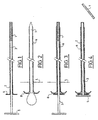
- Figure 1 is a longitudinal elevational view of a first embodiment of the device for administering solid formulations in accordance with the invention in the case of depositing the formulation inside a body's natural cavity, used as a reservoir for the release of formulation.
- Figures 2, 3 and 4 illustrate an implementation sequence of the device of FIG. 1 for locally administering in the body a solid formulation.
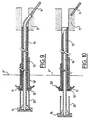
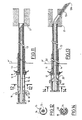
- Figure 5 is a mid-elevation half-longitudinal view of a second embodiment of the formulation administration device according to the invention, shown partially introduced into the body of a patient ready for administration of solid formulation.
- Figure 6 is a cross-sectional view along 6/6 of the figure 5.
- Figure 7 is a view similar to Figure 5 showing the device after pushing the solid form outside a guide of the device, ready to be deposited in a patient's body.
- Figure 8 is a cross sectional view along 8/8 of the figure 7.
- FIG. 9 is an elevation view similar to FIGS. 5 and 7. showing the device after partial withdrawal of the needle, the solid form remaining in place in the body.
- Figure 10 is a view similar to Figure 9 showing the needle and the piston inside it completely retracted.
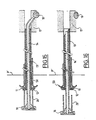
- Figures 11 to 16 are views similar respectively to Figures 5 to 10 but in which the device is used to administer a semi-solid form.
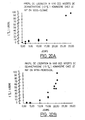
- Figures 17, 18 and 19 show in vitro salting out dexamethasone inserts at a respective concentration of 10, 15 and 20%.
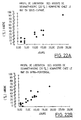
- Figures 20, 21 and 22 show the results of the studies pharmacokinetics in rats of dexamethasone inserts at a concentration respectively 10, 15 and 20% injected subcutaneously (A) and intraperitoneally (B).
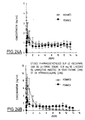
- Figures 23 and 24 represent results of the studies pharmacokinetics of the solid form 12.8 mg lanreotide acetate respectively on the dog injected intramuscularly and on the healthy volunteer injected subcutaneously (A) and intramuscularly (B).
- the administration device of a solid form 1 shown in the Figure 1 includes a tubular guide 2 containing a piston 3 which can push outside the guide 2 the solid form 1 contained at the end of the latter.
- the guide 2 and piston 3 are provided, at their opposite ends, with flanges respective 4, 5 of manual manipulation.
- Figure 2 illustrates a possible example of an invasive system in the organism of a patient for the implementation of the device for administering the solid form 1 of FIG. 1.
- the invasive system is in the example of the Figure 2 a trocar 6 containing a perforating mandrel 7, if access to the cavity natural body used as a salting-out reservoir for the formulation solid 1, requires perforation of internal tissues.
- the system invasive is represented partially introduced internally into the body in its part located to the right of the L plane, while its part located to the left remains in external.
- the invasive system can be an endoscope, a fibroscope or catheter (not shown).
- the invasive system used is introduced into the body cavity (sinus of the face, esophagus, trachea, vessel ...), thanks to the perforating mandrel 7 in the case of a system such as that of FIG. 2. Then the mandrel 7 is removed from the trocar 6 (or from the endoscope, catheter, ...) and the delivery device of Figure 1 is introduced to inside the trocar 6 ( Figure 3), until the flange 4 of the guide 2 comes abutting against the curved annular end 8 of the trocar 6.
- this device is intended for case of an injection of said device inside a tissue, a wall or a mucosa from an internal invasive system already engaged in a cavity as shown in the drawings, but also from an invasive system engaged in an internal fabric.
- the invasive system comprises a tubular piece 50 engaged partially in the tissue through the surface P 'thereof, and a guide tubular 11 which can be a fibroscope or an endoscope, in which can be mounted a catheter 12.
- the latter constitutes a guide for the device administration formed by a needle 13 and a piston 14 for extracting the solid form 9 in tissue 17.
- the device comprises two removable stops (10, 15), the first 10 is a sleeve disposed in a pusher 20 coaxial with the piston 14, this stop 10 and the pusher being truncated longitudinally (FIG. 8); the second is a tubular part 15, also truncated (FIG. 6), interposed between catheter 12 and pusher 20.
- the injection of the administration device 13, 14, 9, can be obtained by moving the guide back, but is preferably carried out as illustrated in Figures 7 to 10, as follows.
- the stop 15 is removed; the needle 13 is moved using the pusher 20 containing the stop 10. (FIG. 7).
- the needle 13 may have at its end a curved shape 13a obtained by releasing an elastic preload from needle 13 in the guide. Once released from the stress of the guide, the curved end 13a facilitates the oblique injection of the solid form 9 into the wall or the mucosa 17. This angle between the needle and the guide can be obtained or adjusted, by any other mechanism usually used by these devices.
- the stop 10 is removed from the pusher 20, and the needle 13 is retracted by pulling on the lugs 16 without displacement of the piston 14, in order to deposit the solid form 9 in fabric 17 (Figure 9).
- the bevel 13b of the needle 13 reaches the end of the piston 14, the latter is removed with the needle 13, leaving the shape solid 9 in place, this maneuver being obtained by pulling on the pusher 20 and the pins 16 ( Figure 10).
- the device of FIGS. 5 to 10 can also allow administration of a semi-solid.
- the administration device illustrated in FIGS. 11 to 16 is similar to that of FIGS. 5 to 10 and does not differ from it by the fact that the piston 14 acts on a non-solid form 18, resembling a micro-syringe up to the tip of the injection device.
- the invasive system 9, 11, 12 can be engaged in an internal tissue 17.
- the administration process here consists of injecting, pushing it outside the guide 9, 11, 12, the administration device consisting of the needle 13, of the piston 14 and of the semi-solid form 18.
- the needle 13 can possibly be curved as in the embodiment of Figures 5 to 10.
- the piston 14 is moved into needle 13 to inject the semi-solid 18 (figure 14) in the same way as in the previous embodiment.
- the piston 14 and the needle 13 are finally removed together by reintroduction into the guide 11, 12, by pulling on the pins 16 and on the pusher 20 (FIGS. 15 and 16), the semi-solid form 18 left in place in the fabric 17 can then take a spherical or ellipsoid shape.
- anesthetic analgesic
- anti-inflammatory treatments cancer, cardiology, endocrinology, rheumatology etc ...
- cancer cancer
- cardiology endocrinology
- rheumatology etc ...
- associated treatments there may be mentioned anesthetic, analgesic, anti-inflammatory treatments, cancer, cardiology, endocrinology, rheumatology etc ... as well as the associated treatments.
- endoscopic or radiological likely to allow this process to local treatment, we can cite urology, gynecology, arthroscopy, ENT, bronchoscopy, gastrology, minimally invasive surgery or the cardiovascular.
- the formulation is not, in its composition or in its form, studied for a precise vectorization.
- the formulation is studied for a tool or device adapted to internal local administration and which allows remote injection or insertion in situ.
- the process may use, in this dosage form and with these tools, classic APs and in particular those that have already demonstrated their interest in local government, or whose local interest can be inferred from the mode of action of the AP, even if its use in this form does not yet exist, in particular because it could not be easily implemented without the contribution of the invention.
- classic APs and in particular those that have already demonstrated their interest in local government, or whose local interest can be inferred from the mode of action of the AP, even if its use in this form does not yet exist, in particular because it could not be easily implemented without the contribution of the invention.
- the different examples which follow illustrate the possibilities of this process.
- the method, formulations and devices allow administration in body cavities and intra-tissue. Whatever the cavity or the fabric, the advantage is to be able to bring the formulation to the deposition site in avoiding or reducing tissue damage.
- the intra or peri-sinus inserts or implants can carry the AP in the mucus thanks to the ciliary flows of the mucous membranes or allow its systemic local distribution by contact. We can also consider a general action by progressive diffusion towards the digestive tracts for drugs requiring low doses daily.
- This therapeutic process according to the invention makes it possible to achieve this key area of naso-sinus pathology.
- the solid delay form or implanted or inserted semi-solid will be in contact with this mucosa which secretes and becomes covered with mucus circulating from the meatus to the nasal cavities, and evacuated towards the cavum passing in contact with the tubular bead and the Eustachian tube.
- the process will, for example, increase and maintain the concentration of therapeutic product in the single-cell gutter site pathologies in particular inflammatory.
- a device according to the diagram of the Figure 1 which can be positioned using conventional drainage tools otolaryngology (ENT; trocars, tubes).
- ENT otolaryngology
- We can also inject the formulation in the mucosa of the nasal cavities, in the cornets or in the tubular bead using the devices shown in Figures 5 to 16.
- the action will therefore preferably be external, intra-tissue or systemic.
- ENT we can thus treat, for example, corticosteroid therapy, nasosinus polyposis, allergic or non-allergic rhinitis, certain ear infections or non-infectious sinusitis etc.
- anti-inflammatory treatments we can practice antibiotic, anti-allergic treatments, immunostimulants, etc ...
- the implant obtained may have an average diameter of 2.4mm for a length of 12.5mm. He will be able to be introduced to the interior of the maxillary sinuses using the schematic device by FIG. 1. It can also be implanted in the mucosa of the cornet at using the device shown diagrammatically in Figures 5 to 10.
- This solid formulation is a 1 month delay formulation which contains 7.5 mg of Dexamethasone and which releases on average 0.5 mg / day with an implant in each sinus.
- a polymeric form PLGA 75-25
- Hydromed type a reservoir form of 1 and duration of action.
- Deep localized injection into the cornet or mucous membranes nasal cavity will also be easy thanks to the associated device or not to the usual endoscopic exploration tools.
- local administration is shallow. According to body cavities or site of endoscopic surgery, the distance between the external area and the internal deposit may be even shorter or much larger.
- Retard corticosteroids are already used in rheumatology. We can, for example, according to the method, imagine a local intra or peri-articular injection with deposition in low volume, delay form (corticosteroids, anti-inflammatory drugs) at the site of inflammation (tendinitis, bursitis, arthritis not infectious, osteoarthritis ).
- the injection is practically superficial and does not require tools outside the delivery system for semi-solids or solids in micro-volume.
- dermopeptin BIM 23014C
- BIM 23014C dermopeptin
- the training could be injected into keloids or melanomas, creating a high and prolonged local concentration from a gradient zone of diffusion at the injection site.
- treatment may be associated with a cytotoxic (Type 5FU or cisplatin) whose diffusion will regulated by the same local form and whose local concentration will thus be very high with a very low total dose.
- cytotoxic Type 5FU or cisplatin
- the solid or semi-solid forms according to the invention have the advantage, compared to local Gliadel treatment, of being able to be applied without trepanation at the surface level, but also in depth through stereotaxic, endoscopic and robotic neurosurgery.
- Solid tumors treated, for example, with the forms Collagens, Matrix can be treated the same with these microdoses.
- the advantage of volume allows the vectorization in all sites and avoids the risk of spread caused by the injection of a liquid volume of a few milliliters.
- the advantage of a treatment according to the method is to not not be confronted with the dose limit of the vascular space and the surface of the device, and not to come into direct contact with the injured vascular wall, while allowing a high local concentration in all layers of the vessel and around, and a systemic effect if necessary.
- the method and the devices, according to the invention, associated with fibroscope or any other direct or indirect imaging solution, allow administration in organic walls.
- glucocorticosteroids inhaled in mild or moderate diagnostic asthma recent. It may be administered to the lung, the bronchi, or the wall that covers them or in those of the trachea, a delayed form of 0.4 mg of daily Budesonide which will be secreted into the flow if the form is implanted, and which will be transported by moisture to the bottom of the alveoli pulmonary.
- This low dose preventive treatment does not thus poses more of a problem of compliance, particularly in children.
- Such a form may have a duration of 1 to 3 months, or even longer if necessary.
- the method of local administration of solid or semi-solid forms implies the prolonged presence of a local PA depot.
- the mucous membranes or walls are more permeable than the skin and there are patch or bioadhesive systems that apply to mucous membranes (especially buccal or nasal) and which allow passage systemic PA
- the disadvantage is sometimes the non-persistence of formulation in contact with the mucosa.
- the prolonged presence of the administration according to the process at the local level of the mucous membranes or internal walls may therefore present an advantage in the search for a topical form to systemic activity.
- a deep local form could advantageously be the site of a systemic diffusion in relation to the oral or nasal mucosa, by example, which would not allow prolonged topical deposition.
- PA used local anesthetics, anticoagulants
- PA used can be administered in solid or semi-solid form with here, again, the advantage of a micro-volume in line with the reduced intervention space, and the possibility of administration by the route instrumental access.
- Solid formulations or implants that can be used to local administration of the active ingredient as described above is suitable also, by their long and fine shape and their small diameter, to other conventional types of administration for example for systemic treatment with skin or intramuscular injection.
- said solid or implant formulations in particular with a PLGA excipient, having a very high concentration of active principle, as described above, whether it is soluble or insoluble, and in particular those having a concentration of active principle of between 40 and 100%, and preferably greater than 50%, make it possible to obtain in vivo, extremely long release times, from one month to three months and more, and release rates very regular, even constant, being produced in a fine elongated form, with a diameter or transverse size less than or equal to 3 mm, for example 2.5 or 2 mm, or even 1 mm or less, while they dissolve very quickly in in vitro, whether they are used for local action or not.
- the inventors have further discovered that, under a certain form, in homogeneous distribution of excipient, in particular of PLGA, it was possible to obtain a delay formulation according to a non-matrix mode in which the role played by the excipient was different; which leads to more advantageous formulations with different characteristics, this which clearly distinguish them from existing matrix forms.
- non-matrix shapes can be qualified as shapes matrix of active ingredient in which the excipient is dispersed.
- the matrix forms implementing the PLGA used for this day can be either dispersed forms (microparticles) or forms not dispersed (implants).
- the “reservoir” forms use a barrier or membrane of diffusion between the active principle and the medium which will serve to regulate the release of this active ingredient.
- the medicine may be inside the tank in solid, semi-solid or liquid form. He can be in solution or dispersed in an excipient.
- the membrane ensures by its porosity the controlled passage of the active ingredient to the outside.
- hydrophilic membranes of cross-linked polyethyl methacrylate pHEMA, Hydro Med Sciences.
- the “reservoir” shapes allow to obtain a relatively constant reiargage level of order 0.
- the disadvantage main of these reservoir techniques is the need to remove the biocompatible implant but non-biodegradable after release of the active ingredient.
- Matrix shapes use a matrix or frame polymer in which the active ingredient is trapped to be released by diffusion, by erosion or by combination of the two phenomena.
- Non-biodegradable matrix forms such as example implants in hydrophobic polymer type PDMS silicone (Norplant, progestin hormones), work only by diffusion. This operating mode can cause a decreasing order release 1 when the broadcast distance increases.
- the downside here is again the need to remove the silicone implant once the active ingredient has been released.
- Biodegradable matrix forms do not, in however, not this drawback since the polymer matrix is eliminated by the body. In addition, this elimination or erosion can participate in the regulation of the release of the active ingredient to obtain a constant release.
- biodegradable matrix forms currently use polymers of lactic acid or glycolic acid, copolymers of lactic acid and glycolic acid (PLGA) or their mixtures.
- EP 52510 the content of which is incorporated by reference describes a PLGA formulation with encapsulation of LHRH or the like which can be a dispersed form of microcapsules produced by coacervation whose particularity is the distribution of the active ingredient at the center of the microcapsule with a layer of peripheral PLGA.
- WO 96/40072 the content of which is incorporated by reference thus describes a hormone preparation of human growth including stability in the matrix and in solvents organic materials used for microencapsulation is favored and whose salting out is ensured by the PLGA matrix.
- the control process is based on the degradation of the polymer and the opening of pores in the structure that she trains.
- the control of the delay effect is obtained by matrix mixing of the PLGA and the active principle so as to allow the polymer matrix to play its role of barrier of release of the active ingredient, even a role in interactions physicochemical between the active ingredient and the polymer matrix.
- this release mode requires a dispersion of the active ingredient in the biodegradable polymer matrix, so as to isolate the active principle charge zones from the external environment and retain them within the matrix until the biodegradation thereof releases the active ingredient which can then diffuse outwards.
- This type of matrix delay form can be easily characterized by entering water which will hydrate the areas dispersed active ingredient and cause swelling of the formulation under the effect of hydration by osmotic forces, due to the impossibility of the active principle to escape from the matrix structure.
- the polyanhydrides are for example polymers whose erosion process surface gives a release profile distinct from that of PLGA and more depending on the form of the deposit that the PLGA which undergoes degradation overall.
- formulations consist of a less susceptible matrix to isolate the active ingredient from the medium or more quickly eliminated, contain generally a low percentage of active ingredient.
- injectable excipients like mannitol, polyethylene glycols, hyaluronic acid are also used, plus often as additives to adjust the delay profile.
- a certain amount of active ingredient is found on the surface of the formulation and is not included in the polymer matrix.
- the surface active ingredient represents a quantity high relative to the total active ingredient due to the size of the surface in relation to the total volume.
- this phenomenon results after hydration formulation by release within a very short time of active ingredient without swelling of the formulation, the active ingredient being caused to the outside of the formulation by the water which circulates in the polymer matrix.
- the release time depends directly from the degradation time of the PLGA (second phase or rebound).
- the PLGAs according to the duration sought.
- the 50:50 PLGA depolymerized in one month will be used to formulate one month while necessarily formulating on three months will involve PLGAs whose hydrolysis is later, for example, PLGA 75:25.
- the excipient in particular PLGA does not influence salting out and it is, for example, possible to obtain releases over three months with a single PLGA 50:50 which disappears completely from the body in 60 days or forms a month with a PLGA 75:25 which has not yet started its hydrolysis while all the active ingredient will be released.
- the proportion of PLGA is always less by weight than the principle proportion active; which means that the continuous matrix is no longer the PLGA but the principle active which will therefore undergo for the entire load, the external influence and especially aqueous. It is therefore the active principle, in particular by the quantity total, which will determine the duration of action.
- the invention therefore also particularly relates to such formulations, whether for systemic purposes or for local treatment, with a classic or reduced dosage for local action.
- a more particular subject of the invention is a formulation delay for parenteral administration comprising a homogeneous mixture of an active principle in the undispersed state forming a continuous phase of which at least one part is in direct contact with the exchange surface of the formulation and external biological medium, and a biocompatible excipient Biodegradable, in which the amount of active ingredient is at least 50 % by weight relative to the total weight of the formulation, and having a profile of release which is independent of the composition of the excipient by weight molecular weight of the excipient or of the active ingredient / excipient weight ratio, the release profile being essentially exclusively dependent on the total amount of active ingredient present in the formulation.
- formulations of the invention contain more than 50% of active principle, which represents a reduction in volume of the deposit of around 3 to 10 times compared to volume of matrix forms.
- the formulations of the invention advantageously contain, before and after deposit, at least 50%, preferably at least 51%, advantageously at least 60% and more advantageously at least 70% and up to 99.999% by weight relative to the total weight of the formulation, the excipient representing less than 50%, preferably less than 49%, and more advantageously less than 30% in weight relative to the total weight of the formulation.
- the excipients are those traditionally used in solid delayed release forms, especially polymers biodegradable.
- polymers of the acid type polylactic or polyglycolic or acid type copolymers polylactic-polyglycolic, or mixtures of these polymers and / or. copolymers.
- biocompatible biodegradable polymer forming the excipient is indifferent, it does not affect the diffusion capacity of the active ingredient in the polymer.
- an injectable fat as an excipient for the formulations of the invention, such as a fatty acid polymerized or saturated like ®Compritol or excipients such as polyvinylpyrrolidone (PVP) or polyethylene glycol (PEG).
- PVP polyvinylpyrrolidone
- PEG polyethylene glycol
- the viscosity of polymers can vary considerably. He has been shown that low viscosity polymers may be suitable for a so-called monophasic release principle of active principle.
- EP patents 58481 and 52510 mentioned above but also the patents EP 21234 and EP 26599 including contents are incorporated by reference, for example, have emphasized on low viscosity polymers. These polymers may be suitable for present invention (for example, viscosity less than 0.5 dl / g in the chloroform).
- DL-PLGA or L-PLGA can be used, plus preferably a DL-PLGA produced from 70 to 80% DL-lactide and 20 to 30% glycolide.
- a PLGA synthesized from 75% DL-lactide at 25% glycolide is particularly suitable but others copolymers including PLGA 50-50 can also be used.
- D or DL-lactide polymers can also be used.
- PLGAs can be hydrophilic or hydrophobic. We can make the formulations of the invention with hydrophilic polymers.
- biocompatible biodegradable polymer it is preferred however PLGA, in particular a hydrophilic PLGA advantageously having a viscosity in chloroform at 1 g / 100 ml greater than 0.6 dl / g.
- the duration of action of the delay formulation will be determined exclusively by the total amount of active ingredient it contains.
- active ingredient in the undispersed state means that the different active ingredient particles present in the formulation are in majority physically in contact with each other and up to the formulation surface.
- the mixture formed by the active principle and the excipient is homogeneous in all respects.
- the delay formulations according to the invention are further characterized by their difference in release time in vitro and in vivo.
- the formulations according to the invention placed in a physiological aqueous medium release the active principle over a period of less than seven days while the duration of action in vivo is substantially greater than this period, advantageously at least one month, and preferably at least three months.
- the matrix formulations comprising the same amount of active principle, on the other hand, exhibited a longer in vitro release, of the same order of magnitude as the duration of in vivo release .
- the formulations according to the invention make it possible to obtain in vivo a significantly longer release time without relation to the duration of in vitro release .
- the release profile in vivo is clearly different from that of the two-phase matrix forms and will be of pseudo order 0, corresponding to a constant diffusion of the active principle over time.
- This release profile is another advantage since it allows a release of active ingredient of a constant level in the organism.
- formulations according to the invention are injected directly in their solid form in the absence of any liquid excipient; the proportion high active ingredient is therefore a decisive advantage, in allowing to reduce the volume significantly.
- the new formulations according to the invention for example 70% of active ingredient can reduce the volume by a factor of 3.5 or multiply the dose by 3.5 for an identical volume.
- the release mode of the formulation of the invention without absorption of fluids, nor initial swelling of a matrix, constitutes a stability advantage for the active ingredient which is stored in a controlled environment.
- the delay forms, according to the invention are therefore particularly advantageous for fragile active ingredients such as recombinant proteins.
- the invention thus allows release over an extended period fragile molecules, especially peptides and proteins, or their analogues.
- proteins chosen for example from the group made up of triptorelin acetate, lanreotide acetate, a compound having LH-RH activity such as triptorelin, goserelin, leuprorelin, buserelin or their salts, an LH-RH antagonist, an antagonist of GPllb / llla, a compound with activity similar to an antagonist of GPllb / llla, erythropoietin (EPO) or one of its analogs, the different ⁇ interferons, ⁇ or ⁇ interferon, somatostatin, a somatostatin derivative as described in European patent EP 215171, the content of which is incorporated by reference, a somatostatin analog as described in American patent US 5,552,520 (this patent itself includes a list of other patents describing somatostatin analogs which are incorporated by reference in this application), insulin,
- LH-RH activity such as triptorelin, goserelin, leupro
- a water-soluble product obtained by salification in the form of a cation for example with acetic acid.
- an insoluble salt such as pamoate.
- peptide and / or protein is meant both the peptide and / or the protein themselves as fragments of these peptides or proteins pharmacologically active.
- the water-soluble active substance as used to make the formulations or implants according to the invention can in particular be acetate of triptorelin, lanreotide acetate, goseretine, leuprorelin, buserelin or their salts.
- formulations also have the advantage of being able to be administered through the use of the above device for the method according to the invention.
- the methods of manufacturing the formulations according to the invention are techniques of mixing, compression techniques, melt extrusion techniques and molding techniques, conventionally used in the field of shape manufacturing galenical delay.
- PA active ingredient
- PLGA proportions weight of the mixture (for example 70% PA and 30% PLGA).
- This operation aims to improve the quality of the flow of powder mixture during extrusion required in this situation particular where the melted part represents less than 50% of the total.
- the mixture is extruded through a die of the same diameter than the desired microimplants.
- the extrudate is recovered after checking the diameter by laser beams (Keyence) on a stretching track.
- the microimplants are calibrated by the nozzle extrusion and not by stretching.
- the extrudate is cut to the desired length depending on the analytical control to obtain the microimplants which are then loaded in injection devices before gamma-irradiation (25 kGy).
- the procedure is for example as follows:
- This hypercompression can be obtained with force minimum of one ton.
- thermoplastic excipient likely to melt when temperature
- This operation takes place at room temperature, cold or even below 0 ° C. During this hypercompression, we obtain, at a lower temperature, the glass transition to the plastic state of the excipient within the mixture.
- hyper-tablets then crushed as before can be recompacted in the form of equivalent micro-tablets to previous microimplants.
- This technique is particularly suitable for the delayed forms of PLGA allows without temperature, solvent or manufacturing vehicles, obtaining particularly advantageous dosage forms for preserve the integrity of the active ingredient, especially for fragile molecules such as, for example, recombinant proteins.
- This process is also interesting for the manufacture of matrix forms (not comprising more than 50% of active ingredient) than these are dispersed or not dispersed.
- matrix forms compression of the PLGA leads to a matrix structure equivalent to that obtained by melting the excipient hot.
- Hyper-tablets after crushing can be used directly in a dispersed form of micro-particles.
- the dispersed form can be injected directly after loading into a needle of a device as described above either be injected in suspension in a liquid medium (as for microspheres, for example).
- One of the possible aspects for the solid form is that of a elongated cylinder.
- the formulation as defined above can, preferably, have the shapes and dimensions defined above in relation to the local administration device described.
- the formulation is in the form of a cylinder of diameter less than 3 mm, preferably less than 1 mm and of length less than 50 mm, preferably less than 30 mm, the total volume being less than 50 mm 3 , preferably 20 mm 3 .
- the invention also relates to a treatment method therapeutic including injection into a patient in need of treatment involving the release of an active ingredient over an extended period of formulation according to the invention.
- the formulation can advantageously be injected by subcutaneous or intramuscular.
- the invention also relates to the use of a solid formulation as defined above for obtaining an effect delay.
- the powder will be mixed using the motion mixer three-dimensional and at the first extrusion, the quality of the mixture will be checked (% of PA).
- the device can be used directly inside a trocar 3 mm in diameter and 10 cm in length according to the diagrams in Figures 5 to 10.
- a rat model In vivo, a rat model is used.
- the insert is administered either subcutaneously or intraperitoneally and the release over a month is evaluated by default by measuring the amount of PA remaining in the insert after sacrifice of the animals and sampling at fixed times.
- Figures 20, 21 and 22 show the results of this check in vivo at three percent subcutaneously (A) and intraperitoneal (B).
- Implants or cylinders 0.75 mm in diameter and 30 mm in length were manufactured. They contain 12.80 mg of Lanreotide (BIM2301-4C) for a composition containing 90% Lanreotide Acetate and 10% Mannitol.
- BIM2301-4C Lanreotide
- the production comprises the following stages: weighing, connection, vacuum, hydration, mixing, extrusion, drying, arrangement and irradiation.
- the weighing corresponds to the volume of the water-mannitol solution, on the one hand, in a syringe and with Somatulin acetate powder in the other syringe.
- connection is the association of the two syringes by through a 3-way ball valve.
- the vacuum is then created inside the PA powder.
- Hydration is obtained by contacting the powder under vacuum of the Mannitol solution.
- the mixing is carried out by going back and forth actuating the pistons of the two syringes.
- the extrusion corresponds after control of HPLC homogeneity when making a rod through a die adapted to the desired diameter. This extrusion is also obtained by actuating the piston of the syringe with a motor.
- Drying is carried out after or before cutting the cylinders. he consists in evaporating the water from the pasty mixture to obtain the dry cylinder.
- the arrangement consists in introducing the cylinder inside the injection needle in a device 1 mm in diameter as it is shown in Figure 5.
- the irradiation by sterilization, after packaging of the device, is performed with 25 kGy.
- This device can be injected locally to deposit the lanreotide cylinder before or after angiopiasty, like a stent, by the catheter lumen.
- Figure 23 represents the result of a pharmacokinetics on the dog of the solid form 12.8 mg lanreotide intramuscularly.
- Figure 24 represents the results of a kinetics at the healthy volunteer in subcutaneous (A) and intra-muscular (B).
- Lanreotide acetate forms a paste or semi-solid with water injectable delay.
- the delay effect is obtained by deposit, directly from active ingredient. This delay effect can be adjusted according to the percentage.
- the action cure is therefore directly proportional to erosion or elimination of this semi-solid deposit. We can therefore associate any other active ingredient which we will look for the local effect combined with Lanreotide.
- the duration of action of the AP (s) may be evaluated by the pharmacokinetics of Lanreotide alone.
- the semi-solid is produced according to a process close to that of solid of Example 2 without Mannitol. Extrusion, drying and rearrangements are replaced by a distribution.
- 40 g of Lanreotide Acetate will be prepared in the case of form one months 35% Lanreotide acetate, 65% water and for injected doses of 40 mg of PA.
- the manufacturing steps are weighing, connection, vacuum, hydration, mixing, distribution and irradiation.
- the distribution consists of a volumetric filling of the injection device (fig. 11 to 16), for example, by rotary piston from the mixing syringe.
- This semi-solid formulation has been tested clinical study in healthy intra-muscular volunteers (fig. 25).
- the concentration and amount of dough will determine the duration and intensity of the local broadcast.
- a very soluble salt of triptorelin acetate (AT) is mixed with a PLGA (75:25) of more than 100,000 molecular weight and inherent viscosity equal to 1 dl / g in chloroform which does not undergo a hydrolysis by loss of mass capable of controlling release matrix only after one month.
- Mixtures are thus prepared at 20% (before percolation) and at 52% by weight of active principle in the PLGA. These mixtures are extruded so as to form implants, the salting out of which is verified in vitro at 37 ° C. in 10 ml of physiological serum and without stirring.
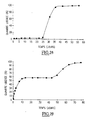
- Implants with 20% of active ingredient only release 4% of the total dose in two days and only 6.7% in 36 days before occurs the loss of mass of the polymer which results in the release of the principle active between D36 and D60 ( Figure 26). Implants with 52% active ingredient release 66% of the total dose in two days and more than 90% in one week (Figure 27).
- Triptorelin pamoate Comparison of a matrix and non-matrix form with an insoluble salt of Triptorelin
- Triptorelin pamoate Two formulations of Triptorelin pamoate are prepared and PLGA (50:50), the first at 40% and the second at 52% of active ingredient.
- Example 4 The matrix preparation of Example 4, PLGA 75:25 - Triptorelin acetate (80% -20%) in an undispersed form after ten days in a physiological medium in vitro contains practically all of its active principle; it has a translucent appearance with an increase in diameter and a decrease in length compared to time 0 (FIG. 30), which demonstrates a constraint of the PLGA matrix.
- the active ingredient therefore escaped from the non-matrix skeleton of PLGA.
- the active principle is in this case, free from any constraint physico-chemical with the polymer.
- the PLGA remains unchanged during the release of the active ingredient.
- FIG. 35 represents the change in the residual quantity of pure active principle in mg. It is noted that unlike the in vitro results after 19 days, there remains on average a large and equivalent amount of active principle in the implants at 52% and in the implants at 70% and 80%.
- Results demonstrate one out of three salting-out activities months at least in both cases.
- the kinetics of the 20% shape show a classic profile (with peak and rebound).
- the kinetics of the form at 52% is not comparable to those of the classic PLGA forms but of pseudo order 0 without peak nor rebound.
- EXAMPLE 11 Pharmacokinetic results of a non-matrix formulation containing 70% of active principle in dogs.
Landscapes
- Health & Medical Sciences (AREA)
- Engineering & Computer Science (AREA)
- Veterinary Medicine (AREA)
- Life Sciences & Earth Sciences (AREA)
- General Health & Medical Sciences (AREA)
- Animal Behavior & Ethology (AREA)
- Public Health (AREA)
- Dermatology (AREA)
- Biomedical Technology (AREA)
- Medical Informatics (AREA)
- Medicinal Chemistry (AREA)
- Anesthesiology (AREA)
- Pharmacology & Pharmacy (AREA)
- Chemical & Material Sciences (AREA)
- Heart & Thoracic Surgery (AREA)
- Hematology (AREA)
- Organic Chemistry (AREA)
- Pain & Pain Management (AREA)
- Wood Science & Technology (AREA)
- Neurosurgery (AREA)
- Nuclear Medicine, Radiotherapy & Molecular Imaging (AREA)
- Epidemiology (AREA)
- General Chemical & Material Sciences (AREA)
- Chemical Kinetics & Catalysis (AREA)
- Rheumatology (AREA)
- Zoology (AREA)
- Medicinal Preparation (AREA)
- Medicines That Contain Protein Lipid Enzymes And Other Medicines (AREA)
- Medicines Containing Antibodies Or Antigens For Use As Internal Diagnostic Agents (AREA)
- Infusion, Injection, And Reservoir Apparatuses (AREA)
- Surgical Instruments (AREA)
- Endoscopes (AREA)
- Media Introduction/Drainage Providing Device (AREA)
Applications Claiming Priority (3)
| Application Number | Priority Date | Filing Date | Title |
|---|---|---|---|
| FR9614755 | 1996-12-02 | ||
| FR9614755A FR2756493B1 (fr) | 1996-12-02 | 1996-12-02 | Dispositif d'administration locale de formulations solides ou semi-solides |
| EP97948983A EP0952867B1 (de) | 1996-12-02 | 1997-12-02 | Vorrichtung zur lokalen verabreichung von fest-oder halbfesten pharmazeutischen zusammensetzungen |
Related Parent Applications (1)
| Application Number | Title | Priority Date | Filing Date |
|---|---|---|---|
| EP97948983A Division EP0952867B1 (de) | 1996-12-02 | 1997-12-02 | Vorrichtung zur lokalen verabreichung von fest-oder halbfesten pharmazeutischen zusammensetzungen |
Publications (2)
| Publication Number | Publication Date |
|---|---|
| EP1159957A2 true EP1159957A2 (de) | 2001-12-05 |
| EP1159957A3 EP1159957A3 (de) | 2003-06-04 |
Family
ID=9498235
Family Applications (2)
| Application Number | Title | Priority Date | Filing Date |
|---|---|---|---|
| EP01118964A Withdrawn EP1159957A3 (de) | 1996-12-02 | 1997-12-02 | Vorrichtung zur lokalen Verabreichung fester oder halbfester Formulierungen, Retardformulierungen zur parenteralen Verabreichung sowie Herstellungsverfahren |
| EP97948983A Expired - Lifetime EP0952867B1 (de) | 1996-12-02 | 1997-12-02 | Vorrichtung zur lokalen verabreichung von fest-oder halbfesten pharmazeutischen zusammensetzungen |
Family Applications After (1)
| Application Number | Title | Priority Date | Filing Date |
|---|---|---|---|
| EP97948983A Expired - Lifetime EP0952867B1 (de) | 1996-12-02 | 1997-12-02 | Vorrichtung zur lokalen verabreichung von fest-oder halbfesten pharmazeutischen zusammensetzungen |
Country Status (21)
| Country | Link |
|---|---|
| EP (2) | EP1159957A3 (de) |
| JP (2) | JP2001506144A (de) |
| KR (1) | KR100483447B1 (de) |
| CN (2) | CN1698580A (de) |
| AT (1) | ATE370764T1 (de) |
| AU (1) | AU742061B2 (de) |
| BR (1) | BR9713675A (de) |
| CA (1) | CA2273017C (de) |
| CZ (1) | CZ301103B6 (de) |
| DE (1) | DE69738048T2 (de) |
| DK (1) | DK0952867T3 (de) |
| ES (1) | ES2290971T3 (de) |
| FR (1) | FR2756493B1 (de) |
| HU (1) | HU228236B1 (de) |
| IL (1) | IL130211A (de) |
| NO (1) | NO332358B1 (de) |
| NZ (1) | NZ336074A (de) |
| PL (1) | PL194894B1 (de) |
| PT (1) | PT952867E (de) |
| RU (1) | RU2207845C2 (de) |
| WO (1) | WO1998024504A2 (de) |
Families Citing this family (62)
| Publication number | Priority date | Publication date | Assignee | Title |
|---|---|---|---|---|
| FR2779340B1 (fr) | 1998-06-04 | 2000-12-29 | Delab | Dispositif intraluminal implantable |
| DE19961197B4 (de) * | 1999-12-18 | 2007-02-08 | Gaplast Gmbh | Implantatspritze |
| US6428559B1 (en) * | 2001-04-03 | 2002-08-06 | Cordis Corporation | Removable, variable-diameter vascular filter system |
| DE50209493D1 (de) * | 2001-07-12 | 2007-03-29 | Bavarian Nordic As | Injektionsvorrichtung zum injizieren von kapseln |
| GB0122113D0 (en) * | 2001-09-11 | 2001-10-31 | Astrazeneca Ab | Composition |
| ES2312981T3 (es) * | 2003-03-14 | 2009-03-01 | Debio Recherche Pharmaceutique S.A. | Sistema de suministro subcutaneo, procedimiento para la preparacion del mismo y utilizacion del mismo para el tratamiento de trastornos de deficiencia colinergica. |
| AU2004222340B2 (en) | 2003-03-14 | 2009-11-12 | Intersect Ent, Inc. | Sinus delivery of sustained release therapeutics |
| FR2865938B1 (fr) * | 2004-02-05 | 2006-06-02 | Sod Conseils Rech Applic | Formulation retard solide comprenant de l'acetate de triptoreline |
| SE0401182D0 (sv) | 2004-05-05 | 2004-05-05 | Q Med Ab | Novel use of a viscoelastic composition |
| AU2004100402B4 (en) * | 2004-05-28 | 2005-04-07 | Stephen Paul Holdings Pty Ltd | Integrated water supply system for multi-floor buildings |
| US20060275230A1 (en) | 2004-12-10 | 2006-12-07 | Frank Kochinke | Compositions and methods for treating conditions of the nail unit |
| MX2007006833A (es) | 2004-12-10 | 2007-10-08 | Talima Therapeutics Inc | Composiciones y metodos para tratar condiciones de la unidad de una. |
| US7442187B2 (en) * | 2005-01-27 | 2008-10-28 | Boston Scientific Scimed, Inc. | Multiple needle injection catheter |
| AU2006231506B2 (en) | 2005-04-04 | 2012-08-30 | Intersect Ent, Inc. | Device and methods for treating paranasal sinus conditions |
| US20070060887A1 (en) * | 2005-08-22 | 2007-03-15 | Marsh David A | Ophthalmic injector |
| US20070173706A1 (en) * | 2005-11-11 | 2007-07-26 | Isense Corporation | Method and apparatus for insertion of a sensor |
| US7815603B2 (en) | 2006-05-17 | 2010-10-19 | Alcon Research, Ltd. | Ophthalmic injection method |
| US7811252B2 (en) | 2006-05-17 | 2010-10-12 | Alcon Research, Ltd. | Dosage control device |
| US7887521B2 (en) | 2006-05-17 | 2011-02-15 | Alcon Research, Ltd. | Ophthalmic injection system |
| US8535707B2 (en) | 2006-07-10 | 2013-09-17 | Intersect Ent, Inc. | Devices and methods for delivering active agents to the osteomeatal complex |
| US9022970B2 (en) | 2006-10-16 | 2015-05-05 | Alcon Research, Ltd. | Ophthalmic injection device including dosage control device |
| US20080281292A1 (en) | 2006-10-16 | 2008-11-13 | Hickingbotham Dyson W | Retractable Injection Port |
| RU2317065C1 (ru) * | 2006-12-05 | 2008-02-20 | Владимир Андрианович Алешкин | Способ определения целевой доставки в желудочно-кишечном тракте твердой лекарственной формы с защитным покрытием |
| SE530729C2 (sv) | 2007-08-02 | 2008-08-26 | Novoaim Ab | Kirurgiskt kit för fettransplantation |
| EP2200684B1 (de) * | 2007-08-17 | 2016-10-05 | Medtronic MiniMed, Inc. | Injektionsapparat für injektionen in vorbestimmten tiefen in der haut |
| EP2231065B8 (de) | 2007-12-18 | 2021-01-06 | Intersect ENT, Inc. | Selbst-expandierende vorrichtungen |
| CA2732355A1 (en) | 2008-08-01 | 2010-02-04 | Intersect Ent, Inc. | Methods and devices for crimping self-expanding devices |
| CN105688327A (zh) * | 2009-03-20 | 2016-06-22 | 因卡伯实验室有限责任公司 | 固体形式的药品 |
| US20100239632A1 (en) * | 2009-03-23 | 2010-09-23 | Warsaw Orthopedic, Inc. | Drug depots for treatment of pain and inflammation in sinus and nasal cavities or cardiac tissue |
| WO2010123563A2 (en) * | 2009-04-23 | 2010-10-28 | Sustained Nano Systems Llc | Controlled release dispensing device |
| US8372036B2 (en) | 2009-05-06 | 2013-02-12 | Alcon Research, Ltd. | Multi-layer heat assembly for a drug delivery device |
| CN106039547A (zh) | 2009-05-15 | 2016-10-26 | 因特尔赛克特耳鼻喉公司 | 可展开装置及其使用方法 |
| US20110092918A1 (en) * | 2009-10-19 | 2011-04-21 | Ferrosan A/S | Malleable tip for applying an agent to a target site |
| US8177747B2 (en) | 2009-12-22 | 2012-05-15 | Alcon Research, Ltd. | Method and apparatus for drug delivery |
| CN101884570A (zh) * | 2010-08-04 | 2010-11-17 | 苏州欧莱美生物工程科技有限公司 | 一种针头刺入引导装置 |
| JP5696279B2 (ja) * | 2010-12-01 | 2015-04-08 | 学校法人自治医科大学 | 長期徐放型薬剤硬膜外腔留置システム |
| DE102011116973A1 (de) | 2011-10-26 | 2013-05-02 | Amw Gmbh | Implanter |
| JP2013172803A (ja) * | 2012-02-24 | 2013-09-05 | Masanori Saeki | 製剤注入具 |
| CN105377355A (zh) | 2013-03-14 | 2016-03-02 | 拇趾公司 | 治疗甲单元的感染、疾病或病症的方法 |
| EP2968877B1 (de) | 2013-03-14 | 2020-01-01 | Intersect ENT, Inc. | Systeme und vorrichtungen zur behandlung eines sinusleidens |
| ITMI20131992A1 (it) * | 2013-11-28 | 2015-05-29 | Valerio Cigaina | Assieme comprendente un dispositivo per elettroneuromodulazione totalmente impiantabile ed uno strumento di impiantazione di detto dispositivo |
| WO2016198351A1 (en) * | 2015-06-10 | 2016-12-15 | Evonik Röhm Gmbh | Process for preparing a powder comprising a human coagulation factor protein and a lactic acid polymer |
| US10596330B2 (en) * | 2015-08-26 | 2020-03-24 | Medtronic Xomed, Inc. | Resorbable, drug-eluting submucosal turbinate implant device and method |
| MX2020000377A (es) * | 2017-07-11 | 2020-07-14 | Sustained Nano Systems Llc | Esterilizacion mediante radiacion de formas de dosis de polimero hipercomprimido. |
| BR112020000506A2 (pt) | 2017-07-11 | 2020-07-14 | Sustained Nano Systems Llc | formulações farmacêuticas hipercomprimidas |
| DE102017007893A1 (de) * | 2017-08-19 | 2019-02-21 | Gaplast Gmbh | Implantatspritze |
| CN108187216B (zh) * | 2017-12-29 | 2021-03-16 | 耿海涛 | 一种肿瘤部位给药装置 |
| EP3749386B1 (de) | 2018-02-09 | 2026-04-15 | Icon Bioscience, Inc. | Systeme, kits und verfahren zum laden und abgeben einer kleinen volumendosis aus einer spritze |
| JP7370981B2 (ja) * | 2018-07-26 | 2023-10-30 | 株式会社カネカ | 生体内留置物の製造方法および留置システム |
| EP3833631A4 (de) * | 2018-08-10 | 2022-04-20 | Azura Ophthalmics Ltd | Spender zur genauen extraktion eines halbfesten produktes |
| US11464914B2 (en) * | 2019-10-21 | 2022-10-11 | Ripple Therapeutics Corporation | Intravitreal injector |
| EP4087655A4 (de) | 2020-01-10 | 2024-02-21 | Azura Ophthalmics Ltd | Anweisungen für zusammensetzung und empfindlichkeit |
| CN112156170B (zh) * | 2020-11-03 | 2022-10-21 | 北京康欣东弘医药科技有限公司 | 可供皮下注射的曲普瑞林缓释微球及其制备方法和用途 |
| US11529310B2 (en) | 2020-12-08 | 2022-12-20 | Ruminant Biotech Corp Limited | Devices and methods for delivery of substances to animals |
| CN112451850B (zh) * | 2020-12-11 | 2023-05-09 | 王姗姗 | 一种碘-125粒子用植入装置 |
| CN112472207B (zh) * | 2020-12-14 | 2021-11-05 | 中南大学湘雅医院 | 一种神经外科用临床介入治疗装置 |
| CN112970670B (zh) * | 2021-02-06 | 2022-08-05 | 澎立生物医药技术(上海)股份有限公司 | 一种肠粘膜炎动物模型的构建方法 |
| CA3235477A1 (en) * | 2021-10-17 | 2023-04-20 | Trigone Pharma Ltd. | Compositions and methods for drug instillation into the urinary bladder |
| KR102955212B1 (ko) * | 2021-11-19 | 2026-04-21 | 허윤정 | 종양 내 약물 균일 주입 장치 |
| JP7562090B1 (ja) * | 2023-10-19 | 2024-10-07 | 国立大学法人高知大学 | マーカー、マーカー留置具及びマーカー検出装置 |
| CN117771475B (zh) * | 2024-02-27 | 2024-05-10 | 山东永聚医药科技股份有限公司 | 固体制剂用植入式预灌封注射器及其制备方法 |
| CN117942456B (zh) * | 2024-03-27 | 2024-07-12 | 山东永聚医药科技股份有限公司 | 缓释型非牛顿流体制剂用预灌封注射器及其制备工艺 |
Citations (6)
| Publication number | Priority date | Publication date | Assignee | Title |
|---|---|---|---|---|
| US3545439A (en) | 1968-01-04 | 1970-12-08 | Upjohn Co | Medicated devices and methods |
| FR2497661A1 (fr) | 1981-01-13 | 1982-07-16 | Mitsui Toatsu Chemicals | Nouveau medicament moule |
| WO1989003232A1 (en) | 1987-10-09 | 1989-04-20 | Bukh Meditec A/S | A medical device for introduction into a body cavity |
| JPH0562737A (ja) | 1991-04-05 | 1993-03-12 | Penn Eng & Mfg Corp | 電気コネクタパネル |
| WO1996007397A2 (en) | 1994-09-02 | 1996-03-14 | Societe De Conseils De Recherches Et D'applications Scientifiques, S.A. | Delivery of solid drug compositions |
| WO1996008289A1 (en) | 1994-09-12 | 1996-03-21 | Societe De Conseils De Recherches Et D'applications Scientifiques, S.A. | Needle-less parenteral introduction device |
Family Cites Families (12)
| Publication number | Priority date | Publication date | Assignee | Title |
|---|---|---|---|---|
| DE522404C (de) * | 1929-01-09 | 1931-04-08 | Hans E Hellwig | Instrument zur Einfuehrung von Radiumnadeln |
| WO1984000304A1 (en) * | 1982-07-08 | 1984-02-02 | Mitchell Harman | Injectible sustained release dosage cylinders |
| CA1196864A (en) * | 1983-06-10 | 1985-11-19 | Mattheus F.A. Goosen | Controlled release of injectable and implantable insulin compositions |
| JPS6036410A (ja) * | 1983-08-08 | 1985-02-25 | Unitika Ltd | 生分解性薬物供与体の製造方法 |
| AU571922B2 (en) * | 1984-01-26 | 1988-04-28 | Schering Agrochemicals Limited | Veterinary implants comprising melatonin and derivatives thereof |
| US4758435A (en) * | 1986-08-11 | 1988-07-19 | American Cyanamid Company | Estradiol implant composition and method for preparation |
| US4863736A (en) * | 1987-03-16 | 1989-09-05 | Monsanto Company | Somatotropin prolonged release |
| US5219358A (en) * | 1991-08-29 | 1993-06-15 | Ethicon, Inc. | Shape memory effect surgical needles |
| EP0596161B1 (de) * | 1992-11-06 | 1998-02-04 | Texas Instruments Incorporated | Vorrichtung zum subkutanen Einführen einer Nadel |
| DK42093D0 (da) * | 1993-04-07 | 1993-04-07 | Bukh Meditec | Administrationsmetode |
| EP0715861B1 (de) * | 1994-04-27 | 2000-08-02 | Daiken Iki Co. Ltd. | Vorrichtung zum injizieren von flüssigkeiten |
| US5573542A (en) * | 1994-08-17 | 1996-11-12 | Tahoe Surgical Instruments-Puerto Rico | Endoscopic suture placement tool |
-
1996
- 1996-12-02 FR FR9614755A patent/FR2756493B1/fr not_active Expired - Fee Related
-
1997
- 1997-12-02 IL IL130211A patent/IL130211A/en not_active IP Right Cessation
- 1997-12-02 PT PT97948983T patent/PT952867E/pt unknown
- 1997-12-02 AT AT97948983T patent/ATE370764T1/de active
- 1997-12-02 BR BR9713675-1A patent/BR9713675A/pt not_active IP Right Cessation
- 1997-12-02 EP EP01118964A patent/EP1159957A3/de not_active Withdrawn
- 1997-12-02 CN CNA200510074284XA patent/CN1698580A/zh active Pending
- 1997-12-02 CA CA002273017A patent/CA2273017C/fr not_active Expired - Fee Related
- 1997-12-02 AU AU76232/98A patent/AU742061B2/en not_active Ceased
- 1997-12-02 ES ES97948983T patent/ES2290971T3/es not_active Expired - Lifetime
- 1997-12-02 PL PL360774A patent/PL194894B1/pl unknown
- 1997-12-02 EP EP97948983A patent/EP0952867B1/de not_active Expired - Lifetime
- 1997-12-02 HU HU9904601A patent/HU228236B1/hu not_active IP Right Cessation
- 1997-12-02 CZ CZ0191999A patent/CZ301103B6/cs not_active IP Right Cessation
- 1997-12-02 JP JP52527798A patent/JP2001506144A/ja active Pending
- 1997-12-02 NZ NZ336074A patent/NZ336074A/en not_active IP Right Cessation
- 1997-12-02 RU RU99113827/14A patent/RU2207845C2/ru not_active IP Right Cessation
- 1997-12-02 KR KR10-1999-7004879A patent/KR100483447B1/ko not_active Expired - Fee Related
- 1997-12-02 DK DK97948983T patent/DK0952867T3/da active
- 1997-12-02 WO PCT/FR1997/002182 patent/WO1998024504A2/fr not_active Ceased
- 1997-12-02 CN CNB971813035A patent/CN1210080C/zh not_active Expired - Fee Related
- 1997-12-02 DE DE69738048T patent/DE69738048T2/de not_active Expired - Lifetime
-
1999
- 1999-05-31 NO NO19992610A patent/NO332358B1/no not_active IP Right Cessation
-
2008
- 2008-10-15 JP JP2008266758A patent/JP5138537B2/ja not_active Expired - Fee Related
Patent Citations (6)
| Publication number | Priority date | Publication date | Assignee | Title |
|---|---|---|---|---|
| US3545439A (en) | 1968-01-04 | 1970-12-08 | Upjohn Co | Medicated devices and methods |
| FR2497661A1 (fr) | 1981-01-13 | 1982-07-16 | Mitsui Toatsu Chemicals | Nouveau medicament moule |
| WO1989003232A1 (en) | 1987-10-09 | 1989-04-20 | Bukh Meditec A/S | A medical device for introduction into a body cavity |
| JPH0562737A (ja) | 1991-04-05 | 1993-03-12 | Penn Eng & Mfg Corp | 電気コネクタパネル |
| WO1996007397A2 (en) | 1994-09-02 | 1996-03-14 | Societe De Conseils De Recherches Et D'applications Scientifiques, S.A. | Delivery of solid drug compositions |
| WO1996008289A1 (en) | 1994-09-12 | 1996-03-21 | Societe De Conseils De Recherches Et D'applications Scientifiques, S.A. | Needle-less parenteral introduction device |
Also Published As
Similar Documents
| Publication | Publication Date | Title |
|---|---|---|
| EP0952867B1 (de) | Vorrichtung zur lokalen verabreichung von fest-oder halbfesten pharmazeutischen zusammensetzungen | |
| US7815928B2 (en) | Device for local administration of solid or semi-solid formulations and delayed-release formulations for proposal parenteral administration and preparation process | |
| KR101399911B1 (ko) | 옥트레오타이드의 방출 조절형 제형 | |
| PT2470228T (pt) | Métodos e dispositivos para transplante celular | |
| TW200800298A (en) | Compressed microparticles for dry injection | |
| KR20220145851A (ko) | 치료 제형의 위장관 벽 내로의 주사 | |
| WO2000015199A1 (fr) | Preparation de liberation prolongee de medicament a effet durable | |
| EP3180026A1 (de) | Zusammensetzungen zur hemmung der entzündung bei person mit einer rückenmarksverletzung und verfahren zur verwendung davon | |
| JP6250005B2 (ja) | 制御放出製剤 | |
| WO2021066747A1 (en) | Self-administrable and implantable polymeric micro-lance shaped device for controlled and targeted delivery | |
| CN120053685A (zh) | 载kgn的纳米囊泡、溶解性微针及其制备方法与应用 | |
| CN101056617A (zh) | 用于动物的在原位形成的植入物 | |
| KR20220128643A (ko) | 세포 전달 물품 및 투여 방법 | |
| AU2004240186B2 (en) | Device for local administration of solid or semi-solid formulations and delayed-release formulations for parenteral administration and preparation process | |
| AU779691B2 (en) | Device for local administration of solid and semisolid formulations, delayed-release formulations for parenteral administration and method of preparation | |
| US20250269162A1 (en) | Core-Shell Microneedle Patches and Methods | |
| Munoz | A Multicomponent Microneedle Patch for the Delivery of Meloxicam for Veterinary Applications | |
| FR2770134A1 (fr) | Formulations solides ou semi-solides pour administration locale | |
| CN122057086A (zh) | 植入式微针吻合支架及其制备方法与应用 | |
| MXPA99005030A (en) | Device for local administration of solid and semisolid formulations, sustained-release formulations for parenteral administration and method of preparation |
Legal Events
| Date | Code | Title | Description |
|---|---|---|---|
| PUAI | Public reference made under article 153(3) epc to a published international application that has entered the european phase |
Free format text: ORIGINAL CODE: 0009012 |
|
| 17P | Request for examination filed |
Effective date: 20010806 |
|
| AC | Divisional application: reference to earlier application |
Ref document number: 952867 Country of ref document: EP |
|
| AK | Designated contracting states |
Kind code of ref document: A2 Designated state(s): AT BE CH DE DK ES FI FR GB GR IE IT LI LU NL PT SE |
|
| PUAL | Search report despatched |
Free format text: ORIGINAL CODE: 0009013 |
|
| AK | Designated contracting states |
Designated state(s): AT BE CH DE DK ES FI FR GB GR IE IT LI LU NL PT SE |
|
| RIC1 | Information provided on ipc code assigned before grant |
Ipc: 7A 61K 9/70 B Ipc: 7A 61K 9/00 A |
|
| AKX | Designation fees paid |
Designated state(s): AT BE CH DE DK ES FI FR GB GR IE IT LI LU NL PT SE |
|
| 17Q | First examination report despatched |
Effective date: 20061215 |
|
| STAA | Information on the status of an ep patent application or granted ep patent |
Free format text: STATUS: THE APPLICATION IS DEEMED TO BE WITHDRAWN |
|
| 18D | Application deemed to be withdrawn |
Effective date: 20070626 |