EP1594885B1 - Medikament zur wachstumsinhibierung von tumoren - Google Patents
Medikament zur wachstumsinhibierung von tumoren Download PDFInfo
- Publication number
- EP1594885B1 EP1594885B1 EP04709952A EP04709952A EP1594885B1 EP 1594885 B1 EP1594885 B1 EP 1594885B1 EP 04709952 A EP04709952 A EP 04709952A EP 04709952 A EP04709952 A EP 04709952A EP 1594885 B1 EP1594885 B1 EP 1594885B1
- Authority
- EP
- European Patent Office
- Prior art keywords
- compound
- compound according
- betulinic acid
- protected
- hydroxy
- Prior art date
- Legal status (The legal status is an assumption and is not a legal conclusion. Google has not performed a legal analysis and makes no representation as to the accuracy of the status listed.)
- Expired - Lifetime
Links
- 0 CCCC(C)C[C@]1C[C@@](C2)[C@]2(CC2(CCC2)[C@@](C)C2[C@@](C)[C@](**)[C@@]2C)CC1 Chemical compound CCCC(C)C[C@]1C[C@@](C2)[C@]2(CC2(CCC2)[C@@](C)C2[C@@](C)[C@](**)[C@@]2C)CC1 0.000 description 2
Classifications
-
- C—CHEMISTRY; METALLURGY
- C07—ORGANIC CHEMISTRY
- C07J—STEROIDS
- C07J53/00—Steroids in which the cyclopenta(a)hydrophenanthrene skeleton has been modified by condensation with a carbocyclic rings or by formation of an additional ring by means of a direct link between two ring carbon atoms, including carboxyclic rings fused to the cyclopenta(a)hydrophenanthrene skeleton are included in this class
-
- A—HUMAN NECESSITIES
- A61—MEDICAL OR VETERINARY SCIENCE; HYGIENE
- A61P—SPECIFIC THERAPEUTIC ACTIVITY OF CHEMICAL COMPOUNDS OR MEDICINAL PREPARATIONS
- A61P31/00—Antiinfectives, i.e. antibiotics, antiseptics, chemotherapeutics
- A61P31/12—Antivirals
- A61P31/14—Antivirals for RNA viruses
- A61P31/18—Antivirals for RNA viruses for HIV
-
- A—HUMAN NECESSITIES
- A61—MEDICAL OR VETERINARY SCIENCE; HYGIENE
- A61P—SPECIFIC THERAPEUTIC ACTIVITY OF CHEMICAL COMPOUNDS OR MEDICINAL PREPARATIONS
- A61P35/00—Antineoplastic agents
-
- C—CHEMISTRY; METALLURGY
- C07—ORGANIC CHEMISTRY
- C07J—STEROIDS
- C07J63/00—Steroids in which the cyclopenta(a)hydrophenanthrene skeleton has been modified by expansion of only one ring by one or two atoms
Definitions
- the present invention relates to novel derivatives of betulinic acid having enhanced efficacy in the treatment of carcinoma and HIV disease, a process for producing such novel derivatives of betulinic acid and their use as pharmaceuticals.
- the compounds according to the invention can be used clinically in analogy to betulinic acid in humans as well as in animals for the inhibition of the growth of various tumors (melanomas, sarcomas, lymphomas, squamous cell carcinomas and other tumors listed below), and for the treatment of HIV diseases antiphlogistic effects - used in nonspecific inflammatory diseases.
- the invention relates to novel derivatives of betulinic acid having the general formula (I) wherein R 1 represents a hydroxy group, an amino group, a protected hydroxy group or a protected amino group.
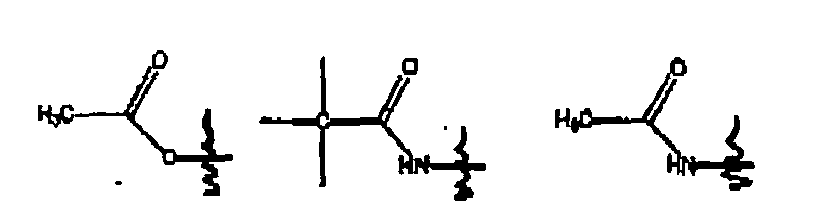
- the present invention relates to novel derivatives of betulinic acid having the general formula (I) as stated above, wherein R 1 is a hydroxy group, an amino group or one of the following protected hydroxy or amino groups: and R 2 has the meaning given above.
- the compounds according to the invention are novel derivatives of betulinic acid with higher activity and better solubility in polar solvents and thus significantly better possible uses.
- any salts and inclusion compounds of the compound according to the invention also fall under the abovementioned definition of the general formula (I).
- the present invention relates to a process for the preparation of compounds of general formula (I), wherein a substituent R 1 correspondingly protected betulinic acid halide, in particular a betulinic acid chloride, is reacted with a correspondingly substituted alcohol or amine for the purpose of providing the substituent R 2 .
- the compound of general formula (I) thus obtained, wherein R 1 represents a protected hydroxy or amino group may then be deprotected, if desired, depending on the protecting group chosen, by means known in the art, to give a compound of general formula (I) to provide, wherein R 1 is hydroxy or amino.
- betulinic acid which serves as a starting and comparative compound for the compounds according to the invention, is a triterpene which has already been isolated at the beginning of the last century.
- the name is derived from the corresponding alcohol betulin, an ingredient of birch bark, where it occurs in large quantities.
- Betulinic acid has anti-malaria, anti-inflammatory, anti-HIV and anti-tumor effects, which are described in a variety of different publications. Used as a chemotherapeutic agent, betulinic acid induces so-called progammed cell death, also called apoptosis, in tumor cells of various origins (e.g., in melanoma cells).
- Betulinic acid is thus due to their - in animal studies and cell cultures described - antiproliferative activity against various tumors (melanomas, neuroectodermal tumors, sarcomas) a very interesting substance for a sole as well as possible combination therapies with other cytostatic substances and substances that modulate cell death can, for example, antisense oligonucleotides against various anti-apoptotic Bcl-2 family members, in particular Bcl-2, Bcl-xL and Mcl-1.
- BCNU BCNU
- cisplatin tamoxifen
- interferon alpha interleukin-2
- BCNU cisplatin
- tamoxifen interferon alpha
- interleukin-2 show higher response rates in some clinical trials. However, these are time-limited and are associated with increased toxicity.
- Some substances derived from natural products, e.g. Adriamycin, bleomycin, etoposide, and others have been evaluated for their efficacy against melanoma and its toxicity. However, none of these substances could ultimately convince in everyday clinical practice.
- Acetylbetulintica 2-amino-3-hydroxy-2-hydroxymethyl propyl ester IV is carried out starting from the betulinic acid I via the intermediates of Acetylbetulin Textre II and the corresponding acid chloride III , by reacting the acid chloride III with trishydroxymethylaminomethane.
- the acid chloride obtained from 1 g acetylbetulinic acid (about 0.002 mol) by the process according to b) is reacted without further purification. It is dissolved in 35 ml of dioxane (dry) and tris- (hydroxymethyl) -aminomethane is added in double excess (0.004 mol, 0.5 g). After addition of a spatula tip of DMAP and 3 drops of pyridine, the reaction mixture is stirred for 2 days at room temperature.
- acetylbetulinic acid N- (1,1-bis (hydroxymethyl) -2-hydroxyethyl) -formamide (compound C) is carried out in analogy to Reaction Scheme 1 starting from betulinic acid I via the intermediates of acetylbetulinic acid II and the corresponding acid chloride III , by reaction of the acid chloride III with tris- (hydroxymethyl) -aminomethane.
- the acid chloride obtained from 1 g acetylbetulinic acid (about 0.002 mol) by the process according to 1) b) is reacted without further purification. It is dissolved in 35 ml of anhydrous dioxane and an equimolar amount of tris- (hydroxymethyl) -aminomethane (0.002, 0.25 g) is added. After adding a spatula tip of DMAP and 3 drops of pyridine, the reaction mixture is heated to 80 ° C for 8 h. Subsequently, the reaction solution is concentrated on a rotary evaporator and the residue taken up in chloroform. This chloroform solution is washed several times with 1% hydrochloric acid, water and saturated brine pyridine-free.
- Examples 1 & 2 show a direct comparison of comparative compound A (betulinic acid) with a novel derivative (compound B) in paired growth assays (cell count decrease after 3 days after single application of the indicated concentrations of the corresponding compounds on day 1).
- Example 1 Comparison of Compound (A) (Betulinic Acid) with Compound (B) (Protected Betulinic Acid Tris Ester) - Inhibition of Growth in Melanoma Line 518A2 (obtained from Peter Schrier, Leiden, The Netherlands) after 48 hrs
- the X axis gives the concentration of the compounds A or B in ⁇ g / ml
- the Y-axis the survival of the cells in% of the untreated controls.
- the ED50 for comparison compound (A) is of the order of 5 ⁇ g / ml, for compound (B) about 0.7 ⁇ g / ml.
- the compound (B) thus shows a significantly higher activity than the comparative bond (A) in the order of up to 7 times.
- Example 2 Comparison of the effectiveness of comparison compound (A) (betulinic acid) with compound (B) (protected betulinic acid trisester) in a liposarcoma line (ATCC HTB-92).
- the X axis indicates the concentration of compounds A and B, respectively ⁇ g / ml, the Y-axis cell survival in% of untreated controls.
- the ED50 for the comparative compound (A) is 2.5 ⁇ g / ml and 0.9 ⁇ g / ml for the compound (B).
- EXAMPLE 4 Preparation of an Inclusion Compound Compound (B) (Protected Betulinic Acid Trisester) in HBC (2-hydroxypropyl-beta-cyclodextrin, Sigma, cat.No. H-107) or in HGC (2-hydroxypropyl-gamma-1-one) cyclodextrin, Sigma Co., cat No H-125).
- mice Two mice were first treated three times in succession on each third day with 100 ⁇ g HGC / compound (B) complex. If well tolerated, the next pair of mice were treated with the next highest dose, as shown in the scheme below.
- Group A 3 times 100 ⁇ g HGC / compound (B) complex
- Group B 3 times 200 ⁇ g HGC / compound (B) complex
- Group C 3 times 400 ⁇ g HGC / compound (B) complex
- first treated group A Group A 3 times 800 ⁇ g HGC / compound (B) complex
- Group B 3 times 1500 ⁇ g HGC / compound (B) complex; then canceled due to local irritation
- the termination of the experiments was at 1500 ⁇ g HGC / Compound (B) complex due to strong local irritation in one of two mice but no apparent systemic toxicity. In total, an amount of 800 ⁇ g HGC / Compound (B) complex per injection per mouse could be administered without apparent toxicity. At higher concentrations (> 1.5 mg HGC / compound (B) complex per mouse), local irritation appearances occurred. It is conceivable that a slower infusion helps to avoid these side effects.
Landscapes
- Health & Medical Sciences (AREA)
- Organic Chemistry (AREA)
- Chemical & Material Sciences (AREA)
- General Health & Medical Sciences (AREA)
- Life Sciences & Earth Sciences (AREA)
- Veterinary Medicine (AREA)
- Nuclear Medicine, Radiotherapy & Molecular Imaging (AREA)
- Pharmacology & Pharmacy (AREA)
- Medicinal Chemistry (AREA)
- Animal Behavior & Ethology (AREA)
- General Chemical & Material Sciences (AREA)
- Public Health (AREA)
- Chemical Kinetics & Catalysis (AREA)
- Virology (AREA)
- Tropical Medicine & Parasitology (AREA)
- Molecular Biology (AREA)
- AIDS & HIV (AREA)
- Communicable Diseases (AREA)
- Oncology (AREA)
- Pharmaceuticals Containing Other Organic And Inorganic Compounds (AREA)
- Steroid Compounds (AREA)
- Acyclic And Carbocyclic Compounds In Medicinal Compositions (AREA)
- Medicines Containing Material From Animals Or Micro-Organisms (AREA)
- Medicines Containing Plant Substances (AREA)
- Pyrane Compounds (AREA)
Description
- Die vorliegende Erfindung betrifft neue Derivate der Betulinsäure mit verstärkter Wirksamkeit zur Behandlung von Karzinomen und HIV-Erkrankung, ein Verfahren zur Herstellung derartiger neuer Derivate der Betulinsäure sowie ihre Verwendung als Pharmazeutika. Die erfindungsgemäßen Verbindungen können in Analogie zur Betulinsäure beim Menschen wie auch in Tieren zur Inhibierung des Wachstums verschiedener Tumore (Melanome, Sarkome, Lymphome, Plattenepithelkarzinomen sowie weitere nachstehend angeführte Tumore) zum klinischen Einsatz kommen sowie für die Behandlung von HIV-Erkrankungen und - wegen ihrer antiphlogistischen Wirkungen - bei unspezifischen entzündlichen Erkrankungen verwendet werden.
- Die Erfindung betrifft neue Derivate der Betulinsäure mit der allgemeinen Formel (I)


- Insbesondere betrifft die vorliegende Erfindung neue Derivate der Betulinsäure mit der allgemeinen Formel (I) wie oben angegeben, worin R1 eine Hydroxygruppe, eine Aminogruppe oder eine der folgenden geschützten Hydroxy- oder Aminogruppen ist:


- Bei den erfindungsgemäßen Verbindungen handelt es sich um neue Derivate der Betulinsäure mit höherer Wirksamkeit sowie besserer Löslichkeit in polaren Lösungsmitteln und damit bedeutend besseren Einsatzmöglichkeiten. Selbstverständlich fallen auch etwaige Salze und Einschlussverbindungen der erfindungsgemäßen Verbindung unter die oben angegebene Definition der allgemeinen Formel (I).
- Weiters betrifft die vorliegende Erfindung ein Verfahren zur Herstellung von Verbindungen der allgemeinen Formel (I), wobei ein durch den Substituenten R1 entsprechend geschütztes Betulinsäurehalogenid, insbesondere ein Betulinsäurechlorid, mit einem zur Vorsehung des Substituenten R2 entsprechend substituierten Alkohol oder Amin umgesetzt wird. Die derart erhaltene Verbindung der allgemeinen Formel (I), worin R1 eine geschützte Hydroxy- oder Aminogruppe darstellt, kann dann gewünschtenfalls in Abhängigkeit von der gewählten Schutzgruppe durch im Stand der Technik bekannte Massnahmen entschützt werden, um eine Verbindung der allgemeinen Formel (I) vorzusehen, worin R1 Hydroxy oder Amino bedeutet.
- Der Naturstoff Betulinsäure, welcher als Ausgangs- und Vergleichsverbindung für die erfindungsgemäßen Verbindungen dient, ist ein Triterpen, welches bereits Anfang des letzten Jahrhunderts isoliert wurde. Der Name leitet sich vom entsprechenden Alkohol Betulin, einem Inhaltsstoff der Birkenrinde, ab, wo er in großen Mengen vorkommt. Betulinsäure besitzt anti-Malaria, anti-entzündliche, anti-HIV und anti-Tumor Effekte, die in einer Vielzahl verschiedener Publikationen beschrieben sind. Als Chemotherapeutikum verwendet induziert Betulinsäure in Tumorzellen verschiedenen Ursprungs (z.B. in Melanomzellen) den sogenannten progammierten Zelltod, auch Apoptose genannt. In Melanomen wurden in humanen Mausmodellen sowohl in vitro als auch in vivo antiproliferative Effekte nachgewiesen. Insbesondere in Melanomzellen scheint die Betulinsäure spezifisch in Tumorzellen einen apoptotischen Zelluntergang herbeizuführen, während Melanozyten dieser Substanz gegenüber weitgehend resistent sind. Bisher sind kaum Daten über mögliche synergistische Effekte zwischen der Betulinsäure und anderen Zytostatika bekannt. Besonders gut wurden die molekularen Wirkungsmechanismen bei kindlichen Tumoren (Ewing Sarkom, Medulloblastom) sowie beim Glioblastom durch die Forschungsgruppe um S. Fulda (Kinderklinik - Ulm) untersucht.
- Weitere bekannte und in der wissenschaftlichen Literatur gut dokumentierte Effekte der Betulinsäure und ihrer bekannten Derivate sind ihre Wirksamkeit gegen HIV-Viren, deren Replikation wie auch deren Bindung am Rezeptor sie unterdrücken können, wie auch ihre anti-entzündliche Wirksamkeit, die z.B. in einem Maus-Ohr Entzündungsmodell beschrieben ist. Betulinsäure ist somit aufgrund ihrer - im Tierversuch und in der Zellkulturen beschriebenen - antiproliferativen Wirkung gegen verschiedene Tumore (Melanome, neuroektodermale Tumore, Sarkome) eine ausgesprochen interessante Substanz für eine alleinige wie auch für mögliche Kombinationstherapien mit anderen zytostatisch wirksamen Substanzen und Substanzen die den Zelltod modulieren können, z.B. Antisensoligonukleotide gegen verschiedene anti-apoptotische Bcl-2 Familienmitglieder, insbesondere Bcl-2, Bcl-xL sowie Mcl-1.
- Publikationen über den Wirkungsmechanismus von Betulinsäure hauptsächlich in Melanomen sowie beim Ewing-Sarkom, Glioblastom und Medulloblastom haben gezeigt, dass ihre Effekte zu einem wesentlichen Teil durch Induktion von Apoptose auf mitochondrialer Ebene verursacht ist. Unklar zum jetzigen Zeitpunkt ist, welche primären Angriffspunkte sie in der Zelle hat, unter anderem sind weder die Bindungsstellen (Rezeptoren), falls vorhanden, noch die initialen Signalwege ausreichend erforscht. Die Erfinder und andere Autoren konnten jedoch zeigen, dass Betulinsäure Apoptose in malignen Zellen induziert, jedoch humane Melanozyten und auch normale Zellen weniger sensibel als die malignen Zellen zu sein scheinen. Diese Beobachtung ist vor allem auch deswegen von Interesse, da tierexperimentelle Daten in der Maus keine nennenswerte Toxizität gezeigt haben. Abgesehen von diesen, in der Zellkultur erhobenen Daten, gibt es Hinweise darauf, dass sich Betulinsäure stärker in Tumorgeweben als in Normalgeweben anreichert. Es wurde auch die Induktion verschiedener Bcl-2 Familienmitglieder in Melanomzellen wie auch in normalen Melanozyten und in Sarkomlinien untersucht. Dabei stellte sich heraus dass die Expression des antiapoptotischen Proteins Mcl-1 durch Betulinsäure innerhalb weniger Stunden induziert werden kann. Die anderen untersuchten Proteine dieser Genfamilie, vor allem Bcl-2 & Bcl-x, wie auch die Expression des p53 Proteins blieben unter dieser Behandlung unverändert. Die Daten aus der wissenschaftlichen Literatur weisen darauf hin, dass die Effekte der Betulinsäure unabhängig vom p53-Protein sind. Da kürzlich gezeigt wurde, dass Bcl-2 wie auch Bcl-xL die Betulinsäure-induzierte Apoptose hemmen können, legen diese Beobachtungen eine Kombination von Betulinsäure mit einer Bcl-2 und/oder Bcl-xL Antagonisierung, z.B. durch Antisensoligonukleotide (ASO), nahe. Die selben Überlegungen gelten für mögliche Kombinationen mit z.B. Mcl-1 ASO's. Eine Eigenschaft von Betulinsäure von potentieller klinischer Relevanz ist die rezente Beobachtung, dass ihre Zytotoxizität durch niedrige pH-Werte im Kulturmedium verstärkt wird. Der pH-Wert ist in vielen Tumoren niedriger als in Normalgeweben (Noda Y, Kaiya T, Kohda K, Kawazoe Y., "Enhanced cytotoxicity of some triterpenes toward leukemia L1210 cells cultured in low pH media: possibility of a new mode of cell killing": Chem Pharm Bull (Tokyo). 1997 Oct;45(10):1665-70.). Dieselben Autoren fanden, dass Betulinsäure aktiver gegen ruhende Zellen als gegen Zellen in der Wachstumsphase ist. Diese Eigenschaft könnte von zusätzlicher Bedeutung beim klinischen Einsatz sein, da viele Chemotherapeutika wie Radiotherapie weniger effektiv gegenüber ruhende und/oder acidotische Zellpopulationen sind.
- Zum jetzigen Zeitpunkt sind vor allem Melanome, neuroektodermale Tumore wie auch Sarkome und HIV am besten untersucht. Diese sind besonders schwierig zu behandelnde Tumore, bei denen vor allem die generalisierte Form der Erkrankung wenig erfolgversprechende Behandlungsoptionen aufweist. Bei Patienten mit metastasiertem Melanom sind die Therapiemöglichkeiten weitgehend auf einige wenige Substanzen limitiert. Dazu zählt 5-(3,3-Dimethyl-1-triazenyl)-1-H-imidaz-ole-4-carboxamid (Dacarbazin, DTIC). Dacarbazin ist nach wie vor die effektivste Monotherapie für das Melanom mit Ansprechraten in der Größenordnung von ca. 30 %. Kombinationstherapien mit weiteren synthetischen oder rekombinanten Substanzen wie z.B. BCNU, Cisplatin, Tamoxifen, Interferon-Alpha und Interleukin-2 zeigen höhere Ansprechraten in einigen klinischen Studien. Diese sind jedoch zeitlich limitiert und gehen mit einer erhöhten Toxizität einher. Einige Substanzen die von natürlichen Produkten abstammen, wie z.B. Adriamycin, Bleomycin, Etoposid, und andere, sind bezüglich ihrer Wirksamkeit gegen Melanome und ihrer Toxizität untersucht worden. Keine dieser Substanzen konnte jedoch letztendlich im klinischen Alltag überzeugen.
- Das erfindungsgemäße Verfahren wird im folgenden anhand von einigen Beispielen näher erläutert, wobei sich die Offenbarung der Erfindung nicht auf diese Beispiele beschränkt.
-


- Die Synthese des Acetylbetulinsäure-2-amino-3-hydroxy-2-hydroxymethyl propylesters IV erfolgt ausgehend von der Betulinsäure I über die Zwischenstufen der Acetylbetulinsäure II und des entsprechenden Säurechlorids III, durch Umsetzung des Säurechlorids III mit Trishydroxymethylaminomethan.
- 2 g Betulinsäure I (Mw 456,70) werden 2 Stunden in 50 ml Acetanhydrid am Rückfluss erhitzt. Nach dem Abkühlen gibt man den Reaktionsansatz unter starkem Rühren in Eiswasser, filtriert ab und wäscht den erhaltenen Feststoff mit Wasser bis der Essigsäuregeruch verschwunden ist.
- Der Feststoff wird sodann in 70%igem Ethanol 4 Stunden unter Rühren am Rückfluss erhitzt.
- Nach dem Abkühlen der Reaktionslösung wird filtriert, die Mutterlauge etwas eingeengt, im Eisbad abgekühlt und nochmals filtriert. Ausbeute 86%, Fp: 290°C.
- 2 g Acetylbetulinsäure II werden in trockenem Benzen (35 ml) vorgelegt und ein 10facher Überschuss an Oxalylchlorid (3,4 ml) wird zugegeben. Das Reaktionsgemisch wird 8 Stunden unter Kühlung gerührt und anschließend das Lösungsmittel sowie das überschüssige Oxalylchlorid am Rotationsverdampfer abgezogen. Um Reste des Oxalylchlorids zu entfernen, werden nochmals 20 ml Benzen zugegeben und wiederum im Vakuum abgezogen.
- Das aus 1 g Acetylbetulinsäure ( ca. 0,002 mol ) nach dem Verfahren gemäß b) erhaltene Säurechlorid wird ohne weitere Reinigung umgesetzt. Dazu wird es in 35 ml Dioxan (trocken) gelöst und Tris-(hydroxymethyl)-aminomethan wird im doppelten Überschuss (0,004 mol, 0,5 g) zugegeben. Nach Zugabe von einer Spatelspitze DMAP und 3 Tropfen Pyridin wird das Reaktionsgemisch für 2 Tage bei Raumtemperatur gerührt.
- Anschließend wird vom Feststoff abfiltriert, die Lösung am Rotationsverdampfer eingeengt und in Chloroform aufgenommen. Diese Chloroformlösung wird mehrmals mit 1%iger Salzsäure, Wasser und gesättigter Kochsalzlösung pyridinfrei gewaschen. Nach Trocknung über Na2SO4 wird das Lösungsmittel abgezogen und das Produkt über eine Kieselgelsäule oder (und) Chromatotron gereinigt. Als Laufmittel wurde ein Chloroform-Methanol-Gemisch im Verhältnis 10:1 eingesetzt. Ausbeute 20%, Fp.: 156°C.
-

- Das aus 1g Acetylbetulinsäure (ca. 0,002 mol) nach dem Verfahren gemäß 1)b) erhaltene Säurechlorid wird ohne weitere Reinigung umgesetzt. Dazu wird es in 35 ml wasserfreiem Dioxan gelöst und eine äquimolare Menge Tris-(hydroxymethyl)-aminomethan (0,002, 0,25g) wird zugegeben. Nach Zugabe einer Spatelspitze DMAP und von 3 Tropfen Pyridin wird das Reaktionsgemisch für 8 h auf 80°C erhitzt. Anschließend wird die Reaktionslösung am Rotationsverdampfer eingeengt und der Rückstand in Chloroform aufgenommen. Diese Chloroformlösung wird mehrmals mit 1%iger Salzsäure, Wasser und gesättigter Kochsalzlösung pyridinfrei gewaschen. Nach Trocknung über Na2SO4 wird das Lösungsmittel abgezogen und das Produkt über eine Kieselgelsäule oder (und) Chromatotron gereinigt. Als Laufmittel wurde ein Chloroform-Methanol-Gemisch im Verhältnis 10:1 eingesetzt. Ausbeute 15%, Fp.: 184°C
- Im Folgenden wird der Einsatz der erfindungsgemäßen Verbindungen zur Wachstumsinhibierung von Tumoren im Vergleich mit Betulinsäure (Vergleichsverbindung A) beschrieben.
- Beispiele 1 & 2 zeigen eine direkten Vergleich von Vergleichsverbindung A (Betulinsäure) mit einem neuartigen Derivat (Verbindung B) in gepaarten Wachstumsassays (Zellzahlabnahme nach 3 Tagen nach einmaliger Applikation der angegebenen Konzentrationen der entsprechenden Verbindungen am Tag 1).
- Beispiel 1: Vergleich von Verbindung (A) (Betulinsäure) mit Verbindung (B) (geschützter Betulinsäure-Trisester) - Inhibierung des Wachstums in der Melanomlinie 518A2 (erhalten von Peter Schrier, Leiden, Niederlande) nach 48 Std. Die X-Achse gibt die Konzentration der Verbindungen A bzw. B in µg/ml an, die Y-Achse die Überlebensrate der Zellen in % der unbehandelten Kontrollen.
Die ED50 für Vergleichsverbindung (A) liegt in der Grössenordnung von 5 µg/ml, für die Verbindung (B) bei etwa 0.7 µg/ml.
-

- Die Verbindung (B) zeigt somit eine deutlich höhere Wirksamkeit als die Vergleichsbindung (A) in einer Grössenordnung von bis zu 7 - fach an.
- Eine ähnlich bessere Wirksamkeit zeigt sich auch bei Sarkomen, wie nachfolgend exemplarisch an einer Zelllinie gezeigt wird.
- Beispiel 2: Vergleich der Wirksamkeit von Vergleichsverbindung (A) (Betulinsäure) mit Verbindung (B) (geschützter Betulinsäure-Trisester) in einer Liposarkomlinie (ATCC HTB-92). Die X- Achse gibt die Konzentration der Verbindungen A bzw. B in µg/ml an, die Y-Achse die Überlebensrate der Zellen in % der unbehandelten Kontrollen.

- Die ED50 für die Vergleichsverbindung (A) beträgt 2,5 µg/ml und 0,9 µg/ml für die Verbindung (B).
- Beispiel 3: Vergleich der Wirkung verschiedener erfindungsgemäßer Betulinsäurederivate bzw. der Vergleichsverbindung (Betulinsäure) auf verschiedene Melanom-Sarkomlinien. Es handelt sich jeweils um Angaben des Zellüberlebens in Prozent (Mittelwerte) verglichen mit den unbehandelten Zellkulturen.
-
Konz. µg/ml. Überleben in % 0,3 98,0 0,6 92,8 1 92,3 1,25 79,5 2,5 49,3 5 20,8 10 15,7 -
Konz. µg/ml. Überleben in % 0,3 89,5 0,6 70,7 1 12,0 1,25 2,9 2,5 3,0 5 0,0 10 0,0 -
Konz. µg/ml. Überleben in % 0,3 83,0 0,6 56,3 1 11,3 1,25 10,3 2,5 2,8 5 0,0 10 0,0 -

Konz. µg/ml. Überleben in % Melanom 0,25 96 0,5 93 1 67,5 Konz. µg/ml. Überleben in % Liposarkom 0,3 96 0,6 82 1,0 81 - Beispiel 4: Herstellung einer Einschlussverbindung umfassend Verbindung (B) (geschützter Betulinsäure-Trisester) in HBC (2-Hydroxpropyl-beta-cyclodextrin, Fa. Sigma, Kat.Nr. H-107) oder in HGC (2-Hydroxypropyl-gamma-cyclodextrin, Fa. Sigma, Kat.Nr. H-125).
-

- Im folgenden sind die jeweiligen Stocklösungen für die weitere Verdünnung angeführt. Verbindung (B) wurde jeweils zu 50 oder 100 mg/ml in EtOH gelöst. HBC wurde separat in Wasser oder Wasser plus EtOH gelöst. Die weitere Vorgangsweise war im Prinzip wie im mitgelieferten Datenblatt von Sigma beschrieben. Es wurde nicht versucht den pH-Wert einzustellen. Die Löslichkeit von Verbindung (B) in wässrigen Lösungen mittels Einschluss in HBC oder ähnlichen Verbindungen ist sicherlich noch weiter zu verbessern, z.B. in gamma-Cyclodextrine.
Versuch #1: Verbindung (B) 50 mg/ml in EtOH wie üblich gelöst #2: Verbindung (B) 5,9 mg/ml in 266 mg/ml HBC in H2O #3: Verbindung (B) 20 mg/ml in 266 mg/ml HBC in 50% EtOH / 50% H2O #4: Verbindung (B) 25 mg/ml in 200 mg/ml HGC in 50% EtOH / 50% H2O - Die oben angeführten Stocklösungen wurden auf 1 mg/ml in EtOH verdünnt und anschliessend direkt dem Kulturmedium zugegeben.
- Überleben in % wie bei allen anderen Daten nach 3 Tagen Zellkultur bei einmaliger Applikation am Tag 1
-
Konz. µg/ml. Überleben in % Melanom 1,0 50 2,0 9,5 3,0 0,0 4,0 0,0 -
Konz. µg/ml. Überleben in % Melanom 1,0 65 2,0 25 3,0 0,0 4,0 0,0 -
Konz. µg/ml. Überleben in % Melanom 1,0 77 2,0 24 3,0 0,0 4,0 0,0 -
Konz. µg/ml Überleben in % Melanom 1,0 59 2,0 4 3,0 0,0 - Methodik: Pathogenfreie weibliche C.B.-17 scid/scid (SCID) Mäuse (4-6 Wochen alt, Harlan Winkelmann, Borchen, Deutschland) wurden intravenös in die Schwanzvene mit einem in Wasser gelösten HGC/Verbindung (B) Komplex injiziert. Die Einschlussverbindung wurde wie in Beispiel 4 beschrieben hergestellt. Der Alkoholanteil wurde durch Gefriertrocknung des Gemisches und anschließender Rekonstitution in Wasser entfernt. Das Gesamtvolumen pro Injektion für die unten angeführten Experimente betrug 200 µl.
- Es wurden zuerst jeweils zwei Mäuse 3 mal hintereinander an jedem 3. Tag mit 100 µg HGC/Verbindung (B) Komplex behandelt. Bei guter Verträglichkeit wurde das nächste Paar von Mäusen mit der nächst höheren Dosis behandelt, wie in dem unteren Schema angeführt.
-
Gruppe A: 3 mal 100 µg HGC/Verbindung (B) Komplex Gruppe B 3 mal 200 µg HGC/Verbindung (B) Komplex Gruppe C 3 mal 400 µg HGC/Verbindung (B) Komplex, Gruppe A 3 mal 800 µg HGC/Verbindung (B) Komplex Gruppe B 3 mal 1500 µg HGC/Verbindung (B) Komplex; - Der Abbruch der Versuche erfolgte bei 1500 µg HGC/Verbindung (B) Komplex wegen starker lokaler Reizungserscheinungen in einer von zwei Mäusen jedoch ohne offensichtliche systemische Toxizität. Insgesamt konnte eine Menge von 800 µg HGC/Verbindung (B) Komplex pro Injektion pro Maus ohne offensichtliche Toxizität verabreicht werden. Bei höheren Konzentrationen (etwa > 1,5 mg HGC/Verbindung (B) Komplex pro Maus) traten lokale Reizungserscheinen auf. Es ist denkbar, dass eine langsamere Infusion diese Nebenwirkungen zu vermeiden hilft.
- Es wurde in einer Versuchsgruppe von 3 Mäusen pro Maus jeweils 800 µg HGC/Verbindung (B) Komplex (in 200 µl Volumen) jeden 3. Tag gegeben, und das 6 mal hintereinander. Auch dies zeigte keine offensichtlichen klinisch-toxischen Effekte. Die anschließende Obduktion ergab keinen Hinweis auf makroskopische Organveränderungen.
Claims (7)
- Neues Betulinsäurederivat mit der allgemeinen Formel (I)

und R2=
- Verbindung nach Anspruch 1, worin R1 eine Hydroxygruppe, eine Aminogruppe oder eine der folgenden geschützten Hydroxy- oder Aminogruppen ist:

- Verfahren zur Herstellung einer Verbindung nach Anspruch 1 oder 2, dadurch gekennzeichnet, dass ein durch den Substituenten R1 entsprechend geschütztes Betulinsäurehalogenid mit einem zur Vorsehung des Substituenten R2 entsprechend substituierten Alkohol oder Amin umgesetzt wird und die derart erhaltene Verbindung der allgemeinen Formel (I), worin R1 eine geschützte Hydroxy- oder Aminogruppe darstellt, gewünschtenfalls entschützt wird, um eine Verbindung der allgemeinen Formel (I) vorzusehen, worin R1 Hydroxy oder Amino bedeutet.
- Verwendung einer Verbindung nach Anspruch 1 oder 2 zur Herstellung eines Medikaments.
- Verwendung einer Verbindung nach Anspruch 1 oder 2 zur Herstellung eines Medikaments zur Wachstumsinhibierung von Tumoren wie Melanomen und neuroektodermalen Tumoren und/oder zur Behandlung von Sarkomen und HIV in Säugem.
- Verwendung einer Verbindung nach Anspruch 1 oder 2 zur Herstellung eines Medikaments zur Kombinationstherapie mit anderen zytostatisch wirksamen Substanzen und Substanzen die den Zelltod modulieren können, z.B. Antisensoligonukleotide gegen verschiedene anti-apoptotische Bcl-2 Familienmitglieder, insbesondere Bcl-2, Bcl-xL sowie Mcl-1.
- Pharmazeutische Zusammensetzung umfassend eine Verbindung nach einem der Ansprüche 1 oder 2.
Priority Applications (2)
| Application Number | Priority Date | Filing Date | Title |
|---|---|---|---|
| SI200431051T SI1594885T1 (sl) | 2003-02-11 | 2004-02-11 | Zdravilo za inhibiranje rasti tumorjev |
| AT04709952T ATE420099T1 (de) | 2003-02-11 | 2004-02-11 | Medikament zur wachstumsinhibierung von tumoren |
Applications Claiming Priority (3)
| Application Number | Priority Date | Filing Date | Title |
|---|---|---|---|
| AT2002003 | 2003-02-11 | ||
| AT2002003 | 2003-02-11 | ||
| PCT/AT2004/000045 WO2004072092A1 (de) | 2003-02-11 | 2004-02-11 | Medikament zur wachstumsinhibierung von tumoren |
Publications (3)
| Publication Number | Publication Date |
|---|---|
| EP1594885A1 EP1594885A1 (de) | 2005-11-16 |
| EP1594885B1 true EP1594885B1 (de) | 2009-01-07 |
| EP1594885B8 EP1594885B8 (de) | 2009-03-25 |
Family
ID=32854879
Family Applications (1)
| Application Number | Title | Priority Date | Filing Date |
|---|---|---|---|
| EP04709952A Expired - Lifetime EP1594885B8 (de) | 2003-02-11 | 2004-02-11 | Medikament zur wachstumsinhibierung von tumoren |
Country Status (13)
| Country | Link |
|---|---|
| US (2) | US7312205B2 (de) |
| EP (1) | EP1594885B8 (de) |
| JP (1) | JP4722031B2 (de) |
| CN (1) | CN100432094C (de) |
| AT (1) | ATE420099T1 (de) |
| AU (1) | AU2004210714C1 (de) |
| CA (1) | CA2515384C (de) |
| DE (1) | DE502004008819D1 (de) |
| DK (1) | DK1594885T3 (de) |
| ES (1) | ES2319653T3 (de) |
| PT (1) | PT1594885E (de) |
| SI (1) | SI1594885T1 (de) |
| WO (1) | WO2004072092A1 (de) |
Families Citing this family (20)
| Publication number | Priority date | Publication date | Assignee | Title |
|---|---|---|---|---|
| TW200628161A (en) * | 2004-11-12 | 2006-08-16 | Panacos Pharmaceuticals Inc | Novel betulin derivatives, preparation thereof and use thereof |
| WO2007002411A1 (en) * | 2005-06-22 | 2007-01-04 | Myriad Genetics, Inc. | Antiviral compounds |
| US20070232577A1 (en) * | 2006-03-23 | 2007-10-04 | Advanced Life Sciences, Inc. | Synthetic pentacyclic triterpenoids and derivatives of betulinic acid and betulin |
| US20080039428A1 (en) * | 2006-06-29 | 2008-02-14 | Panacos Pharmaceuticals, Inc. | Antiretroviral combination therapy |
| CZ300722B6 (cs) * | 2006-09-27 | 2009-07-22 | Univerzita Karlova v Praze, Prírodovedecká fakulta | Zpusob prípravy inkluzního komplexu pentacyklických a tetracyklických terpenoidu a farmaceutického prostredku obsahujícího tento inkluzní komplex, inkluzní komplex pentacyklického nebo tetracyklického terpenoidu a farmaceutický prostredek obsahující |
| US20110144069A1 (en) * | 2006-10-16 | 2011-06-16 | Myriad Genetics, Incorporated | Compounds for treating viral infections |
| WO2009090063A1 (en) * | 2008-01-16 | 2009-07-23 | Jado Technologies Gmbh | Steroid sapogenin, androstane and triterpenoid sapogenin derivatives for the treatment and prevention of infectious diseases |
| EP2303280A2 (de) * | 2008-05-30 | 2011-04-06 | Novelix Pharmaceuticals, Inc. | Zusammensetzungen und verfahren zur behandlung von entzündung und hyperkeratotischen läsionen |
| KR100941595B1 (ko) * | 2008-06-05 | 2010-02-11 | 주식회사 알앤엘바이오 | 바이러스 억제제로서 유용한 트리테르페노이드계 화합물 |
| US9067966B2 (en) | 2009-07-14 | 2015-06-30 | Hetero Research Foundation, Hetero Drugs Ltd. | Lupeol-type triterpene derivatives as antivirals |
| DE102009034367A1 (de) * | 2009-07-20 | 2011-01-27 | Bayer Schering Pharma Aktiengesellschaft | 17-Hydroxy-17-pentafluorethyl-estra-4,9(10)-dien-11-benzyliden-Derivate, Verfahren zu deren Herstellung und deren Verwendung zur Behandlung von Krankheiten |
| BR112012030818A2 (pt) * | 2010-06-04 | 2019-09-24 | Bristol-Myers Squibb Company | "derivados de ácido c-3 betulínico modificado como inibidores da maturação do hiv" |
| US9637516B2 (en) | 2012-12-31 | 2017-05-02 | Hetero Research Foundation | Betulinic acid proline derivatives as HIV inhibitors |
| US20170129916A1 (en) | 2014-06-26 | 2017-05-11 | Hetero Research Foundation | Novel betulinic proline imidazole derivatives as hiv inhibitors |
| US9808011B2 (en) | 2014-12-15 | 2017-11-07 | Biovectra Inc. | Pentacyclic triterpene compounds and uses thereof |
| MA40886B1 (fr) | 2015-02-09 | 2020-03-31 | Hetero Research Foundation | Nouveau triterpénone en c-3 avec des dérivés d'amide inverse en c-28 en tant qu'inhibiteurs du vih |
| US10370405B2 (en) | 2015-03-16 | 2019-08-06 | Hetero Labs Limited | C-3 novel triterpenone with C-28 amide derivatives as HIV inhibitors |
| CN107501380B (zh) * | 2016-11-16 | 2020-09-29 | 中国药科大学 | 23-羟基白桦酸23位修饰衍生物、其制备方法及用途 |
| KR101909885B1 (ko) * | 2018-05-25 | 2018-10-19 | 김예원 | 살리드로사이드 또는 베툴린을 이용한 뇌수막종 개선용 조성물 |
| PL3924361T3 (pl) * | 2019-02-11 | 2024-03-18 | Hetero Labs Limited | Nowe pochodne triterpenu jako inhibitory wirusa hiv |
Family Cites Families (9)
| Publication number | Priority date | Publication date | Assignee | Title |
|---|---|---|---|---|
| US5658947A (en) * | 1995-03-21 | 1997-08-19 | Board Of Trustees Of The University Of Illinois | Method and composition for selectively inhibiting melanoma using betalinic acid |
| US5962527A (en) * | 1995-03-21 | 1999-10-05 | The Board Of Trustees Of The University Of Illinois | Method and composition for treating cancers |
| US5962537A (en) * | 1997-05-06 | 1999-10-05 | Exxon Research And Engineering Co | Multizone downcomer for slurry hydrocarbon syntheses process |
| DE69832363D1 (de) | 1998-03-18 | 2005-12-22 | Dabur Pharma Ltd | Betulinsauer Derivate zur Hemmung von Krebswachstum |
| US6369109B1 (en) | 1998-10-28 | 2002-04-09 | Deutsches Krebsforschungszentrum Stiftung Des Offentlichen Rechts | Betulinic acid and derivatives thereof useful for the treatment of neuroectodermal tumor |
| KR20010080507A (ko) | 1998-11-18 | 2001-08-22 | 추후보정 | 신규한 베툴린산 유도체, 그의 제조 방법 및 암 성장억제제로서의 그의 용도 |
| JP2003508543A (ja) | 1999-09-09 | 2003-03-04 | ダブール リサーチ ファンデーション | 抗脈管形成活性を有する新規なベツリン酸誘導体、該誘導体を調整する方法、および腫瘍に関連する脈管形成を処置するためのそれらの使用 |
| EP1309605A1 (de) * | 2000-08-18 | 2003-05-14 | The Board Of Trustees Of The University Of Illinois | Prodrogen von beulinsauer derivate zur behandlung von krebs und hiv |
| WO2002091858A1 (en) | 2001-05-11 | 2002-11-21 | University Of Ottawa | Anxiolytic marcgraviaceae compositions containing betulinic acid, betulinic acid derivatives, and methods |
-
2004
- 2004-02-11 EP EP04709952A patent/EP1594885B8/de not_active Expired - Lifetime
- 2004-02-11 DK DK04709952T patent/DK1594885T3/da active
- 2004-02-11 WO PCT/AT2004/000045 patent/WO2004072092A1/de not_active Ceased
- 2004-02-11 CN CNB2004800039078A patent/CN100432094C/zh not_active Expired - Fee Related
- 2004-02-11 PT PT04709952T patent/PT1594885E/pt unknown
- 2004-02-11 US US10/545,143 patent/US7312205B2/en not_active Expired - Lifetime
- 2004-02-11 ES ES04709952T patent/ES2319653T3/es not_active Expired - Lifetime
- 2004-02-11 SI SI200431051T patent/SI1594885T1/sl unknown
- 2004-02-11 CA CA2515384A patent/CA2515384C/en not_active Expired - Fee Related
- 2004-02-11 JP JP2006501337A patent/JP4722031B2/ja not_active Expired - Fee Related
- 2004-02-11 AU AU2004210714A patent/AU2004210714C1/en not_active Ceased
- 2004-02-11 AT AT04709952T patent/ATE420099T1/de active
- 2004-02-11 DE DE502004008819T patent/DE502004008819D1/de not_active Expired - Lifetime
-
2007
- 2007-12-21 US US11/963,505 patent/US7851462B2/en not_active Expired - Fee Related
Also Published As
| Publication number | Publication date |
|---|---|
| ES2319653T3 (es) | 2009-05-11 |
| ATE420099T1 (de) | 2009-01-15 |
| CA2515384C (en) | 2012-04-17 |
| EP1594885B8 (de) | 2009-03-25 |
| US20080214516A1 (en) | 2008-09-04 |
| PT1594885E (pt) | 2009-03-13 |
| EP1594885A1 (de) | 2005-11-16 |
| DE502004008819D1 (de) | 2009-02-26 |
| US7851462B2 (en) | 2010-12-14 |
| WO2004072092A1 (de) | 2004-08-26 |
| CN100432094C (zh) | 2008-11-12 |
| SI1594885T1 (sl) | 2009-06-30 |
| US20060194774A1 (en) | 2006-08-31 |
| CN1747964A (zh) | 2006-03-15 |
| US7312205B2 (en) | 2007-12-25 |
| CA2515384A1 (en) | 2004-08-26 |
| AU2004210714A1 (en) | 2004-08-26 |
| AU2004210714B2 (en) | 2010-01-21 |
| DK1594885T3 (da) | 2009-04-20 |
| AU2004210714C1 (en) | 2011-01-20 |
| JP4722031B2 (ja) | 2011-07-13 |
| JP2006517208A (ja) | 2006-07-20 |
Similar Documents
| Publication | Publication Date | Title |
|---|---|---|
| EP1594885A1 (de) | Medikament zur wachstumsinhibierung von tumoren | |
| DE3856160T2 (de) | Redoxsystem für auf das Gehirn gerichtete Arzneimittelabgabe | |
| EP0056265B1 (de) | 5'-Ester von Pyrimidinnucleosiden mit antiviraler Wirksamkeit, Verfahren zur Herstellung und daraus hergestellte Arzneimittel | |
| DE2932606A1 (de) | Verfahren zur herstellung von steroidhormon-antitumorderivaten | |
| EP1001799B1 (de) | Pharmazeutische zusammensetzung enthaltend peptichemio | |
| DE2748291C3 (de) | Substituierte 13-Benzodioxan-4one und Verfahren zu ihrer Herstellung sowie Verwendung dieser Verbindungen bei der Bekämpfung von Entzündungen | |
| DE2337067A1 (de) | Indensaeure-glucuronide | |
| DE2001305C3 (de) | Cytostatisch wirksame Corticosteroid-21 -ester, deren Herstellung sowie diese enthaltende Arzneimittel | |
| DE2063996B2 (de) | alpha-Aminoxyhydroxamsäurederivate, Verfahren zur Herstellung derselben und diese enthaltende Arzneimittel | |
| DE2650366C3 (de) | Verwendung eines 5-Fluoruracilde- | |
| DE2953223C2 (de) | ||
| AT500404A1 (de) | Chemische verbindungen enthaltend tocopherol sowie zumindest einen weiteren pharmazeutischen wirkstoff | |
| DE2431916A1 (de) | Steroide, ihre verwendung und verfahren zur herstellung derselben | |
| DE2428039C3 (de) | Arzneimittel mit choleretischer Wirkung, enthaltend 2,6-Dihydroxycineol | |
| EP1418921B1 (de) | Antitumor wirksame 2-alkoxyestradiolsulfamate | |
| EP0432309B1 (de) | Neue Zuckerderivate, Verfahren zu ihrer Herstellung und ihre Verwendung | |
| EP0030331B1 (de) | Neue C-3-verzweigte Cardenolid-glykoside, ihre Herstellung und Verwendung | |
| DE3224824A1 (de) | Ester des 2-thenoylmercaptopropionylglycins mit substituierten hydroxybenzolen, verfahren zu deren herstellung und pharmazeutische zusammensetzungen, welche diese enthalten | |
| DE2318902A1 (de) | 2,2'-anhydro-1-beta-d-arabinofuranosyl5-fluorocytosin und verfahren zu seiner herstellung | |
| DE10029047B4 (de) | Verwendung von Luteolin-7-O-glucuronid als Wirkstoff in einem anticholestatischen Arzneimittel | |
| CH693558A5 (de) | Pharmazeutische Zusammensetzung. | |
| EP0580624B1 (de) | Neue cytarabin-derivate, ihre herstellung und verwendung | |
| DE2537590A1 (de) | Neue phenylbutazon-derivate | |
| CH337857A (de) | Verfahren zur Herstellung einer hochwirksamen antibakteriellen Verbindung | |
| DE2930637A1 (de) | Neue doxorubicinderivate, verfahren zu deren herstellung und pharmazeutische zubereitungen |
Legal Events
| Date | Code | Title | Description |
|---|---|---|---|
| PUAI | Public reference made under article 153(3) epc to a published international application that has entered the european phase |
Free format text: ORIGINAL CODE: 0009012 |
|
| 17P | Request for examination filed |
Effective date: 20050912 |
|
| AK | Designated contracting states |
Kind code of ref document: A1 Designated state(s): AT BE BG CH CY CZ DE DK EE ES FI FR GB GR HU IE IT LI LU MC NL PT RO SE SI SK TR |
|
| AX | Request for extension of the european patent |
Extension state: AL LT LV MK |
|
| 17Q | First examination report despatched |
Effective date: 20061212 |
|
| REG | Reference to a national code |
Ref country code: SE Ref legal event code: TRGR |
|
| GRAP | Despatch of communication of intention to grant a patent |
Free format text: ORIGINAL CODE: EPIDOSNIGR1 |
|
| GRAS | Grant fee paid |
Free format text: ORIGINAL CODE: EPIDOSNIGR3 |
|
| GRAA | (expected) grant |
Free format text: ORIGINAL CODE: 0009210 |
|
| AK | Designated contracting states |
Kind code of ref document: B1 Designated state(s): AT BE BG CH CY CZ DE DK EE ES FI FR GB GR HU IE IT LI LU MC NL PT RO SE SI SK TR |
|
| AX | Request for extension of the european patent |
Extension state: AL LT LV MK |
|
| REG | Reference to a national code |
Ref country code: GB Ref legal event code: FG4D Free format text: NOT ENGLISH |
|
| REG | Reference to a national code |
Ref country code: CH Ref legal event code: EP |
|
| REG | Reference to a national code |
Ref country code: CH Ref legal event code: NV Representative=s name: SPIERENBURG & PARTNER AG, PATENT- UND MARKENANWAEL |
|
| RAP2 | Party data changed (patent owner data changed or rights of a patent transferred) |
Owner name: NOVELIX PHARMACEUTICALS, INC. |
|
| REG | Reference to a national code |
Ref country code: IE Ref legal event code: FG4D Free format text: LANGUAGE OF EP DOCUMENT: GERMAN |
|
| REF | Corresponds to: |
Ref document number: 502004008819 Country of ref document: DE Date of ref document: 20090226 Kind code of ref document: P |
|
| REG | Reference to a national code |
Ref country code: PT Ref legal event code: SC4A Free format text: AVAILABILITY OF NATIONAL TRANSLATION Effective date: 20090304 |
|
| NLT2 | Nl: modifications (of names), taken from the european patent patent bulletin |
Owner name: NOVELIX PHARMACEUTICALS, INC. Effective date: 20090211 |
|
| REG | Reference to a national code |
Ref country code: RO Ref legal event code: EPE |
|
| REG | Reference to a national code |
Ref country code: GR Ref legal event code: EP Ref document number: 20090400786 Country of ref document: GR |
|
| REG | Reference to a national code |
Ref country code: DK Ref legal event code: T3 |
|
| PGFP | Annual fee paid to national office [announced via postgrant information from national office to epo] |
Ref country code: EE Payment date: 20090203 Year of fee payment: 6 Ref country code: IE Payment date: 20090219 Year of fee payment: 6 Ref country code: LU Payment date: 20090203 Year of fee payment: 6 |
|
| REG | Reference to a national code |
Ref country code: ES Ref legal event code: FG2A Ref document number: 2319653 Country of ref document: ES Kind code of ref document: T3 |
|
| PGFP | Annual fee paid to national office [announced via postgrant information from national office to epo] |
Ref country code: SI Payment date: 20090202 Year of fee payment: 6 |
|
| PGFP | Annual fee paid to national office [announced via postgrant information from national office to epo] |
Ref country code: GR Payment date: 20090318 Year of fee payment: 6 |
|
| PGFP | Annual fee paid to national office [announced via postgrant information from national office to epo] |
Ref country code: BE Payment date: 20090302 Year of fee payment: 6 Ref country code: BG Payment date: 20090216 Year of fee payment: 6 Ref country code: RO Payment date: 20090210 Year of fee payment: 6 |
|
| PGFP | Annual fee paid to national office [announced via postgrant information from national office to epo] |
Ref country code: CZ Payment date: 20090204 Year of fee payment: 6 Ref country code: PT Payment date: 20090527 Year of fee payment: 6 |
|
| PGFP | Annual fee paid to national office [announced via postgrant information from national office to epo] |
Ref country code: SK Payment date: 20090129 Year of fee payment: 6 Ref country code: MC Payment date: 20090129 Year of fee payment: 6 |
|
| REG | Reference to a national code |
Ref country code: HU Ref legal event code: AG4A Ref document number: E005813 Country of ref document: HU |
|
| PGFP | Annual fee paid to national office [announced via postgrant information from national office to epo] |
Ref country code: CY Payment date: 20090226 Year of fee payment: 6 |
|
| PLBE | No opposition filed within time limit |
Free format text: ORIGINAL CODE: 0009261 |
|
| STAA | Information on the status of an ep patent application or granted ep patent |
Free format text: STATUS: NO OPPOSITION FILED WITHIN TIME LIMIT |
|
| PGFP | Annual fee paid to national office [announced via postgrant information from national office to epo] |
Ref country code: HU Payment date: 20090407 Year of fee payment: 6 |
|
| 26N | No opposition filed |
Effective date: 20091008 |
|
| BERE | Be: lapsed |
Owner name: NOVELIX PHARMACEUTICALS, INC. Effective date: 20100228 |
|
| REG | Reference to a national code |
Ref country code: EE Ref legal event code: MM4A Ref document number: E002955 Country of ref document: EE Effective date: 20100228 |
|
| PG25 | Lapsed in a contracting state [announced via postgrant information from national office to epo] |
Ref country code: MC Free format text: LAPSE BECAUSE OF NON-PAYMENT OF DUE FEES Effective date: 20100301 Ref country code: HU Free format text: LAPSE BECAUSE OF NON-PAYMENT OF DUE FEES Effective date: 20100212 Ref country code: EE Free format text: LAPSE BECAUSE OF NON-PAYMENT OF DUE FEES Effective date: 20100228 |
|
| REG | Reference to a national code |
Ref country code: SI Ref legal event code: KO00 Effective date: 20100922 |
|
| REG | Reference to a national code |
Ref country code: SK Ref legal event code: MM4A Ref document number: E 5193 Country of ref document: SK Effective date: 20100211 |
|
| PG25 | Lapsed in a contracting state [announced via postgrant information from national office to epo] |
Ref country code: SK Free format text: LAPSE BECAUSE OF NON-PAYMENT OF DUE FEES Effective date: 20100211 Ref country code: SI Free format text: LAPSE BECAUSE OF NON-PAYMENT OF DUE FEES Effective date: 20100212 Ref country code: CZ Free format text: LAPSE BECAUSE OF NON-PAYMENT OF DUE FEES Effective date: 20100211 Ref country code: BG Free format text: LAPSE BECAUSE OF NON-PAYMENT OF DUE FEES Effective date: 20100831 |
|
| PG25 | Lapsed in a contracting state [announced via postgrant information from national office to epo] |
Ref country code: CY Free format text: LAPSE BECAUSE OF FAILURE TO SUBMIT A TRANSLATION OF THE DESCRIPTION OR TO PAY THE FEE WITHIN THE PRESCRIBED TIME-LIMIT Effective date: 20100421 |
|
| PG25 | Lapsed in a contracting state [announced via postgrant information from national office to epo] |
Ref country code: IE Free format text: LAPSE BECAUSE OF NON-PAYMENT OF DUE FEES Effective date: 20100211 |
|
| PG25 | Lapsed in a contracting state [announced via postgrant information from national office to epo] |
Ref country code: BE Free format text: LAPSE BECAUSE OF NON-PAYMENT OF DUE FEES Effective date: 20100228 |
|
| PG25 | Lapsed in a contracting state [announced via postgrant information from national office to epo] |
Ref country code: RO Free format text: LAPSE BECAUSE OF NON-PAYMENT OF DUE FEES Effective date: 20100211 |
|
| PGFP | Annual fee paid to national office [announced via postgrant information from national office to epo] |
Ref country code: TR Payment date: 20090317 Year of fee payment: 6 |
|
| REG | Reference to a national code |
Ref country code: PT Ref legal event code: MM4A Free format text: LAPSE DUE TO NON-PAYMENT OF FEES Effective date: 20100811 |
|
| PG25 | Lapsed in a contracting state [announced via postgrant information from national office to epo] |
Ref country code: LU Free format text: LAPSE BECAUSE OF NON-PAYMENT OF DUE FEES Effective date: 20100211 |
|
| PG25 | Lapsed in a contracting state [announced via postgrant information from national office to epo] |
Ref country code: TR Free format text: LAPSE BECAUSE OF NON-PAYMENT OF DUE FEES Effective date: 20100211 |
|
| PG25 | Lapsed in a contracting state [announced via postgrant information from national office to epo] |
Ref country code: PT Free format text: LAPSE BECAUSE OF NON-PAYMENT OF DUE FEES Effective date: 20120306 |
|
| REG | Reference to a national code |
Ref country code: FR Ref legal event code: PLFP Year of fee payment: 12 |
|
| PGFP | Annual fee paid to national office [announced via postgrant information from national office to epo] |
Ref country code: DE Payment date: 20150218 Year of fee payment: 12 Ref country code: CH Payment date: 20150203 Year of fee payment: 12 Ref country code: IT Payment date: 20150216 Year of fee payment: 12 Ref country code: DK Payment date: 20150218 Year of fee payment: 12 Ref country code: NL Payment date: 20150226 Year of fee payment: 12 Ref country code: FI Payment date: 20150211 Year of fee payment: 12 Ref country code: ES Payment date: 20150114 Year of fee payment: 12 |
|
| PGFP | Annual fee paid to national office [announced via postgrant information from national office to epo] |
Ref country code: SE Payment date: 20150217 Year of fee payment: 12 Ref country code: AT Payment date: 20150225 Year of fee payment: 12 Ref country code: GB Payment date: 20150227 Year of fee payment: 12 Ref country code: FR Payment date: 20150120 Year of fee payment: 12 |
|
| REG | Reference to a national code |
Ref country code: DE Ref legal event code: R119 Ref document number: 502004008819 Country of ref document: DE |
|
| REG | Reference to a national code |
Ref country code: DK Ref legal event code: EBP Effective date: 20160229 |
|
| REG | Reference to a national code |
Ref country code: CH Ref legal event code: PL |
|
| REG | Reference to a national code |
Ref country code: SE Ref legal event code: EUG |
|
| REG | Reference to a national code |
Ref country code: AT Ref legal event code: MM01 Ref document number: 420099 Country of ref document: AT Kind code of ref document: T Effective date: 20160211 |
|
| GBPC | Gb: european patent ceased through non-payment of renewal fee |
Effective date: 20160211 |
|
| PG25 | Lapsed in a contracting state [announced via postgrant information from national office to epo] |
Ref country code: CH Free format text: LAPSE BECAUSE OF NON-PAYMENT OF DUE FEES Effective date: 20160229 Ref country code: FI Free format text: LAPSE BECAUSE OF NON-PAYMENT OF DUE FEES Effective date: 20160211 Ref country code: LI Free format text: LAPSE BECAUSE OF NON-PAYMENT OF DUE FEES Effective date: 20160229 |
|
| REG | Reference to a national code |
Ref country code: NL Ref legal event code: MM Effective date: 20160301 |
|
| REG | Reference to a national code |
Ref country code: FR Ref legal event code: ST Effective date: 20161028 |
|
| PG25 | Lapsed in a contracting state [announced via postgrant information from national office to epo] |
Ref country code: SE Free format text: LAPSE BECAUSE OF NON-PAYMENT OF DUE FEES Effective date: 20160212 Ref country code: AT Free format text: LAPSE BECAUSE OF NON-PAYMENT OF DUE FEES Effective date: 20160211 Ref country code: PT Free format text: LAPSE BECAUSE OF NON-PAYMENT OF DUE FEES Effective date: 20100211 |
|
| PG25 | Lapsed in a contracting state [announced via postgrant information from national office to epo] |
Ref country code: IT Free format text: LAPSE BECAUSE OF NON-PAYMENT OF DUE FEES Effective date: 20160211 |
|
| PG25 | Lapsed in a contracting state [announced via postgrant information from national office to epo] |
Ref country code: GB Free format text: LAPSE BECAUSE OF NON-PAYMENT OF DUE FEES Effective date: 20160211 Ref country code: NL Free format text: LAPSE BECAUSE OF NON-PAYMENT OF DUE FEES Effective date: 20160301 Ref country code: DE Free format text: LAPSE BECAUSE OF NON-PAYMENT OF DUE FEES Effective date: 20160901 Ref country code: FR Free format text: LAPSE BECAUSE OF NON-PAYMENT OF DUE FEES Effective date: 20160229 Ref country code: DK Free format text: LAPSE BECAUSE OF NON-PAYMENT OF DUE FEES Effective date: 20160229 |
|
| PG25 | Lapsed in a contracting state [announced via postgrant information from national office to epo] |
Ref country code: ES Free format text: LAPSE BECAUSE OF NON-PAYMENT OF DUE FEES Effective date: 20160212 |