EP1803601B1 - Fahrzeugfensterglas und Verfahren zur Herstellung dafür - Google Patents
Fahrzeugfensterglas und Verfahren zur Herstellung dafür Download PDFInfo
- Publication number
- EP1803601B1 EP1803601B1 EP06026928A EP06026928A EP1803601B1 EP 1803601 B1 EP1803601 B1 EP 1803601B1 EP 06026928 A EP06026928 A EP 06026928A EP 06026928 A EP06026928 A EP 06026928A EP 1803601 B1 EP1803601 B1 EP 1803601B1
- Authority
- EP
- European Patent Office
- Prior art keywords
- glass plate
- edge portion
- film
- vehicle window
- infrared cut
- Prior art date
- Legal status (The legal status is an assumption and is not a legal conclusion. Google has not performed a legal analysis and makes no representation as to the accuracy of the status listed.)
- Not-in-force
Links
- 239000005357 flat glass Substances 0.000 title claims abstract description 42
- 238000000034 method Methods 0.000 title claims description 14
- 238000004519 manufacturing process Methods 0.000 title claims description 11
- 239000011521 glass Substances 0.000 claims abstract description 151
- VYPSYNLAJGMNEJ-UHFFFAOYSA-N Silicium dioxide Chemical compound O=[Si]=O VYPSYNLAJGMNEJ-UHFFFAOYSA-N 0.000 claims description 35
- 238000000576 coating method Methods 0.000 claims description 25
- 239000011248 coating agent Substances 0.000 claims description 17
- 239000000377 silicon dioxide Substances 0.000 claims description 17
- 239000010419 fine particle Substances 0.000 claims description 15
- 239000005416 organic matter Substances 0.000 claims description 15
- 238000005498 polishing Methods 0.000 claims description 12
- 238000005299 abrasion Methods 0.000 claims description 10
- 238000010304 firing Methods 0.000 claims description 7
- 238000012360 testing method Methods 0.000 claims description 6
- 229910003460 diamond Inorganic materials 0.000 claims description 4
- 239000010432 diamond Substances 0.000 claims description 4
- 238000007598 dipping method Methods 0.000 claims description 4
- 238000000227 grinding Methods 0.000 claims description 3
- 239000010408 film Substances 0.000 description 81
- 239000011159 matrix material Substances 0.000 description 10
- LFQSCWFLJHTTHZ-UHFFFAOYSA-N Ethanol Chemical compound CCO LFQSCWFLJHTTHZ-UHFFFAOYSA-N 0.000 description 8
- 239000002131 composite material Substances 0.000 description 7
- BOTDANWDWHJENH-UHFFFAOYSA-N Tetraethyl orthosilicate Chemical compound CCO[Si](OCC)(OCC)OCC BOTDANWDWHJENH-UHFFFAOYSA-N 0.000 description 5
- 230000000052 comparative effect Effects 0.000 description 5
- 229910052809 inorganic oxide Inorganic materials 0.000 description 4
- 238000003980 solgel method Methods 0.000 description 4
- 238000005452 bending Methods 0.000 description 3
- 150000001875 compounds Chemical class 0.000 description 3
- 239000002270 dispersing agent Substances 0.000 description 3
- 239000006185 dispersion Substances 0.000 description 3
- 239000002245 particle Substances 0.000 description 3
- YCKRFDGAMUMZLT-UHFFFAOYSA-N Fluorine atom Chemical compound [F] YCKRFDGAMUMZLT-UHFFFAOYSA-N 0.000 description 2
- VEXZGXHMUGYJMC-UHFFFAOYSA-N Hydrochloric acid Chemical compound Cl VEXZGXHMUGYJMC-UHFFFAOYSA-N 0.000 description 2
- 239000002202 Polyethylene glycol Substances 0.000 description 2
- 230000003247 decreasing effect Effects 0.000 description 2
- 239000011928 denatured alcohol Substances 0.000 description 2
- 239000004744 fabric Substances 0.000 description 2
- 229910052731 fluorine Inorganic materials 0.000 description 2
- 239000011737 fluorine Substances 0.000 description 2
- 229910052738 indium Inorganic materials 0.000 description 2
- APFVFJFRJDLVQX-UHFFFAOYSA-N indium atom Chemical compound [In] APFVFJFRJDLVQX-UHFFFAOYSA-N 0.000 description 2
- 239000008204 material by function Substances 0.000 description 2
- 229920000233 poly(alkylene oxides) Polymers 0.000 description 2
- 229920001223 polyethylene glycol Polymers 0.000 description 2
- 229920000642 polymer Polymers 0.000 description 2
- 239000000843 powder Substances 0.000 description 2
- 230000001603 reducing effect Effects 0.000 description 2
- 238000011160 research Methods 0.000 description 2
- -1 silicon alkoxide Chemical class 0.000 description 2
- XLYOFNOQVPJJNP-UHFFFAOYSA-N water Substances O XLYOFNOQVPJJNP-UHFFFAOYSA-N 0.000 description 2
- 229910019142 PO4 Inorganic materials 0.000 description 1
- 229920002565 Polyethylene Glycol 400 Polymers 0.000 description 1
- 239000004721 Polyphenylene oxide Substances 0.000 description 1
- 238000000149 argon plasma sintering Methods 0.000 description 1
- 230000015572 biosynthetic process Effects 0.000 description 1
- 229910052681 coesite Inorganic materials 0.000 description 1
- 229910052906 cristobalite Inorganic materials 0.000 description 1
- 238000000354 decomposition reaction Methods 0.000 description 1
- 238000010438 heat treatment Methods 0.000 description 1
- 239000004615 ingredient Substances 0.000 description 1
- 230000005764 inhibitory process Effects 0.000 description 1
- 239000002932 luster Substances 0.000 description 1
- 239000002184 metal Substances 0.000 description 1
- 229910052751 metal Inorganic materials 0.000 description 1
- 238000002156 mixing Methods 0.000 description 1
- 238000012986 modification Methods 0.000 description 1
- 230000004048 modification Effects 0.000 description 1
- 229920000620 organic polymer Polymers 0.000 description 1
- 239000010452 phosphate Substances 0.000 description 1
- 229920000570 polyether Polymers 0.000 description 1
- 229940113115 polyethylene glycol 200 Drugs 0.000 description 1
- 229910052710 silicon Inorganic materials 0.000 description 1
- 239000010703 silicon Substances 0.000 description 1
- 229910052814 silicon oxide Inorganic materials 0.000 description 1
- 239000002904 solvent Substances 0.000 description 1
- 239000007858 starting material Substances 0.000 description 1
- 238000003756 stirring Methods 0.000 description 1
- 229910052682 stishovite Inorganic materials 0.000 description 1
- 239000004094 surface-active agent Substances 0.000 description 1
- 238000005496 tempering Methods 0.000 description 1
- 239000010409 thin film Substances 0.000 description 1
- 238000002834 transmittance Methods 0.000 description 1
- 229910052905 tridymite Inorganic materials 0.000 description 1
- 238000005406 washing Methods 0.000 description 1
Images


Classifications
-
- C—CHEMISTRY; METALLURGY
- C03—GLASS; MINERAL OR SLAG WOOL
- C03C—CHEMICAL COMPOSITION OF GLASSES, GLAZES OR VITREOUS ENAMELS; SURFACE TREATMENT OF GLASS; SURFACE TREATMENT OF FIBRES OR FILAMENTS MADE FROM GLASS, MINERALS OR SLAGS; JOINING GLASS TO GLASS OR OTHER MATERIALS
- C03C17/00—Surface treatment of glass, not in the form of fibres or filaments, by coating
- C03C17/006—Surface treatment of glass, not in the form of fibres or filaments, by coating with materials of composite character
- C03C17/007—Surface treatment of glass, not in the form of fibres or filaments, by coating with materials of composite character containing a dispersed phase, e.g. particles, fibres or flakes, in a continuous phase
-
- B—PERFORMING OPERATIONS; TRANSPORTING
- B60—VEHICLES IN GENERAL
- B60J—WINDOWS, WINDSCREENS, NON-FIXED ROOFS, DOORS, OR SIMILAR DEVICES FOR VEHICLES; REMOVABLE EXTERNAL PROTECTIVE COVERINGS SPECIALLY ADAPTED FOR VEHICLES
- B60J3/00—Antiglare equipment associated with windows or windscreens; Sun visors for vehicles
- B60J3/007—Sunglare reduction by coatings, interposed foils in laminar windows, or permanent screens
-
- C—CHEMISTRY; METALLURGY
- C03—GLASS; MINERAL OR SLAG WOOL
- C03C—CHEMICAL COMPOSITION OF GLASSES, GLAZES OR VITREOUS ENAMELS; SURFACE TREATMENT OF GLASS; SURFACE TREATMENT OF FIBRES OR FILAMENTS MADE FROM GLASS, MINERALS OR SLAGS; JOINING GLASS TO GLASS OR OTHER MATERIALS
- C03C17/00—Surface treatment of glass, not in the form of fibres or filaments, by coating
- C03C17/006—Surface treatment of glass, not in the form of fibres or filaments, by coating with materials of composite character
- C03C17/008—Surface treatment of glass, not in the form of fibres or filaments, by coating with materials of composite character comprising a mixture of materials covered by two or more of the groups C03C17/02, C03C17/06, C03C17/22 and C03C17/28
- C03C17/009—Mixtures of organic and inorganic materials, e.g. ormosils and ormocers
-
- C—CHEMISTRY; METALLURGY
- C03—GLASS; MINERAL OR SLAG WOOL
- C03C—CHEMICAL COMPOSITION OF GLASSES, GLAZES OR VITREOUS ENAMELS; SURFACE TREATMENT OF GLASS; SURFACE TREATMENT OF FIBRES OR FILAMENTS MADE FROM GLASS, MINERALS OR SLAGS; JOINING GLASS TO GLASS OR OTHER MATERIALS
- C03C17/00—Surface treatment of glass, not in the form of fibres or filaments, by coating
- C03C17/34—Surface treatment of glass, not in the form of fibres or filaments, by coating with at least two coatings having different compositions
- C03C17/36—Surface treatment of glass, not in the form of fibres or filaments, by coating with at least two coatings having different compositions at least one coating being a metal
- C03C17/3602—Surface treatment of glass, not in the form of fibres or filaments, by coating with at least two coatings having different compositions at least one coating being a metal the metal being present as a layer
- C03C17/3657—Surface treatment of glass, not in the form of fibres or filaments, by coating with at least two coatings having different compositions at least one coating being a metal the metal being present as a layer the multilayer coating having optical properties
- C03C17/366—Low-emissivity or solar control coatings
-
- C—CHEMISTRY; METALLURGY
- C03—GLASS; MINERAL OR SLAG WOOL
- C03C—CHEMICAL COMPOSITION OF GLASSES, GLAZES OR VITREOUS ENAMELS; SURFACE TREATMENT OF GLASS; SURFACE TREATMENT OF FIBRES OR FILAMENTS MADE FROM GLASS, MINERALS OR SLAGS; JOINING GLASS TO GLASS OR OTHER MATERIALS
- C03C19/00—Surface treatment of glass, not in the form of fibres or filaments, by mechanical means
-
- C—CHEMISTRY; METALLURGY
- C03—GLASS; MINERAL OR SLAG WOOL
- C03C—CHEMICAL COMPOSITION OF GLASSES, GLAZES OR VITREOUS ENAMELS; SURFACE TREATMENT OF GLASS; SURFACE TREATMENT OF FIBRES OR FILAMENTS MADE FROM GLASS, MINERALS OR SLAGS; JOINING GLASS TO GLASS OR OTHER MATERIALS
- C03C2217/00—Coatings on glass
- C03C2217/20—Materials for coating a single layer on glass
- C03C2217/21—Oxides
- C03C2217/213—SiO2
-
- C—CHEMISTRY; METALLURGY
- C03—GLASS; MINERAL OR SLAG WOOL
- C03C—CHEMICAL COMPOSITION OF GLASSES, GLAZES OR VITREOUS ENAMELS; SURFACE TREATMENT OF GLASS; SURFACE TREATMENT OF FIBRES OR FILAMENTS MADE FROM GLASS, MINERALS OR SLAGS; JOINING GLASS TO GLASS OR OTHER MATERIALS
- C03C2217/00—Coatings on glass
- C03C2217/20—Materials for coating a single layer on glass
- C03C2217/21—Oxides
- C03C2217/23—Mixtures
- C03C2217/231—In2O3/SnO2
-
- C—CHEMISTRY; METALLURGY
- C03—GLASS; MINERAL OR SLAG WOOL
- C03C—CHEMICAL COMPOSITION OF GLASSES, GLAZES OR VITREOUS ENAMELS; SURFACE TREATMENT OF GLASS; SURFACE TREATMENT OF FIBRES OR FILAMENTS MADE FROM GLASS, MINERALS OR SLAGS; JOINING GLASS TO GLASS OR OTHER MATERIALS
- C03C2217/00—Coatings on glass
- C03C2217/20—Materials for coating a single layer on glass
- C03C2217/29—Mixtures
-
- C—CHEMISTRY; METALLURGY
- C03—GLASS; MINERAL OR SLAG WOOL
- C03C—CHEMICAL COMPOSITION OF GLASSES, GLAZES OR VITREOUS ENAMELS; SURFACE TREATMENT OF GLASS; SURFACE TREATMENT OF FIBRES OR FILAMENTS MADE FROM GLASS, MINERALS OR SLAGS; JOINING GLASS TO GLASS OR OTHER MATERIALS
- C03C2217/00—Coatings on glass
- C03C2217/40—Coatings comprising at least one inhomogeneous layer
- C03C2217/43—Coatings comprising at least one inhomogeneous layer consisting of a dispersed phase in a continuous phase
- C03C2217/44—Coatings comprising at least one inhomogeneous layer consisting of a dispersed phase in a continuous phase characterized by the composition of the continuous phase
- C03C2217/45—Inorganic continuous phases
-
- C—CHEMISTRY; METALLURGY
- C03—GLASS; MINERAL OR SLAG WOOL
- C03C—CHEMICAL COMPOSITION OF GLASSES, GLAZES OR VITREOUS ENAMELS; SURFACE TREATMENT OF GLASS; SURFACE TREATMENT OF FIBRES OR FILAMENTS MADE FROM GLASS, MINERALS OR SLAGS; JOINING GLASS TO GLASS OR OTHER MATERIALS
- C03C2217/00—Coatings on glass
- C03C2217/40—Coatings comprising at least one inhomogeneous layer
- C03C2217/43—Coatings comprising at least one inhomogeneous layer consisting of a dispersed phase in a continuous phase
- C03C2217/46—Coatings comprising at least one inhomogeneous layer consisting of a dispersed phase in a continuous phase characterized by the dispersed phase
- C03C2217/47—Coatings comprising at least one inhomogeneous layer consisting of a dispersed phase in a continuous phase characterized by the dispersed phase consisting of a specific material
- C03C2217/475—Inorganic materials
- C03C2217/476—Tin oxide or doped tin oxide
-
- C—CHEMISTRY; METALLURGY
- C03—GLASS; MINERAL OR SLAG WOOL
- C03C—CHEMICAL COMPOSITION OF GLASSES, GLAZES OR VITREOUS ENAMELS; SURFACE TREATMENT OF GLASS; SURFACE TREATMENT OF FIBRES OR FILAMENTS MADE FROM GLASS, MINERALS OR SLAGS; JOINING GLASS TO GLASS OR OTHER MATERIALS
- C03C2217/00—Coatings on glass
- C03C2217/90—Other aspects of coatings
- C03C2217/94—Transparent conductive oxide layers [TCO] being part of a multilayer coating
- C03C2217/948—Layers comprising indium tin oxide [ITO]
-
- C—CHEMISTRY; METALLURGY
- C03—GLASS; MINERAL OR SLAG WOOL
- C03C—CHEMICAL COMPOSITION OF GLASSES, GLAZES OR VITREOUS ENAMELS; SURFACE TREATMENT OF GLASS; SURFACE TREATMENT OF FIBRES OR FILAMENTS MADE FROM GLASS, MINERALS OR SLAGS; JOINING GLASS TO GLASS OR OTHER MATERIALS
- C03C2218/00—Methods for coating glass
- C03C2218/10—Deposition methods
- C03C2218/11—Deposition methods from solutions or suspensions
- C03C2218/111—Deposition methods from solutions or suspensions by dipping, immersion
-
- C—CHEMISTRY; METALLURGY
- C03—GLASS; MINERAL OR SLAG WOOL
- C03C—CHEMICAL COMPOSITION OF GLASSES, GLAZES OR VITREOUS ENAMELS; SURFACE TREATMENT OF GLASS; SURFACE TREATMENT OF FIBRES OR FILAMENTS MADE FROM GLASS, MINERALS OR SLAGS; JOINING GLASS TO GLASS OR OTHER MATERIALS
- C03C2218/00—Methods for coating glass
- C03C2218/10—Deposition methods
- C03C2218/11—Deposition methods from solutions or suspensions
- C03C2218/113—Deposition methods from solutions or suspensions by sol-gel processes
-
- C—CHEMISTRY; METALLURGY
- C03—GLASS; MINERAL OR SLAG WOOL
- C03C—CHEMICAL COMPOSITION OF GLASSES, GLAZES OR VITREOUS ENAMELS; SURFACE TREATMENT OF GLASS; SURFACE TREATMENT OF FIBRES OR FILAMENTS MADE FROM GLASS, MINERALS OR SLAGS; JOINING GLASS TO GLASS OR OTHER MATERIALS
- C03C2218/00—Methods for coating glass
- C03C2218/30—Aspects of methods for coating glass not covered above
- C03C2218/31—Pre-treatment
-
- C—CHEMISTRY; METALLURGY
- C03—GLASS; MINERAL OR SLAG WOOL
- C03C—CHEMICAL COMPOSITION OF GLASSES, GLAZES OR VITREOUS ENAMELS; SURFACE TREATMENT OF GLASS; SURFACE TREATMENT OF FIBRES OR FILAMENTS MADE FROM GLASS, MINERALS OR SLAGS; JOINING GLASS TO GLASS OR OTHER MATERIALS
- C03C2218/00—Methods for coating glass
- C03C2218/30—Aspects of methods for coating glass not covered above
- C03C2218/365—Coating different sides of a glass substrate
-
- Y—GENERAL TAGGING OF NEW TECHNOLOGICAL DEVELOPMENTS; GENERAL TAGGING OF CROSS-SECTIONAL TECHNOLOGIES SPANNING OVER SEVERAL SECTIONS OF THE IPC; TECHNICAL SUBJECTS COVERED BY FORMER USPC CROSS-REFERENCE ART COLLECTIONS [XRACs] AND DIGESTS
- Y10—TECHNICAL SUBJECTS COVERED BY FORMER USPC
- Y10T—TECHNICAL SUBJECTS COVERED BY FORMER US CLASSIFICATION
- Y10T428/00—Stock material or miscellaneous articles
- Y10T428/24—Structurally defined web or sheet [e.g., overall dimension, etc.]
- Y10T428/24777—Edge feature
-
- Y—GENERAL TAGGING OF NEW TECHNOLOGICAL DEVELOPMENTS; GENERAL TAGGING OF CROSS-SECTIONAL TECHNOLOGIES SPANNING OVER SEVERAL SECTIONS OF THE IPC; TECHNICAL SUBJECTS COVERED BY FORMER USPC CROSS-REFERENCE ART COLLECTIONS [XRACs] AND DIGESTS
- Y10—TECHNICAL SUBJECTS COVERED BY FORMER USPC
- Y10T—TECHNICAL SUBJECTS COVERED BY FORMER US CLASSIFICATION
- Y10T428/00—Stock material or miscellaneous articles
- Y10T428/24—Structurally defined web or sheet [e.g., overall dimension, etc.]
- Y10T428/24942—Structurally defined web or sheet [e.g., overall dimension, etc.] including components having same physical characteristic in differing degree
- Y10T428/2495—Thickness [relative or absolute]
Definitions
- the present invention relates to a vehicle window glass and a process for manufacturing the same, more particularly to a vehicle window glass having an infrared cut-off (shielding) function or the like and a process for manufacturing the same.
- ITO powder with an excellently heat-resistant fluorine component added thereto is used, whereby sol-gel processing is made practicable in the formation of an infrared cut-off film even at temperatures as high as 350°C or more.
- the fluorine component contained in the ITO powder is introduced into the infrared cut-off film while thermally protecting the ITO fine particles.
- an infrared cut-off film made up of an organic-inorganic composite film where organic matter and an inorganic oxide are hybridized and ITO fine particles as an infrared cut-off component added to the composite film, is formed on at least one surface of a glass plate.
- a conventional vehicle window glass is manufactured by using a glass plate having been cut to a predetermined shape and chamfering the edge portion of the glass plate.
- a vehicle window glass with a transparent film layer formed on its edge portion thereby requiring no chamfering (see Japanese Laid-Open Patent Publication (Kokai) No. 2002-12024 , for example).
- the infrared cut-off film formed on the surface of a glass plate is likely to peel off the glass plate.
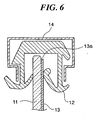
- an edge portion 13a of the infrared cut-off film 13 formed on the surface of an infrared shielding glass 11 experiences a force whenever the infrared shielding glass 11 comes in contact with a glass run 12 in a door sash 14 of a vehicle, and besides, the infrared cut-off film 13 is thick.
- the infrared cut-off film 13 tends to peel off from its edge portion 13a.
- the edge portion since its edge portion does not undergo chamfering, the edge portion has low strength and its surface is rough and appears poor. Besides, the transparent film layer on the edge portion of the glass plate is not integrally formed with the transparent film layer on the surface of the glass plate, and thus the transparent film layer formed on the surface of the glass plate is likely to peel off the glass plate.
- an object of the present invention is to provide a vehicle window glass and a process for manufacturing the same, which is capable of preventing a film formed on a surface of a glass plate from peeling off to thereby improve the appearance quality of an edge portion of the glass plate.
- a vehicle window glass comprising a polished edge portion of a glass plate and a surface of the glass plate, wherein a film is integrally formed on the surface of the glass plate and on at least one side of the polished edge portion of the glass plate, and a side of the edge portion on which the film is integrally formed is exposed outside when the vehicle window glass is mounted on a vehicle.
- the film is integrally formed on the surface of the glass plate and the on at least one side of the polished edge portion of the glass plate, and the side of the edge portion on which the film is integrally formed is exposed outside when the vehicle window glass is mounted on the vehicle, whereby the film formed on the surface of the glass plate can be prevented from peeling off and the appearance quality of the edge portion of the glass plate can be improved.
- the film contains silica and an infrared cut-off component.
- the film has an infrared cut-off (shielding) function.
- the infrared cut-off component comprises ITO fine particles.
- the vehicle window glass can have an infrared cut-off (shielding) function and appearance quality improved.
- the film further contains an organic matter.
- the film has a haze of 7% or less after Taber abrasion resistance test.
- the abrasion resistance of the edge portion of the glass plate can be improved.
- the vehicle window glass has a thickness of 2.5 to 6.0 mm.
- the film formed on the edge portion of the glass plate has a thickness of 0.1 to 5 ⁇ m and the film formed on the surface of the glass plate has a thickness of 0.3 to 3 ⁇ m.
- the film can be formed continuously on the edge portion of the glass plate and the surface of the same, and besides, the minute irregularities caused by the polishing of the edge portion of the glass plate can be filled up, and thus the appearance quality of the edge portion of the glass plate can be improved.
- a process for manufacturing a vehicle window glass comprising: a polishing step of polishing an edge portion of a glass plate used for the vehicle window glass; a coating step of applying a coating solution to a surface of the glass plate and at least one side of the polished edge portion of the glass plate; and a firing step of firing the coating solution applied to the surface of the glass plate and the at least one side of the polished edge portion of the glass plate, wherein a side of the edge portion on which the film is integrally formed is exposed outside when the vehicle window glass is mounted on a vehicle.
- the edge portion of the glass plate used for the vehicle window glass is polished, the surface of the glass plate used for the vehicle window glass and the at least one side of the polished edge portion of the glass plate is coated with a coating solution, and the side of the edge portion on which the film is integrally formed is exposed outside when the glass plate is mounted on a vehicle, whereby the film can be easily and integrally formed on the surface of the glass plate and the edge portion of the glass plate.
- the coating solution is applied by a flow coating method or a dipping method in the coating step.
- the edge portion of the glass plate and the surface of the same can be continuously coated with the coating solution.
- the edge portion of the glass plate is polished to a substantially semicircular shape using a diamond grinding wheel in the polishing step.
- the appearance quality and safety of the edge portion of the glass plate can be improved and the film formed on the edge portion of the glass plate is made less likely to peel.
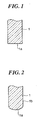
- FIG. 1 is a cross sectional view of a vehicle window glass which is useful for explaining a process for manufacturing a vehicle window glass according to an embodiment of the present invention
- FIG. 2 is a cross sectional view of the glass plate 1 having been subjected to round surface chamfering (round surface polishing);
- FIG. 3 is a view which is useful for explaining a flow coating method
- FIG. 4 is a cross sectional view of the glass plate 1 coated with an infrared cut-off solution 2;
- FIG. 5 is a view showing an automotive door glass
- FIG. 6 is a view which is useful for explaining a conventional infrared shielding glass for use in a vehicle window glass.
- the present inventors After directing tremendous research effort toward accomplishing the above described object, the present inventors have found that it is capable of preventing the film formed on the surface of the glass plate from peeling off to thereby improve the appearance quality of an edge portion of the glass plate, when, in a vehicle window glass comprising a polished edge portion of a glass plate and a surface of the glass plate, a film is integrally formed on the surface of the glass plate and on at least one side of the polished edge portion of the glass plate, and a side of the edge portion on which the film is integrally formed is exposed outside when the vehicle window glass is mounted on a vehicle.
- the present invention has been made based on the above described research results.
- FIG. 1 is a view of a vehicle window glass which is useful for explaining a process for manufacturing a vehicle window glass according to an embodiment of the present invention.
- a glass plate 1 is 2.5 to 6.0 mm thick and preferably 3 to 5 mm thick.
- An edge portion 1a of the glass plate 1 cut to a predetermined shape is subjected to round surface chamfering (round surface polishing) with a diamond grinding wheel, as shown in FIG. 2 .
- FIG. 2 is a cross sectional view of the glass plate 1 having been subjected to round surface chamfering (R surface polishing).
- the edge portion 1a of the glass plate 1 has been polished to a semicylindrical shape (a substantially semicircular cross sectional shape).
- the glass plate 1 is fixed in such a manner as to allow the surface 1b of the glass plate 1 on which a film is to be formed (the surface of the glass plate) to be at an angle of 0 to 40°, and as shown in FIG. 3 , the surface 1b is coated with an infrared cut-off solution 2 by injecting the infrared cut-off solution onto an upper portion of the glass plate 1 and then allowing the solution to flow downward in the vertical direction along the surface (a flow coating method).
- FIG. 3 is a view which is useful for explaining a flow coating method.
- a film forming apparatus 10 includes: a glass plate holding member 4 which holds the glass plate 1; and a nozzle 3 through which the infrared cut-off solution 2 is injected onto the surface 1b of the glass plate 1 on which a film is to be formed.
- the surface 1b of the glass plate 1 is coated with the infrared cut-off solution 2 by injecting the infrared cut-off solution 2 onto the upper portion of the glass plate 1 through the nozzle 3 while holding the glass plate 1 vertical with the glass plate holding member 4 and allowing the infrared cut-off solution 2 to flow downward in the vertical direction on the glass plate 1.
- FIG. 4 is a cross sectional view of the glass plate 1 coated with the infrared cut-off solution 2.
- the surface 1b of the glass plate 1 on which a film is to be formed and the edge portion 1a of the same are coated with the infrared cut-off solution 2.
- the glass plate 1 with its surface 1b and edge portion 1a having been coated with the infrared cut-off solution 2 is dried at a room temperature for about 5 minutes, introduced into an oven previously heated to 200°C and heated for 10 minutes, and cooled, whereby the glass plate 1 with an infrared cut-off film is obtained.
- the infrared cut-off solution 2 includes: a chief ingredient including a silica component that contains silica (SiO 2 as a constitutional unit; organic matter; ITO fine particles (Indium (In)-Tin (Sn) oxide); inorganic matter; and an alcohol such as ethanol as a solvent.
- a chief ingredient including a silica component that contains silica (SiO 2 as a constitutional unit; organic matter; ITO fine particles (Indium (In)-Tin (Sn) oxide); inorganic matter; and an alcohol such as ethanol as a solvent.
- the organic matter in the infrared cut-off solution 2 is originated from Solsperse (dispersant) and polyethylene glycol 200.
- the inorganic matter in the infrared cut-off solution 2 is tetraethoxysilane (TEOS) or the like originated from ethyl silicate 40 or the like.
- TEOS tetraethoxysilane
- the silica component and the organic matter form the matrix in the infrared cut-off film formed on the surface 1b of the glass plate 1.
- the sol-gel processing is used.
- the ITO fine particles are fixed in the matrix, while kept dispersed in the same, by solidifying the matrix in the sol state by the sol-gel processing.
- the content of the ITO fine particles, in a state where they are fixed in the matrix, in the entire mass of the infrared cut-off film is 20 to 45 mass%. If the content is less than 20 mass%, the infrared cut-off function is decreased, while the amount is more than 45 mass%, the hardness of the matrix is decreased.
- the particle size of the ITO fine particles is 100 nm or less, preferably 40 nm or less and more preferably between 1 and 40 nm.
- the particle size in such a range makes the infrared cut-off more efficient and makes possible the inhibition of haze caused by the large particle size of fine particles.
- the organic matter in the infrared cut-off film either a hydrophilic organic polymer, such as a polyalkylene oxide, or a pyrolytic product of polyalkylene oxide is used. Any of these types of organic matter is hybridized with an inorganic oxide containing a silica component, such as silicon alkoxide, to form a matrix.
- the matrix is an organic-inorganic composite film composed of an organic-inorganic composite compound produced by binding or combining of organic matter with an inorganic oxide at the molecular level.
- a hard film with a haze of 7% or less after the abrasion resistance test in accordance with JIS R3212 can be obtained by allowing the matrix to be an organic-inorganic composite film composed of an organic-inorganic composite compound produced by binding or combining of organic matter with an inorganic oxide at the molecular level.
- the content of the above described organic matter in the entire mass of the infrared cut-off film is 2 to 60%. If the content is less than 2 mass%, a sufficient shrinkage reducing effect cannot be produced, whereby cracks are more likely to occur when forming a thick film. In contrast, if the content is more than 60 mass%, the content of the organic matter in the infrared cut-off film is so large that sufficient hardness cannot be produced.
- the content of the silica component in the entire mass of the infrared cut-off film is 20 to 78% and preferably 40 to 78%. If the content is less than 20 mass%, the haze of the infrared cut-off glass measured after conducting the abrasion resistance test (Taber abrasion resistance test) for the surface of the glass plate on which the infrared cut-off film has been formed cannot be lowered.
- the concentration of the silica component in the starting material for the matrix which is added to the solution used in the sol-gel process is 20 to 40 mass%.
- the above described concentration of the silica component (mass%) is calculated on the basis of the content of silica as a constitutional unit of the silica component. For example, even when the above described organic matter and silica (silicon oxide) constitute an amorphous as a composite compound, the percentage by mass of the silica component is calculated on the basis of the silica content.
- infrared cut-off glass By the above described production technique, desired characteristics of infrared cut-off glass can be obtained by firing the coating solution at temperatures that allow the heat shielding function or infrared cut-off function of ITO fine particles to be maintained and are lower than the decomposition temperatures of the above described functional materials, for example, at 200°C.
- light transmittance is 30% or less in the wavelength range of 1000 to 1600 nm and 20% or less in the wavelength range of 1600 to 2500 nm.
- an infrared cut-off film is integrally formed on the surface 1b of the glass plate 1 on which the film is to be formed and the polished edge portion 1a, whereby the infrared cut-off film formed on the surface 1b can be prevented from peeling off the glass plate 1.
- the edge portion 1a of the glass plate 1 having been subjected to round surface chamfering has minute irregularities.
- the infrared cut-off film fills up the irregularities, whereby the infrared cut-off film formed on the edge portion 1a is less likely to peel off the glass plate 1.
- the infrared cut-off film formed on the edge portion 1a of the glass plate 1 is 0.1 to 5 ⁇ m thick and the infrared cut-off film formed on the surface 1b of the glass plate 1 on which a film is to be formed is 0.3 to 3 ⁇ m thick.
- the infrared cut-off solution 2 having flowed under the edge portion 1a in such a manner that it covers the portion may be wiped up using a wiping cloth etc. impregnated with the infrared cut-off solution 2.
- the infrared cut-off solution 2 to be impregnated into a wiping cloth need not always contain ITO fine particles and organic matter.
- PEG 400 KANTO CHEMICAL CO., INC.
- SOLSPERSE 41000: LUBRIZOL JAPAN LIMITED polymer dispersant and denatured alcohol
- AP-7 NIPPON ALCOHOL HANBAI Company
- a glass plate 1 was prepared an automotive door glass (green glass having a UV absorbing function) 4 mm thick obtained by subjecting the edge portion 1a of a glass plate to round surface chamfering (round surface polishing) using a diamond grind wheel, bending tempering to a predetermined shape, and washing the surface on which a film was formed ( FIG. 5 ).
- the glass plate 1 of FIG. 5 includes 4 sides: a top side 1c, a bottom side 1d, right- and left-hand sides 1e, 1f, on the basis of the direction in which it is fitted into a door, and an edge portion 1a. Of these 4 sides, a side of the glass plate 1 which is exposed outside when the glass plate is fitted into a door is the top side 1c alone, or the top side 1c and the right- and left-hand sides 1e, 1f.
- the glass plate 1 was fixed with the top side 1c, on the basis of the direction in which the glass plate is fitted into a door, down and the surface 1b on which a film was to be formed at an angle of about 10°, and the surface of the glass plate 1 was coated with an infrared cut-off solution 2 under conditions: relative humidity of 30% and temperature of 20°C by a method of allowing the infrared cut-off solution 2 having been injected onto the upper portion of the glass plate 1 to flow downward in the vertical direction (a flow coating method).
- the edge portion 1a of the glass plate 1 on the top side 1c on the basis of the direction in which the glass plate was fitted into a door, was coated with the infrared cut-off solution 2 at the same time by allowing the solution 2 to go around the edge portion 1a.
- the glass plate 1 with the infrared cut-off solution 2 applied to its surface was dried at a room temperature for about 5 minutes, introduced into an oven having been heated to 200°C in advance and heated for 10 minutes, and cooled to obtain infrared cut-off glass.
- the glass plate 1 was fixed with the top side 1c, on the basis of the direction in which the glass plate was fitted into a door, up and coated with the infrared cut-off solution 2 by flow coating. Since the glass plate 1 was fixed with the top side 1c, on the basis of the direction in which the glass plate was fitted into a door, up, the edge portion 1a of the glass plate 1 on the top side 1c could not be coated with the infrared cut-off solution 2.
- Example 1 and Comparative Example 1 were fitted into the respective automotive doors and moved up and down 5000 times. After that, whether the infrared cut-off film peeled off or not was checked for each glass plate 1. And the edge portion 1a of each glass plate 1 was evaluated for its appearance quality and abrasion resistance. The results are shown in Table 2. Table 2 Edge portion Peeling off of IR cut-off film Appearance quality Abrasion resistance of edge portion Example 1 Coated Unlikely to peel Good Good Good Comparative Example 1 Not coated Likely to peel No good No good
- Example 1 the peeling off of the infrared cut-off film was observed after 5000-time up-and-down movement of the glass plate 1.
- Example 1 the peeling off of the infrared cut-off film was not observed after 5000-time up-and-down movement of the glass plate 1.
- the surface 1b on which a film was formed and the polished edge portion 1a were coated with the infrared cut-off solution 2 and an infrared cut-off film was integrally formed on them, thus, the infrared cut-off film was not likely to peel off, compared with that of Comparative Example 1.
- edge portion 1a of the glass plate 1 like the surface 1b on which a film was formed, a hard infrared cut-off film having a haze of 7% or less after abrasion resistance test in accordance with Japanese Industrial Standards JIS R3212 was formed, and thus, the edge portion 1a had high abrasion resistance and supported its appearance quality.
- an infrared cut-off film is integrally formed on the surface 1b of the glass plate 1 on which a film is to be formed and the polished edge portion 1a, whereby the infrared cut-off film formed on the surface 1b can be prevented from peeling off the glass plate 1 and the appearance quality of the edge portion 1a can be improved.
- the infrared cut-off solution 2 is allowed to go around the edge portion 1a at the bottom of the glass plate 1 so that the edge portion 1a can be coated with the infrared cut-off solution 2 at the same time, whereby an infrared cut-off film can be easily and integrally formed on the surface 1b on which a film is to be formed and on the edge portion 1a.
- the coating was dried at a room temperature for about 5 minutes, and then the glass plate 1 with the infrared cut-off solution 2 applied to its surface 1b and edge portion 1a was introduced into an oven previously heated to 200°C where the coating was heated for 10 minutes and fired.
- the glass plate 1 can be subjected to bending after the edge portion 1a of the glass plate 1 is coated with the infrared cut-off solution 2 so that the step of heating at the time of bending serves as the step of firing. This eliminates one step from the film forming process and reduces the cost.
- the present invention has been described in terms of an embodiment where the glass plate 1 is coated with the infrared cut-off solution 2, the present invention is not limited thereto, and other coating solutions can also be applied to the glass plate 1.
- the present invention has been described in terms of an embodiment where the glass plate 1 is coated with the infrared cut-off solution 2 by a flow coating method, the present invention is not limited thereto, and a method of dipping the glass plate 1 in the infrared cut-off solution 2 (dipping) can also be employed.
Landscapes
- Chemical & Material Sciences (AREA)
- Engineering & Computer Science (AREA)
- General Chemical & Material Sciences (AREA)
- Life Sciences & Earth Sciences (AREA)
- Chemical Kinetics & Catalysis (AREA)
- Geochemistry & Mineralogy (AREA)
- Materials Engineering (AREA)
- Organic Chemistry (AREA)
- Composite Materials (AREA)
- Mechanical Engineering (AREA)
- Dispersion Chemistry (AREA)
- Inorganic Chemistry (AREA)
- Surface Treatment Of Glass (AREA)
- Window Of Vehicle (AREA)
- Re-Forming, After-Treatment, Cutting And Transporting Of Glass Products (AREA)
Claims (10)
- Fahrzeug-Fensterglas, umfassend:einen polierten Kantenabschnitt einer Glasplatte und eine Oberfläche der Glasplatte, wobei ein Film integral auf der Oberfläche der Glasplatte undzumindest auf einer Seite des polierten Kantenabschnitts der Glasplatte ausgebildet ist und eine Seite des Kantenabschnitts, auf der der Film ausgebildet ist, der Außenseite ausgesetzt ist, wenn das Fahrzeug-Fensterglas an einem Fahrzeug angebracht ist.
- Fahrzeug-Fensterglas nach Anspruch 1, wobei der Film Siliziumdioxid und eine Infrarot-Abschirmungkomponente umfasst.
- Fahrzeug-Fensterglas nach Anspruch 1, wobei die Infrarot-Abschirmungkomponente feine Partikel aus ITO umfasst.
- Fahrzeug-Fensterglas nach Anspruch 1, wobei der Film weiterhin organische Stoffe enthält.
- Fahrzeug-Fensterglas nach Anspruch 1, wobei der Film nach dem Taber-Abriebs- und Verschleiß-Test eine Trübung von 7% oder geringer aufweist.
- Fahrzeug-Fensterglas nach Anspruch 1, wobei das Fahrzeug-Fensterglas eine Dicke von 2,5 bis 6,0 mm aufweist.
- Fahrzeug-Fensterglas nach Anspruch 1, wobei der auf dem Kantenabschnitt der Glasplatte ausgebildete Film eine Dicke von 0,1 bis 5 µm aufweist und der auf der Oberfläche der Glasplatten ausgebildete Film eine Dicke von 0,3 bis 3 µm aufweist.
- Verfahren zur Herstellung eines Fahrzeug-Fensterglases, umfassend:einen Polierschritt zum Polieren eines Kantenabschnitts einer als Fahrzeug-Fensterglas verwendeten Glasplatte;einen Beschichtungsschritt zum Aufbringen einer Beschichtungslösung auf eine Oberfläche der Glasplatte und zumindest eine Seite des polierten Kantenabschnitts der Glassplatte; undeinen Brennschritt zum Brennen der auf die Oberfläche der Glasplatte unddie zumindest eine Seite des polierten Kantenabschnitts der Glassplatte aufgebrachten Beschichtungslösung,wobei eine Seite des Kantenabschnitts, auf der der Film integral ausgebildet ist, der Außenseite ausgesetzt wird, wenn das Fahrzeug-Fensterglas an einem Fahrzeug angebracht ist.
- Verfahren zur Herstellung eines Fahrzeug-Fensterglases nach Anspruch 8, wobei die Beschichtungslösung durch ein Fließbeschichtungsverfahren oder ein Tauchverfahren bei dem Beschichtungsschritt aufgebracht wird.
- Verfahren zur Herstellung eines Fahrzeug-Fensterglases nach Anspruch 8, wobei der Kantenabschnitt der Glasplatte unter Verwendung eines Diamantschleifrades bei dem Polierschritt zu einer im Wesentlichen halbkreisförmigen Querschnittsform poliert wird.
Applications Claiming Priority (1)
| Application Number | Priority Date | Filing Date | Title |
|---|---|---|---|
| JP2005379706A JP4524249B2 (ja) | 2005-12-28 | 2005-12-28 | 車両用窓ガラス及びその製造方法 |
Publications (2)
| Publication Number | Publication Date |
|---|---|
| EP1803601A1 EP1803601A1 (de) | 2007-07-04 |
| EP1803601B1 true EP1803601B1 (de) | 2009-04-22 |
Family
ID=37882333
Family Applications (1)
| Application Number | Title | Priority Date | Filing Date |
|---|---|---|---|
| EP06026928A Not-in-force EP1803601B1 (de) | 2005-12-28 | 2006-12-27 | Fahrzeugfensterglas und Verfahren zur Herstellung dafür |
Country Status (5)
| Country | Link |
|---|---|
| US (1) | US7754335B2 (de) |
| EP (1) | EP1803601B1 (de) |
| JP (1) | JP4524249B2 (de) |
| AT (1) | ATE429357T1 (de) |
| DE (1) | DE602006006405D1 (de) |
Cited By (2)
| Publication number | Priority date | Publication date | Assignee | Title |
|---|---|---|---|---|
| US9422188B2 (en) | 2009-05-21 | 2016-08-23 | Corning Incorporated | Thin substrates having mechanically durable edges |
| US9902130B2 (en) | 2012-07-02 | 2018-02-27 | Corning Incorporated | Methods of processing a glass substrate and glass apparatus |
Families Citing this family (11)
| Publication number | Priority date | Publication date | Assignee | Title |
|---|---|---|---|---|
| US20110023548A1 (en) * | 2009-07-29 | 2011-02-03 | Garner Sean M | Glass substrate comprising an edge web portion |
| JP5494254B2 (ja) * | 2010-06-07 | 2014-05-14 | 旭硝子株式会社 | 被膜付き自動車用窓ガラスの製造方法 |
| US8584490B2 (en) | 2011-02-18 | 2013-11-19 | Corning Incorporated | Laser cutting method |
| US9034458B2 (en) | 2011-05-27 | 2015-05-19 | Corning Incorporated | Edge-protected product and finishing method |
| JP6331832B2 (ja) * | 2013-09-12 | 2018-05-30 | セントラル硝子株式会社 | 塗布板載置装置、塗装システム、ガラス板 |
| WO2015122383A1 (ja) * | 2014-02-13 | 2015-08-20 | 日本板硝子株式会社 | 自動車用窓ガラスのブラケット |
| JP6261429B2 (ja) * | 2014-04-01 | 2018-01-17 | ダイキョーニシカワ株式会社 | 車両用ウインドパネル |
| US20150314322A1 (en) * | 2014-04-30 | 2015-11-05 | Corning Incorporated | Method of applying a protective coating to substrate edges |
| JP6377453B2 (ja) * | 2014-08-20 | 2018-08-22 | 日本板硝子株式会社 | 窓ガラス及びその製造方法 |
| JP5867643B2 (ja) * | 2015-08-04 | 2016-02-24 | 旭硝子株式会社 | 被膜付き自動車用窓ガラス |
| CN106587652B (zh) * | 2016-12-07 | 2020-01-21 | 英诺激光科技股份有限公司 | 一种玻璃表面激光切割损伤的修复方法 |
Family Cites Families (10)
| Publication number | Priority date | Publication date | Assignee | Title |
|---|---|---|---|---|
| IT980907B (it) | 1972-05-17 | 1974-10-10 | Glaverbel | Procedimento e dispositivo per proteggere i bordi di un pannel lo e pannello ottenuto |
| US5174066A (en) * | 1989-09-26 | 1992-12-29 | Gencorp Inc. | Door glass cassette for vehicles |
| JPH06144874A (ja) * | 1992-10-30 | 1994-05-24 | Asahi Glass Co Ltd | 熱線反射膜及びその製造方法 |
| JPH09235145A (ja) * | 1996-03-04 | 1997-09-09 | Nippon Sheet Glass Co Ltd | 脆性材料板の面取り方法 |
| JPH10259041A (ja) * | 1997-03-19 | 1998-09-29 | Fujitsu Ltd | 貼り合わせガラス基板構造およびその製造方法 |
| DE50003524D1 (de) * | 1999-01-11 | 2003-10-09 | Schott Displayglas Gmbh | Polymerbeschichtete dünnglasfoliensubstrate |
| JP2002012024A (ja) | 2000-06-30 | 2002-01-15 | Asahi Glass Co Ltd | 車両用窓ガラス |
| US7243134B2 (en) | 2002-06-25 | 2007-07-10 | Motorola, Inc. | Server-based navigation system having dynamic transmittal of route information |
| EP1541536A4 (de) * | 2002-07-29 | 2007-04-11 | Asahi Glass Co Ltd | Infrarotabschirmglas |
| WO2005095298A1 (ja) | 2004-03-31 | 2005-10-13 | Nippon Sheet Glass Company, Limited | 赤外線カットガラス |
-
2005
- 2005-12-28 JP JP2005379706A patent/JP4524249B2/ja not_active Expired - Lifetime
-
2006
- 2006-12-27 DE DE602006006405T patent/DE602006006405D1/de active Active
- 2006-12-27 US US11/645,922 patent/US7754335B2/en not_active Expired - Fee Related
- 2006-12-27 EP EP06026928A patent/EP1803601B1/de not_active Not-in-force
- 2006-12-27 AT AT06026928T patent/ATE429357T1/de not_active IP Right Cessation
Cited By (2)
| Publication number | Priority date | Publication date | Assignee | Title |
|---|---|---|---|---|
| US9422188B2 (en) | 2009-05-21 | 2016-08-23 | Corning Incorporated | Thin substrates having mechanically durable edges |
| US9902130B2 (en) | 2012-07-02 | 2018-02-27 | Corning Incorporated | Methods of processing a glass substrate and glass apparatus |
Also Published As
| Publication number | Publication date |
|---|---|
| ATE429357T1 (de) | 2009-05-15 |
| JP2007176771A (ja) | 2007-07-12 |
| US7754335B2 (en) | 2010-07-13 |
| US20070144656A1 (en) | 2007-06-28 |
| EP1803601A1 (de) | 2007-07-04 |
| DE602006006405D1 (de) | 2009-06-04 |
| JP4524249B2 (ja) | 2010-08-11 |
Similar Documents
| Publication | Publication Date | Title |
|---|---|---|
| EP1975133A1 (de) | Fensterglas für ein fahrzeug und verfahren zu dessen herstellung | |
| US20080090073A1 (en) | Infrared shielding layer-coated glass plate and process for its production | |
| US7754335B2 (en) | Vehicle window glass and process for manufacturing the same | |
| EP1816109A1 (de) | Mit Infrarotschutzfilm beschichtete Glasplatte und Herstellungsverfahren dafür | |
| US20080020134A1 (en) | Infrared shielding film-coated glass and process for its production | |
| CN1262507C (zh) | 玻璃基体用的水基黑色瓷漆组合物 | |
| EP1842834A1 (de) | Mit Infrarotschutzfilm beschichtete Glasplatte und Herstellungsverfahren dafür | |
| EP1967500A1 (de) | Fensterglas für fahrzeug und herstellungsverfahren dafür | |
| EP1541536A1 (de) | Infrarotabschirmglas | |
| US10576808B2 (en) | Glass article | |
| CN101309759B (zh) | 用于形成热屏蔽膜的基体材料的制备方法 | |
| JP2008037668A (ja) | 窓用合わせガラス | |
| Sakka | Current sol-gel activities in Japan | |
| US20170369364A1 (en) | Stacks including sol-gel layers and methods of forming thereof | |
| JP2005194169A (ja) | 赤外線遮蔽膜付きガラスおよびその製造方法 | |
| KR20220155569A (ko) | 얇은 층들과 에나멜 층의 스택으로 코팅된 유리시트 | |
| JP2008169074A (ja) | 断熱性窓用板状体 | |
| EP3873861B1 (de) | Beschichtetes substrat | |
| FR3167147A1 (fr) | Composition d’émail, article verrier la comprenant et leurs procédés d’obtention | |
| WO2006112371A1 (ja) | 断熱性窓用板状体 | |
| JPH0797535A (ja) | 紫外線遮断ガラス及びその製造方法 | |
| WO2004046057A1 (ja) | 熱遮蔽板とその製造方法、およびそれに用いる液組成物 | |
| JP2008024577A (ja) | 赤外線遮蔽層付きガラス板及びその製造方法 | |
| HK1081518A (en) | Coated articles having a protective coating and cathode targets for making the coated articles |
Legal Events
| Date | Code | Title | Description |
|---|---|---|---|
| PUAI | Public reference made under article 153(3) epc to a published international application that has entered the european phase |
Free format text: ORIGINAL CODE: 0009012 |
|
| AK | Designated contracting states |
Kind code of ref document: A1 Designated state(s): AT BE BG CH CY CZ DE DK EE ES FI FR GB GR HU IE IS IT LI LT LU LV MC NL PL PT RO SE SI SK TR |
|
| AX | Request for extension of the european patent |
Extension state: AL BA HR MK YU |
|
| 17P | Request for examination filed |
Effective date: 20070906 |
|
| AKX | Designation fees paid |
Designated state(s): AT BE BG CH CY CZ DE DK EE ES FI FR GB GR HU IE IS IT LI LT LU LV MC NL PL PT RO SE SI SK TR |
|
| GRAP | Despatch of communication of intention to grant a patent |
Free format text: ORIGINAL CODE: EPIDOSNIGR1 |
|
| GRAP | Despatch of communication of intention to grant a patent |
Free format text: ORIGINAL CODE: EPIDOSNIGR1 |
|
| GRAS | Grant fee paid |
Free format text: ORIGINAL CODE: EPIDOSNIGR3 |
|
| GRAA | (expected) grant |
Free format text: ORIGINAL CODE: 0009210 |
|
| AK | Designated contracting states |
Kind code of ref document: B1 Designated state(s): AT BE BG CH CY CZ DE DK EE ES FI FR GB GR HU IE IS IT LI LT LU LV MC NL PL PT RO SE SI SK TR |
|
| REG | Reference to a national code |
Ref country code: GB Ref legal event code: FG4D |
|
| REG | Reference to a national code |
Ref country code: CH Ref legal event code: EP |
|
| REG | Reference to a national code |
Ref country code: IE Ref legal event code: FG4D |
|
| REF | Corresponds to: |
Ref document number: 602006006405 Country of ref document: DE Date of ref document: 20090604 Kind code of ref document: P |
|
| NLV1 | Nl: lapsed or annulled due to failure to fulfill the requirements of art. 29p and 29m of the patents act | ||
| PG25 | Lapsed in a contracting state [announced via postgrant information from national office to epo] |
Ref country code: AT Free format text: LAPSE BECAUSE OF FAILURE TO SUBMIT A TRANSLATION OF THE DESCRIPTION OR TO PAY THE FEE WITHIN THE PRESCRIBED TIME-LIMIT Effective date: 20090422 Ref country code: PT Free format text: LAPSE BECAUSE OF FAILURE TO SUBMIT A TRANSLATION OF THE DESCRIPTION OR TO PAY THE FEE WITHIN THE PRESCRIBED TIME-LIMIT Effective date: 20090822 Ref country code: FI Free format text: LAPSE BECAUSE OF FAILURE TO SUBMIT A TRANSLATION OF THE DESCRIPTION OR TO PAY THE FEE WITHIN THE PRESCRIBED TIME-LIMIT Effective date: 20090422 Ref country code: ES Free format text: LAPSE BECAUSE OF FAILURE TO SUBMIT A TRANSLATION OF THE DESCRIPTION OR TO PAY THE FEE WITHIN THE PRESCRIBED TIME-LIMIT Effective date: 20090802 Ref country code: LT Free format text: LAPSE BECAUSE OF FAILURE TO SUBMIT A TRANSLATION OF THE DESCRIPTION OR TO PAY THE FEE WITHIN THE PRESCRIBED TIME-LIMIT Effective date: 20090422 |
|
| PG25 | Lapsed in a contracting state [announced via postgrant information from national office to epo] |
Ref country code: LV Free format text: LAPSE BECAUSE OF FAILURE TO SUBMIT A TRANSLATION OF THE DESCRIPTION OR TO PAY THE FEE WITHIN THE PRESCRIBED TIME-LIMIT Effective date: 20090422 Ref country code: SI Free format text: LAPSE BECAUSE OF FAILURE TO SUBMIT A TRANSLATION OF THE DESCRIPTION OR TO PAY THE FEE WITHIN THE PRESCRIBED TIME-LIMIT Effective date: 20090422 Ref country code: SE Free format text: LAPSE BECAUSE OF FAILURE TO SUBMIT A TRANSLATION OF THE DESCRIPTION OR TO PAY THE FEE WITHIN THE PRESCRIBED TIME-LIMIT Effective date: 20090722 Ref country code: IS Free format text: LAPSE BECAUSE OF FAILURE TO SUBMIT A TRANSLATION OF THE DESCRIPTION OR TO PAY THE FEE WITHIN THE PRESCRIBED TIME-LIMIT Effective date: 20090822 Ref country code: PL Free format text: LAPSE BECAUSE OF FAILURE TO SUBMIT A TRANSLATION OF THE DESCRIPTION OR TO PAY THE FEE WITHIN THE PRESCRIBED TIME-LIMIT Effective date: 20090422 Ref country code: NL Free format text: LAPSE BECAUSE OF FAILURE TO SUBMIT A TRANSLATION OF THE DESCRIPTION OR TO PAY THE FEE WITHIN THE PRESCRIBED TIME-LIMIT Effective date: 20090422 |
|
| PG25 | Lapsed in a contracting state [announced via postgrant information from national office to epo] |
Ref country code: DK Free format text: LAPSE BECAUSE OF FAILURE TO SUBMIT A TRANSLATION OF THE DESCRIPTION OR TO PAY THE FEE WITHIN THE PRESCRIBED TIME-LIMIT Effective date: 20090422 Ref country code: CZ Free format text: LAPSE BECAUSE OF FAILURE TO SUBMIT A TRANSLATION OF THE DESCRIPTION OR TO PAY THE FEE WITHIN THE PRESCRIBED TIME-LIMIT Effective date: 20090422 Ref country code: RO Free format text: LAPSE BECAUSE OF FAILURE TO SUBMIT A TRANSLATION OF THE DESCRIPTION OR TO PAY THE FEE WITHIN THE PRESCRIBED TIME-LIMIT Effective date: 20090422 Ref country code: EE Free format text: LAPSE BECAUSE OF FAILURE TO SUBMIT A TRANSLATION OF THE DESCRIPTION OR TO PAY THE FEE WITHIN THE PRESCRIBED TIME-LIMIT Effective date: 20090422 |
|
| PG25 | Lapsed in a contracting state [announced via postgrant information from national office to epo] |
Ref country code: BE Free format text: LAPSE BECAUSE OF FAILURE TO SUBMIT A TRANSLATION OF THE DESCRIPTION OR TO PAY THE FEE WITHIN THE PRESCRIBED TIME-LIMIT Effective date: 20090422 Ref country code: SK Free format text: LAPSE BECAUSE OF FAILURE TO SUBMIT A TRANSLATION OF THE DESCRIPTION OR TO PAY THE FEE WITHIN THE PRESCRIBED TIME-LIMIT Effective date: 20090422 |
|
| PLBE | No opposition filed within time limit |
Free format text: ORIGINAL CODE: 0009261 |
|
| STAA | Information on the status of an ep patent application or granted ep patent |
Free format text: STATUS: NO OPPOSITION FILED WITHIN TIME LIMIT |
|
| 26N | No opposition filed |
Effective date: 20100125 |
|
| PG25 | Lapsed in a contracting state [announced via postgrant information from national office to epo] |
Ref country code: BG Free format text: LAPSE BECAUSE OF FAILURE TO SUBMIT A TRANSLATION OF THE DESCRIPTION OR TO PAY THE FEE WITHIN THE PRESCRIBED TIME-LIMIT Effective date: 20090722 |
|
| PG25 | Lapsed in a contracting state [announced via postgrant information from national office to epo] |
Ref country code: MC Free format text: LAPSE BECAUSE OF NON-PAYMENT OF DUE FEES Effective date: 20100701 |
|
| REG | Reference to a national code |
Ref country code: IE Ref legal event code: MM4A |
|
| PG25 | Lapsed in a contracting state [announced via postgrant information from national office to epo] |
Ref country code: IE Free format text: LAPSE BECAUSE OF NON-PAYMENT OF DUE FEES Effective date: 20091227 Ref country code: GR Free format text: LAPSE BECAUSE OF FAILURE TO SUBMIT A TRANSLATION OF THE DESCRIPTION OR TO PAY THE FEE WITHIN THE PRESCRIBED TIME-LIMIT Effective date: 20090723 |
|
| PG25 | Lapsed in a contracting state [announced via postgrant information from national office to epo] |
Ref country code: LU Free format text: LAPSE BECAUSE OF NON-PAYMENT OF DUE FEES Effective date: 20091227 |
|
| PG25 | Lapsed in a contracting state [announced via postgrant information from national office to epo] |
Ref country code: HU Free format text: LAPSE BECAUSE OF FAILURE TO SUBMIT A TRANSLATION OF THE DESCRIPTION OR TO PAY THE FEE WITHIN THE PRESCRIBED TIME-LIMIT Effective date: 20091023 |
|
| REG | Reference to a national code |
Ref country code: CH Ref legal event code: PL |
|
| GBPC | Gb: european patent ceased through non-payment of renewal fee |
Effective date: 20101227 |
|
| PG25 | Lapsed in a contracting state [announced via postgrant information from national office to epo] |
Ref country code: TR Free format text: LAPSE BECAUSE OF FAILURE TO SUBMIT A TRANSLATION OF THE DESCRIPTION OR TO PAY THE FEE WITHIN THE PRESCRIBED TIME-LIMIT Effective date: 20090422 |
|
| PG25 | Lapsed in a contracting state [announced via postgrant information from national office to epo] |
Ref country code: CY Free format text: LAPSE BECAUSE OF FAILURE TO SUBMIT A TRANSLATION OF THE DESCRIPTION OR TO PAY THE FEE WITHIN THE PRESCRIBED TIME-LIMIT Effective date: 20090422 |
|
| PG25 | Lapsed in a contracting state [announced via postgrant information from national office to epo] |
Ref country code: CH Free format text: LAPSE BECAUSE OF NON-PAYMENT OF DUE FEES Effective date: 20101231 Ref country code: LI Free format text: LAPSE BECAUSE OF NON-PAYMENT OF DUE FEES Effective date: 20101231 |
|
| PG25 | Lapsed in a contracting state [announced via postgrant information from national office to epo] |
Ref country code: GB Free format text: LAPSE BECAUSE OF NON-PAYMENT OF DUE FEES Effective date: 20101227 |
|
| PGFP | Annual fee paid to national office [announced via postgrant information from national office to epo] |
Ref country code: IT Payment date: 20150323 Year of fee payment: 10 |
|
| REG | Reference to a national code |
Ref country code: FR Ref legal event code: PLFP Year of fee payment: 10 |
|
| PGFP | Annual fee paid to national office [announced via postgrant information from national office to epo] |
Ref country code: FR Payment date: 20151110 Year of fee payment: 10 |
|
| PGFP | Annual fee paid to national office [announced via postgrant information from national office to epo] |
Ref country code: DE Payment date: 20151222 Year of fee payment: 10 |
|
| REG | Reference to a national code |
Ref country code: DE Ref legal event code: R119 Ref document number: 602006006405 Country of ref document: DE |
|
| REG | Reference to a national code |
Ref country code: FR Ref legal event code: ST Effective date: 20170831 |
|
| PG25 | Lapsed in a contracting state [announced via postgrant information from national office to epo] |
Ref country code: IT Free format text: LAPSE BECAUSE OF NON-PAYMENT OF DUE FEES Effective date: 20161227 Ref country code: FR Free format text: LAPSE BECAUSE OF NON-PAYMENT OF DUE FEES Effective date: 20170102 |
|
| PG25 | Lapsed in a contracting state [announced via postgrant information from national office to epo] |
Ref country code: DE Free format text: LAPSE BECAUSE OF NON-PAYMENT OF DUE FEES Effective date: 20170701 |