EP1910086B1 - Techniques d'envoi d'impulsions sur une tete d'impression pour imprimantes couleur a impression directe, thermique, polychrome - Google Patents
Techniques d'envoi d'impulsions sur une tete d'impression pour imprimantes couleur a impression directe, thermique, polychrome Download PDFInfo
- Publication number
- EP1910086B1 EP1910086B1 EP06773640A EP06773640A EP1910086B1 EP 1910086 B1 EP1910086 B1 EP 1910086B1 EP 06773640 A EP06773640 A EP 06773640A EP 06773640 A EP06773640 A EP 06773640A EP 1910086 B1 EP1910086 B1 EP 1910086B1
- Authority
- EP
- European Patent Office
- Prior art keywords
- pulses
- pulse
- average power
- print head
- subintervals
- Prior art date
- Legal status (The legal status is an assumption and is not a legal conclusion. Google has not performed a legal analysis and makes no representation as to the accuracy of the status listed.)
- Not-in-force
Links
- 238000000034 method Methods 0.000 title claims description 103
- 238000007639 printing Methods 0.000 claims description 37
- 238000010438 heat treatment Methods 0.000 claims description 14
- 238000001931 thermography Methods 0.000 claims description 12
- 230000001934 delay Effects 0.000 description 20
- 238000012216 screening Methods 0.000 description 20
- 239000003086 colorant Substances 0.000 description 11
- 239000000463 material Substances 0.000 description 9
- 238000012937 correction Methods 0.000 description 8
- 238000001208 nuclear magnetic resonance pulse sequence Methods 0.000 description 7
- 238000004590 computer program Methods 0.000 description 6
- 230000006870 function Effects 0.000 description 5
- 238000003384 imaging method Methods 0.000 description 5
- 230000008901 benefit Effects 0.000 description 4
- 230000009467 reduction Effects 0.000 description 4
- 239000000758 substrate Substances 0.000 description 4
- 238000012935 Averaging Methods 0.000 description 3
- 238000003491 array Methods 0.000 description 3
- 230000008859 change Effects 0.000 description 3
- 230000007423 decrease Effects 0.000 description 3
- 230000003111 delayed effect Effects 0.000 description 3
- 238000010586 diagram Methods 0.000 description 3
- 239000000049 pigment Substances 0.000 description 3
- 238000012545 processing Methods 0.000 description 3
- 230000001186 cumulative effect Effects 0.000 description 2
- 238000006073 displacement reaction Methods 0.000 description 2
- 239000000975 dye Substances 0.000 description 2
- 230000000694 effects Effects 0.000 description 2
- 230000008569 process Effects 0.000 description 2
- 238000007651 thermal printing Methods 0.000 description 2
- 238000012546 transfer Methods 0.000 description 2
- 230000003213 activating effect Effects 0.000 description 1
- 230000015572 biosynthetic process Effects 0.000 description 1
- 238000007796 conventional method Methods 0.000 description 1
- 230000006837 decompression Effects 0.000 description 1
- 238000009792 diffusion process Methods 0.000 description 1
- 230000001788 irregular Effects 0.000 description 1
- 230000004044 response Effects 0.000 description 1
- 239000004065 semiconductor Substances 0.000 description 1
- 238000004088 simulation Methods 0.000 description 1
- 230000001360 synchronised effect Effects 0.000 description 1
- 238000010023 transfer printing Methods 0.000 description 1
Images





Classifications
-
- B—PERFORMING OPERATIONS; TRANSPORTING
- B41—PRINTING; LINING MACHINES; TYPEWRITERS; STAMPS
- B41J—TYPEWRITERS; SELECTIVE PRINTING MECHANISMS, i.e. MECHANISMS PRINTING OTHERWISE THAN FROM A FORME; CORRECTION OF TYPOGRAPHICAL ERRORS
- B41J2/00—Typewriters or selective printing mechanisms characterised by the printing or marking process for which they are designed
- B41J2/315—Typewriters or selective printing mechanisms characterised by the printing or marking process for which they are designed characterised by selective application of heat to a heat sensitive printing or impression-transfer material
- B41J2/32—Typewriters or selective printing mechanisms characterised by the printing or marking process for which they are designed characterised by selective application of heat to a heat sensitive printing or impression-transfer material using thermal heads
- B41J2/35—Typewriters or selective printing mechanisms characterised by the printing or marking process for which they are designed characterised by selective application of heat to a heat sensitive printing or impression-transfer material using thermal heads providing current or voltage to the thermal head
- B41J2/355—Control circuits for heating-element selection
-
- B—PERFORMING OPERATIONS; TRANSPORTING
- B41—PRINTING; LINING MACHINES; TYPEWRITERS; STAMPS
- B41J—TYPEWRITERS; SELECTIVE PRINTING MECHANISMS, i.e. MECHANISMS PRINTING OTHERWISE THAN FROM A FORME; CORRECTION OF TYPOGRAPHICAL ERRORS
- B41J2/00—Typewriters or selective printing mechanisms characterised by the printing or marking process for which they are designed
- B41J2/315—Typewriters or selective printing mechanisms characterised by the printing or marking process for which they are designed characterised by selective application of heat to a heat sensitive printing or impression-transfer material
- B41J2/32—Typewriters or selective printing mechanisms characterised by the printing or marking process for which they are designed characterised by selective application of heat to a heat sensitive printing or impression-transfer material using thermal heads
- B41J2/35—Typewriters or selective printing mechanisms characterised by the printing or marking process for which they are designed characterised by selective application of heat to a heat sensitive printing or impression-transfer material using thermal heads providing current or voltage to the thermal head
- B41J2/355—Control circuits for heating-element selection
- B41J2/36—Print density control
Definitions
- the present invention relates generally to a digital printing system and, more generally, to techniques for pulsing energy to print heads in a printer.
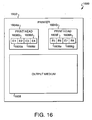
- a thermal printer 1602 typically contains one or more print heads 1604a-b, which contain linear arrays of heating elements 1606a-h (also referred to herein as "print head elements") that print on an output medium 1608 by, for example, transferring pigment or dye from a donor sheet to the output medium 1608 or by activating a color-forming chemistry in the output medium 1608.
- the output medium 1608 is typically a porous receiver receptive to the transferred pigment, or a paper coated with the color-forming chemistry.
- Each of the print head elements 1606a-h (which may number in the hundreds per inch), when activated, forms color on the portion of the medium 1608 passing underneath the print head element, creating a spot having a particular density. Regions with larger or denser spots are perceived as darker than regions with smaller or less dense spots. Digital images are rendered as two-dimensional arrays of very small and closely-spaced spots.
- a thermal print head element is activated by providing it with energy. Providing energy to the print head element increases the temperature of the print head element, causing either the transfer of pigment to the output medium or the formation of color in the output medium.
- the density of the output produced by the print head element in this manner is a function of the amount of energy provided to the print head element.
- the amount of energy provided to the print head element may be varied by, for example, varying the amount of power provided to the print head element within a particular time interval or by providing power to the print head element for a longer or shorter time interval.
- Some conventional methods for color thermal imaging involve the use of separate donor and receiver materials.
- the donor material typically has a colored image-forming material, or a color-forming imaging material, coated on a surface of a substrate and the image-forming material or the color-forming imaging material is transferred thermally to the receiver material (i.e., the output medium 1608).
- a donor material with successive patches of differently-colored, or different color-forming, material may be used.
- printers having either interchangeable cassettes or more than one thermal head different monochrome donor ribbons are utilized and the multiple color planes of the image are printed successively above one another.
- the use of donor members with multiple different color patches or the use of multiple donor members increases the complexity and the cost, and decreases the convenience, of such printing systems. It would be simpler to have a single-sheet imaging member that has the entire multicolor imaging system embodied therein.
- each line printing time is divided into many subintervals.
- a graph 100 is shown which plots the voltage across a single print head element (such as any one of print head elements 1606a-h) over time.
- Line interval 104 is subdivided into a plurality of subintervals 106a-g.
- each print head heating element also referred to herein simply as a "print head element” potentially receives an electrical pulse.
- pulses 110a-d are provided in each of subintervals 106a-d.
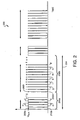
- the line printing time 104 can be divided into two segments, each containing a portion of the subintervals, as shown by the graph 200 in FIG. 2 .
- Line interval 204 is divided into two segments 208a and 208b.
- the first segment 208a includes subintervals 206a-g and the second segment includes subintervals 206h-v.
- the pulses 210a-d in the first segment 208a are given a larger pulse duty cycle (the pulse duty cycle being the fraction of a subinterval during which power is applied) than the pulses 210e-p in the second segment 208b.
- the pulse duty cycle determines the average power being applied to the print head element during the segment and is used to select a particular one of the image-forming layers in the output medium 1608, and therefore to select a particular color to print.
- this method for controlling the print head may not be completely satisfactory.
- wide format thermal printers in which multiple print heads are used in tandem to provide a wider format print it has been found to be advantageous to employ "screening" techniques when stitching together the image segments from each print head to form the final wider print. Examples of techniques for performing such stitching are disclosed in the above-referenced patent application entitled “Image Stitching for a Multi-Head Printer.” It is not, however, possible to accomplish effective screening using the pulse patterns just described with conventional thermal print heads.
- a conventional thermal print head typically has one or a small number of "strobe" signal(s) that service(s) all print head elements in the print head.
- the strobe signal determines the pulse duty cycle, and as a consequence all or a significant fraction of the print head elements 1606a-d in print head 1604a have the same pulse duty cycle in each subinterval; similarly, all or a significant fraction of the print head elements 1606eh in print head 1604b have the same pulse duty cycle in each subinterval.
- the pulse duty cycle determines the image-forming layer being printed, as described in the above-referenced patent application entitled "Thermal Imaging System,” and therefore it follows that during each subinterval all or a significant fraction of heating elements 1606a-d are printing on the same image-forming layer of the output medium 1608. Therefore, at any moment in time all or a significant fraction of the heating elements 1606a-d are printing the same color. This condition precludes the use of screening patterns that call for some of the heating elements 1606a-d to be printing on one image-forming layer (and therefore printing one color) while other ones of the heating elements 1606a-d are printing on another image-forming layer (and therefore printing another color).
- the first pixel in the row is undisplaced
- the second pixel is displaced down-web by 1/3 of a row spacing
- the third is displaced by 2/3 of a row spacing
- the fourth is undisplaced
- the pattern repeats There are, then, three types of pixels in the row.
- the first, fourth, seventh, etc. are undisplaced pixels
- the second, fifth, eighth, etc. are displaced down-web by 1/3 of a row
- the third, sixth, ninth, etc. are displaced down-web by 2/3 of a row.
- Such patterns may reduce the dependence of printing density in the stitch on the registration of the pixels. Furthermore, such patterns can be used to improve the tolerance to misregistration of colored dots formed on an imaging medium that has multiple superimposed color-forming layers in different planes, such as where one or more color-forming layers are arranged on a first side of a transparent substrate and at least one color-forming layer is arranged on a second side of the substrate.
- the down-web displacement of the pixels may cause the first time segment of some pixels to overlap the second time segment of others, requiring that some pixels be supplied with a low duty-cycle strobe pulse at the same time that others are being supplied with a high duty-cycle strobe pulse.
- power is typically provided simultaneously to multiple print head elements in a print head.
- the printer power supply is chosen to satisfy the "worst case" demand represented by the supply of power to all of the print head elements simultaneously. This typically results in the choice of a larger and more expensive power supply than would be required to fulfill the "average” power demand.
- Power supplies may be chosen to satisfy this peek power requirement even when the average power provided to the print head elements is low, as is the case, for example, when there are repeated segments with low duty-cycle printing. What is further needed, therefore, are improved techniques for performing screening in a printer to reduce the peak power requirements.
- Japanese Patent Publication No. 56-126192 discloses a pulsed signal provided to a thermal print head at varying pulse frequencies to activate a plurality of color developing dyes with different developing temperatures and times.
- a thermal printer according to claim 22-.
- Different colors are selected for printing during the different portions by varying the fraction of subintervals that contain pulses. This technique allows multiple colors to be printed using a thermal print head with a single strobe signal line. Pulsing patterns may be chosen to reduce the coincidence of pulses provided to multiple print head elements, thereby reducing the peak power requirements of the print head.
- a multicolor thermal imaging system wherein different heating elements on a thermal print head can print on different color-forming layers of a multicolor thermal imaging member in a single pass.
- the line-printing time is divided into portions, each of which is divided into a plurality of subintervals. All of the pulses within the portions have the same energy. In one embodiment, every pulse has the same amplitude and duration. Different colors are selected for printing during the different portions by varying the fraction of subintervals that contain pulses. This technique allows multiple colors to be printed using the same strobe pulses. Pulsing patterns may be chosen to reduce the coincidence of pulses provided to multiple print head elements, thereby reducing the peak power requirements of the print head.
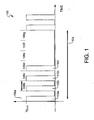
- a graph 300 is shown which plots the voltage across a single print head element over time according to one embodiment of the present invention.
- Line interval 304a is divided into two segments 308a and 308b.
- Each of the segments 308a-b is further subdivided into an on-time and an off-time. More specifically, segment 308a is divided into on-time 312a and off-time 314a, and segment 308b is divided into on-time 312b and off-time 314b.
- No pulses are provided in the off-time of a segment. Pulses may be provided during the on-time of a segment.
- each of the segments 308a-b contains a single on-time followed by a single off-time, this is not a requirement of the present invention. Segments may include other numbers of on-times and off-times arranged in orders other than that shown in FIG. 3 .
- Each of the on-times 312a-b is an example of a "portion" of the line interval 304a, as that term is used herein.
- a segment need not include an off-time.
- the on-time of a segment may be the entire segment, in which case the term "portion" also refers to the entire segment.
- a given segment need not include an on-time.
- a segment may include multiple portions, alternating between on-time and off-time portions.
- Line interval 304a includes pulses 310a-h, all of which have the same energy.
- all of the pulses 310a-h have the same amplitude and duration, although this is not required.
- the amplitude of all of the pulses 310a-h is the maximum (100%) voltage V bus . Note, however, that this is not a requirement of the present invention.
- Segment 308a is divided into subintervals 306a-g.
- Portion 312a contains subintervals 306a-d and portion 314a contains subintervals 306e-g.
- Pulses 310a-d having the same energy are provided in portion 312a of the first segment 308a. Although in the particular example illustrated in FIG. 3 , pulses are provided in all of the subintervals 306a-d in the on-time portion 312a of segment 308a, this is not required. Rather, pulses may be provided in fewer than all of the subintervals 306a-d in the on-time portion 312a in any pattern.
- the pulsing pattern, the voltage V bus , and the duration of the pulses 310a-d may be chosen so that the average power in the first on-time portion 312a selects a first one of the color-forming layers in the output medium 1608 for printing.
- Segment 308b is divided into subintervals 306h-z.
- on-time portion 312b contains subintervals 306h-w and off-time portion 314b contains subintervals 306x-z.
- pulses 310e-h having the same energy are provided in subintervals 306h, 3061, 306p, and 306t.
- pulses 310e-h are provided periodically in only one out of every four of the subintervals 306h-w (i.e., in subintervals 306h, 3061, 306p, and 306t).
- the pulsing pattern, 'the voltage V bus , and the duration of the pulses 310e-h may be chosen so that the average power in the second on-time portion 312b selects a second one of the color-forming layers in the output medium 1608 for printing. Note that although pulses are provided periodically in portion 312b, this is not required. Rather, pulses may be provided in any suitable pattern in portion 312b, as will be described in more detail below.
- the on-time portions 312a and 312b occupy the leading subintervals 306a-d and 306h-w of the first and second segments 308a-b, respectively, this is not required. Rather, the on-time portion of a segment may occupy subintervals of the segment other than those illustrated in FIG. 3 .
- the average power in portion 312b of the second segment 308b is approximately 1/4 of the average power in portion 312a of the first segment 308a.
- the average power in the portion 312b is reduced not by varying the duration of individual pulses but by selecting the fraction of subintervals in the portion 312b in which the print head element is pulsed.
- the average power provided in the first on-time portion 312a thereby selects a first one of the color-forming layers in the output medium 1608 for printing, while the average power provided in the second on-time portion 312b thereby selects a second one of the color-forming layers in the output medium 1608 for printing.
- the scheme described above with respect to FIG. 3 still uses "duty cycle" as the means of modulating the power provided to the print head.
- the scheme illustrated by FIG. 3 modulates duty cycle at a coarser level than techniques that modulate duty cycle at the level of individual pulses. More specifically, the scheme illustrated in FIG. 3 modulates duty cycle by adjusting the fraction of pulses that are provided during a segment portion, rather than by adjusting the pulse duty cycle of individual pulses. This difference allows the same pulse duration to be used in both of the segments 308a-b, and therefore enables the same strobe pulse to be used in both segments 308a-b (and therefore to be used to print multiple colors).
- FIG. 4A a flowchart is shown of a method 400 that is performed by the printer 1600 to apply the techniques described above when producing output on the output medium 1608.
- Those having ordinary skill in the art will appreciate how to implement the method 400 as part of a method for printing a digital image on the output medium 1608.
- the method 400 identifies a common energy for all pulses (step 402). Recall, for example, that the pulses 310a-h in FIG. 3 all have the same energy.
- the method 400 enters a loop over each segment S in a line interval (step 404).
- the first segment may be segment 308a and the second segment may be segment 308b.
- the method 400 identifies the color-forming layer of the output medium 1608, corresponding to the segment S, on which to print (step 406).
- the method 400 identifies an average power P AVG to be provided to a corresponding print head element during segment S to select the color-forming layer identified in step 406 (step 408).
- Techniques for performing step 408 are disclosed, for example, in the above-referenced patent application entitled "Thermal Imaging System.”
- the method 400 identifies a pattern of pulses that produces (approximately) the average power P AVG , subject to the constraint that each of the pulses has the common energy identified in step 402 (step 410). Note that any pattern satisfying the specified constraints may be selected in step 410.
- the pulse pattern may be a pattern that only occupies subintervals in a designated "on-time" portion of a segment, such as on-time portion 312a or 312b in FIG. 3 .
- the pulse pattern identified in step 410 may occupy all of the subintervals in the corresponding segment portion (as in the case of the pulses 310a-d in segment portion 312a) or fewer than all of the subintervals in the corresponding segment portion (as in the case of the pulses 310e-h in segment portion 312b).
- Those having ordinary skill in the art will appreciate that other kinds of patterns may also satisfy the specified constraints.
- the pulse pattern selected in step 410 for a first color-forming layer will differ from the pulse pattern selected in step 410 for a second color-forming layer, as a result of the constraint that pulses in the patterns have the same energy.
- such pulse patterns will differ in the fraction of subintervals that contain pulses, as illustrated by the example in FIG. 3 .
- the method 400 provides the identified pulse pattern to the corresponding print head element to select the color-forming layer identified in step 406 and therefore to print the appropriate color (step 412).
- the method 400 repeats steps 406-412 for the remaining segment(s) in the line interval (step 414).
- a pulse is provided in all four subintervals 306a-d of the first segment portion 312a, and in one out of every four of the subintervals 306h-w in the second segment portion 312b, pulses may be provided with any frequency and in any pattern. For typical applications, pulsing one out of every N subintervals in the second segment portion 312b will produce satisfactory results, where N ranges from 2 to 20.
- pulses are provided in a single contiguous set of subintervals 306a-d at the beginning of the first segment 308a, this is not required.
- the pulsing pattern for each segment may either remain constant or change from line time to line time, and/or from print head element to print head element, within a single line time.
- each of the segments 308a-b may correspond to a different color to be printed.
- the pulses 310a-d provided in the first segment 308a may be used to print on a yellow image-forming layer of the print medium 1608, while the pulses 310e-h provided in the second segment 308b may be used to print on a cyan image-forming layer of the same print medium 1608.
- 1-out-of- N pulsing does not allow the selection of an arbitrary value for the average power. That is to say, 1-out-of-2 pulsing reduces the average power by 2 (i.e., to P MAX /2) , 1-out-of-3 pulsing reduces the average power by 3 (i.e., P MAX /3), and in general 1-out-of- N pulsing reduces power by N (i.e., to P MAX / N). Solely using 1-out-of- N pulsing, therefore, does not allow for reduction of average power to values other than P MAX / N for single integral values of N . If finer adjustment is desired, it may be obtained using any of a variety of techniques involving the issuance of more irregular pulse streams.
- 1-out-of- N pulsing is used, but the value of N may vary within a line interval.
- This alternating pattern of pulses will achieve an average power level of 2-out-of-5 times P MAX (40%), which is intermediate between 1-out-of-2 (50%) and 1-out-of-3 (33%).
- the first pulse sequence uses 1-out-of-2 pulsing.
- the result of applying the above-described rule in this case is illustrated by the graph 600 in FIG. 6 and by Table 1, below.
- the average power will be 0.50P max . Since this is higher than the target of 0.38 P max , a 1-out-of-3 pulsing sequence may be chosen for the next three subintervals. After this sequence is complete, the average duty cycle has been reduced to 2-out-of-5 or 0.40 P max , which is still above the target of 0.38 P max .
- Another 1-out-of-3 pulsing sequence may be selected for following three subintervals, after which the total average duty cycle will be 3-out-of-8, or 0.375 P max .
- This technique can bring the average duty cycle closer to the target value of 0.38 P max .
- Table 1 Sequence Net Percent of P max Net Error (%) 1-of-2 50 31.6 1-of-3 40 5.3 1-of-3 37.5 -1.3 1-of-2 40 5.3 1-of-3 38.5 1.2 1-of-3 37.5 -1.3 1-of-2 38.9 2.3 1-of-3 38.1 0.2
- a flowchart is shown of a method that is performed in one embodiment of the present invention to implement step 410 ( FIG. 4A ) using the technique described above for obtaining desired power levels which cannot be obtained merely by 1-out-of- N pulsing with a single value of N .
- the method identifies a high value N H corresponding to a power level of (1 / N H ) *P MAX that is below the target, power P AVG (step 434).
- N H 3.
- the method initializes a "pattern list" to an empty list (step 436).
- a pattern list is a representation of a sequence of values of N that are used in a pulse pattern.
- the method initializes a count S of the cumulative subintervals traversed so far to zero (step 438). Similarly, the method initializes a count T of cumulative pulses included so far to zero (step 440).
- the method initializes the value of N to N L (step 442). This choice is arbitrary; N may instead be initialized to the value of N H . It may be advantageous, however, to select N L as the initial value of N when beginning with a print head at room temperature.
- the method adds the current value of N to the pattern list (step 444). Assuming, as in the case of FIG. 6 and Table 1, that N was initialized to a value of 2, the pattern list will be (2) after the first performance of step 444, as indicated by portion 602a in FIG. 6 and the first row of the "Sequence" column in Table 1. The method determines whether the pulse pattern is complete, such as by determining whether the required energy has been delivered to the media, or whether the current pulse pattern fills the corresponding segment. If the pattern is complete, the method terminates (step 460).
- the method increases the value of S by the current value of N (step 448).
- S 2 after performance of step 448.
- the method increments the value of T by 1 , since one pulse has been added to the current pulse pattern in step 444 (step 450).
- the method identifies the average power P in the current segment as ( T / S )* P MAX (step 452).
- the method assigns the value of 5 to S (step 448), and assigns the value of 2 to T (step 450).
- the average power at this point is therefore 2/5 of P MAX or 0.40*P MAX , as indicated in the "Net Percent of P MAX " column of the second row of Table 1 (step 452). Since this value is still greater than P AVG (0.38), the method assigns the value of N H (i.e., 3) to N (step 458).
- the method adds the value of N to the pattern list, at which point the pattern list is (2,3,3), as indicated by portions 602a-c in FIG. 6 .
- the method assigns the value of 8 to S (step 448), and assigns the value of 3 to T (step 450).
- the average power at this point is therefore 3/8 of P MAX or 0.375* P MAX , as indicated in the "Net Percent of P MAX " column of the third row of Table 1 (step 452). Since this value is less than P AVG (0.38), the method assigns the value of N L (i.e., 2) to N (step 456).
- the method adds the value of N to the pattern list, at which point the pattern list is (2,3,3,2), as indicated by portions 602a-d in FIG. 6 .
- the average power provided to a print head element is varied by varying the pattern of fixed-duration pulses provided to the print head element.
- pulse patterns are provided to a plurality of print head elements in a manner which reduces the peak power requirements of the print head. Such power requirement reduction may be obtained while obtaining some or all of the benefits provided by the screening techniques disclosed above, such as the ability to obtain relative insensitivity to misregistration among the outputs produced by multiple print heads.
- the line-printing interval is divided into two segments.
- the first (high-power) segment has 38 subintervals and the second (low-power) segment has 629 subintervals (the last 370 of which are part of the off-time portion of the second segment).
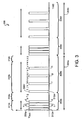
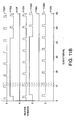
- FIG. 7 a graph 700 is shown that includes plots 702a-o illustrating the timing of the pulses applied to a set of 15 adjacent print head elements on a thermal print head.
- FIG. 7 and other drawings may not depict the shape, size, and number of pulses completely accurately.
- the depicted pulses are spaced too closely together to represent with complete accuracy in the drawings.
- the drawings therefore, should be interpreted as general guides to understanding, rather than as fully accurate depictions of the pulses they represent.
- the first segment is filled with the maximum number of pulses, and in this special case there is no off-time portion in this segment.
- the first segment in each line-time is illustrated in FIG. 7 as a single pulse for ease of illustration, the first segment actually includes a plurality of high duty-cycle pulses. Assume that the pulse patterns applied to the remaining heating elements in the print head are the same as those illustrated by plots 702a-o.
- the power applied to all the heaters may be summed by summing the plots for all of the pixels in the thermal print head.
- the average power may be identified by averaging the plots 702a-o.
- the result, shown in graph 800 in FIG. 8 is normalized by the power delivered when all the heaters are on simultaneously.
- the peak power P MAX 806 in the graph 800 therefore, is equal to 1.0.
- Also shown in FIG. 8 as a dashed line 804, is the power averaged over the line-printing interval.
- the average power 804 and the peak power 806 are quite different. This difference has an effect on the properties of the power supply required to operate the printer 1602.
- the average power 804 required of the power supply is relatively low, there are many instants in the printing cycle where the power demand is much higher.
- the power supply may be chosen to satisfy the "worst case" demands represented by the peak power 806. This will typically add to the size and cost of the power supply.
- the required size of the power supply is reduced by distributing power more evenly over the line-printing interval to decrease peak power consumption.
- the power may be distributed more evenly over the line-printing interval by varying the pulse sequences that are applied to the print head elements so as to reduce the sum of the pulse signals applied to the print head elements at any point in time.
- the pulse sequences are varied using time shifts, but without otherwise varying the pulse patterns.
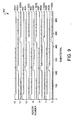
- a three phase screening in which the pulse patterns 902a-o applied to the first 15 pixels are as shown in FIG. 9 .
- the pulse patterns 902a-o alternate between three identical patterns.
- the number of traces used in the simulations should be a multiple of the number of phases in order for the average result to accurately represent the average result for the entire print head.
- patterns 902a, 902d, 902g, 902j, and 902m are the same as each other; patterns 902b, 902e, 902h, 902k, and 902n are the same as each other; and patterns 902c, 902f, 902i, 9021, and 902o are the same as each other.
- Pattern 902b is the same as pattern 902a except for a time shift; pattern 902c is the same as pattern 902b except for a time shift; and so on.
- a graph 1000 is shown illustrating the 'normalized total power to the print head in the case of the pulsing patterns 902a-o shown in FIG. 9 . '
- the average power 1004 in FIG. 10 is the same as the average power 804 in FIG. 8
- the peak power has been reduced from level 806 ( FIG. 8 ) to level 1006 ( FIG. 10 ).
- some subintervals such as subintervals 1008a-e
- other subintervals such as subintervals 1010a-e
- the example illustrated in FIG. 9 decreases the peak power of the print head using three unique time delays.
- the peak power requirement may be reduced by shifting the pulse patterns by additional small amounts to remove timing coincidences among the low-power segment pulses in different print head elements.
- a graph 1100 is shown illustrating an alternate set of pulsing patterns 1102a-o according to one embodiment of the present invention.
- heaters 3-5 are delayed by an extra subinterval to avoid coincidence of their low-power pulses with the low-power pulses of heaters 0-2.
- heaters 6-8 are delayed by an extra 2 subintervals to avoid coincidence with either heaters 0-2 or heaters 3-5.
- Subsequent heaters repeat this set of three pulse patterns.
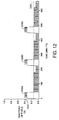
- the aggregate power across all heating elements is illustrated by graph 1200 in FIG. 12 . Note that the average power 1204 remains the same as in the previous cases, but that the peak power 1206 has been further reduced in comparison to the peak power 806 in FIG. 8 , to a value that is 40% of its original value 906.
- the remaining peaks 1208a-c are largely a result of the coincidence of high-power intervals in regions 1104a-c ( FIG. 11A ) and may be addressed by using a screening pattern with a larger number of distinct time delays.
- peak power may be further reduced, for example, by using a screening with different delays for each of the 15 heater pulse patterns.
- a screening with different delays for each of the 15 heater pulse patterns.
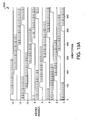
- 1-out-of-8 pulsing is used in the low-power segment, and time delays of 45 subintervals are used. Note that although in the particular example illustrated in FIG. 13A , and as shown more clearly in FIG. 13B , there are 15 different delays that are used in a particular order, these delays may be applied in any order. Heaters beyond number 14 repeat the same sequence of pulse patterns.
- this pixel may be replaced with an interpolated value corresponding to the position halfway between the original pixel position and the next down-web pixel position.
- the printed image will be largely free of visible serration artifacts from the time delays.
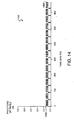
- FIG. 14 a graph 1400 illustrating the normalized total power to the print head is shown in the case of the pulse patterns illustrated in FIG. 13 .
- the peak power 1406 (0.133) has almost been reduced to the average power 1404 (0.125).
- the power supply now supplies nearly constant power with only minor demand for higher peak power.
- the steps that may be taken in accordance with embodiments of the present invention to reduce power demands are not inconsistent with the types of screening patterns that result in tolerance for misregistration.
- those having ordinary skill in the art will appreciate how to apply the power reduction techniques just described to the screening techniques disclosed in the above-referenced patent application entitled "Image Stitching for a Multi-Head Printer.”
- the peak power requirement may be reduced in accordance with various aspects of the invention by any of the following techniques, either singly or in any combination: (1) choosing the number of time delays to be near to, but less than, the ratio of the line-printing time to the high-power segment length, but with enough "slack" to allow the time delays to be additionally advanced or delayed by one or more subintervals; (2) choosing the time delays to divide the line-printing interval nearly equally, so that the high-power segments do not overlap between any two time-delayed pulse patterns; and (3) considering any remaining power peaks that result from coincidences between the low-power segment pulses for different phases and adjustment, if necessary, of the time delays to reduce or eliminate those coincidences as much as possible.
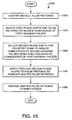
- a flowchart is shown of a method 1500 that may be performed to reduce the peak power requirement of the printer 1602 Default pulse patterns are identified (step 1502).
- the pulse patterns 702a-o shown in FIG. 7 are examples of such default pulse patterns.
- the method 1500 selects a first set of time shifts to apply to the default pulse patterns to reduce the coincidence of high-power segment pulses with each other (step 1504).
- the shifted pulse patterns 902a-o shown in FIG. 9 are examples of pulse patterns which have been shifted to reduce the coincidence of high-power segment pulses with each other.
- the method 1500 selects a second set of time shifts to apply to the first shifted pulse patterns to reduce coincidence of low-power segment pulses (step 1506).
- the pulse patterns 1102a-o shown in FIG. 11A are examples of pulse patterns which have been shifted to reduce the coincidence of low-power segment pulses with each other.
- the method applies the first and second time shifts to the default pulse patterns to produce a set of shifted pulse patterns (step 1508).
- the method provides the shifted pulse patterns to one or more print heads to produce the desired output (step 1506).
- printer 1602 having a particular number of print heads 1604a-b and a particular number of print head elements 1606a-h is shown in FIG. 16 , this is merely an example and does not constitute a limitation of the present invention. Rather, embodiments of the present invention may be used in conjunction with various kinds of printers having various numbers of print heads, print head elements, and other characteristics.
- United States Patent No. 6,661,443 to Bybell and Thornton describes a method for providing the same amount of energy to each active element in a thermal print head during each subinterval used to print an image irrespective of the number of print head elements that are active during each subinterval.
- the desired amount of energy may be provided to a plurality of print head elements that are active during a print head cycle by delivering power to the plurality of print head elements for a period of time whose duration is based in part on the number of active print head elements.
- the period of time may be a portion of the print head cycle.
- the pulse duty cycle is changed from subinterval to subinterval, implementing a so-called “common mode voltage correction” by varying the pulse duration in response to the change in voltage caused by the change in the number of active print head elements, thereby maintaining a constant energy for all pulses.
- the techniques described above may be implemented, for example, in hardware, software, firmware, or any combination thereof.
- the techniques described above may be implemented in one or more computer programs executing on a programmable computer including a processor, a storage medium readable by the processor (including, for example, volatile and non-volatile memory and/or storage elements), at least one input device, and at least one output device.
- Program code may be applied to input entered using the input device to perform the functions described and to generate output.
- the output may be provided to one or more output devices.
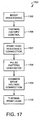
- An image processing unit 1702 receives raw print data and performs initial image processing, such as decompression.
- the process print data are provided to a thermal history control engine 1704, which performs thermal history control on the print data as described, for example, in the above-referenced patent application entitled "Thermal Imaging System.”
- the output of the thermal history control engine 1704 is provided to a print head resistance correction engine 1706, which performs corrections on the print data as described, for example, in the above-referenced patent application entitled “Method and Apparatus for Controlling the Uniformity of Print Density of a Thermal Print,Head Array.”
- the output of the print head resistance correction engine 1706 is provided to a pulse pattern generator 1708, which generates pulses in accordance with the techniques disclosed herein.
- the pulses generated by the pulse pattern generator 1708 are provided to a common mode voltage correction engine 1709, which performs common mode voltage correction on the pulses as described, for example, in the above-referenced patent application entitled, "Method and Apparatus for Voltage Correction.”
- the output of the common mode voltage correction engine 1709 is provided the thermal print head 1710 to pulse the print head 1710 accordingly.
- Each computer program may be implemented in any programming language, such as assembly language, machine language, a high-level procedural programming language, or an object-oriented programming language.
- the programming language may, for example, be a compiled or interpreted programming language.
- Each such computer program may be implemented in a computer program product tangibly embodied in a machine-readable storage device for execution by a computer processor.
- Method steps of the invention may be performed by a computer processor executing a program tangibly embodied on a computer-readable medium to perform functions of the invention by operating on input and generating output.
- Suitable processors include, by way of example, both general and special purpose microprocessors.
- the processor receives instructions and data from a read-only memory and/or a random access memory.
- Storage devices suitable for tangibly embodying computer program instructions include, for example, all forms of non-volatile memory, such as semiconductor memory devices, including EPROM, EEPROM, and flash memory devices; magnetic disks such as internal hard disks and removable disks; magneto-optical disks; and CD-ROMs. Any of the foregoing may be supplemented by, or incorporated in, specially-designed ASICs (application-specific integrated circuits) or FPGAs (Field-Programmable Gate Arrays).
- a computer can generally also receive programs and data from a storage medium such as an internal disk (not shown) or a removable disk. These elements will also be found in a conventional desktop or workstation computer as well as other computers suitable for executing computer programs implementing the methods described herein.
Landscapes
- Electronic Switches (AREA)
Claims (24)
- Procédé pour imprimer sur des couches différentes de formation de couleur d'un élément de formation d'image thermique multicolore (1608) utilisant une tête d'impression thermique (1604a/b), le procédé comprenant :(A) de munir la tête d'impression thermique (1604a/b) d'une première pluralité d'impulsions (310a-d) dans une première partie (312a) d'une première ligne de délai (304a), la première pluralité d'impulsions ayant une première puissance moyenne, dans laquelle chacune de la première pluralité d'impulsions (310a-d) a une énergie commune prédéterminée ;(B) de munir la tête d'impression thermique (1604a/b) d'une deuxième pluralité d'impulsions (310e-h) dans une deuxième partie (312b) de la première ligne de délai (304a), la deuxième pluralité d'impulsions (310e-h) ayant une deuxième puissance moyenne différente de la première puissance moyenne, dans laquelle chacune de la deuxième pluralité d'impulsions (310eh) a l'énergie commune prédéterminée, toutes les impulsions de la première et de la deuxième pluralité d'impulsions partageant le même cycle opératif conformément à un signal stroboscopique singulier ;(C) de munir la tête d'impression thermique (1604a-b) d'une troisième pluralité d'impulsions, la troisième pluralité d'impulsions ayant une troisième puissance moyenne, dans laquelle chacune de la troisième pluralité d'impulsions a le cycle opératif commun prédéterminé conformément au signal stroboscopique singulier ; et(D) de munir la tête d'impression thermique (1604a-b) d'une quatrième pluralité d'impulsions, la quatrième pluralité d'impulsions ayant une quatrième puissance moyenne différente de la troisième puissance moyenne, dans laquelle chacune de la quatrième pluralité d'impulsions a un cycle opératif commun prédéterminé conformément au signal stroboscopique singulier;dans lequel la première et la deuxième pluralités d'impulsions (310a-d, 310 e-h) comprennent un premier courant d'impulsions (920a) ayant un premier délai de départ, dans lequel la troisième et la quatrième pluralités d'impulsions comprennent un deuxième courant d'impulsions (902b) ayant un deuxième délai de départ, et dans lequel le premier et le deuxième délais de départ sont différents l'un de l'autre, de sorte que la somme du premier et du deuxième courants d'impulsions a une puissance de crête inférieure à la puissance de crête que l'on obtient en sommant le premier courant d'impulsions avec lui-même.
- Procédé selon la revendication 1, dans lequel la première ligne de délai (304a) comprend un premier segment (308a) et un deuxième segment (308b), dans lequel le premier segment comprend la première partie (312a), et dans lequel le deuxième segment comprend la deuxième partie (312b).
- Procédé selon la revendication 2, dans lequel le premier segment (308a) comprend la première partie (312a) et une troisième partie (314a), la troisième partie n'incluant aucune impulsion, et dans lequel le deuxième segment (308b) comprend une deuxième partie (312b) et une quatrième partie (314b), la quatrième partie n'incluant aucune impulsion.
- Procédé selon la revendication 1, dans lequel chacune de la première pluralité d'impulsions (310a-d) a une ampleur commune prédéterminée et une durée commune prédéterminée.
- Procédé selon la revendication 4, dans lequel chacune de la deuxième pluralité d'impulsions (310e-h) a l'ampleur commune prédéterminée et la durée commune prédéterminée.
- Procédé selon la revendication 1, dans lequel la première partie (312a) comprend une première pluralité de sous-intervalles (306a-d), dans lequel la première pluralité d'impulsions (310a-d) comprend une pluralité d'impulsions successives de la première pluralité de sous-intervalles, et dans lequel la deuxième partie (312b) comprend une deuxième pluralité de sous-intervalles (306h-w), dans lequel la deuxième pluralité d'impulsions (310e-h) comprend une pluralité d'impulsions non-successives de la deuxième pluralité de sous-intervalles.
- Procédé selon la revendication 6, dans lequel la deuxième pluralité d'impulsions (310e-h) ont une période de N dans la deuxième pluralité de sous-intervalles, dans laquelle N>1.
- Procédé selon la revendication 1, dans lequel la première partie (312a) de la première ligne de délai (304a) correspond à une première couleur, et dans lequel la deuxième partie (312b) de la première ligne de délai (304a) correspond à une deuxième couleur différente de la première couleur.
- Procédé selon la revendication 1, dans lequel la deuxième pluralité d'impulsions (310e-h) de l'étape (B) sont déterminé conformément aux étapes :(B)(1) d'identifier un premier écart d'impulsions NL de sorte que une série d'impulsions avec un écart NL correspond à une puissance moyenne supérieure à la deuxième puissance moyenne ;(B)(2) d'identifier un deuxième écart d'impulsions NH avec NH>NL, de sorte qu'une série d'impulsions avec écart NH correspond à une puissance moyenne inférieure à la deuxième puissance moyenne ;(B)(3) d'identifier un des écarts d'impulsions NL et NH comme un écart d'impulsions courants N ;(B)(4) d'ajouter à la deuxième pluralité d'impulsions un sous-intervalle incluant une impulsion et une pluralité de (N-1) sous-intervalles qui n'incluent aucune impulsion ;(B)(5) de calculer un écart D courant d'impulsions moyennes de la deuxième pluralité d'impulsions ;(B)(6) si D correspond à une puissance inférieure à la deuxième puissance moyenne, d'attribuer la valeur de NL à N ;(B)(7) autrement, d'attribuer la valeur de NH à N ;(B)(8) d'ajouter à la deuxième pluralité d'impulsions un sous-intervalle singulier incluant une impulsion et une pluralité de (N-1) sous-intervalles n'incluant aucune impulsion ; et(B)(9) de répéter les étapes (B)(5) - (B)(8) au moins une fois.
- Procédé selon la revendication 1, dans lequel le premier courant d'impulsions (902a) est fourni au premier élément (1606a) de tête d'impression de la tête d'impression thermique (1604a/b), le deuxième courant d'impulsion (902b) est fourni à un deuxième élément (1606b) de tête d'impression de la tête d'impression (1604a/b), et le deuxième courant d'impulsion est identique au premier courant d'impulsions.
- Imprimante thermique (1602) comprenant :une ou plusieurs têtes d'impression thermiques (1604a) chacune ayant une pluralité d'éléments chauffants (1606a-d/e-h) pour imprimer sur différentes couches de formation de la couleur d'un élément multicolore de formation d'image thermique (1608) ;des premiers moyens pour fournir une première pluralité d'impulsions (310a-d) à un premier groupe d'au moins une de l'une ou plusieurs têtes d'impression thermique dans une première partie (312a) d'une première ligne de délai (304a), la première pluralité d'impulsions (310a-d) ayant une première puissance moyenne, dans laquelle chacune de la première pluralité d'impulsions (310a-d) a une énergie commune prédéterminée ;des deuxièmes moyens pour fournir une deuxième pluralité d'impulsions (310e-h) au premier groupe d'au moins une de l'une ou plusieurs têtes d'impression thermique (1604a-b) dans une deuxième partie (312b) de la première ligne de délai (304a), la deuxième pluralité d'impulsions (310e-h) ayant une deuxième puissance moyenne différente de la première puissance moyenne, dans laquelle chacune de la deuxième pluralité d'impulsions (310e-h) a l'énergie commune prédéterminée, toutes les impulsions de la première et de la deuxième pluralités d'impulsions partageant le même cycle opératif conformément à un signal stroboscopique singulier;des troisièmes moyens pour fournir une troisième pluralité d'impulsions à au moins une de l'une ou plusieurs têtes d'impression thermique (1604a-b) dans une première partie d'une deuxième ligne de délai (304b), la troisième pluralité d'impulsions ayant une troisième puissance moyenne, dans laquelle chacune de la troisième pluralité d'impulsions a un cycle opératif commun prédéterminé conformément au signal stroboscopique singulier ; etdes quatrièmes moyens pour fournir une quatrième pluralité d'impulsions à au moins une de l'une ou plusieurs têtes d'impression thermique (1604a/b) dans une deuxième partie d'une deuxième ligne de délai (304b), la quatrième pluralité d'impulsions ayant une quatrième puissance moyenne différente de la troisième puissance moyenne, dans laquelle chacune de la quatrième pluralité d'impulsions a le cycle opératif commun prédéterminé conformément au signal stroboscopique singulier ;dans laquelle la première et la deuxième pluralité d'impulsions (310a-d, 310e-h) comprennent un premier courant d'impulsions ayant un premier délai de départ, dans laquelle la troisième et la quatrième pluralité d'impulsions comprennent un deuxième courant d'impulsions ayant un deuxième délai de départ, et dans laquelle le premier et le deuxième délais de départ sont différents l'un de l'autre, dans laquelle la somme du premier et du deuxième courants d'impulsions a une puissance de crête inférieur à la puissance de crête plus élevées que l'on obtient en sommant le premier courant d'impulsions à soi-même.
- Imprimante thermique (1602) selon la revendication 11, dans laquelle la première ligne de délai (304a) comprend un premier segment (308a) et un deuxième segment (308b), dans laquelle le premier segment comprend la première partie (312a), et dans laquelle le deuxième segment comprend la deuxième partie (312b).
- Imprimante thermique (1602) selon la revendication 12, dans laquelle le premier segment (308a) comprend la première partie (312a) et une troisième partie (314a), la troisième partie n'incluant aucune impulsion, et dans laquelle le deuxième segment comprend la deuxième partie (312b) et une quatrième partie (314b), la quatrième partie n'incluant aucune impulsion.
- Imprimante thermique (1602) selon la revendication 11, dans laquelle chacune de la première pluralité d'impulsions (310a-d) a une amplitude commune prédéterminée et une durée commune prédéterminée.
- Imprimante thermique (1602) selon la revendication 14, dans laquelle chacune de la pluralité d'impulsions (310e-h) a l'amplitude commune prédéterminé et la durée commune prédéterminée.
- Imprimante thermique (1602) selon la revendication 11, dans laquelle la première partie (312a) comprend une première pluralité de sous-intervalles (306a-d), dans laquelle la première pluralité d'impulsions (310a-d) comprend une pluralité de sous-intervalles successifs de la première pluralité de sous-intervalles, et dans laquelle la deuxième partie (312b) comprend une deuxième pluralité de sous-intervalles (306h-w), dans laquelle la deuxième pluralité d'impulsions (310e-h) comprend une pluralité de sous-intervalles non-successifs de la deuxième pluralité de sous-intervalles.
- Imprimante thermique (1602) selon la revendication 11, dans laquelle la première partie (312a) de la première ligne de délai (304a) correspond à une première couleur, et dans laquelle la deuxième partie (312b) de la première ligne de délai (304a) correspond à une deuxième couleur différente de la première couleur.
- Imprimante thermique (1602) selon la revendication 11, dans laquelle les deuxième moyens pour fournir la deuxième pluralité d'impulsions (310e-h) comprennent :des premiers moyens pour identifier un premier écart d'impulsion NL de sorte qu'une série d'impulsions avec écart NL correspond à une puissance supérieure à la deuxième puissance moyenne ; pour spécifier un premier nombre de sous-intervalles ;des deuxièmes moyens pour identifier un deuxième écart d'impulsions NH avec NH>NL, de sorte qu'une série d'impulsions avec écart NH correspond à une puissance inférieure à la deuxième puissance moyenne ;des troisièmes moyens pour identifier un des écarts d'impulsions NL et NH comme un écart courant d'impulsions N ;des quatrièmes moyens pour faire débuter la deuxième pluralité d'impulsions avec un sous-intervalle singulier incluant une impulsions et une pluralité de (N-1) sous-intervalles n'incluant aucune impulsion ;des cinquièmes moyens pour calculer un écart d'impulsions courant moyen D de la deuxième pluralité d'impulsions ;des sixièmes moyens pour attribuer la valeur de NL à N si D correspond à une puissance inférieure à la deuxième puissance moyenne ;autrement, des septièmes moyens pour attribuer la valeur de Nn à N ;des huitièmes moyens pour ajouter à la deuxième pluralité d'impulsions un sous-intervalle singulier incluant une impulsion et une pluralité de (N-1) sous-intervalles n'incluant aucune impulsions ; etdes moyens pour répéter au moins une fois : le calcul d'un écart d'impulsions courant moyen D de la deuxième pluralité d'impulsions ; l'attribution de la valeur de NL à N si D correspond à une puissance inférieure à la deuxième puissance moyenne ; autrement, l'attribution de la valeur de NH à N ; et l'addition d'un sous-intervalle singulier incluant une impulsion et une pluralité de (N-1) sous-intervalles n'incluant aucune impulsion, à la deuxième pluralité d'impulsions.
- Procédé pour l'impression sur différentes couches de formation de couleur d'un élément multicolore d'imagerie thermique (1608) utilisant une tête d'impression thermique (1604a/b), comprenant les étapes de :(A) munir la tête d'impression thermique (1604a/b) d'une pluralité de courants d'impulsions originaux pour l'application à une pluralité d'éléments de chauffage (1606a-d/e-h) dans une pluralité de lignes de délai (304a/b), chacun de la pluralité de courants d'impulsions originaux comprenant :(1) une première pluralité d'impulsions (310a-d) dans une première partie (312a) d'une ligne de délai (304a) correspondante, la première pluralité d'impulsions (310a-d) ayant une première puissance moyenne, dans laquelle chacune de la première pluralité d'impulsions (310ad) a une énergie commune prédéterminée, et(2) une deuxième pluralité d'impulsions (310e-h) dans une deuxième partie (312b) de la ligne de délai (304a) correspondante, la deuxième pluralité d'impulsions ayant une deuxième puissance moyenne différente de la première puissance moyenne, dans laquelle chacune de la deuxième pluralité d'impulsions a l'énergie commune prédéterminée, toutes les impulsions de la première et de la deuxième pluralités d'impulsions partageant le même cycle opératif conformément à un signal stroboscopique singulier ; et(B) appliquer une pluralité de délais de décalage à au moins certains de la pluralité de courants d'impulsions originaux pour produire une pluralité de courants d'impulsions décalés, dans lequel la puissance de crête de la somme de la pluralité de courants d'impulsions décalés est inférieure à la puissance de crête de la somme de la pluralité de courants d'impulsions originaux.
- Procédé selon la revendication 19, dans lequel la pluralité de courants d'impulsions décalés a une pluralité de décalages p distincts, dans laquelle p est inférieure au rapport durée de la ligne de délai à durée du premier segment.
- Procédé selon la revendication 19, dans lequel la pluralité de délais de décalage est essentiellement égale à des multiples d'un délai de décalage le moins élevé et différent de zéro.
- Imprimante thermique (1602) comprenant :une ou plusieurs têtes d'impression thermique (1604a/b) chacune ayant une pluralité d'éléments chauffants (1606a-d/e-h) pour imprimer sur différentes couches de formation de couleur d'un élément multicolore de formation d'image thermique (1608) ;des moyens pour munir l'une ou plusieurs têtes d'impression thermique d'une pluralité de courants d'impulsions originaux pour l'application à la pluralité d'éléments chauffants dans une pluralité de lignes de délai (304a/b), chacune de la pluralité de courants d'impulsions originaux comprenant :(1) une première pluralité d'impulsions (310a-d) dans une première partie (312) d'une ligne de délai (304a) correspondante, la première pluralité d'impulsions (310a-d) ayant une première puissance moyenne, dans laquelle chacune de la première pluralité d'impulsions (310a-d) a une énergie commune prédéterminée, et(2) une deuxième pluralité d'impulsions (310e-h) dans une deuxième partie (312b) de la ligne de délai (304a) correspondante, la deuxième pluralité d'impulsions ayant une deuxième puissance moyenne différente de la première puissance moyenne, dans laquelle chacune de la deuxième pluralité d'impulsions a l'énergie commune prédéterminée, toutes les impulsions de la première et de la deuxième pluralité d'impulsions partagent le même cycle opératif conformément à un signal stroboscopique singulier ; etdes moyens pour appliquer une pluralité de délais de décalage à au moins une partie de la pluralité de courants d'impulsions originaux pour produire une pluralité de courants d'impulsions décalés, dans laquelle la puissance de crête de la somme de la pluralité de courants d'impulsions décalés est inférieure à la puissance de crête de la somme de la pluralité de courants d'impulsions originaux.
- Imprimante thermique (1602) selon la revendication 22, dans laquelle la pluralité de courants d'impulsions décalés a une pluralité de décalages distincts p, dans lesquels p est inférieur au rapport durée de la ligne de délai à durée du premier segment.
- Imprimante thermique (1602) selon la revendication 22, dans laquelle la pluralité de délais de décalage est essentiellement égale à des multiples d'un délai de décalage le moins élevé et différent de zéro.
Priority Applications (1)
| Application Number | Priority Date | Filing Date | Title |
|---|---|---|---|
| EP11163056A EP2371556B1 (fr) | 2005-06-23 | 2006-06-22 | Technique d'impulsion de tête d'impression pour imprimantes couleur directes thermiques à plusieurs couleurs |
Applications Claiming Priority (2)
| Application Number | Priority Date | Filing Date | Title |
|---|---|---|---|
| US11/159,880 US7830405B2 (en) | 2005-06-23 | 2005-06-23 | Print head pulsing techniques for multicolor printers |
| PCT/US2006/024033 WO2007002122A1 (fr) | 2005-06-23 | 2006-06-22 | Techniques d'envoi d'impulsions sur une tete d'impression pour imprimantes couleur a impression directe, thermique, polychrome |
Related Child Applications (1)
| Application Number | Title | Priority Date | Filing Date |
|---|---|---|---|
| EP11163056.2 Division-Into | 2011-04-19 |
Publications (2)
| Publication Number | Publication Date |
|---|---|
| EP1910086A1 EP1910086A1 (fr) | 2008-04-16 |
| EP1910086B1 true EP1910086B1 (fr) | 2012-12-19 |
Family
ID=37198460
Family Applications (2)
| Application Number | Title | Priority Date | Filing Date |
|---|---|---|---|
| EP06773640A Not-in-force EP1910086B1 (fr) | 2005-06-23 | 2006-06-22 | Techniques d'envoi d'impulsions sur une tete d'impression pour imprimantes couleur a impression directe, thermique, polychrome |
| EP11163056A Active EP2371556B1 (fr) | 2005-06-23 | 2006-06-22 | Technique d'impulsion de tête d'impression pour imprimantes couleur directes thermiques à plusieurs couleurs |
Family Applications After (1)
| Application Number | Title | Priority Date | Filing Date |
|---|---|---|---|
| EP11163056A Active EP2371556B1 (fr) | 2005-06-23 | 2006-06-22 | Technique d'impulsion de tête d'impression pour imprimantes couleur directes thermiques à plusieurs couleurs |
Country Status (5)
| Country | Link |
|---|---|
| US (4) | US7830405B2 (fr) |
| EP (2) | EP1910086B1 (fr) |
| JP (1) | JP2008543622A (fr) |
| CN (1) | CN101242960B (fr) |
| WO (1) | WO2007002122A1 (fr) |
Cited By (1)
| Publication number | Priority date | Publication date | Assignee | Title |
|---|---|---|---|---|
| EP4023448B1 (fr) * | 2020-12-31 | 2024-06-05 | Bizerba SE & Co. KG | Procédé de génération des données de commande destiné à l'impression directe thermique multicolore |
Families Citing this family (34)
| Publication number | Priority date | Publication date | Assignee | Title |
|---|---|---|---|---|
| CA2446880C (fr) * | 2001-05-30 | 2010-08-03 | Polaroid Corporation | Systeme de thermographie |
| US7830405B2 (en) | 2005-06-23 | 2010-11-09 | Zink Imaging, Inc. | Print head pulsing techniques for multicolor printers |
| US7388686B2 (en) | 2003-02-25 | 2008-06-17 | Zink Imaging, Llc | Image stitching for a multi-head printer |
| US7791626B2 (en) * | 2001-05-30 | 2010-09-07 | Zink Imaging, Inc. | Print head pulsing techniques for multicolor printers |
| US8377844B2 (en) | 2001-05-30 | 2013-02-19 | Zink Imaging, Inc. | Thermally-insulating layers and direct thermal imaging members containing same |
| US7448012B1 (en) | 2004-04-21 | 2008-11-04 | Qi-De Qian | Methods and system for improving integrated circuit layout |
| PT2370265E (pt) * | 2008-12-25 | 2013-10-04 | Brother Ind Ltd | Cassete de fita e impressora de fita |
| BRPI0923680B1 (pt) | 2008-12-25 | 2020-01-28 | Brother Kogyo Kabushiki Kaisha | fita cassete |
| EP2415612B1 (fr) | 2009-03-31 | 2019-09-25 | Brother Kogyo Kabushiki Kaisha | Cassette à bande |
| JP5136503B2 (ja) | 2009-03-31 | 2013-02-06 | ブラザー工業株式会社 | テープカセット |
| WO2010113445A1 (fr) | 2009-03-31 | 2010-10-07 | Brother Kogyo Kabushiki Kaisha | Cassette à bande et imprimante sur bande |
| US12296580B2 (en) | 2009-03-31 | 2025-05-13 | Brother Kogyo Kabushiki Kaisha | Tape cassette |
| CN104691118B (zh) | 2009-03-31 | 2017-10-13 | 兄弟工业株式会社 | 带盒 |
| EP4067095B1 (fr) | 2009-03-31 | 2025-08-20 | Brother Kogyo Kabushiki Kaisha | Cassette de bande |
| EP2261040B1 (fr) * | 2009-06-10 | 2012-02-08 | Brother Kogyo Kabushiki Kaisha | Imprimante |
| US20100329767A1 (en) * | 2009-06-30 | 2010-12-30 | Brother Kogyo Kabushiki Kaisha | Tape cassette |
| US8641304B2 (en) * | 2009-06-30 | 2014-02-04 | Brother Kogyo Kabushiki Kaisha | Tape cassette |
| EP2514600B1 (fr) | 2009-12-16 | 2015-01-21 | Brother Kogyo Kabushiki Kaisha | Cassette à bande |
| WO2011080840A1 (fr) | 2009-12-28 | 2011-07-07 | ブラザー工業株式会社 | Cassette à bande |
| JP5093265B2 (ja) * | 2010-02-26 | 2012-12-12 | ブラザー工業株式会社 | テープカセット |
| EP2371558B1 (fr) | 2010-03-31 | 2015-04-15 | Brother Kogyo Kabushiki Kaisha | Imprimante thermique |
| US8384750B2 (en) * | 2010-03-31 | 2013-02-26 | Brother Kogyo Kabushiki Kaisha | Printing apparatus |
| EP2623326A4 (fr) * | 2010-09-30 | 2018-03-21 | Brother Kogyo Kabushiki Kaisha | Imprimante |
| JP6164476B2 (ja) * | 2013-07-25 | 2017-07-19 | ブラザー工業株式会社 | 印刷装置 |
| US10105963B2 (en) | 2017-03-03 | 2018-10-23 | Datamax-O'neil Corporation | Region-of-interest based print quality optimization |
| CN108891131B (zh) * | 2018-07-07 | 2019-12-27 | 东莞市图创智能制造有限公司 | 透明油墨固化方法、装置、设备及存储介质 |
| US10953664B2 (en) | 2018-07-13 | 2021-03-23 | Canon Kabushiki Kaisha | Printing apparatus, printing method, and storage medium |
| US11027559B2 (en) * | 2018-10-17 | 2021-06-08 | Zink Holdings, Llc | Expanding a color gamut of a direct thermal printer |
| CN109703205B (zh) * | 2018-12-29 | 2020-12-22 | 厦门汉印电子技术有限公司 | 一种打印方法、装置、打印机和存储介质 |
| JP7634941B2 (ja) | 2019-02-28 | 2025-02-25 | キヤノン株式会社 | 感熱記録体及び画像形成方法 |
| CN112339442A (zh) * | 2020-10-13 | 2021-02-09 | 重庆品胜科技有限公司 | 一种打印方法及打印机 |
| EP4023449B1 (fr) | 2020-12-31 | 2024-11-27 | Bizerba SE & Co. KG | Procédé de thermique directe multicolore et imprimante pour impression thermique directe multicolore |
| EP4370347A4 (fr) | 2021-07-16 | 2025-05-07 | Entrust Corporation | Régulation non linéaire de puissance d'une tête d'impression thermique dans une imprimante de cartes en plastique |
| JP7676254B2 (ja) * | 2021-07-29 | 2025-05-14 | キヤノン株式会社 | 画像形成装置および画像の記録方法 |
Citations (1)
| Publication number | Priority date | Publication date | Assignee | Title |
|---|---|---|---|---|
| JPS56126192A (en) * | 1980-03-11 | 1981-10-02 | Fujitsu Ltd | Multicolor printing |
Family Cites Families (116)
| Publication number | Priority date | Publication date | Assignee | Title |
|---|---|---|---|---|
| US29168A (en) * | 1860-07-17 | Fireplace and chimney | ||
| US2417897A (en) * | 1945-06-16 | 1947-03-25 | Xdmethylaminophenyl | |
| US2967784A (en) * | 1958-05-02 | 1961-01-10 | Columbia Ribbon Carbon Mfg | Thermographic copying paper |
| FR1238083A (fr) * | 1958-10-20 | 1960-08-05 | Minnesota Mining & Mfg | Feuille copiante pour thermographie |
| US2995466A (en) * | 1959-08-07 | 1961-08-08 | Minnesota Mining & Mfg | Heat-sensitive copy-sheet |
| US2995465A (en) * | 1959-08-07 | 1961-08-08 | Minnesota Mining & Mfg | Copy-sheet |
| US3076721A (en) * | 1959-10-19 | 1963-02-05 | Minnesota Mining & Mfg | Heat-sensitive copy-paper and method of making |
| BE623057A (fr) * | 1961-10-05 | |||
| US3129101A (en) * | 1961-11-01 | 1964-04-14 | Minnesota Mining & Mfg | Heat-sensitive copy-sheet |
| US3390994A (en) * | 1966-02-17 | 1968-07-02 | Du Pont | Photodeactivatable light-sensitive color-forming composition |
| GB1135540A (en) * | 1966-06-01 | 1968-12-04 | Ncr Co | Temperature responsive record material |
| US3488705A (en) * | 1967-12-04 | 1970-01-06 | Eastman Kodak Co | Thermally unstable organic acid salts of triarylmethane dyes as sensitizers for organic photoconductors |
| US3745009A (en) * | 1968-10-09 | 1973-07-10 | Eastman Kodak Co | Photographic elements and light-absorbing layers |
| US3832212A (en) * | 1968-10-09 | 1974-08-27 | Eastman Kodak Co | Heat-sensitive copying systems |
| US3647467A (en) * | 1969-05-22 | 1972-03-07 | Du Pont | Hexaarylbiimidazole-heterocyclic compound compositions |
| CA987103A (en) | 1972-02-17 | 1976-04-13 | Kinichi Adachi | Dichromatic thermo-sensitive paper |
| US4020232A (en) * | 1974-05-17 | 1977-04-26 | Mitsubishi Paper Mills, Ltd. | Heat-sensitive recording sheets |
| US3894173A (en) * | 1974-07-24 | 1975-07-08 | Anaconda Co | Method of applying telephone pair identification sleeve, sleeve, and reeled cable comprising same |
| US4042392A (en) * | 1975-04-14 | 1977-08-16 | Eastman Kodak Company | Formazan images by physical development of catalytic metal nuclei image |
| US4243052A (en) * | 1979-01-08 | 1981-01-06 | Stimtech, Inc. | Disposable electrode |
| US4242440A (en) * | 1979-04-30 | 1980-12-30 | Allied Chemical Corporation | Thermochromic polyacetylenes used in laser beam recording method |
| JPS562920A (en) | 1979-06-19 | 1981-01-13 | Asahi Chem Ind Co Ltd | Separation of hydrocarbon |
| US4250511A (en) * | 1979-08-16 | 1981-02-10 | Tektronix, Inc. | Thermal transfer color printer |
| JPS5635144A (en) * | 1979-08-31 | 1981-04-07 | Nippon Telegr & Teleph Corp <Ntt> | Two-color recording paper and recording method using this |
| US4290955A (en) * | 1979-12-26 | 1981-09-22 | Polaroid Corporation | 3,6-Di(alkyl/phenyl)amino-9-carboxamidophenyl-xanthenes |
| US4290951A (en) * | 1979-12-26 | 1981-09-22 | Polaroid Corporation | 3,6-Di(N-indolinyl)-9-sulfonamidophenyl-xanthenes |
| JPS56149489A (en) * | 1980-04-21 | 1981-11-19 | Matsushita Electric Ind Co Ltd | Color-developing and color-disappearing material |
| JPS5734995A (en) * | 1980-08-12 | 1982-02-25 | Fuji Photo Film Co Ltd | Heat sensitive recording material |
| JPS5787993A (en) * | 1980-11-21 | 1982-06-01 | Fuji Photo Film Co Ltd | Heat-sensitive coloring recording material |
| US4534288A (en) * | 1982-05-06 | 1985-08-13 | Harris Graphics Corporation | Method and apparatus for registering overlapping printed images |
| JPS5927583U (ja) * | 1982-08-12 | 1984-02-21 | 株式会社石田衡器製作所 | 感熱ラベル |
| US4598299A (en) * | 1982-11-11 | 1986-07-01 | Ricoh Company, Ltd. | Deflection control ink jet printing apparatus |
| DE3469098D1 (en) * | 1983-11-15 | 1988-03-03 | Sprecher Energie Ag | Compressed gas circuit breaker |
| US4602263A (en) * | 1984-09-04 | 1986-07-22 | Polaroid Corporation | Thermal imaging method |
| JPH0630954B2 (ja) * | 1984-10-09 | 1994-04-27 | 株式会社リコー | 2色感熱記録材料 |
| EP0184132B1 (fr) * | 1984-11-30 | 1990-04-11 | Fuji Photo Film Co., Ltd. | Appareil d'enregistrement thermique |
| JPH0667671B2 (ja) * | 1985-02-01 | 1994-08-31 | 株式会社リコー | 感熱記録材料 |
| JPS61193871A (ja) * | 1985-02-22 | 1986-08-28 | Tokyo Electric Co Ltd | 計量印字装置 |
| JPH0714656B2 (ja) * | 1985-04-20 | 1995-02-22 | 株式会社リコー | 多色発色感熱記録材料 |
| US4745046A (en) * | 1985-06-03 | 1988-05-17 | Polaroid Corporation | Thermal imaging method |
| US5196297A (en) * | 1985-12-16 | 1993-03-23 | Polaroid Corporation | Recording material and process of using |
| JPH074986B2 (ja) * | 1986-05-26 | 1995-01-25 | 富士写真フイルム株式会社 | 感熱記録材料 |
| US4660052A (en) * | 1986-06-06 | 1987-04-21 | Mitsuhiro Kaiya | Heat-sensitive recording apparatus |
| JPH078574B2 (ja) | 1986-10-20 | 1995-02-01 | 富士ゼロックス株式会社 | インクジエツトプリンタのステツチング装置 |
| DE3810207A1 (de) * | 1987-03-27 | 1988-10-06 | Fuji Photo Film Co Ltd | Waermeempfindliches mehrfarben-aufzeichnungsmaterial |
| DE3715038A1 (de) * | 1987-05-06 | 1988-11-17 | Schaeffler Waelzlager Kg | Hydraulische spannvorrichtung |
| GB2216675B (en) * | 1988-03-02 | 1992-07-22 | Fuji Photo Film Co Ltd | Multicolor heat-sensitive recording material |
| JPH087398B2 (ja) * | 1988-09-29 | 1996-01-29 | 富士写真フイルム株式会社 | 多色記録材料 |
| US5075147A (en) | 1989-03-24 | 1991-12-24 | Fuji Photo Film Co., Ltd. | Method for optically recording information and information recorded medium |
| JPH0332861A (ja) * | 1989-06-29 | 1991-02-13 | Sony Corp | 感熱型プリンタ |
| DE4110139A1 (de) * | 1990-03-29 | 1991-10-02 | Mutoh Ind Ltd | Verfahren und geraet zum thermischen aufzeichnen |
| US5153169A (en) * | 1991-05-06 | 1992-10-06 | Polaroid Corporation | Imaging media containing hindered amine light stabilizers or nitrones |
| US5236884A (en) * | 1991-05-06 | 1993-08-17 | Polaroid Corporation | Thermal imaging methods and materials |
| EP0530748A3 (en) * | 1991-09-03 | 1993-03-24 | Eastman Kodak Company | Printer head modulation technique for thermal printers |
| US5210064A (en) * | 1991-11-20 | 1993-05-11 | Polaroid Corporation | Stabilization of thermal images |
| US5258274A (en) * | 1992-05-22 | 1993-11-02 | Minnesota Mining And Manufacturing Company | Thermal dye bleach construction sensitive to ultraviolet radiation |
| US5278031A (en) * | 1992-10-23 | 1994-01-11 | Polaroid Corporation | Process for thermochemical generation of squaric acid and for thermal imaging, and imaging medium for use therein |
| US5729274A (en) * | 1992-11-05 | 1998-03-17 | Fuji Photo Film Co., Ltd. | Color direct thermal printing method and thermal head of thermal printer |
| US5284816A (en) * | 1992-11-19 | 1994-02-08 | Eastman Kodak Company | Two-sided thermal printing system |
| US5618063A (en) * | 1992-12-09 | 1997-04-08 | Wallace Computer Services, Inc. | Multicolor heat-sensitive verification and highlighting system |
| US5450099A (en) * | 1993-04-08 | 1995-09-12 | Eastman Kodak Company | Thermal line printer with staggered head segments and overlap compensation |
| DE69419072T2 (de) * | 1993-05-28 | 2000-02-17 | Agfa-Gevaert N.V., Mortsel | Verfahren zum Korrigieren der Ungleichmässigkeit in einem Thermodrucksystem |
| JPH07227988A (ja) * | 1994-02-16 | 1995-08-29 | Fuji Photo Film Co Ltd | カラー感熱記録方法 |
| US5663115A (en) * | 1994-03-01 | 1997-09-02 | Kabushiki Kaisha Toshiba | Thermal recording medium and recording method |
| US5686159A (en) * | 1994-10-26 | 1997-11-11 | Moore Business Forms, Inc. | Imagable piggyback label |
| CA2161376C (fr) * | 1994-10-27 | 2005-01-11 | Toshiaki Minami | Support d'enregistrement thermique multicolore reversible |
| US5712890A (en) * | 1994-11-23 | 1998-01-27 | Thermotrex Corp. | Full breast digital mammography device |
| US5876898A (en) * | 1995-07-18 | 1999-03-02 | Mitsubishi Paper Mills Limited | Heat sensitive recording material and recording method using the same |
| EP0774857B1 (fr) | 1995-11-17 | 2002-02-20 | Agfa-Gevaert | Obtention de trames autotypiques avec des formes de points optimisées |
| US5885926A (en) * | 1996-01-12 | 1999-03-23 | Naigai Carbon Ink Co., Ltd. | Heat sensitive color recording material |
| US5982951A (en) | 1996-05-28 | 1999-11-09 | Canon Kabushiki Kaisha | Apparatus and method for combining a plurality of images |
| US5852683A (en) * | 1996-09-13 | 1998-12-22 | Mustek Systems, Inc. | Method for automatic image merge |
| JP3734897B2 (ja) * | 1996-10-09 | 2006-01-11 | 富士写真フイルム株式会社 | 熱応答性マイクロカプセル、及びそれを用いた感熱記 録材料及び多色感熱記録材料 |
| US6164847A (en) * | 1997-01-28 | 2000-12-26 | Agfa Corporation | Imaging parameter detection |
| JPH1165212A (ja) * | 1997-08-18 | 1999-03-05 | Sharp Corp | カラー画像形成装置 |
| US6128108A (en) * | 1997-09-03 | 2000-10-03 | Mgi Software Corporation | Method and system for compositing images |
| EP0919856B1 (fr) * | 1997-12-01 | 2005-07-06 | Agfa-Gevaert | Procédé et ensemble pour enregistrer une image radiographique d'un corps allongé |
| EP0930529B1 (fr) * | 1998-01-16 | 2003-02-26 | Fuji Photo Film Co., Ltd. | Matériau d'enregistrement sensible à la chaleur |
| JP4377974B2 (ja) * | 1998-04-03 | 2009-12-02 | キヤノン株式会社 | 光学センサのキャリブレーションを含むプリント位置合わせ方法、プリント装置およびプリントシステム |
| US6076915A (en) * | 1998-08-03 | 2000-06-20 | Hewlett-Packard Company | Inkjet printhead calibration |
| JP4136125B2 (ja) * | 1998-10-27 | 2008-08-20 | キヤノン株式会社 | プリント位置合わせ方法およびプリント装置 |
| US6832825B1 (en) | 1999-10-05 | 2004-12-21 | Canon Kabushiki Kaisha | Test pattern printing method, information processing apparatus, printing apparatus and density variation correction method |
| EP1091560A1 (fr) | 1999-10-05 | 2001-04-11 | Hewlett-Packard Company | Méthode et appareil pour balayer des documents de trop grandes dimensions |
| JP4411774B2 (ja) * | 1999-12-20 | 2010-02-10 | コニカミノルタビジネステクノロジーズ株式会社 | ディジタル画像形成装置 |
| US6394573B1 (en) * | 2000-06-28 | 2002-05-28 | Silverbrook Research Pty Ltd | Printing with a multi-segment printhead |
| US6733929B2 (en) * | 2000-07-05 | 2004-05-11 | Numerical Technologies, Inc. | Phase shift masking for complex patterns with proximity adjustments |
| WO2002057838A2 (fr) | 2000-10-27 | 2002-07-25 | Advanced Laser Technologies, Inc. | Affichage optique a balayage par faisceaux lumineux entrelaces |
| US6668602B2 (en) * | 2002-01-02 | 2003-12-30 | S.P.E.P. Acquisition Corp. | Flush mounted latch |
| US6459094B1 (en) | 2000-12-20 | 2002-10-01 | Eastman Kodak Company | Method for stitching partial radiation images to reconstruct a full image |
| US7388686B2 (en) * | 2003-02-25 | 2008-06-17 | Zink Imaging, Llc | Image stitching for a multi-head printer |
| CA2446880C (fr) * | 2001-05-30 | 2010-08-03 | Polaroid Corporation | Systeme de thermographie |
| US7830405B2 (en) * | 2005-06-23 | 2010-11-09 | Zink Imaging, Inc. | Print head pulsing techniques for multicolor printers |
| KR100530648B1 (ko) * | 2001-06-14 | 2005-11-22 | 세이코 엡슨 가부시키가이샤 | 발열 헤드 제어 방법 및 제어 장치 |
| US7298387B2 (en) * | 2001-08-22 | 2007-11-20 | Polaroid Corporation | Thermal response correction system |
| US6561613B2 (en) * | 2001-10-05 | 2003-05-13 | Lexmark International, Inc. | Method for determining printhead misalignment of a printer |
| US6631012B2 (en) * | 2001-12-11 | 2003-10-07 | Pitney Bowes Inc. | Apparatus and method for printing two-dimensional barcode and articles incorporating such barcode |
| US6540315B1 (en) * | 2002-01-16 | 2003-04-01 | Xerox Corporation | Systems and methods for stitching overlapping swaths |
| JP2005526634A (ja) * | 2002-02-22 | 2005-09-08 | ポラロイド コーポレイション | 共通モード電圧補正法 |
| JP4276811B2 (ja) * | 2002-02-26 | 2009-06-10 | オリンパス株式会社 | 画像記録装置 |
| US7176162B2 (en) * | 2002-03-26 | 2007-02-13 | Fuji Photo Film Co., Ltd. | Heat-sensitive recording material |
| JP2004074459A (ja) * | 2002-08-12 | 2004-03-11 | Pentax Corp | 多色発色用サーマルプリンタ、多色発色方法及び多色発色システム |
| WO2004078479A2 (fr) | 2003-02-28 | 2004-09-16 | Polaroid Corporation | Systeme d'imagerie |
| US7432223B2 (en) * | 2003-12-18 | 2008-10-07 | Ricoh Company, Ltd. | Reversible thermosensitive recording medium, information storage material, reversible thermosensitive recording label, image processing method and image processing device |
| US7467835B2 (en) * | 2004-03-17 | 2008-12-23 | Seiko Epson Corporation | Liquid jetting apparatus and liquid jetting method |
| US7708362B2 (en) * | 2004-04-21 | 2010-05-04 | Hewlett-Packard Development Company, L.P. | Printhead error compensation |
| GB0418312D0 (en) | 2004-08-17 | 2004-09-15 | Great Lakes Chemical Europ | Self-emulsifying liquid stabilisers |
| US20060098038A1 (en) * | 2004-11-05 | 2006-05-11 | Samsung Electronics Co., Ltd. | Method and apparatus for compensating for energy difference of thermal print head |
| KR100636194B1 (ko) * | 2004-11-19 | 2006-10-19 | 삼성전자주식회사 | 감열방식 인쇄기의 인쇄제어방법 및 장치 |
| KR100788658B1 (ko) * | 2004-12-15 | 2007-12-26 | 삼성전자주식회사 | 열전사헤드의 구동 방법 및 그를 이용한 화상 형성 장치 |
| US7369145B2 (en) * | 2005-01-10 | 2008-05-06 | Polaroid Corporation | Method and apparatus for controlling the uniformity of print density of a thermal print head array |
| WO2006108172A2 (fr) * | 2005-04-06 | 2006-10-12 | Zink Imaging, L.L.C. | Procede d'imagerie thermique multicouleurs et element d'imagerie thermique utilise avec ledit procede |
| WO2006124602A2 (fr) | 2005-05-12 | 2006-11-23 | Zink Imaging, Llc | Nouveaux colorants de rhodamine |
| US20070225164A1 (en) * | 2006-03-16 | 2007-09-27 | Takeshi Kajikawa | Fluid dispersion, and thermosensitive recording material and method for preparing the same |
| JP4684143B2 (ja) * | 2006-03-24 | 2011-05-18 | 富士フイルム株式会社 | 感熱転写受像シートを用いた画像形成方法 |
| US7807607B2 (en) * | 2006-05-12 | 2010-10-05 | Zink Imaging, Inc. | Color-forming compounds and use thereof in imaging members and methods |
| JP4921287B2 (ja) * | 2007-08-29 | 2012-04-25 | 富士フイルム株式会社 | 感熱転写受像シートおよびその製造方法 |
-
2005
- 2005-06-23 US US11/159,880 patent/US7830405B2/en active Active
-
2006
- 2006-06-22 CN CN2006800299534A patent/CN101242960B/zh active Active
- 2006-06-22 WO PCT/US2006/024033 patent/WO2007002122A1/fr not_active Ceased
- 2006-06-22 JP JP2008518329A patent/JP2008543622A/ja not_active Withdrawn
- 2006-06-22 EP EP06773640A patent/EP1910086B1/fr not_active Not-in-force
- 2006-06-22 EP EP11163056A patent/EP2371556B1/fr active Active
-
2010
- 2010-11-05 US US12/940,845 patent/US8164609B2/en not_active Expired - Fee Related
-
2012
- 2012-03-19 US US13/423,868 patent/US8502846B2/en not_active Expired - Fee Related
-
2013
- 2013-06-26 US US13/927,368 patent/US8610750B2/en not_active Expired - Fee Related
Patent Citations (1)
| Publication number | Priority date | Publication date | Assignee | Title |
|---|---|---|---|---|
| JPS56126192A (en) * | 1980-03-11 | 1981-10-02 | Fujitsu Ltd | Multicolor printing |
Cited By (1)
| Publication number | Priority date | Publication date | Assignee | Title |
|---|---|---|---|---|
| EP4023448B1 (fr) * | 2020-12-31 | 2024-06-05 | Bizerba SE & Co. KG | Procédé de génération des données de commande destiné à l'impression directe thermique multicolore |
Also Published As
| Publication number | Publication date |
|---|---|
| WO2007002122A1 (fr) | 2007-01-04 |
| JP2008543622A (ja) | 2008-12-04 |
| EP1910086A1 (fr) | 2008-04-16 |
| CN101242960B (zh) | 2011-12-14 |
| US8610750B2 (en) | 2013-12-17 |
| US20060290769A1 (en) | 2006-12-28 |
| US8502846B2 (en) | 2013-08-06 |
| US20110050830A1 (en) | 2011-03-03 |
| US7830405B2 (en) | 2010-11-09 |
| EP2371556B1 (fr) | 2012-12-26 |
| US8164609B2 (en) | 2012-04-24 |
| US20120176459A1 (en) | 2012-07-12 |
| EP2371556A1 (fr) | 2011-10-05 |
| US20130286135A1 (en) | 2013-10-31 |
| CN101242960A (zh) | 2008-08-13 |
Similar Documents
| Publication | Publication Date | Title |
|---|---|---|
| EP1910086B1 (fr) | Techniques d'envoi d'impulsions sur une tete d'impression pour imprimantes couleur a impression directe, thermique, polychrome | |
| CA2575126C (fr) | Systeme de correction de reponse thermique | |
| EP2296902B1 (fr) | Système de correction de réponse thermique pour impression multicolore | |
| EP0619188B1 (fr) | Imprimante thermique pour l'impression ligne par ligne | |
| US4890121A (en) | Halftone image printing device | |
| US6961075B2 (en) | Method and apparatus for thermal printing of longer length images by the use of multiple dye color patch triads or quads | |
| JP7611690B2 (ja) | 記録装置、及び記録制御方法 | |
| CA2165061A1 (fr) | Commande pour imprimante thermique | |
| US4704617A (en) | Thermal system image recorder | |
| US6388691B1 (en) | Head controller of thermal printer and thermal printer printing method | |
| US7319473B2 (en) | Thermal recording system and method | |
| JP4110614B2 (ja) | サーマルヘッドの制御方式 | |
| JPH01259968A (ja) | 熱記録装置 | |
| JP3408551B2 (ja) | サーマルヘッド制御装置 | |
| JP2004195976A (ja) | ラインをプリントするシーケンス中のクロストークを減じる解析スキーム | |
| JPH0414469A (ja) | サーマルヘッド | |
| JPH1142804A (ja) | 記録ヘッド駆動装置および記録ヘッド駆動方法 | |
| JPH04358852A (ja) | 感熱プリンタ | |
| JPS6233656A (ja) | サ−マルプリンタ | |
| JP2002240338A (ja) | サーマルプリンタ | |
| JPH01160658A (ja) | サーマルヘッド | |
| JPH04224969A (ja) | サーマルヘッドの駆動方式 | |
| JPS61222372A (ja) | サ−マル記録方式 | |
| JPS61134272A (ja) | 熱転写カラ−記録装置 |
Legal Events
| Date | Code | Title | Description |
|---|---|---|---|
| PUAI | Public reference made under article 153(3) epc to a published international application that has entered the european phase |
Free format text: ORIGINAL CODE: 0009012 |
|
| 17P | Request for examination filed |
Effective date: 20080103 |
|
| AK | Designated contracting states |
Kind code of ref document: A1 Designated state(s): AT BE BG CH CY CZ DE DK EE ES FI FR GB GR HU IE IS IT LI LT LU LV MC NL PL PT RO SE SI SK TR |
|
| DAX | Request for extension of the european patent (deleted) | ||
| 17Q | First examination report despatched |
Effective date: 20090409 |
|
| GRAP | Despatch of communication of intention to grant a patent |
Free format text: ORIGINAL CODE: EPIDOSNIGR1 |
|
| GRAS | Grant fee paid |
Free format text: ORIGINAL CODE: EPIDOSNIGR3 |
|
| GRAA | (expected) grant |
Free format text: ORIGINAL CODE: 0009210 |
|
| RAP1 | Party data changed (applicant data changed or rights of an application transferred) |
Owner name: ZINK IMAGING, INC. |
|
| AK | Designated contracting states |
Kind code of ref document: B1 Designated state(s): AT BE BG CH CY CZ DE DK EE ES FI FR GB GR HU IE IS IT LI LT LU LV MC NL PL PT RO SE SI SK TR |
|
| REG | Reference to a national code |
Ref country code: GB Ref legal event code: FG4D |
|
| REG | Reference to a national code |
Ref country code: CH Ref legal event code: EP |
|
| REG | Reference to a national code |
Ref country code: AT Ref legal event code: REF Ref document number: 589164 Country of ref document: AT Kind code of ref document: T Effective date: 20130115 |
|
| REG | Reference to a national code |
Ref country code: DE Ref legal event code: R096 Ref document number: 602006033720 Country of ref document: DE Effective date: 20130228 |
|
| PG25 | Lapsed in a contracting state [announced via postgrant information from national office to epo] |
Ref country code: LT Free format text: LAPSE BECAUSE OF FAILURE TO SUBMIT A TRANSLATION OF THE DESCRIPTION OR TO PAY THE FEE WITHIN THE PRESCRIBED TIME-LIMIT Effective date: 20121219 Ref country code: ES Free format text: LAPSE BECAUSE OF FAILURE TO SUBMIT A TRANSLATION OF THE DESCRIPTION OR TO PAY THE FEE WITHIN THE PRESCRIBED TIME-LIMIT Effective date: 20130330 Ref country code: FI Free format text: LAPSE BECAUSE OF FAILURE TO SUBMIT A TRANSLATION OF THE DESCRIPTION OR TO PAY THE FEE WITHIN THE PRESCRIBED TIME-LIMIT Effective date: 20121219 Ref country code: SE Free format text: LAPSE BECAUSE OF FAILURE TO SUBMIT A TRANSLATION OF THE DESCRIPTION OR TO PAY THE FEE WITHIN THE PRESCRIBED TIME-LIMIT Effective date: 20121219 |
|
| REG | Reference to a national code |
Ref country code: NL Ref legal event code: VDEP Effective date: 20121219 Ref country code: AT Ref legal event code: MK05 Ref document number: 589164 Country of ref document: AT Kind code of ref document: T Effective date: 20121219 |
|
| REG | Reference to a national code |
Ref country code: LT Ref legal event code: MG4D |
|
| PG25 | Lapsed in a contracting state [announced via postgrant information from national office to epo] |
Ref country code: GR Free format text: LAPSE BECAUSE OF FAILURE TO SUBMIT A TRANSLATION OF THE DESCRIPTION OR TO PAY THE FEE WITHIN THE PRESCRIBED TIME-LIMIT Effective date: 20130320 Ref country code: SI Free format text: LAPSE BECAUSE OF FAILURE TO SUBMIT A TRANSLATION OF THE DESCRIPTION OR TO PAY THE FEE WITHIN THE PRESCRIBED TIME-LIMIT Effective date: 20121219 Ref country code: LV Free format text: LAPSE BECAUSE OF FAILURE TO SUBMIT A TRANSLATION OF THE DESCRIPTION OR TO PAY THE FEE WITHIN THE PRESCRIBED TIME-LIMIT Effective date: 20121219 |
|
| PG25 | Lapsed in a contracting state [announced via postgrant information from national office to epo] |
Ref country code: EE Free format text: LAPSE BECAUSE OF FAILURE TO SUBMIT A TRANSLATION OF THE DESCRIPTION OR TO PAY THE FEE WITHIN THE PRESCRIBED TIME-LIMIT Effective date: 20121219 Ref country code: SK Free format text: LAPSE BECAUSE OF FAILURE TO SUBMIT A TRANSLATION OF THE DESCRIPTION OR TO PAY THE FEE WITHIN THE PRESCRIBED TIME-LIMIT Effective date: 20121219 Ref country code: BE Free format text: LAPSE BECAUSE OF FAILURE TO SUBMIT A TRANSLATION OF THE DESCRIPTION OR TO PAY THE FEE WITHIN THE PRESCRIBED TIME-LIMIT Effective date: 20121219 Ref country code: IS Free format text: LAPSE BECAUSE OF FAILURE TO SUBMIT A TRANSLATION OF THE DESCRIPTION OR TO PAY THE FEE WITHIN THE PRESCRIBED TIME-LIMIT Effective date: 20130419 Ref country code: AT Free format text: LAPSE BECAUSE OF FAILURE TO SUBMIT A TRANSLATION OF THE DESCRIPTION OR TO PAY THE FEE WITHIN THE PRESCRIBED TIME-LIMIT Effective date: 20121219 Ref country code: CZ Free format text: LAPSE BECAUSE OF FAILURE TO SUBMIT A TRANSLATION OF THE DESCRIPTION OR TO PAY THE FEE WITHIN THE PRESCRIBED TIME-LIMIT Effective date: 20121219 Ref country code: BG Free format text: LAPSE BECAUSE OF FAILURE TO SUBMIT A TRANSLATION OF THE DESCRIPTION OR TO PAY THE FEE WITHIN THE PRESCRIBED TIME-LIMIT Effective date: 20130319 |
|
| PG25 | Lapsed in a contracting state [announced via postgrant information from national office to epo] |
Ref country code: NL Free format text: LAPSE BECAUSE OF FAILURE TO SUBMIT A TRANSLATION OF THE DESCRIPTION OR TO PAY THE FEE WITHIN THE PRESCRIBED TIME-LIMIT Effective date: 20121219 Ref country code: RO Free format text: LAPSE BECAUSE OF FAILURE TO SUBMIT A TRANSLATION OF THE DESCRIPTION OR TO PAY THE FEE WITHIN THE PRESCRIBED TIME-LIMIT Effective date: 20121219 Ref country code: PL Free format text: LAPSE BECAUSE OF FAILURE TO SUBMIT A TRANSLATION OF THE DESCRIPTION OR TO PAY THE FEE WITHIN THE PRESCRIBED TIME-LIMIT Effective date: 20121219 Ref country code: PT Free format text: LAPSE BECAUSE OF FAILURE TO SUBMIT A TRANSLATION OF THE DESCRIPTION OR TO PAY THE FEE WITHIN THE PRESCRIBED TIME-LIMIT Effective date: 20130419 |
|
| PLBE | No opposition filed within time limit |
Free format text: ORIGINAL CODE: 0009261 |
|
| STAA | Information on the status of an ep patent application or granted ep patent |
Free format text: STATUS: NO OPPOSITION FILED WITHIN TIME LIMIT |
|
| PG25 | Lapsed in a contracting state [announced via postgrant information from national office to epo] |
Ref country code: DK Free format text: LAPSE BECAUSE OF FAILURE TO SUBMIT A TRANSLATION OF THE DESCRIPTION OR TO PAY THE FEE WITHIN THE PRESCRIBED TIME-LIMIT Effective date: 20121219 |
|
| 26N | No opposition filed |
Effective date: 20130920 |
|
| PG25 | Lapsed in a contracting state [announced via postgrant information from national office to epo] |
Ref country code: CY Free format text: LAPSE BECAUSE OF FAILURE TO SUBMIT A TRANSLATION OF THE DESCRIPTION OR TO PAY THE FEE WITHIN THE PRESCRIBED TIME-LIMIT Effective date: 20121219 |
|
| PG25 | Lapsed in a contracting state [announced via postgrant information from national office to epo] |
Ref country code: IT Free format text: LAPSE BECAUSE OF FAILURE TO SUBMIT A TRANSLATION OF THE DESCRIPTION OR TO PAY THE FEE WITHIN THE PRESCRIBED TIME-LIMIT Effective date: 20121219 |
|
| REG | Reference to a national code |
Ref country code: DE Ref legal event code: R097 Ref document number: 602006033720 Country of ref document: DE Effective date: 20130920 |
|
| PG25 | Lapsed in a contracting state [announced via postgrant information from national office to epo] |
Ref country code: MC Free format text: LAPSE BECAUSE OF FAILURE TO SUBMIT A TRANSLATION OF THE DESCRIPTION OR TO PAY THE FEE WITHIN THE PRESCRIBED TIME-LIMIT Effective date: 20121219 |
|
| REG | Reference to a national code |
Ref country code: CH Ref legal event code: PL |
|
| REG | Reference to a national code |
Ref country code: IE Ref legal event code: MM4A |
|
| PG25 | Lapsed in a contracting state [announced via postgrant information from national office to epo] |
Ref country code: LI Free format text: LAPSE BECAUSE OF NON-PAYMENT OF DUE FEES Effective date: 20130630 Ref country code: CH Free format text: LAPSE BECAUSE OF NON-PAYMENT OF DUE FEES Effective date: 20130630 Ref country code: IE Free format text: LAPSE BECAUSE OF NON-PAYMENT OF DUE FEES Effective date: 20130622 |
|
| PG25 | Lapsed in a contracting state [announced via postgrant information from national office to epo] |
Ref country code: TR Free format text: LAPSE BECAUSE OF FAILURE TO SUBMIT A TRANSLATION OF THE DESCRIPTION OR TO PAY THE FEE WITHIN THE PRESCRIBED TIME-LIMIT Effective date: 20121219 |
|
| PG25 | Lapsed in a contracting state [announced via postgrant information from national office to epo] |
Ref country code: HU Free format text: LAPSE BECAUSE OF FAILURE TO SUBMIT A TRANSLATION OF THE DESCRIPTION OR TO PAY THE FEE WITHIN THE PRESCRIBED TIME-LIMIT; INVALID AB INITIO Effective date: 20060622 Ref country code: LU Free format text: LAPSE BECAUSE OF NON-PAYMENT OF DUE FEES Effective date: 20130622 |
|
| REG | Reference to a national code |
Ref country code: FR Ref legal event code: PLFP Year of fee payment: 11 |
|
| REG | Reference to a national code |
Ref country code: FR Ref legal event code: PLFP Year of fee payment: 12 |
|
| REG | Reference to a national code |
Ref country code: FR Ref legal event code: PLFP Year of fee payment: 13 |
|
| PGFP | Annual fee paid to national office [announced via postgrant information from national office to epo] |
Ref country code: DE Payment date: 20210618 Year of fee payment: 16 Ref country code: FR Payment date: 20210622 Year of fee payment: 16 |
|
| PGFP | Annual fee paid to national office [announced via postgrant information from national office to epo] |
Ref country code: GB Payment date: 20210610 Year of fee payment: 16 |
|
| REG | Reference to a national code |
Ref country code: DE Ref legal event code: R082 Ref document number: 602006033720 Country of ref document: DE Representative=s name: SCHIEBER - FARAGO PATENTANWAELTE, DE Ref country code: DE Ref legal event code: R082 Ref document number: 602006033720 Country of ref document: DE Representative=s name: FARAGO PATENTANWALTSGESELLSCHAFT MBH, DE |
|
| REG | Reference to a national code |
Ref country code: DE Ref legal event code: R082 Ref document number: 602006033720 Country of ref document: DE Representative=s name: SCHIEBER - FARAGO PATENTANWAELTE, DE |
|
| REG | Reference to a national code |
Ref country code: DE Ref legal event code: R119 Ref document number: 602006033720 Country of ref document: DE |
|
| GBPC | Gb: european patent ceased through non-payment of renewal fee |
Effective date: 20220622 |
|
| PG25 | Lapsed in a contracting state [announced via postgrant information from national office to epo] |
Ref country code: FR Free format text: LAPSE BECAUSE OF NON-PAYMENT OF DUE FEES Effective date: 20220630 |
|
| PG25 | Lapsed in a contracting state [announced via postgrant information from national office to epo] |
Ref country code: GB Free format text: LAPSE BECAUSE OF NON-PAYMENT OF DUE FEES Effective date: 20220622 Ref country code: DE Free format text: LAPSE BECAUSE OF NON-PAYMENT OF DUE FEES Effective date: 20230103 |