EP2067852A2 - Brennstoffherstellung - Google Patents
Brennstoffherstellung Download PDFInfo
- Publication number
- EP2067852A2 EP2067852A2 EP09155316A EP09155316A EP2067852A2 EP 2067852 A2 EP2067852 A2 EP 2067852A2 EP 09155316 A EP09155316 A EP 09155316A EP 09155316 A EP09155316 A EP 09155316A EP 2067852 A2 EP2067852 A2 EP 2067852A2
- Authority
- EP
- European Patent Office
- Prior art keywords
- alkyl ester
- cartridge
- reaction
- alcohol
- reactant
- Prior art date
- Legal status (The legal status is an assumption and is not a legal conclusion. Google has not performed a legal analysis and makes no representation as to the accuracy of the status listed.)
- Withdrawn
Links
- 238000004519 manufacturing process Methods 0.000 title description 22
- 239000000446 fuel Substances 0.000 title description 20
- 125000005907 alkyl ester group Chemical group 0.000 claims abstract description 184
- 239000000376 reactant Substances 0.000 claims abstract description 137
- 238000006243 chemical reaction Methods 0.000 claims abstract description 84
- 239000007795 chemical reaction product Substances 0.000 claims abstract description 47
- 102000004190 Enzymes Human genes 0.000 claims abstract description 44
- 108090000790 Enzymes Proteins 0.000 claims abstract description 44
- 239000000203 mixture Substances 0.000 claims abstract description 44
- PEDCQBHIVMGVHV-UHFFFAOYSA-N Glycerine Chemical compound OCC(O)CO PEDCQBHIVMGVHV-UHFFFAOYSA-N 0.000 claims description 228
- 108090001060 Lipase Proteins 0.000 claims description 51
- 239000004367 Lipase Substances 0.000 claims description 51
- 102000004882 Lipase Human genes 0.000 claims description 51
- 235000019421 lipase Nutrition 0.000 claims description 51
- 150000003333 secondary alcohols Chemical class 0.000 claims description 38
- 150000003138 primary alcohols Chemical class 0.000 claims description 36
- XLYOFNOQVPJJNP-UHFFFAOYSA-N water Substances O XLYOFNOQVPJJNP-UHFFFAOYSA-N 0.000 claims description 35
- 239000003960 organic solvent Substances 0.000 claims description 28
- UFTFJSFQGQCHQW-UHFFFAOYSA-N triformin Chemical compound O=COCC(OC=O)COC=O UFTFJSFQGQCHQW-UHFFFAOYSA-N 0.000 claims description 28
- 150000001732 carboxylic acid derivatives Chemical class 0.000 claims description 19
- 238000000034 method Methods 0.000 claims description 17
- 239000006227 byproduct Substances 0.000 claims description 16
- 238000005191 phase separation Methods 0.000 claims description 10
- 239000003921 oil Substances 0.000 description 101
- 235000019198 oils Nutrition 0.000 description 101
- 239000003225 biodiesel Substances 0.000 description 94
- 239000000243 solution Substances 0.000 description 75
- 241000196324 Embryophyta Species 0.000 description 71
- 239000012442 inert solvent Substances 0.000 description 60
- 239000000047 product Substances 0.000 description 59
- LFQSCWFLJHTTHZ-UHFFFAOYSA-N Ethanol Chemical compound CCO LFQSCWFLJHTTHZ-UHFFFAOYSA-N 0.000 description 58
- OKKJLVBELUTLKV-UHFFFAOYSA-N Methanol Chemical compound OC OKKJLVBELUTLKV-UHFFFAOYSA-N 0.000 description 57
- 238000012545 processing Methods 0.000 description 47
- 239000003054 catalyst Substances 0.000 description 36
- DKGAVHZHDRPRBM-UHFFFAOYSA-N Tert-Butanol Chemical compound CC(C)(C)O DKGAVHZHDRPRBM-UHFFFAOYSA-N 0.000 description 28
- 230000005611 electricity Effects 0.000 description 27
- 230000002255 enzymatic effect Effects 0.000 description 25
- 235000012424 soybean oil Nutrition 0.000 description 22
- 239000003549 soybean oil Substances 0.000 description 22
- OGBUMNBNEWYMNJ-UHFFFAOYSA-N batilol Chemical class CCCCCCCCCCCCCCCCCCOCC(O)CO OGBUMNBNEWYMNJ-UHFFFAOYSA-N 0.000 description 20
- 230000003068 static effect Effects 0.000 description 20
- 239000002904 solvent Substances 0.000 description 18
- 239000012071 phase Substances 0.000 description 17
- 150000003626 triacylglycerols Chemical class 0.000 description 17
- 239000003981 vehicle Substances 0.000 description 16
- 238000013461 design Methods 0.000 description 15
- 239000007788 liquid Substances 0.000 description 15
- 108010084311 Novozyme 435 Proteins 0.000 description 14
- 239000012535 impurity Substances 0.000 description 14
- 230000007246 mechanism Effects 0.000 description 14
- MSXVEPNJUHWQHW-UHFFFAOYSA-N 2-methylbutan-2-ol Chemical compound CCC(C)(C)O MSXVEPNJUHWQHW-UHFFFAOYSA-N 0.000 description 12
- 239000012043 crude product Substances 0.000 description 12
- KBPLFHHGFOOTCA-UHFFFAOYSA-N 1-Octanol Chemical compound CCCCCCCCO KBPLFHHGFOOTCA-UHFFFAOYSA-N 0.000 description 11
- 238000002474 experimental method Methods 0.000 description 11
- 239000011347 resin Substances 0.000 description 11
- 229920005989 resin Polymers 0.000 description 11
- 239000010409 thin film Substances 0.000 description 11
- 238000010586 diagram Methods 0.000 description 10
- 235000013305 food Nutrition 0.000 description 10
- BTANRVKWQNVYAZ-UHFFFAOYSA-N butan-2-ol Chemical compound CCC(C)O BTANRVKWQNVYAZ-UHFFFAOYSA-N 0.000 description 9
- ZSIAUFGUXNUGDI-UHFFFAOYSA-N hexan-1-ol Chemical compound CCCCCCO ZSIAUFGUXNUGDI-UHFFFAOYSA-N 0.000 description 9
- 239000007858 starting material Substances 0.000 description 9
- 239000002699 waste material Substances 0.000 description 9
- CURLTUGMZLYLDI-UHFFFAOYSA-N Carbon dioxide Chemical compound O=C=O CURLTUGMZLYLDI-UHFFFAOYSA-N 0.000 description 8
- KFZMGEQAYNKOFK-UHFFFAOYSA-N Isopropanol Chemical compound CC(C)O KFZMGEQAYNKOFK-UHFFFAOYSA-N 0.000 description 8
- JUJWROOIHBZHMG-UHFFFAOYSA-N Pyridine Chemical compound C1=CC=NC=C1 JUJWROOIHBZHMG-UHFFFAOYSA-N 0.000 description 8
- 230000035484 reaction time Effects 0.000 description 8
- 238000005886 esterification reaction Methods 0.000 description 7
- 238000001704 evaporation Methods 0.000 description 7
- 239000004519 grease Substances 0.000 description 7
- 238000004128 high performance liquid chromatography Methods 0.000 description 7
- 238000002156 mixing Methods 0.000 description 7
- 238000011084 recovery Methods 0.000 description 7
- 238000005809 transesterification reaction Methods 0.000 description 7
- LDVVTQMJQSCDMK-UHFFFAOYSA-N 1,3-dihydroxypropan-2-yl formate Chemical compound OCC(CO)OC=O LDVVTQMJQSCDMK-UHFFFAOYSA-N 0.000 description 6
- 238000013459 approach Methods 0.000 description 6
- POULHZVOKOAJMA-UHFFFAOYSA-N dodecanoic acid Chemical compound CCCCCCCCCCCC(O)=O POULHZVOKOAJMA-UHFFFAOYSA-N 0.000 description 6
- 230000008020 evaporation Effects 0.000 description 6
- 239000003925 fat Substances 0.000 description 6
- 235000019197 fats Nutrition 0.000 description 6
- 230000008713 feedback mechanism Effects 0.000 description 6
- 238000000926 separation method Methods 0.000 description 6
- NWUYHJFMYQTDRP-UHFFFAOYSA-N 1,2-bis(ethenyl)benzene;1-ethenyl-2-ethylbenzene;styrene Chemical compound C=CC1=CC=CC=C1.CCC1=CC=CC=C1C=C.C=CC1=CC=CC=C1C=C NWUYHJFMYQTDRP-UHFFFAOYSA-N 0.000 description 5
- IJGRMHOSHXDMSA-UHFFFAOYSA-N Atomic nitrogen Chemical compound N#N IJGRMHOSHXDMSA-UHFFFAOYSA-N 0.000 description 5
- 125000004432 carbon atom Chemical group C* 0.000 description 5
- LQZZUXJYWNFBMV-UHFFFAOYSA-N dodecan-1-ol Chemical compound CCCCCCCCCCCCO LQZZUXJYWNFBMV-UHFFFAOYSA-N 0.000 description 5
- 235000021323 fish oil Nutrition 0.000 description 5
- 239000003456 ion exchange resin Substances 0.000 description 5
- 229920003303 ion-exchange polymer Polymers 0.000 description 5
- 239000010773 plant oil Substances 0.000 description 5
- 230000008569 process Effects 0.000 description 5
- WFRBDWRZVBPBDO-UHFFFAOYSA-N 2-methyl-2-pentanol Chemical compound CCCC(C)(C)O WFRBDWRZVBPBDO-UHFFFAOYSA-N 0.000 description 4
- FRDAATYAJDYRNW-UHFFFAOYSA-N 3-methyl-3-pentanol Chemical compound CCC(C)(O)CC FRDAATYAJDYRNW-UHFFFAOYSA-N 0.000 description 4
- 241001465754 Metazoa Species 0.000 description 4
- VYPSYNLAJGMNEJ-UHFFFAOYSA-N Silicium dioxide Chemical compound O=[Si]=O VYPSYNLAJGMNEJ-UHFFFAOYSA-N 0.000 description 4
- 241000223258 Thermomyces lanuginosus Species 0.000 description 4
- 238000006136 alcoholysis reaction Methods 0.000 description 4
- 230000008901 benefit Effects 0.000 description 4
- 239000001569 carbon dioxide Substances 0.000 description 4
- 229910002092 carbon dioxide Inorganic materials 0.000 description 4
- 239000000498 cooling water Substances 0.000 description 4
- MWKFXSUHUHTGQN-UHFFFAOYSA-N decan-1-ol Chemical compound CCCCCCCCCCO MWKFXSUHUHTGQN-UHFFFAOYSA-N 0.000 description 4
- PHTQWCKDNZKARW-UHFFFAOYSA-N isoamylol Chemical compound CC(C)CCO PHTQWCKDNZKARW-UHFFFAOYSA-N 0.000 description 4
- ZXEKIIBDNHEJCQ-UHFFFAOYSA-N isobutanol Chemical compound CC(C)CO ZXEKIIBDNHEJCQ-UHFFFAOYSA-N 0.000 description 4
- 239000007791 liquid phase Substances 0.000 description 4
- UMJSCPRVCHMLSP-UHFFFAOYSA-N pyridine Natural products COC1=CC=CN=C1 UMJSCPRVCHMLSP-UHFFFAOYSA-N 0.000 description 4
- 238000004064 recycling Methods 0.000 description 4
- 235000015112 vegetable and seed oil Nutrition 0.000 description 4
- 239000008158 vegetable oil Substances 0.000 description 4
- 239000005639 Lauric acid Substances 0.000 description 3
- 241001661345 Moesziomyces antarcticus Species 0.000 description 3
- 150000001298 alcohols Chemical class 0.000 description 3
- 239000010775 animal oil Substances 0.000 description 3
- 230000005540 biological transmission Effects 0.000 description 3
- 150000001735 carboxylic acids Chemical class 0.000 description 3
- 230000001276 controlling effect Effects 0.000 description 3
- -1 diglyceride Chemical compound 0.000 description 3
- 229910001873 dinitrogen Inorganic materials 0.000 description 3
- 239000012467 final product Substances 0.000 description 3
- 235000021588 free fatty acids Nutrition 0.000 description 3
- 230000005484 gravity Effects 0.000 description 3
- 125000005842 heteroatom Chemical group 0.000 description 3
- VLKZOEOYAKHREP-UHFFFAOYSA-N n-Hexane Chemical compound CCCCCC VLKZOEOYAKHREP-UHFFFAOYSA-N 0.000 description 3
- 239000002994 raw material Substances 0.000 description 3
- 238000003860 storage Methods 0.000 description 3
- 239000000126 substance Substances 0.000 description 3
- 150000003509 tertiary alcohols Chemical class 0.000 description 3
- KLIHWYNSISMOMR-UHFFFAOYSA-N 2,2,3-trimethylpentan-3-ol Chemical compound CCC(C)(O)C(C)(C)C KLIHWYNSISMOMR-UHFFFAOYSA-N 0.000 description 2
- IKECULIHBUCAKR-UHFFFAOYSA-N 2,3-dimethylbutan-2-ol Chemical compound CC(C)C(C)(C)O IKECULIHBUCAKR-UHFFFAOYSA-N 0.000 description 2
- YRSIFCHKXFKNME-UHFFFAOYSA-N 2,3-dimethylpentan-2-ol Chemical compound CCC(C)C(C)(C)O YRSIFCHKXFKNME-UHFFFAOYSA-N 0.000 description 2
- RFZHJHSNHYIRNE-UHFFFAOYSA-N 2,3-dimethylpentan-3-ol Chemical compound CCC(C)(O)C(C)C RFZHJHSNHYIRNE-UHFFFAOYSA-N 0.000 description 2
- KRIMXCDMVRMCTC-UHFFFAOYSA-N 2-methylhexan-2-ol Chemical compound CCCCC(C)(C)O KRIMXCDMVRMCTC-UHFFFAOYSA-N 0.000 description 2
- XKIRHOWVQWCYBT-UHFFFAOYSA-N 3-ethylpentan-3-ol Chemical compound CCC(O)(CC)CC XKIRHOWVQWCYBT-UHFFFAOYSA-N 0.000 description 2
- KYWJZCSJMOILIZ-UHFFFAOYSA-N 3-methylhexan-3-ol Chemical compound CCCC(C)(O)CC KYWJZCSJMOILIZ-UHFFFAOYSA-N 0.000 description 2
- 241000589513 Burkholderia cepacia Species 0.000 description 2
- 108010015598 Chromobacterium viscosum lipase Proteins 0.000 description 2
- 235000019482 Palm oil Nutrition 0.000 description 2
- 101001003495 Pseudomonas fluorescens Lipase Proteins 0.000 description 2
- 101001064559 Pseudomonas fluorescens Lipase Proteins 0.000 description 2
- 239000002253 acid Substances 0.000 description 2
- 238000009835 boiling Methods 0.000 description 2
- 238000002485 combustion reaction Methods 0.000 description 2
- 239000000356 contaminant Substances 0.000 description 2
- 239000002283 diesel fuel Substances 0.000 description 2
- 239000012530 fluid Substances 0.000 description 2
- 239000007789 gas Substances 0.000 description 2
- 238000010438 heat treatment Methods 0.000 description 2
- 230000002779 inactivation Effects 0.000 description 2
- 239000012528 membrane Substances 0.000 description 2
- UQDUPQYQJKYHQI-UHFFFAOYSA-N methyl laurate Chemical compound CCCCCCCCCCCC(=O)OC UQDUPQYQJKYHQI-UHFFFAOYSA-N 0.000 description 2
- 239000011259 mixed solution Substances 0.000 description 2
- 239000002540 palm oil Substances 0.000 description 2
- 239000011148 porous material Substances 0.000 description 2
- 125000000075 primary alcohol group Chemical group 0.000 description 2
- 238000000746 purification Methods 0.000 description 2
- 230000001105 regulatory effect Effects 0.000 description 2
- 239000000741 silica gel Substances 0.000 description 2
- 229910002027 silica gel Inorganic materials 0.000 description 2
- 239000003760 tallow Substances 0.000 description 2
- 235000019737 Animal fat Nutrition 0.000 description 1
- 108010048733 Lipozyme Proteins 0.000 description 1
- 235000019484 Rapeseed oil Nutrition 0.000 description 1
- 239000002250 absorbent Substances 0.000 description 1
- 238000010521 absorption reaction Methods 0.000 description 1
- 229910001854 alkali hydroxide Inorganic materials 0.000 description 1
- 150000008044 alkali metal hydroxides Chemical class 0.000 description 1
- 239000010828 animal waste Substances 0.000 description 1
- QVGXLLKOCUKJST-UHFFFAOYSA-N atomic oxygen Chemical compound [O] QVGXLLKOCUKJST-UHFFFAOYSA-N 0.000 description 1
- 239000011942 biocatalyst Substances 0.000 description 1
- 229910052799 carbon Inorganic materials 0.000 description 1
- 239000012159 carrier gas Substances 0.000 description 1
- 239000004359 castor oil Substances 0.000 description 1
- 235000019438 castor oil Nutrition 0.000 description 1
- 238000006555 catalytic reaction Methods 0.000 description 1
- 239000008162 cooking oil Substances 0.000 description 1
- 239000002826 coolant Substances 0.000 description 1
- 239000006184 cosolvent Substances 0.000 description 1
- 230000008878 coupling Effects 0.000 description 1
- 238000010168 coupling process Methods 0.000 description 1
- 238000005859 coupling reaction Methods 0.000 description 1
- 235000014113 dietary fatty acids Nutrition 0.000 description 1
- 238000007599 discharging Methods 0.000 description 1
- 239000003814 drug Substances 0.000 description 1
- 229940079593 drug Drugs 0.000 description 1
- 230000009977 dual effect Effects 0.000 description 1
- 239000000194 fatty acid Substances 0.000 description 1
- 229930195729 fatty acid Natural products 0.000 description 1
- ZEMPKEQAKRGZGQ-XOQCFJPHSA-N glycerol triricinoleate Natural products CCCCCC[C@@H](O)CC=CCCCCCCCC(=O)OC[C@@H](COC(=O)CCCCCCCC=CC[C@@H](O)CCCCCC)OC(=O)CCCCCCCC=CC[C@H](O)CCCCCC ZEMPKEQAKRGZGQ-XOQCFJPHSA-N 0.000 description 1
- 239000012456 homogeneous solution Substances 0.000 description 1
- 230000003301 hydrolyzing effect Effects 0.000 description 1
- 230000010354 integration Effects 0.000 description 1
- FCCDDURTIIUXBY-UHFFFAOYSA-N lipoamide Chemical compound NC(=O)CCCCC1CCSS1 FCCDDURTIIUXBY-UHFFFAOYSA-N 0.000 description 1
- 238000011068 loading method Methods 0.000 description 1
- 239000010687 lubricating oil Substances 0.000 description 1
- 239000000463 material Substances 0.000 description 1
- 238000002844 melting Methods 0.000 description 1
- 230000008018 melting Effects 0.000 description 1
- 238000010327 methods by industry Methods 0.000 description 1
- 229910052757 nitrogen Inorganic materials 0.000 description 1
- 239000001301 oxygen Substances 0.000 description 1
- 229910052760 oxygen Inorganic materials 0.000 description 1
- 230000020477 pH reduction Effects 0.000 description 1
- 239000003208 petroleum Substances 0.000 description 1
- 229920000642 polymer Polymers 0.000 description 1
- 230000001737 promoting effect Effects 0.000 description 1
- 238000010992 reflux Methods 0.000 description 1
- 230000008929 regeneration Effects 0.000 description 1
- 238000011069 regeneration method Methods 0.000 description 1
- 229920006395 saturated elastomer Polymers 0.000 description 1
- 238000000526 short-path distillation Methods 0.000 description 1
- 239000000377 silicon dioxide Substances 0.000 description 1
- 238000001179 sorption measurement Methods 0.000 description 1
- 238000004148 unit process Methods 0.000 description 1
- 239000002351 wastewater Substances 0.000 description 1
Images











Classifications
-
- C—CHEMISTRY; METALLURGY
- C07—ORGANIC CHEMISTRY
- C07C—ACYCLIC OR CARBOCYCLIC COMPOUNDS
- C07C67/00—Preparation of carboxylic acid esters
- C07C67/03—Preparation of carboxylic acid esters by reacting an ester group with a hydroxy group
-
- C—CHEMISTRY; METALLURGY
- C12—BIOCHEMISTRY; BEER; SPIRITS; WINE; VINEGAR; MICROBIOLOGY; ENZYMOLOGY; MUTATION OR GENETIC ENGINEERING
- C12P—FERMENTATION OR ENZYME-USING PROCESSES TO SYNTHESISE A DESIRED CHEMICAL COMPOUND OR COMPOSITION OR TO SEPARATE OPTICAL ISOMERS FROM A RACEMIC MIXTURE
- C12P7/00—Preparation of oxygen-containing organic compounds
- C12P7/62—Carboxylic acid esters
-
- C—CHEMISTRY; METALLURGY
- C11—ANIMAL OR VEGETABLE OILS, FATS, FATTY SUBSTANCES OR WAXES; FATTY ACIDS THEREFROM; DETERGENTS; CANDLES
- C11C—FATTY ACIDS FROM FATS, OILS OR WAXES; CANDLES; FATS, OILS OR FATTY ACIDS BY CHEMICAL MODIFICATION OF FATS, OILS, OR FATTY ACIDS OBTAINED THEREFROM
- C11C3/00—Fats, oils, or fatty acids by chemical modification of fats, oils, or fatty acids obtained therefrom
- C11C3/003—Fats, oils, or fatty acids by chemical modification of fats, oils, or fatty acids obtained therefrom by esterification of fatty acids with alcohols
-
- C—CHEMISTRY; METALLURGY
- C11—ANIMAL OR VEGETABLE OILS, FATS, FATTY SUBSTANCES OR WAXES; FATTY ACIDS THEREFROM; DETERGENTS; CANDLES
- C11C—FATTY ACIDS FROM FATS, OILS OR WAXES; CANDLES; FATS, OILS OR FATTY ACIDS BY CHEMICAL MODIFICATION OF FATS, OILS, OR FATTY ACIDS OBTAINED THEREFROM
- C11C3/00—Fats, oils, or fatty acids by chemical modification of fats, oils, or fatty acids obtained therefrom
- C11C3/04—Fats, oils, or fatty acids by chemical modification of fats, oils, or fatty acids obtained therefrom by esterification of fats or fatty oils
- C11C3/10—Ester interchange
-
- Y—GENERAL TAGGING OF NEW TECHNOLOGICAL DEVELOPMENTS; GENERAL TAGGING OF CROSS-SECTIONAL TECHNOLOGIES SPANNING OVER SEVERAL SECTIONS OF THE IPC; TECHNICAL SUBJECTS COVERED BY FORMER USPC CROSS-REFERENCE ART COLLECTIONS [XRACs] AND DIGESTS
- Y02—TECHNOLOGIES OR APPLICATIONS FOR MITIGATION OR ADAPTATION AGAINST CLIMATE CHANGE
- Y02E—REDUCTION OF GREENHOUSE GAS [GHG] EMISSIONS, RELATED TO ENERGY GENERATION, TRANSMISSION OR DISTRIBUTION
- Y02E50/00—Technologies for the production of fuel of non-fossil origin
- Y02E50/10—Biofuels, e.g. bio-diesel
-
- Y—GENERAL TAGGING OF NEW TECHNOLOGICAL DEVELOPMENTS; GENERAL TAGGING OF CROSS-SECTIONAL TECHNOLOGIES SPANNING OVER SEVERAL SECTIONS OF THE IPC; TECHNICAL SUBJECTS COVERED BY FORMER USPC CROSS-REFERENCE ART COLLECTIONS [XRACs] AND DIGESTS
- Y02—TECHNOLOGIES OR APPLICATIONS FOR MITIGATION OR ADAPTATION AGAINST CLIMATE CHANGE
- Y02P—CLIMATE CHANGE MITIGATION TECHNOLOGIES IN THE PRODUCTION OR PROCESSING OF GOODS
- Y02P20/00—Technologies relating to chemical industry
- Y02P20/50—Improvements relating to the production of bulk chemicals
- Y02P20/582—Recycling of unreacted starting or intermediate materials
-
- Y—GENERAL TAGGING OF NEW TECHNOLOGICAL DEVELOPMENTS; GENERAL TAGGING OF CROSS-SECTIONAL TECHNOLOGIES SPANNING OVER SEVERAL SECTIONS OF THE IPC; TECHNICAL SUBJECTS COVERED BY FORMER USPC CROSS-REFERENCE ART COLLECTIONS [XRACs] AND DIGESTS
- Y02—TECHNOLOGIES OR APPLICATIONS FOR MITIGATION OR ADAPTATION AGAINST CLIMATE CHANGE
- Y02P—CLIMATE CHANGE MITIGATION TECHNOLOGIES IN THE PRODUCTION OR PROCESSING OF GOODS
- Y02P30/00—Technologies relating to oil refining and petrochemical industry
- Y02P30/20—Technologies relating to oil refining and petrochemical industry using bio-feedstock
-
- Y—GENERAL TAGGING OF NEW TECHNOLOGICAL DEVELOPMENTS; GENERAL TAGGING OF CROSS-SECTIONAL TECHNOLOGIES SPANNING OVER SEVERAL SECTIONS OF THE IPC; TECHNICAL SUBJECTS COVERED BY FORMER USPC CROSS-REFERENCE ART COLLECTIONS [XRACs] AND DIGESTS
- Y02—TECHNOLOGIES OR APPLICATIONS FOR MITIGATION OR ADAPTATION AGAINST CLIMATE CHANGE
- Y02T—CLIMATE CHANGE MITIGATION TECHNOLOGIES RELATED TO TRANSPORTATION
- Y02T50/00—Aeronautics or air transport
- Y02T50/60—Efficient propulsion technologies, e.g. for aircraft
- Y02T50/678—Aviation using fuels of non-fossil origin
Definitions
- This invention relates to fuel production, including bio-diesel fuel production from vegetable oils and animal fats.
- An oil source of alcoholysis of vegetable oils and animal fats can be used to produce fatty acid alkyl esters, which can be used as diesel fuels, generally referred to herein as "bio-diesel" fuels.
- non-enzymatic catalysts such as alkali hydroxides and alcoholates
- a byproduct of the alcoholysis is glycerol.
- the non-enzymatic catalysts are removed with the glycerol, and cannot be reused. Purification of glycerol is made difficult because it contains a large amount of the catalyst.
- enzymatic catalysts such as lipases, are used to facilitate production of alkyl esters from natural oils in an alcoholysis reaction.
- An oil source having triglyceride and an alcohol are dissolved in an organic solvent. With a lipase as a catalyst, the triglyceride and the alcohol react to produce alkyl ester, with glycerol as by-product.
- an enzymatic transesterification approach for bio-diesel fuel production provides a high purity fuel, such as alkyl ester (and in some examples, by-product glycerol), in a cost efficient manner with less waste and reduced side product.
- the processing plant for the enzymatic transesterification can be made using a simple configuration that requires reduced capital investment.
- the invention features an apparatus that includes a first reactor having an inlet to receive a mixture comprising a first reactant, a second reactant, a reaction product, and an inert solvent that dissolves at least a portion of the first and second reactants, an enzyme to facilitate a reaction between the first and second reactants to generate more reaction product, and an outlet to output the reaction product, including the reaction product received at the inlet and the reaction product generated from the reaction between the first and second reactants.
- the apparatus includes a return mechanism to send at least a portion of the reaction product from the outlet back to the inlet.
- Implementations of the invention may include one or more of the following features.
- the reaction product includes alkyl ester.
- the return mechanism sends at least a portion of the alkyl ester back to the inlet.
- the mixture includes a solvent that dissolves at least a portion of the first reactant, the second reactant, and the reaction product.
- the outlet outputs at least the alkyl ester, the solvent, and unreacted first reactant.
- the apparatus also includes an evaporator to evaporate the solvent to generate a mixture that includes the alkyl ester and the unreacted first reactant.
- the outlet also outputs glycerol.
- the apparatus also includes an evaporator to evaporate the solvent to generate a mixture that includes the alkyl ester, the glycerol, and the unreacted first reactant.
- the apparatus also includes a phase separator to separate the alkyl ester from the glycerol based on liquid-liquid phase separation.
- the first reactant includes triglyceride.
- the first reactant includes a carboxylic acid.
- the second reactant includes at least one of a primary and secondary alcohol.
- the first reactant includes at least one of vegetable oil and animal fat.
- the reaction product has a composition that is suitable for use as fuel.
- the reaction product has a composition that is suitable for use as fuel for a diesel engine.
- the reaction product has a composition that is suitable for use as fuel for at least one of an internal combustion diesel engine and a gas turbine diesel engine.
- the apparatus also includes a mixer having a first inlet to receive the first reactant, a second inlet to receive the second reactant, a third inlet to receive a portion of the reaction product from the outlet of the reactor, a fourth inlet to receive the inert solvent, and an outlet to output the mixture that includes the first reactant, the second reactant, the inert solvent, and the reaction product.
- the outlet also outputs other components, and the return mechanism also sends at least a portion of the other components back to the inlet.
- the enzyme facilitates a reaction between the other components and the second reactant to generate more reaction product.
- the other components include at least one of monoglyceride, diglyceride, triglyceride, and carboxylic acid.
- the apparatus also includes a second reactor having an inlet to receive a mixture that includes additional second reactant and reaction product from the outlet of the first reactor, an enzyme to facilitate a reaction between the second reactant and the other components to generate more reaction product, and an outlet to output the reaction product, including the reaction product received at the inlet of the second reactor and the reaction product generated from the reaction between the second reactant and the other components.
- the apparatus also includes an evaporator to evaporate the inert solvent and at least one of unreacted first reactant and unreacted second reactant.
- the apparatus also includes a short-path evaporator to separate the reaction product from remaining unreacted reactant.
- the reaction product includes alkyl ester.
- the reaction product includes at least 99% alkyl ester.
- the apparatus also includes a return mechanism to send at least a portion of the alkyl ester from the outlet of the second reactor back to the inlet of the first reactor.
- the first reactant includes triglyceride or carboxylic acid
- the second reactant includes primary or secondary alcohol.
- the invention features an apparatus that includes a reactor having an inlet to receive a mixture that includes reactants, an enzyme to facilitate a reaction between the reactants, and a feedback mechanism to send at least a portion of a product of the reaction back to the inlet.
- Implementations of the invention may include one or more of the following features.
- the product of the reaction includes alkyl ester, and the feedback mechanism sends at least a portion of the alkyl ester back to the inlet.
- the reactants include (1) at least one of triglyceride and carboxylic acid, and (2) at least one of primary and secondary alcohol.
- the enzyme includes a lipase.
- the invention features a system for generating alkyl ester that includes a first subsystem and a second subsystem.
- the first subsystem includes a first reactor having a first inlet to receive a first mixture that includes a first reactant, a second reactant, and an inert solvent to dissolve the first and second reactants, a first enzyme to facilitate a reaction between the first and second reactants to generate a reaction product, and a first outlet to output the reaction product, the inert solvent, and other components.
- the second subsystem includes a second reactor having a second inlet to receive a second mixture that includes additional second reactant, an inert solvent, at least a portion of the reaction product, and the other components from the first outlet, a second enzyme to facilitate a reaction between the second reactant and the other components to generate more reaction product, and a second outlet to output the reaction product, including the reaction product received at the inlet of the second inlet and the reaction product generated from the reaction between second reactant and the other components.
- Implementations of the invention may include one or more of the following features.
- the reaction product includes alkyl ester.
- the system also includes a return mechanism to send at least a portion of the alkyl ester from the first outlet back to the first inlet.
- the system also includes a return mechanism to send at least a portion of the alkyl ester from the second outlet back to the first inlet.
- the percentage of alkyl ester in the reaction product at the output of the second reactor is higher than the percentage of alkyl ester in the reaction product at the output of the first reactor.
- the second subsystem includes a separator to remove at least a portion of components other than alkyl ester from a first solution output from the second outlet to obtain a second solution that has at least 90% by weight of alkyl ester.
- the separator includes an evaporator.
- the separator includes a liquid-liquid separator.
- the first subsystem includes a separator to remove at least a portion of components other than alkyl ester from a first solution output from the first outlet to obtain a second solution that has a higher concentration of alkyl ester than the first solution.
- the separator includes an evaporator.
- the separator includes a liquid-liquid separator.
- the first reactant includes triglyceride. In other examples, the first reactant includes carboxylic acid.
- the second reactant includes at least one of primary and secondary alcohol.
- the first subsystem includes a mixer having a first inlet to receive the first reactant, a second inlet to receive the second reactant, a third inlet to receive the inert solvent, a structure to mix the first reactant, the second reactant, and the inert solvent, and an outlet to output the first mixture that includes the first reactant, the second reactant, and the inert solvent.
- the first enzyme is the same as the second enzyme. In other examples, the first enzyme is different from the second enzyme. At least one of the first and second enzymes includes a lipase.
- the invention features an apparatus that includes a reactor, a separation unit, and a return mechanism.
- the reactor has a pipeline to transmit a mixture that includes a first reactant, a second reactant, an inert solvent, and a reaction product that are in an homogeneous state, a coupler to receive a cartridge having an inlet to receive the mixture from the pipeline, an enzyme to facilitate a reaction between the first and second reactants to generate more reaction product, and an outlet to output the reaction product, including the reaction product received at the inlet and the reaction product generated from the reaction between the first and second reactants.
- the separation unit processes the output of the outlet to produce a solution having a higher percentage of the reaction product.
- the return mechanism sends at least a portion of the solution back to the pipeline.
- the invention features a system for generating alkyl ester that includes a first subsystem and a second subsystem.
- the first subsystem includes a first reactor having a first pipeline to transmit a first mixture that includes a first reactant, a second reactant, an inert solvent, and alkyl ester that are in a homogeneous state, a first coupler to receive a first cartridge having a first inlet to receive the mixture from the first pipeline, a first enzyme to facilitate a reaction between the first and second reactants to generate alkyl ester, and a first outlet to output the alkyl ester, the solvent, and other components.
- the second subsystem includes a second reactor having a second pipeline transmit a second mixture that includes additional second reactant, inert solvent, and at least a portion of the alkyl ester and the other components from the first outlet, a second coupler to receive a second cartridge having a second inlet to receive the mixture from the second pipeline, a second enzyme to facilitate a reaction between the second reactant and the other components to generate more alkyl ester, and a second outlet to output the alkyl ester.
- the invention features a system for generating alkyl ester that includes a cartridge to receive a mixture that includes a first reactant and a second reactant, the cartridge including an enzyme to facilitate a reaction between the first and second reactants to generate a reaction product, the cartridge having an identifier; and a controller to control an operation condition of the system based on the identifier on the cartridge.
- Implementations of the invention may include one or more of the following features.
- the reaction product includes alkyl ester.
- the enzyme includes a lipase.
- the controller controls a speed of a pump based on the identifier, in which the speed of the pump affects the speed in which the solution passes through the cartridge.
- the controller controls a heater based on the identifier, in which the heater affects a temperature of the solution.
- the controller determines when to send a signal indicating that the cartridge needs to be replaced based on the identifier.
- the invention features an apparatus that includes a first reactor having an inlet to receive an oil source and a reactant, and an enzyme to facilitate a reaction between the oil source and the reactant to generate a desired product and other components; and a first separator to separate the desired product from the other components to generate a desired crude product; and a return mechanism to send at least a portion of the crude desired product back to the inlet of the first reactor.
- Implementations of the invention may include one or more of the following features.
- the desired product includes a fuel.
- the desired product includes alkyl ester.
- the apparatus also includes a second reactor having an inlet to receive a mixture that includes additional reactant and at least a portion of the crude desired product, and an enzyme to facilitate a reaction between the reactant and components in the crude desired product to generate additional desired product; and a second separator to separate the desired product from other components to generate a high purity desired product.
- the oil source includes at least one of triglyceride and carboxylic acid.
- the crude fuel includes alkyl ester.
- the reactant includes at least one of primary and secondary alcohol.
- the enzyme includes lipase.
- the invention features an apparatus that includes a cartridge including an enzyme, the cartridge configured to be coupled to an alkyl ester generator.
- the alkyl ester generator includes a mixer that mixes a first reactant, a second reactant, an inert solvent, and alkyl ester to generate a solution that is passed through the cartridge, in which the enzyme in the cartridge facilitates a reaction between the first and second reactants to generate more alkyl ester, and a return mechanism to send at least a portion of the alkyl ester derived from the reaction between the first and second reactants back to the mixer.
- Implementations of the invention may include one or more of the following features.
- the enzyme includes a lipase.
- the cartridge includes information on the cartridge related to an operation of the alkyl ester generator.
- the invention features an apparatus that includes a cartridge including an enzyme, the cartridge configured to be coupled to a first subsystem of a two-stage system that generates alkyl ester.
- the first subsystem receives a first reactant, a second reactant, and an inert solvent, and passes a mixture that includes the first reaction, the second reactant, and the inert solvent through the cartridge, the enzyme facilitating a reaction between the first and second reactants to generate a first product, in which the first product is processed by a first separator to generate a crude product having a first percentage of alkyl ester.
- the second subsystem receives the crude product and additional second reactant, and generates a second product, in which the second product is processed by a second separator to generate a refined product having a second percentage of alkyl ester that is higher than the first percentage.
- the invention features an apparatus that includes a cartridge including an enzyme, the cartridge configured to be coupled to a second subsystem of a two-stage system that generates alkyl ester.
- the first subsystem receives a first reactant and a second reactant, and generates a crude product having a first percentage of alkyl ester.
- the second subsystem receives the crude product and additional second reactant, passes a mixture that includes the crude product and the additional second reactant through the cartridge, the enzyme facilitating a reaction between components in the crude product and the second reactant to generate an output, in which the output is processed by a separation unit to generate a refined product having a second percentage of alkyl ester that is higher than the first percentage.
- the invention features an apparatus that includes a cartridge including a lipase, the cartridge configured to be coupled to an alkyl ester generator.
- the alkyl ester generator includes a mixer to mix an oil source and a primary alcohol or a secondary alcohol in an organic solvent to form a solution that is passed through the cartridge, in which the oil source includes a triglyceride and the lipase facilitates a reaction between the triglyceride and the primary alcohol or the secondary alcohol to generate an alkyl ester, in which the solution does not undergo phase separation throughout the reaction and glycerol is produced as a by-product.
- the alkyl ester generator also includes an evaporator to remove the organic solvent and unreacted primary alcohol or secondary alcohol, a phase separator to separate the alkyl ester from the glycerol, and a second separator to separate the alkyl ester from unreacted oil source.
- the second separator includes a short-path evaporator.
- the invention features an apparatus that includes a cartridge including a lipase, the cartridge configured to be coupled to an alkyl ester generator.
- the alkyl ester generator includes a mixer to mix an oil source and a primary alcohol or a secondary alcohol in an organic solvent to form a solution that is passed through the cartridge, in which the oil source includes a carboxylic acid and the lipase facilitates a reaction between the carboxylic acid and the primary alcohol or the secondary alcohol to generate an alkyl ester, in which the solution does not undergo phase separation throughout the reaction and water is produced as a by-product.
- the alkyl ester generator also includes an evaporator to remove the organic solvent and unreacted primary alcohol or secondary alcohol, and a separator to separate the alkyl ester from unreacted oil source.
- Implementations of the invention may include one or more of the following features.
- the separator includes a short-path evaporator.
- the invention features an apparatus that includes an evaporator having an input to receive a mixture that includes alkyl ester, alcohol, a inert solvent, and glycerol, the evaporator to evaporate the inert solvent and the alcohol to generate a solution including alkyl ester and glycerol, and a separator having an input to receive the solution, the separator to separate the alkyl ester from the glycerol based on liquid-liquid phase separation.
- the invention features a power generator that includes an enzyme-based alkyl ester generator and an electricity generator.
- the alkyl ester generator includes an inlet to receive a mixture that includes reactants, an enzyme to facilitate a reaction between the reactants to generate alkyl ester, and a feedback mechanism to send at least a portion of the alkyl ester from the outlet back to the inlet.
- the electricity generator that includes an inlet to receive the alkyl ester generated by the alkyl ester generator, a converter to convert energy in the alkyl ester into electricity, and an outlet to output the electricity generated by the converter.
- Implementations of the invention may include one or more of the following features.
- At least a portion of the alkyl ester generator is powered by the electricity generated by the electricity generator.
- the reactants include triglyceride and alcohol.
- the invention features a vehicle that includes a storage to store reactants; an enzyme-based alkyl ester generator, and an engine.
- the alkyl ester generator includes an inlet to receive a mixture that includes the reactants, an enzyme to facilitate a reaction between the reactants to generate alkyl ester, and a feedback mechanism to send at least a portion of the alkyl ester from the outlet back to the inlet.
- the engine includes an inlet to receive the alkyl ester generated by the alkyl ester generator, and a converter to convert energy in the alkyl ester into kinetic energy.
- Implementations of the invention may include one or more of the following features.
- At least a portion of the alkyl ester generator is powered by the kinetic energy generated by the engine.
- the vehicle also includes transmission mechanism to transmit the kinetic energy to wheels.
- the vehicle also includes transmission mechanism to transmit the kinetic energy to propellers.
- the invention features a vehicle that includes a storage to store reactants, an enzyme-based alkyl ester generator, and an electricity generator.
- the alkyl ester generator includes an inlet to receive a mixture that includes the reactants, an enzyme to facilitate a reaction between the reactants to generate alkyl ester, and a feedback mechanism to send at least a portion of the alkyl ester from the outlet back to the inlet.
- the electricity generator includes an input to receive the alkyl ester generated by the alkyl ester generator, a converter to convert energy in the alkyl ester into electricity, and an output to output the electricity generated by the converter.
- the vehicle also includes electronic components, and power lines to transmit at least a portion the electricity generated by the electricity generator to the electronic components.
- Implementations of the invention may include one or more of the following features.
- the vehicle includes an air plane.
- the vehicle includes a car.
- the vehicle includes a ship.
- the invention features a building that includes a kitchen to process food; a storage to store recycled oil used in processing the food; and an enzyme-based alkyl ester generator.
- the alkyl ester generator includes an inlet to receive a mixture that includes the recycled oil and a reactant, an enzyme to facilitate a reaction between the recycled oil and the reactant to generate alkyl ester, and a feedback mechanism to send at least a portion of the alkyl ester from the outlet back to the inlet.
- Implementations of the invention may include one or more of the following features.
- the building also includes an electricity generator that includes an input to receive the alkyl ester generated by the alkyl ester generator, a converter to convert energy in the alkyl ester into electricity, and an output to output the electricity generated by the converter; and power lines to transmit at least a portion of the electricity to the building.
- an electricity generator that includes an input to receive the alkyl ester generated by the alkyl ester generator, a converter to convert energy in the alkyl ester into electricity, and an output to output the electricity generated by the converter; and power lines to transmit at least a portion of the electricity to the building.
- the invention features an apparatus for producing an alkyl ester, the apparatus including a mixer to mix an oil source and a primary alcohol or a secondary alcohol in an organic solvent to form a solution, the oil source including a triglyceride; a reactor to receive the solution, the reactor including a lipase that facilitates a reaction between the triglyceride and the primary alcohol or the secondary alcohol to generate an alkyl ester, in which glycerol is produced as a by-product; an evaporator to remove the organic solvent and unreacted primary alcohol or secondary alcohol; and a phase separator to separate the alkyl ester from the glycerol.
- Implementations of the invention may include one or more of the following features.
- Each molecule of the organic solvent includes a number of carbon atoms and a heteroatom, in which the number ranges from 4 to 8.
- the organic solvent includes a C4 to C8 tertiary alcohol.
- the organic solvent includes at least one of t-butanol, 2-methyl-2-butanol, 2,3-dimethyl-2-butanol, 2-methyl-2-pentanol, 3-methyl-3-pentanol, 3-ethyl-3-pentanol, 2,3-dimethyl-2-pentanol, 2,3-dimethyl-3-pentanol, 2,2,3-trimethyl-3-pentanol, 2-methyl-2-hexanol, and 3-methyl-3-hexanol.
- the organic solvent includes pyridine. At least one of the primary alcohol and the secondary alcohol consists of 1 to 18 carbon atoms.
- the oil source includes at least one of plant oil, animal oil, and waste grease.
- the apparatus also includes a carrier, in which the lipase is immobilized on the carrier.
- the lipase includes at least one of candida antarctica lipase, thermomyces lanuginosa lipase, pseudomonas fluorescens lipase, pseudomonas cepacia lipase, and chromobacterium viscosum lipase.
- a portion of the reactor is maintained at a reaction temperature of 0 to 95°C to facilitate the reaction between the triglyceride and the primary alcohol or the secondary alcohol.
- the apparatus also includes a pump configured to cause the solution to flow through the reactor in 1 to 180 minutes.
- the apparatus also includes a heater to heat the oil source to a range of 150 to 215 °C.
- the heated oil source is cooled to the reaction temperature before the oil source is sent to the mixer.
- the apparatus also includes an inlet to add an alkyl ester to the solution before the solution is sent to the reactor.
- the apparatus also includes a return mechanism to allow at least a portion of the alkyl ester separated by the phase separator to enter the inlet and add to the solution.
- the invention features a method that includes inserting a cartridge into an alkyl ester generator, the cartridge having an inlet, and outlet, and an enzyme positioned between the inlet and the outlet; reading information encoded on the cartridge; controlling an operation of the alkyl ester generator based on the information.
- Controlling an operation of the alkyl ester generator includes controlling at least one of temperature and flow rate of a solution flowing into the inlet of the cartridge.
- the invention features a method of processing food, the method including processing food using oil; recycling the oil used to process the food; receiving a mixture that includes recycled oil, a reactant, and an inert solvent; using enzyme to facilitate a reaction between the recycled oil and the reactant to generate alkyl ester; recycling at least a portion of the alkyl ester by mixing at least a portion of the alkyl ester with the mixture, the alkyl ester assisting in dissolving the recycled oil and the reactant; generating electricity or kinetic energy from the alkyl ester; and powering devices used for processing the food using the electricity or the kinetic energy.
- the invention features a method of operating a vehicle, the method including receiving a mixture that includes reactants and an inert solvent, passing the mixture through a cartridge of enzyme to facilitate a reaction between the reactants to generate alkyl ester; recycling at least a portion of the alkyl ester by mixing at least a portion of the alkyl ester with the mixture, the alkyl ester assisting in dissolving the reactants; generating electricity or kinetic energy from the alkyl ester; and powering devices used for operating the vehicle using the electricity or the kinetic energy.
- FIG. 1 is a block diagram of a fuel production system.
- FIGS. 2A-2D are block diagrams of different configurations of a fuel production plant.
- FIG. 2A is a single stage plant with feedback of crude bio-diesel.
- FIG. 2B is a two-stage plant with feedback of crude bio-diesel from the first stage.
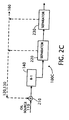
- FIG. 2C is a one-stage plant.
- FIG. 2D is a two-stage plant.
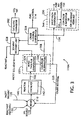
- FIG. 3 is a block diagram of a single stage plant with feedback of crude biodiesel.
- FIG. 4 is a schematic diagram of a single stage plant with feedback of crude bio-diesel.
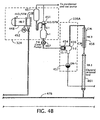
- FIGS. 4A-C are enlarged views of portions of FIG. 4 .
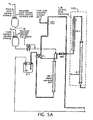
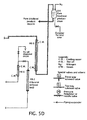
- FIG. 5 is a schematic diagram of a single stage plant with feedback of crude bio-diesel.
- FIGS. 5A-D are enlarged views of portions of FIG. 5 .
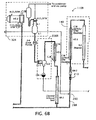
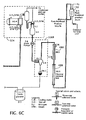
- FIG. 6 is a schematic diagram of a two stage plant with feedback of crude biodiesel.
- FIGS. 6A-C are enlarged views of portions of FIG. 6 .
- FIG. 7 is a block diagram of fuel production system.
- FIG. 8 is a block diagram of a fuel production system coupled to an electric generator.
- FIG. 9 is a block diagram of a vehicle having a fuel production system.
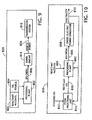
- FIG. 10 a block diagram of a fuel production system coupled to a fuel processing unit.
- a fuel production system includes a processing plant 100 that takes an oil source 110, such as soybean oil, and produces a bio-diesel fuel 150, such as alkyl ester, or a related product such as lubricating oil or a chemical intermediate.
- the processing plant 100 uses one or more reactors 140 that each makes use of an enzymatic catalyst 142.
- the processing plant makes use of an inert solvent 120, such as an anhydrous tertiary alcohol or anhydrous pyridine, as well as a reactant 130, such as a primary or secondary alcohol such as anhydrous methanol.
- the processing plant 100 recovers some of the inert solvent 120 and reactant 130 to replenish the supply.
- the processing plant also produces coproducts 160, such as waste water or glycerol.
- a number of different versions of the processing plant are described below. These versions differ, for example, in features such as the number of reactor processing stages (for example, single stage with one reactor, two stage with two reactors), feedback arrangement of intermediate crude bio-diesel to prior stage reactors, and in the particular oil source, inert solvent, reactant, bio-catalyst and associated operating conditions used.
- the processing plant can operate in a continuous flow mode, or alternatively in a batch mode.
- the plant is relatively compact, for example, the size of a refrigerator, permitting deployment at the point where the bio-diesel fuel is consumed, such as at the location of a diesel motor used for electricity generation.
- Other versions may be significantly larger with correspondingly greater production capacity.
- the plant can be designed for home use, have sizes that are similar to a large refrigerator, and can have a production capacity of 200 liters per day or less.
- the plant can be designed for farm, mall, or military field use, and have a size similar to containers having a length in a range of 20 to 40 feet.
- the plant 100 can be designed for a commercial plant and have a capacity ranging from 40,000 tons to more than 25,000 tons annually.
- a single-stage plant makes use of a single reactor 140.
- the output of the reactor (R-1) 140 is fed to a separator (S-1) 220, which includes components to separate inert solvent 120, unreacted reactant 130, and byproducts 160 from the reactor output to produce a crude bio-diesel product 225, for example, using a combination of an evaporator and a liquid-liquid separator.
- the input of reactor R-1 140 is provided from the output of a mixer 210, which accepts the oil source 110, inert solvent 120 and reactant 130.
- the mixer 210 also receives some of the crude bio-diesel 225 available from the output of the separator S-1.
- This feedback of the crude bio-diesel has two advantages: (1) enhance the completeness of the reaction among the reactants, and (2) reduce the amount of inert solvent required to be combined in the mixer 210.
- the output of the separator 220 is fed to a final separator 230, for example, a short path evaporator or a short-path distillation, which further purifies the bio-diesel to produce the output "pure" bio-diesel 150.
- the crude bio-diesel 225 may be 90-99% pure by weight, and the pure bio-diesel 150 may be greater than 99% pure by weight.
- This version of the plant has relatively few components that therefore is suitable for small and portable versions, as well as larger versions.
- a two-stage plant 100B makes use of two stages 101 and 105, each including a reactor 140.
- the arrangement of a first reactor (R-1) 140 and a first separator (S-1) 220 are similar to that shown in FIG. 2A , including using a feedback of crude bio-diesel 225 from the output of the first separator 220 to the mixer 210 for the first reactor 140.
- the output of the first separator 220 is fed to a second mixer 210 that combines the crude bio-diesel 225 with further inert solvent 120 and reactant 130.
- the output of the second mixer 210 is fed to a second reactor (R-2) 140.
- the output of the second reactor 140 is passed through a second separator (S-2) 220.
- the output of the second separator 220 can be used directly as the bio-diesel fuel 150, or preferably passed through a final separator 230 prior to output.
- the crude bio-diesel 225 output from the first separator 220 is at least 90% pure by weight, while the output of the second separator is at least 95% pure.
- plants that do not make use of feedback of crude bio-diesel have configurations that are otherwise similar to the plants shown in FIGS. 2A-B , respectively.
- the outputs of the first separators 220 in these versions of the plant are at least 80% pure, and in the two-stage version shown in FIG. 2D , the output of the second separator is at least 95% pure.
- the single-stage plant 100C is useful, for example, when the catalyst (such as a particular type of lipase) is expensive, and the end product has high added value, such as for medical or drug use.
- the amount of lipase that is required in the single-stage plant 100C may be less than that of the double-stage plants 100B and 100D, and thus the end product can be produced more cost efficiently.
- the plants 100A to 100D can have various configurations. Additional components may be included in the plants, such as heat exchangers to increase or decrease the temperatures of the solutions, and pumps to control the flow of the solutions. Removal beds may be included to remove unwanted moisture, glycerol, or other unwanted impurities from the products.
- the separator 220 can separate non-completely reacted raw material (for example, reactant and oil source) from the product, so that the non-completely reacted raw material can be recycled.
- a glycerol removal bed filled with ion exchange resin can be used to remove trace glycerol from the recycled raw material.
- thermomyces lanuginosa lipase when certain types of enzymatic catalyst are used, for example, thermomyces lanuginosa lipase, it is useful to limit the amount of moisture in the solution flowing into the reactor 140.
- a cartridge type water removal bed filled with moisture adsorption (or absorption ) resin can be employed at the oil feedstock inlet stream for smaller plants.
- water moisture can be controlled by other removal techniques, such as evaporation or hot dry air stripping apparatus.
- the final separator 230 can be omitted.
- the reaction equilibrium in the reactors 140 can be determined by thermodynamics, and is independent of the type of enzymatic catalyst used.
- concentration of biodiesel at equilibrium is a function of temperature, inert solvent concentration, reactant concentrations, and product concentrations. Different biodiesel equilibrium concentrations can be obtained at different temperatures when other conditions remain the same.
- the processing approach is based on the discovery that high purity alkyl esters can be readily produced from an oil feedstock (for example, vegetable oils or animal fats) by a lipase-catalyzed reaction, in which inactivation of lipases is minimized.
- an alkyl ester can be produced, for example, via a transesterification or esterification reaction.
- the method includes (1) mixing an oil source containing a triglyceride or a carboxylic acid and a first primary alcohol or a first secondary alcohol in a first organic solvent to form a first solution; in which each molecule of the first organic solvent contains 4-8 carbon atoms and a heteroatom; (2) reacting the triglyceride or the carboxylic acid with the first primary alcohol or the first secondary alcohol in the presence of a first lipase to produce a first alkyl ester, in which the first solution does not undergo phase separation throughout the reaction; and (3) separating the first alkyl ester from the first solution.
- a suitable oil source examples include plant oil (for example, microalgae oil), animal oil (for example, fish oil, lard, rendered fats, or tallow), waste grease (for example, waste restaurant grease), or a hydrolytic fraction thereof (for example, carboxylic acids).
- plant oil for example, microalgae oil
- animal oil for example, fish oil, lard, rendered fats, or tallow
- waste grease for example, waste restaurant grease
- a hydrolytic fraction thereof for example, carboxylic acids
- the oil source can be mixed with the first primary alcohol or the first secondary alcohol in the first organic solvent to form a one-phase solution.
- first primary and secondary alcohols include those containing 1 to 18 carbon atoms, such as, methanol, ethanol, isopropanol, isobutanol, 3-methyl-1-butanol, hexanol, octanol, decanol, or lauryl alcohol.
- Examples of the first organic solvent include pyridine or a C4-C8 tertiary alcohol (for example, t-butanol, 2-methyl-2-butanol, 2,3-dimethyl-2-butanol, 2-methyl-2-pentanol, 3-methyl-3-pentanol, 3-ethyl-3-pentanol, 2,3-dimethyl-2-pentanol, 2,3-dimethyl-3-pentanol, 2,2,3-trimethyl-3-pentanol, 2-methyl-2-hexanol, or 3-methyl-3-hexanol).
- the first organic solvent can also be mixed with other suitable solvents.
- the first organic solvents can be mixed with an alkyl ester, which can be an alkyl ester obtained from the method of this invention or an alkyl ester obtained from other sources (for example, purchased from a commercial source).
- an alkyl ester which can be an alkyl ester obtained from the method of this invention or an alkyl ester obtained from other sources (for example, purchased from a commercial source).
- the first organic solvent is used together with another solvent, it is added in an amount sufficient to maintain the homogeneity of the first solution during the reaction, thereby minimizing the inactivation of the first lipase.
- lipase refers to any enzyme capable of catalyzing a transesterification or esterification reaction.
- the first lipase can include a single lipase or a combination of two or more lipases. It is preferably immobilized on a carrier in the first reactor.
- the transesterification or esterification reaction can be carried out at 0-95°C (for example, 20-95°C) for 1-180 minutes (for example, 10-90 minutes or 20-60 minutes) to obtain the first alkyl ester.
- glycerol is produced as a by-product.
- the first alkyl ester can be easily obtained by phase separation between the first alkyl ester and the glycerol after removing the first organic solvent and the unreacted first primary or secondary alcohol by evaporation.
- the just-mentioned oil source may also contain monoglycerides, diglycerides, or carboxylic acids. Monoglycerides and diglycerides react with the first primary or secondary alcohol in a manner similar to triglyceride.
- the carboxylic acids react with the first primary or secondary alcohol via an esterification reaction, in which water is produced as a by-product and can be readily removed during the evaporation process.
- the contaminants can be removed by further reacting with an alcohol via another transesterification or esterification reaction.
- the first alkyl ester can be mixed with a second primary alcohol or a second secondary alcohol in a second organic solvent to form a second solution.
- Each molecule of the second organic solvent contains 4-8 carbon atoms and a heteroatom.
- the second organic solvent can be the same or different from the first organic solvent.
- the second primary or secondary alcohol is preferably the same as the first primary or secondary alcohol.
- the monoglycerides, diglycerides, triglyceride, or carboxylic acid in the second solution can then react with the second primary alcohol or the second secondary alcohol in the presence of a second lipase to produce a second alkyl ester.
- the second solution does not undergo phase separation.
- the second lipase can be the same or different from the first lipase.
- the first and second alkyl esters thus obtained can then be separated from the second solution.
- the second alkyl ester is identical to the first alkyl ester.
- Soybean oil was used as an oil source for preparing alkyl esters. Specifically, refined soybean oil (55.4 wt%) was mixed with anhydrous methanol (8.6 wt%), and anhydrous t-butanol (36.0 wt%) in a first mixer to form a one-phase solution. The solution was then sent to a first reactor, which was filled with NOVOZYM 435 (a candida antarctica lipase; Novozymes A/S, Bagsvaerd, Denmark). Specifically, NOVOZYM 435 was immobilized on a carrier (a macroporous resin) and was then placed in the reactor. The temperature of the reactor was 45oC. The reaction time was 62 minutes.
- NOVOZYM 435 a candida antarctica lipase; Novozymes A/S, Bagsvaerd, Denmark.
- NOVOZYM 435 was immobilized on a carrier (a macroporous resin) and was then placed in the reactor.
- the solution was fed into a vacuum evaporator and then a liquid-liquid separator to obtain a product.
- the composition of the product was determined by HPLC (column: Luna Su C18(2) 250 ⁇ 4.6mm, phenomenex; mobile phases: methanol, hexane, and isopropanol; UV detector: UV-2075, JASCO, Japan).
- the product obtained contained 96.19 wt% alkyl esters, 3.59 wt% monoglycerides and diglycerides, and 0.22 wt% triglycerides.
- an alkyl ester was used as a co-solvent. Specifically, refined soybean oil (49.1 wt%) was mixed with anhydrous methanol (7.6 wt%), anhydrous t-butanol (20.5 wt%), and an alkyl ester (22.8 wt%) in a first mixer to form a one-phase solution. The reaction conditions were the same as those described above except that the reaction completed in 58.0 minutes. Unexpectedly, the product obtained contained 96.10 wt% alkyl esters, 3.23 wt% monoglycerides and diglycerides, and 0.67 wt% triglycerides.
- t-amyl alcohol and an alkyl ester were used as solvents.
- refined soybean oil (40.8 wt%) was mixed with anhydrous methanol (6.3 wt%), anhydrous t-amyl alcohol (37.3 wt%), and an alkyl ester (15.6 wt%) in a first mixer to form a one-phase solution.
- the reaction conditions were the same as those described above except that the reaction completed in 53.0 minutes.
- the product obtained contained 96.96 wt% alkyl esters, 2.64 wt% monoglycerides and diglycerides, and 0.40 wt% triglycerides.
- An alkyl ester obtained from Example 1 was mixed with anhydrous methanol and anhydrous t-butanol in another mixer to form a one-phase solution.
- the solution thus formed contained 70.00 wt% of the alkyl ester, 2.8 wt% of contaminants (i.e., 2.47 wt% of monoglycerides and diglycerides and 0.31 wt% of triglycerides), 7.28 wt% of the methanol, and 19.94 wt% of the t-butanol.
- the solution was then sent to another reactor, which was filled with NOVOZYM 435. Specifically, NOVOZYM 435 was immobilized on a carrier and then placed in the reactor. The temperature of the second reactor was 45°C. The reaction time was 17.5 minutes. After the reaction was completed, the solution was fed into another vacuum evaporator and then another liquid-liquid separator to obtain a product. The composition of the product was determined by HPLC.
- the product obtained above contained 99.24 wt% alkyl esters, 0.65 wt% monoglycerides and diglycerides, and 0.11 wt% triglycerides.
- Oil sources other than soybean oil were used as starting materials for preparing alkyl esters in a manner similar to that described in Example 1.
- Oil sources used included waste restaurant grease containing high free fatty acids, waste restaurant grease containing low free fatty acids, tallow, lard, fish oil, palm oil, and castor oil.
- waste restaurant grease containing high free fatty acids was used.
- the reactor containing NOVOZYM 435 was fed with a solution containing such waste restaurant grease (49.1 wt%), anhydrous methanol (7.6 wt%), t-butanol (20.5 wt%), and an alkyl ester (22.8 wt%).
- NOVOZYM 435 was immobilized on a carrier and then placed in the reactor.
- the temperature of the reactor was 45°C.
- the reaction time was 24.0 minutes.
- the product from the reactor was isolated and its composition was determined by HPLC. Unexpectedly, the product obtained above contained 96.63 wt% alkyl esters, 3.17 wt% monoglycerides and diglycerides, and 0.20 wt% triglycerides.
- fish oil an animal oil
- fish oil was mixed with anhydrous methanol (7.8 wt%), and anhydrous pyridine (39.8 wt%) in a first mixer to form a one-phase solution.
- the reaction conditions were the same as those described above except that the reaction completed in 25.0 minutes.
- the product obtained contained 95.63 wt% alkyl esters, 3.03 wt% monoglycerides and diglycerides, and 1.34 wt% triglycerides.
- palm oil (a plant oil) was used as an oil source. Specifically, plant oil (46.5 wt%) was mixed with anhydrous methanol (7.5 wt%), and anhydrous t-amyl alcohol (46.0 wt%) in a first mixer to form a one-phase solution.
- the reaction conditions were the same as those described above except that the reaction completed in 41.0 minutes.
- the product obtained contained 96.97 wt% alkyl esters, 1.95 wt% monoglycerides and diglycerides, and 1.08 wt% triglycerides.
- Alcohols used included methanol, ethanol, isobutanol, 3-methyl-1-butanol, hexanol, octanol, decanol, and lauryl alcohol.
- the reactor containing NOVOZYM 435 was fed with a solution containing fish oil (52.0 wt%), ethanol (11.2 wt%), and anhydrous t-butanol (36.8 wt %).
- NOVOZYM 435 was immobilized on a carrier and then placed in the reactor.
- the temperature of the reactor was 45°C.
- the reaction time was 39.0 minutes.
- the product from the reactor was isolated and its composition was determined by HPLC. Unexpectedly, the product obtained above contained 97.44 wt% alkyl esters, 1.44 wt% monoglycerides and diglycerides, and 1.11 wt% triglycerides.
- hexanol (a C6 alcohol) was used as a starting material. Specifically, soybean oil (53.7 wt%) was mixed with anhydrous hexanol (26.6 wt%), and anhydrous t-butanol (19.7 wt%) in a first mixer to form a one-phase solution.
- the reaction conditions were the same as those described above except that the reaction completed in 46.0 minutes.
- the product obtained contained 95.06 wt% alkyl esters, 4.11 wt% monoglycerides and diglycerides, and 0.88 wt% triglycerides.
- lauryl alcohol (a C12 alcohol) was used as a starting material. Specifically, soybean oil (37.2 wt%) was mixed with anhydrous lauryl alcohol (33.6 wt%), and anhydrous t-butanol (29.2 wt%) in a first mixer to form a one-phase solution.
- the reaction conditions were the same as those described above except that the reaction completed in 66.0 minutes.
- the product obtained contained 95.03 wt% alkyl esters, 4.07 wt% monoglycerides and diglycerides, and 0.90 wt% triglycerides.
- Alcohols used included isopropanol (a C3 alcohol), 2-butanol (a C4 alcohol), and secondary n-octyl alcohol (a C8 alcohol).
- the reactor containing NOVOZYM 435 was fed with a solution containing rapeseed oil (52.9 wt%), isopropanol (14.1 wt%), and anhydrous t-amyl alcohol (33.0 wt%).
- NOVOZYM 435 was immobilized on a carrier and then placed into the reactor.
- the temperature of the reactor was 45°C.
- the reaction time was 39.0 minutes.
- the product from the reactor was isolated and its composition was determined by HPLC. Unexpectedly, the product obtained above contained 93.92 wt% alkyl esters, 4.86 wt% monoglycerides and diglycerides, and 1.22 wt% triglycerides.
- 2-butanol was used as a starting material. Specifically, soybean oil (52.5 wt%) was mixed with anhydrous 2-butanol (18.9 wt%), and anhydrous t-amyl alcohol (28.6 wt%) in a first mixer to form a one-phase solution.
- the reaction conditions were the same as those described above except that the reaction completed in 46.0 minutes.
- the product obtained contained 92.84 wt% alkyl esters, 5.08 wt% monoglycerides and diglycerides, and 2.09 wt% triglycerides.
- secondary n-octyl alcohol was used as a starting material. Specifically, soybean oil (46.4 wt%) was mixed with anhydrous secondary n-octyl alcohol (29.3 wt%), and anhydrous t-butanol alcohol (24.3 wt%) in a first mixer to form a one-phase solution.
- the reaction conditions were the same as those described above except that the reaction completed in 42.0 minutes.
- the product obtained contained 94.69 wt% alkyl esters, 2.45 wt% monoglycerides and diglycerides, and 2.86 wt% triglycerides.
- An alkyl ester was prepared using lauric acid and methanol as starting materials via an esterification reaction in a manner similar to that described in Example 1. Specifically, the reactor containing NOVOZYM 435 was fed with a solution containing anhydrous lauric acid (77.7 wt%), anhydrous methanol (17.6 wt%), and anhydrous t-butanol (4.7 wt%). NOVOZYM 435 was immobilized on a carrier and then into the reactor. The temperature of the reactor was 45°C. The reaction time was 37.0 minutes.
- the product from the reactor was isolated and its composition was determined by GC (8610C, SRI, USA; column: MXT-65TG, length: 30 m, I.D.: 0.25 ⁇ m; carrier gas: He, flow rate: 1 ml/min; injector: split ratio: 20 to 1, temperature: 300°C; detector: FID, temperature: 370°C).
- the product obtained above contained 96.0 wt% methyl laurate and 4.0 wt% lauric acid.
- Alkyl esters were prepared using soybean oil and methanol as starting materials in a manner similar to that described in Example 1 except that the soybean oil was heated for a period of time before use. Specifically, the soybean oil was first heated either at 200°C for 5 minutes or at 210°C for 1 hour and then cooled down to the reaction temperature. Subsequently, the soybean oil (49.1 wt%) was mixed with anhydrous methanol (7.6 wt%), anhydrous t-butanol (20.5 wt%), and an alkyl ester (22.8 wt%) in the mixer to form a one-phase solution. The solution was then sent to the reactor, which was filled with NOVOZYM 435. Specifically, NOVOZYM 435 was immobilized on a carrier and was placed into the reactor in advance. The temperature of the reactor was 45°C. Each product from the reactor was isolated and its composition was determined by HPLC.
- LIPOZYME TL IM (a thermomyces lanuginosa lipase, Novozymes A/S, Bagsvaerd, Denmark) was used as a catalyst for preparing alkyl esters in a manner similar to that describe in Example 1. Specifically, it was immobilized on a granulated silica carrier and then placed in the reactor. The reactor was then fed with a solution containing soybean oil (49.1 wt%), anhydrous methanol (7.6 wt%), anhydrous t-butanol (20.5 wt%), and an alkyl ester (22.8 wt%). The temperature of the reactor was 45°C. The reaction time was 51.0 minutes. The product from the reactor was isolated and its composition was determined by HPLC.
- the product obtained above contained 94.04 wt% alkyl esters, 3.65 wt% monoglycerides and diglycerides, and 2.31 wt% triglycerides.
- an example of the processing plant 100A of the configuration shown in FIG. 2A includes a number of components used to implement separators 220 and 230, as well as additional components not shown in FIG. 2A used to process the recovered output and waste products produced by the separators.
- the reactant 130 includes an alcohol.
- the reactor 140 can be, for example, a plug flow reactor that includes the enzymatic catalyst 142.
- a description of the reaction between the oil source 110 and the reactant alcohol 130 can be found in section 1.2, and in U.S. Patent Application 10/945,339 .
- the velocity of fluid flow through the reactor 140 is controlled so as to meet a residence time specified for the reactor 140, allowing sufficient time for the reactions to be completed.
- the residence time can range from, for example, 3 hours to less than 20 minutes.
- the temperature of the reactor 140 is maintained at a preset value, which can range from, for example, 20 °C to 95°C, depending in part on the type of oil source, reactant, and catalyst.
- the reactor 140 outputs a crude product 103, which includes alkyl ester, glycerol, and impurities, such as uncompleted reacted oils that are generated from the reaction between the oil source 110 and the reactant 130.
- uncompleted reacted oils include monoglyceride and diglyceride.
- the processing plant 100A includes a separation module 220 that separates the components in the crude product 103 into, for example, crude glycerol 168 and crude biodiesel 150 including unreacted oil 110, inert solvent 120, and unreacted reactant 130.
- the separation module 220 includes a vacuum evaporator, such as a wiped thin film evaporator 324, model VD type, made by Anlagens Technische Aulagen GMBH, Deggendorf, Germany, or a simple flash drum integrated with a packed bed evaporator.
- the thin film evaporator 324 separates the various components in the crude product 103 using thin film evaporation.
- the thin film evaporator 324 includes a thin film that has a large surface area so that the inert solvent 120, unreacted alcohol 130, and water can be evaporated at a faster rate.
- Components having lower boiling points such as unreacted alcohol 130, water vapor, inert solvent, and other impurities, are flashed, condensed, and collected in a solvent recovery unit 328, which separates the inert solvent 120, the unreacted alcohol 130, water vapor, and other impurities.
- the inert solvent 120 and the unreacted alcohol 130 can be recycled and mixed with fresh solvent 120, fresh oil source 110, and fresh reactant alcohol 130 as part of the input to the reactor 140.
- the water vapor and other impurities are sent to a catalyst converter 362, which coverts the impurities into, for example, carbon dioxide.
- the water vapor and the carbon dioxide are output through a vent (not shown).
- Residue from the thin film evaporator 324 includes glycerol, alkyl ester, unreacted oil, and uncompleted reacted oil, which are sent to a first coalescer and separator 336.
- the coalescer coalesces the glycerol droplets into liquid form. After the solution settles down for a period of time in the separator, the biodiesel and the glycerol will be separated, forming an upper layer of biodiesel and a lower layer of glycerol.
- the lower layer of glycerol is referred to as crude glycerol 168, which includes impurities, such as water, inert solvent, and unreacted alcohol.
- the crude glycerol 168 is sent to a crude glycerol evaporator 338.
- An example of the evaporator 338 is a short-path evaporator, such as model VK type, made by VTA GMBH, or a simple flash drum coupled with a packed bed evaporator.
- the evaporator 338 operates by evaporation to separate the glycerol from impurities, and outputs the "pure" glycerol 114.
- the pure glycerol 114 can be at least 99% pure by weight.
- the upper layer of biodiesel is referred to as crude biodiesel 225 because it includes impurities, such as uncompleted reacted oil, unreacted oil, and trace amount of glycerol.
- a portion of the crude biodiesel 225 is recycled and fed back to the reactor 140.
- recycling the crude biodiesel 225 can reduce the amount of inert solvent that is required for dissolving the oil source and reactant alcohol, in addition to the advantage of promoting the reaction to completeness.
- the portion of the crude biodiesel 225 that is not recycled is sent to the final separator 230, which includes a short-path evaporator 344 that separates the biodiesel from the impurities to generate the pure biodiesel 150.
- the short-path evaporator 344 outputs uncompleted oil, unreacted oil, and glycerol to a second coalescer and separator 354 or a regeneratable ion exchange resin bed (plug flow bed), which separates or removes the glycerol from the other components.
- the coalescer and separator 354 outputs crude glycerol 156 to the crude glycerol evaporator 338, which processes the crude glycerol 156 to generate pure glycerol 114.
- the coalescer and separator 354 outputs uncompleted and unreacted oils, which, optionally, can be recycled and fed back to the reactor 140.
- FIG. 4 another example of plant 110A of the configuration shown in FIG. 2A is described in detail below.
- the plant 110A includes an oil drum (D-1) that stores the oil source 110.
- the inert solvent 120 is stored in a solvent drum, which receives fresh inert solvent, recycled inert solvent from solvent recovery unit within the plant, and nitrogen gas.
- the nitrogen gas blocks out moisture and oxygen from the solvent.
- the reactant alcohol 130 is stored in a reactant alcohol drum, which receives fresh reactant alcohol, recycled reactant alcohol, and nitrogen gas.
- a twin headed metering pump (P-1) 430 pumps the oil source 110 along a path 432 at a fixed rate towards a water removal bed (RB-1) 436, which can be, for example, a packed bed filled with super-absorbent polymer that removes trace water directly from the oil source.
- RB-1 436 can be, for example, a packed bed filled with super-absorbent polymer that removes trace water directly from the oil source.
- the oil source is sent through a pipe 440 toward the mixer 210, which includes a static mixer (SM-1) 438.
- SM-1 static mixer
- a twin headed metering pump (P-2) 424 pumps the reactant and the inert solvent toward the static mixer 438 at a rate so that the ratio of oil source versus the reactant alcohol and inert solvent is maintained at a predetermined value.
- the pump 430 also pumps recycled crude biodiesel 225 through a pipe 476 toward the static mixer 438, at a predetermined ratio of recycled crude biodiesel verse oil source.
- the static mixer 438 can be, for example, a multi-element static mixer such as described in U.S. Patent No. 3,286,992 , or a compact mixer, such as Sulzer Compact Static Mixer, available from Sulzer Chemtech, Switzerland.
- a static mixer does not have moving parts, and mixes the solution without external power.
- the static mixer 438 causes the reactant, the inert solvent, the oil source and the recycled crude biodiesel to mix thoroughly to produce a homogeneous solution.
- the reactor 140 which includes a heat exchanger (HE-1) 448 and a cartridge type reactor (R-1) 404, receives the output of the mixer 210. Specifically, the output of static mixer 438 is forwarded to a heat exchanger (HE-1) 448, which regulates the temperature of the mixed solution by using, for example, cooling water, hot oil, steam, or electrical heaters or coolers.
- the heat exchanger 448 can have, for example, a double pipe design.
- the solution then enters an elongated cartridge 404 of the reactor that is filled with the enzymatic catalyst 142, in this case lipase.
- the reaction temperature can be in a range of 0 to 95°C, preferably at room temperature (for example, 25 °C).
- the cartridge 404 can be a column with grid support at the bottom.
- a screen is provided at the bottom of the cartridge to retain the enzymatic catalyst 142 within the cartridge, and another screen is provided at the upper portion of the cartridge to level a flow of the solution in the cartridge. Between the two screens, the cartridge is filled with the catalyst.
- the temperature-regulated mixed solution enters the cartridge 404 through an opening on the top of the cartridge, and flows down through the enzymatic catalyst 142.
- the enzymatic catalyst facilitates a reaction between the reactant alcohols and the oil source, which includes triglyceride, to generate alkyl ester, glycerol, and water (and/or other impurities).
- the reactor 140 outputs a crude product that includes alkyl ester, glycerol, unreacted oil (triglyceride), uncompleted oil (monoglyceride and diglyceride), unreacted alcohol, inert solvent, and other impurities.
- the crude output of the reactor 140 is passed to a separator 220, which includes an evaporator 324 and coalescer and separator 336.
- a particular design of coalescer and separator 336 is indicated by reference numeral 336A, in which a membrane filter with pore size 1 ⁇ 5 ⁇ m is employed for coalescing of glycerol droplets.
- the evaporator 324 includes a pressure regulator (PR) 452, a preheater (HE-2) 448, and an evaporator of simple flash drum integrated with a packed bed design (E-1) 451.
- the preheater 448 can use, for example, hot oil or steam to pre-heat the crude product.
- the evaporator 451 can use hot oil or steam as a heating medium in the jacketed area.
- inert solvent, water, and unreacted alcohol are evaporated and exit the evaporator 451 through an upper opening.
- the inert solvent, water, and the unreacted alcohol are condensed and collected in the solvent recovery unit 328 (not shown in FIG. 4 ), and can be recycled.
- the composition of the condensate liquid in the solvent recovery unit may include unreacted alcohol, inert solvent, water and trace amount of biodiesel.
- Two simple columns can be used to separate the unreacted alcohol, inert solvent, and water.
- the first column separates the inert solvent from the unreacted alcohol and water.
- the unreacted alcohol and water exits from the top of the first column and are sent to the second column, where the unreacted alcohol is collected in a top reflux drum and recycled to the reactant alcohol drum.
- the bottom residue in the second column consists mostly of water and small amounts of unreacted alcohol and inert solvent.
- the small amount of unreacted alcohol and inert solvent can be vaporized through a catalyst converter and burned out completely. Both simple columns can be operated automatically at ambient pressure.
- the design of solvent recovery depends on the alcohol and the inert solvent that are used, and different recovery schemes may be used.
- the components in the evaporator 451 having higher boiling points are pumped by a gear pump (p-6) to a coalescer (CL-1) 454, and the glycerol droplets coalesce into large droplets that can be easily separated from the crude biodiesel.
- a gear pump p-6
- a coalescer CL-1 454
- the glycerol droplets coalesce into large droplets that can be easily separated from the crude biodiesel.
- Two liquids are formed in the liquid-liquid phase separator (S-2) 456.
- Crude biodiesel is sent through a cooler (HE-3) 458 and a trace glycerol removal bed (RB-3) 461, which is filled with a regeneratable ion exchange resin.
- the output of the trace glycerol removal bed 461 is split into two flows 476 and 478.
- One flow 476 is recycled to the static mixer 438, the other flow 478 is sent to the short-path evaporator (E-2)
- Crude biodiesel which may include at least 95% by weight of alkyl ester, flows out of the separator 456 and is cooled by a cooler (HE-3) 458. Cooling water is used to cool the crude biodiesel in the cooler.
- HE-3 cooler
- a portion of the crude bio-diesel is recycled through a feed back pipe 476.
- the recycled crude biodiesel passes a three-way solenoid valve 478, which can switch between crude biodiesel and pure biodiesel.
- the pump 430 pumps the recycled biodiesel toward the static mixer 438.
- the short-path evaporator 344 includes a heat exchanger (HE-4) 486, a pressure regulator 452, and a short-path evaporator (E-2) 424.
- the short-path evaporator 424 separates the biodiesel from the glycerol, unreacted oil, and other impurities. High purity biodiesel flows out of the evaporator 424 through a path 426.
- the evaporator 424 outputs unreacted oil contaminated with trace amount of glycerol through a path 433 to a drum (S-4) 472.
- the unreacted oil is pumped by a gear pump (P-8) 473 through a cooler (HE-6) 475.
- the unreacted oil can be sent to a waste oil disposal drum, or sent through a glycerol removal bed (RB-2) 444 to remove any remaining glycerol and recycled to the oil drum D-1.
- the glycerol removal bed 444 can be, for example, a packed bed filled with a resin that can remove traces of glycerol from the solution.
- a dual gravity drain trap (DN-1) 457 is placed between the liquid-liquid phase separator (S-2) 456 and the drum 474 to discharge the glycerol automatically.
- An example of the trap 457 is available from Armstrong, MI, U.S.A.
- a small drum with a high level switch and a low level switch, both coupled to a solenoid valve in the drum bottom for glycerol discharge, can be used.
- the crude glycerol in the drum 474 can be refined through a vacuum evaporator (not shown in FIG. 4 ) to remove water, unreacted alcohol, and inert solvent.
- the evaporated vapor is condensed and lumped with the condensate liquid drum of evaporator E-1 (and E-2) described above.
- the residue leaving the crude glycerol evaporator is pure glycerol product suitable for commercial use.
- High purity biodiesel from the short-path evaporator 424 is pumped through a heat exchanger (HE-5) 408, in which cooling water cools the high purity biodiesel.
- the final pure biodiesel product may include at least 99% by weight of alkyl ester.
- the pure biodiesel product is stored in a pure biodiesel product drum (D-5).
- D-5 pure biodiesel product drum
- the pure biodiesel can be recycled through a feedback path to the mixer 210 for the reactor 140 when the crude biodiesel is not available.
- the feedback path is connected to the solenoid valve 478 so that the recycled pure biodiesel can be switched off when the crude biodiesel is employed.
- FIG. 5 shows an alternative design of a single stage reactor that uses bottom product discharge design.
- Two liquid drums (S-1) 556 and (S-2) 566 which are switched between vacuum and atmosphere, are used to discharge liquid from a drum 455 coupled to the evaporator.
- Liquid detectors (not shown) are used in drums 556 and 566 for automatic control of switching operation for discharging liquids.
- Two-way solenoid valves 558 and 560, and a three-way solenoid valve 568 regulate the flow of the solution from the drum 455 to the drums 556 and 566.
- the valve 560 regulates a flow of liquid from the bottom of the drum 556. At a first time period, the valve 560 is closed, and the valve 558 is opened.
- the three-way solenoid valve 568 is configured so that a top opening of the drum 556 is coupled to a vacuum pump (not shown). The solution flows by gravity from the drum 455 into the drum 556.
- the valve 558 is closed.
- the valve 560 is opened, and the 3-way solenoid valve 568 is selected so that room air can pass a silica gel (or resin) 570 and enter the top opening of the drum 556.
- the silica gel or resin 570 removes moisture from the air entering the drum 556.
- the solution in the drum 556 flows into the drum 566. After the solution flows out of the drum 556 to a preset level, the valve 560 is closed, the valve 568 is switched and valve 558 is reopened.
- a pump 562 continuously pumps the solution through a coalescer (CL-1) 454, in which the glycerol droplets are coalesced into large droplets and separated from the crude biodiesel.
- the pump 562 functions similar to the role of gear pump 467 in FIG. 4 . The difference is that, for the pump 562, the suction pressure is from ambient pressure instead of the high vacuum situation as in the case for the gear pump 467. This provides more flexibility in the selection of the pump, making it easier to find a suitable pump.
- the downstream operation is similar to that given in FIG. 4 .
- a similar design for the bottom flows of the short path evaporator (E-2) 424 can be employed.
- FIG. 6 an example of a two-stage processing plant 110B of the configuration shown in FIG. 2B is described in detail below.
- the final separator 230 in FIG. 2B is omitted in FIG. 6 .
- the first portion of the processing plant 110B in FIG. 6 includes a first reactor 140, a first evaporator 324, and a first coalescer and separator 336B, which operates similarly to corresponding elements in FIG. 5 .
- the processing plant 110B of FIG. 6 uses a second reactor 140, a second evaporator 324, and a second coalescer and separator 336B.
- the second reactor 140 which can be similar to the first reactor 140, includes an enzymatic catalyst, such as a lipase.
- the first and second reactors 140 can use the same or different enzymatic catalysts.
- the crude biodiesel leaving glycerol removal bed RB-2 which removes glycerol from the crude biodiesel, travels along a pipe 288 towards a second static mixer (SM-2) 210, which is similar to the first static mixer 210 for the first reactor 140.
- a twin-headed pump (P-4) 292 pumps reactant alcohol 130 and inert solvent 120 toward the second static mixer (SM-2) 210 at a rate so that a preset ratio of the reactant alcohol 130 and inert solvent 120 mixes with the crude biodiesel at location 290 before entering the static mixer SM-2 210.
- the output of the static mixer SM-2 210 is sent to the second reactor 140.
- the reactant alcohol, the unreacted oil, and the uncompleted oil react to generate more alkyl ester, so that in an output of the second reactor 140, less unreacted oil and uncompleted oil remains.
- the output of the second coalescer and separator 336B includes higher purity biodiesel, which includes a higher percentage (for example, more than 99% by weight) of alkyl ester.
- the higher purity biodiesel which may include a trace amount of glycerol, is cooled first in the cooler (HE-5) 488 and then passed through the resin bed (RB-3) 489.
- the resin bed (RB-3) is filled with a resin to remove trace amount of glycerol.
- the final product - high purity biodiesel 150 which may include, for example, 99% by weight of alkyl ester, is sent to a high purity product drum (D-5).
- the high purity biodiesel in the drum D-5 can be recycled during the start-up or provided to a user.
- the operating conditions for processing plants 100A ( FIGS. 4 and 5 ) and 100B ( FIG. 6 ) can be as follows.
- the first reactor 404 operates at temperatures ranging from 0°C to 95 °C, in which the residence time ranges from 1 to 180 minutes.
- the first evaporator 451 operates at temperatures less than 120 °C and pressures less than 100 mmHg.
- the removal beds 436, 444, and 461 can be operated at temperatures ranging from 20°C to 80°C, preferably near room temperature (for example, 25°C).
- Coalescers 454 and 456 can be operated at temperatures ranging from 20°C to 80°C.
- Thin-film evaporators were used, and a short-path evaporator was not used.
- Refined soybean oil purchased from a local supermarket was used as the feedstock to the processing plant. The amount of water in the refined soybean oil was about 200 ⁇ 300 ppm. Pure anhydrous methanol was used as the reactant alcohol. Pure anhydrous t-amyl alcohol was used as the inert solvent.
- the first reactor (R-1) included a packed bed filled with lipase, in which the lipase was TL IM, from Novozymes.
- the residence time of the solution in the first reactor was 50 minutes, and the reaction temperature was 25 °C.
- the second reactor (R-2) was a packed bed filled with lipase, in which the lipase was Novo 435, from Novozymes.
- the residence time of the solution in the second reactor was 115 minutes, and the reaction temperature was 25 °C.
- the evaporators are wiped thin film evaporators, operating at a temperature of 110 °C and a pressure of 1.0 mmHg abs., and at a rotation speed of 250 revolutions per minute.
- the final product included 99.10 wt% biodiesel, 0.62 wt% monoglyceride, 0.22 wt% diglyceride, 0.066 wt% triglyceride, and the acid number was 0.630 mg KOH/g.
- Two alternative evaporator designs were used: (1) a simple flash drum integrated with a packed bed evaporator, and (2) a thin-film evaporator.
- the final product was treated by a short-path evaporator.
- the feedstock was refined fresh soybean oil with water moisture 200-300 ppm.
- the reactor (R-1) was a packed bed filled with lipase.
- the lipase was TL IM (from Novozymes), the residence time was 53 minutes, and the reaction temperature was 25 °C.
- the operation temperature was 120 °C, and the pressure was 5 torr abs.
- the operation temperature was 120 °C, the pressure was 1 torr abs, and the rotation rate was 250 revolutions per minute.
- the final separator used a short-path evaporator (E-2), in which the operation temperature was 120 °C, the pressure was 0.05 torr abs, and the rotation rate was 400 RPM.
- the end product that was obtained included 99.81 wt% biodiesel, 0.13 wt% monoglyceride, 0.06 wt% diglyceride, and non-detectable amount of triglyceride, and the acid number is 0.770 mg KOH/g.
- the feedstock was refined fresh soybean oil with water moisture 200-300 ppm.
- the reactor (R-1) was a packed bed filled with lipase.
- the lipase was TL IM (from Novozymes), the residence time was 66.6 minutes, and the reaction temperature was 25 °C.
- the evaporator (E-1) was a simple flash drum integrated with a packed bed, operating at temperature 120 °C and pressure 5 torr abs.
- the end product that was obtained included 86.55 wt% biodiesel, 6.52 wt% monoglyceride, 5.24% diglyceride, and 1.69 wt% triglyceride.
- the crude biodiesel product that is output from a typical membrane type coalescer may have an amount of 1,000-1,500 ppm glycerol after the liquid-liquid separation.
- the crude biodiesel can be passed through a resin bed having a depth of 90 cm, in which the residence time of the fluid in the bed is about 25 minutes.
- the final glycerol concentration in the effluent can be less than 15 ppm.
- the resin that is used can be a type of ion exchange resin, MonoPlus SP112, available from Bayer Company, Germany.
- the saturated bed can be regenerated by methanol, ethanol or equivalent materials. 7 Catalyst Cartridges
- the first and second reactors 140 can use removable cartridges filled with enzymatic catalysts, so that old cartridges can be replaced by new ones when the catalysts become ineffective after long run.
- the first and second reactor 140 are configured to accept a variety of removable cartridges, such as from different vendors, or having different types of catalysts.
- the processing plants 100A to 100D can be designed to have a coupling mechanism that mate with the cartridges, so that the cartridges can be easily removed and installed.
- Different types of enzymatic catalysts can be used, each catalyst associated with a different set of operating conditions, such as flow speed and operation temperature.
- the biodiesel fuel production systems may adjust operation conditions based on the particular type of enzymatic catalyst being used.
- a biodiesel fuel production system 702 includes reactors 704, each including a cartridge 706 filled with enzymatic catalyst.
- the cartridge 706 includes an identifier 708, such as a bar code or a radio frequency identification (RFID) tag, that identifies the enzymatic catalyst in the cartridge 706.
- RFID radio frequency identification
- a reader 710 (for example, a bar code or RFID reader) reads the identifier 708, and forwards identification information to a data processor 712. Based on the identification information, the data processor 712 retrieves pre-stored operation information from a database 714, and uses the operation information to control a flow control sub-system 716 and a temperature control sub-system 718.
- the flow control sub-system 716 includes, for example, pumps that determine a flow speed of the oil source and the reactant alcohol flowing through the reactors.
- the identifier 708 may be associated with an enzymatic catalyst that requires a short residence time, so the data processor 712 controls the flow control sub-system 716 to pump the solutions through the reactors 704 faster.
- the identifier 708 may be associated with an enzymatic catalyst that requires a longer residence time, so the data processor 712 controls the flow control sub-system to pump the solutions through the reactors 704 slower.
- the identifier 708 may be associated with an enzymatic catalyst that requires a higher reaction temperature, so the data processor 712 controls the temperature control sub-system 718 to set the temperatures of the reactors or the heat exchangers at a higher value. In some examples, the identifier 708 may be associated with an enzymatic catalyst that requires a lower reaction temperature, so the data processor 712 controls the temperature control sub-system 718 to set the temperatures of the reactors or the heat exchangers at a lower value.
- the identifier 708 may be associated with pre-stored information that provides an estimate about when the cartridge 706 needs to be replaced.
- the pre-stored information may indicate that the cartridge 706 needs to be replaced after a certain volume of solution has passed the cartridge 706.
- the data processor 712 determines the volume of solution that has passed the cartridge 706. When the volume exceeds a certain limit, the data processor 712 displays a message to the user to indicating that the cartridge needs to be replaced.
- an electric power generator 800 includes a processing plant 802 that receives oil source 804 and reactant alcohol 805, and generates biodiesel 806.
- the biodiesel 806 is sent to a biodiesel electric power generator 808, which generates electricity 810 from the biodiesel 806.
- a portion of the electricity is sent to the processing plant 802 through a path 812, and used to provide power to various electrical components of the processing plant.
- the system 802 can be any of the processing plants described above.
- An advantage of the electric power generator 800 is that the system can generate electricity with less pollution than electric power generators that use petroleum-based diesel fuel. If the oil source includes triglyceride, the generator 800 produces glycerol, water, and carbon dioxide as by-product. If the oil source includes carboxylic acid, the generator 800 products only water and carbon dioxide as by-product.
- a vehicle 820 includes a processing plant 802 that receives oil source 804 and reactant alcohol 805, and generates biodiesel 806.
- the biodiesel 806 is sent to a diesel engine 814, which converts the biodiesel into kinetic power 820 that is sent to a transmission system 816 that transmits the kinetic energy to wheels or propellers for powering the vehicle 820.
- the vehicle 820 may include an electric power generator (not shown) that converts the kinetic energy from the diesel engine into electricity. The electricity can be used to power various electrical components of the vehicle 820.
- the processing plant 802 can be any of the processing plants described above.
- the vehicle 820 can be, for example, a car, a truck, a train, a ship, or an airplane.
- a building 830 such as a restaurant, includes a food processing unit 834 (such as a kitchen) that receives cooking oil 832 for processing food.
- Recycled oil 836 generated by the food processing unit 834 is forwarded to a processing plant 802, which also receives reactant alcohol 805 and outputs biodiesel 806.
- a diesel electric power generator 808 receives the biodiesel and generates electricity, which is used to power various electrical components of the food processing unit 834 and the processing plant 802.
- twin headed pumps can be replaced by two independent pumps.
- the static mixers can be replaced by an agitated mixing drum or dosing-type static mixers.
- a dosing type compact static mixer can be used at each mixing point.
- the oil source includes a high percentage of water, such as more than 2,000 ppm
- the water removal bed can be replaced with a hot air stripping apparatus. The water can be removed by stripping, and the oil is cooled before being sent to the reactor.
- animal fats or high melting point plant oils are used as the feedstock, the fats or oils are dissolved in the inert solvent first.
- the oil source includes carboxylic acid
- a reaction between the carboxylic acid and the reactant alcohol generates alkyl ester, with water as by-product.
- Glycerol is not generated in this circumstance. Because there is no glycerol, purification of the alkyl ester can be achieved by evaporating the solvent, the unreacted alcohol, and water.
- the oil source includes carboxylic acid, it is not necessary to use the separators for separating biodiesel from the glycerol, or to use removal beds for removing glycerol.
- the biodiesel can be used as fuel for an internal combustion diesel engine or a gas turbine diesel engine.
- cartridges filled with enzymatic catalysts are used in the reactors of small unit processing plants.
- an on-line loading and downloading of the lipase can embedded in the system design.
- the evaporator E-1 ( FIGS. 4-6 )can be a simple flash drum with or without integration of a packed bed design.
- the evaporator E-1 ( FIGS. 4-6 )can be a simple flash drum with or without integration of a packed bed design.
- thin-film evaporators can be employed.
- the coolers (HE-1, HE-3, HE-5, and HE-6) in the same processing plant can be lumped into one unit for small scale systems.
- the coolers are separate, but placed in parallel in a box, and have a common inlet and a common outlet for the cooling medium, such as cooling water.
- the coolers are designed as air coolers using one fan to cool all streams simultaneously.
- a short-path evaporator can use a flash drum in inlet similar to that of evaporator E-1. This kind of design can reduce the condenser load inside the short-path unit, which means a higher rate of inlet can be obtained.
- An external condenser for condensing the evaporated vapor leaving the flash drum can be used. The condensate is lumped to the distillate product of the short path unit.
- Regeneration of glycerol removal bed can be on line processing (such as when parallel designs are used for large systems) or off-line processing (such as when cartridge type designs are used for small units).
- the whole fuel production system can be blanketed by nitrogen to block moisture and air (to reduce acidification of the biodiesel or the oil source).
- the glycerol removal resin can be an ion exchange resin, such as Lewatit MonoPlus SP112, available from Bayer Chemical, Leverkusen, Geramny.
- the static mixer can be replaced by an agitated mixer (drum) with its output rate regulated by a level control.
Landscapes
- Chemical & Material Sciences (AREA)
- Organic Chemistry (AREA)
- Engineering & Computer Science (AREA)
- Life Sciences & Earth Sciences (AREA)
- Wood Science & Technology (AREA)
- Chemical Kinetics & Catalysis (AREA)
- General Chemical & Material Sciences (AREA)
- Zoology (AREA)
- Oil, Petroleum & Natural Gas (AREA)
- Health & Medical Sciences (AREA)
- Biotechnology (AREA)
- Biochemistry (AREA)
- Bioinformatics & Cheminformatics (AREA)
- General Engineering & Computer Science (AREA)
- General Health & Medical Sciences (AREA)
- Genetics & Genomics (AREA)
- Microbiology (AREA)
- Preparation Of Compounds By Using Micro-Organisms (AREA)
- Fats And Perfumes (AREA)
- Apparatus Associated With Microorganisms And Enzymes (AREA)
- Liquid Carbonaceous Fuels (AREA)
- Organic Low-Molecular-Weight Compounds And Preparation Thereof (AREA)
- Physical Or Chemical Processes And Apparatus (AREA)
Applications Claiming Priority (2)
| Application Number | Priority Date | Filing Date | Title |
|---|---|---|---|
| US10/945,339 US7473539B2 (en) | 2004-09-20 | 2004-09-20 | Methods for producing alkyl esters |
| EP05291933A EP1637588B1 (de) | 2004-09-20 | 2005-09-19 | Vorrichtung und Verfahren zur Herstellung von Alkylester |
Related Parent Applications (1)
| Application Number | Title | Priority Date | Filing Date |
|---|---|---|---|
| EP05291933A Division EP1637588B1 (de) | 2004-09-20 | 2005-09-19 | Vorrichtung und Verfahren zur Herstellung von Alkylester |
Publications (1)
| Publication Number | Publication Date |
|---|---|
| EP2067852A2 true EP2067852A2 (de) | 2009-06-10 |
Family
ID=35217800
Family Applications (4)
| Application Number | Title | Priority Date | Filing Date |
|---|---|---|---|
| EP04293167A Expired - Lifetime EP1637610B1 (de) | 2004-09-20 | 2004-12-29 | Verfahren zur Herstellung von Alkylestern |
| EP05291933A Expired - Lifetime EP1637588B1 (de) | 2004-09-20 | 2005-09-19 | Vorrichtung und Verfahren zur Herstellung von Alkylester |
| EP09155317A Withdrawn EP2067853A2 (de) | 2004-09-20 | 2005-09-19 | Brennstoffherstellung |
| EP09155316A Withdrawn EP2067852A2 (de) | 2004-09-20 | 2005-09-19 | Brennstoffherstellung |
Family Applications Before (3)
| Application Number | Title | Priority Date | Filing Date |
|---|---|---|---|
| EP04293167A Expired - Lifetime EP1637610B1 (de) | 2004-09-20 | 2004-12-29 | Verfahren zur Herstellung von Alkylestern |
| EP05291933A Expired - Lifetime EP1637588B1 (de) | 2004-09-20 | 2005-09-19 | Vorrichtung und Verfahren zur Herstellung von Alkylester |
| EP09155317A Withdrawn EP2067853A2 (de) | 2004-09-20 | 2005-09-19 | Brennstoffherstellung |
Country Status (29)
| Country | Link |
|---|---|
| US (5) | US7473539B2 (de) |
| EP (4) | EP1637610B1 (de) |
| JP (2) | JP3892463B2 (de) |
| KR (2) | KR101136890B1 (de) |
| CN (2) | CN100572545C (de) |
| AR (2) | AR050814A1 (de) |
| AT (2) | ATE427997T1 (de) |
| AU (4) | AU2005200356B2 (de) |
| BR (2) | BRPI0500630A (de) |
| CA (2) | CA2493628C (de) |
| CL (2) | CL2009001529A1 (de) |
| CO (2) | CO5630034A1 (de) |
| DE (2) | DE602004020472D1 (de) |
| DK (2) | DK1637610T3 (de) |
| ES (2) | ES2324534T3 (de) |
| MA (1) | MA27825A1 (de) |
| MX (1) | MXPA05003942A (de) |
| MY (2) | MY139978A (de) |
| NO (2) | NO334191B1 (de) |
| NZ (4) | NZ539737A (de) |
| PE (3) | PE20060387A1 (de) |
| PL (1) | PL1637610T3 (de) |
| PT (1) | PT1637610E (de) |
| RU (2) | RU2392263C2 (de) |
| SG (3) | SG121033A1 (de) |
| SI (1) | SI1637610T1 (de) |
| TW (2) | TWI375714B (de) |
| UA (2) | UA92885C2 (de) |
| ZA (2) | ZA200504258B (de) |
Families Citing this family (35)
| Publication number | Priority date | Publication date | Assignee | Title |
|---|---|---|---|---|
| DE102004019472A1 (de) * | 2004-04-22 | 2005-11-17 | Bayer Healthcare Ag | Phenylacetamide |
| US7473539B2 (en) * | 2004-09-20 | 2009-01-06 | Sunho Biodiesel Corporation | Methods for producing alkyl esters |
| EP1838860B1 (de) * | 2005-01-10 | 2011-03-23 | Novozymes A/S | Verfahren zur herstellung von fettsäurealkylestern aus triglyceriden und alkoholen unter verwendung einer kombination zweier lipolytischer enzyme |
| BRPI0607977A2 (pt) * | 2005-02-28 | 2009-10-27 | Univ Ottawa Technology Transfer | dispositivo para produção de um bio-combustìvel ou aditivo combustìvel para uso em um motor diesel e método para sua produção e geração |
| US9109170B2 (en) * | 2006-02-02 | 2015-08-18 | Reg Biofuels, Llc | Biodiesel cold filtration process |
| US7951967B2 (en) | 2006-04-28 | 2011-05-31 | Sk Chemicals Co., Ltd. | Method and apparatus for preparing fatty acid alkyl ester using fatty acid |
| GB0617476D0 (en) * | 2006-09-06 | 2006-10-18 | Univ Newcastle | Improved process for biodiesel production |
| KR100806517B1 (ko) * | 2006-11-07 | 2008-02-21 | 김학로 | 저온 유동성이 향상된 바이오디젤 제조방법 |
| UA97127C2 (uk) * | 2006-12-06 | 2012-01-10 | Бандж Ойлз, Инк. | Спосіб безперервної ферментативної обробки композиції, що містить ліпід, та система для його здійснення |
| CL2008002020A1 (es) * | 2007-07-12 | 2008-11-14 | Ocean Nutrition Canada Ltd | Metodo de modificacion de un aceite, que comprende hidrolizar gliceridos con una solucion de lipasa thermomyces lanuginosus, separar la fraccion de acido graso saturado de la fraccion de glicerido hidrolizado y esterificar los gliceridos hidrolizados en la presencia de candida antarctica lipasa b; y composicion de aceite. |
| US20090031698A1 (en) * | 2007-07-31 | 2009-02-05 | O'brien & Gere Engineers Inc. | Liquid and Solid Biofueled Combined Heat and Renewable Power Plants |
| CN100548906C (zh) * | 2007-08-21 | 2009-10-14 | 南京大学 | 一种焦化废水中氨氮的去除方法 |
| US8076123B2 (en) | 2007-10-26 | 2011-12-13 | Oilseeds Biorefinery Corporation | Emulsification-free degumming of oil |
| WO2009065229A1 (en) * | 2007-11-23 | 2009-05-28 | University Of Ottawa Technology Transfer And Business Enterprise | Biodiesel production using ultra low catalyst concentrations in a membrane reactor |
| US7790429B2 (en) * | 2007-11-28 | 2010-09-07 | Transbiodiesel Ltd. | Robust multi-enzyme preparation for the synthesis of fatty acid alkyl esters |
| US20100261235A1 (en) * | 2007-12-14 | 2010-10-14 | Kansai Chemical Engineering Co., Ltd. | Continuous production of biodiesel fuel by enzymatic method |
| US8603198B2 (en) | 2008-06-23 | 2013-12-10 | Cavitation Technologies, Inc. | Process for producing biodiesel through lower molecular weight alcohol-targeted cavitation |
| US9988651B2 (en) | 2009-06-15 | 2018-06-05 | Cavitation Technologies, Inc. | Processes for increasing bioalcohol yield from biomass |
| US9611496B2 (en) | 2009-06-15 | 2017-04-04 | Cavitation Technologies, Inc. | Processes for extracting carbohydrates from biomass and converting the carbohydrates into biofuels |
| JP4397432B1 (ja) * | 2009-06-19 | 2010-01-13 | 有限会社中部エンザイム | 燃料製造方法および燃料製造装置 |
| KR20130004286A (ko) | 2010-03-01 | 2013-01-09 | 트랜스 바이오디젤 엘티디. | 지방산 알킬 에스테르의 효소적 합성을 위한 방법 |
| DE102010002809A1 (de) * | 2010-03-12 | 2011-11-17 | Evonik Degussa Gmbh | Verfahren zur Herstellung von linearen alpha,omega-Dicarbonsäurediestern |
| WO2011126771A2 (en) * | 2010-03-27 | 2011-10-13 | Perfectly Green Corporation | System, method and computer program product for energy allocation |
| US9040263B2 (en) | 2010-07-28 | 2015-05-26 | Butamax Advanced Biofuels Llc | Production of alcohol esters and in situ product removal during alcohol fermentation |
| US9206448B2 (en) | 2010-06-18 | 2015-12-08 | Butamax Advanced Biofuels Llc | Extraction solvents derived from oil for alcohol removal in extractive fermentation |
| JP2012021116A (ja) * | 2010-07-16 | 2012-02-02 | Green Tech Solution:Kk | バイオディーゼル燃料油の製造方法 |
| US9028697B2 (en) * | 2011-02-01 | 2015-05-12 | Masatoshi Matsumura | Methods and apparatus for controlling moisture in plant oils and liquid biofuels |
| FR2980377B1 (fr) * | 2011-09-22 | 2013-10-04 | Total Raffinage Marketing | Procede de regeneration d'un catalyseur enzymatique |
| WO2013122599A1 (en) * | 2012-02-17 | 2013-08-22 | Sunho Biodiesel America Llc | Enzymatic production of monoglycerides |
| US20150353970A1 (en) | 2012-12-31 | 2015-12-10 | Trans Bio-Diesel Ltd. | Enzymatic transesterification/esterification processing systems and processes employing lipases immobilzed on hydrophobic resins |
| US9328054B1 (en) | 2013-09-27 | 2016-05-03 | Travis Danner | Method of alcoholisis of fatty acids and fatty acid gyicerides |
| WO2015088983A1 (en) | 2013-12-09 | 2015-06-18 | Cavitation Technologies, Inc. | Processes for extracting carbohydrates from biomass and converting the carbohydrates into biofuels |
| SG11201607993PA (en) * | 2014-03-28 | 2016-11-29 | Royal Corp Co Ltd | Process and device for producing fuel hydrocarbon oil |
| CN107850005A (zh) | 2015-05-29 | 2018-03-27 | 完美绿色公司 | 用于能源分配的系统、方法和计算机程序产品 |
| CN106708129B (zh) * | 2017-01-16 | 2018-08-10 | 徐李 | 一种用于啤酒发酵温度控制的设备 |
Citations (1)
| Publication number | Priority date | Publication date | Assignee | Title |
|---|---|---|---|---|
| US3286992A (en) | 1965-11-29 | 1966-11-22 | Little Inc A | Mixing device |
Family Cites Families (30)
| Publication number | Priority date | Publication date | Assignee | Title |
|---|---|---|---|---|
| DE3121383C2 (de) * | 1981-05-29 | 1983-04-14 | Chemische Werke Hüls AG, 4370 Marl | Verfahren zur Veresterung von Essigsäure mit C↓2↓- bis C↓5↓-Alkoholen |
| JPS6071944A (ja) * | 1983-09-29 | 1985-04-23 | Toshiba Corp | 酵素活性測定装置 |
| JPS6078587A (ja) | 1983-10-05 | 1985-05-04 | Lion Corp | 脂肪酸エステルの製造方法 |
| DE3421217A1 (de) * | 1984-06-07 | 1985-09-05 | Hoechst Ag, 6230 Frankfurt | Verfahren zur herstellung von fettsaeureestern kurzkettiger alkohole |
| JP2554469B2 (ja) * | 1986-01-16 | 1996-11-13 | 日本精化株式会社 | 脂肪酸エステル類の製造法 |
| JPS62104589A (ja) | 1985-10-25 | 1987-05-15 | Meito Sangyo Kk | 脂肪酸エステルの製造法 |
| FR2596415B1 (fr) | 1986-03-26 | 1988-07-01 | Elf Aquitaine | Procede pour l'execution de reactions enzymatiques au sein d'un solvant organique |
| JPH0712313B2 (ja) | 1986-11-05 | 1995-02-15 | 名糖産業株式会社 | 油脂の分解方法 |
| DE3819636A1 (de) | 1987-06-16 | 1988-12-29 | Krasnod Stankostroitelnoe Proi | Karusselldrehmaschinentisch |
| FR2617501B1 (fr) | 1987-07-02 | 1990-03-16 | Elf Aquitaine | Procede enzymatique realise dans un solvant organique |
| SU1558872A1 (ru) * | 1988-02-26 | 1990-04-23 | Институт биологии моря Дальневосточного научного центра АН СССР | Способ определени удельной активности липаз в реакци х переэтерификации жиров и масел |
| EP0413307A1 (de) | 1989-08-15 | 1991-02-20 | Lion Corporation | Verfahren zur Herstellung von Fettsäuremonoestersacchariden |
| US5288619A (en) * | 1989-12-18 | 1994-02-22 | Kraft General Foods, Inc. | Enzymatic method for preparing transesterified oils |
| US5231222A (en) * | 1991-07-02 | 1993-07-27 | Union Carbide Chemicals & Plastics Technology Corporation | Esterification process |
| JPH0728719B2 (ja) * | 1991-10-22 | 1995-04-05 | 工業技術院長 | エステルの連続合成装置並にその連続合成法 |
| US5525126A (en) * | 1994-10-31 | 1996-06-11 | Agricultural Utilization Research Institute | Process for production of esters for use as a diesel fuel substitute using a non-alkaline catalyst |
| US5713965A (en) * | 1996-04-12 | 1998-02-03 | The United States Of America As Represented By The Secretary Of Agriculture | Production of biodiesel, lubricants and fuel and lubricant additives |
| RU2126786C1 (ru) * | 1996-10-22 | 1999-02-27 | Открытое акционерное общество Научно-исследовательский институт "Ярсинтез" | Способ получения алкил-трет.алкиловых эфиров |
| IL129086A0 (en) | 1999-03-22 | 2000-02-17 | Enzymotec Ltd | Surfactant-lipase complex immobilized on insoluble matrix |
| CA2273570A1 (en) * | 1999-05-31 | 2000-11-30 | Jfs Envirohealth Ltd. | Concentration and purification of polyunsaturated fatty acid esters by distillation-enzymatic transesterification coupling |
| DE19950593A1 (de) * | 1999-10-20 | 2001-05-17 | Siegfried Peter | Verfahren zur Gewinnung einfacher Fettsäure-Ester aus Fett und/oder Öl biologischen Ursprungs |
| JP3853552B2 (ja) | 1999-12-17 | 2006-12-06 | 花王株式会社 | ジグリセリドの製造方法 |
| ATA16992000A (de) | 2000-10-05 | 2001-12-15 | Michael Dr Koncar | Verfahren zur herstellung von fettsäurealkylestern |
| DE10122551A1 (de) | 2001-05-10 | 2002-11-21 | Zulka Joachim Hans | Einstufiges Verfahren zur Herstellung eines biologisch abbaubaren Fettsäure-Esters (Esteröl) aus Triglyceriden (Fetten) |
| US6398707B1 (en) | 2001-05-31 | 2002-06-04 | Wen-Teng Wu | Method of preparing lower alkyl fatty acids esters and in particular biodiesel |
| RU2209811C1 (ru) * | 2002-01-08 | 2003-08-10 | Открытое акционерное общество Научно-исследовательский институт "Ярсинтез" | Способ получения алкил-трет-алкиловых эфиров и высокооктанового бензина |
| CN1279174C (zh) * | 2002-05-10 | 2006-10-11 | 北京化工大学 | 固定化脂肪酶催化合成脂肪酸低碳醇酯 |
| CN1183238C (zh) | 2003-03-28 | 2005-01-05 | 刘阳 | 生物酶法制造植物油脂肪酸甲酯的新方法 |
| CN1453332A (zh) | 2003-04-24 | 2003-11-05 | 华南理工大学 | 生物催化油脂转酯生产生物柴油的方法 |
| US7473539B2 (en) * | 2004-09-20 | 2009-01-06 | Sunho Biodiesel Corporation | Methods for producing alkyl esters |
-
2004
- 2004-09-20 US US10/945,339 patent/US7473539B2/en active Active
- 2004-12-29 AT AT04293167T patent/ATE427997T1/de active
- 2004-12-29 PT PT04293167T patent/PT1637610E/pt unknown
- 2004-12-29 DE DE602004020472T patent/DE602004020472D1/de not_active Expired - Lifetime
- 2004-12-29 SI SI200431165T patent/SI1637610T1/sl unknown
- 2004-12-29 PL PL04293167T patent/PL1637610T3/pl unknown
- 2004-12-29 EP EP04293167A patent/EP1637610B1/de not_active Expired - Lifetime
- 2004-12-29 DK DK04293167T patent/DK1637610T3/da active
- 2004-12-29 ES ES04293167T patent/ES2324534T3/es not_active Expired - Lifetime
-
2005
- 2005-01-20 CA CA002493628A patent/CA2493628C/en not_active Expired - Fee Related
- 2005-01-21 NO NO20050333A patent/NO334191B1/no not_active IP Right Cessation
- 2005-01-27 MY MYPI20050309A patent/MY139978A/en unknown
- 2005-01-27 AR ARP050100286A patent/AR050814A1/es not_active Application Discontinuation
- 2005-01-28 AU AU2005200356A patent/AU2005200356B2/en not_active Ceased
- 2005-02-23 JP JP2005046988A patent/JP3892463B2/ja not_active Expired - Fee Related
- 2005-02-28 BR BRPI0500630-9A patent/BRPI0500630A/pt not_active IP Right Cessation
- 2005-03-31 SG SG200502564A patent/SG121033A1/en unknown
- 2005-04-04 UA UAA200503094A patent/UA92885C2/uk unknown
- 2005-04-04 RU RU2005109764/04A patent/RU2392263C2/ru not_active IP Right Cessation
- 2005-04-13 MX MXPA05003942A patent/MXPA05003942A/es active IP Right Grant
- 2005-04-13 CN CNB200510064305XA patent/CN100572545C/zh not_active Expired - Fee Related
- 2005-04-18 CO CO05036274A patent/CO5630034A1/es not_active Application Discontinuation
- 2005-04-28 NZ NZ539737A patent/NZ539737A/xx not_active IP Right Cessation
- 2005-05-25 TW TW094117126A patent/TWI375714B/zh not_active IP Right Cessation
- 2005-05-25 PE PE2005000584A patent/PE20060387A1/es not_active Application Discontinuation
- 2005-05-25 ZA ZA200504258A patent/ZA200504258B/en unknown
- 2005-06-09 KR KR1020050049380A patent/KR101136890B1/ko not_active Expired - Fee Related
- 2005-09-16 CA CA2520163A patent/CA2520163C/en not_active Expired - Fee Related
- 2005-09-19 MA MA28506A patent/MA27825A1/fr unknown
- 2005-09-19 DE DE602005017548T patent/DE602005017548D1/de not_active Expired - Lifetime
- 2005-09-19 ZA ZA200507540A patent/ZA200507540B/en unknown
- 2005-09-19 AT AT05291933T patent/ATE448293T1/de active
- 2005-09-19 RU RU2005129182/12A patent/RU2373260C2/ru not_active IP Right Cessation
- 2005-09-19 ES ES05291933T patent/ES2336008T3/es not_active Expired - Lifetime
- 2005-09-19 EP EP05291933A patent/EP1637588B1/de not_active Expired - Lifetime
- 2005-09-19 UA UAA200508901A patent/UA94017C2/ru unknown
- 2005-09-19 DK DK05291933.9T patent/DK1637588T3/da active
- 2005-09-19 EP EP09155317A patent/EP2067853A2/de not_active Withdrawn
- 2005-09-19 EP EP09155316A patent/EP2067852A2/de not_active Withdrawn
- 2005-09-20 NZ NZ542536A patent/NZ542536A/en not_active IP Right Cessation
- 2005-09-20 SG SG200506048A patent/SG121154A1/en unknown
- 2005-09-20 US US11/232,467 patent/US7666666B2/en not_active Expired - Fee Related
- 2005-09-20 NZ NZ555899A patent/NZ555899A/en not_active IP Right Cessation
- 2005-09-20 NO NO20054347A patent/NO20054347L/no not_active Application Discontinuation
- 2005-09-20 PE PE2005001088A patent/PE20060802A1/es not_active Application Discontinuation
- 2005-09-20 AR ARP050103935A patent/AR051822A1/es not_active Application Discontinuation
- 2005-09-20 JP JP2005272117A patent/JP2006115836A/ja not_active Withdrawn
- 2005-09-20 CO CO05095209A patent/CO5750055A1/es not_active Application Discontinuation
- 2005-09-20 CN CN2005101031949A patent/CN1752185B/zh not_active Expired - Fee Related
- 2005-09-20 PE PE2009001246A patent/PE20100126A1/es not_active Application Discontinuation
- 2005-09-20 MY MYPI20054391A patent/MY144279A/en unknown
- 2005-09-20 TW TW094132509A patent/TWI360574B/zh not_active IP Right Cessation
- 2005-09-20 KR KR1020050087477A patent/KR20060051442A/ko not_active Withdrawn
- 2005-09-20 SG SG200802047-1A patent/SG141438A1/en unknown
- 2005-09-20 NZ NZ562307A patent/NZ562307A/en not_active IP Right Cessation
- 2005-09-20 AU AU2005211617A patent/AU2005211617B9/en not_active Ceased
- 2005-09-20 BR BRPI0506006-0A patent/BRPI0506006A/pt not_active Application Discontinuation
-
2008
- 2008-11-18 US US12/273,206 patent/US8076110B2/en not_active Expired - Fee Related
-
2009
- 2009-07-07 CL CL2009001529A patent/CL2009001529A1/es unknown
- 2009-07-07 CL CL2009001530A patent/CL2009001530A1/es unknown
- 2009-12-30 US US12/650,381 patent/US20100173370A1/en not_active Abandoned
- 2009-12-30 US US12/650,344 patent/US20100173399A1/en not_active Abandoned
-
2010
- 2010-03-05 AU AU2010200860A patent/AU2010200860A1/en not_active Abandoned
- 2010-03-05 AU AU2010200863A patent/AU2010200863A1/en not_active Abandoned
Patent Citations (1)
| Publication number | Priority date | Publication date | Assignee | Title |
|---|---|---|---|---|
| US3286992A (en) | 1965-11-29 | 1966-11-22 | Little Inc A | Mixing device |
Also Published As
Similar Documents
| Publication | Publication Date | Title |
|---|---|---|
| EP1637588B1 (de) | Vorrichtung und Verfahren zur Herstellung von Alkylester | |
| MX2007009932A (es) | Produccion de biodiesel y glicerina a partir de materiales de abastecimiento con contenido elevado de acidos grasos libres. | |
| EP1944285A1 (de) | Methode und Vorrichtung zur Herstellung von Fettsäureestern mit Alkoholwiedergewinnung | |
| JP3530884B2 (ja) | 廃食油からのディーゼル燃料油の製造方法 | |
| JP3530885B2 (ja) | 廃食油からのディーゼル燃料油の製造装置 | |
| HK1132007A (en) | Fuel production | |
| HK1132006A (en) | Fuel production | |
| HK1089787B (en) | Apparatus and method for alkyl ester production | |
| MXPA05010046A (en) | Fuel production | |
| Badewole | Process Design to Estimate the Cost of Bioconversion of Methane to Phospholipids Using Methanotrophs | |
| HK1084978B (en) | Methods for producing alkyl esters | |
| HK1120544A (en) | Production of biodiesel and glycerin from high free fatty acid feedstocks |
Legal Events
| Date | Code | Title | Description |
|---|---|---|---|
| PUAI | Public reference made under article 153(3) epc to a published international application that has entered the european phase |
Free format text: ORIGINAL CODE: 0009012 |
|
| AC | Divisional application: reference to earlier application |
Ref document number: 1637588 Country of ref document: EP Kind code of ref document: P |
|
| AK | Designated contracting states |
Kind code of ref document: A2 Designated state(s): AT BE BG CH CY CZ DE DK EE ES FI FR GB GR HU IE IS IT LI LT LU LV MC NL PL PT RO SE SI SK TR |
|
| REG | Reference to a national code |
Ref country code: HK Ref legal event code: DE Ref document number: 1132007 Country of ref document: HK |
|
| STAA | Information on the status of an ep patent application or granted ep patent |
Free format text: STATUS: THE APPLICATION IS DEEMED TO BE WITHDRAWN |
|
| 18D | Application deemed to be withdrawn |
Effective date: 20110401 |
|
| REG | Reference to a national code |
Ref country code: HK Ref legal event code: WD Ref document number: 1132007 Country of ref document: HK |