EP2116265B1 - Niederviskose konzentrierte Proteinformulierungen - Google Patents
Niederviskose konzentrierte Proteinformulierungen Download PDFInfo
- Publication number
- EP2116265B1 EP2116265B1 EP09010433.2A EP09010433A EP2116265B1 EP 2116265 B1 EP2116265 B1 EP 2116265B1 EP 09010433 A EP09010433 A EP 09010433A EP 2116265 B1 EP2116265 B1 EP 2116265B1
- Authority
- EP
- European Patent Office
- Prior art keywords
- formulation
- viscosity
- antibody
- buffer
- protein
- Prior art date
- Legal status (The legal status is an assumption and is not a legal conclusion. Google has not performed a legal analysis and makes no representation as to the accuracy of the status listed.)
- Expired - Lifetime
Links
Images


Classifications
-
- A—HUMAN NECESSITIES
- A61—MEDICAL OR VETERINARY SCIENCE; HYGIENE
- A61K—PREPARATIONS FOR MEDICAL, DENTAL OR TOILETRY PURPOSES
- A61K39/00—Medicinal preparations containing antigens or antibodies
- A61K39/395—Antibodies; Immunoglobulins; Immune serum, e.g. antilymphocytic serum
- A61K39/39591—Stabilisation, fragmentation
-
- A—HUMAN NECESSITIES
- A61—MEDICAL OR VETERINARY SCIENCE; HYGIENE
- A61K—PREPARATIONS FOR MEDICAL, DENTAL OR TOILETRY PURPOSES
- A61K47/00—Medicinal preparations characterised by the non-active ingredients used, e.g. carriers or inert additives; Targeting or modifying agents chemically bound to the active ingredient
- A61K47/02—Inorganic compounds
-
- A—HUMAN NECESSITIES
- A61—MEDICAL OR VETERINARY SCIENCE; HYGIENE
- A61K—PREPARATIONS FOR MEDICAL, DENTAL OR TOILETRY PURPOSES
- A61K47/00—Medicinal preparations characterised by the non-active ingredients used, e.g. carriers or inert additives; Targeting or modifying agents chemically bound to the active ingredient
- A61K47/06—Organic compounds, e.g. natural or synthetic hydrocarbons, polyolefins, mineral oil, petrolatum or ozokerite
- A61K47/08—Organic compounds, e.g. natural or synthetic hydrocarbons, polyolefins, mineral oil, petrolatum or ozokerite containing oxygen, e.g. ethers, acetals, ketones, quinones, aldehydes, peroxides
- A61K47/12—Carboxylic acids; Salts or anhydrides thereof
-
- A—HUMAN NECESSITIES
- A61—MEDICAL OR VETERINARY SCIENCE; HYGIENE
- A61K—PREPARATIONS FOR MEDICAL, DENTAL OR TOILETRY PURPOSES
- A61K47/00—Medicinal preparations characterised by the non-active ingredients used, e.g. carriers or inert additives; Targeting or modifying agents chemically bound to the active ingredient
- A61K47/06—Organic compounds, e.g. natural or synthetic hydrocarbons, polyolefins, mineral oil, petrolatum or ozokerite
- A61K47/16—Organic compounds, e.g. natural or synthetic hydrocarbons, polyolefins, mineral oil, petrolatum or ozokerite containing nitrogen, e.g. nitro-, nitroso-, azo-compounds, nitriles, cyanates
- A61K47/18—Amines; Amides; Ureas; Quaternary ammonium compounds; Amino acids; Oligopeptides having up to five amino acids
- A61K47/183—Amino acids, e.g. glycine, EDTA or aspartame
-
- A—HUMAN NECESSITIES
- A61—MEDICAL OR VETERINARY SCIENCE; HYGIENE
- A61K—PREPARATIONS FOR MEDICAL, DENTAL OR TOILETRY PURPOSES
- A61K47/00—Medicinal preparations characterised by the non-active ingredients used, e.g. carriers or inert additives; Targeting or modifying agents chemically bound to the active ingredient
- A61K47/06—Organic compounds, e.g. natural or synthetic hydrocarbons, polyolefins, mineral oil, petrolatum or ozokerite
- A61K47/26—Carbohydrates, e.g. sugar alcohols, amino sugars, nucleic acids, mono-, di- or oligo-saccharides; Derivatives thereof, e.g. polysorbates, sorbitan fatty acid esters or glycyrrhizin
-
- A—HUMAN NECESSITIES
- A61—MEDICAL OR VETERINARY SCIENCE; HYGIENE
- A61K—PREPARATIONS FOR MEDICAL, DENTAL OR TOILETRY PURPOSES
- A61K9/00—Medicinal preparations characterised by special physical form
- A61K9/0012—Galenical forms characterised by the site of application
- A61K9/0019—Injectable compositions; Intramuscular, intravenous, arterial, subcutaneous administration; Compositions to be administered through the skin in an invasive manner
-
- Y—GENERAL TAGGING OF NEW TECHNOLOGICAL DEVELOPMENTS; GENERAL TAGGING OF CROSS-SECTIONAL TECHNOLOGIES SPANNING OVER SEVERAL SECTIONS OF THE IPC; TECHNICAL SUBJECTS COVERED BY FORMER USPC CROSS-REFERENCE ART COLLECTIONS [XRACs] AND DIGESTS
- Y10—TECHNICAL SUBJECTS COVERED BY FORMER USPC
- Y10S—TECHNICAL SUBJECTS COVERED BY FORMER USPC CROSS-REFERENCE ART COLLECTIONS [XRACs] AND DIGESTS
- Y10S435/00—Chemistry: molecular biology and microbiology
- Y10S435/80—Elimination or reduction of contamination by undersired ferments, e.g. aseptic cultivation
Definitions
- This invention pertains to concentrated antibody formulations with reduced viscosity, which are particularly suitable for subcutaneous administration.
- the invention further concerns a method of reducing viscosity of concentrated antibody formulations.
- Proteins tend to form viscous solutions at high concentration because of their macromolecular nature and potential for intermolecular interactions. Moreover, many proteins are often lyophilized in the presence of large amounts of lyoprotectants, such as sugar to maintain their stability. The sugar can enhance the intermolecular interactions and increase the viscosity. Highly viscous formulations are difficult to manufacture, draw into a syringe and inject subcutaneously. The use of force in manipulating the viscous formulations leads to excessive frothing, and the resultant detergent-like action of froth has the potential to denature and inactivate the therapeutically active protein, Moreover, viscous solution increases the back-pressure during UF/DF process and makes recovery of protein difficult. This can result in considerable loss of protein product. Satisfactory solution of this problem is lacking in the prior art. Therefore, there is a need to develop a method of reducing the viscosity of a formulation containing high concentration of protein.
- Stable isotonic lyophilized protein formulations are disclosed in PCT publication WO 97/04801, published on February 13, 1997 .
- the disclosed lyophilized formulations can be reconstituted to generate high protein-concentration liquid formulations without apparent loss of stability.
- the potential issues associated with the high viscosity of the reconstituted formulations are not addressed.
- tissue damage was observed only when hypertonic solution of 1300 mOsmol/Kg ( ⁇ 650 mM NaCl) or higher was administered subcutaneously or intramuscularly to experimental animals. As a result, formulations which are slightly hypertonic, or outside of the physiological pH range do not appear to present a risk of tissue damage at the site of administration.
- EP 0661060 describes concentrated immunoglobulin preparations having low osmolarity and low viscosity.
- WO 97/04801 describes stable isotonic lyophilized antibody formulations which are suitable for subcutaneous administration.
- the antibody formulation is prepared using a lyoprotectant such as sucrose or trehalose.
- the present invention is directed to providing a high concentration monoclonal antibody formulation with reduced viscosity, which is easy to handle and is suitable for subcutaneous administration.
- the present invention is further directed to providing a method of reducing viscosity of concentrated monoclonal antibody formulations, and is further directed to use of a salt and/or buffer to reduce the viscosity of an antibody formulation.
- the invention is set out in the claims.
- the present invention concerns a method of lowering the viscosity of a concentrated monoclonal antibody formulation by increasing the total ionic strength of the formulation through the addition of salts or buffer components as defined in the claims without significantly compromising stability or biological activity. Accordingly, the invention concerns methods and means for reducing the viscosity of concentrated monoclonal antibody formulations, primarily to ensure easy manipulation before and during administration to a patient.
- the monoclonal antibody is directed against IgE and is rhuMAb-E25. This antibody is described in WO 99/1556 .
- the present invention provides a stable liquid formulation comprising a monoclonal antibody directed against IgE in an amount of at least about 80 mg/ml and comprising a salt and/or buffer in an amount of about 100-200 mM, wherein the formulation has a kinematic viscosity of about 50 mm 2 /s or less at 25°C, wherein said salt and/or buffer is a buffer comprising arginine or histidine or wherein said salt and/or buffer is arginine hydrochloride, and wherein the monoclonal antibody directed against IgE is rhuMAb-E25.
- the formulation may have a viscosity of about 40 mm 2 /s, about 30 mm 2 /s, about 20 mm 2 /s, or about 10 to 30 mm 2 /s at 25 °C.
- the formulation may be hypertonic.
- the formulation may further comprise a surfactant.
- the formulation may further comprise a lyoprotectant such as sugars.
- the lyoprotectant sugar can be, for example, sucrose or trehalose.
- the lyoprotectant can be a sugar, wherein the sugar is present in an amount of about 60-300 mM
- the formulation may be a reconstituted formulation.
- the protein concentration in the reconstituted formulation may be about 2-40 times greater than the protein concentration in the mixture before lyophilization.
- the formulation may be hypertonic.
- the formulation may further comprise a surfactant.
- the formulations of the present invention may be pharmaceutical formulations, in particular, formulations for subcutaneous administration.
- the invention provides a method of reducing the viscosity of a formulation containing at least 80 mg/ml of a monoclonal antibody directed against IgE, by the addition of a salt and/or buffer in an amount of about 100-200 mM, wherein said salt and/or buffer is a buffer comprising arginine or histidine or wherein said salt and/or buffer is arginine hydrochloride, and wherein the monoclonal antibody directed against IgE is rhuMAb-E25.
- the formulation is a reconstituted formulation.
- the protein concentration in the reconstituted formulation is about 2-40 times greater than the protein concentration in the mixture before lyophilization.
- the viscosity of said formulation is reduced to about 50 mm 2 /s or less at 25 °C.
- the formulation is hypertonic.
- an article of manufacture comprising a container enclosing a formulation as disclosed in the claims, and optionally further comprising directions for administration of said formulation.
- the present invention provides a use of a salt and/or buffer to reduce the viscosity of an antibody formulation comprising at least 80 mg/ml of a monoclonal antibody directed against IgE, wherein the salt and/or buffer comprises arginine or histidine in an amount of at least 50 mM, wherein said salt and/or buffer is a buffer comprising arginine or histidine or wherein said salt and/or buffer is arginine hydrochloride, and wherein said monoclonal antibody directed against IgE is rhuMAb-E25.
- the viscosity of the antibody formulation is reduced to 50 mm 2 /s or less at 25 °C.
- protein is meant a sequence of amino acids for which the chain length is sufficient to produce the higher levels of tertiary and/or quaternary structure.
- proteins are distinguished from “peptides” which are also amino acid - based molecules that do not have such structure.
- a protein for use herein will have a molecular weight of at least about 15-20 kD, preferably at least about 20 kD.
- proteins encompassed within the definition herein include mammalian proteins, such as, e.g., growth hormone, including human growth hormone and bovine growth hormone; growth hormone releasing factor; parathyroid hormone; thyroid stimulating hormone; lipoproteins; ⁇ -1-antitrypsin; insulin A-chain; insulin B-chain; proinsulin; follicle stimulating hormone; calcitonin; luteinizing hormone; glucagon; clotting factors such as factor VIIIC, factor IX, tissue factor, and von Willebrands factor; anti-clotting factors such as Protein C; atrial natriuretic factor; lung surfactant; a plasminogen activator, such as urokinase or tissue-type plasminogen activator (t-PA, e.g., Activase®, TNKase®, Retevase®); bombazine; thrombin; tumor necrosis factor- ⁇ and - ⁇ ; enkephalinase; RANTES (regulated on activ
- the protein which is formulated is preferably essentially pure and desirably essentially homogeneous (i.e. free from contaminating proteins).
- Essentially pure protein means a composition comprising at least about 90% by weight of the protein, based on total weight of the composition, preferably at least about 95% by weight.
- Essentially homogeneous protein means a composition comprising at least about 99% by weight of protein, based on total weight of the composition.
- the protein disclosed herein may be an antibody.
- the antibody may bind to any of the above-mentioned molecules, for example.
- Exemplary molecular targets for antibodies encompassed by the present invention include CD proteins such as CD3, CD4, CD8, CD19, CD20 and CD34; members of the HER receptor family such as the EGF receptor, HER2, HER3 or HER4 receptor; cell adhesion molecules such as LFA-1, Mo1, p150,95, VLA-4, ICAM-1, VCAM and ⁇ v/ ⁇ 3 integrin including either ⁇ or ⁇ subunits thereof ( e.g . anti-CD11a, anti-CD18 or anti-CD11b antibodies); growth factors such as VEGF; IgE; blood group antigens; flk2/flt3 receptor; obesity (OB) receptor; protein C etc.
- CD proteins such as CD3, CD4, CD8, CD19, CD20 and CD34
- members of the HER receptor family such as the EGF receptor, HER2, HER3 or HER
- antibody is used in the broadest sense and specifically covers monoclonal antibodies (including full length antibodies which have an immunoglobulin Fc region), antibody compositions with polyepitopic specificity, bispecific antibodies, diabodies, and single-chain molecules, as well as antibody fragments (e.g., Fab, F(ab') 2 , and Fv). As set out in the claims the antibody of the invention is rhuMAb-E25.
- the basic 4-chain antibody unit is a heterotetrameric glycoprotein composed of two identical light (L) chains and two identical heavy (H) chains.
- An IgM antibody consists of 5 of the basic heterotetramer unit along with an additional polypeptide called a J chain, and contains 10 antigen binding sites, while IgA antibodies comprise from 2-5 of the basic 4-chain units which can polymerize to form polyvalent assemblages in combination with the J chain.
- the 4-chain unit is generally about 150,000 daltons.
- Each L chain is linked to an H chain by one covalent disulfide bond, while the two H chains are linked to each other by one or more disulfide bonds depending on the H chain isotype.
- Each H and L chain also has regularly spaced intrachain disulfide bridges.
- Each H chain has at the N-terminus, a variable domain (V H ) followed by three constant domains (C H ) for each of the ⁇ and ⁇ chains and four C H domains for ⁇ and ⁇ isotypes.
- Each L chain has at the N-terminus, a variable domain (V L ) followed by a constant domain at its other end.
- the V L is aligned with the V H and the C L is aligned with the first constant domain of the heavy chain (C H 1). Particular amino acid residues are believed to form an interface between the light chain and heavy chain variable domains.
- the pairing of a V H and V L together forms a single antigen-binding site.
- immunoglobulins can be assigned to different classes or isotypes. There are five classes of immunoglobulins: IgA, IgD, IgE, IgG and IgM, having heavy chains designated ⁇ , ⁇ , ⁇ , ⁇ and ⁇ , respectively.
- the ⁇ and ⁇ classes are further divided into subclasses on the basis of relatively minor differences in the CH sequence and function, e.g., humans express the following subclasses: IgG1, IgG2, IgG3, IgG4, IgA1 and IgA2.
- variable refers to the fact that certain segments of the variable domains differ extensively in sequence among antibodies.
- the V domain mediates antigen binding and defines the specificity of a particular antibody for its particular antigen.
- variability is not evenly distributed across the entire span of the variable domains. Instead, the V regions consist of relatively invariant stretches called framework regions (FRs) of about 15-30 amino acid residues separated by shorter regions of extreme variability called “hypervariable regions” or sometimes “complementarity determining regions” (CDRs) that are each approximately 9-12 amino acid residues in length.
- FRs framework regions
- hypervariable regions or sometimes “complementarity determining regions”
- variable domains of native heavy and light chains each comprise four FRs, largely adopting a ⁇ -sheet configuration, connected by three hypervariable regions, which form loops connecting, and in some cases forming part of, the ⁇ -sheet structure.
- the hypervariable regions in each chain are held together in close proximity by the FRs and, with the hypervariable regions from the other chain, contribute to the formation of the antigen binding site of antibodies (see Kabat et al., Sequences of Proteins of Immunological Interest, 5th Ed. Public Health Service, National Institutes of Health, Bethesda, MD (1991 ).
- the constant domains are not involved directly in binding an antibody to an antigen, but exhibit various effector functions, such as participation of the antibody dependent cellular cytotoxicity (ADCC).
- ADCC antibody dependent cellular cytotoxicity
- hypervariable region also known as “complementarity determining regions” or CDRs
- CDRs complementarity determining regions
- two residue identification techniques define regions of overlapping, but not identical regions, they can be combined to define a hybrid CDR.
- the term "monoclonal antibody” as used herein refers to an antibody obtained from a population of substantially homogeneous antibodies, i.e ., the individual antibodies comprising the population are identical except for possible naturally occurring mutations that may be present in minor amounts. Monoclonal antibodies are highly specific, being directed against a single antigenic site. Furthermore, in contrast to conventional (polyclonal) antibody preparations which typically include different antibodies directed against different determinants (epitopes), each monoclonal antibody is directed against a single determinant on the antigen. In addition to their specificity, the monoclonal antibodies are advantageous in that they are synthesized by the hybridoma culture, uncontaminated by other immunoglobulins.
- the modifier "monoclonal” indicates the character of the antibody as being obtained from a substantially homogeneous population of antibodies, and is not to be construed as requiring production of the antibody by any particular method.
- the monoclonal antibodies to be used in accordance with the present invention may be made by the hybridoma method first described by Kohler et al., Nature, 256: 495 (1975 ), or may be made by recombinant DNA methods (see, e.g., U.S. Patent No. 4,816,567 ).
- the "monoclonal antibodies” may also be isolated from phage antibody libraries using the techniques described in Clackson et al., Nature, 352:624-628 (1991 ) and Marks et al., J. Mol. Biol., 222:581-597 (1991 ), for example.
- the monoclonal antibodies herein specifically include "chimeric" antibodies (immunoglobulins) in which a portion of the heavy and/or light chain is identical with or homologous to corresponding sequences in antibodies derived from a particular species or belonging to a particular antibody class or subclass, while the remainder of the chain(s) is(are) identical with or homologous to corresponding sequences in antibodies derived from another species or belonging to another antibody class or subclass, as well as fragments of such antibodies, so long as they exhibit the desired biological activity ( U.S. Patent No. 4,816,567 ; Morrison et al., Proc. Natl. Acad. Sci. USA, 81:6851-6855 (1984 )).
- chimeric antibodies immunoglobulins in which a portion of the heavy and/or light chain is identical with or homologous to corresponding sequences in antibodies derived from a particular species or belonging to a particular antibody class or subclass, while the remainder of the chain(s) is(are) identical with or homo
- an “intact” antibody is one which comprises an antigen-binding site as well as a CL and at least the heavy chain domains, C H 1, C H 2 and C H 3.
- antibody fragment comprises a portion of an intact antibody, preferably the antigen binding and/or the variable region of the intact antibody.
- antibody fragments include Fab, Fab', F(ab') 2 and Fv fragments; diabodies; linear antibodies (see U.S. Patent 5,641,870 , Example 2; Zapata et al., Protein Eng. 8(10): 1057-1062 [1995 ]); single-chain antibody molecules and multispecific antibodies formed from antibody fragments.
- Papain digestion of antibodies produced two identical antigen-binding fragments, called “Fab” fragments, and a residual "Fc” fragment, a designation reflecting the ability to crystallize readily.
- the Fab fragment consists of an entire L chain along with the variable region domain of the H chain (V H ), and the first constant domain of one heavy chain (C h 1).
- Each Fab fragment is monovalent with respect to antigen binding, i . e ., it has a single antigen-binding site.
- Pepsin treatment of an antibody yields a single large F(ab') 2 fragment which roughly corresponds to two disulfide linked Fab fragments having different antigen-binding activity and is still capable of cross-linking antigen.
- Fab' fragments differ from Fab fragments by having a few additional residues at the carboxy terminus of the C H 1 domain including one or more cysteines from the antibody hinge region.
- Fab'-SH is the designation herein for Fab' in which the cysteine residue(s) of the constant domains bear a free thiol group.
- F(ab') 2 antibody fragments originally were produced as pairs of Fab' fragments which have hinge cysteines between them. Other chemical couplings of antibody fragments are also known.
- the Fc fragment comprises the carboxy-terminal portions of both H chains held together by disulfides.
- the effector functions of antibodies are determined by sequences in the Fc region, the region which is also recognized by Fc receptors (FcR) found on certain types of cells.
- Fv is the minimum antibody fragment which contains a complete antigen-recognition and -binding site. This fragment consists of a dimer of one heavy- and one light-chain variable region domain in tight, non-covalent association. From the folding of these two domains emanate six hypervarible loops (3 loops each from the H and L chain) that contribute the amino acid residues for antigen binding and confer antigen binding specificity to the antibody. However, even a single variable domain (or half of an Fv comprising only three CDRs specific for an antigen) has the ability to recognize and bind antigen, although at a lower affinity than the entire binding site.
- Single-chain Fv also abbreviated as “sFv” or “scFv” are antibody fragments that comprise the VH and VL antibody domains connected into a single polypeptide chain.
- the sFv polypeptide further comprises a polypeptide linker between the V H and V L domains which enables the sFv to form the desired structure for antigen binding.
- diabodies refers to small antibody fragments prepared by constructing sFv fragments (see preceding paragraph) with short linkers (about 5-10) residues) between the V H and V L domains such that inter-chain but not intra-chain pairing of the V domains is achieved, thereby resulting in a bivalent fragment, i.e ., a fragment having two antigen-binding sites.
- Bispecific diabodies are heterodimers of two "crossover" sFv fragments in which the V H and V L domains of the two antibodies are present on different polypeptide chains.
- Diabodies are described in greater detail in, for example, EP 404,097 ; WO 93/11161 ; Hollinger et al., Proc. Natl. Acad. Sci. USA 90: 6444-6448 (1993 ).
- An antibody that "specifically binds to” or is “specific for” a particular polypeptide or an epitope on a particular polypeptide is one that binds to that particular polypeptide or epitope on a particular polypeptide without substantially binding to any other polypeptide or polypeptide epitope.
- Humanized forms of non-human (e.g ., murine) antibodies are chimeric immunoglobulins, immunoglobulin chains or fragments thereof (such as Fv, Fab, Fab', F(ab') 2 or other antigen-binding subsequences of antibodies) of mostly human sequences, which contain minimal sequence derived from non-human immunoglobulin.
- humanized antibodies are human immunoglobulins (recipient antibody) in which residues from a hypervariable region (also CDR) of the recipient are replaced by residues from a hypervariable region of a non-human species (donor antibody) such as mouse, rat or rabbit having the desired specificity, affinity, and capacity.
- Fv framework region (FR) residues of the human immunoglobulin are replaced by corresponding non-human residues.
- "humanized antibodies” as used herein may also comprise residues which are found neither in the recipient antibody nor the donor antibody. These modifications are made to further refine and optimize antibody performance.
- the humanized antibody optimally also will comprise at least a portion of an immunoglobulin constant region (Fc), typically that of a human immunoglobulin.
- Fc immunoglobulin constant region
- Antibody effector functions refer to those biological activities attributable to the Fc region (a native sequence Fc region or amino acid sequence variant Fc region) of an antibody, and vary with the antibody isotype. Examples of antibody effector functions include: Clq binding and complement dependent cytotoxicity; Fc receptor binding; antibody-dependent cell-mediated cytotoxicity (ADCC); phagocytosis; down regulation of cell surface receptors ( e.g ., B cell receptors); and B cell activation.
- ADCC antibody-dependent cell-mediated cytotoxicity
- FcRs Fc receptors
- cytotoxic cells e.g., natural killer (NK) cells, neutrophils and macrophages
- NK cells natural killer cells
- monocytes express Fe ⁇ RI, Fc ⁇ RII and P ⁇ PIII.
- Fc expression on hematopoietic cells is summarized in Table 3 on page 464 of Ravetch and Kinet, Annu. Rev. Immunol. 9: 457-92 (1991 ).
- an in vitro ACDD assay such as that described in U.S. Patent No. 5,500,362 or 5,821,337 may be performed.
- Useful effector cells for such assays include peripheral blood mononuclear cells (PBMC) and natural killer (NK) cells.
- PBMC peripheral blood mononuclear cells
- NK natural killer
- ADCC activity of the molecule of interest may be assessed in vivo, e.g., in an animal model such as that disclosed in Clynes et al., PNAS USA 95:652-656 (1998 ).
- Fc receptor or “FcR” describes a receptor that binds to the Fc region of an antibody.
- the preferred FcR is a native sequence human FcR.
- a preferred FcR is one which binds an IgG antibody (a gamma receptor) and includes receptors of the Fc ⁇ RI, Fc ⁇ RII, and Fc ⁇ RIII subclasses, including allelic variants and alternatively spliced forms of these receptors, Fc ⁇ RII receptors include Fc ⁇ RIIA (an “activating receptor”) and Fc ⁇ RIIB (an “inhibiting receptor”), which have similar amino acid sequences that differ primarily in the cytoplasmic domains thereof.
- Activating receptor Fc ⁇ RIIA contains an immunoreceptor tyrosine-based activation motif (ITAM) in its cytoplasmic domain.
- Inhibiting receptor Fc ⁇ RIIB contains an immunoreceptor tyrosine-based inhibition motif (ITIM) in its cytoplasmic domain, (see M. Da ⁇ ron, Annu. Rev. Immunol. 15:203-234 (1997 ).
- FcRs are reviewed in Ravetch and Kinet, Annu. Rev. Immunol. 9: 457-92 (1991 ); Capel et al., Imrnunomethods 4: 25-34 (1994 ); and de Haas et al., J. Lab. Clin. Med. 126: 330-41 (1995 ).
- FcR FcR
- the term also includes the neonatal receptor, FcRn, which is responsible for the transfer of maternal IgGs to the fetus. Guyer et al., J. Immunol. 117: 587 (1976 ) and Kim et al., J. Immunol. 24: 249 (1994 ).
- Human effector cells are leukocytes which express one or more FcRs and perform effector functions. Preferably, the cells express at least Pc ⁇ PIII and perform ADCC effector function. Examples of human leukocytes which mediate ADCC include peripheral blood mononuclear cells (PBMC), natural killer (NK) cells, monocytes, cytotoxic T cells and neutrophils, with PBMCs and MNK cells being preferred.
- PBMC peripheral blood mononuclear cells
- NK natural killer cells
- monocytes cytotoxic T cells and neutrophils
- the effector cells may be isolated from a native source, e.g., blood.
- “Complement dependent cytotoxicity” of “CDC” refers to the lysis of a target cell in the presence of complement. Activation of the classical complement pathway is initiated by the binding of the first component of the complement system (C1q) to antibodies (of the appropriate subclass) which are bound to their cognate antigen.
- C1q the first component of the complement system
- a CDC assay e.g., as described in Gazzano-Santoro et al., J. Immunol. Methods 202: 163 (1996 ), may be performed.
- a “stable” formulation is one in which the protein therein essentially retains its physical and chemical stability and integrity upon storage.
- Various analytical techniques for measuring protein stability are available in the art and are reviewed in Peptide and Protein Drug Delivery, 247-301, Vincent Lee Ed., Marcel Dekker, Inc., New York, New York, Pubs. (1991 ) and Jones, A. Adv. Drug Delivery Rev. 10: 29-90 (1993 ).
- Stability can be measured at a selected temperature for a selected time period. For rapid screening, the formulation may be kept at 40°C for 2 weeks to 1 month, at which time stability is measured.
- the formulation should be stable at 30°C or 40°C for at least 1 month and/or stable at 2-8°C for at least 2 years.
- the formulation should be stable for at least 2 years at 30°C and/or stable at 40°C for at least 6 months.
- the extent of aggregation following lyophilization and storage can be used as an indicator of protein stability.
- a "stable" formulation may be one wherein less than about 10% and preferably less than about 5% of the protein are present as an aggregate in the formulation. For example, any increase in aggregate formation following lyophilization and storage of the lyophilized formulation can be determined.
- a "stable" lyophilized formulation may be one wherein the increase in aggregate in the lyophilized formulation is less than about 5% and preferably less than about 3%, when the lyophilized formulation is stored at 2-8°C for at least one year.
- stability of the protein formulation may be measured using a biological activity assay.
- a "reconstituted" formulation is one which has been prepared by dissolving a lyophilized protein formulation in a diluent such that the protein is dispersed in the reconstituted formulation.
- the reconstituted formulation is suitable for administration (e.g. parenteral administration) to a patient to be treated with the protein of interest and, in certain embodiments of the invention, may be one which is suitable for subcutaneous administration.
- An "isotonic" formulation is one which has essentially the same osmotic pressure as human blood. Isotonic formulations will generally have an osmotic pressure from about 250 to 350 mOsm.
- the term “hypotonic” describes a formulation with an osmotic pressure below that of human blood.
- the term “hypertonic” is used to describe a formulation with an osmotic pressure above that of human blood. Isotonicity can be measured using a vapor pressure or ice-freezing type osmometer, for example.
- the formulations of the present invention are hypertonic as a result of the addition of salt and/or buffer.
- a “pharmaceutically acceptable acid” includes inorganic and organic acids which are non toxic at the concentration and manner in which they are formulated.
- suitable inorganic acids include hydrochloric, perchloric, hydrobromic, hydroiodic, nitric, sulfuric, sulfonic, sulfinic, sulfanilic, phosphoric, carbonic, etc.
- Suitable organic acids include straight and branched-chain alkyl, aromatic, cyclic, cyloaliphatic, arylaliphatic, heterocyclic, saturated, unsaturated, mono, di- and tri-carboxylic, including for example, formic, acetic, 2-hydroxyacetic, trifluoroacetic, phenylacetic, trimethylacetic, t -butyl acetic, anthranilic, propanoic, 2-hydroxypropanoic, 2-oxopropanoic, propandioic, cyclopentanepropionic, cyclopentane propionic, 3-phenylpropionic, butanoic, butandioic, benzoic, 3-(4-hydroxybenzoyl)benzoic, 2-acetoxy-benzoic, ascorbic, cinnamic, lauryl sulfuric, stearic, muconic, mandelic, succinic, embonic, fumaric, malic, maleic, hydroxymale
- “Pharmaceutically-acceptable bases” include inorganic and organic bases were are non-toxic at the concentration and manner in which they are formulated.
- suitable bases include those formed from inorganic base forming metals such as lithium, sodium, potassium, magnesium, calcium, ammonium, iron, zinc, copper, manganese, aluminum, N-methylglucamine, morpholine, piperidine and organic nontoxic bases including, primary, secondary and tertiary amine, substituted amines, cyclic amines and basic ion exchange resins, [ e.g ., N(R') 4 + (where R' is independently H or C 1-4 alkyl, e.g., ammonium, Tris)], for example, isopropylamine, trimethylamine, diethylamine, triethylamine, tripropylamine, ethanolamine, 2-diethylaminoethanol, trimethamine, dicyclohexylamine, lysine, arginine, histidine, caffeine,
- Additional pharmaceutically acceptable acids and bases useable with the present invention include those which are derived from the amino acids, for example, histidine, and arginine.
- “Pharmaceutically acceptable” buffers and salts include those derived from both acid and base addition salts of the above indicated acids and bases.
- Specific buffers and or salts usable with the present invention include histidine, arginine and arginine hydrochloride.
- a “lyoprotectant” is a molecule which, when combined with a protein of interest, significantly prevents or reduces chemical and/or physical instability of the protein upon lyophilization and subsequent storage.
- exemplary lyoprotectants include sugars and their corresponding sugar alchohols; an amino acid such as monosodium glutamate or histidine; a methylamine such as betaine; a lyotropic salt such as magnesium sulfate; a polyol such as trihydric or higher molecular weight sugar alcohols, e.g.
- glycerin dextran, erythritol, glycerol, arabitol, xylitol, sorbitol, and mannitol; propylene glycol; polyethylene glycol; Pluronics®; and combinations thereof.
- Additional exemplary lyoprotectants include glycerin and gelatin, and the sugars mellibiose, melezitose, raffinose, mannotriose and stachyose.
- reducing sugars include glucose, maltose, lactose, maltulose, iso-maltulose and lactulose.
- non-reducing sugars include non-reducing glycosides of polyhydroxy compounds selected from sugar alcohols and other straight chain polyalcohols.
- Preferred sugar alcohols are monoglycosides, especially those compounds obtained by reduction of disaccharides such as lactose, maltose, lactulose and maltulose.
- the glycosidic side group can be either glucosidic or galactosidic.
- Additional examples of sugar alcohols are glucitol, maltitol, lactitol and iso-maltulose.
- the preferred lyoprotectant are the non-reducing sugars trehalose or sucrose.
- the lyoprotectant is added to the pre-lyophilized formulation in a "lyoprotecting amount" which means that, following lyophilization of the protein in the presence of the lyoprotecting amount of the lyoprotectant, the protein essentially retains its physical and chemical stability and integrity upon lyophilization and storage.
- the "diluent" of interest herein is one which is pharmaceutically acceptable (safe and non-toxic for administration to a human) and is useful for the preparation of a liquid formulation, such as a formulation reconstituted after lyophilization.
- exemplary diluents include sterile water, bacteriostatic water for injection (BWFI), a pH buffered solution (e.g. phosphate-buffered saline), sterile saline solution, Ringer's solution or dextrose solution.
- Diluents can include aqueous solutions of salts and/or buffers.
- a "preservative" is a compound which can be added to the formulations herein to reduce bacterial action.
- the addition of a preservative may, for example, facilitate the production of a multi-use (multiple-dose) formulation.
- potential preservatives include octadecyldimethylbenzyl ammonium chloride, hexamethonium chloride, benzalkonium chloride (a mixture of alkylbenzyldimethylammonium chlorides in which the alkyl groups are long-chain compounds), and benzethonium chloride.
- preservatives include aromatic alcohols such as phenol, butyl and benzyl alcohol, alkyl parabens such as methyl or propyl paraben, catechol, resorcinol, cyclohexanol, 3-pentanol, and m -cresol.
- aromatic alcohols such as phenol, butyl and benzyl alcohol
- alkyl parabens such as methyl or propyl paraben
- catechol resorcinol
- cyclohexanol 3-pentanol
- m -cresol m -cresol
- a “bulking agent” is a compound which adds mass to a lyophilized mixture and contributes to the physical structure of the lyophilized cake (e . g . facilitates the production of an essentially uniform lyophilized cake which maintains an open pore structure).
- Exemplary bulking agents include mannitol, glycine, polyethylene glycol and sorbitol.
- the liquid formulations of the present invention obtained by reconstitution of a lyophilized formulation may contain such bulking agents.
- Treatment refers to both therapeutic treatment and prophylactic or preventative measures. Those in need of treatment include those already with the disorder as well as those in which the disorder is to be prevented.
- “Mammal” for purposes of treatment refers to any animal classified as a mammal, including humans, domestic and farm animals, and zoo, sports, or pet animals, such as dogs, horses, rabbits, cattle, pigs, hamsters, mice, cats, etc.
- the mammal is human.
- a “disorder” is any condition that would benefit from treatment with the protein. This includes chronic and acute disorders or diseases including those pathological conditions which predispose the mammal to the disorder in question. Non-limiting examples of disorders include carcinomas and allergies.
- a “therapeutically effective amount” is at least the minimum concentration required to effect a measurable improvement or prevention of a particular disorder.
- Therapeutically effective amounts of known proteins are well known in the art, while the effective amounts of proteins hereinafter discovered may be determined by standard techniques which are well within the skill of a skilled artisan, such as an ordinary physician.
- Viscosity as used herein may be “kinematic viscosity” or “absolute viscosity.” "Kinematic viscosity” is a measure of the resistive flow of a fluid under the influence of gravity. When two fluids of equal volume are placed in identical capillary viscometers and allowed to flow by gravity, a viscous fluid takes longer than a less viscous fluid to flow through the capillary. If one fluid takes 200 seconds to complete its flow and another fluid takes 400 seconds, the second fluid is twice as viscous as the first on a kinematic viscosity scale.
- Absolute Viscosity Kinematic Viscosity ⁇ Density
- the dimension of kinematic viscosity is L 2 /T where L is a length and T is a time. Commonly, kinematic viscosity is expressed in centistokes (cSt).
- the SI unit of kinematic viscosity is mm 2 /s, which is 1 cSt. Absolute viscosity is expressed in units of centipoise (cP).
- Proteins disclosed herein may be produced by any known technique, such as by culturing cells transformed or transfected with a vector containing nucleic acid encoding the protein, as is well known in art, or through synthetic techniques (such as recombinant techniques and peptide synthesis or a combination of these techniques) or may be isolated from an endogenous source of the protein.
- Preparation of the protein to be formulated by recombinant means may be accomplished by transfecting or transforming suitable host cells with expression or cloning vectors and cultured in conventional nutrient media modified as appropriate for inducing promoters, selecting transformants, or amplifying the genes encoding the desired sequences.
- the culture conditions such as media, temperature, pH and the like, can be selected by the skilled artisan without undue experimentation.
- principles, protocols, and practical techniques for maximizing the productivity of cell cultures can be found in Mammalian Cell Biotechnology: A Practical Approach, M. Butler, Ed. (IRL Press, 1991 ) and Sambrook et al., Molecular Cloning: A Laboratory Manual, New York: Cold Spring Harbor Press .
- transfection Methods of transfection are known to the ordinarily skilled artisan, and include for example, CaPO 4 and CaCl 2 transfection, electroporation, microinjection, etc. Suitable techniques are also described in Sambrook et al ., supra. Additional transfection techniques are described in Shaw et al., Gene 23: 315 (1983 ); WO 89/05859 ; Graham et al., Virology 52: 456-457 (1978 ) and U.S.P. 4,399,216 .
- the nucleic acid encoding the desired protein for formulation may be inserted into a replicable vector for cloning or expression.
- Suitable vectors are publicly available and may take the form of a plasmid, cosmid, viral particle or phage.
- the appropriate nucleic acid sequence may be inserted into the vector by a variety of procedures. In general, DNA is inserted into an appropriate restriction endonuclease site(s) using techniques known in the art.
- Vector components generally include, but are not limited to, one or more of a signal sequence, an origin of replication, one or more marker genes, and enhancer element, a promoter, and a transcription termination sequence. Construction of suitable vectors containing one or more of these components employs standard ligation techniques which are known to the skilled artisan.
- Forms of the protein to be formulated may be recovered from culture medium or from host cell lysates. If membrane-bound, it can be released from the membrane using a suitable detergent or through enzymatic cleavage. Cells employed for expression can also be disrupted by various physical or chemical means, such as freeze-thaw cycling, sonication, mechanical disruption or cell lysing agents.
- Purification of the protein to be formulated may be effected by any suitable technique known in the art, such as for example, fractionation on an ion-exchange column, ethanol precipitation, reverse phase HPLC, chromatography on silica or cation-exchange resin (e.g ., DEAE), chromatofocusing, SDS-PAGE, ammonium sulfate precipitation, gel filtration using protein.
- a Sepharose columns e.g ., Sephadex® G-75
- contaminants such as IgG
- metal chelating columns to bind epitope-tagged forms.
- the protein to be formulated is a monoclonal antibody directed against IgE (rhuMAb-E25). Techniques for the production of monoclonal, antibodies follow.
- Monoclonal antibodies are obtained from a population of substantially homogeneous antibodies, i.e., the individual antibodies comprising the population are identical except for possible naturally occurring mutations that may be present in minor amounts.
- the modifier "monoclonal" indicates the character of the antibody as not being a mixture of discrete antibodies.
- the monoclonal antibodies may be made using the hybridoma method first described by Kohler et al., Nature, 256:495 (1975 ), or may be made by recombinant DNA methods ( U.S. Patent No. 4,816,567 ).
- a mouse or other appropriate host animal such as a hamster
- lymphocytes that produce or are capable of producing antibodies that will specifically bind to the protein used for immunization.
- lymphocytes may be immunized in vitro. Lymphocytes then are fused with myeloma cells using a suitable fusing agent, such as polyethylene glycol, to form a hybridoma cell ( Goding, Monoclonal Antibodies: Principles and Practice, pp.59-103 (Academic Press, 1986 ).
- the immunizing agent will typically include the protein to be formulated. Generally either peripheral blood lymphocytes ("PBLs") are used if cells of human origin are desired, or spleen cells or lymph node cells are used if non-human mammalian sources are desired.
- PBLs peripheral blood lymphocytes
- the lymphoctyes are then fused with an immortalized cell line using a suitable fusing agent, such as polyethylene glycol, to form a hybridoma cell.
- a suitable fusing agent such as polyethylene glycol
- the hybridoma cells thus prepared are seeded and grown in a suitable culture medium that preferably contains one or more substances that inhibit the growth or survival of the unfused, parental myeloma cells.
- a suitable culture medium that preferably contains one or more substances that inhibit the growth or survival of the unfused, parental myeloma cells.
- the culture medium for the hybridomas typically will include hypoxanthine, aminopterin, and thymidine (HAT medium), which substances prevent the growth of HGPRT-deficient cells.
- Preferred myeloma cells are those that fuse efficiently, support stable high-level production of antibody by the selected antibody-producing cells, and are sensitive to a medium such as HAT medium.
- preferred myeloma cell lines are murine myeloma lines, such as those derived from MOPC-21 and MPC-11 mouse tumors available from the Salk Institute Cell Distribution Center, San Diego, California USA, and SP-2 cells available from the American Type Culture Collection, Rockville, Maryland USA.
- Human myeloma and mouse-human heteromyeloma cell lines also have been described for the production of human monoclonal antibodies ( Kozbor, J. Immunol., 133:3001 (1984 ); Brodeur et al., Monoclonal Antibody Production Techniques and Applications, pp. 51-63 (Marcel Dekker, Inc., New York, 1987 )).
- Culture medium in which hybridoma cells are growing is assayed for production of monoclonal antibodies directed against the antigen.
- the binding specificity of monoclonal antibodies produced by hybridoma cells is determined by immunoprecipitation or by an in vitro binding assay, such as radioimmunoassay (RIA) or enzyme-linked immunoabsorbent assay (ELISA).
- RIA radioimmunoassay
- ELISA enzyme-linked immunoabsorbent assay
- the binding affinity of the monoclonal antibody can, for example, be determined by the Scatchard analysis of Munson et al., Anal. Biochem., 107:220 (1980 ).
- the clones may be subcloned by limiting dilution procedures and grown by standard methods (Goding, supra ) .
- Suitable culture media for this purpose include, for example, D-MEM or RPMI-1640 medium.
- the hybridoma cells may be grown in vivo as ascites tumors in an animal.
- the immunizing agent will typically include the epitope protein to which the antibody binds.
- PBLs peripheral blood lymphocytes
- spleen cells or lymph node cells are used if non-human mammalian sources are desired.
- the lymphocytes are then fused with an immortalized cell line using a suitable fusing agent, such as polyethylene glycol, to form a hybridoma cell.
- a suitable fusing agent such as polyethylene glycol
- Immortalized cell lines are usually transformed mammalian cells, particularly myeloma cells of rodent, bovine and human origin. Usually, rat or mouse myelome cell lines are employed.
- the hybridoma cells may be cultured in a suitable culture medium that preferably contains one or more substances that inhibit the growth or survival of the unfused, immortalized cells.
- a suitable culture medium that preferably contains one or more substances that inhibit the growth or survival of the unfused, immortalized cells.
- the parental cells lack the enzyme hypoxanthine guanine phosphoribosyl transferase (HGPRT or HPRT)
- HGPRT or HPRT hypoxanthine guanine phosphoribosyl transferase
- the culture medium for the hybridomas typically will include hypoxanthine, aminopterin and thymidine (“HAT medium”), which substances prevent the growth of HGPRT-deficient cells.
- Preferred immortalized cell lines are those that fuse efficiently, support stable high level expression of antibody by the selected antibody-producing cells, and are sensitive to a medium such as HAT medium. More preferred immortalized cell lines are murine myeloma lines, which can be obtained, for instance, from the Salk Institute Cell Distribution Center, San Diego, California and the American Type Culture Collection, Rockville, Maryland. Human myeloma and mouse-human heteromyeloma cell lines also have been described for the production of human monoclonal antibodies. Kozbor, J. Immunol., 133:3001 (1984 ); Brodeur et al., Monoclonal Antibody Production Techniques and Applications, Marcel Dekker, Inc., New York, (1987) pp. 51-63 .
- the culture medium in which the hybridoma cells are cultured can then be assayed for the presence of monoclonal antibodies directed against the protein to be formulated.
- the binding specificity of monoclonal antibodies produced by the hybridoma cells is determined by immunoprecipitation or by an in vitro binding assay, such as radioimmunoassay (RIA) or enzyme-linked immunoabsorbent assay (ELISA).
- RIA radioimmunoassay
- ELISA enzyme-linked immunoabsorbent assay
- the binding affinity of the monoclonal antibody can, for example, be determined by the Scatchard analysis of Munson and Pollard, Anal. Biochem., 107:220 (1980 ).
- the clones may be subcloned by limiting dilution procedures and grown by standard methods. Goding, supra. Suitable culture media for this purpose include, for example, Dulbecco's Modified Eagle's Medium and RPMI-1640 medium. Alternatively, the hybridoma cells may be grown in vivo as ascites in a mammal.
- the monoclonal antibodies secreted by the subclones are suitably separated from the culture medium, ascites fluid, or serum by conventional immunoglobulin purification procedures such as, for example, protein A-Sepharose, hydroxylapatite chromatography, gel electrophoresis, dialysis, or affinity chromatography.
- DNA encoding the monoclonal antibodies is readily isolated and sequenced using conventional procedures (e.g., by using oligonucleotide probes that are capable of binding specifically to genes encoding the heavy and light chains of murine antibodies).
- the hybridoma cells serve as a preferred source of such DNA.
- the DNA may be placed into expression vectors, which are then transfected into host cells such as E. coli cells, simian COS cells, Chinese hamster ovary (CHO) cells, or myeloma cells that do not otherwise produce immunoglobulin protein, to obtain the synthesis of monoclonal antibodies in the recombinant host cells.
- antibodies can be isolated from antibody phage libraries generated using the techniques described in McCafferty et al., Nature, 348:552-554 (1990 ). Clackson et al., Nature, 352:624-628 (1991 ) and Marks et al., J. Mol. Biol., 222:581-597 (1991 ) describe the isolation of murine and human antibodies, respectively, using phage libraries.
- the DNA also may be modified, for example, by substituting the coding sequence for human heavy- and light-chain constant domains in place of the homologous murine sequences ( U.S. Patent No. 4,816,567 ; Morrison, et al., Proc. Natl Acad. Sci. USA, 81:6851 (1984 )), or by covalently joining to the immunoglobulin coding sequence all or part of the coding sequence for a non-immunoglobulin polypeptide.
- non-immunoglobulin polypeptides are substituted for the constant domains of an antibody, or they are substituted for the variable domains of one antigen-combining site of an antibody to create a chimeric bivalent antibody comprising one antigen-combining site having specificity for an antigen and another antigen-combining site having specificity for a different antigen.
- Chimeric or hybrid antibodies also may be prepared in vitro using known methods in synthetic protein chemistry, including those involving crosslinking agents.
- immunotoxins may be constructed using a disulfide-exchange reaction or by forming a thioether bond.
- suitable reagents for this purpose include iminothiolate and methyl-4-mercaptobutyrimidate.
- rhuMAb-E25 is lyophilized and then reconstituted to produce the reduced-viscosity stable liquid formulations of the invention.
- a "pre-lyophilized formulation” is produced after preparation of rhuMAb-E25 as described above.
- the amount of rhuMAb-E25 present in pre-lyophilized formulation is determined taking into account the desired dose volumes, mode(s) of administration etc.
- the starting concentration of rhuMAb-E25 can be from about 2 mg/ml to about 50 mg/ml, preferably from about 5 mg/ml to about 40 mg/ml and most preferably from about 20-30 mg/ml.
- the antibody to be formulated is generally present in solution.
- the antibody in the elevated ionic strength reduced viscosity formulations of the invention, the antibody may be present in a pH-buffered solution at a pH from about 4-8, and preferably from about 5-7.
- the buffer concentration can be from about 1 mM to about 20 mM, alternatively from about 3 mM to about 15 mM, depending, for example, on the buffer and the desired tonicity of the formulation ( e.g. of the reconstituted formulation).
- Exemplary buffers and/or salts are those which are pharmaceutically acceptable and may be created from histidine, arginine, or arginine hydrochloride.
- a lyoprotectant is added to the pre-lyophilized formulation.
- the amount of lyoprotectant in the pre-lyophilized formulation is generally such that, upon reconstitution, the resulting formulation will be isotonic. However, hypertonic reconstituted formulations may also be suitable.
- the amount of lyoprotectant must not be too low such that an unacceptable amount of degradation/aggregation of the protein occurs upon lyophilization.
- exemplary lyoprotectant concentrations in the pre-lyophilized formulation are from about 10 mM to about 400 mM, alternatively from about 30 mM to about 300 mM, alternatively from about 50 mM to about 100 mM.
- lyoprotectants include sugars and sugar alcohols such as sucrose, mannose, trehalose, glucose, sorbitol, mannitol. However, under particular circumstances, certain lyoprotectants may also contribute to an increase in viscosity of the formulation. As such, care should be taken so as to select particular lyoprotectants which minimize or neutralize this effect. Additional lyoprotectants are described above under the definition of "lyoprotectants”.
- the ratio of antibody to lyoprotectant can vary for each particular lyoprotectant combination.
- a sugar e.g., sucrose or trehalose
- the molar ratio of lyoprotectant to antibody may be from about 100 to about 1500 moles lyoprotectant to 1 mole antibody, and preferably from about 200 to about 1000 moles of lyoprotectant to 1 mole antibody, for example from about 200 to about 600 moles of lyoprotectant to 1 mole antibody.
- a surfactant may be added to the pre-lyophilized formulation.
- the surfactant may be added to the lyophilized formulation and/or the reconstituted formulation.
- exemplary surfactants include nonionic surfactants such as polysorbates ( e.g. polysorbates 20 or 80); polyoxamers ( e . g .
- poloxamer 188 Triton; sodium octyl glycoside; lauryl-, myristyl-, linoleyl-, or stearyl-sulfobetaine; lauryl-, myristyl-, linoleyl- or stearyl-sarcosine; linoleyl-, myristyl-, or cetyl-betaine; lauroamidopropyl-, cocamidopropyl-, linoleamidopropyl-, myristamidopropyl-, palmidopropyl-, or isostearamidopropyl-betaine ( e.g.
- the amount of surfactant added is such that it reduces particulate formation of the reconstituted rhuMAb-E25 ninimizes the formation of particulates after reconstitution.
- the surfactant may be present in the pre-lyophilized formulation in an amount from about 0.001-0.5%, alternatively from about 0.005-0.05%.
- a mixture of the lyoprotectant (such as sucrose or trehalose) and a bulking agent (e . g . mannitol or glycine) may be used in the preparation of the pre-lyophilization formulation.
- the bulking agent may allow for the production of a uniform lyophilized cake without excessive pockets therein etc.
- Other pharmaceutically acceptable carriers, excipients or stabilizers such as those described in Remington's Pharmaceutical Sciences 16th edition, Osol, A. Ed. (1980 ) may be included in the pre-lyophilized formulation (and/or the lyophilized formulation and/or the reconstituted formulation) provided that they do not adversely affect the desired characteristics of the formulation.
- Acceptable carriers, excipients or stabilizers are nontoxic to recipients at the dosages and concentrations employed and include; additional buffering agents; preservatives; co-solvents; antioxidants including ascorbic acid and methionine; chelating agents such as EDTA; metal complexes ( e.g . Zn-protein complexes); biodegradable polymers such as polyesters; and/or salt-forming counterions such as sodium.
- the formulation herein may also contain more than one protein as necessary for the particular indication being treated, preferably those with complementary activities that do not adversely affect the other protein.
- Such proteins are suitably present in combination in amounts that are effective for the purpose intended.
- the formulations to be used for in vivo administration must be sterile. This is readily accomplished by filtration through sterile filtration membranes, prior to, or following, lyophilization and reconstitution. Alternatively, sterility of the entire mixture may be accomplished by autoclaving the ingredients, except for protein, at about 120°C for about 30 minutes, for example.
- freeze-dryers are available for this purpose such as Hull50TM (Hull, USA) or GT20TM (Leybold-Heraeus, Germany) freeze-dryers. Freeze-drying is accomplished by freezing the formulation and subsequently subliming ice from the frozen content at a temperature suitable for primary drying. Under this condition, the product temperature is below the eutectic point or the collapse temperature of the formulation. Typically, the shelf temperature for the primary drying will range from about -30 to 25°C (provided the product remains frozen during primary drying) at a suitable pressure, ranging typically from about 6.67 to 33.3 Pa (50 to 250 mTorr).
- the formulation, size and type of the container holding the sample (e.g ., glass vial) and the volume of liquid will mainly dictate the time required for drying, which can range from a few hours to several days ( e.g . 40-60 hrs).
- a secondary drying stage may also be performed depending upon the desired residual moisture level in the product.
- the temperature at which the secondary drying is carried out ranges from about 0-40°C, depending primarily on the type and size of container and the type of protein employed.
- the shelf temperature throughout the entire water removal phase of lyophilization may be from about 15-30°C ( e.g ., about 20°C).
- the time and pressure required for secondary drying will be that which produces a suitable lyophilized cake, dependent, e .
- the secondary drying time is dictated by the desired residual moisture level in the product and typically takes at least about 5 hours ( e.g. 10-15 hours).
- the pressure may be the same as that employed during the primary drying step. Freeze-drying conditions can be varied depending on the formulation and vial size.
- the lyophilized formulation Prior to administration to the patient, the lyophilized formulation is reconstituted with a pharmaceutically acceptable diluent such that the protein concentration in the reconstituted formulation is at least about 80 mg/ml.
- a pharmaceutically acceptable diluent such that the protein concentration in the reconstituted formulation is at least about 80 mg/ml.
- Such high protein concentrations in the reconstituted formulation are considered to be particularly useful where subcutaneous delivery of the reconstituted formulation is intended.
- the protein concentration in the reconstituted formulation is significantly higher than that in the pre-lyophilized formulation.
- the protein concentration in the reconstituted formulation may be about 2-40 times, alternatively 3-10 times, alternatively 3-6 times ( e.g. at least three fold or at least four fold) that of the pre-lyophilized formulation.
- Reconstitution generally takes place at a temperature of about 25°C to ensure complete hydration, although other temperatures may be employed as desired.
- the time required for reconstitution will depend, e . g ., on the type of diluent and amount of excipient(s).
- Exemplary diluents include sterile water, bacteriostatic water for injection (BWFI), a pH buffered solution (e . g . phosphate-buffered saline), sterile saline solution, Ringer's solution or dextrose solution.
- BWFI bacteriostatic water for injection
- pH buffered solution e . g . phosphate-buffered saline
- sterile saline solution sterile saline solution
- Ringer's solution or dextrose solution e. g .
- the diluent optionally contains a preservative. Exemplary preservatives have been described above, with aromatic alcohols such
- the amount of preservative employed is determined by assessing different preservative concentrations for compatibility with the protein and preservative efficacy testing. For example, if the preservative is an aromatic alcohol (such as benzyl alcohol), it can be present in an amount from about 0.1-2.0% and preferably from about 0.5-1.5%, but most preferably about 1.0-1.2%.
- aromatic alcohol such as benzyl alcohol
- the formulations of the present invention are administered by subcutaneous ( i.e. beneath the skin) administration.
- the formulation may be injected using a syringe.
- other devices for administration of the formulation are available such as injection devices (e . g . the Inject-easeTM and GenjectTM devices); injector pens (such as the GenPenTM); needleless devices (e.g . MediJectorTM and BioJectorTM); and subcutaneous patch delivery systems.
- an article of manufacture which contains the formulation and preferably provides instructions for its use.
- the article of manufacture comprises a container.
- Suitable containers include, for example, bottles, vials ( e . g . dual chamber vials), syringes (such as dual chamber syringes) and test tubes.
- the container may be formed from a variety of materials such as glass or plastic.
- the container holds the lyophilized formulation and the label on, or associated with, the container may indicate directions for reconstitution and/or use.
- the label may indicate that the lyophilized formulation is reconstituted to protein concentrations as described above.
- the label may further indicate that the formulation is useful or intended for subcutaneous administration.
- the container holding the formulation may be a multi-use vial, which allows for repeat administrations (e.g. from 2-6 administrations) of the reconstituted formulation.
- the article of manufacture may further comprise a second container comprising a suitable diluent (e . g . BWFI). Upon mixing of the diluent and the lyophilized formulation, the final protein concentration in the reconstituted formulation will generally be at least 80 mg/ml.
- the article of manufacture may further include other materials desirable from a commercial and user standpoint, including other buffers, diluents, filters, needles, syringes, and package inserts with instructions for use.
- the formulated rhuMAb E25 was formulated to a final concentration of 40 mg/ml, 85 mM Sucrose, 5mM Histidine, 0.01% Polysorbate 20 and filled into 5ml (cc) vials. The samples were then frozen from 5°C to -50°C in 45 minutes and followed by a sequencial increase in the lyophilizer shelf temperature 10°C per hour from -50°C to 25°C. A drying step was conducted at a shelf temperature of 25°C and a chamber pressure of 6.67 Pa (50 mTorr) for 39 hours.
- the lyophilized rhuMAb E25 was reconstituted with SWFI to produce a solution with rhuMAb E25 at 125 mg/ml, 266 mM sucrose, 16 mM histidine, 0.03% polysorbate 20.
- the viscosity of reconstituted samples were measured in Cannon-Fenske Routine capillary viscometer (Industrial Research Glassware LTD). The samples were measured approximately at 8 ml with a glass pipette and loaded into a capillary viscometer of size 50 for liquid samples with kinematic viscosity ranging from 0.8 to 4 mm 2 /s (cs) or size 200 for those ranging from 20 to 100 mm 2 /s (cs). The sample temperature was maintained at 25 °C in a waterbath with a digitized temperature control system. The viscometer was placed into the holder vertically and inserted into the waterbath that was maintained at a fixed temperature.
- the efflux time was measured by allowing the liquid sample to flow freely down past marks.
- the kinematic viscosity of liquid sample in centistokes was calculated by multiplying the efflux time in seconds by the viscometer constants (0.004 for size 50 and 0.015 for size 100).
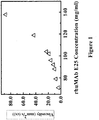
- the viscosity of E25 solution is highly dependent on the concentration of protein molecules ( Figure 1 ). It increases exponentially with increase of rhuMAb E25 concentration. At 25°C, the reconstituted rhuMAb E25 at 125 mg/ml is about 80 fold more viscous than water.
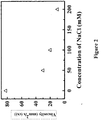
- Example 1 The lyophilized rhuMAb E25 of Example 1 was reconstituted with different concentrations of NaCl solution. The viscosity of reconstituted solution was measured at 25°C in a Cannon-Fenske Routine capillary viscometer using the same method as described in Example 1.
- rhuMAb E25 The effects of different salts on the viscosity of rhuMAb E25 solution were studied at 25°C.
- the lyophilized rhuMAb E25 was first reconstituted with SWFI to produce a solution with rhuMAb E25 at 125 mg/ml, 266 mM sucrose, 16 mM histidine, 0.03% Polysorbate 20.
- the samples were then diluted with 10 mM histidine, 250 mM sucrose, pH 6.0 to a final concentration of 40 mg/ml.
- Various concentrated salts were then added into solution to bring the final salt concentration ranging from 0 - 200 mM.
- the viscosity of solution was determined in a Cannon-Fenske Routine capillary viscometer using the same method as described in Example 1.
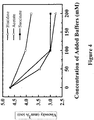
- the viscosity of solution containing either histidine or acetate buffers decreases with increasing buffer concentration up to 200 mM.
- succinate buffer the viscosity of solution decreases only at low buffer concentration ( ⁇ 100 mM), but not at high buffer concentration (>200 mM).
- Similar results have also been observed in other buffers that contain negatively charged multivalent buffer components, such as phosphate, citrate and carbonate.
- This example used a second generation of anti-IgE monoclonal antibody, rhuMAb E261 and is outside the scope of the claims.
- This antibody is homologous to rhuMAb E25 with five residue differences in CDR I region in the light chain and is described in WO 99/01556 .
- the recombinant rhuMAb E26 was also expressed in CHO cell line and purified with similar chromatography methods as described above for rhuMAb E25.
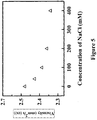
- the samples were formulated into 5 mM histidine and 275 mM sucrose with concentration of rhuMAb E25 at 21 mg/ml.
- the viscosity of samples was measured at 6°C in a Cannon-Fenske Routine capillary viscometer using the same method as described in Example 1.
- hypotonic solutions were prepared by adding small amounts of 10% acetic acid or 0.5 M arginine into an unbuffered rhuMAb E25 solution that has been concentrated to ⁇ 130 mg/ml in Milli-Q water. The final concentrations of total buffer and salt were maintained at 17.5 mM. The hypotonic solutions were then mixed with a small volume of 5 M NaCl to produce the isotonic solutions with final NaCl concentration around 150 mM NaCl.
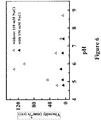
- the viscosity of solution was determined at 25°C in a Cannon-Fenske Routine capillary viscometer using the same method as described in Example 1. As shown in figure 6 , the viscosity of rhuMAb E25 solution is highly dependent on the pH of buffer, especially in very hypotonic solutions. The addition of ionic species, such as NaCl, can significantly reduce such pH effects.
- rhuMAb E25 The effects of pH on viscosity of a reconstituted anti-IgE monoclonal antibody, rhuMAb E25 have also been examined in the presence of other excipients, such as trehalose.
- the pH of solution was adjusted with 1 M NaOH.
- the viscosity of solution was determined at 25°C in a Cannon-Fenske Routine capillary viscometer using the same method as described in Example 1. The results, as shown in figure 7 , demonstrated that the viscosity of antibody can be significantly altered by pH of solution.
Landscapes
- Health & Medical Sciences (AREA)
- Chemical & Material Sciences (AREA)
- Life Sciences & Earth Sciences (AREA)
- Medicinal Chemistry (AREA)
- Epidemiology (AREA)
- Veterinary Medicine (AREA)
- Public Health (AREA)
- General Health & Medical Sciences (AREA)
- Animal Behavior & Ethology (AREA)
- Pharmacology & Pharmacy (AREA)
- Engineering & Computer Science (AREA)
- Chemical Kinetics & Catalysis (AREA)
- Oil, Petroleum & Natural Gas (AREA)
- General Chemical & Material Sciences (AREA)
- Dermatology (AREA)
- Biochemistry (AREA)
- Inorganic Chemistry (AREA)
- Proteomics, Peptides & Aminoacids (AREA)
- Molecular Biology (AREA)
- Bioinformatics & Cheminformatics (AREA)
- Immunology (AREA)
- Microbiology (AREA)
- Mycology (AREA)
- Medicines Containing Antibodies Or Antigens For Use As Internal Diagnostic Agents (AREA)
- Medicines That Contain Protein Lipid Enzymes And Other Medicines (AREA)
- Medicinal Preparation (AREA)
- Medicines Containing Material From Animals Or Micro-Organisms (AREA)
Claims (14)
- Stabile, flüssige Formulierung, umfassend einen gegen IgE gerichteten monoklonalen Antikörper in einer Menge von zumindest etwa 80 mg/ml und umfassend ein Salz und/oder einen Puffer in einer Menge von etwa 100 bis 200 mM, wobei die Formulierung eine kinematische Viskosität bei 25 °C von etwa 50 mm2/s oder weniger aufweist,
wobei das Salz und/oder der Puffer ein Puffer ist, der Arginin oder Histidin umfasst, oder wobei das Salz und/oder der Puffer Argininhydrochlorid ist
und wobei der gegen IgE gerichtete monoklonale Antikörper rhuMAb-E25 ist. - Formulierung nach Anspruch 1, wobei die Formulierung eine der folgenden Viskositäten aufweist:(a) etwa 40 mm2/s oder weniger bei 25 °C;(b) etwa 30 mm2/s oder weniger bei 25 °C;(c) etwa 20 mm2/s oder weniger bei 25 °C; oder(d) etwa 10 bis 30 mm2/s bei 25 °C.
- Formulierung nach Anspruch 1, die weiters Folgendes umfasst:(a) ein Lyoprotektans;(b) ein Lyoprotektans, das ein Zucker ist;(c) ein Lyoprotektans, das ein Zucker ist, wobei der Zucker Saccharose oder Trehalose ist; oder(d) ein Lyoprotektans, das ein Zucker ist, wobei der Zucker in einer Menge von etwa 60 bis 300 mM vorhanden ist.
- Formulierung nach Anspruch 1, wobei die Formulierung(a) eine rekonstituierte Formulierung ist; oder(b) eine rekonstituierte Formulierung ist, wobei die Proteinkonzentration in der rekonstituierten Formulierung etwa 2- bis 40-mal höher ist als die Proteinkonzentration in dem Gemisch vor der Lyophilisierung.
- Formulierung nach einem der Ansprüche 1 bis 4, die eine flüssige pharmazeutische Formulierung ist und wobei die Formulierung zur subkutanen Verabreichung geeignet ist.
- Verfahren zum Reduzieren der Viskosität einer Formulierung, enthaltend zumindest 80 mg/ml eines gegen IgE gerichteten monoklonalen Antikörpers, wobei das Verfahren die Zugabe eines Salzes und/oder eines Puffers in einer Menge von etwa 100 bis 200 mM umfasst,
wobei das Salz und/oder der Puffer ein Puffer ist, der Arginin oder Histidin umfasst, oder wobei das Salz und/oder der Puffer Argininhydrochlorid ist
und wobei der gegen IgE gerichtete monoklonale Antikörper rhuMAb-E25 ist. - Verfahren nach Anspruch 6, wobei die Formulierung Folgendes ist:(a) eine rekonstituierte Formulierung; oder(b) eine rekonstituierte Formulierung, wobei die Proteinkonzentration in der rekonstituierten Formulierung etwa 2- bis 40-mal höher ist als die Proteinkonzentration in dem Gemisch vor der Lyophilisierung.
- Verfahren nach einem der Ansprüche 6 bis 7, wobei die Viskosität der Formulierung auf etwa 50 mm2/s oder weniger bei 25 °C reduziert ist.
- Verfahren nach einem der Ansprüche 6 bis 8, wobei die Formulierung hypertonisch ist.
- Fabrikat, umfassend einen Behälter, der eine Formulierung nach Anspruch 1 enthält, und gegebenenfalls weiters umfassend Anweisungen zur Verabreichung der Formulierung.
- Verwendung eines Salzes und/oder eines Puffers, um die Viskosität einer Antikörperformulierung, umfassend zumindest 80 mg/ml eines gegen IgE gerichteten monoklonalen Antikörpers, zu reduzieren, wobei das Salz und/oder der Puffer Arginin oder Histidin in einer Menge von zumindest 50 mM umfasst,
wobei das Salz und/oder der Puffer ein Puffer ist, der Arginin oder Histidin umfasst, oder wobei das Salz und/oder der Puffer Argininhydrochlorid ist
und wobei der gegen IgE gerichtete monoklonale Antikörper rhuMAb-E25 ist. - Verwendung nach Anspruch 11, wobei die Verwendung die Viskosität der Antikörperformulierung auf 50 mm2/s oder weniger bei 25 °C reduziert.
- Formulierung nach Anspruch 1 bis 5, weiters umfassend ein Tensid.
- Formulierung nach Anspruch 1 bis 5, die hypertonisch ist.
Applications Claiming Priority (4)
| Application Number | Priority Date | Filing Date | Title |
|---|---|---|---|
| US24010700P | 2000-10-12 | 2000-10-12 | |
| US29383401P | 2001-05-24 | 2001-05-24 | |
| PCT/US2001/042487 WO2002030463A2 (en) | 2000-10-12 | 2001-10-04 | Reduced-viscosity concentrated protein formulations |
| EP01981824.4A EP1324776B2 (de) | 2000-10-12 | 2001-10-04 | Niederviskose konzentrierte proteinformulierungen |
Related Parent Applications (3)
| Application Number | Title | Priority Date | Filing Date |
|---|---|---|---|
| EP01981824.4 Division | 2001-10-04 | ||
| EP01981824.4A Division-Into EP1324776B2 (de) | 2000-10-12 | 2001-10-04 | Niederviskose konzentrierte proteinformulierungen |
| EP01981824.4A Division EP1324776B2 (de) | 2000-10-12 | 2001-10-04 | Niederviskose konzentrierte proteinformulierungen |
Publications (3)
| Publication Number | Publication Date |
|---|---|
| EP2116265A2 EP2116265A2 (de) | 2009-11-11 |
| EP2116265A3 EP2116265A3 (de) | 2011-08-31 |
| EP2116265B1 true EP2116265B1 (de) | 2020-12-23 |
Family
ID=26933147
Family Applications (2)
| Application Number | Title | Priority Date | Filing Date |
|---|---|---|---|
| EP09010433.2A Expired - Lifetime EP2116265B1 (de) | 2000-10-12 | 2001-10-04 | Niederviskose konzentrierte Proteinformulierungen |
| EP01981824.4A Expired - Lifetime EP1324776B2 (de) | 2000-10-12 | 2001-10-04 | Niederviskose konzentrierte proteinformulierungen |
Family Applications After (1)
| Application Number | Title | Priority Date | Filing Date |
|---|---|---|---|
| EP01981824.4A Expired - Lifetime EP1324776B2 (de) | 2000-10-12 | 2001-10-04 | Niederviskose konzentrierte proteinformulierungen |
Country Status (14)
| Country | Link |
|---|---|
| US (3) | US6875432B2 (de) |
| EP (2) | EP2116265B1 (de) |
| JP (2) | JP4340062B2 (de) |
| AT (1) | ATE442862T2 (de) |
| AU (2) | AU2002213441B2 (de) |
| CA (1) | CA2423227C (de) |
| CY (1) | CY1110547T1 (de) |
| DE (1) | DE60139944D1 (de) |
| DK (1) | DK1324776T4 (de) |
| ES (1) | ES2332402T5 (de) |
| IL (3) | IL155002A0 (de) |
| PT (1) | PT1324776E (de) |
| SI (1) | SI1324776T2 (de) |
| WO (1) | WO2002030463A2 (de) |
Cited By (1)
| Publication number | Priority date | Publication date | Assignee | Title |
|---|---|---|---|---|
| US12371510B2 (en) | 2004-09-09 | 2025-07-29 | Genentech, Inc. | Process for concentration of antibodies and therapeutic products thereof |
Families Citing this family (256)
| Publication number | Priority date | Publication date | Assignee | Title |
|---|---|---|---|---|
| ES2312184T3 (es) | 1997-03-21 | 2009-02-16 | Chugai Seiyaku Kabushiki Kaisha | Agentes preventivos terapeuticos para el tratamiento de esclerosis multiple, que contienen anticuerpos anti-receptores de il-6 antagonistas. |
| JP4813660B2 (ja) | 1998-11-27 | 2011-11-09 | ダーウィン ディスカバリー リミテッド | 骨鉱化作用を増加するための組成物および方法 |
| CN1245216C (zh) * | 1999-10-04 | 2006-03-15 | 希龙公司 | 稳定化的含多肽的液体药物组合物 |
| JP4340062B2 (ja) * | 2000-10-12 | 2009-10-07 | ジェネンテック・インコーポレーテッド | 粘度の減少した濃縮タンパク質製剤 |
| US8703126B2 (en) | 2000-10-12 | 2014-04-22 | Genentech, Inc. | Reduced-viscosity concentrated protein formulations |
| UA80091C2 (en) | 2001-04-02 | 2007-08-27 | Chugai Pharmaceutical Co Ltd | Remedies for infant chronic arthritis-relating diseases and still's disease which contain an interleukin-6 (il-6) antagonist |
| EP2340849A1 (de) * | 2001-05-30 | 2011-07-06 | Genentech, Inc. | Anti-NGF Antikörper zur Behandlung verschiedener Beschwerden |
| AU2006202688B2 (en) * | 2001-05-31 | 2009-01-22 | Genentech, Inc. | Stable liquid formulations of antibodies |
| GB0113179D0 (en) * | 2001-05-31 | 2001-07-25 | Novartis Ag | Organic compounds |
| US20080026068A1 (en) * | 2001-08-16 | 2008-01-31 | Baxter Healthcare S.A. | Pulmonary delivery of spherical insulin microparticles |
| ES2392073T3 (es) * | 2001-11-08 | 2012-12-04 | Abbott Biotherapeutics Corp. | Formulación farmacéutica líquida estable de anticuerpos IGG |
| NZ536475A (en) | 2002-05-24 | 2008-06-30 | Schering Corp | Neutralizing human anti-igfr antibody |
| US7425618B2 (en) * | 2002-06-14 | 2008-09-16 | Medimmune, Inc. | Stabilized anti-respiratory syncytial virus (RSV) antibody formulations |
| US20040002451A1 (en) * | 2002-06-20 | 2004-01-01 | Bruce Kerwin | Compositions of pegylated soluble tumor necrosis factor receptors and methods of preparing |
| EP1551875A4 (de) * | 2002-06-21 | 2006-06-28 | Biogen Idec Inc | Gepufferte formulierungen zur konzentrierung von antikörpern und verfahren zu deren anwendung |
| US20040033228A1 (en) | 2002-08-16 | 2004-02-19 | Hans-Juergen Krause | Formulation of human antibodies for treating TNF-alpha associated disorders |
| MY150740A (en) * | 2002-10-24 | 2014-02-28 | Abbvie Biotechnology Ltd | Low dose methods for treating disorders in which tnf? activity is detrimental |
| US20040191243A1 (en) * | 2002-12-13 | 2004-09-30 | Bei Chen | System and method for stabilizing antibodies with histidine |
| WO2004060343A1 (en) * | 2002-12-31 | 2004-07-22 | Nektar Therapeutics | Antibody-containing particles and compositions |
| DK1599222T3 (da) | 2003-01-08 | 2009-04-27 | Novartis Vaccines & Diagnostic | Stabiliserede vandige pr parater omfattende v vsfaktorvej-inhibitor (TFPI) eller v vsfaktorvej-inhibitorvariant |
| US20040208870A1 (en) * | 2003-01-30 | 2004-10-21 | Medimmune, Inc. | Stabilized high concentration anti-integrin alphanubeta3 antibody formulations |
| US20050158303A1 (en) * | 2003-04-04 | 2005-07-21 | Genentech, Inc. | Methods of treating IgE-mediated disorders comprising the administration of high concentration anti-IgE antibody formulations |
| AU2004229335C1 (en) | 2003-04-04 | 2010-06-17 | Genentech, Inc. | High concentration antibody and protein formulations |
| GB2401040A (en) * | 2003-04-28 | 2004-11-03 | Chugai Pharmaceutical Co Ltd | Method for treating interleukin-6 related diseases |
| US7381409B2 (en) | 2003-06-16 | 2008-06-03 | Celltech R&D, Inc. | Antibodies specific for sclerostin and methods of screening and use therefor |
| US7736644B2 (en) * | 2003-06-27 | 2010-06-15 | Amgen Fremont Inc. | Antibodies directed to the deletion mutants of epidermal growth factor receptor and uses thereof |
| DE10348550A1 (de) * | 2003-10-20 | 2005-06-16 | Hexal Biotech Forschungsgmbh | Stabile wässrige G-CSF-haltige Zusammensetzungen |
| CN1878570B (zh) * | 2003-11-04 | 2010-10-06 | 力奇制药公司 | 包含粒细胞集落形成刺激因子的稳定的药物组合物 |
| US20050136055A1 (en) * | 2003-12-22 | 2005-06-23 | Pfizer Inc | CD40 antibody formulation and methods |
| EP1712240B1 (de) * | 2003-12-25 | 2015-09-09 | Kyowa Hakko Kirin Co., Ltd. | Stabile medizinische zubereitung auf wasserbasis mit antikörper |
| WO2005072772A1 (en) * | 2004-01-30 | 2005-08-11 | Suomen Punainen Risti Veripalvelu | Pharmaceutical compositions |
| EP1753404A1 (de) * | 2004-05-12 | 2007-02-21 | Baxter International Inc. | Mikrokügelchen mit protein; die bei hohen konzentrationen des mittels injizierbar sind |
| US8728525B2 (en) * | 2004-05-12 | 2014-05-20 | Baxter International Inc. | Protein microspheres retaining pharmacokinetic and pharmacodynamic properties |
| WO2005112885A2 (en) * | 2004-05-12 | 2005-12-01 | Baxter International Inc. | Oligonucleotide-containing microspheres, their use for the manufacture of a medicament for treating diabetes type 1 |
| CA2566079A1 (en) * | 2004-05-12 | 2005-12-01 | Terrence L. Scott | Nucleic acid microspheres, production and delivery thereof |
| MX2007000891A (es) * | 2004-07-23 | 2007-04-18 | Genentech Inc | Cristalizacion de anticuerpos o fragmentos de ellos. |
| US7772182B2 (en) * | 2004-08-05 | 2010-08-10 | Alza Corporation | Stable suspension formulations of erythropoietin receptor agonists |
| US20060029551A1 (en) * | 2004-08-05 | 2006-02-09 | Kui Liu | Stable particle formulations of erythropoietin receptor agonists |
| TW200621282A (en) * | 2004-08-13 | 2006-07-01 | Wyeth Corp | Stabilizing formulations |
| US7572893B2 (en) * | 2004-08-17 | 2009-08-11 | Regeneron Pharmaceuticals, Inc. | IL-1 antagonist formulations |
| US7655758B2 (en) | 2004-08-17 | 2010-02-02 | Regeneron Pharmaceuticals, Inc. | Stable liquid IL-1 antagonist formulations |
| JO3000B1 (ar) | 2004-10-20 | 2016-09-05 | Genentech Inc | مركبات أجسام مضادة . |
| HUE034109T2 (en) | 2005-03-25 | 2018-01-29 | Regeneron Pharma | VEGF antagonist formulations |
| CN101198698B (zh) | 2005-03-31 | 2014-03-19 | 中外制药株式会社 | 通过调节多肽缔合制备多肽的方法 |
| US20060233810A1 (en) * | 2005-04-15 | 2006-10-19 | Yaolin Wang | Methods and compositions for treating or preventing cancer |
| US7592429B2 (en) | 2005-05-03 | 2009-09-22 | Ucb Sa | Sclerostin-binding antibody |
| EP1888637A2 (de) | 2005-05-19 | 2008-02-20 | Amgen Inc. | Zusammensetzungen und verfahren zur erhöhung der stabilität von antikörpern |
| WO2006138181A2 (en) | 2005-06-14 | 2006-12-28 | Amgen Inc. | Self-buffering protein formulations |
| US20070135343A1 (en) * | 2005-11-01 | 2007-06-14 | Wyeth | Sodium chloride solution for drug reconstitution or dilution |
| US9309316B2 (en) | 2005-12-20 | 2016-04-12 | Bristol-Myers Squibb Company | Stable subcutaneous protein formulations and uses thereof |
| JP5405122B2 (ja) * | 2005-12-21 | 2014-02-05 | ワイス・エルエルシー | 低粘度のタンパク質製剤およびその用途 |
| JP5231810B2 (ja) * | 2005-12-28 | 2013-07-10 | 中外製薬株式会社 | 抗体含有安定化製剤 |
| AR059066A1 (es) | 2006-01-27 | 2008-03-12 | Amgen Inc | Combinaciones del inhibidor de la angiopoyetina -2 (ang2) y el inhibidor del factor de crecimiento endotelial vascular (vegf) |
| JP2009525986A (ja) * | 2006-02-03 | 2009-07-16 | メディミューン,エルエルシー | タンパク質製剤 |
| EP2009101B1 (de) | 2006-03-31 | 2017-10-25 | Chugai Seiyaku Kabushiki Kaisha | Antikörpermodifikationsverfahren für die aufreinigung eines bispezifischen antikörpers |
| CN104761637B (zh) | 2006-03-31 | 2021-10-15 | 中外制药株式会社 | 调控抗体血液动力学的方法 |
| JP2009534390A (ja) * | 2006-04-21 | 2009-09-24 | アムジェン インコーポレイテッド | 生物医薬品製剤のための緩衝剤 |
| SI2944306T1 (sl) | 2006-06-16 | 2021-04-30 | Regeneron Pharmaceuticals, Inc. | Formulacije antagonista VEGF, primerne za intravitrealno dajanje |
| EP2647712A3 (de) * | 2006-08-04 | 2013-11-20 | Baxter International Inc | Zusammensetzung auf Mikrokügelchenbasis zur Vorbeugung und/oder Umkehrung einer Neuerkrankung an autoimmun bedingter Diabetes |
| JP5623743B2 (ja) | 2006-10-20 | 2014-11-12 | アムジエン・インコーポレーテツド | 安定なポリペプチド製剤 |
| EP2106261A4 (de) * | 2006-11-07 | 2010-05-26 | Merck Sharp & Dohme | Pcsk9-antagonisten |
| WO2008057459A2 (en) * | 2006-11-07 | 2008-05-15 | Merck & Co., Inc. | Antagonists of pcsk9 |
| WO2008086395A2 (en) * | 2007-01-09 | 2008-07-17 | Wyeth | Anti-il-13 antibody formulations and uses thereof |
| MX2009010179A (es) * | 2007-03-22 | 2010-03-15 | Imclone Llc | Formulaciones estables de anticuerpo. |
| BRPI0809435A2 (pt) | 2007-03-27 | 2014-09-09 | Sea Lane Biotechnologies, Llc | Constructos e bibliotecas que compreendem sequências de cadeia leve substituida de anticorpos |
| NZ598881A (en) | 2007-03-29 | 2013-11-29 | Abbvie Inc | Crystalline anti-human il-12 antibodies |
| US20100209434A1 (en) * | 2007-03-30 | 2010-08-19 | Medimmune, Llc | Antibody formulation |
| CA2682135A1 (en) * | 2007-04-17 | 2008-10-30 | Baxter International Inc. | Nucleic acid microparticles for pulmonary delivery |
| EP2152233A1 (de) | 2007-05-02 | 2010-02-17 | Novo Nordisk Health Care AG | Hochkonzentrierte faktor-vii-polypeptid-formulierungen mit einem aromatischen konservierungsmittel und einem antioxidans |
| US8198237B2 (en) * | 2007-05-15 | 2012-06-12 | Stryker Corporation | Concentrated protein preparations of bone morphogenetic proteins and methods of use thereof |
| MX2009012786A (es) * | 2007-06-01 | 2009-12-10 | Hoffmann La Roche | Purificacion de inmunoglobulina. |
| JOP20080381B1 (ar) | 2007-08-23 | 2023-03-28 | Amgen Inc | بروتينات مرتبطة بمولدات مضادات تتفاعل مع بروبروتين كونفيرتاز سيتيليزين ككسين من النوع 9 (pcsk9) |
| CL2008002775A1 (es) | 2007-09-17 | 2008-11-07 | Amgen Inc | Uso de un agente de unión a esclerostina para inhibir la resorción ósea. |
| CN101874042B9 (zh) | 2007-09-26 | 2019-01-01 | 中外制药株式会社 | 利用cdr的氨基酸取代来改变抗体等电点的方法 |
| US8637021B2 (en) * | 2007-11-12 | 2014-01-28 | Ares Trading S.A. | Formulations for TACI-immunoglobulin fusion proteins |
| US8883146B2 (en) | 2007-11-30 | 2014-11-11 | Abbvie Inc. | Protein formulations and methods of making same |
| PE20091174A1 (es) | 2007-12-27 | 2009-08-03 | Chugai Pharmaceutical Co Ltd | Formulacion liquida con contenido de alta concentracion de anticuerpo |
| WO2009086400A2 (en) * | 2007-12-28 | 2009-07-09 | Baxter International Inc. | Recombinant vwf formulations |
| US11197916B2 (en) | 2007-12-28 | 2021-12-14 | Takeda Pharmaceutical Company Limited | Lyophilized recombinant VWF formulations |
| AR070315A1 (es) | 2008-02-07 | 2010-03-31 | Merck & Co Inc | Anticuerpos 1b20 antagonistas de pcsk9 |
| AR070316A1 (es) | 2008-02-07 | 2010-03-31 | Merck & Co Inc | Antagonistas de pcsk9 (proproteina subtilisina-kexina tipo 9) |
| WO2009141418A1 (en) * | 2008-05-23 | 2009-11-26 | Novo Nordisk A/S | Formulations of peg-functionalised serine proteases with high concentrations of an aromatic preservative |
| JP5642065B2 (ja) * | 2008-05-23 | 2014-12-17 | ノボ ノルディスク ヘルス ケア アーゲー | ペグ化されたgla−ドメイン含有タンパク質を含む低粘度組成物 |
| RU2011101969A (ru) * | 2008-06-30 | 2012-08-10 | Ново Нордиск А/С (DK) | Антитела к человеческому интерлейкину-20 |
| DK2349314T3 (da) * | 2008-10-21 | 2013-05-27 | Baxter Int | Lyofiliserede præparater af rekombinant VWF |
| MX2011005672A (es) * | 2008-11-28 | 2011-06-20 | Abbott Lab | Composiciones de anticuerpo estables y metodos para estabilizar a las mismas. |
| DK2373681T3 (en) | 2008-12-10 | 2017-04-24 | Glaxosmithkline Llc | PHARMACEUTICAL COMPOSITIONS OF ALBIGLUTID |
| JO3672B1 (ar) | 2008-12-15 | 2020-08-27 | Regeneron Pharma | أجسام مضادة بشرية عالية التفاعل الكيماوي بالنسبة لإنزيم سبتيليسين كنفرتيز بروبروتين / كيكسين نوع 9 (pcsk9). |
| US20130064834A1 (en) | 2008-12-15 | 2013-03-14 | Regeneron Pharmaceuticals, Inc. | Methods for treating hypercholesterolemia using antibodies to pcsk9 |
| WO2010100135A1 (en) | 2009-03-05 | 2010-09-10 | Ablynx N.V. | Novel antigen binding dimer-complexes, methods of making/avoiding and uses thereof |
| US9265834B2 (en) | 2009-03-05 | 2016-02-23 | Ablynx N.V. | Stable formulations of polypeptides and uses thereof |
| BRPI1006519A2 (pt) | 2009-03-06 | 2016-08-09 | Genentech Inc | formulação de anticorpos |
| NZ595694A (en) * | 2009-05-04 | 2013-09-27 | Abbvie Biotechnology Ltd | Stable high protein concentration formulations of human anti-tnf-alpha-antibodies |
| JP2012526839A (ja) | 2009-05-13 | 2012-11-01 | シー レーン バイオテクノロジーズ, エルエルシー | インフルエンザウイルスに対する中和分子 |
| MX2012000100A (es) * | 2009-07-01 | 2012-04-02 | Fresenius Med Care Hldg Inc | Dispositivos de suministro de farmaco y sistemas y metodos relacionados. |
| US9345661B2 (en) | 2009-07-31 | 2016-05-24 | Genentech, Inc. | Subcutaneous anti-HER2 antibody formulations and uses thereof |
| WO2011017330A1 (en) * | 2009-08-04 | 2011-02-10 | Genentech Inc | Concentrated polypeptide formulations with reduced viscosity |
| US8221753B2 (en) | 2009-09-30 | 2012-07-17 | Tracon Pharmaceuticals, Inc. | Endoglin antibodies |
| US8454956B2 (en) * | 2009-08-31 | 2013-06-04 | National Cheng Kung University | Methods for treating rheumatoid arthritis and osteoporosis with anti-IL-20 antibodies |
| LT2805731T (lt) | 2009-09-03 | 2019-02-11 | Ablynx N.V. | Stabilios polipeptidų kompozicijos ir jų panaudojimas |
| AR078161A1 (es) | 2009-09-11 | 2011-10-19 | Hoffmann La Roche | Formulaciones farmaceuticas muy concentradas de un anticuerpo anti cd20. uso de la formulacion. metodo de tratamiento. |
| CN104928336B (zh) | 2009-10-26 | 2020-05-08 | 弗·哈夫曼-拉罗切有限公司 | 用于生产糖基化免疫球蛋白的方法 |
| JP6139885B2 (ja) * | 2009-10-26 | 2017-05-31 | ジェネンテック, インコーポレイテッド | 治療的抗IgE抗体に特異的な抗体を検出するためのアッセイ及びアナフィラキシーにおけるそれらの使用 |
| EP3409289B1 (de) * | 2010-02-26 | 2020-09-30 | Novo Nordisk A/S | Stabile, antikörperhaltige zusammensetzungen |
| RS59830B1 (sr) | 2010-03-01 | 2020-02-28 | Bayer Healthcare Llc | Optimizovana monoklonska antitela protiv inhibitora puta faktora tkiva (tfpi) |
| BR112012022223B1 (pt) * | 2010-03-01 | 2022-08-09 | Cytodyn Inc | Formulação de proteína concentrada, uso e método de preparação da mesma |
| US20110223208A1 (en) | 2010-03-09 | 2011-09-15 | Beth Hill | Non-Aqueous High Concentration Reduced Viscosity Suspension Formulations |
| US9072668B2 (en) | 2010-03-09 | 2015-07-07 | Janssen Biotech, Inc. | Non-aqueous high concentration reduced viscosity suspension formulations of antibodies |
| CA2792125C (en) | 2010-03-22 | 2019-02-12 | Genentech, Inc. | Compositions and methods useful for stabilizing protein-containing formulations |
| CN102958538A (zh) * | 2010-05-03 | 2013-03-06 | 弗·哈夫曼-拉罗切有限公司 | 用于降低含有蛋白质的制剂的粘度的组合物和方法 |
| JP2013525491A (ja) | 2010-05-04 | 2013-06-20 | グラクソスミスクライン・リミテッド・ライアビリティ・カンパニー | 心血管障害を治療または予防し心血管保護を提供する方法 |
| SMT202000095T1 (it) | 2010-05-14 | 2020-03-13 | Amgen Inc | Formulazioni di anticorpi anti-sclerostina ad alta concentrazione |
| RU2012153786A (ru) | 2010-05-28 | 2014-07-10 | Ново Нордиск А/С | Стабильные многодозовые композиции, содержащие антитело и консервант |
| AU2011274363A1 (en) * | 2010-07-02 | 2013-01-24 | Medimmune, Llc | Antibody formulations |
| EP2787007A3 (de) | 2010-11-08 | 2015-03-11 | F. Hoffmann-La Roche AG | Subkutan verabreichter ANTI-IL-6-Rezeptorantikörper |
| CN103458926B (zh) | 2010-11-11 | 2016-10-26 | 艾伯维生物技术有限公司 | 改进的高浓度抗TNF α 抗体液体制剂 |
| KR101962483B1 (ko) | 2010-11-17 | 2019-03-29 | 추가이 세이야쿠 가부시키가이샤 | 혈액응고 제viii 인자의 기능을 대체하는 기능을 갖는 다중특이성 항원 결합 분자 |
| MX385311B (es) | 2011-01-28 | 2025-03-18 | Sanofi Biotechnology | Anticuerpos humanos frente a pcsk9 para su uso en métodos de tratamiento de grupos concretos de pacientes. |
| EP2671176B1 (de) | 2011-01-31 | 2019-01-09 | Fresenius Medical Care Holdings, Inc. | Verhinderung von übermässiger freisetzung eines arzneistoffs |
| EP2673018B1 (de) | 2011-02-08 | 2019-04-10 | Fresenius Medical Care Holdings, Inc. | Magnetische sensoren und zugehörige systeme und verfahren |
| EP2681242B1 (de) | 2011-03-01 | 2018-01-24 | Amgen Inc. | Sclerostin- und dkk-1-bispezifische bindemittel |
| EP2688910B1 (de) | 2011-03-25 | 2019-05-29 | Amgen Inc. | Anti-sclerostin-antikörperkristalle und formulierungen davon |
| SG193964A1 (en) * | 2011-04-07 | 2013-11-29 | Glaxosmithkline Llc | Formulations with reduced viscosity |
| WO2012138958A1 (en) * | 2011-04-07 | 2012-10-11 | Glaxosmithkline Llc | Formulations with reduced viscosity |
| JO3283B1 (ar) | 2011-04-26 | 2018-09-16 | Sanofi Sa | تركيب يتضمن أفليبيرسيبت, حمض فولينيك, 5- فلورويوراسيل (5- Fu) وإرينوسيتان (FOLFIRI) |
| JOP20200043A1 (ar) | 2011-05-10 | 2017-06-16 | Amgen Inc | طرق معالجة أو منع الاضطرابات المختصة بالكوليسترول |
| AR087305A1 (es) | 2011-07-28 | 2014-03-12 | Regeneron Pharma | Formulaciones estabilizadas que contienen anticuerpos anti-pcsk9, metodo de preparacion y kit |
| EP2736928B1 (de) | 2011-07-28 | 2019-01-09 | i2 Pharmaceuticals, Inc. | Gegen erbb3-gerichtete sur-bindende proteine |
| SI2739311T1 (en) | 2011-08-04 | 2018-07-31 | Amgen Inc. | Method for the treatment of bone defect defects |
| KR101993488B1 (ko) | 2011-09-01 | 2019-06-26 | 추가이 세이야쿠 가부시키가이샤 | 한외여과에 의해 고도로 농축된 항체를 포함하는 조성물의 제조 방법 |
| HUE069234T2 (hu) | 2011-09-16 | 2025-02-28 | Regeneron Pharma | Eljárások lipoprotein(a)-szint csökkentésére proprotein-konvertáz szubtilizin/kexin 9 (PCSK9) inhibitorának beadásával |
| CA2853112C (en) | 2011-10-25 | 2018-08-21 | Onclave Therapeutics Limited | Antibody formulations and methods |
| WO2013063510A1 (en) * | 2011-10-28 | 2013-05-02 | Integritybio Inc. | Protein formulations containing amino acids |
| AR088579A1 (es) | 2011-10-31 | 2014-06-18 | Genentech Inc | Formulaciones de anticuerpos |
| KR20140097256A (ko) | 2011-11-02 | 2014-08-06 | 할사이온, 인크. | 상처 치료를 위한 방법들 및 조성물들 |
| EP3854433A3 (de) | 2011-11-07 | 2021-10-27 | Battelle Memorial Institute | Verfahren für therapien mit abgabe viskoser arzneimittel |
| RS53135B (sr) | 2011-11-24 | 2014-06-30 | Quimera Ingenieria Biomedica, S.L. | Kompleks dobijen iz hijaluronske kiseline ili njene soli i smeša hondroitin sulfata |
| EP2793940B1 (de) | 2011-12-22 | 2018-11-14 | i2 Pharmaceuticals, Inc. | Surrogatbindungsproteine |
| EP2797953B1 (de) | 2011-12-28 | 2020-06-03 | Amgen Inc. | Verfahren zur behandlung von alveolarknochenverlust durch verwendung von anti-sclerostin-antikörpern |
| NZ627859A (en) | 2012-01-23 | 2015-09-25 | Regeneron Pharma | Stabilized formulations containing anti-ang2 antibodies |
| US9144646B2 (en) | 2012-04-25 | 2015-09-29 | Fresenius Medical Care Holdings, Inc. | Vial spiking devices and related assemblies and methods |
| EA039663B1 (ru) | 2012-05-03 | 2022-02-24 | Амген Инк. | Применение антитела против pcsk9 для снижения сывороточного холестерина лпнп и лечения связанных с холестерином расстройств |
| PL2849723T3 (pl) | 2012-05-18 | 2018-10-31 | Genentech, Inc. | Formulacje o wysokim stężeniu przeciwciał monoklonalnych |
| AR092325A1 (es) | 2012-05-31 | 2015-04-15 | Regeneron Pharma | Formulaciones estabilizadas que contienen anticuerpos anti-dll4 y kit |
| JP6226966B2 (ja) | 2012-06-01 | 2017-11-08 | フェリング ベスローテン フェンノートシャップ | デガレリクスの製造 |
| JP6629069B2 (ja) | 2012-06-06 | 2020-01-15 | ゾエティス・エルエルシー | イヌ化抗ngf抗体およびその方法 |
| MX2014014717A (es) * | 2012-06-21 | 2015-03-06 | Ucb Pharma Sa | Formulacion farmaceutica. |
| US9925260B2 (en) | 2012-07-05 | 2018-03-27 | Ucb Pharma S.A. | Treatment for bone diseases |
| US9221904B2 (en) | 2012-07-19 | 2015-12-29 | National Cheng Kung University | Treatment of osteoarthritis using IL-20 antagonists |
| US8603470B1 (en) | 2012-08-07 | 2013-12-10 | National Cheng Kung University | Use of IL-20 antagonists for treating liver diseases |
| US8852588B2 (en) | 2012-08-07 | 2014-10-07 | National Cheng Kung University | Treating allergic airway disorders using anti-IL-20 receptor antibodies |
| FR2994390B1 (fr) | 2012-08-10 | 2014-08-15 | Adocia | Procede d'abaissement de la viscosite de solutions de proteines a concentration elevee |
| US9592297B2 (en) | 2012-08-31 | 2017-03-14 | Bayer Healthcare Llc | Antibody and protein formulations |
| US8613919B1 (en) | 2012-08-31 | 2013-12-24 | Bayer Healthcare, Llc | High concentration antibody and protein formulations |
| UA115789C2 (uk) | 2012-09-05 | 2017-12-26 | Трейкон Фармасутікалз, Інк. | Композиція антитіла до cd105 та її застосування |
| MX2015003007A (es) | 2012-09-07 | 2015-06-05 | Coherus Biosciences Inc | Formulaciones acuosas estables de adalimumab. |
| FR2995214B1 (fr) | 2012-09-10 | 2014-11-21 | Adocia | Solution a viscosite reduite de proteine a concentration elevee |
| UY35148A (es) | 2012-11-21 | 2014-05-30 | Amgen Inc | Immunoglobulinas heterodiméricas |
| US9474803B2 (en) * | 2012-11-27 | 2016-10-25 | Alteogen Inc. | Composition for stabilizing fusion protein in which protein and FC domain are fused |
| UA117466C2 (uk) | 2012-12-13 | 2018-08-10 | Мерк Шарп Енд Доме Корп. | СТАБІЛЬНИЙ СКЛАД У ВИГЛЯДІ РОЗЧИНУ АНТИТІЛА ДО IL-23p19 |
| ME03326B (de) | 2013-03-15 | 2019-10-20 | Shire Viropharma Inc | C1-inh-zusammensetzungen und verfahren zur vorbeugung und behandlung von erkrankungen im zusammenhang mit c1-esterasehemmermangel |
| WO2014141149A1 (en) * | 2013-03-15 | 2014-09-18 | Glaxosmithkline Intellectual Property (No.2) Limited | Formulations with reduced viscosity |
| US10111953B2 (en) | 2013-05-30 | 2018-10-30 | Regeneron Pharmaceuticals, Inc. | Methods for reducing remnant cholesterol and other lipoprotein fractions by administering an inhibitor of proprotein convertase subtilisin kexin-9 (PCSK9) |
| BR112015032960B1 (pt) | 2013-07-04 | 2021-01-05 | F. Hoffmann-La Roche Ag | imunoensaio suprimido por interferência para detectar anticorpos anti-fármaco em amostras de soro |
| CR20160132A (es) | 2013-08-12 | 2016-08-25 | Genentech Inc | Composiciones y método para tratar condiciones asociadas con el complemento |
| IL312865B2 (en) | 2013-09-11 | 2025-06-01 | Eagle Biologics Inc | Liquid protein formulations containing viscosity-lowering agents |
| CN105764922B (zh) | 2013-09-27 | 2020-07-17 | 中外制药株式会社 | 多肽异源多聚体的制备方法 |
| EP3068803B1 (de) | 2013-11-12 | 2021-01-20 | Sanofi Biotechnology | Dosierungsschemata zur verwendung von pcsk9 inhibitoren |
| US9051378B1 (en) | 2014-07-15 | 2015-06-09 | Kymab Limited | Targeting rare human PCSK9 variants for cholesterol treatment |
| US9017678B1 (en) | 2014-07-15 | 2015-04-28 | Kymab Limited | Method of treating rheumatoid arthritis using antibody to IL6R |
| US9034332B1 (en) | 2014-07-15 | 2015-05-19 | Kymab Limited | Precision medicine by targeting rare human PCSK9 variants for cholesterol treatment |
| US8986691B1 (en) | 2014-07-15 | 2015-03-24 | Kymab Limited | Method of treating atopic dermatitis or asthma using antibody to IL4RA |
| US9023359B1 (en) | 2014-07-15 | 2015-05-05 | Kymab Limited | Targeting rare human PCSK9 variants for cholesterol treatment |
| US8986694B1 (en) | 2014-07-15 | 2015-03-24 | Kymab Limited | Targeting human nav1.7 variants for treatment of pain |
| US9045545B1 (en) | 2014-07-15 | 2015-06-02 | Kymab Limited | Precision medicine by targeting PD-L1 variants for treatment of cancer |
| US8883157B1 (en) | 2013-12-17 | 2014-11-11 | Kymab Limited | Targeting rare human PCSK9 variants for cholesterol treatment |
| US9914769B2 (en) | 2014-07-15 | 2018-03-13 | Kymab Limited | Precision medicine for cholesterol treatment |
| US8992927B1 (en) | 2014-07-15 | 2015-03-31 | Kymab Limited | Targeting human NAV1.7 variants for treatment of pain |
| US8980273B1 (en) | 2014-07-15 | 2015-03-17 | Kymab Limited | Method of treating atopic dermatitis or asthma using antibody to IL4RA |
| US9045548B1 (en) | 2014-07-15 | 2015-06-02 | Kymab Limited | Precision Medicine by targeting rare human PCSK9 variants for cholesterol treatment |
| US8945560B1 (en) | 2014-07-15 | 2015-02-03 | Kymab Limited | Method of treating rheumatoid arthritis using antibody to IL6R |
| US9067998B1 (en) | 2014-07-15 | 2015-06-30 | Kymab Limited | Targeting PD-1 variants for treatment of cancer |
| GB201403775D0 (en) | 2014-03-04 | 2014-04-16 | Kymab Ltd | Antibodies, uses & methods |
| EP3119490B1 (de) | 2014-03-21 | 2021-09-08 | F. Hoffmann-La Roche AG | In-vitro-prognose von in-vivo-halbwertzeit von antikörpern |
| KR20160147855A (ko) | 2014-05-01 | 2016-12-23 | 제넨테크, 인크. | 항-인자 d 항체 변이체 및 이의 용도 |
| US10478498B2 (en) | 2014-06-20 | 2019-11-19 | Reform Biologics, Llc | Excipient compounds for biopolymer formulations |
| US20160074515A1 (en) * | 2014-06-20 | 2016-03-17 | Reform Biologics, Llc | Viscosity-reducing excipient compounds for protein formulations |
| US11357857B2 (en) * | 2014-06-20 | 2022-06-14 | Comera Life Sciences, Inc. | Excipient compounds for protein processing |
| US9150660B1 (en) | 2014-07-15 | 2015-10-06 | Kymab Limited | Precision Medicine by targeting human NAV1.8 variants for treatment of pain |
| US9139648B1 (en) | 2014-07-15 | 2015-09-22 | Kymab Limited | Precision medicine by targeting human NAV1.9 variants for treatment of pain |
| CN107206068A (zh) | 2014-07-16 | 2017-09-26 | 赛诺菲生物技术公司 | 用于治疗杂合型家族性高胆固醇血症(heFH)患者的方法 |
| WO2016008975A1 (en) | 2014-07-18 | 2016-01-21 | Sanofi | Method for predicting the outcome of a treatment with aflibercept of a patient suspected to suffer from a cancer |
| WO2016019969A1 (en) | 2014-08-08 | 2016-02-11 | Ludwig-Maximilians-Universität München | Subcutaneously administered bispecific antibodies for use in the treatment of cancer |
| TWI700300B (zh) | 2014-09-26 | 2020-08-01 | 日商中外製藥股份有限公司 | 中和具有第viii凝血因子(fviii)機能替代活性的物質之抗體 |
| TWI701435B (zh) | 2014-09-26 | 2020-08-11 | 日商中外製藥股份有限公司 | 測定fviii的反應性之方法 |
| SG11201702614SA (en) | 2014-10-01 | 2017-04-27 | Eagle Biolog Inc | Polysaccharide and nucleic acid formulations containing viscosity-lowering agents |
| TW201628649A (zh) | 2014-10-09 | 2016-08-16 | 再生元醫藥公司 | 減少醫藥調配物中微可見顆粒之方法 |
| KR20170065662A (ko) * | 2014-10-18 | 2017-06-13 | 화이자 인코포레이티드 | 항-il-7r 항체 조성물 |
| EP3215528B1 (de) | 2014-11-06 | 2019-08-07 | F.Hoffmann-La Roche Ag | Fc-region-varianten mit modifizierte fcrn-bindung und verfahren zur verwendung |
| WO2016077451A1 (en) | 2014-11-12 | 2016-05-19 | Tracon Pharmaceuticals, Inc. | Anti-endoglin antibodies and uses thereof |
| US9926375B2 (en) | 2014-11-12 | 2018-03-27 | Tracon Pharmaceuticals, Inc. | Anti-endoglin antibodies and uses thereof |
| MA41142A (fr) | 2014-12-12 | 2017-10-17 | Amgen Inc | Anticorps anti-sclérostine et utilisation de ceux-ci pour traiter des affections osseuses en tant qu'élements du protocole de traitement |
| AU2016210918A1 (en) | 2015-01-28 | 2017-07-13 | Pfizer Inc., | Stable aqueous anti- vascular endothelial growth factor (VEGF) antibody formulation |
| AR103726A1 (es) | 2015-02-27 | 2017-05-31 | Merck Sharp & Dohme | Cristales de anticuerpos monoclonales anti-pd-1 humanos |
| US9139653B1 (en) | 2015-04-30 | 2015-09-22 | Kymab Limited | Anti-human OX40L antibodies and methods of treatment |
| US11142587B2 (en) | 2015-04-01 | 2021-10-12 | Chugai Seiyaku Kabushiki Kaisha | Method for producing polypeptide hetero-oligomer |
| US20170007690A1 (en) * | 2015-07-07 | 2017-01-12 | Nanobio Corporation | Methods and compositions for the stabilization of anthrax recombinant protective antigen |
| EP3319930A4 (de) * | 2015-07-07 | 2019-04-10 | NanoBio Corporation | Verfahren und zusammensetzungen zur stabilisierung von proteinen |
| US11173197B2 (en) * | 2015-07-07 | 2021-11-16 | Bluewillow Biologics, Inc. | Methods and compositions for nanoemulsion vaccine formulations |
| MA42613A (fr) | 2015-08-13 | 2018-06-20 | Amgen Inc | Filtration en profondeur chargée de protéines de liaison à un antigène |
| KR20240172758A (ko) | 2015-08-18 | 2024-12-10 | 리제너론 파아마슈티컬스, 인크. | 지단백질 분리반출술을 경험하고 있는 고지혈증을 갖는 환자를 치료하기 위한 항-pcsk9 억제성 항체 |
| US11229702B1 (en) | 2015-10-28 | 2022-01-25 | Coherus Biosciences, Inc. | High concentration formulations of adalimumab |
| EP3368074A2 (de) | 2015-10-30 | 2018-09-05 | Hoffmann-La Roche AG | Anti-faktor-d-antikörper und -konjugate |
| HK1257422A1 (zh) | 2015-10-30 | 2019-10-18 | 豪夫迈‧罗氏有限公司 | 抗-因子d抗体变体缀合物及其用途 |
| WO2017110980A1 (ja) | 2015-12-25 | 2017-06-29 | 中外製薬株式会社 | 増強された活性を有する抗体及びその改変方法 |
| SG11201803989WA (en) | 2015-12-28 | 2018-06-28 | Chugai Pharmaceutical Co Ltd | Method for promoting efficiency of purification of fc region-containing polypeptide |
| GB201604124D0 (en) | 2016-03-10 | 2016-04-27 | Ucb Biopharma Sprl | Pharmaceutical formulation |
| WO2017184880A1 (en) | 2016-04-20 | 2017-10-26 | Coherus Biosciences, Inc. | A method of filling a container with no headspace |
| ES3055961T3 (en) | 2016-04-28 | 2026-02-17 | Chugai Pharmaceutical Co Ltd | Antibody-containing preparation |
| ES2770674T3 (es) | 2016-06-10 | 2020-07-02 | Octapharma Ag | Composición de inmunoglobulinas de alta concentración para aplicaciones farmacéuticas |
| JP7461741B2 (ja) | 2016-06-20 | 2024-04-04 | カイマブ・リミテッド | 抗pd-l1およびil-2サイトカイン |
| CN109415444B (zh) | 2016-07-29 | 2024-03-01 | 中外制药株式会社 | 显示增加的备选fviii辅因子功能活性的双特异性抗体 |
| US20190175683A1 (en) | 2016-08-05 | 2019-06-13 | Csl Behring Gmbh | Pharmaceutical formulations of c1 esterase inhibitor |
| KR20230041834A (ko) | 2016-08-16 | 2023-03-24 | 리제너론 파아마슈티컬스, 인크. | 혼합물로부터 개별 항체들을 정량하는 방법 |
| EP3509637B1 (de) | 2016-09-06 | 2024-11-27 | Chugai Seiyaku Kabushiki Kaisha | Verfahren zur verwendung eines bispezifischen antikörpers mit erkennung des gerinnungsfaktors ix und/oder aktivierten gerinnungsfaktors ix und gerinnungsfaktors x und/oder aktivierten gerinnungsfaktors x |
| ES3064802T3 (en) | 2016-10-21 | 2026-04-29 | Amgen Inc | Pharmaceutical formulations and methods of making the same |
| CN119492842A (zh) | 2016-10-25 | 2025-02-21 | 里珍纳龙药品有限公司 | 用于色谱数据分析的方法和系统 |
| US11779604B2 (en) | 2016-11-03 | 2023-10-10 | Kymab Limited | Antibodies, combinations comprising antibodies, biomarkers, uses and methods |
| EP3603670A4 (de) | 2017-03-31 | 2021-03-10 | Public University Corporation Nara Medical University | Medizinische zusammensetzung zur prävention und/oder behandlung von blutgerinnungsfaktor-ix-anomalie mit einer multispezifischen antigenbindenden molekülersatzfunktion des blutgerinnungsfaktors viii |
| JOP20190260A1 (ar) | 2017-05-02 | 2019-10-31 | Merck Sharp & Dohme | صيغ ثابتة لأجسام مضادة لمستقبل الموت المبرمج 1 (pd-1) وطرق استخدامها |
| RU2019138507A (ru) | 2017-05-02 | 2021-06-02 | Мерк Шарп И Доум Корп. | Составы антител против lag3 и совместные составы антител против lag3 и антител против pd-1 |
| WO2018211517A1 (en) | 2017-05-16 | 2018-11-22 | Bhami's Research Laboratory, Pvt. Ltd. | High concentration protein formulations with reduced viscosity |
| AU2018321335B2 (en) | 2017-08-22 | 2025-08-14 | Biogen Ma Inc. | Pharmaceutical compositions containing anti-beta amyloid antibodies |
| CN118416215A (zh) | 2017-09-19 | 2024-08-02 | 里珍纳龙药品有限公司 | 减少粒子形成的方法以及由其形成的组合物 |
| JP6496095B1 (ja) | 2017-09-29 | 2019-04-03 | 中外製薬株式会社 | 血液凝固第viii因子(fviii)補因子機能代替活性を有する多重特異性抗原結合分子および当該分子を有効成分として含有する薬学的製剤 |
| TW202600611A (zh) | 2017-11-01 | 2026-01-01 | 日商中外製藥股份有限公司 | 生物活性降低之抗體變異體與同功型 |
| HRP20260414T1 (hr) | 2018-03-30 | 2026-05-08 | Amgen Inc. | C-terminalne varijante protutijela |
| CN111989121B (zh) * | 2018-04-16 | 2024-08-13 | 默克专利股份有限公司 | 高浓缩蛋白质制剂的粘度降低 |
| TW202016125A (zh) * | 2018-05-10 | 2020-05-01 | 美商再生元醫藥公司 | 用於定量及調節蛋白質黏度之系統與方法 |
| JP7235770B2 (ja) | 2018-05-10 | 2023-03-08 | リジェネロン・ファーマシューティカルズ・インコーポレイテッド | 高濃度vegf受容体融合タンパク質を含む製剤 |
| TWI853823B (zh) | 2018-07-02 | 2024-09-01 | 美商里珍納龍藥品有限公司 | 自混合物製備多肽之系統及方法 |
| TW202011995A (zh) * | 2018-07-03 | 2020-04-01 | 比利時商葛萊伯格有限公司 | 高濃度液體抗體配製物 |
| IL267923B2 (en) | 2018-08-02 | 2023-06-01 | Grifols Worldwide Operations Ltd | The composition containing the most concentrated alpha-1 type protein inhibitor and a method for obtaining it |
| CN113056482A (zh) | 2018-10-18 | 2021-06-29 | 默沙东公司 | 抗rsv抗体的制剂及其使用方法 |
| CN120842406A (zh) | 2018-10-31 | 2025-10-28 | 默沙东有限责任公司 | 抗人pd-1抗体晶体及其使用方法 |
| KR20210089215A (ko) | 2018-11-07 | 2021-07-15 | 머크 샤프 앤드 돔 코포레이션 | 항-lag3 항체 및 항-pd-1 항체의 공동-제제 |
| EP3934620A1 (de) | 2019-03-05 | 2022-01-12 | Regeneron Pharmaceuticals, Inc. | Humanserumalbumin in formulierungen |
| CA3152838A1 (en) * | 2019-08-30 | 2021-03-04 | Kashiv Biosciences, Llc | Novel formulation of highly concentrated pharmacologically active antibody |
| EP3808777A1 (de) | 2019-10-16 | 2021-04-21 | Glenmark Specialty S.A. | Stabile flüssige antikörperformulierungen |
| IL299671A (en) | 2020-07-13 | 2023-03-01 | Merck Patent Gmbh | Viscosity-reducing excipients and their combinations for high-concentration protein formulations |
| IL300133A (en) | 2020-07-31 | 2023-03-01 | Genentech Inc | Anti-integrin antibody compositions in cell 7 and devices |
| CA3254142A1 (en) * | 2022-03-15 | 2023-09-21 | Adrenomed Ag | STABLE AQUEOUS FORMULATION OF AN ANTI-ADRENOMEDULLIN (ADM) ANTIBODY OR AN ANTI-ADM ANTIBODY FRAGMENT |
| CN121568965A (zh) * | 2023-07-28 | 2026-02-24 | 诺华股份有限公司 | 奥马珠单抗的新用途 |
| CA3237624A1 (en) * | 2023-07-28 | 2025-04-24 | Genentech, Inc. | NEW USES FOR OMALIZUMAB |
| WO2025131987A1 (en) | 2023-12-18 | 2025-06-26 | Merck Patent Gmbh | Viscosity reducing excipients and combinations thereof for liquid compositions comprising a protein |
| DE202024000928U1 (de) | 2024-05-10 | 2024-05-16 | Genentech, Inc. | Omalizumab-Spritze |
Citations (2)
| Publication number | Priority date | Publication date | Assignee | Title |
|---|---|---|---|---|
| WO1997004807A1 (en) * | 1995-07-27 | 1997-02-13 | Genentech, Inc. | Methods for treatment of allergic asthma |
| US5608038A (en) * | 1993-12-28 | 1997-03-04 | Immuno Aktiengesellschaft | Highly concentrated immunoglobulin preparation and method for its production |
Family Cites Families (98)
| Publication number | Priority date | Publication date | Assignee | Title |
|---|---|---|---|---|
| US55571A (en) * | 1866-06-12 | Improvement in screw-cutters | ||
| US92607A (en) * | 1869-07-13 | hamilton | ||
| CA1064396A (en) | 1975-02-18 | 1979-10-16 | Myer L. Coval | Fractional precipitation of gamma globulin with polyethylene glycol |
| US4075193A (en) * | 1976-11-26 | 1978-02-21 | Parke, Davis & Company | Process for producing intravenous immune globulin |
| FR2413974A1 (fr) | 1978-01-06 | 1979-08-03 | David Bernard | Sechoir pour feuilles imprimees par serigraphie |
| AT359641B (de) | 1978-09-19 | 1980-11-25 | Immuno Ag | Verfahren zur herstellung eines intravenoes ver- abreichbaren antikoerperhaeltigen immunglobulin- praeparates |
| US4374763A (en) * | 1979-09-17 | 1983-02-22 | Morishita Pharmaceutical Co., Ltd. | Method for producing gamma-globulin for use in intravenous administration and method for producing a pharmaceutical preparation thereof |
| WO1981001145A1 (en) | 1979-10-18 | 1981-04-30 | Univ Illinois | Hydrolytic enzyme-activatible pro-drugs |
| US4399216A (en) | 1980-02-25 | 1983-08-16 | The Trustees Of Columbia University | Processes for inserting DNA into eucaryotic cells and for producing proteinaceous materials |
| US4499073A (en) | 1981-08-24 | 1985-02-12 | Cutter Laboratories, Inc. | Intravenously injectable immune serum globulin |
| AU2353384A (en) | 1983-01-19 | 1984-07-26 | Genentech Inc. | Amplification in eukaryotic host cells |
| US4816567A (en) | 1983-04-08 | 1989-03-28 | Genentech, Inc. | Recombinant immunoglobin preparations |
| JPH063994B2 (ja) | 1984-10-05 | 1994-01-12 | 株式会社日立製作所 | 複数台デイジタルサーボの制御方法 |
| US4597966A (en) | 1985-01-09 | 1986-07-01 | Ortho Diagnostic Systems, Inc. | Histidine stabilized immunoglobulin and method of preparation |
| US4676980A (en) | 1985-09-23 | 1987-06-30 | The United States Of America As Represented By The Secretary Of The Department Of Health And Human Services | Target specific cross-linked heteroantibodies |
| IL85035A0 (en) | 1987-01-08 | 1988-06-30 | Int Genetic Eng | Polynucleotide molecule,a chimeric antibody with specificity for human b cell surface antigen,a process for the preparation and methods utilizing the same |
| GB8705477D0 (en) | 1987-03-09 | 1987-04-15 | Carlton Med Prod | Drug delivery systems |
| US4940782A (en) | 1987-06-08 | 1990-07-10 | G. D. Searle & Co. | Monoclonal antibodies against IgE-associated determinants, hybrid cell lines producing these antibodies, and use therefore |
| US4975278A (en) | 1988-02-26 | 1990-12-04 | Bristol-Myers Company | Antibody-enzyme conjugates in combination with prodrugs for the delivery of cytotoxic agents to tumor cells |
| ATE82506T1 (de) | 1987-08-21 | 1992-12-15 | Imcera Group Inc | Stabilisierung von wachstumshormonen. |
| DE3850542T2 (de) | 1987-09-23 | 1994-11-24 | Bristol Myers Squibb Co | Antikörper-Heterokonjugate zur Töting von HIV-infizierten Zellen. |
| US4877608A (en) | 1987-11-09 | 1989-10-31 | Rorer Pharmaceutical Corporation | Pharmaceutical plasma protein formulations in low ionic strength media |
| KR0154872B1 (ko) | 1987-12-21 | 1998-10-15 | 로버트 에이. 아미테이지 | 발아하는 식물종자의 아크로박테리움 매개된 형질전환 |
| CA1331133C (en) | 1988-03-01 | 1994-08-02 | Michael Jon Pikal | Pharmaceutical growth hormone formulations |
| EP0365685B1 (de) | 1988-03-30 | 1995-01-18 | Toray Industries, Inc. | Gefriergetrocknete Zusammensetzung, die ein mit Meerrettichperoxydase markiertes Fab'-Fragment eines gegen menschliches Beta-Interferon gerichteten Antikörpers und Trehalose enthält; EIA Kit, der diese Zusammensetzung enthält |
| US5215743A (en) | 1988-04-13 | 1993-06-01 | Maninder Singh | Tumor necrosis factor formulations |
| US5096885A (en) | 1988-04-15 | 1992-03-17 | Genentech, Inc. | Human growth hormone formulation |
| GB2218703B (en) | 1988-05-10 | 1992-10-28 | Sumitomo Chemical Co | Human monoclonal antibody to p.aeruginosa: its production and use |
| WO1989011297A1 (en) | 1988-05-27 | 1989-11-30 | Centocor, Inc. | Freeze-dried formulation for antibody products |
| GB8823869D0 (en) | 1988-10-12 | 1988-11-16 | Medical Res Council | Production of antibodies |
| US5036050A (en) * | 1989-01-12 | 1991-07-30 | Immunobiology Research Institute, Inc. | Compositions containing thymopentin for topical treatment of skin disorders |
| CA2049342A1 (en) | 1989-03-27 | 1990-09-28 | Sally Bolmer | Formulations for stabilizing of igm antibodies |
| ZA902663B (en) | 1989-04-07 | 1991-12-24 | Syntex Inc | Interleukin-1 formulation |
| DE3920358A1 (de) | 1989-06-22 | 1991-01-17 | Behringwerke Ag | Bispezifische und oligospezifische, mono- und oligovalente antikoerperkonstrukte, ihre herstellung und verwendung |
| EP0479909B1 (de) | 1989-06-29 | 1996-10-30 | Medarex, Inc. | Bispezifische reagenzien für die aids-therapie |
| DE4001451A1 (de) | 1990-01-19 | 1991-08-01 | Octapharma Ag | Stabile injizierbare loesungen von faktor viii und faktor ix |
| ATE204902T1 (de) | 1990-06-29 | 2001-09-15 | Large Scale Biology Corp | Melaninproduktion durch transformierte mikroorganismen |
| AU8507191A (en) | 1990-08-29 | 1992-03-30 | Genpharm International, Inc. | Transgenic non-human animals capable of producing heterologous antibodies |
| US5661016A (en) | 1990-08-29 | 1997-08-26 | Genpharm International Inc. | Transgenic non-human animals capable of producing heterologous antibodies of various isotypes |
| US5625126A (en) | 1990-08-29 | 1997-04-29 | Genpharm International, Inc. | Transgenic non-human animals for producing heterologous antibodies |
| US5633425A (en) | 1990-08-29 | 1997-05-27 | Genpharm International, Inc. | Transgenic non-human animals capable of producing heterologous antibodies |
| US5545806A (en) | 1990-08-29 | 1996-08-13 | Genpharm International, Inc. | Ransgenic non-human animals for producing heterologous antibodies |
| JPH0565233A (ja) | 1991-03-08 | 1993-03-19 | Mitsui Toatsu Chem Inc | モノクローナル抗体含有凍結乾燥製剤 |
| WO1992017207A1 (en) | 1991-03-26 | 1992-10-15 | Tanox Biosystems, Inc. | MONOCLONAL ANTIBODIES WHICH BIND TO SECRETED AND MEMBRANE-BOUND IgE, BUT NOT TO IgE ON BASOPHILS |
| WO1992020373A1 (en) | 1991-05-14 | 1992-11-26 | Repligen Corporation | Heteroconjugate antibodies for treatment of hiv infection |
| ATE255131T1 (de) | 1991-06-14 | 2003-12-15 | Genentech Inc | Humanisierter heregulin antikörper |
| JP2966592B2 (ja) | 1991-07-20 | 1999-10-25 | 萩原 義秀 | 安定化されたヒトモノクローナル抗体製剤 |
| US6329509B1 (en) | 1991-08-14 | 2001-12-11 | Genentech, Inc. | Anti-IgE antibodies |
| US6699472B2 (en) | 1991-08-14 | 2004-03-02 | Genentech, Inc. | Method of treating allergic disorders |
| DK0602126T3 (da) | 1991-08-14 | 2003-06-16 | Genentech Inc | Immunoglobulinvarianter til specifikke FC epsilon-receptorer |
| GB9120304D0 (en) | 1991-09-24 | 1991-11-06 | Erba Carlo Spa | Stable pharmaceutical compositions containing a granulocyte macrophage colony stimulating factor |
| WO1993008829A1 (en) | 1991-11-04 | 1993-05-13 | The Regents Of The University Of California | Compositions that mediate killing of hiv-infected cells |
| DE69233528T2 (de) | 1991-11-25 | 2006-03-16 | Enzon, Inc. | Verfahren zur Herstellung von multivalenten antigenbindenden Proteinen |
| US5849700A (en) | 1991-12-20 | 1998-12-15 | Novo Nordisk A/S | Pharmaceutical formulation |
| CH684164A5 (de) | 1992-01-10 | 1994-07-29 | Rotkreuzstiftung Zentrallab | Intravenös anwendbare Immunglobulinlösung. |
| DE69333928T2 (de) | 1992-04-30 | 2006-08-17 | Probitas Pharma Inc., Los Angeles | Verbesserte solubilisierung und stabilisierung des faktor viii-komplexes |
| EP0656064B1 (de) | 1992-08-17 | 1997-03-05 | Genentech, Inc. | Bispezifische immunoadhesine |
| US5445017A (en) | 1993-08-24 | 1995-08-29 | Mita Industrial Co., Ltd. | Motor start examining device and method |
| ATE401394T1 (de) | 1994-03-04 | 2008-08-15 | Genentech Inc | Verbesserte dnase flüssige lösungen |
| US5580856A (en) | 1994-07-15 | 1996-12-03 | Prestrelski; Steven J. | Formulation of a reconstituted protein, and method and kit for the production thereof |
| GB9418092D0 (en) * | 1994-09-08 | 1994-10-26 | Red Cross Found Cent Lab Blood | Organic compounds |
| US5783738A (en) | 1994-12-28 | 1998-07-21 | Rhone-Poulenc Chimie | Optically active diphosphines, preparation thereof according to a process for the resolution of the racemic mixture and use thereof |
| US5731168A (en) | 1995-03-01 | 1998-03-24 | Genentech, Inc. | Method for making heteromultimeric polypeptides |
| US6037453A (en) | 1995-03-15 | 2000-03-14 | Genentech, Inc. | Immunoglobulin variants |
| US5641870A (en) | 1995-04-20 | 1997-06-24 | Genentech, Inc. | Low pH hydrophobic interaction chromatography for antibody purification |
| US6685940B2 (en) | 1995-07-27 | 2004-02-03 | Genentech, Inc. | Protein formulation |
| US6267958B1 (en) * | 1995-07-27 | 2001-07-31 | Genentech, Inc. | Protein formulation |
| CA2226575C (en) | 1995-07-27 | 2011-10-18 | Genentech, Inc. | Stabile isotonic lyophilized protein formulation |
| US6686191B1 (en) | 1995-09-22 | 2004-02-03 | Bayer Healthcare Llc | Preparation of virally inactivated intravenously injectable immune serum globulin |
| JP2904071B2 (ja) | 1995-10-04 | 1999-06-14 | 日本電気株式会社 | 半導体装置 |
| PL328199A1 (en) * | 1996-01-25 | 1999-01-18 | Schering Ag | Improved concentrated intravascular injection and infusion solutions |
| US5770700A (en) | 1996-01-25 | 1998-06-23 | Genetics Institute, Inc. | Liquid factor IX formulations |
| KR100236393B1 (ko) | 1996-02-02 | 1999-12-15 | 나까니시 히로유끼 | 사람성장호르몬을 함유하는 의약제제 |
| CA2244664C (en) | 1996-02-09 | 2008-06-03 | Amgen Inc. | Composition comprising interleukin-1 inhibitor and controlled release polymer |
| TW518219B (en) | 1996-04-26 | 2003-01-21 | Chugai Pharmaceutical Co Ltd | Erythropoietin solution preparation |
| GB9610992D0 (en) * | 1996-05-24 | 1996-07-31 | Glaxo Group Ltd | Concentrated antibody preparation |
| US5994511A (en) | 1997-07-02 | 1999-11-30 | Genentech, Inc. | Anti-IgE antibodies and methods of improving polypeptides |
| US6172213B1 (en) | 1997-07-02 | 2001-01-09 | Genentech, Inc. | Anti-IgE antibodies and method of improving polypeptides |
| US6096872A (en) * | 1997-10-14 | 2000-08-01 | Ortho Diagnostic Systems, Inc. | Viral clearance process |
| US6057505A (en) * | 1997-11-21 | 2000-05-02 | Ortabasi; Ugur | Space concentrator for advanced solar cells |
| US6541606B2 (en) | 1997-12-31 | 2003-04-01 | Altus Biologics Inc. | Stabilized protein crystals formulations containing them and methods of making them |
| WO2000015260A1 (en) | 1998-09-16 | 2000-03-23 | Tanox, Inc. | Anti-ige gene therapy |
| GB9820525D0 (en) | 1998-09-21 | 1998-11-11 | Allergy Therapeutics Ltd | Formulation |
| JP2000247903A (ja) | 1999-03-01 | 2000-09-12 | Chugai Pharmaceut Co Ltd | 長期安定化製剤 |
| CN1245216C (zh) | 1999-10-04 | 2006-03-15 | 希龙公司 | 稳定化的含多肽的液体药物组合物 |
| GB0023383D0 (en) | 2000-09-23 | 2000-11-08 | Synprotec Ltd | 3,5-Bis (Trifluormethyl)Benzene derivatives |
| JPWO2002030464A1 (ja) | 2000-10-11 | 2004-02-19 | 江頭 健輔 | 新規肝疾患用薬 |
| JP4340062B2 (ja) | 2000-10-12 | 2009-10-07 | ジェネンテック・インコーポレーテッド | 粘度の減少した濃縮タンパク質製剤 |
| KR20100031769A (ko) | 2000-12-28 | 2010-03-24 | 알투스 파마슈티컬스 인코포레이티드 | 전항체 및 이의 단편의 결정과 이의 제조 및 사용 방법 |
| GB0113179D0 (en) * | 2001-05-31 | 2001-07-25 | Novartis Ag | Organic compounds |
| AU2002324556A1 (en) | 2001-07-25 | 2003-02-17 | Protein Design Labs, Inc. | Stable lyophilized pharmaceutical formulation of igg antibodies |
| JP2005523882A (ja) * | 2001-10-16 | 2005-08-11 | アールエックスキネティックス,インコーポレイテッド | 高濃度タンパク質製剤および製造の方法 |
| ES2392073T3 (es) | 2001-11-08 | 2012-12-04 | Abbott Biotherapeutics Corp. | Formulación farmacéutica líquida estable de anticuerpos IGG |
| US20040191243A1 (en) | 2002-12-13 | 2004-09-30 | Bei Chen | System and method for stabilizing antibodies with histidine |
| AU2004229335C1 (en) | 2003-04-04 | 2010-06-17 | Genentech, Inc. | High concentration antibody and protein formulations |
| US20050158303A1 (en) | 2003-04-04 | 2005-07-21 | Genentech, Inc. | Methods of treating IgE-mediated disorders comprising the administration of high concentration anti-IgE antibody formulations |
| US20060051347A1 (en) * | 2004-09-09 | 2006-03-09 | Winter Charles M | Process for concentration of antibodies and therapeutic products thereof |
| JP6044754B2 (ja) | 2012-01-19 | 2016-12-14 | 株式会社ジェイテクト | クラッチプレートおよびその製造方法 |
-
2001
- 2001-10-04 JP JP2002533902A patent/JP4340062B2/ja not_active Expired - Lifetime
- 2001-10-04 US US09/971,511 patent/US6875432B2/en not_active Expired - Lifetime
- 2001-10-04 AT AT01981824T patent/ATE442862T2/de active
- 2001-10-04 CA CA2423227A patent/CA2423227C/en not_active Expired - Lifetime
- 2001-10-04 AU AU2002213441A patent/AU2002213441B2/en not_active Expired
- 2001-10-04 WO PCT/US2001/042487 patent/WO2002030463A2/en not_active Ceased
- 2001-10-04 ES ES01981824.4T patent/ES2332402T5/es not_active Expired - Lifetime
- 2001-10-04 PT PT01981824T patent/PT1324776E/pt unknown
- 2001-10-04 AU AU1344102A patent/AU1344102A/xx active Pending
- 2001-10-04 EP EP09010433.2A patent/EP2116265B1/de not_active Expired - Lifetime
- 2001-10-04 DK DK01981824.4T patent/DK1324776T4/en active
- 2001-10-04 DE DE60139944T patent/DE60139944D1/de not_active Expired - Lifetime
- 2001-10-04 EP EP01981824.4A patent/EP1324776B2/de not_active Expired - Lifetime
- 2001-10-04 IL IL15500201A patent/IL155002A0/xx unknown
- 2001-10-04 SI SI200130952T patent/SI1324776T2/en unknown
-
2003
- 2003-03-19 IL IL155002A patent/IL155002A/en active IP Right Grant
-
2005
- 2005-02-28 US US11/068,553 patent/US7666413B2/en not_active Expired - Lifetime
-
2006
- 2006-12-15 US US11/611,751 patent/US8142776B2/en not_active Expired - Fee Related
-
2009
- 2009-02-26 JP JP2009044568A patent/JP2009167190A/ja not_active Withdrawn
- 2009-11-10 CY CY20091101163T patent/CY1110547T1/el unknown
-
2014
- 2014-03-24 IL IL231675A patent/IL231675A/en active IP Right Grant
Patent Citations (2)
| Publication number | Priority date | Publication date | Assignee | Title |
|---|---|---|---|---|
| US5608038A (en) * | 1993-12-28 | 1997-03-04 | Immuno Aktiengesellschaft | Highly concentrated immunoglobulin preparation and method for its production |
| WO1997004807A1 (en) * | 1995-07-27 | 1997-02-13 | Genentech, Inc. | Methods for treatment of allergic asthma |
Non-Patent Citations (3)
| Title |
|---|
| LIU J ET AL: "Reversible self-association increases the viscosity of a concentrated monoclonal antibody in aqueous solution", JOURNAL OF PHARMACEUTICAL SCIENCES, AMERICAN PHARMACEUTICAL ASSOCIATION, WASHINGTON, US, vol. 94, no. 9, 1 September 2005 (2005-09-01), pages 1928 - 1940, XP002475004, ISSN: 0022-3549, DOI: 10.1002/JPS.20347 * |
| SONOKO KANAI ET AL: "Reversible self-association of a concentrated monoclonal antibody solution mediated by Fab-Fab interaction that impacts solution viscosity", JOURNAL OF PHARMACEUTICAL SCIENCES, vol. 97, no. 10, 1 October 2008 (2008-10-01), pages 4219 - 4227, XP055136635, ISSN: 0022-3549, DOI: 10.1002/jps.21322 * |
| WANG N ET AL: "Opalescence of an IgGi monoclonal antibody formulation is mediated by ionic strength and excipients", BIOPHARM INTERNATI, ADVANSTAR COMMUNICATIONS, DULUTH, MN, US, vol. 22, no. 4, 1 April 2009 (2009-04-01), pages 36, 38, XP009135671, ISSN: 1542-166X * |
Cited By (1)
| Publication number | Priority date | Publication date | Assignee | Title |
|---|---|---|---|---|
| US12371510B2 (en) | 2004-09-09 | 2025-07-29 | Genentech, Inc. | Process for concentration of antibodies and therapeutic products thereof |
Also Published As
Similar Documents
| Publication | Publication Date | Title |
|---|---|---|
| EP1324776B1 (de) | Niederviskose konzentrierte proteinformulierungen | |
| US20190231875A1 (en) | Reduced-viscosity concentrated protein formulations | |
| AU2002213441A1 (en) | Reduced-viscosity concentrated protein formulations | |
| US6267958B1 (en) | Protein formulation | |
| US7060268B2 (en) | Protein formulation | |
| EP1516628B1 (de) | Stabile isotonische lyophilisierte Proteinzusammensetzung | |
| US20130058958A1 (en) | Compositions and methods useful for reducing the viscosity of protein-containing formulations | |
| US20090280129A1 (en) | High concentration antibody and protein formulations | |
| CA2751188A1 (en) | Reduced-viscosity concentrated protein formulations | |
| HK1135918A (en) | Reduced-viscosity concentrated protein formulations |
Legal Events
| Date | Code | Title | Description |
|---|---|---|---|
| PUAI | Public reference made under article 153(3) epc to a published international application that has entered the european phase |
Free format text: ORIGINAL CODE: 0009012 |
|
| 17P | Request for examination filed |
Effective date: 20090828 |
|
| AC | Divisional application: reference to earlier application |
Ref document number: 1324776 Country of ref document: EP Kind code of ref document: P |
|
| AK | Designated contracting states |
Kind code of ref document: A2 Designated state(s): AT BE CH CY DE DK ES FI FR GB GR IE IT LI LU MC NL PT SE TR |
|
| REG | Reference to a national code |
Ref country code: HK Ref legal event code: DE Ref document number: 1135918 Country of ref document: HK |
|
| PUAL | Search report despatched |
Free format text: ORIGINAL CODE: 0009013 |
|
| AK | Designated contracting states |
Kind code of ref document: A3 Designated state(s): AT BE CH CY DE DK ES FI FR GB GR IE IT LI LU MC NL PT SE TR |
|
| AX | Request for extension of the european patent |
Extension state: AL LT LV MK RO SI |
|
| RIC1 | Information provided on ipc code assigned before grant |
Ipc: A61K 39/395 20060101ALI20110728BHEP Ipc: A61K 47/18 20060101ALI20110728BHEP Ipc: A61K 47/12 20060101ALI20110728BHEP Ipc: A61K 47/02 20060101AFI20110728BHEP |
|
| 17Q | First examination report despatched |
Effective date: 20141028 |
|
| STAA | Information on the status of an ep patent application or granted ep patent |
Free format text: STATUS: EXAMINATION IS IN PROGRESS |
|
| GRAP | Despatch of communication of intention to grant a patent |
Free format text: ORIGINAL CODE: EPIDOSNIGR1 |
|
| STAA | Information on the status of an ep patent application or granted ep patent |
Free format text: STATUS: GRANT OF PATENT IS INTENDED |
|
| INTG | Intention to grant announced |
Effective date: 20200706 |
|
| GRAS | Grant fee paid |
Free format text: ORIGINAL CODE: EPIDOSNIGR3 |
|
| GRAA | (expected) grant |
Free format text: ORIGINAL CODE: 0009210 |
|
| STAA | Information on the status of an ep patent application or granted ep patent |
Free format text: STATUS: THE PATENT HAS BEEN GRANTED |
|
| AC | Divisional application: reference to earlier application |
Ref document number: 1324776 Country of ref document: EP Kind code of ref document: P |
|
| AK | Designated contracting states |
Kind code of ref document: B1 Designated state(s): AT BE CH CY DE DK ES FI FR GB GR IE IT LI LU MC NL PT SE TR |
|
| AX | Request for extension of the european patent |
Extension state: AL LT LV MK RO SI |
|
| REG | Reference to a national code |
Ref country code: GB Ref legal event code: FG4D |
|
| REG | Reference to a national code |
Ref country code: DE Ref legal event code: R096 Ref document number: 60151316 Country of ref document: DE |
|
| REG | Reference to a national code |
Ref country code: AT Ref legal event code: REF Ref document number: 1347076 Country of ref document: AT Kind code of ref document: T Effective date: 20210115 |
|
| REG | Reference to a national code |
Ref country code: IE Ref legal event code: FG4D |
|
| PG25 | Lapsed in a contracting state [announced via postgrant information from national office to epo] |
Ref country code: GR Free format text: LAPSE BECAUSE OF FAILURE TO SUBMIT A TRANSLATION OF THE DESCRIPTION OR TO PAY THE FEE WITHIN THE PRESCRIBED TIME-LIMIT Effective date: 20210324 Ref country code: FI Free format text: LAPSE BECAUSE OF FAILURE TO SUBMIT A TRANSLATION OF THE DESCRIPTION OR TO PAY THE FEE WITHIN THE PRESCRIBED TIME-LIMIT Effective date: 20201223 |
|
| REG | Reference to a national code |
Ref country code: AT Ref legal event code: MK05 Ref document number: 1347076 Country of ref document: AT Kind code of ref document: T Effective date: 20201223 |
|
| REG | Reference to a national code |
Ref country code: NL Ref legal event code: MP Effective date: 20201223 |
|
| PG25 | Lapsed in a contracting state [announced via postgrant information from national office to epo] |
Ref country code: SE Free format text: LAPSE BECAUSE OF FAILURE TO SUBMIT A TRANSLATION OF THE DESCRIPTION OR TO PAY THE FEE WITHIN THE PRESCRIBED TIME-LIMIT Effective date: 20201223 |
|
| PG25 | Lapsed in a contracting state [announced via postgrant information from national office to epo] |
Ref country code: NL Free format text: LAPSE BECAUSE OF FAILURE TO SUBMIT A TRANSLATION OF THE DESCRIPTION OR TO PAY THE FEE WITHIN THE PRESCRIBED TIME-LIMIT Effective date: 20201223 |
|
| REG | Reference to a national code |
Ref country code: LT Ref legal event code: MG4D |
|
| PG25 | Lapsed in a contracting state [announced via postgrant information from national office to epo] |
Ref country code: PT Free format text: LAPSE BECAUSE OF FAILURE TO SUBMIT A TRANSLATION OF THE DESCRIPTION OR TO PAY THE FEE WITHIN THE PRESCRIBED TIME-LIMIT Effective date: 20210423 |
|
| PG25 | Lapsed in a contracting state [announced via postgrant information from national office to epo] |
Ref country code: AT Free format text: LAPSE BECAUSE OF FAILURE TO SUBMIT A TRANSLATION OF THE DESCRIPTION OR TO PAY THE FEE WITHIN THE PRESCRIBED TIME-LIMIT Effective date: 20201223 |
|
| REG | Reference to a national code |
Ref country code: DE Ref legal event code: R097 Ref document number: 60151316 Country of ref document: DE |
|
| REG | Reference to a national code |
Ref country code: DE Ref legal event code: R071 Ref document number: 60151316 Country of ref document: DE |
|
| REG | Reference to a national code |
Ref country code: CH Ref legal event code: PL |
|
| REG | Reference to a national code |
Ref country code: BE Ref legal event code: MK Effective date: 20211004 |
|
| PG25 | Lapsed in a contracting state [announced via postgrant information from national office to epo] |
Ref country code: IT Free format text: LAPSE BECAUSE OF FAILURE TO SUBMIT A TRANSLATION OF THE DESCRIPTION OR TO PAY THE FEE WITHIN THE PRESCRIBED TIME-LIMIT Effective date: 20201223 |
|
| PLBE | No opposition filed within time limit |
Free format text: ORIGINAL CODE: 0009261 |
|
| STAA | Information on the status of an ep patent application or granted ep patent |
Free format text: STATUS: NO OPPOSITION FILED WITHIN TIME LIMIT |
|
| REG | Reference to a national code |
Ref country code: IE Ref legal event code: MK9A |
|
| PG25 | Lapsed in a contracting state [announced via postgrant information from national office to epo] |
Ref country code: ES Free format text: LAPSE BECAUSE OF FAILURE TO SUBMIT A TRANSLATION OF THE DESCRIPTION OR TO PAY THE FEE WITHIN THE PRESCRIBED TIME-LIMIT Effective date: 20201223 Ref country code: DK Free format text: LAPSE BECAUSE OF FAILURE TO SUBMIT A TRANSLATION OF THE DESCRIPTION OR TO PAY THE FEE WITHIN THE PRESCRIBED TIME-LIMIT Effective date: 20201223 |
|
| 26N | No opposition filed |
Effective date: 20210924 |
|
| REG | Reference to a national code |
Ref country code: GB Ref legal event code: PE20 Expiry date: 20211003 |
|
| PG25 | Lapsed in a contracting state [announced via postgrant information from national office to epo] |
Ref country code: GB Free format text: LAPSE BECAUSE OF EXPIRATION OF PROTECTION Effective date: 20211003 Ref country code: IE Free format text: LAPSE BECAUSE OF EXPIRATION OF PROTECTION Effective date: 20211004 |
|
| REG | Reference to a national code |
Ref country code: HK Ref legal event code: WD Ref document number: 1135918 Country of ref document: HK |