EP2132177B1 - Inhibiteurs de pim kinase et procédés de leur utilisation - Google Patents
Inhibiteurs de pim kinase et procédés de leur utilisation Download PDFInfo
- Publication number
- EP2132177B1 EP2132177B1 EP08731299.7A EP08731299A EP2132177B1 EP 2132177 B1 EP2132177 B1 EP 2132177B1 EP 08731299 A EP08731299 A EP 08731299A EP 2132177 B1 EP2132177 B1 EP 2132177B1
- Authority
- EP
- European Patent Office
- Prior art keywords
- amino
- tert
- butyl
- piperidin
- carboxylic acid
- Prior art date
- Legal status (The legal status is an assumption and is not a legal conclusion. Google has not performed a legal analysis and makes no representation as to the accuracy of the status listed.)
- Active
Links
- 0 *NC(CCC1)CN1c(ccnc1)c1NC(c1nc(-c(cc2)ccc2Cl)cnc1N)=O Chemical compound *NC(CCC1)CN1c(ccnc1)c1NC(c1nc(-c(cc2)ccc2Cl)cnc1N)=O 0.000 description 40
- FIPOSBNPCCIBRO-UHFFFAOYSA-N Nc1ccc(-c(c(F)ccc2)c2F)nc1C(Nc(cncc1)c1N1CCCCC1)=O Chemical compound Nc1ccc(-c(c(F)ccc2)c2F)nc1C(Nc(cncc1)c1N1CCCCC1)=O FIPOSBNPCCIBRO-UHFFFAOYSA-N 0.000 description 2
- PKSSSJHAOWVGFQ-UHFFFAOYSA-N Nc1ccc(-c2ccccc2F)nc1C(Nc(cncc1)c1N1CCCCC1)=O Chemical compound Nc1ccc(-c2ccccc2F)nc1C(Nc(cncc1)c1N1CCCCC1)=O PKSSSJHAOWVGFQ-UHFFFAOYSA-N 0.000 description 2
- ZBVHLKVIGKGHOO-UHFFFAOYSA-N C#CC(CCC1)CN1c(ccnc1)c1NC(c1nc(-c(nc2)ccc2F)ccc1N)=O Chemical compound C#CC(CCC1)CN1c(ccnc1)c1NC(c1nc(-c(nc2)ccc2F)ccc1N)=O ZBVHLKVIGKGHOO-UHFFFAOYSA-N 0.000 description 1
- MFTZFIOHYVVRMX-UHFFFAOYSA-N CC(C)(C)OC(N(CC1)CCN1c(c([N+]([O-])=O)c1)ccc1C(C1CC1)=O)=O Chemical compound CC(C)(C)OC(N(CC1)CCN1c(c([N+]([O-])=O)c1)ccc1C(C1CC1)=O)=O MFTZFIOHYVVRMX-UHFFFAOYSA-N 0.000 description 1
- OZVPLFDHUGVHQU-UHFFFAOYSA-N CC(C)(C)OC(N(CC1)CCN1c(cc(C)cc1)c1[N+]([O-])=O)=O Chemical compound CC(C)(C)OC(N(CC1)CCN1c(cc(C)cc1)c1[N+]([O-])=O)=O OZVPLFDHUGVHQU-UHFFFAOYSA-N 0.000 description 1
- DXSXSTLEHBAQBL-OLZOCXBDSA-N CC(C)(C)OC(N([C@H](CN(CC1)c2ccncc2N)[C@H]1O1)C1=O)=O Chemical compound CC(C)(C)OC(N([C@H](CN(CC1)c2ccncc2N)[C@H]1O1)C1=O)=O DXSXSTLEHBAQBL-OLZOCXBDSA-N 0.000 description 1
- KNILITUVEJTDCJ-UHFFFAOYSA-N CC(C)(C)OC(NC(CCC1)CN1C(C=N1)=C(N)NC1=C)=O Chemical compound CC(C)(C)OC(NC(CCC1)CN1C(C=N1)=C(N)NC1=C)=O KNILITUVEJTDCJ-UHFFFAOYSA-N 0.000 description 1
- LGRNZFVEDOPJMR-UHFFFAOYSA-N CC(C)(C)OC(NC(CCC1)CN1c(c(N)c1)ccc1C(c1ccccc1)=O)=O Chemical compound CC(C)(C)OC(NC(CCC1)CN1c(c(N)c1)ccc1C(c1ccccc1)=O)=O LGRNZFVEDOPJMR-UHFFFAOYSA-N 0.000 description 1
- DKDFRUFNQYULJG-UHFFFAOYSA-N CC(C)(C)OC(NC(CCC1)CN1c(c([N+]([O-])=O)c1)ccc1OC)=O Chemical compound CC(C)(C)OC(NC(CCC1)CN1c(c([N+]([O-])=O)c1)ccc1OC)=O DKDFRUFNQYULJG-UHFFFAOYSA-N 0.000 description 1
- DERYMZSBJHQSHA-UHFFFAOYSA-N CC(C)(C)OC(NC(CCC1)CN1c1ccc(C)cc1[N+]([O-])=O)=O Chemical compound CC(C)(C)OC(NC(CCC1)CN1c1ccc(C)cc1[N+]([O-])=O)=O DERYMZSBJHQSHA-UHFFFAOYSA-N 0.000 description 1
- MVKDTJAXPLXGMH-UHFFFAOYSA-N CC(C)(C)OC(NCC(CCC1)CN1c(ccnc1)c1N)=O Chemical compound CC(C)(C)OC(NCC(CCC1)CN1c(ccnc1)c1N)=O MVKDTJAXPLXGMH-UHFFFAOYSA-N 0.000 description 1
- NPZZVAVTLORGBG-UHFFFAOYSA-N CC(C)(C)OC(NCCC(N(CC1)CCN1c(ccnc1)c1N)=O)=O Chemical compound CC(C)(C)OC(NCCC(N(CC1)CCN1c(ccnc1)c1N)=O)=O NPZZVAVTLORGBG-UHFFFAOYSA-N 0.000 description 1
- ARODIVAEEYQNBU-ZDUSSCGKSA-N CC(C)(C)OC(N[C@@H](CCC1)CN1c1ccncc1NC(c(cc1)nc(Br)c1F)=O)=O Chemical compound CC(C)(C)OC(N[C@@H](CCC1)CN1c1ccncc1NC(c(cc1)nc(Br)c1F)=O)=O ARODIVAEEYQNBU-ZDUSSCGKSA-N 0.000 description 1
- YQAVZKGSXPXEEK-CQSZACIVSA-N CC(C)(C)OC(N[C@H](C1)C2(CC2)CCN1c(ccnc1)c1[N+]([O-])=O)=O Chemical compound CC(C)(C)OC(N[C@H](C1)C2(CC2)CCN1c(ccnc1)c1[N+]([O-])=O)=O YQAVZKGSXPXEEK-CQSZACIVSA-N 0.000 description 1
- PHKRFWRGEVHCAT-BRFYHDHCSA-N CC(C)(C)OC(N[C@H](CNCC1)C1F)=O Chemical compound CC(C)(C)OC(N[C@H](CNCC1)C1F)=O PHKRFWRGEVHCAT-BRFYHDHCSA-N 0.000 description 1
- NZKPZRIPLFLQLZ-UHFFFAOYSA-N CC1(C)OS(c2nc(OCCOC)c(N)nc2)OC1(C)C Chemical compound CC1(C)OS(c2nc(OCCOC)c(N)nc2)OC1(C)C NZKPZRIPLFLQLZ-UHFFFAOYSA-N 0.000 description 1
- OBXYIJHMIXSUKO-VMFMNXJSSA-N CC1NC=CC(N(CC2)CC3(CC3)[C@@H]2C2=CC2)=C1N[C@]1(C(C2)=C2C1)c(cc1)nc(-c(cccc2)c2F)c1F Chemical compound CC1NC=CC(N(CC2)CC3(CC3)[C@@H]2C2=CC2)=C1N[C@]1(C(C2)=C2C1)c(cc1)nc(-c(cccc2)c2F)c1F OBXYIJHMIXSUKO-VMFMNXJSSA-N 0.000 description 1
- XEXBROVVLDDPCC-HNNXBMFYSA-N CCCCOc(ccc(F)c1-c(nc(C(Nc2cnccc2N(CCC2)C[C@H]2N)=O)c(N)c2)c2F)c1F Chemical compound CCCCOc(ccc(F)c1-c(nc(C(Nc2cnccc2N(CCC2)C[C@H]2N)=O)c(N)c2)c2F)c1F XEXBROVVLDDPCC-HNNXBMFYSA-N 0.000 description 1
- GPFDDJNSLNQBOA-UHFFFAOYSA-N CCCOc1nc(Cl)cnc1 Chemical compound CCCOc1nc(Cl)cnc1 GPFDDJNSLNQBOA-UHFFFAOYSA-N 0.000 description 1
- DMVZTRFRQPGKSS-UHFFFAOYSA-N CCc1ccc(-c2cccc(C(C)C)c2)nc1C(Nc(cncc1)c1N1CCCCC1)=C Chemical compound CCc1ccc(-c2cccc(C(C)C)c2)nc1C(Nc(cncc1)c1N1CCCCC1)=C DMVZTRFRQPGKSS-UHFFFAOYSA-N 0.000 description 1
- XMTXHTTWWNFXPY-UHFFFAOYSA-N CCc1nc(N)cc(-c(ccnc2)c2NC(c2nc(-c(c(F)ccc3)c3F)ccc2N)=O)c1 Chemical compound CCc1nc(N)cc(-c(ccnc2)c2NC(c2nc(-c(c(F)ccc3)c3F)ccc2N)=O)c1 XMTXHTTWWNFXPY-UHFFFAOYSA-N 0.000 description 1
- BHEMNWWOQQLKRB-UHFFFAOYSA-N CN(C)C(CC1)CCN1c(ccnc1)c1NC(c1nccnc1N)=O Chemical compound CN(C)C(CC1)CCN1c(ccnc1)c1NC(c1nccnc1N)=O BHEMNWWOQQLKRB-UHFFFAOYSA-N 0.000 description 1
- NVGHNAITUUHJSV-UHFFFAOYSA-N CN(C)CCN(C)c(ccnc1)c1[N+]([O-])=O Chemical compound CN(C)CCN(C)c(ccnc1)c1[N+]([O-])=O NVGHNAITUUHJSV-UHFFFAOYSA-N 0.000 description 1
- YAOLDSBDYUWOLL-DLBZAZTESA-N CO[C@H](C[C@@H](C1)N)CN1c(ccnc1)c1NC(c1nc(-c2ccccc2)ccc1N)=O Chemical compound CO[C@H](C[C@@H](C1)N)CN1c(ccnc1)c1NC(c1nc(-c2ccccc2)ccc1N)=O YAOLDSBDYUWOLL-DLBZAZTESA-N 0.000 description 1
- YXYHPAWETDZTMC-UHFFFAOYSA-N COc(cc1)ccc1-c(nc1C(Nc(cncc2)c2N2[IH]CNCC2)=O)cnc1N Chemical compound COc(cc1)ccc1-c(nc1C(Nc(cncc2)c2N2[IH]CNCC2)=O)cnc1N YXYHPAWETDZTMC-UHFFFAOYSA-N 0.000 description 1
- OZWLMWFYBOSFIF-UHFFFAOYSA-N COc(cc1)ccc1-c1nc(C(Nc(cncc2)c2N(CCC2)CC2N)=O)c(N)nc1 Chemical compound COc(cc1)ccc1-c1nc(C(Nc(cncc2)c2N(CCC2)CC2N)=O)c(N)nc1 OZWLMWFYBOSFIF-UHFFFAOYSA-N 0.000 description 1
- UYFSTAUQQSXJGD-UHFFFAOYSA-N COc1nc(-c(nc2C(Nc(cncc3)c3N3CCCCC3)=O)ccc2N)ccc1 Chemical compound COc1nc(-c(nc2C(Nc(cncc3)c3N3CCCCC3)=O)ccc2N)ccc1 UYFSTAUQQSXJGD-UHFFFAOYSA-N 0.000 description 1
- WNKNBFKXZPHOGS-AWEZNQCLSA-N COc1ncccc1-c(cc1)nc(C(Nc(cncc2)c2N(CCC2)C[C@H]2N)=O)c1N Chemical compound COc1ncccc1-c(cc1)nc(C(Nc(cncc2)c2N(CCC2)C[C@H]2N)=O)c1N WNKNBFKXZPHOGS-AWEZNQCLSA-N 0.000 description 1
- WCIAWHPNRYHGEX-UHFFFAOYSA-N Cc1c[s]c(-c(nc2C(Nc(cncc3)c3-c3cc(N)nc(C)n3)=O)ccc2N)c1 Chemical compound Cc1c[s]c(-c(nc2C(Nc(cncc3)c3-c3cc(N)nc(C)n3)=O)ccc2N)c1 WCIAWHPNRYHGEX-UHFFFAOYSA-N 0.000 description 1
- AQXWIPYAZWMRKQ-UHFFFAOYSA-N Cc1c[s]c(-c(nc2C(Nc(cncc3)c3N3CCCCC3)=O)ccc2N)c1 Chemical compound Cc1c[s]c(-c(nc2C(Nc(cncc3)c3N3CCCCC3)=O)ccc2N)c1 AQXWIPYAZWMRKQ-UHFFFAOYSA-N 0.000 description 1
- KIWYXLCUGIVRNK-UHFFFAOYSA-N Cc1nc(N)nc(-c2ccncc2NC(c2nc(-c3ccccc3F)ccc2N)=O)c1 Chemical compound Cc1nc(N)nc(-c2ccncc2NC(c2nc(-c3ccccc3F)ccc2N)=O)c1 KIWYXLCUGIVRNK-UHFFFAOYSA-N 0.000 description 1
- SRZMAIXWEJICPZ-UHFFFAOYSA-N NC(CC(CF)C1)CN1c(ccnc1)c1NC(c1nc(-c(c(F)ccc2)c2F)ccc1N)=O Chemical compound NC(CC(CF)C1)CN1c(ccnc1)c1NC(c1nc(-c(c(F)ccc2)c2F)ccc1N)=O SRZMAIXWEJICPZ-UHFFFAOYSA-N 0.000 description 1
- HLZYMDFVXYWFMC-UHFFFAOYSA-N NC(CCC1)CN1c(ccnc1)c1NC(c1nc(-c(cc2)ccc2O)cnc1N)=O Chemical compound NC(CCC1)CN1c(ccnc1)c1NC(c1nc(-c(cc2)ccc2O)cnc1N)=O HLZYMDFVXYWFMC-UHFFFAOYSA-N 0.000 description 1
- IYXSPNPBPDULLK-UHFFFAOYSA-N NC(CCC1)CN1c(ccnc1)c1NC(c1nc(-c2cc(C(N)=O)ccc2)cnc1N)=O Chemical compound NC(CCC1)CN1c(ccnc1)c1NC(c1nc(-c2cc(C(N)=O)ccc2)cnc1N)=O IYXSPNPBPDULLK-UHFFFAOYSA-N 0.000 description 1
- SWDBSGIFOYDQKY-UHFFFAOYSA-N NC(CCC1)CN1c(ccnc1)c1NC(c1nccnc1)=O Chemical compound NC(CCC1)CN1c(ccnc1)c1NC(c1nccnc1)=O SWDBSGIFOYDQKY-UHFFFAOYSA-N 0.000 description 1
- UJMGLFRZCYQZLZ-UHFFFAOYSA-N NC(CCC1)CN1c1ccncc1NC(c1nc(Cl)c(N)nc1N)=O Chemical compound NC(CCC1)CN1c1ccncc1NC(c1nc(Cl)c(N)nc1N)=O UJMGLFRZCYQZLZ-UHFFFAOYSA-N 0.000 description 1
- HDBXEVXSQHWLCX-UHFFFAOYSA-N NC(CN(CC1)c2ccncc2NC(c2nc(-c(cccc3)c3F)ccc2N)=O)C1(F)F Chemical compound NC(CN(CC1)c2ccncc2NC(c2nc(-c(cccc3)c3F)ccc2N)=O)C1(F)F HDBXEVXSQHWLCX-UHFFFAOYSA-N 0.000 description 1
- HRFDIDGRGFBGDM-UHFFFAOYSA-N NCC(N(CC1)CCN1c(ccnc1)c1NC(c1nc(Cl)c(N)nc1N)=O)=O Chemical compound NCC(N(CC1)CCN1c(ccnc1)c1NC(c1nc(Cl)c(N)nc1N)=O)=O HRFDIDGRGFBGDM-UHFFFAOYSA-N 0.000 description 1
- YEQDZYQDILDJJK-SFHVURJKSA-N N[C@@H](CCC1)CN1c(ccnc1)c1NC(c(c(N)c1)nc(-c(c(F)c(cc2)OCc3ccccc3)c2F)c1F)=O Chemical compound N[C@@H](CCC1)CN1c(ccnc1)c1NC(c(c(N)c1)nc(-c(c(F)c(cc2)OCc3ccccc3)c2F)c1F)=O YEQDZYQDILDJJK-SFHVURJKSA-N 0.000 description 1
- XFUKFDJFEAQRRG-AWEZNQCLSA-N N[C@@H](CCC1)CN1c(ccnc1)c1NC(c(nc(cc1)-c2ccccc2F)c1N)=O Chemical compound N[C@@H](CCC1)CN1c(ccnc1)c1NC(c(nc(cc1)-c2ccccc2F)c1N)=O XFUKFDJFEAQRRG-AWEZNQCLSA-N 0.000 description 1
- PKUDLMDWOHMCHC-JTQLQIEISA-N N[C@@H](CCC1)CN1c(ccnc1)c1NC(c1c(N)nccn1)=O Chemical compound N[C@@H](CCC1)CN1c(ccnc1)c1NC(c1c(N)nccn1)=O PKUDLMDWOHMCHC-JTQLQIEISA-N 0.000 description 1
- HKFOLTAGXJOULD-INIZCTEOSA-N N[C@@H](CCC1)CN1c(ccnc1)c1NC(c1nc(-c2cncc(OCC3CC3)n2)ccc1N)=O Chemical compound N[C@@H](CCC1)CN1c(ccnc1)c1NC(c1nc(-c2cncc(OCC3CC3)n2)ccc1N)=O HKFOLTAGXJOULD-INIZCTEOSA-N 0.000 description 1
- BRRMWPUSSQUXAJ-LBPRGKRZSA-N N[C@@H](CCC1)CN1c(ccnc1)c1NC(c1nc(-c2ncc[o]2)ccc1N)=O Chemical compound N[C@@H](CCC1)CN1c(ccnc1)c1NC(c1nc(-c2ncc[o]2)ccc1N)=O BRRMWPUSSQUXAJ-LBPRGKRZSA-N 0.000 description 1
- PVVSAXBYUMIVTE-LBPRGKRZSA-N N[C@@H](CCC1)CN1c1ccncc1NC(c(c(N)c1)nc(-c(c(F)ccc2)c2F)c1F)=O Chemical compound N[C@@H](CCC1)CN1c1ccncc1NC(c(c(N)c1)nc(-c(c(F)ccc2)c2F)c1F)=O PVVSAXBYUMIVTE-LBPRGKRZSA-N 0.000 description 1
- PWWPLAWQPJJHFJ-PYCMUAIMSA-N N[C@@H](CCC1)CN1c1ccncc1NC(c1nc(C2C(CC3)CC3C2)ccc1N)=O Chemical compound N[C@@H](CCC1)CN1c1ccncc1NC(c1nc(C2C(CC3)CC3C2)ccc1N)=O PWWPLAWQPJJHFJ-PYCMUAIMSA-N 0.000 description 1
- ZIWQIRKXZPCSEH-UONOGXRCSA-N N[C@@H](C[C@H](C1)O)CN1c(ccnc1)c1NC(c(cc1)nc(-c2ccccc2F)c1F)=O Chemical compound N[C@@H](C[C@H](C1)O)CN1c(ccnc1)c1NC(c(cc1)nc(-c2ccccc2F)c1F)=O ZIWQIRKXZPCSEH-UONOGXRCSA-N 0.000 description 1
- VQZRSIPKUFNAGC-CXJXCWRCSA-N N[C@H](CN(CC1)c2ccncc2NC(c2nc(-c(c(F)ccc3)c3F)ccc2N)O)[C@H]1O Chemical compound N[C@H](CN(CC1)c2ccncc2NC(c2nc(-c(c(F)ccc3)c3F)ccc2N)O)[C@H]1O VQZRSIPKUFNAGC-CXJXCWRCSA-N 0.000 description 1
- OKHBJGSNODRZFB-UHFFFAOYSA-N Nc(cc1)c(C(Nc(cncc2)c2N2CCCCC2)=O)nc1-c(c(F)c1)ccc1F Chemical compound Nc(cc1)c(C(Nc(cncc2)c2N2CCCCC2)=O)nc1-c(c(F)c1)ccc1F OKHBJGSNODRZFB-UHFFFAOYSA-N 0.000 description 1
- NHDGMTWRGVUYET-UHFFFAOYSA-N Nc(cc1)c(C(Nc(cncc2)c2N2CCCCC2)=O)nc1-c1ccncc1 Chemical compound Nc(cc1)c(C(Nc(cncc2)c2N2CCCCC2)=O)nc1-c1ccncc1 NHDGMTWRGVUYET-UHFFFAOYSA-N 0.000 description 1
- RYWYWDJBYKDKIF-UHFFFAOYSA-N Nc1cc(-c2ccncc2NC(c2nc(-c3ccccc3F)ccc2)=O)nc(C(F)(F)F)n1 Chemical compound Nc1cc(-c2ccncc2NC(c2nc(-c3ccccc3F)ccc2)=O)nc(C(F)(F)F)n1 RYWYWDJBYKDKIF-UHFFFAOYSA-N 0.000 description 1
- GFVNEFSKCVEWFY-UHFFFAOYSA-N Nc1cc(F)c(-c2cccc(S(N)(=O)=O)c2)nc1C(Nc1cnccc1N1CCCCC1)=O Chemical compound Nc1cc(F)c(-c2cccc(S(N)(=O)=O)c2)nc1C(Nc1cnccc1N1CCCCC1)=O GFVNEFSKCVEWFY-UHFFFAOYSA-N 0.000 description 1
- RWEXRXPJLCSVNA-UHFFFAOYSA-N Nc1cc(F)c(-c2ccncc2)nc1C(Nc(cncc1)c1N1CCCCC1)=O Chemical compound Nc1cc(F)c(-c2ccncc2)nc1C(Nc(cncc1)c1N1CCCCC1)=O RWEXRXPJLCSVNA-UHFFFAOYSA-N 0.000 description 1
- CFRYTRUSLCEOBN-UHFFFAOYSA-N Nc1ccc(-c(c(F)ccc2)c2F)nc1C(Nc(cncc1)c1-c1nc(C(F)(F)F)nc(N)c1)=O Chemical compound Nc1ccc(-c(c(F)ccc2)c2F)nc1C(Nc(cncc1)c1-c1nc(C(F)(F)F)nc(N)c1)=O CFRYTRUSLCEOBN-UHFFFAOYSA-N 0.000 description 1
- UPRLPQASXNNMLU-UHFFFAOYSA-N Nc1ccc(-c(c(F)ccc2)c2F)nc1C(Nc1cnccc1-c1cc(C#N)ncc1)=O Chemical compound Nc1ccc(-c(c(F)ccc2)c2F)nc1C(Nc1cnccc1-c1cc(C#N)ncc1)=O UPRLPQASXNNMLU-UHFFFAOYSA-N 0.000 description 1
- JDMOHMDNECSQQG-UHFFFAOYSA-N Nc1ccc(-c(nc2)ccc2S)nc1C(Nc(cncc1)c1N1CCCCC1)=O Chemical compound Nc1ccc(-c(nc2)ccc2S)nc1C(Nc(cncc1)c1N1CCCCC1)=O JDMOHMDNECSQQG-UHFFFAOYSA-N 0.000 description 1
- RKPNSEBEDFNPRZ-UHFFFAOYSA-N Nc1ccc(-c2c[s]cn2)nc1C(Nc1cnccc1-c1cc(N)nc(C(F)(F)F)n1)=O Chemical compound Nc1ccc(-c2c[s]cn2)nc1C(Nc1cnccc1-c1cc(N)nc(C(F)(F)F)n1)=O RKPNSEBEDFNPRZ-UHFFFAOYSA-N 0.000 description 1
- XDTVGQXDJHBWAQ-UHFFFAOYSA-N Nc1ccc(-c2ccc(CN3CCOCC3)cc2)nc1C(Nc(cncc1)c1-c1nc(C(F)(F)F)nc(N)c1)=O Chemical compound Nc1ccc(-c2ccc(CN3CCOCC3)cc2)nc1C(Nc(cncc1)c1-c1nc(C(F)(F)F)nc(N)c1)=O XDTVGQXDJHBWAQ-UHFFFAOYSA-N 0.000 description 1
- LVAOREMNQNWYEO-UHFFFAOYSA-N Nc1ccc(-c2ccc(N)nc2F)nc1C(Nc(cncc1)c1N1CCCCC1)=O Chemical compound Nc1ccc(-c2ccc(N)nc2F)nc1C(Nc(cncc1)c1N1CCCCC1)=O LVAOREMNQNWYEO-UHFFFAOYSA-N 0.000 description 1
- FRGNCKSINHWLQG-UHFFFAOYSA-N Nc1ccc(-c2cccc(-[n]3nccc3)n2)nc1C(Nc(cncc1)c1N(CCC1)CC1=N)=O Chemical compound Nc1ccc(-c2cccc(-[n]3nccc3)n2)nc1C(Nc(cncc1)c1N(CCC1)CC1=N)=O FRGNCKSINHWLQG-UHFFFAOYSA-N 0.000 description 1
- KTKQZCXCPPRPQF-UHFFFAOYSA-O Nc1ccc(-c2cccc[n+]2O)nc1C(Nc(cncc1)c1N1CCCCC1)=O Chemical compound Nc1ccc(-c2cccc[n+]2O)nc1C(Nc(cncc1)c1N1CCCCC1)=O KTKQZCXCPPRPQF-UHFFFAOYSA-O 0.000 description 1
- BTGMPKQIELXNNR-UHFFFAOYSA-N Nc1ccc(-c2ccccc2F)nc1C(Nc(cncc1)c1N(CCC1)CC1(C(F)(F)F)O)=O Chemical compound Nc1ccc(-c2ccccc2F)nc1C(Nc(cncc1)c1N(CCC1)CC1(C(F)(F)F)O)=O BTGMPKQIELXNNR-UHFFFAOYSA-N 0.000 description 1
- DQHSALJXAARVNC-UHFFFAOYSA-N Nc1ccc(-c2cnc(N)nc2)nc1C(Nc(cncc1)c1N1CCCCC1)=O Chemical compound Nc1ccc(-c2cnc(N)nc2)nc1C(Nc(cncc1)c1N1CCCCC1)=O DQHSALJXAARVNC-UHFFFAOYSA-N 0.000 description 1
- UFTSHNQOFDLYHG-UHFFFAOYSA-N Nc1ccc(-c2cnc(N)nc2C(F)(F)F)nc1C(Nc(cncc1)c1N1CCCCC1)=O Chemical compound Nc1ccc(-c2cnc(N)nc2C(F)(F)F)nc1C(Nc(cncc1)c1N1CCCCC1)=O UFTSHNQOFDLYHG-UHFFFAOYSA-N 0.000 description 1
- DKKIROAYROOASI-UHFFFAOYSA-N Nc1ccc(-c2cncc(OCc3ccccc3)n2)nc1C(Nc(cncc1)c1N1CCCCC1)=O Chemical compound Nc1ccc(-c2cncc(OCc3ccccc3)n2)nc1C(Nc(cncc1)c1N1CCCCC1)=O DKKIROAYROOASI-UHFFFAOYSA-N 0.000 description 1
- ZGWZGHQORZDFSF-UHFFFAOYSA-N Nc1ccc(-c2ncccc2C(F)(F)F)nc1C(Nc(cncc1)c1N1CCCCC1)=O Chemical compound Nc1ccc(-c2ncccc2C(F)(F)F)nc1C(Nc(cncc1)c1N1CCCCC1)=O ZGWZGHQORZDFSF-UHFFFAOYSA-N 0.000 description 1
- CCTQUOBHJOOZAQ-UHFFFAOYSA-N Nc1nccnc1C(Nc(cncc1)c1N1CCNCCC1)=O Chemical compound Nc1nccnc1C(Nc(cncc1)c1N1CCNCCC1)=O CCTQUOBHJOOZAQ-UHFFFAOYSA-N 0.000 description 1
Classifications
-
- C—CHEMISTRY; METALLURGY
- C07—ORGANIC CHEMISTRY
- C07D—HETEROCYCLIC COMPOUNDS
- C07D401/00—Heterocyclic compounds containing two or more hetero rings, having nitrogen atoms as the only ring hetero atoms, at least one ring being a six-membered ring with only one nitrogen atom
- C07D401/02—Heterocyclic compounds containing two or more hetero rings, having nitrogen atoms as the only ring hetero atoms, at least one ring being a six-membered ring with only one nitrogen atom containing two hetero rings
- C07D401/12—Heterocyclic compounds containing two or more hetero rings, having nitrogen atoms as the only ring hetero atoms, at least one ring being a six-membered ring with only one nitrogen atom containing two hetero rings linked by a chain containing hetero atoms as chain links
-
- A—HUMAN NECESSITIES
- A61—MEDICAL OR VETERINARY SCIENCE; HYGIENE
- A61K—PREPARATIONS FOR MEDICAL, DENTAL OR TOILETRY PURPOSES
- A61K31/00—Medicinal preparations containing organic active ingredients
- A61K31/33—Heterocyclic compounds
- A61K31/395—Heterocyclic compounds having nitrogen as a ring hetero atom, e.g. guanethidine or rifamycins
- A61K31/435—Heterocyclic compounds having nitrogen as a ring hetero atom, e.g. guanethidine or rifamycins having six-membered rings with one nitrogen as the only ring hetero atom
- A61K31/44—Non condensed pyridines; Hydrogenated derivatives thereof
-
- A—HUMAN NECESSITIES
- A61—MEDICAL OR VETERINARY SCIENCE; HYGIENE
- A61P—SPECIFIC THERAPEUTIC ACTIVITY OF CHEMICAL COMPOUNDS OR MEDICINAL PREPARATIONS
- A61P35/00—Antineoplastic agents
-
- A—HUMAN NECESSITIES
- A61—MEDICAL OR VETERINARY SCIENCE; HYGIENE
- A61P—SPECIFIC THERAPEUTIC ACTIVITY OF CHEMICAL COMPOUNDS OR MEDICINAL PREPARATIONS
- A61P43/00—Drugs for specific purposes, not provided for in groups A61P1/00-A61P41/00
-
- C—CHEMISTRY; METALLURGY
- C07—ORGANIC CHEMISTRY
- C07D—HETEROCYCLIC COMPOUNDS
- C07D213/00—Heterocyclic compounds containing six-membered rings, not condensed with other rings, with one nitrogen atom as the only ring hetero atom and three or more double bonds between ring members or between ring members and non-ring members
- C07D213/02—Heterocyclic compounds containing six-membered rings, not condensed with other rings, with one nitrogen atom as the only ring hetero atom and three or more double bonds between ring members or between ring members and non-ring members having three double bonds between ring members or between ring members and non-ring members
- C07D213/04—Heterocyclic compounds containing six-membered rings, not condensed with other rings, with one nitrogen atom as the only ring hetero atom and three or more double bonds between ring members or between ring members and non-ring members having three double bonds between ring members or between ring members and non-ring members having no bond between the ring nitrogen atom and a non-ring member or having only hydrogen or carbon atoms directly attached to the ring nitrogen atom
- C07D213/60—Heterocyclic compounds containing six-membered rings, not condensed with other rings, with one nitrogen atom as the only ring hetero atom and three or more double bonds between ring members or between ring members and non-ring members having three double bonds between ring members or between ring members and non-ring members having no bond between the ring nitrogen atom and a non-ring member or having only hydrogen or carbon atoms directly attached to the ring nitrogen atom with hetero atoms or with carbon atoms having three bonds to hetero atoms with at the most one bond to halogen, e.g. ester or nitrile radicals, directly attached to ring carbon atoms
- C07D213/78—Carbon atoms having three bonds to hetero atoms, with at the most one bond to halogen, e.g. ester or nitrile radicals
-
- C—CHEMISTRY; METALLURGY
- C07—ORGANIC CHEMISTRY
- C07D—HETEROCYCLIC COMPOUNDS
- C07D239/00—Heterocyclic compounds containing 1,3-diazine or hydrogenated 1,3-diazine rings
- C07D239/02—Heterocyclic compounds containing 1,3-diazine or hydrogenated 1,3-diazine rings not condensed with other rings
- C07D239/24—Heterocyclic compounds containing 1,3-diazine or hydrogenated 1,3-diazine rings not condensed with other rings having three or more double bonds between ring members or between ring members and non-ring members
- C07D239/28—Heterocyclic compounds containing 1,3-diazine or hydrogenated 1,3-diazine rings not condensed with other rings having three or more double bonds between ring members or between ring members and non-ring members with hetero atoms or with carbon atoms having three bonds to hetero atoms with at the most one bond to halogen, directly attached to ring carbon atoms
Definitions
- the present invention relates to new compounds and their tautomers and stereoisomers, and pharmaceutically acceptable salts thereof, compositions of the new compounds together with pharmaceutically acceptable carriers, and uses of the new compounds, either alone or in combination with at least one additional therapeutic agent, in the prophylaxis or treatment of cancer.
- PIM-Kinase Maloney Kinase
- Pim1 being the proto-oncogene originally identified by retrovirus integration.
- transgenic mice over-expressing Pim1 or Pim2 show increased incidence of T-cell lymphomas ( Breuer M et al., "Very high frequency of lymphoma induction by a chemical carcinogen in pim-1 transgenic mice” Nature 340(6228):61-3 (1989 )), while over-expression in conjunction with c-myc is associated with incidence of B-cell lymphomas ( Verbeek S et al., "Mice bearing the E mu-myc and E mu-pim-1 transgenes develop pre-B-cell leukemia prenatally" Mol Cell Biol 11(2):1176-9 (1991 )).
- Pim1, 2 & 3 are Serine/Threonine kinases normally function in survival and proliferation of hematopoietic cells in response to growth factors and cytokines. Cytokines signaling through the Jak/Stat pathway leads to activation of transcription of the Pim genes and synthesis of the proteins. No further post-translational modifications are required for the Kinase Pim activity. Thus, signaling down stream is primarily controlled at the transcriptionaUtranslational and protein turnover level.
- Substrates for Pim kinases include regulators of apoptosis such as the Bcl-2 family member BAD ( Aho T et al., "Pim-1 kinase promotes inactivation of the pro-apoptotic Bad protein by phosphorylating it on the Ser112 gatekeeper site,: FEBS Letters 571: 43-49 (2004 )), cell cycle regulators such as p21 WFA1/CIP1 ( Wang Z, et al., "Phosphorylation of the cell cycle inhibitor p21Cip1/WAF1 by Pim-1 kinase," Biochim Biophys Acta 1593:45- 55 (2002 )), CDC25A (1999), C-TAK ( Bachmann M et al., "The Oncogenic Serine/Threonine Kinase Pim-1 Phosphorylates and Inhibits the Activity of Cdc25C-associated Kinase 1 (C-TAK1).
- BAD Aho T et al
- Pim(s) mutational activation of several well know oncogenes in hematopoietic malignancies are thought exert its effects at least in part through Pim(s). For example, targeted down regulation of pim expression impairs survival of hematopoietic cells transformed by Flt3 and BCR/ABL (Adam et al. 2006).
- inhibitors to Pim1, 2 &3 would be useful in the treatment of these malignancies.
- such inhibitor could be useful to control expansion of immune cells in other pathologic condition such as autoimmune diseases, allergic reactions and in organ transplantation rejection syndromes.
- Flt3, KDR and PKC ⁇ have been shown to be directly involved in cancer, such as Flt3, KDR and PKC ⁇ .
- Flt3 Acute Myeloid Leukemia
- AML Acute Myeloid Leukemia
- Flt3 inhibitors are being tested for the treatment on these patients in clinical trials (for a recent review see Tichenbrock L et al., "Emerging Flt3 kinase inhibitors in the treatment of leukaemia," Expert Opin Emerg Drugs 11:153-165 (2006 )).
- KDR is one of the receptors for VEGF that plays a critical role in tumor angiogenesis and it's the target for the clinically validated bevacizumab drug (for a recent review see Ranieri G et al., "Vascular endothelial growth factor (VEGF) as a target of bevacizumab in cancer: from the biology to the clinic," Curr Med Chem 13: 1845-1857 (2006 )).
- VEGF Vascular endothelial growth factor
- over-expression in NIH3T3 cells of PKCs has been shown to transform cell in vitro and promote tumor formation in vivo ( Perletti et al. Oncogene 12: 847 (1996 ); Mischak et al., J Biol Chem 268: 6090 (1993 )).
- US20020010185 describes substituted nicotinamides and their analogs which are activators of caspases and inducers of apoptosis.
- WO2004069803 describes mono-acylated O-phenylendiamine derivatives and their use in the treatment of cancer.
- WO200155155 describes substituted nicotinamides and their analogs which are activators of caspases and inducers of apoptosis.
- WO2003092686 describes benzamide derivatives which are inhibitors of histone deacetylase.
- WO2007042806 describes pyrimidine derivatives which are useful for the treatment of cancer.
- New compounds, their tautomers and stereoisomers, and pharmaceutically acceptable salts thereof are provided of the formula (II): wherein, Y is substituted or unsubstituted cycloalkyl, heterocycloalkyl, aryl or heteroaryl; Z 3 is selected from CR 2 and N; R 1 is selected from the group consisting of hydrogen, halo, alkyl, cycloalkyl, -CN, -NO 2 , and -NHR 3 ; each R 2 is independently selected from the group consisting of hydrogen, halo, hydroxyl, nitro, cyano, SO 3 H and substituted or unsubstituted alkyl, alkenyl, alkynyl, alkoxy, amino, aminocarbonyl, aminothiocarbonyl, aminocarbonylamino, aminothiocarbonylamino, aminocarbonyloxy, aminosulfonyl, aminosulfonyloxy, aminosulfonylamino, amidino, carboxy
- new compounds are provided of the formula (III): wherein, Z 3 is selected from CR 2 and N; R 1 is selected from the group consisting of hydrogen, halo, alkyl, cycloalkyl, -CN, -NO 2 , and -NHR 3 ; each R 2 is independently selected from the group consisting of hydrogen, halo, hydroxyl, nitro, cyano, SO 3 H and substituted or unsubstituted alkyl, alkenyl, alkynyl, alkoxy, amino, aminocarbonyl, aminothiocarbonyl, aminocarbonylamino, aminothiocarbonylamino, aminocarbonyloxy, aminosulfonyl, aminosulfonyloxy, aminosulfonylamino, amidino, carboxyl, carboxyl ester, (carboxyl ester)amino, (carboxyl ester)oxy, sulfonyl, sulfonyloxy, thio
- R 1 is selected from the group consisting of hydrogen, halo, alkyl, cycloalkyl, -CN, -NO 2 , and -NHR 3 ; each R 2 is independently selected from the group consisting of hydrogen, halo, hydroxyl, nitro, cyano, SO 3 H and substituted or unsubstituted alkyl, alkenyl, alkynyl, alkoxy, amino, aminocarbonyl, aminothiocarbonyl, aminocarbonylamino, aminothiocarbonylamino, aminocarbonyloxy, aminosulfonyl, aminosulfonyloxy, aminosulfonylamino, amidino, carboxyl, carboxyl ester, (carboxyl ester)amino, (carboxyl ester)oxy, sulfonyl, sulfonyloxy, thioacyl, thiol, alkylthio,
- new compounds are provided of formulas (II)-(IV), wherein Y is substituted or unsubstituted piperidinyl or piperazinyl.
- new compounds are provided of formulas (II)-(IV), wherein R 1 is hydrogen.
- new compounds are provided of formulas (II)-(IV), wherein R 2 is independently selected from the group consisting of hydrogen, halo, hydroxyl, amino, nitro, cyano, SO 3 H and substituted or unsubstituted alkyl, amino, alkyl and phenyl.
- Disclosed herein are methods for treating PIM related disorders in a human or animal subject in need of such treatment comprising administering to said subject an amount of a compound of formula (II), (III) or (IV) effective to PIM activity in the subject.
- Disclosed herein are methods for treating PIM related disorders in a human or animal subject in need of such treatment comprising administering to said subject an amount of a compound of formula (II), (III) or (IV) effective to reduce or prevent tumor growth in the subject.
- Disclosed herein are methods for treating PIM related disorders in a human or animal subject in need of such treatment comprising administering to said subject an amount of a compound of formula (II), (III) or (IV) effective to reduce or prevent tumor growth in the subject in combination with at least one additional agent for the treatment of cancer.
- the present invention provides therapeutic compositions comprising at least one compound of formula (II), (III) or (IV) in combination with one or more additional agents for the treatment of cancer, as are commonly employed in cancer therapy.
- the compounds of the invention are useful in the treatment of cancers, including hematopoietic malignancies, carcinomas (e.g., of the lungs, liver, pancreas, ovaries, thyroid, bladder or colon), melanoma, myeloid disorders (e.g., myeloid leukemia, multiple myeloma and erythroleukemia), adenomas (e.g., villous colon adenoma), sarcomas (e.g., osteosarcoma), autoimmune diseases, allergic reactions and in organ transplantation rejection syndromes.
- carcinomas e.g., of the lungs, liver, pancreas, ovaries, thyroid, bladder or colon
- myeloid disorders e.g., myeloid leukemia, multiple myeloma and erythroleukemia
- adenomas e.g., villous colon adenoma
- sarcomas e.g., osteosarcoma
- the therapeutic compositions are useful for treating patients with a need for such inhibitors (e.g., those suffering from cancer mediated by abnormal Jak/Stat signaling).
- the therapeutic compounds are useful for treating patients with a need for such inhibitors (e.g., those suffering from cancer mediated by abnormal serine/threonine kinase receptor signaling).
- Y is substituted or unsubstituted cycloalkyl, heterocycloalkyl, aryl or heteroaryl
- Z 3 is selected from CR 2 and N
- R 1 is selected from the group consisting of hydrogen, halo, alkyl, cycloalkyl, -CN, -NO 2 , and -NHR 3
- each R 2 is independently selected from the group consisting of hydrogen, halo, hydroxyl, nitro, cyano, SO 3 H and substituted or unsubstituted alkyl, alkenyl, alkynyl, alkoxy, amino, aminocarbonyl, aminothiocarbonyl, aminocarbonylamino, aminothiocarbonylamino, aminocarbonyloxy, aminosulfonyl, aminosulfonyloxy, aminosulfonyl
- new compounds are provided of the formula (III): wherein, Z 3 is selected from CR 2 and N; R 1 is selected from the group consisting of hydrogen, halo, alkyl, cycloalkyl, -CN, -NO 2 , and -NHR 3 ; each R 2 is independently selected from the group consisting of hydrogen, halo, hydroxyl, nitro, cyano, SO 3 H and substituted or unsubstituted alkyl, alkenyl, alkynyl, alkoxy, amino, aminocarbonyl, aminothiocarbonyl, aminocarbonylamino, aminothiocarbonylamino, aminocarbonyloxy, aminosulfonyl, aminosulfonyloxy, aminosulfonylamino, amidino, carboxyl, carboxyl ester, (carboxyl ester)amino, (carboxyl ester)oxy, sulfonyl, sulfonyloxy, thio
- R 1 is selected from the group consisting of hydrogen, halo, alkyl, cycloalkyl, -CN, -NO 2 , and -NHR 3 ; each R 2 is independently selected from the group consisting of hydrogen, halo, hydroxyl, nitro, cyano, SO 3 H and substituted or unsubstituted alkyl, alkenyl, alkynyl, alkoxy, amino, aminocarbonyl, aminothiocarbonyl, aminocarbonylamino, aminothiocarbonylamino, aminocarbonyloxy, aminosulfonyl, aminosulfonyloxy, aminosulfonylamino, amidino, carboxyl, carboxyl ester, (carboxyl ester)amino, (carboxyl ester)oxy, sulfonyl, sulfonyloxy, thioacyl, thiol, alkylthio,
- new compounds are provided of formulas (II)-(IV), wherein Y is substituted or unsubstituted piperidinyl or piperazinyl.
- new compounds are provided of formulas (II)-(IV), wherein R 1 is hydrogen.
- new compounds are provided of formulas (II)-(IV), wherein R 2 is independently selected from the group consisting of hydrogen, halo, hydroxyl, amino, nitro, cyano, SO 3 H and substituted or unsubstituted alkyl, aminoalkyl, and phenyl.
- Disclosed herein are methods for treating PIM related disorders in a human or animal subject in need of such treatment comprising administering to said subject an amount of a compound of formula (II), (III) or (IV) effective to PIM activity in the subject.
- Disclosed herein are methods for treating PIM related disorders in a human or animal subject in need of such treatment comprising administering to said subject an amount of a compound of formula (II), (III) or (IV) effective to reduce or prevent tumor growth in the subject.
- Disclosed herein are methods for treating PIM related disorders in a human or animal subject in need of such treatment comprising administering to said subject an amount of a compound of formula (II), (III) or (IV) effective to reduce or prevent tumor growth in the subject in combination with at least one additional agent for the treatment of cancer.
- a compound of formula (II), (III) or (IV) effective to reduce or prevent tumor growth in the subject in combination with at least one additional agent for the treatment of cancer.
- a number of suitable anticancer agents to be used as combination therapeutics are contemplated for use in said methods.
- anticancer agents such as: agents that induce apoptosis; polynucleotides (e.g., ribozymes); polypeptides (e.g., enzymes); drugs; biological mimetics; alkaloids; alkylating agents; antitumor antibiotics; antimetabolites; hormones; platinum compounds; monoclonal antibodies conjugated with anticancer drugs, toxins, and/or radionuclides; biological response modifiers (e.g. interferons [e.g. IFN-a, etc.] and interleukins [e.g.
- IL-2 IL-2, etc.], etc.
- adoptive immunotherapy agents hematopoietic growth factors; agents that induce tumor cell differentiation (e.g. all-trans-retinoic acid, etc.); gene therapy reagents; antisense therapy reagents and nucleotides; tumor vaccines; inhibitors of angiogenesis, and the like.
- chemotherapeutic compounds and anticancer therapies suitable for coadministration with the disclosed compounds of formula (II), (III) or (IV) are known to those skilled in the art.
- anticancer agents to be used in combination with compounds of the present invention comprise agents that induce or stimulate apoptosis.
- Agents that induce apoptosis include, but are not limited to, radiation (e.g., W); kinase inhibitors (e.g., Epidermal Growth Factor Receptor [EGFR] kinase inhibitor, Vascular Growth Factor Receptor [VGFR] kinase inhibitor, Fibroblast Growth Factor Receptor [FGFR] kinase inhibitor, Platelet-derived Growth Factor Receptor [PGFR] I kinase inhibitor, and Bcr-Abl kinase inhibitors such as STI-571, Gleevec, and Glivec]); antisense molecules; antibodies [e.g., Herceptin and Rituxan]; anti-estrogens [e.g., raloxifene and tamoxifen]; anti-androgens [e.g., flutamide, bicalu
- the present invention provides therapeutic compositions comprising at least one compound of formula (II), (III) or (IV) in combination with a pharmaceutically acceptable carrier, and optionally with one or more additional agents for the treatment of cancer, as are commonly employed in cancer therapy.
- the compounds of the invention are useful in the treatment of cancers, including hematopoietic malignancies, carcinomas (e.g., of the lungs, liver, pancreas, ovaries, thyroid, bladder or colon), melanoma, myeloid disorders (e.g., myeloid leukemia, multiple myeloma and erythroleukemia), adenomas (e.g., villous colon adenoma), sarcomas (e.g., osteosarcoma), autoimmune diseases, allergic reactions and in organ transplantation rejection syndromes.
- carcinomas e.g., of the lungs, liver, pancreas, ovaries, thyroid, bladder or colon
- myeloid disorders e.g., myeloid leukemia, multiple myeloma and erythroleukemia
- adenomas e.g., villous colon adenoma
- sarcomas e.g., osteosarcoma
- the therapeutic compositions are useful for treating patients with a need for such inhibitors (e.g., those suffering from cancer mediated by abnormal Jak/Stat signaling).
- the therapeutic compounds are useful for treating patients with a need for such inhibitors (e.g., those suffering from cancer mediated by abnormal serine/threonine kinase receptor signaling).
- the therapeutic compounds are useful for treating patients with a need for such inhibitors (e.g., those suffering from cancer mediated by abnormal serine/threonine kinase receptor signaling).
- the present disclosure provides methods of manufacture of compounds of formula (II), (III) or (IV) as described herein.
- the present disclosure further provides compositions, methods of use, and methods of manufacture as described herein.
- PIM inhibitor is used herein to refer to a compound that exhibits an IC 50 with respect to PIM Kinase activity of no more than about 100 ⁇ M and more typically not more than about 50 ⁇ M, as measured in the PIM depletion assays described hereinbelow.
- alkyl refers to alkyl groups that do not contain heteroatoms.
- the phrase includes straight chain alkyl groups such as methyl, ethyl, propyl, butyl, pentyl, hexyl, heptyl, octyl, nonyl, decyl, undecyl, dodecyl and the like.
- the phrase also includes branched chain isomers of straight chain alkyl groups, including but not limited to, the following which are provided by way of example: -CH(CH 3 ) 2 , -CH(CH 3 )(CH 2 CH 3 ), -CH(CH 2 CH 3 ) 2 , -C(CH 3 ) 3 , -C(CH 2 CH 3 ) 3 , -CH 2 CH(CH 3 ) 2 , -CH 2 CH(CH 3 )(CH 2 CH 3 ), -CH 2 CH(CH 2 CH 3 ) 2 , -CH 2 C(CH 3 ) 3 , -CH 2 C(CH 2 CH 3 ) 3 , -CH(CH 3 )CH(CH 3 )(CH 2 CH 3 ), -CH 2 CH 2 CH(CH 3 ) 2 , -CH 2 CH 2 CH(CH 3 )(CH 2 CH 3 ), -CH 2 CH 2 CH(CH 3 ) 2 , -CH 2 CH(CH 3 )(CH 2
- the phrase also includes cyclic alkyl groups such as cyclopropyl, cyclobutyl, cyclopentyl, cyclohexyl, cycloheptyl, and cyclooctyl and such rings substituted with straight and branched chain alkyl groups as defined above.
- alkyl groups includes primary alkyl groups, secondary alkyl groups, and tertiary alkyl groups.
- Preferred alkyl groups include straight and branched chain alkyl groups and cyclic alkyl groups having 1 to 12 carbon atoms.
- loweralkyl includes both substituted or unsubstituted straight or branched chain alkyl groups having from 1 to 6 carbon atoms.
- Representative loweralkyl groups include, for example, methyl, ethyl, propyl, isopropyl, n -butyl, tert-butyl, neopentyl, trifluoromethyl, pentafluoroethyl and the like.
- Loweralkyl groups may be substituted, such as with halo, hydroxy, amino, nitro and/or cyano groups, and the like.
- halo-substituted and hydroxy-substituted loweralkyl include chloromethyl, trichloromethyl, chloroethyl, hydroxyethyl, and the like.
- Other suitable substituted loweralkyl moieties include, for example, aralkyl, aminoalkyl, aminoaralkyl, carbonylaminoalkyl, alkylcarbonylaminoalkyl, arylcarbonylaminoalkyl, aralkylcarbonyl-aminoalkyl, aminoalkoxyalkyl and arylaminoalkyl.
- Loweralkoxy refers to RO- wherein R is loweralkyl.
- Representative examples of loweralkoxy groups include methoxy, ethoxy, t-butoxy, trifluoromethoxy and the like.
- halogen refers to chloro, bromo, fluoro and iodo groups.
- Haloalkyl refers to an alkyl radical substituted with one or more halogen atoms.
- haloloweralkyl refers to a loweralkyl radical substituted with one or more halogen atoms.
- haloalkoxy refers to an alkoxy radical substituted with one or more halogen atoms.
- haloloweralkoxy refers to a loweralkoxy radical substituted with one or more halogen atoms.
- Amino refers herein to the group -NH 2 .
- alkylamino refers herein to the group -NRR' where R and R' are each independently selected from hydrogen or a lower alkyl.
- arylamino refers herein to the group -NRR' where R is aryl and R' is hydrogen, a lower alkyl, or an aryl.
- aralkylamino refers herein to the group -NRR' where R is a lower aralkyl and R' is hydrogen, a loweralkyl, an aryl, or a loweraralkyl.
- alkoxyalkyl refers to the group -alk 1 -O-alk 2 where alk 1 is alkyl or alkenyl, and alk 2 is alkyl or alkenyl.
- loweralkoxyalkyl refers to an alkoxyalkyl where alk 1 is loweralkyl or loweralkenyl, and alk 2 is loweralkyl or loweralkenyl.
- aryloxyalkyl refers to the group -alkyl-O-aryl.
- aralkoxyalkyl refers to the group -alkylenyl-O-aralkyl, where aralkyl is a loweraralkyl.
- aminocarbonyl refers herein to the group -C(O)-NH 2 .
- substituted aminocarbonyl refers herein to the group -C(O)-NRR' where R is loweralkyl and R' is hydrogen or a loweralkyl. In some embodiments, R and R', together with the N atom attached to them may be taken together to form a "heterocycloalkylcarbonyl” group.
- arylaminocarbonyl refers herein to the group -C(O)-NRR' where R is an aryl and R' is hydrogen, loweralkyl or aryl.
- aralkylaminocarbonyl refers herein to the group -C(O)-NRR' where R is loweraralkyl and R' is hydrogen, loweralkyl, aryl, or loweraralkyl.
- aminosulfonyl refers herein to the group -S(O) 2 -NH 2 .
- Substituted aminosulfonyl refers herein to the group -S(O) 2 -NRR' where R is loweralkyl and R' is hydrogen or a loweralkyl.
- aralkylaminosulfonlyaryl refers herein to the group -aryl-S(O) 2 -NH-aralkyl, where the aralkyl is loweraralkyl.
- Carbonyl refers to the divalent group -C(O)-.
- aralkoxycarbonyl refers herein to the group -C(O)-O-aralkyl, where the aralkyl is loweraralkyl.
- sulfonyl refers herein to the group -SO 2 -.
- sulfanyl refers herein to the group -S-.
- “Loweralkylsulfonyl” refers to a substituted sulfonyl of the structure -SO 2 R- in which R is loweralkyl.
- “Loweralkylsulfanyl” refers to a substituted sulfanyl of the structure -SR- in which R is loweralkyl.
- Alkylsulfonyl and akylsulfanyl groups employed in compounds of the present invention are typically loweralkylsulfonyl or loweralkylsulfanyl groups having from 1 to 6 carbon atoms in its backbone structure.
- alkylsulfonyl and loweralkylsulfanyl groups employed in compounds of the present invention include, for example, methylsulfonyl and methylsulfanyl (i.e., where R is methyl), ethylsulfonyl and ethylsulfanyl (i.e., where R is ethyl), propylsulfonyl and propylsulfanyl (i.e., where R is propyl), and the like.
- arylsulfonyl refers herein to the group -SO 2 -aryl.
- aralkylsulfonyl refers herein to the group -SO 2 -aralkyl, in which the aralkyl is loweraralkyl.
- sulfonamido refers herein to -SO 2 NH 2 .
- carbonylamino refers to the divalent group -NH-C(O)- in which the hydrogen atom of the amide nitrogen of the carbonylamino group can be replaced a loweralkyl, aryl, or loweraralkyl group.
- groups include moieties such as carbamate esters (-NH-C(O)-O-R) and amides -NH-C(O)-R, where R is a straight or branched chain loweralkyl, cycloalkyl, or aryl or loweraralkyl.
- Cycloalkyl refers to a mono- or polycyclic, heterocyclic or carbocyclic alkyl substituent. Typical cycloalkyl substituents have from 3 to 8 backbone (i.e., ring) atoms in which each backbone atom is either carbon or a heteroatom.
- the term "heterocycloalkyl” refers herein to cycloalkyl substituents that have from 1 to 5, and more typically from 1 to 4 heteroatoms in the ring structure. Suitable heteroatoms employed in compounds of the present invention are nitrogen, oxygen, and sulfur. Representative heterocycloalkyl moieties include, for example, morpholino, piperazinyl, piperidinyl and the like.
- Carbocycloallcyl groups are cycloalkyl groups in which all ring atoms are carbon.
- polycyclic refers herein to fused and non-fused alkyl cyclic structures.
- substituted heterocycle or “heterocyclic group” or heterocycle as used herein refers to any 3- or 4-membered ring containing a heteroatom selected from nitrogen, oxygen, and sulfur or a 5- or 6-membered ring containing from one to three heteroatoms selected from the group consisting of nitrogen, oxygen, or sulfur; wherein the 5-membered ring has 0-2 double bonds and the 6-membered ring has 0-3 double bonds; wherein the nitrogen and sulfur atom maybe optionally oxidized; wherein the nitrogen and sulfur heteroatoms may be optionally quarternized; and including any bicyclic group in which any of the above heterocyclic rings is fused to a benzene ring or another 5- or 6-membered heterocyclic ring independently defined above.
- heterocycle thus includes rings in which nitrogen is the heteroatom as well as partially and fully-saturated rings.
- Preferred heterocycles include, for example: diazapinyl, pyrryl, pyrrolinyl, pyrrolidinyl, pyrazolyl, pyrazolinyl, pyrazolidinyl, imidazoyl, imidazolinyl, imidazolidinyl, pyridyl, piperidinyl, pyrazinyl, piperazinyl, N-methyl piperazinyl, azetidinyl, N-methylazetidinyl, pyrimidinyl, pyridazinyl, oxazolyl, oxazolidinyl, isoxazolyl, isoazolidinyl, morpholinyl, thiazolyl, thiazolidinyl, isothiazolyl, isothiazolidinyl, indolyl, quin
- heterocyclic groups may be attached at various positions as will be apparent to those having skill in the organic and medicinal chemistry arts in conjunction with the disclosure herein.
- R is H or a heterocyclic substituent, as described herein.
- heterocyclics include, for example, imidazolyl, pyridyl, piperazinyl, azetidinyl, thiazolyl, furanyl, triazolyl benzimidazolyl, benzothiazolyl, benzoxazolyl, quinolinyl, isoquinolinyl, quinazolinyl, quinoxalinyl, phthalazinyl, indolyl, naphthpyridinyl, indazolyl, and quinolizinyl.
- Aryl refers to optionally substituted monocyclic and polycyclic aromatic groups having from 3 to 14 backbone carbon or hetero atoms, and includes both carbocyclic aryl groups and heterocyclic aryl groups.
- Carbocyclic aryl groups are aryl groups in which all ring atoms in the aromatic ring are carbon.
- heteroaryl refers herein to aryl groups having from 1 to 4 heteroatoms as ring atoms in an aromatic ring with the remainder of the ring atoms being carbon atoms.
- polycyclic aryl refers herein to fused and non-fused cyclic structures in which at least one cyclic structure is aromatic, such as, for example, benzodioxozolo (which has a heterocyclic structure fused to a phenyl group, i.e., naphthyl, and the like.
- Exemplary aryl moieties employed as substituents in compounds of the present invention include phenyl, pyridyl, pyrimidinyl, thiazolyl, indolyl, imidazolyl, oxadiazolyl, tetrazolyl, pyrazinyl, triazolyl, thiophenyl, furanyl, quinolinyl, purinyl, naphthyl, benzothiazolyl, benzopyridyl, and benzimidazolyl, and the like.
- aralkyl refers to an alkyl group substituted with an aryl group. Typically, aralkyl groups employed in compounds of the present invention have from 1 to 6 carbon atoms incorporated within the alkyl portion of the aralkyl group. Suitable aralkyl groups employed in compounds of the present invention include, for example, benzyl, picolyl, and the like.
- heteroaryl groups include, for example, those shown below. These heteroaryl groups can be further substituted and may be attached at various positions as will be apparent to those having skill in the organic and medicinal chemistry arts in conjunction with the disclosure herein.
- heteroaryls include, for example, imidazolyl, pyridyl, piperazinyl, azetidinyl, thiazolyl, triazolyl benzimidazolyl, benzothiazolyl, and benzoxazolyl.
- Optionally substituted or “substituted” refers to the replacement of one or more hydrogen atoms with a monovalent or divalent radical.
- Suitable substitution groups include, for example, hydroxy, nitro, amino, imino, cyano, halo, thio, sulfonyl, thioamido, amidino, imidino, oxo, oxamidino, methoxamidino, imidino, guanidino, sulfonamido, carboxyl, formyl, loweralkyl, haloloweralkyl, loweralkylamino, haloloweralkylamino, loweralkoxy, haloloweralkoxy, loweralkoxyalkyl, alkylcarbonyl, aminocarbonyl, arylcarbonyl, aralkylcarbonyl, heteroarylcarbonyl, heteroaralkylcarbonyl, alkylthio, aminoalkyl, cyano
- substitution group can itself be substituted.
- the group substituted onto the substitution group can be carboxyl, halo; nitro, amino, cyano, hydroxy, loweralkyl, loweralkoxy, aminocarbonyl, -SR, thioamido, -SO 3 H, -SO 2 R or cycloalkyl, where R is typically hydrogen, hydroxyl or loweralkyl.
- substituted substituent when the substituted substituent includes a straight chain group, the substitution can occur either within the chain (e.g., 2-hydroxypropyl, 2-aminobutyl, and the like) or at the chain terminus (e.g., 2-hydroxyethyl, 3-cyanopropyl, and the like).
- Substituted substituents can be straight chain, branched or cyclic arrangements of covalently bonded carbon or heteroatoms.
- impermissible substitution patterns e.g., methyl substituted with five fluoro groups or a halogen atom substituted with another halogen atom. Such impermissible substitution patterns are well known to the skilled artisan.
- the compounds of formulas (II), (III) or (IV) or their tautomers, as well as the pharmaceutically acceptable salts, esters, metabolites and prodrugs of any of them, may comprise asymmetrically substituted carbon atoms.
- Such asymmetrically substituted carbon atoms can result in the compounds of the invention existing in enantiomers, diastereomers, and other stereoisomeric forms that may be defined, in terms of absolute stereochemistry, such as in (R)- or (S)- forms.
- salts refers to the nontoxic acid or alkaline earth metal salts of the compounds of Formulas (II), (III) or (IV). These salts can be prepared in situ during the final isolation and purification of the compounds of Formulas (II), (III) or (IV), or by separately reacting the base or acid functions with a suitable organic or inorganic acid or base, respectively.
- Representative salts include but are not limited to the following: acetate, adipate, alginate, citrate, aspartate, benzoate, benzenesulfonate, bisulfate, butyrate, camphorate, camphorsulfonate, digluconate, cyclopentanepropionate, dodecylsulfate, ethanesulfonate, glucoheptanoate, glycerophosphate, hemisulfate, heptanoate, hexanoate, fumarate, hydrochloride, hydrobromide, hydroiodide, 2-hydroxyethanesulfonate, lactate, maleate, methanesulfonate, nicotinate, 2-naphthalenesulfonate, oxalate, pamoate, pectinate, persulfate, 3-phenylproionate, picrate, pivalate, propionate, succinate, sulfate,
- the basic nitrogen-containing groups can be quaternized with such agents as loweralkyl halides, such as methyl, ethyl, propyl, and butyl chloride, bromides, and iodides; dialkyl sulfates like dimethyl, diethyl, dibutyl, and diamyl sulfates, long chain halides such as decyl, lauryl, myristyl and stearyl chlorides, bromides and iodides, aralkyl halides like benzyl and phenethyl bromides, and others. Water or oil-soluble or dispersible products are thereby obtained.
- loweralkyl halides such as methyl, ethyl, propyl, and butyl chloride, bromides, and iodides
- dialkyl sulfates like dimethyl, diethyl, dibutyl, and diamyl sulfates
- long chain halides such
- acids which may be employed to form pharmaceutically acceptable acid addition salts include such inorganic acids as hydrochloric acid, sulfuric acid and phosphoric acid and such organic acids as oxalic acid, maleic acid, methanesulfonic acid, succinic acid and citric acid.
- Basic addition salts can be prepared in situ during the final isolation and purification of the compounds of formula (II), (III) or (IV), or separately by reacting carboxylic acid moieties with a suitable base such as the hydroxide, carbonate or bicarbonate of a pharmaceutically acceptable metal cation or with ammonia, or an organic primary, secondary or tertiary amine.
- Pharmaceutically acceptable salts include, but are not limited to, cations based on the alkali and alkaline earth metals, such as sodium, lithium, potassium, calcium, magnesium, aluminum salts and the like, as well as nontoxic ammonium, quaternary ammonium, and amine cations, including, but not limited to ammonium, tetramethylammonium, tetraethylammonium, methylamine, dimethylamine, trimethylamine, triethylamine, ethylamine, and the like.
- Other representative organic amines useful for the formation of base addition salts include diethylamine, ethylenediamine, ethanolamine, diethanolamine, piperazine and the like.
- ester refers to esters, which hydrolyze in vivo and include those that break down readily in the human body to leave the parent compound or a salt thereof.
- Suitable ester groups include, for example, those derived from pharmaceutically acceptable aliphatic carboxylic acids, particularly alkanoic, alkenoic, cycloalkanoic and alkanedioic acids, in which each alkyl or alkenyl moiety advantageously has not more than 6 carbon atoms.
- esters include formates, acetates, propionates, butyrates, acrylates and ethylsuccinates.
- prodrugs refers to those prodrugs of the compounds of the present invention which are, within the scope of sound medical judgment, suitable for use in contact with the tissues of humans and lower animals without undue toxicity, irritation, allergic response, and the like, commensurate with a reasonable benefit/risk ratio, and effective for their intended use, as well as the zwitterionic forms, where possible, of the compounds of the invention.
- prodrug refers to compounds that are rapidly transformed in vivo to yield the parent compound of the above formula, for example by hydrolysis in blood. A thorough discussion is provided in T. Higuchi and V. Stella, Pro-drugs as Novel Delivery Systems, Vol. 14 of the A.C.S. Symposium Series , and in Edward B. Roche, ed., Bioreversible Carriers in Drug Design, American Pharmaceutical Association and Pergamon Press, 1987 , both of which are incorporated herein by reference.
- the compounds of formulas (II), (III) or (IV) or their tautomers, prodrugs and stereoisomers, as well as the pharmaceutically acceptable salts, esters and prodrugs of any of them may be processed in vivo through metabolism in a human or animal body or cell to produce metabolites.
- the term "metabolite” as used herein refers to the formula of any derivative produced in a subject after administration of a parent compound.
- the derivatives may be produced from the parent compound by various biochemical transformations in the subject such as, for example, oxidation, reduction, hydrolysis, or conjugation and include, for example, oxides and demethylated derivatives.
- metabolites of a compound of the invention may be identified using routine techniques known in the art. See, e.g., Bertolini, G. et al., J. Med. Chem. 40:2011-2016 (1997 ); Shan, D. et al., J. Pharm. Sci. 86(7):765-767 ; Bagshawe K., Drug Dev. Res. 34:220-230 (1995 ); Bodor, N., Advances in Drug Res. 13:224-331 (1984 ); Bundgaard, H., Design of Prodrugs (Elsevier Press 1985 ); and Larsen, I.
- cancer refers to cancer diseases that can be beneficially treated by the inhibition of Pim kinase, including, for example, solid cancers, such as carcinomas (e.g., of the lungs, pancreas, thyroid, ovarian, bladder, breast, prostate, or colon), melanomas, myeloid disorders (e.g., myeloid leukemia, multiple myeloma and erythroleukemia), adenomas (e.g., villous colon adenoma) and sarcomas (e.g., osteosarcoma).
- carcinomas e.g., of the lungs, pancreas, thyroid, ovarian, bladder, breast, prostate, or colon
- melanomas e.g., myeloid disorders (e.g., myeloid leukemia, multiple myeloma and erythroleukemia), adenomas (e.g., villous colon adenoma) and sarcomas (e.
- the compounds of the invention can be obtained through procedures known to the skilled in the art. For example, as shown in Scheme 1, 4-chloro, 3-nitro pyridine can be reacted with a nucleophile yielding after nitro reduction a 4-substituted 3-amino pyridine I. Alternatively, 3-bromo 4-nitro pyridine N-oxide can be reacted with a nucleophile, yielding after nitro and N-oxide reduction a 3-substituted 4- amino pyridine II.
- the substituted amino pyridines I and II can be acylated with carboxylic acids with the aid of coupling agents, or with acid halides or acid anhydrides yielding 3, 4 disubstituted pyridines III and IV.
- Compounds of the invention containing 3, 4 disubstituted phenyls can be obtained using chemistry analogous to that in Scheme 1 when 3 halo 4 nitro benzenes are the starting materials.
- 3,4 disubstituted pyridines as depicted in Scheme 2, can be obtained by reacting halo nitro pyridines with boronic acids under Suzuki conditions, followed by nitro or nitro and N-oxide reduction yielding amino substituted pyridines V and VII. Subsequent amine acylation yields 3,4-disubstituted pyridines VI and VIII.
- Compounds of the invention containing 3,4-disubstituted phenyls can be obtained using chemistry analogous to that in Scheme 2 when 3-halo, 4-nitro benzenes are the starting materials.
- 3,4-disubstituted pyridines can be obtained as depicted in Scheme 3.
- Formation of the bis-anion of N-Boc-3-aminopyridine or N-pivaloyl-3-aminopyridine and reaction with an electrophile yields 4-substituted, 3-N-protected amino pyridine IX.
- Acidic removal of the Boc or Piv protecting group and subsequent acylation yields the 3,4-substituted pyridine X.
- Compounds of the invention containing 3,4-disubstituted phenyls can be obtained using chemistry analogous to that in Scheme 3 when suitably protected anilines are the starting materials.
- the substituted pyridines, benzenes or pyrimidones can be modified as depicted in Scheme 5.
- Direct carbon linked groups (R') can be attached to the heteroaryl group using Suzuki, Neghishi, Grignard or other organometallic methodologies.
- nitrogen, oxygen, sulfur and carbon nucleophiles can be attached to the heteroaryl group utilizing standard methodologies including SnAr or Buchwald/Hartwig conditions.
- the compounds of the invention are useful in vitro or in vivo in inhibiting the growth of cancer cells.
- the compounds may be used alone or in compositions together with a pharmaceutically acceptable carrier or excipient.
- suitable pharmaceutically acceptable carriers or excipients include, for example, processing agents and drug delivery modifiers and enhancers, such as, for example, calcium phosphate, magnesium stearate, talc, monosaccharides, disaccharides, starch, gelatin, cellulose, methyl cellulose, sodium carboxymethyl cellulose, dextrose, hydroxypropyl- ⁇ -cyclodextrin, polyvinylpyrrolidinone, low melting waxes, ion exchange resins, and the like, as well as combinations of any two or more thereof.
- Other suitable pharmaceutically acceptable excipients are described in " Remington's Pharmaceutical Sciences," Mack Pub. Co., New Jersey (1991 ), incorporated herein by reference.
- Effective amounts of the compounds of the invention generally include any amount sufficient to detectably inhibit Pim activity by any of the assays described herein, by other Pim kinase activity assays known to those having ordinary skill in the art or by detecting an inhibition or alleviation of symptoms of cancer.
- the amount of active ingredient that may be combined with the carrier materials to produce a single dosage form will vary depending upon the host treated and the particular mode of administration. It will be understood, however, that the specific dose level for any particular patient will depend upon a variety of factors including the activity of the specific compound employed, the age, body weight, general health, sex, diet, time of administration, route of administration, rate of excretion, drug combination, and the severity of the particular disease undergoing therapy. The therapeutically effective amount for a given situation can be readily determined by routine experimentation and is within the skill and judgment of the ordinary clinician.
- a therapeutically effective dose will generally be a total daily dose administered to a host in single or divided doses may be in amounts, for example, of from 0.001 to 1000 mg/kg body weight daily and more preferred from 1.0 to 30 mg/kg body weight daily. Dosage unit compositions may contain such amounts of submultiples thereof to make up the daily dose.
- the compounds of the present invention may be administered orally, parenterally, sublingually, by aerosolization or inhalation spray, rectally, or topically in dosage unit formulations containing conventional nontoxic pharmaceutically acceptable carriers, adjuvants, and vehicles as desired. Topical administration may also involve the use of transdermal administration such as transdermal patches or ionophoresis devices.
- parenteral as used herein includes subcutaneous injections, intravenous, intramuscular, intrasternal injection, or infusion techniques.
- sterile injectable aqueous or oleaginous suspensions may be formulated according to the known art using suitable dispersing or wetting agents and suspending agents.
- the sterile injectable preparation may also be a sterile injectable solution or suspension in a nontoxic parenterally acceptable diluent or solvent, for example, as a solution in 1,3-propanediol.
- acceptable vehicles and solvents that may be employed are water, Ringer's solution, and isotonic sodium chloride solution.
- sterile, fixed oils are conventionally employed as a solvent or suspending medium.
- any bland fixed oil may be employed including synthetic mono- or di-glycerides.
- fatty acids such as oleic acid find use in the preparation of injectables.
- Suppositories for rectal administration of the drug can be prepared by mixing the drug with a suitable nonirritating excipient such as cocoa butter and polyethylene glycols, which are solid at ordinary temperatures but liquid at the rectal temperature and will therefore melt in the rectum and release the drug.
- a suitable nonirritating excipient such as cocoa butter and polyethylene glycols, which are solid at ordinary temperatures but liquid at the rectal temperature and will therefore melt in the rectum and release the drug.
- Solid dosage forms for oral administration may include capsules, tablets, pills, powders, and granules.
- the active compound may be admixed with at least one inert diluent such as sucrose lactose or starch.
- Such dosage forms may also comprise, as is normal practice, additional substances other than inert diluents, e.g., lubricating agents such as magnesium stearate.
- the dosage forms may also comprise buffering agents. Tablets and pills can additionally be prepared with enteric coatings.
- Liquid dosage forms for oral administration may include pharmaceutically acceptable emulsions, solutions, suspensions, syrups, and elixirs containing inert diluents commonly used in the art, such as water.
- Such compositions may also comprise adjuvants, such as wetting agents, emulsifying and suspending agents, cyclodextrins, and sweetening, flavoring, and perfuming agents.
- liposomes are generally derived from phospholipids or other lipid substances. Liposomes are formed by mono- or multilamellar hydrated liquid crystals that are dispersed in an aqueous medium. Any nontoxic, physiologically acceptable and metabolizable lipid capable of forming liposomes can be used.
- the present compositions in liposome form can contain, in addition to a compound of the present invention, stabilizers, preservatives, excipients, and the like.
- the preferred lipids are the phospholipids and phosphatidyl cholines (lecithins), both natural and synthetic. Methods to form liposomes are known in the art. See, for example, Prescott, Ed., Methods in Cell Biology, Volume XIV, Academic Press, New York, N.W., p. 33 et seq. (1976 ).
- the compounds of the invention can be administered as the sole active pharmaceutical agent, they can also be used in combination with one or more other agents used in the treatment of cancer.
- the compounds of the present invention are also useful in combination with known therapeutic agents and anti-cancer agents, and combinations of the presently disclosed compounds with other anti-cancer or chemotherapeutic agents are within the scope of the invention. Examples of such agents can be found in Cancer Principles and Practice of Oncology, V. T. Devita and S. Hellman (editors), 6th edition (Feb. 15, 2001), Lippincott Williams & Wilkins Publishers .
- a person of ordinary skill in the art would be able to discern which combinations of agents would be useful based on the particular characteristics of the drugs and the cancer involved.
- anti-cancer agents include, but are not limited to, the following: estrogen receptor modulators, androgen receptor modulators, retinoid receptor modulators, cytotoxic/cytostatic agents, antiproliferative agents, prenyl-protein transferase inhibitors, HMG-CoA reductase inhibitors and other angiogenesis inhibitors, inhibitors of cell proliferation and survival signaling, apoptosis inducing agents and agents that interfere with cell cycle checkpoints.
- the compounds of the invention are also useful when co-administered with radiation therapy.
- the compounds of the invention are also used in combination with known anticancer agents including, for example, estrogen receptor modulators, androgen receptor modulators, retinoid receptor modulators, cytotoxic agents, antiproliferative agents, prenyl-protein transferase inhibitors, HMG-CoA reductase inhibitors, HIV protease inhibitors, reverse transcriptase inhibitors, and other angiogenesis inhibitors.
- known anticancer agents including, for example, estrogen receptor modulators, androgen receptor modulators, retinoid receptor modulators, cytotoxic agents, antiproliferative agents, prenyl-protein transferase inhibitors, HMG-CoA reductase inhibitors, HIV protease inhibitors, reverse transcriptase inhibitors, and other angiogenesis inhibitors.
- Estrogen receptor modulators are compounds that interfere with or inhibit the binding of estrogen to the receptor, regardless of mechanism.
- Examples of estrogen receptor modulators include, but are not limited to, tamoxifen, raloxifene, idoxifene, LY353381, LY117081, toremifene, fulvestrant, 4-[7-(2,2-dimethyl-1-oxopropoxy-4-methyl-2-[4-[2-(1-piperidinyl)ethoxy]phenyl]-2H-1-benzopyran-3-yl]-phenyl-2,2-dimethylpropanoate, 4,4'-dihydroxybenzophenone-2,4-dinitrophenyl-hydrazone, and SH646.
- Androgen receptor modulators are compounds which interfere with or inhibit the binding of androgens to an androgen receptor.
- Representative examples of androgen receptor modulators include finasteride and other 5 ⁇ -reductase inhibitors, nilutamide, flutamide, bicalutamide, liarozole, and abiraterone acetate.
- Retinoid receptor modulators are compounds which interfere or inhibit the binding of retinoids to a retinoid receptor.
- retinoid receptor modulators include bexarotene, tretinoin, 13-cis-retinoic acid, 9-cis-retinoic acid, ⁇ -difluoromethylornithine, LX23-7553, trans-N-(4'-hydroxyphenyl) retinamide, and N4-carboxyphenyl retinamide.
- Cytotoxic and/or cytostatic agents are compounds which cause cell death or inhibit cell proliferation primarily by interfering directly with the cell's functioning or inhibit or interfere with cell mytosis, including alkylating agents, tumor necrosis factors, intercalators, hypoxia activatable compounds, microtubule inhibitors/microtubule-stabilizing agents, inhibitors of mitotic kinesins, inhibitors of kinases involved in mitotic progression, antimetabolites; biological response modifiers; hormonal/anti-hormonal therapeutic agents, haematopoietic growth factors, monoclonal antibody targeted therapeutic agents, topoisomerase inhibitors, proteasome inhibitors and ubiquitin ligase inhibitors.
- cytotoxic agents include, but are not limited to, sertenef, cachectin, ifosfamide, tasonermin, lonidamine, carboplatin, altretamine, prednimustine, dibromodulcitol, ranimustine, fotemustine, nedaplatin, oxaliplatin, temozolomide, heptaplatin, estramustine, improsulfan tosilate, trofosfamide, nimustine, dibrospidium chloride, pumitepa, lobaplatin, satraplatin, profiromycin, cisplatin, irofulven, dexifosfamide, cis-aminedichloro(2-methyl-pyridine)platinum, benzylguanine, glufosfamide, GPX100, (trans, trans, trans)-bis-mu-(hexane-1,6-diamine)-m
- Proteasome inhibitors include, but are not limited to, lactacystin and bortezomib.
- microtubule inhibitors/microtubule-stabilizing agents include paclitaxel, vindesine sulfate, 3',4'-didehydro-4'-deoxy-8'-norvincaleukoblastine, docetaxol, rhizoxin, dolastatin, mivobulin isethionate, auristatin, cemadotin, RPR109881, BMS184476, vinflunine, cryptophycin, 2,3,4,5,6-pentafluoro-N-(3-fluoro-4-methoxyphenyl) benzene sulfonamide, anhydrovinblastine, N,N-dimethyl-L-valyl-L-valyl-N-methyl-L-valyl-L-prolyl-
- topoisomerase inhibitors include topotecan, hycaptamine, irinotecan, rubitecan, 6-ethoxypropionyl-3',4'-O-exo-benzylidene-chartreusin, 9-methoxy-N,N-dimethyl-5-nitropyrazolo[3,4,5-kl]acridine-2-(6H) propanamine, 1-amino-9-ethyl-5-fluoro-2,3-dihydro-9-hydroxy-4-methyl-1H,12H-benzo[de]pyrano[3',4':b,7]-indolizino[1,2b]quinoline-10,13(9H,15H)dione, lurtotecan, 7-[2-(N-isopropylamino)ethyl]-(20S)camptothecin, BNP1350,
- inhibitors of mitotic kinesins such as the human mitotic kinesin KSP
- PCT Publications WO 01/30768 and WO 01/98278 are described in PCT Publications WO 01/30768 and WO 01/98278 , WO 03/050,064 (Jun. 19, 2003 ), WO 03/050,122 (Jun. 19, 2003 ), WO 03/049,527 (Jun. 19, 2003 ), WO 03/049,679 (Jun. 19, 2003 ), WO 03/049,678 (Jun. 19, 2003 ) and WO 03/39460 (May 15, 2003 ) and pending PCT Appl. Nos. US03/06403 (filed Mar.
- inhibitors of mitotic kinesins include, but are not limited to inhibitors of KSP, inhibitors of MKLP1, inhibitors of CENP-E, inhibitors of MCAK, inhibitors of Kif14, inhibitors of Mphosph1 and inhibitors of Rab6-KIFL.
- Inhibitors of kinases involved in mitotic progression include, but are not limited to, inhibitors of aurora kinase, inhibitors of Polo-like kinases (PLK) (e.g., inhibitors of PLK-1), inhibitors of bub-1 and inhibitors of bub-R1.
- PLK Polo-like kinases
- Antiproliferative agents include antisense RNA and DNA oligonucleotides such as G3139, ODN698, RVASKRAS, GEM231, and INX3001, and antimetabolites such as enocitabine, carmofur, tegafur, pentostatin, doxifluridine, trimetrexate, fludarabine, capecitabine, galocitabine, cytarabine ocfosfate, fosteabine sodium hydrate, raltitrexed, paltitrexid, emitefur, tiazofurin, decitabine, nolatrexed, pemetrexed, nelzarabine, 2'-deoxy-2'-methylidenecytidine, 2'-fluoromethylene-2'-deoxycytidine, N-[5-(2,3-dihydro-benzofuryl)sulfonyl]-N'-(3,4-dichlorophenyl)urea
- Examples of monoclonal antibody targeted therapeutic agents include those therapeutic agents which have cytotoxic agents or radioisotopes attached to a cancer cell specific or target cell specific monoclonal antibody. Examples include, for example, Bexxar.
- HMG-CoA reductase inhibitors are inhibitors of 3-hydroxy-3-methylglutaryl-CoA reductase. Compounds which have inhibitory activity for HMG-CoA reductase can be readily identified by using assays well-known in the art such as those described or cited in U.S. Pat. No. 4,231,938 and WO 84/02131 .
- HMG-CoA reductase inhibitors examples include, but are not limited to, lovastatin (MEVACOR ® ; see U.S. Pat. Nos. 4,231,938 , 4,294,926 and 4,319,039 ), simvastatin (ZOCOR ® ; see U.S. Pat. Nos. 4,444,784 , 4,820,850 and 4,916,239 ), pravastatin (PRAVACHOL ® .; see U.S. Pat. Nos. 4,346,227 , 4,537,859 , 4,410,629 , 5,030,447 and 5,180,589 ), fluvastatin (LESCOL ® ; see U.S.
- HMG-CoA reductase inhibitor is selected from lovastatin and simvastatin.
- Prenyl-protein transferase inhibitors are compounds which inhibit any one or any combination of the prenyl-protein transferase enzymes, including famesyl-protein transferase (FPTase), geranylgeranyl-protein transferase type I (GGPTase-I), and geranylgeranyl-protein transferase type-II (GGPTase-II, also called Rab GGPTase).
- FPTase famesyl-protein transferase
- GGPTase-I geranylgeranyl-protein transferase type I
- Rab GGPTase geranylgeranyl-protein transferase type-II
- prenyl-protein transferase inhibiting compounds include ( ⁇ )-6-[amino(4-chlorophenyl)(1-methyl-1H-imidazol-5-yl)methyl]-4-(3-chlorophenyl)-1-methyl-2(1H)-quinolinone, (-)-6-[amino(4-chlorophenyl)(1-methyl-1H-imidazol-5-yl)methyl]-4-(3-chlorophenyl)-1-methyl-2(1H)-quinolinone, (+)-6-[amino(4-chlorophenyl)(1-methyl-1H-imidazol-5-yl) methyl]-4-(3-chlorophenyl)-1-methyl-2(1H)-quinolinone, 5(S)-n-butyl-1-(2,3-dimethylphenyl)-4-[1-(4-cyanobenzyl)-5-imidazolylmethyl-2-piperazin
- prenyl-protein transferase inhibitors can be found in the following publications and patents: WO 96/30343 , WO 97/18813 , WO 97/21701 , WO 97/23478 , WO 97/38665 , WO 98/28980 , WO 98/29119 , WO 95/32987 , U.S. Pat. No. 5,420,245 , U.S. Pat. No. 5,523,430 , U.S. Pat. No. 5,532,359 , U.S. Pat. No. 5,510,510 , U.S. Pat. No. 5,589,485 , U.S. Pat. No. 5,602,098 , European Patent Publ.
- Angiogenesis inhibitors refers to compounds that inhibit the formation of new blood vessels, regardless of mechanism.
- angiogenesis inhibitors include, but are not limited to, tyrosine kinase inhibitors, such as inhibitors of the tyrosine kinase receptors Flt-1 (VEGFR1) and Flk-1/KDR (VEGFR2), inhibitors of epidermal-derived, fibroblast-derived, or platelet derived growth factors, MMP (matrix metalloprotease) inhibitors, integrin blockers, interferon-.alpha., interleukin-12, pentosan polysulfate, cyclooxygenase inhibitors, including nonsteroidal anti-inflammatories (NSAIDs) like aspirin and ibuprofen as well as selective cyclooxygenase-2 inhibitors like celecoxib and rofecoxib ( PNAS 89:7384 (1992 ); JNCI 69:475 (1982 ); Arch.
- NSAIDs
- steroidal anti-inflammatories such as corticosteroids, mineralocorticoids, dexamethasone, prednisone, prednisolone, methylpred, beta-methasone
- carboxyamidotriazole combretastatin A4, squalamine, 6-O-chloroacetyl-carbonyl)-fumagillol, thalidomide, angiostatin, troponin-1, angiotensin II antagonists (see Fernandez et al., J. Lab. Clin. Med.
- VEGF vascular endothelial growth factor
- Other therapeutic agents that modulate or inhibit angiogenesis and may also be used in combination with the compounds of the instant invention include agents that modulate or inhibit the coagulation and fibrinolysis systems (see review in Clin. Chem. La. Med. 38:679-692 (2000 )). Examples of such agents that modulate or inhibit the coagulation and fibrinolysis pathways include, but are not limited to, heparin (see Thromb. Haemost.
- TAFIa inhibitors have been described in PCT Publication WO 03/013,526 and U.S. Ser. No. 60/349,925 (filed Jan. 18, 2002 ).
- the invention also encompasses combinations of the compounds of the invention with NSAIDs which are selective COX-2 inhibitors (generally defined as those which possess a specificity for inhibiting COX-2 over COX-1 of at least 100 fold as measured by the ratio of IC 50 for COX-2 over IC 50 for COX-1 evaluated by cell or microsomal assays).
- NSAIDs selective COX-2 inhibitors
- Such compounds include, but are not limited to those disclosed in U.S. Pat. No. 5,474,995, issued Dec. 12, 1995 , U.S. Pat. No. 5,861,419, issued Jan. 19, 1999 , U.S. Pat. No. 6,001,843, issued Dec. 14, 1999 , U.S. Pat. No. 6,020,343, issued Feb. 1, 2000 , U.S. Pat. No.
- Representative inhibitors of COX-2 that are useful in the methods of the present invention include 3-phenyl-4-(4-(methylsulfonyl)phenyl)-2-(5H)-furanone; and 5-chloro-3-(4-methylsulfonyl)phenyl-2-(2-methyl-5-pyridinyl)pyridine.
- Compounds which are described as specific inhibitors of COX-2 and are therefore useful in the present invention, and methods of synthesis thereof, can be found in the following patents, pending applications and publications, which are herein incorporated by reference: WO 94/15932, published Jul. 21, 1994 , U.S. Pat. No. 5,344,991, issued Jun. 6, 1994 , U.S. Pat. No. 5,134,142, issued Jul.
- angiogenesis inhibitors include, but are not limited to, endostatin, ukrain, ranpirnase, IM862, 5-methoxy4-[2-methyl-3-(3-methyl-2-butenyl)oxiranyl]-1-oxaspiro[2,5]oct-6-yl(chloroacetyl)carbamate, acetyldinanaline, 5-amino-1-[[3,5-di-chloro-4-(4-chlorobenzoyl)phenyl]methyl]-1H-1,2,3-triazole-4-carboxamide, CM101, squalamine, combretastatin, RPI4610, NX31838, sulfated mannopentanose phosphate, 7,7-(carbonyl-bis[imino-N-methyl-4,2-pyrrolocarbonylimino[N-methyl-4,2-pyrrole]-carbonylimino]-bis-(1,3-naphthal
- Agents that interfere with cell cycle checkpoints are compounds that inhibit protein kinases that transduce cell cycle checkpoint signals, thereby sensitizing the cancer cell to DNA damaging agents.
- agents include inhibitors of ATR, ATM, the Chk1 and Chk2 kinases and cdk and cdc kinase inhibitors and are specifically exemplified by 7-hydroxystaurosporin, flavopiridol, CYC202 (Cyclacel) and BMS-387032.
- Inhibitors of cell proliferation and survival signaling pathway are pharmaceutical agents that inhibit cell surface receptors and signal transduction cascades downstream of those surface receptors.
- Such agents include inhibitors of inhibitors of EGFR (for example gefitinib and erlotinib), inhibitors of ERB-2 (for example trastuzumab), inhibitors of IGFR, inhibitors of cytokine receptors, inhibitors of MET, inhibitors of PI3K (for example LY294002), serine/threonine kinases (including but not limited to inhibitors of Akt such as described in WO 02/083064 , WO 02/083139 , WO 02/083140 and WO 02/083138 ), inhibitors of Raf kinase (for example BAY-43-9006 ), inhibitors of MEK (for example CI-1040 and PD-098059) and inhibitors of mTOR (for example Wyeth CCI-779).
- Such agents include small molecule inhibitor compounds and antibody antagonists
- Apoptosis inducing agents include activators of TNF receptor family members (including the TRAIL receptors).
- representative agents useful in combination with the compounds of the invention for the treatment of cancer include, for example, irinotecan, topotecan, gemcitabine, 5-fluorouracil, leucovorin carboplatin, cisplatin, taxanes, tezacitabine, cyclophosphamide, vinca alkaloids, imatinib (Gleevec), anthracyclines, rituximab, trastuzumab, as well as other cancer chemotherapeutic agents.
- the compounds of the invention and the other anticancer agents can be administered at the recommended maximum clinical dosage or at lower doses. Dosage levels of the active compounds in the compositions of the invention may be varied so as to obtain a desired therapeutic response depending on the route of administration, severity of the disease and the response of the patient.
- the combination can be administered as separate compositions or as a single dosage form containing both agents.
- the therapeutic agents can be formulated as separate compositions, which are given at the same time or different times, or the therapeutic agents, can be given as a single composition.
- Antiestrogens such as tamoxifen, inhibit breast cancer growth through induction of cell cycle arrest, that requires the action of the cell cycle inhibitor p27Kip.
- activation of the Ras-Raf-MAP Kinase pathway alters the phosphorylation status of p27Kip such that its inhibitory activity in arresting the cell cycle is attenuated, thereby contributing to antiestrogen resistance ( Donovan et al., J. Biol. Chem. 276:40888, 2001 ).
- As reported by Donovan et al. inhibition of MAPK signaling through treatment with MEK inhibitor changed the phosphorylation status of p27 in hormone refactory breast cancer cell lines and in so doing restored hormone sensitivity.
- the compounds of formulas (I), (II), (III) and (IV) may be used in the treatment of hormone dependent cancers, such as breast and prostate cancers, to reverse hormone resistance commonly seen in these cancers with conventional anticancer agents.
- chromosomal translocation is responsible for the constitutively activated BCR-AB1 tyrosine kinase.
- CML chronic myelogenous leukemia
- the afflicted patients are responsive to Gleevec, a small molecule tyrosine kinase inhibitor, as a result of inhibition of Ab1 kinase activity.
- Gleevec a small molecule tyrosine kinase inhibitor
- BCR-Av1 employs the Raf kinase pathway to elicit its effects.
- the compounds of formulas (I), (II), (III) and (IV) are used in combination with at least one additional agent, such as Gleevec, in the treatment of hematological cancers, such as chronic myelogenous leukemia (CML), to reverse or prevent resistance to the at least one additional agent.
- at least one additional agent such as Gleevec
- compositions in accordance with this aspect of the disclosure are useful for treating patients with a need for such inhibitors (e.g., those suffering from cancer mediated by abnormal Jak/Stat signaling).
- Cancer types mediated by abnormal Jak/Stat signaling include, for example, melanoma, papillary cancer, thyroid cancer, ovarian cancer, colon cancer, pancreatic cancer, non-small cell lung cancer (NSCLC), acute lymphoblastic leukemia (ALL), and acute myeloid leukemia.
- the method includes administering an effective amount of a compound, or a pharmaceutically acceptable salt thereof, of any of the embodiments of compounds of formula (II), (III) or (IV) to a subject in need thereof.
- HPLC high performance liquid chromatography
- HPLC high performance liquid chromatography
- the analytical columns were reversed phase Phenomenex Luna C 18 -5 ⁇ , 4.6 x 50 mm, from Alltech (Deerfield, IL).
- a gradient elution was used (flow 2.5 mL/min), typically starting with 5% acetonitrile/95% water and progressing to 100% acetonitrile over a period of 10 minutes. All solvents contained 0.1% trifluoroacetic acid (TFA).
- UV ultraviolet light
- HPLC solvents were from Burdick and Jackson (Muskegan, MI), or Fisher Scientific (Pittsburgh, PA).
- TLC thin layer chromatography
- glass or plastic backed silica gel plates such as, for example, Baker-Flex Silica Gel 1B2-F flexible sheets.
- TLC results were readily detected visually under ultraviolet light, or by employing well-known iodine vapor and other various staining techniques.
- Mass spectrometric analysis was performed on one of three LCMS instruments: a Waters System (Alliance HT HPLC and a Micromass ZQ mass spectrometer; Column: Eclipse XDB-C18, 2.1 x 50 mm; gradient: 5-95% (or 35-95%, or 65-95% or 95-95%) acetonitrile in water with 0.05% TFA over a 4 min period; flow rate 0.8 mL/min; molecular weight range 200-1500; cone Voltage 20 V; column temperature 40°C), another Waters System (ACQUITY UPLC system and a ZQ 2000 system; Column: ACQUITY UPLC HSS-C18, 1.8um, 2.1 x 50mm; gradient: 5-95% (or 35-95%, or 65-95% or 95-95%) acetonitrile in water with 0.05% TFA over a 1.3 min period; flow rate 1.2 mL/min; molecular weight range 150-850; cone Voltage 20 V; column temperature 50°C) or
- GCMS analysis was performed on a Hewlett Packard instrument (HP6890 Series gas chromatograph with a Mass Selective Detector 5973; injector volume: 1 ⁇ L; initial column temperature: 50°C; final column temperature: 250°C; ramp time: 20 minutes; gas flow rate: 1 mL/min; column: 5% phenyl methyl siloxane, Model No. HP 190915-443, dimensions: 30.0 m x 25 m x 0.25 m).
- NMR Nuclear magnetic resonance
- Preparative separations are carried out using a Flash 40 chromatography system and KP-Sil, 60A (Biotage, Charlottesville, VA), or by flash column chromatography using silica gel (230-400 mesh) packing material, or by HPLC using a Waters 2767 Sample Manager, C-18 reversed phase column, 30X50 mm, flow 75 mL/min.
- Typical solvents employed for the Flash 40 Biotage system and flash column chromatography are dichloromethane, methanol, ethyl acetate, hexane, acetone, aqueous ammonia (or ammonium hydroxide), and triethyl amine.
- Typical solvents employed for the reverse phase HPLC are varying concentrations of acetonitrile and water with 0.1% trifluoroacetic acid.
- organic compounds according to the preferred embodiments may exhibit the phenomenon of tautomerism.
- chemical structures within this specification can only represent one of the possible tautomeric forms, it should be understood that the preferred embodiments encompasses any tautomeric form of the drawn structure.
- Example 1 The method of Example 1 was followed using 1 eq each of 4-chloro-3-nitropyridine, 3-N-Boc-amino piperidine and diisopropylethylamine yielding tert -butyl 1-(3-nitropyridin-4-yl)piperidin-3-ylcarbamate, ( 89%).
- Example 1 The method of Example 1 was followed using 1 eq each of 4-chloro-3-nitropyridine, (R)-3-N-Boc-amino piperidine and diisopropylethylamine yielding (R)-tert-butyl 1-(3-nitropyridin-4-yl)piperidin-3-ylcarbamate, (99 %).
- Example 1 The method of Example 1 was followed using 1 eq each of 4-chloro-3-nitropyridine, (S)-3-N-Boc-amino piperidine and diisopropylethylamine yielding (S)-tert-butyl 1-(3-nitropyridin-4-yl)piperidin-3-ylcarbamate, (99 %).
- Example 1 The method of Example 1 was followed using 1 eq each of 4-chloro-3-nitropyridine, tert-butyl piperidin-3-ylmethylcarbamate and diisopropylethylamine yielding tert-butyl (1-(3-nitropyridin-4-yl)piperidin-3-yl)methylcarbamate (99%).
- Example 1 The method of Example 1 was followed using 1 eq of 4-chloro-3-nitropyridine and 10 eq of piperazine yielding tert-butyl 1-(3-nitropyridin-4-yl)piperazine (99%).
- Example 1 The method of Example 1 was followed using 1-fluoro-2-nitrobenzene (1.0 eq), 3-N-Boc-aminopiperidine (1.0 eq), and DIEA (2.0 eq) in EtOH at 50°C for 48 hours yielding tert-butyl 1-(2-nitrophenyl) piperidin-3-ylcarbamate (85%).
- Example 1 The method of Example 1 was followed using 1-fluoro-2-nitrobenzene (1.0 eq), 4-N-Boc-aminopiperidine (1.2 eq), and TEA (2.0 eq) in EtOH at 55°C for 48 hours yielding tert-butyl 1-(2-nitro phenyl) piperidin-4-ylcarbamate (100%).
- Example 1 The method of Example 1 was followed using 1-fluoro-2-nitrobenzene (1.0 eq), 1-Boc-piperazine (1.2 eq), and TEA (2.0 eq) in EtOH at 55°C for 72 hours yielding tert-butyl 4-(2-nitro phenyl) piperazine-1-carboxylate (100%).
- Example 1 The method of Example 1 was followed using 2-chloro-3-nitropyridine (1.0 eq), 3-N-Boc-aminopiperidine (1.2 eq), and DIEA (2.0 eq) yielding tert-butyl 1-(3-nitropyridin-2-yl)piperidin-3-yl carbamate (95%).
- Example 1 The method of Example 1 was followed using 4-dimethylamino-piperidine yielding N,N-dimethyl-1-(3-nitropyridin-4-yl)piperidin-4-amine LCMS (m / z): 251.2 (MH + ).
- Example 1 The method of Example 1 was followed using 1,4 dioxa-8-azaspiro[4.5]decane yielding 8-(3-nitropyridin-4-yl)-1,4-dioxa-8-azaspiro[4.5]decane.
- LCMS m / z ): 266.2 (MH + ).
- Example 1 The method of Example 1 was followed using 1-Boc-homopiperazine yielding tert-butyl 4-(3-nitropyridin-4-yl)-1,4-diazepane-1-carboxylate.
- LCMS m / z ): 293.3 (MH + );
- Example 1 The method of Example 1 was followed using 4-chloro-3-nitropyridine (1.0 eq), N 1 ,N 1 ,N 1 -trimethyl ethane-1,2-diamine (2.0 eq), and DIEA (2.0 eq) in EtOH yielding N 1 ,N 1 ,N 2 -trimethyl- N 2 -(3-nitropyridin-4-yl)ethane-1,2-diamine which was concentrated and taken on as is.
- Example 88 The method of Example 88 (Method 4) was followed using 1 eq each of 3-bromo-4-nitropyridine-N-oxide, 3-N-Boc-amino piperidine and diisopropylethylamine yielding tert-butyl 1-(4-nitropyridin-3-yl)piperidin-3-ylcarbamate (65 %).
- Example 90 The method of Example 90 (Method 5) was followed using 1 eq of tert-butyl 1-(4-nitropyridin-3-yl)piperidin-3-ylcarbamate in 1:1 ethanol/ethyl acetate at 30 psi for 72 hours, yielding tert-butyl 1-(4-aminopyridin-3-yl)piperidin-3-ylcarbamate (79 %).
- LCMS ( m / z ): 293.1 (MH + ); LC R t 2.14 min.
- Example 92 The method of Example 92 (Method 6) was followed using ortho-tolyl boronic acid for 3 hours, yielding 3-nitro-4-o-tolylpyridine (88%).
- Example 94 The method of Example 94 (Method 7) was followed using 3-nitro-4- o- tolylpyridine yielding 4-o-tolylpyridin-3-amine (97%).
- tert-butyl 1-(4-benzoyl-2-nitrophenyl)piperidin-3-ylcarbamate was reduced for 16 hours, filtered, and concentrated. Water was added to the residue. The resulting solids were collected by filtration and dried in vacuo yielding tert-butyl 1-(2-amino-4-benzoylphenyl)piperidin-3-ylcarbamate (90%).
- LCMS ( m / z ): 396.2 (MH + ); LC R t 3.07 min.
- tert-butyl 1-(4-benzoyl-2-nitrophenyl)piperidin-4-ylcarbamate was reduced for 16 hours, filtered, and concentrated. Water was added to the residue. The resulting solids were collected by filtration and dried in vacuo yielding tert-butyl 1-(2-amino-4-benzoylphenyl)piperidin-4-ylcarbamate (83%).
- LCMS ( m / z ): 396.2 (MH + ); LC R t 2.81 min.
- tert-butyl 1-(4-benzoyl-2-nitrophenyl)piperidin-4-ylcarbamate was reduced for 16 hours, filtered, and concentrated. Water was added to the residue. The resulting solids were collected by filtration and dried in vacuo yielding tert-butyl 4-(2-amino-4-benzoylphenyl)piperazine-1-carboxylate (61%).
- LCMS ( m / z ): 382.2 (MH + ); LC R t 3.01 min.
- tert-butyl 4-(4-acetyl-2-nitrophenyl)piperazine-1-carboxylate was reduced, filtered, and concentrated. Water was added to the residue. The resulting solids were collected by filtration and dried in vacuo yielding tert-butyl 4-(4-acetyl-2-amino phenyl)piperazine-1-carboxylate (87%).
- LCMS ( m / z ): 320.2 (MH + ); LC R t 2.58 min.
- tert-butyl 1-(4-acetyl-2-nitrophenyl)piperidin-4-ylcarbamate was reduced, filtered, and concentrated. Water was added to the residue. The resulting solids were collected by filtration and dried in vacuo yielding tert-butyl 1-(4-acetyl-2-amino phenyl)piperidin-4-ylcarbamate (90%).
- LCMS ( m / z ): 334.2 (MH + ); LC R t 2.42 min.
- tert-butyl 1-(4-acetyl-2-nitro phenyl)piperidin-3-ylcarbamate was reduced, filtered, and concentrated. Water was added to the residue. The resulting solids were collected by filtration and dried in vacuo yielding tert-butyl 1-(4-acetyl-2-amino phenyl)piperidin-3-ylcarbamate (88%).
- LCMS ( m / z ): 334.2 (MH + ); LC R t 2.49 min.
- tert-butyl 4-(4-chloro-2-nitrophenyl)piperazine-1-carboxylate was reduced, filtered, and concentrated. Water was added to the residue. The resulting solids were collected by filtration and dried in vacuo yielding tert-butyl 4-(2-amino-4-chloro phenyl)piperazine-1-carboxylate (80%).
- LCMS ( m / z ): 312.1 (MH + ); LC R t 2.85 min.
- tert-butyl 1-(4-chloro-2-nitrophenyl)piperidin-4-ylcarbamate was reduced, filtered, and concentrated. Water was added to the residue. The resulting solids were collected by filtration and dried in vacuo yielding tert-butyl 1-(2-amino-4-chloro phenyl)piperidin-4-ylcarbamate (68%).
- LCMS ( m / z ): 326.1 (MH + ); LC R t 2.67 min.
- tert-butyl 1-(4-chloro-2-nitrophenyl)piperidin-3-ylcarbamate was reduced, filtered, and concentrated. Water was added to the residue. The resulting solids were collected by filtration and dried in vacuo yielding tert-butyl 1-(2-amino-4-chloro phenyl)piperidin-3-ylcarbamate (85%).
- LCMS ( m / z ): 326.1 (MH + ); LC R t 2.76 min.
- tert-butyl 4-(4-(cyclopropanecarbonyl)-2-nitrophenyl)piperazine-1-carboxylate was reduced, filtered, and concentrated. Water was added to the residue. The resulting solids were collected by filtration and dried in vacuo yielding tert-butyl 1-(2-amino-4-chloro phenyl)piperidin-4-ylcarbamate (90%).
- LCMS ( m / z ): 346.2 (MH + ); LC R t 2.83 min.
- tert-butyl 1-(4-(cyclopropanecarbonyl)-2-nitrophenyl)piperidin-4-ylcarbamate was reduced, filtered, and concentrated. Water was added to the residue. The resulting solids were collected by filtration and dried in vacuo yielding tert-butyl 1-(2-amino-4-(cyclopropanecarbonyl)phenyl)piperidin-4-ylcarbamate (93%).
- LCMS ( m / z ): 360.1 (MH + ); LC R t 2.65 min.
- tert-butyl 1-(4-(cyclopropanecarbonyl)-2-nitrophenyl)piperidin-3-ylcarbamate was reduced, filtered, and concentrated. Water was added to the residue. The resulting solids were collected by filtration and dried in vacuo yielding tert-butyl 1-(2-amino-4-(cyclopropanecarbonyl)phenyl)piperidin-3-ylcarbamate (90%).
- LCMS ( m / z ): 360.1 (MH + ); LC R t 2.74 min.
- Example 115 The method of Example 115 (Method 9) was followed using 4-(piperidin-1-yl)pyridin-3-amine yielding 3-amino-6-bromo-N-(4-(piperidin-1-yl)pyridin-3-yl)picolinamide (32%).
- Example 115 The method of Example 115 (Method 9) was followed using 4-o-tolylpyridin-3-amine yielding 3-amino-6-bromo-N-(4-o-tolylpyridin-3-yl)picolinamide (74%).
- the following compounds were prepared using Method 9.
- (+/-)-benzyl 3-(tert-butoxycarbonylamino)-4-hydroxypiperidine-1-carboxylate 1.0 equiv.
- dichloromethane 0.1 M solution
- imidazole 1.1 equiv.
- DMAP 0.1 equiv.
- TBDMSCl 1.1 equiv.
- (+/-)-benzyl 4-(tert-butoxycarbonylamino)-3-hydroxypiperidine-1-carboxylate was reacted with TBDMSCl, imidazole and DMAP yielding (+/-)-benzyl 4-(tert-butoxycarbonylamino)-3-(tert-butyldimethylsilyloxy)-piperidine-1-carboxylate, (81%).
- LCMS ( m / z ): 365.2 (MH + ); LC R t 6.05 min.
- (+/-)-benzyl 3-(tert-butoxycarbonylamino)-4-hydroxypiperidine-1-carboxylate 1.0 equiv.
- dichloromethane 0.3 M solution
- DAST 0.3 M solution
- the reaction mixture was slowly warmed up to room temperature for 15 h. After quenched with saturated sodium bicarbonate aqueous solution, ethyl acetate and water were added for work-up.
- the (+/-)-benzyl 3-(tert-butoxycarbonylamino)-4-fluoropiperidine-1-carboxylate was obtained by silica column chromatography (30% EtOAc in hexanes, 40%).
- (+/-)-benzyl 7-oxa-3-azabicyclo[4.1.0]heptane-3-carboxylate 1.0 equiv.
- Et 3 N•3HF 1 equiv.
- the reaction mixture was extracted with ethyl acetate, which was washed with water and brine.
- the organic phase was dried over anhydrous sodium sulfate and filtered.
- (+/-)-benzyl 4-fluoro-3-hydroxypiperidine-1-carboxylate was obtained by silica column chromatography (20% to 40% EtOAc in hexanes, 53%).
- LCMS ( m / z ): 254.1 (MH + ); LC R t 2.86 min.
- (+/-)-benzyl 3-(1,3-dioxoisoindolin-2-yl)-4-fluoropiperidine-1-carboxylate was obtained by silica column chromatography (10% to 20% EtOAc in hexanes, 20%).
- LCMS ( m / z ): 383.0 (MH + ), R t 1.0 min.
- (+/-)-benzyl 3-(tert-butoxycarbonylamino)-4-oxopiperidine-1-carboxylate in dichloromethane 0.3 M solution
- DAST 3.0 equiv.
- the reaction mixture was stirred at room temperature for 20 h. After quenched with saturated NaHCO 3 aqueous solution until no bubbling, the reaction mixture was extracted with CH 2 Cl 2 .
- the crude (+/-)-benzyl 3-(tert-butoxycarbonylamino)-4,4-difluoropiperidine-1-carboxylate was purified by flash chromatography (10% to 40% EtOAc in hexanes, 35%).
- Example 1 Method 1 of Example 1 was followed using 1 eq each of 4-chloro-3-nitropyidine, trans-(+/-)-butyl 4-(tert-butyldimethylsilyloxy)piperidin-3-ylcarbamate and triethylamine in DMF yielding (+/-)-tert-butyl 4-(tert-butyldimethylsilyloxy)-1-(3-nitropyridin-4-yl)piperidin-3-ylcarbamate, (98%).
- LCMS ( m / z ): 453.3 (MH + ); LC R t 4.01 min.
- Example 1 Method 1 of Example 1 was followed using 1 eq each of 4-chloro-3-nitropyidine, tert-butyl (3R,4R)-4-(tert-butyldimethylsilyloxy)piperidin-3-ylcarbamate and triethylamine in DMF yielding tert-butyl (3R,4R)-4-(tert-butyldimethylsilyloxy)-1-(3-nitropyridin-4-yl)piperidin-3-ylcarbamate (98%).
- LCMS ( m / z ): 453.3 (MH + ); LC R t 4.01 min.
- Example 1 Method 1 of Example 1 was followed using 1 eq each of 4-chloro-3-nitropyidine, tert-butyl (3S,4S)-4-(tert-butyldimethylsilyloxy)piperidin-3-ylcarbamate and triethylamine in DMF yielding tert-butyl (3S,4S)4-(tert-butyldimethylsilyloxy)-1-(3-nitropyridin-4-yl)piperidin-3-ylcarbamate (98%).
- LCMS ( m / z ): 453.3 (MH + ); LC R t 4.01 min.
- Example 1 Method 1 of Example 1 was followed using 1 eq each of 4-chloro-3-nitropyidine, (+/-)-tert-butyl 3-(tert-butyldimethylsilyloxy)piperidin-4-ylcarbamate and triethylamine in ethanol yielding (+/-)-tert-butyl 3-(tert-butyldimethylsilyloxy)-1-(3-nitropyridin-4-yl)piperidin-4-ylcarbamate, (75%).
- LCMS ( m / z ): 453.2 (MH + ); LC R t 3.46 min.
- Example 1 Method 1 of Example 1 was followed using 1 eq each of 4-chloro-3-nitropyidine, tert-butyl (3R,4R)- 4-fluoropiperidin-3-ylcarbamate and triethylamine in ethanol yielding tert-butyl (3R,4R)-4-fluoro-1-(3-nitropyridin-4-yl)piperidin-3-ylcarbamate, (91%).
- LCMS ( m / z ): 341.0 (MH + ); LC R t 2.37 min.
- Example 1 Method 1 of Example 1 was followed using 1 eq each of 4-chloro-3-nitropyidine, tert-butyl (3S,4S)- 4-fluoropiperidin-3-ylcarbamate and triethylamine in ethanol yielding tert-butyl (3S,4S)-4-fluoro-1-(3-nitropyridin-4-yl)piperidin-3-ylcarbamate, (91%).
- LCMS ( m / z ): 341.0 (MH + ); LC R t 2.37 min.
- Example 1 Method 1 of Example 1 was followed using 1 eq each of 4-chloro-3-nitropyidine, (+/-)-tert-butyl 4,4-difluoropiperidin-3-ylcarbamate and triethylamine in ethanol yielding (+/-)-tert-butyl 4,4-difluoro-1-(3-nitropyridin-4-yl)piperidin-3-ylcarbamate, (91%).
- (+/-)-tert-butyl 4-(tert-butyldimethylsilyloxy)-1-(3-nitropyridin-4-yl)piperidin-3-ylcarbamate in ethanol and ethyl acetate (1:1, 0.1 M solution) was reduced yielding (+/-)-tert-butyl 1-(3-aminopyridin-4-yl)-4-(tert-butyldimethylsilyloxy)piperidin-3-ylcarbamate, (>99%).
- LCMS ( m / z ): 423.2 (MH + ); LC R t 3.78 min.
- (+/-)-tert-butyl 3-(tert-butyldimethylsilyloxy)-1-(3-nitropyridin-4-yl)piperidin-4-ylcarbamate in ethanol and ethyl acetate (1:1, 0.1 M solution) was reduced yielding (+/-)-tert-butyl 1-(3-aminopyridin-4-yl)-3-(tert-butyldimethylsilyloxy)piperidin-4-ylcarbamate, (>99%).
- LCMS ( m / z ): 423.3 (MH + ); LC R t 3.62 min.
- (+/-)-tert-butyl 4-fluoro-1-(3-nitropyridin-4-yl)piperidin-3-ylcarbamate in ethanol and ethyl acetate (1:1, 0.1 M solution) was reduced yielding (+/-)-tert-butyl 1-(3-aminopyridin-4-yl)-4-fluoropiperidin-3-ylcarbamate, (>99%).
- LCMS ( m / z ): 311.2 (MH + ); LC R t 2.14 min.
- (+/-)-tert-butyl 4,4-difluoro-1-(3-nitropyridin-4-yl)piperidin-3-ylcarbamateand triethylamine in ethanol and ethyl acetate (1:1, 0.1 M solution) was reduced yielding (+/-)-tert-butyl 1-(3-aminopyridin-4-yl)-4,4-difluoropiperidin-3-ylcarbamate, (>99%).
- (+/-)-2-(4-fluoro-1-(3-nitropyridin-4-yl)piperidin-3-yl)isoindoline-1,3-dione in ethanol and ethyl acetate (1:1, 0.1 M solution) was reduced yielding (+/-)-2-(1-(3-aminopyridin-4-yl)-4-fluoropiperidin-3-yl)isoindoline-1,3-dione, (87%).
- LCMS ( m / z ): 341.1 (MH + ); LC R t 2.23 min.
- tert-Butyl (3S,5R)-5-(tert-butyldimethylsilyloxy)piperidin-3-ylcarbamate was prepared according to the patent procedure as described by Y, Zhou; WO2005028467 .
- Example 1 Method 1 of Example 1 was followed using 1 equivalent each of 4-chloro-3-nitropyridine, 3-methylpiperidin-3-ol and triethyl amine in DMF yielding 3-methyl-1-(3-nitropyridin-4-yl)piperidin-3-ol.
Landscapes
- Chemical & Material Sciences (AREA)
- Organic Chemistry (AREA)
- Health & Medical Sciences (AREA)
- Veterinary Medicine (AREA)
- General Health & Medical Sciences (AREA)
- Medicinal Chemistry (AREA)
- Public Health (AREA)
- Pharmacology & Pharmacy (AREA)
- Life Sciences & Earth Sciences (AREA)
- Animal Behavior & Ethology (AREA)
- General Chemical & Material Sciences (AREA)
- Nuclear Medicine, Radiotherapy & Molecular Imaging (AREA)
- Chemical Kinetics & Catalysis (AREA)
- Engineering & Computer Science (AREA)
- Bioinformatics & Cheminformatics (AREA)
- Epidemiology (AREA)
- Pharmaceuticals Containing Other Organic And Inorganic Compounds (AREA)
- Nitrogen Condensed Heterocyclic Rings (AREA)
- Plural Heterocyclic Compounds (AREA)
Claims (11)
- Composé de Formule II, ou un stéréoisomère,
tautomère ou sel pharmaceutiquement acceptable de celui-ci, - Y représente cycloalkyle, hétérocycloalkyle, aryle ou hétéroaryle substitué ou non substitué ;- Z3 est choisi parmi CR2 et N ;- R1 est choisi dans le groupe consistant en hydrogène, halo, alkyle, cycloalkyle, -CN, -NO2 et -NHR3 ;- chaque R2 est indépendamment choisi dans le groupe consistant en hydrogène, halo, hydroxyle, nitro, cyano, SO3H et alkyle, alcényle, alcynyle, alcoxy, amino, aminocarbonyle, aminothiocarbonyle, aminocarbonylamino, aminothiocarbonylamino, aminocarbonyloxy, aminosulfonyle, aminosulfonyloxy, aminosulfonylamino, amidino, carboxyle, carboxyl ester, (carboxyl ester)amino, (carboxyl ester)oxy, sulfonyle, sulfonyloxy, thioacyle, thiol, alkylthio, aryle, hétéroaryle, cycloalkyle, hétéro cycloalkyle, cycloalkyle partiellement saturé, aryloxy, hétéroaryloxy, hétérocyclyloxy, cycloalkyloxy, acyle, acylamino et acyloxy substitués ou non substitués ;- R3 est choisi dans le groupe consistant en hydrogène, -CO-R4 et alkyle, cycloalkyle, hétérocyclyle, aryle et hétéroaryle substitués ou non substitués ; et- R4 est choisi dans le groupe consistant en alkyle, alkyle substitué, alcoxy, alcoxy substitué, amino, amino substitué et alkylamino.
 - Composé selon la revendication 1 ayant la Formule III suivante, ou un stéréoisomère, tautomère ou sel pharmaceutiquement acceptable de celui-ci,
 - Z3 est choisi parmi CR2 et N ;- R1 est choisi dans le groupe consistant en hydrogène, halo, alkyle, cycloalkyle, -CN, -NO2 et -NHR3 ;- chaque R2 est indépendamment choisi dans le groupe consistant en hydrogène, halo, hydroxyle, nitro, cyano, SO3H et alkyle, alcényle, alcynyle, alcoxy, amino, aminocarbonyle, aminothiocarbonyle, aminocarbonylamino, aminothiocarbonylamino, aminocarbonyloxy, aminosulfonyle, aminosulfonyloxy, aminosulfonylamino, amidino, carboxyle, carboxyl ester, (carboxyl ester)amino, (carboxyl ester)oxy, sulfonyle, sulfonyloxy, thioacyle, thiol, alkylthio, aryle, hétéroaryle, cycloalkyle, hétéro cycloalkyle, cycloalkyle partiellement saturé, aryloxy, hétéroaryloxy, hétérocyclyloxy, cycloalkyloxy, acyle, acylamino et acyloxy substitués ou partiellement substitués ;- R3 est choisi dans le groupe consistant en hydrogène, -CO-R4 et alkyle, cycloalkyle, hétérocyclyle, aryle et hétéroaryle substitués ou non substitués ; et- R4 est choisi dans le groupe consistant en alkyle, alkyle substitué, alcoxy, alcoxy substitué, amino, amino substitué et alkylamino.
 - Composé selon la revendication 2 ayant la Formule IV suivante, ou un stéréoisomère, tautomère ou sel pharmaceutiquement acceptable de celui-ci,
 - R1 est choisi dans le groupe consistant en hydrogène, halo, alkyle, cycloalkyle, -CN, -NO2, et -NHR3 ;- chaque R2 est indépendamment choisi dans le groupe consistant en hydrogène, halo, hydroxyle, nitro, cyano, SO3H et alkyle, alcényle, alcynyle, alcoxy, amino, aminocarbonyle, aminothiocarbonyle, aminocarbonylamino, aminothiocarbonylamino, aminocarbonyloxy, aminosulfonyle, aminosulfonyloxy, aminosulfonylamino, amidino, carboxyle, carboxyl ester, (carboxyl ester)amino, (carboxyl ester)oxy, sulfonyle, sulfonyloxy, thioacyle, thiol, alkylthio, aryle, hétéroaryle, cycloalkyle, hétéro cycloalkyle, cycloalkyle partiellement saturé, aryloxy, hétéroaryloxy, hétérocyclyloxy, cycloalkyloxy, acyle, acylamino et acyloxy substitués ou non substitués ;- R3 est choisi dans le groupe consistant en hydrogène, -CO-R4 et alkyle, cycloalkyle, hétérocyclyle, aryle et hétéroaryle substitués ou non substitués ; et- R4 est choisi dans le groupe consistant en alkyle, alkyle substitué, alcoxy, alcoxy substitué, amino, amino substitué et alkylamino.
 - Composé selon la revendication 1, dans lequel Y représente pipéridinyle ou pipérazinyle substitué ou non substitué.
- - Composé selon l'une quelconque des revendications 1 à 3, dans lequel R1 représente H.
- Composé selon l'une quelconque des revendications 1 à 3, dans lequel chaque R2 est indépendamment choisi dans le groupe consistant en hydrogène, halo, hydroxyle, amino, nitro, cyano, SO3H et alkyle, aminoalkyle et phényle substitués ou non substitués.
- Composé selon la revendication 1, qui est choisi dans le groupe consistant en :
162 
163 
164 
175 
248 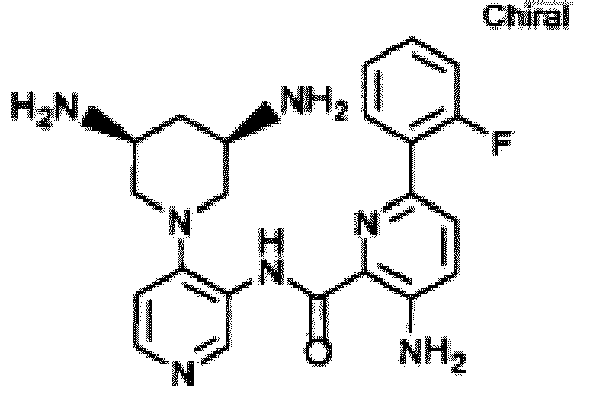
251 
252 
253 
254 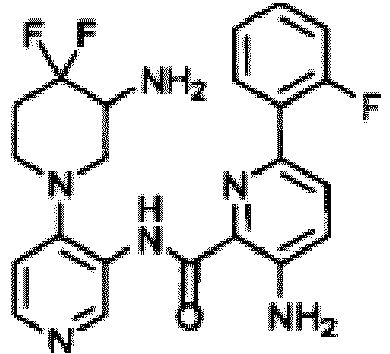
255 
257 
258 
259 
260 
264 
276 
277 
278 
279 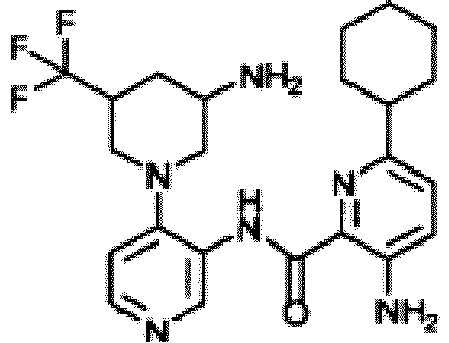
280 
281 
282 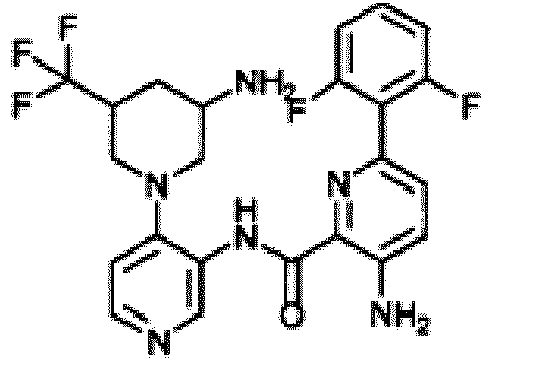
283 
284 
285 
286 
287 
288 
289 
292 
293 
294 
295 
296 
297 
298 
299 
300 
301 
302 
303 
317 
318 
319 
320 
321 
322 
323 
324 
325 
326 
327 
328 
329 
330 
331 
332 
333 
334 
335 
336 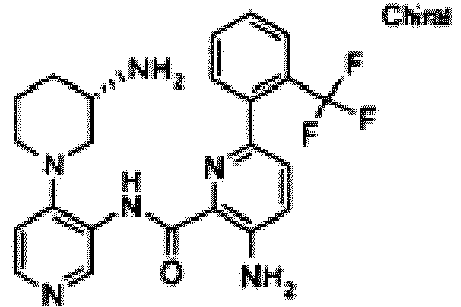
337 
338 
339 
407 
408 
409 
410 
411 
412 
413 
414 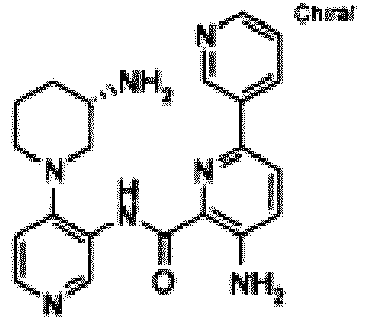
415 
416 
417 
418 
419 
420 
421 
422 
423 
424 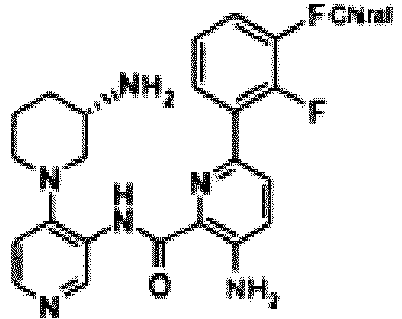
425 
426 
427 
428 
429 
430 
431 
432 
433 
434 
442 
443 
444 
445 
446 
447 
448 
449 
450 
451 
452 
453 
454 
455 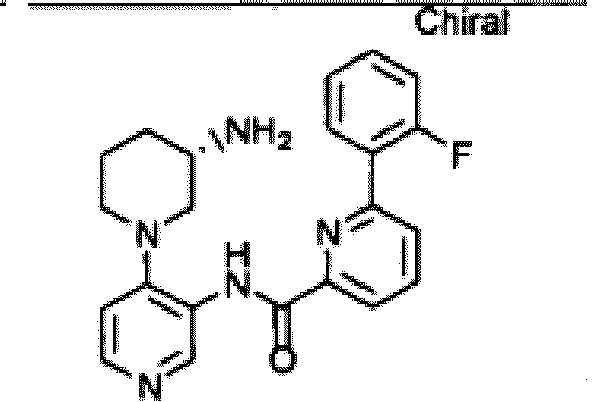
456 
457 
458 
459 
460 
461 
462 
463 
464 
465 
466 
467 
468 
469 
470 
471 
472 
473 
474 
475 
476 477 
478 
479 
480 
481 
482 
483 
484 
485 
486 
487 
488 
489 
490 
491 
492 
493 
494 
495 
496 
497 
498 
499 
500 
501 
502 
503 
504 
505 
506 
507 
508 
509 
510 
511 
512 
513 
514 
515 
516 
517 
519 
520 
521 
522 
523 
524 
566 
567 
568 
569 
570 
571 
575 
576 
577 
578 
579 
580 
581 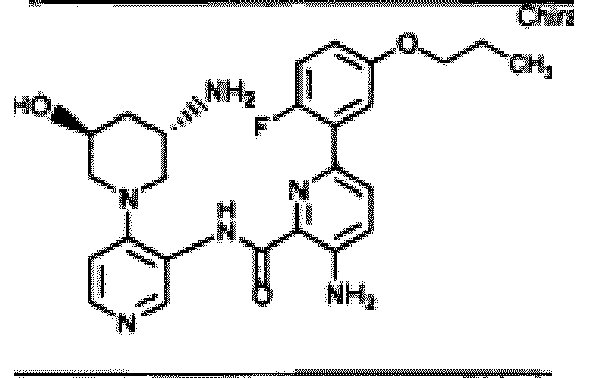
582 
587 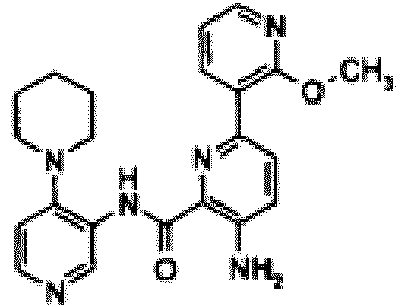
588 
589 
631 
632 
634 
635 
636 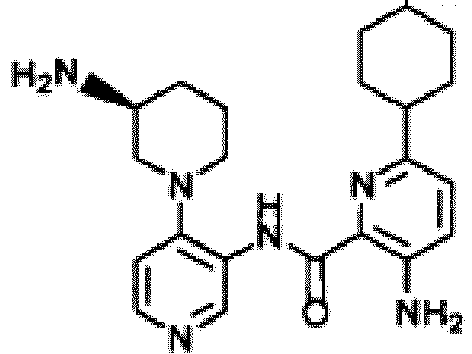
637 
638 
639 
644 
645 
646 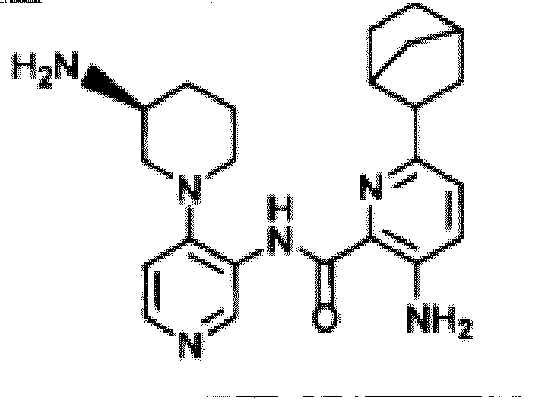
651 
652 
653 
654 
655 
656 
657 
658 
659 
660 
661 
664 
665 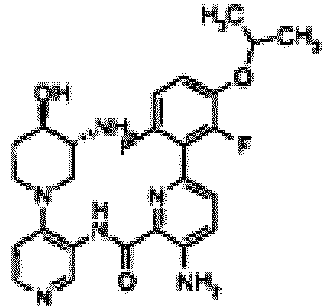
666 
667 
668 
669 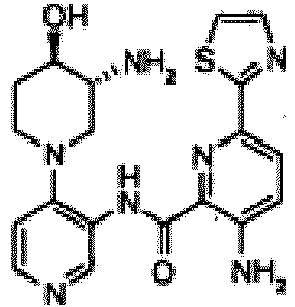
671 
672 
674 
675 
677 
678 
679 
680 
681 
682 
683 
684 
685 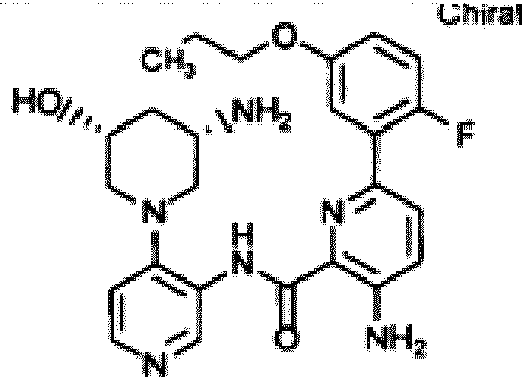
686 
687 
688 
689 
690 
691 
692 
693 
694 
695 
696 
697 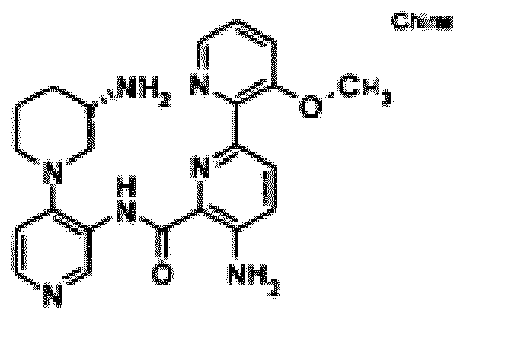
698 
699 
700 
701 
702 
703 
704 
705 
706 
707 
708 
709 
710 
711 
712 
713 
714 
715 
716 
717 
718 
719 
720 
721 
722 
723 
724 
725 
726 
727 
728 
729 
730 
731 
732 
733 
734 
735 
736 
737 
738 
739 
740 
741 
742 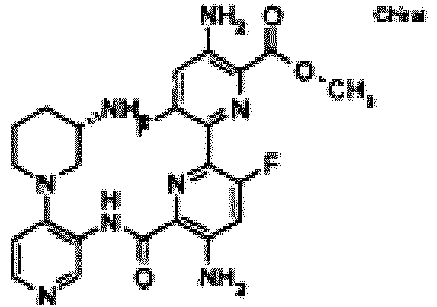
743 
744 
745 
747 
748 
749 
750 
752 
753 
754 
- Composition comprenant une quantité thérapeutiquement efficace d'un composé selon l'une quelconque des revendications 1 à 7, ou un stéréoisomère, tautomère ou sel pharmaceutiquement acceptable de celui-ci, conjointement avec un support pharmaceutiquement acceptable.
- Composition selon la revendication 8, qui comprend en outre au moins un agent supplémentaire pour le traitement du cancer.
- Composé selon l'une quelconque des revendications 1 à 7, pour une utilisation comme agent thérapeutique.
- Composé selon l'une quelconque des revendications 1 à 7 pour une utilisation dans la fabrication d'un médicament pour le traitement du cancer.
Applications Claiming Priority (3)
| Application Number | Priority Date | Filing Date | Title |
|---|---|---|---|
| US89244407P | 2007-03-01 | 2007-03-01 | |
| US2377708P | 2008-01-25 | 2008-01-25 | |
| PCT/US2008/055724 WO2008106692A1 (fr) | 2007-03-01 | 2008-03-03 | Inhibiteurs de pim kinase et procédés de leur utilisation |
Publications (2)
| Publication Number | Publication Date |
|---|---|
| EP2132177A1 EP2132177A1 (fr) | 2009-12-16 |
| EP2132177B1 true EP2132177B1 (fr) | 2013-07-17 |
Family
ID=39433847
Family Applications (1)
| Application Number | Title | Priority Date | Filing Date |
|---|---|---|---|
| EP08731299.7A Active EP2132177B1 (fr) | 2007-03-01 | 2008-03-03 | Inhibiteurs de pim kinase et procédés de leur utilisation |
Country Status (12)
| Country | Link |
|---|---|
| US (1) | US8822497B2 (fr) |
| EP (1) | EP2132177B1 (fr) |
| JP (1) | JP5330274B2 (fr) |
| KR (1) | KR101514853B1 (fr) |
| CN (1) | CN101679266B (fr) |
| AU (1) | AU2008221263B2 (fr) |
| BR (1) | BRPI0808523A2 (fr) |
| CA (1) | CA2679659C (fr) |
| EA (1) | EA019951B1 (fr) |
| ES (1) | ES2431163T3 (fr) |
| MX (1) | MX2009009304A (fr) |
| WO (1) | WO2008106692A1 (fr) |
Families Citing this family (158)
| Publication number | Priority date | Publication date | Assignee | Title |
|---|---|---|---|---|
| US7855289B2 (en) | 2005-08-04 | 2010-12-21 | Sirtris Pharmaceuticals, Inc. | Sirtuin modulating compounds |
| DK1910384T3 (da) | 2005-08-04 | 2012-12-17 | Sirtris Pharmaceuticals Inc | Imidazo [2,1-b] thiazol-derivater som sirtuinmodulerende forbindelser |
| US8088928B2 (en) | 2005-08-04 | 2012-01-03 | Sirtris Pharmaceuticals, Inc. | Sirtuin modulating compounds |
| US8093401B2 (en) | 2005-08-04 | 2012-01-10 | Sirtris Pharmaceuticals, Inc. | Sirtuin modulating compounds |
| SG10202003901UA (en) | 2005-12-13 | 2020-05-28 | Incyte Holdings Corp | Heteroaryl substituted pyrrolo[2,3-b]pyridines and pyrrolo[2,3-b]pyrimidines as janus kinase inhibitors |
| EP2078004B1 (fr) | 2006-10-31 | 2015-02-25 | Merck Sharp & Dohme Corp. | Amides d'acides 2-aminothiazole-4-carboxyliques utilisées comme inhibiteurs de protéines kinases |
| WO2008054702A1 (fr) | 2006-10-31 | 2008-05-08 | Schering Corporation | Dérivés d'anilinopipérazine et leurs méthodes d'utilisation |
| US20140249135A1 (en) * | 2007-03-01 | 2014-09-04 | Novartis Ag | Pim kinase inhibitors and methods of their use |
| CA2684105C (fr) | 2007-05-03 | 2011-09-06 | Pfizer Limited | Derives de la pyridine |
| KR20150036210A (ko) | 2007-06-13 | 2015-04-07 | 인사이트 코포레이션 | 야누스 키나제 억제제(R)―3―(4―(7H―피롤로[2,3-d]피리미딘―4―일)―1H―피라졸―1―일)―3―사이클로펜틸프로판니트릴의 염 |
| CL2008001822A1 (es) | 2007-06-20 | 2009-03-13 | Sirtris Pharmaceuticals Inc | Compuestos derivados de tiazolo[5,4-b]piridina; composicion farmaceutica que comprende a dichos compuestos; y uso del compuesto en el tratamiento de la resistencia a la insulina, sindrome metabolico, diabetes, entre otras. |
| TW200918542A (en) | 2007-06-20 | 2009-05-01 | Sirtris Pharmaceuticals Inc | Sirtuin modulating compounds |
| CL2008001943A1 (es) | 2007-07-02 | 2009-09-11 | Boehringer Ingelheim Int | Compuestos derivados de fenil-triazol, inhibidores de enzimas de señales especificas que participan del control de la proliferacion celular; composicion farmaceutica que comprende a dichos compuestos; y su uso para tratar cancer, infecciones, enfermedades inflamatorias y autoinmunes. |
| MY150032A (en) * | 2007-07-19 | 2013-11-29 | Merck Sharp & Dohme | Heterocyclic amide compounds as protein kinase inhibitors |
| JP5349309B2 (ja) * | 2007-08-03 | 2013-11-20 | 株式会社キノファーマ | 抗dnaウイルス作用を有するアニリン誘導体 |
| WO2009058348A1 (fr) * | 2007-11-01 | 2009-05-07 | Sirtris Pharmaceuticals, Inc. | Dérivés d'amide comme modulateurs de sirtuines |
| PE20091577A1 (es) * | 2008-03-03 | 2009-11-05 | Novartis Ag | Inhibidores de cinasa pim y metodos para su uso |
| CL2009001152A1 (es) | 2008-05-13 | 2009-10-16 | Array Biopharma Inc | Compuestos derivados de n-(4-(cicloalquilo nitrogenado-1-il)-1h-pirrolo[2,3-b]piridin-3-il)amida, inhibidores de cinasa; proceso de preparacion; composicion farmaceutica; y su uso para el tratamiento de una enfermedad proliferativa. |
| AU2011265439B2 (en) * | 2008-09-02 | 2012-09-20 | Novartis Ag | Picolinamide derivatives as kinase inhibitors |
| PL2344474T3 (pl) * | 2008-09-02 | 2016-03-31 | Novartis Ag | Pochodne pikolinamidu jako inhibitory kinaz |
| US8778929B2 (en) * | 2008-09-29 | 2014-07-15 | Boehringer Ingelheim International Gmbh | Substituted heteroaryl inhibitors of B-RAF |
| US8110578B2 (en) | 2008-10-27 | 2012-02-07 | Signal Pharmaceuticals, Llc | Pyrazino[2,3-b]pyrazine mTOR kinase inhibitors for oncology indications and diseases associated with the mTOR/PI3K/Akt pathway |
| CA2743134A1 (fr) | 2008-11-10 | 2010-05-14 | Vertex Pharmaceuticals Incorporated | Composes utiles comme inhibiteurs de l'atr kinase |
| BRPI0922435A2 (pt) | 2008-12-19 | 2018-09-11 | Sirtris Pharmaceuticals Inc | "composto de tiazolopiridina moduladores de sirtuina, composição farmacêutica compreendendo o mesmo e seu uso." |
| ES2921576T3 (es) | 2008-12-19 | 2022-08-29 | Vertex Pharma | Compuestos útiles como inhibidores de la quinasa ATR |
| AR076794A1 (es) | 2009-05-22 | 2011-07-06 | Incyte Corp | Derivados de n-(hetero)aril-pirrolidina de pirazol-4-il-pirrolo [2,3-d]pirimidinas y pirrol-3-il-pirrolo [2,3-d ]pirimidinas como inhibidores de la quinasa janus y composiciones farmaceuticas que los contienen |
| SI2432472T1 (sl) | 2009-05-22 | 2019-11-29 | Incyte Holdings Corp | 3-(4-(7H-pirolo(2,3-d)pirimidin-4-il)-1H-pirazol-1-il)oktan- ali heptan-nitril kot inhibitorji JAK |
| UY32799A (es) | 2009-07-24 | 2011-02-28 | Novartis Ag | Derivados de oxazina y su uso en el tratamiento de trastornos neurológicos |
| US8415381B2 (en) * | 2009-07-30 | 2013-04-09 | Novartis Ag | Heteroaryl compounds and their uses |
| TW201113285A (en) | 2009-09-01 | 2011-04-16 | Incyte Corp | Heterocyclic derivatives of pyrazol-4-yl-pyrrolo[2,3-d]pyrimidines as janus kinase inhibitors |
| SG178986A1 (en) | 2009-09-08 | 2012-04-27 | Hoffmann La Roche | 4-substituted pyridin-3-yl-carboxamide compounds and methods of use |
| US20110183938A1 (en) | 2009-12-16 | 2011-07-28 | Genentech, Inc. | 1,7-diazacarbazoles and methods of use |
| KR20120120307A (ko) * | 2010-01-19 | 2012-11-01 | 아스트라제네카 아베 | 피라진 유도체 |
| US8470820B2 (en) | 2010-01-22 | 2013-06-25 | Hoffman-La Roche Inc. | Nitrogen-containing heteroaryl derivatives |
| EP3354652B1 (fr) | 2010-03-10 | 2020-05-06 | Incyte Holdings Corporation | Dérivés de pipéridine-4-yl azétidine utilisés en tant qu'inhibiteurs de jak1 |
| AU2011225122B8 (en) * | 2010-03-12 | 2013-12-12 | Nippon Soda Co., Ltd. | Compound containing pyridine ring and method for producing halogenated picoline derivative and tetrazolyloxime derivative |
| WO2011117382A1 (fr) | 2010-03-26 | 2011-09-29 | Boehringer Ingelheim International Gmbh | Pyridyltriazoles |
| JP6161537B2 (ja) * | 2010-04-07 | 2017-07-12 | エフ・ホフマン−ラ・ロシュ・アクチェンゲゼルシャフト | ピラゾール−4−イル−ヘテロシクリル−カルボキサミド化合物及び使用の方法 |
| US9062008B2 (en) | 2010-05-12 | 2015-06-23 | Vertex Pharmaceuticals Incorporated | Compounds useful as inhibitors of ATR kinase |
| CA2798760A1 (fr) | 2010-05-12 | 2011-11-17 | Vertex Pharmaceuticals Incorporated | Derives de 2-aminopyridine utiles en tant qu'inhibiteurs de la kinase atr |
| NZ603477A (en) | 2010-05-12 | 2014-09-26 | Vertex Pharma | Compounds useful as inhibitors of atr kinase |
| EP2568984A1 (fr) | 2010-05-12 | 2013-03-20 | Vertex Pharmaceuticals Incorporated | Composés utiles en tant qu'inhibiteurs de l'atr kinase |
| US9334244B2 (en) | 2010-05-12 | 2016-05-10 | Vertex Pharmaceuticals Incorporated | Compounds useful as inhibitors of ATR kinase |
| US8962631B2 (en) | 2010-05-12 | 2015-02-24 | Vertex Pharmaceuticals Incorporated | Compounds useful as inhibitors of ATR kinase |
| PE20130216A1 (es) | 2010-05-21 | 2013-02-27 | Incyte Corp | Formulacion topica para un inhibidor de jak |
| US8703768B2 (en) | 2010-06-09 | 2014-04-22 | Hoffmann-La Roche Inc. | Nitrogen containing heteroaryl compounds |
| MX2013000103A (es) | 2010-06-23 | 2013-06-13 | Vertex Pharma | Derivados de pirrolo-pirazina utiles como inhibidores de cinasa art. |
| US20130109682A1 (en) * | 2010-07-06 | 2013-05-02 | Novartis Ag | Cyclic ether compounds useful as kinase inhibitors |
| PE20140146A1 (es) | 2010-11-19 | 2014-02-06 | Incyte Corp | Derivados de pirrolopiridina y pirrolopirimidina sustituidos con ciclobutilo como inhibidores de jak |
| US9034884B2 (en) | 2010-11-19 | 2015-05-19 | Incyte Corporation | Heterocyclic-substituted pyrrolopyridines and pyrrolopyrimidines as JAK inhibitors |
| US8710055B2 (en) | 2010-12-21 | 2014-04-29 | Boehringer Ingelheim International Gmbh | Triazolylphenyl sulfonamides as serine/threonine kinase inhibitors |
| US8524897B2 (en) | 2011-01-12 | 2013-09-03 | Novartis Ag | Crystalline oxazine derivative |
| MY162413A (en) | 2011-01-13 | 2017-06-15 | Novartis Ag | Novel heterocyclic derivatives and their use in the treatment of neurological disorders |
| US8987307B2 (en) | 2011-03-03 | 2015-03-24 | Hoffmann-La Roche Inc. | 3-amino-pyridines as GPBAR1 agonists |
| EP2681197A1 (fr) | 2011-03-04 | 2014-01-08 | Novartis AG | Composés de cyclohexyle tétrasubstitués à titre d'inhibiteurs de kinases |
| UY33930A (es) | 2011-03-04 | 2012-10-31 | Novartis Ag | Inhibidores novedosos de quinasas |
| MX2013011450A (es) | 2011-04-05 | 2014-02-03 | Vertex Pharma | Compuestos de aminopirazina utiles como inhibidores de la cinasa ataxia telangiectasia mutada y rad3 relacionados (atr). |
| CA2834166A1 (fr) | 2011-04-29 | 2012-11-01 | Amgen Inc. | Composes pyridazines bicycliques en tant qu'inhibiteurs de pim |
| US9321727B2 (en) | 2011-06-10 | 2016-04-26 | Hoffmann-La Roche Inc. | Pyridine derivatives as agonists of the CB2 receptor |
| CN103797010B (zh) | 2011-06-20 | 2016-02-24 | 因塞特控股公司 | 作为jak抑制剂的氮杂环丁烷基苯基、吡啶基或吡嗪基甲酰胺衍生物 |
| EP2723747A1 (fr) | 2011-06-22 | 2014-04-30 | Vertex Pharmaceuticals Inc. | Composés utiles comme inhibiteurs de la kinase atr |
| US9309250B2 (en) | 2011-06-22 | 2016-04-12 | Vertex Pharmaceuticals Incorporated | Substituted pyrrolo[2,3-b]pyrazines as ATR kinase inhibitors |
| US8822469B2 (en) | 2011-06-22 | 2014-09-02 | Vertex Pharmaceuticals Incorporated | Pyrrolo[2,3-B]pyrazines useful as inhibitors of ATR kinase |
| WO2013012848A1 (fr) | 2011-07-18 | 2013-01-24 | Merck Patent Gmbh | Benzamides |
| EP3812387A1 (fr) | 2011-07-21 | 2021-04-28 | Sumitomo Dainippon Pharma Oncology, Inc. | Inhibiteurs de protéine kinase hétérocycliques |
| US9453003B2 (en) | 2011-08-11 | 2016-09-27 | Jikai Biosciences, Inc. | Pyrimidine derivatives as PIM kinase inhibitors and preparation methods and use in medicinal manufacture thereof |
| CN102924446B (zh) * | 2011-08-11 | 2015-08-26 | 上海吉铠医药科技有限公司 | Pim激酶抑制剂及其制备方法与在制药中的应用 |
| US9458151B2 (en) | 2011-08-11 | 2016-10-04 | Jikai Biosciences, Inc. | Isothiazole derivatives as PIM kinase inhibitors and preparation methods and use in medicinal manufacture thereof |
| US9452995B2 (en) | 2011-08-11 | 2016-09-27 | Jikai Biosciences, Inc. | Pyridine derivatives as PIM kinase inhibitors and preparation methods and use in medicinal manufacture thereof |
| TW201313721A (zh) | 2011-08-18 | 2013-04-01 | Incyte Corp | 作為jak抑制劑之環己基氮雜環丁烷衍生物 |
| UA111854C2 (uk) | 2011-09-07 | 2016-06-24 | Інсайт Холдінгс Корпорейшн | Способи і проміжні сполуки для отримання інгібіторів jak |
| EP2760857A1 (fr) | 2011-09-27 | 2014-08-06 | F.Hoffmann-La Roche Ag | Composés de type pyrazol-4-yl-hétérocyclyl-carboxamide et leurs méthodes d'utilisation |
| CN108685922A (zh) | 2011-09-30 | 2018-10-23 | 沃泰克斯药物股份有限公司 | 用atr抑制剂治疗胰腺癌和非小细胞肺癌 |
| WO2013049720A1 (fr) | 2011-09-30 | 2013-04-04 | Vertex Pharmaceuticals Incorporated | Composés utiles en tant qu'inhibiteurs de kinase atr |
| WO2013049722A1 (fr) | 2011-09-30 | 2013-04-04 | Vertex Pharmaceuticals Incorporated | Composés utiles comme inhibiteurs de kinase atr |
| US8765751B2 (en) | 2011-09-30 | 2014-07-01 | Vertex Pharmaceuticals Incorporated | Compounds useful as inhibitors of ATR kinase |
| CN106496173A (zh) | 2011-09-30 | 2017-03-15 | 沃泰克斯药物股份有限公司 | 用于制备可用作atr激酶抑制剂的化合物的方法 |
| JP2015502925A (ja) | 2011-11-09 | 2015-01-29 | バーテックス ファーマシューティカルズ インコーポレイテッドVertex Pharmaceuticals Incorporated | Atrキナーゼの阻害剤として有用なピラジン化合物 |
| US8846917B2 (en) | 2011-11-09 | 2014-09-30 | Vertex Pharmaceuticals Incorporated | Compounds useful as inhibitors of ATR kinase |
| US8846918B2 (en) | 2011-11-09 | 2014-09-30 | Vertex Pharmaceuticals Incorporated | Compounds useful as inhibitors of ATR kinase |
| US8841337B2 (en) | 2011-11-09 | 2014-09-23 | Vertex Pharmaceuticals Incorporated | Compounds useful as inhibitors of ATR kinase |
| US8841450B2 (en) | 2011-11-09 | 2014-09-23 | Vertex Pharmaceuticals Incorporated | Compounds useful as inhibitors of ATR kinase |
| US8338413B1 (en) | 2012-03-07 | 2012-12-25 | Novartis Ag | Oxazine derivatives and their use in the treatment of neurological disorders |
| CN108478577A (zh) | 2012-04-05 | 2018-09-04 | 沃泰克斯药物股份有限公司 | 可用作atr激酶抑制剂的化合物及其组合疗法 |
| TW201406761A (zh) | 2012-05-18 | 2014-02-16 | Incyte Corp | 做爲jak抑制劑之哌啶基環丁基取代之吡咯并吡啶及吡咯并嘧啶衍生物 |
| US9173883B2 (en) * | 2012-05-21 | 2015-11-03 | Novartis Ag | Ring-substituted N-pyridinyl amides as kinase inhibitors |
| WO2014033631A1 (fr) | 2012-08-31 | 2014-03-06 | Novartis Ag | N- (3-pyridyl)-biarylamides en tant qu'inhibiteurs de kinase |
| WO2014033630A1 (fr) | 2012-08-31 | 2014-03-06 | Novartis Ag | Nouveaux carboxamides d'aminothiazole en tant qu'inhibiteurs de kinase |
| AU2013322736A1 (en) * | 2012-09-26 | 2015-02-26 | F. Hoffmann-La Roche Ag | Cyclic ether pyrazol-4-yl-heterocyclyl-carboxamide compounds and methods of use |
| DK2904406T3 (en) | 2012-10-04 | 2018-06-18 | Vertex Pharma | METHOD OF DETERMINING THE ATR INHIBITION, INCREASED DNA DAMAGE |
| EP2909202A1 (fr) | 2012-10-16 | 2015-08-26 | Vertex Pharmaceuticals Incorporated | Composés utiles en tant qu'inhibiteurs de la kinase atr |
| PH12020551186B1 (en) | 2012-11-15 | 2024-03-20 | Incyte Holdings Corp | Sustained-release dosage forms of ruxolitinib |
| SI2941432T1 (en) | 2012-12-07 | 2018-07-31 | Vertex Pharmaceuticals Incorporated | 2-AMINO-6-FLUORO-N- (5-FLUORO-4- (4- (4- (OXETHAN-3-YL) PIPERAZIN-1-CARBONYL) PIPERIDIN-1-YLIPRIDIN-3-YL) 1,5 ALFA) PYRIMIDINE-3-CARBOXAMIDE AS ATR KINAZE INHIBITOR |
| WO2014093230A2 (fr) * | 2012-12-10 | 2014-06-19 | Merck Patent Gmbh | Compositions et procédés de fabrication de composés pyrimidine et pyridine ayant une activité inhibitrice de btk |
| US20150336960A1 (en) | 2012-12-19 | 2015-11-26 | Novartis Ag | Aryl-substituted fused bicyclic pyridazine compounds |
| ES2649156T3 (es) | 2013-01-14 | 2018-01-10 | Incyte Holdings Corporation | Compuestos bicíclicos de carboxamida aromática útiles como inhibidores de quinasas Pim |
| PE20191245A1 (es) | 2013-01-15 | 2019-09-18 | Incyte Holdings Corp | Compuestos de tiazolcarboxamidas y piridinacarboxamida utiles como inhibidores de quinasa pim |
| RS62867B1 (sr) | 2013-03-06 | 2022-02-28 | Incyte Holdings Corp | Postupci i intermedijeri za dobijanje inhibitora jak |
| WO2014143240A1 (fr) | 2013-03-15 | 2014-09-18 | Vertex Pharmaceuticals Incorporated | Dérivés de pyrazolopyrimidine fusionnés utiles en tant qu'inhibiteurs de la kinase atr |
| SMT202000315T1 (it) | 2013-08-07 | 2020-07-08 | Incyte Corp | Forme di dosaggio a rilascio prolungato per un inibitore di jak1 |
| JP6449880B2 (ja) * | 2013-08-08 | 2019-01-09 | ベーリンガー インゲルハイム インターナショナル ゲゼルシャフト ミット ベシュレンクテル ハフツング | 新規ピラジンアミド化合物 |
| EA201690458A1 (ru) | 2013-08-23 | 2016-07-29 | Инсайт Корпорейшн | Фуро- и тиенопиридинкарбоксамиды, используемые в качестве ингибиторов pim-киназы |
| PT3077397T (pt) | 2013-12-06 | 2020-01-22 | Vertex Pharma | Composto de 2-amino-6-fluoro-n-[5-fluoro-piridin-3-il]pirazolo[1,5-a]pirimidin-3-carboxamida útil como inibidor da atr quinase, a sua preparação, diferentes formas sólidas e derivados radiomarcados do mesmo |
| UY36034A (es) | 2014-03-18 | 2015-09-30 | Astrazeneca Ab | Derivados de 3,5-diamino-6-cloro-pirazina-2-carboxamida y sales farmaceuticamente aceptables de estos |
| US9498467B2 (en) | 2014-05-30 | 2016-11-22 | Incyte Corporation | Treatment of chronic neutrophilic leukemia (CNL) and atypical chronic myeloid leukemia (aCML) by inhibitors of JAK1 |
| MX373102B (es) | 2014-06-05 | 2020-04-17 | Vertex Pharma | Derivados radiomarcados de un compuesto de 2-amino-6-fluoro-n-[5-fluoro-piridin-3-il]-pirazolo[1,5-a]pirimidin-3-carboxamida útil como inhibidor de ataxia telangiectasia mutada y rad3 relacionado (atr) cinasa, preparación de tal compuesto y diferentes formas sólidas del mismo. |
| SG11201610500WA (en) | 2014-06-17 | 2017-01-27 | Vertex Pharma | Method for treating cancer using a combination of chk1 and atr inhibitors |
| US9580418B2 (en) | 2014-07-14 | 2017-02-28 | Incyte Corporation | Bicyclic aromatic carboxamide compounds useful as Pim kinase inhibitors |
| US9822124B2 (en) | 2014-07-14 | 2017-11-21 | Incyte Corporation | Bicyclic heteroaromatic carboxamide compounds useful as Pim kinase inhibitors |
| JO3589B1 (ar) * | 2014-08-06 | 2020-07-05 | Novartis Ag | مثبطات كيناز البروتين c وطرق استخداماتها |
| EA035817B1 (ru) | 2015-03-10 | 2020-08-14 | Адуро Байотек, Инк. | Композиции и способы для активации сигналинга, зависимого от "гена стимулятора интерферона" |
| WO2016196244A1 (fr) | 2015-05-29 | 2016-12-08 | Incyte Corporation | Composés de pyridineamine utiles en tant qu'inhibiteurs de kinase pim |
| TWI734699B (zh) | 2015-09-09 | 2021-08-01 | 美商英塞特公司 | Pim激酶抑制劑之鹽 |
| CN105218523B (zh) * | 2015-09-18 | 2019-08-23 | 上海吉铠医药科技有限公司 | 吡啶衍生物pim激酶抑制剂及其制备方法与在制药中的应用 |
| CN105130959B (zh) * | 2015-09-18 | 2018-08-03 | 上海吉铠医药科技有限公司 | 嘧啶衍生物pim激酶抑制剂及其制备方法与在制药中的应用 |
| AU2016331955B2 (en) | 2015-09-30 | 2022-07-21 | Vertex Pharmaceuticals Incorporated | Method for treating cancer using a combination of DNA damaging agents and ATR inhibitors |
| US9920032B2 (en) | 2015-10-02 | 2018-03-20 | Incyte Corporation | Heterocyclic compounds useful as pim kinase inhibitors |
| RU2605400C1 (ru) * | 2015-11-13 | 2016-12-20 | ЗАО "Р-Фарм" | ПРОИЗВОДНЫЕ 1-(3-АМИНОФЕНИЛ)-6,8-ДИМЕТИЛ-5-(4-ИОД-2-ФТОР-ФЕНИЛАМИНО)-3-ЦИКЛОПРОПИЛ-1H,6H-ПИРИДО[4,3-d]ПИРИМИДИН-2,4,7-ТРИОНА В КАЧЕСТВЕ ИНГИБИТОРОВ МЕК1/2 |
| US11319299B2 (en) * | 2016-03-01 | 2022-05-03 | Propellon Therapeutics Inc. | Substituted carboxamides as inhibitors of WDR5 protein-protein binding |
| JP2019507179A (ja) | 2016-03-01 | 2019-03-14 | プロペロン セラピューティックス インコーポレイテッド | Wdr5タンパク質−タンパク質結合の阻害剤 |
| CA3017641C (fr) | 2016-03-25 | 2023-12-12 | Charles J. Bieberich | Inhibiteurs de kinase pim en combinaison avec des modulateurs/inhibiteurs d'epissage d'arn pour le traitement de cancers |
| MX388576B (es) | 2016-06-07 | 2025-03-20 | Jacobio Pharmaceuticals Co Ltd | Derivados heterociclicos novedosos utiles como inhibidores de shp2. |
| EP3507367A4 (fr) | 2016-07-05 | 2020-03-25 | Aduro BioTech, Inc. | Composés dinucléotidiques cycliques d'acide nucléique bloqué et leurs utilisations |
| WO2018049214A1 (fr) | 2016-09-09 | 2018-03-15 | Incyte Corporation | Dérivés de pyrazolopyridine comme modulateurs de hpk1 et leurs utilisations pour le traitement du cancer |
| EA202190196A1 (ru) | 2017-03-23 | 2021-08-31 | Джакобио Фармасьютикалс Ко., Лтд. | Новые гетероциклические производные, применимые в качестве ингибиторов shp2 |
| UY37695A (es) | 2017-04-28 | 2018-11-30 | Novartis Ag | Compuesto dinucleótido cíclico bis 2’-5’-rr-(3’f-a)(3’f-a) y usos del mismo |
| AU2018266911C1 (en) | 2017-05-12 | 2022-10-20 | Enanta Pharmaceuticals, Inc. | Apoptosis signal-regulating kinase 1 inhibitors and methods of use thereof |
| WO2019063996A1 (fr) | 2017-09-27 | 2019-04-04 | Exonate Limited | Inhibiteurs de srpk1 |
| WO2019113487A1 (fr) | 2017-12-08 | 2019-06-13 | Incyte Corporation | Polythérapie à faible dose pour le traitement de néoplasmes myéloprolifératifs |
| WO2019144012A1 (fr) * | 2018-01-18 | 2019-07-25 | Emory University | Mast1 et utilisations pour diagnostiquer et traiter le cancer |
| SG11202007164UA (en) | 2018-01-30 | 2020-08-28 | Incyte Corp | Processes for preparing (1 -(3-fluoro-2-(trifluoromethyl)isonicotinyl)piperidine-4-one) |
| EP3755703B1 (fr) * | 2018-02-20 | 2022-05-04 | Incyte Corporation | Dérivés n-(phényl)-2-(phényl)pyrimidine-4-carboxamide et composés similaires en tant qu'inhibiteurs de hpk1 pour le traitemant du cancer |
| SMT202400306T1 (it) | 2018-03-30 | 2024-09-16 | Incyte Corp | Trattamento dell'idrosadenite suppurativa utilizzando inibitori di jak. |
| JP2021521170A (ja) | 2018-04-13 | 2021-08-26 | スミトモ ダイニッポン ファーマ オンコロジー, インコーポレイテッド | 骨髄増殖性新生物およびがんに関連する線維症の処置のためのpimキナーゼ阻害剤 |
| ES3004523T3 (en) | 2018-05-02 | 2025-03-12 | Enanta Pharm Inc | Tetrazole containing apoptosis signal-regulating kinase 1 inhibitors and methods of use thereof |
| MX2020012679A (es) * | 2018-05-25 | 2021-02-09 | Silverback Therapeutics Inc | Compuestos de amino-pirazincarboxamida, conjugados, y usos de los mismos. |
| US10899755B2 (en) | 2018-08-08 | 2021-01-26 | Incyte Corporation | Benzothiazole compounds and uses thereof |
| US20210393623A1 (en) | 2018-09-26 | 2021-12-23 | Jacobio Pharmaceuticals Co., Ltd. | Novel Heterocyclic Derivatives Useful as SHP2 Inhibitors |
| JP2022513967A (ja) | 2018-12-20 | 2022-02-09 | アムジエン・インコーポレーテツド | Kif18a阻害剤として有用なヘテロアリールアミド |
| JP7686559B2 (ja) | 2018-12-20 | 2025-06-02 | アムジエン・インコーポレーテツド | Kif18a阻害剤 |
| AU2019401495B2 (en) * | 2018-12-20 | 2025-06-26 | Amgen Inc. | Heteroaryl amides useful as KIF18A inhibitors |
| KR20260008165A (ko) | 2019-02-12 | 2026-01-15 | 스미토모 파마 아메리카, 인크. | 헤테로시클릭 단백질 키나제 억제제를 포함하는 제제 |
| CA3131104A1 (fr) * | 2019-03-06 | 2020-09-10 | Silverback Therapeutics, Inc. | Composes cycliques d'amino-pyrazinecarboxamide et leurs utilisations |
| US20220274997A1 (en) * | 2019-04-29 | 2022-09-01 | Snap Bio, Inc. | Pim kinase inhibitor compositions and uses thereof |
| CN110452180A (zh) * | 2019-06-25 | 2019-11-15 | 南京普锐达医药科技有限公司 | 一种合成2-氯-5-氨基-6-嘧啶甲酸乙酯的方法 |
| EP4007638A1 (fr) | 2019-08-02 | 2022-06-08 | Amgen Inc. | Dérivés de pyridine en tant qu'inhibiteurs de kif18a |
| EP4007753B1 (fr) | 2019-08-02 | 2025-09-24 | Amgen Inc. | Inhibiteurs de kif18a |
| BR112022002059A2 (pt) | 2019-08-06 | 2022-06-07 | Incyte Corp | Formas sólidas de um inibidor de hpk1 |
| CN114096525B (zh) * | 2019-09-10 | 2023-10-13 | 四川科伦博泰生物医药股份有限公司 | 联芳基类化合物,包含其的药物组合物,其制备方法及其用途 |
| US11833155B2 (en) | 2020-06-03 | 2023-12-05 | Incyte Corporation | Combination therapy for treatment of myeloproliferative neoplasms |
| CA3195121A1 (fr) * | 2020-10-09 | 2022-04-14 | Robert A. Volkmann | Inhibiteurs amides heteroaryles de cd38 |
| CN115385864B (zh) * | 2022-08-10 | 2024-07-19 | 杭州国瑞生物科技有限公司 | 一种苏沃雷生中间体的制备方法 |
| WO2024059207A2 (fr) * | 2022-09-15 | 2024-03-21 | Vanderbilt University | Analogues liés à un éther de pyrazolo utilisés en tant que modulateurs allostériques négatifs de mglu5 et leurs procédés de fabrication et d'utilisation |
| CN120302975A (zh) | 2022-10-31 | 2025-07-11 | 住友制药美国公司 | 治疗骨髓增生性肿瘤的pim1抑制剂 |
| CN116199636A (zh) * | 2023-02-21 | 2023-06-02 | 杭州医学院 | 靶向肿瘤免疫激酶的2,4-二取代嘧啶衍生物、制备方法及其应用 |
| CN116836153A (zh) * | 2023-06-16 | 2023-10-03 | 厦门大学 | 一种CDK9-Cyclin T1蛋白相互作用抑制剂及其应用 |
| WO2025240628A1 (fr) * | 2024-05-15 | 2025-11-20 | Ideaya Biosciences, Inc. | Procédés de préparation d'un inhibiteur de pkc |
| WO2026006247A1 (fr) * | 2024-06-26 | 2026-01-02 | The United States Of America, As Represented By The Secretary, Department Of Health And Human Services | Analogues de 2-(pipéridin-3-yl)isoindole-1,3-dione et leurs utilisations |
Family Cites Families (143)
| Publication number | Priority date | Publication date | Assignee | Title |
|---|---|---|---|---|
| US4319039A (en) | 1979-06-15 | 1982-03-09 | Merck & Co., Inc. | Preparation of ammonium salt of hypocholesteremic fermentation product |
| US4231938A (en) | 1979-06-15 | 1980-11-04 | Merck & Co., Inc. | Hypocholesteremic fermentation products and process of preparation |
| US4294926A (en) | 1979-06-15 | 1981-10-13 | Merck & Co., Inc. | Hypocholesteremic fermentation products and process of preparation |
| US4444784A (en) | 1980-08-05 | 1984-04-24 | Merck & Co., Inc. | Antihypercholesterolemic compounds |
| DK149080C (da) | 1980-06-06 | 1986-07-28 | Sankyo Co | Fremgangsmaade til fremstilling af derivater af ml-236b-carboxylsyre |
| JPS5889191A (ja) | 1981-11-20 | 1983-05-27 | Sankyo Co Ltd | 3−ヒドロキシ−ml−236b誘導体の製造法 |
| HU204253B (en) | 1982-11-22 | 1991-12-30 | Sandoz Ag | Process for producing mevalonolactone analogues and derivatives and pharmaceutical compositions containing them |
| US5354772A (en) | 1982-11-22 | 1994-10-11 | Sandoz Pharm. Corp. | Indole analogs of mevalonolactone and derivatives thereof |
| US4911165A (en) | 1983-01-12 | 1990-03-27 | Ethicon, Inc. | Pliabilized polypropylene surgical filaments |
| US4681893A (en) | 1986-05-30 | 1987-07-21 | Warner-Lambert Company | Trans-6-[2-(3- or 4-carboxamido-substituted pyrrol-1-yl)alkyl]-4-hydroxypyran-2-one inhibitors of cholesterol synthesis |
| US4885314A (en) | 1987-06-29 | 1989-12-05 | Merck & Co., Inc. | Novel HMG-CoA reductase inhibitors |
| US4782084A (en) | 1987-06-29 | 1988-11-01 | Merck & Co., Inc. | HMG-COA reductase inhibitors |
| US4820850A (en) | 1987-07-10 | 1989-04-11 | Merck & Co., Inc. | Process for α-C-alkylation of the 8-acyl group on mevinolin and analogs thereof |
| US5030447A (en) | 1988-03-31 | 1991-07-09 | E. R. Squibb & Sons, Inc. | Pharmaceutical compositions having good stability |
| US5180589A (en) | 1988-03-31 | 1993-01-19 | E. R. Squibb & Sons, Inc. | Pravastatin pharmaceuatical compositions having good stability |
| US4916239A (en) | 1988-07-19 | 1990-04-10 | Merck & Co., Inc. | Process for the lactonization of mevinic acids and analogs thereof |
| US5118853A (en) | 1988-10-13 | 1992-06-02 | Sandoz Ltd. | Processes for the synthesis of 3-disubstituted aminoacroleins |
| US5290946A (en) | 1988-10-13 | 1994-03-01 | Sandoz Ltd. | Processes for the synthesis of 3-(substituted indolyl-2-yl)propenaldehydes |
| US4929437A (en) | 1989-02-02 | 1990-05-29 | Merck & Co., Inc. | Coenzyme Q10 with HMG-CoA reductase inhibitors |
| US5189164A (en) | 1989-05-22 | 1993-02-23 | Sandoz Ltd. | Processes for the synthesis of syn-(E)-3,5-dihydroxy-7-substituted hept-6-enoic and heptanoic acids and derivatives and intermediates thereof |
| FI94339C (fi) | 1989-07-21 | 1995-08-25 | Warner Lambert Co | Menetelmä farmaseuttisesti käyttökelpoisen /R-(R*,R*)/-2-(4-fluorifenyyli)- , -dihydroksi-5-(1-metyylietyyli)-3-fenyyli-4-/(fenyyliamino)karbonyyli/-1H-pyrroli-1-heptaanihapon ja sen farmaseuttisesti hyväksyttävien suolojen valmistamiseksi |
| PH27357A (en) | 1989-09-22 | 1993-06-21 | Fujisawa Pharmaceutical Co | Pyrazole derivatives and pharmaceutical compositions comprising the same |
| US5420245A (en) | 1990-04-18 | 1995-05-30 | Board Of Regents, The University Of Texas | Tetrapeptide-based inhibitors of farnesyl transferase |
| HU9203780D0 (en) | 1991-12-12 | 1993-03-29 | Sandoz Ag | Stabilized pharmaceutical products of hmg-coa reductase inhibitor and method for producing them |
| US5604260A (en) | 1992-12-11 | 1997-02-18 | Merck Frosst Canada Inc. | 5-methanesulfonamido-1-indanones as an inhibitor of cyclooxygenase-2 |
| CA2111902A1 (fr) | 1992-12-21 | 1994-06-22 | Jack Beuford Campbell | Compositions antitumorales et methodes therapeutiques |
| EP0679157B1 (fr) | 1993-01-15 | 1997-11-19 | G.D. Searle & Co. | Nouveaux thiophenes 3,4-diaryle et leurs analogues utilises comme agents anti-inflammatoires |
| WO1994019357A1 (fr) | 1993-02-23 | 1994-09-01 | Merrell Dow Pharmaceuticals Inc. | Inhibiteurs de la transferase farnesyl:proteine utiles comme agents anticancereux |
| US5298627A (en) | 1993-03-03 | 1994-03-29 | Warner-Lambert Company | Process for trans-6-[2-(substituted-pyrrol-1-yl)alkyl]pyran-2-one inhibitors of cholesterol synthesis |
| US5409944A (en) | 1993-03-12 | 1995-04-25 | Merck Frosst Canada, Inc. | Alkanesulfonamido-1-indanone derivatives as inhibitors of cyclooxygenase |
| CA2118985A1 (fr) | 1993-04-02 | 1994-10-03 | Dinesh V. Patel | Inhibiteurs heterocycliques de la farnesyl proteine transferase |
| AU6909194A (en) | 1993-05-14 | 1994-12-12 | Board Of Regents, The University Of Texas System | Preparation of n-cyanodithioimino-carbonates and 3-mercapto-5-amino-1h-1,2,4-triazole |
| US5602098A (en) | 1993-05-18 | 1997-02-11 | University Of Pittsburgh | Inhibition of farnesyltransferase |
| US5380738A (en) | 1993-05-21 | 1995-01-10 | Monsanto Company | 2-substituted oxazoles further substituted by 4-fluorophenyl and 4-methylsulfonylphenyl as antiinflammatory agents |
| GB9602877D0 (en) | 1996-02-13 | 1996-04-10 | Merck Frosst Canada Inc | 3,4-Diaryl-2-hydroxy-2,5- dihydrofurans as prodrugs to cox-2 inhibitors |
| US5474995A (en) | 1993-06-24 | 1995-12-12 | Merck Frosst Canada, Inc. | Phenyl heterocycles as cox-2 inhibitors |
| US5436265A (en) | 1993-11-12 | 1995-07-25 | Merck Frosst Canada, Inc. | 1-aroyl-3-indolyl alkanoic acids and derivatives thereof useful as anti-inflammatory agents |
| US5728830A (en) | 1993-09-22 | 1998-03-17 | Kyowa Hakko Kogyo Co., Ltd. | Farnesyltransferase inhibitor |
| IL111235A (en) | 1993-10-15 | 2001-03-19 | Schering Plough Corp | Medicinal preparations for inhibiting protein G activity and for the treatment of malignant diseases, containing tricyclic compounds, some such new compounds and a process for the preparation of some of them |
| US5719148A (en) | 1993-10-15 | 1998-02-17 | Schering Corporation | Tricyclic amide and urea compounds useful for inhibition of g-protein function and for treatment of proliferative diseases |
| IL111257A0 (en) | 1993-10-15 | 1994-12-29 | Schering Corp | Tricyclic sulfonamide compounds useful for inhibition of g-protein function and for treatment of proliferative diseases |
| US5661152A (en) | 1993-10-15 | 1997-08-26 | Schering Corporation | Tricyclic sulfonamide compounds useful for inhibition of G-protein function and for treatment of proliferative diseases |
| US5721236A (en) | 1993-10-15 | 1998-02-24 | Schering Corporation | Tricyclic carbamate compounds useful for inhibition of G-protein function and for treatment of proliferative diseases |
| CA2174105C (fr) | 1993-10-15 | 2002-02-12 | W. Robert Bishop | Composes carbamates tricycliques servant a inhiber la fonction de la proteine g et au traitement de maladies proliferatives |
| KR100378615B1 (ko) | 1993-10-25 | 2003-10-10 | 파크데이비스앤드캄파니 | 단백질:파르네실트랜스퍼라제의치환된테트라및펜타펩티드억제제 |
| US5344991A (en) | 1993-10-29 | 1994-09-06 | G.D. Searle & Co. | 1,2 diarylcyclopentenyl compounds for the treatment of inflammation |
| US5783593A (en) | 1993-11-04 | 1998-07-21 | Abbott Laboratories | Inhibitors of squalene synthetase and protein farnesyltransferase |
| CA2152822A1 (fr) | 1993-11-04 | 1995-05-11 | William R. Baker | Derives de cyclobutane utilises en tant qu'inhibiteurs de la squalene-synthetase et de la farnesyltransferase proteique |
| CA2170766A1 (fr) | 1993-11-05 | 1995-05-11 | Gary Louis Bolton | Inhibiteurs di- et tripeptidiques substitues de l'enzyme proteine:la farnesyle transferase |
| US5466823A (en) | 1993-11-30 | 1995-11-14 | G.D. Searle & Co. | Substituted pyrazolyl benzenesulfonamides |
| US5484799A (en) | 1993-12-09 | 1996-01-16 | Abbott Laboratories | Antifungal dorrigocin derivatives |
| US5393790A (en) | 1994-02-10 | 1995-02-28 | G.D. Searle & Co. | Substituted spiro compounds for the treatment of inflammation |
| WO1995024612A1 (fr) | 1994-03-07 | 1995-09-14 | International Business Machines Corporation | Procede et dispositif d'interpolation rapide de valeurs intermediaires derivees de signaux periodiques dephases et de detection de defauts de corps rotatifs |
| HUT77406A (hu) | 1994-03-15 | 1998-04-28 | Eisai Co., Ltd., | 1-(4-Amino-5-tio-pent-2-en)-il oldalláncot tartalmazó peptidomimetikumok és az ezeket tartalmazó gyógyszerkészítmények |
| AU1615895A (en) | 1994-03-31 | 1995-10-12 | Bristol-Myers Squibb Company | Imidazole-containing inhibitors of farnesyl protein transferase |
| US5523430A (en) | 1994-04-14 | 1996-06-04 | Bristol-Myers Squibb Company | Protein farnesyl transferase inhibitors |
| US5510510A (en) | 1994-05-10 | 1996-04-23 | Bristol-Meyers Squibb Company | Inhibitors of farnesyl protein transferase |
| FR2720396B1 (fr) * | 1994-05-27 | 1996-06-28 | Adir | Nouveaux N-pyridyl carboxamides et dérivés leur procédé de préparation et les compositions pharmaceutiques qui les contiennent. |
| US5563255A (en) | 1994-05-31 | 1996-10-08 | Isis Pharmaceuticals, Inc. | Antisense oligonucleotide modulation of raf gene expression |
| DE69507476D1 (de) | 1994-06-10 | 1999-03-04 | Rhone Poulenc Rorer Sa | Farnesyl-transferase-inhibitoren, ihre herstellung und sie enthaltende pharmazeutische zusammensetzungen |
| US5571792A (en) | 1994-06-30 | 1996-11-05 | Warner-Lambert Company | Histidine and homohistidine derivatives as inhibitors of protein farnesyltransferase |
| WO1996005529A1 (fr) | 1994-08-09 | 1996-02-22 | Micron Optics, Inc. | Filtres de fabry-perot a fibres compense en temperature |
| EP0776884B1 (fr) | 1994-08-11 | 2000-01-05 | Banyu Pharmaceutical Co., Ltd. | Derive d'amide substitue |
| CA2155448A1 (fr) | 1994-08-11 | 1996-02-12 | Katerina Leftheris | Inhibiteurs de la farnesyl-proteine-transferase |
| EP0805154A1 (fr) | 1994-08-12 | 1997-11-05 | Banyu Pharmaceutical Co., Ltd. | Derive d'acide amique n,n-bisubstitue |
| DE4429506B4 (de) | 1994-08-19 | 2007-09-13 | Degussa Gmbh | Verfahren zur Extraktion natürlicher Carotinoid-Farbstoffe |
| DE4429653C2 (de) | 1994-08-20 | 1997-04-03 | Anton Dr More | Konverter und Verfahren zum Frischen von Metallschmelzen insbesondere von Roheisen zu Stahl |
| JP4319251B2 (ja) | 1994-11-22 | 2009-08-26 | エヌエックスピー ビー ヴィ | 半導体素子を有し導体トラックが形成されている基板が接着層により結合されている支持本体を有する半導体装置 |
| CA2204144A1 (fr) | 1994-12-09 | 1996-06-13 | Francis J. Tinney | Tetrapeptide et pentapeptide substitues servant d'inhibiteurs de la proteine:farnesyle transferase |
| WO1996021701A2 (fr) | 1995-01-09 | 1996-07-18 | Magla International Ltd. | Impression d'image resistant a l'usure sur des surfaces en latex |
| AU4915796A (en) | 1995-01-12 | 1996-07-31 | University Of Pittsburgh | Inhibitors of prenyl transferases |
| FR2729390A1 (fr) | 1995-01-18 | 1996-07-19 | Rhone Poulenc Rorer Sa | Nouveaux inhibiteurs de farnesyl transferase, leur preparation et les compositions pharmaceutiques qui les contiennent |
| FR2730491B1 (fr) | 1995-02-09 | 1997-03-14 | Rhone Poulenc Rorer Sa | Nouveaux inhibiteurs de farnesyl transferase, leur preparation et les compositions pharmaceutiques qui les contiennent |
| FR2730492B1 (fr) | 1995-02-09 | 1997-03-14 | Rhone Poulenc Rorer Sa | Nouveaux inhibiteurs de farnesyl transferase, leur preparation et les compositions pharmaceutiques qui les contiennent |
| US5633272A (en) | 1995-02-13 | 1997-05-27 | Talley; John J. | Substituted isoxazoles for the treatment of inflammation |
| US5684013A (en) | 1995-03-24 | 1997-11-04 | Schering Corporation | Tricyclic compounds useful for inhibition of g-protein function and for treatment of proliferative diseases |
| US5700806A (en) | 1995-03-24 | 1997-12-23 | Schering Corporation | Tricyclic amide and urea compounds useful for inhibition of G-protein function and for treatment of proliferative diseases |
| IL117580A0 (en) | 1995-03-29 | 1996-07-23 | Merck & Co Inc | Inhibitors of farnesyl-protein transferase and pharmaceutical compositions containing them |
| IL117798A (en) | 1995-04-07 | 2001-11-25 | Schering Plough Corp | Tricyclic compounds useful for inhibiting the function of protein - G and for the treatment of malignant diseases, and pharmaceutical preparations containing them |
| US5712280A (en) | 1995-04-07 | 1998-01-27 | Schering Corporation | Tricyclic compounds useful for inhibition of G-protein function and for treatment of proliferative diseases |
| US5891872A (en) | 1995-04-07 | 1999-04-06 | Schering Corporation | Tricyclic compounds |
| DE69628559T2 (de) | 1995-04-07 | 2004-04-29 | Schering Corp. | Carbonyl-piperaznyl und piperidinyl derivate zur hemmung farnesyl protein transferase |
| US5831115A (en) | 1995-04-21 | 1998-11-03 | Abbott Laboratories | Inhibitors of squalene synthase and protein farnesyltransferase |
| IL118101A0 (en) | 1995-05-03 | 1996-09-12 | Abbott Lab | Inhibitors of farnesyltransferase |
| AU6034296A (en) | 1995-06-16 | 1997-01-15 | Warner-Lambert Company | Tricyclic inhibitors of protein farnesyltransferase |
| FR2736641B1 (fr) | 1995-07-10 | 1997-08-22 | Rhone Poulenc Rorer Sa | Nouveaux inhibiteurs de farnesyl transferase, leur preparation et les compositions pharmaceutiques qui les contiennent |
| AT402617B (de) | 1995-07-11 | 1997-07-25 | Datacon Schweitzer & Zeindl Gm | Anlage zum automatisierten, hermetischen anlage zum automatisierten, hermetischen verschliessen von gehäusen verschliessen von gehäusen |
| FR2736638B1 (fr) | 1995-07-12 | 1997-08-22 | Rhone Poulenc Rorer Sa | Nouveaux inhibiteurs de farnesyl transferase, leur preparation et les compositions pharmaceutiques qui les contiennent |
| CH690163A5 (fr) | 1995-07-28 | 2000-05-31 | Symphar Sa | Dérivés gem-diphosphonates substitués utiles en tant qu'agents anti-cancers. |
| US6020343A (en) | 1995-10-13 | 2000-02-01 | Merck Frosst Canada, Inc. | (Methylsulfonyl)phenyl-2-(5H)-furanones as COX-2 inhibitors |
| EP0873123B1 (fr) | 1995-11-06 | 2003-04-09 | University Of Pittsburgh | Inhibiteurs de proteine-isoprenyle-transferases |
| JP4183099B2 (ja) | 1995-11-17 | 2008-11-19 | ゲゼルシャフト・フュア・ビオテヒノロジッシェ・フォルシュング・ミット・ベシュレンクテル・ハフツング(ゲー・ベー・エフ) | エポチロンcおよびd、製造法ならびに組成物 |
| JP2000500502A (ja) | 1995-11-22 | 2000-01-18 | メルク エンド カンパニー インコーポレーテッド | ファルネシル―タンパク質トランスフェラーゼ阻害剤 |
| SK283335B6 (sk) | 1995-12-08 | 2003-06-03 | Janssen Pharmaceutica N. V. | (Imidazol-5-yl)metyl-2-chinolinónové deriváty, spôsob a medziprodukty na ich prípravu, ich použitie a farmaceutické kompozície na ich báze |
| IL125062A (en) | 1995-12-22 | 2003-11-23 | Schering Corp | Tricyclic amides and pharmaceutical compositions containing them for inhibition of g-protein function and for treatment of proliferative diseases |
| AU1529997A (en) | 1996-01-16 | 1997-08-11 | Warner-Lambert Company | Substituted histidine inhibitors of protein farnesyltransferase |
| US6673927B2 (en) | 1996-02-16 | 2004-01-06 | Societe De Conseils De Recherches Et D'applications Scientifiques, S.A.S. | Farnesyl transferase inhibitors |
| EP0944388A4 (fr) | 1996-04-03 | 2001-08-16 | Merck & Co Inc | Inhibiteurs de la farnesyl-proteine transferase |
| ATE233743T1 (de) | 1996-04-12 | 2003-03-15 | Searle & Co | N-((4-(5-methyl-3-phenylisoxazol-4- yl)phenyl)sulphonylpropylamid und sein natriumsalz als pro-pharmakon von cox-2 inhibitoren |
| WO1997044350A1 (fr) | 1996-05-22 | 1997-11-27 | Warner-Lambert Company | Inhibiteurs de farnesyltransferase de proteines |
| WO1998002436A1 (fr) | 1996-07-15 | 1998-01-22 | Bristol-Myers Squibb Company | Thiadioxobenzodiazepines utilises comme inhibiteurs de la farnesyle proteine transferase |
| US5861419A (en) | 1996-07-18 | 1999-01-19 | Merck Frosst Canad, Inc. | Substituted pyridines as selective cyclooxygenase-2 inhibitors |
| CA2273083C (fr) | 1996-12-03 | 2012-09-18 | Sloan-Kettering Institute For Cancer Research | Synthese d'epothilones, intermediaires utilises dans leur synthese, analogues et utilisations de celles-ci |
| CA2276081A1 (fr) | 1996-12-30 | 1998-07-09 | Lekhanh O. Tran | Inhibiteurs de farnesyl-proteine transferase |
| EP0951285A1 (fr) | 1996-12-30 | 1999-10-27 | Merck & Co., Inc. | Inhibiteurs de farnesyl-proteine transferase |
| JP2002536968A (ja) | 1999-01-29 | 2002-11-05 | イムクローン システムズ インコーポレイティド | Kdrに特異的な抗体およびその使用 |
| GB9904387D0 (en) | 1999-02-25 | 1999-04-21 | Pharmacia & Upjohn Spa | Antitumour synergistic composition |
| EP1187633A4 (fr) | 1999-04-08 | 2005-05-11 | Arch Dev Corp | Utilisation d'anticorps anti-vegf pour accentuer le rayonnement lors d'une therapie anticancereuse |
| US6545004B1 (en) | 1999-10-27 | 2003-04-08 | Cytokinetics, Inc. | Methods and compositions utilizing quinazolinones |
| CZ20021428A3 (cs) | 1999-10-27 | 2002-11-13 | Cytokinetics, Inc. | Způsoby a kompozice vyuľívající chinazoliny |
| US6825187B2 (en) | 2000-01-26 | 2004-11-30 | Meiji Seika Kaisha, Ltd. | Carbapenem derivatives of quarternary salt type |
| AU2001231143A1 (en) | 2000-01-27 | 2001-08-07 | Cytovia, Inc. | Substituted nicotinamides and analogs as activators of caspases and inducers of apoptosis and the use thereof |
| MXPA03008560A (es) | 2001-03-22 | 2004-06-30 | Abbot Gmbh & Co Kg | Pirazolopirimidinas como agentes terapeuticos. |
| US6958334B2 (en) | 2001-04-10 | 2005-10-25 | Merck & Co., Inc. | Inhibitors of Akt activity |
| US7034026B2 (en) | 2001-04-10 | 2006-04-25 | Merck & Co., Inc. | Inhibitors of Akt activity |
| US20040106540A1 (en) | 2001-04-10 | 2004-06-03 | Barnett Stanley F | Method of treating cancer |
| WO2002083139A1 (fr) | 2001-04-10 | 2002-10-24 | Merck & Co., Inc. | Inhibiteurs de l'activite d'akt |
| WO2003013526A1 (fr) | 2001-08-08 | 2003-02-20 | Merck & Co. Inc. | Composes anticoagulants |
| JP2005511581A (ja) | 2001-11-07 | 2005-04-28 | メルク エンド カムパニー インコーポレーテッド | 有糸分裂キネシン阻害剤 |
| WO2003049527A2 (fr) | 2001-12-06 | 2003-06-19 | Merck & Co., Inc. | Inhibiteurs miotitiques de la kinesine |
| JP2005515208A (ja) | 2001-12-06 | 2005-05-26 | メルク エンド カムパニー インコーポレーテッド | 有糸分裂性キネシン阻害剤 |
| US20050107404A1 (en) | 2001-12-06 | 2005-05-19 | Fraley Mark E. | Mitotic kinesin inhibitors |
| CA2467722A1 (fr) | 2001-12-06 | 2003-06-19 | Merck & Co., Inc. | Inhibiteurs de kinesine mitotique |
| CA2468156A1 (fr) | 2001-12-06 | 2003-06-19 | Merck & Co., Inc. | Inhibiteurs mitotiques de la kinesine |
| GB0209715D0 (en) * | 2002-04-27 | 2002-06-05 | Astrazeneca Ab | Chemical compounds |
| TW200424174A (en) * | 2003-02-06 | 2004-11-16 | Hoffmann La Roche | New TP diamide |
| CN1747933A (zh) * | 2003-02-06 | 2006-03-15 | 霍夫曼-拉罗奇有限公司 | 新单乙酰代邻-苯二胺类衍生物 |
| WO2005028467A1 (fr) | 2003-09-15 | 2005-03-31 | Anadys Pharmaceuticals, Inc. | Composes heteroaromatiques et aromatiques a substitution 3,5-diaminopiperidine antibacteriens |
| KR100557093B1 (ko) * | 2003-10-07 | 2006-03-03 | 한미약품 주식회사 | 다약제 내성 저해 활성을 갖는 테트라졸 유도체 및 그의제조방법 |
| JP4473698B2 (ja) * | 2003-10-31 | 2010-06-02 | 武田薬品工業株式会社 | ピリジン化合物 |
| TW200523252A (en) * | 2003-10-31 | 2005-07-16 | Takeda Pharmaceutical | Pyridine compounds |
| US7592340B2 (en) * | 2003-12-04 | 2009-09-22 | Vertex Pharmaceuticals Incorporated | Quinoxalines useful as inhibitors of protein kinases |
| US20060004197A1 (en) * | 2004-07-02 | 2006-01-05 | Thomas Thrash | Sulfonamide-based compounds as protein tyrosine kinase inhibitors |
| WO2006053227A2 (fr) * | 2004-11-10 | 2006-05-18 | Synta Pharmaceuticals Corp. | Composes modulateurs de la il-12 |
| CR9465A (es) * | 2005-03-25 | 2008-06-19 | Surface Logix Inc | Compuestos mejorados farmacocineticamente |
| DK1910384T3 (da) * | 2005-08-04 | 2012-12-17 | Sirtris Pharmaceuticals Inc | Imidazo [2,1-b] thiazol-derivater som sirtuinmodulerende forbindelser |
| DE102005048824A1 (de) * | 2005-10-10 | 2007-04-12 | Bayer Healthcare Ag | Behandlung und Prophylaxe von Mikroangiopathien |
| GB0520657D0 (en) * | 2005-10-11 | 2005-11-16 | Ludwig Inst Cancer Res | Pharmaceutical compounds |
| KR20070066988A (ko) * | 2005-12-22 | 2007-06-27 | 크리스탈지노믹스(주) | 단백질 키나아제 활성을 저해하는 아미노 피리미딘유도체와 이의 제조방법 및 이를 유효성분으로 함유하는약학 조성물 |
| TWI372752B (en) | 2005-12-22 | 2012-09-21 | Nihon Nohyaku Co Ltd | Pyrazinecarboxamide derivatives and plant disease controlling agents containing the same |
| JP2009534380A (ja) * | 2006-04-20 | 2009-09-24 | ジヤンセン・フアーマシユーチカ・ナームローゼ・フエンノートシヤツプ | c−fmsキナーゼインヒビター |
| AU2011293167B2 (en) * | 2010-08-26 | 2016-12-08 | E. I. Du Pont De Nemours And Company | Mutant delta-9 elongases and their use in making polyunsaturated fatty acids |
| UY33930A (es) * | 2011-03-04 | 2012-10-31 | Novartis Ag | Inhibidores novedosos de quinasas |
-
2008
- 2008-03-03 CA CA2679659A patent/CA2679659C/fr active Active
- 2008-03-03 MX MX2009009304A patent/MX2009009304A/es active IP Right Grant
- 2008-03-03 US US12/449,701 patent/US8822497B2/en active Active
- 2008-03-03 WO PCT/US2008/055724 patent/WO2008106692A1/fr not_active Ceased
- 2008-03-03 BR BRPI0808523-4A patent/BRPI0808523A2/pt not_active Application Discontinuation
- 2008-03-03 EP EP08731299.7A patent/EP2132177B1/fr active Active
- 2008-03-03 ES ES08731299T patent/ES2431163T3/es active Active
- 2008-03-03 KR KR1020097020450A patent/KR101514853B1/ko active Active
- 2008-03-03 AU AU2008221263A patent/AU2008221263B2/en active Active
- 2008-03-03 CN CN200880011679.7A patent/CN101679266B/zh active Active
- 2008-03-03 JP JP2009551895A patent/JP5330274B2/ja active Active
- 2008-03-03 EA EA200901144A patent/EA019951B1/ru not_active IP Right Cessation
Also Published As
| Publication number | Publication date |
|---|---|
| CA2679659A1 (fr) | 2008-09-04 |
| US20120208815A1 (en) | 2012-08-16 |
| CN101679266B (zh) | 2015-05-06 |
| ES2431163T3 (es) | 2013-11-25 |
| KR20100015331A (ko) | 2010-02-12 |
| JP2010520228A (ja) | 2010-06-10 |
| KR101514853B1 (ko) | 2015-04-24 |
| EP2132177A1 (fr) | 2009-12-16 |
| CN101679266A (zh) | 2010-03-24 |
| JP5330274B2 (ja) | 2013-10-30 |
| AU2008221263B2 (en) | 2012-02-23 |
| EA019951B1 (ru) | 2014-07-30 |
| AU2008221263A1 (en) | 2008-09-04 |
| MX2009009304A (es) | 2009-11-18 |
| WO2008106692A1 (fr) | 2008-09-04 |
| WO2008106692B1 (fr) | 2008-10-30 |
| BRPI0808523A2 (pt) | 2014-08-19 |
| US8822497B2 (en) | 2014-09-02 |
| EA200901144A1 (ru) | 2010-04-30 |
| CA2679659C (fr) | 2016-01-19 |
Similar Documents
| Publication | Publication Date | Title |
|---|---|---|
| EP2132177B1 (fr) | Inhibiteurs de pim kinase et procédés de leur utilisation | |
| US20140249135A1 (en) | Pim kinase inhibitors and methods of their use | |
| US20240308979A1 (en) | Protein kinase c inhibitors and methods of their use | |
| AU2012202993B2 (en) | Pim kinase inhibitors and methods of their use | |
| HK1233256B (en) | Protein kinase c inhibitors and methods of their use | |
| HK1233256A1 (en) | Protein kinase c inhibitors and methods of their use |
Legal Events
| Date | Code | Title | Description |
|---|---|---|---|
| PUAI | Public reference made under article 153(3) epc to a published international application that has entered the european phase |
Free format text: ORIGINAL CODE: 0009012 |
|
| 17P | Request for examination filed |
Effective date: 20091001 |
|
| AK | Designated contracting states |
Kind code of ref document: A1 Designated state(s): AT BE BG CH CY CZ DE DK EE ES FI FR GB GR HR HU IE IS IT LI LT LU LV MC MT NL NO PL PT RO SE SI SK TR |
|
| DAX | Request for extension of the european patent (deleted) | ||
| 17Q | First examination report despatched |
Effective date: 20110804 |
|
| GRAP | Despatch of communication of intention to grant a patent |
Free format text: ORIGINAL CODE: EPIDOSNIGR1 |
|
| GRAS | Grant fee paid |
Free format text: ORIGINAL CODE: EPIDOSNIGR3 |
|
| GRAA | (expected) grant |
Free format text: ORIGINAL CODE: 0009210 |
|
| AK | Designated contracting states |
Kind code of ref document: B1 Designated state(s): AT BE BG CH CY CZ DE DK EE ES FI FR GB GR HR HU IE IS IT LI LT LU LV MC MT NL NO PL PT RO SE SI SK TR |
|
| REG | Reference to a national code |
Ref country code: GB Ref legal event code: FG4D |
|
| REG | Reference to a national code |
Ref country code: CH Ref legal event code: EP |
|
| REG | Reference to a national code |
Ref country code: IE Ref legal event code: FG4D |
|
| REG | Reference to a national code |
Ref country code: AT Ref legal event code: REF Ref document number: 622117 Country of ref document: AT Kind code of ref document: T Effective date: 20130815 |
|
| REG | Reference to a national code |
Ref country code: DE Ref legal event code: R096 Ref document number: 602008026063 Country of ref document: DE Effective date: 20130912 |
|
| REG | Reference to a national code |
Ref country code: ES Ref legal event code: FG2A Ref document number: 2431163 Country of ref document: ES Kind code of ref document: T3 Effective date: 20131125 |
|
| REG | Reference to a national code |
Ref country code: AT Ref legal event code: MK05 Ref document number: 622117 Country of ref document: AT Kind code of ref document: T Effective date: 20130717 |
|
| REG | Reference to a national code |
Ref country code: NL Ref legal event code: VDEP Effective date: 20130717 |
|
| REG | Reference to a national code |
Ref country code: LT Ref legal event code: MG4D |
|
| PG25 | Lapsed in a contracting state [announced via postgrant information from national office to epo] |
Ref country code: NO Free format text: LAPSE BECAUSE OF FAILURE TO SUBMIT A TRANSLATION OF THE DESCRIPTION OR TO PAY THE FEE WITHIN THE PRESCRIBED TIME-LIMIT Effective date: 20131017 Ref country code: BE Free format text: LAPSE BECAUSE OF FAILURE TO SUBMIT A TRANSLATION OF THE DESCRIPTION OR TO PAY THE FEE WITHIN THE PRESCRIBED TIME-LIMIT Effective date: 20130717 Ref country code: PT Free format text: LAPSE BECAUSE OF FAILURE TO SUBMIT A TRANSLATION OF THE DESCRIPTION OR TO PAY THE FEE WITHIN THE PRESCRIBED TIME-LIMIT Effective date: 20131118 Ref country code: AT Free format text: LAPSE BECAUSE OF FAILURE TO SUBMIT A TRANSLATION OF THE DESCRIPTION OR TO PAY THE FEE WITHIN THE PRESCRIBED TIME-LIMIT Effective date: 20130717 Ref country code: HR Free format text: LAPSE BECAUSE OF FAILURE TO SUBMIT A TRANSLATION OF THE DESCRIPTION OR TO PAY THE FEE WITHIN THE PRESCRIBED TIME-LIMIT Effective date: 20130717 Ref country code: IS Free format text: LAPSE BECAUSE OF FAILURE TO SUBMIT A TRANSLATION OF THE DESCRIPTION OR TO PAY THE FEE WITHIN THE PRESCRIBED TIME-LIMIT Effective date: 20131117 Ref country code: LT Free format text: LAPSE BECAUSE OF FAILURE TO SUBMIT A TRANSLATION OF THE DESCRIPTION OR TO PAY THE FEE WITHIN THE PRESCRIBED TIME-LIMIT Effective date: 20130717 Ref country code: SE Free format text: LAPSE BECAUSE OF FAILURE TO SUBMIT A TRANSLATION OF THE DESCRIPTION OR TO PAY THE FEE WITHIN THE PRESCRIBED TIME-LIMIT Effective date: 20130717 Ref country code: CY Free format text: LAPSE BECAUSE OF FAILURE TO SUBMIT A TRANSLATION OF THE DESCRIPTION OR TO PAY THE FEE WITHIN THE PRESCRIBED TIME-LIMIT Effective date: 20130814 |
|
| PG25 | Lapsed in a contracting state [announced via postgrant information from national office to epo] |
Ref country code: LV Free format text: LAPSE BECAUSE OF FAILURE TO SUBMIT A TRANSLATION OF THE DESCRIPTION OR TO PAY THE FEE WITHIN THE PRESCRIBED TIME-LIMIT Effective date: 20130717 Ref country code: GR Free format text: LAPSE BECAUSE OF FAILURE TO SUBMIT A TRANSLATION OF THE DESCRIPTION OR TO PAY THE FEE WITHIN THE PRESCRIBED TIME-LIMIT Effective date: 20131018 Ref country code: SI Free format text: LAPSE BECAUSE OF FAILURE TO SUBMIT A TRANSLATION OF THE DESCRIPTION OR TO PAY THE FEE WITHIN THE PRESCRIBED TIME-LIMIT Effective date: 20130717 Ref country code: NL Free format text: LAPSE BECAUSE OF FAILURE TO SUBMIT A TRANSLATION OF THE DESCRIPTION OR TO PAY THE FEE WITHIN THE PRESCRIBED TIME-LIMIT Effective date: 20130717 Ref country code: FI Free format text: LAPSE BECAUSE OF FAILURE TO SUBMIT A TRANSLATION OF THE DESCRIPTION OR TO PAY THE FEE WITHIN THE PRESCRIBED TIME-LIMIT Effective date: 20130717 Ref country code: PL Free format text: LAPSE BECAUSE OF FAILURE TO SUBMIT A TRANSLATION OF THE DESCRIPTION OR TO PAY THE FEE WITHIN THE PRESCRIBED TIME-LIMIT Effective date: 20130717 |
|
| PG25 | Lapsed in a contracting state [announced via postgrant information from national office to epo] |
Ref country code: CY Free format text: LAPSE BECAUSE OF FAILURE TO SUBMIT A TRANSLATION OF THE DESCRIPTION OR TO PAY THE FEE WITHIN THE PRESCRIBED TIME-LIMIT Effective date: 20130717 |
|
| PG25 | Lapsed in a contracting state [announced via postgrant information from national office to epo] |
Ref country code: RO Free format text: LAPSE BECAUSE OF FAILURE TO SUBMIT A TRANSLATION OF THE DESCRIPTION OR TO PAY THE FEE WITHIN THE PRESCRIBED TIME-LIMIT Effective date: 20130717 Ref country code: EE Free format text: LAPSE BECAUSE OF FAILURE TO SUBMIT A TRANSLATION OF THE DESCRIPTION OR TO PAY THE FEE WITHIN THE PRESCRIBED TIME-LIMIT Effective date: 20130717 Ref country code: DK Free format text: LAPSE BECAUSE OF FAILURE TO SUBMIT A TRANSLATION OF THE DESCRIPTION OR TO PAY THE FEE WITHIN THE PRESCRIBED TIME-LIMIT Effective date: 20130717 Ref country code: CZ Free format text: LAPSE BECAUSE OF FAILURE TO SUBMIT A TRANSLATION OF THE DESCRIPTION OR TO PAY THE FEE WITHIN THE PRESCRIBED TIME-LIMIT Effective date: 20130717 Ref country code: SK Free format text: LAPSE BECAUSE OF FAILURE TO SUBMIT A TRANSLATION OF THE DESCRIPTION OR TO PAY THE FEE WITHIN THE PRESCRIBED TIME-LIMIT Effective date: 20130717 |
|
| PLBE | No opposition filed within time limit |
Free format text: ORIGINAL CODE: 0009261 |
|
| STAA | Information on the status of an ep patent application or granted ep patent |
Free format text: STATUS: NO OPPOSITION FILED WITHIN TIME LIMIT |
|
| 26N | No opposition filed |
Effective date: 20140422 |
|
| REG | Reference to a national code |
Ref country code: DE Ref legal event code: R097 Ref document number: 602008026063 Country of ref document: DE Effective date: 20140422 |
|
| PG25 | Lapsed in a contracting state [announced via postgrant information from national office to epo] |
Ref country code: LU Free format text: LAPSE BECAUSE OF FAILURE TO SUBMIT A TRANSLATION OF THE DESCRIPTION OR TO PAY THE FEE WITHIN THE PRESCRIBED TIME-LIMIT Effective date: 20140303 |
|
| REG | Reference to a national code |
Ref country code: CH Ref legal event code: PL |
|
| REG | Reference to a national code |
Ref country code: IE Ref legal event code: MM4A |
|
| PG25 | Lapsed in a contracting state [announced via postgrant information from national office to epo] |
Ref country code: CH Free format text: LAPSE BECAUSE OF NON-PAYMENT OF DUE FEES Effective date: 20140331 Ref country code: IE Free format text: LAPSE BECAUSE OF NON-PAYMENT OF DUE FEES Effective date: 20140303 Ref country code: LI Free format text: LAPSE BECAUSE OF NON-PAYMENT OF DUE FEES Effective date: 20140331 |
|
| REG | Reference to a national code |
Ref country code: FR Ref legal event code: PLFP Year of fee payment: 9 |
|
| PG25 | Lapsed in a contracting state [announced via postgrant information from national office to epo] |
Ref country code: MT Free format text: LAPSE BECAUSE OF FAILURE TO SUBMIT A TRANSLATION OF THE DESCRIPTION OR TO PAY THE FEE WITHIN THE PRESCRIBED TIME-LIMIT Effective date: 20130717 |
|
| PG25 | Lapsed in a contracting state [announced via postgrant information from national office to epo] |
Ref country code: BG Free format text: LAPSE BECAUSE OF FAILURE TO SUBMIT A TRANSLATION OF THE DESCRIPTION OR TO PAY THE FEE WITHIN THE PRESCRIBED TIME-LIMIT Effective date: 20130717 Ref country code: MC Free format text: LAPSE BECAUSE OF FAILURE TO SUBMIT A TRANSLATION OF THE DESCRIPTION OR TO PAY THE FEE WITHIN THE PRESCRIBED TIME-LIMIT Effective date: 20130717 |
|
| PG25 | Lapsed in a contracting state [announced via postgrant information from national office to epo] |
Ref country code: TR Free format text: LAPSE BECAUSE OF FAILURE TO SUBMIT A TRANSLATION OF THE DESCRIPTION OR TO PAY THE FEE WITHIN THE PRESCRIBED TIME-LIMIT Effective date: 20130717 Ref country code: HU Free format text: LAPSE BECAUSE OF FAILURE TO SUBMIT A TRANSLATION OF THE DESCRIPTION OR TO PAY THE FEE WITHIN THE PRESCRIBED TIME-LIMIT; INVALID AB INITIO Effective date: 20080303 |
|
| REG | Reference to a national code |
Ref country code: FR Ref legal event code: PLFP Year of fee payment: 10 |
|
| REG | Reference to a national code |
Ref country code: FR Ref legal event code: PLFP Year of fee payment: 11 |
|
| PGFP | Annual fee paid to national office [announced via postgrant information from national office to epo] |
Ref country code: ES Payment date: 20250404 Year of fee payment: 18 |
|
| PGFP | Annual fee paid to national office [announced via postgrant information from national office to epo] |
Ref country code: GB Payment date: 20260223 Year of fee payment: 19 |
|
| PGFP | Annual fee paid to national office [announced via postgrant information from national office to epo] |
Ref country code: DE Payment date: 20260218 Year of fee payment: 19 |
|
| PGFP | Annual fee paid to national office [announced via postgrant information from national office to epo] |
Ref country code: IT Payment date: 20260226 Year of fee payment: 19 |
|
| PGFP | Annual fee paid to national office [announced via postgrant information from national office to epo] |
Ref country code: FR Payment date: 20260223 Year of fee payment: 19 |