EP2206781A2 - Antisense-Oligonukleotide zur Induktion von Exon-Skipping sowie Verfahren zur Verwendung davon - Google Patents
Antisense-Oligonukleotide zur Induktion von Exon-Skipping sowie Verfahren zur Verwendung davon Download PDFInfo
- Publication number
- EP2206781A2 EP2206781A2 EP10004274A EP10004274A EP2206781A2 EP 2206781 A2 EP2206781 A2 EP 2206781A2 EP 10004274 A EP10004274 A EP 10004274A EP 10004274 A EP10004274 A EP 10004274A EP 2206781 A2 EP2206781 A2 EP 2206781A2
- Authority
- EP
- European Patent Office
- Prior art keywords
- exon
- skipping
- antisense
- oligonucleotide
- antisense oligonucleotide
- Prior art date
- Legal status (The legal status is an assumption and is not a legal conclusion. Google has not performed a legal analysis and makes no representation as to the accuracy of the status listed.)
- Granted
Links
Images











Classifications
-
- C—CHEMISTRY; METALLURGY
- C12—BIOCHEMISTRY; BEER; SPIRITS; WINE; VINEGAR; MICROBIOLOGY; ENZYMOLOGY; MUTATION OR GENETIC ENGINEERING
- C12N—MICROORGANISMS OR ENZYMES; COMPOSITIONS THEREOF; PROPAGATING, PRESERVING, OR MAINTAINING MICROORGANISMS; MUTATION OR GENETIC ENGINEERING; CULTURE MEDIA
- C12N15/00—Mutation or genetic engineering; DNA or RNA concerning genetic engineering, vectors, e.g. plasmids, or their isolation, preparation or purification; Use of hosts therefor
- C12N15/09—Recombinant DNA-technology
- C12N15/11—DNA or RNA fragments; Modified forms thereof; Non-coding nucleic acids having a biological activity
- C12N15/113—Non-coding nucleic acids modulating the expression of genes, e.g. antisense oligonucleotides; Antisense DNA or RNA; Triplex- forming oligonucleotides; Catalytic nucleic acids, e.g. ribozymes; Nucleic acids used in co-suppression or gene silencing
-
- A—HUMAN NECESSITIES
- A61—MEDICAL OR VETERINARY SCIENCE; HYGIENE
- A61P—SPECIFIC THERAPEUTIC ACTIVITY OF CHEMICAL COMPOUNDS OR MEDICINAL PREPARATIONS
- A61P21/00—Drugs for disorders of the muscular or neuromuscular system
-
- C—CHEMISTRY; METALLURGY
- C12—BIOCHEMISTRY; BEER; SPIRITS; WINE; VINEGAR; MICROBIOLOGY; ENZYMOLOGY; MUTATION OR GENETIC ENGINEERING
- C12N—MICROORGANISMS OR ENZYMES; COMPOSITIONS THEREOF; PROPAGATING, PRESERVING, OR MAINTAINING MICROORGANISMS; MUTATION OR GENETIC ENGINEERING; CULTURE MEDIA
- C12N2310/00—Structure or type of the nucleic acid
- C12N2310/10—Type of nucleic acid
- C12N2310/11—Antisense
-
- C—CHEMISTRY; METALLURGY
- C12—BIOCHEMISTRY; BEER; SPIRITS; WINE; VINEGAR; MICROBIOLOGY; ENZYMOLOGY; MUTATION OR GENETIC ENGINEERING
- C12N—MICROORGANISMS OR ENZYMES; COMPOSITIONS THEREOF; PROPAGATING, PRESERVING, OR MAINTAINING MICROORGANISMS; MUTATION OR GENETIC ENGINEERING; CULTURE MEDIA
- C12N2310/00—Structure or type of the nucleic acid
- C12N2310/30—Chemical structure
- C12N2310/31—Chemical structure of the backbone
- C12N2310/315—Phosphorothioates
-
- C—CHEMISTRY; METALLURGY
- C12—BIOCHEMISTRY; BEER; SPIRITS; WINE; VINEGAR; MICROBIOLOGY; ENZYMOLOGY; MUTATION OR GENETIC ENGINEERING
- C12N—MICROORGANISMS OR ENZYMES; COMPOSITIONS THEREOF; PROPAGATING, PRESERVING, OR MAINTAINING MICROORGANISMS; MUTATION OR GENETIC ENGINEERING; CULTURE MEDIA
- C12N2310/00—Structure or type of the nucleic acid
- C12N2310/30—Chemical structure
- C12N2310/32—Chemical structure of the sugar
- C12N2310/321—2'-O-R Modification
-
- C—CHEMISTRY; METALLURGY
- C12—BIOCHEMISTRY; BEER; SPIRITS; WINE; VINEGAR; MICROBIOLOGY; ENZYMOLOGY; MUTATION OR GENETIC ENGINEERING
- C12N—MICROORGANISMS OR ENZYMES; COMPOSITIONS THEREOF; PROPAGATING, PRESERVING, OR MAINTAINING MICROORGANISMS; MUTATION OR GENETIC ENGINEERING; CULTURE MEDIA
- C12N2310/00—Structure or type of the nucleic acid
- C12N2310/30—Chemical structure
- C12N2310/32—Chemical structure of the sugar
- C12N2310/323—Chemical structure of the sugar modified ring structure
- C12N2310/3233—Morpholino-type ring
-
- C—CHEMISTRY; METALLURGY
- C12—BIOCHEMISTRY; BEER; SPIRITS; WINE; VINEGAR; MICROBIOLOGY; ENZYMOLOGY; MUTATION OR GENETIC ENGINEERING
- C12N—MICROORGANISMS OR ENZYMES; COMPOSITIONS THEREOF; PROPAGATING, PRESERVING, OR MAINTAINING MICROORGANISMS; MUTATION OR GENETIC ENGINEERING; CULTURE MEDIA
- C12N2310/00—Structure or type of the nucleic acid
- C12N2310/30—Chemical structure
- C12N2310/33—Chemical structure of the base
-
- C—CHEMISTRY; METALLURGY
- C12—BIOCHEMISTRY; BEER; SPIRITS; WINE; VINEGAR; MICROBIOLOGY; ENZYMOLOGY; MUTATION OR GENETIC ENGINEERING
- C12N—MICROORGANISMS OR ENZYMES; COMPOSITIONS THEREOF; PROPAGATING, PRESERVING, OR MAINTAINING MICROORGANISMS; MUTATION OR GENETIC ENGINEERING; CULTURE MEDIA
- C12N2310/00—Structure or type of the nucleic acid
- C12N2310/30—Chemical structure
- C12N2310/33—Chemical structure of the base
- C12N2310/334—Modified C
- C12N2310/3341—5-Methylcytosine
-
- C—CHEMISTRY; METALLURGY
- C12—BIOCHEMISTRY; BEER; SPIRITS; WINE; VINEGAR; MICROBIOLOGY; ENZYMOLOGY; MUTATION OR GENETIC ENGINEERING
- C12N—MICROORGANISMS OR ENZYMES; COMPOSITIONS THEREOF; PROPAGATING, PRESERVING, OR MAINTAINING MICROORGANISMS; MUTATION OR GENETIC ENGINEERING; CULTURE MEDIA
- C12N2310/00—Structure or type of the nucleic acid
- C12N2310/30—Chemical structure
- C12N2310/35—Nature of the modification
- C12N2310/351—Conjugate
- C12N2310/3519—Fusion with another nucleic acid
-
- C—CHEMISTRY; METALLURGY
- C12—BIOCHEMISTRY; BEER; SPIRITS; WINE; VINEGAR; MICROBIOLOGY; ENZYMOLOGY; MUTATION OR GENETIC ENGINEERING
- C12N—MICROORGANISMS OR ENZYMES; COMPOSITIONS THEREOF; PROPAGATING, PRESERVING, OR MAINTAINING MICROORGANISMS; MUTATION OR GENETIC ENGINEERING; CULTURE MEDIA
- C12N2320/00—Applications; Uses
- C12N2320/30—Special therapeutic applications
-
- C—CHEMISTRY; METALLURGY
- C12—BIOCHEMISTRY; BEER; SPIRITS; WINE; VINEGAR; MICROBIOLOGY; ENZYMOLOGY; MUTATION OR GENETIC ENGINEERING
- C12N—MICROORGANISMS OR ENZYMES; COMPOSITIONS THEREOF; PROPAGATING, PRESERVING, OR MAINTAINING MICROORGANISMS; MUTATION OR GENETIC ENGINEERING; CULTURE MEDIA
- C12N2320/00—Applications; Uses
- C12N2320/30—Special therapeutic applications
- C12N2320/33—Alteration of splicing
Definitions
- the present invention relates to novel antisense compounds and compositions suitable for facilitating exon skipping. It also provides methods for inducing exon skipping using the novel antisense compounds as well as therapeutic compositions adapted for use in the methods of the invention..
- Antisense technologies are being developed using a range of chemistries to affect gene expression at a variety of different levels (transcription, splicing, stability, translation). Much of that research has focused on the use of antisense compounds to correct or compensate for abnormal or disease-associated genes in a myriad of different conditions.
- Antisense molecules are able to inhibit gene expression with extraordinar specificity and because of this many research efforts concerning oligonucleotides as modulators of gene expression have focused on inhibiting the expression of targeted genes such as oncogenes or viral genes.
- the antisense oligonucleotides are directed either against RNA (sense strand) or against DNA where they form triplex structures inhibiting transcription by RNA polymerase II.
- the oligonucleotides must either promote the decay of the targeted mRNA or block translation of that mRNA, thereby effectively preventing de novo synthesis of the undesirable target protein.
- the effects of mutations on the eventual expression of a gene can be modulated through a process of targeted exon skipping during the splicing process.
- the splicing process is directed by complex multi-particle machinery that brings adjacent exon-intron junctions in pre-mRNA into close proximity and performs cleavage of phosphodiester bonds at the ends of the introns with their subsequent reformation between exons that are to be spliced together.
- This complex and highly precise process is mediated by sequence motifs in the pre-mRNA that are relatively short semi-conserved RNA segments to which bind the various nuclear splicing factors that are then involved in the splicing reactions.
- This process of targeted exon skipping is likely to be particularly useful in long genes where there are many exons and introns, where there is redundancy in the genetic constitution of the exons or where a protein is able to function without one or more particular exons (e.g. with the dystrophin gene, which consists of 79 exons; or possibly some collagen genes which encode for repeated blocks of sequence or the huge nebulin or titin genes which are comprised of ⁇ 80 and over 370 exons, respectively).
- the dystrophin gene which consists of 79 exons; or possibly some collagen genes which encode for repeated blocks of sequence or the huge nebulin or titin genes which are comprised of ⁇ 80 and over 370 exons, respectively.
- Efforts to redirect gene processing for the treatment of genetic diseases associated with truncations caused by mutations in various genes have focused on the use of antisense oligonucleotides that either (1) fully or partially overlap with the elements involved in the splicing process; or (2) bind to the pre-mRNA at a position sufficiently close to the element to disrupt the binding and function of the splicing factors that would normally mediate a particular splicing reaction which occurs at that element (e.g., binds to the pre-mRNA at a position within 3, 6, or 9 nucleotides of the element to be blocked).
- mutant dystrophin pre-mRNA splicing with antisense oligoribonucleotides has been reported both in vitro and in vivo.
- a 52-base pair deletion mutation causes exon 19 to be removed with the flanking introns during the splicing process ( Matsuo et al., (1991) J Clin Invest. 87:2127-2131 ).
- 2'-O-methyl oligoribonucleotides were subsequently reported to correct dystrophin deficiency in myoblasts from the mdx mouse from this group.
- An antisense oligonucleotide targeted to the 3' splice site of murine dystrophin intron 22 was reported to cause skipping of the mutant exon as well as several flanking exons and created a novel in-frame dystrophin transcript with a novel internal deletion. This mutated dystrophin was expressed in 1-2% of antisense treated mdx myotubes.
- Use of other oligonucleotide modifications such as 2'-O-methoxyethyl phosphodiesters are described ( Dunckley et al. (1998) Human Mol. Genetics, 5, 1083-90 ).
- antisense molecules may provide a tool in the treatment of genetic disorders such as Duchenne Muscular Dystrophy (DMD).
- DMD Duchenne Muscular Dystrophy
- attempts to induce exon skipping using antisense molecules have had mixed success.
- the present invention provides antisense molecule compounds and compositions suitable for binding to RNA motifs involved in the splicing of pre-mRNA that are able to induce specific and efficient exon skipping and a method for their use thereof.
- target selection plays a crucial role in the efficiency of exon skipping and hence its subsequent application of a potential therapy.
- Simply designing antisense molecules to target regions of pre-mRNA presumed to be involved in splicing is no guarantee of inducing efficient and specific exon skipping.
- the most obvious or readily defined targets for splicing intervention are the donor and acceptor splice sites although there are less defined or conserved motifs including exonic splicing enhancers, silencing elements and branch points.
- acceptor and donor splice sites have consensus sequences of about 16 and 8 bases respectively (see Figure 1 for schematic representation of motifs and domains involved in exon recognition, intron removal and the splicing process).
- the invention provides antisense molecules capable of binding to a selected target to induce exon skipping.
- the antisense molecules are preferably selected from the group listed in Table 1A.
- the present invention provides antisense molecules selected and or adapted to aid in the prophylactic or therapeutic treatment of a genetic disorder comprising at least an antisense molecule in a form suitable for delivery to a patient.
- the invention provides a method for treating a patient suffering from a genetic disease wherein there is a mutation in a gene encoding a particular protein and the affect of the mutation can be abrogated by exon skipping, comprising the steps of: (a) selecting an antisense molecule in accordance with the methods described herein; and (b) administering the molecule to a patient in need of such treatment.
- the invention also addresses the use of purified and isolated antisense oligonucleotides of the invention, for the manufacture of a medicament for treatment of a genetic disease.
- the invention further provides a method of treating a condition characterised by Duchenne muscular dystrophy, which method comprises administering to a patient in need of treatment an effective amount of an appropriately designed antisense oligonucleotide of the invention, relevant to the particular genetic lesion in that patient. Further, the invention provides a method for prophylactically treating a patient to prevent or at least minimise Duchene muscular dystrophy, comprising the step of: administering to the patient an effective amount of an antisense oligonucleotide or a pharmaceutical composition comprising one or more of these biological molecules.
- kits for treating a genetic disease which kits comprise at least a antisense oligonucleotide of the present invention, packaged in a suitable container and instructions for its use.
- Table 1A Description of 2'-O-methyl phosphorothioate antisense oligonucleotides that have been used to date to study induced exon skipping during the processing of the dystrophin pre-mRNA. Since these 2'-O-methyl antisense oligonucleotides are more RNA-like, U represents uracil. With other antisense chemistries such as peptide nucleic acids or morpholinos, these U bases may be shown as "T".
- Sequence identity numbers (SEQ ID NO:) containing nucleotide and amino acid sequence information included in this specification are collected at the end of the description and have been prepared using the programme Patentln Version 3.0.
- Each nucleotide or amino acid sequence is identified in the sequence listing by the numeric indicator ⁇ 210> followed by the sequence identifier (e.g. ⁇ 210>1, ⁇ 210>2, etc.).
- the length, type of sequence and source organism for each nucleotide or amino acid sequence are indicated by information provided in the numeric indicator fields ⁇ 211>, ⁇ 212> and ⁇ 213>, respectively.
- Nucleotide and amino acid sequences referred to in the specification are defined by the information provided in numeric indicator field ⁇ 400> followed by the sequence identifier (e.g. ⁇ 400>1, ⁇ 400>2, etc.).
- the first letter designates the species (e.g. H: human, M: murine, C: canine)
- "#" designates target dystrophin exon number.
- "A/D” indicates acceptor or donor splice site at the beginning and end of the exon, respectively.
- (x y) represents the annealing coordinates where "-" or "+” indicate intronic or exonic sequences respectively.
- A(-6+18) would indicate the last 6 bases of the intron preceding the target exon and the first 18 bases of the target exon. The closest splice site would be the acceptor so these coordinates would be preceded with an "A".
- Describing annealing coordinates at the donor splice site could be D(+2-18) where the last 2 exonic bases and the first 18 intronic bases correspond to the annealing site of the antisense molecule.
- derived and "derived from” shall be taken to indicate that a specific integer may be obtained from a particular source albeit not directly from that source.
- antisense molecule(s) When antisense molecule(s) are targeted to nucleotide sequences involved in splicing in exons within pre-mRNA sequences, normal splicing of the exon may be inhibited causing the splicing machinery to by-pass the entire mutated exon from the mature mRNA.
- the concept of antisense oligonucleotide induced exon skipping is shown in Figure 2 .
- deletion of an entire exon would lead to the production of a non-functional protein through the loss of important functional domains or the disruption of the reading frame.
- it is possible to shorten the protein by deleting one or more exons, without disrupting the reading frame, from within the protein without seriously altering the biological activity of the protein.
- such proteins typically, such proteins have a structural role and or possess functional domains at their ends.
- the present invention describes antisense molecules capable of binding to specified dystrophin pre-mRNA targets and re-directing processing of that gene.
- antisense molecules capable of binding to a selected target to induce exon skipping.
- the antisense molecules are preferably selected from the group of compounds shown in Table 1A.
- a combination or "cocktail" of two or more antisense oligonucleotides capable of binding to a selected target to induce exon skipping are preferably selected from the group of compounds shown in Table 1 B.
- exon skipping may be induced by antisense oligonucleotides joined together "weasels” preferably selected from the group of compounds shown in Table 1C.
- Designing antisense molecules to completely mask consensus splice sites may not necessarily generate any skipping of the targeted exon.
- size or length of the antisense oligonucleotide itself is not always a primary factor when designing antisense molecules.
- targets such as exon 19
- antisense oligonucleotides as short as 12 bases were able to induce exon skipping, albeit not as efficiently as longer (20-31 bases) oligonucleotides.
- antisense oligonucleotides only 17 residues long were able to induce more efficient skipping than another overlapping compound of 25 nucleotides.
- the inventors have also discovered that there does not appear to be any standard motif that can be blocked or masked by antisense molecules to redirect splicing.
- some exons such as mouse dystrophin exon 23
- the donor splice site was the most amenable to target to re-direct skipping of that exon. It should be noted that designing and testing a series of exon 23 specific antisense molecules to anneal to overlapping regions of the donor splice site showed considerable variation in the efficacy of induced exon skipping.
- exon 8 In other exons targeted for removal, masking the donor splice site did not induce any exon skipping. However, by directing antisense molecules to the acceptor splice site (human exon 8 as discussed below), strong and sustained exon skipping was induced. It should be noted that removal of human exon 8 was tightly linked with the co-removal of exon 9. There is no strong sequence homology between the exon 8 antisense oligonucleotides and corresponding regions of exon 9 so it does not appear to be a matter of cross reaction. Rather the splicing of these two exons is inextricably linked. This is not an isolated instance as the same effect is observed in canine cells where targeting exon 8 for removal also resulted in the skipping of exon 9. Targeting exon 23 for removal in the mouse dystrophin pre-mRNA also results in the frequent removal of exon 22 as well. This effect occurs in a dose dependent manner and also indicates close coordinated processing of 2 adjacent exons.
- antisense molecules directed at the donor or acceptor splice sites did not induce exon skipping while annealing antisense molecules to intra-exonic regions (i.e. exon splicing enhancers within human dystrophin exon 6) was most efficient at inducing exon skipping.
- Some exons, both mouse and human exon 19 for example, are readily skipped by targeting antisense molecules to a variety of motifs. That is, targeted exon skipping is induced after using antisense oligonucleotides to mask donor and acceptor splice sites or exon splicing enhancers.
- a nucleic acid sequence whose function is to be modulated must first be identified. This may be, for example, a gene (or mRNA transcribed form the gene) whose expression is associated with a particular disorder or disease state, or a nucleic acid molecule from an infectious agent.
- preferred target site(s) are those involved in mRNA splicing (i.e. splice donor sites, splice acceptor sites, or exonic splicing enhancer elements). Splicing branch points and exon recognition sequences or splice enhancers are also potential target sites for modulation of mRNA splicing.
- the present invention aims to provide antisense molecules capable of binding to a selected target in the dystrophin pre-mRNA to induce efficient and consistent exon skipping.
- Duchenne muscular dystrophy arises from mutations that preclude the synthesis of a functional dystrophin gene product. These Duchenne muscular dystrophy gene defects are typically nonsense mutations or genomic rearrangements such as deletions, duplications or micro-deletions or insertions that disrupt the reading frame.
- the human dystrophin gene is a large and complex gene with the 79 exons being spliced together to generate a mature mRNA with an open reading frame of approximately 11,000 bases, there are many positions where these mutations can occur. Consequently, a comprehensive antisense oligonucleotide based therapy to address many of the different disease-causing mutations in the dystrophin gene will require that many exons can be targeted for removal during the splicing process.
- preferred target site(s) are those involved in mRNA splicing (i.e. splice donor sites, splice acceptor sites or exonic splicing enhancer elements). Splicing branch points and exon recognition sequences or splice enhancers are also potential target sites for modulation of mRNA splicing.
- oligonucleotide and the DNA or RNA are complementary to each other when a sufficient number of corresponding positions in each molecule are occupied by nucleotides which can hydrogen bond with each other.
- “specifically hybridisable” and “complementary” are terms which are used to indicate a sufficient degree of complementarity or precise pairing such that stable and specific binding occurs between the oligonucleotide and the DNA or RNA target. It is understood in the art that the sequence of an antisense molecule need not be 100% complementary to that of its target sequence to be specifically hybridisable.
- An antisense molecule is specifically hybridisable when binding of the compound to the target DNA or RNA molecule interferes with the normal function of the target DNA or RNA to cause a loss of utility, and there is a sufficient degree of complementarity to avoid non-specific binding of the antisense compound to non-target sequences under conditions in which specific binding is desired, i.e., under physiological conditions in the case of in vivo assays or therapeutic treatment, and in the case of in vitro assays, under conditions in which the assays are performed.
- the exon deletion should not lead to a reading frame shift in the shortened transcribed mRNA.
- the end of the first exon encodes two of three nucleotides in a codon and the next exon is deleted then the third exon in the linear sequence must start with a single nucleotide that is capable of completing the nucleotide triplet for a codon. If the third exon does not commence with a single nucleotide there will be a reading frame shift that would lead to the generation of truncated or a non-functional protein.
- codon arrangements at the end of exons in structural proteins may not always break at the end of a codon, consequently there may be a need to delete more than one exon from the pre-mRNA to ensure in-frame reading of the mRNA.
- a plurality of antisense oligonucleotides may need to be selected by the method of the invention wherein each is directed to a different region responsible for inducing splicing in the exons that are to be deleted.
- the length of an antisense molecule may vary so long as it is capable of binding selectively to the intended location within the pre-mRNA molecule.
- the length of such sequences can be determined in accordance with selection procedures described herein.
- the antisense molecule will be from about 10 nucleotides in length up to about 50 nucleotides in length. It will be appreciated however that any length of nucleotides within this range may be used in the method.
- the length of the antisense molecule is between 17 to 30 nucleotides in length.
- exon boundary map In order to determine which exons can be connected in a dystrophin gene, reference should be made to an exon boundary map. Connection of one exon with another is based on the exons possessing the same number at the 3' border as is present at the 5' border of the exon to which it is being connected. Therefore, if exon 7 were deleted, exon 6 must connect to either exons 12 or 18 to maintain the reading frame. Thus, antisense oligonucleotides would need to be selected which redirected splicing for exons 7 to 11 in the first instance or exons 7 to 17 in the second instance. Another and somewhat simpler approach to restore the reading frame around an exon 7 deletion would be to remove the two flanking exons.
- exons 6 and 8 skipping should result in an in-frame transcript with the splicing of exons 5 to 9.
- targeting exon 8 for removal from the pre-mRNA results in the co-removal of exon 9 so the resultant transcript would have exon 5 joined to exon 10.
- the inclusion or exclusion of exon 9 does not alter the reading frame.
- the antisense molecules used in the method may be adapted to minimise or prevent cleavage by endogenous RNase H. This property is highly preferred as the treatment of the RNA with the unmethylated oligonucleotides either intracellularly or in crude extracts that contain RNase H leads to degradation of the pre-mRNA: antisense oligonucleotide duplexes. Any form of modified antisense molecules that is capable of by-passing or not inducing such degradation may be used in the present method.
- An example of antisense molecules which when duplexed with RNA are not cleaved by cellular RNase H is 2'-O-methyl derivatives. 2'-O-methyl-oligoribonucleotides are very stable in a cellular environment and in animal tissues, and their duplexes with RNA have higher Tm values than their ribo- or deoxyribo- counterparts.
- Antisense molecules that do not activate RNase H can be made in accordance with known techniques (see, e.g., U.S. Pat. 5,149,797 ). Such antisense molecules, which may be deoxyribonucleotide or ribonucleotide sequences, simply contain any structural modification which sterically hinders or prevents binding of RNase H to a duplex molecule containing the oligonucleotide as one member thereof, which structural modification does not substantially hinder or disrupt duplex formation. Because the portions of the oligonucleotide involved in duplex formation are substantially different from those portions involved in RNase H binding thereto, numerous antisense molecules that do not activate RNase H are available.
- such antisense molecules may be oligonucleotides wherein at least one, or all, of the inter-nucleotide bridging phosphate residues are modified phosphates, such as methyl phosphonates, methyl phosphorothioates, phosphoromorpholidates, phosphoropiperazidates and phosphoramidates.
- modified phosphates such as methyl phosphonates, methyl phosphorothioates, phosphoromorpholidates, phosphoropiperazidates and phosphoramidates.
- every other one of the internucleotide bridging phosphate residues may be modified as described.
- such antisense molecules are molecules wherein at least one, or all, of the nucleotides contain a 2' lower alkyl moiety (e.g., C 1 -C 4 , linear or branched, saturated or unsaturated alkyl, such as methyl, ethyl, ethenyl, propyl, 1-propenyl, 2-propenyl, and isopropyl).
- a 2' lower alkyl moiety e.g., C 1 -C 4 , linear or branched, saturated or unsaturated alkyl, such as methyl, ethyl, ethenyl, propyl, 1-propenyl, 2-propenyl, and isopropyl.
- every other one of the nucleotides may be modified as described.
- antisense oligonucleotides are a preferred form of the antisense molecules
- the present invention comprehends other oligomeric antisense molecules, including but not limited to oligonucleotide mimetics such as are described below.
- oligonucleotides containing modified backbones or non-natural inter-nucleoside linkages include those that retain a phosphorus atom in the backbone and those that do not have a phosphorus atom in the backbone.
- modified oligonucleotides that do not have a phosphorus atom in their inter-nucleoside backbone can also be considered to be oligonucleosides.
- both the sugar and the inter-nucleoside linkage, i.e., the backbone, of the nucleotide units are replaced with novel groups.
- the base units are maintained for hybridization with an appropriate nucleic acid target compound.
- an oligonucleotide mimetic that has been shown to have excellent hybridization properties, is referred to as a peptide nucleic acid (PNA).
- PNA peptide nucleic acid
- the sugar-backbone of an oligonucleotide is replaced with an amide containing backbone, in particular an aminoethylglycine backbone.
- the nucleo-bases are retained and are bound directly or indirectly to aza nitrogen atoms of the amide portion of the backbone.
- Modified oligonucleotides may also contain one or more substituted sugar moieties.
- Oligonucleotides may also include nucleobase (often referred to in the art simply as "base") modifications or substitutions.
- nucleobases are particularly useful for increasing the binding affinity of the oligomeric compounds of the invention. These include 5-substituted pyrimidines, 6-azapyrimidines and N-2, N-6 and O-6 substituted purines, including 2-aminopropyladenine, 5-propynyluracil and 5-propynylcytosine. 5-methylcytosine substitutions have been shown to increase nucleic acid duplex stability by 0.6-1.2°C and are presently preferred base substitutions, even more particularly when combined with 2'-O-methoxyethyl sugar modifications.
- oligonucleotides of the invention involves chemically linking to the oligonucleotide one or more moieties or conjugates that enhance the activity, cellular distribution or cellular uptake of the oligonucleotide.
- moieties include but are not limited to lipid moieties such as a cholesterol moiety, cholic acid, a thioether, e.g., hexyl-S-tritylthiol, a thiocholesterol, an aliphatic chain, e.g., dodecandiol or undecyl residues, a phospholipid, e.g., di-hexadecylrac-glycerol or triethylammonium 1,2-di-O-hexadecyl-rac-glycero-3-H-phosphonate, a polyamine or a polyethylene glycol chain, or adamantane acetic acid, a palmityl moiety, or
- the present invention also includes antisense compounds that are chimeric compounds.
- "Chimeric” antisense compounds or “chimeras,” in the context of this invention, are antisense molecules, particularly oligonucleotides, which contain two or more chemically distinct regions, each made up of at least one monomer unit, i.e., a nucleotide in the case of an oligonucleotide compound.
- oligonucleotides typically contain at least one region wherein the oligonucleotide is modified so as to confer upon the increased resistance to nuclease degradation, increased cellular uptake, and an additional region for increased binding affinity for the target nucleic acid.
- the antisense molecules used in accordance with this invention may be conveniently and routinely made through the well-known technique of solid phase synthesis.
- Equipment for such synthesis is sold by several vendors including, for example, Applied Biosystems (Foster City, Calif.).
- Applied Biosystems Fluorescence-Activated Devices
- One method for synthesising oligonucleotides on a modified solid support is described in U.S. Pat. No. 4,458,066 .
- oligonucleotides such as the phosphorothioates and alkylated derivatives.
- diethyl-phosphoramidites are used as starting materials and may be synthesized as described by Beaucage, et al., (1981) Tetrahedron Letters, 22:1859-1862 .
- the antisense molecules of the invention are synthesised in vitro and do not include antisense compositions of biological origin, or genetic vector constructs designed to direct the in vivo synthesis of antisense molecules.
- the molecules of the invention may also be mixed, encapsulated, conjugated or otherwise associated with other molecules, molecule structures or mixtures of compounds, as for example, liposomes, receptor targeted molecules, oral, rectal, topical or other formulations, for assisting in uptake, distribution and/or absorption.
- the present invention also can be used as a prophylactic or therapeutic, which may be utilised for the purpose of treatment of a genetic disease.
- the present invention provides antisense molecules that bind to a selected target in the dystrophin pre-mRNA to induce efficient and consistent exon skipping described herein in a therapeutically effective amount admixed with a pharmaceutically acceptable carrier, diluent, or excipient.
- pharmaceutically acceptable refers to molecular entities and compositions that are physiologically tolerable and do not typically produce an allergic or similarly untoward reaction, such as gastric upset and the like, when administered to a patient.
- carrier refers to a diluent, adjuvant, excipient, or vehicle with which the compound is administered.
- Such pharmaceutical carriers can be sterile liquids, such as water and oils, including those of petroleum, animal, vegetable or synthetic origin, such as peanut oil, soybean oil, mineral oil, sesame oil and the like. Water or saline solutions and aqueous dextrose and glycerol solutions are preferably employed as carriers, particularly for injectable solutions. Suitable pharmaceutical carriers are described in Martin, Remington's Pharmaceutical Sciences, 18th Ed., Mack Publishing Co., Easton, PA, (1990 ).
- compositions comprising therapeutically effective amounts of an antisense molecule together with pharmaceutically acceptable diluents, preservatives, solubilizers, emulsifiers, adjuvants and/or carriers.
- Such compositions include diluents of various buffer content (e.g. , Tris-HCl, acetate, phosphate), pH and ionic strength and additives such as detergents and solubilizing agents (e.g., Tween 80, Polysorbate 80), anti-oxidants (e.g. , ascorbic acid, sodium metabisulfite), preservatives (e.g.
- compositions may influence the physical state, stability, rate of in vivo release, and rate of in vivo clearance of the present proteins and derivatives. See, e.g., Martin, Remington's Pharmaceutical Sciences, 18th Ed. (1990, Mack Publishing Co., Easton, PA 18042) pages 1435-1712 that are herein incorporated by reference.
- the compositions may be prepared in liquid form, or may be in dried powder, such as lyophilised form.
- compositions provided according to the present invention may be administered by any means known in the art.
- the pharmaceutical compositions for administration are administered by injection, orally, or by the pulmonary, or nasal route.
- the antisense molecules are more preferably delivered by intravenous, intra-arterial, intraperitoneal, intramuscular, or subcutaneous routes of administration.
- antisense molecules of the present invention for manufacture of a medicament for modulation of a genetic disease.
- the delivery of a therapeutically useful amount of antisense molecules may be achieved by methods previously published.
- intracellular delivery of the antisense molecule may be via a composition comprising an admixture of the antisense molecule and an effective amount of a block copolymer.
- An example of this method is described in US patent application US 20040248833 .
- Colloidal dispersion systems include macromolecule complexes, nanocapsules, microspheres, beads, and lipid-based systems including oil-in-water emulsions, micelles, mixed micelles, and liposomes or liposome formulations.
- Liposomes are artificial membrane vesicles which are useful as delivery vehicles in vitro and in vivo. These formulations may have net cationic, anionic or neutral charge characteristics and are useful characteristics with in vitro, in vivo and ex v ivo delivery methods. It has been shown that large unilamellar vesicles (LUV), which range in size from 0.2-4.0 .PHI.m can encapsulate a substantial percentage of an aqueous buffer containing large macromolecules. RNA, and DNA can be encapsulated within the aqueous interior and be delivered to cells in a biologically active form ( Fraley, et al., Trends Biochem. Sci., 6:77, 1981 ).
- LUV large unilamellar vesicles
- a liposome In order for a liposome to be an efficient gene transfer vehicle, the following characteristics should be present: (1) encapsulation of the antisense molecule of interest at high efficiency while not compromising their biological activity; (2) preferential and substantial binding to a target cell in comparison to non-target cells; (3) delivery of the aqueous contents of the vesicle to the target cell cytoplasm at high efficiency; and (4) accurate and effective expression of genetic information ( Mannino, et al., Biotechniques, 6:682, 1988 ).
- the composition of the liposome is usually a combination of phospholipids, particularly high-phase-transition-temperature phospholipids, usually in combination with steroids, especially cholesterol. Other phospholipids or other lipids may also be used.
- the physical characteristics of liposomes depend on pH, ionic strength, and the presence of divalent cations.
- the antisense construct may be combined with other pharmaceutically acceptable carriers or diluents to produce a pharmaceutical composition.
- Suitable carriers and diluents include isotonic saline solutions, for example phosphate-buffered saline.
- the composition may be formulated for parenteral, intramuscular, intravenous, subcutaneous, intraocular, oral or transdermal administration.
- the antisense molecules of the invention encompass any pharmaceutically acceptable salts, esters, or salts of such esters, or any other compound which, upon administration to an animal including a human, is capable of providing (directly or indirectly) the biologically active metabolite or residue thereof. Accordingly, for example, the disclosure is also drawn to prodrugs and pharmaceutically acceptable salts of the compounds of the invention, pharmaceutically acceptable salts of such pro-drugs, and other bioequivalents.
- pharmaceutically acceptable salts refers to physiologically and pharmaceutically acceptable salts of the compounds of the invention: i.e., salts that retain the desired biological activity of the parent compound and do not impart undesired toxicological effects thereto.
- salts formed with cations such as sodium, potassium, ammonium, magnesium, calcium, polyamines such as spermine and spermidine, etc.
- acid addition salts formed with inorganic acids for example hydrochloric acid, hydrobromic acid, sulfuric acid, phosphoric acid, nitric acid and the like
- salts formed with organic acids such as, for example, acetic acid, oxalic acid, tartaric acid, succinic acid, maleic acid, fumaric acid, gluconic acid, citric acid, malic acid, ascorbic acid, benzoic acid, tannic acid, palmitic acid, alginic acid, polyglutamic acid, naphthalenesulfonic acid, methanesulfonic acid, p-toluenesulfonic acid, naphthalenedisulfonic acid, polygalacturonic acid
- compositions of the present invention may be administered in a number of ways depending upon whether local or systemic treatment is desired and upon the area to be treated. Administration may be topical (including ophthalmic and to mucous membranes including rectal delivery), pulmonary, e.g., by inhalation or insufflation of powders or aerosols, (including by nebulizer, intratracheal, intranasal, epidermal and transdermal), oral or parenteral. Parenteral administration includes intravenous, intra-arterial, subcutaneous, intraperitoneal or intramuscular injection or infusion; or intracranial, e.g., intrathecal or intraventricular, administration. Oligonucleotides with at least one 2'-O-methoxyethyl modification are believed to be particularly useful for oral administration.
- the pharmaceutical formulations of the present invention may be prepared according to conventional techniques well known in the pharmaceutical industry. Such techniques include the step of bringing into association the active ingredients with the pharmaceutical carriers) or excipient(s). In general the formulations are prepared by uniformly and intimately bringing into association the active ingredients with liquid carriers or finely divided solid carriers or both, and then, if necessary, shaping the product.
- kits for treatment of a patient with a genetic disease which kit comprises at least an antisense molecule, packaged in a suitable container, together with instructions for its use.
- kits will contain at least one antisense molecule as shown in Table 1A, or a cocktail of antisense molecules as shown in Table 1 B or a "weasel" compound as shown in Table 1 C.
- the kits may also contain peripheral reagents such as buffers, stabilizers, etc.
- Annealing sites on the human dystrophin pre-mRNA were selected for examination, initially based upon known or predicted motifs or regions involved in splicing.
- 2OMe antisense oligonucleotides were designed to be complementary to the target sequences under investigation and were synthesised on an Expedite 8909 Nucleic Acid Synthesiser. Upon completion of synthesis, the oligonucleotides were cleaved from the support column and de-protected in ammonium hydroxide before being desalted. The quality of the oligonucleotide synthesis was monitored by the intensity of the trityl signals upon each deprotection step during the synthesis as detected in the synthesis log. The concentration of the antisense oligonucleotide was estimated by measuring the absorbance of a diluted aliquot at 260nm.
- Specified amounts of the antisense molecules were then tested for their ability to induce exon skipping in an in vitro assay, as described below.
- normal primary myoblast cultures were prepared from human muscle biopsies obtained after informed consent.
- the cells were propagated and allowed to differentiate into myotubes using standard culturing techniques.
- the cells were then transfected with the antisense oligonucleotides by delivery of the oligonucleotides to the cells as cationic lipoplexes, mixtures of antisense molecules or cationic liposome preparations.
- Reverse transcriptase amplification (RT-PCR) was undertaken to study the targeted regions of the dystrophin pre-mRNA or induced exonic re-arrangements.
- the RT-PCR test scanned several exons to detect involvement of any adjacent exons. For example, when inducing skipping of exon 19, RT-PCR was carried out with primers that amplified across exons 17 and 21. Amplifications of even larger products in this area (i.e. exons 13-26) were also carried out to ensure that there was minimal amplification bias for the shorter induced skipped transcript. Shorter or exon skipped products tend to be amplified more efficiently and may bias the estimated of the normal and induced transcript.
- the sizes of the amplification reaction products were estimated on an agarose gel and compared against appropriate size standards. The final confirmation of identity of these products was carried out by direct DNA sequencing to establish that the correct or expected exon junctions have been maintained.
- an efficient antisense molecule is one that induces strong and sustained exon skipping at transfection concentrations in the order of 300 nM or less.
- Antisense oligonucleotides directed at exon 8 were prepared and tested for their ability to induce exon skipping in human muscle cells using similar methods as described above.
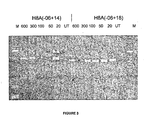
- Figure 3 shows differing efficiencies of two antisense molecules directed at exon 8 acceptor splice site.
- H8A(-06+18) [SEQ ID NO:1]
- H8A(-06+14) [SEQ ID NO: 4] was only able to induce exon 8 and 9 skipping at 300 nM, a concentration some 15 fold higher than H8A(-06+18), which is the preferred antisense molecule.
- Efficacy refers to the ability to induce consistent skipping of a target exon. However, sometimes skipping of the target exons is consistently associated with a flanking exon. That is, we have found that the splicing of some exons is tightly linked. For example, in targeting exon 23 in the mouse model of muscular dystrophy with antisense molecules directed at the donor site of that exon, dystrophin transcripts missing exons 22 and 23 are frequently detected. As another example, when using an antisense molecule directed to exon 8 of the human dystrophin gene, all induced transcripts are missing both exons 8 and 9. Dystrophin transcripts missing only exon 8 are not observed.
- Table 2 discloses antisense molecule sequences that induce exon 8 (and 9) skipping.
- Table 2 Antisense Oligonucleotide name Sequence Ability to induce skipping H8A(-06+18) 5'-GAU AGG UGG UAU CAA CAU CUG UAA Very strong to 20 nM H8A (-03+18) 5' - GAU AGG UGG UAU CAA CAU CUG Very strong skipping to 40nM H8A(-07+18) 5' - GAU AGG UGG UAU CAA CAU CUG UAA G Strong skipping to 40nM H8A(-06+14) 5' - GGU GGU AUC AAC AUC UGU AA Skipping to 300nM H8A(-10+10) 5' - GUA UCA ACA UCU GUA AGC AC Patchy/weak skipping to 100nm
- Antisense oligonucleotides directed at exon 7 were prepared and tested for their ability to induce exon skipping in human muscle cells using similar methods as described above.
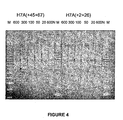
- Figure 4 shows the preferred antisense molecule, H7A(+45+67) [SEQ ID NO: 6], and another antisense molecule, H7A(+2+26) [SEQ ID NO: 7], inducing exon 7 skipping.
- Nested amplification products span exons 3 to 9. Additional products above the induced transcript missing exon 7 arise from amplification from carry-over outer primers from the RT-PCR as well as heteroduplex formation.
- Table 3 below discloses antisense molecule sequences for induced exon 7 skipping.
- Table 3 Antisense Oligonucleotide name Sequence Ability to induce skipping H7A(+45+67) 5' - UGC AUG UUC CAG UCG UUG UGU GG Strong skipping to 20nM H7A(+02+26) 5' - CAC UAU UCC AGU CAA AUA GGU CUG G Weak skipping at 100nM H7D(+15-10) 5' - AUU UAC CAA CCU UCA GGA UCG AGU A Weak skipping to 300nM H7A(-18+03) 5' - GGC CUA AAA CAC AUA CAC AUA Weak skipping to
- Antisense oligonucleotides directed at exon 6 were prepared and tested for their ability to induce exon skipping in human muscle cells using similar methods as described above.
- Figure 5 shows an example of two non-preferred antisense molecules inducing very low levels of exon 6 skipping in cultured human cells. Targeting this exon for specific removal was first undertaken during a study of the canine model using the oligonucleotides as listed in Table 4, below. Some of the human specific oligonucleotides were also evaluated, as shown in Figure 5 .
- both antisense molecules target the donor splice site and only induced low levels of exon 6 skipping.
- Both H6D(+4-21) [SEQ ID NO: 17] and H6D(+18-4) [SEQ ID NO: 18] would be regarded as non-preferred antisense molecules.
- Antisense oligonucleotides directed at exon 4 were prepared and tested for their ability to induce exon skipping in human muscle cells using similar methods as described above.
- Figure 7 shows an example of a preferred antisense molecule inducing skipping of exon 4 skipping in cultured human cells.
- one preferred antisense compound H4A(+13+32) [SEQ ID NO:19], which targeted a presumed exonic splicing enhancer induced efficient exon skipping at a concentration of 20 nM while other non-preferred antisense oligonucleotides failed to induce even low levels of exon 4 skipping.
- Another preferred antisense molecule inducing skipping of exon 4 was H4A(+111+40) [SEQ ID NO:22], which induced efficient exon skipping at a concentration of 20 nM.
- Table 5 below discloses antisense molecule sequences for inducing exon 4 skipping.
- Table 5 Antisense Oligonucleotide name Sequence Ability to induce skipping H4A(+13+32) 5' GCA UGA ACU CUU GUG GAU CC Skipping to 20 nM H4A(+11+40) Skipping to 20 nM H4D(+04-16) 5' CCA GGG UAC UAC UUA CAU UA No skipping H4D(-24-44) 5' AUC GUG UGU CAC AGC AUC CAG No skipping
- Antisense oligonucleotides directed at exon 3 were prepared and tested for their ability to induce exon skipping in human muscle cells using similar methods as described above.
- H3A(+30+60) [SEQ ID NO:23] induced substantial exon 3 skipping when delivered into cells at a concentration of 20 nM to 600 nM.
- the antisense molecule, H3A(+35+65) [SEQ ID NO: 24] induced exon skipping at 300 nM.
- Table 6 below discloses antisense molecule sequences that induce exon 3 skipping.
- Table 6 Antisense Oligonucleotide name Sequence Ability to induce skipping H3A(+30+60) Moderate skipping to 20 to 600 nM H3A(+35+65) Working to 300 nM H3A(+30+54) GCG CCU CCC AUC CUG UAG GUC ACU G Moderate 100-600 nM H3D(+46-21) CUU CGA GGA GGU CUA GGA GGC GCC UC No skipping H3A(+30+50) CUC CCA UCC UGU AGG UCA CUG Moderate 20-600 nM H3D(+19-03) UAC CAG UUU UUG CCC UGU CAG G No skipping H3A(-06+20) UCA AUA UGC UGC UUCCCA AAC UGA AA No skipping H3A(+37+61) CUA GGA GGC GCC UCC CAU CCU G
- Antisense oligonucleotides directed at exon 5 were prepared and tested for their ability to induce exon skipping in human muscle cells using similar methods as described above.
- H5A(+20+50) [SEQ ID NO:31] induces substantial exon 5 skipping when delivered into cells at a concentration of 100 nM.
- Table 7 below shows other antisense molecules tested. The majority of these antisense molecules were not as effective at exon skipping as H5A(+20+50). However, H5A(+15+45) [SEQ ID NO: 40] was able to induce exon 5 skipping at 300 nM.
- Table 7 discloses antisense molecule sequences that induce exon 5 skipping.
- Table 7 Antisense Oligonucleotide name Sequence Ability to induce skipping H5A(+20+50) Working to 100 nM H5D(+25-05) No skipping H5D(+10-15) CAU CAG GAU UCU UAC CUG CCA GUG G Inconsistent at 300 nM H5A(+10+34) CGA UGU CAG UAC UUC CAA UAU UCA C Very weak H5D(-04-21) ACC AUU CAU CAG GAU UCU No skipping H5D(+16-02) ACC UGC CAG UGG AGG AUU No skipping H5A(-07+20) CCA AUA UUC ACU AAA UCA ACC UGU UAA No skipping H5D(+18-12) No skipping H5A(+05+35) No skipping H5A(+15+45) Working to 300 nM
- Antisense oligonucleotides directed at exon 10 were prepared and tested for their ability to induce exon skipping in human muscle cells using similar methods as described above.
- H10A(-05+16) [SEQ ID NO:41] induced substantial exon 10 skipping when delivered into cells.
- Table 8 below shows other antisense molecules tested. The antisense molecules ability to induce exon skipping was variable. Table 8 below discloses antisense molecule sequences that induce exon 10 skipping.
- Antisense oligonucleotides directed at exon 11 were prepared and tested for their ability to induce exon skipping in human muscle cells using similar methods as described above.
- Figure 8B shows an example of H11A(+75+97) [SEQ ID NO:49] antisense molecule inducing exon 11 skipping in cultured human cells.
- H11A(+75+97) induced substantial exon 11 skipping when delivered into cells at a concentration of 5 nM.
- Table 9 shows other antisense molecules tested. The antisense molecules ability to induce exon skipping was observed at 100 nM.
- Antisense oligonucleotides directed at exon 12 were prepared and tested for their ability to induce exon skipping in human muscle cells using similar methods as described above.
- H12A(+52+75) [SEQ ID NO:50] induced substantial exon 12 skipping when delivered into cells at a concentration of 5 nM, as shown in Figure 8A .
- Table 10 shows other antisense molecules tested at a concentration range of 5, 25, 50, 100, 200 and 300 nM. The antisense molecules ability to induce exon skipping was variable.
- Antisense oligonucleotides directed at exon 13 were prepared and tested for their ability to induce exon skipping in human muscle cells using similar methods as described above.
- H13A(+77+100) [SEQ ID NO:53] induced substantial exon 13 skipping when delivered into cells at a concentration of 5 nM.
- Table 11 below includes two other antisense molecules tested at a concentration range of 5, 25, 50, 100, 200 and 300 nM. These other antisense molecules were unable to induce exon skipping.
- Table 11 Antisense Oligonucleotide name Sequence Ability to induce skipping H13A(+77+100) CAG CAG UUG CGU GAU CUC CAC UAG Skipping at 5 nM H13A(+55+75) UUC AUC AAC UAC CAC CAC CAU No skipping H13D(+06-19) CUA AGC AAA AUA AUC UGA CCU UAA G No skipping
- Antisense oligonucleotides directed at exon 14 were prepared and tested for their ability to induce exon skipping in human muscle cells using similar methods as described above.
- H14A(+37+64) [SEQ ID NO:56] induced weak exon 14 skipping when delivered into cells at a concentration of 100 nM.
- Table 12 below includes other antisense molecules tested at a concentration range of 5, 25, 50, 100, 200 and 300 nM. The other antisense molecules were unable to induce exon skipping at any of the concentrations tested.
- Antisense oligonucleotides directed at exon 15 were prepared and tested for their ability to induce exon skipping in human muscle cells using similar methods as described above.
- H15A(-12+19) [SEQ ID NO:63] and H15A(+48+71) [SEQ ID NO:64] induced substantial exon 15 skipping when delivered into cells at a concentration of 10 Nm, as shown in Figure 9A .
- Table 13 below includes other antisense molecules tested at a concentration range of 5, 25, 50, 100, 200 and 300 Nm. These other antisense molecules were unable to induce exon skipping at any of the concentrations tested.
- Antisense oligonucleotides directed at exon 16 were prepared and tested for their ability to induce exon skipping in human muscle cells using similar methods as described above.
- H16A(-12+19) [SEQ ID NO:67] and H16A(-06+25) [SEQ ID NO:68] induced substantial exon 16 skipping when delivered into cells at a concentration of 10 nM, as shown in Figure 9B .
- Table 14 below includes other antisense molecules tested.
- H16A(-06+19) [SEQ ID NO:69] and H16A(+87+109) [SEQ ID NO:70] were tested at a concentration range of 5, 25, 50, 100, 200 and 300 nM. These two antisense molecules were able to induce exon skipping at 25 nM and 100 nM, respectively. Additional antisense molecules were tested at 100, 200 and 300 nM and did not result in any exon skipping.
- Antisense oligonucleotides directed at exon 19 were prepared and tested for their ability to induce exon skipping in human muscle cells using similar methods as described above.
- H19A(+35+65) [SEQ ID NO:79] induced substantial exon 19 skipping when delivered into cells at a concentration of 10 nM.
- This antisense molecule also showed very strong exon skipping at concentrations of 25, 50, 100, 300 and 600 nM.
- Figure 10 illustrates exon 19 and 20 skipping using a "cocktail" of antisense oligonucleotides, as tested using gel electrophoresis. It is interesting to note that it was not easy to induce exon 20 skipping using single antisense oligonucleotides H20A(+44+71) [SEQ ID NO:81] or H20A(+149+170) [SEQ ID NO:82], as illustrated in sections 2 and 3 of the gel shown in Figure 10 .
- a "cocktail" of antisense oligonucleotides was more efficient as can be seen in section 4 of Figure 10 using a “cocktail” of antisense oligonucleotides H20A(+44+71) and H20A(+149+170).
- the cocktail was used to target exon 19, skipping was even stronger (see section 5, Figure 10 ).
- Figure 11 illustrates gel electrophoresis results of exon 19/20 skipping using "weasels"
- the "weasels” were effective in skipping exons 19 and 20 at concentrations of 25, 50, 100, 300 and 600 nM.
- a further "weasel” sequence is shown in the last row of Table 3C. This compound should give good results.
- Antisense oligonucleotides directed at exon 20 were prepared and tested for their ability to induce exon skipping in human muscle cells using similar methods as described above.
- Antisense molecules H20A(-11+17) [SEQ ID NO:86] and H20D(+08-20) [SEQ ID NO:87] are yet to be tested.
- H20A(+44+71) [SEQ ID NO: 81] and H20(+149+170) [SEQ ID NO:82] in a ratio of 1:1 exhibited very strong exon skipping at a concentration of 100 nM and 600 nM.
- Antisense oligonucleotides directed at exon 21 were prepared and tested for their ability to induce exon skipping in human muscle cells using similar methods as described above.
- Antisense oligonucleotides directed at exon 22 were prepared and tested for their ability to induce exon skipping in human muscle cells using similar methods as described above.
- Figure 12 illustrates differing efficiencies of two antisense molecules directed at exon 22 acceptor splice site.
- H22A(+125+106) [SEQ ID NO:96] and H22A(+80+101) [SEQ ID NO: 98] induce strong exon 22 skipping from 50 nM to 600 nM concentration.
- H22A(+125+146) [SEQ ID NO:96] and H22A(+80+101) [SEQ ID NO:98] induced exon 22 skipping when delivered into cells at a concentration of 50 nM.
- Table 17 below shows other antisense molecules tested at a concentration range of 50, 100, 300 and 600 nM. These antisense molecules showed a variable ability to induce exon skipping.
- Antisense oligonucleotides directed at exon 23 were prepared and tested for their ability to induce exon skipping in human muscle cells using similar methods as described above.
- Table 18 below shows antisense molecules tested at a concentration range of 25, 50, 100, 300 and 600 nM. These antisense molecules showed no ability to induce exon skipping or are yet to be tested.
- Table 18 Antisense oligonucleotide name Sequence Ability to induce skipping H23A(+34+59) ACA GUG GUG CUG AGA UAG UAU AGG CC No skipping H23A(+18+39) UAG GCC ACU UUG UUG CUC UUG C No Skipping H23A(+72+90) UUC AGA GGG CGC UUU CUU C No Skipping
- Antisense oligonucleotides directed at exon 24 were prepared using similar methods as described above. Table 19 below outlines the antisense oligonucleotides directed at exon 24 that are yet to be tested for their ability to induce exon 24 skipping. Table 19 Antisense oligonucleotide name Sequence Ability to induce skipping H24A(+48+70) GGG CAG GCC AUU CCU CCU UCA GA Needs testing H24A(-02+22) UCU UCA GGG UUU GUA UGU GAU UCU Needs testing
- Antisense oligonucleotides directed at exon 25 were prepared using similar methods as described above. Table 20 below shows the antisense oligonucleotides directed at exon 25 that are yet to be tested for their ability to induce exon 25 skipping. Table 20 Antisense oligonucleotide name Sequence Ability to induce skipping H25A(+9+36) CUG GGC UGA AUU GUC UGA AUA UCA CUG Needs testing H25A(+131+156) CUG UUG GCA CAU GUG AUC CCA CUG AG Needs testing H25D(+16-08) GUC UAU ACC UGU UGG CAC AUG UGA Needs testing
- Antisense oligonucleotides directed at exon 26 were prepared using similar methods as described above. Table 21 below outlines the antisense oligonucleotides directed at exon 26 that are yet to be tested for their ability to induce exon 26 skipping. Table 21 Antisense oligonucleotide name Sequence Ability to induce skipping H26A(+132+156) UGC UUU CUG UAA UUC AUC UGG AGU U Needs testing H26A(-07+19) CCU CCU UUC UGG CAU AGA CCU UCC AC Needs testing H26A(+68+92) UGU GUC AUC CAU UCG UGC AUC UCU G Faint skipping at 600 nM
- Antisense oligonucleotides directed at exon 27 were prepared using similar methods as described above. Table 22 below outlines the antisense oligonucleotides directed at exon 27 that are yet to be tested for their ability to induce exon 27 skipping. Table 22 Antisense oligonucleotide name Sequence Ability to induce skipping H27A(+82+106) UUA AGG CCU CUU GUG CUA CAG GUG G Needs testing H27A(-4+19) GGG CCU CUU CUU UAG CUC UCU GA Faint skipping at 600 and 300 nM H27D(+19-03) GAC UUC CAA AGU CUU GCA UUU C v. strong skipping at 600 and 300 nM
- Antisense oligonucleotides directed at exon 28 were prepared using similar methods as described above. Table 23 below outlines the antisense oligonucleotides directed at exon 28 that are yet to be tested for their ability to induce exon 28 skipping. Table 23 Antisense oligonucleotide name Sequence Ability to induce skipping H28A(-05+19) GCC AAC AUG CCC AAA CUU CCU AAG v. strong skipping at 600 and 300 nM H28A(+99+124) CAG AGA UUU CCU CAG CUC CGC CAG GA Needs testing H28D(+16-05) CUU ACA UCU AGC ACC UCA GAG v. strong skipping at 600 and 300 nM
- Antisense oligonucleotides directed at exon 29 were prepared using similar methods as described above. Table 24 below outlines the antisense oligonucleotides directed at exon 29 that are yet to be tested for their ability to induce exon 29 skipping. Table 24 Antisense oligonucleotide name Sequence Ability to induce skipping H29A(+57+81) Needs testing H29A(+18+42) v. strong skipping at 600 and 300 nM H29D(+17-05) CAU ACC UCU UCA UGU AGU UCC C v. strong skipping at 600 and 300 nM
- Antisense oligonucleotides directed at exon 30 were prepared using similar methods as described above. Table 25 below outlines the antisense oligonucleotides directed at exon 30 that are yet to be tested for their ability to induce exon 30 skipping. Table 25 Antisense oligonucleotide name Sequence Ability to induce skipping H30A(+122+147) Needs testing H30A(+25+50) Very strong skipping at 600 and 300 nM. H30D(+19-04) Very strong skipping at 600 and 300 nM.
- Antisense oligonucleotides directed at exon 31 were prepared and tested for their ability to induce exon skipping in human muscle cells using similar methods as described above.
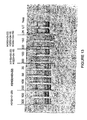
- Figure 13 illustrates differing efficiencies of two antisense molecules directed at exon 31 acceptor splice site and a "cocktail" of exon 31 antisense oligonucleotides at varying concentrations.
- H31D(+03-22) [SEQ ID NO:124] substantially induced exon 31 skipping when delivered into cells at a concentration of 20 nM.
- Table 26 below also includes other antisense molecules tested at a concentration of 100 and 300 nM. These antisense molecules showed a variable ability to induce exon skipping.
- Antisense oligonucleotides directed at exon 32 were prepared and tested for their ability to induce exon skipping in human muscle cells using similar methods as described above.
- H32D(+04-16) [SEQ ID NO:127] and H32A(+49+73) [SEQ ID NO:130] induced exon 32 skipping when delivered into cells at a concentration of 300 nM.
- Table 27 below also shows other antisense molecules tested at a concentration of 100 and 300 nM. These antisense molecules did not show an ability to induce exon skipping.
- Antisense oligonucleotides directed at exon 33 were prepared and tested for their ability to induce exon skipping in human muscle cells using similar methods as described above.
- Figure 14 shows differing efficiencies of two antisense molecules directed at exon 33 acceptor splice site.
- H33A(+64+88) [SEQ ID NO:134] substantially induced exon 33 skipping when delivered into cells at a concentration of 10 nM.
- Table 28 below includes other antisense molecules tested at a concentration of 100, 200 and 300 nM. These antisense molecules showed a variable ability to induce exon skipping.
- Antisense oligonucleotides directed at exon 34 were prepared and tested for their ability to induce exon skipping in human muscle cells using similar methods as described above.
- Table 29 below includes antisense molecules tested at a concentration of 100 and 300 nM. These antisense molecules showed a variable ability to induce exon skipping.
- Table 29 Antisense oligonucleotide name Sequence Ability to induce skipping H34A(+83+104) UCC AUA UCU GUA GCU GCC AGC C No skipping H34A(+143+165) CCA GGC AAC UUC AGA AUC CAA AU No skipping H34A(-20+10) Not tested H34A(+46+70) CAU UCA UUU CCU UUC GCA UCU UAC G Skipping to 300 nM H34A(+95+120) UGA UCU CUU UGU CAA UUC CAU AUC UG Skipping to 300 nM H34D(+10-20) Not tested H34A(+72+96) CUG UAG CUG CCA GCC AUU CUG UCA AG No skipping
- Antisense oligonucleotides directed at exon 35 were prepared and tested for their ability to induce exon skipping in human muscle cells using similar methods as described above.
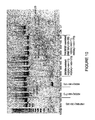
- Figure 15 shows differing efficiencies of antisense molecules directed at exon 35 acceptor splice site.
- H35A(+24+43) [SEQ ID NO:144] substantially induced exon 35 skipping when delivered into cells at a concentration of 20 nM.
- Table 30 below also includes other antisense molecules tested at a concentration of 100 and 300 nM. These antisense molecules showed no ability to induce exon skipping.
- Antisense oligonucleotides directed at exon 36 were prepared and tested for their ability to induce exon skipping in human muscle cells using similar methods as described above.
- Antisense molecule H36A(+26+50) [SEQ ID NO:145] induced exon 36 skipping when delivered into cells at a concentration of 300 nM, as shown in Figure 16 .
- Antisense oligonucleotides directed at exon 37 were prepared and tested for their ability to induce exon skipping in human muscle cells using similar methods as described above.
- Figure 17 shows differing efficiencies of two antisense molecules directed at exon 37 acceptor splice site.
- H37A(+82+105) [SEQ ID NO:148] and H37A(+134+157) [SEQ ID NO:149] substantially induced exon 37 skipping when delivered into cells at a concentration of 10 nM.
- Table 31 below shows the antisense molecules tested.
- Antisense oligonucleotides directed at exon 38 were prepared and tested for their ability to induce exon skipping in human muscle cells using similar methods as described above.
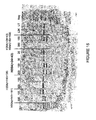
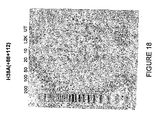
- Figure 18 illustrates antisense molecule H38A(+88+112) [SEQ ID NO:152] , directed at exon 38 acceptor splice site.
- H38A(+88+112) substantially induced exon 38 skipping when delivered into cells at a concentration of 10 nM.
- Table 32 below shows the antisense molecules tested and their ability to induce exon skipping.
- Table 32 Antisense oligonucleotide name Sequence Ability to induce skipping H38A(-01+19) CCU UCA AAG GAA UGG AGG CC No skipping H38A(+59+83) Skipping to 10 nM H38A(+88+112) UGA AGU CUU CCU CUU UCA GAU UCA C Skipping to 10 nM
- Antisense oligonucleotides directed at exon 39 were prepared and tested for their ability to induce exon skipping in human muscle cells using similar methods as described above.
- Antisense oligonucleotides directed at exon 40 were prepared and tested for their ability to induce exon skipping in human muscle cells using similar methods as described above.
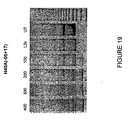
- Figure 19 illustrates antisense molecule H40A(-05+17) [SEQ ID NO:157] directed at exon 40 acceptor splice site.
- Antisense oligonucleotides directed at exon 42 were prepared and tested for their ability to induce exon skipping in human muscle cells using similar methods as described above.
- Figure 20 illustrates antisense molecule H42A(-04+23) [SEQ ID NO:159], directed at exon 42 acceptor splice site.
- Table 34 below shows the antisense molecules tested and their ability to induce exon 42 skipping.
- Antisense oligonucleotides directed at exon 43 were prepared and tested for their ability to induce exon skipping in human muscle cells using similar methods as described above.
- Antisense oligonucleotides directed at exon 44 were prepared using similar methods as described above. Testing for the ability of these antisense molecules to induce exon 44 skipping is still in progress. The antisense molecules under review are shown as SEQ ID Nos: 165 to 167 in Table 1A.
- Antisense oligonucleotides directed at exon 45 were prepared using similar methods as described above. Testing for the ability of these antisense molecules to induce exon 45 skipping is still in progress. The antisense molecules under review are shown as SEQ ID Nos: 207 to 211 in Table 1A.
- Antisense oligonucleotides directed at exon 46 were prepared and tested for their ability to induce exon skipping in human muscle cells using similar methods as described above.
- Figure 21 illustrates the efficiency of one antisense molecule directed at exon 46 acceptor splice site.
- Antisense oligonucleotide H46A(+86+115) [SEQ ID NO:203] showed very strong ability to induce exon 46 skipping.
- Table 36 below includes antisense molecules tested. These antisense molecules showed varying ability to induce exon 46 skipping.
- Antisense oligonucleotides directed at exon 47 were prepared and tested for their ability to induce exon skipping in human muscle cells using similar methods as described above.
- Antisense oligonucleotides directed at exon 50 were prepared and tested for their ability to induce exon skipping in human muscle cells using similar methods as described above.
- Antisense oligonucleotide molecule H50(+02+30) [SEQ ID NO: 173] was a strong inducer of exon skipping. Further, H50A(+07+33) [SEQ ID NO:174] and H50D(+07-18) [SEQ ID NO:175] both induced exon 50 skipping when delivered into cells at a concentration of 100 nM.
- Antisense oligonucleotides directed at exon 51 were prepared and tested for their ability to induce exon skipping in human muscle cells using similar methods as described above.
- Figure 22 illustrates differing efficiencies of two antisense molecules directed at exon 51 acceptor splice site.
- Antisense oligonucleotide H51A(+66+90) [SEQ ID NO:180] showed the stronger ability to induce exon 51 skipping.
- Table 37 below includes antisense molecules tested at a concentration range of 25, 50, 100, 300 and 600 nM. These antisense molecules showed varying ability to induce exon . 51 skipping. The strongest inducers of exon skipping were antisense oligonucleotide H51A(+61+90) [SEQ ID NO: 179] and H51A(+66+95) [SEQ ID NO: 179].
- Antisense oligonucleotides directed at exon 52 were prepared and tested for their ability to induce exon skipping in human muscle cells using similar methods as described above.
- Figure 22 also shows differing efficiencies of four antisense molecules directed at exon 52 acceptor splice site.
- the most effective antisense oligonucleotide for inducing exon 52 skipping was H52A(+17+37) [SEQ ID NO:188].
- Table 38 below shows antisense molecules tested at a concentration range of 50, 100, 300 and 600 nM. These antisense molecules showed varying ability to induce exon 50 skipping. Antisense molecules H52A(+12+41) [SEQ ID NO:187] and H52A(+17+37) [SEQ ID NO:188] showed the strongest exon 50 skipping at a concentration of 50 nM.
- Antisense oligonucleotides directed at exon 53 were prepared and tested for their ability to induce exon skipping in human muscle cells using similar methods as described above.
- Figure 22 also shows antisense molecule H53A(+39+69) [SEQ ID NO:193] directed at exon 53 acceptor splice site.
- This antisense oligonucleotide was able to induce exon 53 skipping at 5, 100, 300 and 600 nM.
- Table 39 below includes other antisense molecules tested at a concentration range of 50, 100, 300 and 600 nM. These antisense molecules showed varying ability to induce exon 53 skipping. Antisense molecule H53A(+39+69) [SEQ ID NO:193] induced the strongest exon 53 skipping.
Landscapes
- Health & Medical Sciences (AREA)
- Engineering & Computer Science (AREA)
- Life Sciences & Earth Sciences (AREA)
- Genetics & Genomics (AREA)
- Biomedical Technology (AREA)
- Bioinformatics & Cheminformatics (AREA)
- Chemical & Material Sciences (AREA)
- Organic Chemistry (AREA)
- Zoology (AREA)
- General Engineering & Computer Science (AREA)
- Biotechnology (AREA)
- Wood Science & Technology (AREA)
- Molecular Biology (AREA)
- General Health & Medical Sciences (AREA)
- Plant Pathology (AREA)
- Microbiology (AREA)
- Biophysics (AREA)
- Physics & Mathematics (AREA)
- Biochemistry (AREA)
- General Chemical & Material Sciences (AREA)
- Chemical Kinetics & Catalysis (AREA)
- Public Health (AREA)
- Animal Behavior & Ethology (AREA)
- Pharmacology & Pharmacy (AREA)
- Nuclear Medicine, Radiotherapy & Molecular Imaging (AREA)
- Medicinal Chemistry (AREA)
- Veterinary Medicine (AREA)
- Physical Education & Sports Medicine (AREA)
- Orthopedic Medicine & Surgery (AREA)
- Neurology (AREA)
- Pharmaceuticals Containing Other Organic And Inorganic Compounds (AREA)
- Medicines That Contain Protein Lipid Enzymes And Other Medicines (AREA)
- Saccharide Compounds (AREA)
Priority Applications (11)
| Application Number | Priority Date | Filing Date | Title |
|---|---|---|---|
| EP22152770.8A EP4047096A1 (de) | 2004-06-28 | 2005-06-28 | Antisense-oligonukleotide zur induzierung von exon-skipping und verfahren zur verwendung davon |
| PL10004274T PL2206781T3 (pl) | 2004-06-28 | 2005-06-28 | Antysensowne oligonukleotydy do indukowania pomijania eksonów i sposoby ich zastosowania |
| EP15190341.6A EP3029142A1 (de) | 2004-06-28 | 2005-06-28 | Antisense-oligonukleotide zur induktion von exon-skipping sowie verfahren zur verwendung davon |
| EP15168694.6A EP2933332A1 (de) | 2004-06-28 | 2005-06-28 | Antisense-oligonukleotide zur induktion von exon-skipping sowie verfahren zur verwendung davon |
| EP20200874.4A EP3808845A1 (de) | 2004-06-28 | 2005-06-28 | Antisense-oligonukleotide zur induzierung von exon-skipping und verfahren zur verwendung davon |
| EP12162995.0A EP2500430B1 (de) | 2004-06-28 | 2005-06-28 | Antisense-Oligonukleotide zur Induktion von Exon-Skipping sowie Verfahren zur Verwendung davon |
| SI200532044A SI2206781T1 (sl) | 2004-06-28 | 2005-06-28 | Protismiselni oligonukleotidi za induciranje preskakovanja eksona in postopki njihove uporabe |
| EP23180290.1A EP4272748A3 (de) | 2004-06-28 | 2005-06-28 | Antisense-oligonukleotide zur induzierung von exon-skipping und verfahren zur verwendung davon |
| EP17159328.8A EP3228711A1 (de) | 2004-06-28 | 2005-06-28 | Antisense-oligonukleotide zur induktion von exon-skipping sowie verfahren zur verwendung davon |
| HRP20160225TT HRP20160225T1 (hr) | 2004-06-28 | 2016-03-01 | Antisens olinukleotidi za induciranje zaobilaženja egzona i postupci njihove upotrebe |
| CY20161100167T CY1117475T1 (el) | 2004-06-28 | 2016-03-01 | Αντi-νοηματικα ολιγονουκλεοτιδια για την επαγωγη παραλειψης εξονιων και μεθοδοι χρησης αυτων |
Applications Claiming Priority (2)
| Application Number | Priority Date | Filing Date | Title |
|---|---|---|---|
| AU2004903474A AU2004903474A0 (en) | 2004-06-28 | Antisense Oligonucleotides for Inducing Exon Skipping and Methods of Use Thereof | |
| EP20050754344 EP1766010B1 (de) | 2004-06-28 | 2005-06-28 | Antisense-oligonukleotide zur induktion von exon-skipping sowie verfahren zur verwendung davon |
Related Parent Applications (2)
| Application Number | Title | Priority Date | Filing Date |
|---|---|---|---|
| EP20050754344 Division EP1766010B1 (de) | 2004-06-28 | 2005-06-28 | Antisense-oligonukleotide zur induktion von exon-skipping sowie verfahren zur verwendung davon |
| EP05754344.9 Division | 2005-06-28 |
Related Child Applications (11)
| Application Number | Title | Priority Date | Filing Date |
|---|---|---|---|
| EP12162995.0A Division EP2500430B1 (de) | 2004-06-28 | 2005-06-28 | Antisense-Oligonukleotide zur Induktion von Exon-Skipping sowie Verfahren zur Verwendung davon |
| EP12162995.0A Division-Into EP2500430B1 (de) | 2004-06-28 | 2005-06-28 | Antisense-Oligonukleotide zur Induktion von Exon-Skipping sowie Verfahren zur Verwendung davon |
| EP20200874.4A Division EP3808845A1 (de) | 2004-06-28 | 2005-06-28 | Antisense-oligonukleotide zur induzierung von exon-skipping und verfahren zur verwendung davon |
| EP17159328.8A Division EP3228711A1 (de) | 2004-06-28 | 2005-06-28 | Antisense-oligonukleotide zur induktion von exon-skipping sowie verfahren zur verwendung davon |
| EP15190341.6A Division-Into EP3029142A1 (de) | 2004-06-28 | 2005-06-28 | Antisense-oligonukleotide zur induktion von exon-skipping sowie verfahren zur verwendung davon |
| EP15190341.6A Division EP3029142A1 (de) | 2004-06-28 | 2005-06-28 | Antisense-oligonukleotide zur induktion von exon-skipping sowie verfahren zur verwendung davon |
| EP22152770.8A Division EP4047096A1 (de) | 2004-06-28 | 2005-06-28 | Antisense-oligonukleotide zur induzierung von exon-skipping und verfahren zur verwendung davon |
| EP15168694.6A Division-Into EP2933332A1 (de) | 2004-06-28 | 2005-06-28 | Antisense-oligonukleotide zur induktion von exon-skipping sowie verfahren zur verwendung davon |
| EP15168694.6A Division EP2933332A1 (de) | 2004-06-28 | 2005-06-28 | Antisense-oligonukleotide zur induktion von exon-skipping sowie verfahren zur verwendung davon |
| EP23180290.1A Division EP4272748A3 (de) | 2004-06-28 | 2005-06-28 | Antisense-oligonukleotide zur induzierung von exon-skipping und verfahren zur verwendung davon |
| EP12162995.0 Division-Into | 2012-04-03 |
Publications (4)
| Publication Number | Publication Date |
|---|---|
| EP2206781A2 true EP2206781A2 (de) | 2010-07-14 |
| EP2206781A3 EP2206781A3 (de) | 2013-01-23 |
| EP2206781A9 EP2206781A9 (de) | 2013-02-06 |
| EP2206781B1 EP2206781B1 (de) | 2015-12-02 |
Family
ID=35781530
Family Applications (9)
| Application Number | Title | Priority Date | Filing Date |
|---|---|---|---|
| EP15168694.6A Withdrawn EP2933332A1 (de) | 2004-06-28 | 2005-06-28 | Antisense-oligonukleotide zur induktion von exon-skipping sowie verfahren zur verwendung davon |
| EP10004274.6A Revoked EP2206781B1 (de) | 2004-06-28 | 2005-06-28 | Antisense-Oligonukleotide zur Induktion von Exon-Skipping sowie Verfahren zur Verwendung davon |
| EP17159328.8A Withdrawn EP3228711A1 (de) | 2004-06-28 | 2005-06-28 | Antisense-oligonukleotide zur induktion von exon-skipping sowie verfahren zur verwendung davon |
| EP23180290.1A Pending EP4272748A3 (de) | 2004-06-28 | 2005-06-28 | Antisense-oligonukleotide zur induzierung von exon-skipping und verfahren zur verwendung davon |
| EP20050754344 Expired - Lifetime EP1766010B1 (de) | 2004-06-28 | 2005-06-28 | Antisense-oligonukleotide zur induktion von exon-skipping sowie verfahren zur verwendung davon |
| EP12162995.0A Expired - Lifetime EP2500430B1 (de) | 2004-06-28 | 2005-06-28 | Antisense-Oligonukleotide zur Induktion von Exon-Skipping sowie Verfahren zur Verwendung davon |
| EP22152770.8A Withdrawn EP4047096A1 (de) | 2004-06-28 | 2005-06-28 | Antisense-oligonukleotide zur induzierung von exon-skipping und verfahren zur verwendung davon |
| EP15190341.6A Withdrawn EP3029142A1 (de) | 2004-06-28 | 2005-06-28 | Antisense-oligonukleotide zur induktion von exon-skipping sowie verfahren zur verwendung davon |
| EP20200874.4A Withdrawn EP3808845A1 (de) | 2004-06-28 | 2005-06-28 | Antisense-oligonukleotide zur induzierung von exon-skipping und verfahren zur verwendung davon |
Family Applications Before (1)
| Application Number | Title | Priority Date | Filing Date |
|---|---|---|---|
| EP15168694.6A Withdrawn EP2933332A1 (de) | 2004-06-28 | 2005-06-28 | Antisense-oligonukleotide zur induktion von exon-skipping sowie verfahren zur verwendung davon |
Family Applications After (7)
| Application Number | Title | Priority Date | Filing Date |
|---|---|---|---|
| EP17159328.8A Withdrawn EP3228711A1 (de) | 2004-06-28 | 2005-06-28 | Antisense-oligonukleotide zur induktion von exon-skipping sowie verfahren zur verwendung davon |
| EP23180290.1A Pending EP4272748A3 (de) | 2004-06-28 | 2005-06-28 | Antisense-oligonukleotide zur induzierung von exon-skipping und verfahren zur verwendung davon |
| EP20050754344 Expired - Lifetime EP1766010B1 (de) | 2004-06-28 | 2005-06-28 | Antisense-oligonukleotide zur induktion von exon-skipping sowie verfahren zur verwendung davon |
| EP12162995.0A Expired - Lifetime EP2500430B1 (de) | 2004-06-28 | 2005-06-28 | Antisense-Oligonukleotide zur Induktion von Exon-Skipping sowie Verfahren zur Verwendung davon |
| EP22152770.8A Withdrawn EP4047096A1 (de) | 2004-06-28 | 2005-06-28 | Antisense-oligonukleotide zur induzierung von exon-skipping und verfahren zur verwendung davon |
| EP15190341.6A Withdrawn EP3029142A1 (de) | 2004-06-28 | 2005-06-28 | Antisense-oligonukleotide zur induktion von exon-skipping sowie verfahren zur verwendung davon |
| EP20200874.4A Withdrawn EP3808845A1 (de) | 2004-06-28 | 2005-06-28 | Antisense-oligonukleotide zur induzierung von exon-skipping und verfahren zur verwendung davon |
Country Status (14)
| Country | Link |
|---|---|
| US (48) | US7807816B2 (de) |
| EP (9) | EP2933332A1 (de) |
| AT (1) | ATE498685T1 (de) |
| CY (2) | CY1111447T1 (de) |
| DE (1) | DE602005026386D1 (de) |
| DK (2) | DK2206781T3 (de) |
| ES (3) | ES2564185T3 (de) |
| HK (2) | HK1216545A1 (de) |
| HR (2) | HRP20110352T1 (de) |
| HU (1) | HUE028632T2 (de) |
| PL (2) | PL1766010T3 (de) |
| PT (1) | PT1766010E (de) |
| SI (2) | SI1766010T1 (de) |
| WO (1) | WO2006000057A1 (de) |
Cited By (6)
| Publication number | Priority date | Publication date | Assignee | Title |
|---|---|---|---|---|
| US9018368B2 (en) | 2004-06-28 | 2015-04-28 | The University Of Western Australia | Antisense oligonucleotides for inducing exon skipping and methods of use thereof |
| US9217148B2 (en) | 2013-03-14 | 2015-12-22 | Sarepta Therapeutics, Inc. | Exon skipping compositions for treating muscular dystrophy |
| US9228187B2 (en) | 2009-11-12 | 2016-01-05 | The University Of Western Australia | Antisense molecules and methods for treating pathologies |
| US9234198B1 (en) | 2008-10-24 | 2016-01-12 | Sarepta Therapeutics, Inc. | Multiple exon skipping compositions for DMD |
| US9506058B2 (en) | 2013-03-15 | 2016-11-29 | Sarepta Therapeutics, Inc. | Compositions for treating muscular dystrophy |
| US10385092B2 (en) | 2010-09-01 | 2019-08-20 | Nippon Shinyaku Co., Ltd. | Antisense nucleic acids |
Families Citing this family (186)
| Publication number | Priority date | Publication date | Assignee | Title |
|---|---|---|---|---|
| US6784291B2 (en) | 2000-05-04 | 2004-08-31 | Avi Biopharma, Inc. | Splice-region antisense composition and method |
| EP1191097A1 (de) | 2000-09-21 | 2002-03-27 | Leids Universitair Medisch Centrum | Induktion von "exon-skipping" in eukaryotischen Zellen |
| AU2003225410A1 (en) | 2003-03-21 | 2004-10-11 | Academisch Ziekenhuis Leiden | Modulation of exon recognition in pre-mrna by interfering with the secondary rna structure |
| US7468418B2 (en) | 2003-04-29 | 2008-12-23 | Avi Biopharma., Inc. | Compositions for enhancing transport of molecules into cells |
| CA2553104A1 (en) | 2004-01-23 | 2005-08-11 | Avi Biopharma, Inc. | Antisense oligomers and methods for inducing immune tolerance and immunosuppression |
| US20050288246A1 (en) | 2004-05-24 | 2005-12-29 | Iversen Patrick L | Peptide conjugated, inosine-substituted antisense oligomer compound and method |
| USRE48960E1 (en) | 2004-06-28 | 2022-03-08 | The University Of Western Australia | Antisense oligonucleotides for inducing exon skipping and methods of use thereof |
| EP1855694B1 (de) | 2005-02-09 | 2020-12-02 | Sarepta Therapeutics, Inc. | Antisense-zusammensetzung zur behandlung von muskelatrophie |
| US8067571B2 (en) | 2005-07-13 | 2011-11-29 | Avi Biopharma, Inc. | Antibacterial antisense oligonucleotide and method |
| WO2007123391A1 (en) | 2006-04-20 | 2007-11-01 | Academisch Ziekenhuis Leiden | Therapeutic intervention in a genetic disease in an individual by modifying expression of an aberrantly expressed gene. |
| EP1857548A1 (de) * | 2006-05-19 | 2007-11-21 | Academisch Ziekenhuis Leiden | Mittel und Verfahren zur Induktion von Exon-skipping |
| SI2049664T1 (sl) | 2006-08-11 | 2012-04-30 | Prosensa Technologies Bv | Enojna veriga oligonukleotidov, komplementarna repetitivnim elementom, za zdravljenje genetskih bolezni, povezanih z nestabilnostjo dnk ponovitev |
| EP2560001B1 (de) * | 2006-09-21 | 2016-04-13 | University of Rochester | Zusammensetzungen und Verfahren für eine Proteinverlagerungstherapie für myotone Dystrophie |
| US20100016215A1 (en) | 2007-06-29 | 2010-01-21 | Avi Biopharma, Inc. | Compound and method for treating myotonic dystrophy |
| WO2009005793A2 (en) | 2007-06-29 | 2009-01-08 | Avi Biopharma, Inc. | Tissue specific peptide conjugates and methods |
| WO2009008727A2 (en) | 2007-07-12 | 2009-01-15 | Prosensa Technologies B.V. | Molecules for targeting compounds to various selected organs or tissues |
| CA2693742A1 (en) | 2007-07-12 | 2009-01-15 | Prosensa Technologies B.V. | Molecules for targeting compounds to various selected organs, tissues or tumor cells |
| ES2639852T3 (es) * | 2007-10-26 | 2017-10-30 | Academisch Ziekenhuis Leiden | Medios y métodos para contrarrestar los trastornos musculares |
| USRE48468E1 (en) | 2007-10-26 | 2021-03-16 | Biomarin Technologies B.V. | Means and methods for counteracting muscle disorders |
| EP2235034B1 (de) | 2007-12-28 | 2016-11-23 | Sarepta Therapeutics, Inc. | Immunmodulierende mittel und anwendungsverfahren |
| WO2009099326A1 (en) | 2008-02-08 | 2009-08-13 | Prosensa Holding Bv | Methods and means for treating dna repeat instability associated genetic disorders |
| WO2009101399A1 (en) * | 2008-02-12 | 2009-08-20 | Isis Innovation Limited | Treatment of muscular dystrophy using peptide nucleic acid ( pna) |
| EP2119783A1 (de) | 2008-05-14 | 2009-11-18 | Prosensa Technologies B.V. | Verfahren für effizientes Exon (44)-Skipping bei Duchenne-Muskeldystrophie und entsprechende Mittel |
| US8084601B2 (en) | 2008-09-11 | 2011-12-27 | Royal Holloway And Bedford New College Royal Holloway, University Of London | Oligomers |
| AU2009310557B2 (en) * | 2008-10-27 | 2014-09-11 | Academisch Ziekenhuis Leiden | Methods and means for efficient skipping of exon 45 in Duchenne Muscular Dystrophy pre-mRNA |
| CN102282155B (zh) | 2008-12-02 | 2017-06-09 | 日本波涛生命科学公司 | 磷原子修饰的核酸的合成方法 |
| CA2758189C (en) * | 2009-04-10 | 2020-12-29 | Association Institut De Myologie | Tricyclo-dna antisense oligonucleotides, compositions, and methods for the treatment of disease |
| EP2421971B1 (de) | 2009-04-24 | 2016-07-06 | BioMarin Technologies B.V. | Oligonukleotid mit einem inosin zur behandlung von dmd |
| ITTO20090487A1 (it) * | 2009-06-26 | 2010-12-27 | Univ Ferrara | Oligonucleotidi antisenso atti ad indurre lo skipping esonico e loro impiego come medicamento per il trattamento della distrofia muscolare di duchenne (dmd) |
| US20110269665A1 (en) | 2009-06-26 | 2011-11-03 | Avi Biopharma, Inc. | Compound and method for treating myotonic dystrophy |
| RU2612521C2 (ru) | 2009-07-06 | 2017-03-09 | Онтории, Инк. | Новые пролекарства нуклеиновых кислот и способы их применения |
| EP2473607A2 (de) * | 2009-08-31 | 2012-07-11 | INSERM - Institut National de la Santé et de la Recherche Médicale | Exon-skipping-therapie für die funktionelle besserung von semifunktionellem dystrophin bei becker- und duchenne-muskeldystrophie |
| US20120270930A1 (en) | 2009-10-29 | 2012-10-25 | Academisch Ziekenhuis Leiden H.O.D.N. Lumc | Methods and compositions for dysferlin exon-skipping |
| AU2014280918B2 (en) * | 2009-12-18 | 2016-11-17 | Arrowhead Pharmaceuticals, Inc. | Organic compositions to treat HSF1-related diseases |
| EP3000885B1 (de) | 2009-12-18 | 2018-07-25 | Arrowhead Pharmaceuticals, Inc. | Organische zusammensetzungen zur behandlung von hsf1-bedingten erkrankungen |
| WO2011078797A2 (en) * | 2009-12-22 | 2011-06-30 | Singapore Health Services Pte. Ltd | Antisense oligonucleotides and uses threreof |
| WO2011078672A1 (en) | 2009-12-24 | 2011-06-30 | Prosensa Technologies B.V. | Molecule for treating an inflammatory disorder |
| US9050373B2 (en) | 2010-05-13 | 2015-06-09 | The Charlotte-Mecklenburg Hospital Authority | Pharmaceutical compositions comprising antisense oligonucleotides and methods of using same |
| KR20200133284A (ko) | 2010-05-28 | 2020-11-26 | 사렙타 쎄러퓨틱스, 인코퍼레이티드 | 변형된 서브유니트간 결합 및/또는 말단 그룹을 갖는 올리고뉴클레오타이드 유사체 |
| IT1400425B1 (it) * | 2010-06-08 | 2013-05-31 | Amsterdam Molecular Therapeutics Bv | Modified snrnas for use in therapy. |
| EP2601294B1 (de) | 2010-08-05 | 2018-11-28 | Academisch Ziekenhuis Leiden h.o.d.n. LUMC | Antisense-oligonukleotid-gerichtete entfernung von proteolytischen spaltungsstellen aus proteinen |
| ES2596977T3 (es) | 2010-09-02 | 2017-01-13 | Université de Mons | Agentes útiles en el tratamiento de la distrofia muscular facioescapulohumeral |
| US10017763B2 (en) | 2010-09-03 | 2018-07-10 | Sarepta Therapeutics, Inc. | dsRNA molecules comprising oligonucleotide analogs having modified intersubunit linkages and/or terminal groups |
| JP5868324B2 (ja) | 2010-09-24 | 2016-02-24 | 株式会社Wave Life Sciences Japan | 不斉補助基 |
| US9920317B2 (en) | 2010-11-12 | 2018-03-20 | The General Hospital Corporation | Polycomb-associated non-coding RNAs |
| CA2817256A1 (en) | 2010-11-12 | 2012-05-18 | The General Hospital Corporation | Polycomb-associated non-coding rnas |
| EP2672977A1 (de) * | 2011-02-08 | 2013-12-18 | The Charlotte-Mecklenburg Hospital Authority d/b/a Carolina Healthcare System | Antisense-oligonukleotide |
| US9161948B2 (en) | 2011-05-05 | 2015-10-20 | Sarepta Therapeutics, Inc. | Peptide oligonucleotide conjugates |
| CA3092114A1 (en) | 2011-05-05 | 2012-11-08 | Sarepta Therapeutics, Inc. | Peptide oligonucleotide conjugates |
| CN103796657B (zh) | 2011-07-19 | 2017-07-11 | 波涛生命科学有限公司 | 合成官能化核酸的方法 |
| WO2013033407A2 (en) | 2011-08-30 | 2013-03-07 | The Regents Of The University Of California | Identification of small molecules that enhance therapeutic exon skipping |
| US20130085139A1 (en) | 2011-10-04 | 2013-04-04 | Royal Holloway And Bedford New College | Oligomers |
| ES2670495T3 (es) * | 2011-10-11 | 2018-05-30 | Inserm - Institut National De La Santé Et De La Recherche Médicale | Tratamiento de salto de exones para epidermólisis ampollosa distrófica |
| GB201117880D0 (en) * | 2011-10-17 | 2011-11-30 | Ucl Business Plc | Antisense oligonucleotides |
| HK1201514A1 (en) | 2011-11-18 | 2015-09-04 | Sarepta Therapeutics, Inc. | Functionally-modified oligonucleotides and subunits thereof |
| CA2861247C (en) * | 2011-12-28 | 2021-11-16 | Nippon Shinyaku Co., Ltd. | Antisense nucleic acids |
| NZ627896A (en) * | 2012-01-27 | 2016-11-25 | Biomarin Technologies B V | Rna modulating oligonucleotides with improved characteristics for the treatment of duchenne and becker muscular dystrophy |
| CN104411831B (zh) | 2012-03-20 | 2020-08-11 | 萨勒普塔医疗公司 | 寡核苷酸类似物的硼酸缀合物 |
| DE102012103041A1 (de) | 2012-04-10 | 2013-10-10 | Eberhard-Karls-Universität Tübingen Universitätsklinikum | Behandlung der dilativen Kardiomyopathie mittels Antisense-Oligonucleotiden |
| WO2013163628A2 (en) | 2012-04-27 | 2013-10-31 | Duke University | Genetic correction of mutated genes |
| US9372901B2 (en) * | 2012-04-27 | 2016-06-21 | Quixey, Inc. | Searching for software applications based on application attributes |
| US10837014B2 (en) | 2012-05-16 | 2020-11-17 | Translate Bio Ma, Inc. | Compositions and methods for modulating SMN gene family expression |
| EA201492116A1 (ru) | 2012-05-16 | 2015-05-29 | Рана Терапьютикс, Инк. | Композиции и способы для модулирования экспрессии mecp2 |
| SG11201407483YA (en) | 2012-05-16 | 2014-12-30 | Rana Therapeutics Inc | Compositions and methods for modulating smn gene family expression |
| EP2870246B1 (de) * | 2012-07-03 | 2019-09-11 | BioMarin Technologies B.V. | Oligonukleotid zur behandlung von patienten mit muskulärer dystrophie |
| KR102213609B1 (ko) | 2012-07-13 | 2021-02-08 | 웨이브 라이프 사이언시스 리미티드 | 키랄 제어 |
| PL2872485T3 (pl) | 2012-07-13 | 2021-05-31 | Wave Life Sciences Ltd. | Asymetryczna grupa pomocnicza |
| US9873739B2 (en) | 2012-08-01 | 2018-01-23 | Ikaika Therapeutics, Llc | Mitigating tissue damage and fibrosis via latent transforming growth factor beta binding protein (LTBP4) |
| HK1216902A1 (zh) | 2012-12-20 | 2016-12-09 | Sarepta Therapeutics, Inc. | 用作治疗肌肉萎缩的改进外显子跳跃组合物 |
| US20140315977A1 (en) | 2013-03-14 | 2014-10-23 | Sarepta Therapeutics, Inc. | Exon skipping compositions for treating muscular dystrophy |
| US9828582B2 (en) | 2013-03-19 | 2017-11-28 | Duke University | Compositions and methods for the induction and tuning of gene expression |
| WO2014197748A2 (en) * | 2013-06-05 | 2014-12-11 | Duke University | Rna-guided gene editing and gene regulation |
| WO2015051283A1 (en) | 2013-10-04 | 2015-04-09 | Rana Therapeutics, Inc. | Compositions and methods for treating amyotrophic lateral sclerosis |
| JPWO2015108048A1 (ja) | 2014-01-15 | 2017-03-23 | 株式会社新日本科学 | 抗腫瘍作用を有するキラル核酸アジュバンド及び抗腫瘍剤 |
| JPWO2015108047A1 (ja) | 2014-01-15 | 2017-03-23 | 株式会社新日本科学 | 免疫誘導活性を有するキラル核酸アジュバンド及び免疫誘導活性剤 |
| BR112016016400A2 (pt) | 2014-01-16 | 2017-10-03 | Wave Life Sciences Ltd | Composições de oligonucleotídeos quiralmente controlados, seu uso, sua composição farmacêutica, e métodos |
| DK3118311T3 (en) * | 2014-03-12 | 2019-03-11 | Nippon Shinyaku Co Ltd | Antisense nucleic acid |
| WO2015171918A2 (en) * | 2014-05-07 | 2015-11-12 | Louisiana State University And Agricultural And Mechanical College | Compositions and uses for treatment thereof |
| EP3155128B1 (de) | 2014-06-10 | 2019-05-15 | Erasmus University Medical Center Rotterdam | Verfahren zur charakterisierung alternativ oder anomal gespleisster mrna-isoformen |
| MX373052B (es) * | 2014-06-17 | 2020-05-11 | Nippon Shinyaku Co Ltd | Acidos nucleicos antisentido. |
| JP7242180B2 (ja) | 2014-09-07 | 2023-03-20 | セレクタ バイオサイエンシーズ インコーポレーテッド | 抗ウイルス導入ベクター免疫応答を減弱化するための方法および組成物 |
| WO2016070060A1 (en) | 2014-10-30 | 2016-05-06 | The General Hospital Corporation | Methods for modulating atrx-dependent gene repression |
| WO2016130600A2 (en) | 2015-02-09 | 2016-08-18 | Duke University | Compositions and methods for epigenome editing |
| US10525076B2 (en) | 2015-02-20 | 2020-01-07 | Rosalind Franklin University Of Medicine And Science | Antisense compounds targeting genes associated with cystic fibrosis |
| GB201503408D0 (en) | 2015-02-27 | 2015-04-15 | Proqr Therapeutics N V | Oligonucleotides |
| GB201504124D0 (en) | 2015-03-11 | 2015-04-22 | Proqr Therapeutics B V | Oligonucleotides |
| WO2016149455A2 (en) | 2015-03-17 | 2016-09-22 | The General Hospital Corporation | The rna interactome of polycomb repressive complex 1 (prc1) |
| MA41795A (fr) | 2015-03-18 | 2018-01-23 | Sarepta Therapeutics Inc | Exclusion d'un exon induite par des composés antisens dans la myostatine |
| PT3283500T (pt) * | 2015-04-08 | 2021-01-28 | Univ Chicago | Composições e métodos para corrigir distrofia muscular das cinturas tipo 2c com utilização de salto do exão |
| US10324930B2 (en) * | 2015-05-27 | 2019-06-18 | Sap Se | Database calculation engine with nested multiprovider merging |
| US11020417B2 (en) | 2015-06-04 | 2021-06-01 | Sarepta Therapeutics, Inc | Methods and compounds for treatment of lymphocyte-related diseases and conditions |
| WO2017035416A2 (en) | 2015-08-25 | 2017-03-02 | Duke University | Compositions and methods of improving specificity in genomic engineering using rna-guided endonucleases |
| HUE050061T2 (hu) | 2015-09-15 | 2020-12-28 | Nippon Shinyaku Co Ltd | Antiszensz nukleinsav |
| US10563199B2 (en) | 2015-09-16 | 2020-02-18 | Nippon Shinyaku Co., Ltd. | Antisense nucleic acid for treating amyotrophy |
| JP6282620B2 (ja) * | 2015-09-28 | 2018-02-21 | 東芝テック株式会社 | 商品販売データ処理装置及びプログラム |
| EP3858993A1 (de) | 2015-10-09 | 2021-08-04 | Sarepta Therapeutics, Inc. | Zusammensetzungen und verfahren zur behandlung von duchenne-muskeldystrophie und damit assoziierten erkrankungen |
| IL295755A (en) * | 2015-10-09 | 2022-10-01 | Wave Life Sciences Ltd | Oligonucleotide compositions and methods thereof |
| EP4089175A1 (de) | 2015-10-13 | 2022-11-16 | Duke University | Genom-engineering mit typ-i-crispr-systemen in eukaryotischen zellen |
| FR3044926B1 (fr) | 2015-12-09 | 2020-01-31 | Genethon | Outils de therapie genique efficaces pour le saut de l'exon 53 de la dystrophine |
| PH12018501207B1 (en) | 2015-12-21 | 2024-02-23 | Novartis Ag | Compositions and methods for decreasing tau expression |
| WO2017136435A1 (en) | 2016-02-01 | 2017-08-10 | The Usa, As Represented By The Secretary, Department Of Health And Human Services Office Of Technology Transfer National Institute Of Health | Compounds for modulating fc-epsilon-ri-beta expression and uses thereof |
| JP2019513371A (ja) | 2016-04-01 | 2019-05-30 | アビディティー バイオサイエンシーズ エルエルシー | 核酸ポリペプチド組成物とその使用 |
| US20190127713A1 (en) | 2016-04-13 | 2019-05-02 | Duke University | Crispr/cas9-based repressors for silencing gene targets in vivo and methods of use |
| CA3024456A1 (en) | 2016-05-24 | 2017-11-30 | Sarepta Therapeutics, Inc. | Processes for preparing phosphorodiamidate morpholino oligomers |
| MD3464306T2 (ro) | 2016-05-24 | 2024-08-31 | Sarepta Therapeutics Inc | Procedee de preparare a oligomerilor morfolino fosforodiamidați |
| US11472824B2 (en) | 2016-05-24 | 2022-10-18 | Sarepta Therapeutics, Inc. | Processes for preparing phosphorodiamidate morpholino oligomers |
| BR112018074346B1 (pt) | 2016-05-24 | 2023-01-03 | Sarepta Therapeutics, Inc. | Composto oligomérico e processo para preparar um composto oligomérico |
| AU2017278699A1 (en) | 2016-05-24 | 2018-11-15 | Sarepta Therapeutics, Inc. | Pharmaceutical composition comprising Eteplirsen |
| US10947533B2 (en) | 2016-05-24 | 2021-03-16 | Sarepta Therapeutics, Inc. | Processes for preparing phosphorodiamidate morpholino oligomers |
| JP2019525742A (ja) | 2016-06-30 | 2019-09-12 | サレプタ セラピューティクス, インコーポレイテッド | 筋ジストロフィーに対するエクソンスキッピングオリゴマー |
| MX2018016253A (es) * | 2016-07-05 | 2019-09-09 | Biomarin Tech Bv | Oligonucleotidos de conmutacion o modulacion de empalme de pre-arnm que comprenden radicales de andamio biciclicos, con caracteristicas mejoradas para el tratamiento de trastornos geneticos. |
| EP3481432A4 (de) | 2016-07-05 | 2020-05-06 | The U.S.A. as represented by the Secretary, Department of Health and Human Services | Diagnose von col6-bedingten erkrankungen und verfahren zur behandlung davon |
| JP7490211B2 (ja) | 2016-07-19 | 2024-05-27 | デューク ユニバーシティ | Cpf1に基づくゲノム編集の治療適用 |
| JOP20190104A1 (ar) * | 2016-11-10 | 2019-05-07 | Ionis Pharmaceuticals Inc | مركبات وطرق لتقليل التعبير عن atxn3 |
| PT3554552T (pt) | 2016-12-19 | 2022-10-03 | Sarepta Therapeutics Inc | Conjugados de oligómero de skipping de exão para distrofia muscular |
| KR20240006023A (ko) | 2016-12-19 | 2024-01-12 | 사렙타 쎄러퓨틱스 인코퍼레이티드 | 근육 이상증에 대한 엑손 스킵핑 올리고머 결합체 |
| KR102810425B1 (ko) | 2016-12-19 | 2025-05-21 | 사렙타 쎄러퓨틱스 인코퍼레이티드 | 근육 이상증에 대한 엑손 스킵핑 올리고머 결합체 |
| MX2019008199A (es) | 2017-01-06 | 2019-11-25 | Avidity Biosciences Llc | Composiciones de acido nucleico polipeptido y metodos de induccion de la omision de exon. |
| US20200131231A1 (en) | 2017-02-17 | 2020-04-30 | Oxford University Innovation Limited | Cell penetrating peptides |
| CA3065523A1 (en) | 2017-06-02 | 2018-12-06 | Wave Life Sciences Ltd. | Oligonucleotide compositions and methods of use thereof |
| JP2020522510A (ja) | 2017-06-02 | 2020-07-30 | ウェイブ ライフ サイエンシズ リミテッドWave Life Sciences Ltd. | オリゴヌクレオチド組成物及びその使用方法 |
| CN111164211B (zh) | 2017-07-18 | 2024-08-02 | 杰特贝林基因治疗股份有限公司 | 用于治疗β-血红蛋白病的组合物和方法 |
| GB201711809D0 (en) | 2017-07-21 | 2017-09-06 | Governors Of The Univ Of Alberta | Antisense oligonucleotide |
| US11999953B2 (en) * | 2017-09-13 | 2024-06-04 | The Children's Medical Center Corporation | Compositions and methods for treating transposon associated diseases |
| EA201991450A1 (ru) | 2017-09-22 | 2019-12-30 | Сарепта Терапьютикс, Инк. | Конъюгаты олигомеров для пропуска экзона при мышечной дистрофии |
| US11180541B2 (en) | 2017-09-28 | 2021-11-23 | Geltor, Inc. | Recombinant collagen and elastin molecules and uses thereof |
| EP3687547A1 (de) | 2017-09-28 | 2020-08-05 | Sarepta Therapeutics, Inc. | Kombinationstherapien zur behandlung von muskeldystrophie |
| BR112020007157A2 (pt) | 2017-10-13 | 2020-09-24 | Selecta Biosciences, Inc. | métodos e composições para a atenuação de respostas de igm antivetor de transferência viral |
| US11555189B2 (en) | 2017-10-18 | 2023-01-17 | Sarepta Therapeutics, Inc. | Antisense oligomer compounds |
| AU2018378812B2 (en) | 2017-12-06 | 2025-05-22 | Avidity Biosciences, Inc. | Compositions and methods of treating muscle atrophy and myotonic dystrophy |
| SG11202009877XA (en) * | 2018-04-12 | 2020-11-27 | Wave Life Sciences Ltd | Oligonucleotide compositions and methods of use thereof |
| JP2021521794A (ja) * | 2018-04-26 | 2021-08-30 | サレプタ セラピューティクス, インコーポレイテッド | 筋ジストロフィーに対するエクソンスキッピングオリゴマーおよびオリゴマーコンジュゲート |
| US12391942B2 (en) | 2018-05-11 | 2025-08-19 | Wave Life Sciences Ltd. | Oligonucleotide compositions and methods of use thereof |
| US10758629B2 (en) | 2018-05-29 | 2020-09-01 | Sarepta Therapeutics, Inc. | Exon skipping oligomer conjugates for muscular dystrophy |
| WO2019241385A2 (en) * | 2018-06-13 | 2019-12-19 | Sarepta Therapeutics, Inc. | Exon skipping oligomers for muscular dystropy |
| JP7579147B2 (ja) * | 2018-06-14 | 2024-11-07 | サレプタ セラピューティクス, インコーポレイテッド | 筋ジストロフィーに対するエクソンスキッピングオリゴマーおよびオリゴマーコンジュゲート |
| CN112399849A (zh) | 2018-06-26 | 2021-02-23 | 日本新药株式会社 | 含有反义寡核苷酸的组合物及其在迪谢内肌营养不良症的治疗中的用途 |
| CA3108282A1 (en) | 2018-08-02 | 2020-02-06 | Dyne Therapeutics, Inc. | Muscle targeting complexes and uses thereof for treating dystrophinopathies |
| US12018087B2 (en) | 2018-08-02 | 2024-06-25 | Dyne Therapeutics, Inc. | Muscle-targeting complexes comprising an anti-transferrin receptor antibody linked to an oligonucleotide and methods of delivering oligonucleotide to a subject |
| SG11202100928QA (en) | 2018-08-02 | 2021-02-25 | Dyne Therapeutics Inc | Muscle targeting complexes and uses thereof for treating facioscapulohumeral muscular dystrophy |
| US11168141B2 (en) | 2018-08-02 | 2021-11-09 | Dyne Therapeutics, Inc. | Muscle targeting complexes and uses thereof for treating dystrophinopathies |
| GB201812972D0 (en) | 2018-08-09 | 2018-09-26 | Univ Oxford Innovation Ltd | Cell-penetrating peptides |
| GB201812980D0 (en) | 2018-08-09 | 2018-09-26 | Univ Oxford Innovation Ltd | Cell-penetrating peptides |
| JP7677628B2 (ja) * | 2018-08-27 | 2025-05-15 | ノース カロライナ ステート ユニバーシティ | 肥満細胞のアポトーシスを誘導するためにスプライススイッチングオリゴヌクレオチドを用いてKitを標的とする方法 |
| SG11202103938UA (en) * | 2018-11-02 | 2021-05-28 | Biomarin Tech Bv | Bispecific antisense oligonucleotides for dystrophin exon skipping |
| US12465646B2 (en) | 2018-12-07 | 2025-11-11 | Oxford University Innovation Limited | Linkers |
| EP3897745A1 (de) | 2018-12-23 | 2021-10-27 | CSL Behring LLC | Gentherapie mit hämatopoetischen stammzellen für das wiskott-aldrich-syndrom |
| KR20210118833A (ko) | 2018-12-23 | 2021-10-01 | 씨에스엘 베링 엘엘씨 | 킬 스위치를 갖는 공여 t 세포 |
| EP3918069A1 (de) | 2019-01-31 | 2021-12-08 | Bar Ilan University | Durch aberrant-induziertes spleissen erzeugte neoantigene und deren verwendung zur verstärkung einer immuntherapie |
| MX2019001389A (es) | 2019-01-31 | 2020-02-20 | Atso Corp Affairs S A De C V | Oligonucleotidos antisentido de las glutation s transferasa para el tratamiento del cancer. |
| EP3953380A4 (de) | 2019-04-12 | 2023-01-25 | Geltor, Inc. | Rekombinantes elastin und herstellung davon |
| WO2020219820A1 (en) | 2019-04-25 | 2020-10-29 | Avidity Biosciences, Inc. | Nucleic acid compositions and methods of multi-exon skipping |
| CA3139974A1 (en) | 2019-05-15 | 2020-11-19 | University Of Miami | Treatment of heart disease by disruption of the anchoring of pp2a |
| CN114206396A (zh) | 2019-05-28 | 2022-03-18 | 西莱克塔生物科技公司 | 用于减弱抗病毒转移载体免疫应答的方法和组合物 |
| CN115335078A (zh) * | 2019-11-08 | 2022-11-11 | 北卡罗来纳州立大学 | 组合用于治疗过敏疾病的FC-ε-RI-β和MS4A6A的外显子跳跃 |
| IL293997A (en) * | 2019-12-19 | 2022-08-01 | Nippon Shinyaku Co Ltd | Antistrand nucleic acids that allow exon skipping |
| CN114901823A (zh) | 2019-12-26 | 2022-08-12 | 日本新药株式会社 | 诱导外显子50的跳读的反义核酸 |
| IL295967A (en) | 2020-02-28 | 2022-10-01 | Nippon Shinyaku Co Ltd | Antisense nucleic acids for splicing on exon 51 |
| WO2021188390A1 (en) | 2020-03-19 | 2021-09-23 | Avidity Biosciences, Inc. | Compositions and methods of treating facioscapulohumeral muscular dystrophy |
| AR122534A1 (es) | 2020-06-03 | 2022-09-21 | Triplet Therapeutics Inc | Métodos para el tratamiento de los trastornos de expansión por repetición de nucleótidos asociados con la actividad de msh3 |
| WO2021263070A1 (en) | 2020-06-26 | 2021-12-30 | Csl Behring Llc | Donor t-cells with kill switch |
| US11987795B2 (en) | 2020-11-24 | 2024-05-21 | The Broad Institute, Inc. | Methods of modulating SLC7A11 pre-mRNA transcripts for diseases and conditions associated with expression of SLC7A11 |
| WO2022171972A1 (en) | 2021-02-12 | 2022-08-18 | Oxford University Innovation Limited | Cell-penetrating peptide conjugates and methods of their use |
| WO2022173811A1 (en) * | 2021-02-12 | 2022-08-18 | Rosalind Franklin University Of Medicine And Science | Antisense compounds targeting genes associated with cystic fibrosis |
| AU2022262420A1 (en) * | 2021-04-23 | 2023-11-16 | Research Institute At Nationwide Children's Hospital | Products and methods for treating muscular dystrophy |
| WO2022270585A1 (ja) | 2021-06-23 | 2022-12-29 | 日本新薬株式会社 | アンチセンスオリゴマーの組み合わせ |
| AU2022309238A1 (en) * | 2021-07-09 | 2024-01-25 | Dyne Therapeutics, Inc. | Muscle targeting complexes and uses thereof for treating dystrophinopathies |
| US11969475B2 (en) | 2021-07-09 | 2024-04-30 | Dyne Therapeutics, Inc. | Muscle targeting complexes and uses thereof for treating facioscapulohumeral muscular dystrophy |
| US11638761B2 (en) | 2021-07-09 | 2023-05-02 | Dyne Therapeutics, Inc. | Muscle targeting complexes and uses thereof for treating Facioscapulohumeral muscular dystrophy |
| JP2024525608A (ja) | 2021-07-09 | 2024-07-12 | ダイン セラピューティクス,インコーポレーテッド | ジストロフィン異常症を処置するための筋標的化複合体および製剤 |
| US11771776B2 (en) | 2021-07-09 | 2023-10-03 | Dyne Therapeutics, Inc. | Muscle targeting complexes and uses thereof for treating dystrophinopathies |
| US20240390508A1 (en) | 2021-08-21 | 2024-11-28 | Takeda Pharmaceutical Company Limited | Human transferrin receptor binding peptide-drug conjugate |
| CN118265544A (zh) | 2021-09-16 | 2024-06-28 | 艾维迪提生物科学公司 | 治疗面肩肱型肌营养不良的组合物和方法 |
| US20230141563A1 (en) | 2021-10-12 | 2023-05-11 | Selecta Biosciences, Inc. | Methods and compositions for attenuating anti-viral transfer vector igm responses |
| EP4458833A4 (de) | 2021-12-27 | 2025-12-31 | Nippon Shinyaku Co Ltd | Verfahren zur herstellung einer oligonukleinsäureverbindung |
| EP4215614A1 (de) | 2022-01-24 | 2023-07-26 | Dynacure | Kombinationstherapie für dystrophin-verwandte krankheiten |
| WO2023168427A1 (en) | 2022-03-03 | 2023-09-07 | Yale University | Compositions and methods for delivering therapeutic polynucleotides for exon skipping |
| WO2023172624A1 (en) | 2022-03-09 | 2023-09-14 | Selecta Biosciences, Inc. | Immunosuppressants in combination with anti-igm agents and related dosing |
| US12071621B2 (en) | 2022-04-05 | 2024-08-27 | Avidity Biosciences, Inc. | Anti-transferrin receptor antibody-PMO conjugates for inducing DMD exon 44 skipping |
| CN115820642B (zh) * | 2022-11-11 | 2023-10-10 | 昆明理工大学 | 一种用于治疗杜氏肌营养不良症的CRISPR-Cas9系统 |
| WO2024209267A2 (en) | 2023-04-03 | 2024-10-10 | Jazz Pharmaceuticals Ireland Limited | Modulators of nanoparticle uptake |
| TW202442246A (zh) | 2023-04-27 | 2024-11-01 | 美商薩羅塔治療公司 | 用於治療慢性腎病之反義寡聚物 |
| US11792125B1 (en) | 2023-05-16 | 2023-10-17 | Citibank, N.A. | Reducing network traffic by filtering network requests based on network request-related information systems and methods |
| WO2025085810A2 (en) | 2023-10-18 | 2025-04-24 | Sarepta Therapeutics, Inc. | Antisense oligomers for treatment of centronuclear myopathies |
| WO2025165891A1 (en) | 2024-01-29 | 2025-08-07 | Arnatar Therapeutics, Inc | Translation enhancing nucleic acid compounds: aso coupled translation - upregulation 1 (act-up1) and uses thereof |
| EP4671372A3 (de) | 2024-01-29 | 2026-03-11 | Arnatar Therapeutics, Inc | Translationsverstärkende nukleinsäureverbindungen: aso-gekoppelte translation - hochregulierung 1 (act-up1) und verwendungen davon |
Family Cites Families (130)
| Publication number | Priority date | Publication date | Assignee | Title |
|---|---|---|---|---|
| JPS5138722B1 (de) | 1970-12-30 | 1976-10-23 | ||
| US4458066A (en) | 1980-02-29 | 1984-07-03 | University Patents, Inc. | Process for preparing polynucleotides |
| US5190931A (en) | 1983-10-20 | 1993-03-02 | The Research Foundation Of State University Of New York | Regulation of gene expression by employing translational inhibition of MRNA utilizing interfering complementary MRNA |
| US5166315A (en) | 1989-12-20 | 1992-11-24 | Anti-Gene Development Group | Sequence-specific binding polymers for duplex nucleic acids |
| US5034506A (en) | 1985-03-15 | 1991-07-23 | Anti-Gene Development Group | Uncharged morpholino-based polymers having achiral intersubunit linkages |
| WO1986005519A1 (en) | 1985-03-15 | 1986-09-25 | James Summerton | Polynucleotide assay reagent and method |
| US5521063A (en) | 1985-03-15 | 1996-05-28 | Antivirals Inc. | Polynucleotide reagent containing chiral subunits and methods of use |
| US5217866A (en) | 1985-03-15 | 1993-06-08 | Anti-Gene Development Group | Polynucleotide assay reagent and method |
| US5185444A (en) | 1985-03-15 | 1993-02-09 | Anti-Gene Deveopment Group | Uncharged morpolino-based polymers having phosphorous containing chiral intersubunit linkages |
| US5506337A (en) | 1985-03-15 | 1996-04-09 | Antivirals Inc. | Morpholino-subunit combinatorial library and method |
| US5149797A (en) | 1990-02-15 | 1992-09-22 | The Worcester Foundation For Experimental Biology | Method of site-specific alteration of rna and production of encoded polypeptides |
| US5138045A (en) | 1990-07-27 | 1992-08-11 | Isis Pharmaceuticals | Polyamine conjugated oligonucleotides |
| US20020123476A1 (en) | 1991-03-19 | 2002-09-05 | Emanuele R. Martin | Therapeutic delivery compositions and methods of use thereof |
| US5869252A (en) | 1992-03-31 | 1999-02-09 | Abbott Laboratories | Method of multiplex ligase chain reaction |
| EP0633944B1 (de) * | 1992-03-31 | 2000-11-08 | Abbott Laboratories | Verfahren zur mehrfachen ligase-kettenreaktion |
| US6806084B1 (en) | 1992-06-04 | 2004-10-19 | The Regents Of The University Of California | Methods for compositions for in vivo gene delivery |
| EP0786522A2 (de) | 1992-07-17 | 1997-07-30 | Ribozyme Pharmaceuticals, Inc. | Enzymatische RNA-Moleküle zur Behandlung von stenotischen Zuständen |
| US5985558A (en) | 1997-04-14 | 1999-11-16 | Isis Pharmaceuticals Inc. | Antisense oligonucleotide compositions and methods for the inibition of c-Jun and c-Fos |
| DE69435005T2 (de) | 1993-05-11 | 2008-04-17 | The University Of North Carolina At Chapel Hill | Antisense Oligonukleotide die anomales Splicing verhindern und deren Verwendung |
| US5801154A (en) | 1993-10-18 | 1998-09-01 | Isis Pharmaceuticals, Inc. | Antisense oligonucleotide modulation of multidrug resistance-associated protein |
| US6391636B1 (en) | 1994-05-31 | 2002-05-21 | Isis Pharmaceuticals, Inc. | Antisense oligonucleotide modulation of raf gene expression |
| US5820873A (en) | 1994-09-30 | 1998-10-13 | The University Of British Columbia | Polyethylene glycol modified ceramide lipids and liposome uses thereof |
| US5885613A (en) | 1994-09-30 | 1999-03-23 | The University Of British Columbia | Bilayer stabilizing components and their use in forming programmable fusogenic liposomes |
| GB9510718D0 (en) | 1995-05-26 | 1995-07-19 | Sod Conseils Rech Applic | Antisense oligonucleotides |
| NZ331217A (en) | 1996-02-14 | 2000-02-28 | Novartis Ag | Sugar-modified gapped oligonucleotides for eliciting RNase H activity for strand cleavage in an opposing strand |
| AU2585197A (en) | 1996-03-20 | 1997-10-10 | Regents Of The University Of California, The | Antisense approach to gene inhibition |
| US6153436A (en) | 1997-01-10 | 2000-11-28 | The Board Of Trustees Of The University Of Arkansas | Method of gene delivery using wildtype adeno associated viral (AAV) vectors with insertions |
| US20030114401A1 (en) | 2001-12-06 | 2003-06-19 | Isis Pharmaceuticals Inc. | Antisense modulation of Ship-1 expression |
| GB9819999D0 (en) | 1998-09-14 | 1998-11-04 | Univ London | Treatment of cancer |
| US6210892B1 (en) | 1998-10-07 | 2001-04-03 | Isis Pharmaceuticals, Inc. | Alteration of cellular behavior by antisense modulation of mRNA processing |
| CA2350531A1 (en) | 1998-11-13 | 2000-05-25 | Smriti Iyengar | Method for treating pain |
| KR20010102992A (ko) | 1999-01-29 | 2001-11-17 | 추후보정 | 표적 rna를 검출하는 비-침입적 방법 |
| US20020049173A1 (en) | 1999-03-26 | 2002-04-25 | Bennett C. Frank | Alteration of cellular behavior by antisense modulation of mRNA processing |
| JP2000325085A (ja) | 1999-05-21 | 2000-11-28 | Masafumi Matsuo | デュシェンヌ型筋ジストロフィー治療剤 |
| EP1191941A4 (de) | 1999-06-21 | 2006-12-13 | Murdoch Childrens Res Inst | Methode der prophylaxe und/oder behandlung von erkrankungen |
| US7070807B2 (en) | 1999-12-29 | 2006-07-04 | Mixson A James | Branched histidine copolymers and methods for using same |
| WO2001047496A1 (en) | 1999-12-29 | 2001-07-05 | Mixson A James | Histidine copolymer and methods for using same |
| AU781676B2 (en) | 2000-01-04 | 2005-06-02 | Avi Biopharma, Inc. | Antisense antibacterial cell division composition and method |
| JP2004509604A (ja) | 2000-03-28 | 2004-04-02 | アイシス・ファーマシューティカルス・インコーポレーテッド | mRNAプロセッシングのアンチセンスモジュレーションによる、細胞行動の改変 |
| US6653467B1 (en) | 2000-04-26 | 2003-11-25 | Jcr Pharmaceutical Co., Ltd. | Medicament for treatment of Duchenne muscular dystrophy |
| ES2330615T3 (es) | 2000-04-28 | 2009-12-14 | Asklepios Biopharmaceutical, Inc. | Secuencias de adn que codifican para minigenes de distrofina y metodos de uso de las mismas. |
| AU5736601A (en) | 2000-05-01 | 2001-11-12 | Hybridon Inc | Modulation of oligonucleotide cpg-mediated immune stimulation by positional modification of nucleosides |
| US6784291B2 (en) | 2000-05-04 | 2004-08-31 | Avi Biopharma, Inc. | Splice-region antisense composition and method |
| JP4836366B2 (ja) | 2000-08-25 | 2011-12-14 | 雅文 松尾 | デュシェンヌ型筋ジストロフィー治療剤 |
| US6727355B2 (en) | 2000-08-25 | 2004-04-27 | Jcr Pharmaceuticals Co., Ltd. | Pharmaceutical composition for treatment of Duchenne muscular dystrophy |
| WO2002018656A2 (en) | 2000-08-30 | 2002-03-07 | Avi Biopharma, Inc. | Method for analysis of oligonucleotide analogs |
| US6559279B1 (en) | 2000-09-08 | 2003-05-06 | Isis Pharmaceuticals, Inc. | Process for preparing peptide derivatized oligomeric compounds |
| US20070037165A1 (en) | 2000-09-08 | 2007-02-15 | Applera Corporation | Polymorphisms in known genes associated with human disease, methods of detection and uses thereof |
| EP1319014A1 (de) | 2000-09-20 | 2003-06-18 | Isis Pharmaceuticals, Inc. | Antisens-modulierung der flip-c expression |
| EP1191097A1 (de) | 2000-09-21 | 2002-03-27 | Leids Universitair Medisch Centrum | Induktion von "exon-skipping" in eukaryotischen Zellen |
| US6689615B1 (en) | 2000-10-04 | 2004-02-10 | James Murto | Methods and devices for processing blood samples |
| JP3781687B2 (ja) | 2001-02-23 | 2006-05-31 | 松下電器産業株式会社 | 遺伝子診断装置及び遺伝子診断方法 |
| US6656732B1 (en) | 2001-05-18 | 2003-12-02 | Isis Pharmaceuticals, Inc. | Antisense inhibition of src-c expression |
| US20030224353A1 (en) | 2001-10-16 | 2003-12-04 | Stein David A. | Antisense antiviral agent and method for treating ssRNA viral infection |
| AU2003295600A1 (en) | 2002-11-14 | 2004-06-15 | Dharmacon, Inc. | Functional and hyperfunctional sirna |
| US7655785B1 (en) | 2002-11-14 | 2010-02-02 | Rosetta Genomics Ltd. | Bioinformatically detectable group of novel regulatory oligonucleotides and uses thereof |
| US7314750B2 (en) | 2002-11-20 | 2008-01-01 | Affymetrix, Inc. | Addressable oligonucleotide array of the rat genome |
| US7250289B2 (en) | 2002-11-20 | 2007-07-31 | Affymetrix, Inc. | Methods of genetic analysis of mouse |
| EP1566047A4 (de) | 2002-11-25 | 2012-10-03 | Telesector Resources Group Inc | Verfahren und systeme zur benachrichtigung ueber dienstaufruf |
| EP2392660A3 (de) | 2002-11-25 | 2012-03-28 | Masafumi Matsuo | ENA-Nukleinsäurearzneimittel, die das Splicing im mRNA-Vorläufer verändern |
| AU2003225410A1 (en) | 2003-03-21 | 2004-10-11 | Academisch Ziekenhuis Leiden | Modulation of exon recognition in pre-mrna by interfering with the secondary rna structure |
| US7468418B2 (en) | 2003-04-29 | 2008-12-23 | Avi Biopharma., Inc. | Compositions for enhancing transport of molecules into cells |
| DK1495769T3 (da) | 2003-07-11 | 2008-06-23 | Lbr Medbiotech B V | Mannose-6-phosphat-receptormedieret gentransfer til muskelceller |
| CA2533218C (en) | 2003-08-05 | 2014-11-18 | Avi Biopharma, Inc. | Oligonucleotide analog and method for treating flavivirus infections |
| US20050048495A1 (en) | 2003-08-29 | 2005-03-03 | Baker Brenda F. | Isoform-specific targeting of splice variants |
| WO2005027833A2 (en) | 2003-09-12 | 2005-03-31 | Avi Biopharma, Inc. | Compound and method for treating androgen-independent prostate cancer |
| US20050171044A1 (en) | 2003-12-24 | 2005-08-04 | Stein David A. | Oligonucleotide compound and method for treating nidovirus infections |
| US20050288246A1 (en) | 2004-05-24 | 2005-12-29 | Iversen Patrick L | Peptide conjugated, inosine-substituted antisense oligomer compound and method |
| EP2933332A1 (de) | 2004-06-28 | 2015-10-21 | The University Of Western Australia | Antisense-oligonukleotide zur induktion von exon-skipping sowie verfahren zur verwendung davon |
| FR2873294B1 (fr) | 2004-07-26 | 2008-05-09 | Greenpharma Sa Sa | Association de medicaments |
| FR2874384B1 (fr) | 2004-08-17 | 2010-07-30 | Genethon | Vecteur viral adeno-associe pour realiser du saut d'exons dans un gene codant une proteine a domaines dispensables |
| US8129352B2 (en) | 2004-09-16 | 2012-03-06 | Avi Biopharma, Inc. | Antisense antiviral compound and method for treating ssRNA viral infection |
| US20060148740A1 (en) | 2005-01-05 | 2006-07-06 | Prosensa B.V. | Mannose-6-phosphate receptor mediated gene transfer into muscle cells |
| US20120122801A1 (en) | 2005-01-05 | 2012-05-17 | Prosensa B.V. | Mannose-6-phosphate receptor mediated gene transfer into muscle cells |
| EP1855694B1 (de) | 2005-02-09 | 2020-12-02 | Sarepta Therapeutics, Inc. | Antisense-zusammensetzung zur behandlung von muskelatrophie |
| WO2006112705A2 (en) | 2005-04-22 | 2006-10-26 | Academisch Ziekenhuis Leiden | Modulation of exon recognition in pre-mrna by interfering with the binding of sr proteins and by interfering with secondary rna structure. |
| US8067571B2 (en) | 2005-07-13 | 2011-11-29 | Avi Biopharma, Inc. | Antibacterial antisense oligonucleotide and method |
| US8501703B2 (en) | 2005-08-30 | 2013-08-06 | Isis Pharmaceuticals, Inc. | Chimeric oligomeric compounds for modulation of splicing |
| US8524676B2 (en) | 2005-09-08 | 2013-09-03 | Sarepta Therapeutics, Inc. | Method for treating enterovirus or rhinovirus infection using antisense antiviral compounds |
| US8501704B2 (en) | 2005-11-08 | 2013-08-06 | Sarepta Therapeutics, Inc. | Immunosuppression compound and treatment method |
| WO2007058894A2 (en) | 2005-11-10 | 2007-05-24 | The University Of North Carolina At Chapel Hill | Splice switching oligomers for tnf superfamily receptors and their use in treatment of disease |
| WO2007133812A2 (en) | 2005-12-30 | 2007-11-22 | Philadelphia Health & Education Corporation, D/B/A Drexel University College Of Medicine | Improved carriers for delivery of nucleic acid agents to cells and tissues |
| US8785407B2 (en) | 2006-05-10 | 2014-07-22 | Sarepta Therapeutics, Inc. | Antisense antiviral agent and method for treating ssRNA viral infection |
| PL2735568T3 (pl) | 2006-05-10 | 2018-02-28 | Sarepta Therapeutics, Inc. | Analogi oligonukleotydowe mające kationowe połączenia pomiędzy podjednostkami |
| US20070265215A1 (en) | 2006-05-11 | 2007-11-15 | Iversen Patrick L | Antisense restenosis composition and method |
| EP1857548A1 (de) | 2006-05-19 | 2007-11-21 | Academisch Ziekenhuis Leiden | Mittel und Verfahren zur Induktion von Exon-skipping |
| WO2009005793A2 (en) | 2007-06-29 | 2009-01-08 | Avi Biopharma, Inc. | Tissue specific peptide conjugates and methods |
| US20100016215A1 (en) | 2007-06-29 | 2010-01-21 | Avi Biopharma, Inc. | Compound and method for treating myotonic dystrophy |
| ES2639852T3 (es) | 2007-10-26 | 2017-10-30 | Academisch Ziekenhuis Leiden | Medios y métodos para contrarrestar los trastornos musculares |
| WO2009101399A1 (en) | 2008-02-12 | 2009-08-20 | Isis Innovation Limited | Treatment of muscular dystrophy using peptide nucleic acid ( pna) |
| EP2119783A1 (de) | 2008-05-14 | 2009-11-18 | Prosensa Technologies B.V. | Verfahren für effizientes Exon (44)-Skipping bei Duchenne-Muskeldystrophie und entsprechende Mittel |
| US8084601B2 (en) | 2008-09-11 | 2011-12-27 | Royal Holloway And Bedford New College Royal Holloway, University Of London | Oligomers |
| BR122020021379B1 (pt) | 2008-10-24 | 2021-05-11 | Sarepta Therapeutics, Inc. | oligômero morfolino fosforodiamidato, composição que compreende o mesmo e uso do dito oligômero para tratar distrofia muscular |
| AU2009310557B2 (en) | 2008-10-27 | 2014-09-11 | Academisch Ziekenhuis Leiden | Methods and means for efficient skipping of exon 45 in Duchenne Muscular Dystrophy pre-mRNA |
| EP2376633A1 (de) | 2008-12-17 | 2011-10-19 | AVI BioPharma, Inc. | Antisense-zusammensetzungen und verfahren zur modulation von kontaktüberempfindlichkeit oder kontaktdermatitis |
| CA2758189C (en) | 2009-04-10 | 2020-12-29 | Association Institut De Myologie | Tricyclo-dna antisense oligonucleotides, compositions, and methods for the treatment of disease |
| EP2421971B1 (de) | 2009-04-24 | 2016-07-06 | BioMarin Technologies B.V. | Oligonukleotid mit einem inosin zur behandlung von dmd |
| EP2258863A1 (de) | 2009-05-25 | 2010-12-08 | Universita'Degli Studi di Roma "La Sapienza" | miRNA biomarkers für die Diagnose und Weiterentwicklung der Duchenne Dystrophie, für die Überwachung therapeutischer Interventionen und als Therapeutik |
| DK2435583T3 (da) | 2009-05-25 | 2014-09-29 | Universit Degli Studi Di Roma La Sapienza | miR-31 VED BEHANDLING AF DUCHENNES MUSKELDYSTROFI |
| ITTO20090487A1 (it) | 2009-06-26 | 2010-12-27 | Univ Ferrara | Oligonucleotidi antisenso atti ad indurre lo skipping esonico e loro impiego come medicamento per il trattamento della distrofia muscolare di duchenne (dmd) |
| US20110269665A1 (en) | 2009-06-26 | 2011-11-03 | Avi Biopharma, Inc. | Compound and method for treating myotonic dystrophy |
| EP2473607A2 (de) | 2009-08-31 | 2012-07-11 | INSERM - Institut National de la Santé et de la Recherche Médicale | Exon-skipping-therapie für die funktionelle besserung von semifunktionellem dystrophin bei becker- und duchenne-muskeldystrophie |
| IT1397011B1 (it) | 2009-10-14 | 2012-12-20 | Univ Ferrara | Nanoparticella del tipo core-shell idonea per la veicolazione di oligonucleotidi terapeutici in tessuti bersaglio e suo impiego per la preparazione di un medicamento per il trattamento della distrofia muscolare di duchenne. |
| TR201816523T4 (tr) | 2009-11-12 | 2018-11-21 | Univ Western Australia | Patolojilerin tedavisine yönelik antisens moleküller ve yöntemler. |
| EP2499248B1 (de) | 2009-11-13 | 2017-01-04 | Sarepta Therapeutics, Inc. | Antivirale antisense-verbindung und verfahren zur behandlung von influenzavirusinfektion |
| US9050373B2 (en) | 2010-05-13 | 2015-06-09 | The Charlotte-Mecklenburg Hospital Authority | Pharmaceutical compositions comprising antisense oligonucleotides and methods of using same |
| KR20200133284A (ko) | 2010-05-28 | 2020-11-26 | 사렙타 쎄러퓨틱스, 인코퍼레이티드 | 변형된 서브유니트간 결합 및/또는 말단 그룹을 갖는 올리고뉴클레오타이드 유사체 |
| US9241929B2 (en) | 2010-06-28 | 2016-01-26 | Masatoshi Hagiwara | Prophylactic or ameliorating agent for genetic diseases |
| TWI541024B (zh) | 2010-09-01 | 2016-07-11 | 日本新藥股份有限公司 | 反義核酸 |
| ES2607603T3 (es) | 2010-09-30 | 2017-04-03 | Nippon Shinyaku Co., Ltd. | Derivado de ácido morfolino nucleico |
| EP2672977A1 (de) | 2011-02-08 | 2013-12-18 | The Charlotte-Mecklenburg Hospital Authority d/b/a Carolina Healthcare System | Antisense-oligonukleotide |
| JP2012226016A (ja) | 2011-04-15 | 2012-11-15 | Toyota Industries Corp | センサ用光ファイバ |
| CA3092114A1 (en) | 2011-05-05 | 2012-11-08 | Sarepta Therapeutics, Inc. | Peptide oligonucleotide conjugates |
| US9161948B2 (en) | 2011-05-05 | 2015-10-20 | Sarepta Therapeutics, Inc. | Peptide oligonucleotide conjugates |
| WO2013033407A2 (en) | 2011-08-30 | 2013-03-07 | The Regents Of The University Of California | Identification of small molecules that enhance therapeutic exon skipping |
| US20140080896A1 (en) | 2011-08-30 | 2014-03-20 | The Regents Of The University Of California | Identification of small molecules that facilitate therapeutic exon skipping |
| PL2581448T3 (pl) | 2011-10-13 | 2015-08-31 | Association Inst De Myologie | Tricyklo-tiofosforanowy DNA |
| CA2861247C (en) | 2011-12-28 | 2021-11-16 | Nippon Shinyaku Co., Ltd. | Antisense nucleic acids |
| NZ627896A (en) | 2012-01-27 | 2016-11-25 | Biomarin Technologies B V | Rna modulating oligonucleotides with improved characteristics for the treatment of duchenne and becker muscular dystrophy |
| DE102012203443A1 (de) | 2012-03-05 | 2013-09-05 | Robert Bosch Gmbh | Verfahren zum Bilden eines Kontakts auf einem Halbleitersubstrat und Halbleitervorrichtung |
| CN104411831B (zh) | 2012-03-20 | 2020-08-11 | 萨勒普塔医疗公司 | 寡核苷酸类似物的硼酸缀合物 |
| EP2870246B1 (de) | 2012-07-03 | 2019-09-11 | BioMarin Technologies B.V. | Oligonukleotid zur behandlung von patienten mit muskulärer dystrophie |
| HK1216902A1 (zh) | 2012-12-20 | 2016-12-09 | Sarepta Therapeutics, Inc. | 用作治疗肌肉萎缩的改进外显子跳跃组合物 |
| CN110218727A (zh) | 2013-03-14 | 2019-09-10 | 萨勒普塔医疗公司 | 用于治疗肌营养不良的外显子跳跃组合物 |
| US20140315977A1 (en) | 2013-03-14 | 2014-10-23 | Sarepta Therapeutics, Inc. | Exon skipping compositions for treating muscular dystrophy |
| US20140329762A1 (en) | 2013-03-15 | 2014-11-06 | Sarepta Therapeutics, Inc. | Compositions for treating muscular dystrophy |
| US20140314998A1 (en) | 2013-04-18 | 2014-10-23 | Brigham Young University | Porous material for thermal and/or electrical isolation and methods of manufacture |
| MX388221B (es) | 2013-04-20 | 2025-03-19 | Res Institute At Nationwide Children´S Hospital | ADMINISTRACIÓN DE VIRUS ADENO-ASOCIADO RECOMBINANTE DE CONSTRUCCIONES DE POLINUCLÉOTIDOS U7snRNA DIRIGIDA AL EXÓN 2. |
| WO2017059131A1 (en) | 2015-09-30 | 2017-04-06 | Sarepta Therapeutics, Inc. | Methods for treating muscular dystrophy |
| US20200195590A1 (en) | 2018-12-18 | 2020-06-18 | Zipwhip, Inc. | System and method for generating and transmitting automatic reply messages |
-
2005
- 2005-06-28 EP EP15168694.6A patent/EP2933332A1/de not_active Withdrawn
- 2005-06-28 ES ES10004274.6T patent/ES2564185T3/es not_active Expired - Lifetime
- 2005-06-28 DK DK10004274.6T patent/DK2206781T3/en active
- 2005-06-28 EP EP10004274.6A patent/EP2206781B1/de not_active Revoked
- 2005-06-28 DE DE200560026386 patent/DE602005026386D1/de not_active Expired - Lifetime
- 2005-06-28 ES ES05754344T patent/ES2361325T3/es not_active Expired - Lifetime
- 2005-06-28 AT AT05754344T patent/ATE498685T1/de active
- 2005-06-28 EP EP17159328.8A patent/EP3228711A1/de not_active Withdrawn
- 2005-06-28 EP EP23180290.1A patent/EP4272748A3/de active Pending
- 2005-06-28 PT PT05754344T patent/PT1766010E/pt unknown
- 2005-06-28 EP EP20050754344 patent/EP1766010B1/de not_active Expired - Lifetime
- 2005-06-28 EP EP12162995.0A patent/EP2500430B1/de not_active Expired - Lifetime
- 2005-06-28 PL PL05754344T patent/PL1766010T3/pl unknown
- 2005-06-28 HR HR20110352T patent/HRP20110352T1/hr unknown
- 2005-06-28 PL PL10004274T patent/PL2206781T3/pl unknown
- 2005-06-28 EP EP22152770.8A patent/EP4047096A1/de not_active Withdrawn
- 2005-06-28 SI SI200531282T patent/SI1766010T1/sl unknown
- 2005-06-28 EP EP15190341.6A patent/EP3029142A1/de not_active Withdrawn
- 2005-06-28 HU HUE10004274A patent/HUE028632T2/en unknown
- 2005-06-28 WO PCT/AU2005/000943 patent/WO2006000057A1/en not_active Ceased
- 2005-06-28 SI SI200532044A patent/SI2206781T1/sl unknown
- 2005-06-28 DK DK05754344T patent/DK1766010T3/da active
- 2005-06-28 US US11/570,691 patent/US7807816B2/en not_active Ceased
- 2005-06-28 ES ES12162995.0T patent/ES2627917T3/es not_active Expired - Lifetime
- 2005-06-28 EP EP20200874.4A patent/EP3808845A1/de not_active Withdrawn
- 2005-06-28 US US15/349,535 patent/USRE47769E1/en active Active
-
2010
- 2010-07-15 US US12/837,359 patent/US8232384B2/en not_active Expired - Lifetime
- 2010-07-15 US US12/837,356 patent/US8524880B2/en not_active Ceased
- 2010-08-20 US US12/860,078 patent/US7960541B2/en not_active Expired - Fee Related
-
2011
- 2011-05-10 CY CY20111100450T patent/CY1111447T1/el unknown
- 2011-06-24 US US13/168,863 patent/US8455634B2/en not_active Expired - Lifetime
- 2011-06-24 US US13/168,857 patent/US20110263686A1/en not_active Abandoned
- 2011-10-11 US US13/270,531 patent/US20120029058A1/en not_active Abandoned
- 2011-10-11 US US13/271,080 patent/US8455636B2/en not_active Ceased
- 2011-10-11 US US13/270,744 patent/US8476423B2/en not_active Expired - Lifetime
- 2011-10-11 US US13/270,937 patent/US8455635B2/en not_active Expired - Lifetime
- 2011-10-11 US US13/270,992 patent/US8486907B2/en not_active Ceased
- 2011-10-11 US US13/270,500 patent/US8450474B2/en not_active Expired - Lifetime
-
2012
- 2012-12-26 US US13/727,415 patent/US20130116310A1/en not_active Abandoned
-
2013
- 2013-01-14 US US13/741,150 patent/US20130253033A1/en not_active Abandoned
- 2013-03-14 US US13/826,613 patent/US20130217755A1/en not_active Abandoned
- 2013-03-14 US US13/826,880 patent/US9175286B2/en not_active Expired - Lifetime
- 2013-05-24 US US13/902,376 patent/US20130253180A1/en not_active Abandoned
- 2013-08-09 US US13/963,578 patent/US20130331438A1/en not_active Abandoned
- 2013-11-21 US US14/086,859 patent/US20140080898A1/en not_active Abandoned
-
2014
- 2014-02-11 US US14/178,059 patent/US20140155587A1/en not_active Abandoned
- 2014-03-24 US US14/223,634 patent/US20150057330A1/en not_active Abandoned
- 2014-05-08 US US14/273,379 patent/US20140243516A1/en not_active Abandoned
- 2014-05-08 US US14/273,318 patent/US20140243515A1/en not_active Abandoned
- 2014-06-26 US US14/316,603 patent/US9018368B2/en not_active Expired - Lifetime
- 2014-06-26 US US14/316,609 patent/US9024007B2/en not_active Expired - Lifetime
- 2014-06-27 US US14/317,952 patent/US9035040B2/en not_active Expired - Lifetime
-
2015
- 2015-06-15 US US14/740,097 patent/US9605262B2/en not_active Expired - Lifetime
- 2015-09-11 US US14/852,149 patent/US9249416B2/en not_active Expired - Lifetime
- 2015-09-11 US US14/852,090 patent/US9441229B2/en not_active Expired - Lifetime
- 2015-09-17 US US14/857,555 patent/US9422555B2/en not_active Expired - Lifetime
- 2015-09-17 US US14/857,561 patent/US9447415B2/en not_active Expired - Lifetime
- 2015-09-18 US US14/858,250 patent/US20160002635A1/en not_active Abandoned
-
2016
- 2016-03-01 CY CY20161100167T patent/CY1117475T1/el unknown
- 2016-03-01 HR HRP20160225TT patent/HRP20160225T1/hr unknown
- 2016-04-20 HK HK16104527.6A patent/HK1216545A1/en unknown
- 2016-09-23 US US15/274,772 patent/US20170009234A1/en not_active Abandoned
- 2016-09-23 US US15/274,719 patent/US20170009233A1/en not_active Abandoned
-
2017
- 2017-03-23 US US15/467,443 patent/US20180051282A1/en not_active Abandoned
- 2017-07-10 US US15/645,842 patent/USRE47691E1/en active Active
- 2017-07-20 US US15/655,646 patent/USRE47751E1/en not_active Expired - Lifetime
- 2017-08-09 US US15/673,019 patent/US20180163205A1/en not_active Abandoned
- 2017-09-14 US US15/705,172 patent/US9994851B2/en not_active Expired - Lifetime
-
2018
- 2018-04-04 HK HK18104525.6A patent/HK1245325A1/en unknown
- 2018-08-24 US US16/112,453 patent/US10266827B2/en not_active Expired - Lifetime
- 2018-08-24 US US16/112,371 patent/US10227590B2/en not_active Expired - Lifetime
-
2019
- 2019-01-22 US US16/254,047 patent/US10421966B2/en not_active Expired - Lifetime
- 2019-07-01 US US16/458,929 patent/US10781451B2/en not_active Expired - Lifetime
- 2019-07-31 US US16/527,886 patent/US10968450B2/en not_active Expired - Lifetime
-
2020
- 2020-05-22 US US16/881,430 patent/US10995337B2/en not_active Expired - Lifetime
- 2020-08-19 US US16/997,022 patent/US20210198666A1/en not_active Abandoned
-
2024
- 2024-07-26 US US18/785,527 patent/US20250163414A1/en active Pending
Cited By (43)
| Publication number | Priority date | Publication date | Assignee | Title |
|---|---|---|---|---|
| US10227590B2 (en) | 2004-06-28 | 2019-03-12 | The University Of Western Australia | Antisense oligonucleotides for inducing exon skipping and methods of use thereof |
| US9994851B2 (en) | 2004-06-28 | 2018-06-12 | The University Of Western Australia | Antisense oligonucleotides for inducing exon skipping and methods of use thereof |
| US9035040B2 (en) | 2004-06-28 | 2015-05-19 | The University Of Western Australia | Antisense oligonucleotides for inducing exon skipping and methods of use thereof |
| US9175286B2 (en) | 2004-06-28 | 2015-11-03 | The University Of Western Australia | Antisense oligonucleotides for inducing exon skipping and methods of use thereof |
| US10995337B2 (en) | 2004-06-28 | 2021-05-04 | The University Of Western Australia | Antisense oligonucleotides for inducing exon skipping and methods of use thereof |
| US10968450B2 (en) | 2004-06-28 | 2021-04-06 | The University Of Western Australia | Antisense oligonucleotides for inducing exon skipping and methods of use thereof |
| USRE47769E1 (en) | 2004-06-28 | 2019-12-17 | The University Of Western Australia | Antisense oligonucleotides for inducing exon skipping and methods of use thereof |
| US9249416B2 (en) | 2004-06-28 | 2016-02-02 | The University Of Western Australia | Antisense oligonucleotides for inducing exon skipping and methods of use thereof |
| US9422555B2 (en) | 2004-06-28 | 2016-08-23 | The University Of Western Australia | Antisense oligonucleotides for inducing exon skipping and methods of use thereof |
| USRE47751E1 (en) | 2004-06-28 | 2019-12-03 | The University Of Western Australia | Antisense oligonucleotides for inducing exon skipping and methods of use thereof |
| US9441229B2 (en) | 2004-06-28 | 2016-09-13 | The University Of Western Australia | Antisense oligonucleotides for inducing exon skipping and methods of use thereof |
| US9018368B2 (en) | 2004-06-28 | 2015-04-28 | The University Of Western Australia | Antisense oligonucleotides for inducing exon skipping and methods of use thereof |
| US9447415B2 (en) | 2004-06-28 | 2016-09-20 | The University Of Western Australia | Antisense oligonucleotides for inducing exon skipping and methods of use thereof |
| USRE47691E1 (en) | 2004-06-28 | 2019-11-05 | The University Of Western Australia | Antisense oligonucleotides for inducing exon skipping and methods of use thereof |
| US10421966B2 (en) | 2004-06-28 | 2019-09-24 | The University Of Western Australia | Antisense oligonucleotides for inducing exon skipping and methods of use thereof |
| US9024007B2 (en) | 2004-06-28 | 2015-05-05 | The University Of Western Australia | Antisense oligonucleotides for inducing exon skipping and methods of use thereof |
| US9605262B2 (en) | 2004-06-28 | 2017-03-28 | The University Of Western Australia | Antisense oligonucleotides for inducing exon skipping and methods of use thereof |
| US10266827B2 (en) | 2004-06-28 | 2019-04-23 | The University Of Western Australia | Antisense oligonucleotides for inducing exon skipping and methods of use thereof |
| EP3228711A1 (de) | 2004-06-28 | 2017-10-11 | The University Of Western Australia | Antisense-oligonukleotide zur induktion von exon-skipping sowie verfahren zur verwendung davon |
| US9447416B2 (en) | 2008-10-24 | 2016-09-20 | Sarepta Therapeutics, Inc. | Multiple exon skipping compositions for DMD |
| US9453225B2 (en) | 2008-10-24 | 2016-09-27 | Sarepta Therapeutics, Inc. | Multiple exon skipping compositions for DMD |
| US9234198B1 (en) | 2008-10-24 | 2016-01-12 | Sarepta Therapeutics, Inc. | Multiple exon skipping compositions for DMD |
| US9434948B2 (en) | 2008-10-24 | 2016-09-06 | Sarepta Therapeutics, Inc. | Multiple exon skipping compositions for DMD |
| US9447417B2 (en) | 2008-10-24 | 2016-09-20 | Sarepta Therapeutics, Inc. | Multiple exon skipping compositions for DMD |
| US10781450B2 (en) | 2009-11-12 | 2020-09-22 | Sarepta Therapeutics, Inc. | Antisense molecules and methods for treating pathologies |
| US9758783B2 (en) | 2009-11-12 | 2017-09-12 | The University Of Western Australia | Antisense molecules and methods for treating pathologies |
| US11447776B2 (en) | 2009-11-12 | 2022-09-20 | The University Of Western Australia | Antisense molecules and methods for treating pathologies |
| US9228187B2 (en) | 2009-11-12 | 2016-01-05 | The University Of Western Australia | Antisense molecules and methods for treating pathologies |
| US10287586B2 (en) | 2009-11-12 | 2019-05-14 | The University Of Western Australia | Antisense molecules and methods for treating pathologies |
| US10662217B2 (en) | 2010-09-01 | 2020-05-26 | Nippon Shinyaku Co., Ltd. | Antisense nucleic acids |
| US10870676B2 (en) | 2010-09-01 | 2020-12-22 | Nippon Shinyaku Co., Ltd. | Antisense nucleic acids |
| US10407461B2 (en) | 2010-09-01 | 2019-09-10 | Nippon Shinyaku Co., Ltd. | Antisense nucleic acids |
| US10647741B2 (en) | 2010-09-01 | 2020-05-12 | Nippon Shinyaku Co., Ltd. | Antisense nucleic acids |
| US10385092B2 (en) | 2010-09-01 | 2019-08-20 | Nippon Shinyaku Co., Ltd. | Antisense nucleic acids |
| US10683322B2 (en) | 2010-09-01 | 2020-06-16 | Nippon Shinyaku Co., Ltd. | Antisense nucleic acids |
| US11028122B1 (en) | 2010-09-01 | 2021-06-08 | Nippon Shinyaku Co., Ltd. | Antisense nucleic acids |
| US10487106B2 (en) | 2010-09-01 | 2019-11-26 | Nippon Shinyaku Co., Ltd. | Antisense nucleic acids |
| US10907154B2 (en) | 2013-03-14 | 2021-02-02 | Sarepta Therapeutics, Inc. | Exon skipping compositions for treating muscular dystrophy |
| US9217148B2 (en) | 2013-03-14 | 2015-12-22 | Sarepta Therapeutics, Inc. | Exon skipping compositions for treating muscular dystrophy |
| US11932851B2 (en) | 2013-03-14 | 2024-03-19 | Sarepta Therapeutics, Inc. | Exon skipping compositions for treating muscular dystrophy |
| US10364431B2 (en) | 2013-03-15 | 2019-07-30 | Sarepta Therapeutics, Inc. | Compositions for treating muscular dystrophy |
| US9506058B2 (en) | 2013-03-15 | 2016-11-29 | Sarepta Therapeutics, Inc. | Compositions for treating muscular dystrophy |
| US10337003B2 (en) | 2013-03-15 | 2019-07-02 | Sarepta Therapeutics, Inc. | Compositions for treating muscular dystrophy |
Also Published As
Similar Documents
| Publication | Publication Date | Title |
|---|---|---|
| US20250163414A1 (en) | Antisense oligonucleotides for inducing exon skipping and methods of use thereof | |
| HK40079437A (en) | Antisense oligonucleotides for inducing exon skipping and methods of use thereof | |
| HK1176636A (en) | Antisense oligonucleotides for inducing exon skipping and methods of use thereof |
Legal Events
| Date | Code | Title | Description |
|---|---|---|---|
| PUAI | Public reference made under article 153(3) epc to a published international application that has entered the european phase |
Free format text: ORIGINAL CODE: 0009012 |
|
| AC | Divisional application: reference to earlier application |
Ref document number: 1766010 Country of ref document: EP Kind code of ref document: P |
|
| AK | Designated contracting states |
Kind code of ref document: A2 Designated state(s): AT BE BG CH CY CZ DE DK EE ES FI FR GB GR HU IE IS IT LI LT LU MC NL PL PT RO SE SI SK TR |
|
| AX | Request for extension of the european patent |
Extension state: HR LV |
|
| RIC1 | Information provided on ipc code assigned before grant |
Ipc: A61K 48/00 20060101ALI20120926BHEP Ipc: A61K 31/712 20060101ALI20120926BHEP Ipc: C12N 15/113 20100101AFI20120926BHEP Ipc: C07H 21/00 20060101ALI20120926BHEP Ipc: A61K 31/7088 20060101ALI20120926BHEP |
|
| PUAL | Search report despatched |
Free format text: ORIGINAL CODE: 0009013 |
|
| AK | Designated contracting states |
Kind code of ref document: A3 Designated state(s): AT BE BG CH CY CZ DE DK EE ES FI FR GB GR HU IE IS IT LI LT LU MC NL PL PT RO SE SI SK TR |
|
| AX | Request for extension of the european patent |
Extension state: HR LV |
|
| RIC1 | Information provided on ipc code assigned before grant |
Ipc: A61K 31/7088 20060101ALI20121218BHEP Ipc: C07H 21/00 20060101ALI20121218BHEP Ipc: A61K 48/00 20060101ALI20121218BHEP Ipc: A61K 31/712 20060101ALI20121218BHEP Ipc: C12N 15/113 20100101AFI20121218BHEP |
|
| XX | Miscellaneous (additional remarks) |
Free format text: THIS APPLICATION WAS FILED ON 22-04-2010 AS A DIVISIONAL APPLICATION TO THE APPLICATION MENTIONED UNDER INID CODE 62. |
|
| 17P | Request for examination filed |
Effective date: 20130718 |
|
| RAX | Requested extension states of the european patent have changed |
Extension state: LV Payment date: 20130718 Extension state: HR Payment date: 20130718 |
|
| RBV | Designated contracting states (corrected) |
Designated state(s): AT BE BG CH CY CZ DE DK EE ES FI FR GB GR HU IE IS IT LI LT LU MC NL PL PT RO SE SI SK TR |
|
| 17Q | First examination report despatched |
Effective date: 20140507 |
|
| GRAP | Despatch of communication of intention to grant a patent |
Free format text: ORIGINAL CODE: EPIDOSNIGR1 |
|
| INTG | Intention to grant announced |
Effective date: 20150318 |
|
| RIN1 | Information on inventor provided before grant (corrected) |
Inventor name: FLETCHER, SUE Inventor name: WILTON, STEPHEN DONALD Inventor name: MCCLOREY, GRAHAM |
|
| GRAP | Despatch of communication of intention to grant a patent |
Free format text: ORIGINAL CODE: EPIDOSNIGR1 |
|
| INTG | Intention to grant announced |
Effective date: 20150608 |
|
| GRAS | Grant fee paid |
Free format text: ORIGINAL CODE: EPIDOSNIGR3 |
|
| GRAA | (expected) grant |
Free format text: ORIGINAL CODE: 0009210 |
|
| AC | Divisional application: reference to earlier application |
Ref document number: 1766010 Country of ref document: EP Kind code of ref document: P |
|
| AK | Designated contracting states |
Kind code of ref document: B1 Designated state(s): AT BE BG CH CY CZ DE DK EE ES FI FR GB GR HU IE IS IT LI LT LU MC NL PL PT RO SE SI SK TR |
|
| AX | Request for extension of the european patent |
Extension state: HR LV |
|
| REG | Reference to a national code |
Ref country code: GB Ref legal event code: FG4D |
|
| XX | Miscellaneous (additional remarks) |
Free format text: THIS APPLICATION WAS FILED ON 22-04-2010 AS A DIVISIONAL APPLICATION TO THE APPLICATION MENTIONED UNDER INID CODE 62. |
|
| REG | Reference to a national code |
Ref country code: AT Ref legal event code: REF Ref document number: 763649 Country of ref document: AT Kind code of ref document: T Effective date: 20151215 Ref country code: CH Ref legal event code: EP |
|
| REG | Reference to a national code |
Ref country code: IE Ref legal event code: FG4D |
|
| REG | Reference to a national code |
Ref country code: DE Ref legal event code: R096 Ref document number: 602005048028 Country of ref document: DE |
|
| REG | Reference to a national code |
Ref country code: RO Ref legal event code: EPE |
|
| REG | Reference to a national code |
Ref country code: HR Ref legal event code: TUEP Ref document number: P20160225 Country of ref document: HR |
|
| REG | Reference to a national code |
Ref country code: DK Ref legal event code: T3 Effective date: 20160303 |
|
| REG | Reference to a national code |
Ref country code: ES Ref legal event code: FG2A Ref document number: 2564185 Country of ref document: ES Kind code of ref document: T3 Effective date: 20160318 |
|
| REG | Reference to a national code |
Ref country code: SE Ref legal event code: TRGR |
|
| REG | Reference to a national code |
Ref country code: NL Ref legal event code: MP Effective date: 20160302 |
|
| REG | Reference to a national code |
Ref country code: PT Ref legal event code: SC4A Free format text: AVAILABILITY OF NATIONAL TRANSLATION Effective date: 20160301 |
|
| REG | Reference to a national code |
Ref country code: EE Ref legal event code: FG4A Ref document number: E011655 Country of ref document: EE Effective date: 20160229 |
|
| REG | Reference to a national code |
Ref country code: HR Ref legal event code: T1PR Ref document number: P20160225 Country of ref document: HR |
|
| REG | Reference to a national code |
Ref country code: FR Ref legal event code: PLFP Year of fee payment: 12 |
|
| PG25 | Lapsed in a contracting state [announced via postgrant information from national office to epo] |
Ref country code: NL Free format text: LAPSE BECAUSE OF FAILURE TO SUBMIT A TRANSLATION OF THE DESCRIPTION OR TO PAY THE FEE WITHIN THE PRESCRIBED TIME-LIMIT Effective date: 20151202 |
|
| REG | Reference to a national code |
Ref country code: GR Ref legal event code: EP Ref document number: 20160400407 Country of ref document: GR Effective date: 20160505 |
|
| REG | Reference to a national code |
Ref country code: SK Ref legal event code: T3 Ref document number: E 20805 Country of ref document: SK |
|
| REG | Reference to a national code |
Ref country code: DE Ref legal event code: R026 Ref document number: 602005048028 Country of ref document: DE |
|
| PLBI | Opposition filed |
Free format text: ORIGINAL CODE: 0009260 |
|
| REG | Reference to a national code |
Ref country code: NL Ref legal event code: FP |
|
| 26 | Opposition filed |
Opponent name: NIPPON SHINYAKU CO., LTD. Effective date: 20160825 |
|
| PLAX | Notice of opposition and request to file observation + time limit sent |
Free format text: ORIGINAL CODE: EPIDOSNOBS2 |
|
| REG | Reference to a national code |
Ref country code: HU Ref legal event code: AG4A Ref document number: E028632 Country of ref document: HU |
|
| PLBB | Reply of patent proprietor to notice(s) of opposition received |
Free format text: ORIGINAL CODE: EPIDOSNOBS3 |
|
| REG | Reference to a national code |
Ref country code: FR Ref legal event code: PLFP Year of fee payment: 13 |
|
| RDAF | Communication despatched that patent is revoked |
Free format text: ORIGINAL CODE: EPIDOSNREV1 |
|
| STAA | Information on the status of an ep patent application or granted ep patent |
Free format text: STATUS: THE PATENT HAS BEEN GRANTED |
|
| PLAB | Opposition data, opponent's data or that of the opponent's representative modified |
Free format text: ORIGINAL CODE: 0009299OPPO |
|
| R26 | Opposition filed (corrected) |
Opponent name: NIPPON SHINYAKU CO., LTD. Effective date: 20160825 |
|
| APBM | Appeal reference recorded |
Free format text: ORIGINAL CODE: EPIDOSNREFNO |
|
| APBP | Date of receipt of notice of appeal recorded |
Free format text: ORIGINAL CODE: EPIDOSNNOA2O |
|
| APAH | Appeal reference modified |
Free format text: ORIGINAL CODE: EPIDOSCREFNO |
|
| APBQ | Date of receipt of statement of grounds of appeal recorded |
Free format text: ORIGINAL CODE: EPIDOSNNOA3O |
|
| REG | Reference to a national code |
Ref country code: FR Ref legal event code: PLFP Year of fee payment: 14 |
|
| REG | Reference to a national code |
Ref country code: AT Ref legal event code: UEP Ref document number: 763649 Country of ref document: AT Kind code of ref document: T Effective date: 20151202 |
|
| REG | Reference to a national code |
Ref country code: HR Ref legal event code: ODRP Ref document number: P20160225 Country of ref document: HR Payment date: 20190614 Year of fee payment: 15 |
|
| PG25 | Lapsed in a contracting state [announced via postgrant information from national office to epo] |
Ref country code: NL Free format text: LAPSE BECAUSE OF FAILURE TO SUBMIT A TRANSLATION OF THE DESCRIPTION OR TO PAY THE FEE WITHIN THE PRESCRIBED TIME-LIMIT Effective date: 20151202 |
|
| PGRI | Patent reinstated in contracting state [announced from national office to epo] |
Ref country code: NL Effective date: 20160907 |
|
| PLAB | Opposition data, opponent's data or that of the opponent's representative modified |
Free format text: ORIGINAL CODE: 0009299OPPO |
|
| R26 | Opposition filed (corrected) |
Opponent name: NIPPON SHINYAKU CO., LTD. Effective date: 20160825 |
|
| REG | Reference to a national code |
Ref country code: HR Ref legal event code: ODRP Ref document number: P20160225 Country of ref document: HR Payment date: 20200623 Year of fee payment: 16 |
|
| REG | Reference to a national code |
Ref country code: DE Ref legal event code: R082 Ref document number: 602005048028 Country of ref document: DE Representative=s name: D YOUNG & CO LLP, DE |
|
| REG | Reference to a national code |
Ref country code: HR Ref legal event code: ODRP Ref document number: P20160225 Country of ref document: HR Payment date: 20210623 Year of fee payment: 17 |
|
| PGFP | Annual fee paid to national office [announced via postgrant information from national office to epo] |
Ref country code: RO Payment date: 20210617 Year of fee payment: 17 Ref country code: PT Payment date: 20210622 Year of fee payment: 17 Ref country code: FR Payment date: 20210622 Year of fee payment: 17 Ref country code: FI Payment date: 20210621 Year of fee payment: 17 Ref country code: EE Payment date: 20210616 Year of fee payment: 17 Ref country code: GR Payment date: 20210623 Year of fee payment: 17 Ref country code: IT Payment date: 20210625 Year of fee payment: 17 Ref country code: LU Payment date: 20210618 Year of fee payment: 17 Ref country code: MC Payment date: 20210622 Year of fee payment: 17 Ref country code: LT Payment date: 20210524 Year of fee payment: 17 Ref country code: NL Payment date: 20210618 Year of fee payment: 17 Ref country code: DE Payment date: 20210618 Year of fee payment: 17 |
|
| PGFP | Annual fee paid to national office [announced via postgrant information from national office to epo] |
Ref country code: GB Payment date: 20210625 Year of fee payment: 17 Ref country code: DK Payment date: 20210623 Year of fee payment: 17 Ref country code: CH Payment date: 20210618 Year of fee payment: 17 Ref country code: BG Payment date: 20210618 Year of fee payment: 17 Ref country code: TR Payment date: 20210625 Year of fee payment: 17 Ref country code: SI Payment date: 20210617 Year of fee payment: 17 Ref country code: PL Payment date: 20210618 Year of fee payment: 17 Ref country code: IE Payment date: 20210625 Year of fee payment: 17 Ref country code: SE Payment date: 20210618 Year of fee payment: 17 Ref country code: AT Payment date: 20210621 Year of fee payment: 17 Ref country code: BE Payment date: 20210618 Year of fee payment: 17 |
|
| PGFP | Annual fee paid to national office [announced via postgrant information from national office to epo] |
Ref country code: IS Payment date: 20210610 Year of fee payment: 17 |
|
| PGFP | Annual fee paid to national office [announced via postgrant information from national office to epo] |
Ref country code: CZ Payment date: 20210628 Year of fee payment: 17 |
|
| PGFP | Annual fee paid to national office [announced via postgrant information from national office to epo] |
Ref country code: ES Payment date: 20210825 Year of fee payment: 17 Ref country code: SK Payment date: 20210701 Year of fee payment: 17 Ref country code: HU Payment date: 20210715 Year of fee payment: 17 |
|
| REG | Reference to a national code |
Ref country code: DE Ref legal event code: R103 Ref document number: 602005048028 Country of ref document: DE Ref country code: DE Ref legal event code: R064 Ref document number: 602005048028 Country of ref document: DE |
|
| APBU | Appeal procedure closed |
Free format text: ORIGINAL CODE: EPIDOSNNOA9O |
|
| RDAG | Patent revoked |
Free format text: ORIGINAL CODE: 0009271 |
|
| STAA | Information on the status of an ep patent application or granted ep patent |
Free format text: STATUS: PATENT REVOKED |
|
| REG | Reference to a national code |
Ref country code: CH Ref legal event code: PL |
|
| REG | Reference to a national code |
Ref country code: LT Ref legal event code: MM9A Effective date: 20250628 |
|
| REG | Reference to a national code |
Ref country code: FI Ref legal event code: MGE |
|
| 27W | Patent revoked |
Effective date: 20220429 |
|
| GBPR | Gb: patent revoked under art. 102 of the ep convention designating the uk as contracting state |
Effective date: 20220429 |
|
| REG | Reference to a national code |
Ref country code: GR Ref legal event code: NF Ref document number: 20160400407 Country of ref document: GR Effective date: 20220608 |
|
| REG | Reference to a national code |
Ref country code: SK Ref legal event code: MC4A Ref document number: E 20805 Country of ref document: SK Effective date: 20220429 |
|
| REG | Reference to a national code |
Ref country code: EE Ref legal event code: MF4A Ref document number: E011655 Country of ref document: EE Effective date: 20220630 Ref country code: AT Ref legal event code: MA03 Ref document number: 763649 Country of ref document: AT Kind code of ref document: T Effective date: 20220429 |
|
| REG | Reference to a national code |
Ref country code: HR Ref legal event code: PNEV Ref document number: P20160225 Country of ref document: HR |
|
| PGFP | Annual fee paid to national office [announced via postgrant information from national office to epo] |
Ref country code: CY Payment date: 20220624 Year of fee payment: 18 |
|
| REG | Reference to a national code |
Ref country code: SE Ref legal event code: ECNC |
|
| REG | Reference to a national code |
Ref country code: SI Ref legal event code: KO00 Effective date: 20230214 |
|
| P01 | Opt-out of the competence of the unified patent court (upc) registered |
Effective date: 20230515 |