EP2293674B1 - Procédé et composition pour améliorer la facilité à mâcher des produits de boulangerie - Google Patents
Procédé et composition pour améliorer la facilité à mâcher des produits de boulangerie Download PDFInfo
- Publication number
- EP2293674B1 EP2293674B1 EP09745779.0A EP09745779A EP2293674B1 EP 2293674 B1 EP2293674 B1 EP 2293674B1 EP 09745779 A EP09745779 A EP 09745779A EP 2293674 B1 EP2293674 B1 EP 2293674B1
- Authority
- EP
- European Patent Office
- Prior art keywords
- protease
- flour
- use according
- proteases
- bakery
- Prior art date
- Legal status (The legal status is an assumption and is not a legal conclusion. Google has not performed a legal analysis and makes no representation as to the accuracy of the status listed.)
- Active
Links
Images


Classifications
-
- A—HUMAN NECESSITIES
- A21—BAKING; EDIBLE DOUGHS
- A21D—TREATMENT OF FLOUR OR DOUGH FOR BAKING, e.g. BY ADDITION OF MATERIALS; BAKING; BAKERY PRODUCTS
- A21D8/00—Methods for preparing or baking dough
- A21D8/02—Methods for preparing dough; Treating dough prior to baking
- A21D8/04—Methods for preparing dough; Treating dough prior to baking treating dough with microorganisms or enzymes
- A21D8/042—Methods for preparing dough; Treating dough prior to baking treating dough with microorganisms or enzymes with enzymes
-
- A—HUMAN NECESSITIES
- A21—BAKING; EDIBLE DOUGHS
- A21D—TREATMENT OF FLOUR OR DOUGH FOR BAKING, e.g. BY ADDITION OF MATERIALS; BAKING; BAKERY PRODUCTS
- A21D13/00—Finished or partly finished bakery products
- A21D13/06—Products with modified nutritive value, e.g. with modified starch content
- A21D13/064—Products with modified nutritive value, e.g. with modified starch content with modified protein content
-
- A—HUMAN NECESSITIES
- A21—BAKING; EDIBLE DOUGHS
- A21D—TREATMENT OF FLOUR OR DOUGH FOR BAKING, e.g. BY ADDITION OF MATERIALS; BAKING; BAKERY PRODUCTS
- A21D13/00—Finished or partly finished bakery products
- A21D13/80—Pastry not otherwise provided for elsewhere, e.g. cakes, biscuits or cookies
Definitions
- the present invention relates to improving the short bite and texture parameters of bakery products.
- Bread-improving and/or dough improving additives are in the bread making process added to the dough in order to improve texture, volume, flavour and freshness of the bread as well as to improve machinability and stability of the dough.
- Emulsifiers serve to improve dough extensibility and may also be of some value for the consistency of the resulting bread.
- Patent EP0776604 describes the use of unsaturated monoglycerides to produce microwavable crispy bread-roll having short bite. However, no quantification of short bite is given in said document.
- Proteases may be added in low amount by comparison to additives, preserving taste and other organoleptic properties of the bread.
- Proteases have a long history of use in the baking sector. They are mostly used by the baker to reduce mechanical dough development requirements of unusually strong or tough gluten. They reduce the consistency of the dough, decreasing the farinograph value. They lower the viscosity and increase the extensibility of the dough. In the end product they improve the loaf volume and the bread colour. Also the flavour can be enhanced by production of certain peptides.
- the proteases mellow the gluten enzymatically rather than mechanically. After baking, proteases are thought to be inactivated.
- the proteases most used in baking are from Aspergillus oryzae and Bacillus subtilis.
- the neutral bacterial proteases are by far more active on gluten than the alkaline proteases.
- Papain, bromelain and ficin are thiol(cystein)-proteases extracted from papaya, pineapple and figs. Especially papain is very reactive towards gluten proteins.
- Bacterial proteases and papain, especially neutral proteases are used in cookies, breadsticks and crackers where a pronounced slackening of the dough is desired. However, in bread-making, a milder hydrolysis by fungal proteases is preferred.
- Patent EP-B-1496748 discloses the use of intermediate thermostable or thermostable proteases for the prevention or retarding of staling during the baking process of bakery products. This effect is especially noticeable in combination with other anti-staling enzymes (like thermostable amylases from Bacillus licheniformis or Bacillus stearothermophilus and thermo-stable maltogenic amylases).
- WO 2005/077194 discloses laminated dough products such as croissants and the use of a protease applied on their outer surface to improve their crispiness after baking.
- WO 2005/077192 discloses a method to prepare a bread dough or a part baked bread, not including baked products from a laminated dough, comprising the step of applying a protease on their outer surface to improve their crispiness for a longer time after baking.
- Sai Manohar and P. haridas Rao discloses the effects of ⁇ -amylase and protease on several characteristics of biscuits.
- proteases have also some disadvantages when used in baking.
- the action of the proteases is not limited in time as it may continue after mixing. This may cause an increased risk of weakening the dough and increasing the stickiness of the dough. Sometimes their action is even enhanced by the pH drop during fermentation.
- proteases in baking requires strict control of the bulk fermentation and the proofing conditions of the dough.
- the proteases are inactivated during baking ( Kruger, J.E. (1987) Enzymes and their role in cereal technology AACC 290-304 ).
- Especially neutral Bacillus proteases and papain should be dosed very carefully as overdoses slacken the dough too much. This may result in dough collapse before ovening or a lower bread volume and a more open crumb structure.
- the risk of overdosing protease is particularly present.
- proteases also increase stickiness of the dough because the hydrolytic action causes water release from the gluten ( Weger, S. (1981) Source book of food enzymology - AVI Publishing, 583-584 ). This means that in practice proteases are not much used in bread-making in Europe.
- Fungal proteases are sensitive to high temperatures. Some bacterial neutral and alkaline proteases are resistant to higher heat treatments. Neutral thermostable proteases from Bacillus , which may be tolerant to oxidizing agents, are preferred in detergent formulations. Also alkaline thermo-stable proteases from Bacillus are used in washing and detergent formulations.
- Papain is very heat stable and requires a prolonged heating at 90 - 100°C for deactivation. Bromelain is less stable and is deactivated at around 70°C.
- Other heat stable proteases are produced by Bacillus licheniformis NS70 (Chemical Abstracts, 127, 4144 CA), Bacillus licheniformis MIR 29 (Chemical Abstracts, 116, 146805 CA), Bacillus stearothermophilus (Chemical Abstracts, 124, 224587 CA), Nocardiopsis (Chemical Abstracts, 114, 162444 CA) and Thermobacteroides (Chemical Abstracts, 116, 146805 CA). This is not an exhaustive list, but it illustrates the importance of the thermostable proteases and their application, mostly in detergents.
- the present invention provides a use for improving short bite properties of a bakery product without the disadvantages of above-mentioned proteases.
- proteases that have temperature optimum close to room temperature give weakening of the gluten during kneading and rising of the dough and/or changes in the properties of the dough rheology.
- the invention relates to the use of at least one intermediate thermostable or thermostable serine or metallo-protease for improving the short bite of a bakery product, wherein texture parameters consisting in the force (g) and the total work (g.sec) needed to break an identical sample of bakery product are measured, wherein the force (g) and the total work (g.sec) are both improved by at least 10% vis-a-vis an identical sample but not containing at least one intermediate thermostable or thermostable serine or metallo-protease, and wherein the ratio between the protease activity at optimum temperature and the protease activity at 25°C is higher than 10.
- texture parameters consisting in the force (g) and the total work (g.sec) needed to break an identical sample of bakery product are measured, for instance by a texture analyser device, used to break said bakery product.
- both texture parameters are measured simultaneously by a texture analyser as classically used for measuring the texture of bread, such as for instance an analyser TA-XT2TM.
- the short bite per sample of bakery product can also be estimated by taste panel of people.
- thermostable and/or intermediate thermostable protease has a temperature activity optimum higher than 60°C, preferably higher than 70°C, more preferably higher than 80°C.
- the ratio between the protease activity at optimum temperature and the protease activity at 25°C is higher than 10, preferably higher than 15.
- the proteases according to the invention show no adverse effect on dough rheology, on the crumb structure and on the volume of the resulting bakery product.
- the proteases are preferably obtained by extraction from naturally-occurring eukaryotic or prokaryotic organisms, by synthesis or by genetic engineering.
- the protease is a neutral or an alkaline protease.
- the protease may be a Thermus aquaticus (Taq) protease, preferably isolated from Thermus aquaticus LMG8924, preferably aqualysin I, thermitase, isolated from Thermoactinomyces vulgaris, thermolysin, isolated from Bacillus thermoproteolyticus or subtilisin, isolated from Bacillus licheniformis.
- Thermus aquaticus (Taq) protease preferably isolated from Thermus aquaticus LMG8924, preferably aqualysin I, thermitase, isolated from Thermoactinomyces vulgaris, thermolysin, isolated from Bacillus thermoproteolyticus or subtilisin, isolated from Bacillus licheniformis.
- the invention may be applied to soft bakery products such as bread, soft rolls, donuts, buns, microwavable buns, Danish pastry, hamburger rolls, pizza and pita bread and cake.
- Proteases are preferably added to the flour at 5000 to 7500 units / 100 kg of flour of Thermitase, at 0.35 to 0.7 units/ 100 kg of flour of Thermolysin, at 0.35 to 0.7 units / 100 kg of flour of Subtilisin, or at 230 to 10400 units / 100 kg of flour of Taq protease, preferably at 350 to 700 units / 100 kg of flour of Taq protease.
- the invention may be applied to crusty products such as baguettes and rolls.
- Taq protease is preferably added to the flour of crusty products at 1300 to 10400 units / 100 kg of flour of Taq protease.
- the proteases for use herein are added to the bakery product before forming the dough; preferably, the proteases are added to the flour; more preferably, the proteases are added to a mixture comprising appropriate carriers normally used in bakery applications and/or active ingredients and/or conventionally used baking additives.
- one or more baking ingredients like oxidants (vitamin C or azodicarbonamide), emulsifiers (mono- or di-glycerides, diacetyl tartrate esters of monoglycerides, sodium stearoyl lactylates) sugar esters of fatty acids, lecithin; sugar and/or salt, fat and / or oil may be added.
- oxidants vitamin C or azodicarbonamide
- emulsifiers mono- or di-glycerides, diacetyl tartrate esters of monoglycerides, sodium stearoyl lactylates
- sugar esters of fatty acids fatty acids
- lecithin sugar and/or salt, fat and / or oil
- the soft products disclosed therein present a soft crust, including amongst others all packed bakery goods and sweet goods (packed or unpacked). Their shelf-life may vary from 2 days to several months. Their fat and sugar content varies from 0% to over 30% each.
- Non-limiting examples of soft products are bread, soft rolls, donuts, buns, microwavable buns, Danish pastry, hamburger rolls, pizza and pita bread and cake.
- Crusty products have a crusty crust. Both their fat and sugar content is lower than 2%. They are usually unpacked or wrapped with paper packaging. Their shelf-life is about 2 days in maximum. Non-limiting examples of crusty products are baguettes and rolls.
- organoleptic properties which encompass features such as mouthfeel and toughness.
- Mouthfeel can influence the consumers' perception of freshness and is strongly related to parameters like moistness, melting and short bite.
- Melting reflects the time and the easiness a bolus of bread can be swallowed. Melting is improved by sufficient initial moistness, followed by a short bite and absence of bal-forming upon chewing.
- Short bite also sometimes referred to as opposite to chewiness and / or to toughness, is used to designate the force and total work needed to break a sample of bakery product and/or the number of chews needed to masticate a similar sample until a consistency that makes it ready to swallow.
- Short bite can be easily measured by trained taste panels of people and can be reasonably quantified using an arbitrary short bite scale. Such techniques are well known in the food industry and are generally referred to as organoleptic testing.
- An initial training session is organized to familiarize the panelists with the range of products that will be tested.
- reference standards are presented to train the panelists to recognize the differences between the product attributes that are to be measured.
- Short bite estimated by trained taste panels of people can be compared with values measured by a texture analyser.
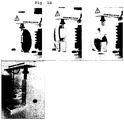
- a preferred texture analyser is TA-XT2TM (Stable Micro Systems UK; Fig. 1 ).
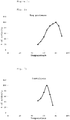
- thermostable proteases have a low activity at a temperature of 25°C to 40°C and a temperature optimum of 60 - 80°C or higher (see Fig. 2 ).
- the enzyme may need or may not need to be activated during the baking process and preferably loose their activity at the end of the baking process.
- thermostable and/or intermediate thermostable proteases can be produced by microorganisms either prokaryotes (bacteria, archaea) and eukaryotes (fungi) or extracted from plants.
- proteases according to the invention are such that at a pH where the enzyme is stable they have a temperature optimum that is higher than 60°C, preferably higher than 70°C and even more preferably higher than 80°C.
- the ratio between their activity at optimum temperature and at 25°C is at least higher than 10.
- the choice of the protease is very important.
- the protease should not exert any adverse effect such as weakening of the dough during dough ingredients mixing and the subsequent proofing of the dough. Indeed in this case the permitted dosage of unsuitable proteases would be too low to have a pronounced effect on the mouthfeel.
- the protease(s) may be added in a composition containing other enzymes like amylase and/or xylanase and/or lipase and/or glucose oxidase and/or lipoxygenase and/or peroxidase and/or carbohydrate oxidase.
- the dough-improving and/or bread improving composition may contain a combination of conventionally used baking additives like: gluten and/or oxidants like vitamin C or azodicarbonamide and/or emulsifiers like mono- or di-glycerides, diacetyl tartrate esters of monoglycerides, sodium stearoyl lactylates, sugar esters of fatty acids, lecithin and/or sugar and/or salt and/or fat and/or oil.
- conventionally used baking additives like: gluten and/or oxidants like vitamin C or azodicarbonamide and/or emulsifiers like mono- or di-glycerides, diacetyl tartrate esters of monoglycerides, sodium stearoyl lactylates, sugar esters of fatty acids, lecithin and/or sugar and/or salt and/or fat and/or oil.
- mixtures of active ingredients including the protease according to the invention and/or other enzymes than the protease according to the invention and/or baking additives can be diluted by appropriate carriers normally used in bakery applications like wheat flour, rye flour, starch, water or oil, to obtain a dosage level appropriate for mixing in doughs for baking properties.
- the mixtures can be in powder, granulated, agglomerated or liquid form.
- the protease is added to the bakery product before forming the dough.
- the protease is added to the flour. More preferably, the protease is added to a mixture comprising appropriate carriers normally used in bakery applications and/or active ingredients and/or conventionally used baking additives.
- the proteases may be obtained from a producing species (eukaryotic or prokaryotic) by the use of any suitable technique.
- the protease preparation may be obtained by fermentation of a micro-organism and subsequent isolation of the protease containing preparation from the resulting broth by methods known in the art such as centrifugation, ultrafiltration or chromatography.
- the proteases may also be obtained by cloning the DNA sequence coding for a suitable protease in a host organism, expressing the protease intra- or extracellularly and collecting the produced enzyme.
- proteases may also be obtained by directed evolution or gene shuffling of thermostable or non-thermostable proteases or enzymes genes and subsequent expression as mentioned above. As long as they have an activity of cleaving peptide bond(s), they are considered to be proteases in the scope of this invention. Below are mentioned non-limiting examples of proteases for use in the following examples, and their preferred origin.
- One of the preferred proteases used is obtained by culturing the strain Thermus aquaticus LMG 8924 on the following medium (in distilled water): 1 g/l tryptone; 1 g/l yeast extract and 100 ml/l salt solution. The pH is adjusted to 8.2 with 1 M NaOH prior to sterilization at 121°C for 15 minutes.
- the salt solution has the following composition (in distilled water): 1 g/l nitriloacetic acid; 0.6 g/l CaSO 4 .2H 2 O; 1 g/l MgSO 4 .7H 2 O; 80 mg/l NaCl, 1.03 g/l KNO 3 ; 6.89 g/l NaNO 3 ; 2.8 g/l Na 2 HPO 4 .12H 2 O; 10 ml/l FeCl 3 .6H 2 O solution (47 mg/100 ml dH 2 O); 10 ml/l trace element solution.
- the Trace element solution has the following composition (in distilled water): 0.5 ml/l H 2 SO 4 ; 1.7 g/l MnSO 4 .H 2 O; 0.5 g/l ZnSO 4 .7H 2 O; 0.5 g/l H 3 BO 3 ; 25 mg/l CuSO 4 .5H 2 O; 25 mg/l Na 2 MoO 4 .2H 2 O; 46 mg/l CoCl 2 .6H 2 O. Incubation is done at 60°C with aeration (pO 2 60%, 4 vvm) during 24 hours after which the medium is collected for further concentration.
- Thermus aquaticus LMG 8924 produced at least two extracellular proteases.
- One of the extracellular proteases is aqualysin I, and is an alkaline protease which is secreted linearly from the early stationary phase until cells cease to grow.
- the optimum temperature of the proteolytic activity is between 70 and 80°C.
- Another extracellular protease is aqualysin II and is a neutral protease, the production of which appears from day 4 and its concentration increasing linearly for 5 days. At that stage the maximum activity is obtained at 95°C (the highest temperature tested).
- Taq protease To prepare samples of aqualysin I (according to the present invention, referred to as "Taq protease") for baking tests the fermentation extract is used after 1 day of fermentation, i.e. when no or few aqualysin II is produced. The supernatant of the fermentation is then concentrated by membrane ultrafiltration (molecular cut off 10000 Da). Taq protease is essentially Aqualysin I and may comprise low amounts of Aqualysin II. The crude Taq protease solution is stored frozen until used in baking tests.
- the Taq protease solution displays maximum activity at a temperature of 80°C. There is almost no loss of enzyme activity while heating the solution for one hour at 80°C. Heating the enzyme at 90°C during 10 min reduces the activity by 60%.
- protease activity is measured on azurine-crosslinked casein (AZCL-casein). It is prepared by dyeing and crosslinking casein to produce a material which hydrates in water but is water-insoluble. Hydrolysis by proteases produces water soluble dyed fragments, and the rate of release of these (increase in absorbance at 590 nm) can be related directly to enzyme activity (Protazyme AK Tablets, Megazyme, Ireland). A protazyme AK tablet is incubated in 100 mM Na 2 HPO 4 .2H 2 O; pH 7.0 at 60°C for 5 min. An aliquot of enzyme (1.0 ml) is added and the reaction is allowed to continue for exactly 10 min.
- AZCL-casein azurine-crosslinked casein
- the reaction is terminated by the addition of tri-sodium phosphate (10 ml, 2% w/v, pH 12.3).
- the tube is allowed to stand for approx. 2 min at room temperature and its content is filtered.
- the absorbance of the filtrate is measured at 590 nm against a substrate blank.
- the enzymatic activity can also be measured with other assays for protease activity known by persons skilled in the art. Among these is the colorimetric method using casein as substrate followed by the detection of the released amino acids with the Folin & Ciocalteu's Phenol reagent.
- Example 4 tests on soft buns
- the standard baking test for soft buns is performed as follows.
- the basic recipe is (in grams): Wheat Flour (Duo) 2000 Water 940 Fresh Yeast (Bruggeman, Belgium) 160 Sodium Chloride 34 Partially hydrogenated palm oil 65 Sugar (sucrose) 160 Ascorbic acid 0.08
- the ingredients are mixed for 2 min at low and 7 min at high speed in a spiral mixer type Diosna (SP24).
- the final dough temperature is 27°C. 1200 g dough is rounded and proofed during 20 min at bakery temperature (25°C) and humidity (50-55%).
- 40 g dough pieces are made up using the Rotamat moulder. These dough pieces are proofed at 35°C for 60 min at 95% relative humidity in a Koma proofbox.
- the buns are then baked at 215°C during 9 min in a WP oven without steam. It is obvious to one skilled in the art that same end results can be obtained by using equipment of other suppliers.
- the trained panel marks the products according to a reference on a 0 to 5 points line scale with 0 being the low end (though) and 5 the high end (short). Evaluations by panellists which are significantly different from the ones of the other panellists are removed.
- a TA-XT2TM texture analyzer equipped with a pizza tensile rig used at a speed of 20 mm/sec allows the measurement of the following parameters: the force (maximum force needed to break the bun expressed in grams (g)) and the total work (total work needed to break the bun expressed in g.sec and represented by the surface below the curve on the chart generated by the apparatus, see fig 1 ).
- the force maximum force needed to break the bun expressed in grams (g)
- total work total work needed to break the bun expressed in g.sec and represented by the surface below the curve on the chart generated by the apparatus, see fig 1 .
- measures are compared to a reference using the same ingredients, and baked and tested in parallel. Similar comparisons to the references have been obtained using several batches of flour, at different temperature and humidity, and at one to several days after baking, thus the following mentioned features are not limiting the invention.
- the additives should at least lower the maximum force with 10 % and the total work with 10 %. Such difference is repeatedly perceived by a sensorial panel.
- Buns have been baked according to the aforementioned method with the addition of unsaturated monoglycerides (Multex Mono 9202 mpw produced by Beldem; Belgium). Force and total work have been measured 1 day after baking with the texture analyzer and short bite has been estimated by a sensory panel as described in example 4. Results are presented in table 1. Table 1 : Force Max G Total Work g.sec Short bite Reference 565 921 0 500 g* monoglycerides 491 726 4 * per 100 kg flour.
- the effect of proteases added to bakery products on short bite can be measured by a sensory evaluation panel, preferably trained using soft buns baked according to Example 5, and a texture analyzer.
- Short bite has been estimated by a sensory panel and force and total work have been measured 1 day after baking with the texture analyzer as described in example 4. Results are presented in table 2. Table 2. Force Max g Total Work g.sec Short bite Reference (0 U)* 514 924 0 230 U* Taq protease 462 831 2 690 U* Taq protease 445 773 4 1150 U* Taq protease 462 790 4 * expressed as units added to 100 kg flour.
- Buns have been baked according to the aforementioned method with addition of different concentrations of Taq protease, thermolysin and subtilisin. Short bite has been estimated by a sensory panel and force and total work have been measured 1 day after baking with the texture analyzer as described in example 4. Results are presented in table 4. Table 4.
- thermolysin and subtilisin result into an improved short bite and a reduction of the force and of the total work by at least 10%.
- Buns have been baked according to the aforementioned method with addition of different concentrations of Taq protease and Novamyl® (Novozymes), a maltogenic alpha-amylase well known for its effect on softness in bread.
- Short bite has been estimated by a sensory panel and force and total work have been measured 1 day after baking with the texture analyzer as described in example 4. Results are presented in table 5.
- Buns have been baked according to the aforementioned method with addition of different concentrations of Taq protease and papain.
- Short bite has been estimated by a sensory panel and force and total work have been measured 1 day after baking with the texture analyzer as described in example 4. Results are presented in table 6.
- Table 6. Force Max g Total Work g.sec Short bite Reference (0 U*) 549 825 0 350 U* Taq protease 452 693 4 700 U* Taq protease 421 696 4 0.3 g* papain 514 870 0 0.5 g* papain 502 919 0 * expressed as units added to 100 kg flour.
- Microwavable buns have been baked according to the aforementioned method with addition of Taq protease.
- Short bite has been estimated by a sensory panel and force and total work have been measured 4 days after baking with the texture analyzer as described in example 4. Results are presented in table 7.
- Taq protease has an effect on short bite and reduces the force and the total work by 28.7% and 15.4% respectively.
- the ingredients are mixed for 2 min at low and 10 min at high speed in a spiral mixer type Diosna (SP24).
- the final dough temperature is 26°C.
- 250 g dough pieces are made up using a moulder type Alliance (for 50 cm dough pieces).
- the dough pieces are proofed at 30°C and 95% relative humidity for 150 min.
- the breads are baked in a rotary oven for 25 min at 230/200°C with 7 sec steam at the oven loading and steam key open after 10 min. It is obvious to one skilled in the art that same end results can be obtained by using equipment of other suppliers.
- the effects of the proteases on crusty products are evaluated by a sensorial taste panel and by using TA-XT2TM texture analyzer, as described above for buns.
- Baguettes have been baked according to the aforementioned method for crusty products with addition of different concentrations of Taq protease. Baguettes have been analysed by a sensory panel and force and total work have been measured 2 hours after baking with the texture analyzer as described in Example 4. Results are presented in table 10. Table 10. Force Max G Total Work g.sec Short bite Reference 4885 3297 0 1300 U* Taq protease 4243 2271 4 2600 U* Taq protease 4292 2136 4 3900 U* Taq protease 3942 2167 4 * expressed as units added to 100 kg flour.
- Taq protease improves short bite and reduces the force and the total work by more than 10%.
- Bakery products were analysed for their texture parameters as defined above, using preferably a TA-XT2 TM texture analyzer, but the person skilled in the art may easily find and/or adapt other devices suitable for the invention without being outside the scope of the present invention.
Landscapes
- Life Sciences & Earth Sciences (AREA)
- Engineering & Computer Science (AREA)
- Food Science & Technology (AREA)
- Health & Medical Sciences (AREA)
- Molecular Biology (AREA)
- General Health & Medical Sciences (AREA)
- Nutrition Science (AREA)
- Microbiology (AREA)
- Bakery Products And Manufacturing Methods Therefor (AREA)
Claims (12)
- Utilisation d'au moins une sérine- ou métalloprotéase thermostable intermédiaire ou thermostable afin d'améliorer la mâche courte d'un produit de boulangerie, dans laquelle les paramètres de texture constitués de la force (g) et du travail total (g.s) nécessaires à rompre un échantillon identique de produit de boulangerie sont mesurés, où la force (g) et le travail total (g.s) sont tous deux améliorés d'au moins 10% par rapport à un échantillon identique mais ne contenant pas au moins une sérine- ou métalloprotéase thermostable intermédiaire ou thermostable, et où le rapport entre l'activité de protéase à une température optimale et l'activité de protéase à 25°C est supérieur à 10.
- Utilisation selon la revendication 1, dans laquelle les paramètres de texture sont mesurés simultanément par un dispositif d'analyse de texture, utilisé pour rompre ledit produit de boulangerie.
- Utilisation selon la revendication 1 ou 2, dans laquelle la facilité à mâcher par échantillon de produit de boulangerie est estimée par un panel de dégustation constitué de personnes.
- Utilisation selon l'une quelconque des revendications 1 à 3, dans laquelle la protéase thermostable intermédiaire et/ou thermostable a un optimum d'activité de température supérieur à 60°C, préférablement supérieur à 70°C, préférablement supérieur à 80°C.
- Utilisation selon l'une quelconque des revendications 1 à 4, dans laquelle le rapport entre l'activité de protéase à une température optimale et l'activité de protéase à 25°C est supérieur à 15.
- Utilisation selon l'une quelconque des revendications 1 à 5, dans laquelle les protéases ne présentent aucun effet néfaste sur la rhéologie de la pâte, sur la structure de la mie et sur le volume du produit de boulangerie résultant.
- Utilisation selon l'une quelconque des revendications précédentes, dans laquelle la protéase est une protéase isolée à partir de Thermus aquaticus, préférablement étant essentiellement l'aqualysine I, la thermitase, isolée à partir de Thermoactinomyces vulgaris, la thermolysine, isolée à partir de Bacillus thermoproteolyticus, ou la subtilisine, isolée à partir de Bacillus licheniformis.
- Utilisation selon l'une quelconque des revendications 1 à 7, dans laquelle les produits de boulangerie sont des produits de boulangerie moelleux tels que le pain, les petits pains moelleux, les donuts, les petits pains au lait, les petits pains au lait pour cuisson aux micro-ondes, les viennoiseries, les pains pour hamburger, la pâte à pizza et pita, ainsi que les cakes.
- Utilisation selon l'une quelconque des revendications précédentes, dans laquelle de 5000 à 7500 unités/100 kg de farine de thermitase sont utilisées, de 0,35 à 0,7 unité/100 kg de farine de thermolysine est utilisée, de 0,35 à 0,7 unité/100 kg de farine de subtilisine est utilisée, ou de 230 à 10 400 unités/100 kg de farine de protéase de Thermus aquaticus sont utilisées, plus préférablement de 350 à 700 unités/100 kg de farine de protéase de Thermus aquaticus sont utilisées.
- Utilisation selon l'une quelconque des revendications 1 à 7, dans laquelle les produits de boulangerie sont des produits de boulangerie croustillants tels que les baguettes et les petits pains.
- Utilisation selon la revendication 10, dans laquelle de 1300 à 10 400 unités/100 kg de farine de protéase de Thermus aquaticus sont utilisées.
- Utilisation selon l'une quelconque des revendications précédentes, dans laquelle ladite protéase est ajoutée audit produit de boulangerie avant la formation de la pâte ; préférablement, ladite protéase est ajoutée à la farine ; plus préférablement, ladite protéase est ajoutée à un mélange comprenant les agents de charge appropriés habituellement utilisés dans des applications de boulangerie et/ou les ingrédients actifs et/ou les additifs de boulangerie habituellement utilisés.
Priority Applications (1)
| Application Number | Priority Date | Filing Date | Title |
|---|---|---|---|
| EP09745779.0A EP2293674B1 (fr) | 2008-05-16 | 2009-05-14 | Procédé et composition pour améliorer la facilité à mâcher des produits de boulangerie |
Applications Claiming Priority (3)
| Application Number | Priority Date | Filing Date | Title |
|---|---|---|---|
| EP08156398A EP2123163A1 (fr) | 2008-05-16 | 2008-05-16 | Procédé et composition pour améliorer la texture de produits de boulangerie |
| EP09745779.0A EP2293674B1 (fr) | 2008-05-16 | 2009-05-14 | Procédé et composition pour améliorer la facilité à mâcher des produits de boulangerie |
| PCT/EP2009/055819 WO2009138447A1 (fr) | 2008-05-16 | 2009-05-14 | Procédé et composition pour améliorer la facilité à mâcher des produits de boulangerie |
Publications (2)
| Publication Number | Publication Date |
|---|---|
| EP2293674A1 EP2293674A1 (fr) | 2011-03-16 |
| EP2293674B1 true EP2293674B1 (fr) | 2017-05-03 |
Family
ID=39713901
Family Applications (2)
| Application Number | Title | Priority Date | Filing Date |
|---|---|---|---|
| EP08156398A Withdrawn EP2123163A1 (fr) | 2008-05-16 | 2008-05-16 | Procédé et composition pour améliorer la texture de produits de boulangerie |
| EP09745779.0A Active EP2293674B1 (fr) | 2008-05-16 | 2009-05-14 | Procédé et composition pour améliorer la facilité à mâcher des produits de boulangerie |
Family Applications Before (1)
| Application Number | Title | Priority Date | Filing Date |
|---|---|---|---|
| EP08156398A Withdrawn EP2123163A1 (fr) | 2008-05-16 | 2008-05-16 | Procédé et composition pour améliorer la texture de produits de boulangerie |
Country Status (14)
| Country | Link |
|---|---|
| US (1) | US20110097440A1 (fr) |
| EP (2) | EP2123163A1 (fr) |
| JP (1) | JP5599386B2 (fr) |
| CN (1) | CN102026550B (fr) |
| AU (1) | AU2009248067B9 (fr) |
| BR (1) | BRPI0908699B1 (fr) |
| CA (1) | CA2723306C (fr) |
| DK (1) | DK2293674T3 (fr) |
| ES (1) | ES2631913T3 (fr) |
| MX (1) | MX2010012543A (fr) |
| PL (1) | PL2293674T3 (fr) |
| PT (1) | PT2293674T (fr) |
| RU (1) | RU2516288C2 (fr) |
| WO (1) | WO2009138447A1 (fr) |
Cited By (1)
| Publication number | Priority date | Publication date | Assignee | Title |
|---|---|---|---|---|
| CN109414029A (zh) * | 2016-07-11 | 2019-03-01 | 焙乐道有限责任公司 | 改进的烘焙组合物 |
Families Citing this family (8)
| Publication number | Priority date | Publication date | Assignee | Title |
|---|---|---|---|---|
| EP1350432A1 (fr) | 2002-04-05 | 2003-10-08 | Puratos N.V. | Méthode pour retarder le rassissement des produits de boulangerie par addition d'une protéase thermostable |
| JP2013176365A (ja) * | 2012-02-10 | 2013-09-09 | Kaneka Corp | プロテアーゼを含有するパン・菓子の製造方法 |
| JP6524908B2 (ja) * | 2013-03-29 | 2019-06-05 | 株式会社カネカ | プロテアーゼを含有するパン・菓子用生地 |
| WO2015125548A1 (fr) * | 2014-02-21 | 2015-08-27 | 日清製粉株式会社 | Procédé de fabrication de feuille d'harumaki |
| BE1022313B1 (nl) | 2014-11-28 | 2016-03-15 | Puratos N.V. | Enzym-inhibitorcomplexen |
| BE1024105B1 (nl) * | 2016-07-11 | 2017-11-16 | Puratos Nv | Verbeterde samenstelling voor bakkerijproducten |
| BE1031246B1 (nl) | 2023-01-10 | 2024-08-06 | Puratos | Verbeterde producten op basis van filodeeg |
| BE1031247B1 (nl) | 2023-01-10 | 2024-08-06 | Puratos | Verbeterde producten op basis van strengen van beslag |
Family Cites Families (22)
| Publication number | Priority date | Publication date | Assignee | Title |
|---|---|---|---|---|
| US2615810A (en) * | 1948-03-04 | 1952-10-28 | Wallerstein Company | Retarding the staling of bakery products |
| US3561975A (en) * | 1968-05-10 | 1971-02-09 | Procter & Gamble | Enzyme additive for pie dough and mix utilizing same |
| US4851234A (en) * | 1986-06-02 | 1989-07-25 | Chung Frank H Y | Process for preparing an antistaling agent for baked goods |
| JPH0292288A (ja) * | 1988-09-30 | 1990-04-03 | Japan Tobacco Inc | アクアライシンi前駆体をコードする遺伝子、それを含む発現ベクター、該発現ベクターを含む大腸菌及びそれを用いたアクアライシンiの製造方法 |
| DK474589D0 (da) * | 1989-09-27 | 1989-09-27 | Novo Nordisk As | Fremgangsmaade til fremstilling af bageriprodukter |
| JP2761669B2 (ja) * | 1990-04-18 | 1998-06-04 | 鐘淵化学工業株式会社 | 油脂混合物及びその製造方法 |
| DE4208275A1 (de) * | 1992-03-13 | 1993-09-16 | Garabed Prof Dr Antranikian | Mikroorganismus stamm w |
| DK104592D0 (da) * | 1992-08-21 | 1992-08-21 | Novo Nordisk As | Fremgangsmaade |
| US5714373A (en) * | 1995-02-27 | 1998-02-03 | Recombinant Biocatalysis, Inc. | Thermococcus AV4 and enzymes produced by the same |
| DE69632630T2 (de) * | 1995-03-16 | 2005-05-25 | Novozymes A/S | Enzym mit aminopeptidaseactivität |
| NZ309735A (en) * | 1995-06-07 | 1998-08-26 | Danisco | Use of hexose oxidase for oxidizing maltose to improve the properties of flour dough |
| ATE212189T1 (de) | 1995-12-01 | 2002-02-15 | Unilever Nv | Mikrowellen erhitzbare knusperige brötchen |
| CA2256767A1 (fr) * | 1996-07-01 | 1998-01-08 | Novo Nordisk A/S | Utilisation de desamidase pour la cuisson |
| JP4086352B2 (ja) * | 1998-02-04 | 2008-05-14 | 株式会社Adeka | 油脂組成物 |
| CA2332334A1 (fr) * | 1998-06-23 | 1999-12-29 | Novozymes A/S | Conjugue polypeptide-polymere |
| WO2000059307A1 (fr) * | 1999-03-30 | 2000-10-12 | Novozymes A/S | Preparation de pate et de produits de boulangerie |
| FR2827480B1 (fr) * | 2001-07-17 | 2003-09-19 | Cie Laitiere Europeenne | Lactoserum modifie, procede de preparation, utilisation et produit de panification comprenant le lactoserum modifie |
| EP1350432A1 (fr) * | 2002-04-05 | 2003-10-08 | Puratos N.V. | Méthode pour retarder le rassissement des produits de boulangerie par addition d'une protéase thermostable |
| JP4360600B2 (ja) * | 2003-03-07 | 2009-11-11 | ミヨシ油脂株式会社 | 製パン用油脂組成物 |
| EP1547467A1 (fr) * | 2003-12-22 | 2005-06-29 | Puratos N.V. | Levain liquide |
| EP1720414B1 (fr) * | 2004-02-17 | 2008-09-17 | CSM Nederland B.V. | Produits à base de pâtes feuilletées et l'utilisation de protéase à la surface extérieure pour améliorer la croustillance après la cuisson |
| US20080008782A1 (en) * | 2004-02-17 | 2008-01-10 | Wageningen Centre For Food Sciences | Method of Preparing a Bread Dough or Part Baked Bread |
-
2008
- 2008-05-16 EP EP08156398A patent/EP2123163A1/fr not_active Withdrawn
-
2009
- 2009-05-14 EP EP09745779.0A patent/EP2293674B1/fr active Active
- 2009-05-14 CA CA2723306A patent/CA2723306C/fr active Active
- 2009-05-14 PL PL09745779T patent/PL2293674T3/pl unknown
- 2009-05-14 BR BRPI0908699-4A patent/BRPI0908699B1/pt active IP Right Grant
- 2009-05-14 AU AU2009248067A patent/AU2009248067B9/en active Active
- 2009-05-14 MX MX2010012543A patent/MX2010012543A/es active IP Right Grant
- 2009-05-14 US US12/992,208 patent/US20110097440A1/en not_active Abandoned
- 2009-05-14 ES ES09745779.0T patent/ES2631913T3/es active Active
- 2009-05-14 WO PCT/EP2009/055819 patent/WO2009138447A1/fr not_active Ceased
- 2009-05-14 PT PT97457790T patent/PT2293674T/pt unknown
- 2009-05-14 RU RU2010143988/13A patent/RU2516288C2/ru active
- 2009-05-14 DK DK09745779.0T patent/DK2293674T3/en active
- 2009-05-14 CN CN2009801176997A patent/CN102026550B/zh active Active
- 2009-05-14 JP JP2011508916A patent/JP5599386B2/ja active Active
Cited By (1)
| Publication number | Priority date | Publication date | Assignee | Title |
|---|---|---|---|---|
| CN109414029A (zh) * | 2016-07-11 | 2019-03-01 | 焙乐道有限责任公司 | 改进的烘焙组合物 |
Also Published As
| Publication number | Publication date |
|---|---|
| JP2011520437A (ja) | 2011-07-21 |
| AU2009248067A1 (en) | 2009-11-19 |
| CA2723306A1 (fr) | 2009-11-19 |
| ES2631913T3 (es) | 2017-09-06 |
| JP5599386B2 (ja) | 2014-10-01 |
| CA2723306C (fr) | 2018-03-06 |
| RU2010143988A (ru) | 2012-06-27 |
| EP2293674A1 (fr) | 2011-03-16 |
| US20110097440A1 (en) | 2011-04-28 |
| WO2009138447A1 (fr) | 2009-11-19 |
| MX2010012543A (es) | 2010-12-02 |
| DK2293674T3 (en) | 2017-06-19 |
| EP2123163A1 (fr) | 2009-11-25 |
| CN102026550B (zh) | 2013-12-25 |
| AU2009248067B2 (en) | 2014-07-10 |
| PL2293674T3 (pl) | 2017-09-29 |
| PT2293674T (pt) | 2017-07-17 |
| RU2516288C2 (ru) | 2014-05-20 |
| AU2009248067B9 (en) | 2014-11-06 |
| BRPI0908699B1 (pt) | 2021-10-19 |
| BRPI0908699A2 (pt) | 2019-02-26 |
| CN102026550A (zh) | 2011-04-20 |
Similar Documents
| Publication | Publication Date | Title |
|---|---|---|
| EP2293674B1 (fr) | Procédé et composition pour améliorer la facilité à mâcher des produits de boulangerie | |
| US11963537B2 (en) | Methods and compositions for preparing bread | |
| US20160374355A1 (en) | Method and composition for the prevention or retarding of staling and its effect during the baking process of bakery products | |
| EP3481205B1 (fr) | Composition améliorée pour boulangerie | |
| EP2595488B1 (fr) | Procédé pour préparer une produit de boulangerie avec une amylase anti-rassissement et une peptidase | |
| JP2019520834A (ja) | 改良されたベーカリー組成物 |
Legal Events
| Date | Code | Title | Description |
|---|---|---|---|
| PUAI | Public reference made under article 153(3) epc to a published international application that has entered the european phase |
Free format text: ORIGINAL CODE: 0009012 |
|
| 17P | Request for examination filed |
Effective date: 20101214 |
|
| AK | Designated contracting states |
Kind code of ref document: A1 Designated state(s): AT BE BG CH CY CZ DE DK EE ES FI FR GB GR HR HU IE IS IT LI LT LU LV MC MK MT NL NO PL PT RO SE SI SK TR |
|
| AX | Request for extension of the european patent |
Extension state: AL BA RS |
|
| DAX | Request for extension of the european patent (deleted) | ||
| 17Q | First examination report despatched |
Effective date: 20110801 |
|
| GRAP | Despatch of communication of intention to grant a patent |
Free format text: ORIGINAL CODE: EPIDOSNIGR1 |
|
| INTG | Intention to grant announced |
Effective date: 20161202 |
|
| GRAS | Grant fee paid |
Free format text: ORIGINAL CODE: EPIDOSNIGR3 |
|
| GRAA | (expected) grant |
Free format text: ORIGINAL CODE: 0009210 |
|
| AK | Designated contracting states |
Kind code of ref document: B1 Designated state(s): AT BE BG CH CY CZ DE DK EE ES FI FR GB GR HR HU IE IS IT LI LT LU LV MC MK MT NL NO PL PT RO SE SI SK TR |
|
| REG | Reference to a national code |
Ref country code: GB Ref legal event code: FG4D |
|
| REG | Reference to a national code |
Ref country code: FR Ref legal event code: PLFP Year of fee payment: 9 |
|
| REG | Reference to a national code |
Ref country code: AT Ref legal event code: REF Ref document number: 888939 Country of ref document: AT Kind code of ref document: T Effective date: 20170515 Ref country code: CH Ref legal event code: EP |
|
| REG | Reference to a national code |
Ref country code: IE Ref legal event code: FG4D |
|
| REG | Reference to a national code |
Ref country code: DE Ref legal event code: R096 Ref document number: 602009045850 Country of ref document: DE |
|
| REG | Reference to a national code |
Ref country code: DK Ref legal event code: T3 Effective date: 20170613 |
|
| REG | Reference to a national code |
Ref country code: NL Ref legal event code: FP |
|
| REG | Reference to a national code |
Ref country code: RO Ref legal event code: EPE |
|
| REG | Reference to a national code |
Ref country code: PT Ref legal event code: SC4A Ref document number: 2293674 Country of ref document: PT Date of ref document: 20170717 Kind code of ref document: T Free format text: AVAILABILITY OF NATIONAL TRANSLATION Effective date: 20170710 |
|
| REG | Reference to a national code |
Ref country code: SE Ref legal event code: TRGR |
|
| REG | Reference to a national code |
Ref country code: ES Ref legal event code: FG2A Ref document number: 2631913 Country of ref document: ES Kind code of ref document: T3 Effective date: 20170906 |
|
| REG | Reference to a national code |
Ref country code: AT Ref legal event code: MK05 Ref document number: 888939 Country of ref document: AT Kind code of ref document: T Effective date: 20170503 |
|
| REG | Reference to a national code |
Ref country code: LT Ref legal event code: MG4D |
|
| PG25 | Lapsed in a contracting state [announced via postgrant information from national office to epo] |
Ref country code: HR Free format text: LAPSE BECAUSE OF FAILURE TO SUBMIT A TRANSLATION OF THE DESCRIPTION OR TO PAY THE FEE WITHIN THE PRESCRIBED TIME-LIMIT Effective date: 20170503 Ref country code: AT Free format text: LAPSE BECAUSE OF FAILURE TO SUBMIT A TRANSLATION OF THE DESCRIPTION OR TO PAY THE FEE WITHIN THE PRESCRIBED TIME-LIMIT Effective date: 20170503 Ref country code: LT Free format text: LAPSE BECAUSE OF FAILURE TO SUBMIT A TRANSLATION OF THE DESCRIPTION OR TO PAY THE FEE WITHIN THE PRESCRIBED TIME-LIMIT Effective date: 20170503 Ref country code: NO Free format text: LAPSE BECAUSE OF FAILURE TO SUBMIT A TRANSLATION OF THE DESCRIPTION OR TO PAY THE FEE WITHIN THE PRESCRIBED TIME-LIMIT Effective date: 20170803 |
|
| REG | Reference to a national code |
Ref country code: GR Ref legal event code: EP Ref document number: 20170401669 Country of ref document: GR Effective date: 20171023 |
|
| PG25 | Lapsed in a contracting state [announced via postgrant information from national office to epo] |
Ref country code: IS Free format text: LAPSE BECAUSE OF FAILURE TO SUBMIT A TRANSLATION OF THE DESCRIPTION OR TO PAY THE FEE WITHIN THE PRESCRIBED TIME-LIMIT Effective date: 20170903 Ref country code: LV Free format text: LAPSE BECAUSE OF FAILURE TO SUBMIT A TRANSLATION OF THE DESCRIPTION OR TO PAY THE FEE WITHIN THE PRESCRIBED TIME-LIMIT Effective date: 20170503 |
|
| REG | Reference to a national code |
Ref country code: CH Ref legal event code: PL |
|
| PG25 | Lapsed in a contracting state [announced via postgrant information from national office to epo] |
Ref country code: SK Free format text: LAPSE BECAUSE OF FAILURE TO SUBMIT A TRANSLATION OF THE DESCRIPTION OR TO PAY THE FEE WITHIN THE PRESCRIBED TIME-LIMIT Effective date: 20170503 Ref country code: CZ Free format text: LAPSE BECAUSE OF FAILURE TO SUBMIT A TRANSLATION OF THE DESCRIPTION OR TO PAY THE FEE WITHIN THE PRESCRIBED TIME-LIMIT Effective date: 20170503 Ref country code: EE Free format text: LAPSE BECAUSE OF FAILURE TO SUBMIT A TRANSLATION OF THE DESCRIPTION OR TO PAY THE FEE WITHIN THE PRESCRIBED TIME-LIMIT Effective date: 20170503 |
|
| REG | Reference to a national code |
Ref country code: DE Ref legal event code: R097 Ref document number: 602009045850 Country of ref document: DE |
|
| PG25 | Lapsed in a contracting state [announced via postgrant information from national office to epo] |
Ref country code: CH Free format text: LAPSE BECAUSE OF NON-PAYMENT OF DUE FEES Effective date: 20170531 Ref country code: LI Free format text: LAPSE BECAUSE OF NON-PAYMENT OF DUE FEES Effective date: 20170531 |
|
| PLBE | No opposition filed within time limit |
Free format text: ORIGINAL CODE: 0009261 |
|
| STAA | Information on the status of an ep patent application or granted ep patent |
Free format text: STATUS: NO OPPOSITION FILED WITHIN TIME LIMIT |
|
| PG25 | Lapsed in a contracting state [announced via postgrant information from national office to epo] |
Ref country code: LU Free format text: LAPSE BECAUSE OF NON-PAYMENT OF DUE FEES Effective date: 20170514 |
|
| 26N | No opposition filed |
Effective date: 20180206 |
|
| REG | Reference to a national code |
Ref country code: FR Ref legal event code: PLFP Year of fee payment: 10 |
|
| PG25 | Lapsed in a contracting state [announced via postgrant information from national office to epo] |
Ref country code: SI Free format text: LAPSE BECAUSE OF FAILURE TO SUBMIT A TRANSLATION OF THE DESCRIPTION OR TO PAY THE FEE WITHIN THE PRESCRIBED TIME-LIMIT Effective date: 20170503 |
|
| PG25 | Lapsed in a contracting state [announced via postgrant information from national office to epo] |
Ref country code: MT Free format text: LAPSE BECAUSE OF NON-PAYMENT OF DUE FEES Effective date: 20170514 |
|
| PG25 | Lapsed in a contracting state [announced via postgrant information from national office to epo] |
Ref country code: MC Free format text: LAPSE BECAUSE OF FAILURE TO SUBMIT A TRANSLATION OF THE DESCRIPTION OR TO PAY THE FEE WITHIN THE PRESCRIBED TIME-LIMIT Effective date: 20170503 Ref country code: HU Free format text: LAPSE BECAUSE OF FAILURE TO SUBMIT A TRANSLATION OF THE DESCRIPTION OR TO PAY THE FEE WITHIN THE PRESCRIBED TIME-LIMIT; INVALID AB INITIO Effective date: 20090514 |
|
| PG25 | Lapsed in a contracting state [announced via postgrant information from national office to epo] |
Ref country code: CY Free format text: LAPSE BECAUSE OF NON-PAYMENT OF DUE FEES Effective date: 20170503 |
|
| PG25 | Lapsed in a contracting state [announced via postgrant information from national office to epo] |
Ref country code: MK Free format text: LAPSE BECAUSE OF FAILURE TO SUBMIT A TRANSLATION OF THE DESCRIPTION OR TO PAY THE FEE WITHIN THE PRESCRIBED TIME-LIMIT Effective date: 20170503 |
|
| P01 | Opt-out of the competence of the unified patent court (upc) registered |
Effective date: 20230403 |
|
| PGFP | Annual fee paid to national office [announced via postgrant information from national office to epo] |
Ref country code: NL Payment date: 20250423 Year of fee payment: 17 |
|
| PGFP | Annual fee paid to national office [announced via postgrant information from national office to epo] |
Ref country code: FI Payment date: 20250423 Year of fee payment: 17 |
|
| PGFP | Annual fee paid to national office [announced via postgrant information from national office to epo] |
Ref country code: DE Payment date: 20250423 Year of fee payment: 17 Ref country code: PL Payment date: 20250424 Year of fee payment: 17 |
|
| PGFP | Annual fee paid to national office [announced via postgrant information from national office to epo] |
Ref country code: GB Payment date: 20250423 Year of fee payment: 17 Ref country code: ES Payment date: 20250602 Year of fee payment: 17 Ref country code: DK Payment date: 20250423 Year of fee payment: 17 |
|
| PGFP | Annual fee paid to national office [announced via postgrant information from national office to epo] |
Ref country code: IT Payment date: 20250423 Year of fee payment: 17 Ref country code: BE Payment date: 20250423 Year of fee payment: 17 |
|
| PGFP | Annual fee paid to national office [announced via postgrant information from national office to epo] |
Ref country code: PT Payment date: 20250423 Year of fee payment: 17 |
|
| PGFP | Annual fee paid to national office [announced via postgrant information from national office to epo] |
Ref country code: FR Payment date: 20250423 Year of fee payment: 17 |
|
| PGFP | Annual fee paid to national office [announced via postgrant information from national office to epo] |
Ref country code: BG Payment date: 20250429 Year of fee payment: 17 Ref country code: GR Payment date: 20250424 Year of fee payment: 17 |
|
| PGFP | Annual fee paid to national office [announced via postgrant information from national office to epo] |
Ref country code: RO Payment date: 20250505 Year of fee payment: 17 |
|
| PGFP | Annual fee paid to national office [announced via postgrant information from national office to epo] |
Ref country code: TR Payment date: 20250428 Year of fee payment: 17 |
|
| PGFP | Annual fee paid to national office [announced via postgrant information from national office to epo] |
Ref country code: IE Payment date: 20250424 Year of fee payment: 17 |
|
| PGFP | Annual fee paid to national office [announced via postgrant information from national office to epo] |
Ref country code: SE Payment date: 20250423 Year of fee payment: 17 |