EP2305367B1 - Katalysatorsystem zur Entfernung von Stickstoffoxid und Verfahren zur Entfernung von Stickstoffoxid - Google Patents
Katalysatorsystem zur Entfernung von Stickstoffoxid und Verfahren zur Entfernung von Stickstoffoxid Download PDFInfo
- Publication number
- EP2305367B1 EP2305367B1 EP10009437A EP10009437A EP2305367B1 EP 2305367 B1 EP2305367 B1 EP 2305367B1 EP 10009437 A EP10009437 A EP 10009437A EP 10009437 A EP10009437 A EP 10009437A EP 2305367 B1 EP2305367 B1 EP 2305367B1
- Authority
- EP
- European Patent Office
- Prior art keywords
- catalyst
- oxide
- ammonia
- nitrogen
- alumina
- Prior art date
- Legal status (The legal status is an assumption and is not a legal conclusion. Google has not performed a legal analysis and makes no representation as to the accuracy of the status listed.)
- Expired - Lifetime
Links
Images



Classifications
-
- F—MECHANICAL ENGINEERING; LIGHTING; HEATING; WEAPONS; BLASTING
- F01—MACHINES OR ENGINES IN GENERAL; ENGINE PLANTS IN GENERAL; STEAM ENGINES
- F01N—GAS-FLOW SILENCERS OR EXHAUST APPARATUS FOR MACHINES OR ENGINES IN GENERAL; GAS-FLOW SILENCERS OR EXHAUST APPARATUS FOR INTERNAL-COMBUSTION ENGINES
- F01N3/00—Exhaust or silencing apparatus having means for purifying, rendering innocuous, or otherwise treating exhaust
- F01N3/08—Exhaust or silencing apparatus having means for purifying, rendering innocuous, or otherwise treating exhaust for rendering innocuous
- F01N3/10—Exhaust or silencing apparatus having means for purifying, rendering innocuous, or otherwise treating exhaust for rendering innocuous by thermal or catalytic conversion of noxious components of exhaust
- F01N3/18—Exhaust or silencing apparatus having means for purifying, rendering innocuous, or otherwise treating exhaust for rendering innocuous by thermal or catalytic conversion of noxious components of exhaust characterised by methods of operation; Control
- F01N3/20—Exhaust or silencing apparatus having means for purifying, rendering innocuous, or otherwise treating exhaust for rendering innocuous by thermal or catalytic conversion of noxious components of exhaust characterised by methods of operation; Control specially adapted for catalytic conversion
- F01N3/206—Adding periodically or continuously substances to exhaust gases for promoting purification, e.g. catalytic material in liquid form, NOx reducing agents
- F01N3/2066—Selective catalytic reduction [SCR]
-
- B—PERFORMING OPERATIONS; TRANSPORTING
- B01—PHYSICAL OR CHEMICAL PROCESSES OR APPARATUS IN GENERAL
- B01D—SEPARATION
- B01D53/00—Separation of gases or vapours; Recovering vapours of volatile solvents from gases; Chemical or biological purification of waste gases, e.g. engine exhaust gases, smoke, fumes, flue gases, aerosols
- B01D53/34—Chemical or biological purification of waste gases
- B01D53/92—Chemical or biological purification of waste gases of engine exhaust gases
- B01D53/94—Chemical or biological purification of waste gases of engine exhaust gases by catalytic processes
- B01D53/9404—Removing only nitrogen compounds
- B01D53/9409—Nitrogen oxides
- B01D53/9413—Processes characterised by a specific catalyst
-
- B—PERFORMING OPERATIONS; TRANSPORTING
- B01—PHYSICAL OR CHEMICAL PROCESSES OR APPARATUS IN GENERAL
- B01J—CHEMICAL OR PHYSICAL PROCESSES, e.g. CATALYSIS OR COLLOID CHEMISTRY; THEIR RELEVANT APPARATUS
- B01J23/00—Catalysts comprising metals or metal oxides or hydroxides, not provided for in group B01J21/00
- B01J23/002—Mixed oxides other than spinels, e.g. perovskite
-
- B—PERFORMING OPERATIONS; TRANSPORTING
- B01—PHYSICAL OR CHEMICAL PROCESSES OR APPARATUS IN GENERAL
- B01J—CHEMICAL OR PHYSICAL PROCESSES, e.g. CATALYSIS OR COLLOID CHEMISTRY; THEIR RELEVANT APPARATUS
- B01J23/00—Catalysts comprising metals or metal oxides or hydroxides, not provided for in group B01J21/00
- B01J23/16—Catalysts comprising metals or metal oxides or hydroxides, not provided for in group B01J21/00 of arsenic, antimony, bismuth, vanadium, niobium, tantalum, polonium, chromium, molybdenum, tungsten, manganese, technetium or rhenium
- B01J23/24—Chromium, molybdenum or tungsten
- B01J23/30—Tungsten
-
- B—PERFORMING OPERATIONS; TRANSPORTING
- B01—PHYSICAL OR CHEMICAL PROCESSES OR APPARATUS IN GENERAL
- B01J—CHEMICAL OR PHYSICAL PROCESSES, e.g. CATALYSIS OR COLLOID CHEMISTRY; THEIR RELEVANT APPARATUS
- B01J23/00—Catalysts comprising metals or metal oxides or hydroxides, not provided for in group B01J21/00
- B01J23/38—Catalysts comprising metals or metal oxides or hydroxides, not provided for in group B01J21/00 of noble metals
- B01J23/40—Catalysts comprising metals or metal oxides or hydroxides, not provided for in group B01J21/00 of noble metals of the platinum group metals
-
- B—PERFORMING OPERATIONS; TRANSPORTING
- B01—PHYSICAL OR CHEMICAL PROCESSES OR APPARATUS IN GENERAL
- B01J—CHEMICAL OR PHYSICAL PROCESSES, e.g. CATALYSIS OR COLLOID CHEMISTRY; THEIR RELEVANT APPARATUS
- B01J23/00—Catalysts comprising metals or metal oxides or hydroxides, not provided for in group B01J21/00
- B01J23/38—Catalysts comprising metals or metal oxides or hydroxides, not provided for in group B01J21/00 of noble metals
- B01J23/40—Catalysts comprising metals or metal oxides or hydroxides, not provided for in group B01J21/00 of noble metals of the platinum group metals
- B01J23/42—Platinum
-
- B—PERFORMING OPERATIONS; TRANSPORTING
- B01—PHYSICAL OR CHEMICAL PROCESSES OR APPARATUS IN GENERAL
- B01J—CHEMICAL OR PHYSICAL PROCESSES, e.g. CATALYSIS OR COLLOID CHEMISTRY; THEIR RELEVANT APPARATUS
- B01J23/00—Catalysts comprising metals or metal oxides or hydroxides, not provided for in group B01J21/00
- B01J23/70—Catalysts comprising metals or metal oxides or hydroxides, not provided for in group B01J21/00 of the iron group metals or copper
- B01J23/74—Iron group metals
- B01J23/745—Iron
-
- B—PERFORMING OPERATIONS; TRANSPORTING
- B01—PHYSICAL OR CHEMICAL PROCESSES OR APPARATUS IN GENERAL
- B01J—CHEMICAL OR PHYSICAL PROCESSES, e.g. CATALYSIS OR COLLOID CHEMISTRY; THEIR RELEVANT APPARATUS
- B01J27/00—Catalysts comprising the elements or compounds of halogens, sulfur, selenium, tellurium, phosphorus or nitrogen; Catalysts comprising carbon compounds
- B01J27/02—Sulfur, selenium or tellurium; Compounds thereof
- B01J27/053—Sulfates
-
- B—PERFORMING OPERATIONS; TRANSPORTING
- B01—PHYSICAL OR CHEMICAL PROCESSES OR APPARATUS IN GENERAL
- B01J—CHEMICAL OR PHYSICAL PROCESSES, e.g. CATALYSIS OR COLLOID CHEMISTRY; THEIR RELEVANT APPARATUS
- B01J35/00—Catalysts, in general, characterised by their form or physical properties
- B01J35/19—Catalysts containing parts with different compositions
-
- F—MECHANICAL ENGINEERING; LIGHTING; HEATING; WEAPONS; BLASTING
- F01—MACHINES OR ENGINES IN GENERAL; ENGINE PLANTS IN GENERAL; STEAM ENGINES
- F01N—GAS-FLOW SILENCERS OR EXHAUST APPARATUS FOR MACHINES OR ENGINES IN GENERAL; GAS-FLOW SILENCERS OR EXHAUST APPARATUS FOR INTERNAL-COMBUSTION ENGINES
- F01N13/00—Exhaust or silencing apparatus characterised by constructional features
- F01N13/009—Exhaust or silencing apparatus characterised by constructional features having two or more separate purifying devices arranged in series
-
- F—MECHANICAL ENGINEERING; LIGHTING; HEATING; WEAPONS; BLASTING
- F01—MACHINES OR ENGINES IN GENERAL; ENGINE PLANTS IN GENERAL; STEAM ENGINES
- F01N—GAS-FLOW SILENCERS OR EXHAUST APPARATUS FOR MACHINES OR ENGINES IN GENERAL; GAS-FLOW SILENCERS OR EXHAUST APPARATUS FOR INTERNAL-COMBUSTION ENGINES
- F01N13/00—Exhaust or silencing apparatus characterised by constructional features
- F01N13/009—Exhaust or silencing apparatus characterised by constructional features having two or more separate purifying devices arranged in series
- F01N13/0097—Exhaust or silencing apparatus characterised by constructional features having two or more separate purifying devices arranged in series the purifying devices are arranged in a single housing
-
- B—PERFORMING OPERATIONS; TRANSPORTING
- B01—PHYSICAL OR CHEMICAL PROCESSES OR APPARATUS IN GENERAL
- B01D—SEPARATION
- B01D2255/00—Catalysts
- B01D2255/10—Noble metals or compounds thereof
- B01D2255/102—Platinum group metals
-
- B—PERFORMING OPERATIONS; TRANSPORTING
- B01—PHYSICAL OR CHEMICAL PROCESSES OR APPARATUS IN GENERAL
- B01D—SEPARATION
- B01D2255/00—Catalysts
- B01D2255/10—Noble metals or compounds thereof
- B01D2255/102—Platinum group metals
- B01D2255/1021—Platinum
-
- B—PERFORMING OPERATIONS; TRANSPORTING
- B01—PHYSICAL OR CHEMICAL PROCESSES OR APPARATUS IN GENERAL
- B01D—SEPARATION
- B01D2255/00—Catalysts
- B01D2255/20—Metals or compounds thereof
- B01D2255/207—Transition metals
- B01D2255/20707—Titanium
-
- B—PERFORMING OPERATIONS; TRANSPORTING
- B01—PHYSICAL OR CHEMICAL PROCESSES OR APPARATUS IN GENERAL
- B01D—SEPARATION
- B01D2255/00—Catalysts
- B01D2255/20—Metals or compounds thereof
- B01D2255/207—Transition metals
- B01D2255/20738—Iron
-
- B—PERFORMING OPERATIONS; TRANSPORTING
- B01—PHYSICAL OR CHEMICAL PROCESSES OR APPARATUS IN GENERAL
- B01D—SEPARATION
- B01D2255/00—Catalysts
- B01D2255/40—Mixed oxides
-
- B—PERFORMING OPERATIONS; TRANSPORTING
- B01—PHYSICAL OR CHEMICAL PROCESSES OR APPARATUS IN GENERAL
- B01D—SEPARATION
- B01D2255/00—Catalysts
- B01D2255/40—Mixed oxides
- B01D2255/407—Zr-Ce mixed oxides
-
- B—PERFORMING OPERATIONS; TRANSPORTING
- B01—PHYSICAL OR CHEMICAL PROCESSES OR APPARATUS IN GENERAL
- B01J—CHEMICAL OR PHYSICAL PROCESSES, e.g. CATALYSIS OR COLLOID CHEMISTRY; THEIR RELEVANT APPARATUS
- B01J21/00—Catalysts comprising the elements, oxides, or hydroxides of magnesium, boron, aluminium, carbon, silicon, titanium, zirconium, or hafnium
- B01J21/12—Silica and alumina
-
- B—PERFORMING OPERATIONS; TRANSPORTING
- B01—PHYSICAL OR CHEMICAL PROCESSES OR APPARATUS IN GENERAL
- B01J—CHEMICAL OR PHYSICAL PROCESSES, e.g. CATALYSIS OR COLLOID CHEMISTRY; THEIR RELEVANT APPARATUS
- B01J2523/00—Constitutive chemical elements of heterogeneous catalysts
-
- B—PERFORMING OPERATIONS; TRANSPORTING
- B01—PHYSICAL OR CHEMICAL PROCESSES OR APPARATUS IN GENERAL
- B01J—CHEMICAL OR PHYSICAL PROCESSES, e.g. CATALYSIS OR COLLOID CHEMISTRY; THEIR RELEVANT APPARATUS
- B01J37/00—Processes, in general, for preparing catalysts; Processes, in general, for activation of catalysts
- B01J37/02—Impregnation, coating or precipitation
- B01J37/03—Precipitation; Co-precipitation
-
- F—MECHANICAL ENGINEERING; LIGHTING; HEATING; WEAPONS; BLASTING
- F01—MACHINES OR ENGINES IN GENERAL; ENGINE PLANTS IN GENERAL; STEAM ENGINES
- F01N—GAS-FLOW SILENCERS OR EXHAUST APPARATUS FOR MACHINES OR ENGINES IN GENERAL; GAS-FLOW SILENCERS OR EXHAUST APPARATUS FOR INTERNAL-COMBUSTION ENGINES
- F01N2610/00—Adding substances to exhaust gases
- F01N2610/02—Adding substances to exhaust gases the substance being ammonia or urea
-
- Y—GENERAL TAGGING OF NEW TECHNOLOGICAL DEVELOPMENTS; GENERAL TAGGING OF CROSS-SECTIONAL TECHNOLOGIES SPANNING OVER SEVERAL SECTIONS OF THE IPC; TECHNICAL SUBJECTS COVERED BY FORMER USPC CROSS-REFERENCE ART COLLECTIONS [XRACs] AND DIGESTS
- Y02—TECHNOLOGIES OR APPLICATIONS FOR MITIGATION OR ADAPTATION AGAINST CLIMATE CHANGE
- Y02T—CLIMATE CHANGE MITIGATION TECHNOLOGIES RELATED TO TRANSPORTATION
- Y02T10/00—Road transport of goods or passengers
- Y02T10/10—Internal combustion engine [ICE] based vehicles
- Y02T10/12—Improving ICE efficiencies
Definitions
- the present invention relates to a nitrogen oxide removal catalyst system and a nitrogen oxide removal method.
- JP-A-9280012 A system for removing nitrogen oxides and avoiding ammonia slip is disclosed in JP-A-9280012 .
- the present invention has been made to solve the above problems, and it is therefore an object of the present invention to provide a nitrogen oxide removal catalyst system and a nitrogen oxide removal method according to the appended claims.
- the catalyst system and method may comprise a catalyst which is free of metals that have been suggested harmful and capable of achieving removal of nitrogen oxides efficiently, and another catalyst which is capable of reducing generation of nitrogen oxides and capable of oxidatively decomposing slip ammonia into nitrogen and water effectively.
- the present inventors have found that nitrogen oxides can be effectively removed when they are reductively denitrated by urea, by adopting a catalyst (hereinafter called “Ce-W-Zr oxide based catalyst”) obtained by adding cerium to a tungsten oxide-zirconia type complex oxide, a catalyst (hereinafter called “Fe-Si-Al oxide based catalyst”) obtained by adding iron to a silica-alumina type complex oxide, and a catalyst (hereinafter called “Ce-Ti-SO 4 -Zr based catalyst”) obtained by adding cerium and sulfur to a titania-zirconia type complex oxide.
- a catalyst hereinafter called “Ce-W-Zr oxide based catalyst” obtained by adding cerium to a tungsten oxide-zirconia type complex oxide
- a catalyst hereinafter called “Fe-Si-Al oxide based catalyst” obtained by adding iron to a silica-alumina type complex oxide
- a catalyst hereinafter called “Ce
- the present inventors have also found that nitrogen oxides can be more effectively removed when they are reductively denitrated by urea, by adopting a mixed catalyst of the Ce-Ti-SO 4 -Zr based catalyst and Fe-Si-Al oxide based catalyst, as compared with cases where a catalyst such as the Ce-Ti-SO 4 -Zr based catalyst, Fe-Si-Al oxide based catalyst, or the like is used alone.
- the present inventors have found that generation of nitrogen oxides can be reduced and ammonia can be oxidatively decomposed into nitrogen and water effectively, when ammonia is thermo-oxidatively decomposed by a catalyst (hereinafter called "Pt-Al-Si oxide based catalyst") obtained by adding platinum to a silica-alumina type complex oxide.
- a catalyst hereinafter called "Pt-Al-Si oxide based catalyst” obtained by adding platinum to a silica-alumina type complex oxide.
- the present inventors have found that generation of nitrogen oxides can be more reduced and ammonia can be oxidatively decomposed into nitrogen and water with a better efficiency when ammonia is oxidatively decomposed by a catalyst obtained by carrying a mixed catalyst of the Ce-Ti-SO 4 -Zr based catalyst and Fe-Si-Al oxide based catalyst on the Pt-Al-Si oxide based catalyst, as compared with a case where the Pt-Al-Si oxide based catalyst is used solely. In this way, the present inventors have attained completion of the present invention.
- the nitrogen oxide removal catalyst system is a catalyst system comprising: a first reaction part to denitrate nitrogen oxide by reacting with ammonia, being provided with a first catalyst containing, as active constituents, at least: a complex oxide consisting of two or more oxides selected from silica, alumina, titania, zirconia, and tungsten oxide; and a rare earth metal or transition metal (except Cu, Co, Ni, Mn, Cr, and V), and a second reaction part to oxidatively decompose ammonia that has leaked from the first reaction part, being provided with a second catalyst as defined in claim 1.
- the first catalyst may further contain sulfur or phosphorus.
- the first catalyst may contain, as active constituents, at least: a titania-zirconia type complex oxide; a rare earth metal or transition metal (except Cu, Co, Ni, Mn, Cr, and V) ; and sulfur or phosphorus; or may contain, as active constituents, at least: a tungsten oxide-zirconia type complex oxide; a rare earth metal or transition metal (except Cu, Co, Ni, Mn, Cr, and V) ; and sulfur or phosphorus. Further, the first catalyst may contain, as active constituents, at least, a silica-alumina type complex oxide and a rare earth metal; or may consist of a silica-alumina type complex oxide and a transition metal (except Cu, Co, Ni, Mn, Cr, and V).
- a composite supported on the first catalyst wherein the composite contains, as active constituents, at least: an oxide selected from silica, alumina, titania, zirconia, and tungsten oxide; and a rare earth metal or transition metal (except Cu, Co, Ni, Mn, Cr, and V) is supported by the first catalyst.
- the first catalyst and the composite may be different from each other in component (composition).
- a composite containing, as active constituents, at least: an oxide selected from silica, alumina, titania, zirconia, and tungsten oxide; and a rare earth metal or transition metal (except Cu, Co, Ni, Mn, Cr, and V) may be supported by the second catalyst.
- the second catalyst and the composite may be different from each other in component (composition).
- the first catalyst may be supported by a carrier substrate.
- the nitrogen oxide removal catalyst system according to the present invention may further comprise, at an upstream side of the first reaction part, a third reaction part to oxidize nitrogen compounds by reacting with oxygen.
- the nitrogen oxide removal method comprises denitrating nitrogen oxide reductively by contacting the same with a first catalyst in the presence of ammonia, the first catalyst containing, as active constituents, at least: a complex oxide comprising two or more oxides selected from silica, alumina, titania, zirconia, and tungsten oxide; and a rare earth metal or transition metal (except Cu, Co, Ni, Mn, Cr, and V) and decomposing unreacted ammonia oxidatively by contacting the same with a second reaction part as defined in claim 1.
- the nitrogen oxide removal catalyst system (hereinafter simply called “catalyst system”) according to the present invention is exemplarily used to remove nitrogen oxide within an exhaust gas generated upon combustion of fuels such as diesel, gasoline, coal, and the like.
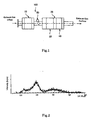
- FIG. 1 shows an exemplary overall constitution of the exhaust gas purification muffler according to an embodiment of the present invention.
- the catalyst system 100 is provided with a nitrogen compound oxidizing/treating part 10, a nitrogen oxide removing/treating part 20, a denitrating/reducing agent injection part 50, among others.
- the nitrogen compound oxidizing/treating part 10 is for oxidizing a nitrogen compound by reacting it with oxygen, and is provided with a nitrogen compound oxidation catalyst capable of effectively oxidizing a nitrogen compound.
- the nitrogen oxide purifying/treating part 20 is for removing the nitrogen oxide discharged from the nitrogen compound oxidizing/treating part 10.
- the nitrogen oxide removing/treating part 20 is provided with a first reaction part 30 for reacting nitrogen oxide with ammonia to thereby denitrate the nitrogen oxide, and a second reaction part 40 for oxidatively decomposing ammonia leaked from the first reaction part.
- the first reaction part 30 is provided with an ammonia-aided reduction catalyst capable of reductively denitrating nitrogen oxide by ammonia effectively
- the second reaction part 40 is provided with an ammonia slip removal catalyst capable of oxidatively decomposing ammonia effectively.
- the denitrating/reducing agent injection part 50 is provided for injecting a denitrating/reducing agent into the nitrogen oxide removing/treating part 20.
- first reaction part 30 and the second reaction part 40 are provided in the single treating part 20 in this embodiment of the present invention, the reaction parts may also be provided in separate treating parts.
- an ammonia source such as ammonia, ammonia water (ammonia liquor), liquefied ammonia, or the like may be adopted as the denitrating/reducing agent to be injected into the nitrogen oxide removing/treating part 20 by the denitrating/reducing agent injection part 50
- an ammonia precursor capable of generating ammonia in the nitrogen oxide removing/treating part 20 may also be adopted.
- the ammonia precursor include urea, urea water, and the like capable of generating ammonia by thermal decomposition. It is preferable to adopt urea, urea water, or the like as the denitrating/reducing agent, from environmental and other points of view.
- the amount of the denitrating/reducing agent to be injected is not particularly limited insofar as being sufficient for reductively decomposing nitrogen oxide, and preferably in accordance with the due characteristics such as amounts of nitrogen oxides, removal performance of catalysts, and the like. In this way, adjusting an amount of the denitrating/reducing agent and injecting it into the nitrogen oxide removing/treating part 20, enables nitrogen oxide to be reductively decomposed effectively, thereby allowing restriction of an amount of slip ammonia.
- the ammonia-aided reduction catalyst contains, as active constituents, at least: a complex oxide consisting of two or more oxides selected from silica, alumina, titania, zirconia, and tungsten oxide; and a rare earth metal or transition metal (except Cu, Co, Ni, Mn, Cr, and V).
- the ammonia-aided reduction catalyst may consist of, at least: a complex oxide containing two or more oxides selected from silica, alumina, titania, zirconia, and tungsten oxide; and a rare earth metal or transition metal (except Cu, Co, Ni, Mn, Cr, and V).
- combination for the complex oxide examples include silica-alumina, silica-titania, silica-zirconia, silica-tungsten oxide, alumina-titania, alumina-zirconia, alumina-tungsten oxide, titania-zirconia, titania-tungsten oxide, tungsten oxide-zirconia, and the like. While complex oxides each consisting of two oxides are exempli fied herein, a complex oxide may consist of three or more oxides.
- the complex oxide are titania-zirconia, silica-alumina, tungsten oxide-zirconia, and the like.
- the titania-zirconia type complex oxide is preferable, in that it is capable of restricting generation of a by-product (such as cyanic acid) upon thermal decomposition of urea, and capable of reductively decomposing nitrogen oxide effectively under a reaction condition of 230 to 500°C.
- the silica-alumina type complex oxide is also preferable, in that it is excellent in adsorptivity of ammonia, and particularly, it is capable of holding ammonia even under a reaction condition of 200 to 400°C.
- the tungsten oxide-zirconia type complex oxide is preferable, in that it is excellent in durability.
- titania-zirconia type complex oxide it is particularly preferable to have a molar composition ratio (Ti:Zr) between titanium and zirconium within a range of 8:2 to 2:8.
- silica-alumina type complex oxide it is preferable to have a molar composition ratio (Si:Al) between silicon and aluminum within a range of 5:1 to 500:1.
- tungsten oxide-zirconia type complex oxide it is preferable to have a molar composition ratio (W:Zr) between tungsten oxide and zirconium within a range of 1:20 to 1:5.
- rare earth metals include scandium (Sc), yttrium (Y), lanthanum (La), cerium (Ce), praseodymium (Pr), neodymium (Nd), promethium (Pm), samarium (Sm), europium (Eu), gadolinium (Gd), terbium (Tb), dysprosium (Dy), holmium (Ho), erbium (Er), thulium (Tm), ytterbium (Yb), lutetium (Lu), and the like.
- transition metals include any one of simple substances made of first-row transition metal elements ( 21 SC to 29 Cu), second-row transition metal elements ( 39 Y to 47 Ag), and third-row transition metal elements ( 72 Hf to 79 Au), except for harmful metals such as copper (Cu), cobalt (Co), nickel (Ni), manganese (Mn), chromium (Cr), and vanadium (V).
- harmful metals such as copper (Cu), cobalt (Co), nickel (Ni), manganese (Mn), chromium (Cr), and vanadium (V).
- ammonia-aided reduction catalyst may further contain sulfur or phosphorus.
- sulfur or phosphorus in this way, inclusion of sulfur or phosphorus in the ammonia-aided reduction catalyst enables nitrogen oxide to be reductively decomposed effectively.
- the ammonia-aided reduction catalyst may contain another oxide, another rare earth metal or transition metal, or a composite containing, as active constituents, oxide and a rare earth metal or transition metal, for reductively decomposing nitrogen oxide effectively.
- Such an oxide is not particularly limited insofar as it is a heat-resistant oxide, and preferable examples thereof are an oxide selected from at least silica, alumina, titania, zirconia, and tungsten oxide, and a complex oxide consisting of two or more oxides selected from at least silica, alumina, titania, zirconia, and tungsten oxide.
- the ammonia-aided reduction catalyst may be: a catalyst containing, as active constituents, a complex oxide consisting of two or more oxides selected from silica, alumina, titania, zirconia, and tungsten oxide, and a rare earth metal or transition metal (except Cu, Co, Ni, Mn, Cr, and V), supporting a composite containing, as active constituents, oxide and a rare earth metal or transition metal; or the above catalyst simply mixed with the above composite.
- the weight ratio between the catalyst and the composite is preferably within a range of 0.2:0.8 to 0.8:0.2.
- the content of the rare earth metal or the transition metal in the ammonia-aided reduction catalyst is preferably within a range of 2 wt% to 50 wt%. Further, the content of sulfur or phosphorus in the ammonia-aided reduction catalyst is preferably 10 wt% or less, and in case of the titania-zirconia type complex oxide, desirably within a range of 0.5 wt% to 10 wt%.
- ammonia-aided reduction catalyst to the catalyst system according to the present invention enables effective removal of nitrogen oxide.
- the ammonia-aided reduction catalyst may be directly used, it may also be supported on a carrier substrate so as to attain removal of nitrogen oxide more effectively.
- the carrier substrate it is preferable to adopt a honeycomb substrate, a porous substrate, or the like, for example.
- the ammonia slip removal catalyst contains, as active constituents, at least, a noble metal and a silica-alumina type complex oxide.
- the noble metal include gold (Au), silver (Ag), platinum group (ruthenium (Ru), rhodium (Rh), palladium (Pd), osmium (Os), iridium (Ir), and platinum (Pt)), and the like.
- the content of noble metal in the ammonia slip removal catalyst is preferably within a range of 0.1 wt% to 5 wt%, and particularly preferably within a range of 0.3 wt% to 3wt%. It is particularly preferable that the molar composition ratio between silicon and aluminum (Si:Al) in the silica-alumina type complex oxide is within a range of 10:1 to 100:1.
- the ammonia slip removal catalyst may contain oxide, another rare earth metal or transition metal, or a composite containing, as active constituents, oxide and a rare earth metal or transition metal, for restricting generation of nitrogen oxide and for oxidatively decomposing slip ammonia effectively.
- the composite may further contain sulfur, phosphorus, or the like.
- Such an oxide is not particularly limited insofar as it is a heat-resistant oxide, and its preferable examples are an oxide selected from at least silica, alumina, titania, zirconia, and tungsten oxide, and a complex oxide consisting of two or more oxides selected from at least silica, alumina, titania, zirconia, and tungsten oxide, and particularly preferable is a titania-zirconia type complex oxide, a silica-alumina type complex oxide, or their mixture.
- the ammonia slip removal catalyst may be a catalyst containing, as active constituents, at least, a noble metal and a silica-alumina type complex oxide, supporting a composite containing, as active constituents, oxide and a rare earth metal or transition metal or such a catalyst simply mixed with such a composite.
- the weight ratio between the catalyst and the composite is preferably within a range of 1:1 to 1:10, Note that it is particularly preferable in this case that the molar composition ratio between silicon and aluminum (Si:Al) in the silica-alumina type complex oxide of the catalyst is within a range of 5:1 to 500:1.
- the content of the rare earth metal or the transition metal in the composite is preferably within a range of 2 wt% to 50 wt%. Further, the content of sulfur or phosphorus in the composite is preferably 10 wt% or less, and preferably within a range of 0.5 wt% to 10 wt% in case of the titania-zirconia type complex oxide.
- ammonia slip removal catalyst to the catalyst system according to the present invention enables effective restriction of nitrogen oxide generation, and effective oxidative decomposition of slip ammonia.
- the ammonia slip removal catalyst may be directly used, according to the invention it is supported on a carrier substrate so as to effectively attain restriction of nitrogen oxide generation and oxidative decomposition of slip ammonia.
- a honeycomb substrate is used for the carrier substrate.
- ammonia-aided reduction catalyst and ammonia slip removal catalyst can be produced by methods such as an impregnation method, kneading method, coprecipitation method, sol-gel method, and the like.
- the nitrogen oxide removal method according to the present invention includes steps of contacting the nitrogen oxide with an ammonia-aided reduction catalyst in the presence of ammonia to reductively denitrate nitrogen oxide, and contacting untreated ammonia with an ammonia slip removal catalyst to oxidatively decompose the unreacted ammonia. These steps enable nitrogen oxides and ammonia to be effectively removed.
- the space velocity of exhaust gas is preferably within a range of 5, 000 /h to 200, 000 /h, and particularly preferably within a range of 10, 000 /h to 50, 000 /h.
- the substance amount of ammonia is preferably within a range of 0.6 mol to 1.0 mol relative to 1 mol of nitrogen oxides, and particularly preferably within a range of 0.7 mol to 0.9 mol relative to 1 mol of nitrogen oxides.
- the reaction temperature upon reductive denitration is preferably within a range of 150 °C to 500 °C, particularly preferably within a range of 185 °C to 500 °C in that the ammonia-aided reduction catalyst can effectively adsorbs ammonia then, and most preferably within a range of 220 °C to 500 °C in that nitrogen oxides can be effectively removed.
- the reaction temperature upon reductive denitration is preferably within a range of 170°C to 250°C in that ammonia can be effectively generated.
- the reaction temperature upon oxidative decomposition is preferably within a range of 150 °C to 500 °C.
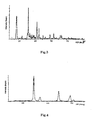
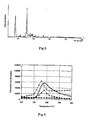
- An aqueous solution of organic platinum compound (a bis-ethanol ammonium platinum hydroxide solution was used in this Example) at a concentration of 5% was gradually dropped onto 1,000g of a complex oxide made of alumina-silica, while stirring. Powdery matter obtained was dried at 120°C and fired at 450°C for 2 hours, thereby obtaining a powder. Thereafter, it was confirmed that this powder was a Pt-Al-Si oxide based catalyst (see FIG. 5 ).
- Example 1 0.1g of the Ce-Ti-SO 4 -Zr based catalyst powder obtained in Example 1 was impregnated with 0.2ml of aqueous urea solution (2.5wt%) followed by drying to prepare a matter which was then subjected to TPD (Temperature Programmed Desorption)-Mass to analyze gas components generated by thermal decomposition upon temperature rising.
- the temperature rising condition was set to +10°C/min.
- the TPD-Mass analysis was conducted under atmospheric conditions at a range of 100°C to 300°C.
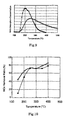
- the conventional V 2 O 5 -TiO 2 based catalyst made ammonia (open triangle) and a by-product (black triangle) generated by thermal decomposition of urea under conditions of reaction temperatures at 150°C to 250°C.
- the Ce-Ti-SO 4 -Zr based catalyst proved to generate only ammonia (open circle) without generating the by-product (black circle) under any reaction temperature condition. This clarified that the ammonia-aided reduction catalyst is useful for improvement of a catalytic activity performance.
- a denitrating reaction test was conducted under the following conditions for the Ce-Ti-SO 4 -Zr based catalyst obtained in the Example 1.
- the catalyst was supported on a honeycomb carrier having a diameter of 25mm ⁇ and a length of 50mm, and a reaction gas was introduced, which was made of 10% of O 2 , 150ppm each of NO and NO 2 , 5% of H 2 O, and nitrogen for remainder, at a space velocity (SV) of 50,000/h. This was conducted at a catalyst inlet temperature at a range of 150°C to 400°C.
- the similar experiment was done by using the V 2 O 5 -TiO 2 based catalyst as a control.
- the results are shown in FIG. 7 .
- the Ce-Ti-SO 4 -Zr based catalyst (open circle) proved to be capable of removing nitrogen oxides, better than the V 2 O 5 -TiO 2 based catalyst (black circle).
- the Ce-Ti-SO 4 -Zr based catalyst in an SCR catalyst size of 190 mm ⁇ 178mm ( ⁇ 7.5" ⁇ 7") (5L) was mounted on an exhaust muffler of a 5L-NA engine, and a Pt-based oxidation catalyst (Pt-alumina catalyst: produced by TOKYO ROKI Co., Ltd.) was mounted upstream of the SCR catalyst, for conducting an actual device/steady evaluation test.
- Pt-alumina catalyst produced by TOKYO ROKI Co., Ltd.
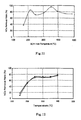
- a denitrating reaction test was conducted in the same manner as that described in the Example 6, for the Fe-Si-Al oxide based catalyst obtained in the Example 2.
- the catalyst was evaluated with respect to catalyst inlet temperatures at a range of 150°C to 400°C. The result is shown in FIG. 10 .
- the Fe-Si-Al oxide based catalyst (circle) proved to be capable of removing more nitrogen oxides than the V 2 O 5 -TiO 2 based catalyst (black circle).
- a denitrating reaction test was conducted in the same manner as that described in the Example 6, for the Ce-W-Zr oxide based catalyst obtained in the Example 3.
- the catalyst was evaluated with respect to catalyst inlet temperatures at a range of 150°C to 400°C. The result is shown in FIG. 12 .
- the Ce-W-Zr oxide based catalyst (open circle) proved to be capable of removing nitrogen oxides similarly to the V 2 O 5 -TiO 2 based catalyst (black circle).
- the mixed catalyst proved to be capable of removing nitrogen oxides more effectively than the cases where the Ce-Ti-SO 4 -Zr based catalyst (black diamond) or Fe-Si-Al oxide based catalyst (black square) was used alone, at the SCR temperatures of 250°C or higher. It is considered, therefore, that attacking of high-temperature exhaust gas against the silica-alumina material can be restricted and heat resistance can be improved by making the Ce-Ti-SO 4 -Zr based catalyst supported on the Fe-Si-Al oxide based catalyst.
- a test for oxidative decomposition reaction of ammonia was conducted under the following conditions, for the Pt-Al-Si oxide based catalyst obtained in the Example 4.
- the catalyst was supported on a honeycomb carrier having a diameter of 25mm ⁇ and a length of 25mm, and a reaction gas was introduced, which consisted of 500ppm of NH 3 , 10% of O 2 , 5% of H 2 O, and nitrogen for remainder, under a condition of a space velocity (SV) of 100,000.
- the catalyst was evaluated with respect to the catalyst inlet temperatures at a range of 200°C to 450°C.
- a Pt-alumina based catalyst alumina catalyst carrying platinum thereon
- the results are shown in FIG. 14 .
- the Pt-Al-Si oxide based catalyst black circle
- 10g of alumina sol and an appropriate amount of water were mixed with 90g of the Pt-Al-Si oxide based catalyst obtained in the Example 4.
- the mixture was coated onto a honeycomb carrier substrate, which is made of cordierite (400 cell/inch 2 ), thereby obtaining a honeycomb structural body.
- 10g of alumina sol and an appropriate amount of water were mixed with 90g of a mixed catalyst of the Ce-Ti-SO 4 -Zr based catalyst obtained in the Example 1 and the Fe-Si-Al oxide based catalyst obtained in the Example 2 (weight ratio of Ce-Ti-SO 4 -Zr based catalyst to Fe-Si-Al oxide based catalyst was 1:1).
- the mixture was coated onto the honeycomb structural body, thereby obtaining a honeycomb carrier catalyst.
- the honeycomb carrier catalyst (slip-C Fresh; base coat: Pt-Al-Si oxide based catalyst, overcoat: Ce-Ti-SO 4 -Zr based catalyst and Fe-Si-Al oxide based catalyst), the honeycomb structural body (slip-B Fresh; Pt-Al-Si oxide based catalyst), or a comparative catalyst (slip-A Fresh; provided by carrying a Pt-alumina based catalyst on a honeycomb carrier substrate) was each packed in a reaction tube made of stainless steel having a diameter of 25mm ⁇ and a length of 12.5mm, and a reaction gas was introduced, which consisted of 50ppm of NH 3 , 10% of O 2 , 5% of H 2 O, and nitrogen for remainder, under a condition of a space velocity (SV) of 200, 000/h.
- SV space velocity
- the catalyst inlet temperatures were estimated within a range of 150°C to 450°C. Note that the temperature rising rate was set to 5°C/min.
- the results are shown in FIG. 17 . As shown in FIG. 17 , it was proven that while the slip-A Fresh (open circle) is merely capable of effectively removing ammonia at temperatures of 250°C to 450°C, the slip-B Fresh (black circle) and the slip-C Fresh (triangle) are additionally capable of effectively removing ammonia even at low temperatures (from 150°C to 250°C).
- slip-B Fresh and slip-C Fresh are catalysts which are not only capable of effectively removing ammonia but also useful for restricting generation of nitrogen oxides such as N 2 O, over a range from low temperatures to high temperatures (from 150°C to 450°C).
- 10g of alumina sol and an appropriate amount of water were mixed with 90g of a Pt-based catalyst (Pt-alumina catalyst).
- the mixture was coated onto a honeycomb carrier substrate (made of cordierite; 62 cell/cm 2 (400 cell/inch 2 ), thereby obtaining a honeycomb structural body.
- 10g of alumina sol and an appropriate amount of water were mixed with 90g of a mixture (mixing ratio of 1/1) of the Ce-Ti-SO 4 -Zr based catalyst and Fe-Si-Al oxide based catalyst, coated onto a honeycomb carrier substrate (made of cordierite; 62 cell/cm 2 (400 cell/inch 2 ), thereby obtaining another honeycomb structural body.
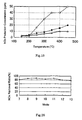
- An exhaust gas purification muffler (produced by TOKYO ROKI Co., Ltd.) of an engine having a displacement of 13L was loaded with: the honeycomb structural body (catalyst volume of 8.5L, catalyst content of 3.5g/L) supporting a Pt-based catalyst, on the nitrogen compound oxidizing/treating part 10; the honeycomb structural body (catalyst volume of 8.5L, catalyst content of 600g/L) supporting the Ce-Ti-SO 4 -Zr based catalyst and Fe-Si-Al oxide based catalyst, on the first reaction part 30; and the slip-C Fresh (catalyst volume of 5.7L, catalyst content of 500g/L), on the second reaction part 40, and a denitrating reaction test was conducted by addition of urea under a simple D-13 mode (steady running mode) condition.
- the urea was added such that the molar ratio between ammonia and nitrogen oxides became 1:1 at the first reaction part 30.
- the result is shown in FIG. 20 .
- FIG. 20 it was confirmed that nitrogen oxides were effectively removed in any mode (from mode 7 to 17).
- a nitrogen oxide removal catalyst system and a nitrogen oxide removal method each adopting a catalyst which is free of metals that have been suggested harmful and capable of achieving removal of nitrogen oxides efficiently, and another catalyst which is capable of restricting generation of nitrogen oxides and capable of oxidatively decomposing slip ammonia into nitrogen and water effectively.
Landscapes
- Chemical & Material Sciences (AREA)
- Engineering & Computer Science (AREA)
- Chemical Kinetics & Catalysis (AREA)
- Materials Engineering (AREA)
- Organic Chemistry (AREA)
- Combustion & Propulsion (AREA)
- Mechanical Engineering (AREA)
- General Engineering & Computer Science (AREA)
- Health & Medical Sciences (AREA)
- Biomedical Technology (AREA)
- Environmental & Geological Engineering (AREA)
- Analytical Chemistry (AREA)
- General Chemical & Material Sciences (AREA)
- Oil, Petroleum & Natural Gas (AREA)
- Toxicology (AREA)
- Catalysts (AREA)
- Exhaust Gas Treatment By Means Of Catalyst (AREA)
- Exhaust Gas After Treatment (AREA)
Claims (11)
- Katalysatorsystem zum Entfernen von Stickstoffoxid, das einen ersten Reaktionsteil, der mit einem ersten Katalysator zum Denitrieren von Stickstoffoxiden durch Reaktion des Stickstoffoxids mit Ammoniak ausgestattet ist, und einen zweiten Reaktionsteil aufweist, der mit einem zweiten Katalysator zur oxidativen Zersetzung von Ammoniak ausgestattet ist, das aus dem ersten Reaktionsteil entwichen ist, dadurch gekennzeichnet, dass
der erste Katalysator als aktive Bestandteile mindestens die folgenden enthält: ein Komplexoxid, das aus zwei oder mehreren Oxiden besteht, die unter Siliciumdioxid, Aluminiumoxid, Titandioxid, Zirconiumdioxid und Wolframoxid ausgewählt sind; und ein Seltenerdmetall oder ein Übergangsmetall außer Cu, Co, Ni, Mn, Cr und V; und
der zweite Katalysator als aktive Bestandteile mindestens die folgenden enthält: ein Edelmetall und ein Komplexoxid vom Typ Siliciumdioxid-Aluminiumoxid, wobei der zweite Katalysator mindestens einen Katalysator mit wabenförmigem Träger aufweist, der eine Grundschicht und eine Deckschicht aufweist, wobei die Grundschicht einen Katalysator auf Pt-Al-Si-Oxid-Basis und die Deckschicht einen Katalysator auf Ce-Ti-SO4-Zr-Basis und einen Katalysator auf Fe-Si-Al-Oxid-Basis aufweist. - Katalysatorsystem zum Entfernen von Stickstoffoxid nach Anspruch 1, wobei der erste Katalysator ferner Schwefel oder Phosphor enthält.
- Katalysatorsystem zum Entfernen von Stickstoffoxid nach Anspruch 2, wobei der erste Katalysator als aktive Bestandteile mindestens enthält: ein Komplexoxid vom Typ Titandioxid-Zirconiumdioxid, ein Seltenerdmetall oder ein Übergangsmetall außer Cu, Co, Ni, Mn, Cr und V; und Schwefel oder Phosphor.
- Katalysatorsystem zum Entfernen von Stickstoffoxid nach Anspruch 2, wobei der erste Katalysator als aktive Bestandteile mindestens enthält: ein Komplexoxid vom Typ Wolframoxid-Zirconiumdioxid; ein Seltenerdmetall oder ein Übergangsmetall außer Cu, Co, Ni, Mn, Cr und V; und Schwefel oder Phosphor.
- Katalysatorsystem zum Entfernen von Stickstoffoxid nach Anspruch 1, wobei der erste Katalysator als aktive Bestandteile mindestens enthält: ein Komplexoxid vom Typ Siliciumdioxid-Aluminiumoxid und ein Seltenerdmetall.
- Katalysatorsystem zum Entfernen von Stickstoffoxid nach Anspruch 1, wobei der erste Katalysator aus einem Komplexoxid vom Typ Siliciumdioxid-Aluminiumoxid und einem Übergangsmetall außer Cu, Co, Ni, Mn, Cr und V besteht.
- Katalysatorsystem zum Entfernen von Stickstoffoxid nach einem der Ansprüche 1 bis 6, wobei ein Verbundstoff, der als aktive Bestandteile mindestens ein unter Siliciumdioxid, Aluminiumoxid, Titandioxid, Zirconiumdioxid und Wolframoxid ausgewähltes Oxid und ein Seltenerdmetall oder ein Übergangsmetall außer Cu, Co, Ni, Mn, Cr und V enthält, durch den ersten Katalysator getragen wird.
- Katalysatorsystem zum Entfernen von Stickstoffoxid nach einem der Ansprüche 1 bis 7, wobei ein Verbundstoff, der als aktive Bestandteile mindestens ein unter Siliciumdioxid, Aluminiumoxid, Titandioxid, Zirconiumdioxid und Wolframoxid ausgewähltes Oxid und ein Seltenerdmetall oder ein Übergangsmetall außer Cu, Co, Ni, Mn, Cr und V enthält, durch den zweiten Katalysator getragen wird.
- Katalysatorsystem zum Entfernen von Stickstoffoxid nach einem der Ansprüche 1 bis 8, wobei der erste Katalysator durch ein Trägersubstrat getragen wird.
- Katalysatorsystem zum Entfernen von Stickstoffoxid nach einem der Ansprüche 1 bis 9, das ferner an einer stromaufwärts gelegenen Seite des ersten Reaktionsteils einen dritten Reaktionsteil zum Oxidieren einer Stickstoffverbindung durch Reaktion der Stickstoffverbindung mit Sauerstoff aufweist.
- Verfahren zum Entfernen von Stickstoff, das aufweist:reduktives Denitrieren von Stickstoffoxiden, indem die Stickstoffoxide in Anwesenheit von Ammoniak mit einem ersten Katalysator in Kontakt gebracht werden, wobei der erste Katalysator als aktive Bestandteile mindestens enthält: ein Komplexoxid, das zwei oder mehrere Oxide, die unter Siliciumdioxid, Aluminiumoxid, Titandioxid, Zirconiumdioxid und Wolframoxid ausgewählt sind; und ein Seltenerdmetall oder ein Übergangsmetall außer Cu, Co, Ni, Mn, Cr und V aufweist; undoxidative Zersetzung von nicht umgesetztem Ammoniak, indem das unbehandelte Ammoniak mit einem zweiten Katalysator in Kontakt gebracht wird, wobei der zweite Katalysator als aktive Bestandteile mindestens ein Edelmetall und ein Komplexoxid vom Typ Siliciumdioxid-Aluminiumoxid enthält, wobei der zweite Katalysator mindestens einen wabenförmigen Trägerkatalysator aufweist, der eine Grundschicht und eine Deckschicht umfasst, wobei die Grundschicht einen Katalysator auf Pt-Al-Si-Oxid-Basis aufweist und die Deckschicht einen Katalysator auf Ce-Ti-SO4-Zr-Basis und einen Katalysator auf Fe-Si-Al-Oxid-Basis aufweist.
Applications Claiming Priority (2)
| Application Number | Priority Date | Filing Date | Title |
|---|---|---|---|
| JP2004055351A JP4427356B2 (ja) | 2004-02-27 | 2004-02-27 | 窒素酸化物浄化用触媒システム及び窒素酸化物浄化方法 |
| EP05709549A EP1736232B1 (de) | 2004-02-27 | 2005-02-01 | Katalysatorsystem zur entfernung von stickstoffoxid und verfahren zur entfernung von stickstoffoxid |
Related Parent Applications (2)
| Application Number | Title | Priority Date | Filing Date |
|---|---|---|---|
| EP05709549A Division EP1736232B1 (de) | 2004-02-27 | 2005-02-01 | Katalysatorsystem zur entfernung von stickstoffoxid und verfahren zur entfernung von stickstoffoxid |
| EP05709549.9 Division | 2005-02-01 |
Publications (2)
| Publication Number | Publication Date |
|---|---|
| EP2305367A1 EP2305367A1 (de) | 2011-04-06 |
| EP2305367B1 true EP2305367B1 (de) | 2012-09-05 |
Family
ID=34908862
Family Applications (2)
| Application Number | Title | Priority Date | Filing Date |
|---|---|---|---|
| EP05709549A Expired - Lifetime EP1736232B1 (de) | 2004-02-27 | 2005-02-01 | Katalysatorsystem zur entfernung von stickstoffoxid und verfahren zur entfernung von stickstoffoxid |
| EP10009437A Expired - Lifetime EP2305367B1 (de) | 2004-02-27 | 2005-02-01 | Katalysatorsystem zur Entfernung von Stickstoffoxid und Verfahren zur Entfernung von Stickstoffoxid |
Family Applications Before (1)
| Application Number | Title | Priority Date | Filing Date |
|---|---|---|---|
| EP05709549A Expired - Lifetime EP1736232B1 (de) | 2004-02-27 | 2005-02-01 | Katalysatorsystem zur entfernung von stickstoffoxid und verfahren zur entfernung von stickstoffoxid |
Country Status (7)
| Country | Link |
|---|---|
| US (1) | US7597865B2 (de) |
| EP (2) | EP1736232B1 (de) |
| JP (1) | JP4427356B2 (de) |
| CN (1) | CN100553748C (de) |
| AT (1) | ATE551113T1 (de) |
| ES (2) | ES2394161T3 (de) |
| WO (1) | WO2005082494A1 (de) |
Families Citing this family (51)
| Publication number | Priority date | Publication date | Assignee | Title |
|---|---|---|---|---|
| US20100166628A1 (en) † | 2006-02-15 | 2010-07-01 | Nicola Soeger | Catalyst for reducing nitrogen-containing pollutants from the exhaust gases of diesel engines |
| EP2040834B2 (de) † | 2006-07-08 | 2019-10-30 | Umicore AG & Co. KG | Strukturierter scr-katalysator zur reduktion von stickoxiden im abgas von magermotoren unter verwendung von ammoniak als reduktionsmittel |
| JP2008049290A (ja) | 2006-08-25 | 2008-03-06 | Tokyo Roki Co Ltd | 窒素酸化物を浄化する触媒、方法、及び装置 |
| JP2008049288A (ja) | 2006-08-25 | 2008-03-06 | Tokyo Roki Co Ltd | 複合酸化物及びその製造方法、並びに、窒素酸化物を浄化する触媒、方法、及び装置 |
| US20080095682A1 (en) * | 2006-10-19 | 2008-04-24 | Kharas Karl C | Ce-Zr-R-O CATALYSTS, ARTICLES COMPRISING THE Ce Zr R O CATALYSTS AND METHODS OF MAKING AND USING THE Ce-Zr-R-O CATALYSTS |
| BRPI0717343A2 (pt) * | 2006-10-23 | 2014-01-14 | Umicore Ag & Co Kg | Catalizador livre de vanádio para a redução catalítica, seletiva, e processos para produção do mesmo |
| CN101711185A (zh) | 2007-02-27 | 2010-05-19 | 巴斯夫催化剂公司 | 用于选择性氨氧化的双功能催化剂 |
| JP4706659B2 (ja) | 2007-04-05 | 2011-06-22 | トヨタ自動車株式会社 | アンモニア酸化触媒におけるn2o生成量推定方法および内燃機関の排気浄化システム |
| US8636959B2 (en) | 2007-05-09 | 2014-01-28 | N.E. Chemcat Corporation | Selective catalytic reduction type catalyst, and exhaust gas purification equipment and purifying process of exhaust gas using the same |
| JP5110954B2 (ja) | 2007-05-09 | 2012-12-26 | エヌ・イーケムキャット株式会社 | 選択還元型触媒を用いた排気ガス浄化触媒装置並びに排気ガス浄化方法 |
| GB2450484A (en) | 2007-06-25 | 2008-12-31 | Johnson Matthey Plc | Non-Zeolite base metal catalyst |
| US9863297B2 (en) | 2007-12-12 | 2018-01-09 | Basf Corporation | Emission treatment system |
| US9993771B2 (en) | 2007-12-12 | 2018-06-12 | Basf Corporation | Emission treatment catalysts, systems and methods |
| US20090196812A1 (en) * | 2008-01-31 | 2009-08-06 | Basf Catalysts Llc | Catalysts, Systems and Methods Utilizing Non-Zeolitic Metal-Containing Molecular Sieves Having the CHA Crystal Structure |
| DE502008000454D1 (de) * | 2008-04-11 | 2010-04-29 | Umicore Ag & Co Kg | Abgasreinigungssystem zur Behandlung von Motorenabgasen mittels SCR-Katalysator |
| DE102008046994B4 (de) * | 2008-09-12 | 2015-02-12 | Süd-Chemie Ip Gmbh & Co. Kg | Harnstoff-Hydrolyse-Katalysator |
| KR100974730B1 (ko) * | 2008-11-27 | 2010-08-06 | 현대자동차주식회사 | 자동차 배기가스 정화 촉매 |
| US9109492B2 (en) | 2009-06-16 | 2015-08-18 | Toyota Jidosha Kabushiki Kaisha | Exhaust purification system of internal combustion engine |
| RU2476258C2 (ru) * | 2009-10-06 | 2013-02-27 | Мицубиси Хеви Индастриз, Лтд. | КАТАЛИЗАТОР УДАЛЕНИЯ NOx ИЗ ВЫСОКОТЕМПЕРАТУРНОГО ДЫМОВОГО ГАЗА, СПОСОБ ЕГО ПОЛУЧЕНИЯ И СПОСОБ УДАЛЕНИЯ NOx ИЗ ВЫСОКОТЕМПЕРАТУРНОГО ДЫМОВОГО ГАЗА |
| JP5815220B2 (ja) * | 2009-11-19 | 2015-11-17 | イビデン株式会社 | ハニカム構造体及び排ガス浄化装置 |
| US8529853B2 (en) | 2010-03-26 | 2013-09-10 | Umicore Ag & Co. Kg | ZrOx, Ce-ZrOx, Ce-Zr-REOx as host matrices for redox active cations for low temperature, hydrothermally durable and poison resistant SCR catalysts |
| US8017097B1 (en) | 2010-03-26 | 2011-09-13 | Umicore Ag & Co. Kg | ZrOx, Ce-ZrOx, Ce-Zr-REOx as host matrices for redox active cations for low temperature, hydrothermally durable and poison resistant SCR catalysts |
| US20120328499A1 (en) | 2010-06-30 | 2012-12-27 | N.E. Chemcat Corporation | Exhaust gas purification catalyst apparatus using selective reduction-type catalyst and exhaust gas purification method |
| US8323602B2 (en) | 2010-07-08 | 2012-12-04 | Air Products And Chemicals, Inc. | Treatment of flue gas from an oxyfuel combustion process |
| DE102010050312A1 (de) * | 2010-11-03 | 2012-05-03 | Süd-Chemie AG | Ammoniak-Oxidationskatalysator mit geringer N2O Nebenproduktbildung |
| EP2692437B1 (de) * | 2011-03-31 | 2023-09-20 | N.E. Chemcat Corporation | Ammoniakoxidationskatalysator, abgasreinigungsvorrichtung damit und abgasreinigungsverfahren |
| JP5732297B2 (ja) * | 2011-03-31 | 2015-06-10 | エヌ・イーケムキャット株式会社 | アンモニア酸化触媒、および排気ガス浄化装置並びに排気ガス浄化方法 |
| WO2013052217A2 (en) * | 2011-10-07 | 2013-04-11 | Exxonmobil Chemical Patents Inc. | Mixed metal oxide catalysts and use thereof |
| CN102658172B (zh) * | 2012-04-20 | 2014-06-18 | 浙江大学 | 一种scr脱硝催化剂及其制备方法和应用 |
| US9151222B2 (en) | 2012-12-12 | 2015-10-06 | Caterpillar Inc. | Six-stroke combustion cycle engine and process |
| US9181830B2 (en) | 2012-12-12 | 2015-11-10 | Caterpillar Inc. | After-treatment system and method for six-stroke combustion cycle |
| US9133764B2 (en) | 2012-12-12 | 2015-09-15 | Caterpillar Inc. | Six-stroke engine system with blowdown exhaust recirculation |
| US8978602B2 (en) | 2012-12-12 | 2015-03-17 | Caterpillar Inc. | Six-stroke engine power density matching system and method |
| US8978601B2 (en) | 2012-12-12 | 2015-03-17 | Caterpillar Inc. | Six-stroke engine system with blowdown exhaust system |
| US8978603B2 (en) | 2012-12-12 | 2015-03-17 | Caterpillar Inc. | Six-stroke internal combustion engine valve activation system and method for operating such engine |
| US9057324B2 (en) | 2012-12-12 | 2015-06-16 | Caterpillar Inc. | Six-stroke engine system with blowdown turbocharger |
| JP2013078768A (ja) * | 2013-02-04 | 2013-05-02 | Mitsubishi Heavy Ind Ltd | 高温排ガス用脱硝触媒及びその製造方法、高温排ガス脱硝方法 |
| CN103551164B (zh) * | 2013-10-30 | 2015-08-05 | 北京师范大学 | 对含氮硫氧杂环化合物具有高效催化降解功能的电催化剂及制备方法 |
| CN104005823B (zh) * | 2014-06-06 | 2017-02-15 | 中自环保科技股份有限公司 | 一种用于摩托车尾气处理的催化转化器及其制备方法 |
| CN104437530B (zh) * | 2014-12-24 | 2016-05-25 | 西安元创化工科技股份有限公司 | 一种脱硝催化剂的制备方法 |
| JP6292159B2 (ja) * | 2015-04-13 | 2018-03-14 | トヨタ自動車株式会社 | 排ガス浄化用触媒 |
| CN105879879B (zh) * | 2016-05-23 | 2018-09-21 | 东南大学 | 一种高抗硫超低温scr脱硝催化剂及其制备方法 |
| CN111068712A (zh) * | 2018-10-19 | 2020-04-28 | 中国石油化工股份有限公司 | 同时脱除氧气和氮氧化物的双功能催化剂及其制备方法和应用 |
| US12083503B2 (en) * | 2019-06-04 | 2024-09-10 | Toyota Motor Europe | Supported oxide NH3-SCR catalysts with dual site surface species and synthesis processes |
| CN110645076B (zh) * | 2019-09-23 | 2021-06-18 | 华东交通大学 | 一种基于模型的nh3泄漏诊断方法 |
| KR102883242B1 (ko) * | 2020-07-29 | 2025-11-06 | 주식회사 엘지화학 | 프로필렌의 암모산화용 촉매, 이의 제조 방법, 이를 이용한 프로필렌의 암모산화 방법 |
| US12000333B2 (en) | 2021-05-14 | 2024-06-04 | AMOGY, Inc. | Systems and methods for processing ammonia |
| EP4352008A4 (de) | 2021-06-11 | 2025-07-02 | Amogy Inc | Systeme und verfahren zur verarbeitung von ammoniak |
| US11866328B1 (en) | 2022-10-21 | 2024-01-09 | Amogy Inc. | Systems and methods for processing ammonia |
| US11795055B1 (en) * | 2022-10-21 | 2023-10-24 | Amogy Inc. | Systems and methods for processing ammonia |
| CN115739071B (zh) * | 2022-11-25 | 2024-07-09 | 大唐南京环保科技有限责任公司 | 一种脱硝催化剂及其制备方法 |
Family Cites Families (21)
| Publication number | Priority date | Publication date | Assignee | Title |
|---|---|---|---|---|
| GB1445239A (en) * | 1973-09-12 | 1976-08-04 | Mitsubishi Chem Ind | Method of decomposing ammonia |
| JPS538320B2 (de) * | 1973-09-12 | 1978-03-27 | ||
| JPS5313359B2 (de) * | 1973-09-27 | 1978-05-09 | ||
| CA1033542A (en) * | 1973-10-24 | 1978-06-27 | Sumitomo Chemical Company | Method and catalyst for removing ammonia from gases |
| US4119703A (en) * | 1974-06-11 | 1978-10-10 | Japan Gasoline Company, Ltd. | Process for removal of nitrogen oxides from waste gas |
| JPS5515247B2 (de) * | 1974-06-11 | 1980-04-22 | ||
| US4351811A (en) * | 1977-07-20 | 1982-09-28 | Hitachi, Ltd. | Process for reducing an eliminating nitrogen oxides in an exhaust gas |
| JPS5421956A (en) * | 1977-07-20 | 1979-02-19 | Hitachi Ltd | Method of removing nitrogen oxides contained in exhaust gas |
| JPS57127426A (en) * | 1981-01-29 | 1982-08-07 | Nippon Shokubai Kagaku Kogyo Co Ltd | Method for removal of nitrogen oxide |
| NO865072D0 (no) * | 1986-12-16 | 1986-12-16 | Norsk Hydro As | Materiale for behandling av ammoniakk. |
| JPH0256250A (ja) * | 1988-08-23 | 1990-02-26 | Sakai Chem Ind Co Ltd | 排ガス中の窒素酸化物除去用触媒 |
| JPH0724774B2 (ja) * | 1988-11-25 | 1995-03-22 | 株式会社日本触媒 | 排ガス処理触媒用担体、その製造方法ならびに該担体を含有してなる排ガス処理用触媒 |
| US5658546A (en) * | 1993-07-30 | 1997-08-19 | Nippon Shokubai Co., Ltd. | Denitration catalyst |
| JPH07275656A (ja) | 1994-04-08 | 1995-10-24 | Kobe Steel Ltd | ガス浄化方法 |
| US5679313A (en) * | 1994-06-08 | 1997-10-21 | Mitsubishi Jukogyo Kabushiki Kaisha | Ammonia decomposition catalysts |
| DE4424235A1 (de) * | 1994-07-09 | 1996-01-11 | Man Nutzfahrzeuge Ag | Sorptionskatalysator zur sorptiven und oxidativen Reinigung der Abgase von Dieselmotoren |
| CA2154500C (en) * | 1994-07-28 | 2001-10-02 | Kouzo Iida | Methods of denitrating exhaust gases |
| JP3872542B2 (ja) * | 1996-04-10 | 2007-01-24 | 大阪瓦斯株式会社 | コージェネレーションの排気ガス脱硝システム |
| JP4029233B2 (ja) * | 1998-05-11 | 2008-01-09 | 第一稀元素化学工業株式会社 | セリウム−ジルコニウム系複合酸化物及びその製造方法ならびに排ガス浄化用触媒材料 |
| US20080095682A1 (en) * | 2006-10-19 | 2008-04-24 | Kharas Karl C | Ce-Zr-R-O CATALYSTS, ARTICLES COMPRISING THE Ce Zr R O CATALYSTS AND METHODS OF MAKING AND USING THE Ce-Zr-R-O CATALYSTS |
| CN101711185A (zh) * | 2007-02-27 | 2010-05-19 | 巴斯夫催化剂公司 | 用于选择性氨氧化的双功能催化剂 |
-
2004
- 2004-02-27 JP JP2004055351A patent/JP4427356B2/ja not_active Expired - Fee Related
-
2005
- 2005-02-01 AT AT05709549T patent/ATE551113T1/de active
- 2005-02-01 ES ES10009437T patent/ES2394161T3/es not_active Expired - Lifetime
- 2005-02-01 EP EP05709549A patent/EP1736232B1/de not_active Expired - Lifetime
- 2005-02-01 EP EP10009437A patent/EP2305367B1/de not_active Expired - Lifetime
- 2005-02-01 ES ES05709549T patent/ES2384800T3/es not_active Expired - Lifetime
- 2005-02-01 US US10/590,776 patent/US7597865B2/en not_active Expired - Fee Related
- 2005-02-01 CN CNB200580012768XA patent/CN100553748C/zh not_active Expired - Fee Related
- 2005-02-01 WO PCT/JP2005/001403 patent/WO2005082494A1/ja not_active Ceased
Also Published As
| Publication number | Publication date |
|---|---|
| EP2305367A1 (de) | 2011-04-06 |
| JP2005238195A (ja) | 2005-09-08 |
| US7597865B2 (en) | 2009-10-06 |
| CN1946470A (zh) | 2007-04-11 |
| ES2394161T3 (es) | 2013-01-22 |
| WO2005082494A1 (ja) | 2005-09-09 |
| CN100553748C (zh) | 2009-10-28 |
| EP1736232A1 (de) | 2006-12-27 |
| US20080038174A1 (en) | 2008-02-14 |
| EP1736232A4 (de) | 2008-01-16 |
| ATE551113T1 (de) | 2012-04-15 |
| EP1736232B1 (de) | 2012-03-28 |
| JP4427356B2 (ja) | 2010-03-03 |
| ES2384800T3 (es) | 2012-07-12 |
Similar Documents
| Publication | Publication Date | Title |
|---|---|---|
| EP1736232B1 (de) | Katalysatorsystem zur entfernung von stickstoffoxid und verfahren zur entfernung von stickstoffoxid | |
| JP5185942B2 (ja) | 選択接触還元のためのバナジウム不含の触媒およびその製造方法 | |
| EP2076326B1 (de) | Ce-zr-r-a-m-o-katalysatoren, artikel mit den ce-zr-r-a-m-o-katalysatoren sowie verfahren zur verwendung der ce-zr-r-a-m-o-katalysatoren | |
| US20070274889A1 (en) | Catalyst and Method for Catalytic Reduction of Nitrogen Oxides | |
| US20130345046A1 (en) | Bifunctional Catalyst for Decomposition and Oxidation of Nitrogen Monoxide, Composite Catalyst Including the Same for Apparatus to Decrease Exhaust Gas, and Method for Preparation Thereof | |
| EP2368628A1 (de) | Katalysator für eine DeNOx-Anwendung und Verfahren zur Auswahl der Verringerung von Stickstoffoxiden durch den Katalysator | |
| JP5583967B2 (ja) | 排ガス浄化用触媒、それを用いた排ガス浄化装置及び排ガス浄化方法 | |
| CN101001688A (zh) | 催化还原氮氧化物的方法 | |
| KR20080027720A (ko) | 가스 정화 방법, 가스 정화 장치 및 가스 정화 촉매 | |
| JPH09884A (ja) | 排ガス中の亜酸化窒素などの除去方法と装置および触媒 | |
| EP2145679A1 (de) | Multifunktionaler Katalysator für Diesel Abgasnachbehandlungsanwendungen und Verfahren zu seiner Herstellung | |
| JP2008296224A (ja) | 窒素酸化物浄化触媒、並びにそれを用いた窒素酸化物の浄化方法及び窒素酸化物浄化装置 | |
| JP2017502824A (ja) | 酸素吸蔵材料 | |
| JP4901129B2 (ja) | 窒素酸化物接触還元用触媒 | |
| JP2001252562A (ja) | 低温脱硝触媒及び低温脱硝方法 | |
| JP5285459B2 (ja) | 排ガス浄化用触媒および排ガス浄化方法 | |
| JP2003290629A (ja) | 排ガス浄化システム | |
| JP4427357B2 (ja) | アンモニア浄化触媒、並びにそれを用いたアンモニアの浄化方法及びアンモニア浄化装置 | |
| JP2005238196A (ja) | 窒素酸化物浄化用触媒、並びにそれを用いた窒素酸化物の浄化方法及び窒素酸化物浄化装置 | |
| JPH06126177A (ja) | 排ガス中の亜酸化窒素除去触媒 | |
| JP2700386B2 (ja) | 排ガス浄化材及び排ガス浄化方法 | |
| JPH1066867A (ja) | 排気ガス浄化用触媒および該触媒による排気ガス浄化方法 | |
| JPH078028Y2 (ja) | 排ガス浄化用触媒 | |
| WO2016132212A1 (en) | Exhaust gas purifying catalyst, method of manufacturing the same, and method of purifying exhaust gas using the same | |
| JP2009056459A (ja) | 排ガス浄化用触媒および排ガス浄化方法 |
Legal Events
| Date | Code | Title | Description |
|---|---|---|---|
| PUAI | Public reference made under article 153(3) epc to a published international application that has entered the european phase |
Free format text: ORIGINAL CODE: 0009012 |
|
| 17P | Request for examination filed |
Effective date: 20100910 |
|
| AC | Divisional application: reference to earlier application |
Ref document number: 1736232 Country of ref document: EP Kind code of ref document: P |
|
| AK | Designated contracting states |
Kind code of ref document: A1 Designated state(s): AT BE BG CH CY CZ DE DK EE ES FI FR GB GR HU IE IS IT LI LT LU MC NL PL PT RO SE SI SK TR |
|
| GRAP | Despatch of communication of intention to grant a patent |
Free format text: ORIGINAL CODE: EPIDOSNIGR1 |
|
| RIC1 | Information provided on ipc code assigned before grant |
Ipc: B01J 35/04 20060101ALN20120202BHEP Ipc: B01J 23/00 20060101ALN20120202BHEP Ipc: F01N 3/20 20060101ALN20120202BHEP Ipc: B01D 53/94 20060101AFI20120202BHEP |
|
| GRAS | Grant fee paid |
Free format text: ORIGINAL CODE: EPIDOSNIGR3 |
|
| GRAA | (expected) grant |
Free format text: ORIGINAL CODE: 0009210 |
|
| RAP1 | Party data changed (applicant data changed or rights of an application transferred) |
Owner name: TOKYO ROKI CO. LTD. Owner name: UD TRUCKS CORPORATION |
|
| AC | Divisional application: reference to earlier application |
Ref document number: 1736232 Country of ref document: EP Kind code of ref document: P |
|
| AK | Designated contracting states |
Kind code of ref document: B1 Designated state(s): AT BE BG CH CY CZ DE DK EE ES FI FR GB GR HU IE IS IT LI LT LU MC NL PL PT RO SE SI SK TR |
|
| REG | Reference to a national code |
Ref country code: GB Ref legal event code: FG4D |
|
| REG | Reference to a national code |
Ref country code: CH Ref legal event code: EP |
|
| REG | Reference to a national code |
Ref country code: AT Ref legal event code: REF Ref document number: 573827 Country of ref document: AT Kind code of ref document: T Effective date: 20120915 |
|
| REG | Reference to a national code |
Ref country code: IE Ref legal event code: FG4D |
|
| REG | Reference to a national code |
Ref country code: DE Ref legal event code: R096 Ref document number: 602005036048 Country of ref document: DE Effective date: 20121025 |
|
| REG | Reference to a national code |
Ref country code: SE Ref legal event code: TRGR Ref country code: NL Ref legal event code: T3 |
|
| REG | Reference to a national code |
Ref country code: AT Ref legal event code: MK05 Ref document number: 573827 Country of ref document: AT Kind code of ref document: T Effective date: 20120905 |
|
| REG | Reference to a national code |
Ref country code: ES Ref legal event code: FG2A Ref document number: 2394161 Country of ref document: ES Kind code of ref document: T3 Effective date: 20130122 |
|
| PG25 | Lapsed in a contracting state [announced via postgrant information from national office to epo] |
Ref country code: FI Free format text: LAPSE BECAUSE OF FAILURE TO SUBMIT A TRANSLATION OF THE DESCRIPTION OR TO PAY THE FEE WITHIN THE PRESCRIBED TIME-LIMIT Effective date: 20120905 Ref country code: LT Free format text: LAPSE BECAUSE OF FAILURE TO SUBMIT A TRANSLATION OF THE DESCRIPTION OR TO PAY THE FEE WITHIN THE PRESCRIBED TIME-LIMIT Effective date: 20120905 Ref country code: AT Free format text: LAPSE BECAUSE OF FAILURE TO SUBMIT A TRANSLATION OF THE DESCRIPTION OR TO PAY THE FEE WITHIN THE PRESCRIBED TIME-LIMIT Effective date: 20120905 |
|
| REG | Reference to a national code |
Ref country code: LT Ref legal event code: MG4D Effective date: 20120905 |
|
| PG25 | Lapsed in a contracting state [announced via postgrant information from national office to epo] |
Ref country code: GR Free format text: LAPSE BECAUSE OF FAILURE TO SUBMIT A TRANSLATION OF THE DESCRIPTION OR TO PAY THE FEE WITHIN THE PRESCRIBED TIME-LIMIT Effective date: 20121206 Ref country code: SI Free format text: LAPSE BECAUSE OF FAILURE TO SUBMIT A TRANSLATION OF THE DESCRIPTION OR TO PAY THE FEE WITHIN THE PRESCRIBED TIME-LIMIT Effective date: 20120905 |
|
| PG25 | Lapsed in a contracting state [announced via postgrant information from national office to epo] |
Ref country code: RO Free format text: LAPSE BECAUSE OF FAILURE TO SUBMIT A TRANSLATION OF THE DESCRIPTION OR TO PAY THE FEE WITHIN THE PRESCRIBED TIME-LIMIT Effective date: 20120905 Ref country code: EE Free format text: LAPSE BECAUSE OF FAILURE TO SUBMIT A TRANSLATION OF THE DESCRIPTION OR TO PAY THE FEE WITHIN THE PRESCRIBED TIME-LIMIT Effective date: 20120905 Ref country code: IS Free format text: LAPSE BECAUSE OF FAILURE TO SUBMIT A TRANSLATION OF THE DESCRIPTION OR TO PAY THE FEE WITHIN THE PRESCRIBED TIME-LIMIT Effective date: 20130105 Ref country code: CZ Free format text: LAPSE BECAUSE OF FAILURE TO SUBMIT A TRANSLATION OF THE DESCRIPTION OR TO PAY THE FEE WITHIN THE PRESCRIBED TIME-LIMIT Effective date: 20120905 |
|
| PG25 | Lapsed in a contracting state [announced via postgrant information from national office to epo] |
Ref country code: SK Free format text: LAPSE BECAUSE OF FAILURE TO SUBMIT A TRANSLATION OF THE DESCRIPTION OR TO PAY THE FEE WITHIN THE PRESCRIBED TIME-LIMIT Effective date: 20120905 Ref country code: PL Free format text: LAPSE BECAUSE OF FAILURE TO SUBMIT A TRANSLATION OF THE DESCRIPTION OR TO PAY THE FEE WITHIN THE PRESCRIBED TIME-LIMIT Effective date: 20120905 Ref country code: PT Free format text: LAPSE BECAUSE OF FAILURE TO SUBMIT A TRANSLATION OF THE DESCRIPTION OR TO PAY THE FEE WITHIN THE PRESCRIBED TIME-LIMIT Effective date: 20130107 |
|
| PLBE | No opposition filed within time limit |
Free format text: ORIGINAL CODE: 0009261 |
|
| STAA | Information on the status of an ep patent application or granted ep patent |
Free format text: STATUS: NO OPPOSITION FILED WITHIN TIME LIMIT |
|
| PG25 | Lapsed in a contracting state [announced via postgrant information from national office to epo] |
Ref country code: BG Free format text: LAPSE BECAUSE OF FAILURE TO SUBMIT A TRANSLATION OF THE DESCRIPTION OR TO PAY THE FEE WITHIN THE PRESCRIBED TIME-LIMIT Effective date: 20121205 Ref country code: DK Free format text: LAPSE BECAUSE OF FAILURE TO SUBMIT A TRANSLATION OF THE DESCRIPTION OR TO PAY THE FEE WITHIN THE PRESCRIBED TIME-LIMIT Effective date: 20120905 |
|
| 26N | No opposition filed |
Effective date: 20130606 |
|
| PG25 | Lapsed in a contracting state [announced via postgrant information from national office to epo] |
Ref country code: MC Free format text: LAPSE BECAUSE OF NON-PAYMENT OF DUE FEES Effective date: 20130228 |
|
| REG | Reference to a national code |
Ref country code: CH Ref legal event code: PL |
|
| REG | Reference to a national code |
Ref country code: DE Ref legal event code: R097 Ref document number: 602005036048 Country of ref document: DE Effective date: 20130606 |
|
| GBPC | Gb: european patent ceased through non-payment of renewal fee |
Effective date: 20130201 |
|
| PG25 | Lapsed in a contracting state [announced via postgrant information from national office to epo] |
Ref country code: CH Free format text: LAPSE BECAUSE OF NON-PAYMENT OF DUE FEES Effective date: 20130228 Ref country code: LI Free format text: LAPSE BECAUSE OF NON-PAYMENT OF DUE FEES Effective date: 20130228 |
|
| PG25 | Lapsed in a contracting state [announced via postgrant information from national office to epo] |
Ref country code: CY Free format text: LAPSE BECAUSE OF FAILURE TO SUBMIT A TRANSLATION OF THE DESCRIPTION OR TO PAY THE FEE WITHIN THE PRESCRIBED TIME-LIMIT Effective date: 20120905 |
|
| REG | Reference to a national code |
Ref country code: IE Ref legal event code: MM4A |
|
| PG25 | Lapsed in a contracting state [announced via postgrant information from national office to epo] |
Ref country code: IE Free format text: LAPSE BECAUSE OF NON-PAYMENT OF DUE FEES Effective date: 20130201 Ref country code: GB Free format text: LAPSE BECAUSE OF NON-PAYMENT OF DUE FEES Effective date: 20130201 |
|
| PG25 | Lapsed in a contracting state [announced via postgrant information from national office to epo] |
Ref country code: TR Free format text: LAPSE BECAUSE OF FAILURE TO SUBMIT A TRANSLATION OF THE DESCRIPTION OR TO PAY THE FEE WITHIN THE PRESCRIBED TIME-LIMIT Effective date: 20120905 |
|
| PG25 | Lapsed in a contracting state [announced via postgrant information from national office to epo] |
Ref country code: LU Free format text: LAPSE BECAUSE OF NON-PAYMENT OF DUE FEES Effective date: 20130201 Ref country code: HU Free format text: LAPSE BECAUSE OF FAILURE TO SUBMIT A TRANSLATION OF THE DESCRIPTION OR TO PAY THE FEE WITHIN THE PRESCRIBED TIME-LIMIT; INVALID AB INITIO Effective date: 20050201 |
|
| REG | Reference to a national code |
Ref country code: FR Ref legal event code: PLFP Year of fee payment: 12 |
|
| REG | Reference to a national code |
Ref country code: FR Ref legal event code: PLFP Year of fee payment: 13 |
|
| PGFP | Annual fee paid to national office [announced via postgrant information from national office to epo] |
Ref country code: SE Payment date: 20170213 Year of fee payment: 13 Ref country code: FR Payment date: 20170126 Year of fee payment: 13 Ref country code: DE Payment date: 20170125 Year of fee payment: 13 |
|
| PGFP | Annual fee paid to national office [announced via postgrant information from national office to epo] |
Ref country code: NL Payment date: 20170210 Year of fee payment: 13 Ref country code: BE Payment date: 20170124 Year of fee payment: 13 |
|
| PGFP | Annual fee paid to national office [announced via postgrant information from national office to epo] |
Ref country code: ES Payment date: 20170127 Year of fee payment: 13 Ref country code: IT Payment date: 20170221 Year of fee payment: 13 |
|
| REG | Reference to a national code |
Ref country code: DE Ref legal event code: R119 Ref document number: 602005036048 Country of ref document: DE |
|
| REG | Reference to a national code |
Ref country code: SE Ref legal event code: EUG |
|
| REG | Reference to a national code |
Ref country code: NL Ref legal event code: MM Effective date: 20180301 |
|
| PG25 | Lapsed in a contracting state [announced via postgrant information from national office to epo] |
Ref country code: SE Free format text: LAPSE BECAUSE OF NON-PAYMENT OF DUE FEES Effective date: 20180202 |
|
| REG | Reference to a national code |
Ref country code: BE Ref legal event code: MM Effective date: 20180228 |
|
| REG | Reference to a national code |
Ref country code: FR Ref legal event code: ST Effective date: 20181031 |
|
| PG25 | Lapsed in a contracting state [announced via postgrant information from national office to epo] |
Ref country code: NL Free format text: LAPSE BECAUSE OF NON-PAYMENT OF DUE FEES Effective date: 20180301 |
|
| PG25 | Lapsed in a contracting state [announced via postgrant information from national office to epo] |
Ref country code: DE Free format text: LAPSE BECAUSE OF NON-PAYMENT OF DUE FEES Effective date: 20180901 |
|
| PG25 | Lapsed in a contracting state [announced via postgrant information from national office to epo] |
Ref country code: FR Free format text: LAPSE BECAUSE OF NON-PAYMENT OF DUE FEES Effective date: 20180228 Ref country code: BE Free format text: LAPSE BECAUSE OF NON-PAYMENT OF DUE FEES Effective date: 20180228 Ref country code: IT Free format text: LAPSE BECAUSE OF NON-PAYMENT OF DUE FEES Effective date: 20180201 |
|
| REG | Reference to a national code |
Ref country code: ES Ref legal event code: FD2A Effective date: 20190731 |
|
| PG25 | Lapsed in a contracting state [announced via postgrant information from national office to epo] |
Ref country code: ES Free format text: LAPSE BECAUSE OF NON-PAYMENT OF DUE FEES Effective date: 20180202 |