EP2626427A2 - Conjugué et son procédé de preparation sirna - Google Patents
Conjugué et son procédé de preparation sirna Download PDFInfo
- Publication number
- EP2626427A2 EP2626427A2 EP13159602.5A EP13159602A EP2626427A2 EP 2626427 A2 EP2626427 A2 EP 2626427A2 EP 13159602 A EP13159602 A EP 13159602A EP 2626427 A2 EP2626427 A2 EP 2626427A2
- Authority
- EP
- European Patent Office
- Prior art keywords
- sirna
- polymer compound
- conjugate
- bond
- peg
- Prior art date
- Legal status (The legal status is an assumption and is not a legal conclusion. Google has not performed a legal analysis and makes no representation as to the accuracy of the status listed.)
- Withdrawn
Links
- 108020004459 Small interfering RNA Proteins 0.000 title claims abstract description 129
- 238000002360 preparation method Methods 0.000 title description 20
- 229920000642 polymer Polymers 0.000 claims abstract description 95
- 108010002687 Survivin Proteins 0.000 claims abstract description 43
- 102000000763 Survivin Human genes 0.000 claims abstract description 26
- 150000001875 compounds Chemical class 0.000 claims description 169
- 229920001223 polyethylene glycol Polymers 0.000 claims description 90
- 239000002202 Polyethylene glycol Substances 0.000 claims description 63
- 239000002105 nanoparticle Substances 0.000 claims description 45
- 239000000203 mixture Substances 0.000 claims description 31
- -1 polyvinylpyrolidone Polymers 0.000 claims description 31
- 229920001600 hydrophobic polymer Polymers 0.000 claims description 27
- 229920001477 hydrophilic polymer Polymers 0.000 claims description 21
- 239000002773 nucleotide Substances 0.000 claims description 11
- 125000003729 nucleotide group Chemical group 0.000 claims description 11
- HVYWMOMLDIMFJA-DPAQBDIFSA-N cholesterol Chemical compound C1C=C2C[C@@H](O)CC[C@]2(C)[C@@H]2[C@@H]1[C@@H]1CC[C@H]([C@H](C)CCCC(C)C)[C@@]1(C)CC2 HVYWMOMLDIMFJA-DPAQBDIFSA-N 0.000 claims description 8
- 238000007385 chemical modification Methods 0.000 claims description 5
- 230000001404 mediated effect Effects 0.000 claims description 5
- 125000000956 methoxy group Chemical group [H]C([H])([H])O* 0.000 claims description 5
- 235000012000 cholesterol Nutrition 0.000 claims description 4
- 229910019142 PO4 Inorganic materials 0.000 claims description 3
- 229920000831 ionic polymer Polymers 0.000 claims description 3
- 239000010452 phosphate Substances 0.000 claims description 3
- 229920000765 poly(2-oxazolines) Polymers 0.000 claims description 3
- 229930195734 saturated hydrocarbon Natural products 0.000 claims description 3
- 150000002972 pentoses Chemical class 0.000 claims description 2
- RYYWUUFWQRZTIU-UHFFFAOYSA-K thiophosphate Chemical compound [O-]P([O-])([O-])=S RYYWUUFWQRZTIU-UHFFFAOYSA-K 0.000 claims description 2
- 125000001805 pentosyl group Chemical group 0.000 claims 2
- 108091028043 Nucleic acid sequence Proteins 0.000 claims 1
- 230000000694 effects Effects 0.000 abstract description 16
- 238000001727 in vivo Methods 0.000 abstract description 10
- 238000011282 treatment Methods 0.000 abstract description 5
- 206010028980 Neoplasm Diseases 0.000 abstract description 4
- 230000001225 therapeutic effect Effects 0.000 abstract description 3
- 208000035473 Communicable disease Diseases 0.000 abstract description 2
- 230000001747 exhibiting effect Effects 0.000 abstract 1
- 208000015181 infectious disease Diseases 0.000 abstract 1
- 239000004055 small Interfering RNA Substances 0.000 description 106
- 108091032973 (ribonucleotides)n+m Proteins 0.000 description 37
- 108020004999 messenger RNA Proteins 0.000 description 36
- 230000014509 gene expression Effects 0.000 description 34
- 238000000034 method Methods 0.000 description 33
- YMWUJEATGCHHMB-UHFFFAOYSA-N Dichloromethane Chemical compound ClCCl YMWUJEATGCHHMB-UHFFFAOYSA-N 0.000 description 30
- 239000002299 complementary DNA Substances 0.000 description 30
- 238000006243 chemical reaction Methods 0.000 description 28
- 108090000623 proteins and genes Proteins 0.000 description 27
- 210000004027 cell Anatomy 0.000 description 25
- OKKJLVBELUTLKV-UHFFFAOYSA-N Methanol Chemical compound OC OKKJLVBELUTLKV-UHFFFAOYSA-N 0.000 description 24
- 239000000126 substance Substances 0.000 description 22
- 230000000692 anti-sense effect Effects 0.000 description 21
- 210000004881 tumor cell Anatomy 0.000 description 21
- XLYOFNOQVPJJNP-UHFFFAOYSA-N water Substances O XLYOFNOQVPJJNP-UHFFFAOYSA-N 0.000 description 21
- JUJWROOIHBZHMG-UHFFFAOYSA-N Pyridine Chemical compound C1=CC=NC=C1 JUJWROOIHBZHMG-UHFFFAOYSA-N 0.000 description 20
- ZMANZCXQSJIPKH-UHFFFAOYSA-N Triethylamine Chemical compound CCN(CC)CC ZMANZCXQSJIPKH-UHFFFAOYSA-N 0.000 description 17
- 239000007787 solid Substances 0.000 description 17
- 239000000243 solution Substances 0.000 description 16
- 239000002609 medium Substances 0.000 description 15
- 230000009368 gene silencing by RNA Effects 0.000 description 14
- 239000012096 transfection reagent Substances 0.000 description 13
- 238000005160 1H NMR spectroscopy Methods 0.000 description 12
- 239000012124 Opti-MEM Substances 0.000 description 12
- 239000005289 controlled pore glass Substances 0.000 description 12
- 239000012153 distilled water Substances 0.000 description 11
- 230000005764 inhibitory process Effects 0.000 description 11
- KDYFGRWQOYBRFD-UHFFFAOYSA-N succinic acid Chemical compound OC(=O)CCC(O)=O KDYFGRWQOYBRFD-UHFFFAOYSA-N 0.000 description 11
- 108091030071 RNAI Proteins 0.000 description 10
- 239000007788 liquid Substances 0.000 description 10
- UMJSCPRVCHMLSP-UHFFFAOYSA-N pyridine Natural products COC1=CC=CN=C1 UMJSCPRVCHMLSP-UHFFFAOYSA-N 0.000 description 10
- 239000000376 reactant Substances 0.000 description 10
- 238000001890 transfection Methods 0.000 description 10
- WFDIJRYMOXRFFG-UHFFFAOYSA-N Acetic anhydride Chemical compound CC(=O)OC(C)=O WFDIJRYMOXRFFG-UHFFFAOYSA-N 0.000 description 9
- 238000003753 real-time PCR Methods 0.000 description 9
- 229940126062 Compound A Drugs 0.000 description 8
- NLDMNSXOCDLTTB-UHFFFAOYSA-N Heterophylliin A Natural products O1C2COC(=O)C3=CC(O)=C(O)C(O)=C3C3=C(O)C(O)=C(O)C=C3C(=O)OC2C(OC(=O)C=2C=C(O)C(O)=C(O)C=2)C(O)C1OC(=O)C1=CC(O)=C(O)C(O)=C1 NLDMNSXOCDLTTB-UHFFFAOYSA-N 0.000 description 8
- 239000012980 RPMI-1640 medium Substances 0.000 description 8
- HEDRZPFGACZZDS-MICDWDOJSA-N Trichloro(2H)methane Chemical compound [2H]C(Cl)(Cl)Cl HEDRZPFGACZZDS-MICDWDOJSA-N 0.000 description 8
- 239000003153 chemical reaction reagent Substances 0.000 description 8
- 239000008194 pharmaceutical composition Substances 0.000 description 8
- 238000001291 vacuum drying Methods 0.000 description 8
- 102000040650 (ribonucleotides)n+m Human genes 0.000 description 7
- 101150055682 HK gene Proteins 0.000 description 7
- 102000000574 RNA-Induced Silencing Complex Human genes 0.000 description 7
- 108010016790 RNA-Induced Silencing Complex Proteins 0.000 description 7
- 239000003814 drug Substances 0.000 description 7
- 238000001415 gene therapy Methods 0.000 description 7
- 238000004519 manufacturing process Methods 0.000 description 7
- 238000001840 matrix-assisted laser desorption--ionisation time-of-flight mass spectrometry Methods 0.000 description 7
- 230000004048 modification Effects 0.000 description 7
- 238000012986 modification Methods 0.000 description 7
- 102000004190 Enzymes Human genes 0.000 description 6
- 108090000790 Enzymes Proteins 0.000 description 6
- 108091034117 Oligonucleotide Proteins 0.000 description 6
- 238000010802 RNA extraction kit Methods 0.000 description 6
- 238000011529 RT qPCR Methods 0.000 description 6
- DTQVDTLACAAQTR-UHFFFAOYSA-N Trifluoroacetic acid Chemical compound OC(=O)C(F)(F)F DTQVDTLACAAQTR-UHFFFAOYSA-N 0.000 description 6
- FFYPMLJYZAEMQB-UHFFFAOYSA-N diethyl pyrocarbonate Chemical compound CCOC(=O)OC(=O)OCC FFYPMLJYZAEMQB-UHFFFAOYSA-N 0.000 description 6
- CCGKOQOJPYTBIH-UHFFFAOYSA-N ethenone Chemical compound C=C=O CCGKOQOJPYTBIH-UHFFFAOYSA-N 0.000 description 6
- 125000005647 linker group Chemical group 0.000 description 6
- 230000007246 mechanism Effects 0.000 description 6
- 239000013615 primer Substances 0.000 description 6
- LVTJOONKWUXEFR-FZRMHRINSA-N protoneodioscin Natural products O(C[C@@H](CC[C@]1(O)[C@H](C)[C@@H]2[C@]3(C)[C@H]([C@H]4[C@@H]([C@]5(C)C(=CC4)C[C@@H](O[C@@H]4[C@H](O[C@H]6[C@@H](O)[C@@H](O)[C@@H](O)[C@H](C)O6)[C@@H](O)[C@H](O[C@H]6[C@@H](O)[C@@H](O)[C@@H](O)[C@H](C)O6)[C@H](CO)O4)CC5)CC3)C[C@@H]2O1)C)[C@H]1[C@H](O)[C@H](O)[C@H](O)[C@@H](CO)O1 LVTJOONKWUXEFR-FZRMHRINSA-N 0.000 description 6
- 238000004445 quantitative analysis Methods 0.000 description 6
- 239000001384 succinic acid Substances 0.000 description 6
- 102100040685 14-3-3 protein zeta/delta Human genes 0.000 description 5
- 108091003079 Bovine Serum Albumin Proteins 0.000 description 5
- 239000004215 Carbon black (E152) Substances 0.000 description 5
- 101000964898 Homo sapiens 14-3-3 protein zeta/delta Proteins 0.000 description 5
- 101000988834 Homo sapiens Hypoxanthine-guanine phosphoribosyltransferase Proteins 0.000 description 5
- 108010056651 Hydroxymethylbilane synthase Proteins 0.000 description 5
- 102100029098 Hypoxanthine-guanine phosphoribosyltransferase Human genes 0.000 description 5
- 102100037935 Polyubiquitin-C Human genes 0.000 description 5
- 102100034391 Porphobilinogen deaminase Human genes 0.000 description 5
- 108010056354 Ubiquitin C Proteins 0.000 description 5
- 238000000137 annealing Methods 0.000 description 5
- 201000010099 disease Diseases 0.000 description 5
- 208000037265 diseases, disorders, signs and symptoms Diseases 0.000 description 5
- 239000012091 fetal bovine serum Substances 0.000 description 5
- 239000001963 growth medium Substances 0.000 description 5
- 229930195733 hydrocarbon Natural products 0.000 description 5
- 150000002430 hydrocarbons Chemical class 0.000 description 5
- 230000003993 interaction Effects 0.000 description 5
- 230000003612 virological effect Effects 0.000 description 5
- VHYFNPMBLIVWCW-UHFFFAOYSA-N 4-Dimethylaminopyridine Chemical compound CN(C)C1=CC=NC=C1 VHYFNPMBLIVWCW-UHFFFAOYSA-N 0.000 description 4
- 108020004414 DNA Proteins 0.000 description 4
- 102100031780 Endonuclease Human genes 0.000 description 4
- 101710163270 Nuclease Proteins 0.000 description 4
- 238000012228 RNA interference-mediated gene silencing Methods 0.000 description 4
- 125000003342 alkenyl group Chemical group 0.000 description 4
- 125000000217 alkyl group Chemical group 0.000 description 4
- 125000000304 alkynyl group Chemical group 0.000 description 4
- 125000003710 aryl alkyl group Chemical group 0.000 description 4
- 125000003118 aryl group Chemical group 0.000 description 4
- 230000008901 benefit Effects 0.000 description 4
- 239000000969 carrier Substances 0.000 description 4
- 238000001962 electrophoresis Methods 0.000 description 4
- 125000000524 functional group Chemical group 0.000 description 4
- 125000004404 heteroalkyl group Chemical group 0.000 description 4
- 125000001072 heteroaryl group Chemical group 0.000 description 4
- 230000003834 intracellular effect Effects 0.000 description 4
- 238000005259 measurement Methods 0.000 description 4
- 108020004707 nucleic acids Proteins 0.000 description 4
- 102000039446 nucleic acids Human genes 0.000 description 4
- 150000007523 nucleic acids Chemical class 0.000 description 4
- 238000011160 research Methods 0.000 description 4
- UCSJYZPVAKXKNQ-HZYVHMACSA-N streptomycin Chemical compound CN[C@H]1[C@H](O)[C@@H](O)[C@H](CO)O[C@H]1O[C@@H]1[C@](C=O)(O)[C@H](C)O[C@H]1O[C@@H]1[C@@H](NC(N)=N)[C@H](O)[C@@H](NC(N)=N)[C@H](O)[C@H]1O UCSJYZPVAKXKNQ-HZYVHMACSA-N 0.000 description 4
- 229940124597 therapeutic agent Drugs 0.000 description 4
- WYTZZXDRDKSJID-UHFFFAOYSA-N (3-aminopropyl)triethoxysilane Chemical compound CCO[Si](OCC)(OCC)CCCN WYTZZXDRDKSJID-UHFFFAOYSA-N 0.000 description 3
- NXLNNXIXOYSCMB-UHFFFAOYSA-N (4-nitrophenyl) carbonochloridate Chemical compound [O-][N+](=O)C1=CC=C(OC(Cl)=O)C=C1 NXLNNXIXOYSCMB-UHFFFAOYSA-N 0.000 description 3
- KZEVSDGEBAJOTK-UHFFFAOYSA-N 1-(2,4,6,7-tetrahydrotriazolo[4,5-c]pyridin-5-yl)-2-[5-[2-[[3-(trifluoromethoxy)phenyl]methylamino]pyrimidin-5-yl]-1,3,4-oxadiazol-2-yl]ethanone Chemical compound N1N=NC=2CN(CCC=21)C(CC=1OC(=NN=1)C=1C=NC(=NC=1)NCC1=CC(=CC=C1)OC(F)(F)F)=O KZEVSDGEBAJOTK-UHFFFAOYSA-N 0.000 description 3
- JBWYRBLDOOOJEU-UHFFFAOYSA-N 1-[chloro-(4-methoxyphenyl)-phenylmethyl]-4-methoxybenzene Chemical compound C1=CC(OC)=CC=C1C(Cl)(C=1C=CC(OC)=CC=1)C1=CC=CC=C1 JBWYRBLDOOOJEU-UHFFFAOYSA-N 0.000 description 3
- MCTWTZJPVLRJOU-UHFFFAOYSA-N 1-methyl-1H-imidazole Chemical compound CN1C=CN=C1 MCTWTZJPVLRJOU-UHFFFAOYSA-N 0.000 description 3
- CONKBQPVFMXDOV-QHCPKHFHSA-N 6-[(5S)-5-[[4-[2-(2,3-dihydro-1H-inden-2-ylamino)pyrimidin-5-yl]piperazin-1-yl]methyl]-2-oxo-1,3-oxazolidin-3-yl]-3H-1,3-benzoxazol-2-one Chemical compound C1C(CC2=CC=CC=C12)NC1=NC=C(C=N1)N1CCN(CC1)C[C@H]1CN(C(O1)=O)C1=CC2=C(NC(O2)=O)C=C1 CONKBQPVFMXDOV-QHCPKHFHSA-N 0.000 description 3
- LFQSCWFLJHTTHZ-UHFFFAOYSA-N Ethanol Chemical compound CCO LFQSCWFLJHTTHZ-UHFFFAOYSA-N 0.000 description 3
- XEKOWRVHYACXOJ-UHFFFAOYSA-N Ethyl acetate Chemical compound CCOC(C)=O XEKOWRVHYACXOJ-UHFFFAOYSA-N 0.000 description 3
- PEDCQBHIVMGVHV-UHFFFAOYSA-N Glycerine Chemical compound OCC(O)CO PEDCQBHIVMGVHV-UHFFFAOYSA-N 0.000 description 3
- 239000013616 RNA primer Substances 0.000 description 3
- 108010092799 RNA-directed DNA polymerase Proteins 0.000 description 3
- 108091081021 Sense strand Proteins 0.000 description 3
- YXFVVABEGXRONW-UHFFFAOYSA-N Toluene Chemical compound CC1=CC=CC=C1 YXFVVABEGXRONW-UHFFFAOYSA-N 0.000 description 3
- 230000004913 activation Effects 0.000 description 3
- 230000003321 amplification Effects 0.000 description 3
- 210000004369 blood Anatomy 0.000 description 3
- 239000008280 blood Substances 0.000 description 3
- 238000004364 calculation method Methods 0.000 description 3
- KRKNYBCHXYNGOX-UHFFFAOYSA-N citric acid Chemical compound OC(=O)CC(O)(C(O)=O)CC(O)=O KRKNYBCHXYNGOX-UHFFFAOYSA-N 0.000 description 3
- 229940079593 drug Drugs 0.000 description 3
- 239000003937 drug carrier Substances 0.000 description 3
- 238000001476 gene delivery Methods 0.000 description 3
- 238000009396 hybridization Methods 0.000 description 3
- 230000002779 inactivation Effects 0.000 description 3
- 230000002401 inhibitory effect Effects 0.000 description 3
- 238000002844 melting Methods 0.000 description 3
- 230000008018 melting Effects 0.000 description 3
- 239000000693 micelle Substances 0.000 description 3
- 238000010606 normalization Methods 0.000 description 3
- 238000003199 nucleic acid amplification method Methods 0.000 description 3
- RZJRJXONCZWCBN-UHFFFAOYSA-N octadecane Chemical compound CCCCCCCCCCCCCCCCCC RZJRJXONCZWCBN-UHFFFAOYSA-N 0.000 description 3
- 238000000926 separation method Methods 0.000 description 3
- 239000007858 starting material Substances 0.000 description 3
- YJLUBHOZZTYQIP-UHFFFAOYSA-N 2-[5-[2-(2,3-dihydro-1H-inden-2-ylamino)pyrimidin-5-yl]-1,3,4-oxadiazol-2-yl]-1-(2,4,6,7-tetrahydrotriazolo[4,5-c]pyridin-5-yl)ethanone Chemical compound C1C(CC2=CC=CC=C12)NC1=NC=C(C=N1)C1=NN=C(O1)CC(=O)N1CC2=C(CC1)NN=N2 YJLUBHOZZTYQIP-UHFFFAOYSA-N 0.000 description 2
- KMEMIMRPZGDOMG-UHFFFAOYSA-N 2-cyanoethoxyphosphonamidous acid Chemical compound NP(O)OCCC#N KMEMIMRPZGDOMG-UHFFFAOYSA-N 0.000 description 2
- 125000002103 4,4'-dimethoxytriphenylmethyl group Chemical group [H]C1=C([H])C([H])=C(C([H])=C1[H])C(*)(C1=C([H])C([H])=C(OC([H])([H])[H])C([H])=C1[H])C1=C([H])C([H])=C(OC([H])([H])[H])C([H])=C1[H] 0.000 description 2
- 206010008342 Cervix carcinoma Diseases 0.000 description 2
- 108700039887 Essential Genes Proteins 0.000 description 2
- 102000014150 Interferons Human genes 0.000 description 2
- 108010050904 Interferons Proteins 0.000 description 2
- 241001465754 Metazoa Species 0.000 description 2
- MKYBYDHXWVHEJW-UHFFFAOYSA-N N-[1-oxo-1-(2,4,6,7-tetrahydrotriazolo[4,5-c]pyridin-5-yl)propan-2-yl]-2-[[3-(trifluoromethoxy)phenyl]methylamino]pyrimidine-5-carboxamide Chemical compound O=C(C(C)NC(=O)C=1C=NC(=NC=1)NCC1=CC(=CC=C1)OC(F)(F)F)N1CC2=C(CC1)NN=N2 MKYBYDHXWVHEJW-UHFFFAOYSA-N 0.000 description 2
- NIPNSKYNPDTRPC-UHFFFAOYSA-N N-[2-oxo-2-(2,4,6,7-tetrahydrotriazolo[4,5-c]pyridin-5-yl)ethyl]-2-[[3-(trifluoromethoxy)phenyl]methylamino]pyrimidine-5-carboxamide Chemical compound O=C(CNC(=O)C=1C=NC(=NC=1)NCC1=CC(=CC=C1)OC(F)(F)F)N1CC2=C(CC1)NN=N2 NIPNSKYNPDTRPC-UHFFFAOYSA-N 0.000 description 2
- 108091027967 Small hairpin RNA Proteins 0.000 description 2
- FAPWRFPIFSIZLT-UHFFFAOYSA-M Sodium chloride Chemical compound [Na+].[Cl-] FAPWRFPIFSIZLT-UHFFFAOYSA-M 0.000 description 2
- 208000006105 Uterine Cervical Neoplasms Diseases 0.000 description 2
- 201000010881 cervical cancer Diseases 0.000 description 2
- 230000000295 complement effect Effects 0.000 description 2
- 230000008878 coupling Effects 0.000 description 2
- 238000010168 coupling process Methods 0.000 description 2
- 238000005859 coupling reaction Methods 0.000 description 2
- 238000001035 drying Methods 0.000 description 2
- 230000007515 enzymatic degradation Effects 0.000 description 2
- 238000009472 formulation Methods 0.000 description 2
- 230000006870 function Effects 0.000 description 2
- DCAYPVUWAIABOU-UHFFFAOYSA-N hexadecane Chemical compound CCCCCCCCCCCCCCCC DCAYPVUWAIABOU-UHFFFAOYSA-N 0.000 description 2
- 210000005260 human cell Anatomy 0.000 description 2
- 229910052739 hydrogen Inorganic materials 0.000 description 2
- 239000001257 hydrogen Substances 0.000 description 2
- 230000002209 hydrophobic effect Effects 0.000 description 2
- 230000006698 induction Effects 0.000 description 2
- 229940079322 interferon Drugs 0.000 description 2
- CKFGINPQOCXMAZ-UHFFFAOYSA-N methanediol Chemical compound OCO CKFGINPQOCXMAZ-UHFFFAOYSA-N 0.000 description 2
- 230000003647 oxidation Effects 0.000 description 2
- 238000007254 oxidation reaction Methods 0.000 description 2
- 230000037361 pathway Effects 0.000 description 2
- 239000011148 porous material Substances 0.000 description 2
- SCVFZCLFOSHCOH-UHFFFAOYSA-M potassium acetate Chemical compound [K+].CC([O-])=O SCVFZCLFOSHCOH-UHFFFAOYSA-M 0.000 description 2
- 230000008569 process Effects 0.000 description 2
- 210000002966 serum Anatomy 0.000 description 2
- 229960005322 streptomycin Drugs 0.000 description 2
- 238000007738 vacuum evaporation Methods 0.000 description 2
- ASOKPJOREAFHNY-UHFFFAOYSA-N 1-Hydroxybenzotriazole Chemical compound C1=CC=C2N(O)N=NC2=C1 ASOKPJOREAFHNY-UHFFFAOYSA-N 0.000 description 1
- VZSRBBMJRBPUNF-UHFFFAOYSA-N 2-(2,3-dihydro-1H-inden-2-ylamino)-N-[3-oxo-3-(2,4,6,7-tetrahydrotriazolo[4,5-c]pyridin-5-yl)propyl]pyrimidine-5-carboxamide Chemical compound C1C(CC2=CC=CC=C12)NC1=NC=C(C=N1)C(=O)NCCC(N1CC2=C(CC1)NN=N2)=O VZSRBBMJRBPUNF-UHFFFAOYSA-N 0.000 description 1
- KZDCMKVLEYCGQX-UDPGNSCCSA-N 2-(diethylamino)ethyl 4-aminobenzoate;(2s,5r,6r)-3,3-dimethyl-7-oxo-6-[(2-phenylacetyl)amino]-4-thia-1-azabicyclo[3.2.0]heptane-2-carboxylic acid;hydrate Chemical compound O.CCN(CC)CCOC(=O)C1=CC=C(N)C=C1.N([C@H]1[C@H]2SC([C@@H](N2C1=O)C(O)=O)(C)C)C(=O)CC1=CC=CC=C1 KZDCMKVLEYCGQX-UDPGNSCCSA-N 0.000 description 1
- JKMHFZQWWAIEOD-UHFFFAOYSA-N 2-[4-(2-hydroxyethyl)piperazin-1-yl]ethanesulfonic acid Chemical compound OCC[NH+]1CCN(CCS([O-])(=O)=O)CC1 JKMHFZQWWAIEOD-UHFFFAOYSA-N 0.000 description 1
- JQMFQLVAJGZSQS-UHFFFAOYSA-N 2-[4-[2-(2,3-dihydro-1H-inden-2-ylamino)pyrimidin-5-yl]piperazin-1-yl]-N-(2-oxo-3H-1,3-benzoxazol-6-yl)acetamide Chemical compound C1C(CC2=CC=CC=C12)NC1=NC=C(C=N1)N1CCN(CC1)CC(=O)NC1=CC2=C(NC(O2)=O)C=C1 JQMFQLVAJGZSQS-UHFFFAOYSA-N 0.000 description 1
- YEDUAINPPJYDJZ-UHFFFAOYSA-N 2-hydroxybenzothiazole Chemical compound C1=CC=C2SC(O)=NC2=C1 YEDUAINPPJYDJZ-UHFFFAOYSA-N 0.000 description 1
- 229960000549 4-dimethylaminophenol Drugs 0.000 description 1
- DFGKGUXTPFWHIX-UHFFFAOYSA-N 6-[2-[4-[2-(2,3-dihydro-1H-inden-2-ylamino)pyrimidin-5-yl]piperazin-1-yl]acetyl]-3H-1,3-benzoxazol-2-one Chemical compound C1C(CC2=CC=CC=C12)NC1=NC=C(C=N1)N1CCN(CC1)CC(=O)C1=CC2=C(NC(O2)=O)C=C1 DFGKGUXTPFWHIX-UHFFFAOYSA-N 0.000 description 1
- 108020005544 Antisense RNA Proteins 0.000 description 1
- 208000023275 Autoimmune disease Diseases 0.000 description 1
- 108010017384 Blood Proteins Proteins 0.000 description 1
- 102000004506 Blood Proteins Human genes 0.000 description 1
- SNRUBQQJIBEYMU-UHFFFAOYSA-N Dodecane Natural products CCCCCCCCCCCC SNRUBQQJIBEYMU-UHFFFAOYSA-N 0.000 description 1
- 241000196324 Embryophyta Species 0.000 description 1
- 108010042407 Endonucleases Proteins 0.000 description 1
- WQZGKKKJIJFFOK-GASJEMHNSA-N Glucose Chemical compound OC[C@H]1OC(O)[C@H](O)[C@@H](O)[C@@H]1O WQZGKKKJIJFFOK-GASJEMHNSA-N 0.000 description 1
- 239000007995 HEPES buffer Substances 0.000 description 1
- 101001075561 Homo sapiens Rho GTPase-activating protein 32 Proteins 0.000 description 1
- UFHFLCQGNIYNRP-UHFFFAOYSA-N Hydrogen Chemical compound [H][H] UFHFLCQGNIYNRP-UHFFFAOYSA-N 0.000 description 1
- 239000005913 Maltodextrin Substances 0.000 description 1
- 229920002774 Maltodextrin Polymers 0.000 description 1
- AFCARXCZXQIEQB-UHFFFAOYSA-N N-[3-oxo-3-(2,4,6,7-tetrahydrotriazolo[4,5-c]pyridin-5-yl)propyl]-2-[[3-(trifluoromethoxy)phenyl]methylamino]pyrimidine-5-carboxamide Chemical compound O=C(CCNC(=O)C=1C=NC(=NC=1)NCC1=CC(=CC=C1)OC(F)(F)F)N1CC2=C(CC1)NN=N2 AFCARXCZXQIEQB-UHFFFAOYSA-N 0.000 description 1
- 239000007832 Na2SO4 Substances 0.000 description 1
- 206010029113 Neovascularisation Diseases 0.000 description 1
- 102000043276 Oncogene Human genes 0.000 description 1
- 108700020796 Oncogene Proteins 0.000 description 1
- 229930182555 Penicillin Natural products 0.000 description 1
- JGSARLDLIJGVTE-MBNYWOFBSA-N Penicillin G Chemical compound N([C@H]1[C@H]2SC([C@@H](N2C1=O)C(O)=O)(C)C)C(=O)CC1=CC=CC=C1 JGSARLDLIJGVTE-MBNYWOFBSA-N 0.000 description 1
- 239000004793 Polystyrene Substances 0.000 description 1
- 102100020900 Rho GTPase-activating protein 32 Human genes 0.000 description 1
- VYPSYNLAJGMNEJ-UHFFFAOYSA-N Silicium dioxide Chemical compound O=[Si]=O VYPSYNLAJGMNEJ-UHFFFAOYSA-N 0.000 description 1
- PMZURENOXWZQFD-UHFFFAOYSA-L Sodium Sulfate Chemical compound [Na+].[Na+].[O-]S([O-])(=O)=O PMZURENOXWZQFD-UHFFFAOYSA-L 0.000 description 1
- UIIMBOGNXHQVGW-UHFFFAOYSA-M Sodium bicarbonate Chemical class [Na+].OC([O-])=O UIIMBOGNXHQVGW-UHFFFAOYSA-M 0.000 description 1
- 241000255588 Tephritidae Species 0.000 description 1
- 208000002495 Uterine Neoplasms Diseases 0.000 description 1
- 241000251539 Vertebrata <Metazoa> Species 0.000 description 1
- 108700005077 Viral Genes Proteins 0.000 description 1
- 208000036142 Viral infection Diseases 0.000 description 1
- 241000700605 Viruses Species 0.000 description 1
- JLCPHMBAVCMARE-UHFFFAOYSA-N [3-[[3-[[3-[[3-[[3-[[3-[[3-[[3-[[3-[[3-[[3-[[5-(2-amino-6-oxo-1H-purin-9-yl)-3-[[3-[[3-[[3-[[3-[[3-[[5-(2-amino-6-oxo-1H-purin-9-yl)-3-[[5-(2-amino-6-oxo-1H-purin-9-yl)-3-hydroxyoxolan-2-yl]methoxy-hydroxyphosphoryl]oxyoxolan-2-yl]methoxy-hydroxyphosphoryl]oxy-5-(5-methyl-2,4-dioxopyrimidin-1-yl)oxolan-2-yl]methoxy-hydroxyphosphoryl]oxy-5-(6-aminopurin-9-yl)oxolan-2-yl]methoxy-hydroxyphosphoryl]oxy-5-(6-aminopurin-9-yl)oxolan-2-yl]methoxy-hydroxyphosphoryl]oxy-5-(6-aminopurin-9-yl)oxolan-2-yl]methoxy-hydroxyphosphoryl]oxy-5-(6-aminopurin-9-yl)oxolan-2-yl]methoxy-hydroxyphosphoryl]oxyoxolan-2-yl]methoxy-hydroxyphosphoryl]oxy-5-(5-methyl-2,4-dioxopyrimidin-1-yl)oxolan-2-yl]methoxy-hydroxyphosphoryl]oxy-5-(4-amino-2-oxopyrimidin-1-yl)oxolan-2-yl]methoxy-hydroxyphosphoryl]oxy-5-(5-methyl-2,4-dioxopyrimidin-1-yl)oxolan-2-yl]methoxy-hydroxyphosphoryl]oxy-5-(5-methyl-2,4-dioxopyrimidin-1-yl)oxolan-2-yl]methoxy-hydroxyphosphoryl]oxy-5-(6-aminopurin-9-yl)oxolan-2-yl]methoxy-hydroxyphosphoryl]oxy-5-(6-aminopurin-9-yl)oxolan-2-yl]methoxy-hydroxyphosphoryl]oxy-5-(4-amino-2-oxopyrimidin-1-yl)oxolan-2-yl]methoxy-hydroxyphosphoryl]oxy-5-(4-amino-2-oxopyrimidin-1-yl)oxolan-2-yl]methoxy-hydroxyphosphoryl]oxy-5-(4-amino-2-oxopyrimidin-1-yl)oxolan-2-yl]methoxy-hydroxyphosphoryl]oxy-5-(6-aminopurin-9-yl)oxolan-2-yl]methoxy-hydroxyphosphoryl]oxy-5-(4-amino-2-oxopyrimidin-1-yl)oxolan-2-yl]methyl [5-(6-aminopurin-9-yl)-2-(hydroxymethyl)oxolan-3-yl] hydrogen phosphate Polymers Cc1cn(C2CC(OP(O)(=O)OCC3OC(CC3OP(O)(=O)OCC3OC(CC3O)n3cnc4c3nc(N)[nH]c4=O)n3cnc4c3nc(N)[nH]c4=O)C(COP(O)(=O)OC3CC(OC3COP(O)(=O)OC3CC(OC3COP(O)(=O)OC3CC(OC3COP(O)(=O)OC3CC(OC3COP(O)(=O)OC3CC(OC3COP(O)(=O)OC3CC(OC3COP(O)(=O)OC3CC(OC3COP(O)(=O)OC3CC(OC3COP(O)(=O)OC3CC(OC3COP(O)(=O)OC3CC(OC3COP(O)(=O)OC3CC(OC3COP(O)(=O)OC3CC(OC3COP(O)(=O)OC3CC(OC3COP(O)(=O)OC3CC(OC3COP(O)(=O)OC3CC(OC3COP(O)(=O)OC3CC(OC3COP(O)(=O)OC3CC(OC3CO)n3cnc4c(N)ncnc34)n3ccc(N)nc3=O)n3cnc4c(N)ncnc34)n3ccc(N)nc3=O)n3ccc(N)nc3=O)n3ccc(N)nc3=O)n3cnc4c(N)ncnc34)n3cnc4c(N)ncnc34)n3cc(C)c(=O)[nH]c3=O)n3cc(C)c(=O)[nH]c3=O)n3ccc(N)nc3=O)n3cc(C)c(=O)[nH]c3=O)n3cnc4c3nc(N)[nH]c4=O)n3cnc4c(N)ncnc34)n3cnc4c(N)ncnc34)n3cnc4c(N)ncnc34)n3cnc4c(N)ncnc34)O2)c(=O)[nH]c1=O JLCPHMBAVCMARE-UHFFFAOYSA-N 0.000 description 1
- 230000005856 abnormality Effects 0.000 description 1
- 238000010521 absorption reaction Methods 0.000 description 1
- 238000010306 acid treatment Methods 0.000 description 1
- 239000000654 additive Substances 0.000 description 1
- 208000038018 age-related macular disease Diseases 0.000 description 1
- 150000003973 alkyl amines Chemical class 0.000 description 1
- 210000004102 animal cell Anatomy 0.000 description 1
- 230000000840 anti-viral effect Effects 0.000 description 1
- 238000011394 anticancer treatment Methods 0.000 description 1
- 239000003963 antioxidant agent Substances 0.000 description 1
- 239000007864 aqueous solution Substances 0.000 description 1
- 239000000022 bacteriostatic agent Substances 0.000 description 1
- PRYZSLKPMFOUNL-MHIBGBBJSA-N bevasiranib Chemical compound O=C1NC(=O)C(C)=CN1[C@@H]1O[C@H](COP(O)(=O)O[C@@H]2[C@H](O[C@H](C2)N2C(NC(=O)C(C)=C2)=O)COP(O)(=O)O[C@H]2[C@H]([C@@H](O[C@@H]2COP(O)(=O)O[C@H]2[C@H]([C@@H](O[C@@H]2COP(O)(=O)O[C@H]2[C@H]([C@@H](O[C@@H]2COP(O)(=O)O[C@H]2[C@H]([C@@H](O[C@@H]2COP(O)(=O)O[C@H]2[C@H]([C@@H](O[C@@H]2COP(O)(=O)O[C@H]2[C@H]([C@@H](O[C@@H]2COP(O)(=O)O[C@H]2[C@H]([C@@H](O[C@@H]2COP(O)(=O)O[C@H]2[C@H]([C@@H](O[C@@H]2COP(O)(=O)O[C@H]2[C@H]([C@@H](O[C@@H]2COP(O)(=O)O[C@H]2[C@H]([C@@H](O[C@@H]2COP(O)(=O)O[C@H]2[C@H]([C@@H](O[C@@H]2COP(O)(=O)O[C@H]2[C@H]([C@@H](O[C@@H]2COP(O)(=O)O[C@H]2[C@H]([C@@H](O[C@@H]2COP(O)(=O)O[C@H]2[C@H]([C@@H](O[C@@H]2COP(O)(=O)O[C@H]2[C@H]([C@@H](O[C@@H]2COP(O)(=O)O[C@H]2[C@H]([C@@H](O[C@@H]2COP(O)(=O)O[C@H]2[C@H]([C@@H](O[C@@H]2COP(O)(=O)O[C@H]2[C@H]([C@@H](O[C@@H]2COP(O)(=O)O[C@H]2[C@H]([C@@H](O[C@@H]2CO)N2C3=NC=NC(N)=C3N=C2)O)N2C(N=C(N)C=C2)=O)O)N2C(N=C(N)C=C2)=O)O)N2C(NC(=O)C=C2)=O)O)N2C(N=C(N)C=C2)=O)O)N2C3=NC=NC(N)=C3N=C2)O)N2C(N=C(N)C=C2)=O)O)N2C(N=C(N)C=C2)=O)O)N2C3=NC=NC(N)=C3N=C2)O)N2C3=NC=NC(N)=C3N=C2)O)N2C3=C(C(NC(N)=N3)=O)N=C2)O)N2C3=C(C(NC(N)=N3)=O)N=C2)O)N2C(N=C(N)C=C2)=O)O)N2C(N=C(N)C=C2)=O)O)N2C3=NC=NC(N)=C3N=C2)O)N2C3=C(C(NC(N)=N3)=O)N=C2)O)N2C(N=C(N)C=C2)=O)O)N2C3=NC=NC(N)=C3N=C2)O)N2C(N=C(N)C=C2)=O)O)[C@@H](O)C1 PRYZSLKPMFOUNL-MHIBGBBJSA-N 0.000 description 1
- 229950006615 bevasiranib Drugs 0.000 description 1
- 239000011230 binding agent Substances 0.000 description 1
- 229920000249 biocompatible polymer Polymers 0.000 description 1
- 230000015572 biosynthetic process Effects 0.000 description 1
- 239000000872 buffer Substances 0.000 description 1
- 239000007853 buffer solution Substances 0.000 description 1
- 239000007975 buffered saline Substances 0.000 description 1
- 239000002775 capsule Substances 0.000 description 1
- 230000015556 catabolic process Effects 0.000 description 1
- 229920006317 cationic polymer Polymers 0.000 description 1
- 210000000170 cell membrane Anatomy 0.000 description 1
- 239000001913 cellulose Substances 0.000 description 1
- 229920002678 cellulose Polymers 0.000 description 1
- PBAYDYUZOSNJGU-UHFFFAOYSA-N chelidonic acid Natural products OC(=O)C1=CC(=O)C=C(C(O)=O)O1 PBAYDYUZOSNJGU-UHFFFAOYSA-N 0.000 description 1
- 239000003795 chemical substances by application Substances 0.000 description 1
- 210000000349 chromosome Anatomy 0.000 description 1
- 239000003184 complementary RNA Substances 0.000 description 1
- 238000013270 controlled release Methods 0.000 description 1
- 230000007423 decrease Effects 0.000 description 1
- 238000006731 degradation reaction Methods 0.000 description 1
- 230000000593 degrading effect Effects 0.000 description 1
- 238000002716 delivery method Methods 0.000 description 1
- 238000010586 diagram Methods 0.000 description 1
- 230000037213 diet Effects 0.000 description 1
- 235000005911 diet Nutrition 0.000 description 1
- 239000003085 diluting agent Substances 0.000 description 1
- 239000002270 dispersing agent Substances 0.000 description 1
- 238000007876 drug discovery Methods 0.000 description 1
- 230000002500 effect on skin Effects 0.000 description 1
- 239000000839 emulsion Substances 0.000 description 1
- 230000002255 enzymatic effect Effects 0.000 description 1
- 125000000816 ethylene group Chemical group [H]C([H])([*:1])C([H])([H])[*:2] 0.000 description 1
- 238000011156 evaluation Methods 0.000 description 1
- 230000029142 excretion Effects 0.000 description 1
- 239000013613 expression plasmid Substances 0.000 description 1
- 239000013604 expression vector Substances 0.000 description 1
- 238000001914 filtration Methods 0.000 description 1
- 235000019256 formaldehyde Nutrition 0.000 description 1
- 239000003102 growth factor Substances 0.000 description 1
- 230000003862 health status Effects 0.000 description 1
- 238000004128 high performance liquid chromatography Methods 0.000 description 1
- 238000000265 homogenisation Methods 0.000 description 1
- 150000002431 hydrogen Chemical group 0.000 description 1
- NPZTUJOABDZTLV-UHFFFAOYSA-N hydroxybenzotriazole Substances O=C1C=CC=C2NNN=C12 NPZTUJOABDZTLV-UHFFFAOYSA-N 0.000 description 1
- 230000008105 immune reaction Effects 0.000 description 1
- 230000036039 immunity Effects 0.000 description 1
- 230000006872 improvement Effects 0.000 description 1
- 230000001939 inductive effect Effects 0.000 description 1
- 230000001524 infective effect Effects 0.000 description 1
- 238000002347 injection Methods 0.000 description 1
- 239000007924 injection Substances 0.000 description 1
- 238000007918 intramuscular administration Methods 0.000 description 1
- 238000007912 intraperitoneal administration Methods 0.000 description 1
- 238000007913 intrathecal administration Methods 0.000 description 1
- 238000001990 intravenous administration Methods 0.000 description 1
- 238000010253 intravenous injection Methods 0.000 description 1
- 231100001231 less toxic Toxicity 0.000 description 1
- 239000002502 liposome Substances 0.000 description 1
- 239000000314 lubricant Substances 0.000 description 1
- UEGPKNKPLBYCNK-UHFFFAOYSA-L magnesium acetate Chemical compound [Mg+2].CC([O-])=O.CC([O-])=O UEGPKNKPLBYCNK-UHFFFAOYSA-L 0.000 description 1
- 239000011654 magnesium acetate Substances 0.000 description 1
- 229940069446 magnesium acetate Drugs 0.000 description 1
- 235000011285 magnesium acetate Nutrition 0.000 description 1
- 229940035034 maltodextrin Drugs 0.000 description 1
- 239000000463 material Substances 0.000 description 1
- 238000002156 mixing Methods 0.000 description 1
- 230000001613 neoplastic effect Effects 0.000 description 1
- ZHCAAFJSYLFLPX-UHFFFAOYSA-N nitrocyclohexatriene Chemical group [O-][N+](=O)C1=CC=C=C[CH]1 ZHCAAFJSYLFLPX-UHFFFAOYSA-N 0.000 description 1
- 229940127073 nucleoside analogue Drugs 0.000 description 1
- 229940038384 octadecane Drugs 0.000 description 1
- 239000002674 ointment Substances 0.000 description 1
- 239000002245 particle Substances 0.000 description 1
- 229940049954 penicillin Drugs 0.000 description 1
- 230000035699 permeability Effects 0.000 description 1
- XYFCBTPGUUZFHI-UHFFFAOYSA-O phosphonium Chemical compound [PH4+] XYFCBTPGUUZFHI-UHFFFAOYSA-O 0.000 description 1
- 230000008884 pinocytosis Effects 0.000 description 1
- 229920002223 polystyrene Polymers 0.000 description 1
- 230000032361 posttranscriptional gene silencing Effects 0.000 description 1
- 235000011056 potassium acetate Nutrition 0.000 description 1
- 239000000843 powder Substances 0.000 description 1
- 230000001681 protective effect Effects 0.000 description 1
- 102000004169 proteins and genes Human genes 0.000 description 1
- 238000000090 raster image correlation spectroscopy Methods 0.000 description 1
- 238000010992 reflux Methods 0.000 description 1
- 230000001105 regulatory effect Effects 0.000 description 1
- 230000003252 repetitive effect Effects 0.000 description 1
- 238000012552 review Methods 0.000 description 1
- 239000000741 silica gel Substances 0.000 description 1
- 229910002027 silica gel Inorganic materials 0.000 description 1
- 229910052938 sodium sulfate Inorganic materials 0.000 description 1
- 239000002904 solvent Substances 0.000 description 1
- 238000000527 sonication Methods 0.000 description 1
- 238000007920 subcutaneous administration Methods 0.000 description 1
- RINCXYDBBGOEEQ-UHFFFAOYSA-N succinic anhydride Chemical compound O=C1CCC(=O)O1 RINCXYDBBGOEEQ-UHFFFAOYSA-N 0.000 description 1
- 239000004094 surface-active agent Substances 0.000 description 1
- 239000000725 suspension Substances 0.000 description 1
- 208000011580 syndromic disease Diseases 0.000 description 1
- 238000003786 synthesis reaction Methods 0.000 description 1
- 239000006188 syrup Substances 0.000 description 1
- 235000020357 syrup Nutrition 0.000 description 1
- 239000003826 tablet Substances 0.000 description 1
- 230000008685 targeting Effects 0.000 description 1
- 238000002560 therapeutic procedure Methods 0.000 description 1
- 238000011200 topical administration Methods 0.000 description 1
- 241000701161 unidentified adenovirus Species 0.000 description 1
- 241001430294 unidentified retrovirus Species 0.000 description 1
- 206010046766 uterine cancer Diseases 0.000 description 1
- 230000002792 vascular Effects 0.000 description 1
- 230000009385 viral infection Effects 0.000 description 1
- 239000013603 viral vector Substances 0.000 description 1
Images






Classifications
-
- C—CHEMISTRY; METALLURGY
- C12—BIOCHEMISTRY; BEER; SPIRITS; WINE; VINEGAR; MICROBIOLOGY; ENZYMOLOGY; MUTATION OR GENETIC ENGINEERING
- C12N—MICROORGANISMS OR ENZYMES; COMPOSITIONS THEREOF; PROPAGATING, PRESERVING, OR MAINTAINING MICROORGANISMS; MUTATION OR GENETIC ENGINEERING; CULTURE MEDIA
- C12N15/00—Mutation or genetic engineering; DNA or RNA concerning genetic engineering, vectors, e.g. plasmids, or their isolation, preparation or purification; Use of hosts therefor
- C12N15/09—Recombinant DNA-technology
- C12N15/11—DNA or RNA fragments; Modified forms thereof; Non-coding nucleic acids having a biological activity
-
- C—CHEMISTRY; METALLURGY
- C07—ORGANIC CHEMISTRY
- C07F—ACYCLIC, CARBOCYCLIC OR HETEROCYCLIC COMPOUNDS CONTAINING ELEMENTS OTHER THAN CARBON, HYDROGEN, HALOGEN, OXYGEN, NITROGEN, SULFUR, SELENIUM OR TELLURIUM
- C07F7/00—Compounds containing elements of Groups 4 or 14 of the Periodic Table
- C07F7/02—Silicon compounds
- C07F7/08—Compounds having one or more C—Si linkages
- C07F7/0834—Compounds having one or more O-Si linkage
- C07F7/0836—Compounds with one or more Si-OH or Si-O-metal linkage
-
- A—HUMAN NECESSITIES
- A61—MEDICAL OR VETERINARY SCIENCE; HYGIENE
- A61K—PREPARATIONS FOR MEDICAL, DENTAL OR TOILETRY PURPOSES
- A61K47/00—Medicinal preparations characterised by the non-active ingredients used, e.g. carriers or inert additives; Targeting or modifying agents chemically bound to the active ingredient
- A61K47/50—Medicinal preparations characterised by the non-active ingredients used, e.g. carriers or inert additives; Targeting or modifying agents chemically bound to the active ingredient the non-active ingredient being chemically bound to the active ingredient, e.g. polymer-drug conjugates
- A61K47/51—Medicinal preparations characterised by the non-active ingredients used, e.g. carriers or inert additives; Targeting or modifying agents chemically bound to the active ingredient the non-active ingredient being chemically bound to the active ingredient, e.g. polymer-drug conjugates the non-active ingredient being a modifying agent
- A61K47/56—Medicinal preparations characterised by the non-active ingredients used, e.g. carriers or inert additives; Targeting or modifying agents chemically bound to the active ingredient the non-active ingredient being chemically bound to the active ingredient, e.g. polymer-drug conjugates the non-active ingredient being a modifying agent the modifying agent being an organic macromolecular compound, e.g. an oligomeric, polymeric or dendrimeric molecule
- A61K47/59—Medicinal preparations characterised by the non-active ingredients used, e.g. carriers or inert additives; Targeting or modifying agents chemically bound to the active ingredient the non-active ingredient being chemically bound to the active ingredient, e.g. polymer-drug conjugates the non-active ingredient being a modifying agent the modifying agent being an organic macromolecular compound, e.g. an oligomeric, polymeric or dendrimeric molecule obtained otherwise than by reactions only involving carbon-to-carbon unsaturated bonds, e.g. polyureas or polyurethanes
- A61K47/60—Medicinal preparations characterised by the non-active ingredients used, e.g. carriers or inert additives; Targeting or modifying agents chemically bound to the active ingredient the non-active ingredient being chemically bound to the active ingredient, e.g. polymer-drug conjugates the non-active ingredient being a modifying agent the modifying agent being an organic macromolecular compound, e.g. an oligomeric, polymeric or dendrimeric molecule obtained otherwise than by reactions only involving carbon-to-carbon unsaturated bonds, e.g. polyureas or polyurethanes the organic macromolecular compound being a polyoxyalkylene oligomer, polymer or dendrimer, e.g. PEG, PPG, PEO or polyglycerol
-
- A—HUMAN NECESSITIES
- A61—MEDICAL OR VETERINARY SCIENCE; HYGIENE
- A61K—PREPARATIONS FOR MEDICAL, DENTAL OR TOILETRY PURPOSES
- A61K48/00—Medicinal preparations containing genetic material which is inserted into cells of the living body to treat genetic diseases; Gene therapy
-
- A—HUMAN NECESSITIES
- A61—MEDICAL OR VETERINARY SCIENCE; HYGIENE
- A61K—PREPARATIONS FOR MEDICAL, DENTAL OR TOILETRY PURPOSES
- A61K9/00—Medicinal preparations characterised by special physical form
- A61K9/10—Dispersions; Emulsions
- A61K9/107—Emulsions ; Emulsion preconcentrates; Micelles
- A61K9/1075—Microemulsions or submicron emulsions; Preconcentrates or solids thereof; Micelles, e.g. made of phospholipids or block copolymers
-
- A—HUMAN NECESSITIES
- A61—MEDICAL OR VETERINARY SCIENCE; HYGIENE
- A61P—SPECIFIC THERAPEUTIC ACTIVITY OF CHEMICAL COMPOUNDS OR MEDICINAL PREPARATIONS
- A61P31/00—Antiinfectives, i.e. antibiotics, antiseptics, chemotherapeutics
-
- A—HUMAN NECESSITIES
- A61—MEDICAL OR VETERINARY SCIENCE; HYGIENE
- A61P—SPECIFIC THERAPEUTIC ACTIVITY OF CHEMICAL COMPOUNDS OR MEDICINAL PREPARATIONS
- A61P31/00—Antiinfectives, i.e. antibiotics, antiseptics, chemotherapeutics
- A61P31/04—Antibacterial agents
-
- A—HUMAN NECESSITIES
- A61—MEDICAL OR VETERINARY SCIENCE; HYGIENE
- A61P—SPECIFIC THERAPEUTIC ACTIVITY OF CHEMICAL COMPOUNDS OR MEDICINAL PREPARATIONS
- A61P31/00—Antiinfectives, i.e. antibiotics, antiseptics, chemotherapeutics
- A61P31/12—Antivirals
-
- A—HUMAN NECESSITIES
- A61—MEDICAL OR VETERINARY SCIENCE; HYGIENE
- A61P—SPECIFIC THERAPEUTIC ACTIVITY OF CHEMICAL COMPOUNDS OR MEDICINAL PREPARATIONS
- A61P35/00—Antineoplastic agents
-
- C—CHEMISTRY; METALLURGY
- C07—ORGANIC CHEMISTRY
- C07H—SUGARS; DERIVATIVES THEREOF; NUCLEOSIDES; NUCLEOTIDES; NUCLEIC ACIDS
- C07H21/00—Compounds containing two or more mononucleotide units having separate phosphate or polyphosphate groups linked by saccharide radicals of nucleoside groups, e.g. nucleic acids
- C07H21/02—Compounds containing two or more mononucleotide units having separate phosphate or polyphosphate groups linked by saccharide radicals of nucleoside groups, e.g. nucleic acids with ribosyl as saccharide radical
-
- C—CHEMISTRY; METALLURGY
- C08—ORGANIC MACROMOLECULAR COMPOUNDS; THEIR PREPARATION OR CHEMICAL WORKING-UP; COMPOSITIONS BASED THEREON
- C08G—MACROMOLECULAR COMPOUNDS OBTAINED OTHERWISE THAN BY REACTIONS ONLY INVOLVING UNSATURATED CARBON-TO-CARBON BONDS
- C08G65/00—Macromolecular compounds obtained by reactions forming an ether link in the main chain of the macromolecule
- C08G65/02—Macromolecular compounds obtained by reactions forming an ether link in the main chain of the macromolecule from cyclic ethers by opening of the heterocyclic ring
- C08G65/32—Polymers modified by chemical after-treatment
- C08G65/329—Polymers modified by chemical after-treatment with organic compounds
- C08G65/335—Polymers modified by chemical after-treatment with organic compounds containing phosphorus
- C08G65/3356—Polymers modified by chemical after-treatment with organic compounds containing phosphorus having nitrogen in addition to phosphorus
-
- C—CHEMISTRY; METALLURGY
- C12—BIOCHEMISTRY; BEER; SPIRITS; WINE; VINEGAR; MICROBIOLOGY; ENZYMOLOGY; MUTATION OR GENETIC ENGINEERING
- C12N—MICROORGANISMS OR ENZYMES; COMPOSITIONS THEREOF; PROPAGATING, PRESERVING, OR MAINTAINING MICROORGANISMS; MUTATION OR GENETIC ENGINEERING; CULTURE MEDIA
- C12N15/00—Mutation or genetic engineering; DNA or RNA concerning genetic engineering, vectors, e.g. plasmids, or their isolation, preparation or purification; Use of hosts therefor
- C12N15/09—Recombinant DNA-technology
- C12N15/11—DNA or RNA fragments; Modified forms thereof; Non-coding nucleic acids having a biological activity
- C12N15/111—General methods applicable to biologically active non-coding nucleic acids
-
- C—CHEMISTRY; METALLURGY
- C12—BIOCHEMISTRY; BEER; SPIRITS; WINE; VINEGAR; MICROBIOLOGY; ENZYMOLOGY; MUTATION OR GENETIC ENGINEERING
- C12N—MICROORGANISMS OR ENZYMES; COMPOSITIONS THEREOF; PROPAGATING, PRESERVING, OR MAINTAINING MICROORGANISMS; MUTATION OR GENETIC ENGINEERING; CULTURE MEDIA
- C12N15/00—Mutation or genetic engineering; DNA or RNA concerning genetic engineering, vectors, e.g. plasmids, or their isolation, preparation or purification; Use of hosts therefor
- C12N15/09—Recombinant DNA-technology
- C12N15/11—DNA or RNA fragments; Modified forms thereof; Non-coding nucleic acids having a biological activity
- C12N15/113—Non-coding nucleic acids modulating the expression of genes, e.g. antisense oligonucleotides; Antisense DNA or RNA; Triplex- forming oligonucleotides; Catalytic nucleic acids, e.g. ribozymes; Nucleic acids used in co-suppression or gene silencing
-
- C—CHEMISTRY; METALLURGY
- C12—BIOCHEMISTRY; BEER; SPIRITS; WINE; VINEGAR; MICROBIOLOGY; ENZYMOLOGY; MUTATION OR GENETIC ENGINEERING
- C12N—MICROORGANISMS OR ENZYMES; COMPOSITIONS THEREOF; PROPAGATING, PRESERVING, OR MAINTAINING MICROORGANISMS; MUTATION OR GENETIC ENGINEERING; CULTURE MEDIA
- C12N15/00—Mutation or genetic engineering; DNA or RNA concerning genetic engineering, vectors, e.g. plasmids, or their isolation, preparation or purification; Use of hosts therefor
- C12N15/09—Recombinant DNA-technology
- C12N15/87—Introduction of foreign genetic material using processes not otherwise provided for, e.g. co-transformation
-
- A—HUMAN NECESSITIES
- A61—MEDICAL OR VETERINARY SCIENCE; HYGIENE
- A61K—PREPARATIONS FOR MEDICAL, DENTAL OR TOILETRY PURPOSES
- A61K47/00—Medicinal preparations characterised by the non-active ingredients used, e.g. carriers or inert additives; Targeting or modifying agents chemically bound to the active ingredient
- A61K47/30—Macromolecular organic or inorganic compounds, e.g. inorganic polyphosphates
- A61K47/34—Macromolecular compounds obtained otherwise than by reactions only involving carbon-to-carbon unsaturated bonds, e.g. polyesters, polyamino acids, polysiloxanes, polyphosphazines, copolymers of polyalkylene glycol or poloxamers
-
- B—PERFORMING OPERATIONS; TRANSPORTING
- B82—NANOTECHNOLOGY
- B82Y—SPECIFIC USES OR APPLICATIONS OF NANOSTRUCTURES; MEASUREMENT OR ANALYSIS OF NANOSTRUCTURES; MANUFACTURE OR TREATMENT OF NANOSTRUCTURES
- B82Y5/00—Nanobiotechnology or nanomedicine, e.g. protein engineering or drug delivery
-
- C—CHEMISTRY; METALLURGY
- C12—BIOCHEMISTRY; BEER; SPIRITS; WINE; VINEGAR; MICROBIOLOGY; ENZYMOLOGY; MUTATION OR GENETIC ENGINEERING
- C12N—MICROORGANISMS OR ENZYMES; COMPOSITIONS THEREOF; PROPAGATING, PRESERVING, OR MAINTAINING MICROORGANISMS; MUTATION OR GENETIC ENGINEERING; CULTURE MEDIA
- C12N2310/00—Structure or type of the nucleic acid
- C12N2310/10—Type of nucleic acid
- C12N2310/11—Antisense
-
- C—CHEMISTRY; METALLURGY
- C12—BIOCHEMISTRY; BEER; SPIRITS; WINE; VINEGAR; MICROBIOLOGY; ENZYMOLOGY; MUTATION OR GENETIC ENGINEERING
- C12N—MICROORGANISMS OR ENZYMES; COMPOSITIONS THEREOF; PROPAGATING, PRESERVING, OR MAINTAINING MICROORGANISMS; MUTATION OR GENETIC ENGINEERING; CULTURE MEDIA
- C12N2310/00—Structure or type of the nucleic acid
- C12N2310/10—Type of nucleic acid
- C12N2310/14—Type of nucleic acid interfering nucleic acids [NA]
-
- C—CHEMISTRY; METALLURGY
- C12—BIOCHEMISTRY; BEER; SPIRITS; WINE; VINEGAR; MICROBIOLOGY; ENZYMOLOGY; MUTATION OR GENETIC ENGINEERING
- C12N—MICROORGANISMS OR ENZYMES; COMPOSITIONS THEREOF; PROPAGATING, PRESERVING, OR MAINTAINING MICROORGANISMS; MUTATION OR GENETIC ENGINEERING; CULTURE MEDIA
- C12N2310/00—Structure or type of the nucleic acid
- C12N2310/30—Chemical structure
- C12N2310/35—Nature of the modification
- C12N2310/351—Conjugate
-
- C—CHEMISTRY; METALLURGY
- C12—BIOCHEMISTRY; BEER; SPIRITS; WINE; VINEGAR; MICROBIOLOGY; ENZYMOLOGY; MUTATION OR GENETIC ENGINEERING
- C12N—MICROORGANISMS OR ENZYMES; COMPOSITIONS THEREOF; PROPAGATING, PRESERVING, OR MAINTAINING MICROORGANISMS; MUTATION OR GENETIC ENGINEERING; CULTURE MEDIA
- C12N2310/00—Structure or type of the nucleic acid
- C12N2310/30—Chemical structure
- C12N2310/35—Nature of the modification
- C12N2310/351—Conjugate
- C12N2310/3515—Lipophilic moiety, e.g. cholesterol
-
- C—CHEMISTRY; METALLURGY
- C12—BIOCHEMISTRY; BEER; SPIRITS; WINE; VINEGAR; MICROBIOLOGY; ENZYMOLOGY; MUTATION OR GENETIC ENGINEERING
- C12N—MICROORGANISMS OR ENZYMES; COMPOSITIONS THEREOF; PROPAGATING, PRESERVING, OR MAINTAINING MICROORGANISMS; MUTATION OR GENETIC ENGINEERING; CULTURE MEDIA
- C12N2320/00—Applications; Uses
- C12N2320/30—Special therapeutic applications
-
- C—CHEMISTRY; METALLURGY
- C12—BIOCHEMISTRY; BEER; SPIRITS; WINE; VINEGAR; MICROBIOLOGY; ENZYMOLOGY; MUTATION OR GENETIC ENGINEERING
- C12N—MICROORGANISMS OR ENZYMES; COMPOSITIONS THEREOF; PROPAGATING, PRESERVING, OR MAINTAINING MICROORGANISMS; MUTATION OR GENETIC ENGINEERING; CULTURE MEDIA
- C12N2320/00—Applications; Uses
- C12N2320/50—Methods for regulating/modulating their activity
- C12N2320/51—Methods for regulating/modulating their activity modulating the chemical stability, e.g. nuclease-resistance
-
- Y—GENERAL TAGGING OF NEW TECHNOLOGICAL DEVELOPMENTS; GENERAL TAGGING OF CROSS-SECTIONAL TECHNOLOGIES SPANNING OVER SEVERAL SECTIONS OF THE IPC; TECHNICAL SUBJECTS COVERED BY FORMER USPC CROSS-REFERENCE ART COLLECTIONS [XRACs] AND DIGESTS
- Y10—TECHNICAL SUBJECTS COVERED BY FORMER USPC
- Y10S—TECHNICAL SUBJECTS COVERED BY FORMER USPC CROSS-REFERENCE ART COLLECTIONS [XRACs] AND DIGESTS
- Y10S977/00—Nanotechnology
- Y10S977/70—Nanostructure
- Y10S977/773—Nanoparticle, i.e. structure having three dimensions of 100 nm or less
-
- Y—GENERAL TAGGING OF NEW TECHNOLOGICAL DEVELOPMENTS; GENERAL TAGGING OF CROSS-SECTIONAL TECHNOLOGIES SPANNING OVER SEVERAL SECTIONS OF THE IPC; TECHNICAL SUBJECTS COVERED BY FORMER USPC CROSS-REFERENCE ART COLLECTIONS [XRACs] AND DIGESTS
- Y10—TECHNICAL SUBJECTS COVERED BY FORMER USPC
- Y10S—TECHNICAL SUBJECTS COVERED BY FORMER USPC CROSS-REFERENCE ART COLLECTIONS [XRACs] AND DIGESTS
- Y10S977/00—Nanotechnology
- Y10S977/902—Specified use of nanostructure
- Y10S977/904—Specified use of nanostructure for medical, immunological, body treatment, or diagnosis
- Y10S977/906—Drug delivery
Definitions
- the present invention relates to a conjugate in which a polymer compound for improving delivery of siRNA useful in gene therapy of cancers and other infectious diseases is conjugated to the siRNA by using a degradable or a non-degradable bond, a method for preparing the conjugate, and a method for delivering the siRNA using the conjugate.
- RNA interference refers to a mechanism, which is post-transcriptional gene silencing initiated by a double-stranded RNA (dsRNA) via nucleotide sequence specific manner in a gene expression process, and this mechanism is first found in C. elegans, and commonly found in plant, fruitfly, and vertebrate ( Fire et al., Nature, 391:806-811, 1998 ; Novina & Sharp, Nature, 430:161-164, 2004 ).
- dsRNA double-stranded RNA
- RNA interference occurs in such a manner that dsRNA of 19 ⁇ 25bp entering in the cell is bound with an RISC (RNA-induced silencing complex), and only an antisense (guide) strand is bound with mRNA such that it is complementary to the nucelotide sequence of the mRNA, thereby degrading target mRNA by endonuclease domains existing in the RICS ( Rana, T.M., Nat. Rev. Mol.Cell Biol., 8:23-36, 2007 ; Tomari, Y. and Zamore, P.D., Genes Dev., 19: 517-529, 2005 ).
- RISC RNA-induced silencing complex
- dsRNA When the dsRNA is delivered into a cell, it is specifically bound to a target mRNA sequence to degrade the mRNA, and thereby, it is considered as a new tool capable of regulating gene expression.
- a target mRNA sequence When the dsRNA is delivered into a cell, it is specifically bound to a target mRNA sequence to degrade the mRNA, and thereby, it is considered as a new tool capable of regulating gene expression.
- siRNA is a substance gaining a lot of interest as a agent for gene therapy ever since it was reported to have an excellent effect in inhibiting expression of a specific gene in animal cells.
- siRNA is expected to be an alternative therapeutic agent to an antisense oligonuceotide (ODN) currently being used as a therapeutic agent, as a result of a 20-year research ( Dana J. Gary et al. Journal of Controlled Release 121:64-73, 2007 ).
- ODN antisense oligonuceotide
- RNA interference suppresses gene expression by using a mechanism naturally existing in a living system.
- 'Bevasiranib' recently developed as a therapeutic agent for wet age-related macular disease by OPKO Inc., is a siRNA which acts selectively on a vascular endotherial growth factor (VEGF) inducing neovascularization to inhibit expression of the VEGF, and passes through three phases of clinical trial ( Dejneka NS et al., Mol Vis., 28(14):997-1005, 2008 ).
- VEGF vascular endotherial growth factor
- therapeutic agents including siRNAs targeting various genes are currently being developed ( Ryan P. Million, Nature Reviews Drug Discovery 7: 115 - 116, 2008 ).
- in vivo siRNA delivery has many problems to be solved, such as degradation by enzymes in the blood, interaction with components in the blood, and non-specific delivery to cells ( Shigeru Kawakami and Mitsuru Hashida, Drug Metab. Pharmacokinet. 22(3): 142-151, 2007 ). Attempts to overcome these problems are in progress by partially using nuclease resistant nucleoside analogues or improving delivery techniques.
- Examples of the improved delivery techniques include gene delivery techniques using viruses such as adenoviruses, retroviruses, etc., and gene delivery techniques by non-viral vectors using liposomes, cationic lipid, and cationic polymer compounds.
- viral carriers has a problem in safety since delivered genes are likely to be integrated into a chromosome of a host to induce abnormality in normal functions of genes of the host and activate oncogenes, and in addition, may cause autoimmune diseases due to successive expression of viral genes even in small amounts, or may not lead to efficient protective immunity in a case where modified viral infection is induced from the viral carriers.
- non-viral carriers are less efficient than the viral carriers, but have advantages of low side effects and inexpensive production costs, considering in vivo safety and economic feasibility ( Lehrman S., Nature. 401(6753): 517-518, 1999 ).
- non-viral delivery methods require to effectively protect enzymatic or non-enzymatic degradation in order to deliver RNA molecules including siRNA, one method of which is to utilize DNA expression plasmids encoding a short hairpin RNA (shRNA).
- shRNA short hairpin RNA
- a system through DNA has an advantage in that siRNA is expressed only while an expression vector exists.
- a recent study on chemical modification of siRNA has proposed a method for improving the stability against nucleases and the low intracellular uptake ( Shigery Kawakami and Mitsuru Hashida. Drug Metab. Parmacokinet. 22(3): 142-151, 2007 ).
- a phosphorodiester bond which is a part degraded by the nuclease, was modified with a phosphorothioate linkage or the 2' portion of a pentose is modified with 2'-O-meRNA, 2'-deoxy-2'-fluouridine, or a locked nucleic acid (LNA) formed by linking the 2' portion and the 4' portion, and as a result, the stability in the serum was improved (( Braasch D. A. et al. Bioorg. Med. Chem. Lett. 14:1139-1143, 2003 ; Chiu Y.L.
- RNA, 9:1034-1048, 2003 Amarzguioui M. et al. Nucleic Acid Res. 31:589-595, 2003 ).
- a functional group is linked to a 3'-end region of a sense (anti-guide) strand, resulting in improvement in pharmacokinetic characteristics compared with a control, and high efficiency is induced at the time of application in vivo through a balance between hydrophilicity and hydrophobilicity of siRNA ( Soutschek J. et al. Nature 432:173-178 2004 ).
- An object of the present invention is to provide a conjugate in which a hydrophilic or hydrophobic polymer compound, which is a biocompatible polymer compound, is conjugated to an end of a sense strand or an antisense strand of siRNA by using a degradable or non-degradable bond, in order to improve the intracellular delivery efficiency of the siRNA.
- Another object of the present invention is to provide a solid support containing a polymer compound, especially, a polymer compound of which stability is proved when applied to human body, for example, polyethylene glycol (PEG), and a method for efficiently preparing an oligonucleotide including RNA, DNA, RNA-DNA chimera, and analog thereof, in which PEG is bound to the 3' end thereof by using the support.
- a polymer compound especially, a polymer compound of which stability is proved when applied to human body, for example, polyethylene glycol (PEG), and a method for efficiently preparing an oligonucleotide including RNA, DNA, RNA-DNA chimera, and analog thereof, in which PEG is bound to the 3' end thereof by using the support.
- PEG polyethylene glycol
- Still another object of the present invention is to provide a method for preparing the siRNA conjugate and a method for delivering siRNA using the siRNA conjugate.
- a first of the present invention provides an siRNA-polymer compound conjugate of the following structure: A-X-R-Y-B (wherein, A and B are independently a hydrophilic polymer or hydrophobic polymer compound; X and Y are independently a simple covalent bond or a linker-mediated covalent bond; and R is siRNA).
- a second of the present invention provides an siRNA-polymer compound conjugate of the following structure: A-X-R (wherein, A is a hydrophobic polymer compound; X is a simple covalent bond or a linker-mediated covalent bond; and R is siRNA).
- a third of the present invention provides a conjugate in which a single strand of the siRNA (R) is composed of 19 to 31 nucleotides.
- a fourth of the present invention provides a conjugate in which the hydrophobic polymer compound (A) has a molecular weight of 250 to 1,000.
- a fifth of the present invention provides a conjugate in which the hydrophobic polymer compound (A) is C 16 ⁇ C 50 hydrocarbon or cholesterol.
- a sixth of the present invention provides a conjugate in which the covalent bond (X, Y) is a non-degradable bond or a degradable bond.
- a seventh of the present invention provides a conjugate in which the non-degradable bond is an amide bond or a phosphate bond.
- An eighth of the present invention provides a conjugate in which the degradable bond is selected from a disulfide bond, an acid-cleavable bond, an ester bond, an anhydride bond, a biodegradable bond and an enzyme-cleavable bond.
- a ninth of the present invention provides a conjugate in which the hydrophilic polymer compound (A or B) is a non-ionic polymer compound having a molecular weight of 1,000 to 10,000.
- a tenth of the present invention provides a conjugate in which the hydrophilic polymer compound is selected from a group consisting of polyethylene glycol (PEG), polyvinylpyrolidone, and polyoxazoline.
- the hydrophilic polymer compound is selected from a group consisting of polyethylene glycol (PEG), polyvinylpyrolidone, and polyoxazoline.
- An eleventh of the present invention provides a polyethylene glycol-bound solid support of the following structure: [where, R is alkyl, alkenyl, alkynyl, aryl, arylalkyl, heteroalkyl, or heteroaryl; m is an integer of 2 to 18; n is an integer of 5 to 120; and X is hydrogen, 4-monomethoxytrityl, 4,4'-dimethoxytrityl, or 4,4',4"-trimethoxytrityl].
- a twelfth of the present invention provides a polyethylene glycol-bound solid support in which the solid support is controlled pore glass (CPG).
- CPG controlled pore glass
- a thirteenth of the present invention provides a polyethylene glycol-bound solid support in which the CPG has a diameter of 40-180 ⁇ m and a pore size of 500 ⁇ -3000 ⁇ .
- a fourteenth of the present invention provides a polyethylene glycol-bound solid support which is 3'-PEG-CPG having the following structural formula IV:
- a fifteenth of the present invention provides a method for preparing 3'-PEG-CPG the method including:
- a sixteenth of the present invention provides a method for preparing an siRNA conjugate, the method including:
- a seventeenth of the present invention provides a nanoparticle consisting of siRNA conjugates of the first or second of the present invention.
- An eighteenth of the present invention provides a method for gene therapy, including:
- a nineteenth of the present invention provides a method for gene therapy in which the nanoparticles are administered into the body by oral administration or intravenous injection.
- a twentieth of the present invention provides a pharmaceutical composition including a pharmaceutically effective amount of the siRNA conjugates of the first or second of the present invention.
- a twenty-first of the present invention provides a pharmaceutical composition including a pharmaceutically effective amount of the nanoparticles of the seventeenth of the present invention.
- the present invention provides an siRNA-polymer compound conjugate of the following structure: A-X-R-Y-B.
- a and B are independently a hydrophilic polymer or hydrophobic polymer compound; X and Y are independently a simple covalent bond or a linker-mediated covalent bond; and R is siRNA.
- the present invention provides an siRNA-polymer compound conjugate of the following structure: A-X-R.
- A is a hydrophobic polymer compound
- X is a simple covalent bond or a linker-mediated covalent bond
- R is siRNA.
- an oligonucleotide strand of the siRNA may include 19 to 31 nucleotides. Any siRNA derived from genes that is used or is likely to be used for gene therapy or study may be employed as the siRNA usable in the present invention.
- the hydrophobic polymer compound may be a hydrophobic polymer compound having a molecular weight of 250 to 1,000.
- examples of the hydrophobic polymer compound may include hydrocarbon, preferably, C16 ⁇ C50 hydrocarbon, and cholesterol.
- the hydrophobic polymer compound is not limited to only the hydrocarbon and the cholesterol.
- the hydrophobic polymer compound causes a hydrophobic interaction to function to form a micelle consisting of siRNA-hydrophobic polymer compound conjugates.
- the saturated hydrocarbon has an advantage in that it can be easily conjugated to the siRNA during manufacturing of the siRNA, and thus, it is very suitable for manufacturing conjugates of the present invention.
- the covalent bond (i.e., X, Y) may be any one of a non-degradable or a degradable bond.
- a non-degradable or a degradable bond there may be an amide bond or a phosphate bond in the non-degradable bond, and there may be a disulfide bond, an acid-cleavable bond, an ester bond, an anhydride bond, a biodegradable bond and an enzyme-cleavable bond in the degradable bond.
- the non-degradable or the degradable bond is not limited thereto.
- the linker mediating the bond covalently binds the hydrophilic polymer (or the hydrophobic polymer) and an end of a residue derived from the siRNA, and is not particularly limited as long as it can provide a degradable bond in a certain environment, as necessary. Therefore, the linker may include any compound that can be bound with the siRNA and/or the hydrophilic polymer (or the hydrophobic polymer) to activate them during the manufacturing procedure of the conjugate.
- the hydrophilic polymer compound may be a non-ionic polymer compound having a molecular weight of 1,000 to 10,000.
- the hydrophilic polymer compound may include a non-ionic hydrophilic polymer compound of polyethylene glycol, polyvinylpyrolidone, polyoxazoline, and the like, but is not limited thereto.
- a functional group of the hydrophilic polymer compound may be replaced by another functional group, as necessary.
- PEG is very suitable for manufacturing the conjugates of the present invention since it has various molecular weights, has an end capable of introducing functional groups, has excellent biocompatibility, does not induce immune reactions, and increases the water-solubility to improve gene delivery efficiency in vivo.
- polyethylene glycol-bound solid support of the following structure:
- the solid support includes, for example, CPG, polystyrene, silica gel, cellulose paper, etc., but is not necessarily limited thereto;
- R is alkyl, alkenyl, alkynyl, aryl, arylalkyl, heteroalkyl, or heteroaryl;
- m is an integer of 2 to 18;
- n is an integer of 5 to 120 (molar mass 282 ⁇ 5300);
- X is 4-monomethoxytrityl, 4,4'-dimethoxytrityl, or 4,4',4"-trimethoxytrityl] and removed after acid treatment to become hydrogen.
- the solid support is CPG, it may have a diameter of 40 ⁇ 180 ⁇ m and a pore size of 500 ⁇ ⁇ 3000 ⁇ .
- the present invention provides a polyethylene glycol-bound solid support in which 3'-PEG-CPG having the following structural formula IV is bound:
- the present invention provides a method for preparing 3'-PEG-CPG of the following structural formula IV, the method including:
- the present invention provides a method for preparing an conjugate comprising siRNA and PEG by using the polyethylene glycol-bound solid support. More specifically, a method for preparing an siRNA conjugate is provided, the method including:
- the siRNA can be prepared by linking phosphordiester bonds building an RNA backbone structure, using ⁇ -cyanoethyl phosphoramidite ( Shina et al. Nucleic Acids Research, 12:4539-4557, 1984 ). For example, a series of procedures consisting of deblocking, coupling, oxidation and capping were repeatedly performed on a sold support on which nucleotide was attached, by using an RNA synthesizer, to obtain the reactant containing a desired length of RNA.
- the present invention is not limited thereto.
- the present invention provides a nanoparticle consisting of siRNA conjugates.
- the siRNA-polymer compound conjugates of the present invention can form a nanoparticle structure by interaction therebetween, and the siRNA-polymer compound conjugate and the nanoparticle consisting of the siRNA-polymer compound conjugates thus obtained improve intracellular delivery of siRNA and can be applicable for therapeutic treatment of disease models.
- the preparation of conjugates, and characteristics and intracellular delivery efficiency and effect of the nanoparticle consisting of the conjugates will be in detail described in the examples to be described later.
- the present invention provides a method for gene therapy using the nanoparticle.
- the method for gene therapy includes preparing the nanoparticles each consisting of the siRNA-polymer compound conjugates and administering the nanoparticles into the body of an animal.
- the present invention provides a pharmaceutical composition including a pharmaceutically effective amount of the nanoparticles each consisting of the siRNA conjugates.
- composition of the present invention can be prepared to include one or more of pharmaceutically acceptable carriers in addition to the above-described active components, for administration.
- the pharmaceutically acceptable carrier needs to be compatible with the active components of the present invention.
- the pharmaceutically acceptable carrier may be used by mixing with saline solution, sterilized water, Ringer's solution, buffered saline solution, dextrose solution, maltodextrin solution, glycerol and ethanol, and one or more thereof, and as necessary, other common additives such as antioxidants, buffer solution, bacteriostatic agents, or the like, may be added thereto.
- compositions for injection such as aqueous solution, suspension, emulsion, or the like.
- composition of the present invention can be preferably formulated according to specific diseases or components, by using appropriate methods in the art or methods disclosed in Remington's pharmaceutical Science (Mack Publishing company, Easton PA ).
- the pharmaceutical composition of the present invention can be determined by those skilled in the art, based on syndromes and disease severity of patients. Also, the pharmaceutical composition of the present invention can be formulated in various types such as powder, tablet, capsule, liquid, injectable, ointment, syrup, and the like, and can be provided in single-dosage or multi-dosage container, for example, a sealed ample, a bottle, or the like.
- the pharmaceutical composition of the present invention can be orally or parenterally administered.
- the administration route of the pharmaceutical composition according to the present invention may include, but is not limited to, oral, intravenous, intramuscular, intramedullary, intrathecal, intracardiac, dermal, subcutaneous, intraperitoneal, enteral, sublingual, or topical administration.
- the pharmaceutical composition of the present invention can be formulated in an appropriate formulation by using the known arts.
- the dosage of the composition of the present invention has various ranges depending on weight, age, gender, health status, diet, administration time and method, excretion rate, and disease severity of patient, and can be easily determined by those skilled in the art.
- the nanoparticle consisting of siRNA-polymer compound conjugates of the present invention can improve in vivo stability of siRNA to efficiently deliver a therapeutic siRNA into the cell, and can be very useful in a basic research for biotechnology and medical industry as a new type of siRNA delivery system, as well as a tool for siRNA treatment of cancers and other infective diseases since it can exhibit siRNA activity in a relatively low concentration of dosage even without transfection reagents.
- Example 1 Preparation of solid support for preparing 3'-PEG oligonucleotide
- Example 1-1 Preparation of 3'-PEG reagents (Compounds A, B, and C) for binding with LCAA-CPG
- 3'-PEG-CPG was prepared as shown in the following reaction formula.
- Example 1-1-1 Preparation of 2-[bis-(4-dimethoxytrityl)-poly(ethylene glycol)]
- Example 1-2 Binding of LCAA-CPG and 3'-PEG reagent (Compound A)
- Example 1-2-2 Preparation of 3'-PEG-CPG ( 2000 ⁇ ) using succinic acid 2-[bis-(4-dimethoxytrityl)-poly(ethylene glycol)] [ Compound A]
- Example 1-3 Binding of LCAA-CPG (2000 ⁇ ) and 3'-PEG reagent (Compound B)
- LCAA-CPG 2000 ⁇
- a solution in which 205mg (2eq) of the compound B and 55 ⁇ l of triethylamine were dissolved in 2 Ml of pyridine was equally mixed with the LCAA-CPG solution.
- the resultant substance was reacted at 50 ⁇ 60 °C for 8 hours, and then the mixture after completion of reaction was filtered.
- the filtered coupling-CPG was washed with methanol, water, and methylene chloride in that order, followed by vacuum drying.
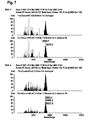
- FIG. 6 shows Maldi-Tof molecular weight determination results of siRNAs prepared by using 3'-PEG-CPG as a starting material, as shown in the example 2 to be described later.
- 3'-PEG-CPG preparation sequence sense 5'-AAGGAGAUCAACAUUUUCA(dTdT)-PEG(6664.96Da + 2000Da) (Sequence ID No. 1) antisense 5'-UGAAAAUGUUGAUCUCCUU(dTdT)-PEG(6592.84Da + 2000Da) (Sequence ID No. 5)
- Maldi-Tof molecular weight has increased by the molecular weight (2000Da) of PEG.
- LCAA-CPG 2000 ⁇
- a solution in which 200mg of the compound C and 55 ⁇ l of triethylamine were dissolved in 2 Ml of pyridine was equally mixed with the LCAA-CPG solution.
- the resultant substance was reacted at 50 ⁇ 60 °C for 8 hours, and then the mixture after completion of reaction was filtered.
- the filtered coupling-CPG was washed with methanol, water, and methylene chloride in that order, followed by vacuum drying.
- FIG. 7 shows results of siRNAs prepared by using 3'-PEG-CPG as a starting material, as shown in the example 2 to be described later.
- 3'-PEG-CPG preparation sequence sense 5'-AAGGAGAUCAACAUUUUCA(dTdT)-PEG(6664.96Da + 2000Da) (Sequence ID No. 1) antisense 5'-UGAAAAUGUUGAUCUCCUU(dTdT)-PEG(6592.84Da + 2000Da) (Sequence ID No. 5)
- Maldi-Tof molecular weight has increased by the molecular weight (2000Da) of PEG.
- survivin siRNA was used in order to suppress survivin.
- the survivin is a protein expressed commonly in most neoplastic tumors or transformed cell lines, tested until now, and thus it is expected to become an important target in anticancer treatment ( Abbrosini G. et al. Nat. Med. 3(8): 917-921, 1997 ).
- a survivin siRNA sequence of the present invention when composed of 19 nucleotides, consists of a sense strand of the Sequence ID No. 1 and an antisense strand having a sequence complementary to the sense strand, and beside this, when composed of 23, 27, or 31 nucleotides, has a base sequence of the Sequence ID No. 2, 3, or 4. (Ssequence ID No.
- the siRNA was prepared by linking phosphordiester bonds building an RNA backbone structure, using ⁇ - cyanoethyl phosphoramidite ( Shina et al. Nucleic Acids Research, 12:4539-4557, 1984 ). Specifically, a series of procedures consisting of deblocking, coupling, oxidation and capping were repeatedly performed on a sold support on which nucleotide was attached, by using an RNA synthesizer (384 Synthesizer, BIONEER, Korea), to obtain the reactant containing a desired length of RNA.
- RNA synthesizer 384 Synthesizer, BIONEER, Korea
- the siRNA-polymer compound conjugate was prepared by linking PEG to a 5'-end region, or hexadecane (C16) or octadecane (C18) saturated hydrocarbon, to the 5'-end region by using a dodecane linker, which is a hydrophobic polymer compound.
- a dodecane linker which is a hydrophobic polymer compound.
- the above-mentioned reaction was performed by using 3'PEG-CPG prepared in the example 1 as a support, to obtain the siRNA-polymer compound conjugate in which PEG was provided to 3'-end region.
- the resultant substance was reacted in a constant temperature bath of 90° C for 3 minutes, and then again reacted at 37° C , to prepare a double-stranded siRNA-polymer compound conjugate.
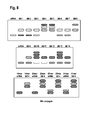
- the prepared siRNA-polymer compound conjugates have structures shown in Table 1. Annealing of the prepared siRNA-polymer compound conjugates was confirmed through electrophoresis photographs ( FIG. 8 ).
- Example 3 Evaluation on stability of siRNA-polymer compound conjugates in vivo conditions
- siRNA-polymer compound conjugates prepared and separated in the Example 2 have improved stability compared with a naked siRNA in which none of polymer compound is bound.
- the naked siRNA without modification and the siRNA-polymer compound conjugates 1 to 5 prepared in the Example 2 were incubated for 0, 1, 3, 6, 9, 12, 24, 36, or 48 hours, in a culture medium containing 10% fetal bovine serum (FBS), which imitates in vivo conditions, and then the degrees to which the siRNA was degraded were evaluated by using electrophoresis.
- FBS fetal bovine serum
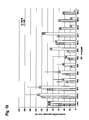
- siRNA-polymer compound conjugates having PEG introduced therein exhibited siRNA stability for up to 48 hours ( FIG. 9 ).
- the siRNA stability was exhibited for 12 hours to 24 hours even under the condition of 100% serum.
- a nanoparticle consisting of siRNA-polymer compound conjugates that is to say, a micelle is formed by hydrophobic interaction between hydrophobic polymer compounds provided at ends of the siRNAs ( FIG. 10 ).
- the sizes of the nanoparticles were measured using a zeta-potential measuring instrument.
- the sizes of nanoparticles consisting of the respective siRNA-polymer compound conjugates 9 to 13 prepared in the Example 2, and siRNAs were measured.
- siRNA and the siRNA-polymer compound conjugates were dissolved in 1 Ml of distilled water, and then the nanoparticles thereof was homogenized (200W, 40 kHz, 5 sec) by using an ultrasonic homogenizer (Wiseclean, DAIHAN, Korean).
- the sizes of the homogenized nanoparticles were measured by using the zeta-potential measuring instrument (Nano-ZS, MALVERN, UK).
- the refractive index and absorption index for materials were set to 1.454 and 0.001, respectively, and the temperature of water as a solvent, 25° C , was input, and the viscosity and refractive index thereof were input.
- a one-time measurement consists of 20 repetitive size measurements, and this measurement was performed three times.
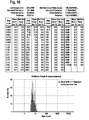
- FIG. 11 shows size results of naked siRNA nanoparticles, measured by the zeta-potential measuring instrument. It showed that sizes of 142 ⁇ 295nm (maximum point: 164nm) account for 73.5% of total nanoparticles each consisting of siRNAs.
- FIG. 12 shows size results of nanoparticles each consisting of siRNA-polymer compound conjugate 9, measured by the zeta-potential measuring instrument. It showed that sizes of 4.19 ⁇ 7.53nm (maximum point: 6.50nm) account for 59.1% of total nanoparticles each consisting of siRNA-polymer compound conjugate 9.
- FIG. 13 shows size results of nanoparticles each consisting of siRNA-polymer compound conjugate 10, measured by the zeta-potential measuring instrument. It showed that sizes of 5.61 ⁇ 10.1nm (maximum point: 8.72nm) account for 58.9% of total nanoparticles each consisting of siRNA-polymer compound conjugate 10.
- FIG. 14 shows size results of nanoparticles each consisting of siRNA-polymer compound conjugate 11, measured by the zeta-potential measuring instrument. It showed that sizes of 5.61 ⁇ 10.1nm (maximum point: 8.72nm) account for 45.6% of total nanoparticles each consisting of siRNA-polymer compound conjugate 11.
- FIG. 15 shows size results of nanoparticles each consisting of siRNA-polymer compound conjugate 12, measured by the zeta-potential measuring instrument. It showed that sizes of 4.85 ⁇ 5.61nm account for 23.6%, sizes of 21.0 ⁇ 32.7nm accounts for 23.5%, and sizes of 68.1 ⁇ 78.8nm accounts for 23.1% of total nanoparticles each consisting of siRNA-polymer compound conjugate 12.
- FIG. 16 shows size results of nanoparticles each consisting of siRNA-polymer compound conjugate 13, measured by the zeta-potential measuring instrument. It showed that sizes of 4.85 ⁇ 8.72nm (the maximum point: 5.61nm) account for 84.6% of total nanoparticles each consisting of siRNA-polymer compound conjugate 13.
- the sizes of the nanoparticles were mostly 4 ⁇ 8nm.
- the sizes of nanoparticles were variously measured, the reason of which is considered that respective nanoparticles aggregated as time passes during the measuring process, even though homogenization is performed using the ultrasonic homogenizer.
- the measured sizes of nanoparticles each consisting of siRNA conjugates exhibit 100nm or less, which are sufficient sizes to be endocytosed into cells through pinocytosis ( Kenneth A. Dawson et al. nature nanotechnology 4:84-85, 2009 ).
- Example 5 Inhibition of expression of target genes in tumor cell lines by using siRNA-polymer compound conjugates with transfection reagents
- Human cervical cancer cell lines which are tumor cell lines, were respectively transfected with siRNA-polymer compound conjugates 1 to 8 prepared in the Example 2, and expression levels of survivin gene in the transfected tumor cell lines were analyzed.
- HeLa Human cervical cancer cells
- ATCC American Type Culture Collection
- RPMI 1640 culture medium GIBCO, Invitrogen, USA
- 10%(v/v) fetal bovine serum, penicillin 100 units/ Ml , and streptomycin 100 ⁇ g/Ml were added at 37°C under the condition of 5%(v/v) CO 2 .
- Example 5-2 Inhibition of expression of target gene by using siRNA-polymer compound conjugates
- HeLa tumor cell lines were transfected with siRNA-polymer compound conjugates 1 to 8 of Sequence ID No. 1, prepared in the Example 2, and expression of survivin genes in the transfected tumor cell lines were analyzed.
- Example 5-2-1 Transfection of tumor cell lines by using siRNA-polymer compound conjugates
- Example 5-1 1.3 ⁇ 10 5 tumor cell lines cultured in the Example 5-1 were cultured in the RPMI 1640 medium within a 6-well plate at 37°C for 18 hours under the condition of 5%(v/v) CO 2 , followed by removal of the medium, and then 800 ⁇ l of the Opti-MEM medium (GIBCO, USA) was dispensed for each well.
- the transfection solution was dispensed to each of the wells in which the Opti-MEM medium had been dispersed, and the tumor cells were cultured for 6 hours, followed by removal of the Opti-MEM medium.
- 2.5 Ml of the RPMI 1640 culture medium is dispensed thereto, and then the tumor cells were cultured at 37°C under the condition of 5%(v/v) CO 2 for 24 hours.
- Total RNA was extracted from the cell line transfected in the example 5-2-1 to prepare cDNA, and then the quantity of the survivin gene mRNA was relatively quantitated through the realtime PCR.
- Example 5-2-2-1 Separation of RNA and preparation of cDNA from the transfected cells
- RNA was extracted from the cell line transfected in the example 5-2-1 by using an RNA extraction kit (AccuPrep Cell total RNA extraction kit, BIONEER, Korea), and cDNA was prepared from the extracted RNA by using an RNA reverse transcriptase (AccuPower CycleScript RT Premix/dT 20 , BIONEER, Korea), as follows.
- RNA-primer hybridization 30 °C for 1 minute and synthesis of cDNA at 52 °C for 4 minutes were repeated six times. Then inactivation of enzyme was performed at 95 °C for 5 minutes to finish the amplification reaction.
- Example 5-2-2-2 Relative quantitative analysis of survivin gene mRNA
- the relative quantity of the survivin mRNA was quantitated through the realtime PCR by using the cDNA prepared in the example 5-2-2-1 as a template as follows.
- the cDNA prepared in the example 5-2-2-1 was 1/5-diluted with the distilled water in each well of a 96-well plate, and then 3 ⁇ l of the diluted cDNA, 10 ⁇ l of 2x GreenStar TM PCR master mix (BIONEER, Korea), 6 ⁇ l of distilled water, and 1 ⁇ l of survivin qPCR primer (10pmole/ ⁇ l each, BIONEER, Korea) were input to prepare a mixture liquid in order to analyze the survivin expression level.
- HMBS Hydroxymethylbilane synthase
- HPRT1 Hydroxanthine phosphoribosyl-transferase1
- UBC Ubiquitin C
- YWHAZ Tyrosine 3-monooxygenase/tryptophan 5-monooxygenase activation protein, zeta polypeptide
- HK genes housekeeping genes
- the cDNA prepared in the example 5-2-2-1 was 1/5-diluted, and then 3 ⁇ l of the diluted cDNA, 10 ⁇ l of 2 ⁇ GreenStar TM PCR master mix (BIONEER, Korea), 6 ⁇ l of distilled water, and 1 ⁇ l of qPCR primer of each HK gene (10pmole/ ⁇ l each, BIONEER, Korea) were input to prepare a HK gene realtime PCR mixture liquid in each well of the
- Enzyme activation and secondary structure of cDNA were removed by the reaction at 95 °C for 15 minutes. Then, four steps of denaturing at 94 °C for 30 seconds, annealing at 58 °C for 30 seconds, extension at 72 °C for 30 seconds, and SYBR green scan, were repetitively performed 42 times, and then the final extension at 72 °C for 3 minutes was performed. Then, the temperature was kept at 55 °C for 1 minute, and a melting curve of 55 °C ⁇ 95 °C was analyzed.
- the survivin Ct (threshold cycle) values obtained respectively were corrected by using the mRNA values (normalization factor, NF) normalized through the HK genes, and then ⁇ Ct values were obtained between the Ct value of a control group treated with only a transfection reagent and the corrected Ct values.
- the expression rates of survivin mRNA were compared with one another by using the ⁇ Ct values and the calculation equation of 2 (- ⁇ Ct) X100 ( FIG. 17 ).
- mock means the control group treated with only the transfection reagent.
- RNAi effect of the siRNA was varied depending on end modification types of the siRNA-polymer compound conjugates in which PEG, the hydrophilic polymer compound was conjugated.
- the conjugates 6 to 8 each having the end modification type in which PEG was conjugated to the 3'-end region, exhibited expression-inhibiting degrees similar to that of the naked siRNA. Therefore, the conjugates 6 to 8 are expected to have a little steric hindrance in forming a complex with an RNA-induced silencing complex (RISC) on the RNAi mechanism of the siRNA.
- RISC RNA-induced silencing complex
- siRNA-PEG conjugates exhibited higher inhibition of target gene mRNA expression in a low concentration (20nM) treatment condition than in a high concentration (100nM) treatment condition, and thus it is expected that siRNA is prevented from being bound with the RISC due to the PEG as the concentration condition of the siRNA-PEG conjugate is higher.
- Example 5-3 Inhibition of expression of target gene by using long-sequence siRNA-polymer compound conjugates
- siRNA-hydrophilic polymer compound conjugates When the cells were transfected with siRNA-hydrophilic polymer compound conjugates together with a transfection reagent, inhibition of target gene mRNA expression was anaylzed.
- siRNAs in which end modification into the structure of siRNA-polymer compound conjugate 4 was induced for each base sequence of siRNA Sequence ID No. 1 to 4, were used.
- Example 5-3-1 Transfection of tumor cell lines by using siRNA-polymer compound conjugates
- Example 5-1 1.3 ⁇ 10 5 tumor cell lines cultured in the Example 5-1 were cultured in the RPMI 1640 medium within a 6-well plate at 37°C for 24 hours under the condition of 5%(v/v) CO 2 , followed by removal of the medium, and then 800 ⁇ l of the Opti-MEM medium was dispensed for each well.
- a transfection solution was dispensed to each of the wells in which the Opti-MEM medium had been dispersed, and the tumor cells were cultured for 6 hours, followed by removal of the Opti-MEM medium.
- 2.5 Ml of the RPMI 1640 culture medium is dispensed thereto, and then the tumor cells were cultured at 37 °C under the condition of 5%(v/v) CO 2 for 24 hours.
- RNA was extracted from the cell line transfected in the example 5-3-1 to prepare cDNA, and then the quantity of survivin gene mRNA was relatively quantitated through the real-time PCR.
- Example 5-3-2-1 Separation of RNA and preparation of cDNA from the transfected cells
- RNA was extracted from the cell line transfected in the example 5-3-1 by using an RNA extraction kit (AccuPrep Cell total RNA extraction kit, BIONEER, Korea), and cDNA was prepared from the extracted RNA by using an RNA reverse transcriptase (AccuPower CycleScript RT Premix/dT 20 , BIONEER, Korea), as follows.
- RNA-primer hybridization 30 °C for 1 minute and preparation of cDNA at 52 °C for 4 minutes were repeated six times. Then inactivation of enzyme was performed at 95 °C for 5 minutes to finish the amplification reaction.
- the relative quantity of the survivin gene mRNA was quantitated through the realtime PCR by using the cDNA prepared in the example 5-3-2-1 as a template as follows.
- the cDNA prepared in the example 5-3-2-1 was 1/5-diluted in each well of a 96-well plate, and then 3 ⁇ l of the diluted cDNA, 10 ⁇ l of 2 ⁇ GreenStarTM PCR master mix (BIONEER, Korea), 6 ⁇ l of distilled water, and 1 ⁇ l of survivin qPCR primer (10pmole/ ⁇ l each, BIONEER, Korea) were input to prepare a mixture liquid in order to analyze the survivin expression level.
- the cDNA prepared in the example 5-3-2-1 was 1/5-diluted, and then 3 ⁇ l of the diluted cDNA, 10 ⁇ l of 2 ⁇ GreenStar TM PCR master mix (BIONEER, Korea), 6 ⁇ l of distilled water, and 1 ⁇ l of qPCR primer of each HK gene (10pmole/ ⁇ l each, BIONEER, Korea) were input to prepare a HK gene realtime PCR mixture liquid in each well of the 96-well plate. The following reaction was performed on the 96-well plate containing the mixture liquid by using an ExicyclerTM 96 Real-Time Quantitative Thermal Block (BIONEER, Korea).
- Enzyme activation and secondary structure of cDNA were removed by the reaction at 95 °C for 15 minutes. Then, four steps of denaturing at 94 °C for 30 seconds, annealing at 58 °C for 30 seconds, extension at 72 °C for 30 seconds, and SYBR green scan were repetitively performed 42 times, and then the final extension at 72 °C for 3 minutes was performed. Then the temperature was kept at 55 °C for 1 minute, and a melting curve of 55 °C ⁇ 95 °C was analyzed.
- the survivin Ct (threshold cycle) values obtained respectively were corrected by using the mRNA values (normalization factor, NF) normalized through the HK genes, and then ⁇ Ct values were obtained between the Ct value of a control group treated with only the transfection reagent and the corrected Ct values.
- the expression rates of survivin mRNA were compared with one another by using the ⁇ Ct values and the calculation equation of 2 (- ⁇ Ct) X100 ( FIG. 18 ).
- mock means the control group treated with only the transfection reagent
- 19mer, 23mer, 27mer, and 31mer represent Sequence ID No. 1 to 4, respectively.
- 5'P+P represents a structure of the siRNA-polymer compound conjugate 4.
- the cells were treated with 20nM and 100nM respectively, and the inhibition degrees of the target gene expression were compared with one another.
- the long-chain naked siRNAs transformed in the form of siRNA-polymer compound conjugate 4 exhibited less difference in inhibition of the target gene mRNA expression, compared with the naked siRNA. Therefore, it could be found that the transformed long-chain siRNA decreases the steric hindrance phenomenon due to PEG compared with a shot chain.
- the siRNA in a case of the long-chain siRNA, the siRNA is cleaved in a structure of 19+2 by a dicer in an operation mechanism of RNAi, and the cleaved siRNA is bound to an RISC complex to cause the operation mechanism of RNAi.
- the long-chain siRNA in which PEG is provided at both end regions, causes existence of a large quantity of siRNAs without PEG attachment, and thus has a relatively high interaction with the RISC complex, compared with the Sequence ID No. 1, which is believed to maintain the RNAi induction effect.
- Example 6 Inhibition of expression of target gene in tumor cell lines by using only siRNA-polymer compound conjugates without transfection reagents
- HeLa tumor cell lines were transfected with siRNA-polymer compound conjugates 1 to 14 prepared in the Example 2, and expression of survivin genes of the transfected tumor cell lines was analyzed.
- Example 6-1 Culture of tumor cell lines
- HeLa Human uterine cancer cells
- ATCC American Type Culture Collection
- RPMI 1640 culture medium GIBCO/Invitrogen, USA
- 10%(v/v) fetal bovine serum, penicillin 100units/ Ml, and streptomycin 100 ⁇ g/Ml were added, at 37°C under the conditions of 5%(v/v) CO 2 .
- Example 6-2 Transfection of tumor cell lines by using siRNA-polymer compound conjugates
- Example 6-1 1.3 ⁇ 10 5 tumor cell lines cultured in the Example 6-1 were cultured in the RPMI 1640 medium in a 6-well plate at 37°C for 24 hours under the condition of 5 %(v/v) CO 2 , followed by removal of the medium, and then 900 ⁇ l of the Opti-MEM medium was dispensed for each well.
- Opti-MEM medium 100 ⁇ l of the Opti-MEM medium, 5 or 10 ⁇ l of the respective siRNA-polymer compound conjugates 9 to 14 (1nmole/ ⁇ l ) prepared in the example 2 were added thereto (finally treated 500nM or 1 ⁇ M) , and micelles consisting of siRNA-hydrophobic polymer compound conjugates were homogenized through sonication by high frequency sounds, to prepare the solution.
- the transfection solution was dispensed to each of the wells in which the Opti-MEM medium had been dispersed, and the tumor cells were cultured for 24 hours, followed by addition of 1 Ml of RPMI 1640 medium containing 20% FBS.
- the cells were further cultured at 37°C for 24 hours under the condition of 5%(v/v) CO 2 , treated with siRNA-polymer compound conjugates, and then cultured for total 48 hours.
- Example 6-3 Relative quantitative analysis of survivin gene mRNA
- RNA was extracted from the cell line transfected in the example 6-2 to prepare cDNA, and then the quantity of survivin gene mRNA was relatively quantitated through the real-time PCR.
- Example 6-3-1 Separation of RNA and preparation of cDNA from the transfected cells
- RNA was extracted from the cell line transfected in the example 6-2 by using an RNA extraction kit (AccuPrep Cell total RNA extraction kit, BIONEER, Korea), and cDNA was prepared from the extracted RNA by using an RNA reverse transcriptase (AccuPower CycleScript RT Premix/dT 20 , BIONEER, Korea), as follows.
- RNA-primer hybridization 30 °C for 1 minute and preparation of cDNA at 52 °C for 4 minutes were repeated six times. Then inactivation of enzyme was performed at 95 °C for 5 minutes to finish the amplification reaction.
- the relative quantity of survivin gene mRNA was quantitated through the realtime PCR by using the cDNA prepared in the example 6-3-1 as a template as follows.
- the cDNA prepared in the example 6-3-1 was 1/5-diluted in each well of a 96-well plate, and then 3 ⁇ l of the diluted cDNA, 10 ⁇ l of 2 ⁇ GreenStarTM PCR master mix(BIONEER, Korea), 6 ⁇ l of distilled water, and 1 ⁇ l of survivin qPCR primer(10pmole/ ⁇ l each, BIONEER, Korea) were used to prepare a mixture liquid in order to analyze the survivin expression level.
- HMBS Hydroxymethyl-bilane synthase
- HPRT1 Hydroxanthine phosphoribosyl-transferase1
- UBC Ubiquitin C
- YWHAZ Tyrosine 3-monooxygenase/tryptophan 5-monooxygenase activation protein, zeta polypeptide
- HK genes housekeeping genes
- the cDNA prepared in the example 6-3-1 was 1/5-diluted, and then 3 ⁇ l of the diluted cDNA, 10 ⁇ l of 2 ⁇ GreenStarTM PCR master mix (BIONEER, Korea), 6 ⁇ l of distilled water, and 1 ⁇ l of qPCR primer of each HK gene (10pmole/ ⁇ l each, BIONEER, Korea) were input to prepare a HK gene realtime PCR mixture liquid in each well of the 96
- Enzyme activation and secondary structure of cDNA were removed by the reaction at 95 °C for 15 minutes. Then, four steps of denaturing at 94 °C for 30 seconds, annealing at 58°C for 30 seconds, extension at 72 °C for 30 seconds, and SYBR green scan were repetitively performed 42 times, and then the final extension at 72 °C for 3 minutes was performed. Then the temperature was kept at 55 °C for 1 minute, and a melting curve of 55 °C ⁇ 95 °C was analyzed.
- the survivin Ct (threshold cycle) values obtained respectively were corrected by using the mRNA values (normalization factor, NF) normalized through the HK genes, and then ⁇ Ct value was obtained between the Ct value of a control group treated with only the transfection reagent and the corrected Ct values.
- the expression rates of survivin mRNA were compared with one another by using the ⁇ Ct values and the calculation equation of 2 (- ⁇ ct) X 100 ( FIG. 19 ).
- the siRNA PEG conjugates of the conjugates 2 to 5 highly inhibit the survivin mRNA level, compared with the siRNA-polymer compound conjugate 1, unlike the result of the case in which transfection was performed through the transfection reagent.
- the siRNA-polymer compound conjugates 1 to 5 exhibited higher RNAi effect in a low concentration (500nM) than in a high concentration.
- the siRNA-hydrophobic polymer compound conjugates of the conjugates 9 to 14 exhibited a lower inhibition of the survivin mRNA expression level, compared with the siRNA conjugates 1 to 5, when treated at the same concentration (500nM).
- the high concentration condition (1uM) particularly the end modification of the siRNA-polymer compound conjugate 14 leads to high inhibition effect of the survivin mRNA expression level.
Landscapes
- Health & Medical Sciences (AREA)
- Chemical & Material Sciences (AREA)
- Life Sciences & Earth Sciences (AREA)
- Engineering & Computer Science (AREA)
- Genetics & Genomics (AREA)
- Organic Chemistry (AREA)
- Molecular Biology (AREA)
- Biomedical Technology (AREA)
- General Health & Medical Sciences (AREA)
- Biotechnology (AREA)
- Bioinformatics & Cheminformatics (AREA)
- Biochemistry (AREA)
- Wood Science & Technology (AREA)
- Zoology (AREA)
- General Engineering & Computer Science (AREA)
- Medicinal Chemistry (AREA)
- Public Health (AREA)
- Veterinary Medicine (AREA)
- Pharmacology & Pharmacy (AREA)
- Animal Behavior & Ethology (AREA)
- Biophysics (AREA)
- Plant Pathology (AREA)
- Microbiology (AREA)
- Physics & Mathematics (AREA)
- General Chemical & Material Sciences (AREA)
- Chemical Kinetics & Catalysis (AREA)
- Epidemiology (AREA)
- Nuclear Medicine, Radiotherapy & Molecular Imaging (AREA)
- Oncology (AREA)
- Communicable Diseases (AREA)
- Dispersion Chemistry (AREA)
- Polymers & Plastics (AREA)
- Virology (AREA)
- Pharmaceuticals Containing Other Organic And Inorganic Compounds (AREA)
- Medicinal Preparation (AREA)
- Medicines That Contain Protein Lipid Enzymes And Other Medicines (AREA)
- Other Resins Obtained By Reactions Not Involving Carbon-To-Carbon Unsaturated Bonds (AREA)
- Apparatus Associated With Microorganisms And Enzymes (AREA)
- Polyethers (AREA)
Applications Claiming Priority (2)
| Application Number | Priority Date | Filing Date | Title |
|---|---|---|---|
| KR1020090042297A KR101224828B1 (ko) | 2009-05-14 | 2009-05-14 | siRNA 접합체 및 그 제조방법 |
| EP10775118.2A EP2463371B1 (fr) | 2009-05-14 | 2010-05-13 | Conjugué et son procédé de préparation sirna |
Related Parent Applications (2)
| Application Number | Title | Priority Date | Filing Date |
|---|---|---|---|
| EP10775118.2A Division-Into EP2463371B1 (fr) | 2009-05-14 | 2010-05-13 | Conjugué et son procédé de préparation sirna |
| EP10775118.2 Division | 2010-05-13 |
Publications (2)
| Publication Number | Publication Date |
|---|---|
| EP2626427A2 true EP2626427A2 (fr) | 2013-08-14 |
| EP2626427A3 EP2626427A3 (fr) | 2013-08-21 |
Family
ID=43085466
Family Applications (3)
| Application Number | Title | Priority Date | Filing Date |
|---|---|---|---|
| EP13159602.5A Withdrawn EP2626427A3 (fr) | 2009-05-14 | 2010-05-13 | Conjugué et son procédé de preparation sirna |
| EP10775118.2A Active EP2463371B1 (fr) | 2009-05-14 | 2010-05-13 | Conjugué et son procédé de préparation sirna |
| EP13185358.2A Active EP2682466B1 (fr) | 2009-05-14 | 2010-05-13 | Conjugué et son procédé de préparation siRNA |
Family Applications After (2)
| Application Number | Title | Priority Date | Filing Date |
|---|---|---|---|
| EP10775118.2A Active EP2463371B1 (fr) | 2009-05-14 | 2010-05-13 | Conjugué et son procédé de préparation sirna |
| EP13185358.2A Active EP2682466B1 (fr) | 2009-05-14 | 2010-05-13 | Conjugué et son procédé de préparation siRNA |
Country Status (10)
| Country | Link |
|---|---|
| US (4) | US8779114B2 (fr) |
| EP (3) | EP2626427A3 (fr) |
| JP (3) | JP5758381B2 (fr) |
| KR (1) | KR101224828B1 (fr) |
| CN (3) | CN102439148B (fr) |
| AU (1) | AU2010248239B2 (fr) |
| BR (1) | BRPI1012141B1 (fr) |
| CA (2) | CA2761749C (fr) |
| RU (2) | RU2558258C2 (fr) |
| WO (1) | WO2010131916A2 (fr) |
Families Citing this family (45)
| Publication number | Priority date | Publication date | Assignee | Title |
|---|---|---|---|---|
| KR101224828B1 (ko) | 2009-05-14 | 2013-01-22 | (주)바이오니아 | siRNA 접합체 및 그 제조방법 |
| WO2013089522A1 (fr) * | 2011-12-15 | 2013-06-20 | (주)바이오니아 | Nouveaux conjugués oligonucléotidiques et leur utilisation |
| KR101722948B1 (ko) * | 2012-01-05 | 2017-04-04 | (주)바이오니아 | 리간드가 결합된 이중나선 올리고 rna 구조체 및 그 제조방법 |
| JP6060178B2 (ja) * | 2012-01-05 | 2017-01-18 | バイオニア コーポレーションBioneer Corporation | 高効率のナノ粒子型二本鎖オリゴrna構造体およびその製造方法 |
| US9649388B2 (en) * | 2012-01-18 | 2017-05-16 | Bioneer Corporation | Magnetic nanoparticle-samirna complex and method for preparing same |
| EP2812091B1 (fr) | 2012-09-17 | 2021-03-10 | W.R. Grace & CO. - CONN. | Milieu de chromatographie et dispositifs associés |
| KR20150064065A (ko) * | 2012-10-05 | 2015-06-10 | (주)바이오니아 | 엠피레귤린 특이적 이중 나선 올리고 rna, 그러한 이중나선 올리고 rna 를 포함하는 이중나선 올리고 rna 구조체 및 이를 포함하는 호흡기 질환의 예방 또는 치료용 조성물 |
| JP6446269B2 (ja) * | 2012-12-06 | 2018-12-26 | 協和発酵バイオ株式会社 | アジュバント用二重鎖リボ核酸 |
| CN110592082A (zh) * | 2013-07-05 | 2019-12-20 | 柏业公司 | 呼吸疾病相关基因特异性siRNA、含有siRNA的双螺旋寡RNA结构及其用途 |
| CN105705639A (zh) * | 2013-07-05 | 2016-06-22 | 柏业公司 | 登革病毒相关的基因特异性siRNA、包含该siRNA的双链寡RNA分子、和包含它们的用于抑制登革病毒复制的组合物 |
| BR112016000160B1 (pt) | 2013-07-05 | 2021-06-08 | Bioneer Corporation | estrutura de oligonucleotídeo tipo nanopartícula melhorada tendo alta eficiência e método para a preparação da mesma |
| KR20150006743A (ko) * | 2013-07-09 | 2015-01-19 | (주)바이오니아 | 간암 연관 유전자 특이적 siRNA, 그러한 siRNA를 포함하는 이중나선 올리고 RNA 구조체 및 이를 포함하는 암 예방 또는 치료용 조성물 |
| KR20150006742A (ko) * | 2013-07-09 | 2015-01-19 | (주)바이오니아 | 간암 연관 유전자 특이적 siRNA, 그러한 siRNA를 포함하는 이중나선 올리고 RNA 구조체 및 이를 포함하는 암 예방 또는 치료용 조성물 |
| EP3128008B1 (fr) * | 2014-04-04 | 2024-05-29 | Bioneer Corporation | Oligo-arn à double brin et composition pharmaceutique le comprenant pour la prévention ou le traitement de la fibrose ou de maladies respiratoires |
| PL3137209T3 (pl) | 2014-05-02 | 2023-01-02 | W.R. Grace & Co. - Conn. | Funkcjonalizowany materiał nośnikowy i sposoby wytwarzania oraz stosowania funkcjonalizowanego materiału nośnikowego |
| WO2016061310A2 (fr) * | 2014-10-15 | 2016-04-21 | University Of Connecticut | Copolymères séquencés à cristaux liquides auto-assemblés, bio-réductibles, destinés à l'administration médicamenteuse |
| KR102566292B1 (ko) | 2015-06-05 | 2023-08-10 | 더블유.알. 그레이스 앤드 캄파니-콘. | 흡착성 바이오프로세싱 정화제와 이의 제조 및 사용 방법 |
| WO2016204515A1 (fr) * | 2015-06-15 | 2016-12-22 | (주)바이오니아 | Arnsi spécifique d'un gène, structure d'oligo-arn à double hélice comprenant un arnsi, composition contenant ceux-ci, et utilisation de ceux-ci |
| KR101861738B1 (ko) | 2016-08-24 | 2018-05-29 | (주)바이오니아 | 마이크로 rna를 포함하는 이중나선 올리고 rna 구조체 |
| KR20190123351A (ko) * | 2017-03-22 | 2019-10-31 | 더 리젠츠 오브 더 유니버시티 오브 캘리포니아 | 개질된 올리고뉴클레오티드 및 이의 치료 용도 |
| CA3083970A1 (fr) * | 2017-12-01 | 2019-06-06 | Suzhou Ribo Life Science Co., Ltd. | Acide nucleique, composition et conjugue en contenant, et procede de preparation et utilisation |
| DK3719128T3 (da) | 2017-12-01 | 2025-03-03 | Suzhou Ribo Life Science Co Ltd | Dobbelt-strenget oligonukleotid, sammensætning og konjugat bestaende dobbelt-strenget oligonukleotid, fremgangsmåde herfor og anvendelse heraf |
| EP3719126B1 (fr) | 2017-12-01 | 2025-01-01 | Suzhou Ribo Life Science Co., Ltd. | Acide nucléique, composition et conjugué contenant un acide nucléique, procédé de préparation et utilisation associés |
| CN110944675B9 (zh) | 2017-12-01 | 2024-08-09 | 苏州瑞博生物技术股份有限公司 | 一种核酸、含有该核酸的组合物与缀合物及制备方法和用途 |
| EP3719127A4 (fr) | 2017-12-01 | 2021-10-20 | Suzhou Ribo Life Science Co., Ltd. | Acide nucléique, composition et conjugué le contenant, procédé de préparation et utilisation |
| AU2018394875B2 (en) | 2017-12-29 | 2023-08-03 | Suzhou Ribo Life Science Co., Ltd. | Conjugates and preparation and use thereof |
| KR102141124B1 (ko) * | 2018-01-30 | 2020-08-04 | (주)바이오니아 | 이중 가닥 miRNA를 포함하는 이중나선 올리고뉴클레오타이드 구조체 및 이의 용도 |
| KR102746742B1 (ko) | 2018-05-25 | 2024-12-26 | (주)바이오니아 | 엠피레귤린 유전자 특이적 이중가닥 올리고뉴클레오티드 및 이를 포함하는 섬유증 관련 질환 및 호흡기 관련 질환 예방 및 치료용 조성물 |
| WO2020038377A1 (fr) | 2018-08-21 | 2020-02-27 | 苏州瑞博生物技术有限公司 | Acide nucléique, composition et conjugué contenant un acide nucléique et leur procédé d'utilisation |
| US11896674B2 (en) | 2018-09-30 | 2024-02-13 | Suzhou Ribo Life Science Co., Ltd. | SiRNA conjugate, preparation method therefor and use thereof |
| KR102473989B1 (ko) | 2018-11-28 | 2022-12-07 | (주)바이오니아 | 안드로젠 수용체 특이적 서열을 포함하는 이중나선 올리고뉴클레오티드 구조체, 및 이를 포함하는 탈모 예방 및 발모용 조성물 |
| WO2020135673A1 (fr) | 2018-12-28 | 2020-07-02 | 苏州瑞博生物技术有限公司 | Acide nucléique, composition et conjugué contenant un acide nucléique, procédé de préparation et utilisation associés |
| WO2020149644A1 (fr) | 2019-01-15 | 2020-07-23 | (주)바이오니아 | Oligonucléotide double brin ciblant le gène dkk1, construction comprenant cet oligonucléotide et composition pour prévenir la chute des cheveux ou favoriser la pousse des cheveux contenant cette construction |
| AU2020280439B2 (en) | 2019-05-22 | 2025-08-14 | Suzhou Ribo Life Science Co., Ltd. | Nucleic acid, pharmaceutical composition, conjugate, preparation method, and use |
| US12590304B2 (en) | 2019-05-22 | 2026-03-31 | Suzhou Ribo Life Science Co., Ltd. | Nucleic acid, pharmaceutical composition, conjugate, preparation method, and use |
| KR20220011689A (ko) | 2019-05-22 | 2022-01-28 | 쑤저우 리보 라이프 사이언스 컴퍼니, 리미티드 | 핵산, 약제학적 조성물, 접합체, 제조 방법, 및 용도 |
| CN113795582B (zh) | 2019-05-24 | 2024-05-24 | 苏州瑞博生物技术股份有限公司 | 核酸、药物组合物与缀合物及制备方法和用途 |
| KR102757180B1 (ko) | 2019-11-22 | 2025-01-21 | (주)바이오니아 | Ctgf 유전자 특이적 이중가닥 올리고뉴클레오티드 및 이를 포함하는 섬유증 관련 질환 및 호흡기 관련 질환 예방 및 치료용 조성물 |
| EP4151236A4 (fr) | 2020-05-14 | 2024-06-26 | Bioneer Corporation | Composition pour prévenir ou traiter une maladie associée à l'obésité contenant une structure oligonucléotidique bicaténaire spécifique à l'amphiréguline |
| AU2021275643A1 (en) | 2020-05-22 | 2022-12-15 | Bioneer Corporation | Double-stranded oligonucleotide and composition for treating covid-19 containing same |
| KR102272800B1 (ko) | 2020-06-30 | 2021-07-05 | 국방과학연구소 | 코로나바이러스 특이적 이중가닥 올리고뉴클레오티드 및 이를 포함하는 코로나바이러스 감염증-19 예방 및 치료용 조성물 |
| WO2022182188A1 (fr) | 2021-02-25 | 2022-09-01 | (주)바이오니아 | Composition destinée à atténuer le grisonnement des cheveux, à favoriser la pousse des cheveux et/ou à prévenir ou à atténuer la chute des cheveux, comprenant un miarn double brin en tant que principe actif |
| CA3210813A1 (fr) | 2021-03-08 | 2022-09-15 | Han-Oh Park | Composition pour l'administration de structures oligonucleotidiques bicatenaires a l'aide d'un nebuliseur a ultrasons pour la prevention ou le traitement d'une infection virale respiratoire, y compris la covid-19, de la fibrose pulmonaire provoquee par une infection virale, ou de maladies respiratoire |
| CR20250257A (es) | 2022-12-02 | 2025-08-28 | Shanghai Argo Biopharmaceutical Co Ltd | Análogos de ácidos nucleicos bicíclicos abásicos y compuestos oligoméricos preparados a partir de estos |
| CN115747220A (zh) * | 2022-12-04 | 2023-03-07 | 山西医科大学第二医院 | 主动靶向型阳离子碳点携载Survivin siRNA递送系统及其应用 |
Family Cites Families (17)
| Publication number | Priority date | Publication date | Assignee | Title |
|---|---|---|---|---|
| US5451463A (en) * | 1989-08-28 | 1995-09-19 | Clontech Laboratories, Inc. | Non-nucleoside 1,3-diol reagents for labeling synthetic oligonucleotides |
| US5141813A (en) * | 1989-08-28 | 1992-08-25 | Clontech Laboratories, Inc. | Multifunctional controlled pore glass reagent for solid phase oligonucleotide synthesis |
| US6221959B1 (en) | 1994-11-18 | 2001-04-24 | Supratek Pharma, Inc. | Polynucleotide compositions |
| US6348583B1 (en) * | 1999-08-30 | 2002-02-19 | Bio-Rad Laboratories, Inc. | Poly(ether-thioether), poly(ether-sulfoxide) and poly(ether-sulfone) nucleic acids |
| US7491805B2 (en) * | 2001-05-18 | 2009-02-17 | Sirna Therapeutics, Inc. | Conjugates and compositions for cellular delivery |
| AU2003295600A1 (en) | 2002-11-14 | 2004-06-15 | Dharmacon, Inc. | Functional and hyperfunctional sirna |
| US8324365B2 (en) * | 2003-04-03 | 2012-12-04 | Korea Advanced Institute Of Science And Technology | Conjugate for gene transfer comprising oligonucleotide and hydrophilic polymer, polyelectrolyte complex micelles formed from the conjugate, and methods for preparation thereof |
| US7851615B2 (en) * | 2003-04-17 | 2010-12-14 | Alnylam Pharmaceuticals, Inc. | Lipophilic conjugated iRNA agents |
| JP4579911B2 (ja) * | 2003-06-03 | 2010-11-10 | アイシス・ファーマシューティカルズ・インコーポレイテッド | スルビビン発現の調節 |
| KR101147147B1 (ko) * | 2004-04-01 | 2012-05-25 | 머크 샤프 앤드 돔 코포레이션 | Rna 간섭의 오프 타겟 효과 감소를 위한 변형된폴리뉴클레오타이드 |
| CA2619533C (fr) | 2005-08-17 | 2014-02-04 | Bioneer Corporation | Conjugues siarn-polymeres hydrophiles pour l'administration intracellulaire de petits arn interferents et methode associee |
| CN101346393B (zh) | 2005-11-02 | 2015-07-22 | 普洛体维生物治疗公司 | 修饰的siRNA分子及其应用 |
| EP2046954A2 (fr) * | 2006-07-31 | 2009-04-15 | Curevac GmbH | Acide nucléique de formule (i): gixmgn, ou(ii): cixmcn, en particulier en tant qu'agent/adjuvant immunostimulant |
| EP2025348A1 (fr) * | 2007-08-13 | 2009-02-18 | Max-Planck-Gesellschaft zur Förderung der Wissenschaften e.V. | Micelles ciblées de copolymère séquencé |
| EP2195428B1 (fr) * | 2007-09-19 | 2013-12-11 | Applied Biosystems, LLC | Formats de modification indépendants d'une séquence d'arnsi pour réduire des effets phénotypiques hors cible dans de l'arni, et formes stabilisées de ceux-ci |
| TW200927177A (en) * | 2007-10-24 | 2009-07-01 | Nat Inst Of Advanced Ind Scien | Lipid-modified double-stranded RNA having potent RNA interference effect |
| KR101224828B1 (ko) | 2009-05-14 | 2013-01-22 | (주)바이오니아 | siRNA 접합체 및 그 제조방법 |
-
2009
- 2009-05-14 KR KR1020090042297A patent/KR101224828B1/ko active Active
-
2010
- 2010-05-13 JP JP2012510752A patent/JP5758381B2/ja active Active
- 2010-05-13 CA CA2761749A patent/CA2761749C/fr active Active
- 2010-05-13 US US13/319,885 patent/US8779114B2/en active Active
- 2010-05-13 BR BRPI1012141A patent/BRPI1012141B1/pt active IP Right Grant
- 2010-05-13 AU AU2010248239A patent/AU2010248239B2/en active Active
- 2010-05-13 CN CN201080021324.3A patent/CN102439148B/zh active Active
- 2010-05-13 RU RU2011150787/10A patent/RU2558258C2/ru active
- 2010-05-13 EP EP13159602.5A patent/EP2626427A3/fr not_active Withdrawn
- 2010-05-13 EP EP10775118.2A patent/EP2463371B1/fr active Active
- 2010-05-13 CN CN201210301551.2A patent/CN102888404B/zh active Active
- 2010-05-13 CN CN201310147988.XA patent/CN103233003B/zh active Active
- 2010-05-13 WO PCT/KR2010/003039 patent/WO2010131916A2/fr not_active Ceased
- 2010-05-13 EP EP13185358.2A patent/EP2682466B1/fr active Active
- 2010-05-13 CA CA2871888A patent/CA2871888A1/fr not_active Abandoned
-
2012
- 2012-09-13 US US13/613,071 patent/US8772472B2/en active Active
-
2013
- 2013-05-08 JP JP2013098798A patent/JP5797688B2/ja active Active
- 2013-11-21 RU RU2013151977/10A patent/RU2571218C2/ru active
-
2014
- 2014-05-30 US US14/291,656 patent/US20140350233A1/en not_active Abandoned
- 2014-05-30 US US14/291,540 patent/US9211343B2/en active Active
- 2014-12-02 JP JP2014244541A patent/JP2015107115A/ja active Pending
Non-Patent Citations (21)
| Title |
|---|
| "Remington's pharmaceutical Science", MACK PUBLISHING COMPANY |
| ABBROSINI G. ET AL., NAT. MED., vol. 3, no. 8, 1997, pages 917 - 921 |
| AMARZGUIOUI M. ET AL., NUCLEIC ACID RES., vol. 31, 2003, pages 589 - 595 |
| BRAASCH D. A. ET AL., BIOORG. MED. CHEM. LETT., vol. 14, 2003, pages 1139 - 1143 |
| CHIU Y.L.; RANA T.M., RNA, vol. 9, 2003, pages 1034 - 1048 |
| DANA J. GARY ET AL., JOURNAL OF CONTROLLED RELEASE, vol. 121, 2007, pages 64 - 73 |
| DEJNEKA NS ET AL., MOL VIS., vol. 28, no. 14, 2008, pages 997 - 1005 |
| ELBASHIR, S.M.; HARBORTH, J.; LENDECKEL, W.; YALCIN, A.; WEBER, K.; TUSCHL, T., NATURE, vol. 411, 2001, pages 494 - 498 |
| ELBASHIR, S.M.; LENDECKEL, W.; TUSCHL, T., GENES & DEV., vol. 15, 2001, pages 188 - 200 |
| ELBASHIR, S.M.; MARTINEZ, J.; PATKANIOWSKA, A.; LENDECKEL, W.; TUSCHL, T., EMBO J., vol. 20, 2001, pages 6877 - 6888 |
| FIRE ET AL., NATURE, vol. 391, 1998, pages 806 - 811 |
| KENNETH A. DAWSON ET AL., NATURE NANOTECHNOLOGY, vol. 4, 2009, pages 84 - 85 |
| LEHRMAN S., NATURE, vol. 401, no. 6753, 1999, pages 517 - 518 |
| NOVINA; SHARP, NATURE, vol. 430, 2004, pages 161 - 164 |
| RANA, T.M., NAT. REV. MOL.CELL BIOL., vol. 8, 2007, pages 23 - 36 |
| RYAN P. MILLION, NATURE REVIEWS DRUG DISCOVERY, vol. 7, 2008, pages 115 - 116 |
| SHIGERU KAWAKAMI; MITSURU HASHIDA, DRUG METAB. PHARMACOKINET., vol. 22, no. 3, 2007, pages 142 - 151 |
| SHIGERY KAWAKAMI; MITSURU HASHIDA, DRUG METAB. PARMACOKINET., vol. 22, no. 3, 2007, pages 142 - 151 |
| SHINA ET AL., NUCLEIC ACIDS RESEARCH, vol. 12, 1984, pages 4539 - 4557 |
| SOUTSCHEK J. ET AL., NATURE, vol. 432, 2004, pages 173 - 178 |
| TOMARI, Y.; ZAMORE, P.D., GENES DEV., vol. 19, 2005, pages 517 - 529 |
Also Published As
Similar Documents
| Publication | Publication Date | Title |
|---|---|---|
| EP2463371B1 (fr) | Conjugué et son procédé de préparation sirna | |
| KR101752812B1 (ko) | 고효율 나노입자형 이중나선 올리고 rna 구조체 및 그의 제조방법 | |
| EP2796150B1 (fr) | Nouveaux conjugués oligonucléotidiques et leur utilisation | |
| KR101862349B1 (ko) | 개선된 고효율 나노입자형 올리고뉴클레오타이드 구조체 및 그의 제조방법 | |
| KR101241852B1 (ko) | siRNA 접합체 및 그 제조방법 | |
| KR101392973B1 (ko) | siRNA 접합체 및 그 제조방법 | |
| KR20130068032A (ko) | 안정한 안티센스 올리고뉴클레오티드 접합체 및 그 제조방법 | |
| AU2015200143A1 (en) | Sirna conjugate and preparation method thereof |
Legal Events
| Date | Code | Title | Description |
|---|---|---|---|
| PUAL | Search report despatched |
Free format text: ORIGINAL CODE: 0009013 |
|
| PUAI | Public reference made under article 153(3) epc to a published international application that has entered the european phase |
Free format text: ORIGINAL CODE: 0009012 |
|
| 17P | Request for examination filed |
Effective date: 20130315 |
|
| AC | Divisional application: reference to earlier application |
Ref document number: 2463371 Country of ref document: EP Kind code of ref document: P |
|
| AK | Designated contracting states |
Kind code of ref document: A2 Designated state(s): AL AT BE BG CH CY CZ DE DK EE ES FI FR GB GR HR HU IE IS IT LI LT LU LV MC MK MT NL NO PL PT RO SE SI SK SM TR |
|
| AK | Designated contracting states |
Kind code of ref document: A3 Designated state(s): AL AT BE BG CH CY CZ DE DK EE ES FI FR GB GR HR HU IE IS IT LI LT LU LV MC MK MT NL NO PL PT RO SE SI SK SM TR |
|
| RIC1 | Information provided on ipc code assigned before grant |
Ipc: C12N 15/87 20060101ALI20130716BHEP Ipc: A61K 48/00 20060101ALI20130716BHEP Ipc: C12N 15/113 20100101AFI20130716BHEP |
|
| RAP1 | Party data changed (applicant data changed or rights of an application transferred) |
Owner name: BIONEER CORPORATION |
|
| 17Q | First examination report despatched |
Effective date: 20150225 |
|
| STAA | Information on the status of an ep patent application or granted ep patent |
Free format text: STATUS: THE APPLICATION IS DEEMED TO BE WITHDRAWN |
|
| 18D | Application deemed to be withdrawn |
Effective date: 20150708 |