EP3201248B1 - Copolymères filables fusibles de polyacrylonitrile, procédé de fabrication de fibres au moyen de filage par fusion et fibres produites correspondante - Google Patents
Copolymères filables fusibles de polyacrylonitrile, procédé de fabrication de fibres au moyen de filage par fusion et fibres produites correspondante Download PDFInfo
- Publication number
- EP3201248B1 EP3201248B1 EP15766091.1A EP15766091A EP3201248B1 EP 3201248 B1 EP3201248 B1 EP 3201248B1 EP 15766091 A EP15766091 A EP 15766091A EP 3201248 B1 EP3201248 B1 EP 3201248B1
- Authority
- EP
- European Patent Office
- Prior art keywords
- mol
- copolymer
- acrylonitrile
- melt
- spinning
- Prior art date
- Legal status (The legal status is an assumption and is not a legal conclusion. Google has not performed a legal analysis and makes no representation as to the accuracy of the status listed.)
- Not-in-force
Links
Images



Classifications
-
- C—CHEMISTRY; METALLURGY
- C08—ORGANIC MACROMOLECULAR COMPOUNDS; THEIR PREPARATION OR CHEMICAL WORKING-UP; COMPOSITIONS BASED THEREON
- C08F—MACROMOLECULAR COMPOUNDS OBTAINED BY REACTIONS ONLY INVOLVING CARBON-TO-CARBON UNSATURATED BONDS
- C08F220/00—Copolymers of compounds having one or more unsaturated aliphatic radicals, each having only one carbon-to-carbon double bond, and only one being terminated by only one carboxyl radical or a salt, anhydride ester, amide, imide or nitrile thereof
- C08F220/02—Monocarboxylic acids having less than ten carbon atoms; Derivatives thereof
- C08F220/42—Nitriles
- C08F220/44—Acrylonitrile
-
- D—TEXTILES; PAPER
- D01—NATURAL OR MAN-MADE THREADS OR FIBRES; SPINNING
- D01D—MECHANICAL METHODS OR APPARATUS IN THE MANUFACTURE OF ARTIFICIAL FILAMENTS, THREADS, FIBRES, BRISTLES OR RIBBONS
- D01D5/00—Formation of filaments, threads, or the like
- D01D5/08—Melt spinning methods
-
- D—TEXTILES; PAPER
- D01—NATURAL OR MAN-MADE THREADS OR FIBRES; SPINNING
- D01F—CHEMICAL FEATURES IN THE MANUFACTURE OF ARTIFICIAL FILAMENTS, THREADS, FIBRES, BRISTLES OR RIBBONS; APPARATUS SPECIALLY ADAPTED FOR THE MANUFACTURE OF CARBON FILAMENTS
- D01F6/00—Monocomponent artificial filaments or the like of synthetic polymers; Manufacture thereof
- D01F6/28—Monocomponent artificial filaments or the like of synthetic polymers; Manufacture thereof from copolymers obtained by reactions only involving carbon-to-carbon unsaturated bonds
- D01F6/38—Monocomponent artificial filaments or the like of synthetic polymers; Manufacture thereof from copolymers obtained by reactions only involving carbon-to-carbon unsaturated bonds comprising unsaturated nitriles as the major constituent
-
- D—TEXTILES; PAPER
- D01—NATURAL OR MAN-MADE THREADS OR FIBRES; SPINNING
- D01F—CHEMICAL FEATURES IN THE MANUFACTURE OF ARTIFICIAL FILAMENTS, THREADS, FIBRES, BRISTLES OR RIBBONS; APPARATUS SPECIALLY ADAPTED FOR THE MANUFACTURE OF CARBON FILAMENTS
- D01F9/00—Artificial filaments or the like of other substances; Manufacture thereof; Apparatus specially adapted for the manufacture of carbon filaments
- D01F9/08—Artificial filaments or the like of other substances; Manufacture thereof; Apparatus specially adapted for the manufacture of carbon filaments of inorganic material
- D01F9/12—Carbon filaments; Apparatus specially adapted for the manufacture thereof
- D01F9/14—Carbon filaments; Apparatus specially adapted for the manufacture thereof by decomposition of organic filaments
- D01F9/20—Carbon filaments; Apparatus specially adapted for the manufacture thereof by decomposition of organic filaments from polyaddition, polycondensation or polymerisation products
- D01F9/21—Carbon filaments; Apparatus specially adapted for the manufacture thereof by decomposition of organic filaments from polyaddition, polycondensation or polymerisation products from macromolecular compounds obtained by reactions only involving carbon-to-carbon unsaturated bonds
- D01F9/22—Carbon filaments; Apparatus specially adapted for the manufacture thereof by decomposition of organic filaments from polyaddition, polycondensation or polymerisation products from macromolecular compounds obtained by reactions only involving carbon-to-carbon unsaturated bonds from polyacrylonitriles
- D01F9/225—Carbon filaments; Apparatus specially adapted for the manufacture thereof by decomposition of organic filaments from polyaddition, polycondensation or polymerisation products from macromolecular compounds obtained by reactions only involving carbon-to-carbon unsaturated bonds from polyacrylonitriles from stabilised polyacrylonitriles
Definitions
- the invention relates to melt-spinnable copolymers of polyacrylonitrile (PAN), which can be prepared by a copolymerization of acrylonitrile with an alkoxyalkyl acrylate.
- PAN polyacrylonitrile
- additional comonomers are alkyl acrylates and vinyl esters in question.
- the invention likewise relates to a process for producing fibers or fiber precursors, in particular carbon fiber precursors, by melt spinning, in which the said copolymer is used. Furthermore, the invention relates to fibers produced in this way, in particular carbon fibers.
- carbon fibers are produced according to the prior art by thermal conversion of separately prepared precursor fibers.
- Materials for the precursor fibers are mainly PAN (co) polymers (acrylic precursor) and pitch.
- Acrylic precursor fibers have been commercially exclusive so far produced by wet or dry spinning process.
- a solution of the polymers with concentrations ⁇ 20% is spun either in a coagulation bath or a hot steam atmosphere, wherein the solvent diffuses out of the fiber.
- the costs of the methods are comparatively high. This results on the one hand from the required solvents and their handling, on the other hand from the relatively low throughput in solution spinning process.
- the melting point of PAN at 320 ° C is above the decomposition temperature of the polymer. This means that a melt spinning of pure PAN is not possible, the polymer behaves not like a thermoplastic but as a thermoset. At the same time, however, the possibility of producing precursor fibers by means of melt spinning would mean a significant cost savings in the production of precursors, since the throughput during melt spinning is significantly higher and, in addition, no solvents are incurred, which cause costs for procurement and recycling / disposal.
- thermoplastic PAN copolymers using an organometallic catalyst.
- the polymers - also homopolymers of the PAN - could be processed at temperatures of 250 ° C to 295 ° C to monofilaments.
- the GB1294044 describes acrylonitrile copolymers containing 60-70% acrylonitrile, 25-30% methacrylonitrile and 5-10% acrylates or methacrylates and having softening points between 125 ° C and 175 ° C. At the described softening point, however, the polymer is not present as a melt but as a flexibilized film.
- the GB 2356830 describes the thermoplastic deformation of acrylonitrile polymers with 96-100% acrylonitrile content by means of a special pressure and pressure control process Temperature regime, however, the author excludes the possibility for use for melt spinning due to the necessary high extruder pressures.
- the US5618901 describes a process for preparing a thermoplastic acrylonitrile copolymer consisting of 50-95% acrylonitrile and 5-50% of a comonomer, wherein first all conceivable comonomer classes (acrylates, methacrylates, acrylamides, methacrylamides, acrylamide derivatives, methacrylamide derivatives, vinyl esters, vinyl ethers, vinylamides, Vinyl ketones, styrene, halogen-containing monomers, ionic monomers, acid group-containing monomers, amino group-containing monomers, olefins and combinations).
- comonomer classes acrylates, methacrylates, acrylamides, methacrylamides, acrylamide derivatives, methacrylamide derivatives, vinyl esters, vinyl ethers, vinylamides, Vinyl ketones, styrene, halogen-containing monomers, ionic monomers, acid group-containing monomers, amino group-containing monomers, olefin
- the examples give methylstyrene, styrene, vinyl acetate, methyl acrylate and methyl methacrylate with at least 15wt% share (corresponds to about 10 mol% for methyl acrylate) on the copolymer.
- the copolymers could be extruded at 200 ° C.
- the US 6114034 describes the production of fibers from these same copolymers, wherein in the embodiments exclusively methyl acrylate and vinyl acetate are used as comonomers, in a proportion of 15-25wt%. It was possible to produce fibers with diameters of 3-8 dtex and strengths up to 29 cN / tex (15% methyl acrylate) or 55 cN / tex (25% methyl acrylate); the spinning temperatures were between 210 ° C. (55,000 g / mol) and 240 ° C (90,000g / mol). However, our own work shows that such copolymers do not have a stable melt viscosity.
- a copolymer with 10 mol% MA and a molar mass of 126,000 g / mol showed after 20 min at 200 ° C an increase in complex viscosity by 35%, a copolymer with 20mol% methyl acrylate and a molecular weight of 68,000g / mol still one of 10% , If one follows the complex viscosity over the temperature, one finds for the above-mentioned copolymer with 10mol% methyl acrylate a decrease of the complex viscosity with the temperature up to a temperature of 220 ° C, with higher temperatures the temperature rises again due to decomposition and stabilization processes at. Such instability is incompatible with a technical melt spinning process.
- a melt-spinnable PAN precursor should have a maximum of 11 mol% comonomer, at temperatures of max. Be processed at 220 ° C and at the same time have a stable melt viscosity to at least 240 ° C to tolerate temperature peaks due to mechanical stress in the spinning extruder and spinning pump to be able to.
- WO 00/50675 the use of the copolymers described above for the production of carbon fiber precursors is patented. In terms of content, however, the patent does not go over US6114034 out.
- Preferred comonomers are methyl acrylate, ethyl acrylate, methyl methacrylate and vinyl acetate.
- the DE 20 42 358 describes copolymers of acrylonitrile for the production of carbon fibers.
- exclusively hydroxymethylacrylic compounds are used here as comonomers and the copolymers thus have a considerable number of hydroxyl groups.
- the copolymer is spinnable in the temperature range of 160 to 240 ° C, in particular from 180 to 220 ° C.
- the copolymer according to the invention preferably has a melt viscosity which increases or decreases with increasing temperature up to 240 ° C., in particular up to 260 ° C. This proves that the copolymer of the invention has a particularly high stability of the melt viscosity.
- the copolymerization is carried out by a precipitation polymerization, an emulsion polymerization and / or a polymerization in a solvent.
- the solvent is preferably selected from the group consisting of dimethyl sulfoxide, dimethylformamide, dimethylacetamide, N-methylpyrrolidone, ethylene carbonate, propylene carbonate, aqueous sodium thiocyanate solution and mixtures thereof.
- the proportion of the at least one alkoxyalkyl acrylate is preferably 8 to 12 mol%.
- a further preferred embodiment provides that a mixture of comonomers of at least one alkoxyalkyl acrylate and at least one alkyl acrylate is present.
- the proportion of the at least one alkyl acrylate may preferably be in the range from 1 to 5 mol%.
- a further preferred embodiment provides that a mixture of at least one alkoxyalkyl acrylate and at least one vinyl ester is present.
- the proportion of the at least one vinyl ester is preferably in the Range from 1 to 5 mol%. It is further preferred that the copolymer has a weight average molar mass (Mw) in the range of 15,000 to 80,000 g / mol.
- the comonomers used are alkoxyalkyl acrylates in combination with alkyl acrylates and vinyl esters.
- At least one plasticizer is added, which is in particular selected from the group consisting of water, nitroalkanes, alkyl alcohols, ionic liquids, glycols, dimethyl sulfoxide, dimethylformamide, dimethylacetamide, N-methylpyrrolidone , Ethylene carbonate, propylene carbonate, aqueous sodium thiocyanate solution and mixtures thereof. If a plasticizer is added, the spinneret can be followed by a pressure chamber to prevent explosive evaporation of plasticizers boiling below processing temperatures.
- the stabilization of the filaments is preferably carried out at temperatures of 180 to 320 ° C, preferably from 180 to 300 ° C, particularly preferably from 180 to 250 ° C.
- the free radical polymerization initiator is selected from the group consisting of azo compounds, peroxides, hydroperoxides, alkyl peroxides, peroxodicarbonates, peroxyesters, dialkyl peroxides, persulfates, perphosphates, redox initiators and mixtures thereof.
- fibers are also provided, in particular carbon fibers, which can be produced by the method described above.
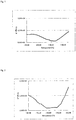
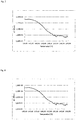
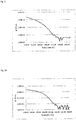
- FIGS. 1 to 11 show by diagrams the temperature dependence of the viscosity for the examples listed below.
- Mini-Haake It is a mini-2-screw extruder "HAAKE Minilab", Thermo Electron Corporation, Germany.
- a 1-hole nozzle with a hole diameter of 500 ⁇ m was attached to the melt outlet opening. The dosage was done manually.
- the emerging monofilament was pulled out with a winding head (maximum 400 m / min) and wound onto a bobbin.
- the resulting polymer has a relative viscosity of 2.0.
- the composition corresponded with 9.7 mol% of methyl acrylate and 90.3 mol% of acrylonitrile almost the feed values.
- the rheological measurement in oscillation mode (temperature sweep) is in Fig. 1 shown.
- the polymer was spun into a monofilament in the Mini-Haake at 230 ° C at a maximum take-off speed of 40 m / min. Higher take-off speeds could not be realized. A long-term stable spinning process was not possible.
- the resulting polymer has a relative viscosity of 1.5.
- the molecular weight Mw was determined to be 29,000 g / mol with a PDI of 1.5.
- the composition corresponded with 9.3 mol% of methyl acrylate and 90.7 mol% of acrylonitrile almost the feed values.
- the rheological measurement in oscillation mode (temperature sweep) is in Fig. 2 shown.
- the polymer was spun into a monofilament in the Mini-Haake at 220 ° C at a maximum take-off speed of 200 m / min. A long-term stable spinning process was not possible.
- the resulting polymer has a relative viscosity of 1.4.
- the molecular weight Mw was determined to be 22,000 g / mol with a PDI of 2.3.
- the composition corresponded with 10.2mol% methoxyethyl acrylate and 89.8mol% acrylonitrile almost the feed values.
- the rheological measurement in oscillation mode (temperature sweep) is in Fig. 3 shown.
- the polymer was spun into a monofilament in the Mini-Haake at 180 ° C. at a maximum take-off speed of 200 m / min.
- the denier of the fiber was 2.8tex, the strength 16.4 cN / tex, the elongation at break 16.4%.
- the resulting polymer has a relative viscosity of 1.4.
- the composition corresponded with 9.7 mol% methoxyethyl acrylate and 90.3 mol% acrylonitrile almost the feed values.
- the polymer was spun into a monofilament in the Mini-Haake at 180 ° C. at a maximum take-off speed of 400 m / min.
- the denier of the fiber was 1.0 tex, the strength 11.5 cN / tex, the breaking elongation 19.0%.
- NMP N-methyl-2-pyrrolidone
- the resulting polymer has a relative viscosity of 1.6.
- the molecular weight Mw was determined to be 44,000 g / mol with a PDI of 1.4.
- the composition corresponded with 9.6 mol% methoxyethyl acrylate and 90.4 mol% acrylonitrile almost the feed values.
- the rheological measurement in oscillation mode (temperature sweep) is in Fig. 4 shown.
- the polymer was spun into a monofilament in the Mini-Haake at 180 ° C. at a maximum take-off speed of 118 m / min.
- the denier of the fiber was 4.3tex, the strength 18.3cN / tex, the elongation at break 16.5%.
- NMP N-methyl-2-pyrrolidone
- the resulting polymer has a relative viscosity of 1.6. With 9.7 mol% of butoxyethyl acrylate and 90.3 mol% of acrylonitrile, the composition almost matched the feed values.
- the rheological measurement in oscillation mode (temperature sweep) is in Fig. 5 shown.
- the polymer was spun into a monofilament in the Mini-Haake at 200 ° C at a maximum take-off speed of 98 m / min.
- the denier of the fiber was 8tex, the strength 9.5 cN / tex, the elongation at break 14.2%.
- NMP N-methyl-2-pyrrolidone
- 123.4 g of acrylonitrile and 24.6 g of 2-methoxyethyl acrylate are placed in a 1.8 l stainless steel reactor and rendered inert with nitrogen by means of an inlet tube for 15 min.
- the sealed reactor is then heated to 55 ° C and injected via a syringe, a solution of 615 mg V-40 (1,1'-azobis (cyclohexancarbonitrile), Fa. Wako) in 8 mL NMP via an inlet.
- the reaction mixture is then stirred for 6 h at 90 ° C.
- the mixture is taken up after the reaction in 2L NMP and precipitated in 5 times the amount of water. After filtration of the polymer, this is washed with water and ethanol and dried at 60 ° C in a vacuum.
- the resulting polymer has a relative viscosity of 1.4.
- the molecular weight Mw was determined to be 38,000 g / mol with a PDI of 1.2.
- the composition corresponded with 7.1 mol% of methyl acrylate and 92.9 mol% of acrylonitrile almost the feed values.
- the rheological measurement in oscillation mode (temperature sweep) is in Fig. 6 shown.
- the polymer was spun into a monofilament in the Mini-Haake at 200 ° C at a maximum take-off speed of 98 m / min.
- the titer of the fiber was 7.3 tex, the strength 7.7 cN / tex, the elongation at break 16.8%.
- NMP N-methyl-2-pyrrolidone
- 1630 g of acrylonitrile and 449 g of 2-methoxyethyl acrylate are placed in a 7.5 L stainless steel reactor and inertized with nitrogen by means of an inlet tube for 15 minutes.
- the sealed reactor is then heated to 55 ° C and injected via a syringe, a solution of 8.8 g of V-40 (1,1'-azobis (cyclohexanecarbonitrile), Fa. Wako) in 100 mL of NMP via an inlet.
- the reaction mixture is then stirred for 6 h at 90 ° C.
- the mixture is precipitated after the reaction in 5 times the amount of water. After filtration of the polymer, this is washed with water and ethanol and dried at 60 ° C in a vacuum.
- the resulting polymer has a relative viscosity of 1.3.
- the composition corresponded with 9.7 mol% of methyl acrylate and 90.3 mol% of acrylonitrile almost the feed values.
- the rheological measurement in oscillation mode (temperature sweep) is in Fig. 7 shown.
- the polymer was spun in the spinning tester under the following conditions: temperature zones in the extruder 110 ° C / 160 ° C / 180 ° C / 180 ° C; Spinneret temperature 180 ° C; maximum take-off speed of 100m / min.
- the titer of the single fiber was 0.82 tex, the strength 16.3 cN / tex, the elongation at break 17.6%.
- NMP N-methyl-2-pyrrolidone
- DMSO DMSO
- acrylonitrile 95.1 g
- 2-methoxyethyl acrylate 499.5 g
- NMP N-methyl-2-pyrrolidone
- DMSO DMSO
- acrylonitrile 95.1 g
- 2-methoxyethyl acrylate 499.5 g
- the sealed reactor is then heated to 55 ° C and injected via a syringe, a solution of 1.79 g of V-40 (1,1'-azobis (cyclohexancarbonitrile), Fa. Wako) in 25 mL NMP via an inlet.
- the reaction mixture is then stirred for 6 h at 90 ° C.
- the mixture is taken up after the reaction in 2L NMP and precipitated in 5 times the amount of water. After filtration of the polymer, this is washed with water and ethanol and dried at 60 ° C in a vacuum.
- the resulting polymer has a relative viscosity of 1.6.
- the composition corresponded with 10.1mol% methyl acrylate and 89.9mol% acrylonitrile almost the feed values.
- the polymer was spun in the spinning tester under the following conditions: temperature zones in the extruder 110 ° C / 160 ° C / 185 ° C / 200 ° C; Spinneret temperature 200 ° C; maximum take-off speed of 30m / min.
- the titer of the single fiber was 0.92 tex, the strength 20.3 cN / tex, the elongation at break 20.9%.
- NMP N-methyl-2-pyrrolidone
- 114.2 g of acrylonitrile and 28.0 g of 2-methoxyethyl acrylate and 5.75 g of dodecyl acrylate are placed in a 1 l steel reactor and inertized with nitrogen by means of an inlet tube for 15 min.
- the sealed reactor is then heated to 55 ° C and by means of a Syringe, a solution of 583 mg V-40 (1,1'-azobis (cyclohexanecarbonitrile), Wako) injected in 8 mL NMP via an inlet.
- the reaction mixture is then stirred for 6 h at 90 ° C.
- the mixture is taken up after the reaction in 1L NMP and precipitated in 5 times the amount of water. After filtration of the polymer, this is washed with water and ethanol and dried at 60 ° C in a vacuum.
- the resulting polymer has a relative viscosity of 1.4. With 8.8 mol% of methoxyethyl acrylate, 1.0% of dodecyl acrylate and 90.2 mol% of acrylonitrile, the composition almost matched the feed values.
- the rheological measurement in oscillation mode (temperature sweep) is in Fig. 9 shown.
- the polymer was spun into a monofilament in the Mini-Haake at 200 ° C at a maximum take-off speed of 400 m / min.
- the denier of the fiber was 3.8 tex, the strength 7.5 cN / tex, the breaking elongation 107.5%.
- NMP N-methyl-2-pyrrolidone
- 112.2 g of acrylonitrile and 24.5 g of 2-methoxyethyl acrylate and 11.3 g of dodecyl acrylate are placed in a 1 l steel reactor and rendered inert with nitrogen by means of an inlet tube for 15 min.
- the sealed reactor is then heated to 55 ° C and injected via a syringe, a solution of 575 mg V-40 (1,1'-azobis (cyclohexanecarbonitrile), Fa. Wako) in 8 mL NMP via an inlet.
- the reaction mixture is then stirred for 6 h at 90 ° C.
- the mixture is taken up after the reaction in 1L NMP and precipitated in 5 times the amount of water. After filtration of the polymer, this is washed with water and ethanol and dried at 60 ° C in a vacuum.
- the resulting polymer has a relative viscosity of 1.4.
- the composition corresponded with 7.9 mol% of methoxyethyl acrylate, 1.9% dodecyl acrylate and 90.2mol% acrylonitrile almost the feed values.
- the rheological measurement in oscillation mode (temperature sweep) is in Fig. 9 shown.
- the polymer was spun into a monofilament in the Mini-Haake at 200 ° C at a maximum take-off speed of 400 m / min.
- the titer of the fiber was 2.5tex, the strength 9.1 cN / tex, the elongation at break 76.2%.
- NMP N-methyl-2-pyrrolidone
- 110.3 g of acrylonitrile and 21.0 g of 2-methoxyethyl acrylate and 16.6 g of dodecyl acrylate are placed in a 1 l steel reactor and inertized with nitrogen by means of an inlet tube for 15 min.
- the sealed reactor is then heated to 55 ° C and injected via a syringe, a solution of 565 mg V-40 (1,1'-azobis (cyclohexanecarbonitrile), Fa. Wako) in 8 mL NMP via an inlet.
- the reaction mixture is then stirred for 6 h at 90 ° C.
- the mixture is taken up after the reaction in 1L NMP and precipitated in 5 times the amount of water. After filtration of the polymer, this is washed with water and ethanol and dried at 60 ° C in a vacuum.
- the resulting polymer has a relative viscosity of 1.4. With 6.8 mol% of methoxyethyl acrylate, 3.0% of dodecyl acrylate and 90.2 mol% of acrylonitrile, the composition almost matched the feed values.
- the rheological measurement in oscillation mode (temperature sweep) is in Fig. 10 shown.
- the polymer was spun into a monofilament in the Mini-Haake at 200 ° C at a maximum take-off speed of 400 m / min.
- the titer of the fiber was 2.3tex, the strength 10.7 cN / tex, the elongation at break 29.7%.
- the resulting polymer has a relative viscosity of 1.5.
- the molecular weight Mw was determined to be 47,000 g / mol with a PDI of 1.1.
- the composition corresponded with 5.3 mol% methoxyethyl acrylate, 4.5 mol% of methyl acrylate and 90.2 mol% of acrylonitrile almost the feed values.
- the rheological measurement in oscillation mode (temperature sweep) is in Fig. 11 shown.
- the polymer was spun into a monofilament in the Mini-Haake at 190 ° C at a maximum take-off speed of 98m / min.
- the titer of the fiber was 2.4 tex, the strength 15.0 cN / tex, the elongation at break 13.8%.
Landscapes
- Chemical & Material Sciences (AREA)
- Engineering & Computer Science (AREA)
- Chemical Kinetics & Catalysis (AREA)
- Textile Engineering (AREA)
- General Chemical & Material Sciences (AREA)
- Health & Medical Sciences (AREA)
- Medicinal Chemistry (AREA)
- Polymers & Plastics (AREA)
- Organic Chemistry (AREA)
- Mechanical Engineering (AREA)
- Addition Polymer Or Copolymer, Post-Treatments, Or Chemical Modifications (AREA)
- Artificial Filaments (AREA)
Claims (16)
- Copolymère de polyacrylonitrile (PAN) pouvant être filé par fusion, pouvant être fabriqué par une copolymérisation de 95 à 80 % en moles d'acrylonitrile avec au moins un comonomère choisi parmia) 5 à 20 % en moles d'au moins un acrylate d'alcoxyalkyle de formule générale I

R = CnH2n+1 et n = 2 à 8 et m = 1 à 8, en particulier n = 1 à 4 et m = 1 à 4,b) 0 à 10 % en moles d'au moins un acrylate d'alkyle de formule générale II
R = CnH2n+1 et n = 1 à 18,c) 0 à 10 % en moles d'au moins un ester vinylique de formule générale III
R = CnH2n+1 et n = 1 à 18,
le copolymère présentant une masse moléculaire moyenne en masse (Mw) comprise dans la plage de 10 000 à 150 000 g/mol. - Copolymère selon la revendication 1, caractérisé en ce que le copolymère peut être filé dans la plage de températures de 160 à 240 °C, en particulier de 180 à 220 °C.
- Copolymère selon l'une des revendications précédentes, caractérisé en ce que le copolymère présente une viscosité à l'état fondu constante ou décroissante quand la température s'élève jusqu'à 240 °C, en particulier jusqu'à 260 °C.
- Copolymère selon l'une des revendications précédentes, caractérisé en ce que la copolymérisation est réalisée par une polymérisation par précipitation en milieu aqueux, polymérisation en émulsion en milieu aqueux et/ou polymérisation dans un solvant.
- Copolymère selon la revendication précédente, caractérisé en ce que le solvant est choisi dans le groupe consistant en le diméthylsulfoxyde, le diméthylformamide, le diméthylacétamide, la N-méthylpyrrolidone, le carbonate d'éthylène, le carbonate de propylène, une solution aqueuse de thiocyanate de sodium et les mélanges de ceux-ci.
- Copolymère selon l'une des revendications précédentes, caractérisé en ce que 8 à 12 % en moles du comonomère sont présents dans a).
- Copolymère selon l'une des revendications précédentes, caractérisé en ce que 1 à 5 % en moles du comonomère sont présents dans b).
- Copolymère selon l'une des revendications précédentes, caractérisé en ce que 1 à 5 % en moles du comonomère sont présents dans c).
- Copolymère selon l'une des revendications précédentes, caractérisé en ce que le copolymère présente une masse moléculaire moyenne en masse (Mw) comprise dans la plage de 15 000 à 80 000 g/mol.
- Procédé de fabrication de fibres ou de précurseurs de fibres par filage par fusion, dans lequeli. on met en oeuvre en présence d'au moins un amorceur une copolymérisation de 95 à 80 % en moles d'acrylonitrile avec au moins un comonomère choisi parmia) 5 à 20 % en moles d'au moins un acrylate d'alcoxyalkyle de formule générale I
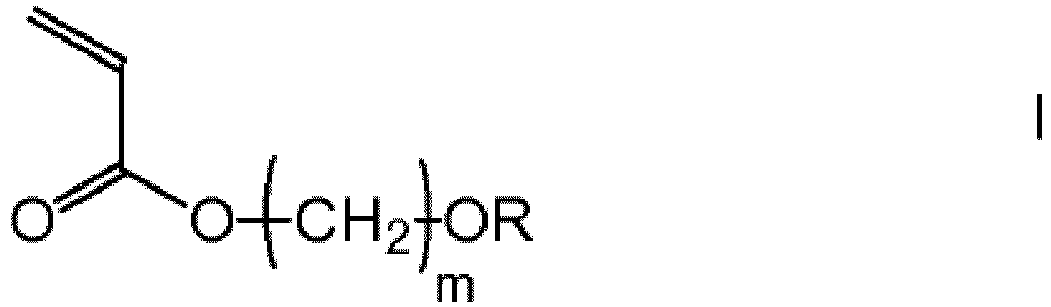
R = CnH2n+1 et n = 2 à 8 et m = 1 à 8, en particulier n = 1 à 4 et m = 1 à 4,b) 0 à 10 % en moles d'au moins un acrylate d'alkyle de formule générale II
R = CnH2n+1 et n = 1 à 18,c) 0 à 10 % en moles d'au moins un ester vinylique de formule générale III
R = CnH2n+1 et n = 1 à 18,ii. on file le copolymère à l'aide d'une extrudeuse comportant en sortie de l'extrudeuse au moins une buse convenant au filage, ou pour obtenir des mono-ou des multi-filaments. - Procédé selon la revendication 10, caractérisé en ce que, immédiatement avant ou lors de l'extrusion dans b), on ajoute au moins un plastifiant, qui en particulier est choisi dans le groupe consistant en l'eau, les nitroalcanes, les alcools alkyliques, les liquides ioniques, les glycols, le diméthylsulfoxyde, le diméthylformamide, le diméthylacétamide, la N-méthylpyrrolidone, le carbonate d'éthylène, le carbonate de propylène, une solution aqueuse de thiocyanate de sodium, et les mélanges de ceux-ci.
- Procédé selon l'une des revendications 10 ou 11, caractérisé en ce que les fibres sont des fibres de carbone, et, dans des étapes supplémentaires,iii. on procède à une stabilisation des filaments par un traitement à haute température, à des températures de 200 à 350 °C, etiv. on procède à une carbonisation des filaments à des températures de 800 à 1200 °C.
- Procédé selon la revendication 12, caractérisé en ce que la stabilisation des filaments est réalisée à des températures de 180 à 320 °C, de préférence de 180 à 300 °C, d'une manière particulièrement préférée de 180 à 250 °C.
- Procédé selon l'une des revendications 10 à 13, caractérisé en ce que l'amorceur est choisi dans le groupe consistant en les composés azoïques, les peroxydes, les hydroperoxydes, les peroxydes d'alkyle, les peroxodicarbonates, les peroxyesters, les peroxydes de dialkyle, les persulfates, les perphosphates, les amorceurs rédox et les mélanges de ceux-ci.
- Fibre pouvant être fabriquée par un filage du copolymère selon l'une des revendications 1 à 10.
- Procédé selon la revendication précédente, caractérisé en ce que la fibre est une fibre de carbone.
Applications Claiming Priority (2)
| Application Number | Priority Date | Filing Date | Title |
|---|---|---|---|
| DE102014219707.4A DE102014219707A1 (de) | 2014-09-29 | 2014-09-29 | Schmelzspinnbare Copolymere vom Polyacrylnitril, Verfahren zur Herstellung von Fasern oder Faserprecursoren mittels Schmelzspinnen und entsprechend hergestellte Fasern |
| PCT/EP2015/070769 WO2016050478A1 (fr) | 2014-09-29 | 2015-09-10 | Copolymères de polyacrylonitrile filables à l'état fondu, procédé de fabrication de fibres ou de précurseurs de fibres par filage à l'état fondu, et fibres fabriquées selon ledit procédé |
Publications (2)
| Publication Number | Publication Date |
|---|---|
| EP3201248A1 EP3201248A1 (fr) | 2017-08-09 |
| EP3201248B1 true EP3201248B1 (fr) | 2018-11-07 |
Family
ID=54147157
Family Applications (1)
| Application Number | Title | Priority Date | Filing Date |
|---|---|---|---|
| EP15766091.1A Not-in-force EP3201248B1 (fr) | 2014-09-29 | 2015-09-10 | Copolymères filables fusibles de polyacrylonitrile, procédé de fabrication de fibres au moyen de filage par fusion et fibres produites correspondante |
Country Status (6)
| Country | Link |
|---|---|
| US (1) | US20170275405A1 (fr) |
| EP (1) | EP3201248B1 (fr) |
| JP (1) | JP2017530231A (fr) |
| KR (1) | KR20170096996A (fr) |
| DE (1) | DE102014219707A1 (fr) |
| WO (1) | WO2016050478A1 (fr) |
Cited By (1)
| Publication number | Priority date | Publication date | Assignee | Title |
|---|---|---|---|---|
| EP3872103A1 (fr) | 2020-02-25 | 2021-09-01 | DWI - Leibniz-Institut für Interaktive Materialien e.V. | Copolymères à base d'acrylonitrile pouvant être traités par fusion et leur préstabilisation acide pour la conversion en fibres de carbone et pièces |
Families Citing this family (8)
| Publication number | Priority date | Publication date | Assignee | Title |
|---|---|---|---|---|
| DE102015222585A1 (de) | 2015-11-16 | 2017-05-18 | Fraunhofer-Gesellschaft zur Förderung der angewandten Forschung e.V. | Verfahren zur Herstellung von thermisch stabilen schmelzspinnbaren PAN-Copolymeren, PAN-Copolymere, hieraus gebildete Formkörper sowie Verfahren zur Herstellung dieser Formkörper |
| US11180869B2 (en) | 2016-03-22 | 2021-11-23 | Fraunhofer-Gesellschaft zur Förderung der angewandten Forschung e.V. | Melt spinnable copolymers from polyacrylonitrile, method for producing fibers or fiber precursors by means of melt spinning, and fibers produced accordingly |
| EP3455396A1 (fr) | 2016-05-11 | 2019-03-20 | Fraunhofer Gesellschaft zur Förderung der angewandten Forschung E.V. | Procédé de fabrication d'un fil multifilament et fil multifilament |
| DE102016011991B4 (de) * | 2016-10-10 | 2020-02-20 | Universität Augsburg | Verfahren und Vorrichtung zur Herstellung einer Carbonfaser sowie Zwischenprodukt zur Herstellung einer Carbonfaser und Vorrichtung zur Herstellung einer Zwischenfaser |
| WO2018130268A1 (fr) * | 2017-01-10 | 2018-07-19 | Fraunhofer-Gesellschaft zur Förderung der angewandten Forschung e.V. | Procédé de production en continu d'un fil multifilament stabilisé thermiquement, fil multifilament et fibre |
| ES3006617T3 (en) * | 2018-11-16 | 2025-03-18 | Cytec Ind Inc | Process for the production of polyacrylonitrile-based polymers with high conversion |
| CN112011855B (zh) * | 2019-05-31 | 2023-04-07 | 卡邦材料公司 | 碳纤维的制造方法 |
| KR102802337B1 (ko) | 2021-08-20 | 2025-05-07 | 홍영일 | 수위 및 온도 측정 유닛 및 이를 포함하는 냉매자동충전 시스템 |
Family Cites Families (26)
| Publication number | Priority date | Publication date | Assignee | Title |
|---|---|---|---|---|
| NL98845C (fr) * | 1956-07-12 | |||
| GB1057434A (en) * | 1963-07-18 | 1967-02-01 | Du Pont | Improvements in or relating to compositions containing ethylenically unsaturated monomers |
| US3499073A (en) | 1967-06-05 | 1970-03-03 | Shih Ming Sun | Melt spinning of acrylonitrile polymers |
| DE2042358B2 (de) * | 1969-08-28 | 1973-07-12 | Toray Industries, Inc., Tokio | Verfahren zur herstellung von kohlenstoffasern |
| DE2002249C3 (de) | 1970-01-20 | 1978-11-23 | Bayer Ag, 5090 Leverkusen | Schmelzklebefäden und -Folien aus thermoplastischen Acrylnitrtl-Copolymerisaten |
| GB1270504A (en) | 1970-05-27 | 1972-04-12 | Schwarza Chemiefaser | Process for the production of filaments and films by the melting spinning of acrylonitrile co-polymers |
| DE2158798C3 (de) * | 1970-12-10 | 1974-06-27 | Kanebo, Ltd., Tokio | Verfahren zur Herstellung von Kohlenstoff-Fasern |
| JPS4926502A (fr) * | 1972-07-10 | 1974-03-09 | ||
| US4107252A (en) | 1974-05-22 | 1978-08-15 | Polysar Limited | Melt spinning synthetic filaments |
| JPS5239745A (en) * | 1975-09-26 | 1977-03-28 | Mitsubishi Rayon Co Ltd | Process for preparing a composition for spinnig and molding |
| JPS5258785A (en) * | 1975-11-07 | 1977-05-14 | Japan Exlan Co Ltd | Process for preparing acrylonitrile polymer melts |
| DE2719019A1 (de) * | 1977-04-28 | 1978-11-02 | Bayer Ag | Hydrophile faeden und fasern |
| US4219523A (en) * | 1978-08-30 | 1980-08-26 | American Cyanamid Company | Melt-spinning acrylonitrile polymer fiber from low molecular weight polymers |
| CH643304A5 (de) | 1979-12-12 | 1984-05-30 | Lonza Ag | Verfahren zur herstellung von fasern aus thermoplastischen mischpolymerisaten des acrylnitrils. |
| JPS6088017A (ja) * | 1983-10-21 | 1985-05-17 | Japan Exlan Co Ltd | アクリロニトリル系重合体微粒子の製造法 |
| JPH02145814A (ja) * | 1988-11-25 | 1990-06-05 | Toray Ind Inc | 改良された黒鉛繊維の製造方法 |
| JPH054093A (ja) * | 1991-06-26 | 1993-01-14 | Tsutsumi Seisakusho:Kk | 有機汚濁廃水の処理方法 |
| US5618901A (en) | 1993-11-10 | 1997-04-08 | The Standard Oil Company | Process for making a high nitrile multipolymer prepared from acrylonitrile and olefinically unsaturated monomers |
| JPH0978377A (ja) * | 1995-09-13 | 1997-03-25 | Mitsubishi Rayon Co Ltd | 制電性アクリル紡績糸 |
| SG73992A1 (en) | 1995-12-18 | 2000-07-18 | Standard Oil Co | Melt spun acrylonitrile olefinically unsaturated fibers and a process to make fibers |
| JP3503789B2 (ja) * | 1996-02-13 | 2004-03-08 | 日本エクスラン工業株式会社 | 改善されたアクリロニトリル系重合体溶融物の製造方法 |
| JPH101851A (ja) * | 1996-06-13 | 1998-01-06 | Mitsubishi Rayon Co Ltd | 制電性短繊維集合体およびその製造方法 |
| AU3365400A (en) | 1999-02-22 | 2000-09-14 | Standard Oil Company, The | Carbon fibers or sheets made from copolymers of acrylonitrile |
| GB9923977D0 (en) | 1999-10-12 | 1999-12-15 | Bashir Zahir | Solventless processing of high-acrylonitrile polymers |
| JP2009001956A (ja) * | 2007-05-22 | 2009-01-08 | Toray Ind Inc | アクリル系合成繊維およびその製造方法 |
| CN103980482A (zh) * | 2014-05-23 | 2014-08-13 | 天津工业大学 | 丙烯腈基共聚物固-固相变材料第二单体及其制备方法和用途 |
-
2014
- 2014-09-29 DE DE102014219707.4A patent/DE102014219707A1/de not_active Ceased
-
2015
- 2015-09-10 WO PCT/EP2015/070769 patent/WO2016050478A1/fr not_active Ceased
- 2015-09-10 JP JP2017516875A patent/JP2017530231A/ja active Pending
- 2015-09-10 KR KR1020177011523A patent/KR20170096996A/ko not_active Withdrawn
- 2015-09-10 US US15/514,421 patent/US20170275405A1/en not_active Abandoned
- 2015-09-10 EP EP15766091.1A patent/EP3201248B1/fr not_active Not-in-force
Non-Patent Citations (1)
| Title |
|---|
| None * |
Cited By (1)
| Publication number | Priority date | Publication date | Assignee | Title |
|---|---|---|---|---|
| EP3872103A1 (fr) | 2020-02-25 | 2021-09-01 | DWI - Leibniz-Institut für Interaktive Materialien e.V. | Copolymères à base d'acrylonitrile pouvant être traités par fusion et leur préstabilisation acide pour la conversion en fibres de carbone et pièces |
Also Published As
| Publication number | Publication date |
|---|---|
| DE102014219707A1 (de) | 2016-03-31 |
| JP2017530231A (ja) | 2017-10-12 |
| US20170275405A1 (en) | 2017-09-28 |
| EP3201248A1 (fr) | 2017-08-09 |
| WO2016050478A1 (fr) | 2016-04-07 |
| KR20170096996A (ko) | 2017-08-25 |
Similar Documents
| Publication | Publication Date | Title |
|---|---|---|
| DE102014219707A1 (de) | Schmelzspinnbare Copolymere vom Polyacrylnitril, Verfahren zur Herstellung von Fasern oder Faserprecursoren mittels Schmelzspinnen und entsprechend hergestellte Fasern | |
| EP3377545B1 (fr) | Procédé pour produire des copolymères de pan stables obtenus par filage à chaud, copolymères de pan, corps moulés formés à partir de ceux-ci et procédé pour produire ces corps moulés | |
| EP3433292A1 (fr) | Copolymères de polyacrylonitrile filables à l'état fondu, procédé de fabrication de fibres ou de précurseurs de fibres par filage à l'état fondu, et fibres fabriquées selon ledit procédé | |
| EP3201375B1 (fr) | Procédé de stabilisation thermique de fibres et fibres stabilisées selon ledit procédé | |
| DE2442121C2 (fr) | ||
| EP0590460B1 (fr) | Emulsions aqueuses très concentrés de poly(acrylonitrie) et procédé de leur préparation | |
| WO2013020919A1 (fr) | Fibres de précurseur à base de matières premières renouvelables | |
| DE60102776T2 (de) | Mit reduziertem Formaldehyd unverwobene Bindemittel enthaltend N-Methylolacrylamide | |
| DE3034660C2 (de) | Verfahren zur Herstellung von quellfähigen Fäden, Fasern und geformten Gebilden aus Acrylpolymeren sowie die dabei erhaltenen Produkte | |
| DE2938967A1 (de) | Verfahren zur herstellung waessriger vinylchlorid-vinylester-aethylen-copolymerisatemulsionen und ihre verwendung | |
| DE1618653A1 (de) | Verfahren zur Herstellung von Terephthalsaeure hoher Reinheit von Faserqualitaet | |
| WO2017167355A1 (fr) | Copolymères de polyacrylonitrile filables à l'état fondu, procédé de fabrication de fibres ou de précurseurs de fibres par filage à l'état fondu, et fibres fabriquées selon ledit procédé | |
| DE1906220B2 (de) | Verfahren zur Herstellung von Cyclisierungsprodukten auf der Basis von Acrylnitrilpolymeren durch Wärmebehandlung von Acrylnitrilcopolymeren | |
| DE1292310B (de) | Verfahren zur Herstellung von Fasern und Faeden aus Acrylnitrilpolymerisaten | |
| DE2440269A1 (de) | Verfahren zur herstellung von acrylnitril-vinylchlorid-copolymerisaten mit verbessertem weissgrad | |
| DE69113380T2 (de) | Acrylnitrilcopolymer und daraus hergestellte faser oder faserverbund mit kern/mantelstruktur. | |
| DE3243902A1 (de) | Acrylnitrilpolymeres, verfahren zu dessen herstellung und daraus hergestellte faser | |
| DE1130596B (de) | Verfahren zur Herstellung von vernetzten Acrylnitrilpolymerisaten und -mischpolymerisaten | |
| DE1234028C2 (de) | Verfahren zur Herstellung von direkt verspinn-baren Polyacrylnitrilmischpolymerisatloesungen | |
| DE2158581C3 (de) | Fasern und Fäden aus syndiotaktischem Polyvinylchlorid und Verfahren zu ihrer Herstellung | |
| CA1053835A (fr) | Fibres modacryliques a proprietes ameliorees de coloration | |
| DE2602350A1 (de) | Loesungspolymerisation von vernetzungsfaehigen acrylnitrilpolymerisaten | |
| KR20060086055A (ko) | 전기방사에 적합한 아크릴계 공중합체 조성물 및 그의방사 용액 제조방법 | |
| DE2454322A1 (de) | Modacrylfaeden mit verbesserten coloristischen eigenschaften | |
| AT218742B (de) | Verfahren zur Herstellung neuer Mischpolymerisate aus Acrylnitril und ungesättigten Sulfonaten |
Legal Events
| Date | Code | Title | Description |
|---|---|---|---|
| STAA | Information on the status of an ep patent application or granted ep patent |
Free format text: STATUS: THE INTERNATIONAL PUBLICATION HAS BEEN MADE |
|
| PUAI | Public reference made under article 153(3) epc to a published international application that has entered the european phase |
Free format text: ORIGINAL CODE: 0009012 |
|
| STAA | Information on the status of an ep patent application or granted ep patent |
Free format text: STATUS: REQUEST FOR EXAMINATION WAS MADE |
|
| 17P | Request for examination filed |
Effective date: 20170328 |
|
| AK | Designated contracting states |
Kind code of ref document: A1 Designated state(s): AL AT BE BG CH CY CZ DE DK EE ES FI FR GB GR HR HU IE IS IT LI LT LU LV MC MK MT NL NO PL PT RO RS SE SI SK SM TR |
|
| AX | Request for extension of the european patent |
Extension state: BA ME |
|
| RIN1 | Information on inventor provided before grant (corrected) |
Inventor name: HAHN, MATHIAS Inventor name: LIESKE, ANTJE Inventor name: KNOOP, MATS |
|
| DAV | Request for validation of the european patent (deleted) | ||
| DAX | Request for extension of the european patent (deleted) | ||
| GRAP | Despatch of communication of intention to grant a patent |
Free format text: ORIGINAL CODE: EPIDOSNIGR1 |
|
| STAA | Information on the status of an ep patent application or granted ep patent |
Free format text: STATUS: GRANT OF PATENT IS INTENDED |
|
| INTG | Intention to grant announced |
Effective date: 20180605 |
|
| GRAS | Grant fee paid |
Free format text: ORIGINAL CODE: EPIDOSNIGR3 |
|
| GRAA | (expected) grant |
Free format text: ORIGINAL CODE: 0009210 |
|
| STAA | Information on the status of an ep patent application or granted ep patent |
Free format text: STATUS: THE PATENT HAS BEEN GRANTED |
|
| AK | Designated contracting states |
Kind code of ref document: B1 Designated state(s): AL AT BE BG CH CY CZ DE DK EE ES FI FR GB GR HR HU IE IS IT LI LT LU LV MC MK MT NL NO PL PT RO RS SE SI SK SM TR |
|
| REG | Reference to a national code |
Ref country code: GB Ref legal event code: FG4D Free format text: NOT ENGLISH |
|
| REG | Reference to a national code |
Ref country code: CH Ref legal event code: EP Ref country code: AT Ref legal event code: REF Ref document number: 1061980 Country of ref document: AT Kind code of ref document: T Effective date: 20181115 |
|
| REG | Reference to a national code |
Ref country code: DE Ref legal event code: R096 Ref document number: 502015006801 Country of ref document: DE |
|
| REG | Reference to a national code |
Ref country code: IE Ref legal event code: FG4D Free format text: LANGUAGE OF EP DOCUMENT: GERMAN |
|
| REG | Reference to a national code |
Ref country code: NL Ref legal event code: MP Effective date: 20181107 |
|
| REG | Reference to a national code |
Ref country code: LT Ref legal event code: MG4D |
|
| PG25 | Lapsed in a contracting state [announced via postgrant information from national office to epo] |
Ref country code: NO Free format text: LAPSE BECAUSE OF FAILURE TO SUBMIT A TRANSLATION OF THE DESCRIPTION OR TO PAY THE FEE WITHIN THE PRESCRIBED TIME-LIMIT Effective date: 20190207 Ref country code: BG Free format text: LAPSE BECAUSE OF FAILURE TO SUBMIT A TRANSLATION OF THE DESCRIPTION OR TO PAY THE FEE WITHIN THE PRESCRIBED TIME-LIMIT Effective date: 20190207 Ref country code: HR Free format text: LAPSE BECAUSE OF FAILURE TO SUBMIT A TRANSLATION OF THE DESCRIPTION OR TO PAY THE FEE WITHIN THE PRESCRIBED TIME-LIMIT Effective date: 20181107 Ref country code: IS Free format text: LAPSE BECAUSE OF FAILURE TO SUBMIT A TRANSLATION OF THE DESCRIPTION OR TO PAY THE FEE WITHIN THE PRESCRIBED TIME-LIMIT Effective date: 20190307 Ref country code: LT Free format text: LAPSE BECAUSE OF FAILURE TO SUBMIT A TRANSLATION OF THE DESCRIPTION OR TO PAY THE FEE WITHIN THE PRESCRIBED TIME-LIMIT Effective date: 20181107 Ref country code: ES Free format text: LAPSE BECAUSE OF FAILURE TO SUBMIT A TRANSLATION OF THE DESCRIPTION OR TO PAY THE FEE WITHIN THE PRESCRIBED TIME-LIMIT Effective date: 20181107 Ref country code: LV Free format text: LAPSE BECAUSE OF FAILURE TO SUBMIT A TRANSLATION OF THE DESCRIPTION OR TO PAY THE FEE WITHIN THE PRESCRIBED TIME-LIMIT Effective date: 20181107 Ref country code: FI Free format text: LAPSE BECAUSE OF FAILURE TO SUBMIT A TRANSLATION OF THE DESCRIPTION OR TO PAY THE FEE WITHIN THE PRESCRIBED TIME-LIMIT Effective date: 20181107 |
|
| PG25 | Lapsed in a contracting state [announced via postgrant information from national office to epo] |
Ref country code: AL Free format text: LAPSE BECAUSE OF FAILURE TO SUBMIT A TRANSLATION OF THE DESCRIPTION OR TO PAY THE FEE WITHIN THE PRESCRIBED TIME-LIMIT Effective date: 20181107 Ref country code: RS Free format text: LAPSE BECAUSE OF FAILURE TO SUBMIT A TRANSLATION OF THE DESCRIPTION OR TO PAY THE FEE WITHIN THE PRESCRIBED TIME-LIMIT Effective date: 20181107 Ref country code: SE Free format text: LAPSE BECAUSE OF FAILURE TO SUBMIT A TRANSLATION OF THE DESCRIPTION OR TO PAY THE FEE WITHIN THE PRESCRIBED TIME-LIMIT Effective date: 20181107 Ref country code: GR Free format text: LAPSE BECAUSE OF FAILURE TO SUBMIT A TRANSLATION OF THE DESCRIPTION OR TO PAY THE FEE WITHIN THE PRESCRIBED TIME-LIMIT Effective date: 20190208 Ref country code: PT Free format text: LAPSE BECAUSE OF FAILURE TO SUBMIT A TRANSLATION OF THE DESCRIPTION OR TO PAY THE FEE WITHIN THE PRESCRIBED TIME-LIMIT Effective date: 20190307 Ref country code: NL Free format text: LAPSE BECAUSE OF FAILURE TO SUBMIT A TRANSLATION OF THE DESCRIPTION OR TO PAY THE FEE WITHIN THE PRESCRIBED TIME-LIMIT Effective date: 20181107 |
|
| PG25 | Lapsed in a contracting state [announced via postgrant information from national office to epo] |
Ref country code: PL Free format text: LAPSE BECAUSE OF FAILURE TO SUBMIT A TRANSLATION OF THE DESCRIPTION OR TO PAY THE FEE WITHIN THE PRESCRIBED TIME-LIMIT Effective date: 20181107 Ref country code: IT Free format text: LAPSE BECAUSE OF FAILURE TO SUBMIT A TRANSLATION OF THE DESCRIPTION OR TO PAY THE FEE WITHIN THE PRESCRIBED TIME-LIMIT Effective date: 20181107 Ref country code: DK Free format text: LAPSE BECAUSE OF FAILURE TO SUBMIT A TRANSLATION OF THE DESCRIPTION OR TO PAY THE FEE WITHIN THE PRESCRIBED TIME-LIMIT Effective date: 20181107 Ref country code: CZ Free format text: LAPSE BECAUSE OF FAILURE TO SUBMIT A TRANSLATION OF THE DESCRIPTION OR TO PAY THE FEE WITHIN THE PRESCRIBED TIME-LIMIT Effective date: 20181107 |
|
| REG | Reference to a national code |
Ref country code: DE Ref legal event code: R097 Ref document number: 502015006801 Country of ref document: DE |
|
| PG25 | Lapsed in a contracting state [announced via postgrant information from national office to epo] |
Ref country code: RO Free format text: LAPSE BECAUSE OF FAILURE TO SUBMIT A TRANSLATION OF THE DESCRIPTION OR TO PAY THE FEE WITHIN THE PRESCRIBED TIME-LIMIT Effective date: 20181107 Ref country code: SM Free format text: LAPSE BECAUSE OF FAILURE TO SUBMIT A TRANSLATION OF THE DESCRIPTION OR TO PAY THE FEE WITHIN THE PRESCRIBED TIME-LIMIT Effective date: 20181107 Ref country code: EE Free format text: LAPSE BECAUSE OF FAILURE TO SUBMIT A TRANSLATION OF THE DESCRIPTION OR TO PAY THE FEE WITHIN THE PRESCRIBED TIME-LIMIT Effective date: 20181107 Ref country code: SK Free format text: LAPSE BECAUSE OF FAILURE TO SUBMIT A TRANSLATION OF THE DESCRIPTION OR TO PAY THE FEE WITHIN THE PRESCRIBED TIME-LIMIT Effective date: 20181107 |
|
| PLBE | No opposition filed within time limit |
Free format text: ORIGINAL CODE: 0009261 |
|
| STAA | Information on the status of an ep patent application or granted ep patent |
Free format text: STATUS: NO OPPOSITION FILED WITHIN TIME LIMIT |
|
| 26N | No opposition filed |
Effective date: 20190808 |
|
| PG25 | Lapsed in a contracting state [announced via postgrant information from national office to epo] |
Ref country code: SI Free format text: LAPSE BECAUSE OF FAILURE TO SUBMIT A TRANSLATION OF THE DESCRIPTION OR TO PAY THE FEE WITHIN THE PRESCRIBED TIME-LIMIT Effective date: 20181107 |
|
| PG25 | Lapsed in a contracting state [announced via postgrant information from national office to epo] |
Ref country code: TR Free format text: LAPSE BECAUSE OF FAILURE TO SUBMIT A TRANSLATION OF THE DESCRIPTION OR TO PAY THE FEE WITHIN THE PRESCRIBED TIME-LIMIT Effective date: 20181107 |
|
| PG25 | Lapsed in a contracting state [announced via postgrant information from national office to epo] |
Ref country code: MC Free format text: LAPSE BECAUSE OF FAILURE TO SUBMIT A TRANSLATION OF THE DESCRIPTION OR TO PAY THE FEE WITHIN THE PRESCRIBED TIME-LIMIT Effective date: 20181107 |
|
| REG | Reference to a national code |
Ref country code: CH Ref legal event code: PL |
|
| PG25 | Lapsed in a contracting state [announced via postgrant information from national office to epo] |
Ref country code: CH Free format text: LAPSE BECAUSE OF NON-PAYMENT OF DUE FEES Effective date: 20190930 Ref country code: LU Free format text: LAPSE BECAUSE OF NON-PAYMENT OF DUE FEES Effective date: 20190910 Ref country code: LI Free format text: LAPSE BECAUSE OF NON-PAYMENT OF DUE FEES Effective date: 20190930 Ref country code: IE Free format text: LAPSE BECAUSE OF NON-PAYMENT OF DUE FEES Effective date: 20190910 |
|
| REG | Reference to a national code |
Ref country code: BE Ref legal event code: MM Effective date: 20190930 |
|
| PG25 | Lapsed in a contracting state [announced via postgrant information from national office to epo] |
Ref country code: BE Free format text: LAPSE BECAUSE OF NON-PAYMENT OF DUE FEES Effective date: 20190930 |
|
| PG25 | Lapsed in a contracting state [announced via postgrant information from national office to epo] |
Ref country code: CY Free format text: LAPSE BECAUSE OF FAILURE TO SUBMIT A TRANSLATION OF THE DESCRIPTION OR TO PAY THE FEE WITHIN THE PRESCRIBED TIME-LIMIT Effective date: 20181107 |
|
| PG25 | Lapsed in a contracting state [announced via postgrant information from national office to epo] |
Ref country code: HU Free format text: LAPSE BECAUSE OF FAILURE TO SUBMIT A TRANSLATION OF THE DESCRIPTION OR TO PAY THE FEE WITHIN THE PRESCRIBED TIME-LIMIT; INVALID AB INITIO Effective date: 20150910 Ref country code: MT Free format text: LAPSE BECAUSE OF FAILURE TO SUBMIT A TRANSLATION OF THE DESCRIPTION OR TO PAY THE FEE WITHIN THE PRESCRIBED TIME-LIMIT Effective date: 20181107 |
|
| REG | Reference to a national code |
Ref country code: AT Ref legal event code: MM01 Ref document number: 1061980 Country of ref document: AT Kind code of ref document: T Effective date: 20200910 |
|
| PG25 | Lapsed in a contracting state [announced via postgrant information from national office to epo] |
Ref country code: AT Free format text: LAPSE BECAUSE OF NON-PAYMENT OF DUE FEES Effective date: 20200910 |
|
| PG25 | Lapsed in a contracting state [announced via postgrant information from national office to epo] |
Ref country code: MK Free format text: LAPSE BECAUSE OF FAILURE TO SUBMIT A TRANSLATION OF THE DESCRIPTION OR TO PAY THE FEE WITHIN THE PRESCRIBED TIME-LIMIT Effective date: 20181107 |
|
| P01 | Opt-out of the competence of the unified patent court (upc) registered |
Effective date: 20230524 |
|
| PGFP | Annual fee paid to national office [announced via postgrant information from national office to epo] |
Ref country code: GB Payment date: 20230921 Year of fee payment: 9 |
|
| PGFP | Annual fee paid to national office [announced via postgrant information from national office to epo] |
Ref country code: FR Payment date: 20230918 Year of fee payment: 9 Ref country code: DE Payment date: 20230919 Year of fee payment: 9 |
|
| REG | Reference to a national code |
Ref country code: DE Ref legal event code: R119 Ref document number: 502015006801 Country of ref document: DE |
|
| GBPC | Gb: european patent ceased through non-payment of renewal fee |
Effective date: 20240910 |
|
| PG25 | Lapsed in a contracting state [announced via postgrant information from national office to epo] |
Ref country code: DE Free format text: LAPSE BECAUSE OF NON-PAYMENT OF DUE FEES Effective date: 20250401 |
|
| PG25 | Lapsed in a contracting state [announced via postgrant information from national office to epo] |
Ref country code: GB Free format text: LAPSE BECAUSE OF NON-PAYMENT OF DUE FEES Effective date: 20240910 |
|
| PG25 | Lapsed in a contracting state [announced via postgrant information from national office to epo] |
Ref country code: FR Free format text: LAPSE BECAUSE OF NON-PAYMENT OF DUE FEES Effective date: 20240930 |