EP3409754A1 - Particules d'acide citrique enrobées dans des compositions de nettoyage - Google Patents
Particules d'acide citrique enrobées dans des compositions de nettoyage Download PDFInfo
- Publication number
- EP3409754A1 EP3409754A1 EP17173732.3A EP17173732A EP3409754A1 EP 3409754 A1 EP3409754 A1 EP 3409754A1 EP 17173732 A EP17173732 A EP 17173732A EP 3409754 A1 EP3409754 A1 EP 3409754A1
- Authority
- EP
- European Patent Office
- Prior art keywords
- cleaning composition
- detergent
- composition
- preferred
- acid
- Prior art date
- Legal status (The legal status is an assumption and is not a legal conclusion. Google has not performed a legal analysis and makes no representation as to the accuracy of the status listed.)
- Withdrawn
Links
Images

Classifications
-
- C—CHEMISTRY; METALLURGY
- C11—ANIMAL OR VEGETABLE OILS, FATS, FATTY SUBSTANCES OR WAXES; FATTY ACIDS THEREFROM; DETERGENTS; CANDLES
- C11D—DETERGENT COMPOSITIONS; USE OF SINGLE SUBSTANCES AS DETERGENTS; SOAP OR SOAP-MAKING; RESIN SOAPS; RECOVERY OF GLYCEROL
- C11D3/00—Other compounding ingredients of detergent compositions covered in group C11D1/00
- C11D3/16—Organic compounds
- C11D3/20—Organic compounds containing oxygen
- C11D3/2075—Carboxylic acids-salts thereof
- C11D3/2086—Hydroxy carboxylic acids-salts thereof
-
- C—CHEMISTRY; METALLURGY
- C11—ANIMAL OR VEGETABLE OILS, FATS, FATTY SUBSTANCES OR WAXES; FATTY ACIDS THEREFROM; DETERGENTS; CANDLES
- C11D—DETERGENT COMPOSITIONS; USE OF SINGLE SUBSTANCES AS DETERGENTS; SOAP OR SOAP-MAKING; RESIN SOAPS; RECOVERY OF GLYCEROL
- C11D3/00—Other compounding ingredients of detergent compositions covered in group C11D1/00
- C11D3/39—Organic or inorganic per-compounds
- C11D3/3902—Organic or inorganic per-compounds combined with specific additives
- C11D3/3905—Bleach activators or bleach catalysts
Definitions
- This invention refers to cleaning compositions comprising citric acid particles having a particle size below 800 ⁇ m and the use of such citric acid particles in cleaning compositions, particularly bleach comprising laundry detergent cleaning compositions to increase the wash and bleach performance of said composition.
- Detergent cleaning compositions comprising builder systems commonly are effective either in a basic pH range of e.g. pH 9 to 11, or they are acidic, e.g. pH below 6.
- pH 9 to 11 the pH produced in water during treatment of the materials is highly alkaline.
- detergent compositions comprise a bleach system to allow excellent cleaning performance even for colored staining.
- bleach catalysts or bleach boosters are incorporated in the compositions, enzymes are used to cleave organic soiling, builders for absorption of delivered soil.
- enzymes are used to cleave organic soiling, builders for absorption of delivered soil.
- it is a permanent endeavor of the detergent industry to increase the cleaning performance of detergent compositions to satisfy the desire of consumers.
- US 5,702,635 describes particulate laundry bleaching compositions, wherein granules of bleaching agents comprise as a further ingredient citric acid esters as stabilizing agent for said bleaching agent.
- WO 92/18594 A discloses granular detergent compositions comprising three different builder types in a particular ratio, wherein the builders are selected from aluminosilicate, sodium silicate and citric acid.
- DE 100 20 767 A1 describes a heavy duty laundry detergent having a bleaching system, comprising sodium bicarbonate and citric acid, resulting in the formation of Na-citrate providing good complexing efficiency in aqueous solution.
- the detergent cleaning composition of the invention comprises a bleaching system and further particles comprising or consisting essentially of citric acid, wherein said particles have a particle size below 800 ⁇ m.
- the particles have a core comprising or consisting essentially of citric acid and a coating comprising or consisting essentially of a water soluble solid coating material.
- Such particles may be represented e.g. by granules or powder particles.
- the particles or the core of said particles comprising or consisting essentially of citric acid
- said particles or said core comprise(s) at least 50 wt.%, more preferred at least 60 wt.%, even more preferred at least 70 wt.%, more preferred at least 80 wt.%, even more preferred at least 90 wt.% of citric acid.
- the particles or the core of the particles respectively, comprise(s) at least 95 wt.%, more preferred at least 98 wt.% and most preferred at least 99 wt.% of citric acid.
- the particles or the core consist(s) essentially of citric acid, thus, comprise(s) more than 99 %, preferably at least 99,5 %, more preferably at least 99,7%, more preferred at least 99,8, even more preferred at least 99,9 % and most preferred 100% citric acid.
- the mean particle size of the citric acid comprising particles is in the range of 100 ⁇ m - 600 ⁇ m, wherein it is preferred that no particles are comprised having a particle size above 800 ⁇ m, preferably no particles have a size above 600 ⁇ m. On the other hand it is preferred that particles having a particle size below 100 ⁇ m are less than 10 %, more preferred particles being ⁇ 100 ⁇ m are at most up to 5%.
- the advantage of using particles with this particle size range is the provision of a large surface, thus allowing a fast dissolution of the particles, resulting in a fast delivering of the citric acid to the wash liquor.
- the coating is covering the core essentially.
- “essentially” in this connection is meant that the surface of the particle core is covered to at least 80%, preferably to at least 90%, more preferred to at least 95%, even more preferred to at least 98% and most preferred the surface of the particle core is fully covered by the coating. Fully covered means that on the surface of the particle no citric acid is present.
- the material which can be used for the coating is any material which is suitable and commonly used for water dissolvable coatings. Examples of such material are:
- a preferred coating comprises compounds mentioned above under A), B) or C), preferably maltodextrin or low molecular weight compounds B) or salts of low molecular weight acids C).
- a particular preferred coating is a coating with a salt of a low molecular weight acid.
- low molecular weight compound or low molecular weight acid a compound or an acid (as free acid) is meant having a molecular weight of below 400g/mol, preferably below 350 g/mol, more preferred below 300 g/mol.
- Said low molecular weight acid comprises at least one carboxyl group, preferably at least two, more preferred three carboxyl groups.
- the salt of low molecular acid preferably is an alkali metal citrate, preferably Na-citrate.
- a coating with Tri-Na citrate is particularly preferred.
- Another preferred water soluble low molecular weight compound is any type of a low molecular weight sugar or an amino acid or a salt thereof.
- low molecular weight compounds are C 3 -C 6 sugars in aldose or ketose form like allose, altrose, glucose, mannose, gulose, idose, galactose, talose, psicose, fructose, sorbose, tagatose, xylulose, ribulose, ribose, arabinose, xylose, lyxose, threose, erythrose, erythrulose, dihydroxy acetone or glycerol aldehyde or disaccharides like for example saccharose, lactose, maltose or Isomalt or oligosaccharides comprising 3 to 10 sugar units or amino acids, preferably natural amino acids (commonly contained in natural proteins) without being restricted to the mentioned examples.
- the coating consists essentially of the mentioned water dissolvable material(s)l, this means that the coating comprises less than 10 wt.%, preferably less than 5 wt.%, more preferred less than 2 wt.%, even more preferred less than 1 wt.% and most preferred less than 0.5 wt.% of other materials.
- a material herein is defined as being “water-soluble/dissolvable/dispersible” when more than 99% of a coating (layer) with a thickness of up to 0.5 mm of such material dissolves within 10 minutes, preferably within 5 min in a beaker containing 1 L of deionised water at 40° C which is stirred with a stirrer revolving at 200 r. p.m. It is pointed out that materials can be used as ingredients for the coating which itself may not be soluble, but e.g. dispersible, as long as the coating comprising said material is dissolved by water.
- Particular preferred embodiments of the particle comprising a core of citric acid and a water dissolvable coating are the commercially available products "Citrocoat® N” or “citric acid DC” provided by Jungbunzlauer, Germany.
- Citrocoat® N represents particles having a core of citric acid coated with sodium citrate, prepared by applying NaOH-solution to the surface of granulated citric acid, whereas “citric acid DC” comprises a core of citric acid, coated with maltodextrin.
- the most preferred embodiment is Citrocoat® N.
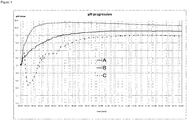
- Providing the citric acid in form of particles having a particle size below 800 ⁇ m has the clear advantage that the citric acid is provided in the wash liquor very fast, thus, resulting in an acid pH of the wash liquor at the beginning of the wash cycle. It has been found by the present inventors that such a pH decrease below pH7 at the beginning of the wash cycle increases noticeably the bleaching performance of the detergent, in particular in laundry cleaning.
- the specific pH progression provided within the wash liquor by incorporating the citric acid in form of (optionally coated) particles thus allows the washing process to carried out at a moderate alkaline pH, thus, a pH in the range of 8.5 to 10 after a "boosting" phase at an acid pH below pH 7. Said effect is more readily achievable if the detergent composition is "balanced” in view of the content of the citric acid in comparison to alkalic or alkali providing compounds, e.g. the amount of SODA (Na carbonate or hydrogen carbonate) is preferably at most 8 wt.%.
- SODA Na carbonate or hydrogen carbonate
- the detergent cleaning composition of the present invention comprises the (optionally coated) citric acid particles in an amount of from 1 to 15 wt.%, preferably in an amount of from 2 to 12 wt.%, more preferred in an amount of from 3 to 10 wt.%, and most preferred in an amount of from 4 to 8 wt.%.
- the thickness of the coating may vary dependent from the desired "delay" of release of the citric acid into the wash liquor, however according to the invention preferably is in the range of from 1 nm to 0.5 mm, preferably 10 nm to 200 ⁇ m, more preferred 50 nm to 100 ⁇ m, even more preferred 100 nm to 50 ⁇ m and most preferred 0.5 to 10 ⁇ m.
- the amount of carbonate or hydrogen carbonate in said cleaning composition is at most 8 wt% of the detergent cleaning composition. It is further preferred that the amount of carbonate or hydrogen carbonate is in the range of 1 wt.% to 6 wt.%, more preferred in the range of 1,5 wt.% to 5 wt.%, even more preferred from 2 wt.% to 4 wt.%.
- the detergent cleaning composition of the present invention further comprises preferably an additional amount of citrate.
- the citrate preferably is an alkali metal salt of citric acid, preferably sodium citrate, wherein tri-sodium citrate is particularly preferred.
- the amount of the citrate in the cleaning composition may range from 0.5 to 10 wt.%, preferably 1 to 8 wt.%, more preferred 2 to 6 wt.% whereas it is preferred that the ratio (wt/wt) of the citric acid comprising particles to separate citrate in the composition is in the range of 4:1 to 0,25 :1, preferably 3,5:1 to 0,3:1, more preferred 3:1 to 0,33:1, even more preferred 2,5:1 to 0,4:1 and most preferred about 2:1 to 1:1.
- the detergent composition according to the present invention comprises a bleaching system, comprising at least one bleaching agent, preferably one delivering peroxide and further preferably a bleach activator.
- the bleaching agent preferably is at least one peroxy compound generally used in laundry or dishwashing cleaning detergents, such as hydrogen peroxide, alkali metal perborate that may be present as the tetra- or monohydrate, percarbonate, perpyrophosphate and persilicate, which are generally present as the alkali metal salts, particularly as the sodium salts, or percarboxylic acids, for example diperoxy dodecane dioic acid or phthaloylaminoperoxycaproic acid,.
- Said bleaching agent(s) is/are present preferably in amounts in the range 2 wt.% to 70 wt.% of the composition, wherein percarbonate is particularly preferred.
- Such bleaching agents are present in laundry detergents in accordance with the invention, preferably in amounts from 5 wt.% up to 40 wt.%, more preferred from 8 wt.% up to 25 wt.% and particularly preferred from 10 wt.% to 20 wt.%, each based on the total composition, wherein percarbonate in particular is preferred.
- said bleaching agents can be present in amounts of 2 wt.% to 30 wt.% of the composition, preferably 3 wt.% to 20 wt.%, more preferred 4 wt.% to 15 wt.%, wherein percarbonate or perborate are preferred.
- the cleaning composition according to the present invention can also include bleaches from the group of organic bleaches.
- organic bleaches include the diacyl peroxides, such as, for example, dibenzoyl peroxide.
- Further organic bleaches include the peroxy acids, particular examples being the alkylperoxy acids and the arylperoxy acids.
- Representative examples include (a) peroxybenzoic acid and its ring-substituted derivatives, such as alkylperoxvbenzoic acids, but also peroxy- ⁇ -naphtoic acid and magnesium monoperphthaiate, (b) the aliphatic or substituted aliphatic peroxy acids, such as peroxylauric acid, peroxystearic acid, e-phthalimido-peroxycaproic acid [phthaloiminoperoxyhexanoic acid (PAP)], o-carboxybenzamidoperoxycaproic acid, N-nonenylamidoperadipic acid and N-nonenylamido-persuccinates, and (c) aliphatic and araliphatic peroxydicarboxylic acids, such as 1, 12-diperoxy-carboxylic acid, 1,9-diperoxyazelaic acid, diperoxysebacic acid, diperoxybrassylic acid, the diperoxyphthalic acids, 2-de
- the bleaching system preferably comprises a bleach activator.
- Suitable components of the bleach activator include the customarily used N- or O-acyl compounds, for example polyacylated alkylenediamines, particularly tetraacetylethylenediamine (TAED); acylated glycolurils, in particular tetraacetyl glycoluril; N-acylated hydantoins; hydrazides; triazoles; urazoles; diketopiperazines; sulfuryl amides and cyanurates; as well as carboxylic acid anhydrides, particularly phthalic anhydride; carboxylic acid esters, particularly sodium isononanoyl phenol sulfonate; and acylated sugar derivatives, in particular pentaacetylglucose; as well as cationic nitrile derivatives such as trimethylammonium acetonitrile salts, N-acylirnides, in particular N-nonanoy
- the bleach activators can be coated or granulated in a known manner with coating materials, wherein tetraacetylethylenediamine granulated with carboxymethyl cellulose are preferred, e.g. such granules having a mean particle sizes of 0.01 mm to 0.8 mm, further e.g. granulated 1,5-diacetyl- 2,4-dioxohexahydro-1,3,5-triazine, and/or trialkylammonium acetonitrile in particle form may be suitably used.
- the laundry detergents preferably comprise these types of bleach activators in amounts of up to 15 wt.%, preferably in an amount in the range of from 1 wt.% to 15 wt.% , preferably 2 wt.% to 12 wt.%, more preferred 3 to 10 wt.% , particularly 5 wt.% to 10 wt.% each based on the total composition, dishwashing compositions comprise such bleach activators in an amount of 1 wt.% to 10 wt.%, preferably 2 wt.% to 7 wt.%.
- the detergent composition of the present invention preferably does not comprise any bleach catalyst or bleach boosting component.
- exemplary bleach-catalysts or boosting transition metal complexes include those from the group of manganese and/or cobalt salts and/or complexes, such as the cobalt (ammine) complexes, the cobalt (acetate) complexes, the cobalt (carbonyl) complexes, the chlorides of cobalt or of manganese, and manganese sulphate as well as manganese complexes known in the art as being bleach catalysts.
- the detergent composition of the present invention preferably comprises at least one anionic surfactant, in particular in case said composition is a laundry detergent composition.
- the anionic surfactant is preferably of the sulfate and/or sulfonate type, e.g. a fatty alkyl sulfate, fatty alkyl ether sulfate, sulfofatty acid ester and/or di-salts of sulfofatty acid, alkyl benzolsulfonate, alkylsulfonate, alkylethersulfonate or of the soap type.
- the anionic surfactant further can be selected from the alkyl or alkenyl sulfates and/or the alkyl or alkenyl ether sulfates, wherein it is preferred that the alkyl or alkenyl group has 8 to 22, particularly 12 to 18 carbon atoms. Among these are preferred those whose content of compounds having longer chain groups in the range 16 to 18 carbon atoms is more than 20 wt.%.
- anionic surfactant of the soap type saturated fatty acid soaps are suitable, such as the salts of lauric acid, myristic acid, palmitic acid or stearic acid, as well as soaps derived from natural fatty acid mixtures such as coconut oil fatty acid, palm kernel oil fatty acid or tallow fatty acid.
- a particulary preferred anionic surfactant is alkyl benzolsulfonate.
- the aniconic surfactants preferably are comprised in the detergent laundry cleaning composition in an amount in the range 2 wt.% to 25 wt.%, preferably from 5 to 20 wt.%, particularly in an amount of 8 to 15 wt.%.
- the anionic surfactant may comprised in amounts of 0,5 wt.% to 10 wt.%, preferably 0,8 wt.% to 5 wt.%, more preferred 1 wt.% to 2 wt.%.
- the detergent cleaning composition may include at least one non-ionic surfactant in particular such non-ionic surfactants are comprised in automatic dishwashing compositions.
- Suitable non-ionic surfactants preferably are selected from fatty alkyl polyglycosides, fatty alkyl polyalkoxylates, especially ethoxylates and/or propoxylates, fatty acid polyhydroxyamides and/or ethoxylated and/or propoxylated products of fatty alkylamines, vicinal diols, fatty acid alkyl esters and/or fatty acid amides as well as their mixtures.
- a preferred type of non-ionic surfactants is a fatty alcohol ethoxylate or a fatty alcohol ethoxylate comprising propoxylate groups.
- suitable surfactants are commercially available, e.g. the Lutensol AO ot Lutensol M types of BASF (Germany), such as. Lutensol AO5, Lutensol M5, Lutensol AO7, Lutensol M7, or Dehydol LT7.
- said non-ionic surfactants preferably are incorporated in the detergent cleaning composition in an amount in the range 1 wt.% to 15 wt.%, preferably 2 to 10 wt.%, more preferred 5 to 8 wt.%, in laundry compositions an amount of 0,5 wt.% to 20 wt.%, preferably 2 to 15 wt.%, more preferred 4 to 10 wt.% may be added, if desired. All the amounts refer to the whole detergent composition.
- compositions can also, when desired, comprise betaines and/or cationic surfactants, which - when present - are preferably added in amounts of 0.5 wt.% to 7 wt.% .
- betaines and/or cationic surfactants which - when present - are preferably added in amounts of 0.5 wt.% to 7 wt.% .
- esterquats are particularly preferred. Such components may increase the soft appearance of the cleaned laundry.
- the detergent cleaning composition besides the citric acid comprising particles and separate from them comprises further water-soluble and/or water-insoluble builders, in combined amounts in the range of 2 wt.% to 60 wt.%, preferably 5 to 55 wt.%, more preferred from 10 to 50 wt.% , e.g. 15 to 40 wt.% or 20 to 30 wt.%.
- the composition preferably comprises water-soluble and/or water-insoluble, organic and/or inorganic builder.
- the water-soluble organic builders particularly include those from the class of the polycarboxylic acids, e.g. - besides the coated citric acid - tartaric acid, succinic acid, malonic acid, adipic acid, maleic acid, fumaric acid, oxalic acid, gluconic acid and/or nitrilotriacetic acid, aspartic acid, ethylenediaminetetraacetic acid and sugar acids; as well as polymeric (poly)carboxylic acids, particularly the polycarboxylates that can be obtained by oxidation of polysaccharides, polymeric acrylic acid, methacrylic acid, maleic acid and mixed polymers thereof, which can also comprise minor amounts of copolymerized polymerizable substances that are free of carboxylic acid functionality.
- the relative molecular weight of the homopolymers of unsaturated carboxylic acids lies generally between 5000 g/mol and 200000 g/mol, that of the copolymers between 2000 g/mol and 200000 g/mol, preferably 50000 g/mol to 120000 g/mol, based on the free acid.
- a particularly preferred copolymer is an acrylic acid-maleic acid copolymer e.g. one having a relative molecular weight of 50000 g/mol to 100000 g/mol (molecular masses as described by the providing companies).
- a suitable copolymer of this type is available under the trade name Sokalan CP5® by BASF.
- Suitable compounds of this class are copolymers of acrylic acid or methacrylic acid with further monomers, e.g. with vinyl ethers, such as vinyl methyl ethers, vinyl esters, ethylene, propylene and styrene, in which the content of the acid is at least 50 wt.% .
- vinyl ethers such as vinyl methyl ethers, vinyl esters, ethylene, propylene and styrene
- the content of the acid is at least 50 wt.%
- Terpolymers which comprise two unsaturated acids and/or their salts as monomers as well as vinyl alcohol and/or an esterified vinyl alcohol or a carbohydrate as the third monomer, can also be used as water-soluble organic builders.
- the first acid monomer or its salt is derived from a monoethylenically unsaturated C 3 -C 8 carboxylic acid and preferably from a C 3 -C 4 monocarboxylic acid, particularly from (meth)acrylic acid.
- the second acid monomer or its salt can be a derivative of a C 4 -C 8 dicarboxylic acid, maleic acid being particularly preferred.
- the third monomer unit is formed from vinyl alcohol and/or preferably an esterified vinyl alcohol.
- vinyl alcohol derivatives are preferred which represent an ester of short chain carboxylic acids, for example C 1 -C 4 carboxylic acids with vinyl alcohol.
- Preferred terpolymers comprise 60 wt.% to 95 wt.% , particularly 70 wt.% to 90 wt.% (meth)acrylic acid or (meth)acrylate, particularly preferably acrylic acid or acrylate, and maleic acid or maleate as well as 5 wt.% to 40 wt.% , preferably 10 wt.% to 30 wt.% vinyl alcohol and/or vinyl acetate.
- Terpolymers are quite particularly preferred, in which the weight ratio (meth)acrylic acid or (meth)acrylate to maleic acid or maleate is between 1: 1 and 4: 1, preferably between 2: 1 and 3: 1 and particularly 2: 1 and 2.5: 1.
- both the quantities and the weight ratios are based on the acids.
- the second acid monomer or its salt can also be a derivative of an allyl sulfonic acid, which is substituted in the 2-position with an alkyl group, preferably a C 1 -C 4 alkyl group, or an aromatic group that is preferably derived from benzene or benzene derivatives.
- Preferred terpolymers comprise 40 wt.% to 60 wt.% , particularly 45 wt.% to 55 wt.% (meth)acrylic acid or (meth)acrylate, particularly preferably acrylic acid or acrylate, 10 wt.% to 30 wt.%, preferably 15 wt.% to 25 wt.% methallyl sulfonic acid or methallyl sulfonate and as the third monomer 15 wt.% to 40 wt.%, preferably 20 wt.% to 40 wt.% of a carbohydrate.
- This carbohydrate can, for example, be a mono, di, oligo or polysaccharide, mono, di or oligosaccharides being preferred, saccharose being particularly preferred.
- Including the third monomer into the polymer presumably creates intended weak points in the polymer, which result in the good biological degradation of the polymer.
- the terpolymers possess a relative molecular weight between 1000 g/mol and 200000 g/mol, preferably between 2000 g/mol and 50000 g/mol and particularly between 3000 g/mol and 10000 g/mol.
- all the cited polycarboxylic acids are added in the form of their water-soluble salts, particularly their alkali metal salts.
- builder acids aminotrimethylenephosphonic acid, hydroxyethanediphosphonic acid.
- the above mentioned organic builders are preferably comprised in combined amounts of from 0,5 wt.% up to 50 wt.% , preferably up to 40 wt.% , particularly up to 25 wt.% preferably from 0,5 wt.% to 10 wt.%, more preferred from 1 wt.% to 8 wt.% and particularly preferred from 2 wt.% to 6 wt.% of the detergent cleaning composition.
- the detergent composition of the present invention can comprise inorganic builder compounds.
- the composition may comprise crystalline or amorphous inorganic builders in (combined) amounts of up to 60 wt.% , preferably from 2 wt.% to not more than 50 wt.%, more preferred in the range of 5 to 40 wt.%.
- the detergent-quality crystalline sodium aluminosilicates are preferred. Amounts close to the cited upper limit are preferably incorporated in the solid, particulate detergent cleaning composition. Suitable aluminosilicates exhibit in particular no particles with a particle size above 30 ⁇ m and preferably consist of at least 80 wt.% of particles smaller than 10 ⁇ m.
- Their calcium binding capacity which can be determined according to the indications of German patent DE 24 12 837 , is preferably in the range of 100 to 200 mg CaO per gram.
- Suitable substitutes or partial substitutes for the cited aluminosilicate are crystalline alkali metal silicates that can be incorporated as the sole inorganic binder or can be present in a mixture with amorphous silicates.
- the alkali metal silicates that can be used as builders in the inventive agents preferably have a molar ratio of alkali metal oxide to Si0 2 below 0.95, particularly 1: 1.1 to 1: 12 and can be amorphous or crystalline.
- Preferred alkali metal silicates are sodium silicates, particularly amorphous sodium silicates, having a molar ratio Na 2 0: Si0 2 of 1: 2 to 1: 2.8. These types of amorphous alkali metal silicates are commercially available.
- Zeolite types may be present as inorganic binders in an amount of from 2 wt.% to not more than 50 wt.%, more preferred in the range of 5 to 40 wt.%, particularly preferred in an amount of from 10 to 35 wt.%.
- Crystalline silicates that can be present alone or in a mixture with amorphous silicates are preferably crystalline, layered silicates corresponding to the general formula Na 2 Si x 0 2x+1 yH 2 0, wherein x, the so-called modulus, is a number from 1.9 to 4 and y is a number from 0 to 20, preferred values for x being 2, 3 or 4.
- Preferred crystalline layered silicates are those in which x assumes the values 2 or 3 in the cited general formula.
- beta - and d-sodium disilicates Na 2 Si 2 0 5 yH 2 0
- Practically anhydrous crystalline alkali metal silicates of the abovementioned general formula, in which x is a number from 1.9 to 2.1 can also be prepared from amorphous alkali metal silicates.
- a crystalline sodium layered silicate e.g. one with a modulus of 2 to 3 can be added, as can be prepared from sand and soda. Further, crystalline sodium silicates with a modulus in the range 1.9 to 3.5 can be added.
- the content of alkali metal silicates in the composition if present, is preferably in the range 1 wt.% to 50 wt.% and particularly 5 wt.% to 35 wt.% , based on the composition.
- alkali metal aluminosilicate particularly zeolite
- the content of alkali metal silicate is preferably in the range 0,1 wt.% to 15 wt.% and particularly 0,3 wt.% to 8 wt.% , based on the detergent cleaning composition.
- the weight ratio of aluminosilicate to silicate, each based on anhydrous active substances, is then preferably 4: 1 to 10: 1.
- the weight ratio of amorphous alkali metal silicate to crystalline alkali metal silicate is preferably 1: 2 to 2: 1 and particularly 1: 1 to 2: 1.
- a further substance class of builder acids are the phosphonic acids or their salts.
- these are hydroxyalkane- or aminoalkanephosphonic acids.
- HEDP 1 -hydroxy ethane- 1,1-diphosphonic acid
- It may be neutralized to give a sodium salt; the disodium salt being neutral and the tetrasodium salt being alkaline (pH 9).
- water-soluble or water-insoluble inorganic compounds can be incorporated as ingredients into the detergent cleaning composition.
- alkali metal carbonates, alkali metal hydrogen carbonates and alkali metal sulfates as well as their mixtures are suitable.
- This type of additional inorganic material can be present in amounts of up to 15 wt.%, however, according to a particularly preferred embodiment of the present invention said compounds are comprised in an amount of from 0,5 wt.% to at most 8 wt.% , preferably from 1 wt.% to 7 wt.% , more preferred from 2 wt.% to 6 wt.% , and most preferred in a range of from 3 wt.% to 5 wt.%, In a particularly preferred embodiment the composition of the present invention comprises not more than 5 wt.% of alkali metal carbonates, particularly of sodium carbonate (soda) or sodium bicarbonate.
- alkali metal carbonates particularly of sodium carbonate (soda) or sodium bicarbonate.
- compositions can comprise further conventional ingredients of laundry detergent compositions and dishwashing compositions.
- optional ingredients particularly include enzymes, enzyme stabilizers, chelating or complexing agents, in particular complexants for heavy metals, for example amino polycarboxylic acids, amino hydroxypolycarboxylic acids, polyphosphonic acids and/or amino polyphosphonic acids, foam inhibitors, for example organopolysiloxanes or paraffins, solvents, optical brighteners, for example stilbene sulfonic acid derivatives, buffering agents, soil suspending agents, soil release agents, suds control agents,-tarnishing or anti-corrosion agents, dyes, dye transfer inhibitors, pigments, perfumes or similar.
- Enzymes that are optionally present are preferably selected from the group that includes protease, amylase, lipase, cellulase, hemicellulases, oxidase, peroxidise, mannanase or their mixtures.
- Protease isolated from microorganisms, such as bacteria and fungi are considered first and foremost. They are obtained by means of fermentation processes from suitable microorganisms in a manner known per se.
- Proteases are commercially available, for example, under the trade names BLAP(R), Savinase(R), Esperase(R), Maxatase(R), Optimase(R), Alcalase(R), Durazym(R) or Maxapem(R).
- the suitable lipase can be obtained for example from Humicola lanuginosa, from Bacillus types, from Pseudomonas types, from Fusarium types, from Rhizopus types or from Aspergillus types.
- Suitable lipases are commercially available, for example, under the trade names Lipolase(R), Lipozym(R), Lipomax(R), Amano(R)-Lipase, Toyo-Jozo(R)-Lipase, Meito(R)-Lipase und Diosynth(R)-Lipase.
- Suitable amylases include, in particular, alpha-amylases, isoamylases, pullulanases and pectinases .Such amylases are commercially available, for example, under the trade names Maxamyl(R), Termamyl(R), Duramyl(R) and Purafect(R) OxAm.
- Suitable cellulase can be an isolated enzyme from bacteria or fungi and exhibits a pH optimum preferably in the weakly acidic to weakly alkaline region of 6 to 9.5. These types of cellulases are commercially available under the trade names Celluzyme(R), Carezyme(R) and Ecostone(R).
- enzyme mixtures may be used, specific examples of which include: (1) protease and amylase, (2) protease and lipase or lipolytic enzymes, (3) protease, amylase and lipase or lipolytic enzymes, and (4) amylase and lipase or lipolytic enzymes.
- the enzymes can be adsorbed on carrier substances or embedded in coating substances in order to protect them against premature decomposition.
- the proportion of the enzymes, enzyme mixtures or enzyme granulates can, for example, be about 0.1 to 5 percent by weight, for example from 0.5 percent to about 4.5 percent by weight, in each case based on the total weight of the
- the conventional enzyme stabilizers that are optionally present, particularly in liquid compositions include e.g. amino alcohols, for example mono-, di-, triethanolamine and mono-, di-, tripropanolamine and their mixtures, lower carboxylic acids, boric acid or alkali metal borates, boric acid carboxylic acid combinations, boric acid esters, boronic acid derivatives, calcium salts, for example the Ca formic acid combination, magnesium salts, and/or sulfur-containing reducing agents.
- amino alcohols for example mono-, di-, triethanolamine and mono-, di-, tripropanolamine and their mixtures
- lower carboxylic acids for example mono-, di-, triethanolamine and mono-, di-, tripropanolamine and their mixtures
- lower carboxylic acids for example mono-, di-, triethanolamine and mono-, di-, tripropanolamine and their mixtures
- boric acid or alkali metal borates boric acid carboxylic acid combinations
- boric acid esters
- the suitable foam inhibitors include long chain soaps, especially behenic soap, fatty acid amides, paraffins, waxes, microcrystalline waxes, organopolysiloxanes and their mixtures, which can moreover comprise microfine, optionally silanized or otherwise hydrophobized silica.
- foam inhibitors are preferably bound on granular, water-soluble carriers.
- polyester soil-release polymers that can be additionally incorporated or used include copolyesters of dicarboxylic acids, for example adipic acid, phthalic acid or terephthalic acid, diols, for example ethylene glycol or propylene glycol, and polydiols, for example polyethylene glycol or polypropylene glycol.
- the soil-release polymer is preferably water-soluble, wherein the term "water-soluble" should be understood to mean a solubility of at least 0.01 g, preferably at least 0.1 g of the polymer per litre water at room temperature and pH 8. Under these conditions however, particularly preferred polymers exhibit a solubility of at least 1 g per litre, more preferably at least 10 g per litre.
- the detergent cleaning compositions according to the present invention may include derivatives of diaminostilbenedisulfonic acid or alkali metal salts thereof as optical brighteners. Suitable examples are salts of 4,4'-bis(2-aniiino ⁇ 4-Tnoipholino-1,3,5- triazinyl-6-amino)stilbene-2,2'-di sulfonic acid or similarly constructed compounds which bear a diethanolamino group, a methylamino group, an anilino group or a 2- methoxyethylamino group instead of the morpholino group.
- brighteners of the substituted diphenyistyryl type may also be present, for example the alkali metal salts of 4,4'-bis(2-sulfostyryi)diphenyi, 4,4'-bis(4-ch]oro-3-sulfostyryl)diphenyl, or 4- (4-chlorostyryl)-4'-(2-sulfostyryl)diphenyl.
- Mixtures of the abovementioned brighteners can also be used.
- Anti-caking agents which may be used in the detergent compositions according to the invention include several agents.
- amorphous silicate material may be added to prevent and/or reduce agglomeration of the solid state detergent into cakes.
- sodium bicarbonate, talcum powder or tricalcium phosphate may be used as an anti-caking agent.
- alumino silicates may have anti-caking activity. Accordingly, certain compounds- such as zeolites- may be able to provide more than one function, one of which may be preventing the agglomeration of the solid detergent into cakes.
- the detergent compositions may also include further pH adjusting agents.
- pH adjusting agents may be either acids or bases, and may be used to either raise or lower the pH.
- suitable pH adjusting agents some of which may also be able to serve additional functions in the detergent cleaning composition include alkali and alkaline earth metal salts of carbonate, bicarbonate, hydroxide, phosphate, silicate, and combinations thereof.
- Further examples of suitable pH adjusting agents may also include inorganic and/or organic acids, provided that these are compatible with the other ingredients.
- a pH adjusting agent may include solid mono-, oligo- and polycarboxylic acids, such as citric acid (non-coated), tartaric acid, succinic acid, malonic acid, adipic acid, maleic acid, fumaric acid, oxalic acid, and polyacrylic acid.
- solid mono-, oligo- and polycarboxylic acids such as citric acid (non-coated), tartaric acid, succinic acid, malonic acid, adipic acid, maleic acid, fumaric acid, oxalic acid, and polyacrylic acid.
- the anhydrides of organic acids may also be suitable, such as maleic anhydride and succinic anhydride.
- the detergent compositions according to the present invention may include antiredeposition agents, which may also be able to act as soil release promoting agents.
- antiredeposition agents include copolyesters containing dicarboxylic acid units, such as terephthalic acid or sulfoisophthalic acid, alkylene glycol units, such as ethylene glycol or propylene glycol, and polyalkylene glycol units, such as polyethylene glycol.
- antiredeposition agents may include celluloses, such as carboxymethylcellulose, microfibrillar cellulose, nonionic celluloses, and the like.
- the detergent cleaning composition according to the invention is a non-liquid detergent composition comprising a bleach system, preferably a solid laundry cleaning composition or a solid dishwashing composition, mostly preferred in form of particles, a granulate, a powder or a tablet.
- a laundry cleaning composition is particularly preferred.
- a laundry detergent composition is in particulate form (e.g. powder, particles, granules) or in form of a pressed body, and comprises from 2 to 10 wt.% of the citric acid comprising particles, 2 to 6 wt.% citrate separate from the citric acid particles, preferably tri-sodium citrate, up to 25 wt.% , particularly 5 wt.% to 25 wt.% bleaching agent, especially alkali metal percarbonate, up to 15 wt.%, particularly 1 wt.% to 10 wt.% bleach activator, preferably TAED, 20 wt.% to 55 wt.% inorganic builder(s), up to 10 wt.% , particularly 2 wt.% to 8 wt.% water-soluble organic builder, 10 wt.% to 25 wt.% anionic surfactant, 1 wt.% to 10 wt.% non-ionic surfactant and up to 5
- an automatic dishwashing composition is in particulate form (e.g. powder, particles, granules) or in form of a pressed body, and comprises from 2 to 15 wt.% of the citric acid comprising particles, 2 to 6 wt.% citrate separate from the citric acid particles, preferably tri-sodium citrate, up to 15 wt.%, particularly 2.5 wt.% to 10 wt.% bleaching agent, especially alkali metal percarbonate, up to 15 wt.% , particularly 1 wt.% to 10 wt.% bleach activator, preferably TAED, 20 wt.% to 55 wt.% inorganic and/or organic builder(s), an anionic surfactant, 1 wt.% to 8 wt.% non-ionic surfactant and up to 5 wt.%, particularly 3 wt.% to 5 wt.% alkali metal carbonate and/or alkali metal hydrogen carbonate.
- the citric acid
- a solid detergent cleaning composition according to the present invention may be produced according to any of the known methods. Examples of suitable methods include extrusion, tableting, spray drying, granulation, particle coating techniques, pelletizing, pressing and combinations thereof.
- wash liquors can be prepared showing a particular pH progression during solution of the composition ingredients.
- Awash liquor prepared by adding a commonly used amount of the composition shows within the first two minutes after addition to water temporarily an acidic pH, followed by an increase to a moderate basic pH in the range of pH 8 to pH 9,8.
- a further aspect of the invention is a method for cleaning laundry by using a detergent cleaning composition as described herein for laundry washing and/ or a method for cleaning dishes by using a detergent cleaning composition described herein for dishwashing.
- Example 1 Cleaning performance of laundry cleaning compositions at different wash temperatures
- a detergent cleaning formulation according to the invention was compared with two standard (marketed) laundry detergent compositions in view of their laundry wash performance on stained cotton samples.
- 75 g of each of the detergent compositions were added to an amount of 16 I of water, respectively, resulting in the wash liquor.
- 10 I of said wash liquor were used in the test washing machine.
- Example 2 Cleaning performance of laundry cleaning compositions at a lower dosage
- a detergent cleaning formulation according to the invention was compared with two standard (marketed) laundry detergent compositions in view of their laundry wash performance on stained cotton samples.
- 10 I of said wash liquor were used in the test washing machine.
Landscapes
- Chemical & Material Sciences (AREA)
- Life Sciences & Earth Sciences (AREA)
- Engineering & Computer Science (AREA)
- Chemical Kinetics & Catalysis (AREA)
- Oil, Petroleum & Natural Gas (AREA)
- Wood Science & Technology (AREA)
- Organic Chemistry (AREA)
- Inorganic Chemistry (AREA)
- Health & Medical Sciences (AREA)
- Emergency Medicine (AREA)
- Detergent Compositions (AREA)
Priority Applications (1)
| Application Number | Priority Date | Filing Date | Title |
|---|---|---|---|
| EP17173732.3A EP3409754A1 (fr) | 2017-05-31 | 2017-05-31 | Particules d'acide citrique enrobées dans des compositions de nettoyage |
Applications Claiming Priority (1)
| Application Number | Priority Date | Filing Date | Title |
|---|---|---|---|
| EP17173732.3A EP3409754A1 (fr) | 2017-05-31 | 2017-05-31 | Particules d'acide citrique enrobées dans des compositions de nettoyage |
Publications (1)
| Publication Number | Publication Date |
|---|---|
| EP3409754A1 true EP3409754A1 (fr) | 2018-12-05 |
Family
ID=58873744
Family Applications (1)
| Application Number | Title | Priority Date | Filing Date |
|---|---|---|---|
| EP17173732.3A Withdrawn EP3409754A1 (fr) | 2017-05-31 | 2017-05-31 | Particules d'acide citrique enrobées dans des compositions de nettoyage |
Country Status (1)
| Country | Link |
|---|---|
| EP (1) | EP3409754A1 (fr) |
Cited By (5)
| Publication number | Priority date | Publication date | Assignee | Title |
|---|---|---|---|---|
| DE102020002208A1 (de) | 2020-04-03 | 2021-10-07 | One Home Brands, lnc. | Stabiles, wasserfreies waschmittelkonzentrat und verfahren zu dessen herstellung |
| US11359168B2 (en) | 2020-04-03 | 2022-06-14 | One Home Brands, Inc. | Stable anhydrous laundry detergent concentrate and method of making same |
| US11878077B2 (en) | 2019-03-19 | 2024-01-23 | The Procter & Gamble Company | Fibrous water-soluble unit dose articles comprising water-soluble fibrous structures |
| US12031254B2 (en) * | 2019-03-19 | 2024-07-09 | The Procter & Gamble Company | Process of reducing malodors on fabrics |
| WO2024257963A1 (fr) * | 2023-06-13 | 2024-12-19 | 주식회사 엘지생활건강 | Agent de blanchiment de type feuille |
Citations (9)
| Publication number | Priority date | Publication date | Assignee | Title |
|---|---|---|---|---|
| DE2412837A1 (de) | 1973-04-13 | 1974-10-31 | Henkel & Cie Gmbh | Verfahren zum waschen und reinigen der oberflaechen von festen werkstoffen, insbesondere von textilien, sowie mittel zur durchfuehrung des verfahrens |
| WO1992018594A1 (fr) | 1991-04-23 | 1992-10-29 | The Procter & Gamble Company | Compositions de detergents particulaires |
| US5268283A (en) * | 1990-10-05 | 1993-12-07 | Miles Inc. | Method for the production of detergent builder formulations utilizing spray granulated citric acid and salts thereof |
| EP0651052A1 (fr) * | 1993-11-03 | 1995-05-03 | The Procter & Gamble Company | Compositions détergentes pour le lavage en machine de la vaisselle |
| US5702635A (en) | 1993-09-21 | 1997-12-30 | The Procter & Gamble Company | Granular laundry bleaching composition |
| US6093218A (en) * | 1996-07-31 | 2000-07-25 | The Procter & Gamble Company | Detergent composition comprising an acid source with a specific particle size |
| DE10020767A1 (de) | 2000-04-27 | 2002-01-17 | Rudolf Weber | Textilwaschmittel mit Niedrigtemperaturbleiche |
| WO2002092752A1 (fr) * | 2001-05-16 | 2002-11-21 | Unilever Plc | Composition detergente de blanchisserie, en particules, contenant des zeolites |
| EP1173539B1 (fr) | 1999-05-03 | 2006-01-11 | Henkel Kommanditgesellschaft auf Aktien | Corps faconnes d'agent de lavage et de nettoyage pourvus d'un revetement |
-
2017
- 2017-05-31 EP EP17173732.3A patent/EP3409754A1/fr not_active Withdrawn
Patent Citations (9)
| Publication number | Priority date | Publication date | Assignee | Title |
|---|---|---|---|---|
| DE2412837A1 (de) | 1973-04-13 | 1974-10-31 | Henkel & Cie Gmbh | Verfahren zum waschen und reinigen der oberflaechen von festen werkstoffen, insbesondere von textilien, sowie mittel zur durchfuehrung des verfahrens |
| US5268283A (en) * | 1990-10-05 | 1993-12-07 | Miles Inc. | Method for the production of detergent builder formulations utilizing spray granulated citric acid and salts thereof |
| WO1992018594A1 (fr) | 1991-04-23 | 1992-10-29 | The Procter & Gamble Company | Compositions de detergents particulaires |
| US5702635A (en) | 1993-09-21 | 1997-12-30 | The Procter & Gamble Company | Granular laundry bleaching composition |
| EP0651052A1 (fr) * | 1993-11-03 | 1995-05-03 | The Procter & Gamble Company | Compositions détergentes pour le lavage en machine de la vaisselle |
| US6093218A (en) * | 1996-07-31 | 2000-07-25 | The Procter & Gamble Company | Detergent composition comprising an acid source with a specific particle size |
| EP1173539B1 (fr) | 1999-05-03 | 2006-01-11 | Henkel Kommanditgesellschaft auf Aktien | Corps faconnes d'agent de lavage et de nettoyage pourvus d'un revetement |
| DE10020767A1 (de) | 2000-04-27 | 2002-01-17 | Rudolf Weber | Textilwaschmittel mit Niedrigtemperaturbleiche |
| WO2002092752A1 (fr) * | 2001-05-16 | 2002-11-21 | Unilever Plc | Composition detergente de blanchisserie, en particules, contenant des zeolites |
Cited By (7)
| Publication number | Priority date | Publication date | Assignee | Title |
|---|---|---|---|---|
| US11878077B2 (en) | 2019-03-19 | 2024-01-23 | The Procter & Gamble Company | Fibrous water-soluble unit dose articles comprising water-soluble fibrous structures |
| US12031254B2 (en) * | 2019-03-19 | 2024-07-09 | The Procter & Gamble Company | Process of reducing malodors on fabrics |
| DE102020002208A1 (de) | 2020-04-03 | 2021-10-07 | One Home Brands, lnc. | Stabiles, wasserfreies waschmittelkonzentrat und verfahren zu dessen herstellung |
| US11359168B2 (en) | 2020-04-03 | 2022-06-14 | One Home Brands, Inc. | Stable anhydrous laundry detergent concentrate and method of making same |
| US12006491B2 (en) | 2020-04-03 | 2024-06-11 | One Home Brands, Inc. | Stable anhydrous laundry detergent concentrate and method of making same |
| US12467019B2 (en) | 2020-04-03 | 2025-11-11 | One Home Brands, Inc. | Stable anhydrous laundry detergent concentrate and method of making same |
| WO2024257963A1 (fr) * | 2023-06-13 | 2024-12-19 | 주식회사 엘지생활건강 | Agent de blanchiment de type feuille |
Similar Documents
| Publication | Publication Date | Title |
|---|---|---|
| US5898025A (en) | Mildly alkaline dishwashing detergents | |
| EP3409754A1 (fr) | Particules d'acide citrique enrobées dans des compositions de nettoyage | |
| US7431739B2 (en) | Boosting the cleaning performance of laundry detergents by polymer of styrene/methyl methacrylate/methyl polyethylene glycol | |
| JPH10502114A (ja) | 複数の酵素を含有する顆粒の製法 | |
| JP2009534493A (ja) | 感受性洗濯洗剤または洗浄剤含有物質の顆粒物 | |
| KR102442229B1 (ko) | 코팅된 과립, 이들의 용도 및 이들을 포함하는 세척제 및 세정제 | |
| CA2145663A1 (fr) | Detergents legerement alcalins pour machines a laver la vaisselle | |
| US20090137444A1 (en) | Laundry Detergent Acting on Cotton and Comprising Soil-Releasing Cellulose Derivative | |
| US9902922B2 (en) | Bleaching-agent co-granules, method for producing said bleaching-agent co-granules, and use of said bleaching-agent co-granules | |
| WO1996001308A1 (fr) | Procede et composition de lavage | |
| US20180187130A1 (en) | Granulates, Their Use and Washing Agent and Cleaning Agents Containing Same | |
| US9902921B2 (en) | Bleach catalyst granules, use thereof and washing cleaning agents containing the same | |
| US20100016206A1 (en) | Detergent having an active ingredient that improves the primary detergency | |
| US10760035B2 (en) | Detergents and cleaning products containing a polymer active ingredient | |
| FR2689901A1 (fr) | Composition en poudre pour le lavage de la vaisselle. | |
| US10316277B2 (en) | High performance laundry powder unit dose and methods of making the same | |
| US9587204B2 (en) | Detergent and cleaning agent with polyalkoxylated polyamine and adjusted non-ionic surfactant | |
| JPH08510268A (ja) | リパーゼを含有する洗浄および清浄製剤 | |
| CZ344395A3 (en) | Agent for washing dishes in dish washing machines | |
| JPH10502113A (ja) | 複数の酵素を含有する顆粒およびその製法 | |
| JP5113043B2 (ja) | ポリマーの使用による洗浄剤の清浄力向上 | |
| JP2005515297A5 (fr) | ||
| CZ286098B6 (cs) | Prostředek pro mytí nádobí | |
| CZ342395A3 (en) | Preparation for washing dishes in dish washing machines | |
| KR20170091701A (ko) | 중합체 활성 성분을 함유하는 세제 및 세정 제품 |
Legal Events
| Date | Code | Title | Description |
|---|---|---|---|
| PUAI | Public reference made under article 153(3) epc to a published international application that has entered the european phase |
Free format text: ORIGINAL CODE: 0009012 |
|
| STAA | Information on the status of an ep patent application or granted ep patent |
Free format text: STATUS: THE APPLICATION HAS BEEN PUBLISHED |
|
| AK | Designated contracting states |
Kind code of ref document: A1 Designated state(s): AL AT BE BG CH CY CZ DE DK EE ES FI FR GB GR HR HU IE IS IT LI LT LU LV MC MK MT NL NO PL PT RO RS SE SI SK SM TR |
|
| AX | Request for extension of the european patent |
Extension state: BA ME |
|
| STAA | Information on the status of an ep patent application or granted ep patent |
Free format text: STATUS: REQUEST FOR EXAMINATION WAS MADE |
|
| 17P | Request for examination filed |
Effective date: 20190528 |
|
| RBV | Designated contracting states (corrected) |
Designated state(s): AL AT BE BG CH CY CZ DE DK EE ES FI FR GB GR HR HU IE IS IT LI LT LU LV MC MK MT NL NO PL PT RO RS SE SI SK SM TR |
|
| STAA | Information on the status of an ep patent application or granted ep patent |
Free format text: STATUS: EXAMINATION IS IN PROGRESS |
|
| 17Q | First examination report despatched |
Effective date: 20200302 |
|
| STAA | Information on the status of an ep patent application or granted ep patent |
Free format text: STATUS: THE APPLICATION IS DEEMED TO BE WITHDRAWN |
|
| 18D | Application deemed to be withdrawn |
Effective date: 20211201 |