EP3427656B1 - Dispositif, système, et programme d'analyse d'informations biologiques - Google Patents
Dispositif, système, et programme d'analyse d'informations biologiques Download PDFInfo
- Publication number
- EP3427656B1 EP3427656B1 EP17782513.0A EP17782513A EP3427656B1 EP 3427656 B1 EP3427656 B1 EP 3427656B1 EP 17782513 A EP17782513 A EP 17782513A EP 3427656 B1 EP3427656 B1 EP 3427656B1
- Authority
- EP
- European Patent Office
- Prior art keywords
- indicator
- state
- cardiac
- blood pressure
- value
- Prior art date
- Legal status (The legal status is an assumption and is not a legal conclusion. Google has not performed a legal analysis and makes no representation as to the accuracy of the status listed.)
- Active
Links
Images




Classifications
-
- A—HUMAN NECESSITIES
- A61—MEDICAL OR VETERINARY SCIENCE; HYGIENE
- A61B—DIAGNOSIS; SURGERY; IDENTIFICATION
- A61B5/00—Measuring for diagnostic purposes; Identification of persons
- A61B5/02—Detecting, measuring or recording for evaluating the cardiovascular system, e.g. pulse, heart rate, blood pressure or blood flow
- A61B5/021—Measuring pressure in heart or blood vessels
- A61B5/02108—Measuring pressure in heart or blood vessels from analysis of pulse wave characteristics
-
- A—HUMAN NECESSITIES
- A61—MEDICAL OR VETERINARY SCIENCE; HYGIENE
- A61B—DIAGNOSIS; SURGERY; IDENTIFICATION
- A61B5/00—Measuring for diagnostic purposes; Identification of persons
- A61B5/02—Detecting, measuring or recording for evaluating the cardiovascular system, e.g. pulse, heart rate, blood pressure or blood flow
- A61B5/026—Measuring blood flow
- A61B5/029—Measuring blood output from the heart, e.g. minute volume
-
- A—HUMAN NECESSITIES
- A61—MEDICAL OR VETERINARY SCIENCE; HYGIENE
- A61B—DIAGNOSIS; SURGERY; IDENTIFICATION
- A61B5/00—Measuring for diagnostic purposes; Identification of persons
- A61B5/0002—Remote monitoring of patients using telemetry, e.g. transmission of vital signals via a communication network
-
- A—HUMAN NECESSITIES
- A61—MEDICAL OR VETERINARY SCIENCE; HYGIENE
- A61B—DIAGNOSIS; SURGERY; IDENTIFICATION
- A61B5/00—Measuring for diagnostic purposes; Identification of persons
- A61B5/02—Detecting, measuring or recording for evaluating the cardiovascular system, e.g. pulse, heart rate, blood pressure or blood flow
- A61B5/02028—Determining haemodynamic parameters not otherwise provided for, e.g. cardiac contractility or left ventricular ejection fraction
-
- A—HUMAN NECESSITIES
- A61—MEDICAL OR VETERINARY SCIENCE; HYGIENE
- A61B—DIAGNOSIS; SURGERY; IDENTIFICATION
- A61B5/00—Measuring for diagnostic purposes; Identification of persons
- A61B5/02—Detecting, measuring or recording for evaluating the cardiovascular system, e.g. pulse, heart rate, blood pressure or blood flow
- A61B5/0205—Simultaneously evaluating both cardiovascular conditions and different types of body conditions, e.g. heart and respiratory condition
-
- A—HUMAN NECESSITIES
- A61—MEDICAL OR VETERINARY SCIENCE; HYGIENE
- A61B—DIAGNOSIS; SURGERY; IDENTIFICATION
- A61B5/00—Measuring for diagnostic purposes; Identification of persons
- A61B5/02—Detecting, measuring or recording for evaluating the cardiovascular system, e.g. pulse, heart rate, blood pressure or blood flow
- A61B5/0205—Simultaneously evaluating both cardiovascular conditions and different types of body conditions, e.g. heart and respiratory condition
- A61B5/02055—Simultaneously evaluating both cardiovascular condition and temperature
-
- A—HUMAN NECESSITIES
- A61—MEDICAL OR VETERINARY SCIENCE; HYGIENE
- A61B—DIAGNOSIS; SURGERY; IDENTIFICATION
- A61B5/00—Measuring for diagnostic purposes; Identification of persons
- A61B5/02—Detecting, measuring or recording for evaluating the cardiovascular system, e.g. pulse, heart rate, blood pressure or blood flow
- A61B5/021—Measuring pressure in heart or blood vessels
-
- A—HUMAN NECESSITIES
- A61—MEDICAL OR VETERINARY SCIENCE; HYGIENE
- A61B—DIAGNOSIS; SURGERY; IDENTIFICATION
- A61B5/00—Measuring for diagnostic purposes; Identification of persons
- A61B5/02—Detecting, measuring or recording for evaluating the cardiovascular system, e.g. pulse, heart rate, blood pressure or blood flow
- A61B5/021—Measuring pressure in heart or blood vessels
- A61B5/02108—Measuring pressure in heart or blood vessels from analysis of pulse wave characteristics
- A61B5/02116—Measuring pressure in heart or blood vessels from analysis of pulse wave characteristics of pulse wave amplitude
-
- A—HUMAN NECESSITIES
- A61—MEDICAL OR VETERINARY SCIENCE; HYGIENE
- A61B—DIAGNOSIS; SURGERY; IDENTIFICATION
- A61B5/00—Measuring for diagnostic purposes; Identification of persons
- A61B5/02—Detecting, measuring or recording for evaluating the cardiovascular system, e.g. pulse, heart rate, blood pressure or blood flow
- A61B5/021—Measuring pressure in heart or blood vessels
- A61B5/02108—Measuring pressure in heart or blood vessels from analysis of pulse wave characteristics
- A61B5/02125—Measuring pressure in heart or blood vessels from analysis of pulse wave characteristics of pulse wave propagation time
-
- A—HUMAN NECESSITIES
- A61—MEDICAL OR VETERINARY SCIENCE; HYGIENE
- A61B—DIAGNOSIS; SURGERY; IDENTIFICATION
- A61B5/00—Measuring for diagnostic purposes; Identification of persons
- A61B5/02—Detecting, measuring or recording for evaluating the cardiovascular system, e.g. pulse, heart rate, blood pressure or blood flow
- A61B5/021—Measuring pressure in heart or blood vessels
- A61B5/022—Measuring pressure in heart or blood vessels by applying pressure to close blood vessels, e.g. against the skin; Ophthalmodynamometers
- A61B5/02225—Measuring pressure in heart or blood vessels by applying pressure to close blood vessels, e.g. against the skin; Ophthalmodynamometers using the oscillometric method
-
- A—HUMAN NECESSITIES
- A61—MEDICAL OR VETERINARY SCIENCE; HYGIENE
- A61B—DIAGNOSIS; SURGERY; IDENTIFICATION
- A61B5/00—Measuring for diagnostic purposes; Identification of persons
- A61B5/02—Detecting, measuring or recording for evaluating the cardiovascular system, e.g. pulse, heart rate, blood pressure or blood flow
- A61B5/021—Measuring pressure in heart or blood vessels
- A61B5/022—Measuring pressure in heart or blood vessels by applying pressure to close blood vessels, e.g. against the skin; Ophthalmodynamometers
- A61B5/02233—Occluders specially adapted therefor
-
- A—HUMAN NECESSITIES
- A61—MEDICAL OR VETERINARY SCIENCE; HYGIENE
- A61B—DIAGNOSIS; SURGERY; IDENTIFICATION
- A61B5/00—Measuring for diagnostic purposes; Identification of persons
- A61B5/02—Detecting, measuring or recording for evaluating the cardiovascular system, e.g. pulse, heart rate, blood pressure or blood flow
- A61B5/024—Measuring pulse rate or heart rate
-
- A—HUMAN NECESSITIES
- A61—MEDICAL OR VETERINARY SCIENCE; HYGIENE
- A61B—DIAGNOSIS; SURGERY; IDENTIFICATION
- A61B5/00—Measuring for diagnostic purposes; Identification of persons
- A61B5/02—Detecting, measuring or recording for evaluating the cardiovascular system, e.g. pulse, heart rate, blood pressure or blood flow
- A61B5/024—Measuring pulse rate or heart rate
- A61B5/02438—Measuring pulse rate or heart rate with portable devices, e.g. worn by the patient
-
- A—HUMAN NECESSITIES
- A61—MEDICAL OR VETERINARY SCIENCE; HYGIENE
- A61B—DIAGNOSIS; SURGERY; IDENTIFICATION
- A61B5/00—Measuring for diagnostic purposes; Identification of persons
- A61B5/08—Measuring devices for evaluating the respiratory organs
-
- A—HUMAN NECESSITIES
- A61—MEDICAL OR VETERINARY SCIENCE; HYGIENE
- A61B—DIAGNOSIS; SURGERY; IDENTIFICATION
- A61B5/00—Measuring for diagnostic purposes; Identification of persons
- A61B5/08—Measuring devices for evaluating the respiratory organs
- A61B5/0816—Measuring devices for examining respiratory frequency
-
- A—HUMAN NECESSITIES
- A61—MEDICAL OR VETERINARY SCIENCE; HYGIENE
- A61B—DIAGNOSIS; SURGERY; IDENTIFICATION
- A61B5/00—Measuring for diagnostic purposes; Identification of persons
- A61B5/24—Detecting, measuring or recording bioelectric or biomagnetic signals of the body or parts thereof
- A61B5/316—Modalities, i.e. specific diagnostic methods
- A61B5/318—Heart-related electrical modalities, e.g. electrocardiography [ECG]
- A61B5/346—Analysis of electrocardiograms
-
- A—HUMAN NECESSITIES
- A61—MEDICAL OR VETERINARY SCIENCE; HYGIENE
- A61B—DIAGNOSIS; SURGERY; IDENTIFICATION
- A61B5/00—Measuring for diagnostic purposes; Identification of persons
- A61B5/24—Detecting, measuring or recording bioelectric or biomagnetic signals of the body or parts thereof
- A61B5/316—Modalities, i.e. specific diagnostic methods
- A61B5/318—Heart-related electrical modalities, e.g. electrocardiography [ECG]
- A61B5/346—Analysis of electrocardiograms
- A61B5/349—Detecting specific parameters of the electrocardiograph cycle
- A61B5/352—Detecting R peaks, e.g. for synchronising diagnostic apparatus; Estimating R-R interval
-
- A—HUMAN NECESSITIES
- A61—MEDICAL OR VETERINARY SCIENCE; HYGIENE
- A61B—DIAGNOSIS; SURGERY; IDENTIFICATION
- A61B5/00—Measuring for diagnostic purposes; Identification of persons
- A61B5/48—Other medical applications
- A61B5/4836—Diagnosis combined with treatment in closed-loop systems or methods
-
- A—HUMAN NECESSITIES
- A61—MEDICAL OR VETERINARY SCIENCE; HYGIENE
- A61B—DIAGNOSIS; SURGERY; IDENTIFICATION
- A61B5/00—Measuring for diagnostic purposes; Identification of persons
- A61B5/48—Other medical applications
- A61B5/4884—Other medical applications inducing physiological or psychological stress, e.g. applications for stress testing
-
- A—HUMAN NECESSITIES
- A61—MEDICAL OR VETERINARY SCIENCE; HYGIENE
- A61B—DIAGNOSIS; SURGERY; IDENTIFICATION
- A61B5/00—Measuring for diagnostic purposes; Identification of persons
- A61B5/68—Arrangements of detecting, measuring or recording means, e.g. sensors, in relation to patient
- A61B5/6801—Arrangements of detecting, measuring or recording means, e.g. sensors, in relation to patient specially adapted to be attached to or worn on the body surface
-
- A—HUMAN NECESSITIES
- A61—MEDICAL OR VETERINARY SCIENCE; HYGIENE
- A61B—DIAGNOSIS; SURGERY; IDENTIFICATION
- A61B5/00—Measuring for diagnostic purposes; Identification of persons
- A61B5/68—Arrangements of detecting, measuring or recording means, e.g. sensors, in relation to patient
- A61B5/6801—Arrangements of detecting, measuring or recording means, e.g. sensors, in relation to patient specially adapted to be attached to or worn on the body surface
- A61B5/6802—Sensor mounted on worn items
- A61B5/681—Wristwatch-type devices
-
- A—HUMAN NECESSITIES
- A61—MEDICAL OR VETERINARY SCIENCE; HYGIENE
- A61B—DIAGNOSIS; SURGERY; IDENTIFICATION
- A61B5/00—Measuring for diagnostic purposes; Identification of persons
- A61B5/68—Arrangements of detecting, measuring or recording means, e.g. sensors, in relation to patient
- A61B5/6801—Arrangements of detecting, measuring or recording means, e.g. sensors, in relation to patient specially adapted to be attached to or worn on the body surface
- A61B5/6813—Specially adapted to be attached to a specific body part
- A61B5/6824—Arm or wrist
-
- A—HUMAN NECESSITIES
- A61—MEDICAL OR VETERINARY SCIENCE; HYGIENE
- A61B—DIAGNOSIS; SURGERY; IDENTIFICATION
- A61B5/00—Measuring for diagnostic purposes; Identification of persons
- A61B5/72—Signal processing specially adapted for physiological signals or for diagnostic purposes
- A61B5/7203—Signal processing specially adapted for physiological signals or for diagnostic purposes for noise prevention, reduction or removal
- A61B5/7207—Signal processing specially adapted for physiological signals or for diagnostic purposes for noise prevention, reduction or removal of noise induced by motion artifacts
- A61B5/721—Signal processing specially adapted for physiological signals or for diagnostic purposes for noise prevention, reduction or removal of noise induced by motion artifacts using a separate sensor to detect motion or using motion information derived from signals other than the physiological signal to be measured
-
- A—HUMAN NECESSITIES
- A61—MEDICAL OR VETERINARY SCIENCE; HYGIENE
- A61B—DIAGNOSIS; SURGERY; IDENTIFICATION
- A61B5/00—Measuring for diagnostic purposes; Identification of persons
- A61B5/72—Signal processing specially adapted for physiological signals or for diagnostic purposes
- A61B5/7235—Details of waveform analysis
- A61B5/7239—Details of waveform analysis using differentiation including higher order derivatives
-
- A—HUMAN NECESSITIES
- A61—MEDICAL OR VETERINARY SCIENCE; HYGIENE
- A61B—DIAGNOSIS; SURGERY; IDENTIFICATION
- A61B5/00—Measuring for diagnostic purposes; Identification of persons
- A61B5/72—Signal processing specially adapted for physiological signals or for diagnostic purposes
- A61B5/7271—Specific aspects of physiological measurement analysis
- A61B5/7275—Determining trends in physiological measurement data; Predicting development of a medical condition based on physiological measurements, e.g. determining a risk factor
-
- A—HUMAN NECESSITIES
- A61—MEDICAL OR VETERINARY SCIENCE; HYGIENE
- A61B—DIAGNOSIS; SURGERY; IDENTIFICATION
- A61B5/00—Measuring for diagnostic purposes; Identification of persons
- A61B5/72—Signal processing specially adapted for physiological signals or for diagnostic purposes
- A61B5/7271—Specific aspects of physiological measurement analysis
- A61B5/7278—Artificial waveform generation or derivation, e.g. synthesizing signals from measured signals
-
- A—HUMAN NECESSITIES
- A61—MEDICAL OR VETERINARY SCIENCE; HYGIENE
- A61B—DIAGNOSIS; SURGERY; IDENTIFICATION
- A61B5/00—Measuring for diagnostic purposes; Identification of persons
- A61B5/72—Signal processing specially adapted for physiological signals or for diagnostic purposes
- A61B5/7271—Specific aspects of physiological measurement analysis
- A61B5/7282—Event detection, e.g. detecting unique waveforms indicative of a medical condition
-
- A—HUMAN NECESSITIES
- A61—MEDICAL OR VETERINARY SCIENCE; HYGIENE
- A61B—DIAGNOSIS; SURGERY; IDENTIFICATION
- A61B5/00—Measuring for diagnostic purposes; Identification of persons
- A61B5/74—Details of notification to user or communication with user or patient; User input means
- A61B5/742—Details of notification to user or communication with user or patient; User input means using visual displays
-
- A—HUMAN NECESSITIES
- A61—MEDICAL OR VETERINARY SCIENCE; HYGIENE
- A61B—DIAGNOSIS; SURGERY; IDENTIFICATION
- A61B5/00—Measuring for diagnostic purposes; Identification of persons
- A61B5/74—Details of notification to user or communication with user or patient; User input means
- A61B5/742—Details of notification to user or communication with user or patient; User input means using visual displays
- A61B5/743—Displaying an image simultaneously with additional graphical information, e.g. symbols, charts, function plots
-
- A—HUMAN NECESSITIES
- A61—MEDICAL OR VETERINARY SCIENCE; HYGIENE
- A61B—DIAGNOSIS; SURGERY; IDENTIFICATION
- A61B5/00—Measuring for diagnostic purposes; Identification of persons
- A61B5/74—Details of notification to user or communication with user or patient; User input means
- A61B5/746—Alarms related to a physiological condition, e.g. details of setting alarm thresholds or avoiding false alarms
-
- A—HUMAN NECESSITIES
- A61—MEDICAL OR VETERINARY SCIENCE; HYGIENE
- A61F—FILTERS IMPLANTABLE INTO BLOOD VESSELS; PROSTHESES; DEVICES PROVIDING PATENCY TO, OR PREVENTING COLLAPSING OF, TUBULAR STRUCTURES OF THE BODY, e.g. STENTS; ORTHOPAEDIC, NURSING OR CONTRACEPTIVE DEVICES; FOMENTATION; TREATMENT OR PROTECTION OF EYES OR EARS; BANDAGES, DRESSINGS OR ABSORBENT PADS; FIRST-AID KITS
- A61F5/00—Orthopaedic methods or devices for non-surgical treatment of bones or joints; Nursing devices ; Anti-rape devices
- A61F5/56—Devices for preventing snoring
-
- A—HUMAN NECESSITIES
- A61—MEDICAL OR VETERINARY SCIENCE; HYGIENE
- A61M—DEVICES FOR INTRODUCING MEDIA INTO, OR ONTO, THE BODY; DEVICES FOR TRANSDUCING BODY MEDIA OR FOR TAKING MEDIA FROM THE BODY; DEVICES FOR PRODUCING OR ENDING SLEEP OR STUPOR
- A61M16/00—Devices for influencing the respiratory system of patients by gas treatment, e.g. ventilators; Tracheal tubes
- A61M16/021—Devices for influencing the respiratory system of patients by gas treatment, e.g. ventilators; Tracheal tubes operated by electrical means
- A61M16/022—Control means therefor
- A61M16/024—Control means therefor including calculation means, e.g. using a processor
-
- A—HUMAN NECESSITIES
- A61—MEDICAL OR VETERINARY SCIENCE; HYGIENE
- A61M—DEVICES FOR INTRODUCING MEDIA INTO, OR ONTO, THE BODY; DEVICES FOR TRANSDUCING BODY MEDIA OR FOR TAKING MEDIA FROM THE BODY; DEVICES FOR PRODUCING OR ENDING SLEEP OR STUPOR
- A61M21/00—Other devices or methods to cause a change in the state of consciousness; Devices for producing or ending sleep by mechanical, optical, or acoustical means, e.g. for hypnosis
-
- G—PHYSICS
- G06—COMPUTING OR CALCULATING; COUNTING
- G06F—ELECTRIC DIGITAL DATA PROCESSING
- G06F1/00—Details not covered by groups G06F3/00 - G06F13/00 and G06F21/00
- G06F1/16—Constructional details or arrangements
- G06F1/1613—Constructional details or arrangements for portable computers
- G06F1/163—Wearable computers, e.g. on a belt
-
- G—PHYSICS
- G16—INFORMATION AND COMMUNICATION TECHNOLOGY [ICT] SPECIALLY ADAPTED FOR SPECIFIC APPLICATION FIELDS
- G16H—HEALTHCARE INFORMATICS, i.e. INFORMATION AND COMMUNICATION TECHNOLOGY [ICT] SPECIALLY ADAPTED FOR THE HANDLING OR PROCESSING OF MEDICAL OR HEALTHCARE DATA
- G16H10/00—ICT specially adapted for the handling or processing of patient-related medical or healthcare data
- G16H10/40—ICT specially adapted for the handling or processing of patient-related medical or healthcare data for data related to laboratory analysis, e.g. patient specimen analysis
-
- G—PHYSICS
- G16—INFORMATION AND COMMUNICATION TECHNOLOGY [ICT] SPECIALLY ADAPTED FOR SPECIFIC APPLICATION FIELDS
- G16H—HEALTHCARE INFORMATICS, i.e. INFORMATION AND COMMUNICATION TECHNOLOGY [ICT] SPECIALLY ADAPTED FOR THE HANDLING OR PROCESSING OF MEDICAL OR HEALTHCARE DATA
- G16H50/00—ICT specially adapted for medical diagnosis, medical simulation or medical data mining; ICT specially adapted for detecting, monitoring or modelling epidemics or pandemics
- G16H50/20—ICT specially adapted for medical diagnosis, medical simulation or medical data mining; ICT specially adapted for detecting, monitoring or modelling epidemics or pandemics for computer-aided diagnosis, e.g. based on medical expert systems
-
- A—HUMAN NECESSITIES
- A61—MEDICAL OR VETERINARY SCIENCE; HYGIENE
- A61B—DIAGNOSIS; SURGERY; IDENTIFICATION
- A61B2560/00—Constructional details of operational features of apparatus; Accessories for medical measuring apparatus
- A61B2560/02—Operational features
- A61B2560/0242—Operational features adapted to measure environmental factors, e.g. temperature, pollution
-
- A—HUMAN NECESSITIES
- A61—MEDICAL OR VETERINARY SCIENCE; HYGIENE
- A61B—DIAGNOSIS; SURGERY; IDENTIFICATION
- A61B2562/00—Details of sensors; Constructional details of sensor housings or probes; Accessories for sensors
- A61B2562/02—Details of sensors specially adapted for in-vivo measurements
- A61B2562/029—Humidity sensors
-
- A—HUMAN NECESSITIES
- A61—MEDICAL OR VETERINARY SCIENCE; HYGIENE
- A61B—DIAGNOSIS; SURGERY; IDENTIFICATION
- A61B5/00—Measuring for diagnostic purposes; Identification of persons
- A61B5/02—Detecting, measuring or recording for evaluating the cardiovascular system, e.g. pulse, heart rate, blood pressure or blood flow
- A61B5/021—Measuring pressure in heart or blood vessels
- A61B5/02141—Details of apparatus construction, e.g. pump units or housings therefor, cuff pressurising systems, arrangements of fluid conduits or circuits
-
- A—HUMAN NECESSITIES
- A61—MEDICAL OR VETERINARY SCIENCE; HYGIENE
- A61B—DIAGNOSIS; SURGERY; IDENTIFICATION
- A61B5/00—Measuring for diagnostic purposes; Identification of persons
- A61B5/02—Detecting, measuring or recording for evaluating the cardiovascular system, e.g. pulse, heart rate, blood pressure or blood flow
- A61B5/021—Measuring pressure in heart or blood vessels
- A61B5/022—Measuring pressure in heart or blood vessels by applying pressure to close blood vessels, e.g. against the skin; Ophthalmodynamometers
-
- A—HUMAN NECESSITIES
- A61—MEDICAL OR VETERINARY SCIENCE; HYGIENE
- A61B—DIAGNOSIS; SURGERY; IDENTIFICATION
- A61B5/00—Measuring for diagnostic purposes; Identification of persons
- A61B5/02—Detecting, measuring or recording for evaluating the cardiovascular system, e.g. pulse, heart rate, blood pressure or blood flow
- A61B5/026—Measuring blood flow
-
- A—HUMAN NECESSITIES
- A61—MEDICAL OR VETERINARY SCIENCE; HYGIENE
- A61B—DIAGNOSIS; SURGERY; IDENTIFICATION
- A61B5/00—Measuring for diagnostic purposes; Identification of persons
- A61B5/103—Measuring devices for testing the shape, pattern, colour, size or movement of the body or parts thereof, for diagnostic purposes
- A61B5/11—Measuring movement of the entire body or parts thereof, e.g. head or hand tremor or mobility of a limb
- A61B5/1118—Determining activity level
-
- A—HUMAN NECESSITIES
- A61—MEDICAL OR VETERINARY SCIENCE; HYGIENE
- A61B—DIAGNOSIS; SURGERY; IDENTIFICATION
- A61B5/00—Measuring for diagnostic purposes; Identification of persons
- A61B5/145—Measuring characteristics of blood in vivo, e.g. gas concentration or pH-value ; Measuring characteristics of body fluids or tissues, e.g. interstitial fluid or cerebral tissue
- A61B5/14532—Measuring characteristics of blood in vivo, e.g. gas concentration or pH-value ; Measuring characteristics of body fluids or tissues, e.g. interstitial fluid or cerebral tissue for measuring glucose, e.g. by tissue impedance measurement
-
- A—HUMAN NECESSITIES
- A61—MEDICAL OR VETERINARY SCIENCE; HYGIENE
- A61B—DIAGNOSIS; SURGERY; IDENTIFICATION
- A61B5/00—Measuring for diagnostic purposes; Identification of persons
- A61B5/145—Measuring characteristics of blood in vivo, e.g. gas concentration or pH-value ; Measuring characteristics of body fluids or tissues, e.g. interstitial fluid or cerebral tissue
- A61B5/14542—Measuring characteristics of blood in vivo, e.g. gas concentration or pH-value ; Measuring characteristics of body fluids or tissues, e.g. interstitial fluid or cerebral tissue for measuring blood gases
-
- A—HUMAN NECESSITIES
- A61—MEDICAL OR VETERINARY SCIENCE; HYGIENE
- A61B—DIAGNOSIS; SURGERY; IDENTIFICATION
- A61B5/00—Measuring for diagnostic purposes; Identification of persons
- A61B5/48—Other medical applications
- A61B5/4806—Sleep evaluation
-
- A—HUMAN NECESSITIES
- A61—MEDICAL OR VETERINARY SCIENCE; HYGIENE
- A61B—DIAGNOSIS; SURGERY; IDENTIFICATION
- A61B5/00—Measuring for diagnostic purposes; Identification of persons
- A61B5/48—Other medical applications
- A61B5/4806—Sleep evaluation
- A61B5/4818—Sleep apnoea
-
- A—HUMAN NECESSITIES
- A61—MEDICAL OR VETERINARY SCIENCE; HYGIENE
- A61B—DIAGNOSIS; SURGERY; IDENTIFICATION
- A61B5/00—Measuring for diagnostic purposes; Identification of persons
- A61B5/68—Arrangements of detecting, measuring or recording means, e.g. sensors, in relation to patient
- A61B5/6801—Arrangements of detecting, measuring or recording means, e.g. sensors, in relation to patient specially adapted to be attached to or worn on the body surface
- A61B5/683—Means for maintaining contact with the body
-
- A—HUMAN NECESSITIES
- A61—MEDICAL OR VETERINARY SCIENCE; HYGIENE
- A61B—DIAGNOSIS; SURGERY; IDENTIFICATION
- A61B5/00—Measuring for diagnostic purposes; Identification of persons
- A61B5/72—Signal processing specially adapted for physiological signals or for diagnostic purposes
- A61B5/7203—Signal processing specially adapted for physiological signals or for diagnostic purposes for noise prevention, reduction or removal
-
- A—HUMAN NECESSITIES
- A61—MEDICAL OR VETERINARY SCIENCE; HYGIENE
- A61B—DIAGNOSIS; SURGERY; IDENTIFICATION
- A61B5/00—Measuring for diagnostic purposes; Identification of persons
- A61B5/72—Signal processing specially adapted for physiological signals or for diagnostic purposes
- A61B5/7221—Determining signal validity, reliability or quality
-
- A—HUMAN NECESSITIES
- A61—MEDICAL OR VETERINARY SCIENCE; HYGIENE
- A61B—DIAGNOSIS; SURGERY; IDENTIFICATION
- A61B5/00—Measuring for diagnostic purposes; Identification of persons
- A61B5/72—Signal processing specially adapted for physiological signals or for diagnostic purposes
- A61B5/7235—Details of waveform analysis
- A61B5/7253—Details of waveform analysis characterised by using transforms
- A61B5/7257—Details of waveform analysis characterised by using transforms using Fourier transforms
-
- A—HUMAN NECESSITIES
- A61—MEDICAL OR VETERINARY SCIENCE; HYGIENE
- A61M—DEVICES FOR INTRODUCING MEDIA INTO, OR ONTO, THE BODY; DEVICES FOR TRANSDUCING BODY MEDIA OR FOR TAKING MEDIA FROM THE BODY; DEVICES FOR PRODUCING OR ENDING SLEEP OR STUPOR
- A61M21/00—Other devices or methods to cause a change in the state of consciousness; Devices for producing or ending sleep by mechanical, optical, or acoustical means, e.g. for hypnosis
- A61M2021/0005—Other devices or methods to cause a change in the state of consciousness; Devices for producing or ending sleep by mechanical, optical, or acoustical means, e.g. for hypnosis by the use of a particular sense, or stimulus
- A61M2021/0022—Other devices or methods to cause a change in the state of consciousness; Devices for producing or ending sleep by mechanical, optical, or acoustical means, e.g. for hypnosis by the use of a particular sense, or stimulus by the tactile sense, e.g. vibrations
-
- A—HUMAN NECESSITIES
- A61—MEDICAL OR VETERINARY SCIENCE; HYGIENE
- A61M—DEVICES FOR INTRODUCING MEDIA INTO, OR ONTO, THE BODY; DEVICES FOR TRANSDUCING BODY MEDIA OR FOR TAKING MEDIA FROM THE BODY; DEVICES FOR PRODUCING OR ENDING SLEEP OR STUPOR
- A61M21/00—Other devices or methods to cause a change in the state of consciousness; Devices for producing or ending sleep by mechanical, optical, or acoustical means, e.g. for hypnosis
- A61M2021/0005—Other devices or methods to cause a change in the state of consciousness; Devices for producing or ending sleep by mechanical, optical, or acoustical means, e.g. for hypnosis by the use of a particular sense, or stimulus
- A61M2021/0027—Other devices or methods to cause a change in the state of consciousness; Devices for producing or ending sleep by mechanical, optical, or acoustical means, e.g. for hypnosis by the use of a particular sense, or stimulus by the hearing sense
-
- A—HUMAN NECESSITIES
- A61—MEDICAL OR VETERINARY SCIENCE; HYGIENE
- A61M—DEVICES FOR INTRODUCING MEDIA INTO, OR ONTO, THE BODY; DEVICES FOR TRANSDUCING BODY MEDIA OR FOR TAKING MEDIA FROM THE BODY; DEVICES FOR PRODUCING OR ENDING SLEEP OR STUPOR
- A61M21/00—Other devices or methods to cause a change in the state of consciousness; Devices for producing or ending sleep by mechanical, optical, or acoustical means, e.g. for hypnosis
- A61M2021/0005—Other devices or methods to cause a change in the state of consciousness; Devices for producing or ending sleep by mechanical, optical, or acoustical means, e.g. for hypnosis by the use of a particular sense, or stimulus
- A61M2021/0044—Other devices or methods to cause a change in the state of consciousness; Devices for producing or ending sleep by mechanical, optical, or acoustical means, e.g. for hypnosis by the use of a particular sense, or stimulus by the sight sense
-
- A—HUMAN NECESSITIES
- A61—MEDICAL OR VETERINARY SCIENCE; HYGIENE
- A61M—DEVICES FOR INTRODUCING MEDIA INTO, OR ONTO, THE BODY; DEVICES FOR TRANSDUCING BODY MEDIA OR FOR TAKING MEDIA FROM THE BODY; DEVICES FOR PRODUCING OR ENDING SLEEP OR STUPOR
- A61M21/00—Other devices or methods to cause a change in the state of consciousness; Devices for producing or ending sleep by mechanical, optical, or acoustical means, e.g. for hypnosis
- A61M2021/0005—Other devices or methods to cause a change in the state of consciousness; Devices for producing or ending sleep by mechanical, optical, or acoustical means, e.g. for hypnosis by the use of a particular sense, or stimulus
- A61M2021/0083—Other devices or methods to cause a change in the state of consciousness; Devices for producing or ending sleep by mechanical, optical, or acoustical means, e.g. for hypnosis by the use of a particular sense, or stimulus especially for waking up
Definitions
- the present invention relates to technology for acquiring useful information from a blood pressure waveform that has been measured.
- JP 2008-61824A discloses that a blood pressure waveform is measured using a tonometry method, and pieces of information such as an AI (Augmentation Index) value, a pulse wave period, a baseline fluctuation rate, sharpness, and an ET (Ejection Time) are acquired from the blood pressure waveform.
- AI Algmentation Index
- ET Ejection Time
- JP 2005-532111A discloses that a blood pressure waveform is measured using a wristwatch-type blood pressure meter, in which a mean arterial pressure, a mean systolic pressure, a mean diastolic pressure, a mean systolic pressure indicator, and a mean diastolic pressure indicator are calculated from the blood pressure waveform, and an alert is output when any of these values deviates from a reference value.
- US 2015/109124 A1 describes determining a cardiac state from neighboring RR intervals and extracting HRV (heart-rate variability) to detect that a subject is under higher pressure than usual.
- US 2014/303509 A1 discloses a technique for determining a stroke volume (SV) from measured blood pressure puls waves, wherein the SV and a cardiac index are displayed in a tabular form, a numerical form, or in histogram form for interpretation together with a pulse wave form.
- SV stroke volume
- the inventors of the present invention have worked hard to develop a blood pressure measurement device that can accurately measure an ambulatory blood pressure waveform for each heartbeat, and to put such a device into practical use. Through experiments performed on subjects during the development phase, the inventors have found that various kinds of useful information can be extracted from data regarding ambulatory blood pressure waveforms that have been consecutively measured.
- Afterload can be evaluated using a stroke volume (SV, which is also referred to as "cardiac output"), and preload can be evaluated using total peripheral resistance (TPR).
- SV stroke volume
- TPR total peripheral resistance
- the blood pressure measurement devices disclosed in the documents above measure afterload and preload for each heartbeat, and the subject needs to be in a resting state. Therefore, the devices cannot measure ambulatory blood pressure when the heart is actually under a load. There also is a problem in which the devices cannot perform measurement for a long period of time (e.g. overnight).
- the inventors of the present invention have found that it is possible to evaluate a cardiac state and the risk of cardiac diseases occurring, based on pieces of ambulatory blood pressure waveform data that have been consecutively measured.
- the present invention aims to provide a novel technology for evaluating a cardiac state.
- the present invention employs a biological information analysis device having the features of claim 1, a system having the features of claim 6, a program having the features of claim 7, and a method having the features of claim 8.
- a biological information analysis device includes: an indicator extraction unit configured to extract an indicator indicating a cardiac state (hereinafter referred to as a cardiac state indicator), from data regarding blood pressure waveforms that are consecutively measured by a sensor that is configured to be worn on a body part of a user and to be capable of non-invasively measuring a blood pressure waveform for each heartbeat; and a processing unit configured to output the indicator extracted by the indicator extraction unit.
- the indicator extraction unit is configured to extract a value of the cardiac load indicator for each heartbeat, from the data regarding blood pressure waveforms, and calculate the indicator indicating the cardiac state, based on characteristics related to distribution of values of the cardiac load indicator corresponding to a plurality of heartbeats.
- a stroke volume (SV) or a value determined based on the stroke volume is employed as the cardiac load indicator.
- the stroke volume is the volume of blood ejected from a ventricle per contraction, and is an indicator indicating preload.
- the stroke volume per heartbeat is also referred to as an instantaneous stroke volume.
- the indicator extraction unit is configured to determine the cardiac state indicator based on the frequency (the proportion of the frequency) with which the value of the instantaneous stroke volume exceeds a first threshold value in the distribution of values of the instantaneous stroke volume.
- the cardiac state indicator may be the frequency itself or a value determined based on the frequency.
- the first threshold value is determined based on the maximum value of the instantaneous stroke volume of the user. For example, a value within the range of 60% to 99%, preferably a value within the range of 70% to 90%, or further preferably a value within the range of 75% to 85% of the maximum instantaneous stroke volume may be employed as the first threshold value.
- the maximum instantaneous stroke volume may be determined as the maximum value of the instantaneous stroke volume acquired during the aforementioned consecutive measurement, or determined using another method.
- a state in which the instantaneous stroke volume is greater than the first threshold value is a state in which excessive preload has occurred, and therefore the frequency of occurrence thereof is related to the risk of cardiac expansion occurring. That is, it is possible to evaluate the risk of cardiac expansion occurring, using the cardiac state indicator calculated as described above.
- the indicator extraction unit is configured to determine the cardiac state indicator based on the frequency (the proportion of the frequency) with which the value of the instantaneous stroke volume falls below a second threshold value in the distribution of values of the instantaneous stroke volume.
- the cardiac state indicator may be the frequency itself or a value determined based on the frequency.
- the second threshold value to be used may be the same predetermined value for every user, or unique to each user. The second threshold value is determined based on the lower limit of a typical reference value.
- a state in which the instantaneous stroke volume is smaller than the second threshold value is a state in which preload is excessively low, and the frequency of occurrence thereof is related to the risk of a blood clot being formed. That is, it is possible to evaluate the risk of a blood clot being formed, using the cardiac state indicator calculated as described above.
- the indicator extraction unit in the present aspect may determine the cardiac state indicator based on the maximum value of the stroke volume (the maximum instantaneous stroke volume) in the distribution.
- the cardiac state indicator may be the maximum value itself or a value determined based on the maximum value. Note that it is preferable that blood pressure waveforms are measured by the sensor while the user is performing exercise at an intensity that is no less than a predetermined intensity.
- the maximum value (the saturation point) of the instantaneous stroke volume is related to the capacity of the heart, and a decrease therein is related to the risk of cardiac hypertrophy occurring. That is, it is possible to evaluate the risk of cardiac hypertrophy occurring, using the cardiac state indicator calculated as described above.
- a total peripheral resistance (TPR) or a value determined based on a total peripheral resistance is employed as the cardiac load indicator.
- Total peripheral resistance is the resistance against the flow of blood in a blood vessel, and is an indicator indicating afterload.
- Total peripheral resistance is also referred to as systemic vascular resistance (SVR).
- SVR systemic vascular resistance
- a total peripheral resistance per heartbeat is also referred to as an instantaneous total peripheral resistance or an instantaneous TPR.
- the indicator extraction unit in the present aspect is configured to determine the cardiac state indicator based on the frequency (the proportion of the frequency) with which the value of the instantaneous TPR exceeds a third threshold value in the distribution of values of the instantaneous TPR.
- the cardiac state indicator may be the frequency itself or a value determined based on the frequency.
- the third threshold value to be used may be the same predetermined value for every user, or unique to each user.
- the third threshold value is determined based on the upper limit of a typical reference value.
- a state in which the instantaneous total peripheral resistance is greater than the third threshold value is a state in which excessive afterload has occurred, and therefore the frequency of occurrence thereof is related to the risk of cardiac hypertrophy occurring. That is, it is possible to evaluate the risk of cardiac hypertrophy occurring, using the cardiac state indicator calculated as described above.
- the processing unit in the present aspect may be configured to output temporal changes in values of the cardiac load indicator corresponding to a plurality of heartbeats, and an indicator indicating the cardiac state.
- the processing unit in the present aspect may be configured to acquire, from a second sensor, data indicating at least one of the user's body movement and the state of the environment during measurement of blood pressure waveforms, and output temporal changes in the cardiac load indicator in association with at least one of the user's body movement and the state of the environment.
- Such an output makes it possible to ascertain the relationship between the cardiac load indicator and the state of the user or the environment, and makes it easier to identify the cause of an increase in cardiac load.
- the processing unit in the present aspect may be configured to acquire, from a second sensor, time-series data indicating the state of the environment during measurement of blood pressure waveforms, and output the cardiac load indicator and the state of the environment in association with each other.
- Data indicating the state of the environment may be any data as long as it is data regarding an influencing factor that is presumably related to cardiac load or the risk of a cardiac disease occurring.
- the processing unit may output time-series data regarding the cardiac load indicator and time-series data regarding the influencing factor superimposed on each other. Also, the processing unit may output a graph that shows an influencing factor and a cardiac load indicator at the same point in time as a first coordinate value and a second coordinate value, respectively. Such an output makes it easier to identify the cause of an increase in cardiac load.
- a biological information analysis system is a system including: a sensor that is configured to be worn on a body part of a user and to be capable of non-invasively measuring a blood pressure waveform for each heartbeat; and a biological information analysis device configured to analyze biological information, using data regarding blood pressure waveforms consecutively measured by the sensor.
- a program according to the present invention is a program that causes a processor to function as the indicator extraction unit and the processing unit of the biological information analysis device.
- the present invention can be interpreted as a biological information analysis device or system that is provided with at least one of the above-described configurations or at least one of the above-described functions.
- the present invention can also be interpreted as a biological information analysis method that includes at least part of the above-described processing, or a program that causes a computer to execute such a method, or a computer-readable recording medium on which such a program is recorded in a non-transitory manner.
- the present invention can be formed by combining the above-described configurations and the above-described kinds of processing with each other unless no technical inconsistency occurs.
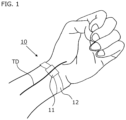
- FIG. 1 shows a schematic external configuration of a biological information analysis system 10 according to an embodiment of the present invention.
- FIG. 1 shows a state in which the biological information analysis system 10 is worn on the left wrist.
- the biological information analysis system 10 includes a main body 11 and a belt 12 that is fixed to the main body 11.
- the biological information analysis system 10 is a so-called wearable device, and is worn such that the main body 11 is in contact with the skin on the palm side of the wrist, and the main body 11 is located over a radial artery TD that lies beneath the skin.
- the device is configured to be worn on the radial artery TD in the present embodiment, the device may be configured to be worn on another superficial artery.
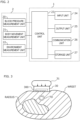
- FIG. 2 is a block diagram showing a hardware configuration of the biological information analysis system 10.
- the biological information analysis system 10 includes a measurement unit 2 and the biological information analysis device 1.
- the measurement unit 2 is a device that performs measurement to acquire information that is used to analyze biological information, and includes a blood pressure measurement unit 20, a body movement measurement unit 21, and an environment measurement unit 22.
- the configuration of the measurement unit 2 is not limited to that shown in FIG. 2 .
- a unit that measures biological information other than blood pressure or a body movement e.g. body temperature, blood-sugar level, or brain waves
- any unit that is not used in the example described below is not an essential component, and may be omitted from the biological information analysis system 10.
- the biological information analysis device 1 is a device that analyzes biological information based on information acquired from the measurement unit 2, and includes a control unit 23, an input unit 24, an output unit 25, a communication unit 26, and a storage unit 27.
- the units 20 to 27 are connected to each other so that signals can be exchanged between them via a local bus or other signal lines.
- the biological information analysis system 10 also includes a power supply (a battery), which is not shown.
- the blood pressure measurement unit 20 measures a pressure pulse wave from the radial artery TD by using a tonometry method.
- the tonometry method is for forming a flat area in the artery TD by pressing the artery from the skin with appropriate pressure, adjusting the balance between the internal pressure and the external pressure of the artery, and non-invasively measuring the pressure pulse wave using a pressure sensor.
- the body movement measurement unit 21 includes a tri-axis acceleration sensor, and measures the movement of the user's body (body movement) using this sensor.
- the body movement measurement unit 21 may include a circuit that converts the format of an output from the tri-axis acceleration sensor into a format that is readable to the control unit 23.
- the environment measurement unit 22 measures environmental information that may affect mental and physical conditions of the user (in particular the blood pressure).
- the environment measurement unit 22 may include, for example, an atmospheric temperature sensor, a humidity sensor, an illuminance sensor, an altitude sensor, a position sensor, and so on.
- the environment measurement unit 22 may include a circuit that converts the format of outputs from these sensors and so on into a format that is readable to the control unit 23.
- the control unit 23 performs various kinds of processing, such as controlling each unit of the biological information analysis system 10, acquiring data from the measurement unit 2, storing the acquired data in the storage unit 27, processing and analyzing data, and inputting and outputting data.
- the control unit 23 includes a hardware processor (hereinafter referred to as the "CPU") a ROM (Read Only Memory), a RAM (Random Access Memory), and so on. Processing that is performed by the control unit 23, which will be described later, is realized by the CPU reading and executing a program stored in the ROM or the storage unit 27.
- the RAM functions as a work memory that is used by the control unit 23 when performing various kinds of processing.
- Each of the constituent components of the embodiment such as a measurement unit, an indicator extraction unit, a processing unit, a determination unit, a risk database, an input unit, an output unit, a case database, and so on may be implemented as pieces of hardware in the biological information analysis system 10.
- the indicator extraction unit, the processing unit, and the determination unit may receive an executable program stored in the storage unit 27, and execute the program.
- the indicator extraction unit, the processing unit, and the determination unit may receive data from the blood pressure measurement unit 20, the body movement measurement unit 21, the environment measurement unit 22, the input unit 24, the output unit 25, the communication unit 26, the storage unit 27, and so on as required.
- Databases such as the risk database and the case database may be implemented using the storage unit 27 and so on, and store pieces of information that are arranged such that a data search and data accumulation can be easily performed.
- the configuration, operations, and so on of the biological information analysis system 10 are disclosed in JP 2016-082069A .
- the configuration, operations, and so on of the blood pressure measurement unit are disclosed in JP 2016-087003A .
- the input unit 24 provides an operation interface for the user.
- an operation button for example, an operation button, a switch, a touch panel, and so on may be used.
- the output unit 25 provides an interface that outputs information to the user.
- a display device such as a liquid crystal display
- an audio output device or a beeper that outputs information using audio
- an LED that outputs information by blinking
- a vibration device that outputs information by vibrating, and so on may be used.
- the communication unit 26 performs data communication with another device. Any data communication method such as a wireless LAN or Bluetooth (registered trademark) may be used.
- the storage unit 27 is a storage medium that can store data and from which data can be read out, and stores programs that are to be executed by the control unit 23, pieces of measurement data acquired from the measurement units, and various kinds of data acquired by processing the pieces of measurement data, and so on.
- the storage unit 27 is a medium that accumulates pieces of information that are to be stored, through an electrical, magnetic, optical, mechanical, or chemical action. For example, a flash memory is used.
- the storage unit 27 may be a portable unit such as a memory card, or built into the biological information analysis system 10.
- At least one unit or all units out of the body movement measurement unit 21, environment measurement unit 22, the control unit 23, the input unit 24, the output unit 25, and the storage unit 27 may be configured as a device that is separate from the main body 11. That is, as long as the blood pressure measurement unit 20 and the main body 11 that incorporates a circuit that controls the blood pressure measurement unit 20 are configured to be wearable on a wrist, the configurations of other units can be freely designed. If this is the case, the main body 11 cooperates with another unit via the communication unit 26.
- the functions of the control unit 23, the input unit 24, and the output unit 25 may be realized using a smartphone application, and required data may be acquired from an activity monitor that has the functions of the body movement measurement unit 21 and the environment measurement unit 22.
- a sensor that measures biological information other than blood pressure may be provided.
- a sleep sensor a pulse oximeter (SpO 2 sensor), a respiration sensor (a flow sensor), a blood-sugar level sensor, and the like may be combined.
- SpO 2 sensor pulse oximeter
- respiration sensor a flow sensor
- blood-sugar level sensor a blood-sugar level sensor
- the sensor (the blood pressure measurement unit 20) that measures blood pressure and the component (including the control unit 23 and so on) that performs processing to analyze blood pressure waveform data
- the component (including the control unit 23 and so on) that performs processing to analyze biological information
- the device that includes the combination of the measurement unit and the biological information analysis device is referred to as a biological information analysis system.
- these names are given for descriptive purposes, and the measurement unit and the component that performs processing to analyze biological information may be referred to as a biological information analysis device as a whole, or other names may be used.
- FIG. 3 is a cross-sectional view schematically showing the configuration of the blood pressure measurement unit 20 and a state in which measurement is performed.
- the blood pressure measurement unit 20 includes a pressure sensor 30 and a pressurizing mechanism 31 for pressing the pressure sensor 30 against a wrist.
- the pressure sensor 30 includes a plurality of pressure detection elements 300.
- the pressure detection elements 300 detect pressure and convert the pressure into an electrical signal.
- elements that utilize a piezoresistive effect may be preferably used.
- the pressurizing mechanism 31 includes, for example, an air bag and a pump that adjusts the internal pressure of the air bag. As a result of the control unit 23 controlling the pump to increase the internal pressure of the air bag, the air bag expands and the pressure sensor 30 is pressed against the surface of the skin.
- the pressurizing mechanism 31 may be any mechanism as long as it can adjust the pressing force of the pressure sensor 30 applied to the surface of the skin, and is not limited to a mechanism that uses an air bag.
- the control unit 23 controls the pressurizing mechanism 31 of the blood pressure measurement unit 20 to keep the pressing force of the pressure sensor 30 in an appropriate state (a tonometry state). Then, pressure signals detected by the pressure sensor 30 are sequentially acquired by the control unit 23. Pressure signals acquired from the pressure sensor 30 are generated by digitizing analogue physical amounts (e.g. voltage values) output by the pressure detection elements 300, through an A/D converter circuit or the like that employs a well-known technology. Preferable analogue values such as current values or resistance values may be employed as the analogue physical amounts, depending on the type of the pressure detection elements 300.
- analogue physical amounts e.g. voltage values
- Preferable analogue values such as current values or resistance values may be employed as the analogue physical amounts, depending on the type of the pressure detection elements 300.
- Signal processing such as the aforementioned A/D conversion may be performed using a predetermined circuit provided in the blood pressure measurement unit 20, or performed by another unit (not shown) provided between the blood pressure measurement unit 20 and the control unit 23.
- Each pressure signal acquired by the control unit 23 corresponds to an instantaneous value of the internal pressure of the radial artery TD. Therefore, it is possible to acquire time-series data regarding blood pressure waveforms by acquiring pressure signals with time granularity and continuity that make it possible to ascertain a blood pressure waveform for each heartbeat.
- the control unit 23 stores the pressure signals sequentially acquired from the pressure sensor 30, in the storage unit 27, together with information regarding points in time at which the pressure signals were measured.
- the control unit 23 may store the acquired pressure signals in the storage unit 27 without change, or store the pressure signals in the storage unit 27 after performing required signal processing on the pressure signals.
- Required signal processing includes, for example, processing that is performed to calibrate each pressure signal such that the amplitude of the pressure signal matches the blood pressure value (e.g. the brachial blood pressure), processing that is performed to reduce or remove noise in each pressure signal, and so on.
- FIG. 4 shows a blood pressure waveform measured by the blood pressure measurement unit 20.
- the horizontal axis indicates time and the vertical axis indicates blood pressure.
- the sampling frequency may be set to any value, it is preferably set to be no less than 100 Hz so that characteristics of the shape of a waveform corresponding to one heartbeat can be reproduced.
- the period of one heartbeat is approximately one second, and therefore approximately one hundred or more data points can be acquired on a waveform corresponding to one heartbeat.
- the blood pressure measurement unit 20 according to the present embodiment is advantageous in terms of the following.
- the blood pressure measurement unit 20 can measure a blood pressure waveform for each heartbeat. As a result, it is possible to acquire various indicators related to blood pressure, the state of the heart, cardiovascular risks, and so on, based on the characteristics of the shape of the blood pressure waveform. In addition, it is possible to monitor for instantaneous values of blood pressure. Therefore, it is possible to instantaneously detect a blood pressure surge (a sudden rise in the blood pressure value), and to detect changes in blood pressure and irregularities in a blood pressure waveform that may occur in a very short period of time (corresponding to one to several heartbeats) without missing them.
- a blood pressure surge a sudden rise in the blood pressure value
- a blood pressure meter As a portable blood pressure meter, a blood pressure meter that is to be worn on a wrist or an upper arm and employs an oscillometric method to measure blood pressure has come into practical use.
- a conventional portable blood pressure meter can only measure the mean value of blood pressure based on changes in the internal pressure of a cuff during a period of several seconds to a dozen or so seconds corresponding to a plurality of heartbeats, and cannot acquire time-series data regarding a blood pressure waveform for each heartbeat, unlike the blood pressure measurement unit 20 according to the present embodiment.
- the blood pressure measurement unit 20 can record time-series data regarding blood pressure waveforms. By acquiring time-series data regarding blood pressure waveforms, and, for example, discerning characteristics of the blood pressure waveform related to temporal changes, or performing a frequency analysis on the time-series data to extract a specific frequency component, it is possible to acquire various indicators related to blood pressure, the state of the heart, cardiovascular risks, and so on.
- the device employs a portable (wearable) type configuration, and less burden is placed on the user during measurement. Therefore, continuous measurement for a long time, and even 24-hour blood pressure monitoring, can be relatively easily performed. Also, since the device is of a portable type, changes in not only blood pressure under resting conditions, but also an ambulatory blood pressure (for example, during daily life or exercise) can be measured. As a result, it is possible to grasp how blood pressure is affected by behaviours in daily life (such as sleeping, eating, commuting, working, and taking medicine) and exercise, for example.
- the blood pressure measurement unit 20 can be easily combined or linked with other sensors. For example, it is possible to make an evaluation of a cause-effect relationship or a composite evaluation with information that can be acquired by other sensors (e.g. a body movement, environmental information such as an atmospheric temperature, biological information such as SpO 2 and respiration information).
- other sensors e.g. a body movement, environmental information such as an atmospheric temperature, biological information such as SpO 2 and respiration information.
- FIG. 5 is a block diagram illustrating processing that is performed by the biological information analysis device 1.
- the biological information analysis device 1 includes an indicator extraction unit 50 and a processing unit 51.
- processing performed by the indicator extraction unit 50 and the processing unit 51 may be realized by the control unit 23 executing a program that is required for the processing.
- the program may be stored in the storage unit 27.
- the control unit 23 executes the required program, the subject program stored in the ROM or storage unit 27 is loaded to the RAM. Then, the control unit 23 interprets and executes the program loaded to the RAM, using the CPU, to control each constituent component.
- At least one or all of the processing procedures executed by the indicator extraction unit 50 and the processing unit 51 may be realized using a circuit such as an ASIC or an FPGA.
- at least one or all of the processing procedures executed by the indicator extraction unit 50 and the processing unit 51 may be realized using a computer (e.g. a smartphone, a tablet terminal, a personal computer, or a cloud server) that is separate from the main body 11.
- the indicator extraction unit 50 acquires time-series data regarding blood pressure waveforms, which have been consecutively measured by the blood pressure measurement unit 20, from the storage unit 27.
- the indicator extraction unit 50 extracts, from the acquired time-series data regarding blood pressure waveforms, indicators that are related to characteristics of the blood pressure waveforms.
- characteristics of a blood pressure waveform include, for example, characteristics of the shape of a blood pressure waveform corresponding to one heartbeat, temporal changes in a blood pressure waveform, and frequency components of a blood pressure waveform.
- characteristics of a blood pressure waveform are not limited to those listed above.
- the extracted indicators are output to the processing unit 51.
- characteristics and indicators regarding a blood pressure waveform there are various characteristics and indicators regarding a blood pressure waveform, and the characteristics and indicators that are to be extracted may be designed or selected as appropriate according to the purpose of processing that is to be performed by the processing unit 51. Characteristics and indicators that can be extracted from measurement data regarding blood pressure waveforms according to the present embodiment will be described later in detail.
- the indicator extraction unit 50 may use measurement data that has been acquired by the body movement measurement unit 21 and/or measurement data that has been acquired by the environment measurement unit 22, in addition to measurement data regarding blood pressure waveforms. Also, although not shown in the drawings, pieces of measurement data that have been acquired by a sleep sensor, a SpO 2 sensor, a respiration sensor (a flow sensor), a blood-sugar level sensor, and the like may be combined with one another. By performing complex analysis on a plurality of kinds of measurement data acquired by a plurality of sensors, it is possible to perform more advanced information analysis of a blood pressure waveform.
- apnea examples include obstructive sleep apnea, central sleep apnea, and mixed sleep apnea.
- the processing unit 51 receives the indicators extracted by the indicator extraction unit 50.
- the processing unit 51 performs processing that is based on the received indicators.
- Various kinds of processing can be conceived of as processing that is based on the indicators.
- the processing unit 51 may provide the values of the extracted indicators or changes in the values to a user, a doctor, a public health nurse, or the like to prompt the utilization of the indicators in the fields of health care, treatment, health guidance, and so on.
- the processing unit 51 may estimate respiratory risks from the extracted indicators, or present guidelines for health maintenance or risk mitigation.
- the processing unit 51 may inform the user or his/her doctor, or perform control to prevent the user from performing an action that places burden on his/her heart and so on, or to prevent a cardiovascular event from occurring.
- FIG. 6 shows a waveform (a blood pressure waveform) of a pressure pulse wave from a radial artery corresponding to one heartbeat.
- the horizontal axis indicates time t (msec) and the vertical axis indicates blood pressure BP (mmHg).
- a blood pressure waveform is the waveform of a composite wave constituted by an "ejection wave” that is generated when the heart contracts and pumps out blood, and a “reflection wave” that is generated when an ejection wave is reflected at a branch point of a peripheral vessel or an artery.
- the following shows examples of characteristic points that can be extracted from a blood pressure waveform corresponding to one heartbeat.
- the indicator extraction unit 50 may use any algorithm to detect the above-described characteristic points.
- the indicator extraction unit 50 may perform computations to obtain an nth order differential waveform of a blood pressure waveform, and detect the zero-crossing points to extract the characteristic points (the inflection points) of the blood pressure waveform (the points F1, F2, F4, F5, and F6 can be detected from the first order differential waveform, and the point F3 can be detected from the second order differential waveform or the fourth order differential waveform).
- the indicator extraction unit 50 may read out, from the storage unit 27, a waveform pattern on which the characteristic points have been arranged in advance, and perform fitting of the waveform pattern to the target blood pressure waveform to specify the respective positions of the characteristic points.
- the indicator extraction unit 50 performs computations based on time t and pressure BP of each of the above-described characteristic points F1 to F6, and can thus obtain various kinds of information (values, characteristic amounts, indicators, etc.) from the blood pressure waveform of one heartbeat.
- information values, characteristic amounts, indicators, etc.
- tx and BPx respectively represent time and blood pressure corresponding to a characteristic point Fx.
- Basic statistics of these pieces of information can also be used as indicators.
- Basic statistics include, for example, representative values (a mean value, a median value, a mode value, the maximum value, the minimum value, and so on) and the degree of scatter (dispersion, a standard deviation, a coefficient of variation, and so on).
- Temporal changes in these pieces of information can also be used as indicators.
- the indicator extraction unit 50 can also acquire an indicator called BRS (Baroreflex Sensitivity) by performing computations on pieces of heartbeat information.
- BRS Baroreflex Sensitivity
- This indicator indicates the ability to regulate blood pressure to be constant.
- methods for calculating the indicator include a spontaneous sequence method. This is a method for only extracting a sequence in which the maximum blood pressure SBP and the pulse wave interval TA consecutively rise or fall over the period of three or more heartbeats in synchronization with each other, plotting the maximum blood pressure SBP and the pulse wave interval TA onto a two-dimensional plane, and defining the inclination of the regression line obtained through a least squares method as the BRS.
- the present example is an example in which a cardiac state and the risk of a cardiac disease occurring are represented as indicators based on instantaneous stroke volumes corresponding to blood pressure waveforms that are consecutively measured.
- a stroke volume (SV, which is also referred to as "cardiac output”) is known as an evaluation indicator that indicates a cardiac state and the risk of cardiac hypertrophy or cardiac expansion occurring.
- the stroke volume (SV) also indicates cardiac preload.
- Stiffness PP/Stiffness.
- ⁇ P denotes the difference between the value of blood pressure at the end of ejection and the value of blood pressure at the start of ejection
- P AV denotes the mean value of blood pressure during ejection
- T denotes the duration of ejection.
- the stroke volume cannot be measured for each heartbeat (spot blood pressure meters), accuracy is not satisfactory (pulse oximeters), and ambulatory blood pressure cannot be measured for a long period of time (e.g. overnight) (conventional devices using an invasive method or a tonometry method). Therefore, the present example proposes a method for easily ascertaining the cardiac state and the risk of a cardiac disease occurring, by using the stroke volume of every single beat measured over a long period of time.
- blood pressure waveform data is measured over a long period of time (e.g. overnight, or over several days), and the SV value of every single beat is obtained, and indicators that represent a cardiac state (cardiac state indicators) are obtained based on the distribution of SV values.
- the cardiac state indicators can be regarded as indicators that indicate the risk of a cardiac disease occurring.
- the SV value per heartbeat is an indicator that represents instantaneous cardiac load, and is an example of an instantaneous cardiac load indicator.
- the SV value per heartbeat is also referred to as an instantaneous SV value (an instantaneous stroke volume).
- cardiac state indicators are calculated based on the distribution of instantaneous SV values.
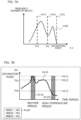
- FIG. 7(A) is a graph 4100 showing the distribution of instantaneous SV values measured in a measurement period.
- a dotted line 4101 in the figure represents the maximum value (saturation point) of the SV value of a user that is the subject of measurement. It is preferable that the SV value at the saturation point has been determined in advance by performing measurement under an exercise load. Alternatively, if the user performs exercise at more than a predetermined intensity in the measurement period, the maximum value of the SV value in the period may be employed as the saturation point.
- Exercise at a predetermined intensity is exercise at an intensity that saturates the SV value of a user that is the subject of measurement.
- a first cardiac state indicator INDEX 1 in the present example indicates the proportion of the frequency of SV values that are higher than a threshold value Th1. That is, the indicator INDEX 1 indicates the proportion of the frequency of the SV values between the dotted line 4101 and a dotted line 4102, relative to the overall frequency.
- the threshold value Th1 can be determined based on the SV value at the saturation point, and can be 80% of the SV value at the saturation point, for example. It can be said that the indicator INDEX1 indicates the proportion of the frequency of excessive preload. Therefore, it is possible to ascertain the risk of cardiac expansion occurring, based on the magnitude of the indicator INDEX1.
- the threshold value Th1 is not necessarily 80% of the SV value at the saturation point, and may be a value within the range of 70% to 90% of the SV value at the saturation point, or another value.
- a second cardiac state indicator INDEX2 in the present example indicates the proportion of the frequency of SV values that are lower than a threshold value Th2. That is, the indicator INDEX2 indicates the proportion of the frequency of the SV values that are no greater than the value indicated by a dotted line 4103, relative to the overall frequency.
- the threshold value Th2 is determined based on the lower limit of a typical reference value, and may be the same value for every user. For example, the threshold value Th2 may be a value that is based on 60 ml/beat. It can be said that the indicator INDEX2 indicates the proportion of the frequency of a drop in preload. Therefore, it is possible to ascertain the risk of a blood clot being formed, based on the magnitude of the indicator INDEX2.
- a third indicator INDEX3 in the present example indicates the SV value at the saturation point (the maximum instantaneous stroke volume).
- the saturation point SV value has been measured in advance by performing measurement under an exercise load.
- the saturation point SV value may be measured while the user is performing exercise during a measurement period, at an intensity that is no less than a predetermined intensity, and determined as the maximum value of the instantaneous SV value.
- the stroke volume SV is saturated when the expansion of the myocardial fibers exceeds the limit. If the saturation point SV value is small, it can be determined that the limit of expansion of the cardiac muscle has decreased and the capacity of the heart has decreased.
- the threshold value SV Th can be determined based on the lower limit of a typical reference value.
- the threshold value SV Th may be a value that is based on 60 ml/beat.
- a histogram of SV values as shown in FIG. 7(A) or the above-described indicators INDEX1 to INDEX3 that can be obtained from the histogram are displayed through screen display.
- a graph 4110 shows temporal changes in the SV value
- a dotted line 4111 shows the maximum value of the SV value
- a dotted line 4112 shows the threshold value Th1
- a dotted line 4113 shows the threshold value Th2.
- a display 4120 shows the values of the cardiac state indicators INDEX 1 to INDEX3.
- the values of the indicators INDEX1 to INDEX3 may be displayed in a different display mode with a different color or size so as to be emphasized, or displayed with a message indicating that the risk is high.
- the values of the indicators INDEX1 to INDEX3 may be displayed only when it has been determined that the risk is high.
- Such graph display makes it easier to ascertain the cardiac state of the user and the risk of a cardiac disease occurring, and also makes it easier to ascertain when a change in the stroke volume that may cause a cardiac disease has occurred.
- the instantaneous SV value is displayed in association with the state of the user and the state of the environment.
- a graph showing temporal changes in the SV value is displayed in a mode in which a bedtime period 4114 and a high-temperature period 4115 are discernible. This makes it possible to determine a probable cause of a change in the SV value. For example, it is possible to determine that a cause of an increase in the SV value during the bedtime period is a respiratory abnormality, and a cause of a decrease in the SV value during the high-temperature period is dehydration.
- the graph is useful for prevention and treatment.
- a sleeping state can be identified based on measurement data or measurement time data acquired by the body movement measurement unit 21. Temperature information such as that indicating a high temperature can be identified based on measurement data acquired by the environment measurement unit 22. These pieces of information may be acquired based on information that has been input by the user or a third party (such as a doctor) to the input unit 24.
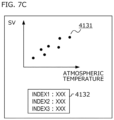
- measurement data displayed in the form of a scatter diagram that is defined by an axis indicating the SV value and an axis indicating the influencing factor, as shown in FIG. 7(C) is also useful.
- a scatter diagram in which each of the plotted points has an SV value and a measurement value of the influencing factor corresponding to the same point in time as the x coordinate value and the y coordinate value, respectively may be used.
- Such display is useful when determining whether or not the influencing factor thus displayed is a cause of a cardiac load. Therefore, by displaying a plurality of influencing factors as in FIG. 7(C) , it is possible to identify the cause of a cardiac load.
- FIG. 8 is a flowchart for processing according to the present example.
- step S101 the user's data regarding consecutive blood pressure waveforms is measured. That is, the user goes about his/her life as usual wearing the biological information analysis system 10.
- the blood pressure measurement unit 20 measures blood pressure waveforms, and store the measurement data in the local storage unit 27 or in a memory in a cloud server by transmitting the measurement data using the communication unit 26.
- the body movement measurement unit 21 and the environment measurement unit 22 stores data acquired from sensors in a memory in a similar manner.
- the length of the measurement period in step S101 is not specifically limited, and may be one night, several days, or longer.
- the output unit 25 may output, to the user, an instruction to perform exercise at least once in the measurement period, at an intensity that is no less than a predetermined intensity.
- the indicator extraction unit 50 calculates an SV value for each heartbeat, as an instantaneous cardiac load indicator. Specifically, the indicator extraction unit 50 first acquires measurement data regarding the measured blood pressure waveforms from the storage unit 27 or a cloud server, and divides the data into pieces that each correspond to one beat. This division can be realized by calculating ejection start points (the point F1 in FIG. 6 ) from the blood pressure waveform data, and determining data between two ejection start points that are adjacent to each other as data corresponding to one beat. Then, the indicator extraction unit 50 calculates an SV value for each beat.
- the indicator extraction unit 50 calculates a cardiac state indicator based on the distribution of SV values that each correspond to one heartbeat. More specifically, the indicator extraction unit 50 calculates, as the indicator INDEX1, the proportion of the number of beats that correspond to an SV value that is no less than the threshold value Th1, relative to the total number of beats. Also, the indicator extraction unit 50 calculates, as the indicator INDEX2, the proportion of the number of beats that correspond to an SV value that is less than the threshold value Th2, relative to the total number of beats. Also, the indicator extraction unit 50 calculates, as the indicator INDEX3, the maximum value of the instantaneous SV value, i.e. the saturation point SV value, in the measurement data.
- the INDEX1 and the INDEX2 are not necessarily the above-described proportions themselves, and may be values determined based on the proportions.
- the INDEX3 is not necessarily the saturation SV value, and may be a value determined based on the saturation SV value.
- step S104 the processing unit 51 outputs an image display that includes the cardiac state indicators INDEX1 to INDEX3 calculated in step S103.
- the processing unit 51 generates image data that includes the display 4120 that indicates the numerical values of the cardiac state indicators INDEX1 to INDEX3, and the graph 4110 that indicates temporal changes in the instantaneous SV value during the measurement period, and outputs the image data using the output unit 25.
- the horizontal axis and the vertical axis of the graph 4110 respectively indicate time and the SV value (the cardiac load indicator).
- the graph is displayed in a mode in which the threshold values Th1 and Th2 are discernible. Therefore, the user or a doctor or the like can easily ascertain a period of time in which cardiac load increases or decreases.
- the processing unit 51 may specify a period of time in which the user is in a specific state, based on the measurement data (and periods of time) acquired by the body movement measurement unit 21, and display a graph in a mode in which the period of time is discernible.
- the period 4114 is a period of time in which the user's body moves less frequently, and is a night-time period. Therefore, the processing unit 51 may specify the period 4114 as a bedtime period.
- the processing unit 51 may specify a period of time in which the user is in a moving state, based on a large amount of body movement of the user, or specify, as a wake-up time, a point in time at which the user's body movement starts increasing from that in the sleeping state.
- the processing unit 51 may specify a period of time in which the environment is in a specific state, based on the measurement data acquired by the environment measurement unit 22, and, for example, display a graph in a mode in which the period of time is discernible.
- the processing unit 51 may acquire an environmental temperature, and specify, as a high-temperature state period, a period of time in which the environmental temperature is no less than a threshold value.
- the processing unit 51 may display the cardiac state indicators INDEX1 to INDEX3 in a mode other than numerical values. Also, the processing unit 51 may display, for example, a message indicating that the risk of cardiac expansion occurring is high if the indicator INDEX1 is no less than a threshold value, a message indicating that the risk of a blood clot being formed if the indicator INDEX2 is no greater than a threshold value, and a message indicating that the risk of cardiac hypertrophy occurring is high if the indicator INDEX3 is no greater than a threshold value.
- FIG. 7(C) is an example of an output screen that includes a scatter diagram 4131 showing a relationship between an influencing factor (the temperature in this example) and the SV value, and a display 4132 showing the cardiac state indicators INDEX1 to INDEX3.
- the processing unit 51 acquires an SV value and measurement data regarding the temperature corresponding to the same point in time, from the storage unit 27 (or a cloud server), and generates image data for a scatter diagram 4131 that includes a plurality of points each having a temperature value and an SV value as the x coordinate value and the y coordinate value, respectively.
- the cardiac state indicators INDEX1 to INDEX3 are the same as those in FIG. 7(B) , and therefore descriptions thereof are omitted.
- the present example it is possible to make it easier to ascertain the cardiac state and the risk of a cardiac disease occurring, and also identify a cause that increase the risk of a cardiac disease occurring, using the SV value of every single beat measured during a long period of time.
- blood pressure waveform data of each beat is available, it is possible to ascertain an instantaneous cardiac load at the time a sharp change occurs in blood pressure.
- the present example is an example in which the risk of a cardiac disease occurring is represented as an indicator.
- Total peripheral resistance is known as an evaluation indicator indicating a cardiac state and the risk of cardiac hypertrophy occurring.
- the total peripheral resistance (TPR) is also an indicator that indicates cardiac afterload.
- MBP denotes a mean blood pressure
- PP denotes a pulse pressure
- PR denotes a pulse rate
- Stiffness denotes an aortic stiffness (the inverse of compliance C).
- the present example proposes a method for easily ascertaining a cardiac state and the risk of a cardiac disease occurring, by using the total peripheral resistance of every single beat measured over a long period of time.
- blood pressure waveform data is measured over a long period of time (e.g. overnight, or over several days), and the TPR value of every single beat is obtained, and indicators that represent a cardiac state (cardiac state indicators) are obtained based on the distribution of TPR values.
- the cardiac state indicators can be regarded as indicators that indicate the risk of a cardiac disease occurring.
- the TPR value per heartbeat is an indicator that represents instantaneous cardiac load, and is an example of an instantaneous cardiac load indicator.
- the TPR value per heartbeat is also referred to as an instantaneous TPR value (an instantaneous total peripheral resistance).
- cardiac state indicators are calculated based on the distribution of instantaneous TPR values.
- FIG. 9(A) is a graph 4200 showing the distribution of instantaneous TPR values measured in a measurement period.
- a cardiac state indicator INDEX4 in the present example indicates the proportion of the frequency of TPR values that are no less than a threshold value Th3. That is, the indicator INDEX4 indicates the proportion of the frequency of the TPR values that are no less than the value indicated by a dotted line 4201, relative to the overall frequency.
- Th3 can be determined based on the upper limit of a typical reference value. For example, the threshold value Th3 may be 1200 dynes ⁇ sec/cm 5 .
- a TPR value no less than the threshold value Th3 indicates that excessive afterload has occurred. Therefore, it can be said that the indicator INDEX4 indicates the proportion of the frequency of excessive afterload. Therefore, it is possible to ascertain the risk of cardiac hypertrophy occurring, based on the magnitude of the indicator INDEX4.
- a histogram of TPR values as shown in FIG. 9(A) or the above-described indicator INDEX4 that can be obtained from the histogram is displayed through screen display.
- the above-described indicator INDEX4 is displayed together with a graph showing temporal changes in the TPR value as shown in FIG. 9(B) .
- a graph 4210 shows temporal changes in the TPR value.
- a display 4220 shows the value of the cardiac state indicator INDEX4. If it has been determined that the risk of a cardiac disease occurring is high, the value of the indicator INDEX4 may be displayed in a different display mode with a different color or size so as to be emphasized, or displayed with a message indicating that the risk is high. Alternatively, the value of the indicator INDEX 4 may be displayed only when it has been determined that the risk is high.
- Such graph display makes it easier to ascertain the cardiac state of the user and the risk of a cardiac disease occurring, and also makes it easier to ascertain when a change in the TPR value that may cause a cardiac disease has occurred.
- a graph is displayed in a mode in which a bedtime 4214 and a wake-up time 4215 are discernible as shown in FIG. 9(B) .
- a meal period, an exercise period, and on are displayed.
- measurement data in the form of a scatter diagram that is defined by an axis indicating the TPR value and an axis indicating the influencing factor. Such display is useful for identification of the cause of cardiac load.
- influencing factors such as the wake-up time, the bedtime, and the atmospheric temperature can be acquired from the body movement measurement unit 21 and the environment measurement unit 22, or acquired based on an input from the user to the input unit 24.
- Example 1 Processing in the present example is performed according to the flowchart shown in FIG. 8 , as in Example 1. The following mainly describes differences from Example 1.
- step S101 is the same as that in Example 1.
- Step S102 is the same as that in Example 1 in that a blood pressure waveform is divided into pieces of data that each correspond to one beat.
- an instantaneous cardiac load indicator that is calculated from a piece of data corresponding to one beat is different from that in Example 1.
- the indicator extraction unit 50 calculates a TPR value for each heartbeat, as an instantaneous cardiac load indicator.
- step S103 the indicator extraction unit 50 calculates, as the indicator INDEX4, the proportion of the number of beats that correspond to a TPR value that is no less than the threshold value Th3, relative to the total number of beats.
- step S104 the processing unit 51 outputs a screen display as shown in FIG. 9(B) .
- the processing unit 51 displays a message indicating that there is a risk of cardiac hypertrophy occurring.
- the processing unit 51 generates a display screen in a mode in which points in time at which the user performed particular operations (such as the bedtime and the wake-up time) are discernible.
- the processing unit 51 may generate a display screen in a mode in which points in time at which the user or the environment is in a particular state are discernible as in Example 1.
- the present example it is possible to make it easier to ascertain the risk of a cardiac disease occurring, and also identify a cause that increases the risk of a cardiac disease occurring, using the TPR value of every single beat measured during a long period of time.
- TPR value of every single beat measured during a long period of time.
- blood pressure waveform data of each beat is available, it is possible to ascertain instantaneous cardiac load at the time a sharp change occurs in blood pressure.
- An increase in the instantaneous TPR value may be caused by apnea. Therefore, an increase in the instantaneous TPR value that occurs while the user is sleeping can be used as a sign indicating a risk of a respiratory abnormality (a cardiovascular disease) such as sleep apnea occurring.
- a respiratory abnormality a cardiovascular disease
- the processing unit 51 may output a message indicating that there is the risk of a respiratory abnormality occurring, from the output unit 25. Sleep can be detected based on measurement data and measurement time acquired by the body movement measurement unit 21, for example.
- an increase in the instantaneous TPR value may be caused by the atmospheric temperature.
- the cause of the increase may be a rise in the atmospheric temperature. Therefore, it is possible to determine whether or not the cause of an increase in the instantaneous TPR value is a rise in the atmospheric temperature by referring to measurement data of the atmospheric temperature at the time the instantaneous TPR value has increased. That is, it is possible to ascertain the atmospheric-temperature sensitivity of the user's blood pressure by examining the correlation between an increase in the instantaneous TPR value and the atmospheric temperature.
- the processing unit 51 may output, from the output unit 25, a message indicating that the atmospheric-temperature sensitivity of the user's blood pressure is high.
- the processing unit 51 may acquire temperature data during a period in which the instantaneous TPR has increased, and determine whether or not the atmospheric temperature has increased in the period. If it is determined that the atmospheric temperature has increased in the period, the processing unit 51 may specify the atmospheric temperature as the cause of the increase in the instantaneous TPR value in the morning-time period, and output a message indicating that, from the output unit 25.
Landscapes
- Health & Medical Sciences (AREA)
- Life Sciences & Earth Sciences (AREA)
- Engineering & Computer Science (AREA)
- Public Health (AREA)
- Biomedical Technology (AREA)
- General Health & Medical Sciences (AREA)
- Animal Behavior & Ethology (AREA)
- Veterinary Medicine (AREA)
- Heart & Thoracic Surgery (AREA)
- Medical Informatics (AREA)
- Physics & Mathematics (AREA)
- Pathology (AREA)
- Surgery (AREA)
- Molecular Biology (AREA)
- Biophysics (AREA)
- Cardiology (AREA)
- Physiology (AREA)
- Vascular Medicine (AREA)
- Pulmonology (AREA)
- Signal Processing (AREA)
- Psychiatry (AREA)
- Artificial Intelligence (AREA)
- Computer Vision & Pattern Recognition (AREA)
- Hematology (AREA)
- Ophthalmology & Optometry (AREA)
- Primary Health Care (AREA)
- Theoretical Computer Science (AREA)
- Epidemiology (AREA)
- Dentistry (AREA)
- Computer Hardware Design (AREA)
- Anesthesiology (AREA)
- Psychology (AREA)
- Otolaryngology (AREA)
- Nursing (AREA)
- Orthopedic Medicine & Surgery (AREA)
- Radiology & Medical Imaging (AREA)
- Acoustics & Sound (AREA)
- Child & Adolescent Psychology (AREA)
- Developmental Disabilities (AREA)
- Hospice & Palliative Care (AREA)
Claims (8)
- Dispositif d'analyse d'informations biologiques (1) comprenant :une unité d'extraction d'indicateur (50) pour extraire un indicateur indiquant un état cardiaque, à partir des données concernant les formes d'onde de pression sanguine qui sont mesurées consécutivement par un capteur (30) qui est configuré pour être portable sur une partie du corps d'un utilisateur et qui est capable de mesurer de manière non invasive une forme d'onde de pression sanguine pour chaque battement de coeur ; etune unité de traitement (51) configurée pour sortir l'indicateur extrait par l'unité d'extraction d'indicateur (50),l'unité d'extraction d'indicateur (50) étant configurée pour extraire une valeur d'un indicateur de charge cardiaque pour chaque battement de coeur, à partir des données concernant les formes d'onde de pression sanguine, et calculer l'indicateur indiquant l'état cardiaque, sur la base de caractéristiques associées à la distribution des valeurs de l'indicateur de charge cardiaque correspondant à une pluralité de battements cardiaques,l'unité d'extraction d'indicateur étant configurée pour déterminer la charge cardiaque sur la base d'un volume systolique et l'unité d'extraction d'indicateur étant configurée pour déterminer l'indicateur indiquant l'état cardiaque sur la base d'au moins un de :une fréquence avec laquelle le volume systolique dépasse une première valeur seuil dans la distribution, un état dans lequel le volume systolique instantané est plus grand que la première valeur seuil étant un état dans lequel une précharge excessive s'est produite et la première valeur seuil étant une valeur qui est déterminée sur la base de la valeur maximum du volume systolique instantané de l'utilisateur etune fréquence avec laquelle le volume systolique chute au-dessous d'une deuxième valeur seuil dans la distribution, un état dans lequel le volume systolique instantané est plus petit que la deuxième valeur seuil étant un état dans lequel la précharge est excessivement basse et la seconde valeur seuil est déterminée sur la base de la limite inférieure d'une valeur de référence typique oul'unité d'extraction d'indicateur étant configurée pour déterminer l'indicateur de charge cardiaque sur la base d'une résistance périphérique totale et l'unité d'extraction d'indicateur étant configurée pour déterminer l'indicateur indiquant l'état cardiaque sur la base d'une fréquence avec laquelle la résistance périphérique totale dépasse une troisième valeur seuil dans la distribution, un état dans lequel la résistance périphérique totale instantanée est plus grande que la troisième valeur seuil étant un état dans lequel une après-charge excessive s'est produite et la troisième valeur seuil étant déterminée sur la base de la limite supérieure d'une valeur de référence typique.
- Dispositif d'analyse d'informations biologiques (1) selon la revendication 1,
dans lequel l'unité d'extraction d'indicateur est configurée pour déterminer l'indicateur indiquant l'état cardiaque sur la base de la valeur maximum du volume systolique dans la distribution. - Dispositif d'analyse de données biologiques (1) selon la revendication 1 ou 2,
dans lequel l'unité de traitement (51) est configurée pour sortir des changements temporels dans les valeurs de l'indicateur de charge cardiaque correspondant à une pluralité de battements cardiaques et un indicateur indiquant l'état cardiaque. - Dispositif d'analyse d'informations biologiques (1) selon la revendication 3,
dans lequel l'unité de traitement (51) est configurée pour acquérir, à partir d'un second capteur, les données indiquant au moins un des mouvements du corps de l'utilisateur et l'état de l'environnement durant la mesure des formes d'onde de la pression sanguine et sortir les changements temporels dans l'indicateur de charge cardiaque en association avec au moins un des mouvements du corps de l'utilisateur et l'état de l'environnement. - Système d'analyse d'informations biologiques (1) selon la revendication 3 ou 4,
dans lequel l'unité de traitement (51) est configurée pour acquérir, à partir d'un second capteur, les données de série de temps indiquant l'état de l'environnement durant la mesure des formes d'onde de pression sanguine et sortir l'indicateur de charge cardiaque et l'état de l'environnement en association l'un avec l'autre. - Système (10) comprenant :un capteur (30) qui est configuré pour être portable sur une partie du corps d'un utilisateur et qui est capable de mesurer de manière non invasive une forme d'onde de pression sanguine pour chaque battement de coeur ; etle dispositif d'analyse d'informations biologiques (1) selon l'une quelconque des revendications 1 à 5 étant configuré pour analyser des informations biologiques, en utilisant les données concernant les formes d'onde de pression sanguine consécutivement mesurées par le capteur (30) .
- Programme qui entraîne un processeur à fonctionner comme l'unité d'extraction d'indicateur (50) et l'unité de traitement (51) du dispositif d'analyse d'informations biologiques (1) selon l'une quelconque des revendications 1 à 5.
- Procédé d'analyse d'informations biologiques comprenant :une étape d'acquisition de données concernant les formes d'onde de pression sanguine qui sont mesurées consécutivement par un capteur (30) qui est configuré pour être portable sur une partie du corps d'un utilisateur et qui est capable de mesurer de manière non invasive une forme d'onde de pression sanguine pour chaque battement de coeur ;une étape d'extraction d'une valeur d'un indicateur de charge cardiaque pour chaque battement de coeur, à partir des données concernant les formes d'onde de pression sanguine, en utilisant au moins une interface de processeur ;une étape de calcul d'un indicateur indiquant un état cardiaque, sur la base de caractéristiques associées à la distribution de valeurs de l'indicateur de charge cardiaque correspondant à une pluralité de battements de coeur, en utilisant au moins une interface de processeur ;etune étape de sortie d'un indicateur indiquant l'état cardiaque, en utilisant au moins une interface de processeur,l'indicateur de charge cardiaque étant déterminé sur la base d'un volume systolique et l'indicateur indiquant l'état cardiaque étant déterminé sur la base d'au moins une de :une fréquence avec laquelle le volume systolique dépasse une première valeur seuil dans la distribution, un état dans lequel le volume systolique instantané est plus grand que la première valeur seuil étant un état dans lequel une précharge excessive s'est produite et la première valeur seuil est une valeur qui est déterminée sur la base de la valeur maximum du volume systolique instantané de l'utilisateur etune fréquence avec laquelle le volume systolique chute au-dessous d'une deuxième valeur seuil dans la distribution, un état dans lequel le volume systolique instantané est plus petit que la deuxième valeur seuil étant un état dans lequel la précharge est excessivement basse et la deuxième valeur seuil est déterminée sur la base d'une valeur de référence typique oul'indicateur de charge cardiaque étant déterminé sur la base d'une résistance périphérique totale et l'indicateur indiquant l'état cardiaque étant déterminé sur la base d'une fréquence avec laquelle la résistance périphérique totale dépasse une troisième valeur seuil dans la distribution, un état dans lequel la résistance périphérique totale instantanée est plus grande que la troisième valeur seuil étant un état dans lequel une après-charge excessive s'est produite et la troisième valeur seuil est déterminée sur la base de la limite supérieure d'une valeur de référence typique.
Applications Claiming Priority (2)
| Application Number | Priority Date | Filing Date | Title |
|---|---|---|---|
| JP2016082463 | 2016-04-15 | ||
| PCT/JP2017/015281 WO2017179700A1 (fr) | 2016-04-15 | 2017-04-14 | Dispositif et système d'analyse d'informations biologiques, et programme associé |
Publications (3)
| Publication Number | Publication Date |
|---|---|
| EP3427656A1 EP3427656A1 (fr) | 2019-01-16 |
| EP3427656A4 EP3427656A4 (fr) | 2019-12-11 |
| EP3427656B1 true EP3427656B1 (fr) | 2023-03-29 |
Family
ID=60041783
Family Applications (11)
| Application Number | Title | Priority Date | Filing Date |
|---|---|---|---|
| EP17782510.6A Active EP3427650B1 (fr) | 2016-04-15 | 2017-04-14 | Dispositif, système et programme d'analyse d'informations biologiques |
| EP17782511.4A Ceased EP3427651A4 (fr) | 2016-04-15 | 2017-04-14 | Dispositif et système d'analyse d'information biologique et programme correspondant |
| EP17782508.0A Active EP3427649B1 (fr) | 2016-04-15 | 2017-04-14 | Dispositif, système et programme d'analyse d'informations biologiques |
| EP17782514.8A Active EP3427652B1 (fr) | 2016-04-15 | 2017-04-14 | Dispositif, système et programme d'analyse d'informations biologiques |
| EP17782506.4A Ceased EP3427648A4 (fr) | 2016-04-15 | 2017-04-14 | Dispositif d'analyse d'informations biologiques, système d'analyse d'informations biologiques, programme, et procédé d'analyse d'informations biologiques |
| EP17782509.8A Active EP3427655B1 (fr) | 2016-04-15 | 2017-04-14 | Dispositif, système et programme d'analyse d'informations biologiques |
| EP17782507.2A Active EP3430989B1 (fr) | 2016-04-15 | 2017-04-14 | Dispositif, système et programme d'analyse d'informations biologiques, et procédé d'analyse d'informations biologiques |
| EP17782516.3A Ceased EP3427654A4 (fr) | 2016-04-15 | 2017-04-14 | Dispositif et système d'analyse d'informations biologiques, et programme |
| EP17782512.2A Active EP3440995B1 (fr) | 2016-04-15 | 2017-04-14 | Dispositif, système et programme d'analyse d'informations biologiques |
| EP17782513.0A Active EP3427656B1 (fr) | 2016-04-15 | 2017-04-14 | Dispositif, système, et programme d'analyse d'informations biologiques |
| EP17782515.5A Active EP3427653B1 (fr) | 2016-04-15 | 2017-04-14 | Dispositif et système d'analyse d'information biologique et programme associé |
Family Applications Before (9)
| Application Number | Title | Priority Date | Filing Date |
|---|---|---|---|
| EP17782510.6A Active EP3427650B1 (fr) | 2016-04-15 | 2017-04-14 | Dispositif, système et programme d'analyse d'informations biologiques |
| EP17782511.4A Ceased EP3427651A4 (fr) | 2016-04-15 | 2017-04-14 | Dispositif et système d'analyse d'information biologique et programme correspondant |
| EP17782508.0A Active EP3427649B1 (fr) | 2016-04-15 | 2017-04-14 | Dispositif, système et programme d'analyse d'informations biologiques |
| EP17782514.8A Active EP3427652B1 (fr) | 2016-04-15 | 2017-04-14 | Dispositif, système et programme d'analyse d'informations biologiques |
| EP17782506.4A Ceased EP3427648A4 (fr) | 2016-04-15 | 2017-04-14 | Dispositif d'analyse d'informations biologiques, système d'analyse d'informations biologiques, programme, et procédé d'analyse d'informations biologiques |
| EP17782509.8A Active EP3427655B1 (fr) | 2016-04-15 | 2017-04-14 | Dispositif, système et programme d'analyse d'informations biologiques |
| EP17782507.2A Active EP3430989B1 (fr) | 2016-04-15 | 2017-04-14 | Dispositif, système et programme d'analyse d'informations biologiques, et procédé d'analyse d'informations biologiques |
| EP17782516.3A Ceased EP3427654A4 (fr) | 2016-04-15 | 2017-04-14 | Dispositif et système d'analyse d'informations biologiques, et programme |
| EP17782512.2A Active EP3440995B1 (fr) | 2016-04-15 | 2017-04-14 | Dispositif, système et programme d'analyse d'informations biologiques |
Family Applications After (1)
| Application Number | Title | Priority Date | Filing Date |
|---|---|---|---|
| EP17782515.5A Active EP3427653B1 (fr) | 2016-04-15 | 2017-04-14 | Dispositif et système d'analyse d'information biologique et programme associé |
Country Status (5)
| Country | Link |
|---|---|
| US (11) | US11363961B2 (fr) |
| EP (11) | EP3427650B1 (fr) |
| JP (11) | JP6679006B2 (fr) |
| CN (11) | CN109069013B (fr) |
| WO (11) | WO2017179701A1 (fr) |
Families Citing this family (139)
| Publication number | Priority date | Publication date | Assignee | Title |
|---|---|---|---|---|
| US11328152B2 (en) * | 2019-06-17 | 2022-05-10 | Pixart Imaging Inc. | Recognition system employing thermal sensor |
| US11317873B2 (en) * | 2017-08-16 | 2022-05-03 | Seiko Epson Corporation | Biological analysis device, biological analysis method, and program |
| JP7124460B2 (ja) * | 2018-05-31 | 2022-08-24 | セイコーエプソン株式会社 | 生体解析装置、生体解析方法およびプログラム |
| US11116414B2 (en) * | 2017-08-16 | 2021-09-14 | Seiko Epson Corporation | Biological analysis device, biological analysis method, and program |
| US11253205B2 (en) * | 2017-08-16 | 2022-02-22 | Seiko Epson Corporation | Pulse pressure and blood pressure analysis device, pulse pressure and blood pressure analysis method, and program |
| CN107550481A (zh) * | 2017-08-24 | 2018-01-09 | 京东方科技集团股份有限公司 | 一种便携设备及血压测量方法 |
| CN109833037B (zh) * | 2017-11-29 | 2022-05-17 | 华为终端有限公司 | 一种监测血压状态的设备和计算机可读存储介质 |
| JP2019115602A (ja) * | 2017-12-27 | 2019-07-18 | オムロンヘルスケア株式会社 | 生体情報測定装置、測定制御方法およびプログラム |
| JP6897558B2 (ja) * | 2017-12-27 | 2021-06-30 | オムロンヘルスケア株式会社 | 情報処理装置、情報処理方法及び情報処理プログラム |
| WO2019138327A1 (fr) * | 2018-01-09 | 2019-07-18 | Shankar Rohini | Système de surveillance d'ecg et d'auscultation pouvant être porté avec sos et surveillance à distance |
| JP7091701B2 (ja) | 2018-02-22 | 2022-06-28 | オムロンヘルスケア株式会社 | 血圧測定装置、血圧測定方法およびプログラム、呼吸支援装置 |
| JP6626951B2 (ja) * | 2018-03-12 | 2019-12-25 | パラマウントベッド株式会社 | 電動家具 |
| CN115177116B (zh) | 2018-03-12 | 2024-06-25 | 八乐梦床业株式会社 | 电动家具 |
| KR102562817B1 (ko) * | 2018-05-16 | 2023-08-02 | 삼성전자주식회사 | 혈압 측정을 위한 전자 장치 및 그의 동작 방법 |
| KR20200131289A (ko) * | 2018-06-05 | 2020-11-23 | 카즈오 타니 | 혈류량 측정 시스템 |
| CN112638249B (zh) * | 2018-08-23 | 2024-07-26 | 深圳迈瑞生物医疗电子股份有限公司 | 医疗设备、呼吸暂停事件监测方法和装置 |
| CN112584738B (zh) * | 2018-08-30 | 2024-04-23 | 奥林巴斯株式会社 | 记录装置、图像观察装置、观察系统、观察系统的控制方法及存储介质 |
| KR102655676B1 (ko) * | 2018-10-10 | 2024-04-05 | 삼성전자주식회사 | 혈압 추정 장치 및 방법과, 혈압 추정 지원 장치 |
| KR102657522B1 (ko) * | 2018-11-06 | 2024-04-15 | 삼성전자주식회사 | 저혈압의 발생을 식별하기 위한 전자 장치 및 그의 동작 방법 |
| CN109674474B (zh) * | 2018-11-30 | 2021-12-03 | 深圳和而泰智能控制股份有限公司 | 睡眠呼吸暂停识别方法、设备及计算机可读介质 |
| CN109731314B (zh) * | 2019-01-25 | 2020-12-29 | 杨彬 | 一种基于云端的脑梗塞康复训练装置 |
| DE102019102178A1 (de) * | 2019-01-29 | 2020-07-30 | Fresenius Medical Care Deutschland Gmbh | Verfahren zum Bestimmen eines Blutdruckwerts eines Patienten, Blutdruckmessgerät und Dialysesystem |
| JP7320807B2 (ja) * | 2019-02-14 | 2023-08-04 | デルタ工業株式会社 | 体調判定装置及びコンピュータプログラム |
| JP7225893B2 (ja) * | 2019-02-18 | 2023-02-21 | オムロンヘルスケア株式会社 | 血圧値解析支援装置、血圧値解析支援システム、血圧値解析支援方法、およびプログラム |
| JP7127571B2 (ja) * | 2019-02-18 | 2022-08-30 | オムロンヘルスケア株式会社 | 血圧レベル変化検出装置、血圧レベル変化検出方法、およびプログラム |
| US12083380B2 (en) | 2019-03-11 | 2024-09-10 | Rom Technologies, Inc. | Bendable sensor device for monitoring joint extension and flexion |
| US11541274B2 (en) | 2019-03-11 | 2023-01-03 | Rom Technologies, Inc. | System, method and apparatus for electrically actuated pedal for an exercise or rehabilitation machine |
| JP6871546B2 (ja) * | 2019-03-12 | 2021-05-12 | 群馬県 | 脈圧波形の異常を検出する検出方法及び検出装置 |
| JP7256049B2 (ja) * | 2019-03-25 | 2023-04-11 | オムロンヘルスケア株式会社 | 血圧関連情報表示装置、血圧関連情報表示方法、およびプログラム |
| JP7326802B2 (ja) * | 2019-03-25 | 2023-08-16 | オムロンヘルスケア株式会社 | 測定促進装置、方法及びプログラム |
| KR20210153081A (ko) * | 2019-04-12 | 2021-12-16 | 가부시키가이샤 한도오따이 에네루기 켄큐쇼 | 표시 장치 및 시스템 |
| CN113811238B (zh) * | 2019-05-08 | 2024-04-19 | 长桑数字技术(青岛)有限公司 | 血压计、血压计控制方法及检测有效的脉搏波的方法 |
| US12102878B2 (en) | 2019-05-10 | 2024-10-01 | Rehab2Fit Technologies, Inc. | Method and system for using artificial intelligence to determine a user's progress during interval training |
| US11904207B2 (en) | 2019-05-10 | 2024-02-20 | Rehab2Fit Technologies, Inc. | Method and system for using artificial intelligence to present a user interface representing a user's progress in various domains |
| US11433276B2 (en) | 2019-05-10 | 2022-09-06 | Rehab2Fit Technologies, Inc. | Method and system for using artificial intelligence to independently adjust resistance of pedals based on leg strength |
| US11801423B2 (en) | 2019-05-10 | 2023-10-31 | Rehab2Fit Technologies, Inc. | Method and system for using artificial intelligence to interact with a user of an exercise device during an exercise session |
| US11957960B2 (en) | 2019-05-10 | 2024-04-16 | Rehab2Fit Technologies Inc. | Method and system for using artificial intelligence to adjust pedal resistance |
| US11833393B2 (en) | 2019-05-15 | 2023-12-05 | Rehab2Fit Technologies, Inc. | System and method for using an exercise machine to improve completion of an exercise |
| JP7328044B2 (ja) * | 2019-07-22 | 2023-08-16 | マクセル株式会社 | 検出装置および検出方法 |
| KR102567952B1 (ko) | 2019-09-11 | 2023-08-16 | 삼성전자주식회사 | 생체정보 추정 장치 및 방법 |
| JP7183131B2 (ja) * | 2019-09-11 | 2022-12-05 | 日立造船株式会社 | 情報処理装置、運転支援システム、情報処理方法、および情報処理プログラム |
| JP2021040969A (ja) * | 2019-09-11 | 2021-03-18 | オムロンヘルスケア株式会社 | 判定アルゴリズムを生成する方法、判定アルゴリズム、判定システム、判定方法、プログラム、および記録媒体 |
| US11701548B2 (en) | 2019-10-07 | 2023-07-18 | Rom Technologies, Inc. | Computer-implemented questionnaire for orthopedic treatment |
| US11071597B2 (en) | 2019-10-03 | 2021-07-27 | Rom Technologies, Inc. | Telemedicine for orthopedic treatment |
| US12402804B2 (en) | 2019-09-17 | 2025-09-02 | Rom Technologies, Inc. | Wearable device for coupling to a user, and measuring and monitoring user activity |
| US12469587B2 (en) | 2019-10-03 | 2025-11-11 | Rom Technologies, Inc. | Systems and methods for assigning healthcare professionals to remotely monitor users performing treatment plans on electromechanical machines |
| US11515028B2 (en) | 2019-10-03 | 2022-11-29 | Rom Technologies, Inc. | Method and system for using artificial intelligence and machine learning to create optimal treatment plans based on monetary value amount generated and/or patient outcome |
| US12427376B2 (en) | 2019-10-03 | 2025-09-30 | Rom Technologies, Inc. | Systems and methods for an artificial intelligence engine to optimize a peak performance |
| US11955221B2 (en) | 2019-10-03 | 2024-04-09 | Rom Technologies, Inc. | System and method for using AI/ML to generate treatment plans to stimulate preferred angiogenesis |
| US12220201B2 (en) | 2019-10-03 | 2025-02-11 | Rom Technologies, Inc. | Remote examination through augmented reality |
| US11915815B2 (en) | 2019-10-03 | 2024-02-27 | Rom Technologies, Inc. | System and method for using artificial intelligence and machine learning and generic risk factors to improve cardiovascular health such that the need for additional cardiac interventions is mitigated |
| US11270795B2 (en) | 2019-10-03 | 2022-03-08 | Rom Technologies, Inc. | Method and system for enabling physician-smart virtual conference rooms for use in a telehealth context |
| US12327623B2 (en) | 2019-10-03 | 2025-06-10 | Rom Technologies, Inc. | System and method for processing medical claims |
| US12246222B2 (en) | 2019-10-03 | 2025-03-11 | Rom Technologies, Inc. | Method and system for using artificial intelligence to assign patients to cohorts and dynamically controlling a treatment apparatus based on the assignment during an adaptive telemedical session |
| US12230381B2 (en) | 2019-10-03 | 2025-02-18 | Rom Technologies, Inc. | System and method for an enhanced healthcare professional user interface displaying measurement information for a plurality of users |
| US12224052B2 (en) | 2019-10-03 | 2025-02-11 | Rom Technologies, Inc. | System and method for using AI, machine learning and telemedicine for long-term care via an electromechanical machine |
| US11265234B2 (en) | 2019-10-03 | 2022-03-01 | Rom Technologies, Inc. | System and method for transmitting data and ordering asynchronous data |
| US11961603B2 (en) | 2019-10-03 | 2024-04-16 | Rom Technologies, Inc. | System and method for using AI ML and telemedicine to perform bariatric rehabilitation via an electromechanical machine |
| US11282604B2 (en) | 2019-10-03 | 2022-03-22 | Rom Technologies, Inc. | Method and system for use of telemedicine-enabled rehabilitative equipment for prediction of secondary disease |
| US12555667B2 (en) | 2019-10-03 | 2026-02-17 | Rom Technologies, Inc. | Systems and methods for using AI/ML and for cardiac and pulmonary treatment via an electromechanical machine related to urologic disorders and antecedents and sequelae of certain urologic surgeries |
| US12230382B2 (en) | 2019-10-03 | 2025-02-18 | Rom Technologies, Inc. | Systems and methods for using artificial intelligence and machine learning to predict a probability of an undesired medical event occurring during a treatment plan |
| US11887717B2 (en) | 2019-10-03 | 2024-01-30 | Rom Technologies, Inc. | System and method for using AI, machine learning and telemedicine to perform pulmonary rehabilitation via an electromechanical machine |
| US12589279B2 (en) | 2019-10-03 | 2026-03-31 | Rom Technologies, Inc. | Systems and methods of using artificial intelligence and machine learning for generating an alignment plan capable of enabling the aligning of a user's body during a treatment session |
| US12562243B2 (en) | 2019-10-03 | 2026-02-24 | Rom Technologies, Inc. | System and method for processing medical claims using biometric signatures |
| US11317975B2 (en) | 2019-10-03 | 2022-05-03 | Rom Technologies, Inc. | Method and system for treating patients via telemedicine using sensor data from rehabilitation or exercise equipment |
| US11337648B2 (en) | 2020-05-18 | 2022-05-24 | Rom Technologies, Inc. | Method and system for using artificial intelligence to assign patients to cohorts and dynamically controlling a treatment apparatus based on the assignment during an adaptive telemedical session |
| US11282608B2 (en) | 2019-10-03 | 2022-03-22 | Rom Technologies, Inc. | Method and system for using artificial intelligence and machine learning to provide recommendations to a healthcare provider in or near real-time during a telemedicine session |
| US11830601B2 (en) | 2019-10-03 | 2023-11-28 | Rom Technologies, Inc. | System and method for facilitating cardiac rehabilitation among eligible users |
| US11756666B2 (en) | 2019-10-03 | 2023-09-12 | Rom Technologies, Inc. | Systems and methods to enable communication detection between devices and performance of a preventative action |
| US12100499B2 (en) | 2020-08-06 | 2024-09-24 | Rom Technologies, Inc. | Method and system for using artificial intelligence and machine learning to create optimal treatment plans based on monetary value amount generated and/or patient outcome |
| US12154672B2 (en) | 2019-10-03 | 2024-11-26 | Rom Technologies, Inc. | Method and system for implementing dynamic treatment environments based on patient information |
| US12347543B2 (en) | 2019-10-03 | 2025-07-01 | Rom Technologies, Inc. | Systems and methods for using artificial intelligence to implement a cardio protocol via a relay-based system |
| US12380984B2 (en) | 2019-10-03 | 2025-08-05 | Rom Technologies, Inc. | Systems and methods for using artificial intelligence and machine learning to generate treatment plans having dynamically tailored cardiac protocols for users to manage a state of an electromechanical machine |
| US11978559B2 (en) | 2019-10-03 | 2024-05-07 | Rom Technologies, Inc. | Systems and methods for remotely-enabled identification of a user infection |
| US11139060B2 (en) | 2019-10-03 | 2021-10-05 | Rom Technologies, Inc. | Method and system for creating an immersive enhanced reality-driven exercise experience for a user |
| US11069436B2 (en) | 2019-10-03 | 2021-07-20 | Rom Technologies, Inc. | System and method for use of telemedicine-enabled rehabilitative hardware and for encouraging rehabilitative compliance through patient-based virtual shared sessions with patient-enabled mutual encouragement across simulated social networks |
| US11101028B2 (en) | 2019-10-03 | 2021-08-24 | Rom Technologies, Inc. | Method and system using artificial intelligence to monitor user characteristics during a telemedicine session |
| US12150792B2 (en) | 2019-10-03 | 2024-11-26 | Rom Technologies, Inc. | Augmented reality placement of goniometer or other sensors |
| US12548656B2 (en) | 2019-10-03 | 2026-02-10 | Rom Technologies, Inc. | System and method for an enhanced patient user interface displaying real-time measurement information during a telemedicine session |
| US11075000B2 (en) | 2019-10-03 | 2021-07-27 | Rom Technologies, Inc. | Method and system for using virtual avatars associated with medical professionals during exercise sessions |
| US11515021B2 (en) | 2019-10-03 | 2022-11-29 | Rom Technologies, Inc. | Method and system to analytically optimize telehealth practice-based billing processes and revenue while enabling regulatory compliance |
| US12478837B2 (en) | 2019-10-03 | 2025-11-25 | Rom Technologies, Inc. | Method and system for monitoring actual patient treatment progress using sensor data |
| US11282599B2 (en) | 2019-10-03 | 2022-03-22 | Rom Technologies, Inc. | System and method for use of telemedicine-enabled rehabilitative hardware and for encouragement of rehabilitative compliance through patient-based virtual shared sessions |
| US11087865B2 (en) | 2019-10-03 | 2021-08-10 | Rom Technologies, Inc. | System and method for use of treatment device to reduce pain medication dependency |
| US12020799B2 (en) | 2019-10-03 | 2024-06-25 | Rom Technologies, Inc. | Rowing machines, systems including rowing machines, and methods for using rowing machines to perform treatment plans for rehabilitation |
| US12020800B2 (en) | 2019-10-03 | 2024-06-25 | Rom Technologies, Inc. | System and method for using AI/ML and telemedicine to integrate rehabilitation for a plurality of comorbid conditions |
| US11923065B2 (en) | 2019-10-03 | 2024-03-05 | Rom Technologies, Inc. | Systems and methods for using artificial intelligence and machine learning to detect abnormal heart rhythms of a user performing a treatment plan with an electromechanical machine |
| US11955220B2 (en) | 2019-10-03 | 2024-04-09 | Rom Technologies, Inc. | System and method for using AI/ML and telemedicine for invasive surgical treatment to determine a cardiac treatment plan that uses an electromechanical machine |
| US12539446B2 (en) | 2019-10-03 | 2026-02-03 | Rom Technologies, Inc. | Method and system for using sensors to optimize a user treatment plan in a telemedicine environment |
| US11325005B2 (en) | 2019-10-03 | 2022-05-10 | Rom Technologies, Inc. | Systems and methods for using machine learning to control an electromechanical device used for prehabilitation, rehabilitation, and/or exercise |
| US12420143B1 (en) | 2019-10-03 | 2025-09-23 | Rom Technologies, Inc. | System and method for enabling residentially-based cardiac rehabilitation by using an electromechanical machine and educational content to mitigate risk factors and optimize user behavior |
| US11955222B2 (en) | 2019-10-03 | 2024-04-09 | Rom Technologies, Inc. | System and method for determining, based on advanced metrics of actual performance of an electromechanical machine, medical procedure eligibility in order to ascertain survivability rates and measures of quality-of-life criteria |
| US11915816B2 (en) | 2019-10-03 | 2024-02-27 | Rom Technologies, Inc. | Systems and methods of using artificial intelligence and machine learning in a telemedical environment to predict user disease states |
| US12062425B2 (en) | 2019-10-03 | 2024-08-13 | Rom Technologies, Inc. | System and method for implementing a cardiac rehabilitation protocol by using artificial intelligence and standardized measurements |
| US20210134458A1 (en) | 2019-10-03 | 2021-05-06 | Rom Technologies, Inc. | System and method to enable remote adjustment of a device during a telemedicine session |
| US12420145B2 (en) | 2019-10-03 | 2025-09-23 | Rom Technologies, Inc. | Systems and methods of using artificial intelligence and machine learning for generating alignment plans to align a user with an imaging sensor during a treatment session |
| US12191018B2 (en) | 2019-10-03 | 2025-01-07 | Rom Technologies, Inc. | System and method for using artificial intelligence in telemedicine-enabled hardware to optimize rehabilitative routines capable of enabling remote rehabilitative compliance |
| US12087426B2 (en) | 2019-10-03 | 2024-09-10 | Rom Technologies, Inc. | Systems and methods for using AI ML to predict, based on data analytics or big data, an optimal number or range of rehabilitation sessions for a user |
| US12605613B2 (en) | 2022-05-04 | 2026-04-21 | Rom Technologies, Inc. | Systems and methods for using smart exercise devices to perform cardiovascular rehabilitation |
| US12176089B2 (en) | 2019-10-03 | 2024-12-24 | Rom Technologies, Inc. | System and method for using AI ML and telemedicine for cardio-oncologic rehabilitation via an electromechanical machine |
| US11955223B2 (en) | 2019-10-03 | 2024-04-09 | Rom Technologies, Inc. | System and method for using artificial intelligence and machine learning to provide an enhanced user interface presenting data pertaining to cardiac health, bariatric health, pulmonary health, and/or cardio-oncologic health for the purpose of performing preventative actions |
| US20230245750A1 (en) | 2019-10-03 | 2023-08-03 | Rom Technologies, Inc. | Systems and methods for using elliptical machine to perform cardiovascular rehabilitation |
| US11826613B2 (en) | 2019-10-21 | 2023-11-28 | Rom Technologies, Inc. | Persuasive motivation for orthopedic treatment |
| US12562271B2 (en) | 2019-11-06 | 2026-02-24 | Rom Technologies, Inc. | System for remote treatment utilizing privacy controls |
| US12424319B2 (en) | 2019-11-06 | 2025-09-23 | Rom Technologies, Inc. | System for remote treatment utilizing privacy controls |
| JP7708769B2 (ja) * | 2020-01-10 | 2025-07-15 | プレノシス,インコーポレイテッド | ストリーミングデータ環境のための時間依存トリガ |
| KR102856342B1 (ko) * | 2020-01-23 | 2025-09-04 | 삼성전자주식회사 | 생체정보 추정 장치 및 방법 |
| KR102605901B1 (ko) * | 2020-03-10 | 2023-11-23 | 삼성전자주식회사 | 생체정보 추정 장치 및 방법 |
| US11107591B1 (en) | 2020-04-23 | 2021-08-31 | Rom Technologies, Inc. | Method and system for describing and recommending optimal treatment plans in adaptive telemedical or other contexts |
| JP7462300B2 (ja) * | 2020-05-08 | 2024-04-05 | 公立大学法人北九州市立大学 | 血圧測定装置、血圧測定システム、乗物、及び血圧測定方法 |
| CN111528825A (zh) * | 2020-05-14 | 2020-08-14 | 浙江大学 | 一种光电容积脉搏波信号优化方法 |
| JP6916573B1 (ja) * | 2020-06-01 | 2021-08-11 | 株式会社Arblet | 情報処理システム、サーバ、情報処理方法及びプログラム |
| WO2021246346A1 (fr) * | 2020-06-01 | 2021-12-09 | 株式会社Arblet | Système de traitement d'informations, serveur, procédé de traitement d'informations, et programme |
| CN111685749B (zh) * | 2020-06-18 | 2022-09-02 | 郑昕 | 一种脉搏压力波数学模型的构建方法 |
| WO2021262809A1 (fr) | 2020-06-26 | 2021-12-30 | Rom Technologies, Inc. | Système, procédé et appareil pour ancrer un dispositif électronique et mesurer un angle d'articulation |
| JP7390990B2 (ja) * | 2020-07-17 | 2023-12-04 | 東京エレクトロン株式会社 | 表示方法及び基板処理装置 |
| JP7614584B2 (ja) * | 2020-08-19 | 2025-01-16 | セコム株式会社 | 検出装置、検出方法及びプログラム |
| US12367960B2 (en) | 2020-09-15 | 2025-07-22 | Rom Technologies, Inc. | System and method for using AI ML and telemedicine to perform bariatric rehabilitation via an electromechanical machine |
| DE102020124582A1 (de) * | 2020-09-22 | 2022-03-24 | Drägerwerk AG & Co. KGaA | Medizingerät zum Auswerten eines pulsatilen Signals |
| US12515104B2 (en) | 2020-10-28 | 2026-01-06 | Rom Technologies, Inc. | Systems and methods for using machine learning to control a rehabilitation and exercise electromechanical device |
| JP2022080166A (ja) * | 2020-11-17 | 2022-05-27 | 旭化成メディカル株式会社 | 心拍情報取得装置および心拍情報取得プログラム |
| KR20220087658A (ko) | 2020-12-17 | 2022-06-27 | 삼성전자주식회사 | 운동 가이드를 제공하는 전자 장치 및 그 동작 방법 |
| JP2022121340A (ja) * | 2021-02-08 | 2022-08-19 | 阿部 真一 | 血圧計の測定結果から、血液の流動速度、血管の直径、血管の流動抵抗、心臓の負荷率などを算出して血圧計に表示する。 |
| EP4285815A4 (fr) * | 2021-03-18 | 2023-12-06 | TERUMO Kabushiki Kaisha | Dispositif d'estimation de pression artérielle, système d'estimation de pression artérielle, et procédé d'estimation de pression artérielle |
| CN113555082B (zh) * | 2021-07-26 | 2023-06-16 | 无锡市第二人民医院 | 一种呼吸功能的智能化引导训练方法 |
| JP2023020895A (ja) * | 2021-07-30 | 2023-02-09 | 株式会社リコー | 生体計測装置、脈波センサ、血圧計、診断システム、診断方法、プログラム、及び会議支援システム |
| WO2023021970A1 (fr) * | 2021-08-19 | 2023-02-23 | 株式会社村田製作所 | Biocapteur et système de mesure d'informations biologiques |
| WO2023048158A1 (fr) * | 2021-09-22 | 2023-03-30 | 国立大学法人電気通信大学 | Dispositif de détermination du syndrome de l'apnée du sommeil, procédé de détermination du syndrome de l'apnée du sommeil et programme |
| CN113995396B (zh) * | 2021-12-24 | 2022-04-15 | 北京乾合晶芯电子技术有限公司 | 一种应用于心血管内科的血压监测仪 |
| CN114176533A (zh) * | 2021-12-29 | 2022-03-15 | 上海国民集团健康科技有限公司 | 基于寸关尺脉象独立测量及腕式测量的脉压仪及脉压测量系统 |
| CN114297186B (zh) * | 2021-12-30 | 2024-04-26 | 广西电网有限责任公司 | 一种基于偏离系数的用电数据预处理方法及系统 |
| US20250176905A1 (en) * | 2022-03-15 | 2025-06-05 | Livemetric (Medical) S.A. | Devices and methods for predicting effect of a cardiovascular medication administration program |
| WO2023175611A1 (fr) * | 2022-03-15 | 2023-09-21 | Livemetric (Medical) S.A | Dispositifs et procédés d'évaluation de la réponse à un programme d'administration de médicament cardiovasculaire et/ou de l'efficacité dudit programme |
| CN117547235A (zh) * | 2022-08-04 | 2024-02-13 | 广东小天才科技有限公司 | 血压测量的方法、装置、可穿戴设备及存储介质 |
| CN115990001B (zh) * | 2023-03-21 | 2024-04-05 | 首都医科大学宣武医院 | 一种可穿戴监护系统、可穿戴装置及存储介质 |
| CN118717096A (zh) * | 2023-07-31 | 2024-10-01 | 华为技术有限公司 | 一种检测方法及可穿戴设备 |
| CN117958824B (zh) * | 2024-03-29 | 2024-06-11 | 大连清东科技有限公司 | 一种肾脏疾病人员状态监测分析方法 |
| CN118448066B (zh) * | 2024-04-29 | 2024-11-29 | 武汉光谷康服信息科技有限公司 | 一种用于智慧健康的管理系统及方法 |
| CN119366891B (zh) * | 2024-12-27 | 2025-03-07 | 广东乐心医疗电子股份有限公司 | 基于数据处理的血压测量方法与装置 |
Family Cites Families (186)
| Publication number | Priority date | Publication date | Assignee | Title |
|---|---|---|---|---|
| US4649929A (en) * | 1981-06-11 | 1987-03-17 | Sri International | Method and apparatus for diagnosis of coronary artery disease |
| US4365636A (en) | 1981-06-19 | 1982-12-28 | Medicon, Inc. | Method of monitoring patient respiration and predicting apnea therefrom |
| NL9100150A (nl) * | 1991-01-29 | 1992-08-17 | Tno | Werkwijze voor het bepalen van het slagvolume en het hartminuutvolume van het menselijk hart. |
| US7081095B2 (en) | 2001-05-17 | 2006-07-25 | Lynn Lawrence A | Centralized hospital monitoring system for automatically detecting upper airway instability and for preventing and aborting adverse drug reactions |
| JP3219325B2 (ja) | 1992-11-05 | 2001-10-15 | 日本コーリン株式会社 | 呼吸数測定装置 |
| US5836884A (en) | 1993-12-17 | 1998-11-17 | Pulse Metric, Inc. | Method for diagnosing, monitoring and treating hypertension and other cardiac problems |
| JP3583494B2 (ja) | 1995-03-01 | 2004-11-04 | コーリンメディカルテクノロジー株式会社 | 血液駆出機能評価装置 |
| JP3595593B2 (ja) * | 1995-03-01 | 2004-12-02 | コーリンメディカルテクノロジー株式会社 | 血液駆出機能評価装置 |
| JPH08317912A (ja) | 1995-03-23 | 1996-12-03 | Seiko Instr Inc | 脈拍計 |
| AUPN236595A0 (en) | 1995-04-11 | 1995-05-11 | Rescare Limited | Monitoring of apneic arousals |
| US6126595A (en) | 1995-05-12 | 2000-10-03 | Seiko Epson Corporation | Device for diagnosing physiological state and device for controlling the same |
| CN1140582A (zh) * | 1995-07-20 | 1997-01-22 | 阿兹里尔·佩雷尔 | 评价心血管功能的方法 |
| JP3794409B2 (ja) * | 1995-09-13 | 2006-07-05 | セイコーエプソン株式会社 | 健康状態管理装置 |
| JP3794410B2 (ja) | 1995-09-13 | 2006-07-05 | セイコーエプソン株式会社 | 健康状態管理装置 |
| DE69632317T2 (de) | 1995-11-01 | 2005-02-17 | Seiko Epson Corp. | Vorrichtung zum messen der verfassung eines lebenden körpers |
| WO1997022295A1 (fr) | 1995-12-18 | 1997-06-26 | Seiko Epson Corporation | Dispositif de controle de l'etat de sante et dispositif d'assistance d'exercise |
| JPH09220207A (ja) * | 1996-02-19 | 1997-08-26 | Omron Corp | 血圧算出装置 |
| US6042549A (en) | 1996-03-22 | 2000-03-28 | Seiko Epson Corporation | Exercise intensity measuring device and exercise quantity measuring device |
| US6095984A (en) | 1996-04-17 | 2000-08-01 | Seiko Epson Corporation | Arrhythmia detecting apparatus |
| JP3876889B2 (ja) | 1996-06-12 | 2007-02-07 | セイコーエプソン株式会社 | 体温測定装置 |
| DE69735030T2 (de) | 1996-06-12 | 2006-07-13 | Seiko Epson Corp. | Kalorieverbrauchmessvorrichtung |
| JP4096376B2 (ja) | 1996-07-09 | 2008-06-04 | セイコーエプソン株式会社 | リラックス指導装置 |
| US5720292A (en) * | 1996-07-31 | 1998-02-24 | Medwave, Inc. | Beat onset detector |
| US5772601A (en) | 1996-08-26 | 1998-06-30 | Colin Corporation | Apparatus for evaluating cardiac function of living subject |
| DE69618457T2 (de) | 1996-08-28 | 2002-09-12 | Colin Corp., Komaki | Gerät zur Auswertung der Herzfunktion eines Lebewesens |
| CN1203805C (zh) | 1996-09-10 | 2005-06-01 | 精工爱普生株式会社 | 生物体状态测量装置及放松指导装置 |
| US5865755A (en) | 1996-10-11 | 1999-02-02 | Dxtek, Inc. | Method and apparatus for non-invasive, cuffless, continuous blood pressure determination |
| US5980464A (en) | 1996-12-19 | 1999-11-09 | Colin Corporation | Apparatus for evaluating exercise function of person |
| JPH10185639A (ja) | 1996-12-27 | 1998-07-14 | Tokyo Gas Co Ltd | 流量計 |
| JP3870514B2 (ja) * | 1997-10-31 | 2007-01-17 | セイコーエプソン株式会社 | 一回拍出量検出装置および心機能診断装置 |
| US5865756A (en) * | 1997-06-06 | 1999-02-02 | Southwest Research Institute | System and method for identifying and correcting abnormal oscillometric pulse waves |
| JP3842390B2 (ja) | 1997-07-16 | 2006-11-08 | 元治 長谷川 | 血圧測定装置及び心機能解析装置 |
| WO1999009884A1 (fr) | 1997-08-26 | 1999-03-04 | Seiko Epson Corporation | Procede et appareil de mesure, de detection et de diagnostic d'un signal impulsionnel, de la fonction cardiaque et de l'intensite de mouvement |
| EP0956812B1 (fr) | 1997-11-19 | 2007-04-11 | Seiko Epson Corporation | Procede de detection d'onde sphygmique, procede de detection de position d'artere et appareil de detection d'onde sphygmique |
| EP0968681B1 (fr) * | 1997-11-20 | 2005-12-14 | Seiko Epson Corporation | Appareil d'examination lie aux formes d'impulsion |
| JP3820719B2 (ja) | 1997-12-24 | 2006-09-13 | セイコーエプソン株式会社 | 生体状態測定装置 |
| JP3921775B2 (ja) * | 1998-01-27 | 2007-05-30 | オムロンヘルスケア株式会社 | 血圧監視装置 |
| IL128482A (en) | 1999-02-11 | 2003-06-24 | Ultrasis Internat 1993 Ltd | Method and device for continuous analysis of cardiovascular activity of a subject |
| EP1259157B1 (fr) | 2000-03-02 | 2008-06-11 | Itamar Medical Ltd | Technique et appareil correspondant de detection non effractive de conditions particulieres de l'etat de sommeil par surveillance du systeme vasculaire peripherique |
| US7806831B2 (en) | 2000-03-02 | 2010-10-05 | Itamar Medical Ltd. | Method and apparatus for the non-invasive detection of particular sleep-state conditions by monitoring the peripheral vascular system |
| US6955648B2 (en) | 2000-09-29 | 2005-10-18 | New Health Sciences, Inc. | Precision brain blood flow assessment remotely in real time using nanotechnology ultrasound |
| US6918879B2 (en) | 2000-10-09 | 2005-07-19 | Healthstats International Pte. Ltd. | Method and device for monitoring blood pressure |
| SG94349A1 (en) | 2000-10-09 | 2003-02-18 | Healthstats Int Pte Ltd | Method and device for monitoring blood pressure |
| JP2002224061A (ja) * | 2001-01-31 | 2002-08-13 | Omron Corp | 電子血圧計 |
| JP2002224059A (ja) * | 2001-01-31 | 2002-08-13 | Omron Corp | 電子血圧計 |
| JP3495344B2 (ja) | 2001-05-16 | 2004-02-09 | 日本コーリン株式会社 | 圧脈波検出装置 |
| JP4759860B2 (ja) * | 2001-07-11 | 2011-08-31 | セイコーエプソン株式会社 | 無酸素性作業閾値検出装置 |
| US6773397B2 (en) | 2001-10-11 | 2004-08-10 | Draeger Medical Systems, Inc. | System for processing signal data representing physiological parameters |
| US6730038B2 (en) | 2002-02-05 | 2004-05-04 | Tensys Medical, Inc. | Method and apparatus for non-invasively measuring hemodynamic parameters using parametrics |
| US6805673B2 (en) | 2002-02-22 | 2004-10-19 | Datex-Ohmeda, Inc. | Monitoring mayer wave effects based on a photoplethysmographic signal |
| TW570769B (en) | 2002-04-26 | 2004-01-11 | Chin-Yu Lin | Method and device for measuring pulse signals for simultaneously obtaining pulse pressure and blood flow rate |
| US6869402B2 (en) | 2002-08-27 | 2005-03-22 | Precision Pulsus, Inc. | Method and apparatus for measuring pulsus paradoxus |
| DE10243265A1 (de) | 2002-09-17 | 2004-03-25 | Andreas Nuske | Bioelektrischer Herzdiagnostikhandschuh |
| US8672852B2 (en) * | 2002-12-13 | 2014-03-18 | Intercure Ltd. | Apparatus and method for beneficial modification of biorhythmic activity |
| US20050096557A1 (en) | 2003-01-08 | 2005-05-05 | Frederick Vosburgh | Noninvasive cardiovascular monitoring methods and devices |
| JP4025220B2 (ja) | 2003-03-03 | 2007-12-19 | ▲苅▼尾 七臣 | 血圧計および心血管系疾病リスク分析プログラム |
| US7524292B2 (en) | 2003-04-21 | 2009-04-28 | Medtronic, Inc. | Method and apparatus for detecting respiratory disturbances |
| JP4327524B2 (ja) | 2003-07-03 | 2009-09-09 | ▲苅▼尾 七臣 | 負荷変化時血圧異常検査装置 |
| US7244225B2 (en) | 2003-10-07 | 2007-07-17 | Cardiomedics, Inc. | Devices and methods for non-invasively improving blood circulation |
| EP1711102A4 (fr) * | 2004-01-27 | 2009-11-04 | Spirocor Ltd | Procede et systeme de diagnostic du systeme cardio-vasculaire |
| JP2005237472A (ja) | 2004-02-24 | 2005-09-08 | 七臣 ▲苅▼尾 | 血圧測定装置 |
| JP3987053B2 (ja) * | 2004-03-30 | 2007-10-03 | 株式会社東芝 | 睡眠状態判定装置および睡眠状態判定方法 |
| US7828711B2 (en) * | 2004-08-16 | 2010-11-09 | Cardiac Pacemakers, Inc. | Method and apparatus for modulating cellular growth and regeneration using ventricular assist device |
| US20060047202A1 (en) | 2004-09-02 | 2006-03-02 | Elliott Stephen B | Method and system of breathing therapy for reducing sympathetic predominance with consequent positive modification of hypertension |
| CN1284512C (zh) * | 2004-10-21 | 2006-11-15 | 中国人民解放军空军航空医学研究所 | 数字化全病区医学信息监测与控制系统 |
| JP4752259B2 (ja) | 2004-12-10 | 2011-08-17 | オムロンヘルスケア株式会社 | 電子血圧計および血圧測定システム |
| WO2006079829A1 (fr) * | 2005-01-27 | 2006-08-03 | Uws Ventures Limited | Phosphoglycérides employés dans l'amélioration de la récupération du rythme cardiaque et l'augmentation de la capacité à pratiquer des exercices physiques |
| JP4342455B2 (ja) * | 2005-02-03 | 2009-10-14 | 株式会社東芝 | 健康管理装置および健康管理システム |
| US20060195035A1 (en) * | 2005-02-28 | 2006-08-31 | Dehchuan Sun | Non-invasive radial artery blood pressure waveform measuring apparatus system and uses thereof |
| EP1863381A4 (fr) * | 2005-03-21 | 2009-09-09 | Health Smart Ltd | Systeme de controle continu de la tension arterielle |
| US8423108B2 (en) | 2005-03-24 | 2013-04-16 | Intelomed, Inc. | Device and system that identifies cardiovascular insufficiency |
| DE102005014950A1 (de) * | 2005-04-01 | 2006-10-12 | Braun Gmbh | Verfahren zur Bestimmung kardiovaskulärer Parameter sowie Vorrichtung und Computerprogrammprodukt zur Durchführung des Verfahrens |
| JP5687741B2 (ja) | 2005-04-22 | 2015-03-18 | フクダ電子株式会社 | 生体情報出力装置及び方法並びに生体情報レポート |
| WO2006121455A1 (fr) * | 2005-05-10 | 2006-11-16 | The Salk Institute For Biological Studies | Traitement dynamique de signal |
| CN1723839A (zh) | 2005-07-21 | 2006-01-25 | 高春平 | 个性化立体健康指数测试方法及其装置 |
| CN1903117A (zh) * | 2005-07-27 | 2007-01-31 | 孙德铨 | 非侵入性桡动脉血压波型量测系统及其应用 |
| EP1942798B1 (fr) * | 2005-10-24 | 2013-09-25 | Philips Intellectual Property & Standards GmbH | Systeme et procede pour determiner la pression sanguine d'un patient |
| JP2007117591A (ja) | 2005-10-31 | 2007-05-17 | Konica Minolta Sensing Inc | 脈波解析装置 |
| EP1785088A1 (fr) | 2005-11-14 | 2007-05-16 | Congener Wellness Corp. | Système et méthode de suivi et de contrôle des maladies cardiovasculaires telles que l'hypertension |
| CN1985750B (zh) * | 2005-12-21 | 2011-03-23 | 深圳迈瑞生物医疗电子股份有限公司 | 一种利用心跳象征信号检测脉搏波的方法及装置 |
| JP2007190275A (ja) | 2006-01-20 | 2007-08-02 | Omron Healthcare Co Ltd | 呼吸訓練器 |
| US7607243B2 (en) * | 2006-05-03 | 2009-10-27 | Nike, Inc. | Athletic or other performance sensing systems |
| JP4901309B2 (ja) * | 2006-05-31 | 2012-03-21 | 株式会社デンソー | 生体状態検出装置、制御装置、及び脈波センサ装着装置 |
| JP2008005964A (ja) | 2006-06-28 | 2008-01-17 | Omron Healthcare Co Ltd | 無呼吸管理装置および無呼吸管理用プログラム |
| JP2008061824A (ja) | 2006-09-07 | 2008-03-21 | Omron Healthcare Co Ltd | 医療用測定器、生体信号波形抽出方法、および生体信号波形抽出プログラム |
| US20080064965A1 (en) * | 2006-09-08 | 2008-03-13 | Jay Gregory D | Devices and methods for measuring pulsus paradoxus |
| CN100466968C (zh) | 2006-09-29 | 2009-03-11 | 北京新兴阳升科技有限公司 | 柯氏音延时和脉搏波传导时间血压监测仪的检测方法及应用其的信号发生器 |
| JP4789203B2 (ja) * | 2006-10-02 | 2011-10-12 | フクダ電子株式会社 | 血圧反射機能測定装置 |
| US8652040B2 (en) | 2006-12-19 | 2014-02-18 | Valencell, Inc. | Telemetric apparatus for health and environmental monitoring |
| US9044136B2 (en) | 2007-02-16 | 2015-06-02 | Cim Technology Inc. | Wearable mini-size intelligent healthcare system |
| US8047998B2 (en) | 2007-04-17 | 2011-11-01 | General Electric Company | Non-invasive blood pressure determination method |
| DE102007020038A1 (de) | 2007-04-27 | 2008-10-30 | Fraunhofer-Gesellschaft zur Förderung der angewandten Forschung e.V. | Nachweis einer Apnoe mit blutdruckabhängig erfassten Signalen |
| US20080319327A1 (en) | 2007-06-25 | 2008-12-25 | Triage Wireless, Inc. | Body-worn sensor featuring a low-power processor and multi-sensor array for measuring blood pressure |
| JP4714194B2 (ja) | 2007-08-09 | 2011-06-29 | オムロンヘルスケア株式会社 | 血圧測定装置 |
| US20090124914A1 (en) | 2007-11-08 | 2009-05-14 | Kuo Terry B J | Analysis system and a method for pulse diagnosis in chinese medicine |
| US20090156946A1 (en) * | 2007-12-13 | 2009-06-18 | Welch Allyn, Inc. | Blood pressure motion sensing |
| JP5045514B2 (ja) | 2008-03-19 | 2012-10-10 | オムロンヘルスケア株式会社 | 電子血圧計 |
| JP5151690B2 (ja) | 2008-05-27 | 2013-02-27 | オムロンヘルスケア株式会社 | 血圧情報測定装置および指標取得方法 |
| JP5211910B2 (ja) | 2008-07-23 | 2013-06-12 | オムロンヘルスケア株式会社 | 生体情報管理システム及び測定器 |
| JP5336803B2 (ja) | 2008-09-26 | 2013-11-06 | 株式会社東芝 | 脈波計測装置 |
| JP5185785B2 (ja) * | 2008-11-19 | 2013-04-17 | オムロンヘルスケア株式会社 | 健康状態判断装置 |
| EP2189111A1 (fr) | 2008-11-21 | 2010-05-26 | Pulsion Medical Systems AG | Appareil et procédé pour la détermination d'un paramètre physiologique |
| CN101773387B (zh) * | 2009-01-08 | 2011-12-14 | 香港中文大学 | 基于躯感网的无袖带动脉血压测量及自动校准装置 |
| JP2010200901A (ja) * | 2009-03-02 | 2010-09-16 | Nippon Koden Corp | 生体信号測定装置 |
| JP5209545B2 (ja) | 2009-03-09 | 2013-06-12 | 株式会社デンソー | 生体検査装置、プログラム、及び記録媒体 |
| US20100268097A1 (en) | 2009-03-20 | 2010-10-21 | Edwards Lifesciences Corporation | Monitoring Peripheral Decoupling |
| US8057400B2 (en) * | 2009-05-12 | 2011-11-15 | Angiologix, Inc. | System and method of measuring changes in arterial volume of a limb segment |
| KR101640498B1 (ko) | 2009-05-22 | 2016-07-19 | 삼성전자주식회사 | 가변 특성비를 이용하는 혈압 추정 장치 및 방법 |
| CN201409913Y (zh) | 2009-06-10 | 2010-02-24 | 吕景文 | 一种个体生理指标监测系统 |
| CN102481127B (zh) | 2009-08-13 | 2015-07-15 | 帝人制药株式会社 | 呼吸波形信息的运算装置和利用呼吸波形信息的医疗设备 |
| CN102043893A (zh) | 2009-10-13 | 2011-05-04 | 北京大学 | 一种疾病预警方法和系统 |
| JP5536582B2 (ja) * | 2009-10-22 | 2014-07-02 | 日本光電工業株式会社 | 生体パラメータ表示装置 |
| WO2011094487A2 (fr) | 2010-01-29 | 2011-08-04 | Edwards Lifesciences Corporation | Elimination des effets de cycles cardiaques irréguliers lors de la détermination de paramètres cardiovasculaires |
| US8668649B2 (en) * | 2010-02-04 | 2014-03-11 | Siemens Medical Solutions Usa, Inc. | System for cardiac status determination |
| EP2364640A1 (fr) | 2010-03-11 | 2011-09-14 | BIOTRONIK SE & Co. KG | Dispositif de surveillance et procédé de fonctionnement d'un dispositif de surveillance |
| JP5504477B2 (ja) | 2010-03-16 | 2014-05-28 | 国立大学法人富山大学 | 指尖脈波解析装置及びこれを用いた血管内皮機能評価システム |
| US8834378B2 (en) | 2010-07-30 | 2014-09-16 | Nellcor Puritan Bennett Ireland | Systems and methods for determining respiratory effort |
| US8315812B2 (en) | 2010-08-12 | 2012-11-20 | Heartflow, Inc. | Method and system for patient-specific modeling of blood flow |
| JP5017501B1 (ja) * | 2011-01-24 | 2012-09-05 | 株式会社アクトメディカルサービス | 血管脈波測定システム |
| JP5605269B2 (ja) * | 2011-02-28 | 2014-10-15 | セイコーエプソン株式会社 | 拍動検出装置 |
| JP5623955B2 (ja) * | 2011-03-29 | 2014-11-12 | シチズンホールディングス株式会社 | 血圧計 |
| EP2524647A1 (fr) * | 2011-05-18 | 2012-11-21 | Alain Gilles Muzet | Système et procédé de détermination des étapes de sommeil d'une personne |
| JP5738673B2 (ja) | 2011-05-24 | 2015-06-24 | オムロンヘルスケア株式会社 | 血圧測定装置 |
| CA2842072A1 (fr) * | 2011-07-18 | 2013-01-24 | James V. Snider | Methodes de traitement des maladies cardiovasculaires et de prevision de l'efficacite d'un traitement par l'exercice physique |
| JP2013031568A (ja) * | 2011-08-02 | 2013-02-14 | Tdk Corp | 呼吸モニタリング方法および呼吸モニタリング装置、並びに呼吸モニタリング機能付血圧計 |
| RU2616764C2 (ru) | 2011-09-16 | 2017-04-18 | Конинклейке Филипс Н.В. | Устройство и способ для оценки частоты сердечных сокращений во время движения |
| ES2777002T3 (es) * | 2011-09-30 | 2020-08-03 | Somalogic Inc | Predicción de eventos de riesgo cardiovascular y usos de la misma |
| JP5927843B2 (ja) | 2011-10-28 | 2016-06-01 | セイコーエプソン株式会社 | うっ血判定装置、脈波測定装置及びうっ血判定方法 |
| US9049995B2 (en) | 2012-01-12 | 2015-06-09 | Pacesetter, Inc. | System and method for detecting pulmonary congestion based on stroke volume using an implantable medical device |
| AU2012318248B2 (en) | 2012-01-30 | 2014-01-30 | Duncan Campbell Investments Pty Ltd | Method and apparatus for non-invasive determination of cardiac output |
| JP5953878B2 (ja) | 2012-03-30 | 2016-07-20 | 富士通株式会社 | 状態変化検出方法、プログラム及び装置 |
| US10405791B2 (en) | 2013-03-15 | 2019-09-10 | Yingchang Yang | Method and continuously wearable noninvasive apparatus for automatically detecting a stroke and other abnormal health conditions |
| CN102697506B (zh) * | 2012-05-29 | 2014-11-26 | 广州乾华生物科技有限公司 | 运动反应情况监测方法以及系统 |
| JP5984088B2 (ja) | 2012-06-15 | 2016-09-06 | 国立大学法人 東京大学 | 非侵襲的連続血圧モニタリング方法及び装置 |
| JP2014014556A (ja) | 2012-07-10 | 2014-01-30 | Omron Healthcare Co Ltd | 電子血圧計および血圧測定方法 |
| JP6019854B2 (ja) | 2012-07-13 | 2016-11-02 | セイコーエプソン株式会社 | 血圧計測装置及び中心血圧推定用パラメーター校正方法 |
| JP2015013635A (ja) * | 2012-12-27 | 2015-01-22 | 株式会社東海理化電機製作所 | タイヤ位置判定システム |
| EP2759257B1 (fr) | 2013-01-25 | 2016-09-14 | UP-MED GmbH | Procédé, unité logique et système permettant de déterminer un paramètre représentatif de la réactivité de volume du patient |
| JP2014171589A (ja) | 2013-03-07 | 2014-09-22 | Seiko Epson Corp | 心房細動解析装置およびプログラム |
| CN103126655B (zh) * | 2013-03-14 | 2014-10-08 | 浙江大学 | 一种非约束目标的非接触式脉搏波采集系统及采集方法 |
| US9949696B2 (en) | 2013-03-14 | 2018-04-24 | Tensys Medical, Inc. | Apparatus and methods for computing cardiac output of a living subject via applanation tonometry |
| US9345436B2 (en) | 2013-03-14 | 2016-05-24 | HighDim GmbH | Apparatus and methods for computing cardiac output of a living subject |
| CN103230268B (zh) | 2013-03-22 | 2016-02-03 | 浙江理工大学 | 一种可以进行远程监控的人体检测装置 |
| JP6177892B2 (ja) | 2013-04-16 | 2017-08-09 | 京セラ株式会社 | 機器および機器の制御方法 |
| CN104138253B (zh) | 2013-05-11 | 2016-06-15 | 吴健康 | 一种无创动脉血压连续测量方法和设备 |
| CN103230267B (zh) | 2013-05-14 | 2015-06-03 | 北京理工大学 | 一种抗运动干扰的脉率提取方法 |
| US9314211B2 (en) | 2013-07-31 | 2016-04-19 | Omron Healthcare Co., Ltd. | Blood pressure measurement device having function of determining rest condition of patient |
| CN103479343B (zh) * | 2013-09-27 | 2015-02-25 | 上海交通大学 | 基于振荡式血压计信号的中心动脉压检测系统 |
| JP6347097B2 (ja) * | 2013-10-07 | 2018-06-27 | セイコーエプソン株式会社 | 携帯機器および心拍到達時間計測制御方法 |
| US20150112154A1 (en) * | 2013-10-23 | 2015-04-23 | Quanttus, Inc. | Biometrics in risk situations |
| US20150164351A1 (en) * | 2013-10-23 | 2015-06-18 | Quanttus, Inc. | Calculating pulse transit time from chest vibrations |
| JP5911840B2 (ja) | 2013-11-25 | 2016-04-27 | 株式会社カオテック研究所 | 診断データ生成装置および診断装置 |
| CN104055496B (zh) | 2014-01-15 | 2016-04-20 | 中国航天员科研训练中心 | 一种基于心源性信号的运动负荷水平的估计方法 |
| US20150196209A1 (en) | 2014-01-15 | 2015-07-16 | Microsoft Corporation | Cardiovascular risk factor sensing device |
| CN103892811B (zh) * | 2014-01-22 | 2016-09-07 | 杭州优体科技有限公司 | 一种动态血压联合检测与分析系统 |
| CN104808776A (zh) * | 2014-01-24 | 2015-07-29 | 北京奇虎科技有限公司 | 检测头戴式智能设备持续附着在人体上的装置和方法 |
| JP6282887B2 (ja) | 2014-02-28 | 2018-02-21 | 国立大学法人広島大学 | 血圧測定装置および血圧測定方法 |
| US10610113B2 (en) * | 2014-03-31 | 2020-04-07 | The Regents Of The University Of Michigan | Miniature piezoelectric cardiovascular monitoring system |
| US10357164B2 (en) * | 2014-04-24 | 2019-07-23 | Ecole Polytechnique Federale De Lausanne (Epfl) | Method and device for non-invasive blood pressure measurement |
| JPWO2015178439A1 (ja) * | 2014-05-20 | 2017-09-28 | 株式会社Ainy | 睡眠時無呼吸の中枢型/閉塞型診断支援装置および診断支援方法、ならびに睡眠時無呼吸の中枢型/閉塞型診断支援プログラムを記録したコンピュータ読み取り可能な記録媒体 |
| JP6358865B2 (ja) | 2014-06-13 | 2018-07-18 | 株式会社デンソー | 血圧計 |
| CN104091080B (zh) * | 2014-07-14 | 2017-02-22 | 中国科学院合肥物质科学研究院 | 一种智能化健身指导系统及其闭环指导方法 |
| CN107072594B (zh) | 2014-07-28 | 2020-11-06 | S V Siu联合有限责任公司 | 用于评估呼吸窘迫的方法和装置 |
| WO2016017579A1 (fr) * | 2014-07-28 | 2016-02-04 | シナノケンシ株式会社 | Dispositif de lecture d'informations biologiques |
| CN105455797B (zh) | 2014-08-19 | 2020-01-07 | 南京茂森电子技术有限公司 | 自主神经心脏调控功能测量方法和设备 |
| WO2016031196A1 (fr) * | 2014-08-27 | 2016-03-03 | 日本電気株式会社 | Dispositif de détermination de pression sanguine, procédé de détermination de pression sanguine, support d'enregistrement pour enregistrer un programme de détermination de pression sanguine, et dispositif de mesure de pression sanguine |
| CN104188639B (zh) * | 2014-09-10 | 2017-02-15 | 朱宇东 | 一种动态血压连续监测和实时分析系统 |
| JP6280487B2 (ja) | 2014-10-16 | 2018-02-14 | 東京エレクトロン株式会社 | 基板処理方法及び基板処理装置 |
| JP6366463B2 (ja) | 2014-10-31 | 2018-08-01 | オムロンヘルスケア株式会社 | 血圧測定装置 |
| CN104352228A (zh) | 2014-11-10 | 2015-02-18 | 小米科技有限责任公司 | 应用程序处理方法及装置 |
| CN104382569B (zh) | 2014-12-08 | 2017-04-12 | 天津工业大学 | 光纤传感智能服装及其心音参数的处理方法 |
| CN104665821A (zh) * | 2015-01-26 | 2015-06-03 | 周常安 | 心血管健康监测装置及方法 |
| CN104665799A (zh) | 2015-01-26 | 2015-06-03 | 周常安 | 血压管理装置及方法 |
| WO2016119656A1 (fr) | 2015-01-26 | 2016-08-04 | 周常安 | Dispositif et procédé de surveillance de santé cardiovasculaire |
| CN204618202U (zh) | 2015-03-11 | 2015-09-09 | 佛山职业技术学院 | 一种运动员状态数据远距离采集的智能手链 |
| CN204708829U (zh) | 2015-04-24 | 2015-10-21 | 吉林大学 | 一种无线呼吸、脉搏监测装置 |
| CN104856661A (zh) | 2015-05-11 | 2015-08-26 | 北京航空航天大学 | 一种基于舒张压动态补偿的可穿戴式连续血压估测系统及方法 |
| CN105030195A (zh) | 2015-06-02 | 2015-11-11 | 牛欣 | 指感施压与微阵列传感的三部九候多信息获取识别装置 |
| CN104958064A (zh) | 2015-07-15 | 2015-10-07 | 四川宇峰科技发展有限公司 | 一种可穿戴式动脉硬化检测仪及脉搏波传导速度检测方法 |
| CN105054918B (zh) | 2015-07-28 | 2018-05-22 | 杭州暖芯迦电子科技有限公司 | 一种基于脉搏反射波传输时间的血压计算方法及血压仪 |
| CN105078474A (zh) | 2015-08-21 | 2015-11-25 | 武汉苏酷科技有限公司 | 一种血糖及血压监测和控制系统 |
| CN204909471U (zh) | 2015-09-05 | 2015-12-30 | 于清 | 一种运动心理学指标数据的采集分析处理装置 |
| CN105266828A (zh) | 2015-09-05 | 2016-01-27 | 于清 | 一种运动心理学指标数据的采集分析处理装置 |
| CN105361858B (zh) | 2015-12-10 | 2018-04-03 | 广东小天才科技有限公司 | 一种血压数据处理的方法及可穿戴设备 |
| JP6631376B2 (ja) | 2016-04-15 | 2020-01-15 | オムロンヘルスケア株式会社 | 脈波検出装置、生体情報測定装置、脈波検出装置の制御方法、及び、脈波検出装置の制御プログラム |
| US11076813B2 (en) | 2016-07-22 | 2021-08-03 | Edwards Lifesciences Corporation | Mean arterial pressure (MAP) derived prediction of future hypotension |
-
2017
- 2017-04-14 US US16/092,151 patent/US11363961B2/en active Active
- 2017-04-14 WO PCT/JP2017/015282 patent/WO2017179701A1/fr not_active Ceased
- 2017-04-14 WO PCT/JP2017/015274 patent/WO2017179693A1/fr not_active Ceased
- 2017-04-14 EP EP17782510.6A patent/EP3427650B1/fr active Active
- 2017-04-14 EP EP17782511.4A patent/EP3427651A4/fr not_active Ceased
- 2017-04-14 CN CN201780022530.8A patent/CN109069013B/zh active Active
- 2017-04-14 WO PCT/JP2017/015283 patent/WO2017179702A1/fr not_active Ceased
- 2017-04-14 WO PCT/JP2017/015278 patent/WO2017179697A1/fr not_active Ceased
- 2017-04-14 CN CN201780022568.5A patent/CN108882873B/zh active Active
- 2017-04-14 EP EP17782508.0A patent/EP3427649B1/fr active Active
- 2017-04-14 EP EP17782514.8A patent/EP3427652B1/fr active Active
- 2017-04-14 EP EP17782506.4A patent/EP3427648A4/fr not_active Ceased
- 2017-04-14 JP JP2018512092A patent/JP6679006B2/ja active Active
- 2017-04-14 EP EP17782509.8A patent/EP3427655B1/fr active Active
- 2017-04-14 US US16/092,159 patent/US11246501B2/en active Active
- 2017-04-14 US US16/092,095 patent/US20190150755A1/en not_active Abandoned
- 2017-04-14 US US16/092,113 patent/US20190159685A1/en not_active Abandoned
- 2017-04-14 WO PCT/JP2017/015284 patent/WO2017179703A1/fr not_active Ceased
- 2017-04-14 EP EP17782507.2A patent/EP3430989B1/fr active Active
- 2017-04-14 CN CN201780022566.6A patent/CN108882871B/zh active Active
- 2017-04-14 JP JP2018512087A patent/JP6687263B2/ja active Active
- 2017-04-14 CN CN201780022528.0A patent/CN109069035B/zh active Active
- 2017-04-14 JP JP2018512089A patent/JP6679005B2/ja active Active
- 2017-04-14 JP JP2018512090A patent/JP6721153B2/ja active Active
- 2017-04-14 CN CN201780022529.5A patent/CN108882868B/zh active Active
- 2017-04-14 JP JP2018512091A patent/JP6721154B2/ja active Active
- 2017-04-14 JP JP2018512096A patent/JP6659831B2/ja active Active
- 2017-04-14 CN CN201780022565.1A patent/CN108882870B/zh active Active
- 2017-04-14 CN CN201780022537.XA patent/CN108882877B/zh active Active
- 2017-04-14 JP JP2018512086A patent/JP6835395B2/ja active Active
- 2017-04-14 WO PCT/JP2017/015277 patent/WO2017179696A1/fr not_active Ceased
- 2017-04-14 US US16/092,097 patent/US11617516B2/en active Active
- 2017-04-14 WO PCT/JP2017/015279 patent/WO2017179698A1/fr not_active Ceased
- 2017-04-14 US US16/092,060 patent/US20190159722A1/en not_active Abandoned
- 2017-04-14 US US16/092,136 patent/US20190117084A1/en not_active Abandoned
- 2017-04-14 JP JP2018512093A patent/JP6679051B2/ja active Active
- 2017-04-14 CN CN201780022781.6A patent/CN108882878B/zh active Active
- 2017-04-14 US US16/092,134 patent/US20190090818A1/en not_active Abandoned
- 2017-04-14 US US16/092,167 patent/US20190110700A1/en not_active Abandoned
- 2017-04-14 WO PCT/JP2017/015280 patent/WO2017179699A1/fr not_active Ceased
- 2017-04-14 US US16/092,076 patent/US20190159723A1/en not_active Abandoned
- 2017-04-14 EP EP17782516.3A patent/EP3427654A4/fr not_active Ceased
- 2017-04-14 CN CN201780022536.5A patent/CN108882869B/zh active Active
- 2017-04-14 WO PCT/JP2017/015281 patent/WO2017179700A1/fr not_active Ceased
- 2017-04-14 WO PCT/JP2017/015276 patent/WO2017179695A1/fr not_active Ceased
- 2017-04-14 CN CN201780022527.6A patent/CN108882867B/zh active Active
- 2017-04-14 JP JP2018512088A patent/JP6659830B2/ja active Active
- 2017-04-14 EP EP17782512.2A patent/EP3440995B1/fr active Active
- 2017-04-14 JP JP2018512095A patent/JP6721156B2/ja active Active
- 2017-04-14 CN CN201780022567.0A patent/CN108882872B/zh active Active
- 2017-04-14 EP EP17782513.0A patent/EP3427656B1/fr active Active
- 2017-04-14 US US16/092,126 patent/US20190159682A1/en not_active Abandoned
- 2017-04-14 WO PCT/JP2017/015275 patent/WO2017179694A1/fr not_active Ceased
- 2017-04-14 EP EP17782515.5A patent/EP3427653B1/fr active Active
- 2017-04-14 JP JP2018512094A patent/JP6721155B2/ja active Active
Also Published As
Similar Documents
| Publication | Publication Date | Title |
|---|---|---|
| EP3427656B1 (fr) | Dispositif, système, et programme d'analyse d'informations biologiques |
Legal Events
| Date | Code | Title | Description |
|---|---|---|---|
| STAA | Information on the status of an ep patent application or granted ep patent |
Free format text: STATUS: THE INTERNATIONAL PUBLICATION HAS BEEN MADE |
|
| PUAI | Public reference made under article 153(3) epc to a published international application that has entered the european phase |
Free format text: ORIGINAL CODE: 0009012 |
|
| STAA | Information on the status of an ep patent application or granted ep patent |
Free format text: STATUS: REQUEST FOR EXAMINATION WAS MADE |
|
| 17P | Request for examination filed |
Effective date: 20181008 |
|
| AK | Designated contracting states |
Kind code of ref document: A1 Designated state(s): AL AT BE BG CH CY CZ DE DK EE ES FI FR GB GR HR HU IE IS IT LI LT LU LV MC MK MT NL NO PL PT RO RS SE SI SK SM TR |
|
| AX | Request for extension of the european patent |
Extension state: BA ME |
|
| DAV | Request for validation of the european patent (deleted) | ||
| DAX | Request for extension of the european patent (deleted) | ||
| A4 | Supplementary search report drawn up and despatched |
Effective date: 20191113 |
|
| RIC1 | Information provided on ipc code assigned before grant |
Ipc: A61B 5/145 20060101ALN20191107BHEP Ipc: A61B 5/11 20060101ALN20191107BHEP Ipc: A61B 5/021 20060101AFI20191107BHEP Ipc: A61B 5/00 20060101ALN20191107BHEP Ipc: A61B 5/022 20060101ALN20191107BHEP Ipc: A61B 5/08 20060101ALN20191107BHEP |
|
| STAA | Information on the status of an ep patent application or granted ep patent |
Free format text: STATUS: EXAMINATION IS IN PROGRESS |
|
| 17Q | First examination report despatched |
Effective date: 20200914 |
|
| REG | Reference to a national code |
Ref country code: DE Ref legal event code: R079 Ref document number: 602017067216 Country of ref document: DE Free format text: PREVIOUS MAIN CLASS: A61B0005022000 Ipc: A61B0005021000 |
|
| GRAP | Despatch of communication of intention to grant a patent |
Free format text: ORIGINAL CODE: EPIDOSNIGR1 |
|
| STAA | Information on the status of an ep patent application or granted ep patent |
Free format text: STATUS: GRANT OF PATENT IS INTENDED |
|
| RIC1 | Information provided on ipc code assigned before grant |
Ipc: A61B 5/00 20060101ALN20221102BHEP Ipc: A61B 5/145 20060101ALN20221102BHEP Ipc: A61B 5/11 20060101ALN20221102BHEP Ipc: A61B 5/08 20060101ALN20221102BHEP Ipc: A61B 5/022 20060101ALN20221102BHEP Ipc: A61B 5/021 20060101AFI20221102BHEP |
|
| RIC1 | Information provided on ipc code assigned before grant |
Ipc: A61B 5/00 20060101ALN20221111BHEP Ipc: A61B 5/145 20060101ALN20221111BHEP Ipc: A61B 5/11 20060101ALN20221111BHEP Ipc: A61B 5/08 20060101ALN20221111BHEP Ipc: A61B 5/022 20060101ALN20221111BHEP Ipc: A61B 5/021 20060101AFI20221111BHEP |
|
| INTG | Intention to grant announced |
Effective date: 20221128 |
|
| RIN1 | Information on inventor provided before grant (corrected) |
Inventor name: TSUTSUMI, MASAKAZU Inventor name: MIYAGAWA, KEN Inventor name: SATO, HIRONORI Inventor name: KUWABARA, MITSUO Inventor name: SHIGA, TOSHIKAZU Inventor name: OTA, YUYA Inventor name: KOKUBO, AYAKO Inventor name: OBAYASHI, KEIICHI Inventor name: UENOYAMA, TORU Inventor name: KAN, ERIKO Inventor name: KASAI, MASAAKI Inventor name: TSUCHIYA, NAOKI Inventor name: WADA, HIROTAKA Inventor name: NAKAJIMA, HIROSHI |
|
| GRAS | Grant fee paid |
Free format text: ORIGINAL CODE: EPIDOSNIGR3 |
|
| GRAA | (expected) grant |
Free format text: ORIGINAL CODE: 0009210 |
|
| STAA | Information on the status of an ep patent application or granted ep patent |
Free format text: STATUS: THE PATENT HAS BEEN GRANTED |
|
| AK | Designated contracting states |
Kind code of ref document: B1 Designated state(s): AL AT BE BG CH CY CZ DE DK EE ES FI FR GB GR HR HU IE IS IT LI LT LU LV MC MK MT NL NO PL PT RO RS SE SI SK SM TR |
|
| RAP3 | Party data changed (applicant data changed or rights of an application transferred) |
Owner name: OMRON HEALTHCARE CO., LTD. Owner name: OMRON CORPORATION |
|
| REG | Reference to a national code |
Ref country code: CH Ref legal event code: EP |
|
| REG | Reference to a national code |
Ref country code: DE Ref legal event code: R096 Ref document number: 602017067216 Country of ref document: DE |
|
| REG | Reference to a national code |
Ref country code: AT Ref legal event code: REF Ref document number: 1556111 Country of ref document: AT Kind code of ref document: T Effective date: 20230415 |
|
| REG | Reference to a national code |
Ref country code: IE Ref legal event code: FG4D |
|
| REG | Reference to a national code |
Ref country code: LT Ref legal event code: MG9D |
|
| PG25 | Lapsed in a contracting state [announced via postgrant information from national office to epo] |
Ref country code: RS Free format text: LAPSE BECAUSE OF FAILURE TO SUBMIT A TRANSLATION OF THE DESCRIPTION OR TO PAY THE FEE WITHIN THE PRESCRIBED TIME-LIMIT Effective date: 20230329 Ref country code: NO Free format text: LAPSE BECAUSE OF FAILURE TO SUBMIT A TRANSLATION OF THE DESCRIPTION OR TO PAY THE FEE WITHIN THE PRESCRIBED TIME-LIMIT Effective date: 20230629 Ref country code: LV Free format text: LAPSE BECAUSE OF FAILURE TO SUBMIT A TRANSLATION OF THE DESCRIPTION OR TO PAY THE FEE WITHIN THE PRESCRIBED TIME-LIMIT Effective date: 20230329 Ref country code: LT Free format text: LAPSE BECAUSE OF FAILURE TO SUBMIT A TRANSLATION OF THE DESCRIPTION OR TO PAY THE FEE WITHIN THE PRESCRIBED TIME-LIMIT Effective date: 20230329 Ref country code: HR Free format text: LAPSE BECAUSE OF FAILURE TO SUBMIT A TRANSLATION OF THE DESCRIPTION OR TO PAY THE FEE WITHIN THE PRESCRIBED TIME-LIMIT Effective date: 20230329 |
|
| REG | Reference to a national code |
Ref country code: NL Ref legal event code: MP Effective date: 20230329 |
|
| REG | Reference to a national code |
Ref country code: AT Ref legal event code: MK05 Ref document number: 1556111 Country of ref document: AT Kind code of ref document: T Effective date: 20230329 |
|
| PG25 | Lapsed in a contracting state [announced via postgrant information from national office to epo] |
Ref country code: SE Free format text: LAPSE BECAUSE OF FAILURE TO SUBMIT A TRANSLATION OF THE DESCRIPTION OR TO PAY THE FEE WITHIN THE PRESCRIBED TIME-LIMIT Effective date: 20230329 Ref country code: NL Free format text: LAPSE BECAUSE OF FAILURE TO SUBMIT A TRANSLATION OF THE DESCRIPTION OR TO PAY THE FEE WITHIN THE PRESCRIBED TIME-LIMIT Effective date: 20230329 Ref country code: GR Free format text: LAPSE BECAUSE OF FAILURE TO SUBMIT A TRANSLATION OF THE DESCRIPTION OR TO PAY THE FEE WITHIN THE PRESCRIBED TIME-LIMIT Effective date: 20230630 Ref country code: FI Free format text: LAPSE BECAUSE OF FAILURE TO SUBMIT A TRANSLATION OF THE DESCRIPTION OR TO PAY THE FEE WITHIN THE PRESCRIBED TIME-LIMIT Effective date: 20230329 |
|
| PG25 | Lapsed in a contracting state [announced via postgrant information from national office to epo] |
Ref country code: SM Free format text: LAPSE BECAUSE OF FAILURE TO SUBMIT A TRANSLATION OF THE DESCRIPTION OR TO PAY THE FEE WITHIN THE PRESCRIBED TIME-LIMIT Effective date: 20230329 Ref country code: RO Free format text: LAPSE BECAUSE OF FAILURE TO SUBMIT A TRANSLATION OF THE DESCRIPTION OR TO PAY THE FEE WITHIN THE PRESCRIBED TIME-LIMIT Effective date: 20230329 Ref country code: PT Free format text: LAPSE BECAUSE OF FAILURE TO SUBMIT A TRANSLATION OF THE DESCRIPTION OR TO PAY THE FEE WITHIN THE PRESCRIBED TIME-LIMIT Effective date: 20230731 Ref country code: ES Free format text: LAPSE BECAUSE OF FAILURE TO SUBMIT A TRANSLATION OF THE DESCRIPTION OR TO PAY THE FEE WITHIN THE PRESCRIBED TIME-LIMIT Effective date: 20230329 Ref country code: EE Free format text: LAPSE BECAUSE OF FAILURE TO SUBMIT A TRANSLATION OF THE DESCRIPTION OR TO PAY THE FEE WITHIN THE PRESCRIBED TIME-LIMIT Effective date: 20230329 Ref country code: AT Free format text: LAPSE BECAUSE OF FAILURE TO SUBMIT A TRANSLATION OF THE DESCRIPTION OR TO PAY THE FEE WITHIN THE PRESCRIBED TIME-LIMIT Effective date: 20230329 |
|
| PG25 | Lapsed in a contracting state [announced via postgrant information from national office to epo] |
Ref country code: SK Free format text: LAPSE BECAUSE OF FAILURE TO SUBMIT A TRANSLATION OF THE DESCRIPTION OR TO PAY THE FEE WITHIN THE PRESCRIBED TIME-LIMIT Effective date: 20230329 Ref country code: PL Free format text: LAPSE BECAUSE OF FAILURE TO SUBMIT A TRANSLATION OF THE DESCRIPTION OR TO PAY THE FEE WITHIN THE PRESCRIBED TIME-LIMIT Effective date: 20230329 Ref country code: IS Free format text: LAPSE BECAUSE OF FAILURE TO SUBMIT A TRANSLATION OF THE DESCRIPTION OR TO PAY THE FEE WITHIN THE PRESCRIBED TIME-LIMIT Effective date: 20230729 |
|
| REG | Reference to a national code |
Ref country code: CH Ref legal event code: PL |
|
| PG25 | Lapsed in a contracting state [announced via postgrant information from national office to epo] |
Ref country code: LU Free format text: LAPSE BECAUSE OF NON-PAYMENT OF DUE FEES Effective date: 20230414 |
|
| REG | Reference to a national code |
Ref country code: DE Ref legal event code: R097 Ref document number: 602017067216 Country of ref document: DE |
|
| REG | Reference to a national code |
Ref country code: BE Ref legal event code: MM Effective date: 20230430 |
|
| PG25 | Lapsed in a contracting state [announced via postgrant information from national office to epo] |
Ref country code: MC Free format text: LAPSE BECAUSE OF FAILURE TO SUBMIT A TRANSLATION OF THE DESCRIPTION OR TO PAY THE FEE WITHIN THE PRESCRIBED TIME-LIMIT Effective date: 20230329 |
|
| PG25 | Lapsed in a contracting state [announced via postgrant information from national office to epo] |
Ref country code: MC Free format text: LAPSE BECAUSE OF FAILURE TO SUBMIT A TRANSLATION OF THE DESCRIPTION OR TO PAY THE FEE WITHIN THE PRESCRIBED TIME-LIMIT Effective date: 20230329 Ref country code: LI Free format text: LAPSE BECAUSE OF NON-PAYMENT OF DUE FEES Effective date: 20230430 Ref country code: DK Free format text: LAPSE BECAUSE OF FAILURE TO SUBMIT A TRANSLATION OF THE DESCRIPTION OR TO PAY THE FEE WITHIN THE PRESCRIBED TIME-LIMIT Effective date: 20230329 Ref country code: CZ Free format text: LAPSE BECAUSE OF FAILURE TO SUBMIT A TRANSLATION OF THE DESCRIPTION OR TO PAY THE FEE WITHIN THE PRESCRIBED TIME-LIMIT Effective date: 20230329 Ref country code: CH Free format text: LAPSE BECAUSE OF NON-PAYMENT OF DUE FEES Effective date: 20230430 |
|
| PLBE | No opposition filed within time limit |
Free format text: ORIGINAL CODE: 0009261 |
|
| STAA | Information on the status of an ep patent application or granted ep patent |
Free format text: STATUS: NO OPPOSITION FILED WITHIN TIME LIMIT |
|
| REG | Reference to a national code |
Ref country code: IE Ref legal event code: MM4A |
|
| GBPC | Gb: european patent ceased through non-payment of renewal fee |
Effective date: 20230629 |
|
| PG25 | Lapsed in a contracting state [announced via postgrant information from national office to epo] |
Ref country code: BE Free format text: LAPSE BECAUSE OF NON-PAYMENT OF DUE FEES Effective date: 20230430 |
|
| 26N | No opposition filed |
Effective date: 20240103 |
|
| PG25 | Lapsed in a contracting state [announced via postgrant information from national office to epo] |
Ref country code: IE Free format text: LAPSE BECAUSE OF NON-PAYMENT OF DUE FEES Effective date: 20230414 |
|
| PG25 | Lapsed in a contracting state [announced via postgrant information from national office to epo] |
Ref country code: IE Free format text: LAPSE BECAUSE OF NON-PAYMENT OF DUE FEES Effective date: 20230414 Ref country code: GB Free format text: LAPSE BECAUSE OF NON-PAYMENT OF DUE FEES Effective date: 20230629 |
|
| PG25 | Lapsed in a contracting state [announced via postgrant information from national office to epo] |
Ref country code: SI Free format text: LAPSE BECAUSE OF FAILURE TO SUBMIT A TRANSLATION OF THE DESCRIPTION OR TO PAY THE FEE WITHIN THE PRESCRIBED TIME-LIMIT Effective date: 20230329 |
|
| PG25 | Lapsed in a contracting state [announced via postgrant information from national office to epo] |
Ref country code: SI Free format text: LAPSE BECAUSE OF FAILURE TO SUBMIT A TRANSLATION OF THE DESCRIPTION OR TO PAY THE FEE WITHIN THE PRESCRIBED TIME-LIMIT Effective date: 20230329 Ref country code: IT Free format text: LAPSE BECAUSE OF FAILURE TO SUBMIT A TRANSLATION OF THE DESCRIPTION OR TO PAY THE FEE WITHIN THE PRESCRIBED TIME-LIMIT Effective date: 20230329 Ref country code: FR Free format text: LAPSE BECAUSE OF NON-PAYMENT OF DUE FEES Effective date: 20230529 |
|
| PG25 | Lapsed in a contracting state [announced via postgrant information from national office to epo] |
Ref country code: BG Free format text: LAPSE BECAUSE OF FAILURE TO SUBMIT A TRANSLATION OF THE DESCRIPTION OR TO PAY THE FEE WITHIN THE PRESCRIBED TIME-LIMIT Effective date: 20230329 |
|
| PG25 | Lapsed in a contracting state [announced via postgrant information from national office to epo] |
Ref country code: BG Free format text: LAPSE BECAUSE OF FAILURE TO SUBMIT A TRANSLATION OF THE DESCRIPTION OR TO PAY THE FEE WITHIN THE PRESCRIBED TIME-LIMIT Effective date: 20230329 |
|
| PGFP | Annual fee paid to national office [announced via postgrant information from national office to epo] |
Ref country code: DE Payment date: 20250305 Year of fee payment: 9 |
|
| PG25 | Lapsed in a contracting state [announced via postgrant information from national office to epo] |
Ref country code: CY Free format text: LAPSE BECAUSE OF FAILURE TO SUBMIT A TRANSLATION OF THE DESCRIPTION OR TO PAY THE FEE WITHIN THE PRESCRIBED TIME-LIMIT; INVALID AB INITIO Effective date: 20170414 |
|
| PG25 | Lapsed in a contracting state [announced via postgrant information from national office to epo] |
Ref country code: HU Free format text: LAPSE BECAUSE OF FAILURE TO SUBMIT A TRANSLATION OF THE DESCRIPTION OR TO PAY THE FEE WITHIN THE PRESCRIBED TIME-LIMIT; INVALID AB INITIO Effective date: 20170414 |
|
| PG25 | Lapsed in a contracting state [announced via postgrant information from national office to epo] |
Ref country code: TR Free format text: LAPSE BECAUSE OF FAILURE TO SUBMIT A TRANSLATION OF THE DESCRIPTION OR TO PAY THE FEE WITHIN THE PRESCRIBED TIME-LIMIT Effective date: 20230329 |