EP3512847B1 - Verfahren zur herstellung von halogenierten bizyklen - Google Patents
Verfahren zur herstellung von halogenierten bizyklen Download PDFInfo
- Publication number
- EP3512847B1 EP3512847B1 EP17765149.4A EP17765149A EP3512847B1 EP 3512847 B1 EP3512847 B1 EP 3512847B1 EP 17765149 A EP17765149 A EP 17765149A EP 3512847 B1 EP3512847 B1 EP 3512847B1
- Authority
- EP
- European Patent Office
- Prior art keywords
- alkyl
- cycloalkyl
- hal
- compound
- process according
- Prior art date
- Legal status (The legal status is an assumption and is not a legal conclusion. Google has not performed a legal analysis and makes no representation as to the accuracy of the status listed.)
- Active
Links
Classifications
-
- C—CHEMISTRY; METALLURGY
- C07—ORGANIC CHEMISTRY
- C07D—HETEROCYCLIC COMPOUNDS
- C07D471/00—Heterocyclic compounds containing nitrogen atoms as the only ring hetero atoms in the condensed system, at least one ring being a six-membered ring with one nitrogen atom, not provided for by groups C07D451/00 - C07D463/00
- C07D471/02—Heterocyclic compounds containing nitrogen atoms as the only ring hetero atoms in the condensed system, at least one ring being a six-membered ring with one nitrogen atom, not provided for by groups C07D451/00 - C07D463/00 in which the condensed system contains two hetero rings
- C07D471/04—Ortho-condensed systems
-
- C—CHEMISTRY; METALLURGY
- C07—ORGANIC CHEMISTRY
- C07D—HETEROCYCLIC COMPOUNDS
- C07D487/00—Heterocyclic compounds containing nitrogen atoms as the only ring hetero atoms in the condensed system, not provided for by groups C07D451/00 - C07D477/00
- C07D487/02—Heterocyclic compounds containing nitrogen atoms as the only ring hetero atoms in the condensed system, not provided for by groups C07D451/00 - C07D477/00 in which the condensed system contains two hetero rings
- C07D487/04—Ortho-condensed systems
-
- C—CHEMISTRY; METALLURGY
- C07—ORGANIC CHEMISTRY
- C07F—ACYCLIC, CARBOCYCLIC OR HETEROCYCLIC COMPOUNDS CONTAINING ELEMENTS OTHER THAN CARBON, HYDROGEN, HALOGEN, OXYGEN, NITROGEN, SULFUR, SELENIUM OR TELLURIUM
- C07F3/00—Compounds containing elements of Groups 2 or 12 of the Periodic Table
- C07F3/06—Zinc compounds
Definitions
- the present invention relates to a process for the preparation of halogenated bicycles of the formula (II)
- Q-Hal (II) starting from compounds QH via intermediates of formula (IIIa) or (IIIb) in which the structural elements given in the formulas QH, (II), (IIIa) and (IIIb) have the meanings given below.
- the invention further relates to such halogenated bicycles and intermediates.
- Halogenated bicycles of the formula (II) are of great industrial importance for the pharmaceutical and agrochemical industries and are an important intermediate, inter alia, in the preparation of compounds which are active, for example, as pesticides.
- halogenated bicyclics in particular halogenated bicyclics of the formula (II).
- the halogenated bicycles obtainable with this desired process should preferably be obtained with a good yield, high purity and in an economical manner.
- halogenated bicyclics of the formula (II) can be advantageously prepared in a process using a zinc organometallic base.
- the compound X-Hal as is apparent from the definitions of X and Hal, is an interhalogen compound, preferably elemental halogen.
- Q 1 , Q 2 , Q 3 , Q 4 , Q 5 and Q 6 represent no more than five nitrogen atoms total, and more preferably no more than four nitrogen atoms total.
- radical definitions and explanations given above apply accordingly both to the end products and intermediates and to the starting products. These radical definitions can be combined with one another as desired, ie also between the respective preferred ranges.
- Q is Q2 and R 7 , A, Hal, X and R 2 have the meanings given in embodiment 1 or in embodiment 2 or in embodiment 3 or in embodiment 4 (embodiment 6).
- Q is Q3 and R 7 , A, Hal, X and R 2 have the meanings given in embodiment 1 or in embodiment 2 or in embodiment 3 or in embodiment 4 (embodiment 7).
- Q is Q10 and R 7 , A, Hal, X and R 2 have the meanings given in aspect 1 or in aspect 2 or in aspect 3 or in aspect 4 (embodiment 14).
- Q is Q12 and R 7 , A, Hal, X and R 2 are as defined in aspect 1 or aspect 2 or aspect 3 or aspect 4 (embodiment 16).
- Q is Q14 and R 7 , A, Hal, X and R 2 are as defined in aspect 1 or aspect 2 or aspect 3 or aspect 4 (embodiment 18).
- the halogenated bicycles of the formula (II) can be prepared with good yields and in high purity using the process according to the invention.
- a major advantage of the method according to the invention is its regioselectivity and its comparatively mild nature Reaction conditions under which it can be carried out, essentially due to the fact that it can be carried out at significantly higher temperatures compared to -80°C.
- the possibility of being able to introduce halogens even at significantly higher temperatures is very attractive, with functional groups such as trifluoromethyl or other electron-withdrawing groups which activate ortho positions being tolerated in the process according to the invention even at such higher temperatures, without increasing the existing regioselectivity affect.
- zinc bases are very attractive.
- compounds of the formula (II) can thus be prepared in a short time and in very good yields.
- halogen includes such elements selected from the group consisting of fluorine, chlorine, bromine and iodine.
- halides describes compounds between halogens and elements of other groups of the periodic table, with salt-like halides (ionic compounds (salts) consisting of anions and cations due to the large electronegativity difference between the elements involved and due to electrostatic interactions held together) or covalent halides (covalent compounds where the electronegativity difference is not as great as those mentioned above ionic compounds, but the bonds have charge polarity) may exist, depending on the nature of the chemical bond. Salt-like halides are particularly preferred according to the invention.
- pivaloyl describes the deprotonated radical of pivalic acid (X) with the molecular formula (CH 3 ) 3 CCO 2 H.
- O-pivaloyl means that the pivaloyl radical is bonded via the deprotonated oxygen atom of the acid group.
- alkyl either on its own or in combination with other terms such as haloalkyl, is understood in the context of the present invention to mean a radical of a saturated, aliphatic hydrocarbon group having 1 to 12 carbon atoms, which may be branched or unbranched.
- C 1 -C 12 alkyl radicals are methyl, ethyl, n-propyl, isopropyl, n-butyl, isobutyl, sec-butyl, tert-butyl, n-pentyl, isopentyl, neopentyl, tert-pentyl, 1-methylbutyl, 2-methylbutyl, 1-ethylpropyl, 1,2-dimethylpropyl, hexyl n-heptyl, n-octyl, n-nonyl, n-decyl, n-undecyl and n-dodecyl.
- C 1 -C 6 -alkyl radicals are particularly preferred.
- C 1 -C 4 -alkyl radicals are particularly preferred.
- alkenyl is used according to the invention to mean a linear or branched C 2 -C 12 -alkenyl radical which has at least one double bond, for example vinyl, allyl, either on its own or in combination with other terms , 1-propenyl, isopropenyl, 1-butenyl, 2-butenyl, 3-butenyl, 1,3-butadienyl, 1-pentenyl, 2-pentenyl, 3-pentenyl, 4-pentenyl, 1,3-pentadienyl, 1-hexenyl , 2-hexenyl, 3-hexenyl, 4-hexenyl, 5-hexenyl and 1,4-hexadienyl.
- preference is given to C 2 -C 6 -alkenyl radicals and particularly preference to C 2 -C 4 -alkenyl radicals.
- alkynyl is a linear or branched C 2 -C 12 -alkynyl radical which has at least one triple bond, for example ethynyl, 1 -propynyl and propargyl, understood. Of these, preference is given to C 3 -C 6 -alkynyl radicals and particularly preference to C 3 -C 4 -alkynyl radicals.
- the alkynyl radical can also have at least one double bond.
- cycloalkyl is understood according to the invention as meaning a C 3 -C 8 -cycloalkyl radical, either on its own or in combination with other terms, for example cyclopropyl, cyclobutyl, cyclopentyl, cyclohexyl, cycloheptyl and cyclooctyl , Roger that. Of these, preference is given to C 3 -C 6 -cycloalkyl radicals.
- alkoxy either on its own or in combination with other terms such as, for example, haloalkoxy, is understood here to mean an O-alkyl radical, the term “alkyl” having the meaning given above.
- Alkyl groups substituted with one or more halogen atoms (-Hal) are selected, for example, from trifluoromethyl (CF 3 ), difluoromethyl (CHF 2 ), CF 3 CH 2 , ClCH 2 or CF 3 CCl 2 .
- optionally substituted radicals can be mono- or polysubstituted, it being possible for the substituents to be identical or different in the case of polysubstitution.
- compounds QH as starting materials of a process according to the invention are known in principle to the person skilled in the art.
- Alternative syntheses are also possible, but are more complex and therefore generally more economically disadvantageous.
- radical definitions given above can be combined with one another as desired, ie also between the respective preferred ranges.
- the structural element (NR 3 R 4 ) is tetramethylpiperidine (TMP) of the formula (IV).
- Zinc-metallo-organic bases which are very particularly preferred according to the invention are accordingly characterized in that zinc is present bound to TMP, in particular as zinc halide and very particularly preferably as zinc chloride.
- Such bases have the following structure of formula (V) (embodiment B-4) (V) (TMP) x ZnCl 2-x , where x is the number 1 or 2.
- x is the number 1 or 2.
- bases where x 1 (embodiment B-5) of the formula (VI):
- the organometallic base is present in combination with alkali metal or alkaline earth metal halides.
- alkali metal or alkaline earth metal halides are lithium chloride and magnesium chloride, with lithium chloride being very particularly preferred.
- Zinc-metallo-organic bases which are very particularly preferred according to the invention are accordingly TMP ZnCl.LiCl or (TMP) 2 Zn.2LiCl (embodiment B-6). Most preferred TMP is ZnCl ⁇ LiCl (VII; embodiment B-7).
- Table 1 number Compounds of the formulas QH, (II) and (IIIa) or (IIIb) Base according to 1 Design 1 Embodiment B-1 2 Design 1 Embodiment B-2 3 Design 1 Embodiment B-3 4 Design 1 Embodiment B-4 5 Design 1 Embodiment B-5 6 Design 1 Embodiment B-6 7 Design 1 Embodiment B-7 8th refinement 2 Embodiment B-1 9 refinement 2 Embodiment B-2 10 refinement 2 Embodiment B-3 11 refinement 2 Embodiment B-4 12 refinement 2 Embodiment B-5 13 refinement 2 Embodiment B-6 14 refinement 2 Embodiment B-7 15 Refinement 3 Embodiment B-1 16 Refinement 3 Embodiment B-2 17 Refinement 3 Embodiment B-3 18 Refinement 3 Embodiment B-4 19 Refinement 3 Embodiment B-5 20 Refinement 3 Embodiment B-6 21 Refinement 3 Embodiment B-7 22 Refinement 4 Embodiment B-1 23 Re
- the organometallic zinc base is preferably used in a total amount of from 0.5 to 5 equivalents, preferably from 0.8 to 2 equivalents, more preferably from 1 to 1.5 equivalents and particularly preferably from 1.0 to 1. 2 equivalents, based on the compound QH used.
- An advantage of the process according to the invention in this respect is that the organometallic base can be used in almost stoichiometric amounts.
- reaction of the compounds of the formula (IIIa) or (IIIb) to form compounds of the formula (II) in the second process step (step b)) takes place in the presence of a compound X-Hal in which X and Hal each have the meanings given above.
- X and Hal are halogen, it is an interhalogen compound.
- X and Hal need not necessarily represent the same halogen.
- X can be iodo or bromo and Hal can be chloro, bromo or iodo.
- the compound X-Hal is preferably an elementary halogen, in particular F 2 , Cl 2 , Br 2 or I 2 . I 2 or Br 2 are particularly preferred, and I 2 is very particularly preferred.
- the compound X-Hal is used in the process of the present invention in a total amount of from 0.5 to 10.0 equivalents, preferably from 0.8 to 5 equivalents, more preferably from 1 to 2.5 equivalents, and most preferably from 1.0 to 2.0 equivalents, based on the compound QH used.
- the reaction according to the invention of the compounds QH to give compounds of the formula (IIIa) or (IIIb) and further to give compounds of the formula (II) is preferably carried out in each case in the presence of an organic solvent.
- Suitable solvents are in principle all organic solvents which are inert under the reaction conditions used and in which the compounds to be reacted have sufficient solubility.
- solvents are: tetrahydrofuran (THF), 1,4-dioxane, diethyl ether, diglyme, Methyl tert-butyl ether (MTBE), tert-Amyl methyl ether (TAME), 2-methyl-THF, toluene, xylenes, mesitylene, ethylene carbonate, propylene carbonate, N,N-dimethylacetamide, N,N-dimethylformamide (DMF), N-methylpyrrolidone (NMP ), N-ethyl-2-pyrrilidone (NEP), N-butyl-2-pyrrilidone (NBP); N,N'-dimethylpropylene urea (DMPU), halogenated hydrocarbons and aromatic hydrocarbons, in particular chlorinated hydrocarbons such as tetrachloroethylene, tetrachloroethane, dichloropropane, methylene chloride, dichlorobutan
- Solvent mixtures preferably mixtures of the aforementioned solvents such as tetrahydrofuran (THF), 1,4-dioxane, diethyl ether, diglyme, methyl tert-butyl ether (MTBE), tert-amyl methyl ether (TAME), 2-methyl-THF, toluene, xylenes, mesitylene, dimethylformamide (DMF) can be used.
- THF tetrahydrofuran
- 1,4-dioxane diethyl ether
- diglyme methyl tert-butyl ether
- TAME tert-amyl methyl ether
- 2-methyl-THF 2-methyl-THF
- toluene xylenes
- mesitylene mesitylene
- dimethylformamide DMF
- Preferred solvents are THF, N,N-dimethylformamide (DMF), 1,4-dioxane, diglyme, methyl tert-butyl ether (MTBE), tert-amyl methyl ether (TAME), 2-methyl-THF, toluene and 4-methoxybenzene.
- Particularly preferred solvents are THF and N,N-dimethylformamide (DMF), and THF is very particularly preferred.
- the solvent can also be degassed (oxygen-free).
- the same solvent is preferably used for both process steps a) and b).
- alternative configurations according to the invention in which different solvents are used for process steps a) and b) are also possible, with the solvents then likewise preferably being selected from the solvents mentioned above and the respective ones being specified as preferred, particularly preferred and very particularly preferred Solvents are related to the respective process step a) or b).
- the reaction in process step a) is generally carried out at a temperature between 0°C and 80°C and more preferably between 10°C and 70°C, between 15°C and 60°C, between 20°C and 50°C, between 20°C and 40°C and very particularly preferably between 20°C and 35°C, for example at room temperature or 25°C.
- the reaction in process step b) is generally carried out at a temperature between 0°C and 40°C and more preferably between 0°C and 35°C, between 0°C and 30°C and most preferably between 0°C and 25 °C, for example at room temperature or 25°C. It is particularly advantageous if reactions with elemental bromine (X and Hal are each bromine) are carried out at 0°C and reactions with elemental iodine (X and Hal are each iodine) are carried out at room temperature and 25°C, respectively.
- the reaction is usually carried out under normal pressure, but can also be carried out under increased or reduced pressure.
- the desired compounds of the formula (II) can be isolated, for example, by aqueous work-up in the presence of saturated ammonium chloride or sodium thiosulfate solutions and/or subsequent chromatography. Such methods are known to those skilled in the art and also include crystallization from an organic solvent or mixture of solvents.
- Scheme IIa and scheme IIb differ only in that the reaction in process step b) takes place with elemental iodine (IIa) or with elemental bromine (IIb).
- A has the meanings given above.
- the compound given in parentheses represents the corresponding intermediate of formula IIIa which is further reacted to the product, a compound of formula (II). Both reactions take place in THF as solvent.
- “Equiv” refers to the amount of equivalents TMPZnCl ⁇ LiCl or compound X-Hal used, ie here elemental iodine or elemental bromine.
- radical definitions given above can be combined with one another as desired, ie also between the respective preferred ranges.
- N3-Methyl-6-(trifluoromethyl)pyridine-3,4-diamine 500 mg, 2.6 mmol
- formic acid 4 mL, 106 mmol
- microwaves 150°C for 1 hour
- the reaction mixture was extracted with ethyl acetate, and the combined organic phases were dried over Na 2 SO 4 and concentrated under diaphragm pump vacuum. Purification by column chromatography (ethyl acetate/cyclohexane) gave 3-methyl-6-(trifluoromethyl)-3H-imidazo[4,5-c]pyridine (480 mg, 91%) as a white solid.
- N2-Methyl-5-(trifluoromethyl)pyridine-2,3-diamine 500 mg, 2.61 mmol
- formic acid 4 mL, 106 mmol
- microwaves 150°C for 1 hour
- the reaction mixture was extracted with ethyl acetate, and the combined organic phases were dried over Na 2 SO 4 and concentrated under diaphragm pump vacuum. Purification by column chromatography (ethyl acetate/cyclohexane) gave 3-methyl-6-(trifluoromethyl)-3H-imidazo[4,5-b]pyridine (385 mg, 74%) as a white solid.
Landscapes
- Chemical & Material Sciences (AREA)
- Organic Chemistry (AREA)
- Nitrogen Condensed Heterocyclic Rings (AREA)
- Agricultural Chemicals And Associated Chemicals (AREA)
- Nitrogen And Oxygen Or Sulfur-Condensed Heterocyclic Ring Systems (AREA)
- Organic Low-Molecular-Weight Compounds And Preparation Thereof (AREA)
- Pharmaceuticals Containing Other Organic And Inorganic Compounds (AREA)
Description
- Die vorliegende Erfindung betrifft ein Verfahren zur Herstellung von halogenierten Bizyklen der Formel (II)
- Q-Hal (II),ausgehend von Verbindungen Q-H über Zwischenstufen der Formel (IIIa) oder (IIIb)

- Halogenierte Bizyklen der Formel (II) haben große technische Bedeutung für die pharmazeutische und die agrochemische Industrie und sind eine wichtige Zwischenstufe unter anderem bei der Herstellung von Verbindungen, die beispielsweise als Pestizide wirksam sind.
- In der Literatur ist bekannt, dass Verbindungen der Formel (II) in einem ersten Schritt durch Metallierung in Gegenwart einer sehr reaktiven Lithium-Base wie beispielsweise Lithiumdiisopropylamid oder n-Butyllithium und anschließender Umsetzung mit einer Halogenidquelle wie beispielsweise Hexachlorethan oder N-Iodsuccinimid (wie in Journal of Organic Chemistry 2014, 79, 2203-2212 und Tetrahedron Letters 2012, 53, 1036-1041 beschrieben) hergestellt werden können. Ebenfalls ist bekannt, dass Verbindungen der Formel (II) durch Reaktion von Hydroxybizyklen mit Phosphortrichlorid (wie in
WO 2013/180193 beschrieben) hergestellt werden können. Die bisher im Stand der Technik beschriebenen chemischen Syntheseverfahren von derartigen halogenierten Bizyklen bedienen sich aber sehr häufig Methoden, die aus industrieller Sicht wirtschaftlich nicht zu realisieren sind und/oder andere Nachteile aufweisen. - Nachteilig sind die geringen chemischen Ausbeuten vor allem bei hoch substituierten Bizyklen, die Durchführung bei sehr tiefen Temperaturen für Metallierungen (ca. -80°C) sowie die in der Regel schwierige Regio- und Chemo-Selektivität der Halogenierung. Darüber hinaus ist die Einführung von Brom- oder insbesondere von Iod-Atomen in derartige Hydroxybizyklen generell problematisch oder bislang überhaupt nicht möglich. Die Herstellung ist - wenn überhaupt möglich - daher sehr teuer und nicht für großtechnische kommerzielle Verfahren geeignet. Außerdem sind entsprechende Verbindungen kaum kommerziell erhältlich. Dies gilt insbesondere für 7-Methyl-7H-imidazo[4,5-c]pyridazin, 3-Methyl-3H-imidazo[4,5-c]pyridin und 3-Methyl-3H-imidazo[4,5-b]pyridin.
- Im Hinblick auf die vorstehend geschilderten Nachteile besteht dringend Bedarf für ein vereinfachtes, technisch und ökonomisch durchführbares Verfahren zur Herstellung von halogenierten Bizyklen, insbesondere von halogenierten Bizyklen der Formel (II). Die mit diesem angestrebten Verfahren erhältlichen halogenierten Bizyklen sollen dabei vorzugsweise mit guter Ausbeute, hoher Reinheit und in ökonomischer Weise erhalten werden.
- Überraschenderweise wurde gefunden, dass in einem Verfahren unter Verwendung einer Zink-metallorganischen Base halogenierte Bizyklen der Formel (II) vorteilhaft hergestellt werden können.
- Gegenstand der vorliegenden Erfindung ist demnach ein Verfahren zur Herstellung von Verbindungen der Formel (II)
Q-Hal (II),
in welcher (Ausgestaltung 1) - Q
- für ein Strukturelement

- Q1
- für N oder CR6 steht,
- Q2
- für N oder CR6 steht,
- Q3
- für N oder C steht,
- Q4
- für O, S, N oder NR7 steht,
- Q5
- für N oder C steht,
- Q6
- für N oder CH steht,
- R6
- für Wasserstoff, (C1-C4)Alkyl, (C1-C4)Halogenalkyl, (C1-C4)Cyanoalkyl, (C1-C4)Hydroxyalkyl, (C1-C4)Alkoxy-(C1-C4)alkyl, (C1-C4)Halogenalkoxy-(C1-C4)alkyl, (C2-C4)Alkenyl, (C2-C4)Alkenyloxy-(C1-C4)alkyl, (C2-C4)Halogenalkenyloxy-(C1-C4)alkyl, (C2-C4)Halogenalkenyl, (C2-C4)Cyanoalkenyl, (C2-C4)Alkinyl, (C2-C4)Alkinyloxy-(C1-C4)alkyl, (C2-C4)Halogenalkinyl, (C3-C6)Cycloalkyl, (C3-C6)Cycloalkyl-(C3-C6)cycloalkyl, (C1-C4)Alkyl-(C3-C6)cycloalkyl, Halogen(C3-C6)cycloalkyl, (C1-C4)Alkylthio-(C1-C4)alkyl, (C1-C4)Alkylsulfinyl-(C1-C4)alkyl, (C1-C4)Alkylsulfonyl-(C1-C4)alkyl oder (C1-C4)Alkylcarbonyl-(C1-C4)alkyl steht,
- R7
- für (C1-C4)Alkyl, (C1-C4)Halogenalkyl, (C1-C4)Cyanoalkyl, (C1-C4)Hydroxyalkyl, (C1-C4)Alkoxy-(C1-C4)alkyl, (C1-C4)Halogenalkoxy-(C1-C4)alkyl, (C2-C4)Alkenyl, (C2-C4)Alkenyloxy-(C1-C4)alkyl, (C2-C4)Halogenalkenyloxy-(C1-C4)alkyl, (C2-C4)Halogenalkenyl, (C2-C4)Cyanoalkenyl, (C2-C4)Alkinyl, (C2-C4)Alkinyloxy-(C1-C4)alkyl, (C2-C4)Halogenalkinyl, (C3-C6)Cycloalkyl, (C3-C6)Cycloalkyl-(C3-C6)cycloalkyl, (C1-C4)Alkyl-(C3-C6)cycloalkyl, Halogen(C3-C6)cycloalkyl, (C1-C4)Alkylthio-(C1-C4)alkyl, (C1-C4)Alkylsulfinyl-(C1-C4)alkyl, (C1-C4)Alkylsulfonyl-(C1-C4)alkyl oder (C1-C4)Alkylcarbonyl-(C1-C4)alkyl steht, und
- A
- für Wasserstoff, Cyano, Halogen, (C1-C4)Alkyl, (C1-C4)Halogenalkyl, (C2-C4)Alkenyl, (C2-C4)Halogenalkenyl, (C2-C4)Alkinyl, (C2-C4)Halogenalkinyl, (C3-C6)Cycloalkyl, (C3-C6)Cycloalkyl-(C3-C6)cycloalkyl, (C1-C4)Alkyl-(C3-C6)cycloalkyl, (C1-C4)Alkoxy, (C1-C4)Halogenalkoxy, (C1-C4)Alkoxyimino, (C1-C4)Alkylthlo, (C1-C4)Halogenalkylthio, (C1-C4)Alkylsulfinyl, (C1-C4)Halogenalkylsulfinyl, (C1-C4)Alkylsulfonyl, (C1-C4)Halogenalkylsulfonyl, (C1-C4)Alkylsulfonyloxy, (C1-C4)Alkylcarbonyl, (C1-C4)Halogenalkylcarbonyl, Aminocarbonyl, (C1-C4)Alkylaminocarbonyl, Di-(C1-C4)alkylaminocarbonyl, (C1-C4)Alkylsulfonylamino, (C1-C4)Alkylamino, Di-(C1-C4)Alkylamino, Aminosulfonyl, (C1-C4)Alkylaminosulfonyl oder Di-(C1-C4)alkylaminosulfonyl steht,
- Hal für Halogen steht,
- dadurch gekennzeichnet, dass in einem ersten Verfahrensschritt a) eine Verbindung Q-H, in welcher Q die oben genannte Bedeutung hat,
- mit einer Zink-metallorganischen Base der Struktur (NR3R4)-Zn-R2 oder (NR3R4)2-Zn, in welcher
- R2 für Halogen oder -O-Pivaloyl steht und
- R3 und R4 gemeinsam eine -(CH2)4-, -(CH2)5- oder -(CH2)2O(CH2)2-Gruppe bilden, wobei jede dieser Gruppen optional durch 1, 2, 3 oder 4 R5-Radikale substituiert sein kann und R5 ausgewählt ist aus der Gruppe bestehend aus Methyl, Ethyl, n-Propyl und i-Propyl,
- zu einer Verbindung der Formel (IIIa) oder der Formel (IIIb) umgesetzt wird,

- in welcher Q und R2 jeweils die oben genannten Bedeutungen haben,
- und diese Verbindung der Formel (IIIa) oder (IIIb) in einem zweiten Verfahrensschritt b) mit einer Verbindung der Struktur X-Hal, in welcher X für Halogen steht und Hal die oben genannte Bedeutung hat, zur Verbindung der Formel (II) umgesetzt wird.
- Bei der Verbindung X-Hal handelt es sich, wie aus den Definitionen für X und Hal hervorgeht, um eine Interhalogenverbindung, vorzugsweise um elementares Halogen.
- Vorzugsweise stehen Q1, Q2, Q3, Q4, Q5 und Q6 für nicht mehr als insgesamt fünf Stickstoffatome und weiter bevorzugt für nicht mehr als insgesamt vier Stickstoffatome.
- Bevorzugte und besonders bevorzugte Bedeutungen der in den vorstehend erwähnten Formeln Q-H, (II), (IIIa) und (IIIb) des erfindungsgemäßen Verfahrens aufgeführten Reste Q, X, Hal und R2 werden im Folgenden erläutert, wobei die Zink-metallorganische Base weiter unten noch genau beschrieben wird, so dass die bevorzugten Ausgestaltungen der Base dort angegeben sind.
-
- Q
- steht bevorzugt für ein Strukturelement aus der Reihe Q2, Q3, Q10, Q12 oder Q14,


- R7
- steht bevorzugt für (C1-C4)Alkyl, (C1-C4)Halogenalkyl, (C1-C4)Alkoxy-(C1-C4)alkyl, (C1-C4)Halogenalkoxy-(C1-C4)alkyl, (C1-C4)Alkylthio-(C1-C4)alkyl, (C1-C4)Alkylsulfinyl-(C1-C4)alkyl, (C1-C4)Alkylsulfonyl-(C1-C4)alkyl oder (C1-C4)Alkylcarbonyl-(C1-C4)alkyl,
- A
- steht bevorzugt für Fluor, Chlor, Brom, Fluormethyl, Difluormethyl, Trifluormethyl, Fluorethyl (CH2CFH2, CHFCH3), Difluorethyl (CF2CH3, CH2CHF2, CHFCFH2), Trifluorethyl, (CH2CF3, CHFCHF2, CF2CFH2), Tetrafluorethyl (CHFCF3, CF2CHF2), Pentafluorethyl, Trifluormethoxy, Difluorchlormethoxy, Dichlorfluormethoxy, Trifluormethylthio, Trifluormethylsulfinyl oder Trifluormethylsulfonyl,
- Hal
- und X haben dieselbe Bedeutung und stehen bevorzugt für Fluor, Chlor, Iod oder Brom, und
- R2
- steht bevorzugt für Halogen, insbesondere Chlor, Brom oder Iod,
-
- Q
- steht besonders bevorzugt für ein Strukturelement aus der Reihe Q2, Q3, Q10, Q12 oder Q14,
- R7
- steht besonders bevorzugt für (C1-C4)Alkyl oder (C1-C4)Alkoxy-(C1-C4)alkyl,
- A
- steht besonders bevorzugt für Trifluormethyl, Fluorethyl (CH2CFH2, CHFCH3), Difluorethyl (CF2CH3, CH2CHF2, CHFCFH2), Trifluorethyl, (CH2CF3, CHFCHF2, CF2CFH2), Tetrafluorethyl (CHFCF3, CF2CHF2), Pentafluorethyl, Trifluormethylthio, Trifluormethylsulfinyl oder Trifluormethylsulfonyl,
- Hal
- und X haben dieselbe Bedeutung und stehen besonders bevorzugt für Iod oder Brom, und
- R2
- steht besonders bevorzugt für Chlor,
-
- Q
- steht ganz besonders bevorzugt für das Strukturelement Q2, Q3, Q12 oder Q14,
- R7
- steht ganz besonders bevorzugt für Methyl, Ethyl, n-Propyl oder iso-Propyl, insbesondere Methyl,
- A
- steht ganz besonders bevorzugt für Trifluormethyl,
- Hal
- und X haben dieselbe Bedeutung und stehen ganz besonders bevorzugt für Iod oder Brom, und
- R2
- steht ganz besonders bevorzugt für Chlor.
- Die vorstehend aufgeführten Restedefinitionen bzw. Erläuterungen gelten sowohl für die Endprodukte und Zwischenprodukte als auch für die Ausgangsprodukte entsprechend. Diese Restedefinitionen können untereinander, also auch zwischen den jeweiligen Vorzugsbereichen, beliebig kombiniert werden.
- Erfindungsgemäß bevorzugt werden solche Verbindungen, in welchen eine Kombination der vorstehend als bevorzugt aufgeführten Bedeutungen vorliegt.
- Erfindungsgemäß besonders bevorzugt werden solche Verbindungen, in welchen eine Kombination der vorstehend als besonders bevorzugt aufgeführten Bedeutungen vorliegt.
- Erfindungsgemäß ganz besonders bevorzugt werden solche Verbindungen, in welchen eine Kombination der vorstehend als ganz besonders bevorzugt aufgeführten Bedeutungen vorliegt.
- In einer weiteren bevorzugten Ausführungsform der Erfindung steht Q für Q2 und R7, A, Hal, X und R2 haben die in Ausgestaltung 1 oder die in Ausgestaltung 2 oder die in Ausgestaltung 3 oder die in Ausgestaltung 4 angegebenen Bedeutungen (Ausgestaltung 6).
- In einer weiteren bevorzugten Ausführungsform der Erfindung steht Q für Q3 und R7, A, Hal, X und R2 haben die in Ausgestaltung 1 oder die in Ausgestaltung 2 oder die in Ausgestaltung 3 oder die in Ausgestaltung 4 angegebenen Bedeutungen (Ausgestaltung 7).
- In einer weiteren bevorzugten Ausführungsform der Erfindung steht Q für Q10 und R7, A, Hal, X und R2 haben die in Ausgestaltung 1 oder die in Ausgestaltung 2 oder die in Ausgestaltung 3 oder die in Ausgestaltung 4 angegebenen Bedeutungen (Ausgestaltung 14).
- In einer weiteren bevorzugten Ausführungsform der Erfindung steht Q für Q12 und R7, A, Hal, X und R2 haben die in Ausgestaltung 1 oder die in Ausgestaltung 2 oder die in Ausgestaltung 3 oder die in Ausgestaltung 4 angegebenen Bedeutungen (Ausgestaltung 16).
- In einer weiteren bevorzugten Ausführungsform der Erfindung steht Q für Q14 und R7, A, Hal, X und R2 haben die in Ausgestaltung 1 oder die in Ausgestaltung 2 oder die in Ausgestaltung 3 oder die in Ausgestaltung 4 angegebenen Bedeutungen (Ausgestaltung 18).
- Vorteilhafterweise lassen sich die halogenierten Bizyklen der Formel (II) mit dem erfindungsgemäßen Verfahren mit guten Ausbeuten und in hoher Reinheit herstellen. Ein großer Vorteil des erfindungsgemäßen Verfahrens ist dessen Regioselektivität und die vergleichsweise milden Reaktionsbedingungen, unter denen es durchgeführt werden kann, wesentlich bedingt durch die Durchführbarkeit bei deutlich höheren Temperaturen im Vergleich mit -80°C. Die Möglichkeit, auch bei deutlich höheren Temperaturen Halogene einführen zu können, ist sehr attraktiv, wobei in erfindungsgemäßen Verfahren auch bei derartigen höheren Temperaturen funktionelle Gruppen wie Trifluormethyl- oder andere elektronenziehende Gruppen, welche ortho-Positionen aktivieren, toleriert werden, ohne die vorhandene Regioselektivität zu beeinträchtigen. Ferner sind aufgrund der sehr guten funktionellen Gruppen-Toleranz von Zink-Reagenzien Zinkbasen sehr attraktiv. Insgesamt können somit Verbindungen der Formel (II) in kurzer Zeit und sehr guten Ausbeuten hergestellt werden.
- Das erfindungsgemäße Verfahren kann anhand des folgenden Schemas (I) erläutert werden:

- Hierin haben Q, X, Hal und R2 sowie die innerhalb der jeweiligen Definitionen ggfs. vorhandenen weiteren Strukturelemente jeweils die vorstehend angegebenen Bedeutungen. Die in Klammern angegebenen Verbindungen stellen die Zwischenstufe (Formel IIIa beziehungsweise IIIb) dar, welche mit einer Verbindung X-Hal weiter zur Verbindung der Formel (II) umgesetzt wird. Demnach lässt sich das erfindungsgemäße Verfahren in die beiden Verfahrensschritte a) und b) unterteilen, wobei Schritt a) die Umsetzung der Verbindung Q-H zur jeweiligen Zwischenstufe und Schritt b) die weitere Umsetzung der Zwischenstufe zur Verbindung der Formel (II) ist.
- Im Zusammenhang mit der vorliegenden Erfindung umfasst der Begriff Halogen (Hal), soweit nicht anders definiert, solche Elemente, die ausgewählt sind aus der Gruppe bestehend aus Fluor, Chlor, Brom und Iod.
- Der Begriff "Halogenide" beschreibt im Zusammenhang mit der vorliegenden Erfindung Verbindungen zwischen Halogenen und Elementen anderer Gruppen des Periodensystems, wobei salzartige Halogenide (ionische Verbindungen (Salze), die aufgrund der großen Elektronegativitätsdifferenz zwischen den beteiligten Elementen aus Anionen und Kationen bestehen und durch elektrostatische Wechselwirkungen zusammengehalten werden) oder kovalente Halogenide (kovalente Verbindungen, bei denen der Elektronegativitätsunterschied nicht so groß ist wie bei den vorstehend genannten ionischen Verbindungen, die Bindungen jedoch eine Ladungspolarität aufweisen) vorliegen können, abhängig von der Art der chemischen Bindung. Erfindungsgemäß besonders bevorzugt sind salzartige Halogenide.
- Der Begriff "Pivaloyl" beschreibt im Zusammenhang mit der vorliegenden Erfindung den deprotonierten Rest der Pivalinsäure (X) mit der Summenformel (CH3)3CCO2H.

- Sofern nicht an anderer Stelle anders definiert, wird unter dem Begriff "Alkyl", entweder in Alleinstellung oder aber in Kombination mit weiteren Begriffen, wie beispielsweise Halogenalkyl, im Rahmen der vorliegenden Erfindung ein Rest einer gesättigten, aliphatischen Kohlenwasserstoffgruppe mit 1 bis 12 Kohlenstoffatomen verstanden, die verzweigt oder unverzweigt sein kann. Beispiele für C1-C12-Alkylreste sind Methyl, Ethyl, n-Propyl, iso-Propyl, n-Butyl, iso-Butyl, sek.-Butyl, tert.-Butyl, n-Pentyl, iso-Pentyl, Neopentyl, tert.-Pentyl, 1-Methylbutyl, 2-Methylbutyl, 1-Ethylpropyl, 1,2-Dimethylpropyl, Hexyl n-Heptyl, n-Octyl, n-Nonyl, n-Decyl, n-Undecyl und n-Dodecyl. Von diesen Alkylresten sind C1-C6-Alkylreste besonders bevorzugt. Insbesondere bevorzugt sind C1-C4-Alkylreste .
- Sofern nicht an anderer Stelle anders definiert, wird unter dem Begriff "Alkenyl", entweder in Alleinstellung oder aber in Kombination mit weiteren Begriffen, erfindungsgemäß ein linearer oder verzweigter C2-C12-Alkenylrest, welcher mindestens eine Doppelbindung aufweist, beispielsweise Vinyl, Allyl, 1-Propenyl, Isopropenyl, 1-Butenyl, 2-Butenyl, 3-Butenyl, 1,3-Butadienyl, 1-Pentenyl, 2-Pentenyl, 3-Pentenyl, 4-Pentenyl, 1,3-Pentadienyl, 1-Hexenyl, 2-Hexenyl, 3-Hexenyl, 4-Hexenyl, 5-Hexenyl und 1,4-Hexadienyl, verstanden. Bevorzugt hiervon sind C2-C6-Alkenylreste und besonders bevorzugt sind C2-C4-Alkenylreste.
- Sofern nicht an anderer Stelle anders definiert, wird unter dem Begriff "Alkinyl", entweder in Alleinstellung oder aber in Kombination mit weiteren Begriffen, erfindungsgemäß ein linearer oder verzweigter C2-C12-Alkinylrest, welcher mindestens eine Dreifachbindung aufweist, beispielsweise Ethinyl, 1-Propinyl und Propargyl, verstanden. Bevorzugt hiervon sind C3-C6-Alkinylreste und besonders bevorzugt sind C3-C4-Alkinylreste. Der Alkinylrest kann dabei auch mindestens eine Doppelbindung aufweisen.
- Sofern nicht an anderer Stelle anders definiert, wird unter dem Begriff "Cycloalkyl", entweder in Alleinstellung oder aber in Kombination mit weiteren Begriffen, erfindungsgemäß ein C3-C8-Cycloalkylrest verstanden, beispielsweise Cyclopropyl, Cyclobutyl, Cyclopentyl, Cyclohexyl, Cycloheptyl und Cyclooctyl, verstanden. Bevorzugt hiervon sind C3-C6-Cycloalkylreste.
- Unter dem Begriff "Alkoxy", entweder in Alleinstellung oder aber in Kombination mit weiteren Begriffen, wie beispielsweise Halogenalkoxy, wird vorliegend ein Rest O-Alkyl verstanden, wobei der Begriff "Alkyl" die oben stehende Bedeutung aufweist.
- Durch Halogen substituierte Reste, z.B. Halogenalkyl (=Haloalkyl), sind einfach oder mehrfach bis zur maximal möglichen Substituentenzahl halogeniert. Bei mehrfacher Halogenierung können die Halogenatome gleich oder verschieden sein. Soweit nicht anders definiert steht Halogen dabei für Fluor, Chlor, Brom oder Iod, insbesondere für Fluor, Chlor oder Brom. Mit einem oder mehreren Halogenatomen (-Hal) substituierte Alkyl-Gruppen sind beispielsweise ausgewählt aus Trifluormethyl (CF3), Difluormethyl (CHF2), CF3CH2, ClCH2 oder CF3CCl2.
- Gegebenenfalls substituierte Reste können, wenn nichts anderes erwähnt ist, einfach oder mehrfach substituiert sein, wobei bei Mehrfachsubstitutionen die Substituenten gleich oder verschieden sein können.
- Die Synthese von Verbindungen Q-H als Edukte eines erfindungsgemäßen Verfahrens ist dem Fachmann grundsätzlich bekannt. Beispielsweise können Verbindungen Q-H mit Q = Q1, Q2, Q3, Q14 oder Q15 aus entsprechenden Pyridin-Diaminderivaten durch Ringschluss zur jeweiligen Azolverbindung erhalten werden, wie zum Beispiel in
WO2014/100065 oderWO2015/017610 beschrieben, vorzugsweise unter sauren Bedingungen. Alternativsynthesen sind ebenfalls möglich, sind jedoch komplexer und dadurch im Regelfall wirtschaftlich nachteiliger. - Die Umsetzung der Verbindungen Q-H zu Verbindungen der Formel (IIIa) oder Formel (IIIb) im ersten Verfahrensschritt (Schritt a)) erfolgt in Gegenwart einer Zink-metallorganischen Base der Struktur (NR3R4)-Zn-R2 oder (NR3R4)2-Zn, in welcher (Ausgestaltung B-1)
- R2 wie vorstehend (Ausgestaltung 1) definiert ist (daher für Halogen oder -O-Pivaloyl steht),
- R3 und R4 gemeinsam eine -(CH2)4-, -(CH2)5- oder -(CH2)2O(CH2)2-Gruppe bilden, wobei jede dieser Gruppen optional durch 1, 2, 3 oder 4 R5-Radikale substituiert sein kann und
- R5 ausgewählt ist aus der Gruppe bestehend aus Methyl, Ethyl, n-Propyl und i-Propyl.
- Bevorzugt ist, dass (Ausgestaltung B-2)
- R2 wie vorstehend als bevorzugt (Ausgestaltung 2) definiert ist (daher für Halogen steht, insbesondere für Chlor, Brom oder Iod),
- R3 und R4 gemeinsam eine -(CH2)5-Gruppe bilden, wobei jede dieser Gruppen optional durch 1, 2, 3 oder 4 R5-Radikale substituiert sein kann und
- R5 ausgewählt ist aus der Gruppe bestehend aus Methyl und Ethyl.
- Besonders bevorzugt ist, dass (Ausgestaltung B-3)
- R2 wie vorstehend als besonders bevorzugt (Ausgestaltung 3) oder als ganz besonders bevorzugt (Ausgestaltung 4) definiert ist (daher für Chlor steht) und
- R3 und R4 gemeinsam eine -(CH2)5-Gruppe bilden, die durch 4 Methylgruppen substituiert ist.
- Die vorstehend aufgeführten Restedefinitionen können untereinander, also auch zwischen den jeweiligen Vorzugsbereichen, beliebig kombiniert werden.
- In einer ganz besonders bevorzugten Ausgestaltung der erfindungsgemäßen Base ist das Strukturelement (NR3R4) Tetramethylpiperidin (TMP) gemäß Formel (IV).

- Erfindungsgemäß ganz besonders bevorzugte Zink-metallorganische Basen sind demnach dadurch gekennzeichnet, dass Zink gebunden an TMP vorliegt, insbesondere als Zinkhalogenid und ganz besonders bevorzugt als Zinkchlorid. Derartige Basen weisen folgende Struktur der Formel (V) auf (Ausgestaltung B-4)
(V) (TMP)xZnCl2-x,
worin x für die Zahl 1 oder 2 steht. Hierunter wiederum bevorzugt sind Basen mit x=1 (Ausgestaltung B-5) gemäß Formel (VI):
- In einer weiteren bevorzugten Ausführungsform des erfindungsgemäßen Verfahrens liegt die Zink-metallorganische Base in Verbindung mit Alkali- oder Erdalkalihalogeniden vor. Dies gilt insbesondere für Basen der Formeln (V) und (VI). Besonders bevorzugte derartige Alkali- oder Erdalkalihalogenide sind Lithiumchlorid und Magnesiumchlorid, ganz besonders bevorzugt ist Lithiumchlorid. Erfindungsgemäß ganz besonders bevorzugte Zink-metallorganische Basen sind demnach TMP ZnCl·LiCl oder (TMP)2 Zn·2LiCl (Ausgestaltung B-6). Am meisten bevorzugt ist TMP ZnCl·LiCl (VII; Ausgestaltung B-7).

- Beispielhaft werden in nachfolgender Tabelle 1 konkrete Kombinationen von Verbindungen der Formeln Q-H, (II) und (IIIa) bzw. (IIIb) mit erfindungsgemäßen Basen genannt, die in einem erfindungsgemäßen Verfahren zur Anwendung kommen können. Da in einigen Ausgestaltungen das Strukturelement R2 sowohl in der erfindungsgemäßen Base als auch in der Verbindung der Formel (IIIa) vorliegt, gilt für R2 jeweils die engste Definition.
Tabelle 1: Nummer Verbindungen der Formeln Q-H, (II) und (IIIa) bzw. (IIIb) Base gemäß 1 Ausgestaltung 1 Ausgestaltung B-1 2 Ausgestaltung 1 Ausgestaltung B-2 3 Ausgestaltung 1 Ausgestaltung B-3 4 Ausgestaltung 1 Ausgestaltung B-4 5 Ausgestaltung 1 Ausgestaltung B-5 6 Ausgestaltung 1 Ausgestaltung B-6 7 Ausgestaltung 1 Ausgestaltung B-7 8 Ausgestaltung 2 Ausgestaltung B-1 9 Ausgestaltung 2 Ausgestaltung B-2 10 Ausgestaltung 2 Ausgestaltung B-3 11 Ausgestaltung 2 Ausgestaltung B-4 12 Ausgestaltung 2 Ausgestaltung B-5 13 Ausgestaltung 2 Ausgestaltung B-6 14 Ausgestaltung 2 Ausgestaltung B-7 15 Ausgestaltung 3 Ausgestaltung B-1 16 Ausgestaltung 3 Ausgestaltung B-2 17 Ausgestaltung 3 Ausgestaltung B-3 18 Ausgestaltung 3 Ausgestaltung B-4 19 Ausgestaltung 3 Ausgestaltung B-5 20 Ausgestaltung 3 Ausgestaltung B-6 21 Ausgestaltung 3 Ausgestaltung B-7 22 Ausgestaltung 4 Ausgestaltung B-1 23 Ausgestaltung 4 Ausgestaltung B-2 24 Ausgestaltung 4 Ausgestaltung B-3 25 Ausgestaltung 4 Ausgestaltung B-4 26 Ausgestaltung 4 Ausgestaltung B-5 27 Ausgestaltung 4 Ausgestaltung B-6 28 Ausgestaltung 4 Ausgestaltung B-7 36 Ausgestaltung 6 Ausgestaltung B-1 37 Ausgestaltung 6 Ausgestaltung B-2 38 Ausgestaltung 6 Ausgestaltung B-3 39 Ausgestaltung 6 Ausgestaltung B-4 40 Ausgestaltung 6 Ausgestaltung B-5 41 Ausgestaltung 6 Ausgestaltung B-6 42 Ausgestaltung 6 Ausgestaltung B-7 43 Ausgestaltung 7 Ausgestaltung B-1 44 Ausgestaltung 7 Ausgestaltung B-2 45 Ausgestaltung 7 Ausgestaltung B-3 46 Ausgestaltung 7 Ausgestaltung B-4 47 Ausgestaltung 7 Ausgestaltung B-5 48 Ausgestaltung 7 Ausgestaltung B-6 49 Ausgestaltung 7 Ausgestaltung B-7 92 Ausgestaltung 14 Ausgestaltung B-1 93 Ausgestaltung 14 Ausgestaltung B-2 94 Ausgestaltung 14 Ausgestaltung B-3 95 Ausgestaltung 14 Ausgestaltung B-4 96 Ausgestaltung 14 Ausgestaltung B-5 97 Ausgestaltung 14 Ausgestaltung B-6 98 Ausgestaltung 14 Ausgestaltung B-7 106 Ausgestaltung 16 Ausgestaltung B-1 107 Ausgestaltung 16 Ausgestaltung B-2 108 Ausgestaltung 16 Ausgestaltung B-3 109 Ausgestaltung 16 Ausgestaltung B-4 110 Ausgestaltung 16 Ausgestaltung B-5 111 Ausgestaltung 16 Ausgestaltung B-6 112 Ausgestaltung 16 Ausgestaltung B-7 120 Ausgestaltung 18 Ausgestaltung B-1 121 Ausgestaltung 18 Ausgestaltung B-2 122 Ausgestaltung 18 Ausgestaltung B-3 123 Ausgestaltung 18 Ausgestaltung B-4 124 Ausgestaltung 18 Ausgestaltung B-5 125 Ausgestaltung 18 Ausgestaltung B-6 126 Ausgestaltung 18 Ausgestaltung B-7 - Vorzugsweise wird die Zink-metallorganische Base in dem erfindungsgemäßen Verfahren in einer Gesamtmenge von 0,5 bis 5 Äquivalenten, vorzugsweise von 0,8 bis 2 Äquivalenten, weiter bevorzugt von 1 bis 1,5 Äquivalenten und besonders bevorzugt von 1,0 bis 1,2 Äquivalenten, bezogen auf die Verbindung Q-H, eingesetzt. Ein Vorteil des erfindungsgemäßen Verfahrens ist es diesbezüglich, dass die metallorganische Base in nahezu stöchiometrischen Mengen eingesetzt werden kann.
- In Abhängigkeit davon, ob in der eingesetzten Zink-metallorganischen Base das Strukturelement (NR3R4) einfach oder zweifach vorhanden ist, entstehen Zwischenverbindungen der Formel (IIIa) beziehungsweise der Formel (IIIb) in Verfahrensschritt a).
- Die Umsetzung der Verbindungen der Formel (IIIa) beziehungsweise (IIIb) zu Verbindungen der Formel (II) im zweiten Verfahrensschritt (Schritt b)) erfolgt in Gegenwart einer Verbindung X-Hal, in welcher X und Hal jeweils die oben genannten Bedeutungen haben.
- Da sowohl X als auch Hal für Halogen stehen, handelt es sich um eine Interhalogenverbindung. X und Hal müssen nicht notwendigerweise für das gleiche Halogen stehen. Beispielsweise kann X für Iod oder Brom stehen und Hal für Chlor, Brom oder Iod. Vorzugsweise handelt es sich bei der Verbindung X-Hal aber um ein elementares Halogen, insbesondere F2, Cl2, Br2 oder I2. Besonders bevorzugt sind I2 oder Br2, ganz besonders bevorzugt ist I2.
- Vorzugsweise wird die Verbindung X-Hal in dem erfindungsgemäßen Verfahren in einer Gesamtmenge von 0,5 bis 10,0 Äquivalenten, vorzugsweise von 0,8 bis 5 Äquivalenten, weiter bevorzugt von 1 bis 2,5 Äquivalenten und besonders bevorzugt von 1,0 bis 2,0 Äquivalenten, bezogen auf die Verbindung Q-H, eingesetzt.
- Die erfindungsgemäße Umsetzung der Verbindungen Q-H zu Verbindungen der Formel (IIIa) beziehungsweise (IIIb) und weiter zu Verbindungen der Formel (II) erfolgt vorzugsweise jeweils in Gegenwart eines organischen Lösungsmittels. Als Lösungsmittel kommen prinzipiell alle organischen Lösungsmittel in Frage, die unter den angewendeten Reaktionsbedingungen inert sind und in denen die umzusetzenden Verbindungen eine ausreichende Löslichkeit aufweisen. Als geeignete Lösungsmittel sind insbesondere zu nennen: Tetrahydrofuran (THF), 1,4-Dioxan, Diethylether, Diglyme, Methyltertbutylether (MTBE), tert-Amyl-methylether (TAME), 2-Methyl-THF, Toluol, Xylole, Mesitylen, Ethylencarbonat, Propylencarbonat, N,N-Dimethylacetamid, N,N-Dimethylformamid (DMF), N-Methylpyrrolidon (NMP), N-Ethyl-2-pyrrilidon (NEP), N-Butyl-2-pyrrilidon (NBP); N,N'-Dimethylpropylenharnstoff (DMPU), Halogenkohlenwasserstoffe und aromatische Kohlenwasserstoffe, insbesondere Chlorkohlenwasserstoffe wie Tetrachlorethylen, Tetrachlorethan, Dichlorpropan, Methylenchlorid, Dichlorbutan, Chloroform, Tetrachlorkohlenstoff, Trichlorethan, Trichlorethylen, Pentachlorethan, Difluorbenzol, 1,2-Dichlorethan, Chlorbenzol, Brombenzol, Dichlorbenzol, insbesondere 1,2-Dichlorbenzol, Chlortoluol, Trichlorbenzol; 4-Methoxybenzol, fluorierte Aliphate und Aromaten wie Trichlortrifluorethan, Benzotrifluorid und 4-Chlorbenzotrifluorid.Es können auch Lösungsmittelgemische, vorzugsweise Gemische aus den vorstehend genannten Lösungsmitteln wie Tetrahydrofuran (THF), 1,4-Dioxan, Diethylether, Diglyme, Methyltertbutylether (MTBE), tert-Amyl-methylether (TAME), 2-Methyl-THF, Toluol, Xylole, Mesitylen, Dimethylformamid (DMF), eingesetzt werden.
- Bevorzugte Lösungsmittel sind THF, N,N-Dimethylformamid (DMF), 1,4-Dioxan, Diglyme, Methyltertbutylether (MTBE), tert-Amyl-methylether (TAME), 2-Methyl-THF, Toluol und 4-Methoxybenzol.
- Besonders bevorzugte Lösungsmittel sind THF und N,N-Dimethylformamid (DMF), ganz besonders bevorzugt ist THF.
- Das Lösungsmittel kann ferner entgast (sauerstoff-frei) sein.
- Vorzugsweise wird für beide Verfahrensschritte a) und b) das gleiche Lösungsmittel verwendet. Alternative erfindungsgemäße Ausgestaltungen, in denen für die Verfahrensschritte a) und b) unterschiedliche Lösungsmittel verwendet werden, sind allerdings ebenfalls möglich, wobei die Lösungsmittel dann ebenfalls vorzugsweise aus den vorstehend genannten Lösungsmitteln ausgewählt sind und die jeweiligen als bevorzugt, besonders bevorzugt und ganz besonders bevorzugt angegebenen Lösungsmittel auf den jeweiligen Verfahrensschritt a) oder b) zu beziehen sind.
- Die Umsetzung in Verfahrensschritt a) wird im Allgemeinen bei einer Temperatur zwischen 0°C und 80°C und zunehmend bevorzugt zwischen 10°C und 70°C, zwischen 15°C und 60°C, zwischen 20°C und 50°C, zwischen 20°C und 40°C und ganz besonders bevorzugt zwischen 20°C und 35°C, beispielsweise bei Raumtemperatur bzw. 25°C, durchgeführt.
- Die Umsetzung in Verfahrensschritt b) wird im Allgemeinen bei einer Temperatur zwischen 0°C und 40°C und zunehmend bevorzugt zwischen 0°C und 35°C, zwischen 0°C und 30°C und ganz besonders bevorzugt zwischen 0°C und 25°C, beispielsweise bei Raumtemperatur bzw. 25°C, durchgeführt. Besonders vorteilhaft ist es, wenn Umsetzungen mit elementarem Brom (X und Hal stehen jeweils für Brom) bei 0°C erfolgen und Umsetzungen mit elementarem Iod (X und Hal stehen jeweils für Iod) bei Raumtemperatur bzw. 25°C erfolgen.
- Die Reaktion wird üblicherweise bei Normaldruck durchgeführt, kann aber auch bei erhöhtem bzw. vermindertem Druck durchgeführt werden.
- Die Isolierung der gewünschten Verbindungen der Formel (II) kann beispielsweise durch wässrige Aufarbeitung in Gegenwart von gesättigten Ammoniumchlorid- oder Natriumthiosulfat-Lösungen und/oder anschließende Chromatographie erfolgen. Solche Verfahren sind dem Fachmann bekannt und schließen auch eine Kristallisation aus einem organischen Lösungsmittel oder Lösungsmittelgemisch ein.
- Zwei Beispiele von besonders bevorzugten Ausführungsformen des erfindungsgemäßen Verfahrens können anhand der folgenden Schemata (IIa) und (IIb) erläutert werden:


- Schema IIa und Schema IIb unterscheiden sich lediglich dadurch, dass die Umsetzung in Verfahrensschritt b) mit elementarem Iod (IIa) beziehungsweise mit elementarem Brom (IIb) erfolgt. In beiden Schemata hat A jeweils die vorstehend angegebenen Bedeutungen. Die in Klammern angegebene Verbindung stellt die entsprechende Zwischenstufe der Formel IIIa dar, welche weiter zum Produkt, einer Verbindung der Formel (II), umgesetzt wird. Beide Umsetzungen finden in THF als Lösungsmittel statt. "Äquiv" bezeichnet die eingesetzte Menge an Äquivalenten TMPZnCl·LiCl bzw. Verbindung X-Hal, hier also elementarem Iod beziehungsweise elementarem Brom.
- Weiterhin hierin beschrieben sind Verbindungen der Struktur Q-H, die ausgewählt sind aus den folgenden Verbindungen:
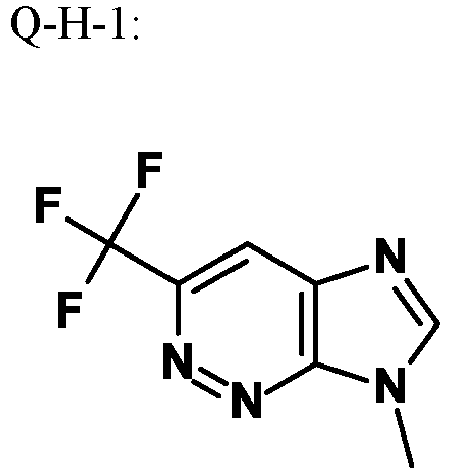


- Weiterhin hierin beschrieben sind Verbindungen der Formel (IIIa), die ausgewählt sind aus den folgenden Verbindungen:


- Ein weiterer Gegenstand der vorliegenden Erfindung sind Verbindungen der Formel (II)
Q-Hal (II),
in welcher (Ausgestaltung Q-Hal-1-1) - Q
- für ein Strukturelement aus der Reihe Q2, Q3, Q10, Q12 oder Q14 steht,
- R7
- für (C1-C4)Alkyl oder (C1-C4)Alkoxy-(C1-C4)alkyl steht,
- A
- für Trifluormethyl, Fluorethyl (CH2CFH2, CHFCH3), Difluorethyl (CF2CH3, CH2CHF2, CHFCFH2), Trifluorethyl, (CH2CF3, CHFCHF2, CF2CFH2), Tetrafluorethyl (CHFCF3, CF2CHF2), Pentafluorethyl, Trifluormethylthio, Trifluormethylsulfinyl oder Trifluormethylsulfonyl steht, und
- Hal
- für Iod oder Brom steht.
-
- Q
- steht ganz besonders bevorzugt für das Strukturelement Q2, Q3, Q12 oder Q14,
- R7
- steht ganz besonders bevorzugt für Methyl, Ethyl, n-Propyl oder iso-Propyl, insbesondere Methyl,
- A
- steht ganz besonders bevorzugt für Trifluormethyl, und
- Hal
- steht ganz besonders bevorzugt für Iod oder Brom.
- Die vorstehend aufgeführten Restedefinitionen können untereinander, also auch zwischen den jeweiligen Vorzugsbereichen, beliebig kombiniert werden.
- Erfindungsgemäß bevorzugt werden solche Verbindungen, in welchen eine Kombination der vorstehend als bevorzugt aufgeführten Bedeutungen vorliegt.
- Erfindungsgemäß besonders bevorzugt werden solche Verbindungen, in welchen eine Kombination der vorstehend als besonders bevorzugt aufgeführten Bedeutungen vorliegt.
- Erfindungsgemäß ganz besonders bevorzugt werden solche Verbindungen, in welchen eine Kombination der vorstehend als ganz besonders bevorzugt aufgeführten Bedeutungen vorliegt.
- Beispiele für derartige ganz besonders bevorzugte Verbindungen sind:


- Die vorliegende Erfindung wird anhand der nachfolgenden Beispiele näher erläutert, wobei die Beispiele nicht in einer die Erfindung einschränkenden Weise zu interpretieren sind.
- N3-Methyl-6-(trifluormethyl)pyridin-3,4-diamin (500 mg, 2,6 mmol), gelöst in Ameisensäure (4 ml, 106 mmol), wurde mit Mikrowellen für 1 Stunde bei 150°C erhitzt. Nach üblicher Aufarbeitung durch Zugabe von gesättigter Ammoniumchlorid-Lösung wurde das Reaktionsgemisch mit Ethylacetat extrahiert, die vereinigten organischen Phasen über Na2SO4 getrocknet und im Membranpumpenvakuum eingeengt. Nach säulenchromatographischer Reinigung (Ethylacetat/Cyclohexan) erhielt man 3-Methyl-6-(trifluormethyl)-3H-imidazo[4,5-c]pyridin (480 mg, 91%) als weißen Feststoff. HPLC-MS: logP = 1,09; Masse (m/z+1): 202,0; 1HNMR (D6-DMSO): δ 9,14 (s, 1H), 8,61 (s, 1H), 8,19 (s, 1H), 4,02 (s, 3H).
- 3-Methyl-6-(trifluormethyl)-3H-imidazo[4,5-c]pyridin (201 mg, 1,0 mmol), gelöst in THF (1 ml), wurde mit TMPZnCl·LiCl (1,31 M in THF, 0,82 ml, 1,1 mmol) bei 25°C unter Argon versetzt; diese Reaktionslösung wurde 10 min gerührt. Anschließend wurde Iod (508 mg, 2,0 mmol in 2 ml THF) bei 25°C zugegeben und die Lösung während 20 min weitergerührt. Nach üblicher Aufarbeitung durch Zugabe von gesättigter Ammoniumchlorid und Natriumthiosulfat-Lösungen wurde das Reaktionsgemisch mit Ethylacetat extrahiert, die vereinigten organischen Phasen über Na2SO4 getrocknet und im Membranpumpenvakuum eingeengt. Nach säulenchromatographischer Reinigung (Ethylacetat/Cyclohexan) erhielt man 2-Iod-3-methyl-6-(trifluormethyl)-3H-imidazo[4,5-c]pyridin (301 mg, 93%) als gelben Feststoff. HPLC-MS: logP = 1,77; Masse (m/z+1): 327,9; 1HNMR (D6-DMSO): δ 9,13 (s, 1H), 8,12 (s, 1H), 3,94 (s, 3H).
- 3-Methyl-6-(trifluormethyl)-3H-imidazo[4,5-c]pyridin (201 mg, 1,0 mmol), gelöst in THF (0,8 ml), wurde mit TMPZnCl·LiCl (1,35 M in THF, 0,82 ml, 1,1 mmol) bei 25°C unter Argon versetzt; diese Reaktionslösung wurde 10 min gerührt. Anschließend wurde Brom (224 mg, 1,4 mmol) bei 0°C zugegeben und die Lösung während 20 min weitergerührt. Nach üblicher Aufarbeitung durch Zugabe von gesättigter Ammoniumchlorid und Natriumthiosulfat-Lösungen wurde das Reaktionsgemisch mit Ethylacetat extrahiert, die vereinigten organischen Phasen über Na2SO4 getrocknet und im Membranpumpenvakuum eingeengt. Nach säulenchromatographischer Reinigung (Ethylacetat/Cyclohexan) erhielt man 2-Brom-3-methyl-6-(trifluormethyl)-3H-imidazo[4,5-c]pyridin (269 mg, 96%) als gelben Feststoff. HPLC-MS: logP = 1,71; Masse (m/z+1): 281,0; 1HNMR (D6-DMSO): δ 9,15 (s, 1H), 8,17 (s, 1H), 3,96 (s, 3H).
- N3-Methyl-6-(trifluormethyl)pyridazin-3,4-diamin (1,0 g, 5,2 mmol), gelöst in Ameisensäure (5 ml, 132 mmol), wurde mit Mikrowellen für 1 Stunde bei 150°C erhitzt. Nach üblicher Aufarbeitung durch Zugabe von gesättigter Ammoniumchlorid-Lösung wurde das Reaktionsgemisch mit Ethylacetat extrahiert, die vereinigten organischen Phasen über Na2SO4 getrocknet und im Membranpumpenvakuum eingeengt. Nach säulenchromatographischer Reinigung (Ethylacetat/Cyclohexan) erhielt man 7-Methyl-3-(trifluormethyl)-7H-imidazo[4,5-c]pyridazin (758 mg, 73%) als weißen Feststoff. HPLC-MS: logP = 0,91; Masse (m/z+1): 203,1; 1HNMR (D6-DMSO): δ 8,92 (s, 1H), 8,62 (s, 1H), 4,08 (s, 3H).
- 7-Methyl-3-(trifluormethyl)-7H-imidazo[4,5-c]pyridazin (203 mg, 1,0 mmol), gelöst in THF (0,8 ml), wurde mit TMPZnCl·LiCl (1,35 M in THF, 0,82 ml, 1,1 mmol) bei 25°C unter Argon versetzt; diese Reaktionslösung wurde 10 min gerührt. Anschließend wurde Iod (508 mg in 4 ml THF) bei 25°C zugegeben und die Lösung während 20 min weitergerührt. Nach üblicher Aufarbeitung durch Zugabe von gesättigter Ammoniumchlorid und Natriumthiosulfat -Lösungen wurde das Reaktionsgemisch mit Ethylacetat extrahiert, die vereinigten organischen Phasen über Na2SO4 getrocknet und im Membranpumpenvakuum eingeengt. Nach säulenchromatographischer Reinigung (Ethylacetat/Cyclohexan) erhielt man 6-Iod-7-methyl-3-(trifluormethyl)-7H-imidazo[4,5-c]pyridazin (230 mg, 70%) als gelben Feststoff. HPLC-MS: logP = 1,66; Masse (m/z+1): 329,0; 1HNMR (D6-DMSO): δ 8,53 (s, 1H), 3,99 (s, 3H).
- N2-Methyl-5-(trifluormethyl)pyridin-2,3-diamin (500 mg, 2,61 mmol), gelöst in Ameisensäure (4 ml, 106 mmol), wurde mit Mikrowellen für 1 Stunde bei 150°C erhitzt. Nach üblicher Aufarbeitung durch Zugabe von gesättigter Ammoniumchlorid-Lösung wurde das Reaktionsgemisch mit Ethylacetat extrahiert, die vereinigten organischen Phasen über Na2SO4 getrocknet und im Membranpumpenvakuum eingeengt. Nach säulenchromatographischer Reinigung (Ethylacetat/Cyclohexan) erhielt man 3-Methyl-6-(trifluormethyl)-3H-imidazo[4,5-b]pyridin (385 mg, 74%) als weißen Feststoff. HPLC-MS: logP = 1,44; Masse (m/z+1): 202,1; 1HNMR (D6-DMSO): δ 8,77 (s, 1H), 8,67 (s, 1H), 8,52 (s, 1H), 3,90 (s, 3H).
- 3-Methyl-6-(trifluormethyl)-3H-imidazo[4,5-b]pyridin (100 mg, 0,49 mmol), gelöst in THF (0,4 ml), wurde mit TMPZnCl·LiCl (1,35 M in THF, 0,41 ml, 0,54 mmol) bei 25°C unter Argon versetzt; diese Reaktionslösung wurde 10 min gerührt. Anschließend wurde Iod (252 mg in 1 ml THF) bei 25°C zugegeben und die Lösung während 20 min weitergerührt. Nach üblicher Aufarbeitung durch Zugabe von gesättigter Ammoniumchlorid und Natriumthiosulfat-Lösungen wurde das Reaktionsgemisch mit Ethylacetat extrahiert, die vereinigten organischen Phasen über Na2SO4 getrocknet und im Membranpumpenvakuum eingeengt. Nach säulenchromatographischer Reinigung (Ethylacetat/Cyclohexan) erhielt man 2-Iod-3-methyl-6-(trifluormethyl)-3H-imidazo[4,5-b]pyridin (111 mg, 69%) als gelben Feststoff. HPLC-MS: logP = 2,29; Masse (m/z+1): 328,0; 1HNMR (D6-DMSO): δ 8,71 (s, 1H), 8,47 (s, 1H), 3,82 (s, 3H).


Claims (15)
- Verfahren zur Herstellung von Verbindungen der Formel (II)
Q-Hal (II),
in welcherQ für ein Strukturelementsteht, wobei das Zeichen # die Bindung zu Hal anzeigt und Q1 für N oder CR6 steht,Q2 für N oder CR6 steht,Q3 für N oder C steht,Q4 für O, S, N oder NR7 steht,Q5 für N oder C steht,Q6 für N oder CH steht,und wobei Q für ein Strukturelement aus der Reihe Q2, Q3, Q10, Q12 oder Q14 steht,

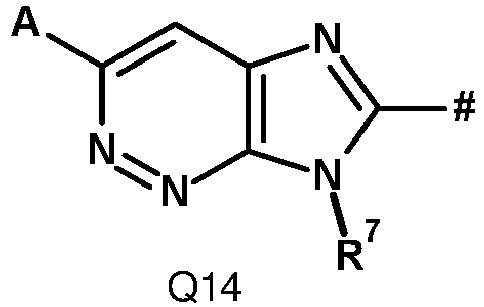 R6 für Wasserstoff, (C1-C4)Alkyl, (C1-C4)Halogenalkyl, (C1-C4)Cyanoalkyl, (C1-C4)Hydroxyalkyl, (C1-C4)Alkoxy-(C1-C4)alkyl, (C1-C4)Halogenalkoxy-(C1-C4)alkyl, (C2-C4)Alkenyl, (C2-C4)Alkenyloxy-(C1-C4)alkyl, (C2-C4)Halogenalkenyloxy-(C1-C4)alkyl, (C2-C4)Halogenalkenyl, (C2-C4)Cyanoalkenyl, (C2-C4)Alkinyl, (C2-C4)Alkinyloxy-(C1-C4)alkyl, (C2-C4)Halogenalkinyl, (C3-C6)Cycloalkyl, (C3-C6)Cycloalkyl-(C3-C6)cycloalkyl, (C1-C4)Alkyl-(C3-C6)cycloalkyl, Halogen(C3-C6)cycloalkyl, (C1-C4)Alkylthio-(C1-C4)alkyl, (C1-C4)Alkylsulfinyl-(C1-C4)alkyl, (C1-C4)Alkylsulfonyl-(C1-C4)alkyl oder (C1-C4)Alkylcarbonyl-(C1-C4)alkyl steht,R7 für (C1-C4)Alkyl, (C1-C4)Halogenalkyl, (C1-C4)Cyanoalkyl, (C1-C4)Hydroxyalkyl, (C1-C4)Alkoxy-(C1-C4)alkyl, (C1-C4)Halogenalkoxy-(C1-C4)alkyl, (C2-C4)Alkenyl, (C2-C4)Alkenyloxy-(C1-C4)alkyl, (C2-C4)Halogenalkenyloxy-(C1-C4)alkyl, (C2-C4)Halogenalkenyl, (C2-C4)Cyanoalkenyl, (C2-C4)Alkinyl, (C2-C4)Alkinyloxy-(C1-C4)alkyl, (C2-C4)Halogenalkinyl, (C3-C6)Cycloalkyl, (C3-C6)Cycloalkyl-(C3-C6)cycloalkyl, (C1-C4)Alkyl-(C3-C6)cycloalkyl, Halogen(C3-C6)cycloalkyl, (C1-C4)Alkylthio-(C1-C4)alkyl, (C1-C4)Alkylsulfinyl-(C1-C4)alkyl, (C1-C4)Alkylsulfonyl-(C1-C4)alkyl oder (C1-C4)Alkylcarbonyl-(C1-C4)alkyl steht, undA für Wasserstoff, Cyano, Halogen, (C1-C4)Alkyl, (C1-C4)Halogenalkyl, (C2-C4)Alkenyl, (C2-C4)Halogenalkenyl, (C2-C4)Alkinyl, (C2-C4)Halogenalkinyl, (C3-C6)Cycloalkyl, (C3-C6)Cycloalkyl-(C3-C6)cycloalkyl, (C1-C4)Alkyl-(C3-C6)cycloalkyl, (C1-C4)Alkoxy, (C1-C4)Halogenalkoxy, (C1-C4)Alkoxyimino, (C1-C4)Alkylthio, (C1-C4)Halogenalkylthio, (C1-C4)Alkylsulfinyl, (C1-C4)Halogenalkylsulfinyl, (C1-C4)Alkylsulfonyl, (C1-C4)Halogenalkylsulfonyl, (C1-C4)Alkylsulfonyloxy, (C1-C4)Alkylcarbonyl, (C1-C4)Halogenalkylcarbonyl, Aminocarbonyl, (C1-C4)Alkylaminocarbonyl, Di-(C1-C4)alkylaminocarbonyl, (C1-C4)Alkylsulfonylamino, (C1-C4)Alkylamino, Di-(C1-C4)Alkylamino, Aminosulfonyl, (C1-C4)Alkylaminosulfonyl oder Di-(C1-C4)alkylaminosulfonyl steht,Hal für Halogen steht,dadurch gekennzeichnet, dass in einem ersten Verfahrensschritt a) eine Verbindung Q-H, in welcher Q die oben genannte Bedeutung hat,mit einer Zink-metallorganischen Base der Struktur (NR3R4)-Zn-R2 oder (NR3R4)2-Zn, in welcher R2 für Halogen oder -O-Pivaloyl steht undR3 und R4 gemeinsam eine -(CH2)4-, -(CH2)5- oder -(CH2)2O(CH2)2-Gruppe bilden, wobei jede dieser Gruppen optional durch 1, 2, 3 oder 4 R5-Radikale substituiert sein kann und R5 ausgewählt ist aus der Gruppe bestehend aus Methyl, Ethyl, n-Propyl und i-Propyl,zu einer Verbindung der Formel (IIIa) oder der Formel (IIIb) umgesetzt wird,
 in welcher Q und R2 jeweils die oben genannten Bedeutungen haben,und diese Verbindung der Formel (IIIa) oder (IIIb) in einem zweiten Verfahrensschritt b) mit einer Verbindung der Struktur X-Hal, in welcher X für Halogen steht und Hal die oben genannte Bedeutung hat, zur Verbindung der Formel (II) umgesetzt wird.
 - Verfahren gemäß Anspruch 1, dadurch gekennzeichnet, dassQ für ein Strukturelement aus der Reihe Q2, Q3, Q10, Q12 oder Q14 steht,R7 für (C1-C4)Alkyl, (C1-C4)Halogenalkyl, (C1-C4)Alkoxy-(C1-C4)alkyl, (C1-C4)Halogenalkoxy-(C1-C4)alkyl, (C1-C4)Alkylthio-(C1-C4)alkyl, (C1-C4)Alkylsulfinyl-(C1-C4)alkyl, (C1-C4)Alkylsulfonyl-(C1-C4)alkyl oder (C1-C4)Alkylcarbonyl-(C1-C4)alkyl,A für Fluor, Chlor, Brom, Fluormethyl, Difluormethyl, Trifluormethyl, Fluorethyl (CH2CFH2, CHFCH3), Difluorethyl (CF2CH3, CH2CHF2, CHFCFH2), Trifluorethyl, (CH2CF3, CHFCHF2, CF2CFH2), Tetrafluorethyl (CHFCF3, CF2CHF2), Pentafluorethyl, Trifluormethoxy, Difluorchlormethoxy, Dichlorfluormethoxy, Trifluormethylthio, Trifluormethylsulfinyl oder Trifluormethylsulfonyl steht,Hal und X dieselbe Bedeutung haben und für Fluor, Chlor, Iod oder Brom stehen, undR2 für Halogen, insbesondere Chlor, Brom oder Iod, steht.
- Verfahren gemäß einem der Ansprüche 1 oder 2, dadurch gekennzeichnet, dassQ für ein Strukturelement aus der Reihe Q2, Q3, Q10, Q12, oder Q14 steht,R7 für (C1-C4)Alkyl oder (C1-C4)Alkoxy-(C1-C4)alkyl steht,A für Trifluormethyl, Fluorethyl (CH2CFH2, CHFCH3), Difluorethyl (CF2CH3, CH2CHF2, CHFCFH2), Trifluorethyl, (CH2CF3, CHFCHF2, CF2CFH2), Tetrafluorethyl (CHFCF3, CF2CHF2), Pentafluorethyl, Trifluormethylthio, Trifluormethylsulfinyl oder Trifluormethylsulfonyl steht,Hal und X dieselbe Bedeutung haben und für Iod oder Brom stehen, undR2 für Chlor steht.
- Verfahren gemäß einem der Ansprüche 1 bis 3, dadurch gekennzeichnet, dassQ für das Strukturelement Q2, Q3, Q12 oder Q14 steht,R7 für Methyl, Ethyl, n-Propyl oder iso-Propyl, insbesondere Methyl, steht,A für Trifluormethyl steht,Hal und X dieselbe Bedeutung haben und für Iod oder Brom stehen, undR2 für Chlor steht.
- Verfahren gemäß einem der Ansprüche 1 bis 4, dadurch gekennzeichnet, dass R3 und R4 gemeinsam eine -(CH2)5-Gruppe bilden, die durch 4 Methylgruppen substituiert ist.
- Verfahren gemäß einem der Ansprüche 1 bis 5, dadurch gekennzeichnet, dass es sich bei der Zink-metallorganischen Base um eine Verbindung der Formel (V) handelt
(V) (TMP)x ZnCl2-x ,
worin x für die Zahl 1 oder 2 steht. - Verfahren gemäß einem der Ansprüche 1 bis 6, dadurch gekennzeichnet, dass die Zink-metallorganische Base in Verbindung mit einem Alkali- oder Erdalkalihalogenid, vorzugsweise Lithiumchlorid oder Magnesiumchlorid, vorliegt.
- Verfahren gemäß einem der Ansprüche 1 bis 7, dadurch gekennzeichnet, dass die Zink-metallorganische Base in einer Gesamtmenge von 0,5 bis 5 Äquivalenten, bezogen auf die Verbindung Q-H, eingesetzt wird.
- Verfahren gemäß einem der Ansprüche 1 bis 8, dadurch gekennzeichnet, dass es sich bei der Verbindung X-Hal um ein elementares Halogen, insbesondere um F2, Cl2, Br2 oder I2, handelt.
- Verfahren gemäß einem der Ansprüche 1 bis 9, dadurch gekennzeichnet, dass die Verbindung X-Hal in einer Gesamtmenge von 0,5 bis 10,0 Äquivalenten, bezogen auf die Verbindung Q-H, eingesetzt wird.
- Verfahren gemäß einem der Ansprüche 1 bis 10, dadurch gekennzeichnet, dass es in Gegenwart eines Lösungsmittels durchgeführt wird, welches ausgewählt ist aus der Gruppe bestehend aus Tetrahydrofuran (THF), 1,4-Dioxan, Diethylether, Diglyme, Methyltertbutylether (MTBE), tert-Amyl-methylether (TAME), 2-Methyl-THF, Toluol, Xylole, Mesitylen, Ethylencarbonat, Propylencarbonat, N,N-Dimethylacetamid, N,N-Dimethylformamid (DMF), N-Methylpyrrolidon (NMP), N-Ethyl-2-pyrrilidon (NEP), N-Butyl-2-pyrrilidon (NBP); N,N'-Dimethylpropylenharnstoff (DMPU), Halogenkohlenwasserstoff, aromatischer Kohlenwasserstoff, Chlorkohlenwasserstoff, Tetrachlorethylen, Tetrachlorethan, Dichlorpropan, Methylenchlorid, Dichlorbutan, Chloroform, Tetrachlorkohlenstoff, Trichlorethan, Trichlorethylen, Pentachlorethan, Difluorbenzol, 1,2-Dichlorethan, Chlorbenzol, Brombenzol, Dichlorbenzol, 1,2-Dichlorbenzol, Chlortoluol, Trichlorbenzol; 4-Methoxybenzol, fluoriertes Aliphat, fluorierter Aromat, Trichlortrifluorethan, Benzotrifluorid und 4-Chlorbenzotrifluorid, oder einer Mischung aus mindestens zwei dieser Lösungsmittel untereinander.
- Verfahren gemäß Anspruch 11, dadurch gekennzeichnet, dass das Lösungsmittel THF oder N,N-Dimethylformamid (DMF) ist.
- Verfahren gemäß einem der Ansprüche 1 bis 12, dadurch gekennzeichnet, dass Verfahrensschritt a) bei einer Temperatur zwischen 0°C und 80°C durchgeführt wird.
- Verfahren gemäß einem der Ansprüche 1 bis 13, dadurch gekennzeichnet, dass Verfahrensschritt b) bei einer Temperatur zwischen 0°C und 40°C durchgeführt wird.
- Verbindung der Formel (II)
Q-Hal (II),
in welcherQ für ein Strukturelement aus der Reihe Q2, Q3, Q10, Q12 oder Q14 gemäß Anspruch 1 steht,R7 für (C1-C4)Alkyl oder (C1-C4)Alkoxy-(C1-C4)alkyl steht,A für Trifluormethyl, Fluorethyl (CH2CFH2, CHFCH3), Difluorethyl (CF2CH3, CH2CHF2, CHFCFH2), Trifluorethyl, (CH2CF3, CHFCHF2, CF2CFH2), Tetrafluorethyl (CHFCF3, CF2CHF2), Pentafluorethyl, Trifluormethylthio, Trifluormethylsulfinyl oder Trifluormethylsulfonyl steht, undHal für Iod oder Brom steht.
Applications Claiming Priority (2)
| Application Number | Priority Date | Filing Date | Title |
|---|---|---|---|
| EP16188760 | 2016-09-14 | ||
| PCT/EP2017/072363 WO2018050515A1 (de) | 2016-09-14 | 2017-09-06 | Verfahren zur herstellung von halogenierten bizyklen |
Publications (2)
| Publication Number | Publication Date |
|---|---|
| EP3512847A1 EP3512847A1 (de) | 2019-07-24 |
| EP3512847B1 true EP3512847B1 (de) | 2022-03-30 |
Family
ID=56943355
Family Applications (1)
| Application Number | Title | Priority Date | Filing Date |
|---|---|---|---|
| EP17765149.4A Active EP3512847B1 (de) | 2016-09-14 | 2017-09-06 | Verfahren zur herstellung von halogenierten bizyklen |
Country Status (12)
| Country | Link |
|---|---|
| US (1) | US20190375766A1 (de) |
| EP (1) | EP3512847B1 (de) |
| JP (1) | JP7066683B2 (de) |
| KR (1) | KR102471278B1 (de) |
| CN (1) | CN109715627A (de) |
| BR (1) | BR112019004946B1 (de) |
| DK (1) | DK3512847T3 (de) |
| ES (1) | ES2919558T3 (de) |
| IL (1) | IL265257B (de) |
| MX (1) | MX2019002937A (de) |
| TW (1) | TWI749060B (de) |
| WO (1) | WO2018050515A1 (de) |
Families Citing this family (2)
| Publication number | Priority date | Publication date | Assignee | Title |
|---|---|---|---|---|
| BR112019003174B1 (pt) * | 2016-08-16 | 2022-10-25 | Bayer Cropscience Aktiengesellschaft | Processo para preparar derivados de 2-(3,6-dihalopiridin-2-il)-3h-imidazol[4,5-c]piridina, e seus intermediários |
| TWI820231B (zh) | 2018-10-11 | 2023-11-01 | 德商拜耳廠股份有限公司 | 用於製備經取代咪唑衍生物之方法 |
Family Cites Families (12)
| Publication number | Priority date | Publication date | Assignee | Title |
|---|---|---|---|---|
| US4472409A (en) * | 1981-11-05 | 1984-09-18 | Byk Gulden Lomberg Chemische Fabrik Gesellschaft Mit Beschrankter Haftung | 2-Pyridylmethyl thio(sulfinyl)benzimidazoles with gastric acid secretion inhibiting effects |
| JPS5910590A (ja) * | 1982-07-08 | 1984-01-20 | Ishihara Sangyo Kaisha Ltd | 置換酢酸アニリド系化合物およびそれらを含有する除草剤 |
| JPS61106563A (ja) * | 1984-10-30 | 1986-05-24 | Oouchi Shinko Kagaku Kogyo Kk | 2−クロルベンゾチアゾ−ル誘導体の製造方法 |
| GB0027561D0 (en) * | 2000-11-10 | 2000-12-27 | Merck Sharp & Dohme | Therapeutic agents |
| US7557103B2 (en) | 2005-04-05 | 2009-07-07 | Eli Lilly And Company | Imidazopyridazine compounds |
| EP2680697B1 (de) | 2011-03-03 | 2018-01-10 | Merck Sharp & Dohme Corp. | Verfahren zur herstellung eines orexin-rezeptor-antagonisten |
| WO2013180193A1 (ja) | 2012-05-31 | 2013-12-05 | 住友化学株式会社 | 縮合複素環化合物 |
| WO2014073627A1 (ja) | 2012-11-09 | 2014-05-15 | 住友化学株式会社 | 植物の生長を促進する方法 |
| EP2935263B1 (de) | 2012-12-20 | 2018-12-05 | Merck Sharp & Dohme Corp. | Substituierte imidazopyridine als hdm2 inhibitoren |
| JP6159028B2 (ja) | 2013-07-31 | 2017-07-05 | ギリアード サイエンシーズ, インコーポレイテッド | Syk阻害剤 |
| KR101698640B1 (ko) * | 2013-09-26 | 2017-01-20 | 주식회사 엘지화학 | 헤테로환 화합물 및 이를 포함하는 유기 발광 소자 |
| PT3071203T (pt) * | 2013-11-18 | 2021-03-11 | Forma Therapeutics Inc | Composições de tetra-hidroquinolina como inibidores de bromodomínio bet |
-
2017
- 2017-09-06 ES ES17765149T patent/ES2919558T3/es active Active
- 2017-09-06 MX MX2019002937A patent/MX2019002937A/es unknown
- 2017-09-06 DK DK17765149.4T patent/DK3512847T3/da active
- 2017-09-06 KR KR1020197010078A patent/KR102471278B1/ko active Active
- 2017-09-06 WO PCT/EP2017/072363 patent/WO2018050515A1/de not_active Ceased
- 2017-09-06 BR BR112019004946-0A patent/BR112019004946B1/pt active IP Right Grant
- 2017-09-06 EP EP17765149.4A patent/EP3512847B1/de active Active
- 2017-09-06 JP JP2019513945A patent/JP7066683B2/ja active Active
- 2017-09-06 CN CN201780054870.9A patent/CN109715627A/zh active Pending
- 2017-09-06 US US16/331,843 patent/US20190375766A1/en not_active Abandoned
- 2017-09-12 TW TW106131162A patent/TWI749060B/zh active
-
2019
- 2019-03-10 IL IL265257A patent/IL265257B/en unknown
Non-Patent Citations (1)
| Title |
|---|
| None * |
Also Published As
| Publication number | Publication date |
|---|---|
| BR112019004946B1 (pt) | 2023-01-10 |
| MX2019002937A (es) | 2019-06-06 |
| JP2019529405A (ja) | 2019-10-17 |
| JP7066683B2 (ja) | 2022-05-13 |
| KR102471278B1 (ko) | 2022-11-25 |
| BR112019004946A2 (pt) | 2019-06-25 |
| US20190375766A1 (en) | 2019-12-12 |
| DK3512847T3 (da) | 2022-06-27 |
| IL265257A (en) | 2019-05-30 |
| ES2919558T3 (es) | 2022-07-27 |
| EP3512847A1 (de) | 2019-07-24 |
| IL265257B (en) | 2021-12-01 |
| CN109715627A (zh) | 2019-05-03 |
| TW201825485A (zh) | 2018-07-16 |
| WO2018050515A1 (de) | 2018-03-22 |
| KR20190045332A (ko) | 2019-05-02 |
| TWI749060B (zh) | 2021-12-11 |
Similar Documents
| Publication | Publication Date | Title |
|---|---|---|
| EP3500568B1 (de) | Verfahren zur herstellung von 2-(3,6-dihalopyridin-2-yl)-3h-imidazol[4,5-c]pyridinderivaten und verwandten verbindungen durch umsetzung des 3h-imidazol[4,5-c]pyridinderivats mit einer metallorganischen zink-amin base | |
| EP3551616A1 (de) | Verfahren zur herstellung von 5-(1-phenyl-1h-pyrazol-4-yl)-nicotinamid-derivaten und ähnlicher verbindungen ohne isolierung oder aufreinigung der phenylhydrazin-zwischenstufe | |
| EP3810585A1 (de) | Herstellungsverfahren für trizyclische verbindungen | |
| EP1616863A1 (de) | Verfahren zur Herstellung Kernfluorierter Aromaten | |
| EP3625219A1 (de) | Verfahren zur herstellung von substituierten imidazolylcarboxyamiden | |
| EP2655360B1 (de) | Verfahren zur herstellung von n-sulfonylsubstituierten oxindolen | |
| EP3512847A1 (de) | Verfahren zur herstellung von halogenierten bizyklen | |
| EP3864015B1 (de) | Verfahren zur herstellung von imidazolderivaten | |
| EP3481805B1 (de) | Verfahren zur herstellung halogenierter pyridinderivate | |
| EP3577114B1 (de) | Verfahren zur herstellung halogenierter imidazopyridinderivate | |
| EP3864016A1 (de) | Verfahren zur herstellung substituierter imidazolderivate | |
| DE69119714T2 (de) | Verfahren zur Herstellung von Benzylphthalazinonderivaten und von deren Salzen | |
| DE69707175T2 (de) | Verfahren zur Herstellung von nicht symmetrischen 4,6-Bis(aryloxy)-Pyrimidinverbindungen | |
| DE19963607A1 (de) | Verfahren zur Herstellung von 4-(Heteroaryl-methyl) halogen-1(2H)-phthalazinonen | |
| DE69802636T2 (de) | Verbessertes Verfahren zur Herstellung von unsymmetrischen 4,6-bis(aryloxy)pyrimidinverbindungen | |
| DE10336497B4 (de) | Substituierte Pyridine und ein Verfahren zur Herstellung von substituierten Pyridinen | |
| EP3636645A1 (de) | Verfahren zur herstellung schwefel-substituierter pyridinderivate | |
| DE69221006T2 (de) | Mitomycinderivate | |
| DE3308037A1 (de) | Dicarbamate | |
| EP2009001A1 (de) | Verfahren zur Herstellung von Dioxazin-Derivaten | |
| DE102005058418A1 (de) | Verfahren zur Herstellung von Haloalkyl(thio)vinimidiniumsalzen und 4-(Haloalkyl(thio))-pyrazolen und deren Umsetzung zu Pflanzenschutzmitteln | |
| DE2519079A1 (de) | Verfahren zur herstellung von n tief 1-(2'-furanicyl)-5-substituierten uracilen |
Legal Events
| Date | Code | Title | Description |
|---|---|---|---|
| STAA | Information on the status of an ep patent application or granted ep patent |
Free format text: STATUS: UNKNOWN |
|
| STAA | Information on the status of an ep patent application or granted ep patent |
Free format text: STATUS: THE INTERNATIONAL PUBLICATION HAS BEEN MADE |
|
| PUAI | Public reference made under article 153(3) epc to a published international application that has entered the european phase |
Free format text: ORIGINAL CODE: 0009012 |
|
| STAA | Information on the status of an ep patent application or granted ep patent |
Free format text: STATUS: REQUEST FOR EXAMINATION WAS MADE |
|
| 17P | Request for examination filed |
Effective date: 20190415 |
|
| AK | Designated contracting states |
Kind code of ref document: A1 Designated state(s): AL AT BE BG CH CY CZ DE DK EE ES FI FR GB GR HR HU IE IS IT LI LT LU LV MC MK MT NL NO PL PT RO RS SE SI SK SM TR |
|
| AX | Request for extension of the european patent |
Extension state: BA ME |
|
| DAV | Request for validation of the european patent (deleted) | ||
| DAX | Request for extension of the european patent (deleted) | ||
| STAA | Information on the status of an ep patent application or granted ep patent |
Free format text: STATUS: EXAMINATION IS IN PROGRESS |
|
| 17Q | First examination report despatched |
Effective date: 20200623 |
|
| GRAP | Despatch of communication of intention to grant a patent |
Free format text: ORIGINAL CODE: EPIDOSNIGR1 |
|
| STAA | Information on the status of an ep patent application or granted ep patent |
Free format text: STATUS: GRANT OF PATENT IS INTENDED |
|
| INTG | Intention to grant announced |
Effective date: 20211110 |
|
| GRAS | Grant fee paid |
Free format text: ORIGINAL CODE: EPIDOSNIGR3 |
|
| GRAA | (expected) grant |
Free format text: ORIGINAL CODE: 0009210 |
|
| STAA | Information on the status of an ep patent application or granted ep patent |
Free format text: STATUS: THE PATENT HAS BEEN GRANTED |
|
| AK | Designated contracting states |
Kind code of ref document: B1 Designated state(s): AL AT BE BG CH CY CZ DE DK EE ES FI FR GB GR HR HU IE IS IT LI LT LU LV MC MK MT NL NO PL PT RO RS SE SI SK SM TR |
|
| REG | Reference to a national code |
Ref country code: GB Ref legal event code: FG4D Free format text: NOT ENGLISH |
|
| REG | Reference to a national code |
Ref country code: CH Ref legal event code: EP |
|
| REG | Reference to a national code |
Ref country code: AT Ref legal event code: REF Ref document number: 1479110 Country of ref document: AT Kind code of ref document: T Effective date: 20220415 |
|
| REG | Reference to a national code |
Ref country code: DE Ref legal event code: R096 Ref document number: 502017012864 Country of ref document: DE |
|
| REG | Reference to a national code |
Ref country code: IE Ref legal event code: FG4D Free format text: LANGUAGE OF EP DOCUMENT: GERMAN |
|
| REG | Reference to a national code |
Ref country code: DK Ref legal event code: T3 Effective date: 20220620 |
|
| REG | Reference to a national code |
Ref country code: FI Ref legal event code: FGE |
|
| REG | Reference to a national code |
Ref country code: NL Ref legal event code: FP |
|
| REG | Reference to a national code |
Ref country code: LT Ref legal event code: MG9D |
|
| REG | Reference to a national code |
Ref country code: ES Ref legal event code: FG2A Ref document number: 2919558 Country of ref document: ES Kind code of ref document: T3 Effective date: 20220727 |
|
| PG25 | Lapsed in a contracting state [announced via postgrant information from national office to epo] |
Ref country code: SE Free format text: LAPSE BECAUSE OF FAILURE TO SUBMIT A TRANSLATION OF THE DESCRIPTION OR TO PAY THE FEE WITHIN THE PRESCRIBED TIME-LIMIT Effective date: 20220330 Ref country code: RS Free format text: LAPSE BECAUSE OF FAILURE TO SUBMIT A TRANSLATION OF THE DESCRIPTION OR TO PAY THE FEE WITHIN THE PRESCRIBED TIME-LIMIT Effective date: 20220330 Ref country code: NO Free format text: LAPSE BECAUSE OF FAILURE TO SUBMIT A TRANSLATION OF THE DESCRIPTION OR TO PAY THE FEE WITHIN THE PRESCRIBED TIME-LIMIT Effective date: 20220630 Ref country code: LT Free format text: LAPSE BECAUSE OF FAILURE TO SUBMIT A TRANSLATION OF THE DESCRIPTION OR TO PAY THE FEE WITHIN THE PRESCRIBED TIME-LIMIT Effective date: 20220330 Ref country code: HR Free format text: LAPSE BECAUSE OF FAILURE TO SUBMIT A TRANSLATION OF THE DESCRIPTION OR TO PAY THE FEE WITHIN THE PRESCRIBED TIME-LIMIT Effective date: 20220330 Ref country code: BG Free format text: LAPSE BECAUSE OF FAILURE TO SUBMIT A TRANSLATION OF THE DESCRIPTION OR TO PAY THE FEE WITHIN THE PRESCRIBED TIME-LIMIT Effective date: 20220630 |
|
| PG25 | Lapsed in a contracting state [announced via postgrant information from national office to epo] |
Ref country code: LV Free format text: LAPSE BECAUSE OF FAILURE TO SUBMIT A TRANSLATION OF THE DESCRIPTION OR TO PAY THE FEE WITHIN THE PRESCRIBED TIME-LIMIT Effective date: 20220330 Ref country code: GR Free format text: LAPSE BECAUSE OF FAILURE TO SUBMIT A TRANSLATION OF THE DESCRIPTION OR TO PAY THE FEE WITHIN THE PRESCRIBED TIME-LIMIT Effective date: 20220701 |
|
| PG25 | Lapsed in a contracting state [announced via postgrant information from national office to epo] |
Ref country code: SM Free format text: LAPSE BECAUSE OF FAILURE TO SUBMIT A TRANSLATION OF THE DESCRIPTION OR TO PAY THE FEE WITHIN THE PRESCRIBED TIME-LIMIT Effective date: 20220330 Ref country code: SK Free format text: LAPSE BECAUSE OF FAILURE TO SUBMIT A TRANSLATION OF THE DESCRIPTION OR TO PAY THE FEE WITHIN THE PRESCRIBED TIME-LIMIT Effective date: 20220330 Ref country code: RO Free format text: LAPSE BECAUSE OF FAILURE TO SUBMIT A TRANSLATION OF THE DESCRIPTION OR TO PAY THE FEE WITHIN THE PRESCRIBED TIME-LIMIT Effective date: 20220330 Ref country code: PT Free format text: LAPSE BECAUSE OF FAILURE TO SUBMIT A TRANSLATION OF THE DESCRIPTION OR TO PAY THE FEE WITHIN THE PRESCRIBED TIME-LIMIT Effective date: 20220801 Ref country code: EE Free format text: LAPSE BECAUSE OF FAILURE TO SUBMIT A TRANSLATION OF THE DESCRIPTION OR TO PAY THE FEE WITHIN THE PRESCRIBED TIME-LIMIT Effective date: 20220330 Ref country code: CZ Free format text: LAPSE BECAUSE OF FAILURE TO SUBMIT A TRANSLATION OF THE DESCRIPTION OR TO PAY THE FEE WITHIN THE PRESCRIBED TIME-LIMIT Effective date: 20220330 |
|
| PG25 | Lapsed in a contracting state [announced via postgrant information from national office to epo] |
Ref country code: PL Free format text: LAPSE BECAUSE OF FAILURE TO SUBMIT A TRANSLATION OF THE DESCRIPTION OR TO PAY THE FEE WITHIN THE PRESCRIBED TIME-LIMIT Effective date: 20220330 Ref country code: IS Free format text: LAPSE BECAUSE OF FAILURE TO SUBMIT A TRANSLATION OF THE DESCRIPTION OR TO PAY THE FEE WITHIN THE PRESCRIBED TIME-LIMIT Effective date: 20220730 Ref country code: AL Free format text: LAPSE BECAUSE OF FAILURE TO SUBMIT A TRANSLATION OF THE DESCRIPTION OR TO PAY THE FEE WITHIN THE PRESCRIBED TIME-LIMIT Effective date: 20220330 |
|
| REG | Reference to a national code |
Ref country code: DE Ref legal event code: R097 Ref document number: 502017012864 Country of ref document: DE |
|
| PLBE | No opposition filed within time limit |
Free format text: ORIGINAL CODE: 0009261 |
|
| STAA | Information on the status of an ep patent application or granted ep patent |
Free format text: STATUS: NO OPPOSITION FILED WITHIN TIME LIMIT |
|
| 26N | No opposition filed |
Effective date: 20230103 |
|
| PG25 | Lapsed in a contracting state [announced via postgrant information from national office to epo] |
Ref country code: MC Free format text: LAPSE BECAUSE OF FAILURE TO SUBMIT A TRANSLATION OF THE DESCRIPTION OR TO PAY THE FEE WITHIN THE PRESCRIBED TIME-LIMIT Effective date: 20220330 |
|
| PG25 | Lapsed in a contracting state [announced via postgrant information from national office to epo] |
Ref country code: SI Free format text: LAPSE BECAUSE OF FAILURE TO SUBMIT A TRANSLATION OF THE DESCRIPTION OR TO PAY THE FEE WITHIN THE PRESCRIBED TIME-LIMIT Effective date: 20220330 |
|
| PG25 | Lapsed in a contracting state [announced via postgrant information from national office to epo] |
Ref country code: LU Free format text: LAPSE BECAUSE OF NON-PAYMENT OF DUE FEES Effective date: 20220906 |
|
| PG25 | Lapsed in a contracting state [announced via postgrant information from national office to epo] |
Ref country code: IE Free format text: LAPSE BECAUSE OF NON-PAYMENT OF DUE FEES Effective date: 20220906 |
|
| PG25 | Lapsed in a contracting state [announced via postgrant information from national office to epo] |
Ref country code: HU Free format text: LAPSE BECAUSE OF FAILURE TO SUBMIT A TRANSLATION OF THE DESCRIPTION OR TO PAY THE FEE WITHIN THE PRESCRIBED TIME-LIMIT; INVALID AB INITIO Effective date: 20170906 |
|
| PG25 | Lapsed in a contracting state [announced via postgrant information from national office to epo] |
Ref country code: CY Free format text: LAPSE BECAUSE OF FAILURE TO SUBMIT A TRANSLATION OF THE DESCRIPTION OR TO PAY THE FEE WITHIN THE PRESCRIBED TIME-LIMIT Effective date: 20220330 |
|
| PG25 | Lapsed in a contracting state [announced via postgrant information from national office to epo] |
Ref country code: MK Free format text: LAPSE BECAUSE OF FAILURE TO SUBMIT A TRANSLATION OF THE DESCRIPTION OR TO PAY THE FEE WITHIN THE PRESCRIBED TIME-LIMIT Effective date: 20220330 |
|
| PG25 | Lapsed in a contracting state [announced via postgrant information from national office to epo] |
Ref country code: TR Free format text: LAPSE BECAUSE OF FAILURE TO SUBMIT A TRANSLATION OF THE DESCRIPTION OR TO PAY THE FEE WITHIN THE PRESCRIBED TIME-LIMIT Effective date: 20220330 |
|
| PG25 | Lapsed in a contracting state [announced via postgrant information from national office to epo] |
Ref country code: MT Free format text: LAPSE BECAUSE OF FAILURE TO SUBMIT A TRANSLATION OF THE DESCRIPTION OR TO PAY THE FEE WITHIN THE PRESCRIBED TIME-LIMIT Effective date: 20220330 |
|
| PGFP | Annual fee paid to national office [announced via postgrant information from national office to epo] |
Ref country code: NL Payment date: 20250826 Year of fee payment: 9 |
|
| REG | Reference to a national code |
Ref country code: CH Ref legal event code: U11 Free format text: ST27 STATUS EVENT CODE: U-0-0-U10-U11 (AS PROVIDED BY THE NATIONAL OFFICE) Effective date: 20251001 |
|
| PGFP | Annual fee paid to national office [announced via postgrant information from national office to epo] |
Ref country code: FI Payment date: 20250912 Year of fee payment: 9 |
|
| PGFP | Annual fee paid to national office [announced via postgrant information from national office to epo] |
Ref country code: DK Payment date: 20250911 Year of fee payment: 9 Ref country code: DE Payment date: 20250819 Year of fee payment: 9 |
|
| PGFP | Annual fee paid to national office [announced via postgrant information from national office to epo] |
Ref country code: IT Payment date: 20250827 Year of fee payment: 9 |
|
| PGFP | Annual fee paid to national office [announced via postgrant information from national office to epo] |
Ref country code: BE Payment date: 20250825 Year of fee payment: 9 Ref country code: GB Payment date: 20250821 Year of fee payment: 9 |
|
| PGFP | Annual fee paid to national office [announced via postgrant information from national office to epo] |
Ref country code: FR Payment date: 20250821 Year of fee payment: 9 Ref country code: AT Payment date: 20250827 Year of fee payment: 9 |
|
| PGFP | Annual fee paid to national office [announced via postgrant information from national office to epo] |
Ref country code: CH Payment date: 20251001 Year of fee payment: 9 |
|
| PGFP | Annual fee paid to national office [announced via postgrant information from national office to epo] |
Ref country code: ES Payment date: 20251015 Year of fee payment: 9 |