EP3562007B1 - Verfahren zur herstellung von lamellenpaketen sowie auftrageinrichtung für ein klebemittel zur durchführung des verfahrens - Google Patents
Verfahren zur herstellung von lamellenpaketen sowie auftrageinrichtung für ein klebemittel zur durchführung des verfahrens Download PDFInfo
- Publication number
- EP3562007B1 EP3562007B1 EP19000189.1A EP19000189A EP3562007B1 EP 3562007 B1 EP3562007 B1 EP 3562007B1 EP 19000189 A EP19000189 A EP 19000189A EP 3562007 B1 EP3562007 B1 EP 3562007B1
- Authority
- EP
- European Patent Office
- Prior art keywords
- adhesive
- lamella
- valve
- radiation source
- radiation
- Prior art date
- Legal status (The legal status is an assumption and is not a legal conclusion. Google has not performed a legal analysis and makes no representation as to the accuracy of the status listed.)
- Active
Links
Images



Classifications
-
- B—PERFORMING OPERATIONS; TRANSPORTING
- B05—SPRAYING OR ATOMISING IN GENERAL; APPLYING FLUENT MATERIALS TO SURFACES, IN GENERAL
- B05C—APPARATUS FOR APPLYING FLUENT MATERIALS TO SURFACES, IN GENERAL
- B05C5/00—Apparatus in which liquid or other fluent material is projected, poured or allowed to flow on to the surface of the work
-
- B—PERFORMING OPERATIONS; TRANSPORTING
- B32—LAYERED PRODUCTS
- B32B—LAYERED PRODUCTS, i.e. PRODUCTS BUILT-UP OF STRATA OF FLAT OR NON-FLAT, e.g. CELLULAR OR HONEYCOMB, FORM
- B32B37/00—Methods or apparatus for laminating, e.g. by curing or by ultrasonic bonding
- B32B37/12—Methods or apparatus for laminating, e.g. by curing or by ultrasonic bonding characterised by using adhesives
- B32B37/1207—Heat-activated adhesive
-
- B—PERFORMING OPERATIONS; TRANSPORTING
- B05—SPRAYING OR ATOMISING IN GENERAL; APPLYING FLUENT MATERIALS TO SURFACES, IN GENERAL
- B05C—APPARATUS FOR APPLYING FLUENT MATERIALS TO SURFACES, IN GENERAL
- B05C11/00—Component parts, details or accessories not specifically provided for in groups B05C1/00 - B05C9/00
- B05C11/10—Storage, supply or control of liquid or other fluent material; Recovery of excess liquid or other fluent material
-
- B—PERFORMING OPERATIONS; TRANSPORTING
- B05—SPRAYING OR ATOMISING IN GENERAL; APPLYING FLUENT MATERIALS TO SURFACES, IN GENERAL
- B05C—APPARATUS FOR APPLYING FLUENT MATERIALS TO SURFACES, IN GENERAL
- B05C11/00—Component parts, details or accessories not specifically provided for in groups B05C1/00 - B05C9/00
- B05C11/10—Storage, supply or control of liquid or other fluent material; Recovery of excess liquid or other fluent material
- B05C11/1042—Storage, supply or control of liquid or other fluent material; Recovery of excess liquid or other fluent material provided with means for heating or cooling the liquid or other fluent material in the supplying means upstream of the applying apparatus
-
- B—PERFORMING OPERATIONS; TRANSPORTING
- B05—SPRAYING OR ATOMISING IN GENERAL; APPLYING FLUENT MATERIALS TO SURFACES, IN GENERAL
- B05C—APPARATUS FOR APPLYING FLUENT MATERIALS TO SURFACES, IN GENERAL
- B05C9/00—Apparatus or plant for applying liquid or other fluent material to surfaces by means not covered by any preceding group, or in which the means of applying the liquid or other fluent material is not important
- B05C9/04—Apparatus or plant for applying liquid or other fluent material to surfaces by means not covered by any preceding group, or in which the means of applying the liquid or other fluent material is not important for applying liquid or other fluent material to opposite sides of the work
-
- B—PERFORMING OPERATIONS; TRANSPORTING
- B05—SPRAYING OR ATOMISING IN GENERAL; APPLYING FLUENT MATERIALS TO SURFACES, IN GENERAL
- B05D—PROCESSES FOR APPLYING FLUENT MATERIALS TO SURFACES, IN GENERAL
- B05D3/00—Pretreatment of surfaces to which liquids or other fluent materials are to be applied; After-treatment of applied coatings, e.g. intermediate treating of an applied coating preparatory to subsequent applications of liquids or other fluent materials
- B05D3/14—Pretreatment of surfaces to which liquids or other fluent materials are to be applied; After-treatment of applied coatings, e.g. intermediate treating of an applied coating preparatory to subsequent applications of liquids or other fluent materials by electrical means
- B05D3/141—Plasma treatment
- B05D3/142—Pretreatment
-
- B—PERFORMING OPERATIONS; TRANSPORTING
- B32—LAYERED PRODUCTS
- B32B—LAYERED PRODUCTS, i.e. PRODUCTS BUILT-UP OF STRATA OF FLAT OR NON-FLAT, e.g. CELLULAR OR HONEYCOMB, FORM
- B32B37/00—Methods or apparatus for laminating, e.g. by curing or by ultrasonic bonding
- B32B37/14—Methods or apparatus for laminating, e.g. by curing or by ultrasonic bonding characterised by the properties of the layers
- B32B37/16—Methods or apparatus for laminating, e.g. by curing or by ultrasonic bonding characterised by the properties of the layers with all layers existing as coherent layers before laminating
- B32B37/18—Methods or apparatus for laminating, e.g. by curing or by ultrasonic bonding characterised by the properties of the layers with all layers existing as coherent layers before laminating involving the assembly of discrete sheets or panels only
-
- B—PERFORMING OPERATIONS; TRANSPORTING
- B32—LAYERED PRODUCTS
- B32B—LAYERED PRODUCTS, i.e. PRODUCTS BUILT-UP OF STRATA OF FLAT OR NON-FLAT, e.g. CELLULAR OR HONEYCOMB, FORM
- B32B38/00—Ancillary operations in connection with laminating processes
- B32B38/04—Punching, slitting or perforating
-
- C—CHEMISTRY; METALLURGY
- C09—DYES; PAINTS; POLISHES; NATURAL RESINS; ADHESIVES; COMPOSITIONS NOT OTHERWISE PROVIDED FOR; APPLICATIONS OF MATERIALS NOT OTHERWISE PROVIDED FOR
- C09J—ADHESIVES; NON-MECHANICAL ASPECTS OF ADHESIVE PROCESSES IN GENERAL; ADHESIVE PROCESSES NOT PROVIDED FOR ELSEWHERE; USE OF MATERIALS AS ADHESIVES
- C09J5/00—Adhesive processes in general; Adhesive processes not provided for elsewhere, e.g. relating to primers
- C09J5/06—Adhesive processes in general; Adhesive processes not provided for elsewhere, e.g. relating to primers involving heating of the applied adhesive
-
- H—ELECTRICITY
- H02—GENERATION; CONVERSION OR DISTRIBUTION OF ELECTRIC POWER
- H02K—DYNAMO-ELECTRIC MACHINES
- H02K15/00—Processes or apparatus specially adapted for manufacturing, assembling, maintaining or repairing of dynamo-electric machines
- H02K15/02—Processes or apparatus specially adapted for manufacturing, assembling, maintaining or repairing of dynamo-electric machines of stator or rotor bodies
-
- H—ELECTRICITY
- H02—GENERATION; CONVERSION OR DISTRIBUTION OF ELECTRIC POWER
- H02K—DYNAMO-ELECTRIC MACHINES
- H02K15/00—Processes or apparatus specially adapted for manufacturing, assembling, maintaining or repairing of dynamo-electric machines
- H02K15/12—Impregnating, moulding insulation, heating or drying of windings, stators, rotors or machines
-
- B—PERFORMING OPERATIONS; TRANSPORTING
- B32—LAYERED PRODUCTS
- B32B—LAYERED PRODUCTS, i.e. PRODUCTS BUILT-UP OF STRATA OF FLAT OR NON-FLAT, e.g. CELLULAR OR HONEYCOMB, FORM
- B32B37/00—Methods or apparatus for laminating, e.g. by curing or by ultrasonic bonding
- B32B37/12—Methods or apparatus for laminating, e.g. by curing or by ultrasonic bonding characterised by using adhesives
- B32B2037/1253—Methods or apparatus for laminating, e.g. by curing or by ultrasonic bonding characterised by using adhesives curable adhesive
-
- B—PERFORMING OPERATIONS; TRANSPORTING
- B32—LAYERED PRODUCTS
- B32B—LAYERED PRODUCTS, i.e. PRODUCTS BUILT-UP OF STRATA OF FLAT OR NON-FLAT, e.g. CELLULAR OR HONEYCOMB, FORM
- B32B38/00—Ancillary operations in connection with laminating processes
- B32B38/04—Punching, slitting or perforating
- B32B2038/042—Punching
-
- B—PERFORMING OPERATIONS; TRANSPORTING
- B32—LAYERED PRODUCTS
- B32B—LAYERED PRODUCTS, i.e. PRODUCTS BUILT-UP OF STRATA OF FLAT OR NON-FLAT, e.g. CELLULAR OR HONEYCOMB, FORM
- B32B2309/00—Parameters for the laminating or treatment process; Apparatus details
- B32B2309/04—Time
-
- B—PERFORMING OPERATIONS; TRANSPORTING
- B32—LAYERED PRODUCTS
- B32B—LAYERED PRODUCTS, i.e. PRODUCTS BUILT-UP OF STRATA OF FLAT OR NON-FLAT, e.g. CELLULAR OR HONEYCOMB, FORM
- B32B2457/00—Electrical equipment
-
- C—CHEMISTRY; METALLURGY
- C09—DYES; PAINTS; POLISHES; NATURAL RESINS; ADHESIVES; COMPOSITIONS NOT OTHERWISE PROVIDED FOR; APPLICATIONS OF MATERIALS NOT OTHERWISE PROVIDED FOR
- C09J—ADHESIVES; NON-MECHANICAL ASPECTS OF ADHESIVE PROCESSES IN GENERAL; ADHESIVE PROCESSES NOT PROVIDED FOR ELSEWHERE; USE OF MATERIALS AS ADHESIVES
- C09J2301/00—Additional features of adhesives in the form of films or foils
- C09J2301/40—Additional features of adhesives in the form of films or foils characterized by the presence of essential components
- C09J2301/416—Additional features of adhesives in the form of films or foils characterized by the presence of essential components use of irradiation
Definitions
- the invention relates to a method for producing disk packs according to the preamble of claim 1.
- Lamella packs are made from lamellae stamped on top of one another from electrical laminations or electrical steel strips and are used for rotors and/or stators of electric motors or generators. Inside the lamella pack, the lamellas lying on top of each other are connected to each other by means of an adhesive.
- an activation section within the punching device is required after the adhesive has been applied, so that the adhesive can exert its adhesive effect during the stacking process. The length of this activation section depends on the number of strokes of the punching tools in the punching device. The higher this number of strokes, the longer the activation distance.
- an adhesive area is provided on one side of the laminations of a lamina pack, which consists of a large number of depressions into which an adhesive is introduced.
- EP 1 074 307 A2 applying a strand of plastic to a base with a nozzle head.
- the plastic is irradiated with UV light shortly before and/or after application and is thus phototechnically activated for curing.
- the invention is based on the object of designing the generic method in such a way that long activation distances within the stamping process or subsequent activation during magnet joining for the adhesive are not required.
- an adhesive which can be activated by means of light.
- light activation takes place immediately before the adhesive emerges from the supply line of the application unit.
- the light is used with such a wavelength that the adhesive is activated immediately after exiting the application unit.
- the radiation source is designed with a maximum exposure distance, based on the longitudinal direction of the feed line. In the area of this exposure path, the supply line for the adhesive is permeable to the radiation emitted by the radiation source.
- the exposure distance can be shortened by placing a screen between the supply line and the radiation source that is opaque to the radiation emanating from the radiation source, so that the radiation only falls on the adhesive in the area that is not covered by the screen.
- the aperture is adjustable. As a result of this procedure, an activation section is no longer required, so that a system for carrying out the method has a correspondingly small size or length.
- the joining of magnets in rotors is preferably done by gluing the magnets to the rotor stack.
- Light-activatable adhesives are preferably used for this purpose. They are activated after application using a UV lamp.
- a UV adhesive that is irradiated with UV light is used as an advantageous adhesive.
- adhesives which can be activated for example, by electron beams.
- Other adhesives that can be activated by means of light can also be considered.
- the adhesive is applied in the form of drops or lines to a surface that has been pretreated with plasma.
- the drops or lines are applied where they are necessary for the adhesive connection of adjacent laminations within the lamina pack. As a result, the consumption of adhesive can be kept very low.
- the plasma pre-treatment cleans the strip used for the lamellae and increases the surface energy of the strip. This achieves better and reproducible adhesive wetting.
- the adhesive is advantageously applied without contact, so that contamination of the valve of the application unit can be kept to a minimum.
- the adhesive can be applied before the stamping process.
- the lamellae to form the lamella pack are only punched afterwards.
- the duration of the irradiation of the adhesive depends on the number of strokes of a punching tool. The higher the number of strokes of this punching tool, the longer the adhesive has to be light-activated.
- the application unit for carrying out the method which represents an embodiment ("form" below), is characterized in that at least one radiation source is provided in the area of the valve, the radiation of which is directed onto the adhesive in the area of the valve .
- the adhesive can be irradiated with the required light and thus activated immediately before it emerges from the application unit.
- the supply line for the adhesive is designed in the area of the radiation emitted by the radiation source in such a way that the supply line is transparent to the radiation.
- the remaining area of the supply line is opaque to the radiation, so that activation only takes place when the adhesive is located in the radiation-transmissive area of the supply line.
- the radiation-transmissive area of the supply line advantageously extends as far as the valve. As a result, the adhesive is exposed to light until it enters the valve and is discharged.
- a simple change in the exposure time is possible according to the invention in that the radiation-transmissive area can be covered by at least one screen that is opaque to the radiation. With the diaphragm it is possible to change the length of the radiation-transmissive feed line area, which also changes the exposure time.
- the aperture is continuously adjustable. As a result, the exposure time can be set very sensitively by adjusting the radiation-opaque aperture.
- the screen is ring-shaped so that it surrounds the supply line for the adhesive.
- the valve is advantageously provided on a carrier which can be adjusted transversely to the feed direction of an electrical strip or an electrical steel sheet.
- the application device has a frame in which at least two application units are accommodated.
- One application unit is in the area above and the other application unit is in the area below the electrical steel or electrical sheet that is transported through the frame.
- the adhesive can be applied to both sides of the electrical strip or electrical sheet.
- laminations are stamped from an electrical strip 1 and are stacked to form laminations, from which rotors and/or stators for electrical drives or generators are produced.
- the electrical strip 1 is unwound from a coil 2 ( 4 ).
- the electrical strip 1 is fed to a punching device 4, with which the laminations are stamped from the electrical strip 1.
- a straightening device 5 can be provided between the feed 3 and the coil 2 in order to straighten the electrical strip 1 .
- a plasma system 50 for cleaning and adjusting the surface energy on the strip.
- the plasma nozzles are located within the stamping process at a position in which the strip speed is constant. There is at least one nozzle above and one below the strip with a defined distance of up to approx arranged 10 mm.
- the wetting of the adhesive is optimized by increasing the surface energy. This improves the bonding of the adhesive to the belt surface. This means that the position of the adhesive is more stable during the movement of the tape in the feed direction in the punching process.
- the surface can be upgraded again by depositing activators through the plasma process.
- the plasma system 50 is arranged in front of the punching device 4 in the feeding direction of the electrical strip 1 . If the application unit has a straightener, then the plasma system 50 is advantageously located between the straightener and the punching device 4.
- the application unit 8 is connected to a media supply 51 shown schematically.
- the punching device 4 contains the corresponding tool 6 with which the lamellae are punched from the electrical steel strip 1 .
- the punching device 4 is connected to a controller 7 with which the punching stroke is controlled.
- the laminations are punched out of the electrical strip 1 in a known manner in successive punching steps.
- the lamellae can be stamped out of the electrical strip 1 in one or more tracks.
- electrical sheets or strips can also be used to punch out the laminations in a mold.
- the punched-out lamellae are advantageously stacked in a shaft (not shown) inside the punching device 4 .
- a braking device in the shaft, which is used to hold the lamellas in place while they are being stacked. Since such a stacking of the laminations within the punching device 4 is known, it will not be described in detail.
- an adhesive is used, which is applied to the lamellae in the manner to be described.
- An application unit 8 is provided for the application of adhesive, which 1 is shown schematically.
- the application unit 8 has at least one valve 9, which is advantageously a jet valve.
- the valve 9 is connected to a controller 10 which controls the valve 9 as a function of a press signal 11 supplied.
- the valve 9 has a valve tappet 12 via which the adhesive is applied to the electrical strip 1.
- the adhesive is applied to the electrical strip 1 in the form of a drop 13 .
- the adhesive is fed from a storage container (not shown) via a supply line 14 to the valve tappet 12 with which the adhesive is applied to the electrical strip 1 .
- the feed line 14 extends to the valve tappet 12.
- An adhesive that can be activated by radiation with a suitable wavelength is used as the adhesive.
- Such an adhesive is, for example, a UV adhesive that can be activated with UV light.
- the UV radiation has a wavelength in the range between about 400 and 550 nm.
- Electron beams for example, can also be considered as light.
- the radiation source 15 is advantageously designed in the shape of a ring, so that it surrounds the feed line 14 in a ring shape.
- the axis of the ring-shaped radiation source 15 forms the axis of the supply line 14.
- the light or radiation source 15 can also have a different configuration. It only has to be designed in such a way that the radiation emanating from it sufficiently activates the adhesive in the supply line 14 .
- the feed line 14 is transparent to the radiation.
- the adhesive is applied to the electrical strip 1, it is sufficiently activated by the radiation source 15 so that the adhesive can fulfill its adhesive function when the punched laminations are stacked to form the lamina stack.
- the exposure time depends on the number of strokes of the punching device 4. The higher the number of strokes, the longer the exposure time of the adhesive in the feed line 14.
- the light source 15 is designed with a maximum exposure path 16, based on the longitudinal direction of the feed line 14 ( 1 ). In the area of this exposure section 16, the supply line 14 is permeable to the radiation emitted by the radiation source 15.
- the length of the exposure section 16 measured in the axial direction of the supply line 14 determines the maximum number of strokes of the punching device 4 or its tool 6.
- the exposure path 16 can be shortened by placing a diaphragm 17 between the feed line 14 and the radiation source 15.
- a diaphragm 17 is used. It is opaque to the radiation emanating from the radiation source 15, so that the radiation falls on the adhesive only in that area that is not covered by the screen.
- the aperture 17 is advantageously adjusted by a motor.
- the drive 18 for the shutter 17 is advantageously connected to the controller 10 . Since the press signals 11 are supplied to the controller 10, it can actuate the drive 18 as a function of the press signal 11 in such a way that the diaphragm 17 adjusts the length of the exposure path 16 according to the number of strokes.
- the radiation source 15 is located directly adjacent to the valve 9.
- the application unit 8 is short, so that only a small installation space is required for the application unit 8.
- the radiation source 15 can also be provided at a distance from the valve 9 .
- the radiation source 15 can be designed in such a way that it emits the light for activating the adhesive up to the region of the valve 9 .
- the radiation source 15 can also be arranged in one form in such a way that the light it emits falls on the valve tappet 12 of the valve 9 ( figure 5 ). The consequence of this is that the adhesive is activated by the light immediately before it is discharged from the valve 9 . In this case, the supply line 14 for the adhesive does not require a light-transmitting area. Otherwise, the application unit is designed in the same way as the exemplary embodiment according to FIG 1 .
- valve 9 has only a single valve tappet 12. With such a valve 9, therefore, only one drop of adhesive 13 is applied to the electrical strip 1.
- valve 9 can also be designed in such a way that it has two or more valve tappets 12 . These valve tappets are arranged depending on the shape of the slats to be punched. The drops of adhesive can then be applied to those points on the lamella that are optimal for holding the lamellas together within the lamella pack.
- the application unit 8 can be arranged in front of the punching device 4, so that the laminations are only punched out of the electrical strip 1 when the adhesive has already been applied to the electrical strip at the required points.
- the ejection plunger with which the lamellas are pressed into this shaft, is designed in such a way that it does not come into contact with the drops of adhesive 13 on the lamella.
- 2 1 shows a device 19 which is connected upstream of the punching device 4 and has two application units 8 which are arranged in the area above and below the electrical strip 1 .
- the device has a portal-shaped frame 20 in which two receiving spaces 21, 22 lying one above the other are provided, in each of which an application unit 8 is accommodated.
- the frame 20 has two mutually parallel vertical uprights 24, 25 which are connected to one another at the upper end by a cross member 26.
- the stands 24, 25 can be connected to one another at the lower end by a further cross member 27.
- inlet opening 28 In stand 24 there is a schematically represented inlet opening 28 and in stand 25 there is a schematically represented outlet opening 29 for the electrical steel strip 1 to pass through.
- the rails 34 to 37 extend parallel to the electrical strip 1.
- a valve plate 38 is mounted on the rails 34, 35 and can be moved horizontally along the rails 34, 35 transversely to the feed direction of the electrical strip 1.
- the valve plate 38 carries the valve 9 with the valve tappet (not shown).
- the valve plate 38 is advantageously mounted on the rails 34, 35 with the interposition of at least one spring element 39, 40 as a decoupling element.
- the valve 9 can advantageously be adjusted in the height direction relative to the valve plate 38 in order to be able to set the distance between the valve 9 and the electrical strip 1 .
- valve plate 41 On the rails 36, 37 in the lower receiving space 22, a valve plate 41 is also mounted.
- the valve plate 41 is also advantageously located on the rails 36, 37 with at least one spring element 42, 43 as a decoupling element in each case.
- the valve plate 41 carries the valve 9, which is mounted in the valve plate 41 so that it can be adjusted in the height direction.
- the two valve plates 38, 41 with the valve 9 are arranged as mirror images of one another.
- the adhesive can be applied to the top and bottom of the electrical strip 1 with the two application units 8 .
- the position of the drops of adhesive 13 on the electrical strip 1 can be determined by moving the valve plate 38 , 41 .
- Both application units 8 are advantageously of the same design. In principle, the application units 8 can also have a different configuration.
- the two application units 8 have, as shown in the 1 and according to the form figure 5 has been explained, in each case at least one radiation source 15 in order to activate the adhesive with light of the required wavelength before it is applied to the electrical strip 1.
- the electrical strip 1 provided with the drops of adhesive 13 then reaches the punching device 4, with which laminations are punched out of the electrical strip 1 in a known manner.
- the stand 44 is a vertical stand.
- a schematically illustrated inlet opening 45 for the passage of electrical steel 1 is located in it.
- a valve plate 47 is mounted on stand 44 and can be moved horizontally along rails 46 transversely to the feed direction of electrical steel 1 .
- the rails 46 are fastened to a lower tool part 49 of the punching device 4 and extend parallel to the electrical strip 1.
- the valve plate 47 carries the valve 9 with the valve tappet (not shown).
- the valve plate 47 is advantageously mounted on the stand 44 with the interposition of at least one spring element 48 as a decoupling element.
- the valve 9 can advantageously be adjusted in the height direction relative to the valve plate 47 in order to be able to set the distance between the valve 9 and the electrical strip 1 .
- the adhesive can be applied to the upper side of the electrical strip 1 with at least one application unit 8 .
- the position of the drops of adhesive 13 on the electrical strip 1 can be determined by moving the valve plate 47 .
- the application unit 8 is only provided in the area above the electrical steel strip 1 . It has at least one radiation source 15 ( 1 and 5 ) to activate the adhesive in the manner described.
Landscapes
- Engineering & Computer Science (AREA)
- Manufacturing & Machinery (AREA)
- Power Engineering (AREA)
- Chemical & Material Sciences (AREA)
- Organic Chemistry (AREA)
- Physics & Mathematics (AREA)
- Plasma & Fusion (AREA)
- Manufacture Of Motors, Generators (AREA)
- Coating Apparatus (AREA)
- Adhesives Or Adhesive Processes (AREA)
- Application Of Or Painting With Fluid Materials (AREA)
- Manufacturing Optical Record Carriers (AREA)
Description
- Die Erfindung betrifft ein Verfahren zur Herstellung von Lamellenpaketen nach dem Oberbegriff des Anspruches 1.
- Lamellenpakete werden aus aufeinandergesetzten, aus Elektroblechen oder Elektrobändern gestanzten Lamellen hergestellt und für Rotoren und/oder Statoren von Elektromotoren oder Generatoren eingesetzt. Innerhalb des Lamellenpaketes werden die aufeinanderliegenden Lamellen mittels eines Klebemittels miteinander verbunden. Damit ein lichtaktivierbarer Klebstoff eine ausreichende Klebefestigkeit erhält, ist nach dem Auftrag des Klebemittels eine Aktivierungsstrecke innerhalb der Stanzeinrichtung erforderlich, damit das Klebemittel beim Stapelvorgang seine Klebwirkung ausüben kann. Die Länge dieser Aktivierungsstrecke hängt von der Hubzahl der Stanzwerkzeuge in der Stanzeinrichtung ab. Je höher diese Hubzahl ist, desto länger ist die Aktivierungsstrecke.
- Bei einem bekannten Verfahren (
JP 2016 140134 A - Es ist weiter bekannt (
EP 1 074 307 A2 ), einen Kunststoffstrang auf eine Unterlage mit einem Düsenkopf aufzubringen. Um eine Blasenbildung beim Aufbringen und Aushärten des Kunststoffstrangs zu vermeiden, wird kurz vor und/oder nach dem Auftrag der Kunststoff mit UV-Licht bestrahlt und damit fototechnisch zum Aushärten aktiviert. - Der Erfindung liegt die Aufgabe zugrunde, das gattungsgemäße Verfahren derart auszubilden, dass lange Aktivierungsstrecken innerhalb des Stanzprozesses oder eine nachfolgende Aktivierung beim Magnetefügen für das Klebemittel nicht erforderlich sind.
- Diese Aufgabe wird beim gattungsgemäßen Verfahren erfindungsgemäß mit den kennzeichnenden Merkmalen des Anspruches 1 gelöst.
- Beim erfindungsgemäßen Verfahren wird ein Klebemittel eingesetzt, das mittels Licht aktiviert werden kann. Die Lichtaktivierung erfolgt hierbei unmittelbar vor dem Austritt des Klebemittels aus der Zuleitung der Auftrageinheit. Das Licht wird mit einer solchen Wellenlänge eingesetzt, dass das Klebemittel unmittelbar nach dem Austritt aus der Auftrageinheit aktiviert ist. Um unterschiedliche Aktivierungszeiten zu erhalten, wird die Strahlungsquelle mit einer maximalen Belichtungsstrecke ausgelegt, bezogen auf die Längsrichtung der Zuleitung. Im Bereich dieser Belichtungsstrecke ist die Zuleitung für das Klebemittel für die von der Strahlungsquelle ausgesandte Strahlung durchlässig. Die Belichtungsstrecke kann verkürzt werden, indem zwischen die Zuleitung und die Strahlungsquelle eine Blende gebracht wird, die für die von der Strahlungsquelle ausgehende Strahlung undurchlässig ist, so dass die Strahlung nur in demjenigen Bereich auf das Klebemittel fällt, der nicht von der Blende abgedeckt ist. Die Blende ist verstellbar. Aufgrund dieser Verfahrensführung ist eine Aktivierungsstrecke nicht mehr erforderlich, so dass eine Anlage zur Durchführung des Verfahrens eine entsprechend geringe Baugröße bzw. Baulänge hat.
- Das Fügen von Magneten in Rotoren erfolgt vorzugsweise durch Kleben der Magnete an das Rotorpaket. Hierzu werden vorzugsweise lichtaktivierbare Klebstoffe verwendet. Sie werden nach dem Auftrag mittels einer UV-Lampe aktiviert.
- Als vorteilhaftes Klebemittel wird ein UV-Kleber verwendet, der mit UV-Licht bestrahlt wird.
- Es können auch Klebemittel eingesetzt werden, die beispielsweise durch Elektronenbestrahlung aktivierbar sind. Auch andere Klebemittel, die mittels Licht aktivierbar sind, kommen in Betracht.
- Bei einer vorteilhaften Verfahrensführung wird das Klebemittel in Form von Tropfen oder Linien auf eine mit Plasma vorbehandelte Oberfläche aufgebracht. Die Tropfen oder Linien werden dort aufgebracht, wo sie für die Klebeverbindung benachbarter Lamellen innerhalb des Lamellenpakets notwendig sind. Dadurch kann der Klebemittelverbrauch sehr gering gehalten werden.
- Durch die Plasmavorbehandlung wird das für die Lamellen eingesetzte Band gereinigt und die Oberflächenenergie des Bandes erhöht. Dadurch wird eine bessere und reproduzierbare Klebstoffbenetzung erzielt.
- Das Klebemittel wird vorteilhaft berührungslos aufgebracht, so dass eine Verschmutzung des Ventils der Auftrageinheit gering gehalten werden kann.
- Das Klebemittel kann bei einer besonderen Verfahrensweise vor dem Stanzvorgang aufgebracht werden. Die Lamellen zur Bildung des Lamellenpaketes werden erst anschließend gestanzt.
- Es ist aber auch möglich, das Klebemittel erst nach dem Stanzvorgang, aber noch vor dem Stapeln zum Lamellenpaket aufzubringen. Bei dieser Verfahrensweise muss bei der Gestaltung der Stanzwerkzeuge nicht auf die Lage des Klebemittels Rücksicht genommen werden.
- Bei einer bevorzugten Ausbildung erfolgt die Bestrahlungsdauer des Klebemittels in Abhängigkeit von der Hubzahl eines Stanzwerkzeuges. Je höher die Hubzahl dieses Stanzwerkzeuges ist, um so länger muss das Klebemittel lichtaktiviert werden.
- Die Auftragseinheit zur Durchführung des Verfahrens, die eine nicht zur Erfindung gehörende Ausführungsform ("Form" im Folgenden) darstellt, zeichnet sich dadurch aus, dass im Bereich des Ventils wenigstens eine Strahlungsquelle vorgesehen ist, deren Strahlung auf das Klebemittel im Bereich des Ventils gerichtet ist. Dadurch kann das Klebemittel unmittelbar vor dem Austritt aus der Auftrageinheit mit dem erforderlichen Licht bestrahlt und damit aktiviert werden.
- Erfindungsgemäß ist die Zuleitung für das Klebemittel im Bereich der von der Strahlungsquelle ausgesandten Strahlung so ausgebildet, dass die Zuleitung für die Strahlung durchlässig ist. Der übrige Bereich der Zuleitung ist für die Strahlung undurchlässig, so dass die Aktivierung erst dann erfolgt, wenn sich das Klebemittel in dem strahlungsdurchlässigen Bereich der Zuleitung befindet.
- Der strahlungsdurchlässige Bereich der Zuleitung erstreckt sich vorteilhaft bis zum Ventil. Dadurch wird das Klebemittel so lange mit Licht beaufschlagt, bis es in das Ventil gelangt und ausgetragen wird.
- Eine einfache Änderung der Belichtungsdauer ist erfindungsgemäß dadurch möglich, dass der strahlungsdurchlässige Bereich durch wenigstens eine Blende abgedeckt werden kann, die für die Strahlung undurchlässig ist. Mit der Blende ist es möglich, die Länge des strahlungsdurchlässigen Zuleitungsbereiches zu verändern, wodurch auch die Belichtungsdauer verstellt wird.
- Vorteilhaft ist es, wenn die Blende stufenlos verstellbar ist. Dadurch kann die Belichtungsdauer sehr feinfühlig durch Verstellen der strahlungsundurchlässigen Blende eingestellt werden.
- Bei einer bevorzugten Ausführungsform ist die Blende ringförmig ausgebildet, so dass sie die Zuleitung für das Klebemittel umgibt.
- Damit das Klebemittel einfach an der vorgesehenen Stelle der Lamelle vorgesehen werden kann, ist das Ventil vorteilhaft auf einem Träger vorgesehen, der quer zur Vorschubrichtung eines Elektrobandes oder eines Elektrobleches verstellt werden kann.
- Eine weitere Form zeichnet sich dadurch aus, dass die Auftrageinrichtung ein Gestell aufweist, in dem wenigstens zwei Auftrageinheiten untergebracht sind. Die eine Auftrageinheit befindet sich im Bereich oberhalb und die andere Auftrageinheit im Bereich unterhalb des Elektrobandes oder Elektrobleches, das durch das Gestell transportiert wird. Dadurch kann auf beide Seiten des Elektrobandes bzw. des Elektrobleches das Klebemittel aufgebracht werden.
- Eine weitere vereinfachte Variante ist der Klebstoffauftrag von einer Seite. Hierbei wird der Klebstoff vorzugsweise auf die Oberseite aufgebracht. Weitere Merkmale der Erfindung ergeben sich aus den weiteren Ansprüchen, der Beschreibung und der Zeichnung.
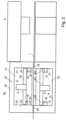
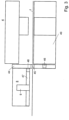
- Die Erfindung wird anhand zweier in den Zeichnungen dargestellter Ausführungsformen näher erläutert. Es zeigen
- Fig. 1
- in schematischer Darstellung eine Aktivierungs- und Auftrageinheit einer Auftrageinrichtung,
- Fig. 2
- in schematischer Darstellung eine weitere Ausführungsform einer Auftrageinheit einer Auftrageinrichtung, die einer Auslochstanzeinrichtung vorgeschaltet ist,
- Fig. 3
- in schematischer Darstellung eine weitere Ausführungsform einer Auftrageinheit einer Auftrageinrichtung, die einer Auslochstanzeinrichtung vorgeschaltet ist,
- Fig. 4
- in schematischer Darstellung eine Stanzeinrichtung,
- Fig. 5
- in schematischer Darstellung eine weitere Form einer Aktivierungs- und Auftrageinheit,
- Aus einem Elektroband 1 werden in bekannter Weise Lamellen gestanzt, die zu Lamellenpaketen gestapelt werden, aus denen Rotoren und/oder Statoren für elektrische Antriebe oder Generatoren hergestellt werden. Das Elektroband 1 wird von einem Coil 2 abgewickelt (
Fig. 4 ). Mittels eines Vorschubes 3 wird das Elektroband 1 einer Stanzeinrichtung 4 zugeführt, mit der aus dem Elektroband 1 die Lamellen gestanzt werden. Zwischen dem Vorschub 3 und dem Coil 2 kann ein Richtapparat 5 vorgesehen sein, um das Elektroband 1 zu richten. - Des Weiteren befindet sich im Abschnitt der Bandzuführung eine Plasmaanlage 50 (
Fig. 4 ) zur Reinigung sowie Einstellung der Oberflächenenergie am Band. In einer günstigen Ausführungsform befinden sich die Plasmadüsen innerhalb des Stanzprozesses an einer Position, in welcher die Bandgeschwindigkeit konstant ist. Hierbei sind mindestens eine Düse oberhalb und eine unterhalb des Bandes mit einem definierten Abstand von bis circa 10 mm angeordnet. Mittels der Erhöhung der Oberflächenenergie wird die Benetzung des Klebstoffes optimiert. Dadurch wird die Anbindung des Klebstoffes zur Bandoberfläche verbessert. Damit ist der Klebstoff positionsstabiler während der Bewegung des Bandes in Vorschubrichtung im Stanzprozess. Bei einer günstigen Ausführungsform kann die Oberfläche mittels Abscheidens von Aktivatoren durch den Plasmaprozess nochmals aufgewertet werden. - Die Plasmaanlage 50 ist in Zuführrichtung des Elektrobandes 1 vor der Stanzeinrichtung 4 angeordnet. Hat die Auftrageinheit einen Richtapparat, dann befindet sich die Plasmaanlage 50 vorteilhaft zwischen dem Richtapparat und der Stanzeinrichtung 4.
- Die Auftrageinheit 8 ist mit einer schematisch dargestellten Medienversorgung 51 verbunden.
- In der Stanzeinrichtung 4 findet sich das entsprechende Werkzeug 6, mit dem aus dem Elektroband 1 die Lamellen gestanzt werden. Die Stanzeinrichtung 4 ist an eine Steuerung 7 angeschlossen, mit welcher der Stanzhub gesteuert wird.
- Die Lamellen werden in bekannter Weise in aufeinanderfolgenden Stanzschritten aus dem Elektroband 1 gestanzt. Je nach Breite und/oder Form der Lamellen können die Lamellen in einer oder mehreren Spuren aus dem Elektroband 1 gestanzt werden.
- Anstelle eines Elektrobandes können zum Ausstanzen der Lamellen in einer Form auch Elektrobleche oder Streifen eingesetzt werden.
- Die ausgestanzten Lamellen werden vorteilhaft in einem (nicht dargestellten) Schacht innerhalb der Stanzeinrichtung 4 gestapelt. Im Schacht befindet sich eine Bremseinrichtung, mit der die Lamellen während der Stapelung festgehalten werden. Da eine solche Stapelung der Lamellen innerhalb der Stanzeinrichtung 4 bekannt ist, wird sie auch nicht näher beschrieben.
- Es besteht weiter die Möglichkeit, die ausgestanzten Lamellen außerhalb der Stanzeinrichtung 4 zu stapeln. Auch diese Vorgehensweise ist an sich bekannt und wird daher auch nicht näher beschrieben.
- Um die im Stapel aufeinander liegenden Lamellen miteinander zu verbinden, wird ein Klebemittel eingesetzt, das in zu beschreibender Weise auf die Lamellen aufgebracht wird. Für den Klebemittelauftrag ist eine Auftrageinheit 8 vorgesehen, die in
Fig. 1 schematisch dargestellt ist. Die Auftrageinheit 8 hat wenigstens ein Ventil 9, das vorteilhaft ein Jetventil ist. Das Ventil 9 ist an eine Steuerung 10 angeschlossen, die in Abhängigkeit von einem zugeführten Pressensignal 11 das Ventil 9 steuert. - Das Ventil 9 hat einen Ventilstößel 12, über den das Klebemittel auf das Elektroband 1 aufgebracht wird. Im dargestellten Ausführungsbeispiel wird das Klebemittel in Form eines Tropfens 13 auf das Elektroband 1 aufgebracht.
- Das Klebemittel wird von einem (nicht dargestellten) Vorratsbehälter über eine Zuleitung 14 dem Ventilstößel 12 zugeführt, mit dem das Klebemittel auf das Elektroband 1 aufgebracht wird. Die Zuleitung 14 erstreckt sich bis zum Ventilstößel 12.
- Als Klebemittel wird ein durch Strahlung mit geeigneter Wellenlänge aktivierbares Klebemittel eingesetzt. Ein solches Klebemittel ist beispielsweise ein UV-Klebemittel, das mit UV-Licht aktiviert werden kann. Die UV-Strahlung hat eine Wellenlänge im Bereich zwischen etwa 400 bis 550 nm.
- Auch andere geeignete lichtaktivierbare Klebemittel können eingesetzt werden, die mit Licht einer entsprechenden Wellenlänge bestrahlt und damit aktiviert wird. Als Licht kommen beispielsweise auch Elektronenstrahlen in Betracht.
- Die entsprechende Strahlungsquelle 15 (
Fig. 1 ), die beispielsweise eine UV-Lichtquelle sein kann, ist so angeordnet, dass die von ihr ausgesandte Strahlung auf das in der Zuleitung 14 befindliche Klebemittel unmittelbar vor dem Ventil 9 gelangt und das Klebemittel aktiviert. Vorteilhaft ist die Strahlungsquelle 15 ringförmig ausgebildet, so dass sie die Zuleitung 14 ringförmig umgibt. Die Achse der ringförmigen Strahlungsquelle 15 bildet in diesem Falle die Achse der Zuleitung 14. Selbstverständlich kann die Licht- bzw. Strahlungsquelle 15 auch eine andere Gestaltung haben. Sie muss lediglich so ausgebildet sein, dass die von ihr ausgehende Strahlung das Klebemittel in der Zuleitung 14 ausreichend aktiviert. - Im Strahlungsbereich der Strahlungsquelle 15 ist die Zuleitung 14 für die Strahlung durchlässig. Wenn das Klebemittel auf das Elektroband 1 aufgebracht wird, ist es durch die Strahlungsquelle 15 ausreichend aktiviert, so dass das Klebemittel seine Klebefunktion beim Stapeln der gestanzten Lamellen zum Lamellenstapel erfüllen kann.
- Die Belichtungszeit richtet sich nach der Größe der Hubzahl der Stanzeinrichtung 4. Je höher die Hubzahl ist, desto länger ist auch die Belichtungszeit des Klebemittels in der Zuleitung 14.
- Um unterschiedliche Aktivierungszeiten zu erhalten, wird die Lichtquelle 15 mit einer maximalen Belichtungsstrecke 16 ausgelegt, bezogen auf die Längsrichtung der Zuleitung 14 (
Fig. 1 ). Im Bereich dieser Belichtungsstrecke 16 ist die Zuleitung 14 für die von der Strahlungsquelle 15 ausgesandte Strahlung durchlässig. - Die in Achsrichtung der Zuleitung 14 gemessene Länge der Belichtungsstrecke 16 bestimmt die maximale Hubzahl der Stanzeinrichtung 4 bzw. ihres Werkzeuges 6.
- Werden kleinere Hubzahlen in der Stanzeinrichtung 4 verwendet, kann die Belichtungsstrecke 16 verkürzt werden, indem eine Blende 17 zwischen die Zuleitung 14 und die Strahlungsquelle 15 gebracht wird. Ist die Strahlungsquelle vorteilhaft ringförmig ausgebildet, wird eine entsprechende Ringblende verwendet. Sie ist für die von der Strahlungsquelle 15 ausgehende Strahlung undurchlässig, so dass die Strahlung nur in demjenigen Bereich auf das Klebemittel fällt, der nicht von der Blende abgedeckt ist.
- Je geringer die Hubzahl des Werkzeuges 6 in der Stanzeinrichtung 4 ist, desto kleiner kann die Belichtungsstrecke 16 sein. Die Blende wird dementsprechend so weit vorgeschoben, dass nur noch ein geringer Teil der Strahlung auf das Klebemittel trifft.
- Die Verstellung der Blende 17 erfolgt vorteilhaft motorisch. Der Antrieb 18 für die Blende 17 ist vorteilhaft an die Steuerung 10 angeschlossen. Da der Steuerung 10 die Pressensignale 11 zugeführt werden, kann sie in Abhängigkeit vom Pressensignal 11 den Antrieb 18 so betätigen, dass die Blende 17 die Länge der Belichtungsstrecke 16 entsprechend der Hubzahl einstellt.
- Im dargestellten Ausführungsbeispiel befindet sich die Strahlungsquelle 15 unmittelbar benachbart zum Ventil 9. Dadurch baut die Auftrageinheit 8 kurz, so dass für die Auftrageinheit 8 auch nur ein kleiner Einbauraum erforderlich ist. Die Strahlungsquelle 15 kann aber auch mit Abstand zum Ventil 9 vorgesehen sein. In diesem Falle kann die Strahlungsquelle 15 derart ausgebildet sein, dass sie das Licht zur Aktivierung des Klebemittels bis in den Bereich des Ventiles 9 abstrahlt.
- Die Strahlungsquelle 15 kann in einer Form auch so angeordnet sein, dass das von ihr ausgesandte Licht auf den Ventilstößel 12 des Ventiles 9 fällt (
Fig. 5 ). Dies hat zur Folge, dass das Klebemittel unmittelbar vor seinem Austrag aus dem Ventil 9 durch das Licht aktiviert wird. Die Zuleitung 14 für das Klebemittel benötigt in diesem Falle keinen lichtdurchlässigen Bereich. im Übrigen ist die Auftrageinheit gleich ausgebildet wie das Ausführungsbeispiel gemäßFig. 1 . - Bei den beschriebenen Ausführungsbeispielen hat das Ventil 9 nur einen einzigen Ventilstößel 12. Mit einem solchen Ventil 9 wird darum auch nur ein Klebemittetropfen 13 auf das Elektroband 1 aufgebracht.
- Das Ventil 9 kann aber auch so ausgebildet sein, dass es zwei oder mehr Ventilstößel 12 aufweist. Diese Ventilstößel sind in Abhängigkeit von der Gestalt der zu stanzenden Lamellen angeordnet. Dann können die Klebemitteltropfen an denjenigen Stellen der Lamelle aufgebracht werden, die für den Zusammenhalt der Lamellen innerhalb des Lamellenpaketes optimal sind.
- Die Auftrageinheit 8 kann vor der Stanzeinrichtung 4 angeordnet sein, so dass die Lamellen erst dann aus dem Elektroband 1 gestanzt werden, wenn das Klebemittel bereits auf das Elektroband an den erforderlichen Stellen aufgebracht worden ist.
- Es besteht aber auch die Möglichkeit, die Auftrageinheit 8 nach dem Stanzwerkzeug anzuordnen, bevor die gestanzten Lamellen in den Stapelschacht gelangen. Der Ausstoßstempel, mit dem die Lamellen in diesen Schacht gedrückt werden, ist so ausgebildet, dass er mit den auf der Lamelle befindlichen Klebemitteltropfen 13 nicht in Berührung kommt.
-
Fig. 2 zeigt eine der Stanzeinrichtung 4 vorgeschaltete Einrichtung 19, die zwei Auftrageinheiten 8 aufweist, die im Bereich oberhalb und unterhalb des Elektrobandes 1 angeordnet sind. - Die Einrichtung hat ein portalförmiges Gestell 20, in dem zwei übereinanderliegende Aufnahmeräume 21, 22 vorgesehen sind, in denen jeweils eine Auftrageinheit 8 untergebracht ist.
- Das Gestell 20 hat zwei parallel zueinander liegende vertikale Ständer 24, 25, die am oberen Ende durch einen Querträger 26 miteinander verbunden sind. Die Ständer 24, 25 können am unteren Ende durch einen weiteren Querträger 27 miteinander verbunden sein.
- Im Ständer 24 befindet sich eine schematisch dargestellte Einlassöffnung 28 und im Ständer 25 eine schematisch dargestellte Auslassöffnung 29 für den Durchtritt des Elektrobandes 1.
- In den beiden Aufnahmeräumen 21, 22 sind an den einander gegenüberliegenden Innenseiten 30, 31; 32, 33 der Ständer 24, 25 horizontal sich erstreckende Schienen 34, 35; 36, 37 befestigt. Die Schienen 34 bis 37 erstrecken sich parallel zum Elektroband 1. Auf den Schienen 34, 35 ist eine Ventilplatte 38 gelagert, die längs der Schienen 34, 35 quer zur Vorschubrichtung des Elektrobandes 1 horizontal verfahren werden kann. Die Ventilplatte 38 trägt das Ventil 9 mit dem (nicht dargestellten) Ventilstößel. Vorteilhaft ist die Ventilplatte 38 unter Zwischenlage jeweils wenigstens eines Federelementes 39, 40 als Entkopplungselement auf den Schienen 34, 35 gelagert. Das Ventil 9 ist vorteilhaft in Höhenrichtung gegenüber der Ventilplatte 38 verstellbar, um den Abstand zwischen dem Ventil 9 und dem Elektroband 1 einstellen zu können.
- Auf den Schienen 36, 37 im unteren Aufnahmeraum 22 ist ebenfalls eine Ventilplatte 41 gelagert. Auch die Ventilplatte 41 liegt vorteilhaft unter Zwischenlage jeweils wenigstens eines Federelementes 42, 43 als Entkopplungselement auf den Schienen 36, 37 auf. Die Ventilplatte 41 trägt das Ventil 9, das in Höhenrichtung verstellbar in der Ventilplatte 41 gelagert ist.
- Die beiden Ventilplatten 38, 41 mit dem Ventil 9 sind spiegelbildlich zueinander angeordnet.
- Mit den beiden Auftrageinheiten 8 kann auf die Ober- und die Unterseite des Elektrobandes 1 das Klebemittel aufgetragen werden. Durch Verfahren der Ventilplatte 38, 41 kann die Position der Klebetropfen 13 auf dem Elektroband 1 bestimmt werden.
- Vorteilhaft sind beide Auftrageinheiten 8 gleich ausgebildet. Grundsätzlich können die Auftrageinheiten 8 auch eine unterschiedliche Ausgestaltung haben.
- Die beiden Auftrageinheiten 8 haben, wie anhand der
Fig. 1 und der Form gemäßFig. 5 erläutert worden ist, jeweils wenigstens eine Strahlungsquelle 15, um das Klebemittel mit Licht der erforderlichen Wellenlänge zu aktivieren, bevor es auf das Elektroband 1 aufgebracht wird. - Das mit den Klebemitteltropfen 13 versehene Elektroband 1 gelangt anschließend in die Stanzeinrichtung 4, mit der Lamellen aus dem Elektroband 1 in bekannter Weise gestanzt werden.
- Bei der Ausführungsform gemäß
Fig. 3 ist das Gestell 44 ein vertikaler Ständer. In ihm befindet sich eine schematisch dargestellte Einlassöffnung 45 für den Durchtritt des Elektrobandes 1. Am Ständer 44 ist eine Ventilplatte 47 gelagert, die längs Schienen 46 quer zur Vorschubrichtung des Elektrobandes 1 horizontal verfahren werden kann. Die Schienen 46 sind an einem Werkzeugunterteil 49 der Stanzeinrichtung 4 befestigt und erstrecken sich parallel zum Elektroband 1. Die Ventilplatte 47 trägt das Ventil 9 mit dem (nicht dargestellten) Ventilstößel. Vorteilhaft ist die Ventilplatte 47 unter Zwischenlage wenigstens eines Federelementes 48 als Entkopplungselement an dem Ständer 44 gelagert. Das Ventil 9 ist vorteilhaft in Höhenrichtung gegenüber der Ventilplatte 47 verstellbar, um den Abstand zwischen dem Ventil 9 und dem Elektroband 1 einstellen zu können. - Mit mindestens einer Auftrageinheit 8 kann auf die Oberseite des Elektrobandes 1 das Klebemittel aufgetragen werden. Durch Verfahren der Ventilplatte 47 kann die Position der Klebetropfen 13 auf dem Elektroband 1 bestimmt werden. Im Unterschied zur Ausführungsform nach
Fig. 2 ist nur im Bereich oberhalb des Elektrobandes 1 die Auftrageinheit 8 vorgesehen. Sie hat die wenigstens eine Strahlungsquelle 15 (Fig. 1 und5 ), um das Klebemittel in der beschriebenen Weise zu aktivieren.
Claims (9)
- Verfahren zur Herstellung von Lamellenpaketen für Rotoren und/oder Statoren von Elektromotoren oder Generatoren, bei dem Lamellen mittels eines in einer Stanzeinrichtung (4) befindlichen Stanzwerkzeugs (6) aus einem Elektroband gestanzt werden, wobei die Stanzeinrichtung (4) an eine Steuerung (7) angeschlossen ist, mit welcher der Stanzhub gesteuert wird, wobei auf wenigstens eine Seite der Lamelle ein Klebemittel aufgebracht und die Lamellen zum Lamellenpaket gestapelt werden, wobei das Klebemittel von einem Vorratsbehälter über eine Zuleitung (14) einem Ventilstössel (12) eines Ventils (9) einer Auftrageinheit (8) zugeführt wird, wobei mit dem Ventilstössel das Klebemittel aufgebracht wird und wobei sich die Zuleitung (14) bis zum Ventilstössel erstreckt, wobei die im Lamellenstapel aufeinander liegenden Lamellen durch das Klebemittel miteinander verbunden werden,
dadurch gekennzeichnet, dass als Klebemittel ein mit aus einer Strahlungsquelle stammendem Licht erforderlicher Wellenlänge aktivierbares Klebemittel eingesetzt wird, wobei das Klebemittel unmittelbar vor dem Austritt aus der Auftrageinheit (8) mit diesem Licht bestrahlt und mit diesem Licht aktiviert wird, wobei die Strahlungsquelle (15) mit einer maximalen Belichtungsstrecke (16), bezogen auf die Längsrichtung der Zuleitung (14), ausgelegt wird, wobei im Bereich dieser Belichtungsstrecke (16) die Zuleitung (14) für die von der Strahlungsquelle (15) ausgesandte Strahlung durchlässig ist, wobei die Belichtungsstrecke (16) verkürzt werden kann, indem zwischen die Zuleitung (14) und die Strahlungsquelle (15) eine Blende (17) gebracht wird, die für die von der Strahlungsquelle (15) ausgehende Strahlung undurchlässig ist, so dass die Strahlung nur in demjenigen Bereich auf das Klebemittel fällt, der nicht von der Blende (17) abgedeckt ist, wobei die Blende (17) verstellbar ist. - Verfahren nach Anspruch 1, wobei ein Lamellenpaket eines Rotors hergestellt wird,
dadurch gekennzeichnet, dass zur Fixierung von Magneten am Rotor eine Klebstoffaktivierung durchgeführt wird. - Verfahren nach Anspruch 1 oder 2,
dadurch gekennzeichnet, dass das vorteilhaft als UV-Kleber ausgebildete Klebemittel in Form von Tropfen (13) aufgebracht wird. - Verfahren nach einem der Ansprüche 1 bis 3,
dadurch gekennzeichnet, dass das Klebemittel berührungslos aufgebracht wird. - Verfahren nach einem der Ansprüche 1 bis 4,
dadurch gekennzeichnet, dass das Klebemittel vor oder nach dem Stanzvorgang aufgebracht wird. - Verfahren nach einem der Ansprüche 1 bis 5,
dadurch gekennzeichnet, dass die Bestrahlungsdauer in Abhängigkeit von der Hubzahl des Stanzwerkzeuges (6) erfolgt. - Verfahren nach einem der Ansprüche 1 bis 6,
dadurch gekennzeichnet, dass mittels einer Plasmabehandlung die Oberflächenenergie eingestellt und die Oberfläche der Lamelle aktiviert wird. - Verfahren nach einem der Ansprüche 1 bis 7, wobei ein Lamellenpaket des Rotors hergestellt wird,
dadurch gekennzeichnet, dass am für Rotoren vorgesehenen Lamellenpaket Magnete mittels des Klebemittels befestigt werden, das vor oder nach dem Fügen der Magnete eingebracht wird. - Verfahren nach Anspruch 8,
dadurch gekennzeichnet, dass die Bestrahlungsdauer in Abhängigkeit von der Fügezeit bzw. Klebstoffoffenzeit der Magnete erfolgt.
Priority Applications (3)
| Application Number | Priority Date | Filing Date | Title |
|---|---|---|---|
| EP22215713.3A EP4216409A1 (de) | 2018-04-23 | 2019-04-17 | Verfahren zur herstellung von lamellenpaketen sowie auftrageinrichtung für ein klebemittel zur durchführung des verfahrens |
| RS20230674A RS66627B1 (sr) | 2018-04-23 | 2019-04-17 | Postupak za proizvodnju paketa lamele i aplikatora za lepak za izvođenje postupka |
| SI201930618T SI3562007T1 (sl) | 2018-04-23 | 2019-04-17 | Postopek za izdelavo paketov lamel in pa nanašalna priprava za lepilo za izvedbo postopka |
Applications Claiming Priority (1)
| Application Number | Priority Date | Filing Date | Title |
|---|---|---|---|
| DE102018003345.8A DE102018003345A1 (de) | 2018-04-23 | 2018-04-23 | Verfahren zur Herstellung von Lamellenpaketen sowie Auftrageinrichtung für ein Klebemittel zur Durchführung des Verfahrens |
Related Child Applications (3)
| Application Number | Title | Priority Date | Filing Date |
|---|---|---|---|
| EP22215713.3A Division-Into EP4216409A1 (de) | 2018-04-23 | 2019-04-17 | Verfahren zur herstellung von lamellenpaketen sowie auftrageinrichtung für ein klebemittel zur durchführung des verfahrens |
| EP22215713.3A Division EP4216409A1 (de) | 2018-04-23 | 2019-04-17 | Verfahren zur herstellung von lamellenpaketen sowie auftrageinrichtung für ein klebemittel zur durchführung des verfahrens |
| EP22215713.3A Previously-Filed-Application EP4216409A1 (de) | 2018-04-23 | 2019-04-17 | Verfahren zur herstellung von lamellenpaketen sowie auftrageinrichtung für ein klebemittel zur durchführung des verfahrens |
Publications (2)
| Publication Number | Publication Date |
|---|---|
| EP3562007A1 EP3562007A1 (de) | 2019-10-30 |
| EP3562007B1 true EP3562007B1 (de) | 2023-06-07 |
Family
ID=66239727
Family Applications (2)
| Application Number | Title | Priority Date | Filing Date |
|---|---|---|---|
| EP22215713.3A Pending EP4216409A1 (de) | 2018-04-23 | 2019-04-17 | Verfahren zur herstellung von lamellenpaketen sowie auftrageinrichtung für ein klebemittel zur durchführung des verfahrens |
| EP19000189.1A Active EP3562007B1 (de) | 2018-04-23 | 2019-04-17 | Verfahren zur herstellung von lamellenpaketen sowie auftrageinrichtung für ein klebemittel zur durchführung des verfahrens |
Family Applications Before (1)
| Application Number | Title | Priority Date | Filing Date |
|---|---|---|---|
| EP22215713.3A Pending EP4216409A1 (de) | 2018-04-23 | 2019-04-17 | Verfahren zur herstellung von lamellenpaketen sowie auftrageinrichtung für ein klebemittel zur durchführung des verfahrens |
Country Status (12)
| Country | Link |
|---|---|
| US (2) | US11535021B2 (de) |
| EP (2) | EP4216409A1 (de) |
| JP (1) | JP7377620B2 (de) |
| CN (1) | CN110385233A (de) |
| CA (1) | CA3040951A1 (de) |
| DE (1) | DE102018003345A1 (de) |
| ES (1) | ES2955942T3 (de) |
| HU (1) | HUE064439T2 (de) |
| MX (1) | MX2019004643A (de) |
| PL (1) | PL3562007T3 (de) |
| RS (1) | RS66627B1 (de) |
| SI (1) | SI3562007T1 (de) |
Families Citing this family (4)
| Publication number | Priority date | Publication date | Assignee | Title |
|---|---|---|---|---|
| DE102018110951A1 (de) * | 2017-11-03 | 2019-05-09 | Fraunhofer-Gesellschaft zur Förderung der angewandten Forschung eingetragener Verein | Verfahren zum klebtechnischen Verbinden von Elektroblechen und Elektrobleche hergestellt nach einem entsprechenden Verfahren |
| GB2613615A (en) | 2021-12-09 | 2023-06-14 | Henkel IP & Holding GmbH | A method of bonding substrates |
| JP2025506069A (ja) | 2022-01-24 | 2025-03-05 | ユーログループ ラミネーションズ エス.ピー.エー. | 可変幾何学的形状のシート積層体上に粒子径制御液体コーティングを塗布する方法および装置 |
| DE102024001492A1 (de) * | 2024-05-05 | 2025-11-06 | Feintool International Holding Ag | Verfahren zur Herstellung von Lamellenpaketen aus aufeinander liegenden Lamellen sowie Anlage zur Durchführung eines solchen Verfahrens |
Family Cites Families (20)
| Publication number | Priority date | Publication date | Assignee | Title |
|---|---|---|---|---|
| DE19936730A1 (de) * | 1999-08-06 | 2001-02-22 | Sca Schucker Gmbh | Vorrichtung und Verfahren zum Aufbringen eines Kunststoffstrangs auf eine Unterlage |
| US6737784B2 (en) * | 2000-10-16 | 2004-05-18 | Scott M. Lindquist | Laminated amorphous metal component for an electric machine |
| DE10216098A1 (de) * | 2002-04-12 | 2003-10-23 | Bosch Gmbh Robert | Rotor für eine elektrische Maschine |
| CA2532178A1 (en) * | 2003-08-04 | 2005-02-17 | Giorgio Macor | Process for the production of strongly adherent coatings |
| FR2872068B1 (fr) * | 2004-06-28 | 2006-10-27 | Centre Nat Rech Scient Cnrse | Procede et dispositif pour le depot de couches minces par pulverisation electrohydrodynamique, notamment en post-decharge |
| US20060066168A1 (en) * | 2004-09-30 | 2006-03-30 | Shoykhet Boris A | Bonded rotor laminations |
| US7517561B2 (en) * | 2005-09-21 | 2009-04-14 | Ford Global Technologies, Llc | Method of coating a substrate for adhesive bonding |
| JP2007160926A (ja) | 2005-11-18 | 2007-06-28 | Seiko Epson Corp | 液滴吐出装置 |
| EP1833145B1 (de) | 2006-03-10 | 2012-05-16 | Kienle + Spiess GmbH | Verfahren, Werkzeug und Vorrichtung zur Produktion von Lamellenpaketen sowie Lamellenpaket |
| JP4687747B2 (ja) | 2007-06-18 | 2011-05-25 | セイコーエプソン株式会社 | 接合方法 |
| US20130162064A1 (en) * | 2011-12-22 | 2013-06-27 | Samsung Electro-Mechanics Co., Ltd. | Laminated core and method for manufacturing the same |
| DE102012001744B4 (de) * | 2012-01-28 | 2026-07-02 | Volkswagen Aktiengesellschaft | Verfahren und Vorrichtung zur gleichzeitigen Herstellung mehrerer unterschiedlicher Blechpakete aus mehreren aufeinander gestapelten Elektroblechen |
| JP2015512331A (ja) * | 2012-03-22 | 2015-04-27 | ビーエイエスエフ・ソシエタス・エウロパエアBasf Se | 硬化塗膜の製造方法及び製造装置 |
| JP6275589B2 (ja) | 2013-09-26 | 2018-02-07 | 芝浦メカトロニクス株式会社 | 接着剤塗布装置、接着剤塗布方法、表示装置用部材の製造装置及び表示装置用部材の製造方法 |
| DE102014000690A1 (de) | 2014-01-17 | 2015-07-23 | Kienle + Spiess Gmbh | Ringförmiges Lamellenpaket aus Einzelzahnpaketen sowie Verfahren zur Herstellung eines Lamellenpaketes |
| US10201844B2 (en) | 2014-11-07 | 2019-02-12 | Kuroda Precision Industries Ltd. | Apparatus and method for manufacturing laminated iron core |
| DE102014017149A1 (de) * | 2014-11-17 | 2016-05-19 | Kienle + Spiess Gmbh | Verfahren zur Herstellung von Lamellenpaketen und Anlage zur Durchführung des Verfahrens |
| JP2016140134A (ja) * | 2015-01-26 | 2016-08-04 | アイシン・エィ・ダブリュ株式会社 | モータコアおよびモータコアの製造方法 |
| DE102015225758A1 (de) * | 2015-12-17 | 2017-06-22 | Robert Bosch Gmbh | Verfahren zum Beschichten eines elektromagnetisch erregbaren Kerns |
| WO2017199527A1 (ja) | 2016-05-20 | 2017-11-23 | 日本電産株式会社 | ステータコアの製造方法 |
-
2018
- 2018-04-23 DE DE102018003345.8A patent/DE102018003345A1/de active Pending
-
2019
- 2019-04-17 ES ES19000189T patent/ES2955942T3/es active Active
- 2019-04-17 EP EP22215713.3A patent/EP4216409A1/de active Pending
- 2019-04-17 HU HUE19000189A patent/HUE064439T2/hu unknown
- 2019-04-17 SI SI201930618T patent/SI3562007T1/sl unknown
- 2019-04-17 RS RS20230674A patent/RS66627B1/sr unknown
- 2019-04-17 EP EP19000189.1A patent/EP3562007B1/de active Active
- 2019-04-17 PL PL19000189.1T patent/PL3562007T3/pl unknown
- 2019-04-22 JP JP2019080862A patent/JP7377620B2/ja active Active
- 2019-04-22 MX MX2019004643A patent/MX2019004643A/es unknown
- 2019-04-23 CA CA3040951A patent/CA3040951A1/en active Pending
- 2019-04-23 US US16/391,475 patent/US11535021B2/en active Active
- 2019-04-23 CN CN201910325769.3A patent/CN110385233A/zh active Pending
-
2022
- 2022-11-27 US US17/994,331 patent/US12447729B2/en active Active
Also Published As
| Publication number | Publication date |
|---|---|
| US12447729B2 (en) | 2025-10-21 |
| US20190322093A1 (en) | 2019-10-24 |
| US20230089960A1 (en) | 2023-03-23 |
| EP3562007A1 (de) | 2019-10-30 |
| HUE064439T2 (hu) | 2024-03-28 |
| CN110385233A (zh) | 2019-10-29 |
| JP7377620B2 (ja) | 2023-11-10 |
| RS66627B1 (sr) | 2025-04-30 |
| CA3040951A1 (en) | 2019-10-23 |
| MX2019004643A (es) | 2019-11-08 |
| DE102018003345A1 (de) | 2019-10-24 |
| SI3562007T1 (sl) | 2024-05-31 |
| PL3562007T3 (pl) | 2024-05-06 |
| ES2955942T3 (es) | 2023-12-11 |
| JP2019193561A (ja) | 2019-10-31 |
| BR102019007941A2 (pt) | 2019-11-26 |
| EP4216409A1 (de) | 2023-07-26 |
| US11535021B2 (en) | 2022-12-27 |
Similar Documents
| Publication | Publication Date | Title |
|---|---|---|
| EP2826136B1 (de) | Lamellenpaket und verfahren zu seiner herstellung | |
| DE3247344C2 (de) | ||
| EP3021466B1 (de) | Verfahren zur herstellung von lamellenpaketen und anlage zur durchführung des verfahrens | |
| EP4216409A1 (de) | Verfahren zur herstellung von lamellenpaketen sowie auftrageinrichtung für ein klebemittel zur durchführung des verfahrens | |
| EP1833145B1 (de) | Verfahren, Werkzeug und Vorrichtung zur Produktion von Lamellenpaketen sowie Lamellenpaket | |
| EP3495280B1 (de) | Etikettierer mit schieberbaugruppe | |
| DE2942997A1 (de) | Loetmetallpackung und herstellungsverfahren fuer diese | |
| CH705057B1 (de) | Bearbeitungseinrichtung und Verwendung derselben zur Herstellung von Deckeln mit Aufreissfolie. | |
| DE102016013317B4 (de) | Verfahren zum Herstellen eines dreidimensionalen Formgegenstands und Vorrichtung zur Durchführung des Verfahrens | |
| DE102017001802A1 (de) | Verfahren und Vorrichtung zum Herstellen eines Blechpakets aus paketierten und miteinander verbundenen Blechteilen | |
| EP4511954A1 (de) | Verfahren und vorrichtung zum herstellen von blechpaketen aus blechlamellen | |
| EP1529648A1 (de) | Verfahren zur Herstellung von Informationsträgern, z.B. von Karten, und Einrichtung zur Durchführung | |
| DE3783624T2 (de) | Programmierbarer, mit magnetischer abstossung arbeitender stanzapparat. | |
| EP2213475B1 (de) | Prägevorrichtung und Verfahren | |
| EP2964447B1 (de) | Verfahren zum aufbringen einer beschichtung auf werkstücke und vorrichtung zum beschichten von werkstücken | |
| EP3722071A1 (de) | Vorrichtung zum applizieren einer perforierten schutzfolie auf eine oberfläche eines bauteils | |
| DE102020107332B4 (de) | Faserspule und Wickelvorrichtung zum Wickeln einer Faserspule | |
| DE102004059889B4 (de) | Vorrichtung und Verfahren zum Wickeln eines Scheibenläufers für einen Scheibenläufermotor | |
| WO2014202246A1 (de) | Vorrichtung und verfahren zum zuführen von kantenbändern | |
| WO2023220763A1 (de) | Lichtleiterfaserband und verfahren zu dessen herstellung | |
| EP2004418A2 (de) | Vorrichtung zum binden und stapeln aus flachteilen | |
| EP4648267A1 (de) | Verfahren zur herstellung von lamellenpaketen aus aufeinander liegenden lamellen sowie anlage zur durchführung eines solchen verfahrens | |
| DE102007031955A1 (de) | Vorrichtung zum Auszahlen von Münzen aus einem Paar benachbarter Münztuben | |
| DE102023206351A1 (de) | Kleben von Lamellenpaketen mit Inkjet-Technologie | |
| DE102023206353A1 (de) | Kleben von Lamellenpaketen mit LIFT-Technologie |
Legal Events
| Date | Code | Title | Description |
|---|---|---|---|
| PUAI | Public reference made under article 153(3) epc to a published international application that has entered the european phase |
Free format text: ORIGINAL CODE: 0009012 |
|
| STAA | Information on the status of an ep patent application or granted ep patent |
Free format text: STATUS: THE APPLICATION HAS BEEN PUBLISHED |
|
| AK | Designated contracting states |
Kind code of ref document: A1 Designated state(s): AL AT BE BG CH CY CZ DE DK EE ES FI FR GB GR HR HU IE IS IT LI LT LU LV MC MK MT NL NO PL PT RO RS SE SI SK SM TR |
|
| AX | Request for extension of the european patent |
Extension state: BA ME |
|
| STAA | Information on the status of an ep patent application or granted ep patent |
Free format text: STATUS: REQUEST FOR EXAMINATION WAS MADE |
|
| 17P | Request for examination filed |
Effective date: 20200430 |
|
| RBV | Designated contracting states (corrected) |
Designated state(s): AL AT BE BG CH CY CZ DE DK EE ES FI FR GB GR HR HU IE IS IT LI LT LU LV MC MK MT NL NO PL PT RO RS SE SI SK SM TR |
|
| STAA | Information on the status of an ep patent application or granted ep patent |
Free format text: STATUS: EXAMINATION IS IN PROGRESS |
|
| 17Q | First examination report despatched |
Effective date: 20200702 |
|
| GRAP | Despatch of communication of intention to grant a patent |
Free format text: ORIGINAL CODE: EPIDOSNIGR1 |
|
| STAA | Information on the status of an ep patent application or granted ep patent |
Free format text: STATUS: GRANT OF PATENT IS INTENDED |
|
| INTG | Intention to grant announced |
Effective date: 20221129 |
|
| GRAS | Grant fee paid |
Free format text: ORIGINAL CODE: EPIDOSNIGR3 |
|
| GRAA | (expected) grant |
Free format text: ORIGINAL CODE: 0009210 |
|
| STAA | Information on the status of an ep patent application or granted ep patent |
Free format text: STATUS: THE PATENT HAS BEEN GRANTED |
|
| AK | Designated contracting states |
Kind code of ref document: B1 Designated state(s): AL AT BE BG CH CY CZ DE DK EE ES FI FR GB GR HR HU IE IS IT LI LT LU LV MC MK MT NL NO PL PT RO RS SE SI SK SM TR |
|
| REG | Reference to a national code |
Ref country code: GB Ref legal event code: FG4D Free format text: NOT ENGLISH |
|
| REG | Reference to a national code |
Ref country code: CH Ref legal event code: EP Ref country code: AT Ref legal event code: REF Ref document number: 1577831 Country of ref document: AT Kind code of ref document: T Effective date: 20230615 Ref country code: DE Ref legal event code: R096 Ref document number: 502019007834 Country of ref document: DE |
|
| REG | Reference to a national code |
Ref country code: NL Ref legal event code: FP |
|
| REG | Reference to a national code |
Ref country code: LT Ref legal event code: MG9D |
|
| REG | Reference to a national code |
Ref country code: DE Ref legal event code: R081 Ref document number: 502019007834 Country of ref document: DE Owner name: FEINTOOL INTERNATIONAL HOLDING AG, CH Free format text: FORMER OWNER: KIENLE + SPIESS GMBH, 74343 SACHSENHEIM, DE |
|
| PG25 | Lapsed in a contracting state [announced via postgrant information from national office to epo] |
Ref country code: SE Free format text: LAPSE BECAUSE OF FAILURE TO SUBMIT A TRANSLATION OF THE DESCRIPTION OR TO PAY THE FEE WITHIN THE PRESCRIBED TIME-LIMIT Effective date: 20230607 Ref country code: NO Free format text: LAPSE BECAUSE OF FAILURE TO SUBMIT A TRANSLATION OF THE DESCRIPTION OR TO PAY THE FEE WITHIN THE PRESCRIBED TIME-LIMIT Effective date: 20230907 |
|
| REG | Reference to a national code |
Ref country code: NL Ref legal event code: PD Owner name: FEINTOOL INTERNATIONAL HOLDING AG; CH Free format text: DETAILS ASSIGNMENT: CHANGE OF OWNER(S), ASSIGNMENT; FORMER OWNER NAME: KIENLE + SPIESS GMBH Effective date: 20231024 |
|
| RAP2 | Party data changed (patent owner data changed or rights of a patent transferred) |
Owner name: FEINTOOL INTERNATIONAL HOLDING AG |
|
| PG25 | Lapsed in a contracting state [announced via postgrant information from national office to epo] |
Ref country code: LV Free format text: LAPSE BECAUSE OF FAILURE TO SUBMIT A TRANSLATION OF THE DESCRIPTION OR TO PAY THE FEE WITHIN THE PRESCRIBED TIME-LIMIT Effective date: 20230607 Ref country code: LT Free format text: LAPSE BECAUSE OF FAILURE TO SUBMIT A TRANSLATION OF THE DESCRIPTION OR TO PAY THE FEE WITHIN THE PRESCRIBED TIME-LIMIT Effective date: 20230607 Ref country code: HR Free format text: LAPSE BECAUSE OF FAILURE TO SUBMIT A TRANSLATION OF THE DESCRIPTION OR TO PAY THE FEE WITHIN THE PRESCRIBED TIME-LIMIT Effective date: 20230607 Ref country code: GR Free format text: LAPSE BECAUSE OF FAILURE TO SUBMIT A TRANSLATION OF THE DESCRIPTION OR TO PAY THE FEE WITHIN THE PRESCRIBED TIME-LIMIT Effective date: 20230908 |
|
| REG | Reference to a national code |
Ref country code: ES Ref legal event code: FG2A Ref document number: 2955942 Country of ref document: ES Kind code of ref document: T3 Effective date: 20231211 |
|
| PG25 | Lapsed in a contracting state [announced via postgrant information from national office to epo] |
Ref country code: FI Free format text: LAPSE BECAUSE OF FAILURE TO SUBMIT A TRANSLATION OF THE DESCRIPTION OR TO PAY THE FEE WITHIN THE PRESCRIBED TIME-LIMIT Effective date: 20230607 |
|
| PG25 | Lapsed in a contracting state [announced via postgrant information from national office to epo] |
Ref country code: SK Free format text: LAPSE BECAUSE OF FAILURE TO SUBMIT A TRANSLATION OF THE DESCRIPTION OR TO PAY THE FEE WITHIN THE PRESCRIBED TIME-LIMIT Effective date: 20230607 |
|
| PG25 | Lapsed in a contracting state [announced via postgrant information from national office to epo] |
Ref country code: IS Free format text: LAPSE BECAUSE OF FAILURE TO SUBMIT A TRANSLATION OF THE DESCRIPTION OR TO PAY THE FEE WITHIN THE PRESCRIBED TIME-LIMIT Effective date: 20231007 |
|
| PG25 | Lapsed in a contracting state [announced via postgrant information from national office to epo] |
Ref country code: SM Free format text: LAPSE BECAUSE OF FAILURE TO SUBMIT A TRANSLATION OF THE DESCRIPTION OR TO PAY THE FEE WITHIN THE PRESCRIBED TIME-LIMIT Effective date: 20230607 Ref country code: SK Free format text: LAPSE BECAUSE OF FAILURE TO SUBMIT A TRANSLATION OF THE DESCRIPTION OR TO PAY THE FEE WITHIN THE PRESCRIBED TIME-LIMIT Effective date: 20230607 Ref country code: PT Free format text: LAPSE BECAUSE OF FAILURE TO SUBMIT A TRANSLATION OF THE DESCRIPTION OR TO PAY THE FEE WITHIN THE PRESCRIBED TIME-LIMIT Effective date: 20231009 Ref country code: IS Free format text: LAPSE BECAUSE OF FAILURE TO SUBMIT A TRANSLATION OF THE DESCRIPTION OR TO PAY THE FEE WITHIN THE PRESCRIBED TIME-LIMIT Effective date: 20231007 Ref country code: EE Free format text: LAPSE BECAUSE OF FAILURE TO SUBMIT A TRANSLATION OF THE DESCRIPTION OR TO PAY THE FEE WITHIN THE PRESCRIBED TIME-LIMIT Effective date: 20230607 |
|
| REG | Reference to a national code |
Ref country code: DE Ref legal event code: R097 Ref document number: 502019007834 Country of ref document: DE |
|
| REG | Reference to a national code |
Ref country code: AT Ref legal event code: PC Ref document number: 1577831 Country of ref document: AT Kind code of ref document: T Owner name: FEINTOOL INTERNATIONAL HOLDING AG, CH Effective date: 20240122 |
|
| REG | Reference to a national code |
Ref country code: HU Ref legal event code: AG4A Ref document number: E064439 Country of ref document: HU |
|
| REG | Reference to a national code |
Ref country code: GB Ref legal event code: 732E Free format text: REGISTERED BETWEEN 20240307 AND 20240313 |
|
| PLBE | No opposition filed within time limit |
Free format text: ORIGINAL CODE: 0009261 |
|
| STAA | Information on the status of an ep patent application or granted ep patent |
Free format text: STATUS: NO OPPOSITION FILED WITHIN TIME LIMIT |
|
| PG25 | Lapsed in a contracting state [announced via postgrant information from national office to epo] |
Ref country code: DK Free format text: LAPSE BECAUSE OF FAILURE TO SUBMIT A TRANSLATION OF THE DESCRIPTION OR TO PAY THE FEE WITHIN THE PRESCRIBED TIME-LIMIT Effective date: 20230607 |
|
| 26N | No opposition filed |
Effective date: 20240308 |
|
| PG25 | Lapsed in a contracting state [announced via postgrant information from national office to epo] |
Ref country code: BG Free format text: LAPSE BECAUSE OF FAILURE TO SUBMIT A TRANSLATION OF THE DESCRIPTION OR TO PAY THE FEE WITHIN THE PRESCRIBED TIME-LIMIT Effective date: 20230607 |
|
| PG25 | Lapsed in a contracting state [announced via postgrant information from national office to epo] |
Ref country code: MC Free format text: LAPSE BECAUSE OF FAILURE TO SUBMIT A TRANSLATION OF THE DESCRIPTION OR TO PAY THE FEE WITHIN THE PRESCRIBED TIME-LIMIT Effective date: 20230607 |
|
| PG25 | Lapsed in a contracting state [announced via postgrant information from national office to epo] |
Ref country code: MC Free format text: LAPSE BECAUSE OF FAILURE TO SUBMIT A TRANSLATION OF THE DESCRIPTION OR TO PAY THE FEE WITHIN THE PRESCRIBED TIME-LIMIT Effective date: 20230607 Ref country code: BG Free format text: LAPSE BECAUSE OF FAILURE TO SUBMIT A TRANSLATION OF THE DESCRIPTION OR TO PAY THE FEE WITHIN THE PRESCRIBED TIME-LIMIT Effective date: 20230607 |
|
| PG25 | Lapsed in a contracting state [announced via postgrant information from national office to epo] |
Ref country code: LU Free format text: LAPSE BECAUSE OF NON-PAYMENT OF DUE FEES Effective date: 20240417 |
|
| REG | Reference to a national code |
Ref country code: BE Ref legal event code: MM Effective date: 20240430 |
|
| PG25 | Lapsed in a contracting state [announced via postgrant information from national office to epo] |
Ref country code: LU Free format text: LAPSE BECAUSE OF NON-PAYMENT OF DUE FEES Effective date: 20240417 |
|
| PG25 | Lapsed in a contracting state [announced via postgrant information from national office to epo] |
Ref country code: BE Free format text: LAPSE BECAUSE OF NON-PAYMENT OF DUE FEES Effective date: 20240430 |
|
| PG25 | Lapsed in a contracting state [announced via postgrant information from national office to epo] |
Ref country code: BE Free format text: LAPSE BECAUSE OF NON-PAYMENT OF DUE FEES Effective date: 20240430 |
|
| PG25 | Lapsed in a contracting state [announced via postgrant information from national office to epo] |
Ref country code: IE Free format text: LAPSE BECAUSE OF NON-PAYMENT OF DUE FEES Effective date: 20240417 |
|
| PG25 | Lapsed in a contracting state [announced via postgrant information from national office to epo] |
Ref country code: CY Free format text: LAPSE BECAUSE OF FAILURE TO SUBMIT A TRANSLATION OF THE DESCRIPTION OR TO PAY THE FEE WITHIN THE PRESCRIBED TIME-LIMIT; INVALID AB INITIO Effective date: 20190417 |
|
| PGFP | Annual fee paid to national office [announced via postgrant information from national office to epo] |
Ref country code: GB Payment date: 20260330 Year of fee payment: 8 |
|
| PGFP | Annual fee paid to national office [announced via postgrant information from national office to epo] |
Ref country code: RS Payment date: 20260324 Year of fee payment: 8 |
|
| PGFP | Annual fee paid to national office [announced via postgrant information from national office to epo] |
Ref country code: FR Payment date: 20260324 Year of fee payment: 8 |
|
| PGFP | Annual fee paid to national office [announced via postgrant information from national office to epo] |
Ref country code: PL Payment date: 20260317 Year of fee payment: 8 |
|
| REG | Reference to a national code |
Ref country code: CH Ref legal event code: U11 Free format text: ST27 STATUS EVENT CODE: U-0-0-U10-U11 (AS PROVIDED BY THE NATIONAL OFFICE) Effective date: 20260501 |
|
| PGFP | Annual fee paid to national office [announced via postgrant information from national office to epo] |
Ref country code: NL Payment date: 20260421 Year of fee payment: 8 |
|
| PGFP | Annual fee paid to national office [announced via postgrant information from national office to epo] |
Ref country code: HU Payment date: 20260421 Year of fee payment: 8 |
|
| PGFP | Annual fee paid to national office [announced via postgrant information from national office to epo] |
Ref country code: ES Payment date: 20260506 Year of fee payment: 8 |
|
| PGFP | Annual fee paid to national office [announced via postgrant information from national office to epo] |
Ref country code: IT Payment date: 20260407 Year of fee payment: 8 |
|
| PGFP | Annual fee paid to national office [announced via postgrant information from national office to epo] |
Ref country code: DE Payment date: 20260629 Year of fee payment: 8 |
|
| PGFP | Annual fee paid to national office [announced via postgrant information from national office to epo] |
Ref country code: AT Payment date: 20260427 Year of fee payment: 8 |
|
| PGFP | Annual fee paid to national office [announced via postgrant information from national office to epo] |
Ref country code: CH Payment date: 20260501 Year of fee payment: 8 Ref country code: RO Payment date: 20260416 Year of fee payment: 8 |
|
| PGFP | Annual fee paid to national office [announced via postgrant information from national office to epo] |
Ref country code: CZ Payment date: 20260413 Year of fee payment: 8 Ref country code: TR Payment date: 20260401 Year of fee payment: 8 |
|
| PGFP | Annual fee paid to national office [announced via postgrant information from national office to epo] |
Ref country code: SI Payment date: 20260413 Year of fee payment: 8 |