EP3583210B1 - Trypsinähnliche serinproteasen und deren verwendungen - Google Patents
Trypsinähnliche serinproteasen und deren verwendungen Download PDFInfo
- Publication number
- EP3583210B1 EP3583210B1 EP18711793.2A EP18711793A EP3583210B1 EP 3583210 B1 EP3583210 B1 EP 3583210B1 EP 18711793 A EP18711793 A EP 18711793A EP 3583210 B1 EP3583210 B1 EP 3583210B1
- Authority
- EP
- European Patent Office
- Prior art keywords
- amino acid
- composition
- acid sequence
- polypeptide
- seq
- Prior art date
- Legal status (The legal status is an assumption and is not a legal conclusion. Google has not performed a legal analysis and makes no representation as to the accuracy of the status listed.)
- Active
Links
Images







Classifications
-
- C—CHEMISTRY; METALLURGY
- C12—BIOCHEMISTRY; BEER; SPIRITS; WINE; VINEGAR; MICROBIOLOGY; ENZYMOLOGY; MUTATION OR GENETIC ENGINEERING
- C12N—MICROORGANISMS OR ENZYMES; COMPOSITIONS THEREOF; PROPAGATING, PRESERVING, OR MAINTAINING MICROORGANISMS; MUTATION OR GENETIC ENGINEERING; CULTURE MEDIA
- C12N9/00—Enzymes; Proenzymes; Compositions thereof; Processes for preparing, activating, inhibiting, separating or purifying enzymes
- C12N9/14—Hydrolases (3)
- C12N9/48—Hydrolases (3) acting on peptide bonds (3.4)
- C12N9/50—Proteinases, e.g. Endopeptidases (3.4.21-3.4.25)
- C12N9/52—Proteinases, e.g. Endopeptidases (3.4.21-3.4.25) derived from bacteria or Archaea
- C12N9/54—Proteinases, e.g. Endopeptidases (3.4.21-3.4.25) derived from bacteria or Archaea bacteria being Bacillus
-
- C—CHEMISTRY; METALLURGY
- C12—BIOCHEMISTRY; BEER; SPIRITS; WINE; VINEGAR; MICROBIOLOGY; ENZYMOLOGY; MUTATION OR GENETIC ENGINEERING
- C12N—MICROORGANISMS OR ENZYMES; COMPOSITIONS THEREOF; PROPAGATING, PRESERVING, OR MAINTAINING MICROORGANISMS; MUTATION OR GENETIC ENGINEERING; CULTURE MEDIA
- C12N9/00—Enzymes; Proenzymes; Compositions thereof; Processes for preparing, activating, inhibiting, separating or purifying enzymes
- C12N9/14—Hydrolases (3)
- C12N9/48—Hydrolases (3) acting on peptide bonds (3.4)
- C12N9/50—Proteinases, e.g. Endopeptidases (3.4.21-3.4.25)
- C12N9/52—Proteinases, e.g. Endopeptidases (3.4.21-3.4.25) derived from bacteria or Archaea
-
- C—CHEMISTRY; METALLURGY
- C11—ANIMAL OR VEGETABLE OILS, FATS, FATTY SUBSTANCES OR WAXES; FATTY ACIDS THEREFROM; DETERGENTS; CANDLES
- C11D—DETERGENT COMPOSITIONS; USE OF SINGLE SUBSTANCES AS DETERGENTS; SOAP OR SOAP-MAKING; RESIN SOAPS; RECOVERY OF GLYCEROL
- C11D3/00—Other compounding ingredients of detergent compositions covered in group C11D1/00
- C11D3/16—Organic compounds
- C11D3/38—Products with no well-defined composition, e.g. natural products
- C11D3/386—Preparations containing enzymes, e.g. protease or amylase
- C11D3/38636—Preparations containing enzymes, e.g. protease or amylase containing enzymes other than protease, amylase, lipase, cellulase, oxidase or reductase
-
- C—CHEMISTRY; METALLURGY
- C11—ANIMAL OR VEGETABLE OILS, FATS, FATTY SUBSTANCES OR WAXES; FATTY ACIDS THEREFROM; DETERGENTS; CANDLES
- C11D—DETERGENT COMPOSITIONS; USE OF SINGLE SUBSTANCES AS DETERGENTS; SOAP OR SOAP-MAKING; RESIN SOAPS; RECOVERY OF GLYCEROL
- C11D2111/00—Cleaning compositions characterised by the objects to be cleaned; Cleaning compositions characterised by non-standard cleaning or washing processes
- C11D2111/10—Objects to be cleaned
- C11D2111/12—Soft surfaces, e.g. textile
-
- C—CHEMISTRY; METALLURGY
- C11—ANIMAL OR VEGETABLE OILS, FATS, FATTY SUBSTANCES OR WAXES; FATTY ACIDS THEREFROM; DETERGENTS; CANDLES
- C11D—DETERGENT COMPOSITIONS; USE OF SINGLE SUBSTANCES AS DETERGENTS; SOAP OR SOAP-MAKING; RESIN SOAPS; RECOVERY OF GLYCEROL
- C11D2111/00—Cleaning compositions characterised by the objects to be cleaned; Cleaning compositions characterised by non-standard cleaning or washing processes
- C11D2111/10—Objects to be cleaned
- C11D2111/14—Hard surfaces
Definitions
- Described herein is at least one novel trypsin-like serine protease polypeptide and uses thereof. Further described herein are cleaning compositions containing at least one polypeptide having serine protease activity described herein, wherein said composition can be used to clean fabrics and hard surfaces. Even further described herein is at least one cleaning composition selected from a laundry detergent, a dishwashing detergent (e.g., automatic and hand dish), and a personal care composition. Even still further, at least one polypeptide having serine protease activity and improved soil removal and/or stability compared to at least one reference polypeptide having serine protease activity is described herein.
- Proteases also called peptidases or proteinases are enzymes capable of cleaving peptide bonds. Proteases have evolved multiple times, and different classes of proteases can perform the same reaction by completely different catalytic mechanisms. Proteases can be found in animals, plants, fungi, bacteria, archaea and viruses.
- Proteolysis can be achieved by enzymes currently classified into six broad groups: aspartyl proteases, cysteine proteases, serine proteases (such as, e.g., subtilisins or trypsin-like proteases), threonine proteases, glutamic proteases, and metalloproteases.
- Serine proteases are a subgroup of carbonyl hydrolases comprising a diverse class of enzymes having a wide range of specificities and biological functions. Notwithstanding this functional diversity, the catalytic machinery of serine proteases has been approached by at least two genetically distinct families of enzymes: 1) the subtilisins; and 2) trypsin-like serine proteases (also known as chymotrypsin-related). These two families of serine proteases or serine endopeptidases have very similar catalytic mechanisms. The tertiary structure of these two enzyme families brings together a conserved catalytic triad of amino acids consisting of serine, histidine and aspartate.
- At least one isolated polypeptide having serine protease activity selected from: a) a polypeptide having an amino acid sequence of at least 91% identity with the amino acid sequence of SEQ ID NO:22; b) a polypeptide having an amino acid sequence of at least 94% identity with the amino acid sequence of SEQ ID NO:23; c) a polypeptide having an amino acid sequence of at least 98% identity with the amino acid sequence of SEQ ID NO:24; and d) a polypeptide having an amino acid sequence of at least 80% identity with the amino acid sequence of SEQ ID NO:25.
- At least one isolated polypeptide having serine protease activity comprising a predicted precursor amino acid sequence selected from: SEQ ID NO:3; SEQ ID NO:6; SEQ ID NO:9; and SEQ ID NO: 12.
- a recombinant construct comprising a regulatory sequence functional in a production host operably linked to a nucleotide sequence encoding at least one polypeptide having serine protease described herein selected from: a) a polypeptide comprising an amino acid sequence with at least 91% identity with the amino acid sequence of SEQ ID NO:22; b) a polypeptide comprising an amino acid sequence with at least 94% identity with the amino acid sequence of SEQ ID NO:23; c) a polypeptide comprising an amino acid sequence with at least 98% identity with the amino acid sequence of SEQ ID NO:24; and d) a polypeptide comprising an amino acid sequence with at least 80% identity with the amino acid sequence of SEQ ID NO:25.
- the production host is selected from the group consisting of fungi, bacteria, and algae.
- a method for producing at least one polypeptide having serine protease activity described herein comprising: (a) transforming a production host with a recombinant construct described herein ; and (b) culturing the production host of step (a) under conditions whereby at least one polypeptide having serine protease activity described herein is produced.
- at least one polypeptide having serine protease activity described herein is optionally recovered from the production host.
- a serine protease-containing culture supernatant is obtained by using any of the methods described herein.
- the recombinant microbial production host for expressing at least one polypeptide having serine protease activity described herein comprises a recombinant construct described herein.
- the production host is selected from the group consisting of bacteria, fungi and algae.
- animal feed comprising at least one one polypeptide having serine protease activity described herein wherein the polypeptideis present in an amount from 1-20g/ton feed.
- this animal feed can comprise at least one direct fed microbial.
- this animal feed comprises at least one other enzyme.
- this animal feed comprises at least one direct fed microbial and at least one other enzyme.
- a feed, feedstuff, a feed additive composition or premix comprising at least one polypeptide having serine protease activity described herein.
- the feed, feedstuff, feed additive composition or premix described herein comprises at least one direct fed microbial, at least one other enzyme, or a combination of at least direct fed microbial and at least one other enzyme.
- the feed additive composition described herein further comprises at least one component selected from the group consisting of a protein, a peptide, sucrose, lactose, sorbitol, glycerol, propylene glycol, sodium chloride, sodium sulfate, sodium acetate, sodium citrate, sodium formate, sodium sorbate, potassium chloride, potassium sulfate, potassium acetate, potassium citrate, potassium formate, potassium acetate, potassium sorbate, magnesium chloride, magnesium sulfate, magnesium acetate, magnesium citrate, magnesium formate, magnesium sorbate, sodium metabisulfite, methyl paraben, and propyl paraben.
- a granulated feed additive composition for use in animal feed comprising at least one polypeptide having serine protease activity described herein, wherein the granulated feed additive composition comprises particles produced by a process selected from the group consisting of high shear granulation, drum granulation, extrusion, spheronization, fluidized bed agglomeration, fluidized bed spray coating, spray drying, freeze drying, prilling, spray chilling, spinning disk atomization, coacervation, tableting, and a combination thereof.
- the particles of this granulated feed additive composition comprises a mean diameter of greater than 50 microns and less than 2000 microns.
- this feed additive composition is in a liquid form and, furthermore, is in a liquid form suitable for spray-drying on a feed pellet.
- a ninth embodiment is directed to a cleaning or detergent composition comprising at least one polypeptide having serine protease activity described herein.
- the composition described herein comprises at least one polypeptide having serine protease activity, wherein said polypeptide comprises a protease catalytic region comprising an amino acid sequence with at least 96% identity with the amino acid sequence of SEQ ID NO: 18, or an amino acid sequence of SEQ ID NO:20.
- the composition described herein comprises at least one polypeptide having serine protease activity, wherein said polypeptide comprises an amino acid sequence with at least 91% identity with the amino acid sequence of SEQ ID NO:22, or at least 94% identity with the amino acid sequence of SEQ ID NO:23.
- the composition described herein comprises at least one polypeptide having serine protease activity, wherein said polypeptide comprises (i) an amino acid sequence with at least 91% identity with the amino acid sequence of SEQ ID NO:22, or (ii) a protease catalytic region comprising an amino acid sequence with at least 96% identity with the amino acid sequence of SEQ ID NO: 18.
- the composition described herein comprises at least one polypeptide having serine protease activity, wherein said polypeptide comprises (i) an amino acid sequence with at least 94% identity with the amino acid sequence of SEQ ID NO:23, or (ii) a protease catalytic region comprising an amino acid sequence of SEQ ID NO:20.
- the composition described herein further comprises one or more surfactant.
- the at least one polypeptide having serine protease activity described herein has cleaning activity in one or more composition described herein.
- the at least one polypeptide having serine protease activity described herein has cleaning activity at about 16°C and/or about 32°C in one or more composition described herein.
- the composition described herein is selected from a laundry detergent, a fabric softening detergent, a dishwashing detergent, and a hard-surface cleaning detergent.
- a tenth embodiment is directed to a method of cleaning comprising contacting a surface or an item in need of cleaning with an effective amount of at least one polypeptide having serine protease activity described herein or at least one composition described herein; and optionally further comprising the step of rinsing said surface or item after contacting said surface or item with said polypeptide or composition.
- a further embodiment is directed to a method of cleaning comprising contacting a surface or an item in need of cleaning with an effective amount of at least one polypeptide having serine protease activity, wherein said polypepetide comprises a protease catalytic region comprising an amino acid sequence with at least 96% identity with the amino acid sequence of SEQ ID NO: 18, or an amino acid sequence of SEQ ID NO:20; and, optionally, further comprising the step of rinsing said surface or item after contacting said surface or item with said polypeptide.
- Another embodiment is directed to a method of cleaning comprising contacting a surface or an item in need of cleaning with an effective amount of at least one polypeptide having serine protease activity, wherein said polypepetide comprises an amino acid sequence with at least 91% identity with the amino acid sequence of SEQ ID NO:22, or at least 94% identity with the amino acid sequence of SEQ ID NO:23; and, optionally, further comprising the step of rinsing said surface or item after contacting said surface or item with said polypeptide.
- a yet further embodiment is directed to a method of cleaning comprising contacting a surface or an item in need of cleaning with an effective amount of at least one polypeptide having serine protease activity, wherein said polypepetide comprises (i) an amino acid sequence with at least 91% identity with the amino acid sequence of SEQ ID NO:22, or (ii) a protease catalytic region comprising an amino acid sequence with at least 96% identity with the amino acid sequence of SEQ ID NO: 18; and, optionally, further comprising the step of rinsing said surface or item after contacting said surface or item with said polypeptide.
- a yet further embodiment is directed to a method of cleaning comprising contacting a surface or an item in need of cleaning with an effective amount of at least one polypeptide having serine protease activity, wherein said polypepetide comprises (i) an amino acid sequence with at least 94% identity with the amino acid sequence of SEQ ID NO:23, or (ii) a protease catalytic region comprising an amino acid sequence of SEQ ID NO:20; and, optionally, further comprising the step of rinsing said surface or item after contacting said surface or item with said polypeptide.
- the item is dishware or fabric.
- SEQ ID NO: 1 sets forth the nucleotide sequence of the SspCPro29 gene isolated from Streptomyces sp. C009 is set forth as.
- SEQ ID NO:2 sets forth the predicted signal sequence of the SspCPro29 precursor protein.
- SEQ ID NO:3 sets forth the amino acid sequence of the SspCPro29 precursor protein.
- SEQ ID NO:4 sets forth the nucleotide sequence of the SspCPro33 gene isolated from Streptomyces sp. C001.
- SEQ ID NO:5 sets forth the predicted signal sequence of the SspCPro33 precursor protein.
- SEQ ID NO:6 sets forth the amino acid sequence of the SspCPro33 precursor protein.
- SEQ ID NO:7 sets forth the nucleotide sequence of the SspCPro23 gene isolated from Streptomyces sp. C003.
- SEQ ID NO:8 sets forth the predicted signal sequence of the SspCPro23 precursor protein.
- SEQ ID NO:9 sets forth the amino acid sequence of the SspCPro23 precursor protein.
- SEQ ID NO: 10 sets forth the nucleotide sequence of the SspCPro59 gene isolated from Streptomyces sp. C055.
- SEQ ID NO: 11 sets forth the predicted signal sequence of the SspCPro59 precursor protein.
- SEQ ID NO: 12 sets forth the amino acid sequence of the SspCPro59 precursor protein.
- SEQ ID NO: 13 sets forth the nucleotide sequences of synthetic AprE-SspCPro23.
- SEQ ID NO: 14 sets forth the nucleotide sequences of AprE-SspCPro29.
- SEQ ID NO: 15 sets forth the nucleotide sequences of AprE-SspCPro33.
- SEQ ID NO: 16 sets forth the nucleotide sequences of AprE-SspCPro59 genes.
- SEQ ID NO: 17 sets forth the AprE signal sequence that was used to direct the recombinant proteins for secretion in B. subtilis.
- SEQ ID NO: 18 sets forth the predicted catalytic domain for SspCPro29.
- SEQ ID NO: 19 sets forth the predicted catalytic domain for SspCPro 23.
- SEQ ID NO: 20 sets forth the predicted catalytic domain for SspCPro 33.
- SEQ ID NO: 21 sets forth the predicted catalytic domain for SspCPro 59.
- SEQ ID NO:22 sets forth the predicted full length amino acid sequence for SspCPro29.
- SEQ ID NO:23 sets forth the predicted full length amino acid sequence for SspCPro33.
- SEQ ID NO:24 sets forth the predicted full length amino acid sequence for SspCPro23.
- SEQ ID NO:25 sets forth the predicted full length amino acid sequence for SspCPro59.
- SEQ ID NO:26 sets forth the sequence of Streptomyces sp serine protease WP_064069271.
- SEQ ID NO:27 sets forth the sequence of Streptomyces sp serine protease WP_043225562.
- SEQ ID NO:28 sets forth the sequence of Streptomyces sp serine protease WP_024756173.
- SEQ ID NO:29 sets forth the sequence of Streptomyces sp serine protease WP_030548298.
- SEQ ID NO:30 sets forth the sequence of Streptomyces sp serine protease WP_005320871.
- SEQ ID NO:31 sets forth the sequence of Streptomyces sp serine protease WP_055639793.
- SEQ ID NO:32 sets forth the sequence of Streptomyces sp serine protease WO2015048332-44360 .
- SEQ ID NO:33 sets forth the sequence of Streptomyces sp serine protease WO2015048332-44127 .
- SEQ ID NO:34 sets forth the sequence of Streptomyces sp serine protease WP_030313004.
- SEQ ID NO:35 sets forth the sequence of Streptomyces sp serine protease WP_030212164.
- SEQ ID NO:36 sets forth the sequence of Streptomyces sp serine protease WP_030749137.
- SEQ ID NO:37 sets forth the sequence of Streptomyces sp serine protease WP_031004112.
- SEQ ID NO:38 sets forth the sequence of Streptomyces sp serine protease WP_026277977.
- SEQ ID NO:39 sets forth the amino acid sequence of the catalytic domain of Streptgrisin C.
- SEQ ID NO:40 sets forth the amino acid sequence of BPN'-Y217L protein.
- SEQ ID NO:41 sets forth the amino acid sequence of GG36 protein.
- SEQ ID NO:42 sets forth the amino acid sequence of residues 204-394 pf S_albulus WP 064069271.
- SEQ ID NO:43 sets forth the amino acid sequence of residues 204-394 of S_sp_NRRL_F-5193_WP_043225562 protein.
- SEQ ID NO:44 sets forth the amino acid sequence of residues 201-391 of S_exfoliatus_WP_024756173.
- SEQ ID NO:45 sets forth the amino acid sequence of residues 207-397 of S_albus_WP_030548298.
- SEQ ID NO:46 sets forth the amino acid sequence of residues 204-394 of S_pristinaespiralis_WP_005320871.
- SEQ ID NO:47 sets forth the amino acid sequence of residues 138-328 of S_leeuwenhoekii_WP_029386953.
- SEQ ID NO:48 sets forth the amino acid sequence of residues 207-397 of Streptomyces sp. CNT372_WP_026277977.
- SEQ ID NO:49 sets forth the amino acid sequence residues 208-398 of Streptomyces cyaneogriseus_P_044383230.
- SEQ ID NO:50 sets forth the amino acid sequence of residues 193-383 of Streptomyces niveus_WP_069630550.
- SEQ ID NO:51 sets forth the amino acid sequence of residues 201-391 of Streptomyces venezuelae_WP_055639793.
- SEQ ID NO:52 sets forth the amino acid sequence of residues 211-401 of Streptomyces sp.
- SEQ ID NO:53 sets forth the amino acid sequence of residues 205-395 of Streptomyces fradiae_WP_031135572.
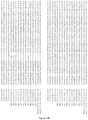
- SEQ ID NO 54 sets forth the predicted catalytic domain consensus sequence from Figure 12 .
- the term “about” refers to a range of +/- 0.5 of the numerical value, unless the term is otherwise specifically defined in context.
- the phrase a "pH value of about 6" refers to pH values of from 5.5 to 6.5, unless the pH value is specifically defined otherwise.
- protea means a protein or polypeptide domain derived from a microorganism, e.g., a fungus, bacterium, or from a plant or animal, and that has the ability to catalyze cleavage of peptide bonds at one or more of various positions of a protein backbone (e.g., E.C. 3.4).
- the terms “protease”, “peptidase” and “proteinase” can be used interchangeably. Proteases can be found in animals, plants, fungi, bacteria, archaea and viruses.
- Proteolysis can be achieved by enzymes currently classified into six broad groups based on their catalytic mechanisms: aspartyl proteases, cysteine proteases, trypsin-like serine proteases, threonine proteases, glutamic proteases, and metalloproteases.
- Serine protease refers to enzymes that cleave peptide bonds in proteins, in which serine serves as the nucleophilic amino acid at the active site of the enzyme. Serine proteases fall into two broad categories based on their structure: the chymotrypsin-like (trypsin-like) and the subtilisins. In the MEROPS protease classification system, proteases are distributed among 16 superfamilies and numerous families. The family S8 includes the subtilisins and the family S1 includes the chymotrypsin-like (trypsin-like) enzymes.
- the subfamily S1E includes the trypsin-like serine proteases from Strepmocyces organisms, such as Streptogricins A, B and C.
- the terms "serine protease”, “trypsin-like serine protease” and “chymotrypsin-like protease” are used interchangeably herein.
- an animal includes all non-ruminant (including humans) and ruminant animals.
- the animal is a non-ruminant animal, such as a horse and a mono-gastric animal.
- mono-gastric animals include, but are not limited to, pigs and swine, such as piglets, growing pigs, sows; poultry such as turkeys, ducks, chicken, broiler chicks, layers; fish such as salmon, trout, tilapia, catfish and carps; and crustaceans such as shrimps and prawns.
- the animal is a ruminant animal including, but not limited to, cattle, young calves, goats, sheep, giraffes, bison, moose, elk, yaks, water buffalo, deer, camels, alpacas, llamas, antelope, pronghorn and nilgai.
- a “feed” and a “food,” respectively, means any natural or artificial diet, meal or the like or components of such meals intended or suitable for being eaten, taken in, digested, by a non-human animal and a human being, respectively.
- the term "food” is used in a broad sense and covers food and food products for humans as well as food for non-human animals (i.e. a feed).
- feed is used with reference to products that are fed to animals in the rearing of livestock.
- feed and “animal feed” are used interchangeably.
- DFM direct-fed microbial
- a DFM can comprise one or more of such naturally occurring microorganisms such as bacterial strains. Categories of DFMs include Bacillus, Lactic Acid Bacteria and Yeasts. Thus, the term DFM encompasses one or more of the following: direct fed bacteria, direct fed yeast, direct fed yeast and combinations thereof.
- Lactic Acid Bacteria are unique, gram-positive rods that form spores. These spores are very stable and can withstand environmental conditions such as heat, moisture and a range of pH. These spores germinate into active vegetative cells when ingested by an animal and can be used in meal and pelleted diets. Lactic Acid Bacteria are gram-positive cocci that produce lactic acid which are antagonistic to pathogens. Since Lactic Acid Bacteria appear to be somewhat heat-sensitive, they are not used in pelleted diets. Types of Lactic Acid Bacteria include Bifidobacterium, Lactobacillus and Streptococcus.
- prebiotic means a non-digestible food ingredient that beneficially affects the host by selectively stimulating the growth and/or the activity of one or a limited number of beneficial bacteria.
- probiotic culture defines live microorganisms (including bacteria or yeasts for example) which, when for example ingested or locally applied in sufficient numbers, beneficially affects the host organism, i.e. by conferring one or more demonstrable health benefits on the host organism.
- Probiotics may improve the microbial balance in one or more mucosal surfaces.
- the mucosal surface may be the intestine, the urinary tract, the respiratory tract or the skin.
- probiotic as used herein also encompasses live microorganisms that can stimulate the beneficial branches of the immune system and at the same time decrease the inflammatory reactions in a mucosal surface, for example the gut.
- CFU colony forming units
- isolated means a substance in a form or environment that does not occur in nature.
- isolated substances include (1) any non- naturally occurring substance, (2) any substance including, but not limited to, any host cell, enzyme, variant, nucleic acid, protein, peptide or cofactor, that is at least partially removed from one or more or all of the naturally occurring constituents with which it is associated in nature; (3) any substance modified by the hand of man relative to that substance found in nature; or (4) any substance modified by increasing the amount of the substance relative to other components with which it is naturally associated.
- isolated nucleic acid molecule refers to a polymer of RNA or DNA that is single- or double-stranded, optionally containing synthetic, non-natural or altered nucleotide bases.
- isolated nucleic acid molecule in the form of a polymer of DNA may be comprised of one or more segments of cDNA, genomic DNA or synthetic DNA.
- purified as applied to nucleic acids or polypeptides generally denotes a nucleic acid or polypeptide that is essentially free from other components as determined by analytical techniques well known in the art (e.g., a purified polypeptide or polynucleotide forms a discrete band in an electrophoretic gel, chromatographic eluate, and/or a media subjected to density gradient centrifugation).
- a nucleic acid or polypeptide that gives rise to essentially one band in an electrophoretic gel is "purified.”
- a purified nucleic acid or polypeptide is at least about 50% pure, usually at least about 60%, about 65%, about 70%, about 75%, about 80%, about 85%, about 90%, about 91%, about 92%, about 93%, about 94%, about 95%, about 96%, about 97%, about 98%, about 99%, about 99.5%, about 99.6%, about 99.7%, about 99.8% or more pure (e.g., percent by weight on a molar basis).
- a composition is enriched for a molecule when there is a substantial increase in the concentration of the molecule after application of a purification or enrichment technique.
- enriched refers to a compound, polypeptide, cell, nucleic acid, amino acid, or other specified material or component that is present in a composition at a relative or absolute concentration that is higher than a starting composition.
- the term "functional assay” refers to an assay that provides an indication of a protein's activity.
- the term refers to assay systems in which a protein is analyzed for its ability to function in its usual capacity.
- a functional assay involves determining the effectiveness of the protease to hydrolyze a proteinaceous substrate.
- peptides refer to a polymer of amino acids joined together by peptide bonds.
- a “protein” or “polypeptide” comprises a polymeric sequence of amino acid residues.
- the single and 3-letter code for amino acids as defined in conformity with the IUPAC-IUB Joint Commission on Biochemical Nomenclature (JCBN) is used throughout this disclosure.
- the single letter X refers to any of the twenty amino acids. It is also understood that a polypeptide may be coded for by more than one nucleotide sequence due to the degeneracy of the genetic code. Mutations can be named by the one letter code for the parent amino acid, followed by a position number and then the one letter code for the variant amino acid.
- mutating glycine (G) at position 87 to serine (S) is represented as "G087S” or "G87S".
- a position followed by amino acids listed in parentheses indicates a list of substitutions at that position by any of the listed amino acids.
- 6(L,I) means position 6 can be substituted with a leucine or isoleucine.
- a slash (/) is used to define substitutions, e.g. F/V, indicates that the particular position may have a phenylalanine or valine at that position.
- prosequence or “propeptide sequence” refers to an amino acid sequence between the signal peptide sequence and mature protease sequence that is necessary for the proper folding and secretion of the protease; they are sometimes referred to as intramolecular chaperones. Cleavage of the prosequence or propeptide sequence results in a mature active protease. Proteases are often expressed as pro-enzymes.
- signal sequence and “signal peptide” refer to a sequence of amino acid residues that may participate in the secretion or direct transport of the mature or precursor form of a protein.
- the signal sequence is typically located N-terminal to the precursor or mature protein sequence.
- the signal sequence may be endogenous or exogenous.
- a signal sequence is normally absent from the mature protein.
- a signal sequence is typically cleaved from the protein by a signal peptidase after the protein is transported.
- mature form of a protein, polypeptide, or peptide refers to the functional form of the protein, polypeptide, or enzyme without the signal peptide sequence and propeptide sequence.
- precursor form of a protein or peptide refers to a mature form of the protein having a prosequence operably linked to the amino or carbonyl terminus of the protein.
- the precursor may also have a "signal" sequence operably linked to the amino terminus of the prosequence.
- the precursor may also have additional polypeptides that are involved in post-translational activity (e.g., polypeptides cleaved therefrom to leave the mature form of a protein or peptide).
- wild-type in reference to an amino acid sequence or nucleic acid sequence indicates that the amino acid sequence or nucleic acid sequence is a native or naturally-occurring sequence.
- naturally-occurring refers to anything (e.g., proteins, amino acids, or nucleic acid sequences) that is found in nature.
- non-naturally occurring refers to anything that is not found in nature (e.g., recombinant nucleic acids and protein sequences produced in the laboratory or modification of the wild-type sequence).
- corresponding to or “corresponds to” or “corresponds” refers to an amino acid residue at the enumerated position in a protein or peptide, or an amino acid residue that is analogous, homologous, or equivalent to an enumerated residue in a protein or peptide.
- corresponding region generally refers to an analogous position in a related proteins or a reference protein.
- derived from and “obtained from” refer to not only a protein produced or producible by a strain of the organism in question, but also a protein encoded by a DNA sequence isolated from such strain and produced in a host organism containing such DNA sequence. Additionally, the term refers to a protein which is encoded by a DNA sequence of synthetic and/or cDNA origin and which has the identifying characteristics of the protein in question.
- reference refers to a naturally-occurring polypeptide that does not include a man-made substitution, insertion, or deletion at one or more amino acid positions, as well as a naturally-occurring or synthetic polypeptide that includes one or more man-made substitutions, insertions, or deletions at one or more amino acid positions.
- a polynucleotide refers to a naturally-occurring polynucleotide that does not include a man-made substitution, insertion, or deletion of one or more nucleosides, as well as a naturally-occurring or synthetic polynucleotide that includes one or more man-made substitutions, insertions, or deletions at one or more nucleosides.
- a polynucleotide encoding a wild-type or parental polypeptide is not limited to a naturally-occurring polynucleotide, and encompasses any polynucleotide encoding the wild-type or parental polypeptide.
- amino acid refers to the basic chemical structural unit of a protein or polypeptide.
- the following abbreviations used herein to identify specific amino acids can be found in Table 2. Table 2.
- Amino Acid Three-Letter Abbreviation One-Letter Abbreviation Alanine Ala A Arginine Arg R Asparagine Asn N Thermostable serine acid Asp D Cysteine Cys C Glutamine Gln Q Glutamic acid Glu E Glycine Gly G Histidine His H Isoleucine Ile I Leucine Leu L Lysine Lys K Methionine Met M Phenylalanine Phe F Proline Pro P Serine Ser S Threonine Thr T Tryptophan Trp W Tyrosine Tyr Y Valine Val V Any amino acid or as defined herein Xaa X
- a codon for the amino acid alanine, a hydrophobic amino acid may be substituted by a codon encoding another less hydrophobic residue (such as glycine) or a more hydrophobic residue (such as valine, leucine, or isoleucine).
- a codon encoding another less hydrophobic residue such as glycine
- a more hydrophobic residue such as valine, leucine, or isoleucine
- changes which result in substitution of one negatively charged residue for another such as thermostable serine acid for glutamic acid
- one positively charged residue for another such as lysine for arginine
- nucleotide changes which result in alteration of the N-terminal and C-terminal portions of the protein molecule would also not be expected to alter the activity of the protein.
- codon optimized refers to genes or coding regions of nucleic acid molecules for transformation of various hosts, refers to the alteration of codons in the gene or coding regions of the nucleic acid molecules to reflect the typical codon usage of the host organism without altering the polypeptide for which the DNA codes.
- gene refers to a nucleic acid molecule that expresses a specific protein, including regulatory sequences preceding (5' non-coding sequences) and following (3' non-coding sequences) the coding sequence.
- “Native gene” refers to a gene as found in nature with its own regulatory sequences.
- “Chimeric gene” refers to any gene that is not a native gene, comprising regulatory and coding sequences that are not found together in nature. Accordingly, a chimeric gene may comprise regulatory sequences and coding sequences that are derived from different sources, or regulatory sequences and coding sequences derived from the same source, but arranged in a manner different from that found in nature.
- Endogenous gene refers to a native gene in its natural location in the genome of an organism.
- a “foreign” gene refers to a gene not normally found in the host organism, but that is introduced into the host organism by gene transfer.
- Foreign genes can comprise native genes inserted into a non-native organism, or chimeric genes.
- a “transgene” is a gene that has been introduced into the genome by a transformation procedure.
- coding sequence refers to a nucleotide sequence which codes for a specific amino acid sequence.
- Suitable regulatory sequences refer to nucleotide sequences located upstream (5' non-coding sequences), within, or downstream (3' non-coding sequences) of a coding sequence, and which influence the transcription, RNA processing or stability, or translation of the associated coding sequence. Regulatory sequences may include promoters, translation leader sequences, RNA processing site, effector binding sites, and stem-loop structures.
- operably linked refers to the association of nucleic acid sequences on a single nucleic acid molecule so that the function of one is affected by the other.
- a promoter is operably linked with a coding sequence when it is capable of affecting the expression of that coding sequence, i.e., the coding sequence is under the transcriptional control of the promoter.
- Coding sequences can be operably linked to regulatory sequences in sense or antisense orientation.
- regulatory sequence or "control sequence” are used interchangeably herein and refer to a segment of a nucleotide sequence which is capable of increasing or decreasing expression of specific genes within an organism.
- regulatory sequences include, but are not limited to, promoters, signal sequence, operators and the like. As noted above, regulatory sequences can be operably linked in sense or antisense orientation to the coding sequence/gene of interest.
- Promoter refers to DNA sequences that define where transcription of a gene by RNA polymerase begins. Promoter sequences are typically located directly upstream or at the 5' end of the transcription initiation site Promoters may be derived in their entirety from a native or naturally occurring sequence, or be composed of different elements derived from different promoters found in nature, or even comprise synthetic DNA segments. It is understood by those skilled in the art that different promoters may direct the expression of a gene in different tissues or cell type or at different stages of development, or in response to different environmental or physiological conditions ("inducible promoters").
- the "3' non-coding sequences” refer to DNA sequences located downstream of a coding sequence and include sequences encoding regulatory signals capable of affecting mRNA processing or gene expression, such as termination of transcription.
- transformation refers to the transfer or introduction of a nucleic acid molecule into a non-human host organism.
- the nucleic acid molecule may be introduced as a linear or circular form of DNA.
- the nucleic acid molecule may be a plasmid that replicates autonomously, or it may integrate into the genome of a non-human production host.
- Non-human production hosts containing the transformed nucleic acid are referred to as "transformed” or “recombinant” or “transgenic” organisms or “transformants”.
- recombinant refers to an artificial combination of two otherwise separated segments of nucleic acid sequences, e.g., by chemical synthesis or by the manipulation of isolated segments of nucleic acids by genetic engineering techniques. For example, DNA in which one or more segments or genes have been inserted, either naturally or by laboratory manipulation, from a different molecule, from another part of the same molecule, or an artificial sequence, resulting in the introduction of a new sequence in a gene and subsequently in a non-human organism.
- the terms “recombinant”, “transgenic”, “transformed”, “engineered” or “modified for exogenous gene expression” are used interchangeably herein.
- a recombinant construct comprises an artificial combination of nucleic acid fragments, e.g., regulatory and coding sequences that are not all found together in nature.
- a construct may comprise regulatory sequences and coding sequences that are derived from different sources, or regulatory sequences and coding sequences derived from the same source, but arranged in a manner different than that found in nature.
- Such a construct may be used by itself or may be used in conjunction with a vector. If a vector is used, then the choice of vector is dependent upon the method that will be used to transform host cells as is well known to those skilled in the art.
- a plasmid vector can be used.
- the skilled artisan is well aware of the genetic elements that must be present on the vector in order to successfully transform, select and propagate host cells.
- the skilled artisan will also recognize that different independent transformation events may result in different levels and patterns of expression ( Jones et al., (1985) EMBO J4:2411-2418 ; De Almeida et al., (1989) Mol Gen Genetics 218:78-86 ), and thus that multiple events are typically screened in order to obtain lines displaying the desired expression level and pattern.
- Such screening may be accomplished standard molecular biological, biochemical, and other assays including Southern analysis of DNA, Northern analysis of mRNA expression, PCR, real time quantitative PCR (qPCR), reverse transcription PCR (RT-PCR), immunoblotting analysis of protein expression, enzyme or activity assays, and/or phenotypic analysis.
- Southern analysis of DNA Northern analysis of mRNA expression, PCR, real time quantitative PCR (qPCR), reverse transcription PCR (RT-PCR), immunoblotting analysis of protein expression, enzyme or activity assays, and/or phenotypic analysis.
- production host refers to any non-human organism, or cell thereof, into which a recombinant construct can be stably or transiently introduced in order to express a gene.
- This term encompasses any progeny of a parent cell, which is not identical to the parent cell due to mutations that occur during propagation.
- identity is a relationship between two or more polypeptide sequences or two or more polynucleotide sequences, as determined by comparing the sequences.
- identity also means the degree of sequence relatedness between polypeptide or polynucleotide sequences, as the case may be, as determined by the number of matching nucleotides or amino acids between strings of such sequences.
- Identity and similarity can be readily calculated by known methods, including but not limited to those described in: Computational Molecular Biology (Lesk, A. M., ed.) Oxford University Press, NY (1988 ); Biocomputing: Informatics and Genome Projects (Smith, D.
- % identity or percent identity or “PID” refers to protein sequence identity. Percent identity may be determined using standard techniques known in the art. Useful algorithms include the BLAST algorithms ( See, Altschul et al., J Mol Biol, 215:403-410, 1990 ; and Karlin and Altschul, Proc Natl Acad Sci USA, 90:5873-5787, 1993 ). The BLAST program uses several search parameters, most of which are set to the default values.
- NCBI BLAST algorithm finds the most relevant sequences in terms of biological similarity but is not recommended for query sequences of less than 20 residues ( Altschul et al., Nucleic Acids Res, 25:3389-3402, 1997 ; and Schaffer et al., Nucleic Acids Res, 29:2994-3005, 2001 ).
- a percent (%) amino acid sequence identity value is determined by the number of matching identical residues divided by the total number of residues of the "reference" sequence including any gaps created by the program for optimal/maximum alignment.
- BLAST algorithms refer to the "reference” sequence as the "query” sequence.
- homologous proteins or “homologous proteases” refers to proteins that have distinct similarity in primary, secondary, and/or tertiary structure. Protein homology can refer to the similarity in linear amino acid sequence when proteins are aligned.
- Homologous search of protein sequences can be done using BLASTP and PSI-BLAST from NCBI BLAST with threshold (E-value cut-off) at 0.001.
- threshold E-value cut-off
- Gapped BLAST and PSI BLAST a new generation of protein database search programs. Nucleic Acids Res 1997 Set 1;25(17):3389-402 ).
- proteins sequences can be grouped.
- a phylogenetic tree can be built using the amino acid sequences.
- substantially-free of boron refers to a composition or formulation that contains trace amounts of boron, for example, less than about 1000 ppm (1mg/kg or liter equals 1 ppm), less than about 100 ppm, less than about 50 ppm, less than about 10 ppm, or less than about 5 ppm, or less than about 1 ppm.
- the trace amounts of boron may be present in the composition or formulation through, for example, the addition of other components containing trace amounts of boron and not by virtue of intentional addition to the detergent or formulation.
- cleaning activity refers to cleaning performance achieved by a reference protease or one or more polypeptide described herein under conditions prevailing during the proteolytic, hydrolyzing, cleaning, or other process described herein.
- cleaning performance of a reference protease or one or more polypeptide described herein may be determined by using one or more assay directed to cleaning one or more enzyme sensitive stain on an item or surface (e.g., a stain resulting from food, grass, blood, ink, milk, oil, and/or egg protein).
- Cleaning performance of a reference protease or one or more polypeptide described herein can be determined by subjecting the stain on an item or surface to standard wash condition(s) and assessing the degree to which the stain is removed by using various chromatographic, spectrophotometric, or other quantitative methodologies.
- Exemplary cleaning assays and methods are known in the art and include, but are not limited to those described in WO99/34011 and US 6,605,458 , as well as those cleaning assays and methods included in the Examples provided below.
- cleaning effective amount of a reference protease or one or more polypeptide described herein refers to the amount of protease or one or more polypeptide described herein that achieves the desired level of enzymatic activity in the cleaning composition. Such effective amounts are readily ascertained by one of ordinary skill in the art and are based on many factors, such as the particular protease used, the cleaning application, the formulation of the cleaning composition, and whether a liquid or dry (e.g., granular, tablet, bar) composition is required, etc.
- cleaning adjunct material refers to any liquid, solid, or gaseous material included in cleaning composition other than the one or more polypeptide described herein.
- one or more cleaning composition described herein includes one or more cleaning adjunct material.
- Each cleaning adjunct material is typically selected depending on the particular type and form of cleaning composition (e.g., liquid, granule, powder, bar, paste, spray, tablet, gel, foam, or other composition).
- each cleaning adjunct material is compatible with the one or more polypeptide described herein.
- Sequence alignments and percent identity calculations may be performed using the Megalign program of the LASERGENE bioinformatics computing suite (DNASTAR Inc., Madison, WI), the AlignX program of Vector NTI v. 7.0 (Informax, Inc., Bethesda, MD), or the EMBOSS Open Software Suite (EMBL-EBI; Rice et al., Trends in Genetics 16, (6):276-277 (2000 )).
- Multiple alignment of the sequences can be performed using the CLUSTAL method (such as CLUSTALW; for example version 1.83) of alignment ( Higgins and Sharp, CABIOS, 5:151-153 (1989 ); Higgins et al., Nucleic Acids Res.
- a fast or slow alignment is used with the default settings where a slow alignment.
- the MUSCLE program Robert C. Edgar. MUSCLE: multiple sequence alignment with high accuracy and high throughput Nucl. Acids Res. (2004) 32 (5): 1792-1797 ) is yet another example of a multiple sequence alignment algorithm.
- variant polypeptide amino acid sequences and polynucleotide sequences are disclosed herein. Variants of these sequences that are at least about 70-85%, 85-90%, or 90%-95% identical to the sequences disclosed herein may be used in certain embodiments.
- a variant polypeptide sequence or polynucleotide sequence in certain embodiments can have at least 60%, 61%, 62%, 63%, 64%, 65%, 66%, 67%, 68%,69%, 70%, 71%, 72%, 73%, 74%, 75%, 76%, 77%, 78%, 79%, 80%, 81%, 82%, 83%, 84%, 85%, 86%, 87%, 88%, 89%, 90%, 91%, 92%, 93%, 94%, 95%, 96%, 97%, 98% or 99% identity with a sequence disclosed herein.
- the variant amino acid sequence or polynucleotide sequence has the same function of the disclosed sequence, or at least about 85%, 86%, 87%, 88%, 89%, 90%, 91%, 92%, 93%, 94%, 95%, 96%, 97%, 98%, or 99% of the function of the disclosed sequence.
- variant refers to a polypeptide that differs from a specified wild-type, parental, or reference polypeptide in that it includes one or more naturally-occurring or man-made substitutions, insertions, or deletions of an amino acid.
- variant refers to a polynucleotide that differs in nucleotide sequence from a specified wild-type, parental, or reference polynucleotide. The identity of the wild-type, parental, or reference polypeptide or polynucleotide will be apparent from context.
- Plasmid refers to an extra chromosomal element often carrying genes that are not part of the central metabolism of the cell, and usually in the form of double-stranded DNA.
- Such elements may be autonomously replicating sequences, genome integrating sequences, phage, or nucleotide sequences, in linear or circular form, of a single- or double-stranded DNA or RNA, derived from any source, in which a number of nucleotide sequences have been joined or recombined into a unique construction which is capable of introducing a polynucleotide of interest into a cell.
- Transformation cassette refers to a specific vector containing a gene and having elements in addition to the gene that facilitates transformation of a particular host cell.
- expression cassette and “expression vector are used interchangeably herein and refer to a specific vector containing a gene and having elements in addition to the gene that allow for expression of that gene in a host.
- expression refers to the production of a functional end-product (e.g., an mRNA or a protein) in either precursor or mature form. Expression may also refer to translation of mRNA into a polypeptide.
- Expression of a gene involves transcription of the gene and translation of the mRNA into a precursor or mature protein.
- “Mature” protein refers to a post-translationally processed polypeptide; i.e., one from which any pre- or propeptides present in the primary translation product have been removed.
- Precursor protein refers to the primary product of translation of mRNA; i.e., with pre- and propeptides still present. Pre- and propeptides may be but are not limited to intracellular localization signals.
- Stable transformation refers to the transfer of a nucleic acid fragment into a genome of a host organism, including both nuclear and organellar genomes, resulting in genetically stable inheritance.
- transient transformation refers to the transfer of a nucleic acid fragment into the nucleus, or DNA-containing organelle, of a host organism resulting in gene expression without integration or stable inheritance.
- Host organisms containing the transformed nucleic acid fragments are referred to as "transgenic" organisms
- the expression vector can be one of any number of vectors or cassettes useful for the transformation of suitable production hosts known in the art.
- the vector or cassette will include sequences directing transcription and translation of the relevant gene, a selectable marker, and sequences allowing autonomous replication or chromosomal integration.
- Suitable vectors generally include a region 5' of the gene which harbors transcriptional initiation controls and a region 3' of the DNA fragment which controls transcriptional termination. Both control regions can be derived from homologous genes to genes of a transformed production host cell and/or genes native to the production host, although such control regions need not be so derived.
- Possible initiation control regions or promoters that can be included in the expression vector are numerous and familiar to those skilled in the art. Virtually any promoter capable of driving these genes is suitable, including but not limited to, CYC1, HIS3, GAL1, GAL10, ADH1, PGK, PH05, GAPDH, ADC1, TRP1, URA3, LEU2, ENO, TPI (useful for expression in Saccharomyces); AOX1 (useful for expression in Pichia); and lac, araB, tet, trp, lP L , lP R , T7, tac, and trc (useful for expression in Escherichia coli) as well as the amy, apr, npr promoters and various phage promoters useful for expression in Bacillus.
- the promoter is a constitutive or inducible promoter.
- a "constitutive promoter” is a promoter that is active under most environmental and developmental conditions.
- An “inducible” or “repressible” promoter is a promoter that is active under environmental or developmental regulation.
- promoters are inducible or repressible due to changes in environmental factors including but not limited to, carbon, nitrogen or other nutrient availability, temperature, pH, osmolarity, the presence of heavy metal(s), the concentration of inhibitor(s), stress, or a combination of the foregoing, as is known in the art.
- the inducible or repressible promoters are inducible or repressible by metabolic factors, such as the level of certain carbon sources, the level of certain energy sources, the level of certain catabolites, or a combination of the foregoing as is known in the art.
- the promoter is one that is native to the host cell.
- the promoter is a native T. reesei promoter such as the cbhl promoter which is deposited in GenBank under Accession Number D86235.
- promoters include cbhl, cbh2, egl1, egl2, egl3, egl4, egl5, xyn1, and xyn2, repressible acid phosphatase gene (phoA) promoter of P. chrysogenus (see e.g., Graessle et al., (1997) Appl. Environ.
- phoA repressible acid phosphatase gene
- Microbiol., 63 :753-756 glucose repressible PCK1 promoter (see e.g., Leuker et al., (1997), Gene, 192:235-240 ), maltose inducible, glucose-repressible MET3 promoter (see Liu et al., (2006), Eukary. Cell, 5:638-649 ), pKi promoter and cpc1 promoter.
- Other examples of useful promoters include promoters from A. awamori and A. niger glucoamylase genes (see e.g., Nunberg et al., (1984) Mol. Cell Biol.
- T. reesei xlnl gene may be useful (see e.g., EPA 137280A1 ).
- DNA fragments which control transcriptional termination may also be derived from various genes native to a preferred production host cell.
- the inclusion of a termination control region is optional.
- the expression vector includes a termination control region derived from the preferred host cell.
- the expression vector can be included in the production host, particularly in the cells of microbial production hosts.
- the production host cells can be microbial hosts found within the fungal or bacterial families and which grow over a wide range of temperature, pH values, and solvent tolerances.
- any of bacteria, algae, and fungi such as filamentous fungi and yeast may suitably host the expression vector.
- Inclusion of the expression vector in the production host cell may be used to express the protein of interest so that it may reside intracellularly, extracellularly, or a combination of both inside and outside the cell. Extracellular expression renders recovery of the desired protein from a fermentation product more facile than methods for recovery of protein produced by intracellular expression.
- Certain embodiments relate to an isolated polypeptide having serine protease activity, selected from: a) a polypeptide comprising an amino acid sequence with at least 91% identity with the amino acid sequence of SEQ ID NO:22; b) a polypeptide comprising an amino acid sequence with at least 94% identity with the amino acid sequence of SEQ ID NO:23; c) a polypeptide comprising an amino acid sequence with at least 98% identity with the amino acid sequence of SEQ ID NO:24; and d) a polypeptide comprising an amino acid sequence with at least 80% identity with the amino acid sequence of SEQ ID NO:25.
- an isolated polypeptide having serine protease activity comprising a predicted precursor amino acid sequence selected from: SEQ ID NO:3; SEQ ID NO:6; SEQ ID NO:9; and SEQ ID NO: 12.
- an isolated polypeptide having serine protease activity comprising a protease catalytic region selected from: a) an amino acid sequence with at least 96% identity with the amino acid sequence of SEQ ID NO: 18; b) an amino acid sequence with at least 98% identity with the amino acid sequence of SEQ ID NO: 19; c) an amino acid sequence of SEQ ID NO:20; and d) an amino acid sequence with at least 91% identity with the amino acid sequence of SEQ ID NO:21.
- a recombinant construct comprising a regulatory sequence functional in a production host operably linked to a nucleotide sequence encoding at least one polypeptide selected from: a) a polypeptide comprising an amino acid sequence with at least 91% identity with the amino acid sequence of SEQ ID NO:22; b) a polypeptide comprising an amino acid sequence with at least 94% identity with the amino acid sequence of SEQ ID NO:23; c) a polypeptide comprising an amino acid sequence with at least 98% identity with the amino acid sequence of SEQ ID NO:24; d) a polypeptide comprising an amino acid sequence with at least 80% identity with the amino acid sequence of SEQ ID NO:25.
- the production host is selected from the group consisting of fungi, bacteria, and algae.
- the production host is used to produce at least one polypeptide described herein comprising: (a) transforming a production host with the recombinant construct described herein; and (b) culturing the production host of step (a) under conditions whereby at least one polypeptide described herein is produced.
- at least one polypeptide described herein is optionally recovered from the production host.
- a serine protease-containing culture supernatant is obtained by using any of the methods described herein.
- a recombinant microbial production host for expressing at least one polypeptide described herein, said recombinant microbial production host comprising a recombinant construct described herein.
- this recombinant microbial production host is selected from the group consisting of bacteria, fungi and algae.
- Expression will be understood to include any step involved in producing at least one polypeptide described herein including, but not limited to, transcription, post-transcriptional modification, translation, post-translation modification and secretion.
- a polynucleotide encoding a trypsin-like serine protease can be manipulated in a variety of ways to provide for expression of the polynucleotide in a Bacillus host cell. Manipulation of the polynucleotide sequence prior to its insertion into a nucleic acid construct or vector may be desirable or necessary depending on the nucleic acid construct or vector or the Bacillus host cell. The techniques for modifying nucleotide sequences utilizing cloning methods are well known in the art.
- Regulatory sequences are defined above. They include all components, which are necessary or advantageous for the expression of a trypsin-like serine protease.
- Each control sequence may be native or foreign to the nucleotide sequence encoding the trypsin-like serine protease.
- Such regulatory sequences include, but are not limited to, a leader, a polyadenylation sequence, a propeptide sequence, a promoter, a signal sequence and a transcription terminator.
- Regulatory sequences may be provided with linkers for the purpose of introducing specific restriction sites facilitating ligation or the regulatory sequences with the coding region of the nucleotide sequence encoding a trypsin-like serine protease.
- a nucleic acid construct comprising a polynucleotide encoding a trypsin-like serine protease may be operably linked to one or more control sequences capable of directing the expression of the coding sequence in a Bacillus host cell under conditions compatible with the control sequences.
- Each control sequence may be native or foreign to the polynucleotide encoding a trypsin-like serine protease.
- control sequences include, but are not limited to, a leader, a promoter, a signal sequence, and a transcription terminator.
- the control sequences include a promoter, and transcriptional and translational stop signals.
- the control sequences may be provided with linkers for the purpose of introducing specific restriction sites facilitating ligation of the control sequences with the coding region of the polynucleotide encoding a trypsin-like serine protease.
- the control sequence may be an appropriate promoter region, a nucleotide sequence that is recognized by a Bacillus host cell for expression of the polynucleotide encoding a a trypsin-like serine protease.
- the promoter region contains transcription control sequences that mediate the expression of a trypsin-like serine protease.
- the promoter region may be any nucleotide sequence that shows transcriptional activity in the Bacillus host cell of choice and may be obtained from genes directing synthesis of extracellular or intracellular polypeptides having biological activity either homologous or heterologous to the Bacillus host cell.
- the promoter region may comprise a single promoter or a combination of promoters. Where the promoter region comprises a combination of promoters, the promoters are preferably in tandem.
- a promoter of the promoter region can be any promoter that can initiate transcription of a polynucleotide encoding a polypeptide having biological activity in a Bacillus host cell of interest.
- the promoter may be native, foreign, or a combination thereof, to the nucleotide sequence encoding a polypeptide having biological activity.
- Such a promoter can be obtained from genes directing synthesis of extracellular or intracellular polypeptides having biological activity either homologous or heterologous to the Bacillus host cell.
- the promoter region comprises a promoter obtained from a bacterial source.
- the promoter region comprises a promoter obtained from a Gram positive or Gram negative bacterium.
- Gram positive bacteria include, but are not limited to, Bacillus, Streptococcus, Streptomyces, Staphylococcus, Enterococcus, Lactobacillus, Lactococcus, Clostridium, Geobacillus, and Oceanobacillus.
- Gram negative bacteria include, but are not limited to, E. coli, Pseudomonas, Salmonella, Campylobacter, Helicobacter, Flavobacterium, Fusobacterium, Ilyobacter, Neisseria, and Ureaplasma.
- the promoter region may comprise a promoter obtained from a Bacillus strain (e.g., Bacillus agaradherens, Bacillus alkalophilus, Bacillus amyloliquefaciens, Bacillus brevis, Bacillus circulans, Bacillus clausii, Bacillus coagulans, Bacillus firmus, Bacillus lautus, Bacillus lentus, Bacillus licheniformis, Bacillus megaterium, Bacillus pumilus, Bacillus stearothermophilus, Bacillus subtilis, or Bacillus thuringiensis; or from a Streptomyces strain (e.g., Streptomyces lividans or Streptomyces murinus).
- Bacillus strain e.g., Bacillus agaradherens, Bacillus alkalophilus, Bacillus amyloliquefaciens, Bacillus brevis, Bacillus circulans, Bacillus clausii
- promoters for directing transcription of a polynucleotide encoding a polypeptide having biological activity in the methods of the present disclosure are the promoters obtained from the E. coli lac operon, Streptomyces coelicolor agarase gene (dagA), Bacillus lentus or Bacillus clausii alkaline protease gene (aprH), Bacillus licheniformis alkaline protease gene (subtilisin Carlsberg gene), Bacillus subtilis levansucrase gene (sacB), Bacillus subtilis alpha-amylase gene (amyE), Bacillus licheniformis alpha-amylase gene (amyL), Bacillus stearothermophilus maltogenic amylase gene (amyM), Bacillus amyloliquefaciens alpha-amylase gene (amyQ), Bacillus licheniformis penicillinase gene (penP), Bacillus subtilis
- cryIIIA tenebfionis CryIIIA gene or portions thereof, prokaryotic beta-lactamase gene ( Villa-Kamaroff et al., 1978, Proceedings of the National Academy of Sciences USA 75:3727-3731 ), and Bacillus megaterium xylA gene ( Rygus and Hillen, 1992, J. Bacteriol. 174: 3049-3055 ; Kim et al., 1996, Gene 181: 71-76 ).
- Other examples are the promoter of the spo1 bacterial phage promoter and the tac promoter ( DeBoer et al., 1983, Proceedings of the National Academy of Sciences USA 80:21-25 ).
- the promoter region may comprise a promoter that is a "consensus” promoter having the sequence TTGACA for the "-35" region and TATAAT for the "-10" region.
- the consensus promoter may be obtained from any promoter that can function in a Bacillus host cell.
- the construction of a "consensus” promoter may be accomplished by site-directed mutagenesis using methods well known in the art to create a promoter that conforms more perfectly to the established consensus sequences for the "-10" and "-35" regions of the vegetative "sigma A-type” promoters for Bacillus subtilis ( Voskuil et al., 1995, Molecular Microbiology 17: 271-279 ).
- a control sequence may also be a suitable transcription terminator sequence, such as a sequence recognized by a Bacillus host cell to terminate transcription.
- the terminator sequence is operably linked to the 3' terminus of the nucleotide sequence encoding a trypsin-like serine protease. Any terminator that is functional in the Bacillus host cell may be used.
- the control sequence may also be a suitable leader sequence, a non-translated region of a mRNA that is important for translation by a Bacillus host cell.
- the leader sequence is operably linked to the 5' terminus of the nucleotide sequence directing synthesis of the polypeptide having biological activity. Any leader sequence that is functional in a Bacillus host cell of choice may be used in the present invention.
- the control sequence may also be a mRNA stabilizing sequence.
- mRNA stabilizing sequence is defined herein as a sequence located downstream of a promoter region and upstream of a coding sequence of a polynucleotide encoding a trypsin-like serine protease to which the promoter region is operably linked, such that all mRNAs synthesized from the promoter region may be processed to generate mRNA transcripts with a stabilizer sequence at the 5' end of the transcripts.
- the mRNA processing/stabilizing sequence is complementary to the 3' extremity of bacterial 16S ribosomal RNA.
- the mRNA processing/stabilizing sequence generates essentially single-size transcripts with a stabilizing sequence at the 5' end of the transcripts.
- the mRNA processing/stabilizing sequence is preferably one, which is complementary to the 3' extremity of a bacterial 16S ribosomal RNA. See, U.S. Patent No. 6,255,076 and U.S. Patent No. 5,955,310 .
- the nucleic acid construct can then be introduced into a Bacillus host cell using methods known in the art or those methods described herein for introducing and expressing a trypsin-like serine protease.
- a nucleic acid construct comprising a DNA of interest encoding a protein of interest can also be constructed similarly as described above.
- control sequence may also comprise a signal peptide coding region, which codes for an amino acid sequence linked to the amino terminus of a polypeptide that can direct the expressed polypeptide into the cell's secretory pathway.
- the signal peptide coding region may be native to the polypeptide or may be obtained from foreign sources.
- the 5' end of the coding sequence of the nucleotide sequence may inherently contain a signal peptide coding region naturally linked in translation reading frame with the segment of the coding region that encodes the secreted polypeptide.
- the 5' end of the coding sequence may contain a signal peptide coding region that is foreign to that portion of the coding sequence that encodes the secreted polypeptide.
- the foreign signal peptide coding region may be required where the coding sequence does not normally contain a signal peptide coding region.
- the foreign signal peptide coding region may simply replace the natural signal peptide coding region in order to obtain enhanced secretion of the polypeptide relative to the natural signal peptide coding region normally associated with the coding sequence.
- the signal peptide coding region may be obtained from an amylase or a protease gene from a Bacillus species. However, any signal peptide coding region capable of directing the expressed polypeptide into the secretory pathway of a Bacillus host cell of choice may be used in the present invention.
- An effective signal peptide coding region for a Bacillus host cell is the signal peptide coding region obtained from the maltogenic amylase gene from Bacillus NCIB 11837, the Bacillus stearothermophilus alpha-amylase gene, the Bacillus licheniformis subtilisin gene, the Bacillus licheniformis beta-lactamase gene, the Bacillus stearothermophilus neutral proteases genes (nprT, nprS, nprM), and the Bacillus sub tilis prsA gene.
- a polynucleotide construct comprising a nucleic acid encoding a trypsin-like serine protease construct comprising a nucleic acid encoding a polypeptide of interest (POI) can be constructed such that it is expressed by a host cell.
- POI polypeptide of interest
- Nucleic acids encoding proteins of interest can be incorporated into a vector, wherein the vector can be transferred into a host cell using well-known transformation techniques, such as those disclosed herein.
- the vector may be any vector that can be transformed into and replicated within a host cell.
- a vector comprising a nucleic acid encoding a POI can be transformed and replicated in a bacterial host cell as a means of propagating and amplifying the vector.
- the vector also may be transformed into a Bacillus expression host of the disclosure, so that the protein encoding nucleic acid (e.g., an ORF) can be expressed as a functional protein.
- a representative vector which can be modified with routine skill to comprise and express a nucleic acid encoding a POI is vector p2JM103BBI.
- a polynucleotide encoding a trypsin-like serine protease or a POI can be operably linked to a suitable promoter, which allows transcription in the host cell.
- the promoter may be any nucleic acid sequence that shows transcriptional activity in the host cell of choice and may be derived from genes encoding proteins either homologous or heterologous to the host cell. Means of assessing promoter activity/strength are routine for the skilled artisan.
- Suitable promoters for directing the transcription of a polynucleotide sequence encoding comS1 polypeptide or a POI of the disclosure include the promoter of the lac operon of E. coli, the Streptomyces coelicolor agarase gene dagA or celA promoters, the promoters of the Bacillus licheniformis alpha-amylase gene ( amyL), the promoters of the Bacillus stearothermophilus maltogenic amylase gene ( amyM ), the promoters of the Bacillus amyloliquefaciens alpha-amylase (amyQ), the promoters of the Bacillus subtilis xylA and xylB genes, and the like.
- a promoter for directing the transcription of a polynucleotide sequence encoding a POI can be a wild-type aprE promoter, a mutant aprE promoter or a consensus aprE promoter set forth in PCT International Publication No. WO2001/51643 .
- a promoter for directing the transcription of a polynucleotide sequence encoding a POI is a wild-type spoVG promoter, a mutant spoVG promoter, or a consensus spoVG promoter (Frisby and Zuber, 1991).
- a promoter for directing the transcription of the polynucleotide sequence encoding a trypsin-like serine protease or a POI is a ribosomal promoter such as a ribosomal RNA promoter or a ribosomal protein promoter.
- the ribosomal RNA promoter can be a rrn promoter derived from B. subtilis, more particularly, the rrn promoter can be a rrnB, rrnI or rrnE ribosomal promoter from B. subtilis.
- the ribosomal RNA promoter is a P2 rrnI promoter from B. subtilis set forth in PCT International Publication No. WO2013/086219 .
- a suitable vector may further comprise a nucleic acid sequence enabling the vector to replicate in the host cell.
- enabling sequences include the origins of replication of plasmids pUC19, pACYC177, pUB110, pE194, pAMB1, pIJ702, and the like.
- a suitable vector may also comprise a selectable marker, e.g., a gene the product of which complements a defect in the isolated host cell, such as the dal genes from B. subtilis or B. licheniformis; or a gene that confers antibiotic resistance such as, e.g., ampicillin resistance, kanamycin resistance, chloramphenicol resistance, tetracycline resistance and the like.
- a selectable marker e.g., a gene the product of which complements a defect in the isolated host cell, such as the dal genes from B. subtilis or B. licheniformis
- antibiotic resistance such as, e.g., ampicillin resistance, kanamycin resistance, chloramphenicol resistance, tetracycline resistance and the like.
- a suitable expression vector typically includes components of a cloning vector, such as, for example, an element that permits autonomous replication of the vector in the selected host organism and one or more phenotypically detectable markers for selection purposes.
- Expression vectors typically also comprise control nucleotide sequences such as, for example, promoter, operator, ribosome binding site, translation initiation signal and optionally, a repressor gene, one or more activator genes sequences, or the like.
- a suitable expression vector may further comprise a sequence coding for an amino acid sequence capable of targeting the protein of interest to a host cell organelle such as a peroxisome, or to a particular host cell compartment.
- a targeting sequence may be, for example, the amino acid sequence "SKL".
- the nucleic acid sequence of the protein of interest can be operably linked to the control sequences in a suitable manner such that the expression takes place.
- Protocols such as described herein, used to ligate the DNA construct encoding a protein of interest, promoters, terminators and/or other elements, and to insert them into suitable vectors containing the information necessary for replication, are well known to persons skilled in the art.
- An isolated cell is advantageously used as a host cell in the recombinant production of a POI.
- the cell may be transformed with the DNA construct encoding the POI, conveniently by integrating the construct (in one or more copies) into the host chromosome. Integration is generally deemed an advantage, as the DNA sequence thus introduced is more likely to be stably maintained in the cell. Integration of the DNA constructs into the host chromosome may be performed applying conventional methods, for example, by homologous or heterologous recombination. For example, PCT International Publication No. WO2002/14490 describes methods of Bacillus transformation, transformants thereof and libraries thereof. Alternatively, the cell may be transformed with an expression vector as described above in connection with the different types of host cells.
- genes from expression hosts where the gene deficiency can be cured by an expression vector.
- Known methods may be used to obtain a bacterial host cell having one or more inactivated genes. Gene inactivation may be accomplished by complete or partial deletion, by insertional inactivation or by any other means that renders a gene nonfunctional for its intended purpose, such that the gene is prevented from expression of a functional protein.
- Techniques for transformation of bacteria and culturing the bacteria are standard and well known in the art. They can be used to transform the improved hosts of the present invention for the production of recombinant proteins of interest.
- Introduction of a DNA construct or vector into a host cell includes techniques such as transformation, electroporation, nuclear microinjection, transduction, transfection (e.g., lipofection mediated and DEAE-Dextrin mediated transfection), incubation with calcium phosphate DNA precipitate, high velocity bombardment with DNA-coated microprojectiles, gene gun or biolistic transformation and protoplast fusion, and the like. Transformation and expression methods for bacteria are also disclosed in Brigidi et al. (1990). A general transformation and expression protocol for protease deleted Bacillus strains is described in Ferrari et al. (U.S. Patent No.5, 264,366 ).
- nucleic acids into filamentous fungi such as Aspergillus spp., e.g., A. oryzae or A. niger, H. grisea, H. insolens, and T. reesei. are well known in the art.
- a suitable procedure for transformation of Aspergillus host cells is described, for example, in EP238023 .
- a suitable procedure for transformation of Trichoderma host cells is described, for example, in Steiger et al 2011, Appl. Environ. Microbiol. 77:114-121 .
- the choice of a production host can be any suitable microorganism such as bacteria, fungi and algae.
- the choice will depend upon the gene encoding the trypsin-like serine protease and its source.
- Introduction of a DNA construct or vector into a host cell includes techniques such as transformation; electroporation; nuclear microinjection; transduction; transfection, (e.g., lipofection mediated and DEAE-Dextrin mediated transfection); incubation with calcium phosphate DNA precipitate; high velocity bombardment with DNA-coated microprojectiles; and protoplast fusion.
- Basic texts disclosing the general methods that can be used include Sambrook et al., Molecular Cloning, A Laboratory Manual (2nd ed. 1989 ); Kriegler, Gene Transfer and Expression: A Laboratory Manual (1990 ); and Ausubel et al., eds., Current Protocols in Molecular Biology (1994 )).
- the methods of transformation of the present invention may result in the stable integration of all or part of the transformation vector into the genome of a host cell, such as a filamentous fungal host cell.
- transformation resulting in the maintenance of a self-replicating extra-chromosomal transformation vector is also contemplated.
- Fusarium include Bajar, Podila and Kolattukudy, (1991) Proc. Natl. Acad. Sci. USA 88: 8202-8212
- Streptomyces include Hopwood et al., 1985, Genetic Manipulation of Streptomyces: Laboratory Manual, The John Innes Foundation, Norwich, UK and Fernandez-Abalos et al., Microbiol 149:1623 - 1632 (2003 ) and for Bacillus include Brigidi, DeRossi, Bertarini, Riccardi and Matteuzzi, (1990) FEMS Microbiol. Lett. 55: 135-138 ).
- any of the well-known procedures for introducing foreign nucleotide sequences into host cells may be used. These include the use of calcium phosphate transfection, polybrene, protoplast fusion, electroporation, biolistics, liposomes, microinjection, plasma vectors, viral vectors and any of the other well-known methods for introducing cloned genomic DNA, cDNA, synthetic DNA or other foreign genetic material into a host cell (see, e.g., Sambrook et al., supra ) . Also of use is the Agrobacterium-mediated transfection method described in U.S. Patent No. 6,255,115 . It is only necessary that the particular genetic engineering procedure used be capable of successfully introducing at least one gene into the host cell capable of expressing the gene.
- the transfected or transformed cells are cultured under conditions favoring expression of genes under control of the promoter sequences.
- the medium used to cultivate the cells may be any conventional medium suitable for growing the host cell and obtaining expression of an alpha-glucosidase polypeptide.
- Suitable media and media components are available from commercial suppliers or may be prepared according to published recipes (e.g., as described in catalogues of the American Type Culture Collection).
- thermostable serine polypeptide secreted from the host cells can be used, with minimal post-production processing, as a whole broth preparation.
- post-transcriptional and/or post-translational modifications may be made.
- One non-limiting example of a post-transcriptional and/or post-translational modification is "clipping" or "truncation" of a polypeptide. For example, this may result in taking an trypsin-like serine protease from an inactive or substantially inactive state to an active state as in the case of a pro-peptide undergoing further post-translational processing to a mature peptide having the enzymatic activity.
- this clipping may result in taking a mature thermostable serine protease polypeptide and further removing N or C-terminal amino acids to generate truncated forms of the thermostable serine protease that retain enzymatic activity.
- post-transcriptional or post-translational modifications include, but are not limited to, myristoylation, glycosylation, truncation, lipidation and tyrosine, serine or threonine phosphorylation.
- the skilled person will appreciate that the type of post-transcriptional or post-translational modifications that a protein may undergo may depend on the host organism in which the protein is expressed.
- the preparation of a spent whole fermentation broth of a recombinant microorganism can be achieved using any cultivation method known in the art resulting in the expression of a trypsin-like serine protease.
- Fermentation may, therefore, be understood as comprising shake flask cultivation, small- or large-scale fermentation (including continuous, batch, fed-batch, or solid state fermentations) in laboratory or industrial fermenters performed in a suitable medium and under conditions allowing the alpha-glucosidase to be expressed or isolated.
- the term "spent whole fermentation broth” is defined herein as unfractionated contents of fermentation material that includes culture medium, extracellular proteins (e.g ., enzymes), and cellular biomass. It is understood that the term “spent whole fermentation broth” also encompasses cellular biomass that has been lysed or permeabilized using methods well known in the art.
- Host cells may be cultured under suitable conditions that allow expression of a trypsin-like serine protease.
- Expression of the enzymes may be constitutive such that they are continually produced, or inducible, requiring a stimulus to initiate expression.
- protein production can be initiated when required by, for example, addition of an inducer substance to the culture medium, for example dexamethasone or IPTG or sophorose.
- fungal cells are grown under batch or continuous fermentation conditions.
- a classical batch fermentation is a closed system, where the composition of the medium is set at the beginning of the fermentation, and the composition is not altered during the fermentation. At the beginning of the fermentation, the medium is inoculated with the desired organism(s). In other words, the entire fermentation process takes place without addition of any components to the fermentation system throughout.
- a batch fermentation qualifies as a "batch” with respect to the addition of the carbon source.
- attempts are often made to control factors such as pH and oxygen concentration throughout the fermentation process.
- the metabolite and biomass compositions of the batch system change constantly up to the time the fermentation is stopped.
- cells progress through a static lag phase to a high growth log phase and finally to a stationary phase, where growth rate is diminished or halted. Left untreated, cells in the stationary phase would eventually die.
- cells in log phase are responsible for the bulk of production of product.
- a suitable variation on the standard batch system is the "fed-batch fermentation" system. In this variation of a typical batch system, the substrate is added in increments as the fermentation progresses.
- Fed-batch systems are useful when it is known that catabolite repression would inhibit the metabolism of the cells, and/or where it is desirable to have limited amounts of substrates in the fermentation medium. Measurement of the actual substrate concentration in fed-batch systems is difficult and is therefore estimated on the basis of the changes of measurable factors, such as pH, dissolved oxygen and the partial pressure of waste gases, such as CO 2 . Batch and fed-batch fermentations are well known in the art.
- Continuous fermentation is another known method of fermentation. It is an open system where a defined fermentation medium is added continuously to a bioreactor, and an equal amount of conditioned medium is removed simultaneously for processing. Continuous fermentation generally maintains the cultures at a constant density, where cells are maintained primarily in log phase growth. Continuous fermentation allows for the modulation of one or more factors that affect cell growth and/or product concentration. For example, a limiting nutrient, such as the carbon source or nitrogen source, can be maintained at a fixed rate and all other parameters are allowed to moderate. In other systems, a number of factors affecting growth can be altered continuously while the cell concentration, measured by media turbidity, is kept constant. Continuous systems strive to maintain steady state growth conditions. Thus, cell loss due to medium being drawn off should be balanced against the cell growth rate in the fermentation. Methods of modulating nutrients and growth factors for continuous fermentation processes, as well as techniques for maximizing the rate of product formation, are well known in the art of industrial microbiology.
- a fermentation broth is obtained, the microbial cells and various suspended solids, including residual raw fermentation materials, are removed by conventional separation techniques in order to obtain a trypsin-like serine protease solution. Filtration, centrifugation, microfiltration, rotary vacuum drum filtration, ultrafiltration, centrifugation followed by ultra- filtration, extraction, or chromatography, or the like, are generally used.
- the enzyme-containing solution can be concentrated using conventional concentration techniques until the desired enzyme level is obtained. Concentration of the enzyme containing solution may be achieved by any of the techniques discussed herein. Examples of methods of enrichment and purification include but are not limited to rotary vacuum filtration and/or ultrafiltration.
- the trypsin-like serine protease-containing solution or broth may be concentrated until such time the enzyme activity of the concentrated a trypsin-like serine protease polypeptide-containing solution or broth is at a desired level.
- Concentration may be performed using, e.g., a precipitation agent, such as a metal halide precipitation agent.
- a precipitation agent such as a metal halide precipitation agent.
- Metal halide precipitation agents include but are not limited to alkali metal chlorides, alkali metal bromides and blends of two or more of these metal halides.
- Exemplary metal halides include sodium chloride, potassium chloride, sodium bromide, potassium bromide and blends of two or more of these metal halides.
- the metal halide precipitation agent, sodium chloride can also be used as a preservative.
- trypsin-like serine protease polypeptides can be enriched or partially purified as generally described above by removing cells via flocculation with polymers.
- the enzyme can be enriched or purified by microfiltration followed by concentration by ultrafiltration using available membranes and equipment. However, for some applications, the enzyme does not need to be enriched or purified, and whole broth culture can be lysed and used without further treatment. The enzyme can then be processed, for example, into granules.
- Trypsin-like serine proteases may be isolated or purified in a variety of ways known to those skilled in the art depending on what other components are present in the sample.
- Standard purification methods include, but are not limited to, chromatography (e.g., ion exchange, affinity, hydrophobic, chromatofocusing, immunological and size exclusion), electrophoretic procedures (e.g., preparative isoelectric focusing), differential solubility (e.g., ammonium sulfate precipitation), extraction microfiltration, two phase separation.
- the protein of interest may be purified using a standard anti-protein of interest antibody column. Ultrafiltration and diafiltration techniques, in conjunction with protein concentration, are also useful. For general guidance in suitable purification techniques, see Scopes, Protein Purification (1982 ). The degree of purification necessary will vary depending on the use of the protein of interest. In some instances, no purification will be necessary.
- Assays for detecting and measuring the enzymatic activity of an enzyme such as a trypsin-like serine protease polypeptide
- an enzyme such as a trypsin-like serine protease polypeptide
- Various assays for detecting and measuring activity of proteases are also known to those of ordinary skill in the art.
- assays are available for measuring protease activity that are based on the release of acid-soluble peptides from casein or hemoglobin, measured as absorbance at 280 nm or colorimetrically using the Folin method, and hydrolysis of the dye-labeled azocasein, measured as absorbance at 440-450 nm.
- exemplary assays involve the solubilization of chromogenic substrates (See e.g., Ward, "Proteinases,” in Fogarty (ed.)., Microbial Enzymes and Biotechnology, Applied Science, London, [1983], pp. 251-317 ).
- a protease detection assay method using highly labeled fluorescein isothiocyanate (FITC) casein as the substrate, a modified version of the procedure described by Twining [ Twining, S.S., (1984) "Fluorescein Isothiocyanate-Labeled Casein Assay for Proteolytic Enzymes" Anal. Biochem. 143:30-34 ] may also be used.
- FRET Fluorescence Resonance Energy Transfer
- FRET Fluorescence Activated FRET
- substrates in which the fluorophore is separated from the quencher by a short peptide sequence containing the enzyme cleavage site. Proteolysis of the peptide results in fluorescence as the fluorophore and quencher are separated.
- suitable methods See e.g., Wells et al., Nucleic Acids Res. 11:7911-7925 [1983 ]; Christianson et al., Anal. Biochem. 223:119 - 129 [1994 ]; and Hsia et al., Anal Biochem. 242:221-227 [1999 ]).
- a feed, feedstuff, feed additive composition, premix, food or grain product comprising at least one polypeptide described herein either alone or in combination with at least one direct fed microbial, at least one other enzyme, or at least one direct fed microbial and at least one other enzyme.
- the at least one enzyme can be selected from, but is not limited to, enzymes such as, e.g., alpha-amylase, amyloglucosidase, phytase, pullulanase, beta-glucanase, cellulase, xylanase, etc..
- enzymes such as, e.g., alpha-amylase, amyloglucosidase, phytase, pullulanase, beta-glucanase, cellulase, xylanase, etc.
- Any of these enzymes can be used in an amount ranging from 0.5 to 500 micrograms/g feed or feedstock.
- Alpha-amylases (alpha-1,4-glucan-4-glucanohydrolase, EC 3.2.1.1.) hydrolyze internal alpha-1,4-glucosidic linkages in starch, largely at random to produce smaller molecular weight dextrans. These polypeptides are used, inter alia, in starch processing and in alcohol production. Any alpha-amylases can be used, e.g., those described in U.S. Patent Nos. 8,927,250 and 7,354,752 .
- Amyloglucosidase catalyzes the hydrolysis of termina 1,4-linked alpha-D-glucose residues successively from the non-reducing ends of maltooligo- and polysaccharides with release of beta-D-glucose. Any amyloglucosidase can be used.
- Phytase refers to a protein or polypeptide which is capable of catalyzing the hydrolysis of phytate to (1) myo-inositol and/or (2) mono-, di-, tri-, tetra-, and/or penta-phosphatess thereof and (3) inorganic phosphate.
- enzymes having catalytic activity as defined in Enzyme Commission EC number 3.1.3.8 or EC number 3.1.3.26. Any phytase can be used such as described in U.S. Patent Nos. 8,144,046 , 8,673,609 , and 8,053,221 .
- Pullulanase (EC 3.2.1.41) is a specific kind of glucanase, an amylolytic exoenzyme that degrades pullan (a polysaccharide polymer consisting of maltotriose units, also known as alpha-1,4-; alpha-1,6-glucan. Thus, it is an example of a debranching enzyme.
- Pullulanase is also known as pullulan-6-glucanohydrolase.
- Pullulanases are generally secreted by a Bacillus species. For example, Bacillus deramificans ( US Patent No. 5,817,498; 1998 ), Bacillus acidopullulyticus ( European Patent No.
- Enzymes having pullulanase activity used commercially are produced, for example, from Bacillus species (trade name OPITMAX® 1-100 from DuPont-Genencor and Promozyme® D2 fro Novozymes).
- Other examples of debranching enzymes include, but are not limited to, iso-amylase from Sulfolobus solfataricus, Pseudomonas sp. and thermostable pullulanase from Fervidobacterium nodosum (e.f., WO2010/76113 ).
- the iso-amylase from Pseudomonas sp. is available as purified enzyme from Megazyme International. Any pullulanase can be used.
- Glucanases are enzymes that break down a glucan, a polysaccharide made several glucose sub-units. As they perform hydrolysis of the glucosidic bond, they are hydrolases.
- Beta-glucanase enzymes (EC 3.2.1.4) digests fiber. It helps in the breakdown of plant walls (cellulose).
- Cellulases are any of several enzymes produced by fungi, bacteria and protozoans that catalyze cellulolysis, the decomposition of cellulose and of some related polysaccharides. The name is also used for any naturally-occurring mixture or complex of various such enzymes, that act serially or synergistically to decompose cellulosic material. Any cellulases can be used.
- Xylanase (EC 3.2.1.8) is the name given to a class of enzymes which degrade the linear polysaccharide beta-1,4-xylan into xylose, those breaking down hemicellulose, one of the major components of plant cell walls. Any xylanases can be used.
- At least one DFM may comprise at least one viable microorganism such as a viable bacterial strain or a viable yeast or a viable fungi.
- the DFM comprises at least one viable bacteria.
- the DFM may be a spore forming bacterial strain and hence the term DFM may be comprised of or contain spores, e.g. bacterial spores.
- the term "viable microorganism" as used herein may include microbial spores, such as endospores or conidia.
- the DFM in the feed additive composition described herein may not comprise of or may not contain microbial spores, e.g. endospores or conidia.
- the microorganism may be a naturally-occurring microorganism or it may be a transformed microorganism.
- a DFM as described herein may comprise microorganims from one or more of the following genera: Lactobacillus, Lactococcus, Streptococcus, Bacillus, Pediococcus, Enterococcus, Leuconostoc, Carnobacterium, Propionibacterium, Bifidobacterium, Clostridium and Megasphaera and combinations thereof.
- the DFM comprises one or more bacterial strains selected from the following Bacillus spp: Bacillus subtilis, Bacillus cereus, Bacillus licheniformis, Bacillus pumilis and Bacillus amyloliquefaciens.
- the genus "Bacillus”, as used herein, includes all species within the genus “Bacillus,” as known to those of skill in the art, including but not limited to B. subtilis, B. licheniformis, B. lentus, B. brevis, B. stearothermophilus, B. alkalophilus, B. amyloliquefaciens, B. clausii, B. halodurans, B. megaterium, B. coagulans, B. circulans, B. gibsonii, B. pumilis and B. thuringiensis. It is recognized that the genus Bacillus continues to undergo taxonomical reorganization.
- the genus include species that have been reclassified, including but not limited to such organisms as Bacillus stearothermophilus, which is now named “Geobacillus stearothermophilus”, or Bacillus polymyxa, which is now “Paenibacillus polymyxa”
- Bacillus stearothermophilus which is now named “Geobacillus stearothermophilus”
- Bacillus polymyxa which is now “Paenibacillus polymyxa”
- the production of resistant endospores under stressful environmental conditions is considered the defining feature of the genus Bacillus, although this characteristic also applies to the recently named Alicyclobacillus, Amphibacillus, Aneurinibacillus, Anoxybacillus, Brevibacillus, Filobacillus, Gracilibacillus, Halobacillus, Paenibacillus, Salibacillus, Thermobacillus, Ureibacillus, and
- the DFM may be further combined with the following Lactococcus spp: Lactococcus cremoris and Lactococcus lactis and combinations thereof.
- the DFM may be further combined with the following Lactobacillus spp: Lactobacillus buchneri, Lactobacillus acidophilus, Lactobacillus casei, Lactobacillus kefiri, Lactobacillus bifidus, Lactobacillus brevis, Lactobacillus helveticus, Lactobacillus paracasei, Lactobacillus rhamnosus, Lactobacillus salivarius, Lactobacillus curvatus, Lactobacillus bulgaricus, Lactobacillus sakei, Lactobacillus reuteri, Lactobacillus fermentum, Lactobacillus farciminis, Lactobacillus lactis, Lactobacillus delbreuckii, Lactobacillus plantarum, Lactobacillus paraplantarum, Lactobacillus farciminis, Lactobacillus rhamnosus, Lactobacillus crispatus, Lactobacillus gasseri,
- the DFM may be further combined with the following Bifidobacteria spp: Bifidobacterium lactis, Bifidobacterium bifidium, Bifidobacterium longum, Bifidobacterium animalis, Bifidobacterium breve, Bifidobacterium infantis, Bifidobacterium catenulatum, Bifidobacterium pseudocatenulatum, Bifidobacterium adolescentis, and Bifidobacterium angulatum, and combinations of any thereof.
- Bifidobacteria spp Bifidobacterium lactis, Bifidobacterium bifidium, Bifidobacterium longum, Bifidobacterium animalis, Bifidobacterium breve, Bifidobacterium infantis, Bifidobacterium catenulatum, Bifidobacterium pseudocatenulatum, B
- bacteria of the following species Bacillus subtilis, Bacillus licheniformis, Bacillus amyloliquefaciens, Bacillus pumilis, Enterococcus, Enterococcus spp, and Pediococcus spp, Lactobacillus spp, Bifidobacterium spp, Lactobacillus acidophilus, Pediococsus acidilactici, Lactococcus lactis, Bifidobacterium bifidum, Bacillus subtilis, Propionibacterium thoenii, Lactobacillus farciminis, Lactobacillus rhamnosus, Megasphaera elsdenii, Clostridium butyricum, Bifidobacterium animalis ssp. animalis, Lactobacillus reuteri, Bacillus cereus, Lactobacillus salivarius ssp. Salivarius, Propionibacteria sp and combinations thereof.
- a direct-fed microbial described herein comprising one or more bacterial strains may be of the same type (genus, species and strain) or may comprise a mixture of genera, species and/or strains.
- a DFM may be combined with one or more of the products or the microorganisms contained in those products disclosed in WO2012110778 , and summarized as follows:
- the DFM may be combined with Enviva® PRO which is commercially available from Danisco A/S.
- Enviva Pro® is a combination of Bacillus strain 2084 Accession No. NRR1 B-50013, Bacillus strain LSSAO1 Accession No. NRRL B-50104 and Bacillus strain 15A-P4 ATCC Accession No. PTA-6507 (as taught in US 7,754,469 B - incorporated herein by reference).
- the DFM described herein comprisies microorganisms which are generally recognised as safe (GRAS) and, preferably are GRAS-approved.
- the DFM be heat tolerant, i.e. is thermotolerant. This is particularly the case when the feed is pelleted. Therefore, in another embodiment, the DFM may be a thermotolerant microorganism, such as a thermotolerant bacteria, including for example Bacillus spp.
- the DFM comprises a spore producing bacteria, such as Bacilli, e.g. Bacillus spp. Bacilli are able to form stable endospores when conditions for growth are unfavorable and are very resistant to heat, pH, moisture and disinfectants.
- Bacilli e.g. Bacillus spp. Bacilli are able to form stable endospores when conditions for growth are unfavorable and are very resistant to heat, pH, moisture and disinfectants.
- the DFM described herein may decrease or prevent intestinal establishment of pathogenic microorganism (such as Clostridium perfringens and/or E. coli and/or Salmonella spp and/or Campylobacter spp.). In other words, the DFM may be antipathogenic.
- pathogenic microorganism such as Clostridium perfringens and/or E. coli and/or Salmonella spp and/or Campylobacter spp.
- antipathogenic as used herein means the DFM counters an effect (negative effect) of a pathogen.
- the DFM may be any suitable DFM.
- the following assay "DFM ASSAY” may be used to determine the suitability of a microorganism to be a DFM.
- the DFM assay as used herein is explained in more detail in US2009/0280090 .
- the DFM selected as an inhibitory strain (or an antipathogenic DFM) in accordance with the "DFM ASSAY" taught herein is a suitable DFM for use in accordance with the present disclosure, i.e. in the feed additive composition according to the present disclosure.
- Tubes were seeded each with a representative pathogen (e.g., bacteria) from a representative cluster.
- a representative pathogen e.g., bacteria
- Colonies of (potential DFM) strains that produced a lowered OD compared with the control (which did not contain any supernatant) can then be classified as an inhibitory strain (or an antipathogenic DFM).
- the DFM assay as used herein is explained in more detail in US2009/0280090 .
- a representative pathogen used in this DFM assay can be one (or more) of the following: Clostridium, such as Clostridium perfringens and/or Clostridium difficile, and/or E. coli and/or Salmonella spp and/or Campylobacter spp.
- the assay is conducted with one or more of Clostridium perfringens and/or Clostridium difficile and/or E . coli, preferably Clostridium perfringens and/or Clostridium difficile, more preferably Clostridium perfringens.
- Antipathogenic DFMs include one or more of the following bacteria and are described in WO2013029013 .: Bacillus subtilis strain 3BP5 Accession No. NRRL B-50510, Bacillus subtilis strain 918 ATCC Accession No. NRRL B-50508, and Bacillus subtilis strain 1013 ATCC Accession No. NRRL B-50509.
- DFMs may be prepared as culture(s) and carrier(s) (where used) and can be added to a ribbon or paddle mixer and mixed for about 15 minutes, although the timing can be increased or decreased. The components are blended such that a uniform mixture of the cultures and carriers result. The final product is preferably a dry, flowable powder.
- the DFM(s) comprising one or more bacterial strains can then be added to animal feed or a feed premix, added to an animal's water, or administered in other ways known in the art (preferably simultaneously with the enzymes described herein.
- Inclusion of the individual strains in the DFM mixture can be in proportions varying from 1% to 99% and, preferably, from 25% to 75%
- Suitable dosages of the DFM in animal feed may range from about 1x10 3 CFU/g feed to about 1x10 10 CFU/g feed, suitably between about 1x10 4 CFU/g feed to about 1x10 8 CFU/g feed, suitably between about 7.5x10 4 CFU/g feed to about 1x10 7 CFU/g feed.
- the DFM may be dosed in feedstuff at more than about 1x10 3 CFU/g feed, suitably more than about 1x10 4 CFU/g feed, suitably more than about 5x10 4 CFU/g feed, or suitably more than about 1x10 5 CFU/g feed.
- the DFM may be dosed in a feed additive composition from about 1x10 3 CFU/g composition to about 1x10 13 CFU/g composition, preferably 1x10 5 CFU/g composition to about 1x10 13 CFU/g composition, more preferably between about 1x10 6 CFU/g composition to about 1x10 12 CFU/g composition, and most preferably between about 3.75x10 7 CFU/g composition to about 1x10 11 CFU/g composition.
- the DFM may be dosed in a feed additive composition at more than about 1x10 5 CFU/g composition, preferably more than about 1x10 6 CFU/g composition, and most preferably more than about 3.75x10 7 CFU/g composition.
- the DFM is dosed in the feed additive composition at more than about 2x10 5 CFU/g composition, suitably more than about 2x10 6 CFU/g composition, suitably more than about 3.75x10 7 CFU/g composition.
- a feed additive composition for use in animal feed may comprise at least one polypeptide described herein, either alone or in combination with (i) at least one direct fed microbial, at least one other enzyme, or at least one direct fed microbial and at least one other enzyme, and (ii) at least one component selected from the group consisting of a protein, a peptide, sucrose, lactose, sorbitol, glycerol, propylene glycol, sodium chloride, sodium sulfate, sodium acetate, sodium citrate, sodium formate, sodium sorbate, potassium chloride, potassium sulfate, potassium acetate, potassium citrate, potassium formate, potassium acetate, potassium sorbate, magnesium chloride, magnesium sulfate, magnesium acetate, magnesium citrate, magnesium formate, magnesium sorbate, sodium metabisulfite, methyl paraben, and propyl paraben.
- a granulated feed additive composition for use in animal feed comprising at least one polypeptide described herein, either alone or in combination with at least one direct fed microbial, at least one other enzyme, at least one direct fed microbial and at least one other enzyme, wherein the granulated feed additive composition comprises particles produced by a process selected from the group consisting of high shear granulation, drum granulation, extrusion, spheronization, fluidized bed agglomeration, fluidized bed spray coating, spray drying, freeze drying, prilling, spray chilling, spinning disk atomization, coacervation, tableting, and a combination thereof.
- the particles of the granulated feed additive composition can have a mean diameter of greater than 50 microns and less than 2000 microns.
- the feed additive composition can be a liquid form and the liquid form can also be suitable for spray-drying on a feed pellet.
- Animal feeds may include plant material such as corn, wheat, sorghum, soybean, canola, sunflower or mixtures of any of these plant materials or plant protein sources for poultry, pigs, ruminants, aquaculture and pets. It is contemplated that animal performance parameters, such as growth, feed intake and feed efficiency, but also improved uniformity, reduced ammonia concentration in the animal house and consequently improved welfare and health status of the animals will be improved. More specifically, as used herein, "animal performance” may be determined by the feed efficiency and/or weight gain of the animal and/or by the feed conversion ratio and/or by the digestibility of a nutrient in a feed (e.g. amino acid digestibility) and/or digestible energy or metabolizable energy in a feed and/or by nitrogen retention and/or by animals ability to avoid the negative effects of necrotic enteritis and/or by the immune response of the subject.
- plant material such as corn, wheat, sorghum, soybean, canola, sunflower or mixtures of any of these plant materials or plant protein
- animal performance is determined by feed efficiency and/or weight gain of the animal and/or by the feed conversion ratio.
- improved animal performance it is meant that there is increased feed efficiency, and/or increased weight gain and/or reduced feed conversion ratio and/or improved digestibility of nutrients or energy in a feed and/or by improved nitrogen retention and/or by improved ability to avoid the negative effects of necrotic enteritis and/or by an improved immune response in the subject resulting from the use of feed additive composition of the present invention in feed in comparison to feed which does not comprise said feed additive composition.
- feed efficiency refers to the amount of weight gain in an animal that occurs when the animal is fed ad-libitum or a specified amount of food during a period of time.
- feed additive composition in feed results in an increased weight gain per unit of feed intake compared with an animal fed without said feed additive composition being present.
- feed conversion ratio refers to the amount of feed fed to an animal to increase the weight of the animal by a specified amount.
- An improved feed conversion ratio means a lower feed conversion ratio.
- lower feed conversion ratio or “improved feed conversion ratio” it is meant that the use of a feed additive composition in feed results in a lower amount of feed being required to be fed to an animal to increase the weight of the animal by a specified amount compared to the amount of feed required to increase the weight of the animal by the same amount when the feed does not comprise said feed additive composition.
- Nutrient digestibility as used herein means the fraction of a nutrient that disappears from the gastro-intestinal tract or a specified segment of the gastro-intestinal tract, e.g. the small intestine. Nutrient digestibility may be measured as the difference between what is administered to the subject and what comes out in the faeces of the subject, or between what is administered to the subject and what remains in the digesta on a specified segment of the gastro intestinal tract, e.g. the ileum.
- Nutrient digestibility as used herein may be measured by the difference between the intake of a nutrient and the excreted nutrient by means of the total collection of excreta during a period of time; or with the use of an inert marker that is not absorbed by the animal, and allows the researcher calculating the amount of nutrient that disappeared in the entire gastro-intestinal tract or a segment of the gastro-intestinal tract.
- an inert marker may be titanium dioxide, chromic oxide or acid insoluble ash.
- Digestibility may be expressed as a percentage of the nutrient in the feed, or as mass units of digestible nutrient per mass units of nutrient in the feed.
- Nutrient digestibility as used herein encompasses starch digestibility, fat digestibility, protein digestibility, and amino acid digestibility.
- Energy digestibility means the gross energy of the feed consumed minus the gross energy of the faeces or the gross energy of the feed consumed minus the gross energy of the remaining digesta on a specified segment of the gastro-intestinal tract of the animal, e.g. the ileum.
- Metabolizable energy refers to apparent metabolizable energy and means the gross energy of the feed consumed minus the gross energy contained in the faeces, urine, and gaseous products of digestion.
- Energy digestibility and metabolizable energy may be measured as the difference between the intake of gross energy and the gross energy excreted in the faeces or the digesta present in specified segment of the gastro-intestinal tract using the same methods to measure the digestibility of nutrients, with appropriate corrections for nitrogen excretion to calculate metabolizable energy of feed.
- compositions described herein can improve the digestibility or utilization of dietary hemicellulose or fibre in a subject.
- the subject is a pig.
- Nitrogen retention means as subject's ability to retain nitrogen from the diet as body mass. A negative nitrogen balance occurs when the excretion of nitrogen exceeds the daily intake and is often seen when the muscle is being lost. A positive nitrogen balance is often associated with muscle growth, particularly in growing animals.
- Nitrogen retention may be measured as the difference between the intake of nitrogen and the excreted nitrogen by means of the total collection of excreta and urine during a period of time. It is understood that excreted nitrogen includes undigested protein from the feed, endogenous proteinaceous secretions, microbial protein, and urinary nitrogen.
- survival means the number of subject remaining alive.
- improved survival may be another way of saying “reduced mortality”.
- carcass yield means the amount of carcass as a proportion of the live body weight, after a commercial or experimental process of slaughter.
- carcass means the body of an animal that has been slaughtered for food, with the head, entrails, part of the limbs, and feathers or skin removed.
- meat yield as used herein means the amount of edible meat as a proportion of the live body weight, or the amount of a specified meat cut as a proportion of the live body weight.
- An "increased weight gain” refers to an animal having increased body weight on being fed feed comprising a feed additive composition compared with an animal being fed a feed without said feed additive composition being present.
- animal as used herein includes all non-ruminant and ruminant animals.
- the animal is a non-ruminant animal, such as a horse and a mono-gastric animal.
- mono-gastric animals include, but are not limited to, pigs and swine, such as piglets, growing pigs, sows; poultry such as turkeys, ducks, chicken, broiler chicks, layers; fish such as salmon, trout, tilapia, catfish and carps; and crustaceans such as shrimps and prawns.
- the animal is a ruminant animal including, but not limited to, cattle, young calves, goats, sheep, giraffes, bison, moose, elk, yaks, water buffalo, deer, camels, alpacas, llamas, antelope, pronghorn and nilgai.
- pet food is understood to mean a food for a household animal such as, but not limited to, dogs, cats, gerbils, hamsters, chinchillas, fancy rats, guinea pigs; avian pets, such as canaries, parakeets, and parrots; reptile pets, such as turtles, lizards and snakes; and aquatic pets, such as tropical fish and frogs.
- animal feed composition can comprise one or more feed materials selected from the group comprising a) cereals, such as small grains (e.g., wheat, barley, rye, oats and combinations thereof) and/or large grains such as maize or sorghum; b) by products from cereals, such as corn gluten meal, Distillers Dried Grains with Solubles (DDGS) (particularly corn based Distillers Dried Grains with Solubles (cDDGS), wheat bran, wheat middlings, wheat shorts, rice bran, rice hulls, oat hulls, palm kernel, and citrus pulp; c) protein obtained from sources such as soya, sunflower, peanut, lupin, peas, fava beans, cotton, canola, fish meal, dried plasma protein, meat and bone meal, potato protein, whey, copra, sesame; d) oils and fats obtained from vegetable and animal sources; and
- Trypsin-like serine proteases described herein or a feed additive composition may be used as, or in the preparation of, a feed.
- feed additive composition and “enzyme composition” are used interchangeably herein.
- the feed may be in the form of a solution or as a solid or as a semi-solid depending on the use and/or the mode of application and/or the mode of administration.
- the enzyme or feed additive composition described herein may be used in conjunction with one or more of: a nutritionally acceptable carrier, a nutritionally acceptable diluent, a nutritionally acceptable excipient, a nutritionally acceptable adjuvant, a nutritionally active ingredient.
- At least one component selected from the group consisting of a protein, a peptide, sucrose, lactose, sorbitol, glycerol, propylene glycol, sodium chloride, sodium sulfate, sodium acetate, sodium citrate, sodium formate, sodium sorbate, potassium chloride, potassium sulfate, potassium acetate, potassium citrate, potassium formate, potassium acetate, potassium sorbate, magnesium chloride, magnesium sulfate, magnesium acetate, magnesium citrate, magnesium formate, magnesium sorbate, sodium metabisulfite, methyl paraben and propyl paraben.
- the enzyme or feed additive composition of the present invention is admixed with a feed component to form a feedstuff.
- feed component means all or part of the feedstuff. Part of the feedstuff may mean one constituent of the feedstuff or more than one constituent of the feedstuff, e.g. 2 or 3 or 4 or more.
- the term "feed component” encompasses a premix or premix constituents.
- the feed may be a fodder, or a premix thereof, a compound feed, or a premix thereof.
- a feed additive composition may be admixed with a compound feed, a compound feed component or to a premix of a compound feed or to a fodder, a fodder component, or a premix of a fodder.
- Any feedstuff described herein may comprise one or more feed materials selected from the group comprising a) cereals, such as small grains (e.g., wheat, barley, rye, oats, triticale and combinations thereof) and/or large grains such as maize or sorghum; b) by products from cereals, such as corn gluten meal, wet-cake (particularly corn based wet- cake), Distillers Dried Grains (DDG) (particularly corn based Distillers Dried Grains (cDDG)), Distillers Dried Grains with Solubles (DDGS) (particularly corn based Distillers Dried Grains with Solubles (cDDGS)), wheat bran, wheat middlings, wheat shorts, rice bran, rice hulls, oat hulls, palm kernel, and citrus pulp; c) protein obtained from sources such as soya, sunflower, peanut, lupin, peas, fava beans, cotton, canola, fish meal, dried plasma protein, meat and bone meal, potato
- fodder means any food which is provided to an animal (rather than the animal having to forage for it themselves). Fodder encompasses plants that have been cut. Furthermore, fodder includes silage, compressed and pelleted feeds, oils and mixed rations, and also sprouted grains and legumes.
- Fodder may be obtained from one or more of the plants selected from: corn (maize), alfalfa (Lucerne), barley, birdsfoot trefoil, brassicas, Chau moellier, kale, rapeseed (canola), rutabaga (swede), turnip, clover, alsike clover, red clover, subterranean clover, white clover, fescue, brome, millet, oats, sorghum, soybeans, trees (pollard tree shoots for tree-hay), wheat, and legumes.
- compound feed means a commercial feed in the form of a meal, a pellet, nuts, cake or a crumble.
- Compound feeds may be blended from various raw materials and additives. These blends are formulated according to the specific requirements of the target animal.
- Compound feeds can be complete feeds that provide all the daily required nutrients, concentrates that provide a part of the ration (protein, energy) or supplements that only provide additional micronutrients, such as minerals and vitamins.
- the main ingredients used in compound feed are the feed grains, which include corn, wheat, canola meal, rapeseed meal, lupin, soybeans, sorghum, oats, and barley.
- a premix as referred to herein may be a composition composed of microingredients such as vitamins, minerals, chemical preservatives, antibiotics, fermentation products, and other essential ingredients. Premixes are usually compositions suitable for blending into commercial rations.
- the feedstuff comprises or consists of corn, DDGS (such as cDDGS), wheat, wheat bran or any combination thereof.
- the feed component may be corn, DDGS (e.g. cDDGS), wheat, wheat bran or a combination thereof.
- DDGS e.g. cDDGS
- the feedstuff comprises or consists of corn, DDGS (such as cDDGS) or a combination thereof.
- a feedstuff described herein may contain at least 30%, at least 40%, at least 50% or at least 60% by weight corn and soybean meal or corn and full fat soy, or wheat meal or sunflower meal.
- a feedstuff may contain between about 5 to about 40% corn DDGS.
- the feedstuff on average may contain between about 7 to 15% corn DDGS.
- the feedstuff may contain on average 5 to 40% corn DDGS. It may also contain corn as a single grain, in which case the feedstuff may comprise between about 35% to about 80% corn.
- the feedstuff may comprise at least 10% corn.
- a feedstuff also may comprise at least one high fibre feed material and/or at least one by-product of the at least one high fibre feed material to provide a high fibre feedstuff.
- high fibre feed materials include: wheat, barley, rye, oats, by products from cereals, such as corn gluten meal, corn gluten feed, wet-cake, Distillers Dried Grains (DDG), Distillers Dried Grains with Solubles (DDGS), wheat bran, wheat middlings, wheat shorts, rice bran, rice hulls, oat hulls, palm kernel, and citrus pulp.
- Some protein sources may also be regarded as high fibre: protein obtained from sources such as sunflower, lupin, fava beans and cotton.
- the feedstuff as described herein comprises at least one high fibre material and/or at least one by-product of the at least one high fibre feed material selected from the group consisting of Distillers Dried Grains with Solubles (DDGS), particularly cDDGS, wet-cake, Distillers Dried Grains (DDG), particularly cDDG, wheat bran, and wheat for example.
- the feedstuff of the present invention comprises at least one high fibre material and/or at least one by-product of the at least one high fibre feed material selected from the group consisting of Distillers Dried Grains with Solubles (DDGS), particularly cDDGS, wheat bran, and wheat for example.
- the feed may be one or more of the following: a compound feed and premix, including pellets, nuts or (cattle) cake; a crop or crop residue: corn, soybeans, sorghum, oats, barley copra, straw, chaff, sugar beet waste; fish meal; meat and bone meal; molasses; oil cake and press cake; oligosaccharides; conserved forage plants: silage; seaweed; seeds and grains, either whole or prepared by crushing, milling etc.; sprouted grains and legumes; yeast extract.
- a compound feed and premix including pellets, nuts or (cattle) cake
- a crop or crop residue corn, soybeans, sorghum, oats, barley copra, straw, chaff, sugar beet waste
- fish meal meat and bone meal
- molasses oil cake and press cake
- oligosaccharides conserved forage plants: silage; seaweed; seeds and grains, either whole or prepared by crushing, milling etc.; sprouted
- feed encompasses in some embodiments pet food.
- a pet food is plant or animal material intended for consumption by pets, such as dog food or cat food.
- Pet food, such as dog and cat food may be either in a dry form, such as kibble for dogs, or wet canned form.
- Cat food may contain the amino acid taurine.
- Animal feed can also include a fish food.
- a fish food normally contains macro nutrients, trace elements and vitamins necessary to keep captive fish in good health.
- Fish food may be in the form of a flake, pellet or tablet. Pelleted forms, some of which sink rapidly, are often used for larger fish or bottom feeding species.
- Some fish foods also contain additives, such as beta carotene or sex hormones, to artificially enhance the color of ornamental fish.
- animal feed encompasses bird food.
- Bird food includes food that is used both in birdfeeders and to feed pet birds.
- bird food comprises of a variety of seeds, but may also encompass suet (beef or mutton fat).
- the term "contacted" refers to the indirect or direct application of a trypsin-like serine protease enzyme (or composition comprising the thermostable serine protease) to a product (e.g. the feed).
- application methods include, but are not limited to, treating the product in a material comprising the feed additive composition, direct application by mixing the feed additive composition with the product, spraying the feed additive composition onto the product surface or dipping the product into a preparation of the feed additive composition.
- the feed additive composition of the present invention is preferably admixed with the product (e.g. feedstuff).
- the feed additive composition may be included in the emulsion or raw ingredients of a feedstuff.
- it is important that the composition is made available on or to the surface of a product to be affected/treated. This allows the composition to impart a performance benefit.
- thermostable serine proteases described are used for the pretreatment of food or feed.
- the feed having 10-300% moisture is mixed and incubated with the proteases at 5-80°C, preferably at 25-50°C, more preferably between 30-45 °C for 1 min to 72 hours under aerobic conditions or 1 day to 2 months under anaerobic conditions.
- the pre-treated material can be fed directly to the animals (so called liquid feeding).
- the pre-treated material can also be steam pelleted at elevated temperatures of 60-120°C.
- the proteases can be impregnated to feed or food material by a vacuum coater.
- Trypsin-like serine proteases may be applied to intersperse, coat and/or impregnate a product (e.g. feedstuff or raw ingredients of a feedstuff) with a controlled amount of said enzyme.
- a product e.g. feedstuff or raw ingredients of a feedstuff
- the feed additive composition will be thermally stable to heat treatment up to about 70 °C; up to about 85°C; or up to about 95°C.
- the heat treatment may be performed for up to about 1 minute; up to about 5 minutes; up to about 10 minutes; up to about 30 minutes; up to about 60 minutes.
- thermally stable means that at least about 75% of the enzyme components and/or DFM that were present/active in the additive before heating to the specified temperature are still present/active after it cools to room temperature.
- at least about 80% of the protease component and/or DFM comprising one or more bacterial strains that were present and active in the additive before heating to the specified temperature are still present and active after it cools to room temperature.
- the feed additive composition is homogenized to produce a powder.
- the feed additive composition is formulated to granules as described in WO2007/044968 (referred to as TPT granules) incorporated herein by reference.
- the granules comprise a hydrated barrier salt coated over the protein core.
- the advantage of such salt coating is improved thermo-tolerance, improved storage stability and protection against other feed additives otherwise having adverse effect on the at least one protease and/or DFM comprising one or more bacterial strains.
- the salt used for the salt coating has a water activity greater than 0.25 or constant humidity greater than 60% at 20°C.
- the salt coating comprises a Na 2 SO 4 .
- the method of preparing a feed additive composition may also comprise the further step of pelleting the powder.
- the powder may be mixed with other components known in the art.
- the powder, or mixture comprising the powder may be forced through a die and the resulting strands are cut into suitable pellets of variable length.
- a method of preparing trypsin-like serine proteases may also comprise the further step of pelleting the powder.
- the powder may be mixed with other components known in the art.
- the powder, or mixture comprising the powder may be forced through a die and the resulting strands are cut into suitable pellets of variable length.
- the pelleting step may include a steam treatment, or conditioning stage, prior to formation of the pellets.
- the mixture comprising the powder may be placed in a conditioner, e.g. a mixer with steam injection.
- the mixture is heated in the conditioner up to a specified temperature, such as from 60-100°C, typical temperatures would be 70°C, 80°C, 85°C, 90°C or 95°C.
- the residence time can be variable from seconds to minutes and even hours. Such as 5 seconds, 10 seconds, 15 seconds, 30 seconds, 1 minutes 2 minutes., 5 minutes, 10 minutes, 15 minutes, 30 minutes and 1 hour.
- the thermostable serine proteases (or composition comprising the thermostable serine proteases) described herein are suitable for addition to any appropriate feed material.
- the feedstuff may also contain additional minerals such as, for example, calcium and/or additional vitamins.
- the feedstuff is a corn soybean meal mix.
- Feedstuff is typically produced in feed mills in which raw materials are first ground to a suitable particle size and then mixed with appropriate additives.
- the feedstuff may then be produced as a mash or pellets; the later typically involves a method by which the temperature is raised to a target level and then the feed is passed through a die to produce pellets of a particular size. The pellets are allowed to cool. Subsequently liquid additives such as fat and enzyme may be added.
- Production of feedstuff may also involve an additional step that includes extrusion or expansion prior to pelleting, in particular by suitable techniques that may include at least the use of steam.
- the feedstuff may be a feedstuff for a monogastric animal, such as poultry (for example, broiler, layer, broiler breeders, turkey, duck, geese, water fowl), and swine (all age categories), a ruminant such as cattle (e.g. cows or bulls (including calves)), horses, sheep, a pet (for example dogs, cats) or fish (for example agastric fish, gastric fish, freshwater fish such as salmon, cod, trout and carp, e.g. koi carp, marine fish such as sea bass, and crustaceans such as shrimps, mussels and scallops).
- a feedstuff for poultry.
- the feed additive composition and/or the feedstuff comprising same may be used in any suitable form.
- the feed additive composition may be used in the form of solid or liquid preparations or alternatives thereof.
- solid preparations include powders, pastes, boluses, capsules, pellets, tablets, dusts, and granules which may be wettable, spray-dried or freeze-dried.
- liquid preparations include, but are not limited to, aqueous, organic or aqueous-organic solutions, suspensions and emulsions.
- the feed additive compositions may be mixed with feed or administered in the drinking water.
- a feed additive composition comprising admixing a protease as taught herein with a feed acceptable carrier, diluent or excipient, and (optionally) packaging.
- the feedstuff and/or feed additive composition may be combined with at least one mineral and/or at least one vitamin.
- the compositions thus derived may be referred to herein as a premix.
- trypsin-like serine protease can be present in the feedstuff in the range of 1 ppb (parts per billion) to 10 % (w/w) based on pure enzyme protein. In some embodiments, the protease is present in the feedstuff is in the range of 1-100 ppm (parts per million).
- a preferred dose can be 1-20 g of trypsin-like serine protease per ton of feed product or feed composition or a final dose of 1 - 20 ppm trypsin-like serine protease in final product.
- a trypsin-like serine protease is present in the feedstuff should be at least about 200PU/kg or at least about 300 PU/kg feed or at least about 400 PU/kg feed or at least about 500 PU/kg feed or at least about 600 PU/kg feed, at least about 700 PU/kg feed, at least about 800 PU/kg feed, at least about 900 PU/kg feed or at least about 1000 PU/ kg feed, or at least about 1500PU/kg feed, or at least about 2000PU/kg feed or at least about 2500 PU/kg feed, or at least about 3000 PU/kg feed, or at least about 3500 PU/kg feed, or at least about 4000 PU/kg feed, or at least about 4500 PU/kg feed, or at least about 5000 PU/kg feed.
- a trypsin-like serine protease can be present in the feedstuff at less than about 60,000PU/kg feed, or at less than about 70,000PU/kg feed, or at less than about 80,000PU/kg feed, or at less than about 90,000PU/kg feed, or at less than about 100,000PU/kg feed, or at less than about 200,000PU/kg feed, or at less than about 60000PU/kg feed, or at less than about 70000 PU/kg feed.
- Ranges can include, but are not limited to, any combination of the lower and upper ranges discussed above.
- one protease unit is the amount of enzyme that liberates 2.3 micrograms of phenolic compound (expressed as tyrosine equivalents) from a casein substrate per minute at pH 10.0 at 50°C. This may be referred to as the assay for determining 1 PU.
- Formulations comprising any of trypsin-like serine protease and compositions described herein may be made in any suitable way to ensure that the formulation comprises active enzymes.
- Such formulations may be as a liquid, a dry powder or a granule.
- the feed additive composition is in a liquid form and, the liquid form may be suitable for spray-drying on a feed pellet.
- Dry powder or granules may be prepared by means known to those skilled in the art, such as, high shear granulation, drum granulation, extrusion, spheronization, fluidized bed agglomeration, fluidized bed spray
- Trypsin-like serine proteases and compositions described herein may be coated, for example encapsulated.
- the coating protects the enzymes from heat and may be considered a thermo-protectant.
- Feed additive composition described herein can be formulated to a dry powder or granules as described in WO2007/044968 (referred to as TPT granules) or WO1997/016076 or WO1992/012645 (each of which is incorporated herein by reference).
- the feed additive composition may be formulated to a granule for feed compositions comprising: a core; an active agent; and at least one coating, the active agent of the granule retaining at least 50% activity, at least 60% activity, at least 70% activity, at least 80% activity after conditions selected from one or more of a) a feed pelleting process, b) a steam-heated feed pretreatment process, c) storage, d) storage as an ingredient in an unpelleted mixture, and e) storage as an ingredient in a feed base mix or a feed premix comprising at least one compound selected from trace minerals, organic acids, reducing sugars, vitamins, choline chloride, and compounds which result in an acidic or a basic feed base mix or feed premix.
- At least one coating may comprise a moisture hydrating material that constitutes at least 55% w/w of the granule; and/or at least one coating may comprise two coatings.
- the two coatings may be a moisture hydrating coating and a moisture barrier coating.
- the moisture hydrating coating may be between 25% and 60% w/w of the granule and the moisture barrier coating may be between 2% and 15% w/w of the granule.
- the moisture hydrating coating may be selected from inorganic salts, sucrose, starch, and maltodextrin and the moisture barrier coating may be selected from polymers, gums, whey and starch.
- the granule may be produced using a feed pelleting process and the feed pretreatment process may be conducted between 70°C and 95°C for up to several minutes, such as between 85°C and 95°C.
- the feed additive composition may be formulated to a granule for animal feed comprising: a core; an active agent, the active agent of the granule retaining at least 80% activity after storage and after a steam-heated pelleting process where the granule is an ingredient; a moisture barrier coating; and a moisture hydrating coating that is at least 25% w/w of the granule, the granule having a water activity of less than 0.5 prior to the steam-heated pelleting process.
- the granule may have a moisture barrier coating selected from polymers and gums and the moisture hydrating material may be an inorganic salt.
- the moisture hydrating coating may be between 25% and 45% w/w of the granule and the moisture barrier coating may be between 2% and 10% w/w of the granule.
- the granule may be produced using a steam-heated pelleting process which may be conducted between 85°C and 95°C for up to several minutes.
- the composition is in a liquid formulation suitable for consumption preferably such liquid consumption contains one or more of the following: a buffer, salt, sorbitol and/or glycerol.
- the feed additive composition may be formulated by applying, e.g. spraying, the enzyme(s) onto a carrier substrate, such as ground wheat for example.
- the feed additive composition may be formulated as a premix.
- the premix may comprise one or more feed components, such as one or more minerals and/or one or more vitamins.
- a direct fed microbial ("DFM”) and/or thermostable serine proteases are formulated with at least one physiologically acceptable carrier selected from at least one of maltodextrin, limestone (calcium carbonate), cyclodextrin, wheat or a wheat component, sucrose, starch, Na 2 SO 4 , Talc, PVA, sorbitol, benzoate, sorbate, glycerol, sucrose, propylene glycol, 1,3-propane diol, glucose, parabens, sodium chloride, citrate, acetate, phosphate, calcium, metabisulfite, formate and mixtures thereof.
- DMF direct fed microbial
- thermostable serine proteases are formulated with at least one physiologically acceptable carrier selected from at least one of maltodextrin, limestone (calcium carbonate), cyclodextrin, wheat or a wheat component, sucrose, starch, Na 2 SO 4 , Talc, PVA, sorbitol, benzoate
- Some embodiments are directed to a method of cleaning, comprising contacting a surface or an item in need of cleaning with an effective amount of at least one polypeptide described herein or at least one composition described herein; and optionally further comprising the step of rinsing said surface or item after contacting said surface or item with said polypeptide or composition.
- the item is dishware or fabric.
- FIG. 1 For purposes of cleaning comprising contacting a surface or an item in need of cleaning with an effective amount of at least one polypeptide having serine protease activity, wherein said polypepetide comprises a protease catalytic region comprising an amino acid sequence with at least 96% identity with the amino acid sequence of SEQ ID NO: 18, or an amino acid sequence of SEQ ID NO:20; and, optionally, further comprising the step of r
- Another embodiment is directed to a method of cleaning comprising contacting a surface or an item in need of cleaning with an effective amount of at least one polypeptide having serine protease activity, wherein said polypepetide comprises an amino acid sequence with at least 91% identity with the amino acid sequence of SEQ ID NO:22, or at least 94% identity with the amino acid sequence of SEQ ID NO:23; and, optionally, further comprising the step of rinsing said surface or item after contacting said surface or item with said polypeptide.
- a yet further embodiment is directed to a method of cleaning comprising contacting a surface or an item in need of cleaning with an effective amount of at least one polypeptide having serine protease activity, wherein said polypepetide comprises (i) an amino acid sequence with at least 91% identity with the amino acid sequence of SEQ ID NO:22, or (ii) a protease catalytic region comprising an amino acid sequence with at least 96% identity with the amino acid sequence of SEQ ID NO: 18; and, optionally, further comprising the step of rinsing said surface or item after contacting said surface or item with said polypeptide.
- a yet further embodiment is directed to a method of cleaning comprising contacting a surface or an item in need of cleaning with an effective amount of at least one polypeptide having serine protease activity, wherein said polypepetide comprises (i) an amino acid sequence with at least 94% identity with the amino acid sequence of SEQ ID NO:23, or (ii) a protease catalytic region comprising an amino acid sequence of SEQ ID NO:20; and, optionally, further comprising the step of rinsing said surface or item after contacting said surface or item with said polypeptide.
- Still further embodiments are directed to a method of cleaning comprising contacting a surface or an item in need of cleaning with a composition comprising an effective amount of at least one polypeptide having serine protease activity, wherein said polypepetide comprises a protease catalytic region comprising an amino acid sequence with at least 96% identity with the amino acid sequence of SEQ ID NO: 18, or an amino acid sequence of SEQ ID NO:20; and, optionally, further comprising the step of rinsing said surface or item after contacting said surface or item with said polypeptide.
- Another embodiment is directed to a method of cleaning comprising contacting a surface or an item in need of cleaning with a composition comprising an effective amount of at least one polypeptide having serine protease activity, wherein said polypepetide comprises an amino acid sequence with at least 91% identity with the amino acid sequence of SEQ ID NO:22, or at least 94% identity with the amino acid sequence of SEQ ID NO:23; and, optionally, further comprising the step of rinsing said surface or item after contacting said surface or item with said polypeptide.
- a yet further embodiment is directed to a method of cleaning comprising contacting a surface or an item in need of cleaning with a composition comprising an effective amount of at least one polypeptide having serine protease activity, wherein said polypepetide comprises (i) an amino acid sequence with at least 91% identity with the amino acid sequence of SEQ ID NO:22, or (ii) a protease catalytic region comprising an amino acid sequence with at least 96% identity with the amino acid sequence of SEQ ID NO: 18; and, optionally, further comprising the step of rinsing said surface or item after contacting said surface or item with said polypeptide.
- a yet further embodiment is directed to a method of cleaning comprising contacting a surface or an item in need of cleaning with a composition comprising an effective amount of at least one polypeptide having serine protease activity, wherein said polypepetide comprises (i) an amino acid sequence with at least 94% identity with the amino acid sequence of SEQ ID NO:23, or (ii) a protease catalytic region comprising an amino acid sequence of SEQ ID NO:20; and, optionally, further comprising the step of rinsing said surface or item after contacting said surface or item with said polypeptide.
- At least one polypeptide described herein has enzymatic activity (e.g., protease activity) and thus is useful in cleaning applications, including but not limited to, methods for cleaning dishware items, tableware items, fabrics, and items having hard surfaces (e.g., the hard surface of a table, table top, wall, furniture item, floor, ceiling, etc.).
- Some embodiments are directed to at least cleaning composition comprising at least one polypeptide described herein.
- the enzymatic activity (e.g., protease enzyme activity) of at least one polypeptide described herein can be readily determined through procedures well known to those of ordinary skill in the art. The Examples presented infra describe methods for evaluating cleaning performance.
- At least one polypeptide described herein has protease activity in the presence of a surfactant.
- the surfactant is selected from the group consisting of a non-ionic surfactant, an anionic surfactant, a cationic surfactant, a zwitterionic surfactant, an ampholytic surfactant, a semi-polar non-ionic surfactant, and a combination thereof.
- the protease activity comprises suc-AAPF-pNA activity.
- At least one polypeptide described herein demonstrates cleaning performance in a cleaning composition.
- Cleaning compositions often include ingredients harmful to the stability and performance of enzymes, making cleaning compositions a harsh environment for enzymes, e.g. serine proteases, to retain function. Thus, it is not trivial for an enzyme to be put in a cleaning composition and expect enzymatic function (e.g. serine protease activity, such as demonstrated by cleaning performance).
- one or more serine protease described herein demonstrates cleaning performance in ADW detergent compositions.
- the cleaning performance in ADW detergent compositions includes cleaning of egg yolk stains.
- one or more serine protease described herein demonstrates cleaning performance in laundry detergent compositions.
- the cleaning performance in laundry detergent compositions includes cleaning of blood/milk/ink stains.
- one or more serine protease described herein demonstrates cleaning performance with or without a bleach component.
- Assays for detecting and measuring the enzymatic activity of an enzyme such as, e.g., at least one polypeptide described herein are well known.
- Various assays for detecting and measuring activity of proteases are also known to those of ordinary skill in the art.
- assays are available for measuring protease activity that are based on the release of acid-soluble peptides from casein or hemoglobin, measured as absorbance at 280 nm or colorimetrically using the Folin method.
- exemplary assays involve the solubilization of chromogenic substrates (See e.g., Ward, "Proteinases,” in Fogarty (ed.), Microbial Enzymes and Biotechnology, Applied Science, London, [1983], pp. 251-317 ).
- Other exemplary assays include, but are not limited to succinyl-Ala-Ala-Pro-Phe-para nitroanilide assay (suc-AAPF-pNA) and the 2,4,6-trinitrobenzene sulfonate sodium salt assay (TNBS assay).
- succinyl-Ala-Ala-Pro-Phe-para nitroanilide assay suc-AAPF-pNA
- TNBS assay 2,4,6-trinitrobenzene sulfonate sodium salt assay
- compositions of the invention include detergent compositions.
- the enzymes levels are expressed as pure enzyme by weight of the total composition and unless otherwise specified, the detergent ingredients are expressed by weight of the total compositions.
- One embodiment is directed to a composition comprising at least one polypeptide having serine protease activity described herein.
- the composition is a cleaning composition.
- the composition is a detergent composition.
- the composition is selected from a laundry detergent composition, an ADW detergent composition, a (hand or manual) dishwashing detergent composition, a hard surface cleaning composition, an eyeglass cleaning composition, a medical instrument cleaning composition, a disinfectant (e.g., malodor or microbial) composition, and a personal care cleaning composition.
- the composition is a laundry detergent composition, an ADW deteregent composition, or a (hand or manual) dishwashing detergent composition. Even still further embodiments are directed to a fabric cleaning composition, while other embodiments are directed to a non-fabric cleaning composition.
- compositions described herein wherein said composition comprises at least one polypeptide having serine protease activity described herein.
- the composition described herein comprises at least one polypeptide having serine protease activity, wherein said polypeptide comprises a protease catalytic region comprising an amino acid sequence with at least 96% identity with the amino acid sequence of SEQ ID NO:18, or an amino acid sequence of SEQ ID NO:20.
- composition descrined herein comprises at least one polypeptide having serine protease activity, wherein said polypeptide comprises an amino acid sequence with at least 91% identity with the amino acid sequence of SEQ ID NO:22, or at least 94% identity with the amino acid sequence of SEQ ID NO:23.
- composition described herein comprises at least one polypeptide having serine protease activity, wherein said polypeptide comprises (i) an amino acid sequence with at least 91% identity with the amino acid sequence of SEQ ID NO:22, or (ii) a protease catalytic region comprising an amino acid sequence with at least 96% identity with the amino acid sequence of SEQ ID NO:18.
- the composition described herein comprises at least one polypeptide having serine protease activity, wherein said polypeptide comprises (i) an amino acid sequence with at least 94% identity with the amino acid sequence of SEQ ID NO:23, or (ii) a protease catalytic region comprising an amino acid sequence of SEQ ID NO:20.
- the composition described herein further comprises one or more surfactant.
- the at least one polypeptide having serine protease activity described herein has cleaning activity in one or more composition described herein.
- the at least one polypeptide having serine protease activity described herein has cleaning activity at about 16°C and/or about 32°C in one or more composition described herein.
- the composition described herein is selected from a laundry detergent, a fabric softening detergent, a dishwashing detergent, and a hard-surface cleaning detergent.
- a composition described herein further comprises: (i) one or more other enzymes selected from acyl transferases, amylases, alpha-amylases, beta-amylases, alpha-galactosidases, arabinases, arabinosidases, aryl esterases, beta-galactosidases, beta-glucanases, carrageenases, catalases, chondroitinases, cutinases, endo-beta-mannanases, exo-beta-mannanases, esterases, exo-mannanases, galactanases, glucoamylases, hemicellulases, hyaluronidases, keratinases, laccases, lactases, ligninases, lipases, lipolytic enzymes, lipoxygenases, mannanases, metalloproteases, oxidases, oxidoreducta
- adjunct materials are directed to a composition comprising one or more adjunct materials and at least one polypeptide described herein.
- the nature of the adjunct materials employed in any particular composition, and levels of incorporation thereof, will depend on the physical form of the composition and the cleaning application for which such composition will be used.
- adjunct materials include, but are not limited to, bleach catalysts, an additional enzyme, enzyme stabilizers (including, for example, an enzyme stabilizing system), chelants, optical brighteners, soil release polymers, dye transfer agents, dispersants, suds suppressors, dyes, perfumes, colorants, filler salts, photoactivators, fluorescers, fabric conditioners, hydrolyzable surfactants, preservatives, anti-oxidants, anti-shrinkage agents, anti-wrinkle agents, germicides, fungicides, color speckles, silvercare, anti-tarnish and/or anticorrosion agents, alkalinity sources, solubilizing agents, carriers, processing aids, pigments, and pH control agents, surfactants, builders, chelating agents, dye transfer inhibiting agents, deposition aids, dispersants, additional enzymes, and enzyme stabilizers, catalytic materials, bleach activators, bleach boosters, hydrogen peroxide, sources of hydrogen peroxide, preformed peracids, polymeric dispersing agents,
- adjunct materials Suitable examples of other adjunct materials and levels of use can be found in USPNs 5,576,282 ; 6,306,812 ; 6,326,348 ; 6,610,642 ; 6,605,458 ; 5,705,464 ; 5,710,115 ; 5,698,504 ; 5,695,679 ; 5,686,014 ; and 5,646,101 .
- suitable methods of keeping the adjunct material(s) and protease(s) separated i.e., not in contact with each other
- Such separation methods include any suitable method known in the art (e.g., gelcaps, encapsulation, tablets, physical separation, etc.).
- the aforementioned adjunct materials may constitute the balance of the cleaning compositions described herein.
- At least one composition described herein is advantageously employed for example, in laundry applications, hard surface cleaning applications, dishwashing applications, including automatic dishwashing and hand dishwashing, as well as cosmetic applications such as dentures, teeth, hair and skin cleaning and disinfecting applications, such as, for example, but not limited to, disinfecting an automatic dishwashing or laundry machine.
- the at least one polypeptide described herein is also suited for use in contact lens cleaning and wound debridement applications.
- At least one composition described herein contains phosphate, is phosphate-free, contains boron, is boron-free, or combinations thereof.
- the at least one composition described herein is a boron-free composition.
- a boron-free composition is a composition to which a borate stabilizer has not been added.
- a boron-free composition is a composition that contains less than 5.5% boron.
- a boron-free composition is a composition that contains less than 4.5% boron.
- a boron-free composition is a composition that contains less than 3.5% boron.
- a boron-free composition is a composition that contains less than 2.5% boron. In even further embodiments, a boron-free composition is a composition that contains less than 1.5% boron. In another embodiment, a boron-free composition is a composition that contains less than 1.0% boron. In still further embodiments, a boron-free composition is a composition that contains less than 0.5% boron. In still further embodiments, at least one composition described herein is substantially-free of boron. In some embodiments, at least one composition described herein is phosphate-free. In still other embodiments, at least one composition described herein contains phosphate. In even still other embodiments, at least one composition described herein comprises at least one polypeptide described herein and one or more of an excipient, adjunct material, and/or additional enzyme.
- At least one polypeptide described herein also finds use in cleaning additive products.
- one or more cleaning additive finds use at low temperatures.
- Some embodiments provide cleaning additive products comprising at least one polypeptide described herein, which additive is ideally suited for inclusion in a wash process when additional bleaching effectiveness is desired. Such instances include, but are not limited to low temperature cleaning applications.
- the additive product is in its simplest form, o at least one polypeptide described herein.
- the additive is packaged in dosage form for addition to a cleaning process.
- the additive is packaged in dosage form for addition to a cleaning process where a source of peroxygen is employed and increased bleaching effectiveness is desired.
- Exemplary fillers or carriers for granular compositions include, but are not limited to, for example, various salts of sulfate, carbonate and silicate; talc; and clay.
- Exemplary fillers or carriers for liquid compositions include, but are not limited to, for example, water or low molecular weight primary and secondary alcohols including polyols and diols (e.g., methanol, ethanol, propanol and isopropanol). In some embodiments, the compositions contain from about 5% to about 90% of such filler or carrier. Acidic fillers may be included in such compositions to reduce the pH of the resulting solution in the cleaning method or application.
- At least one composition described herein is in a form selected from gel, tablet, powder, granular, solid, liquid, unit dose, and combinations thereof. In yet another embodiment, at least one composition described herein is in a form selected from a low water compact formula, low water HDL or UD, or high water formula or HDL.
- the cleaning composition describe herein is in a unit dose form. In other embodiments, the unit does form is selected from pills, tablets, capsules, gelcaps, sachets, pouches, multi-compartment pouches, and pre-measured powders, and liquids.
- the unit dose format is designed to provide a controlled release of the ingredients from a multi-compartment pouch (or other unit dose format).
- Suitable unit dose and controlled release formats are described, for example, in EP2100949 ; WO 02/102955 ; US 4,765,916 ; US 4,972,017 ; and WO 04/111178 .
- the unit dose form is a tablet or powder contained in a water-soluble film or pouch.
- the present cleaning compositions or cleaning additives comprise an effective amount of at least one polypeptide described herein, alone or in combination with one or more additional enzyme.
- the present cleaning compositions comprise at least about 0.0001 weight percent, from about 0.0001 to about 10, from about 0.001 to about 1, or from about 0.01 to about 0.1 weight percent of at least one polypeptide described herein.
- At least one composition described herein comprises from about 0.01 to about 10 mg, about 0.01 to about 5 mg, about 0.01 to about 2 mg, about 0.01 to about 1 mg, about 0.05 to about 1 mg, about 0.5 to about 10 mg, about 0.5 to about 5 mg, about 0.5 to about 4 mg, about 0.5 to about 4 mg, about 0.5 to about 3 mg, about 0.5 to about 2 mg, about 0.5 to about 1 mg, about 0.1 to about 10 mg, about 0.1 to about 5 mg, about 0.1 to about 4 mg, about 0.1 to about 3 mg, about 0.1 to about 2 mg, about 0.1 to about 2 mg, about 0.1 to about 1 mg, or about 0.1 to about 0.5 mg of at least one polypeptide described herein per gram of composition.
- At least one polypeptide described herein cleans at low temperatures. In other embodiments, at least one composition described herein cleans at low temperatures. In other embodiments, at least one composition described herein comprises an effective amount of at least one polypeptide described herein as useful or effective for cleaning a surface in need of proteinaceous stain removal.
- compositions described herein are typically formulated such that, during use in aqueous cleaning operations, the wash water will have a pH of from about 4.0 to about 11.5, or even from about 5.0 to about 11.5, or even from about 5.0 to about 8.0, or even from about 7.5 to about 10.5.
- Liquid product formulations are typically formulated to have a pH from about 3.0 to about 9.0 or even from about 3 to about 5.
- Granular laundry products are typically formulated to have a pH from about 9 to about 11.
- Some embodiments provide a composition formulated to have an alkaline pH under wash conditions, such as a pH of from about 8.0 to about 12.0, or from about 8.5 to about 11.0, or from about 9.0 to about 11.0.
- the composition described herein is formulated to have a neutral pH under wash conditions, such as a pH of from about 5.0 to about 8.0, or from about 5.5 to about 8.0, or from about 6.0 to about 8.0, or from about 6.0 to about 7.5.
- the neutral pH conditions can be measured when the composition is dissolved 1:100 (wt:wt) in de-ionised water at 20°C. and measured using a conventional pH meter.
- Techniques for controlling pH include the use of buffers, alkalis, acids, etc., and are well known to those skilled in the art.
- the polypeptide described herein when the at least one polypeptide described herein is employed in a granular composition or liquid, it is desirable for the polypeptide to be in the form of an encapsulated particle to protect it from other components in the composition during storage.
- encapsulation is also a means of controlling the availability of the polypeptide during the cleaning process.
- encapsulation enhances the performance of polypeptide and/or additional enzymes.
- at least one polypeptide described herein is encapsulated with any suitable encapsulating material known in the art.
- the encapsulating material typically encapsulates at least part of the polypeptide.
- the encapsulating material is water-soluble and/or water-dispersible.
- the encapsulating material has a glass transition temperature (Tg) of 0°C or higher. Tg is described in more detail in WO97/11151 .
- the encapsulating material is typically selected from carbohydrates, natural or synthetic gums, chitin, chitosan, cellulose and cellulose derivatives, silicates, phosphates, borates, polyvinyl alcohol, polyethylene glycol, paraffin waxes, and combinations thereof.
- the encapsulating material is a carbohydrate, it is typically selected from monosaccharides, oligosaccharides, polysaccharides, and combinations thereof.
- the encapsulating material is a starch (See e.g., EP0922499 ; US 4,977,252 ; US 5,354,559 , and US 5,935,826 ).
- the encapsulating material is a microsphere made from plastic such as thermoplastics, acrylonitrile, methacrylonitrile, polyacrylonitrile, polymethacrylonitrile and mixtures thereof; commercially available microspheres that find use include, but are not limited to those supplied by EXPANCEL® (Akzo Nobel Chemicals International, B.V.), and PM6545, PM6550, PM7220, PM7228, EXTENDOSPHERES® (Sphere One Inc.), LUXSIL® (Potters Industries LLC), Q-CEL® (Potters Industries LLC), and SPHERICEL® (Potters Industries LLC).
- a low detergent concentration system includes detergents where less than about 800 ppm of the detergent components are present in the wash water.
- a medium detergent concentration includes detergents where between about 800 ppm and about 2000ppm of the detergent components are present in the wash water.
- a high detergent concentration system includes detergents where greater than about 2000 ppm of the detergent components are present in the wash water.
- the "cold water washing” of the present invention utilizes “cold water detergent” suitable for washing at temperatures from about 10°C to about 40°C, or from about 20°C to about 30°C, or from about 15°C to about 25°C, as well as all other combinations within the range of about 15°C to about 35°C, and all ranges within 10°C to 40°C.
- Water hardness is usually described in terms of the grains per gallon mixed Ca 2+ /Mg 2+ . Hardness is a measure of the amount of calcium (Ca 2+ ) and magnesium (Mg 2+ ) in the water. Most water in the United States is hard, but the degree of hardness varies. Moderately hard (60-120 ppm) to hard (121-181 ppm) water has 60 to 181 parts per million. Water Grains per gallon Parts per million Soft less than 1.0 less than 17 Slightly hard 1.0 to 3.5 17 to 60 Moderately hard 3.5 to 7.0 60 to 120 Hard 7.0 to 10.5 120 to 180 Very hard greater than 10.5 greater than 180
- European water hardness is typically greater than about 10.5 (for example about 10.5 to about 20.0) grains per gallon mixed Ca 2+ /Mg 2+ ( e.g., about 15 grains per gallon mixed Ca 2+ /Mg 2+ ).
- North American water hardness is typically greater than Japanese water hardness, but less than European water hardness.
- North American water hardness can be between about 3 to about 10 grains, about 3 to about 8 grains or about 6 grains.
- Japanese water hardness is typically lower than North American water hardness, usually less than about 4, for example about 3 grains per gallon mixed Ca 2+ /Mg 2+ .
- compositions comprising from about 0.00001 % to about 10% by weight composition of at least one polypeptide described herein and from about 99.999% to about 90.0% by weight composition of one or more adjunct material.
- the composition comprises from about 0.0001 % to about 10%, about 0.001% to about 5%, about 0.001% to about 2%, or about 0.005% to about 0.5% by weight composition of at least one polypeptide described herein and from about 99.9999% to about 90.0%, about 99.999 % to about 98%, about 99.995% to about 99.5% by weight composition of one or more adjunct material.
- the composition described herein comprises at least one polypeptide described herein and one or more additional enzymes.
- the one or more additional enzyme is selected from acyl transferases, alpha-amylases, beta-amylases, alpha-galactosidases, arabinosidases, aryl esterases, beta-galactosidases, carrageenases, catalases, cellobiohydrolases, cellulases, chondroitinases, cutinases, endo-beta-1, 4-glucanases, endo-beta-mannanases, esterases, exo-mannanases, galactanases, glucoamylases, hemicellulases, hyaluronidases, keratinases, laccases, lactases, ligninases, lipases, lipoxygenases, malanases, mannanases, metalloproteases, oxid
- Some embodiments are directed to a combination of enzymes (i.e., a "cocktail”) comprising conventional enzymes like amylase, lipase, cutinase and/or cellulase in conjunction with at least one polypeptide described herein and/or one or more additional protease.
- a combination of enzymes i.e., a "cocktail” comprising conventional enzymes like amylase, lipase, cutinase and/or cellulase in conjunction with at least one polypeptide described herein and/or one or more additional protease.
- At least one composition described herein comprises at least one polypeptide described herein and one or more additional protease.
- the additional protease is a serine protease. Suitable additional proteases include those of animal, vegetable or microbial origin.
- the additional protease is a microbial protease.
- the additional protease is a chemically or genetically modified mutant.
- the additional protease is an alkaline microbial protease or a trypsin-like protease.
- Exemplary alkaline proteases include subtilisins derived from, for example, Bacillus (e.g., subtilisin, lentus, amyloliquefaciens, subtilisin Carlsberg, subtilisin 309, subtilisin 147 and subtilisin 168).
- Bacillus e.g., subtilisin, lentus, amyloliquefaciens, subtilisin Carlsberg, subtilisin 309, subtilisin 147 and subtilisin 168.
- Exemplary additional proteases include but are not limited to those described in WO92/21760 , WO95/23221 , WO2008010925 , WO09/149200 , WO09/149144 , WO09/149145 , WO 10/056640 , WO10/056653 , WO2010 0566356 , WO11/072099 , WO2011013022 , WO11/140364 , WO12/151534 , WO2015038792 , WO2015089447 , WO2015089441 , WO2015143360 , WO2016061438 , WO2016069548 , WO 2016069544 , WO2016069557 , WO2016069563 , WO2016069569 , WO2016069552 , WO2016 145428 , WO2016183509 , WO2016205755 , US 2008/0090747 , US5801039 , US53
- exemplary additional proteases include, but are not limited to trypsin (e.g., of porcine or bovine origin) and the Fusarium protease described in WO89/06270 .
- Exemplary commercial proteases include, but are not limited to MAXATASE, MAXACAL, MAXAPEM, OPTICLEAN®, OPTIMASE®, PROPERASE®, PURAFECT®, PURAFECT® OXP, PURAMAX®, EXCELLASE®, PREFERENZTM proteases (e.g. P100, P110, P280), EFFECTENZTM proteases (e.g. P1000, P1050, P2000), EXCELLENZTM proteases (e.g.
- compositions comprising at least one polypeptide described herein and one or more lipase.
- the composition comprises from about 0.00001 % to about 10%, about 0.0001 % to about 10%, about 0.001% to about 5%, about 0.001% to about 2%, or about 0.005% to about 0.5% lipase by weight composition.
- An exemplary lipase can be a chemically or genetically modified mutant.
- Exemplary lipases include, but are not limited to, e.g., those of bacterial or fungal origin, such as, e.g., H. lanuginosa lipase ( see, e.g., EP 258068 and EP 305216 ), T.
- lanuginosus lipase see, e.g., WO 2014/059360 and WO2015/010009
- Rhizomucor miehei lipase see, e.g., EP 238023
- Candida lipase such as C. antarctica lipase (e.g., C. antarctica lipase A or B) ( see, e.g., EP 214761 ), Pseudomonas lipases such as P. alcaligenes and P. pseudoalcaligenes lipase ( see, e.g., EP 218272 ), P. cepacia lipase (see, e.g., EP 331376 ), P.
- C. antarctica lipase e.g., C. antarctica lipase A or B
- Pseudomonas lipases such as P. alcaligenes and P. pseudoalcaligenes lipase
- stutzeri lipase see, e.g., GB 1,372,034 ), P. fluorescens lipase, Bacillus lipase (e.g., B. subtilis lipase ( Dartois et al., Biochem. Biophys. Acta 1131:253-260 (1993 )), B. stearothermophilus lipase ( see, e.g., JP 64/744992 ), and B. pumilus lipase ( see, e.g., WO 91/16422 )).
- Bacillus lipase e.g., B. subtilis lipase ( Dartois et al., Biochem. Biophys. Acta 1131:253-260 (1993 )
- B. stearothermophilus lipase see, e.g., JP 64/744992
- B. pumilus lipase see, e.g., WO
- Exemplary cloned lipases include, but not limited to Penicillium camembertii lipase ( See, Yamaguchi et al., Gene 103:61-67 (1991 )), Geotricum candidum lipase ( See, Schimada et al., J. Biochem., 106:383-388 (1989 )), and various Rhizopus lipases, such as, R. delemar lipase ( See, Hass et al., Gene 109:117-113 (1991 )), R. niveus lipase ( Kugimiya et al., Biosci. Biotech. Biochem. 56:716-719 (1992 )) and R . oryzae lipase.
- Penicillium camembertii lipase See, Yamaguchi et al., Gene 103:61-67 (1991 )
- Geotricum candidum lipase See, Schimada et al., J. Bio
- lipolytic enzymes such as cutinases
- Exemplary commercial lipases include, but are not limited to M1 LIPASE, LUMA FAST, and LIPOMAX (Genecor); LIPEX®, LIPOCLEAN®, LIPOLASE® and LIPOLASE® ULTRA (Novozymes); and LIPASE PS (Amano Pharmaceutical Co. Ltd).
- a still further embodiment is directed to a composition comprising at least one polypeptide described herein and one or more amylase.
- the composition comprises from about 0.00001 % to about 10%, about 0.0001 % to about 10%, about 0.001% to about 5%, about 0.001% to about 2%, or about 0.005% to about 0.5% amylase by weight composition.
- Any amylase e.g., alpha and/or beta
- suitable for use in alkaline solutions may be useful to include in such composition.
- An exemplary amylase can be a chemically or genetically modified mutant.
- amylases include, but are not limited to those of bacterial or fungal origin, such as, for example, amylases described in GB 1,296,839 , WO9100353 , WO9402597 , WO94183314 , WO9510603 , WO9526397 , WO9535382 , WO9605295 , WO9623873 , WO9623874 , WO 9630481 , WO9710342 , WO9741213 , WO9743424 , WO9813481 , WO 9826078 , WO9902702 , WO 9909183 , WO9919467 , WO9923211 , WO9929876 , WO9942567 , WO 9943793 , WO9943794 , WO 9946399 , WO0029560 , WO0060058 , WO0060059 , WO0060060
- Exemplary commercial amylases include, but are not limited to AMPLIFY®, AMPLIFY PRIME®, BAN, DURAMYL®, TERMAMYL®, TERMAMYL® ULTRA, FUNGAMYL®, STAINZYME®, STAINZYME® PLUS, STAINZYME® ULTRA, and STAINZYME® EVITY®(Novozymes); EFFECTENZTM S 1000, POWERASE®, PREFERENZTM S 100, PREFERENZTM S 110, EXCELLENZTM S 2000, RAPIDASE® and MAXAMYL® P (Danisco US).
- compositions comprising at least one polypeptide described herein and one or more cellulase.
- the composition comprises from about 0.00001 % to about 10%, 0.0001 % to about 10%, about 0.001% to about 5%, about 0.001% to about 2%, or about 0.005% to about 0.5% cellulase by weight of composition.
- Any suitable cellulase may find used in a composition described herein.
- An exemplary cellulase can be a chemically or genetically modified mutant.
- Exemplary cellulases include but are not limited, to those of bacterial or fungal origin, such as, for example, is described in WO2005054475 , WO2005056787 , US 7,449,318 , US 7,833,773 , US 4,435,307 ; EP 0495257 ; and US Provisional Appl. No. 62/296,678 .
- Exemplary commercial cellulases include, but are not limited to, CELLUCLEAN®, CELLUZYME®, CAREZYME®, ENDOLASE®, RENOZYME®, and CAREZYME® PREMIUM (Novozymes); REVITALENZ® 100, REVITALENZ® 200/220, and REVITALENZ® 2000 (Danisco US); and KAC-500(B) (Kao Corporation).
- cellulases are incorporated as portions or fragments of mature wild-type or variant cellulases, wherein a portion of the N-terminus is deleted ( see, e.g., US 5,874,276 ).
- An even still further embodiment is directed to a composition
- a composition comprising at least one polypeptide described herein and one or more mannanase.
- the composition comprises from about 0.00001 % to about 10%, about 0.0001 % to about 10%, about 0.001% to about 5%, about 0.001% to about 2%, or about 0.005% to about 0.5% mannanase by weight composition.
- An exemplary mannanase can be a chemically or genetically modified mutant.
- Exemplary mannanases include, but are not limited to, those of bacterial or fungal origin, such as, for example, as is described in WO2016007929 , USPNs 6566114 , 6602842 , and 6440991 , and International Appl Nos.
- Exemplary commercial mannanases include, but are not limited to MANNAWAY® (Novozymes) and EFFECTENZTM M 1000, PREFERENZ® M 100, MANNASTAR®, and PURABRITE (Danisco US).
- a yet even still further embodiment is directed to a composition
- a composition comprising at least one polypeptide described herein and one or more peroxidase and/or oxidase enzyme.
- the composition comprises from about 0.00001 % to about 10%, about 0.0001 % to about 10%, about 0.001% to about 5%, about 0.001% to about 2%, or about 0.005% to about 0.5% peroxidase or oxidase by weight composition.
- a peroxidase may be used in combination with hydrogen peroxide or a source thereof (e.g., a percarbonate, perborate or persulfate) and an oxidase may be used in combination with oxygen.
- Peroxidases and oxidases are used for "solution bleaching" (i.e., to prevent transfer of a textile dye from a dyed fabric to another fabric when the fabrics are washed together in a wash liquor), alone or in combination with an enhancing agent (see, e.g., WO9412621 and WO9501426 ).
- An exemplary peroxidase and/or oxidase can be a chemically or genetically modified mutant.
- Exemplary peroxidases/oxidases include, but are not limited to those of plant, bacterial, or fungal origin.
- compositions comprising at least one polypeptide described herein and one or more perhydrolase, such as, for example, is described in WO2005056782 , WO2007106293 , WO2008063400 , WO2008106214 , and WO2008106215 .
- At least one polypeptide described herein and one or more additional enzyme contained in at least one composition described herein may each independently range to about 10%, wherein the balance of the cleaning composition is one or more adjunct material.
- At least one composition described herein finds use as a detergent additive, wherein said additive is in a solid or liquid form.
- Such additive products are intended to supplement and/or boost the performance of conventional detergent compositions and can be added at any stage of the cleaning process.
- the density of the laundry detergent composition ranges from about 400 to about 1200 g/liter, while in other embodiments it ranges from about 500 to about 950 g/liter of composition measured at 20°C.
- Some embodiments are directed to a laundry detergent composition
- a laundry detergent composition comprising at least one polypeptide described herein and one or more adjunct materials selected from surfactants, enzyme stabilizers, builder compounds, polymeric compounds, bleaching agents, additional enzymes, suds suppressors, dispersants, lime-soap dispersants, soil suspension agents, anti-redeposition agents, corrosion inhibitors, and combinations thereof.
- the laundry compositions also contain softening agents.
- Further embodiments are directed to manual dishwashing compositions comprising at least one polypeptide described herein and one or more adjunct material selected from surfactants, organic polymeric compounds, suds enhancing agents, group II metal ions, solvents, hydrotropes, and additional enzymes.
- adjunct material selected from surfactants, organic polymeric compounds, suds enhancing agents, group II metal ions, solvents, hydrotropes, and additional enzymes.
- compositions described herein are directed to at least one composition described herein, wherein said composition is a compact granular fabric cleaning composition that finds use in laundering colored fabrics or provides softening through the wash capacity, or is a heavy duty liquid (HDL) fabric cleaning composition.
- HDL heavy duty liquid
- Exemplary fabric cleaning compositions and/or processes for making are described in USPNs 6,610,642 and 6,376,450 .
- the cleaning compositions comprise an acidifying particle or an amino carboxylic builder.
- an amino carboxylic builder include aminocarboxylic acids, salts and derivatives thereof.
- the amino carboxylic builder is an aminopolycarboxylic builder, such as glycine-N,N-diacetic acid or derivative of general formula MOOC-CHR-N(CH 2 COOM) 2 where R is C 1-12 alkyl and M is alkali metal.
- the amino carboxylic builder can be methylglycine diacetic acid (MGDA), GLDA (glutamic-N,N-diacetic acid), iminodisuccinic acid (IDS), carboxymethyl inulin and salts and derivatives thereof, aspartic acid-N-monoacetic acid (ASMA), aspartic acid-N,N-diacetic acid (ASDA), aspartic acid-N-monopropionic acid (ASMP), iminodisuccinic acid (IDA), N-(2-sulfomethyl) aspartic acid (SMAS), N-(2-sulfoethyl)aspartic acid (SEAS), N-(2-sulfomethyl)glutamic acid (SMGL), N-(2-sulfoethyl) glutamic acid (SEGL), IDS (iminodiacetic acid) and salts and derivatives thereof such as N-methyliminodiacetic acid (MIDA), alpha-alanine-N,
- ASMA
- the acidifying particle can comprise any acid, including organic acids and mineral acids.
- Organic acids can have one or two carboxyls and in some instances up to 15 carbons, especially up to 10 carbons, such as formic, acetic, propionic, capric, oxalic, succinic, adipic, maleic, fumaric, sebacic, malic, lactic, glycolic, tartaric and glyoxylic acids.
- the acid is citric acid.
- Mineral acids include hydrochloric and sulphuric acid.
- the acidifying particle is a highly active particle comprising a high level of amino carboxylic builder. Sulphuric acid has also been found to further contribute to the stability of the final particle.
- Additional embodiments are directed to a cleaning composition
- a cleaning composition comprising at least one polypeptide described herein and one or more surfactant and/or surfactant system, wherein the surfactant is selected from nonionic surfactants, anionic surfactants, cationic surfactants, ampholytic surfactants, zwitterionic surfactants, semi-polar nonionic surfactants, and mixtures thereof.
- the surfactant is present at a level of from about 0.1 to about 60%, while in alternative embodiments the level is from about 1 to about 50%, while in still further embodiments the level is from about 5 to about 40%, by weight of the composition.
- At least one composition described herein comprises one or more detergent builders or builder systems.
- the composition comprises from about 1%, from about 0.1% to about 80%, from about 3% to about 60%, from about 5% to about 40%, or from about 10% to about 50% builder by weight composition.
- Exemplary builders include, but are not limited to alkali metal; ammonium and alkanolammonium salts of polyphosphates; alkali metal silicates; alkaline earth and alkali metal carbonates; aluminosilicates; polycarboxylate compounds; ether hydroxypolycarboxylates; copolymers of maleic anhydride with ethylene or vinyl methyl ether, 1, 3, 5-trihydroxy benzene-2, 4, 6-trisulphonic acid, and carboxymethyloxysuccinic acid; ammonium and substituted ammonium salts of polyacetic acids such as ethylenediamine tetraacetic acid and nitrilotriacetic acid; polycarboxylates such as mellitic acid, succinic acid, citric acid, oxydisuccinic acid, polymaleic acid, benzene 1,3,5-tricarboxylic acid, carboxymethyloxysuccinic acid; and soluble salts thereof.
- the builders form water-soluble hardness ion complexes (e.g., sequestering builders), such as citrates and polyphosphates, e.g., sodium tripolyphosphate, sodium tripolyphospate hexahydrate, potassium tripolyphosphate, and mixed sodium and potassium tripolyphosphate.
- water-soluble hardness ion complexes e.g., sequestering builders
- polyphosphates e.g., sodium tripolyphosphate, sodium tripolyphospate hexahydrate, potassium tripolyphosphate, and mixed sodium and potassium tripolyphosphate.
- Exemplary builders are described in, e.g., EP 2100949 .
- the builders include phosphate builders and non-phosphate builders.
- the builder is a phosphate builder.
- the builder is a non-phosphate builder.
- the builder comprises a mixture of phosphate and non-phosphate builders.
- Exemplary phosphate builders include, but are not limited to mono-phosphates, di-phosphates, tri-polyphosphates or oligomeric-poylphosphates, including the alkali metal salts of these compounds, including the sodium salts.
- a builder can be sodium tripolyphosphate (STPP).
- the composition can comprise carbonate and/or citrate.
- Other suitable non-phosphate builders include homopolymers and copolymers of polycarboxylic acids and their partially or completely neutralized salts, monomeric polycarboxylic acids and hydroxycarboxylic acids and their salts.
- salts of the above mentioned compounds include the ammonium and/or alkali metal salts, i.e.
- Suitable polycarboxylic acids include acyclic, alicyclic, hetero-cyclic and aromatic carboxylic acids, wherein in some embodiments, they can contain at least two carboxyl groups which are in each case separated from one another by, in some instances, no more than two carbon atoms.
- At least one composition described herein comprises one or more chelating agent.
- the composition comprises from about 0.1% to about 15% or about 3% to about 10% chelating agent by weight composition.
- Exemplary chelating agents include, but are not limited to, e.g., copper, iron, manganese, and mixtures thereof.
- At least one composition described herein comprises one or more deposition aid.
- deposition aids include, but are not limited to, e.g., polyethylene glycol; polypropylene glycol; polycarboxylate; soil release polymers, such as, e.g., polytelephthalic acid; clays such as, e.g., kaolinite, montmorillonite, atapulgite, illite, bentonite, and halloysite; and mixtures thereof.
- At least one composition described herein comprises one or more anti-redeposition agent or non-ionic surfactant (which can prevent the re-deposition of soils) (see, e.g., EP 2100949 ).
- non-ionic surfactants find use for surface modification purposes, in particular for sheeting, to avoid filming and spotting and to improve shine. These non-ionic surfactants also find use in preventing the re-deposition of soils.
- the non-ionic surfactant can be ethoxylated nonionic surfactants, epoxy-capped poly(oxyalkylated) alcohols and amine oxides surfactants.
- At least one composition described herein comprises one or more dye transfer inhibiting agent.
- exemplary polymeric dye transfer inhibiting agents include, but are not limited to, polyvinylpyrrolidone polymers, polyamine N-oxide polymers, copolymers of N-vinylpyrrolidone and N-vinylimidazole, polyvinyloxazolidones, polyvinylimidazoles, and mixtures thereof.
- the composition comprises from about 0.0001% to about 10%, about 0.01% to about 5%, or about 0.1% to about 3% dye transfer inhibiting agent by weight composition.
- At least one composition described herein comprises one or more silicate.
- silicates include, but are not limited to, sodium silicates, e.g., sodium disilicate, sodium metasilicate, and crystalline phyllosilicates.
- silicates are present at a level of from about 1% to about 20% or about 5% to about 15% by weight of the composition.
- At least one composition described herein comprises one or more dispersant.
- exemplary water-soluble organic materials include, but are not limited to, e.g., homo- or co-polymeric acids or their salts, in which the polycarboxylic acid comprises at least two carboxyl radicals separated from each other by not more than two carbon atoms.
- At least one composition described herein comprises one or more enzyme stabilizer.
- the enzyme stabilizer is water-soluble sources of calcium and/or magnesium ions.
- the enzyme stabilizers include oligosaccharides, polysaccharides, and inorganic divalent metal salts, including alkaline earth metals, such as calcium salts.
- the enzymes employed herein are stabilized by the presence of water-soluble sources of zinc (II), calcium (II) and/or magnesium (II) ions in the finished compositions that provide such ions to the enzymes, as well as other metal ions (e.g., barium (II), scandium (II), iron (II), manganese (II), aluminum (III), tin (II), cobalt (II), copper (II), nickel (II), and oxovanadium (IV)). Chlorides and sulfates also find use in some embodiments.
- water-soluble sources of zinc (II), calcium (II) and/or magnesium (II) ions in the finished compositions that provide such ions to the enzymes, as well as other metal ions (e.g., barium (II), scandium (II), iron (II), manganese (II), aluminum (III), tin (II), cobalt (II), copper (II), nickel (II),
- oligosaccharides and polysaccharides are described, for example, in WO 07/145964 .
- reversible protease inhibitors also find use, such as boron-containing compounds (e.g., borate, 4-formyl phenyl boronic acid, and phenyl-boronic acid derivatives (such for example, thos described in WO96/41859 ) and/or a peptide aldehyde, such as, for example, is further described in WO2009/118375 and WO2013004636 .
- At least one composition described herein comprises one or more bleach, bleach activator, and/or bleach catalyst.
- at least one composition described herein comprises one or more inorganic and/or organic bleaching compound.
- Exemplary inorganic bleaches include, but are not limited to perhydrate salts, e.g., perborate, percarbonate, perphosphate, persulfate, and persilicate salts.
- inorganic perhydrate salts are alkali metal salts.
- inorganic perhydrate salts are included as the crystalline solid, without additional protection, although in some other embodiments, the salt is coated.
- Bleach activators are typically organic peracid precursors that enhance the bleaching action in the course of cleaning at temperatures of 60°C and below.
- Exemplary bleach activators include compounds which, under perhydrolysis conditions, give aliphatic peroxoycarboxylic acids having from about 1 to about 10 carbon atoms or about 2 to about 4 carbon atoms, and/or optionally substituted perbenzoic acid.
- Exemplary bleach activators ae described, for example, in EP 2100949 .
- Exemplary bleach catalysts include, but are not limited to, manganese triazacyclononane and related complexes, as well as cobalt, copper, manganese, and iron complexes. Additional exemplary bleach catalysts are described, for example, in US 4,246,612 ; US 5,227,084 ; US 4,810,410 ; WO 99/06521 ; and EP 2100949 .
- At least one composition described herein comprises one or more catalytic metal complexes.
- a metal-containing bleach catalyst finds use.
- the metal bleach catalyst comprises a catalyst system comprising a transition metal cation of defined bleach catalytic activity (e.g., copper, iron, titanium, ruthenium, tungsten, molybdenum, or manganese cations), an auxiliary metal cation having little or no bleach catalytic activity (e.g., zinc or aluminum cations), and a sequestrate having defined stability constants for the catalytic and auxiliary metal cations, particularly ethylenediaminetetraacetic acid, ethylenediaminetetra (methylenephosphonic acid) and water-soluble salts thereof (see, e.g., US 4,430,243 ).
- a transition metal cation of defined bleach catalytic activity e.g., copper, iron, titanium, ruthenium, tungsten, molybdenum, or manganese cations
- one or more composition described herein is catalyzed by means of a manganese compound.
- a manganese compound Such compounds and levels of use are described, for example, in US 5,576,282 .
- cobalt bleach catalysts find use and are included in one or more composition described herein.
- Various cobalt bleach catalysts are described, for example, in USPNs 5,597,936 and 5,595,967 .
- At least one described herein includes a transition metal complex of a macropolycyclic rigid ligand (MRL).
- MRL macropolycyclic rigid ligand
- the compositions and cleaning processes described herein are adjusted to provide on the order of at least one part per hundred million, from about 0.005 ppm to about 25 ppm, about 0.05 ppm to about 10 ppm, or about 0.1 ppm to about 5 ppm of active MRL in the wash liquor.
- Exemplary MRLs include, but are not limited to special ultra-rigid ligands that are cross-bridged, such as, e.g., 5,12-diethyl-1,5,8,12-tetraazabicyclo (6.6.2) hexadecane.
- Exemplary metal MRLs are described, for example, in WO 2000/32601 and US 6,225,464 .
- At least one composition described herein comprises one or more metal care agent.
- the composition comprises from about 0.1% to about 5% metal care agent by weight composition.
- Exemplary metal care agents include, for example, aluminum, stainless steel, and non-ferrous metals (e.g., silver and copper). Additional exemplary metal care agents are described, for example, in EP 2100949 , WO 94/26860 , and WO 94/26859 .
- the metal care agent is a zinc salt.
- the cleaning composition is a high density liquid (HDL) composition comprising at least one polypeptide described herein.
- the HDL liquid laundry detergent can comprise a detersive surfactant (10-40%) comprising anionic detersive surfactant selected from a group of linear or branched or random chain, substituted or unsubstituted alkyl sulphates, alkyl sulphonates, alkyl alkoxylated sulphate, alkyl phosphates, alkyl phosphonates, alkyl carboxylates, and/or mixtures thereof; and optionally non-ionic surfactant selected from a group of linear or branched or random chain, substituted or unsubstituted alkyl alkoxylated alcohol, for example, a C 8 -C 18 alkyl ethoxylated alcohol and/or C 6 -C 12 alkyl phenol alkoxylates, optionally wherein the weight ratio of anionic detersive surfactant (with a hydrophilic index (
- Suitable detersive surfactants also include cationic detersive surfactants (selected from alkyl pyridinium compounds, alkyl quarternary ammonium compounds, alkyl quarternary phosphonium compounds, alkyl ternary sulphonium compounds, and/or mixtures thereof); zwitterionic and/or amphoteric detersive surfactants (selected from alkanolamine sulpho-betaines); ampholytic surfactants; semi-polar non-ionic surfactants; and mixtures thereof.
- cationic detersive surfactants selected from alkyl pyridinium compounds, alkyl quarternary ammonium compounds, alkyl quarternary phosphonium compounds, alkyl ternary sulphonium compounds, and/or mixtures thereof
- zwitterionic and/or amphoteric detersive surfactants selected from alkanolamine sulpho-betaines
- ampholytic surfactants selected from semi-polar non-ionic surfact
- the composition can comprise optionally, a surfactancy boosting polymer consisting of amphiphilic alkoxylated grease cleaning polymers selected from a group of alkoxylated polymers having branched hydrophilic and hydrophobic properties, such as alkoxylated polyalkylenimines in the range of 0.05wt%-10wt% and/or random graft polymers typically comprising a hydrophilic backbone comprising monomers selected from the group consisting of: unsaturated C 1 -C 6 carboxylic acids, ethers, alcohols, aldehydes, ketones, esters, sugar units, alkoxy units, maleic anhydride, saturated polyalcohols such as glycerol, and mixtures thereof; and hydrophobic side chain(s) selected from the group consisting of: C 4 -C 25 alkyl group, polypropylene, polybutylene, vinyl ester of a saturated C 2 -C 6 mono-carboxylic acid, C 1 -C 6 alkyl ester of acrylic or
- the composition can comprise additional polymers such as soil release polymers including, for example, anionically end-capped polyesters, for example SRP1; polymers comprising at least one monomer unit selected from saccharide, dicarboxylic acid, polyol and combinations thereof, in random or block configuration; ethylene terephthalate-based polymers and co-polymers thereof in random or block configuration, for example, Repel-o-tex SF, SF-2 and SRP6, Texcare SRA100, SRA300, SRN100, SRN170, SRN240, SRN300 and SRN325, Marloquest SL; anti-redeposition polymers (0.1 wt% to 10wt%, including, for example, carboxylate polymers, such as polymers comprising at least one monomer selected from acrylic acid, maleic acid (or maleic anhydride), fumaric acid, itaconic acid, aconitic acid, mesaconic acid, citraconic acid, methylenemalonic acid, and any mixture thereof; vinylpyrroli
- the composition can further comprise saturated or unsaturated fatty acid, preferably saturated or unsaturated C 12 -C 24 fatty acid (0-10 wt%); deposition aids (including, for example, polysaccharides, cellulosic polymers, polydiallyl dimethyl ammonium halides (DADMAC), and co-polymers of DADMAC with vinyl pyrrolidone, acrylamides, imidazoles, imidazolinium halides, and mixtures thereof, in random or block configuration; cationic guar gum; cationic cellulose such as cationic hydoxyethyl cellulose; cationic starch; cationic polyacylamides; and mixtures thereof.
- deposition aids including, for example, polysaccharides, cellulosic polymers, polydiallyl dimethyl ammonium halides (DADMAC), and co-polymers of DADMAC with vinyl pyrrolidone, acrylamides, imidazoles, imidazolinium
- the composition can further comprise dye transfer inhibiting agents examples of which include manganese phthalocyanine, peroxidases, polyvinylpyrrolidone polymers, polyamine N-oxide polymers, copolymers of N-vinylpyrrolidone and N-vinylimidazole, polyvinyloxazolidones and polyvinylimidazoles and/or mixtures thereof; chelating agents examples of which include ethylene-diamine-tetraacetic acid (EDTA); diethylene triamine penta methylene phosphonic acid (DTPMP); hydroxy-ethane diphosphonic acid (HEDP); ethylenediamine N,N'-disuccinic acid (EDDS); methyl glycine diacetic acid (MGDA); diethylene triamine penta acetic acid (DTPA); propylene diamine tetracetic acid (PDT A); 2-hydroxypyridine-N-oxide (HPNO); or methyl glycine diacetic acid (MGDA); glutamic acid
- the composition can further comprise silicone or fatty-acid based suds suppressors; an enzyme stabilizer; hueing dyes, calcium and magnesium cations, visual signaling ingredients, anti-foam (0.001 to about 4.0 wt%), and/or structurant/thickener (0.01- 5 wt%) selected from the group consisting of diglycerides, triglycerides, ethylene glycol distearate, microcrystalline cellulose, cellulose based materials, microfiber cellulose, biopolymers, xanthan gum, gellan gum, and mixtures thereof.
- the composition is a high density powder (HDD) composition comprising at least one polypeptide described herein.
- the HDD powder laundry detergent can comprise a detersive surfactant including anionic detersive surfactants (selected from linear or branched or random chain, substituted or unsubstituted alkyl sulphates, alkyl sulphonates, alkyl alkoxylated sulphate, alkyl phosphates, alkyl phosphonates, alkyl carboxylates and/or mixtures thereof), non-ionic detersive surfactant (selected from 1 linear or branched or random chain, substituted or unsubstituted C 8 -C 18 alkyl ethoxylates, and/or C 6 -C 12 alkyl phenol alkoxylates), cationic detersive surfactants (selected from alkyl pyridinium compounds, alkyl quaternary ammonium compounds, alkyl quaternary phosphonium compounds, al
- composition can further comprise additional detergent ingredients including perfume microcapsules, starch encapsulated perfume accord, an enzyme stabilizer, hueing agents, additional polymers including fabric integrity and cationic polymers, dye lock ingredients, fabric-softening agents, brighteners (for example C.I. Fluorescent brighteners), flocculating agents, chelating agents, alkoxylated polyamines, fabric deposition aids, and/or cyclodextrin.
- additional detergent ingredients including perfume microcapsules, starch encapsulated perfume accord, an enzyme stabilizer, hueing agents, additional polymers including fabric integrity and cationic polymers, dye lock ingredients, fabric-softening agents, brighteners (for example C.I. Fluorescent brighteners), flocculating agents, chelating agents, alkoxylated polyamines, fabric deposition aids, and/or cyclodextrin.
- the composition is an ADW detergent composition comprising at least one polypeptide described herein.
- the ADW detergent composition can comprise two or more non-ionic surfactants selected from ethoxylated non-ionic surfactants, alcohol alkoxylated surfactants, epoxy-capped poly(oxyalkylated) alcohols, and amine oxide surfactants present in amounts from 0-10% by wt; builders in the range of 5-60%by wt.
- phosphate mono-phosphates, di-phosphates, tri-polyphosphates or oligomeric-poylphosphates
- sodium tripolyphosphate-STPP or phosphate-free builders
- amino acid based compounds e.g., MGDA (methyl-glycine-diacetic acid) and salts and derivatives thereof, GLDA (glutamic-N,Ndiacetic acid) and salts and derivatives thereof, IDS (iminodisuccinic acid) and salts and derivatives thereof, carboxy methyl inulin and salts and derivatives thereof and mixtures thereof
- NTA nitrilotriacetic acid
- DTPA diethylene triamine penta acetic acid
- B-ADA B-alaninediacetic acid
- More embodiments are directed to compositions and methods of treating fabrics (e.g., to desize a textile) using at least one polypeptide described herein.
- Fabric-treating methods are well known in the art (see, e.g., US 6,077,316 ).
- the feel and appearance of a fabric can be improved by a method comprising contacting the fabric with a polypeptide described herein in a solution.
- the fabric can be treated with the solution under pressure.
- At least one polypeptide described herein can be applied during or after weaving a textile, during the desizing stage, or one or more additional fabric processing steps.
- the threads are exposed to considerable mechanical strain.
- warp yarns Prior to weaving on mechanical looms, warp yarns are often coated with sizing starch or starch derivatives to increase their tensile strength and to prevent breaking.
- At least one polypeptide described herein can be applied during or after weaving to remove the sizing starch or starch derivatives. After weaving, the polypeptide can be used to remove the size coating before further processing the fabric to ensure a homogeneous and wash-proof result.
- At least one polypeptide described herein can be used alone or with other desizing chemical reagents and/or desizing enzymes to desize fabrics, including cotton-containing fabrics, as detergent additives, e.g., in aqueous compositions.
- An amylase also can be used in compositions and methods for producing a stonewashed look on indigo-dyed denim fabric and garments.
- the fabric can be cut and sewn into clothes or garments, which are afterwards finished.
- different enzymatic finishing methods have been developed.
- the finishing of denim garment normally is initiated with an enzymatic desizing step, during which garments are subjected to the action of proteolytic enzymes to provide softness to the fabric and make the cotton more accessible to the subsequent enzymatic finishing steps.
- At least one polypeptide described herein can be used in methods of finishing denim garments (e.g., a "bio-stoning process"), enzymatic desizing and providing softness to fabrics, and/or finishing process.
- Streptomyces sp. C004, Streptomyces sp. C009, Streptomyces sp. C001 and Streptomyces sp. S055 were selected as potential sources of enzymes which may be useful in various industrial applications. Chromosomal DNA was isolated from the four strains and sequenced using Illumina's next generation sequencing technology. Genes encoding trypsin-like serine proteases were identified after annotation in the four aforementioned Streptomyces species; and their nucleotide or amino acid sequence identified.
- the nucleotide sequence of the SspCPro29 gene isolated from Streptomyces sp. C009 is set forth as SEQ ID NO:1.
- the predicted signal sequence of the SspCPro29 precursor protein is set forth as SEQ ID NO:2.
- the amino acid sequence of the SspCPro29 precursor protein is set forth as SEQ ID NO:3.
- the nucleotide sequence of the SspCPro33 gene isolated from Streptomyces sp. C001 is set forth as SEQ ID NO:4:
- the predicted signal sequence of the SspCPro33 precursor protein is set forth as SEQ ID NO:5.
- the amino acid sequence of the SspCPro33 precursor protein is set forth as SEQ ID NO:6.
- the nucleotide sequence of the SspCPro23 gene isolated from Streptomyces sp. C003 is set forth as SEQ ID NO:7.
- the predicted signal sequence of the SspCPro23 precursor protein is set forth as SEQ ID NO:8.
- the amino acid sequence of the SspCPro23 precursor protein is set forth as SEQ ID NO:9.
- the nucleotide sequence of the SspCPro59 gene isolated from Streptomyces sp. C055 is set forth as SEQ ID NO:10.
- the predicted signal sequence of the SspCPro59 precursor protein is set forth as SEQ ID NO:11.
- the amino acid sequence of the SspCPro59 precursor protein is set forth as SEQ ID NO:12.
- SspCPro29 SEQ ID NO:22
- SspCPro33 SEQ ID NO: 23
- SspCPro23 SEQ ID NO:24
- SspCPro59 SEQ ID NO:25
- the DNA sequences encoding the propeptide-mature form (precursor protein minus signal sequence) of Streptomyces sp trypsin homologs SspCPro23, SspC29, SspC33 and SspC59 were synthesized and were each inserted into the Bacillus subtilis expression vector p2JM103BBI ( Vogtentanz, Protein Expr Purif, 55:40-52, 2007 ) by Generay (Shanghai, China).
- the resulting plasmids were designated pGX384(AprE-SspCPro23), pGX390(AprE-SspCPro29), pGX394(AprE-SspCPro33) and pGX738(AprE-SspCPro59).
- the synthetic genes have an alternative start codon (GTG).
- the plasmid map of pGX390(AprE-SspCPro29) is provided in Figure 1 and the other three plasmids have similar composition with the exception of the inserted gene encoding each serine protease gene of interest (GOI).
- the nucleotide sequences of synthetic AprE-SspCPro23, AprE-SspCPro29, AprE-SspCPro33, and AprE-SspCPro59 genes are set forth as SEQ ID NO: 13, 14, 15 and 16, respectively.
- the expression plasmids were then transformed into suitable B. subtilis cells and the transformed cells were cultured on Luria Agar plates supplemented with 5 ppm Chloramphenicol and 1.2% skim milk (Cat#232100, Difco). Colonies forming largest clear halos were picked and used to inoculated liquid cultures.
- the fermentation was carried out in 250 mL shake flasks using a MOPS-based defined medium, supplemented with 5 mM CaCl 2 .
- Streptomyces griseus serine protease Streptogrisin C (Uniprot accession number P52320), the various sequence regions of the SspCPro29, SspCPro 23, SspCPro 33 and SspCPro 59 were further analyzed to identify the putative amino acid residues comprising the catalytic domains of these proteases.
- Streptogrisin C is expressed as a 457 residue polypeptide that comprises a signal sequence (residues 1-34), a propeptide region (residues 35-202), and a mature chain (residues 203 to 457).
- the mature chain is further comprised of a catalytic domain (residues 203 to 393, SEQ ID NO:39), a linker (residues 394-413) and a chitin binding region (residues 415-457).
- a catalytic domain for SspCPro29, SspCPro 23, SspCPro 33 and SspCPro 59 were predicted as: SEQ ID NO: 18, SEQ ID NO: 19, SEQ ID NO: 20, and SEQ ID NO: 21, respectively.
- the proteolytic activities of purified SspCPro29 and SspCPro33 were measured in 50 mM HEPES buffer (pH 8), using Suc-Ala-Ala-Pro-Phe-pNA (AAPF-pNA, Cat# L-1400.0250, BACHEM) as a substrate.
- AAPF-pNA Suc-Ala-Ala-Pro-Phe-pNA
- a sample of the commercial product RONOZYME® ProAct protease (DSM) was used as a reference. Prior to the reaction, the enzymes were diluted with Purified water (Millipore) to specific concentrations.
- the AAPF-pNA was dissolved in Dimethyl sulfoxide (DMSO, Cat# STBD2470V, Sigma) to a final concentration of 10 mM.
- DMSO Dimethyl sulfoxide
- the proteolytic activity on AAPF-pNA substrate is shown on Figure 2 as Net A 410 .
- the proteolytic activities of SspCPro23 and SsCPro59 were measured using clarified supernatant from shake flask cultures.
- the clarified culture supernatant of B. subtilis cells transformed with p2JM103BBI (lacking a protease gene) was used as the vector control.
- Prior to the reaction the supernatants were diluted 200 fold with purified water.
- the assay procedure was carried out as described above, and the Net A 410 was calculated by subtracting the A 410 of the vector control from that of enzyme sample. Each value was the mean of triplicate assays.
- proteolytic activity is shown as Net A 410 on Table 1, indicating that SspCPro23 and SspCPro59 are active proteases.
- Table 1 Enzyme activity of SspCPro59 and SspCPro23 on pNA-AAPF substrate Protein ID Net absorbance 410nm SspCPro23 0.24 SspCPro59 0.27
- AAPF-pNA As the substrate, the pH profile of trypsin homologs was studied in 25 mM glycine/sodium acetate/HEPES buffer with different pH values (ranging from pH 3 to 10). Prior to the assay, 85 ⁇ L of 25 mM glycine/sodium acetate/HEPES buffer with a specific pH value was first mixed with 5 ⁇ L of 10 mM AAPF-pNA in a 96-MTP, and then 10 ⁇ L of purified water.
- Diluted enzyme (0.2 ppm for purified SspCPro29 and SspCPro33, or clarified supernatant of SspCPro23 and SspCPro59 diluted 200 fold) was then added to initiate the reaction.
- Water, or supernatant from vector control (200 fold diluted) were used as the blank control for purified or unpurified enzymes, respectively.
- the reaction was performed and analyzed as described in Example 3. Enzyme activity at each pH was reported as relative activity where the activity at the optimal pH was set to be 100%.
- pH values tested for purified enzymes were 3, 4, 5, 6, 7, 8, 9 and 10; and for the unpurified (SspCPro23 and SspCPro59) were 3, 5.5, 8, 9, 10. Each value was the mean of triplicate assays.
- the temperature profile of trypsin homologs was analyzed in 50 mM HEPES buffer (pH 8) using the AAPF-pNA assay. Prior to the reaction, 85 ⁇ L of 50 mM pH 8.0 HEPES buffer and 5 ⁇ L of 10 mM AAPF-pNA were added in a 200 ⁇ L PCR tube, which was then subsequently incubated in a Peltier Thermal Cycler (BioRad) at desired temperatures (between 30-80°C) for 5 min.
- BioRad Peltier Thermal Cycler
- the tested temperatures for purified enzymes were 30, 35, 40, 45, 50, 55, 60, 65, 70, 75 and 80°C; and for unpurified proteins SspCPro23 and SspCPro59 were tested at 35, 40, 50, 60 and 70°C. Each value reported is the mean of triplicate assays. Results are shown in Figure 4 .
- corn soy meal hydrolysis (60% corn flour and 40% soybean meal) by the trypsin homologs was evaluated using the OPA ( o -phthalaldehyde) or the BCA (bicinchoninic acid) detection assays described below, to measure the amount of newly produced N-terminal amine groups or soluble peptides, respectively, released into the supernatant after the enzymatic reactions.
- OPA o -phthalaldehyde
- BCA bicinchoninic acid
- the corn soy meal substrate (10% (w/w) corn soy meal slurry suspended in MES pH 6 buffer) was mixed with 20 ⁇ L of a diluted purified enzyme sample (SspCPro29 and SspCPro33) or with 60 ⁇ L of the clarified supernatant (SspCPro23 and SspCPro59)-in a 96-MTP. After incubation for 2 hrs at 40°C in an incubator, the plates were centrifuged at 3700 rpm for 15 min at 4°C. The resulting supernatant was diluted 10 times in water to prepare for subsequent reaction product detection using the OPA and BCA assays.
- DSM RONOZYME® ProAct protease
- the OPA reagent was prepared by mixing 30 mL of 2% tri-sodium phosphate buffer (pH 11), 800 ⁇ L of 4% OPA (Cat# P1378, Sigma, dissolved in 96% ethanol), 1 mL of 3.52% dithiothreitol (Cat# D0632, Sigma), and 8.2 mL of H 2 O.
- the reaction was initiated by adding 10 ⁇ L of the 10X diluted protease reaction to 175 ⁇ L OPA reagent in a 96-MTP (Cat# 3635, Corning Life Sciences). After 2 min incubation at 20°C, the absorbance of the resulting solution was measured at 340 nm (A 340 ) using a spectrophotometer.
- the net A 340 was calculated by subtracting the A 340 of the blank (water for SspCPro29 and SspCPro33; supernatant from vector control for SspCPro23 and SspCPro59) control from that of each protease reaction, to measure the extent of corn soy meal hydrolysis achieved by each protease sample. The results are shown on Figure 5A and Table 2.
- the BCA reaction was conducted by mixing 10 ⁇ L diluted supernatant with 200 ⁇ L BCA reagent following manufacturer guidelines The incubation was conducted in a thermomixer at 37°C for 30 min and the product of the reactions were measured in a spectrophotometer as an endpoint absorbance reading at562 nm.
- the net A 562 was calculated by subtracting the A 562 of the blank (water for SspCPro29 and SspCPro33; supernatant from vector control for SspCPro23 and SspCPro59) control from that of each protease reaction, to measure the extent of corn soy meal hydrolysis achieved by each protease sample. The results are shown on Figure 5B and Table 2. Table 2.
- Pepsin stability of trypsin homologs was analyzed by incubating them with pepsin (Sigma, Cat. No. P7000) in 50 mM sodium acetate buffer (pH 3.0) and using AAPF-pNA as the substrate for remaining activity measurement. Trypsin homologs and pepsin were first mixed in ratios (w/w) of 1:0, 1:25, 1:250 or 1:2500, where the trypsin homologs were dosed at 20 ppm; and the resulting mixture was subsequently incubated at 37°C for 30 min. Meanwhile, 20 ppm aliquots of each trypsin homolog were kept on ice as untreated controls.
- Table 3 shows the residual enzyme activity following pepsin treatment, where the activity of the untreated samples kept on ice was set to 100%.
- Table 3 shows the residual enzyme activity following pepsin treatment, where the activity of the untreated samples kept on ice was set to 100%.
- Table 3 shows the residual enzyme activity following pepsin treatment, where the activity of the untreated samples kept on ice was set to 100%.
- Table 3 shows the residual enzyme activity following pepsin treatment, where the activity of the untreated samples kept on ice was set to 100%.
- Table 3 shows the residual enzyme activity following pepsin treatment, where the activity of the untreated samples kept on ice was set to 100%.
- Table 3 shows the residual enzyme activity following pepsin treatment, where the activity of the untreated samples kept on ice was set to 100%.
- Table 3 shows the residual enzyme activity following pepsin treatment, where the activity of the untreated samples kept on ice was set to 100%.
- Table 3 shows the residual enzyme activity following pepsin treatment, where the activity of the untreated samples kept
- the pelleting conditions were as follows: 62.5g of a concentrated solution of SspCPro29 protease consisting of 38.37g protein was diluted in tap water to 600mL, and mixed with 120kg of corn soy feed (60% Corn, 31.5% Soybean meal, 4.0% Soy oil, 0.4% Salt, 0.2% DL-Methionine, 1.16% Limestone, 1.46% calcium phosphate, and 1.25% vitamin and mineral mixture, by weight). This mixture was pelleted at 90°C, or 95°C for 30 seconds. A similarly prepared mixture of enzyme sample and corn soy feed (mash feed) that did not undergo pelleting serves as control.
- the extraction conditions were as follows: 1g pelleted feed or mash feed was grinded, mixed with 10mL buffer (100mM Tris buffer with 1% SDS pH 10), in 10mL beaker with a magnetic stir bar at room temperature (22°C) for 10 min, then centrifuged at 4000rpm using a bench top centrifuge for 10 min. The supernatant was filtered through a glass fiber filter. The filtrate was directly used in the enzyme activity assay.
- the enzyme activity assay conditions were as follows: 0.18mL 0.1M Tricine buffer (pH 9.75 with 1% SDS), 1 ⁇ L enzyme feed extract, and 20 ⁇ L AAPF-pNA substrate (10mg/ml in DMSO) were mixed at 900 rpm for 1min. Samples were incubated at 30°C for 120min with constant shaking.
- the plate was incubated at 40°C for 45 min in an iEMS Incubator/Shaker (Thermo Scientific) at 1150rpm. At the end of the incubation porcine pancreatin (Sigma P7545, 0.4636 mg/mL in 1M sodium bicarbonate) 34 ⁇ L was added and the plate was further incubated at 40°C for 60mi in the iEMS shaking at 1150rpm. After the incubation, the plate was centrifuged at 5°C, 4000rpm for 15min. The supernatant 10 ⁇ L supernatant was transferred to new 96 well MTP containing 90 ⁇ L water (10x dilution). The 10 time diluted supernatant was determined for OPA (protein hydrolysis) and BCA (protein solubilization) values at 340nm and 562nm, respectively.
- OPA protein hydrolysis
- BCA protein solubilization
- the OPA reagent was prepared freshly by mixing 30mL tri-sodium phosphate (Na3PO4.12H2O, 2% w/v in water with pH adjusted pH11), 0.8mL OPA (0.4g o-phthaldialdehyde 97% (OPA) in 10mL 96% ethanol, saved at -20oC), 1ml DTT solution (0.352g DL-dithiothreitol (DTT) 99% in 10mL water and water to a final volume of 40mL. The reagent was kept in the dark and used right after the preparation. The 10x diluted supernatant 20 ⁇ L was mixed with 175 ⁇ L of the OPA reagent for 5 seconds and read at 340nm exactly after 2min.
- Protein solubilization was measured by using the Pierce BCA Protein Assay Kit (Cat no. 23225 from Thermo Fisher Scientific). The supernatant 20 ⁇ L was mixed with 200 ⁇ L of the BCA reagent (prepared before use by mixing 50mL BCA reagent A with 1mL BCA regent B according to the manufacturer's instruction). The mixture was incubated at 37°C for 30min before absorbance at 562nm was measured.
- Tables 5.1 and 5.2 show that protein hydrolysis and protein solubilization in the corn soy feed increased with the increase of the SspCPro29 and SspCPro33 (respectively) protease dose from 0 to 1250 ppm in the presence of both pepsin and pancreatin.
- the respective correlation coefficient (R 2 ) for hydrolysis and solubilization was 0.90 and 0.97.
- GSM-B detergent in weight percent is as follows: 30% sodium citrate dehydrate, 25% sodium disilicate (Protil A, Cognis), 12% maleic acid/acrylic acid copolymer sodium Salt (SOKALAN® CP5 BASF), 5% sodium perborate monohydrate, 2% TAED, 2% linear fatty alcohol ethoxylate, and sodium carbonate anhydrous added to 100%.
- a 190 ⁇ L aliquot of the GSM-B detergent was added to a 96-MTP containing 1 rinsed PAS38 microswatch per well, and the reaction was initiated by the addition of 10 ⁇ L of diluted enzymes (or the dilution solution alone as the blank control).
- the 96-MTP was sealed and placed in an incubator/shaker for 30 min at 40°C and 1150 rpm. After incubation, 100 ⁇ L of wash liquid from each well was transferred to a new 96-MTP, and its absorbance was measured at 405 nm using a spectrophotometer.
- the protease activity on the PAS38 model stain is reported as Net A 405 , by subtracting the A 405 of the blank control from that of enzyme treated sample.
- the water hardness of this buffered liquid detergent was adjusted to 100 ppm Ca 2+ : Mg 2+ (3:1 ratio).
- the commercial detergent Teide®, Proctor & Gamble, China
- Proteolytic assays were subsequently performed to confirm the inactivation of proteases in the commercial detergents.
- the EMPA-116 microswatches were rinsed with water and air dried.
- 190 ⁇ L of buffered detergent was added to 96-MTP wells containing the rinsed EMPA-116 microswatches, followed by the addition of 10 ⁇ L of diluted enzyme (or H 2 O as blank control).
- the 96-MTPs were sealed and incubated for 20 min in iEMs at 32°C and in Thermomixer at 16°C, respectively. After incubation, 100 ⁇ L of wash liquid from each well was transferred to a new 96-MTP, and the absorbance was measured at 600nm using a spectrophotometer.
- the Net A 600 was calculated by subtracting the A 600 of the blank control from that of the enzyme treated samples. Dose response curves for SspCPro29 and SspCPro33 on EMPA-116 microswatches in liquid and powder laundry detergent at 16°C and 32°C were obtained.
- the BPN' Y217L protease (SEQ ID NO:40) was used as reference for HDL evaluation, and the GG36 protease (SEQ ID NO:41) was used as reference for HDD evaluation.
- SspCPro29 SEQ ID NO:22
- SspCPro33 SEQ ID NO: 23
- SspCPro23 SEQ ID NO:24
- SspCPro59 SEQ ID NO:25
- Tables 6A and 6B SspCPro29
- Tables 7A and 7B SspCPro33
- Tables 8A and 8B SspCPro23
- Tables 9A and 9B SspCPro59
- Percent identity for both search sets is defined as the number of identical residues divided by the number of aligned residues in the pairwise alignment. Value labeled “Sequence length” on tables corresponds to the length (in amino acids) for the proteins referenced with the listed Accession numbers, while “Aligned length” refers to sequence used for alignment and PID calculation.
- Table 6A List of sequences with percent identity to SspCPro29 full length protein identified from the NCBI non-redundant protein database Accession # PID Organism Sequence Length Alignment Length WP_ 064069271 90.8 Streptomyces albulus 453 426 WP_ 030548298 80.7 Streptomyces albus 459 424 WP_ 005320871 79.3 Streptomyces pristinaespiralis 453 430 WP_ 026277977 79.0 Streptomyces sp.
- Table 7A List of sequences with percent identity to SspCPro33 full length protein identified from the NCBI non-redundant protein database Accession # PID Organism Sequence Length Alignment Length WP_ 043225562 93.7 Streptomyces sp. NRRL F-5193 456 426 WP_ 031004112 92.7 Streptomyces sp.
- NRRL S-241 449 420 WP_ 053171320 79.8 Streptomyces virginiae 449 420 WP_ 030712260 79.8 Streptomyces sp.
- NRRL S-237 449 420 WP_ 033218333 79.5 Streptomyces virginiae 449 420 WP_ 030850543 79.5 Streptomyces 450 420 WP_ 030774478 79.3 Streptomyces sp.
- SspCPro29 SEQ ID NO:22
- SspCPro33 SEQ ID NO:23
- SspCPro23 SEQ ID NO:24
- SspCPro59 SEQ ID NO:25
- WP_064069271 SEQ ID NO:26
- WP_043225562 SEQ ID NO:27
- WP_024756173 SEQ ID NO:28
- WP_030548298 SEQ ID NO:29
- WP_005320871 SEQ ID NO:30
- WP_055639793 SEQ ID NO:31
- WO2015048332-44360 SEQ ID NO:32
- WO2015048332-44127 SEQ ID NO:33
- WP_030313004 SEQ ID NO:34
- WP_030212164 SEQ ID NO:35
- WP_030749137 SEQ ID NO:36
- Table 10A List of sequences with percent identity to SspCPro29 predicted catalytic domain identified from the NCBI non-redundant protein database Accession # PID Organism Sequence Length Alignment Length WP_ 064069271 95.3 Streptomyces albulus 453 191 WP_ 026277977 91.6 Streptomyces sp. CNT372 458 191 WP_ 030548298 88.5 Streptomyces albus 459 191 WP_ 044383230 88.4 Streptomyces cyaneopiseus 464 190 AJP05780 88.4 Streptomyces cyaneogriseus subsp.
- noncyanogenus 452 190 WP_ 005320871 88.0 Streptomyces pristinaespiralis 453 191 WP_ 047121827 87.9 Streptomyces leeuwenhoekii 464 190 WP_ 029386953 87.9 Streptomyces leeuwenhoekii 394 190 WP_ 069630550 87.4 Streptomyces niveus 444 191 WP_ 069979026 86.9 Streptomyces rubrolavendulae 454 191 WP_ 055639793 86.9 Streptomyces venezuelae 451 191 WP_ 031003261 86.8 Streptomyces sp.
- NRRL WC-3773 461 190 WP_ 053699044 86.8 Streptomyces sp.
- NRRL F-5755 460 190 WP_ 060732661 86.8 Streptomyces albus subsp. albus 460 190 WP_ 030590236 86.8 Streptomyces griseoflavus 460 190 WP_ 045323790 86.7 Streptomyces sp.
- NRRL F-4428 449 188 WP_ 030027622 86.7 Streptomyces flavotricini 348 188 WP_ 031135572 86.4 Streptomyces fradiae 454 191 WP_ 031232554 86.4 Streptomyces niveus 444 191 EST18641 86.4 Streptomyces niveus NCIMB 11891 459 191 WP_ 043225562 86.4 Streptomyces sp.
- pseudoverticillatus 460 190 WP_ 033032149 86.3 Streptomyces rimosus 460 190 WP_ 031188739 86.3 Streptomyces rimosus subsp. rimosus 460 190 WP_ 030639316 86.3 Streptomyces rimosus 460 190 WP_ 030633274 86.3 Streptomyces rimosus 460 190 WP_ 030372610 86.3 Streptomyces rimosus 460 190 WP_ 030659657 86.3 Streptomyces rimosus 460 190 WP_ 053685358 86.2 Streptomyces sp.
- Table 10B List of sequences with percent identity to SspCPro29 predicted catalytic domain identified from Genome Quest database GQ Identifier PID Organism Sequence Length Alignment length WO2015048332-44022 88.0 Streptomyces pristinaespiralis ATCC 25486 453 191 WO2015048332-43724 86.4 Streptomyces fradiae 454 191 WO2015048332-43726 85.9 Streptomyces fradiae 454 191 Table 11A: List of sequences with percent identity to SspCPro33 predicted catalytic domain identified from the NCBI non-redundant protein database Accession # PID Organism Sequence Length Alignment Length WP_ 043225562 97.4 Streptomyces sp.
- NRRL F-5193 456 191 WP_ 031004112 96.3 Streptomyces sp.
- NRRL F-5727 454 190 WP_ 030498660 95.3 Microtetraspora glauca 455 191 WP_ 015038204 93.2 Streptomyces venezuelae ATCC 10712 456 191 WP_ 030212164 92.7 Streptomyces bikiniensis 454 191 WP_ 007266194 92.7 Streptomyces sp.
- C 455 191 WP_ 030712260 92.6 Streptomyces sp.
- NRRL S-237 449 188 WP_ 055599201 92.1 Streptomyces aureus 456 191 WP_ 030749137 92.1 Streptomyces griseus 456 191 WP_ 030313004 92.1 Streptomyces flavochromogenes 456 191 WP_ 053705101 92.1 Streptomyces sp.
- PCS3-D2 454 191 WP_ 046779091 91.1 Streptomyces yangpuensis 451 191 WP_ 045323790 91.1 Streptomyces sp.
- NRRL F-4428 449 191 WP_ 030027622 91.1 Streptomyces flavotricini 348 191 WP_ 030016658 91.1 Streptomyces lavendulae 369 191 WP_ 030850543 91.0 Streptomyces 450 189 WP_ 030545445 90.6 Streptomyces exfoliatus 456 191 WP_ 030208917 90.6 Streptomyces griseoluteus 456 191 WP_ 033200913 90.6 Streptomyces viridochromogenes 456 191 WP_ 017236541 90.6 Streptomyces sp.
- WP_ 030498660 91.1 Microtetraspora glauca 455 191 WP_ 030212164 90.6 Streptomyces bikiniensis 454 191 WP_ 033218333 90.6 Streptomyces virginiae 449 191 WP_ 046779091 90.6 Streptomyces yangpuensis 451 191 WP_ 030850543 90.5 Streptomyces 450 189 WP_ 062759972 90.1 Streptomyces sp. WAC04657 454 191 WP_ 052876505 90.1 Streptomyces sp.
- NRRL F-4335 451 191 WP_ 045323790 90.1 Streptomyces sp.
- NRRL F-4428 449 191 WP_ 031153386 90.1 Streptomyces erythrochromogenes 448 191 WP_ 030027622 90.1 Streptomyces flavotricini 348 191 WP_ 030016658 90.1 Streptomyces lavendulae 369 191 WP_ 031144485 89.5 Streptomyces xanthophaeus 447 191 BAU88265 89.5 Streptomyces laurentii 445 191 WP_ 030774478 89.0 Streptomyces sp.
- noncyanogenus 452 190 WP_ 053800418 88.9 Streptomyces rimosus subsp. pseudoverticillatus 460 190 WP_ 033032149 88.9 Streptomyces rimosus 460 190 WP_ 031188739 88.9 Streptomyces rimosus subsp.
- rimosus 460 190 WP_ 030639316 88.9 Streptomyces rimosus 460 190 WP_ 030633274 88.9 Streptomyces rimosus 460 190 WP_ 030212164 88.5 Streptomyces bikiniensis 454 191 WP_ 031232554 88.5 Streptomyces niveus 444 191 EST18641 88.5 Streptomyces niveus NCIMB 11891 459 191 WP_ 030372610 88.4 Streptomyces rimosus 460 190 WP_ 063482838 88.0 Streptomyces ambofaciens 454 191 WP_ 053135598 88.0 Streptomyces ambofaciens ATCC 23877 454 191 WP_ 064069271 88.0 Streptomyces albulus 453 191 WP_ 043225562 88.0 Streptomyces sp.
- NRRL F-5193 456 191 WP_ 031003261 87.9 Streptomyces sp. NRRL WC-3773 461 190 WP_ 003983795 87.9 Streptomyces rimosus subsp. rimosus 460 190 WP_ 053699044 87.9 Streptomyces sp. NRRL F-5755 460 190 WP_ 062759972 87.4 Streptomyces sp. WAC04657 454 191 WP_ 064729342 87.4 Streptomyces parvulus 457 191 WP_ 060732661 87.4 Streptomyces albus subsp.
- NRRL F-5727 454 190 WP_ 030850543 85.2 Streptomyces 450 189 WP_ 055599201 84.8 Streptomyces aureus 456 191 WP_ 030313004 84.8 Streptomyces flavochromogenes 456 191 WP_ 019886521 84.8 Streptomyces purpureus 463 191 WP_ 024756173 84.8 Streptomyces exfoliatus 451 191 WP_ 033218333 84.8 Streptomyces virginiae 449 191 WP_ 053913363 84.8 Streptomyces sp.
- SspCPro29 SEQ ID NO: 18; aa 213-403 of SEQ ID NO:3; SspCPro33 (SEQ ID NO: 19, aa 204-394 of SEQ ID NO:6); SspCPro23 (SEQ ID NO: 20, aa 201-391 of SEQ ID NO:9); SspCPro59 (SEQ ID NO: 21, aa 206-395 of SEQ ID NO:12); WP_064069271 (SEQ ID NO:42, aa 204-394 of SEQ ID NO:26); WP_043225562 (SEQ ID NO:43, aa 204-394 of SEQ ID NO:27); WP_024756173 (SEQ ID NO:44, aa 201-391 of SEQ ID NO:28); WP_030548298 (SEQ ID NO:45, aa 207-397 of SEQ ID NO:29); WP_005320871 (SEQ ID NO: 18; aa 213-403
Landscapes
- Chemical & Material Sciences (AREA)
- Life Sciences & Earth Sciences (AREA)
- Health & Medical Sciences (AREA)
- Organic Chemistry (AREA)
- Engineering & Computer Science (AREA)
- Wood Science & Technology (AREA)
- Genetics & Genomics (AREA)
- Zoology (AREA)
- Bioinformatics & Cheminformatics (AREA)
- Microbiology (AREA)
- Biotechnology (AREA)
- Biomedical Technology (AREA)
- Molecular Biology (AREA)
- Biochemistry (AREA)
- General Engineering & Computer Science (AREA)
- General Health & Medical Sciences (AREA)
- Medicinal Chemistry (AREA)
- Chemical Kinetics & Catalysis (AREA)
- Oil, Petroleum & Natural Gas (AREA)
- Enzymes And Modification Thereof (AREA)
- Micro-Organisms Or Cultivation Processes Thereof (AREA)
Claims (23)
- Isoliertes Polypeptid, das Serinprotease-Aktivität aufweist, ausgewählt aus:a) einem Polypeptid, umfassend eine Aminosäuresequenz mit mindestens 91% Identität mit der Aminosäuresequenz von SEQ ID NO: 22;b) einem Polypeptid, umfassend eine Aminosäuresequenz mit mindestens 94% Identität mit der Aminosäuresequenz von SEQ ID NO: 23;c) einem Polypeptid, umfassend eine Aminosäuresequenz mit mindestens 98% Identität mit der Aminosäuresequenz von SEQ ID NO: 24; undd) einem Polypeptid, umfassend eine Aminosäuresequenz mit mindestens 80% Identität mit der Aminosäuresequenz von SEQ ID NO: 25.
- Isoliertes Polypeptid, das Serinprotease-Aktivität aufweist und eine vorhergesagte Präkursor-Aminosäuresequenz umfasst, die ausgewählt ist aus: SEQ ID NO: 3; SEQ ID NO: 6; SEQ ID NO: 9 und SEQ ID NO: 12.
- Isoliertes Polypeptid, das Serinprotease-Aktivität aufweist und eine katalytische Protease-Region umfasst, die ausgewählt ist aus:a) einer Aminosäuresequenz mit mindestens 96% Identität mit der Aminosäuresequenz von SEQ ID NO: 18;b) einer Aminosäuresequenz mit mindestens 98% Identität mit der Aminosäuresequenz von SEQ ID NO: 19;c) einer Aminosäuresequenz von SEQ ID NO: 20; undd) einer Aminosäuresequenz mit mindestens 91% Identität mit der Aminosäuresequenz von SEQ ID NO: 21.
- Rekombinantes Konstrukt, umfassend eine regulatorische Sequenz, die in einem nicht humanen Produktionswirt funktionsfähig mit einer Nucleotidsequenz verbunden ist die mindestens ein Polypeptid nach einem der Ansprüche 1-3 codiert, wobei wahlweise der Wirt ausgewählt ist aus der Gruppe bestehend aus Pilzen, Bakterien und Algen.
- Verfahren zum Herstellen von mindestens einem Polypeptid, umfassend:(a) Transformieren einer Produktionswirtszelle mit dem rekombinanten Konstrukt nach Anspruch 4; und(b) In Kultur nehmen der Produktionswirtszelle von Schritt (a) unter Bedingungen, unter denen mindestens ein Polypeptid nach einem der Ansprüche 1 bis 3 produziert wird, wobei das Polypeptid wahlweise aus der Produktionswirtszelle gewonnen wird.
- Serinprotease enthaltender Kulturüberstand, umfassend ein Polypeptid nach einem der Ansprüche 1 bis 3, der mit Hilfe des Verfahrens nach Anspruch 5 erhalten wird.
- Rekombinanter mikrobieller Produktionswirt zum Exprimieren von mindestens einem Polypeptid nach einem der Ansprüche 1 bis 3,
wobei der rekombinante mikrobielle Produktionswirt das rekombinante Konstrukt nach Anspruch 4 umfasst, wobei wahlweise der Wirt ausgewählt wird aus der Gruppe bestehend aus Bakterien, Pilzen und Algen. - Futtermittel, Mischfutter, Futtermitteladditiv-Zusammensetzung oder Vormischung, umfassend mindestens ein Polypeptid nach einem der Ansprüche 1 bis 3, wahlweise ein Tierfuttermittel, wobei das Polypeptid in einer Menge von 1 bis 20 g/Tonne Futtermittel vorliegt.
- Futtermittel, Mischfutter, Futtermitteladditiv-Zusammensetzung oder Vormischung nach Anspruch 8, ferner umfassend a) mindestens ein direkt gefüttertes mikrobielles Mittel oder b) mindestens ein anderes Enzym oder c) mindestens ein direkt gefüttertes mikrobielles Mittel und mindestens ein anderes Enzym und/oder
mindestens eine Komponente, die ausgewählt ist aus der Gruppe bestehend aus einem Protein, einem Peptid, Saccharose, Lactose, Sorbit, Glycerin, Propylenglykol, Natriumchlorid, Natriumsulfat, Natriumacetat Natriumcitrat, Natriumformiat, Natriumsorbat, Kaliumchlorid, Kaliumsulfat, Kaliumacetat, Kaliumcitrat, Kaliumformiat, Kaliumacetat, Kaliumsorbat, Magnesiumchlorid, Magnesiumsulfat, Magnesiumacetat, Magnesiumcitrat, Magnesiumformiat, Magnesiumsorbat, Natriumdisulfit, Methylparaben und Propylparaben. - Granulierte Futtermitteladditiv-Zusammensetzung zur Verwendung in Tierfuttermittel, umfassend mindestens ein Polypeptid nach einem der Ansprüche 1 bis 3, wobei die granulierte Futtermitteladditiv-Zusammensetzung Partikel umfasst, die durch ein Verfahren hergestellt werden, das ausgewählt ist aus der Gruppe bestehend aus Granulation mit hoher Scherung, Trommelgranulation, Extrusion, Sphäronisierung, Wirbelschicht-Agglomeration, Wirbelschicht-Sprühbeschichtung, Sprühtrocknung, Gefriertrocknung, Prillen, Sprühgefrieren, Zerstäubung auf der Zentrifugalscheibe, Koazervation, Tablettieren und Kombinationen davon.
- Granulierte Futtermitteladditiv-Zusammensetzung nach Anspruch 10, wobei der mittlere Durchmesser der Teilchen größer ist als 50 Mikrometer und kleiner als 2.000 Mikrometer, wahlweise wobei die Zusammensetzung in einer flüssigen Form vorliegt, wahlweise eine flüssige Form, die zum Sprühtrocknen auf einem Futtermittelpellet geeignet ist.
- Reinigungs- oder Waschmittelzusammensetzung, umfassend mindestens ein Polypeptid nach Anspruch 1 oder 3, das wahlweise ausgewählt ist aus einem Waschmittel, einem Textilweichmacher, einem Geschirrspülmittel und einem Reinigungsmittel für harte Oberflächen.
- Zusammensetzung nach Anspruch 12, wobei die Zusammensetzung ferner umfassta) ein oder mehrere Tenside; und/oderb) (i) ein oder mehrere andere Enzyme, die ausgewählt sind aus Acyltransferasen, Amylasen, Alpha-Amylasen, Beta-Amylasen, Alpha-Galactosidasen, Arabinasen, Arabinosidasen, Arylesterasen, Beta-Galactosidasen , Beta-Glucanasen, Carrageenasen, Katalasen, Chondroitinasen, Cutinasen, Endo-Beta-Mannanasen, Exo-Beta-Mannanasen, Esterasen, Exo-Mannanasen, Galactanasen, Glucoamylasen, Hemicellulasen, Hyaluronidasen, Keratinasen, Laccasen, Lactasen, Ligninasen, Lipasen, lipolytischen Enzymen, Lipoxygenasen, Mannanasen, Metalloproteasen, Oxidasen, Oxidoreduktasen, Pektatlyasen, Pektinacetylesterasen, Pektinasen, Pentosanasen, Perhydrolasen, Peroxidasen, Phenoloxidasen, Phosphatasen, Phospholipasen, Phytasen, Polyesterasen, Polygalacturonasen, zusätzlichen Proteasen, Pullulanasen, Reduktasen, Rhamnogalacturonasen, Cellulasen, Beta-Glucanasen, Tannasen, Transglutaminasen, Xylan-Acetylesterasen, Xylanasen und Xylosidasen; (ii) ein oder mehrere Ionen, die ausgewählt ist aus Calcium und Zink; (iii) ein oder mehrere ergänzende Materialien; (iv) ein oder mehrere Stabilisatoren; (v) von etwa 0.001% bis etwa 1,0 Gew.-% des Polypeptids; (vi) ein oder mehrere Bleichmittel; sowie (vii) Kombinationen davon.
- Zusammensetzung nach einem der Ansprüche 12 oder 13, wobei die Zusammensetzung phosphatfrei ist.
- Zusammensetzung nach Anspruch 12 oder 13, wobei die Zusammensetzung Phosphat enthält.
- Zusammensetzung nach Anspruch 12 bis 15, wobei die Zusammensetzung Bor-frei ist.
- Zusammensetzung nach einem der Ansprüche 12 bis 15, wobei die Zusammensetzung Bor enthält.
- Zusammensetzung nach einem der Ansprüche 12 bis 17, wobei die Zusammensetzung eine Zusammensetzung aus Granulat, Pulver, Feststoff, Riegel, Flüssigkeit, Tablette, Gel, Paste und/oder Einheitsdosis ist.
- Verfahren zum Reinigen, umfassend Inkontaktbringen einer Oberfläche oder eines Artikels mit Bedarf zum Reinigen mit einer wirksamen Menge von mindestens einem Polypeptid nach Anspruch 1 oder 3 oder einer Zusammensetzung nach einem der Ansprüche 12 bis 18 und wahlweise ferner umfassend den Schritt des Spülens der Oberfläche oder des Artikels nach Inkontaktbringen der Oberfläche oder des Artikels mit dem Polypeptid, wahlweise wobei der Artikel Geschirr oder textiles Flächengebilde ist.
- Zusammensetzung nach einem der Ansprüche 12 bis 18 oder das Verfahren nach Anspruch 19, wobei das Polypeptid eine katalytische Protease-Region umfasst, die eine Aminosäuresequenz von SEQ ID NO: 20 oder eine Aminosäuresequenz mit mindestens 96% Identität mit der Aminosäuresequenz von SEQ ID NO: 18 umfasst.
- Zusammensetzung nach einem der Ansprüche 12 bis 18 oder Verfahren nach Anspruch 19, wobei das Polypeptid eine Aminosäuresequenz mit mindestens 91% Identität mit der Aminosäuresequenz von SEQ ID NO: 22 oder mindestens 94% Identität mit der Aminosäuresequenz von SEQ ID NO: 23 umfasst.
- Zusammensetzung nach einem der Ansprüche 12 bis 18 oder Verfahren nach Anspruch 19, wobei das Polypeptid (i) eine Aminosäuresequenz mit mindestens 91% Identität mit der Aminosäuresequenz von SEQ ID NO: 22 umfasst, oder (ii) eine katalytische Protease-Region, die eine Aminosäuresequenz mit mindestens 96% Identität mit der Aminosäuresequenz von SEQ ID NO: 18 umfasst.
- Zusammensetzung nach einem der Ansprüche 12 bis 18 oder Verfahren nach Anspruch 19, wobei das Polypeptid (i) eine Aminosäuresequenz mit mindestens 94% Identität mit der Aminosäuresequenz von SEQ ID NO: 23 umfasst, oder (ii) eine katalytische Protease-Region, die eine Aminosäuresequenz von SEQ ID NO: 20 umfasst.
Applications Claiming Priority (2)
| Application Number | Priority Date | Filing Date | Title |
|---|---|---|---|
| CN2017076749 | 2017-03-15 | ||
| PCT/US2018/021440 WO2018169750A1 (en) | 2017-03-15 | 2018-03-08 | Trypsin-like serine proteases and uses thereof |
Publications (2)
| Publication Number | Publication Date |
|---|---|
| EP3583210A1 EP3583210A1 (de) | 2019-12-25 |
| EP3583210B1 true EP3583210B1 (de) | 2021-07-07 |
Family
ID=61683953
Family Applications (1)
| Application Number | Title | Priority Date | Filing Date |
|---|---|---|---|
| EP18711793.2A Active EP3583210B1 (de) | 2017-03-15 | 2018-03-08 | Trypsinähnliche serinproteasen und deren verwendungen |
Country Status (4)
| Country | Link |
|---|---|
| US (1) | US11453871B2 (de) |
| EP (1) | EP3583210B1 (de) |
| CN (1) | CN110621778A (de) |
| WO (1) | WO2018169750A1 (de) |
Families Citing this family (5)
| Publication number | Priority date | Publication date | Assignee | Title |
|---|---|---|---|---|
| AU2020272127B2 (en) | 2019-04-12 | 2022-12-08 | Ecolab Usa Inc. | Antimicrobial multi-purpose cleaner and methods of making and using the same |
| EP4048683A2 (de) | 2019-10-24 | 2022-08-31 | Danisco US Inc | Variante maltopentaose-/maltohexasis-bildende alpha-amylasen |
| CN114350691B (zh) * | 2021-03-05 | 2023-12-08 | 华熙生物科技股份有限公司 | 一种高效表达透明质酸水解酶的基因及其表达方法 |
| WO2023114988A2 (en) | 2021-12-16 | 2023-06-22 | Danisco Us Inc. | Variant maltopentaose/maltohexaose-forming alpha-amylases |
| EP4382090A1 (de) * | 2022-12-08 | 2024-06-12 | Evonik Operations GmbH | Kosmetische und pharmazeutische zusammensetzungen mit bacillus-stämmen oder fermentationsbrühen davon |
Family Cites Families (205)
| Publication number | Priority date | Publication date | Assignee | Title |
|---|---|---|---|---|
| GB1296839A (de) | 1969-05-29 | 1972-11-22 | ||
| GB1372034A (en) | 1970-12-31 | 1974-10-30 | Unilever Ltd | Detergent compositions |
| GB2048606B (en) | 1979-02-28 | 1983-03-16 | Barr & Stroud Ltd | Optical scanning system |
| DK187280A (da) | 1980-04-30 | 1981-10-31 | Novo Industri As | Ruhedsreducerende middel til et fuldvaskemiddel fuldvaskemiddel og fuldvaskemetode |
| GR76237B (de) | 1981-08-08 | 1984-08-04 | Procter & Gamble | |
| US4760025A (en) | 1984-05-29 | 1988-07-26 | Genencor, Inc. | Modified enzymes and methods for making same |
| CA1338400C (en) | 1983-08-31 | 1996-06-18 | David H. Gelfand | Recombinant fungal cellulases |
| US5801038A (en) | 1984-05-29 | 1998-09-01 | Genencor International Inc. | Modified subtilisins having amino acid alterations |
| US5972682A (en) | 1984-05-29 | 1999-10-26 | Genencor International, Inc. | Enzymatically active modified subtilisins |
| DK154572C (da) | 1985-08-07 | 1989-04-24 | Novo Industri As | Enzymatisk detergentadditiv, detergent og fremgangsmaade til vask af tekstiler |
| JPH0697997B2 (ja) | 1985-08-09 | 1994-12-07 | ギスト ブロカデス ナ−ムロ−ゼ フエンノ−トチヤツプ | 新規の酵素的洗浄剤添加物 |
| DK122686D0 (da) | 1986-03-17 | 1986-03-17 | Novo Industri As | Fremstilling af proteiner |
| ATE110768T1 (de) | 1986-08-29 | 1994-09-15 | Novo Nordisk As | Enzymhaltiger reinigungsmittelzusatz. |
| GB8629837D0 (en) | 1986-12-13 | 1987-01-21 | Interox Chemicals Ltd | Bleach activation |
| US4972017A (en) | 1987-03-24 | 1990-11-20 | The Clorox Company | Rinse soluble polymer film composition for wash additives |
| US4765916A (en) | 1987-03-24 | 1988-08-23 | The Clorox Company | Polymer film composition for rinse release of wash additives |
| EP0322429B1 (de) | 1987-05-29 | 1994-10-19 | Genencor International, Inc. | Cutinase haltige reinigungsmittelzusammensetzungen |
| DE3854249T2 (de) | 1987-08-28 | 1996-02-29 | Novonordisk As | Rekombinante Humicola-Lipase und Verfahren zur Herstellung von rekombinanten Humicola-Lipasen. |
| EP0471265B1 (de) | 1988-01-07 | 1995-10-25 | Novo Nordisk A/S | Spezifische Protease |
| JP3079276B2 (ja) | 1988-02-28 | 2000-08-21 | 天野製薬株式会社 | 組換え体dna、それを含むシュードモナス属菌及びそれを用いたリパーゼの製造法 |
| US4977252A (en) | 1988-03-11 | 1990-12-11 | National Starch And Chemical Investment Holding Corporation | Modified starch emulsifier characterized by shelf stability |
| WO1990009446A1 (en) | 1989-02-17 | 1990-08-23 | Plant Genetic Systems N.V. | Cutinase |
| US5055403A (en) | 1989-06-26 | 1991-10-08 | Enzyme Bio-Systems, Ltd. | Thermoduric and aciduric pullulanase enzyme and method for its production |
| CA2030554C (en) | 1989-06-29 | 2001-08-28 | Wilhelmus J. Quax | Mutant microbial .alpha.-amylases with increased thermal, acid, and/or alkaline stability |
| EP0528828B2 (de) | 1990-04-14 | 1997-12-03 | Genencor International GmbH | Alkalische bacillus-lipasen, hierfür codierende dna-sequenzen sowie bacilli, die diese lipasen produzieren |
| US5354559A (en) | 1990-05-29 | 1994-10-11 | Grain Processing Corporation | Encapsulation with starch hydrolyzate acid esters |
| WO1992010581A1 (en) | 1990-12-10 | 1992-06-25 | Genencor International, Inc. | IMPROVED SACCHARIFICATION OF CELLULOSE BY CLONING AND AMPLIFICATION OF THE β-GLUCOSIDASE GENE OF TRICHODERMA REESEI |
| DE69133035T2 (de) | 1991-01-16 | 2003-02-13 | The Procter & Gamble Company, Cincinnati | Kompakte Waschmittelzusammensetzungen mit hochaktiven Cellulasen |
| DK13491D0 (da) | 1991-01-25 | 1991-01-25 | Novo Nordisk As | Anvendelse af et enzymholdigt granulat og fremgangsmaade til fremstilling af et forderstof i tabletform |
| GB9108136D0 (en) | 1991-04-17 | 1991-06-05 | Unilever Plc | Concentrated detergent powder compositions |
| US5340735A (en) | 1991-05-29 | 1994-08-23 | Cognis, Inc. | Bacillus lentus alkaline protease variants with increased stability |
| EP0651794B1 (de) | 1992-07-23 | 2009-09-30 | Novozymes A/S | MUTIERTE -g(a)-AMYLASE, WASCHMITTEL UND GESCHIRRSPÜLMITTEL |
| FI952648L (fi) | 1992-12-01 | 1995-07-28 | Novo Nordisk As | Entsymaattisten reaktioiden tehostaminen |
| EP0605040B1 (de) | 1992-12-28 | 1999-08-11 | Genencor International, Inc. | Pullulanase, Mikroorganismen die sie produzieren, Verfahren zur Herstellung und ihre Anwendung |
| CZ293163B6 (cs) | 1993-02-11 | 2004-02-18 | Genencor International, Inc. | Mutanta alfa-amylázy, její použití, kódová DNA pro tuto mutantu, vektor pro expresi, hostitelské buňky, čisticí prostředek a prostředek pro zkapalnění škrobu |
| DE59405259D1 (de) | 1993-05-08 | 1998-03-19 | Henkel Kgaa | Silberkorrosionsschutzmittel i |
| ES2134944T3 (es) | 1993-05-08 | 1999-10-16 | Henkel Kgaa | Agente anticorrosivo de plata ii. |
| DK77393D0 (da) | 1993-06-29 | 1993-06-29 | Novo Nordisk As | Aktivering af enzymer |
| CN1189558C (zh) | 1993-10-08 | 2005-02-16 | 诺沃奇梅兹有限公司 | 淀粉酶变体 |
| DE4342680A1 (de) | 1993-12-15 | 1995-06-22 | Pfeiffer Erich Gmbh & Co Kg | Austragvorrichtung für Medien |
| US5861271A (en) | 1993-12-17 | 1999-01-19 | Fowler; Timothy | Cellulase enzymes and systems for their expressions |
| ES2364774T3 (es) | 1994-02-24 | 2011-09-14 | HENKEL AG & CO. KGAA | Enzimas mejoradas y detergentes que las contienen. |
| WO1995023221A1 (en) | 1994-02-24 | 1995-08-31 | Cognis, Inc. | Improved enzymes and detergents containing them |
| US5691295A (en) | 1995-01-17 | 1997-11-25 | Cognis Gesellschaft Fuer Biotechnologie Mbh | Detergent compositions |
| DK0753057T3 (da) | 1994-03-29 | 2006-01-30 | Novozymes As | Alkalisk Bacillus-amylase |
| CA2194571C (en) | 1994-06-17 | 2009-02-24 | Jan Metske Van Der Laan | Novel amylolytic enzymes derived from the b. licheniformis .alpha.-amylase, having improved characteristics |
| PT766727E (pt) | 1994-06-17 | 2002-11-29 | Genencor Int | Composicoes de limpeza contendo enzimas degradantes de paredes de celulas de plantas e seu uso em metodos de limpeza |
| JPH10504197A (ja) | 1994-08-11 | 1998-04-28 | ジェネンコア インターナショナル インコーポレーテッド | 改善洗浄用組成物 |
| DK2199378T3 (da) | 1995-02-03 | 2012-10-29 | Novozymes As | alfa-amylase mutanter |
| AR000862A1 (es) | 1995-02-03 | 1997-08-06 | Novozymes As | Variantes de una ó-amilasa madre, un metodo para producir la misma, una estructura de adn y un vector de expresion, una celula transformada por dichaestructura de adn y vector, un aditivo para detergente, composicion detergente, una composicion para lavado de ropa y una composicion para la eliminacion del |
| EP0815193A1 (de) | 1995-03-24 | 1998-01-07 | Genencor International Inc. | Amylase enthaltendes verbessertes textilwasmittel |
| CN1103810C (zh) | 1995-06-13 | 2003-03-26 | 诺沃奇梅兹有限公司 | 含苯基硼酸衍生物酶稳定剂的液冻组合物 |
| AU6513096A (en) | 1995-07-19 | 1997-02-18 | Novo Nordisk A/S | Treatment of fabrics |
| US5576282A (en) | 1995-09-11 | 1996-11-19 | The Procter & Gamble Company | Color-safe bleach boosters, compositions and laundry methods employing same |
| WO1997010342A1 (en) | 1995-09-13 | 1997-03-20 | Genencor International, Inc. | Alkaliphilic and thermophilic microorganisms and enzymes obtained therefrom |
| DE69620003T3 (de) | 1995-09-18 | 2006-11-30 | The Procter & Gamble Company, Cincinnati | Freisetzungssysteme |
| WO1997016076A1 (en) | 1995-11-02 | 1997-05-09 | Novo Nordisk A/S | Feed enzyme preparations |
| EP0904360B1 (de) | 1996-04-30 | 2013-07-31 | Novozymes A/S | Alpha-AMYLASE MUTANTEN |
| US6211134B1 (en) | 1996-05-14 | 2001-04-03 | Genecor International, Inc. | Mutant α-amylase |
| US5763385A (en) | 1996-05-14 | 1998-06-09 | Genencor International, Inc. | Modified α-amylases having altered calcium binding properties |
| AU4376497A (en) | 1996-09-26 | 1998-04-17 | Novo Nordisk A/S | An enzyme with amylase activity |
| AU1461497A (en) | 1996-12-09 | 1998-07-03 | Genencor International, Inc. | Proteins Having Increased Stability |
| CN1263759C (zh) | 1997-03-07 | 2006-07-12 | 宝洁公司 | 制备交联桥大环化合物的改进方法 |
| US6255115B1 (en) | 1997-04-07 | 2001-07-03 | Unilever Patent Holdings Bv | Agrobacterium mediated transformation of moulds, in particular those belonging to the genus Aspergillus |
| US6008026A (en) | 1997-07-11 | 1999-12-28 | Genencor International, Inc. | Mutant α-amylase having introduced therein a disulfide bond |
| GB2327947A (en) | 1997-08-02 | 1999-02-10 | Procter & Gamble | Detergent tablet |
| US6080568A (en) | 1997-08-19 | 2000-06-27 | Genencor International, Inc. | Mutant α-amylase comprising modification at residues corresponding to A210, H405 and/or T412 in Bacillus licheniformis |
| GB9719636D0 (en) | 1997-09-15 | 1997-11-19 | Genencor Int Bv | Proteases from gram-positive organisms |
| GB9719637D0 (en) | 1997-09-15 | 1997-11-19 | Genencor Int Bv | Proteases from gram-positive organisms |
| AR017331A1 (es) | 1997-10-13 | 2001-09-05 | Novozymes As | Polipeptidos mutantes de alfa-amilasas, aditivo para detergentes y composiciones detergentes que los comprenden. |
| AR016969A1 (es) | 1997-10-23 | 2001-08-01 | Procter & Gamble | VARIANTE DE PROTEASA, ADN, VECTOR DE EXPRESIoN, MICROORGANISMO HUESPED, COMPOSICIoN DE LIMPIEZA, ALIMENTO PARA ANIMALES Y COMPOSICIoN PARA TRATAR UN TEXTIL |
| CA2308119C (en) | 1997-10-30 | 2014-06-03 | Novo Nordisk A/S | .alpha.-amylase mutants |
| US5935826A (en) | 1997-10-31 | 1999-08-10 | National Starch And Chemical Investment Holding Corporation | Glucoamylase converted starch derivatives and their use as emulsifying and encapsulating agents |
| AU1225099A (en) | 1997-11-21 | 1999-06-15 | Novo Nordisk A/S | Protease variants and compositions |
| AU2207099A (en) | 1997-12-24 | 1999-07-19 | Genencor International, Inc. | An improved method of assaying for a preferred enzyme and/or preferred detergentcomposition |
| GB9727471D0 (en) | 1997-12-30 | 1998-02-25 | Genencor Int Bv | Proteases from gram positive organisms |
| GB9727464D0 (en) | 1997-12-30 | 1998-02-25 | Genencor Int Bv | Proteases from gram positive organisms |
| AU2411699A (en) | 1998-02-18 | 1999-09-06 | Novo Nordisk A/S | Alkaline bacillus amylase |
| US5955310A (en) | 1998-02-26 | 1999-09-21 | Novo Nordisk Biotech, Inc. | Methods for producing a polypeptide in a bacillus cell |
| RU2258739C2 (ru) | 1998-02-27 | 2005-08-20 | Новозимс А/С | ВАРИАНТ МАЛЬТОГЕННОЙ α-АМИЛАЗЫ |
| AU761751B2 (en) | 1998-02-27 | 2003-06-12 | Novozymes A/S | Amylolytic enzyme variants |
| CA2323068A1 (en) | 1998-03-09 | 1999-09-16 | Novo Nordisk A/S | Enzymatic preparation of glucose syrup from starch |
| EP2261359B1 (de) | 1998-06-10 | 2014-08-20 | Novozymes A/S | Mannanasen |
| US6197565B1 (en) | 1998-11-16 | 2001-03-06 | Novo-Nordisk A/S | α-Amylase variants |
| AU2026100A (en) | 1998-11-30 | 2000-06-19 | Procter & Gamble Company, The | Process for preparing cross-bridged tetraaza macrocycles |
| US6268328B1 (en) | 1998-12-18 | 2001-07-31 | Genencor International, Inc. | Variant EGIII-like cellulase compositions |
| DK2290060T3 (en) | 1999-03-30 | 2017-03-06 | Novozymes As | The alpha-amylase variants |
| JP4745503B2 (ja) | 1999-03-31 | 2011-08-10 | ノボザイムス アクティーゼルスカブ | アルカリα−アミラーゼ活性を有するポリペプチド及びそれらをコードする核酸 |
| ATE422538T1 (de) | 1999-03-31 | 2009-02-15 | Novozymes As | Polypeptide mit alkaliner alpha-amylase-aktivität und für diese kodierende nukleinsäuren |
| JP4741128B2 (ja) | 1999-08-20 | 2011-08-03 | ノボザイムス アクティーゼルスカブ | アルカリバチルスアミラーゼ |
| JP2003513666A (ja) | 1999-11-10 | 2003-04-15 | ノボザイムス アクティーゼルスカブ | フンガミル様アルファ−アミラーゼ変異体 |
| US6509185B1 (en) | 2000-01-07 | 2003-01-21 | Genencor International, Inc. | Mutant aprE promotor |
| WO2001064852A1 (en) | 2000-03-03 | 2001-09-07 | Novozymes A/S | Polypeptides having alkaline alpha-amylase activity and nucleic acids encoding same |
| AU2001240473A1 (en) | 2000-03-08 | 2001-09-17 | Novozymes A/S | Variants with altered properties |
| AU2001258229A1 (en) | 2000-05-12 | 2001-11-26 | Novozymes A/S | Alpha-amylase variants with altered 1,6-activity |
| WO2001096537A2 (en) | 2000-06-14 | 2001-12-20 | Novozymes A/S | Pre-oxidized alpha-amylase |
| EP1370648A2 (de) | 2000-08-01 | 2003-12-17 | Novozymes A/S | Alpha-amylase-mutanten mit veränderten eigenschaften |
| CA2418317A1 (en) | 2000-08-11 | 2002-02-21 | Genencor International, Inc. | Bacillus transformation, transformants and mutant libraries |
| US6440991B1 (en) | 2000-10-02 | 2002-08-27 | Wyeth | Ethers of 7-desmethlrapamycin |
| EP1326965A2 (de) | 2000-10-13 | 2003-07-16 | Novozymes A/S | Alpha-amylase-variante mit veränderten eigenschaften |
| EP2159279A3 (de) | 2001-05-15 | 2010-05-12 | Novozymes A/S | Alpha-amylase-variante mit veränderten Eigenschaften |
| GB0114847D0 (en) | 2001-06-18 | 2001-08-08 | Unilever Plc | Water soluble package and liquid contents thereof |
| ATE452184T1 (de) * | 2002-09-24 | 2010-01-15 | Novozymes Inc | Mikrobielle trypsinvarianten mit chymotrypsinaktivität und diese codierende nukleinsäuren |
| JP4550587B2 (ja) | 2002-12-17 | 2010-09-22 | ノボザイムス アクティーゼルスカブ | 熱安定性α−アミラーゼ |
| CN101374852B (zh) | 2003-04-30 | 2012-06-06 | 金克克国际有限公司 | 杆菌mHKcel纤维素酶 |
| ES2299682T3 (es) | 2003-05-23 | 2008-06-01 | THE PROCTER & GAMBLE COMPANY | Composicion limpiadora para usar en una lavadora o un lavavajillas. |
| ES2425351T3 (es) | 2003-06-25 | 2013-10-14 | Novozymes A/S | Polipéptidos que tienen actividad de alfa-amilasa y polinucleótidos que codifican los mismos |
| CA2538349C (en) | 2003-06-25 | 2014-08-12 | Novozymes A/S | Polypeptides having alpha-amylase activity and polynucleotides encoding same |
| WO2005003311A2 (en) | 2003-06-25 | 2005-01-13 | Novozymes A/S | Enzymes for starch processing |
| US20080124427A1 (en) | 2003-08-22 | 2008-05-29 | Novozymes A/S | Process for preparing a dough comprising a starch-degrading glucogenic exo-amy-lase of family 13 |
| CA2534710A1 (en) | 2003-08-22 | 2005-03-03 | Novozymes A/S | Fungal alpha-amylase variants |
| CN1902315B (zh) | 2003-12-03 | 2012-05-02 | 明治制果药业株式会社 | 内切葡聚糖酶stce和含有内切葡聚糖酶的纤维素酶配制品 |
| EP2292743B1 (de) | 2003-12-03 | 2013-08-21 | Danisco US Inc. | Perhydrolase |
| US7754460B2 (en) | 2003-12-03 | 2010-07-13 | Danisco Us Inc. | Enzyme for the production of long chain peracid |
| EP2330199B1 (de) | 2003-12-08 | 2015-04-08 | Meiji Seika Pharma Co., Ltd. | Tensidtolerante Zellulase und Modifikationsverfahren dafür |
| AU2004312117B2 (en) | 2004-01-08 | 2011-09-15 | Novozymes A/S | Amylase |
| AU2005249422B2 (en) | 2004-05-27 | 2011-03-17 | Genencor International, Inc. | Acid-stable alpha amylases having granular starch hydrolyzing activity and enzyme compositions |
| CN107151662B (zh) | 2004-07-05 | 2021-06-29 | 诺维信公司 | 具有改变特性的α-淀粉酶变异体 |
| WO2006012899A1 (en) | 2004-08-02 | 2006-02-09 | Novozymes A/S | Maltogenic alpha-amylase variants |
| WO2006012902A2 (en) | 2004-08-02 | 2006-02-09 | Novozymes A/S | Creation of diversity in polypeptides |
| EP2258837A1 (de) | 2004-09-10 | 2010-12-08 | Novozymes North America, Inc. | Verfahren zur Vorbeugung, Entfernung, Verringerung oder Unterbrechung von Biofilm |
| GB0423139D0 (en) | 2004-10-18 | 2004-11-17 | Danisco | Enzymes |
| EP1828379A1 (de) | 2004-12-15 | 2007-09-05 | Novozymes A/S | Alkalische amylase aus bacillus |
| EP1926753B1 (de) | 2004-12-22 | 2010-11-24 | Novozymes A/S | Hybridenzyme, bestehend aus einer ersten endoamylaseaminosäuresequenz und einem kohlenhydratbindenden modul als zweiter aminosäuresequenz |
| MX2007007494A (es) | 2004-12-23 | 2007-08-15 | Novozymes As | Variantes de alfa-amilasa. |
| ZA200706858B (en) | 2005-02-18 | 2008-10-29 | Genencor Int | Polypeptides having alpha-amylase and granular starch hydrolyzing activity |
| MX2007015471A (es) | 2005-06-24 | 2008-04-04 | Novozymes As | Amilasas para uso farmaceutico. |
| KR20080066921A (ko) | 2005-10-12 | 2008-07-17 | 제넨코 인터내셔날 인코포레이티드 | 저장-안정성 중성 메탈로프로테아제의 용도 및 제조 |
| BRPI0617342A2 (pt) | 2005-10-12 | 2011-07-26 | Genencor Int | grÂnulos estÁveis, durÁveis com agentes ativos |
| US7754469B2 (en) | 2005-11-30 | 2010-07-13 | Agtech Products, Inc | Microorganisms and methods for treating poultry |
| MX2008011092A (es) | 2006-03-02 | 2008-09-10 | Genencor Int | Blanqueador activo de superficie y ph dinamico. |
| WO2007145964A2 (en) | 2006-06-05 | 2007-12-21 | The Procter & Gamble Company | Enzyme stabilizer |
| CA2655737A1 (en) | 2006-06-30 | 2008-01-03 | Novozymes A/S | Bacterial alpha-amylase variants |
| RU2509152C2 (ru) | 2006-07-18 | 2014-03-10 | ДАНИСКО ЮЭс, ИНК., ДЖЕНЕНКОР ДИВИЖН | Cпособ мытья посуды |
| KR20090101193A (ko) | 2006-12-21 | 2009-09-24 | 다니스코 유에스 인크. | 바실러스 종 195 의 알파-아밀라아제 폴리펩티드에 대한 조성물 및 용도 |
| EP2121910A1 (de) | 2007-02-01 | 2009-11-25 | Novozymes A/S | Alpha-amylase und deren verwendung |
| US8021863B2 (en) | 2007-02-19 | 2011-09-20 | Novozymes A/S | Polypeptides with starch debranching activity |
| BRPI0808144A2 (pt) | 2007-02-27 | 2014-06-24 | Danisco Us Inc | Enzimas de limpeza e prevenção de mal odor |
| JP2010518874A (ja) | 2007-02-27 | 2010-06-03 | ダニスコ・ユーエス・インク | 洗浄酵素及び芳香生成 |
| US20080293607A1 (en) | 2007-03-09 | 2008-11-27 | Jones Brian E | Alkaliphilic Bacillus Species alpha-Amylase Variants, Compositions Comprising alpha-Amylase Variants, And Methods of Use |
| CA2704311C (en) | 2007-11-01 | 2018-02-13 | Danisco Us Inc. | Production of thermolysin and variants thereof, and use in liquid detergents |
| EP2215201A2 (de) | 2007-11-05 | 2010-08-11 | Danisco US Inc. | Alpha-amylase-varianten mit veränderten eigenschaften |
| KR20100088675A (ko) | 2007-11-05 | 2010-08-10 | 다니스코 유에스 인크. | 변경된 특성을 지닌 바실러스 종 ts-23 알파-아밀라아제의 변이체 |
| WO2009098229A2 (en) | 2008-02-04 | 2009-08-13 | Danisco Us Inc., Genencor Division | A method of preparing food products using ts23 alpha-amylase |
| EP2100947A1 (de) | 2008-03-14 | 2009-09-16 | The Procter and Gamble Company | Waschmittelzusammensetzung für Spülmaschinen |
| US8021654B2 (en) | 2008-03-14 | 2011-09-20 | Danisco A/S | Methods of treating pigs with Bacillus strains |
| EP2271660B1 (de) | 2008-03-26 | 2020-05-06 | Novozymes A/S | Stabilisierte flüssige enzymzusammensetzung |
| EP2283124B1 (de) | 2008-04-18 | 2016-05-25 | Danisco US Inc. | Buttiauxella sp.-phytase-varianten |
| US8530216B2 (en) | 2008-05-16 | 2013-09-10 | Novozymes A/S | Polypeptides having alpha-amylase activity and polynucleotides encoding same |
| CA2726451A1 (en) | 2008-06-06 | 2009-12-10 | Danisco Us Inc. | Compositions and methods comprising variant microbial proteases |
| BRPI0915606A2 (pt) | 2008-06-06 | 2021-03-09 | Danisco Us Inc. | Alfa-amilases variantes de bacillus subtilis e métodos de uso das mesmas |
| US8753861B2 (en) | 2008-11-11 | 2014-06-17 | Danisco Us Inc. | Protease comprising one or more combinable mutations |
| AR074105A1 (es) | 2008-11-11 | 2010-12-22 | Danisco Us Inc | Composiciones y metodos que comprenden variantes de subtilisina |
| CN102209778B (zh) | 2008-11-11 | 2014-10-15 | 丹尼斯科美国公司 | 包含丝氨酸蛋白酶变体的组合物和方法 |
| CN102292444A (zh) | 2008-11-20 | 2011-12-21 | 诺维信股份有限公司 | 具有淀粉分解增强活性的多肽和编码该多肽的多核苷酸 |
| DE102009000017A1 (de) | 2009-01-05 | 2010-07-08 | Robert Bosch Gmbh | Schwingungsantrieb |
| WO2010088447A1 (en) | 2009-01-30 | 2010-08-05 | Novozymes A/S | Polypeptides having alpha-amylase activity and polynucleotides encoding same |
| WO2010091221A1 (en) | 2009-02-06 | 2010-08-12 | Novozymes A/S | Polypeptides having alpha-amylase activity and polynucleotides encoding same |
| BRPI1009263A2 (pt) | 2009-03-10 | 2015-10-06 | Danisco Us Inc | alfa-amilases relacionadas com cepa de bacillus megaterium dsm90 e métodos de uso das mesmas. |
| DK2414514T3 (en) | 2009-04-01 | 2015-08-24 | Danisco Us Inc | FORMATIONS AND PROCEDURES COMPREHENSIVE Alpha- amylase variants WITH CHANGED PROPERTIES |
| WO2010117511A1 (en) | 2009-04-08 | 2010-10-14 | Danisco Us Inc. | Halomonas strain wdg195-related alpha-amylases, and methods of use, thereof |
| EP2279804A1 (de) | 2009-07-28 | 2011-02-02 | Koninklijke Philips Electronics N.V. | Wasch- und Sterilisationseinheit |
| JP5387211B2 (ja) | 2009-07-30 | 2014-01-15 | ソニー株式会社 | 線形性改善回路、σδa/d変換器、および受信装置 |
| CN102933227A (zh) | 2009-12-22 | 2013-02-13 | 诺维信公司 | 包含增强性多肽和淀粉降解酶的组合物及其用途 |
| WO2011076897A1 (en) | 2009-12-22 | 2011-06-30 | Novozymes A/S | Use of amylase variants at low temperature |
| US20120270267A1 (en) | 2010-01-04 | 2012-10-25 | Novozymes A/S | Alpha-Amylases |
| US9896673B2 (en) | 2010-02-10 | 2018-02-20 | Novozymes A/S | Compositions of high stability alpha amylase variants |
| EP3095861B1 (de) * | 2010-05-06 | 2019-06-26 | The Procter and Gamble Company | Konsumgüter mit proteasevarianten |
| GB201102857D0 (en) | 2011-02-18 | 2011-04-06 | Danisco | Feed additive composition |
| CN103764823B (zh) | 2011-05-05 | 2018-05-11 | 丹尼斯科美国公司 | 包含丝氨酸蛋白酶变体的组合物和方法 |
| CN103649289A (zh) * | 2011-07-01 | 2014-03-19 | 诺维信公司 | 液体洗涤剂组合物 |
| CN107858217B (zh) | 2011-07-01 | 2021-03-23 | 诺维信公司 | 稳定化的枯草杆菌蛋白酶组合物 |
| DK2748300T3 (en) | 2011-08-24 | 2019-01-14 | Dupont Nutrition Biosci Aps | ENZYM-PRODUCING BACILLUS STUMS |
| RU2014121491A (ru) | 2011-10-28 | 2015-12-10 | ДАНИСКО ЮЭс ИНК. | Варианты вариантной альфа-амилазы, образующей мальтогексаозу |
| WO2013086219A1 (en) | 2011-12-09 | 2013-06-13 | Danisco Us Inc. | Ribosomal promotors from b. subtilis for protein production in microorganisms |
| BR112014017919A2 (pt) * | 2012-01-26 | 2017-06-27 | Novozymes As | uso de um poliptídeo variante, composição, polinucleotídeo isolado, constructo de ácido nucleico ou vetor de expressão, célula hospedeira de expressão recombinante, métodos de produção do pilipeptídeo, para melhoria do valor nutricional de uma ração animal, e para o tratamento de proteínas, planta, parte de planta ou célula de planta transgênica, aditivo de ração animal, ração animal, e, composição de ração animal ou detergente |
| US10407650B2 (en) * | 2012-05-01 | 2019-09-10 | Novozymes A/S | Detergent compositions comprising a protease |
| CN104379737B (zh) | 2012-06-08 | 2018-10-23 | 丹尼斯科美国公司 | 对淀粉聚合物具有增强的活性的变体α淀粉酶 |
| US9315791B2 (en) * | 2012-08-22 | 2016-04-19 | Novozymes A/S | Metalloproteases from alicyclobacillus |
| HK1209785A1 (en) | 2012-10-12 | 2016-04-08 | Danisco Us Inc. | Compositions and methods comprising a lipolytic enzyme variant |
| KR20150082502A (ko) | 2012-11-05 | 2015-07-15 | 다니스코 유에스 인크. | 써몰리신 프로테아제 변이체를 포함하는 조성물 및 방법 |
| EP3354728B1 (de) | 2012-12-21 | 2020-04-22 | Danisco US Inc. | Alpha-amylase-varianten |
| DK2970931T3 (en) | 2013-03-11 | 2018-01-22 | Danisco Us Inc | COMBINATORY ALPHA AMYLASE VARIATIONS |
| WO2014194034A2 (en) | 2013-05-29 | 2014-12-04 | Danisco Us Inc. | Novel metalloproteases |
| DK3882346T3 (da) | 2013-05-29 | 2025-12-22 | Danisco Us Inc | Hidtil ukendte metalloproteaser |
| EP3004342B1 (de) | 2013-05-29 | 2023-01-11 | Danisco US Inc. | Neuartige metalloproteasen |
| WO2014194032A1 (en) | 2013-05-29 | 2014-12-04 | Danisco Us Inc. | Novel metalloproteases |
| WO2015010009A2 (en) | 2013-07-19 | 2015-01-22 | Danisco Us Inc. | Compositions and methods comprising a lipolytic enzyme variant |
| EP3339436B1 (de) * | 2013-07-29 | 2021-03-31 | Henkel AG & Co. KGaA | Waschmittelzusammensetzung mit proteasevarianten |
| WO2015038792A1 (en) | 2013-09-12 | 2015-03-19 | Danisco Us Inc. | Compositions and methods comprising lg12-clade protease variants |
| EP3048904A2 (de) | 2013-09-25 | 2016-08-03 | Pronutria Biosciences, Inc. | Zusammensetzungen und formulierungen zur behandlung von absorptionsstörungen und entzündungen des magen-darm-trakts sowie verfahren zur herstellung und verwendung davon |
| US20160272957A1 (en) | 2013-11-20 | 2016-09-22 | Danisco Us Inc. | Variant alpha-amylases having reduced susceptibility to protease cleavage, and methods of use, thereof |
| US20160312204A1 (en) | 2013-12-13 | 2016-10-27 | Danisco Us Inc. | Serine proteases of bacillus species |
| EP3080263B1 (de) | 2013-12-13 | 2019-07-03 | Danisco US Inc. | Serinproteasen des bazillus gibsonii-clade |
| MX2016012044A (es) | 2014-03-21 | 2017-06-29 | Danisco Us Inc | Serina proteasas de especies de bacillus. |
| EP3166419B1 (de) | 2014-07-11 | 2019-09-18 | Danisco US Inc. | Paenibacillus und bacillus spp. mannanasen |
| DK3207129T3 (da) | 2014-10-17 | 2020-02-24 | Danisco Us Inc | Serinproteaser af bacillus-arten |
| US20180002642A1 (en) | 2014-10-27 | 2018-01-04 | Danisco Us Inc. | Serine proteases |
| DK3212662T3 (da) | 2014-10-27 | 2020-07-20 | Danisco Us Inc | Serinproteaser |
| WO2016069569A2 (en) | 2014-10-27 | 2016-05-06 | Danisco Us Inc. | Serine proteases |
| EP3212783B1 (de) | 2014-10-27 | 2024-06-26 | Danisco US Inc. | Serinproteasen |
| EP3212781B1 (de) | 2014-10-27 | 2019-09-18 | Danisco US Inc. | Serinproteasen |
| CN107148472A (zh) | 2014-10-27 | 2017-09-08 | 丹尼斯科美国公司 | 芽孢杆菌属物种的丝氨酸蛋白酶 |
| EP4219704A3 (de) | 2015-05-13 | 2023-08-23 | Danisco US Inc | Aprl-clade-proteasevarianten und verwendungen davon |
| JP7015695B2 (ja) | 2015-06-17 | 2022-02-03 | ダニスコ・ユーエス・インク | バチルス・ギブソニイ(Bacillus gibsonii)クレードセリンプロテアーゼ |
-
2018
- 2018-03-08 EP EP18711793.2A patent/EP3583210B1/de active Active
- 2018-03-08 US US16/489,153 patent/US11453871B2/en active Active
- 2018-03-08 CN CN201880032129.7A patent/CN110621778A/zh active Pending
- 2018-03-08 WO PCT/US2018/021440 patent/WO2018169750A1/en not_active Ceased
Also Published As
| Publication number | Publication date |
|---|---|
| US20200216827A1 (en) | 2020-07-09 |
| EP3583210A1 (de) | 2019-12-25 |
| CN110621778A (zh) | 2019-12-27 |
| WO2018169750A1 (en) | 2018-09-20 |
| US11453871B2 (en) | 2022-09-27 |
Similar Documents
| Publication | Publication Date | Title |
|---|---|---|
| US11384348B2 (en) | Serine proteases of the Bacillus gibsonii-clade | |
| CN110381746B (zh) | 使用热稳定丝氨酸蛋白酶的方法 | |
| EP3596211B1 (de) | Verwendungen einer archaealen serinprotease | |
| EP3004314B1 (de) | Neuartige metalloproteasen | |
| EP3212780B1 (de) | Serinprotease | |
| EP3310911B1 (de) | Bacillus-gibboni-clade-serin-proteasen | |
| EP3080262B1 (de) | Serinproteaseenzymen von bacillus | |
| EP3882346B1 (de) | Neuartige metalloproteasen | |
| EP3583210B1 (de) | Trypsinähnliche serinproteasen und deren verwendungen | |
| EP4403631A2 (de) | Serinproteasen | |
| US20210277374A1 (en) | Xylanase-containing feed additives for cereal-based animal feed | |
| EP3478831B1 (de) | Aspartat-proteasen | |
| US20200015499A1 (en) | Trypsin-like serine proteases and uses thereof | |
| US20240174953A1 (en) | Trypsin-like serine proteases and uses thereof | |
| KR102711565B1 (ko) | 글리코시드 하이돌라제 및 동물에서의 병원성 감염의 예방 및/또는 치료에서 이의 용도 |
Legal Events
| Date | Code | Title | Description |
|---|---|---|---|
| STAA | Information on the status of an ep patent application or granted ep patent |
Free format text: STATUS: UNKNOWN |
|
| STAA | Information on the status of an ep patent application or granted ep patent |
Free format text: STATUS: THE INTERNATIONAL PUBLICATION HAS BEEN MADE |
|
| PUAI | Public reference made under article 153(3) epc to a published international application that has entered the european phase |
Free format text: ORIGINAL CODE: 0009012 |
|
| STAA | Information on the status of an ep patent application or granted ep patent |
Free format text: STATUS: REQUEST FOR EXAMINATION WAS MADE |
|
| 17P | Request for examination filed |
Effective date: 20190906 |
|
| AK | Designated contracting states |
Kind code of ref document: A1 Designated state(s): AL AT BE BG CH CY CZ DE DK EE ES FI FR GB GR HR HU IE IS IT LI LT LU LV MC MK MT NL NO PL PT RO RS SE SI SK SM TR |
|
| AX | Request for extension of the european patent |
Extension state: BA ME |
|
| DAV | Request for validation of the european patent (deleted) | ||
| DAX | Request for extension of the european patent (deleted) | ||
| GRAP | Despatch of communication of intention to grant a patent |
Free format text: ORIGINAL CODE: EPIDOSNIGR1 |
|
| STAA | Information on the status of an ep patent application or granted ep patent |
Free format text: STATUS: GRANT OF PATENT IS INTENDED |
|
| INTG | Intention to grant announced |
Effective date: 20210219 |
|
| GRAS | Grant fee paid |
Free format text: ORIGINAL CODE: EPIDOSNIGR3 |
|
| GRAA | (expected) grant |
Free format text: ORIGINAL CODE: 0009210 |
|
| STAA | Information on the status of an ep patent application or granted ep patent |
Free format text: STATUS: THE PATENT HAS BEEN GRANTED |
|
| AK | Designated contracting states |
Kind code of ref document: B1 Designated state(s): AL AT BE BG CH CY CZ DE DK EE ES FI FR GB GR HR HU IE IS IT LI LT LU LV MC MK MT NL NO PL PT RO RS SE SI SK SM TR |
|
| REG | Reference to a national code |
Ref country code: GB Ref legal event code: FG4D |
|
| REG | Reference to a national code |
Ref country code: AT Ref legal event code: REF Ref document number: 1408638 Country of ref document: AT Kind code of ref document: T Effective date: 20210715 |
|
| REG | Reference to a national code |
Ref country code: DE Ref legal event code: R096 Ref document number: 602018019689 Country of ref document: DE |
|
| REG | Reference to a national code |
Ref country code: IE Ref legal event code: FG4D |
|
| REG | Reference to a national code |
Ref country code: LT Ref legal event code: MG9D |
|
| REG | Reference to a national code |
Ref country code: NL Ref legal event code: MP Effective date: 20210707 |
|
| REG | Reference to a national code |
Ref country code: AT Ref legal event code: MK05 Ref document number: 1408638 Country of ref document: AT Kind code of ref document: T Effective date: 20210707 |
|
| PG25 | Lapsed in a contracting state [announced via postgrant information from national office to epo] |
Ref country code: LT Free format text: LAPSE BECAUSE OF FAILURE TO SUBMIT A TRANSLATION OF THE DESCRIPTION OR TO PAY THE FEE WITHIN THE PRESCRIBED TIME-LIMIT Effective date: 20210707 Ref country code: AT Free format text: LAPSE BECAUSE OF FAILURE TO SUBMIT A TRANSLATION OF THE DESCRIPTION OR TO PAY THE FEE WITHIN THE PRESCRIBED TIME-LIMIT Effective date: 20210707 Ref country code: BG Free format text: LAPSE BECAUSE OF FAILURE TO SUBMIT A TRANSLATION OF THE DESCRIPTION OR TO PAY THE FEE WITHIN THE PRESCRIBED TIME-LIMIT Effective date: 20211007 Ref country code: PT Free format text: LAPSE BECAUSE OF FAILURE TO SUBMIT A TRANSLATION OF THE DESCRIPTION OR TO PAY THE FEE WITHIN THE PRESCRIBED TIME-LIMIT Effective date: 20211108 Ref country code: NL Free format text: LAPSE BECAUSE OF FAILURE TO SUBMIT A TRANSLATION OF THE DESCRIPTION OR TO PAY THE FEE WITHIN THE PRESCRIBED TIME-LIMIT Effective date: 20210707 Ref country code: NO Free format text: LAPSE BECAUSE OF FAILURE TO SUBMIT A TRANSLATION OF THE DESCRIPTION OR TO PAY THE FEE WITHIN THE PRESCRIBED TIME-LIMIT Effective date: 20211007 Ref country code: HR Free format text: LAPSE BECAUSE OF FAILURE TO SUBMIT A TRANSLATION OF THE DESCRIPTION OR TO PAY THE FEE WITHIN THE PRESCRIBED TIME-LIMIT Effective date: 20210707 Ref country code: ES Free format text: LAPSE BECAUSE OF FAILURE TO SUBMIT A TRANSLATION OF THE DESCRIPTION OR TO PAY THE FEE WITHIN THE PRESCRIBED TIME-LIMIT Effective date: 20210707 Ref country code: FI Free format text: LAPSE BECAUSE OF FAILURE TO SUBMIT A TRANSLATION OF THE DESCRIPTION OR TO PAY THE FEE WITHIN THE PRESCRIBED TIME-LIMIT Effective date: 20210707 Ref country code: RS Free format text: LAPSE BECAUSE OF FAILURE TO SUBMIT A TRANSLATION OF THE DESCRIPTION OR TO PAY THE FEE WITHIN THE PRESCRIBED TIME-LIMIT Effective date: 20210707 Ref country code: SE Free format text: LAPSE BECAUSE OF FAILURE TO SUBMIT A TRANSLATION OF THE DESCRIPTION OR TO PAY THE FEE WITHIN THE PRESCRIBED TIME-LIMIT Effective date: 20210707 |
|
| PG25 | Lapsed in a contracting state [announced via postgrant information from national office to epo] |
Ref country code: PL Free format text: LAPSE BECAUSE OF FAILURE TO SUBMIT A TRANSLATION OF THE DESCRIPTION OR TO PAY THE FEE WITHIN THE PRESCRIBED TIME-LIMIT Effective date: 20210707 Ref country code: LV Free format text: LAPSE BECAUSE OF FAILURE TO SUBMIT A TRANSLATION OF THE DESCRIPTION OR TO PAY THE FEE WITHIN THE PRESCRIBED TIME-LIMIT Effective date: 20210707 Ref country code: GR Free format text: LAPSE BECAUSE OF FAILURE TO SUBMIT A TRANSLATION OF THE DESCRIPTION OR TO PAY THE FEE WITHIN THE PRESCRIBED TIME-LIMIT Effective date: 20211008 |
|
| REG | Reference to a national code |
Ref country code: DE Ref legal event code: R097 Ref document number: 602018019689 Country of ref document: DE |
|
| PG25 | Lapsed in a contracting state [announced via postgrant information from national office to epo] |
Ref country code: DK Free format text: LAPSE BECAUSE OF FAILURE TO SUBMIT A TRANSLATION OF THE DESCRIPTION OR TO PAY THE FEE WITHIN THE PRESCRIBED TIME-LIMIT Effective date: 20210707 |
|
| PLBE | No opposition filed within time limit |
Free format text: ORIGINAL CODE: 0009261 |
|
| STAA | Information on the status of an ep patent application or granted ep patent |
Free format text: STATUS: NO OPPOSITION FILED WITHIN TIME LIMIT |
|
| PG25 | Lapsed in a contracting state [announced via postgrant information from national office to epo] |
Ref country code: SM Free format text: LAPSE BECAUSE OF FAILURE TO SUBMIT A TRANSLATION OF THE DESCRIPTION OR TO PAY THE FEE WITHIN THE PRESCRIBED TIME-LIMIT Effective date: 20210707 Ref country code: SK Free format text: LAPSE BECAUSE OF FAILURE TO SUBMIT A TRANSLATION OF THE DESCRIPTION OR TO PAY THE FEE WITHIN THE PRESCRIBED TIME-LIMIT Effective date: 20210707 Ref country code: RO Free format text: LAPSE BECAUSE OF FAILURE TO SUBMIT A TRANSLATION OF THE DESCRIPTION OR TO PAY THE FEE WITHIN THE PRESCRIBED TIME-LIMIT Effective date: 20210707 Ref country code: EE Free format text: LAPSE BECAUSE OF FAILURE TO SUBMIT A TRANSLATION OF THE DESCRIPTION OR TO PAY THE FEE WITHIN THE PRESCRIBED TIME-LIMIT Effective date: 20210707 Ref country code: CZ Free format text: LAPSE BECAUSE OF FAILURE TO SUBMIT A TRANSLATION OF THE DESCRIPTION OR TO PAY THE FEE WITHIN THE PRESCRIBED TIME-LIMIT Effective date: 20210707 Ref country code: AL Free format text: LAPSE BECAUSE OF FAILURE TO SUBMIT A TRANSLATION OF THE DESCRIPTION OR TO PAY THE FEE WITHIN THE PRESCRIBED TIME-LIMIT Effective date: 20210707 |
|
| 26N | No opposition filed |
Effective date: 20220408 |
|
| PG25 | Lapsed in a contracting state [announced via postgrant information from national office to epo] |
Ref country code: IT Free format text: LAPSE BECAUSE OF FAILURE TO SUBMIT A TRANSLATION OF THE DESCRIPTION OR TO PAY THE FEE WITHIN THE PRESCRIBED TIME-LIMIT Effective date: 20210707 |
|
| PG25 | Lapsed in a contracting state [announced via postgrant information from national office to epo] |
Ref country code: MC Free format text: LAPSE BECAUSE OF FAILURE TO SUBMIT A TRANSLATION OF THE DESCRIPTION OR TO PAY THE FEE WITHIN THE PRESCRIBED TIME-LIMIT Effective date: 20210707 |
|
| REG | Reference to a national code |
Ref country code: CH Ref legal event code: PL |
|
| REG | Reference to a national code |
Ref country code: BE Ref legal event code: MM Effective date: 20220331 |
|
| PG25 | Lapsed in a contracting state [announced via postgrant information from national office to epo] |
Ref country code: LU Free format text: LAPSE BECAUSE OF NON-PAYMENT OF DUE FEES Effective date: 20220308 Ref country code: LI Free format text: LAPSE BECAUSE OF NON-PAYMENT OF DUE FEES Effective date: 20220331 Ref country code: IE Free format text: LAPSE BECAUSE OF NON-PAYMENT OF DUE FEES Effective date: 20220308 Ref country code: CH Free format text: LAPSE BECAUSE OF NON-PAYMENT OF DUE FEES Effective date: 20220331 |
|
| PG25 | Lapsed in a contracting state [announced via postgrant information from national office to epo] |
Ref country code: BE Free format text: LAPSE BECAUSE OF NON-PAYMENT OF DUE FEES Effective date: 20220331 |
|
| P01 | Opt-out of the competence of the unified patent court (upc) registered |
Effective date: 20230531 |
|
| PG25 | Lapsed in a contracting state [announced via postgrant information from national office to epo] |
Ref country code: MK Free format text: LAPSE BECAUSE OF FAILURE TO SUBMIT A TRANSLATION OF THE DESCRIPTION OR TO PAY THE FEE WITHIN THE PRESCRIBED TIME-LIMIT Effective date: 20210707 Ref country code: CY Free format text: LAPSE BECAUSE OF FAILURE TO SUBMIT A TRANSLATION OF THE DESCRIPTION OR TO PAY THE FEE WITHIN THE PRESCRIBED TIME-LIMIT Effective date: 20210707 |
|
| PG25 | Lapsed in a contracting state [announced via postgrant information from national office to epo] |
Ref country code: HU Free format text: LAPSE BECAUSE OF FAILURE TO SUBMIT A TRANSLATION OF THE DESCRIPTION OR TO PAY THE FEE WITHIN THE PRESCRIBED TIME-LIMIT; INVALID AB INITIO Effective date: 20180308 |
|
| PG25 | Lapsed in a contracting state [announced via postgrant information from national office to epo] |
Ref country code: TR Free format text: LAPSE BECAUSE OF FAILURE TO SUBMIT A TRANSLATION OF THE DESCRIPTION OR TO PAY THE FEE WITHIN THE PRESCRIBED TIME-LIMIT Effective date: 20210707 |
|
| PG25 | Lapsed in a contracting state [announced via postgrant information from national office to epo] |
Ref country code: MT Free format text: LAPSE BECAUSE OF FAILURE TO SUBMIT A TRANSLATION OF THE DESCRIPTION OR TO PAY THE FEE WITHIN THE PRESCRIBED TIME-LIMIT Effective date: 20210707 |
|
| PGFP | Annual fee paid to national office [announced via postgrant information from national office to epo] |
Ref country code: GB Payment date: 20260202 Year of fee payment: 9 |
|
| PGFP | Annual fee paid to national office [announced via postgrant information from national office to epo] |
Ref country code: DE Payment date: 20260204 Year of fee payment: 9 |
|
| PGFP | Annual fee paid to national office [announced via postgrant information from national office to epo] |
Ref country code: FR Payment date: 20260209 Year of fee payment: 9 |