EP3679010B1 - Kohlensäure-addukte - Google Patents
Kohlensäure-addukte Download PDFInfo
- Publication number
- EP3679010B1 EP3679010B1 EP18779204.9A EP18779204A EP3679010B1 EP 3679010 B1 EP3679010 B1 EP 3679010B1 EP 18779204 A EP18779204 A EP 18779204A EP 3679010 B1 EP3679010 B1 EP 3679010B1
- Authority
- EP
- European Patent Office
- Prior art keywords
- solution
- alkyl
- carbonic acid
- acid adduct
- pharmaceutical preparation
- Prior art date
- Legal status (The legal status is an assumption and is not a legal conclusion. Google has not performed a legal analysis and makes no representation as to the accuracy of the status listed.)
- Active
Links
- 0 *c1c(C(O*)=O)c(*)c(*)c(N(*)*)c1* Chemical compound *c1c(C(O*)=O)c(*)c(*)c(N(*)*)c1* 0.000 description 2
Images







Classifications
-
- A—HUMAN NECESSITIES
- A61—MEDICAL OR VETERINARY SCIENCE; HYGIENE
- A61K—PREPARATIONS FOR MEDICAL, DENTAL OR TOILETRY PURPOSES
- A61K31/00—Medicinal preparations containing organic active ingredients
- A61K31/21—Esters, e.g. nitroglycerine, selenocyanates
- A61K31/215—Esters, e.g. nitroglycerine, selenocyanates of carboxylic acids
- A61K31/235—Esters, e.g. nitroglycerine, selenocyanates of carboxylic acids having an aromatic ring attached to a carboxyl group
- A61K31/24—Esters, e.g. nitroglycerine, selenocyanates of carboxylic acids having an aromatic ring attached to a carboxyl group having an amino or nitro group
- A61K31/245—Amino benzoic acid types, e.g. procaine, novocaine
-
- A—HUMAN NECESSITIES
- A61—MEDICAL OR VETERINARY SCIENCE; HYGIENE
- A61K—PREPARATIONS FOR MEDICAL, DENTAL OR TOILETRY PURPOSES
- A61K33/00—Medicinal preparations containing inorganic active ingredients
-
- A—HUMAN NECESSITIES
- A61—MEDICAL OR VETERINARY SCIENCE; HYGIENE
- A61K—PREPARATIONS FOR MEDICAL, DENTAL OR TOILETRY PURPOSES
- A61K47/00—Medicinal preparations characterised by the non-active ingredients used, e.g. carriers or inert additives; Targeting or modifying agents chemically bound to the active ingredient
- A61K47/02—Inorganic compounds
-
- A—HUMAN NECESSITIES
- A61—MEDICAL OR VETERINARY SCIENCE; HYGIENE
- A61K—PREPARATIONS FOR MEDICAL, DENTAL OR TOILETRY PURPOSES
- A61K47/00—Medicinal preparations characterised by the non-active ingredients used, e.g. carriers or inert additives; Targeting or modifying agents chemically bound to the active ingredient
- A61K47/06—Organic compounds, e.g. natural or synthetic hydrocarbons, polyolefins, mineral oil, petrolatum or ozokerite
-
- A—HUMAN NECESSITIES
- A61—MEDICAL OR VETERINARY SCIENCE; HYGIENE
- A61K—PREPARATIONS FOR MEDICAL, DENTAL OR TOILETRY PURPOSES
- A61K9/00—Medicinal preparations characterised by special physical form
- A61K9/0012—Galenical forms characterised by the site of application
- A61K9/0019—Injectable compositions; Intramuscular, intravenous, arterial, subcutaneous administration; Compositions to be administered through the skin in an invasive manner
-
- A—HUMAN NECESSITIES
- A61—MEDICAL OR VETERINARY SCIENCE; HYGIENE
- A61K—PREPARATIONS FOR MEDICAL, DENTAL OR TOILETRY PURPOSES
- A61K9/00—Medicinal preparations characterised by special physical form
- A61K9/06—Ointments; Bases therefor; Other semi-solid forms, e.g. creams, sticks, gels
-
- A—HUMAN NECESSITIES
- A61—MEDICAL OR VETERINARY SCIENCE; HYGIENE
- A61K—PREPARATIONS FOR MEDICAL, DENTAL OR TOILETRY PURPOSES
- A61K9/00—Medicinal preparations characterised by special physical form
- A61K9/20—Pills, tablets, discs, rods
- A61K9/2004—Excipients; Inactive ingredients
- A61K9/2022—Organic macromolecular compounds
- A61K9/205—Polysaccharides, e.g. alginate, gums; Cyclodextrin
- A61K9/2059—Starch, including chemically or physically modified derivatives; Amylose; Amylopectin; Dextrin
-
- A—HUMAN NECESSITIES
- A61—MEDICAL OR VETERINARY SCIENCE; HYGIENE
- A61K—PREPARATIONS FOR MEDICAL, DENTAL OR TOILETRY PURPOSES
- A61K9/00—Medicinal preparations characterised by special physical form
- A61K9/48—Preparations in capsules, e.g. of gelatin, of chocolate
- A61K9/4841—Filling excipients; Inactive ingredients
- A61K9/4866—Organic macromolecular compounds
-
- A—HUMAN NECESSITIES
- A61—MEDICAL OR VETERINARY SCIENCE; HYGIENE
- A61P—SPECIFIC THERAPEUTIC ACTIVITY OF CHEMICAL COMPOUNDS OR MEDICINAL PREPARATIONS
- A61P11/00—Drugs for disorders of the respiratory system
- A61P11/16—Central respiratory analeptics
-
- A—HUMAN NECESSITIES
- A61—MEDICAL OR VETERINARY SCIENCE; HYGIENE
- A61P—SPECIFIC THERAPEUTIC ACTIVITY OF CHEMICAL COMPOUNDS OR MEDICINAL PREPARATIONS
- A61P25/00—Drugs for disorders of the nervous system
- A61P25/28—Drugs for disorders of the nervous system for treating neurodegenerative disorders of the central nervous system, e.g. nootropic agents, cognition enhancers, drugs for treating Alzheimer's disease or other forms of dementia
-
- A—HUMAN NECESSITIES
- A61—MEDICAL OR VETERINARY SCIENCE; HYGIENE
- A61P—SPECIFIC THERAPEUTIC ACTIVITY OF CHEMICAL COMPOUNDS OR MEDICINAL PREPARATIONS
- A61P29/00—Non-central analgesic, antipyretic or antiinflammatory agents, e.g. antirheumatic agents; Non-steroidal antiinflammatory drugs [NSAID]
-
- A—HUMAN NECESSITIES
- A61—MEDICAL OR VETERINARY SCIENCE; HYGIENE
- A61P—SPECIFIC THERAPEUTIC ACTIVITY OF CHEMICAL COMPOUNDS OR MEDICINAL PREPARATIONS
- A61P35/00—Antineoplastic agents
-
- C—CHEMISTRY; METALLURGY
- C04—CEMENTS; CONCRETE; ARTIFICIAL STONE; CERAMICS; REFRACTORIES
- C04B—LIME, MAGNESIA; SLAG; CEMENTS; COMPOSITIONS THEREOF, e.g. MORTARS, CONCRETE OR LIKE BUILDING MATERIALS; ARTIFICIAL STONE; CERAMICS; REFRACTORIES; TREATMENT OF NATURAL STONE
- C04B24/00—Use of organic materials as active ingredients for mortars, concrete or artificial stone, e.g. plasticisers
- C04B24/04—Carboxylic acids; Salts, anhydrides or esters thereof
-
- C—CHEMISTRY; METALLURGY
- C07—ORGANIC CHEMISTRY
- C07C—ACYCLIC OR CARBOCYCLIC COMPOUNDS
- C07C211/00—Compounds containing amino groups bound to a carbon skeleton
- C07C211/62—Quaternary ammonium compounds
- C07C211/63—Quaternary ammonium compounds having quaternised nitrogen atoms bound to acyclic carbon atoms
-
- C—CHEMISTRY; METALLURGY
- C07—ORGANIC CHEMISTRY
- C07C—ACYCLIC OR CARBOCYCLIC COMPOUNDS
- C07C227/00—Preparation of compounds containing amino and carboxyl groups bound to the same carbon skeleton
- C07C227/14—Preparation of compounds containing amino and carboxyl groups bound to the same carbon skeleton from compounds containing already amino and carboxyl groups or derivatives thereof
-
- C—CHEMISTRY; METALLURGY
- C07—ORGANIC CHEMISTRY
- C07C—ACYCLIC OR CARBOCYCLIC COMPOUNDS
- C07C229/00—Compounds containing amino and carboxyl groups bound to the same carbon skeleton
- C07C229/52—Compounds containing amino and carboxyl groups bound to the same carbon skeleton having amino and carboxyl groups bound to carbon atoms of six-membered aromatic rings of the same carbon skeleton
- C07C229/54—Compounds containing amino and carboxyl groups bound to the same carbon skeleton having amino and carboxyl groups bound to carbon atoms of six-membered aromatic rings of the same carbon skeleton with amino and carboxyl groups bound to carbon atoms of the same non-condensed six-membered aromatic ring
- C07C229/60—Compounds containing amino and carboxyl groups bound to the same carbon skeleton having amino and carboxyl groups bound to carbon atoms of six-membered aromatic rings of the same carbon skeleton with amino and carboxyl groups bound to carbon atoms of the same non-condensed six-membered aromatic ring with amino and carboxyl groups bound in meta- or para- positions
-
- C—CHEMISTRY; METALLURGY
- C07—ORGANIC CHEMISTRY
- C07C—ACYCLIC OR CARBOCYCLIC COMPOUNDS
- C07C233/00—Carboxylic acid amides
- C07C233/01—Carboxylic acid amides having carbon atoms of carboxamide groups bound to hydrogen atoms or to acyclic carbon atoms
- C07C233/02—Carboxylic acid amides having carbon atoms of carboxamide groups bound to hydrogen atoms or to acyclic carbon atoms having nitrogen atoms of carboxamide groups bound to hydrogen atoms or to carbon atoms of unsubstituted hydrocarbon radicals
- C07C233/04—Carboxylic acid amides having carbon atoms of carboxamide groups bound to hydrogen atoms or to acyclic carbon atoms having nitrogen atoms of carboxamide groups bound to hydrogen atoms or to carbon atoms of unsubstituted hydrocarbon radicals with carbon atoms of carboxamide groups bound to acyclic carbon atoms of an acyclic saturated carbon skeleton
- C07C233/07—Carboxylic acid amides having carbon atoms of carboxamide groups bound to hydrogen atoms or to acyclic carbon atoms having nitrogen atoms of carboxamide groups bound to hydrogen atoms or to carbon atoms of unsubstituted hydrocarbon radicals with carbon atoms of carboxamide groups bound to acyclic carbon atoms of an acyclic saturated carbon skeleton having the nitrogen atom of at least one of the carboxamide groups bound to a carbon atom of a six-membered aromatic ring
-
- C—CHEMISTRY; METALLURGY
- C07—ORGANIC CHEMISTRY
- C07C—ACYCLIC OR CARBOCYCLIC COMPOUNDS
- C07C237/00—Carboxylic acid amides, the carbon skeleton of the acid part being further substituted by amino groups
- C07C237/02—Carboxylic acid amides, the carbon skeleton of the acid part being further substituted by amino groups having the carbon atoms of the carboxamide groups bound to acyclic carbon atoms of the carbon skeleton
- C07C237/04—Carboxylic acid amides, the carbon skeleton of the acid part being further substituted by amino groups having the carbon atoms of the carboxamide groups bound to acyclic carbon atoms of the carbon skeleton the carbon skeleton being acyclic and saturated
Definitions
- the subject matter of the present invention relates to a carbonic acid adduct (KA) comprising carbonic acid, at least one amine and optionally at least one salt, producible by a method comprising the steps a) providing a solution (A) which comprises dissolved CO 2 , optionally b) Dissolving a base (BA) which does not correspond to the amine (AM) in the solution (A) to obtain the solution (A1), c) Dissolving the at least one amine (AM) in the solution (A) or (A1) , while obtaining the solution (B), d) freezing the solution obtained after completion of step c) and e) storing the solution frozen in step d) at -100 to 0 ° C. for no longer than 4 days.
- the CO 2 content in the solution which is subjected to step c) is at least 6 g / l.
- the invention also relates to a method for producing the carbonic acid adduct (KA), a pharmaceutical preparation (PZ) comprising the carbonic acid adduct (KA), as well as a method for their production and the use of the carbonic acid adduct (KA) or the pharmaceutical preparation (PZ) in therapy for a number of indications.
- carbonic acid adducts of amines especially for pharmaceutical-medical applications of interest.
- the transport of the active ingredient, the bioavailability and the tolerance, among other things also in the case of acidoses, are improved.
- a lack of hemolysis compared to procaine is also observed. The reason for this is the presence of an acid-base pair consisting of amine and carbonic acid, which has a high buffer capacity and is readily soluble.
- procainium hydrogen carbonate it is important for the stability of procainium hydrogen carbonate to keep the concentration of basic substances, such as procaine or carbonate, for example in infusion solutions of the same, low.
- the basicity of the carbonate promotes the saponification of the procaine.
- even small amounts of carbonate catalyze the decomposition of procainium hydrogen carbonate into procaine and diprocainium carbonate.
- Incorporation into mineral salts such as sodium chloride and / or dextrans, starch or cellulose to form clathrates or clusters is mentioned as a way of stabilizing procainium hydrogen carbonate or lidocainium hydrogen carbonate.
- procainium hydrogen carbonate as a salt cluster in the form of a powder, capsules or tablets increases the tolerance even further. It is not absolutely necessary to encase the tablets because of possible decomposition during gastrointestinal passage, since a protective layer is formed during the pressing process, which is preferably dissolved in the intestine. Further advantages of the procainium hydrogen carbonate salt clusters include their nasal Applicability and its systemic or local applicability as an anti-inflammatory agent, as a substitute for corticoids with fewer side effects, is described.
- Aim of the registration DE 10 2013 015 035 A1 that are directly related to WO2006 / 007835 A2 is to improve some of the disadvantages of the above-described procainium-carbonic acid-mineral salt clusters by developing suitable formulations in such a way that they are suitable for medicinal products and thus meet higher demands in terms of stability, effectiveness and acceptance.
- a process for the production of carbonic acid mineral salt clusters of procaine is described, as well as its use in formulations for injection solutions, inhalation solutions, ointments and tablets.
- Analogous to WO2006 / 007835 A2 the document discloses that in the preparation of the procainium-carbonic acid mineral salt clusters, both salt and CO 2 are present in the reaction solution.
- Carbonic acid adducts comprising carbonic acid, at least one amine and optionally at least one salt, which are stable for a particularly long time and in particular have a high storage stability, have not yet been described in the prior art. The influence of individual parameters on the storage stability is also not discussed. Such carbonic acid adducts would be desirable for commercial use, however, since the incipient decomposition of the adducts into their starting amines makes them unusable for pharmaceutical and medical use in many cases. Without adequate storage stability, the corresponding compounds have to be prepared in a comparatively short time, which is made even more difficult if the carbonic acid adducts have to be produced under GMP conditions for placing on the market for medical-pharmaceutical purposes.
- ICH International Council for Harmonization of Technical Requirements for Pharmaceuticals for Human Use
- the aim of the present invention is to provide a further carbonic acid adduct which meets the higher requirements, and to develop corresponding pharmaceutical preparations which comprise this carbonic acid adduct.
- the content of CO 2 in the solution subjected to step c) being at least 6 g / l, preferably at least 10 g / l, more preferably at least 12 g / l, even more preferably at least 14 g / l and very particularly is preferably at least 15 g / l and the amine (AM) can also be used in the form of a salt.
- Another aspect of the invention is a method for producing the carbonic acid adduct (KA) according to the steps described above.
- the invention comprises the carbonic acid adduct (KA) or the pharmaceutical preparation for use in a method for anesthesia, for analgesia, for the concomitant treatment of cancer, for anti-inflammatory measures, to support wound healing, in particular for burns, open wounds and scars, for the treatment of neurogenic inflammations such as multiple sclerosis, MMN (Multifocal Motor Neuropathy), to treat sinusitis, to treat asthma, to treat rheumatoid arthritis, to treat Alzheimer's, to treat dementia, to support convalescence and to support anti-aging, to treat burnout -Syndrome, for the treatment of osteoarthritis, for the treatment of polyarthritis, for the treatment of pain syndrome and general pain, for pre- and post-operative treatment (also for bone fractures), for preventive and rehabilitation medicine, for the treatment of zoster neuralgia, for the accompanying treatment of zoster neuralgia, for the treatment of diseases of the abdominal organs such as the liver, gall bladder, pancreas,
- the carbonic acid adduct (KA) according to the invention is distinguished by high storage stability and higher decomposition temperatures.
- the carbonic acid adducts (KA) also have a significantly higher dissolution rate, especially in water, than the underlying amines or their salts.
- the carbonic acid adduct (KA) according to the invention shows ambiphilic properties, which makes it suitable when used as an active ingredient, especially for administration forms, preferably also in the form of a pharmaceutical preparation (PZ), which require increased membrane penetration.
- the ambiphilia of the carbonic acid adduct after entering the organism also facilitates the transport of the same to the site of action, and thus allows active ingredient to be saved.
- the buffer effect which is achieved by the presence of the at least one amine (AM) and carbonic acid, leads, when the carbonic acid adduct (KA) is applied as an active ingredient, to a lower toxicity and better tolerability than when the salt of the amine is administered alone .
- the carbonic acid adduct comprises carbonic acid, at least one amine (AM) and optionally at least one salt (S).
- an adduct is understood to mean a molecule which is formed by the union of, based on their molecular weight, smaller molecules than the adduct, via the formation of covalent or non-covalent bonds, preferably non-covalent bonds.
- the adduct preferably also comprises, as non-covalent bonds, ionic bonds between at least some of the particles which have joined together to form the adduct.
- Carbonic acid H 2 CO 3 can be present in the carbonic acid adduct (KA) either in non-ionized form, in partially ionized form or also completely ionized. These different degrees of ionization of the carbonic acid can also be present next to one another in the carbonic acid adduct.
- the ionization of the carbonic acid can take place by transferring one or both protons of the carbonic acid to another molecule, preferably from at least one proton to the amine (AM).
- the at least one amine is understood to mean a molecule that has at least one amino group, preferably one amino group.
- the amino group can be a primary, secondary or tertiary amino group.
- the at least one amino group of the amine (AM) can be present in the carbonic acid adduct (KA) both in neutral form and in protonated form. If the amine (AM) has more than one amino group, all amino groups can be in neutral form or all amino groups in protonated form or some of the amino groups in neutral form and some of the amino groups in protonated form. At least one amino group is preferably present in protonated form.
- the carbonic acid adduct preferably comprises at least one amine (AM) according to one of the formulas (I) and / or (II) below.
- the alkyl radical can be either linear or branched and, if appropriate, cyclic. Alkyl radicals which have both a cyclic and a linear component also fall under this definition. The same applies to other alkyl radicals such as, for example, a C 1-2 alkyl radical. If appropriate, alkyl radicals can also be monosubstituted or polysubstituted by functional groups such as amino, hydroxy, halogen, aryl or heteroaryl.
- alkyl radicals preferably have no functional groups as substituents.
- alkyl radicals are methyl, ethyl, n-propyl, n-butyl, n-pentyl, n-hexyl, n-heptyl, n-octyl, n-nonyl, iso-propyl (also called 2-propyl or 1-methylethyl) , iso-butyl, tert-butyl, sec-pentyl, neo-pentyl, 1,2-dimethylpropyl, iso-amyl, iso-hexyl, iso-heptyl.
- definitions such as C 2-10 alkenyl as defined, for example, for the radical R 1 of formula (I), mean that this substituent (radical) is an alkenyl radical with a carbon number of 2 to 10, which has at least one unsaturated carbon Has carbon bond.
- the alkenyl radical can be either linear or branched and, if appropriate, cyclic. Alkenyl radicals that are both cyclic and also have a linear component also fall under this definition. The same applies to other alkenyl radicals such as, for example, a C 2-4 alkenyl radical. If appropriate, alkenyl radicals can also be mono- or polysubstituted by functional groups such as amino, hydroxy, halogen, aryl or heteroaryl.
- alkenyl radicals preferably have no functional groups as substituents.
- alkenyl radicals are vinyl, 1-propenyl, 2-propenyl, 1-butenyl, 2-butenyl, 3-butenyl, 1-pentenyl, 2-pentenyl, 3-pentenyl, 4-pentenyl, 1-hexenyl, 2-hexenyl, 3-hexenyl, 4-hexenyl, 5-hexenyl, 1-heptenyl, 3-heptenyl, 4-heptenyl, 1-octenyl, 3-octenyl, 5-octenyl, 1-nonenyl, 2-nonenyl.
- definitions such as C 2-10 alkenyl as defined, for example, for the radical R 1 of formula (I), mean that this substituent (radical) is an alkenyl radical with a carbon number of 2 to 10, which has at least one unsaturated carbon Has carbon bond.
- the alkenyl radical can be either linear or branched and, if appropriate, cyclic. Alkenyl radicals which have both a cyclic and a linear component also fall under this definition. The same applies to other alkenyl radicals such as, for example, a C 2-4 alkenyl radical. If appropriate, alkenyl radicals can also be mono- or polysubstituted by functional groups such as amino, hydroxy, halogen, aryl or heteroaryl.
- alkenyl radicals preferably have no functional groups as substituents.
- alkenyl radicals are vinyl, 1-propenyl, 2-propenyl, 1-butenyl, 2-butenyl, 3-butenyl, 1-pentenyl, 2-pentenyl, 3-pentenyl, 4-pentenyl, 1-hexenyl, 2-hexenyl, 3-hexenyl, 4-hexenyl, 5-hexenyl, 1-heptenyl, 3-heptenyl, 4-heptenyl, 1-octenyl, 3-octenyl, 5-octenyl, 1-nonenyl, 2-nonenyl.
- aryl means that it is an aromatic or heteroaromatic radical.
- An aromatic radical is an aromatic cyclic hydrocarbon that can consist of one ring or a ring system of several condensed rings.
- the aromatic radical can be, for example, monocyclic, bicyclic or tricyclic.
- the monocyclic aromatic radical preferably forms a 5- or 6-membered ring.
- the bicyclic aromatic ring forms a 9- or 10-membered ring.
- the tricyclic aromatic ring forms a 13- or 14-membered ring.
- the aryl group preferably contains 3 to 14, more preferably 4 to 6 carbon atoms.
- aryl radicals can also be mono- or polysubstituted by functional groups such as alkyl, alkenyl, amino, hydroxy, halogen, aryl or heteroaryl.
- functional groups such as alkyl, alkenyl, amino, hydroxy, halogen, aryl or heteroaryl.
- aromatic radicals are phenyl and naphthyl.
- heteroaryl means that it is a heteroaromatic radical.
- Heteroaromatic ring means that in an aromatic radical, as defined above, whose ring system is formed by carbon atoms, one or more of these carbon atoms have been replaced by heteroatoms such as O, N or S.
- heteroaromatic radicals which fall under the definition of aryl in the present invention are furanyl, thienyl, oxazolyl, pyrazolyl, pyridyl and indolyl.
- halogen as defined for example above for the radical R 4 for formula (I), means that it is a chlorine, bromine, iodine or fluorine substituent. It is preferably a chlorine or fluorine substituent.
- the carbonic acid adduct (KA) more preferably comprises at least one amine (AM) selected from the group consisting of 4-aminobenzoic acid 2- ( N , N- diethylamino) ethyl ester (procaine), 4-aminobenzoic acid ethyl ester (benzocaine), 2- (diethylamino) ) ethyl 4-amino-2-chlorobenzoate (chloroprocaine), 4-amino-3-butoxybenzoic acid-2-diethylaminoethyl ester (oxybuprocaine), (2- (dimethylamino) ethyl) -4- (butylamino) benzoate (tetracaine), N - [3- (4-Phenoxymethylphenyl) propyl] morpholine (fomocaine), 2-diethylamino- N - (2,6-dimethylphenyl) acetamide (lidocaine), (
- the carbonic acid adduct (KA) comprises at least one amine selected from the group consisting of 4-aminobenzoic acid 2- ( N , N -diethylamino) ethyl ester (procaine), 2-diethylamino- N - (2,6-dimethylphenyl) acetamide (lidocaine) and (2- (dimethylamino) ethyl) -4- (butylamino) benzoate (tetracaine).
- the carbonic acid adduct (KA) particularly preferably comprises at least one amine (AM) selected from the group consisting of 4-aminobenzoic acid 2- ( N , N -diethylamino) ethyl ester (procaine) and 2-diethylamino- N - (2,6- dimethylphenyl) acetamide (lidocaine).
- AM 4-aminobenzoic acid 2- ( N , N -diethylamino) ethyl ester (procaine) and 2-diethylamino- N - (2,6- dimethylphenyl) acetamide (lidocaine).
- the carbonic acid adduct (KA) very particularly preferably comprises 2- ( N , N- diethylamino) ethyl ester (procaine) as the amine (AM).
- the carbonic acid adduct (AM) optionally comprises at least one salt (S).
- the carbonic acid adduct (AM) preferably comprises at least one salt (S).
- the carbonic acid adduct (AM) preferably comprises at least one salt (S) when the amine (AM) is procaine or lidocaine.
- the at least one salt (S) is preferably a salt selected from at least one cation from Na + , K + , Li + , Mg 2+ , Zn 2+ , Fe 2+ , Fe 3+ and Mn 2 + and at least one anion selected from Cl - , Br - , J - , F - , SO 4 2- , SO 3 2- , HSO 4 - HSO 3 - , - HCO 3 - , CO 3 2- , PO 4 3- , HPO 4 2- , H 2 PO 4 - , SiO 4 4- , AlO 2 - , SiO 3 - and / or [AlO 2 ) 12 (SiO 2 ) 2 ] 2- .
- the cation is selected from Na + and the anion is selected from Cl - or Br -.
- the salt may, for example, by an acid-base reaction of the base (BA), in carrying out step) b with to the amine ( AM) added acid can be formed if an acid addition salt of the amine (AM) is used.
- the salt (S) can also be added directly in one of steps a), b) and / or c). The direct addition of the salt (S) is preferred if the amine (AM) is not used in the salt form and / or step b) is not carried out.
- the carbonic acid adduct (KA) preferably remains for at least 12 months, more preferably for at least 13 months, even more preferably for at least 20 months, particularly preferably for at least 23 months, and very particularly when stored at a temperature of 2 to 10 ° C preferably stable for at least 27 months.
- the carbonic acid adduct (KA) is no longer considered stable if the specific bands of the at least one amine (AM) can be detected with IR spectroscopy, especially in the solid matter of the carbonic acid adduct (KA).
- the specific IR bands of the amine are those bands which are also detected in the IR spectroscopic examination of the pure amine (AM). As long as the amine (AM) is bound in the stable carbonic acid adduct (KA), the specific IR bands of the amine (AM) are not detected.
- the loss of stability can also be caused by an increase in the pH value, or with the measurement of two melting / decomposition areas, ie one area that corresponds to the amine (KA) and one area that corresponds to the carbonic acid adduct (KA) accompanied.
- the carbonic acid adduct which has become unstable due to at least partial decomposition into the amine (AM) and CO 2 and / or water, there may also be a change in the dissolution behavior.
- the carbonic acid adduct (KA) that has become unstable can prove to be more difficult to dissolve or at least partially be incompletely dissolved.
- the carbonic acid adduct (KA) can be produced by a process comprising steps a), optionally b), c), d) and e).
- a solution (A) which comprises at least one solvent and CO 2 dissolved in the at least one solvent.
- the solution (A) comprises at least one solvent and CO 2 in dissolved form.
- CO 2 is understood to mean carbon dioxide.
- CO 2 in dissolved form is understood to mean all forms of CO 2 which it enters into during dissolution.
- aqueous solutions that the dissolved CO 2 in the solution can be present in equilibrium as CO 2 , as carbonic acid, as singly or doubly deprotonated carbonic acid, i.e. as hydrogen carbonate or carbonate.
- Solution (A) is obtained by introducing CO 2 into the at least one solvent.
- the CO 2 can be introduced into the solvent in all suitable forms known to the person skilled in the art.
- gaseous or frozen CO 2 is introduced into the solvent in the form of dry ice, more preferably gaseous CO 2.
- the CO 2 can also be introduced under pressure, in particular if gaseous CO 2 is introduced into the solution.
- introduction under pressure means that a pressure greater than atmospheric pressure, preferably greater than 1.01325 bar, is used.
- the introduction of the CO 2 into the solvent can take place in a container that isolates the solvent from the environment in such a way that a pressure can be generated in the container, in particular by supplying the CO 2 , which is above atmospheric pressure, is preferably above 1.01325 bar.
- the introduction of the CO 2 into the solution, in particular in gaseous form, can take place in one step or at intervals.
- a polar protic solvent is preferably used as the solvent; the solvent is more preferably water.
- the solvent can be used depending on the intended use
- Purpose of the carbonic acid adduct (KA) can be used in different degrees of purity. For example, water with the degree of purity "Aqua ad iniectabilia" can be used if the carbonic acid adduct (KA) is to be used for pharmaceutical-medical purposes.
- Step a) can comprise substep a1), the solvent being cooled to 3 to 8 ° C., preferably to 5 ° C. , preferably before the introduction of the CO 2.
- the cooling can take place by means of all methods known to the person skilled in the art and identified as suitable. For example, cooling can be done by storing the solvent in a refrigerator for a sufficiently long time until the solvent has reached the target temperature. External cooling can also be used, for example.
- Step a) can comprise the substep a2), the CO 2 being introduced into the solvent, preferably up to a saturation concentration of 3 to 10 g / l, more preferably up to a saturation concentration of 4.5 to 7.5 g / l. l based on the total volume of the solution.
- the pH of the solution after saturation with CO 2 is preferably 3.0 to 6.0, more preferably 4.3 to 4.8.
- the CO 2 is preferably dissolved under pressure in substep a2), the pressure being 1.5 to 10 bar, more preferably 1.9 to 7 bar, even more preferably 2 to 5 bar.
- Step a) can comprise substep a3), the solution (A) preferably obtained in substep a2) at 1 to 10 ° C., preferably for at least 30 min, more preferably for at least 50 min, even more preferably for at least 60 min; is stored up to a maximum of 5d (120h).
- the solution (A) preferably obtained in sub-step a2) is preferably used at 3 to 8 ° C. for at least 30 min, more preferably for at least 50 min, even more preferably for at least 60 min; stored up to a maximum of 5d (120h).
- Step a) preferably comprises all substeps a1), a2) and a3).
- the substeps a1), a2) and a3) are preferably carried out in the order a2) follows a1) and a3) follows a2).
- Step b) can optionally be carried out, the base (BA) which does not correspond to the amine (AM) being dissolved in the solution (A) to obtain the solution (A1).
- the base (BA) is preferably a hydrogen carbonate or a carbonate, more preferably a hydrogen carbonate, even more preferably sodium hydrogen carbonate.
- step c) the at least one amine (AM) is dissolved in solution (A) or (A1) to obtain solution (B).
- the at least one amine (AM), as defined above, can be used in step c) both in neutral form and in the form of a salt.
- the at least one amine (AM) can also be used as a mixture of the neutral form of the amine (AM) with the salt form of the amine (AM).
- the at least one amine (AM), the neutral amine (AM) and / or the salt form of the at least one amine (AM) can therefore comprise.
- the salt form of the at least one amine (AM) is preferably an acid addition salt, preferably the acid addition salt is a hydrochloride, hydrobromide, Hydroiodide, hydrogen sulfate, hydrogen sulfite, hydrogen phosphate, hydromesylate, hydrotosylate, hydroacetate, hydroformate, hydropropanoate, hydromalonate, hydrosuccinate, hydrofumarate, hydroxalate, hydrotartrate, hydrocitrate, hydromaleate, more preferably a hydrochloride or more preferably at least one hydrobromide, hydrobromide ).
- the acid addition salt is a hydrochloride, hydrobromide, Hydroiodide, hydrogen sulfate, hydrogen sulfite, hydrogen phosphate, hydromesylate, hydrotosylate, hydroacetate, hydroformate, hydropropanoate, hydromalonate, hydrosuccinate, hydrofumarate, hydroxalate, hydrotartrate, hydrocitrate, hydromale
- the concentration of the amine (AM) in solution (B) is preferably from 0.01 to 0.25 g / ml, preferably from 0.03 to 0.20 g / ml, more preferably from 0.08 to 0.15 g / ml.
- Step c) can comprise substep c2), the at least one amine (AM) being dissolved in solution (A) or, when performing step b), in solution (A1) to obtain solution (B).
- the ratio of the amine (AM) to the base (BA) when performing step b) in solution (B) is 2: 1 to 5: 1, more preferably 3: 1 to 4: 1, even more preferably 3.23: 1 to 3.26: 1 [g / g]].
- the molar ratio of the amine (AM) to the base equivalents of the base (BA) when performing step b) in solution (B) is 0.8: 1 to 1.5: 1, preferably 1, 2: 1, more preferably 1: 1.
- Base equivalents in this context means that when using a monovalent base, such as NaHCO 3, the molar ratio of the base (BA) to the amine (AM corresponds to the ratio given above.
- step b) is carried out and in substep c1) the amine (AM) is added in the form of the acid addition salt, the amine (AM) with the acid bound to it being added in such an amount that the amount to the amine (AM) bound acid that is able to neutralize the base (BA) to such an extent that the solution (B) has a pH value of 6 to 8.
- Step c) can comprise substep c2), solution (A) being added to solution (B) to obtain solution (B1).
- the concentration of the amine (AM) in solution (B1) is preferably from 0.01 to 0.25 g / ml, preferably from 0.03 to 0.20 g / ml, more preferably from 0.08 to 0.15 g / ml.
- Step c) can comprise substep c3), the solution (B) or, when performing substep c2), the solution (B1) being enriched with CO 2.
- the solution (B) is preferably enriched with 2.5 g / l to 9 g / l, more preferably with 5 to 7.5 g / l CO 2.
- Step c) can include substep c4), where solution (B) or, when performing substep c2), solution (B1) at 1 to 10 ° C, preferably 3 to 8 ° C, for at least 1 h, preferably 24 h to 120 h, more preferably 24 to 72 h.
- Step c) can include substep c5), solution (B) or, when performing substep b2), solution (B1) with CO 2 to a total concentration of at least 6 g / l, preferably at least 10 g / l, more preferably at least 12 g / l, even more preferably at least 14 g / l and very particularly preferably at least 15 g / l is enriched.
- a further 0.4 to 4.7 g / l, more preferably 1 to 3.5 g / l CO 2 are preferably introduced or dissolved in solution (B) or (B1) until the required total concentration is reached .
- total concentration here refers to the total concentration of dissolved CO 2 in solution (B) or (B1), including the CO 2 that is bound in the carbonic acid adduct (KA).
- the total concentration results additively from the weight increase of the solution due to the added CO 2 in all previous enrichment steps a2) and / or c3), if stated, and c5), without taking into account CO 2 , which is optionally in the form of hydrogen carbonate or carbonate as the base (BA) is added to the solution.
- Enriching solution (B) or solution (B1) in substep c5) with CO 2 to the required total concentration can be carried out at a pressure of 2.5 to 10 bar, preferably 4 to 10 bar, more preferably 5 to 10 bar , even more preferably at 6 to 10 bar, very particularly preferably at 6.5 to 10 bar.
- the solution (B) or (B1), when enriched with CO 2 in substep c5) has a temperature of 3 to 8 ° C, more preferably 5 ° C.
- the pH of solution (B) or, when carrying out substep c2), of solution (B1) after carrying out step c5) is preferably 7.0.
- Step c) preferably comprises all sub-steps c1), c2), c3), c4) and c5).
- the substeps c1), c2), c3), c4) and c5) are preferably carried out in the order c2) follows c1), c3) follows c2), c4) follows c3), c5) follows c4).
- step d) the solution obtained after completion of step c) is frozen.
- the solution B) is preferably frozen in step d) or, after carrying out substep c2), the solution (B1) is frozen.
- the solution preferably solution (B) or (B1), which is subjected to step d), still has a CO 2 content of at least 6 g / l, preferably at least 10 g / l, more preferably at least 12 g / l more preferably at least 14 g / l and very particularly preferably at least 15 g / l.
- the solution obtained after completion of step c), preferably solution (B) or (B1), is preferably at -100 ° C to -20 ° C, more preferably at -90 ° C to -30 ° C, even more preferably at -80 to -40 ° C and very particularly preferably frozen at -70 to -50 ° C.
- the freezing of the solution obtained after completion of step c), preferably solution (B) or (B1), can in principle be carried out by all methods known to the person skilled in the art and identified as suitable.
- the freezing can take place by transferring the solution obtained in step c) into a suitable vessel that is immersed in a cooling medium.
- the vessel is preferably in the shape of a piston.
- the vessel in which the solution obtained in step c) is located is preferably immersed in the cooling medium at an angle of 40 °.
- the cooling medium can consist, for example, of a solvent such as methanol, ethanol or acetone, which is brought to the desired temperature by adding dry ice or suitable cooling apparatus such as cryostats.
- the freezing is preferably carried out at atmospheric pressure, more preferably at 1.01325 bar.
- the solution obtained after completion of step c), preferably solution (B) or (B1), is preferably used within 0.3 to 60 minutes, more preferably within 1 to 30 minutes, even more preferably within 1.1 to 10 minutes Minutes, particularly preferably frozen within 1.5 to 5 minutes.
- the solution obtained after completion of step c), preferably solution (B) or (B1), is preferably cooled at a cooling rate of 10 to 100 K / min, more preferably 20 to 80 K / min, even more preferably 30 to 70 K / min and particularly preferably frozen at 40 to 60 K / min.
- the vessel in which the solution obtained after completion of step c), preferably solution (B) or (B1), is located during the freezing process is still in the cooling medium at 10 to 1000 rpm, more preferably at 50 to 600 rpm more preferably rotates at 100 to 400 rpm and particularly preferably at 200 to 300 rpm.
- Freezing can be done using the shell freeze process.
- step e) the solution frozen in step d), preferably solution (B) or (B1), is stored at -100 to 0 ° C. for no longer than 4 days.
- the solution frozen in step d) is preferably stored in step e), preferably solution (B) or (B1), for 1.5 to 4 days, more preferably for 2.5 to 4 days.
- the solution frozen in step d) is preferably used in step e), preferably solution (B) or (B1) at -50 to 0 ° C, more preferably at -30 to -5 ° C, even more preferably at -25 to - 10 ° C, particularly preferably at -20 to -15 ° C.
- storage can take place at the defined temperature in any cooling device known to the person skilled in the art.
- storage can be carried out in a freezer or a freezer room.
- the method by which the carbonic acid adduct (KA) can be produced can comprise a further step f), which is carried out after step e).
- Step f) the solution stored in step e), preferably solution (B) or (B1), dried to obtain dried carbonic acid adduct (KA).
- step f) the water is removed from the solution stored in step e), preferably solution (B) or (B1) up to a residual content of ⁇ 0.8% by weight, more preferably up to a residual content of ⁇ 0, 1% by weight based on the total weight of the dried carbonic acid adduct (KA) removed.
- solution (B) or (B1) up to a residual content of ⁇ 0.8% by weight, more preferably up to a residual content of ⁇ 0, 1% by weight based on the total weight of the dried carbonic acid adduct (KA) removed.
- CO 2 not bound in the carbonic acid adduct (KA) is preferably more from the solution stored in step e), preferably (B) or (B1), up to a residual content of ⁇ 0.8% by weight preferably up to a residual content of ⁇ 0.1% by weight based on the total weight of the dried carbonic acid adduct (KA).
- step d) represents the freezing step
- step e) represents the ripening step.
- the pressure during drying is preferably from 0.01 to 30 mbar, preferably from 0.02 to 20 mbar, more preferably from 0.03 to 10 mbar, even more preferably from 0.03 to 0.5 mbar and very particularly preferably from 0.05 to 0.1 mbar.
- the pressure is preferably maintained during the entire drying process.
- the pressure defined above is preferably reached during drying within 7 hours, more preferably within 5 hours and particularly preferably within 4 hours from the start of the evacuation.
- the person skilled in the art can determine the end point of drying from the temperature profile records.
- the total drying time in step f) is preferably from 10 to 60 hours, more preferably from 30 to 55 hours, particularly preferably from 41 to 52 hours.
- the total drying time is defined as the time between the completion of the storage in step e) and the completion of the drying in step f).
- the temperature is preferably from 0 to 20 ° C., preferably from 4 to 18 ° C., more preferably from 8 to 16 ° C. during the entire drying process in step f).
- the method described above for producing the carbonic acid adduct (KA) is a further aspect of the invention.
- the carbonic acid adduct (KA) comprises procaine as amine (AM), carbonic acid and at least one salt (S), the decomposition point being 65 to 95 ° C, preferably 70 to 90 ° C, more preferably 85 to 90 ° C or lidocaine as amine (AM), carbonic acid and at least one salt (S), the decomposition point being 20 to 45 ° C, preferably 25 to 45 ° C, more preferably 30 to 45 ° C and / or that Carbonic acid adduct (KA) comprises at least one amine (AM), carbonic acid and optionally at least one salt (S) and when stored at a temperature of 2 to 10 ° C for at least 12 months, preferably for at least 13 months, more preferably for at least Remains stable for 20 months, even more preferably for at least 23 months, particularly preferably for at least 27 months.
- Another aspect of the invention is a pharmaceutical preparation (PZ) comprising the carbonic acid adduct (KA).
- the pharmaceutical preparation (PZ) in the context of this invention is basically understood to mean a composition which comprises the carbonic acid adduct (KA) and, moreover, can comprise further auxiliaries or additives that are suitable for pharmaceutical-medical use.
- the pharmaceutical preparation can comprise further bases that do not correspond to the amine (AM) and can be different from the base (BA).
- AM amine
- BA base
- the pharmaceutical preparation (PZ) can in principle be in any suitable form of administration.
- the pharmaceutical preparation (PZ) can be in capsule form, as a tablet, as a solution, as an ointment, cream, as a gel, as a paste, envelope paste or an active ingredient-containing plaster.
- the pharmaceutical preparation (PZ) can in principle be applied in any suitable application form.
- the person skilled in the art will select a suitable form of administration in accordance with the intended form of administration.
- the pharmaceutical preparation (PZ) can be used orally, inhalatively, by injection, as a patch, cutaneously comprising at least dermal application, application to the eye, nasal application, rectal application and vaginal application; administered.
- the temperature of the mixture of the carbonic acid adduct (KA) and the auxiliaries used and optionally further bases during the preparation of the pharmaceutical preparation (PZ) is preferably less than 60 ° C., preferably less than 50 ° C., more preferably 0 to 50 ° C.
- dispersing preferably by means of an ointment maker, can also be used.
- a speed of ⁇ 2000 rpm is preferably used here.
- the carbonic acid adduct (KA) can be ground to powder before processing into the oral dosage forms described below, such as tablets or capsules or semi-solid dosage forms, alone or in the presence of other auxiliaries or bases.
- the person skilled in the art can in principle make use of the technical means which are suitable and known for the respective purpose.
- mortars or similar suitable devices can be used for grinding steps. In the trituration steps, a technical aid is preferably used that keeps the mechanical stress on the carbonic acid adduct as low as possible.
- the grinding is preferably carried out with a mortar.
- the powder obtained in this way can then, for example, be pressed into tablets or filled into commercially available capsules or mixed with suitable auxiliaries and processed into semi-solid dosage forms.
- the pharmaceutical preparation (PZ) relates to a pharmaceutical preparation (PZ) which comprises the carbonic acid adduct (KA) and is administered orally.
- the pharmaceutical preparation (PZ) is preferably administered in capsules, more preferably in hard gelatine or cellulose capsules, particularly preferably in hard gelatine capsules.
- the pharmaceutical preparation (PZ) can also be administered in tablet form.
- the pharmaceutical preparation (PZ) preferably comprises at least one auxiliary substance (H), preferably selected from starch, in particular corn starch and / or rice starch, dextran, cellulose ester and SiO 2 .
- H auxiliary substance
- the pharmaceutical preparation (PZ) in this embodiment can comprise at least one base (BA1) which does not correspond to the amine (AM) and is identical to or different from the base (BA).
- the base (BA1) is preferably selected from NaHCO 3 or KHCO 3 , more preferably NaHCO 3 .
- PZ a semi-solid pharmaceutical preparation
- PZ which comprises the carbonic acid adduct (KA) and is applied cutaneously.
- the pharmaceutical preparation (PZ) in this embodiment can be applied, for example, in the form of an ointment, a cream, a gel, a paste, an envelope paste or an active substance-containing plaster.
- the pharmaceutical preparation (PZ) in this embodiment preferably comprises at least one auxiliary (H1) selected from paraffins, in particular thick and thin paraffins, wool wax, wool wax alcohols, hydrophobic base gel, vegetable oils, animal fats, synthetic glycerides, liquid polyalkylsiloxanes, waxes, petrolatum and starch, especially corn starch, preferably petroleum jelly.
- auxiliary selected from paraffins, in particular thick and thin paraffins, wool wax, wool wax alcohols, hydrophobic base gel, vegetable oils, animal fats, synthetic glycerides, liquid polyalkylsiloxanes, waxes, petrolatum and starch, especially corn starch, preferably petroleum jelly.
- Viscous paraffins are understood to mean paraffins that have a viscosity of 110 to 230 mPas, while thin paraffins ( Paraffinum perliquidum ) have a viscosity of 25 to 80 mPas.
- Another embodiment of the pharmaceutical preparation (PZ) which comprises the carbonic acid adduct (KA) relates to a pharmaceutical preparation which is administered parenterally, nasally and / or by inhalation.
- the pharmaceutical preparation (PZ) is preferably in the form of a solution (A2), comprising the carbonic acid adduct (KA), dissolved CO 2 and at least one auxiliary substance (H2).
- the auxiliary (H2) is preferably selected from an alkali halide or alkaline earth halide, more preferably NaCl and MgCl 2 , even more preferably NaCl.
- the auxiliary substance (H2) can be identical to the salt (S). Quantities based on the Auxiliary (H2), insofar as it is identical to the salt (S) in individual embodiments, relate in the context of this invention to additional amounts of the auxiliary (H2) that are not in the form of the salt (S) as part of the carbonic acid adduct ( KA) were introduced into the pharmaceutical preparation (PZ).
- the solution (A2) is preferably obtained by introducing CO 2 into a solvent.
- the solvent is water.
- the CO 2 for preparing the solution (A2) is preferably introduced into the solvent at a temperature of 0 to 8 ° C, more preferably at 0 to 5 ° C.
- the CO 2 can be introduced into the solvent in the form of the gas or in solid form, for example as dry ice.
- the CO 2 is preferably introduced into the solvent in the form of the gas.
- the CO 2 can also be introduced into the solution under pressure until the desired concentration is reached, as described above for sub-step a2).
- the CO 2 for preparing the solution (A2) is preferably introduced into the solvent up to a concentration of at least 3 g / l, more preferably up to 4 g / l, even more preferably 4 g / l to 8 g / l.
- the invention also includes the preparation of the pharmaceutical preparation (PZ), in particular also the embodiments of the pharmaceutical preparation (PZ), as described above.
- Another aspect of the invention is the use of the carbonic acid adduct (KA) and the pharmaceutical preparation (PZ) as well as the embodiments of the pharmaceutical preparation (PZ) described individually above in a method for anesthesia, for analgesia, for the concomitant treatment of cancer, for Anti-inflammatory, to support wound healing, especially in burns, open wounds and scars, for the treatment of neurogenic inflammations such as multiple sclerosis, MMN (multifocal motor neuropathy), for the treatment of sinusitis, for the treatment of asthma, for the treatment of rheumatoid arthritis, for the treatment of Alzheimer's, to treat dementia, to support convalescence and to support anti-aging, to treat burnout syndrome, to treat osteoarthritis, to treat polyarthritis, to treat pain syndrome and general pain, to prevent and postoperative treatment (also for broken bones), for preventive and rehabilitation medicine, for the treatment of zoster neuralgia, for the accompanying treatment of zoster neuralgia, for the treatment of diseases of the abdominal
- a cleaned plastic pressure bottle is filled with water (e.g. Aqua ad iniectiabilia) up to the mark (approx. 800 to 900 ml) and precooled to 5 ° C for at least 1 hour in the refrigerator (3 to 8 ° C) or by means of external cooling.
- water e.g. Aqua ad iniectiabilia
- a carbonic acid solution saturated with carbon dioxide is prepared.
- CO 2 is introduced into the pre-cooled water at intervals under pressure (1.6 to 8 bar).
- the hissing sound indicates that the solution is saturated with CO 2 .
- the saturation is controlled via the weight until 4.0 to 6.0 g CO 2 (corresponding to 4.5 to 7.5 g / l) are dissolved.
- the saturated solution has a pH of ⁇ 4.3 to 4.8. This carbonated water is immediately closed and stored in the refrigerator for at least 1 hour.
- the equivalent amount of solid procaine hydrochloride is added to this solution at the same temperature, an almost neutral solution being formed which, after adding a further 320 ml of cold carbonated water, gives a clear, weakly acidic solution.
- the solution is enriched with CO 2.
- the solution prepared in this way is stored in the refrigerator for at least 1 hour.
- the solution is then conditioned again with CO 2 until a CO 2 concentration of 12 g / l is reached in the solution.
- the pH value is checked using the pH indicator strips. The pH value is ⁇ 6.6.
- Round-bottom flasks are pre-cooled.
- the reaction solution is measured in a precooled measuring cylinder, transferred in portions to round-bottomed flasks and immersed in a dry ice / methanol cold mixture ( ⁇ -60 ° C) according to the shell freezing process within 1.5-3.5 min per Flask frozen (-200 rpm).
- the angle of immersion of the flask on the rotary evaporator is set to approx. 40 °.
- the flasks with the material frozen in this way are closed with a ground joint stopper and temporarily stored in a freezer at -15 to -20 ° C for 2 to 4 days.
- the flasks heated in this way are encased in styrofoam containers which are pre-cooled and immediately connected individually to an evacuated (0.060 ⁇ 0.01 mbar, approx. -46 ° C, leak test) freeze-drying system via a flexible rubber cone.
- the valve taps are opened carefully and the individual flasks are placed under vacuum. Finally, all pistons must be evacuated.
- temperature sensors are placed at the bottom of the styrofoam jacket, which record the entire temperature profile during the entire drying process. Before the start of the lyophilization, the temperature sensors show temperatures of ⁇ -5 ° C.
- the pressure is 0.07 ⁇ 0.02 mbar. This sublimation pressure is reached within 4 hours and maintained during the entire lyophilization time.
- the cooling chamber is kept at 9 to 15 ° C during the entire drying process.
- the end point of the lyophilization is determined graphically from the temperature history records. The total drying time was a maximum of 52 hours.
- the dry lyophilizate is transferred to an amber glass vessel with a twist-off lid, provided with a desiccant bag and stored in the refrigerator at 0 to 15 ° C.
- tripling the total amount of CO 2 in the solution that is subjected to step d) in example 2.6 compared to example 2.2 leads to at least a eightfold increase in the storage stability. It is shown on the basis of Example 2.5, but also in comparison to Example 2.4, that an increase in the storage period in step e) over 4 days, despite a higher total amount of CO 2, again leads to a decrease in the storage stability.
- a sample is no longer considered stable if the specific bands of the free amine (AM), here procaine, can be detected with IR spectroscopy.
- AM free amine
- the increased storage stability also correlates with an increase in the decomposition point. If one compares the above-mentioned 3 example pairings with one another, it becomes clear that the duration of the intermediate storage in combination with the total amount of CO 2 in the solution, which is subjected to step d), has a clear influence on the storage stability. Examples 2.6 and 2.7 in particular show a particularly marked increase in storage stability and an increase in the decomposition point.
- composition of the pharmaceutical preparation (PZ) according to the invention in the embodiment as a capsule or tablet for procaine as amine (AM) is described below by way of example.
- the carbonic acid adduct (KA) was produced according to Example 1. It has been shown that hard gelatine capsules are more suitable than cellulose capsules with regard to stability.
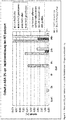
- the filled hard gelatine capsules for example for hard gelatine capsules with 60 and 100 mg active ingredient according to Table 3, showed no changes even after 12 months of storage in the refrigerator and are therefore stable ( Figure 2 ).
- the stability was examined by means of IR spectroscopy.
- no procaine was detected by IR spectroscopy within the 12 month period, while for cellulose capsules a procaine band was measured in the IR spectrum after just a few days.
- the content was determined at room temperature using UV / VIS spectroscopy. According to Pharmacopoeia Europaea, point 2.9.6, a tolerance range of ⁇ 15% is prescribed for prescription drugs based on the total content including by-products. In the Figure 2 The fluctuations in the content shown are therefore fluctuations resulting from the capsule production procedure.
- composition of the pharmaceutical preparation (PZ) according to the invention in the embodiment as an ointment is explained below by way of example for procaine as an amine (AM) in the carbonic acid adduct (KA).
- PA procaine as an amine
- KA carbonic acid adduct
- the applicable and generally accepted pharmaceutical rules for the manufacture of (prescription) drugs are applied (for example Pharmacopoea Europaea, Deutscher Azneistoff-Codex). Greater shear forces are avoided in the manufacture of the ointment.
- the temperature is kept locally below 60 ° C during preparation.
- the ground carbonic acid adduct (KA) comprising procaine as amine (AM) is introduced into the ointment base, for example petroleum jelly, in a mortar or a fancy bowl, which is tempered by means of a water bath at 40 to 45 ° C.
- the ointment base for example petroleum jelly
- Table 5 ⁇ /b> Example composition of ointment and carbonic acid adduct (KA) as active ingredient, produced according to embodiment 1.
- Salary [%] 0.5 1.0 1.25 2 4th Amount of active ingredient [mg] 25th 50 62.5 100 200 Ointment base [g] (e.g. Vaseline) 5 5 5 5 5 5
- the experiment was carried out in Tyrode solution on pig intestines (brought fresh from the slaughterhouse).
- the intestine was rinsed with Tyrode solution and stretched on a funnel.
- the inside of the intestine was immersed in a vessel in which there was Tyrode solution with carbonic acid adduct (KA) with procaine as amine, prepared as described in embodiment 1, or procaine hydrochloride (equimolar).
- Tyrode solution without substance was also applied to the outside of the intestine in order to keep the intestine "fresh" and to supply it with nutrients.
- the samples were taken from the upper solution (outside of the intestine) and examined by UV / VIS spectroscopy. The entire experiment was carried out at 35-38 ° C in a water bath.
- KA carbonic acid adduct
- AM procaine as amine
- the required amount of water (Aqua ad iniectabilia) is brought to approx. 5 ⁇ 3 ° C in a suitable vessel with a stir bar or similar cooled and left at this temperature.
- the water is enriched with gaseous carbon dioxide in the required quality to approx. 3.2 g / l.
- the corresponding amount of carbonic acid adduct (KA) comprising procaine as amine (AM) and sodium chloride is dissolved in this CO 2 -containing water for an isotonic content.
- water at a temperature of approx. 5 ⁇ 3 ° C is enriched with CO 2 under pressure in a closed system so that there is a clear excess (4.5 to 7.5 g / l).
- the corresponding amounts of carbonic acid adduct (KA) comprising procaine as amine (AM) and sodium chloride are also added to this carbonated water.
- the solutions were frozen and lyophilized, as described in embodiment 1, without further CO 2 addition before freezing, so as not to falsify the result.
- the corresponding IR spectra which did not show any procaine bands during the period under consideration, were measured for the solid obtained in this way.
- the total content was determined twice in each case from the solution and the lyophilizate by UV / VIS spectroscopy.
Landscapes
- Health & Medical Sciences (AREA)
- Chemical & Material Sciences (AREA)
- Organic Chemistry (AREA)
- Medicinal Chemistry (AREA)
- Veterinary Medicine (AREA)
- Public Health (AREA)
- General Health & Medical Sciences (AREA)
- Animal Behavior & Ethology (AREA)
- Life Sciences & Earth Sciences (AREA)
- Pharmacology & Pharmacy (AREA)
- Epidemiology (AREA)
- Engineering & Computer Science (AREA)
- General Chemical & Material Sciences (AREA)
- Chemical Kinetics & Catalysis (AREA)
- Nuclear Medicine, Radiotherapy & Molecular Imaging (AREA)
- Bioinformatics & Cheminformatics (AREA)
- Inorganic Chemistry (AREA)
- Neurosurgery (AREA)
- Neurology (AREA)
- Biomedical Technology (AREA)
- Ceramic Engineering (AREA)
- Rheumatology (AREA)
- Emergency Medicine (AREA)
- Pain & Pain Management (AREA)
- Psychiatry (AREA)
- Pulmonology (AREA)
- Oil, Petroleum & Natural Gas (AREA)
- Dermatology (AREA)
- Hospice & Palliative Care (AREA)
- Materials Engineering (AREA)
- Structural Engineering (AREA)
- Pharmaceuticals Containing Other Organic And Inorganic Compounds (AREA)
- Medicinal Preparation (AREA)
- Acyclic And Carbocyclic Compounds In Medicinal Compositions (AREA)
- Organic Low-Molecular-Weight Compounds And Preparation Thereof (AREA)
Priority Applications (2)
| Application Number | Priority Date | Filing Date | Title |
|---|---|---|---|
| SI201830548T SI3679010T1 (sl) | 2017-09-07 | 2018-09-07 | Adukti ogljikove kisline |
| PL18779204T PL3679010T3 (pl) | 2017-09-07 | 2018-09-07 | Addukty kwasu węglowego |
Applications Claiming Priority (2)
| Application Number | Priority Date | Filing Date | Title |
|---|---|---|---|
| DE102017120564.0A DE102017120564A1 (de) | 2017-09-07 | 2017-09-07 | Kohlensäure-Addukte |
| PCT/EP2018/074089 WO2019048590A1 (de) | 2017-09-07 | 2018-09-07 | Kohlensäure-addukte |
Publications (2)
| Publication Number | Publication Date |
|---|---|
| EP3679010A1 EP3679010A1 (de) | 2020-07-15 |
| EP3679010B1 true EP3679010B1 (de) | 2021-10-27 |
Family
ID=63708267
Family Applications (1)
| Application Number | Title | Priority Date | Filing Date |
|---|---|---|---|
| EP18779204.9A Active EP3679010B1 (de) | 2017-09-07 | 2018-09-07 | Kohlensäure-addukte |
Country Status (13)
| Country | Link |
|---|---|
| US (2) | US11440872B2 (pl) |
| EP (1) | EP3679010B1 (pl) |
| CN (1) | CN111295369B (pl) |
| CA (1) | CA3074775A1 (pl) |
| DE (1) | DE102017120564A1 (pl) |
| DK (1) | DK3679010T3 (pl) |
| EA (1) | EA202090656A1 (pl) |
| ES (1) | ES2906286T3 (pl) |
| HU (1) | HUE057751T2 (pl) |
| PL (1) | PL3679010T3 (pl) |
| PT (1) | PT3679010T (pl) |
| SI (1) | SI3679010T1 (pl) |
| WO (1) | WO2019048590A1 (pl) |
Families Citing this family (7)
| Publication number | Priority date | Publication date | Assignee | Title |
|---|---|---|---|---|
| JP7324480B2 (ja) * | 2019-06-19 | 2023-08-10 | 浙江智達薬業有限公司 | 改質された疎水性添加物及びその製造方法並びにその用途 |
| CA3174547A1 (en) | 2020-04-02 | 2021-10-07 | Inflamed Pharma Gmbh | Active substances for medical use |
| CN115697318A (zh) * | 2020-04-02 | 2023-02-03 | 炎症药物有限责任公司 | 医用活性物质 |
| LU101724B1 (de) | 2020-04-02 | 2021-10-04 | Inflamed Pharma Gmbh | Wirkstoffe zur medizinischen Verwendung |
| EP4201439A1 (en) | 2021-12-23 | 2023-06-28 | Axenoll Life Sciences AG | A three-dimensional biocompatible matrix and its uses in wound management |
| EP4275681A1 (de) | 2022-05-10 | 2023-11-15 | inflamed pharma GmbH | Wirkstoffe zur medizinischen verwendung |
| EP4378920A1 (de) | 2022-12-02 | 2024-06-05 | inflamed pharma GmbH | Stabilisierte kohlensäureaddukte |
Family Cites Families (5)
| Publication number | Priority date | Publication date | Assignee | Title |
|---|---|---|---|---|
| GB349640A (en) | 1930-03-03 | 1931-06-04 | Ig Farbenindustrie Ag | Manufacture of therapeutic agents |
| DE102004035808A1 (de) | 2004-07-21 | 2006-03-16 | Kasch, Helmut, Dr. | Ammoniumsalze und Ammoniumsalz-Mineralsalzchlatrate als Transport- und Wirkform für pharmazeutische-medizinische und als Phasentransfermittel für chemische Anwendungen |
| CN102973494A (zh) | 2011-09-02 | 2013-03-20 | 天圣制药集团股份有限公司 | 一种碳酸利多卡因注射液的制备方法 |
| DE102013015035A1 (de) * | 2013-09-02 | 2015-04-02 | Helmut Kasch | Neue Wirkstoffe vom Kohlensäure - Mineralsalz - Typ I und II des Procains und davon abgeleiteter Analoga, Verfahren zu deren Herstellung und Stabilisierung für gezielte lokale und systemisch pharmazeutische Anwendungen |
| KR102442753B1 (ko) * | 2016-12-26 | 2022-09-16 | 셀릭스 바이오 프라이빗 리미티드 | 만성 통증 치료를 위한 화합물 |
-
2017
- 2017-09-07 DE DE102017120564.0A patent/DE102017120564A1/de not_active Withdrawn
-
2018
- 2018-09-07 EA EA202090656A patent/EA202090656A1/ru unknown
- 2018-09-07 ES ES18779204T patent/ES2906286T3/es active Active
- 2018-09-07 CN CN201880070442.XA patent/CN111295369B/zh active Active
- 2018-09-07 WO PCT/EP2018/074089 patent/WO2019048590A1/de not_active Ceased
- 2018-09-07 EP EP18779204.9A patent/EP3679010B1/de active Active
- 2018-09-07 CA CA3074775A patent/CA3074775A1/en active Pending
- 2018-09-07 PL PL18779204T patent/PL3679010T3/pl unknown
- 2018-09-07 SI SI201830548T patent/SI3679010T1/sl unknown
- 2018-09-07 US US16/644,909 patent/US11440872B2/en active Active
- 2018-09-07 DK DK18779204.9T patent/DK3679010T3/da active
- 2018-09-07 PT PT187792049T patent/PT3679010T/pt unknown
- 2018-09-07 HU HUE18779204A patent/HUE057751T2/hu unknown
-
2022
- 2022-07-12 US US17/863,250 patent/US12486217B2/en active Active
Also Published As
| Publication number | Publication date |
|---|---|
| ES2906286T3 (es) | 2022-04-18 |
| DE102017120564A1 (de) | 2019-03-07 |
| HUE057751T2 (hu) | 2022-06-28 |
| PL3679010T3 (pl) | 2022-03-07 |
| CN111295369A (zh) | 2020-06-16 |
| EA202090656A1 (ru) | 2020-07-17 |
| US11440872B2 (en) | 2022-09-13 |
| US20220356146A1 (en) | 2022-11-10 |
| CA3074775A1 (en) | 2019-03-14 |
| CN111295369B (zh) | 2023-07-25 |
| US12486217B2 (en) | 2025-12-02 |
| DK3679010T3 (da) | 2022-01-31 |
| EP3679010A1 (de) | 2020-07-15 |
| SI3679010T1 (sl) | 2022-04-29 |
| PT3679010T (pt) | 2022-01-31 |
| US20200216384A1 (en) | 2020-07-09 |
| WO2019048590A1 (de) | 2019-03-14 |
Similar Documents
| Publication | Publication Date | Title |
|---|---|---|
| EP3679010B1 (de) | Kohlensäure-addukte | |
| Jug et al. | Preparation and solid-state characterization of bupivacaine hydrochloride cyclodextrin complexes aimed for buccal delivery | |
| DD285720A5 (de) | Verfahren zur herstellung einer saeurebindenden, aufschaeumenden zubereitung | |
| TWI750248B (zh) | 含依匹斯汀之點眼液 | |
| EP3324936A1 (de) | Verfahren zur herstellung einer bortezomibester-lösung | |
| EP2068842B9 (de) | Wirkstoff und trimagnesiumdicitrat als trockenmittel enthaltende stabilisierte feste arzneimittelformen und verfahren zu ihrer herstellung | |
| EP3324937A1 (de) | Gebrauchsfertige bortezomib-lösung | |
| EP4125859A1 (de) | Wirkstoffe zur medizinischen verwendung | |
| US20250312363A1 (en) | Method for hydrating lyophilized cyclophosphamide composition and product thereof | |
| EP4378920A1 (de) | Stabilisierte kohlensäureaddukte | |
| LU101724B1 (de) | Wirkstoffe zur medizinischen Verwendung | |
| EP2142169B1 (de) | Wässrige pharmazeutische zubereitung | |
| EP1479389A1 (de) | Gebrauchsfertige Gemcitabin-Lösungen | |
| EP4275681A1 (de) | Wirkstoffe zur medizinischen verwendung | |
| EP3930713A1 (en) | Stable tacrolimus ointment formulation for topical treatment of skin conditions | |
| CN107141253A (zh) | 一种阿立哌唑倍半水合物化合物 | |
| KR20190123664A (ko) | 콜린알포세레이트를 함유하는 액상 시럽제제 |
Legal Events
| Date | Code | Title | Description |
|---|---|---|---|
| STAA | Information on the status of an ep patent application or granted ep patent |
Free format text: STATUS: UNKNOWN |
|
| STAA | Information on the status of an ep patent application or granted ep patent |
Free format text: STATUS: THE INTERNATIONAL PUBLICATION HAS BEEN MADE |
|
| PUAI | Public reference made under article 153(3) epc to a published international application that has entered the european phase |
Free format text: ORIGINAL CODE: 0009012 |
|
| STAA | Information on the status of an ep patent application or granted ep patent |
Free format text: STATUS: REQUEST FOR EXAMINATION WAS MADE |
|
| 17P | Request for examination filed |
Effective date: 20200331 |
|
| AK | Designated contracting states |
Kind code of ref document: A1 Designated state(s): AL AT BE BG CH CY CZ DE DK EE ES FI FR GB GR HR HU IE IS IT LI LT LU LV MC MK MT NL NO PL PT RO RS SE SI SK SM TR |
|
| AX | Request for extension of the european patent |
Extension state: BA ME |
|
| DAV | Request for validation of the european patent (deleted) | ||
| DAX | Request for extension of the european patent (deleted) | ||
| GRAP | Despatch of communication of intention to grant a patent |
Free format text: ORIGINAL CODE: EPIDOSNIGR1 |
|
| STAA | Information on the status of an ep patent application or granted ep patent |
Free format text: STATUS: GRANT OF PATENT IS INTENDED |
|
| RIC1 | Information provided on ipc code assigned before grant |
Ipc: A61K 47/06 20060101ALI20210322BHEP Ipc: A61K 47/02 20060101ALI20210322BHEP Ipc: A61K 33/00 20060101ALI20210322BHEP Ipc: A61K 9/48 20060101ALI20210322BHEP Ipc: A61K 9/20 20060101ALI20210322BHEP Ipc: A61K 9/00 20060101ALI20210322BHEP Ipc: A61K 9/06 20060101ALI20210322BHEP Ipc: A61P 35/00 20060101ALI20210322BHEP Ipc: A61P 29/00 20060101ALI20210322BHEP Ipc: A61P 25/28 20060101ALI20210322BHEP Ipc: A61P 11/16 20060101ALI20210322BHEP Ipc: A61K 31/245 20060101ALI20210322BHEP Ipc: C07C 211/63 20060101ALI20210322BHEP Ipc: C07C 237/04 20060101ALI20210322BHEP Ipc: C07C 229/60 20060101AFI20210322BHEP |
|
| INTG | Intention to grant announced |
Effective date: 20210414 |
|
| RAP1 | Party data changed (applicant data changed or rights of an application transferred) |
Owner name: INFLAMED PHARMA GMBH |
|
| GRAS | Grant fee paid |
Free format text: ORIGINAL CODE: EPIDOSNIGR3 |
|
| GRAA | (expected) grant |
Free format text: ORIGINAL CODE: 0009210 |
|
| STAA | Information on the status of an ep patent application or granted ep patent |
Free format text: STATUS: THE PATENT HAS BEEN GRANTED |
|
| AK | Designated contracting states |
Kind code of ref document: B1 Designated state(s): AL AT BE BG CH CY CZ DE DK EE ES FI FR GB GR HR HU IE IS IT LI LT LU LV MC MK MT NL NO PL PT RO RS SE SI SK SM TR |
|
| REG | Reference to a national code |
Ref country code: GB Ref legal event code: FG4D Free format text: NOT ENGLISH |
|
| REG | Reference to a national code |
Ref country code: CH Ref legal event code: EP |
|
| REG | Reference to a national code |
Ref country code: AT Ref legal event code: REF Ref document number: 1441678 Country of ref document: AT Kind code of ref document: T Effective date: 20211115 |
|
| REG | Reference to a national code |
Ref country code: DE Ref legal event code: R096 Ref document number: 502018007621 Country of ref document: DE |
|
| REG | Reference to a national code |
Ref country code: IE Ref legal event code: FG4D Free format text: LANGUAGE OF EP DOCUMENT: GERMAN |
|
| REG | Reference to a national code |
Ref country code: PT Ref legal event code: SC4A Ref document number: 3679010 Country of ref document: PT Date of ref document: 20220131 Kind code of ref document: T Free format text: AVAILABILITY OF NATIONAL TRANSLATION Effective date: 20220124 Ref country code: DK Ref legal event code: T3 Effective date: 20220125 |
|
| REG | Reference to a national code |
Ref country code: SE Ref legal event code: TRGR |
|
| REG | Reference to a national code |
Ref country code: LT Ref legal event code: MG9D |
|
| REG | Reference to a national code |
Ref country code: NL Ref legal event code: MP Effective date: 20211027 |
|
| REG | Reference to a national code |
Ref country code: GR Ref legal event code: EP Ref document number: 20220400157 Country of ref document: GR Effective date: 20220211 |
|
| REG | Reference to a national code |
Ref country code: NO Ref legal event code: T2 Effective date: 20211027 |
|
| REG | Reference to a national code |
Ref country code: ES Ref legal event code: FG2A Ref document number: 2906286 Country of ref document: ES Kind code of ref document: T3 Effective date: 20220418 |
|
| PG25 | Lapsed in a contracting state [announced via postgrant information from national office to epo] |
Ref country code: RS Free format text: LAPSE BECAUSE OF FAILURE TO SUBMIT A TRANSLATION OF THE DESCRIPTION OR TO PAY THE FEE WITHIN THE PRESCRIBED TIME-LIMIT Effective date: 20211027 Ref country code: LT Free format text: LAPSE BECAUSE OF FAILURE TO SUBMIT A TRANSLATION OF THE DESCRIPTION OR TO PAY THE FEE WITHIN THE PRESCRIBED TIME-LIMIT Effective date: 20211027 Ref country code: FI Free format text: LAPSE BECAUSE OF FAILURE TO SUBMIT A TRANSLATION OF THE DESCRIPTION OR TO PAY THE FEE WITHIN THE PRESCRIBED TIME-LIMIT Effective date: 20211027 |
|
| PG25 | Lapsed in a contracting state [announced via postgrant information from national office to epo] |
Ref country code: IS Free format text: LAPSE BECAUSE OF FAILURE TO SUBMIT A TRANSLATION OF THE DESCRIPTION OR TO PAY THE FEE WITHIN THE PRESCRIBED TIME-LIMIT Effective date: 20220227 Ref country code: NL Free format text: LAPSE BECAUSE OF FAILURE TO SUBMIT A TRANSLATION OF THE DESCRIPTION OR TO PAY THE FEE WITHIN THE PRESCRIBED TIME-LIMIT Effective date: 20211027 Ref country code: LV Free format text: LAPSE BECAUSE OF FAILURE TO SUBMIT A TRANSLATION OF THE DESCRIPTION OR TO PAY THE FEE WITHIN THE PRESCRIBED TIME-LIMIT Effective date: 20211027 Ref country code: HR Free format text: LAPSE BECAUSE OF FAILURE TO SUBMIT A TRANSLATION OF THE DESCRIPTION OR TO PAY THE FEE WITHIN THE PRESCRIBED TIME-LIMIT Effective date: 20211027 |
|
| REG | Reference to a national code |
Ref country code: HU Ref legal event code: AG4A Ref document number: E057751 Country of ref document: HU |
|
| REG | Reference to a national code |
Ref country code: DE Ref legal event code: R097 Ref document number: 502018007621 Country of ref document: DE |
|
| PG25 | Lapsed in a contracting state [announced via postgrant information from national office to epo] |
Ref country code: SM Free format text: LAPSE BECAUSE OF FAILURE TO SUBMIT A TRANSLATION OF THE DESCRIPTION OR TO PAY THE FEE WITHIN THE PRESCRIBED TIME-LIMIT Effective date: 20211027 Ref country code: SK Free format text: LAPSE BECAUSE OF FAILURE TO SUBMIT A TRANSLATION OF THE DESCRIPTION OR TO PAY THE FEE WITHIN THE PRESCRIBED TIME-LIMIT Effective date: 20211027 Ref country code: EE Free format text: LAPSE BECAUSE OF FAILURE TO SUBMIT A TRANSLATION OF THE DESCRIPTION OR TO PAY THE FEE WITHIN THE PRESCRIBED TIME-LIMIT Effective date: 20211027 |
|
| PLBE | No opposition filed within time limit |
Free format text: ORIGINAL CODE: 0009261 |
|
| STAA | Information on the status of an ep patent application or granted ep patent |
Free format text: STATUS: NO OPPOSITION FILED WITHIN TIME LIMIT |
|
| 26N | No opposition filed |
Effective date: 20220728 |
|
| PG25 | Lapsed in a contracting state [announced via postgrant information from national office to epo] |
Ref country code: AL Free format text: LAPSE BECAUSE OF FAILURE TO SUBMIT A TRANSLATION OF THE DESCRIPTION OR TO PAY THE FEE WITHIN THE PRESCRIBED TIME-LIMIT Effective date: 20211027 |
|
| PG25 | Lapsed in a contracting state [announced via postgrant information from national office to epo] |
Ref country code: MC Free format text: LAPSE BECAUSE OF FAILURE TO SUBMIT A TRANSLATION OF THE DESCRIPTION OR TO PAY THE FEE WITHIN THE PRESCRIBED TIME-LIMIT Effective date: 20211027 |
|
| PG25 | Lapsed in a contracting state [announced via postgrant information from national office to epo] |
Ref country code: CY Free format text: LAPSE BECAUSE OF FAILURE TO SUBMIT A TRANSLATION OF THE DESCRIPTION OR TO PAY THE FEE WITHIN THE PRESCRIBED TIME-LIMIT Effective date: 20211027 |
|
| PG25 | Lapsed in a contracting state [announced via postgrant information from national office to epo] |
Ref country code: MK Free format text: LAPSE BECAUSE OF FAILURE TO SUBMIT A TRANSLATION OF THE DESCRIPTION OR TO PAY THE FEE WITHIN THE PRESCRIBED TIME-LIMIT Effective date: 20211027 |
|
| PG25 | Lapsed in a contracting state [announced via postgrant information from national office to epo] |
Ref country code: MT Free format text: LAPSE BECAUSE OF FAILURE TO SUBMIT A TRANSLATION OF THE DESCRIPTION OR TO PAY THE FEE WITHIN THE PRESCRIBED TIME-LIMIT Effective date: 20211027 |
|
| REG | Reference to a national code |
Ref country code: CH Ref legal event code: U11 Free format text: ST27 STATUS EVENT CODE: U-0-0-U10-U11 (AS PROVIDED BY THE NATIONAL OFFICE) Effective date: 20251001 |
|
| PGFP | Annual fee paid to national office [announced via postgrant information from national office to epo] |
Ref country code: PT Payment date: 20250828 Year of fee payment: 8 |
|
| PGFP | Annual fee paid to national office [announced via postgrant information from national office to epo] |
Ref country code: DK Payment date: 20250923 Year of fee payment: 8 Ref country code: DE Payment date: 20250919 Year of fee payment: 8 |
|
| PGFP | Annual fee paid to national office [announced via postgrant information from national office to epo] |
Ref country code: GR Payment date: 20250922 Year of fee payment: 8 Ref country code: NO Payment date: 20250923 Year of fee payment: 8 |
|
| PGFP | Annual fee paid to national office [announced via postgrant information from national office to epo] |
Ref country code: LU Payment date: 20250919 Year of fee payment: 8 Ref country code: PL Payment date: 20250901 Year of fee payment: 8 Ref country code: IT Payment date: 20250923 Year of fee payment: 8 |
|
| PGFP | Annual fee paid to national office [announced via postgrant information from national office to epo] |
Ref country code: HU Payment date: 20250922 Year of fee payment: 8 Ref country code: BG Payment date: 20250919 Year of fee payment: 8 Ref country code: BE Payment date: 20250918 Year of fee payment: 8 Ref country code: GB Payment date: 20250919 Year of fee payment: 8 |
|
| PGFP | Annual fee paid to national office [announced via postgrant information from national office to epo] |
Ref country code: FR Payment date: 20250922 Year of fee payment: 8 Ref country code: AT Payment date: 20250919 Year of fee payment: 8 |
|
| PGFP | Annual fee paid to national office [announced via postgrant information from national office to epo] |
Ref country code: SE Payment date: 20250918 Year of fee payment: 8 |
|
| PGFP | Annual fee paid to national office [announced via postgrant information from national office to epo] |
Ref country code: CZ Payment date: 20250903 Year of fee payment: 8 Ref country code: IE Payment date: 20250918 Year of fee payment: 8 |
|
| PGFP | Annual fee paid to national office [announced via postgrant information from national office to epo] |
Ref country code: RO Payment date: 20250901 Year of fee payment: 8 |
|
| PGFP | Annual fee paid to national office [announced via postgrant information from national office to epo] |
Ref country code: SI Payment date: 20250828 Year of fee payment: 8 |
|
| PG25 | Lapsed in a contracting state [announced via postgrant information from national office to epo] |
Ref country code: TR Free format text: LAPSE BECAUSE OF FAILURE TO SUBMIT A TRANSLATION OF THE DESCRIPTION OR TO PAY THE FEE WITHIN THE PRESCRIBED TIME-LIMIT Effective date: 20211027 |
|
| PGFP | Annual fee paid to national office [announced via postgrant information from national office to epo] |
Ref country code: CH Payment date: 20251001 Year of fee payment: 8 |
|
| PGFP | Annual fee paid to national office [announced via postgrant information from national office to epo] |
Ref country code: ES Payment date: 20251030 Year of fee payment: 8 |