EP3831406B9 - Formulations stables des antigènes rlp2086 de neisseria meningitidis - Google Patents
Formulations stables des antigènes rlp2086 de neisseria meningitidis Download PDFInfo
- Publication number
- EP3831406B9 EP3831406B9 EP20216502.3A EP20216502A EP3831406B9 EP 3831406 B9 EP3831406 B9 EP 3831406B9 EP 20216502 A EP20216502 A EP 20216502A EP 3831406 B9 EP3831406 B9 EP 3831406B9
- Authority
- EP
- European Patent Office
- Prior art keywords
- protein
- subfamily
- polysorbate
- molar ratio
- rlp2086
- Prior art date
- Legal status (The legal status is an assumption and is not a legal conclusion. Google has not performed a legal analysis and makes no representation as to the accuracy of the status listed.)
- Active
Links
Images











Classifications
-
- C—CHEMISTRY; METALLURGY
- C07—ORGANIC CHEMISTRY
- C07K—PEPTIDES
- C07K14/00—Peptides having more than 20 amino acids; Gastrins; Somatostatins; Melanotropins; Derivatives thereof
- C07K14/195—Peptides having more than 20 amino acids; Gastrins; Somatostatins; Melanotropins; Derivatives thereof from bacteria
- C07K14/22—Peptides having more than 20 amino acids; Gastrins; Somatostatins; Melanotropins; Derivatives thereof from bacteria from Neisseriaceae (F)
-
- A—HUMAN NECESSITIES
- A61—MEDICAL OR VETERINARY SCIENCE; HYGIENE
- A61K—PREPARATIONS FOR MEDICAL, DENTAL OR TOILETRY PURPOSES
- A61K31/00—Medicinal preparations containing organic active ingredients
- A61K31/185—Acids; Anhydrides, halides or salts thereof, e.g. sulfur acids, imidic, hydrazonic or hydroximic acids
- A61K31/19—Carboxylic acids, e.g. valproic acid
- A61K31/194—Carboxylic acids, e.g. valproic acid having two or more carboxyl groups, e.g. succinic, maleic or phthalic acid
-
- A—HUMAN NECESSITIES
- A61—MEDICAL OR VETERINARY SCIENCE; HYGIENE
- A61K—PREPARATIONS FOR MEDICAL, DENTAL OR TOILETRY PURPOSES
- A61K31/00—Medicinal preparations containing organic active ingredients
- A61K31/33—Heterocyclic compounds
- A61K31/395—Heterocyclic compounds having nitrogen as a ring hetero atom, e.g. guanethidine or rifamycins
- A61K31/41—Heterocyclic compounds having nitrogen as a ring hetero atom, e.g. guanethidine or rifamycins having five-membered rings with two or more ring hetero atoms, at least one of which being nitrogen, e.g. tetrazole
- A61K31/4164—1,3-Diazoles
- A61K31/4172—Imidazole-alkanecarboxylic acids, e.g. histidine
-
- A—HUMAN NECESSITIES
- A61—MEDICAL OR VETERINARY SCIENCE; HYGIENE
- A61K—PREPARATIONS FOR MEDICAL, DENTAL OR TOILETRY PURPOSES
- A61K38/00—Medicinal preparations containing peptides
- A61K38/16—Peptides having more than 20 amino acids; Gastrins; Somatostatins; Melanotropins; Derivatives thereof
- A61K38/164—Peptides having more than 20 amino acids; Gastrins; Somatostatins; Melanotropins; Derivatives thereof from bacteria
-
- A—HUMAN NECESSITIES
- A61—MEDICAL OR VETERINARY SCIENCE; HYGIENE
- A61K—PREPARATIONS FOR MEDICAL, DENTAL OR TOILETRY PURPOSES
- A61K39/00—Medicinal preparations containing antigens or antibodies
- A61K39/02—Bacterial antigens
- A61K39/095—Neisseria
-
- A—HUMAN NECESSITIES
- A61—MEDICAL OR VETERINARY SCIENCE; HYGIENE
- A61K—PREPARATIONS FOR MEDICAL, DENTAL OR TOILETRY PURPOSES
- A61K47/00—Medicinal preparations characterised by the non-active ingredients used, e.g. carriers or inert additives; Targeting or modifying agents chemically bound to the active ingredient
- A61K47/02—Inorganic compounds
-
- A—HUMAN NECESSITIES
- A61—MEDICAL OR VETERINARY SCIENCE; HYGIENE
- A61K—PREPARATIONS FOR MEDICAL, DENTAL OR TOILETRY PURPOSES
- A61K47/00—Medicinal preparations characterised by the non-active ingredients used, e.g. carriers or inert additives; Targeting or modifying agents chemically bound to the active ingredient
- A61K47/06—Organic compounds, e.g. natural or synthetic hydrocarbons, polyolefins, mineral oil, petrolatum or ozokerite
- A61K47/26—Carbohydrates, e.g. sugar alcohols, amino sugars, nucleic acids, mono-, di- or oligo-saccharides; Derivatives thereof, e.g. polysorbates, sorbitan fatty acid esters or glycyrrhizin
-
- A—HUMAN NECESSITIES
- A61—MEDICAL OR VETERINARY SCIENCE; HYGIENE
- A61K—PREPARATIONS FOR MEDICAL, DENTAL OR TOILETRY PURPOSES
- A61K47/00—Medicinal preparations characterised by the non-active ingredients used, e.g. carriers or inert additives; Targeting or modifying agents chemically bound to the active ingredient
- A61K47/30—Macromolecular organic or inorganic compounds, e.g. inorganic polyphosphates
- A61K47/34—Macromolecular compounds obtained otherwise than by reactions only involving carbon-to-carbon unsaturated bonds, e.g. polyesters, polyamino acids, polysiloxanes, polyphosphazines, copolymers of polyalkylene glycol or poloxamers
-
- A—HUMAN NECESSITIES
- A61—MEDICAL OR VETERINARY SCIENCE; HYGIENE
- A61K—PREPARATIONS FOR MEDICAL, DENTAL OR TOILETRY PURPOSES
- A61K47/00—Medicinal preparations characterised by the non-active ingredients used, e.g. carriers or inert additives; Targeting or modifying agents chemically bound to the active ingredient
- A61K47/44—Oils, fats or waxes according to two or more groups of A61K47/02-A61K47/42; Natural or modified natural oils, fats or waxes, e.g. castor oil, polyethoxylated castor oil, montan wax, lignite, shellac, rosin, beeswax or lanolin
-
- A—HUMAN NECESSITIES
- A61—MEDICAL OR VETERINARY SCIENCE; HYGIENE
- A61P—SPECIFIC THERAPEUTIC ACTIVITY OF CHEMICAL COMPOUNDS OR MEDICINAL PREPARATIONS
- A61P31/00—Antiinfectives, i.e. antibiotics, antiseptics, chemotherapeutics
- A61P31/04—Antibacterial agents
-
- G—PHYSICS
- G01—MEASURING; TESTING
- G01N—INVESTIGATING OR ANALYSING MATERIALS BY DETERMINING THEIR CHEMICAL OR PHYSICAL PROPERTIES
- G01N33/00—Investigating or analysing materials by specific methods not covered by groups G01N1/00 - G01N31/00
- G01N33/48—Biological material, e.g. blood, urine; Haemocytometers
- G01N33/50—Chemical analysis of biological material, e.g. blood, urine; Testing involving biospecific ligand binding methods; Immunological testing
- G01N33/53—Immunoassay; Biospecific binding assay; Materials therefor
- G01N33/569—Immunoassay; Biospecific binding assay; Materials therefor for microorganisms, e.g. protozoa, bacteria, viruses
- G01N33/56911—Bacteria
-
- A—HUMAN NECESSITIES
- A61—MEDICAL OR VETERINARY SCIENCE; HYGIENE
- A61K—PREPARATIONS FOR MEDICAL, DENTAL OR TOILETRY PURPOSES
- A61K39/00—Medicinal preparations containing antigens or antibodies
- A61K2039/555—Medicinal preparations containing antigens or antibodies characterised by a specific combination antigen/adjuvant
- A61K2039/55505—Inorganic adjuvants
-
- A—HUMAN NECESSITIES
- A61—MEDICAL OR VETERINARY SCIENCE; HYGIENE
- A61K—PREPARATIONS FOR MEDICAL, DENTAL OR TOILETRY PURPOSES
- A61K39/00—Medicinal preparations containing antigens or antibodies
- A61K2039/555—Medicinal preparations containing antigens or antibodies characterised by a specific combination antigen/adjuvant
- A61K2039/55511—Organic adjuvants
- A61K2039/55555—Liposomes; Vesicles, e.g. nanoparticles; Spheres, e.g. nanospheres; Polymers
Definitions
- the present invention relates to a method for stabilizing the potency of a LP2086 (fHBP) Subfamily A polypeptide and a LP2086 (fHBP) Subfamily B polypeptide in an immunogenic composition.
- rLP2086 is a recombinant 28-kDa lipoprotein that induces cross-reactive bacterial antibodies against a number of Neisseria meningitidis strains. Based on deduced amino acid sequence homology, two different subfamilies of rLP2086 were identified, A and B. These two subfamilies were used in the formulation of the MnB-rLP2086 vaccine samples containing 20, 60,120, and 200 ⁇ g/mL each in 10 mM Histidine (pH 6.0), 150 mM NaCl, and 0.5 mg/mL aluminum with varying levels of Polysorbate 80 (PS-80).
- PS-80 Polysorbate 80
- Polysorbate 80 also known, as TWEEN 80, is a nonionic surfactant and emulsifier derived from sorbitol, and is frequently used in pharmaceutical formulations as an emulsifier, solubilizer and stabilizer.
- the presence of Polysorbate 80 in the MnB rLP2086 immunogenic composition is believed to prevent aggregation during formulation, processing, filtration, filling and shipping, reduce filter membrane absorption, and reduce tubing absorption.
- the invention relates to a method for stabilizing the potency of a LP2086 (fHBP) Subfamily A polypeptide and a LP2086 (fHBP) Subfamily B polypeptide in an immunogenic composition, by storing the LP2086 (fHBP) Subfamily A polypeptide and the LP2086 (fHBP) Subfamily B polypeptide in a buffer with between about 0.1 mg/ml and about 1 mg/ml aluminum and a molar ratio of detergent to protein of between about 0.5:1 and about 10:1, wherein the immunogenic composition does not include further active immunogens.
- the present invention provides a stable immunogenic composition, wherein the potency of a LP2086 Subfamily B polypeptide is maintained for at least about 1-12 months, about 6-18 months, about 12-24 months, about 24-36 months, or about 36-48 months.
- the immunogenic composition further comprises a LP2086 Subfamily A polypeptide.
- the immunogenic composition further comprises a detergent.
- the molar ratio of the detergent to protein is between about 0.5:1 and about 10:1; between about 1:1 and about 5:1; or between about 1.4:1 and 4.2:1. In some embodiments, the molar ratio of the detergent to protein is about 2.8:1. In some embodiments the amount of detergent is sufficient to reduce polypeptide binding to silicon in a container, such as a syringe or a vial.
- the detergent is a non-ionic detergent, such as a polysorbate detergent. In some embodiments, the detergent is Polysorbate-80.
- the immunogenic composition further comprises aluminum.
- the immunogenic composition comprises aluminum as aluminum phosphate, aluminum hydroxide, aluminum sulfate, or alum.
- the concentration of aluminum is between about 0.1 mg/mL and 1.0 mg/mL. In some embodiments, the concentration of aluminum is about 0.5 mg/mL.
- the immunogenic composition further comprises histidine.
- the concentration of histidine is between about 2mM and about 20mM or between about 5mM and about 15mM. In some embodiments, the concentration of histidine is about 10mM.
- the pH of the histidine is between about 5.0 and about 8.0 or between about 5.8 and about 6.0. In some embodiments, the concentration of histidine is 10mM, pH 6.0.
- the immunogenic composition further comprises succinate.
- the concentration of succinate is between about 2mM and about 10mM or between about 3mM and about 7mM. In some embodiments, the concentration of succinate is about 5mM.
- the pH of the succinate is between about 5.0 and about 8.0 or between about 5.8 and about 6.0. In some embodiments, the concentration of succinate is 5mM, pH 6.0.
- the immunogenic composition is lyophilized. In some embodiments, the lyophilized composition is resuspended in a buffer comprising aluminum. In some embodiments, the aluminum is present as aluminum phosphate, aluminum hydroxide, aluminum sulfate, or alum.
- the immunogenic composition comprises about a 2.8:1 molar ratio of Polysorbate 80 to protein, 0.5 mg/mL aluminum as AlPO4, 10mM histidine pH 6.0, and 150 mM NaCl.
- the immunogenic composition consists essentially of 200ug/mL LP2086 (fHBP) Subfamily B polypeptide, about a 2.8:1 molar ratio of Polysorbate 80 to protein, 0.5 mg/mL aluminum as AlPO4, 10mM histidine pH 6.0, and 150 mM NaCl.
- the immunogenic composition consists essentially of 200ug/mL rLP2086 (fHBP) Subfamily A polypeptide, 200ug/mL LP2086 (fHBP) Subfamily B polypeptide, about a 2.8:1 molar ratio of Polysorbate 80 to protein, 0.5 mg/mL of aluminum as AlPO4, 10mM histidine pH 6.0, and 150 mM NaCl.
- the immunogenic composition comprises about a 2.8:1 molar ratio of Polysorbate 80 to protein, 0.5 mg/mL aluminum as AlPO4, 5mM succinate pH 6.0, and 150 mM NaCl.
- the immunogenic composition consists essentially of 200ug/mL LP2086 (fHBP) Subfamily B polypeptide, about a 2.8:1 molar ratio of Polysorbate 80 to protein, 0.5 mg/mL aluminum as AlPO4, 5mM succinate pH 6.0, and 150 mM NaCl.
- the immunogenic composition consists essentially of 200ug/mL rLP2086 (fHBP) Subfamily A polypeptide, 200ug/mL LP2086 (fHBP) Subfamily B polypeptide, about a 2.8:1 molar ratio of Polysorbate 80 to protein, 0.5 mg/mL of aluminum as AlPO4, 5mM succinate pH 6.0, and 150 mM NaCl.
- the invention provides for a method of stabilizing the potency of a LP2086 Subfamily A polypeptide and a LP2086 Subfamily B polypeptide in an immunogenic composition by storing the LP2086 Subfamily A polypeptide and the LP2086 Subfamily B polypeptide in a buffer with between about 0.1mg/mL and about 10mg/mL aluminum and a molar ratio of detergent to protein between about 0.5:1 and 10:1.
- the molar ratio of detergent to protein is between about 1:1 and about 5:1; or between about 1.4:1 and about 4.2:1.
- the molar ratio of detergent to protein is about 2.8:1.
- the amount of detergent is sufficient to reduce polypeptide binding to silicon in a container, such as a syringe or a vial.
- the detergent is a non-ionic detergent, such as a polysorbate detergent.
- the detergent is Polysorbate-80.
- the aluminum is present as aluminum phosphate, aluminum hydroxide, aluminum sulfate, or alum. In some embodiments, the concentration of aluminum is about 0.5 mg/mL.
- the buffer further comprises histidine.
- the concentration of histidine is between about 2mM and about 20mM or between about 5mM and about 15mM. In some embodiments, the concentration of histidine is about 10mM.
- the pH of the histidine is between about 5.0 and about 8.0 or between about 5.8 and about 6.0. In some embodiments, the concentration of histidine is 10mM, pH 6.0.
- the buffer further comprises succinate.
- the concentration of succinate is between about 2mM and about 10mM or between about 3mM and about 7mM. In some embodiments, the concentration of succinate is about 5mM.
- the pH of the succinate is between about 5.0 and about 8.0 or between about 5.8 and about 6.0. In some embodiments, the concentration of succinate is 10mM, pH 6.0.
- the immunogenic composition is lyophilized. In some embodiments, the lyophilized composition is resuspended in a buffer comprising aluminum. In some embodiments, the aluminum is present as aluminum phosphate, aluminum hydroxide, aluminum sulfate, or alum.
- the buffer consists essentially of about a 2.8:1 molar ratio of Polysorbate 80 to protein, 0.5 mg/mL aluminum as AlPO4, 10mM histidine pH 6.0, and 150 mM NaCl.
- the immunogenic composition consists essentially of 200ug/mL LP2086 (fHBP) Subfamily A polypeptide, 200ug/mL LP2086 (fHBP) Subfamily B polypeptide, about a 2.8:1 molar ratio of Polysorbate 80 to protein, 0.5 mg/mL aluminum as AlPO4, 10mM histidine pH 6.0, and 150 mM NaCl.
- the buffer consists essentially of about a 2.8:1 molar ratio of Polysorbate 80 to protein, 0.5 mg/mL aluminum as AlPO4, 5mM succinate pH 6.0, and 150 mM NaCl.
- the immunogenic composition consists essentially of 200ug/mL LP2086 (fHBP) Subfamily A polypeptide, 200ug/mL LP2086 (fHBP) Subfamily B polypeptide, about a 2.8:1 molar ratio of Polysorbate 80 to protein, 0.5 mg/mL aluminum as AlPO4, 5mM succinate pH 6.0, and 150 mM NaCl.
- references to “the method” includes one or more methods, and/or steps of the type described herein and/or which will become apparent to one of ordinary skill in the art upon reading this disclosure and so forth.
- ⁇ means within a statistically meaningful range of a value such as a stated concentration range, time frame, molecular weight, temperature or pH. Such a range can be within an order of magnitude, typically within 20%, more typically still within 10%, and even more typically within 5% of a given value or range. The allowable variation encompassed by the term “about” will depend upon the particular system under study, and can be readily appreciated by one of ordinary skill in the art. Whenever a range is recited within this application, every whole number integer within the range is also contemplated as an embodiment of the invention.
- adjuvant refers to a compound or mixture that enhances the immune response to an antigen as further described and exemplified herein.
- adjuvants include the RIBI adjuvant system (Ribi Inc., Hamilton, Mont.), alum, mineral gels such as aluminum hydroxide gel, oil-in-water emulsions, water-in-oil emulsions such as, e.g., Freund's complete and incomplete adjuvants, Block copolymer (CytRx, Atlanta Ga.), QS-21 (Cambridge Biotech Inc., Cambridge Mass.), SAF-M (Chiron, Emeryville Calif.), AMPHIGEN ® adjuvant, saponin, Quil A or other saponin fraction, monophosphoryl lipid A, and Avridine lipid-amine adjuvant.
- binding of aluminum to protein refers to the percentage of protein molecules in a composition that are bound to aluminum.
- the binding of aluminum to protein can be determined using methods disclosed herein or known in the art.
- an effective immunogenic amount refers to an amount of a polypeptide or composition comprising a polypeptide which is effective in eliciting an immune response in a vertebrate host.
- an effective immunogenic amount of a rLP2086 protein of this invention is an amount that is effective in eliciting an immune response in a vertebrate host.
- the particular "effective immunogenic dosage or amount” will depend upon the age, weight and medical condition of the host, as well as on the method of administration. Suitable doses are readily determined by persons skilled in the art.
- a ratio of 3 moles Polysorbate 80 to 2 moles of protein would be expressed as a molar ratio of PS80 to protein of 3:2. Further, if a molar ratio is recited as a single number, it refers to a ratio of that single number to 1.
- Polysorbate 80-to-protein ratios of 0.5, 2, and 10 refer to ratios of 0.5:1, 2:1 and 10:1, respectively.
- the terms "detergent to protein" molar ratio and "Polysorbate 80 to protein” molar ratio refer in general to the molar ratio of detergent (or Polysorbate 80) to protein antigens, particularly P2086 antigens.
- a "low” molar ratio refers in general to a molar ratio of the detergent to protein antigen in the immunogenic composition that is less than a "high” molar ratio.
- a “high” molar ratio refers in general to a molar ratio of the detergent to protein antigen in the immunogenic composition that is greater than a "low” molar ratio.
- a "high molar ratio” of detergent to protein refers to a molar ratio greater than 10:1.
- a "low molar ratio" of detergent to protein refer to a molar ratio between 0.5:1 and 10:1.
- ORF2086 refers to Open Reading Frame 2086 from a Neisseria species bacteria. Neisseria ORF2086, the proteins encoded therefrom, fragments of those proteins, and immunogenic compositions comprising those proteins are known in the art and are described, e.g., in U.S. Patent Application Publication Nos. US 20060257413 and US 20090202593 , each of which is hereby incorporated by reference in its entirety.
- the term “P2086” generally refers to the protein encoded by ORF2086.
- the P2086 proteins of the invention may be lipidated or non-lipidated.
- LP2086” and “P2086” typically refer to lipidated and non-lipidated forms of a 2086 protein, respectively.
- the P2086 protein of the invention may be recombinant.
- rLP2086” and “rP2086” typically refer to lipidated and non-lipidated forms of a recombinant 2086 protein, respectively.
- a pharmaceutically acceptable carrier is intended to include any and all solvents, dispersion media, coatings, antibacterial and antifungal agents, isotonic and absorption delaying agents, and the like, compatible with administration to humans or other vertebrate hosts.
- a pharmaceutically acceptable carrier is a carrier approved by a regulatory agency of a Federal, a state government, or other regulatory agency, or listed in the U.S. Pharmacopeia or other generally recognized pharmacopeia for use in animals, including humans as well as non-human mammals.
- carrier refers to a diluent, adjuvant, excipient, or vehicle with which the pharmaceutical composition is administered.
- Such pharmaceutical carriers can be sterile liquids, such as water and oils, including those of petroleum, animal, vegetable or synthetic origin.
- Water, saline solutions and aqueous dextrose and glycerol solutions can be employed as liquid carriers, particularly for injectable solutions.
- Suitable pharmaceutical excipients include starch, glucose, lactose, sucrose, gelatin, malt, rice, flour, chalk, silica gel, sodium stearate, glycerol monostearate, talc, sodium chloride, dried skim milk, glycerol, propylene, glycol, water, ethanol and the like.
- the composition if desired, can also contain minor amounts of wetting, bulking, emulsifying agents, or pH buffering agents.
- compositions can take the form of solutions, suspensions, emulsion, sustained release formulations and the like.
- suitable pharmaceutical carriers are described in "Remington's Pharmaceutical Sciences” by E. W. Martin.
- the formulation should suit the mode of administration.
- the appropriate carrier will be evident to those skilled in the art and will depend in large part upon the route of administration.
- potency refers to an antigen's ability to raise an immunogenic response.
- potency is measured by an epitopes ability to bind to an antibody. Potency may be lost or reduced over time due to loss of antigen or epitope integrity or a change in antigen or epitope conformation. Potency may be lost or reduced due to factors including, but not limited to, light, temperature, freeze/thaw cycles, agitation, and pH. Potency can be measured by the methods disclosed herein and by assays known in the art. Such potency determination assays include, but are not limited to, animal vaccination models, serum bactericidal assays (SBA), flow cytometry, and in vitro potency assays.
- SBA serum bactericidal assays
- the preferred methods for determining potency are SBA and in vitro potency assays.
- a more preferred method for determining potency is SBA.
- potency can be determined using at least one monoclonal antibody directed against at least one epitope that is involved in immune response.
- potency of a test sample is compared against potency of a reference standard.
- the reference standard is the test sample at T 0 .
- the reference standard is an immunogenic composition without a detergent.
- the reference standard is an immunogenic composition with a detergent-to-protein molar ratio higher than 10:1.
- a “protective” immune response refers to the ability of an immunogenic composition to elicit an immune response, either humoral or cell mediated, which serves to protect the subject from an infection.
- the protection provided need not be absolute, i.e., the infection need not be totally prevented or eradicated, if there is a statistically significant improvement compared with a control population of subjects, e.g. infected animals not administered the vaccine or immunogenic composition. Protection may be limited to mitigating the severity or rapidity of onset of symptoms of the infection.
- a “protective immune response” would include the induction of an increase in antibody levels specific for a particular antigen in at least 50% of subjects, including some level of measurable functional antibody responses to each antigen.
- a "protective immune response” could include the induction of a two fold increase in antibody levels or a four fold increase in antibody levels specific for a particular antigen in at least 50% of subjects, including some level of measurable functional antibody responses to each antigen.
- opsonising antibodies correlate with a protective immune response.
- protective immune response may be assayed by measuring the percent decrease in the bacterial count in an opsonophagocytosis assay, for instance those described below.
- protein refers to a polymer of amino acid residues and are not limited to a minimum length of the product.
- peptides, oligopeptides, dimers, multimers, and the like are included within the definition. Both full-length proteins and fragments thereof are encompassed by the definition.
- the terms also include modifications, such as deletions, additions and substitutions (generally conservative in nature, but which may be non-conservative), to a native sequence, preferably such that the protein maintains the ability to elicit an immunological response within an animal to which the protein is administered.
- post-expression modifications e.g. glycosylation, acetylation, lipidation, phosphorylation and the like.
- recombinant refers to any protein, polypeptide, or cell expressing a gene of interest that is produced by genetic engineering methods.
- the term “recombinant” as used with respect to a protein or polypeptide means a polypeptide produced by expression of a recombinant polynucleotide.
- the proteins of the present invention may be isolated from a natural source or produced by genetic engineering methods.
- "Recombinant,” as used herein, further describes a nucleic acid molecule, which, by virtue of its origin or manipulation, is not associated with all or a portion of the polynucleotide with which it is associated in nature.
- the term “recombinant” as used with respect to a host cell means a host cell which includes a recombinant polynucleotide.
- stable and “stability” refer the ability of an antigen to remain immunogenic over a period of time. Stability may be measured in potency over time.
- stable and “stability” further refer to the physical, chemical, and conformational stability of the immunogenic composition. Instability of a protein composition may be caused by chemical degradation or aggregation of the protein molecules to form higher order polymers, by dissociation of the heterodimers into monomers, deglycosylation, modification of glycosylation, or any other structural modification that reduces at least one biological activity of the protein composition included in the present invention.
- Stability may be assessed by methods well-known in the art, including measurement of a sample's light scattering, apparent attenuation of light (absorbance, or optical density), size (e.g. by size exclusion chromatography), in vitro or in vivo biological activity and/or properties by differential scanning calorimetry (DSC). Other methods for assessing stability are known in the art and can also be used according to the present invention.
- an antigen in a stable formulation of the invention may maintain at least 50%, 60%, 70%, 75%, 80%, 85%, 90%, 95%, 96%, 97%, 98%, 99% or 100% potency, as compared to a reference standard, for at least 1 month, 2 months, 3 months, 4 months, 5 months, 6 months, 9 months, 12 months, 18 months, 24 months, 30 months, 36 months, 42 months, 48 months, 54 months, or 60 months.
- an antigen in a stable formulation of the invention may maintain at least 50% potency, as compared to a reference standard, for at least 1 year, 2 years, 3 years, 4 years or 5 years.
- stable and “stability” also refer to the ability of an antigen to maintain epitopes or immunoreactivity over a period of time.
- an antigen in a stable formulation of the invention may maintain at least 50%, 60%, 70%, 75%, 80%, 85%, 90%, 95%, 96%, 97%, 98%, 99% or 100% of its epitopes or immunoreactivity, as compared to a reference standard, for at least 1 month, 2 months, 3 months, 4 months, 5 months, 6 months, 9 months, 12 months, 18 months, 24 months, 30 months, 36 months, 42 months, 48 months, 54 months, or 60 months.
- stability is measured with respect to an environmental condition.
- Non-limiting examples of environmental conditions include light, temperature, freeze/thaw cycles, agitation, and pH.
- One of skill in the art would be able to determine the presence of antigenic epitopes or immunoreactivity using the methods disclosed herein or other methods known in the art. See, e.g., McNeil et al. Vaccine, 27: 3417-3421 (2009 ).
- the stability of an antigen is measured from the date of its formulation. In some embodiments, the stability of an antigen is measured from the date of a change in its storage conditions.
- Non-limiting examples of changes in storage conditions include changing from frozen to refrigerated, changing from frozen to room temperature, changing from refrigerated to room temperature, changing from refrigerated to frozen, changing from room temperature to frozen, changing from room temperature to refrigerated, changing from light to dark, or introduction of agitation.
- stablizer refers to a compound that binds to an antigen and maintains the epitopes or immunoreactivity of the antigen over a period of time.
- Stabilizers are known in the art. Examples of stabilizers include multivalent cations, for example, calcium or aluminum.
- subject refers to a mammal, bird, fish, reptile, or any other animal.
- subject also includes humans.
- subject also includes household pets.
- household pets include: dogs, cats, pigs, rabbits, rats, mice, gerbils, hamsters, guinea pigs, ferrets, birds, snakes, lizards, fish, turtles, and frogs.
- subject also includes livestock animals.
- Non-limiting examples of livestock animals include: alpaca, bison, camel, cattle, deer, pigs, horses, llamas, mules, donkeys, sheep, goats, rabbits, reindeer, yak, chickens, geese, and turkeys.
- vaccine or “vaccine composition”, which are used interchangeably, refer to pharmaceutical compositions comprising at least one immunogenic composition that induces an immune response in a subject.
- the present invention arises out of the novel discovery that rLP2086 Subfamily B antigens, but not rLP2086 Subfamily A antigens, lose potency over time in a bivalent vaccine formulation and are thus unstable.
- rLP2086 Subfamily B antigens By varying components in the bivalent formulation, it was determined that high molar ratios of detergent to protein in the bivalent vaccine formulation resulted in rLP2086 Subfamily B antigen specific instability. Reducing the molar ratio of detergent to protein in bivalent and monovalent formulations resulted in increased stability, as determined by maintenance of potency over time, of rLP2086 Subfamily B antigen without affecting the stability of rLP2086 Subfamily A antigen. This result is surprising because lipoproteins are typically purified and stored using high detergent concentrations to prevent aggregation of their hydrophobic lipid moieties.
- Immunogenic compositions that include a protein encoded by a nucleotide sequence from Neisseria meningitidis ORF2086 are known in the art. Exemplary immunogenic compositions include those described in US patent application publication numbers US 20060257413 and US 20090202593 , which are incorporated herein by reference in their entirety. Such immunogenic compositions described therein include a protein exhibiting bactericidal activity identified as ORF2086 protein, immunogenic portions thereof, and/or biological equivalents thereof.
- the ORF2086 protein refers to a protein encoded by open reading frame 2086 of Neisseria species.
- the protein may be a recombinant protein or an isolated protein from native Neisseria species.
- Neisseria ORF2086 proteins may be isolated from bacterial strains, such as those of Neisseria species, including strains of Neisseria meningitidis (serogroups A, B, C, D, W-135, X, Y, Z, and 29E), Neisseria gonorrhoeae, and Neisseria lactamica, as well as immunogenic portions and/or biological equivalents of said proteins.
- the ORF2086 proteins include 2086 Subfamily A proteins and Subfamily B proteins, immunogenic portions thereof, and/or biological equivalents thereof.
- the ORF2086 proteins or equivalents thereof, etc. may be lipidated or non-lipidated.
- the Neisseria ORF2086 protein is lipidated.
- the immunogenic composition includes an isolated protein having at least 95% amino acid sequence identity to a protein encoded by a nucleotide sequence from Neisseria ORF2086.
- the immunogenic composition includes an isolated protein having at least 95% amino acid sequence identity to a Subfamily A protein encoded by a nucleotide sequence from Neisseria ORF2086.
- the immunogenic composition includes an isolated Subfamily A protein encoded by a nucleotide sequence from Neisseria ORF2086.
- the immunogenic composition includes an isolated protein having at least 95% amino acid sequence identity to a Subfamily B protein encoded by a nucleotide sequence from Neisseria ORF2086.
- the immunogenic composition includes an isolated Subfamily B protein encoded by a nucleotide sequence from Neisseria ORF2086.
- the ORF2086 Subfamily B protein is a B01 variant.
- the immunogenic composition includes an isolated protein having at least 95% amino acid sequence identity to a Subfamily A protein encoded by a nucleotide sequence from Neisseria ORF2086, and an isolated protein having at least 95% amino acid sequence identity to a Subfamily B protein encoded by a nucleotide sequence from Neisseria ORF2086.
- the immunogenic composition includes an isolated Subfamily A protein encoded by a nucleotide sequence from Neisseria ORF2086 and an isolated Subfamily B protein encoded by a nucleotide sequence from Neisseria ORF2086.
- the immunogenic composition includes a 1:1 ratio of a Subfamily A protein to a Subfamily B protein.
- the immunogenic composition may include a protein encoded by a nucleotide sequence from Neisseria ORF2086, polynucleotides, or equivalents thereof as the sole active immunogen in the immunogenic composition.
- the present invention also contemplates multi-immunization regimens wherein any composition useful against a pathogen may be combined therein or therewith the compositions of the present invention.
- a patient may be administered the immunogenic composition of the present invention and another immununological composition for immunizing against human papillomavirus virus (HPV), such as the HPV vaccine GARDASIL ® , as part of a multi-immunization regimen.
- HPV human papillomavirus virus
- GARDASIL ® an immununological composition for immunizing against human papillomavirus virus
- Persons of skill in the art would be readily able to select immunogenic compositions for use in conjunction with the immunogenic compositions of the present invention for the purposes of developing and implementing multi-immunization regimens.
- Immunogenic compositions of the invention preferably include a pharmaceutically acceptable carrier.
- Suitable pharmaceutically acceptable carriers and/or diluents include any and all conventional solvents, dispersion media, fillers, solid carriers, aqueous solutions, coatings, antibacterial and antifungal agents, isotonic and absorption delaying agents, and the like.
- Suitable pharmaceutically acceptable carriers include, for example, one or more of water, saline, phosphate buffered saline, dextrose, glycerol, ethanol and the like, as well as combinations thereof.
- Pharmaceutically acceptable carriers may further include minor amounts of auxiliary substances such as wetting or emulsifying agents, preservatives or buffers, which enhance the shelf life or effectiveness of the antibody.
- auxiliary substances such as wetting or emulsifying agents, preservatives or buffers, which enhance the shelf life or effectiveness of the antibody.
- the preparation and use of pharmaceutically acceptable carriers is well known in the art. Except insofar as any conventional media or agent is incompatible with the active ingredient, use thereof in the immunogenic compositions of the present invention is contemplated.
- Immunogenic compositions can be administered parenterally, e.g., by injection, either subcutaneously or intramuscularly, as well as orally or intranasally.
- Methods for intramuscular immunization are described by Wolff et al. Biotechniques;11(4):474-85, (1991 ). and by Sedegah et al. PNAS Vol. 91, pp. 9866-9870, (1994 ).
- Other modes of administration employ oral formulations, pulmonary formulations, suppositories, and transdermal applications, for example, without limitation.
- Oral formulations include such normally employed excipients as, for example, pharmaceutical grades of mannitol, lactose, starch, magnesium stearate, sodium saccharine, cellulose, magnesium carbonate, and the like, without limitation.
- the immunogenic composition is administered intramuscularly.
- the immunogenic compositions of the invention can include one or more adjuvants.
- adjuvants include, but are not limited to aluminum hydroxide; aluminum phosphate; STIMULON TM QS-21 (Aquila Biopharmaceuticals, Inc., Framingham, Mass.); MPL TM (3-O-deacylated monophosphoryl lipid A; Corixa, Hamilton, Mont.), 529 (an amino alkyl glucosamine phosphate compound, Corixa, Hamilton, Mont.), IL-12 (Genetics Institute, Cambridge, Mass.); GM-CSF (Immunex Corp., Seattle, Wash.); N-acetyl-muramyl-L-theronyl-D-isoglutamine (thr-MDP); N-acetyl-nor-muramyl-L-alanyl-D-isoglutamine (CGP 11637, referred to as nor-MDP); N-acetylmuramyl-L-alanyl-D-
- Additional exemplary adjuvants include non-toxic derivatives of cholera toxin, including its A subunit, and/or conjugates or genetically engineered fusions of the N. meningitidis polypeptide with cholera toxin or its B subunit ("CTB”), procholeragenoid, fungal polysaccharides, including schizophyllan, muramyl dipeptide, muramyl dipeptide (“MDP”) derivatives, phorbol esters, the heat labile toxin of E. coli, block polymers or saponins.
- CTB N. meningitidis polypeptide with cholera toxin or its B subunit
- procholeragenoid procholeragenoid
- fungal polysaccharides including schizophyllan, muramyl dipeptide, muramyl dipeptide (“MDP”) derivatives
- phorbol esters the heat labile toxin of E. coli, block polymers or saponins.
- Aluminum phosphate has been used as the adjuvant in a phase 1 clinical trial to a concentration 0.125 mg/dose, much lower than the limit of 0.85 mg/ dose specified by the US Code of Federal Regulations [610.15(a)].
- Aluminum-containing adjuvants are widely used in humans to potentiate the immune response of antigens when administered intramuscularly or subcutaneously.
- the proteins of this invention are used in an immunogenic composition for oral administration which includes a mucosal adjuvant and used for the treatment or prevention of N. meningitidis infection in a human host.
- the mucosal adjuvant can be a cholera toxin; however, preferably, mucosal adjuvants other than cholera toxin which may be used in accordance with the present invention include non-toxic derivatives of a cholera holotoxin, wherein the A subunit is mutagenized, chemically modified cholera toxin, or related proteins produced by modification of the cholera toxin amino acid sequence.
- cholera toxin which may be particularly useful in preparing immunogenic compositions of this invention, see the mutant cholera holotoxin E29H, as disclosed in Published International Application WO 00/18434 , which is hereby incorporated herein by reference in its entirety. These may be added to, or conjugated with, the polypeptides of this invention.
- the same techniques can be applied to other molecules with mucosal adjuvant or delivery properties such as Escherichia coli heat labile toxin (LT).
- mucosal adjuvant or delivery activity may be used such as bile; polycations such as DEAE-dextran and polyomithine; detergents such as sodium dodecyl benzene sulphate; lipid-conjugated materials; antibiotics such as streptomycin; vitamin A; and other compounds that alter the structural or functional integrity of mucosal surfaces.
- Other mucosally active compounds include derivatives of microbial structures such as MDP; acridine and cimetidine. STIMULON TM QS-21, MPL, and IL-12, as described above, may also be used.
- immunogenic compositions of this invention may be delivered in the form of ISCOMS (immune stimulating complexes), ISCOMS containing CTB, liposomes or encapsulated in compounds such as acrylates or poly(DL-lactide-co-glycoside) to form microspheres of a size suited to adsorption.
- ISCOMS immune stimulating complexes
- ISCOMS containing CTB liposomes
- encapsulated in compounds such as acrylates or poly(DL-lactide-co-glycoside) to form microspheres of a size suited to adsorption.
- the proteins of this invention may also be incorporated into oily emulsions.
- An amount (i.e., dose) of immunogenic composition that is administered to the patient can be determined in accordance with standard techniques known to those of ordinary skill in the art, taking into consideration such factors as the particular antigen, the adjuvant (if present), the age, sex, weight, species, condition of the particular patient, and the route of administration.
- a dosage for an adolescent human patient may include at least 0.1 ⁇ g, 1 ⁇ g, 10 ⁇ g, or 50 ⁇ g of a Neisseria ORF2086 protein, and at most 80 ⁇ g, 100 ⁇ g, 150 ⁇ g, or 200 ⁇ g of a Neisseria ORF2086 protein. Any minimum value and any maximum value may be combined to define a suitable range.
- Potency is determined by quantitation of functional epitopes in Subfamily A and Subfamily B proteins in an immunogenic composition using conformation-specific monoclonal antibodies against a rLP2086 reference material. Potency is determined by quantitative measure of the functional epitopes in Subfamily A or Subfamily B rLP2086 proteins that will elicit immune response in vivo to generate bactericidal antibodies. Quantitative technology is used for potency assay with selected monoclonal antibodies (mAbs). Two functional monoclonal antibodies that are conformational and non-overlapping are selected for each Subfamily rLP2086 protein in the immunogenic compositions.
- mAbs monoclonal antibodies
- the first antibody is conjugated to a first tag, wherein the first tag is used to capture of rLP2086 protein molecule.
- the first tag is biotin, glutathione-S transferase (GST), a 6xHis tag, or beads (e.g. carboxylated polystyrene beads or paramagnetic beads).
- the first tag is captured with streptavidin beads, a streptavidin column, nickel beads, a nickel column, centrifugation or with a magnetic field.
- the second antibody is conjugated to a second tag, wherein the second tag is quantifiable.
- the second tag is biotin, horseradish peroxidase (HRP), a fluorophore or a radiolabel.
- the second tag is detected with streptavidin conjugated to a fluorophore or HRP, by electrochemiluminescence, detection of fluorescence, or detection of radioactivity. Only the proteins that exhibit both epitopes recognized by the two mAbs in each immunogenic composition will be measured. Changes in any one or both epitopes of the protein will be reflected. The potency of the sample is reported relative to the potency of the reference material.
- the disclosure encompasses a method for determining the potency of a 2086 protein.
- the method comprises the steps of (1) incubating a first monoclonal Ab and a second mAb with an immunogenic composition comprising a 2086 protein, wherein the first mAb is conjugated to a first tag that is used to capture the mAb and the second mAb is conjugated to a second tag that is detectable and wherein the first and second mAbs are directed to different conformational epitopes on a 2086 reference protein; (2) capturing the first mAb-bound 2086 protein using the first tag; and (3) detecting and quantifying the amount of captured second mAb-bound 2086 protein using the second tag.
- the 2086 protein is a Subfamily A protein.
- the 2086 protein is a Subfamily B protein. In some embodiments, the 2086 protein is lipidated. In some embodiments, the 2086 protein is non-lipidated. In some embodiments, the 2086 protein is recombinant.
- the first tag is biotin, a 6xHis tag, or beads (e.g. carboxylated polystyrene beads or paramagnetic beads). In some embodiments, the first tag is captured with streptavidin beads, a streptavidin column, glutathione beads, glutathione column, nickel beads, a nickel column, centrifugation or with a magnetic field.
- the second tag is biotin, HRP, a fluorophore or a radiolabel. In some embodiments, the second tag is detected with streptavidin conjugated to a fluorophore or HRP, by electrochemiluminescence, detection of fluorescence, or detection of radioactivity. In some embodiments, the immunogenic composition comprises multiple 2086 protein variants.
- the invention provides an immunogenic composition for stabilizing rLP2086 Subfamily A and/or rLP2086 Subfamily B antigens over time comprising a buffer with a high stabilizer concentration and a low detergent-to-protein molar ratio.
- the detergent-to-protein molar ratio in the immunogenic composition is between about 0.5 and about 10. In some embodiments, the detergent-to-protein molar ratio in the immunogenic composition is between about 1 and about 5. In some embodiments, the detergent-to-protein molar ratio in the immunogenic composition is between about 1.4 and about 4.2.
- the detergent-to-protein molar ratio in the immunogenic composition is about 0.5, about 0.6, about 0.7, about 0.8, about 0.9, about 1.0, about 1.1, about 1.2, about 1.3, about 1.4, about 1.5, about 1.6, about 1.7, about 1.8, about 1.9, about 2.0, about 2.1, about 2.2, about 2.3, about 2.4, about 2.5, about 2.6, about 2.7, about 2.8, about 2.9, about 3.0, about 3.1, about 3.2, about 3.3, about 3.4, about 3.5, about 3.6, about 3.7, about 3.8, about 3.9, about 4.0, about 4.1, about 4.2, about 4.3, about 4.4, about 4.5, about 4.6, about 4.7, about 4.8, about 4.9, about 5.0, about 5.5, about 6.0, about 6.5, about 7.0, about 7.5, about 8.0, about 8.5, about 9.0, about 9.5, or about 10.
- the detergent is a non-ionic
- the multivalent cation is aluminum.
- the aluminum is present as one or more of AlPO 4 , Al(OH) 3 , Al 2 (SO 4 ) 3 and alum.
- the immunogenic composition comprises between about 0.1 mg/mL and about 1 mg/mL; between about 0.25 mg/mL and about 0.75 mg/mL, or between about 0.4mg/mL and about 0.6 mg/mL aluminum.
- the immunogenic composition comprises about 0.1 mg/mL, about 0.15 mg/mL; about 0.2 mg/mL, about 0.25 mg/mL, about 0.3 mg/mL, about 0.35 mg/mL, about 0.4mg/mL, about 0.45 mg/mL, about 0.5 mg/mL, about 0.55 mg/mL, about 0.6 mg/mL, about 0.65 mg/mL, about 0.7 mg/mL, about 0.75 mg/mL, about 0.8 mg/mL, about 0.85 mg/mL, 0.9 mg/mL, about 0.95 mg/mL, or about 1 mg/mL aluminum. In some embodiments, there is at least 90%, at least 95%, at least 96%, at least 97%, at least 98%, at least 99% or 100% binding of aluminum to protein.
- the immunogenic composition further comprises a buffer comprising histidine.
- the concentration of histidine is between about 2mM and about 20mM; between about 5mM and about 15mM, or between about 8mM and 12mM.
- the concentration of histidine is about 2mM, about 3mM, about 4mM, about 5mM, about 6mM, about 7mM, about 8mM, about 9mM, about 10mM, about 11mM, about 12mM, about 13mM, about 14mM, about 15mM, about 16mM, about 17mM, about 18mM, about 19mM or about 20mM.
- the immunogenic composition further comprises a buffer comprising succinate.
- the concentration of succinate is between about 2mM and about 20mM; between about 2mM and about 10mM, or between about 3mM and 7mM.
- the concentration of succinate is about 2mM, about 3mM, about 4mM, about 5mM, about 6mM, about 7mM, about 8mM, about 9mM, about 10mM, about 11mM, about 12mM, about 13mM, about 14mM, about 15mM, about 16mM, about 17mM, about 18mM, about 19mM or about 20mM.
- the immunogenic composition has a pH of between about 5.0 and about 8.0; between about 5.5 and about 7.0; or between about 5.8 and about 6.0. In some embodiments, the immunogenic composition has a pH of about 5.0, about 5.1, about 5.2, about 5.3, about 5.4, about 5.5, about 5.6, about 5.7, about 5.8, about 5.9, about 6.0, about 6.1, about 6.2, about 6.3, about 6.4, or about 6.5.
- the formulation of MnB rLP2086 Subfamily A and B protein antigens is 10 mM histidine-buffered saline, pH 6.0, containing 0.5 mg/mL aluminum as aluminum phosphate and Polysorbate 80:protein molar ratio of 2.8.
- the formulation of MnB rLP2086 Subfamily B protein antigen immunogenic composition is 5 mM succinate-buffered saline, pH 6.0, containing 0.5 mg/mL aluminum as aluminum phosphate and Polysorbate 80:protein molar ratio of 2.8.
- the invention provides a method of stabilizing rLP2086 Subfamily A and/or rLP2086 Subfamily B antigens over time comprising storing the antigens in a buffer with a high stabilizer concentration and a low detergent-to-protein molar ratio.
- the detergent-to-protein molar ratio less than 10:1. In some embodiments, the detergent-to-protein molar ratio in the buffer is between about 0.5 and about 10. In some embodiments, the detergent-to-protein molar ratio in the buffer is between about 1 and about 5. In some embodiments, the detergent-to-protein molar ratio in the buffer is between about 1.4 and about 4.2.
- the detergent-to-protein molar ratio in the buffer is about 0.5, about 0.6, about 0.7, about 0.8, about 0.9, about 1.0, about 1.1, about 1.2, about 1.3, about 1.4, about 1.5, about 1.6, about 1.7, about 1.8, about 1.9, about 2.0, about 2.1, about 2.2, about 2.3, about 2.4, about 2.5, about 2.6, about 2.7, about 2.8, about 2.9, about 3.0, about 3.1, about 3.2, about 3.3, about 3.4, about 3.5, about 3.6, about 3.7, about 3.8, about 3.9, about 4.0, about 4.1, about 4.2, about 4.3, about 4.4, about 4.5, about 4.6, about 4.7, about 4.8, about 4.9, about 5.0, about 5.5, about 6.0, about 6.5, about 7.0, about 7.5, about 8.0, about 8.5, about 9.0, about 9.5, or about 10.
- the detergent is a non-ionic detergent.
- the stabilizer in the buffer is aluminum.
- the aluminum is present as one or more of AlPO 4 , Al(OH) 3 , Al 2 (SO 4 ) 3 and alum.
- the stabilizer in the buffer is between about 0.1 mg/mL and about 1 mg/mL; between about 0.25 mg/mL and about 0.75 mg/mL, or between about 0.4mg/mL and about 0.6 mg/mL aluminum.
- the stabilizer in the buffer is about 0.1 mg/mL, about 0.15 mg/mL; about 0.2 mg/mL, about 0.25 mg/mL, about 0.3 mg/mL, about 0.35 mg/mL, about 0.4mg/mL, about 0.45 mg/mL, about 0.5 mg/mL, about 0.55 mg/mL, about 0.6 mg/mL, about 0.65 mg/mL, about 0.7 mg/mL, about 0.75 mg/mL, about 0.8 mg/mL, about 0.85 mg/mL, 0.9 mg/mL, about 0.95 mg/mL, or about 1 mg/mL aluminum. In some embodiments, there is at least 90%, at least 95%, at least 96%, at least 97%, at least 98%, at least 99% or 100% binding of aluminum to protein.
- the buffer further comprises histidine.
- the concentration of histidine is between about 2mM and about 20mM; between about 5mM and about 15mM, or between about 8mM and 12mM. In some embodiments, the concentration of histidine is about 2mM, about 3mM, about 4mM, about 5mM, about 6mM, about 7mM, about 8mM, about 9mM, about 10mM, about 11mM, about 12mM, about 13mM, about 14mM, about 15mM, about 16mM, about 17mM, about 18mM, about 19mM or about 20mM.
- the buffer further comprises succinate.
- the concentration of succinate is between about 2mM and about 20mM; between about 2mM and about 10mM, or between about 3mM and 7mM. In some embodiments, the concentration of succinate is about 2mM, about 3mM, about 4mM, about 5mM, about 6mM, about 7mM, about 8mM, about 9mM, about 10mM, about 11mM, about 12mM, about 13mM, about 14mM, about 15mM, about 16mM, about 17mM, about 18mM, about 19mM or about 20mM.
- the buffer has a pH of between about 5.0 and about 8.0; between about 5.5 and about 7.0; or between about 5.8 and about 6.0. In some embodiments, the buffer has a pH of about 5.0, about 5.1, about 5.2, about 5.3, about 5.4, about 5.5, about 5.6, about 5.7, about 5.8, about 5.9, about 6.0, about 6.1, about 6.2, about 6.3, about 6.4, or about 6.5.
- the buffer that the MnB rLP2086 Subfamily A and B protein antigens are stored in is 10 mM histidine-buffered saline, pH 6.0, containing 0.5 mg/mL aluminum as aluminum phosphate and Polysorbate 80:protein molar ratio of 2.8.
- the buffer that the MnB rLP2086 Subfamily A and B protein antigens are stored in is 5 mM succinate-buffered saline, pH 6.0, containing 0.5 mg/mL aluminum as aluminum phosphate and Polysorbate 80:protein molar ratio of 2.8.
- a composition comprising aluminum and at least one protein antigen was centrifuged such that the aluminum was pelleted. Centrifugation of aluminum absorbed proteins is known in the art. See e.g., Egan et al., Vaccine, Vol. 27(24): 3175-3180 (2009 ). Aluminum-bound protein was also pelleted, while non-aluminum-bound protein remained in the supernatant. Total protein in the supernatant and pellet were determined by Lowry Assay. The percentage bound protein was calculated by dividing the total protein in the supernatant by the total protein added to the composition and multiplying by 100%. Similarly, the percentage unbound protein was calculated by dividing the total protein in the supernatant by the total protein added to the composition and multiplying by 100%.
- compositions comprising both Subfamily A and Subfamily B antigens
- the rLP2086 potency assay is a homogeneous capture assay or sandwich assay that relies on two functional monoclonal antibodies that recognize conformational and non-overlapping epitopes on a single protein molecule of the rLP2086 drug substance.
- One purified monoclonal antibody serves as the capture antibody (mAb) and is chemically conjugated to carboxylated polystyrene beads which have a unique color-coded identifier.
- the second antibody is biotinylated and serves as a detection antibody that is subsequently bound by streptavidin conjugated to the fluorophore R-phycoerythrin (SA-PE).
- SA-PE fluorophore R-phycoerythrin
- a fluorescence signal from the R-phycoerythrin associated with the microsphere will be detected only by ternary complex formation between bead-conjugated antibody, antigen, and detection antibody and will be proportional to the number of functional epitopes in the rLP2086 samples.
- a change in one or both epitopes resulting in a loss of fluorescence relative to a reference standard will indicate a loss in potency.
- Test samples were diluted in Matrix Buffer to a concentration of 400 ⁇ g/mL. 100, 50, and 12.5 ng/mL working solutions were prepared from the 400 ⁇ g/mL stock.
- a homogenous assay mixture using a conjugated bead concentration of 2 ⁇ 10 5 beads/mL and a detection antibody concentration of 30 ⁇ g/mL in Assay Buffer was prepared.
- a sample plate was prepared by adding 0.4 mL of standard, control, sample or blank to a 2 mL 96-well deep well plate.
- the filters of an 96-well MultiScreen HTS -BV filter plate were pre-wet by adding 100 ⁇ L of Assay Buffer, which was then drawn through the filter by vacuum suction.
- 25 ⁇ L of the prepared homogenous assay mixture was added to 96-well plate.
- 25 ⁇ L of each standard, control, sample or blank solution was added to each well of the 96-well filter plate. The plates were incubated at room temperature for one hour with shaking.
- New Zealand White female rabbits 2.5-3.0 kg, obtained from Charles River Canada (St. Constant, QC, Canada), were prescreened by whole cell ELISA to identify those with low reactivity against two different meningococcal strains (one from each P2086 subfamily).
- the rabbits in general, had very low backgrounds, and those with the lowest values were selected for use.
- the rabbits were vaccinated intramuscularly at weeks 0, 4, and 9 with either monovalent rLP2086-A05, monovalent rLP2086-B01 or a bivalent r LP2086-A05 + B01 vaccine.
- Each dose contained 100 ⁇ g of protein for the monovalent vaccines and 100 ⁇ g of each protein for the bivalent vaccine, formulated in 10mM histidine buffer pH 6.0, 150mM NaCl, 0.02% Polysorbate 80 and 250 ⁇ g AlPO 4 .
- the vaccine was injected intramuscularly into the right hind leg (0.5 ml/dose).
- As a control one group of rabbits was vaccinated with the formulation buffer alone. Pre-immune (week 0) and immune (week 10) serum samples were obtained for analyses. All animal protocols adhered to the established Institutional Animal Care and Use Committee guidelines.
- Serum bactericidal antibodies in rabbits immunized with rLP2086 vaccine were determined using SBAs with human complement. Rabbit immune sera were heat-inactivated to remove intrinsic complement activity and subsequently serially diluted 1:2 in Dulbecco's PBS with Ca2+ and Mg2+ (D-PBS) in a 96-well microtiter plate to test for serum bactericidal activity against N. meningitidis strains. Bacteria used in the assay were grown in GC media supplemented with Kellogg's supplement (GCK) and monitored by optical density at 650 nm. Bacteria were harvested for use in the assay at a final OD 650 of 0.50-0.55, diluted in D-PBS and 1000-3000 CFU were added to the assay mixture with 20% human complement.
- GCK Kellogg's supplement
- the serum bactericidal titers were defined as the interpolated reciprocal serum dilution that yielded a 50% reduction in CFU compared to the CFU in control wells without immune sera.
- the SBA titer is defined as the reciprocal of the interpolated dilution of test serum that causes a 50% reduction in bacterial counts after a 30min incubation at 37°C.
- MnB cells were grown to an OD 650 of 0.45-0.55 and subsequently fixed in 1% (v/v) paraformaldehyde in 1 ⁇ PBS for 10min.
- 1% (v/v) paraformaldehyde in 1 ⁇ PBS for 10min.
- One hundred microliters/well of bacteria were plated into 96-well U-bottom polystyrene plates, spun down and washed once in 1% (w/v) BSA in 1 ⁇ PBS.
- Anti-LP2086 monoclonal antibodies were added to the bacterial pellets, resuspended and incubated on ice for 30min.
- biotinylated goat anti-mouse IgG (subclasses 1 + 2a + 2b + 3) (Jackson Immunoresearch) was added to the cell pellets, resuspended and incubated on ice for 30min.
- the cells were washed twice and resuspended in streptavidin-PE (BD Biosciences) and incubated on ice for 30min.
- streptavidin-PE BD Biosciences
- the cell pellets were resuspended in 1% paraformaldehyde.
- Mouse IgG was included as a negative control.
- MFI mean fluorescence intensity
- Table 1 Total Protein Antigen Protein Subfamily % Polysorbate 80 0 Placebo 0.003 X 0.005 X X X 0.02 200 A X 0.004 0.005 0.006 0.008 0.01 0.02 200 B 0.003 0.004 0.005 0.006 0.008 0.01 0.02 400 A+B X X X 0.007 X 0.01 0.02 400 A X X X 0.007 X 0.01 0.02 400 B X X X 0.007 X 0.01 0.02
- the Polysorbate 80 concentrations in the supernatant, pellet, and total were determined for all 40 rLP2086 formulation samples with aluminum phosphate.
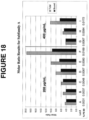
- the Total and Bound Molar Ratios were determined for both Subfamily A and B and appear to be similar for both Subfamilies @ 200 ⁇ g/mL containing 0.005% Polysorbate 80 (5.4 Molar ratio) or less as shown in Figure 18 and Figure 19 , respectively.
- the Total Molar Ratio for Subfamily B was much higher than the Bound Molar Ratio for samples containing 0.0065% Polysorbate 80 (7.0 Molar ratio) or more.
- the percentage (%) Polysorbate 80 in the Supernatant and Pellet for Subfamily A and B formulation samples with AlPO 4 was determined at T 0 , 14 Days/25 °C, 1 Month/4°C, and 1 Month/25°C.
- the % Polysorbate 80 in Supernatant for both Subfamily A and B formulation samples was relatively the same for samples stored at 2-8°C.
- the % Polysorbate 80 in Pellet for both Subfamily A and B were relatively similar at T 0 /5°C and 1 Month/5°C C.
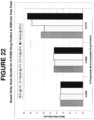
- the % Polysorbate in the supernatant increased significantly for the samples stored at 25°C, especially for Subfamily B containing 0.008% Polysorbate 80 (8.6 Molar ratio) or higher.
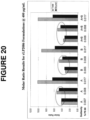
- the % Polysorbate 80 was also determined in the Supernatant and Pellet for rLP2086 Subfamily A and B formulations with AlPO 4 at T 0 , 14 Days/25°C, 1 Month/4°C, and 1 Month/25°C. As shown in Figure 21 , the Polysorbate 80 concentrations for samples containing 0.008% were approximately the same for all 4 time points.
- the Polysorbate 80 concentrations however, increased for the sample containing 0.017% Polysorbate 80 stored at 25°C.
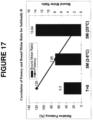
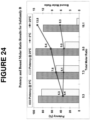
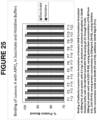
- the Potency for Subfamily A and B formulation samples with AlPO 4 was determined at T 0 and 14 Days/25°C ( Figure 23 and Figure 25 , respectively). As described in Figure 23 , the Potency for Subfamily A at different total molar ratios ranged from 91 to 102 at both 5°C and 25°C. While the Bound Molar Ratio results were also relatively the same at either temperature, a slight increase in the Potency was seen as the total/Bound Molar Ratio increased.
- the Potency for Subfamily B for the 5°C samples was about 95% for total molar ratios up to 9.0.
- the Subfamily B potency decreased to 79% as the total molar ratio increased to 18.1.
- the sample with Total molar ratio at 18.1 had higher bound molar ratio compared to the other sample.
- the Subfamily B Potency exhibited a significant drop from 83% to 5% as the total molar ratio increased from 5.3 to 18.1.
- the bound molar ratio values for the 25°C samples increased from 5.3 to 13.8 as the total molar ratio increased.
- the Potency for Subfamily B is inversely proportional to the Bound Molar Ratio.
- Example 5 Detergent concentration and rLP2086 Subfamily B Antigen Potency
- the immunogenic composition was formulated at the 200 ⁇ g dosage (total protein concentration 400 ⁇ g/ mL) at pH 6.3 in 10 mM histidine buffered saline (HBS) with 0.5 mg/mL aluminum (as aluminum phosphate) and spiked with 0.01%, 0.02%, 0.05% or 0.1% Polysorbate 80 (corresponding molar ratio of Polysorbate 80 to rLP2086 protein at 5.3, 10.7, 26.7 and 53.4). The formulated samples were incubated at 25°C and control samples were stored at 2-8°C.
- HBS histidine buffered saline
- Polysorbate 80 concentration must be reduced in the immunogenic composition in order to maintain the stability of the Subfamily B protein in the vaccine and during subsequent storage at 2-8°C.
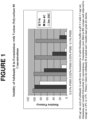
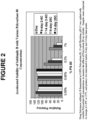
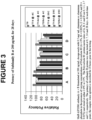
- An accelerated 28-day stability study was designed for the immunogenic composition with varying molar ratios of Polysorbate 80 (0, 1.1, 2.7 and 5.3) at 20 and 200 ⁇ g dosages ( Figure 3 and Figure 4 ).
- a bivalent (Subfamily A and Subfamily B) formulation was prepared in 10 mM histidine buffered saline pH 6.0, 0.5 mg/mL aluminum as aluminum phosphate with various Polysorbate 80 concentrations. Samples were incubated at 25°C along with a 2-8°C control group. Samples were analyzed for potency at 0, 7, 14 and 28 days.
- antigens were adjusted to variable molar ratios by adding Polysorbate 80 such that during immunogenic composition formulation, additional Polysorbate 80 was not needed.
- One set of Subfamily A and B lots were generated with a Polysorbate 80-to-protein molar ratio of 1.4 and the other set at 2.4.
- the set of proteins with a molar ratio of 2.4 was used to adjust the molar ratios of 3.4, 3.9, 4.3, and 10.7 by spiking with additional Polysorbate 80.
- the final matrix of immunogenic composition was 10 mM histidine, 150 mM NaCl, pH 6.0, 0.5 mg/mL aluminum phosphate with the Polysorbate 80-to-protein molar ratios mentioned above. After storage at 2-8°C or 25°C for specific intervals, gentle mixing was applied with a rocker 24 hours prior to testing. Total protein by IEX-HPLC, potency, appearance, optical density at 320nm of the supernatant fraction and pH were tested.
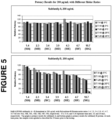
- Potency results of 200 and 20 ⁇ g doses are shown in Figure 5 and Figure 6 , respectively.
- the potency assay was more sensitive than other tests used in the study.
- Formulations with a molar ratio of 4.7 were considered at marginal due to a slight reduction in potency for Subfamily B proteins stored at 25°C.
- the potency results for Subfamily B antigen for formulations at a molar ratio of 10.7 were significantly lower for samples stored at 25°C than those stored at 2-8°C.
- Example 6 Aluminum concentration and rLP2086 Subfamily A and B Antigen Potency
- the formulation pH was optimized to ensure greater than 90-95% binding of the Subfamily B protein.
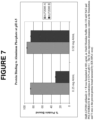
- Multiple formulations at 200 ⁇ g/mL of each A and B proteins with pH ranging from 5.6 through 6.5 with different lots of immunogenic compositions were examined ( Figure 8 ). Greater than 90-95% binding of both proteins occurred at formulations with pH ranging from 5.6 to 6.4. As the pH of the formulations increased to 6.5 and above, the binding of Subfamily B protein was significantly reduced.
- the recommended target pH is 6.0 to ensure greater than 90% binding of both Subfamily A and B proteins.
- Formulations with and without aluminum phosphate were evaluated to investigate the feasibility of providing a stable formulation without aluminum phosphate at concentrations of Polysorbate 80 low enough for Subfamily B protein stability.
- Immunogenic compositions were formulated at 20 and 200 ⁇ g dosages in histidine buffered saline buffer with Polysorbate 80 concentration ranging from 0 to 5.3 molar ratios.
- Half of the samples were subjected to agitation with a digital multi-tube vortexer set at 500 rpm under pulse mode (2 seconds on and one second off) for 24 hours prior to testing. This condition was adopted to simulate the ISTA tests (International Safe Transit Association) typically performed at the final immunogenic composition shipping package stage to mimic extreme vibrations during shipping conditions.
- ISTA tests International Safe Transit Association
- Table 2 Formulations to Evaluate Histidine and Succinate buffers, MgCl 2 , Polysorbate 80, and pH 5.6 - 6.0 on Binding of rLP2086 with AlPO 4 1 rLP2086 A ( ⁇ g/mL) rLP2086 B ( ⁇ g/mL) Histidine (mM) Succinate (mM) PS 80 (%) Saline (%) MgCl 2 (mM) Target pH 200 200 0 5 0.020 0.9 0 6.0 200 200 0 5 0.020 0.9 0 5.8 200 200 0 5 0.020 0.9 0 5.6 200 200 0 5 0.010 0.9 0 6.0 200 200 0 5 0.005 0.9 0 6.0 250 250 0 5 0.020 0.9 0 6.0 250 250 0 5 0.020 0.9 0 6.0 250 250 0 5 0.020 0.9 0 5.8 250 250 0 5 0.020 0.9 0 5.6 200 200 0 10 0.020 0.9 0 6.0 200 200
- rLP2086 Subfamily A and B proteins were formulated with one of the three buffer salts: 5 mM succinate, 10 mM histidine, or 10 mM phosphate at a pH suitable for the pKa of each salt to determine the extent of binding at each condition.
- the time required for binding to reach completion was evaluated by allowing the samples to mix for either 5 or 120 min before measuring the amount of protein bound.
- Subfamily B protein exhibited reduced binding at pH 6.8 in phosphate buffer, while Subfamily A protein was not significantly affected at the same conditions.
- the amount of protein bound to aluminum was similar in samples formulated with histidine or succinate. Thus, these two buffer salts were chosen for further evaluation. While not wishing to be bound by theory, it is possible that the reduced binding in phosphate buffer results from competition for binding sites on AlPO 4 with the added phosphate ions.
- the binding profile from pH 5.3 to 7.0 is shown for Subfamily A protein in Figure 28 and for Subfamily B protein in Figure 28 .
- Subfamily A protein exhibited little change in the amount of protein bound, with binding remaining above 95% across the pH range tested.
- a formulation containing histidine with a target pH 7.0 resulted in a pH of 6.8.
- the pH was not adjusted to 7.0 (e.g. by addition of base) to avoid possible effects on the protein or AlPO 4 and results for this datapoint are therefore not available.
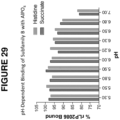
- Subfamily B protein (shown in Figure 29 ) exhibited a pH-dependent trend. Whether binding was performed in histidine or succinate buffered formulations, however, the amount of protein bound to aluminum was similar. Binding was dependent on the pH of the formulation rather than the buffering salt. Binding remained at 95% up to pH 6.5 (94% in histidine, 95% in succinate), but decreased when pH was greater than 6.5. At pH 7.0, binding decreased to about 82%, with minor differences between buffering salts.
- a pH of 6.5 or less is preferred.
- a study is conducted to assess the safety, tolerability, and immunogenicity of rLP2086 vaccine administered in a healthy adolescent population, according to regimens of either 0 and 2 months; 0, 2, and 6 months; 0 and 2 months followed by a 12-month booster dose.
- the immunogenic composition is a rLP2086 vaccine (recombinant lipidated).
- the immunogenic composition includes a N . meningitidis serogroup B recombinant ORF2086 protein that was expressed in Escherichia coli and formulated in a bivalent vaccine composed of one subfamily A strain and one subfamily B strain of rLP2086.
- the immunogenic composition is a 0.5 mL dose formulated to contain 60 ⁇ g, 120 ⁇ g, or 200 ⁇ g each of a purified subfamily A and a purified subfamily B rLP2086 protein, a 2.8 molar ratio of polysorbate 80, and 0.25 mg of Al 3+ as AlPO 4 , 10 mM histidine-buffered saline at pH 6.0.
- a control composition includes a normal saline solution (0.9% sodium chloride) in a 0.5 mL dose.
- Saline is used as a placebo because there is no proven safe, immunogenic, and effective vaccine against MnB that could serve as an active control.
- Subjects receive one dose of rLP2086 vaccine or saline at each of the vaccination visits (e.g., visits 1, 2, 4, and 6) according to Table 3. Standard vaccination practices are observed and the vaccine is not injected into blood vessels.
- the rLP2086 vaccine is administered intramuscularly by injecting 0.5 mL into the upper deltoid muscle.
- Saline is administered intramuscularly into the upper deltoid muscle.
- a single 0.5-mL intramuscular injection of rLP2086 vaccine is administered into the upper deltoid muscle.
- a single 0.5-mL intramuscular injection of saline is administered into the upper deltoid muscle.
- a blood sample (approximately 20 mL) from the subject is collected.
- a single 0.5-mL intramuscular injection of rLP2086 vaccine is administered into the upper deltoid muscle.
- a single 0.5-mL intramuscular injection of saline is administered into the upper deltoid muscle.
- a blood sample (approximately 20 mL) from the subject is collected.
- the subject first has blood drawn and then receives a vaccination.
- the visit 6 blood draw and vaccination 4 occurs on the same day.
- a blood sample approximately 20 mL
- a single 0.5-mL intramuscular injection of rLP2086 vaccine is administered into the upper deltoid muscle.
- a single 0.5-mL intramuscular injection of saline is administered into the upper deltoid muscle.
- a blood sample (approximately 20 mL) from the subject is collected.
- the primary objective of this study was to assess the immunogenicity of 60 ⁇ g, 120 ⁇ g, and 200 ⁇ g rLP2086 vaccine as measured by SBA performed with MnB strains expressing LP2086 subfamily A and B proteins.
- the secondary objective of this study was to assess the immunogenicity of 60 ⁇ g, 120 ⁇ g, and 200 ⁇ g rLP2086 vaccine as determined by quantitation of Ig binding to rLP2086 vaccine subfamily A and B proteins.
- LLOQ lower limit of quantitation
- the immunogenicity data show that the vaccine can generate antibodies with significant SBA activity against subfamily A and subfamily B strains of MnB.
- SBA response rates ranged from 88.9% to 90.9% and after dose 3 the SBA response rates ranged from 90.0% to 97.4%.
- SBA response rates ranged from 85.0% to 96.3% after dose 2 and from 95.2% to 97.4% after dose 3.
- Subfamily B Strain 1 variant after dose 2 the SBA response rates ranged from 76.2% to 81.0%, and after dose 3 the SBA response rates ranged from 89.5% to 92.0%.
- the percentage of subjects with SBA response rates ranged from 21.1% to 33.3%.
- the SBA response rates ranged from 61.9% to 70.8% after dose 2 and from 76.2% to 88.7% after dose 3.
Landscapes
- Health & Medical Sciences (AREA)
- Life Sciences & Earth Sciences (AREA)
- Chemical & Material Sciences (AREA)
- General Health & Medical Sciences (AREA)
- Medicinal Chemistry (AREA)
- Pharmacology & Pharmacy (AREA)
- Animal Behavior & Ethology (AREA)
- Public Health (AREA)
- Veterinary Medicine (AREA)
- Epidemiology (AREA)
- Immunology (AREA)
- Engineering & Computer Science (AREA)
- Molecular Biology (AREA)
- Microbiology (AREA)
- Proteomics, Peptides & Aminoacids (AREA)
- Gastroenterology & Hepatology (AREA)
- Mycology (AREA)
- Biochemistry (AREA)
- Urology & Nephrology (AREA)
- Biomedical Technology (AREA)
- Hematology (AREA)
- Organic Chemistry (AREA)
- Inorganic Chemistry (AREA)
- Bioinformatics & Cheminformatics (AREA)
- Oil, Petroleum & Natural Gas (AREA)
- General Physics & Mathematics (AREA)
- Food Science & Technology (AREA)
- Tropical Medicine & Parasitology (AREA)
- Virology (AREA)
- Pathology (AREA)
- Biotechnology (AREA)
- Cell Biology (AREA)
- Analytical Chemistry (AREA)
- Physics & Mathematics (AREA)
- Chemical Kinetics & Catalysis (AREA)
- General Chemical & Material Sciences (AREA)
- Genetics & Genomics (AREA)
- Biophysics (AREA)
- Nuclear Medicine, Radiotherapy & Molecular Imaging (AREA)
- Oncology (AREA)
Claims (20)
- Procédé pour stabiliser la puissance d'un polypeptide de la sous-famille A de LP2086 (fHBP) et d'un polypeptide de la sous-famille B de LP2086 (fHBP) dans une composition immunogène en stockant le polypeptide de la sous-famille A de LP2086 (fHBP) et le polypeptide de la sous-famille B de LP2086 (fHBP) dans un tampon avec entre environ 0,1 mg/ml et environ 1 mg/ml d'aluminium et un rapport molaire détergent sur protéine entre environ 0,5:1 et environ 10:1,
dans lequel la composition immunogène ne comporte pas d'autres immunogènes actifs. - Procédé selon la revendication 1, dans lequel le rapport molaire détergent sur protéine est entre environ 1:1 et environ 5:1.
- Procédé selon la revendication 2, dans lequel le rapport molaire détergent sur protéine est entre environ 1,4:1 et environ 4,2:1.
- Procédé selon la revendication 3, dans lequel le rapport molaire détergent sur protéine est d'environ 2,8:1.
- Procédé selon l'une quelconque des revendications 1 à 4, dans lequel la quantité de détergent est suffisante pour réduire une liaison du polypeptide à du silicium dans un récipient.
- Procédé selon la revendication 5, dans lequel le récipient est une seringue ou un flacon.
- Procédé selon l'une quelconque des revendications 1 à 6, dans lequel le détergent est un détergent de polysorbate.
- Procédé selon la revendication 7, dans lequel le détergent est le Polysorbate 80.
- Procédé selon l'une quelconque des revendications 1 à 8, dans lequel la concentration en aluminium est d'environ 0,5 mg/ml.
- Procédé selon l'une quelconque des revendications 1 à 9, dans lequel de l'aluminium est présent sous forme d'AlPO4, Al(OH)3, Al2(SO4)3 ou d'alun.
- Procédé selon l'une quelconque des revendications 1 à 10, dans lequel le tampon comprend en outre de l'histidine.
- Procédé selon la revendication 11, dans lequel la concentration en histidine est entre environ 2 mM et environ 20 mM ou est entre environ 5 mM et environ 15 mM.
- Procédé selon l'une quelconque des revendications 1 à 10, dans lequel le tampon comprend en outre du succinate.
- Procédé selon la revendication 13, dans lequel la concentration en succinate est entre environ 2 mM et environ 10 mM ou est entre environ 3 mM et environ 7 mM.
- Procédé selon l'une quelconque des revendications 1 à 14, dans lequel le pH est entre environ 5,0 et environ 8,0.
- Procédé selon la revendication 15, dans lequel le pH est entre environ 5,8 et 6,0.
- Procédé selon la revendication 12, dans lequel la concentration en histidine est d'environ 10 mM, pH 6,0.
- Procédé selon la revendication 14, dans lequel la concentration en succinate est d'environ 5 mM, pH 6,0.
- Procédé selon l'une quelconque des revendications 1 à 18, comprenant en outre l'étape consistant à (b) lyophiliser la composition immunogène.
- Procédé selon la revendication 1, dans lequel le tampon est constitué essentiellement de :- un rapport molaire Polysorbate 80 sur protéine d'environ 2,8:1, 0,5 mg/mL d'aluminium sous forme d'AlPO4, 10 mM d'histidine pH 6,0, et 150 mM de NaCl ou ;- un rapport molaire Polysorbate 80 sur protéine d'environ 2,8:1, 0,5 mg/mL d'aluminium sous forme d'AlPO4, 5 mM de succinate pH 6,0, et 150 mM de NaCl.
Priority Applications (4)
| Application Number | Priority Date | Filing Date | Title |
|---|---|---|---|
| SI201132112T SI3831406T1 (sl) | 2010-08-23 | 2011-08-22 | Stabilne formulacije antigenov neisseria meningitidis RLP2086 |
| DK24177833.1T DK4417216T3 (da) | 2010-08-23 | 2011-08-22 | Stabile formuleringer af neisseria meningitidis rlp2086-antigener |
| EP24177833.1A EP4417216B1 (fr) | 2010-08-23 | 2011-08-22 | Formulations stables des antigènes rlp2086 de neisseria meningitidis |
| HRP20240965TT HRP20240965T1 (hr) | 2010-08-23 | 2011-08-22 | Stabilne formulacije antigena rlp2086 iz bakterije neisseria meningitidis |
Applications Claiming Priority (4)
| Application Number | Priority Date | Filing Date | Title |
|---|---|---|---|
| US37616010P | 2010-08-23 | 2010-08-23 | |
| EP11757949.0A EP2608805B2 (fr) | 2010-08-23 | 2011-08-22 | Formulations stables des antigènes rlp2086 de neisseria meningitidis |
| EP17172800.9A EP3246044B2 (fr) | 2010-08-23 | 2011-08-22 | Formulations stables des antigènes rlp2086 de neisseria meningitidis |
| PCT/IB2011/053684 WO2012025873A2 (fr) | 2010-08-23 | 2011-08-22 | Formulations stables des antigènes rlp2086 de neisseria meningitidis |
Related Parent Applications (4)
| Application Number | Title | Priority Date | Filing Date |
|---|---|---|---|
| EP11757949.0A Division EP2608805B2 (fr) | 2010-08-23 | 2011-08-22 | Formulations stables des antigènes rlp2086 de neisseria meningitidis |
| EP11757949.0A Division-Into EP2608805B2 (fr) | 2010-08-23 | 2011-08-22 | Formulations stables des antigènes rlp2086 de neisseria meningitidis |
| EP17172800.9A Division EP3246044B2 (fr) | 2010-08-23 | 2011-08-22 | Formulations stables des antigènes rlp2086 de neisseria meningitidis |
| EP17172800.9A Division-Into EP3246044B2 (fr) | 2010-08-23 | 2011-08-22 | Formulations stables des antigènes rlp2086 de neisseria meningitidis |
Related Child Applications (2)
| Application Number | Title | Priority Date | Filing Date |
|---|---|---|---|
| EP24177833.1A Division-Into EP4417216B1 (fr) | 2010-08-23 | 2011-08-22 | Formulations stables des antigènes rlp2086 de neisseria meningitidis |
| EP24177833.1A Division EP4417216B1 (fr) | 2010-08-23 | 2011-08-22 | Formulations stables des antigènes rlp2086 de neisseria meningitidis |
Publications (3)
| Publication Number | Publication Date |
|---|---|
| EP3831406A1 EP3831406A1 (fr) | 2021-06-09 |
| EP3831406B1 EP3831406B1 (fr) | 2024-06-05 |
| EP3831406B9 true EP3831406B9 (fr) | 2024-08-14 |
Family
ID=44653380
Family Applications (4)
| Application Number | Title | Priority Date | Filing Date |
|---|---|---|---|
| EP17172800.9A Active EP3246044B2 (fr) | 2010-08-23 | 2011-08-22 | Formulations stables des antigènes rlp2086 de neisseria meningitidis |
| EP24177833.1A Active EP4417216B1 (fr) | 2010-08-23 | 2011-08-22 | Formulations stables des antigènes rlp2086 de neisseria meningitidis |
| EP11757949.0A Active EP2608805B2 (fr) | 2010-08-23 | 2011-08-22 | Formulations stables des antigènes rlp2086 de neisseria meningitidis |
| EP20216502.3A Active EP3831406B9 (fr) | 2010-08-23 | 2011-08-22 | Formulations stables des antigènes rlp2086 de neisseria meningitidis |
Family Applications Before (3)
| Application Number | Title | Priority Date | Filing Date |
|---|---|---|---|
| EP17172800.9A Active EP3246044B2 (fr) | 2010-08-23 | 2011-08-22 | Formulations stables des antigènes rlp2086 de neisseria meningitidis |
| EP24177833.1A Active EP4417216B1 (fr) | 2010-08-23 | 2011-08-22 | Formulations stables des antigènes rlp2086 de neisseria meningitidis |
| EP11757949.0A Active EP2608805B2 (fr) | 2010-08-23 | 2011-08-22 | Formulations stables des antigènes rlp2086 de neisseria meningitidis |
Country Status (22)
| Country | Link |
|---|---|
| US (1) | US9556240B2 (fr) |
| EP (4) | EP3246044B2 (fr) |
| JP (1) | JP5945538B2 (fr) |
| KR (2) | KR101594228B1 (fr) |
| CN (3) | CN107913396B (fr) |
| AR (1) | AR082529A1 (fr) |
| AU (2) | AU2011294776B2 (fr) |
| CA (1) | CA2808975C (fr) |
| DK (4) | DK3831406T3 (fr) |
| ES (4) | ES2994878T3 (fr) |
| FI (4) | FI2608805T4 (fr) |
| HR (3) | HRP20240965T1 (fr) |
| HU (4) | HUE067737T2 (fr) |
| IL (1) | IL224626A (fr) |
| MX (2) | MX350142B (fr) |
| NO (2) | NO2026030I1 (fr) |
| PL (4) | PL4417216T3 (fr) |
| PT (4) | PT4417216T (fr) |
| RU (1) | RU2580620C2 (fr) |
| SI (4) | SI3831406T1 (fr) |
| TW (1) | TW201221138A (fr) |
| WO (1) | WO2012025873A2 (fr) |
Families Citing this family (16)
| Publication number | Priority date | Publication date | Assignee | Title |
|---|---|---|---|---|
| MX339524B (es) | 2001-10-11 | 2016-05-30 | Wyeth Corp | Composiciones inmunogenicas novedosas para la prevencion y tratamiento de enfermedad meningococica. |
| CA2808975C (fr) | 2010-08-23 | 2018-10-30 | Wyeth Llc | Formulations stables des antigenes rlp2086 de neisseria meningitidis |
| KR101584871B1 (ko) | 2010-09-10 | 2016-01-22 | 와이어쓰 엘엘씨 | 네이세리아 메닝기티디스 orf2086 항원의 비-지질화된 변이체 |
| EP2797624A1 (fr) | 2011-12-29 | 2014-11-05 | Novartis AG | Combinaisons avec adjuvant de protéines méningococciques liant le facteur h |
| WO2013132040A2 (fr) * | 2012-03-08 | 2013-09-12 | Novartis Ag | Dosage de puissance in vitro pour des vaccins méningococciques à base de protéine |
| CA2865745C (fr) | 2012-03-09 | 2018-01-09 | Pfizer Inc. | Compositions de neisseria meningitidis et procedes associes |
| SA115360586B1 (ar) | 2012-03-09 | 2017-04-12 | فايزر انك | تركيبات لعلاج الالتهاب السحائي البكتيري وطرق لتحضيرها |
| CA2903716C (fr) | 2013-03-08 | 2019-04-09 | Pfizer Inc. | Polypeptides immunogenes de fusion |
| RU2662968C2 (ru) | 2013-09-08 | 2018-07-31 | Пфайзер Инк. | Иммуногенная композиция против neisseria meningitidis (варианты) |
| US10365272B2 (en) * | 2014-07-25 | 2019-07-30 | Serum Institute Of India Private Limited | Highly sensitive immunoassay for rapid quantification of meningococcal capsular polysaccharide antigens |
| KR20190049940A (ko) * | 2015-02-19 | 2019-05-09 | 화이자 인코포레이티드 | 나이세리아 메닌지티디스 조성물 및 그의 방법 |
| AR104847A1 (es) * | 2015-06-17 | 2017-08-16 | Lilly Co Eli | Formulación de anticuerpo anti-cgrp |
| SG11201906519RA (en) | 2017-01-31 | 2019-08-27 | Pfizer | Neisseria meningitidis compositions and methods thereof |
| EP3923982A1 (fr) | 2019-02-11 | 2021-12-22 | Pfizer Inc. | Compositions de neisseria meningitidiset procédés associées |
| CA3155669A1 (fr) | 2019-09-27 | 2021-04-01 | Pfizer Inc. | Compositions de neisseria meningitidis et methodes associees |
| TW202423477A (zh) * | 2022-08-03 | 2024-06-16 | 美商賽諾菲巴斯德公司 | 針對腦膜炎奈瑟氏菌b的含佐劑免疫原性組成物 |
Family Cites Families (229)
| Publication number | Priority date | Publication date | Assignee | Title |
|---|---|---|---|---|
| US4376110A (en) | 1980-08-04 | 1983-03-08 | Hybritech, Incorporated | Immunometric assays using monoclonal antibodies |
| US4554101A (en) | 1981-01-09 | 1985-11-19 | New York Blood Center, Inc. | Identification and preparation of epitopes on antigens and allergens on the basis of hydrophilicity |
| CH660375A5 (it) | 1983-02-08 | 1987-04-15 | Sclavo Spa | Procedimento per la produzione di proteine correlate alla tossina difterica. |
| CA1247080A (fr) | 1983-03-08 | 1988-12-20 | Commonwealth Serum Laboratories Commission | Sequences d'acides amines ayant une activite antigenique |
| US4816567A (en) | 1983-04-08 | 1989-03-28 | Genentech, Inc. | Recombinant immunoglobin preparations |
| US4650764A (en) | 1983-04-12 | 1987-03-17 | Wisconsin Alumni Research Foundation | Helper cell |
| JPS6147500A (ja) | 1984-08-15 | 1986-03-07 | Res Dev Corp Of Japan | キメラモノクロ−ナル抗体及びその製造法 |
| EP0173494A3 (fr) | 1984-08-27 | 1987-11-25 | The Board Of Trustees Of The Leland Stanford Junior University | Récepteurs chimériques par liaison et expression de l'ADN |
| GB8422238D0 (en) | 1984-09-03 | 1984-10-10 | Neuberger M S | Chimeric proteins |
| GB8424757D0 (en) | 1984-10-01 | 1984-11-07 | Pasteur Institut | Retroviral vector |
| SE8405493D0 (sv) | 1984-11-01 | 1984-11-01 | Bror Morein | Immunogent komplex samt sett for framstellning derav och anvendning derav som immunstimulerande medel |
| FR2573436B1 (fr) | 1984-11-20 | 1989-02-17 | Pasteur Institut | Adn recombinant comportant une sequence nucleotidique codant pour un polypeptide determine sous le controle d'un promoteur d'adenovirus, vecteurs contenant cet adn recombinant, cellules eucaryotes transformees par cet adn recombinant, produits d'excretion de ces cellules transformees et leurs applications, notamment a la constitution de vaccins |
| JPS61134325A (ja) | 1984-12-04 | 1986-06-21 | Teijin Ltd | ハイブリツド抗体遺伝子の発現方法 |
| US4797368A (en) | 1985-03-15 | 1989-01-10 | The United States Of America As Represented By The Department Of Health And Human Services | Adeno-associated virus as eukaryotic expression vector |
| US4666829A (en) | 1985-05-15 | 1987-05-19 | University Of California | Polypeptide marker for Alzheimer's disease and its use for diagnosis |
| WO1987001130A1 (fr) | 1985-08-15 | 1987-02-26 | Stauffer Chemical Company | Microorganisme producteur de tryptophane |
| US5078996A (en) | 1985-08-16 | 1992-01-07 | Immunex Corporation | Activation of macrophage tumoricidal activity by granulocyte-macrophage colony stimulating factor |
| US5139941A (en) | 1985-10-31 | 1992-08-18 | University Of Florida Research Foundation, Inc. | AAV transduction vectors |
| DE3689123T2 (de) | 1985-11-01 | 1994-03-03 | Xoma Corp | Modulare einheit von antikörpergenen, daraus hergestellte antikörper und verwendung. |
| US4861719A (en) | 1986-04-25 | 1989-08-29 | Fred Hutchinson Cancer Research Center | DNA constructs for retrovirus packaging cell lines |
| US5514581A (en) | 1986-11-04 | 1996-05-07 | Protein Polymer Technologies, Inc. | Functional recombinantly prepared synthetic protein polymer |
| US4980289A (en) | 1987-04-27 | 1990-12-25 | Wisconsin Alumni Research Foundation | Promoter deficient retroviral vector |
| US5057540A (en) | 1987-05-29 | 1991-10-15 | Cambridge Biotech Corporation | Saponin adjuvant |
| JPH01125328A (ja) | 1987-07-30 | 1989-05-17 | Centro Natl De Biopreparados | 髄膜炎菌ワクチン |
| AU3069189A (en) | 1988-02-05 | 1989-08-25 | Trustees Of Columbia University In The City Of New York, The | Retroviral packaging cell lines and processes of using same |
| US4912094B1 (en) | 1988-06-29 | 1994-02-15 | Ribi Immunochem Research Inc. | Modified lipopolysaccharides and process of preparation |
| WO1990002806A1 (fr) | 1988-09-01 | 1990-03-22 | Whitehead Institute For Biomedical Research | Retrovirus de recombinaison a gammes d'hotes amphotropiques et ecotropiques |
| US7118757B1 (en) | 1988-12-19 | 2006-10-10 | Wyeth Holdings Corporation | Meningococcal class 1 outer-membrane protein vaccine |
| US5124263A (en) | 1989-01-12 | 1992-06-23 | Wisconsin Alumni Research Foundation | Recombination resistant retroviral helper cell and products produced thereby |
| DE69012318T2 (de) | 1989-03-09 | 1995-03-09 | Praxis Biologics, Inc., Rochester, N.Y. | Impfstoffe gegen hämophilus influenzae. |
| US5354844A (en) | 1989-03-16 | 1994-10-11 | Boehringer Ingelheim International Gmbh | Protein-polycation conjugates |
| US5703055A (en) | 1989-03-21 | 1997-12-30 | Wisconsin Alumni Research Foundation | Generation of antibodies through lipid mediated DNA delivery |
| WO1990014837A1 (fr) | 1989-05-25 | 1990-12-13 | Chiron Corporation | Composition d'adjuvant comprenant une emulsion de gouttelettes d'huile d'une taille inferieure au micron |
| US5399346A (en) | 1989-06-14 | 1995-03-21 | The United States Of America As Represented By The Department Of Health And Human Services | Gene therapy |
| US5585362A (en) | 1989-08-22 | 1996-12-17 | The Regents Of The University Of Michigan | Adenovirus vectors for gene therapy |
| CA2039921A1 (fr) | 1990-04-16 | 1991-10-17 | Xandra O. Breakefield | Transfert et expression de la sequence d'adn dans les cellules du systeme nerveux central a l'aide de mutants du virus de l'herpes, avec deletions chez les genes en vue de repliquer le virus |
| US5264618A (en) | 1990-04-19 | 1993-11-23 | Vical, Inc. | Cationic lipids for intracellular delivery of biologically active molecules |
| AU7906691A (en) | 1990-05-23 | 1991-12-10 | United States of America, as represented by the Secretary, U.S. Department of Commerce, The | Adeno-associated virus (aav)-based eucaryotic vectors |
| EP0467714A1 (fr) | 1990-07-19 | 1992-01-22 | Merck & Co. Inc. | Classe II de la membrane extérieure de Neisseria meningitidis et raccins la contenant |
| AU658836B2 (en) | 1990-09-25 | 1995-05-04 | Xenova Research Limited | Viral defective vaccine produced by transcomplementing cell line |
| US5173414A (en) | 1990-10-30 | 1992-12-22 | Applied Immune Sciences, Inc. | Production of recombinant adeno-associated virus vectors |
| IL101715A (en) | 1991-05-02 | 2005-06-19 | Amgen Inc | Recombinant dna-derived cholera toxin subunit analogs |
| AU681572B2 (en) | 1991-10-21 | 1997-09-04 | Med Immune, Inc. | Bacterial expression vectors containing DNA encoding secretion signals of lipoproteins |
| US5252479A (en) | 1991-11-08 | 1993-10-12 | Research Corporation Technologies, Inc. | Safe vector for gene therapy |
| IT1253009B (it) | 1991-12-31 | 1995-07-10 | Sclavo Ricerca S R L | Mutanti immunogenici detossificati della tossina colerica e della tossina lt, loro preparazione ed uso per la preparazione di vaccini |
| WO1993015115A1 (fr) | 1992-01-24 | 1993-08-05 | Cornell Research Foundation, Inc. | HOLOENZYME ADN POLYMERASE III et E. COLI ET SOUS-UNITES |
| EP0673431A1 (fr) | 1992-12-03 | 1995-09-27 | Genzyme Corporation | Therapie genique de la fibrose kystique |
| DK0616034T3 (da) | 1993-03-05 | 2005-02-21 | Wyeth Corp | Plasmid til fremstilling af CRM-protein og diphtheria toxin |
| EP0689603A1 (fr) | 1993-03-19 | 1996-01-03 | Cantab Pharmaceuticals Research Limited | Virus mutant defectueux non retroviral (par ex. hsv) utilise comme vaccin |
| DK0624376T3 (da) | 1993-05-13 | 2000-07-24 | American Cyanamid Co | Fremstilling og anvendelse af LOS-udtømte ydre membranproteiner af gram-negative cocci |
| FR2705361B1 (fr) | 1993-05-18 | 1995-08-04 | Centre Nat Rech Scient | Vecteurs viraux et utilisation en thérapie génique. |
| FR2705686B1 (fr) | 1993-05-28 | 1995-08-18 | Transgene Sa | Nouveaux adénovirus défectifs et lignées de complémentation correspondantes. |
| CA2144040A1 (fr) | 1993-07-13 | 1995-01-26 | Michel Perricaudet | Vecteurs adenoviraux defectifs et utilisation en therapie genique |
| AU7477394A (en) | 1993-07-30 | 1995-03-27 | University Of Medicine And Dentistry Of New Jersey | Efficient gene transfer into primary lymphocytes |
| FR2708622B1 (fr) | 1993-08-02 | 1997-04-18 | Raymond Hamers | Vecteur recombinant contenant une séquence d'un gène de lipoprotéine de structure pour l'expression de séquences de nucléotides. |
| US5550213A (en) | 1993-12-27 | 1996-08-27 | Rutgers, The State University Of New Jersey | Inhibitors of urokinase plasminogen activator |
| FR2714830B1 (fr) | 1994-01-10 | 1996-03-22 | Rhone Poulenc Rorer Sa | Composition contenant des acides nucléiques, préparation et utilisations. |
| FR2715847B1 (fr) | 1994-02-08 | 1996-04-12 | Rhone Poulenc Rorer Sa | Composition contenant des acides nucléiques, préparation et utilisations. |
| FR2716459B1 (fr) | 1994-02-22 | 1996-05-10 | Univ Paris Curie | Système hôte-vecteur utilisable en thérapie génique. |
| AU2194895A (en) | 1994-03-25 | 1995-10-17 | Uab Research Foundation, The | Composition and methods for creating syngeneic recombinant virus-producing cells |
| US5739118A (en) | 1994-04-01 | 1998-04-14 | Apollon, Inc. | Compositions and methods for delivery of genetic material |
| JPH10501963A (ja) | 1994-04-15 | 1998-02-24 | ターゲテッド ジェネティクス コーポレイション | 遺伝子送達融合タンパク質 |
| US5571515A (en) | 1994-04-18 | 1996-11-05 | The Wistar Institute Of Anatomy & Biology | Compositions and methods for use of IL-12 as an adjuvant |
| US6207646B1 (en) | 1994-07-15 | 2001-03-27 | University Of Iowa Research Foundation | Immunostimulatory nucleic acid molecules |
| US5565204A (en) | 1994-08-24 | 1996-10-15 | American Cyanamid Company | Pneumococcal polysaccharide-recombinant pneumolysin conjugate vaccines for immunization against pneumococcal infections |
| US5837533A (en) | 1994-09-28 | 1998-11-17 | American Home Products Corporation | Complexes comprising a nucleic acid bound to a cationic polyamine having an endosome disruption agent |
| GB9422096D0 (en) | 1994-11-02 | 1994-12-21 | Biocine Spa | Combined meningitis vaccine |
| FR2727679B1 (fr) | 1994-12-05 | 1997-01-03 | Rhone Poulenc Rorer Sa | Nouveaux agents de transfection et leurs applications pharmaceutiques |
| BE1008978A5 (fr) | 1994-12-27 | 1996-10-01 | Solvay | Adjuvants pour vaccins. |
| IL116816A (en) | 1995-01-20 | 2003-05-29 | Rhone Poulenc Rorer Sa | Cell for the production of a defective recombinant adenovirus or an adeno-associated virus and the various uses thereof |
| FR2730637B1 (fr) | 1995-02-17 | 1997-03-28 | Rhone Poulenc Rorer Sa | Composition pharmaceutique contenant des acides nucleiques, et ses utilisations |
| IL117483A (en) | 1995-03-17 | 2008-03-20 | Bernard Brodeur | MENINGITIDIS NEISSERIA shell protein is resistant to proteinase K. |
| WO1996039036A1 (fr) | 1995-06-05 | 1996-12-12 | The University Of Alabama At Birmingham Research Foundation | Procedes et composition de creation de cellules syngeniques productrices de virus recombines |
| JP4091112B2 (ja) | 1995-06-07 | 2008-05-28 | コノート ラボラトリーズ インコーポレーテッド | リポタンパク質の発現 |
| FR2741358B1 (fr) | 1995-11-17 | 1998-01-02 | Centre Nat Rech Scient | Production de vecteurs retroviraux par l'intermediaire de vecteurs viraux a base de virus a adn |
| US5846547A (en) | 1996-01-22 | 1998-12-08 | Regents Of The University Of Minnesota | Streptococcal C5a peptidase vaccine |
| US6355255B1 (en) | 1998-12-07 | 2002-03-12 | Regents Of The University Of Minnesota | Streptococcal C5a peptidase vaccine |
| US6048527A (en) | 1996-08-27 | 2000-04-11 | Chiron Corporation | Antibodies that define unique Meningococcal B epitopes and vaccine compositions |
| DE69708318T3 (de) | 1996-08-27 | 2006-11-16 | Novartis Vaccines and Diagnostics, Inc., Emeryville | Neisseria meningitidis serogruppe b glykokonjugate und verfahren zu deren verwendung |
| WO1998017805A2 (fr) | 1996-10-24 | 1998-04-30 | THE GOVERNMENT OF THE UNITED STATES OF AMERICA, represented by THE SECRETARY, DEPARTMENT OF HEALTH AND HUMAN SERVICES, c/o Centers for Disease Control and Prevention, Technology Transfer Office | Genes provenant du serogroupe b de neisseria meningitidis associes a une invasion |
| GB9622159D0 (en) | 1996-10-24 | 1996-12-18 | Solvay Sociutu Anonyme | Polyanionic polymers as adjuvants for mucosal immunization |
| GB9622660D0 (en) | 1996-10-31 | 1997-01-08 | Biocine Spa | Immunogenic detoxified mutant toxin |
| US6113918A (en) | 1997-05-08 | 2000-09-05 | Ribi Immunochem Research, Inc. | Aminoalkyl glucosamine phosphate compounds and their use as adjuvants and immunoeffectors |
| CA2295029A1 (fr) | 1997-06-30 | 1999-01-14 | Centre National De La Recherche Scientifique | Dispositif permettant un transfert in vivo optimise de vecteurs d'acides nucleiques dans des tissus |
| KR20010020570A (ko) | 1997-06-30 | 2001-03-15 | 자끄 사비나 | 다세포 진핵 생물 세포중으로 개선된 핵산 전달방법 및이를 위한 콤비네이션 |
| CA2294793A1 (fr) | 1997-06-30 | 1999-01-14 | Rhone-Poulenc Rorer S.A. | Amelioration du transfert d'acide nucleique dans le muscle strie et combinaison permettant la mise en oeuvre du procede |
| DE69840508D1 (de) | 1997-08-27 | 2009-03-12 | Childrens Hosp Medical Center | Molekular-mimetika von meningokokkus b epitopen |
| BR9813930A (pt) | 1997-11-06 | 2006-12-19 | Chiron Spa | antìgeno neisserial |
| TWI239847B (en) | 1997-12-02 | 2005-09-21 | Elan Pharm Inc | N-terminal fragment of Abeta peptide and an adjuvant for preventing and treating amyloidogenic disease |
| ATE446368T1 (de) | 1998-01-14 | 2009-11-15 | Novartis Vaccines & Diagnostic | Antigene aus neisseria meningitidis |
| NZ525674A (en) | 1998-02-03 | 2005-01-28 | Ct Disease Contr & Prevention | Recombinant lipidated PsaA protein, methods of preparation and use |
| GB9806456D0 (en) | 1998-03-25 | 1998-05-27 | Smithkline Beecham Biolog | Vaccine composition |
| GB9808734D0 (en) | 1998-04-23 | 1998-06-24 | Smithkline Beecham Biolog | Novel compounds |
| GB9808932D0 (en) | 1998-04-27 | 1998-06-24 | Chiron Spa | Polyepitope carrier protein |
| MX343752B (es) | 1998-05-01 | 2016-11-22 | Novartis Vaccines & Diagnostics Inc | Antigenos de neisseria meningitidis y composiciones que los contienen. |
| ES2278446T3 (es) | 1998-05-29 | 2007-08-01 | Novartis Vaccines And Diagnostics, Inc. | Vacunas combinadas b/c contra la meningitis. |
| RU2249463C2 (ru) * | 1998-08-19 | 2005-04-10 | Бакстер Хелфкэа С.А. | Иммуногенный конъюгат бета-пропионамид-связанного полисахарида с белком, использующийся в качестве вакцины |
| JP4673974B2 (ja) | 1998-09-30 | 2011-04-20 | ワイス・ホールディングズ・コーポレイション | アジュバントとしての変異コレラホロトキシン |
| WO2000018355A2 (fr) * | 1998-09-30 | 2000-04-06 | Walter Reed Army Institute Of Research | Utilisation en tant que vaccin d'invaplex purifie obtenu a partir de bacteries a gram negatif |
| BR9914374A (pt) | 1998-10-09 | 2002-09-17 | Chiron Corp | Sequências genÈmicas de neisseria e métodos para seu uso |
| US6281337B1 (en) | 1998-11-12 | 2001-08-28 | Schering Corporation | Methods for conversion of protein isoforms |
| JP2004537954A (ja) | 1999-01-15 | 2004-12-24 | グラクソスミスクライン バイオロジカルズ ソシエテ アノニム | ナイセリア・メニンギティディス・ポリペプチドbasb052 |
| WO2000043518A1 (fr) | 1999-01-22 | 2000-07-27 | Smithkline Beecham Biologicals S.A. | Polypeptides antigeniques de neisseria meningitidis, polynucleotides correspondants et anticorps protecteurs |
| GB9902084D0 (en) | 1999-01-29 | 1999-03-24 | Smithkline Beecham Biolog | Novel compounds |
| ATE413188T1 (de) | 1999-02-05 | 2008-11-15 | Merck & Co Inc | Menschliche papillomavirus impfstoff- formulierungen |
| AU2457100A (en) | 1999-02-26 | 2000-09-14 | Chiron S.P.A. | Enhancement of bactericidal activity of neisseria antigens with oligonucleotidescontaining cg motifs |
| US6245568B1 (en) | 1999-03-26 | 2001-06-12 | Merck & Co., Inc. | Human papilloma virus vaccine with disassembled and reassembled virus-like particles |
| US7115730B1 (en) | 1999-04-27 | 2006-10-03 | Chiron Srl | Immunogenic detoxified mutant E. coli LT-A-toxin |
| NZ571167A (en) | 1999-04-30 | 2010-05-28 | Novartis Vaccines & Diagnostic | Fragments from Neisseria protein ORF 953 and their use in medicaments and diagnostic reagents |
| ES2323845T3 (es) | 1999-04-30 | 2009-07-27 | Novartis Vaccines And Diagnostics, Inc. | Secuencias genomicas de neisseria y procedimientos de uso. |
| GB9911683D0 (en) | 1999-05-19 | 1999-07-21 | Chiron Spa | Antigenic peptides |
| EP1179072A2 (fr) | 1999-05-19 | 2002-02-13 | Chiron S.P.A. | Compositions a base de combinaisons de neisseria |
| GB9916529D0 (en) | 1999-07-14 | 1999-09-15 | Chiron Spa | Antigenic peptides |
| US7384640B1 (en) | 1999-09-30 | 2008-06-10 | Wyeth Holdings Corporation | Mutant cholera holotoxin as an adjuvant |
| PT2275551E (pt) | 1999-10-29 | 2015-06-29 | Novartis Vaccines & Diagnostic | Péptidos antigénicos de neisseria |
| ATE460484T1 (de) | 1999-11-29 | 2010-03-15 | Novartis Vaccines & Diagnostic | 85 kda antigen von neisseria |
| GB9928196D0 (en) | 1999-11-29 | 2000-01-26 | Chiron Spa | Combinations of B, C and other antigens |
| EP2292263A3 (fr) | 1999-12-02 | 2011-07-27 | Novartis Vaccines and Diagnostics, Inc. | Compositions et procédés pour la stabilisation de molécules biologiques lors de la lyophilisation |
| ES2588917T3 (es) | 2000-01-17 | 2016-11-07 | Glaxosmithkline Biologicals Sa | Vacuna de VME suplementada contra meningococo |
| PT2270030E (pt) | 2000-02-28 | 2012-07-24 | Novartis Vaccines & Diagnostic | Expressão heteróloga de proteínas de neisseria |
| HU228264B1 (en) | 2000-06-08 | 2013-02-28 | Intercell Ag | Immunostimulatory oligodeoxynucleotides |
| AT410635B (de) | 2000-10-18 | 2003-06-25 | Cistem Biotechnologies Gmbh | Vakzin-zusammensetzung |
| CA2435681C (fr) | 2001-01-23 | 2011-06-21 | Aventis Pasteur | Vaccin meningococcique polyvalent prrepare avec un conjugue de polysaccharide et de proteine |
| GB0103424D0 (en) | 2001-02-12 | 2001-03-28 | Chiron Spa | Gonococcus proteins |
| EP1373314A2 (fr) | 2001-03-30 | 2004-01-02 | Geneprot, Inc. | Compositions proteiques humaines riches en arginine- |
| AU2002258734A1 (en) | 2001-04-13 | 2002-10-28 | Wyeth Holdings Corporation | Removal of bacterial endotoxin in a protein solution by immobilized metal affinity chromatography |
| JP2004529643A (ja) | 2001-04-17 | 2004-09-30 | カイロン コーポレイション | 機能活性抗体を誘発する髄膜炎菌性bエピトープの分子模倣物 |
| WO2002098368A2 (fr) | 2001-06-07 | 2002-12-12 | Wyeth Holdings Corporation | Formes mutantes de l'holotoxine du cholera en tant qu'adjuvant |
| US7332174B2 (en) | 2001-06-07 | 2008-02-19 | Wyeth Holdings Corporation | Mutant forms of cholera holotoxin as an adjuvant |
| GB0115176D0 (en) | 2001-06-20 | 2001-08-15 | Chiron Spa | Capular polysaccharide solubilisation and combination vaccines |
| CN100350972C (zh) | 2001-07-26 | 2007-11-28 | 启龙股份公司 | 含有铝佐剂和组氨酸的疫苗 |
| GB0118249D0 (en) | 2001-07-26 | 2001-09-19 | Chiron Spa | Histidine vaccines |
| GB0121591D0 (en) | 2001-09-06 | 2001-10-24 | Chiron Spa | Hybrid and tandem expression of neisserial proteins |
| WO2003025132A2 (fr) | 2001-09-14 | 2003-03-27 | Invitrogen Corporation | Adn polymerases et mutants correspondants |
| MX339524B (es) * | 2001-10-11 | 2016-05-30 | Wyeth Corp | Composiciones inmunogenicas novedosas para la prevencion y tratamiento de enfermedad meningococica. |
| GB0129007D0 (en) | 2001-12-04 | 2002-01-23 | Chiron Spa | Adjuvanted antigenic meningococcal compositions |
| ES2616180T3 (es) | 2002-03-26 | 2017-06-09 | Glaxosmithkline Biologicals Sa | Sacáridos modificados con estabilidad mejorada en agua para su uso como medicamento |
| GB0302218D0 (en) | 2003-01-30 | 2003-03-05 | Chiron Sri | Vaccine formulation & Mucosal delivery |
| NZ536859A (en) | 2002-05-14 | 2007-11-30 | Chiron Srl | Mucosal combination vaccines for bacterial meningitis |
| DE60328481D1 (de) | 2002-05-14 | 2009-09-03 | Novartis Vaccines & Diagnostic | Schleimhautapplizierter impfstoff, der das adjuvanz chitosan und menigokokkenantigene enthält |
| GB0220194D0 (en) | 2002-08-30 | 2002-10-09 | Chiron Spa | Improved vesicles |
| GB0220198D0 (en) | 2002-08-30 | 2002-10-09 | Chiron Spa | Modified saccharides,conjugates thereof and their manufacture |
| US7785608B2 (en) | 2002-08-30 | 2010-08-31 | Wyeth Holdings Corporation | Immunogenic compositions for the prevention and treatment of meningococcal disease |
| EP2351579B1 (fr) † | 2002-10-11 | 2016-09-21 | Novartis Vaccines and Diagnostics S.r.l. | Vaccins incluant du NadA oligomère de la méningococcie pour une protection élargie contre des lignées hypervirulentes |
| CA2506318C (fr) | 2002-11-15 | 2011-07-12 | Chiron Srl | Proteines de surface inattendues sur le meningocoque |
| GB0227346D0 (en) | 2002-11-22 | 2002-12-31 | Chiron Spa | 741 |
| EP1590459A2 (fr) | 2003-01-15 | 2005-11-02 | Wyeth Holdings Corporation | Methodes d augmentation de l expression de la proteine neisseria et compositions associees |
| GB0302217D0 (en) * | 2003-01-30 | 2003-03-05 | Chiron Sri | Injectable combination saccharide vaccines |
| DK1587537T3 (da) * | 2003-01-30 | 2012-07-16 | Novartis Ag | Injicerbare vacciner mod multiple meningococ-serogrupper |
| EP1603950A2 (fr) | 2003-03-17 | 2005-12-14 | Wyeth Holdings Corporation | Holotoxine du cholera mutante en tant qu'adjuvant et proteine de support d'antigene |
| BRPI0409459A (pt) | 2003-04-16 | 2006-05-02 | Wyeth Corp | novas composições imunogênicas para a prevenção e tratamento de doença meningocócica |
| ES2596553T3 (es) | 2003-06-02 | 2017-01-10 | Glaxosmithkline Biologicals Sa | Composiciones inmunogénicas a base de micropartículas que comprenden toxoide adsorbido y un antígeno que contiene un polisacárido |
| MXPA05014171A (es) | 2003-06-23 | 2007-02-21 | Sanofi Pasteur Inc | Metodo de inmunizacion contra neisseria meningitidis serogrupos a y c. |
| GB0316560D0 (en) | 2003-07-15 | 2003-08-20 | Chiron Srl | Vesicle filtration |
| GB0323103D0 (en) | 2003-10-02 | 2003-11-05 | Chiron Srl | De-acetylated saccharides |
| ES2397923T3 (es) | 2003-10-02 | 2013-03-12 | Novartis Ag | Vacunas líquidas para múltiples serogrupos meningocócicos |
| CN1901935A (zh) | 2003-12-30 | 2007-01-24 | 惠氏公司 | 具有改进耐受性的免疫原组合物中的疏水性蛋白调配物 |
| GB0406013D0 (en) | 2004-03-17 | 2004-04-21 | Chiron Srl | Analysis of saccharide vaccines without interference |
| GB0408978D0 (en) | 2004-04-22 | 2004-05-26 | Chiron Srl | Meningococcal fermentation for preparing conjugate vaccines |
| GB0408977D0 (en) | 2004-04-22 | 2004-05-26 | Chiron Srl | Immunising against meningococcal serogroup Y using proteins |
| GB0409745D0 (en) | 2004-04-30 | 2004-06-09 | Chiron Srl | Compositions including unconjugated carrier proteins |
| RU2379052C2 (ru) | 2004-04-30 | 2010-01-20 | Чирон С.Р.Л. | Вакцинация менингококковыми конъюгатами |
| GB0500787D0 (en) | 2005-01-14 | 2005-02-23 | Chiron Srl | Integration of meningococcal conjugate vaccination |
| GB0410220D0 (en) | 2004-05-07 | 2004-06-09 | Kirkham Lea Ann | Mutant pneumolysin proteins |
| GB0411387D0 (en) | 2004-05-21 | 2004-06-23 | Chiron Srl | Analysis of saccharide length |
| GB0413868D0 (en) | 2004-06-21 | 2004-07-21 | Chiron Srl | Dimensional anlaysis of saccharide conjugates |
| DE602005025647D1 (de) | 2004-07-23 | 2011-02-10 | Novartis Vaccines & Diagnostic | Polypeptide für die oligomerisierung von antigenen |
| GB0419408D0 (en) | 2004-09-01 | 2004-10-06 | Chiron Srl | 741 chimeric polypeptides |
| GB0419846D0 (en) | 2004-09-07 | 2004-10-13 | Chiron Srl | Vaccine adjuvants for saccharides |
| GB0424092D0 (en) | 2004-10-29 | 2004-12-01 | Chiron Srl | Immunogenic bacterial vesicles with outer membrane proteins |
| GB0428394D0 (en) | 2004-12-24 | 2005-02-02 | Chiron Srl | Saccharide conjugate vaccines |
| CN101107007B (zh) | 2005-01-27 | 2011-08-17 | 奥克兰儿童医院及研究中心 | 对脑膜炎奈瑟球菌所致疾病具有广谱保护作用的gna1870囊泡疫苗 |
| JP2008533016A (ja) | 2005-03-07 | 2008-08-21 | アイディー バイオメディカル コーポレイション オブ ケベック シー.オー.ビー. アズ グラクソスミスクライン バイオロジカルズ ノース アメリカ | 薬学的リポソーム組成物 |
| PL1885734T3 (pl) | 2005-05-06 | 2015-08-31 | Novartis Ag | Immunogeny dla szczepionek przeciwko Meningitidis-A |
| HUE045482T2 (hu) | 2005-06-27 | 2019-12-30 | Glaxosmithkline Biologicals Sa | Immunogén készítmény |
| CN102973929B (zh) | 2005-09-01 | 2017-04-26 | 诺华疫苗和诊断有限两合公司 | 含血清群c脑膜炎球菌的多价疫苗 |
| EP2208999B1 (fr) | 2005-09-05 | 2014-08-27 | GlaxoSmithKline Biologicals SA | Essai d'activité bactéricide sérique pour des antisérums spécifiques de n. méningitidis |
| GB0524066D0 (en) | 2005-11-25 | 2006-01-04 | Chiron Srl | 741 ii |
| WO2007071786A2 (fr) | 2005-12-23 | 2007-06-28 | Glaxosmithkline Biologicals Sa | Vaccin |
| NZ572054A (en) | 2006-03-22 | 2011-12-22 | Novartis Ag | Regimens for immunisation with meningococcal conjugates |
| TW200806315A (en) * | 2006-04-26 | 2008-02-01 | Wyeth Corp | Novel formulations which stabilize and inhibit precipitation of immunogenic compositions |
| US20070253985A1 (en) | 2006-04-26 | 2007-11-01 | Wyeth | Novel processes for coating container means which inhibit precipitation of polysaccharide-protein conjugate formulations |
| ES2337309T5 (es) | 2006-06-12 | 2013-07-30 | Glaxosmithkline Biologicals S.A. | Vacuna |
| GB0612854D0 (en) | 2006-06-28 | 2006-08-09 | Novartis Ag | Saccharide analysis |
| AU2007263531B2 (en) | 2006-06-29 | 2012-03-15 | J. Craig Venter Institute, Inc. | Polypeptides from neisseria meningitidis |
| DK2061897T3 (da) | 2006-07-27 | 2020-06-02 | Wyeth Llc | Fed-batch-fermenteringsproces med høj celledensitet til fremstilling af rekombinant protein |
| AR064642A1 (es) | 2006-12-22 | 2009-04-15 | Wyeth Corp | Polinucleotido vector que lo comprende celula recombinante que comprende el vector polipeptido , anticuerpo , composicion que comprende el polinucleotido , vector , celula recombinante polipeptido o anticuerpo , uso de la composicion y metodo para preparar la composicion misma y preparar una composi |
| GB0700562D0 (en) | 2007-01-11 | 2007-02-21 | Novartis Vaccines & Diagnostic | Modified Saccharides |
| IN2009KN04098A (fr) | 2007-06-04 | 2015-08-28 | Novartis Ag | |
| GB0713880D0 (en) | 2007-07-17 | 2007-08-29 | Novartis Ag | Conjugate purification |
| GB0714963D0 (en) | 2007-08-01 | 2007-09-12 | Novartis Ag | Compositions comprising antigens |
| WO2009038889A1 (fr) * | 2007-08-02 | 2009-03-26 | Children's Hospital And Research Center At Oakland | Vaccins vésiculaires à base de fhbp et de lpxl1 pour une protection à large spectre contre les maladies à neisseria meningitidis |
| HRP20120433T1 (en) * | 2007-10-19 | 2012-07-31 | Novartis@Ag | Meningococcal vaccine formulations |
| AU2009215364B2 (en) | 2008-02-21 | 2014-09-18 | Glaxosmithkline Biologicals S.A. | Meningococcal fHBP polypeptides |
| CN105944095B (zh) | 2008-03-05 | 2021-04-02 | 赛诺菲巴斯德有限公司 | 一种使含佐剂的疫苗组合物稳定的方法 |
| AU2009223613B2 (en) | 2008-03-10 | 2014-09-25 | Children's Hospital & Research Center At Oakland | Chimeric factor H binding proteins (fHBP) containing a heterologous B domain and methods of use |
| US20100035234A1 (en) | 2008-05-19 | 2010-02-11 | Novartis Ag | Vaccine assays |
| MX2010012999A (es) | 2008-05-30 | 2012-03-07 | U S A As Represented By The Secretary Of The Army On Behalf Of Walter Reed Army | Vacuna de vesícula de membrana externa nativa multivalente del meningococo, método para su fabricación y uso. |
| US20110229806A1 (en) | 2008-07-16 | 2011-09-22 | The Board Of Regents Of The University Of Texas System | Phase mask and method of fabrication |
| US8476032B2 (en) | 2008-08-27 | 2013-07-02 | Children's Hospital & Research Center Oakland | Complement factor H-based assays for serum bactericidal activity against Neisseria meningitidis |
| WO2010028096A2 (fr) | 2008-09-03 | 2010-03-11 | Children's Hospital & Research Center At Oakland | Peptides présentant un épitope d'un domaine a de protéine de liaison au facteur h et procédés d'utilisation |
| IT1394288B1 (it) | 2008-09-12 | 2012-06-06 | Novartis Vaccines & Diagnostic | Immunogeni di proteine che legano il fattore h. |
| RU2481824C2 (ru) * | 2008-10-29 | 2013-05-20 | Аблинкс Н.В | Препараты однодоменных антигенсвязывающих молекул |
| GB0822634D0 (en) | 2008-12-11 | 2009-01-21 | Novartis Ag | Meningitis vaccines |
| AU2009329193A1 (en) | 2008-12-17 | 2011-07-14 | Novartis Ag | Meningococcal vaccines including hemoglobin receptor |
| CN104548082A (zh) * | 2009-03-24 | 2015-04-29 | 诺华股份有限公司 | 为脑膜炎球菌因子h结合蛋白添加佐剂 |
| EP3017826A1 (fr) | 2009-03-24 | 2016-05-11 | Novartis AG | Combinaisons de protéines de liaison du facteur h méningococcique et de conjugués de saccharides de pneumocoques |
| US9266942B2 (en) | 2009-04-30 | 2016-02-23 | Children's Hospital & Research Center Oakland | Chimeric factor H binding proteins (fHbp) and methods of use |
| US9365885B2 (en) | 2009-06-16 | 2016-06-14 | Puiying Annie Mak | High-throughput complement-mediated antibody-dependent and opsonic bactericidal assays |
| WO2011024072A2 (fr) | 2009-08-27 | 2011-03-03 | Novartis Ag | Polypeptides hybrides contenant des séquences fhbp à méningocoques |
| CN102724988B (zh) | 2009-09-30 | 2014-09-10 | 诺华股份有限公司 | 脑膜炎球菌fHBP多肽的表达 |
| GB0917647D0 (en) | 2009-10-08 | 2009-11-25 | Glaxosmithkline Biolog Sa | Expression system |
| CA2779816A1 (fr) | 2009-10-27 | 2011-05-05 | Novartis Ag | Polypeptides fhbp meningococciques modifies |
| EP2519265B1 (fr) | 2009-12-30 | 2018-11-14 | GlaxoSmithKline Biologicals SA | Immunogènes de polysaccharide conjugués à des protéines porteuses de e. coli |
| GB201003922D0 (en) | 2010-03-09 | 2010-04-21 | Glaxosmithkline Biolog Sa | Conjugation process |
| EP2544714A1 (fr) | 2010-03-10 | 2013-01-16 | GlaxoSmithKline Biologicals S.A. | Composition de vaccin |
| WO2012020326A1 (fr) | 2010-03-18 | 2012-02-16 | Novartis Ag | Vaccins adjuvantés contre le méningocoque de sérogroupe b |
| TR201802933T4 (tr) | 2010-03-30 | 2018-03-21 | Childrens Hospital & Res Center At Oakland | Özellikleri değiştirilmiş faktör h bağlama proteinleri (fhbp) ve bunların kullanım yöntemi. |
| WO2011161653A1 (fr) * | 2010-06-25 | 2011-12-29 | Novartis Ag | Associations de protéines de liaison du facteur h méningococcique |
| CA2808975C (fr) | 2010-08-23 | 2018-10-30 | Wyeth Llc | Formulations stables des antigenes rlp2086 de neisseria meningitidis |
| EP2612148B1 (fr) | 2010-09-04 | 2019-06-12 | GlaxoSmithKline Biologicals SA | Dosages d'anticorps bactéricides pour évaluer l'immunogénicité et la puissance de vaccins contre le méningocoque constitués de saccharides capsulaires |
| CA2810971C (fr) | 2010-09-10 | 2020-11-03 | Novartis Ag | Developpements apportes a des vesicules membranaires externes meningococciques |
| GB201015132D0 (en) | 2010-09-10 | 2010-10-27 | Univ Bristol | Vaccine composition |
| US20120070457A1 (en) | 2010-09-10 | 2012-03-22 | J. Craig Venter Institute, Inc. | Polypeptides from neisseria meningitidis |
| KR101584871B1 (ko) | 2010-09-10 | 2016-01-22 | 와이어쓰 엘엘씨 | 네이세리아 메닝기티디스 orf2086 항원의 비-지질화된 변이체 |
| GB201101665D0 (en) | 2011-01-31 | 2011-03-16 | Novartis Ag | Immunogenic compositions |
| CA2865745C (fr) | 2012-03-09 | 2018-01-09 | Pfizer Inc. | Compositions de neisseria meningitidis et procedes associes |
| CA2903716C (fr) | 2013-03-08 | 2019-04-09 | Pfizer Inc. | Polypeptides immunogenes de fusion |
| RU2662968C2 (ru) | 2013-09-08 | 2018-07-31 | Пфайзер Инк. | Иммуногенная композиция против neisseria meningitidis (варианты) |
-
2011
- 2011-08-22 CA CA2808975A patent/CA2808975C/fr active Active
- 2011-08-22 WO PCT/IB2011/053684 patent/WO2012025873A2/fr not_active Ceased
- 2011-08-22 ES ES20216502T patent/ES2994878T3/es active Active
- 2011-08-22 DK DK20216502.3T patent/DK3831406T3/da active
- 2011-08-22 HR HRP20240965TT patent/HRP20240965T1/hr unknown
- 2011-08-22 SI SI201132112T patent/SI3831406T1/sl unknown
- 2011-08-22 JP JP2013525399A patent/JP5945538B2/ja active Active
- 2011-08-22 ES ES17172800T patent/ES2850973T5/es active Active
- 2011-08-22 KR KR1020137007288A patent/KR101594228B1/ko active Active
- 2011-08-22 FI FIEP11757949.0T patent/FI2608805T4/fi active
- 2011-08-22 CN CN201711292341.0A patent/CN107913396B/zh active Active
- 2011-08-22 FI FIEP24177833.1T patent/FI4417216T3/fi active
- 2011-08-22 MX MX2013002175A patent/MX350142B/es active IP Right Grant
- 2011-08-22 DK DK17172800.9T patent/DK3246044T4/da active
- 2011-08-22 KR KR1020167002489A patent/KR101817450B1/ko active Active
- 2011-08-22 CN CN2011800508598A patent/CN103189071A/zh active Pending
- 2011-08-22 PT PT241778331T patent/PT4417216T/pt unknown
- 2011-08-22 SI SI201131247T patent/SI2608805T2/sl unknown
- 2011-08-22 HU HUE20216502A patent/HUE067737T2/hu unknown
- 2011-08-22 HU HUE17172800A patent/HUE052850T2/hu unknown
- 2011-08-22 SI SI201131951T patent/SI3246044T2/sl unknown
- 2011-08-22 ES ES24177833T patent/ES3066880T3/es active Active
- 2011-08-22 AU AU2011294776A patent/AU2011294776B2/en active Active
- 2011-08-22 PT PT202165023T patent/PT3831406T/pt unknown
- 2011-08-22 PL PL24177833.1T patent/PL4417216T3/pl unknown
- 2011-08-22 RU RU2013105726/15A patent/RU2580620C2/ru active
- 2011-08-22 SI SI201132145T patent/SI4417216T1/sl unknown
- 2011-08-22 PL PL17172800.9T patent/PL3246044T5/pl unknown
- 2011-08-22 HR HRP20210242TT patent/HRP20210242T4/hr unknown
- 2011-08-22 EP EP17172800.9A patent/EP3246044B2/fr active Active
- 2011-08-22 PL PL11757949.0T patent/PL2608805T5/pl unknown
- 2011-08-22 EP EP24177833.1A patent/EP4417216B1/fr active Active
- 2011-08-22 CN CN201711292342.5A patent/CN107961367B/zh active Active
- 2011-08-22 FI FIEP20216502.3T patent/FI3831406T3/fi active
- 2011-08-22 PT PT171728009T patent/PT3246044T/pt unknown
- 2011-08-22 US US13/814,285 patent/US9556240B2/en active Active
- 2011-08-22 HR HRP20260191TT patent/HRP20260191T1/hr unknown
- 2011-08-22 EP EP11757949.0A patent/EP2608805B2/fr active Active
- 2011-08-22 DK DK24177833.1T patent/DK4417216T3/da active
- 2011-08-22 PL PL20216502.3T patent/PL3831406T3/pl unknown
- 2011-08-22 ES ES11757949T patent/ES2639035T5/es active Active
- 2011-08-22 MX MX2017007185A patent/MX379381B/es unknown
- 2011-08-22 EP EP20216502.3A patent/EP3831406B9/fr active Active
- 2011-08-22 TW TW100129950A patent/TW201221138A/zh unknown
- 2011-08-22 PT PT117579490T patent/PT2608805T/pt unknown
- 2011-08-22 DK DK11757949.0T patent/DK2608805T4/da active
- 2011-08-22 HU HUE11757949A patent/HUE034544T2/hu unknown
- 2011-08-23 AR ARP110103060A patent/AR082529A1/es not_active Application Discontinuation
-
2013
- 2013-02-07 IL IL224626A patent/IL224626A/en active IP Right Grant
-
2016
- 2016-03-02 AU AU2016201346A patent/AU2016201346B2/en active Active
-
2017
- 2017-10-31 HU HUS1700043C patent/HUS1700043I1/hu unknown
-
2023
- 2023-03-17 FI FIEP17172800.9T patent/FI3246044T4/fi active
-
2026
- 2026-06-05 NO NO2026030C patent/NO2026030I1/no unknown
- 2026-06-05 NO NO2026029C patent/NO2026029I1/no unknown
Also Published As
Similar Documents
| Publication | Publication Date | Title |
|---|---|---|
| EP3831406B1 (fr) | Formulations stables des antigènes rlp2086 de neisseria meningitidis | |
| US20200147198A1 (en) | Novel Multivalent Polysaccharide-Protein Conjugate Vaccine Composition and Formulation Thereof | |
| US20240358810A1 (en) | Shigella Vaccine | |
| HK1254329B (en) | Method for stabilizing the potency of an lp2086 (fhbp) subfamily b polypeptide in an immunogenic composition | |
| HK1247083B (en) | Stable formulations of neisseria meningitidis rlp2086 antigens | |
| BR112013004236B1 (pt) | Composições imunogênicas de antígenos de neisseria meningitidis rlp2086 | |
| BR122020000682B1 (pt) | Método para estabilizar a potência de um polipeptídeo lp2086 (fhbp) da subfamília b em uma composição imunogênica | |
| HK1186969A (en) | Stable formulations of neisseria meningitidis rlp2086 antigens | |
| JP2015110681A (ja) | 牛にワクチン接種するための組成物および方法 |
Legal Events
| Date | Code | Title | Description |
|---|---|---|---|
| REG | Reference to a national code |
Ref country code: HR Ref legal event code: TUEP Ref document number: P20240965T Country of ref document: HR |
|
| PUAI | Public reference made under article 153(3) epc to a published international application that has entered the european phase |
Free format text: ORIGINAL CODE: 0009012 |
|
| STAA | Information on the status of an ep patent application or granted ep patent |
Free format text: STATUS: THE APPLICATION HAS BEEN PUBLISHED |
|
| AC | Divisional application: reference to earlier application |
Ref document number: 3246044 Country of ref document: EP Kind code of ref document: P Ref document number: 2608805 Country of ref document: EP Kind code of ref document: P |
|
| AK | Designated contracting states |
Kind code of ref document: A1 Designated state(s): AL AT BE BG CH CY CZ DE DK EE ES FI FR GB GR HR HU IE IS IT LI LT LU LV MC MK MT NL NO PL PT RO RS SE SI SK SM TR |
|
| STAA | Information on the status of an ep patent application or granted ep patent |
Free format text: STATUS: REQUEST FOR EXAMINATION WAS MADE |
|
| 17P | Request for examination filed |
Effective date: 20211209 |
|
| RBV | Designated contracting states (corrected) |
Designated state(s): AL AT BE BG CH CY CZ DE DK EE ES FI FR GB GR HR HU IE IS IT LI LT LU LV MC MK MT NL NO PL PT RO RS SE SI SK SM TR |
|
| STAA | Information on the status of an ep patent application or granted ep patent |
Free format text: STATUS: EXAMINATION IS IN PROGRESS |
|
| 17Q | First examination report despatched |
Effective date: 20220708 |
|
| RAP3 | Party data changed (applicant data changed or rights of an application transferred) |
Owner name: WYETH LLC |
|
| P01 | Opt-out of the competence of the unified patent court (upc) registered |
Effective date: 20230419 |
|
| GRAP | Despatch of communication of intention to grant a patent |
Free format text: ORIGINAL CODE: EPIDOSNIGR1 |
|
| STAA | Information on the status of an ep patent application or granted ep patent |
Free format text: STATUS: GRANT OF PATENT IS INTENDED |
|
| GRAJ | Information related to disapproval of communication of intention to grant by the applicant or resumption of examination proceedings by the epo deleted |
Free format text: ORIGINAL CODE: EPIDOSDIGR1 |
|
| STAA | Information on the status of an ep patent application or granted ep patent |
Free format text: STATUS: EXAMINATION IS IN PROGRESS |
|
| INTG | Intention to grant announced |
Effective date: 20230823 |
|
| INTC | Intention to grant announced (deleted) | ||
| GRAP | Despatch of communication of intention to grant a patent |
Free format text: ORIGINAL CODE: EPIDOSNIGR1 |
|
| STAA | Information on the status of an ep patent application or granted ep patent |
Free format text: STATUS: GRANT OF PATENT IS INTENDED |
|
| INTG | Intention to grant announced |
Effective date: 20240109 |
|
| GRAS | Grant fee paid |
Free format text: ORIGINAL CODE: EPIDOSNIGR3 |
|
| GRAA | (expected) grant |
Free format text: ORIGINAL CODE: 0009210 |
|
| STAA | Information on the status of an ep patent application or granted ep patent |
Free format text: STATUS: THE PATENT HAS BEEN GRANTED |
|
| AC | Divisional application: reference to earlier application |
Ref document number: 2608805 Country of ref document: EP Kind code of ref document: P Ref document number: 3246044 Country of ref document: EP Kind code of ref document: P |
|
| AK | Designated contracting states |
Kind code of ref document: B1 Designated state(s): AL AT BE BG CH CY CZ DE DK EE ES FI FR GB GR HR HU IE IS IT LI LT LU LV MC MK MT NL NO PL PT RO RS SE SI SK SM TR |
|
| REG | Reference to a national code |
Ref country code: CH Ref legal event code: EP |
|
| REG | Reference to a national code |
Ref country code: DK Ref legal event code: T3 Effective date: 20240611 |
|
| REG | Reference to a national code |
Ref country code: DE Ref legal event code: R096 Ref document number: 602011074828 Country of ref document: DE |
|
| REG | Reference to a national code |
Ref country code: IE Ref legal event code: FG4D |
|
| REG | Reference to a national code |
Ref country code: SE Ref legal event code: TRGR |
|
| REG | Reference to a national code |
Ref country code: CH Ref legal event code: PK Free format text: BERICHTIGUNG B9 Ref country code: NL Ref legal event code: FP |
|
| REG | Reference to a national code |
Ref country code: FI Ref legal event code: FGE |
|
| REG | Reference to a national code |
Ref country code: PT Ref legal event code: SC4A Ref document number: 3831406 Country of ref document: PT Date of ref document: 20240808 Kind code of ref document: T Free format text: AVAILABILITY OF NATIONAL TRANSLATION Effective date: 20240802 |
|
| REG | Reference to a national code |
Ref country code: LT Ref legal event code: MG9D |
|
| REG | Reference to a national code |
Ref country code: HR Ref legal event code: ODRP Ref document number: P20240965T Country of ref document: HR Payment date: 20240715 Year of fee payment: 14 |
|
| REG | Reference to a national code |
Ref country code: SK Ref legal event code: T3 Ref document number: E 44817 Country of ref document: SK |
|
| REG | Reference to a national code |
Ref country code: GR Ref legal event code: EP Ref document number: 20240401951 Country of ref document: GR Effective date: 20241007 |
|
| REG | Reference to a national code |
Ref country code: HR Ref legal event code: T1PR Ref document number: P20240965 Country of ref document: HR |
|
| PG25 | Lapsed in a contracting state [announced via postgrant information from national office to epo] |
Ref country code: LV Free format text: LAPSE BECAUSE OF FAILURE TO SUBMIT A TRANSLATION OF THE DESCRIPTION OR TO PAY THE FEE WITHIN THE PRESCRIBED TIME-LIMIT Effective date: 20240605 |
|
| PG25 | Lapsed in a contracting state [announced via postgrant information from national office to epo] |
Ref country code: NO Free format text: LAPSE BECAUSE OF FAILURE TO SUBMIT A TRANSLATION OF THE DESCRIPTION OR TO PAY THE FEE WITHIN THE PRESCRIBED TIME-LIMIT Effective date: 20240905 Ref country code: LV Free format text: LAPSE BECAUSE OF FAILURE TO SUBMIT A TRANSLATION OF THE DESCRIPTION OR TO PAY THE FEE WITHIN THE PRESCRIBED TIME-LIMIT Effective date: 20240605 Ref country code: RS Free format text: LAPSE BECAUSE OF FAILURE TO SUBMIT A TRANSLATION OF THE DESCRIPTION OR TO PAY THE FEE WITHIN THE PRESCRIBED TIME-LIMIT Effective date: 20240905 |
|
| REG | Reference to a national code |
Ref country code: SK Ref legal event code: T4 Ref document number: E 44817 Country of ref document: SK |
|
| REG | Reference to a national code |
Ref country code: AT Ref legal event code: UEP Ref document number: 1691957 Country of ref document: AT Kind code of ref document: T Effective date: 20240605 |
|
| REG | Reference to a national code |
Ref country code: SK Ref legal event code: T4 Ref document number: E 44817 Country of ref document: SK |
|
| REG | Reference to a national code |
Ref country code: HU Ref legal event code: AG4A Ref document number: E067737 Country of ref document: HU |
|
| PG25 | Lapsed in a contracting state [announced via postgrant information from national office to epo] |
Ref country code: EE Free format text: LAPSE BECAUSE OF FAILURE TO SUBMIT A TRANSLATION OF THE DESCRIPTION OR TO PAY THE FEE WITHIN THE PRESCRIBED TIME-LIMIT Effective date: 20240605 |
|
| PG25 | Lapsed in a contracting state [announced via postgrant information from national office to epo] |
Ref country code: IS Free format text: LAPSE BECAUSE OF FAILURE TO SUBMIT A TRANSLATION OF THE DESCRIPTION OR TO PAY THE FEE WITHIN THE PRESCRIBED TIME-LIMIT Effective date: 20241005 |
|
| PG25 | Lapsed in a contracting state [announced via postgrant information from national office to epo] |
Ref country code: SM Free format text: LAPSE BECAUSE OF FAILURE TO SUBMIT A TRANSLATION OF THE DESCRIPTION OR TO PAY THE FEE WITHIN THE PRESCRIBED TIME-LIMIT Effective date: 20240605 |
|
| PG25 | Lapsed in a contracting state [announced via postgrant information from national office to epo] |
Ref country code: SM Free format text: LAPSE BECAUSE OF FAILURE TO SUBMIT A TRANSLATION OF THE DESCRIPTION OR TO PAY THE FEE WITHIN THE PRESCRIBED TIME-LIMIT Effective date: 20240605 Ref country code: IS Free format text: LAPSE BECAUSE OF FAILURE TO SUBMIT A TRANSLATION OF THE DESCRIPTION OR TO PAY THE FEE WITHIN THE PRESCRIBED TIME-LIMIT Effective date: 20241005 Ref country code: EE Free format text: LAPSE BECAUSE OF FAILURE TO SUBMIT A TRANSLATION OF THE DESCRIPTION OR TO PAY THE FEE WITHIN THE PRESCRIBED TIME-LIMIT Effective date: 20240605 |
|
| REG | Reference to a national code |
Ref country code: ES Ref legal event code: FG2A Ref document number: 2994878 Country of ref document: ES Kind code of ref document: T3 Effective date: 20250203 |
|
| REG | Reference to a national code |
Ref country code: DE Ref legal event code: R097 Ref document number: 602011074828 Country of ref document: DE |
|
| PLBE | No opposition filed within time limit |
Free format text: ORIGINAL CODE: 0009261 |
|
| STAA | Information on the status of an ep patent application or granted ep patent |
Free format text: STATUS: NO OPPOSITION FILED WITHIN TIME LIMIT |
|
| PG25 | Lapsed in a contracting state [announced via postgrant information from national office to epo] |
Ref country code: MC Free format text: LAPSE BECAUSE OF FAILURE TO SUBMIT A TRANSLATION OF THE DESCRIPTION OR TO PAY THE FEE WITHIN THE PRESCRIBED TIME-LIMIT Effective date: 20240605 |
|
| 26N | No opposition filed |
Effective date: 20250306 |
|
| PGFP | Annual fee paid to national office [announced via postgrant information from national office to epo] |
Ref country code: PT Payment date: 20250625 Year of fee payment: 15 |
|
| PGFP | Annual fee paid to national office [announced via postgrant information from national office to epo] |
Ref country code: BG Payment date: 20250623 Year of fee payment: 15 |
|
| PGFP | Annual fee paid to national office [announced via postgrant information from national office to epo] |
Ref country code: SK Payment date: 20250630 Year of fee payment: 15 |
|
| PGFP | Annual fee paid to national office [announced via postgrant information from national office to epo] |
Ref country code: SI Payment date: 20250711 Year of fee payment: 15 |
|
| PGFP | Annual fee paid to national office [announced via postgrant information from national office to epo] |
Ref country code: NL Payment date: 20250711 Year of fee payment: 15 Ref country code: LU Payment date: 20250710 Year of fee payment: 15 |
|
| REG | Reference to a national code |
Ref country code: HR Ref legal event code: ODRP Ref document number: P20240965 Country of ref document: HR Payment date: 20250718 Year of fee payment: 15 |
|
| PGFP | Annual fee paid to national office [announced via postgrant information from national office to epo] |
Ref country code: HU Payment date: 20250804 Year of fee payment: 15 |
|
| PGFP | Annual fee paid to national office [announced via postgrant information from national office to epo] |
Ref country code: ES Payment date: 20250908 Year of fee payment: 15 Ref country code: FI Payment date: 20250729 Year of fee payment: 15 |
|
| PGFP | Annual fee paid to national office [announced via postgrant information from national office to epo] |
Ref country code: DE Payment date: 20250709 Year of fee payment: 15 Ref country code: DK Payment date: 20250729 Year of fee payment: 15 |
|
| PGFP | Annual fee paid to national office [announced via postgrant information from national office to epo] |
Ref country code: GR Payment date: 20250728 Year of fee payment: 15 |
|
| PGFP | Annual fee paid to national office [announced via postgrant information from national office to epo] |
Ref country code: TR Payment date: 20250718 Year of fee payment: 15 Ref country code: PL Payment date: 20250710 Year of fee payment: 15 Ref country code: IT Payment date: 20250811 Year of fee payment: 15 |
|
| PGFP | Annual fee paid to national office [announced via postgrant information from national office to epo] |
Ref country code: BE Payment date: 20250710 Year of fee payment: 15 Ref country code: GB Payment date: 20250710 Year of fee payment: 15 |
|
| PGFP | Annual fee paid to national office [announced via postgrant information from national office to epo] |
Ref country code: HR Payment date: 20250718 Year of fee payment: 15 |
|
| PGFP | Annual fee paid to national office [announced via postgrant information from national office to epo] |
Ref country code: FR Payment date: 20250709 Year of fee payment: 15 Ref country code: AT Payment date: 20250728 Year of fee payment: 15 |
|
| PGFP | Annual fee paid to national office [announced via postgrant information from national office to epo] |
Ref country code: SE Payment date: 20250808 Year of fee payment: 15 Ref country code: CH Payment date: 20250901 Year of fee payment: 15 |
|
| PGFP | Annual fee paid to national office [announced via postgrant information from national office to epo] |
Ref country code: IE Payment date: 20250709 Year of fee payment: 15 Ref country code: CZ Payment date: 20250715 Year of fee payment: 15 |
|
| PGFP | Annual fee paid to national office [announced via postgrant information from national office to epo] |
Ref country code: RO Payment date: 20250728 Year of fee payment: 15 |
|
| PG25 | Lapsed in a contracting state [announced via postgrant information from national office to epo] |
Ref country code: CY Free format text: LAPSE BECAUSE OF FAILURE TO SUBMIT A TRANSLATION OF THE DESCRIPTION OR TO PAY THE FEE WITHIN THE PRESCRIBED TIME-LIMIT; INVALID AB INITIO Effective date: 20110822 |
|
| PG25 | Lapsed in a contracting state [announced via postgrant information from national office to epo] |
Ref country code: LT Free format text: LAPSE BECAUSE OF FAILURE TO SUBMIT A TRANSLATION OF THE DESCRIPTION OR TO PAY THE FEE WITHIN THE PRESCRIBED TIME-LIMIT Effective date: 20240605 |