EP3952995B1 - Dérivés hétéroaryle bicycliques utilisés en tant qu'inhibiteurs de l'ectonucléotide pyrophosphatase/phosphodiestérase 1 - Google Patents
Dérivés hétéroaryle bicycliques utilisés en tant qu'inhibiteurs de l'ectonucléotide pyrophosphatase/phosphodiestérase 1 Download PDFInfo
- Publication number
- EP3952995B1 EP3952995B1 EP20722196.1A EP20722196A EP3952995B1 EP 3952995 B1 EP3952995 B1 EP 3952995B1 EP 20722196 A EP20722196 A EP 20722196A EP 3952995 B1 EP3952995 B1 EP 3952995B1
- Authority
- EP
- European Patent Office
- Prior art keywords
- methyl
- compound
- phenylboronic acid
- pharmaceutically acceptable
- acceptable salt
- Prior art date
- Legal status (The legal status is an assumption and is not a legal conclusion. Google has not performed a legal analysis and makes no representation as to the accuracy of the status listed.)
- Active
Links
Classifications
-
- A—HUMAN NECESSITIES
- A61—MEDICAL OR VETERINARY SCIENCE; HYGIENE
- A61K—PREPARATIONS FOR MEDICAL, DENTAL OR TOILETRY PURPOSES
- A61K31/00—Medicinal preparations containing organic active ingredients
- A61K31/69—Boron compounds
-
- C—CHEMISTRY; METALLURGY
- C07—ORGANIC CHEMISTRY
- C07D—HETEROCYCLIC COMPOUNDS
- C07D401/00—Heterocyclic compounds containing two or more hetero rings, having nitrogen atoms as the only ring hetero atoms, at least one ring being a six-membered ring with only one nitrogen atom
-
- C—CHEMISTRY; METALLURGY
- C07—ORGANIC CHEMISTRY
- C07F—ACYCLIC, CARBOCYCLIC OR HETEROCYCLIC COMPOUNDS CONTAINING ELEMENTS OTHER THAN CARBON, HYDROGEN, HALOGEN, OXYGEN, NITROGEN, SULFUR, SELENIUM OR TELLURIUM
- C07F9/00—Compounds containing elements of Groups 5 or 15 of the Periodic Table
- C07F9/02—Phosphorus compounds
- C07F9/547—Heterocyclic compounds, e.g. containing phosphorus as a ring hetero atom
- C07F9/6561—Heterocyclic compounds, e.g. containing phosphorus as a ring hetero atom containing systems of two or more relevant hetero rings condensed among themselves or condensed with a common carbocyclic ring or ring system, with or without other non-condensed hetero rings
-
- A—HUMAN NECESSITIES
- A61—MEDICAL OR VETERINARY SCIENCE; HYGIENE
- A61K—PREPARATIONS FOR MEDICAL, DENTAL OR TOILETRY PURPOSES
- A61K31/00—Medicinal preparations containing organic active ingredients
- A61K31/66—Phosphorus compounds
- A61K31/675—Phosphorus compounds having nitrogen as a ring hetero atom, e.g. pyridoxal phosphate
-
- A—HUMAN NECESSITIES
- A61—MEDICAL OR VETERINARY SCIENCE; HYGIENE
- A61K—PREPARATIONS FOR MEDICAL, DENTAL OR TOILETRY PURPOSES
- A61K31/00—Medicinal preparations containing organic active ingredients
- A61K31/66—Phosphorus compounds
- A61K31/683—Diesters of a phosphorus acid with two hydroxy compounds, e.g. phosphatidylinositols
-
- A—HUMAN NECESSITIES
- A61—MEDICAL OR VETERINARY SCIENCE; HYGIENE
- A61K—PREPARATIONS FOR MEDICAL, DENTAL OR TOILETRY PURPOSES
- A61K45/00—Medicinal preparations containing active ingredients not provided for in groups A61K31/00 - A61K41/00
- A61K45/06—Mixtures of active ingredients without chemical characterisation, e.g. antiphlogistics and cardiaca
-
- A—HUMAN NECESSITIES
- A61—MEDICAL OR VETERINARY SCIENCE; HYGIENE
- A61P—SPECIFIC THERAPEUTIC ACTIVITY OF CHEMICAL COMPOUNDS OR MEDICINAL PREPARATIONS
- A61P31/00—Antiinfectives, i.e. antibiotics, antiseptics, chemotherapeutics
-
- A—HUMAN NECESSITIES
- A61—MEDICAL OR VETERINARY SCIENCE; HYGIENE
- A61P—SPECIFIC THERAPEUTIC ACTIVITY OF CHEMICAL COMPOUNDS OR MEDICINAL PREPARATIONS
- A61P35/00—Antineoplastic agents
-
- C—CHEMISTRY; METALLURGY
- C07—ORGANIC CHEMISTRY
- C07F—ACYCLIC, CARBOCYCLIC OR HETEROCYCLIC COMPOUNDS CONTAINING ELEMENTS OTHER THAN CARBON, HYDROGEN, HALOGEN, OXYGEN, NITROGEN, SULFUR, SELENIUM OR TELLURIUM
- C07F5/00—Compounds containing elements of Groups 3 or 13 of the Periodic Table
- C07F5/02—Boron compounds
- C07F5/025—Boronic and borinic acid compounds
-
- C—CHEMISTRY; METALLURGY
- C07—ORGANIC CHEMISTRY
- C07F—ACYCLIC, CARBOCYCLIC OR HETEROCYCLIC COMPOUNDS CONTAINING ELEMENTS OTHER THAN CARBON, HYDROGEN, HALOGEN, OXYGEN, NITROGEN, SULFUR, SELENIUM OR TELLURIUM
- C07F5/00—Compounds containing elements of Groups 3 or 13 of the Periodic Table
- C07F5/02—Boron compounds
- C07F5/027—Organoboranes and organoborohydrides
-
- C—CHEMISTRY; METALLURGY
- C07—ORGANIC CHEMISTRY
- C07F—ACYCLIC, CARBOCYCLIC OR HETEROCYCLIC COMPOUNDS CONTAINING ELEMENTS OTHER THAN CARBON, HYDROGEN, HALOGEN, OXYGEN, NITROGEN, SULFUR, SELENIUM OR TELLURIUM
- C07F9/00—Compounds containing elements of Groups 5 or 15 of the Periodic Table
- C07F9/02—Phosphorus compounds
- C07F9/547—Heterocyclic compounds, e.g. containing phosphorus as a ring hetero atom
- C07F9/553—Heterocyclic compounds, e.g. containing phosphorus as a ring hetero atom having one nitrogen atom as the only ring hetero atom
- C07F9/572—Five-membered rings
- C07F9/5728—Five-membered rings condensed with carbocyclic rings or carbocyclic ring systems
-
- C—CHEMISTRY; METALLURGY
- C07—ORGANIC CHEMISTRY
- C07F—ACYCLIC, CARBOCYCLIC OR HETEROCYCLIC COMPOUNDS CONTAINING ELEMENTS OTHER THAN CARBON, HYDROGEN, HALOGEN, OXYGEN, NITROGEN, SULFUR, SELENIUM OR TELLURIUM
- C07F9/00—Compounds containing elements of Groups 5 or 15 of the Periodic Table
- C07F9/02—Phosphorus compounds
- C07F9/547—Heterocyclic compounds, e.g. containing phosphorus as a ring hetero atom
- C07F9/645—Heterocyclic compounds, e.g. containing phosphorus as a ring hetero atom having two nitrogen atoms as the only ring hetero atoms
- C07F9/6503—Five-membered rings
- C07F9/65031—Five-membered rings having the nitrogen atoms in the positions 1 and 2
- C07F9/65038—Five-membered rings having the nitrogen atoms in the positions 1 and 2 condensed with carbocyclic rings or carbocyclic ring systems
-
- C—CHEMISTRY; METALLURGY
- C07—ORGANIC CHEMISTRY
- C07F—ACYCLIC, CARBOCYCLIC OR HETEROCYCLIC COMPOUNDS CONTAINING ELEMENTS OTHER THAN CARBON, HYDROGEN, HALOGEN, OXYGEN, NITROGEN, SULFUR, SELENIUM OR TELLURIUM
- C07F9/00—Compounds containing elements of Groups 5 or 15 of the Periodic Table
- C07F9/02—Phosphorus compounds
- C07F9/547—Heterocyclic compounds, e.g. containing phosphorus as a ring hetero atom
- C07F9/645—Heterocyclic compounds, e.g. containing phosphorus as a ring hetero atom having two nitrogen atoms as the only ring hetero atoms
- C07F9/6503—Five-membered rings
- C07F9/6506—Five-membered rings having the nitrogen atoms in positions 1 and 3
- C07F9/65068—Five-membered rings having the nitrogen atoms in positions 1 and 3 condensed with carbocyclic rings or carbocyclic ring systems
Definitions
- the present disclosure provides certain bicyclic heteroaryl boronate compounds that inhibit ectonucleotide pyrophosphatase/ phosphodiesterase 1 (ENPP1) enzymatic activity and are therefore useful for the treatment of diseases treatable by inhibition of ENPP1. Also provided are pharmaceutical compositions containing such compounds and processes for preparing such compounds.
- ENPP1 ectonucleotide pyrophosphatase/ phosphodiesterase 1
- ENPP1 enzyme is present in a wide range of tissues and cell types, such as lymphocytes, macrophages, liver, brain, heart, kidney, vascular smooth muscle cells, and chondrocytes.
- ENPP1 hydrolyzes ATP and other nucleoside triphosphates and releases AMP or other nucleoside monophosphates as well as pyrophosphate (PPi) ( Kato K et al. 2012 PNAS 109:16876-16881 ; Hessle L et al. 2002 PNAS 99:9445-9449 ).
- the enzyme can also hydrolyze other nucleoside monophosphate esters ( Kato K et al. 2012 PNAS 109:16876-16881 ).
- ENPP1 has been identified as the dominant 2'-3'-cGAMP hydrolase in cultured cells, tissue extracts and blood ( Li L et al. 2014 Nat Chem Biol 10:1043-1048 ). Tissues and blood from ENPP1 knockout mice lack 2'-3'-cGAMP hydrolase activity. Elevated levels of ENPP1 have been associated with calcific aortic valve disease (CAVD) and calcium pyrophosphate dihydrate (CPPD) disease, an inflammatory disease resulting from CPPD crystal deposits in the joint and surrounding tissues ( Cote N et al. 2012 Eur J Pharmacol 689:139-146 ; Johnson K et al. 2001 Arthritis Rheum 44:1071 ).
- CAVD calcific aortic valve disease
- CPPD calcium pyrophosphate dihydrate
- ENPP1 expression is upregulated in certain hepatocellular carcinomas, glioblastomas, melanomas, testicular, pancreatic and thyroid and breast cancers and has been associated with resistance to chemotherapy (see Lau WM et al. 2013 PLoS One 8:5 ; Bageritz J et al. 2014 Mol Cell Oncology 1:3 ; Bageritz J et al. 2014 Cell Death, Differentiation 21:929-940 ; Umar A et al. 2009 Mol Cell Proteomics 8:1278-1294 ).
- ENPP1 upregulation and variants of ENPP1 are also associated with insulin resistance and type 2 diabetes ( Meyre D et al. 2005 Nat Genet 37:863-867 ; Maddux BA et al.
- Cyclic GMP-AMP synthase is a pattern recognition receptor that synthesizes the endogenous messenger molecule cGAMP from ATP and GTP in response to the presence of DNA derived from viruses, bacteria, damaged mitochondria or cancer cells.
- the cGAMP molecule then binds to the stimulator of interferon genes (STING) protein, which initiates a signaling response that activates innate immunity and results in the production of type I interferon, antiviral and immune-stimulatory cytokines ( Sun L et al. 2013 Science 339:786-791 ; Wu J et al. 2013 Science 339:826-830 ; Gao D et al. 2013 Science 341:903-906 ; Li X et al.
- the cGAS enzyme, cGAMP messenger and STING are is also involved in host defense against RNA viruses and the immune control of tumor development ( Aguirre S et al. 2012 PLoS Pathog 8: e1002934 ; Barber GN 2015 Nat Rev Immunol 15:760-770 ).
- ENPP1 has been identified as the enzyme that naturally hydrolyzes cGAMP and therefore counteracts the innate immune response against infectious agents, damaged cells and cancer cells ( Li L et al. 2014 Nat Chem Biol 10:1043-1048 ).
- the efficacy of non-hydrolyzable cGAMP analogs in inducing functional immune responses is higher than that of natural, hydrolysable cGAMP ( Li L et al.
- Virus infection has been demonstrated to be facilitated by ENPP1 overexpression and is attenuated by silencing of ENPP1 ( Wang J et al. 2018 Mol Immunol 95:56-63 ).
- WO 2018/119328 A1 disclsoes compounds and their use as inhibitors of ENPP1 for the treatment of a viral disease.
- Inhibitors of cGAMP hydrolysis may therefore be used to increase the effectiveness of immune responses against cancer cells and tumors and against infections by RNA or DNA viruses or bacteria.
- Inhibitors of ENPP1 and of cGAMP or nucleoside triphosphate hydrolysis may also be used for the treatment of inflammatory diseases that are associated with elevated nucleotidase levels, reduced nucleoside triphosphate, reduced cGAMP or reduced nucleoside monophosphate ester levels or diseases associated with elevated nucleoside or nucleoside monophosphate levels.
- ENPP1 is an attractive therapeutic target for the treatment of diseases.
- a compound of the present disclosure selected from 4-((5-carbamoyl-2-ethyl-1,3-benzodiazol-1-yl)methyl)phenylboronic acid or a pharmaceutically acceptable salt thereof, 4-((5-carbamoyl-2-isopropyl-1,3-benzodiazol-1-yl)methyl)phenylboronic acid or a pharmaceutically acceptable salt thereof, 4-((2-ethyl-4-hydroxyimidazo[4,5-c]pyridin-1-yl)methyl)phenylboronic acid or a pharmaceutically acceptable salt thereof, 4-((4-hydroxy-2-isopropylimidazo[4,5-c]pyridin-1-yl)methyl)phenylboronic acid or a pharmaceutically acceptable salt thereof, (4-((5-carbamoyl-2-methyl-1H-imidazo[4,5-b]pyridin-1-yl)methyl)phenyl)boronic acid or a pharmaceutically acceptable salt thereof, 4-(((5-carbamo
- a pharmaceutical composition comprising a compound of the present disclosure and a pharmaceutically acceptable excipient.
- a disease or mediated by ENPP1 in a patient, preferably in a patient recognized as needing such a treatment, comprising administering to the patient a compound of the present disclosurein a therapeutically effective amount.
- the disease is cancer such as hepatocellular carcinomas, glioblastomas, melanomas, testicular, pancreatic, thyroid and breast cancer.
- the disease is an inflammatory disease e.g., calcific aortic valve disease and calcium pyrophosphate dihydrate.
- the disease metabolic disease e.g., type 2 diabetes or a viral infection.
- a compound of the present disclosure (or any embodiments thereof described herein), or a pharmaeceutical compositon of the present disclosure, for use in a method of treating a cancer, an inflammatory disease, a metabolic disease, or a viral disease.
- the compound or composition is for use in the treatment of cancer such as hepatocellular carcinomas, glioblastomas, melanomas, testicular, pancreatic, thyroid and breast cancer.
- the compound or composition is for use in the treatment of an inflammatory disease e.g., calcific aortic valve disease and calcium pyrophosphate dihydrate.
- the compound or composition is for use in the treatment of a metabolic disease e.g., type 2 diabetes or a viral infection.
- any of the aforementioned aspects involving compounds or compositions for use in the treatment of cancer are further embodiments wherein said treatment comprises administering said compound or composition, in combination with at least one additional anticancer.
- said treatment comprises administering said compound or composition, in combination with at least one additional anticancer.
- the agents can be for administration simultaneously or sequentially.
- the present disclosure also includes polymorphic forms and deuterated forms of the compound of the present disclosure.
- a "pharmaceutically acceptable salt” of a compound means a salt that is pharmaceutically acceptable and that possesses the desired pharmacological activity of the parent compound.
- Such salts include: acid addition salts, formed with inorganic acids such as hydrochloric acid, hydrobromic acid, sulfuric acid, nitric acid, phosphoric acid, and the like; or formed with organic acids such as formic acid, acetic acid, propionic acid, hexanoic acid, cyclopentanepropionic acid, glycolic acid, pyruvic acid, lactic acid, malonic acid, succinic acid, malic acid, maleic acid, fumaric acid, tartaric acid, citric acid, benzoic acid, 3-(4-hydroxybenzoyl)benzoic acid, cinnamic acid, mandelic acid, methanesulfonic acid, ethanesulfonic acid, 1,2-ethanedisulfonic acid, 2-hydroxyethanesulfonic acid, benzenesul
- Certain compounds of the present disclosure can exist as tautomers and/or geometric isomers. All possible tautomers and cis and trans isomers, as individual forms and mixtures thereof are within the scope of this disclosure. An example of tautomerism is shown below:
- the compounds of the present disclosure may also contain unnatural amounts of isotopes at one or more of the atoms that constitute such compounds.
- Unnatural amounts of an isotope may be defined as ranging from the amount found in nature to an amount 100% of the atom in question. that differ only in the presence of one or more isotopically enriched atoms.
- Exemplary isotopes that can be incorporated into compounds of the present invention include isotopes of hydrogen, carbon, nitrogen, oxygen, phosphorus, sulfur, fluorine, chlorine, and iodine, such as 2 H, 3 H, 11 C, 13 C, 14 C, 13 N, 15 N, 15 O, 17 O, 18 O, 32 P, 33 P, 35 S, 18 F, 36 Cl, 123 I, and 125 1, respectively.
- Isotopically-labeled compounds e.g., those labeled with .sup.3H and .sup.14C
- Tritiated (i.e., .sup.3H) and carbon-14 (i.e., .sup.14C) isotopes can be useful for their ease of preparation and detectability. Further, substitution with heavier isotopes such as deuterium (i.e., 2 H) may afford certain therapeutic advantages resulting from greater metabolic stability (e.g., increased in vivo half-life or reduced dosage requirements).
- substituents such as deuterium (i.e., 2 H) may afford certain therapeutic advantages resulting from greater metabolic stability (e.g., increased in vivo half-life or reduced dosage requirements).
- one or more hydrogen atoms are replaced by 2 H or 3 H, or one or more carbon atoms are replaced by 13 C- or 14 C-enriched carbon.
- Positron emitting isotopes such as 15 O, 13 N, 11 C, and 15 F are useful for positron emission tomography (PET) studies to examine substrate receptor occupancy.
- Isotopically labeled compounds can generally be prepared by following procedures analogous to those disclosed in the Schemes or in the Examples herein, by substituting an isotopically labeled reagent for a non-isotopically labeled reagent.
- a “pharmaceutically acceptable carrier or excipient” means a carrier or an excipient that is useful in preparing a pharmaceutical composition that is generally safe, non-toxic and neither biologically nor otherwise undesirable, and includes a carrier or an excipient that is acceptable for veterinary use as well as human pharmaceutical use.
- “A pharmaceutically acceptable carrier/excipient” as used in the specification and claims includes both one and more than one such excipient.
- disease as used herein is intended to be generally synonymous, and is used interchangeably with, the terms “disorder,” “syndrome,” and “condition” (as in medical condition), in that all reflect an abnormal condition of the human or animal body or of one of its parts that impairs normal functioning, is typically manifested by distinguishing signs and symptoms, and causes the human or animal to have a reduced duration or quality of life.
- patient is generally synonymous with the term “subject” and includes all mammals including humans. Examples of patients include humans, livestock such as cows, goats, sheep, pigs, and rabbits, and companion animals such as dogs, cats, and horses. Preferably, the patient is a human.
- inhibiting includes any measurable decrease or complete inhibition to achieve a desired result. For example, there may be a decrease of about, at most about, or at least about 5%, 10%, 15%, 20%, 25%, 30%, 35%, 40%, 45%, 50%, 55%, 60%, 65%, 70%, 75%, 80%, 85%, 90%, 95%, 99%, or more, or any range derivable therein, reduction of EPPI activity compared to normal.
- Treating” or “treatment” of a disease includes:
- a “therapeutically effective amount” means the amount of a compound of the present disclosure that, when administered to a patient for treating a disease, is sufficient to effect such treatment for the disease.
- the “therapeutically effective amount” will vary depending on the compound, the disease and its severity and the age, weight, etc., of the mammal to be treated.
- Cmpd Structure Name 17 4-((5-carbamoyl-1,3-benzodiazol-1-yl)methyl)phenylboronic acid trifluoroacetic acid salt
- Cmpd Structure Name 33 4-((5-carbamoyl-2-ethyl-1,3-benzodiazol-1-yl)methyl)phenylboronic acid 36 (4-((5-carbamoyl-2-methyl-1H-benzo[d]imidazol-1-yl)methyl)phenyl)boronic acid 37 4-((5-carbamoyl-2-isopropyl-1,3-benzodiazol-1-yl)methyl)phenylboronic acid 59 4-((5-carbamoylimidazo[4, 5-b]pyridin-1-yl)methyl)phenylboronic acid 70 4-((5-cyanoimidazo[4,5-b]pyridin-1-yl)methyl)phenylboronic acid 73 4-((5-cyanoimidazo[4,5
- the starting materials and reagents used in preparing these compounds are either available from commercial suppliers such as Aldrich Chemical Co., (Milwaukee, Wis.), Bachem (Torrance, Calif.), or Sigma (St. Louis, Mo.) or are prepared by methods known to those skilled in the art following procedures set forth in references such as Fieser and Fieser's Reagents for Organic Synthesis, Volumes 1-17 (John Wiley and Sons, 1991 ); Rodd's Chemistry of Carbon Compounds, Volumes 1-5 and Supplementals (Elsevier Science Publishers, 1989 ); Organic Reactions, Volumes 1-40 (John Wiley and Sons, 1991 ), March's Advanced Organic Chemistry, (John Wiley and Sons, 4th Editi on) and Larock's Comprehensive Organic Transformations (VCH Publishers Inc., 1989 ).
- the reactions described herein take place at atmospheric pressure over a temperature range from about -78 °C to about 150 °C, such as from about 0 °C to about 125 °C and further such as at about room (or ambient) temperature, e.g., about 20 °C.
- the reaction is carried out under palladium or nickel catalyzed conditions using a base such as lithium, sodium, potassium or cesium carbonate; lithium, sodium or potassium tert-butoxide; lithium, sodium or potassium hydroxide; phosphate bases such as tripotassium phosphate; or any other organic or inorganic base, in solvents comprised of a mixture of water and organic solvents such as 1,4- dioxane, tetrahydrofuran (THF), diethyl ether, toluene, ethanol or methanol, dimethylformamide (DMF) and the like, either at room temperature or heating.
- a base such as lithium, sodium, potassium or cesium carbonate; lithium, sodium or potassium tert-butoxide; lithium, sodium or potassium hydroxide; phosphate bases such as tripotassium phosphate; or any other organic or inorganic base
- solvents comprised of a mixture of water and organic solvents such as 1,4- dioxane, tetrahydr
- Conversion of the hydroxyl in a compound of formula 3 to a leaving group in compounds of formula 4 that is halide may be accomplished by means of the Appel reaction ( Appel, R Angewandte Chemie International Edition in English. 14:801-811 ) by treatment of compound 3 with a halogenating agent such as N-bromosuccinimide, carbon tetrachloride, carbon tetrabromide, bromine, methyl iodide or iodine, in the presence of triphenylphosphine.
- the halo group in compounds of the formula 4 can be displaced by a variety of boronate or phosphite nucleophiles to provide a compound of Formula (I).
- Triethylphosphonate may be hydrolyzed in the presence of bromo- or chloro-trimethylsilane in dichloromethane, or hydrogen chloride in water, or trimethylsilyl iodide in dichloromethane either at room temperature or with heating.
- Compounds of Formula (I) where Q is -B(OH) 2 can be prepared by treatment of compound 4 with 4,4,5,5-tetramethyl-2-(4,4,5,5-tetramethyl-1,3,2-dioxaborolan-2-yl)-1,3,2-dioxaborolane, followed by hydrolysis of resulting 4-(4-((4,4,5,5-tetramethyl-1,3,2-dioxaborolanyl group by methods well known in the art.
- Compounds of Formula (I) can be converted to other compounds of Formula (I) by method well known in the art.
- diethyl (4-((5-cyano-1H-benzo[d]imidazol-1-yl)methyl)phenyl)phosphonate is converted to (4-((5-cyano-1H-benzo[d]imidazol-1-yl)methyl)phenyl)phosphonic acid by treatment with bromotrimethylsilane in dichloromethane at room temperature.
- compounds of the Formula (I) where Q is boronic acid may be prepared by displacement of the leaving group in compounds of the formula 8 by compounds of the formula 1.
- the reaction is carried out by treating a mixture of compounds of the formulas 1 and 8 with carbonate, hydroxide, or alkoxide (e.g. tert-butoxide) bases, or other organic or inorganic bases, in solvents such as acetonitrile, DMF, or THF and the like, either at room temperature or with heating.
- Compounds of the formula 8 are either commercially available or can be readily prepared by methods well known in the art.
- Compounds of formula 8 such as (4-(bromomethyl)phenyl)boronic acid, are commercially available.
- ENPP1 inhibitory activity of the compounds of the present disclosure can be tested using the in vitro assays described in Biological Examples 1 and 2 below.
- the compounds of this disclosure will be administered in a therapeutically effective amount by any of the accepted modes of administration for agents that serve similar utilities.
- Therapeutically effective amounts of compounds this disclosure may range from about 0.01 to about 500 mg per kg patient body weight per day, which can be administered in single or multiple doses.
- a suitable dosage level may be from about 0.1 to about 250 mg/kg per day; about 0.5 to about 100 mg/kg per day.
- a suitable dosage level may be about 0.01 to about 250 mg/kg per day, about 0.05 to about 100 mg/kg per day, or about 0.1 to about 50 mg/kg per day. Within this range the dosage can be about 0.05 to about 0.5, about 0.5 to about 5 or about 5 to about 50 mg/kg per day.
- compositions can be provided in the form of tablets containing about 1.0 to about 1000 milligrams of the active ingredient, particularly about 1, 5, 10, 15, 20, 25, 50, 75, 100, 150, 200, 250, 300, 400, 500, 600, 750, 800, 900, and 1000 milligrams of the active ingredient.
- the actual amount of the compound of this disclosure, i.e., the active ingredient will depend upon numerous factors such as the severity of the disease to be treated, the age and relative health of the patient, the potency of the compound being utilized, the route and form of administration, and other factors.
- compositions will be administered as pharmaceutical compositions by any one of the following routes: oral, systemic (e.g., transdermal, intranasal or by suppository), or parenteral (e.g., intramuscular, intravenous or subcutaneous) administration.
- routes e.g., oral, systemic (e.g., transdermal, intranasal or by suppository), or parenteral (e.g., intramuscular, intravenous or subcutaneous) administration.
- parenteral e.g., intramuscular, intravenous or subcutaneous
- compositions can take the form of tablets, pills, capsules, semisolids, powders, sustained release formulations, solutions, suspensions, elixirs, aerosols, or any other appropriate compositions.
- formulations depend on various factors such as the mode of drug administration (e.g., for oral administration, formulations in the form of tablets, pills or capsules, including enteric coated or delayed release tablets, pills or capsules are preferred) and the bioavailability of the drug substance.
- pharmaceutical formulations have been developed especially for drugs that show poor bioavailability based upon the principle that bioavailability can be increased by increasing the surface area i.e., decreasing particle size.
- U.S. Pat. No. 4,107,288 describes a pharmaceutical formulation having particles in the size range from 10 to 1,000 nm in which the active material is supported on a cross-linked matrix of macromolecules.
- 5,145,684 describes the production of a pharmaceutical formulation in which the drug substance is pulverized to nanoparticles (average particle size of 400 nm) in the presence of a surface modifier and then dispersed in a liquid medium to give a pharmaceutical formulation that exhibits remarkably high bioavailability.
- compositions are comprised of in general, a compound of this disclosure in combination with at least one pharmaceutically acceptable excipient.
- Acceptable excipients are non-toxic, aid administration, and do not adversely affect the therapeutic benefit of the compound of this disclosure.
- excipient may be any solid, liquid, semi-solid or, in the case of an aerosol composition, gaseous excipient that is generally available to one of skill in the art.
- Solid pharmaceutical excipients include starch, cellulose, talc, glucose, lactose, sucrose, gelatin, malt, rice, flour, chalk, silica gel, magnesium stearate, sodium stearate, glycerol monostearate, sodium chloride, dried skim milk and the like.
- Liquid and semisolid excipients may be selected from glycerol, propylene glycol, water, ethanol and various oils, including those of petroleum, animal, vegetable or synthetic origin, e.g., peanut oil, soybean oil, mineral oil, sesame oil, etc.
- Preferred liquid carriers, particularly for injectable solutions include water, saline, aqueous dextrose, and glycols.
- Compressed gases may be used to disperse a compound of this disclosure in aerosol form.
- Inert gases suitable for this purpose are nitrogen, carbon dioxide, etc.
- the level of the compound in a formulation can vary within the full range employed by those skilled in the art.
- the formulation will contain, on a weight percent (wt. %) basis, from about 0.01-99.99 wt. % of a compound of this disclosure based on the total formulation, with the balance being one or more suitable pharmaceutical excipients.
- the compound is present at a level of about 1-80 wt. %.
- the compounds of this disclosure may be used in combination with one or more other drugs in the treatment of diseases or conditions for which compounds of this disclosure or the other drugs may have utility.
- Such other drug(s) may be administered, by a route and in an amount commonly used therefore, contemporaneously or sequentially with a compound of the present disclosure.
- a pharmaceutical composition in unit dosage form containing such other drugs and the compound of the present disclosure is preferred.
- the combination therapy may also include therapies in which the compound of this disclosure and one or more other drugs are administered on different overlapping schedules.
- the compounds of the present disclosure and the other active ingredients may be used in lower doses than when each is used singly.
- the pharmaceutical compositions of the present disclosure also include those that contain one or more other drugs, in addition to a compound of the present disclosure.
- the above combinations include combinations of a compound of this disclosure not only with one other drug, but also with two or more other active drugs.
- a compound of this disclosure may be used in combination with other drugs that are used in the prevention, treatment, control, amelioration, or reduction of risk of the diseases or conditions for which a compound of this disclosure is useful.
- Such other drugs may be administered, by a route and in an amount commonly used therefore, contemporaneously or sequentially with a compound of the present disclosure.
- a pharmaceutical composition containing such other drugs in addition to the compound of this disclosure can be used.
- the pharmaceutical compositions of the present disclosure also include those that also contain one or more other active ingredients, in addition to a compound of this disclosure.
- the weight ratio of the compound of this disclosure to the second active ingredient may be varied and will depend upon the effective dose of each ingredient. Generally, an effective dose of each will be used.
- the subject in need is suffering from or at risk of suffering from cancer
- the subject can be treated with a compound of this disclosure in any combination with one or more other anti-cancer agents.
- one or more of the anti-cancer agents are proapoptotic agents.
- anti-cancer agents include, but are not limited to, any of the following: gossyphol, genasense, polyphenol E, Chlorofusin, all trans-retinoic acid (ATRA), bryostatin, tumor necrosis factor-related apoptosis-inducing ligand (TRAIL), 5-aza-2'-deoxycytidine, all trans retinoic acid, doxorubicin, vincristine, etoposide, gemcitabine, imatinib (Gleevec TM ), geldanamycin, 17-N-Allylamino-17-Demethoxygeldanamycin (17-AAG), flavopiridol, LY294002, bortezomib, trastuzumab, BAY 11-7082, PKC412, or PD184352, Taxol TM , also referred to as "paclitaxel”, which is a well-known anti-cancer drug which acts by enhancing and stabilizing micro
- BEX235 (dactolisib), CAL101 (idelalisib), GSK2636771, TG100-115; MTOR inhibitor such as rapamycin (sirolimus), temsirolimus, everolimus, XL388, XL765, AZD2013, PF04691502, PKI-587, BEZ235, GDC0349; MEK inhibitor such as AZD6244, trametinib, PD184352, pimasertinib, GDC-0973, AZD8330; and proteasome inhibitor such as carfilzomib, MLN9708, delanzomib, or bortezomib.
- MTOR inhibitor such as rapamycin (sirolimus), temsirolimus, everolimus, XL388, XL765, AZD2013, PF04691502, PKI-587, BEZ235, GDC0349
- MEK inhibitor such as AZD6244
- anti-cancer agents that can be employed in combination with a compound of this disclosure include Adriamycin, Dactinomycin, Bleomycin, Vinblastine, Cisplatin, acivicin; aclarubicin; acodazole hydrochloride; acronine; adozelesin; aldesleukin; altretamine; ambomycin; ametantrone acetate; aminoglutethimide; amsacrine; anastrozole; anthramycin; asparaginase; asperlin; azacitidine; azetepa; azotomycin; batimastat; benzodepa; bicalutamide; bisantrene hydrochloride; bisnafide dimesylate; bizelesin; bleomycin sulfate; brequinar sodium; bropirimine; busulfan; cactinomycin; calusterone; caracemide; carbetimer; carboplatin; carmus
- anti-cancer agents that can be employed in combination with a compound of the disclosure used to determine the anti-tumor activity in HGS and RT4 tumor models (Example 4 below: In HGS model, vehicle dosed group reached tumor size 645dosing at day 42 after inoculation whereas for animals treated with 20/kg of compound, the tumor size was 55mm3 showing significant antitumor activity and induced tumor regression), include: 20-epi-1, 25 dihydroxyvitamin D3; 5-ethynyluracil; abiraterone; aclarubicin; acylfulvene; adecypenol; adozelesin; aldesleukin; ALL-TK antagonists; altretamine; ambamustine; amidox; amifostine; aminolevulinic acid; amrubicin; amsacrine; anagrelide; anastrozole; andrographolide; angiogenesis inhibitors; antagonist D; antagonist G; antarelix; anti-d
- nitrogen mustards e.g., mechloroethamine, cyclophosphamide, chlorambucil, etc.
- alkyl sulfonates e.g., busulfan
- nitrosoureas e.g., carmustine, lomusitne, etc.
- triazenes decarbazine, etc.
- antimetabolites include but are not limited to folic acid analog (e.g., methotrexate), or pyrimidine analogs (e.g., cytarabine), purine analogs (e.g., mercaptopurine, thioguanine, pentostatin).
- folic acid analog e.g., methotrexate
- pyrimidine analogs e.g., cytarabine
- purine analogs e.g., mercaptopurine, thioguanine, pentostatin.
- Examples of natural products useful in combination with a compound of this disclosure include but are not limited to vinca alkaloids (e.g., vincristine), epipodophyllotoxins (e.g., etoposide), antibiotics (e.g., daunorubicin, doxorubicin, bleomycin), enzymes (e.g., L-asparaginase), or biological response modifiers (e.g., interferon alpha).
- vinca alkaloids e.g., vincristine
- epipodophyllotoxins e.g., etoposide
- antibiotics e.g., daunorubicin, doxorubicin, bleomycin
- enzymes e.g., L-asparaginase
- biological response modifiers e.g., interferon alpha
- alkylating agents examples include, but are not limited to, nitrogen mustards (e.g., mechloroethamine, cyclophosphamide, chlorambucil, melphalan, etc.), ethylenimine and methylmelamines (e.g., hexamethlymelamine, thiotepa), alkyl sulfonates (e.g., busulfan), nitrosoureas (e.g., carmustine, lomusitne, semustine, streptozocin, etc.), or triazenes (decarbazine, etc.).
- nitrogen mustards e.g., mechloroethamine, cyclophosphamide, chlorambucil, melphalan, etc.
- ethylenimine and methylmelamines e.g., hexamethlymelamine, thiotepa
- alkyl sulfonates e.g
- antimetabolites include, but are not limited to folic acid analog (e.g., methotrexate), or pyrimidine analogs (e.g., fluorouracil, floxuridine, cytarabine), purine analogs (e.g., mercaptopurine, thioguanine, pentostatin.
- folic acid analog e.g., methotrexate
- pyrimidine analogs e.g., fluorouracil, floxuridine, cytarabine
- purine analogs e.g., mercaptopurine, thioguanine, pentostatin.
- hormones and antagonists useful in combination a compound of this disclosure include, but are not limited to, adrenocorticosteroids (e.g., prednisone), progestins (e.g., hydroxyprogesterone caproate, megestrol acetate, medroxyprogesterone acetate), estrogens (e.g., diethylstilbestrol, ethinyl estradiol), antiestrogen (e.g., tamoxifen), androgens (e.g., testosterone propionate, fluoxymesterone), antiandrogen (e.g., flutamide), gonadotropin releasing hormone analog (e.g., leuprolide).
- adrenocorticosteroids e.g., prednisone
- progestins e.g., hydroxyprogesterone caproate, megestrol acetate, medroxyprogesterone acetate
- estrogens e
- platinum coordination complexes e.g., cisplatin, carboblatin
- anthracenedione e.g., mitoxantrone
- substituted urea e.g., hydroxyurea
- methyl hydrazine derivative e.g., procarbazine
- adrenocortical suppressant e.g., mitotane, aminoglutethimide
- anti-cancer agents which act by arresting cells in the G2-M phases due to stabilized microtubules and which can be used in combination with an irreversible Btk inhibitor compound include without limitation the following marketed drugs and drugs in development: Erbulozole (also known as R-55104), Dolastatin 10 (also known as DLS-10 and NSC-376128), Mivobulin isethionate (also known as CI-980), Vincristine, NSC-639829, Discodermolide (also known as NVP-XX-A-296), ABT-751 (Abbott, also known as E-7010), Altorhyrtins (such as Altorhyrtin A and Altorhyrtin C), Spongistatins (such as Spongistatin 1, Spongistatin 2, Spongistatin 3, Spongistatin 4, Spongistatin 5, Spongistatin 6, Spongistatin 7, Spongistatin 8, and Spongistatin 9), Cemadot
- immune checkpoint inhibitors include inhibitors (smack molecules or biologics) against immune checkpoint molecules such as CD27, CD28, CD40, CD122, CD96, CD73, CD39, CD47, OX40, GITR, CSF1R, JAK, PI3K delta, PI3K gamma, TAM kinase, arginase, CD137 (also known as 4-1BB), ICOS, A2AR, A2BR, HIF-2 ⁇ , B7-H3, B7-H4, BTLA, CTLA-4, LAG3, TIM3, VISTA, CD96, TIGIT, PD-1, PD-L1 and PD-L2.
- the immune checkpoint molecule is a stimulatory checkpoint molecule selected from CD27, CD28, CD40, ICOS, OX40, GITR, CD137 and STING.
- the immune checkpoint molecule is an inhibitory checkpoint molecule selected from B7-H3, B7-H4, BTLA, CTLA-4, IDO, TDO, Arginase, KIR, LAG3, PD-1, TIM3, CD96, TIGIT and VISTA.
- the compounds provided herein can be used in combination with one or more agents selected from KIR inhibitors, TIGIT inhibitors, LAIR1 inhibitors, CD160 inhibitors, 2B4 inhibitors and TGFR beta inhibitors.
- the inhibitor of an immune checkpoint molecule is an inhibitor of PD-1, e.g., an anti-PD-1 monoclonal antibody.
- the anti-PD-1 monoclonal antibody is nivolumab, pembrolizumab (also known as MK-3475), pidilizumab, SHR-1210, PDR001, or AMP-224.
- the anti-PD-1 monoclonal antibody is nivolumab, or pembrolizumab or PDR001.
- the anti-PD1 antibody is pembrolizumab.
- the inhibitor of an immune checkpoint molecule is an inhibitor of PD-L1, e.g., an anti-PD-L1 monoclonal antibody.
- the anti-PD-L1 monoclonal antibody is BMS-935559, MEDI4736, MPDL3280A (also known as RG7446), or MSB0010718C.
- the anti-PD-L1 monoclonal antibody is MPDL3280A (atezolizumab) or MEDI4736 (durvalumab).
- the inhibitor of an immune checkpoint molecule is an inhibitor of CTLA-4, e.g., an anti-CTLA-4 antibody.
- the anti-CTLA-4 antibody is ipilimumab or tremelimumab.
- the inhibitor of an immune checkpoint molecule is an inhibitor of LAG3, e.g., an anti-LAG3 antibody.
- the anti-LAG3 antibody is BMS-986016 or LAG525.
- the inhibitor of an immune checkpoint molecule is an inhibitor of GITR, e.g., an anti-GITR antibody.
- the anti-GITR antibody is TRX518 or, MK-4166, INCAGN01876 or MK-1248.
- the inhibitor of an immune checkpoint molecule is an inhibitor of OX40, e.g., an anti-OX40 antibody or OX40L fusion protein.
- the anti-OX40 antibody is MEDI0562 or, INCAGN01949, GSK2831781, GSK-3174998, MOXR-0916, PF-04518600 or LAG525.
- the OX40L fusion protein is MEDI6383
- LCMS analyses were performed on a SHIMADZU LCMS consisting of an LTFLC 20-AD and LCMS 2020 MS detector.
- the Diode Array Detector was scanned from 190-400 nm.
- the mass spectrometer was equipped with an electrospray ion source (ESI) operated in a positive or negative mode.
- the mass spectrometer was scanned between m/z 90-900 with a scan time from 0.5 to 3.0 s.
- HPLC analyses were performed on a SHIMADZU LTFLC with two LC20 AD pump and a SPD-M20A Photodiiode Array Detector.
- the column used was an XBridge C18, 3.5 ⁇ m, 4.6 ⁇ 100 mm. A linear gradient was applied, starting at 90 % A (A: 0.05% TFA in water) and ending at 95% B (B: 0.05% TFA in MeCN) over 10 min with a total run time of 15 min.
- the column temperature was at 40 °C with the flow rate of 1.5 mL/min.
- the Diode Array Detector was scanned from 200-400 nm.
- TLC Thin layer chromatography
- Flash chromatography was performed using 40-63 ⁇ m (230-400 mesh) silica gel from Silicycle following analogous techniques to those disclosed in Still, W.C.; Kahn, M.; and Mitra, M. Journal of Organic Chemistry, 1978, 43, 2923 .
- Typical solvents used for flash chromatography or thin layer chromatography were mixtures of chloroform/methanol, dichloromethane/methanol, ethyl acetate/methanol and hexanes/ethyl acetate.
- Step 1 4-((6-(methoxycarbonyl)-1,3-benzodiazol-1-yl)methyl)phenylboronic acid trifluoroacetic acid salt (14a)and 4-((5-(methoxycarbonyl)-1,3-benzodiazol-1-yl)methyl)phenylboronic acid trifluoroacetic acid salt (14b)
- 250 mg of the mixture was purified by prep-HPLC with the following conditions Column: XSelect CSH Prep C18 OBD Column, 19 ⁇ 250 mm, 5 um; Mobile Phase A: Water (0.05%TFA), Mobile Phase B: acetonitrile; Flow rate: 25 mL/min; Gradient: 12% B to 18% B in 17 min, 220 & 254 nm. The fractions containing the desired products were combined and lyophilized to give two fractions.
- Step 2 3-((4-(dihydroxyboranyl)phenyl)methyl)-1,3-benzodiazole-5-carboxylic acid trifluoroacetic acid salt (14c), 1-((4-(dihydroxy-boranyl)phenyl)methyl)-1,3-benzodiazole-6-carboxylic acid trifluoroacetic acid salt (14d), 4-((5-carbamoyl-1,3-benzodiazol-1-yl)methyl)phenylboronic acid trifluoroacetic acid salt (14e) and 4-((6-carbamoyl-1,3-benzodiazol-1-yl)methyl)phenylboronic acid trifluoroacetic acid salt (14f).
- the residue was purified by prep -HPLC with the following conditions Column: XSelect CSH Prep C18 OBD Column, 19 ⁇ 250 mm, 5 um; Mobile Phase A: Water (0.05%TFA), Mobile Phase B: acetonitrile; Flow rate: 25 mL/min; Gradient: 5% B to 15% B in 14 min, 220 & 254 nm.
- the fractions containing the desired products were combined and lyophilized to give four fractions.
- Step 4 (4-((6-carbamoyl-2-ethyl-1H-benzo[d]imidazol-1-yl)methyl)phenyl)boronic acid (20a) and 4-((5-carbamoyl-2-ethyl-1,3-benzodiazol-1-yl)methyl)phenylboronic acid (20b)
- the reaction mixture was quenched with 2 N hydrogen chloride (5 mL) and concentrated under reduced pressure.
- the residue was purified by prep -HPLC with following conditions Column: XBridge C18 OBD column, 100 ⁇ , 19 ⁇ 250, 5 um; Mobile Phase A: Water (0.05% FA), Mobile Phase B: acetonitrile; Flow rate: 25 mL/min; Gradient: 7% B to 14% B in 7 min; 220 & 254 nm.
- the fractions containing the desired product were combined and lyophilized to give two fractions.
- Step 4 (4-((6-carbamoyl-2-methyl-1H-benzo[d]imidazol-1-yl)methyl)phenyl)-boronic acid (22a) and and (4-((5-carbamoyl-2-methyl-1H-benzo[d]imidazol-1-yl)methyl)-phenyl)boronic acid (22b)
- the residue was purified by prep-HPLC with Column: Sunfire prep C18 column, 30*150, 5um; Mobile Phase A:Water(0.1%FA), Mobile Phase B:ACN; Flow rate:60 mL/min; Gradient:2 B to 9 B in 10 min; 254/220 nm; RT1:7.62;9.32; RT2:; Injection Volumn: ml; Number Of Runs:;.
- the fractions containing the desired product were combined and lyophilized to give two fractions.
- Step 4 4-((6-carbamoyl-2-isopropyl-1,3-benzodiazol-1-yl)methyl)phenylboronic acid (23a) and 4-((5-carbamoyl-2-isopropyl-1,3-benzodiazol-1-yl)methyl)phenylboronic acid (23b)
- the title compound was synthesized by the method described in step 4 of example 22 except 2-isopropyl-1H-1,3-benzodiazole-5-carboxamide (160 mg) was used.
- the crude product was purified by prep-HPLC with following conditions Column XBridge C18 OBD column, 100 ⁇ , 19 ⁇ 250, 5 um; Mobile Phase A: Water (0.1% FA), Mobile Phase B: acetonitrile; Flow rate: 25 mL/min; Gradient: 7% B to 15% B in 7 min; 220 & 254 nm. The fractions containing the desired product were combined and lyophilized to give two fractions.
- Step 2 4-((5-cyanoimidazo[4,5-b]pyridin-1-yl)methyl)phenylboronic acid (34a) and 4-((5-cyanoimidazo[4,5-b]pyridin-3-yl)methyl)phenylboronic acid (34b)
- Step 2 4-((4-hydroxy-2-methylimidazo[4,5-c]pyridin-1-yl)methyl)phenylboronic acid (37a) and 4-((4-hydroxy-2-methylimidazo[4,5-c]pyridin-3-yl)methyl)phenylboronic acid (37b)
- the crude product was purified by Prep-HPLC with the following conditions (Column: XBridge C18 OBD Prep Column, 100 ⁇ , 5 ⁇ m, 19 mm X 250 mm; Mobile Phase A:Water (0.05%FA), Mobile Phase B:ACN; Flow rate:25 mL/min; Gradient:5 B to 12 B in 7 min; 254/220 nm; RT1:7.13 min; RT2: 8.42 min) to afford two fractions:
- the compound was synthesized by the at step 1 of Example 37 except 2-methoxypyridine-3,4-diamine (500 mg, 3.59 mmol) and propionaldehyde (208 mg, 3.59 mmol) were used. Yield: 200 mg (30.8%).
- Step 2 4-((2-ethyl-4-hydroxyimidazo[4,5-c]pyridin-1-yl)methyl)phenylboronic acid (38a) and 4-((2-ethyl-4-hydroxyimidazo[4,5-c]pyridin-3-yl)methyl)phenylboronic acid (38b)
- Step 2 4-((2-isopropyl-4-methoxyimidazo[4,5-c]pyridin-1-yl)methyl)phenylboronic acid (39a) and 4-((2-isopropyl-4-methoxyimidazo[4,5-c]pyridin-3-yl)methyl)phenylboronic acid (39b)
- Step 3 4-((4-hydroxy-2-isopropylimidazo[4,5-c]pyridin-1-yl)methyl)phenylboronic (39a) and 4-((4-hydroxy-2-isopropylimidazo[4,5-c]pyridin-3-yl)methyl)phenylboronic acid formate (39a)
- Step 2 4-((6-carbamoylimidazo[4,5-c]pyridin-3-yl)methyl)phenylboronic acid (58a) and 4-((6-carbamoylimidazo[4,5-c]pyridin-1-yl)methyl)phenylboronic acid (58b)
- Step 2 4-((5-carbamoylimidazo[4,5-b]pyridin-1-yl)methyl)phenylboronic acid (61a) and 4-((5-carbamoylimidazo[4,5-b]pyridin-3-yl)methyl)phenylboronic acid (61b)
- Step 3 4-((5-carbamoyl-2-isopropylimidazo[4,5-b]pyridin-3-yl)methyl)phenylboronic acid (96a) and 4-((5-carbamoyl-2-isopropylimidazo[4,5-b]pyridin-1-yl)methyl)phenylboronic acid (96b)
- pNP-TMP p-Nitrophenyl thymidine 5'-monophosphate
- test compound 7.5 ng purified ENPP1 was mixed with compounds of the present disclosure (test compound) ranging from 13.7 pM to 10 ⁇ M. Incubation of ENPP1 with compounds was set at 25 °C for 10 min. Reactions with DMSO only (with ENPP1 but no compound) gave the fastest reaction (MAX Activity). For each compound dilution, wells with assay buffer (50 mM Tris-HCl, pH8.8, 250mM NaCl, 0.1mg/ml BSA, 1% DMSO) only but no ENPP1 were included as controls for subtraction of test compound derived absorbance at 405 nm.
- assay buffer 50 mM Tris-HCl, pH8.8, 250mM NaCl, 0.1mg/ml BSA, 1% DMSO
- Vmax V 0 X (Km + (S))/(S).
- Km 232 ⁇ M
- (S) 500 ⁇ M.
- Adjusted Vmax 1.464 X V 0 .
- V 0 (OD405nm with ENPP1 - OD405 nm ENPP1 blank)/minutes.
- OD405 nm was plotted, with blank subtracted, against time (minutes), the initial linear rate is V 0 .
- blank subtracted, against time (minutes) the initial linear rate is V 0 .
- the conversion factor (pmol/OD405nm), was determined by plotting the amount of standard, 4-Nitrophenol (Sigma-Aldrich, Catalog # 241326), against absorbance at 405nm. The slope is the conversion factor.
- Ki for representative compounds in Compound Table 1 above is provided in Table 2 below: Table 2 Ki (pNP-TMP) Group A ( ⁇ 10 nM) Group B ( ⁇ 100 nM) Cpd. 17, 36, 37, 59, 70, 144, 146 Cpd. 73, 75,
- ENPP1 catalyzes the hydrolysis of 2'3'-cGAMP into 5'-AMP and 5'-GMP, and hence the ENPP1 enzyme activity with 2'3'-cGAMP as substrate is monitored by measurement of the product 5'-AMP.
- the AMP-Glo assay kit from Promega (catalog number V5012) is used for measurement of 5'-AMP production.
- an ENPP1 and test compound incubation is set up in assay buffer (50mM Tris-HCl, pH8.8, 250mMNaCl, 0.1mg/ml BSA, 1% DMSO) with following conditions: ENPP1 concentration: 1.25nM; test compound concentration ranging from 68 pM to 20 ⁇ M. This incubation is carried out at 25°C for 10 min.
- assay buffer 50mM Tris-HCl, pH8.8, 250mMNaCl, 0.1mg/ml BSA, 1% DMSO
- the Promega AMP-Glo kit is used to detect 5'-AMP production as a measurement of ENPP1 enzyme activity.
- 10 ⁇ l of the above mentioned 30 ⁇ l total reaction per sample is transferred into 384 well white solid assay plate for measurement of 5'-AMP production.
- 10 ⁇ l of AMP-Glo Reagent I is added, mixed well, and incubated for 1 hour at 25°C.
- AMP detection solution is prepared and 20 ⁇ l is added per well, and the resulting solution is incubated for 1 hr at 25°C.
- Duplicates are run for each inhibitor concentration.
- Luminescence signal (relative luminescence units, RLU) is recorded using a PerkinElmer 2300 Enspire multimode plate reader.
- % inhibition (MAX RLU - sample RLU)/MAX RLU X 100%.
- IC 50 values of compounds are determined by loading compound concentration data and percent inhibition values into GraphPad Prism (GraphPad Prism version 7.0 for Windows, GraphPad Software, La Jolla California USA, www.graphpad.com) and conducted a Sigmoidal variable slope nonlinear regression fitting.
- ingredients are mixed intimately and pressed into single scored tablets.
- Ingredient Quantity per tablet mg compound of this disclosure 400 cornstarch 50 croscarmellose sodium 25 lactose 120 magnesium stearate 5
- a pharmaceutical composition for inhalation delivery 20 mg of a compound disclosed herein is mixed with 50 mg of anhydrous citric acid and 100 mL of 0.9% sodium chloride solution. The mixture is incorporated into an inhalation delivery unit, such as a nebulizer, which is suitable for inhalation administration.
- an inhalation delivery unit such as a nebulizer
- a pharmaceutical topical gel composition 100 mg of a compound disclosed herein is mixed with 1.75 g of hydroxypropyl cellulose, 10 mL of propylene glycol, 10 mL of isopropyl myristate and 100 mL of purified alcohol USP. The resulting gel mixture is then incorporated into containers, such as tubes, which are suitable for topical administration.
- a pharmaceutical ophthalmic solution composition 100 mg of a compound disclosed herein is mixed with 0.9 g of NaCl in 100 mL of purified water and filtered using a 0.2 micron filter. The resulting isotonic solution is then incorporated into ophthalmic delivery units, such as eye drop containers, which are suitable for ophthalmic administration.
- a pharmaceutical nasal spray solution 10 g of a compound disclosed herein is mixed with 30 mL of a 0.05M phosphate buffer solution (pH 4.4). The solution is placed in a nasal administrator designed to deliver 100 ul of spray for each application.
- a 0.05M phosphate buffer solution pH 4.4
Landscapes
- Chemical & Material Sciences (AREA)
- Health & Medical Sciences (AREA)
- Organic Chemistry (AREA)
- General Health & Medical Sciences (AREA)
- Life Sciences & Earth Sciences (AREA)
- Animal Behavior & Ethology (AREA)
- Veterinary Medicine (AREA)
- Public Health (AREA)
- Medicinal Chemistry (AREA)
- Pharmacology & Pharmacy (AREA)
- Epidemiology (AREA)
- Biochemistry (AREA)
- Molecular Biology (AREA)
- Nuclear Medicine, Radiotherapy & Molecular Imaging (AREA)
- General Chemical & Material Sciences (AREA)
- Chemical Kinetics & Catalysis (AREA)
- Oncology (AREA)
- Communicable Diseases (AREA)
- Pharmaceuticals Containing Other Organic And Inorganic Compounds (AREA)
- Nitrogen Condensed Heterocyclic Rings (AREA)
- Medicines That Contain Protein Lipid Enzymes And Other Medicines (AREA)
Claims (17)
- Composé sélectionné parmi :acide 4-((5-carbamoyl-2-éthyl-1,3-benzodiazol-1-yl)méthyl)phénylboronique selon la structure suivante :
 acide 4-((5-carbamoyl-2-isopropyl-1,3-benzodiazol-1-yl)méthyl)phénylboronique selon la structure suivante :
 acide 4-((2-éthyl-4-hydroxyimidazo[4,5-c]pyridin-1-yl)méthyl)phénylboronique selon la structure suivante :
 acide 4-((4-hydroxy-2-isopropylimidazo[4,5-c]pyridin-1-yl)méthyl)phénylboronique selon la structure suivante :
 acide (4-((5-carbamoyl-2-méthyl-1H-imidazo[4,5-b]pyridin-1-yl)méthyl)phényl)boronique selon la structure suivante :
 acide 4-((5-carbamoyl-2-méthyl-1H-benzo[d]imidazol-1-yl)méthyl)phényl)boronique selon la structure suivante :
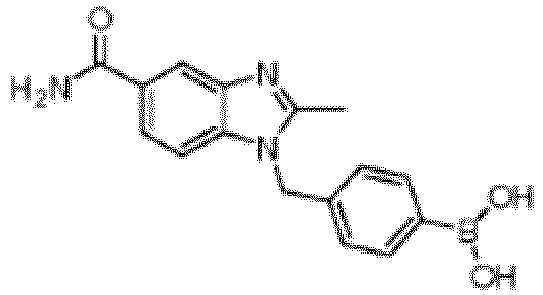 acide 4-((5-carbamoylimidazo[4,5-b]pyridin-1-yl)méthyl)phénylboronique selon la structure suivante :
 acide 4-((5-cyanoimidazo[4,5-b]pyridin-1-yl)méthyl)phénylboronique selon la structure suivante :
 acide 4-((5-carbamoyl-2-isopropylimidazo[4,5-b]pyridin-1-yl)méthyl)phénylboronique selon la structure suivante :
 et sel d'acide trifluoroacétique d'acide 4-((5-carbamoyl-1,3-benzodiazol-1-yl)méthyl)phénylboronique
- Composé selon la revendication 1, sélectionné parmi :acide 4-((5-carbamoyl-2-éthyl-1,3-benzodiazol-1-yl)méthyl)phénylboronique selon la structure suivante :
 acide 4-((2-éthyl-4-hydroxyimidazo[4,5-c]pyridin-1-yl)méthyl)phénylboronique selon la structure suivante :
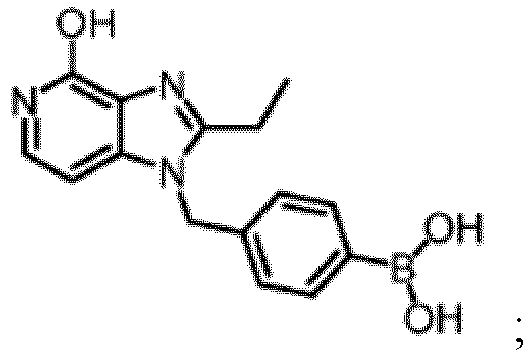 un sel pharmaceutiquement acceptable de ceux-ci.
 - Composé selon la revendication 1, sélectionné parmi :acide 4-((5-carbamoyl-2-isopropyl-1,3-benzodiazol-1-yl)méthyl)phénylboronique selon la structure suivante :
 acide 4-((4-hydroxy-2-isopropylimidazo[4,5-c]pyridin-1-yl)méthyl)phénylboronique selon la structure suivante :
 acide 4-((5-carbamoyl-2-isopropylimidazo[4,5-b]pyridin-1-yl)méthyl)phénylboronique selon la structure suivante :
 un sel pharmaceutiquement acceptable de ceux-ci.
 - Composé selon la revendication 1, sélectionné parmi :acide (4-((5-carbamoyl-2-méthyl-1H-imidazo[4,5-b]pyridin-1-yl)méthyl)phényl)boronique selon la structure suivante :
 acide 4-((5-carbamoyl-2-méthyl-1H-benzo[d]imidazol-1-yl)méthyl)phényl)boronique selon la structure suivante :
 un sel pharmaceutiquement acceptable de ceux-ci.
 - Composé selon la revendication 1, sélectionné parmi :acide 4-((5-carbamoylimidazo[4,5-b]pyridin-1-yl)méthyl)phénylboronique selon la structure suivante :
 acide 4-((5-cyanoimidazo[4,5-b]pyridin-1-yl)méthyl)phénylboronique selon la structure suivante :
 sel d'acide trifluoroacétique d'acide 4-((5-carbamoyl-1,3-benzodiazol-1-yl)méthyl)phénylboronique
- Composé selon la revendication 1 ou 3, sélectionné parmi :acide 4-((5-carbamoyl-2-isopropyl-1,3-benzodiazol-1-yl)méthyl)phénylboronique selon la structure suivante :
 acide 4-((5-carbamoyl-2-isopropylimidazo[4,5-b]pyridin-1-yl)méthyl)phénylboronique selon la structure suivante :
 un sel pharmaceutiquement acceptable de ceux-ci.
 - Composé selon la revendication 1 ou 3, sélectionné parmi :acide 4-((4-hydroxy-2-isopropylimidazo[4,5-c]pyridin-1-yl)méthyl)phénylboronique selon la structure suivante :
 un sel pharmaceutiquement acceptable de celui-ci.
 - Composé selon la revendication 1 ou 5, sélectionné parmi :sel d'acide trifluoroacétique d'acide 4-((5-carbamoyl-1,3-benzodiazol-1-yl)méthyl)phénylboronique

- Composé selon la revendication 1 ou 5, sélectionné parmi :acide 4-((5-carbamoylimidazo[4,5-b]pyridin-1-yl)méthyl)phénylboronique selon la structure suivante :
 un sel pharmaceutiquement acceptable de celui-ci.
 - Composition pharmaceutique, comprenant un composé selon l'une quelconque des revendications 1 à 9, ou un sel pharmaceutiquement acceptable de celui-ci, et un excipient pharmaceutiquement acceptable.
- Composé ou sel pharmaceutiquement acceptable de celui-ci selon l'une quelconque des revendications 1 à 9, ou composition pharmaceutique selon la revendication 10, pour l'utilisation dans un procédé de traitement d'un cancer, d'une maladie inflammatoire, d'une maladie métabolique, ou d'une maladie virale.
- Composé ou sel pharmaceutiquement acceptable de celui-ci ou composition pharmaceutique pour l'utilisation selon la revendication 11, dans lequel/laquelle le procédé est pour le traitement d'un cancer.
- Composé ou sel pharmaceutiquement acceptable de celui-ci, ou composition pharmaceutique pour l'utilisation selon la revendication 12, dans lequel/laquelle le cancer est : carcinome hépatocellulaire, glioblastome, mélanome, cancer testiculaire, pancréatique, de la thyroïde ou du sein.
- Composé ou sel pharmaceutiquement acceptable de celui-ci ou composition pharmaceutique pour l'utilisation selon la revendication 12 ou 13, dans lequel/laquelle le composé ou sel pharmaceutiquement acceptable de celui-ci ou la composition pharmaceutique est pour l'administration avec au moins un agent anti-cancer supplémentaire.
- Composé ou sel pharmaceutiquement acceptable de celui-ci ou composition pharmaceutique pour l'utilisation selon la revendication 14, dans lequel/laquelle l'au moins un agent anti-cancer supplémentaire est un inhibiteur de point de contrôle immunitaire.
- Composé ou sel pharmaceutiquement acceptable de celui-ci ou composition pharmaceutique pour l'utilisation selon la revendication 15, dans lequel/laquelle l'inhibiteur de point de contrôle immunitaire est un anticorps monoclonal anti-PD-1 ou un anticorps monoclonal anti-PDL1.
- Composé ou sel pharmaceutiquement acceptable de celui-ci ou composition pharmaceutique pour l'utilisation selon la revendication 16, dans lequel/laquelle l'anticorps monoclonal anti-PD-1 ou un anticorps monoclonal anti-PDL1 est nivolumab, pembrolizumab, pidilizumab, atézolizumab ou durvalumab.
Priority Applications (5)
| Application Number | Priority Date | Filing Date | Title |
|---|---|---|---|
| SI202030281T SI3952995T1 (sl) | 2019-04-12 | 2020-04-10 | Biciklični heteroarilni derivati kot zaviralci ektonukleotid pirofosfataze fosfodiesteraze 1 |
| EP23187601.2A EP4249070A3 (fr) | 2019-04-12 | 2020-04-10 | Dérivés hétéroaryle bicycliques utilisés en tant qu'inhibiteurs de l'ectonucléotide pyrophosphatase/phosphodiestérase 1 |
| RS20231040A RS64792B1 (sr) | 2019-04-12 | 2020-04-10 | Derivati bicikličnih heteroarila kao inhibitori ektonukleotid pirofosfataze fosfodiesteraze 1 |
| SM20230373T SMT202300373T1 (it) | 2019-04-12 | 2020-04-10 | Derivati biciclici di eteroarile come inibitori dell’ectonucleotide piro-fosfatasi/fosfodiesterasi 1 |
| HRP20231413TT HRP20231413T1 (hr) | 2019-04-12 | 2020-04-10 | Derivati bicikličnih heteroarila kao inhibitori ektonukleotid pirofosfataze fosfodiesteraze 1 |
Applications Claiming Priority (3)
| Application Number | Priority Date | Filing Date | Title |
|---|---|---|---|
| US201962833455P | 2019-04-12 | 2019-04-12 | |
| US201962881111P | 2019-07-31 | 2019-07-31 | |
| PCT/US2020/027700 WO2020210649A1 (fr) | 2019-04-12 | 2020-04-10 | Dérivés hétéroaryle bicycliques utilisés en tant qu'inhibiteurs de l'ectonucléotide pyrophosphatase/phosphodiestérase 1 |
Related Child Applications (2)
| Application Number | Title | Priority Date | Filing Date |
|---|---|---|---|
| EP23187601.2A Division-Into EP4249070A3 (fr) | 2019-04-12 | 2020-04-10 | Dérivés hétéroaryle bicycliques utilisés en tant qu'inhibiteurs de l'ectonucléotide pyrophosphatase/phosphodiestérase 1 |
| EP23187601.2A Division EP4249070A3 (fr) | 2019-04-12 | 2020-04-10 | Dérivés hétéroaryle bicycliques utilisés en tant qu'inhibiteurs de l'ectonucléotide pyrophosphatase/phosphodiestérase 1 |
Publications (2)
| Publication Number | Publication Date |
|---|---|
| EP3952995A1 EP3952995A1 (fr) | 2022-02-16 |
| EP3952995B1 true EP3952995B1 (fr) | 2023-09-20 |
Family
ID=70465561
Family Applications (2)
| Application Number | Title | Priority Date | Filing Date |
|---|---|---|---|
| EP20722196.1A Active EP3952995B1 (fr) | 2019-04-12 | 2020-04-10 | Dérivés hétéroaryle bicycliques utilisés en tant qu'inhibiteurs de l'ectonucléotide pyrophosphatase/phosphodiestérase 1 |
| EP23187601.2A Pending EP4249070A3 (fr) | 2019-04-12 | 2020-04-10 | Dérivés hétéroaryle bicycliques utilisés en tant qu'inhibiteurs de l'ectonucléotide pyrophosphatase/phosphodiestérase 1 |
Family Applications After (1)
| Application Number | Title | Priority Date | Filing Date |
|---|---|---|---|
| EP23187601.2A Pending EP4249070A3 (fr) | 2019-04-12 | 2020-04-10 | Dérivés hétéroaryle bicycliques utilisés en tant qu'inhibiteurs de l'ectonucléotide pyrophosphatase/phosphodiestérase 1 |
Country Status (24)
| Country | Link |
|---|---|
| US (2) | US12029744B2 (fr) |
| EP (2) | EP3952995B1 (fr) |
| JP (2) | JP7598875B2 (fr) |
| KR (1) | KR102957780B1 (fr) |
| CN (2) | CN120795030A (fr) |
| AU (1) | AU2020272034B2 (fr) |
| BR (1) | BR112021020241A2 (fr) |
| CA (1) | CA3136443A1 (fr) |
| DK (1) | DK3952995T3 (fr) |
| ES (1) | ES2960987T3 (fr) |
| FI (1) | FI3952995T3 (fr) |
| HR (1) | HRP20231413T1 (fr) |
| HU (1) | HUE064377T2 (fr) |
| IL (1) | IL286966B2 (fr) |
| LT (1) | LT3952995T (fr) |
| MX (3) | MX2021012305A (fr) |
| PL (1) | PL3952995T3 (fr) |
| PT (1) | PT3952995T (fr) |
| RS (1) | RS64792B1 (fr) |
| SG (1) | SG11202110888QA (fr) |
| SI (1) | SI3952995T1 (fr) |
| SM (1) | SMT202300373T1 (fr) |
| TW (2) | TW202547522A (fr) |
| WO (1) | WO2020210649A1 (fr) |
Families Citing this family (9)
| Publication number | Priority date | Publication date | Assignee | Title |
|---|---|---|---|---|
| JP2023549738A (ja) * | 2020-10-30 | 2023-11-29 | 1シーバイオ, インコーポレイテッド | エクトヌクレオチドピロホスファターゼ-ホスホジエステラーゼ-1(enpp1)阻害物質及びそれらの使用 |
| AU2022211957B2 (en) * | 2021-01-29 | 2024-05-23 | Txinno Bioscience Inc. | Novel benzotriazole derivative having inhibitory activity against ectonucleotide pyrophosphatase-phosphodiesterase, and use thereof |
| CN116724026A (zh) * | 2021-01-29 | 2023-09-08 | 谛希诺生物科技有限公司 | 对外核苷酸焦磷酸酶-磷酸二酯酶具有抑制活性的新颖的苯并三唑衍生物及其用途 |
| US20240209005A1 (en) * | 2021-03-16 | 2024-06-27 | Riboscience Llc | Bicyclic heteroaryl boronate derivatives as ectonucleotide pyrophosphatase phosphodiesterase 1 inhibitors |
| PE20242344A1 (es) | 2021-05-12 | 2024-12-16 | Boehringer Ingelheim Int | DERIVADOS DE PIRIDINA CON SUSTITUYENTES CICLICOS LIGADOS A N COMO INHIBIDORES DE cGAS |
| CN116444544A (zh) * | 2022-01-10 | 2023-07-18 | 中国科学院上海药物研究所 | 苯并咪唑类化合物及其医药用途 |
| WO2023143520A1 (fr) * | 2022-01-28 | 2023-08-03 | Insilico Medicine Ip Limited | Inhibiteurs d'ectonucléotide pyrophosphatase-phosphodiestérase 1 (enpp1) et leurs utilisations |
| CA3267420A1 (fr) * | 2022-11-09 | 2024-05-16 | Boehringer Ingelheim International Gmbh | Dérivés de benzimidazole cycliques utilisés comme inhibiteurs de cgas |
| CN120476128A (zh) * | 2023-01-10 | 2025-08-12 | 上海翊维康医药有限责任公司 | 杂芳环化合物及其制备方法和用途 |
Citations (1)
| Publication number | Priority date | Publication date | Assignee | Title |
|---|---|---|---|---|
| WO2016055582A1 (fr) * | 2014-10-08 | 2016-04-14 | Thomas Helledays Stiftelse För Medicinsk Forskning | Composés hétérocycliques en tant que modulateurs dctpp1 |
Family Cites Families (57)
| Publication number | Priority date | Publication date | Assignee | Title |
|---|---|---|---|---|
| US4107288A (en) | 1974-09-18 | 1978-08-15 | Pharmaceutical Society Of Victoria | Injectable compositions, nanoparticles useful therein, and process of manufacturing same |
| US5240938A (en) | 1991-02-13 | 1993-08-31 | Merck & Co., Inc. | Angiotensin II antagonists incorporating a substituted pyridoimidazolyl ring |
| GB9020931D0 (en) | 1990-09-26 | 1990-11-07 | Wellcome Found | Heterocyclic compounds |
| IE914572A1 (en) | 1991-01-17 | 1992-07-29 | Zeneca Ltd | Chemical process |
| IE914573A1 (en) | 1991-01-17 | 1992-07-29 | Ici Plc | Boron compounds |
| US5145684A (en) | 1991-01-25 | 1992-09-08 | Sterling Drug Inc. | Surface modified drug nanoparticles |
| DK40192D0 (da) | 1992-03-26 | 1992-03-26 | Neurosearch As | Imidazolforbindelser, deres fremstilling og anvendelse |
| US5468757A (en) | 1994-01-31 | 1995-11-21 | Eli Lilly And Company | 6-azaindole thromboxane synthase inhibitors |
| AU2583901A (en) | 1999-12-17 | 2001-06-25 | Ariad Pharmaceuticals, Inc. | Proton pump inhibitors |
| MXPA03008560A (es) | 2001-03-22 | 2004-06-30 | Abbot Gmbh & Co Kg | Pirazolopirimidinas como agentes terapeuticos. |
| EP1463742A4 (fr) | 2001-06-21 | 2006-05-10 | Ariad Pharma Inc | Nouvelles pyrazolo-pyrimidines et pyrrolo-pyrimidines et leur utilisation |
| JP2005089334A (ja) | 2003-09-12 | 2005-04-07 | Sumitomo Pharmaceut Co Ltd | 8−ヒドロキシアデニン化合物 |
| WO2007134169A2 (fr) | 2006-05-10 | 2007-11-22 | Nuada, Llc | Composés d'acide indole, benzimidazole et benzolactame boronique, analogues de ces composés et méthodes d'utilisation correspondantes |
| US20090264384A1 (en) | 2004-11-01 | 2009-10-22 | Nuada, Inc. | Indole, benzimidazole, and benzolactam boronic acid compounds, analogs thereof and methods of use thereof |
| DE102004060699A1 (de) | 2004-12-16 | 2006-06-22 | Ratiopharm Gmbh | Verfahren zur Herstellung von Candesartan |
| EP1833801B9 (fr) | 2004-12-22 | 2009-02-25 | Algry Quimica, S.L | Composes intermediaires pour la preparation d'antagonistes du recepteur de l'angiotensine ii |
| ITMI20050801A1 (it) | 2005-05-03 | 2006-11-04 | Dipharma Spa | Procedimento per la preparazione di telmisartan |
| WO2006125592A2 (fr) * | 2005-05-24 | 2006-11-30 | Lek Pharmaceuticals D.D. | Procede de preparation de derives de 2-alkyl-1-((2'-substitue-biphenyl-4-yl)methyl)-imidazole, dihydroimidazole ou benzimidazole |
| US8071609B2 (en) | 2005-08-11 | 2011-12-06 | Ariad Pharmaceuticals, Inc. | Unsaturated heterocyclic derivatives |
| CN100427488C (zh) | 2005-10-21 | 2008-10-22 | 上海东升新材料有限公司 | 腺嘌呤类衍生物及其合成方法 |
| WO2007081755A2 (fr) | 2006-01-09 | 2007-07-19 | Metabasis Therapeutics, Inc. | Inhibiteurs indoliques, benzimidazoliques et indazoliques des tyrosine phosphatases |
| PT2038290E (pt) | 2006-07-07 | 2013-12-10 | Gilead Sciences Inc | Moduladores de receptor do tipo toll 7 |
| JP2009242240A (ja) | 2006-08-04 | 2009-10-22 | Mebiopharm Co Ltd | 含ホウ素キナゾリン誘導体 |
| JO3598B1 (ar) * | 2006-10-10 | 2020-07-05 | Infinity Discovery Inc | الاحماض والاسترات البورونية كمثبطات اميد هيدروليز الحامض الدهني |
| TWI406850B (zh) | 2007-06-05 | 2013-09-01 | Theravance Inc | 雙效苯并咪唑抗高血壓劑 |
| US8212052B2 (en) | 2007-12-11 | 2012-07-03 | Theravance, Inc. | Dual-acting benzoimidazole antihypertensive agents |
| BRPI0908565A2 (pt) * | 2008-03-06 | 2017-05-23 | Anacor Pharmaceuticals Inc | composto, formulação farmacêutica, métodos para reduzir a liberação de uma citocina ou de uma quimiocina, para tratar uma condição em um animal e para inibir uma fosfodiesterase |
| US8598355B2 (en) | 2008-05-14 | 2013-12-03 | Astellas Pharma Inc. | Amide compound |
| US20100016609A1 (en) | 2008-07-15 | 2010-01-21 | Wyeth | Methods for the preparation of azole compounds |
| AR075090A1 (es) | 2008-09-29 | 2011-03-09 | Millennium Pharm Inc | Derivados de acido 1-amino-2-ciclobutiletilboronico inhibidores de proteosoma,utiles como agentes anticancerigenos, y composiciones farmaceuticas que los comprenden. |
| WO2011053247A1 (fr) | 2009-10-29 | 2011-05-05 | Agency For Science, Technology And Research | Procédé pour la détection d'un analyte par spectroscopie de raman renforcée en surface (sers) |
| WO2011130459A1 (fr) | 2010-04-14 | 2011-10-20 | Bristol-Myers Squibb Company | Nouveaux activateurs de la glucokinase et méthodes d'utilisation desdits activateurs |
| CA2832672A1 (fr) | 2010-04-16 | 2011-10-20 | Nuevolution A/S | Complexes bifonctionnels et procedes de fabrication et d'utilisation de tels complexes |
| US9249087B2 (en) | 2011-02-01 | 2016-02-02 | The Board Of Trustees Of The University Of Illinois | HDAC inhibitors and therapeutic methods using the same |
| MX2013013331A (es) * | 2011-05-17 | 2014-10-17 | Principia Biopharma Inc | Derivados de azaindol como inhibidores de tirosina-cinasas. |
| UA116083C2 (uk) | 2011-11-09 | 2018-02-12 | ЯНССЕН САЙЄНСІЗ АЙРЛЕНД ЮСі | Похідні пурину для лікування вірусних інфекцій |
| WO2013132253A1 (fr) | 2012-03-07 | 2013-09-12 | Institute Of Cancer Research: Royal Cancer Hospital (The) | Composés 3-aryl -5-substitué-isoquinolin -1-one et leur utilisation thérapeutique |
| KR102139847B1 (ko) | 2014-05-01 | 2020-07-31 | 노파르티스 아게 | 톨-유사 수용체 7 효능제로서의 화합물 및 조성물 |
| US10488418B2 (en) | 2014-09-02 | 2019-11-26 | The Regents Of The University Of California | Fluorescence assay for intestinal permeability |
| WO2016200840A1 (fr) | 2015-06-08 | 2016-12-15 | Cleave Biosciences, Inc. | Composés d'ester, de sel et d'acide boronique à noyau monocyclique et bicyclique en tant qu'inhibiteurs de complexe p97 |
| HK1249101A1 (zh) * | 2015-07-31 | 2018-10-26 | 辉瑞公司 | 作为magl抑制剂的1,1,1-三氟-3-羟基丙-2-基氨基甲酸酯衍生物及1,1,1-三氟-4-羟基丁-2-基氨基甲酸酯衍生物 |
| WO2018005591A1 (fr) | 2016-06-29 | 2018-01-04 | Universite De Montreal | Hétérocycles biarylméthyles |
| MX2019007256A (es) * | 2016-12-22 | 2019-11-18 | Mavupharma Inc | Inhibidores de las fosfodiesterasas y métodos de tratamiento microbiano. |
| AU2017382294A1 (en) | 2016-12-22 | 2019-08-01 | Abbvie Inc. | Compositions and methods of enhancing or augmenting type I IFN production |
| US10487084B2 (en) * | 2017-08-16 | 2019-11-26 | Bristol-Myers Squibb Company | Toll-like receptor 7 (TLR7) agonists having a heterobiaryl moiety, conjugates thereof, and methods and uses therefor |
| KR20200047627A (ko) | 2017-08-31 | 2020-05-07 | 애브비 인코포레이티드 | 엑토뉴클레오티드 피로포스파타아제-포스포디에스테라아제 1(enpp-1) 저해제 및 그의 용도 |
| KR20240151869A (ko) | 2017-09-08 | 2024-10-18 | 더 보드 어브 트러스티스 어브 더 리랜드 스탠포드 주니어 유니버시티 | Enpp1 저해제 및 암의 치료용의 이의 용도 |
| CN109206446B (zh) * | 2017-11-14 | 2021-08-03 | 深圳市塔吉瑞生物医药有限公司 | 一种取代的含硼的化合物及包含该化合物的药物组合物 |
| CN108409767B (zh) | 2018-04-13 | 2020-07-10 | 上海泰坦科技股份有限公司 | 一种杂环联苯硼酸的制备方法 |
| US20220056052A1 (en) | 2018-12-28 | 2022-02-24 | Riboscience Llc | Quinazoline derivatives as ectonucleotide pyrophosphatase phosphodiesterase 1 inhibitors |
| US20220289775A1 (en) | 2019-02-01 | 2022-09-15 | The Board Of Trustees Of The Leland Stanford Junior University | ENPP1 Inhibitors and Methods of Modulating Immune Response |
| WO2020191501A1 (fr) | 2019-03-27 | 2020-10-01 | Algernon Pharmaceuticals Inc. | Procédés et utilisations de bémithyle et de dérivés pour le traitement d'une maladie pulmonaire, d'une stéatose hépatique et de troubles rénaux |
| CA3151277A1 (fr) | 2019-09-16 | 2021-03-25 | Aten Porus Lifesciences Pvt. Ltd. | Composes de thiopurine 2-amino-s6-substitues en tant qu'inhibiteurs de la proteine enpp1 |
| CN116574099A (zh) | 2019-09-23 | 2023-08-11 | 南京征祥医药有限公司 | 磷酸二酯酶抑制剂及用途 |
| CN115151550B (zh) | 2019-12-23 | 2024-11-22 | 桑福德·伯纳姆·普雷比医学发现研究所 | 外核苷酸焦磷酸酶/磷酸二酯酶1(enpp1)调节剂及其用途 |
| CA3166485A1 (fr) | 2020-02-04 | 2021-08-12 | Srinivas Rao Kasibhatla | Inhibiteurs de l'ectonucleotide pyrophosphatase/phosphodiesterase 1 (enpp1) et leurs procedes d'utilisation |
| CN115362150A (zh) | 2020-04-09 | 2022-11-18 | 贝达药业股份有限公司 | Enpp1抑制剂及其组合物和用途 |
-
2020
- 2020-04-10 ES ES20722196T patent/ES2960987T3/es active Active
- 2020-04-10 AU AU2020272034A patent/AU2020272034B2/en active Active
- 2020-04-10 CA CA3136443A patent/CA3136443A1/fr active Pending
- 2020-04-10 CN CN202510916242.3A patent/CN120795030A/zh active Pending
- 2020-04-10 TW TW114107413A patent/TW202547522A/zh unknown
- 2020-04-10 CN CN202080028332.4A patent/CN114040915B/zh active Active
- 2020-04-10 EP EP20722196.1A patent/EP3952995B1/fr active Active
- 2020-04-10 PL PL20722196.1T patent/PL3952995T3/pl unknown
- 2020-04-10 RS RS20231040A patent/RS64792B1/sr unknown
- 2020-04-10 JP JP2021559932A patent/JP7598875B2/ja active Active
- 2020-04-10 MX MX2021012305A patent/MX2021012305A/es unknown
- 2020-04-10 WO PCT/US2020/027700 patent/WO2020210649A1/fr not_active Ceased
- 2020-04-10 FI FIEP20722196.1T patent/FI3952995T3/fi active
- 2020-04-10 KR KR1020217036122A patent/KR102957780B1/ko active Active
- 2020-04-10 TW TW109112260A patent/TWI878284B/zh active
- 2020-04-10 EP EP23187601.2A patent/EP4249070A3/fr active Pending
- 2020-04-10 BR BR112021020241A patent/BR112021020241A2/pt unknown
- 2020-04-10 IL IL286966A patent/IL286966B2/en unknown
- 2020-04-10 PT PT207221961T patent/PT3952995T/pt unknown
- 2020-04-10 HR HRP20231413TT patent/HRP20231413T1/hr unknown
- 2020-04-10 SI SI202030281T patent/SI3952995T1/sl unknown
- 2020-04-10 HU HUE20722196A patent/HUE064377T2/hu unknown
- 2020-04-10 SM SM20230373T patent/SMT202300373T1/it unknown
- 2020-04-10 SG SG11202110888QA patent/SG11202110888QA/en unknown
- 2020-04-10 US US17/264,684 patent/US12029744B2/en active Active
- 2020-04-10 LT LTEPPCT/US2020/027700T patent/LT3952995T/lt unknown
- 2020-04-10 DK DK20722196.1T patent/DK3952995T3/da active
-
2021
- 2021-10-07 MX MX2023011065A patent/MX2023011065A/es unknown
- 2021-10-07 MX MX2024001202A patent/MX2024001202A/es unknown
-
2024
- 2024-05-20 US US18/668,916 patent/US20250041319A1/en active Pending
- 2024-12-02 JP JP2024209440A patent/JP2025027105A/ja active Pending
Patent Citations (1)
| Publication number | Priority date | Publication date | Assignee | Title |
|---|---|---|---|---|
| WO2016055582A1 (fr) * | 2014-10-08 | 2016-04-14 | Thomas Helledays Stiftelse För Medicinsk Forskning | Composés hétérocycliques en tant que modulateurs dctpp1 |
Also Published As
Similar Documents
| Publication | Publication Date | Title |
|---|---|---|
| ES2960987T3 (es) | Derivados de heteroarilo bicíclicos como inhibidores de la ectonucleótido pirofosfatasa fosfodiesterasa 1 | |
| EP2892900B1 (fr) | Composés pyrazolopyrimidine comme inhibiteurs de kinase | |
| EP2994470B1 (fr) | Dérivés de pyrido[2,3-d]pyrimidine en tant qu' inhibiteurs de facteur de croissance de fibroblaste | |
| WO2020140001A1 (fr) | Dérivés de quinazoline utilisés en tant qu'inhibiteurs d'ectonucléotide pyrophosphatase/phosphodiestérase 1 | |
| EP2922538B1 (fr) | Dérivés d'azaindole en tant qu'inhibiteurs de jak3 | |
| EP3298011B1 (fr) | Dérivés de quinolone utilisés en tant qu'inhibiteurs du récepteur du facteur de croissance des fibroblastes | |
| EP3416963B1 (fr) | Inhibiteurs d'histone méthyltransférase | |
| WO2023060431A1 (fr) | Procédés de fabrication de 3-fluoro-5- ( ( (1s, 2ar) -1, 3, 3, 4, 4-pentafluoro-2a-hydroxy-2, 2a, 3, 4-tetrahydro-1h-cyclopenta [cd] inden-7-yl) oxy) -benzonitrile et de polymorphes associés | |
| WO2022212488A1 (fr) | Dérivés bicycliques d'hétéroaryle phosphonate en tant qu'inhibiteurs d'éctonucléotide pyrophosphatase/phosphodiestérase 1 | |
| CA3235013A1 (fr) | Inhibiteurs du facteur 2-(alpha) inductible par l'hypoxie pour le traitement du cancer de la vessie | |
| RU2855873C2 (ru) | Бициклические гетероарильные производные как ингибиторы эктонуклеотид пирофосфатазы фосфодиэстеразы 1 | |
| HK40068961A (en) | Bicyclic heteroaryl derivatives as ectonucleotide pyrophosphatase phosphodiesterase 1 inhibitors | |
| HK40068961B (en) | Bicyclic heteroaryl derivatives as ectonucleotide pyrophosphatase phosphodiesterase 1 inhibitors | |
| WO2024148272A1 (fr) | Dérivés d'hétéroaryle aza bicycliques en tant qu'inhibiteurs de l'ectonucléotide pyrophosphatase phosphodiestérase 1 | |
| HK40098924A (en) | Bicyclic heteroaryl derivatives as ectonucleotide pyrophosphatase phosphodiesterase 1 inhibitors | |
| WO2022197734A1 (fr) | Dérivés de boronate hétéroaryle bicycliques utilisés comme inhibiteurs de l'ecto-nucléotide pyrophosphatase/phosphodiestérase 1 | |
| WO2025117697A1 (fr) | Dérivés hétéroaryle bicycliques 7-aza en tant qu'inhibiteurs de l'ectonucléotide pyrophosphatase phosphodiestérase 1 | |
| WO2025207514A1 (fr) | Dérivés de sulfanediimine hétéroaryle bicycliques utilisés en tant qu'inhibiteurs de l'ectonucléotide pyrophosphatase phosphodiestérase 1 | |
| WO2026006739A1 (fr) | Dérivés hétéroaryles bicycliques utilisés en tant qu'inhibiteurs de l'ectonucléotide pyrophosphatase phosphodiestérase 1 pour le traitement de certaines maladies |
Legal Events
| Date | Code | Title | Description |
|---|---|---|---|
| STAA | Information on the status of an ep patent application or granted ep patent |
Free format text: STATUS: UNKNOWN |
|
| STAA | Information on the status of an ep patent application or granted ep patent |
Free format text: STATUS: THE INTERNATIONAL PUBLICATION HAS BEEN MADE |
|
| PUAI | Public reference made under article 153(3) epc to a published international application that has entered the european phase |
Free format text: ORIGINAL CODE: 0009012 |
|
| STAA | Information on the status of an ep patent application or granted ep patent |
Free format text: STATUS: REQUEST FOR EXAMINATION WAS MADE |
|
| 17P | Request for examination filed |
Effective date: 20211019 |
|
| AK | Designated contracting states |
Kind code of ref document: A1 Designated state(s): AL AT BE BG CH CY CZ DE DK EE ES FI FR GB GR HR HU IE IS IT LI LT LU LV MC MK MT NL NO PL PT RO RS SE SI SK SM TR |
|
| DAV | Request for validation of the european patent (deleted) | ||
| DAX | Request for extension of the european patent (deleted) | ||
| REG | Reference to a national code |
Ref country code: HK Ref legal event code: DE Ref document number: 40068961 Country of ref document: HK |
|
| TPAC | Observations filed by third parties |
Free format text: ORIGINAL CODE: EPIDOSNTIPA |
|
| STAA | Information on the status of an ep patent application or granted ep patent |
Free format text: STATUS: EXAMINATION IS IN PROGRESS |
|
| 17Q | First examination report despatched |
Effective date: 20221018 |
|
| REG | Reference to a national code |
Ref country code: DE Ref legal event code: R079 Free format text: PREVIOUS MAIN CLASS: A61P0031000000 Ipc: C07F0005020000 Ref document number: 602020017968 Country of ref document: DE |
|
| GRAP | Despatch of communication of intention to grant a patent |
Free format text: ORIGINAL CODE: EPIDOSNIGR1 |
|
| STAA | Information on the status of an ep patent application or granted ep patent |
Free format text: STATUS: GRANT OF PATENT IS INTENDED |
|
| RIC1 | Information provided on ipc code assigned before grant |
Ipc: A61P 35/00 20060101ALI20230515BHEP Ipc: A61K 45/06 20060101ALI20230515BHEP Ipc: A61P 31/00 20060101ALI20230515BHEP Ipc: C07F 5/02 20060101AFI20230515BHEP |
|
| INTG | Intention to grant announced |
Effective date: 20230531 |
|
| GRAS | Grant fee paid |
Free format text: ORIGINAL CODE: EPIDOSNIGR3 |
|
| GRAA | (expected) grant |
Free format text: ORIGINAL CODE: 0009210 |
|
| STAA | Information on the status of an ep patent application or granted ep patent |
Free format text: STATUS: THE PATENT HAS BEEN GRANTED |
|
| P01 | Opt-out of the competence of the unified patent court (upc) registered |
Effective date: 20230724 |
|
| AK | Designated contracting states |
Kind code of ref document: B1 Designated state(s): AL AT BE BG CH CY CZ DE DK EE ES FI FR GB GR HR HU IE IS IT LI LT LU LV MC MK MT NL NO PL PT RO RS SE SI SK SM TR |
|
| REG | Reference to a national code |
Ref country code: GB Ref legal event code: FG4D |
|
| REG | Reference to a national code |
Ref country code: CH Ref legal event code: EP |
|
| REG | Reference to a national code |
Ref country code: IE Ref legal event code: FG4D |
|
| REG | Reference to a national code |
Ref country code: DE Ref legal event code: R096 Ref document number: 602020017968 Country of ref document: DE |
|
| REG | Reference to a national code |
Ref country code: PT Ref legal event code: SC4A Ref document number: 3952995 Country of ref document: PT Date of ref document: 20231025 Kind code of ref document: T Free format text: AVAILABILITY OF NATIONAL TRANSLATION Effective date: 20231020 |
|
| REG | Reference to a national code |
Ref country code: FI Ref legal event code: FGE |
|
| REG | Reference to a national code |
Ref country code: DK Ref legal event code: T3 Effective date: 20231026 |
|
| REG | Reference to a national code |
Ref country code: NL Ref legal event code: FP |
|
| REG | Reference to a national code |
Ref country code: RO Ref legal event code: EPE |
|
| REG | Reference to a national code |
Ref country code: SE Ref legal event code: TRGR |
|
| REG | Reference to a national code |
Ref country code: NO Ref legal event code: T2 Effective date: 20230920 |
|
| REG | Reference to a national code |
Ref country code: GR Ref legal event code: EP Ref document number: 20230402469 Country of ref document: GR Effective date: 20240110 |
|
| REG | Reference to a national code |
Ref country code: SK Ref legal event code: T3 Ref document number: E 42882 Country of ref document: SK |
|
| REG | Reference to a national code |
Ref country code: HR Ref legal event code: T1PR Ref document number: P20231413 Country of ref document: HR |
|
| REG | Reference to a national code |
Ref country code: ES Ref legal event code: FG2A Ref document number: 2960987 Country of ref document: ES Kind code of ref document: T3 Effective date: 20240307 |
|
| REG | Reference to a national code |
Ref country code: AT Ref legal event code: UEP Ref document number: 1613353 Country of ref document: AT Kind code of ref document: T Effective date: 20230920 Ref country code: EE Ref legal event code: FG4A Ref document number: E023909 Country of ref document: EE Effective date: 20231215 |
|
| REG | Reference to a national code |
Ref country code: HU Ref legal event code: AG4A Ref document number: E064377 Country of ref document: HU |
|
| REG | Reference to a national code |
Ref country code: HR Ref legal event code: ODRP Ref document number: P20231413 Country of ref document: HR Payment date: 20240429 Year of fee payment: 5 |
|
| REG | Reference to a national code |
Ref country code: DE Ref legal event code: R097 Ref document number: 602020017968 Country of ref document: DE |
|
| PLBE | No opposition filed within time limit |
Free format text: ORIGINAL CODE: 0009261 |
|
| STAA | Information on the status of an ep patent application or granted ep patent |
Free format text: STATUS: NO OPPOSITION FILED WITHIN TIME LIMIT |
|
| 26N | No opposition filed |
Effective date: 20240621 |
|
| PGFP | Annual fee paid to national office [announced via postgrant information from national office to epo] |
Ref country code: IS Payment date: 20250211 Year of fee payment: 6 |
|
| REG | Reference to a national code |
Ref country code: HR Ref legal event code: ODRP Ref document number: P20231413 Country of ref document: HR Payment date: 20250224 Year of fee payment: 6 |
|
| PGFP | Annual fee paid to national office [announced via postgrant information from national office to epo] |
Ref country code: TR Payment date: 20250326 Year of fee payment: 6 |
|
| PGFP | Annual fee paid to national office [announced via postgrant information from national office to epo] |
Ref country code: DE Payment date: 20250214 Year of fee payment: 6 |
|
| PGFP | Annual fee paid to national office [announced via postgrant information from national office to epo] |
Ref country code: ES Payment date: 20250508 Year of fee payment: 6 |
|
| PGFP | Annual fee paid to national office [announced via postgrant information from national office to epo] |
Ref country code: HU Payment date: 20250305 Year of fee payment: 6 Ref country code: NO Payment date: 20250409 Year of fee payment: 6 |
|
| PGFP | Annual fee paid to national office [announced via postgrant information from national office to epo] |
Ref country code: AL Payment date: 20250404 Year of fee payment: 6 |
|
| PGFP | Annual fee paid to national office [announced via postgrant information from national office to epo] |
Ref country code: PT Payment date: 20250406 Year of fee payment: 6 |
|
| PGFP | Annual fee paid to national office [announced via postgrant information from national office to epo] |
Ref country code: MT Payment date: 20250421 Year of fee payment: 6 |
|
| PGFP | Annual fee paid to national office [announced via postgrant information from national office to epo] |
Ref country code: CH Payment date: 20250501 Year of fee payment: 6 |
|
| PGFP | Annual fee paid to national office [announced via postgrant information from national office to epo] |
Ref country code: AT Payment date: 20250325 Year of fee payment: 6 |
|
| PGFP | Annual fee paid to national office [announced via postgrant information from national office to epo] |
Ref country code: FI Payment date: 20251230 Year of fee payment: 7 |
|
| PGFP | Annual fee paid to national office [announced via postgrant information from national office to epo] |
Ref country code: CY Payment date: 20250404 Year of fee payment: 6 |
|
| PGFP | Annual fee paid to national office [announced via postgrant information from national office to epo] |
Ref country code: NL Payment date: 20260213 Year of fee payment: 7 |
|
| PGFP | Annual fee paid to national office [announced via postgrant information from national office to epo] |
Ref country code: SM Payment date: 20260330 Year of fee payment: 7 |
|
| PGFP | Annual fee paid to national office [announced via postgrant information from national office to epo] |
Ref country code: SE Payment date: 20260211 Year of fee payment: 7 |
|
| PGFP | Annual fee paid to national office [announced via postgrant information from national office to epo] |
Ref country code: LT Payment date: 20260226 Year of fee payment: 7 Ref country code: GB Payment date: 20260223 Year of fee payment: 7 |
|
| PGFP | Annual fee paid to national office [announced via postgrant information from national office to epo] |
Ref country code: MC Payment date: 20260325 Year of fee payment: 7 |
|
| PGFP | Annual fee paid to national office [announced via postgrant information from national office to epo] |
Ref country code: DK Payment date: 20260109 Year of fee payment: 7 Ref country code: IE Payment date: 20260211 Year of fee payment: 7 |
|
| PGFP | Annual fee paid to national office [announced via postgrant information from national office to epo] |
Ref country code: HR Payment date: 20260220 Year of fee payment: 7 |
|
| PGFP | Annual fee paid to national office [announced via postgrant information from national office to epo] |
Ref country code: LU Payment date: 20260326 Year of fee payment: 7 Ref country code: BE Payment date: 20260317 Year of fee payment: 7 Ref country code: RO Payment date: 20260316 Year of fee payment: 7 Ref country code: IT Payment date: 20260320 Year of fee payment: 7 |
|
| PGFP | Annual fee paid to national office [announced via postgrant information from national office to epo] |
Ref country code: RS Payment date: 20260325 Year of fee payment: 7 |
|
| PGFP | Annual fee paid to national office [announced via postgrant information from national office to epo] |
Ref country code: FR Payment date: 20260209 Year of fee payment: 7 |
|
| PGFP | Annual fee paid to national office [announced via postgrant information from national office to epo] |
Ref country code: CZ Payment date: 20260324 Year of fee payment: 7 |
|
| PGFP | Annual fee paid to national office [announced via postgrant information from national office to epo] |
Ref country code: GR Payment date: 20260310 Year of fee payment: 7 Ref country code: PL Payment date: 20260211 Year of fee payment: 7 |
|
| REG | Reference to a national code |
Ref country code: HR Ref legal event code: ODRP Ref document number: P20231413 Country of ref document: HR Payment date: 20260220 Year of fee payment: 7 |
|
| PGFP | Annual fee paid to national office [announced via postgrant information from national office to epo] |
Ref country code: LV Payment date: 20260219 Year of fee payment: 7 Ref country code: EE Payment date: 20260227 Year of fee payment: 7 Ref country code: SK Payment date: 20260224 Year of fee payment: 7 |
|
| PGFP | Annual fee paid to national office [announced via postgrant information from national office to epo] |
Ref country code: SI Payment date: 20260224 Year of fee payment: 7 |
|
| PGFP | Annual fee paid to national office [announced via postgrant information from national office to epo] |
Ref country code: BG Payment date: 20260218 Year of fee payment: 7 |
|
| REG | Reference to a national code |
Ref country code: CH Ref legal event code: U11 Free format text: ST27 STATUS EVENT CODE: U-0-0-U10-U11 (AS PROVIDED BY THE NATIONAL OFFICE) Effective date: 20260501 |
|
| PGFP | Annual fee paid to national office [announced via postgrant information from national office to epo] |
Ref country code: MK Payment date: 20260304 Year of fee payment: 7 |