EP4005592A1 - Virionabgabepartikel für selbstreplizierende rna-moleküle - Google Patents
Virionabgabepartikel für selbstreplizierende rna-moleküle Download PDFInfo
- Publication number
- EP4005592A1 EP4005592A1 EP21204155.2A EP21204155A EP4005592A1 EP 4005592 A1 EP4005592 A1 EP 4005592A1 EP 21204155 A EP21204155 A EP 21204155A EP 4005592 A1 EP4005592 A1 EP 4005592A1
- Authority
- EP
- European Patent Office
- Prior art keywords
- rna
- virus
- liposome
- immunogen
- composition
- Prior art date
- Legal status (The legal status is an assumption and is not a legal conclusion. Google has not performed a legal analysis and makes no representation as to the accuracy of the status listed.)
- Granted
Links
Images





Classifications
-
- A—HUMAN NECESSITIES
- A61—MEDICAL OR VETERINARY SCIENCE; HYGIENE
- A61K—PREPARATIONS FOR MEDICAL, DENTAL OR TOILETRY PURPOSES
- A61K39/00—Medicinal preparations containing antigens or antibodies
- A61K39/12—Viral antigens
- A61K39/155—Paramyxoviridae, e.g. parainfluenza virus
-
- A—HUMAN NECESSITIES
- A61—MEDICAL OR VETERINARY SCIENCE; HYGIENE
- A61K—PREPARATIONS FOR MEDICAL, DENTAL OR TOILETRY PURPOSES
- A61K9/00—Medicinal preparations characterised by special physical form
- A61K9/48—Preparations in capsules, e.g. of gelatin, of chocolate
- A61K9/50—Microcapsules having a gas, liquid or semi-solid filling; Solid microparticles or pellets surrounded by a distinct coating layer, e.g. coated microspheres, coated drug crystals
-
- A—HUMAN NECESSITIES
- A61—MEDICAL OR VETERINARY SCIENCE; HYGIENE
- A61K—PREPARATIONS FOR MEDICAL, DENTAL OR TOILETRY PURPOSES
- A61K39/00—Medicinal preparations containing antigens or antibodies
- A61K39/12—Viral antigens
-
- A—HUMAN NECESSITIES
- A61—MEDICAL OR VETERINARY SCIENCE; HYGIENE
- A61K—PREPARATIONS FOR MEDICAL, DENTAL OR TOILETRY PURPOSES
- A61K39/00—Medicinal preparations containing antigens or antibodies
- A61K39/12—Viral antigens
- A61K39/245—Herpetoviridae, e.g. herpes simplex virus
-
- A—HUMAN NECESSITIES
- A61—MEDICAL OR VETERINARY SCIENCE; HYGIENE
- A61K—PREPARATIONS FOR MEDICAL, DENTAL OR TOILETRY PURPOSES
- A61K9/00—Medicinal preparations characterised by special physical form
- A61K9/0012—Galenical forms characterised by the site of application
- A61K9/0019—Injectable compositions; Intramuscular, intravenous, arterial, subcutaneous administration; Compositions to be administered through the skin in an invasive manner
-
- A—HUMAN NECESSITIES
- A61—MEDICAL OR VETERINARY SCIENCE; HYGIENE
- A61K—PREPARATIONS FOR MEDICAL, DENTAL OR TOILETRY PURPOSES
- A61K9/00—Medicinal preparations characterised by special physical form
- A61K9/10—Dispersions; Emulsions
- A61K9/127—Synthetic bilayered vehicles, e.g. liposomes or liposomes with cholesterol as the only non-phosphatidyl surfactant
-
- A—HUMAN NECESSITIES
- A61—MEDICAL OR VETERINARY SCIENCE; HYGIENE
- A61P—SPECIFIC THERAPEUTIC ACTIVITY OF CHEMICAL COMPOUNDS OR MEDICINAL PREPARATIONS
- A61P31/00—Antiinfectives, i.e. antibiotics, antiseptics, chemotherapeutics
- A61P31/04—Antibacterial agents
-
- A—HUMAN NECESSITIES
- A61—MEDICAL OR VETERINARY SCIENCE; HYGIENE
- A61P—SPECIFIC THERAPEUTIC ACTIVITY OF CHEMICAL COMPOUNDS OR MEDICINAL PREPARATIONS
- A61P31/00—Antiinfectives, i.e. antibiotics, antiseptics, chemotherapeutics
- A61P31/10—Antimycotics
-
- A—HUMAN NECESSITIES
- A61—MEDICAL OR VETERINARY SCIENCE; HYGIENE
- A61P—SPECIFIC THERAPEUTIC ACTIVITY OF CHEMICAL COMPOUNDS OR MEDICINAL PREPARATIONS
- A61P31/00—Antiinfectives, i.e. antibiotics, antiseptics, chemotherapeutics
- A61P31/12—Antivirals
-
- A—HUMAN NECESSITIES
- A61—MEDICAL OR VETERINARY SCIENCE; HYGIENE
- A61P—SPECIFIC THERAPEUTIC ACTIVITY OF CHEMICAL COMPOUNDS OR MEDICINAL PREPARATIONS
- A61P31/00—Antiinfectives, i.e. antibiotics, antiseptics, chemotherapeutics
- A61P31/12—Antivirals
- A61P31/14—Antivirals for RNA viruses
-
- A—HUMAN NECESSITIES
- A61—MEDICAL OR VETERINARY SCIENCE; HYGIENE
- A61P—SPECIFIC THERAPEUTIC ACTIVITY OF CHEMICAL COMPOUNDS OR MEDICINAL PREPARATIONS
- A61P31/00—Antiinfectives, i.e. antibiotics, antiseptics, chemotherapeutics
- A61P31/12—Antivirals
- A61P31/20—Antivirals for DNA viruses
- A61P31/22—Antivirals for DNA viruses for herpes viruses
-
- A—HUMAN NECESSITIES
- A61—MEDICAL OR VETERINARY SCIENCE; HYGIENE
- A61P—SPECIFIC THERAPEUTIC ACTIVITY OF CHEMICAL COMPOUNDS OR MEDICINAL PREPARATIONS
- A61P37/00—Drugs for immunological or allergic disorders
- A61P37/02—Immunomodulators
- A61P37/04—Immunostimulants
-
- C—CHEMISTRY; METALLURGY
- C12—BIOCHEMISTRY; BEER; SPIRITS; WINE; VINEGAR; MICROBIOLOGY; ENZYMOLOGY; MUTATION OR GENETIC ENGINEERING
- C12N—MICROORGANISMS OR ENZYMES; COMPOSITIONS THEREOF; PROPAGATING, PRESERVING, OR MAINTAINING MICROORGANISMS; MUTATION OR GENETIC ENGINEERING; CULTURE MEDIA
- C12N15/00—Mutation or genetic engineering; DNA or RNA concerning genetic engineering, vectors, e.g. plasmids, or their isolation, preparation or purification; Use of hosts therefor
- C12N15/09—Recombinant DNA-technology
- C12N15/63—Introduction of foreign genetic material using vectors; Vectors; Use of hosts therefor; Regulation of expression
- C12N15/79—Vectors or expression systems specially adapted for eukaryotic hosts
- C12N15/85—Vectors or expression systems specially adapted for eukaryotic hosts for animal cells
- C12N15/86—Viral vectors
-
- C—CHEMISTRY; METALLURGY
- C12—BIOCHEMISTRY; BEER; SPIRITS; WINE; VINEGAR; MICROBIOLOGY; ENZYMOLOGY; MUTATION OR GENETIC ENGINEERING
- C12N—MICROORGANISMS OR ENZYMES; COMPOSITIONS THEREOF; PROPAGATING, PRESERVING, OR MAINTAINING MICROORGANISMS; MUTATION OR GENETIC ENGINEERING; CULTURE MEDIA
- C12N15/00—Mutation or genetic engineering; DNA or RNA concerning genetic engineering, vectors, e.g. plasmids, or their isolation, preparation or purification; Use of hosts therefor
- C12N15/09—Recombinant DNA-technology
- C12N15/87—Introduction of foreign genetic material using processes not otherwise provided for, e.g. co-transformation
- C12N15/88—Introduction of foreign genetic material using processes not otherwise provided for, e.g. co-transformation using microencapsulation, e.g. using amphiphile liposome vesicle
-
- A—HUMAN NECESSITIES
- A61—MEDICAL OR VETERINARY SCIENCE; HYGIENE
- A61K—PREPARATIONS FOR MEDICAL, DENTAL OR TOILETRY PURPOSES
- A61K39/00—Medicinal preparations containing antigens or antibodies
- A61K2039/51—Medicinal preparations containing antigens or antibodies comprising whole cells, viruses or DNA/RNA
- A61K2039/53—DNA (RNA) vaccination
-
- A—HUMAN NECESSITIES
- A61—MEDICAL OR VETERINARY SCIENCE; HYGIENE
- A61K—PREPARATIONS FOR MEDICAL, DENTAL OR TOILETRY PURPOSES
- A61K39/00—Medicinal preparations containing antigens or antibodies
- A61K2039/555—Medicinal preparations containing antigens or antibodies characterised by a specific combination antigen/adjuvant
- A61K2039/55505—Inorganic adjuvants
-
- A—HUMAN NECESSITIES
- A61—MEDICAL OR VETERINARY SCIENCE; HYGIENE
- A61K—PREPARATIONS FOR MEDICAL, DENTAL OR TOILETRY PURPOSES
- A61K39/00—Medicinal preparations containing antigens or antibodies
- A61K2039/555—Medicinal preparations containing antigens or antibodies characterised by a specific combination antigen/adjuvant
- A61K2039/55511—Organic adjuvants
- A61K2039/55555—Liposomes; Vesicles, e.g. nanoparticles; Spheres, e.g. nanospheres; Polymers
-
- A—HUMAN NECESSITIES
- A61—MEDICAL OR VETERINARY SCIENCE; HYGIENE
- A61K—PREPARATIONS FOR MEDICAL, DENTAL OR TOILETRY PURPOSES
- A61K39/00—Medicinal preparations containing antigens or antibodies
- A61K2039/555—Medicinal preparations containing antigens or antibodies characterised by a specific combination antigen/adjuvant
- A61K2039/55511—Organic adjuvants
- A61K2039/55566—Emulsions, e.g. Freund's adjuvant, MF59
-
- A—HUMAN NECESSITIES
- A61—MEDICAL OR VETERINARY SCIENCE; HYGIENE
- A61K—PREPARATIONS FOR MEDICAL, DENTAL OR TOILETRY PURPOSES
- A61K39/00—Medicinal preparations containing antigens or antibodies
-
- C—CHEMISTRY; METALLURGY
- C12—BIOCHEMISTRY; BEER; SPIRITS; WINE; VINEGAR; MICROBIOLOGY; ENZYMOLOGY; MUTATION OR GENETIC ENGINEERING
- C12N—MICROORGANISMS OR ENZYMES; COMPOSITIONS THEREOF; PROPAGATING, PRESERVING, OR MAINTAINING MICROORGANISMS; MUTATION OR GENETIC ENGINEERING; CULTURE MEDIA
- C12N2710/00—MICROORGANISMS OR ENZYMES; COMPOSITIONS THEREOF; PROPAGATING, PRESERVING, OR MAINTAINING MICROORGANISMS; MUTATION OR GENETIC ENGINEERING; CULTURE MEDIA dsDNA viruses
- C12N2710/00011—Details
- C12N2710/16011—Herpesviridae
- C12N2710/16111—Cytomegalovirus, e.g. human herpesvirus 5
- C12N2710/16134—Use of virus or viral component as vaccine, e.g. live-attenuated or inactivated virus, VLP, viral protein
-
- C—CHEMISTRY; METALLURGY
- C12—BIOCHEMISTRY; BEER; SPIRITS; WINE; VINEGAR; MICROBIOLOGY; ENZYMOLOGY; MUTATION OR GENETIC ENGINEERING
- C12N—MICROORGANISMS OR ENZYMES; COMPOSITIONS THEREOF; PROPAGATING, PRESERVING, OR MAINTAINING MICROORGANISMS; MUTATION OR GENETIC ENGINEERING; CULTURE MEDIA
- C12N2760/00—MICROORGANISMS OR ENZYMES; COMPOSITIONS THEREOF; PROPAGATING, PRESERVING, OR MAINTAINING MICROORGANISMS; MUTATION OR GENETIC ENGINEERING; CULTURE MEDIA ssRNA viruses negative-sense
- C12N2760/00011—Details
- C12N2760/18011—Paramyxoviridae
- C12N2760/18511—Pneumovirus, e.g. human respiratory syncytial virus
- C12N2760/18522—New viral proteins or individual genes, new structural or functional aspects of known viral proteins or genes
-
- C—CHEMISTRY; METALLURGY
- C12—BIOCHEMISTRY; BEER; SPIRITS; WINE; VINEGAR; MICROBIOLOGY; ENZYMOLOGY; MUTATION OR GENETIC ENGINEERING
- C12N—MICROORGANISMS OR ENZYMES; COMPOSITIONS THEREOF; PROPAGATING, PRESERVING, OR MAINTAINING MICROORGANISMS; MUTATION OR GENETIC ENGINEERING; CULTURE MEDIA
- C12N2760/00—MICROORGANISMS OR ENZYMES; COMPOSITIONS THEREOF; PROPAGATING, PRESERVING, OR MAINTAINING MICROORGANISMS; MUTATION OR GENETIC ENGINEERING; CULTURE MEDIA ssRNA viruses negative-sense
- C12N2760/00011—Details
- C12N2760/18011—Paramyxoviridae
- C12N2760/18511—Pneumovirus, e.g. human respiratory syncytial virus
- C12N2760/18534—Use of virus or viral component as vaccine, e.g. live-attenuated or inactivated virus, VLP, viral protein
-
- C—CHEMISTRY; METALLURGY
- C12—BIOCHEMISTRY; BEER; SPIRITS; WINE; VINEGAR; MICROBIOLOGY; ENZYMOLOGY; MUTATION OR GENETIC ENGINEERING
- C12N—MICROORGANISMS OR ENZYMES; COMPOSITIONS THEREOF; PROPAGATING, PRESERVING, OR MAINTAINING MICROORGANISMS; MUTATION OR GENETIC ENGINEERING; CULTURE MEDIA
- C12N2770/00—MICROORGANISMS OR ENZYMES; COMPOSITIONS THEREOF; PROPAGATING, PRESERVING, OR MAINTAINING MICROORGANISMS; MUTATION OR GENETIC ENGINEERING; CULTURE MEDIA ssRNA viruses positive-sense
- C12N2770/00011—Details
- C12N2770/36011—Togaviridae
- C12N2770/36111—Alphavirus, e.g. Sindbis virus, VEE, EEE, WEE, Semliki
- C12N2770/36141—Use of virus, viral particle or viral elements as a vector
- C12N2770/36143—Use of virus, viral particle or viral elements as a vector viral genome or elements thereof as genetic vector
-
- Y—GENERAL TAGGING OF NEW TECHNOLOGICAL DEVELOPMENTS; GENERAL TAGGING OF CROSS-SECTIONAL TECHNOLOGIES SPANNING OVER SEVERAL SECTIONS OF THE IPC; TECHNICAL SUBJECTS COVERED BY FORMER USPC CROSS-REFERENCE ART COLLECTIONS [XRACs] AND DIGESTS
- Y02—TECHNOLOGIES OR APPLICATIONS FOR MITIGATION OR ADAPTATION AGAINST CLIMATE CHANGE
- Y02A—TECHNOLOGIES FOR ADAPTATION TO CLIMATE CHANGE
- Y02A50/00—TECHNOLOGIES FOR ADAPTATION TO CLIMATE CHANGE in human health protection, e.g. against extreme weather
- Y02A50/30—Against vector-borne diseases, e.g. mosquito-borne, fly-borne, tick-borne or waterborne diseases whose impact is exacerbated by climate change
Definitions
- This invention is in the field of non-viral delivery of self-replicating RNAs for immunisation.
- nucleic acids for immunising animals has been a goal for several years.
- Various approaches have been tested, including the use of DNA or RNA, of viral or non-viral delivery vehicles (or even no delivery vehicle, in a "naked” vaccine), of replicating or non-replicating vectors, or of viral or non-viral vectors.
- nucleic acid vaccines There remains a need for further and improved nucleic acid vaccines and, in particular, for improved ways of delivering nucleic acid vaccines.
- nucleic acid immunisation is achieved by delivering a self-replicating RNA encapsulated within and/or adsorbed to a small particle.
- the RNA encodes an immunogen of interest, and the particle may deliver this RNA by mimicking the delivery function of a natural virus.
- the invention provides a non-virion particle for in vivo delivery of RNA to a vertebrate cell, wherein the particle comprises a delivery material encapsulating a self-replicating RNA molecule which encodes an immunogen.
- the invention also provides a non-virion particle for in vivo delivery of RNA to a vertebrate cell, wherein the particle comprises a delivery material on which a self-replicating RNA molecule which encodes an immunogen is adsorbed.
- Particles of the invention are non-virion particles i.e. they are not a virion.
- the particle does not comprise a protein capsid.
- the invention does not require a packaging cell line, thus permitting easier up-scaling for commercial production and minimising the risk that dangerous infectious viruses will inadvertently be produced.
- particles of the invention are formed from a delivery material.
- Various materials are suitable for forming particles which can deliver RNA to a vertebrate cell in vivo.
- Two delivery materials of particular interest are (i) amphiphilic lipids which can form liposomes and (ii) non-toxic and biodegradable polymers which can form microparticles. Where delivery is by liposome, RNA should be encapsulated; where delivery is by polymeric microparticle, RNA can be encapsulated or adsorbed.
- a third delivery material of interest is the particulate reaction product of a polymer, a crosslinker, a RNA, and a charged monomer.
- a particle of the invention comprises a liposome encapsulating a self-replicating RNA molecule which encodes an immunogen
- another embodiment comprises a polymeric microparticle encapsulating a self-replicating RNA molecule which encodes an immunogen
- another embodiment comprises a polymeric microparticle on which a self-replicating RNA molecule which encodes an immunogen is adsorbed.
- the particles preferably are substantially spherical.
- a particle of the invention comprises the particulate reaction product of a polymer, a crosslinker, self-replicating RNA molecule which encodes an immunogen, and a charged monomer. These particles are formed within molds and so can be created with any shape including, but not limited to, spheres.
- RNA can be encapsulated within the particles (particularly if the particle is a liposome). This means that RNA inside the particles is (as in a natural virus) separated from any external medium by the delivery material, and encapsulation has been found to protect RNA from RNase digestion. Encapsulation can take various forms. For example, in some embodiments (as in a unilamellar liposome) the delivery material forms a outer layer around an aqueous RNA-containing core, whereas in other embodiments ( e.g. in molded particles) the delivery material forms a matrix within which RNA is embedded.
- the particles can include some external RNA (e.g. on the surface of the particles), but at least half of the RNA (and ideally all of it) is encapsulated. Encapsulation within liposomes is distinct from, for instance, the lipid/RNA complexes disclosed in reference 1.
- RNA can be adsorbed to the particles (particularly if the particle is a polymeric microparticle). This means that RNA is not separated from any external medium by the delivery material, unlike the RNA genome of a natural virus.
- the particles can include some encapsulated RNA (e.g. in the core of a particle), but at least half of the RNA (and ideally all of it) is adsorbed.
- RNA-containing aqueous core can have an anionic, cationic or zwitterionic hydrophilic head group.
- anionic phospholipids dates back to the 1960s, and cationic liposome-forming lipids have been studied since the 1990s.
- Some phospholipids are anionic whereas other are zwitterionic and others are cationic.
- Suitable classes of phospholipid include, but are not limited to, phosphatidylethanolamines, phosphatidylcholines, phosphatidylserines, and phosphatidyl-glycerols, and some useful phospholipids are listed in Table 1.
- Useful cationic lipids include, but are not limited to, dioleoyl trimethylammonium propane (DOTAP), 1,2-distearyloxy-N,N-dimethyl-3-aminopropane (DSDMA), 1,2-dioleyloxy-N,Ndimethyl-3-aminopropane (DODMA), 1,2-dilinoleyloxy-N,N-dimethyl-3-aminopropane (DLinDMA), 1,2-dilinolenyloxy-N,N-dimethyl-3-aminopropane (DLenDMA).
- Zwitterionic lipids include, but are not limited to, acyl zwitterionic lipids and ether zwitterionic lipids.
- lipids can be saturated or unsaturated.
- the use of at least one unsaturated lipid for preparing liposomes is preferred. If an unsaturated lipid has two tails, both tails can be unsaturated, or it can have one saturated tail and one unsaturated tail.
- Liposomal particles of the invention can be formed from a single lipid or from a mixture of lipids.
- a mixture may comprise (i) a mixture of anionic lipids (ii) a mixture of cationic lipids (iii) a mixture of zwitterionic lipids (iv) a mixture of anionic lipids and cationic lipids (v) a mixture of anionic lipids and zwitterionic lipids (vi) a mixture of zwitterionic lipids and cationic lipids or (vii) a mixture of anionic lipids, cationic lipids and zwitterionic lipids.
- a mixture may comprise both saturated and unsaturated lipids.
- a mixture may comprise DSPC (zwitterionic, saturated), DlinDMA (cationic, unsaturated), and/or DMG (anionic, saturated).
- DSPC zwitterionic, saturated
- DlinDMA cationic, unsaturated
- DMG anionic, saturated
- the hydrophilic portion of a lipid can be PEGylated ( i.e. modified by covalent attachment of a polyethylene glycol). This modification can increase stability and prevent non-specific adsorption of the liposomes.
- lipids can be conjugated to PEG using techniques such as those disclosed in reference 2 and 3.
- Various lengths of PEG can be used e.g. between 0.5-8kDa.
- a mixture of DSPC, DlinDMA, PEG-DMG and cholesterol is used in the examples.
- Liposomal particles are usually divided into three groups: multilamellar vesicles (MLV); small unilamellar vesicles (SUV); and large unilamellar vesicles (LUV).
- MLVs have multiple bilayers in each vesicle, forming several separate aqueous compartments.
- SUVs and LUVs have a single bilayer encapsulating an aqueous core; SUVs typically have a diameter ⁇ 50nm, and LUVs have a diameter >50nm.
- Liposomal particles of the invention are ideally LUVs with a diameter in the range of 50-220nm.
- compositions comprising a population of LUVs with different diameters: (i) at least 80% by number should have diameters in the range of 20-220nm, (ii) the average diameter (Zav, by intensity) of the population is ideally in the range of 40-200nm, and/or (iii) the diameters should have a polydispersity index ⁇ 0.2.
- the liposome/RNA complexes of reference 1 are expected to have a diameter in the range of 600-800nm and to have a high polydispersity.
- RNA can form microparticles to encapsulate or adsorb RNA according to the invention.
- the use of a substantially non-toxic polymer means that a recipient can safely receive the particles, and the use of a biodegradable polymer means that the particles can be metabolised after delivery to avoid long-term persistence.
- Useful polymers are also sterilisable, to assist in preparing pharmaceutical grade formulations.
- Suitable non-toxic and biodegradable polymers include, but are not limited to, poly( ⁇ -hydroxy acids), polyhydroxy butyric acids, polylactones (including polycaprolactones), polydioxanones, polyvalerolactone, polyorthoesters, polyanhydrides, polycyanoacrylates, tyrosine-derived polycarbonates or polyester-amides, and combinations thereof.
- the microparticles are formed from poly( ⁇ -hydroxy acids), such as a poly(lactides) (“PLA”), copolymers of lactide and glycolide such as a poly(D,L-lactide-co-glycolide) (“PLG”), and copolymers of D,L-lactide and caprolactone.
- PLG polymers include those having a lactide/glycolide molar ratio ranging, for example, from 20:80 to 80:20 e.g. 25:75, 40:60, 45:55, 50:50, 55:45, 60:40, 75:25.
- Useful PLG polymers include those having a molecular weight between, for example, 5,000-200,000 Da e.g. between 10,000-100,000, 20,000-70,000, 30,000-40,000, 40,000-50,000 Da.
- microparticles ideally have a diameter in the range of 0.02 ⁇ m to 8 ⁇ m.
- a composition comprising a population of microparticles with different diameters at least 80% by number should have diameters in the range of 0.03-7 ⁇ m.
- a microparticle may include a cationic surfactant and/or lipid e.g. as disclosed in references 10 & 11.
- Microparticles of the invention can have a zeta potential of between 40-100 mV.
- microparticles over liposomes are readily lyophilised for stable storage.
- a third delivery material of interest is the particulate reaction product of a polymer, a crosslinker, a self-replicating RNA which encodes an immunogen, and a charged monomer.
- a polymer e.g., polyethylene glycol
- a crosslinker e.g., polyethylene glycol
- a self-replicating RNA which encodes an immunogen
- the particles have a largest cross-sectional dimension of ⁇ 5 ⁇ m. They may have an overall positive charge.
- Suitable polymers include, but are not limited to: a poly(acrylic acid); a poly(styrene sulfonate); a carboxymethylcellulose (CMC);a poly(vinyl alcohol); a poly(ethylene oxide); a poly(vinyl pyrrolidone); a dextran; a poly(vinylpyrolidone-co-vinyl acetate-co-vinyl alcohol).
- a preferred polymer is a poly(vinyl pyrrolidinone).
- the amount of polymer for forming the particles can be between 2-75 wt% e.g. 10-60 wt%, 20-60 wt%.
- Suitable crosslinkers can include a disulfide and/or ketal.
- the crosslinker can comprise poly(epsilon-caprolactone)- b- tetraethylene glycol-b- poly(epsilon-capro lactone) dimethacrylate, poly(epsilon- caprolactone)-b-poly(ethylene glycol)-b-poly(epsilon-capro lactone) dimethacrylate, poly(lactic acid)-b-tetraethylene glycol-b-poly(lactic acid)dimethacrylate, poly(lactic acid)-b-poly(ethylene glycol)-b-poly(lactic acid)dimethacrylate, poly(glycolic acid)-b-tetraethylene glycol-b-poly(glycolic acid)dimethacrylate, poly(gly colic acid)-b-poly(ethylene glycol)-b-poly(gly colic acid)dimethacrylate, poly(ep
- Charged monomers can be cationic or anionic. These include, but are not limited to: [2-(acryloyloxy)ethyl]trimethyl ammonium chloride (AETMAC) and 2-aminoethyl methacrylate hydrochloride (AEM-HCl).
- AETMAC [2-(acryloyloxy)ethyl]trimethyl ammonium chloride
- AEM-HCl 2-aminoethyl methacrylate hydrochloride
- the amount of charged monomer for forming the particles can be between 2-75 wt%.
- the amount of RNA for forming the particles can be between 0.25-20 wt%.
- a pre-cure mixture inside a mold can include an initiator.
- the mold can include ⁇ 1 wt% initiator, ⁇ 0.5 wt% initiator, or ⁇ 0.1 wt% initiator. Between 0.1-0.5% initiator is useful.
- Photoinitiators such as DEAP and DPT are useful e.g. for use with ultraviolet curing.
- the invention can use any of the materials disclosed in Table 1 or Examples 1-15 of reference 12, except that the siRNA components therein will be replaced by self-replicating RNAs as herein.
- Particles of the invention include a self-replicating RNA molecule which (unlike siRNA) encodes an immunogen. After in vivo administration of the particles, RNA is released from the particles and is translated inside a cell to provide the immunogen in situ.
- RNA is released from the particles and is translated inside a cell to provide the immunogen in situ.
- RNA in particles of the invention is self-replicating.
- a self-replicating RNA molecule can, when delivered to a vertebrate cell even without any proteins, lead to the production of multiple daughter RNAs by transcription from itself (via an antisense copy which it generates from itself).
- a self-replicating RNA molecule is thus typically a +-strand molecule which can be directly translated after delivery to a cell, and this translation provides a RNA-dependent RNA polymerase which then produces both antisense and sense transcripts from the delivered RNA.
- the delivered RNA leads to the production of multiple daughter RNAs.
- RNAs may be translated themselves to provide in situ expression of an encoded immunogen, or may be transcribed to provide further transcripts with the same sense as the delivered RNA which are translated to provide in situ expression of the immunogen.
- the overall results of this sequence of transcriptions is a huge amplification in the number of the introduced replicon RNAs and so the encoded immunogen becomes a major polypeptide product of the cells.
- One suitable system for achieving self-replication in this manner is to use an alphavirus-based replicon.
- These replicons are +-stranded RNAs which lead to translation of a replicase (or replicase-transcriptase) after delivery to a cell.
- the replicase is translated as a polyprotein which auto-cleaves to provide a replication complex which creates genomic --strand copies of the +-strand delivered RNA.
- These --strand transcripts can themselves be transcribed to give further copies of the +-stranded parent RNA and also to give a subgenomic transcript which encodes the immunogen. Translation of the subgenomic transcript thus leads to in situ expression of the immunogen by the infected cell.
- Suitable alphavirus replicons can use a replicase from a Sindbis virus, a Semliki forest virus, an eastern equine encephalitis virus, a Venezuelan equine encephalitis virus, etc.
- Mutant or wild-type virus sequences can be used e.g. the attenuated TC83 mutant of VEEV has been used in replicons [14].
- a preferred self-replicating RNA molecule thus encodes (i) a RNA-dependent RNA polymerase which can transcribe RNA from the self-replicating RNA molecule and (ii) an immunogen.
- the polymerase can be an alphavirus replicase e.g. comprising one or more of alphavirus proteins nsP1, nsP2, nsP3 and nsP4.
- the self-replicating RNA molecules of the invention do not encode alphavirus structural proteins.
- a preferred self-replicating RNA can lead to the production of genomic RNA copies of itself in a cell, but not to the production of RNA-containing virions.
- the inability to produce these virions means that, unlike a wild-type alphavirus, the self-replicating RNA molecule cannot perpetuate itself in infectious form.
- alphavirus structural proteins which are necessary for perpetuation in wild-type viruses are absent from self-replicating RNAs of the invention and their place is taken by gene(s) encoding the immunogen of interest, such that the subgenomic transcript encodes the immunogen rather than the structural alphavirus virion proteins.
- RNA molecule useful with the invention may have two open reading frames.
- the first (5') open reading frame encodes a replicase; the second (3') open reading frame encodes an immunogen.
- the RNA may have additional ( e.g. downstream) open reading frames e.g. to encode further immunogens (see below) or to encode accessory polypeptides.
- a preferred self-replicating RNA molecule has a 5' cap (e.g. a 7-methylguanosine). This cap can enhance in vivo translation of the RNA.
- the 5' sequence of the self-replicating RNA molecule must be selected to ensure compatibility with the encoded replicase.
- a self-replicating RNA molecule may have a 3' poly-A tail. It may also include a poly-A polymerase recognition sequence (e.g. AAUAAA) near its 3' end.
- AAUAAA poly-A polymerase recognition sequence
- Self-replicating RNA molecules can have various lengths but they are typically 5000-25000 nucleotides long e.g. 8000-15000 nucleotides, or 9000-12000 nucleotides. Thus the RNA is longer than seen in siRNA delivery.
- RNA molecules will typically be single-stranded.
- Single-stranded RNAs can generally initiate an adjuvant effect by binding to TLR7, TLR8, RNA helicases and/or PKR.
- RNA delivered in double-stranded form can bind to TLR3, and this receptor can also be triggered by dsRNA which is formed either during replication of a single-stranded RNA or within the secondary structure of a single-stranded RNA.
- the self-replicating RNA can conveniently be prepared by in vitro transcription (IVT).
- IVT can use a (cDNA) template created and propagated in plasmid form in bacteria, or created synthetically (for example by gene synthesis and/or polymerase chain-reaction (PCR) engineering methods).
- a DNA-dependent RNA polymerase such as the bacteriophage T7, T3 or SP6 RNA polymerases
- Appropriate capping and poly-A addition reactions can be used as required (although the replicon's poly-A is usually encoded within the DNA template).
- RNA polymerases can have stringent requirements for the transcribed 5' nucleotide(s) and in some embodiments these requirements must be matched with the requirements of the encoded replicase, to ensure that the IVT-transcribed RNA can function efficiently as a substrate for its self-encoded replicase.
- the self-replicating RNA can include (in addition to any 5' cap structure) one or more nucleotides having a modified nucleobase.
- the RNA can comprise m5C (5-methylcytidine), m5U (5-methyluridine), m6A (N6-methyladenosine), s2U (2-thiouridine), Um (2'-O-methyluridine), m1A (1-methyladenosine); m2A (2-methyladenosine); Am (2'-O-methyladenosine); ms2m6A (2-methylthio-N6-methyladenosine); i6A (N6-isopentenyladenosine); ms2i6A (2-methylthio-N6isopentenyladenosine); io6A (N6-(cis-hydroxyisopentenyl)adenosine); ms2io6A (2-methylthio-N6-(cis-hydroxyisopen
- a self-replicating RNA can include one or more modified pyrimidine nucleobases, such as pseudouridine and/or 5-methylcytosine residues.
- the RNA includes no modified nucleobases, and may include no modified nucleotides i.e. all of the nucleotides in the RNA are standard A, C, G and U ribonucleotides (except for any 5' cap structure, which may include a 7'-methylguanosine).
- the RNA may include a 5' cap comprising a 7'-methylguanosine, and the first 1, 2 or 3 5' ribonucleotides may be methylated at the 2' position of the ribose.
- a RNA used with the invention ideally includes only phosphodiester linkages between nucleosides, but in some embodiments it can contain phosphoramidate, phosphorothioate, and/or methylphosphonate linkages.
- RNA per particle can vary, and the number of individual self-replicating RNA molecules per particle can depend on the characteristics of the particle being used.
- a particle may include from 1-500 RNA molecules.
- the number of RNA molecules is typically ⁇ 50 per liposome e.g. ⁇ 20, ⁇ 10, ⁇ 5, or 1-4.
- the number of RNA molecules will depend on the particle diameter but may be ⁇ 50 per particle ( e.g. ⁇ 20, ⁇ 10, ⁇ 5, or 1-4) or from 50-200 per particle.
- a particle includes fewer than 10 different species of RNA e.g. 5, 4, 3, or 2 different species; most preferably, a particle includes a single RNA species i.e. all RNA molecules in the particle have the same sequence and same length.
- RNA molecules used with the invention encode a polypeptide immunogen. After administration of the particles the immunogen is translated in vivo and can elicit an immune response in the recipient.
- the immunogen may elicit an immune response against a bacterium, a virus, a fungus or a parasite (or, in some embodiments, against an allergen; and in other embodiments, against a tumor antigen).
- the immune response may comprise an antibody response (usually including IgG) and/or a cell-mediated immune response.
- the polypeptide immunogen will typically elicit an immune response which recognises the corresponding bacterial, viral, fungal or parasite (or allergen or tumour) polypeptide, but in some embodiments the polypeptide may act as a mimotope to elicit an immune response which recognises a bacterial, viral, fungal or parasite saccharide.
- the immunogen will typically be a surface polypeptide e.g. an adhesin, a hemagglutinin, an envelope glycoprotein, a spike glycoprotein, etc.
- Self-replicating RNA molecules can encode a single polypeptide immunogen or multiple polypeptides. Multiple immunogens can be presented as a single polypeptide immunogen (fusion polypeptide) or as separate polypeptides. If immunogens are expressed as separate polypeptides then one or more of these may be provided with an upstream IRES or an additional viral promoter element. Alternatively, multiple immunogens may be expressed from a polyprotein that encodes individual immunogens fused to a short autocatalytic protease (e.g. foot-and-mouth disease virus 2A protein), or as inteins.
- a short autocatalytic protease e.g. foot-and-mouth disease virus 2A protein
- the RNA encodes an immunogen.
- the invention does not encompass RNA which encodes a firefly luciferase or which encodes a fusion protein of E.coli ' ⁇ -galactosidase or which encodes a green fluorescent protein (GFP).
- GFP green fluorescent protein
- the RNA is not total mouse thymus RNA.
- the immunogen elicits an immune response against a virus which infects fish, such as: infectious salmon anemia virus (ISAV), salmon pancreatic disease virus (SPDV), infectious pancreatic necrosis virus (IPNV), channel catfish virus (CCV), fish lymphocystis disease virus (FLDV), infectious hematopoietic necrosis virus (IHNV), koi herpesvirus, salmon picorna-like virus (also known as picorna-like virus of atlantic salmon), landlocked salmon virus (LSV), atlantic salmon rotavirus (ASR), trout strawberry disease virus (TSD), coho salmon tumor virus (CSTV), or viral hemorrhagic septicemia virus (VHSV).
- infectious salmon anemia virus ISAV
- SPDV salmon pancreatic disease virus
- IPNV infectious pancreatic necrosis virus
- CCV channel catfish virus
- FLDV fish lymphocystis disease virus
- IHNV infectious hematopoietic necrosis virus
- Fungal immunogens may be derived from Dermatophytres, including: Epidermophyton floccusum, Microsporum audouini, Microsporum canis, Microsporum distortum, Microsporum equinum, Microsporum gypsum, Microsporum nanum, Trichophyton concentricum, Trichophyton equinum, Trichophyton gallinae, Trichophyton gypseum, Trichophyton megnini, Trichophyton mentagrophytes, Trichophyton quinckeanum, Trichophyton rubrum, Trichophyton schoenleini, Trichophyton tonsurans, Trichophyton verrucosum, T. verrucosum var. album, var.
- the immunogen elicits an immune response against a parasite from the Plasmodium genus, such as P.falciparum, P.vivax, P.malariae or P.ovale.
- the invention may be used for immunising against malaria.
- the immunogen elicits an immune response against a parasite from the Caligidae family, particularly those from the Lepeophtheirus and Caligus genera e.g. sea lice such as Lepeophtheirus salmonis or Caligus rogercresseyi.
- the immunogen elicits an immune response against: pollen allergens (tree-, herb, weed-, and grass pollen allergens); insect or arachnid allergens (inhalant, saliva and venom allergens, e.g. mite allergens, cockroach and midges allergens, hymenopthera venom allergens); animal hair and dandruff allergens (from e.g. dog, cat, horse, rat, mouse, etc.); and food allergens (e.g. a gliadin).
- pollen allergens tree-, herb, weed-, and grass pollen allergens
- insect or arachnid allergens inhalant, saliva and venom allergens, e.g. mite allergens, cockroach and midges allergens, hymenopthera venom allergens
- animal hair and dandruff allergens from e.g. dog, cat, horse
- Important pollen allergens from trees, grasses and herbs are such originating from the taxonomic orders of Fagales, Oleales, Pinales and platanaceae including, but not limited to, birch (Betula), alder (Alnus), hazel (Corylus), hornbeam (Carpinus) and olive (Olea), cedar (Cryptomeria and Juniperus), plane tree (Platanus), the order of Poales including grasses of the genera Lolium, Phleum, Poa, Cynodon, Dactylis, Holcus, Phalaris, Secale, and Sorghum, the orders of Asterales and Urticales including herbs of the genera Ambrosia, Artemisia, and Parietaria.
- venom allergens including such originating from stinging or biting insects such as those from the taxonomic order of Hymenoptera including bees (Apidae), wasps (Vespidea), and ants (Formicoidae).
- the immunogen is a tumor antigen selected from: (a) cancer-testis antigens such as NY-ESO-1, SSX2, SCP1 as well as RAGE, BAGE, GAGE and MAGE family polypeptides, for example, GAGE-1, GAGE-2, MAGE-1, MAGE-2, MAGE-3, MAGE-4, MAGE-5, MAGE-6, and MAGE-12 (which can be used, for example, to address melanoma, lung, head and neck, NSCLC, breast, gastrointestinal, and bladder tumors; (b) mutated antigens, for example, p53 (associated with various solid tumors, e.g., colorectal, lung, head and neck cancer), p21/Ras (associated with, e.g., melanoma, pancreatic cancer and colorectal cancer), CDK4 (associated with, e.g.
- cancer-testis antigens such as NY-ESO-1, SSX2, SCP1 as well as RAGE, BAGE,
- melanoma melanoma
- MUM1 associated with, e.g., melanoma
- caspase-8 associated with, e.g., head and neck cancer
- CIA 0205 associated with, e.g. , bladder cancer
- HLA-A2-R1701 associated with, e.g., bladder cancer
- beta catenin associated with, e.g., melanoma
- TCR associated with, e.g. , T-cell non-Hodgkins lymphoma
- BCR-abl associated with, e.g.
- Galectin 4 associated with, e.g. , colorectal cancer
- Galectin 9 associated with, e.g., Hodgkin's disease
- proteinase 3 associated with, e.g., chronic myelogenous leukemia
- WT 1 associated with, e.g.
- various leukemias carbonic anhydrase (associated with, e.g., renal cancer), aldolase A (associated with, e.g., lung cancer), PRAME (associated with, e.g., melanoma), HER-2/neu (associated with, e.g., breast, colon, lung and ovarian cancer), mammaglobin, alpha-fetoprotein (associated with, e.g. , hepatoma), KSA (associated with, e.g., colorectal cancer), gastrin (associated with, e.g., pancreatic and gastric cancer), telomerase catalytic protein, MUC-1 (associated with, e.g.
- G-250 associated with, e.g., renal cell carcinoma
- p53 associated with, e.g., breast, colon cancer
- carcinoembryonic antigen associated with, e.g. , breast cancer, lung cancer, and cancers of the gastrointestinal tract such as colorectal cancer
- shared antigens for example, melanoma-melanocyte differentiation antigens such as MART-1/Melan A, gp100, MC1R, melanocyte-stimulating hormone receptor, tyrosinase, tyrosinase related protein-1/TRP1 and tyrosinase related protein-2/TRP2 (associated with, e.g.
- prostate associated antigens such as PAP, PSA, PSMA, PSH-P1, PSM-P1, PSM-P2, associated with e.g. , prostate cancer
- immunoglobulin idiotypes associated with myeloma and B cell lymphomas, for example.
- tumor immunogens include, but are not limited to, p15, Hom/Mel-40, H-Ras, E2A-PRL, H4-RET, IGH-IGK, MYL-RAR, Epstein Barr virus antigens, EBNA, human papillomavirus (HPV) antigens, including E6 and E7, hepatitis B and C virus antigens, human T-cell lymphotropic virus antigens, TSP-180, p185erbB2, p180erbB-3, c-met, mn-23H1, TAG-72-4, CA 19-9, CA 72-4, CAM 17.1, NuMa, K-ras, p16, TAGE, PSCA, CT7, 43-9F, 5T4, 791 Tgp72, beta-HCG, BCA225, BTAA, CA 125, CA 15-3 (CA 27.29 ⁇ BCAA), CA 195, CA 242, CA-50, CAM43, CD68 ⁇ KP1,
- Particles of the invention are useful as components in pharmaceutical compositions for immunising subjects against various diseases. These compositions will typically include a pharmaceutically acceptable carrier in addition to the particles. A thorough discussion of pharmaceutically acceptable carriers is available in reference 35.
- a pharmaceutical composition of the invention may include one or more small molecule immunopotentiators.
- the composition may include a TLR2 agonist (e.g. Pam3CSK4), a TLR4 agonist (e.g. an aminoalkyl glucosaminide phosphate, such as E6020), a TLR7 agonist (e.g. imiquimod), a TLR8 agonist (e.g. resiquimod) and/or a TLR9 agonist (e.g. IC31).
- a TLR2 agonist e.g. Pam3CSK4
- a TLR4 agonist e.g. an aminoalkyl glucosaminide phosphate, such as E6020
- TLR7 agonist e.g. imiquimod
- a TLR8 agonist e.g. resiquimod
- TLR9 agonist e.g. IC31
- RNA is encapsulated
- such agonist(s) are also encapsulated with the RNA, but in other embodiments they are unencapsulated.
- a RNA is adsorbed to a particle
- such agonist(s) are also adsorbed with the RNA, but in other embodiments they are unadsorbed.
- compositions of the invention may include the particles in plain water (e.g. w.f.i.) or in a buffer e.g. a phosphate buffer, a Tris buffer, a borate buffer, a succinate buffer, a histidine buffer, or a citrate buffer.
- Buffer salts will typically be included in the 5-20mM range.
- compositions of the invention may have a pH between 5.0 and 9.5 e.g. between 6.0 and 8.0.
- compositions of the invention may include sodium salts (e.g. sodium chloride) to give tonicity.
- sodium salts e.g. sodium chloride
- a concentration of 10 ⁇ 2 mg/ml NaCl is typical e.g. about 9 mg/ml.
- compositions of the invention may include metal ion chelators. These can prolong RNA stability by removing ions which can accelerate phosphodiester hydrolysis.
- a composition may include one or more of EDTA, EGTA, BAPTA, pentetic acid, etc..
- chelators are typically present at between 10-500 ⁇ M e.g. 0.1mM.
- a citrate salt, such as sodium citrate, can also act as a chelator, while advantageously also providing buffering activity.
- compositions of the invention may have an osmolality of between 200 mOsm/kg and 400 mOsm/kg, e.g. between 240-360 mOsm/kg, or between 290-310 mOsm/kg.
- compositions of the invention may include one or more preservatives, such as thiomersal or 2-phenoxyethanol.
- preservatives such as thiomersal or 2-phenoxyethanol.
- Mercury-free compositions are preferred, and preservative-free vaccines can be prepared.
- compositions of the invention are preferably sterile.
- compositions of the invention are preferably non-pyrogenic e.g. containing ⁇ 1 EU (endotoxin unit, a standard measure) per dose, and preferably ⁇ 0.1 EU per dose.
- ⁇ 1 EU endotoxin unit, a standard measure
- compositions of the invention are preferably gluten free.
- compositions of the invention may be prepared in unit dose form.
- a unit dose may have a volume of between 0.1-1.0ml e.g. about 0.5ml.
- compositions may be prepared as injectables, either as solutions or suspensions.
- the composition may be prepared for pulmonary administration e.g. by an inhaler, using a fine spray.
- the composition may be prepared for nasal, aural or ocular administration e.g. as spray or drops. Injectables for intramuscular administration are typical.
- compositions comprise an immunologically effective amount of particles, as well as any other components, as needed.
- 'immunologically effective amount' it is meant that the administration of that amount to an individual, either in a single dose or as part of a series, is effective for treatment or prevention. This amount varies depending upon the health and physical condition of the individual to be treated, age, the taxonomic group of individual to be treated ( e.g. non-human primate, primate, etc.), the capacity of the individual's immune system to synthesise antibodies, the degree of protection desired, the formulation of the vaccine, the treating doctor's assessment of the medical situation, and other relevant factors. It is expected that the amount will fall in a relatively broad range that can be determined through routine trials.
- compositions of the invention will generally be expressed in terms of the amount of RNA per dose.
- a preferred dose has ⁇ 100 ⁇ g RNA (e.g. from 10-100 ⁇ g, such as about 10 ⁇ g, 25 ⁇ g, 50 ⁇ g, 75 ⁇ g or 100 ⁇ g), but expression can be seen at much lower levels e.g. ⁇ 1 ⁇ g/dose, ⁇ 100ng/dose, ⁇ 10ng/dose, ⁇ 1ng/dose, etc
- the invention also provides a delivery device (e.g. syringe, nebuliser, sprayer, inhaler, dermal patch, etc.) containing a pharmaceutical composition of the invention.
- a delivery device e.g. syringe, nebuliser, sprayer, inhaler, dermal patch, etc.
- This device can be used to administer the composition to a vertebrate subject.
- Particles of the invention do not include ribosomes.
- particles and pharmaceutical compositions of the invention are for in vivo use for eliciting an immune response against an immunogen of interest.
- the invention provides a method for raising an immune response in a vertebrate comprising the step of administering an effective amount of a particle or pharmaceutical composition of the invention.
- the immune response is preferably protective and preferably involves antibodies and/or cell-mediated immunity.
- the method may raise a booster response.
- the invention also provides a particle or pharmaceutical composition of the invention for use in a method for raising an immune response in a vertebrate.
- the invention also provides the use of a particle of the invention in the manufacture of a medicament for raising an immune response in a vertebrate.
- the vertebrate By raising an immune response in the vertebrate by these uses and methods, the vertebrate can be protected against various diseases and/or infections e.g. against bacterial and/or viral diseases as discussed above.
- the particles and compositions are immunogenic, and are more preferably vaccine compositions.
- Vaccines according to the invention may either be prophylactic (i.e. to prevent infection) or therapeutic (i.e. to treat infection), but will typically be prophylactic.
- the vertebrate is preferably a mammal, such as a human or a large veterinary mammal (e.g. horses, cattle, deer, goats, pigs).
- the human is preferably a child (e.g. a toddler or infant) or a teenager; where the vaccine is for therapeutic use, the human is preferably a teenager or an adult.
- a vaccine intended for children may also be administered to adults e.g. to assess safety, dosage, immunogenicity, etc.
- Vaccines prepared according to the invention may be used to treat both children and adults.
- a human patient may be less than 1 year old, less than 5 years old, 1-5 years old, 5-15 years old, 15-55 years old, or at least 55 years old.
- Preferred patients for receiving the vaccines are the elderly (e.g. ⁇ 50 years old, ⁇ 60 years old, and preferably ⁇ 65 years), the young ( e.g. ⁇ 5 years old), hospitalised patients, healthcare workers, armed service and military personnel, pregnant women, the chronically ill, or immunodeficient patients.
- the vaccines are not suitable solely for these groups, however, and may be used more generally in a population.
- compositions of the invention will generally be administered directly to a patient.
- Direct delivery may be accomplished by parenteral injection (e.g. subcutaneously, intraperitoneally, intravenously, intramuscularly, intradermally, or to the interstitial space of a tissue; unlike reference 1, intraglossal injection is not typically used with the present invention).
- Alternative delivery routes include rectal, oral (e.g. tablet, spray), buccal, sublingual, vaginal, topical, transdermal or transcutaneous, intranasal, ocular, aural, pulmonary or other mucosal administration.
- Intradermal and intramuscular administration are two preferred routes. Injection may be via a needle (e.g. a hypodermic needle), but needle-free injection may alternatively be used.
- a typical intramuscular dose is 0.5 ml.
- the invention may be used to elicit systemic and/or mucosal immunity, preferably to elicit an enhanced systemic and/or mucosal immunity.
- Dosage can be by a single dose schedule or a multiple dose schedule. Multiple doses may be used in a primary immunisation schedule and/or in a booster immunisation schedule. In a multiple dose schedule the various doses may be given by the same or different routes e.g. a parenteral prime and mucosal boost, a mucosal prime and parenteral boost, etc. Multiple doses will typically be administered at least 1 week apart ( e.g. about 2 weeks, about 3 weeks, about 4 weeks, about 6 weeks, about 8 weeks, about 10 weeks, about 12 weeks, about 16 weeks, etc.). In one embodiment, multiple doses may be administered approximately 6 weeks, 10 weeks and 14 weeks after birth, e.g.
- two primary doses are administered about two months apart, e.g. about 7, 8 or 9 weeks apart, followed by one or more booster doses about 6 months to 1 year after the second primary dose, e.g. about 6, 8, 10 or 12 months after the second primary dose.
- three primary doses are administered about two months apart, e.g. about 7, 8 or 9 weeks apart, followed by one or more booster doses about 6 months to 1 year after the third primary dose, e.g. about 6, 8, 10, or 12 months after the third primary dose.
- the RNA includes no modified nucleotides (see above). In other embodiments the RNA can optionally include at least one modified nucleotide, provided that one or more of the following features (already disclosed above) is also required:
- composition comprising X may consist exclusively of X or may include something additional e.g. X + Y.
- TLR3 is the Toll-like receptor 3. It is a single membrane-spanning receptor which plays a key role in the innate immune system.
- Known TLR3 agonists include poly(I:C).
- TLR3 is the approved HGNC name for the gene encoding this receptor, and its unique HGNC ID is HGNC: 11849.
- the RefSeq sequence for the human TLR3 gene is GI:2459625.
- TLR7 is the Toll-like receptor 7. It is a single membrane-spanning receptor which plays a key role in the innate immune system.
- Known TLR7 agonists include e.g. imiquimod.
- TLR7 is the approved HGNC name for the gene encoding this receptor, and its unique HGNC ID is HGNC:15631.
- the RefSeq sequence for the human TLR7 gene is GI:67944638.
- TLR8 is the Toll-like receptor 8. It is a single membrane-spanning receptor which plays a key role in the innate immune system.
- Known TLR8 agonists include e.g. resiquimod.
- TLR8 is the approved HGNC name for the gene encoding this receptor, and its unique HGNC ID is HGNC:15632.
- the RefSeq sequence for the human TLR8 gene is GI:20302165.
- RLR-1 The RIG-I-like receptor (“RLR”) family includes various RNA helicases which play key roles in the innate immune system[43].
- RLR-1 also known as RIG-I or retinoic acid inducible gene I
- RLR-1 helicase has two caspase recruitment domains near its N-terminus.
- the approved HGNC name for the gene encoding the RLR-1 helicase is "DDX58" (for DEAD (Asp-Glu-Ala-Asp) box polypeptide 58) and the unique HGNC ID is HGNC:19102.
- the RefSeq sequence for the human RLR-1 gene is GI:77732514.
- RLR-2 (also known as MDA5 or melanoma differentiation-associated gene 5) also has two caspase recruitment domains near its N-terminus.
- the approved HGNC name for the gene encoding the RLR-2 helicase is "IFIH1" (for interferon induced with helicase C domain 1) and the unique HGNC ID is HGNC: 18873.
- the RefSeq sequence for the human RLR-2 gene is GI: 27886567.
- RLR-3 (also known as LGP2 or laboratory of genetics and physiology 2) has no caspase recruitment domains.
- the approved HGNC name for the gene encoding the RLR-3 helicase is "DHX58" (for DEXH (Asp-Glu-X-His) box polypeptide 58) and the unique HGNC ID is HGNC:29517.
- the RefSeq sequence for the human RLR-3 gene is GI:149408121.
- PKR is a double-stranded RNA-dependent protein kinase. It plays a key role in the innate immune system.
- EIF2AK2 for eukaryotic translation initiation factor 2-alpha kinase 2
- HGNC HGNC:9437
- the RefSeq sequence for the human PKR gene is GI:208431825.
- replicons are used below. In general these are based on a hybrid alphavirus genome with non-structural proteins from venezuelan equine encephalitis virus (VEEV), a packaging signal from Sindbis virus, and a 3' UTR from Sindbis virus or a VEEV mutant.
- VEEV venezuelan equine encephalitis virus
- Sindbis virus Sindbis virus
- the replicon is about 10kb long and has a poly-A tail.
- Plasmid DNA encoding alphavirus replicons (named: pT7-mVEEV-FL.RSVF or A317; pT7-mVEEV-SEAP or A306; pSP6-VCR-GFP or A50) served as a template for synthesis of RNA in vitro.
- the replicons contain the alphavirus genetic elements required for RNA replication but lack those encoding gene products necessary for particle assembly; the structural proteins are instead replaced by a protein of interest (either a reporter, such as SEAP or GFP, or an immunogen, such as full-length RSV F protein) and so the replicons are incapable of inducing the generation of infectious particles.
- a bacteriophage (T7 or SP6) promoter upstream of the alphavirus cDNA facilitates the synthesis of the replicon RNA in vitro and a hepatitis delta virus (HDV) ribozyme immediately downstream of the poly(A)-tail generates the correct 3'-end through its self-cleaving activity.
- HDV hepatitis delta virus
- run-off transcripts were synthesized in vitro using T7 or SP6 bacteriophage derived DNA-dependent RNA polymerase. Transcriptions were performed for 2 hours at 37°C in the presence of 7.5 mM (T7 RNA polymerase) or 5 mM (SP6 RNA polymerase) of each of the nucleoside triphosphates (ATP, CTP, GTP and UTP) following the instructions provided by the manufacturer (Ambion). Following transcription the template DNA was digested with TURBO DNase (Ambion).
- RNA was precipitated with LiCl and reconstituted in nuclease-free water.
- Uncapped RNA was capped post-transcriptionally with Vaccinia Capping Enzyme (VCE) using the ScriptCap m7G Capping System (Epicentre Biotechnologies) as outlined in the user manual; replicons capped in this way are given the "v" prefix e.g. vA317 is the A317 replicon capped by VCE.
- Post-transcriptionally capped RNA was precipitated with LiCl and reconstituted in nuclease-free water. The concentration of the RNA samples was determined by measuring OD 260nm . Integrity of the in vitro transcripts was confirmed by denaturing agarose gel electrophoresis.
- Microparticles were made using 500mg of PLG RG503 (50:50 lactide/glycolide molar ratio, MW ⁇ 30kDa) and 20mg DOTAP using an Omni Macro Homogenizer. The particle suspension was shaken at 150rpm overnight and then filtered through a 40 ⁇ m sterile filter for storage at 2-8 °C. Self-replicating RNA was adsorbed to the particles. To prepare 1 mL of PLG/RNA suspension the required volume of PLG particle suspension was added to a vial and nuclease-free water was added to bring the volume to 900 ⁇ L. 100 ⁇ L RNA (10 ⁇ g/mL) was added dropwise to the PLG suspension, with constant shaking.
- PLG/RNA was incubated at room temperature for 30 min. For 1 mL of reconstituted suspension, 45mg mannitol, 15mg sucrose and 250-500 ⁇ g of PVA were added. The vials were frozen at -80°C and lyophilized.
- RNA adsorption 100 ⁇ L particle suspension was centrifuged at 10,000 rpm for 5 min and supernatant was collected. PLG/RNA was reconstituted using 1mL nuclease-free water. To 100 ⁇ L particle suspension (1 ⁇ g RNA), 1mg heparin sulfate was added. The mixture was vortexed and allowed to sit at room temperature for 30 min for RNA desorption. Particle suspension was centrifuged and supernatant was collected.
- RNAse stability 100 ⁇ L particle suspension was incubated with 6.4mAU of RNase A at room temperature for 30 min. RNAse was inactivated with 0.126mAU of Proteinase K at 55°C for 10 min. 1mg of heparin sulfate was added to desorb the RNA followed by centrifugation. The supernatant samples containing RNA were mixed with formaldehyde load dye, heated at 65°C for 10 min and analyzed using a 1% denaturing gel (460ng RNA loaded per lane).
- RNA was encapsulated in liposomes made by the method of references 7 and 44.
- the liposomes were made of 10% DSPC (zwitterionic), 40% DlinDMA (cationic), 48% cholesterol and 2% PEG-conjugated DMG (2kDa PEG). These proportions refer to the % moles in the total liposome.
- DlinDMA (1,2-dilinoleyloxy-N,N-dimethyl-3-aminopropane) was synthesized using the procedure of reference 2.
- DSPC (1,2-Diastearoyl-sn-glycero-3-phosphocholine) was purchased from Genzyme. Cholesterol was obtained from Sigma-Aldrich.
- PEG-conjugated DMG (1,2-dimyristoyl-sn-glycero-3-phosphoethanolamine-N-[methoxy(polyethylene glycol), ammonium salt), DOTAP (1,2-dioleoyl-3-trimethylammonium-propane, chloride salt) and DC-chol (3 ⁇ -[N-(N',N'-dimethylaminoethane)-carbamoyl]cholesterol hydrochloride) were from Avanti Polar Lipids.
- lipids were dissolved in ethanol (2ml), a RNA replicon was dissolved in buffer (2ml, 100mM sodium citrate, pH 6) and these were mixed with 2ml of buffer followed by 1 hour of equilibration. The mixture was diluted with 6ml buffer then filtered. The resulting product contained liposomes, with ⁇ 95% encapsulation efficiency.
- fresh lipid stock solutions were prepared in ethanol.
- 37 mg of DlinDMA, 11.8 mg of DSPC, 27.8 mg of cholesterol and 8.07 mg of PEG-DMG were weighed and dissolved in 7.55 mL of ethanol.
- the freshly prepared lipid stock solution was gently rocked at 37°C for about 15 min to form a homogenous mixture.
- 755 ⁇ L of the stock was added to 1.245 mL ethanol to make a working lipid stock solution of 2 mL. This amount of lipids was used to form liposomes with 250 ⁇ g RNA.
- RNA working solution was also prepared from a stock solution of ⁇ 1 ⁇ g/ ⁇ L in 100 mM citrate buffer (pH 6). Three 20 mL glass vials (with stir bars) were rinsed with RNase Away solution (Molecular BioProducts) and washed with plenty of MilliQ water before use to decontaminate the vials of RNases. One of the vials was used for the RNA working solution and the others for collecting the lipid and RNA mixes (as described later). The working lipid and RNA solutions were heated at 37°C for 10 min before being loaded into 3cc luer-lok syringes. 2 mL citrate buffer (pH 6) was loaded in another 3 cc syringe.
- RNA and the lipids were connected to a T mixer (PEEK TM 500 ⁇ m ID junction, Idex Health Science) using FEP tubing (fluorinated ethylene-propylene; all FEP tubing used had a 2mm internal diameter and a 3mm outer diameter; obtained from Idex Health Science).
- the outlet from the T mixer was also FEP tubing.
- the third syringe containing the citrate buffer was connected to a separate piece of tubing. All syringes were then driven at a flow rate of 7 mL/min using a syringe pump. The tube outlets were positioned to collect the mixtures in a 20 mL glass vial (while stirring).
- the stir bar was taken out and the ethanol/aqueous solution was allowed to equilibrate to room temperature for 1 h. 4 ml of the mixture was loaded into a 5 cc syringe, which was connected to a piece of FEP tubing and in another 5 cc syringe connected to an equal length of FEP tubing, an equal amount of 100 mM citrate buffer (pH 6) was loaded. The two syringes were driven at 7mL/min flow rate using the syringe pump and the final mixture collected in a 20 mL glass vial (while stirring).
- the mixture collected from the second mixing step were passed through a Mustang Q membrane (an anion-exchange support that binds and removes anionic molecules, obtained from Pall Corporation).
- a Mustang Q membrane an anion-exchange support that binds and removes anionic molecules, obtained from Pall Corporation.
- 4 mL of 1 M NaOH, 4 mL of 1 M NaCl and 10 mL of 100 mM citrate buffer (pH 6) were successively passed through it. Liposomes were warmed for 10 min at 37°C before passing through the membrane.
- liposomes were concentrated to 2 mL and dialyzed against 10-15 volumes of IX PBS using by tangential flow filtration before recovering the final product.
- TFF system and hollow fiber filtration membranes were purchased from Spectrum Labs (Rancho Dominguez) and were used according to the manufacturer's guidelines. Polysulfone hollow fiber filtration membranes with a 100 kD pore size cutoff and 8 cm 2 surface area were used. For in vitro and in vivo experiments formulations were diluted to the required RNA concentration with IX PBS. Further liposome manufacturing methods are disclosed below.
- Figure 2 shows an example electron micrograph of liposomes prepared by these methods. These liposomes contain encapsulated RNA encoding full-length RSV F antigen. Dynamic light scattering of one batch showed an average diameter of 141nm (by intensity) or 78nm (by number).
- RNA and RNA concentration were determined by Quant-iT RiboGreen RNA reagent kit (Invitrogen), following manufacturer's instructions. The ribosomal RNA standard provided in the kit was used to generate a standard curve. Liposomes were diluted 10x or 100x in IX TE buffer (from kit) before addition of the dye. Separately, liposomes were diluted 10x or 100x in IX TE buffer containing 0.5% Triton X before addition of the dye (to disrupt the liposomes and thus to assay total RNA). Thereafter an equal amount of dye was added to each solution and then ⁇ 180 ⁇ L of each solution after dye addition was loaded in duplicate into a 96 well tissue culture plate. The fluorescence (Ex 485 nm, Em 528 nm) was read on a microplate reader. All liposome formulations were dosed in vivo based on the encapsulated amount of RNA.
- RNA from liposomes was shown to protect RNA from RNase digestion. Experiments used 3.8mAU of RNase A per microgram of RNA, incubated for 30 minutes at room temperature. RNase was inactivated with Proteinase K at 55°C for 10 minutes. A 1:1 v/v mixture of sample to 25:24:1 v/v/v, phenol:chloroform: isoamyl alcohol was then added to extract the RNA from the lipids into the aqueous phase. Samples were mixed by vortexing for a few seconds and then placed on a centrifuge for 15 minutes at 12k RPM. The aqueous phase (containing the RNA) was removed and used to analyze the RNA.
- RNA Even after 1 week at 4°C the RNA could be seen without any fragmentation ( Figure 4 , arrow). Protein expression in vivo was unchanged after 6 weeks at 4 °C and one freeze-thaw cycle. Thus liposome-encapsulated RNA is stable.
- RNA a reporter enzyme SEAP; secreted alkaline phosphatase
- SEAP secreted alkaline phosphatase
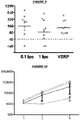
- Expression levels were measured in sera diluted 1:4 in IX Phospha-Light dilution buffer using a chemiluminescent alkaline phosphate substrate. 8-10 week old BALB/c mice (5/group) were injected intramuscularly on day 0, 50 ⁇ l per leg with 0.1 ⁇ g or 1 ⁇ g RNA dose. The same vector was also administered without the liposomes (in RNase free IX PBS) at 1 ⁇ g. Virion-packaged replicons were also tested.
- Virion-packaged replicons used herein were obtained by the methods of reference 45, where the alphavirus replicon is derived from the mutant VEEV or a chimera derived from the genome of VEEV engineered to contain the 3' UTR of Sindbis virus and a Sindbis virus packaging signal (PS), packaged by co-electroporating them into BHK cells with defective helper RNAs encoding the Sindbis virus capsid and glycoprotein genes.
- PS Sindbis virus packaging signal
- encapsulation increased SEAP levels by about 1 ⁇ 2 log at the 1 ⁇ g dose, and at day 6 expression from a 0.1 ⁇ g encapsulated dose matched levels seen with 1 ⁇ g unencapsulated dose.
- day 3 expression levels exceeded those achieved with VRPs (squares).
- VRPs squares
- RNA was formulated in the liposomes relative to the naked RNA control, even at a 10x lower dose. Expression was also higher relative to the VRP control, but the kinetics of expression were very different (see Figure 5 ). Delivery of the RNA with electroporation resulted in increased expression relative to the naked RNA control, but these levels were lower than with liposomes.
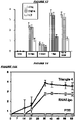
- a replicon was constructed to express full-length F protein from respiratory syncytial virus (RSV). This was delivered naked (1 ⁇ g), encapsulated in liposomes (0.1 or 1 ⁇ g), or packaged in virions (10 6 IU; "VRP") at days 0 and 21.
- Figure 7 shows anti-F IgG titers 2 weeks after the second dose, and the liposomes clearly enhance immunogenicity.
- Figure 8 shows titers 2 weeks later, by which point there was no statistical difference between the encapsulated RNA at 0.1 ⁇ g, the encapsulated RNA at 1 ⁇ g, or the VRP group.
- Neutralisation titers (measured as 60% plaque reduction, "PRNT60") were not significantly different in these three groups 2 weeks after the second dose ( Figure 9 ).
- Figure 12 shows both IgG and PRNT titers 4 weeks after the second dose.
- Figure 13 confirms that the RNA elicits a robust CD8 T cell response.
- liposome-encapsulated RNA induces essentially the same magnitude of immune response as seen with virion delivery.
- FIG. 11 shows IgG titers in mice receiving the replicon in naked form at 3 different doses, in liposomes at 4 different doses, or as VRP (10 6 IU).
- the response seen with 1 ⁇ g liposome-encapsulated RNA was statistically insignificant (ANOVA) when compared to VRP, but the higher response seen with 10 ⁇ g liposome-encapsulated RNA was statistically significant (p ⁇ 0.05) when compared to both of these groups.
- mice showed few visual signs of distress (weight loss, etc.) after receiving liposome-encapsulated RNA replicon, although a transient weight loss of 3-4% was seen after a second dose of 10 ⁇ g RNA. In contrast, delivery of 10 ⁇ g liposome-encapsulated DNA led to 8-10% weight loss.
- Bone marrow derived dendritic cells were obtained from wild-type mice or the "Resq" (rsq1) mutant strain.
- the mutant strain has a point mutation at the amino terminus of its TLR7 receptor which abolishes TLR7 signalling without affecting ligand binding [46].
- the cells were stimulated with replicon RNA formulated with DOTAP, lipofectamine 2000 or inside a liposome.
- IL-6 and INF ⁇ were induced in WT cells but this response was almost completely abrogated in mutant mice.
- RNA replicons were shown to induce several serum cytokines within 24 hours of intramuscular injection (IFN- ⁇ , IP-10 (CXCL-10), IL-6, KC, IL-5, IL-13, MCP-1, and MIP-a), whereas only MIP-1 was induced by naked RNA and liposome alone induced only IL-6.
- IFN- ⁇ was shown to contribute to the immune response to liposome-encapsulated RSV-F-encoding replicon because an anti-IFNa receptor (IFNAR1) antibody reduced F-specific serum IgG a 10-fold reduction after 2 vaccinations.
- IFNAR1 anti-IFNa receptor
- RNA replicons have generally been seen to elicit a balanced IgG1:IgG2a subtype profile in mice, sometimes with a higher IgG2a/IgG1 ratio than seen with electroporated DNA or with protein/MF59 immunizations (i.e. a Thl-type immune response).
- lipid expression could be increased 18x by adding 10% 1,2-diphytanoyl-sn-glycero-3-phosphoethanolamine (DPyPE) to the liposome, 10x by adding 10% 18:2 (cis) phosphatidylcholine, and 900x by instead using RV01.
- DPyPE 1,2-diphytanoyl-sn-glycero-3-phosphoethanolamine
- the vA317 self-replicating replicon encoding RSV F protein was administered to BALB/c mice, 4 or 8 animals per group, by bilateral intramuscular vaccinations (50 ⁇ L per leg) on days 0 and 21 with the replicon (1 ⁇ g) alone or formulated as liposomes with DlinDMA ("RV01") or DOTAP ("RV13").
- the RV01 liposomes had 40% DlinDMA, 10% DSPC, 48% cholesterol and 2% PEG-DMG, but with differing amounts of RNA.
- the RV13 liposomes had 40% DOTAP, 10% DPE, 48% cholesterol and 2% PEG-DMG.
- naked plasmid DNA (20 ⁇ g) expressing the same RSV-F antigen was delivered either using electroporation or with RV01(10) liposomes (0.1 ⁇ g DNA).
- RV01(10) liposomes 0.1 ⁇ g DNA.
- Liposomes were prepared by method (D) or method (B). For some liposomes made by method (D) a double or half amount of RNA was used.
- the Z average particle diameter, polydispersity index and encapsulation efficiency of the liposomes were as follows: RV Zav (nm) pdI % encapsulation Preparation RV01 (10) 158.6 0.088 90.7 (A) RV01 (08) 156.8 0.144 88.6 (A) RV01 (05) 136.5 0.136 99 (B) RV01 (09) 153.2 0.067 76.7 (A) RV01 (10) 134.7 0.147 87.8 ⁇ (A) RV13 (02) 128.3 0.179 97 (A) ⁇
- RV01(10) formulation the nucleic acid was DNA not RNA
- F-specific serum IgG titers were as follows: RV Day 14 Day 36 Naked DNA plasmid 439 6712 Naked A317 RNA 78 2291 RV01 (10) 3020 26170 RV01 (08) 2326 9720 RV01 (05) 5352 54907 RV01 (09) 4428 51316 RV01 (10) DNA 5 13 RV13 (02) 644 3616
- the proportion of T cells which are cytokine-positive and specific for RSV F51-66 peptide are as follows, showing only figures which are statistically significantly above zero: RV CD4+CD8- CD4-CD8+ IFN ⁇ IL2 IL5 TNF ⁇ IFN ⁇ IL2 IL5 TNF ⁇ Naked DNA plasmid 0.04 0.07 0.10 0.57 0.29 0.66 Naked A317 RNA 0.04 0.05 0.08 0.57 0.23 0.67 RV01 (10) 0.07 0.10 0.13 1.30 0.59 1.32 RV01 (08) 0.02 0.04 0.06 0.46 0.30 0.51 RV01 (05) 0.08 0.12 0.15 1.90 0.68 1.94 RV01 (09) 0.06 0.08 0.09 1.62 0.67 1.71 RV01 (10) DNA 0.03 0.08 RV13 (02) 0.03 0.04 0.06 1.15 0.41 1.18
- liposome formulations significantly enhanced immunogenicity relative to the naked RNA controls, as determined by increased F-specific IgG titers and T cell frequencies.
- RV01 RNA vaccines were more immunogenic than the RV13 vaccine.
- RV01 has a tertiary amine in the headgroup with a pKa of about 5.8, and also include unsaturated alkyl tails.
- RV13 has unsaturated alkyl tails but its headgroup has a quaternary amine and is very strongly cationic.
- the replicon was administered in encapsulated form (with two different purification protocols, 0.1 ⁇ g RNA), or mixed with the liposomes after their formation (a non-encapsulated "lipoplex", 0.1 ⁇ g RNA), or as naked RNA (1 ⁇ g).
- Figure 10 shows that the lipoplex gave the lowest levels of expression, showing that shows encapsulation is essential for potent expression.
- RNAs (i) 'vA317' replicon that expresses RSV-F i.e. the surface fusion glycoprotein of RSV; (ii) 'vA17' replicon that expresses GFP; and (iii) 'vA336' that is replication-defective and encodes GFP.
- RNAs were delivered either naked or with liposomes made by method (D). Empty liposomes were made by method (D) but without any RNA. Four liposome formulations had these characteristics: RNA Particle Size Zav (nm) Polydispersity RNA Encapsulation vA317 155.7 0.113 86.6% vA17 148.4 0.139 92% vA336 145.1 0.143 92.9% Empty 147.9 0.147 -
- mice 5 animals per group, were given bilateral intramuscular vaccinations (50 ⁇ L per leg) on days 0 and 21 with:
- Serum was collected for antibody analysis on days 14, 35 and 51.
- F-specific specific serum IgG titers were measured; if an individual animal had a titer of ⁇ 25 (limit of detection), it was assigned a titer of 5.
- spleens were harvested from mice at day 51 for T cell analysis, to determine cells which were cytokine-positive and specific for RSV F51-66 peptide (CD4+) or for RSV F peptides F85-93 and F249-258 (CD8+).
- IgG titers were as follows in the 10 groups and in non-immunised control mice: Day 1 2 3 4 - 14 22 1819 5 5 5 35 290 32533 9 19877 5 51 463 30511 18 20853 5
- RSV serum neutralization titers at day 51 were as follows: Day 1 2 3 4 51 35 50 24 38
- Animals showing RSV F-specific CD4+ splenic T cells on day 51 were as follows, where a number (% positive cells) is given only if the stimulated response was statistically significantly above zero: Cytokine 1 2 3 4 IFN- ⁇ 0.04 IL2 0.02 0.06 0.02 IL5 TNF ⁇ 0.03 0.05
- RNA within the liposomes is necessary for high immunogenicity, as a simple admixture of RNA and the liposomes (group 3) was not immunogenic (in fact, less immunogenic than naked RNA).
- mice received various combinations of (i) self-replicating RNA replicon encoding full-length RSV F protein (ii) self-replicating GFP-encoding RNA replicon (iii) GFP-encoding RNA replicon with a knockout in nsP4 which eliminates self-replication (iv) full-length RSV F-protein.
- Results in Figure 16 show that F-specific IgG responses required encapsulation in the liposome rather than mere co-delivery (compare groups C & D).
- a comparison of groups K, L and M shows that the RNA provided an adjuvant effect against co-delivered protein, and this effect was seen with both replicating and non-replicating RNA.
- vA142 encodes the full-length wild type surface fusion (F) glycoprotein of RSV but with the fusion peptide deleted, and the 3' end is formed by ribozyme-mediated cleavage. It was tested in three different mouse strains.
- mice were given bilateral intramuscular vaccinations (50 ⁇ L per leg) on days 0 and 22. Animals were divided into 8 test groups (5 animals per group) and a naive control (2 animals):
- F-specific serum IgG GMTs were: Day 1 2 3 4 5 6 7 8 14 82 2463 1789 2496 1171 1295 1293 5 35 1538 34181 25605 23579 13718 8887 73809 5
- F-specific IgG1 and IgG2a titers were as follows: IgG 1 2 3 4 5 6 7 IgG1 94 6238 4836 7425 8288 1817 78604 IgG2a 5386 77064 59084 33749 14437 17624 24
- RSV serum neutralizing antibody titers at days 35 and 49 were as follows (data are 60% plaque reduction neutralization titers of pools of 2-5 mice, 1 pool per group): Day 1 2 3 4 5 6 7 8 35 ⁇ 20 143 20 101 32 30 111 ⁇ 20 49 ⁇ 20 139 ⁇ 20 83 41 32 1009 ⁇ 20
- VRPs (1 ⁇ 10 6 IU) expressing the full-length wild-type surface fusion glycoprotein of RSV (fusion peptide deletion).
- F-specific IgG titers were: Day 1 2 3 4 5 6 7 8 9 14 1140 2133 1026 2792 3045 1330 2975 5 1101 35 1721 5532 3184 3882 9525 2409 39251 5 12139
- F-specific IgG1 and IgG2a titers were as follows: IgG 1 2 3 4 5 6 7 8 IgG1 66 247 14 328 468 92 56258 79 IgG2a 2170 7685 5055 6161 1573 2944 35 14229
- RSV serum neutralizing antibody titers at days 35 and 49 were as follows (data are 60% plaque reduction neutralization titers of pools of 2-5 mice, 1 pool per group): Day 1 2 3 4 5 6 7 8 9 35 ⁇ 20 27 29 22 36 ⁇ 20 28 ⁇ 20 ⁇ 20 49 ⁇ 20 44 30 23 36 ⁇ 20 33 ⁇ 20 37
- F-specific IgG titers were: Day 1 2 3 4 5 6 7 8 9 14 5 2049 1666 1102 298 984 3519 5 806 35 152 27754 19008 17693 3424 6100 62297 5 17249
- F-specific IgG1 and IgG2a titers were as follows: IgG 1 2 3 4 5 6 7 8 IgG1 5 1323 170 211 136 34 83114 189 IgG2a 302 136941 78424 67385 15667 27085 3800 72727
- RSV serum neutralizing antibody titers at days 35 and 49 were as follows: Day 1 2 3 4 5 6 7 8 9 35 ⁇ 20 539 260 65 101 95 443 ⁇ 20 595 49 ⁇ 20 456 296 35 82 125 1148 ⁇ 20 387
- RV01, RV05, RV17; pKa 5.8, 5.85, 6.1 were tested in three different inbred mouse strains.
- RV01 was more effective than RV17; for BALB/c and C3H strains RV05 was less effective than either RV01 or RV17, but it was more effective in B6 strain.
- the liposomes were more effective than two cationic nanoemulsions which were tested in parallel.
- RV01 liposomes with DLinDMA as the cationic lipid were used to deliver RNA replicons encoding cytomegalovirus (CMV) glycoproteins.
- CMV cytomegalovirus
- the "vA160" replicon encodes full-length glycoproteins H and L (gH/gL), whereas the "vA322" replicon encodes a soluble form (gHsol/gL).
- the two proteins are under the control of separate subgenomic promoters in a single replicon; co-administration of two separate vectors, one encoding gH and one encoding gL, did not give good results.
- mice 10 per group, were given bilateral intramuscular vaccinations (50 ⁇ L per leg) on days 0, 21 and 42 with VRPs expressing gH/gL (1x10 6 IU), VRPs expressing gHsol/gL (1x10 6 IU) and PBS as the controls.
- Two test groups received 1 ⁇ g of the vA160 or vA322 replicon formulated in liposomes (40% DlinDMA, 10% DSPC, 48% Chol, 2% PEG-DMG; made using method (D) but with 150 ⁇ g RNA batch size).
- the vA160 liposomes had a Zav diameter of 168nm, a pdI of 0.144, and 87.4% encapsulation.
- the vA322 liposomes had a Zav diameter of 162nm, a pdI of 0.131, and 90% encapsulation.
- the replicons were able to express two proteins from a single vector.
- CMV neutralization titers (the reciprocal of the serum dilution producing a 50% reduction in number of positive virus foci per well, relative to controls) were as follows: gH/gL VRP gHsol/gL VRP gH/gL liposome gHsol/gL liposome 4576 2393 4240 10062
- RNA expressing either a full-length or a soluble form of the CMV gH/gL complex thus elicited high titers of neutralizing antibodies, as assayed on epithelial cells.
- the average titers elicited by the liposome-encapsulated RNAs were at least as high as for the corresponding VRPs.
- RNA replicon was able to express two proteins from a single vector.
- the RNA replicon gave a 3wp3 titer of 11457, compared to 5516 with VRPs.
- the vA526 replicon expresses the CMV pentameric complex (gH-gL-UL128-UL130-UL-131) under the control of three subgenomic promoters: the first drives the expression of gH; the second drives expression of gL; the third drives the expression of the UL128-2A-UL130-2A-UL131 polyprotein, which contains two 2A cleavage sites between the three UL genes.
- the vA527 replicon expresses the CMV pentameric complex via three subgenomic promoters and two IRESs: the first subgenomic promoter drives the expression of gH; the second subgenomic promoter drives expression of gL; the third subgenomic promoter drives the expression of the UL128; UL130 is under the control of an EMCV IRES; UL131 is under control of an EV71 IRES.
- H liposome
- VRPs VRPs.
- mice 10 groups of 10 animals, were given bilateral intramuscular vaccinations (50 ⁇ L per leg) on days 0, 21 and 42 with:
- Sera were collected for immunological analysis on days 21 (3wp1), 42 (3wp2) and 63 (3wp3).
- CMV serum neutralization titers on days 21, 42 and 63 were: Vaccine Group 3wp1 3wp2 3wp3 1 126 6296 26525 2 N/A N/A 6769 3 N/A 3442 7348 4 N/A N/A 2265 5 347 9848 42319 6 179 12210 80000 7 1510 51200 130000 8 N/A N/A 845 9 N/A N/A 228 10 N/A N/A 413
- self-replicating RNA can be used to express multiple antigens from a single vector and to raise a potent and specific immune response.
- the replicon can express five antigens (CMV pentamric complex (gH-gL-UL128-UL130-UL-131) and raise a potent immune response.
- CMV pentamric complex gH-gL-UL128-UL130-UL-131
- Self-replicating RNA delivered in liposomes was able to elicit high titers of neutralizing antibody, as assayed on epithelial cells, at all time points assayed (3wp1, 3wp2, and 3wp3). These responses were superior to the corresponding VRPs and to cationic nanoemulsions.
- Hydrodynamic delivery employs the force generated by the rapid injection of a large volume of solution to overcome the physical barriers of cell membranes which prevent large and membrane-impermeable compounds from entering cells. This phenomenon has previously been shown to be useful for the intracellular delivery of DNA vaccines.
- a typical mouse delivery volume for intramuscular injection is 50 ⁇ l into the hind leg, which is a relatively high volume for a mouse leg muscle.
- a human intramuscular dose of ⁇ 0.5ml is relatively small. If immunogenicity in mice would be volume-dependent then the replicon vaccines' efficacy might be due, at least in part, on hydrodynamic forces, which would not be encouraging for use of the same vaccines in humans and larger animals.
- the vA317 replicon was delivered to BALB/c mice, 10 per group, by bilateral intramuscular vaccinations (5 or 50 per leg) on day 0 and 21:
- F-specific serum IgG GMTs were: Day 1 2 3 4 14 42 21 2669 2610 35 241 154 17655 18516
- vA311 A self-replicating RNA replicon (“vA311”) that expresses a luciferase reporter gene (luc) was used for studying the kinetics of protein expression after injection.
- mice Prior to vaccination mice were depilated. Mice were anesthetized (2% isoflurane in oxygen), hair was first removed with an electric razor and then chemical Nair. Bioluminescence data was then acquired using a Xenogen IVIS 200 imaging system (Caliper Life Sciences) on days 3, 7, 14, 21, 28, 35, 42, 49, 63 and 70. Five minutes prior to imaging mice were injected intraperitoneally with 8 mg/kg of luciferin solution. Animals were then anesthetized and transferred to the imaging system. Image acquisition times were kept constant as bioluminescence signal was measured with a cooled CCD camera.
- luciferase-expressing cells were seen to remain primarily at the site of RNA injection, and animals imaged after removal of quads showed no signal.
- luciferase expression was measured as average radiance over a period of 70 days (p/s/cm 2 /sr), and results were as follows for the 5 groups: Days 1 2 3 4 5 3 8.69E+07 3.33E+06 2.11E+06 9.71E+06 1.46E+07 7 1.04E+08 8.14E+06 1.83E+07 5.94E+07 1.64E+07 14 8.16E+07 2.91E+06 9.22E+06 3.48E+07 8.49E+05 21 1.27E+07 3.13E+05 6.79E+04 5.07E+05 6.79E+05 28 1.42E+07 6.37E+05 2.36E+04 4.06E+03 2.00E+03 35 1.21E+07 6.12E+05 2.08E+03 42 1.49E+07 8.70E+05 49 1.17E+07 2.04E+05 63 9.69E+06 1.72E+03 70 9.29E+06
- RNA formulated with cationic nanoemulsions showed measurable bioluminescence at day 3, which peaked at day 7 and then reduced to background levels by days 28 to 35.
- RNA When formulated in liposomes the RNA showed measurable bioluminescence at day 3, which peaked at day 7 and reduced to background levels by day 63.
- RNA delivered using VRPs showed enhanced bioluminescence at day 21 when compared to the formulated RNA, but expression had reduced to background levels by day 28.
- Electroporated DNA showed the highest level of bioluminescence at all time points measured and levels of bioluminescence did not reduce to background levels within the 70 days of the experiment.
- Liposome-encapsulated RNA encoding HIV gp140 was delivered to mice intramuscularly, intradermally, or subcutaneously. All three routes led to high serum IgG levels of HIV-specific antibodies ( Figure 15 ), exceeding titers seen in response to electroporated intramuscular DNA.
- vA317 expresses full-length RSV-F
- vA318 expresses truncated (transmembrane and cytoplasmic tail removed) RSV-F
- vA142 expresses RSV-F with its fusion peptide deleted
- vA140 expresses the truncated RSV-F also without its peptide.
- Cotton rats, 4 to 8 animals per group, were given intramuscular vaccinations (100 ⁇ L in one leg) on days 0 and 21 with the four different replicons at two doses (1.0 and 0.1 ⁇ g) formulated in liposomes made by method (D), but with a 150 ⁇ g RNA batch size.
- Control groups received a RSV-F subunit protein vaccine (5 ⁇ g) adjuvanted with alum (8 animals/group), VRPs expressing full-length RSV-F (1x10 6 IU, 8 animals/group), or naive control (4 animals/group). Serum was collected for antibody analysis on days 0, 21 and 34.
- F-specific serum IgG titers and RSV serum neutralizing antibody titers on day 21 and 34 were: Group IgG, day 21 IgG, day 34 NT, day 21 NT, day 34 1 ⁇ g vA317 915 2249 115 459 0.1 ⁇ g vA317 343 734 87 95 1 ⁇ g vA318 335 1861 50 277 0.1 ⁇ g vA318 129 926 66 239 1 ⁇ g vA142 778 4819 92 211 0.1 ⁇ g vA142 554 2549 78 141 1 ⁇ g vA140 182 919 96 194 0.1 ⁇ g vA140 61 332 29 72 5 ⁇ g F trimer subunit/alum 13765 86506 930 4744 1x10 6 IU VRP-F full 1877 19179 104 4528 Naive 5 5 10 15
- All four replicons evaluated in this study were immunogenic in cotton rats when delivered by liposome, although serum neutralization titers were at least ten-fold lower than those induced by adjuvanted protein vaccines or by VRPs.
- the liposome/RNA vaccines elicited serum F-specific IgG and RSV neutralizing antibodies after the first vaccination, and a second vaccination boosted the response effectively.
- F-specific IgG titers after the second vaccination with 1 ⁇ g replicon were 2- to 3-fold higher than after the second vaccination with 0.1 ⁇ g replicon.
- the four replicons elicited comparable antibody titers, suggesting that full length and truncated RSV-F, each with or without the fusion peptide, are similarly immunogenic in cotton rats.
- Cotton rats 2-8 animals per group, were given intramuscular vaccinations (100 ⁇ L in one leg) on days 0 and 21 with the replicons (0.1 or 1 ⁇ g) encapsulated in RV01 liposomes made by method (D) but with a 150 ⁇ g RNA batch size.
- Control groups received the RSV-F subunit protein vaccine (5 ⁇ g) adjuvanted with alum or VRPs expressing full-length RSV-F (1x10 6 IU, 8 animals/group). All these animals received a third vaccination (day 56) with RSV-F subunit protein vaccine (5 ⁇ g) adjuvanted with alum.
- F-specific serum IgG titers were as follows: Day 21 Day 35 Day 56 Day 70 1 ⁇ g vA318 260 1027 332 14263 0.1 ⁇ g vA318 95 274 144 2017 1 ⁇ g vA142 483 1847 1124 11168 0.1 ⁇ g vA142 1 ⁇ g vA317 314 841 871 4032 418 1452 11023 13852 1 ⁇ 10 6 VRP (F-full) 2075 3938 1596 14574 5 ⁇ g F trimer subunit/alum 12685 54526 25846 48864 Naive 5 5 5 5 5
- Serum neutralisation titers were as follows (60% RSV neutralization titers for 2 pools of 3-4 animals per group, GMT of these 2 pools per group): Day 21 Day 35 Day 56 Day 70 1 ⁇ g vA318 58 134 111 6344 0.1 ⁇ g vA318 41 102 63 6647 1 ⁇ g vA142 77 340 202 5427 0.1 ⁇ g vA142 35 65 56 2223 1 ⁇ g vA317 19 290 200 4189 1x10 6 VRP (F-full) 104 1539 558 2876 5 ⁇ g F trimer subunit/alum 448 4457 1630 3631 Naive 10 10 10 10
- Serum titers and neutralising titers for the extra group were as follows: Day 14 21 28 35 42 56 70 IgG 397 561 535 501 405 295 3589 NT 52 82 90 106 80 101 1348
- the replicons are confirmed as immunogenic in cotton rats, eliciting serum F-specific IgG and RSV neutralizing antibodies after the first vaccination.
- a second vaccination boosted the responses effectively.
- F-specific IgG titers after the second vaccination with 1.0 ⁇ g replicon were 1.5 to 4-fold higher than after the second vaccination with 0.1 ⁇ g replicon.
- the third vaccination did not boost titers in cotton rats previously vaccinated with F trimer subunit + alum, but it did provide a large boost to titers in cotton rats previously vaccinated with replicon.
- the RSV serum neutralization titers after two replicon vaccinations followed by protein boost were equal to or greater than titers induced by two or three sequential protein vaccinations.
- F-specific serum IgG and RSV neutralization titers induced by a single vaccination reached their peak around day 21 and were maintained through at least day 56 (50-70% drop in F-specific IgG titer, little change in RSV neutralization titer).
- a homologous second vaccination was given to these animals on day 56, and boosted antibody titers to a level at least equal to that achieved when the second vaccination was administered on day 21.
- vA368 replicon encodes the full-length wild type surface fusion glycoprotein of RSV with the fusion peptide deleted, with expression driven by the EV71 IRES.
- a control group received 5 ⁇ g alum-adjuvanted protein, and a naive control group was also included.
- RNA vaccine reduced the lung viral load by over three logs, from approximately 10 6 PFU/g in unvaccinated control cotton rats to less than 10 3 PFU/g in vaccinated cotton rats.
- RNA vaccines encoded human RSV F whereas the "Triangle 4" vaccine contains bovine RSV F, but the RSV F protein is highly conserved between BRSV and HRSV.
- the liposomes were made by method (E), except a 1.5 mg RNA batch size was used.
- Serum was collected for antibody analysis on days 0, 14, 21, 35, 42, 56, 63, 86, 100, 107, 114, 121, 128, 135, 146, 160, 167, 174, 181, 188, 195, and 202. If an individual animal had a titer below the limit of detection it was assigned a titer of 5
- Figure 14A shows F-specific IgG titers over the first 63 days.
- the RNA replicon was immunogenic in the cows via liposomes, although it gave lower titers than the licensed vaccine. All vaccinated cows showed F-specific antibodies after the second dose, and titers were very stable from the period of 2 to 6 weeks after the second dose (and were particularly stable for the RNA vaccines).
- Figure 14B shows F-specific serum IgG titers (GMT) over 210 days, and measured values up to day 202 were as follows: D0 3wpl D21 2wp2 D35 5wp2 D56 ⁇ 9wp2 D86 2wp3 D100 5wp3 D121 8wp3 D146 2wp4 D160 5wp4 D181 8wp4 D202 PBS 5 5 5 5 5 5 5 5 46 98 150 Liposome 5 5 12 11 20 768 428 74 20774 7022 2353 Triangle 4 5 5 5 1784 721 514 3406 2786 336 13376 4775 2133
- RSV serum neutralizing antibody titers were as follows: D0 2wp2 D35 5wp2 D56 2wp3 D100 3wp3 D107 4wp3 D114 8wp3 D146 2wp4 D160 3wp4 D167 4wp4 D174 PBS 12 10 10 14 18 20 14 10 10 10 Liposome 13 10 10 20 13 17 13 47 26 21 Triangle 4 12 15 13 39 38 41 13 24 26 15
- the material used for the second liposome dose was not freshly prepared, and the same lot of RNA showed a decrease in potency in a mouse immunogenicity study. Therefore it is possible that the vaccine would have been more immunogenic if fresh material had been used for all vaccinations.
- MF59-adjuvanted RSV-F was able to boost the IgG response in all previously vaccinated calves, and to boost complement-independent neutralization titers of calves previously vaccinated with RNA.
- RNA vaccines in large animals is particularly important in light of the loss in potency observed previously with DNA-based vaccines when moving from small animal models to larger animals and humans.
- a typical dose for a cow DNA vaccine would be 0.5-1 mg [47,48] and so it is very encouraging that immune responses were induced with only 66 ⁇ g of RNA.
- Table 1 useful phospholipids DDPC 1,2- Didecanoyl-sn-Glycero- 3 - phosphatidylcholine DEPA 1,2- Dierucoyl-sn-G lycero- 3 -Phosphate DEPC 1,2-Erucoyl-sn-Glycero-3-phosphatidylcholine DEPE 1,2-Dierucoyl-sn-Glycero-3-phosphatidylethanolamine DEPG 1,2- Dierucoyl-sn-Glycero-3 [Phosphatidyl-rac-(1-glycerol%) DLOPC 1,2-Linoleoyl-sn-Glycero-3-phosphatidylcholine DLPA 1,2-Dilauroyl-sn-Glycero-3-Phosphate DLPC 1,2-Dilauroyl-s
Landscapes
- Health & Medical Sciences (AREA)
- Life Sciences & Earth Sciences (AREA)
- Chemical & Material Sciences (AREA)
- General Health & Medical Sciences (AREA)
- Genetics & Genomics (AREA)
- Virology (AREA)
- Engineering & Computer Science (AREA)
- Pharmacology & Pharmacy (AREA)
- Veterinary Medicine (AREA)
- Medicinal Chemistry (AREA)
- Public Health (AREA)
- Animal Behavior & Ethology (AREA)
- Organic Chemistry (AREA)
- Epidemiology (AREA)
- Bioinformatics & Cheminformatics (AREA)
- Microbiology (AREA)
- Biotechnology (AREA)
- Wood Science & Technology (AREA)
- Zoology (AREA)
- General Engineering & Computer Science (AREA)
- Biomedical Technology (AREA)
- Immunology (AREA)
- Mycology (AREA)
- Molecular Biology (AREA)
- Chemical Kinetics & Catalysis (AREA)
- General Chemical & Material Sciences (AREA)
- Nuclear Medicine, Radiotherapy & Molecular Imaging (AREA)
- Biochemistry (AREA)
- Plant Pathology (AREA)
- Biophysics (AREA)
- Physics & Mathematics (AREA)
- Communicable Diseases (AREA)
- Oncology (AREA)
- Pulmonology (AREA)
- Dermatology (AREA)
- Dispersion Chemistry (AREA)
- Medicines Containing Antibodies Or Antigens For Use As Internal Diagnostic Agents (AREA)
- Pharmaceuticals Containing Other Organic And Inorganic Compounds (AREA)
- Medicinal Preparation (AREA)
- Manufacturing Of Micro-Capsules (AREA)
Priority Applications (5)
| Application Number | Priority Date | Filing Date | Title |
|---|---|---|---|
| HRP20221522TT HRP20221522T1 (hr) | 2010-07-06 | 2011-07-06 | Čestice za dostavljanje nalik virionu za samo-replicirajuće rna molekule |
| EP22200367.5A EP4180057A1 (de) | 2010-07-06 | 2011-07-06 | Virionabgabepartikel für selbstreplizierende rna-moleküle |
| SM20220500T SMT202200500T1 (it) | 2010-07-06 | 2011-07-06 | Particelle di rilascio simili a virioni per molecole di rna auto-replicanti |
| SI201132073T SI4005592T1 (sl) | 2010-07-06 | 2011-07-06 | Virionom podobni dostavni delci za samopodvojene molekule RNA |
| RS20221148A RS63817B1 (sr) | 2010-07-06 | 2011-07-06 | Čestice za isporuku slične virionu za molekule samoreplicirajuće rnk |
Applications Claiming Priority (4)
| Application Number | Priority Date | Filing Date | Title |
|---|---|---|---|
| US36182810P | 2010-07-06 | 2010-07-06 | |
| EP11741348.4A EP2590676B1 (de) | 2010-07-06 | 2011-07-06 | Virion-artige transferpartikel für selbstreplizierende rna-moleküle |
| PCT/US2011/043103 WO2012006376A2 (en) | 2010-07-06 | 2011-07-06 | Virion-like delivery particles for self-replicating rna molecules |
| EP16184271.1A EP3115061A1 (de) | 2010-07-06 | 2011-07-06 | Virionabgabepartikel für selbstreplizierende rna-moleküle |
Related Parent Applications (2)
| Application Number | Title | Priority Date | Filing Date |
|---|---|---|---|
| EP11741348.4A Division EP2590676B1 (de) | 2010-07-06 | 2011-07-06 | Virion-artige transferpartikel für selbstreplizierende rna-moleküle |
| EP16184271.1A Division EP3115061A1 (de) | 2010-07-06 | 2011-07-06 | Virionabgabepartikel für selbstreplizierende rna-moleküle |
Related Child Applications (2)
| Application Number | Title | Priority Date | Filing Date |
|---|---|---|---|
| EP22200367.5A Division EP4180057A1 (de) | 2010-07-06 | 2011-07-06 | Virionabgabepartikel für selbstreplizierende rna-moleküle |
| EP22200367.5A Division-Into EP4180057A1 (de) | 2010-07-06 | 2011-07-06 | Virionabgabepartikel für selbstreplizierende rna-moleküle |
Publications (3)
| Publication Number | Publication Date |
|---|---|
| EP4005592A1 true EP4005592A1 (de) | 2022-06-01 |
| EP4005592B1 EP4005592B1 (de) | 2022-10-12 |
| EP4005592B2 EP4005592B2 (de) | 2026-05-27 |
Family
ID=44629863
Family Applications (4)
| Application Number | Title | Priority Date | Filing Date |
|---|---|---|---|
| EP21204155.2A Active EP4005592B2 (de) | 2010-07-06 | 2011-07-06 | Virionabgabepartikel für selbstreplizierende rna-moleküle |
| EP22200367.5A Pending EP4180057A1 (de) | 2010-07-06 | 2011-07-06 | Virionabgabepartikel für selbstreplizierende rna-moleküle |
| EP16184271.1A Withdrawn EP3115061A1 (de) | 2010-07-06 | 2011-07-06 | Virionabgabepartikel für selbstreplizierende rna-moleküle |
| EP11741348.4A Revoked EP2590676B1 (de) | 2010-07-06 | 2011-07-06 | Virion-artige transferpartikel für selbstreplizierende rna-moleküle |
Family Applications After (3)
| Application Number | Title | Priority Date | Filing Date |
|---|---|---|---|
| EP22200367.5A Pending EP4180057A1 (de) | 2010-07-06 | 2011-07-06 | Virionabgabepartikel für selbstreplizierende rna-moleküle |
| EP16184271.1A Withdrawn EP3115061A1 (de) | 2010-07-06 | 2011-07-06 | Virionabgabepartikel für selbstreplizierende rna-moleküle |
| EP11741348.4A Revoked EP2590676B1 (de) | 2010-07-06 | 2011-07-06 | Virion-artige transferpartikel für selbstreplizierende rna-moleküle |
Country Status (22)
| Country | Link |
|---|---|
| US (2) | US11291635B2 (de) |
| EP (4) | EP4005592B2 (de) |
| JP (1) | JP6061849B2 (de) |
| CN (2) | CN103052400B (de) |
| AU (1) | AU2011276232B2 (de) |
| BR (1) | BR112013000392B8 (de) |
| CA (1) | CA2804494A1 (de) |
| CY (1) | CY1118080T1 (de) |
| DK (1) | DK2590676T3 (de) |
| ES (2) | ES2934240T3 (de) |
| FI (1) | FI4005592T3 (de) |
| HR (2) | HRP20161352T1 (de) |
| HU (2) | HUE060788T2 (de) |
| LT (2) | LT4005592T (de) |
| MX (1) | MX342608B (de) |
| PL (2) | PL4005592T3 (de) |
| PT (2) | PT4005592T (de) |
| RS (2) | RS63817B1 (de) |
| RU (1) | RU2013104890A (de) |
| SI (2) | SI4005592T1 (de) |
| SM (2) | SMT202200500T1 (de) |
| WO (1) | WO2012006376A2 (de) |
Families Citing this family (215)
| Publication number | Priority date | Publication date | Assignee | Title |
|---|---|---|---|---|
| PT3243526T (pt) | 2010-07-06 | 2020-03-04 | Glaxosmithkline Biologicals Sa | Distribuição de arn para despoletar múltiplas vias imunitárias |
| US10487332B2 (en) | 2010-07-06 | 2019-11-26 | Glaxosmithkline Biologicals Sa | Immunisation of large mammals with low doses of RNA |
| CN103153284B (zh) | 2010-07-06 | 2015-11-25 | 诺华股份有限公司 | 含有其pKa值有利于RNA递送的脂质的脂质体 |
| FI4005592T3 (fi) | 2010-07-06 | 2023-01-13 | Virionin kaltaisia kuljetuspartikkeleita itsereplikoituville rna-molekyyleille | |
| CA2804591C (en) | 2010-07-06 | 2019-01-22 | Novartis Ag | Cationic oil-in-water emulsions |
| CA2807552A1 (en) | 2010-08-06 | 2012-02-09 | Moderna Therapeutics, Inc. | Engineered nucleic acids and methods of use thereof |
| RS63890B1 (sr) * | 2010-08-31 | 2023-02-28 | Glaxosmithkline Biologicals Sa | Mali lipozomi za isporuku rnk koja kodira imunogen |
| JP5911870B2 (ja) | 2010-08-31 | 2016-04-27 | ノバルティス アーゲー | 免疫原をコードするrnaの送達のためのpeg化リポソーム |
| EP2857499A1 (de) | 2010-10-01 | 2015-04-08 | Moderna Therapeutics, Inc. | Manipulierte Nukleinsäuren und Verfahren zur Verwendung davon |
| KR102266691B1 (ko) * | 2010-10-11 | 2021-06-23 | 노파르티스 아게 | 항원 전달 플랫폼 |
| CA2831613A1 (en) | 2011-03-31 | 2012-10-04 | Moderna Therapeutics, Inc. | Delivery and formulation of engineered nucleic acids |
| EP4074693A1 (de) | 2011-06-08 | 2022-10-19 | Translate Bio, Inc. | Spaltbare lipide |
| KR20220025112A (ko) | 2011-06-08 | 2022-03-03 | 샤이어 휴먼 지네틱 테라피즈 인크. | Mrna 전달을 위한 지질 나노입자 조성물 및 방법 |
| JP2014522842A (ja) | 2011-07-06 | 2014-09-08 | ノバルティス アーゲー | 免疫原性組み合わせ組成物およびその使用 |
| US9655845B2 (en) | 2011-07-06 | 2017-05-23 | Glaxosmithkline Biologicals, S.A. | Oil-in-water emulsions that contain nucleic acids |
| RU2014104090A (ru) * | 2011-07-06 | 2015-08-20 | Новартис Аг | Липосомы с эффективным соотношением n:p для доставки молекул phk |
| US9636410B2 (en) | 2011-07-06 | 2017-05-02 | Glaxosmithkline Biologicals Sa | Cationic oil-in-water emulsions |
| PT2750707T (pt) | 2011-08-31 | 2019-01-23 | Glaxosmithkline Biologicals Sa | Lipossomas peguilados para distribuição de arn que codifica imunogénio |
| US9464124B2 (en) | 2011-09-12 | 2016-10-11 | Moderna Therapeutics, Inc. | Engineered nucleic acids and methods of use thereof |
| PT3682905T (pt) | 2011-10-03 | 2022-04-07 | Modernatx Inc | Nucleósidos, nucleótidos e ácidos nucleicos modificados e respetivas utilizações |
| BR112014008694A2 (pt) * | 2011-10-11 | 2017-06-20 | Novartis Ag | moléculas de ácido nucleico policistrônico recombinante |
| ES2923757T3 (es) | 2011-12-16 | 2022-09-30 | Modernatx Inc | Composiciones de ARNm modificado |
| WO2013151664A1 (en) | 2012-04-02 | 2013-10-10 | modeRNA Therapeutics | Modified polynucleotides for the production of proteins |
| CN104411338A (zh) | 2012-04-02 | 2015-03-11 | 现代治疗公司 | 用于产生与人类疾病相关的生物制剂和蛋白质的修饰多核苷酸 |
| US9572897B2 (en) | 2012-04-02 | 2017-02-21 | Modernatx, Inc. | Modified polynucleotides for the production of cytoplasmic and cytoskeletal proteins |
| US10501512B2 (en) | 2012-04-02 | 2019-12-10 | Modernatx, Inc. | Modified polynucleotides |
| US9283287B2 (en) | 2012-04-02 | 2016-03-15 | Moderna Therapeutics, Inc. | Modified polynucleotides for the production of nuclear proteins |
| EA201492055A1 (ru) | 2012-06-08 | 2015-11-30 | Шир Хьюман Дженетик Терапис, Инк. | ИНГАЛЯЦИОННАЯ ДОСТАВКА мРНК В НЕЛЕГОЧНЫЕ КЛЕТКИ-МИШЕНИ |
| US9512456B2 (en) | 2012-08-14 | 2016-12-06 | Modernatx, Inc. | Enzymes and polymerases for the synthesis of RNA |
| PT2922554T (pt) | 2012-11-26 | 2022-06-28 | Modernatx Inc | Arn modificado nas porções terminais |
| AU2014204826A1 (en) | 2013-01-10 | 2015-07-09 | Seqirus UK Limited | Influenza virus immunogenic compositions and uses thereof |
| EP3434774A1 (de) | 2013-01-17 | 2019-01-30 | ModernaTX, Inc. | Signal-sensor-polynukleotide zur veränderung zellulärer phänotypen |
| US20160024181A1 (en) | 2013-03-13 | 2016-01-28 | Moderna Therapeutics, Inc. | Long-lived polynucleotide molecules |
| US10258698B2 (en) | 2013-03-14 | 2019-04-16 | Modernatx, Inc. | Formulation and delivery of modified nucleoside, nucleotide, and nucleic acid compositions |
| PL2970948T3 (pl) | 2013-03-15 | 2019-06-28 | Glaxosmithkline Biologicals Sa | Sposoby oczyszczania rna |
| US8980864B2 (en) | 2013-03-15 | 2015-03-17 | Moderna Therapeutics, Inc. | Compositions and methods of altering cholesterol levels |
| PL3019619T3 (pl) | 2013-07-11 | 2022-01-10 | Modernatx, Inc. | Kompozycje zawierające syntetyczne polinkleotydy kodujące białka powiązane z crispr i syntetyczne sgrna oraz sposoby ich stosowania |
| CA2923029A1 (en) | 2013-09-03 | 2015-03-12 | Moderna Therapeutics, Inc. | Chimeric polynucleotides |
| WO2015034925A1 (en) | 2013-09-03 | 2015-03-12 | Moderna Therapeutics, Inc. | Circular polynucleotides |
| US10023626B2 (en) | 2013-09-30 | 2018-07-17 | Modernatx, Inc. | Polynucleotides encoding immune modulating polypeptides |
| KR20160067219A (ko) | 2013-10-03 | 2016-06-13 | 모더나 세라퓨틱스, 인코포레이티드 | 저밀도 지단백질 수용체를 암호화하는 폴리뉴클레오타이드 |
| WO2015126477A1 (en) * | 2013-11-08 | 2015-08-27 | Tyrx, Inc. | Polymeric drug delivery system for treating surgical complications |
| US10842859B2 (en) * | 2014-03-25 | 2020-11-24 | Yale University | Uses of parasite macrophage migration inhibitory factors |
| HRP20220070T1 (hr) | 2014-04-23 | 2022-04-01 | Modernatx, Inc. | Cjepiva nukleinske kiseline |
| EP2974739A1 (de) | 2014-07-15 | 2016-01-20 | Novartis AG | RSVF-Trimerisierungsdomänen |
| EP3154576A1 (de) | 2014-06-13 | 2017-04-19 | GlaxoSmithKline Biologicals S.A. | Immunogene kombinationen |
| WO2016011226A1 (en) | 2014-07-16 | 2016-01-21 | Moderna Therapeutics, Inc. | Chimeric polynucleotides |
| EP3171895A1 (de) | 2014-07-23 | 2017-05-31 | Modernatx, Inc. | Modifizierte polynukleotide zur herstellung von intrabodys |
| EP3061826A1 (de) | 2015-02-27 | 2016-08-31 | Novartis AG | Flavivirus-replikons |
| AU2016251687C1 (en) | 2015-04-22 | 2023-07-27 | CureVac SE | RNA containing composition for treatment of tumor diseases |
| MA42502A (fr) | 2015-07-21 | 2018-05-30 | Modernatx Inc | Vaccins contre une maladie infectieuse |
| US11364292B2 (en) | 2015-07-21 | 2022-06-21 | Modernatx, Inc. | CHIKV RNA vaccines |
| HRP20220156T1 (hr) | 2015-09-17 | 2022-04-15 | Modernatx, Inc. | Spojevi i pripravci za unutarstaničnu isporuku terapeutskih sredstava |
| EP3359670B2 (de) | 2015-10-05 | 2024-02-14 | ModernaTX, Inc. | Verfahren zur therapeutischen verabreichung messenger-ribonukleinsäure-arzneimitteln |
| US20180271970A1 (en) * | 2015-10-22 | 2018-09-27 | Modernatx, Inc. | Respiratory syncytial virus vaccine |
| WO2017070624A1 (en) | 2015-10-22 | 2017-04-27 | Modernatx, Inc. | Tropical disease vaccines |
| EP3364981A4 (de) * | 2015-10-22 | 2019-08-07 | ModernaTX, Inc. | Impfstoff gegen das humane cytomegalovirus |
| MA45209A (fr) | 2015-10-22 | 2019-04-17 | Modernatx Inc | Vaccins contre les maladies sexuellement transmissibles |
| PE20181531A1 (es) * | 2015-10-22 | 2018-09-26 | Modernatx Inc | Vacuna del virus herpes simple |
| SG11201803360UA (en) * | 2015-10-22 | 2018-05-30 | Modernatx Inc | Nucleic acid vaccines for varicella zoster virus (vzv) |
| MA46023A (fr) * | 2015-10-22 | 2019-07-03 | Modernatx Inc | Vaccin contre le virus de la grippe à large spectre |
| CN108368028B (zh) | 2015-10-28 | 2021-09-03 | 爱康泰生治疗公司 | 用于递送核酸的新型脂质和脂质纳米颗粒制剂 |
| DK3386484T3 (da) | 2015-12-10 | 2022-07-04 | Modernatx Inc | Sammensætninger og fremgangsmåder til afgivelse af terapeutiske midler |
| RS63051B1 (sr) | 2015-12-22 | 2022-04-29 | Modernatx Inc | Jedinjenja i kompozicije za intracelularnu isporuku agenasa |
| SMT202200310T1 (it) | 2015-12-23 | 2022-09-14 | Modernatx Inc | Metodi di utilizzo dei polinucleotidi codificanti il ligando di ox40 |
| US12678515B2 (en) | 2015-12-30 | 2026-07-14 | Acuitas Therapeutics, Inc. | Lipids and lipid nanoparticle formulations for delivery of nucleic acids |
| US20190241658A1 (en) | 2016-01-10 | 2019-08-08 | Modernatx, Inc. | Therapeutic mRNAs encoding anti CTLA-4 antibodies |
| US10022436B2 (en) | 2016-01-11 | 2018-07-17 | Verndari, Inc. | Microneedle compositions and methods of using same |
| WO2017162265A1 (en) | 2016-03-21 | 2017-09-28 | Biontech Rna Pharmaceuticals Gmbh | Trans-replicating rna |
| US12128113B2 (en) | 2016-05-18 | 2024-10-29 | Modernatx, Inc. | Polynucleotides encoding JAGGED1 for the treatment of Alagille syndrome |
| WO2017208191A1 (en) | 2016-06-02 | 2017-12-07 | Glaxosmithkline Biologicals Sa | Zika viral antigen constructs |
| WO2018060288A1 (en) | 2016-09-29 | 2018-04-05 | Glaxosmithkline Biologicals S.A. | Compositions and methods of treatment of persistent hpv infection |
| GB201616904D0 (en) | 2016-10-05 | 2016-11-16 | Glaxosmithkline Biologicals Sa | Vaccine |
| EP3528821A4 (de) | 2016-10-21 | 2020-07-01 | ModernaTX, Inc. | Impfstoff gegen das humane cytomegalovirus |
| US12491261B2 (en) | 2016-10-26 | 2025-12-09 | Acuitas Therapeutics, Inc. | Lipid nanoparticle formulations |
| EP3538067A1 (de) | 2016-11-08 | 2019-09-18 | Modernatx, Inc. | Stabilisierte formulierungen von lipidnanopartikeln |
| MA46766A (fr) | 2016-11-11 | 2019-09-18 | Modernatx Inc | Vaccin antigrippal |
| EP3541416A1 (de) | 2016-11-17 | 2019-09-25 | GlaxoSmithKline Biologicals SA | Antigenkonstrukte gegen zika-virus |
| EP3551193A4 (de) | 2016-12-08 | 2020-08-19 | Modernatx, Inc. | Nukleinsäureimpstoffe gegen atemwegsvirus |
| KR20240144261A (ko) | 2017-02-28 | 2024-10-02 | 사노피 | 치료적 rna |
| WO2018170322A1 (en) | 2017-03-15 | 2018-09-20 | Modernatx, Inc. | Crystal forms of amino lipids |
| JP7332478B2 (ja) | 2017-03-15 | 2023-08-23 | モデルナティエックス インコーポレイテッド | 脂質ナノ粒子製剤 |
| WO2018170260A1 (en) | 2017-03-15 | 2018-09-20 | Modernatx, Inc. | Respiratory syncytial virus vaccine |
| WO2018170256A1 (en) | 2017-03-15 | 2018-09-20 | Modernatx, Inc. | Herpes simplex virus vaccine |
| WO2018170270A1 (en) | 2017-03-15 | 2018-09-20 | Modernatx, Inc. | Varicella zoster virus (vzv) vaccine |
| RS63953B1 (sr) | 2017-03-15 | 2023-02-28 | Modernatx Inc | Jedinjenje i kompozicije za intracelularnu isporuku terapeutskih sredstava |
| US11576961B2 (en) | 2017-03-15 | 2023-02-14 | Modernatx, Inc. | Broad spectrum influenza virus vaccine |
| KR102945203B1 (ko) | 2017-05-08 | 2026-03-31 | 시애틀 프로젝트 코포레이션 | 알파바이러스 신생항원 벡터 |
| EP4253544A3 (de) | 2017-05-18 | 2023-12-20 | ModernaTX, Inc. | Modifizierte messenger-rna mit funktionellen rna-elementen |
| AU2018270111B2 (en) | 2017-05-18 | 2022-07-14 | Modernatx, Inc. | Polynucleotides encoding tethered interleukin-12 (IL12) polypeptides and uses thereof |
| PL3638776T3 (pl) | 2017-06-14 | 2026-02-23 | Technische Universität Dresden | Sposoby i środki do zmiany genetycznej genomów z wykorzystaniem projektowanych enzymów rekombinujących dna |
| EP3638678B1 (de) | 2017-06-14 | 2025-12-03 | ModernaTX, Inc. | Verbindungen und zusammensetzungen zur intrazellulären verabreichung von wirkstoffen |
| EP3638292A1 (de) | 2017-06-14 | 2020-04-22 | ModernaTX, Inc. | Für koagulationsfaktor viii kodierende polynukleotide |
| MA49421A (fr) | 2017-06-15 | 2020-04-22 | Modernatx Inc | Formulations d'arn |
| WO2019023566A1 (en) * | 2017-07-28 | 2019-01-31 | Janssen Vaccines & Prevention B.V. | METHODS AND COMPOSITIONS FOR PROVIDING IMMUNIZATION AGAINST Heterologous ARNREP |
| JP7355731B2 (ja) | 2017-08-16 | 2023-10-03 | アクイタス セラピューティクス インコーポレイテッド | 脂質ナノ粒子製剤における使用のための脂質 |
| MX2020002348A (es) | 2017-08-31 | 2020-10-08 | Modernatx Inc | Métodos de elaboración de nanopartículas lipídicas. |
| EP3681514A4 (de) | 2017-09-14 | 2021-07-14 | ModernaTX, Inc. | Rna-vakzine gegen zika-virus |
| EP3461497A1 (de) | 2017-09-27 | 2019-04-03 | GlaxoSmithKline Biologicals S.A. | Virale antigene |
| US11939601B2 (en) | 2017-11-22 | 2024-03-26 | Modernatx, Inc. | Polynucleotides encoding phenylalanine hydroxylase for the treatment of phenylketonuria |
| JP7424976B2 (ja) | 2017-11-22 | 2024-01-30 | モダーナティエックス・インコーポレイテッド | プロピオン酸血症の治療用のプロピオニルCoAカルボキシラーゼアルファ及びベータサブユニットをコードするポリヌクレオチド |
| EP3714048B1 (de) | 2017-11-22 | 2025-04-09 | ModernaTX, Inc. | Für ornithintranscarbamylase codierende polynukleotide zur behandlung von harnstoffzyklusstörungen |
| EA202091517A1 (ru) | 2017-12-19 | 2020-11-03 | Янссен Сайенсиз Айрлэнд Анлимитед Компани | Способы и устройство для доставки вакцин против вируса гепатита b (hbv) |
| EA202091513A1 (ru) | 2017-12-19 | 2020-09-09 | Янссен Сайенсиз Айрлэнд Анлимитед Компани | Вакцины против вируса гепатита b (hbv) и их применение |
| EA202091516A1 (ru) | 2017-12-19 | 2020-11-03 | Янссен Сайенсиз Айрлэнд Анлимитед Компани | Способы и композиции для индукции иммунного ответа против вируса гепатита b (hbv) |
| KR20200101394A (ko) | 2017-12-20 | 2020-08-27 | 글락소스미스클라인 바이오로지칼즈 에스.에이. | 엡스타인-바 바이러스 항원 구축물 |
| KR20240134250A (ko) | 2018-01-04 | 2024-09-06 | 아이코닉 테라퓨틱스, 인코포레이티드 | 항-조직 인자 항체, 항체-약물 결합체, 및 관련 방법 |
| US11802146B2 (en) | 2018-01-05 | 2023-10-31 | Modernatx, Inc. | Polynucleotides encoding anti-chikungunya virus antibodies |
| US11911453B2 (en) | 2018-01-29 | 2024-02-27 | Modernatx, Inc. | RSV RNA vaccines |
| CA3100050A1 (en) | 2018-05-11 | 2019-11-14 | Lupagen, Inc. | Systems and methods for closed loop, real-time modifications of patient cells |
| MA52709A (fr) | 2018-05-23 | 2021-03-31 | Modernatx Inc | Administration d'adn |
| EP3581201A1 (de) | 2018-06-15 | 2019-12-18 | GlaxoSmithKline Biologicals S.A. | Escherichia coli o157:h7 polypeptide und verwendungen davon |
| WO2020023390A1 (en) | 2018-07-25 | 2020-01-30 | Modernatx, Inc. | Mrna based enzyme replacement therapy combined with a pharmacological chaperone for the treatment of lysosomal storage disorders |
| AU2019321186B2 (en) | 2018-08-17 | 2024-05-23 | Glaxosmithkline Biologicals Sa | Immunogenic compositions and uses thereof |
| MA53545A (fr) | 2018-09-02 | 2021-07-14 | Modernatx Inc | Polynucléotides codant pour l'acyl-coa déshydrogénase à très longue chaîne pour le traitement de l'insuffisance en acyl-coa déshydrogénase à très longue chaîne |
| JP2022500436A (ja) | 2018-09-13 | 2022-01-04 | モダーナティエックス・インコーポレイテッドModernaTX, Inc. | 糖原病を処置するためのグルコース−6−ホスファターゼをコードするポリヌクレオチド |
| US12644102B2 (en) | 2018-09-13 | 2026-06-02 | Modernatx, Inc. | Polynucleotides encoding branched-chain alpha-ketoacid dehydrogenase complex E1-α, E1-β, and E2 subunits for the treatment of maple syrup urine disease |
| MA53615A (fr) | 2018-09-14 | 2021-07-21 | Modernatx Inc | Polynucléotides codant pour le polypeptide a1, de la famille de l'uridine diphosphate glycosyltransférase 1, pour le traitement du syndrome de crigler-najjar |
| CN112996854B (zh) | 2018-09-19 | 2024-08-30 | 摩登纳特斯有限公司 | 高纯度peg脂质和其用途 |
| US12151029B2 (en) | 2018-09-19 | 2024-11-26 | Modernatx, Inc. | PEG lipids and uses thereof |
| EP3853202A1 (de) | 2018-09-19 | 2021-07-28 | ModernaTX, Inc. | Verbindungen und zusammensetzungen zur intrazellulären verabreichung von therapeutischen wirkstoffen |
| US12090235B2 (en) | 2018-09-20 | 2024-09-17 | Modernatx, Inc. | Preparation of lipid nanoparticles and methods of administration thereof |
| WO2020069169A1 (en) | 2018-09-27 | 2020-04-02 | Modernatx, Inc. | Polynucleotides encoding arginase 1 for the treatment of arginase deficiency |
| KR20210090650A (ko) | 2018-11-07 | 2021-07-20 | 그릿스톤 바이오, 인코포레이티드 | 알파바이러스 신생항원 벡터 및 인터페론 억제제 |
| TWI852977B (zh) | 2019-01-10 | 2024-08-21 | 美商健生生物科技公司 | 前列腺新抗原及其用途 |
| CN113939282A (zh) | 2019-01-31 | 2022-01-14 | 摩登纳特斯有限公司 | 制备脂质纳米颗粒的方法 |
| US11351242B1 (en) | 2019-02-12 | 2022-06-07 | Modernatx, Inc. | HMPV/hPIV3 mRNA vaccine composition |
| DK3934673T3 (da) * | 2019-03-08 | 2026-04-07 | Massachusetts Inst Technology | Syntetisk onkolytisk lnp-replikon-rna og anvendelser til cancerimmunterapi |
| MA55321A (fr) | 2019-03-15 | 2022-01-19 | Modernatx Inc | Vaccins à base d'arn contre le vih |
| WO2020227642A1 (en) | 2019-05-08 | 2020-11-12 | Modernatx, Inc. | Compositions for skin and wounds and methods of use thereof |
| SG11202113187WA (en) | 2019-05-30 | 2021-12-30 | Gritstone Bio Inc | Modified adenoviruses |
| WO2020255010A1 (en) | 2019-06-18 | 2020-12-24 | Janssen Sciences Ireland Unlimited Company | Combination of recombinant interleukin 12 construct and hepatitis b virus (hbv) vaccines |
| CN114630675A (zh) | 2019-06-18 | 2022-06-14 | 爱尔兰詹森科学公司 | 乙型肝炎病毒(hbv)疫苗和抗pd-1或抗pd-l1抗体的组合 |
| EP3986915A1 (de) | 2019-06-18 | 2022-04-27 | Janssen Sciences Ireland Unlimited Company | Konstrukt aus rekombinantem interleukin 12 und verwendungen davon |
| CA3143634A1 (en) | 2019-06-18 | 2020-12-24 | Janssen Sciences Ireland Unlimited Company | Combination of hepatitis b virus (hbv) vaccines and anti-pd-1 antibody |
| JP2022536945A (ja) | 2019-06-18 | 2022-08-22 | ヤンセン・サイエンシズ・アイルランド・アンリミテッド・カンパニー | B型肝炎ウイルス(HBV)ワクチンおよびHBVを標的化するRNAiの組合せ |
| EP3986563A1 (de) | 2019-06-20 | 2022-04-27 | Janssen Sciences Ireland Unlimited Company | Lipidnanopartikel oder liposomenabgabe von hepatitis-b-virus-(hbv)-impfstoffen |
| MX2022000879A (es) | 2019-07-21 | 2022-05-02 | Glaxosmithkline Biologicals Sa | Vacuna viral terapeutica. |
| AU2020351220A1 (en) | 2019-09-19 | 2022-04-07 | Modernatx, Inc. | Carbonate containing lipid compounds and compositions for intracellular delivery of therapeutic agents |
| EP4031524A1 (de) | 2019-09-19 | 2022-07-27 | ModernaTX, Inc. | Lipidverbindungen mit verzweigtem ende und zusammensetzungen zur intrazellulären abgabe therapeutischer mittel |
| EP4061405A1 (de) | 2019-11-18 | 2022-09-28 | Janssen Biotech, Inc. | Impfstoffe auf der basis von mutantem calr und jak2 und deren verwendungen |
| JP2023517644A (ja) | 2020-03-09 | 2023-04-26 | アークトゥラス・セラピューティクス・インコーポレイテッド | コロナウイルスワクチン組成物及び方法 |
| US12569553B2 (en) | 2020-03-09 | 2026-03-10 | Dynavax Technologies Corporation | Shingles vaccines comprising a TLR9 agonist |
| US20230364219A1 (en) | 2020-04-16 | 2023-11-16 | Glaxosmithkline Biologicals Sa | Sars cov-2 spike protein construct |
| IL298363A (en) * | 2020-05-20 | 2023-01-01 | Flagship Pioneering Innovations Vi Llc | Immunogenic compositions and uses thereof |
| AU2021285812A1 (en) | 2020-06-01 | 2023-01-05 | Modernatx, Inc. | Phenylalanine hydroxylase variants and uses thereof |
| WO2021245611A1 (en) | 2020-06-05 | 2021-12-09 | Glaxosmithkline Biologicals Sa | Modified betacoronavirus spike proteins |
| EP4171629A1 (de) | 2020-06-29 | 2023-05-03 | GlaxoSmithKline Biologicals S.A. | Adjuvans |
| EP4175664A2 (de) | 2020-07-06 | 2023-05-10 | Janssen Biotech, Inc. | Prostata-neoantigene und ihre verwendungen |
| WO2022009049A1 (en) | 2020-07-06 | 2022-01-13 | Janssen Biotech, Inc. | Prostate neoantigens and their uses |
| IL299571A (en) | 2020-07-08 | 2023-02-01 | Janssen Sciences Ireland Unlimited Co | Rna replicon vaccines against hbv |
| KR20230051172A (ko) | 2020-07-16 | 2023-04-17 | 아퀴타스 테라퓨틱스 인크. | 지질 나노 입자에 사용하기 위한 양이온성 지질 |
| IL300026A (en) | 2020-08-06 | 2023-03-01 | Gritstone Bio Inc | Multiepitope vaccine cassettes |
| US12178921B2 (en) | 2020-08-14 | 2024-12-31 | Arcturus Therapeutics, Inc. | Method of lyophilizing lipid nanoparticles |
| US11406703B2 (en) | 2020-08-25 | 2022-08-09 | Modernatx, Inc. | Human cytomegalovirus vaccine |
| CA3199784A1 (en) | 2020-11-13 | 2022-05-19 | Modernatx, Inc. | Polynucleotides encoding cystic fibrosis transmembrane conductance regulator for the treatment of cystic fibrosis |
| TW202245809A (zh) | 2020-12-18 | 2022-12-01 | 美商詹森藥物公司 | 用於治療b型肝炎病毒感染之組合療法 |
| US20240299309A1 (en) * | 2020-12-22 | 2024-09-12 | CureVac SE | Pharmaceutical composition comprising lipid-based carriers encapsulating rna for multidose administration |
| US20240301006A1 (en) | 2020-12-23 | 2024-09-12 | Glaxosmithkline Biologicals Sa | Self-amplifying messenger rna |
| AU2021412833A1 (en) | 2020-12-28 | 2023-07-06 | Arcturus Therapeutics, Inc. | Transcription activator-like effector nucleases (talens) targeting hbv |
| EP4032546A1 (de) | 2021-01-20 | 2022-07-27 | GlaxoSmithKline Biologicals S.A. | Therapeutischer viraler impfstoff |
| US11524023B2 (en) | 2021-02-19 | 2022-12-13 | Modernatx, Inc. | Lipid nanoparticle compositions and methods of formulating the same |
| WO2022204380A1 (en) | 2021-03-24 | 2022-09-29 | Modernatx, Inc. | Lipid nanoparticles containing polynucleotides encoding propionyl-coa carboxylase alpha and beta subunits and uses thereof |
| WO2022204369A1 (en) | 2021-03-24 | 2022-09-29 | Modernatx, Inc. | Polynucleotides encoding methylmalonyl-coa mutase for the treatment of methylmalonic acidemia |
| WO2022204390A1 (en) | 2021-03-24 | 2022-09-29 | Modernatx, Inc. | Lipid nanoparticles containing polynucleotides encoding phenylalanine hydroxylase and uses thereof |
| US20240207374A1 (en) | 2021-03-24 | 2024-06-27 | Modernatx, Inc. | Lipid nanoparticles containing polynucleotides encoding glucose-6-phosphatase and uses thereof |
| US20240189449A1 (en) | 2021-03-24 | 2024-06-13 | Modernatx, Inc. | Lipid nanoparticles and polynucleotides encoding ornithine transcarbamylase for the treatment of ornithine transcarbamylase deficiency |
| EP4313152A1 (de) | 2021-03-26 | 2024-02-07 | GlaxoSmithKline Biologicals S.A. | Immunogene zusammensetzungen |
| US20240285755A1 (en) | 2021-05-24 | 2024-08-29 | Glaxosmithkline Biologicals Sa | Adjuvants |
| WO2022259191A1 (en) | 2021-06-09 | 2022-12-15 | Glaxosmithkline Biologicals Sa | Release assay for determining potency of self-amplifying rna drug product and methods for using |
| US20240384277A1 (en) | 2021-06-15 | 2024-11-21 | Modernatx, Inc. | Engineered polynucleotides for cell-type or microenvironment-specific expression |
| US20240376445A1 (en) | 2021-06-22 | 2024-11-14 | Modernatx, Inc. | Polynucleotides encoding uridine diphosphate glycosyltransferase 1 family, polypeptide a1 for the treatment of crigler-najjar syndrome |
| WO2023020993A1 (en) | 2021-08-16 | 2023-02-23 | Glaxosmithkline Biologicals Sa | Novel methods |
| US20240350410A1 (en) | 2021-08-16 | 2024-10-24 | Glaxosmithkline Biologicals Sa | Freeze-drying of lipid nanoparticles (lnps) encapsulating rna and formulations thereof |
| WO2023020992A1 (en) | 2021-08-16 | 2023-02-23 | Glaxosmithkline Biologicals Sa | Novel methods |
| US20250134824A1 (en) | 2021-08-16 | 2025-05-01 | Glaxosmithkline Biologicals Sa | Low-dose lyophilized rna vaccines and methods for preparing and using the same |
| WO2023020994A1 (en) | 2021-08-16 | 2023-02-23 | Glaxosmithkline Biologicals Sa | Novel methods |
| WO2023031855A1 (en) | 2021-09-03 | 2023-03-09 | Glaxosmithkline Biologicals Sa | Substitution of nucleotide bases in self-amplifying messenger ribonucleic acids |
| US20250017867A1 (en) | 2021-10-01 | 2025-01-16 | Modernatx, Inc. | Polynucleotides encoding relaxin for the treatment of fibrosis and/or cardiovascular disease |
| CN115960922A (zh) * | 2021-10-09 | 2023-04-14 | 吴可行 | 自复制rna分子设计及其应用 |
| CA3232485A1 (en) | 2021-11-15 | 2023-05-19 | Technische Universitat Dresden | Site-specific recombinases for efficient and specific genome editing |
| WO2023114943A2 (en) | 2021-12-16 | 2023-06-22 | Acuitas Therapeutics, Inc. | Lipids for use in lipid nanoparticle formulations |
| WO2023183909A2 (en) | 2022-03-25 | 2023-09-28 | Modernatx, Inc. | Polynucleotides encoding fanconi anemia, complementation group proteins for the treatment of fanconi anemia |
| WO2023198815A1 (en) | 2022-04-14 | 2023-10-19 | Janssen Vaccines & Prevention B.V. | Sequential administration of adenoviruses |
| WO2023218420A1 (en) | 2022-05-13 | 2023-11-16 | Janssen Pharmaceuticals, Inc. | Mrna compositions for inducing latent hiv-1 reversal |
| WO2023221938A1 (zh) * | 2022-05-16 | 2023-11-23 | 上海行深生物科技有限公司 | 蛋白包裹自复制rna及其制备方法 |
| WO2023233290A1 (en) | 2022-05-31 | 2023-12-07 | Janssen Sciences Ireland Unlimited Company | Rnai agents targeting pd-l1 |
| WO2023242817A2 (en) | 2022-06-18 | 2023-12-21 | Glaxosmithkline Biologicals Sa | Recombinant rna molecules comprising untranslated regions or segments encoding spike protein from the omicron strain of severe acute respiratory coronavirus-2 |
| EP4562163A1 (de) | 2022-07-26 | 2025-06-04 | ModernaTX, Inc. | Manipulierte polynukleotide zur zeitlichen steuerung der expression |
| CA3267272A1 (en) | 2022-09-26 | 2024-04-04 | Glaxosmithkline Biologicals Sa | FLU VIRUS VACCINES |
| US12115217B2 (en) | 2022-11-18 | 2024-10-15 | Trustees Of Boston University | Self-replicating RNA and uses thereof |
| WO2024133160A1 (en) | 2022-12-19 | 2024-06-27 | Glaxosmithkline Biologicals Sa | Hepatitis b compositions |
| WO2024160936A1 (en) | 2023-02-03 | 2024-08-08 | Glaxosmithkline Biologicals Sa | Rna formulation |
| GB202302092D0 (en) | 2023-02-14 | 2023-03-29 | Glaxosmithkline Biologicals Sa | Analytical method |
| WO2024197033A1 (en) | 2023-03-21 | 2024-09-26 | Modernatx, Inc. | Polynucleotides encoding relaxin for the treatment of heart failure |
| JP2026514719A (ja) | 2023-04-17 | 2026-05-13 | テクニスチェ ユニベルシタト ドレスデン ケルパーシャフト デス エーフェントリッヒェン レヒツ | 部位特異的dna組換えのための新規のリコンビナーゼ酵素 |
| EP4701657A1 (de) | 2023-04-27 | 2026-03-04 | GlaxoSmithKline Biologicals S.A. | Impfstoffe gegen influenzavirus |
| JP2026518411A (ja) | 2023-04-27 | 2026-06-08 | グラクソスミスクライン バイオロジカルズ ソシエテ アノニム | インフルエンザウイルスワクチン |
| EP4704816A1 (de) | 2023-05-03 | 2026-03-11 | ModernaTX, Inc. | Polynukleotide zur codierung des transmembranleitungsregulators bei zystischer fibrose zur behandlung von zystischer fibrose |
| EP4480490A1 (de) | 2023-06-23 | 2024-12-25 | Medizinische Hochschule Hannover | Ziegel1 zur verwendung bei der behandlung von myokarderkrankungen |
| CN121532514A (zh) | 2023-07-07 | 2026-02-13 | 上海环码生物医药有限公司 | 用于季节性流感的环状rna疫苗及使用方法 |
| CN116726036B (zh) * | 2023-07-27 | 2025-12-26 | 中国水产科学研究院黑龙江水产研究所 | Nm107在抗传染性胰脏坏死病毒中的应用 |
| EP4771042A1 (de) | 2023-08-29 | 2026-07-08 | Shanghai Circode Biomed Co., Ltd | Zirkuläre rna zur codierung von vegf-polypeptiden, formulierungen und verfahren zur verwendung |
| WO2025043547A1 (zh) | 2023-08-30 | 2025-03-06 | 杭州高田生物医药有限公司 | T细胞导向免疫脂质体及其用途 |
| IL326816A (en) | 2023-09-01 | 2026-04-01 | Seamless Therapeutics Gmbh | Method for the production of a target-specific large serine recombinase |
| WO2025072482A1 (en) | 2023-09-27 | 2025-04-03 | Modernatx, Inc. | Immunoglobulin a protease polypeptides, polynucleotides, and uses thereof |
| AU2024363742A1 (en) | 2023-10-16 | 2026-04-30 | Technische Universität Dresden Körperschaft Des Öffentlichen Rechts | Conditioned dna modifying enzyme comprising heterologous dna binding domain |
| WO2025132839A1 (en) | 2023-12-21 | 2025-06-26 | Glaxosmithkline Biologicals Sa | Influenza virus vaccines |
| GB202404607D0 (en) | 2024-03-29 | 2024-05-15 | Glaxosmithkline Biologicals Sa | RNA formulation |
| WO2025229572A1 (en) | 2024-05-01 | 2025-11-06 | Glaxosmithkline Biologicals Sa | Epstein-barr virus antigen-encoding messenger ribonucleic acid and antigen protein vaccines |
| WO2025255199A1 (en) | 2024-06-05 | 2025-12-11 | Modernatx, Inc. | Argininosuccinate synthase 1 and argininosuccinate lyase polypeptides and polynucleotides and uses thereof |
| WO2025252950A1 (en) | 2024-06-07 | 2025-12-11 | Technische Universität Dresden Körperschaft Des Öffentlichen Rechts | Method for producing spacer-specific dna recombining enzymes |
| US20260049306A1 (en) | 2024-07-25 | 2026-02-19 | Technische Universität Dresden Körperschaft Des Öffentlichen Rechts | Modifying nucleic acid sequences having asymmetric target sites |
| CN120310792B (zh) * | 2025-02-27 | 2026-01-30 | 复旦大学附属肿瘤医院 | 一种帽非依赖的线性mRNA表达系统及其应用 |
| WO2026139456A2 (en) | 2024-12-23 | 2026-07-02 | Glaxosmithkline Biologicals Sa | Self-amplifying messenger rna molecules |
Citations (1)
| Publication number | Priority date | Publication date | Assignee | Title |
|---|---|---|---|---|
| WO2002061113A2 (en) * | 2001-02-01 | 2002-08-08 | The Johns Hopkins University | Nucleic acid derived vaccine that encodes an antigen linked to a polypeptide that promotes antigen presentation |
Family Cites Families (114)
| Publication number | Priority date | Publication date | Assignee | Title |
|---|---|---|---|---|
| US6090406A (en) * | 1984-04-12 | 2000-07-18 | The Liposome Company, Inc. | Potentiation of immune responses with liposomal adjuvants |
| US5140086A (en) | 1988-11-25 | 1992-08-18 | Weyerhaeuser Company | Isocyanate modified cellulose products and method for their manufacture |
| US6867195B1 (en) | 1989-03-21 | 2005-03-15 | Vical Incorporated | Lipid-mediated polynucleotide administration to reduce likelihood of subject's becoming infected |
| US5013556A (en) | 1989-10-20 | 1991-05-07 | Liposome Technology, Inc. | Liposomes with enhanced circulation time |
| US5279833A (en) | 1990-04-04 | 1994-01-18 | Yale University | Liposomal transfection of nucleic acids into animal cells |
| US5750390A (en) | 1992-08-26 | 1998-05-12 | Ribozyme Pharmaceuticals, Inc. | Method and reagent for treatment of diseases caused by expression of the bcl-2 gene |
| US5693535A (en) | 1992-05-14 | 1997-12-02 | Ribozyme Pharmaceuticals, Inc. | HIV targeted ribozymes |
| EP0646178A1 (de) | 1992-06-04 | 1995-04-05 | The Regents Of The University Of California | Expression kassette mit im säugetier wirt funktionnellen regulator sequenzen |
| JPH07509133A (ja) | 1992-07-17 | 1995-10-12 | リボザイム・ファーマシューティカルズ・インコーポレイテッド | 動物疾患の処置のための方法および剤 |
| JPH09500013A (ja) | 1993-06-01 | 1997-01-07 | ライフ・テクノロジーズ・インコーポレイテッド | カチオン性脂質による遺伝子免疫 |
| US6015686A (en) | 1993-09-15 | 2000-01-18 | Chiron Viagene, Inc. | Eukaryotic layered vector initiation systems |
| US6264957B1 (en) * | 1995-09-27 | 2001-07-24 | The United States Of America As Represented By The Department Of Health And Human Services | Product of infectious respiratory syncytial virus from cloned nucleotide sequences |
| JP2001503735A (ja) | 1996-07-03 | 2001-03-21 | ユニバーシティ オブ ピッツバーグ | 親水性活性試薬のためのエマルジョン処方物 |
| EP0938298B1 (de) | 1996-09-13 | 2002-12-04 | Lipoxen Technologies Limited | Liposomenzusammensetzung |
| US7384923B2 (en) | 1999-05-14 | 2008-06-10 | Lipoxen Technologies Limited | Liposomes |
| US6395302B1 (en) | 1996-11-19 | 2002-05-28 | Octoplus B.V. | Method for the preparation of microspheres which contain colloidal systems |
| CA2289702C (en) | 1997-05-14 | 2008-02-19 | Inex Pharmaceuticals Corp. | High efficiency encapsulation of charged therapeutic agents in lipid vesicles |
| US6060308A (en) | 1997-09-04 | 2000-05-09 | Connaught Laboratories Limited | RNA respiratory syncytial virus vaccines |
| US6009406A (en) | 1997-12-05 | 1999-12-28 | Square D Company | Methodology and computer-based tools for re-engineering a custom-engineered product line |
| US6432925B1 (en) | 1998-04-16 | 2002-08-13 | John Wayne Cancer Institute | RNA cancer vaccine and methods for its use |
| US6517842B1 (en) | 1998-06-29 | 2003-02-11 | The United States Of America As Represented By The Secretary Of The Army | Marburg virus vaccines |
| ATE492644T1 (de) | 1999-09-09 | 2011-01-15 | Curevac Gmbh | Transfer von mrna unter verwendung von polykationischen verbindungen |
| DE60038622D1 (de) | 1999-10-20 | 2008-05-29 | Univ Johns Hopkins Med | Chimäre immunogene zusammensetzungen und dafür kodierende nukleinsäure |
| US8541008B2 (en) * | 1999-11-19 | 2013-09-24 | Los Angeles Biomedical Research Institute At Harbor-Ucla Medical Center | Pharmaceutical compositions and methods to vaccinate against candidiasis |
| US20030212022A1 (en) * | 2001-03-23 | 2003-11-13 | Jean-Marie Vogel | Compositions and methods for gene therapy |
| US7149665B2 (en) | 2000-04-03 | 2006-12-12 | Browzwear International Ltd | System and method for simulation of virtual wear articles on virtual models |
| WO2001079253A1 (en) | 2000-04-18 | 2001-10-25 | Human Genome Sciences, Inc. | Extracellular matrix polynucleotides, polypeptides, and antibodies |
| ATE440861T1 (de) | 2000-07-03 | 2009-09-15 | Novartis Vaccines & Diagnostic | Immunisierung gegen chlamydia pneumoniae |
| WO2002009645A2 (en) | 2000-08-01 | 2002-02-07 | The Johns Hopkins University | Intercellular transport protein linked to an antigen as a molecular vaccine |
| US20030138453A1 (en) | 2000-09-28 | 2003-07-24 | O'hagan Derek | Microparticles for delivery of heterologous nucleic acids |
| US7939087B2 (en) | 2000-10-27 | 2011-05-10 | Novartis Vaccines And Diagnostics, Inc. | Nucleic acids and proteins from Streptococcus groups A & B |
| WO2002079239A2 (en) | 2001-01-31 | 2002-10-10 | U.S. Army Medical Research Institute Of Infectious Diseases | Chimeric filovirus glycoprotein |
| US20030040498A1 (en) | 2001-03-14 | 2003-02-27 | Ansardi David Calvert | Oncolytic RNA replicons |
| US20030077251A1 (en) | 2001-05-23 | 2003-04-24 | Nicolas Escriou | Replicons derived from positive strand RNA virus genomes useful for the production of heterologous proteins |
| ATE291925T1 (de) | 2001-06-05 | 2005-04-15 | Curevac Gmbh | Stabilisierte mrna mit erhöhtem g/c-gehalt und optimierter codon usage für die gentherapie |
| WO2003018054A1 (en) | 2001-08-31 | 2003-03-06 | Chiron Srl. | Helicobacter pylori vaccination |
| WO2003023026A1 (en) * | 2001-09-06 | 2003-03-20 | Alphavax, Inc. | Alphavirus replicon vector systems |
| AU2003211103A1 (en) | 2002-02-13 | 2003-09-04 | Northeastern University | Intracellular delivery of therapeutic agents |
| DE10207177A1 (de) | 2002-02-19 | 2003-09-04 | Novosom Ag | Fakultativ kationische Lipide |
| EP1519714B1 (de) | 2002-06-28 | 2010-10-20 | Protiva Biotherapeutics Inc. | Verfahren und vorrichtung zur herstellung von liposomen |
| EA008940B1 (ru) | 2002-09-13 | 2007-10-26 | Репликор, Инк. | Антивирусные олигонуклеотиды, не связанные с комплементарностью последовательностей |
| WO2004058166A2 (en) | 2002-12-23 | 2004-07-15 | Vical Incorporated | Codon-optimized polynucleotide-based vaccines against human cytomegalovirus infection |
| WO2004069148A2 (en) | 2003-02-04 | 2004-08-19 | Bar-Ilan University | Snornai-small nucleolar rna degradation by rna interference in trypanosomatids |
| US7731967B2 (en) * | 2003-04-30 | 2010-06-08 | Novartis Vaccines And Diagnostics, Inc. | Compositions for inducing immune responses |
| US20070042979A1 (en) | 2003-05-30 | 2007-02-22 | Junichi Yano | Oligonucleic acid-bearing composite and pharmaceutical composition containing the composite |
| WO2005002619A2 (en) | 2003-06-26 | 2005-01-13 | Chiron Corporation | Immunogenic compositions for chlamydia trachomatis |
| US7368537B2 (en) * | 2003-07-15 | 2008-05-06 | Id Biomedical Corporation Of Quebec | Subunit vaccine against respiratory syncytial virus infection |
| AU2004257373B2 (en) | 2003-07-16 | 2011-03-24 | Arbutus Biopharma Corporation | Lipid encapsulated interfering RNA |
| US7709009B2 (en) | 2003-07-31 | 2010-05-04 | Novartis Vaccines And Diagnostics, Srl | Immunogenic compositions for streptococcus pyogenes |
| US7303881B2 (en) | 2004-04-30 | 2007-12-04 | Pds Biotechnology Corporation | Antigen delivery compositions and methods of use |
| GB0410866D0 (en) | 2004-05-14 | 2004-06-16 | Chiron Srl | Haemophilius influenzae |
| JP5331340B2 (ja) | 2004-05-18 | 2013-10-30 | バイカル インコーポレイテッド | インフルエンザウィルスワクチン組成物、及びその使用方法 |
| PT1751289E (pt) | 2004-05-18 | 2009-03-31 | Alphavax Inc | Vectores de alfavirais derivados da tc-83, partículas e métodos |
| US20090104226A1 (en) | 2004-05-21 | 2009-04-23 | Novartis Vaccines And Diagnostics Inc. | Alphavirus Vectors for Respiratory Pathogen Vaccines |
| CA2569664C (en) | 2004-06-07 | 2013-07-16 | Protiva Biotherapeutics, Inc. | Lipid encapsulated interfering rna |
| US7745651B2 (en) | 2004-06-07 | 2010-06-29 | Protiva Biotherapeutics, Inc. | Cationic lipids and methods of use |
| WO2006007712A1 (en) * | 2004-07-19 | 2006-01-26 | Protiva Biotherapeutics, Inc. | Methods comprising polyethylene glycol-lipid conjugates for delivery of therapeutic agents |
| WO2006038129A2 (en) | 2004-10-01 | 2006-04-13 | Novartis Vaccines And Diagnostics Srl | Hepatitis c virus replication system |
| AU2005334819B2 (en) * | 2004-11-15 | 2011-11-24 | Novartis Vaccines And Diagnostics Inc. | Immunogenic compositions containing anthrax antigen, biodegradable polymer microparticles, and polynucleotide-containing immunological adjuvant |
| AU2006214064B2 (en) | 2005-02-18 | 2012-04-26 | J. Craig Venter Institute, Inc. | Proteins and nucleic acids from meningitis/sepsis-associated escherichia coli |
| JP2008530245A (ja) | 2005-02-18 | 2008-08-07 | ノバルティス ヴァクシンズ アンド ダイアグノスティクス, インコーポレイテッド | 尿路病原性菌株由来の抗原 |
| DE602006008278D1 (de) | 2005-03-02 | 2009-09-17 | Pharmazeutische zusammensetzung | |
| AU2006235045A1 (en) | 2005-03-30 | 2006-10-19 | J. Craig Venter Institute, Inc. | Haemophilus influenzae type b |
| US7618393B2 (en) | 2005-05-03 | 2009-11-17 | Pharmajet, Inc. | Needle-less injector and method of fluid delivery |
| AU2006259858A1 (en) | 2005-05-12 | 2006-12-28 | Novartis Vaccines And Diagnostics S.R.L. | Immunogenic compositions for Chlamydia trachomatis |
| US8703095B2 (en) | 2005-07-07 | 2014-04-22 | Sanofi Pasteur S.A. | Immuno-adjuvant emulsion |
| PL2578685T3 (pl) | 2005-08-23 | 2020-01-31 | The Trustees Of The University Of Pennsylvania | Rna zawierający zmodyfikowane nukleozydy i sposoby jego zastosowania |
| EP1945247A1 (de) | 2005-10-18 | 2008-07-23 | Novartis Vaccines and Diagnostics, Inc. | Mukosale und systemische immunisierungen mit alphavirus-replicon-teilchen |
| JP2007112768A (ja) | 2005-10-24 | 2007-05-10 | Kyoto Univ | 肝指向性リポソーム組成物 |
| EP1954306A2 (de) | 2005-10-25 | 2008-08-13 | Novartis Vaccines and Diagnostics S.r.l. | Zusammensetzungen mit yersinia pestis-antigenen |
| US7915399B2 (en) | 2006-06-09 | 2011-03-29 | Protiva Biotherapeutics, Inc. | Modified siRNA molecules and uses thereof |
| EP2586790A3 (de) | 2006-08-16 | 2013-08-14 | Novartis AG | Immunogene von uropathogenen Escherichia coli |
| WO2008103276A2 (en) | 2007-02-16 | 2008-08-28 | Merck & Co., Inc. | Compositions and methods for potentiated activity of biologicaly active molecules |
| US8877206B2 (en) | 2007-03-22 | 2014-11-04 | Pds Biotechnology Corporation | Stimulation of an immune response by cationic lipids |
| EP3434259A1 (de) | 2007-05-04 | 2019-01-30 | Marina Biotech, Inc. | Aminosäurelipide und verwendungen davon |
| DE102007029471A1 (de) | 2007-06-20 | 2008-12-24 | Novosom Ag | Neue fakultativ kationische Sterole |
| GB0714963D0 (en) | 2007-08-01 | 2007-09-12 | Novartis Ag | Compositions comprising antigens |
| GB0717187D0 (en) | 2007-09-04 | 2007-10-17 | Novartis Ag | Compositions comprising yersinia pestis antigens |
| WO2009042794A2 (en) | 2007-09-26 | 2009-04-02 | Vanderbilt University | Venezuelan equine encephalitis replicons expressing paramyxovirus glycoproteins as vaccine |
| WO2009079185A2 (en) | 2007-11-26 | 2009-06-25 | Novartis Vaccines And Diagnostics, Inc. | Methods of generating alphavirus particles |
| EP3100718B1 (de) | 2008-01-02 | 2019-11-27 | Arbutus Biopharma Corporation | Verbesserte zusammensetzungen und verfahren zur freisetzung von nukleinsäuren |
| WO2009111088A2 (en) | 2008-01-02 | 2009-09-11 | The Johns Hopkins University | Antitumor immunization by liposomal delivery of vaccine to the spleen |
| ITMI20081249A1 (it) | 2008-07-09 | 2010-01-09 | Novartis Vaccines & Diagnostic | Immunogeni di escherichia coli con solubilità migliorata. |
| WO2009109860A2 (en) | 2008-03-06 | 2009-09-11 | Novartis Ag | Mutant forms of chlamydia htra |
| EP2279254B1 (de) | 2008-04-15 | 2017-07-05 | Protiva Biotherapeutics Inc. | Neue lipidformulierungen zur nukleinsäurezuführung |
| WO2009127230A1 (en) | 2008-04-16 | 2009-10-22 | Curevac Gmbh | MODIFIED (m)RNA FOR SUPPRESSING OR AVOIDING AN IMMUNOSTIMULATORY RESPONSE AND IMMUNOSUPPRESSIVE COMPOSITION |
| WO2009132206A1 (en) | 2008-04-25 | 2009-10-29 | Liquidia Technologies, Inc. | Compositions and methods for intracellular delivery and release of cargo |
| US20100040650A1 (en) * | 2008-05-30 | 2010-02-18 | Crowe Jr James E | Virus-Like paramyxovirus particles and vaccines |
| EP2130912A1 (de) | 2008-06-04 | 2009-12-09 | Institut für Viruskrankeiten und Immunprophylaxe | Ein RNA-basiertes virales Vektorsystem bereitstellende Pestivirusreplikone |
| CL2008002322A1 (es) * | 2008-08-07 | 2009-06-05 | Univ Concepcion | Formulacion farmaceutica veterinaria que comprende un sistema vectorial viral constituido por una particula recombinante de arn que codifica una cu/zn superoxido dismutasa de la bacteria patogena de bovinos brucella abortus, y al menos un alfavirus arn perteneciente a la familia del virus semliki forest (sfv), util como vacuna. |
| AU2009303345B2 (en) | 2008-10-09 | 2015-08-20 | Arbutus Biopharma Corporation | Improved amino lipids and methods for the delivery of nucleic acids |
| AU2009316680B2 (en) | 2008-11-18 | 2016-03-24 | Takeda Vaccines, Inc. | RSV F VLPs and methods of manufacture and use thereof |
| EP2419129A2 (de) | 2009-04-14 | 2012-02-22 | Novartis AG | Zusammensetzungen zur immunisierung gegen staphylococcus aerus |
| ES2613498T3 (es) | 2009-07-01 | 2017-05-24 | Protiva Biotherapeutics Inc. | Nuevas formulaciones de lípidos para el suministro de agentes terapéuticos a tumores sólidos |
| US20120100207A1 (en) | 2009-07-02 | 2012-04-26 | Konica Minolta Holdings, Inc. | Process for producing liposomes by two-step emulsification method utilizing outer aqueous phase containing specific dispersing agent, process for producing liposome dispersion or dry powder thereof using the process for producing liposomes, and liposome dispersion or dry powder thereof produced thereby |
| EP2451475A2 (de) | 2009-07-06 | 2012-05-16 | Novartis AG | Selbstreplizierende rna-moleküle und ihre verwendung |
| EP4183412B1 (de) | 2009-07-15 | 2024-08-14 | GlaxoSmithKline Biologicals SA | Rsv-f-proteinzusammensetzungen und verfahren zu ihrer herstellung |
| US8277919B2 (en) | 2009-07-23 | 2012-10-02 | VMO Systems, Inc. | Reflective coating for an optical disc |
| EA022786B1 (ru) | 2009-07-31 | 2016-03-31 | Этрис Гмбх | Рнк с комбинацией из немодифицированных и модифицированных нуклеотидов для экспрессии белков |
| RU2573409C2 (ru) * | 2009-11-04 | 2016-01-20 | Дзе Юниверсити Оф Бритиш Коламбиа | Содержащие нуклеиновые кислоты липидные частицы и относящиеся к ним способы |
| US20110112353A1 (en) | 2009-11-09 | 2011-05-12 | Circulite, Inc. | Bifurcated outflow cannulae |
| SI2506857T1 (en) | 2009-12-01 | 2018-08-31 | Translate Bio, Inc. | Delivery of mRNA for the enrichment of proteins and enzymes in human genetic diseases |
| WO2011076807A2 (en) | 2009-12-23 | 2011-06-30 | Novartis Ag | Lipids, lipid compositions, and methods of using them |
| CA2804591C (en) | 2010-07-06 | 2019-01-22 | Novartis Ag | Cationic oil-in-water emulsions |
| CN103153284B (zh) | 2010-07-06 | 2015-11-25 | 诺华股份有限公司 | 含有其pKa值有利于RNA递送的脂质的脂质体 |
| PT3243526T (pt) | 2010-07-06 | 2020-03-04 | Glaxosmithkline Biologicals Sa | Distribuição de arn para despoletar múltiplas vias imunitárias |
| US10487332B2 (en) | 2010-07-06 | 2019-11-26 | Glaxosmithkline Biologicals Sa | Immunisation of large mammals with low doses of RNA |
| FI4005592T3 (fi) | 2010-07-06 | 2023-01-13 | Virionin kaltaisia kuljetuspartikkeleita itsereplikoituville rna-molekyyleille | |
| US9770463B2 (en) | 2010-07-06 | 2017-09-26 | Glaxosmithkline Biologicals Sa | Delivery of RNA to different cell types |
| EP3542789A3 (de) | 2010-08-31 | 2020-01-01 | GlaxoSmithKline Biologicals SA | Für die liposomale freisetzung von protein-codierender rna geeignete lipide |
| RS63890B1 (sr) | 2010-08-31 | 2023-02-28 | Glaxosmithkline Biologicals Sa | Mali lipozomi za isporuku rnk koja kodira imunogen |
| JP5911870B2 (ja) | 2010-08-31 | 2016-04-27 | ノバルティス アーゲー | 免疫原をコードするrnaの送達のためのpeg化リポソーム |
| RU2014104090A (ru) | 2011-07-06 | 2015-08-20 | Новартис Аг | Липосомы с эффективным соотношением n:p для доставки молекул phk |
| PT2750707T (pt) | 2011-08-31 | 2019-01-23 | Glaxosmithkline Biologicals Sa | Lipossomas peguilados para distribuição de arn que codifica imunogénio |
-
2011
- 2011-07-06 FI FIEP21204155.2T patent/FI4005592T3/fi active
- 2011-07-06 ES ES21204155T patent/ES2934240T3/es active Active
- 2011-07-06 JP JP2013518813A patent/JP6061849B2/ja active Active
- 2011-07-06 RS RS20221148A patent/RS63817B1/sr unknown
- 2011-07-06 US US13/808,089 patent/US11291635B2/en active Active
- 2011-07-06 LT LTEP21204155.2T patent/LT4005592T/lt unknown
- 2011-07-06 PT PT212041552T patent/PT4005592T/pt unknown
- 2011-07-06 SI SI201132073T patent/SI4005592T1/sl unknown
- 2011-07-06 MX MX2013000089A patent/MX342608B/es active IP Right Grant
- 2011-07-06 EP EP21204155.2A patent/EP4005592B2/de active Active
- 2011-07-06 EP EP22200367.5A patent/EP4180057A1/de active Pending
- 2011-07-06 CN CN201180033479.3A patent/CN103052400B/zh active Active
- 2011-07-06 PL PL21204155.2T patent/PL4005592T3/pl unknown
- 2011-07-06 DK DK11741348.4T patent/DK2590676T3/en active
- 2011-07-06 ES ES11741348.4T patent/ES2600892T3/es active Active
- 2011-07-06 HU HUE21204155A patent/HUE060788T2/hu unknown
- 2011-07-06 EP EP16184271.1A patent/EP3115061A1/de not_active Withdrawn
- 2011-07-06 WO PCT/US2011/043103 patent/WO2012006376A2/en not_active Ceased
- 2011-07-06 HR HRP20161352TT patent/HRP20161352T1/hr unknown
- 2011-07-06 CN CN201610906410.1A patent/CN106421773A/zh active Pending
- 2011-07-06 HR HRP20221522TT patent/HRP20221522T1/hr unknown
- 2011-07-06 CA CA2804494A patent/CA2804494A1/en active Pending
- 2011-07-06 SM SM20220500T patent/SMT202200500T1/it unknown
- 2011-07-06 AU AU2011276232A patent/AU2011276232B2/en active Active
- 2011-07-06 RU RU2013104890/15A patent/RU2013104890A/ru unknown
- 2011-07-06 BR BR112013000392A patent/BR112013000392B8/pt active IP Right Grant
- 2011-07-06 LT LTEP11741348.4T patent/LT2590676T/lt unknown
- 2011-07-06 PL PL11741348T patent/PL2590676T3/pl unknown
- 2011-07-06 RS RS20160879A patent/RS55260B1/sr unknown
- 2011-07-06 SI SI201130994A patent/SI2590676T1/sl unknown
- 2011-07-06 HU HUE11741348A patent/HUE031485T2/en unknown
- 2011-07-06 PT PT117413484T patent/PT2590676T/pt unknown
- 2011-07-06 EP EP11741348.4A patent/EP2590676B1/de not_active Revoked
-
2016
- 2016-10-10 CY CY20161101007T patent/CY1118080T1/el unknown
- 2016-10-27 SM SM201600386T patent/SMT201600386B/it unknown
-
2022
- 2022-03-01 US US17/683,931 patent/US20220192997A1/en not_active Abandoned
Patent Citations (1)
| Publication number | Priority date | Publication date | Assignee | Title |
|---|---|---|---|---|
| WO2002061113A2 (en) * | 2001-02-01 | 2002-08-08 | The Johns Hopkins University | Nucleic acid derived vaccine that encodes an antigen linked to a polypeptide that promotes antigen presentation |
Non-Patent Citations (27)
| Title |
|---|
| "Functional Polymer Colloids and Microparticles", vol. 4, 2002, CITUS BOOKS, article "Microspheres, microcapsules & liposomes" |
| "Handbook of Experimental Immunology,", vol. I-IV, 1986, SCIENTIFIC PUBLICATIONS |
| "Handbook of Surface and Colloidal Chemistry", 1997, SPRINGER VERLAG |
| "Liposomes: Methods and Protocols", vol. Pharmaceutical Nanocarriers: Methods and Protocols, 2009, HUMANA PRESS |
| "Molecular Biology Techniques: An Intensive Laboratory Course", 1998, ACADEMIC PRESS |
| "Short protocols in molecular biology,", CURRENT PROTOCOLS |
| BETTINGER T ET AL: "RECENT DEVELOPMENTSIN RNA-BASED STRATEGIES FOR CANCER GENE THERAPY", CURRENT OPINION IN MOLECULAR THERAPEUTICS, CURRENT DRUGS, LONDON, GB, vol. 3, no. 2, 1 April 2001 (2001-04-01), pages 116 - 124, XP009058461, ISSN: 1464-8431 * |
| BOXUS ET AL., J VIROL, vol. 81, 2007, pages 6879 - 89 |
| EL OUAHABI ET AL., FEBS LETTS, vol. 380, 1996, pages 108 - 12 |
| GENNARO: "Remington: The Science and Practice of Pharmacy", 2000 |
| GIULIANI ET AL., PROC NATL ACAD SCI USA, vol. 1, 2, 3, no. 29, 2006, pages 10834 - 9 |
| HEYES ET AL., J CONTROLLED RELEASE, vol. 107, 2005, pages 276 - 87 |
| IAVARONE ET AL., J IMMUNOL, vol. 186, 2011, pages 4213 - 22 |
| JEFFS ET AL., PHARMACEUTICAL RESEARCH, vol. 22, no. 3, 2005, pages 362 - 372 |
| JOHANNING ET AL., NUCLEIC ACIDS RES, vol. 23, 1995, pages 1495 - 1501 |
| M MOCKEY ET AL: "mRNA-based cancer vaccine: prevention of B16 melanoma progression and metastasis by systemic injection of MART1 mRNA histidylated lipopolyplexes", CANCER GENE THERAPY, vol. 14, no. 9, 1 September 2007 (2007-09-01), pages 802 - 814, XP055007324, ISSN: 0929-1903, DOI: 10.1038/sj.cgt.7701072 * |
| MANNING E J ET AL: "INFECTIVITY OF LIPOSOMALLY ENCAPSULATED NUCLEIC ACIDS ISOLATED FROMEMC VIRUS AND SCRAPIE-INFECTED MOUSE BRAIN", INTERVIROLOGY, KARGER, CH, vol. 20, no. 2/03, 1 January 1983 (1983-01-01), pages 164 - 168, XP001005390, ISSN: 0300-5526, DOI: 10.1159/000149387 * |
| MARTINON ET AL., EUR J IMMUNOL, vol. 23, 1993, pages 1719 - 22 |
| MAURER ET AL., BIOPHYSICAL JOURNAL, vol. 80, 2001, pages 2310 - 2326 |
| MOLECULAR BIOPRODUCTS |
| O'HAGAN ET AL., J VIROLOGY, vol. 75, 2001, pages 9037 - 9043 |
| PERRI ET AL., J VIROL, vol. 77, 2003, pages 10394 - 10403 |
| SAXENA S ET AL: "Induction of immune responses and protection in mice against rabies using a self-replicating RNA vaccine encoding rabies virus glycoprotein", VETERINARY MICROBIOLOGY, ELSEVIER BV, NL, vol. 136, no. 1-2, 14 April 2009 (2009-04-14), pages 36 - 44, XP026071306, ISSN: 0378-1135, [retrieved on 20081105], DOI: 10.1016/J.VETMIC.2008.10.030 * |
| SINGH ET AL., PHARMACEUTICAL RESEARCH, vol. 20, 2003, pages 247 - 251 |
| TAYLOR ET AL., VACCINE, vol. 23, 2005, pages 1242 - 50 |
| W VAN DER VELDEN ET AL: "Vector Design for Optimal Protein Expression", 1 September 2001 (2001-09-01), XP055668162, Retrieved from the Internet <URL:https://www.future-science.com/doi/pdf/10.2144/01313rr02> [retrieved on 20200213], DOI: 10.2144/01313rr02 * |
| WILSON T ET AL: "The introduction of poliovirus RNA into cells via lipid vesicles (liposomes)", CELL, ELSEVIER, AMSTERDAM NL, vol. 17, no. 1, 1 May 1979 (1979-05-01), pages 77 - 84, XP023910555, ISSN: 0092-8674, [retrieved on 19790501], DOI: 10.1016/0092-8674(79)90296-4 * |
Also Published As
Similar Documents
| Publication | Publication Date | Title |
|---|---|---|
| US20220192997A1 (en) | Virion-like delivery particles for self-replicating rna molecules | |
| US11786467B2 (en) | Lipid formulations with immunogens | |
| EP4122451A1 (de) | Kleine liposome zur freisetzung von immunogen-codierender rna | |
| EP3670658A2 (de) | Lieferung von rns an verschiedene zelltypen | |
| HK40088259A (en) | Virion-like delivery particles for self-replicating rna molecules | |
| HK40071976A (en) | Virion-like delivery particles for self-replicating rna molecules | |
| HK40071976B (en) | Virion-like delivery particles for self-replicating rna molecules | |
| HK40087666A (en) | Small liposomes for delivery of immunogen-encoding rna | |
| HK40082652A (en) | Small liposomes for delivery of immunogen-encoding rna | |
| HK40079415A (en) | Small liposomes for delivery of immunogen-encoding rna | |
| HK40092401A (en) | Small liposomes for delivery of immunogen-encoding rna | |
| HK40076055A (en) | Small liposomes for delivery of immunogen-encoding rna | |
| HK40073645A (en) | Delivery of rna to different cell types |
Legal Events
| Date | Code | Title | Description |
|---|---|---|---|
| REG | Reference to a national code |
Ref country code: HR Ref legal event code: TUEP Ref document number: P20221522T Country of ref document: HR |
|
| PUAI | Public reference made under article 153(3) epc to a published international application that has entered the european phase |
Free format text: ORIGINAL CODE: 0009012 |
|
| STAA | Information on the status of an ep patent application or granted ep patent |
Free format text: STATUS: REQUEST FOR EXAMINATION WAS MADE |
|
| 17P | Request for examination filed |
Effective date: 20211022 |
|
| AC | Divisional application: reference to earlier application |
Ref document number: 2590676 Country of ref document: EP Kind code of ref document: P Ref document number: 3115061 Country of ref document: EP Kind code of ref document: P |
|
| AK | Designated contracting states |
Kind code of ref document: A1 Designated state(s): AL AT BE BG CH CY CZ DE DK EE ES FI FR GB GR HR HU IE IS IT LI LT LU LV MC MK MT NL NO PL PT RO RS SE SI SK SM TR |
|
| GRAP | Despatch of communication of intention to grant a patent |
Free format text: ORIGINAL CODE: EPIDOSNIGR1 |
|
| STAA | Information on the status of an ep patent application or granted ep patent |
Free format text: STATUS: GRANT OF PATENT IS INTENDED |
|
| GRAS | Grant fee paid |
Free format text: ORIGINAL CODE: EPIDOSNIGR3 |
|
| GRAA | (expected) grant |
Free format text: ORIGINAL CODE: 0009210 |
|
| STAA | Information on the status of an ep patent application or granted ep patent |
Free format text: STATUS: THE PATENT HAS BEEN GRANTED |
|
| INTG | Intention to grant announced |
Effective date: 20220817 |
|
| AC | Divisional application: reference to earlier application |
Ref document number: 2590676 Country of ref document: EP Kind code of ref document: P Ref document number: 3115061 Country of ref document: EP Kind code of ref document: P |
|
| AK | Designated contracting states |
Kind code of ref document: B1 Designated state(s): AL AT BE BG CH CY CZ DE DK EE ES FI FR GB GR HR HU IE IS IT LI LT LU LV MC MK MT NL NO PL PT RO RS SE SI SK SM TR |
|
| REG | Reference to a national code |
Ref country code: GB Ref legal event code: FG4D |
|
| REG | Reference to a national code |
Ref country code: CH Ref legal event code: EP |
|
| REG | Reference to a national code |
Ref country code: DE Ref legal event code: R096 Ref document number: 602011073378 Country of ref document: DE |
|
| REG | Reference to a national code |
Ref country code: IE Ref legal event code: FG4D |
|
| REG | Reference to a national code |
Ref country code: AT Ref legal event code: REF Ref document number: 1523754 Country of ref document: AT Kind code of ref document: T Effective date: 20221115 |
|
| REG | Reference to a national code |
Ref country code: HK Ref legal event code: DE Ref document number: 40071976 Country of ref document: HK |
|
| REG | Reference to a national code |
Ref country code: RO Ref legal event code: EPE |
|
| REG | Reference to a national code |
Ref country code: PT Ref legal event code: SC4A Ref document number: 4005592 Country of ref document: PT Date of ref document: 20221230 Kind code of ref document: T Free format text: AVAILABILITY OF NATIONAL TRANSLATION Effective date: 20221226 |
|
| REG | Reference to a national code |
Ref country code: DK Ref legal event code: T3 Effective date: 20221221 |
|
| REG | Reference to a national code |
Ref country code: FI Ref legal event code: FGE Ref country code: NL Ref legal event code: FP |
|
| REG | Reference to a national code |
Ref country code: SE Ref legal event code: TRGR |
|
| REG | Reference to a national code |
Ref country code: NO Ref legal event code: T2 Effective date: 20221012 |
|
| REG | Reference to a national code |
Ref country code: SK Ref legal event code: T3 Ref document number: E 40970 Country of ref document: SK |
|
| REG | Reference to a national code |
Ref country code: EE Ref legal event code: FG4A Ref document number: E022927 Country of ref document: EE Effective date: 20221222 |
|
| REG | Reference to a national code |
Ref country code: HR Ref legal event code: T1PR Ref document number: P20221522 Country of ref document: HR |
|
| REG | Reference to a national code |
Ref country code: ES Ref legal event code: FG2A Ref document number: 2934240 Country of ref document: ES Kind code of ref document: T3 Effective date: 20230220 |
|
| REG | Reference to a national code |
Ref country code: GR Ref legal event code: EP Ref document number: 20220402518 Country of ref document: GR Effective date: 20230210 |
|
| REG | Reference to a national code |
Ref country code: HU Ref legal event code: AG4A Ref document number: E060788 Country of ref document: HU |
|
| P01 | Opt-out of the competence of the unified patent court (upc) registered |
Effective date: 20230331 |
|
| REG | Reference to a national code |
Ref country code: HR Ref legal event code: ODRP Ref document number: P20221522 Country of ref document: HR Payment date: 20230704 Year of fee payment: 13 |
|
| REG | Reference to a national code |
Ref country code: DE Ref legal event code: R026 Ref document number: 602011073378 Country of ref document: DE |
|
| PLBI | Opposition filed |
Free format text: ORIGINAL CODE: 0009260 |
|
| PLAN | Information deleted related to communication of a notice of opposition and request to file observations + time limit |
Free format text: ORIGINAL CODE: EPIDOSDOBS2 |
|
| PLAX | Notice of opposition and request to file observation + time limit sent |
Free format text: ORIGINAL CODE: EPIDOSNOBS2 |
|
| PLAX | Notice of opposition and request to file observation + time limit sent |
Free format text: ORIGINAL CODE: EPIDOSNOBS2 |
|
| 26 | Opposition filed |
Opponent name: MARGARET DIXON LIMITED Effective date: 20230712 Opponent name: THOMANN, WILLIAM Effective date: 20230711 |
|
| PG25 | Lapsed in a contracting state [announced via postgrant information from national office to epo] |
Ref country code: AL Free format text: LAPSE BECAUSE OF FAILURE TO SUBMIT A TRANSLATION OF THE DESCRIPTION OR TO PAY THE FEE WITHIN THE PRESCRIBED TIME-LIMIT Effective date: 20221012 |
|
| PLBB | Reply of patent proprietor to notice(s) of opposition received |
Free format text: ORIGINAL CODE: EPIDOSNOBS3 |
|
| PG25 | Lapsed in a contracting state [announced via postgrant information from national office to epo] |
Ref country code: AL Free format text: LAPSE BECAUSE OF FAILURE TO SUBMIT A TRANSLATION OF THE DESCRIPTION OR TO PAY THE FEE WITHIN THE PRESCRIBED TIME-LIMIT Effective date: 20221012 |
|
| PGRI | Patent reinstated in contracting state [announced from national office to epo] |
Ref country code: AL Effective date: 20221215 |
|
| REG | Reference to a national code |
Ref country code: HR Ref legal event code: ODRP Ref document number: P20221522 Country of ref document: HR Payment date: 20240626 Year of fee payment: 14 |
|
| REG | Reference to a national code |
Ref country code: AT Ref legal event code: UEP Ref document number: 1523754 Country of ref document: AT Kind code of ref document: T Effective date: 20221012 |
|
| PLBP | Opposition withdrawn |
Free format text: ORIGINAL CODE: 0009264 |
|
| PLAB | Opposition data, opponent's data or that of the opponent's representative modified |
Free format text: ORIGINAL CODE: 0009299OPPO |
|
| REG | Reference to a national code |
Ref country code: FI Ref legal event code: FGE |
|
| PLAB | Opposition data, opponent's data or that of the opponent's representative modified |
Free format text: ORIGINAL CODE: 0009299OPPO |
|
| R26 | Opposition filed (corrected) |
Opponent name: THOMANN, WILLIAM Effective date: 20230711 |
|
| REG | Reference to a national code |
Ref country code: FI Ref legal event code: FGE |
|
| PGFP | Annual fee paid to national office [announced via postgrant information from national office to epo] |
Ref country code: PL Payment date: 20250623 Year of fee payment: 15 |
|
| REG | Reference to a national code |
Ref country code: HR Ref legal event code: ODRP Ref document number: P20221522 Country of ref document: HR Payment date: 20250624 Year of fee payment: 15 |
|
| PGFP | Annual fee paid to national office [announced via postgrant information from national office to epo] |
Ref country code: MT Payment date: 20250627 Year of fee payment: 15 Ref country code: BG Payment date: 20250627 Year of fee payment: 15 |
|
| PGFP | Annual fee paid to national office [announced via postgrant information from national office to epo] |
Ref country code: CZ Payment date: 20250627 Year of fee payment: 15 |
|
| PGFP | Annual fee paid to national office [announced via postgrant information from national office to epo] |
Ref country code: SE Payment date: 20250619 Year of fee payment: 15 |
|
| PGFP | Annual fee paid to national office [announced via postgrant information from national office to epo] |
Ref country code: HU Payment date: 20250714 Year of fee payment: 15 |
|
| PGFP | Annual fee paid to national office [announced via postgrant information from national office to epo] |
Ref country code: ES Payment date: 20250801 Year of fee payment: 15 |
|
| PGFP | Annual fee paid to national office [announced via postgrant information from national office to epo] |
Ref country code: DE Payment date: 20250620 Year of fee payment: 15 |
|
| PGFP | Annual fee paid to national office [announced via postgrant information from national office to epo] |
Ref country code: AL Payment date: 20250728 Year of fee payment: 15 Ref country code: AT Payment date: 20250623 Year of fee payment: 15 |
|
| PGFP | Annual fee paid to national office [announced via postgrant information from national office to epo] |
Ref country code: CH Payment date: 20250801 Year of fee payment: 15 |
|
| PGFP | Annual fee paid to national office [announced via postgrant information from national office to epo] |
Ref country code: RO Payment date: 20250707 Year of fee payment: 15 |
|
| APBP | Date of receipt of notice of appeal recorded |
Free format text: ORIGINAL CODE: EPIDOSNNOA2O |
|
| APAH | Appeal reference modified |
Free format text: ORIGINAL CODE: EPIDOSCREFNO |
|
| APAW | Appeal reference deleted |
Free format text: ORIGINAL CODE: EPIDOSDREFNO |
|
| PGFP | Annual fee paid to national office [announced via postgrant information from national office to epo] |
Ref country code: MK Payment date: 20250624 Year of fee payment: 15 |
|
| APBU | Appeal procedure closed |
Free format text: ORIGINAL CODE: EPIDOSNNOA9O |
|
| PGFP | Annual fee paid to national office [announced via postgrant information from national office to epo] |
Ref country code: CY Payment date: 20250620 Year of fee payment: 15 |
|
| PUAH | Patent maintained in amended form |
Free format text: ORIGINAL CODE: 0009272 |
|
| STAA | Information on the status of an ep patent application or granted ep patent |
Free format text: STATUS: PATENT MAINTAINED AS AMENDED |
|
| REG | Reference to a national code |
Ref country code: CH Ref legal event code: M12 Free format text: ST27 STATUS EVENT CODE: U-0-0-M10-M12 (AS PROVIDED BY THE NATIONAL OFFICE) Effective date: 20260430 |
|
| 27A | Patent maintained in amended form |
Effective date: 20260527 |
|
| AK | Designated contracting states |
Kind code of ref document: B2 Designated state(s): AL AT BE BG CH CY CZ DE DK EE ES FI FR GB GR HR HU IE IS IT LI LT LU LV MC MK MT NL NO PL PT RO RS SE SI SK SM TR |
|
| REG | Reference to a national code |
Ref country code: DE Ref legal event code: R102 Ref document number: 602011073378 Country of ref document: DE |
|
| REG | Reference to a national code |
Ref country code: HU Ref legal event code: HC9C Owner name: GLAXOSMITHKLINE BIOLOGICALS S.A., BE |
|
| PGFP | Annual fee paid to national office [announced via postgrant information from national office to epo] |
Ref country code: SM Payment date: 20260619 Year of fee payment: 16 |
|
| PGFP | Annual fee paid to national office [announced via postgrant information from national office to epo] |
Ref country code: GB Payment date: 20260618 Year of fee payment: 16 Ref country code: RS Payment date: 20260624 Year of fee payment: 16 Ref country code: DK Payment date: 20260618 Year of fee payment: 16 |
|
| PGFP | Annual fee paid to national office [announced via postgrant information from national office to epo] |
Ref country code: IT Payment date: 20260618 Year of fee payment: 16 Ref country code: GR Payment date: 20260619 Year of fee payment: 16 Ref country code: MC Payment date: 20260622 Year of fee payment: 16 |
|
| PGFP | Annual fee paid to national office [announced via postgrant information from national office to epo] |
Ref country code: LT Payment date: 20260618 Year of fee payment: 16 |
|
| PGFP | Annual fee paid to national office [announced via postgrant information from national office to epo] |
Ref country code: NO Payment date: 20260619 Year of fee payment: 16 |
|
| PGFP | Annual fee paid to national office [announced via postgrant information from national office to epo] |
Ref country code: FI Payment date: 20260618 Year of fee payment: 16 |
|
| PGFP | Annual fee paid to national office [announced via postgrant information from national office to epo] |
Ref country code: LU Payment date: 20260618 Year of fee payment: 16 Ref country code: IE Payment date: 20260619 Year of fee payment: 16 Ref country code: BE Payment date: 20260618 Year of fee payment: 16 |
|
| PGFP | Annual fee paid to national office [announced via postgrant information from national office to epo] |
Ref country code: HR Payment date: 20260626 Year of fee payment: 16 Ref country code: EE Payment date: 20260626 Year of fee payment: 16 |
|
| REG | Reference to a national code |
Ref country code: HR Ref legal event code: ODRP Ref document number: P20221522 Country of ref document: HR Payment date: 20260626 Year of fee payment: 16 |
|
| PGFP | Annual fee paid to national office [announced via postgrant information from national office to epo] |
Ref country code: PT Payment date: 20260622 Year of fee payment: 16 Ref country code: IS Payment date: 20260624 Year of fee payment: 16 |
|
| PGFP | Annual fee paid to national office [announced via postgrant information from national office to epo] |
Ref country code: NL Payment date: 20260622 Year of fee payment: 16 Ref country code: TR Payment date: 20260630 Year of fee payment: 16 |
|
| PGFP | Annual fee paid to national office [announced via postgrant information from national office to epo] |
Ref country code: FR Payment date: 20260618 Year of fee payment: 16 |
|
| PGFP | Annual fee paid to national office [announced via postgrant information from national office to epo] |
Ref country code: LV Payment date: 20260618 Year of fee payment: 16 |
|
| PGFP | Annual fee paid to national office [announced via postgrant information from national office to epo] |
Ref country code: SK Payment date: 20260624 Year of fee payment: 16 |
|
| PGFP | Annual fee paid to national office [announced via postgrant information from national office to epo] |
Ref country code: SI Payment date: 20260623 Year of fee payment: 16 |
|
| REG | Reference to a national code |
Ref country code: CH Ref legal event code: U11 Free format text: ST27 STATUS EVENT CODE: U-0-0-U10-U11 (AS PROVIDED BY THE NATIONAL OFFICE) Effective date: 20260801 |