EP4535103A1 - Planungsvorrichtung, planungsverfahren und planungsprogramm - Google Patents
Planungsvorrichtung, planungsverfahren und planungsprogramm Download PDFInfo
- Publication number
- EP4535103A1 EP4535103A1 EP23811623.0A EP23811623A EP4535103A1 EP 4535103 A1 EP4535103 A1 EP 4535103A1 EP 23811623 A EP23811623 A EP 23811623A EP 4535103 A1 EP4535103 A1 EP 4535103A1
- Authority
- EP
- European Patent Office
- Prior art keywords
- plan information
- production
- production plan
- schedule
- production schedule
- Prior art date
- Legal status (The legal status is an assumption and is not a legal conclusion. Google has not performed a legal analysis and makes no representation as to the accuracy of the status listed.)
- Pending
Links
Images







Classifications
-
- G—PHYSICS
- G05—CONTROLLING; REGULATING
- G05B—CONTROL OR REGULATING SYSTEMS IN GENERAL; FUNCTIONAL ELEMENTS OF SUCH SYSTEMS; MONITORING OR TESTING ARRANGEMENTS FOR SUCH SYSTEMS OR ELEMENTS
- G05B19/00—Program-control systems
- G05B19/02—Program-control systems electric
- G05B19/418—Total factory control, i.e. centrally controlling a plurality of machines, e.g. direct or distributed numerical control [DNC], flexible manufacturing systems [FMS], integrated manufacturing systems [IMS] or computer integrated manufacturing [CIM]
- G05B19/41865—Total factory control, i.e. centrally controlling a plurality of machines, e.g. direct or distributed numerical control [DNC], flexible manufacturing systems [FMS], integrated manufacturing systems [IMS] or computer integrated manufacturing [CIM] characterised by job scheduling, process planning, material flow
-
- G—PHYSICS
- G06—COMPUTING OR CALCULATING; COUNTING
- G06Q—INFORMATION AND COMMUNICATION TECHNOLOGY [ICT] SPECIALLY ADAPTED FOR ADMINISTRATIVE, COMMERCIAL, FINANCIAL, MANAGERIAL OR SUPERVISORY PURPOSES; SYSTEMS OR METHODS SPECIALLY ADAPTED FOR ADMINISTRATIVE, COMMERCIAL, FINANCIAL, MANAGERIAL OR SUPERVISORY PURPOSES, NOT OTHERWISE PROVIDED FOR
- G06Q10/00—Administration; Management
- G06Q10/06—Resources, workflows, human or project management; Enterprise or organisation planning; Enterprise or organisation modelling
- G06Q10/063—Operations research, analysis or management
- G06Q10/0631—Resource planning, allocation, distributing or scheduling for enterprises or organisations
-
- G—PHYSICS
- G06—COMPUTING OR CALCULATING; COUNTING
- G06Q—INFORMATION AND COMMUNICATION TECHNOLOGY [ICT] SPECIALLY ADAPTED FOR ADMINISTRATIVE, COMMERCIAL, FINANCIAL, MANAGERIAL OR SUPERVISORY PURPOSES; SYSTEMS OR METHODS SPECIALLY ADAPTED FOR ADMINISTRATIVE, COMMERCIAL, FINANCIAL, MANAGERIAL OR SUPERVISORY PURPOSES, NOT OTHERWISE PROVIDED FOR
- G06Q10/00—Administration; Management
- G06Q10/06—Resources, workflows, human or project management; Enterprise or organisation planning; Enterprise or organisation modelling
- G06Q10/063—Operations research, analysis or management
- G06Q10/0631—Resource planning, allocation, distributing or scheduling for enterprises or organisations
- G06Q10/06311—Scheduling, planning or task assignment for a person or group
-
- G—PHYSICS
- G06—COMPUTING OR CALCULATING; COUNTING
- G06Q—INFORMATION AND COMMUNICATION TECHNOLOGY [ICT] SPECIALLY ADAPTED FOR ADMINISTRATIVE, COMMERCIAL, FINANCIAL, MANAGERIAL OR SUPERVISORY PURPOSES; SYSTEMS OR METHODS SPECIALLY ADAPTED FOR ADMINISTRATIVE, COMMERCIAL, FINANCIAL, MANAGERIAL OR SUPERVISORY PURPOSES, NOT OTHERWISE PROVIDED FOR
- G06Q10/00—Administration; Management
- G06Q10/06—Resources, workflows, human or project management; Enterprise or organisation planning; Enterprise or organisation modelling
- G06Q10/063—Operations research, analysis or management
- G06Q10/0631—Resource planning, allocation, distributing or scheduling for enterprises or organisations
- G06Q10/06315—Needs-based resource requirements planning or analysis
-
- G—PHYSICS
- G06—COMPUTING OR CALCULATING; COUNTING
- G06Q—INFORMATION AND COMMUNICATION TECHNOLOGY [ICT] SPECIALLY ADAPTED FOR ADMINISTRATIVE, COMMERCIAL, FINANCIAL, MANAGERIAL OR SUPERVISORY PURPOSES; SYSTEMS OR METHODS SPECIALLY ADAPTED FOR ADMINISTRATIVE, COMMERCIAL, FINANCIAL, MANAGERIAL OR SUPERVISORY PURPOSES, NOT OTHERWISE PROVIDED FOR
- G06Q10/00—Administration; Management
- G06Q10/06—Resources, workflows, human or project management; Enterprise or organisation planning; Enterprise or organisation modelling
- G06Q10/063—Operations research, analysis or management
- G06Q10/0631—Resource planning, allocation, distributing or scheduling for enterprises or organisations
- G06Q10/06316—Sequencing of tasks or work
-
- G—PHYSICS
- G06—COMPUTING OR CALCULATING; COUNTING
- G06Q—INFORMATION AND COMMUNICATION TECHNOLOGY [ICT] SPECIALLY ADAPTED FOR ADMINISTRATIVE, COMMERCIAL, FINANCIAL, MANAGERIAL OR SUPERVISORY PURPOSES; SYSTEMS OR METHODS SPECIALLY ADAPTED FOR ADMINISTRATIVE, COMMERCIAL, FINANCIAL, MANAGERIAL OR SUPERVISORY PURPOSES, NOT OTHERWISE PROVIDED FOR
- G06Q10/00—Administration; Management
- G06Q10/06—Resources, workflows, human or project management; Enterprise or organisation planning; Enterprise or organisation modelling
- G06Q10/063—Operations research, analysis or management
- G06Q10/0639—Performance analysis of employees; Performance analysis of enterprise or organisation operations
-
- G—PHYSICS
- G06—COMPUTING OR CALCULATING; COUNTING
- G06Q—INFORMATION AND COMMUNICATION TECHNOLOGY [ICT] SPECIALLY ADAPTED FOR ADMINISTRATIVE, COMMERCIAL, FINANCIAL, MANAGERIAL OR SUPERVISORY PURPOSES; SYSTEMS OR METHODS SPECIALLY ADAPTED FOR ADMINISTRATIVE, COMMERCIAL, FINANCIAL, MANAGERIAL OR SUPERVISORY PURPOSES, NOT OTHERWISE PROVIDED FOR
- G06Q50/00—Information and communication technology [ICT] specially adapted for implementation of business processes of specific business sectors, e.g. utilities or tourism
- G06Q50/04—Manufacturing
-
- G—PHYSICS
- G05—CONTROLLING; REGULATING
- G05B—CONTROL OR REGULATING SYSTEMS IN GENERAL; FUNCTIONAL ELEMENTS OF SUCH SYSTEMS; MONITORING OR TESTING ARRANGEMENTS FOR SUCH SYSTEMS OR ELEMENTS
- G05B2219/00—Program-control systems
- G05B2219/30—Nc systems
- G05B2219/32—Operator till task planning
- G05B2219/32252—Scheduling production, machining, job shop
-
- Y—GENERAL TAGGING OF NEW TECHNOLOGICAL DEVELOPMENTS; GENERAL TAGGING OF CROSS-SECTIONAL TECHNOLOGIES SPANNING OVER SEVERAL SECTIONS OF THE IPC; TECHNICAL SUBJECTS COVERED BY FORMER USPC CROSS-REFERENCE ART COLLECTIONS [XRACs] AND DIGESTS
- Y02—TECHNOLOGIES OR APPLICATIONS FOR MITIGATION OR ADAPTATION AGAINST CLIMATE CHANGE
- Y02P—CLIMATE CHANGE MITIGATION TECHNOLOGIES IN THE PRODUCTION OR PROCESSING OF GOODS
- Y02P90/00—Enabling technologies with a potential contribution to greenhouse gas [GHG] emissions mitigation
- Y02P90/02—Total factory control, e.g. smart factories, flexible manufacturing systems [FMS] or integrated manufacturing systems [IMS]
-
- Y—GENERAL TAGGING OF NEW TECHNOLOGICAL DEVELOPMENTS; GENERAL TAGGING OF CROSS-SECTIONAL TECHNOLOGIES SPANNING OVER SEVERAL SECTIONS OF THE IPC; TECHNICAL SUBJECTS COVERED BY FORMER USPC CROSS-REFERENCE ART COLLECTIONS [XRACs] AND DIGESTS
- Y02—TECHNOLOGIES OR APPLICATIONS FOR MITIGATION OR ADAPTATION AGAINST CLIMATE CHANGE
- Y02P—CLIMATE CHANGE MITIGATION TECHNOLOGIES IN THE PRODUCTION OR PROCESSING OF GOODS
- Y02P90/00—Enabling technologies with a potential contribution to greenhouse gas [GHG] emissions mitigation
- Y02P90/30—Computing systems specially adapted for manufacturing
Definitions
- the present invention relates to a scheduling device, a scheduling method, and a scheduling program.
- a scheduling system that supports work of planning a production process with the aid of a computer, the scheduling system including: a user interface unit including a tool having a function for displaying and editing a production plan using a Gantt chart; a planning unit that includes an automatic planning mechanism and a manual modification mechanism and has a function for creating and modifying a plan in response to a request from the user interface unit; a static information management unit that saves and manages information used by the automatic planning mechanism, such as plant information, line information that specifies a process as a way to produce a product, recipe information that specifies correspondence between raw materials and product materials, their processing times and the like, and job information that is the target of planning; and a display unit that displays a target plan and the like given via the user interface unit and on which input/output operations are performed, thereby making it possible to create a production plan corresponding to a product produced in a variety of processes (e.g., Patent Literature 1).
- a user interface unit including a tool having a function for displaying
- the conventional scheduling system generates an initial plan using the automatic planning mechanism, and displays it on the display unit through the user interface unit as a target plan. Modifications are made to the target plan using the manual modification mechanism based on instructions from the user interface unit.
- This planning unit performs planning by alternately using the automatic planning mechanism and the manual modification mechanism.
- Patent Literature 1 Japanese Patent Application Laid-Open Publication No. 8-30686
- the lead time differs for each process, so, for example, if a certain product is advanced in order to equalize the load amount in the blanking process, problems arise such as an increase in the load amount in the bending process.
- production plans can change constantly due to changes in delivery dates or unexpected orders, and processing resources also change due to defects in processing machines, vacations of persons in charge of manual processes, or the like, which makes it difficult to make modifications manually.
- An aspect of the present invention includes a scheduling device, a scheduling method, and a scheduling program that can automatically modify a created schedule.
- a scheduling device is configured to be able to execute: a production schedule acquisition process of acquiring a production schedule for each of one or more manufacturing processes in which a plurality of pieces of production plan information for a product including one or more parts are arranged; and a reorganization process of reorganizing the production schedule acquired for each of the one or more manufacturing processes, wherein the reorganization process includes: an available work time determination process of determining whether there is an available work time in the production schedule; a production plan information identification process of, when there is the available work time, identifying the production plan information that can be rearranged to the available work time from among the plurality of pieces of production plan information arranged in the production schedule; and a rearrangement process of rearranging the identified production plan information, and the production plan information includes a process lead time for each of the one or more manufacturing processes of the product and a scheduled work date and a work completion date for each of the one or more manufacturing processes of the product.
- a scheduling method includes: acquiring a production schedule for each of one or more manufacturing processes in which a plurality of pieces of production plan information for a product including one or more parts are arranged; and reorganizing the production schedule acquired for each of the one or more manufacturing processes, wherein the reorganizing includes: determining whether there is an available work time in the production schedule; identifying, when there is the available work time, the production plan information that can be rearranged to the available work time from among the plurality of pieces of production plan information arranged in the production schedule; and rearranging the identified production plan information, and the production plan information includes a process lead time for each of the one or more manufacturing processes of the product and a scheduled work date and a work completion date for each of the one or more manufacturing processes of the product.
- a scheduling program is configured to cause a scheduling device to execute: a production schedule acquisition process of acquiring a production schedule for each of one or more manufacturing processes in which a plurality of pieces of production plan information for a product including one or more parts are arranged; and a reorganization process of reorganizing the production schedule acquired for each of the one or more manufacturing processes, wherein the reorganization process includes: an available work time determination process of determining whether there is an available work time in the production schedule; a production plan information identification process of, when there is the available work time, identifying the production plan information that can be rearranged to the available work time from among the plurality of pieces of production plan information arranged in the production schedule; and a rearrangement process of rearranging the identified production plan information, and the production plan information includes a process lead time for each of the one or more manufacturing processes of the product and a scheduled work date and a work completion date for each of the one or more manufacturing processes of the product.
- production plan information that fits an available work time in a production schedule is identified and rearranged, so that the created schedule can be automatically modified.
- a created schedule can be automatically modified.
- Figure 1 is a schematic diagram showing a scheduling system according to an embodiment of the present invention.
- a scheduling system 1 is a scheduling system that manages a production schedule PS for a series of manufacturing processes for a product including one or more parts.
- the scheduling system 1 generally includes a scheduling device 100 as shown in Figure 1 .
- the manufacturing processes of a product include processes until the completion of the product, such as a blanking process of performing blanking in which one sheet metal with a fixed size (hereinafter referred to as a sheet in this embodiment) is cut out into any shape, a sorting process of sorting works in process on the sheet after the blanking process, a secondary process, an assembly process, and an inspection process.
- the secondary process includes, for example, bending, painting, and deburring.
- the assembly process includes, for example, welding and screwing.
- the scheduling system 1 includes a production management device 10 functioning as a production management unit, a design aided device 30 functioning as a design aided unit, a server 50, a processing machine 70, and a workplace terminal 200.
- the production management device 10, the design aided device 30, the server 50, the processing machine 70, the scheduling device 100, and the workplace terminal 200 are connected to each other so as to be able to communicate with each other via a private network such as a local network or an intranet.
- the scheduling system 1 may further include one or more access points AP.
- the production management device 10 is an electronic computer such as a desktop personal computer, a laptop computer, or a tablet terminal.
- the production management device 10 performs order information, product information, manufacturing process information on products and parts, and progress information for each process, and arranges for the production of ordered products. Further, the production management device 10 is configured to create and manage production plan information 12 on products. Furthermore, the production management device 10 is configured to, when making arrangements for the production of a product, create production arrangement information related to the product.
- the production management device 10 stores the created production plan information 12 and production arrangement information in a production technology management database of the server 50 described later.
- the production plan information 12 includes a process lead time for each manufacturing process of a product, and a scheduled work date and time and a work completion date for each manufacturing process of the product. Further, the production plan information 12 includes the production delivery date of the product. Furthermore, the production plan information 12 includes attribute information.
- the attribute information includes, for example, the thickness of a material and the types of tools used in the bending process. Note that the attribute information may be included when the production management device 10 creates the production plan information 12, or the attribute information may be given by the design aided device 30 adding it to the production plan information 12 stored in the production technology management database.
- the production arrangement information includes, for example, suppliers, information on products and parts, and part processing programs.
- the information on products and parts includes, for example, product names, part names, production delivery dates for products and parts, scheduled work dates for products and parts, manufacturing process information on products and parts, the quantities of products and parts, and serial numbers of products and parts.
- the design aided device 30 is an electronic computer such as a desktop personal computer, a laptop computer, or a tablet terminal, and has CAD (computer-aided design)/CAM (computer-aided manufacturing) software.
- the design aided device 30 creates drawing data for parts and products, processing programs for the processing machine 70, and processing schedule information.
- the design aided device 30 is configured to select a part with the same thickness included in the production arrangement information based on the production arrangement information output from the production management device 10, perform nesting in which the processing program of that part is arranged without gaps, and create sheet data (a processing program). Then, the design aided device 30 creates processing schedule information regarding the nested sheet data.
- the processing schedule information includes the schedule creation date, the schedule name, the scheduled processing date, the scheduled processing machine, the sheet name, the list of parts included in the sheet, information on parts included in the sheet, and the like.
- the design aided device 30 stores the created processing program and processing schedule information in the production technology management database of the server 50. Furthermore, the design aided device 30 is configured to be able to output a schedule instruction sheet of the created processing schedule information.
- the processing schedule information may be a concept encompassing both a compilation of processing schedule information relating to a plurality of sheet data and processing schedule information relating to a single sheet data, or may be either one of them.
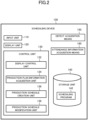
- FIG. 2 is a functional block diagram showing the scheduling device in this embodiment.
- the scheduling device 100 is an electronic computer such as a desktop personal computer, a laptop computer, or a tablet terminal, and includes an input unit 110, a display unit 120, a control unit 130, and a storage unit 140 as shown in Figure 2 . Further, the scheduling device 100 includes defect acquisition means 150 capable of acquiring a defect in a processing machine 70 used in a manufacturing process, and attendance information acquisition means 160 capable of acquiring attendance information of personnel in charge of each manufacturing process.
- the scheduling device 100 is configured to be able to acquire a so-called manufacturing calendar, which includes the operating days of the entire factory and the operating dates and times of each manufacturing process.
- a manufacturing calendar which includes the operating days of the entire factory and the operating dates and times of each manufacturing process. This embodiment will be described assuming that each manufacturing process has the same working hours (operating hours) per day, but without limitation to this, each manufacturing process may have different working hours.
- the input unit 110 is composed of input devices such as a keyboard, a mouse, a touchpad, and a joystick, and in addition to the information input function normally required in the scheduling device 100, enables operations such as reorganization of the production schedule PS by operating the input unit 110.
- the scheduling device 100 makes it possible to manually reorganize the production schedule PS via the input unit 110.
- the display unit 120 has a display as a display device, and in addition to the screen display function normally required in the scheduling device 100, displays, for example, a production schedule screen 122 described later. Further, the display unit 120 may be configured with a touch screen having the functions of the input unit 110. When the display unit 120 is configured with a touch panel, a user can input reorganization operations of the production schedule PS to the scheduling device 100 by operating the display unit 120, for example.
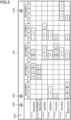
- Figure 3 is a diagram showing an example of a production schedule screen in this embodiment.
- the production schedule screen 122 includes a production schedule display area 122a, a production schedule acquisition button 122b, a production schedule reorganization button 122c, and a production schedule save button 122d.
- the production schedule display area 122a displays the production schedule PS for each manufacturing process in a Gantt chart.
- icons of production plan information 12 arranged in the production schedule PS is displayed, and the length of an icon represents the process lead time of the production plan information 12.
- Figure 4 is a diagram showing an example of a production schedule screen after a reorganization process in this embodiment.
- the production schedule acquisition button 122b can cause a production schedule modification unit 138 of the control unit 130 described later to acquire the production schedule PS from the server 50. Further, the production schedule acquisition button 122b may be configured to be able to acquire production plan information 12 that has not yet been arranged in the production schedule PS from the server 50.
- the production schedule reorganization button 122c makes it possible for the production schedule modification unit 138 to reorganize the production schedule PS as shown in Figure 4 .
- the production schedule save button 122d can cause the production schedule modification unit 138 to save the reorganized production schedule PS.
- the production schedule screen 122 can not only automatically reorganize the production schedule PS, but also allows the user to reorganize the production schedule PS by operating each portion of the production schedule screen 122 to give instructions.
- the production schedule screen 122 displays the production schedule PS in a Gantt chart, but without limitation to this, any of a variety of configurations can be employed as long as the configuration allows the user to check the production schedule PS.
- the configurations of the input unit 110 and the display unit 120 are not limited to the above-described configurations, and are not limited to them as long as they have equivalent functions instead of the input unit 110 and the display unit 120 (e.g., display means or input means that can be used remotely).
- the control unit 130 is composed of, for example, an integrated arithmetic calculation processing device having a CPU (Central Processing Unit) and a GPU (Graphics Processing Unit). As shown in Figure 2 , the control unit 130 includes a display control unit 132 that controls the display unit 120, a production plan information acquisition unit 134, a production schedule creation unit 136, and a production schedule modification unit 138.
- the production plan information acquisition unit 134 is configured to acquire the production plan information 12 created by the production management device 10 from the production technology management database of the server 50.
- the production schedule creation unit 136 creates a production schedule PS for each manufacturing process by arranging a plurality of pieces of production plan information 12 acquired by the production plan information acquisition unit 134 in a schedule for each manufacturing process. Further, the production schedule creation unit 136 may sort the production plan information 12 according to a predetermined condition, and arrange the production plan information 12 in the schedule for each manufacturing process in the sorted order.
- the predetermined condition is, for example, the number of man-hours or the production delivery date. Only one predetermined condition may be set, or a plurality of predetermined conditions may be set. Note that the sorting is performed for each manufacturing process.
- the production schedule creation unit 136 may group the production plan information 12 included in the same work day in each manufacturing process according to attribute information of the production plan information 12 and reorder the arranged production plan information 12 in units of groups obtained by grouping. The reordering is performed based on the priority of the attribute information, the above-described sorted order, or the like.
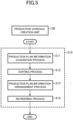
- Figure 5 is a flowchart showing an example of a process executed by the production schedule creation unit in this embodiment.
- the production schedule creation unit 136 having the above configuration is configured to be able to execute a production schedule creation process (S10 in Figure 5 ) of creating a production schedule PS for each manufacturing process as shown in Figure 5 .
- the production schedule creation process includes a production plan information acquisition process (S11 in Figure 5 ) of acquiring production plan information 12, a sorting process (S12 in Figure 5 ) of sorting the acquired production plan information 12 according to a predetermined condition, a production plan information arrangement process (S13 in Figure 5 ) of arranging the production plan information 12 in a schedule for each manufacturing process in the sorted order, and a reordering process (S14 in Figure 5 ) of grouping the production plan information 12 included in the same work day according to attribute information of the production plan information 12 and reordering the production plan information 12 in units of groups obtained by grouping.
- Figure 6 is a flowchart showing an example of a process executed by the production schedule modification unit in this embodiment.
- the production schedule modification unit 138 is configured to reorganize the production schedule PS created by the production schedule creation unit 136. Specifically, as shown in Figure 6 , the production schedule modification unit 138 is configured to be able to execute a production schedule acquisition process (S100 in Figure 6 ) of acquiring a production schedule PS for each manufacturing process, and a reorganization process (S130 in Figure 6 ) of reorganizing the production schedule PS acquired for each manufacturing process.
- the production schedule modification unit 138 is configured to be able to execute a processing result acquisition process (S110 in Figure 6 ) of acquiring a processing result for each manufacturing process. Furthermore, the production schedule modification unit 138 is configured to be able to execute an additional production plan information acquisition process of acquiring additionally created additional production plan information (S120 in Figure 6 ).
- the reorganization process includes an available work time determination process (S131 in Figure 6 ) of determining whether there is an available work time in the production schedule PS, a production plan information identification process (S132 in Figure 6 ) of, when there is an available work time, identifying production plan information 12 that can be rearranged to the available work time from among the plurality of pieces of production plan information 12 arranged in the production schedule PS, and a rearrangement process (S133 in Figure 6 ) of rearranging the identified production plan information 12.
- an available work time determination process S131 in Figure 6
- a production plan information identification process S132 in Figure 6
- S133 rearrangement process
- the reorganization process includes an additional production plan information identification process (S134 in Figure 6 ) of, when there is an available work time, identifying additional production plan information that can be arranged to the available work time from the acquired additional production plan information, and an additional arrangement process (S135 in Figure 6 ) of arranging the identified additional production plan information.
- the reorganization process is performed according to the following rules in order to ensure consistency between manufacturing processes.
- production plan information 12 arranged in the production schedule for each manufacturing process cannot be rearranged before the date and time when the production plan information 12 is arranged in the production schedule of the previous process.
- the production schedule of the bending process is reorganized, if the production plan information 12 to be reorganized is arranged on the morning of September 3 in the production schedule of the blanking process, which is the previous process, then even if there is an available work time before the morning of September 3 in the production schedule of the bending process, the production plan information 12 is rearranged to an available work time after the afternoon of September 3.
- production plan information 12 of an assembly arranged in the production schedule of an assembly process cannot be rearranged before the date and time when the production plan information 12 of each child part constituting the assembly is arranged in the production schedule of the previous process.
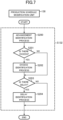
- Figure 7 is a flowchart showing an example of a production plan information identification process in this embodiment.
- the production plan information identification process includes an advancement identification process (S200 in Figure 7 ) of identifying production plan information 12 that can be rearranged to the available work time by being advanced as shown in Figure 7 .
- Figure 8 is a diagram showing an example of reorganization of a production schedule including production plan information that can be advanced in this embodiment.
- the working time (the operating time at the processing machine 70) in one day is 8 hours.
- the pieces of production plan information 12 on "PART01" and “BOX-A" each having a process lead time of three hours are arranged from the start of work to the 6th hour on September 4.
- production plan information 12 on "PART02” having a process lead time of 4.5 hours is arranged from the start of work to the 4.5th hour on September 5.
- no production plan information 12 is arranged on September 3, and there is an available work time from the start of work to the end of work.
- Figure 9 is a diagram showing an example of reorganization of a production schedule including production plan information that can be advanced in this embodiment.
- the production schedule modification unit 138 identifies the production plan information 12 on "PART01” and "BOX-A” as production plan information 12 that can be rearranged to the available work time on September 3 by being advanced, and rearranges the production plan information 12 on "PART01” and "BOX-A” to the available work time on September 3 in the rearrangement process.
- the production schedule modification unit 138 identifies the production plan information 12 on "PART02” as production plan information 12 that can be rearranged to the available work time on September 4 by being advanced, and rearranges the production plan information 12 on "PART02” to the available work time on September 4 in the rearrangement process.
- Figures 10 and 11 are diagrams showing a variant of reorganization of a production schedule including production plan information that can be advanced in this embodiment.
- the production schedule modification unit 138 may identify production plan information 12 arranged after that production plan information 12 (the production plan information 12 on "PART03" in Figure 10 ) as production plan information 12 that can be rearranged by being advanced in the production plan information identification process, and rearrange the identified production plan information 12 in the rearrangement process.
- the production plan information identification process includes an excess determination process (S201 in Figure 7 ) of determining whether there is excessive production plan information not falling within a daily load amount of the manufacturing processes, and an excess identification process (S202 in Figure 7 ) of, when there is excessive production plan information (YES in S201 in Figure 7 ), identifying excessive production plan information that can be rearranged to the available work time.
- the production plan information 12 for the excess may be separated from the production plan information 12 falling within the load amount at the stage of creating the production schedule PS, or may be separated from the production plan information 12 falling within the load amount when excessive production plan information is found in the excess determination process.
- Figure 12 is a diagram showing an example of reorganization of a production schedule including excessive production plan information in this embodiment.
- Figure 13 is a diagram showing an example of reorganization of a production schedule including excessive production plan information in this embodiment.
- the production schedule modification unit 138 first identifies the production plan information 12 on "PART04”, “PART05”, and “PART06” as production plan information 12 that can be rearranged to the available work time on September 2 by being advanced in the above-described advancement identification process, and rearranges the production plan information 12 on "PART04", “PART05”, and "PART06” to the available work time on September 2 in the rearrangement process.
- the production plan information 12 on “BOX-X”, “BOX-Y”, and “BOX-Z” may be identified as excessive production plan information that can be rearranged to the available work time on September 2, and the production plan information 12 on "BOX-X”, “BOX-Y”, and “BOX-Z” may be rearranged to the available work time on September 2 in the rearrangement process.
- the production plan information identification process includes a delay determination process (S203 in Figure 7 ) of determining whether there is delayed production plan information delayed from the production schedule PS based on the acquired processing result, and a delay identification process (S204 in Figure 7 ) of, when there is delayed production plan information (YES in S203 in Figure 7 ), identifying delayed production plan information that can be rearranged to the available work time.
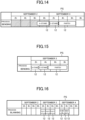
- Figure 14 is a diagram showing an example of reorganization of a production schedule including delayed production plan information in this embodiment.
- the production plan information 12 on "A-STAND" having a process lead time of 2.5 hours is arranged from the 6.5th hour to the end of work on September 2.
- the production plan information 12 on "C-STAND” having a process lead time of 2 hours is arranged from the start of work to the 2nd hour on September 3
- the production plan information 12 on "PART01" having a process lead time of 4 hours is arranged from the 2nd hour to the 6th hour.
- no production plan information 12 is arranged from the 6th hour to the end of work on September 3, and there is an available work time of two hours.
- Figure 15 is a diagram showing an example of reorganization of a production schedule including delayed production plan information in this embodiment.
- the production schedule modification unit 138 determines that there is delayed production plan information. Then, as shown in Figure 15 , the production schedule modification unit 138 rearranges the production plan information 12 on "C-STAND” and "PART01" arranged from the start of work to the 6th hour on September 3 to the time from the 1.5th hour to the 7.5th hour on September 3 by postponing the production plan information 12.
- the production schedule modification unit 138 identifies the production plan information 12 on "A-STAND” as delayed production plan information that can be rearranged to the available work time on September 3, and rearranges the production plan information 12 on "A-STAND” to the available work time on September 3 in the rearrangement process.
- the production plan information 12 on "A-STAND” may be identified as delayed production plan information that can be rearranged to the available work time on September 3 (from the 6th hour to the end of work), and the production plan information 12 on "A-STAND” may be rearranged to the available work time on September 3 in the rearrangement process.
- the production schedule modification unit 138 is configured to be able to group the plurality of pieces of production plan information 12 arranged in the production schedule PS under a predetermined condition and rearrange the plurality of pieces of production plan information 12 in units of groups obtained by grouping.
- the predetermined condition is, for example, the thickness of a material, constituent parts of an assembly, past processing results, or processing conditions.
- the processing condition is, for example, a paint color.
- the production schedule modification unit 138 may group a plurality of products in units that can be processed simultaneously based on product shape information, the capacity of a liquid container, capacity information of a basket in which products are placed, and the like.
- Figure 16 is a diagram showing an example of reorganization of a production schedule in consideration of grouping of production plan information in this embodiment.
- the pieces of production plan information 12 on "PART11”, “PART12” and “PART13” each having a process lead time of 2 hours are arranged from the start of work to the 6th hour on September 3.
- the pieces of production plan information 12 on "BOX-D”, “BOX-E”, and “BOX-F” having a process lead time of 1.3 hours are arranged from the start of work to the 4th hour on September 4.
- "PART 11", "PART 12” and “PART 13" have the same thickness.
- “BOX-D”, “BOX-E” and “BOX-F” have the same thickness.
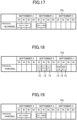
- Figure 17 is a diagram showing an example of reorganization of a production schedule in consideration of grouping of production plan information in this embodiment.
- the production schedule modification unit 138 groups the pieces of production plan information 12 on "PART11", “PART12”, and “PART13” with the same thickness into a group “SCH-L1001", groups “BOX-D”, “BOX-E”, and “BOX-F” with the same thickness into a group “SCH-L1002”, and rearranges them in units of groups "SCH-L1001” and "SCH-L1002" in the rearrangement process.
- Figure 18 is a diagram showing an example of reorganization of a production schedule in consideration of grouping of production plan information in this embodiment.
- Figure 19 is a diagram showing an example of reorganization of a production schedule in consideration of grouping of production plan information in this embodiment.
- the production schedule modification unit 138 groups "PART31", “PART32”, and “PART33” with the same paint color into a group “SET-P3001", groups “BOX-G”, “BOX-H”, and “BOX-I” with the same paint color into a group “SET-P3002”, and rearranges them in units of groups "SET-P3001” and "SET-P3002" in the rearrangement process.
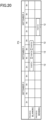
- Figure 20 is a diagram showing an example of reorganization of a production schedule when a defect in a processing machine is acquired in this embodiment.
- the production schedule modification unit 138 is configured to, when the defect acquisition means 150 acquires a defect, exclude the production schedule PS of the manufacturing process that uses the processing machine 70 in which the defect has occurred from the reorganization process.
- the production schedule PS of the blanking process the production plan information 12 on "PART41" having a process lead time of three hours is arranged from the start of work to the 3rd hour on September 3.
- "PART 42" and "PART 43" each having a process lead time of 2 hours are arranged from the 3rd hour to the 7th hour on September 3.
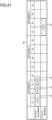
- Figure 21 is a diagram showing an example of reorganization of a production schedule when a defect in a processing machine is acquired in this embodiment.
- the production plan information 12 on "PART 41" having a process lead time of 4 hours is arranged from the start of work to the 4th hour on September 4.
- no production plan information 12 is arranged on September 2, and there is an available work time from the start of work to the end of work.
- no production plan information 12 is arranged on September 2 and September 3, and there are available work times from the start of work to the end of work.
- the production schedule modification unit 138 executes the reorganization process for the blanking process but excludes the bending process from the reorganization process as shown in Figure 21 .
- Figure 22 is a diagram showing an example of reorganization of a production schedule in consideration of attendance information in this embodiment.
- the production schedule modification unit 138 is configured to be unable to rearrange the production plan information 12 to a date and time when the personnel in charge is insufficient based on the attendance information.
- the pieces of production plan information 12 on "KUMI-ASSY" and "ASSENBLY-X" each having a process lead time of 3 hours are arranged from the start of work to the 6th hour on September 4.
- no production plan information 12 is arranged on September 3, and there is an available work time from the start of work to the end of work.
- Figure 23 is a diagram showing an example of reorganization of a production schedule in consideration of attendance information in this embodiment.
- the production schedule modification unit 138 rearranges the production plan information 12 on "KUMI-ASSY" to the available work time from the start of work to the 3rd hour on September 3 as shown in Figure 23 . Then, the production schedule modification unit 138 does not rearrange the production plan information 12 on "ASSENBLY-X" to the available work time from the 3rd hour to the 8th hour on September 3, but rearranges the production plan information 12 on "ASSENBLY-X" to the time from the start of work to the 3rd hour on September 4.
- Figure 24 is a diagram showing an example of reorganizing a production schedule by dividing production plan information in this embodiment.
- the production schedule modification unit 138 is configured to be able to divide one piece of production plan information 12 into a plurality of pieces of production plan information 12 and rearrange the plurality of pieces of production plan information 12 in the production schedule PS.
- production plan information 12 on "PART51” having a process lead time of six hours is arranged from the start of work to the 6th hour on September 3.
- the pieces of production plan information 12 on "PART 53" and "PART 55" each having a process lead time of 4 hours are rearranged from the start of work to the end of work on September 4.
- no production plan information 12 is arranged on September 2, and there is an available work time from the start of work to the end of work.
- Figure 25 is a diagram showing an example of reorganizing a production schedule by dividing production plan information in this embodiment.
- the production schedule modification unit 138 first rearranges the production plan information 12 on "PART51” to the time from the start of work to the 6th hour on September 2 as shown in Figure 25 .
- the process lead time of "PART51” is 6 hours, so only an available work time of 2 hours is left on September 2. Therefore, the production schedule modification unit 138 divides "PART 53" having a process lead time of four hours into two parts of two hours each, rearranges the production plan information 12 for the first half to the time from the 6th hour to the 8th hour on September 2, and rearranges the production plan information 12 for the latter half to the time from the start of work to the 2nd hour on September 3. Then, the production schedule modification unit 138 rearranges the production plan information 12 on "PART55" to the time from the 2nd hour to the 6th hour on September 3.
- the production schedule modification unit 138 may execute the reorganization process taking into account user settings (e.g., prioritizing items with a larger number of man-hours, prioritizing items with earlier process deadlines, etc.).
- the storage unit 140 has a storage medium such as a hard disk drive (HDD) or a solid state drive (SSD), and stores various data in a readable and writable manner.
- the storage unit 140 stores a scheduling program 142 as shown in Figure 2 . Further, the storage unit 140 stores programs necessary for controlling each part of the scheduling device 100.
- the scheduling program 142 causes the scheduling device 100 to execute a production schedule acquisition process of acquiring a production schedule PS for each manufacturing process in which a plurality of pieces of production plan information 12 for a product are arranged, and a reorganization process of reorganizing the production schedule PS acquired for each manufacturing process.
- the reorganization process includes an available work time determination process of determining whether there is an available work time in the production schedule PS, a production plan information identification process of, when there is an available work time, identifying production plan information 12 that can be rearranged to the available work time from among the plurality of pieces of production plan information 12 arranged in the production schedule PS, and a rearrangement process of rearranging the identified production plan information 12.
- the server 50 has a storage medium such as an HDD or an SSD, and stores a production technology management database (not shown). Since the server 50 can employ a variety of known configurations, a detailed description thereof will be omitted.
- the production technology management database includes data created by the production management device 10, the design aided device 30, and the scheduling device 100. The data stored in the production technology management database is referenced by the production management device 10, the design aided device 30, the scheduling device 100 and the workplace terminal 200.
- the processing machine 70 is a blanking machine 70a that processes sheets by NC control, a secondary processing machine 70b that processes individual works in progress after blanking, or the like.
- the blanking machine 70a is, for example, a laser processing machine, a turret punch press, a plasma processing machine, a water jet processing machine, or the like.
- the secondary processing machine 70b is, for example, a bending machine such as a press brake, an NC milling machine, an NC lathe, a machining center, a drilling machine, a grinding machine, or the like.
- the processing machine 70 is configured to be able to communicate with the production management device 10, the design aided device 30, the server 50 and the scheduling device 100.
- the processing machine 70 may transmit processing results to the production management device 10 and the scheduling device 100 when processing is started, when processing is interrupted, and when processing is completed.
- the processing results include, for example, information such as the time corresponding to each of the start, interruption, and completion of processing for each sheet.
- the blanking machine 70a performs processing by, for example, reading sheet data of processing schedule information from the production technology management database stored in the server 50.
- the secondary processing machine 70b performs processing by, for example, reading a processing program of processing schedule information from a production technology management database stored in the server 50.
- the workplace terminal 200 is an electronic computer such as a desktop personal computer, a laptop computer, or a tablet terminal, and is connected to the production management device 10, the scheduling device 100, and the like via a network.
- the workplace terminal 200 is configured to make it possible to view the production schedule PS by connecting to the scheduling device 100.
- the workplace terminal 200 includes a display unit and is configured to be able to display the production schedule screen 122 on the display unit.
- the scheduling method generally includes a production schedule acquisition step of acquiring a production schedule PS for each manufacturing process in which a plurality of pieces of production plan information 12 for a product are arranged, and a reorganization step of reorganizing the production schedule PS acquired for each manufacturing process.
- the reorganization step includes an available work time determination step of determining whether there is an available work time in the production schedule PS, a production plan information identification step of, when there is an available work time, identifying production plan information 12 that can be rearranged to the available work time from among the plurality of pieces of production plan information 12 arranged in the production schedule PS, and a rearrangement step of rearranging the identified production plan information 12.
- the scheduling method includes a production schedule creation step of creating a production schedule PS for each manufacturing process by acquiring production plan information 12 and arranging the acquired plurality of pieces of production plan information 12 in a schedule for each manufacturing process, an update step of updating the time on the production schedule screen 122 on the display unit 120 of the scheduling device 100, a processing result acquisition step of acquiring a processing result for each manufacturing process, and a processing result reflection step of reflecting the acquired processing result in the production schedule screen 122.
- Figure 26 is a flowchart showing an example of a scheduling method in this embodiment.
- the scheduling device 100 creates a production schedule PS for each manufacturing process by acquiring production plan information 12 and arranging the acquired plurality of pieces of production plan information 12 in a schedule for each manufacturing process (S10 in Figure 26 : the production schedule creation step).
- the scheduling device 100 first acquires production plan information 12 created by the production management device 10 from the production technology management database in the server 50 (the production plan information acquisition step). Then, the scheduling device 100 sorts the acquired production plan information 12 according to a predetermined condition (a sorting step). Next, the scheduling device 100 arranges the production plan information 12 in a schedule for each manufacturing process in the sorted order (a production plan information arrangement step).
- production plan information 12 included in the same work day is grouped according to attribute information of the production plan information 12, and reordered in units of groups obtained by grouping (a reordering step).
- a basic production schedule PS is first created.
- the scheduling device 100 stores the created production schedule PS in the production technology management database of the server 50. Further, the scheduling device 100 displays the production schedule screen 122 of the created production schedule PS on the display unit 120.
- the scheduling device 100 updates the time on the production schedule screen 122 as time passes (S20 in Figure 26 : the update step). Specifically, the production schedule screen 122 is updated so that the current time is displayed on its left end portion. Next, the scheduling device 100 acquires the production schedule PS from the production technology management database in the server 50 (S100 in Figure 26 : the production schedule acquisition step).
- the processing machine 70 in each manufacturing process transmits the processing result of the product for the production plan information 12 for which the work has been performed to the production management device 10 and the scheduling device 100.
- the scheduling device 100 acquires the processing result of the processing machine 70 transmitted from the processing machine 70 (S110 in Figure 26 : the processing result acquisition step).
- the scheduling device 100 reflects the acquired processing result in the production schedule screen 122 (S111 in Figure 26 : the processing result reflection step). For example, the icon of the production plan information 12 for which the work has already been completed is deleted from the production schedule screen 122, while the icon of the delayed production plan information 12 is left on the production schedule screen 122. Further, the icon of the delayed production plan information 12 may be highlighted.
- the scheduling device 100 reorganizes the production schedule PS for each manufacturing process (S130 in Figure 26 : the reorganization step). Specifically, the scheduling device 100 first determines whether there is an available work time in the production schedule PS for each manufacturing process (S131 in Figure 26 : the available work time determination step). When there is an available work time in the production schedule PS (YES in S131 in Figure 26 ), the scheduling device 100 identifies production plan information 12 that can be rearranged to the available work time from among the plurality of pieces of production plan information 12 arranged in the production schedule PS of the manufacturing process having the available work time (S132 in Figure 26 : the production plan information identification step).
- the scheduling device 100 rearranges the identified rearrangeable production plan information 12 to the available work time (S133 in Figure 26 : the rearrangement step). Then, the scheduling device 100 stores the reorganized production schedule PS in the production technology management database of the server 50. On the other hand, if there is no available work time in the production schedule PS (NO in S131 in Figure 26 ), the scheduling device 100 ends the process without reorganizing the production schedule PS of the manufacturing process having no available work time. Through the above steps, the sequential scheduling method performed by the scheduling system 1 according to this embodiment is executed.
- the scheduling device 100 is configured to be able to execute: a production schedule acquisition process of acquiring a production schedule PS for each of one or more manufacturing processes in which a plurality of pieces of production plan information 12 for a product including one or more parts are arranged; and a reorganization process of reorganizing the production schedule PS acquired for each of the one or more manufacturing processes, wherein the reorganization process includes: an available work time determination process of determining whether there is an available work time in the production schedule PS; a production plan information identification process of, when there is the available work time, identifying the production plan information 12 that can be rearranged to the available work time from among the plurality of pieces of production plan information 12 arranged in the production schedule PS; and a rearrangement process of rearranging the identified production plan information 12, and the production plan information 12 includes a process lead time for each of the one or more manufacturing processes of the product and a scheduled work date and a work completion date for each of the one or more manufacturing processes of the product.
- the scheduling device 100 identifies and rearranges production plan information 12 that matches an available work time in the production schedule PS, and therefore has the advantage of being able to automatically modify the created production schedule PS.
- the production plan information identification process includes an advancement identification process of identifying the production plan information 12 that can be rearranged to the available work time by being advanced.
- the production plan information identification process includes: an excess determination process of determining whether there is excessive production plan information not falling within a daily load amount of the one or more manufacturing processes; and an excess identification process of, when there is the excessive production plan information, identifying the excessive production plan information that can be rearranged to the available work time.
- the scheduling device 100 is configured to be able to execute a processing result acquisition process of acquiring a processing result for each of the one or more manufacturing processes
- the production plan information identification process includes: a delay determination process of determining whether there is delayed production plan information delayed from the production schedule PS based on the acquired processing result; and a delay identification process of, when there is the delayed production plan information, identifying the delayed production plan information that can be rearranged to the available work time.
- the scheduling device 100 is configured to be able to execute an additional production plan information acquisition process of acquiring additionally created additional production plan information, and the reorganization process includes: an additional production plan information identification process of, when there is the available work time, identifying the additional production plan information that can be arranged to the available work time from the acquired additional production plan information; and an additional arrangement process of arranging the identified additional production plan information.
- the scheduling device 100 is configured to be able to group the plurality of pieces of production plan information 12 arranged in the production schedule PS under a predetermined condition and rearrange the plurality of pieces of production plan information in units of groups obtained by grouping.
- the scheduling device 100 further includes defect acquisition means 150 capable of acquiring a defect in a processing machine 70 used in one of the one or more manufacturing processes, wherein the scheduling device is configured to, when the defect acquisition means 150 acquires the defect, exclude the production schedule PS for the one of the one or more manufacturing processes using the processing machine 70 in which the defect has occurred from the reorganization process.
- defect acquisition means 150 capable of acquiring a defect in a processing machine 70 used in one of the one or more manufacturing processes
- the scheduling device is configured to, when the defect acquisition means 150 acquires the defect, exclude the production schedule PS for the one of the one or more manufacturing processes using the processing machine 70 in which the defect has occurred from the reorganization process.
- the scheduling device 100 further includes attendance information acquisition means 160 capable of acquiring attendance information of personnel in charge of each of the one or more manufacturing processes, wherein the scheduling device is configured to be unable to rearrange the production plan information 12 to a date and time when the personnel in charge is insufficient based on the attendance information.
- attendance information acquisition means 160 capable of acquiring attendance information of personnel in charge of each of the one or more manufacturing processes, wherein the scheduling device is configured to be unable to rearrange the production plan information 12 to a date and time when the personnel in charge is insufficient based on the attendance information.
- the scheduling device 100 is configured to be able to divide one of the pieces of production plan information 12 into a plurality of pieces of production plan information 12 and rearrange the plurality of pieces of production plan information 12 in the production schedule PS.
- the production plan information identification process has been described as including an advancement identification process of identifying the production plan information 12 that can be rearranged to the available work time by being advanced, but without limitation to this, the production plan information identification process may not include the advancement identification process.
- the production plan information identification process has been described as including: an excess determination process of determining whether there is excessive production plan information not falling within a daily load amount of the one or more manufacturing processes; and an excess identification process of, when there is the excessive production plan information, identifying the excessive production plan information that can be rearranged to the available work time, but without limitation to this, the production plan information identification process may not include the excess determination process and the excess identification process.
- the scheduling device 100 has been described as being configured to be able to execute a processing result acquisition process of acquiring a processing result for each of the one or more manufacturing processes, wherein the production plan information identification process includes: a delay determination process of determining whether there is delayed production plan information delayed from the production schedule PS based on the acquired processing result; and a delay identification process of, when there is the delayed production plan information, identifying the delayed production plan information that can be rearranged to the available work time, but it is not limited to this.
- the scheduling device 100 may not be able to execute the processing result acquisition process. Further, the production plan information identification process may not include the delay determination process and the delay identification process.
- the scheduling device 100 has been described as being configured to be able to execute an additional production plan information acquisition process of acquiring additionally created additional production plan information, wherein the reorganization process includes: an additional production plan information identification process of, when there is the available work time, identifying the additional production plan information that can be arranged to the available work time from the acquired additional production plan information; and an additional arrangement process of arranging the identified additional production plan information, but it is not limited to this.
- the scheduling device 100 may not be able to execute the additional production plan information acquisition process. Further, the reorganization process may not include the additional production plan information identification process and the additional arrangement process.
- the scheduling device 100 has been described as being configured to be able to group the plurality of pieces of production plan information 12 arranged in the production schedule PS under a predetermined condition and rearrange the plurality of pieces of production plan information 12 in units of groups obtained by grouping, but it is not limited to this.
- the production plan information 12 may not include attribute information.
- the scheduling device 100 may not be configured to able to classify a plurality of pieces of production plan information 12 arranged in the production schedule PS into groups each having the same type of attribute information and rearrange the plurality of pieces of production plan information 12 in units of groups obtained by grouping.
- the scheduling device 100 has been described as further including defect acquisition means 150 capable of acquiring a defect in a processing machine 70 used in one of the one or more manufacturing processes, wherein the scheduling device 100 is configured to, when the defect acquisition means 150 acquires the defect, exclude the production schedule PS for the one of the one or more manufacturing processes using the processing machine 70 in which the defect has occurred from the reorganization process, but it is not limited to this.
- the scheduling device 100 may not include the defect acquisition means 150. Further, the scheduling device 100 may not be configured to exclude the production schedule PS of a manufacturing process that uses a processing machine 70 in which a defect has occurred from the reorganization process.
- the scheduling device 100 has been described as including attendance information acquisition means 160 capable of acquiring attendance information of personnel in charge of each of the one or more manufacturing processes, wherein the scheduling device 100 is configured to be unable to rearrange the production plan information 12 to a date and time when the personnel in charge is insufficient based on the attendance information, but it is not limited to this.
- the scheduling device 100 may not include the attendance information acquisition means 160. Further, the scheduling device 100 may not be configured to be unable to rearrange the production plan information 12 to a date and time when the personnel in charge is insufficient based on the attendance information.
- the scheduling device 100 has been described as being configured to be able to divide one of the pieces of production plan information 12 into a plurality of pieces of production plan information 12 and rearrange the plurality of pieces of production plan information 12 in the production schedule PS, but without limitation to this, the scheduling device 100 may not be able to divide one piece of production plan information 12 into a plurality of pieces of production plan information 12 and rearrange the plurality of pieces of production plan information 12 in the production schedule PS.
- the scheduling system 1 has been described as including the scheduling device 100, the production management device 10 functioning as a production management unit, the design aided device 30 functioning as a design aided unit, the server 50, and the processing machine 70, but without limitation to this, some or all of the above-mentioned devices may be configured integrally.
- the scheduling system 1 has been described as including the workplace terminal 200, but without limitation to this, the scheduling system 1 may not include the workplace terminal 200.
- the scheduling system 1 has been described as including the server 50 and having the production technology management database stored in the server 50, but without limitation to this, the scheduling system 1 may not include the server 50, and the production technology management database may be stored in the storage unit 140 of the scheduling device 100. Further, the scheduling system 1 may not include the production technology management database, and data created by the production management device 10, the design aided device 30, and the scheduling device 100 may be stored in each device.
- the processing machine 70 has been described as being configured to be able to communicate with the production management device 10, the design aided device 30, the server 50, and the scheduling device 100, but without limitation to this, the processing machine 70 may not be able to communicate with the production management device 10, the design aided device 30, the server 50, and the scheduling device 100.
- the scheduling device 100 has been described on the assumption that a production schedule PS once created is partially updated and continuously used, but it is not limited to this.
- the scheduling device 100 is configured to be able to execute a production schedule reset process of deleting all of the production plan information 12 arranged in the production schedule PS, and, for example, may reset the production schedule PS periodically or at predetermined timing.
- each manufacturing process has been described on the assumption that one processing machine 70 is provided, but without limitation to this, a plurality of processing machines 70 may be provided.
- the scheduling device 100 may separately create and manage a plurality of respective production schedules PS of the manufacturing process for the processing machines 70. For example, when two blanking machines 70a are provided in the blanking process, a production schedule PS for the blanking process (1) and a production schedule PS for the blanking process (2) may be created and managed.
Landscapes
- Business, Economics & Management (AREA)
- Human Resources & Organizations (AREA)
- Engineering & Computer Science (AREA)
- Strategic Management (AREA)
- Economics (AREA)
- Entrepreneurship & Innovation (AREA)
- General Physics & Mathematics (AREA)
- Physics & Mathematics (AREA)
- Tourism & Hospitality (AREA)
- Marketing (AREA)
- Quality & Reliability (AREA)
- Educational Administration (AREA)
- General Business, Economics & Management (AREA)
- Development Economics (AREA)
- Theoretical Computer Science (AREA)
- Operations Research (AREA)
- Game Theory and Decision Science (AREA)
- Manufacturing & Machinery (AREA)
- Health & Medical Sciences (AREA)
- General Health & Medical Sciences (AREA)
- Primary Health Care (AREA)
- General Engineering & Computer Science (AREA)
- Automation & Control Theory (AREA)
- Management, Administration, Business Operations System, And Electronic Commerce (AREA)
- General Factory Administration (AREA)
Applications Claiming Priority (2)
| Application Number | Priority Date | Filing Date | Title |
|---|---|---|---|
| JP2022084347A JP7353420B1 (ja) | 2022-05-24 | 2022-05-24 | スケジューリング装置、スケジューリング方法、及びスケジューリングプログラム |
| PCT/JP2023/017592 WO2023228748A1 (ja) | 2022-05-24 | 2023-05-10 | スケジューリング装置、スケジューリング方法、及びスケジューリングプログラム |
Publications (2)
| Publication Number | Publication Date |
|---|---|
| EP4535103A1 true EP4535103A1 (de) | 2025-04-09 |
| EP4535103A4 EP4535103A4 (de) | 2025-10-01 |
Family
ID=88143965
Family Applications (1)
| Application Number | Title | Priority Date | Filing Date |
|---|---|---|---|
| EP23811623.0A Pending EP4535103A4 (de) | 2022-05-24 | 2023-05-10 | Planungsvorrichtung, planungsverfahren und planungsprogramm |
Country Status (3)
| Country | Link |
|---|---|
| EP (1) | EP4535103A4 (de) |
| JP (1) | JP7353420B1 (de) |
| WO (1) | WO2023228748A1 (de) |
Families Citing this family (1)
| Publication number | Priority date | Publication date | Assignee | Title |
|---|---|---|---|---|
| WO2025094249A1 (ja) * | 2023-10-30 | 2025-05-08 | 株式会社小林製作所 | 管理装置、管理方法、及びプログラム |
Family Cites Families (17)
| Publication number | Priority date | Publication date | Assignee | Title |
|---|---|---|---|---|
| JPS61214956A (ja) * | 1985-03-15 | 1986-09-24 | Fanuc Ltd | スケジユ−リング方法 |
| JPH03117542A (ja) * | 1989-09-27 | 1991-05-20 | Internatl Business Mach Corp <Ibm> | スケジユーリング方法及び装置 |
| JPH0816206A (ja) * | 1994-06-24 | 1996-01-19 | Hitachi Ltd | 着工順序決定方法及び装置 |
| JPH0830686A (ja) | 1994-07-14 | 1996-02-02 | Yokogawa Electric Corp | スケジューリングシステム |
| JPH0926997A (ja) * | 1995-07-11 | 1997-01-28 | Toppan Printing Co Ltd | 製造工程管理システム |
| JPH1086044A (ja) * | 1996-09-13 | 1998-04-07 | Zexel Corp | 作業者裁量活用日程計画方法及び作業者裁量活用日程計画装置 |
| JPH10268909A (ja) * | 1997-03-27 | 1998-10-09 | Nippon Steel Corp | スケジューリングシステム |
| JP2000237938A (ja) * | 1998-12-25 | 2000-09-05 | Sony Corp | 複合製造プロセスシステムにおける生産管理方法およびその装置、生産進捗状態モニター方法 |
| JP4724292B2 (ja) * | 2000-11-16 | 2011-07-13 | 住友林業株式会社 | ユニット階段の部材別加工システム及び方法 |
| JP2003162313A (ja) * | 2001-11-26 | 2003-06-06 | Kawasaki Heavy Ind Ltd | 生産システム計画方法および生産システム計画装置 |
| JP2005190063A (ja) * | 2003-12-25 | 2005-07-14 | Fuji Xerox Co Ltd | スケジュール調整支援システム |
| JP2009217397A (ja) * | 2008-03-07 | 2009-09-24 | Pioneer Electronic Corp | スケジュール管理装置、スケジュール管理方法、スケジュール管理プログラム、および記録媒体 |
| JP7155637B2 (ja) * | 2018-06-13 | 2022-10-19 | 富士フイルムビジネスイノベーション株式会社 | 印刷物の製造統合管理システム、製造統合管理装置およびプログラム |
| JP2019219713A (ja) * | 2018-06-15 | 2019-12-26 | 三菱電機株式会社 | 生産計画立案装置、生産計画立案方法およびプログラム |
| JP7403041B2 (ja) * | 2019-03-26 | 2023-12-22 | パナソニックIpマネジメント株式会社 | 生産管理装置および生産計画作成方法 |
| US20220335391A1 (en) * | 2019-09-11 | 2022-10-20 | Kobayashi Manufacture Co., Ltd. | Management apparatus, management system, and program |
| JP7526935B2 (ja) * | 2020-02-18 | 2024-08-02 | パナソニックIpマネジメント株式会社 | 作業管理支援方法および情報処理装置 |
-
2022
- 2022-05-24 JP JP2022084347A patent/JP7353420B1/ja active Active
-
2023
- 2023-05-10 WO PCT/JP2023/017592 patent/WO2023228748A1/ja not_active Ceased
- 2023-05-10 EP EP23811623.0A patent/EP4535103A4/de active Pending
Also Published As
| Publication number | Publication date |
|---|---|
| EP4535103A4 (de) | 2025-10-01 |
| JP7353420B1 (ja) | 2023-09-29 |
| WO2023228748A1 (ja) | 2023-11-30 |
| JP2023172499A (ja) | 2023-12-06 |
Similar Documents
| Publication | Publication Date | Title |
|---|---|---|
| US7039480B2 (en) | Planning operation management support system, and planning operation management support program | |
| EP4651051A1 (de) | Bestandsverwaltungsvorrichtung, bestandsverwaltungsverfahren und bestandsverwaltungsprogramm | |
| JP7061402B2 (ja) | 管理装置、管理システム、及びプログラム | |
| US6957190B1 (en) | Parts management information system and parts management method, and storage medium | |
| EP4535103A1 (de) | Planungsvorrichtung, planungsverfahren und planungsprogramm | |
| JPH11120248A (ja) | 生産スケジューリング・システムおよびスケジューリング方法 | |
| JPH05174030A (ja) | ジョブショップスケジューリングエキスパートシステム | |
| CN114365053B (zh) | 管理装置、管理系统和程序 | |
| JP3526516B2 (ja) | 生産工程スケジューラ | |
| JP4318162B2 (ja) | 生産日程計画管理方法及び生産日程計画管理プログラム | |
| JPH1086044A (ja) | 作業者裁量活用日程計画方法及び作業者裁量活用日程計画装置 | |
| JP2023023088A (ja) | 生産計画装置、生産計画方法、及びプログラム | |
| JPH08227432A (ja) | 仮想工程実行システム | |
| JPH04184602A (ja) | 生産計画作成システムおよび生産計画作成方法 | |
| JPH06332909A (ja) | 計画管理システム | |
| JP2008276412A (ja) | 工程進捗管理システムおよび工程進捗管理方法 | |
| HK40067266B (en) | Management apparatus, management system, and program | |
| JP2002163012A (ja) | スケジューリングシステム | |
| JP2025086264A (ja) | 情報処理装置、情報処理方法及びプログラム | |
| JP2024029377A (ja) | ネスティング装置、加工スケジュール情報作成方法、及び加工スケジュール情報作成プログラム | |
| JP2026043332A (ja) | 情報処理装置、情報処理方法、物品の製造方法、プログラム、記録媒体 | |
| JP2024038813A (ja) | 生産計画システム及び生産計画方法 | |
| JPH09153092A (ja) | 電子差立板システム | |
| JPH0830685A (ja) | 機種別アローダイアグラム負荷マスタ作成方法 | |
| Ready et al. | A knowledge based planning and scheduling toolkit for the process industries |
Legal Events
| Date | Code | Title | Description |
|---|---|---|---|
| STAA | Information on the status of an ep patent application or granted ep patent |
Free format text: STATUS: THE INTERNATIONAL PUBLICATION HAS BEEN MADE |
|
| PUAI | Public reference made under article 153(3) epc to a published international application that has entered the european phase |
Free format text: ORIGINAL CODE: 0009012 |
|
| STAA | Information on the status of an ep patent application or granted ep patent |
Free format text: STATUS: REQUEST FOR EXAMINATION WAS MADE |
|
| 17P | Request for examination filed |
Effective date: 20241031 |
|
| AK | Designated contracting states |
Kind code of ref document: A1 Designated state(s): AL AT BE BG CH CY CZ DE DK EE ES FI FR GB GR HR HU IE IS IT LI LT LU LV MC ME MK MT NL NO PL PT RO RS SE SI SK SM TR |
|
| DAV | Request for validation of the european patent (deleted) | ||
| DAX | Request for extension of the european patent (deleted) | ||
| A4 | Supplementary search report drawn up and despatched |
Effective date: 20250828 |
|
| RIC1 | Information provided on ipc code assigned before grant |
Ipc: G05B 19/418 20060101AFI20250822BHEP Ipc: G06Q 50/04 20120101ALI20250822BHEP Ipc: G06Q 10/0631 20230101ALI20250822BHEP Ipc: G06Q 10/0639 20230101ALI20250822BHEP |