WO2006111662A2 - Derives de 4h-1 , 2 , 4-triazin-5-0nes , leur preparation et leur utilisation comme des recepteurs a l'acetylcholine de type nicotiniques alpha7 - Google Patents
Derives de 4h-1 , 2 , 4-triazin-5-0nes , leur preparation et leur utilisation comme des recepteurs a l'acetylcholine de type nicotiniques alpha7 Download PDFInfo
- Publication number
- WO2006111662A2 WO2006111662A2 PCT/FR2006/000887 FR2006000887W WO2006111662A2 WO 2006111662 A2 WO2006111662 A2 WO 2006111662A2 FR 2006000887 W FR2006000887 W FR 2006000887W WO 2006111662 A2 WO2006111662 A2 WO 2006111662A2
- Authority
- WO
- WIPO (PCT)
- Prior art keywords
- sub
- group
- compound
- formula
- groups
- Prior art date
- Legal status (The legal status is an assumption and is not a legal conclusion. Google has not performed a legal analysis and makes no representation as to the accuracy of the status listed.)
- Ceased
Links
- 0 CCN(C*)CCCNC(N1)=NN=C(c2c[n](C)c(C=CC)c2C)C1=O Chemical compound CCN(C*)CCCNC(N1)=NN=C(c2c[n](C)c(C=CC)c2C)C1=O 0.000 description 1
- QDQIFKOJJYVDPF-UHFFFAOYSA-N CCN(CC)CCCNC(N1)=NN=C(c2c[n](C)c(cc3)c2cc3OC)C1=O Chemical compound CCN(CC)CCCNC(N1)=NN=C(c2c[n](C)c(cc3)c2cc3OC)C1=O QDQIFKOJJYVDPF-UHFFFAOYSA-N 0.000 description 1
- KDBDXNOKXNHOJH-UHFFFAOYSA-N O=C1NC(NCCCN2CCCC2)=NN=C1c1c[nH]c2c1cccc2 Chemical compound O=C1NC(NCCCN2CCCC2)=NN=C1c1c[nH]c2c1cccc2 KDBDXNOKXNHOJH-UHFFFAOYSA-N 0.000 description 1
Classifications
-
- C—CHEMISTRY; METALLURGY
- C07—ORGANIC CHEMISTRY
- C07D—HETEROCYCLIC COMPOUNDS
- C07D403/00—Heterocyclic compounds containing two or more hetero rings, having nitrogen atoms as the only ring hetero atoms, not provided for by group C07D401/00
- C07D403/02—Heterocyclic compounds containing two or more hetero rings, having nitrogen atoms as the only ring hetero atoms, not provided for by group C07D401/00 containing two hetero rings
- C07D403/04—Heterocyclic compounds containing two or more hetero rings, having nitrogen atoms as the only ring hetero atoms, not provided for by group C07D401/00 containing two hetero rings directly linked by a ring-member-to-ring-member bond
-
- A—HUMAN NECESSITIES
- A61—MEDICAL OR VETERINARY SCIENCE; HYGIENE
- A61P—SPECIFIC THERAPEUTIC ACTIVITY OF CHEMICAL COMPOUNDS OR MEDICINAL PREPARATIONS
- A61P19/00—Drugs for skeletal disorders
- A61P19/02—Drugs for skeletal disorders for joint disorders, e.g. arthritis, arthrosis
-
- A—HUMAN NECESSITIES
- A61—MEDICAL OR VETERINARY SCIENCE; HYGIENE
- A61P—SPECIFIC THERAPEUTIC ACTIVITY OF CHEMICAL COMPOUNDS OR MEDICINAL PREPARATIONS
- A61P25/00—Drugs for disorders of the nervous system
-
- A—HUMAN NECESSITIES
- A61—MEDICAL OR VETERINARY SCIENCE; HYGIENE
- A61P—SPECIFIC THERAPEUTIC ACTIVITY OF CHEMICAL COMPOUNDS OR MEDICINAL PREPARATIONS
- A61P25/00—Drugs for disorders of the nervous system
- A61P25/04—Centrally acting analgesics, e.g. opioids
-
- A—HUMAN NECESSITIES
- A61—MEDICAL OR VETERINARY SCIENCE; HYGIENE
- A61P—SPECIFIC THERAPEUTIC ACTIVITY OF CHEMICAL COMPOUNDS OR MEDICINAL PREPARATIONS
- A61P25/00—Drugs for disorders of the nervous system
- A61P25/18—Antipsychotics, i.e. neuroleptics; Drugs for mania or schizophrenia
-
- A—HUMAN NECESSITIES
- A61—MEDICAL OR VETERINARY SCIENCE; HYGIENE
- A61P—SPECIFIC THERAPEUTIC ACTIVITY OF CHEMICAL COMPOUNDS OR MEDICINAL PREPARATIONS
- A61P25/00—Drugs for disorders of the nervous system
- A61P25/28—Drugs for disorders of the nervous system for treating neurodegenerative disorders of the central nervous system, e.g. nootropic agents, cognition enhancers, drugs for treating Alzheimer's disease or other forms of dementia
-
- A—HUMAN NECESSITIES
- A61—MEDICAL OR VETERINARY SCIENCE; HYGIENE
- A61P—SPECIFIC THERAPEUTIC ACTIVITY OF CHEMICAL COMPOUNDS OR MEDICINAL PREPARATIONS
- A61P29/00—Non-central analgesic, antipyretic or antiinflammatory agents, e.g. antirheumatic agents; Non-steroidal antiinflammatory drugs [NSAID]
-
- A—HUMAN NECESSITIES
- A61—MEDICAL OR VETERINARY SCIENCE; HYGIENE
- A61P—SPECIFIC THERAPEUTIC ACTIVITY OF CHEMICAL COMPOUNDS OR MEDICINAL PREPARATIONS
- A61P43/00—Drugs for specific purposes, not provided for in groups A61P1/00-A61P41/00
-
- C—CHEMISTRY; METALLURGY
- C07—ORGANIC CHEMISTRY
- C07D—HETEROCYCLIC COMPOUNDS
- C07D253/00—Heterocyclic compounds containing six-membered rings having three nitrogen atoms as the only ring hetero atoms, not provided for by group C07D251/00
- C07D253/02—Heterocyclic compounds containing six-membered rings having three nitrogen atoms as the only ring hetero atoms, not provided for by group C07D251/00 not condensed with other rings
- C07D253/06—1,2,4-Triazines
- C07D253/065—1,2,4-Triazines having three double bonds between ring members or between ring members and non-ring members
- C07D253/07—1,2,4-Triazines having three double bonds between ring members or between ring members and non-ring members with hetero atoms, or with carbon atoms having three bonds to hetero atoms with at the most one bond to halogen, e.g. ester or nitrile radicals, directly attached to ring carbon atoms
- C07D253/075—Two hetero atoms, in positions 3 and 5
-
- C—CHEMISTRY; METALLURGY
- C07—ORGANIC CHEMISTRY
- C07D—HETEROCYCLIC COMPOUNDS
- C07D405/00—Heterocyclic compounds containing both one or more hetero rings having oxygen atoms as the only ring hetero atoms, and one or more rings having nitrogen as the only ring hetero atom
- C07D405/02—Heterocyclic compounds containing both one or more hetero rings having oxygen atoms as the only ring hetero atoms, and one or more rings having nitrogen as the only ring hetero atom containing two hetero rings
- C07D405/04—Heterocyclic compounds containing both one or more hetero rings having oxygen atoms as the only ring hetero atoms, and one or more rings having nitrogen as the only ring hetero atom containing two hetero rings directly linked by a ring-member-to-ring-member bond
-
- C—CHEMISTRY; METALLURGY
- C07—ORGANIC CHEMISTRY
- C07D—HETEROCYCLIC COMPOUNDS
- C07D409/00—Heterocyclic compounds containing two or more hetero rings, at least one ring having sulfur atoms as the only ring hetero atoms
- C07D409/02—Heterocyclic compounds containing two or more hetero rings, at least one ring having sulfur atoms as the only ring hetero atoms containing two hetero rings
- C07D409/04—Heterocyclic compounds containing two or more hetero rings, at least one ring having sulfur atoms as the only ring hetero atoms containing two hetero rings directly linked by a ring-member-to-ring-member bond
-
- C—CHEMISTRY; METALLURGY
- C07—ORGANIC CHEMISTRY
- C07D—HETEROCYCLIC COMPOUNDS
- C07D453/00—Heterocyclic compounds containing quinuclidine or iso-quinuclidine ring systems, e.g. quinine alkaloids
- C07D453/02—Heterocyclic compounds containing quinuclidine or iso-quinuclidine ring systems, e.g. quinine alkaloids containing not further condensed quinuclidine ring systems
Definitions
- the invention relates to triazine derivatives, their preparation and their therapeutic application.
- the compounds of the invention are novel nicotinic acetylcholine receptor ligands. These compounds are more particularly characterized in that they are oc7-type nicotinic receptor ligands.
- R 1 represents a heteroaryl or aryl group, where the heteroaryl or aryl groups are optionally substituted by one or more groups selected from halogen atoms and (C 1 -C 4 ) alkyl, (C 1 -C 4 ) alkoxy groups, (C 3 -C 7) cycloalkyl, aryl, hydroxy, cyano, -NH 2, -NO 2;
- R 2 represents a hydrogen atom or a group (C 1 -C 4 ) BlKyIe;
- R 3 represents - a group - (CH 2 ) n -NR 4 R 5 in which n is 2, 3 or 4 and
- R 4 and R 5 represent, independently of each other, a (C 1 -C 4 ) alkyl, or (C 3 -C 7 ) cycloalkyl group, or R 4 and R 5 together with the atom nitrogen carrying them, a (C 3 -C 9 ) heterocycloalkyl group; or - a group - (CH 2 ) mR 6 in which m is equal to 0, 1, 2, 3 or 4 and
- R 6 represents a group (C 3 -C 9 ) heterocycloalkyl having at least one nitrogen atom and linked to the triazine ring by a carbon atom, the (C 3 -C 9 ) heterocycloalkyl group being optionally substituted with one or several groups (CrC 4 ) alkyl, or else R 2 and R 3 together with the nitrogen atom carrying them, form a (C 5 -
- the compounds of formula (I) may comprise one or more asymmetric carbon atoms. They can therefore exist as enantiomers or diastereoisomers. These enantiomers, diastereoisomers, as well as their mixtures, including the racemic mixtures, form part of the invention.
- the compounds of formula (I) may exist in the form of bases or addition salts with acids. Such addition salts are part of the invention.
- salts can be prepared with pharmaceutically acceptable acids, but the salts of other acids that are useful, for example, for the purification or the isolation of the compounds of formula (I) are also part of the invention.
- the compounds of formula (I) may also exist in the form of hydrates or solvates, namely in the form of associations or combinations with one or more water molecules or with a solvent. Such hydrates and solvates are also part of the invention.
- t and z can take the values of 1 to 9 represents a carbon chain which can have from 1 to 9 carbon atoms; a halogen atom: a fluorine, a chlorine, a bromine or an iodine; an alkyl group: a linear or branched saturated aliphatic group.
- cyclopropyl, cyclobutyl, cyclopentyl and cyclohexyl groups and the like; a heterocycloalkyl group: a saturated heterocycle comprising from 1 to 2 heteroatoms, such as nitrogen, oxygen or sulfur, and optionally being bridged, that is to say optionally having a carbon bond of 1 to 3 carbon atoms, carbon between 2 ring atoms.
- heterocycloalkyl groups mention may be made of pyrrolidinyl, piperidinyl, perhydroazepinyl, perhydro-1, 4-oxazepinyl, perhydro-1,4-thiazepinyl, perhydro-1,4-diazepinyl, 7-aza- bicyclo [2.2.1] heptanyl, 1-aza-bicyclo [2.2.1] heptanyl, 1-aza-bicyclo [2.2.2] octanyl, 2- aza-bicyclo [2.2.2] octanyl, 1-aza-bicyclo [3.2.1] octanyl, 8-aza-bicyclo [3.2.1] octanyl, 3-aza-bicyclo [3.2.1] octanyl, 1-aza- bicyclo [3.2.2] nonanyl, 3-azabicyclo [3.2.2] nonanyl, 1-aza-bicyclo [3.3.1] nonanyl, 3-aza-bicyclo [3.3.1] nonanyl, 3-
- aryl groups By way of examples of aryl groups, mention may be made of phenyl, naphthyl and indenyl groups; a heteroaryl group: a cyclic aromatic group comprising from 1 to 9 carbon atoms and comprising from 1 to 3 heteroatoms, such as nitrogen, oxygen or sulfur.
- heteroaryl groups By way of examples of heteroaryl groups, mention may be made of furanyl, thienyl, pyrrolyl, oxazolyl, thiazolyl, imidazolyl, pyrazolyl, isoxazolyl, isothiazolyl, isoxadiazolyl, isothiadiazolyl, oxadiazolyl, triazolyl, tetrazolyl, thiadiazolyl, pyridinyl, pyridazinyl and pyrimidinyl groups.
- a first subgroup of compounds consists of the compounds for which:
- R 1 represents a heteroaryl group, more particularly a furanyl, thienyl, pyrrolyl, oxazolyl, thiazolyl, imidazolyl, pyrazolyl, isoxazolyl, isothiazolyl, isoxadiazolyl, isothiadiazolyl, oxadiazolyl, triazolyl, tetrazolyl, thiadiazolyl, pyridinyl, pyridazinyl, pyrimidinyl, pyrazinyl, triazinyl, indolyl, isoindolyl, benzofuranyl, benzothienyl, indazolyl, benzimidazolyl, benzothiazolyl, quinolinyl, isoquinolinyl, azaindolyl, said heteroaryl group being optionally substituted by one or more groups, more particularly by one or two groups, chosen from halogen atoms and groups;
- R 1 represents a heteroaryl group, more particularly a furanyl, thienyl, pyrrolyl, pyrazolyl, triazolyl, imidazolyl, indolyl, indazolyl, benzothienyl, azaindolyl or aryl, more particularly phenyl or naphthyl, said heteroaryl or aryl groups being optionally substituted by one or more groups , more particularly by one or two groups chosen from halogen atoms, more particularly fluorine, and (Ci-C 4 ) alkyl groups, more particularly methyl, (C 1 -C 4 ) BlCOXy, more particularly methoxy groups. aryl, more particularly phenyl.
- a third subgroup of compounds is constituted by compounds for which:
- R 1 represents a heteroaryl group, more particularly a furanyl, thienyl, pyrrolyl, pyrazolyl, triazolyl, imidazolyl, indolyl, indazolyl, benzothienyl, azaindolyl, said heteroaryl group being optionally substituted by one or more groups, more particularly by one or two groups, chosen from halogen atoms, more particularly fluorine, and (C 1 -C 4 ) B-alkyl groups, more particularly methyl, (C 1 -C 4 ) alkoxy, more particularly methoxy, aryl, more particularly phenyl.
- R 2 represents a hydrogen atom.
- a fifth subgroup of compounds consists of the compounds for which:
- R 3 represents
- R 4 and R 5 represent, independently of one another, a (C 1 -C 4 ) alkyl group, more particularly methyl or ethyl, or R 4 and R 5 form together with the nitrogen atom which carries them a (C 3 -C 7 ) heterocycloalkyl group, more particularly pyrrolidinyl or piperidinyl; or - a group - (CH 2 ) mR 6 in which m is equal to 0, 1, 2, 3 or 4, more particularly 0 or 2, and
- R 6 represents a (C 3 -C 7 ) heterocycloalkyl group comprising at least one nitrogen atom and linked to the triazine ring by a carbon atom, more particularly pyrrolidinyl or quinuclidinyl, the (C 3 -C 7 ) heterocycloalkyl group optionally being substituted by one or more groups (C r C 4 ) alkyl, more particularly methyl; with the proviso that when R 1 is phenyl then R 4 and R 5 do not simultaneously represent methyl.
- a sixth subgroup of compounds is constituted by compounds for which both R 1 is as defined in the first, second or third subgroup -above ; R 2 is as defined in the fourth subgroup above; R 3 is as defined in the fifth subgroup above.
- a seventh subgroup of compounds is constituted by the compounds for which:
- R 1 represents an indolyl group, said indolyl group being optionally substituted by one or more groups, more particularly by one or two groups, chosen from halogen atoms, more particularly from fluorine and chlorine, and (C r C groups 4 ) alkyl, more particularly methyl, (C r C 4 ) alkoxy, more particularly methoxy, (C 3 -C 7 ) cycloalkyl, more particularly cyclohexyl, aryl, more particularly phenyl, -NH 2 , -NO 2 ; and / or R 2 represents a hydrogen atom; and / or R 3 represents
- R 4 and R 5 represent, independently of one another, a (C 1 -C 4 ) alkyl group, more particularly methyl or ethyl, or R 4 and R 5 form together with the nitrogen atom which carries them a (C 3 -C 7 ) heterocycloalkyl group, more particularly pyrrolidinyl or piperidinyl; or - a group - (CH 2 ) InR 6 in which m is equal to 0, 1, 2, 3 or 4, more particularly 0 or 2, and
- R 6 represents a (C 3 -C 7 ) heterocycloalkyl group, more particularly pyrrolidinyl or quinuclidinyl, the (C 3 -C 7 ) heterocycloalkyl group being optionally substituted by one or more (C 1 -C 4 ) alkyl groups, more particularly methyl groups.
- the compounds of general formula (I) can be prepared according to the methods illustrated by the following diagrams.
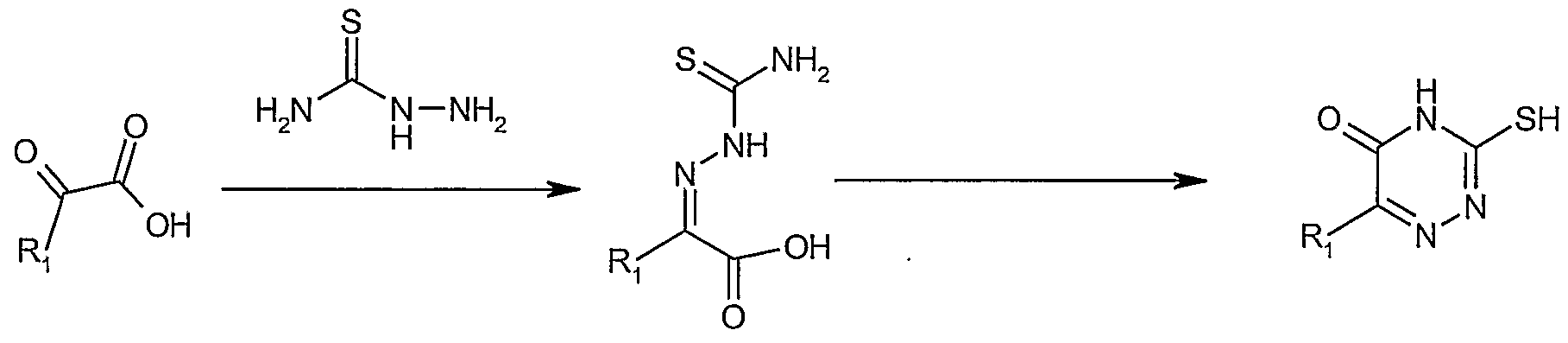
- the compound of general formula (II), in which R 1 is as defined in general formula (I), is hot condensed with thiosemicarbazide in the presence of water and in concentrated acidic medium, to obtain the compound of general formula (III).
- the compound of general formula (III) is then cyclized in hot and in basic medium, for example in the presence of sodium hydroxide, to form the compound of general formula (IV).
- the compound of general formula (V) is then obtained by methylation of the compound of general formula (IV) in the presence of methyl iodide and a strong base such as sodium hydride in a solvent such as dimethylformamide (DMF) .
- the compound of general formula (I) is obtained by reaction of the compound of general formula (V) with an amine of general formula HNR 2 R 3 (VI), in which R 2 and R 3 are as defined in formula General (I).
- the thiosemicarbazide is first methylated in the presence of methyl iodide in a solvent such as ethanol.
- the resulting methylated product is then placed in the presence of an amine of the general formula HNR 2 R 3 (VI), in which R 2 and R 3 are as defined in the general formula (I), in a solvent such as ethanol, to form the compound of general formula (VII).
- the compound of general formula (I) is obtained by reaction of the compound of general formula (VII) with the compound of general formula (II), in which R 1 is as defined in general formula (I), in which water, for example by heating in the presence of microwaves at a temperature of the order of 140 ° C.
- the compounds of general formula (II) are commercial, known in the literature or can be prepared by methods known to those skilled in the art.
- the compounds of general formula (II) or the corresponding esters can be synthesized for example by application or adaptation of the methods described in Tetrahedron Lett, 1994, 35 (19), 3013-3016, Tetrahedron Lett., 1998, 39 (52), 9629-9630, J. Org. Chem., 2002, 67 (17), 6226-6227, Synthesis, 1998 (9), 1241-1242, J. Heterocycl. Chem., 1997, 34 (2), 441-444, J. Heterocycl. Chem., 1997, 34 (3), 789-795, Tetrahedron, 2003, 59 (7), 1083-1094, Bioorg.
- a suspension of 15 g of (1-methyl-1H-indol-3-yl) -oxoacetic acid and 7.8 g of thiosemicarbazide in 150 cm 3 of water is added 2.25 cm. 3 of 12 N hydrochloric acid and the mixture is heated with stirring for 2.5 h at 100 ° C.
- the reaction medium is cooled in an ice-water bath and the suspended solid is filtered off, rinsed with water and dried. in the air.
- reaction medium cooled in an ice bath, is brought to a pH of about 4 by addition of acetic acid.
- the resulting precipitate is collected by filtration, rinsed with water and air dried for 3 days to give 18.9 g of 3-mercapto-6- (1-methyl-1H-indol-3-yl). -4 / - / - 1,2,4-triazin-5-one in the form of a yellow solid.
- 3- (3-Diethylamino-propylamino) -6- (1-methyl-1H-indol-3-yl) -4H-1,2,4-triazin-5-one is prepared according to a protocol identical to that described in Example 1, replacing in Step 1.3, 3-piperidin-1-yl-propylamine by ⁇ / 1, ⁇ / 1-diethyl-propane-1,3-diamine.
- a suspension of 10 g of oxo-phenylacetic acid and 7 g of thiosemicarbazide in 150 cm 3 of water is added with 0.88 cm 3 of 12 N hydrochloric acid and the mixture is heated with stirring 2.5 at reflux of the reaction medium. After cooling the mixture in an ice-water bath, the suspended solid is collected by filtration, rinsed with water and air-dried. After taking up the pale yellow solid obtained (15.5 g) with 150 cm 3 of water and bringing the medium to a pH of about 14 with 1N sodium hydroxide, the mixture is heated with stirring. After refluxing the reaction medium, it is cooled in an ice bath and the pH is brought to 4 by addition of acetic acid.
- a mixture under an argon atmosphere of 900 mg of 3-methylsulfanyl-6-phenyl-4H-1,2,4-triazin-5-one, prepared in step 3.2, and 1.65 cm 3 of / V 1 , ⁇ / 1-diethyl-1,3-propane-1,3-diamine is heated with stirring 15 h at 100 0 C and then it is cooled to a temperature of 20 0 C and discarded in ice water.
- the precipitate formed by acidification of the medium at a pH of about 4 with 1N hydrochloric acid is removed by filtration.
- the filtrate is brought to a pH of about 11 by addition of 1N sodium hydroxide and is extracted twice with dichloromethane.
- the organic phase is dried over magnesium sulphate and concentrated under reduced pressure (2.7 kPa).
- the residual oil obtained is purified by flash chromatography on alumina CTB1 under argon pressure (50 kPa) [eluent: dichloromethane then dichloromethane / methanol (98/2 by volume)].
- a solid R1 250 mg is obtained.
- the aqueous phase P is alkalinized to a pH of about 10 by addition of 1N sodium hydroxide and is extracted twice with dichloromethane.
- the organic phase is dried over magnesium sulfate and concentrated under reduced pressure (2.7 kPa) to give a solid R2 (330 mg).
- a solution of 0.55 g of (1H-indol-3-yl) -oxo-acetic acid and 1 g of N- (3-pyrrolidin-1-yl-propyl) hydrazinecarboximidamide iodohydrate, prepared as Step 8.2, in 3.5 cm 3 of water are introduced into a reactor. After sealing the tube, the mixture is subjected for 10 min to a discontinuous microwave irradiation such that the temperature of the medium is maintained at 140 ° C.
- reaction mixture is then cooled to a temperature of 20 ° C, supplemented with ethanol and dry concentrate under reduced pressure (2.7 kPa) to give a residue which is purified by flash chromatography on silica under argon pressure (50 kPa) [eluent: dichloromethane / methanol / ammonia 32% (90/10/1 then 95 / 15/1,5 volumes)].
- concentration of the fractions under reduced pressure (2.7 kPa) 108 mg of 6- (1H-indol-3-yl) -3- (3-pyrrolidin-1-ylpropylamino) -4fy-1,2 are obtained. , 4-triazin-5-one in the form of a solid.
- the reaction mixture is concentrated to dryness under reduced pressure (2.7 kPa), and three times successively triturated in ethyl ether, filtered and dried under reduced pressure (2.7 kPa), to give 2.6 g of ⁇ - (3-piperidin-1-yl-propyl) hydrazinecarboximidamide iodohydrate as a solid.
- reaction mixture is then cooled to a temperature in the region of 20 ° C., supplemented with ethanol and evaporated to dryness under reduced pressure (2.7 kPa) to give a residue which is purified by flash chromatography on silica under argon pressure (50 kPa) [eluent: dichloromethane / methanol / ammonia 32% (90 / 10/1 in volumes)].
- 2.7 kPa After concentrating the fractions under reduced pressure (2.7 kPa), 35 mg of 6- (1H-indol-3-yl) -3- (3-piperidin-1-yl-propylamino) -4 / - / - are obtained. 1,2,4-triazin-5-one in the form of a solid.
- reaction mixture is then cooled to a temperature of 20 ° C., supplemented with methanol and evaporated to dryness under reduced pressure (2.7 kPa) to give a residue which is purified by flash chromatography on silica under argon pressure (50 kPa) [eluent: dichloromethane / methanol / ammonia 32% (75/22 / 3 in volumes)]. After concentrating the fractions under reduced pressure (2.7 kPa), a solid is obtained which is washed successively with dichloromethane and ethyl ether and then dried under reduced pressure (2.7 kPa) to give 74 mg of hydrochloride hydrate.
- reaction mixture is then cooled to a temperature in the region of 20 ° C., added with methanol and evaporated to dryness under reduced pressure (2.7 kPa) to give a residue which is purified by flash chromatography on silica under argon pressure ( 50 kPa) [eluent: dichloromethane / methanol / 32% ammonia (75/22/3 by volume)]. After concentrating the fractions under reduced pressure (2.7 kPa), a residue is obtained which is washed successively with dichloromethane and ethyl ether and then dried under reduced pressure (2.7 kPa).
- the solid obtained is treated on a BOND ELUT VARIAN cartridge containing 2 g of SCX phase conditioned beforehand with methanol (eluent: methanol and then 2N ammoniacal methanol) and the appropriate fractions are evaporated under reduced pressure (2.7 kPa) to give a residue which is dissolved in ethanol and added a 1 N solution of hydrochloric acid in ethyl ether.
- the precipitate formed is collected by filtration, washed with ethyl ether and dried under reduced pressure (2.7 kPa).
- a biphasic mixture of 0.912 g of ethyl naphthoylformate and 4 cm 3 of 1N sodium hydroxide in 4 cm 3 of water is heated at a temperature of 70 ° C. for 2 hours during which the medium becomes homogeneous and then filtered. on Acrodisc® Gelman 0.45 ⁇ m.
- the filtrate is lyophilized to give 0.855 g of sodium naphthalen-1-yl-oxoacetate as a white powder.
- a mixture of 472 mg of ⁇ -amino- ⁇ - (3-diethylamino-propyl) guanidine iodohydrate, prepared in step 12.1 of Example 12, and 349 mg of acid (5- methoxy-1-methyl-1H-indol-3-yl) -oxo-acetic acid in 3 cm 3 of water and 0.5 cm 3 of dioxane is heated for 10 min at 140 ° C. in a microwave oven and then is cooled to a temperature of about 2O 0 C and evaporated to dryness under reduced pressure (2.7 kPa).
- the aqueous phase is re-extracted with ethyl acetate, the combined organic phases are washed with a saturated solution of ammonium chloride, dried over sodium sulphate, filtered and concentrated to dryness under reduced pressure (2.7 kPa ).
- the brown oil (1.85 g) obtained is purified by chromatography on silica 60 (40-63 ⁇ m) [eluent: heptane / ethyl acetate (90:10 by volume)] to give 0.375 g of 1-phenyl -1 H-indole in the form of a pale yellow solid.
- a solution of 0.368 cm 3 of oxalyl chloride in 2 cm 3 of ether is introduced dropwise, at a temperature in the region of 0 ° C., to a solution in 16 cm 3 of ether of 0.35 g of -phenyl-1H-indole, prepared in step 15.1.
- the reaction medium is allowed to return to a temperature in the region of 20 ° C. and the mixture is stirred for 3 hours at this temperature.
- the reaction medium is then brought to pH 8 with 1N sodium hydroxide and is extracted with ethyl acetate.
- the aqueous phase is acidified to pH 2 with concentrated hydrochloric acid.
- a mixture of 350 mg of ⁇ -amino- ⁇ - (3-diethylamino-propyl) guanidine iodohydrate, prepared in step 12.1 of Example 12, and 189 mg of acid (1H- indol-3-yl) -oxo-acetic acid, prepared in step 16.1, in 4 cm 3 of water is heated for 15 min at 140 0 C in the microwave oven and then it is cooled to a temperature of 20 0 C and diluted with ethyl acetate and water.
- the aqueous phase is extracted with ethyl acetate, added with ethyl acetate and then basified with 2N sodium hydroxide.
- the organic phase is withdrawn and the aqueous phase is re-extracted with sodium acetate. ethyl.
- the combined organic phases are dried over magnesium sulphate, filtered and concentrated to dryness under reduced pressure (2.7 kPa).
- the residue is triturated in ethyl acetate, collected by filtration and the solid (83 mg) is filtered off, which is slurried in methanol and then filtered off with suction.
- the product obtained (50 mg) is purified by chromatography on silica, [eluent dichloromethane / methanol / ammonia 32% (90/9/1, 90/10 / 0.5 then 85/15/1 by volume)] to give 0.044 6- (Indol-3-yl) -3- (3-diethylaminopropylamino) -4H-1,2,4-triazin-5-one in the form of a pale yellow solid.
- a mixture of 469 mg of benzo [b] thiophen-3-yl-oxo-ethyl acetate, prepared in step 17.1, and 2 cm 3 of 1N sodium hydroxide in 2 cm 3 of water is stirred for 15 minutes. at a temperature of 20 0 C and then heated at 70 0 C for 30 min.
- the reaction medium is brought to a temperature in the region of 20 ° C. and then transferred to a microwave container.
- 700 mg of N-amino-N'- (3-diethylamino-propyl) -guanidine iodohydrate, prepared in step 12.1 of example 12 are added to the medium and then heated at 140 ° C. for 10 min.
- reaction medium is concentrated under reduced pressure (2.7 kPa) and then purified by chromatography on silica, [eluent: dichloromethane / methanol / ammonia 32% (90/9/1, 90/10 / 0.5 then 85 / 15/1 by volume) to give 0.045 g of 6- (benzothiophen-3-yl) -3- (3-diethylaminopropylamino) -4H-1,2,4-triazin-5-one in the form of a pale yellow solid.
- a mixture of 700 mg of ⁇ -amino- ⁇ - (3-diethylaminopropyl) guanidine iodohydrate, prepared in step 12.1 of Example 12, and 400 mg of (4-methoxy) sodium phenyl) -oxo-acetate prepared in step 18.1, in 4 cm 3 of water is heated for 15 min at 140 ° C. in the microwave oven and is then cooled to a temperature in the region of 20 ° C.
- reaction medium is brought to dryness under reduced pressure (2.7 kPa) and the residue is purified by chromatography on silica [eluent: dichloromethane / methanol / 32% aqueous ammonia (90/9/1 by volume)] to give a solid which is slurried in ethyl acetate and wrung out.
- silica eluent: dichloromethane / methanol / 32% aqueous ammonia (90/9/1 by volume)
- aqueous phases are combined, acidified with concentrated hydrochloric acid and cooled in an ice bath.
- the precipitate is collected by filtration, drained and dried under reduced pressure (2.7 kPa) at 50 ° C. to give 795 mg of 5-fluoro-1H-indol-3-yl-oxoacetic acid in the form of a pale yellow solid.
- the precipitate formed is collected by filtration and dried under reduced pressure (2.7 kPa) at 50 ° C. for 15 h to give 517 mg of (5-fluoro-1-methyl-1H-indol-3-yl) -oxoacetic acid in the form of pale yellow flakes.
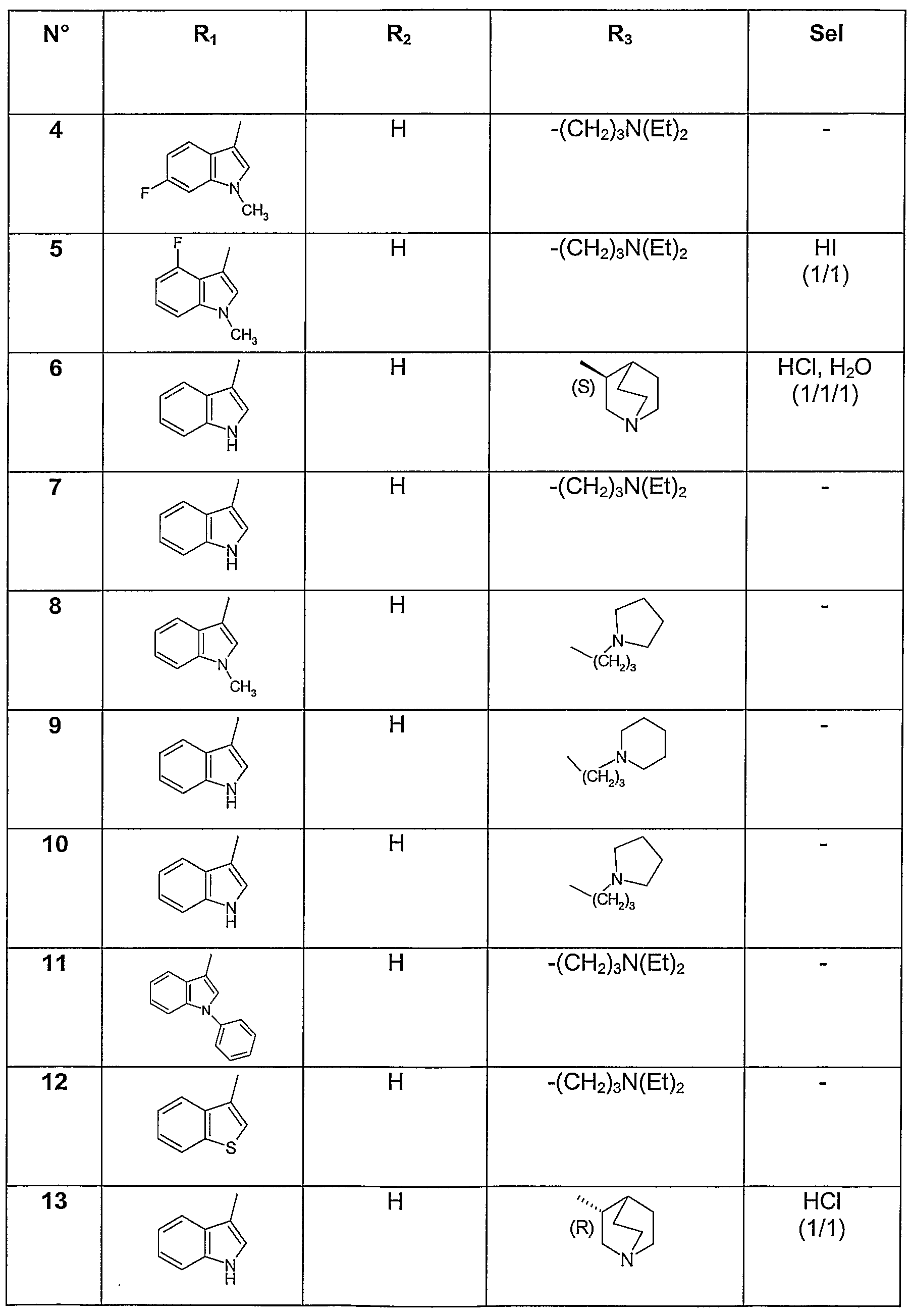
- Example 20 (1-methyl-6-fluoro-indol-3-yl) -3- (3-diethylaminopropylamino) -4H-1,2,4-triazin-5-one (Compound No. 4)
- aqueous phases are combined, acidified with concentrated hydrochloric acid and cooled in an ice bath.
- the precipitate formed is collected by filtration and then dried under reduced pressure (2.7 kPa) at 50 ° C. to give 1.12 g of 6-fluoro-1H-indol-3-yl-oxoacetic acid in the form of a bright yellow solid.
- the resulting suspension which is very thick, is treated with 650 ⁇ l of iodomethane, stirred for a further 24 hours at a temperature in the region of 20 ° C., refluxed for 30 minutes, allowed to cool to a temperature in the region of 20 ° C. and added with water. . It is stirred until complete dissolution and then the mixture is extracted twice with ethyl acetate. The aqueous phase is washed with water. The combined aqueous phases are acidified with concentrated hydrochloric acid and cooled in an ice bath. The precipitate is drained and dried under reduced pressure (2.7 kPa) at 50 ° C. for 15 hours to give 1. 04 g of (6-fluoro-1-methyl-1H-indol-3-yl) -oxoic acid. - acetic.
- a mixture of 2.14 g of 3-methoxy-phenyl-oxo-ethyl acetate, prepared in step 21.1, and 6 cm 3 of sodium hydroxide 2 N is stirred for 30 min at a temperature of 20 0 C and then it is added with approximately 15 cm 3 of water which allows to dissolve the insoluble, and stirred again 30 min at a temperature of 20 ° C.
- the reaction mixture is extracted with ethyl acetate and the organic phase is washed twice with water.
- the aqueous phases are combined and acidified with concentrated hydrochloric acid in the presence of ethyl acetate and extracted twice with ethyl acetate.
- a mixture of 630 mg of N-amino-N '- (3-diethylaminopropyl) guanidine iodohydrate, prepared in step 12.1 of example 12, and 360 mg of 3-methoxy-phenyl- oxo-acetic acid in 2 cm 3 of water is heated for 15 min at 140 ° C. in a microwave oven and then cooled to a temperature in the region of 20 ° C.
- the reaction medium is evaporated to dryness under reduced pressure (2.7 ° C.).
- reaction mixture is extracted twice with ethyl acetate and the organic phases are washed with water.
- the combined aqueous phases are acidified with concentrated hydrochloric acid and cooled in an ice bath.
- the precipitate is filtered off and dried under reduced pressure (2.7 kPa) at 50 ° C. for 15 hours to give 913 mg of (4-fluoro-1-methyl-1H-indol-3-yl) -oxoacetic acid. in the form of a yellow-brown solid.
- a mixture of 630 mg of ⁇ -amino- ⁇ - (3-diethylaminopropyl) guanidine iodohydrate, prepared in step 12.1 of Example 12, and 442 mg of acid (4- fluoro-1-methyl-1H-indol-3-yl) -oxo-acetic acid, prepared in step 23.2, in 2 cm 3 of water is heated for 15 min at 140 ° C in the microwave oven and then cooled to a temperature in the region of 20 ° C.
- reaction medium is evaporated to dryness under reduced pressure (2.7 kPa) and the residue obtained is purified by chromatography on silica [eluent: 32% dichloromethane / methanol / ammonia (85: 15: 1 by volume) to give, after methanol pasting and spinning, 0.150 g of 6- (1-methyl-4-fluorindol-3-yl) iodohydrate. 3- (3-diethylaminopropylamino) -4H-1,2,4-triazin-5-one as a white solid.
- the compounds of the invention have been tested for their ability to bind receptors nicotinic drugs containing the ⁇ 7 subunit using a binding test on preparations of rat brain membranes according to the methods described below:
- the resulting mixture was centrifuged at 24000 g for 20 minutes at 4 ° C and the pellet resuspended in 20 volumes of ice water. After 60 minutes of incubation at 4 ° C, a new pellet was obtained by centrifugation at 24000 g for 20 minutes at 4 ° C. The latter was resuspended in the composition buffer above and frozen at -20 ° C. On the day of the test, the membranes were thawed, centrifuged at 24,000 g for 20 minutes, and then resuspended at room temperature. final concentration of 2-5 mg protein / mL in Dulbecco's phosphate buffer pH 7.4 containing 0.05% serum albumin from beef.
- the binding of the compounds of the invention to the receptors containing the ⁇ 7 subunit was measured by competition against [ 3 H] -methyllycaconitine ([ 3 H] -MLA), a radiolabeled tracer recognizing the ⁇ 7 receptors. . (Davies et al., Neuropharmacology 1999, 38, 679-690) according to standard methods adapted to 96-well plate format.
- the ability of the compounds of the invention to displace the binding of [ 3 H] -MLA on rat hippocampus membranes was determined in duplicate after 2 hours of incubation at a temperature of 20 ° C.
- Each well contained a sample of about 150 ⁇ g of membrane protein, 5 nM of [ 3 H] -MLA and one of the compounds of the invention diluted to a specific concentration in Dulbecco's phosphate buffer pH 7.4 containing 0.05% serum albumin of beef for a final volume of 150 ⁇ L.
- Nonspecific binding was determined in specific wells containing 10 ⁇ M of non-radiolabelled MLA.
- the incubation was stopped by filtering the contents of each well through glass fiber filters (Whatman GF / B) previously soaked in a 0.33% polyethyleneimine solution in Dulbecco's phosphate buffer to reduce non-binding. - specific.
- the filters were then washed 3 times with Dulbecco's phosphate buffer and then dried at 50 ° C. for approximately 2 hours.
- the radioactivity retained on the filters were measured by application of scintillant (MeltiLex A, Perkin Elmer) followed by counting in luminometry (Trilux 1450 microbeta, Perkin-Elmer).
- the compounds of the invention which were studied in this test have a Ki value of less than 10 ⁇ M.
- compounds Nos. 11 and 12 showed a Ki value of 0.737 and 0.957 ⁇ M, respectively.
- the compounds according to the invention are nicotinic receptor ligands containing the subunit ⁇ 1.
- the subject of the invention is medicaments which comprise a compound of formula (I), or an addition salt thereof to a pharmaceutically acceptable acid, or a hydrate or a solvate of compound of formula (I).
- medicaments find use in therapeutics, especially in the curative and / or symptomatic treatment, for the prevention, diagnosis and / or monitoring of the evolution of disorders or diseases involving a disruption of the functioning of ⁇ 7 nicotinic receptors or responding favorably to a modulation of these.
- the compounds of the invention may be useful in psychiatric or neurological disorders or diseases of the central nervous system involving alterations of cognitive functions, attention, concentration, learning and memorizing abilities, or the processing of sensory information.
- the present invention also relates to the diagnostic use of analogs of these derivatives in which one or more atoms have been replaced by an isotope of atomic mass or of a mass number different from the atomic mass or the number of atomic mass. usually encountered in nature.
- the compounds of the invention may be useful in the case of disorders or psychiatric or neurological diseases of the central nervous system such as for example cognitive disorders, age-related memory deficits or viral or bacterial infections, alterations faculties of learning, concentration and memorization, mild cognitive impairment, senile dementia, vascular dementia, Levy's body dementia, Alzheimer's disease, Parkinson's disease, Huntington's chorea, syndrome of Gilles de la Tourette, neuronal degeneration following trauma, stroke, ischemia or cerebral hypoxia, multisystematous atrophy, progressive supranuclear palsy, amyotrophic lateral sclerosis, peripheral neuropathies, motor disorders such as dyskinesias, tardive dyskinesias, hyperkinesias, dykes stonies and epilepsies, attention deficit disorders related to hyperactivity, schizophrenia, depression, manic-depressive psychosis, anxiety, phobias, obsessive compulsive disorders, post-traumatic stress disorder, Panic attacks, eating disorders such as anor
- the compounds of the invention may be useful for introducing a reduction in the consumption of addictive substances, to help maintain abstinence from them or to reduce the symptoms of withdrawal.
- addictive substance applies to licit or illicit substances the consumption of which may give rise to abuse and / or dependence, such as, for example, nicotine and tobacco products, alcohol, cannabis derivatives, opiates, cocaine, barbiturates, benzodiazepines and psychostimulants.
- the compounds of the invention may also be of interest in the treatment of acute or chronic pain such as post-surgical pain, amputation pain (phantom limb pain), pain associated with cancerous lesions, migraines, neuropathies and muscle pain such as fibromyalgia.
- the compounds of the invention can be used in the context of the treatment of disorders or diseases involving inflammatory processes such as, for example, at the level of of the gastrointestinal tract: ulcerative colitis, Crohn's disease, irritable bowel syndrome, diarrhea, and elsewhere in the body arthritis (including rheumatoid arthritis) and skin inflammations such as acne .
- the compounds of the invention may be useful in endocrine disorders such as pheochromocytoma and disorders associated with smooth muscle contraction.
- the present invention also covers the use of the compounds of the invention for diagnostic or medical imaging purposes. It includes diagnostic and imaging methods consisting of the non-invasive analysis of the distribution of a tracer compound within the intact body of an animal including man with the aid of physical means such as positron emission tomography, single photon tomography, magnetic resonance spectroscopy and nuclear magnetic resonance imaging, computer-aided X-ray computed tomography (CT) or a combination thereof.
- CT computer-aided X-ray computed tomography
- the term "tracer compound” refers to the compounds of the invention, their enantiomers or their pro-drugs used or not in a marked form allowing their detection by physical means as described above.
- the marking consists of the replacement of one or more atoms in the compounds of the invention by an isotope of atomic mass or of a mass number different from the atomic mass or the mass number of these atoms as they are usually met in nature. It may also consist in the addition to the compounds of the invention of chemical groups carrying such isotopes using, for example, methylation reagents.
- the isotopes used may be, for example, isotopic radionuclides of hydrogen, carbon, nitrogen, oxygen, fluorine, phosphorus, sulfur, chlorine, iodine or technetium, such as 2 H, 3 H, 11 C, 13 C, 14 C, 13 N, 15 O, 17 O, 18 F, 35 S, 36 CI, 123 I, 125 I, 131 I.
- the labeled compounds can be synthesized according to methods described in the procedures of the present invention by substituting one or more reagents in the synthesis process with identical reagents containing the one or more isotope markers.
- the compounds according to the invention can therefore be used for the preparation of medicaments, in particular medicaments intended for the treatment of the prevention, diagnosis and / or monitoring of the evolution of the disorders or diseases mentioned above.
- the present invention relates to pharmaceutical compositions comprising, as active principle, a compound according to the invention.
- These pharmaceutical compositions contain an effective dose of at least one compound according to the invention, or a pharmaceutically acceptable salt, a hydrate or solvate of said compound, as well as at least one pharmaceutically acceptable excipient.
- Said excipients are chosen according to the pharmaceutical form and the desired mode of administration, from the usual excipients which are known to those skilled in the art.
- compositions of the present invention for oral, sublingual, subcutaneous, intramuscular, intravenous, topical, local, intratracheal, intranasal, transdermal or rectal administration the active ingredient of formula (I) above, or its salt, solvate or hydrate, may be administered in unit dosage form, in admixture with conventional pharmaceutical excipients, to animals and humans for the prophylaxis or treatment of the above disorders or diseases.
- Suitable unit dosage forms include oral forms such as tablets, soft or hard capsules, powders, granules and oral solutions or suspensions, sublingual, oral, intratracheal, intraocular, intranasal forms of administration. by inhalation, topical, transdermal, subcutaneous, intramuscular or intravenous administration forms, rectal administration forms and implants.
- the compounds according to the invention can be used in creams, gels, ointments or lotions.
- a unitary form of administration of a compound according to the invention in tablet form may comprise the following components: Compound according to the invention 50.0 mg
- the doses depend on the effect sought, the duration of treatment and the route of administration used; they are generally between 5 mg and 1000 mg per day orally for an adult with unit doses ranging from 1 mg to 250 mg of active substance. In general, the doctor will determine the appropriate dosage depending on age, weight and all other factors specific to the subject to be treated.
- the present invention also relates to a method of treatment of the pathologies indicated above which comprises the administration to a patient of an effective dose of a compound according to the invention, or one of its pharmaceutically acceptable salts or hydrates or solvates.
Landscapes
- Organic Chemistry (AREA)
- Chemical & Material Sciences (AREA)
- Health & Medical Sciences (AREA)
- Bioinformatics & Cheminformatics (AREA)
- Engineering & Computer Science (AREA)
- Veterinary Medicine (AREA)
- Nuclear Medicine, Radiotherapy & Molecular Imaging (AREA)
- General Chemical & Material Sciences (AREA)
- Pharmacology & Pharmacy (AREA)
- Life Sciences & Earth Sciences (AREA)
- Animal Behavior & Ethology (AREA)
- General Health & Medical Sciences (AREA)
- Public Health (AREA)
- Chemical Kinetics & Catalysis (AREA)
- Medicinal Chemistry (AREA)
- Neurology (AREA)
- Neurosurgery (AREA)
- Biomedical Technology (AREA)
- Rheumatology (AREA)
- Pain & Pain Management (AREA)
- Psychiatry (AREA)
- Hospice & Palliative Care (AREA)
- Immunology (AREA)
- Orthopedic Medicine & Surgery (AREA)
- Physical Education & Sports Medicine (AREA)
- Pharmaceuticals Containing Other Organic And Inorganic Compounds (AREA)
- Plural Heterocyclic Compounds (AREA)
- Nitrogen Condensed Heterocyclic Rings (AREA)
Abstract
Description




Claims


Priority Applications (9)
| Application Number | Priority Date | Filing Date | Title |
|---|---|---|---|
| EP06755440A EP1874761B1 (fr) | 2005-04-22 | 2006-04-21 | Derives de 4h-1,2,4-triazin-5-0nes, leur preparation et leur utilisation comme des recepteurs a l'acetylcholine de type nicotiniques alpha7 |
| DE602006016258T DE602006016258D1 (de) | 2005-04-22 | 2006-04-21 | 4h-1,2,4-triazin-5-on-derivate, ihre herstellung und ihre verwendung als alpha-7-nikotin-acetylcholin-rezeptoren |
| SI200630825T SI1874761T1 (sl) | 2005-04-22 | 2006-04-21 | Derivati 4H-1,2,4-triazin-5-onov, njihova priprava in njihova uporaba kot alfa-7-nikotin-acetilholinski receptorji |
| DK06755440.2T DK1874761T3 (da) | 2005-04-22 | 2006-04-21 | 4h-1,2,4-triazin-5-on-derivater, fremstilling heraf og anvendelse heraf som alpha-7-nikotin-acetylcholin-receptorer |
| JP2008507128A JP4966295B2 (ja) | 2005-04-22 | 2006-04-21 | 4H−1,2,4−トリアジン−5−オン誘導体、これらの調製およびα7ニコチン性アセチルコリン受容体としてのこれらの使用 |
| AT06755440T ATE478068T1 (de) | 2005-04-22 | 2006-04-21 | 4h-1,2,4-triazin-5-on-derivate, ihre herstellung und ihre verwendung als alpha-7-nikotin- acetylcholin-rezeptoren |
| PL06755440T PL1874761T3 (pl) | 2005-04-22 | 2006-04-21 | Pochodne 4H-1,2,4-triazyn-5-onu, ich wytwarzanie i ich zastosowanie jako receptorów nikotynowych acetylocholiny typu a7 |
| HR20100604T HRP20100604T1 (hr) | 2005-04-22 | 2006-04-21 | Derivati 4h-1,2,4-triazin-5-ona, njihova priprava i njihova uporaba kao alfa 7 nikotinskih acetilkolinskih receptora |
| US11/869,260 US7517881B2 (en) | 2005-04-22 | 2007-10-09 | Triazine derivatives, their preparation and therapeutic application thereof |
Applications Claiming Priority (2)
| Application Number | Priority Date | Filing Date | Title |
|---|---|---|---|
| FR05/04042 | 2005-04-22 | ||
| FR0504042A FR2884822B1 (fr) | 2005-04-22 | 2005-04-22 | Derives de triazines, leur preparation et leur application en therapeutique |
Related Child Applications (1)
| Application Number | Title | Priority Date | Filing Date |
|---|---|---|---|
| US11/869,260 Continuation US7517881B2 (en) | 2005-04-22 | 2007-10-09 | Triazine derivatives, their preparation and therapeutic application thereof |
Publications (2)
| Publication Number | Publication Date |
|---|---|
| WO2006111662A2 true WO2006111662A2 (fr) | 2006-10-26 |
| WO2006111662A3 WO2006111662A3 (fr) | 2006-11-30 |
Family
ID=35219499
Family Applications (1)
| Application Number | Title | Priority Date | Filing Date |
|---|---|---|---|
| PCT/FR2006/000887 Ceased WO2006111662A2 (fr) | 2005-04-22 | 2006-04-21 | Derives de 4h-1 , 2 , 4-triazin-5-0nes , leur preparation et leur utilisation comme des recepteurs a l'acetylcholine de type nicotiniques alpha7 |
Country Status (17)
| Country | Link |
|---|---|
| US (1) | US7517881B2 (fr) |
| EP (1) | EP1874761B1 (fr) |
| JP (1) | JP4966295B2 (fr) |
| AR (1) | AR054033A1 (fr) |
| AT (1) | ATE478068T1 (fr) |
| CY (1) | CY1111288T1 (fr) |
| DE (1) | DE602006016258D1 (fr) |
| DK (1) | DK1874761T3 (fr) |
| ES (1) | ES2350950T3 (fr) |
| FR (1) | FR2884822B1 (fr) |
| HR (1) | HRP20100604T1 (fr) |
| PL (1) | PL1874761T3 (fr) |
| PT (1) | PT1874761E (fr) |
| RS (1) | RS51557B (fr) |
| SI (1) | SI1874761T1 (fr) |
| TW (1) | TW200708506A (fr) |
| WO (1) | WO2006111662A2 (fr) |
Cited By (8)
| Publication number | Priority date | Publication date | Assignee | Title |
|---|---|---|---|---|
| US8048885B2 (en) | 2005-12-16 | 2011-11-01 | Novartis Ag | Organic compounds |
| US8173667B2 (en) | 2005-10-21 | 2012-05-08 | Novartis Ag | 1-aza-bicycloalkyl derivatives |
| US8236803B2 (en) | 2002-09-04 | 2012-08-07 | Novartis Ag | Aza-bicycloalkyl ethers and their use as alpha7-nAChR agonists |
| US8609662B2 (en) | 2004-07-14 | 2013-12-17 | Novartis Ag | 3-(heteroaryl-oxy)-2-alkyl-1-aza-bicycloalkyl derivatives as alpha. 7-nachr ligands for the treatment of CNS diseases |
| US8759346B2 (en) | 2005-12-16 | 2014-06-24 | Novartis Ag | Organic compounds |
| US8933090B2 (en) | 2004-06-18 | 2015-01-13 | Novartis Ag | 1-aza-bicyclo[3.3.1]nonanes |
| US10537539B2 (en) | 2009-09-22 | 2020-01-21 | Novartis Ag | Use of nicotinic acetylcholine receptor alpha 7 activators |
| IL262957B1 (en) * | 2016-05-12 | 2023-12-01 | Buck Inst Res Aging | 6-fluoro-tropisetron and pharmaceutical formulation comprising it for mitigating amyloid- related diseases |
Family Cites Families (4)
| Publication number | Priority date | Publication date | Assignee | Title |
|---|---|---|---|---|
| JP4774604B2 (ja) * | 2000-02-14 | 2011-09-14 | 和光純薬工業株式会社 | 第4級アンモニウム塩の製造方法 |
| JP4616971B2 (ja) * | 2000-07-18 | 2011-01-19 | 田辺三菱製薬株式会社 | 1−アザビシクロアルカン化合物およびその医薬用途 |
| CA2462453C (fr) * | 2001-10-02 | 2009-07-28 | Pharmacia & Upjohn Company | Composes d'heteoraryle fusionne substitues par azabicyclo utiles pour le traitement de maladies |
| SE0301320D0 (sv) * | 2003-05-06 | 2003-05-06 | Astrazeneca Ab | Positive modulators of nicotinic acetylcholine receptors |
-
2005
- 2005-04-22 FR FR0504042A patent/FR2884822B1/fr not_active Expired - Fee Related
-
2006
- 2006-04-20 AR ARP060101561A patent/AR054033A1/es unknown
- 2006-04-21 RS RSP-2010/0487A patent/RS51557B/sr unknown
- 2006-04-21 JP JP2008507128A patent/JP4966295B2/ja not_active Expired - Fee Related
- 2006-04-21 SI SI200630825T patent/SI1874761T1/sl unknown
- 2006-04-21 AT AT06755440T patent/ATE478068T1/de active
- 2006-04-21 PT PT06755440T patent/PT1874761E/pt unknown
- 2006-04-21 DE DE602006016258T patent/DE602006016258D1/de not_active Expired - Lifetime
- 2006-04-21 DK DK06755440.2T patent/DK1874761T3/da active
- 2006-04-21 PL PL06755440T patent/PL1874761T3/pl unknown
- 2006-04-21 WO PCT/FR2006/000887 patent/WO2006111662A2/fr not_active Ceased
- 2006-04-21 HR HR20100604T patent/HRP20100604T1/hr unknown
- 2006-04-21 ES ES06755440T patent/ES2350950T3/es not_active Expired - Lifetime
- 2006-04-21 EP EP06755440A patent/EP1874761B1/fr not_active Expired - Lifetime
- 2006-04-21 TW TW095114225A patent/TW200708506A/zh unknown
-
2007
- 2007-10-09 US US11/869,260 patent/US7517881B2/en not_active Expired - Fee Related
-
2010
- 2010-11-12 CY CY20101101023T patent/CY1111288T1/el unknown
Non-Patent Citations (1)
| Title |
|---|
| None |
Cited By (17)
| Publication number | Priority date | Publication date | Assignee | Title |
|---|---|---|---|---|
| US8236803B2 (en) | 2002-09-04 | 2012-08-07 | Novartis Ag | Aza-bicycloalkyl ethers and their use as alpha7-nAChR agonists |
| US9849117B2 (en) | 2002-09-04 | 2017-12-26 | Novartis Ag | Aza-bicycloalkyl ethers and their use as alpha7-nachr agonists |
| US9012451B2 (en) | 2002-09-04 | 2015-04-21 | Novartis Ag | Aza-bicycloalkyl ethers and their use as ALPHA7-nachr agonists |
| US9567343B2 (en) | 2002-09-04 | 2017-02-14 | Novartis Ag | Aza-bicyloalkyl ethers and their use as alpha7-nachr agonists |
| US9475811B2 (en) | 2004-06-18 | 2016-10-25 | Novartis Ag | 1-aza-bicyclo[3.3.1]nonanes |
| US8933090B2 (en) | 2004-06-18 | 2015-01-13 | Novartis Ag | 1-aza-bicyclo[3.3.1]nonanes |
| US8609662B2 (en) | 2004-07-14 | 2013-12-17 | Novartis Ag | 3-(heteroaryl-oxy)-2-alkyl-1-aza-bicycloalkyl derivatives as alpha. 7-nachr ligands for the treatment of CNS diseases |
| US9657010B2 (en) | 2004-07-14 | 2017-05-23 | Novartis Ag | Substituted quinuclidines as alpha 7-nicotinic acetylcholine receptor activity modulators |
| US8173667B2 (en) | 2005-10-21 | 2012-05-08 | Novartis Ag | 1-aza-bicycloalkyl derivatives |
| US8637517B2 (en) | 2005-12-16 | 2014-01-28 | Novartis Ag | Organic compounds |
| US9206181B2 (en) | 2005-12-16 | 2015-12-08 | Novartis Ag | 1-aza-bicyclo[3.3.1] non-4-yl)-[5-(1H-indol-5-yl)-heteroaryl]-amines as cholinergic ligands of the n-AChR for the treatment of psychotic and neurodegenerative disorders |
| US8759346B2 (en) | 2005-12-16 | 2014-06-24 | Novartis Ag | Organic compounds |
| US8048885B2 (en) | 2005-12-16 | 2011-11-01 | Novartis Ag | Organic compounds |
| US10537539B2 (en) | 2009-09-22 | 2020-01-21 | Novartis Ag | Use of nicotinic acetylcholine receptor alpha 7 activators |
| US11096916B2 (en) | 2009-09-22 | 2021-08-24 | Novartis Ag | Use of nicotinic acetylcholine receptor alpha 7 activators |
| IL262957B1 (en) * | 2016-05-12 | 2023-12-01 | Buck Inst Res Aging | 6-fluoro-tropisetron and pharmaceutical formulation comprising it for mitigating amyloid- related diseases |
| IL262957B2 (en) * | 2016-05-12 | 2024-04-01 | Buck Inst Res Aging | 6-Fluorotropistrone and a pharmaceutical formulation comprising it for the relief of amyloid-related diseases |
Also Published As
| Publication number | Publication date |
|---|---|
| EP1874761A2 (fr) | 2008-01-09 |
| ATE478068T1 (de) | 2010-09-15 |
| DE602006016258D1 (de) | 2010-09-30 |
| DK1874761T3 (da) | 2010-12-13 |
| HRP20100604T1 (hr) | 2010-12-31 |
| PT1874761E (pt) | 2010-11-18 |
| JP4966295B2 (ja) | 2012-07-04 |
| CY1111288T1 (el) | 2015-08-05 |
| SI1874761T1 (sl) | 2010-12-31 |
| FR2884822B1 (fr) | 2007-06-29 |
| US7517881B2 (en) | 2009-04-14 |
| JP2008536902A (ja) | 2008-09-11 |
| TW200708506A (en) | 2007-03-01 |
| FR2884822A1 (fr) | 2006-10-27 |
| WO2006111662A3 (fr) | 2006-11-30 |
| US20080096891A1 (en) | 2008-04-24 |
| EP1874761B1 (fr) | 2010-08-18 |
| PL1874761T3 (pl) | 2011-02-28 |
| RS51557B (sr) | 2011-06-30 |
| AR054033A1 (es) | 2007-05-30 |
| ES2350950T3 (es) | 2011-01-28 |
Similar Documents
| Publication | Publication Date | Title |
|---|---|---|
| DE60008372T2 (de) | Pharmazeutisch aktive verbindungen | |
| EP0833822A1 (fr) | Derives de 4-phenylaminothiazole, leur procede de preparation et les compositions pharmaceutiques les contenant | |
| JPS62114987A (ja) | 新規4―ベンジル―1―(2h)―フタラジノン―誘導体及びその製法 | |
| JPS63132889A (ja) | キナゾリノン誘導体 | |
| US7517881B2 (en) | Triazine derivatives, their preparation and therapeutic application thereof | |
| CA2096475A1 (fr) | Derives du benzimidazole; leur procede de preparation et les compositions pharmaceutiques qui les contiennent | |
| FR2809730A1 (fr) | Derives de 1,4-diazabicyclo[3.2.2] nonanebenzoxazole, -benzothiazole et -benzimidazole, leur preparation et leur application therapeutique | |
| WO1995026349A1 (fr) | INDENO[1,2-e]PYRAZINE-4-ONES, LEUR PREPARATION ET LES MEDICAMENTS LES CONTENANT | |
| FR2717813A1 (fr) | Dérivés d'imidazo[1,2-a]indeno[1,2-e]pyrazine-4-one, leur préparation et les médicaments les contenant . | |
| FR2717811A1 (fr) | Dérivés d'imidazo[1,2-a]pyrazine-4-one, leur préparation et les médicaments les contenant. | |
| WO2002059082A2 (fr) | Ligands d'agoniste et d'antagoniste du recepteur de serotonine a substitution aryle et aminoaryle | |
| JPH0395161A (ja) | (1,2,3,4―テトラヒドロ‐9‐アクリジンイミノ)シクロヘキサンカルボン酸および関連化合物 | |
| EP1492792B1 (fr) | Derives de 3-heteroaryl-3,5-dihydro-4-oxo-4h-pyridazino¬4,5-b|indole-1-acetamide,leur preparation et leur application en therapeutique | |
| EP1922320B1 (fr) | Derives de 5-pyridazinyl-1-azabicyclo[3.2.1]octane, leur preparation et leur application en therapeutique | |
| EP1915375B1 (fr) | DÉRIVÉS DE -PYRIDINYL-i-AZABICYCLO[3.2.1]OCTANE, A LEUR PRÉPARATION ET LEUR APPLICATION EN THÉRAPEUTIQUE | |
| WO1999021831A1 (fr) | Composes tricycliques utilises en tant qu'inhibiteurs de cgmp-pde | |
| JP2000504715A (ja) | グラニセトロンの製造方法 | |
| US7939520B2 (en) | Aminoazacyclyl-3-sulfonylindazoles as 5-hydroxytryptamine-6 ligands | |
| JP3407916B2 (ja) | ジアザビシクロ誘導体 | |
| EP1874777A1 (fr) | Dérivés de 1 h-pyrimido[4,5-b]indole, leur préparation et leur application en thérapeutique | |
| JPS5854150B2 (ja) | 新規クロモン誘導体およびその製造法 | |
| US5047402A (en) | Cyclic amides as medicaments | |
| FR2738821A1 (fr) | Indeno[1,2-e]pyrazin-4-ones, leur preparation et les medicaments les contenant | |
| CN107540672A (zh) | 一种治疗肝硬化的药物及其合成方法 | |
| BE825660A (fr) | Derives de phenoxypropylamine et leur preparation |
Legal Events
| Date | Code | Title | Description |
|---|---|---|---|
| 121 | Ep: the epo has been informed by wipo that ep was designated in this application | ||
| WWE | Wipo information: entry into national phase |
Ref document number: 2006755440 Country of ref document: EP |
|
| WWE | Wipo information: entry into national phase |
Ref document number: 11869260 Country of ref document: US |
|
| WWE | Wipo information: entry into national phase |
Ref document number: 2008507128 Country of ref document: JP |
|
| NENP | Non-entry into the national phase |
Ref country code: DE |
|
| NENP | Non-entry into the national phase |
Ref country code: RU |
|
| WWW | Wipo information: withdrawn in national office |
Ref document number: RU |
|
| WWP | Wipo information: published in national office |
Ref document number: 2006755440 Country of ref document: EP |
|
| WWP | Wipo information: published in national office |
Ref document number: 11869260 Country of ref document: US |
|
| WWE | Wipo information: entry into national phase |
Ref document number: P-2010/0487 Country of ref document: RS |