WO2012121096A1 - 熱転写受像シート、及び熱転写受像シートの製造方法 - Google Patents
熱転写受像シート、及び熱転写受像シートの製造方法 Download PDFInfo
- Publication number
- WO2012121096A1 WO2012121096A1 PCT/JP2012/055200 JP2012055200W WO2012121096A1 WO 2012121096 A1 WO2012121096 A1 WO 2012121096A1 JP 2012055200 W JP2012055200 W JP 2012055200W WO 2012121096 A1 WO2012121096 A1 WO 2012121096A1
- Authority
- WO
- WIPO (PCT)
- Prior art keywords
- resin
- acrylic resin
- barrier layer
- thermal transfer
- transfer image
- Prior art date
- Legal status (The legal status is an assumption and is not a legal conclusion. Google has not performed a legal analysis and makes no representation as to the accuracy of the status listed.)
- Ceased
Links
Images

Classifications
-
- B—PERFORMING OPERATIONS; TRANSPORTING
- B41—PRINTING; LINING MACHINES; TYPEWRITERS; STAMPS
- B41M—PRINTING, DUPLICATING, MARKING, OR COPYING PROCESSES; COLOUR PRINTING
- B41M5/00—Duplicating or marking methods; Sheet materials for use therein
- B41M5/50—Recording sheets characterised by the coating used to improve ink, dye or pigment receptivity, e.g. for ink-jet or thermal dye transfer recording
- B41M5/502—Recording sheets characterised by the coating used to improve ink, dye or pigment receptivity, e.g. for ink-jet or thermal dye transfer recording characterised by structural details, e.g. multilayer materials
- B41M5/506—Intermediate layers
-
- B—PERFORMING OPERATIONS; TRANSPORTING
- B41—PRINTING; LINING MACHINES; TYPEWRITERS; STAMPS
- B41M—PRINTING, DUPLICATING, MARKING, OR COPYING PROCESSES; COLOUR PRINTING
- B41M5/00—Duplicating or marking methods; Sheet materials for use therein
- B41M5/26—Thermography ; Marking by high energetic means, e.g. laser otherwise than by burning, and characterised by the material used
- B41M5/382—Contact thermal transfer or sublimation processes
-
- B—PERFORMING OPERATIONS; TRANSPORTING
- B32—LAYERED PRODUCTS
- B32B—LAYERED PRODUCTS, i.e. PRODUCTS BUILT-UP OF STRATA OF FLAT OR NON-FLAT, e.g. CELLULAR OR HONEYCOMB, FORM
- B32B27/00—Layered products comprising a layer of synthetic resin
- B32B27/30—Layered products comprising a layer of synthetic resin comprising vinyl (co)polymers; comprising acrylic (co)polymers
-
- B—PERFORMING OPERATIONS; TRANSPORTING
- B32—LAYERED PRODUCTS
- B32B—LAYERED PRODUCTS, i.e. PRODUCTS BUILT-UP OF STRATA OF FLAT OR NON-FLAT, e.g. CELLULAR OR HONEYCOMB, FORM
- B32B5/00—Layered products characterised by the non- homogeneity or physical structure, i.e. comprising a fibrous, filamentary, particulate or foam layer; Layered products characterised by having a layer differing constitutionally or physically in different parts
- B32B5/18—Layered products characterised by the non- homogeneity or physical structure, i.e. comprising a fibrous, filamentary, particulate or foam layer; Layered products characterised by having a layer differing constitutionally or physically in different parts characterised by features of a layer of foamed material
-
- B—PERFORMING OPERATIONS; TRANSPORTING
- B41—PRINTING; LINING MACHINES; TYPEWRITERS; STAMPS
- B41M—PRINTING, DUPLICATING, MARKING, OR COPYING PROCESSES; COLOUR PRINTING
- B41M5/00—Duplicating or marking methods; Sheet materials for use therein
- B41M5/26—Thermography ; Marking by high energetic means, e.g. laser otherwise than by burning, and characterised by the material used
- B41M5/382—Contact thermal transfer or sublimation processes
- B41M5/38207—Contact thermal transfer or sublimation processes characterised by aspects not provided for in groups B41M5/385 - B41M5/395
- B41M5/38214—Structural details, e.g. multilayer systems
-
- B—PERFORMING OPERATIONS; TRANSPORTING
- B41—PRINTING; LINING MACHINES; TYPEWRITERS; STAMPS
- B41M—PRINTING, DUPLICATING, MARKING, OR COPYING PROCESSES; COLOUR PRINTING
- B41M5/00—Duplicating or marking methods; Sheet materials for use therein
- B41M5/26—Thermography ; Marking by high energetic means, e.g. laser otherwise than by burning, and characterised by the material used
- B41M5/40—Thermography ; Marking by high energetic means, e.g. laser otherwise than by burning, and characterised by the material used characterised by the base backcoat, intermediate, or covering layers, e.g. for thermal transfer dye-donor or dye-receiver sheets; Heat, radiation filtering or absorbing means or layers; combined with other image registration layers or compositions; Special originals for reproduction by thermography
- B41M5/42—Intermediate, backcoat, or covering layers
-
- B—PERFORMING OPERATIONS; TRANSPORTING
- B41—PRINTING; LINING MACHINES; TYPEWRITERS; STAMPS
- B41M—PRINTING, DUPLICATING, MARKING, OR COPYING PROCESSES; COLOUR PRINTING
- B41M5/00—Duplicating or marking methods; Sheet materials for use therein
- B41M5/26—Thermography ; Marking by high energetic means, e.g. laser otherwise than by burning, and characterised by the material used
- B41M5/40—Thermography ; Marking by high energetic means, e.g. laser otherwise than by burning, and characterised by the material used characterised by the base backcoat, intermediate, or covering layers, e.g. for thermal transfer dye-donor or dye-receiver sheets; Heat, radiation filtering or absorbing means or layers; combined with other image registration layers or compositions; Special originals for reproduction by thermography
- B41M5/42—Intermediate, backcoat, or covering layers
- B41M5/44—Intermediate, backcoat, or covering layers characterised by the macromolecular compounds
-
- B—PERFORMING OPERATIONS; TRANSPORTING
- B41—PRINTING; LINING MACHINES; TYPEWRITERS; STAMPS
- B41M—PRINTING, DUPLICATING, MARKING, OR COPYING PROCESSES; COLOUR PRINTING
- B41M5/00—Duplicating or marking methods; Sheet materials for use therein
- B41M5/50—Recording sheets characterised by the coating used to improve ink, dye or pigment receptivity, e.g. for ink-jet or thermal dye transfer recording
-
- B—PERFORMING OPERATIONS; TRANSPORTING
- B41—PRINTING; LINING MACHINES; TYPEWRITERS; STAMPS
- B41M—PRINTING, DUPLICATING, MARKING, OR COPYING PROCESSES; COLOUR PRINTING
- B41M5/00—Duplicating or marking methods; Sheet materials for use therein
- B41M5/50—Recording sheets characterised by the coating used to improve ink, dye or pigment receptivity, e.g. for ink-jet or thermal dye transfer recording
- B41M5/52—Macromolecular coatings
-
- B—PERFORMING OPERATIONS; TRANSPORTING
- B41—PRINTING; LINING MACHINES; TYPEWRITERS; STAMPS
- B41M—PRINTING, DUPLICATING, MARKING, OR COPYING PROCESSES; COLOUR PRINTING
- B41M2205/00—Printing methods or features related to printing methods; Location or type of the layers
- B41M2205/02—Dye diffusion thermal transfer printing (D2T2)
-
- B—PERFORMING OPERATIONS; TRANSPORTING
- B41—PRINTING; LINING MACHINES; TYPEWRITERS; STAMPS
- B41M—PRINTING, DUPLICATING, MARKING, OR COPYING PROCESSES; COLOUR PRINTING
- B41M2205/00—Printing methods or features related to printing methods; Location or type of the layers
- B41M2205/06—Printing methods or features related to printing methods; Location or type of the layers relating to melt (thermal) mass transfer
-
- B—PERFORMING OPERATIONS; TRANSPORTING
- B41—PRINTING; LINING MACHINES; TYPEWRITERS; STAMPS
- B41M—PRINTING, DUPLICATING, MARKING, OR COPYING PROCESSES; COLOUR PRINTING
- B41M2205/00—Printing methods or features related to printing methods; Location or type of the layers
- B41M2205/32—Thermal receivers
-
- B—PERFORMING OPERATIONS; TRANSPORTING
- B41—PRINTING; LINING MACHINES; TYPEWRITERS; STAMPS
- B41M—PRINTING, DUPLICATING, MARKING, OR COPYING PROCESSES; COLOUR PRINTING
- B41M2205/00—Printing methods or features related to printing methods; Location or type of the layers
- B41M2205/36—Backcoats; Back layers
-
- B—PERFORMING OPERATIONS; TRANSPORTING
- B41—PRINTING; LINING MACHINES; TYPEWRITERS; STAMPS
- B41M—PRINTING, DUPLICATING, MARKING, OR COPYING PROCESSES; COLOUR PRINTING
- B41M2205/00—Printing methods or features related to printing methods; Location or type of the layers
- B41M2205/38—Intermediate layers; Layers between substrate and imaging layer
Definitions
- the present invention relates to a thermal transfer image receiving sheet and a method for producing the thermal transfer image receiving sheet, and in particular, a thermal transfer image receiving sheet provided with a barrier layer excellent in adhesiveness to a receiving layer and solvent resistance, and a method for producing the thermal transfer image receiving sheet.
- a thermal transfer image receiving sheet provided with a barrier layer excellent in adhesiveness to a receiving layer and solvent resistance, and a method for producing the thermal transfer image receiving sheet.
- a thermal transfer sheet in which a sublimation dye is supported on a substrate such as a plastic film and a thermal transfer image receiving sheet provided with a receiving layer on a substrate such as paper or plastic film are overlapped to form a full color image.
- a sublimation transfer recording system is known. This method uses a sublimation dye as a color material, so the density and gradation can be freely adjusted in dot units, and a full color image exactly as the original can be clearly displayed on the image receiving sheet. It is applied to color image formation for computers. The image is of a high quality comparable to a silver salt photograph.
- thermal transfer image receiving sheet used in the sublimation transfer recording system
- a thermal transfer image receiving sheet has been proposed in which a foamable film such as a polypropylene film having microvoids is laminated on a base material and an image receiving layer is provided thereon.
- problems such as curling may occur due to shrinkage of the foamable film due to heat during formation of the receiving layer.
- Patent Document 1 proposes a thermal transfer image-receiving sheet provided with a porous layer formed using a coating liquid containing hollow particles and a binder instead of a foamable film.
- a thermal transfer image-receiving sheet has been proposed in which a barrier layer made of polyvinyl alcohol, which is known as a resin having high solvent resistance, is provided between a porous layer and a receiving layer. According to the thermal transfer image-receiving sheet provided with this barrier layer, the function of the porous layer can be prevented from being destroyed by the solvent.
- the barrier layer made of polyvinyl alcohol has a problem that the adhesiveness with the resin used for the receiving layer is poor, and the adhesiveness between the barrier layer and the receiving layer is adversely affected.
- attempts have been made to include a component that improves adhesion in a barrier layer made of polyvinyl alcohol the solvent resistance is reduced by the amount of the component that improves adhesion. There is no barrier layer that can achieve both solvent properties and adhesion to the receiving layer.
- the present invention has been made in view of such a situation, and provides a thermal transfer image-receiving sheet provided with a barrier layer excellent in adhesion to a receiving layer and solvent resistance, and a method for producing the thermal transfer image-receiving sheet. Is the main issue.
- the present invention for solving the above-mentioned problems is a thermal transfer image-receiving sheet obtained by laminating a porous layer, a barrier layer, and a receiving layer in this order on a substrate, wherein the porous layer comprises a binder resin and hollow particles.
- the barrier layer is different from (i) (A) the first acrylic resin, and (B) the polyester resin, the polyvinyl pyrrolidone resin, the polyester urethane resin, and the first acrylic resin. 1 type or 2 or more types of resin selected from the group of 2 acrylic resin, or (ii) polyvinylpyrrolidone type resin is contained, It is characterized by the above-mentioned.
- the first acrylic resin may be a core-shell type acrylic resin. Further, the blending ratio of the first acrylic resin to one or more resins selected from the group (B) is in the range of 9: 1 to 5: 5 in terms of solid content. It may be within.
- the polyvinyl pyrrolidone resin may be a crosslinked polyvinyl pyrrolidone resin. Further, the crosslinked polyvinylpyrrolidone-based resin may be obtained by crosslinking a portion of 40% to 50% in one molecule.
- the method of the present invention for solving the above-mentioned problem is a method for producing a thermal transfer image-receiving sheet in which a porous layer, a barrier layer, and a receiving layer are laminated in this order on a substrate.
- the step of forming comprises: (A) a first acrylic resin; and (B) a polyester resin, a polyvinylpyrrolidone resin, a polyester urethane resin, and a second acrylic resin group different from the first acrylic resin. It is the process of coating and drying on the base material an aqueous coating solution containing one or more resins selected from the above.
- the first acrylic resin may be a core-shell type acrylic resin. Further, the first acrylic resin and the second acrylic resin may be acrylic resin emulsions having different minimum film forming temperatures. Further, the first acrylic resin in the aqueous coating liquid, and one or more selected from the group of (B) polyester resin, polyvinylpyrrolidone resin, polyester urethane resin, and second acrylic resin The compounding ratio with two or more resins may be 9: 1 to 5: 5 in terms of solid content.
- the thermal transfer image receiving sheet of the present invention it is possible to provide a thermal transfer image receiving sheet provided with a barrier layer having excellent solvent resistance and excellent adhesion to the receiving layer. Moreover, according to the manufacturing method of the thermal transfer image receiving sheet of this invention, the barrier layer which comprises the thermal transfer image receiving sheet of this invention can be manufactured with sufficient coating aptitude.
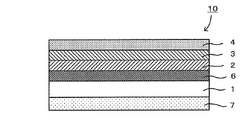
- the thermal transfer image receiving sheet 10 of the present invention will be specifically described with reference to the drawings.
- the thermal transfer image receiving sheet 10 of the present invention has a structure in which a porous layer 2, a barrier layer 3, and a receiving layer 4 are laminated in this order on a substrate 1.
- the present invention will be specifically described.
- the substrate 1 is an essential component in the thermal transfer image receiving sheet 10 of the present invention, and is provided to hold the porous layer 2.
- the substrate 1 is not particularly limited, and stretched or unstretched films of high-quality polyesters such as polyethylene terephthalate and polyethylene naphthalate, polypropylene, polycarbonate, cellulose acetate, polyethylene derivatives, polyamide, polymethylpentene, etc. Examples thereof include paper, coated paper, art paper, cast coated paper, and paperboard. Moreover, the composite film which laminated
- the thickness of the substrate 1 can be appropriately selected depending on the material so that the strength, heat resistance, etc. thereof are appropriate, but is usually about 1 ⁇ m to 300 ⁇ m, preferably about 60 ⁇ m to 200 ⁇ m.
- porous layer 2 As shown in FIG. 1, a porous layer 2 is provided on the substrate 1.
- the porous layer 2 is an essential component in the thermal transfer image-receiving sheet 10 of the present invention, and when the heat applied from the thermal head to the receiving layer 4 is transferred to the base material 1, the base material 1 is lost by the heat. It has heat resistance to prevent this, and cushioning properties to prevent density unevenness and white spots in highlight portions during image formation. And in this invention, in order to provide the heat insulation and cushioning properties to the porous layer 2, the hollow particle is contained.
- the porous layer 2 will be described focusing on the porous layer 2 made of hollow particles and a binder resin.
- the heat insulation property of the porous layer 2 can be appropriately adjusted according to the thickness of the porous layer 2, the amount of hollow particles contained in the porous layer 2, that is, the porosity of the porous layer.
- the thickness of the porous layer 2 is preferably in the range of 10 ⁇ m to 100 ⁇ m, and more preferably in the range of 10 ⁇ m to 50 ⁇ m.
- the density of the porous layer 2 is preferably in the range of 0.1 g / cm 3 to 0.8 g / cm 3 , and is preferably in the range of 0.2 g / cm 3 to 0.7 g / cm 3 . More preferably.
- the porosity of the porous layer 2 is preferably in the range of 15% to 80%.
- the porosity is a value represented by (the porosity of the hollow particles) ⁇ (the content of the hollow particles in the porous layer).
- the porous layer 2 may have a configuration composed of a single layer, or may have a configuration in which a plurality of layers are laminated.
- the porous layer 2 having a configuration in which a plurality of layers are stacked may have a configuration in which layers of the same composition are stacked, or have a configuration in which layers of different compositions are stacked. It may be.
- a configuration in which two layers having different compositions are laminated is preferable in that a functional porous layer 2 can be obtained.
- the hollow particles contained in the porous layer 2 impart heat insulation and cushioning properties to the porous layer 2. Therefore, hollow particles capable of imparting desired heat insulating properties and cushioning properties can be appropriately selected and used, and expanded particles may be used, or non-expanded particles may be used. Further, the expanded particles used as the hollow particles may be independent expanded particles or continuous expanded particles. Furthermore, the hollow particles may be organic hollow particles composed of resin or the like, or inorganic hollow particles composed of glass or the like. The hollow particles may be cross-linked hollow particles.
- the resin constituting the hollow particles examples include styrene resins such as styrene acrylic resins and crosslinked styrene-acrylic resins, (meth) acrylic resins such as acrylonitrile-acrylic resins, phenolic resins, fluorine resins, and polyamide resins.
- styrene resins such as styrene acrylic resins and crosslinked styrene-acrylic resins
- (meth) acrylic resins such as acrylonitrile-acrylic resins, phenolic resins, fluorine resins, and polyamide resins.
- examples thereof include resins, polyimide resins, polycarbonate resins, and polyether resins.
- the average particle size of the hollow particles can be appropriately set according to the type of resin constituting the hollow particles and is not particularly limited, but is usually in the range of 0.1 ⁇ m to 15 ⁇ m. It is particularly preferable that the thickness is in the range of 0.1 ⁇ m to 10 ⁇ m. This is because if the average particle size is too small, the amount of hollow particles used increases and the cost increases, and if the average particle size is too large, it becomes difficult to form the smooth porous layer 2.
- the amount of the hollow particles contained in the porous layer 2 can be appropriately set within a range in which desired heat insulating properties and cushion functions can be obtained, and is not particularly limited.
- the ratio of the hollow particles is preferably in the range of 30% by mass to 90% by mass, and in particular in the range of 50% by mass to 80% by mass. It is preferable to be within. If the content is too small, voids in the porous layer 2 may be reduced, and sufficient heat insulating properties and cushioning properties may not be obtained. If the content is increased, the weight ratio of the binder resin is reduced accordingly, This is because the quality layer 2 may become brittle and the moldability of the layer may deteriorate.
- the binder resin is not particularly limited, but usually an aqueous resin that can be dispersed or dissolved in an aqueous solvent is preferably used.
- water-based resins include polyurethane resins such as acrylic urethane resins, polyester resins, gelatin, styrene acrylate esters, polyvinyl alcohol, polyethylene oxide, polyvinyl pyrrolidone, pullulan, carboxymethyl cellulose, hydroxyethyl cellulose, dextran, dextrin, Polyacrylic acid and salts thereof, agar, ⁇ -carrageenan, ⁇ -carrageenan, ⁇ -carrageenan, casein, xanthene gum, locust bean gum, alginic acid, gum arabic, polyalkylenoxide copolymer, water-soluble polyvinyl butyral, Examples thereof include homopolymers and copolymers of vinyl monomers having a carboxyl group or a sulfonic acid group.
- these binder resins can also exhibit a cooling gelling function. Separately, a good porous layer can be formed without using a cooling gelling agent described later.
- the amount of the binder resin contained in the porous layer 2 is appropriately determined depending on the type of hollow particles used, the heat insulating properties required for the thermal transfer image-receiving sheet 10, image forming conditions, etc.
- the ratio of the binder resin is preferably 5% by mass to 70% by mass, and preferably 10% by mass to 60% by mass. More preferably, the content is 15% by mass to 40% by mass. If the content of the binder resin is too small, the porous layer 2 becomes brittle and the layer formation may be poor. Moreover, when there is too much binder resin, the content rate of a hollow particle is not fully ensured, and there exists a possibility that the heat insulation and cushioning properties of the porous layer 2 which are the objectives may not be ensured.
- the hollow particles and the binder resin are preferably contained within the range described above, but the PV ratio is particularly preferably 8/2 to 4/6.
- the PV ratio is a value determined by the solid content of the hollow particles / the solid content of the resin.
- the resin indicates both the hollow particles and the binder, and the solid content of the resin indicates the total amount of the solid content of the hollow particles and the solid content of the binder resin.
- the porous layer 2 preferably contains a cooling gelling agent instead of or together with the binder resin. By including a cooling gelling agent, it is possible to impart further excellent heat insulation to the porous layer 2.
- cooling gelling agent conventionally known ones can be appropriately selected and used, and examples thereof include gelatin, polyvinyl alcohol, agar, ⁇ -carrageenan, ⁇ -carrageenan, ⁇ -carrageenan, pectin and the like.
- the ratio between the hollow particles contained in the porous layer 2 and the cooling gelling agent is a desired heat insulating property.
- the porous layer 2 which has can be formed it will not specifically limit.
- the cooling gelling agent is preferably in the range of 5 to 50 parts by mass, particularly 10 parts by mass, with respect to 100 parts by mass of the solid content in the liquid for forming the porous layer. It is preferably in the range of 40 parts by weight to 40 parts by weight, and more preferably in the range of 12 parts by weight to 40 parts by weight.
- the content ratio of the hollow particles and the cooling gelling agent is within the above range, the porous layer 2 having excellent heat insulation can be formed.
- the porous layer 2 can include, for example, a nonionic silicone surfactant, a curing agent such as an isocyanate compound, a wetting agent, a dispersant, and the like, if necessary.
- a nonionic silicone surfactant such as an isocyanate compound, a wetting agent, a dispersant, and the like, if necessary.
- the porous layer 2 is for forming a porous layer in which the hollow particles described above, a binder resin and / or a cooling gelling agent, and optional components added as necessary are dispersed or dissolved in an aqueous solvent.
- the liquid can be formed by applying and drying on the substrate 1 by a conventionally known means such as a gravure printing method, a screen printing method or a reverse coating method using a gravure plate.
- a barrier layer 3 is provided on the porous layer 2.
- the barrier layer 3 is different from (i) (A) the first acrylic resin and (B) the polyester resin, the polyvinyl pyrrolidone resin, the polyester urethane resin, and the first acrylic resin. 1 type or 2 or more types of resin selected from the group of 2 acrylic resin, or (ii) polyvinylpyrrolidone-type resin is contained.
- the barrier layer 3 containing one or more resins selected from the above is referred to as the barrier layer of the first aspect, and (ii) the barrier layer 3 containing the polyvinylpyrrolidone-based resin is the same as that of the second aspect. Sometimes referred to as a barrier layer.
- the solvent layer is excellent and the adhesiveness to the porous layer 2 and the receiving layer 4 is excellent. Therefore, the porous layer 2 can be prevented from being destroyed by the solvent of the receiving layer 4, and the porous layer 2 and the receiving layer 4 can be firmly bonded.
- the barrier layer of the first aspect and the barrier layer of the second aspect will be described.
- the barrier layer 3 according to the first aspect includes (A) a first acrylic resin, (B) a polyester resin, a polyvinylpyrrolidone resin, a polyester urethane resin, and the first acrylic resin. 1 type, or 2 or more types of resin selected from the group of 2nd acrylic resin different from resin is contained.
- the barrier layer 3 of the first aspect contains the first acrylic resin as an essential constituent. Since the acrylic resin is excellent in solvent resistance and adhesiveness among various resin components, the barrier layer 3 has solvent resistance and adhesiveness by including the first acrylic resin in the barrier layer 3. Is granted. In the present invention, the first acrylic resin is contained mainly for improving the solvent resistance of the barrier layer 3.
- the acrylic resin constituting the first acrylic resin is not particularly limited, and any acrylic resin can impart solvent resistance to the barrier layer 3.
- the acrylic resin that forms the first acrylic resin may be an acrylic resin or an acrylic derivative such as a methacrylic resin.
- the first acrylic resin for example, polymethyl methacrylate, polyacrylamide, acrylic polyol resin, styrene acrylic copolymer, and the like can be suitably used.
- a core / shell type acrylic resin can be particularly preferably used in the present invention.
- the core-shell type acrylic resin has extremely high solvent resistance due to its structure. Therefore, the solvent resistance of the barrier layer 3 can be remarkably improved by adopting the core-shell type acrylic resin as the first acrylic resin.
- the core part and the shell part are not limited to those made of acrylic resin, and the core part or the shell part Those in which one is an acrylic resin are also included.
- the core-shell type acrylic resin may be one in which the core part is an acrylic resin and the shell part is a urethane resin.
- the first acrylic resin is preferably an acrylic resin obtained from an acrylic resin emulsion, and the core-shell type acrylic resin emulsion is heated at a temperature equal to or higher than the minimum film-forming temperature.
- the core-shell type acrylic resin obtained is particularly preferable.
- acrylic resin emulsion a conventionally known acrylic resin emulsion can be appropriately selected and used.
- the acrylic resin emulsion can be obtained by mixing acrylic resin particles with water together with a surfactant, or by directly synthesizing an acrylic monomer by a conventionally known emulsion polymerization method.
- acrylic resin emulsion a commercially available product can be used. For example, a core whose shell part is made of an acrylamide resin (glass transition temperature: 218 ° C.) and whose core part is an acrylic resin (glass transition temperature: 10 ° C.).
- the acrylic resin emulsion preferably has a solid content of 20% by mass to 50% by mass, and more preferably 30% by mass to 50% by mass.
- the barrier layer of the first aspect can be formed with good coating suitability.
- the acrylic resin emulsion for obtaining the first acrylic resin preferably has a minimum film forming temperature of less than 15 ° C.
- an acrylic resin composed of an acrylic resin emulsion having a minimum film forming temperature of less than 15 ° C. as the first acrylic resin, it is possible to provide a barrier layer that forms a film quickly when dried. Therefore, from the group of the first acrylic resin obtained from an acrylic resin emulsion having a minimum film-forming temperature of less than 15 ° C., and a polyester resin, a polyvinyl pyrrolidone resin, a polyester urethane resin, and a second acrylic resin described later.
- a barrier layer having excellent adhesion and solvent resistance can be obtained.
- the first acrylic resin is preferably a core / shell type acrylic resin obtained from a core / shell type acrylic resin emulsion having a minimum film forming temperature of less than 15 ° C.
- a core / shell type acrylic resin emulsion having a minimum film forming temperature of less than 15 ° C. for example, an acrylic resin emulsion manufactured by Mitsui Chemicals; Barrier Star (registered trademark) B-4100 (minimum film forming temperature: 5 ° C. And the like.
- the “minimum film-forming temperature” in the present specification means that a transparent layer is completely formed when an acrylic resin emulsion is thinly applied on a metal plate such as aluminum or stainless steel and the temperature is raised. Refers to the temperature at which it ends. In the temperature range below the minimum film-forming temperature, a transparent layer is not formed, and becomes a white powder.
- the first acrylic resin is an acrylic resin contained for the purpose of improving solvent resistance.
- a core / shell type acrylic resin is described as a preferred example.
- the core-shell type acrylic resin has a property that the adhesiveness is inferior to that of an acrylic resin other than the core-shell type, although it has a property of being extremely excellent in solvent resistance. Therefore, when the first acrylic resin is a core-shell type acrylic resin that is extremely excellent in solvent resistance, it is necessary to supplement the adhesion of the barrier layer 3 with other components.
- the barrier layer 3 of the first aspect includes a polyester resin, a polyvinyl pyrrolidone resin, a polyester urethane resin, as a resin for imparting excellent adhesiveness to the barrier layer 3 together with the first acrylic resin. 1 type, or 2 or more types of resin selected from the group of 2nd acrylic resin is contained.
- polyester resin conventionally known ones can be appropriately selected and used.
- a polyester resin having a number average molecular weight (Mn) of 5,000 or more is preferable, and a polyester resin having 15,000 or more is particularly preferable.
- the heat resistance of the barrier layer 3 can be improved by using a polyester resin having a number average molecular weight in the above range.
- the polyester resin is preferably water-soluble or water-dispersible in order to prevent the hollow particles contained in the porous layer 2 from being destroyed by the solvent at the time of forming the barrier layer.
- the number average molecular weight (Mn) of a polyester resin means the average molecular weight measured by GPC / MALLS method.
- the glass transition temperature (Tg) of the polyester resin is preferably 50 ° C. or higher.
- the polyvinylpyrrolidone-based resin may be a homopolymer of vinylpyrrolidone such as vinylpyrrolidone such as N-vinyl-2-pyrrolidone or N-vinyl-4-pyrrolidone, that is, polyvinylpyrrolidone.
- a copolymer may also be used.
- a vinyl monomer is suitable as the monomer.
- vinyl monomers examples include cyclohexyl vinyl ether, ethyl vinyl ether, hydroxyethyl vinyl ether, hydroxybutyl vinyl ether, vinyl ethers such as hydroxycyclohexyl vinyl ether, fatty acid vinyl esters such as vinyl acetate and vinyl lactate, methyl (meth) acrylate, and ethyl (meth) acrylate. And (meth) acrylic acid esters such as hydroxyethyl (meth) acrylate and hydroxypropyl (meth) acrylate, and allyl ethers such as hydroxybutyl allyl ether and ethylene glycol monoallyl ether.
- copolymer of vinyl pyrrolidone and vinyl monomer a commercially available product can be used.
- a commercial product of a copolymer of vinyl pyrrolidone and vinyl acetate rubiscol VA28 manufactured by BASF, rubiscol, and the like. VA73 etc. can be mentioned.
- polyvinyl pyrrolidone resins include N-vinyl-3-methylpyrrolidone, N-vinyl-5-methylpyrrolidone, N-vinyl-3,3,5-trimethylpyrrolidone, N-vinyl-3-benzyl.
- examples thereof include a polymer containing a derivative having a substituent on the pyrrolidone ring such as pyrrolidone.
- a polyvinylpyrrolidone resin which is a homopolymer of vinylpyrrolidone is particularly suitable in the present invention.
- the polyvinyl pyrrolidone resin is particularly excellent in solvent resistance and adhesiveness among various polyvinyl pyrrolidone resins.
- the copolymerization rate of vinyl pyrrolidone is preferably 30% or more, and more preferably 50% or more.
- the copolymerization rate is preferably 30% or more, and more preferably 50% or more.
- the polyvinyl pyrrolidone resin those having a K value in the Fickencher formula of 30 or more are preferably used, and those having a grade of K-15 to K-120 are particularly preferred. Considering this point, the polyvinyl pyrrolidone-based resin preferably has a number average molecular weight (Mn) in the range of 8000 to 3000000.
- Mn number average molecular weight
- the number average molecular weight (Mn) of polyvinylpyrrolidone-type resin means the average molecular weight measured by GPC / MALLS method.
- a crosslinked polyvinylpyrrolidone resin obtained by crosslinking a polyvinylpyrrolidone resin can be particularly preferably used.
- Cross-linked polyvinyl pyrrolidone resin has excellent heat resistance in addition to solvent resistance and adhesion to the receiving layer, so it occurs in printed matter when printing in high gradation areas, i.e. printing under high energy. Generation of scorching can be prevented.
- the crosslinked polyvinylpyrrolidone-based resin may be one in which all parts in one molecule are crosslinked or may be partially crosslinked. In the present invention, it is preferable to use a cross-linked portion of 10 to 70% in one molecule, particularly 40% to 50% in one molecule.
- a commercially available product can be used as the cross-linked polyvinyl pyrrolidone-based resin, and for example, VIVIPRINT540 @ polymeromer (ISP INVESTENTS INC) can be preferably used.
- the cross-linked polyvinyl pyrrolidone resin can be obtained by cross-linking a linear polymer polyvinyl pyrrolidone resin with, for example, a carboxyl group-containing compound or the like by hydrogen bonding, ionic bonding, or the like.
- carboxyl group-containing compound include poly (meth) acrylic acid and / or (meth) acrylic acid copolymer.
- crosslinking is not limited to a carboxyl group-containing compound, The compound which has functional groups other than a carboxyl group may be sufficient.
- the cross-linked polyvinyl pyrrolidone resin one produced by the method described in JP-T-2001-524998 can be used.
- a preferable cross-linking agent in the present invention includes a reaction product of methylene bis-acrylamide (MBAA) and piperazine (PA).
- the polyester-based urethane resin is obtained, for example, by reacting a polyester polyol and a diisocyanate compound, and specifically, glycols such as ethylene glycol, propylene glycol, neopentyl glycol, 1,6 hexane glycol, and the like.
- the polyester urethane resin is preferably water-soluble or water-dispersible.
- the second acrylic resin may be any acrylic resin different from the first acrylic resin, and an acrylic resin different from the first acrylic resin can be appropriately selected and used.
- “the first acrylic resin and the second acrylic resin are different” means (1) an aspect in which the structures of the first acrylic resin and the second acrylic resin are different. (2) An aspect in which the physical property values of the first acrylic resin and the second acrylic resin are different even in the same structure. (3) The aspect etc. from which the starting material for obtaining 1st acrylic resin and 2nd acrylic resin differs may be mentioned.
- the first acrylic resin is an acrylic resin and the second acrylic resin is a styrene acrylic copolymer, or the first acrylic resin is a core
- the first acrylic resin is a core
- the second acrylic resin is an acrylic resin other than the core-shell type.
- the first acrylic resin is an acrylic resin having a glass transition temperature of 10 ° C.
- the second acrylic resin is an acrylic resin having a glass transition temperature of 32 ° C., etc. Can do.
- the aspect whose 1st acrylic resin and 2nd acrylic resin are each obtained from the acrylic resin emulsion from which minimum film forming temperature differs can be mentioned.
- the minimum film-forming temperature of the second acrylic resin emulsion for obtaining the second acrylic resin is higher than the minimum film-forming temperature of the acrylic resin emulsion for obtaining the first acrylic resin.
- the minimum film-forming temperature is particularly preferably 15 ° C. or higher.
- the first acrylic resin is an acrylic resin obtained from an acrylic resin emulsion having a minimum film forming temperature of less than 15 ° C.
- the second acrylic resin is an acrylic resin having a minimum film forming temperature of 15 ° C. or higher.
- An acrylic resin obtained from a resin emulsion is more preferable. According to this combination, a barrier layer that is particularly excellent in adhesion to the receiving layer and solvent resistance can be obtained.
- examples of the acrylic resin emulsion having a minimum film forming temperature of 15 ° C. or higher include an acrylic emulsion manufactured by DIC Corporation; AK2100 (minimum film forming temperature: 25 ° C.).
- the core / shell type acrylic resin has been described as an example.
- the core / shell type acrylic resin has a solvent resistance. While having the property of being extremely high, it has the property of low adhesiveness as compared with acrylic resins other than the core / shell type.
- the second acrylic resin is preferably an acrylic resin other than the core-shell type.
- the first acrylic resin is superior to the barrier layer 3.
- the second acrylic resin other than the core / shell type can satisfy the adhesiveness that cannot be supplemented by the first acrylic resin.
- 1 selected from the group of (A) a first acrylic resin, (B) a polyester resin, a polyvinylpyrrolidone resin, a polyester urethane resin, and a second acrylic resin.
- the compounding ratio with the seed or two or more resins is preferably in the range of 9: 1 to 5: 5 in terms of solid content. It is selected from the group of (A) first acrylic resin, (B) polyester resin, polyvinylpyrrolidone resin, polyester urethane resin, and second acrylic resin so that the blending ratio falls within the range.
- polyester resin polyvinyl pyrrolidone resin
- polyester urethane resin polyester urethane resin
- second acrylic resin described above may be used alone or in combination.
- the barrier layer 3 of the first aspect can contain other components as necessary.
- an additive such as a fluorescent brightening agent or a white pigment such as titanium oxide may be included.
- polyvinyl alcohol resin, a cellulose derivative, etc. can also be mixed and used.
- the first acrylic resin, the polyester resin, the polyvinyl pyrrolidone resin, the polyester urethane resin, and the second acrylic resin are selected with respect to the total solid content of the barrier layer 3. It is preferable that the total mass with the 1 type (s) or 2 or more types of resin is 60 mass% or more. When the total mass of these resins is less than 60% by mass of the total solid content of the barrier layer 3, the solvent resistance and adhesiveness tend to decrease. In addition, there is no limitation in particular about the upper limit of total mass, The upper limit is 100 mass%.
- the barrier layer 3 of the first aspect includes the first acrylic resin that is one type of resin described above, the polyester resin that is another type of resin, the polyvinyl pyrrolidone resin, the polyester urethane resin, A coating liquid prepared by dissolving or dispersing any of the acrylic resins of 2 and, if necessary, other resins and additives in an aqueous solvent such as water, and gravure printing, It can be formed using a known coating means such as a screen printing method or a reverse roll coating method using a gravure plate.
- the thickness of the barrier layer 3 of a 1st aspect when a coating amount at the time of drying is less than 0.2 g / m ⁇ 2 >, solvent resistance and adhesiveness will fall easily. Therefore, considering this point, the thickness of the barrier layer 3 is preferably about 0.2 g / m 2 to 5.0 g / m 2 . The same applies to the thickness of the barrier layer 3 of the second aspect described later.
- the barrier layer 3 according to the second aspect contains a polyvinylpyrrolidone-based resin.
- the barrier layer 3 containing a polyvinyl pyrrolidone-based resin is excellent in solvent resistance and excellent in adhesion to the porous layer 2 and the receiving layer 4. Therefore, by providing the barrier layer 3 containing the polyvinylpyrrolidone-based resin between the porous layer 2 and the receiving layer 4, the porous layer 2 can be used as a solvent for the receiving layer 4 in the same manner as the barrier layer of the first aspect. Can be prevented, and the porous layer 2 and the receiving layer 4 can be firmly bonded.
- the polyvinyl pyrrolidone resin contained in the barrier layer 3 of the second aspect the polyvinyl pyrrolidone resin described in the barrier layer 3 of the first aspect can be used as it is, and detailed description thereof is omitted here.
- the polyvinyl pyrrolidone resin and the crosslinked polyvinyl pyrrolidone resin may be used alone or in combination.
- the content of the polyvinylpyrrolidone resin relative to the total solid content of the barrier layer 3 in the second aspect is not particularly limited, but is preferably 50% by mass or more and 100% by mass or less. By setting the content of the polyvinylpyrrolidone resin to 50% by mass or more, the barrier layer 3 having particularly excellent solvent resistance and adhesiveness can be obtained.
- the barrier layer 3 of the second aspect can contain other components as necessary.
- additives such as fluorescent whitening agents, white pigments such as titanium oxide, hollow particles having solvent resistance, and the like may be included.
- the barrier layer 3 may contain other resin components as long as the gist of the present invention is not hindered.
- a polyvinyl pyrrolidone resin and other resin components such as an acrylic resin, a polyvinyl alcohol resin, and a cellulose derivative can be mixed and used.
- the adhesiveness can be further improved.
- the barrier layer 3 according to the second embodiment is made by adding at least one of the polyvinyl pyrrolidone-based resin and the crosslinked polyvinyl pyrrolidone-based resin described above, and, if necessary, other resins and additives, water,
- a coating solution prepared by dissolving or dispersing an alcohol in an aqueous solvent or organic solvent is prepared and formed using a known coating means such as a gravure printing method, a screen printing method, or a reverse roll coating method using a gravure plate. be able to.
- a receiving layer 4 is provided on the barrier layer 3.
- the receiving layer 4 is an essential component of the thermal transfer image receiving sheet 10 of the present invention, and an image is formed on the receiving layer by thermal transfer from a thermal transfer sheet having a color material layer by thermal transfer.
- a material for forming the receiving layer 4 a conventionally known resin material that can easily receive a heat transferable color material such as a sublimation dye or a heat-meltable ink can be used.
- polyolefin resin such as polypropylene, halogenated resin such as polyvinyl chloride or polyvinylidene chloride, polyvinyl acetate, vinyl chloride-vinyl acetate copolymer, ethylene-vinyl acetate copolymer or polyacrylate Vinyl resins, polyester resins such as polyethylene terephthalate or polybutylene terephthalate, polystyrene resins, polyamide resins, copolymers of olefins such as ethylene or propylene and other vinyl polymers, cellulose resins such as ionomers or cellulose diastases Polycarbonate, etc., and vinyl chloride resin, acrylic-styrene resin or polyester resin is particularly preferable.
- halogenated resin such as polyvinyl chloride or polyvinylidene chloride
- polyvinyl acetate vinyl chloride-vinyl acetate copolymer
- the receptive layer 4 is a receptive layer coating obtained by adding one or more materials selected from the above materials and various additives as necessary, and dissolving or dispersing them in a suitable solvent such as water or an organic solvent.
- a working solution is prepared, and this can be applied and dried by means of a gravure printing method, a screen printing method or a reverse coating method using a gravure plate. Its thickness is about 1 to 10 g / m 2 in a dry state.
- the material of the sealing layer 6 is not particularly limited as long as it has a function of being waterproof.
- the sealing layer 6 is made of a polyester resin, an acrylic resin, an acrylic-urethane resin, a vinyl chloride resin, or the like.
- emulsions such as (meth) acrylic acid alkyl ester homopolymer emulsions, (meth) acrylic acid alkyl ester-styrene copolymer emulsions, (meth) acrylic acid alkyl ester-vinyl acetate copolymer emulsions, cement filler emulsions, etc. Can be mentioned.
- the thickness of the sealing layer 6 is not particularly limited, but is preferably about 0.2 g / m 2 to 10.0 g / m 2 .
- a back layer 7 may be provided on the surface of the substrate 1 opposite to the side on which the receiving layer 4 is provided.
- a layer having a desired function can be appropriately selected and used depending on the application of the thermal transfer image receiving sheet of the present invention.
- the material constituting the back layer exhibiting the above-described transportability improving function and anti-curl function is not particularly limited as long as it is a material capable of imparting desired transportability and anti-curl property, but usually an acrylic resin, a cellulose resin, A binder resin made of a polycarbonate resin, a polyvinyl acetal resin, a polyvinyl alcohol resin, a polyamide resin, a polystyrene resin, a polyester resin, a halogenated polymer, or the like is used in which a filler is added as an additive.
- thermal transfer image-receiving sheet of the present invention has been described in detail above, but the present invention is not limited to the above embodiments, and various modifications can be made without departing from the spirit of the present invention.
- the method for producing a thermal transfer image-receiving sheet of the present invention is a method for producing a thermal transfer image-receiving sheet in which a porous layer, a barrier layer, and a protective layer are laminated in this order on a substrate, and the barrier layer is formed.
- the process is selected from the group of (A) a first acrylic resin, (B) a polyester resin, a polyvinylpyrrolidone resin, a polyester urethane resin, and a second acrylic resin different from the first acrylic resin. It is a process of applying and drying an aqueous coating liquid containing one or two or more kinds of resins on the substrate.
- (A) acrylic resin is A component resin
- (B) polyester resin, polyvinyl pyrrolidone resin, polyester urethane resin, or one or more resins selected from the group of second acrylic resin May be referred to as B component resin.
- the barrier layer forming step is a step of forming a barrier layer on the porous layer by applying and drying an aqueous coating solution containing a component A resin and a component B resin.
- the production method of the present invention it is possible to form a barrier layer having excellent solvent resistance and excellent adhesion to the receiving layer.
- the barrier layer is formed using an aqueous coating solution, the hollow particles contained in the porous layer are not destroyed when the barrier layer is formed. Therefore, sufficient cushioning properties and durability can be imparted to the thermal transfer image receiving sheet.
- the acrylic resin of component A or component B when the barrier layer is formed using an acrylic resin emulsion, the acrylic resin emulsion is contained in the coating liquid, so that it is suitable for coating. It is possible to form a barrier layer well.
- the first acrylic resin as the component A a conventionally known acrylic resin can be used.
- the A-component acrylic resin the first acrylic resin used in the barrier layer 3 of the thermal transfer image-receiving sheet of the present invention can be used as it is, and detailed description thereof is omitted here.
- the A-component acrylic resin contained in the aqueous coating solution is preferably a core-shell type acrylic resin.
- the acrylic resin of component A is preferably an acrylic resin emulsion, and particularly preferably a core / shell type acrylic resin emulsion.
- the acrylic resin emulsion can be obtained by mixing acrylic resin particles with water together with a surfactant, or by directly synthesizing an acrylic monomer by a conventionally known emulsion polymerization method.
- the acrylic resin emulsion which is an embodiment of the component A preferably has a minimum film forming temperature of less than 15 ° C.
- a barrier layer can be formed with good coating suitability, and when used in combination with the component B described later, adhesion to the receiving layer is achieved. And a barrier layer excellent in solvent resistance can be formed.
- the acrylic resin emulsion which is an embodiment of the component A preferably has a solid content of 20% by mass to 50% by mass, and more preferably 30% by mass to 50% by mass.
- the barrier layer can be formed with good coating suitability.
- the acrylic resin emulsion having a solid content in the range of 20% by mass to 50% by mass include a core / shell type acrylic emulsion (Barrier Star (registered trademark) B-4100) manufactured by Mitsui Chemicals. .
- This core-shell type acrylic resin emulsion is particularly suitable as the component A because the minimum film-forming temperature is about 5 ° C.
- polyester resin polyvinyl pyrrolidone resin, and polyester urethane resin which are B component resins, those described in the thermal transfer image-receiving sheet of the present invention can be used as they are, and detailed description thereof is omitted here.
- the second acrylic resin only needs to satisfy the condition that the second acrylic resin is different from the first acrylic resin. If the second acrylic resin satisfies this requirement, the acrylic resin described above is appropriately selected and used. be able to. Note that the difference between the first acrylic resin and the second acrylic resin means that the aspects (1) to (3) described in the second acrylic resin of the thermal transfer image receiving sheet 10 of the present invention are the same. It can be illustrated.
- the first acrylic resin and the second acrylic resin are acrylic resin emulsions having different minimum film forming temperatures, and the first acrylic resin is the minimum film forming temperature.
- a combination in which the temperature is less than 15 ° C. and the second acrylic resin is an acrylic resin emulsion having a minimum film forming temperature of 15 ° C. or more is particularly preferable.
- a barrier layer can be formed with good coating suitability, and high adhesion to the receptor layer and high solvent resistance can be imparted to the formed barrier layer.
- the second acrylic resin is preferably an acrylic resin other than the core / shell type, and particularly preferably an acrylic resin emulsion other than the core / shell type.
- the second acrylic resin emulsion preferably has a solid content of 20% by mass to 50% by mass in the same manner as the first acrylic resin emulsion.
- the mixing ratio of the component A resin and the component B resin in the aqueous coating solution is preferably 9: 1 to 5: 5 in terms of solid content.
- another component in addition to the resin of the said A component and B component, another component can also be contained in an aqueous coating liquid as needed.
- another component For example, white pigments, such as fluorescent whitening agents, a titanium pigment, a polyvinyl alcohol resin, a cellulose derivative etc. can be mentioned.
- the total solid mass of the A component resin and the B component resin is preferably 60% by mass or more based on the total solid content in the aqueous coating solution.
- the upper limit of the total solid content mass of A component resin and B component resin is 100 mass%.
- an aqueous solvent means the solvent which has water as a main component.
- the ratio of water in the aqueous solvent is usually 60% by mass or more, preferably 70% by mass or more, and more preferably 80% by mass or more.
- solvents other than water examples include alcohols such as methanol, ethanol, isopropanol, and n-propanol; glycols such as ethylene glycol, diethylene glycol, and glycerin; esters such as ethyl acetate and propyl acetate; ketones such as acetone and methyl ethyl ketone; Examples thereof include amides such as N, N-dimethylformamide, which do not easily undergo phase separation in the presence of water.
- the organic solvent can mention the liquid which consists of an organic compound which phase-separates in coexistence with water.
- the coating method of the aqueous coating liquid obtained by dispersing or dissolving the A component, B resin, and other components in an aqueous solvent as necessary there is no particular limitation on the coating method of the aqueous coating liquid obtained by dispersing or dissolving the A component, B resin, and other components in an aqueous solvent as necessary, and a conventionally known coating method is appropriately selected. Can be applied.
- the aqueous coating liquid can be applied onto the porous layer using a known coating means such as a gravure printing method, a screen printing method, or a reverse roll coating method using a gravure plate.
- the coated amount of an aqueous coating liquid when the coating amount at the time of drying is less than 0.2 g / m ⁇ 2 >, solvent resistance and adhesiveness will fall easily. Therefore, considering this point, the coated amount of the barrier layer 3 in the coating amount after drying is preferably 0.2g / m 2 ⁇ 5.0g / m 2 approximately.
- thermal transfer image receiving sheet and the method for producing the thermal transfer image receiving sheet of the present invention will be specifically described with reference to Examples and Comparative Examples.
- % means mass% or mass part.
- Example 1 As a base material, RC paper (STF-150, manufactured by Mitsubishi Paper Industries, Ltd., 190 ⁇ m) is prepared. On this base material, a porous layer forming liquid having the following composition is dried to a thickness of 8 to 10 g / m 2. This was applied to form a porous layer. Next, a barrier layer forming solution 1 having the following composition was applied on the porous layer so as to have a thickness of 1.0 g / m 2 to form a barrier layer. Next, a receiving layer forming solution having the following composition is applied on the barrier layer to a thickness of 2.5 g / m 2 to form a receiving layer. The substrate / porous layer / barrier layer / receiving layer is The thermal transfer image receiving sheet of Example 1 obtained by laminating in order was obtained.
- Example 2 A thermal transfer image receiving sheet of Example 2 was obtained in the same manner as in Example 1 except that the barrier layer forming liquid 1 was changed to the barrier layer forming liquid 2 having the following composition.
- Example 3 A thermal transfer image receiving sheet of Example 3 was obtained in the same manner as in Example 1 except that the barrier layer forming liquid 1 was changed to the barrier layer forming liquid 3 having the following composition.
- Example 4 A thermal transfer image receiving sheet of Example 4 was obtained in the same manner as in Example 1 except that the barrier layer forming liquid 1 was changed to the barrier layer forming liquid 4 having the following composition.
- Example 5 A thermal transfer image-receiving sheet of Example 5 was obtained in the same manner as in Example 1 except that the barrier layer-forming liquid 1 was changed to the barrier layer-forming liquid 5 having the following composition.
- Example 6 A thermal transfer image receiving sheet of Example 6 was obtained in the same manner as in Example 1 except that the barrier layer forming liquid 1 was changed to the barrier layer forming liquid 6 having the following composition.
- Example 7 A thermal transfer image-receiving sheet of Example 7 was obtained in the same manner as Example 1 except that the barrier layer-forming liquid 1 was changed to the barrier layer-forming liquid 7 having the following composition.
- Example 8 A thermal transfer image receiving sheet of Example 8 was obtained in the same manner as Example 1 except that the barrier layer forming liquid 1 was changed to a barrier layer forming liquid 8 having the following composition.
- Example 9 A thermal transfer image receiving sheet of Example 9 was obtained in the same manner as Example 1 except that the barrier layer forming liquid 1 was changed to a barrier layer forming liquid 9 having the following composition.
- Example 10 A thermal transfer image-receiving sheet of Example 10 was obtained in the same manner as Example 1 except that the barrier layer-forming liquid 1 was changed to the barrier layer-forming liquid 10 having the following composition.
- Example 11 A thermal transfer image-receiving sheet of Example 11 was obtained in the same manner as Example 1 except that the barrier layer-forming liquid 1 was changed to a barrier layer-forming liquid 11 having the following composition.
- Example 12 A thermal transfer image receiving sheet of Example 12 was obtained in the same manner as Example 1 except that the barrier layer forming liquid 1 was changed to a barrier layer forming liquid 12 having the following composition.
- Comparative Example 1 A thermal transfer image-receiving sheet of Comparative Example 1 was obtained in the same manner as in Example 1 except that the barrier layer-forming liquid 1 was changed to the barrier layer-forming liquid A having the following composition.
- Comparative Example 2 A thermal transfer image receiving sheet of Comparative Example 2 was obtained in the same manner as in Example 1 except that the barrier layer forming liquid 1 was changed to the barrier layer forming liquid B having the following composition.
- Comparative Example 3 A thermal transfer image-receiving sheet of Comparative Example 3 was obtained in the same manner as in Example 1 except that the barrier layer-forming liquid 1 was changed to the barrier layer-forming liquid C having the following composition.
- Comparative Example 4 A thermal transfer image receiving sheet of Comparative Example 4 was obtained in the same manner as Example 1 except that the barrier layer forming liquid 1 was changed to the barrier layer forming liquid D having the following composition.
- Comparative Example 5 A thermal transfer image-receiving sheet of Comparative Example 5 was obtained in the same manner as in Example 1 except that the barrier layer-forming liquid 1 was changed to a barrier layer-forming liquid E having the following composition.
- Adhesion evaluation >> Adhesive tape (Nichiban Co., Ltd. Mending Tape part number: MD-12) was applied to the receiving layers of Examples 1 to 12 and Comparative Examples 1 to 5, and peeled at a 180 ° peel angle. Adhesion was evaluated. The evaluation results are shown in Table 1. ⁇ Evaluation criteria> ⁇ : The receiving layer does not peel off. X: The receiving layer is peeled off.
- ⁇ Barrier property evaluation When forming the thermal transfer image-receiving sheets of Examples 1 to 12 and Comparative Examples 1 to 5, laminates (substrate / porous layer / barrier layer) before forming the receiving layer were prepared. One drop of a mixed solution of methyl ethyl ketone and toluene was dropped on the barrier layer of this laminate, wiped off after 5 seconds, and the barrier property was evaluated according to the following evaluation criteria. The evaluation results are also shown in Table 1. ⁇ Evaluation criteria> ⁇ ⁇ ⁇ ⁇ No solvent trace remains. ⁇ : Drip marks are visible, but there is no problem in performance. X: The barrier layer is destroyed by the solvent.
- koge was evaluated according to the following criteria. The evaluation results are also shown in Table 1.
- the embodiment includes a barrier layer containing any one of the A component; the first acrylic resin, and the B component; the polyvinyl pyrrolidone resin, the polyester urethane resin, and the second acrylic resin.
- the thermal transfer image receiving sheet of the example and the thermal transfer image receiving sheet of the example provided with the barrier layer containing the polyvinyl pyrrolidone resin the adhesiveness with the receiving layer is high and the solvent resistance to the solvent is also excellent. confirmed.
- the thermal transfer image-receiving sheets of Comparative Examples 1 to 5 that did not satisfy the constituent requirements of the present invention could not satisfy both the adhesiveness and the solvent resistance.
Landscapes
- Physics & Mathematics (AREA)
- Optics & Photonics (AREA)
- Laminated Bodies (AREA)
- Thermal Transfer Or Thermal Recording In General (AREA)
Priority Applications (4)
| Application Number | Priority Date | Filing Date | Title |
|---|---|---|---|
| US14/004,005 US9040453B2 (en) | 2011-03-07 | 2012-03-01 | Thermal transfer image-receiving sheet and manufacturing method for thermal transfer image-receiving sheet |
| KR1020137012477A KR101853152B1 (ko) | 2011-03-07 | 2012-03-01 | 열전사 수상 시트 및 열전사 수상 시트의 제조 방법 |
| EP12755420.2A EP2684701B1 (de) | 2011-03-07 | 2012-03-01 | Folie zum empfang von durch wärme übertragenen bildern und verfahren zur herstellung der folie zum empfang von durch wärme übertragenen bildern |
| CN201280011654.3A CN103402783B (zh) | 2011-03-07 | 2012-03-01 | 热转印图像接受片及热转印图像接受片的制造方法 |
Applications Claiming Priority (8)
| Application Number | Priority Date | Filing Date | Title |
|---|---|---|---|
| JP2011049047 | 2011-03-07 | ||
| JP2011-049047 | 2011-03-07 | ||
| JP2011-080192 | 2011-03-31 | ||
| JP2011080192 | 2011-03-31 | ||
| JP2012023302A JP5786743B2 (ja) | 2011-03-31 | 2012-02-06 | 熱転写受像シート、及び熱転写受像シートの製造方法 |
| JP2012-023302 | 2012-02-06 | ||
| JP2012023222A JP5811875B2 (ja) | 2011-03-07 | 2012-02-06 | 熱転写受像シート |
| JP2012-023222 | 2012-02-06 |
Publications (1)
| Publication Number | Publication Date |
|---|---|
| WO2012121096A1 true WO2012121096A1 (ja) | 2012-09-13 |
Family
ID=49565833
Family Applications (1)
| Application Number | Title | Priority Date | Filing Date |
|---|---|---|---|
| PCT/JP2012/055200 Ceased WO2012121096A1 (ja) | 2011-03-07 | 2012-03-01 | 熱転写受像シート、及び熱転写受像シートの製造方法 |
Country Status (5)
| Country | Link |
|---|---|
| US (1) | US9040453B2 (de) |
| EP (1) | EP2684701B1 (de) |
| KR (1) | KR101853152B1 (de) |
| CN (1) | CN103402783B (de) |
| WO (1) | WO2012121096A1 (de) |
Cited By (1)
| Publication number | Priority date | Publication date | Assignee | Title |
|---|---|---|---|---|
| JP2014069460A (ja) * | 2012-09-28 | 2014-04-21 | Dainippon Printing Co Ltd | 熱転写受像シート |
Families Citing this family (10)
| Publication number | Priority date | Publication date | Assignee | Title |
|---|---|---|---|---|
| JP6272009B2 (ja) * | 2013-12-24 | 2018-01-31 | キヤノン株式会社 | 記録媒体およびその製造方法 |
| WO2016009643A1 (ja) * | 2014-07-17 | 2016-01-21 | 凸版印刷株式会社 | 熱転写受像シート及びその製造方法 |
| EP3028866B1 (de) * | 2014-12-05 | 2020-04-29 | Schoeller Technocell GmbH & Co. KG | Aufzeichnungsmaterial für thermische Druckverfahren |
| US10427441B2 (en) * | 2015-03-31 | 2019-10-01 | Dai Nippon Printing Co., Ltd. | Thermal transfer sheet |
| CN105799351A (zh) * | 2016-03-18 | 2016-07-27 | 苏州万德福尔新材料有限公司 | 一种用于皮革的热转移膜及其制备方法 |
| WO2018062171A1 (ja) * | 2016-09-30 | 2018-04-05 | 大日本印刷株式会社 | 熱転写シート |
| JP6733841B2 (ja) * | 2018-01-31 | 2020-08-05 | 大日本印刷株式会社 | 熱転写シート、熱転写シートと中間転写媒体の組合せ、及び印画物の製造方法 |
| EP3800059B1 (de) * | 2018-08-03 | 2023-01-25 | Dai Nippon Printing Co., Ltd. | Wärmeübertragungsbildaufnehmendes blatt |
| WO2020107464A1 (zh) * | 2018-11-30 | 2020-06-04 | 陆志全 | 隔热玻璃结构 |
| CN118789960A (zh) * | 2024-07-25 | 2024-10-18 | 湖南鼎一致远科技发展股份有限公司 | 一种打印高色密度和清晰度的再转印膜及其打印方法 |
Citations (4)
| Publication number | Priority date | Publication date | Assignee | Title |
|---|---|---|---|---|
| JP2001524998A (ja) | 1997-03-13 | 2001-12-04 | アイエスピー インヴェストメンツ インコーポレイテッド | 水溶液中の重金属イオンと複合化することができるキレート化基とペンダントジビニル部位を有する架橋剤を含有するビニルピロリドンの架橋ポリマー |
| JP2008296485A (ja) | 2007-06-01 | 2008-12-11 | Oji Paper Co Ltd | 熱転写受容シート |
| JP2009096197A (ja) * | 2007-09-27 | 2009-05-07 | Fujifilm Corp | 感熱転写受像シートの製造方法 |
| JP2010158901A (ja) * | 2010-03-01 | 2010-07-22 | Dainippon Printing Co Ltd | 熱転写受像シートとその製造方法 |
Family Cites Families (9)
| Publication number | Priority date | Publication date | Assignee | Title |
|---|---|---|---|---|
| JPH0640170A (ja) * | 1991-11-05 | 1994-02-15 | Konica Corp | 感熱転写記録用受像シートおよびその製造方法 |
| KR0163272B1 (ko) * | 1995-05-18 | 1998-12-15 | 미따라이 후지오 | 기록 매체, 그것을 사용한 기록 방법 및 기록물의 제조 방법 |
| CN1340003A (zh) * | 1999-02-12 | 2002-03-13 | 3M创新有限公司 | 图像接受介质及其制造和使用方法 |
| US7745374B2 (en) * | 2003-08-05 | 2010-06-29 | Oji Paper Co., Ltd. | Thermal transfer receiving sheet, production method thereof and image forming method using the sheet |
| US7638462B2 (en) | 2004-05-17 | 2009-12-29 | Oji Paper Co., Ltd. | Thermal transfer receiving sheet |
| JP4493403B2 (ja) * | 2004-05-25 | 2010-06-30 | 大日本印刷株式会社 | 熱転写受像シートとその製造方法 |
| CN100548707C (zh) * | 2004-11-02 | 2009-10-14 | 大日本印刷株式会社 | 热转印片 |
| JP5042575B2 (ja) * | 2006-09-19 | 2012-10-03 | 株式会社リコー | 感熱記録媒体 |
| JP2008296528A (ja) | 2007-06-04 | 2008-12-11 | Oji Paper Co Ltd | 熱転写受容シート |
-
2012
- 2012-03-01 WO PCT/JP2012/055200 patent/WO2012121096A1/ja not_active Ceased
- 2012-03-01 US US14/004,005 patent/US9040453B2/en not_active Expired - Fee Related
- 2012-03-01 CN CN201280011654.3A patent/CN103402783B/zh not_active Expired - Fee Related
- 2012-03-01 EP EP12755420.2A patent/EP2684701B1/de active Active
- 2012-03-01 KR KR1020137012477A patent/KR101853152B1/ko active Active
Patent Citations (4)
| Publication number | Priority date | Publication date | Assignee | Title |
|---|---|---|---|---|
| JP2001524998A (ja) | 1997-03-13 | 2001-12-04 | アイエスピー インヴェストメンツ インコーポレイテッド | 水溶液中の重金属イオンと複合化することができるキレート化基とペンダントジビニル部位を有する架橋剤を含有するビニルピロリドンの架橋ポリマー |
| JP2008296485A (ja) | 2007-06-01 | 2008-12-11 | Oji Paper Co Ltd | 熱転写受容シート |
| JP2009096197A (ja) * | 2007-09-27 | 2009-05-07 | Fujifilm Corp | 感熱転写受像シートの製造方法 |
| JP2010158901A (ja) * | 2010-03-01 | 2010-07-22 | Dainippon Printing Co Ltd | 熱転写受像シートとその製造方法 |
Non-Patent Citations (1)
| Title |
|---|
| See also references of EP2684701A4 * |
Cited By (1)
| Publication number | Priority date | Publication date | Assignee | Title |
|---|---|---|---|---|
| JP2014069460A (ja) * | 2012-09-28 | 2014-04-21 | Dainippon Printing Co Ltd | 熱転写受像シート |
Also Published As
| Publication number | Publication date |
|---|---|
| US9040453B2 (en) | 2015-05-26 |
| KR101853152B1 (ko) | 2018-04-27 |
| EP2684701B1 (de) | 2016-05-18 |
| US20130344261A1 (en) | 2013-12-26 |
| KR20140020233A (ko) | 2014-02-18 |
| EP2684701A4 (de) | 2014-10-01 |
| CN103402783A (zh) | 2013-11-20 |
| EP2684701A1 (de) | 2014-01-15 |
| CN103402783B (zh) | 2016-01-06 |
Similar Documents
| Publication | Publication Date | Title |
|---|---|---|
| KR101853152B1 (ko) | 열전사 수상 시트 및 열전사 수상 시트의 제조 방법 | |
| US9987867B2 (en) | Thermal transfer image receiving sheet and method for fabricating the same | |
| JP4993125B2 (ja) | 熱転写受像シート | |
| JP5458737B2 (ja) | 樹脂組成物、被熱転写シート及び被熱転写シートの製造方法 | |
| JP5811875B2 (ja) | 熱転写受像シート | |
| JP5786743B2 (ja) | 熱転写受像シート、及び熱転写受像シートの製造方法 | |
| JP5516851B2 (ja) | 熱転写受像シート | |
| JP4978404B2 (ja) | 熱転写受像シート | |
| JP6680092B2 (ja) | 昇華転写用受像シート | |
| JP5936117B2 (ja) | 熱転写受像シートの製造方法 | |
| JP2018118389A (ja) | 熱転写受像シート | |
| JP2010221400A (ja) | 熱転写受像シート | |
| JP4978405B2 (ja) | 熱転写受像シートおよびその製造方法 | |
| JP2013059991A (ja) | 熱転写受像シート | |
| JP4993127B2 (ja) | 熱転写受像シート | |
| JP2009083273A (ja) | 熱転写受像シート | |
| JP2010012640A (ja) | 熱転写受容シート | |
| JP6090645B2 (ja) | 熱転写受像シート | |
| JP2009083330A (ja) | 熱転写受像シート | |
| JP5900797B2 (ja) | 熱転写受像シートおよびその製造方法 | |
| JP2015196259A (ja) | 熱転写インクシートと熱転写受像シートのセットおよびそれを用いた画像形成方法 | |
| JP2014069458A (ja) | 熱転写受像シート | |
| JP2014069460A (ja) | 熱転写受像シート | |
| JP2013082214A (ja) | 熱転写受像シート | |
| JP2014198401A (ja) | 熱転写受像シートと熱転写インクシートのセットおよびそれを用いた画像形成方法 |
Legal Events
| Date | Code | Title | Description |
|---|---|---|---|
| 121 | Ep: the epo has been informed by wipo that ep was designated in this application |
Ref document number: 12755420 Country of ref document: EP Kind code of ref document: A1 |
|
| ENP | Entry into the national phase |
Ref document number: 20137012477 Country of ref document: KR Kind code of ref document: A |
|
| NENP | Non-entry into the national phase |
Ref country code: DE |
|
| WWE | Wipo information: entry into national phase |
Ref document number: 14004005 Country of ref document: US |