WO2013141005A1 - Composition de résine à diffusibilité lumineuse - Google Patents
Composition de résine à diffusibilité lumineuse Download PDFInfo
- Publication number
- WO2013141005A1 WO2013141005A1 PCT/JP2013/055765 JP2013055765W WO2013141005A1 WO 2013141005 A1 WO2013141005 A1 WO 2013141005A1 JP 2013055765 W JP2013055765 W JP 2013055765W WO 2013141005 A1 WO2013141005 A1 WO 2013141005A1
- Authority
- WO
- WIPO (PCT)
- Prior art keywords
- group
- carbon atoms
- bis
- polycarbonate
- resin composition
- Prior art date
- Legal status (The legal status is an assumption and is not a legal conclusion. Google has not performed a legal analysis and makes no representation as to the accuracy of the status listed.)
- Ceased
Links
Images
Classifications
-
- C—CHEMISTRY; METALLURGY
- C08—ORGANIC MACROMOLECULAR COMPOUNDS; THEIR PREPARATION OR CHEMICAL WORKING-UP; COMPOSITIONS BASED THEREON
- C08L—COMPOSITIONS OF MACROMOLECULAR COMPOUNDS
- C08L69/00—Compositions of polycarbonates; Compositions of derivatives of polycarbonates
-
- C—CHEMISTRY; METALLURGY
- C08—ORGANIC MACROMOLECULAR COMPOUNDS; THEIR PREPARATION OR CHEMICAL WORKING-UP; COMPOSITIONS BASED THEREON
- C08L—COMPOSITIONS OF MACROMOLECULAR COMPOUNDS
- C08L101/00—Compositions of unspecified macromolecular compounds
-
- C—CHEMISTRY; METALLURGY
- C08—ORGANIC MACROMOLECULAR COMPOUNDS; THEIR PREPARATION OR CHEMICAL WORKING-UP; COMPOSITIONS BASED THEREON
- C08L—COMPOSITIONS OF MACROMOLECULAR COMPOUNDS
- C08L83/00—Compositions of macromolecular compounds obtained by reactions forming in the main chain of the macromolecule a linkage containing silicon with or without sulfur, nitrogen, oxygen or carbon only; Compositions of derivatives of such polymers
- C08L83/10—Block- or graft-copolymers containing polysiloxane sequences
-
- G—PHYSICS
- G02—OPTICS
- G02B—OPTICAL ELEMENTS, SYSTEMS OR APPARATUS
- G02B5/00—Optical elements other than lenses
- G02B5/02—Diffusing elements; Afocal elements
- G02B5/0268—Diffusing elements; Afocal elements characterized by the fabrication or manufacturing method
-
- G—PHYSICS
- G02—OPTICS
- G02B—OPTICAL ELEMENTS, SYSTEMS OR APPARATUS
- G02B5/00—Optical elements other than lenses
- G02B5/02—Diffusing elements; Afocal elements
- G02B5/0273—Diffusing elements; Afocal elements characterized by the use
- G02B5/0278—Diffusing elements; Afocal elements characterized by the use used in transmission
-
- C—CHEMISTRY; METALLURGY
- C08—ORGANIC MACROMOLECULAR COMPOUNDS; THEIR PREPARATION OR CHEMICAL WORKING-UP; COMPOSITIONS BASED THEREON
- C08G—MACROMOLECULAR COMPOUNDS OBTAINED OTHERWISE THAN BY REACTIONS ONLY INVOLVING UNSATURATED CARBON-TO-CARBON BONDS
- C08G77/00—Macromolecular compounds obtained by reactions forming a linkage containing silicon with or without sulfur, nitrogen, oxygen or carbon in the main chain of the macromolecule
- C08G77/42—Block-or graft-polymers containing polysiloxane sequences
- C08G77/448—Block-or graft-polymers containing polysiloxane sequences containing polycarbonate sequences
-
- C—CHEMISTRY; METALLURGY
- C08—ORGANIC MACROMOLECULAR COMPOUNDS; THEIR PREPARATION OR CHEMICAL WORKING-UP; COMPOSITIONS BASED THEREON
- C08L—COMPOSITIONS OF MACROMOLECULAR COMPOUNDS
- C08L2201/00—Properties
- C08L2201/10—Transparent films; Clear coatings; Transparent materials
-
- C—CHEMISTRY; METALLURGY
- C08—ORGANIC MACROMOLECULAR COMPOUNDS; THEIR PREPARATION OR CHEMICAL WORKING-UP; COMPOSITIONS BASED THEREON
- C08L—COMPOSITIONS OF MACROMOLECULAR COMPOUNDS
- C08L2205/00—Polymer mixtures characterised by other features
- C08L2205/22—Mixtures comprising a continuous polymer matrix in which are dispersed crosslinked particles of another polymer
-
- F—MECHANICAL ENGINEERING; LIGHTING; HEATING; WEAPONS; BLASTING
- F21—LIGHTING
- F21V—FUNCTIONAL FEATURES OR DETAILS OF LIGHTING DEVICES OR SYSTEMS THEREOF; STRUCTURAL COMBINATIONS OF LIGHTING DEVICES WITH OTHER ARTICLES, NOT OTHERWISE PROVIDED FOR
- F21V3/00—Globes; Bowls; Cover glasses
- F21V3/04—Globes; Bowls; Cover glasses characterised by materials, surface treatments or coatings
- F21V3/06—Globes; Bowls; Cover glasses characterised by materials, surface treatments or coatings characterised by the material
- F21V3/062—Globes; Bowls; Cover glasses characterised by materials, surface treatments or coatings characterised by the material the material being plastics
Definitions
- the present invention relates to a light diffusing resin composition. More specifically, the present invention relates to a light diffusing resin composition that can be suitably used for an illumination cover, a display diffusing plate, a glass substitute application, etc. excellent in light diffusibility, thermal stability, and hue.
- Dispersing organic and inorganic light diffusing agents in transparent resins such as aromatic polycarbonate resin, acrylic resin, and styrene resin for applications that require light diffusibility, such as various lighting covers, displays, automobile meters, and various nameplates.
- transparent resins such as aromatic polycarbonate resin, acrylic resin, and styrene resin
- aromatic polycarbonate resins are particularly widely used as resins having excellent mechanical properties, heat resistance, and weather resistance, as well as high light transmittance.
- the light diffusing agent include organic particles having a crosslinked structure, and more specifically, crosslinked acrylic particles, crosslinked silicone particles, and crosslinked styrene particles.
- inorganic particles such as calcium carbonate, barium sulfate, aluminum hydroxide, silicon dioxide, titanium oxide, and calcium fluoride
- inorganic fibers such as short glass fibers.
- a material in which a light diffusing agent is dispersed in an aromatic polycarbonate resin has been in increasing demand due to its good heat resistance and mechanical properties as the light source has become an LED, but it has optical properties aimed at improving LED light emission efficiency. There is a need for further improvements. It is known that a stabilizer is added to the light diffusing resin composition to improve the hue derived from the resin decomposition and to improve the light transmittance associated therewith (Patent Documents 1 and 2).
- Patent Documents 3 to 4 it is proposed to provide a light diffusing polycarbonate-based resin composition that uses special polycarbonate, improves flowability during molding, and is excellent in luminance and color tone.
- these only suppress the resin decomposition by improving the melt fluidity, and do not improve the optical properties themselves with a special polycarbonate.
- light diffusibility is not enough and the further improvement is required.
- the total light transmittance and haze are high using the aromatic polycarbonate containing the block of a polycarbonate and a polyorganosiloxane, and a bead-shaped crosslinked acrylic resin. It has been proposed to provide a light diffusing resin composition. However, there is no description of hue improvement, and the light diffusing resin composition does not have sufficient light diffusibility, and further improvement is required.
- Patent Document 6 describes a translucent polycarbonate-polydiorganosiloxane copolymer in which a polydiorganosiloxane domain having an average size of 20 to 45 nm is present in a polycarbonate matrix.
- Patent Document 6 does not discuss any light diffusibility. JP 2001-214049 A JP 2001-323149 A JP 2007-302793 A JP 2007-16079 A Japanese Patent Laid-Open No. 10-46022 International Publication No. 2004/076541 Pamphlet
- An object of the present invention is to provide a resin composition excellent in light diffusibility and hue and a molded product thereof. Specifically, it aims at the improvement of LED luminous efficiency. As a result of earnest research to achieve this object, the present inventors have found that a resin composition excellent in light diffusibility and hue can be obtained by combining a specific polycarbonate and a light diffusing agent, The present invention has been reached. That is, according to the present invention, the light diffusing agent (C component) is 0.05 to 10.0 weights with respect to 100 parts by weight of the resin component comprising the polycarbonate (component A) and the polycarbonate-polydiorganosiloxane copolymer (component B).
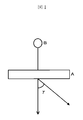
- FIG. 1 is a schematic view showing a method of measuring the light diffusivity in the present invention.
- Component A Polycarbonate> Polycarbonate (component A) is obtained by reacting a dihydroxy compound and a carbonate precursor by an interfacial polycondensation method or a melt transesterification method. Further, it is obtained by polymerizing a carbonate prepolymer by a solid phase transesterification method or polymerizing by a ring-opening polymerization method of a cyclic carbonate compound.
- dihydroxy component any dihydroxy component may be used as long as it is usually used as a dihydroxy component of polycarbonate, and bisphenols or aliphatic diols may be used.
- bisphenols examples include 4,4′-dihydroxybiphenyl, bis (4-hydroxyphenyl) methane, 1,1-bis (4-hydroxyphenyl) ethane, and 1,1-bis (4-hydroxyphenyl) -1-phenyl.
- Aliphatic diols include 2,2-bis- (4-hydroxycyclohexyl) -propane, 1,14-tetradecanediol, octaethylene glycol, 1,16-hexadecanediol, 4,4′-bis (2-hydroxy Ethoxy) biphenyl, bis ⁇ (2-hydroxyethoxy) phenyl ⁇ methane, 1,1-bis ⁇ (2-hydroxyethoxy) phenyl ⁇ ethane, 1,1-bis ⁇ (2-hydroxyethoxy) phenyl ⁇ -1-phenyl Ethane, 2,2-bis ⁇ (2-hydroxyethoxy) phenyl ⁇ propane, 2,2-bis ⁇ (2-hydroxyethoxy) -3-methylphenyl ⁇ propane, 1,1-bis ⁇ (2-hydroxyethoxy) Phenyl ⁇ -3,3,5-trimethylcyclohexane, 2,2-bis ⁇ 4- (2-hydroxyethyl) Xyl) -3,3′-biphen
- aromatic bisphenols are preferable, and among them, 1,1-bis (4-hydroxyphenyl) -1-phenylethane, 2,2-bis (4-hydroxyphenyl) propane, 2,2-bis (4 -Hydroxy-3-methylphenyl) propane, 1,1-bis (4-hydroxyphenyl) cyclohexane, 1,1-bis (4-hydroxyphenyl) -3,3,5-trimethylcyclohexane, 4,4'-sulfonyl Diphenol, 2,2′-dimethyl-4,4′-sulfonyldiphenol, 9,9-bis (4-hydroxy-3-methylphenyl) fluorene, 1,3-bis ⁇ 2- (4-hydroxyphenyl) Propyl ⁇ benzene and 1,4-bis ⁇ 2- (4-hydroxyphenyl) propyl ⁇ benzene are preferred.
- 2,2-bis (4-hydroxyphenyl) propane 1,1-bis (4-hydroxyphenyl) cyclohexane, 4,4′-sulfonyldiphenol, and 9,9-bis (4-hydroxy-3- Methylphenyl) fluorene is preferred.
- 2,2-bis (4-hydroxyphenyl) propane having excellent strength and good durability is most preferable.
- the polycarbonate (component A) may be a branched polycarbonate using a branching agent in combination with the dihydroxy compound.
- Examples of the trifunctional or higher polyfunctional aromatic compound used in the branched polycarbonate include phloroglucin, phloroglucid, or 4,6-dimethyl-2,4,6-tris (4-hydroxydiphenyl) heptene-2, 2, 4,6-trimethyl-2,4,6-tris (4-hydroxyphenyl) heptane, 1,3,5-tris (4-hydroxyphenyl) benzene, 1,1,1-tris (4-hydroxyphenyl) ethane 1,1,1-tris (3,5-dimethyl-4-hydroxyphenyl) ethane, 2,6-bis (2-hydroxy-5-methylbenzyl) -4-methylphenol, 4- ⁇ 4- [1 , 1-Bis (4-hydroxyphenyl) ethyl] benzene ⁇ - ⁇ , ⁇ -dimethylbenzylphenol, tetra (4-hydroxy) Ciphenyl) methane, bis (2,4-dihydroxyphenyl) ketone, 1,4-
- 1,1,1-tris (4-hydroxyphenyl) ethane and 1,1,1-tris (3,5-dimethyl-4-hydroxyphenyl) ethane are preferable, and 1,1,1-tris (4- Hydroxyphenyl) ethane is preferred.
- These polycarbonates are produced by reaction means known per se for producing ordinary polycarbonates, for example, a method in which an aromatic dihydroxy component is reacted with a carbonate precursor such as phosgene or carbonic acid diester.
- a carbonate precursor such as phosgene or carbonic acid diester.
- the basic means of the manufacturing method will be briefly described. For example, in a reaction using phosgene as a carbonate precursor, the reaction is usually performed in the presence of an acid binder and a solvent.
- an alkali metal hydroxide such as sodium hydroxide or potassium hydroxide or an amine compound such as pyridine is used.
- the solvent for example, halogenated hydrocarbons such as methylene chloride and chlorobenzene are used.
- a catalyst such as a tertiary amine or a quaternary ammonium salt can be used.
- the reaction temperature is usually 0 to 40 ° C., and the reaction time is several minutes to 5 hours.
- the transesterification reaction using a carbonic acid diester as a carbonate precursor is carried out by a method in which an aromatic dihydroxy component in a predetermined ratio is heated and stirred with a carbonic acid diester in an inert gas atmosphere to distill the resulting alcohol or phenol. Is called.
- the reaction temperature varies depending on the boiling point of the alcohol or phenol produced, but is usually in the range of 120 to 300 ° C.
- the reaction is completed while distilling off the alcohol or phenol produced under reduced pressure from the beginning.
- a catalyst used in the transesterification reaction to accelerate the reaction can also be used.
- Examples of the carbonic acid diester used in the transesterification include diphenyl carbonate, dinaphthyl carbonate, bis (diphenyl) carbonate, dimethyl carbonate, diethyl carbonate, and dibutyl carbonate. Of these, diphenyl carbonate is particularly preferred.
- a terminal terminator In the polymerization reaction, it is preferable to use a terminal terminator.
- the end terminator is used for molecular weight control, and the obtained polycarbonate is excellent in thermal stability as compared with the other one because the end is blocked.
- Examples of the terminal terminator include monofunctional phenols represented by the following formulas [5] to [7].
- A is a hydrogen atom, an alkyl group having 1 to 9 carbon atoms, an alkylphenyl group (the alkyl portion has 1 to 9 carbon atoms), a phenyl group, or a phenylalkyl group (the alkyl portion having 1 to 9 carbon atoms).
- r is an integer of 1 to 5, preferably 1 to 3.
- X is —R—O—, —R—CO—O— or —R—O—CO—, wherein R is a single bond or a carbon atom having 1 to 10 carbon atoms, preferably 1 to 5 carbon atoms.
- Valent aliphatic hydrocarbon group, n represents an integer of 10 to 50.
- monofunctional phenols represented by the above formula [5] include phenol, isopropylphenol, p-tert-butylphenol, p-cresol, p-cumylphenol, 2-phenylphenol, 4-phenylphenol, And isooctylphenol.
- the monofunctional phenols represented by the above formulas [6] to [7] are phenols having a long-chain alkyl group or an aliphatic ester group as a substituent, and these are used to block the end of the polycarbonate.
- these not only function as a terminal terminator or molecular weight regulator, but also improve the melt fluidity of the resin and facilitate the molding process, and also have the effect of lowering the water absorption rate of the resin and are preferably used.
- the substituted phenols of the above formula [6] those having n of 10 to 30, particularly 10 to 26 are preferable. Specific examples thereof include decylphenol, dodecylphenol, tetradecylphenol, hexadecylphenol, octadecylphenol, eicosylphenol, docosylphenol and triacontylphenol.
- substituted phenols of the above formula [7] compounds in which X is —R—CO—O— and R is a single bond are suitable, and n is 10 to 30, particularly 10 to 26. Specific examples thereof include decyl hydroxybenzoate, dodecyl hydroxybenzoate, tetradecyl hydroxybenzoate, hexadecyl hydroxybenzoate, eicosyl hydroxybenzoate, docosyl hydroxybenzoate and triacontyl hydroxybenzoate.
- monofunctional phenols represented by the above formula [5] are preferable, more preferably alkyl-substituted or phenylalkyl-substituted phenols, particularly preferably p-tert-butylphenol, p- Cumylphenol or 2-phenylphenol.
- These end groups of monofunctional phenols are desirably introduced at the end of at least 5 mol%, preferably at least 10 mol%, based on the total end of the obtained polycarbonate. Or you may use it in mixture of 2 or more types.
- the polycarbonate (component A) may be a polyester carbonate obtained by copolymerizing an aromatic dicarboxylic acid, for example, terephthalic acid, isophthalic acid, naphthalenedicarboxylic acid or a derivative thereof, within the range not impairing the gist of the present invention.
- the viscosity average molecular weight of the polycarbonate (component A) is preferably in the range of 13,000 to 50,000, more preferably 16,000 to 30,000, even more preferably in the range of 18,000 to 28,000, The range of 000 to 26,000 is most preferred.
- the viscosity average molecular weight as used in the field of this invention calculates
- the polycarbonate-polydiorganosiloxane copolymer (component B) is a polycarbonate-polydiorganosiloxane copolymer in which a polydiorganosiloxane domain having an average size of 0.5 to 40 nm is present in a polycarbonate matrix.
- the average size of the polydiorganosiloxane domain is preferably 0.5 to 25 nm, more preferably 1.0 to 20 nm, still more preferably 1.0 to 18 nm, particularly preferably 5.0 to 15 nm. When the average size of the domain is small, there is no effect in improving the hue.
- the lower limit of the average domain size is preferably 5 nm, more preferably 8 nm.
- the average size of the polydiorganosiloxane domain is measured by a small angle X-ray scattering method (Small Angel X-ray Scattering: SAXS).
- SAXS Small Angel X-ray Scattering
- the small angle X-ray scattering method is a method for measuring diffuse scattering diffraction occurring in a small angle region where the scattering angle (2 ⁇ ) is less than 10 °. In this small-angle X-ray scattering method, if there is a region of about 1 to 100 nm in which the electron density is different in a substance, the X-ray diffuse scattering is measured by the difference in the electron density.
- the particle diameter of the measurement object is obtained based on the scattering angle and the scattering intensity.
- a polycarbonate-polydiorganosiloxane copolymer having an aggregate structure in which polydiorganosiloxane domains are dispersed in a polycarbonate matrix diffuse scattering of X-rays occurs due to the difference in electron density between the polycarbonate matrix and the polydiorganosiloxane domain.
- the scattering intensity I at each scattering angle (2 ⁇ ) in the range where the scattering angle (2 ⁇ ) is less than 10 ° is measured, the small-angle X-ray scattering profile is measured, the polydiorganosiloxane domain is a spherical domain, and the particle size distribution varies.
- the component B is preferably a polycarbonate-polydiorganosiloxane copolymer containing a unit represented by the following formula [1] and a unit represented by the following formula [3].
- R 1 And R 2 are independently a hydrogen atom, a halogen atom, an alkyl group having 1 to 18 carbon atoms, an alkoxy group having 1 to 18 carbon atoms, a cycloalkyl group having 6 to 20 carbon atoms, and a cyclohexane having 6 to 20 carbon atoms.
- Alkoxy group, alkenyl group having 2 to 10 carbon atoms, aryl group having 3 to 14 carbon atoms, aryloxy group having 3 to 14 carbon atoms, aralkyl group having 7 to 20 carbon atoms, 7 to 20 carbon atoms Represents a group selected from the group consisting of an aralkyloxy group, a nitro group, an aldehyde group, a cyano group and a carboxyl group, and when there are plural groups, they may be the same or different.
- the halogen atom include a fluorine atom, a chlorine atom and a bromine atom.
- Examples of the alkyl group having 1 to 18 carbon atoms include a methyl group, an ethyl group, a butyl group, a hexyl group, and an octyl group.
- Examples of the alkoxy group having 1 to 18 carbon atoms include methoxy group, ethoxy group, butoxy group, hexyloxy group, octyloxy group and the like.
- Examples of the cycloalkyl group having 6 to 20 carbon atoms include a cyclohexyl group and a cyclooctyl group.
- Examples of the cycloalkoxy group having 6 to 20 carbon atoms include a cyclohexyloxy group and a cyclooctyloxy group.
- Examples of the alkenyl group having 2 to 10 carbon atoms include a propenyl group, a butenyl group, a hexenyl group, and an octenyl group.
- Examples of the aryl group having 3 to 14 carbon atoms include a phenyl group and a naphthyl group.
- Examples of the aryloxy group having 3 to 14 carbon atoms include a phenyloxy group and a naphthyloxy group.
- Examples of the aralkyl group having 7 to 20 carbon atoms include a benzyl group.
- Examples of the aralkyloxy group having 7 to 20 carbon atoms include benzyloxy group.
- E and f are integers of 1 to 4, respectively.
- W is a single bond or at least one group selected from the group consisting of groups represented by the following formula [2].
- R 11 , R 12 , R 13 , R 14 , R 15 , R 16 , R 17 And R 18 Each independently represents a group selected from the group consisting of a hydrogen atom, an alkyl group having 1 to 18 carbon atoms, an aryl group having 3 to 14 carbon atoms, and an aralkyl group having 7 to 20 carbon atoms.
- Examples of the alkyl group having 1 to 18 carbon atoms include a methyl group, an ethyl group, a butyl group, a hexyl group, and an octyl group.
- Examples of the aryl group having 3 to 14 carbon atoms include a phenyl group and a naphthyl group.
- Examples of the aralkyl group having 7 to 20 carbon atoms include a benzyl group.
- R 19 And R 20 Each independently represents a hydrogen atom, a halogen atom, an alkyl group having 1 to 18 carbon atoms, an alkoxy group having 1 to 10 carbon atoms, a cycloalkyl group having 6 to 20 carbon atoms, or a 6 to 20 carbon atom.
- Cycloalkoxy group alkenyl group having 2 to 10 carbon atoms, aryl group having 3 to 14 carbon atoms, aryloxy group having 6 to 10 carbon atoms, aralkyl group having 7 to 20 carbon atoms, 7 to 7 carbon atoms It represents a group selected from the group consisting of 20 aralkyloxy groups, nitro groups, aldehyde groups, cyano groups, and carboxyl groups, and when there are a plurality thereof, they may be the same or different.
- the halogen atom include a fluorine atom, a chlorine atom and a bromine atom.
- Examples of the alkyl group having 1 to 18 carbon atoms include a methyl group, an ethyl group, a butyl group, a hexyl group, and an octyl group.
- Examples of the alkoxy group having 1 to 10 carbon atoms include methoxy group, ethoxy group, butoxy group, hexyloxy group, octyloxy group and the like.
- Examples of the cycloalkyl group having 6 to 20 carbon atoms include a cyclohexyl group and a cyclooctyl group.
- Examples of the cycloalkoxy group having 6 to 20 carbon atoms include a cyclohexyloxy group and a cyclooctyloxy group.
- Examples of the alkenyl group having 2 to 10 carbon atoms include a propenyl group, a butenyl group, a hexenyl group, and an octenyl group.
- Examples of the aryl group having 3 to 14 carbon atoms include a phenyl group and a naphthyl group.
- Examples of the aryloxy group having 6 to 10 carbon atoms include a phenyloxy group and a naphthyloxy group.
- Examples of the aralkyl group having 7 to 20 carbon atoms include a benzyl group.
- Examples of the aralkyloxy group having 7 to 20 carbon atoms include a benzyloxy group.
- G is an integer of 1 to 10
- h is an integer of 4 to 7.
- Examples of the dihydric phenol (I) for deriving the unit represented by the formula [1] include 4,4′-dihydroxybiphenyl, bis (4-hydroxyphenyl) methane, 1,1-bis (4-hydroxy).
- R 3 , R 4 , R 5 , R 6 , R 7 And R 8 are each independently a hydrogen atom, an alkyl group having 1 to 12 carbon atoms, or a substituted or unsubstituted aryl group having 6 to 12 carbon atoms.
- a hydrogen atom, an alkyl group having 1 to 6 carbon atoms, or a substituted or unsubstituted aryl group having 6 to 12 carbon atoms is preferable.
- a hydrogen atom, an alkyl group having 1 to 6 carbon atoms, or a phenyl group is particularly preferable.
- the alkyl group having 1 to 12 carbon atoms include a methyl group, an ethyl group, a butyl group, a hexyl group, and an octyl group.
- the substituted or unsubstituted aryl group having 6 to 12 carbon atoms include a phenyl group and a naphthyl group.
- the substituent include alkyl groups having 1 to 6 carbon atoms such as a methyl group, an ethyl group, and a butyl group.
- R 9 And R 10 are each independently a hydrogen atom, a halogen atom, an alkyl group having 1 to 10 carbon atoms, or an alkoxy group having 1 to 10 carbon atoms.
- the halogen atom include a fluorine atom, a chlorine atom and a bromine atom.
- the alkyl group having 1 to 10 carbon atoms include a methyl group, an ethyl group, a butyl group, a hexyl group, and an octyl group.
- Examples of the alkoxy group having 1 to 10 carbon atoms include methoxy group, ethoxy group, butoxy group, hexyloxy group, octyloxy group and the like.
- a hydrogen atom and an alkyl group having 1 to 10 carbon atoms are preferable, and a hydrogen atom and an alkyl group having 1 to 4 carbon atoms are particularly preferable.
- P is a natural number
- q is 0 or a natural number
- p + q is a natural number of 150 or less.
- p and q represent the degree of diorganosiloxane polymerization.
- p + q is a natural number of 150 or less.
- p + q is preferably 3 to 120, more preferably 30 to 100, still more preferably 30 to 80, and particularly preferably 30 to 50.
- X is a divalent aliphatic group having 2 to 8 carbon atoms.
- an alkylene group having 1 to 10 carbon atoms such as an ethylene group, a trimethylene group, a tetramethylene group, and a pentamethylene group is preferable.
- a compound represented by the following formula (I) is preferably used as the dihydroxyaryl-terminated polydiorganosiloxane (II) for deriving the unit represented by the formula [3].
- the content of the unit represented by the formula [3] with respect to the total weight of the polycarbonate-polydiorganosiloxane copolymer (component B) is preferably 0.01 to 20.0% by weight, more preferably 0.01 to 10%.
- the polydiorganosiloxane component content is 0.0% by weight, more preferably 2.0 to 10.0% by weight, and most preferably 2.0 to 8.0% by weight.
- the polydiorganosiloxane component content is less than 0.01% by weight, the hue effect is insufficient, and when it exceeds 20.0% by weight, the total light transmittance may decrease.
- the diorganosiloxane polymerization degree and the polydiorganosiloxane component content are 1 It is possible to calculate by H-NMR measurement. A method for producing a polycarbonate-polydiorganosiloxane copolymer (component B) will be described below.
- dihydric phenol (I) By reaction of dihydric phenol (I) with a chloroformate-forming compound such as chloroformate of phosgene or dihydric phenol (I) in a mixture of an organic solvent insoluble in water and an aqueous alkali solution in advance. A mixed solution of a chloroformate compound of divalent phenol (I) and / or a carbonate oligomer of dihydric phenol (I) having a terminal chloroformate group is prepared.
- phosgene is preferred.
- the whole amount of the dihydric phenol (I) for deriving the carbonate constituent unit represented by the formula [1] may be converted to the chloroformate compound at a time.
- a part of it may be added as a reaction raw material to a subsequent interfacial polycondensation reaction as a post-added monomer.
- the post-added monomer is added to allow the subsequent polycondensation reaction to proceed rapidly, and it is not necessary to add it when it is not necessary.
- the method for the formation of the chloroformate compound is not particularly limited, but usually a method in which the reaction is carried out in a solvent in the presence of an acid binder is preferred.
- an antioxidant such as sodium sulfite and hydrosulfide may be added, and it is preferable to add them.
- the proportion of the chloroformate-forming compound used may be appropriately adjusted in consideration of the stoichiometric ratio (equivalent) of the reaction.
- the method of blowing gasified phosgene into a reaction system can be employ
- the acid binder include alkali metal hydroxides such as sodium hydroxide and potassium hydroxide, alkali metal carbonates such as sodium carbonate and potassium carbonate, organic bases such as pyridine, and mixtures thereof. Is used.
- the usage rate of the acid binder may be appropriately determined in consideration of the stoichiometric ratio (equivalent) of the reaction as described above. Specifically, 2 equivalents or slightly more than 2 equivalents per mole of dihydric phenol (I) used for forming the chloroformate compound of dihydric phenol (I) (usually 1 mole corresponds to 2 equivalents). It is preferable to use an acid binder.
- a solvent inert to various reactions such as those used for producing known polycarbonates may be used alone or as a mixed solvent. Representative examples include hydrocarbon solvents such as xylene, and halogenated hydrocarbon solvents such as methylene chloride and chlorobenzene.
- a halogenated hydrocarbon solvent such as methylene chloride is preferably used.
- the pressure in the formation reaction of the chloroformate compound is not particularly limited and may be any of normal pressure, pressurization, or reduced pressure, but it is usually advantageous to carry out the reaction under normal pressure.
- the reaction temperature is selected from the range of ⁇ 20 to 50 ° C. In many cases, heat is generated with the reaction, so it is desirable to cool with water or ice.
- the reaction time depends on other conditions and cannot be defined unconditionally, but is usually 0.2 to 10 hours.
- As the pH range in the formation reaction of the chloroformate compound known interface reaction conditions can be used, and the pH is usually adjusted to 10 or more.
- the divalent phenol (I) chloroformate and the divalent phenol (I) carbonate oligomer having a terminal chloroformate group are thus included.
- the dihydroxyaryl-terminated polydiorganosiloxane (II) for deriving the carbonate constituent unit represented by the formula [3] while stirring the mixed solution is charged for the preparation of the mixed solution.
- the dihydroxyaryl-terminated polydiorganosiloxane (II) and the chloroformate compound are subjected to interfacial polycondensation.
- Polycarbonate-polydiorganosiloxane To obtain a polymer.
- the polycarbonate-polydiorganosiloxane copolymer (component B) can be made into a branched polycarbonate-polydiorganosiloxane copolymer by using a branching agent in combination with a dihydric phenol compound.
- Examples of the trifunctional or higher polyfunctional aromatic compound used in the branched polycarbonate include phloroglucin, phloroglucid, or 4,6-dimethyl-2,4,6-tris (4-hydroxydiphenyl) heptene-2, 2, 4,6-trimethyl-2,4,6-tris (4-hydroxyphenyl) heptane, 1,3,5-tris (4-hydroxyphenyl) benzene, 1,1,1-tris (4-hydroxyphenyl) ethane 1,1,1-tris (3,5-dimethyl-4-hydroxyphenyl) ethane, 2,6-bis (2-hydroxy-5-methylbenzyl) -4-methylphenol, 4- ⁇ 4- [1 , 1-Bis (4-hydroxyphenyl) ethyl] benzene ⁇ - ⁇ , ⁇ -dimethylbenzylphenol, tetra (4-hydroxy) Ciphenyl) methane, bis (2,4-dihydroxyphenyl) ketone, 1,4-
- branched polycarbonate-polydiorganosiloxane copolymer is produced by a method in which a branching agent is contained in the mixed solution during the production reaction of the chloroformate compound, interfacial polycondensation after the completion of the production reaction is performed. It may be a method in which a branching agent is added during the reaction.
- the proportion of the carbonate constituent unit derived from the branching agent is preferably 0.005 to 1.5 mol%, more preferably 0.01 to 1.2 mol% in the total amount of carbonate constituent units constituting the copolymer resin. Particularly preferred is 0.05 to 1.0 mol%.
- the pressure in the system in the polycondensation reaction may be any of reduced pressure, normal pressure, or increased pressure, but usually it can be suitably performed at normal pressure or about the pressure of the reaction system.
- the reaction temperature is selected from the range of ⁇ 20 to 50 ° C., and in many cases, heat is generated with the polymerization, so it is desirable to cool with water or ice. Since the reaction time varies depending on other conditions such as the reaction temperature, it cannot be generally specified, but it is usually carried out in 0.5 to 10 hours.
- the obtained polycarbonate-polydiorganosiloxane copolymer is appropriately subjected to physical treatment (mixing, fractionation, etc.) and / or chemical treatment (polymer reaction, crosslinking treatment, partial decomposition treatment, etc.) Reduced viscosity [ ⁇ SP / C] can also be obtained as a polycarbonate-polydiorganosiloxane copolymer (component B).
- the obtained reaction product (crude product) can be recovered as a polycarbonate-polydiorganosiloxane copolymer having a desired purity (purity) by performing various post-treatments such as a known separation and purification method.
- the viscosity average molecular weight of the polycarbonate-polydiorganosiloxane copolymer (component B) is preferably 1.6 ⁇ 10 4 ⁇ 3.0 ⁇ 10 4 And more preferably 1.6 ⁇ 10 4 ⁇ 2.5 ⁇ 10 4 More preferably, 1.7 ⁇ 10 4 ⁇ 2.4 ⁇ 10 4 It is. If it is above the lower limit of this preferred range, practical mechanical strength can be obtained in many fields, and if it is below this upper limit, the shear viscosity at a high shear rate is low, which is suitable for various molding methods, particularly injection molding. is there.
- the viscosity average molecular weight of the polycarbonate-polydiorganosiloxane copolymer (component B) is calculated as follows. First, the specific viscosity ( ⁇ SP ) At 20 ° C. using a Ostwald viscometer from a solution obtained by dissolving 0.7 g of a polycarbonate-polydiorganosiloxane copolymer in 100 ml of methylene chloride.
- the content of the unit represented by the following formula [4] contained in the following formula [3] in the component B is preferably 0.001 to 1.0% by weight based on the total weight of the resin composition, More preferred is 0.01 to 0.8% by weight, still more preferred is 0.01 to 0.6% by weight, and particularly preferred is 0.01 to 0.2% by weight. If this ratio is less than 0.001% by weight, the hue improving effect cannot be exhibited, and if it exceeds 1.0% by weight, the total light transmittance may be lowered, which is not preferable.
- X is a divalent aliphatic group having 2 to 8 carbon atoms.
- the content of the B component in the resin component is adjusted so that the content of the unit represented by the formula [4] contained in the B component is in the above-described preferable range.
- the content of component B is preferably 0.01 to 10.0 parts by weight, more preferably 0.01 to 5.0 parts by weight, still more preferably 0.1 to 5.0 parts by weight, in 100 parts by weight of the resin component. Parts, particularly preferably 0.1 to 2.0 parts by weight.
- the light diffusing agent (component C) may be any of organic fine particles typified by polymer fine particles and inorganic fine particles.
- Typical examples of the polymer fine particles include crosslinked particles obtained by polymerizing a non-crosslinkable monomer and a crosslinkable monomer.
- other copolymerizable monomers other than such monomers can also be used.
- polymer fine particles are preferable, and cross-linked particles can be preferably used.
- examples of the monomer used as the non-crosslinkable monomer include non-crosslinkable vinyl monomers such as acrylic monomers, styrene monomers, and acrylonitrile monomers, and olefin monomers.
- Acrylic monomers include methyl acrylate, ethyl acrylate, propyl acrylate, butyl acrylate, 2-ethylhexyl acrylate, methyl methacrylate, ethyl methacrylate, propyl methacrylate, butyl methacrylate, 2-ethylhexyl methacrylate, and phenyl methacrylate alone or in combination. Can be used. Of these, methyl methacrylate is particularly preferable.
- styrene monomer styrene, ⁇ -methyl styrene, methyl styrene (vinyl toluene), alkyl styrene such as ethyl styrene, and halogenated styrene such as brominated styrene can be used, and styrene is particularly preferable.
- acrylonitrile monomer acrylonitrile and methacrylonitrile can be used.
- olefin monomer ethylene and various norbornene type compounds can be used. Furthermore, glycidyl methacrylate, N-methylmaleimide, maleic anhydride, etc.
- the organic crosslinked particles can be illustrated as another copolymerizable monomer.
- the organic crosslinked particles can also have units such as N-methylglutarimide as a result.
- the crosslinkable monomer for the non-crosslinkable vinyl monomer include divinylbenzene, allyl methacrylate, triallyl cyanurate, triallyl isocyanate, ethylene glycol di (meth) acrylate, diethylene glycol di (meth) acrylate, propylene glycol (meta ) Acrylate, 1,6-hexanediol di (meth) acrylate, trimethylolpropane (meth) acrylate, pentaerythritol tetra (meth) acrylate, bisphenol A di (meth) acrylate, dicyclopentanyl di (meth) acrylate, di Examples thereof include cyclopentenyl di (meth) acrylate and N-methylol (meth) acrylamide.
- silicone crosslinked particles can be exemplified.
- the silicone crosslinked particles have an organic substituent on a silicon atom with a siloxane bond as a main skeleton.
- Such crosslinked particles include those having a high degree of crosslinking represented by polyorganosilsesquioxane and those having a low degree of crosslinking represented by organosilicone rubber particles.
- the silicone crosslinked particles used in the present invention are preferably those having a high degree of crosslinking typified by polyorganosilsesquioxane. This polyorganosilsesquioxane is R-SiO.
- the trifunctional siloxane unit represented by (R is a monovalent organic group) (hereinafter simply referred to as “T unit”) is 50 mol% or more, preferably 90% of the total of 100 mol% of 1 to 4 functional siloxane units.
- the mol% or more more preferably 95 mol% or more.
- Examples of the organic group bonded to the polyorganosilsesquioxane include alkyl groups having 1 to 18 carbon atoms, aryl groups such as phenyl group, tolyl group, and xylyl group, ⁇ -phenylethyl group, and ⁇ -phenylpropyl group. Examples include an aralkyl group and a cyclohexyl group.
- a reactive group represented by a vinyl group, a ⁇ -glycidoxypropyl group, a ⁇ -methacryloxypropyl group, and the like can also be contained.
- the alkyl group having 1 to 18 carbon atoms include methyl group, ethyl group, n-propyl group, isopropyl group, n-butyl group, isobutyl group, tert-butyl group, decyl group, dodecyl group, and octadecyl group. Is done. More preferably, the alkyl group is an alkyl group having 1 to 12 carbon atoms, more preferably 1 to 10 carbon atoms. A methyl group is particularly preferred.
- the average particle diameter of the light diffusing agent (component C) is preferably 0.01 to 50 ⁇ m, more preferably 1 to 30 ⁇ m, and further preferably 2 to 30 ⁇ m. If the average particle size is less than 0.01 ⁇ m or exceeds 50 ⁇ m, the light diffusibility may be insufficient.
- the average particle size is represented by a 50% value (D50) of the cumulative distribution of particle sizes obtained by the laser diffraction / scattering method.
- the particle size distribution may be single or plural.
- a more preferred light diffusing agent has a narrow particle size distribution. It is more preferable to have a distribution containing 70% by weight or more of the particles in the range of 2 ⁇ m before and after the average particle diameter.
- the shape of the light diffusing agent is preferably close to a sphere from the viewpoint of light diffusibility, and more preferably a shape close to a true sphere. Such a sphere includes an elliptical sphere.
- the refractive index of the light diffusing agent (component C) is preferably in the range of 1.30 to 1.80, more preferably in the range of 1.33 to 1.70, and still more preferably in the range of 1.35 to 1.65.
- the light diffusing agent (C component) content is 0.05 to 10.0 parts by weight, preferably 0.1 to 5.0 parts by weight based on 100 parts by weight of the resin component composed of the A component and the B component. Part by weight, more preferably 0.1 to 2.0 weight, still more preferably 0.1 to 1.0 weight. If the content of the C component is small, sufficient light diffusibility cannot be obtained, and if it is too large, the total light transmittance is lowered.
- the resin composition of the present invention is used for these flame retardants, antioxidants, light stability (ultraviolet light stability), optical brightener, mold release and mold corrosion. Additives are advantageously used.
- the resin composition of the present invention may contain various compounds known as polycarbonate flame retardants.
- the compounding of such a compound brings about an improvement in flame retardancy, but besides that, based on the properties of each compound, for example, an improvement in antistatic property, fluidity, rigidity and thermal stability is brought about.
- flame retardants examples include (i) organic metal salt flame retardants (for example, organic sulfonate alkali (earth) metal salts, organic borate metal salt flame retardants, organic stannate metal salt flame retardants, etc.), ii) organophosphorous flame retardants (for example, organic group-containing monophosphate compounds, phosphate oligomer compounds, phosphonate oligomer compounds, phosphonitrile oligomer compounds, phosphonic acid amide compounds, etc.), (iii) silicone flame retardants comprising silicone compounds (Iv) fibrillated PTFE, among which organometallic salt flame retardants and organic phosphorus flame retardants are preferred.
- organic metal salt flame retardants for example, organic sulfonate alkali (earth) metal salts, organic borate metal salt flame retardants, organic stannate metal salt flame retardants, etc.
- organophosphorous flame retardants for example, organic group-containing monophosphate compounds, phosphate oligomer compounds, phosphonate
- the organic metal salt compound is preferably an alkali (earth) metal salt of an organic acid having 1 to 50, preferably 1 to 40 carbon atoms, preferably an alkali (earth) metal salt of an organic sulfonate.
- the organic sulfonate alkali (earth) metal salt includes a fluorine-substituted alkylsulfone such as a metal salt of a perfluoroalkyl sulfonic acid having 1 to 10 carbon atoms, preferably 2 to 8 carbon atoms, and an alkali metal or alkaline earth metal.
- Acid metal salts, and metal salts of aromatic sulfonic acids having 7 to 50 carbon atoms, preferably 7 to 40 carbon atoms, and alkali metals or alkaline earth metals are included.
- alkali metal constituting the metal salt include lithium, sodium, potassium, rubidium and cesium
- examples of the alkaline earth metal include beryllium, magnesium, calcium, strontium and barium. More preferred is an alkali metal.
- rubidium and cesium having larger ionic radii are suitable when the requirement for transparency is higher, but these are not general-purpose and difficult to purify, resulting in cost. It may be disadvantageous.
- metals with smaller ionic radii such as lithium and sodium may be disadvantageous in terms of flame retardancy.
- the alkali metal in the sulfonic acid alkali metal salt can be properly used.
- the sulfonic acid potassium salt having an excellent balance of properties is most preferable.
- Such potassium salts and sulfonic acid alkali metal salts comprising other alkali metals can be used in combination.
- alkali metal perfluoroalkyl sulfonates include potassium trifluoromethane sulfonate, potassium perfluorobutane sulfonate, potassium perfluorohexane sulfonate, potassium perfluorooctane sulfonate, sodium pentafluoroethane sulfonate, perfluoro Sodium butanesulfonate, sodium perfluorooctanesulfonate, lithium trifluoromethanesulfonate, lithium perfluorobutanesulfonate, lithium perfluoroheptanesulfonate, cesium trifluoromethanesulfonate, cesium perfluorobutanesulfonate, perfluorooctanesulfonate Cesium, cesium perfluorohexanesulfonate, rubidium perfluorobutanesulfonate, and perfluorohexane Le Oro
- the carbon number of the perfluoroalkyl group is preferably in the range of 1 to 18, more preferably in the range of 1 to 10, and still more preferably in the range of 1 to 8.
- potassium perfluorobutanesulfonate is particularly preferred.
- alkali (earth) metal salts of perfluoroalkyl sulfonates made of alkali metals usually not less than fluoride ions (F ⁇ ) Is mixed.
- fluoride ions F ⁇
- the presence of such fluoride ions can be a factor that lowers the flame retardancy, so it is preferably reduced as much as possible.
- the ratio of such fluoride ions can be measured by ion chromatography.
- the content of fluoride ions is preferably 100 ppm or less, more preferably 40 ppm or less, and particularly preferably 10 ppm or less. Moreover, it is suitable that it is 0.2 ppm or more in terms of production efficiency.
- Such alkali (earth) metal salt of perfluoroalkylsulfonic acid having a reduced amount of fluoride ion is contained in a raw material when producing a fluorine-containing organometallic salt using a known production method.
- a method for reducing the amount of fluoride ions, a method for removing hydrogen fluoride and the like obtained by the reaction by a gas generated during the reaction or heating, and a purification method such as recrystallization and reprecipitation for producing a fluorine-containing organometallic salt Can be produced by a method of reducing the amount of fluoride ions using, for example.
- organic metal salt flame retardants are relatively soluble in water, and therefore ion-exchanged water, especially water that has an electric resistance of 18 M ⁇ ⁇ cm or more, that is, an electric conductivity of about 0.55 ⁇ S / cm or less is used.
- alkali (earth) metal salt of aromatic sulfonate examples include diphenyl sulfide-4,4′-disulfonic acid disodium, diphenyl sulfide-4,4′-disulfonic acid dipotassium, 5-sulfoisophthalic acid potassium, 5-sulfoisophthalic acid.
- aromatic sulfonate alkali (earth) metal salts potassium salts are particularly preferable.
- aromatic sulfonate alkali (earth) metal salts potassium diphenylsulfone-3-sulfonate and dipotassium diphenylsulfone-3,3'-disulfonate are preferred.
- a mixture thereof the weight ratio of the former to the latter is 15/85 to 30/70 is preferable.
- Preferred examples of the organic metal salt other than the alkali (earth) metal sulfonate include an alkali (earth) metal salt of a sulfate ester and an alkali (earth) metal salt of an aromatic sulfonamide.
- alkali (earth) metal salt of sulfate ester examples include alkali (earth) metal salt of sulfate ester of monovalent and / or polyhydric alcohol.
- sulfates of monohydric and / or polyhydric alcohols include methyl sulfate, ethyl sulfate, lauryl sulfate, hexadecyl sulfate, polyoxyethylene alkylphenyl ether sulfate, pentaerythritol mono, di, and tri , Tetrasulfate, sulfate of lauric acid monoglyceride, sulfate of palmitic acid monoglyceride, and sulfate of stearic acid monoglyceride.
- alkali (earth) metal salts of these sulfates are preferably alkali (earth) metal salts of lauryl sulfate.
- Alkali (earth) metal salts of aromatic sulfonamides include, for example, saccharin, N- (p-tolylsulfonyl) -p-toluenesulfonimide, N- (N′-benzylaminocarbonyl) sulfanilimide, and N- ( And an alkali (earth) metal salt of phenylcarboxyl) sulfanilimide.
- the content of the organometallic salt flame retardant is preferably 0.001 to 1 part by weight, more preferably 0.005 to 0.5 part by weight, and still more preferably 0.01 to 1 part by weight with respect to 100 parts by weight of the resin composition.
- the amount is 0.3 part by weight, particularly preferably 0.03 to 0.15 part by weight.
- Organophosphorous flame retardant An aryl phosphate compound is suitable as the organophosphorus flame retardant. This is because such phosphate compounds are generally excellent in hue. Moreover, since the phosphate compound has a plasticizing effect, it is advantageous in that the molding processability can be improved.
- various phosphate compounds known as conventional flame retardants can be used as the phosphate compound.
- the compounding amount of the organic phosphorus flame retardant is preferably 0.01 to 20 parts by weight, more preferably 2 to 10 parts by weight, and further preferably 2 to 7 parts by weight with respect to 100 parts by weight of the resin composition.
- Silicone flame retardant Silicone compounds used as silicone-based flame retardants improve flame retardancy by a chemical reaction during combustion.
- various compounds conventionally proposed as a flame retardant for aromatic polycarbonate resin can be used.
- the silicone compound is considered to impart a flame retardant effect to the polycarbonate by forming a structure by bonding with itself or a component derived from a resin upon combustion, or by a reduction reaction at the time of forming the structure. It has been.
- a group having high activity in such a reaction More specifically, it preferably contains a predetermined amount of at least one group selected from an alkoxy group and hydrogen (that is, Si—H group).
- the content ratio of such groups is preferably in the range of 0.1 to 1.2 mol / 100 g, more preferably in the range of 0.12 to 1 mol / 100 g, and 0.15 to 0. The range of 6 mol / 100 g is more preferable.
- Such a ratio can be determined by measuring the amount of hydrogen or alcohol generated per unit weight of the silicone compound by the alkali decomposition method.
- the alkoxy group is preferably an alkoxy group having 1 to 4 carbon atoms, and particularly preferably a methoxy group.
- silicone compound used in the silicone-based flame retardant examples include Dn, Tp, MmDn, MmTp, MmQq, MmDnTp, MmDnQq, MmTpQq, MmDnTpQq, DnTp, DnQq, and DnTpQq.
- preferred structures of the silicone compound are MmDn, MmTp, MmDnTp, and MmDnQq, and a more preferred structure is MmDn or MmDnTp.
- the coefficients m, n, p, and q in the above formula are integers of 1 or more representing the degree of polymerization of each siloxane unit, and the sum of the coefficients in each formula is the average degree of polymerization of the silicone compound.
- This average degree of polymerization is preferably in the range of 3 to 150, more preferably in the range of 3 to 80, still more preferably in the range of 3 to 60, and particularly preferably in the range of 4 to 40. The better the range, the better the flame retardancy.
- a silicone compound containing a predetermined amount of an aromatic group is excellent in transparency and hue. As a result, good reflected light can be obtained.
- the siloxane unit with the coefficient can be two or more types of siloxane units having different hydrogen atoms or organic residues to be bonded.
- the silicone compound may be linear or have a branched structure.
- the organic residue bonded to the silicon atom is preferably an organic residue having 1 to 30 carbon atoms, more preferably 1 to 20 carbon atoms.
- an organic residue examples include alkyl groups such as a methyl group, an ethyl group, a propyl group, a butyl group, a hexyl group, and a decyl group, a cycloalkyl group such as a cyclohexyl group, an aryl group such as a phenyl group, And aralkyl groups such as tolyl groups. More preferred is an alkyl group, alkenyl group or aryl group having 1 to 8 carbon atoms. As the alkyl group, an alkyl group having 1 to 4 carbon atoms such as a methyl group, an ethyl group, and a propyl group is particularly preferable.
- the silicone compound used as the silicone flame retardant preferably contains an aryl group.
- silane compounds and siloxane compounds as organic surface treatment agents for titanium dioxide pigments are clearly distinguished from silicone-based flame retardants in their preferred embodiments in that it is preferable to contain no aryl group.
- the silicone compound used as the silicone-based flame retardant may contain a reactive group in addition to the Si-H group and the alkoxy group. Examples of the reactive group include an amino group, a carboxyl group, an epoxy group, and a vinyl group. Examples thereof include a group, a mercapto group, and a methacryloxy group.
- the blending amount of the silicone-based flame retardant is preferably 0.01 to 20 parts by weight, more preferably 0.5 to 10 parts by weight, and further preferably 1 to 5 parts by weight with respect to 100 parts by weight of the resin composition.
- the fibrillated PTFE may be fibrillated PTFE alone, or may be a mixed form of fibrillated PTFE, that is, a polytetrafluoroethylene-based mixture composed of fibrillated PTFE particles and an organic polymer. Fibrilized PTFE has an extremely high molecular weight and tends to be bonded to each other by an external action such as shearing force to form a fiber.
- Its number average molecular weight is in the range of 1.5 million to tens of millions.
- the lower limit is more preferably 3 million.
- the number average molecular weight is calculated based on the melt viscosity of polytetrafluoroethylene at 380 ° C. as disclosed in JP-A-6-145520. That is, the fibrillated PTFE of the B component has a melt viscosity of 10 at 380 ° C. measured by the method described in this publication. 7 ⁇ 10 13 range of poison, preferably 10 8 ⁇ 10 12 The range of poison.
- Such PTFE can be used in solid form or in the form of an aqueous dispersion.
- Such fibrillated PTFE can also be used in the form of a PTFE mixture with other resins in order to improve dispersibility in the resin and to obtain better flame retardancy and mechanical properties. Further, as disclosed in JP-A-6-145520, those having a structure having such a fibrillated PTFE as a core and a low molecular weight polytetrafluoroethylene as a shell are also preferably used. Examples of such commercially available fibrillated PTFE include Teflon (registered trademark) 6J from Mitsui DuPont Fluorochemical Co., Ltd., Polyflon MPA FA500, F-201L from Daikin Chemical Industries, Ltd., and the like.
- a mixed form of fibrillated PTFE As a mixed form of fibrillated PTFE, (1) a method in which an aqueous dispersion of fibrillated PTFE and an aqueous dispersion or solution of an organic polymer are mixed and co-precipitated to obtain a co-agglomerated mixture (JP-A-60-258263). (2) A method of mixing an aqueous dispersion of fibrillated PTFE and dried organic polymer particles (Japanese Patent Laid-Open No. 4-272957). Described method), (3) A method in which an aqueous dispersion of fibrillated PTFE and an organic polymer particle solution are uniformly mixed, and the respective media are simultaneously removed from the mixture (Japanese Patent Laid-Open Nos.
- fibrillated PTFE in a mixed form Commercial products of these fibrillated PTFE in a mixed form include “Metablen A3000” (trade name), “Metablene A3700” (trade name), and “Metablene A3800” (trade name) of Mitsubishi Rayon Co., Ltd. Examples include A series, Shin polymer's SN3300B7 (trade name), and GE Specialty Chemicals' “BLENDEX B449” (trade name).
- the proportion of fibrillated PTFE in the mixed form is preferably 1% by weight to 95% by weight of fibrillated PTFE in 100% by weight of the mixture, more preferably 10% by weight to 90% by weight, Most preferred is 80% by weight.
- the blending amount of fibrillated PTFE is preferably 0.001 to 0.2 parts by weight, more preferably 0.01 to 0.2 parts by weight, and 0.01 to 0 parts per 100 parts by weight of the resin composition. More preferred is 18 parts by weight.
- the parts by weight shown here indicate the weight of the whole mixture when polytetrafluoroethylene is in a mixed form (mixture).
- Phosphorus stabilizer The resin composition of the present invention preferably contains a phosphorus stabilizer to the extent that it does not promote hydrolyzability.
- Such phosphorus stabilizers improve thermal stability during production or molding, and improve mechanical properties, hue, and molding stability.
- Examples of phosphorus stabilizers include phosphorous acid, phosphoric acid, phosphonous acid, phosphonic acid and esters thereof, and tertiary phosphine.
- phosphite compound for example, triphenyl phosphite, tris (nonylphenyl) phosphite, tridecyl phosphite, trioctyl phosphite, trioctadecyl phosphite, didecyl monophenyl phosphite, dioctyl monophenyl Phosphite, diisopropyl monophenyl phosphite, monobutyl diphenyl phosphite, monodecyl diphenyl phosphite, monooctyl diphenyl phosphite, 2,2-methylenebis (4,6-di-tert-butylphenyl) octyl phosphite, tris ( Diethylphenyl) phosphite, tris (di-iso-propylphenyl) phosphite,
- Still other phosphite compounds that react with dihydric phenols and have a cyclic structure can be used.
- 2,2′-methylenebis (4,6-di-tert-butylphenyl) (2,4-di-tert-butylphenyl) phosphite 2,2′-methylenebis (4,6-di-tert-Butylphenyl) (2-tert-butyl-4-methylphenyl) phosphite
- 2,2'-ethylidenebis (4-methyl-6-tert-butylphenyl) (2-tert-butyl-4-methylphenyl) phosphite.
- phosphate compound examples include tributyl phosphate, trimethyl phosphate, tricresyl phosphate, triphenyl phosphate, trichlorophenyl phosphate, triethyl phosphate, diphenyl cresyl phosphate, diphenyl monoorxenyl phosphate, tributoxyethyl phosphate, dibutyl phosphate, dioctyl phosphate, Examples thereof include diisopropyl phosphate. Triphenyl phosphate and trimethyl phosphate are preferred.
- Examples of the phosphonite compound include tetrakis (2,4-di-tert-butylphenyl) -4,4′-biphenylenediphosphonite, tetrakis (2,4-di-tert-butylphenyl) -4,3′-biphenylenedi.
- tetrakis (di-tert-butylphenyl) -biphenylenediphosphonite and bis (di-tert-butylphenyl) -phenyl-phenylphosphonite are preferable, and tetrakis (2,4-di-tert-butylphenyl) -biphenyl.
- Range phosphonite and bis (2,4-di-tert-butylphenyl) -phenyl-phenylphosphonite are more preferred.
- Such a phosphonite compound is preferable because it can be used in combination with a phosphite compound having an aryl group in which two or more alkyl groups are substituted.
- Examples of the phosphonate compound include dimethyl benzenephosphonate, diethyl benzenephosphonate, and dipropyl benzenephosphonate.
- the tertiary phosphine includes triethylphosphine, tripropylphosphine, tributylphosphine, trioctylphosphine, triamylphosphine, dimethylphenylphosphine, dibutylphenylphosphine, diphenylmethylphosphine, diphenyloctylphosphine, triphenylphosphine, tri-p-tolyl.
- Examples include phosphine, trinaphthylphosphine, and diphenylbenzylphosphine.
- a particularly preferred tertiary phosphine is triphenylphosphine.
- the phosphorus stabilizers can be used alone or in combination of two or more.
- an alkyl phosphate compound typified by trimethyl phosphate is preferably blended.
- a combination of such an alkyl phosphate compound and a phosphite compound and / or a phosphonite compound is also a preferred embodiment.
- the blending amount of the phosphorus stabilizer is preferably 0.0001 to 1 part by weight, more preferably 0.001 to 0.5 part by weight, and still more preferably 0.005 to 0.100 parts by weight with respect to 100 parts by weight of the resin composition. 3 parts by weight.
- Hindered phenol stabilizer The resin composition of the present invention may further contain a hindered phenol stabilizer. Such blending exhibits an effect of suppressing, for example, hue deterioration during molding and hue deterioration during long-term use.
- hindered phenol-based stabilizer examples include ⁇ -tocopherol, butylhydroxytoluene, sinapir alcohol, vitamin E, n-octadecyl- ⁇ - (4′-hydroxy-3 ′, 5′-di-tert-butylfel).
- the said hindered phenol type stabilizer can be used individually or in combination of 2 or more types.
- the blending amount of the hindered phenol stabilizer is preferably 0.0001 to 1 part by weight, more preferably 0.001 to 0.5 part by weight, and further preferably 0.005 to 100 parts by weight with respect to 100 parts by weight of the resin composition. 0.3 parts by weight.
- heat stabilizers include lactone stabilizers represented by a reaction product of 3-hydroxy-5,7-di-tert-butyl-furan-2-one and o-xylene. Is done. Details of such a stabilizer are described in JP-A-7-233160. Such a compound is commercially available as Irganox HP-136 (trademark, CIBA SPECIALTY CHEMICALS) and can be used. Furthermore, a stabilizer obtained by mixing the compound with various phosphite compounds and hindered phenol compounds is commercially available. For example, Irganox HP-2921 manufactured by the above company is preferably exemplified.
- the blending amount of the lactone stabilizer is preferably 0.0005 to 0.05 parts by weight, more preferably 0.001 to 0.03 parts by weight with respect to 100 parts by weight of the resin composition.
- Other stabilizers include sulfur-containing stabilizers such as pentaerythritol tetrakis (3-mercaptopropionate), pentaerythritol tetrakis (3-laurylthiopropionate), and glycerol-3-stearylthiopropionate. Illustrated.
- the amount of the sulfur-containing stabilizer is preferably 0.001 to 0.1 parts by weight, more preferably 0.01 to 0.08 parts by weight, based on 100 parts by weight of the resin composition.
- the resin composition of the present invention can be blended with an epoxy compound as necessary.
- an epoxy compound is blended for the purpose of suppressing mold corrosion, and basically any compound having an epoxy functional group can be applied.
- preferable epoxy compounds include 3,4-epoxycyclohexylmethyl-3 ′, 4′-epoxycyclohexylcarboxylate, 1,2-epoxy-4-butane of 2,2-bis (hydroxymethyl) -1-butanol.
- examples include (2-oxiranyl) cyclosexane adduct, a copolymer of methyl methacrylate and glycidyl methacrylate, and a copolymer of styrene and glycidyl methacrylate.
- the amount of the epoxy compound added is preferably 0.003 to 0.2 parts by weight, more preferably 0.004 to 0.15 parts by weight, and still more preferably 0.003 to 0.2 parts by weight with respect to 100 parts by weight of the resin composition. 005 to 0.1 parts by weight.
- V UV absorber
- an ultraviolet absorber can be blended for the purpose of imparting light resistance.
- benzophenone-based ultraviolet absorbers examples include 2,4-dihydroxybenzophenone, 2-hydroxy-4-methoxybenzophenone, 2-hydroxy-4-octoxybenzophenone, 2-hydroxy-4-benzyloxybenzophenone, 2-hydroxy-4- Methoxy-5-sulfoxybenzophenone, 2,2′-dihydroxy-4-methoxybenzophenone, 2,2 ′, 4,4′-tetrahydroxybenzophenone, 2,2′-dihydroxy-4,4′-dimethoxybenzophenone, 2, , 2′-dihydroxy-4,4′-dimethoxy-5-sodiumsulfoxybenzophenone, bis (5-benzoyl-4-hydroxy-2-methoxyphenyl) methane, 2-hydroxy-4-n-dodecyloxybenzo Phenone and 2-hydroxy-4 Such as methoxy-2'-carboxy benzophenone may be exemplified.
- benzotriazole ultraviolet absorber 2- (2-hydroxy-5-methylphenyl) benzotriazole, 2- (2-hydroxy-5-tert-octylphenyl) benzotriazole, 2- (2-hydroxy-3) , 5-Dicumylphenyl) phenylbenzotriazole, 2- (2-hydroxy-3-tert-butyl-5-methylphenyl) -5-chlorobenzotriazole, 2,2′-methylenebis [4- (1,1, 3,3-tetramethylbutyl) -6- (2H-benzotriazol-2-yl) phenol], 2- (2-hydroxy-3,5-di-tert-butylphenyl) benzotriazole, 2- (2 -Hydroxy-3,5-di-tert-butylphenyl) -5-chlorobenzotriazole, 2- (2-hydroxy 3,5-di-tert-amylphenyl) benzotriazole, 2- (2-hydroxy-5-tert-oc
- a copolymer of 2- (2′-hydroxy-5-methacryloxyethylphenyl) -2H-benzotriazole and a vinyl monomer copolymerizable with the monomer, 2- (2′-hydroxy-5-acrylic), Roxyethylphenyl) -2H-benzotriazole and a polymer having a 2-hydroxyphenyl-2H-benzotriazole skeleton such as a copolymer of vinyl monomer copolymerizable with the monomer are exemplified.
- the phenyl group of the above exemplary compounds such as 2- (4,6-bis (2,4-dimethylphenyl) -1,3,5-triazin-2-yl) -5-hexyloxyphenol is 2,4-dimethyl.
- the compound are phenyl groups.
- cyclic imino ester ultraviolet absorbers include 2,2′-p-phenylenebis (3,1-benzoxazin-4-one), 2,2′-m-phenylenebis (3,1-benzoxazine-4-one). On) and 2,2′-p, p′-diphenylenebis (3,1-benzoxazin-4-one).
- 1,3-bis-[(2′-cyano-3 ′, 3′-diphenylacryloyl) oxy] -2,2-bis [(2-cyano-3,3-diphenyl) is used as a cyanoacrylate ultraviolet absorber.
- Examples include acryloyl) oxy] methyl) propane and 1,3-bis-[(2-cyano-3,3-diphenylacryloyl) oxy] benzene.
- the ultraviolet absorber has a structure of a monomer compound capable of radical polymerization, so that the ultraviolet-absorbing monomer and / or light-stable monomer, a monomer such as an alkyl (meth) acrylate, May be a polymer-type ultraviolet absorber.
- Preferred examples of the UV-absorbing monomer include compounds containing a benzotriazole skeleton, a benzophenone skeleton, a triazine skeleton, a cyclic imino ester skeleton, and a cyanoacrylate skeleton in the ester substituent of (meth) acrylic acid ester.
- benzotriazole and hydroxyphenyltriazine are preferable in terms of ultraviolet absorption ability
- cyclic imino ester and cyanoacrylate are preferable in terms of heat resistance and hue.
- Chemipro Kasei Co., Ltd. “Chemisorb 79” and the like can be mentioned. You may use the said ultraviolet absorber individually or in mixture of 2 or more types.
- the blending amount of the ultraviolet absorber is preferably 0.01 to 2 parts by weight, more preferably 0.02 to 2 parts by weight, still more preferably 0.03 to 1 part by weight, particularly 100 parts by weight of the resin composition.
- the amount is preferably 0.05 to 0.5 parts by weight.
- the optical brightener is not particularly limited as long as it is used for improving the color tone of the resin to white or bluish white, for example, stilbene, benzimidazole, benzoxazole, Naphthalimide type, rhodamine type, coumarin type, oxazine type compound and the like can be mentioned.
- the fluorescent whitening agent has an action of absorbing energy in the ultraviolet part of the light and radiating this energy to the visible part.
- the content of the optical brightener is preferably 0.001 to 0.1 parts by weight, more preferably 0.001 to 0.05 parts by weight, with respect to 100 parts by weight of the resin composition. Even if it exceeds 0.1 parts by weight, the effect of improving the color tone of the composition is small.
- the resin composition of the present invention may contain a small amount of additives known per se for imparting various functions to the molded product and improving properties. These additives are used in usual amounts as long as the object of the present invention is not impaired. Examples of such additives include reinforcing fillers, sliding agents (for example, PTFE particles), colorants (for example, pigments and dyes such as carbon black and titanium oxide), fluorescent dyes, and inorganic phosphors (for example, aluminate as a base crystal).
- additives include reinforcing fillers, sliding agents (for example, PTFE particles), colorants (for example, pigments and dyes such as carbon black and titanium oxide), fluorescent dyes, and inorganic phosphors (for example, aluminate as a base crystal).
- the resin composition of the present invention is a smooth flat plate having a thickness of 2 mm having an arithmetic average roughness (Ra) of 0.03 ⁇ m or less, and the haze is preferably 95% to 99.9%, more preferably 96 to 99.9, More preferably, it is 97-99.9.
- the resin composition of the present invention can be pelletized by melt kneading using an extruder such as a single screw extruder or a twin screw extruder. In producing such pellets, the above-mentioned various flame retardants, reinforcing fillers and additives can be blended.
- the resin composition of the present invention can be usually produced by injection-molding pellets produced as described above to produce various products. Furthermore, the resin melt-kneaded by an extruder can be directly made into a sheet, a film, a profile extrusion molded product, a direct blow molded product, and an injection molded product without going through pellets.
- injection molding not only a normal molding method but also an injection compression molding, an injection press molding, a gas assist injection molding, a foam molding (including those by injection of a supercritical fluid), an insert molding, depending on the purpose as appropriate.
- a molded product can be obtained using an injection molding method such as in-mold coating molding, heat insulating mold molding, rapid heating / cooling mold molding, two-color molding, sandwich molding, and ultrahigh-speed injection molding.
- injection molding method such as in-mold coating molding, heat insulating mold molding, rapid heating / cooling mold molding, two-color molding, sandwich molding, and ultrahigh-speed injection molding.
- a cold runner system or a hot runner system can be selected for molding.
- the resin composition of this invention can also be utilized in the form of various profile extrusion-molded articles, sheets, films, etc. by extrusion molding.
- an inflation method, a calendar method, a casting method, or the like can also be used. It is also possible to form a heat-shrinkable tube by applying a specific stretching operation.
- the resin composition of the present invention can be formed into a molded product by rotational molding, blow molding or the like. Any method is employed for producing the resin composition of the present invention. For example, component A, component B, component C and optionally other components are mixed thoroughly using premixing means such as a V-type blender, Henschel mixer, mechanochemical device, extrusion mixer, etc., and then extruded as necessary.
- the method include granulating with a granulator, a briquetting machine, and the like, and then melt-kneading with a melt-kneader represented by a vent type biaxial ruder and pelletizing with a device such as a pelletizer.
- the molded product can be obtained by injection molding the pellet of the resin composition of the present invention. In such injection molding, not only a normal cold runner type molding method but also a hot runner that can be runnerless can be used.
- injection molding not only ordinary molding methods, but also gas-assisted injection molding, injection compression molding, ultra-high speed injection molding, injection press molding, two-color molding, sandwich molding, in-mold coating molding, insert molding, foam molding (ultra-molding) Including those using critical fluids), rapid heating / cooling mold forming, heat insulating mold forming and in-mold remelt molding, and combinations of these, etc. can be used.
- various surface treatments can be performed on the molded product formed from the resin composition. Surface treatment includes decorative coating, hard coat, water / oil repellent coat, hydrophilic coat, UV absorbing coat, infrared absorbing coat, electromagnetic wave absorbing coat, heat generating coat, antistatic coat, antistatic coating, conductive coating, and meta coating.
- Various surface treatments such as rising (plating, chemical vapor deposition (CVD), physical vapor deposition (PVD), thermal spraying, etc.) can be performed.
- a transparent sheet coated with a transparent conductive layer is preferred.
- the form of the present invention considered to be the best by the present inventor is a collection of the preferred ranges of the above requirements. For example, typical examples are described in the following examples. Of course, the present invention is not limited to these forms.
- Polydiorganosiloxane component content [A / (A + B)] ⁇ 100
- the polycarbonate-polydiorganosiloxane copolymer powder was kneaded at a temperature of 260 ° C.
- the average size of the polydiorganosiloxane domain at the intersection of 5 mm from the end of 1.0 mm thickness and 5 mm from the side was measured using an X-ray diffractometer (RINT-TTRI II manufactured by Rigaku Corporation).
- X-ray diffractometer RINT-TTRI II manufactured by Rigaku Corporation.
- CuK ⁇ characteristic X-ray wavelength 0.1541841 nm
- tube voltage 50 kV tube current 300 mA was used.
- the small angle scattering optical system was Slit: 1st 0.03 mm, HS 10 mm, SS 0.2 mm, and RS 0.1 mm.
- the measurement was performed by an asymmetric scanning method (2 ⁇ scanning) with an FT of 0.01 ° step, 4 sec / step, and a scanning range of 0.06-3 °.
- small angle scattering analysis software NANO-Solver (Ver. 3.3) manufactured by Rigaku Corporation was used.
- NANO-Solver (Ver. 3.3) manufactured by Rigaku Corporation was used.
- the analysis is an aggregated structure in which spherical domains of polydiorganosiloxane are dispersed in a polycarbonate matrix, and assuming that there is a variation in particle size distribution, the density of the polycarbonate matrix is 1.2 g / cm 3 , and the polydiorganosiloxane domain has a density of 1.2 g / cm 3 .
- the measurement method in that case is shown in FIG.
- Hue The hue (b value) of the 3 mm-thick portion of the three-stage plate was measured using a spectrochromator SE-2000 (light source: C / 2) manufactured by Nippon Denshoku Co., Ltd.
- the b value is derived from the Hunter's color difference formula from the tristimulus values X, Y, and Z specified in JIS Z8722. The lower the value, the closer the hue is to colorless.
- Polydiorganosiloxane component content [A / (A + B)] ⁇ 100
- Examples 1 to 16 and Comparative Examples 1 to 5 Components A to C and various additives were mixed in the blending amounts shown in Tables 1 and 2 by a blender, and then melt-kneaded using a vent type twin screw extruder to obtain pellets.
- the various additives used were prepared in advance with a polycarbonate in advance with a concentration of 10 to 100 times the blending amount as a guide, and then the whole was mixed by a blender.
- the vent type twin screw extruder used was TEX30 ⁇ (completely meshing, rotating in the same direction, two-thread screw) manufactured by Nippon Steel Works.
- the extrusion conditions were a discharge rate of 20 kg / h, a screw rotation speed of 150 rpm, a vent vacuum of 3 kPa, and an extrusion temperature of 270 ° C. from the first supply port to the second supply port and 290 ° C. from the second supply port to the die part. did.
- the results are shown in Tables 1 and 2.
- (A component) A-1 Polycarbonate powder having a viscosity average molecular weight of 19,700 obtained by the following production method 2340 parts of ion-exchanged water, 947 parts of 25% sodium hydroxide aqueous solution, hydrosulfite 0 in a reactor equipped with a thermometer, stirrer and reflux condenser . 7 parts were charged, and 710 parts of 2,2-bis (4-hydroxyphenyl) propane (hereinafter sometimes referred to as “bisphenol A”) was dissolved with stirring (bisphenol A solution), and then 2299 parts of methylene chloride.
- bisphenol A 2,2-bis (4-hydroxyphenyl) propane
- a phosgenation reaction was performed by adding 112 parts of a 48.5% aqueous sodium hydroxide solution and blowing 354 parts of phosgene over 15 minutes at 15 to 25 ° C. After the completion of phosgenation, 148 parts of 11% strength p-tert-butylphenol in methylene chloride and 88 parts of 48.5% aqueous sodium hydroxide solution were added, stirring was stopped, and the mixture was allowed to stand for 10 minutes, followed by stirring. After 5 minutes of emulsification, the mixture was processed with a homomixer (Special Machine Industries Co., Ltd.) at a rotation speed of 1200 rpm and a bath frequency of 35 times to obtain a highly emulsified dope.
- a homomixer Specific Machine Industries Co., Ltd.
- the highly emulsified dope was reacted in a polymerization tank (with a stirrer) at a temperature of 35 ° C. for 3 hours under non-stirring conditions to complete the polymerization.
- the organic phase is separated, diluted with methylene chloride, washed with water, acidified with hydrochloric acid, washed with water, and poured into a kneader filled with warm water when the conductivity of the aqueous phase is almost the same as that of ion-exchanged water.
- methylene chloride was evaporated with stirring to obtain polycarbonate powder. After dehydration, it was dried at 120 ° C. for 12 hours with a hot air circulation dryer to obtain polycarbonate powder.
- A-2 Polycarbonate powder with a viscosity average molecular weight of 22,500 obtained by the following production method The same as the production method of A-1, except that the methylene chloride solution of 11% p-tert-butylphenol was changed to 125 parts. A polycarbonate powder was obtained.
- A-3 Polycarbonate powder having a branched structure with a viscosity average molecular weight of 25,100 obtained by the following production method 2340 parts of ion-exchanged water, 947 parts of 25% aqueous sodium hydroxide solution in a reactor equipped with a thermometer, stirrer and reflux condenser, After adding 0.7 part of hydrosulfite and dissolving 710 parts of bisphenol A under stirring (bisphenol A solution), 2299 parts of methylene chloride, 112 parts of 48.5% aqueous sodium hydroxide solution, 14% strength sodium hydroxide 38.1 parts (1.00 mol%) of an aqueous solution in which 1,1,1-tris (4-hydroxyphenyl) ethane was dissolved at a concentration of 25% was added to the aqueous solution, and 354 parts of phosgene was added at 15 to 25 ° C.
- the phosgenation reaction was performed by blowing. After completion of phosgenation, 219 parts of 11% strength p-tert-butylphenol in methylene chloride and 88 parts of 48.5% aqueous sodium hydroxide solution were added, stirring was stopped, and the mixture was allowed to stand for 10 minutes, followed by stirring. After 5 minutes of emulsification, the mixture was processed with a homomixer (Special Machine Industries Co., Ltd.) at a rotation speed of 1200 rpm and a bath frequency of 35 times to obtain a highly emulsified dope. The highly emulsified dope was reacted in a polymerization tank (with a stirrer) at a temperature of 35 ° C.
- A-4 Polycarbonate powder having a branched structure with a viscosity-average molecular weight of 20,300 obtained by the following production method The production method of A-3, except that it was changed to 261 parts of a methylene chloride solution of 11% p-tert-butylphenol In the same manner as above, a polycarbonate powder having a branched structure was obtained.
- (B component) B-1 Polycarbonate-polydiorganosiloxane copolymer powder having a viscosity average molecular weight of 19,100 obtained by the following production method: Thermometer, stirrer, and reactor equipped with a reflux condenser 21915 parts of ion-exchanged water, 48.5% water 3673 parts of an aqueous sodium oxide solution is added, 3880 parts of 2,2-bis (4-hydroxyphenyl) propane (bisphenol A) as the dihydroxy compound (I) constituting the carbonate unit represented by the above formula [1], and hydrosal After dissolving 7.6 parts of phyte, 14565 parts of methylene chloride (14 moles relative to 1 mole of dihydroxy compound (I)) was added, and 1900 parts of phosgene was blown in at a temperature of 22-30 ° C.
- dihydroxyaryl-terminated polydiorganosiloxane (II) having an average number of repeating units of about 37 a solution obtained by dissolving 204 parts of a polydiorganosiloxane compound represented by the following formula [8] in 1600 parts of methylene chloride is used as a dihydroxyaryl-terminated polydiorganosiloxane.
- the organosiloxane (II) was added at a rate of 0.0008 mol / min per mol of the dihydric phenol (I) to obtain an emulsified state, and then vigorously stirred again. Under such stirring, 4.3 parts of triethylamine was added while the reaction solution was at 26 ° C., and stirring was continued for 1 hour at a temperature of 26 to 31 ° C. to complete the reaction.
- the organic phase is separated, diluted with methylene chloride, washed with water, acidified with hydrochloric acid, washed with water, and poured into a kneader filled with warm water when the conductivity of the aqueous phase is almost the same as that of ion-exchanged water. Then, methylene chloride was evaporated with stirring to obtain a polycarbonate-polydiorganosiloxane copolymer powder. After dehydration, it was dried at 120 ° C. for 12 hours with a hot air circulation dryer to obtain a polycarbonate-polydiorganosiloxane copolymer powder.
- B-2 Polycarbonate-polydiorganosiloxane copolymer powder having a viscosity average molecular weight of 19,400 obtained by the following production method Dihydroxyaryl-terminated polydiorganosiloxane 430 in which the number of repeating dimethylsiloxane units constituting the polycarbonate structural unit is about 37
- the polycarbonate-polydiorganosiloxane copolymer powder was obtained in the same manner as in the production method B-1, except that the stirring time was 45 minutes.
- B-3 Polycarbonate-polydiorganosiloxane copolymer powder having a viscosity-average molecular weight of 19,200 obtained by the following production method. B-1 except that the average number of repetitions of dimethylsiloxane units constituting the polycarbonate structural unit was about 100. It implemented similarly to the manufacturing method and obtained the polycarbonate polydiorganosiloxane copolymer powder.
- B-4 Polycarbonate-polydiorganosiloxane copolymer powder having a viscosity-average molecular weight of 19,200 obtained by the following production method The same as the production method of B-1, except that the polydiorganosiloxane compound was changed to 2 parts. -A polydiorganosiloxane copolymer powder was obtained.
- B-5 Polycarbonate-polydiorganosiloxane copolymer powder having a viscosity-average molecular weight of 19,600 obtained by the following production method. B-1 except that the average number of repeating dimethylsiloxane units constituting the polycarbonate structural unit was about 150. It implemented similarly to the manufacturing method and obtained the polycarbonate polydiorganosiloxane copolymer powder.
- B-6 Polycarbonate-polydiorganosiloxane copolymer powder having a viscosity-average molecular weight of 18,900 obtained by the following production method. B-1 except that the average number of repetitions of the dimethylsiloxane unit constituting the polycarbonate constituent unit was about 13. It implemented similarly to the manufacturing method and obtained the polycarbonate polydiorganosiloxane copolymer powder.
- B-7 Polycarbonate-polydiorganosiloxane copolymer powder having a viscosity-average molecular weight of 19,200 obtained by the following production method The average number of dimethylsiloxane units constituting the polycarbonate structural unit was 13, and 2 parts of the polydiorganosiloxane compound Except having been carried out, it carried out similarly to the manufacturing method of B-1, and obtained the polycarbonate polydiorganosiloxane copolymer powder.
- B-8 Polycarbonate-polydiorganosiloxane copolymer powder having a viscosity-average molecular weight of 18,500 obtained by the following production method. B-1 except that the average number of repeating dimethylsiloxane units constituting the polycarbonate structural unit was about 200. It implemented similarly to the manufacturing method and obtained the polycarbonate polydiorganosiloxane copolymer powder.
- C component (Polydiorganosiloxane component content 4.2%, polydiorganosiloxane domain 48 nm, viscosity average molecular weight 18,500) (C component)
- C-1 Bead-shaped crosslinked silicone (Momentive Performance Materials Japan GK): TSR9002 (trade name), average particle size 2 ⁇ m)
- C-2 Bead-shaped crosslinked acrylic particles (manufactured by Sekisui Plastics Co., Ltd .: MBX-5 (trade name), average particle diameter 5 ⁇ m)
- C-3 Beaded crosslinked acrylic particles (manufactured by Toa Gosei Co., Ltd .: SDP-S225 (trade name), average particle diameter 2 ⁇ m) (Other ingredients)
- D-1 Phosphoric acid ester mainly composed of resoranol bis [di (2,6-dimethylphenyl) phosphate] (Daihachi Chemical Industry Co., Ltd .: PX-200
- the polydiorganosiloxane domain forms a specific aggregated structure in the molded product, and exhibits excellent light diffusibility and hue.
- it can be widely used in illumination covers, display diffusion plates, and glass substitute applications.
Landscapes
- Chemical & Material Sciences (AREA)
- Physics & Mathematics (AREA)
- Medicinal Chemistry (AREA)
- Health & Medical Sciences (AREA)
- Chemical Kinetics & Catalysis (AREA)
- Polymers & Plastics (AREA)
- Organic Chemistry (AREA)
- Optics & Photonics (AREA)
- General Physics & Mathematics (AREA)
- Engineering & Computer Science (AREA)
- Manufacturing & Machinery (AREA)
- Compositions Of Macromolecular Compounds (AREA)
- Polyesters Or Polycarbonates (AREA)
- Optical Elements Other Than Lenses (AREA)
Abstract
Priority Applications (5)
| Application Number | Priority Date | Filing Date | Title |
|---|---|---|---|
| CN201380015265.2A CN104204094B (zh) | 2012-03-21 | 2013-02-26 | 光扩散性树脂组合物 |
| JP2014506117A JP5847292B2 (ja) | 2012-03-21 | 2013-02-26 | 光拡散性樹脂組成物 |
| KR1020147025934A KR102023227B1 (ko) | 2012-03-21 | 2013-02-26 | 광 확산성 수지 조성물 |
| US14/369,804 US20140357809A1 (en) | 2012-03-21 | 2013-02-26 | Light-diffusing resin compostion |
| EP13764049.6A EP2829574B1 (fr) | 2012-03-21 | 2013-02-26 | Composition de résine à diffusibilité lumineuse |
Applications Claiming Priority (2)
| Application Number | Priority Date | Filing Date | Title |
|---|---|---|---|
| JP2012064052 | 2012-03-21 | ||
| JP2012-064052 | 2012-03-21 |
Publications (1)
| Publication Number | Publication Date |
|---|---|
| WO2013141005A1 true WO2013141005A1 (fr) | 2013-09-26 |
Family
ID=49222467
Family Applications (1)
| Application Number | Title | Priority Date | Filing Date |
|---|---|---|---|
| PCT/JP2013/055765 Ceased WO2013141005A1 (fr) | 2012-03-21 | 2013-02-26 | Composition de résine à diffusibilité lumineuse |
Country Status (7)
| Country | Link |
|---|---|
| US (1) | US20140357809A1 (fr) |
| EP (1) | EP2829574B1 (fr) |
| JP (1) | JP5847292B2 (fr) |
| KR (1) | KR102023227B1 (fr) |
| CN (1) | CN104204094B (fr) |
| TW (1) | TW201402690A (fr) |
| WO (1) | WO2013141005A1 (fr) |
Cited By (4)
| Publication number | Priority date | Publication date | Assignee | Title |
|---|---|---|---|---|
| WO2016088861A1 (fr) * | 2014-12-02 | 2016-06-09 | 帝人株式会社 | Composition de résine polycarbonate et article moulé la comprenant |
| JP2016199752A (ja) * | 2015-04-10 | 2016-12-01 | 中国石油化工股▲ふん▼有限公司 | 改善されたヘイズ度及び透光率を有する樹脂組成物及びその調製方法 |
| JP2019203773A (ja) * | 2018-05-23 | 2019-11-28 | スタンレー電気株式会社 | オートライト用照度センサ |
| JP2024137295A (ja) * | 2023-03-24 | 2024-10-07 | 住化カラー株式会社 | スリガラス調樹脂組成物および成形品 |
Families Citing this family (9)
| Publication number | Priority date | Publication date | Assignee | Title |
|---|---|---|---|---|
| JP3336880B2 (ja) | 1996-02-05 | 2002-10-21 | 三菱電機株式会社 | 放電加工装置 |
| CN105980477B (zh) * | 2014-02-13 | 2019-06-21 | 出光兴产株式会社 | 聚碳酸酯树脂组合物 |
| CN107663333A (zh) | 2016-07-29 | 2018-02-06 | Sabic环球技术有限责任公司 | 光漫射制品 |
| EP3730534B1 (fr) * | 2017-12-21 | 2021-11-10 | Teijin Limited | Copolymère de polycarbonate-polydiorganosiloxane, composition de résine de copolymère de polycarbonate-polydiorganosiloxane, et procédé de production d'une composition de résine de copolymère de polycarbonate-polydiorganosiloxane |
| KR102524536B1 (ko) * | 2018-01-23 | 2023-04-24 | 삼성디스플레이 주식회사 | 감광성 수지 조성물, 이로부터 제조된 필름, 상기 필름을 포함한 색변환 부재, 및 상기 색변환 부재를 포함하는 전자장치 |
| EP3761106A1 (fr) * | 2018-03-02 | 2021-01-06 | Teijin Limited | Polycarbonate ayant un effet électro-optique, procédé permettant de fabriquer ce polycarbonate, et élément de régulation de lumière utilisant ledit polycarbonate |
| JP6886992B2 (ja) | 2018-03-30 | 2021-06-16 | 恵和株式会社 | 光拡散板積層体、バックライトユニット、及び液晶表示装置 |
| EP4513263A3 (fr) * | 2019-03-13 | 2025-04-30 | KEIWA Incorporated | Multicouche de diffuseurs de lumière, unité de rétroéclairage et dispositif d'affichage à cristaux liquides |
| US11936103B2 (en) | 2019-10-29 | 2024-03-19 | Teijin Limited | Conductive film for antennas, and antenna |
Citations (17)
| Publication number | Priority date | Publication date | Assignee | Title |
|---|---|---|---|---|
| JPS60258263A (ja) | 1984-05-29 | 1985-12-20 | バイエル・アクチエンゲゼルシヤフト | テトラフルオロエチレン重合体を含む重合体粉末混合物の製造方法 |
| JPS6145520A (ja) | 1985-07-26 | 1986-03-05 | 信越ポリマー株式会社 | 可動接点 |
| JPS63154744A (ja) | 1986-12-02 | 1988-06-28 | モベイ・コーポレーシヨン | ポリカーボネートにフルオロポリマーを混入する方法 |
| JPH04272957A (ja) | 1990-10-31 | 1992-09-29 | General Electric Co <Ge> | 改良された外観及び改良された難燃性をもつポリカーボネート |
| JPH06220210A (ja) | 1992-11-17 | 1994-08-09 | General Electric Co <Ge> | 固体の添加剤をポリマー性樹脂に分散させる方法 |
| JPH07233160A (ja) | 1993-09-17 | 1995-09-05 | Ciba Geigy Ag | 安定剤としての3−アリールベンゾフラノン |
| JPH08188653A (ja) | 1995-01-10 | 1996-07-23 | General Electric Co <Ge> | 固体の添加剤をポリマー中に分散させる方法およびそれによって得られる製品 |
| JPH0995583A (ja) | 1995-04-28 | 1997-04-08 | General Electric Co <Ge> | テトラフルオロエチレン誘導体の群を含んでなる重合物を基体とする新規ポリマーブレンド、該ブレンドの製造法と該ブレンドから得られる製品並びに該ブレンドのポリマー組成物における使用 |
| JPH1046022A (ja) | 1996-07-31 | 1998-02-17 | Idemitsu Petrochem Co Ltd | 光拡散性樹脂組成物 |
| JPH1129679A (ja) | 1996-07-31 | 1999-02-02 | Mitsubishi Rayon Co Ltd | ポリテトラフルオロエチレン含有混合粉体、その製造方法、それを含む熱可塑性樹脂組成物およびその成形体 |
| JP2001214049A (ja) | 1999-11-25 | 2001-08-07 | Teijin Chem Ltd | 光拡散性芳香族ポリカーボネート樹脂組成物 |
| JP2001323149A (ja) | 2000-05-12 | 2001-11-20 | Teijin Chem Ltd | 光拡散性芳香族ポリカーボネート樹脂組成物 |
| WO2004076541A2 (fr) | 2003-02-21 | 2004-09-10 | General Electric Company | Composition thermoplastique translucide, procede d'elaboration de la composition et articles moules resultants |
| JP2006518803A (ja) * | 2003-02-21 | 2006-08-17 | ゼネラル・エレクトリック・カンパニイ | 透明耐熱性ポリカーボネート−ポリシロキサン共重合体、そのポリカーボネートとの透明ブレンド及び製造方法 |
| JP2007016079A (ja) | 2005-07-05 | 2007-01-25 | Idemitsu Kosan Co Ltd | 光拡散性ポリカーボネート系樹脂組成物、および同樹脂組成物を用いた光拡散板 |
| JP2007302793A (ja) | 2006-05-11 | 2007-11-22 | Idemitsu Kosan Co Ltd | 光拡散性樹脂組成物及びそれを用いた光拡散板 |
| JP2011102364A (ja) * | 2009-11-11 | 2011-05-26 | Teijin Chem Ltd | 熱可塑性樹脂組成物 |
Family Cites Families (15)
| Publication number | Priority date | Publication date | Assignee | Title |
|---|---|---|---|---|
| JPS6446022A (en) * | 1987-08-11 | 1989-02-20 | Honda Motor Co Ltd | Clutch device for working machine |
| JP3263795B2 (ja) | 1992-12-24 | 2002-03-11 | 日本ジーイープラスチックス株式会社 | 光拡散性ポリカーボネート樹脂組成物 |
| US6908202B2 (en) * | 2002-10-03 | 2005-06-21 | General Electric Company | Bulk diffuser for flat panel display |
| US7674506B2 (en) * | 2003-06-17 | 2010-03-09 | Teijin Chemicals, Ltd. | Direct back light type liquid crystal display and light diffuse plate |
| JP2006063121A (ja) | 2004-08-25 | 2006-03-09 | Mitsubishi Engineering Plastics Corp | 光拡散性樹脂組成物およびそれを用いた光拡散性部材 |
| JP4752232B2 (ja) * | 2004-09-30 | 2011-08-17 | 住友化学株式会社 | 光拡散性ポリカーボネート樹脂組成物 |
| JP5047543B2 (ja) | 2006-06-19 | 2012-10-10 | 出光興産株式会社 | ポリカーボネート系光拡散性樹脂組成物および光拡散板 |
| US20080103267A1 (en) * | 2006-10-31 | 2008-05-01 | General Electric Company | Infrared transmissive thermoplastic composition |
| JP5635227B2 (ja) | 2008-02-18 | 2014-12-03 | 帝人株式会社 | 光拡散性ポリカーボネート樹脂組成物 |
| WO2011013846A1 (fr) * | 2009-07-29 | 2011-02-03 | 帝人化成株式会社 | Copolymère polycarbonate/polydiorganosiloxane |
| JP2011144219A (ja) | 2010-01-12 | 2011-07-28 | Teijin Chem Ltd | ポリカーボネート−ポリジオルガノシロキサン共重合体およびシート |
| JP5679693B2 (ja) * | 2010-05-07 | 2015-03-04 | 帝人株式会社 | 難燃性ポリカーボネート樹脂組成物 |
| US9664818B2 (en) | 2010-05-27 | 2017-05-30 | Idemitsu Kosan Co., Ltd. | Polycarbonate resin composition and molded polycarbonate resin |
| CN104053722A (zh) | 2011-09-28 | 2014-09-17 | 拜耳材料科技有限责任公司 | 光散射聚碳酸酯片作为灯罩的用途 |
| EP2801589A4 (fr) * | 2011-11-17 | 2015-01-14 | Teijin Ltd | Composition de résine ayant des propriétés de guidage de la lumière, article moulé de type guide de lumière et source de lumière plane fabriquée à partir de celui-ci |
-
2013
- 2013-02-26 KR KR1020147025934A patent/KR102023227B1/ko active Active
- 2013-02-26 US US14/369,804 patent/US20140357809A1/en not_active Abandoned
- 2013-02-26 CN CN201380015265.2A patent/CN104204094B/zh active Active
- 2013-02-26 JP JP2014506117A patent/JP5847292B2/ja active Active
- 2013-02-26 WO PCT/JP2013/055765 patent/WO2013141005A1/fr not_active Ceased
- 2013-02-26 EP EP13764049.6A patent/EP2829574B1/fr not_active Revoked
- 2013-03-06 TW TW102107780A patent/TW201402690A/zh unknown
Patent Citations (18)
| Publication number | Priority date | Publication date | Assignee | Title |
|---|---|---|---|---|
| JPS60258263A (ja) | 1984-05-29 | 1985-12-20 | バイエル・アクチエンゲゼルシヤフト | テトラフルオロエチレン重合体を含む重合体粉末混合物の製造方法 |
| JPS6145520A (ja) | 1985-07-26 | 1986-03-05 | 信越ポリマー株式会社 | 可動接点 |
| JPS63154744A (ja) | 1986-12-02 | 1988-06-28 | モベイ・コーポレーシヨン | ポリカーボネートにフルオロポリマーを混入する方法 |
| JPH04272957A (ja) | 1990-10-31 | 1992-09-29 | General Electric Co <Ge> | 改良された外観及び改良された難燃性をもつポリカーボネート |
| JPH06220210A (ja) | 1992-11-17 | 1994-08-09 | General Electric Co <Ge> | 固体の添加剤をポリマー性樹脂に分散させる方法 |
| JPH07233160A (ja) | 1993-09-17 | 1995-09-05 | Ciba Geigy Ag | 安定剤としての3−アリールベンゾフラノン |
| JPH08188653A (ja) | 1995-01-10 | 1996-07-23 | General Electric Co <Ge> | 固体の添加剤をポリマー中に分散させる方法およびそれによって得られる製品 |
| JPH0995583A (ja) | 1995-04-28 | 1997-04-08 | General Electric Co <Ge> | テトラフルオロエチレン誘導体の群を含んでなる重合物を基体とする新規ポリマーブレンド、該ブレンドの製造法と該ブレンドから得られる製品並びに該ブレンドのポリマー組成物における使用 |
| JPH1046022A (ja) | 1996-07-31 | 1998-02-17 | Idemitsu Petrochem Co Ltd | 光拡散性樹脂組成物 |
| JPH1129679A (ja) | 1996-07-31 | 1999-02-02 | Mitsubishi Rayon Co Ltd | ポリテトラフルオロエチレン含有混合粉体、その製造方法、それを含む熱可塑性樹脂組成物およびその成形体 |
| JP2001214049A (ja) | 1999-11-25 | 2001-08-07 | Teijin Chem Ltd | 光拡散性芳香族ポリカーボネート樹脂組成物 |
| JP2001323149A (ja) | 2000-05-12 | 2001-11-20 | Teijin Chem Ltd | 光拡散性芳香族ポリカーボネート樹脂組成物 |
| WO2004076541A2 (fr) | 2003-02-21 | 2004-09-10 | General Electric Company | Composition thermoplastique translucide, procede d'elaboration de la composition et articles moules resultants |
| JP2006518803A (ja) * | 2003-02-21 | 2006-08-17 | ゼネラル・エレクトリック・カンパニイ | 透明耐熱性ポリカーボネート−ポリシロキサン共重合体、そのポリカーボネートとの透明ブレンド及び製造方法 |
| JP2006523243A (ja) * | 2003-02-21 | 2006-10-12 | ゼネラル・エレクトリック・カンパニイ | 半透明熱可塑性樹脂組成物、その製造方法及び成形品 |
| JP2007016079A (ja) | 2005-07-05 | 2007-01-25 | Idemitsu Kosan Co Ltd | 光拡散性ポリカーボネート系樹脂組成物、および同樹脂組成物を用いた光拡散板 |
| JP2007302793A (ja) | 2006-05-11 | 2007-11-22 | Idemitsu Kosan Co Ltd | 光拡散性樹脂組成物及びそれを用いた光拡散板 |
| JP2011102364A (ja) * | 2009-11-11 | 2011-05-26 | Teijin Chem Ltd | 熱可塑性樹脂組成物 |
Non-Patent Citations (1)
| Title |
|---|
| See also references of EP2829574A4 |
Cited By (12)
| Publication number | Priority date | Publication date | Assignee | Title |
|---|---|---|---|---|
| WO2016088861A1 (fr) * | 2014-12-02 | 2016-06-09 | 帝人株式会社 | Composition de résine polycarbonate et article moulé la comprenant |
| CN107109043A (zh) * | 2014-12-02 | 2017-08-29 | 帝人株式会社 | 聚碳酸酯树脂组合物及由其形成的成型品 |
| JPWO2016088861A1 (ja) * | 2014-12-02 | 2017-09-14 | 帝人株式会社 | ポリカーボネート樹脂組成物およびそれからなる成形品 |
| CN107109043B (zh) * | 2014-12-02 | 2019-06-11 | 帝人株式会社 | 聚碳酸酯树脂组合物及由其形成的成型品 |
| US10385206B2 (en) | 2014-12-02 | 2019-08-20 | Teijin Limited | Polycarbonate resin composition and molded article thereof |
| JP2016199752A (ja) * | 2015-04-10 | 2016-12-01 | 中国石油化工股▲ふん▼有限公司 | 改善されたヘイズ度及び透光率を有する樹脂組成物及びその調製方法 |
| JP2021073363A (ja) * | 2015-04-10 | 2021-05-13 | 中国石油化工股▲ふん▼有限公司 | 改善されたヘイズ度及び透光率を有する樹脂組成物及びその調製方法 |
| JP7268952B2 (ja) | 2015-04-10 | 2023-05-08 | 中国石油化工股▲ふん▼有限公司 | 改善されたヘイズ度及び透光率を有する樹脂組成物及びその調製方法 |
| JP7666943B2 (ja) | 2015-04-10 | 2025-04-22 | 中国石油化工股▲ふん▼有限公司 | 改善されたヘイズ度及び透光率を有する樹脂組成物及びその調製方法 |
| JP2019203773A (ja) * | 2018-05-23 | 2019-11-28 | スタンレー電気株式会社 | オートライト用照度センサ |
| JP7099872B2 (ja) | 2018-05-23 | 2022-07-12 | スタンレー電気株式会社 | オートライト用照度センサ |
| JP2024137295A (ja) * | 2023-03-24 | 2024-10-07 | 住化カラー株式会社 | スリガラス調樹脂組成物および成形品 |
Also Published As
| Publication number | Publication date |
|---|---|
| JP5847292B2 (ja) | 2016-01-20 |
| US20140357809A1 (en) | 2014-12-04 |
| CN104204094A (zh) | 2014-12-10 |
| EP2829574B1 (fr) | 2018-09-19 |
| CN104204094B (zh) | 2016-03-02 |
| KR102023227B1 (ko) | 2019-11-25 |
| JPWO2013141005A1 (ja) | 2015-08-03 |
| EP2829574A4 (fr) | 2015-10-28 |
| KR20140138735A (ko) | 2014-12-04 |
| EP2829574A1 (fr) | 2015-01-28 |
| TWI560238B (fr) | 2016-12-01 |
| TW201402690A (zh) | 2014-01-16 |
Similar Documents
| Publication | Publication Date | Title |
|---|---|---|
| JP5847292B2 (ja) | 光拡散性樹脂組成物 | |
| JP5808425B2 (ja) | 導光性能を有する樹脂組成物、それからなる導光成形品および面光源体 | |
| JP5684470B2 (ja) | 熱可塑性樹脂組成物 | |
| JP5805927B2 (ja) | ポリカーボネート−ポリジオルガノシロキサン共重合体、成形品およびその製造方法 | |
| JP6343680B2 (ja) | ポリカーボネート樹脂組成物およびそれからなる成形品 | |
| JP5809358B2 (ja) | 導光性能を有する樹脂組成物、並びにそれからなる導光板および面光源体 | |
| JP6426372B2 (ja) | ポリカーボネート樹脂組成物およびそれからなる成形品 | |
| WO2011055854A1 (fr) | Article moulé par extrusion comprenant une composition de résine de polycarbonate aromatique | |
| JP5947117B2 (ja) | 蛍光発光性樹脂組成物 | |
| JP6042593B2 (ja) | 難燃光拡散性ポリカーボネート樹脂組成物からなる押し出し成形品 | |
| WO2019004127A1 (fr) | Composition de résine de polycarbonate renforcée | |
| JP2011116839A (ja) | 難燃光拡散性ポリカーボネート樹脂組成物 | |
| JP2016108389A (ja) | 光拡散性ポリカーボネート樹脂組成物 | |
| JP6895778B2 (ja) | ポリカーボネート樹脂組成物およびそれからなる成形品 | |
| JP2015218325A (ja) | 光拡散性樹脂組成物 | |
| JP5654224B2 (ja) | 光拡散性芳香族ポリカーボネート樹脂組成物及びそれからなる成形品 | |
| JP2013221046A (ja) | 導光性能を有する樹脂組成物、並びにそれからなる導光板および面光源体 | |
| TWI888544B (zh) | 聚碳酸酯樹脂組成物及其成形品 |
Legal Events
| Date | Code | Title | Description |
|---|---|---|---|
| 121 | Ep: the epo has been informed by wipo that ep was designated in this application |
Ref document number: 13764049 Country of ref document: EP Kind code of ref document: A1 |
|
| ENP | Entry into the national phase |
Ref document number: 2014506117 Country of ref document: JP Kind code of ref document: A |
|
| WWE | Wipo information: entry into national phase |
Ref document number: 14369804 Country of ref document: US |
|
| WWE | Wipo information: entry into national phase |
Ref document number: 2013764049 Country of ref document: EP |
|
| ENP | Entry into the national phase |
Ref document number: 20147025934 Country of ref document: KR Kind code of ref document: A |
|
| NENP | Non-entry into the national phase |
Ref country code: DE |