WO2020009068A1 - Particules sphériques de polyméthylsilsesquioxane - Google Patents
Particules sphériques de polyméthylsilsesquioxane Download PDFInfo
- Publication number
- WO2020009068A1 WO2020009068A1 PCT/JP2019/026135 JP2019026135W WO2020009068A1 WO 2020009068 A1 WO2020009068 A1 WO 2020009068A1 JP 2019026135 W JP2019026135 W JP 2019026135W WO 2020009068 A1 WO2020009068 A1 WO 2020009068A1
- Authority
- WO
- WIPO (PCT)
- Prior art keywords
- particles
- spherical polymethylsilsesquioxane
- particle
- spherical
- mass
- Prior art date
- Legal status (The legal status is an assumption and is not a legal conclusion. Google has not performed a legal analysis and makes no representation as to the accuracy of the status listed.)
- Ceased
Links
Images



Classifications
-
- C—CHEMISTRY; METALLURGY
- C08—ORGANIC MACROMOLECULAR COMPOUNDS; THEIR PREPARATION OR CHEMICAL WORKING-UP; COMPOSITIONS BASED THEREON
- C08G—MACROMOLECULAR COMPOUNDS OBTAINED OTHERWISE THAN BY REACTIONS ONLY INVOLVING UNSATURATED CARBON-TO-CARBON BONDS
- C08G77/00—Macromolecular compounds obtained by reactions forming a linkage containing silicon with or without sulfur, nitrogen, oxygen or carbon in the main chain of the macromolecule
- C08G77/04—Polysiloxanes
- C08G77/045—Polysiloxanes containing less than 25 silicon atoms
-
- C—CHEMISTRY; METALLURGY
- C08—ORGANIC MACROMOLECULAR COMPOUNDS; THEIR PREPARATION OR CHEMICAL WORKING-UP; COMPOSITIONS BASED THEREON
- C08G—MACROMOLECULAR COMPOUNDS OBTAINED OTHERWISE THAN BY REACTIONS ONLY INVOLVING UNSATURATED CARBON-TO-CARBON BONDS
- C08G77/00—Macromolecular compounds obtained by reactions forming a linkage containing silicon with or without sulfur, nitrogen, oxygen or carbon in the main chain of the macromolecule
- C08G77/04—Polysiloxanes
- C08G77/14—Polysiloxanes containing silicon bound to oxygen-containing groups
- C08G77/18—Polysiloxanes containing silicon bound to oxygen-containing groups to alkoxy or aryloxy groups
-
- C—CHEMISTRY; METALLURGY
- C08—ORGANIC MACROMOLECULAR COMPOUNDS; THEIR PREPARATION OR CHEMICAL WORKING-UP; COMPOSITIONS BASED THEREON
- C08G—MACROMOLECULAR COMPOUNDS OBTAINED OTHERWISE THAN BY REACTIONS ONLY INVOLVING UNSATURATED CARBON-TO-CARBON BONDS
- C08G77/00—Macromolecular compounds obtained by reactions forming a linkage containing silicon with or without sulfur, nitrogen, oxygen or carbon in the main chain of the macromolecule
- C08G77/04—Polysiloxanes
-
- C—CHEMISTRY; METALLURGY
- C08—ORGANIC MACROMOLECULAR COMPOUNDS; THEIR PREPARATION OR CHEMICAL WORKING-UP; COMPOSITIONS BASED THEREON
- C08G—MACROMOLECULAR COMPOUNDS OBTAINED OTHERWISE THAN BY REACTIONS ONLY INVOLVING UNSATURATED CARBON-TO-CARBON BONDS
- C08G77/00—Macromolecular compounds obtained by reactions forming a linkage containing silicon with or without sulfur, nitrogen, oxygen or carbon in the main chain of the macromolecule
- C08G77/04—Polysiloxanes
- C08G77/06—Preparatory processes
- C08G77/08—Preparatory processes characterised by the catalysts used
-
- C—CHEMISTRY; METALLURGY
- C08—ORGANIC MACROMOLECULAR COMPOUNDS; THEIR PREPARATION OR CHEMICAL WORKING-UP; COMPOSITIONS BASED THEREON
- C08J—WORKING-UP; GENERAL PROCESSES OF COMPOUNDING; AFTER-TREATMENT NOT COVERED BY SUBCLASSES C08B, C08C, C08F, C08G or C08H
- C08J3/00—Processes of treating or compounding macromolecular substances
- C08J3/12—Powdering or granulating
-
- C—CHEMISTRY; METALLURGY
- C08—ORGANIC MACROMOLECULAR COMPOUNDS; THEIR PREPARATION OR CHEMICAL WORKING-UP; COMPOSITIONS BASED THEREON
- C08J—WORKING-UP; GENERAL PROCESSES OF COMPOUNDING; AFTER-TREATMENT NOT COVERED BY SUBCLASSES C08B, C08C, C08F, C08G or C08H
- C08J3/00—Processes of treating or compounding macromolecular substances
- C08J3/12—Powdering or granulating
- C08J3/16—Powdering or granulating by coagulating dispersions
Definitions
- the present invention relates to spherical polymethylsilsesquioxane particles.
- Polymethylsilsesquioxane powder having a hydrophobic alkyl group on the surface and inside of the particle is generally excellent in environmental stability, dispersibility, heat resistance, solvent resistance, water repellency and the like. Therefore, polymethylsilsesquioxane powder is used in various applications, such as modifiers and coating materials for polymer materials, external additives for toner, spacers for sealing materials for liquid crystals, and additives for paints and cosmetics. ing.
- Patent Document 1 reports that a polymethylsilsesquioxane powder can be obtained by hydrolyzing and condensing methyltrialkoxysilane as an additive of a paint, washing the product with water, and drying.
- Patent Document 2 reports that polyorganosilsesquioxane fine particles can be obtained by subjecting a hydrolysis / partial condensate of an organotrialkoxysilane to a polycondensation reaction in an aqueous alkaline solution.
- Patent Document 3 discloses, as an antireflection film for a liquid crystal display, a method of hydrolyzing and partially condensing an organotrialkoxysilane, mixing an alcohol mixture of a lower condensate of a lower layer separated by standing with an aqueous alkaline solution, and mixing the resulting mixture with an aqueous alkaline solution. It has been reported that organosilsesquioxane fine particles can be obtained. Further, Patent Document 4 discloses hydrophobic fine spherical polyorganosilsesquioxane fine particles having a median diameter in the range of 0.05 to 0.3 ⁇ m useful as an external additive for toner and the like.
- the present invention has been made in view of the above circumstances, and it is an object of the present invention to provide novel spherical polymethylsilsesquioxane particles having an unprecedented large specific surface area ratio.
- the above object is achieved by the present invention described below. That is,
- the spherical polymethylsilsesquioxane particles of the present invention have a network structure formed by silicon atoms (n) and oxygen atoms (n) bonded to silicon atoms (n), and a methyl structure bonded to silicon atoms (n). It has a particle body containing at least a group and an alkoxyl group bonded to a silicon atom (n), and satisfies the following formula (1).
- Equation (1) S 1 / S 2 ⁇ 8.0
- S 1 represents a specific surface area (m 2 / g) measured by a nitrogen adsorption BET one-point method
- S 2 represents 6 / ( ⁇ ⁇ D50), and its unit is (m 2 / g)
- ⁇ represents the particle density (g / m 3 )
- D50 represents the cumulative 50% diameter (m) on a volume basis measured by a laser diffraction scattering method.
- the ratio S 1 / S 2 shown in the formula (1) is preferably 10.0 or more.
- the surface of the particle main body is not surface-treated.
- the degree of hydrophobicity measured by a methanol titration method is preferably 25% by volume to 45% by volume.
- the surface of the particle main body is preferably surface-treated with a hydrophobizing agent.
- ⁇ In another embodiment of the spherical polymethylsilsesquioxane particles of the present invention, it is preferable that at least the vicinity of the surface of the particle body contains a trialkylsilyloxy group bonded to a silicon atom (n).
- the trialkylsilyloxy group is preferably a trimethylsilyloxy group.
- the degree of hydrophobicity measured by a methanol titration method is preferably more than 45% by volume and 70% by volume or less.
- Formula (2) 0.016 ⁇ A / B ⁇ 0.030
- a and B are peak areas measured by 13 C DDDMAS NMR, and A is a carbon atom contained in the alkoxyl group (provided that the carbon atom is an oxygen atom contained in the alkoxyl group.
- B) is the area of the peak derived from the carbon atom contained in the methyl group bonded to the silicon atom (n), and B is the area of the peak derived from the carbon atom bonded to the atom (tg). ]
- the ratio A / B represented by the formula (2) is preferably 0.020 to 0.030.
- the 50% cumulative diameter is preferably from 0.14 ⁇ m to 2.0 ⁇ m.
- the 50% cumulative diameter is preferably more than 0.30 ⁇ m and 2.0 ⁇ m or less.
- the cumulative 50% diameter preferably exceeds 0.30 ⁇ m.
- the alkoxy group is preferably a methoxy group.
- novel spherical polymethylsilsesquioxane particles having an unprecedented large specific surface area ratio can be provided.
- FIG. 6 is an enlarged sectional view illustrating an example of a sectional structure of the tubular reaction tube illustrated in FIG. 5. It is a graph which plotted the adhesion amount of the particles of each Example and Comparative Example to the solid surface against a value obtained by multiplying the cube of the particle diameter (D50) by 1000.
- the spherical polymethylsilsesquioxane particles of the present embodiment are formed by silicon atoms (n) and oxygen atoms (n) bonded to the silicon atoms (n). Characterized by having a particle body containing at least a network structure, a methyl group bonded to a silicon atom (n), and an alkoxyl group bonded to a silicon atom (n), and satisfying the following formula (1).
- Equation (1) S 1 / S 2 ⁇ 8.0
- S 1 represents a specific surface area (m 2 / g) measured by a nitrogen adsorption BET one-point method
- S 2 represents 6 / ( ⁇ ⁇ D50), and its unit is (m 2 / g)
- ⁇ represents the particle density (g / m 3 )
- D50 represents the cumulative 50% diameter (m) on a volume basis measured by a laser diffraction scattering method.
- S 1 means the actual specific surface area (BET specific surface area) of the particles of the present embodiment
- S 2 is the ratio calculated from the particle size of the particles of the present embodiment. Since it means the surface area (theoretical specific surface area), S 1 / S 2 means the ratio of these two specific surface areas. Therefore, as the value of the specific surface area ratio S 1 / S 2 is closer to 1, it means that the surface of the particle is smoother, and as the value of the specific surface area ratio S 1 / S 2 is larger, the surface of the particle is larger. Loss of smoothness, in other words, the surface of the particle becomes rougher (eg, many fine irregularities are formed on the surface of the particle), and / or nitrogen infiltration occurs at least near the surface of the particle.
- the specific surface area ratio S 1 / S 2 is 8.0 or more, and the value of such specific surface area ratio S 1 / S 2 is the conventional spherical surface. This cannot be achieved with polymethylsilsesquioxane particles.
- the specific surface area ratio S 1 / S 2 can be appropriately selected within the range of 8.0 or more depending on the use of the particles of the present embodiment, but is generally 10.0 or more. Is preferably 12.0 or more, more preferably 15.0 or more.
- the upper limit of the specific surface area ratio S 1 / S 2 is not particularly limited, but is generally preferably 100 or less, and more preferably 50 or less.
- the specific surface area S 1 is not particularly limited, but is preferably 30 m 2 / g to 500 m 2 / g, more preferably 50 m 2 / g to 350 m 2 / g.
- the particles of the present embodiment having a specific surface area ratio S 1 / S 2 of 8.0 or more, for example, the following various effects can be expected.
- the particles of the present embodiment are firmly fixed to the matrix by a larger anchor effect.
- C Assuming that the particle size of the conventional particles and the particle size of the present embodiment are the same, the actual surface area of the particles of the present embodiment is larger than that of the conventional particles. . Therefore, the particles of the present embodiment can adsorb or retain more substances having high affinity for the particle surface.
- D The particles of the present embodiment have a rougher surface than the conventional particles. Therefore, the particles of the present embodiment can more effectively scatter light incident from the outside.
- the particles of the present embodiment can be expected to be used for various industrial uses as exemplified below.
- the particles of the present embodiment can be expected to be used as a substitute for the conventional particles in the application.
- (B) As an industrial application example in which attention is paid to at least the function and effect shown in the above (b), when a solid member containing particles in a dispersed state is used, there is a member in which it is not preferable that the particles are detached and dropped from the solid member body.
- Can be Specific examples of such applications include a polishing pad in which the particles of the present embodiment are dispersed and contained as an abrasive, and a dental composite resin in which the particles of the present embodiment are dispersed and contained as a filler.
- An example of industrial use that focuses on at least the operation and effect shown in (c) above includes using the particles of the present embodiment as various adsorbents and carriers.
- optical characteristics for example, matting, Opacity
- Specific examples of such uses include a rubber member, a resin member, or a paint containing the particles of the present embodiment as a filler or an optical property adjusting material, a cosmetic using the particles of the present embodiment, and the like.
- E An example of industrial use that focuses on at least the fact that the specific surface area ratio S 1 / S 2 is large is, for example, the use of the particles of this embodiment as an abrasive.
- Spherical polymethylsilsesquioxane particles of this embodiment as compared with conventional spherical polymethylsilsesquioxane particles, the specific surface area ratio S 1 / S 2 is largely different. This means that the form of contact sliding between the particles and the solid surface is greatly different during polishing. For this reason, compared with the conventional spherical polymethylsilsesquioxane particles having substantially the same particle diameter and material, the particles of the present embodiment can be expected to obtain new polishing characteristics different from the conventional particles.
- the functions and effects shown in the above (a) to (d) are merely examples, and the functions and effects resulting from the specific surface area ratio S 1 / S 2 being 8.0 or more are the above (a) to (d). This does not limit the existence of unknown effects other than those exemplified in (2).
- the industrial use examples of the particles of the present embodiment shown in the above (A) to (E) are merely exemplifications, and may limit other industrial uses of the particles of the present embodiment. There is no. Examples of uses and applications of the particles of this embodiment may be other than those exemplified in the above (A) to (E).
- fillers such as semiconductor encapsulants and films, plastics, rubbers, papers and the like may be used. Quality additives and the like can also be mentioned.
- the present invention is mainly focused on a large specific surface area ratio S 1 / S 2 or an effect resulting therefrom.
- Particles in the form can be used, and (ii) in a certain application, a large specific surface area ratio S 1 / S 2 or an effect resulting therefrom and a combination of other characteristics or the effect thereof.
- the particles of the present embodiment can be used by paying attention, and (iii) the particles of the present embodiment can be used by mainly focusing on other characteristics or effects in a certain application.
- the large specific surface area ratio S 1 / S 2 or the function and effect resulting therefrom can be obtained regardless of the intention of the person using the particles of the present embodiment. And may contribute to some improvement in characteristics in certain applications, and (iiib) as a result, regardless of the intention of the user of the particles of the present embodiment, a large specific surface area ratio S 1 / as the operation and effect due S 2 or thereto, complex combination with other characteristics or effects thereof may be contributing to the so-and-so or improvement of characteristics in certain applications.
- the BET specific surface area S1 shown in the equation (1) is measured by a nitrogen adsorption BET one- point method.
- the measurement was performed according to the following procedure. First, about 0.12 g of spherical polymethylsilsesquioxane powder is weighed into a weighed measurement cell. Next, after a measurement cell filled with the spherical polymethylsilsesquioxane powder was placed in a mantle heater, a pretreatment was performed in which the inside of the mantle heater was heated at 200 ° C. for 80 minutes while replacing the inside with nitrogen.
- the measuring cell cooled to room temperature was set in a BET specific surface area measuring device (SA-1000 manufactured by Shibata Chemical Co., Ltd.), and nitrogen gas was adsorbed on the surface of the spherical polymethylsilsesquioxane powder using liquid nitrogen. . Then, obtain the BET surface area S X by BET1 point method from the adsorbed amount. Measure the mass of the measurement cell filled with the spherical polymethylsilsesquioxane powder after the measurement, subtract the mass of the measurement cell itself measured earlier from this value, and remove moisture etc. by pretreatment. The mass m of the spherical polymethylsilsesquioxane powder from which the mass component has been removed is calculated.
- the BET surface area S X is divided by the mass m to obtain a specific surface area S 1 .
- BET surface area S X is used to calculate the rounded to the first decimal place of the value of when the notation unit as m 2, mass m which, when expressed the unit as g Was used for calculation after rounding off the third decimal place. Then, the value obtained by rounding off to one decimal place of numerical values obtained by this calculation was a BET specific surface area S 1.
- [rho and D50 used to calculate the specific surface area S 2 shown in equation (1) was measured as shown in each below.
- the particle density ⁇ is measured using a dry automatic densitometer. The measurement was performed according to the following procedure. First, spherical polymethylsilsesquioxane powder that had been dried under reduced pressure at 120 ° C. for 24 hours was weighed in a 10 ml sample container to the unit of 0.0001 g. Next, after setting the sample container in a measurement chamber of a dry automatic densitometer (AccuPly 1330 manufactured by Shimadzu Corporation), the particle density was measured at a measurement temperature of 25 ° C. while flowing He gas into the measurement chamber.
- the particle density ⁇ used to calculate the specific surface area S 2 a numerical value obtained by rounding off to two decimal particle density, denoted by g / cm 3, further, the g / m 3 notation The converted values were used.
- D50 is measured by a laser diffraction scattering method. The measurement was performed according to the following procedure. First, 0.1 g of dried spherical polymethylsilsesquioxane powder was charged into a glass container (inner diameter 4 cm, height 11 cm), and then 50 g of 2-propanol was added to obtain a mixed solution. Next, the dispersion liquid was subjected to ultrasonic dispersion treatment at an output of 20 W for 15 minutes with a probe of the ultrasonic dispersion machine (7 mm in inner diameter at the tip) being immersed in the mixed liquid up to 4.5 cm from the tip. Obtained.
- a cumulative 50% diameter (D50) on a volume basis was measured using a particle size distribution analyzer (LS13320, manufactured by Beckman Coulter, Inc.) by a laser diffraction scattering method.
- the cumulative 10% diameter on a volume basis (D10) and the cumulative 90% diameter on a volume basis (D90) are also measured by the same measurement method as D50.
- the particle size is expressed in ⁇ m units and up to six digits after the decimal point.
- a numerical value obtained by rounding off the third decimal place of the particle diameter represented to six decimal places is adopted as the value of the particle diameter. Therefore, the value of particle diameter (D50) used to calculate the specific surface area S 2 is used in terms of a number of ⁇ m unit after rounding as described above to m units.
- the particles of the present embodiment are spherical in shape.
- “particles are spherical” means that, when the particles are observed with an electron microscope, it means that the shape of the particles is substantially recognizable as a true spherical shape.
- the circularity is preferably 0.80 or more, more preferably 0.90 or more, and even more preferably 0.92 or more.
- “Circularity” used in the definition of "particles are spherical” refers to cumulative 50% circularity.
- the cumulative 50% circularity is the first value having the smallest value when the circularity of 100 particles is arranged in ascending order after measuring the circularity of each particle for 100 particles.
- the spherical polymethylsilsesquioxane particles of the present embodiment have a particle body containing at least the structures and groups shown in the following (a) to (c).
- A a network structure formed by a silicon atom (n) and an oxygen atom (n) bonded to the silicon atom (n);
- b a methyl group bonded to the silicon atom (n) (hereinafter simply referred to as “(b) Methyl group ”)
- silicon atoms forming the network structure are described as “silicon atoms (n)”, and oxygen atoms forming the network structure are described as “oxygen atoms (n)”.
- silicon atom and the oxygen atom contained in the group (terminal group) bonded to the silicon atom (n) constituting the network structure are respectively distinguished from the silicon atom (n) and the oxygen atom (n). They may be referred to as silicon atoms (tg) and oxygen atoms (tg).
- the oxygen atom contained in the (c) alkoxyl group can be expressed as an oxygen atom (tg).
- the silicon atom (n) is bonded to three oxygen atoms, and the oxygen atom (n) is bonded to two silicon atoms (n) in the network structure. Then, a network structure is formed by bonding these silicon atoms (n) and oxygen atoms (n) so as to crosslink three-dimensionally.
- the oxygen atom to which the silicon atom (n) is bonded is not necessarily the oxygen atom (n), and constitutes the above-mentioned (c) alkoxyl group or the later-described (d) hydroxyl group or (e) other group. It may be an oxygen atom.
- the (c) alkoxyl group bonded to the silicon atom (n) is not particularly limited, but is preferably an alkoxyl group having 1 to 5 carbon atoms, more preferably an alkoxyl group having 1 to 3 carbon atoms.
- a methoxy group or an ethoxy group is more preferable, and a methoxy group is most preferable.
- conventional general spherical polymethylsilsesquioxane particles have a basic structure represented by the following general formula (1). That is, in comparison with the conventional general spherical polymethylsilsesquioxane particles, the main feature of the structure of the particles of the present embodiment is that (c) the presence of an alkoxyl group bonded to the silicon atom (n). It is in. CH 3 SiO 3/2 general formula (1)
- the particle body further includes (d) a hydroxyl group bonded to a silicon atom (n) (hereinafter sometimes simply referred to as “(d) hydroxyl group”). And / or (e) other groups that are bonded to the silicon atom (n) (hereinafter sometimes simply referred to as “(e) other groups”).
- (e) other groups refers to groups other than (b) a methyl group, (c) an alkoxyl group, and (d) a hydroxyl group.
- the hydroxyl group (d) and the other groups (e) can be introduced into the particle main body by appropriately selecting the particle forming process of the particle main body or the surface treatment process after the completion of the particle forming process.
- the particles of the present embodiment are manufactured by employing a particle forming process (first step to third step) described later, the particles themselves are (a) to () when the third step is completed. It includes the structure and group shown in d). Further, when the particle body containing the structures and groups shown in (a) to (d) is subjected to a surface treatment using a surface treating agent (for example, a hydrophobic treatment using a hydrophobizing agent), (E) Other groups (groups derived from the surface treating agent / hydrophobizing agent) are further included in the vicinity of the surface of (a).
- a surface treating agent for example, a hydrophobic treatment using a hydrophobizing agent
- Other groups groups (groups derived from the surface treating agent / hydrophobizing agent) are further included in the vicinity of the surface of (a).
- the particle body is not particularly limited as long as it contains at least the structures and groups shown in (a) to (c).
- the following three examples are given.
- the case where the particle body inevitably contains a small amount of (d) a hydroxyl group and / or (e) another group in the particle body is not excluded. This does not exclude the case where the body inevitably contains a small amount of (e) other groups.
- the presence of impurities in the particle forming process of the particle main body or the presence in the storage environment of the particle main body Reaction with contaminant components and the like is not excluded.
- the particle main body of the first embodiment and the second embodiment usually uses the particle main body obtained through the particle forming process as it is, in other words, does not apply any kind to the surface of the particle main body after the completion of the particle forming process. It can be obtained by not performing the surface treatment.
- surface treatment means that the surface of the particle body is chemically modified with the surface treatment agent by reacting the surface of the particle body obtained through the particle forming process with the surface treatment agent. Say to do.
- a desired surface modification reaction can be realized by appropriately selecting the surface treatment conditions (type, concentration, reaction temperature, time, etc. of the surface treatment agent).
- Representative surface treatment agents include hydrophobizing agents.
- the particle body may further contain (d) a hydroxyl group.
- (e) other groups may be present at least near the surface of the particle body.
- specific examples of (e) other groups include groups formed by surface treatment (for example, groups formed by hydrophobic treatment such as trialkylsilyloxy groups).
- (e) a case where a trialkylsilyloxy group is included as another group at least in the vicinity of the surface of the particle main body is exemplified.
- the alkyl group constituting the trialkylsilyloxy group preferably has 1 to 3 carbon atoms, and more preferably 1 (in other words, the other group is a trimethylsilyloxy group).
- non-surface-treated particles particles of the present embodiment that have not been subjected to any surface treatment on the particle main body are referred to as “non-surface-treated particles”, and the particle main body is subjected to a surface treatment with a hydrophobizing agent. Particles may be referred to as “hydrophobized particles”.
- the particle body contains at least (b) a methyl group and (c) an alkoxyl group. Since the alkyl group portions of the (b) methyl group and the (c) alkoxyl group show hydrophobicity, the non-surface-treated particles tend to show hydrophobicity. In contrast to the conventional general spherical polymethylsilsesquioxane particles represented by the general formula (1) (particles that have not been subjected to any surface treatment), the non-surface-treated particles are (c) alkoxyl Groups.
- non-surface-treated particles are less susceptible to humidity and have a high weather resistance. And tends to be advantageous in terms of environmental stability.
- the particles of the present embodiment may have, as necessary, the surface of the particle body coated with a coating agent such as silicone oil, or may not be coated at all. That is, the particles of the present embodiment may be composed of (i) a particle body made of non-surface-treated particles or hydrophobically-treated particles, and a coating layer covering the surface of the particle body, and (ii) It may be one composed only of a particle body composed of non-surface-treated particles or hydrophobized particles (in other words, having no coating layer).
- the term “coating treatment” refers to coating the surface of the particle main body with a multiple layer made of a coating agent.
- the coating agent means a material that does not chemically react with the surface of the particle body at all, unlike the surface treatment agent.
- the particles of the present embodiment as described above, at least (b) a methyl group and (c) an alkoxyl group are present in the particle body as (a) a group bonded to a silicon atom (n) forming a network structure. They are necessarily contained, and may further contain (d) a hydroxyl group or (e) other groups.
- the (b) methyl group and the (c) alkoxyl group it is usually preferable that the (b) methyl group and the (c) alkoxyl group exist at any position in the radial direction of the particle body.
- the particles of the present embodiment further contain (d) a hydroxyl group, the (d) hydroxyl group is preferably present at any position in the radial direction of the particle body.
- Such a structure can be easily realized by the first or second manufacturing method described later.
- the degree of hydrophobicity (M value) of the particles of the present embodiment measured by the methanol titration method can be appropriately selected according to the intended use of the particles.
- the degree of hydrophobicity of the particles is controlled within a range of about 20% to 70% by volume by appropriately selecting the conditions for forming the particles, the presence or absence of the hydrophobic treatment, and the conditions of the hydrophobic treatment when the hydrophobic treatment is performed.
- the non-surface-treated particles tend to show a relatively low degree of hydrophobicity (for example, in the range of 25% to 45% by volume) within the above range, and the hydrophobized particles have a relatively low degree of hydrophobicity within the above range.
- the lower limit of the degree of hydrophobicity of the hydrophobized particles is more preferably 50% by volume or more, further preferably 55% by volume or more, and the upper limit is preferably 65% by volume or less. .
- the degree of hydrophobicity (M value) is measured by a methanol titration method. The measurement is performed according to the following procedure. First, a container (beaker) having a capacity of 200 ml containing 50 ml of pure water and 0.2 g of spherical polymethylsilsesquioxane powder is prepared. Next, methanol is dropped from the burette into the container while stirring the contents of the container until the entire amount of the spherical polymethylsilsesquioxane powder is wet and dispersed. The value of the volume percentage of the amount of methanol added to the total amount of pure water (50 ml) and methanol added at the end of the addition is the degree of hydrophobicity (M value). The higher the degree of hydrophobicity (M value), the higher the hydrophobicity, and the lower the value, the higher the hydrophilicity.
- NMR measurement For (a) the network structure, (b) the methyl group, (c) the alkoxyl group, (d) the hydroxyl group and (d) other groups, or the atoms constituting these structures and groups, NMR measurement or FT-IR It can be specified by known analysis means such as measurement. The details of the measurement using NMR will be described below.
- the carbon atom of ⁇ i> (b) methyl group is bonded to one silicon atom (n) forming a network structure and three hydrogen atoms contained in the methyl group.
- the carbon atom of the trimethylsilyloxy group, which is another group, is one silicon atom (tg) contained in the trimethylsilyloxy group and three hydrogen atoms contained in the methyl group part of the trimethylsilyloxy group. Bonded to an atom.
- the carbon atoms shown in ⁇ i> and ⁇ ii> are the same in that they are bonded to one silicon atom and three hydrogen atoms.
- the silicon atom (n) bonded to the carbon atom shown in ⁇ i> is bonded to two or three oxygen atoms (n)
- the silicon atom (tg) bonded to the carbon atom shown in ⁇ ii> Is bonded to three carbon atoms and one oxygen atom (tg).
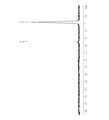
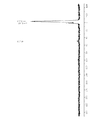
- FIGS. 1 and 2 show an example of an NMR spectrum obtained by 13 C DDDMAS NMR measurement of the particles of the present embodiment.
- the particles used in the NMR measurement in FIG. 1 are the particles (non-surface-treated particles) in Example A2 described below, and the particles used in the NMR measurement in FIG. 2 are the particles in Example B1 (hydrophobic treatment) described later. Particles).
- a peak of (b) a carbon atom derived from a methyl group can be confirmed at around -4 ppm
- a peak of a carbon atom derived from (c) a methoxy group can be confirmed at around -50 ppm. From the NMR spectrum shown in FIG.
- a peak of (b) a carbon atom derived from a methyl group can be confirmed at around -4 ppm, and a peak of a carbon atom derived from (c) a methoxy group can be confirmed at around -50 ppm.
- (-1) a peak of a carbon atom derived from a trimethylsilyloxy group can be confirmed.
- (b) a methyl group, (c) an alkoxyl group, and (e) another group containing a carbon atom (for example, a trialkylsilyloxy group) Etc.) can be determined.
- the carbon atom contained in the alkoxyl group the carbon atom was bonded to the oxygen atom (tg) contained in the (c) alkoxyl group) A
- the area of the peak b derived from the carbon atom contained in the methyl group is B
- the area of the peak b derived from the carbon atom contained in the methyl group is B.
- the other group is a trialkylsilyloxy group.
- the area of the peak c derived from the carbon atom bonded to the silicon atom (tg) of the trialkylsilyloxy group is defined as C.
- the peak area ratio (A / B) is a parameter indicating the relative ratio of the total amount of (c) alkoxyl groups when the total amount of (b) methyl groups is used as a reference value.
- the ratio A / B is not particularly limited as long as it exceeds 0, but is preferably in the range of 0.016 to 0.030, and more preferably in the range of 0.020 to 0.030. Is preferred.
- the ratio of peak area (C / (A + B + C)) is expressed in% in the hydrophobized particles, it is preferably 2.0% or more, more preferably 4.0% or more. , 6.0% or more.
- the peak of silicon atoms (n) that form the network structure (a) that satisfies the following conditions is detected near -56 ppm. That is, among (a) four bonds of silicon atoms (n) forming a network structure, (1) Two bonds are bonded to (a) an oxygen atom (n) forming a network structure. (2) One bond is bonded to the carbon atom of the (b) methyl group. (3) One bond is bonded to (c) an oxygen atom (tg) of a methoxy group, which is an alkoxyl group, or (d) an oxygen atom (tg) of a hydroxyl group.
- ⁇ Ii> The peak of silicon atoms (n) forming the network structure (a) which satisfies the following conditions is detected at around -65 ppm. That is, among (a) four bonds of silicon atoms (n) forming a network structure, (1) Three bonds are bonded to (a) an oxygen atom (n) forming a network structure. (2) One bond is bonded to the carbon atom of the (b) methyl group. ⁇ Iii> (e) When the other group is a trimethylsilyloxy group, a peak at around -8 ppm based on the silicon atom (tg) of the trimethylsilyloxy group is detected.
- the silicon atom (n) shown in the above ⁇ i> corresponds to the silicon atom shown by the symbol D in the following structural formula (1)
- the silicon atom (n) shown in the above ⁇ ii> has the following structural formula ( In 2), it corresponds to the silicon atom indicated by reference symbol E.
- R 1 is (c) an alkoxyl group or (d) a hydroxyl group.
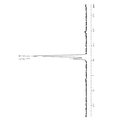
- FIGS. 3 and 4 show an example of an NMR spectrum obtained by 29 Si DDDMA NMR measurement of the particles of the present embodiment.
- the peak of the silicon atom (n) forming the network structure (a) shown in the above ⁇ i> can be confirmed at around ⁇ 56 ppm, and the peak of the above (ii) shown in the above ⁇ ii> near ⁇ 65 ppm ) Peaks of silicon atoms (n) forming a network structure can be confirmed. Further, from the NMR spectrum shown in FIG. 4, a peak of the silicon atom (n) forming the network structure (a) shown in the above ⁇ i> can be confirmed at around ⁇ 56 ppm, and the peak of the above ⁇ ii> shown near ⁇ 65 ppm. (A) The peak of the silicon atom (n) forming the network structure can be confirmed, and the peak of the silicon atom (tg) of the (e) trimethylsilyloxy group can be confirmed at around -8 ppm.
- F D / (D + E)
- the silicon atom (n) shown in ⁇ i> is always bonded to the (c) alkoxyl group or the (d) hydroxyl group. Therefore, the area D is also a parameter corresponding to the total amount of (c) alkoxyl groups and (d) hydroxyl groups.
- F D / (D + E) is a relative ratio of the total amount of (c) alkoxyl group and (d) hydroxyl group when the total amount of (b) methyl groups is used as a reference value. It is a meaningful parameter (functional group ratio).
- G (A / B) / F
- a / B is a parameter indicating the relative proportion of the total amount of (c) alkoxyl groups when the total amount of (b) methyl groups is used as a reference value
- F is the reference value based on the total amount of (b) methyl groups.
- It is a parameter (functional group ratio) that means the relative proportion of the total amount of (c) alkoxyl groups and (d) hydroxyl groups. Therefore, the value G obtained by dividing A / B by F is a parameter indicating the relative proportion of the total amount of (c) alkoxyl groups when the total amount of (c) alkoxyl groups and (d) hydroxyl groups is used as a reference value. .
- a / B and F are parameters obtained based on the peak areas obtained by different measurement methods. Therefore, when calculating G, it is necessary to calculate the value of A / B and the value of F in advance.
- G can take any value within the range of more than 0 and 1 or less, but is preferably in the range of 0.05 to 0.15, more preferably in the range of 0.06 to 0.15. Is more preferable, and the range is more preferably 0.09 to 0.13.
- the particle diameter (cumulative 50% diameter (D50)) of the particles of this embodiment is not particularly limited, and can be appropriately selected depending on the intended use of the particles.
- the particle size may be appropriately selected within the range of about 0.1 ⁇ m to 10 ⁇ m in consideration of the manufacturability, handleability, and various possible applications of the particles.
- the lower limit of the particle size is preferably 0.14 ⁇ m or more, more preferably 0.16 ⁇ m or more, 0.18 ⁇ m or more, or more preferably 0.25 ⁇ m or more, and more than 0.3 ⁇ m. Is more preferable, and it is particularly preferable that it is 0.35 ⁇ m or more.
- the upper limit of the particle size is preferably 2.0 ⁇ m or less, more preferably 1.5 ⁇ m or less, further preferably 1.1 ⁇ m or less, and particularly preferably 1.0 ⁇ m or less.
- the range in which the upper limit and the lower limit of the suitable particle size are combined may be a range in which the upper limit and the lower limit listed above are appropriately combined, for example, 0.14 ⁇ m to 2.0 ⁇ m. , A range of more than 0.30 ⁇ m and 2.0 ⁇ m or less, a range of 0.35 ⁇ m to 1.1 ⁇ m, and the like.
- the particle diameter (D50) and S 1 / S 2 generally preferably satisfy the relationship shown in the following formula (3). It is more preferable to satisfy (4).
- - formula (3) S 1 / S 2 ⁇ 44.5 ⁇ D50 + 2.07 - Formula (4) S 1 / S 2 ⁇ 57.5 ⁇ D50 + 1.47
- the unit of D50 is ⁇ m
- the unit of S 1 / S 2 is dimensionless.
- the lower limit of D50 is preferably 0.14 ⁇ m or more, more preferably 0.2 ⁇ m or more, and particularly preferably more than 0.3 ⁇ m.
- the lower limit of D50 is preferably 0.12 ⁇ m or more, more preferably 0.2 ⁇ m or more, and particularly preferably more than 0.3 ⁇ m.
- the particle size can be focused on the function and effect of the particles of the present embodiment, or can be appropriately selected according to the use of the particles of the present embodiment.
- the particle size is Preferably it is 0.14 ⁇ m or more.
- the particle size is preferably 2.0 ⁇ m or less from the viewpoint of ensuring the transparency of these members.
- the lower limit of D50 is preferably 0.14 ⁇ m or more, more preferably 0.2 ⁇ m or more, and particularly preferably more than 0.3 ⁇ m.
- the lower limit of D50 is preferably 0.12 ⁇ m or more, more preferably 0.2 ⁇ m or more, and particularly preferably more than 0.3 ⁇ m.
- the width of the particle size distribution of the particles of the present embodiment can be expressed using the ratio (D90 / D10) of the cumulative 90% diameter (D90) to the cumulative 10% diameter (D10).
- D90 / D10 means that the smaller the value, the narrower the width of the particle size distribution and the higher the monodispersity.
- the value of D90 / D10 is not particularly limited and can be appropriately selected depending on the application. Generally, a smaller value is preferable, and specifically, 1.5 to 7.0. Is preferred, and 5.5 or less is more preferred.
- the method for producing the particles of the present embodiment is not particularly limited, but when the particles of the present embodiment are non-surface-treated particles, the first production method described below is suitable, and the particles of the present embodiment are preferably hydrophobic. When the particles are activated particles, the following second production method is suitable.
- the solid content is recovered from the spherical polymethylsilsesquioxane particle dispersion obtained after performing the first step to the third step (particle forming process), Non-surface treated particles can be obtained. Further, in the second manufacturing method, the first to third steps (particle forming process) are performed, and then the fourth step (hydrophobizing treatment) is performed. By collecting the solid content from the subsequent dispersion of the spherical polymethylsilsesquioxane particles, hydrophobically treated particles can be obtained.
- the outline of the first to fourth steps is as follows.
- (First step) Particles selected from the group consisting of (i) a hydrolyzate of methyltrialkoxysilane, (ii) a partial condensate of the hydrolyzate, and (iii) a mixture of the hydrolyzate and the partial condensate.
- a raw material solution containing the precursor and an organic solvent (first organic solvent) is obtained.
- a polycondensation reaction liquid is obtained by mixing the raw material solution and an alkaline aqueous medium containing an organic solvent (second organic solvent) and subjecting the particle precursor to a polycondensation reaction.
- the polycondensation reaction liquid is mixed with an aqueous solution containing an organic solvent (third organic solvent) having an organic solvent concentration of 5% by mass or more and 48% by mass or less to form spherical polymethylsilsesquioxane.
- a spherical polymethylsilsesquioxane particle dispersion in which sun particles are dispersed is obtained.
- the mixing of the polycondensation reaction liquid and the aqueous solution is performed by mixing the organic solvent (the total of the first to third organic solvents) contained in the mixed solution obtained by mixing the polycondensation reaction liquid and the aqueous solution. Is carried out so that the ratio is more than 35% by mass and 60% by mass or less.
- the surface of the spherical polymethylsilsesquioxane particles is hydrophobized by adding a hydrophobizing agent to the spherical polymethylsilsesquioxane particle dispersion.
- the first manufacturing method is substantially the same as the manufacturing method disclosed in Patent Document 4 except that the conditions for implementing the third step are different from whether or not to perform the fourth step.
- the method is substantially the same as the manufacturing method disclosed in Patent Document 4, except that the conditions for implementing the third step are different.
- the third step the following (i) and (ii) and the combination thereof are significantly different between the first and second manufacturing methods and the manufacturing method disclosed in Patent Document 4. The details of each step will be described below.
- the raw material methyltrialkoxysilane is hydrolyzed in the presence of an acid catalyst to give (i) a hydrolyzate of methyltrialkoxysilane, (ii) a partial condensate of the hydrolyzate, and (iii) a hydrolyzate.
- a raw material solution containing a particle precursor selected from the group consisting of a mixture of a decomposition product and a partial condensate, and an organic solvent is obtained.
- methyltrialkoxysilane is a compound represented by the following general formula (2).
- methyltrialkoxysilane examples include methyltrimethoxysilane, methyltriethoxysilane, methyltriisopropoxysilane, and methyltris (methoxyethoxy) silane. These may be used alone or in combination of two or more.
- a known catalyst can be suitably used as the catalyst.
- Specific examples include inorganic acids such as hydrochloric acid, nitric acid, and sulfuric acid, and organic acids such as formic acid, acetic acid, oxalic acid, citric acid, and propionic acid.
- the amount of the catalyst to be used may be appropriately adjusted depending on the types of the methyltrialkoxysilane and the acid. However, 1 ⁇ 10 ⁇ 3 to 1 mass per 100 parts by mass of water used for hydrolyzing the methyltrialkoxysilane is used. Selected in the range of parts. When the amount of the catalyst used is less than 1 ⁇ 10 ⁇ 3 parts by mass, the reaction does not proceed sufficiently. When the amount exceeds 1 part by mass, not only the concentration remaining as impurities in the particles becomes high, but also the product is formed. The hydrolyzate is easily condensed.
- the amount of water used is preferably 2 to 15 mol per 1 mol of methyltrialkoxysilane. When the amount of water is less than 2 mol, the hydrolysis reaction does not sufficiently proceed, and when the amount exceeds 15 mol, productivity may be deteriorated.
- the reaction temperature is not particularly limited, and the reaction may be carried out at room temperature or in a heated state. However, since the hydrolyzate can be obtained in a short time and the partial condensation reaction of the generated hydrolyzate can be suppressed, the reaction temperature is maintained at 10 to 60 ° C. It is preferable to carry out the reaction in a state where the reaction is completed.
- the reaction time is not particularly limited, and may be appropriately selected in consideration of the reactivity of the methyltrialkoxysilane used, the composition of the reaction solution prepared by mixing the methyltrialkoxysilane, the acid, and water, and the productivity. About 10 minutes to 10 hours.
- the obtained raw material solution contains the alcohol (first organic solvent) in addition to the particle precursor generated by hydrolysis and condensation of methyl trialkoxysilane.
- the hydrolysis of methyltrialkoxysilane may be performed in the presence of an organic solvent added separately. In this case, an organic solvent separately added is also included in the first organic solvent.
- the raw material solution obtained in the first step is mixed with an alkaline aqueous medium containing an organic solvent (second organic solvent) to cause a polycondensation reaction of the particle precursor.
- an organic solvent second organic solvent
- a polycondensation reaction liquid is obtained.
- the alkaline aqueous medium is a liquid obtained by mixing an alkaline component, water, and an organic solvent.
- the alkaline component used in the alkaline aqueous medium is such that the aqueous solution shows basicity and acts as a neutralizer for the acid used in the first step and as a catalyst for the polycondensation reaction in the second step.
- the alkali component include alkali metal hydroxides such as lithium hydroxide, sodium hydroxide and potassium hydroxide; ammonia; and organic amines such as monomethylamine and dimethylamine; tetramethylammonium hydroxide and tetraethyl hydroxide. Examples thereof include quaternary ammonium hydroxides such as ammonium and choline.
- an organic solvent is used in addition to the alkali component and water to prepare an alkaline aqueous medium.
- the organic solvent is not particularly limited as long as it has compatibility with water, but an organic solvent that dissolves 10 g or more of water per 100 g at normal temperature and normal pressure is suitable.
- the solvent examples include alcohols such as methanol, ethanol, n-propanol, 2-propanol and butanol; polyhydric alcohols such as ethylene glycol, diethylene glycol, propylene glycol, glycerin, trimethylolpropane and hexanetriol; acetone, methyl ethyl ketone, Ketones such as acetone alcohol; ethers such as ethylene glycol monoethyl ether, diethyl ether and tetrahydrofuran; amide compounds such as dimethylformamide, dimethylacetamide, N-methylpyrrolidone and the like.
- the content ratio of the organic solvent is preferably 50% by mass or more, and more preferably 90% by mass or less.
- the amount of the alkali component is an amount that neutralizes the acid and effectively acts as a catalyst for the polycondensation reaction. Therefore, it is usually selected in the range of 0.01% by mass to 12.5% by mass.
- the use amount of the alkali component is less than 0.01% by mass, it is difficult to obtain spherical polymethylsilsesquioxane particles in the subsequent third step, and the yield tends to be reduced.
- the amount of the alkali component exceeds 12.5% by mass, it is difficult to obtain a uniform reaction solution because precipitates are easily formed, and in the subsequent third step, the spherical polymethylsilsesquioxane particles are used. Generation may be unstable. Further, the treatment of the waste liquid tends to be complicated.
- the mixing amount of the alkaline aqueous medium is preferably in a range where the concentration of the particle precursor is 1 to 20% by mass.
- the concentration of the particle precursor is calculated on the assumption that the entire amount of the raw material methyltrialkoxysilane has completely reacted.
- the spherical polymethylsilsesquioxane particles are mixed by mixing the polycondensation reaction liquid obtained in the second step with an aqueous solution containing an organic solvent (third organic solvent). A dispersed spherical polyalkylsilsesquioxane dispersion is obtained.
- the organic solvent used in the aqueous solution containing the organic solvent to be mixed with the polycondensation reaction liquid is not particularly limited as long as it has compatibility with water, but dissolves 10 g or more of water per 100 g at normal temperature and normal pressure. Organic solvents are preferred.
- organic solvent examples include alcohols such as methanol, ethanol, n-propanol, 2-propanol and butanol; polyhydric alcohols such as ethylene glycol, diethylene glycol, propylene glycol, glycerin, trimethylolpropane and hexanetriol; acetone, methyl ethyl ketone; Examples thereof include ketones such as diacetone alcohol; ethers such as ethylene glycol monoethyl ether, acetone, diethyl ether, and tetrahydrofuran; amide compounds such as dimethylformamide, dimethylacetamide, and N-methylpyrrolidone.
- alcohols such as methanol, ethanol, n-propanol, 2-propanol and butanol
- polyhydric alcohols such as ethylene glycol, diethylene glycol, propylene glycol, glycerin, trimethylolpropane and hexanetriol
- acetone methyl e
- the content of the organic solvent in the mixed solution depends on the organic solvent (first organic solvent) contained in the raw material solution prepared in the first step and the organic solvent contained in the alkaline aqueous medium used in the second step. It corresponds to the total content of the solvent (second organic solvent) and the organic solvent (third organic solvent) contained in the aqueous solution used in the third step.
- the mixed solution usually contains particles (solid components) generated over time in addition to the liquid components.
- the total amount of the mixed solution (100% by mass) corresponds to the total amount of all the raw materials used during the first to third steps.
- the concentration of the organic solvent in the aqueous solution is preferably 10 to 48% by mass, more preferably 18 to 48% by mass, and even more preferably 25 to 45% by mass.
- the ratio of the organic solvent in the mixed solution in which the total amount of the polycondensation reaction solution and the aqueous solution has been mixed is preferably 38% by mass or more, and more preferably 45% by mass or more.
- the mixing amount of the aqueous solution containing the organic solvent is preferably in the range of 0.25 to 10 times by mass the polycondensation reaction solution.
- the particle diameter (D50) of the particles obtained after the aging treatment described later tends to be larger. is there.
- the method of mixing the polycondensation reaction solution and the aqueous solution containing an organic solvent is not particularly limited, and a known method can be employed. However, the mixing is preferably carried out in the following manner.
- the polycondensation reaction solution and the aqueous solution containing the organic solvent are mixed so that the composition of the mixed solution obtained by mixing the polycondensation reaction solution and the aqueous solution containing the organic solvent is always kept constant over time. Mix. Thereby, it becomes easy to sufficiently narrow the particle size distribution of the spherical polymethylsilsesquioxane powder in the obtained spherical polymethylsilsesquioxane particle dispersion.
- the mixing method for example, i) the polycondensation reaction solution is supplied from the polycondensation reaction solution supply pipe and the aqueous solution is supplied from the aqueous solution supply pipe into an empty container, and the polymerization is performed in the container.
- the method include a method of mixing a condensation reaction liquid and an aqueous solution, and a method of ii) mixing a polycondensation reaction liquid and an aqueous solution using a three-branch pipe.
- a mixing method using a tubular reactor consisting of a three-branch pipe such as a Y-shaped pipe or a T-shaped pipe is preferable.
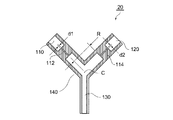
- a flow path (first flow path and first flow path) for supplying the liquid to the connection portion as disclosed in JP-A-2003-221222 and Japanese Patent No. 6171611. It is preferable to use a Y-shaped tubular reactor provided with a throttle section in the second flow path).
- a Y-shaped three-branch tube reactor 20 having a portion 140, a first pump 30 connected to an inlet side of the first flow channel 110 (an end side opposite to the connection portion 140), The second pump 32 connected to the inlet side (the end side opposite to the connection portion 140) of the flow path 120, the first raw material tank 40 connected to the first pump 30, and the second pump 32 A second raw material tank 42 and a recovery tank 50 connected to the outlet side of the third flow path 130 (the end opposite to the connection portion 140) are provided.
- the polycondensation reaction liquid stored in the first raw material tank 40 is continuously discharged at a constant flow rate through the first pump 30.
- the aqueous solution is supplied to one flow path 110 and the aqueous solution stored in the second raw material tank 42 is continuously supplied to the second flow path 120 at a constant flow rate via the second pump 32.
- the polycondensation reaction liquid and the aqueous solution collide and are mixed at the connection part 140 at the same time.
- the mixed solution of the polycondensation reaction liquid and the aqueous solution is collected in the recovery tank 50 as a spherical polyalkylsilsesquioxane particle dispersion from the connection section 140 through the third flow path 130.
- the mixed liquid discharged from the third flow path 130 may be further passed through a stationary mixer or the like, and further stirred and mixed. In this case, since the flow rates of the polycondensation reaction liquid and the aqueous solution in the tubular reactor can be set higher, high productivity can be obtained.
- a known liquid sending method such as pressure feeding can be employed without limitation for sending the polycondensation reaction solution and the aqueous solution to the three-branch tube reactor 20.
- pressure feeding is preferred, in which the polycondensation reaction solution and the aqueous solution can be continuously and uniformly mixed by collision.
- a multiple reciprocating pump that does not generate pulsation or a pump provided with a shock absorber such as an accumulator is preferably used.
- throttle portions 112 and 114 each of which can adjust the flow velocity.
- the distance R from the outlet side of the throttle portions 112 and 114 (the side of the connection portion 140) to the center point C of the connection portion 140 is the throttle portion diameter d1 of the throttle portion 112 and the throttle portion diameter d2 of the throttle portion 114. Is preferably 1 to 25 times, more preferably 1 to 9 times.
- the distance R from the outlet side of the throttle 112 to the center point C is equal to the distance R from the outlet side of the throttle 114 to the center C. Is preferred.
- the mixed solution obtained by mixing the polycondensation reaction liquid and the aqueous solution containing the organic solvent needs to be left standing (aging treatment) for a while.
- the aging treatment the spherical polymethylsilsesquioxane particles generated in the mixed solution are stabilized, and particles having a larger S 1 / S 2 can be obtained.
- the aging temperature and aging time are not particularly limited as long as particles having S 1 / S 2 of 8.0 or more can be obtained, and may be adjusted so as to have preferable physical properties depending on the use of the particles of the present embodiment.
- the ripening temperature is preferably 10 ° C. or higher, more preferably 15 ° C. or higher, and particularly preferably 18 ° C. or higher, in that the aging temperature needs to be higher than the freezing temperature of the mixed solution, and the forced cooling is not required.
- the aging temperature is preferably 60 ° C. or lower, more preferably 50 ° C. or lower, and particularly preferably 40 ° C. or lower because heating can be unnecessary.
- the aging time when aging at 20 ° C. is particularly preferably at least 6 hours or more from the viewpoint of more reliably obtaining particles having S 1 / S 2 of 8.0 or more.
- the aging time is more preferably 15 hours or longer, preferably 20 hours or longer, more preferably 24 hours or longer, and even more preferably 160 hours or longer.
- the third step (hydrophobizing treatment) or the like is performed without any surface treatment.
- the spherical polymethylsilsesquioxane particle dispersion obtained in the step is subjected to a solid-liquid separation treatment.
- the solid content (non-surface-treated particles) recovered by the solid-liquid separation treatment may be used for various applications as it is.
- the method for drying the solid content is not particularly limited, and can be selected from known methods such as blast drying and reduced pressure drying. Among them, drying under reduced pressure is particularly preferable because a dry powder that is easy to melt is obtained.
- the drying temperature is not particularly limited as long as a functional group such as an alkyl group contained in the non-surface-treated particles is not decomposed, and is preferably in the range of 65 to 350 ° C, more preferably in the range of 80 to 250 ° C. May be set as appropriate.
- the drying time is not particularly limited, but by setting it to 2 to 48 hours, sufficiently dried non-surface-treated particles can be obtained.
- the first to third steps are performed, and then the fourth step (hydrophobicizing treatment) is further performed.
- the resulting hydrophobized particles may be formed into aggregates. Excellent friability.
- Organic silicon compounds are usually used as the hydrophobizing agent used in the hydrophobizing treatment.
- Such an organosilicon compound is not particularly limited. Examples thereof include alkylalkoxysilane-based compounds such as butyltrimethoxysilane, chlorosilane-based compounds such as dimethyldichlorosilane, trimethylchlorosilane, and triethylchlorosilane, and silicone oils and silicone varnishes.
- alkylalkoxysilane-based compounds such as butyltrimethoxysilane
- chlorosilane-based compounds such as dimethyldichlorosilane, trimethylchlorosilane, and triethylchlorosilane
- silicone oils and silicone varnishes silicone oils and silicone varnishes.
- One of these hydrophobizing agents may be used alone, or two or more thereof may be used as a mixture, or may be used after being diluted with an organic solvent or the like.
- hydrophobizing agent capable of introducing a trialkylsilyl group into spherical polymethylsilsequioxane particles is preferable, and a trialkylsilyl group having 1 to 3 carbon atoms in each alkyl group is converted into a spherical polymethylsilsequioxane particle.
- Hydrophobizing agents that can be introduced into methylsilsesquioxane particles are more preferred.
- the amount of the hydrophobizing agent used is not particularly limited. If the amount is too small, the hydrophobizing treatment may be insufficient, and if the amount is too large, the post-treatment becomes complicated. For this reason, the blending amount of the hydrophobizing agent is preferably 0.01 to 300 parts by mass, and more preferably 1 to 200 parts by mass with respect to 100 parts by mass (dry weight) of the non-surface treated particles to be subjected to the hydrophobic treatment. Is more preferable.
- the method of blending the hydrophobizing agent into the spherical polymethylsilsequioxane particle dispersion is not particularly limited.
- the hydrophobizing agent when using a hydrophobizing agent which is liquid at normal temperature and normal pressure, the hydrophobizing agent may be dropped into the spherical polymethylsilsequioxane particle dispersion or the spherical polymethylsilsequioxane particle dispersion. You may shower against the liquid surface. Dropping is preferred because it is simple in operation.
- the treatment temperature is not particularly limited and may be determined in consideration of the reactivity of the hydrophobizing agent to be used, and may be, for example, 0 to 100 degrees.
- the processing time can be, for example, 0.1 hour to 72 hours. However, from the viewpoint of shortening the processing time, it is preferable that the processing temperature is higher, and specifically, it is preferable that the temperature be around the boiling point of the organic solvent used in the second step.
- the resulting hydrophobized particles float in the upper layer of the spherical polymethylsilsesquioxane particle dispersion to which the hydrophobizing agent has been added.
- this liquid is referred to as “powder suspension”.
- a known method can be used without any particular limitation.
- the suspended powder can be scooped or a filtration method may be employed, but the filtration method is preferred because the operation is simple.
- the filtration method is not particularly limited, and a known method such as reduced pressure filtration, centrifugal filtration, or pressure filtration may be selected.
- the filter paper, filter, filter cloth, and the like used in the filtration are not particularly limited as long as they are industrially available, and can be appropriately selected according to the device used.
- the solid content may be further washed with pure water, methanol, or the like, if necessary.
- the collected solids may be used for various applications as they are. However, in order to obtain hydrophobically treated particles with less impurities, it is preferable to dry the solid content.
- the method and specific conditions of the drying treatment are not particularly limited, but it is preferable to select the same method and conditions as those for the drying treatment on the solids (non-surface-treated particles) recovered after the third step. .
- the dispersion liquid was subjected to ultrasonic dispersion treatment at an output of 20 W for 15 minutes with a probe of the ultrasonic dispersion machine (7 mm in inner diameter at the tip) being immersed in the mixed liquid up to 4.5 cm from the tip. Obtained.
- a cumulative 10% diameter (D10) and a cumulative 50% on a volume basis were measured using a particle size distribution analyzer (LS13320, manufactured by Beckman Coulter, Inc.) using a laser diffraction scattering method.
- the diameter (D50), the 90% cumulative diameter (D90) and D90 / D10 were measured and calculated.
- D90 / D10 indicates the width of the particle size distribution width. A smaller value means that the width of the particle size distribution is narrower.
- the measurement conditions were as follows: using a solid measurement probe (diameter: 4 mm), measurement nuclide 13C, MAS rotation speed 7 kHz, pulse program hpdec, repetition time 10 sec, integration number 6,000 or more, and external standard: glycine carbonyl peak (176.03 ppm) ).
- the area of each peak was calculated using a peak waveform separation program. In the table showing the results of NMR measurement described later, the total of the area A of the peak a, the area B of the peak b, and the area C of the peak c is set as 100%.
- peak (a) was observed at around ⁇ 50 ppm when (c) the alkoxyl group was a methoxy group, and peak b was observed at around ⁇ 4 ppm when (b) was a methyl group.
- peak c is observed at around -1 ppm. Therefore, in the results of NMR measurement described later, the presence of the peak a means that the measured particles contain an alkoxyl group, and that the area of the peak b is smaller than 100% means that the peak is derived from polymethylsilsesquioxane. Means that carbon other than the methyl group is present, and the area C of the peak c indicates the proportion of the carbon derived from the trialkylsilyloxy group contained in the vicinity of the particle surface due to the hydrophobic treatment. means.
- the measuring cell cooled to room temperature was set in a BET specific surface area measuring device (SA-1000 manufactured by Shibata Chemical Co., Ltd.), and nitrogen gas was adsorbed on the surface of the spherical polymethylsilsesquioxane powder using liquid nitrogen. . Then, obtain the BET surface area S X by BET1 point method from the adsorbed amount. Measure the mass of the measurement cell filled with the spherical polymethylsilsesquioxane powder after the measurement, subtract the mass of the measurement cell itself measured earlier from this value, and remove moisture etc. by pretreatment. The mass m of the spherical polymethylsilsesquioxane powder from which the mass component has been removed is calculated.
- the BET surface area S X is divided by the mass m to obtain a specific surface area S 1 .
- BET surface area S X is used to calculate the rounded to the first decimal place of the value of when the notation unit as m 2, mass m which, when expressed the unit as g Was used for calculation after rounding off the third decimal place. Then, the value obtained by rounding off to one decimal place of numerical values obtained by this calculation was a BET specific surface area S 1.
- the particle density ( ⁇ ) was measured by a dry automatic densitometer AccuPyc1330 manufactured by Shimadzu Corporation. The measurement was performed according to the following procedure. First, spherical polymethylsilsesquioxane powder that had been dried under reduced pressure at 120 ° C. for 24 hours was weighed in a 10 ml sample container to the unit of 0.0001 g. Next, after setting the sample container in the measurement chamber of the dry automatic densitometer, the particle density was measured at a measurement temperature of 25 ° C. while flowing He gas into the measurement chamber.
- the particle density ⁇ used to calculate the specific surface area S 2 a numerical value obtained by rounding off to two decimal particle density, denoted by g / cm 3, further, the g / m 3 notation The converted values were used.
- the theoretical specific surface area S 2 (m 2 / g) was calculated by the following equation (5) using the measured values of D50 and ⁇ . In this case, a value point was rounded to the 2-position of the values calculated on the basis of the right side of the following equation (5), and the theoretical specific surface area S 2.
- the value of the volume percentage of the amount of methanol added to the total amount of pure water (50 ml) and methanol added at the end of the addition is the degree of hydrophobicity (M value).
- M value degree of hydrophobicity
- the area of each peak was calculated using a peak waveform separation program.
- the relative ratio (%) of the peak area D when the peak area E is 100% (reference value) is shown.
- the peak observed near -56 ppm corresponds to peak d
- the peak observed near -65 ppm corresponds to peak e.
- the total amount of carbon atoms (carbon amount) contained in the spherical polymethylsilsesquioxane was measured by Sumigraph NC-22F manufactured by Sumika Chemical Analysis Service, Ltd. Specifically, 30 mg of spherical polymethylsilsesquioxane powder was weighed, burned at a reaction furnace temperature of 900 ° C., and the amount of carbon was measured at a reduction furnace temperature of 600 ° C.
- Adhesion Amount Adhesion Amount of Particles on Solid Surface
- the measurement of the adhesion amount (adhesion amount) of particles on the solid surface was performed according to the following procedure. First, 1 g of dried spherical polymethylsilsesquioxane powder was placed in a glass container (inner diameter 4 cm, height 11 cm), and then 50 g of 2-propanol was added to obtain a mixed solution. Next, the dispersion liquid was subjected to ultrasonic dispersion treatment at an output of 20 W for 15 minutes with a probe of the ultrasonic dispersion machine (7 mm in inner diameter at the tip) being immersed in the mixed liquid up to 4.5 cm from the tip. Obtained.
- Example A1 First Step 56 g of water and 0.01 g of acetic acid as a catalyst were charged into a 1000 ml eggplant flask and stirred at 30 ° C. 70 g of methyltrimethoxysilane was added thereto and stirred for 1 hour to obtain 126 g of a raw material solution. At this time, the amount of methanol generated by the hydrolysis reaction of methyltrimethoxysilane was 49.5 g. In addition, the said alcohol amount is a theoretical calculation value when 100% is hydrolyzed, and the same applies to each of the following Examples and Comparative Examples.
- Second step 2.9 g of 25% aqueous ammonia, 91.2 g of water and 313.8 g of methanol were charged into a 1000 ml eggplant flask and stirred at 30 ° C. to prepare an alkaline aqueous medium. 126.0 g of the raw material solution obtained in the first step was added dropwise to this alkaline aqueous medium over 1 minute. The mixed solution after the dropwise addition of the raw material solution was stirred as it was for 25 minutes to allow the polycondensation reaction of the particle precursor to proceed to obtain 533.9 g of a polycondensation reaction liquid (liquid temperature 30 ° C.).
- the third step was performed using the reactor 10 shown in FIG.
- the Y-shaped three-branch tube reactor 20 used is an angle formed between the central axis of the first flow path 110 and the central axis of the second flow path 120 (hereinafter, may be referred to as “branch angle”). Is 90 degrees, and the ratio R / d1 (and R / d2) of the distance R from the outlet side of the throttle portion 112 (and the throttle portion 114) to the center point C and the throttle portion diameter d1 (and d2) is 12.5.
- 533.9 g of the polycondensation reaction liquid was supplied from the inlet side of the first channel 110 at a flow rate of 1.9 m / sec in the vicinity of the connection part 140, and 10 mass% of an aqueous solution was supplied from the inlet side of the second channel 120.
- a mixed solution discharged from the third channel 130 that is, 1067.8 g of a dispersion liquid containing spherical polymethylsilsesquioxane particles was obtained.
- the spherical polymethylsilsesquioxane particles contained in the dispersion (mixed solution) were 3.2% by mass, and the content of the organic solvent contained in the dispersion (mixed solution) was 39% by mass. .
- Example A2 Spherical polymethylsilsesquioxane particles were produced in the same manner as in Example A1, except that the aqueous solution used in the third step was a 20% by mass aqueous methanol solution. The content of the organic solvent in the dispersion obtained in the third step was 44% by mass.
- Example A3 Spherical polymethylsilsesquioxane particles were produced in the same manner as in Example A1, except that the aqueous solution used in the third step was a 25% by mass aqueous methanol solution. The content of the organic solvent in the dispersion obtained in the third step was 47% by mass.
- Example A4 Spherical polymethylsilsesquioxane particles were produced in the same manner as in Example A1, except that the aqueous solution used in the third step was a 30% by mass aqueous methanol solution. The content of the organic solvent in the dispersion obtained in the third step was 49% by mass.
- Example A5 Spherical polymethylsilsesquioxane particles were produced in the same manner as in Example A1, except that the aqueous solution used in the third step was a 35% by mass aqueous methanol solution. The content of the organic solvent in the dispersion obtained in the third step was 52% by mass.
- Example A6 Spherical polymethylsilsesquioxane particles were produced in the same manner as in Example A1, except that the aqueous solution used in the third step was a 40% by mass aqueous methanol solution. The content of the organic solvent in the dispersion obtained in the third step was 54% by mass.
- Example A7 Spherical polymethylsilsesquioxane particles were produced in the same manner as in Example A1, except that the aqueous solution used in the third step was a 45% by mass aqueous methanol solution. The content of the organic solvent in the dispersion obtained in the third step was 57% by mass.
- Example A8 Spherical polymethylsilsesquioxane particles were produced in the same manner as in Example A1, except that the aqueous solution used in the third step was a 20% by mass aqueous ethanol solution. The content of the organic solvent in the dispersion obtained in the third step was 44% by mass.
- Example A9 Same as Example A1 except that the aqueous solution used in the third step was a 30% by mass aqueous ethanol solution, and the time during which the dispersion obtained in the third step was allowed to stand (ripening time) was 144 hours.
- ripening time was 144 hours.
- the content of the organic solvent in the dispersion obtained in the third step was 49% by mass.
- Example A10 Spherical polymethylsilsesquioxane particles were produced in the same manner as in Example A1, except that the aqueous solution used in the third step was a 20% by mass aqueous isopropyl alcohol solution. The content of the organic solvent in the dispersion obtained in the third step was 44% by mass.
- Example A1 was performed in the same manner as in Example A1 except that the aqueous solution used in the third step was an aqueous 25% by mass isopropyl alcohol solution, and the time during which the dispersion obtained in the third step was allowed to stand (ripening time) was 144 hours. Similarly, spherical polymethylsilsesquioxane particles were produced. The content of the organic solvent in the dispersion obtained in the third step was 47% by mass.
- Example A12 Spherical polymethylsilsesquioxane particles were produced in the same manner as in Example A1, except that the aqueous solution used in the third step was a 15% by mass aqueous acetone solution. The content of the organic solvent in the dispersion obtained in the third step was 42% by mass.
- Example A13 Same as Example A1 except that the aqueous solution used in the third step was a 25% by mass acetone aqueous solution, and the time for allowing the dispersion obtained in the third step to stand still (ripening time) was 144 hours.
- the content of the organic solvent in the dispersion obtained in the third step was 47% by mass.
- Example A14 Spherical polymethylsilsesquioxane particles were produced in the same manner as in Example A1, except that the aqueous solution used in the third step was a 15% by mass aqueous solution of tetrahydrofuran. The content of the organic solvent in the dispersion obtained in the third step was 42% by mass.
- 160.9 g of the raw material solution obtained in the first step was dropped over 1 minute.
- the mixed solution after the dropwise addition of the raw material solution was stirred as it was for 25 minutes to advance the polycondensation reaction of the particle precursor to obtain 570.2 g of a polycondensation reaction liquid (liquid temperature 30 ° C.).
- the third step was performed using the reactor 10 shown in FIG.
- the Y-shaped three-branch tube reactor 20 used is an angle formed between the central axis of the first flow path 110 and the central axis of the second flow path 120 (hereinafter, may be referred to as “branch angle”). Is 90 degrees, and the ratio R / d1 (and R / d2) of the distance R from the outlet side of the throttle portion 112 (and the throttle portion 114) to the center point C and the throttle portion diameter d1 (and d2) is 12.5.
- 570.2 g of the polycondensation reaction liquid was supplied from the inlet side of the first flow channel 110 to a flow rate of 1.9 m / sec in the vicinity of the connection portion 140, and 20 mass% of an aqueous solution was supplied from the inlet side of the second flow channel 120
- a mixed solution discharged from the third channel 130 that is, a dispersion liquid containing spherical polymethylsilsesquioxane particles was obtained.
- the spherical polymethylsilsesquioxane particles contained in the dispersion (mixed solution) were 3.3% by mass, and the content of the organic solvent contained in the dispersion (mixed solution) was 44% by mass. .
- the powder of spherical polymethylsilsesquioxane particles was collected by suction filtration in the same manner as in Example A1, and dried under reduced pressure at 120 ° C for 24 hours. As a result, a dry powder of white spherical polymethylsilsesquioxane particles was obtained.
- Example A1 Spherical polymethylsilsesquioxane particles were produced in the same manner as in Example A1, except that the aqueous solution used in the third step was a 50% by mass aqueous methanol solution. The content of the organic solvent in the dispersion obtained in the third step was 59% by mass. After allowing this dispersion liquid to stand at 20 ° C. for 24 hours to mature, suction filtration was performed to recover spherical polymethylsilsesquioxane particles. However, the recovered solid was a gel-like mass. Further, regarding the gel-like mass, no particle component was observed when confirmed by FE-SEM.
- Example A2 The first step, the second step, and the third step were sequentially performed in the same manner as in Example 2-7 of Patent Document 4.
- the liquid temperature of the polycondensation reaction liquid was 30 ° C.
- the liquid temperature of the aqueous solution was 25 ° C.
- the aqueous solution used in the third step is composed of only water (organic solvent concentration: 0% by mass), and the content of the organic solvent contained in the dispersion obtained in the third step is 49% by mass. there were.
- Example A1 The obtained dispersion was subjected to aging treatment, collection by suction filtration and drying under reduced pressure in the same manner as in Example A1, to obtain white spherical polymethylsilsesquioxane dry powder.
- Example 2-7 of Patent Document 4 a substantial difference in the manufacturing process between Example 2-7 of Patent Document 4 and Comparative Example A2 is whether or not the fourth step (hydrophobizing treatment) is performed, and The presence or absence of the aging treatment at 20 ° C. for 24 hours. Further, in Example 2-7 of Patent Document 4, among all the examples disclosed in Patent Document 4, the content of the organic solvent contained in the dispersion obtained in the third step is the largest. This is an experimental example.
- Example A3 The first step, the second step, and the third step were sequentially performed in the same manner as in Example 2-25 of Patent Document 4.
- the liquid temperature of the polycondensation reaction liquid was 30 ° C.
- the liquid temperature of the aqueous solution was 25 ° C.
- the aqueous solution used in the third step is composed of only water (organic solvent concentration: 0% by mass), and the content of the organic solvent contained in the dispersion obtained in the third step is 48% by mass. there were.
- Example A1 The obtained dispersion was subjected to aging treatment, collection by suction filtration and drying under reduced pressure in the same manner as in Example A1, to obtain white spherical polymethylsilsesquioxane dry powder.
- Example 2-7 of Patent Document 4 the substantial difference in the production process between Example 2-7 of Patent Document 4 and Comparative Example A3 is that the fourth step (hydrophobic treatment) is performed, The presence or absence of the aging treatment at 20 ° C. for 24 hours. Further, in Example 2-25 of Patent Document 4, among all the examples disclosed in Patent Document 4, the content of the organic solvent contained in the dispersion obtained in the third step was the second. This is a large experimental example.
- ⁇ Collision mixing conditions (1) The supply amount and flow rate of the polycondensation reaction liquid supplied from the inlet side of the first flow path 100: Same as Example A1. (2) The supply amount and flow rate of the 10% by mass aqueous methanol solution supplied from the inlet side of the second channel 120: The supply amount was changed to 1016 g (liquid temperature 25 ° C.), and the flow rate was changed to 3.6 m / sec. (3) Flow velocity ratio The flow velocity ratio was changed to 1.9.
- a dispersion liquid containing spherical polymethylsilsesquioxane particles was obtained.
- the spherical polymethylsilsesquioxane particles contained in the dispersion (mixed solution) were 2.2% by mass, and the content of the organic solvent contained in the dispersion (mixed solution) was 30% by mass. there were.
- Example A7 Spherical polymethylsilsesquioxane particles were produced in the same manner as in Example A2, except that the aging time of the dispersion (mixed solution) obtained in the third step was changed to 0.5 hour. However, it was found that even if the dispersion liquid after the aging treatment was subjected to suction filtration, substantially no solid content could be recovered, and particles could not be sufficiently formed.
- Comparative Example A8 was carried out in the same manner as in Comparative Example A8 except that the amount of 25% aqueous ammonia was changed to 2.8 g and the amount of water was changed to 511 g, to obtain powder of spherical polymethylsilsesquioxane particles.
- the content of the organic solvent in this liquid mixture was 7.6% by mass.
- Example B1 First Step 56 g of water and 0.01 g of acetic acid as a catalyst were charged into a 1000 ml eggplant flask and stirred at 30 ° C. 70 g of methyltrimethoxysilane was added thereto and stirred for 1 hour to obtain 126 g of a raw material solution. At this time, the amount of methanol generated by the hydrolysis reaction of methyltrimethoxysilane was 49.5 g. In addition, the said alcohol amount is a theoretical calculation value when 100% is hydrolyzed, and the same applies to each of the following Examples and Comparative Examples.
- Second step 2.9 g of 25% aqueous ammonia, 91.2 g of water and 313.8 g of methanol were charged into a 1000 ml eggplant flask and stirred at 30 ° C. to prepare an alkaline aqueous medium. 126.0 g of the raw material solution obtained in the first step was added dropwise to this alkaline aqueous medium over 1 minute. The mixed solution after the dropwise addition of the raw material solution was stirred as it was for 25 minutes to allow the polycondensation reaction of the particle precursor to proceed to obtain 533.9 g of a polycondensation reaction liquid (liquid temperature 30 ° C.).
- the third step was performed using the reactor 10 shown in FIG.
- the Y-shaped three-branch tube reactor 20 used is an angle formed between the central axis of the first flow path 110 and the central axis of the second flow path 120 (hereinafter, may be referred to as “branch angle”). Is 90 degrees, and the ratio R / d1 (and R / d2) of the distance R from the outlet side of the throttle portion 112 (and the throttle portion 114) to the center point C and the throttle portion diameter d1 (and d2) is 12.5.
- 533.9 g of the polycondensation reaction liquid was supplied from the inlet side of the first channel 110 at a flow rate of 1.9 m / sec in the vicinity of the connection portion 140, and 10 mass% of an aqueous solution was supplied from the inlet side of the second channel 120 as an aqueous solution.
- a mixed solution discharged from the third channel 130 that is, 1067.8 g of a dispersion liquid containing spherical polymethylsilsesquioxane particles was obtained.
- the fine particles contained in this dispersion (mixed solution) were 3.2% by mass, and the content of the organic solvent was 39% by mass.
- This dispersion was allowed to stand at 20 ° C. for 24 hours (aging treatment).
- the dispersion was heated to 65 ° C., and 17.2 g of hexamethyldisilazane was added as a hydrophobizing agent, followed by stirring for 3 hours.
- the powder of the hydrophobized spherical polymethylsilsesquioxane particles floating on the upper layer of the liquid is collected by suction filtration, and dried under reduced pressure at 120 ° C. for 24 hours to dry the white hydrophobized spherical polymethylsilsesquioxane particles. 34 g of a powder were obtained.
- Example B2 Same as Example B1 except that the aqueous solution used in the third step was a 20% by mass aqueous methanol solution, and the time during which the dispersion obtained in the third step was allowed to stand (ripening time) was 15 hours.
- the content of the organic solvent in the dispersion obtained in the third step was 44% by mass.
- the dispersion liquid after the aging treatment was heated to 65 ° C., and 8.6 g of hexamethyldisilazane was added as a hydrophobizing agent, followed by stirring for 3 hours. Thereafter, suction filtration and drying under reduced pressure were performed in the same manner as in Example B1 to obtain a dry powder of spherical polymethylsilsesquioxane particles.
- Example B3 A spherical polymethylsilsesquioxane particle dispersion was obtained in the same manner as in Example B1, except that the aqueous solution used in the third step was a 25% by mass aqueous methanol solution. The content of the organic solvent in the dispersion obtained in the third step was 47% by mass. Subsequently, this dispersion was aged in the same manner as in Example B1, and then the temperature was further raised to 65 ° C., and 17.2 g of hexamethyldisilazane was added as a hydrophobizing agent, followed by stirring for 3 hours. Thereafter, suction filtration and drying under reduced pressure were performed in the same manner as in Example B1 to obtain a dry powder of spherical polymethylsilsesquioxane particles.
- Example B4 A spherical polymethylsilsesquioxane particle dispersion was obtained in the same manner as in Example B1, except that the aqueous solution used in the third step was a 30% by mass aqueous methanol solution. The content of the organic solvent in the dispersion obtained in the third step was 49% by mass. After allowing this dispersion to stand at 20 ° C. for 24 hours for aging, it was subjected to hydrophobic treatment, suction filtration and drying under reduced pressure in the same manner as in Example B2 to obtain a dry powder of spherical polymethylsilsesquioxane particles. Obtained.
- Example B5 A dry powder of spherical polymethylsilsesquioxane particles was obtained in the same manner as in Example B4 except that the amount of hexamethyldisilazane added during the hydrophobic treatment was changed to 3.4 g.
- Example B6 The spherical polymethylsilsesquioxane particle dispersion produced in the same manner as in Example B4 was left at 20 ° C. for 168 hours for aging treatment. Subsequently, using the dispersion liquid after the aging treatment, a hydrophobic treatment was carried out in the same manner as in Example B2 to obtain a dry powder of spherical polymethylsilsesquioxane particles.
- Example B7 A dry powder of spherical polymethylsilsesquioxane particles was obtained in the same manner as in Example B6 except that the amount of hexamethyldisilazane added during the hydrophobic treatment was changed to 3.4 g.
- Example B8 A spherical polymethylsilsesquioxane particle dispersion was obtained in the same manner as in Example B1, except that the aqueous solution used in the third step was a 35% by mass aqueous methanol solution. The content of the organic solvent in the dispersion obtained in the third step was 52% by mass. This dispersion was allowed to stand at 20 ° C. for 24 hours to ripen, and then subjected to hydrophobizing treatment, suction filtration and drying under reduced pressure in the same manner as in Example B1 to obtain a dry powder of spherical polymethylsilsesquioxane particles. Obtained.
- Example B9 A spherical polymethylsilsesquioxane particle dispersion was obtained in the same manner as in Example B1, except that the aqueous solution used in the third step was a 40% by mass aqueous methanol solution. The content of the organic solvent in the dispersion obtained in the third step was 54% by mass. This dispersion was left to stand at 20 ° C. for 24 hours for aging treatment, and then subjected to hydrophobic treatment, suction filtration and drying under reduced pressure in the same manner as in Example B2 to obtain a dry powder of spherical polymethylsilsesquioxane particles. Obtained.
- Example B10 The spherical polymethylsilsesquioxane particle dispersion prepared in the same manner as in Example B9 was aged at 20 ° C. for 168 hours. Subsequently, using the dispersion liquid after the aging treatment, hydrophobic treatment, suction filtration and drying under reduced pressure were carried out in the same manner as in Example B2 to obtain a dry powder of spherical polymethylsilsesquioxane particles.
- Example B11 A spherical polymethylsilsesquioxane particle dispersion was obtained in the same manner as in Example B1, except that the aqueous solution used in the third step was a 45% by mass aqueous methanol solution. The content of the organic solvent in the dispersion obtained in the third step was 57% by mass. This dispersion was left to stand at 20 ° C. for 24 hours for aging treatment, and then subjected to hydrophobizing treatment, suction filtration and drying under reduced pressure in the same manner as in Example B1 to obtain a dry powder of spherical polymethylsilsesquioxane particles. Obtained.
- Example B12 A spherical polymethylsilsesquioxane particle dispersion was obtained in the same manner as in Example B1, except that the aqueous solution used in the third step was a 30% by mass aqueous ethanol solution. The content of the organic solvent in the dispersion obtained in the third step was 49% by mass. This dispersion was left to stand at 20 ° C. for 144 hours for aging treatment, and then subjected to hydrophobic treatment, suction filtration, and drying under reduced pressure in the same manner as in Example B1 to obtain a dry powder of spherical polymethylsilsesquioxane particles. Obtained.
- Example B13 A spherical polymethylsilsesquioxane particle dispersion was obtained in the same manner as in Example B1, except that the aqueous solution used in the third step was a 20% by mass aqueous isopropyl alcohol solution. The content of the organic solvent in the dispersion obtained in the third step was 44% by mass. This dispersion was left to stand at 20 ° C. for 24 hours for aging treatment, and then subjected to hydrophobizing treatment, suction filtration and drying under reduced pressure in the same manner as in Example B1 to obtain a dry powder of spherical polymethylsilsesquioxane particles. Obtained.
- Example B14 A spherical polymethylsilsesquioxane particle dispersion was obtained in the same manner as in Example B1, except that the aqueous solution used in the third step was a 25% by mass aqueous solution of isopropyl alcohol. The content of the organic solvent in the dispersion obtained in the third step was 47% by mass. This dispersion was left to stand at 20 ° C. for 144 hours for aging treatment, and then subjected to hydrophobic treatment, suction filtration and drying under reduced pressure in the same manner as in Example B1, to give a dry powder of spherical polymethylsilsesquioxane particles. Obtained.
- Example B15 A spherical polymethylsilsesquioxane particle dispersion was obtained in the same manner as in Example B1, except that the aqueous solution used in the third step was an aqueous 25% by mass acetone solution. The content of the organic solvent in the dispersion obtained in the third step was 47% by mass. This dispersion was left to stand at 20 ° C. for 144 hours for aging treatment, and then subjected to hydrophobic treatment, suction filtration and drying under reduced pressure in the same manner as in Example B1, to give a dry powder of spherical polymethylsilsesquioxane particles. Obtained.
- Example B16 The same operation as in Example A15 was performed up to the third step to obtain 1140.4 g of a dispersion liquid containing spherical polymethylsilsesquioxane particles.
- the content of the organic solvent in the dispersion obtained in the third step was 44% by mass, as in Example A15.
- the temperature was raised to 65 ° C, 17.2 g of hexamethyldisilazane was added as a hydrophobizing agent, and the mixture was stirred for 3 hours.
- the powder of the hydrophobized spherical polymethylsilsesquioxane particles floating on the upper layer of the liquid is collected by suction filtration, and dried under reduced pressure at 120 ° C. for 24 hours to dry the white hydrophobized spherical polymethylsilsesquioxane particles. 38 g of a powder were obtained.
- Example B1 As a reproduction experiment of Example 2-7 of Patent Document 4, a first step, a second step, a third step, and a fourth step were sequentially performed.
- the liquid temperature of the polycondensation reaction liquid was 30 ° C.
- the liquid temperature of the aqueous solution was 25 ° C.
- the aqueous solution used in the third step is composed of only water (organic solvent concentration: 0% by mass), and the content of the organic solvent contained in the dispersion obtained in the third step is 49% by mass. there were.
- the dispersion obtained by performing the fourth step was collected by suction filtration and dried under reduced pressure in the same manner as in Example A1, to obtain white spherical polymethylsilsesquioxane dry powder.
- Comparative Example B2 After completion of the third step, the same operation as in Comparative Example B1 was performed, except that the aging treatment was performed at 20 ° C. for 12 hours before the execution of the fourth step, to obtain white spherical polymethylsilsesquioxane particles. A dry powder was obtained.
- Example B3 As a reproduction experiment of Example 2-25 of Patent Document 4, a first step, a second step, a third step, and a fourth step were sequentially performed.
- the liquid temperature of the polycondensation reaction liquid was 30 ° C.
- the liquid temperature of the aqueous solution was 25 ° C.
- the aqueous solution used in the third step is composed of only water (organic solvent concentration: 0% by mass), and the content of the organic solvent contained in the dispersion obtained in the third step is 48% by mass. there were.
- the dispersion obtained by performing the fourth step was collected by suction filtration and dried under reduced pressure in the same manner as in Example A1, to obtain white spherical polymethylsilsesquioxane dry powder.
- Comparative Example B4 After completion of the third step, the same operation as in Comparative Example B3 was performed, except that aging was performed at 20 ° C. for 12 hours before performing the fourth step, and drying of white spherical polymethylsilsesquioxane particles was performed. A powder was obtained.
- Comparative Example B5 Until the completion of the third step, the same operation as in Comparative Example A4 was performed to obtain a dispersion liquid (mixed solution) containing spherical polymethylsilsesquioxane particles.
- Example B1 The obtained dispersion was allowed to stand at 20 ° C for 24 hours (aging treatment) in the same manner as in Example B1. Then, after heating the dispersion liquid after the aging treatment to 65 ° C., 8.6 g of hexamethyldisilazane is added as a hydrophobizing agent, and the mixture is stirred for 3 hours to perform the fourth step (hydrophobizing treatment). did. After the hydrophobization treatment, collection by suction filtration and drying under reduced pressure were performed in the same manner as in Example B1, to obtain dry powder of white spherical polymethylsilsesquioxane particles.
- Tables 1 to 9 show the main production conditions of the particles and various evaluation results in each of Examples and Comparative Examples.
- the meanings of the words with * 1 to * 9 are as follows.
- * 1 An aqueous solution mixed with the polycondensation reaction solution in the third step.
- * 2 A mixed solution (dispersion liquid) obtained by mixing the polycondensation reaction liquid and the aqueous solution in the third step.
- FIG. 7 is a graph in which the amount of particles attached to the solid surface of each of the examples and comparative examples is plotted against a value obtained by multiplying the cube of the particle diameter (D50) by 1000.
- the cube of the particle size is considered to be a parameter that is substantially proportional to a force (detachment force) of the particles to detach from the solid surface (the reason will be described later if necessary). Please refer to the remarks column. Therefore, assuming that the adhesion force of the particles to the solid surface is constant, as the value of the horizontal axis in FIG. 7 (1000 ⁇ D50 3 ) increases, the amount of the particles attached to the solid surface necessarily increases. Become smaller.
- the particles of Examples having S 1 / S 2 of 8.0 or more generally have a solid surface in comparison with the particles of Comparative Examples having S 1 / S 2 of less than 8.0. It was found that the amount of particles attached to the particles was large. Further, from the comparison between the Example A series and the Example B series, even if the particles have a S 1 / S 2 of 8.0 or more, the particles subjected to the surface treatment (hydrophobizing treatment) are generally It was found that the amount of particles attached to the solid surface was large.
- the density of the particles in each of the examples and comparative examples can be considered to be substantially constant.
- the volume of a substantially spherical particle is a value proportional to the cube of the particle size
- the mass m of the particle is the product of the volume and the density of the particle. Therefore, the cube of the particle diameter, which is a parameter shown on the horizontal axis in FIG. 7, is a value proportional to the mass m of the particle.
- the force f acting on the particle is represented by the product of the mass m of the particle and the acceleration a.
- the amount of particles attached to the solid surface is measured by tapping a slide glass.
- the force f acts at substantially the same acceleration a on any of the particles regardless of the magnitude of the mass m of the particles. Therefore, as the mass m (the value of the cube of the particle size) of the particles increases, the force f (the force at which the particles try to separate from the solid surface) acting on the particles during tapping increases.
Landscapes
- Chemical & Material Sciences (AREA)
- Health & Medical Sciences (AREA)
- Chemical Kinetics & Catalysis (AREA)
- Medicinal Chemistry (AREA)
- Polymers & Plastics (AREA)
- Organic Chemistry (AREA)
- Dispersion Chemistry (AREA)
- Silicon Polymers (AREA)
- Compositions Of Macromolecular Compounds (AREA)
Abstract
La présente invention concerne de nouvelles particules sphériques de polyméthylsilsesquioxane ayant un grand rapport de surface spécifique qui n'était pas disponible dans le passé. Les particules sphériques de polyméthylsilsesquioxane sont caractérisées en ce qu'elles présentent un corps principal de particule comprenant au moins : une structure de réseau, qui est formée d'un atome de silicium (n) et d'un atome d'oxygène (n) lié à l'atome de silicium (n) ; d'un groupe méthyle lié à un atome de silicium (n) ; et d'un groupe alcoxyle lié à un atome de silicium (n), les particules sphériques de polyméthylsilsesquioxane satisfaisant la formule (1). Formule (1) : S1/S2 ≥ 8,0 [dans la formule (1), S1 représente la surface spécifique (m2/g) mesurée par le procédé B.E.T. à un point d'adsorption d'azote ; S2 représente 6/(ρ x D50), son motif étant (m2/g) ; ρ représente la densité de particules (g/m3) ; et D50 représente le diamètre cumulé volumétrique à 50 % (m) mesuré selon un procédé de diffusion par diffraction laser.]
Priority Applications (5)
| Application Number | Priority Date | Filing Date | Title |
|---|---|---|---|
| KR1020207033363A KR102746472B1 (ko) | 2018-07-03 | 2019-07-01 | 구형 폴리메틸실세스퀴옥산 입자 |
| US17/051,696 US12054587B2 (en) | 2018-07-03 | 2019-07-01 | Spherical polymethylsilsesquioxane particles |
| EP19830015.4A EP3819327B1 (fr) | 2018-07-03 | 2019-07-01 | Particules sphériques de polyméthylsilsesquioxane |
| JP2020528855A JP7284167B2 (ja) | 2018-07-03 | 2019-07-01 | 球状ポリメチルシルセスキオキサン粒子 |
| CN201980027309.0A CN112004860B (zh) | 2018-07-03 | 2019-07-01 | 球状聚甲基倍半硅氧烷粒子 |
Applications Claiming Priority (4)
| Application Number | Priority Date | Filing Date | Title |
|---|---|---|---|
| JP2018126534 | 2018-07-03 | ||
| JP2018-126534 | 2018-07-03 | ||
| JP2018128713 | 2018-07-06 | ||
| JP2018-128713 | 2018-07-06 |
Publications (1)
| Publication Number | Publication Date |
|---|---|
| WO2020009068A1 true WO2020009068A1 (fr) | 2020-01-09 |
Family
ID=69060362
Family Applications (1)
| Application Number | Title | Priority Date | Filing Date |
|---|---|---|---|
| PCT/JP2019/026135 Ceased WO2020009068A1 (fr) | 2018-07-03 | 2019-07-01 | Particules sphériques de polyméthylsilsesquioxane |
Country Status (7)
| Country | Link |
|---|---|
| US (1) | US12054587B2 (fr) |
| EP (1) | EP3819327B1 (fr) |
| JP (1) | JP7284167B2 (fr) |
| KR (1) | KR102746472B1 (fr) |
| CN (1) | CN112004860B (fr) |
| TW (1) | TWI793343B (fr) |
| WO (1) | WO2020009068A1 (fr) |
Cited By (1)
| Publication number | Priority date | Publication date | Assignee | Title |
|---|---|---|---|---|
| JP2020076977A (ja) * | 2018-10-23 | 2020-05-21 | 株式会社トクヤマ | 球状ポリメチルシルセスオキサンからなる液晶用スペーサー |
Families Citing this family (1)
| Publication number | Priority date | Publication date | Assignee | Title |
|---|---|---|---|---|
| CN111302436A (zh) * | 2020-03-02 | 2020-06-19 | 东南大学 | 一种用于清洗废液油水分离的吸附型破乳剂的制备方法 |
Citations (8)
| Publication number | Priority date | Publication date | Assignee | Title |
|---|---|---|---|---|
| JPS6013813A (ja) | 1983-07-05 | 1985-01-24 | Toshiba Silicone Co Ltd | ポリメチルシルセスキオキサンの製造方法 |
| JPS6116711B2 (fr) | 1981-10-29 | 1986-05-01 | Murata Machinery Ltd | |
| JPH01217039A (ja) | 1988-02-26 | 1989-08-30 | Toshiba Silicone Co Ltd | ポリオルガノシルセスキオキサン微粒子 |
| JPH06179751A (ja) * | 1992-12-14 | 1994-06-28 | Tokuyama Soda Co Ltd | ポリオルガノシルセスキオキサンの製法 |
| JPH06263875A (ja) * | 1993-09-27 | 1994-09-20 | Toshiba Silicone Co Ltd | ポリオルガノシルセスキオキサン微粒子の製造方法 |
| JP2003221222A (ja) | 2002-01-30 | 2003-08-05 | Tokuyama Corp | シリカゾルの製造方法 |
| JP2008208158A (ja) | 2007-02-23 | 2008-09-11 | Nikko Rika Kk | 球状ポリオルガノシルセスキオキサン微粒子の製造方法 |
| WO2015107961A1 (fr) | 2014-01-14 | 2015-07-23 | 株式会社トクヤマ | Microparticules sphériques hydrophobisées de poly(alkylsilsesquioxane), additif externe pour toner, toner pour électrophotographie à sec et procédé de fabrication de microparticules sphériques hydrophobisées de poly(alkylsilsesquioxane) |
Family Cites Families (16)
| Publication number | Priority date | Publication date | Assignee | Title |
|---|---|---|---|---|
| JP2502664B2 (ja) | 1988-03-25 | 1996-05-29 | 東芝シリコーン株式会社 | クラスタ―状ポリメチルシルセスキオキサン微粉末およびその製造方法 |
| JPH0657777B2 (ja) | 1988-03-31 | 1994-08-03 | 信越化学工業株式会社 | ゴム組成物 |
| IT1237430B (it) | 1988-12-02 | 1993-06-04 | Particelle fini di poliorganosilossano e procedimento per produrle. | |
| JPH0655828B2 (ja) * | 1988-12-15 | 1994-07-27 | 信越化学工業株式会社 | 表面変性ポリメチルシルセスキオキサン球状微粒子及びその製造方法 |
| FR2656317B1 (fr) | 1989-12-27 | 1994-02-04 | Rhone Poulenc Chimie | Microspheres magnetisables a base de polysilsesquioxane, leur procede de preparation et leur application en biologie. |
| JP3262570B2 (ja) * | 1991-09-06 | 2002-03-04 | ジーイー東芝シリコーン株式会社 | シリコーン系感圧接着剤組成物 |
| JP3970449B2 (ja) | 1998-12-21 | 2007-09-05 | モメンティブ・パフォーマンス・マテリアルズ・ジャパン合同会社 | 球状ポリメチルシルセスキオキサン微粒子の製造方法 |
| JP2002533502A (ja) * | 1998-12-22 | 2002-10-08 | フイルメニツヒ ソシエテ アノニム | 吸着性を有する多孔質ポリメチルシルセスキオキサン |
| WO2001012731A1 (fr) | 1999-08-19 | 2001-02-22 | Ppg Industries Ohio, Inc. | Oxydes inorganiques particulaires hydrophobes et compositions polymeres en contenant |
| US7125937B2 (en) * | 2004-01-27 | 2006-10-24 | Fina Technology, Inc. | Polyorganosilsesquioxane supported metallocene catalysts |
| KR101077274B1 (ko) * | 2007-05-28 | 2011-10-27 | 코오롱인더스트리 주식회사 | 폴리알킬실세스퀴옥산 미립자 및 그 제조방법 |
| JP5607001B2 (ja) | 2011-08-11 | 2014-10-15 | 信越化学工業株式会社 | シリコーン微粒子及びその製造方法 |
| JP2013092748A (ja) | 2011-10-26 | 2013-05-16 | Cabot Corp | 複合体粒子を含むトナー添加剤 |
| JP5844889B2 (ja) | 2012-04-27 | 2016-01-20 | 積水化成品工業株式会社 | 重合体粒子、その製造方法、及び、その用途 |
| JP2015232054A (ja) | 2012-10-02 | 2015-12-24 | 株式会社カネカ | 活性エネルギー線硬化性コーティング用樹脂組成物 |
| JP5859478B2 (ja) | 2013-04-26 | 2016-02-10 | 信越化学工業株式会社 | シリコーン複合粒子及びその製造方法 |
-
2019
- 2019-07-01 US US17/051,696 patent/US12054587B2/en active Active
- 2019-07-01 WO PCT/JP2019/026135 patent/WO2020009068A1/fr not_active Ceased
- 2019-07-01 KR KR1020207033363A patent/KR102746472B1/ko active Active
- 2019-07-01 EP EP19830015.4A patent/EP3819327B1/fr active Active
- 2019-07-01 CN CN201980027309.0A patent/CN112004860B/zh active Active
- 2019-07-01 JP JP2020528855A patent/JP7284167B2/ja active Active
- 2019-07-02 TW TW108123231A patent/TWI793343B/zh active
Patent Citations (8)
| Publication number | Priority date | Publication date | Assignee | Title |
|---|---|---|---|---|
| JPS6116711B2 (fr) | 1981-10-29 | 1986-05-01 | Murata Machinery Ltd | |
| JPS6013813A (ja) | 1983-07-05 | 1985-01-24 | Toshiba Silicone Co Ltd | ポリメチルシルセスキオキサンの製造方法 |
| JPH01217039A (ja) | 1988-02-26 | 1989-08-30 | Toshiba Silicone Co Ltd | ポリオルガノシルセスキオキサン微粒子 |
| JPH06179751A (ja) * | 1992-12-14 | 1994-06-28 | Tokuyama Soda Co Ltd | ポリオルガノシルセスキオキサンの製法 |
| JPH06263875A (ja) * | 1993-09-27 | 1994-09-20 | Toshiba Silicone Co Ltd | ポリオルガノシルセスキオキサン微粒子の製造方法 |
| JP2003221222A (ja) | 2002-01-30 | 2003-08-05 | Tokuyama Corp | シリカゾルの製造方法 |
| JP2008208158A (ja) | 2007-02-23 | 2008-09-11 | Nikko Rika Kk | 球状ポリオルガノシルセスキオキサン微粒子の製造方法 |
| WO2015107961A1 (fr) | 2014-01-14 | 2015-07-23 | 株式会社トクヤマ | Microparticules sphériques hydrophobisées de poly(alkylsilsesquioxane), additif externe pour toner, toner pour électrophotographie à sec et procédé de fabrication de microparticules sphériques hydrophobisées de poly(alkylsilsesquioxane) |
Non-Patent Citations (1)
| Title |
|---|
| See also references of EP3819327A4 |
Cited By (2)
| Publication number | Priority date | Publication date | Assignee | Title |
|---|---|---|---|---|
| JP2020076977A (ja) * | 2018-10-23 | 2020-05-21 | 株式会社トクヤマ | 球状ポリメチルシルセスオキサンからなる液晶用スペーサー |
| JP7209609B2 (ja) | 2018-10-23 | 2023-01-20 | 株式会社トクヤマ | 球状ポリメチルシルセスオキサンからなる液晶用スペーサー |
Also Published As
| Publication number | Publication date |
|---|---|
| EP3819327A4 (fr) | 2022-03-30 |
| US12054587B2 (en) | 2024-08-06 |
| TW202010771A (zh) | 2020-03-16 |
| KR102746472B1 (ko) | 2024-12-23 |
| TWI793343B (zh) | 2023-02-21 |
| JP7284167B2 (ja) | 2023-05-30 |
| JPWO2020009068A1 (ja) | 2021-09-02 |
| CN112004860B (zh) | 2022-09-06 |
| KR20210025518A (ko) | 2021-03-09 |
| US20210238359A1 (en) | 2021-08-05 |
| EP3819327A1 (fr) | 2021-05-12 |
| EP3819327B1 (fr) | 2024-10-23 |
| CN112004860A (zh) | 2020-11-27 |
Similar Documents
| Publication | Publication Date | Title |
|---|---|---|
| JP6116711B2 (ja) | 疎水化球状ポリアルキルシルセスキオキサン微粒子、トナー用外添剤、電子写真用乾式トナー、および、疎水化球状ポリアルキルシルセスキオキサン微粒子の製造方法 | |
| JP3988936B2 (ja) | シラン表面処理球状シリカチタニア系微粒子、その製造方法、および、それを用いた静電荷像現像用トナー外添剤 | |
| TWI680152B (zh) | 表面改質金屬氧化物粒子分散液及其製造方法、表面改質金屬氧化物粒子-矽酮樹脂複合組成物、表面改質金屬氧化物粒子-矽酮樹脂複合物、光學構件以及發光裝置 | |
| US20080268362A1 (en) | Hydrophobic spherical silica microparticles having a high degree of flowability, method of producing same, electrostatic image developing toner external additive using same, and organic resin composition containing same | |
| JP5627662B2 (ja) | 表面処理シリカ系粒子の製造方法 | |
| JP6564966B2 (ja) | 表面処理ゾルゲルシリカ及びその製造方法 | |
| JP2010143806A (ja) | 表面処理シリカ系粒子及びその製造方法 | |
| JP5439308B2 (ja) | 会合シリカ微粒子の製造方法 | |
| CN1412112A (zh) | 具有甲硅烷基化剂均匀层的硅石 | |
| JPH02163127A (ja) | 表面変性ポリメチルシルセスキオキサン球状微粒子の製造方法 | |
| JP2012214554A (ja) | 熱可塑性樹脂組成物 | |
| JP7284167B2 (ja) | 球状ポリメチルシルセスキオキサン粒子 | |
| JP4060241B2 (ja) | 疎水性球状シリカ系微粒子、その製造方法、および、それを用いた静電荷像現像用トナー外添剤 | |
| JPH11130979A (ja) | 表面処理無機微粒子の製造方法 | |
| JPH10330488A (ja) | シリカ被覆樹脂粒子の製造方法 | |
| JP6053444B2 (ja) | 金属酸化物ナノ粒子分散液の製造方法 | |
| JPWO2019177004A1 (ja) | 複合酸化物粉末、及びその製造方法 | |
| JP2014136670A (ja) | 強負帯電付与性疎水性球状シリカ微粒子、その製造方法及びそれを用いた静電荷現像用電荷制御剤 | |
| JP5949695B2 (ja) | 流動性に優れたポリイミドパウダー組成物及びその成形体 | |
| JP7209609B2 (ja) | 球状ポリメチルシルセスオキサンからなる液晶用スペーサー |
Legal Events
| Date | Code | Title | Description |
|---|---|---|---|
| 121 | Ep: the epo has been informed by wipo that ep was designated in this application |
Ref document number: 19830015 Country of ref document: EP Kind code of ref document: A1 |
|
| ENP | Entry into the national phase |
Ref document number: 2020528855 Country of ref document: JP Kind code of ref document: A |
|
| NENP | Non-entry into the national phase |
Ref country code: DE |
|
| ENP | Entry into the national phase |
Ref document number: 2019830015 Country of ref document: EP Effective date: 20210203 |