WO2024252617A1 - 地中埋設管路の導通検査システム - Google Patents
地中埋設管路の導通検査システム Download PDFInfo
- Publication number
- WO2024252617A1 WO2024252617A1 PCT/JP2023/021352 JP2023021352W WO2024252617A1 WO 2024252617 A1 WO2024252617 A1 WO 2024252617A1 JP 2023021352 W JP2023021352 W JP 2023021352W WO 2024252617 A1 WO2024252617 A1 WO 2024252617A1
- Authority
- WO
- WIPO (PCT)
- Prior art keywords
- pipeline
- receiving device
- radio waves
- continuity
- received power
- Prior art date
- Legal status (The legal status is an assumption and is not a legal conclusion. Google has not performed a legal analysis and makes no representation as to the accuracy of the status listed.)
- Ceased
Links
Images

Classifications
-
- E—FIXED CONSTRUCTIONS
- E03—WATER SUPPLY; SEWERAGE
- E03F—SEWERS; CESSPOOLS
- E03F7/00—Other installations or implements for operating sewer systems, e.g. for preventing or indicating stoppage; Emptying cesspools
-
- G—PHYSICS
- G01—MEASURING; TESTING
- G01N—INVESTIGATING OR ANALYSING MATERIALS BY DETERMINING THEIR CHEMICAL OR PHYSICAL PROPERTIES
- G01N22/00—Investigating or analysing materials by the use of microwaves or radio waves, i.e. electromagnetic waves with a wavelength of one millimetre or more
Definitions
- This disclosure relates to technology for testing continuity of underground pipes.
- Fiber optic cables are installed on utility poles or in conduits, and are provided from station buildings to individual homes, etc.
- Non-Patent Document 1 Previously, pipe cameras were used to check for abnormalities in pipes to check the state of continuity (see, for example, Non-Patent Document 1).
- Non-Patent Document 1 may not be able to capture clear images, and the condition inside the pipeline may not be properly understood.
- the continuity inspection in Non-Patent Document 1 requires a worker to enter a manhole connecting the pipeline to the ground and insert a pipe camera into the pipeline, which requires work.
- the purpose of this disclosure is to make it possible to perform continuity testing of a pipeline without inserting a pipe camera into the pipeline.
- the system of the present disclosure comprises: A transmitter that transmits radio waves that can propagate through a pipeline; a receiving device for receiving the radio waves from the pipeline; a determination device that determines continuity of the pipeline based on a reception result by the receiving device; and performing the method of the present disclosure.
- the system disclosed herein can adopt a first aspect in which the transmitting device and the receiving device are installed at both ends of the pipeline.
- the transmitting device transmits radio waves capable of propagating the entire length of the pipeline.
- the receiving device receives the radio waves after they have propagated the entire length of the pipeline.
- the system disclosed herein may adopt a second aspect in which the transmitting device and the receiving device are installed at one end of the pipeline.
- the transmitting device transmits radio waves that can travel back and forth through the pipeline.
- the receiving device may receive radio waves reflected by an obstacle in the pipeline.
- the determination device may determine the continuity of the conduit based on the received power at the receiving device.
- the conduit is determined to be continuity when the received power at the receiving device is greater than a predetermined threshold, and is determined to be non-conductive when the received power at the receiving device is equal to or less than the threshold.
- the conduit is determined to be continuity when the received power at the receiving device is less than a predetermined threshold, and is determined to be non-conductive when the received power at the receiving device is equal to or greater than the threshold.
- This disclosure makes it possible to inspect the continuity of pipelines between manholes without inserting a pipe camera into the pipeline.
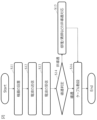
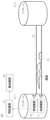
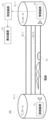
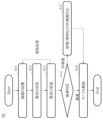
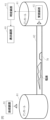
- 1 is an example embodiment of a system of the present disclosure. 13 shows an example of a determination flow. 1 is an example embodiment of a system of the present disclosure. 1 is an example embodiment of a system of the present disclosure. 13 shows an example of a determination flow. 1 is an example embodiment of a system of the present disclosure.
- the system of this embodiment includes a transmitting device 91, a receiving device 92, a determining device 93, and a display device 95.
- the transmitting device 91 is a device that continuously or periodically transmits radio waves that can propagate through a pipeline 82.
- the receiving device 92 is a device that receives radio waves from the pipeline 82.
- the determining device 93 is a device that determines the continuity of the pipeline 82 based on the reception result by the receiving device 92.
- the display device 95 is a device that displays the determination result of the determining device 93.
- the display device 95 may be provided in the determining device 93.
- FIG. 2 shows an example of a work flow on site.
- S11 A transmitting device 91 and a receiving device 92 are installed in manholes 81-1 and 81-2 located at both ends of a pipeline 82.
- S12 The transmitter 91 transmits radio waves toward the pipeline 82.
- S13 The receiving device 92 receives the radio waves from the pipeline 82. As a result, the receiving device 92 receives the radio waves that have passed through the pipeline 82.
- S ⁇ b>14 The determination device 93 determines the continuity of the pipe 82 based on the signal received by the receiving device 92 .
- S15 If there is no continuity (non-continuity in S14), the determination device 93 outputs a message indicating that there is no continuity to the display device 95.
- step S11 as shown in FIG. 1, an example is shown in which a transmitting device 91 is installed in manhole 81-1 and a receiving device 92 is installed in manhole 81-2.
- the transmitting device 91 and the receiving device 92 are installed at both ends of the pipeline 82. Therefore, in step S12, the transmitting device 91 transmits radio waves that can propagate the entire length of the pipeline 82. Then, in step S13, the receiving device 92 receives the radio waves after they have propagated the entire length of the pipeline 82.
- the transmitting device 91 executes step S12
- the receiving device 92 executes step S13
- the determining device 93 executes step S14.
- the determination in step S14 can be made by any method capable of determining the continuity state of radio waves in the pipeline 82.
- the determining device 93 determines that there is continuity when the received power is greater than the noise power, and determines that there is no continuity when the received power is equal to or less than the noise power.
- the loss of radio waves propagating within the pipe 82 can be found using arithmetic processing.
- a threshold value can be determined using arithmetic processing, and this can be used to determine continuity.
- the determination device 93 determines continuity when the received power is greater than the threshold value, and determines non-conduction when the received power is equal to or less than the threshold value.
- Examples of arithmetic processing for finding the threshold value include simulation and calculation of free space propagation loss. In this case, a propagation loss model within the waveguide that also takes into account attenuation due to corrosion can be used, and noise power can also be taken into account.
- radio waves of any frequency can be used.
- the frequency of the radio waves may be a single frequency or may include multiple frequencies. It may also be a discrete frequency in a predetermined band or a continuous frequency. It may also be for radar or communication.
- the received power used in step S14 may be calculated by the receiving device 92 or by the determination device 93.
- averaging processing or statistical processing may be performed.
- the determination device 93 may be a separate device from the receiving device 92, or may be the same device. If they are separate devices, the output from the receiving device 92 to the determination device 93 may be made using a wireless connection such as radio waves, or may be made using a wired connection.
- the conductivity determination is performed using radio waves, so it is possible to confirm that the conduit 82 between manholes 81-1 and 81-2 is conductive without inserting a pipe camera into the conduit 82.
- a transmitting device 91 and a receiving device 92 are both installed in a manhole 81-1 located at one end of a pipeline 82.
- step S11 both the transmitting device 91 and the receiving device 92 are installed at one end of the pipeline 82. Therefore, in step S12, the transmitting device 91 transmits radio waves that can travel back and forth through the pipeline 82. Then, in step S13, the receiving device 92 receives the radio waves reflected within the pipeline 82.
- the judgment in step S14 can be made by any method capable of judging the reflection state of radio waves in the pipeline 82. For example, if the received power is greater than the noise power, it is judged as non-conductive, and if the received power is equal to or less than the noise power, it is judged as conductive. Instead of noise power, a threshold value or the like may be used as in the first embodiment.
- An obstacle 70 is present at the position in the pipeline 82 where the radio waves are reflected.
- the time from when the transmitter 91 transmits the radio waves until the radio waves are reflected by the obstacle 70 corresponds to the distance from the transmitter 91 and the receiver 92 to the obstacle 70. Therefore, by employing this embodiment, the position where the obstacle 70 exists can be identified.
- the transmitting device 91, the receiving device 92, the determining device 93, and the display device 95 may be separate devices, or may be the same device.
- a radio signal having a plurality of polarization states is used as the radio wave in the first embodiment.
- Transmitting device 91 is a device capable of transmitting radio signals having multiple polarizations.
- Receiving device 92 is a device capable of receiving radio signals having multiple polarizations.
- step S12 the transmitting device 91 transmits a radio signal having multiple polarizations
- step S13 the receiving device 92 receives the radio signal having multiple polarizations.
- step S14 if the received power is greater than the noise power in any of the polarization combinations, continuity is determined, and if the received power is equal to or less than the noise power in any of the polarization combinations, non-continuity is determined.
- the transmitting device 91 may transmit radio signals with different polarizations at different times, or may transmit radio signals with different polarizations in a superimposed manner.
- the receiving device 92 may receive radio signals with different polarizations at different times, or may receive radio signals with different polarizations in a separated manner.
- the determination is made using a combination of polarizations, so multiple types of wireless signals can be sent and received simultaneously.
- FIG. 1 An example of a system configuration of this embodiment is shown in Fig. 1.
- radio signals of different frequencies are used as the radio waves in the first embodiment.
- the multiple frequencies include a first frequency and a second frequency that are predetermined, and the first frequency is higher than the second frequency.
- Transmitting device 91 is a device capable of transmitting radio signals of multiple frequencies.
- Receiving device 92 is a device capable of receiving radio signals of multiple frequencies.
- step S12 the transmitting device 91 transmits radio signals of multiple frequencies
- step S13 the receiving device 92 receives the radio signals of multiple frequencies.
- step S14 the determining device 93 determines continuity based on the multiple frequencies.
- step S14 The continuity determination in step S14 is performed, for example, in the following order.
- Step S21 If the received power is greater than the noise power at all frequencies, it is determined that there is continuity.
- Step S22 If the received power is greater than the noise power at frequencies equal to or greater than the first frequency and the received power is equal to or less than the noise power at frequencies less than the first frequency, it is determined that there is continuity.
- Step S23 If the received power is greater than the noise power at frequencies equal to or greater than the second frequency and the received power is equal to or less than the noise power at frequencies less than the second frequency, it is determined that there is no continuity.
- Step S24 If the received power is equal to or less than the noise power at all frequencies, it is determined that there is no continuity.
- the first frequency and the second frequency are set to values that depend on the diameter of the pipeline 82 and the size of the gap within the pipeline 82.
- the determination device 93 can determine the size of the gap within the pipeline 82.
- step S14 by checking the continuity in step S14 from high frequencies, it is possible to quickly confirm that continuity exists.
- first frequency and the second frequency may be values that depend on noise power, instead of or in addition to the values that depend on the diameter of the pipe 82 and the size of the gap within the pipe 82.
- the present disclosure is not limited to steps S21 to S24, and the continuity/non-continuity index may be calculated by weighting according to frequency and adding up the received power at all frequencies.
- the determination device 93 can determine the size of the gap inside the pipeline 82. This makes it possible to determine whether or not the inside of the pipeline 82 needs to be cleaned.
- FIG. 4 An example of the system configuration of this embodiment is shown in Fig. 4.
- a plurality of pipes 82-1 to 82-N are connected in parallel between manholes 81-1 and 81-2.
- FIG. 5 shows an example of the judgment flow.
- steps S11 to S13 are repeatedly executed for each pipeline 82. Then, when steps S11 to S13 are completed for all pipelines 82, step S14 is executed.
- the judgment device 93 judges the pipeline 82 with the highest conductivity.
- the pipeline 82 with the highest conductivity is, for example, the pipeline 82 with the highest received power, or the pipeline 82 with the received power farthest from the noise power or the threshold value.
- a transmitter 91 is placed on the ground outside a manhole 81-1.
- the radio waves transmitted from the transmitting device 91 are repeatedly reflected and propagate through the pipe 82. Therefore, by receiving the radio waves at the receiving device 92, the same action and effect as in the first embodiment can be obtained.
- step S11 there is no need to install the transmitter 91 inside the manhole 81-1 in step S11, which simplifies the work in step S11.
- step S11 an example is shown in which only the transmitting device 91 is placed on the ground outside the manhole 81-1, but the receiving device 92 may also be placed on the ground outside the manhole 81-1 in step S11.
- the determination device 93 of the present invention can also be realized by a computer and a program, and the program can be recorded on a recording medium or provided through a network.
- the program of the present disclosure is a program for causing a computer to realize each function of the determination device 93 according to the present disclosure, and is a program for causing a computer to execute each procedure of the method executed by the determination device 93 according to the present disclosure.
- the configuration aspects of the third to sixth embodiments may be adopted in the second embodiment.
Landscapes
- Life Sciences & Earth Sciences (AREA)
- Physics & Mathematics (AREA)
- Health & Medical Sciences (AREA)
- General Physics & Mathematics (AREA)
- Chemical & Material Sciences (AREA)
- Analytical Chemistry (AREA)
- Biochemistry (AREA)
- General Health & Medical Sciences (AREA)
- Electromagnetism (AREA)
- Immunology (AREA)
- Pathology (AREA)
- Engineering & Computer Science (AREA)
- Hydrology & Water Resources (AREA)
- Public Health (AREA)
- Water Supply & Treatment (AREA)
- Pipeline Systems (AREA)
Abstract
本開示は、管路内を伝搬可能な電波を送信する送信装置と、前記管路から前記電波を受信する受信装置と、前記受信装置での受信結果に基づいて、前記管路の導通を判定する判定装置と、を備えるシステムである。
Description
本開示は、地中に埋設された管路の導通検査技術に関する。
近年のインターネットトラヒック需要の高まりによって、より高速通信が可能な光ファイバケーブルの新設や置き換えが進んでいる。光ファイバケーブルは電柱又は管路を用いて敷設され、局舎から各家庭などに提供されている。
管路は地中に配置されているため、管路内に土砂や水が溜まったり、亀裂が入ったりすることがある。また管路内に溜まった水や地中の水分によって腐食することもある。これらによって、管路内の導通状態が悪くなることがある。
従来は、管路内の導通状態の検査のために、パイプカメラにより異常箇所を確認していた(例えば、非特許文献1参照。)。
伊藤他,「点検結果を基にした機械学習による通信管路内面の腐食予測手法」AI・データサイエンス論文集 3巻J2号,2022
管路内には、土砂や水などが侵入していることがある。このため、非特許文献1のカメラでは鮮明な画像が取得できず、管路内の状態を適切に把握できない場合がある。また、非特許文献1の導通検査は、地上と管路をつなぐマンホールに作業者が入り、管路内にパイプカメラを挿入するため作業が必要になる。
そこで、本開示は、パイプカメラを管路内に挿入することなく、管路の導通検査を実施可能にすることを目的とする。
本開示のシステムは、
管路内を伝搬可能な電波を送信する送信装置と、
前記管路から前記電波を受信する受信装置と、
前記受信装置での受信結果に基づいて、前記管路の導通を判定する判定装置と、
を備え、本開示の方法を実行する。
管路内を伝搬可能な電波を送信する送信装置と、
前記管路から前記電波を受信する受信装置と、
前記受信装置での受信結果に基づいて、前記管路の導通を判定する判定装置と、
を備え、本開示の方法を実行する。
本開示のシステムは、前記送信装置及び前記受信装置が前記管路の両端に設置される第1の態様を採用することができる。この態様においては、前記送信装置は、前記管路の全長を伝搬可能な電波を送信する。そして前記受信装置は、前記管路の全長を伝搬後の電波を受信する。
本開示のシステムは、前記送信装置及び前記受信装置が前記管路の片端に設置される第2の態様を採用することができる。この態様においては、前記送信装置は、前記管路を往復可能な電波を送信する。そして前記受信装置は、前記管路内の障害物で反射された電波を受信してもよい。
前記判定装置は、前記受信装置での受信電力に基づいて、前記管路の導通を判定してもよい。この場合、前記第1の態様においては、前記受信装置での受信電力が予め定められたしきい値よりも大きいときに導通と判定し、前記受信装置での受信電力が前記しきい値以下のときに非導通と判定する。前記第2の態様においては、前記受信装置での受信電力が予め定められたしきい値よりも小さいときに導通と判定し、前記受信装置での受信電力が前記しきい値以上のときに非導通と判定する。
なお、上記各開示は、可能な限り組み合わせることができる。
本開示によれば、パイプカメラを管路内に挿入することなく、マンホール間の管路の導通検査を可能にすることができる。
以下、本開示の実施形態について、図面を参照しながら詳細に説明する。なお、本開示は、以下に示す実施形態に限定されるものではない。これらの実施の例は例示に過ぎず、本開示は当業者の知識に基づいて種々の変更、改良を施した形態で実施することができる。なお、本明細書及び図面において符号が同じ構成要素は、相互に同一のものを示すものとする。
(第1の実施形態)
図1に、本実施形態のシステム構成例を示す。本実施形態のシステムは、送信装置91、受信装置92、判定装置93及び表示装置95を備える。送信装置91は、管路82内を伝搬可能な電波を連続的もしくは定期的に送信する装置である。受信装置92は、管路82から電波を受信する装置である。判定装置93は、受信装置92での受信結果に基づいて、管路82の導通を判定する装置である。表示装置95は、判定装置93の判定結果を表示する装置である。表示装置95は、判定装置93に備わっていてもよい。
図1に、本実施形態のシステム構成例を示す。本実施形態のシステムは、送信装置91、受信装置92、判定装置93及び表示装置95を備える。送信装置91は、管路82内を伝搬可能な電波を連続的もしくは定期的に送信する装置である。受信装置92は、管路82から電波を受信する装置である。判定装置93は、受信装置92での受信結果に基づいて、管路82の導通を判定する装置である。表示装置95は、判定装置93の判定結果を表示する装置である。表示装置95は、判定装置93に備わっていてもよい。
図2に、現場での作業フローの一例を示す。
S11:管路82の両端に配置されているマンホール81-1及び81-2内に、送信装置91及び受信装置92を設置する。
S12:送信装置91が管路82に向けて電波を送信する。
S13:受信装置92が管路82から電波を受信する。これにより、受信装置92は、管路82を通過した電波を受信する。
S14:判定装置93は、受信装置92で受信された受信信号に基づいて、管路82の導通を判定する。
S15:導通していない場合(S14において非導通)、判定装置93は非導通である旨を表示装置95に出力する。これにより、作業者は、修理又は清掃等の非導通である場合の対応が必要になることを視認することができる。
S16:導通している場合(S14において導通)、判定装置93は導通である旨を表示装置95に出力する。これにより、作業者は、ケーブルの敷設が可能であることを視認することができる。
S11:管路82の両端に配置されているマンホール81-1及び81-2内に、送信装置91及び受信装置92を設置する。
S12:送信装置91が管路82に向けて電波を送信する。
S13:受信装置92が管路82から電波を受信する。これにより、受信装置92は、管路82を通過した電波を受信する。
S14:判定装置93は、受信装置92で受信された受信信号に基づいて、管路82の導通を判定する。
S15:導通していない場合(S14において非導通)、判定装置93は非導通である旨を表示装置95に出力する。これにより、作業者は、修理又は清掃等の非導通である場合の対応が必要になることを視認することができる。
S16:導通している場合(S14において導通)、判定装置93は導通である旨を表示装置95に出力する。これにより、作業者は、ケーブルの敷設が可能であることを視認することができる。
本実施形態では、手順S11において、図1に示すように、マンホール81-1内に送信装置91を設置し、マンホール81-2内に受信装置92を設置する例を示す。このように、本実施形態では、送信装置91及び受信装置92を管路82の両端に設置する。このため、手順S12において、送信装置91は、管路82の全長を伝搬可能な電波を送信する。そして、手順S13において、受信装置92は、管路82の全長を伝搬後の電波を受信する。
本開示の判定方法では、送信装置91が手順S12を実行し、受信装置92が手順S13を実行し、判定装置93が手順S14を実行する。ここで、手順S14における判定は、管路82における電波の導通状態を判定可能な任意の方法を採用することができる。例えば、判定装置93は、受信電力が雑音電力よりも大きい場合は導通と判定し、受信電力が雑音電力以下である場合は非導通と判定する。
また、管路82内を伝搬する電波の損失は、演算処理を用いて求めることができる。例えば、演算処理を用いてしきい値を定め、これを用いて導通を判定してもよい。このとき、判定装置93は、受信電力がしきい値よりも大きい場合は導通と判定し、受信電力がしきい値以下である場合は非導通と判定する。しきい値を求める演算処理としては、例えば、シミュレーション、及び自由空間伝搬損失の算出が例示できる。このとき、腐食による減衰も考慮した導波管内の伝搬損失モデルを用いてもよいし、雑音電力を考慮してもよい。
このように、本実施形態では管路82を伝搬する電波の導通状態に基づいて判定するため、任意の周波数の電波を用いることができる。例えば、電波の周波数は、単一周波数であってもよいし、複数の周波数を含んでいてもよい。また予め定められた帯域における離散的な周波数であってもよいし、連続的な周波数であってもよい。またレーダ用でも通信用でも構わない。
また、手順S14において用いる受信電力は、受信装置92が算出してもよいし、判定装置93が算出してもよい。また受信電力の算出に際し、平均化処理や統計処理を行っても構わない。
また、判定装置93は、受信装置92と別装置であってもよいが、同一の装置であってもよい。別装置の場合、受信装置92から判定装置93への出力は、電波などの無線接続を用いて行ってもよいし、有線接続を用いて行ってもよい。
以上説明したように、本実施形態では、電波を活用した導通判定を行うため、パイプカメラを管路82内に挿入することなく、マンホール81-1及び81-2間の管路82が導通していることを確認可能にすることができる。
(第2の実施形態)
図3に、本実施形態のシステム構成例を示す。本実施形態では、手順S11において、管路82の一端に配置されているマンホール81-1内に、送信装置91及び受信装置92の両方を設置する。
図3に、本実施形態のシステム構成例を示す。本実施形態では、手順S11において、管路82の一端に配置されているマンホール81-1内に、送信装置91及び受信装置92の両方を設置する。
このように、本実施形態では、手順S11において、送信装置91及び受信装置92の両方が管路82の片端に設置する。このため、手順S12において、送信装置91は、管路82を往復可能な電波を送信する。そして、手順S13において、受信装置92は、管路82内で反射された電波を受信する。
ここで、手順S14における判定は、管路82における電波の反射状態を判定可能な任意の方法を採用することができる。例えば、受信電力が雑音電力よりも大きい場合は非導通と判定し、受信電力が雑音電力以下である場合は導通と判定する。雑音電力に代え、第1の実施形態と同様にしきい値等を用いてもよい。
管路82において電波が反射される位置には、障害物70が存在している。送信装置91が電波を送信してから電波が障害物70で反射されるまでの時間は、送信装置91及び受信装置92から障害物70までの距離に相当する。このため、本実施形態を採用することで、障害物70が存在する位置を特定することができる。
管路82内に障害物70が存在している場合、管路82内に光ファイバケーブルを敷設する前に、その障害物70を除去する清掃を行う必要がある。本実施形態は、そのような障害物70の位置を特定できるため、清掃を速やかに行うことができる。さらに管路82を修理する場合においても、道路の掘削の必要な場所が改め特定できるため、無駄な掘削を減らすことができる。
なお、送信装置91、受信装置92、判定装置93及び表示装置95は、別装置であってもよいが、同一の装置であってもよい。
(第3の実施形態)
図1に、本実施形態のシステム構成例を示す。本実施形態では、第1の実施形態における電波として、複数の偏波状態を有する無線信号を用いる。
図1に、本実施形態のシステム構成例を示す。本実施形態では、第1の実施形態における電波として、複数の偏波状態を有する無線信号を用いる。
送信装置91は、複数の偏波を有する無線信号を送信可能な装置である。また受信装置92は、複数の偏波を有する無線信号を受信可能な装置である。
本実施形態では、手順S12において送信装置91が複数の偏波を有する無線信号を送信し、手順S13において受信装置92が複数の偏波を有する無線信号を受信する。手順S14では、偏波の組み合わせのいずれかにおいて受信電力が雑音電力よりも大きい場合は導通と判定し、偏波の組み合わせのいずれかにおいて受信電力が雑音電力以下である場合は非導通と判定する。
ここで、手順S12において、送信装置91は、偏波の異なる無線信号を異なる時間に送信してもよいし、偏波の異なる無線信号を重畳して送信してもよい。また手順S13において、受信装置92は、偏波の異なる無線信号を異なる時間に受信してもよいし、偏波の異なる無線信号を分離して受信してもよい。
以上説明したように、本実施形態では偏波の組み合わせを用いて判定するため、複数種類の無線信号を同時に送受信することができる。
(第4の実施形態)
図1に、本実施形態のシステム構成例を示す。本実施形態では、第1の実施形態における電波として、異なる複数の周波数の無線信号を用いる。前記複数の周波数は予め定められた第1周波数及び第2周波数を含み、前記第1周波数は前記第2周波数よりも高い。
図1に、本実施形態のシステム構成例を示す。本実施形態では、第1の実施形態における電波として、異なる複数の周波数の無線信号を用いる。前記複数の周波数は予め定められた第1周波数及び第2周波数を含み、前記第1周波数は前記第2周波数よりも高い。
送信装置91は、複数の周波数の無線信号を送信可能な装置である。また受信装置92は、複数の周波数の無線信号を受信可能な装置である。
本実施形態では、手順S12において送信装置91が複数の周波数の無線信号を送信し、手順S13において受信装置92が複数の周波数の無線信号を受信する。手順S14では、判定装置93は、複数の周波数に基づいて導通の判定を行う。
手順S14における導通の判定は、例えば、以下を順に行う。
手順S21:全周波数において受信電力が雑音電力よりも大きい場合は導通と判定する。
手順S22:第1周波数以上の周波数において受信電力が雑音電力より大きく、かつ前記第1周波数未満の周波数において受信電力が雑音電力以下である場合、導通と判定する。
手順S23:第2周波数以上の周波数において受信電力が雑音電力より大きく、かつ前記第2周波数未満の周波数において受信電力が雑音電力以下である場合、非導通と判定する。
手順S24:全周波数において受信電力が雑音電力以下である場合、非導通と判定する。
手順S21:全周波数において受信電力が雑音電力よりも大きい場合は導通と判定する。
手順S22:第1周波数以上の周波数において受信電力が雑音電力より大きく、かつ前記第1周波数未満の周波数において受信電力が雑音電力以下である場合、導通と判定する。
手順S23:第2周波数以上の周波数において受信電力が雑音電力より大きく、かつ前記第2周波数未満の周波数において受信電力が雑音電力以下である場合、非導通と判定する。
手順S24:全周波数において受信電力が雑音電力以下である場合、非導通と判定する。
ここで、第1周波数及び第2周波数は、管路82の直径と管路82内の隙間の大きさに依存する値に設定する。第1周波数及び第2周波数を設定することで、判定装置93は、管路82内の隙間の大きさを判定することができる。
また、手順S14における導通の判定において、高い周波数から随時判定することで、導通していることを速やかに確認することができる。
なお、前記第1周波数及び前記第2周波数は、管路82の直径と管路82内の隙間の大きさに依存する値に代えて、又はこれと共に、雑音電力に依存する値を採用してもよい。
また、本開示は手順S21~S24に限らず、周波数に応じた重み付けを行い、すべての周波数での受信電力を加算することで、導通/非導通の指標を算出してもよい。
以上説明したように、本実施形態では、判定装置93は、管路82内の隙間の大きさを判定することができる。このため、管路82内を清掃する必要があるか否かを判定することができる。
(第5の実施形態)
図4に、本実施形態のシステム構成例を示す。本実施形態では、マンホール81-1及び81-2の間に複数の管路82-1~82-Nが並列に接続されている。
図4に、本実施形態のシステム構成例を示す。本実施形態では、マンホール81-1及び81-2の間に複数の管路82-1~82-Nが並列に接続されている。
図5に、判定フローの一例を示す。本実施形態では、手順S11~S13を管路82ごとに繰り返し実行する。そして、すべての管路82について手順S11~S13が終了すると、手順S14を実行する。手順S14では、判定装置93は、最も導通率の高い管路82を判定する。ここで、最も導通率の高い管路82は、例えば、受信電力が最も大きい管路82、或いは、受信電力が雑音電力又はしきい値から最も離れている管路82である。
以上説明したように、本実施形態では、最も導通率の高い管路82を判定することができる。これにより、本実施形態は、ケーブルの敷設作業が容易な管路82を現場で特定することができる。
(第6の実施形態)
図6に、本実施形態のシステム構成例を示す。本実施形態では、送信装置91がマンホール81-1の外の地上に配置されている。
図6に、本実施形態のシステム構成例を示す。本実施形態では、送信装置91がマンホール81-1の外の地上に配置されている。
送信装置91から送信される電波は、反射を繰り返して管路82内を伝搬する。このため、受信装置92において電波を受信することで、第1の実施形態と同様の作用・効果を得ることができる。
本実施形態では、手順S11において送信装置91をマンホール81-1の内部に設置する必要がないため、手順S11の作業を簡易化することができる。
なお本実施形態では、送信装置91のみをマンホール81-1の外の地上に配置する例を示したが、手順S11において受信装置92をマンホール81-1の外の地上に配置してもよい。
(その他の実施形態)
本発明の判定装置93はコンピュータとプログラムによっても実現でき、プログラムを記録媒体に記録することも、ネットワークを通して提供することも可能である。本開示のプログラムは、本開示に係る判定装置93に備わる各機能をコンピュータに実現させるためのプログラムであり、本開示に係る判定装置93が実行する方法に備わる各手順をコンピュータに実行させるためのプログラムである。また第2の実施形態において第3から第6の実施形態の構成態様を採用してもよい。
本発明の判定装置93はコンピュータとプログラムによっても実現でき、プログラムを記録媒体に記録することも、ネットワークを通して提供することも可能である。本開示のプログラムは、本開示に係る判定装置93に備わる各機能をコンピュータに実現させるためのプログラムであり、本開示に係る判定装置93が実行する方法に備わる各手順をコンピュータに実行させるためのプログラムである。また第2の実施形態において第3から第6の実施形態の構成態様を採用してもよい。
81-1、81-2:マンホール
82:管路
91:送信装置
92:受信装置
93:判定装置
95:表示装置
82:管路
91:送信装置
92:受信装置
93:判定装置
95:表示装置
Claims (7)
- 管路内を伝搬可能な電波を送信する送信装置と、
前記管路から前記電波を受信する受信装置と、
前記受信装置での受信結果に基づいて、前記管路の導通を判定する判定装置と、
を備えるシステム。 - 前記判定装置は、前記受信装置での受信電力に基づいて、前記管路の導通を判定する、
請求項1に記載のシステム。 - 前記送信装置及び前記受信装置が前記管路の両端に設置され、
前記送信装置は、前記管路の全長を伝搬可能な電波を送信し、
前記受信装置は、前記管路の全長を伝搬後の電波を受信する、
請求項1に記載のシステム。 - 前記判定装置は、前記受信装置での受信電力が予め定められたしきい値よりも大きいときに導通と判定し、前記受信装置での受信電力が前記しきい値以下のときに非導通と判定する、
請求項3に記載のシステム。 - 前記送信装置及び前記受信装置は、前記管路の片端に設置され、
前記送信装置は、前記管路を往復可能な電波を送信し、
前記受信装置は、前記管路内の障害物で反射された電波を受信する、
請求項1に記載のシステム。 - 前記判定装置は、前記受信装置での受信電力が予め定められたしきい値よりも小さいときに導通と判定し、前記受信装置での受信電力が前記しきい値以上のときに非導通と判定する、
請求項5に記載のシステム。 - 送信装置が、管路内を伝搬可能な電波を送信する手順と、
受信装置が、前記管路から前記電波を受信する手順と、
判定装置が、前記受信装置での受信結果に基づいて、前記管路の導通を判定する手順と、
を備える方法。
Priority Applications (2)
| Application Number | Priority Date | Filing Date | Title |
|---|---|---|---|
| JP2025525862A JPWO2024252617A1 (ja) | 2023-06-08 | 2023-06-08 | |
| PCT/JP2023/021352 WO2024252617A1 (ja) | 2023-06-08 | 2023-06-08 | 地中埋設管路の導通検査システム |
Applications Claiming Priority (1)
| Application Number | Priority Date | Filing Date | Title |
|---|---|---|---|
| PCT/JP2023/021352 WO2024252617A1 (ja) | 2023-06-08 | 2023-06-08 | 地中埋設管路の導通検査システム |
Publications (1)
| Publication Number | Publication Date |
|---|---|
| WO2024252617A1 true WO2024252617A1 (ja) | 2024-12-12 |
Family
ID=93795636
Family Applications (1)
| Application Number | Title | Priority Date | Filing Date |
|---|---|---|---|
| PCT/JP2023/021352 Ceased WO2024252617A1 (ja) | 2023-06-08 | 2023-06-08 | 地中埋設管路の導通検査システム |
Country Status (2)
| Country | Link |
|---|---|
| JP (1) | JPWO2024252617A1 (ja) |
| WO (1) | WO2024252617A1 (ja) |
Citations (4)
| Publication number | Priority date | Publication date | Assignee | Title |
|---|---|---|---|---|
| JPH1068717A (ja) * | 1996-08-28 | 1998-03-10 | Unisia Jecs Corp | 燃料性状判別装置 |
| JPH11243123A (ja) * | 1998-11-02 | 1999-09-07 | Hitachi Ltd | 半導体デバイスの生産方法とその製造装置 |
| JP2002195959A (ja) * | 2001-11-12 | 2002-07-10 | Hitachi Ltd | 半導体デバイスの検査方法 |
| JP2022161052A (ja) * | 2021-04-08 | 2022-10-21 | パナソニックIpマネジメント株式会社 | 超音波流量計 |
-
2023
- 2023-06-08 WO PCT/JP2023/021352 patent/WO2024252617A1/ja not_active Ceased
- 2023-06-08 JP JP2025525862A patent/JPWO2024252617A1/ja active Pending
Patent Citations (4)
| Publication number | Priority date | Publication date | Assignee | Title |
|---|---|---|---|---|
| JPH1068717A (ja) * | 1996-08-28 | 1998-03-10 | Unisia Jecs Corp | 燃料性状判別装置 |
| JPH11243123A (ja) * | 1998-11-02 | 1999-09-07 | Hitachi Ltd | 半導体デバイスの生産方法とその製造装置 |
| JP2002195959A (ja) * | 2001-11-12 | 2002-07-10 | Hitachi Ltd | 半導体デバイスの検査方法 |
| JP2022161052A (ja) * | 2021-04-08 | 2022-10-21 | パナソニックIpマネジメント株式会社 | 超音波流量計 |
Also Published As
| Publication number | Publication date |
|---|---|
| JPWO2024252617A1 (ja) | 2024-12-12 |
Similar Documents
| Publication | Publication Date | Title |
|---|---|---|
| EP4361590B1 (en) | Improvements in or relating to the monitoring of fluid pipes | |
| US10209225B2 (en) | Sound propagation comparison with automated frequency selection for pipe condition assessment | |
| US10690630B2 (en) | Generation and utilization of pipe-specific sound attenuation | |
| US10565752B2 (en) | Graphical mapping of pipe node location selection | |
| CN114110443B (zh) | 一种输流管道奇点特征智能检测方法 | |
| CN109737307A (zh) | 一种城市雨污水管网错接漏接快速排查系统和方法 | |
| CN104796191B (zh) | 一种传输装置 | |
| KR101670488B1 (ko) | 관로 삽입형 장치를 이용한 지하시설물 정보 취득 시스템 및 방법 | |
| CN108731743A (zh) | 基于ofdr分布式光纤的排水管道在线监测系统及方法 | |
| JP3400255B2 (ja) | 配管設備の異常検出方法及び異常診断装置 | |
| WO2024252618A1 (ja) | 地中埋設管路の導通検査システム | |
| CN215908883U (zh) | 一种适用于长距离海管泄漏监测的传感器 | |
| CN108759936A (zh) | 基于ofdr分布式光纤的排水管道监测补偿系统及方法 | |
| CN101743695A (zh) | 用于在管道系统中传输数据的网络和方法 | |
| WO2024252621A1 (ja) | 地中埋設管路の調査方法 | |
| US12105233B2 (en) | System and method for acoustically detecting cross bores | |
| CN111765390A (zh) | 基于声发射响应的管道漏点定位方法及系统 | |
| WO2024252619A1 (ja) | ケーブル敷設ルート設定方法 | |
| Khan | An acoustic based approach for mitigating sewer system overflows | |
| CN205139389U (zh) | 示踪装置及具有该示踪装置的管线装置 | |
| ZA202303495B (en) | Device and method for managing resources for monitoring elongate structures | |
| CN223551917U (zh) | 一种用于寻找管道光缆的熔接盒 | |
| CN115235421A (zh) | 基于分布式光纤的管道沉降监测装置 | |
| JP4641909B2 (ja) | 配管系統識別方法および配管系統識別システム | |
| WO2025243412A1 (ja) | 解析処理システム |
Legal Events
| Date | Code | Title | Description |
|---|---|---|---|
| 121 | Ep: the epo has been informed by wipo that ep was designated in this application |
Ref document number: 23940715 Country of ref document: EP Kind code of ref document: A1 |
|
| ENP | Entry into the national phase |
Ref document number: 2025525862 Country of ref document: JP Kind code of ref document: A |
|
| NENP | Non-entry into the national phase |
Ref country code: DE |