WO2024252619A1 - ケーブル敷設ルート設定方法 - Google Patents
ケーブル敷設ルート設定方法 Download PDFInfo
- Publication number
- WO2024252619A1 WO2024252619A1 PCT/JP2023/021358 JP2023021358W WO2024252619A1 WO 2024252619 A1 WO2024252619 A1 WO 2024252619A1 JP 2023021358 W JP2023021358 W JP 2023021358W WO 2024252619 A1 WO2024252619 A1 WO 2024252619A1
- Authority
- WO
- WIPO (PCT)
- Prior art keywords
- pipeline
- sensor
- route
- continuity
- conduit
- Prior art date
- Legal status (The legal status is an assumption and is not a legal conclusion. Google has not performed a legal analysis and makes no representation as to the accuracy of the status listed.)
- Ceased
Links
Images


Classifications
-
- E—FIXED CONSTRUCTIONS
- E03—WATER SUPPLY; SEWERAGE
- E03F—SEWERS; CESSPOOLS
- E03F7/00—Other installations or implements for operating sewer systems, e.g. for preventing or indicating stoppage; Emptying cesspools
-
- G—PHYSICS
- G01—MEASURING; TESTING
- G01N—INVESTIGATING OR ANALYSING MATERIALS BY DETERMINING THEIR CHEMICAL OR PHYSICAL PROPERTIES
- G01N22/00—Investigating or analysing materials by the use of microwaves or radio waves, i.e. electromagnetic waves with a wavelength of one millimetre or more
Definitions
- This disclosure relates to technology for laying cables in underground conduits.
- Optical fiber cables are generally installed using utility poles or conduits, and are provided from station buildings to individual homes.
- the route of the conduit to be used from the starting point to the destination is set in advance.
- Non-Patent Document 1 Previously, pipe cameras were used to check for abnormalities in pipes to check the state of continuity (see, for example, Non-Patent Document 1).
- Non-Patent Document 1 requires the insertion of a pipe camera into the conduit through a manhole, so it is carried out when the cable is laid. As a result, if continuity is lost, the route of the conduit must be changed at the cable laying site, which reduces the efficiency of the cable laying work.
- the purpose of this disclosure is to make it possible to determine the continuity state of underground pipelines without having to work in manholes.
- the system of the present disclosure comprises: A sensor that is installed in a pipeline buried underground and detects a continuity state of the pipeline; A database for managing detection results obtained by the sensor; and Equipped with.
- the system of the present disclosure may include a calculation device.
- the calculation device executes the cable laying route setting method of the present disclosure.
- the calculation device sets the route of the conduit along which the cable is laid based on the detection results stored in the database.
- the calculation device sets the route of the conduit along which the cable is laid based on the detection results obtained by a sensor that detects the conduit's electrical conduit state.
- the sensor may detect the continuity of the pipeline using radio waves or sound waves.
- the sensor may also be installed in a manhole that connects the pipeline to the ground.
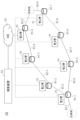
- FIG. 1 illustrates an example embodiment of a system of the present disclosure.
- 1 illustrates an example embodiment of a system of the present disclosure.
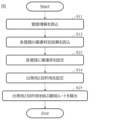
- 13 shows an example of a flow for setting a laying route.
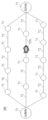
- FIG. 2 is an explanatory diagram for setting a route connecting a departure point and a destination. 13 shows an example of a flow for setting a laying route.
- First Embodiment 1 shows an example of a system configuration of the present disclosure.
- the system of the present embodiment includes one or more sensors 91 and a database 92.
- the database 92 is any device capable of collecting information from the sensor 91, and may be composed of one or more devices.
- the sensor 91 is a device that is installed in a pipeline 82 buried underground and detects the continuity state of the pipeline 82. Multiple sensors 91 may be installed in one pipeline 82.
- the database 92 manages the detection results obtained by the sensor 91.
- the sensor 91 has a function of detecting the continuity state of the pipeline 82 and determining whether the pipeline 82 is conductive. For example, a radio wave is transmitted from the sensor 91 installed in the manhole 81-1, and is received by the sensor 91 installed in the manhole 81-2. The sensor 91 installed in the manhole 81-2 then determines whether the pipeline 82 is conductive or not due to the presence of an obstacle 70 such as soil, based on the radio wave that has passed through the pipeline 82. Therefore, by storing the results of the determination of continuity/non-continuity in the database 92, the information on the continuity/non-continuity of the pipeline 82 can be managed for each pipeline 82. Therefore, this embodiment makes it possible to grasp the continuity state of the pipeline 82 buried underground without performing work in the manholes 81-1 and 81-2.
- the present disclosure is not limited to this.
- the sensor 91 may transmit the received power to the database 92, and the database 92 may store the received power.
- a separately provided computing device may determine the continuity of the pipe 82 based on the received power.
- the information transmitted by the sensor 91 may be any information capable of determining the continuity of the pipe 82, such as the received power.
- the sensor 91 may also receive radio waves reflected by the pipeline 82.
- the sensors 91 installed in the manholes 81-1 and 81-2 may transmit radio waves to the pipeline 82 and receive the radio waves reflected by the pipeline 82. This makes it possible to detect the obstacle 70 from both sides of the pipeline 82 and identify the location of the blockage in the pipeline 82.
- the present disclosure is not limited to radio waves, and any parameter that propagates through the space inside the pipe 82 and can be detected by the sensor 91, such as sound waves, light, or wind force, can be used. Also, a camera may be installed in the pipe 82.
- the sensor 91 is placed at any position depending on the method for detecting the continuity of the pipeline 82.
- the sensor 91 may be placed in each manhole 81 located at both ends of the pipeline 82, or may be placed inside the pipeline 82.
- the sensor 91 may be placed either inside or outside the manhole 81 as long as it is possible to determine the continuity.
- Second Embodiment 2 shows an example of a system configuration according to the present disclosure.
- the system according to the present embodiment includes a plurality of sensors 91, a database 92 that collects information from the sensors 91, a calculation device 93 that sets a route for a pipeline 82 using the information from the database 92, and a display device 95 that displays a determination result of the calculation device 93.
- the display device 95 may be provided in the calculation device 93.
- the sensor 91 is installed for each pipeline 82 and is a device for determining the continuity of the pipeline 82.
- a plurality of sensors 91 may be installed in one pipeline 82.
- the database 92 is a device that stores the continuity determination results of each of the pipelines 82, and may be composed of one or more devices.
- the computing device 93 is a device having a route calculation function for calculating a laying route from a starting point to a destination.
- the computing device 93 may have a route setting function for setting the laying route obtained by calculation.
- the sensor 91 determines the continuity of the pipeline 82 and transmits the determination result to the database 92.
- the means for transmitting the determination result may be wired or wireless.
- the database 92 acquires and stores the determination results from each sensor 91. In this way, the continuity determination results of each pipeline 82 are collected in the database 92.
- the calculation device 93 uses the continuity determination results of each pipeline 82 stored in the database 92 to extract pipelines 82 that are capable of continuity, and calculates the installation route from the starting point to the destination.
- FIG. 3 shows an example of a cable installation route setting method executed by the computing device 93.
- conduit information is read from the database 92.
- information such as manhole positions and the conduit length between manholes is read for each candidate route of the conduit 82 along which the cable is laid.
- step S12 the continuity determination results of each pipeline 82 are read from the database 92.
- the continuity determination results of each pipeline 82 collected from the sensor 91 are read. This allows the calculation device 93 to create a connection configuration diagram as shown in FIG. 4, in which the starting point, destination, and manhole 81 are set as nodes 71, and the pipelines 82 are set as edges 72.
- the pipe 82 determined to be non-conductive is removed. For example, as shown in Fig. 4, the edge 72N corresponding to the pipe 82 determined to be non-conductive is removed.
- step S13 which preliminarily excludes pipelines 82 that are determined to be non-conductive by the sensor 91, making it possible to set a laying route that uses only pipelines 82 that are conductive.
- step S14 a starting point and a destination are set.
- a starting point and a destination where a cable is to be laid are set.
- step S15 a route connecting the departure point and the destination is calculated.
- a combination of pipelines 82 connecting the departure point and the destination is calculated using an algorithm for solving the shortest route problem, such as Dijkstra's algorithm.
- the departure point, the destination, and the manholes 81 are set as nodes 71, the pipelines 82 are set as edges 72, and the pipeline length is set as a weight to calculate the shortest route.
- step S15 the calculation may be performed so as to minimize the total weight (pipe length), or so as to minimize the number of nodes (manholes) passed through. Other factors may also be taken into consideration, such as increasing the weight of pipes 82 in areas with a high risk on the hazard map or liquefaction map.
- this embodiment is equipped with a sensor 91 for determining the continuity of the pipelines 82, and based on the results of the continuity determination for each pipeline 82, it is possible to extract pipelines 82 that are capable of continuity, avoid pipelines that are highly likely to be non-conductive, and automatically calculate the installation route to the destination.
- sensors 91 are installed in all manholes 81, but sensors 91 do not have to be installed in all manholes 81.
- Third Embodiment 5 shows an example of a flow for calculating a cable laying route in the calculation device 93.
- steps S23 and S25 are executed instead of steps S13 and S15 in the second embodiment.
- step S23 a conductivity is set for each conduit 82.
- the conductivity is the proportion of conduction in the conduit 82. In other words, the higher the conductivity, the higher the probability that the cable can be laid, and the lower the conductivity, the higher the probability that the cable cannot be laid.
- the conductivity rate may be calculated using information obtained by the sensor 91.
- the conductivity rate is the ratio of the received power detected by the sensor 91-2 to the received power that can be detected by the sensor 91-2 when nothing is placed in the pipeline 82.
- step S25 the shortest route connecting the departure point and the destination is calculated based on the conductivity rate of each pipeline 82.
- the priority of an edge 72 that is more likely to be non-conductive is lowered.
- the calculation device 93 performs calculations that reflect the fact that the lower the conductivity rate, the greater the weight and number of nodes.
- the route of the pipeline 82 is calculated taking into account the probability of non-conduction, making it possible to set a more appropriate installation route.
- the arithmetic device 93 of the present invention can also be realized by a computer and a program, and the program can be recorded on a recording medium or provided via a network.
- the program of the present disclosure is a program for causing a computer to realize each function of the arithmetic device 93 according to the present disclosure, and is a program for causing a computer to execute each procedure of the method executed by the arithmetic device 93 according to the present disclosure.
Landscapes
- Life Sciences & Earth Sciences (AREA)
- Physics & Mathematics (AREA)
- Health & Medical Sciences (AREA)
- General Physics & Mathematics (AREA)
- Chemical & Material Sciences (AREA)
- Analytical Chemistry (AREA)
- Biochemistry (AREA)
- General Health & Medical Sciences (AREA)
- Electromagnetism (AREA)
- Immunology (AREA)
- Pathology (AREA)
- Engineering & Computer Science (AREA)
- Hydrology & Water Resources (AREA)
- Public Health (AREA)
- Water Supply & Treatment (AREA)
- Laying Of Electric Cables Or Lines Outside (AREA)
Abstract
本開示は、地中に埋設された管路に設置され、前記管路の導通状態を検出するセンサと、前記センサで得られた検出結果を管理するデータベースと、を備えるシステムである。
Description
本開示は、地中に埋設された管路にケーブルを敷設するための技術に関する。
近年のインターネットトラヒック需要の高まりによって、より高速通信が可能な光ファイバケーブルの新設や置き換えが進んでいる。一般的に、光ファイバケーブルは電柱又は管路を用いて敷設され、局舎から各家庭などに提供されている。管路を用いて光ファイバケーブルを敷設する際には、出発地から目的地までに使用する管路のルートを事前に設定する。
管路は地中に埋設されているため、管路内に土砂や水が溜まることがある。また管路内に溜まった水や地中の水分によって腐食することもある。これらによって、管路が導通していない場合、光ファイバケーブルの敷設ができないため、管路を導通させるため作業を行ったり、管路のルートの変更を行ったりしていた。特に管路のルートの変更する場合は、代替ルートを設定しなおす必要があるため、ケーブルの敷設工事が延期になる場合があった。
従来は、管路内の導通状態の検査のために、パイプカメラにより異常箇所を確認していた(例えば、非特許文献1参照。)。
伊藤他,「点検結果を基にした機械学習による通信管路内面の腐食予測手法」AI・データサイエンス論文集 3巻J2号,2022
非特許文献1の導通点検は、マンホールから管路内にパイプカメラを挿入する作業が必要になるため、ケーブル敷設のときに行っていた。このため、非導通となった場合に、ケーブル敷設の現場において管路のルートが変更されるため、ケーブルの敷設作業効率を悪化させる原因となっていた。
そこで、本開示は、マンホールでの作業を行うことなく、地中に埋設されている管路の導通状態を把握可能にすることを目的とする。
本開示のシステムは、
地中に埋設された管路に設置され、前記管路の導通状態を検出するセンサと、
前記センサで得られた検出結果を管理するデータベースと、
を備える。
地中に埋設された管路に設置され、前記管路の導通状態を検出するセンサと、
前記センサで得られた検出結果を管理するデータベースと、
を備える。
本開示のシステムは、演算装置を備えていてもよい。前記演算装置は、本開示のケーブル敷設ルート設定方法を実行する。本開示のケーブル敷設ルート設定方法は、前記演算装置が、前記データベースに格納されている前記検出結果に基づいて、ケーブルを敷設する管路のルートを設定する。すなわち、前記演算装置が、管路の導通状態を検出するセンサで得られた検出結果に基づいて、ケーブルを敷設する管路のルートを設定する。
前記センサは、電波又は音波を用いて、前記管路の導通状態を検出してもよい。また前記センサは、前記管路と地上をつなぐマンホールに設置されていてもよい。
なお、上記各開示は、可能な限り組み合わせることができる。
本開示によれば、マンホールでの作業を行うことなく、地中に埋設されている管路の導通状態を把握可能にすることができる。
以下、本開示の実施形態について、図面を参照しながら詳細に説明する。なお、本開示は、以下に示す実施形態に限定されるものではない。これらの実施の例は例示に過ぎず、本開示は当業者の知識に基づいて種々の変更、改良を施した形態で実施することができる。なお、本明細書及び図面において符号が同じ構成要素は、相互に同一のものを示すものとする。
(第1の実施形態)
図1に、本開示のシステム構成例を示す。本実施形態のシステムは、1以上のセンサ91と、データベース92と、を備える。データベース92は、センサ91からの情報を収集可能な任意の装置であり、1以上の装置で構成されていてもよい。
図1に、本開示のシステム構成例を示す。本実施形態のシステムは、1以上のセンサ91と、データベース92と、を備える。データベース92は、センサ91からの情報を収集可能な任意の装置であり、1以上の装置で構成されていてもよい。
センサ91は、地中に埋設された管路82に設置され、管路82の導通状態を検出する装置である。1つの管路82に複数のセンサ91が設置されていてもよい。データベース92は、センサ91で得られた検出結果を管理する。
本実施形態では、センサ91は、管路82の導通状態を検知し、管路82が導通しているか否かを判定する機能を備える。例えば、マンホール81-1に設置されたセンサ91から電波を送信し、マンホール81-2に設置されたセンサ91で電波を受信する。そして、マンホール81-2に設置されたセンサ91は、管路82を通過した電波に基づいて、管路82が導通しているか、及び、土砂等の障害物70が存在することによって管路82が非導通となっているか、を判定する。このため、データベース92が導通/非導通の判定結果を格納することで、管路82の導通/非導通の情報を、管路82ごとに管理することができる。したがって、本実施形態は、マンホール81-1及び81-2での作業を行うことなく、地中に埋設されている管路82の導通状態を把握可能にすることができる。
なお、本実施形態では、センサ91が判定結果をデータベース92に送信する例を示すが、本開示はこれに限定されない。例えば、センサ91が受信電力をデータベース92に送信し、データベース92が受信電力を格納してもよい。この場合、別途備える演算装置が受信電力に基づいて管路82の導通を判定すればよい。このように、センサ91の送信する情報は、受信電力等の管路82の導通を判定可能な任意の情報でありうる。
また、センサ91は、管路82で反射された電波を受信してもよい。例えば、マンホール81-1及び81-2に設置されたセンサ91が電波を管路82に送信し、管路82で反射された電波を受信してもよい。これにより、管路82の両側から障害物70を検出し、管路82における閉塞位置を特定することができる。
また、本開示は電波に限定されるものではなく、音波、光又は風力などの管路82内の空間を伝搬し、センサ91によって検出可能な任意のパラメータを用いることができる。また、管路82にカメラを設置してもよい。
また、センサ91は、管路82の導通を検知する方法に応じた任意の位置に配置される。例えば、管路82の両端に配置される各マンホール81に配置してもよいし、管路82内に配置されていてもよい。センサ91は、導通判定が可能であれば、マンホール81の内外のどちらに設置されても良い。
(第2の実施形態)
図2に、本開示のシステム構成例を示す。本実施形態のシステムは、複数のセンサ91と、センサ91からの情報を収集するデータベース92と、データベース92の情報を用いて管路82のルートを設定する演算装置93と、演算装置93の判定結果を表示する表示装置95と、を備える。表示装置95は、演算装置93に備わっていてもよい。
図2に、本開示のシステム構成例を示す。本実施形態のシステムは、複数のセンサ91と、センサ91からの情報を収集するデータベース92と、データベース92の情報を用いて管路82のルートを設定する演算装置93と、演算装置93の判定結果を表示する表示装置95と、を備える。表示装置95は、演算装置93に備わっていてもよい。
センサ91は、管路82ごとに設置され、管路82の導通を判定する装置である。1つの管路82に複数のセンサ91が設置されていてもよい。
データベース92は、各管路82の導通判定結果を格納する装置であり、1以上の装置で構成されていてもよい。
演算装置93は、出発地から目的地までの敷設ルートを算出するルート算出機能を備える装置である。演算装置93は、算出によって得られた敷設ルートを設定するルート設定機能を備えていてもよい。
データベース92は、各管路82の導通判定結果を格納する装置であり、1以上の装置で構成されていてもよい。
演算装置93は、出発地から目的地までの敷設ルートを算出するルート算出機能を備える装置である。演算装置93は、算出によって得られた敷設ルートを設定するルート設定機能を備えていてもよい。
センサ91は、管路82の導通を判定し、判定結果をデータベース92に送信する。判定結果の送信手段は、有線であってもよいし、無線であってもよい。データベース92は、各センサ91からの判定結果を取得し、格納する。これにより、各管路82の導通判定結果がデータベース92に収集される。演算装置93は、データベース92に格納された各管路82の導通判定結果を用いて、導通が可能な管路82を抽出し、出発地から目的地までの敷設ルートを算出する。
図3に、演算装置93の実行するケーブル敷設ルート設定方法の一例を示す。
手順S11では、管路情報をデータベース92から読み込む。この手順では、ケーブルの敷設を行う管路82のルートの各候補について、マンホール位置およびマンホール間の管路の管路長などの情報を読み込む。
手順S12では、各管路82の導通判定結果をデータベース92から読み込む。この手順では、センサ91から収集された各管路82の導通判定結果を読み込む。これにより、演算装置93は、図4に示すような、出発地、目的地及びマンホール81をノード71とし、管路82をエッジ72とした接続構成図が作成できる。
手順S13では、非導通と判定された管路82を除外する。例えば、図4に示すように、非導通と判定された管路82に相当するエッジ72Nを除外する。
手順S11では、管路情報をデータベース92から読み込む。この手順では、ケーブルの敷設を行う管路82のルートの各候補について、マンホール位置およびマンホール間の管路の管路長などの情報を読み込む。
手順S12では、各管路82の導通判定結果をデータベース92から読み込む。この手順では、センサ91から収集された各管路82の導通判定結果を読み込む。これにより、演算装置93は、図4に示すような、出発地、目的地及びマンホール81をノード71とし、管路82をエッジ72とした接続構成図が作成できる。
手順S13では、非導通と判定された管路82を除外する。例えば、図4に示すように、非導通と判定された管路82に相当するエッジ72Nを除外する。
本開示は手順S13を備え、センサ91によって非導通と判定された管路82を予め除外するため、導通となる管路82のみを用いた敷設ルートを設定することが可能となる。
手順S14では、出発地と目的地を設定する。この手順では、ケーブル敷設を行う出発地と目的地を設定する。
手順S15では、出発地と目的地を結ぶルートを算出する。例えば、ダイクストラ法など最短ルート問題を解くアルゴリズムなどを用いて、出発地と目的地を結ぶ管路82の組み合わせを算出する。例えば、出発地、目的地及びマンホール81をノード71とし、管路82をエッジ72とし、管路長を重みとして、最短ルートとなるルートを算出する。
手順S15では、出発地と目的地を結ぶルートを算出する。例えば、ダイクストラ法など最短ルート問題を解くアルゴリズムなどを用いて、出発地と目的地を結ぶ管路82の組み合わせを算出する。例えば、出発地、目的地及びマンホール81をノード71とし、管路82をエッジ72とし、管路長を重みとして、最短ルートとなるルートを算出する。
なお、手順S15において、合計の重み(管路長)を最小とするように算出しても良いし、経由するノード数(マンホール数)を最小とするように算出しても良い。ハザードマップや液状化マップのリスクが高いエリアの管路82の重みを大きくするなど、他要因を考慮しても良い。
以上説明したように、本実施形態は、管路82の導通を判定するためのセンサ91を具備し、各管路82の導通判定結果をもとに、導通が可能な管路82を抽出し、非導通の可能性が高い管路を避け、目的地までの敷設ルートを自動的に算出することができる。
本実施形態では、全てのマンホール81にセンサ91が設置される例を示すが、全てのマンホール81にセンサ91が設置されていなくても良い。
(第3の実施形態)
図5に、演算装置93において敷設ルートを算出するフローの一例を示す。本実施形態では、第2の実施形態の手順S13及び手順S15に代えて、手順S23及びS25を実行する。
図5に、演算装置93において敷設ルートを算出するフローの一例を示す。本実施形態では、第2の実施形態の手順S13及び手順S15に代えて、手順S23及びS25を実行する。
手順S23では、各管路82に導通率を設定する。ここで、導通率は、管路82における導通の割合である。すなわち、導通率が高いほどケーブルを敷設可能な確率が高く、導通率が低いほどケーブルを敷設できない確率が高くなる。
導通率は、センサ91で得られる情報を用いて算出してもよい。導通率は、例えば、第1の実施形態において、管路82に何も配置されていないときにセンサ91-2で検出しうる受信電力に対する、センサ91-2において検出された受信電力の割合である。
手順S25では、各管路82の導通率に基づいて、出発地と目的地を結ぶ最短ルートを算出する。本実施形態では、非導通となる確率が高いエッジ72ほど優先度を低下させる。例えば、演算装置93は、導通率が低いほど重みやノード数が増加するよう反映して計算を行う。
以上説明したように、本実施形態は、導通率を各管路82へ設定することで、非導通の確率を考慮して管路82のルートを算出するため、より適切な敷設ルートを設定することが可能となる。
(その他の実施形態)
本発明の演算装置93はコンピュータとプログラムによっても実現でき、プログラムを記録媒体に記録することも、ネットワークを通して提供することも可能である。本開示のプログラムは、本開示に係る演算装置93に備わる各機能をコンピュータに実現させるためのプログラムであり、本開示に係る演算装置93が実行する方法に備わる各手順をコンピュータに実行させるためのプログラムである。
本発明の演算装置93はコンピュータとプログラムによっても実現でき、プログラムを記録媒体に記録することも、ネットワークを通して提供することも可能である。本開示のプログラムは、本開示に係る演算装置93に備わる各機能をコンピュータに実現させるためのプログラムであり、本開示に係る演算装置93が実行する方法に備わる各手順をコンピュータに実行させるためのプログラムである。
71:ノード
72:エッジ
81-1、81-2、:マンホール
82:管路
91:センサ
92:データベース
93:演算装置
72:エッジ
81-1、81-2、:マンホール
82:管路
91:センサ
92:データベース
93:演算装置
Claims (6)
- 地中に埋設された管路に設置され、前記管路の導通状態を検出するセンサと、
前記センサで得られた検出結果を管理するデータベースと、
を備えるシステム。 - 前記データベースに格納されている前記検出結果に基づいて、ケーブルを敷設する管路のルートを設定する演算装置を備える、
請求項1に記載のシステム。 - 前記センサは、電波又は音波を用いて、前記管路の導通状態を検出する、
請求項1に記載のシステム。 - 前記センサは、前記管路と地上をつなぐマンホールに設置されている、
請求項1に記載のシステム。 - 管路の導通状態を検出するセンサで得られた検出結果に基づいて、ケーブルを敷設する管路のルートを設定する、
演算装置。 - 管路の導通状態を検出するセンサで得られた検出結果に基づいて、ケーブルを敷設する管路のルートを設定する、
ケーブル敷設ルート設定方法。
Priority Applications (1)
| Application Number | Priority Date | Filing Date | Title |
|---|---|---|---|
| PCT/JP2023/021358 WO2024252619A1 (ja) | 2023-06-08 | 2023-06-08 | ケーブル敷設ルート設定方法 |
Applications Claiming Priority (1)
| Application Number | Priority Date | Filing Date | Title |
|---|---|---|---|
| PCT/JP2023/021358 WO2024252619A1 (ja) | 2023-06-08 | 2023-06-08 | ケーブル敷設ルート設定方法 |
Publications (1)
| Publication Number | Publication Date |
|---|---|
| WO2024252619A1 true WO2024252619A1 (ja) | 2024-12-12 |
Family
ID=93795625
Family Applications (1)
| Application Number | Title | Priority Date | Filing Date |
|---|---|---|---|
| PCT/JP2023/021358 Ceased WO2024252619A1 (ja) | 2023-06-08 | 2023-06-08 | ケーブル敷設ルート設定方法 |
Country Status (1)
| Country | Link |
|---|---|
| WO (1) | WO2024252619A1 (ja) |
Citations (2)
| Publication number | Priority date | Publication date | Assignee | Title |
|---|---|---|---|---|
| JP2003224911A (ja) * | 2001-11-22 | 2003-08-08 | Sanki Eng Co Ltd | 情報対応管の構築方法およびその構築構造ならびにその構築部材 |
| JP2017008529A (ja) * | 2015-06-19 | 2017-01-12 | 株式会社日立製作所 | 水道の管網管理システム |
-
2023
- 2023-06-08 WO PCT/JP2023/021358 patent/WO2024252619A1/ja not_active Ceased
Patent Citations (2)
| Publication number | Priority date | Publication date | Assignee | Title |
|---|---|---|---|---|
| JP2003224911A (ja) * | 2001-11-22 | 2003-08-08 | Sanki Eng Co Ltd | 情報対応管の構築方法およびその構築構造ならびにその構築部材 |
| JP2017008529A (ja) * | 2015-06-19 | 2017-01-12 | 株式会社日立製作所 | 水道の管網管理システム |
Similar Documents
| Publication | Publication Date | Title |
|---|---|---|
| US11506562B2 (en) | Monitoring of fluid pipes | |
| KR100814642B1 (ko) | 지중매설 관로 탐지 시스템 | |
| US8988969B2 (en) | Detection of cross bores involving buried utilities | |
| CN111006849A (zh) | 一种判断油气管道伴行光缆敷设状态的方法及系统 | |
| WO2011118947A2 (ko) | 지하 매설물 관리 시스템 및 그 정보 처리 방법 | |
| CN114110443B (zh) | 一种输流管道奇点特征智能检测方法 | |
| CN111291485B (zh) | 解决管道综合设计中发现的问题的方法和系统 | |
| KR102805254B1 (ko) | 상수도 시설물 데이터 수집 및 구축 방법 | |
| CN116067297A (zh) | 一种盾构隧道管片接缝的监测系统及监测方法 | |
| CN120726773A (zh) | 一种基于分布式光纤技术的边坡大变形及时感知与分级告警方法 | |
| CN111965693A (zh) | 一种基于光缆的管线走向示踪方法及系统 | |
| CN111049574A (zh) | 一种光缆中断位置快速定位的方法及系统 | |
| CN115061211B (zh) | 一种城网地埋电缆路径图校正方法及系统 | |
| JP2003058588A (ja) | 通信用管路設定管理方法およびシステムと通信用管路設定管理プログラムを記録した記録媒体と通信用管路保守管理方法およびシステムと通信用管路保守管理プログラムを記録した記録媒体および通信用管路管理システム | |
| CN115150260B (zh) | 通信线缆监测方法、装置、系统、电子设备及存储介质 | |
| JP2003234708A (ja) | 下水道光ネットワークシステム | |
| JP5723395B2 (ja) | 地震災害対策の優先順位決定装置及び方法 | |
| CN118036845A (zh) | 一种电缆管道铺设线路规划的方法及系统 | |
| Vaseli | Application of micro-trenching for fiber to the home | |
| Madryas et al. | Inspection of pipes as an element of operating municipal sewerage networks | |
| WO2024252617A1 (ja) | 地中埋設管路の導通検査システム | |
| WO2024252618A1 (ja) | 地中埋設管路の導通検査システム | |
| CN114286086A (zh) | 一种相机检测方法及相关装置 | |
| CN110174142A (zh) | 一种电缆排管的嵌入式智能监测装置 | |
| WO2024252621A1 (ja) | 地中埋設管路の調査方法 |
Legal Events
| Date | Code | Title | Description |
|---|---|---|---|
| 121 | Ep: the epo has been informed by wipo that ep was designated in this application |
Ref document number: 23940717 Country of ref document: EP Kind code of ref document: A1 |
|
| NENP | Non-entry into the national phase |
Ref country code: DE |