EP0154133A2 - Vecteurs d'expression plasmidiques et procédé de production d'un polypeptide au moyen de ceux-ci - Google Patents
Vecteurs d'expression plasmidiques et procédé de production d'un polypeptide au moyen de ceux-ci Download PDFInfo
- Publication number
- EP0154133A2 EP0154133A2 EP85100548A EP85100548A EP0154133A2 EP 0154133 A2 EP0154133 A2 EP 0154133A2 EP 85100548 A EP85100548 A EP 85100548A EP 85100548 A EP85100548 A EP 85100548A EP 0154133 A2 EP0154133 A2 EP 0154133A2
- Authority
- EP
- European Patent Office
- Prior art keywords
- polypeptide
- trp
- plasmid
- expression
- vehicle
- Prior art date
- Legal status (The legal status is an assumption and is not a legal conclusion. Google has not performed a legal analysis and makes no representation as to the accuracy of the status listed.)
- Granted
Links
- AEIYLGHZHHLRRZ-UHFFFAOYSA-N CCC[N+](C=C)(=C)(#C)#C Chemical compound CCC[N+](C=C)(=C)(#C)#C AEIYLGHZHHLRRZ-UHFFFAOYSA-N 0.000 description 1
Images







Classifications
-
- C—CHEMISTRY; METALLURGY
- C12—BIOCHEMISTRY; BEER; SPIRITS; WINE; VINEGAR; MICROBIOLOGY; ENZYMOLOGY; MUTATION OR GENETIC ENGINEERING
- C12N—MICROORGANISMS OR ENZYMES; COMPOSITIONS THEREOF; PROPAGATING, PRESERVING, OR MAINTAINING MICROORGANISMS; MUTATION OR GENETIC ENGINEERING; CULTURE MEDIA
- C12N15/00—Mutation or genetic engineering; DNA or RNA concerning genetic engineering, vectors, e.g. plasmids, or their isolation, preparation or purification; Use of hosts therefor
-
- C—CHEMISTRY; METALLURGY
- C12—BIOCHEMISTRY; BEER; SPIRITS; WINE; VINEGAR; MICROBIOLOGY; ENZYMOLOGY; MUTATION OR GENETIC ENGINEERING
- C12N—MICROORGANISMS OR ENZYMES; COMPOSITIONS THEREOF; PROPAGATING, PRESERVING, OR MAINTAINING MICROORGANISMS; MUTATION OR GENETIC ENGINEERING; CULTURE MEDIA
- C12N15/00—Mutation or genetic engineering; DNA or RNA concerning genetic engineering, vectors, e.g. plasmids, or their isolation, preparation or purification; Use of hosts therefor
- C12N15/09—Recombinant DNA-technology
- C12N15/10—Processes for the isolation, preparation or purification of DNA or RNA
-
- C—CHEMISTRY; METALLURGY
- C07—ORGANIC CHEMISTRY
- C07K—PEPTIDES
- C07K14/00—Peptides having more than 20 amino acids; Gastrins; Somatostatins; Melanotropins; Derivatives thereof
- C07K14/435—Peptides having more than 20 amino acids; Gastrins; Somatostatins; Melanotropins; Derivatives thereof from animals; from humans
- C07K14/575—Hormones
- C07K14/61—Growth hormone [GH], i.e. somatotropin
-
- C—CHEMISTRY; METALLURGY
- C07—ORGANIC CHEMISTRY
- C07K—PEPTIDES
- C07K14/00—Peptides having more than 20 amino acids; Gastrins; Somatostatins; Melanotropins; Derivatives thereof
- C07K14/435—Peptides having more than 20 amino acids; Gastrins; Somatostatins; Melanotropins; Derivatives thereof from animals; from humans
- C07K14/575—Hormones
- C07K14/655—Somatostatins
-
- C—CHEMISTRY; METALLURGY
- C12—BIOCHEMISTRY; BEER; SPIRITS; WINE; VINEGAR; MICROBIOLOGY; ENZYMOLOGY; MUTATION OR GENETIC ENGINEERING
- C12N—MICROORGANISMS OR ENZYMES; COMPOSITIONS THEREOF; PROPAGATING, PRESERVING, OR MAINTAINING MICROORGANISMS; MUTATION OR GENETIC ENGINEERING; CULTURE MEDIA
- C12N15/00—Mutation or genetic engineering; DNA or RNA concerning genetic engineering, vectors, e.g. plasmids, or their isolation, preparation or purification; Use of hosts therefor
- C12N15/09—Recombinant DNA-technology
- C12N15/11—DNA or RNA fragments; Modified forms thereof; Non-coding nucleic acids having a biological activity
- C12N15/62—DNA sequences coding for fusion proteins
-
- C—CHEMISTRY; METALLURGY
- C12—BIOCHEMISTRY; BEER; SPIRITS; WINE; VINEGAR; MICROBIOLOGY; ENZYMOLOGY; MUTATION OR GENETIC ENGINEERING
- C12N—MICROORGANISMS OR ENZYMES; COMPOSITIONS THEREOF; PROPAGATING, PRESERVING, OR MAINTAINING MICROORGANISMS; MUTATION OR GENETIC ENGINEERING; CULTURE MEDIA
- C12N15/00—Mutation or genetic engineering; DNA or RNA concerning genetic engineering, vectors, e.g. plasmids, or their isolation, preparation or purification; Use of hosts therefor
- C12N15/09—Recombinant DNA-technology
- C12N15/63—Introduction of foreign genetic material using vectors; Vectors; Use of hosts therefor; Regulation of expression
- C12N15/70—Vectors or expression systems specially adapted for E. coli
- C12N15/71—Expression systems using regulatory sequences derived from the trp-operon
-
- C—CHEMISTRY; METALLURGY
- C12—BIOCHEMISTRY; BEER; SPIRITS; WINE; VINEGAR; MICROBIOLOGY; ENZYMOLOGY; MUTATION OR GENETIC ENGINEERING
- C12P—FERMENTATION OR ENZYME-USING PROCESSES TO SYNTHESISE A DESIRED CHEMICAL COMPOUND OR COMPOSITION OR TO SEPARATE OPTICAL ISOMERS FROM A RACEMIC MIXTURE
- C12P19/00—Preparation of compounds containing saccharide radicals
- C12P19/26—Preparation of nitrogen-containing carbohydrates
- C12P19/28—N-glycosides
- C12P19/30—Nucleotides
- C12P19/34—Polynucleotides, e.g. nucleic acids, oligoribonucleotides
-
- C—CHEMISTRY; METALLURGY
- C07—ORGANIC CHEMISTRY
- C07K—PEPTIDES
- C07K2319/00—Fusion polypeptide
-
- C—CHEMISTRY; METALLURGY
- C07—ORGANIC CHEMISTRY
- C07K—PEPTIDES
- C07K2319/00—Fusion polypeptide
- C07K2319/01—Fusion polypeptide containing a localisation/targetting motif
- C07K2319/02—Fusion polypeptide containing a localisation/targetting motif containing a signal sequence
-
- C—CHEMISTRY; METALLURGY
- C07—ORGANIC CHEMISTRY
- C07K—PEPTIDES
- C07K2319/00—Fusion polypeptide
- C07K2319/70—Fusion polypeptide containing domain for protein-protein interaction
- C07K2319/74—Fusion polypeptide containing domain for protein-protein interaction containing a fusion for binding to a cell surface receptor
- C07K2319/75—Fusion polypeptide containing domain for protein-protein interaction containing a fusion for binding to a cell surface receptor containing a fusion for activation of a cell surface receptor, e.g. thrombopoeitin, NPY and other peptide hormones
Definitions
- the work horse of recombinant DNA technology is the plasmid, a non-chromosomal loop of double-stranded DNA found in bacteria, oftentimes in multiple copies per bacterial cell. Included in the information encoded in the plasmid DNA is that required to reproduce the plasmid in daughter cells (i.e., a "replicon") and ordinarily, one or more selection characteristics, such as resistance to antibiotics, which permit clones of the host cell containing the plasmid of interest to be recognized and preferentially grown in selective media.
- heterologous genes or gene fragments may be inserted into the plasmid by endwise joining at the cleavage site or at reconstructed ends adjacent the cleavage site.
- heterologous refers to a gene not ordinarily found in, or a polypeptide sequence ordinarily not produced by, E. coli
- homologous refers to a gene or polypeptide which is produced in wild-type E. coli.
- DNA recombination is.performed outside the bacteria, but the resulting "recombinant" plasmid can be introduced into bacteria by a process known as transformation and large quantities of the heterologous gene-containing recombinant plasmid obtained by growing the transformant.
- the resulting expression vehicle can be used to actually produce the polypeptide sequence for which the inserted gene codes, a process referred to as expression.
- promoter regions are overlapped by "operator” regions to form a combined promoter-operator.
- Operators are DNA sequences which are recognized by so-called repressor proteins which serve to regulate the frequency of transcription initiation at a particular promoter.
- the polymerase travels along the DNA, transcribing the information contained in the coding strand from its 5' to 3' end into messenger RNA which is in turn translated into a polypeptide having the amino acid sequence for which the DNA codes.
- Each amino acid is encoded by a unique nucleotide triplet or "codon” within what may for present purposes be referred to as the "structural gene", i.e. that part which encodes the amino acid sequence of the expressed product.
- the RNA polymerase After binding to the promoter, the RNA polymerase first transcribes nucleotides encoding a ribosome binding site, then a translation initiation or “start” signal (ordinarily ATG, which in the resulting messenger RNA becomes AUG), then the nucleotide codons within the structural gene-itself.
- stop codons are transcribed at the end of the structural gene whereafter the polymerase may form an additional sequence of messenger RNA which, because-of the presence of the stop signal, will remain untranslated by the ribosomes.
- Ribosomes bind to the binding site provided on the messenger RNA, in bacteria ordinarily as the mRNA is being formed, and themselves produce the encoded polypeptide, beginning at the translation start signal and ending at the previously mentioned stop signal.
- the desired product is produced if the sequences encoding the ribosome binding site are positioned properly with respect to the AUG initiator codon and if all remaining codons follow the initiator codon in phase.
- the resulting product may be obtained by lysing the host cell and recovering the product by appropriate purification from other bacterial protein.
- Polypeptides expressed through the use of recombinant DNA technology may be entirely heterologous, as in the case of the direct expression of human growth hormone, or alternatively may comprise a heterologous polypeptide and, fused thereto, at least a portion of the amino acid sequence of.a homologous peptide, as in the case of the production of intermediates for somatostatin and the components of human insulin.
- the fused homologous polypeptide comprised a portion of the amino acid sequence for beta galactosidase.
- the intended bioactive product is bioinactivated by the fused, homologous polypeptide until the latter is cleaved away in an extracellular environment.
- Fusion proteins like those just mentioned can be designed so as to permit highly specific cleavage of the precusor protein from the intended product, as by the action of cyanogen bromide on methionine, or alternatively by enzymatic cleavage. See, eg., G.B. Patent Publication No. 2 007 676 A.
- Tryptophan is an amino acid produced by bacteria for use as a component part of homologous polypeptides in a biosynthetic pathway which proceeds: chorismic acid ⁇ anthranilic acid-rphosphoribosyl anthranilic acid ⁇ CDRP [eno]-1-(o-carboxyphenylamino)-1-desoxy-D-ribulose-5-phosphate] ⁇ indol-3-glycerol-phosphate, and ultimately to tryptophan itself.
- the enzymatic reactions of this pathway are catalyzed by the products of the tryptophan or "trp" operon, a polycistronic DNA segment which is transcribed under the direction of the trp promoter-operator system.
- the resulting polycistronic messenger RNA encodes the so-called trp leader sequence and then, in order, the polypeptides referred to as trp E, trp Q, trp C, trp 8 and trp A. These polypeptides variously catalyze and control individual steps in the pathway chorismic acid tryptophan.
- tryptophan operon is under at least three distinct forms of control.
- tryptophan acts as a corepressor and binds to its-aporepressor to form an active repressor complex which, in turn, binds to the operator, closing down the pathway in its entirety.
- tryptophan binds to a complex of the trp E and trp D polypeptides, prohibiting their participation in the pathway synthesis.
- control is effected by a process known as attenuation under the control of the "attenuator region" of the gene, a region within the trp leader sequence. See generally G.F.
- the present invention addresses problems associated with tryptophan repression and attenuation in a different manner and provides (1) a method for obtaining an expression vehicle designed for direct expression of heterologous genes from the trp promoter-operator, (2) methods for obtaining vehicles designed for expression, from the tryptophan operator-promoter, of specifically cleavable polypeptides coded by homologous-heterologous gene fusions and (3) a method of expressing heterologous polypeptides controllably, efficiently and in high yield, as well as the associated means.
- novel plasmidic expression vehicles are provided for the production in bacteria of heterologous polypeptide products, the vehicles having a sequence of double-stranded DNA comprising, in phase from a first 5' to a second 3' end of the- coding strand, a trp promoter-operator, nucleotides coding for the trp 'leader ribosome binding site, and nucleotides encoding translation initiation for expression of a structural gene that encodes the amino acid sequence of the heterologous polypeptide.
- the DNA sequence referred to contains neither a trp attenuator region nor nucleotides coding for the trp E ribosome binding site. Instead, the trp leader ribosome binding site is efficiently used to effect expression of the information encoded by an inserted gene.
- Cells are transformed by addition of the trp promoter-operator-containing and attenuator-lacking plasmids of the invention and grown up in the presence of additive tryptophan.
- tryptophan-rich media provides sufficient tryptophan to essentially completely repress the trp promoter-operator through trp/repressor interactions, so that cell growth can proceed uninhibited by premature expression of large quantities of heterologous polypeptide encoded by an insert otherwise under the control of the trp promoter-operator system.
- upper strand is the protein encoding strand, and in proceeding from left to right on that strand one moves from the 5' to the 3' end thereof, ie, in the direction of transcription from a "proximal” toward a “distal” point.
- ⁇ 1 connotes deletion of bpl-30 (ie, ⁇ EcoRI-Hind III) and consequent disenabling of the tetracycline promoter-operator system
- ⁇ 2 connotes deletion of bp 1-375 (ie, ⁇ EcoRI-BamHI) and consequent removal of both the tetracycline promoter-operator and the structural gene which encodes tetracycline resistance
- A3 connotes deletion of bp 3611-4359 (ie, ⁇ PstI EcoRI) and elimination of ampicillin resistance.
- the trp leader sequence is made up of base pairs ("bp") 1-162, starting from the start point for trp mRNA.
- a fourteen amino acid putative trp leader polypeptide is encoded by bp 27-71 following the ATG nucleotides which encode the translation start signal.
- the trp attenuator region comprises successive GC-rich and AT-rich sequences lying between bp 114 and 156 and attenuation is apparently effected on mRNA nucleotides encoded by bp -134-141 of the leader sequence.
- deleting all base pairs within the leader sequence distal from bp. 70 removes the attenuator region, leaves the ATG sequence which encodes the translation start signal, and eliminates the intervening translation stop encoded by TCA (bp. 69-71), by eliminating A and following nucleotides.
- Such a deletion would result in expression of a fusion protein beginning with the leader polypeptide, ending with that encoded by any heterologous insert, and including a distal region of one of the post-leader trp operon polypeptides determined by the extent of the deletien in the 3' direction.
- a deletion extending into the E gene would lead to expression of a homologous precursor comprising the L sequence and the distal region of E (beyond the deletion endpoint) fused to the sequence encoded by any following insert, and so on.
- plasmids pGM1 and pGM3 Two particularly useful plasmids from which the attenuator region has been deleted are the plasmids pGM1 and pGM3, G.F. Miozzari et al, J. Bacteriology 133, 1457 (1978). These respectively carry the deletions trp A LE 1413 and trp A LE 1417 and express (under the control of the trp promoter-operator) a polypeptide comprising approximately the first six amino acids of the trp leader and distal regions of the E polypeptide. In the most preferred case, pGM1, only about the last third of the E polypeptide is expressed whereas pGM3 expresses almost the distal one half of the E polypeptide codons. E.
- coli K-12 strain W3110 tna 2-trp- ⁇ 102 containing pGMl has been deposited with the American Type Culture Collection (ATCC no. 31622).
- pGMl may be conventionally removed from the strain for use in the procedures described below.
- deletions may be effected by means provided by the invention for specifically cleaving double-stranded DNA at any desired site.
- This cleavage technique appears from Part IV of the experimental section, infra.
- double-stranded DNA is converted to single-stranded DNA in the region surrounding the intended cleavage point, as by reaction with lambda exonuclease.
- a synthetic or other single-stranded DNA primer is then hybridized to the single-stranded length earlier formed, by Watson-Crick base-pairing, the primer sequence being such as to ensure that the 5' end thereof will be coterminous with the nucleotide on the first strand just prior to the intended cleavage point.
- the primer is next extended in the 3' direction by reaction with DNA polymerase, recreating that portion of the original double-stranded DNA prior to the intended cleavage that was lost in the first step. Simultaneously or thereafter, the portion of the first strand beyond the intended cleavage point is digested away.
- steps (d) and (e) are performed simultaneously, using a polymerase that simultaneously digests the protruding single stranded end in the 3' ⁇ 5' direction and extends the primer (in the presence of dATP, dGTP, dTTP and dCTP) in the 5' ⁇ 3' direction.
- Klenow Polymerase I ie, that fragment obtained by proteolytic cleavage of DNA Polymerase I which contains the 5' + 3' polymerizing activity and the 3' ⁇ 5' exonucleolytic activity of the parental enzyme, yet lacks its 5' ⁇ 3' exonucleolytic activity.
- Attenuator deletions may be made in any desired manner in a trp operon-containing plasmid first linearized by, eg, cleavage at a restriction site.downstream from the point at which-the molecule is to be blunt-ended ("v" above). Recircularization following deletion of the attenuator region may be effected, eg, by blunt end ligation or other manners which will be apparent to the art-skilled.
- the invention encompasses direct expression of heterologous polypeptide under the direction of the trp promoter- operator
- the preferred case involves expression of fused proteins containing both homologous and heterologous sequences, the latter preferably being specifically cleavable from the former in extra-cellular environs.
- Particularly preferred are fusions in which the homologous portion comprises one or more amino acids of the trp leader polypeptide and about one-third or more of the trp E amino acid sequence (distal end). Fusion proteins so obtained appear remarkably stabilized against degradation under'expression conditions.
- Bacteria E. coli K-12 strain M3110 tna 2 - trp - ⁇ 102 (pGM1), ATCC No. 31622, may be .used to amplify stocks of the pGM1 plasmid preferably employed in constructing the attenuator-deficient trp promoter-operator systems of the invention.
- This strain is phenotypically trp in the presence of anthranilate and can be grown in minimal media such as LB supplemented with 50 u g/ml anthranilate.
- trp R+ trp repressor +
- DNA recombination is, in the preferred embodiment, performed in E. coli, K-12 strain ⁇ 294 (end A, thi - , hsr - , hsm k + ), ATCC No. 31446, a bacterial strain whose membrane characteristics facilitate transformations.
- Heterologous polypeptide-producing plasmids grown in strain 294 are conventionally extracted and maintained in solution (eg, 10mM tris, lmM EDTA,pH8) at from about -20'C to about 4°C.
- solution eg, 10mM tris, lmM EDTA,pH8
- we prefer a more hardy strain ie, E. coli K-12 ⁇ - F - RV 308 str r , gal 308 - ATCC No. 31608.
- RV 308 is nutritionally wild-type and grows well in minimal media, synthesizing all necessary macromolecules from conventional mixes of ammonium, phosphate and magnesium salts, trace metals and glucose.
- the culture is plated on media selective for a marker (such as antibiotic resistance) carried by the plasmid, and a transformant colony picked and grown in flask culture. Aliquots of the latter in 10% DMSO or glycerol solution (in sterile Wheaton vials) are shell frozen in an ethanol-dry ice bath and frozen at-80°C.
- the culture samples are grown up in media containing tryptophan so as to repress the trp promoter-operator and the system then deprived of additive tryptophan to occasion expression.
- LB medium J.H. Miller, Experiments in Molecular Genetics, 433, Cold Spring Harbor Laboratory 1972
- 10g Bacto tryptone, 5g Bacto yeast extract and 10g NaCl Preferably, the inoculant is grown to optical density ("o.d.") of 10 or more (at 550 nM), more preferably to o.d. 20 or more, and most preferably to o.d. 30 or more, albeit to less than stationary phase.
- the inoculant is next grown under conditions which deprive the cell of additive tryptophan.
- One appropriate media for such growth is M9 (J.H. Miller, supra at 431) prepared as follows (per liter): Autoclave, then add: The amino acid supplement is a tryptophan-lacking acid hydrolysate of casein.
- the inoculant grown in tryptophan-rich media may, eg, be diluted into a larger volume of medium containing no additive tryptophan (for example, 2-10 fold dilution) grown up to any desired level (preferably short of stationary growth phase) and the intended product conventionally obtained by 1ysis, centrifugation and purification.
- tryptophan-deprived growth stage the cells are preferably grown to od in excess of 10, more preferably in excess of od 20 and most preferably to or beyond od 30 (all at 550 nM) before product recovery.
- a preferred method of expressing fusion proteins comprising desired polypeptides and, fused thereto, a portion of the amino acid sequence of the trp 0 polypeptide that is separable in vitro by virtue of a methionine amino acid specifically sensitive to CNBr cleavage-, is described with reference to Figures 1-3.
- Plasmid pGM1 (1, Fig. 1) carries the E. coli tryptophan operon containing the deletion ⁇ LE1413 (G.F. Miozzari, et al., (1978) J. Bacteriology 1457-1466)) and hence expresses a fusion protein comprising the first 6 amino acids of the trp leader and approximately the last third of the trp E polypeptide (hereinafter referred to in conjunction as LE'), as well as the trp 0 polypeptide in its entirety, all under the control of the trp promoter-operator system.
- the gene fragments 2 were next combined.with EcoRI linkers (consisting of a self complementary oligonucleotide 3 of the sequence: pCATGAATTCATG) providing an EcoRI cleavage site for a later cloning into a plasmid containing an EcoRI site (20).
- EcoRI linkers consisting of a self complementary oligonucleotide 3 of the sequence: pCATGAATTCATG
- DNA fragments 2 obtained from pGM1 were treated with 10 units T 4 .
- DNA ligase in the presence of 200 pico moles of the 5'-phosphorylated synthetic oligonucleotide pCATGAATTCATG (3) and in 20 ⁇ l T 4 DNA ligase buffer (20mM tris, pH 7.6, 0.5 mM ATP, 10 mM MgCl 2 , 5 mM dithiothreitol) at 4 0 C overnight. The solution was then heated 10 minutes at 70°C to halt ligation.
- the linkers were cleaved by EcoRI digestion and the fragments, now with EcoRI ends were-separated using 5 percent polyacrylamide gel electrophoresis (herein after "PAGE") and the three largest fragments isolated from the gel by first staining with ethidium bromide, locating the fragments.with ultraviolet light, and cutting from the gel the portions of interest.
- PAGE polyacrylamide gel electrophoresis
- Each gel fragment, with 300 microliters 0.1xTBE was placed in a dialysis bag and subjected to electrophoresis at 100 v for one hour in O.lxTBE buffer (TBE buffer contains: 10.8 gm tris base, 5.5 gm boric acid, 0.09 gm Na 2 EDTA in 1 liter H 2 0).
- the aqueous solution was collected from the dialysis bag, phenol extracted, chloroform extracted and made 0.2 M sodium chloride, and the DNA recovered in water after ethanol precipitation. [All DNA fragment isolations hereinafter described are performed using PAGE followed by the electroelution method just . discussed].
- the trp promoter-operator-containing gene with EcoRI sticky ends 5 was identified in the procedure next described, which entails the insertion of fragments into a tetracycline sensitive plasmid 6 which, upon promoter-operator insertion, becomes tetracycline resistant.
- Plasmid pBRHl (6) (R.I. Rodriguez, et al., Nucleic Acids Research 6, 3267-3287 [1979]) expresses ampicilin resistance and contains the gene for tetracycline resistance but, there being no associated promoter, does not express that resistance.
- the plasmid is accordingly tetracycline sensitive. By introducing a promoter-operator.system in the EcoRI site, the plasmid can be made tetracycline resistant.
- pBRH1 was digested with EcoRI and the enzyme removed by phenol extraction followed by chloroform extraction and recovered in water after ethanol precipitation.
- the resulting DNA molecule 7 was, in separate reaction mixtures, combined with each of the three DNA fragments obtained in part A. above and ligated with T 4 DNA ligase as previously described.
- the DNA present in the reaction mixture was used to transform competent E. coli K-12 strain 294, K. Backman et al., Proc Nat'1 Acad Sci USA 73, 4174-4198 [1976]) (ATCC no. 31448) by standard techniques (V.
- the resulting plasmid 8 designated pBRHtrp, expresses B -lactamase, imparting ampicillin resistance, and it contains a DNA fragment including the trp promoter-operator and encoding a first protein comprising a fusion of the first six amino acids of the trp leader and approximately the last third of the trp E polypeptide (this polypeptide is designated LE'), and a second protein corresponding to approximately the first half of the trp D polypeptide (this polypeptide is designated D'), and a third protein coded for by the tetracycline resistance gene.
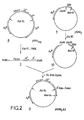
- a DNA.fragment comprising the trp promoter-operator and codons for the LE' and D' polypeptides was obtained from plasmid pBRHtrp and inserted into plasmids containing structural genes for various desired polypeptides, next exemplified for the case of somatostatin ( Figure 2).
- pBRH trp was digested with EcoRI restriction enzyme and the . resulting fragment 5 isolated by PAGE and electroelution.
- EcoRI-digested plasmid pSom 11 K. Itakura et al, Science 198, 1056 (1977); G.B. patent publication no. 2 007 676 A) was combined with fragment 5.
- the mixture was ligated with T 4 DNA ligase as previously described and the resulting DNA transformed into E. coli K-12 strain 294 as previously described. Transformant bacteria were selected on ampicillin-containing plates. Resulting ampicillin-resistant colonies were screened by colony hybridization (M.
- the cells were grown to optical density 1 (at 550 nM), collected by centrifugation and resuspended in M9 media in tenfold dilution. Cells were grown for 2-3 hours, again to optical density 1, then lysed and total cellular protein analyzed by SDS (sodium dodcyl sulfate) urea (15 percent) polyacrylamide gel electrophoresis (J.V. Maizel Jr. et al., Meth Viral 5, 180-246 [1971]).
- SDS sodium dodcyl sulfate
- Figure 3 illustrates a protein gel analysis in which total protein from various cultures is separated by size. The density of individual bands reflects the quantity in which the respective proteins are present.
- lanes 1 and 7 are controls and comprise a variety of proteins of previously determined size which serve as points of comparative reference. Lanes 2 and 3 segregate cellular protein from colonies of E. coli 294 transformed with plasmid pSom7 ⁇ 2 and respectively grown in LB (lane 2) and M9 (lane 3) media.
- Lanes 4 and 5 segregate cellular protein obtained from similar cells transformed with the plasmid pTha7 a2, a thymosin expression plasmid obtained by procedures essentially identical to those already described, beginning with the plasmid pThal (see EP 35454 and also Wetzel et al., Biochemistry, 19: 6069 (1980)).
- Lane 4 segregates cellular protein from E. coli 294/pTha7o2 grown in LB media
- lane 5 segregates cell protein from the same transformant grown in M9 media.
- Lane 6, another control is the protein pattern of E. coli 294/pBR322 grown in LB.
- Comparison to controls shows the uppermost of the two most prominent bands in each of lanes 3 and 5 to be proteins of size anticipated in the case of expression of a fusion protein comprising the 0' polypeptide and, respectively, somatostatin and thymosin (the other prominent band represents the LE' polypeptide resulting from deletion of the attenuator).
- Figure 3 confirms that expression is repressed in tryptophan-rich media, but derepressed under tryptophan deficient conditions.
- the strategy for direct expression entailed creation of a plasmid containing a unique restriction site distal from all control elements of the trp operon into which heterologous genes could be cloned in lieu of the trp leader sequence and in proper, spaced relation to the trp leader polypeptide's ribosome binding site.
- the direct expression approach is next exemplified for the case of human growth hormone expression.
- the plasmid pSom7 A 2, 10 ⁇ g was cleaved with EcoRI and the DNA fragment 5 containing the tryptophan genetic elements was isolated by PAGE and electroelution.
- This fragment, 2ug was digested with the restriction endonuclease Taq I, 2 units, 10 minutes at 37 . C such that, on the average, only one of.the approximately five Taq I sites in each molecule is cleaved.
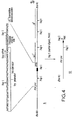
- This partially digested mixture of fragments was separated by PAGE and an approximately 300 base pair fragment 12 (Fig. 4) that contained one EcoRI end and one Taq I end was isolated by electroelution.
- the corresponding Taq I site is located between the transcription start and translation start sites and is 5 nucleotides upstream from the ATG codon of the trp leader peptide.
- the DNA sequence about this site is shown in Figure 4.
- the Taq I residue at the 3' end.of the resulting fragment adjacent the translation start signal for the trp leader sequence was next converted into an XbaI site, as shown in Figure 5.
- a plasmid containing a'unique (i.e., only one) EcoRI site and a unique XbaI site For this purpose, one may employ essentially any plasmid containing; in order, a replicon, a selectable marker such as antibiotic resistance, and EcoRI, XbaI and BamHI sites.
- an XbaI site can be introduced between the EcoRI and BamHI sites of pBR322 (F.
- an EcoRI and BamHI digestion product of the viral genome of hepatitis B was obtained by conventional means and cloned into the EcoRI and BamHI sites of plasmid pGH6 (D.V. Goeddel et al., Nature 281, 544 [1979])) to form the plasmid pHS32.
- Plasmid pHS32 was cleaved with XbaI, phenol extracted, chloroform extracted and ethanol precipitated. It was then treated with 1 ⁇ l E.
- This linear residue of plasmid pHS32 (after phenol and chloroform extraction and recovery in water after ethanol precipitation) was cleaved with EcoRI.
- the large plasmid fragment 13 was separated from the smaller EcoRI-XbaI fragment by PAGE and isolated after electroelution.
- This DNA fragment from pHS 32 (0.2 ⁇ g), was ligated, under conditions similar to those described above, to the EcoRI-Taq I fragment of the tryptophan operon (-0.01 ⁇ g), as shown in Figure 5.
- the Taq protruding end is ligated to the XbaI remaining protruding end even though it is not completely Watson-Crick base-paired: A portion of this ligation reaction mixture was transformed into E.
- coli 294 cells as in part I. above, heat treated and plated on LB plates containing ampicillin. Twenty-four colonies were selected, grown in 3 ml LB media, and plasmid isolated. Six of these were found to have the XbaI site regenerated via E. coli catalyzed DNA repair and replication: These plasmids were also found to cleave both with EcoRI and HpaI and to give the expected restriction fragments.
- One plasmid 14, designated pTrp 14 was used for expression of heterologous polypeptides, as next discussed.
- the plasmid pHGH 107 ( in Figure 6, D.V. Goeddel et al, Nature, 281, 544, 1979) contains a gene for human growth hormone made up of 23 amino acid codons produced from synthetic DNA fragments and 163 amino acid codons obtained from complementary DNA produced via reverse transcription of human growth hormone messenger RNA. This gene 21, though it lacks the codons of the "pre" sequence of human growth hormone, does contain an ATG translation initiation codon. The gene was isolated from 10 ug pHGH 107 after treatment with EcoRI followed by E. coli polymerase I Klenow fragment and dTTP and dATP as described above. Following phenol and chloroform extraction and ethanol precipitation the plasmid was treated with BamHI. See Figure 6.
- the human growth hormone (“HGH”) gene-containing fragment 21 was isolated by PAGE followed by electroelution.
- the resulting DNA fragment also contains the first 350 nucleotides of the tetracycline resistance structural gene, but lacks the tetracyline promoter-operator system so that, when subsequently cloned into an expression plasmid, plasmids containing the insert can be located by the restoration of tetracycline resistance. Because the EcoRI end of the fragment 21 has been filled in by the Klenow polymerase I procedure, the fragment has one blunt and one sticky end, ensuring proper orientation when later inserted into an expression plasmid. See Figure 6.
- the expression plasmid pTrpl4 was next prepared to receive the HGH gene-containing fragment prepared above.
- pTrpl4 was XbaI digested and the resulting sticky ends filled in with the Klenow polymerase I procedure employing dATP, dTTP, dGTP and dCTP. After phenol and chloroform extraction and ethanol precipitation the resulting DNA 16 was treated with BamHI and the resulting large plasmid fragment 17 isolated by PAGE and electroelution.
- the pTrpl4-derived fragment 17 had one blunt and one sticky end, permitting recombination in proper orientation with the HGH gene containing fragment 21 previously described.
- the HGH gene fragment 21 and the pTrpl4 ⁇ Xba-BamHI fragment 17 were combined and ligated together under conditions similar to those described above.
- This construction also recreates the tetracycline resistance gene. Since the plasmid pHGH 107 expresses tetracycline resistance from a promoter lying upstream from the HGH gene (the lac promoter), this construction 22, designated pHGH 207, permits expression of the gene for tetracycline resistance under the control of the tryptophan promoter-operator. Thus the ligation mixture was transformed into E. coli 294 and colonies selected on LB plates containing 5 u g/ml tetracycline.
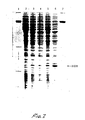
- Figure 7 is a photograph of the resulting, stained gel wherein: Lanes 1 and 7 contain protein markers of various known sizes; Lane 2 is a control that separates total cellular protein of E. Coli strain 294 pBR322; Lane 3 segregates protein from E. Coli 294/pHGH 107 grown in LB media; Lane 4 segregates protein from E. Coli 294/pHGH 107 grown in M9 media; Lane 5 segregates protein from E. Coli 294/pHGH 207 grown in LB media; and Lane 6 segregates protein from E. Coli 294/pHGH 207 grown in M9.
- the dense band in Lane 6 is human growth hormone, as shown by comparison to the similar bands in Lanes 2-4. As predicted by the invention, the organism E.
- Coli 294/pHGH 207 when grown in tryptophan-rich LB media produces less human growth hormone by reason of tryptophan repressor/operator interactions, and when grown in M9 media produces considerably more HGH than E. Coli 294/pHGH 107 owing to the induction of the stronger tryptophan promoter-operator system vs the lac promoter-operator system in pHGH 107.
- the plasmid pHGH 207 created in the preceding section was next used to obtain a DNA fragment containing the control elements of the tryptophan operon (with the attenuator deleted) and to create a plasmid "expression vector" suitable for the direct expression of various structural gene inserts.
- the strategy for creation of the general expression plasmid involved removal of the tryptophan control region from pHGH 207 by EcoRI digestion and insertion in the EcoRI-digested plasmid pBRHl used in part I. supra.
- pBRH1 is an ampicillin resistant plasmid containing the tetracycline resistance gene but is tetracycline sensitive because of the absence of a suitable promoter-operator system.
- the resulting plasmid, pHKY 1, whose construction is more particularly described below and shown in Figure 8, is both ampicillin and tetracycline resistant, contains the tryptophan promoter-operator system, lacks the tryptophan attenuator, and contains a unique XbaI site distal from the tryptophan promoter-operator.
- the tryptophan promoter- operator and unique XbaI site are bounded by EcoRI sites, such that the promoter-operator-XbaI-containing fragment can be removed for insertion in other structural gene-containing plasmids.
- heterologous structural genes may be inserted, either into the XbaI site or (after partial EcoRI digestion) into the EcoRI site distal from the tryptophan control region, in either case so as to come under the control of the tryptophan promoter-operator system.
- Plasmid pHGH 207 was EcoRI digested and the trp promoter containing EcoRI fragment 23 recovered by PAGE followed by electroelution.
- Plasmid pBRHl was EcoRI digested and the cleaved ends treated with bacterial alkaline phosphatase ("BAP") (1 ⁇ g, in 50 mM tris pH 8 and 10 mM MgCl 2 for 30 min. at 65 * C) to remove the phosphate groups on the protruding EcoRI ends.
- BAP bacterial alkaline phosphatase
- Excess bacterial alkaline phosphatase was removed by phenol extraction, chloroform extraction and ethanol precipitation.
- the resulting linear DNA 7a because it lacks phosphates on the protruding ends thereof, will in ligation accept only inserts whose complementary sticky ends are phosphorylated but will not itself recircularize, permitting more facile screening for plasmids containing the inserts.
- the EcoRI fragment derived from pHGH 207 and the linear DNA obtained from pBRHl were combined in the presence of T 4 ligase as previously described and ligated. A portion of the resulting mixture was transformed into E. coli strain 294 as previously described, plated on LB media containing 5 ⁇ g/ml of tetracycline, and 12 tetracycline resistant colonies selected. Plasmid was isolated from each colony and examined for the presence of a DNA insert by restriction endonuclease analysis employing EcoRI and XbaI. One plasmid containing the insert was designated pHKYl.
- plasmid pSom7 ⁇ 2 was Hind III digested followed by digestion with lambda exonuclease (a 5' to 3'exonuclease) under conditions chosen so as to digest beyond the Bgl II restriction site within the LE' encoding region.
- 20 ug of Hind III-digested pSom 7 A 2 was dissolved in buffer [20mM glycine buffer, p H 9.6, 1mM MgCl 2 , 1mM ⁇ -mercaptoethanol].
- the resulting mixture was treated with 5 Units of lambda exonuclease for 60 minutes at room temperature.
- the reaction mixture obtained was then phenol extracted, chloroform extracted and ethanol precipitated.
- a primer 32 pCCTGTGCATGAT was synthesized by the improved phosphotriester method (R. Crea et al., Proc Nat'l Acad Sci USA 75, 5765 [1978]) and hybridized to the single stranded end of the LE' gene fragment resulting from lambda exonuclease digestion. The hybridization was performed as next described.
- the reaction mixture was heated to 50°C and let cool slowly to 10°C, whereafter-4 ⁇ l of Klenow enzyme were added. After 15 minute room temperature incubation, followed by 30 minutes incubation at 37°C, the reaction was stopped by the addition of 5 ⁇ l of 0.25 molar EDTA. The reaction mixture was phenol extracted, chloroform extracted and ethanol precipitated. The DNA was subsequently cleaved with the restriction enzyme Bgl II. The fragments were separated by PAGE. An autoradiogram obtained from the gel revealed a 32 P-labelled fragment of the expected length of approximately 470 bp, which was recovered by electroelution. As outlined, this fragment LE'(d) has a Bgl II and a blunt end coinciding with the beginning of the primer.
- the plasmid pThal described in part I(C.) above carries a structural gene for thymosin alpha one cloned at its 5' coding strand end into an EcoRI site and at its 3' end into a BamHI site. As shown in Figure 9b, the thymosin gene contains a 8g1 II site as well.
- Plasmid pThal also contains a gene specifying ampicillin resistance.
- pThal was EcoRI digested followed by Klenow polymerase I reaction with dTTP and dATP to blunt the EcoRI residues.
- Bgl II digestion of the resulting product created a linear DNA fragment 33 containing the gene for ampicillin resistance and, at its opposite ends, a sticky Bgl II residue and a blunt end.
- the resulting product could be recircularized by reaction with the LE'(d) fragment containing a Bgl II sticky end and a blunt end in the presence of T 4 ligase to form the plasmid pTrp24 (Fig. 9b). In doing so, an EcoRI site is recreated at the position where blunt end ligation occurred.
- 16 ⁇ g plasmid pSom7 ⁇ 2 was diluted into 200 ul of buffer containing 20 mM Tris, pH 7.5, 5 mM MgCl 2 , 0.02 NP40 detergent, 100 mM NaCl and treated with 0.5 units EcoRI. After 15 minutes at 37°C, the reaction mixture was phenol extracted, chloroform extracted and ethanol precipitated and subsequently digested with Bgl II. The larger resulting fragment 36 isolated by the PAGE procedure followed by electroelution. This fragment contains the codons "LE'(p)" for the proximal end of the LE' polypeptide, ie, those upstream from the Bgl II site.
- the fragment 36 was next ligated to the fragment 38 in the presence of T 4 DNA ligase to form the plasmid pSom7 ⁇ 2 ⁇ 4, which upon transformation into E. coli strain 294, as previously described, efficiently produced a fusion protein consisting of the fully reconstituted LE' polypeptide and somatostatin under the control of the tryptophan promoter-operator.
- the fusion protein from which the somatostatin may be specifically cleaved owing to the presence of a methionine at the 5' end of the somatostatin sequence was segregated by SDS polyacrylamide gel electrophoresis as previously described.
- the fusion protein product is the most distinct band apparent in Lane 6 of Figure 11, discussed in greater detail in Part VI, infra.
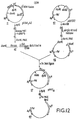
- the object was to create a linear piece of DNA having a Pst residue at its 3' end and a Bgl 11 residue at its 5' end, bounding a gene capable of specifying tetracycline resistance when brought under the control of a promoter-operator system.
- plasmid pBR322 was Hind III digested and the protruding Hind III ends in turn digested with S1 nuclease.
- the S1 nuclease digestion involved treatment of 10 u g of Hind III-cleaved pBR322 in 30 ⁇ l S1 buffer (0.3 M NaCl, 1 mM ZnCl 2 , 25 mM sodium acetate, pH 4.5) with 300 units Sl nuclease for 30 minutes at 15°C. The reaction was stopped by the additon of 1 ⁇ l of 30 X S1 nuclease stop solution (0.8M tris base, 50 mM EDTA).
- the mixture was phenol extracted, chloroform extracted and ethanol precipitated, then EcoRI digested as previously described and the large fragment 46 obtained by PAGE procedure followed by electroelution.
- the fragment obtained has a first EcoRI sticky end and a second, blunt end whose coding strand begins with the nucleotide thymidine.
- the Sl-digested Hind III residue beginning with thymidine can be joined to a Klenow polymerase I-treated Bgl II residue so as to reconstitute the Bgl II restriction site upon ligation.
- Plasmid pSom7 a2 as prepared in Part I above, was Bgl II digested and the Bg1 II sticky ends resulting made double stranded with the Klenow polymerase I procedure using all four deoxynucleotide triphosphates. EcoRI cleavage of the resulting product followed by PAGE and electroelution of the small fragment 42 yielded a linear piece of DNA containing the tryptophan promoter-operator and codons of the LE' "proximal" sequence upstream from the Bgl II site ("LE'(p)"). The product had an EcoRI end and a blunt end resulting from filling in the Bgl II site.
- the Bgl 11 site is reconstituted by ligation of the blunt end of fragment 42 to the blunt end of fragment 46.
- the two fragments were ligated in the presence of T 4 DNA ligase to form the recircularized plasmid pHKY 10 (see Figure 12) which was propagated by transformation into competent E. coli strain 294 cells.
- Tetracycline resistant cells bearing the recombinant plasmid pHKY 10 were grown up, plasmid DNA extracted and digested in turn with Bgl II and Pst followed by isolation by the PAGE procedure and electroelution of the large fragment, a linear piece of DNA having Pst and Bgl II sticky ends.
- This DNA fragment 49 contains the origin of replication and subsequently proved useful as a first component in the construction of plasmids where both the genes coding for trp LE' polypeptide fusion proteins and the tet resistance gene are controlled by the trp promoter/operator.
- Plasmid pSom7 ⁇ Z ⁇ 4 as previously prepared in Part IV, could be manipulated to provide a second component for a system capable of receiving a wide variety of heterologous structural genes.
- the plasmid was subjected to partial EcoRI digestion (see Part IV) followed by Pst digestion and fragment 51 containing the trp promoter/operator was isolated by the PAGE procedure followed by electroelution. Partial EcoRI digestion was necessary to obtain a fragment which was cleaved adjacent to the 5' end of the somatostatin gene but not cleaved at the EcoRI site present between the ampicillin resistance gene and the trp promoter operator. Ampicillin resistance lost by the Pst I cut in the ap gene could be restored upon ligation with fragment 49.
- thymosin alpha-one was obtained by EcoRI and BamHI digestion of plasmid pThal.
- the fragment, 52 was purified by PAGE and electroelution.
- the three gene fragments 49, 51 and 52 could now be ligated together in proper orientation, as depicted in Figure 13, to form the plasmid pTh ⁇ 7 ⁇ 1 ⁇ 4, which could be selected by reason of the restoration of ampicillin and tetracycline resistance.
- the plasmid when transformed into E. coli strain 294 and grown up under conditions like those described in Part I, expressed a trp LE' polypeptide fusion protein from which thymosin alpha one could be specifically cleaved by cyanogen bromide treatment.
- FIG 11 illustrates an SDS polyacrylamide gel electrophoresis separation of total cellular protein from E. coli strain 294 transformants, the darkest band in each case representing the fusion protein product produced under control of the tryptophan promoter-operator system.
- Lane 1 is a control which segregates total cellular protein from E. coli 294/pBR322.
- Lane 2 contains the somatostatin fusion product from plasmid pSom7 ⁇ 2 ⁇ 4 prepared in Part IV.
- Lane 3 is the somatostatin-containing expression product of pSom7 ⁇ 1 ⁇ 4.
- Lane 4 contains the expression product of pTh ⁇ 7 ⁇ 1 ⁇ 4, whereas Lane 5 contains the product expressed from a plasmid obtained when the pHKY-10-derived and pSom7 ⁇ 2 ⁇ 4-derived fragments discussed above were ligated with an EcoRI/BamHI terminated structural gene encoding human proinsulin and prepared in part by certain of us.
- Lanes 6 and 7 respectively contain, as the darkest band, a trp LE' polypeptide fusion protein from which can be cleaved the B and A chain of human insulin.
- the insulin B and A structural genes were obtained by EcoRI and BamHI digestion of plasmids pIBl and pIAll respectively, whose construction is disclosed in D.V. Goeddel et al., Proc Nat'1 Acad Sci USA-76, 106 [1979]. Lane 8 contains size markers, as before.
Landscapes
- Health & Medical Sciences (AREA)
- Life Sciences & Earth Sciences (AREA)
- Chemical & Material Sciences (AREA)
- Genetics & Genomics (AREA)
- Organic Chemistry (AREA)
- Engineering & Computer Science (AREA)
- Zoology (AREA)
- Wood Science & Technology (AREA)
- Molecular Biology (AREA)
- Biomedical Technology (AREA)
- General Engineering & Computer Science (AREA)
- Bioinformatics & Cheminformatics (AREA)
- Biotechnology (AREA)
- Biochemistry (AREA)
- General Health & Medical Sciences (AREA)
- Biophysics (AREA)
- Microbiology (AREA)
- Plant Pathology (AREA)
- Physics & Mathematics (AREA)
- Endocrinology (AREA)
- Gastroenterology & Hepatology (AREA)
- Proteomics, Peptides & Aminoacids (AREA)
- Toxicology (AREA)
- Medicinal Chemistry (AREA)
- General Chemical & Material Sciences (AREA)
- Chemical Kinetics & Catalysis (AREA)
- Crystallography & Structural Chemistry (AREA)
- Preparation Of Compounds By Using Micro-Organisms (AREA)
- Medicines Containing Antibodies Or Antigens For Use As Internal Diagnostic Agents (AREA)
- Medicines That Contain Protein Lipid Enzymes And Other Medicines (AREA)
- Micro-Organisms Or Cultivation Processes Thereof (AREA)
- Saccharide Compounds (AREA)
- Peptides Or Proteins (AREA)
- Measuring Or Testing Involving Enzymes Or Micro-Organisms (AREA)
- Enzymes And Modification Thereof (AREA)
Applications Claiming Priority (2)
| Application Number | Priority Date | Filing Date | Title |
|---|---|---|---|
| US13329680A | 1980-03-24 | 1980-03-24 | |
| US133296 | 1980-03-24 |
Related Parent Applications (1)
| Application Number | Title | Priority Date | Filing Date |
|---|---|---|---|
| EP81301227.5 Division | 1981-03-23 |
Publications (3)
| Publication Number | Publication Date |
|---|---|
| EP0154133A2 true EP0154133A2 (fr) | 1985-09-11 |
| EP0154133A3 EP0154133A3 (en) | 1986-05-28 |
| EP0154133B1 EP0154133B1 (fr) | 1990-05-16 |
Family
ID=22457906
Family Applications (3)
| Application Number | Title | Priority Date | Filing Date |
|---|---|---|---|
| EP81301227A Expired EP0036776B1 (fr) | 1980-03-24 | 1981-03-23 | Méthode pour la création d'un plasmide d'expression |
| EP85100548A Expired - Lifetime EP0154133B1 (fr) | 1980-03-24 | 1981-03-23 | Vecteurs d'expression plasmidiques et procédé de production d'un polypeptide au moyen de ceux-ci |
| EP83200301A Expired EP0086548B1 (fr) | 1980-03-24 | 1981-03-23 | Procédé de clivage d'ADN bicaténaire |
Family Applications Before (1)
| Application Number | Title | Priority Date | Filing Date |
|---|---|---|---|
| EP81301227A Expired EP0036776B1 (fr) | 1980-03-24 | 1981-03-23 | Méthode pour la création d'un plasmide d'expression |
Family Applications After (1)
| Application Number | Title | Priority Date | Filing Date |
|---|---|---|---|
| EP83200301A Expired EP0086548B1 (fr) | 1980-03-24 | 1981-03-23 | Procédé de clivage d'ADN bicaténaire |
Country Status (35)
| Country | Link |
|---|---|
| US (2) | US5888808A (fr) |
| EP (3) | EP0036776B1 (fr) |
| JP (3) | JPH0724582B2 (fr) |
| KR (2) | KR830005351A (fr) |
| AR (1) | AR248050A1 (fr) |
| AT (3) | ATE27306T1 (fr) |
| AU (3) | AU542640B2 (fr) |
| BG (3) | BG46005A3 (fr) |
| BR (1) | BR8101712A (fr) |
| CA (2) | CA1198068A (fr) |
| CS (3) | CS238645B2 (fr) |
| DD (3) | DD159435A5 (fr) |
| DE (5) | DE3176205D1 (fr) |
| DK (1) | DK173085B1 (fr) |
| DZ (1) | DZ278A1 (fr) |
| ES (3) | ES500617A0 (fr) |
| FI (3) | FI810876A7 (fr) |
| FR (2) | FR2480781B1 (fr) |
| GB (1) | GB2073203B (fr) |
| GR (1) | GR74818B (fr) |
| HU (1) | HU195534B (fr) |
| IE (3) | IE51893B1 (fr) |
| IL (3) | IL62460A (fr) |
| IT (1) | IT1144324B (fr) |
| MX (1) | MX7689E (fr) |
| MY (1) | MY8500896A (fr) |
| NO (3) | NO810986L (fr) |
| NZ (3) | NZ196584A (fr) |
| OA (1) | OA06774A (fr) |
| PH (4) | PH17537A (fr) |
| PL (2) | PL162227B1 (fr) |
| PT (1) | PT72716B (fr) |
| YU (2) | YU45534B (fr) |
| ZA (1) | ZA811368B (fr) |
| ZW (1) | ZW5481A1 (fr) |
Cited By (5)
| Publication number | Priority date | Publication date | Assignee | Title |
|---|---|---|---|---|
| JPS61173780A (ja) * | 1984-09-27 | 1986-08-05 | イ−ライ・リリ−・アンド・カンパニ− | 融合遺伝子産物を発現させるための、改良トリプトフアンオペロン誘導体 |
| GB2188324A (en) * | 1986-03-26 | 1987-09-30 | Takeshi Kobayashi | Process and apparatus for enzyme production using bacterium harboring recombinant plasmids |
| US8114398B2 (en) | 2005-10-12 | 2012-02-14 | Sanofi-Aventis | EGLN2 variants and use thereof in preventing or treating thromboembolic disorders and coronary heart disease |
| US9441208B2 (en) | 2003-09-23 | 2016-09-13 | The University Of North Carolina At Chapel Hill | Methods and compositions for producing vitamin K dependent proteins |
| US9631002B2 (en) | 2010-12-21 | 2017-04-25 | The University Of North Carolina At Chapel Hill | Methods and compositions for producing active vitamin K-dependent proteins |
Families Citing this family (369)
| Publication number | Priority date | Publication date | Assignee | Title |
|---|---|---|---|---|
| CA1202581A (fr) * | 1980-03-27 | 1986-04-01 | Saran A. Narang | Molecules d'adaptation pour l'adn et application pour la synthese de produits derives de genes |
| DE3177213D1 (de) | 1980-04-03 | 1990-10-18 | Biogen Inc | Dns-sequenzen, rekombinante dns-molekuele und verfahren zur herstellung von dem menschlichen fibroblast-interferon. |
| US4874702A (en) * | 1980-09-08 | 1989-10-17 | Biogen, Inc. | Vectors and methods for making such vectors and for expressive cloned genes |
| DK489481A (da) * | 1980-11-10 | 1982-05-11 | Searle & Co | Plasmidvektor og frmgangsmaade til fremstilling deraf |
| US5525484A (en) * | 1981-01-16 | 1996-06-11 | Genome Therapeutics Corp. | Recombinant DNA means and method for producing rennin, prorenin and pre-prorennin |
| BR8205954A (pt) * | 1981-10-14 | 1983-09-13 | Unilever Nv | Sequencia de dna,plasmidio recombinante,cultura bacteriana e microorganismos |
| JPS58110600A (ja) * | 1981-12-25 | 1983-07-01 | Kyowa Hakko Kogyo Co Ltd | ヒトβ型インタ−フエロン遺伝子を含む組みかえ体プラスミド |
| JPS58141796A (ja) * | 1982-02-18 | 1983-08-23 | Kyowa Hakko Kogyo Co Ltd | ペプチドの製造法 |
| ATE64618T1 (de) * | 1982-03-15 | 1991-07-15 | Schering Corp | Hybride dns, damit hergestellte bindungszusammensetzung und verfahren dafuer. |
| US4499188A (en) * | 1982-05-05 | 1985-02-12 | Cetus Corporation | Bacterial production of heterologous polypeptides under the control of a repressible promoter-operator |
| US4863855A (en) * | 1982-05-14 | 1989-09-05 | The Research Foundation Of State University Of New York | Novel cloning vehicles for polypeptide expression in microbial hosts |
| EP0108045B1 (fr) * | 1982-10-25 | 1988-12-07 | Monsanto Company | Préparation de polypéptide dépendant d'un recA-promoteur |
| IE56509B1 (en) * | 1982-11-04 | 1991-08-28 | Univ California | Methods for oncogenic detection |
| DE3247922A1 (de) * | 1982-12-24 | 1984-06-28 | Boehringer Ingelheim International GmbH, 6507 Ingelheim | Dna-sequenzen, deren herstellung, diese sequenzen enthaltende plasmide und deren verwendung zur synthese eukaryotischer genprodukte in prokaryoten |
| DK161152C (da) | 1983-03-03 | 1991-11-11 | Genentech Inc | Polypeptid med egenskaber som human beta-nervevaekstfaktor og fremgangsmaade til fremstilling deraf, dna-isolat omfattende en sekvens som koder for polypeptidet, replicerbar udtrykkelsesvektor for dna-sekvensen, rekombinant vaertscelle transformeret med vektoren, farmaceutisk praeparat indeholdende polypeptidet og fremg. der omfatter anvendelsen af polypeptidet til fremst. af et farmaceutisk praeparat |
| US5169762A (en) * | 1983-03-03 | 1992-12-08 | Genentech, Inc. | Human nerve growth factor by recombinant technology |
| US4701416A (en) * | 1983-12-09 | 1987-10-20 | Cetus Corporation | Feline leukemia virus vaccine plasmids for fusion protein of the gp70 envelope protein of FELV |
| US4935370A (en) * | 1983-12-23 | 1990-06-19 | Pfizer Inc. | Expression plasmids for improved production of heterologous protein in bacteria |
| WO1985003522A1 (fr) * | 1984-02-08 | 1985-08-15 | Cetus Corporation | Systemes de controle et de regulation pour des manipulations recombinantes |
| GB8407044D0 (en) * | 1984-03-19 | 1984-04-26 | Fujisawa Pharmaceutical Co | Producing human insulin |
| US5028531A (en) * | 1984-03-19 | 1991-07-02 | Fujisawa Pharmaceutical Company, Ltd. | IGF-I fusion proteins; protection of IGF-I from degradation by host cell; and processes for the production thereof |
| US4656132A (en) | 1984-03-28 | 1987-04-07 | Cetus Corporation | Method of improving the yield of heterologous protein produced by cultivating recombinant bacteria |
| US4894334A (en) * | 1984-03-28 | 1990-01-16 | Cetus Corporation | Method of improving the yield of heterologous protein produced by cultivating recombinant bacteria |
| US5268278A (en) * | 1984-03-30 | 1993-12-07 | Istituto Farmacologico Serono S.P.A. | Genetic expression of somatostatin as hybrid polypeptide |
| US4789702A (en) * | 1984-05-18 | 1988-12-06 | Cetus Corporation | Feline leukemia virus vaccine |
| US5683688A (en) * | 1984-05-31 | 1997-11-04 | Genentech, Inc. | Unglycosylated recombinant human lymphotoxin polypeptides and compositions |
| JPS619282A (ja) * | 1984-06-22 | 1986-01-16 | Hitachi Ltd | 遺伝子組換え菌の培養方法 |
| DE3585176D1 (de) * | 1984-06-22 | 1992-02-27 | Hitachi Ltd | Verfahren zum kontrollieren der zuechtung von rekombinanten. |
| JPS6158595A (ja) * | 1984-08-28 | 1986-03-25 | ジェネックス・コーポレイション | 徴生物によるタンパク質規模生産方法 |
| NZ213759A (en) * | 1984-10-19 | 1989-01-27 | Genentech Inc | Lhrh-ctp protein conjugates influencing prolactin fsh and lh release |
| US5075224A (en) * | 1984-10-19 | 1991-12-24 | Genentech, Inc. | Prepro-LHRH C-terminal peptide DNA |
| FI90990C (fi) * | 1984-12-18 | 1994-04-25 | Boehringer Ingelheim Int | Rekombinantti-DNA-molekyyli, transformoitu isäntäorganismi ja menetelmä interferonin valmistamiseksi |
| JPH082308B2 (ja) | 1985-01-28 | 1996-01-17 | インタ−ナショナル・ジェネティック・エンジニアリング,インコ−ポレイテッド | araBプロモーターを含有する複製可能な発現ビヒクル |
| IT1234977B (it) * | 1985-03-22 | 1992-06-09 | Serono Ist Farm | Espressione in e. coli polipeptidi ibridi contenenti la sequenza del fattore di rilascio dell'ormone della crescita |
| US4965188A (en) * | 1986-08-22 | 1990-10-23 | Cetus Corporation | Process for amplifying, detecting, and/or cloning nucleic acid sequences using a thermostable enzyme |
| ES8706823A1 (es) * | 1985-03-28 | 1987-06-16 | Cetus Corp | Un procedimiento para detectar la presencia o ausencia de al menos una secuencia especifica de acidos nucleicos en una muestra |
| US4683202A (en) * | 1985-03-28 | 1987-07-28 | Cetus Corporation | Process for amplifying nucleic acid sequences |
| GB8509289D0 (en) * | 1985-04-11 | 1985-05-15 | Fujisawa Pharmaceutical Co | Production of somatostatin |
| DE3526995A1 (de) * | 1985-07-27 | 1987-02-05 | Hoechst Ag | Fusionsproteine, verfahren zu ihrer herstellung und ihre verwendung |
| ES2000858A6 (es) * | 1985-08-12 | 1988-03-16 | Syntex Inc | Un metodo para producir un vector de expresion bacteriano para la expresion de proteinas de fusion |
| AU6104586A (en) * | 1985-08-12 | 1987-02-19 | Malcolm A. Martin | Aids protein using trple gene |
| DE3642096A1 (de) * | 1986-12-10 | 1988-06-16 | Boehringer Ingelheim Int | Pferde-(gamma)-interferon |
| US6994988B1 (en) | 1987-02-12 | 2006-02-07 | Genetech, Inc. | Methods and deoxyribonucleic acid for the preparation of tissue factor protein |
| JPH01247098A (ja) * | 1988-03-30 | 1989-10-02 | Hitachi Ltd | ヒトの上皮細胞増殖因子の遺伝子工学的生産方法 |
| EP0335400B1 (fr) * | 1988-03-30 | 1994-06-08 | Hitachi, Ltd. | Procédé de production du facteur de croissance épidermique par génie génétique |
| JPH01247099A (ja) * | 1988-03-30 | 1989-10-02 | Hitachi Ltd | ヒトの上皮細胞増殖因子の遺伝子工学的生産方法 |
| JPH0227993A (ja) * | 1988-07-15 | 1990-01-30 | Nippon Shinyaku Co Ltd | hEGFの製法 |
| IL92937A0 (en) | 1989-01-31 | 1990-09-17 | Us Health | Human derived monocyte attracting protein,pharmaceutical compositions comprising it and dna encoding it |
| US5116964A (en) | 1989-02-23 | 1992-05-26 | Genentech, Inc. | Hybrid immunoglobulins |
| EP0785273A1 (fr) | 1990-11-26 | 1997-07-23 | Genetics Institute, Inc. | Enzyme de conversion d'acides aminés basiques couplés et séquence d'ADN codant pour cette enzyme |
| DE69333127T2 (de) | 1992-06-03 | 2004-05-06 | Genentech, Inc., South San Francisco | Varianten des Gewebeplasminogenaktivators mit verbesserter therapeutischer Wirkung |
| GB9325182D0 (en) * | 1993-12-08 | 1994-02-09 | T Cell Sciences Inc | Humanized antibodies or binding proteins thereof specific for t cell subpopulations exhibiting select beta chain variable regions |
| US6001604A (en) * | 1993-12-29 | 1999-12-14 | Bio-Technology General Corp. | Refolding of proinsulins without addition of reducing agents |
| US5629167A (en) | 1994-04-19 | 1997-05-13 | Biocine S.P.A. | Detection of antibodies against Chlamydia trachomatis pgp3 antigen in patient sera by enzyme-linked immunosorbent assay |
| US5708142A (en) | 1994-05-27 | 1998-01-13 | Genentech, Inc. | Tumor necrosis factor receptor-associated factors |
| US6951743B2 (en) | 1997-10-31 | 2005-10-04 | University Of Oklahoma Board Of Regents | Hyaluronan synthase genes and expression thereof in bacillus hosts |
| US7091008B1 (en) | 1994-07-01 | 2006-08-15 | The Board Of Regents Of The University Of Oklahoma | Hyaluronan synthase genes and expression thereof in Bacillus hosts |
| US6455304B1 (en) | 1994-07-01 | 2002-09-24 | The Board Of Regents Of The University Of Oklahoma | Hyaluronate synthase gene and uses thereof |
| US6113905A (en) * | 1995-01-06 | 2000-09-05 | The Regents Of The University Of California | Borna disease viral sequences, diagnostics and therapeutics for nervous system diseases |
| US6015660A (en) * | 1995-01-06 | 2000-01-18 | The Regents Of The University Of California | Borna disease viral sequences, diagnostics and therapeutics for nervous system diseases |
| US6077510A (en) * | 1995-01-06 | 2000-06-20 | Regents Of The University Of California | Borna disease viral sequences, diagnostics and therapeutics for nervous system diseases |
| US5795966A (en) | 1995-02-22 | 1998-08-18 | Immunex Corp | Antagonists of interleukin-15 |
| KR100510234B1 (ko) | 1995-06-29 | 2005-11-25 | 임뮤넥스 코포레이션 | 세포소멸을 유도하는 시토킨 |
| US7005505B1 (en) | 1995-08-25 | 2006-02-28 | Genentech, Inc. | Variants of vascular endothelial cell growth factor |
| US6020473A (en) * | 1995-08-25 | 2000-02-01 | Genentech, Inc. | Nucleic acids encoding variants of vascular endothelial cell growth factor |
| US6030945A (en) * | 1996-01-09 | 2000-02-29 | Genentech, Inc. | Apo-2 ligand |
| US6998116B1 (en) | 1996-01-09 | 2006-02-14 | Genentech, Inc. | Apo-2 ligand |
| IL126383A0 (en) | 1996-04-01 | 1999-05-09 | Genentech Inc | Apo-2li and apo-3 apoptosis polypeptides |
| US6100071A (en) | 1996-05-07 | 2000-08-08 | Genentech, Inc. | Receptors as novel inhibitors of vascular endothelial growth factor activity and processes for their production |
| US6159462A (en) * | 1996-08-16 | 2000-12-12 | Genentech, Inc. | Uses of Wnt polypeptides |
| US5851984A (en) * | 1996-08-16 | 1998-12-22 | Genentech, Inc. | Method of enhancing proliferation or differentiation of hematopoietic stem cells using Wnt polypeptides |
| US6462176B1 (en) | 1996-09-23 | 2002-10-08 | Genentech, Inc. | Apo-3 polypeptide |
| US5990281A (en) * | 1996-09-30 | 1999-11-23 | Genentech, Inc. | Vertebrate smoothened proteins |
| US6544523B1 (en) | 1996-11-13 | 2003-04-08 | Chiron Corporation | Mutant forms of Fas ligand and uses thereof |
| PT951551E (pt) | 1996-12-23 | 2008-10-28 | Immunex Corp | Ligando para receptor activador de nf-kb, ligando membro da superfamília de tnf |
| WO1999027098A2 (fr) | 1997-11-21 | 1999-06-03 | Genentech, Inc. | Antigenes apparentes a a33 et leurs utilisations pharmacologiques |
| IL132165A (en) * | 1997-04-04 | 2003-12-10 | Univ Southern California | Article, method, and apparatus for electrochemical fabrication |
| US6448035B1 (en) | 1997-04-24 | 2002-09-10 | Immunex Corporation | Family of immunoregulators designated leukocyte immunoglobulin-like receptor (LIR) |
| US6384203B1 (en) | 1999-05-12 | 2002-05-07 | Immunex Corporation | Family of immunoregulators designated leukocyte immunoglobulin-like receptors (LIR) |
| US6342369B1 (en) | 1997-05-15 | 2002-01-29 | Genentech, Inc. | Apo-2-receptor |
| EP1003856A1 (fr) | 1997-06-05 | 2000-05-31 | Board of Regents, The University of Texas System | Apaf-1, homologue humain de ced-4, activateur de caspase-3 |
| JP2002508663A (ja) | 1997-06-18 | 2002-03-19 | ジェネンテク,インコーポレイテッド | Apo−2DcR |
| US6342220B1 (en) | 1997-08-25 | 2002-01-29 | Genentech, Inc. | Agonist antibodies |
| DK1007546T3 (da) | 1997-08-27 | 2009-03-16 | Novartis Vaccines & Diagnostic | Molekylære mimetika af meningokok-B-epitoper |
| US6610838B1 (en) | 1997-09-10 | 2003-08-26 | Symbicom Aktiebolag | P13 antigens from Borrelia |
| PT1015587E (pt) | 1997-09-18 | 2008-07-31 | Genentech Inc | Polipéptido dcr3, um homólogo de tnfr |
| EP1967587A1 (fr) | 1997-10-10 | 2008-09-10 | Genentech, Inc. | Ligand APO-3 |
| DE69840051D1 (de) | 1997-10-29 | 2008-11-06 | Genentech Inc | Durch wnt-1 induzierbare gene |
| US6387657B1 (en) | 1997-10-29 | 2002-05-14 | Genentech, Inc. | WISP polypeptides and nucleic acids encoding same |
| CN101113436B (zh) | 1997-10-31 | 2013-02-06 | 俄克拉何马大学董事会 | 透明质酸合酶基因及其应用 |
| EP1025211B1 (fr) | 1997-10-31 | 2004-12-15 | The Board of Regents of The University of Oklahoma | Gene de la synthase de l'hyaluronan et utilisation de ce gene |
| EP1900818A3 (fr) | 1997-11-06 | 2008-06-11 | Novartis Vaccines and Diagnostics S.r.l. | Antigènes de Neisserial |
| US7192589B2 (en) | 1998-09-16 | 2007-03-20 | Genentech, Inc. | Treatment of inflammatory disorders with STIgMA immunoadhesins |
| WO1999036544A2 (fr) | 1998-01-14 | 1999-07-22 | Chiron S.P.A. | Antigenes du $i(neisseria meningitidis) |
| EP1045906B1 (fr) | 1998-01-15 | 2008-10-15 | Genentech, Inc. | Apo-2 ligand |
| US6727079B1 (en) | 1998-02-25 | 2004-04-27 | The United States Of America As Represented By The Department Of Health And Human Services | cDNA encoding a gene BOG (B5T Over-expressed Gene) and its protein product |
| NZ525914A (en) | 1998-03-10 | 2004-03-26 | Genentech Inc | Novel polypeptides and nucleic acids encoding the same |
| ES2389387T3 (es) | 1998-03-17 | 2012-10-25 | Genentech, Inc. | Polipéptidos homólogos de VEGF y de BMP1 |
| US20060188966A1 (en) | 1998-04-02 | 2006-08-24 | Deangelis Paul L | Natural, chimeric and hybrid glycosaminoglycan polymers and methods of making and using same |
| US7223571B2 (en) | 1998-04-02 | 2007-05-29 | The Board Of Regents Of The Universtiy Of Oklahoma | Targeted glycosaminoglycan polymers by polymer grafting and methods of making and using same |
| US6987023B2 (en) | 1998-04-02 | 2006-01-17 | The Board Of Regents Of The University Of Oklahoma | DNA encoding hyaluronan synthase from Pasteurella multocida and methods of use |
| GB9808932D0 (en) | 1998-04-27 | 1998-06-24 | Chiron Spa | Polyepitope carrier protein |
| EP2261347A3 (fr) | 1998-05-01 | 2012-01-11 | Novartis Vaccines and Diagnostics, Inc. | Antigènes de Neisseria meningitidis et compositions |
| AU740405B2 (en) | 1998-05-15 | 2001-11-01 | Genentech Inc. | IL-17 homologous polypeptides and therapeutic uses thereof |
| EP1865061A3 (fr) | 1998-05-15 | 2007-12-19 | Genentech, Inc. | Polypeptides allogéniques IL-17 et utilisations thérapeutiques |
| EP3112468A1 (fr) | 1998-05-15 | 2017-01-04 | Genentech, Inc. | Polypeptides allogéniques il-17 et utilisations thérapeutiques |
| US20020172678A1 (en) | 2000-06-23 | 2002-11-21 | Napoleone Ferrara | EG-VEGF nucleic acids and polypeptides and methods of use |
| DE69932247T2 (de) | 1998-08-21 | 2007-05-31 | Immunex Corp., Thousand Oaks | Menschliches il-1 epsilon dna und polypeptide |
| CA2342792A1 (fr) | 1998-09-03 | 2000-03-16 | Bristol-Myers Squibb Company | Procede de desamination enzymatique oxydative |
| JP2002527066A (ja) | 1998-10-15 | 2002-08-27 | カイロン コーポレイション | 転移性乳癌および結腸癌調節遺伝子 |
| US7094581B2 (en) | 1998-10-26 | 2006-08-22 | The Board Of Regents Of The University Of Oklahoma | Hyaluronan synthases and methods of making and using same |
| EP1961813B1 (fr) | 1998-12-16 | 2011-08-10 | Novartis Vaccines and Diagnostics, Inc. | Kinase de type humain dépendant de la cycline (hPNQALRE) |
| CA2450402A1 (fr) | 1998-12-22 | 2000-06-29 | Genentech, Inc. | Methodes et compositions permettant d'inhiber la croissance de cellules cancereuses avec la pro224 |
| EP2319929A1 (fr) | 1998-12-23 | 2011-05-11 | Genentech, Inc. | Polypeptides de type IL-1 |
| CA2372235A1 (fr) | 1999-04-30 | 2000-11-09 | Rino Rappuoli | Antigenes de neisseria conserves |
| GB9911683D0 (en) | 1999-05-19 | 1999-07-21 | Chiron Spa | Antigenic peptides |
| AU5152700A (en) | 1999-06-15 | 2001-01-02 | Genentech Inc. | Secreted and transmembrane polypeptides and nucleic acids encoding the same |
| US7101989B1 (en) | 1999-07-09 | 2006-09-05 | University Of North Carolina At Chapel Hill | DsrA protein and polynucleotides encoding the same |
| GB9916529D0 (en) | 1999-07-14 | 1999-09-15 | Chiron Spa | Antigenic peptides |
| CA2383642C (fr) | 1999-10-14 | 2014-03-25 | Clontech Laboratories, Inc. | Chromophores/fluorophores issus d'anthozoaires et methodes d'utilisation |
| IL148936A0 (en) | 1999-10-20 | 2002-09-12 | Genentech Inc | Modulation of t cell differentiation for the treatment of t helper cell mediated diseases |
| EP1226253A2 (fr) | 1999-10-29 | 2002-07-31 | Chiron S.P.A. | Peptides antigeniques de neisseria |
| US7078382B1 (en) | 1999-11-02 | 2006-07-18 | Genentech, Inc. | Modulation of eNOS activity and therapeutic uses thereof |
| AU782918B2 (en) | 1999-11-10 | 2005-09-08 | University Of Washington | Compositions and methods for modulation of plant cell division |
| EP1666494A1 (fr) | 1999-12-01 | 2006-06-07 | Genentech, Inc. | Polypeptides secretés et transmembranaires et acides nucléiques les codant |
| EP1239869B1 (fr) | 1999-12-20 | 2013-08-28 | Immunex Corporation | Recepteur tweak |
| EP1897944B1 (fr) | 1999-12-23 | 2011-08-10 | Genentech, Inc. | Polypeptides allogéniques IL-17 et utilisations thérapeutiques |
| IL149893A0 (en) | 1999-12-30 | 2002-11-10 | Genencor Int | Trichoderma reesei xylanase |
| JP5250168B2 (ja) | 2000-01-10 | 2013-07-31 | ノバルティス バクシンズ アンド ダイアグノスティックス,インコーポレーテッド | 乳癌において差次的に発現される遺伝子 |
| DE60137829D1 (de) | 2000-01-13 | 2009-04-16 | Genentech Inc | Menschliche stra6 polypeptide |
| CA2871789C (fr) | 2000-01-17 | 2017-04-04 | Novartis Vaccines And Diagnostics S.R.L. | Vaccin a base de vesicule de membrane externe (omv) comprenant des proteines de membrane externe du serogroupe b de n. meningitis |
| JP2003528071A (ja) | 2000-03-23 | 2003-09-24 | エラン ファーマスーティカルズ インコーポレイテッド | アルツハイマー病治療用組成物および方法 |
| US6992081B2 (en) | 2000-03-23 | 2006-01-31 | Elan Pharmaceuticals, Inc. | Compounds to treat Alzheimer's disease |
| CA2709771A1 (fr) | 2000-06-23 | 2002-01-03 | Genentech, Inc. | Compositions et methode de diagnostic et de traitement des troubles mettant en cause l'angiogenese |
| EP2042597B1 (fr) | 2000-06-23 | 2014-05-07 | Genentech, Inc. | Compositions et procédés pour le traitement et le diagnostic des troubles impliquant une angiogénèse |
| PE20020276A1 (es) | 2000-06-30 | 2002-04-06 | Elan Pharm Inc | COMPUESTOS DE AMINA SUSTITUIDA COMO INHIBIDORES DE ß-SECRETASA PARA EL TRATAMIENTO DE ALZHEIMER |
| JP2004502665A (ja) | 2000-06-30 | 2004-01-29 | イーラン ファーマスーティカルズ、インコーポレイテッド | アルツハイマー病を治療する化合物 |
| US6846813B2 (en) | 2000-06-30 | 2005-01-25 | Pharmacia & Upjohn Company | Compounds to treat alzheimer's disease |
| DE60136281D1 (de) | 2000-08-24 | 2008-12-04 | Genentech Inc | Methode zur inhibierung von il-22 induziertem pap1 |
| EP1944317A3 (fr) | 2000-09-01 | 2008-09-17 | Genentech, Inc. | Polypeptides sécrétés et transmembranaires, et acides nucléiques les codant |
| ATE439372T1 (de) | 2000-10-27 | 2009-08-15 | Novartis Vaccines & Diagnostic | Nukleinsäuren und proteine von gruppen a und b- streptokokken |
| US6673580B2 (en) | 2000-10-27 | 2004-01-06 | Genentech, Inc. | Identification and modification of immunodominant epitopes in polypeptides |
| GB0107661D0 (en) | 2001-03-27 | 2001-05-16 | Chiron Spa | Staphylococcus aureus |
| GB0107658D0 (en) | 2001-03-27 | 2001-05-16 | Chiron Spa | Streptococcus pneumoniae |
| WO2002081642A2 (fr) | 2001-04-06 | 2002-10-17 | Georgetown University | Gene brcc-3 et ses utilisations diagnostiques et therapeutiques |
| AU2002303261A1 (en) | 2001-04-06 | 2002-10-21 | Georgetown University | Gene brcc2 and diagnostic and therapeutic uses thereof |
| AU2002305151A1 (en) | 2001-04-06 | 2002-10-21 | Georgetown University | Gene scc-112 and diagnostic and therapeutic uses thereof |
| CN1636062A (zh) | 2001-04-16 | 2005-07-06 | 惠氏控股公司 | 编码多肽抗原的新肺炎链球菌可读框及其应用 |
| US20070160576A1 (en) | 2001-06-05 | 2007-07-12 | Genentech, Inc. | IL-17A/F heterologous polypeptides and therapeutic uses thereof |
| WO2005010044A2 (fr) | 2003-07-08 | 2005-02-03 | Genentech, Inc. | Polypeptides heterologues il-17 a/f et utilisation des polypeptides a des fins therapeutiques |
| KR100576674B1 (ko) | 2001-06-20 | 2006-05-10 | 제넨테크, 인크. | 종양의 진단 및 치료를 위한 방법 및 이를 위한 조성물 |
| WO2003002122A1 (fr) | 2001-06-27 | 2003-01-09 | Elan Pharmaceuticals, Inc. | Derives de beta-hydroxyamine utiles dans le traitement de la maladie d'alzheimer |
| US6867189B2 (en) | 2001-07-26 | 2005-03-15 | Genset S.A. | Use of adipsin/complement factor D in the treatment of metabolic related disorders |
| ATE469915T1 (de) | 2001-07-27 | 2010-06-15 | Novartis Vaccines & Diagnostic | Antikörper gegen das meningokokken adhäsin app |
| MY144532A (en) | 2001-08-20 | 2011-09-30 | Lundbeck & Co As H | Novel method for down-regulation of amyloid |
| BR0212070A (pt) | 2001-08-29 | 2004-09-28 | Genentech Inc | ácidos nucléicos e polipeptìdeos bv8 com atividade mitogênica |
| ES2431929T3 (es) | 2001-09-18 | 2013-11-28 | Genentech, Inc. | Composiciones y procedimientos para el diagnóstico y el tratamiento de tumores |
| EP2168596B1 (fr) | 2001-12-12 | 2012-05-23 | Novartis Vaccines and Diagnostics S.r.l. | Immunisation contre la chlamydia trachomatis |
| EP1456223B1 (fr) | 2001-12-19 | 2009-08-12 | The University Of Chicago | Proteines fluorescentes a maturation rapide et leurs methodes d'utilisation |
| EP2067472A1 (fr) | 2002-01-02 | 2009-06-10 | Genentech, Inc. | Compositions et procédés pour le traitement et le diagnostic d'une tumeur |
| US20040258678A1 (en) | 2002-02-22 | 2004-12-23 | Genentech, Inc. | Compositions and methods for the treatment of immune related diseases |
| US7138512B2 (en) | 2002-04-10 | 2006-11-21 | Georgetown University | Gene SHINC-2 and diagnostic and therapeutic uses thereof |
| US7244565B2 (en) | 2002-04-10 | 2007-07-17 | Georgetown University | Gene shinc-3 and diagnostic and therapeutic uses thereof |
| CA2481507A1 (fr) | 2002-04-16 | 2003-10-30 | Genentech, Inc. | Compositions et methodes permettant de diagnostiquer et de traiter une tumeur |
| WO2003099854A2 (fr) | 2002-05-24 | 2003-12-04 | Nps Allelix Corp. | Procede de production enzymatique de peptides glp-2 (1-34) et glp-2 (1-33) |
| EP1513945A4 (fr) | 2002-05-24 | 2008-12-24 | Restoragen Inc | Methode de production enzymatique universelle de peptides bioactifs |
| EP2305710A3 (fr) | 2002-06-03 | 2013-05-29 | Genentech, Inc. | Bibliothèques de phages et anticorps synthétiques |
| EP2430923A1 (fr) | 2002-06-05 | 2012-03-21 | Genentech, Inc. | Compositions et procédés pour la croissance du foie et la protection du foie |
| MXPA04012243A (es) | 2002-06-07 | 2005-02-25 | Genentech Inc | Composiciones y metodos para l diagnostico y tratamiento de tumores. |
| EP1572130A4 (fr) | 2002-07-08 | 2008-07-02 | Genentech Inc | Compositions et procedes destines au traitement de maladies liees au systeme immunitaire |
| EP2277532A1 (fr) | 2002-09-11 | 2011-01-26 | Genentech, Inc. | Nouvelles compositions et procédés pour le traitement de maladies liées au système immunitaire |
| WO2004024072A2 (fr) | 2002-09-11 | 2004-03-25 | Genentech, Inc. | Nouvelles compositions et methodes pour le traitement de maladies associees au systeme immunitaire |
| EP1578364A4 (fr) | 2002-09-16 | 2011-06-08 | Genentech Inc | Compositions et methodes de traitement de maladies de nature immune |
| EP2500438A3 (fr) | 2002-09-25 | 2012-11-28 | Genentech, Inc. | Compositions et procédés nouveaux pour le traitement du psoriasis |
| ATE546521T1 (de) | 2002-10-04 | 2012-03-15 | Firmenich & Cie | Sesquiterpene synthasen und verwerdungsmethoden |
| EP1576137A4 (fr) | 2002-10-29 | 2010-06-30 | Genentech Inc | Compositions et methodes de traitement de maladies liees au systeme immunitaire |
| AU2003295401B2 (en) | 2002-11-08 | 2010-04-29 | Genentech, Inc. | Compositions and methods for the treatment of natural killer cell related diseases |
| WO2004046177A2 (fr) | 2002-11-15 | 2004-06-03 | Chiron Srl | Proteines de surface inattendues sur le meningocoque |
| GB0227346D0 (en) | 2002-11-22 | 2002-12-31 | Chiron Spa | 741 |
| JP2011516026A (ja) | 2002-11-26 | 2011-05-26 | ジェネンテック・インコーポレーテッド | 免疫関連疾患の治療のための組成物と方法 |
| AU2004219592C1 (en) | 2003-03-12 | 2011-02-24 | Genentech, Inc. | Use of Bv8 and/or EG-VEGF to promote hematopoiesis |
| AU2004229335C1 (en) | 2003-04-04 | 2010-06-17 | Genentech, Inc. | High concentration antibody and protein formulations |
| GB0308198D0 (en) | 2003-04-09 | 2003-05-14 | Chiron Srl | ADP-ribosylating bacterial toxin |
| EP2228379A1 (fr) | 2003-04-25 | 2010-09-15 | North Carolina State University | Séquences d'acides nucléiques de lactobacillus acidophilus codant des homologues de protéine de surface et utilisations de celles-ci |
| US7407787B2 (en) | 2003-06-23 | 2008-08-05 | North Carolina State University | Lactobacillus acidophilus nucleic acids encoding fructo-oligosaccharide utilization compounds and uses thereof |
| US7442785B2 (en) | 2003-07-24 | 2008-10-28 | The University Of Kentucky Research Foundation | Sesquiterpene synthase gene and protein |
| WO2005019258A2 (fr) | 2003-08-11 | 2005-03-03 | Genentech, Inc. | Compositions et methodes de traitement de maladies relatives au systeme immunitaire |
| PT2380985E (pt) | 2003-09-23 | 2014-03-26 | Univ North Carolina | Células que expressam a vitamina k epóxido reductase e sua utilização |
| DK2189523T3 (da) | 2003-10-14 | 2012-03-12 | Baxter Int | VKORC1 (vitamin K-epoxid-tilbageføringspolypeptid), et terapeutisk mål for coumarin og dets derivater |
| PL2295073T3 (pl) | 2003-11-17 | 2014-09-30 | Genentech Inc | Przeciwciało przeciwko CD22 do leczenia nowotworu pochodzącego z układu krwiotwórczego |
| HRP20120315T1 (hr) | 2003-11-21 | 2012-05-31 | Nps Pharmaceuticals | Proizvodnja peptida 2 nalik glukagonu i analoga |
| AU2005319099B2 (en) | 2004-02-02 | 2010-09-16 | Ambrx, Inc. | Modified human growth hormone |
| CN103755800B (zh) | 2004-02-02 | 2016-02-24 | Ambrx公司 | 经修饰的人类生长激素多肽与其用途 |
| US7459289B2 (en) | 2004-03-08 | 2008-12-02 | North Carolina State University | Lactobacillus acidophilus nucleic acid sequences encoding carbohydrate utilization-related proteins and uses therefor |
| US8268324B2 (en) | 2004-03-29 | 2012-09-18 | Galpharma Co., Ltd. | Modified galectin 9 proteins and use thereof |
| EP1732944B1 (fr) | 2004-04-07 | 2012-09-05 | The University of Chicago | Proteines monomeres fluorescentes rouges |
| CN102532321B (zh) | 2004-06-18 | 2018-10-12 | Ambrx公司 | 新颖抗原结合多肽和其用途 |
| US7638299B2 (en) | 2004-07-21 | 2009-12-29 | Ambrx, Inc. | Biosynthetic polypeptides utilizing non-naturally encoded amino acids |
| BRPI0516974A (pt) | 2004-10-21 | 2008-09-30 | Wyeth Corp | composição imunogênica compreendendo um polipeptìdeo; um método para induzir uma resposta imune contra staphylococcus epidermidis; um método para induzir uma resposta imune contra staphylococcus aureus; um método para a detecção e/ou identificação de staphylococcus epidermidis; um método para a detecção e/ou identificação de anticorpos para staphylococcus epidermidis |
| KR20070100307A (ko) | 2004-12-22 | 2007-10-10 | 제넨테크, 인크. | 가용성 다중 막관통 단백질의 생산 방법 |
| US7385028B2 (en) | 2004-12-22 | 2008-06-10 | Ambrx, Inc | Derivatization of non-natural amino acids and polypeptides |
| WO2006102243A2 (fr) | 2005-03-21 | 2006-09-28 | Applera Corporation | Composes alpha-cetoamide utilises en tant qu'inhibiteurs de cysteine protease |
| US20060269998A1 (en) | 2005-04-15 | 2006-11-30 | North Carolina State University | Methods and compositions to modulate adhesion and stress tolerance in bacteria |
| MX2007013431A (es) | 2005-05-04 | 2008-01-18 | Zealand Pharma As | Analogos del peptido 2 semejante al glucagon. |
| JP2008544746A (ja) | 2005-05-12 | 2008-12-11 | ザイモジェネティクス, インコーポレイテッド | 免疫応答を調節するための組成物および方法 |
| CA2610709A1 (fr) | 2005-06-06 | 2006-12-14 | Genentech, Inc. | Nouvelles disruptions geniques, nouvelles compositions et nouveaux procedes s'y rapportant |
| KR20080052570A (ko) | 2005-07-29 | 2008-06-11 | 타게티드 그로스 인코퍼레이티드 | 야생형 krp에 의한 활성 사이클린-cdk 복합체 억제의우성 음성 돌연변이 krp 단백질 보호 |
| AU2006280321A1 (en) | 2005-08-15 | 2007-02-22 | Genentech, Inc. | Gene disruptions, compositions and methods relating thereto |
| EP2535346B1 (fr) | 2005-08-31 | 2017-08-02 | The Regents of The University of California | Bibliothèques cellulaires de séquences peptidiques (CliPS) et procédés d'utilisation de celles-ci |
| US7855279B2 (en) | 2005-09-27 | 2010-12-21 | Amunix Operating, Inc. | Unstructured recombinant polymers and uses thereof |
| IN2014DN06624A (fr) | 2005-10-18 | 2015-07-10 | Univ Colorado | |
| WO2007053732A2 (fr) | 2005-11-01 | 2007-05-10 | Mayo Foundation For Medical Education And Research | Polymorphismes des promoteurs du gene blys et leur utilisation dans des procedes de diagnostic |
| EP1951890A4 (fr) | 2005-11-16 | 2009-06-24 | Ambrx Inc | Procedes et compositions comprenant des acides amines non naturels |
| EP1962584A2 (fr) | 2005-11-21 | 2008-09-03 | Genentech, Inc. | Nouvelles dissociations de gènes, compositions et procédés les concernant |
| US8026354B2 (en) | 2005-11-23 | 2011-09-27 | Institut Pasteur | Recombinant plasmodium falciparum merozoite surface proteins 4 and 5 and their use |
| GB0524066D0 (en) | 2005-11-25 | 2006-01-04 | Chiron Srl | 741 ii |
| US20080032343A1 (en) | 2005-12-22 | 2008-02-07 | Genentech, Inc. | Recombinant Production of Heparin Binding Proteins |
| AU2007233263A1 (en) | 2006-02-17 | 2007-10-11 | Genentech, Inc. | Gene disruptons, compositions and methods relating thereto |
| EP2082645A1 (fr) | 2006-04-19 | 2009-07-29 | Genentech, Inc. | Nouvelle dislocation de gènes, compositions et procédés correspondants |
| WO2007127936A2 (fr) | 2006-04-27 | 2007-11-08 | Pikamab, Inc. | Procédés et compositions pour la thérapie par anticorps |
| ATE522541T1 (de) | 2006-06-09 | 2011-09-15 | Novartis Ag | Bakterielle adhäsine konformere |
| CA2656558A1 (fr) | 2006-06-30 | 2008-01-10 | The Regents Of The University Of Michigan | Procede de production de proteines de type facteur viii par des procedes recombinants |
| WO2008030558A2 (fr) | 2006-09-08 | 2008-03-13 | Ambrx, Inc. | Polypeptide plasmatique humain modifié ou squelettes de fc et leurs utilisations |
| US7985783B2 (en) | 2006-09-21 | 2011-07-26 | The Regents Of The University Of California | Aldehyde tags, uses thereof in site-specific protein modification |
| BRPI0716680A2 (pt) | 2006-11-02 | 2013-09-24 | Daniel J Capon | "composto, multÍmero, composiÇço, mÉtodo de afetar a atividade de um alvo, complexo, processo de produÇço do composto, mÉtodo de produÇço de um extensço de aminoÁcidos consecutivos, processo de produÇço de uma extensço de aminoacidos consecutivos , processo para a produÇço de um composto , mÉtodo de produÇço de uma proteina e polipeptÍdeo" |
| US7875431B2 (en) | 2007-02-22 | 2011-01-25 | Genentech, Inc. | Methods for detecting inflammatory bowel disease |
| KR101476472B1 (ko) | 2007-03-30 | 2015-01-05 | 암브룩스, 인코포레이티드 | 변형된 fgf-21 폴리펩티드 및 그 용도 |
| US8071741B2 (en) | 2007-04-20 | 2011-12-06 | Defiante Farmaceutica, S.A. | Stable recombinant adenosine deaminase |
| CA2683423C (fr) | 2007-04-26 | 2020-10-27 | Inspiration Biopharmaceuticals, Inc. | Proteines dependantes de la vitamine k recombinees a teneur elevee en acide sialique et leurs procedes de preparation |
| ATE543835T1 (de) | 2007-07-16 | 2012-02-15 | Genentech Inc | Anti-cd79b-antikörper und immunkonjugate und anwendungsverfahren |
| ES2528922T3 (es) | 2007-07-16 | 2015-02-13 | Genentech, Inc. | Anticuerpos anti-CD79b humanizados e inmunoconjugados y métodos de uso |
| WO2009014726A1 (fr) | 2007-07-26 | 2009-01-29 | The Regents Of The University Of California | Procédés permettant d'améliorer un affichage de cellules bactériennes de protéines et de peptides |
| CN101361968B (zh) | 2007-08-06 | 2011-08-03 | 健能隆医药技术(上海)有限公司 | 白介素-22在治疗脂肪肝中的应用 |
| WO2009046407A2 (fr) | 2007-10-04 | 2009-04-09 | Zymogenetics, Inc. | Zb7h6 membre de la famille b7 et compositions et procédés apparentés |
| US20090233991A1 (en) | 2007-11-01 | 2009-09-17 | Hee Cheol Cho | Generation of biological pacemaker activity |
| WO2009059305A2 (fr) | 2007-11-01 | 2009-05-07 | The University Of Chicago | Protéines fluorescentes rouges avec expression bactérienne amplifiée, luminosité accrue et agrégation réduite |
| ES2632504T3 (es) | 2007-11-20 | 2017-09-13 | Ambrx, Inc. | Polipéptidos de insulina modificados y sus usos |
| EP2222700A2 (fr) | 2007-11-27 | 2010-09-01 | Medtronic, Inc. | Anticorps anti-amyloïde bêta humanisés |
| US8003325B2 (en) | 2007-11-30 | 2011-08-23 | Mayo Foundation For Medical Education And Research | Polymorphisms of the BLyS gene and use in diagnostic methods |
| PT2247620T (pt) | 2008-01-31 | 2016-08-23 | Genentech Inc | Anticorpos e imunoconjugados anti-cd79b e métodos de utilização |
| NZ602170A (en) | 2008-02-08 | 2014-03-28 | Ambrx Inc | Modified leptin polypeptides and their uses |
| EP2886551A3 (fr) | 2008-02-21 | 2015-09-23 | Novartis AG | Polypeptides fHbp méningococciques |
| EP3208612B1 (fr) | 2008-04-09 | 2019-09-18 | Genentech, Inc. | Compositions et procédés pour le traitement de maladies liées au système immunitaire |
| US8986702B2 (en) | 2008-05-16 | 2015-03-24 | Taiga Biotechnologies, Inc. | Antibodies and processes for preparing the same |
| MX2011000859A (es) | 2008-07-23 | 2011-02-24 | Ambrx Inc | Polipeptidos g-csf bovinos modificados y sus usos. |
| DK2966084T3 (en) | 2008-08-28 | 2018-08-06 | Taiga Biotechnologies Inc | MODULATORS OF MYC, PROCEDURES FOR USING SAME AND PROCEDURES FOR IDENTIFYING SUBSTANCES MODULATING MYC |
| NO2337846T3 (fr) | 2008-09-26 | 2018-06-16 | ||
| PL2342223T3 (pl) | 2008-09-26 | 2017-09-29 | Ambrx, Inc. | Zmodyfikowane polipeptydy zwierzęcej erytropoetyny i ich zastosowania |
| US9702877B2 (en) | 2008-10-31 | 2017-07-11 | Quest Diagnostics Investments Incorporated | BCR-ABL variants |
| WO2010062995A2 (fr) | 2008-11-26 | 2010-06-03 | Five Prime Therapeutics, Inc. | Compositions et procédés pour réguler l'expression de collagène et d'actine de muscle lisse par la serpine e2 |
| CN108530543B (zh) | 2009-02-03 | 2023-06-23 | 阿穆尼克斯制药公司 | 延伸重组多肽和包含该延伸重组多肽的组合物 |
| CA2757382A1 (fr) | 2009-04-01 | 2010-10-21 | Kristi Elkins | Anticorps anti-fcrh5 et immunoconjugues |
| EP2251025A1 (fr) | 2009-05-12 | 2010-11-17 | Universitat Autònoma De Barcelona | Utilisation de corps d'inclusion en tant qu'agents thérapeutiques |
| ITMI20090946A1 (it) | 2009-05-28 | 2010-11-29 | Novartis Ag | Espressione di proteine ricombinanti |
| DK2440241T3 (en) | 2009-06-08 | 2017-10-02 | Amunix Operating Inc | GROWTH HORMON POLYPEPTIDES AND PROCEDURES FOR PREPARING AND USING THEREOF |
| JP5839597B2 (ja) | 2009-06-08 | 2016-01-06 | アムニクス オペレーティング インコーポレイテッド | グルコース調節ポリペプチド並びにその作成及び使用方法 |
| JP5946766B2 (ja) | 2009-07-03 | 2016-07-06 | ビオノール イミュノ エーエスBionor Immuno As | Hivワクチン組成物における使用又は診断手段としての使用のためのhiv関連ペプチドの組合せ又は融合物 |
| CN102741275B (zh) | 2009-08-24 | 2016-08-03 | 阿穆尼克斯运营公司 | 凝血因子ix组合物及其制备和使用方法 |
| JP2013502918A (ja) | 2009-08-27 | 2013-01-31 | ノバルティス アーゲー | 髄膜炎菌fHBP配列を含むハイブリッドポリペプチド |
| WO2011041308A1 (fr) | 2009-09-30 | 2011-04-07 | Quest Diagnostics Investments Incorporated | Mutations non-sens bcr-abl |
| EP2486131A1 (fr) | 2009-10-06 | 2012-08-15 | INSERM (Institut National de la Santé et de la Recherche Médicale) | Carbapénémase et traitement antibactérien |
| CN102656266B (zh) | 2009-10-15 | 2016-08-03 | 霍夫曼-拉罗奇有限公司 | 具有改变的受体特异性的嵌合成纤维细胞生长因子 |
| BR112012009409A2 (pt) | 2009-10-22 | 2017-02-21 | Genentech Inc | método de identificação de uma substância inibidora, molécula antagonista, ácido nucleico isolado, vetor, célula hospedeira, método para fabricar a molécula, composição, artigo de fabricação, método de inibição de uma atividade biológica, método de tratamento de uma condição patológica, método para detectar msp em uma amostra e método para detectar hepsina em uma amostra |
| WO2011056502A1 (fr) | 2009-10-26 | 2011-05-12 | Genentech, Inc. | Compositions du gene recepteur de proteine morphogenetique osseuse type ii et procedes d'utilisation |
| WO2011056494A1 (fr) | 2009-10-26 | 2011-05-12 | Genentech, Inc. | Combinaisons d'antagonistes de la kinase-1 du type récepteur de l'activine et d'antagonistes vegfr3 |
| WO2011056497A1 (fr) | 2009-10-26 | 2011-05-12 | Genentech, Inc. | Compositions de récepteur de l'activine de type iib et leurs méthodes d'utilisation |
| BR112012010531A2 (pt) | 2009-10-27 | 2019-09-24 | Novartis Ag | "polipeptídeos de modificação meningocócica fhbp" |
| AR078986A1 (es) | 2009-11-12 | 2011-12-14 | Genentech Inc | Un metodo para promover la densidad de espinas dendriticas |
| PE20121584A1 (es) | 2009-11-30 | 2012-11-29 | Genentech Inc | Composiciones y metodos para el diagnostico y el tratamiento de tumores |
| EP2516455A4 (fr) | 2009-12-21 | 2013-05-22 | Ambrx Inc | Polypeptides d'hormone de croissance porcine modifiée et leurs utilisations |
| NZ600361A (en) | 2009-12-21 | 2014-06-27 | Ambrx Inc | Modified bovine somatotropin polypeptides and their uses |
| FR2954349A1 (fr) | 2009-12-22 | 2011-06-24 | Agronomique Inst Nat Rech | Sulfatase modifiant selectivement les glycosaminoglycanes |
| NZ601293A (en) | 2010-02-23 | 2014-10-31 | Genentech Inc | Compositions and methods for the diagnosis and treatment of tumor |
| EP4450523A3 (fr) | 2010-04-02 | 2025-03-12 | Amunix Pharmaceuticals, Inc. | Protéines de fusion de liaison, conjugués protéine de fusion-médicament de liaison, conjugués xten-médicament et leurs procédés de fabrication et d'utilisation |
| CN102958941A (zh) | 2010-05-03 | 2013-03-06 | 霍夫曼-拉罗奇有限公司 | 用于肿瘤诊断和治疗的组合物和方法 |
| WO2011146715A1 (fr) | 2010-05-19 | 2011-11-24 | North Carolina State University | Compositions et procédés pour l'administration de peptides thérapeutiques |
| WO2011149461A1 (fr) | 2010-05-27 | 2011-12-01 | Medtronic, Inc. | Anticorps anti-amyloïde bêta conjugués à des molécules contenant de l'acide sialique |
| KR101768118B1 (ko) | 2010-06-25 | 2017-08-14 | 인쎄름 (엥스띠뛰 나씨오날 드 라 쌍떼 에 드 라 흐쉐르슈 메디깔) | 기도 감염의 치료를 위한 방법 및 약학 조성물 |
| SG187231A1 (en) | 2010-07-29 | 2013-02-28 | Eleven Biotherapeutics Inc | Chimeric il-1 receptor type i agonists and antagonists |
| US9567386B2 (en) | 2010-08-17 | 2017-02-14 | Ambrx, Inc. | Therapeutic uses of modified relaxin polypeptides |
| SMT201900495T1 (it) | 2010-08-17 | 2019-11-13 | Ambrx Inc | Polipeptidi di relaxina modificati e loro usi |
| EP2420253A1 (fr) | 2010-08-20 | 2012-02-22 | Leadartis, S.L. | Synthèse de molécules polyvalentes et multifonctionnelles avec un domaine de trimérisation de collagène XV |
| US8729233B2 (en) | 2010-08-30 | 2014-05-20 | Board Of Trustees Of Michigan State University | Microbial nanowires and products related thereto |
| CN102380091A (zh) | 2010-08-31 | 2012-03-21 | 健能隆医药技术(上海)有限公司 | 白介素-22在治疗病毒性肝炎中的应用 |
| WO2012036884A2 (fr) | 2010-09-15 | 2012-03-22 | Aligna Technologies, Inc. | Production biologique de produits chimiques aromatiques à partir de composés dérivés de lignine |
| TWI480288B (zh) | 2010-09-23 | 2015-04-11 | Lilly Co Eli | 牛顆粒細胞群落刺激因子及其變體之調配物 |
| US20150139991A1 (en) | 2010-10-15 | 2015-05-21 | Leadartis, S.L. | Generation of multifunctional and multivalent polypeptide complexes with collagen xviii trimerization domain |
| EP2441776A1 (fr) | 2010-10-15 | 2012-04-18 | Leadartis, S.L. | Génération de complexes polyvalents et multifonctionnels avec un domaine de trimérisation XVIII du collagène |
| US8603740B2 (en) | 2010-12-29 | 2013-12-10 | Quest Diagnostics Investments Incorporated | BCR-ABL1 splice variants and uses thereof |
| WO2012095684A1 (fr) | 2011-01-10 | 2012-07-19 | Inserm ( Institut National De La Sante Et De La Recherche Medicale) | Procédés de criblage de substances utiles pour prévenir et traiter les infections neisseriennes |
| WO2012103240A2 (fr) | 2011-01-25 | 2012-08-02 | Eleven Biotherapeutics, Inc. | Agents de liaison à un récepteur |
| JP5977814B2 (ja) | 2011-04-08 | 2016-08-24 | アムジエン・インコーポレーテツド | 増殖分化因子15(gdf−15)を使用して代謝障害を治療または改善する方法 |
| WO2013011072A1 (fr) | 2011-07-20 | 2013-01-24 | INSERM (Institut National de la Santé et de la Recherche Médicale) | Carbapenemase et traitement antibactérien |
| CA2843197A1 (fr) | 2011-07-29 | 2013-02-07 | Eleven Biotherapeutics, Inc. | Proteines purifiees |
| WO2013033456A2 (fr) | 2011-09-02 | 2013-03-07 | Board Of Trustees Of Michigan State University | Nanofils microbiens et procédés de fabrication et d'utilisation |
| WO2013113008A1 (fr) | 2012-01-26 | 2013-08-01 | Amgen Inc. | Polypeptides du facteur de croissance et de différenciation 15 (gdf-15) |
| EP2822577B1 (fr) | 2012-02-15 | 2019-02-06 | Bioverativ Therapeutics Inc. | Protéines de facteur viii de recombinaison |
| LT3564260T (lt) | 2012-02-15 | 2023-01-10 | Bioverativ Therapeutics Inc. | Viii faktoriaus kompozicijos ir jų gamybos bei panaudojimo būdai |
| CA2865578C (fr) | 2012-02-27 | 2023-01-17 | Amunix Operating Inc. | Compositions de conjugues xten et leurs procedes de preparation |
| RU2017139267A (ru) | 2012-03-27 | 2019-02-12 | Дженентек, Инк. | Усовершенствованные способы выделения рекомбинантных белков |
| EP2841087B1 (fr) | 2012-04-27 | 2017-08-23 | The United States of America, as represented by The Secretary, Department of Health and Human Services | Antagonistes de facteur de croissance endothélial vasculaire et méthodes destinées à leur utilisation |
| TR201802689T4 (tr) | 2012-05-03 | 2018-03-21 | Zealand Pharma As | Glukagon benzeri peptit-2 (glp-2) analogları. |
| CA2875624A1 (fr) | 2012-06-06 | 2013-12-12 | Bionor Immuno As | Vaccin contre le vih |
| AU2013292330B2 (en) | 2012-07-20 | 2018-07-12 | Htyr Acquisition Llc | Enhanced reconstitution and autoreconstitution of the hematopoietic compartment |
| US9309510B2 (en) | 2012-08-10 | 2016-04-12 | Cytomx Therapeutics, Inc. | Protease-resistant systems for polypeptide display and methods of making and using thereof |
| BR112015011462A2 (pt) | 2012-11-20 | 2017-09-26 | Univ North Carolina Chapel Hill | processos e composições para proteínas fator ix modificadas |
| BR112015012968A2 (pt) | 2012-12-07 | 2017-09-12 | Danisco Us Inc | composições e métodos de uso |
| DK2929022T3 (en) | 2012-12-07 | 2017-02-13 | Danisco Us Inc | COMPOSITIONS AND METHODS OF USE |
| US10272115B2 (en) | 2013-03-11 | 2019-04-30 | Taiga Biotechnologies, Inc. | Production and use of red blood cells |
| CN107693781B (zh) | 2013-03-13 | 2021-11-09 | 巴扎德制药公司 | 用于眼部递送的嵌合细胞因子制剂 |
| DK2968495T3 (da) | 2013-03-15 | 2019-10-14 | Daniel J Capon | Hybrid immunoglobulin indeholdende en ikke-peptid-bro |
| PE20151673A1 (es) | 2013-03-15 | 2015-11-27 | Genentech Inc | POLIPEPTIDOS DE IL-22 Y PROTEINAS DE FUSION DE IL-22 Fc Y METODOS DE USO |
| WO2015007337A1 (fr) | 2013-07-19 | 2015-01-22 | Bionor Immuno As | Procédé de vaccination contre le vih |
| TWI667255B (zh) | 2013-08-14 | 2019-08-01 | 美商生物化學醫療公司 | 因子viii-xten融合物及其用途 |
| US10767156B2 (en) | 2013-10-24 | 2020-09-08 | Yeda Research And Development Co., Ltd. | Polynucleotides encoding BREX system polypeptides and methods of using same |
| MX2016005614A (es) | 2013-11-01 | 2016-12-09 | Spherium Biomed S L | Cuerpos de inclusion para el suministro transdermico de agentes terapeuticos y cosmeticos. |
| CN104623637A (zh) | 2013-11-07 | 2015-05-20 | 健能隆医药技术(上海)有限公司 | Il-22二聚体在制备静脉注射药物中的应用 |
| SG11201605242YA (en) | 2014-01-10 | 2016-07-28 | Biogen Ma Inc | Factor viii chimeric proteins and uses thereof |
| WO2015116902A1 (fr) | 2014-01-31 | 2015-08-06 | Genentech, Inc. | Récepteurs couplés aux protéines g dans la signalisation hedgehog |
| SI3116486T1 (sl) | 2014-03-14 | 2020-07-31 | Biomolecular Holdings Llc | Hibridni imunoglobulin, ki vsebuje nepeptidilno vezavo |
| WO2016005508A1 (fr) | 2014-07-11 | 2016-01-14 | Bionor Immuno As | Procédé permettant de réduire et/ou de retarder les effets pathologiques du virus de l'immunodéficience humaine i (vih) ou de réduire le risque de développer le syndrome d'immunodéficience acquise (sida) |
| WO2016054168A1 (fr) | 2014-09-30 | 2016-04-07 | Danisco Us Inc | Compositions comprenant de la bêta-mannamase, et procédés d'utilisation |
| EP3201330A1 (fr) | 2014-09-30 | 2017-08-09 | Danisco US Inc. | Compositions comprenant de la bêta-mannanase et procédés d'utilisation |
| WO2016054185A1 (fr) | 2014-09-30 | 2016-04-07 | Danisco Us Inc | Compositions comprenant une bêta-mannanase et leurs procédés d'utilisation |
| EP3201334A1 (fr) | 2014-09-30 | 2017-08-09 | Danisco US Inc. | Compositions comprenant une bêta-mannanase et leurs procédés d'utilisation |
| EP3201332A1 (fr) | 2014-09-30 | 2017-08-09 | Danisco US Inc. | Compositions comprenant la bêta-mannanase et procédés d'utilisation |
| BR112017008157A2 (pt) | 2014-10-24 | 2017-12-19 | Bristol Myers Squibb Co | polipeptídeos de fgf-21 modificados e usos dos mesmos |
| US20180002683A1 (en) | 2014-12-18 | 2018-01-04 | Danisco Us Inc. | Engineered multifunctional enzymes and methods of use |
| US20170362621A1 (en) | 2014-12-18 | 2017-12-21 | Danisco Us Inc. | Engineered multifunctional enzymes and methods of use |
| WO2016127057A1 (fr) | 2015-02-06 | 2016-08-11 | The University Of North Carolina At Chapel Hill | Cassettes optimisées d'expression génétique du facteur viii de coagulation humain et leur utilisation |
| PT3277821T (pt) | 2015-03-31 | 2019-10-31 | Novimmune Sa | Método para otimizar a montagem e produção de complexos proteicos hetero-multiméricos |
| US20180140694A1 (en) | 2015-05-04 | 2018-05-24 | Bionor Immuno As | Dosage regimen for hiv vaccine |
| IL257231B (en) | 2015-08-03 | 2022-09-01 | Bioverativ Therapeutics Inc | Factor ix fusion proteins and methods of making and using same |
| IL319047A (en) | 2015-08-28 | 2025-04-01 | Amunix Operating Inc | Chimeric polypeptide composition and methods for its preparation and use |
| CN109312299A (zh) | 2016-03-29 | 2019-02-05 | 格尔托公司 | 蛋白质在具有0.5:1至10:1的周质体积与细胞质体积比的革兰氏阴性菌中的表达 |
| ES2930351T3 (es) | 2016-04-15 | 2022-12-09 | Evive Biotechnology Shanghai Ltd | Un dímero de IL-22 para su uso en el tratamiento de enterocolitis necrosante |
| US10590426B2 (en) | 2016-08-22 | 2020-03-17 | Board Of Trustees Of Michigan State University | Genetic control of cell size |
| CN113786476A (zh) | 2016-12-02 | 2021-12-14 | 泰加生物工艺学公司 | 纳米颗粒调配物 |
| WO2018106845A1 (fr) | 2016-12-06 | 2018-06-14 | Kaleido Biosciences, Inc. | Polymères glycane et procédés associés |
| IL250479A0 (en) | 2017-02-06 | 2017-03-30 | Sorek Rotem | Genetically engineered cells expressing a disarm system that confers resistance to phages and methods for their production |
| US10266578B2 (en) | 2017-02-08 | 2019-04-23 | Bristol-Myers Squibb Company | Modified relaxin polypeptides comprising a pharmacokinetic enhancer and uses thereof |
| WO2018152496A1 (fr) | 2017-02-17 | 2018-08-23 | The Usa, As Represented By The Secretary, Dept. Of Health And Human Services | Compositions et méthodes de diagnostic et de traitement de l'infection par le virus zika |
| EP3490584B1 (fr) | 2017-08-03 | 2021-12-08 | Taiga Biotechnologies, Inc. | Méthodes et compositions pharmaceutiques destinées au traitement du mélanome |
| US10149898B2 (en) | 2017-08-03 | 2018-12-11 | Taiga Biotechnologies, Inc. | Methods and compositions for the treatment of melanoma |
| US11180541B2 (en) | 2017-09-28 | 2021-11-23 | Geltor, Inc. | Recombinant collagen and elastin molecules and uses thereof |
| SG11202006259SA (en) | 2018-01-26 | 2020-08-28 | Genentech Inc | Il-22 fc fusion proteins and methods of use |
| LT3743088T (lt) | 2018-01-26 | 2022-12-27 | F. Hoffmann-La Roche Ag | Il-22 fc kompozicijos ir jų naudojimo būdai |
| JP2021514354A (ja) | 2018-02-21 | 2021-06-10 | ジェネンテック, インコーポレイテッド | IL−22Fc融合タンパク質による治療のための投与 |
| IL258467A (en) | 2018-03-29 | 2018-07-04 | Ilana Kolodkin Gal | Methods of disrupting a biofilm and/or preventing formation of same |
| PE20201350A1 (es) | 2018-04-09 | 2020-11-30 | Amgen Inc | Proteinas de fusion del factor de diferenciacion de crecimiento 15 |
| SI3793588T1 (sl) | 2018-05-18 | 2025-07-31 | Bioverativ Therapeutics Inc. | Postopki zdravljenja hemofilije A |
| CN112566939A (zh) | 2018-06-06 | 2021-03-26 | 利达提斯有限公司 | 三聚体多肽复合物及其用途 |
| MX2021002575A (es) | 2018-09-11 | 2021-06-08 | Ambrx Inc | Conjugados de polipeptidos de interleucina-2 y sus usos. |
| US12419902B2 (en) | 2019-03-31 | 2025-09-23 | Yeda Research And Development Co. Ltd. | Anti-viral and anti-tumoral compounds |
| CN113874033A (zh) | 2019-04-08 | 2021-12-31 | 泰加生物工艺学公司 | 用于冷冻保存免疫细胞的组合物和方法 |
| TW202104254A (zh) | 2019-04-12 | 2021-02-01 | 美商格爾托公司 | 重組彈性蛋白及其生產 |
| JP2022532608A (ja) | 2019-05-14 | 2022-07-15 | タイガ バイオテクノロジーズ,インク. | T細胞疲弊を処置するための組成物および方法 |
| KR102134418B1 (ko) * | 2019-06-17 | 2020-07-16 | 씨제이제일제당 주식회사 | L-타이로신을 생산하는 미생물 및 이를 이용한 l-타이로신 생산 방법 |
| US20210070811A1 (en) | 2019-09-05 | 2021-03-11 | Board Of Trustees Of Michigan State University | Method for protein nanowire synthesis and tunable control of nanowire length |
| WO2021067655A1 (fr) | 2019-10-04 | 2021-04-08 | Amgen Inc. | Utilisation de gdf15 pour le traitement d'un syndrome cardiométabolique et d'autres affections |
| WO2021164744A1 (fr) | 2020-02-19 | 2021-08-26 | Evive Biotechnology (Shanghai) Ltd | Procédés de traitement d'une maladie du greffon contre l'hôte |
| WO2021183832A1 (fr) | 2020-03-11 | 2021-09-16 | Ambrx, Inc. | Conjugués polypeptidiques d'interleukine-2 et leurs procédés d'utilisation |
| WO2021207662A1 (fr) | 2020-04-10 | 2021-10-14 | Genentech, Inc. | Utilisation d'il-22-fc pour le traitement ou la prévention de la pneumonie, du syndrome de détresse respiratoire aiguë ou du syndrome de libération de cytokines |
| WO2022038539A2 (fr) | 2020-08-18 | 2022-02-24 | Yeda Research And Development Co. Ltd. | Composés anti-viraux et anti-tumoraux |
| US12448633B2 (en) | 2021-08-06 | 2025-10-21 | The Board Of Trustees Of The University Of Alabama | Bacterial N-demthylases as biocatalysts for the production of methylxanthines |
| IL288680A (en) | 2021-12-05 | 2023-07-01 | Yeda Res & Dev | Genetically modified phages and their use |
| EP4638773A1 (fr) | 2022-12-23 | 2025-10-29 | Thermo Fisher Scientific Baltics Uab | Système fermé pour l'expression de protéines recombinées à l'aide d'e. coli et procédés de production de cultures de cellules clarifiées à partir de celui-ci |
| AU2024226512A1 (en) | 2023-02-23 | 2025-08-14 | Micropep Technologies S.A. | Antifungal peptides to control plant pathogens |
| WO2025215636A1 (fr) | 2024-04-08 | 2025-10-16 | Yeda Research And Development Co. Ltd. | Polypeptides de système anti-défense et leurs utilisations |
Family Cites Families (16)
| Publication number | Priority date | Publication date | Assignee | Title |
|---|---|---|---|---|
| US4237224A (en) * | 1974-11-04 | 1980-12-02 | Board Of Trustees Of The Leland Stanford Jr. University | Process for producing biologically functional molecular chimeras |
| MW3378A1 (en) * | 1977-11-08 | 1980-03-12 | Genentech Inc | Method and means for microbial polypeptide expression;synthetic dna and process therefor |
| US4366246A (en) * | 1977-11-08 | 1982-12-28 | Genentech, Inc. | Method for microbial polypeptide expression |
| US4631257A (en) | 1978-12-26 | 1986-12-23 | Cetus Corporation | Stable high copy number plasmids |
| FI793884A7 (fi) * | 1978-12-26 | 1981-01-01 | Cetus Corp | Vakaita runsaasti jäljentyviä plasmideja. |
| US4332892A (en) | 1979-01-15 | 1982-06-01 | President And Fellows Of Harvard College | Protein synthesis |
| GB2052516B (en) | 1979-06-01 | 1983-06-29 | Searle & Co | Plasmid vectors production and use thereof |
| US4342832A (en) * | 1979-07-05 | 1982-08-03 | Genentech, Inc. | Method of constructing a replicable cloning vehicle having quasi-synthetic genes |
| DK33181A (da) * | 1980-02-06 | 1981-08-07 | Searle & Co | Fremgangsmaade til fremstilling af et interferonlignende protein |
| GB2068970B (en) * | 1980-02-06 | 1983-06-22 | Searle & Co | Recombinant dna technique for the preparation of a protein resembling human interferon |
| CH651308A5 (de) * | 1980-07-01 | 1985-09-13 | Hoffmann La Roche | Interferone und deren herstellung. |
| FR2490675B1 (fr) * | 1980-09-25 | 1985-11-15 | Genentech Inc | Production microbienne d'interferon de fibroplaste humain |
| JPS5780398A (en) * | 1980-11-05 | 1982-05-19 | Sanraku Inc | Plasmid produced by genetic manipulation, coliform bacillus having the same and preparation of tryptophan with said bacillus |
| DK489481A (da) * | 1980-11-10 | 1982-05-11 | Searle & Co | Plasmidvektor og frmgangsmaade til fremstilling deraf |
| US5145782A (en) * | 1980-12-08 | 1992-09-08 | The Regents Of The University Of California | DNA expression vector suitable for direct expression of a foreign gene |
| DE3175357D1 (en) * | 1980-12-12 | 1986-10-23 | Unilever Nv | Dna sequences encoding various allelic forms of mature thaumatin, recombinant plasmids comprising said dna's and a process for their preparation, bacterial cultures comprising said recombinant plasmids, and method for producing mature thaumatin |
-
1981
- 1981-03-02 ZA ZA00811368A patent/ZA811368B/xx unknown
- 1981-03-03 BG BG078443A patent/BG46005A3/xx unknown
- 1981-03-13 ZW ZW54/81A patent/ZW5481A1/xx unknown
- 1981-03-20 FI FI810876A patent/FI810876A7/fi not_active Application Discontinuation
- 1981-03-20 CA CA000373565A patent/CA1198068A/fr not_active Expired
- 1981-03-20 FI FI853488A patent/FI853488A0/fi not_active Application Discontinuation
- 1981-03-20 GR GR64454A patent/GR74818B/el unknown
- 1981-03-23 OA OA57360A patent/OA06774A/fr unknown
- 1981-03-23 AT AT83200301T patent/ATE27306T1/de not_active IP Right Cessation
- 1981-03-23 DD DD81228534A patent/DD159435A5/de unknown
- 1981-03-23 ES ES500617A patent/ES500617A0/es active Granted
- 1981-03-23 DD DD81243409A patent/DD204494A5/de unknown
- 1981-03-23 PT PT72716A patent/PT72716B/pt unknown
- 1981-03-23 DE DE8383200301T patent/DE3176205D1/de not_active Expired
- 1981-03-23 CS CS816230A patent/CS238645B2/cs unknown
- 1981-03-23 YU YU756/81A patent/YU45534B/xx unknown
- 1981-03-23 DD DD81243408A patent/DD203746A5/de unknown
- 1981-03-23 BR BR8101712A patent/BR8101712A/pt not_active IP Right Cessation
- 1981-03-23 IT IT67406/81A patent/IT1144324B/it active
- 1981-03-23 DE DE19813111405 patent/DE3111405A1/de active Granted
- 1981-03-23 NZ NZ196584A patent/NZ196584A/en unknown
- 1981-03-23 NZ NZ207660A patent/NZ207660A/en unknown
- 1981-03-23 DK DK198101299A patent/DK173085B1/da active
- 1981-03-23 EP EP81301227A patent/EP0036776B1/fr not_active Expired
- 1981-03-23 AU AU68636/81A patent/AU542640B2/en not_active Expired
- 1981-03-23 JP JP56040529A patent/JPH0724582B2/ja not_active Expired - Lifetime
- 1981-03-23 NZ NZ207659A patent/NZ207659A/en unknown
- 1981-03-23 BG BG078444A patent/BG45220A3/xx unknown
- 1981-03-23 AT AT81301227T patent/ATE34183T1/de active
- 1981-03-23 BG BG051341A patent/BG42526A3/xx unknown
- 1981-03-23 AT AT85100548T patent/ATE52802T1/de not_active IP Right Cessation
- 1981-03-23 KR KR1019810000949A patent/KR830005351A/ko not_active Ceased
- 1981-03-23 IL IL62460A patent/IL62460A/xx not_active IP Right Cessation
- 1981-03-23 PH PH25398A patent/PH17537A/en unknown
- 1981-03-23 NO NO810986A patent/NO810986L/no unknown
- 1981-03-23 CS CS816231A patent/CS238646B2/cs unknown
- 1981-03-23 IE IE656/86A patent/IE51893B1/en not_active IP Right Cessation
- 1981-03-23 EP EP85100548A patent/EP0154133B1/fr not_active Expired - Lifetime
- 1981-03-23 FR FR8105732A patent/FR2480781B1/fr not_active Expired
- 1981-03-23 DE DE8585100548T patent/DE3177179D1/de not_active Expired - Lifetime
- 1981-03-23 CS CS812106A patent/CS238612B2/cs unknown
- 1981-03-23 AR AR81284705A patent/AR248050A1/es active
- 1981-03-23 IE IE657/86A patent/IE51894B1/en not_active IP Right Cessation
- 1981-03-23 IE IE636/81A patent/IE51892B1/en not_active IP Right Cessation
- 1981-03-23 HU HU81732A patent/HU195534B/hu unknown
- 1981-03-23 IL IL71885A patent/IL71885A/xx not_active IP Right Cessation
- 1981-03-23 EP EP83200301A patent/EP0086548B1/fr not_active Expired
- 1981-03-23 DE DE3153606A patent/DE3153606C2/de not_active Expired - Lifetime
- 1981-03-23 GB GB8108986A patent/GB2073203B/en not_active Expired
- 1981-03-23 DE DE8181301227T patent/DE3176737D1/de not_active Expired
- 1981-03-24 PL PL81230296A patent/PL162227B1/pl unknown
- 1981-03-24 MX MX81101935U patent/MX7689E/es unknown
- 1981-03-24 DZ DZ816135A patent/DZ278A1/fr active
- 1981-03-24 PL PL1981252630A patent/PL147727B1/pl unknown
-
1982
- 1982-02-26 ES ES509936A patent/ES8305042A1/es not_active Expired
- 1982-02-26 ES ES509935A patent/ES8304206A1/es not_active Expired
- 1982-11-12 PH PH28133A patent/PH18915A/en unknown
- 1982-11-12 PH PH28135A patent/PH20736A/en unknown
- 1982-11-12 PH PH28134A patent/PH20110A/en unknown
-
1984
- 1984-02-14 YU YU00260/84A patent/YU26084A/xx unknown
- 1984-05-21 IL IL71885A patent/IL71885A0/xx unknown
- 1984-06-27 AU AU29963/84A patent/AU585832B2/en not_active Expired
- 1984-06-27 AU AU29964/84A patent/AU580959B2/en not_active Expired
- 1984-09-18 NO NO84843718A patent/NO161572C/no not_active IP Right Cessation
- 1984-09-18 NO NO84843719A patent/NO165644C/no not_active IP Right Cessation
- 1984-12-19 FR FR8419450A patent/FR2555199B1/fr not_active Expired
-
1985
- 1985-05-21 CA CA000482003A patent/CA1213539A/fr not_active Expired
- 1985-09-12 FI FI853489A patent/FI72344C/fi not_active IP Right Cessation
- 1985-12-30 MY MY896/85A patent/MY8500896A/xx unknown
-
1986
- 1986-03-29 KR KR1019860002404A patent/KR860001230B1/ko not_active Expired
-
1992
- 1992-10-13 JP JP4274165A patent/JPH0673469B2/ja not_active Expired - Lifetime
- 1992-10-13 JP JP4274172A patent/JPH0734747B2/ja not_active Expired - Lifetime
-
1993
- 1993-04-29 US US08/055,960 patent/US5888808A/en not_active Expired - Lifetime
-
1995
- 1995-06-06 US US08/482,321 patent/US6333174B1/en not_active Expired - Lifetime
Cited By (8)
| Publication number | Priority date | Publication date | Assignee | Title |
|---|---|---|---|---|
| JPS61173780A (ja) * | 1984-09-27 | 1986-08-05 | イ−ライ・リリ−・アンド・カンパニ− | 融合遺伝子産物を発現させるための、改良トリプトフアンオペロン誘導体 |
| GB2188324A (en) * | 1986-03-26 | 1987-09-30 | Takeshi Kobayashi | Process and apparatus for enzyme production using bacterium harboring recombinant plasmids |
| GB2188324B (en) * | 1986-03-26 | 1990-12-05 | Takeshi Kobayashi | Process for enzyme production with bacterium harboring recombinant plasmids. |
| US9441208B2 (en) | 2003-09-23 | 2016-09-13 | The University Of North Carolina At Chapel Hill | Methods and compositions for producing vitamin K dependent proteins |
| US8114398B2 (en) | 2005-10-12 | 2012-02-14 | Sanofi-Aventis | EGLN2 variants and use thereof in preventing or treating thromboembolic disorders and coronary heart disease |
| US8211427B2 (en) | 2005-10-12 | 2012-07-03 | Sanofi-Aventis | EGLN2 variants and use thereof in preventing or treating thromboembolic disorders and coronary heart diseases |
| US8329167B2 (en) | 2005-10-12 | 2012-12-11 | Sanofi | EGLN2 variants and use thereof in preventing or treating thromboembolic disorders and coronary heart diseases |
| US9631002B2 (en) | 2010-12-21 | 2017-04-25 | The University Of North Carolina At Chapel Hill | Methods and compositions for producing active vitamin K-dependent proteins |
Also Published As
Similar Documents
| Publication | Publication Date | Title |
|---|---|---|
| US5888808A (en) | Bacterial polypeptide expression employing tryptophan promoter-operator | |
| US4663283A (en) | Method of altering double-stranded DNA | |
| EP0022242B1 (fr) | Vecteur de clonage, procédé pour sa construction, procédé pour la production d'hormone de croissance humaine et bactéries à cet effet | |
| EP0075444B1 (fr) | Méthodes et produits pour l'expression microbiologique facile de séquences d'ADN | |
| US4551433A (en) | Microbial hybrid promoters | |
| EP0067540B1 (fr) | Promoteurs opérateurs pour gènes microbiens | |
| GB2104901A (en) | Expression vectors | |
| EP0040466B1 (fr) | Molécules adaptatrices pour ADN et leur application à la synthèse de produit dérivés de gènes | |
| GB2121048A (en) | Microbial expression of quasi- synthetic genes |
Legal Events
| Date | Code | Title | Description |
|---|---|---|---|
| PUAI | Public reference made under article 153(3) epc to a published international application that has entered the european phase |
Free format text: ORIGINAL CODE: 0009012 |
|
| AC | Divisional application: reference to earlier application |
Ref document number: 36776 Country of ref document: EP |
|
| AK | Designated contracting states |
Designated state(s): AT BE CH DE FR GB IT LI LU NL SE |
|
| PUAL | Search report despatched |
Free format text: ORIGINAL CODE: 0009013 |
|
| AK | Designated contracting states |
Kind code of ref document: A3 Designated state(s): AT BE CH DE FR GB IT LI LU NL SE |
|
| 17P | Request for examination filed |
Effective date: 19861017 |
|
| 17Q | First examination report despatched |
Effective date: 19880825 |
|
| GRAA | (expected) grant |
Free format text: ORIGINAL CODE: 0009210 |
|
| AC | Divisional application: reference to earlier application |
Ref document number: 36776 Country of ref document: EP |
|
| AK | Designated contracting states |
Kind code of ref document: B1 Designated state(s): AT BE CH DE FR GB IT LI LU NL SE |
|
| REF | Corresponds to: |
Ref document number: 52802 Country of ref document: AT Date of ref document: 19900615 Kind code of ref document: T |
|
| REF | Corresponds to: |
Ref document number: 3177179 Country of ref document: DE Date of ref document: 19900621 |
|
| ET | Fr: translation filed | ||
| ITF | It: translation for a ep patent filed | ||
| PLBE | No opposition filed within time limit |
Free format text: ORIGINAL CODE: 0009261 |
|
| STAA | Information on the status of an ep patent application or granted ep patent |
Free format text: STATUS: NO OPPOSITION FILED WITHIN TIME LIMIT |
|
| 26N | No opposition filed | ||
| ITTA | It: last paid annual fee | ||
| EPTA | Lu: last paid annual fee | ||
| EAL | Se: european patent in force in sweden |
Ref document number: 85100548.8 |
|
| PGFP | Annual fee paid to national office [announced via postgrant information from national office to epo] |
Ref country code: DE Payment date: 19991231 Year of fee payment: 20 |
|
| PGFP | Annual fee paid to national office [announced via postgrant information from national office to epo] |
Ref country code: SE Payment date: 20000307 Year of fee payment: 20 |
|
| PGFP | Annual fee paid to national office [announced via postgrant information from national office to epo] |
Ref country code: FR Payment date: 20000310 Year of fee payment: 20 |
|
| PGFP | Annual fee paid to national office [announced via postgrant information from national office to epo] |
Ref country code: AT Payment date: 20000313 Year of fee payment: 20 |
|
| PGFP | Annual fee paid to national office [announced via postgrant information from national office to epo] |
Ref country code: GB Payment date: 20000322 Year of fee payment: 20 |
|
| PGFP | Annual fee paid to national office [announced via postgrant information from national office to epo] |
Ref country code: LU Payment date: 20000323 Year of fee payment: 20 |
|
| PGFP | Annual fee paid to national office [announced via postgrant information from national office to epo] |
Ref country code: CH Payment date: 20000328 Year of fee payment: 20 |
|
| PGFP | Annual fee paid to national office [announced via postgrant information from national office to epo] |
Ref country code: NL Payment date: 20000330 Year of fee payment: 20 |
|
| PGFP | Annual fee paid to national office [announced via postgrant information from national office to epo] |
Ref country code: BE Payment date: 20000518 Year of fee payment: 20 |
|
| BE20 | Be: patent expired |
Free format text: 20010323 *GENENTECH INC. |
|
| PG25 | Lapsed in a contracting state [announced via postgrant information from national office to epo] |
Ref country code: LI Free format text: LAPSE BECAUSE OF EXPIRATION OF PROTECTION Effective date: 20010322 Ref country code: GB Free format text: LAPSE BECAUSE OF EXPIRATION OF PROTECTION Effective date: 20010322 Ref country code: CH Free format text: LAPSE BECAUSE OF EXPIRATION OF PROTECTION Effective date: 20010322 |
|
| PG25 | Lapsed in a contracting state [announced via postgrant information from national office to epo] |
Ref country code: NL Free format text: LAPSE BECAUSE OF EXPIRATION OF PROTECTION Effective date: 20010323 Ref country code: LU Free format text: LAPSE BECAUSE OF EXPIRATION OF PROTECTION Effective date: 20010323 Ref country code: AT Free format text: LAPSE BECAUSE OF EXPIRATION OF PROTECTION Effective date: 20010323 |
|
| PG25 | Lapsed in a contracting state [announced via postgrant information from national office to epo] |
Ref country code: SE Free format text: THE PATENT HAS BEEN ANNULLED BY A DECISION OF A NATIONAL AUTHORITY Effective date: 20010330 |
|
| REG | Reference to a national code |
Ref country code: GB Ref legal event code: PE20 Effective date: 20010322 |
|
| REG | Reference to a national code |
Ref country code: CH Ref legal event code: PL |
|
| NLV7 | Nl: ceased due to reaching the maximum lifetime of a patent |
Effective date: 20010323 |
|
| EUG | Se: european patent has lapsed |
Ref document number: 85100548.8 |