EP0190759A2 - 11 Beta-Phenyl-Gonane, deren Herstellung und diese enthaltende pharmazeutische Präparate - Google Patents
11 Beta-Phenyl-Gonane, deren Herstellung und diese enthaltende pharmazeutische Präparate Download PDFInfo
- Publication number
- EP0190759A2 EP0190759A2 EP86101548A EP86101548A EP0190759A2 EP 0190759 A2 EP0190759 A2 EP 0190759A2 EP 86101548 A EP86101548 A EP 86101548A EP 86101548 A EP86101548 A EP 86101548A EP 0190759 A2 EP0190759 A2 EP 0190759A2
- Authority
- EP
- European Patent Office
- Prior art keywords
- hydroxy
- meaning
- dimethyl
- alkyl
- carbon atoms
- Prior art date
- Legal status (The legal status is an assumption and is not a legal conclusion. Google has not performed a legal analysis and makes no representation as to the accuracy of the status listed.)
- Granted
Links
- -1 phenyl gonanes Chemical class 0.000 title claims abstract description 118
- 238000002360 preparation method Methods 0.000 title claims description 5
- 239000008194 pharmaceutical composition Substances 0.000 title 1
- 125000004432 carbon atom Chemical group C* 0.000 claims abstract description 15
- 125000004435 hydrogen atom Chemical group [H]* 0.000 claims abstract description 12
- 125000000217 alkyl group Chemical group 0.000 claims abstract description 10
- 229920006395 saturated elastomer Polymers 0.000 claims abstract description 8
- 125000004430 oxygen atom Chemical group O* 0.000 claims abstract description 7
- 125000003545 alkoxy group Chemical group 0.000 claims abstract description 3
- 229930195735 unsaturated hydrocarbon Natural products 0.000 claims abstract description 3
- QUPDWYMUPZLYJZ-UHFFFAOYSA-N ethyl Chemical compound C[CH2] QUPDWYMUPZLYJZ-UHFFFAOYSA-N 0.000 claims abstract 3
- 125000005843 halogen group Chemical group 0.000 claims abstract 3
- 125000004423 acyloxy group Chemical group 0.000 claims abstract 2
- 125000004356 hydroxy functional group Chemical group O* 0.000 claims abstract 2
- 150000003254 radicals Chemical class 0.000 claims abstract 2
- 229930195734 saturated hydrocarbon Natural products 0.000 claims abstract 2
- 150000001875 compounds Chemical class 0.000 claims description 52
- 125000002887 hydroxy group Chemical group [H]O* 0.000 claims description 18
- 238000000034 method Methods 0.000 claims description 13
- XLYOFNOQVPJJNP-UHFFFAOYSA-N water Substances O XLYOFNOQVPJJNP-UHFFFAOYSA-N 0.000 claims description 9
- WTDHULULXKLSOZ-UHFFFAOYSA-N Hydroxylamine hydrochloride Chemical compound Cl.ON WTDHULULXKLSOZ-UHFFFAOYSA-N 0.000 claims description 6
- 239000000460 chlorine Substances 0.000 claims description 6
- 244000005700 microbiome Species 0.000 claims description 6
- 125000001424 substituent group Chemical group 0.000 claims description 6
- 150000002367 halogens Chemical class 0.000 claims description 5
- 229910052739 hydrogen Inorganic materials 0.000 claims description 5
- 239000001257 hydrogen Substances 0.000 claims description 5
- 241000221961 Neurospora crassa Species 0.000 claims description 4
- 230000015572 biosynthetic process Effects 0.000 claims description 4
- 229910052736 halogen Inorganic materials 0.000 claims description 4
- 238000005805 hydroxylation reaction Methods 0.000 claims description 4
- 230000008569 process Effects 0.000 claims description 4
- 125000002252 acyl group Chemical group 0.000 claims description 3
- ZAMOUSCENKQFHK-UHFFFAOYSA-N Chlorine atom Chemical compound [Cl] ZAMOUSCENKQFHK-UHFFFAOYSA-N 0.000 claims description 2
- 241000189165 Nigrospora sphaerica Species 0.000 claims description 2
- 230000009471 action Effects 0.000 claims description 2
- 229910052801 chlorine Inorganic materials 0.000 claims description 2
- 230000008030 elimination Effects 0.000 claims description 2
- 238000003379 elimination reaction Methods 0.000 claims description 2
- 125000001495 ethyl group Chemical group [H]C([H])([H])C([H])([H])* 0.000 claims description 2
- 230000033444 hydroxylation Effects 0.000 claims description 2
- 230000002906 microbiologic effect Effects 0.000 claims description 2
- 150000002923 oximes Chemical class 0.000 claims description 2
- 150000003512 tertiary amines Chemical class 0.000 claims description 2
- 229910052740 iodine Inorganic materials 0.000 claims 2
- ZCYVEMRRCGMTRW-UHFFFAOYSA-N 7553-56-2 Chemical compound [I] ZCYVEMRRCGMTRW-UHFFFAOYSA-N 0.000 claims 1
- PXGOKWXKJXAPGV-UHFFFAOYSA-N Fluorine Chemical compound FF PXGOKWXKJXAPGV-UHFFFAOYSA-N 0.000 claims 1
- 241000187747 Streptomyces Species 0.000 claims 1
- 125000005041 acyloxyalkyl group Chemical group 0.000 claims 1
- 125000004183 alkoxy alkyl group Chemical group 0.000 claims 1
- 239000012024 dehydrating agents Substances 0.000 claims 1
- 229910052731 fluorine Inorganic materials 0.000 claims 1
- 239000011737 fluorine Substances 0.000 claims 1
- 125000002768 hydroxyalkyl group Chemical group 0.000 claims 1
- 239000011630 iodine Substances 0.000 claims 1
- 125000000468 ketone group Chemical group 0.000 claims 1
- NKCCODPFBDGPRJ-UHFFFAOYSA-N nitridocarbon(1+) Chemical compound N#[C+] NKCCODPFBDGPRJ-UHFFFAOYSA-N 0.000 claims 1
- 238000013102 re-test Methods 0.000 claims 1
- 230000000694 effects Effects 0.000 abstract description 13
- 239000003418 antiprogestin Substances 0.000 abstract description 4
- 125000002496 methyl group Chemical group [H]C([H])([H])* 0.000 abstract description 4
- XEKOWRVHYACXOJ-UHFFFAOYSA-N Ethyl acetate Chemical compound CCOC(C)=O XEKOWRVHYACXOJ-UHFFFAOYSA-N 0.000 description 156
- VLKZOEOYAKHREP-UHFFFAOYSA-N n-Hexane Chemical compound CCCCCC VLKZOEOYAKHREP-UHFFFAOYSA-N 0.000 description 115
- WYURNTSHIVDZCO-UHFFFAOYSA-N Tetrahydrofuran Chemical compound C1CCOC1 WYURNTSHIVDZCO-UHFFFAOYSA-N 0.000 description 92
- 239000000243 solution Substances 0.000 description 59
- QTBSBXVTEAMEQO-UHFFFAOYSA-N Acetic acid Chemical compound CC(O)=O QTBSBXVTEAMEQO-UHFFFAOYSA-N 0.000 description 50
- YLQBMQCUIZJEEH-UHFFFAOYSA-N tetrahydrofuran Natural products C=1C=COC=1 YLQBMQCUIZJEEH-UHFFFAOYSA-N 0.000 description 46
- YMWUJEATGCHHMB-UHFFFAOYSA-N Dichloromethane Chemical compound ClCCl YMWUJEATGCHHMB-UHFFFAOYSA-N 0.000 description 44
- 239000012043 crude product Substances 0.000 description 35
- 238000002844 melting Methods 0.000 description 31
- 230000008018 melting Effects 0.000 description 31
- 238000006243 chemical reaction Methods 0.000 description 28
- CSCPPACGZOOCGX-UHFFFAOYSA-N Acetone Chemical compound CC(C)=O CSCPPACGZOOCGX-UHFFFAOYSA-N 0.000 description 24
- 238000002425 crystallisation Methods 0.000 description 24
- 230000008025 crystallization Effects 0.000 description 24
- 239000000203 mixture Substances 0.000 description 24
- RTZKZFJDLAIYFH-UHFFFAOYSA-N Diethyl ether Chemical compound CCOCC RTZKZFJDLAIYFH-UHFFFAOYSA-N 0.000 description 21
- 238000004587 chromatography analysis Methods 0.000 description 21
- ZAFNJMIOTHYJRJ-UHFFFAOYSA-N Diisopropyl ether Chemical compound CC(C)OC(C)C ZAFNJMIOTHYJRJ-UHFFFAOYSA-N 0.000 description 20
- 229960000583 acetic acid Drugs 0.000 description 17
- MWWATHDPGQKSAR-UHFFFAOYSA-N propyne Chemical compound CC#C MWWATHDPGQKSAR-UHFFFAOYSA-N 0.000 description 17
- LFQSCWFLJHTTHZ-UHFFFAOYSA-N Ethanol Chemical compound CCO LFQSCWFLJHTTHZ-UHFFFAOYSA-N 0.000 description 16
- JUJWROOIHBZHMG-UHFFFAOYSA-N Pyridine Chemical compound C1=CC=NC=C1 JUJWROOIHBZHMG-UHFFFAOYSA-N 0.000 description 15
- 125000001997 phenyl group Chemical group [H]C1=C([H])C([H])=C(*)C([H])=C1[H] 0.000 description 15
- 239000000047 product Substances 0.000 description 15
- MZRVEZGGRBJDDB-UHFFFAOYSA-N N-Butyllithium Chemical compound [Li]CCCC MZRVEZGGRBJDDB-UHFFFAOYSA-N 0.000 description 14
- VYPSYNLAJGMNEJ-UHFFFAOYSA-N Silicium dioxide Chemical compound O=[Si]=O VYPSYNLAJGMNEJ-UHFFFAOYSA-N 0.000 description 14
- 125000000530 1-propynyl group Chemical group [H]C([H])([H])C#C* 0.000 description 13
- PNEYBMLMFCGWSK-UHFFFAOYSA-N Alumina Chemical compound [O-2].[O-2].[O-2].[Al+3].[Al+3] PNEYBMLMFCGWSK-UHFFFAOYSA-N 0.000 description 13
- YXFVVABEGXRONW-UHFFFAOYSA-N Toluene Chemical compound CC1=CC=CC=C1 YXFVVABEGXRONW-UHFFFAOYSA-N 0.000 description 13
- JOXIMZWYDAKGHI-UHFFFAOYSA-N toluene-4-sulfonic acid Chemical compound CC1=CC=C(S(O)(=O)=O)C=C1 JOXIMZWYDAKGHI-UHFFFAOYSA-N 0.000 description 13
- 150000002576 ketones Chemical class 0.000 description 12
- KDLHZDBZIXYQEI-UHFFFAOYSA-N Palladium Chemical compound [Pd] KDLHZDBZIXYQEI-UHFFFAOYSA-N 0.000 description 11
- 229910052593 corundum Inorganic materials 0.000 description 11
- 238000000855 fermentation Methods 0.000 description 11
- 230000004151 fermentation Effects 0.000 description 11
- 239000005457 ice water Substances 0.000 description 11
- 235000001055 magnesium Nutrition 0.000 description 11
- 229910001845 yogo sapphire Inorganic materials 0.000 description 11
- 229910021591 Copper(I) chloride Inorganic materials 0.000 description 10
- FYYHWMGAXLPEAU-UHFFFAOYSA-N Magnesium Chemical compound [Mg] FYYHWMGAXLPEAU-UHFFFAOYSA-N 0.000 description 10
- RJKFOVLPORLFTN-LEKSSAKUSA-N Progesterone Chemical compound C1CC2=CC(=O)CC[C@]2(C)[C@@H]2[C@@H]1[C@@H]1CC[C@H](C(=O)C)[C@@]1(C)CC2 RJKFOVLPORLFTN-LEKSSAKUSA-N 0.000 description 10
- OXBLHERUFWYNTN-UHFFFAOYSA-M copper(I) chloride Chemical compound [Cu]Cl OXBLHERUFWYNTN-UHFFFAOYSA-M 0.000 description 10
- 239000011777 magnesium Substances 0.000 description 10
- 229910052749 magnesium Inorganic materials 0.000 description 10
- 102000005962 receptors Human genes 0.000 description 10
- 108020003175 receptors Proteins 0.000 description 10
- 239000007858 starting material Substances 0.000 description 10
- 238000012360 testing method Methods 0.000 description 10
- 229910018072 Al 2 O 3 Inorganic materials 0.000 description 9
- QGZKDVFQNNGYKY-UHFFFAOYSA-N Ammonia Chemical compound N QGZKDVFQNNGYKY-UHFFFAOYSA-N 0.000 description 9
- 238000006036 Oppenauer oxidation reaction Methods 0.000 description 9
- 239000012230 colorless oil Substances 0.000 description 9
- INQOMBQAUSQDDS-UHFFFAOYSA-N iodomethane Chemical compound IC INQOMBQAUSQDDS-UHFFFAOYSA-N 0.000 description 9
- 239000002904 solvent Substances 0.000 description 9
- 239000000126 substance Substances 0.000 description 9
- 239000000725 suspension Substances 0.000 description 9
- NUJOXMJBOLGQSY-UHFFFAOYSA-N manganese dioxide Chemical compound O=[Mn]=O NUJOXMJBOLGQSY-UHFFFAOYSA-N 0.000 description 8
- SLCVBVWXLSEKPL-UHFFFAOYSA-N neopentyl glycol Chemical compound OCC(C)(C)CO SLCVBVWXLSEKPL-UHFFFAOYSA-N 0.000 description 8
- 230000007935 neutral effect Effects 0.000 description 8
- 229960003387 progesterone Drugs 0.000 description 8
- 239000000186 progesterone Substances 0.000 description 8
- 239000002994 raw material Substances 0.000 description 8
- QOXOZONBQWIKDA-UHFFFAOYSA-N 3-hydroxypropyl Chemical group [CH2]CCO QOXOZONBQWIKDA-UHFFFAOYSA-N 0.000 description 7
- VEXZGXHMUGYJMC-UHFFFAOYSA-N Hydrochloric acid Chemical compound Cl VEXZGXHMUGYJMC-UHFFFAOYSA-N 0.000 description 7
- 229960004132 diethyl ether Drugs 0.000 description 7
- 238000000746 purification Methods 0.000 description 7
- UMJSCPRVCHMLSP-UHFFFAOYSA-N pyridine Natural products COC1=CC=CN=C1 UMJSCPRVCHMLSP-UHFFFAOYSA-N 0.000 description 7
- 239000000741 silica gel Substances 0.000 description 7
- 229910002027 silica gel Inorganic materials 0.000 description 7
- 239000000758 substrate Substances 0.000 description 7
- OKKJLVBELUTLKV-UHFFFAOYSA-N Methanol Chemical compound OC OKKJLVBELUTLKV-UHFFFAOYSA-N 0.000 description 6
- ZMXDDKWLCZADIW-UHFFFAOYSA-N N,N-Dimethylformamide Chemical compound CN(C)C=O ZMXDDKWLCZADIW-UHFFFAOYSA-N 0.000 description 6
- ZMANZCXQSJIPKH-UHFFFAOYSA-N Triethylamine Chemical compound CCN(CC)CC ZMANZCXQSJIPKH-UHFFFAOYSA-N 0.000 description 6
- 230000002378 acidificating effect Effects 0.000 description 6
- HSFWRNGVRCDJHI-UHFFFAOYSA-N alpha-acetylene Natural products C#C HSFWRNGVRCDJHI-UHFFFAOYSA-N 0.000 description 6
- JHIVVAPYMSGYDF-UHFFFAOYSA-N cyclohexanone Chemical compound O=C1CCCCC1 JHIVVAPYMSGYDF-UHFFFAOYSA-N 0.000 description 6
- XBDQKXXYIPTUBI-UHFFFAOYSA-N dimethylselenoniopropionate Natural products CCC(O)=O XBDQKXXYIPTUBI-UHFFFAOYSA-N 0.000 description 6
- 239000003921 oil Substances 0.000 description 6
- 239000000583 progesterone congener Substances 0.000 description 6
- PYOKUURKVVELLB-UHFFFAOYSA-N trimethyl orthoformate Chemical compound COC(OC)OC PYOKUURKVVELLB-UHFFFAOYSA-N 0.000 description 6
- RIOQSEWOXXDEQQ-UHFFFAOYSA-N triphenylphosphine Chemical compound C1=CC=CC=C1P(C=1C=CC=CC=1)C1=CC=CC=C1 RIOQSEWOXXDEQQ-UHFFFAOYSA-N 0.000 description 6
- RYHBNJHYFVUHQT-UHFFFAOYSA-N 1,4-Dioxane Chemical compound C1COCCO1 RYHBNJHYFVUHQT-UHFFFAOYSA-N 0.000 description 5
- VHUUQVKOLVNVRT-UHFFFAOYSA-N Ammonium hydroxide Chemical compound [NH4+].[OH-] VHUUQVKOLVNVRT-UHFFFAOYSA-N 0.000 description 5
- 108010042606 Tyrosine transaminase Proteins 0.000 description 5
- 235000011114 ammonium hydroxide Nutrition 0.000 description 5
- 239000003054 catalyst Substances 0.000 description 5
- 238000001816 cooling Methods 0.000 description 5
- 238000004519 manufacturing process Methods 0.000 description 5
- ZRYZBQLXDKPBDU-UHFFFAOYSA-N 4-bromobenzaldehyde Chemical compound BrC1=CC=C(C=O)C=C1 ZRYZBQLXDKPBDU-UHFFFAOYSA-N 0.000 description 4
- NLXLAEXVIDQMFP-UHFFFAOYSA-N Ammonium chloride Substances [NH4+].[Cl-] NLXLAEXVIDQMFP-UHFFFAOYSA-N 0.000 description 4
- OKJPEAGHQZHRQV-UHFFFAOYSA-N Triiodomethane Natural products IC(I)I OKJPEAGHQZHRQV-UHFFFAOYSA-N 0.000 description 4
- 102000016540 Tyrosine aminotransferases Human genes 0.000 description 4
- 229910052783 alkali metal Inorganic materials 0.000 description 4
- 150000001340 alkali metals Chemical class 0.000 description 4
- 230000000380 anti-gestagenic effect Effects 0.000 description 4
- 230000002800 anti-glucocorticoid effect Effects 0.000 description 4
- 210000004027 cell Anatomy 0.000 description 4
- 238000003776 cleavage reaction Methods 0.000 description 4
- 125000002534 ethynyl group Chemical group [H]C#C* 0.000 description 4
- 239000000706 filtrate Substances 0.000 description 4
- 238000005984 hydrogenation reaction Methods 0.000 description 4
- 229910052763 palladium Inorganic materials 0.000 description 4
- TVDSBUOJIPERQY-UHFFFAOYSA-N prop-2-yn-1-ol Chemical class OCC#C TVDSBUOJIPERQY-UHFFFAOYSA-N 0.000 description 4
- LEHBURLTIWGHEM-UHFFFAOYSA-N pyridinium chlorochromate Chemical compound [O-][Cr](Cl)(=O)=O.C1=CC=[NH+]C=C1 LEHBURLTIWGHEM-UHFFFAOYSA-N 0.000 description 4
- 230000007017 scission Effects 0.000 description 4
- 239000011734 sodium Substances 0.000 description 4
- 239000008259 solid foam Substances 0.000 description 4
- 150000003431 steroids Chemical class 0.000 description 4
- 238000004809 thin layer chromatography Methods 0.000 description 4
- 238000011282 treatment Methods 0.000 description 4
- QZMPLZMDCNBPTB-UHFFFAOYSA-N 2-(4-bromophenyl)-5,5-dimethyl-1,3-dioxane Chemical compound O1CC(C)(C)COC1C1=CC=C(Br)C=C1 QZMPLZMDCNBPTB-UHFFFAOYSA-N 0.000 description 3
- UHOVQNZJYSORNB-UHFFFAOYSA-N Benzene Chemical compound C1=CC=CC=C1 UHOVQNZJYSORNB-UHFFFAOYSA-N 0.000 description 3
- 108090000790 Enzymes Proteins 0.000 description 3
- 102000004190 Enzymes Human genes 0.000 description 3
- WHXSMMKQMYFTQS-UHFFFAOYSA-N Lithium Chemical compound [Li] WHXSMMKQMYFTQS-UHFFFAOYSA-N 0.000 description 3
- 241000593945 Streptomyces platensis Species 0.000 description 3
- 241000546283 Streptomyces toyocaensis Species 0.000 description 3
- 238000010521 absorption reaction Methods 0.000 description 3
- 239000003470 adrenal cortex hormone Substances 0.000 description 3
- 238000011097 chromatography purification Methods 0.000 description 3
- 239000010949 copper Substances 0.000 description 3
- 238000006073 displacement reaction Methods 0.000 description 3
- 239000000284 extract Substances 0.000 description 3
- 239000003862 glucocorticoid Substances 0.000 description 3
- 150000002500 ions Chemical class 0.000 description 3
- 229910052744 lithium Inorganic materials 0.000 description 3
- DVSDBMFJEQPWNO-UHFFFAOYSA-N methyllithium Chemical compound C[Li] DVSDBMFJEQPWNO-UHFFFAOYSA-N 0.000 description 3
- 229910000510 noble metal Inorganic materials 0.000 description 3
- 238000005935 nucleophilic addition reaction Methods 0.000 description 3
- 235000015097 nutrients Nutrition 0.000 description 3
- 239000000825 pharmaceutical preparation Substances 0.000 description 3
- 229910052700 potassium Inorganic materials 0.000 description 3
- 230000035935 pregnancy Effects 0.000 description 3
- 235000019260 propionic acid Nutrition 0.000 description 3
- 125000006239 protecting group Chemical group 0.000 description 3
- 230000009467 reduction Effects 0.000 description 3
- 238000003756 stirring Methods 0.000 description 3
- 229940037128 systemic glucocorticoids Drugs 0.000 description 3
- ZXSQEZNORDWBGZ-UHFFFAOYSA-N 1,3-dihydropyrrolo[2,3-b]pyridin-2-one Chemical compound C1=CN=C2NC(=O)CC2=C1 ZXSQEZNORDWBGZ-UHFFFAOYSA-N 0.000 description 2
- DNFHNWHADKQZCE-UHFFFAOYSA-N 1-(4-bromophenyl)prop-2-en-1-ol Chemical compound C=CC(O)C1=CC=C(Br)C=C1 DNFHNWHADKQZCE-UHFFFAOYSA-N 0.000 description 2
- YKZSAQNJYHHNPG-UHFFFAOYSA-N 2-(3-bromo-2-methylphenyl)-5,5-dimethyl-1,3-dioxane Chemical compound CC1=C(Br)C=CC=C1C1OCC(C)(C)CO1 YKZSAQNJYHHNPG-UHFFFAOYSA-N 0.000 description 2
- HUHXLHLWASNVDB-UHFFFAOYSA-N 2-(oxan-2-yloxy)oxane Chemical compound O1CCCCC1OC1OCCCC1 HUHXLHLWASNVDB-UHFFFAOYSA-N 0.000 description 2
- XDQIGMHIYNQGTH-ONEGZZNKSA-N 2-[(e)-3-(4-bromophenyl)prop-2-enoxy]oxane Chemical compound C1=CC(Br)=CC=C1\C=C\COC1OCCCC1 XDQIGMHIYNQGTH-ONEGZZNKSA-N 0.000 description 2
- SUISZCALMBHJQX-UHFFFAOYSA-N 3-bromobenzaldehyde Chemical compound BrC1=CC=CC(C=O)=C1 SUISZCALMBHJQX-UHFFFAOYSA-N 0.000 description 2
- RGHHSNMVTDWUBI-UHFFFAOYSA-N 4-hydroxybenzaldehyde Chemical compound OC1=CC=C(C=O)C=C1 RGHHSNMVTDWUBI-UHFFFAOYSA-N 0.000 description 2
- KKADPXVIOXHVKN-UHFFFAOYSA-N 4-hydroxyphenylpyruvic acid Chemical compound OC(=O)C(=O)CC1=CC=C(O)C=C1 KKADPXVIOXHVKN-UHFFFAOYSA-N 0.000 description 2
- 229920001817 Agar Polymers 0.000 description 2
- CPELXLSAUQHCOX-UHFFFAOYSA-M Bromide Chemical compound [Br-] CPELXLSAUQHCOX-UHFFFAOYSA-M 0.000 description 2
- KVQZTSMGPIUHME-VAVQOTBLSA-N C1CC2=CC(=O)CCC2=C2[C@@H]1[C@@H]1CCC[C@@]1(C\C=C/C)CC2 Chemical compound C1CC2=CC(=O)CCC2=C2[C@@H]1[C@@H]1CCC[C@@]1(C\C=C/C)CC2 KVQZTSMGPIUHME-VAVQOTBLSA-N 0.000 description 2
- BUDQDWGNQVEFAC-UHFFFAOYSA-N Dihydropyran Chemical compound C1COC=CC1 BUDQDWGNQVEFAC-UHFFFAOYSA-N 0.000 description 2
- WQZGKKKJIJFFOK-GASJEMHNSA-N Glucose Natural products OC[C@H]1OC(O)[C@H](O)[C@@H](O)[C@@H]1O WQZGKKKJIJFFOK-GASJEMHNSA-N 0.000 description 2
- UFHFLCQGNIYNRP-UHFFFAOYSA-N Hydrogen Chemical compound [H][H] UFHFLCQGNIYNRP-UHFFFAOYSA-N 0.000 description 2
- MHAJPDPJQMAIIY-UHFFFAOYSA-N Hydrogen peroxide Chemical compound OO MHAJPDPJQMAIIY-UHFFFAOYSA-N 0.000 description 2
- DGAQECJNVWCQMB-PUAWFVPOSA-M Ilexoside XXIX Chemical compound C[C@@H]1CC[C@@]2(CC[C@@]3(C(=CC[C@H]4[C@]3(CC[C@@H]5[C@@]4(CC[C@@H](C5(C)C)OS(=O)(=O)[O-])C)C)[C@@H]2[C@]1(C)O)C)C(=O)O[C@H]6[C@@H]([C@H]([C@@H]([C@H](O6)CO)O)O)O.[Na+] DGAQECJNVWCQMB-PUAWFVPOSA-M 0.000 description 2
- OUYCCCASQSFEME-QMMMGPOBSA-N L-tyrosine Chemical compound OC(=O)[C@@H](N)CC1=CC=C(O)C=C1 OUYCCCASQSFEME-QMMMGPOBSA-N 0.000 description 2
- 241001465754 Metazoa Species 0.000 description 2
- PCLIMKBDDGJMGD-UHFFFAOYSA-N N-bromosuccinimide Chemical compound BrN1C(=O)CCC1=O PCLIMKBDDGJMGD-UHFFFAOYSA-N 0.000 description 2
- 239000007832 Na2SO4 Substances 0.000 description 2
- 241000189150 Nigrospora Species 0.000 description 2
- NBIIXXVUZAFLBC-UHFFFAOYSA-N Phosphoric acid Chemical compound OP(O)(O)=O NBIIXXVUZAFLBC-UHFFFAOYSA-N 0.000 description 2
- ATUOYWHBWRKTHZ-UHFFFAOYSA-N Propane Chemical compound CCC ATUOYWHBWRKTHZ-UHFFFAOYSA-N 0.000 description 2
- QQONPFPTGQHPMA-UHFFFAOYSA-N Propene Chemical compound CC=C QQONPFPTGQHPMA-UHFFFAOYSA-N 0.000 description 2
- 241000700159 Rattus Species 0.000 description 2
- PMZURENOXWZQFD-UHFFFAOYSA-L Sodium Sulfate Chemical compound [Na+].[Na+].[O-]S([O-])(=O)=O PMZURENOXWZQFD-UHFFFAOYSA-L 0.000 description 2
- QAOWNCQODCNURD-UHFFFAOYSA-N Sulfuric acid Chemical compound OS(O)(=O)=O QAOWNCQODCNURD-UHFFFAOYSA-N 0.000 description 2
- HCHKCACWOHOZIP-UHFFFAOYSA-N Zinc Chemical compound [Zn] HCHKCACWOHOZIP-UHFFFAOYSA-N 0.000 description 2
- 206010000210 abortion Diseases 0.000 description 2
- 231100000176 abortion Toxicity 0.000 description 2
- 125000002777 acetyl group Chemical group [H]C([H])([H])C(*)=O 0.000 description 2
- 238000005903 acid hydrolysis reaction Methods 0.000 description 2
- 238000005273 aeration Methods 0.000 description 2
- 239000008272 agar Substances 0.000 description 2
- SMZOGRDCAXLAAR-UHFFFAOYSA-N aluminium isopropoxide Chemical compound [Al+3].CC(C)[O-].CC(C)[O-].CC(C)[O-] SMZOGRDCAXLAAR-UHFFFAOYSA-N 0.000 description 2
- 150000001412 amines Chemical class 0.000 description 2
- 238000004458 analytical method Methods 0.000 description 2
- 239000005557 antagonist Substances 0.000 description 2
- QARVLSVVCXYDNA-UHFFFAOYSA-N bromobenzene Chemical compound BrC1=CC=CC=C1 QARVLSVVCXYDNA-UHFFFAOYSA-N 0.000 description 2
- 125000004063 butyryl group Chemical group O=C([*])C([H])([H])C([H])([H])C([H])([H])[H] 0.000 description 2
- 239000003153 chemical reaction reagent Substances 0.000 description 2
- OPQARKPSCNTWTJ-UHFFFAOYSA-L copper(ii) acetate Chemical compound [Cu+2].CC([O-])=O.CC([O-])=O OPQARKPSCNTWTJ-UHFFFAOYSA-L 0.000 description 2
- RKHQGWMMUURILY-UHRZLXHJSA-N cortivazol Chemical compound C([C@H]1[C@@H]2C[C@H]([C@]([C@@]2(C)C[C@H](O)[C@@H]1[C@@]1(C)C2)(O)C(=O)COC(C)=O)C)=C(C)C1=CC1=C2C=NN1C1=CC=CC=C1 RKHQGWMMUURILY-UHRZLXHJSA-N 0.000 description 2
- FJBFPHVGVWTDIP-UHFFFAOYSA-N dibromomethane Chemical compound BrCBr FJBFPHVGVWTDIP-UHFFFAOYSA-N 0.000 description 2
- 208000037265 diseases, disorders, signs and symptoms Diseases 0.000 description 2
- 208000035475 disorder Diseases 0.000 description 2
- 238000010494 dissociation reaction Methods 0.000 description 2
- 230000005593 dissociations Effects 0.000 description 2
- 231100000673 dose–response relationship Toxicity 0.000 description 2
- 239000000839 emulsion Substances 0.000 description 2
- 125000002485 formyl group Chemical group [H]C(*)=O 0.000 description 2
- 238000001640 fractional crystallisation Methods 0.000 description 2
- 239000008103 glucose Substances 0.000 description 2
- 206010073071 hepatocellular carcinoma Diseases 0.000 description 2
- 150000002430 hydrocarbons Chemical group 0.000 description 2
- JYGXADMDTFJGBT-VWUMJDOOSA-N hydrocortisone Chemical compound O=C1CC[C@]2(C)[C@H]3[C@@H](O)C[C@](C)([C@@](CC4)(O)C(=O)CO)[C@@H]4[C@@H]3CCC2=C1 JYGXADMDTFJGBT-VWUMJDOOSA-N 0.000 description 2
- RCBVKBFIWMOMHF-UHFFFAOYSA-L hydroxy-(hydroxy(dioxo)chromio)oxy-dioxochromium;pyridine Chemical compound C1=CC=NC=C1.C1=CC=NC=C1.O[Cr](=O)(=O)O[Cr](O)(=O)=O RCBVKBFIWMOMHF-UHFFFAOYSA-L 0.000 description 2
- 239000007943 implant Substances 0.000 description 2
- 238000011065 in-situ storage Methods 0.000 description 2
- 230000001939 inductive effect Effects 0.000 description 2
- 210000004185 liver Anatomy 0.000 description 2
- 230000003647 oxidation Effects 0.000 description 2
- 238000007254 oxidation reaction Methods 0.000 description 2
- TWNQGVIAIRXVLR-UHFFFAOYSA-N oxo(oxoalumanyloxy)alumane Chemical compound O=[Al]O[Al]=O TWNQGVIAIRXVLR-UHFFFAOYSA-N 0.000 description 2
- VLTRZXGMWDSKGL-UHFFFAOYSA-N perchloric acid Chemical compound OCl(=O)(=O)=O VLTRZXGMWDSKGL-UHFFFAOYSA-N 0.000 description 2
- XHXFXVLFKHQFAL-UHFFFAOYSA-N phosphoryl trichloride Chemical compound ClP(Cl)(Cl)=O XHXFXVLFKHQFAL-UHFFFAOYSA-N 0.000 description 2
- BASFCYQUMIYNBI-UHFFFAOYSA-N platinum Chemical compound [Pt] BASFCYQUMIYNBI-UHFFFAOYSA-N 0.000 description 2
- 125000001501 propionyl group Chemical group O=C([*])C([H])([H])C([H])([H])[H] 0.000 description 2
- 239000013558 reference substance Substances 0.000 description 2
- 238000010992 reflux Methods 0.000 description 2
- LKZMBDSASOBTPN-UHFFFAOYSA-L silver carbonate Substances [Ag].[O-]C([O-])=O LKZMBDSASOBTPN-UHFFFAOYSA-L 0.000 description 2
- 229910001958 silver carbonate Inorganic materials 0.000 description 2
- SQGYOTSLMSWVJD-UHFFFAOYSA-N silver(1+) nitrate Chemical compound [Ag+].[O-]N(=O)=O SQGYOTSLMSWVJD-UHFFFAOYSA-N 0.000 description 2
- 229910052708 sodium Inorganic materials 0.000 description 2
- 229910052938 sodium sulfate Inorganic materials 0.000 description 2
- 238000006467 substitution reaction Methods 0.000 description 2
- 238000003786 synthesis reaction Methods 0.000 description 2
- VZGDMQKNWNREIO-UHFFFAOYSA-N tetrachloromethane Chemical compound ClC(Cl)(Cl)Cl VZGDMQKNWNREIO-UHFFFAOYSA-N 0.000 description 2
- GETQZCLCWQTVFV-UHFFFAOYSA-N trimethylamine Chemical compound CN(C)C GETQZCLCWQTVFV-UHFFFAOYSA-N 0.000 description 2
- OUYCCCASQSFEME-UHFFFAOYSA-N tyrosine Natural products OC(=O)C(N)CC1=CC=C(O)C=C1 OUYCCCASQSFEME-UHFFFAOYSA-N 0.000 description 2
- 210000004291 uterus Anatomy 0.000 description 2
- PIVXDCQLELTTCS-HKBOAZHASA-N (8s,13s,14s)-13-but-2-ynyl-2,6,7,8,11,12,14,15,16,17-decahydro-1h-cyclopenta[a]phenanthren-3-one Chemical compound C1CC2=CC(=O)CCC2=C2[C@@H]1[C@@H]1CCC[C@@]1(CC#CC)CC2 PIVXDCQLELTTCS-HKBOAZHASA-N 0.000 description 1
- UKDOTCFNLHHKOF-FGRDZWBJSA-N (z)-1-chloroprop-1-ene;(z)-1,2-dichloroethene Chemical group C\C=C/Cl.Cl\C=C/Cl UKDOTCFNLHHKOF-FGRDZWBJSA-N 0.000 description 1
- WYECURVXVYPVAT-UHFFFAOYSA-N 1-(4-bromophenyl)ethanone Chemical compound CC(=O)C1=CC=C(Br)C=C1 WYECURVXVYPVAT-UHFFFAOYSA-N 0.000 description 1
- UOMOSYFPKGQIKI-UHFFFAOYSA-N 1-(4-bromophenyl)propan-1-one Chemical compound CCC(=O)C1=CC=C(Br)C=C1 UOMOSYFPKGQIKI-UHFFFAOYSA-N 0.000 description 1
- AKUNSTOMHUXJOZ-UHFFFAOYSA-N 1-hydroperoxybutane Chemical compound CCCCOO AKUNSTOMHUXJOZ-UHFFFAOYSA-N 0.000 description 1
- GLVYLTSKTCWWJR-UHFFFAOYSA-N 2-carbonoperoxoylbenzoic acid Chemical compound OOC(=O)C1=CC=CC=C1C(O)=O GLVYLTSKTCWWJR-UHFFFAOYSA-N 0.000 description 1
- KPGXRSRHYNQIFN-UHFFFAOYSA-N 2-oxoglutaric acid Chemical compound OC(=O)CCC(=O)C(O)=O KPGXRSRHYNQIFN-UHFFFAOYSA-N 0.000 description 1
- HQAXHIGPGBPPFU-UHFFFAOYSA-N 2-prop-2-ynoxyoxane Chemical compound C#CCOC1CCCCO1 HQAXHIGPGBPPFU-UHFFFAOYSA-N 0.000 description 1
- NHQDETIJWKXCTC-UHFFFAOYSA-N 3-chloroperbenzoic acid Chemical compound OOC(=O)C1=CC=CC(Cl)=C1 NHQDETIJWKXCTC-UHFFFAOYSA-N 0.000 description 1
- QDYGIMAMLUKRLQ-UHFFFAOYSA-N 4-methylbenzenesulfonic acid;hydrochloride Chemical compound Cl.CC1=CC=C(S(O)(=O)=O)C=C1 QDYGIMAMLUKRLQ-UHFFFAOYSA-N 0.000 description 1
- YYROPELSRYBVMQ-UHFFFAOYSA-N 4-toluenesulfonyl chloride Chemical compound CC1=CC=C(S(Cl)(=O)=O)C=C1 YYROPELSRYBVMQ-UHFFFAOYSA-N 0.000 description 1
- QTBSBXVTEAMEQO-UHFFFAOYSA-M Acetate Chemical compound CC([O-])=O QTBSBXVTEAMEQO-UHFFFAOYSA-M 0.000 description 1
- 206010003210 Arteriosclerosis Diseases 0.000 description 1
- LSNNMFCWUKXFEE-UHFFFAOYSA-M Bisulfite Chemical compound OS([O-])=O LSNNMFCWUKXFEE-UHFFFAOYSA-M 0.000 description 1
- 229940126062 Compound A Drugs 0.000 description 1
- 229910021595 Copper(I) iodide Inorganic materials 0.000 description 1
- 208000014311 Cushing syndrome Diseases 0.000 description 1
- 239000004593 Epoxy Substances 0.000 description 1
- KRHYYFGTRYWZRS-UHFFFAOYSA-N Fluorane Chemical group F KRHYYFGTRYWZRS-UHFFFAOYSA-N 0.000 description 1
- 208000010412 Glaucoma Diseases 0.000 description 1
- WHUUTDBJXJRKMK-UHFFFAOYSA-N Glutamic acid Natural products OC(=O)C(N)CCC(O)=O WHUUTDBJXJRKMK-UHFFFAOYSA-N 0.000 description 1
- 238000003747 Grignard reaction Methods 0.000 description 1
- 239000007818 Grignard reagent Substances 0.000 description 1
- NLDMNSXOCDLTTB-UHFFFAOYSA-N Heterophylliin A Natural products O1C2COC(=O)C3=CC(O)=C(O)C(O)=C3C3=C(O)C(O)=C(O)C=C3C(=O)OC2C(OC(=O)C=2C=C(O)C(O)=C(O)C=2)C(O)C1OC(=O)C1=CC(O)=C(O)C(O)=C1 NLDMNSXOCDLTTB-UHFFFAOYSA-N 0.000 description 1
- 239000003810 Jones reagent Substances 0.000 description 1
- WHUUTDBJXJRKMK-VKHMYHEASA-N L-glutamic acid Chemical compound OC(=O)[C@@H](N)CCC(O)=O WHUUTDBJXJRKMK-VKHMYHEASA-N 0.000 description 1
- AFVFQIVMOAPDHO-UHFFFAOYSA-N Methanesulfonic acid Chemical compound CS(O)(=O)=O AFVFQIVMOAPDHO-UHFFFAOYSA-N 0.000 description 1
- NTIZESTWPVYFNL-UHFFFAOYSA-N Methyl isobutyl ketone Chemical compound CC(C)CC(C)=O NTIZESTWPVYFNL-UHFFFAOYSA-N 0.000 description 1
- UIHCLUNTQKBZGK-UHFFFAOYSA-N Methyl isobutyl ketone Natural products CCC(C)C(C)=O UIHCLUNTQKBZGK-UHFFFAOYSA-N 0.000 description 1
- 238000006751 Mitsunobu reaction Methods 0.000 description 1
- 208000008589 Obesity Diseases 0.000 description 1
- 241000283973 Oryctolagus cuniculus Species 0.000 description 1
- 208000001132 Osteoporosis Diseases 0.000 description 1
- 229910019213 POCl3 Inorganic materials 0.000 description 1
- ZLMJMSJWJFRBEC-UHFFFAOYSA-N Potassium Chemical compound [K] ZLMJMSJWJFRBEC-UHFFFAOYSA-N 0.000 description 1
- 238000006932 Simmons-Smith cyclopropanation reaction Methods 0.000 description 1
- 208000013738 Sleep Initiation and Maintenance disease Diseases 0.000 description 1
- 240000008042 Zea mays Species 0.000 description 1
- 235000005824 Zea mays ssp. parviglumis Nutrition 0.000 description 1
- 235000002017 Zea mays subsp mays Nutrition 0.000 description 1
- XHHHAXOHMKAOSL-UHFFFAOYSA-M [Br-].[Mg+]C=C Chemical compound [Br-].[Mg+]C=C XHHHAXOHMKAOSL-UHFFFAOYSA-M 0.000 description 1
- 239000002253 acid Substances 0.000 description 1
- 150000008065 acid anhydrides Chemical class 0.000 description 1
- 230000010933 acylation Effects 0.000 description 1
- 238000005917 acylation reaction Methods 0.000 description 1
- 238000007259 addition reaction Methods 0.000 description 1
- 239000000556 agonist Substances 0.000 description 1
- 230000001476 alcoholic effect Effects 0.000 description 1
- 239000012670 alkaline solution Substances 0.000 description 1
- 150000001345 alkine derivatives Chemical class 0.000 description 1
- 125000000746 allylic group Chemical group 0.000 description 1
- 229910000147 aluminium phosphate Inorganic materials 0.000 description 1
- 125000003277 amino group Chemical group 0.000 description 1
- 229910021529 ammonia Inorganic materials 0.000 description 1
- 230000008485 antagonism Effects 0.000 description 1
- 239000002518 antifoaming agent Substances 0.000 description 1
- 208000011775 arteriosclerosis disease Diseases 0.000 description 1
- 150000004792 aryl magnesium halides Chemical class 0.000 description 1
- 239000002585 base Substances 0.000 description 1
- 235000015278 beef Nutrition 0.000 description 1
- 125000001797 benzyl group Chemical group [H]C1=C([H])C([H])=C(C([H])=C1[H])C([H])([H])* 0.000 description 1
- 230000004071 biological effect Effects 0.000 description 1
- SIPUZPBQZHNSDW-UHFFFAOYSA-N bis(2-methylpropyl)aluminum Chemical compound CC(C)C[Al]CC(C)C SIPUZPBQZHNSDW-UHFFFAOYSA-N 0.000 description 1
- 210000002459 blastocyst Anatomy 0.000 description 1
- UORVGPXVDQYIDP-UHFFFAOYSA-N borane Chemical class B UORVGPXVDQYIDP-UHFFFAOYSA-N 0.000 description 1
- 229910000085 borane Inorganic materials 0.000 description 1
- 230000031709 bromination Effects 0.000 description 1
- 238000005893 bromination reaction Methods 0.000 description 1
- 239000011575 calcium Substances 0.000 description 1
- 229940041514 candida albicans extract Drugs 0.000 description 1
- 239000004359 castor oil Substances 0.000 description 1
- 230000003197 catalytic effect Effects 0.000 description 1
- 238000006555 catalytic reaction Methods 0.000 description 1
- 239000007795 chemical reaction product Substances 0.000 description 1
- KRVSOGSZCMJSLX-UHFFFAOYSA-L chromic acid Substances O[Cr](O)(=O)=O KRVSOGSZCMJSLX-UHFFFAOYSA-L 0.000 description 1
- RYPRIXSYXLDSOA-UHFFFAOYSA-L chromium(2+);sulfate Chemical compound [Cr+2].[O-]S([O-])(=O)=O RYPRIXSYXLDSOA-UHFFFAOYSA-L 0.000 description 1
- 229910000334 chromium(II) sulfate Inorganic materials 0.000 description 1
- 238000004440 column chromatography Methods 0.000 description 1
- 230000002860 competitive effect Effects 0.000 description 1
- 150000001879 copper Chemical class 0.000 description 1
- LSXDOTMGLUJQCM-UHFFFAOYSA-M copper(i) iodide Chemical compound I[Cu] LSXDOTMGLUJQCM-UHFFFAOYSA-M 0.000 description 1
- 235000005822 corn Nutrition 0.000 description 1
- 239000000287 crude extract Substances 0.000 description 1
- 210000000172 cytosol Anatomy 0.000 description 1
- 238000000354 decomposition reaction Methods 0.000 description 1
- 238000001514 detection method Methods 0.000 description 1
- 206010012601 diabetes mellitus Diseases 0.000 description 1
- 150000001983 dialkylethers Chemical class 0.000 description 1
- CSJLBAMHHLJAAS-UHFFFAOYSA-N diethylaminosulfur trifluoride Chemical compound CCN(CC)S(F)(F)F CSJLBAMHHLJAAS-UHFFFAOYSA-N 0.000 description 1
- NKRNGKIEDAVMHL-UHFFFAOYSA-L dihydroxy(dioxo)chromium;pyridine Chemical compound O[Cr](O)(=O)=O.C1=CC=NC=C1 NKRNGKIEDAVMHL-UHFFFAOYSA-L 0.000 description 1
- NZZFYRREKKOMAT-UHFFFAOYSA-N diiodomethane Chemical compound ICI NZZFYRREKKOMAT-UHFFFAOYSA-N 0.000 description 1
- 229940079593 drug Drugs 0.000 description 1
- 239000003814 drug Substances 0.000 description 1
- 238000005837 enolization reaction Methods 0.000 description 1
- 150000002118 epoxides Chemical class 0.000 description 1
- 230000032050 esterification Effects 0.000 description 1
- 238000005886 esterification reaction Methods 0.000 description 1
- 229940052303 ethers for general anesthesia Drugs 0.000 description 1
- 125000001301 ethoxy group Chemical group [H]C([H])([H])C([H])([H])O* 0.000 description 1
- 125000005745 ethoxymethyl group Chemical group [H]C([H])([H])C([H])([H])OC([H])([H])* 0.000 description 1
- 238000002474 experimental method Methods 0.000 description 1
- 230000002349 favourable effect Effects 0.000 description 1
- 238000001914 filtration Methods 0.000 description 1
- 239000006260 foam Substances 0.000 description 1
- IYWCBYFJFZCCGV-UHFFFAOYSA-N formamide;hydrate Chemical compound O.NC=O IYWCBYFJFZCCGV-UHFFFAOYSA-N 0.000 description 1
- 125000004005 formimidoyl group Chemical group [H]\N=C(/[H])* 0.000 description 1
- AWJWCTOOIBYHON-UHFFFAOYSA-N furo[3,4-b]pyrazine-5,7-dione Chemical compound C1=CN=C2C(=O)OC(=O)C2=N1 AWJWCTOOIBYHON-UHFFFAOYSA-N 0.000 description 1
- 239000012362 glacial acetic acid Substances 0.000 description 1
- 235000013922 glutamic acid Nutrition 0.000 description 1
- 239000004220 glutamic acid Substances 0.000 description 1
- 150000004795 grignard reagents Chemical class 0.000 description 1
- 230000003054 hormonal effect Effects 0.000 description 1
- 229960000890 hydrocortisone Drugs 0.000 description 1
- XMBWDFGMSWQBCA-UHFFFAOYSA-N hydrogen iodide Chemical compound I XMBWDFGMSWQBCA-UHFFFAOYSA-N 0.000 description 1
- 238000007654 immersion Methods 0.000 description 1
- 230000006698 induction Effects 0.000 description 1
- 229910052500 inorganic mineral Inorganic materials 0.000 description 1
- 206010022437 insomnia Diseases 0.000 description 1
- 239000000543 intermediate Substances 0.000 description 1
- 239000013067 intermediate product Substances 0.000 description 1
- 238000005907 ketalization reaction Methods 0.000 description 1
- 150000002641 lithium Chemical class 0.000 description 1
- 239000012280 lithium aluminium hydride Substances 0.000 description 1
- 238000011866 long-term treatment Methods 0.000 description 1
- NXPHGHWWQRMDIA-UHFFFAOYSA-M magnesium;carbanide;bromide Chemical compound [CH3-].[Mg+2].[Br-] NXPHGHWWQRMDIA-UHFFFAOYSA-M 0.000 description 1
- RMGJCSHZTFKPNO-UHFFFAOYSA-M magnesium;ethene;bromide Chemical compound [Mg+2].[Br-].[CH-]=C RMGJCSHZTFKPNO-UHFFFAOYSA-M 0.000 description 1
- 239000000463 material Substances 0.000 description 1
- 230000013011 mating Effects 0.000 description 1
- 238000005259 measurement Methods 0.000 description 1
- 230000005906 menstruation Effects 0.000 description 1
- 150000002730 mercury Chemical class 0.000 description 1
- QSHDDOUJBYECFT-UHFFFAOYSA-N mercury Chemical compound [Hg] QSHDDOUJBYECFT-UHFFFAOYSA-N 0.000 description 1
- 229910052753 mercury Inorganic materials 0.000 description 1
- 230000004060 metabolic process Effects 0.000 description 1
- MYWUZJCMWCOHBA-VIFPVBQESA-N methamphetamine Chemical compound CN[C@@H](C)CC1=CC=CC=C1 MYWUZJCMWCOHBA-VIFPVBQESA-N 0.000 description 1
- 125000000956 methoxy group Chemical group [H]C([H])([H])O* 0.000 description 1
- 125000004184 methoxymethyl group Chemical group [H]C([H])([H])OC([H])([H])* 0.000 description 1
- 125000001570 methylene group Chemical group [H]C([H])([*:1])[*:2] 0.000 description 1
- VKHAHZOOUSRJNA-GCNJZUOMSA-N mifepristone Chemical compound C1([C@@H]2C3=C4CCC(=O)C=C4CC[C@H]3[C@@H]3CC[C@@]([C@]3(C2)C)(O)C#CC)=CC=C(N(C)C)C=C1 VKHAHZOOUSRJNA-GCNJZUOMSA-N 0.000 description 1
- 239000011707 mineral Substances 0.000 description 1
- 235000010755 mineral Nutrition 0.000 description 1
- 150000007522 mineralic acids Chemical class 0.000 description 1
- CLVOYFRAZKMSPF-UHFFFAOYSA-N n,n-dibutyl-4-chlorobenzenesulfonamide Chemical compound CCCCN(CCCC)S(=O)(=O)C1=CC=C(Cl)C=C1 CLVOYFRAZKMSPF-UHFFFAOYSA-N 0.000 description 1
- PSHKMPUSSFXUIA-UHFFFAOYSA-N n,n-dimethylpyridin-2-amine Chemical compound CN(C)C1=CC=CC=N1 PSHKMPUSSFXUIA-UHFFFAOYSA-N 0.000 description 1
- 125000004123 n-propyl group Chemical group [H]C([H])([H])C([H])([H])C([H])([H])* 0.000 description 1
- 238000010534 nucleophilic substitution reaction Methods 0.000 description 1
- 235000020824 obesity Nutrition 0.000 description 1
- 150000007524 organic acids Chemical class 0.000 description 1
- 150000004967 organic peroxy acids Chemical class 0.000 description 1
- 239000012074 organic phase Substances 0.000 description 1
- 238000006053 organic reaction Methods 0.000 description 1
- 150000002900 organolithium compounds Chemical class 0.000 description 1
- 150000002902 organometallic compounds Chemical class 0.000 description 1
- 239000007800 oxidant agent Substances 0.000 description 1
- 238000007911 parenteral administration Methods 0.000 description 1
- 230000000144 pharmacologic effect Effects 0.000 description 1
- 239000012071 phase Substances 0.000 description 1
- RLOWWWKZYUNIDI-UHFFFAOYSA-N phosphinic chloride Chemical compound ClP=O RLOWWWKZYUNIDI-UHFFFAOYSA-N 0.000 description 1
- 229910052697 platinum Inorganic materials 0.000 description 1
- 229920001296 polysiloxane Polymers 0.000 description 1
- 239000011591 potassium Substances 0.000 description 1
- 239000000843 powder Substances 0.000 description 1
- 201000009395 primary hyperaldosteronism Diseases 0.000 description 1
- 102000003998 progesterone receptors Human genes 0.000 description 1
- 108090000468 progesterone receptors Proteins 0.000 description 1
- 229940095055 progestogen systemic hormonal contraceptives Drugs 0.000 description 1
- BDERNNFJNOPAEC-UHFFFAOYSA-N propan-1-ol Chemical compound CCCO BDERNNFJNOPAEC-UHFFFAOYSA-N 0.000 description 1
- 239000001294 propane Substances 0.000 description 1
- 125000004368 propenyl group Chemical group C(=CC)* 0.000 description 1
- 125000001436 propyl group Chemical group [H]C([*])([H])C([H])([H])C([H])([H])[H] 0.000 description 1
- 235000018102 proteins Nutrition 0.000 description 1
- 102000004169 proteins and genes Human genes 0.000 description 1
- 108090000623 proteins and genes Proteins 0.000 description 1
- 230000004044 response Effects 0.000 description 1
- 238000009738 saturating Methods 0.000 description 1
- 150000003333 secondary alcohols Chemical class 0.000 description 1
- 238000000926 separation method Methods 0.000 description 1
- 229910001961 silver nitrate Inorganic materials 0.000 description 1
- ODZPKZBBUMBTMG-UHFFFAOYSA-N sodium amide Chemical compound [NH2-].[Na+] ODZPKZBBUMBTMG-UHFFFAOYSA-N 0.000 description 1
- 238000011146 sterile filtration Methods 0.000 description 1
- 238000007920 subcutaneous administration Methods 0.000 description 1
- 150000003505 terpenes Chemical class 0.000 description 1
- 238000002560 therapeutic procedure Methods 0.000 description 1
- CFOAUYCPAUGDFF-UHFFFAOYSA-N tosmic Chemical compound CC1=CC=C(S(=O)(=O)C[N+]#[C-])C=C1 CFOAUYCPAUGDFF-UHFFFAOYSA-N 0.000 description 1
- 150000003623 transition metal compounds Chemical class 0.000 description 1
- 238000011121 vaginal smear Methods 0.000 description 1
- 239000003981 vehicle Substances 0.000 description 1
- 238000009423 ventilation Methods 0.000 description 1
- 238000005303 weighing Methods 0.000 description 1
- 239000012138 yeast extract Substances 0.000 description 1
- 229910052725 zinc Inorganic materials 0.000 description 1
- 239000011701 zinc Substances 0.000 description 1
Classifications
-
- C—CHEMISTRY; METALLURGY
- C07—ORGANIC CHEMISTRY
- C07J—STEROIDS
- C07J1/00—Normal steroids containing carbon, hydrogen, halogen or oxygen, not substituted in position 17 beta by a carbon atom, e.g. estrane, androstane
- C07J1/0051—Estrane derivatives
- C07J1/0081—Substituted in position 17 alfa and 17 beta
- C07J1/0088—Substituted in position 17 alfa and 17 beta the substituent in position 17 alfa being an unsaturated hydrocarbon group
- C07J1/0096—Alkynyl derivatives
-
- C—CHEMISTRY; METALLURGY
- C07—ORGANIC CHEMISTRY
- C07D—HETEROCYCLIC COMPOUNDS
- C07D319/00—Heterocyclic compounds containing six-membered rings having two oxygen atoms as the only ring hetero atoms
- C07D319/04—1,3-Dioxanes; Hydrogenated 1,3-dioxanes
- C07D319/06—1,3-Dioxanes; Hydrogenated 1,3-dioxanes not condensed with other rings
-
- C—CHEMISTRY; METALLURGY
- C07—ORGANIC CHEMISTRY
- C07J—STEROIDS
- C07J1/00—Normal steroids containing carbon, hydrogen, halogen or oxygen, not substituted in position 17 beta by a carbon atom, e.g. estrane, androstane
- C07J1/0051—Estrane derivatives
- C07J1/0081—Substituted in position 17 alfa and 17 beta
-
- C—CHEMISTRY; METALLURGY
- C07—ORGANIC CHEMISTRY
- C07J—STEROIDS
- C07J15/00—Stereochemically pure steroids containing carbon, hydrogen, halogen or oxygen having a partially or totally inverted skeleton, e.g. retrosteroids, L-isomers
-
- C—CHEMISTRY; METALLURGY
- C07—ORGANIC CHEMISTRY
- C07J—STEROIDS
- C07J21/00—Normal steroids containing carbon, hydrogen, halogen or oxygen having an oxygen-containing hetero ring spiro-condensed with the cyclopenta(a)hydrophenanthrene skeleton
- C07J21/001—Lactones
- C07J21/003—Lactones at position 17
-
- C—CHEMISTRY; METALLURGY
- C07—ORGANIC CHEMISTRY
- C07J—STEROIDS
- C07J21/00—Normal steroids containing carbon, hydrogen, halogen or oxygen having an oxygen-containing hetero ring spiro-condensed with the cyclopenta(a)hydrophenanthrene skeleton
- C07J21/005—Ketals
- C07J21/006—Ketals at position 3
-
- C—CHEMISTRY; METALLURGY
- C07—ORGANIC CHEMISTRY
- C07J—STEROIDS
- C07J41/00—Normal steroids containing one or more nitrogen atoms not belonging to a hetero ring
- C07J41/0033—Normal steroids containing one or more nitrogen atoms not belonging to a hetero ring not covered by C07J41/0005
- C07J41/0077—Normal steroids containing one or more nitrogen atoms not belonging to a hetero ring not covered by C07J41/0005 substituted in position 11-beta by a carbon atom, further substituted by a group comprising at least one further carbon atom
- C07J41/0083—Normal steroids containing one or more nitrogen atoms not belonging to a hetero ring not covered by C07J41/0005 substituted in position 11-beta by a carbon atom, further substituted by a group comprising at least one further carbon atom substituted in position 11-beta by an optionally substituted phenyl group not further condensed with other rings
-
- C—CHEMISTRY; METALLURGY
- C07—ORGANIC CHEMISTRY
- C07J—STEROIDS
- C07J53/00—Steroids in which the cyclopenta(a)hydrophenanthrene skeleton has been modified by condensation with a carbocyclic rings or by formation of an additional ring by means of a direct link between two ring carbon atoms, including carboxyclic rings fused to the cyclopenta(a)hydrophenanthrene skeleton are included in this class
- C07J53/002—Carbocyclic rings fused
- C07J53/004—3 membered carbocyclic rings
Definitions
- the invention relates to new 11 ⁇ -phenyl gonans, processes for their preparation and pharmaceutical preparations containing these compounds according to the patent claims.
- the first-mentioned 11 ⁇ -aryl-17 ⁇ -propynyl and -ethynyl-4,9 (10) -estradienes have an antiglucocorticoid activity and can therefore also be used as drugs Therapy of corticoid-induced disorders (glaucoma) and to combat side effects that occur during long-term treatment with glucocorticoids (Cushing's syndrome). They therefore also make it possible to combat the disorders attributable to supersecretion of the glucocorticoids, especially obesity, arteriosclerosis, osteoporosis, diabetes and insomnia.
- the abortive effect was determined to identify the antigestagenic effect.
- the animals were treated with the substance to be tested or the solvent after the blastocysts were nidated from d5 pc to d7 pc. On d9 pc, the animals were sacrificed and the uteri were examined for implants and absorption sites. From Photos were taken of all the uteri. The absence of implants was considered an abortion.
- test substances were dissolved in a benzyl benzoate-castor oil mixture (ratio 1 + 9).
- the vehicle volume per single dose was . 0.2 ml.
- the treatment was subcutaneous (s. C. ).
- the superiority of the compounds according to the invention should be compared by comparing the biological properties of the compounds 11 ⁇ - (4-acetylphenyl) -17 ⁇ -hydroxy-17 ⁇ - (1-propinyl) -4,9-estradien-3-one (A), 17 ⁇ -hydroxy -17 ⁇ - (3-hydroxy-1 (Z) -propenyl) -11 ⁇ - (4-propynylphenyl) -4,9-estradien-3-one (B) and 11 ⁇ - (4-acetylphenyl) -17 ⁇ -hydroxy -17 ⁇ - (3-hydroxy-1 (Z) -propenyl) -4,9-estradien-3-one (C), the 11 ⁇ - (4-dimethylaminophenyl) -17 ⁇ -hydroxy-17 ⁇ - (propyne described in EP 82400025.1 -1-yl) -4,9 (10) -estradien-3-one RU 38486 (D), the 11 ⁇ - (4-dimethylaminophenyl) -17 ⁇ -hydroxy-17
- the test system is based on a measurement of the activity of the liver enzyme tyrosine aminotransferase (TAT) in cultures of RHC (Rat Hepatoma Cells) cells.
- TAT liver enzyme tyrosine aminotransferase
- RHC Raster Hepatoma Cells
- the enzyme catalyzes the first step in the metabolism of tyrosine and is inducible in the liver as well as in hepatoma cells by glucocorticoids.
- the activity is easily measurable in crude extracts (Granner and Tomkins, (1970) Meth. Enzymol. 15, 633).
- the enzyme converts the amino group from tyrosine to 2-oxoglutaric acid.
- TAT activity in RHC cells shows a dose-dependent induction with cortisol (max. Act. At 10 -6 M) or dexanethasone (max. Act. At 10 -7 M).
- the activity can be stimulated by a factor of 4-6 above the basal value. Simultaneous treatment with corticoid and antiglucocorticoid leads to a decrease in TAT activity.
- the compound A according to the invention shows 30%, the compounds B and C according to the invention less than 1%, of the activity of R U 38.486 (D), a substance which is to be regarded as the standard (7th International Congress of Endocrinology July 1- 7, 1984, Quebec City, Canada; Excerpta Medica, Amsterdam-Oxford-Princeton).
- a further example according to the invention is 11 ⁇ - / 4- (ariti-hydroxy- "iminomethyl) -phenyl] -17 ⁇ -hydroxy-17 ⁇ - (1-propynyl) -4,9-estradien-3-one-anti-oxime (J)
- This compound shows an antiglucocorticoid effect comparable to (D), but is at least 10 times weaker than (D) in the antigestagen test.
- the affinity of the compounds according to the invention for the gestagen receptor is examined.
- the displacement of the agonist by the antagonist is measured.
- cytosol from rabbit uterine homogenate which contains the receptor molecule - a protein. This binds progesterone with high affinity and low capacity. If these receptors are loaded with 3 H-progesterone in the presence of the unlabeled substance to be tested, it depends on the concentration and on the binding affinity of the compound to be examined how strongly 3 H-progesterone is displaced by the receptor. After separating the receptor-bound progesterone from the unbound one, the binding can be determined in percent and this value plotted against the logarithm of the molar concentration of the test substance. Characteristic dose-dependent displacement curves are obtained and the concentration of the test substance which is required to completely displace the reference substance from the receptor can now be determined.
- the competition factor K as a measure of the binding strength is defined as the ratio of the concentration of the test substance to the concentration of the reference substance (Progesterone), in which both compounds show an equal displacement of 3 H-progesterone from the progesterone-receptor complex, so that a low K value indicates high binding strength (high affinity).
- the table shows that the compounds A, B, C according to the invention mentioned for example 11 ⁇ - (4-formylphenyl) -17 ⁇ -hydroxy-17 ⁇ (1-propynyl) -4,9-estradien-3-one (I), 17 ⁇ -hydroxy -17 ⁇ - (1-propynyl) -11 ⁇ - (4-propionylphenyl) -4,9-estradien-3-one (K), 11 ⁇ - (4-acetylphenyl) -17 ⁇ -hydroxy-9 ⁇ , 10 ⁇ -methylene-17 ⁇ - (1-propynyl) -4-estren-3-one (L) and 3- [11 ⁇ - (4-acetylphenyl) -17 ⁇ -hydroxy-3-oxo-4,9-estradien-17 ⁇ -yl] propionic acid lactone (M ) are up to 4 times more effective in the gestagen receptor binding test than the compound (D) which is to be regarded as a standard.
- the invention also relates to pharmaceutical preparations which contain compounds of the general formula I.
- the pharmacologically active compounds of the general formula I according to the invention can be processed into pharmaceutical preparations for enteral, percutaneous or parenteral administration by methods known per se in galenics.
- the dosage of the compounds according to the invention in humans is about 1 to 1000 mg, preferably 5 to 200 mg, per day.
- the hydrocarbon groups contained in R 1 of the general formula I should have up to 8, preferably up to 4, carbon atoms.
- saturated alkyl radicals are substitutions in which the Group is bonded directly to the phenyl ring, preferably, ie the formyl, acetyl, propionyl and butyryl group or their hydroxyimino derivatives.
- unsaturated hydrocarbon residues ⁇ , ⁇ -unsaturated ones Groups in which the C atoms 1 and 2 of the chain carry the double bond are preferred.
- the alkyl, acyl and alkoxy groups contained in R 3 , R 4 , R 5 , R 6 , R 7 , R 9 , R 10 , R 11 and R12 or R 8 of the general formula 1 should each contain 1 to 4 or Contain 1 to 10 carbon atoms, the methyl, ethyl, propyl, formyl, acetyl, propionyl, butyryl, methoxy and ethoxy group being preferred.
- the new 13-alkyl-11 ⁇ -phenylgonanes of the general formula I are prepared according to the invention by the process according to claim 36.
- treatment with acid or an acidic ion exchanger is carried out for elimination of water with formation of the 4 (5) double bond and for the simultaneous removal of protective groups present.
- the acidic treatment is carried out in a manner known per se by dissolving the compound of the formula II, which contains at least two protective groups, in a water-miscible solvent, such as aqueous methanol, ethanol or acetone, and catalytic amounts of mineral or sulfonic acid on the solution , such as hydrochloric acid, sulfuric acid, phosphoric acid, perchloric acid or p-toluenesulfonic acid, or an organic acid, such as acetic acid, can act until water is split off and protective groups are removed.
- the reaction which takes place at temperatures from 0 to 100 ° C, can also be carried out with an acidic ion exchanger. The course of the reaction can be followed using analytical methods, for example samples taken by thin-layer chromatography.
- Protected groups included in the acidic environment are easily removable groups, such as, for example, the ethylenedioxyketal, ethylenedithioketal, 2,2-dimethyltrimethylenedioxyketal, hydroxyimino, methoxyimino, tetrahydropyranyl, methoxymethyl or ethoxymethyl group.
- a compound of the general formula II is used, the K1 of which contains a protected hydroxyl group, then this is subsequently treated with one of the oxidizing agents customary for the oxidation of allylic hydroxyl groups, such as, for example, Chromic acid, pyridine, pyridinium dichromate, pyridinium chlorochromate, manganese dioxide, silver carbonate on Celite, converted into the oxo function.
- one of the oxidizing agents customary for the oxidation of allylic hydroxyl groups such as, for example, Chromic acid, pyridine, pyridinium dichromate, pyridinium chlorochromate, manganese dioxide, silver carbonate on Celite, converted into the oxo function.
- the reaction with manganese dioxide carried out at temperatures between -20 ° C. and +40 ° C. is preferred.
- the fermentations are carried out under the conditions which are usually used in the microbiological hydroxylation of steroids with microorganisms. It shall first be in generally customary preliminary tests, the best fermentation conditions, such as selecting the most favorable nutrient medium, the suitable substrate solvent or suspension means, the substrate concentration, the technical conditions such as temperature, aeration, pH and the optimum times for Germina t ion, substrate addition and substrate contact on the enzyme of the microorganism is determined analytically, in particular by thin layer chromatography.
- the substrate in a concentration of approximately 100 to 5000 mg per liter of nutrient medium.
- the pH is preferably adjusted to a range from 5 to 7.5.
- the cultivation temperature is in the range from 20 to 40 ° C, preferably from 25 to 35 ° C.
- For ventilation 0.5 to 5 liters of air per minute per liter of culture broth are preferably added.
- the conversion of the substrate is expediently followed by thin-layer chromatography analysis.
- the fermentation time is about 30 to 130 hours.
- halogen substituents are introduced into the C-6, C-7, C-15 or C-16 position of the steroid structure by methods known from the literature by nucleophilic substitution of the corresponding hydroxyl groups with inversion, preferably with triphenylphosphine and a halogen source such as CCl 4 or CBr 4 (Chem. Ind. 1966, 900, Ca.n. J. Chem. 1982, 210, JCS Perkin I 1982, 681, Synthesis 1983, 139) or in the case of the fluoride substituent with (diethylamino) sulfur trifluoride (U.S. Patent 3,914,265 J. Org. Chem. 1983, 393).
- the corresponding hydroxylated starting materials are also used.
- a suitable escape group such as, for example, mesylate, tosylate, iodide, bromide, but preferably tosylate
- the hydroxyl group is converted by reaction with lithium dialkyl cuprates or organocuprates of the formula alkyl 2 Cu (CN) Li 2 (J. Am.Chem.Soc. 103 , 7672 (1981)).
- the compounds of general formula I with X in the meaning of an oxygen atom which are obtained in this way can, if desired, be converted into the oximes by reaction with hydroxylamine hydrochloride in the presence of tertiary amines at temperatures between -20 and +40.degree. C. ⁇ OH, where the hydroxy group can be syn- or anti-resistant) are transferred.
- Suitable tertiary bases are, for example, trimethylamine, triethylamine, pyridine, N, N-dimethylaminopyridine, 1,5-diazabicyclo [4.3.0] nonen-5 (DBN) and 1,5-diazabicyclo [5.4.0] undecen-5 (DBU) , with pyridine being preferred.
- esterification of compounds of the general formula I whose R 3 , R 4 , R 9 , R 10 , R 11 , R 12 contains a hydroxy group is desired, this acylation is carried out in a manner known per se, for example by reaction with the acid anhydride in pyridine at room temperature.
- the 11 ⁇ -phenyl radical is introduced to form the ⁇ 9,10 -5 ⁇ -hydroxy structural element either by Cu (I) -catalyzed Grignard reaction with the corresponding arylmagnesium halides (Tetrahedron Letters 1979, 2051) or by reaction with mixed organocuprates of the type R 2 Cu (CN) Li 2 (J. Amer. Chem. Soc. 103 (1981) 7672).
- the substituents R 3 and R 4 are introduced by the customary methods of building up the C side chain by nucleophilic addition to the 17-ketone and subsequent reactions ("Terpenoids and Steroids", Specialist Periodical Report, The Chemical Society, London, Vol. 1-12 ). While the nucleophilic addition to the 17-ketone of the 13 ⁇ -alkyl series only gives adducts with the hydroxyl group in the ⁇ - and the incoming group in the ⁇ -position to the five-membered ring, the addition to the corresponding 13 epi-17-ketone generally proceeds to form both possible isomeric forms at C-17, which are, however, easily separable by chromatography or fractional crystallization. In many cases, both isomers are pharmacological effective, although there may be differences in effectiveness.
- the organometallic compound can also be formed in situ and reacted with the 17-ketone.
- acetylene and an alkali metal in particular potassium, sodium or lithium, can be allowed to act on the 17-ketone in a suitable solvent in the presence of an alcohol or in the presence of ammonia.
- the alkali metal can also act in the form of, for example, methyl or butyllithium.
- Dialkyl ether, tetrahydrofuran, dioxane, benzene and toluene are particularly suitable as solvents.
- the organometallic chloroethynyl compound is formed in situ from 1,2-dichloroethylene and an ethereal alkali metal solution, such as, for example, methyl or butyllithium solution, and reacted with the 17-ketone in solvents, such as tetrahydrofuran or diethyl ether.
- an ethereal alkali metal solution such as, for example, methyl or butyllithium solution
- 17-bromoethynyl compounds can also be prepared by bromination of the corresponding ethynyl starting material (Angw. Chem. 96, 720 (1984)).
- the 17-ethynyl-17-hydroxy compounds can be hydrated in alcoholic solution under mercury salt catalysis to give the 17-acetyl-17-hydroxy compounds (Chem. Ber. 111 (1973) 3086-3093).
- 3-Hydroxypropine, propene or propane is introduced in the 17-position by reacting the 17-ketone with metalated derivatives of propargyl alcohol, for example with 1-lithium-3-tetrahydropyran-2'-yloxypropin-1, to the 17- (3-hydroxy-1-propynyl) -17-hydroxy compounds, which can subsequently be hydrogenated to the 17- (3-hydroxypropyl or 3-hydroxypropenyl) -17-hydroxy compounds.
- the hydrogenation must be carried out under conditions which only ensure attack on the C-C triple bond without saturating the tetrasubstituted 9 (10) double bond which may be present.
- This can be achieved, for example, by hydrogenation at room temperature and normal pressure in solvents such as methanol, ethanol, propanol, tetrahydrofuran (THF) or ethyl acetate with the addition of noble metal catalysts such as platinum or palladium.
- solvents such as methanol, ethanol, propanol, tetrahydrofuran (THF) or ethyl acetate
- noble metal catalysts such as platinum or palladium.
- the homologous hydroxyalkyne, hydroxyalkene and hydroxyalkane groups are introduced in a corresponding manner with homologues of propargyl alcohol.
- the compound with the Z-configured double bond in the hydroxypropenyl group is formed by hydrogenating the acetylenic triple bond with a deactivated noble metal catalyst (J. Fried, JA Edwards: Organic Reactions in Steroid Chemistry, Van Nostrand Reinhold Company 1972, page 134, and HO House: Modern Synthetic Reactions 1972, page 19).
- deactivated noble metal catalysts are 10% palladium on barium sulfate in the presence of an amine or 5% palladium on calcium carbonate with the addition of lead (II) acetate. The hydrogenation is stopped after the absorption of one equivalent of hydrogen.
- the compound with the E-configured double bond in the hydroxypropenyl group is formed by reducing the acetylenic triple bond in a manner known per se.
- the literature describes a whole series of methods for converting alkynes into trans-olefins, for example the reduction with sodium in liquid Ammonia (J. Am. Chem. Soc. 63 (1941) 216), with sodium amide in liquid ammonia (J. Chem. Soc. 1955, 3558), with lithium in low molecular weight amines (J. Am. Chem. Soc. 77 ( 1955) 3378), with boranes (J. Am. Chem. Soc.
- R 3 / R 4 in the meaning of the 17- (3-hydroxypropyl) compound is oxidized in a manner known per se, for example using Jones' reagent, manganese dioxide, pyridinium dichromate, pyridinium chlorochromate, Chromic acid pyridine or the Fetizon reagent silver carbonate / Celite (Compt. Rend. 267 (1968) 900).
- the 17-acetyl compound is obtained from the 17-nitrile compound with methyl lithium or methyl magnesium bromide, which, after enolization with K-tert-butoxide in tetrahydrofuran and reaction with methyl iodide, gives the desired grouping 17 position delivers.
- the 17-cyanomethyl side chain is built up in a manner known per se from the 17-ketone, for example via the 17-spiroepoxide and cleavage of the spiroepoxide with HCN according to Z. Chem. 18 (1978) 259-260.
- the 17-hydroxyacetyl side chain is also introduced by methods known per se, for example by the method described in J. Org. Chem. 47 (1932), 2993-2995.
- Free hydroxyl groups in the 6-, 7-, 15-, 16- or 17-position can be esterified or etherified in a manner known per se.
- strains Neurospora crassa ATCC 9278
- Nigrospora shaerica CBS 98469
- Streptomyces platensis NRRL 2364
- Streptomyces toyocaensis have been deposited with the German Collection of Microorganisms under the numbers DSM 894, DSM 3392, DSM 40041 and DSM 40030.
- Example 2 Under the conditions of Example 1, 1.1 g of 3,3- (2,2-dimethyl-trimethylene-dioxy) -11 ⁇ - [4- (5,5-dimethyl-1,3-dioxan-2-yl) -phenyl is used ] -13 ⁇ -methyl-17 ⁇ - (1-propynyl) -9- gonen-5 ⁇ , 17 ⁇ -diol with 15 ml of 70% acetic acid at 60 ° C. After chromatography of the crude product on silica gel with hexane / ethyl acetate, 530 mg of the title compound are obtained amorphously.
- Example 12b The ketone obtained in Example 12b) (7.5 g) is reacted with propargyl alcohol tetrahydropyranyl ether under the conditions of Example 10a) and the adduct thus obtained is hydrogenated without further purification under the conditions of Example 10b).
- the starting material mentioned above is obtained as a colorless oil (5.9 g).
- Example 14c) The ketone obtained in Example 14c) (5.8 g) is reacted under the conditions of Example 2, but using acetylene instead of propyne. 5.9 g of the ethynylation product are obtained as a colorless oil which is used without further purification for the acetic acid cleavage described above.
- a solution of 3.6 g of the product obtained under 17a) in 30 ml of ethanol is hydrogenated after the addition of 320 mg of palladium-on-carbon (10%) at room temperature and normal pressure to a standstill. After filtering off the catalyst, the mixture is concentrated, the oily crude product (3.6 g) is taken up in 20 ml of 70% acetic acid and the mixture is stirred at 60 ° C for 45 minutes.
- 500 ml of a sterile nutrient solution containing 1% glucose, 0.1% yeast extract, 0.1% beef extract, 0.2% tryptose, 1.5% agar with a pH of 7.2 are mixed with a 10 day old Inoculated slant agar culture from Streptomyces platensis (NRRL 2364) and shaken at 30 ° C for 60 hours. 300 ml of this preculture are transferred to a 10 1 fermenter which contains 5 1 sterile medium of the composition given above. With stirring at 220 rpm. and aeration with 5 l air / min the culture is developed at 29 ° C.
- 11 ⁇ - (4-acetylphenyl) -17ß-hydroxy-17 ⁇ - (1-propynyl) -4,9-estradien-3-one (1.0 g) is used for fermentation with Nigrospora sphaerica (CBS 98469 ) used. However, it is a medium of the following composition using: 3% glucose, 1% corn steep, 0, 2% NaNO 3, 0, 1% KH 2 PO 4 '0, 2% K 2 HPO 4, 0.05% MgSO 4, 0.002 % FeS0 4 , 0.05% KC1 of pH 6.0.
- the fermentation time is 112 hours, the contact time 100 hours.
- chromatographic purification 235 mg of the title compound of melting point 148-152 ° C. (from ethyl acetate) are obtained.
Landscapes
- Chemical & Material Sciences (AREA)
- Organic Chemistry (AREA)
- Health & Medical Sciences (AREA)
- General Health & Medical Sciences (AREA)
- Steroid Compounds (AREA)
- Pharmaceuticals Containing Other Organic And Inorganic Compounds (AREA)
- Organic Low-Molecular-Weight Compounds And Preparation Thereof (AREA)
Abstract

- A und B gemeinsam für ein Sauerstoffatom, eine CH2-Gruppe oder eine zweite Bindung zwischen den Kohlenstoffatomen 9 und 10,
- X für ein Sauerstoffatom oder die Hydroxyiminogruppierung N CH,
- R1 für einen geradkettigen oder verzweigten, gesättigten oder ungesättigten Kohlenwasserstoffrest mit bis zu (8) Kohlenstoffatomen, der die Gruppierung
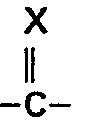
- R2 für einen- oder ß-ständigen Methyl- oder Ethylrest,
- R9, R10 R11 und R12 jeweils für ein Wasserstoffatom, eine Hyroxy-,Alkyl-, Alkoxy- oder Acyloxygruppe mit jeweils 1 bis 4 Kohlenstoffatomen oder ein Halogenatom stehen und
- R3 und R4 verschiedene Bedeutungen haben.
Description
- Die Erfindung betrifft neue 11ß-Phenyl-Gonane, Verfahren zu deren Herstellung und diese Verbindungen enthaltende pharmazeutische Präparate gemäß den Patentansprüchen.
- llß-Phenyl-Steroide sind bereits bekannt. So werden beispielsweise 11β-Aryl-17α-propinyl- und -ethinyl-4,9(10)-estradiene in der Europäischen Patentanmeldung 82400025.1 (Publikation Nr. 0 057 115) und der US-Patentschrift 4,386,085, 11β-Phenyl-17α-(3-hydroxypropyl)4,9(10)-estradiene in der Europäischen Patentanmeldung 84101721.3 (Publikation Nr. 0 116 974), 11β-Phenyl-17α-(3-hydroxypropyl-1-enyl)-4,9(10)-estradiene in der Europäischen Patentanmeldung 84730147.0 (Publikations Nr. 0 147 361) und 17β-Hydroxy-17α-(3-hydroxypropyl)-bzw. 17α-Hydroxy-17β-(3-hydroxypropyl)-13α-methyl-4,9-gonane in der Europäischen Patentanmeldung 84730Q62.1 (Publikations Nr. 0 129 499) beschrieben. Diese Verbindungen besitzen eine starke Affinität zum Gestagenrezeptor, ohne selbst gestagene Aktivität zu besitzen. Sie sind kompetitive Antagonisten des Progesterons (Anti-Gestagene) und sind zur Auslösung von Aborten geeignet, da sie das zur Aufrechterhaltung der Schwangerschaft erforderliche Progesteron vom Rezeptor verdrängen. Sie sind deshalb wertvoll und interessant im Hinblick auf ihre Verwendung zur'postcoitalen Fertilitätskontrolle. Sie können auch gegen hormonelle Unregelmäßigkeiten., zur Menstruations auslösung und zur Geburtseinleitung eingesetzt werden.
- Die in den europäischen Patentanmeldungen 84101721.3 und 84730147.0 aufgeführten Verbindungen besitzen zusätzlich zu ihren antigestagenen Eigenschaften noch antimineralcorticoide Wirkungen.
- Die zuerst genannten 11β-Aryl-17α-propinyl- und -ethinyl-4,9(10)-estradiene weisen dagegen eine antiglucocorticoide Aktivität auf und können somit auch als Arzneimittel zur Therapie corticoid-induzierter Störungen (Glaukom) sowie zur Bekämpfung von Nebenwirkungen, die bei langfristiger Behandlung mit Glucocorticoiden auftreten (Cushing-Syndrom), eingesetzt werden. Sie ermöglichen daher auch die auf eine Supersekretion der Glucocorticoide zurückzuführenden Störungen, vor allem die Adipositas, Arteriosklerose, Osteoporose, Diabetes sowie die Insomnie zu bekämpfen.
- Es ist jedoch bisher nicht in wünschenswertem Umfang gelungen, eine Dissoziation zwischen antigestagenen und antiglucocorticoiden Effekten bei diesen Verbindungen zu . erreichen (G. Teutsch in "Adrenal Steroid Antagonism, Walter de Gruyter Berlin-New York, 1984, S. 43).
- Es wurde nun gefunden, daß die neuen Verbindungen der allgemeinen Formel I überraschenderweise nicht nur sehr gute antigestagene und antiglucocorticoide Wirkungen zeigen, sondern daß bei ihnen auch eine Trennung beider Effekte zu beobachten ist.
- Zur Kennzeichnung der antigestagenen Wirkung wurde die abortive Wirkung bestimmt.
- Die Versuche wurden an weiblichen Ratten im Gewicht von ca. 200 g durchgeführt. Nach erfolgter Anpaarung wurde der Schwangerschaftsbeginn durch Nachweis von Spermien in Vaginalabstrichen gesichert. Der Tag des Spermiennachweises gilt als Tag 1 der Gravidität (= d1 p.c.).
- Die Behandlung der Tiere mit der jeweils zu testenden Substanz bzw. dem Lösungsmittel erfolgte nach der Nidation der Blastocysten von d5 p.c. bis d7 p.c. An d9 p.c. wurden die Tiere getötet und die Uteri auf Implantate und Resorptionsstellen hin untersucht. Von allen Uteri wurden Fotos angefertigt. Das Fehlen von Implantaten wurde als Abort gewertet.
- Die Testsubstanzen wurden in einem Benzylbenzoat-Rizinusöl-Gemisch (Verhältnis 1 + 9) gelöst. Das Vehikelvolumen pro Einzeldosis betrug.0,2 ml. Die Behandlung erfolgte subcutan (s.c.).
- Die Überlegenheit der erfindungsgemäßen Verbindugnen soll durch Vergleich der biologischen Eigenschaften der erfindungsgemäßen Verbindungen 11β-(4-Acetylphenyl)-17β-hydroxy-17α-(1-propinyl)-4,9-estradien-3-on (A), 17β-Hydroxy-17α-(3-hydroxy-1(Z)-propenyl)-11β-(4-propinyl- phenyl)-4,9-estradien-3-on (B) und 11β-(4-Acetylphenyl)-17β-hydroxy-17α-(3-hydroxy-1(Z)-propenyl)-4,9-estradien-3-on (C), dem in EP 82400025.1 beschriebenen 11β-(4-Dimethylaminophenyl)-17β-hydroxy-17α-(propin-1-yl)-4,9(10)-estradien-3-on RU 38486 (D), dem in EP 84101721.3 beschriebenen 11β-(4-Dimethylaminophenyl)-17β-hydroxy-17α- (3-hydroxypropyl)-4,9(10)-estradien-3-on (E), dem in EP 84730147.0 beschriebenen 11β-(4-Dimethylaminophenyl)-17β-hydroxy-17α- (3-hydroxyprop-1(Z)-enyl)-4,9(10)-estradien-3-on (F) und den in EP 84730062.1 beschriebenen 11β-(4-Dimethylaminophenyl)-17β-hydroxy-17α-(3-hydroxypropyl)-13α-methyl-4,9-gonadien-3-on (G) sowie 11β-(4-Dimethylaminophenyl)-17α-hydroxy-17β-(3-hydroxypropyl)-13α-methyl-4,9-gonadien-3-on (H) gezeigt werden:

- Zur Kennzeichnung der antiglucocorticoiden Wirkung wurde der Einfluß der erfindungsgemäßen Substanzen auf die Tyrosin-Aminotransferase bestimmt. Das Test-System basiert auf einer Messung der Aktivität des Leberenzyms Tyrosin Aminotransferase (TAT) in Kulturen von RHC (Rat Hepatoma Cells) Zellen. Das Enzym katalysiert den ersten Schritt in der Verstoffwechselung von Tyrosin und ist sowohl in der Leber als auch in Hepatomzellen durch Glucocorticoide induzierbar. Die Aktivität ist in Rohextrakten leicht meßbar (Granner und Tomkins, (1970) Meth. Enzymol. 15, 633). Das Enzym überführt die Aminogruppe von Tyrosin auf 2-Oxoglutarsäure. Dabei entstehen Glutaminsäure und p-Hydroxyphenylpyruvat. In alkalischer Lösung wird aus p-Hydroxyphenylpyruvat das stabilere p-Hydroxybenzaldehyd gebildet, dessen Absorption bei 331 nm gemessen wird. Die TAT-Aktivität in RHC-Zellen zeigt eine dosisabhängige Induktion mit Cortisol (max. Akt. bei 10-6 M) oder Dexanethason (max. Akt. bei 10-7M). Die Aktivität läßt sich um den Faktor 4 - 6 über den Basalwert stimulieren. Gleichzeitige Behandlung mit Corticoid und Antiglucocorticoid führt zu einer Abnahme der TAT-Aktivität.
- Die erfindungsgemäßert Verbindung A zeigt in diesem Test 30%, die erfindungsgemäßen Verbindungen B und C weniger als 1%, der Aktivität von RU 38.486 (D), einer Substanz, die als Standard anzusehen ist (7th Int. Congress of Endocrinologiy July 1-7, 1984, Quebec City, Canada; Excerpta Medica, Amsterdam-Oxford-Princeton).
- Da die Verbindung (A) 10 mal, die Verbindungen (B) und (C) 30 mal stärker antigestagen als (D) wirksam sind, ergibt sich hiermit eine deutliche Dissoziation der antiglucocorticoiden.und antigestagenen Eigenschaften.
- Als weiteres erfindungsgemäßes Beispiel sei noch 11ß-/4-(ariti-Hydroxy- " iminomethyl)-phenyl]-17β-hydroxy-17α-(1-propinyl)-4,9-estradien-3-on- anti-oxim (J) angeführt; diese Verbindung zeigt eine mit (D) vergleichbare antiglucocorticoide Wirkung. Im Antigestagentest ist sie aber mindestens 10 mal schwächer wirksam als (D).
- Im Gestagen-Rezeptor-Bindungstest wird die Affinität der erfindungsgemäßen Verbindungen zum Gestagenrezeptor unter- sucht. Gemessen wird dabei die Verdrängung des Agonisten durch den Antagonisten.
- Man verwendet Cytosol aus Kaninchenuterushomogenat, das das Rezeptormolekül - ein Protein - enthält. Dieses bindet mit hoher Affinität und geringer Kapazität Progesteron. Wenn diese Rezeptoren mit 3H-Progesteron in Gegenwart der zu prüfenden, unmarkierten Substanz beladen werden, so hängt es von der Konzentration und von der Bindungsaffinität der zu untersuchenden Verbindung ab, wie stark 3H-Progestern vom Rezeptor verdrängt wird. Nach Trennung des Rezeptor-gebundenen Progesterons vom nichtgebundenen kann man die Bindung in Prozent ermitteln und diesen Wert gegen den Logarithmus der molaren Konzentration der Prüfsubstanz auftragen. Man erhält charakteristische dosisabhängige Verdrängungskurven und kann nun die Konzentration der Prüfsubstanz ermitteln, die erforderlich ist, um die Referenzsubstanz vollständig vom Rezeptor zu verdrängen. Der Kompetitionsfaktor K als Maß für die Bindungsstärke ist definiert als das Verhältnis der Konzentration der Prüfsubstanz zur Konzentration der Referenzsubstanz (Progesteron), bei der beide Verbindungen eine gleich große Verdrängung von 3H-Progesteron vom Progesteron-Rezeptorkomplex zeigen, so daß ein niedriger K-Wert große Bindungsstärke (hohe Affinität) anzeigt.

- Die Tabelle zeigt, daß die beispielsweise genannten erfindungsgemäßen Verbindungen A, B, C 11β-(4-Formylphenyl)-17β-hydroxy-17α(1-propinyl)-4,9-estradien-3-on (I), 17β-Hydroxy-17α-(1-propinyl)-11β-(4-propionylphenyl)-4,9-estradien-3-on (K), 11β-(4-Acetylphenyl)-17β-hydroxy-9α,10α-methylen-17α-(1-propinyl)-4-estren-3-on (L) und 3-[11β-(4-Acetylphenyl)-17β-hydroxy-3-oxo-4,9-estradien-17α-yl]-propionsäurelakton (M) im Gestagen-Rezeptor-Bindungstest bis zu 4-fach stärker wirksam sind als die als Standart anzusehende Verbindung (D).
- Die Erfindung betrifft auch pharmazeutische Präparate, die Verbindungen der allgemeinen Formel I enthalten.
- Die pharmakologisch wirksamen erfindungsgemäßen Verbindungen der allgemeinen Formel I können nach an sich bekannten Methoden der Galenik zu pharmazeutischen Präparaten für die enterale, perkutane oder parenterale Applikation verarbeitet werden.
- Die Dosierung der erfindungsgemäßen Verbindungen liegt beim Menschen bei etwa 1 bis 1000 mg, vorzugsweise 5 bis 200 mg, pro Tag.
- Die in R1 der allgemeinen Formel I enthaltenen Kohlerwasserstoffgruppen sollen bis zu 8, bevorzugt bis zu 4 Kohlenstoffatome aufweisen. Im Falle der gesättigten Alkylreste sind Substitutionen, bei denen die

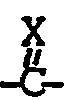
- Die in R3, R4, R5, R6, R7, R9, R10, R11 und R12 bzw. R8 der allgemeinen Formel 1 enthaltenen Alkyl-, Acyl- und Alkoxygruppen sollen jeweils 1 bis 4 bzw. 1 bis 10 Kohlenstoffatome enthalten, wobei die Methyl-, Ethyl-, Propyl-, Formyl-, Acetyl-, Propionyl-, Butyryl-, die Methoxy-und Ethoxygruppe bevorzugt sind.
- Von den Alkenylresten ist die Propenylgruppe, die in der E- oder Z-Konfiguration vorliegen kann, bevorzugt, d.h. wenn R4 für -CH=CH-(CH2)k-CH2-R6 steht, dann soll k bevorzugt Null bedeuten. Stehen R9, R10, R11 und R12 für Halogen, so ist Chlor bevorzugt. Im Falle der Substituenten R9, R10, R11 und R12 ist die Monosubstitution bevorzugt, d.h. drei dieser Substituenten stehen dann für Wasserstoffatome.
- Die neuen 13-Alkyl-11β-phenylgonane der allgemeinen Formel I werden erfindungsgemäß nach dem Verfahren gemäß Anspruch 36 hergestellt.
- Ausgehend von den Verbindungen der allgemeinen Formel II wird zur Wasserabspaltung unter Ausbildung der 4(5)-Doppelbindung und zur gleichzeitigen Entfernung vorhandener Schutzgruppen mit Säure oder einem sauren Ionenaustauscher behandelt. Die saure Behandlung erfolgt in an sich bekannter Weise, indem man die Verbindung der Formel II, die zumindest zwei Schutzgruppen enthält, in einem mit Wasser mischbaren Lösungsmittel, wie wäßrigem Methanol, Ethanol oder Aceton, löst und auf die Lösung katalytische Mengen Mineral- oder Sulfonsäure, wie Salzsäure, Schwefelsäure, Phosphorsäure, Perchlorsäure oder p-Toluolsulfonsäure,oder eine organische Säure, wie Essigsäure, so lange einwirken läßt, bis Wasser abgespalten ist und Schutzgruppen entfernt sind. Die Umsetzung, die bei Temperaturen von 0 bis 100 °C abläuft, kann auch mit einem sauren Ionenaustauscher vorgenommen werden. Der Verlauf der Umsetzung kann mit analytischen Methoden, beispielsweise durch Dünnschichtchromatographie entnommener Proben, verfolgt werden.
- Die in der allgemeinen Formel II von K, K1, R'3. und R'4. umfaßten Schutzgruppen sind im sauren Milieu leicht abspaltbare Gruppen, wie z.B. die Ethylendioxyketal-, Ethylendithioketal-, 2,2-Dimethyltrimethylendioxyketal-, Hydroxyimino-, Methoxyimino-, Tetrahydropyranyl-, Methoxymethyl- oder Ethoxymethylgruppe.
- Wird eine Verbindung der allgemeinen Formel II eingesetzt, deren K1 eine geschützte Hydroxygruppe enthält, so wird diese anschließend mit einem der für die Oxidation allylischer Hydroxygruppen üblichen Oxidationsmittel, wie z.B. Chromsäure, Pyridin, Pyridiniumdichromat, Pyridiniumchlorochromat, Braunstein, Silbercarbonat auf Celite, in die Oxofunktion überführt. Bevorzugt ist die bei Temperaturen zwischen -20 °C und +40 °C durchgeführte Umsetzung mit Braunstein.
- Die Einführung von Hydroxygruppen in die Positionen 6, 7, 15 und 16 des Steoidgerüstes der allgemeinen Formel II mit R9, R10, R11 und R12 in der Bedeutung je eines Wasserstoffatoms erfolgt mit Hilfe von Mikroorganismen.
- So erfolgt eine 6α-Hydroxylierung, wenn man zur Fermentation Mikroorganismen der Species Nigrospora shaerica (CBS 98469) verwendet. Mit Neurospora crassa (ATCC 9278) gelingt eine 7α-, mit Streptomyces platensis (NRRL 2364) eine 15ß- und mit Streptomyces toyocaensis (DSM 40030) eine 16α-Hydroxylierung.
- Die Fermentationen werden unter den Bedingungen durchgeführt, die man üblicherweise bei der mikrobiologischen Hydroxylierung von Steroiden mit Mikroorganismen anwendet. So werden zunächst in allgemein üblichen Vorversuchen die günstigsten Fermentationsbedingungen, wie zum Beispiel Auswahl des günstigsten Nährmediums, des geeigneten Substratlösungs-oder suspensionsmittels, der Substratkonzentration, der technischen Bedingungen wie Temperatur, Belüftung, pH-Wert und der optimalen Zeiten für Germination, Substratzugabe und Substratkontakt am Enzym des Mikroorganismus analytisch, insbesondere dünnschichtchromatographisch, ermittelt.
- Es ist zweckmäßig, das Substrat in einer Konzentration von etwa 100 bis 5000 mg pro Liter Nährmedium einzusetzen. Der pH-Wert wird vorzugsweise auf einen Bereich von 5 bis 7,5 eingestellt. Die Züchtungstemperatur liegt im Bereich von 20 bis 40°C, vorzugsweise von 25 bis 35°C. Zur Belüftung werden vorzugsweise 0,5 bis 5 Liter Luft pro Minute pro Liter Kulturbrühe zugeführt. Die Umwandlung des Substrats wird zweckmäßigerweise durch dünnschichtchromatographische Analyse verfolgt. Die Fermentationszeit beträgt etwa 30 bis 130 Stunden.
- Eine Kcnfigurationsumkehr dieser sekundären Alkohole wird nach an sich bekannten Methoden, vorzugsweise nach der Mitsunobu-Reaktion mit Azodicarbonsäureester/Triphenylphosphin (Synthesis 1981,1, Chem. Commun. 1981, 840) durchgeführt.
- Die Einführung der Halogen-Substituenten in die C-6, C-7, C-15 oder C-16-Position des Steroidgerüstes erfolgt nach literaturbekannten Verfahren durch nukleophile Substitution der entsprechenden Hydroxygruppen unter Inversion vorzugsweise mit Triphenylphosphin und einer Halogenquelle wie zum Beispiel CCl4 oder CBr4 (Chem. Ind. 1966, 900, Ca.n. J.Chem. 1982, 210, J.C.S. Perkin I 1982, 681, Synthesis 1983, 139) oder im Falle des Fluorid-Substituenten mit (Diäthylamino)schwefeltri- fluorid (US-Patent 3.914.265 J. Org.Chem. 1983, 393).
- Wird die Einführung eines C-6-, C-7-, C-15- oder C-16-Alkyl-Substituen ten gewünscht, so bedient man sich ebenfalls der entsprechenden hydroxylierten Edukte. Nach Überführung in eine geeignete Fluchtgruppe wie zum Beispiel Mesylat, Tosylat, Jodid, Bromid, vorzugsweise jedoch Tosylat, wird die Hydroxygruppe durch Umsetzung mit Lithiumdialkylcupraten oder Organocupraten der Formel Alkyl2Cu (CN)Li2 (J. Am.Chem.Soc. 103, 7672 (1981) ) substituiert.
- Die so erhaltenen Verbindungen der allgemeinen Formel I mit X in der Bedeutung eines Sauerstoffatoms können gewünschtenfalls durch Umsetzung mit Hydroxylaminhydrochlorid in Gegenwart von tertiären Aminen bei Temperaturen zwischen -20 und +40 °C in die Oxime (Formel I mit X in der Bedeutung der Hydroxyiminogruppierung N~OH, wobei die Hydroxygruppe syn- oder antiständig sein kann) überführt werden. Geeignete tertiäre Basen sind beispielsweise Trimethylamin, Triäthylamin, Pyridin, N,N-Dimethylaminopyridin, 1,5-Diazabicyclo[4.3.0]nonen-5 (DBN) und 1,5-Diazabicyclo[5.4.0]undecen-5 (DBU), wobei Pyridin bevorzugt ist.
- Wird eine Veresterung von Verbindugnen der allgemeinen Formel I, deren R3, R4, R9, R10, R11, R12 eine Hydroxygruppe enthält, gewünscht, so erfolgt diese Acylierung in an sich bekannter Weise, beispielsweise durch Umsetzung mit dem Säureanhydrid in Pyridin bei Raumtemperatur.
- Die Herstellung der Ausgangsverbindungen der allgemeinen Formel II geht, wie z.B. in den europäischen Patentanmeldungen 84101721.3 und 82400025.1 beschrieben, aus vom Epoxid der allgemeinen Formel III

- Die Einführung des 11β-Phenylrestes unter Ausbildung des Δ9,10-5α-Hydroxy-Strukturelements erfolgt entweder durch Cu(I)-katalysierte Grignard-Reaktion mit den entsprechenden Arylmagnesiumhalogeniden (Tetrahedron Letters 1979, 2051) oder durch Umsetzung mit gemischten Organocupraten des Typs R2 Cu(CN)Li2 (J. Amer. Chem. Soc. 103 (1981) 7672).
- Der Zugang zur 13α-Methyl- bzw. 13α-Ethylreihe (R2 ist α-ständig) gelingt - wie z.B. in der europäischen Patentanmeldung 84730062.1 beschrieben - durch Bestrahlung von Zwischenprodukten der allgemeinen Formel IV

- Die Einführung einer 9, 10-Epoxy- bzw. -Methylengruppe (A und B stehen dann gemeinsam für ein Sauerstoffatom bzw. eine CH2-Gruppe) erfolgt auf der Stufe des Δ9,10-5α, 17-Dihydroxy-11β-Phenyl-Zwischenpradukts nach an sich bekannten Methoden durch Umsetzung mit z.B. Wasserstoffperoxid, organischen Persäuren, wie z.B. m-Chlorperbenzoesäure oder Perphthalsäure, tert. Butylhydroperoxid bzw. mit z.B. Methylenjodid oder Methylenbromid/Zink (Simmons-Smith).
- Die Einführung der Substituenten R3 und R4 erfolgt nach den üblichen Verfahren des C -Seitenkettenaufbaus durch nucleophile Addition an das 17-Keton und Folgereaktionen ("Terpenoids and Steroids", Specialist Periodical Report, The Chemical Society, London, Vol. 1 - 12). Während die nucleophile Addition an das 17-Keton der 13ß-Alkylreihe nur Addukte mit der Hydroxygruppe in ß- und der eintretenden Gruppe in α-Stellung zum Fünfring liefert, verläuft die Addition an das entsprechende 13 Epi-17- keton im allgemeinen unter Bildung beider möglicher, isomerer Formen an C-17, die jedoch durch Chromatographie oder fraktionierte Kristallisation leicht trennbar sind. In vielen Fällen sind beide Isomere pharmakologisch wirksam, wenn auch Unterschiede in der Wirkungsstärke bestehen können.
- Die nucleophile Addition von HC≡CX, in der X Wasserstoff, Alkyl mit 1 - 4 C-Atomen oder Halogen bedeutet, erfolgt mit Hilfe einer Verbindung der allgemeinen Formel MC≡CX, in der X die oben angegebene Bedeutung hat und Mein Alkalimetall darstellt.
- Die metallorganische Verbindung kann auch in situ gebildet und mit dem 17-Keton zur Reaktion gebracht werden. So kann man zum Beispiel auf das 17-Keton in einem geeigneten Lösungsmittel Acetylen und ein Alkalimetall, insbesondere Kalium, Natrium oder Lithium, in Gegenwart eines Alkohols oder in Gegenwart von Ammöniak einwirken lassen. Das Alkalimetall kann auch in Form von zum Beispiel Methyl-oder Butyllithium zur Einwirkung kommen. Als Lösungsmittel sind insbesondere Dialkylether, Tetrahydrofuran, Dioxan, Benzol und Toluol geeignet.
- Zur Herstellung der 17-Chlorethinylverbindung wird die metallorganische Chlorethinylverbindung in situ aus 1,2-Dichlorethylen und einer etherischen Alkalimetall-Lösung, wie zum Beispiel Methyl- oder Butyllithiumlösung, gebildet und mit dem 17-Keton in Lösungsmitteln, wie Tetrahydrofuran oder Diethylether, umgesetzt.
- 17-Bromethinylverbindungen können auch durch Bromierung des entsprechenden Ethinyl-Edukts hergestellt werden (Angw. Chem. 96, 720 (1984)).
- Die 17-Ethinyl-17-hydroxy-Verbindungen lassen sich in alkoholischer Lösung unter Quecksilbersalzkatalyse hydratisieren zu den 17-Acetyl-17-hydroxy-Verbindungen (Chem. Ber. 111 (1973) 3086 - 3093).
- Die Einführung von 3-Hydroxypropin, -propen bzw. -propan in 17-Stellung erfolgt durch Umsetzung des 17-Ketons mit metallierten Derivaten des Propargylalkohols, zum Beispiel mit 1-Lithium-3-tetrahydropyran-2'-yloxy-propin-1, zu den 17-(3-Hydroxy-1-propinyl)-17-hydroxy-Verbindungen, die .anschließend zu den 17-(3-Hydroxypropyl-bzw. 3-Hydroxy- propenyl)-17-hydroxy-Verbindungen hydriert werden können. Die Hydrierung muß unter Bedingungen durchgeführt werden, die ausschließlich den Angriff an der C-C-Dreifachbindung gewährleisten, ohne die gegebenenfalls vorhandene tetrasubstituierte 9(10)-Doppelbindung abzusättigen. Das gelingt zum Beispiel bei der Hydrierung bei Raumtemperatur und Normaldruck in Lösungsmitteln wie Methanol, Ethanol, Propanol, Tetrahydrofuran (THF) oder Essigester unter Zusatz von Edelmetall-Katalysatoren wie Platin oder Palladium.
- Die Einführung der homologen Hydroxyalkin-, Hydroxyalken-und Hydroxyalkangruppen erfolgt in entsprechender Weise mit Homologen des Propargylalkohols.
- Die Verbindung mit der Z-konfigurierten Doppelbindung in der Hydroxypropenylgruppe entsteht durch Hydrieren der acetylenischen Dreifachbindung mit einem desaktivierten Edelmetallkatalysator (J. Fried, J.A. Edwards: Organic Reactions in Steroid Chemistry, Van Nostrand Reinhold Company 1972, Seite 134, und H.O. House: Modern Synthetic Reactions 1972, Seite 19). Als desaktivierte Edelmetall-katalysatoren kommen beispielsweise 10 % Palladium auf Bariumsulfat in Gegenwart eines Amins oder 5 % Palladium auf Calciumcarbonat unter Zusatz von Blei(II)-acetat infrage. Die Hydrierung wird nach der Aufnahme von einem Äquivalent Wasserstoff abgebrochen.
- Die Verbindung mit der E-konfigurierten Doppelbindung in der Hydroxypropenylgruppe entsteht durch Reduktion der acetylenischen Dreifachbindung in an sich bekannter Weise.. In der Literatur sind eine ganze Reihe von Methoden zur Unwandlung von Alkinen in trans-Olefine beschrieben, beispielsweise die Reduktion mit Natrium in flüssigem Ammoniak (J. Am. Chem. Soc. 63 (1941) 216), mit Natriumamid in flüssigem Ammoniak (J. Chem. Soc. 1955, 3558), mit Lithium in niedermolekularen Aminen (J. Am. Chem. Soc. 77 (1955) 3378), mit Boranen (J. Am. Chem. Soc. 93 (1971) 3395 und 94 (1971) 6560), mit Diisobutylaluminiumhydrid und Methyl-Lithium (J. Am. Chem. Soc. 89 (1967) 5085) und insbesondere mit Lithiumaluminiumhydrid/Alkoholat (J. Am. Chem. Soc. 89 (1967) 4245). Eine weitere Möglichkeit ist die Reduktion der Dreifachbindung mit Chrom(II)-sulfat in Gegenwart von Wasser oder Dimethylformamid in schwach saurem Milieu (J. Am. Chem. Soc. 86 (1964) 4358) sowie allgemein die Reduktion durch Einwirkung von Übergangsmetallverbindungen unter Wechsel der Oxydationsstufe.
- Werden Endprodukte der Formel I gewünscht mit R3/R4 in der Bedeutung von

- Zur Einführung der Gruppierung

- Der Aufbau der 17-Cyanmethylseitenkette erfolgt in an sich bekannter Weise aus dem 17-Keton zum Beispiel über das 17-Spiroepoxid und Spaltung des Spiroepoxids mit HCN gemäß Z. Chem. 18 (1978) 259 - 260.
- Auch die Einführung der 17-Hydroxyacetylseitenkette erfolgt nach an sich bekannten Methoden, beispielsweise nach der in J. Org. Chem. 47 (1932), 2993 - 2995, beschriebenen Methode.
- Freie Hydroxygruppen in 6-, 7-, 15-, 16- oder 17-Stellung können in an sich bekannter Weise verestert oder verethert werden.
- Die Stämme Neurospora crassa (ATCC 9278), Nigrospora shaerica (CBS 98469), Streptomyces platensis (NRRL 2364) und Streptomyces toyocaensis sind bei der Deutschen Sammlung von Mikroorganismen unter den Nummern DSM 894, DSM 3392, DSM 40041 und DSM 40030 hinterlegt worden.
- Eine Lösung von 9,0 g 3,3-(2,2-Dimethyl-trimethylendioxy)-11β-[4-(5,5-dimethyl-1,3-dioxan-2-yl)-phenyl]-17α-ethinyl-9-estren-5α, 17β-diol in 90 ml 70 %iger wäßriger Essigsäure wird 30 Minuten bei 50 °C gerührt. Nach dem Abkühlen gießt man in Eiswasser, neutralisiert durch Zugabe von wäßriger Ammoniak-Losung und extrahiert mit Dichlormethan. Durch Kristallisation des Rohprodukts aus Ethylacetat/Diisopropylether erhält man 5,3 g 17α-Ethinyl-11β-(4-formyl- phenyl)-17β-hydroxy-4,9-estradien-3-on vom Schmelzpunkt 197 - 198 °C.
- Die Herstellung des Ausgangsmaterials erfolgt auf folgendem Wege: .
- a) Eine Lösung von 25 g 4-Brombenzaldehyd in 250 ml Dichlormethan wird nach sukzessiver Zugabe von 37,5 g 2,2-Dimethyl-propan-1,3-diol, 18,75 ml Orthoameisensauretrimethylester und 20 mg p-Toluolsulfonsäure 24 Stunden bei Raumtemperatur gerührt. Zur Aufarbeitung gießt man in gesättigte, wäßrige NaHCO3-Lösung und extrahiert mit Diethylether. Nach Kristallisation des Rohprodukts aus Hexan erhält man 37,1 g 4-(5,5-Dimethyl-1,3-dioxan-2-yl)-brombenzol vom Schmelzpunkt 62 - 64 °C.
- b) Zu einer Suspension von 4,5 g Magnesiumspänen in 120 ml absoluten (abs.) Tetrahydrofuran (THF) gibt man bei 25 C zunächst 0,05 ml Iodmethan und anschließend eine Lösung von 54 g 4-(5,5-Dimethyl-1,3-dioxan-2-yl)-brombenzol in 270 ml abs. THF so hinzu, daß die Innentemperatur 45 °C nicht übersteigt. Nach vollständiger Auflösung des Magnesiums kühlt man auf +5 °C und gibt portionsweise 1,07 g CuCl zur Reaktionslösung. Man rührt 15 Minuten nach und gibt anschließend bei +5 °C eine Lösung von 25,4 g 3,3-(2,2-Dimethyl-trimethylendioxy)-5α,10α-epoxy-9(11)-estren-17ß-ol in 250 ml abs. THF tropfenweise hinzu. Nach erfolgter Zugabe rührt man weitere 2 Stunden bei Raumtemperatur, gießt die Reaktionslösung dann in ein Gemisch aus Eiswasser/wäßriger Ammoniaklösung und extrahiert mit Ethylacetat. Das so erhaltene ölige Rohprodukt wird mit Hexan/Ethylacetat an Aluminiumoxid (Merck, Stufe III, neutral) chromatographiert. Nach Kristallisation der Hauptfraktion aus Ethylacetat/ Diisopropylether erhält man 33,8 g 3,3-(2,2-Dimethyl- trimethylendioxy)-11β-[4-(5,5-dimethyl-1,3-dioxan-2-yl)-phenyl]-9-estren-5α,17β-diol vom Schmelzpunkt 218 - 220 °C.
-


- d) Abs. THF (495 ml) wird 30 Minuten bei 0 °C mit Acetylen gesättigt. Anschließend tropft man 100 ml einer 15 %igen Lösung von n-Butyllithium in Hexan hinzu und danach eine Lösung von 8,75 g des unter c) erhaltenen Ketons in 135 ml THF. Man rührt 3,5 Stunden bei Raumtemperatur nach, gießt dann in ca. 2 1 Eiswasser und extrahiert mit Ethylacetat. Das so erhaltene ölige Rohprodukt (9,0 g) wird ohne weitere Reinigung in die Endstufe eingesetzt.
- 20,1 g 3,3-(2,2-Dimethyl-trimethylendioxy)-11β-[4-(5,5-dimethyl-1,3-dioxan-2-yl)-phenyl]-17α-(1-propyl)-9- estren-5α, 17β-diol werden in 83 ml 70 %iger wäßriger Essigsäure 30 Minuten bei 60 °C gerührt und unter den Bedingungen des Beispiels 1 aufgearbeitet. Nach Kristallisation des Rohprodukts aus Methylenchlorid/Diisopropylether erhält man 10,6 g der Titelverbindung vom Schmelzpunkt 207 - 203 °C.
- Die Herstellung des Ausgangsmaterials erfolgt auf folgendem Wege:
- Abs. THF (1040 ml) wird durch 30minütiges Einleiten bei 0 °C mit Methylacetylen gesättigt. Anschließend tropft man bei O bis +5 °C 84,4 ml einer 15 %igen Lösung von n-Eutyllithium hinzu, rührt nach Zugabe 15 Minuten und gibt dann eine Lösung von 19,4 g 3,3-(2,2-Dimethyl-trimethylendioxy)-11ß-[4-(5,5-dimethyl-1,3-dioxan-2-yl)-phenyl]-5α-hydroxy-9-estren-17-on (s. Beispiel 1 c)) tropfenweise hinzu. Man rührt weitere 60 Minuten bei Raumtemperatur, gießt in Eiswasser und extrahiert mit Ethylacetat. Das Rohprodukt. (20,1 g) wird ohne weitere Reinigung in die Endstufe eingesetzt.
- Unter den Bedingungen des Beispiels 1 setzt man 1,1 g 3,3-(2,2-Dimethyl-trimethylendioxy)-11ß-[4-(5,5-dimethyl-1,3-dioxan-2-yl)-phenyl]-13α-methyl-17β-(1-propinyl)-9- gonen-5α,17α-diol mit 15 ml 70 %ige Essigsäure bei 60 °C um. Nach Chromatographie des Rohprodukts an Kieselgel mit Hexan/ Ethylacetat erhält man 530 mg der Titelverbindung amorph.

- Die Herstellung des Ausgangsmaterials erfolgt auf folgendem Wege:
- a) Eine Lösung von 4,0 g des unter 1 c) erhaltenen Ketons in 600 ml Dioxan wird in einer Quarzglas-Tauchapparatur 35 Minuten bei 25 °C mit einer Hg-Hochdrucklampe (Philips HPK 125) bestrahlt. Das Lösungsmittel wird anschließend im Wasserstrahlvakuum entfernt und der ölige Rückstand an Al2O3 (Merck, neutral, Stufe III) mit Hexan/Ethylacetat chromatographiert. Kristallisation der Hauptfraktion aus Diisopropylether ergibt 2,05 g 3,3-(2,2-Dimethyl-trimethylendioxy)-11β-[4-(3,5-dimethyl-1,3-dioxan-2-yl)-phenyl]-5α-hydroxy-13α-methyl-9-gonen-17-on vom Schmelzpunkt 135 - 187 °C.

- b) Unter den Bedingungen des Beispiels 2 a) werden 1,9 g des unter a) erhaltenen Ketons mit Methylacetylen umgesetzt. Nach Chromatographie des Rohprodukts an Al2O3 mit Hexan/Ethylacetat und Kristallisation der Hauptfraktion aus CH2Cl2/Ethylacet erhalt man 1,22 g 3,3-(2,2-Dimethyl-trimethylendioxy)-11β-[4-(5,5-dimethyl-1,3-dioxan-2-yl)-phenyl]-13α-methyl-17β-(1-propinyl)-9-gonen-5α,17α-diol vom Schmelzpunkt 240 - 243 °C.

- 2,7 g 3,3-(2,2-Dimethyl-trimethylendioxy)-11β-[3-(5,5-dimethyl-1,3-dioxan-2-yl)-phenyl]-17α-(1-propinyl)-9- estren-5α-17β-diol werden unter den Bedingungen des Beispiels 1 mit 30 ml 70 %iger Essigsäure gespalten. Nach Kristallisation des so erhaltenen Rohprodukts aus Dichlormethan/Aceton erhalt man 1,15 g der Titelverbindung vom Schmelzpunkt 260 - 262 °C.
-

- a) Aus 31,7 ml 3-Brombenzaldehyd, 75 g 2,2-Dimethyl-propan-1,3-diol, 37,6 ml Orthoameisensäuretrimethylester und 50 mg p-Toluolsulfonsäure in 500 ml Dichlormethan erhält man unter den Bedingungen des Beispiels 1 a) nach Kristallisation aus Hexan 73,0 g 3-(5,5-Dimethyl-1,3-dioxan-2-yl)-methyl-brombenzol vom Schmelzpunkt 42 - 43 °C.
- b) Aus 15,0 g 3,3-(2,2-Dimethyl-trimethylendioxy)-5α,10α-epoxy-9(11)-estren-17ß-ol, 62,2 g des unter a) erhaltenen Ketals, 4,82 g Magnesium, 0,08 ml Iodmethan und 1,02 g CuCl in 420 ml THF erhält man unter den Bedingungen des Beispiels 1 b) nach Chromatographie über Al2O3 mit Hexan/Ethylacetat 19,6 g 3,3-(2,2-Dimethyl-trimethylen- dioxy)-11β-[3-(5,5-dimethyl-1,3-dioxan-2-yl)-]-9 estren-5α,17ß-diol als farbloses Öl.
- c) Oppenauer-Oxidation des unter b) erhaltenen Produkts (18,0 g), 10,3 g Aluminiumisopropylat, 112 ml Cyclohexanon, 560 ml Toluol unter den Bedingungen des Beispiels 1 c) ergibt nach Kristallisation des Rohprodukts aus Diisopropylether 13,8 g des 17-Ketons vom Schmelzpunkt 195 - 197 °C.

- d) Unter den Bedingungen des Beispiels 2 a) werden 2,5 g des unter c) erhaltenen Ketons mit dem Lithiumderivat des Methylacetylens umgesetzt. Das Rohprodukt (2,7 g) wird ohne weitere Reinigung in die Endstufe eingesetzt.
- Durch saure Hydrolyse von 1,0 g 3,3-(2,2-Dimethyl-trimethylen- dioxy)-17β-[3-(5,5-dimethyl-1,3-dioxan-2-yl)-phenyl]-13α-methyl-17ß-(1-propinyl)-9-gonen-5α,17α-diol analog Beispiel 1 erhält man nach Chromatographie des Rohprodukts an Kieselgel mit Hexan/Aceton 560 mg der Titelverbindung amorph.

- a) Unter den Bedingungen des Beispiels 3 a) bestrahlt man eine Lösung von 3,5 g des unter Beispiel 4 c) erhaltenen . Ketons in 525 ml Dioxan. Durch Chromatographie des Rohprodukts an Al2O3 mit Hexan/Ethylacetat und Kristallisation der Hauptfraktion aus Diisopropylether erhält man 1,97 g 3,3-(2,2-Dimethyl-trimethylendioxy)-11ß-[3-(5,5-dimethyl-1,3-dioxan-2-yl)-phenyl]-5α-hydroxy-13α-methyl-9-gonen-17-on vom Schmelzpunkt 209 - 211 °C.

- b) Durch Umsetzung des unter a) erhaltenen Produkts (1,8 g) mit Methylacetylen unter den Bedingungen des Beispiels 2 a) erhält man nach Chrocatographie und Kristallisation aus Ethylacetat/Diisopropylether 1,12 g 3,3-(2,2-Dimethyl- trimethylendioxy)-11ß-[3-(3,5-dimethyl-1,3-dioxan-2-yl)-phenyl]-13α-methyl-17ß-(1-propinyl)-9-gonen-5α,17α-diol vom Schmelzpunkt 167 - 170 °C.

- Durch Umsetzung von 2,36 g 3,3-(2,2-Dimethyl-trimethylen- dioxy)-11β-[4-{1,1-(2,2-Dimethyltrimethylendioxy)-ethyl]-phenyl]-5α-hydroxy-9-estren-17-on mit Methylacetylen unter den Bedingungen des Beispiels 2 a) und anschließende essigsaure Hydrolyse des Rohprodukts unter den Bedingungen des Beispiels 1 erhält man 1,14 g der Titelverbindung vom Schmelzpunkt 151 - 154 °C (aus Hexan/Aceton).

- a) Aus 50,0 g 4-Bromacetophenon, 75 g 2,2-Dimethylpropan-1,3-diol, 37,6 ml Orthoameisensäuretrimethylester und 30 mg p-Toluolsulfonsäure in 500 ml Dichlormethan erhält man unter den Bedingungen der Beispiele 1 a) und 4 a) nach Chromatographie des Rohprodukts an Al2O3 mit Hexan/Ethylacetat 73 g des Ketals als farbloses Öl.
- b) Aus 14,1 g 3,3-(2,2-Dimethyl-trimethylendioxy)-5α,10α-epoxy-9(11)-estren-17ß-ol, 4,12 g Magnesium, 55,92 g des unter a) erhaltenen Bromketals, 0,05 ml Iodmethan und 874 mg CuCl in insgesamt 390 ml THF erhält man unter den Bedingungen des Beispiels 1 b) nach Chromatographie 14,6 g Addukt als farbloses Öl.
- c) Durch Oppenauer-Oxidation analog Beispiel 1 c) erhält man aus 12,8 g des unter b) erhaltenen Grignardprodukts nach Kristallisation des Rohprodukts aus Ethylacetat/Diisopropylether 11,5 g des 17-Ketons vom Schmelzpunkt 211 - 215 °C.
- Durch Bestrahlung von 4,0 g des unter Beispiel 6 c) erhaltenen Ketons unter den Bedingungen des Beispiels 3 a), Umsetzung des so erhaltenen Produkts mit Methylacetylen unter den Bedingungen des Beispiels 2 a) und anschließende Essigsäureabspaltung analog 1 erhält man 1,09 g 11β-(4-Acetylphenyl)-17α-hyrdroxy-13α-methyl-17β-(1-propinyl)-4,9-gonadien-3-on, amorph.

- Eine Lösung von 750 mg 17β-Hydroxy-11β-[4-(3-hydroxy-1-(E)-propenyl)-phenyl]-17α-(1-propinyl)-4,9-estradien-3-on in 20 ml Dichlormethan wird nach Zusatz von 4,0 g Mangandioxid 15 Minuten bei Raumtemperatur gerührt. Anschließend filtriert man über Celite und engt das Filtrat ein. Man erhält 620 mg 17-Hydroxy-11β-[4-(3-oxo-1(E)propenyl)-phenyl]-17α-(1-propinyl)-4,9-estradien-3-on, amorph.
-

- Die Herstellung des Ausgangsmaterials erfolgt auf folgendem Wege:
- a) Zu einer Lösung von 20,0 g 4-Brombenzaldehyd in 300 ml abs. THF tropft man bei -10 °C 81 ml einer 1,6-molaren Lösung von Vinylmagnesiumbromid in THF. Nach Zugabe rührt man 60 Minuten bei 0 °C, gießt in Eiswasser und extrahiert mit Ethylacetat. Nach Chromatographie an Al2O3 mit Hexan/Ethylacetat erhält man 18,6 g 4-(1-Hydroxy-2-propenyl)-brombenzol als farbloses Öl.
- b) Das unter a) erhaltene Produkt (18,6 g) wird in 100 ml THF gelöst und nach Zugabe von 25 ml Dihydropyran und 0,02 ml POCl3 3 Stunden bei Raum emperatur gerührt. Anschließend gießt man in gesättigte NaHCO3-Lösung und extrahiert mit Diethylether. Chromatographie des Rohprodukts an Al2O3 mit Hexan/Ethylacetat liefert 19,2 g 4-[3-(Tetrahydropyran-2-yloxy)-1(E)-propenyl]-brombenzol als farbloses Öl.
- c) Aus 920 mg Magnesium in 15 ml abs. THF, 0,05 ml Iodmethan und 13,0 g des unter b) erhaltenen Bromids in 50 ml THF wird ein Grignard-Reagenz hergestellt und nach Zusatz von 195 mg CuCl mit 5,0 g 3,3-(2,2-Dimethyl-trimethylendioxy)-5α,10α-epoxy-9(11)-estren-17β-ol in 50 ml THF unter den Bedingungen des Beispiels 1 b) umgesetzt; die Reaktionszeit beträgt jedoch 24 Stunden. Nach chromatographischer Reinigung des Rohprodukts erhält man 4,5 g des Addukts als gelbliches Öl.
- d) Durch Oppenauer-Oxidation des unter c) erhaltenen Addukts analog Beispiel 1 c) erhält man aus 3,3 g Edukt nach Chromatographie an Al2O3 mit Hexan/Ethylacetat 2,94 g des 17-Ketons als Öl.
- e) Umsetzung des unter d) erhaltenen Ketons (2,9 g) mit Methylacetylen unter den Bedingungen des Beispiels 2 a) und saure Spaltung des so erhaltenen Rohprodukts unter den Bedingungen des Beispiels 1 ergibt 960 mg 17β-Hydroxy-11β-[4-(3-hydroxy-1(E)-propenyl)-phenyl]-17α-(1-propinyl)-4,9-estradien-3-on als festen Schaum.
- Zu einer Lösung von 4,07 g (11β-(4-Formylphenyl)-17β-hydroxy-17α-(1-propinyl)-4,9-estradien-3-on (s. Beispiel 2) in 60 ml Pyridin gibt man unter Eiswasserkühlung portionsweise 3,65 g Hydroxylamin-hydrochlorid. Nach Zugabe rührt man 30 Minuten bei +5 C, gießt in eine Mischung aus Eiswasser/0,5n-Salzsäure und extrahiert mit Dichlormethan. Durch fraktionierte Kristallisation des Rohprodukts (4,53 g) aus Ethylacetat erhält man:
- a) 2,17 g 11β-[4-(anti-Hydroxyiminomethyl)-phenyl]-17β-hydroxy-17α-(1-propinyl)-4,9-estradien-3-on-anti-oxim vom Schmelzpunkt 242 - 244 °C.
- b) 880 mg 11β-[4-(anti-Hydroxyiminomethyl)-phenyl]-17β-hydroxy-17α-(1-propinyl)-4,9-estradien-3-on-syn-oxim vom Schmelzpunkt 243 - 251 °C.
- Umsetzung von 5,71 g 3,3-(2,2-Dimethyl-trimethylendioxy)-11β-[4-(5,5-dimethyl-1,3-dioxan-2-yl)-phenyl]-17α-[3-(tetrahydropyran-2-yloxy)-1(Z)-propenyl]-9-estren-5α,17β-diol mit 70 ml 70 %iger Essigsäure unter den Bedingungen des Beispiels 1 ergibt nach chromatographischer Reinigung 2,3 g 11β-(4-Formyl- phenyl)-17ß-hydroxy-17α-(3-hydroxy-1(Z)-propenyl)-4,9-estra- dien-3-on als festen Schaum.
-

- a) Aus 6,35 g 3-(Tetrahydropyran-2-yloxy)-1-propin in 115 ml abs. THF und 31,6 ml einer 15 %igen Lösung von n-Butyllithium in Hexan stellt man bei 0 °C die lithiumorganische Verbindung her und tropft dazu bei 0 bis +5 °C eine Lösung von 5,1 g des unter Beispiel 1 c) erhaltenen Ketons in 70 ml abs. THF. Man rührt anschließend 3 Stunden bei Raumtemperatur, gießt danach in Eiswasser und extrahiert mit Ethylacetat. Das Rohprodukt wird an neutralem Aluminiumoxid mit Hexan/Ethylacetat chromatographiert. Als ölige Hauptfraktion erhält man 7,2 g 3,3-(2,2-Dimethyl- trimethylendioxy)-11β[4-(5,5-dimethyl-1,3-dioxan-2-yl)-phenyl]-17α-[3-(tetrahydropyran-2-yloxy)-1-propinyl]-9- estren,-5α,17β-diol.
- b) Eine Lösung von 5,7 g des unter a) erhaltenen Produkts in 75 ml THF wird nach Zusatz von 5 ml Pyridin und 560 mg Palladium/Bariumsulfat (10 % Pd) bei Raumtemperatur und Normaldruck hydriert. Nach Stillstand der Wasserstoffaufnahme filtriert man vom Katalysator ab und engt das Filtrat ein. Man erhält 5,71 g 3,3-(2,2-Dimethyl- triamethylendioxy)-11β-[4-(5,5-dimethyl-1,3-dioxan-2-yl)-phenyl]-17α-[3-(tetrahydropyran-2-yloxy)-1(Z)-propenyl]-9-estren-5α,17β-diol als Öl.
- Unter den Bedingungen des Beispiels 1 setzt man 420 mg 3,3-(2,2-Dimethyl-trimethylendioxy)-11β-[4-(5,5-dimethyl-1,3-dioxan-2-yl)-phenyl]-13α-methyl-17α-(1-propinyl)-9-gonen-5α,17β-diol mit 6,5 ml 70 %iger Essigsäure bei 60 °C um. Nach Chromatographie des Rohprodukts an Kieselgel mit Hexan/Ethylacetat erhält man 180 mg der Titelverbindung als gelblichen Schaum.

- Bei der unter 3 b) beschriebenen Additionsreaktion mit Methylacetylen erhält man nach der Chromatographie als unpolares Nebenprodukt 480 mg 3,3-(2,2-Dimethyl-trimethylen- dioxy)-11β-[4-(5,5-dimethyl-1,3-dioxan-2-yl)-phenyl]-13α-methyl-17α-(1-propinyl)-9-gonen-5α,17β-diol als gelbliches Öl.
- Durch Umsetzung von 6,2 g .3,3-(2,2-Dimethyl-trimethylendioxy)-11ß-[4-{1,1-(2,2-dimethyl-trimethylendioxy)-ethyl}-phenyl]-9α,10α-methylen-17α-(1-prop-inyl)-estran-5α,17β-diol mit 60 ml 70%iger wäßriger Essigsäure unter den Bedingungen des Beispiels 1) erhält man nach Kristallisation des Rohprodukts aus Ethylacetat/Diisopropylether 3,14 g der Titelverbindung vom Schmelzpunkt 233-235°C, [α]25 D = + 36,4° (CHC13, c = 0,505). :
-
- a) Zu einer Suspension von 96 g Zinkstaub in 360 ml abs. THF und 1,73 g Kupfer(II)acetat tropft man bei Raumtemperatur 9,6 ml Eisessig langsam hinzu. Anschließend rührt man 15 Minuten bei 25°C nach und gibt dann 3,36 ml Triethylamin tropfenweise zur Suspension. Danach wird eine Lösung von 21,0 g 3,3-(2,2-Dimethyl-trimethylendioxy)-11β-[4-{1,1-(2,2-dimethyl- trimethylendioxy)-ethyl}-phenyl]-9-estren-5α,17β-diol in 190 ml abs THF innerhalb von 15 Minuten hinzugetropft. Im Anschluß daran gibt man 67,2 ml Dibrommethan tropfenweise so hinzu, daß die Reaktiorislösung sich zum schwachen Sieden erwärmt. Nach Zugabe (ca. 45 Minuten) erhitzt man weitere 2 Stunden unter schwachem Rückfluß und rührt danach 12 Stunden bei Raumtemperatur weiter. Zur Aufarbeitung tropft man unter Eiswasserkühlung ca. 300 ml gesättigte NH4Cl-Lösung zur Reaktionssuspension, verdünnt mit Methylenchlorid, filtriert über Celite und wäscht das Filtramehrfach mit wäßrigem Ammoniak. Das Rohprodukt wird an Al203 (Merck, neutral, Stufe III) mit Hexan/Ethylacetat chromatographiert. Nach Kristallisation der Hauptfraktion aus Ethylacetat erhält man 13,4 g 3,3-(2,2-Dimethyl-trimethylendioxy)-11β-[4-{1,1-(2,2-dimethyl-trimethylendioxy)-ethyl}-phenyl]-9α-10α-methylen- estran-5a,17ß-diol vom Schmelzpunkt 170-174°C. [α]25 D = +55,2°(CH2Cl2, c = 0,510).
- b) Durch Oppenauer-Oxidation von 5,9 g des unter a) erhaltenen Produkts nach den Bedingungen des Beispiels 1c) erhält man nach Chromatographie an Al203 mit Hexan/Ethylacetat und Kristallisation aus Hexan/Diisopropylether 5,2 g des 17-Ketons vom Schmelzpunkt 206-208°C.

- c) Durch Umsetzung von 5,3 g des unter b) erhaltenen Ketons mit Methylacetylen unter den Bedingungen des Beispiels 2a) erhält man nach Kristallisation des Rohprodukts aus Ethylacetat/Diisopropylether 4,85 g des für die Endstufe benötigten Ausgangsprodukts vom Schmelzpunkt 146-149°C.

- Umsetzung von 5,9 g 3,3-(2,2-Dimethyl-trimethylendioxy)-11β-[4-{1,1-(2, 2-dimethyl-trimethylendioxy)-ethyl}-phenyl]-9α,10α-methylen-17α-[3-(tetrahydropyran-2-yloxy)-1(Z)-propenyl]-estran-5α,17β-diol mit 58 ml 70 %iger wäßriger Essigsäure analog Beispiel 1 ergibt nach Kristallisation des Rohprodukts aus Aceton 2,16 g der Titelverbindung vom Schmelzpunkt 145-149°C.

- Das unter Beispiel 12b) erhaltene Keton (7,5 g) wird unter den Bedingungen des Beispiels 10a) mit Propargylalkohol-tetrahydropyranylether umgesetzt und das so erhaltene Adduktohne weitere Reinigung unter den Bedingungen des Beispiels 10b) hydriert. Man erhält das oben genannte Startmaterial als farbloses Öl (5,9 g).
- Durch Behandlung von 11.0 g 3,3-(2,2-Dimethyl-trimethylendioxy)-11β-[4{1,1-(2,2-dimethyl-trimethylendioxy)-propyl}-phenyl]-17α-(1-propinyl)-9-estren-5α,17β-diol mit 49 ml -70 %iger wäßriger Essigsäure unter den Bedingungen des Beispiels 1) erhält man nach Kristallisation des Rohprodukts aus Hexan/Aceton 6,2 g der Titelverbindung vom Schmelzpunkt 133-1360C.

- Herstellung des Ausgangsmaterials:
- a) Aus 66,7 g 4-Brompropiophenon erhält man durch'Ketalisierung mit 100 g 2,2-Dimethyl-propan-1,3-diol nach Chromatographie des Rohprodukts an Al203 79,7 g des Ketals als farbloses Öl.
- b) Aus 5,39 g Magnesium, 79,7 g des unter a) erhaltenen Ketals, 20,4 g 3,3-(2,2-Dimethyl-trimethylendioxy)-5α,10α-epoxy-9(11)-estren-17β-ol und 1,24 g CuCl in insgesamt 540 ml abs. THF erhält man unter den Bedingungen des Beispiels 1b) nach Chromatographie 28,7 g des Addukts als gelbliches Öl.
- c) Durch Oppenauer-Oxidation des unter b) erhaltenen Produkts (28,7 g) analog Beispiel 1c) erhält man nach Chromatographie des Rohprodukts 27,5 g des 17-Ketons als festen Schaum.
- d) Umsetzung des unter c) erhaltenen Ketons (10,9 g) mit Methylacetylen unter den Bedingungen des Beispiels 2) ergibt 11,0 g des für die Endstufe benötigten Ausgangsmaterials als farbloses Öl.
- Umsetzung von 5,9 g 17α-Ethinyl-3,3-(2,2-dimethyl-trimethylen-dioxy)-11β-[4-{1,1-(2,2-dimethyl-trimethylendioxy)-propyl}-phenyl}-9-estren-5α,17β-diol mit 25 ml 70 %iger Essigsäure ergibt unter den Bedingungen des Beispiels 1 nach Kristallisation des Rohprodukts aus Ethylacetat/ Diisopropylether 1,99 g der Titelverbindung vom Schmelzpunkt 114-11°C,

- Das unter Beispiel 14c) erhaltene Keton (5,8 g) wird unter den Bedingungen des Beispiels 2 umgesetzt, wobei jedoch Acetylen anstelle von Propin verwendet wird. Man erhält 5,9 g des Ethinylierungsprodukts als farbloses Öl, das ohne weitere Reinigung zur oben beschriebenen Essigsäurespaltung eingesetzt wird.
- Eine Suspension aus 1,0 g 17α-Ethinyl-17β-hydroxy-11β-(4-propionylphenyl) -4,9-estradien-3-on, 60 mg Silbernitrat und 700 mg N-Bromsuccinimid in 40 ml Aceton und 6 ml Wasser wird 40 Minuten bei 25°C gerührt. Anschließend gießt man in NH3-Lösung und extrahiert mit Ethylacetat. Kristallisation des Rohprodukts aus Ethylacetat ergibt 720 mg der Titelverbindung vom Zersetzungspunkt 132°C.

-
- a) Aus 9,74 g Propargylalkohol-tetrahydropyranylether, 56,4 ml einer 15 %igen Lösung von n-Butyllithium in Hexan und 10,01 g 3,3-(2,2-Dimethyl-trimethylendioxy)-11ß-[4-{1,1-(2,2-dimethyl-trimethyl- endioxy)-ethy}-phenyl]-5α-hydroxy-9-estren-17-on (Herstellung siehe Beispiel 6c) erhält man nach dem Verfahren des Beispiels 10a) nach Chromatographie des Rohprodukts an Al203 mit Hexan/Ethylacetat 11,66 g des Addukts als öliges Gemisch der diastereomeren THP-Ether.
- b) Durch partielle Hydrierung von 8,66 g des unter a) erhaltenen Produkts nach dem Verfahren des Beispiels 10b) und anschließende essigsaure Spaltung des Rohprodukts analog Beispiel 1) erhält man nach chromatographischer Reinigung und Kristallisation aus Ethanol 2,55 g 11ß-(4-Acetylphenyl)-17ß-hydroxy-17α-(3-hydroxy-1(Z)-propenyl-4,9-estradien3-on vom Schmelzpunkt 116-118°C.

- Eine Lösung von 3,6 g des unter 17a) erhaltenen Produkts in 30 ml Ethanol wird nach Zusatz von 320 mg Palladiumkohle (10%) bei Raumtemperatur und Normaldruck bis zum Stillstand hydriert. Nach dem Abfiltrieren des Katalysators engt man ein, nimmt das ölige Rohprodukt (3,6 g) in 20 ml 70%igerEssigsäure auf und rührt 45 Minuten bei 60°C. Nach Aufarbeitung analog Beispiel 1 und Chromatographie an Kieselgel mit Hexan/ Ethylacetat erhält man 1,6 g 11ß-(4-Acetylphenyl)-17ß-hydroxy-17α- (3-hydroxypropyl)-4,9-estradien-3-on als festen Schaum.
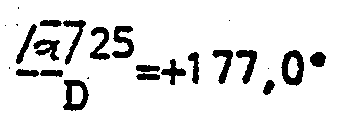

- Eine Lösung von 1,51 des unter Beispiel 18 erhaltenen Produkts in 63 ml Aceton wird unter Eiswasserkühlung tropfenweise mit 2,1 ml Jones-Reagenz versetzt. Anschließend rührt man 15 Minuten bei Raumtemperatur, gießt die Reaktionslösung in Wasser, neutralisiert durch Zugabe von wäßriger Ammoniaklösung und extrahiert mit Dichlormethan. Nach Kristallisation des Rohprodukts aus Hexan/Ethylacetat erhält man 1,06 g 3-[11ß- (4-Acetylphenyl)-17ß-hydroxy-3-oxo-4,9-estradien-17α-yl]-propionsäurelacton vom Schmelzpunkt 243-245°C,
-

- 500 ml einer sterilen Nährlösung enthaltend 1% Glucose, 0,1% Yeast-Extrakt, 0,1% Beef-Extrakt, 0,2% Tryptose, 1,5% Agar vom pH-Wert 7,2 werden mit einer 10 Tage alten Schrägagarkultur von Streptomyces platensis (NRRL 2364) beimpft und 60 Stunden bei 30°C geschüttelt. 300 ml dieser Vorkultur werden in einen 10 1-Fermenter überführt, der 5 1 steriles Medium der oben angegebenen Zusammensetzung enthält. Unter Rühren bei 220 U/min. und Belüftung mit 5 1 Luft/min wird die Kultur bei 29°C entwickelt. Nach 12 Stunden erfolgt die Zugabe von 1,0 g 11ß-(4-Acetylphenyl)-17ß-hydroxy-17α-(1-propinyl)-4,9-estradier- 3-on in 60 ml Dimethylformamid nach vorangegangener Sterilfiltration. Die Substratkonzentration beträgt 200 mg/l. Die Kontrolle der Umsetzung erfolgt durch Dünnschichtchromatographie. Nach 36 Stunden Kontaktzeit wird die Fermentation beendet. Die Kulturbrühe wird mit Methylisobutylketon extrahiert und der Extrakt im Vakuum bei 30-40°C eingeengt. Der so erhaltene Rückstand wird zur Entfernung des Antischaummittels (Silikon SH) mit Hexan gewaschen. Anschließend wird an Kieselgel mit Hexan/Ethylacetat chromatographiert. Kristallisation der Hauptfraktion aus Ethylacetat/Diisopropylether ergibt 400 mg (38,4% der Theorie) der Titelverbindung vom Schmelzpunkt 152-154'C.
- Unter den Bedingungen des Beispiels 20 setzt man 11ß-(4-Acetylphenyl)-17ß-hydroxy-17α-(1-propinyl)-4,9-estradien-3-on (1,0g) zur Fermentation mit Streptomyces toyocaensis (DSM 40030) ein. Die Fermentationszeit beträgt 95 Stunden und die Kontaktzeit 81 Stunden. Nach Aufreinigung durch Säulenchromatographie und Kristallisation aus Ethylacetat/Hexan erhält man 370 mg der Titelverbindung vom Schmelzpunkt 225-229°C.
- Unter den Bedingungen des Beispiels 20 wird 11ß-(4-Acetylphenyl)-17ß- hydroxy-17α-(1-propinyl)-4,9-estradien-3-on (1,0 g) zur Fermentation mit Nigrospora sphaerica (CBS 98469) eingesetzt. DAbei findet jedoch ein Medium folgender Zusammensetzung Verwendung: 3% Glucose, 1% Cornsteep, 0,2 % NaNO3, 0,1% KH2PO4' 0,2% K2HPO4, 0,05% MgSO4, 0,002% FeS04, 0,05% KC1 vom pH-Wert 6,0. Die FErmentationszeit beträgt 112 Stunden, die Kontaktzeit 100 Stunden. Nach chromatographischer Reinigung erhält man 235 mg der Titelverbindung vom Schmelzpunkt 148-152°C (aus Ethylacetat).
- Fermentation von 1,0 g 11ß-(4-Acetylphenyl)-17ß-hydroxy-17α-(1-propinyl)-4,9-estradien-3-on unter den Bedingungen des Beispiels 20 und unter Verwendung des Mediums im Beispiel 22 mit Neurospora crassa (ATCC 9278) ergibt nach chromatographischer Reinigung 196 mg der Titelverbindung vom Schmelzpunkt 156-159°C (aus Hexan/Ethylacetat). Die Fermentationszeit beträgt in diesem Falle 123 Stunden, die Kontaktzeit 112 Stunden.
- Eine Lösung von 140 mg des unter Beispiel 22 erhaltenen 11ß-(4-Acetylphenyl)-6α,17ß-dihydroxy-17α-(1-propinyl)-4,9-estradien-3-on in 3 ml Dichlormethan, 0,02 ml Pyridin und 0,4 ml Tetrachlorkohlenstoff wird nach Zusatz von 840 mg Triphenylphosphin 2 Stunden bei +5°C gerührt. Danach gießt man in NH4Cl-Lösung und extrahiert mit Dichlormethan. Das Rohprodukt wird über Kieselgel mit Hexan/Ethylacetat chromatographiert. Man erhält 116 mg der Titelverbindung als amorphes Pulver vom Pseudoschmelzpunkt 140-144°C.
- Zu 5,2 ml einer 5%igen Lösung von Methyllithium in Diethylether gibt man bei 0°C 570 mg Kupfer(I)iodid portionsweise hinzu. Nach vollständiger Auflösung des Kupfersalzes tropft man bei -20°C eine Lösung von 640 mg 11ß-(4-Acetylphenyl)-17ß-hydroxy-17α-(1-propinyl)-6α-tosyloxy-4,9-estradien-3-on in 5 ml THF und 5 ml Diethylether hinzu und rührt anschließend 60 Minuten bei -20 bis -10°C. Zur Aufarbeitung gießt man in wäßrige Ammoniak-Lösung und extrahiert mit Ethylacetat. Nach Chromatographie an Kieselgel und Kristallisation der Hauptfraktion aus Diisopropylether erhält man 360 mg der Titelverbindung vom Schmelzpunkt 129-131°C.
- Herstellung des Ausgangsmaterials:
- Eine Lösung von 560 mg 11ß-(4-Acetylphenyl)-6α,17ß-dihydroxy-17α-(1-propinyl)-4,9-estradien-3-on in 4,5 ml Pyrridin wird unter Eiswasserkühlung mit 960 mg p-Toluolsulfonsäurechlorid versetzt und 5 Stunden bei +5°C gerührt. Anschließend gießt man in 30 ml 0,5 n wäßrige Salzsäure und extrahiert mehrmals mit Ethylacetat. Die Extrakte werden mit Wasser und gesättigter NaHCO3-Lösung gewaschen, über Na2SO4 getrocknet und eingeengt. Man erhält ein gelbliches Öl (640 mg), das ohne weitere Reinigung in die obige Reaktion eingesetzt wird.

Claims (6)
- Verfahren zur Herstellung von Verbindungen der allgemeinen Formel I
 worin A und B gemeinsam für ein Sauerstoffatom, eine CH2-Gruppe oder eine zweite Bindung zwischen den Kohlenstoffatomen 9 und 10,X für ein Sauerstoffatom oder die Hydroxyiminogruppierung N-OH,R1 für einen geradkettigen oder verzweigten, gesättigten oder ungesättigten kohlenwasserstoffrest mit bis zu 8 kohlenstoffatomen, der die Gruppierung
 enthalten soll, R2 für einenα- oder ß-ständigen Methyl- oder Ethylrest, wobei in Falle eines α-ständigen Methyl- oder EthylrestesR3/R4 -OR5 / -C≡C-Y -C≡C-Y /-OR5 -CR5/


 R3/R4 -OR5/-C≡C-Y -CR5 /


 Y in der Bedeutung eines Wasserstoff-, Chlor-, Fluor-, Jod- oder Eromatoms, einer Alkyl-, Hydroxyalkyl-, Alkoxyalkyl- oder Acyloxyalkylgruppe mit jeweils 1 bis 4 Kohlenstoffatomen im Alkyl- bzw. Acylrest,R6 in der Bedeutung eines Wasserstoffatoms, einer Hydroxygruppe, einer Alkyl-, O-Alkyl- cder O-Acylgruppe mit jeweils 1 bis4 Kohlenstoffatomen,m in der Bedeutung 0, 1, 2 oder 3,R7 in der Bedeutung eines Hydroxy- oder Cyanidrestes, einer 0-Alkyl- oder 0-Acylgruppe mit jeweils 1 bis 4 Kohlenstoffatomen und k in der Bedeutung 0, 1 oder 2,R8 in der Bedeutung eines Wasserstoffatoms, einer Alkyl- oder Acylgruppe mit jeweils 1 bis 10 Kohlenstoffatomen bedeuten, R9, R10, R11 und R12 jeweils für ein Wasserstoffatom, eine Hydroxy-, Alkyl-, Alkoxy- oder Acyloxygruppe mit jeweils 1 bis 4 Kohlenstoffatomen oder ein Halogenatom stehen,und der Substituent des 11ß-Phenylrestes sich in 3- oder 4-Stellung befindet, dadurch gekennzeichnet, daß man in an sich bekannter Weise eine Ver- bindung der allgemeinen Formel II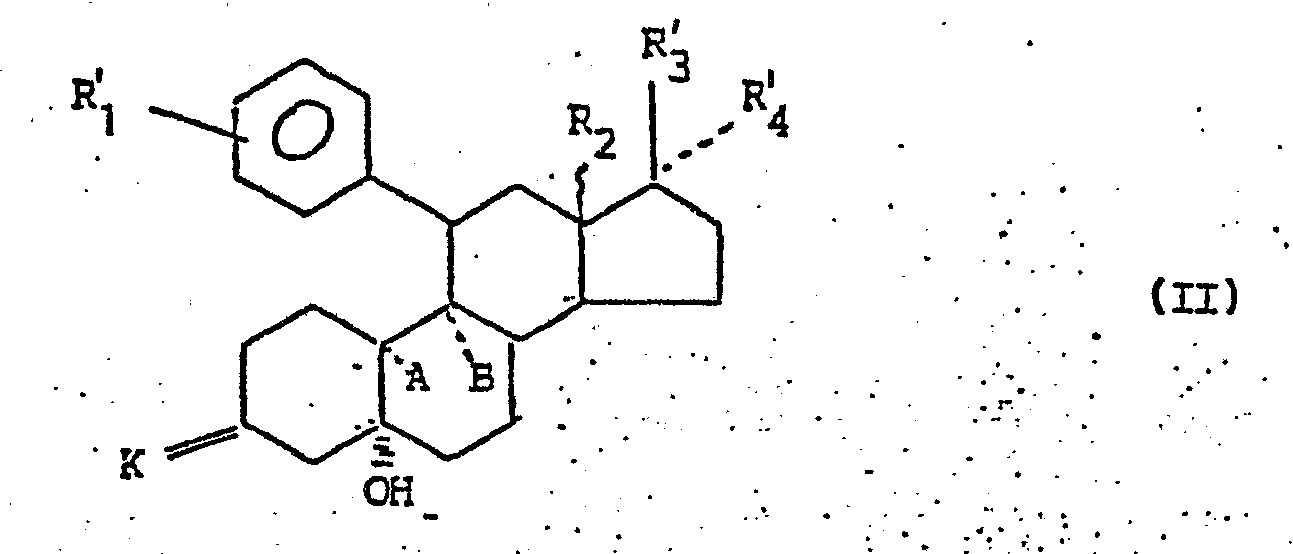

Priority Applications (1)
| Application Number | Priority Date | Filing Date | Title |
|---|---|---|---|
| AT86101548T ATE45956T1 (de) | 1985-02-07 | 1986-02-06 | 11 beta-phenyl-gonane, deren herstellung und diese enthaltende pharmazeutische praeparate. |
Applications Claiming Priority (4)
| Application Number | Priority Date | Filing Date | Title |
|---|---|---|---|
| DE19853504421 DE3504421A1 (de) | 1985-02-07 | 1985-02-07 | Neue 11ss-phenyl-gonane, deren herstellung und diese enthaltende pharmazeutische praeparate |
| DE3504421 | 1985-02-07 | ||
| DE3527517 | 1985-07-29 | ||
| DE19853527517 DE3527517A1 (de) | 1985-07-29 | 1985-07-29 | 11ss-phenyl-gonane, deren herstellung und diese enthaltende pharmazeutische praeparate |
Publications (3)
| Publication Number | Publication Date |
|---|---|
| EP0190759A2 true EP0190759A2 (de) | 1986-08-13 |
| EP0190759A3 EP0190759A3 (en) | 1986-11-20 |
| EP0190759B1 EP0190759B1 (de) | 1989-08-30 |
Family
ID=25829248
Family Applications (1)
| Application Number | Title | Priority Date | Filing Date |
|---|---|---|---|
| EP86101548A Expired EP0190759B1 (de) | 1985-02-07 | 1986-02-06 | 11 Beta-Phenyl-Gonane, deren Herstellung und diese enthaltende pharmazeutische Präparate |
Country Status (16)
| Country | Link |
|---|---|
| US (1) | US5089635A (de) |
| EP (1) | EP0190759B1 (de) |
| CN (1) | CN1033753C (de) |
| AU (1) | AU580843B2 (de) |
| CA (1) | CA1310630C (de) |
| DE (1) | DE3665307D1 (de) |
| DK (1) | DK161709C (de) |
| ES (1) | ES8701778A1 (de) |
| FI (1) | FI85377C (de) |
| GR (1) | GR860342B (de) |
| HU (1) | HU194904B (de) |
| IE (1) | IE58149B1 (de) |
| IL (1) | IL77762A (de) |
| NO (1) | NO171994C (de) |
| NZ (1) | NZ214998A (de) |
| PT (1) | PT81969B (de) |
Cited By (22)
| Publication number | Priority date | Publication date | Assignee | Title |
|---|---|---|---|---|
| EP0289073A1 (de) * | 1987-04-24 | 1988-11-02 | Akzo N.V. | 11-Arylestranderivate und 11-Arylpregnanderivate |
| EP0299913A1 (de) * | 1987-07-16 | 1989-01-18 | Schering Aktiengesellschaft | 11Beta-Phenyl-4,9,15-Estratriene, deren Herstellung und diese enthaltende pharmazeutische Präparate |
| EP0321010A1 (de) * | 1987-12-12 | 1989-06-21 | Akzo N.V. | 11-Arylsteroid-Derivate |
| EP0349481A1 (de) * | 1988-07-01 | 1990-01-03 | Schering Aktiengesellschaft | 13-Alkyl-11Beta-phenylgonane |
| EP0384842A1 (de) * | 1989-02-24 | 1990-08-29 | Roussel-Uclaf | 19-Nor-steroide mit einem ein Anoid oder Carbamat enthaltenden Kohlenwasserstoffrest in Stellung 11-beta, Verfahren zu deren Herstellung, Zwischenprodukte, ihre Anwendung als Arzneimittel und pharmazeutische Zusammensetzungen, die sie enthalten |
| WO1991001958A3 (de) * | 1989-08-04 | 1991-12-12 | Schering Ag | 11β-ARYL-GONA-4,9-DIEN-3-ONE |
| US5089635A (en) * | 1985-02-07 | 1992-02-18 | Schering Aktiengesellschaft | 11 β-phenyl-gonanes, their manufacture and pharmaceutical preparations containing them |
| FR2665901A2 (fr) * | 1989-02-24 | 1992-02-21 | Roussel Uclaf | Nouveaux 19-nor sterouides ayant en position 11beta une chaine carbonee comportant une fonction amide, leur preparation, leur application comme medicaments. |
| EP0471612A3 (en) * | 1990-08-14 | 1992-05-13 | Roussel-Uclaf | New steroids having an amide substituted group in the 11-beta position, their preparation, their use as medicines and pharmaceutical composition thereof |
| WO1992011277A1 (de) * | 1990-12-22 | 1992-07-09 | Schering Aktiengesellschaft Berlin Und Bergkamen | 6,7-MODIFIZIERTE 11β-ARYL-4-ESTRENE |
| EP0558416A1 (de) * | 1992-02-27 | 1993-09-01 | Roussel Uclaf | Neue Steroide mit einer an der 17-Stelle spiro-kondensierte Methylen-Laktongruppe, Verfahren und Zwischenprodukte zu ihrer Herstellung, ihre Verwendung als Arzneimittel und pharmazeutische Präparate davon |
| US5407928A (en) * | 1990-08-15 | 1995-04-18 | Schering Aktiengesellschaft | 11β-aryl-gona-4,9-dien-3-ones |
| EP0648779A3 (de) * | 1993-09-20 | 1995-08-09 | Jenapharm Gmbh | Neue 11-Benzaldoxim-17beta methoxy-17alpha-methoxymethyl-estradien-Derivate, Verfahren zu ihrer Herstellung und diese Verbindungen enthaltende Arzneimittel. |
| EP0648778A3 (de) * | 1993-09-20 | 1995-08-09 | Jenapharm Gmbh | Neue 11-Benzaldoximestradien-Derivate, Verfahren zu ihrer Herstellung und diese Verbindungen enthaltende Arzneimittel. |
| LT4291B (lt) | 1994-12-23 | 1998-02-25 | Schering Aktiengesellschaft | Junginiai, veikiantys prieš progesteroną ir estrogeną, skirti bendrai moterų kontracepcijai |
| WO1998031702A1 (en) * | 1997-01-15 | 1998-07-23 | Akzo Nobel N.V. | 16-hydroxy-11-(substituted phenyl)-estra-4,9-diene derivatives |
| US5962444A (en) * | 1998-05-29 | 1999-10-05 | Research Triangle Institute | 17β-nitro-11β-arylsteroids and their derivatives having agonist or antagonist hormonal properties |
| US6020328A (en) * | 1998-03-06 | 2000-02-01 | Research Triangle Institute | 20-keto-11β-arylsteroids and their derivatives having agonist or antagonist hormonal properties |
| US6262042B1 (en) | 1998-05-29 | 2001-07-17 | Research Triangle Institute | 17β-amino and hydroxylamino-11β-arylsteroids and their derivatives having agonist or antagonist hormonal properties |
| EP1285927A3 (de) * | 2001-08-16 | 2005-06-29 | Schering Aktiengesellschaft | Verwendung von Glucocorticoid-Rezeptorantagonisten zur Vorbeugung und Behandlung von Erkrankungen des männlichen Reproduktionssystems |
| US7759330B2 (en) | 1996-05-01 | 2010-07-20 | The United States Of America As Represented By The Department Of Health And Human Services | 21-substituted progesterone derivatives as new antiprogestational agents |
| US8569276B2 (en) * | 1996-05-01 | 2013-10-29 | The United States Of America, As Represented By The Secretary, Department Of Health And Human Services | Structural modification of 19-norprogesterone I: 17-α-substituted-11-β-substituted-4-aryl and 21-substituted 19-norpregnadienedione as new antiprogestational agents |
Families Citing this family (23)
| Publication number | Priority date | Publication date | Assignee | Title |
|---|---|---|---|---|
| GB8513723D0 (en) * | 1985-05-31 | 1985-07-03 | Erba Farmitalia | 11-beta substituted steroids |
| AU625450B2 (en) * | 1987-07-16 | 1992-07-09 | Schering Aktiengesellschaft Berlin Und Bergkamen | 11beta-phenyl-4,9,15-estratrienes, their manufacture, and pharmaceutical preparations containing them |
| US5364847A (en) * | 1989-03-10 | 1994-11-15 | Endorecherche | Inhibitors of sex steroid biosynthesis and methods for their production and use |
| US5372996A (en) * | 1989-03-10 | 1994-12-13 | Endorecherche, Inc. | Method of treatment of androgen-related diseases |
| JP2959839B2 (ja) * | 1989-07-07 | 1999-10-06 | アンドルシェルシュ・インコーポレイテッド | 性ステロイド活性の抑制における使用のためのアンドロゲン誘導体 |
| DK0595796T3 (da) * | 1989-07-07 | 2003-05-05 | Endorech Inc | Fremgangsmåde til behandling af androgen-relaterede sygdomme |
| KR950701527A (ko) * | 1992-05-21 | 1995-04-28 | 라브리 페르낭 | 테스토스테론 5α 환원효소 활성 저해제(INHIBITORS OF TESTOSTERONE 5α-REDUCTASE ACTIVITY) |
| US5639598A (en) * | 1994-05-19 | 1997-06-17 | The Trustees Of The University Of Pennsylvania | Method and kit for identification of antiviral agents capable of abrogating HIV Vpr-Rip-1 binding interactions |
| US5780220A (en) * | 1994-05-19 | 1998-07-14 | Trustees Of The University Of Pennsylvania | Methods and compositions for inhibiting HIV replication |
| US5576310A (en) * | 1994-09-20 | 1996-11-19 | Jenapharm Gmbh | 11-benzaldoxime-17β-methoxy-17α-methoxymethyl-estrasdiene derivatives, methods for their production and pharmaceuticals containing such compounds |
| US5521166A (en) * | 1994-12-19 | 1996-05-28 | Ortho Pharmaceitical Corporation | Antiprogestin cyclophasic hormonal regimen |
| US6090798A (en) * | 1997-12-19 | 2000-07-18 | Alcon Laboratories, Inc. | Treatment of GLC1A glaucoma with glucocorticoid antagonists |
| DE10236405A1 (de) * | 2002-08-02 | 2004-02-19 | Schering Ag | Progesteronrezeptormodulatoren mit erhöhter antigonadotroper Aktivität für die weibliche Fertilitätskontrolle und Hormonersatztherapie |
| DE102009034367A1 (de) * | 2009-07-20 | 2011-01-27 | Bayer Schering Pharma Aktiengesellschaft | 17-Hydroxy-17-pentafluorethyl-estra-4,9(10)-dien-11-benzyliden-Derivate, Verfahren zu deren Herstellung und deren Verwendung zur Behandlung von Krankheiten |
| WO2011150209A1 (en) | 2010-05-26 | 2011-12-01 | Corcept Therapeutics, Inc. | Treatment of muscular dystrophy |
| JP6821582B2 (ja) | 2015-03-02 | 2021-01-27 | コーセプト セラピューティクス, インコーポレイテッド | Acth分泌腫瘍を処置するための糖質コルチコイドレセプターアンタゴニストおよびソマトスタチンアナログの使用 |
| JP6754533B2 (ja) | 2015-03-30 | 2020-09-16 | コーセプト セラピューティクス, インコーポレイテッド | 副腎機能不全を処置するための糖質コルチコイドと組み合わせた糖質コルチコイドレセプターアンタゴニストの使用 |
| MX383318B (es) | 2015-08-13 | 2025-03-13 | Corcept Therapeutics Inc | Metodo para diagnosticar de manera diferencial el sindrome de cushing dependiente de la corticotropina. |
| JP6765443B2 (ja) | 2016-01-19 | 2020-10-07 | コーセプト セラピューティクス, インコーポレイテッド | 異所性クッシング症候群の鑑別診断 |
| US9943505B2 (en) | 2016-09-09 | 2018-04-17 | Corcept Therapeutics, Inc. | Glucocorticoid receptor modulators to treat pancreatic cancer |
| AU2018244928B2 (en) | 2017-03-31 | 2023-10-19 | Corcept Therapeutics, Inc. | Glucocorticoid receptor modulators to treat cervical cancer |
| WO2018236749A2 (en) | 2017-06-20 | 2018-12-27 | Corcept Therapeutics, Inc. | Methods of treating neuroepithelial tumors using selective glucocorticoid receptor modulators |
| EP4263807A2 (de) | 2020-12-18 | 2023-10-25 | Instil Bio (Uk) Limited | Verarbeitung von tumorinfiltrierenden lymphozyten |
Family Cites Families (6)
| Publication number | Priority date | Publication date | Assignee | Title |
|---|---|---|---|---|
| FR2377418A1 (fr) * | 1977-01-13 | 1978-08-11 | Roussel Uclaf | Nouveaux derives steroides 4,9-dieniques 11b-substitues, leur procede de preparation et leur application comme medicaments |
| ZA8231B (en) * | 1981-01-09 | 1982-11-24 | Roussel Uclaf | New 11 -substituted steroid derivatives, their preparation, their use as medicaments, the compositions containing them and the new intermediates thus obtained |
| FR2522328B1 (fr) * | 1982-03-01 | 1986-02-14 | Roussel Uclaf | Nouveaux produits derives de la structure 3-ceto 4,9 19-nor steroides, leur procede de preparation et leur application comme medicaments |
| DE3231827A1 (de) * | 1982-08-24 | 1984-03-01 | Schering AG, 1000 Berlin und 4709 Bergkamen | 11ss-aryl-17(alpha)-alkinyl-17ss-hydroxy-4,9(10)- estradien-3-on-derivate, deren herstellung und diese enthaltende pharmazeutische praeparate |
| FR2573657B1 (fr) * | 1984-11-29 | 1989-05-12 | Roussel Uclaf | Produit comprenant une substance antiprogestomimetique et une substance uterotonique |
| AU580843B2 (en) * | 1985-02-07 | 1989-02-02 | Schering Aktiengesellschaft | 11``-phenyl-gonanes, their manufacture and pharmaceutical preparations containing them |
-
1986
- 1986-01-31 AU AU52913/86A patent/AU580843B2/en not_active Ceased
- 1986-01-31 NZ NZ214998A patent/NZ214998A/xx unknown
- 1986-02-02 IL IL77762A patent/IL77762A/xx not_active IP Right Cessation
- 1986-02-03 CN CN86100994A patent/CN1033753C/zh not_active Expired - Lifetime
- 1986-02-04 ES ES551625A patent/ES8701778A1/es not_active Expired
- 1986-02-05 GR GR860342A patent/GR860342B/el unknown
- 1986-02-05 PT PT81969A patent/PT81969B/pt not_active IP Right Cessation
- 1986-02-05 DK DK056086A patent/DK161709C/da not_active IP Right Cessation
- 1986-02-06 CA CA000501252A patent/CA1310630C/en not_active Expired - Lifetime
- 1986-02-06 EP EP86101548A patent/EP0190759B1/de not_active Expired
- 1986-02-06 NO NO860425A patent/NO171994C/no not_active IP Right Cessation
- 1986-02-06 HU HU86499A patent/HU194904B/hu not_active IP Right Cessation
- 1986-02-06 IE IE33486A patent/IE58149B1/en not_active IP Right Cessation
- 1986-02-06 DE DE8686101548T patent/DE3665307D1/de not_active Expired
- 1986-02-07 US US06/827,050 patent/US5089635A/en not_active Expired - Lifetime
- 1986-02-07 FI FI860559A patent/FI85377C/fi not_active IP Right Cessation
Cited By (40)
| Publication number | Priority date | Publication date | Assignee | Title |
|---|---|---|---|---|
| US5089635A (en) * | 1985-02-07 | 1992-02-18 | Schering Aktiengesellschaft | 11 β-phenyl-gonanes, their manufacture and pharmaceutical preparations containing them |
| EP0289073A1 (de) * | 1987-04-24 | 1988-11-02 | Akzo N.V. | 11-Arylestranderivate und 11-Arylpregnanderivate |
| EP0299913A1 (de) * | 1987-07-16 | 1989-01-18 | Schering Aktiengesellschaft | 11Beta-Phenyl-4,9,15-Estratriene, deren Herstellung und diese enthaltende pharmazeutische Präparate |
| WO1989000578A1 (fr) * | 1987-07-16 | 1989-01-26 | Schering Aktiengesellschaft Berlin Und Bergkamen | 11beta-PHENYL-4,9,15-ESTRATRIENES, LEUR PREPARATION ET COMPOSITIONS PHARMACEUTIQUES LES CONTENANT |
| US5132299A (en) * | 1987-07-16 | 1992-07-21 | Schering Aktiengesellschaft | 11β-phenyl-4,9,15-estratrienes, their manufacture and pharmaceutical preparations containing same |
| US4921845A (en) * | 1987-12-12 | 1990-05-01 | Akzo N.V. | 11-arylsteroid compounds |
| EP0321010A1 (de) * | 1987-12-12 | 1989-06-21 | Akzo N.V. | 11-Arylsteroid-Derivate |
| DE3822770A1 (de) * | 1988-07-01 | 1990-01-04 | Schering Ag | 13-alkyl-11ss-phenylgonane |
| WO1990000174A1 (de) * | 1988-07-01 | 1990-01-11 | Schering Aktiengesellschaft Berlin Und Bergkamen | 13-ALKYL-11β-PHENYLGONANE |
| US5446036A (en) * | 1988-07-01 | 1995-08-29 | Schering Aktiengesellschaft | 13-alkyl-11beta-phenylgonanes |
| EP0349481A1 (de) * | 1988-07-01 | 1990-01-03 | Schering Aktiengesellschaft | 13-Alkyl-11Beta-phenylgonane |
| US5273971A (en) * | 1988-07-01 | 1993-12-28 | Schering Aktiengesellschaft | 13-alkyl-11β-phenylgonanes |
| FR2665901A2 (fr) * | 1989-02-24 | 1992-02-21 | Roussel Uclaf | Nouveaux 19-nor sterouides ayant en position 11beta une chaine carbonee comportant une fonction amide, leur preparation, leur application comme medicaments. |
| EP0384842A1 (de) * | 1989-02-24 | 1990-08-29 | Roussel-Uclaf | 19-Nor-steroide mit einem ein Anoid oder Carbamat enthaltenden Kohlenwasserstoffrest in Stellung 11-beta, Verfahren zu deren Herstellung, Zwischenprodukte, ihre Anwendung als Arzneimittel und pharmazeutische Zusammensetzungen, die sie enthalten |
| WO1991001958A3 (de) * | 1989-08-04 | 1991-12-12 | Schering Ag | 11β-ARYL-GONA-4,9-DIEN-3-ONE |
| EP0411733A3 (en) * | 1989-08-04 | 1992-01-22 | Schering Aktiengesellschaft Berlin Und Bergkamen | 11-beta-aryle-gona-4,9-dien-3-ones |
| EP0471612A3 (en) * | 1990-08-14 | 1992-05-13 | Roussel-Uclaf | New steroids having an amide substituted group in the 11-beta position, their preparation, their use as medicines and pharmaceutical composition thereof |
| US5407928A (en) * | 1990-08-15 | 1995-04-18 | Schering Aktiengesellschaft | 11β-aryl-gona-4,9-dien-3-ones |
| US5739125A (en) * | 1990-08-15 | 1998-04-14 | Schering Aktiengesellschaft | 11 Beta-aryl-gona-4, 9-dien-3-ones |
| WO1992011277A1 (de) * | 1990-12-22 | 1992-07-09 | Schering Aktiengesellschaft Berlin Und Bergkamen | 6,7-MODIFIZIERTE 11β-ARYL-4-ESTRENE |
| US5843931A (en) * | 1990-12-22 | 1998-12-01 | Shering Aktiengesellschaft | 6,7-modified 11β-aryl-4-oestrenes |
| FR2688004A1 (fr) * | 1992-02-27 | 1993-09-03 | Roussel Uclaf | Nouveaux sterouides comportant en position 17 un radical methylene lactone, leur procede et des intermediaires de preparation, leur application comme medicaments. |
| EP0558416A1 (de) * | 1992-02-27 | 1993-09-01 | Roussel Uclaf | Neue Steroide mit einer an der 17-Stelle spiro-kondensierte Methylen-Laktongruppe, Verfahren und Zwischenprodukte zu ihrer Herstellung, ihre Verwendung als Arzneimittel und pharmazeutische Präparate davon |
| EP0648779A3 (de) * | 1993-09-20 | 1995-08-09 | Jenapharm Gmbh | Neue 11-Benzaldoxim-17beta methoxy-17alpha-methoxymethyl-estradien-Derivate, Verfahren zu ihrer Herstellung und diese Verbindungen enthaltende Arzneimittel. |
| AU682195B2 (en) * | 1993-09-20 | 1997-09-25 | Schering Aktiengesellschaft | New 11-benzaldoxime-estradiene-derivatives, methods for their production and pharmaceuticals containing these substances |
| EP0648778A3 (de) * | 1993-09-20 | 1995-08-09 | Jenapharm Gmbh | Neue 11-Benzaldoximestradien-Derivate, Verfahren zu ihrer Herstellung und diese Verbindungen enthaltende Arzneimittel. |
| LT4291B (lt) | 1994-12-23 | 1998-02-25 | Schering Aktiengesellschaft | Junginiai, veikiantys prieš progesteroną ir estrogeną, skirti bendrai moterų kontracepcijai |
| US7759330B2 (en) | 1996-05-01 | 2010-07-20 | The United States Of America As Represented By The Department Of Health And Human Services | 21-substituted progesterone derivatives as new antiprogestational agents |
| US8569276B2 (en) * | 1996-05-01 | 2013-10-29 | The United States Of America, As Represented By The Secretary, Department Of Health And Human Services | Structural modification of 19-norprogesterone I: 17-α-substituted-11-β-substituted-4-aryl and 21-substituted 19-norpregnadienedione as new antiprogestational agents |
| US8003629B2 (en) | 1996-05-01 | 2011-08-23 | The United States Of America As Represented By The Secretary, Department Of Health And Human Services | 21-substituted progesterone derivatives as new antiprogestational agents |
| WO1998031702A1 (en) * | 1997-01-15 | 1998-07-23 | Akzo Nobel N.V. | 16-hydroxy-11-(substituted phenyl)-estra-4,9-diene derivatives |
| US6072068A (en) * | 1997-01-15 | 2000-06-06 | Akzo Nobel N.V. | 16-hydroxy-11-(substituted phenyl)-estra-4,9-diene derivatives |
| US6020328A (en) * | 1998-03-06 | 2000-02-01 | Research Triangle Institute | 20-keto-11β-arylsteroids and their derivatives having agonist or antagonist hormonal properties |
| US6093707A (en) * | 1998-05-29 | 2000-07-25 | Research Triangle Institute | 17β-nitro-11β-arylsteroids and their derivatives having agonist or antagonist hormonal properties |
| US6620801B2 (en) | 1998-05-29 | 2003-09-16 | Research Triangle Institute | 17β-amino and hydroxylamino-11β-arylsteroids and their derivatives having agonist or antagonist hormonal properties |
| US7018991B2 (en) | 1998-05-29 | 2006-03-28 | Research Triangle Institute | 17β-amino and hydroxylamino-11 β-arylsteroids and their derivatives having agonist or antagonist hormonal properties |
| US6262042B1 (en) | 1998-05-29 | 2001-07-17 | Research Triangle Institute | 17β-amino and hydroxylamino-11β-arylsteroids and their derivatives having agonist or antagonist hormonal properties |
| US6015805A (en) * | 1998-05-29 | 2000-01-18 | Research Triangle Research North Carolina | 17β-nitro-11β-arylisteroids and their derivatives having agonist or antagonist hormonal properties |
| US5962444A (en) * | 1998-05-29 | 1999-10-05 | Research Triangle Institute | 17β-nitro-11β-arylsteroids and their derivatives having agonist or antagonist hormonal properties |
| EP1285927A3 (de) * | 2001-08-16 | 2005-06-29 | Schering Aktiengesellschaft | Verwendung von Glucocorticoid-Rezeptorantagonisten zur Vorbeugung und Behandlung von Erkrankungen des männlichen Reproduktionssystems |
Also Published As
| Publication number | Publication date |
|---|---|
| FI860559L (fi) | 1986-08-08 |
| HU194904B (en) | 1988-03-28 |
| DK56086A (da) | 1986-08-08 |
| NO171994C (no) | 1993-05-26 |
| DK161709C (da) | 1992-01-13 |
| FI85377C (fi) | 1992-04-10 |
| DK56086D0 (da) | 1986-02-05 |
| PT81969B (pt) | 1988-03-03 |
| FI860559A0 (fi) | 1986-02-07 |
| NO860425L (no) | 1986-08-08 |
| GR860342B (en) | 1986-06-03 |
| IE58149B1 (en) | 1993-07-14 |
| FI85377B (fi) | 1991-12-31 |
| ES551625A0 (es) | 1986-12-16 |
| DK161709B (da) | 1991-08-05 |
| IL77762A (en) | 1992-08-18 |
| EP0190759B1 (de) | 1989-08-30 |
| CN86100994A (zh) | 1986-10-08 |
| NZ214998A (en) | 1989-06-28 |
| CN1033753C (zh) | 1997-01-08 |
| IE860334L (en) | 1986-08-07 |
| ES8701778A1 (es) | 1986-12-16 |
| NO171994B (no) | 1993-02-15 |
| PT81969A (de) | 1986-03-01 |
| AU580843B2 (en) | 1989-02-02 |
| EP0190759A3 (en) | 1986-11-20 |
| DE3665307D1 (en) | 1989-10-05 |
| HUT40453A (en) | 1986-12-28 |
| CA1310630C (en) | 1992-11-24 |
| US5089635A (en) | 1992-02-18 |
| AU5291386A (en) | 1986-08-14 |
Similar Documents
| Publication | Publication Date | Title |
|---|---|---|
| EP0190759B1 (de) | 11 Beta-Phenyl-Gonane, deren Herstellung und diese enthaltende pharmazeutische Präparate | |
| EP0254670B1 (de) | 11beta-(4-Isopropenylphenyl)-estra-4,9-diene, deren Herstellung und diese enthaltende pharmazeutische Präparate | |
| EP0192598B1 (de) | 11 Beta-N,N-Dimethylaminophenyl-Estradiene, deren Herstellung und diese enthaltende pharmazeutische Präparate | |
| EP0349481B1 (de) | 13-Alkyl-11Beta-phenylgonane | |
| EP0283428B1 (de) | 19,11beta-Überbrückte Steroide, deren Herstellung und diese enthaltende pharmazeutische Präparate | |
| EP0129499B1 (de) | 13alpha-Alkylgonane, deren Herstellung und diese enthaltende pharmazeutische Präparate | |
| EP0299913B1 (de) | 11Beta-Phenyl-4,9,15-Estratriene, deren Herstellung und diese enthaltende pharmazeutische Präparate | |
| DE3878198T2 (de) | 11-arylsteroid-derivate. | |
| CH646984A5 (de) | 10-alkinyl-steroide. | |
| EP0360369B1 (de) | 11Beta-phenyl-14betaH-steroide | |
| DD261166A5 (de) | Verfahren zur herstellung von 11beta-phenyl-genanen | |
| EP0559690B1 (de) | 8-EN-19, 11 beta-ÜBERBRÜCKTE STEROIDE, DEREN HERSTELLUNG UND DIESE ENTHALTENDE PHARMAZEUTISCHE PRÄPARATE | |
| EP0399632A1 (de) | 9alpha-Hydroxy-19,11 beta-überbrückte Steroide, deren Herstellung und diese enthaltende pharmazeutische Präparate | |
| DE69215125T2 (de) | Kardioaktive Steroide | |
| CH651053A5 (de) | Steroid-zwischenprodukte. | |
| DE69109515T2 (de) | Neue 17-spiro substituierte Steroide, Verfahren zu deren Herstellung und Zwischenprodukten davon, ihre Verwendung als Arzneimittel sowie pharmazeutische Präparate davon. | |
| DE3717169A1 (de) | 19,11ss-ueberbrueckte steroide, deren herstellung und diese enthaltende pharmazeutische praeparate | |
| DE3527517A1 (de) | 11ss-phenyl-gonane, deren herstellung und diese enthaltende pharmazeutische praeparate | |
| US4331802A (en) | Organometallic reagents and their use in the synthesis of cardenolides and isocardenolides | |
| DE2755578A1 (de) | C-homo-oestratriene | |
| DE3842646A1 (de) | 9ss,10ss-methylensteroide | |
| DE2909433A1 (de) | 15 beta , 17 beta -methylenoxy-steroide, verfahren zu ihrer herstellung und diese enthaltende pharmazeutische praeparate |
Legal Events
| Date | Code | Title | Description |
|---|---|---|---|
| PUAI | Public reference made under article 153(3) epc to a published international application that has entered the european phase |
Free format text: ORIGINAL CODE: 0009012 |
|
| 17P | Request for examination filed |
Effective date: 19860206 |
|
| AK | Designated contracting states |
Kind code of ref document: A2 Designated state(s): AT BE CH DE FR GB IT LI LU NL SE |
|
| PUAL | Search report despatched |
Free format text: ORIGINAL CODE: 0009013 |
|
| AK | Designated contracting states |
Kind code of ref document: A3 Designated state(s): AT BE CH DE FR GB IT LI LU NL SE |
|
| 17Q | First examination report despatched |
Effective date: 19880808 |
|
| GRAA | (expected) grant |
Free format text: ORIGINAL CODE: 0009210 |
|
| AK | Designated contracting states |
Kind code of ref document: B1 Designated state(s): AT BE CH DE FR GB IT LI LU NL SE |
|
| REF | Corresponds to: |
Ref document number: 45956 Country of ref document: AT Date of ref document: 19890915 Kind code of ref document: T |
|
| ITF | It: translation for a ep patent filed | ||
| REF | Corresponds to: |
Ref document number: 3665307 Country of ref document: DE Date of ref document: 19891005 |
|
| ET | Fr: translation filed | ||
| GBT | Gb: translation of ep patent filed (gb section 77(6)(a)/1977) | ||
| PLBE | No opposition filed within time limit |
Free format text: ORIGINAL CODE: 0009261 |
|
| STAA | Information on the status of an ep patent application or granted ep patent |
Free format text: STATUS: NO OPPOSITION FILED WITHIN TIME LIMIT |
|
| 26N | No opposition filed | ||
| ITTA | It: last paid annual fee | ||
| EPTA | Lu: last paid annual fee | ||
| EAL | Se: european patent in force in sweden |
Ref document number: 86101548.5 |
|
| REG | Reference to a national code |
Ref country code: FR Ref legal event code: ST |
|
| REG | Reference to a national code |
Ref country code: FR Ref legal event code: RN |
|
| REG | Reference to a national code |
Ref country code: FR Ref legal event code: FC |
|
| REG | Reference to a national code |
Ref country code: GB Ref legal event code: IF02 |
|
| PGFP | Annual fee paid to national office [announced via postgrant information from national office to epo] |
Ref country code: AT Payment date: 20030109 Year of fee payment: 18 |
|
| PGFP | Annual fee paid to national office [announced via postgrant information from national office to epo] |
Ref country code: FR Payment date: 20030113 Year of fee payment: 18 |
|
| PGFP | Annual fee paid to national office [announced via postgrant information from national office to epo] |
Ref country code: GB Payment date: 20030116 Year of fee payment: 18 |
|
| PGFP | Annual fee paid to national office [announced via postgrant information from national office to epo] |
Ref country code: SE Payment date: 20030120 Year of fee payment: 18 Ref country code: NL Payment date: 20030120 Year of fee payment: 18 Ref country code: DE Payment date: 20030120 Year of fee payment: 18 |
|
| PGFP | Annual fee paid to national office [announced via postgrant information from national office to epo] |
Ref country code: CH Payment date: 20030121 Year of fee payment: 18 |
|
| PGFP | Annual fee paid to national office [announced via postgrant information from national office to epo] |
Ref country code: BE Payment date: 20030203 Year of fee payment: 18 |
|
| PGFP | Annual fee paid to national office [announced via postgrant information from national office to epo] |
Ref country code: LU Payment date: 20030206 Year of fee payment: 18 |
|
| PG25 | Lapsed in a contracting state [announced via postgrant information from national office to epo] |
Ref country code: LU Free format text: LAPSE BECAUSE OF NON-PAYMENT OF DUE FEES Effective date: 20040206 Ref country code: GB Free format text: LAPSE BECAUSE OF NON-PAYMENT OF DUE FEES Effective date: 20040206 Ref country code: AT Free format text: LAPSE BECAUSE OF NON-PAYMENT OF DUE FEES Effective date: 20040206 |
|
| PG25 | Lapsed in a contracting state [announced via postgrant information from national office to epo] |
Ref country code: SE Free format text: LAPSE BECAUSE OF NON-PAYMENT OF DUE FEES Effective date: 20040207 |
|
| PG25 | Lapsed in a contracting state [announced via postgrant information from national office to epo] |
Ref country code: BE Free format text: LAPSE BECAUSE OF NON-PAYMENT OF DUE FEES Effective date: 20040228 |
|
| PG25 | Lapsed in a contracting state [announced via postgrant information from national office to epo] |
Ref country code: LI Free format text: LAPSE BECAUSE OF NON-PAYMENT OF DUE FEES Effective date: 20040229 Ref country code: CH Free format text: LAPSE BECAUSE OF NON-PAYMENT OF DUE FEES Effective date: 20040229 |
|
| BERE | Be: lapsed |
Owner name: *SCHERING A.G. BERLIN UND BERGKAMEN Effective date: 20040228 |
|
| PG25 | Lapsed in a contracting state [announced via postgrant information from national office to epo] |
Ref country code: NL Free format text: LAPSE BECAUSE OF NON-PAYMENT OF DUE FEES Effective date: 20040901 Ref country code: DE Free format text: LAPSE BECAUSE OF NON-PAYMENT OF DUE FEES Effective date: 20040901 |
|
| EUG | Se: european patent has lapsed | ||
| GBPC | Gb: european patent ceased through non-payment of renewal fee |
Effective date: 20040206 |
|
| REG | Reference to a national code |
Ref country code: CH Ref legal event code: PL |
|
| PG25 | Lapsed in a contracting state [announced via postgrant information from national office to epo] |
Ref country code: FR Free format text: LAPSE BECAUSE OF NON-PAYMENT OF DUE FEES Effective date: 20041029 |
|
| NLV4 | Nl: lapsed or anulled due to non-payment of the annual fee |
Effective date: 20040901 |
|
| REG | Reference to a national code |
Ref country code: FR Ref legal event code: ST |
|
| PG25 | Lapsed in a contracting state [announced via postgrant information from national office to epo] |
Ref country code: IT Free format text: LAPSE BECAUSE OF NON-PAYMENT OF DUE FEES;WARNING: LAPSES OF ITALIAN PATENTS WITH EFFECTIVE DATE BEFORE 2007 MAY HAVE OCCURRED AT ANY TIME BEFORE 2007. THE CORRECT EFFECTIVE DATE MAY BE DIFFERENT FROM THE ONE RECORDED. Effective date: 20050206 |