EP0196788A2 - Verfahren zur Herstellung von gewalzten verformbaren dünnen Stahlblechen - Google Patents
Verfahren zur Herstellung von gewalzten verformbaren dünnen Stahlblechen Download PDFInfo
- Publication number
- EP0196788A2 EP0196788A2 EP86301470A EP86301470A EP0196788A2 EP 0196788 A2 EP0196788 A2 EP 0196788A2 EP 86301470 A EP86301470 A EP 86301470A EP 86301470 A EP86301470 A EP 86301470A EP 0196788 A2 EP0196788 A2 EP 0196788A2
- Authority
- EP
- European Patent Office
- Prior art keywords
- rolling
- temperature
- steel sheet
- strain rate
- less
- Prior art date
- Legal status (The legal status is an assumption and is not a legal conclusion. Google has not performed a legal analysis and makes no representation as to the accuracy of the status listed.)
- Granted
Links
Images







Classifications
-
- B—PERFORMING OPERATIONS; TRANSPORTING
- B21—MECHANICAL METAL-WORKING WITHOUT ESSENTIALLY REMOVING MATERIAL; PUNCHING METAL
- B21B—ROLLING OF METAL
- B21B37/00—Control devices or methods specially adapted for metal-rolling mills or the work produced thereby
-
- C—CHEMISTRY; METALLURGY
- C21—METALLURGY OF IRON
- C21D—MODIFYING THE PHYSICAL STRUCTURE OF FERROUS METALS; GENERAL DEVICES FOR HEAT TREATMENT OF FERROUS OR NON-FERROUS METALS OR ALLOYS; MAKING METAL MALLEABLE, e.g. BY DECARBURISATION OR TEMPERING
- C21D8/00—Modifying the physical properties of ferrous metals or ferrous alloys by deformation combined with, or followed by, heat treatment
- C21D8/02—Modifying the physical properties of ferrous metals or ferrous alloys by deformation combined with, or followed by, heat treatment during manufacturing of plates or strips
- C21D8/04—Modifying the physical properties of ferrous metals or ferrous alloys by deformation combined with, or followed by, heat treatment during manufacturing of plates or strips to produce plates or strips for drawing, e.g. for deep-drawing
- C21D8/0421—Modifying the physical properties of ferrous metals or ferrous alloys by deformation combined with, or followed by, heat treatment during manufacturing of plates or strips to produce plates or strips for drawing, e.g. for deep-drawing characterised by the working steps
- C21D8/0426—Hot rolling
-
- C—CHEMISTRY; METALLURGY
- C21—METALLURGY OF IRON
- C21D—MODIFYING THE PHYSICAL STRUCTURE OF FERROUS METALS; GENERAL DEVICES FOR HEAT TREATMENT OF FERROUS OR NON-FERROUS METALS OR ALLOYS; MAKING METAL MALLEABLE, e.g. BY DECARBURISATION OR TEMPERING
- C21D7/00—Modifying the physical properties of iron or steel by deformation
-
- B—PERFORMING OPERATIONS; TRANSPORTING
- B21—MECHANICAL METAL-WORKING WITHOUT ESSENTIALLY REMOVING MATERIAL; PUNCHING METAL
- B21B—ROLLING OF METAL
- B21B2201/00—Special rolling modes
- B21B2201/04—Ferritic rolling
-
- C—CHEMISTRY; METALLURGY
- C21—METALLURGY OF IRON
- C21D—MODIFYING THE PHYSICAL STRUCTURE OF FERROUS METALS; GENERAL DEVICES FOR HEAT TREATMENT OF FERROUS OR NON-FERROUS METALS OR ALLOYS; MAKING METAL MALLEABLE, e.g. BY DECARBURISATION OR TEMPERING
- C21D8/00—Modifying the physical properties of ferrous metals or ferrous alloys by deformation combined with, or followed by, heat treatment
- C21D8/02—Modifying the physical properties of ferrous metals or ferrous alloys by deformation combined with, or followed by, heat treatment during manufacturing of plates or strips
- C21D8/04—Modifying the physical properties of ferrous metals or ferrous alloys by deformation combined with, or followed by, heat treatment during manufacturing of plates or strips to produce plates or strips for drawing, e.g. for deep-drawing
- C21D8/0421—Modifying the physical properties of ferrous metals or ferrous alloys by deformation combined with, or followed by, heat treatment during manufacturing of plates or strips to produce plates or strips for drawing, e.g. for deep-drawing characterised by the working steps
- C21D8/0431—Warm rolling
-
- C—CHEMISTRY; METALLURGY
- C21—METALLURGY OF IRON
- C21D—MODIFYING THE PHYSICAL STRUCTURE OF FERROUS METALS; GENERAL DEVICES FOR HEAT TREATMENT OF FERROUS OR NON-FERROUS METALS OR ALLOYS; MAKING METAL MALLEABLE, e.g. BY DECARBURISATION OR TEMPERING
- C21D8/00—Modifying the physical properties of ferrous metals or ferrous alloys by deformation combined with, or followed by, heat treatment
- C21D8/02—Modifying the physical properties of ferrous metals or ferrous alloys by deformation combined with, or followed by, heat treatment during manufacturing of plates or strips
- C21D8/04—Modifying the physical properties of ferrous metals or ferrous alloys by deformation combined with, or followed by, heat treatment during manufacturing of plates or strips to produce plates or strips for drawing, e.g. for deep-drawing
- C21D8/0447—Modifying the physical properties of ferrous metals or ferrous alloys by deformation combined with, or followed by, heat treatment during manufacturing of plates or strips to produce plates or strips for drawing, e.g. for deep-drawing characterised by the heat treatment
- C21D8/0463—Modifying the physical properties of ferrous metals or ferrous alloys by deformation combined with, or followed by, heat treatment during manufacturing of plates or strips to produce plates or strips for drawing, e.g. for deep-drawing characterised by the heat treatment following hot rolling
-
- C—CHEMISTRY; METALLURGY
- C21—METALLURGY OF IRON
- C21D—MODIFYING THE PHYSICAL STRUCTURE OF FERROUS METALS; GENERAL DEVICES FOR HEAT TREATMENT OF FERROUS OR NON-FERROUS METALS OR ALLOYS; MAKING METAL MALLEABLE, e.g. BY DECARBURISATION OR TEMPERING
- C21D8/00—Modifying the physical properties of ferrous metals or ferrous alloys by deformation combined with, or followed by, heat treatment
- C21D8/02—Modifying the physical properties of ferrous metals or ferrous alloys by deformation combined with, or followed by, heat treatment during manufacturing of plates or strips
- C21D8/04—Modifying the physical properties of ferrous metals or ferrous alloys by deformation combined with, or followed by, heat treatment during manufacturing of plates or strips to produce plates or strips for drawing, e.g. for deep-drawing
- C21D8/0478—Modifying the physical properties of ferrous metals or ferrous alloys by deformation combined with, or followed by, heat treatment during manufacturing of plates or strips to produce plates or strips for drawing, e.g. for deep-drawing involving a particular surface treatment
Definitions
- This invention relates to a method of manufacturing a formable as-rolled thin steel sheet having an improved ridging resistance, and more particularly to a novel method of manufacturing a formable as-rolled thin steel sheet having an improved ridging resistance which can omit cold rolling and recrystallization annealing steps by the control of rolling conditions.
- the formable thin steel sheets having a thickness of not more than about 2 mm which are used in building materials, automobile components, various surface treating black plates and the like, are required to have the following properties:
- L-direction rolling direction
- C-direction a direction perpendicular to L-direction
- D-direction a direction inclined at 45° with respect to L-direction
- the bulging has often been adopted as a forming process because the flowing of material from blank holding portion can be reduced in the bulging formation.
- it is required to have a high n-value (strain hardening exponent) as a property of the material.
- TS tensile strength
- Ek elongation
- the age deterioration may be caused to bring about the degradation of formability and hence cracking may be produced in the press forming.
- the aging resistance is important, whose standard is A1 (aging index) ⁇ 4(kg/mm 2 ).
- the thickness is recently demanded to be thinned .in view of the improvement of fuel consumption.
- a thinning there is caused a problem on the reduction of tensile rigidity of the formed product.
- Young's modulus when a certain force is applied to the formed product from the outside, the deflection is easily caused.
- Young's modulus the tensile rigidity of the steel sheet is proportional to Young's modulus, it can be enhanced by increasing the Young's modulus is sheet plane.
- the tensile rigidity is good when an average value (E) of Young's moduli in L-direction, C-direction and D-direction is not less than 22,000 kg/mm 2 .
- the automotive parts such as panel, oil pan, gasoline tank and the like are required to be severe in the formabilities, particularly deep drawability.
- the steel sheet used for such parts is required to have r-value of not less than 1.7 though it is dependent upon the form of the respective part.
- phosphate coating is significant, because if the phosphate coating property is bad, sufficient baked-on painting property can not be ensured.
- the demand for the corrosion resistance of the formable thin steel sheet becomes severer, while the use of surface treated steel sheet rapidly increases.
- the steel sheets for automobiles used in North Europe and North America should be durable to the corrosion due to the salt used for snow melting, which requires the severer corrosion resistance.
- the corrosion resistance is deteriorated, so that the adhesion property between the base plate and the surface treated layer becomes very important in the surface treated steel sheet.
- the formable steel sheet is used in the outermost portion of the final product as previously mentioned, the corrosion resistance of the steel sheet itself, particularly pitting resistance is important.
- a greatest drawback of this customary process is very long in the steps arriving at the final product.
- energy, labor and time required for the manufacture of the final product are vast, and also various troubles on the quality, particularly surface properties of the product are unfavorably caused through the long steps.
- there are unavoidable troubles such as occurrence of surface defects at the cold rolling step, concentration of impurity elements into sheet surface at the recrystallization annealing step, deterioration of appearance resulting from surface oxidation, degradation of surface treating property and so on.
- the mechanical properties of the thin steel sheet obtained only through the hot rolling step are fairly poor as compared with those obtained through the cold rolling-annealing steps.
- the press formable sheet used in the automotive vehicle body or the like is particularly required to have an excellent deep drawability, r-value of the hot rolled steel sheet is as low as about 1.0 and consequently the application of the latter sheet is considerably restricted.
- the final temperature is higher than Ar 3 transformation point so that the texture is randomized in the ⁇ transformation.
- ridging used herein means an uneven defect produced on the surface of the product during the forming, which becomes fatal in this type of the steel sheet mainly used in the outermost portion of the formed article.
- the formable thin steel sheets are frequently subjected to severer forming with the complication and high grade tendency of the formed article, so that they are required to have an excellent ridging resistance.
- the manufacturing steps for iron and steel materials are considerably varying, which also include the case of manufacturing formable thin steel sheets.
- the slabbing step may be omitted by the introduction of continuouly casting process.
- the heating temperature of slab tends to reduce from about 1,200°C, which has been adopted in the prior art, to about 1,100°C or less.
- a process capable of omitting the heat treatment in the hot rolling and the rough rolling step by directly producing a steel sheet with a thickness of not more than 50 mm from molten steel.
- Japanese Patent laid open No. 48-4,329 discloses that a low carbon rimmed steel is rolled into a steel sheet with a thickness of 4 mm at a temperature below Ar s transformation point and a draft of 90% to thereby provide an yield point of 26.1 kg/mm 2 , a tensile strength of 37.3 kg/mm 2 , an elongation of 49.7% and r-value of 1.29.
- Japanese Patent laid open No. 48-4,329 discloses that a low carbon rimmed steel is rolled into a steel sheet with a thickness of 4 mm at a temperature below Ar s transformation point and a draft of 90% to thereby provide an yield point of 26.1 kg/mm 2 , a tensile strength of 37.3 kg/mm 2 , an elongation of 49.7% and r-value of 1.29.
- 52-44,718 is disclosed a method of manufacturing low yield point steel sheet having an yield point of not more than 20 kg/mm 2 by hot rolling a low carbon rimmed steel to a thickness of 2.0 mm at a final temperature of 800-860°C (below Ar s transformation point) and coiling at a temperature of 600-730°C.
- the resulting steel sheet has a conical cup value as an index for drawability of about 60.60-62.18 mm, which is equal or less in the drawability as compared with the conventionally known steel sheet having a conical cup value of 60.58-60.61.
- 53-22,850 discloses a method of manufacturing low carbon hot rolled steel sheet by hot rolling a low carbon rimmed steel to a thickness of 1.8-2.3 mm at a final temperature of 710-750°C and coiling at a temperature of 530-600°C.
- the conical cup value of the resulting steel sheet is the same as in the aforementioned Japanese Patent laid open No. 52-44,718 and the drawability is poor.
- 54-109,022 is disclosed a method of manufacturing low strength, mild steel sheets having an yield point of 14.9-18.8 kg/mm 2 , a tensile strength of 27.7-29.8 kg/mm 2 and an elongation of 39.0-44.8% by hot rolling a low carbon aluminum killed steel to a thickness of 1.6 mm at a final temperature of 760-820°C and coiling at a temperature of 650-690°C.
- 59-226,149 is disclosed a method of manufacturing a thin steel sheet with r-value of 1.21 by rolling a low carbon Al killed steel comprising 0.002% of C, 0.02% of Si, 0.23% of Mn, 0.009% of P, 0.008% of S, 0.025% of Al, 0.0021% of N and 0.10% of Ti to a thickness of 1.6 mm at 500-900°C and a draft of 76% while applying a lubricant oil.
- an object of the invention to provide a method of manufacturing thin steel sheets having improved ridging resistance and formability through a new process including no cold rolling and recrystallization annealing steps.
- a method of manufacturing formable as-rolled thin steel sheets having an improved ridging resistance through a step of rolling a low carbon steel to a given thickness which comprises performing at least one rolling pass within a temperature range of from 500°C to Ar 3 transformation point at a draft of not less than 35% and a strain rate of not less than 300 sec- 1 .
- a method of manufacturing formable as-rolled thin steel, sheets having improved ridging resistance and deep drawability through a step of rolling a low carbon steel to a given thickness which comprises performing at least one rolling pass within a temperature range of from 300°C to less than recrystallization temperature of ferrite at a draft of not less than 35% and a strain rate of not less than 300 sec-1 .
- the rolling pass is carried out under a condition of ⁇ 0.5T+80 ( ⁇ : strain rate, T: rolling temperature, °C) in order to improve the bulging formability of the thin steel sheet.
- ⁇ strain rate
- T rolling temperature
- °C rolling temperature
- the rolling pass is carried out under a condition of ⁇ / ⁇ 1,000 (p: friction coefficient) or under a tension.
- the coiling followed by the rolling is carried out at a temperature of not more than 400°C.
- the rolling pass is carried out under a condition of ⁇ /R ⁇ 2.0 (R: radius of rolling roll) for improving the balance of tensile strength and elongation.
- the thin steel sheet after the rolling is coiled at a temperature of not more than 400°C and then subjected to hot metal dipping treatment or metal electroplating treatment.
- a steel material containing not less than 99.50% by weight of Fe is used as a low carbon steel for improving the corrosion resistance.
- the thin steel sheet after the coiling is held at a temperature of 200-500°C for at least one minute.
- the thin steel sheet after the rolling is heat treated at a temperature of not less than 500°C for not less than 0.2 second.
- the rolling pass is carried out under a condition that the strain rate (I) satisfies an equation (1) with respect to a critical strain rate ( ⁇ c ) represented by an equation (2):
- test materials A and B are hot rolled steel sheets of low carbon aluminum killed steel having a chemical composition as shown in the following Table 1. Each of these test materials A and B was heated at 700°C, soaked and rolled at a draft of 20%, 40% or 60% at once.
- Fig. 1 a relation of strain rate (s) to r-value and ridging index of the steel sheet after the rolling.
- the r-value and ridging index are strongly dependent upon the strain rate and draft, and are considerably increased by performing the rolling at a draft of not less than 35% and a high strain rate of not less than 300 sec -1 .
- the strain rate ( ⁇ ) is calculated according to the following equation (3): , where n : a revolution number of a rolling roll (rpm); r : draft (%)/100; R : radius of a rolling roll (mm); and H o : thickness before the rolling (mm).
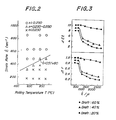
- each of Ar and ⁇ El rapidly reduces as the ratio ⁇ / ⁇ becomes not less than 1,000, whereby the planar anisotropy is considerably mitigated.
- Fig. 4 is shown the planar anisotropy (ar, ⁇ El) of the resulting steel sheet after the rolling. As seen from Fig. 4, the planar anisotropy is considerably reduced by rolling under a tension at a strain rate of not less than 300 sec -1 .
- the phosphate coating property is considerably improved by limiting the coiling temperature to not more than 400°C.
- the phosphate coating property was evaluated by subjecting the steel sheet to a phosphate treatment after degreasing and washing with water and then measuring an area ratio of pin hole through a pin hole test as mentioned later.
- the phosphate treatment was carried out by adjusting a solution of BT3112 made by Nippon Parkerizing K.K. to a total acid value of 14.3 and a free acid value of 0.5 and then spraying it onto the steel sheet for 120 seconds.
- a steel E having a chemical composition shown in the following Table 4 was shaped into a sheet bar with a thickness of 25 mm through continuous casting and rough rolling, which was rolled to a thickness of 1.2 mm by means of a rolling machine of 6 stands, wherein the rolling at the final stand was carried out at a high strain rate (562 sec- l ) and a final temperature of 670°C.
- the resulting thin steel sheet was coiled at various coiling temperatures, heated in a continuous hot zinc dipping line to a temperature required for the dipping (for example, 600°C Zn for dipping) without pickling and recrystallization treatment, and continuously subjected to a hot zinc dipping treatment.
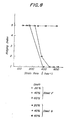
- the test results on zinc dipped adhesion property to the thin steel sheet are shown in Fig. 7.
- the adhesion property was judged by a critical peeling value when the dipped sheet is subjected to a bending of from bending radius OT (adhesion bending) to bending radius 4T corresponding to two times of the sheet thickness. Further, the critical peeling value in the bulging formation was simultaneously measured by using an Erichsen testing machine.
- a low carbon aluminum killed steel having a chemical composition shown in the following Table 5 was heated and soaked at 450°C, and then rolled at a draft of 20%, 40% or 60% at once.
- the ridging index is strongly dependent upon the strain rate and draft, and is considerably enhanced when the rolling is carried out at a high draft of 40% or 60% and a high strain rate of not less than 300 sec- I .
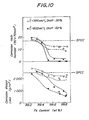
- the r-value of the rolled steel sheet was further measured with respect to the steels F and G of Table 5 by changing the rolling temperature to obtain results as shown in Fig. 9.
- the strain rate was 825 see and the draft was 65%.
- the recrystallization temperature of ferrite in the steels F and G was shown in Table 5, which was determined from the changes of hardness and texture when the steel sheet was cold rolled at room temperature at a reduction rate of 75% and then heated at a rate of 20°C/hr.
- the r-value rapidly increases when each steel is rolled at a temperature below recrystallization temperature. In the rolling at a temperature below about 300°C, however, the recrystallization is not caused at the as-rolled state and hence the r-value rapidly lowers.
- the corrosion resistance was examined with respect to thin steel sheets obtained by rolling steels of various chemical compositions at high strain rate and high draft.
- the corrosion resistance was evaluated by corrosion weight loss and corrosion hole number when the steel sheet of 0.8 mm in thickness to be tested was subjected to a salt spray test for 2,250 hours after the degreasing treatment.
- a steel I having a chemical composition shown in the following Table 7 was shaped into a sheet bar of 25 mm in thickness through continuous casting and rough rolling steps, and then rolled to a thickness of 1.2 mm by using a rolling machine of 6 stands, wherein the rolling at the final stand was carried out at a high strain rate of 582 sec- I and a final temperature of 670°C.
- the resulting steel sheet was coiled at various coiling temperatures and then continuously subjected to a plating treatment in a zinc electroplating line without pickling.
- the test results on the adhesion property of the zinc plated steel sheet are shown in Fig. 13.
- the adhesion property was evaluated by the critical peeling value in bending test and the Erichsen value as previously mentioned.
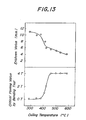
- the Young's modulus (E) becomes peaky at 650°C, and is not less than 22,000 kg/mm 2 within a range of 600-800°C.
- the inventors have made studies with respect to the above basic data and confirmed that the as-rolled thin steel sheets having excellent ridging resistance and formability as well as other properties can be manufactured by controlling the manufacturing conditions as mentioned later.
- the effect by high strain rate rolling is not substantially dependent upon the chemical composition of steel material.
- the amounts of C and N as an interstitial solid solution element are limited to not more than 0.10% and not more than 0.01%, respectively.
- the feature that the amount of 0 in steel is reduced by the addition of AQ is effective for improving the physical properties, particularly ductility.
- the steel is required to have an Fe content of not less than 99.50%, preferably not less than 99.70%.
- the Fe content is within the above range, the kind and amount of inevitable impurity are substantially out of the question, and the addition of trace amounts of Ak for deoxidation and Nb, Ti or the like for formation of carbide or nitride is advantageous for the improvement of physical properties.
- slabs obtained by the conventional system for example, ingot making- slabbing process or continuous casting process are naturally applicable.
- the heating temperature of the slab is suitable within a range of 800-1,250°C and is preferable to be less than 1,100°C from a viewpoint of energy-saving.
- CC-DR continuous casting-direct rolling
- a process of directly producing a rolling steel material of not more than 50 mm in thickness from molten steel is large in the economical merit from viewpoints of energy-saving and step-saving, and is particularly advantageous as a production process of the rolling steel material.
- the rolling step is most important. That is, it is essential that when rolling a low carbon steel to a given thickness (0.6-2 mm), at least one rolling pass is performed within a temperature range of from 500°C to Ar 3 transformation point at a draft of not less than 35% and a strain rate ( ⁇ ) of not less than 300 sec- 1 .
- the final rolling temperature exceeds Ar 3 transformation point, if the rolling is carried out at a draft of not less than 35% and a strain rate of not less than 300 sec -1 , only as-rolled thin steel sheets having poor formability and ridging resistance are obtained, while when it is less than 500°C, the deformation resistance is considerably increased to cause troubles inherent in the cold rolling process, so that the final rolling temperature is restricted to a range of from 500°C to Ar 3 transformation point.
- the strain rate ( ⁇ ) when ⁇ is less than 300 sec -1 , the given physical properties can not be obtained, so that g is preferable to be not less than 300 sec -1 , more particularly 500-2,500 sec -1 .
- the final rolling temperature is not less than the ferrite recrystallization temperature or is less than 300°C
- the rolling is carried out at a draft of not less than 35% and a strain rate of not less than 300 sec -1 , the deep drawability is poor as shown in Fig. 9, so that the final rolling temperature is limited to a range of from 300°C to less than ferrite recrystallization temperature.
- the rolling pass is carried out under a condition that the strain rate (s) satisfies an equation (1) with respect to a critical strain rate ( ⁇ C ) represented by an equation (2): in order to improve the bulging rigidity.
- the critical strain rate (s ) is dependent upon the rolling temperature and strain rate and is a value capable of giving Young's modulus of not less than 23,000 kg/mm 2 to an as-rolled product.
- the above equation (2) is determined from the experiments of Fig. 15 and represented as a factor of the rolling temperature (T).
- the arrangement and structure of the rolling machine, the number of rolling passes and the distribution of the draft may be optional when the above mentioned rolling conditions are satisfied in the invention.
- the coiling temperature it should be limited to not more than 400°C, because when it exceeds 400°C, the degradation of the phosphate coating property is conspicuous and sufficient adhesion property is not obtained as shown in Figs. 5, 7 and 13.
- the heat treatment of the as-rolled steel sheet may be carried out by the control of cooling or by heating in a heating furnace, a heating roll or the like.
- the coiling temperature exceeds 500°C or is less than 200°C, the precipitation of Fe 3 C useful for the improvement of aging resistance is insufficient, while when the coil holding time is less than 1 minute, the effect of reducing AI is poor. Therefore, it is desirable that the coiling after the rolling is held at a temperature of 200-500°C for a time of not less than 1 minute.
- the recrystallization annealing treatment is useless in principle. From demands on the physical properties, however, it may be performed that the as-rolled steel sheet is subjected to a heat holding or soaking treatment at the runout table and coiling step after the rolling or subjected to a somewhat heating treatment after the rolling.
- the oxide layer is fairly thin and the pickling property is very good, so that they can widely be used for applications without pickling.
- the descaling may be performed by the removal with an acid or the mechanical removal as in the prior art.
- the skin-pass rolling of not more than 10% may be applied for the correction of shape and the adjustment of surface roughness.
- the thus obtained steel sheets are excellent in the surface treating properties such as zinc dipping property (inclusive of zinc alloys), tin dipping property, enameling property and the like, so that they are applicable as a black plate for various surface treatments. And also, they are excellent in the metal electroplating adhesion property. Since the kind, adhered amount and the like of the plating layer are not essential, the steel sheets are applicable to Zn electroplating, Zn alloy electroplating, Sn electroplating and other electroplating processes.
- the reason why the ridging resistance and r-value as well as other properties are considerably improved by the rolling at high draft and high strain rate according to the invention is not yet clear, it is considered that the improvement of these properties is closely related to the change in texture formation of the rolling material and the change in forming strain in rolling. Further, the reason for providing thin steel sheets having an excellent corrosion resistance is considered to be due to the fact that the combination of high purity steel with the rolling at high draft and high strain rate brings about the homogenization of crystal texture.
- the evaluations on the properties of the thin steel sheet were performed by the method as previously mentioned, unless otherwise specified. Moreover, the tensile properties were measured by using a JIS No. 5 specimen. The ridging property was evaluated by 1(good)-5(poor) according to visual method on the surface unevenness when a tensile strain of 15% is previously applied to a JIS No. 5 specimen cut out from the rolling direction. A standard of this evaluation is not yet established in the manufacture of the conventional low carbon cold rolled steel sheet because the ridging is not actually observed. Therefore, in the invention, the index evaluation standard by visual method on the conventional stainless steel is adopted as it is. The evaluation value of 1 and 2 shows the ridging property having no problem in practice.
- Each steel having a chemical composition as shown in the following Table 8 was shaped into a sheet bar of 20-40 mm in thickness by a method shown in the following Table 9, which was then shaped into a thin steel sheet of 0.8-1.2 mm in thickness by means of a rolling machine of 6 stands. In this case, the high rate rolling was carried out at the final stand.
- the thus obtained thin steel sheet was subjected to pickling and skin-pass rolling (draft: 0.5-1%) to obtain properties as shown in Table 9.
- the steel sheets according to the invention show excellent r-value and ridging resistance as compared with the comparative examples, which are equal to those obtained through the conventional cold rolling-recrystallization annealing steps.
- Each of steels having a chemical composition as shown in the following Table 10 was shaped into a sheet bar of 20-40 mm in thickness by a method shown in the following Table 11, which was then shaped into a thin steel sheet of 0.8-1.2 mm in thickness by means of a rolling machine of 6 stands. In this case, the high strain rate rolling was carried out at the final stand.
- the thus obtained thin steel sheet was subjected to pickling and skin-pass rolling (draft: 0.5-1%) to obtain properties as shown in Table 11.
- the steel sheets according to the invention show excellent r-value and ridging resistance, and have a high n-value of not less than 0.23.
- Each of steels having a chemical composition as shown in the following Table 12 was shaped into a sheet bar of 20-40 mm in thickness by a method shown in the following Table 13, which was then shaped into a thin steel sheet of 0.8-1.2 mm in thickness by means of a rolling machine of 6 stands. In this case, the high strain rate rolling was carried out at the final stand.
- the thus obtained thin steel sheet was subjected to pickling and skin-pass rolling (draft: 0.5-1%) to obtain properties as shown in Table 13.
- planar anisotropy is small in the steel sheets according to the invention in addition to the excellent r-value and ridging resistance.
- Each of steels having a chemical composition as shown in the following Table 14 was shaped into a sheet bar of 20-40 mm in thickness by a method shown in the following Table 15, which was then shaped into a thin steel sheet of 0.8-1.2 mm in thickness by means of a rolling machine of 6 stands. In this case, a tension was applied between 5 and 6 stands, and the high strain rate rolling was carried out at the final stand. The thus obtained steel sheet was subjected to pickling and skin-pass rolling (draft: 0.5-1%) to obtain properties as shown in Table 15.
- planar anisotropy is small in the steel sheets according to the invention.
- Each of steels having a chemical composition as shown in the following Table 16 was shaped into a sheet bar of 20-40 mm in thickness by a method shown in the following Table 17, which was then shaped into a thin steel sheet of 0.8-1.6 mm in thickness by means of a rolling machine of 6 stands. In this case, the high strain rate rolling was carried out at the final stand, and the coiling temperature was varied within a range of 300-700°C.
- the thus obtained steel sheet was subjected to pickling and skin-pass rolling (draft: 0.5-1%) to obtain properties as shown in Table 17.
- the steel sheets according to the invention show excellent r-value, ridging resistance and phosphate coating property.
- Each of steels having a chemical composition as shown in the following Table 18 was shaped into a sheet bar of 20-40 mm in thickness by a method shown in the following Table 19, which was then shaped into a thin steel sheet of 0.8-1.2 mm in thickness by means of a rolling machine of 6 stands.
- E/R was varied by changing a radius of the rolling roll in the final stand, and the high strain rate rolling was carried out at the final stand.
- the thus obtained steel sheet was subjected to pickling and skin-pass rolling (draft: 0.5-1%) to obtain properties as shown in Table 19.
- Each of steels having a chemical composition as shown in the following Table 20 was shaped into a sheet bar of 20-40 mm in thickness by a method shown in the following Table 21, which was then shaped into a thin steel sheet by means of a rolling machine of 6 stands. In this case, the high strain rate rolling was carried out at the final stand, and then coiled. Thereafter, the thin steel sheet was fed into a continuous hot metal (Zn, Ai, Pb) dipping line without pickling, at where the continuous hot dipping was performed while heating to a temperature required for the dipping (for example, about 600°C for Zn dipping) without recrystallization treatment.
- a continuous hot metal Zn, Ai, Pb
- the rolling conditions, the properties after the skin-pass rolling of 0.5-1.2% and the adhesion property are also shown in Table 21.
- the ridging resistance was evaluated after the removal of the dipped layer by chemical polishing.
- the thin steel sheets according to the invention exhibit an excellent adhesion property.
- Each of steels having a chemical composition as shown in the following Table 22 was shaped into a sheet bar of 25-40 mm in thickness by a method shown in the following Table 23, which was then shaped into a thin steel sheet of 0.8-1.0 mm in thickness by means of a rolling machine of 6 stands. In this case, the high strain rate and high draft rolling was carried out at the final stand.
- the thus obtained thin steel sheet was subjected to pickling and skin-pass rolling (draft: 0.5-1%) to obtain properties as shown in Table 23.
- the steel sheets according to the invention show excellent r-value and ridging resistance, and are particularly suitable for deep drawing.
- Each of steels having a chemical composition as shown in the following Table 24 was shaped into a sheet bar of 25-40 mm in thickness by a method shown in the following Table 25, which was then shaped into a thin steel sheet of 1.0 mm in thickness by means of a rolling machine of 6 stands. In this case, the high strain rate and high draft rolling was carried out at the final stand.
- the thus obtained thin steel sheet was subjected to pickling and skin-pass rolling (draft: 0.5-1%) to obtain properties as shown in Table 25. Moreover, the corrosion resistance (corrosion hole number) was measured with respect to three test specimens in the same manner as previously described.
- the steel sheets according to the invention show excellent r-value and ridging resistance as well as good corrosion resistance.
- Each of steels having a chemical composition as shown in the following Table 26 was shaped into a sheet bar of 25-40 mm in thickness by a method shown in the following Table 27, which was then shaped into a thin steel sheet of 0.8-1.2 mm in thickness by means of a rolling machine of 6 stands. In this case, the high strain rate and high draft rolling was carried out at the final stand. Then, the thin steel sheet was coiled at a temperature of 460-390°C and held within a temperature range of 460-200°C for 0.5 to 60 minutes.
- the thus obtained thin steel sheet was subjected to pickling and skin-pass rolling (draft: 0.5-1%) to obtain properties as shown in Table 27.
- the aging resistance is improved in addition to excellent r-value and ridging resistance.
- Each of steels having a chemical composition as shown in the following Table 28 was shaped into a sheet bar of 25-30 mm in thickness by a method shown in the following Table 29, which was then shaped into a thin steel sheet of 0.8-1.6 mm in thickness by means of a rolling machine of 6 stands. In this case, the high strain rate rolling was carried out at the final stand. The temperature of the thin steel sheet was held above 500°C in a water cooling apparatus located just after the final stand for 0.1-5 seconds. Thereafter, the thin steel sheet was coiled, stored and subjected to a skin-pass rolling (draft: 0.5-1%) to obtain properties as shown in Table 29.
- the steel sheets according to the invention show excellent r-value and ridging resistance as well as low yield ratio.
- Each of steels having a chemical composition as shown in the following Table 30 was shaped into a sheet bar of 25-35 mm in thickness by the conventional rough rolling process or sheet bar caster process, which was then shaped into a thin steel sheet by means of a rolling machine of 6 stands. In this case, the high strain rate rolling was carried out at the final stand. Thereafter, the thin steel sheet was continuously subjected to a metal (Zn, Zn-Fe, Zn-Ni) electroplating in a continuous electroplating line without pickling.
- the adhesion property of the plated layer is excellent in the thin steel sheets according to the invention.
- Each of steels having a chemical composition as shown in the following Table 32 was shaped into a sheet bar of 20-40 mm in thickness by a method shown in the following Table 33, which was then shaped into a thin steel sheet of 0.8-1.6 mm in thickness by means of a rolling machine of 6 stands. In this case, the high strain rate rolling was carried out at the final stand.
- the thus obtained thin steel sheet was subjected to pickling and skin-pass rolling (draft: 0.5-1%) to obtain properties as shown in Table 33.
- the steel sheets according to the invention show excellent r-value, ridging resistance and bulging rigidity, which are equal to those obtained through the conventional cold rolling-recrystallization annealing steps.
- as-rolled thin steel sheets having excellent formability and ridging resistance as well as other good properties can be manufactured by rolling within a temperature range of 500°C to Ar 3 transformation point or 300°C to less than recrystallization temperature of ferrite at a high draft and a high strain rate without performing the conventional cold rolling and recrystallization annealing steps.
- sheet bar caster process, strip caster process and the like may be adopted with respect to the manufacture of the rolling steel material. Therefore, the manufacturing steps for the formable thin steel sheet may largely be simplified in the invention.
Landscapes
- Chemical & Material Sciences (AREA)
- Engineering & Computer Science (AREA)
- Mechanical Engineering (AREA)
- Crystallography & Structural Chemistry (AREA)
- Materials Engineering (AREA)
- Metallurgy (AREA)
- Organic Chemistry (AREA)
- Physics & Mathematics (AREA)
- Thermal Sciences (AREA)
- Heat Treatment Of Sheet Steel (AREA)
- Heat Treatment Of Steel (AREA)
- Metal Rolling (AREA)
Priority Applications (1)
| Application Number | Priority Date | Filing Date | Title |
|---|---|---|---|
| AT86301470T ATE54950T1 (de) | 1985-03-06 | 1986-02-28 | Verfahren zur herstellung von gewalzten verformbaren duennen stahlblechen. |
Applications Claiming Priority (26)
| Application Number | Priority Date | Filing Date | Title |
|---|---|---|---|
| JP4397285A JPS6213534A (ja) | 1985-03-06 | 1985-03-06 | 耐リジング性と張り出し成形性に優れる加工用アズロ−ルド薄鋼板の製造方法 |
| JP4398085A JPH0227416B2 (ja) | 1985-03-06 | 1985-03-06 | Tairijinguseitotaijikoseinisugurerukakoyoazuroorudosukohannoseizohoho |
| JP4397785A JPH0227415B2 (ja) | 1985-03-06 | 1985-03-06 | Tairijinguseitometsukimitsuchakuseinisugurerukakoyoyojukinzokumetsukiusukohannoseizohoho |
| JP43981/85 | 1985-03-06 | ||
| JP4397585A JPH0227414B2 (ja) | 1985-03-06 | 1985-03-06 | Tairijinguseitokaseishoriseinisugurerukakoyoazuroorudosukohannoseizohoho |
| JP4397685A JPS61204325A (ja) | 1985-03-06 | 1985-03-06 | 耐リジング性と強度−伸びバランスに優れる加工用アズロ−ルド薄鋼板の製造方法 |
| JP4397485A JPS61204323A (ja) | 1985-03-06 | 1985-03-06 | 面内異方性が小さく耐リジング性に優れる加工用アズロ−ルド薄鋼板の製造方法 |
| JP43982/85 | 1985-03-06 | ||
| JP43979/85 | 1985-03-06 | ||
| JP43974/85 | 1985-03-06 | ||
| JP60043982A JPS61204331A (ja) | 1985-03-06 | 1985-03-06 | 耐リジング性とめつき密着性に優れる加工用電気金属めつき薄鋼板の製造方法 |
| JP43972/85 | 1985-03-06 | ||
| JP60043971A JPS61204320A (ja) | 1985-03-06 | 1985-03-06 | 耐リジング性に優れる加工用アズロ−ルド薄鋼板の製造方法 |
| JP4397885A JPH0227413B2 (ja) | 1985-03-06 | 1985-03-06 | Tairijinguseitofukashiboriseikeiseinisugureruazuroorudosukohannoseizohoho |
| JP43978/85 | 1985-03-06 | ||
| JP43980/85 | 1985-03-06 | ||
| JP43971/85 | 1985-03-06 | ||
| JP43975/85 | 1985-03-06 | ||
| JP4397985A JPS61204328A (ja) | 1985-03-06 | 1985-03-06 | 耐リジング性と耐食性に優れる加工用アズロ−ルド薄鋼板の製造方法 |
| JP60043981A JPS61204330A (ja) | 1985-03-06 | 1985-03-06 | 耐リジング性に優れ低降伏比を有する加工用アズロ−ルド薄鋼板の製造方法 |
| JP43976/85 | 1985-03-06 | ||
| JP4397385A JPS61204322A (ja) | 1985-03-06 | 1985-03-06 | 面内異方性が小さく耐リジング性に優れる加工用アズロ−ルド薄鋼板の製造方法 |
| JP43973/85 | 1985-03-06 | ||
| JP43977/85 | 1985-03-06 | ||
| JP60101562A JPS61261434A (ja) | 1985-05-15 | 1985-05-15 | 耐リジング性と張り剛性に優れる加工用アズロ−ルド薄鋼板の製造方法 |
| JP101562/85 | 1985-05-15 |
Publications (3)
| Publication Number | Publication Date |
|---|---|
| EP0196788A2 true EP0196788A2 (de) | 1986-10-08 |
| EP0196788A3 EP0196788A3 (en) | 1987-09-16 |
| EP0196788B1 EP0196788B1 (de) | 1990-07-25 |
Family
ID=27584220
Family Applications (1)
| Application Number | Title | Priority Date | Filing Date |
|---|---|---|---|
| EP86301470A Expired - Lifetime EP0196788B1 (de) | 1985-03-06 | 1986-02-28 | Verfahren zur Herstellung von gewalzten verformbaren dünnen Stahlblechen |
Country Status (7)
| Country | Link |
|---|---|
| US (1) | US4861390A (de) |
| EP (1) | EP0196788B1 (de) |
| KR (1) | KR910000007B1 (de) |
| AU (1) | AU566498B2 (de) |
| BR (1) | BR8600962A (de) |
| CA (1) | CA1271396A (de) |
| DE (1) | DE3672864D1 (de) |
Cited By (5)
| Publication number | Priority date | Publication date | Assignee | Title |
|---|---|---|---|---|
| EP0370575A1 (de) * | 1988-11-24 | 1990-05-30 | Hoogovens Groep B.V. | Verfahren zur Herstellung von verformbarem Stahl |
| EP0376733A1 (de) * | 1988-12-28 | 1990-07-04 | Kawasaki Steel Corporation | Verfahren zur Herstellung von Stahlblech mit hervorragender Tiefziehbarkeit |
| WO1993021351A1 (en) * | 1991-02-08 | 1993-10-28 | Mcgill University | Interstitial free steels |
| US11013439B2 (en) | 2008-09-30 | 2021-05-25 | Abbott Diabetes Care Inc. | Optimizing analyte sensor calibration |
| CN120287009A (zh) * | 2025-04-23 | 2025-07-11 | 季华实验室 | TiAl合金气门毛坯及其制备方法 |
Families Citing this family (10)
| Publication number | Priority date | Publication date | Assignee | Title |
|---|---|---|---|---|
| NL1007739C2 (nl) * | 1997-12-08 | 1999-06-09 | Hoogovens Staal Bv | Werkwijze en inrichting voor het vervaardigen van een stalen band met hoge sterkte. |
| NL1007731C2 (nl) * | 1997-12-08 | 1999-06-09 | Hoogovens Staal Bv | Werkwijze en inrichting voor het vervaardigen van een ferritisch gewalste stalen band. |
| EP1052302B2 (de) * | 1998-12-07 | 2015-01-07 | JFE Steel Corporation | Hochfestes, kaltgewalztes stahlblech und verfahren zu dessen herstellung |
| TW480288B (en) | 1999-12-03 | 2002-03-21 | Kawasaki Steel Co | Ferritic stainless steel plate and method |
| CN1144893C (zh) * | 2000-02-28 | 2004-04-07 | 新日本制铁株式会社 | 成形性优良的钢管及制造这种钢管的方法 |
| DE60200326T2 (de) * | 2001-01-18 | 2005-03-17 | Jfe Steel Corp. | Ferritisches rostfreies Stahlblech mit hervorragender Verformbarkeit und Verfahren zu dessen Herstellung |
| DE10259230B4 (de) * | 2002-12-17 | 2005-04-14 | Thyssenkrupp Stahl Ag | Verfahren zum Herstellen eines Stahlprodukts |
| EP2128277A1 (de) * | 2008-05-29 | 2009-12-02 | Aga AB | Verfahren zum Glühen von Metallbändern |
| EP4317483A4 (de) * | 2021-04-02 | 2024-04-10 | Nippon Steel Corporation | Stahlblech und verfahren zur herstellung davon |
| CN116997669B (zh) * | 2021-04-02 | 2025-11-28 | 日本制铁株式会社 | 钢板及其制造方法 |
Family Cites Families (6)
| Publication number | Priority date | Publication date | Assignee | Title |
|---|---|---|---|---|
| GB1251543A (de) * | 1968-03-15 | 1971-10-27 | ||
| JPS6046166B2 (ja) * | 1980-11-26 | 1985-10-15 | 川崎製鉄株式会社 | 焼付硬化性を有する良加工性冷延鋼板の製造方法 |
| JPS59113121A (ja) * | 1982-12-20 | 1984-06-29 | Nippon Steel Corp | 低炭素熱延鋼板の製造法 |
| JPS59133325A (ja) * | 1983-01-21 | 1984-07-31 | Nippon Steel Corp | 絞り性の優れた低炭素鋼板の製造方法 |
| US4676844A (en) * | 1985-03-06 | 1987-06-30 | Kawasaki Steel Corporation | Production of formable thin steel sheet excellent in ridging resistance |
| JPH106920A (ja) * | 1996-06-21 | 1998-01-13 | Aichi Mach Ind Co Ltd | シートベルトタングホルダー |
-
1986
- 1986-02-28 US US06/835,052 patent/US4861390A/en not_active Expired - Lifetime
- 1986-02-28 DE DE8686301470T patent/DE3672864D1/de not_active Expired - Fee Related
- 1986-02-28 EP EP86301470A patent/EP0196788B1/de not_active Expired - Lifetime
- 1986-03-04 AU AU54387/86A patent/AU566498B2/en not_active Ceased
- 1986-03-04 CA CA000503250A patent/CA1271396A/en not_active Expired - Lifetime
- 1986-03-06 BR BR8600962A patent/BR8600962A/pt not_active IP Right Cessation
- 1986-03-06 KR KR1019860001578A patent/KR910000007B1/ko not_active Expired
Cited By (7)
| Publication number | Priority date | Publication date | Assignee | Title |
|---|---|---|---|---|
| EP0370575A1 (de) * | 1988-11-24 | 1990-05-30 | Hoogovens Groep B.V. | Verfahren zur Herstellung von verformbarem Stahl |
| US5042564A (en) * | 1988-11-24 | 1991-08-27 | Hoogovens Groep B.V. | Method for the manufacture of formable steel |
| EP0376733A1 (de) * | 1988-12-28 | 1990-07-04 | Kawasaki Steel Corporation | Verfahren zur Herstellung von Stahlblech mit hervorragender Tiefziehbarkeit |
| AU616094B2 (en) * | 1988-12-28 | 1991-10-17 | Kawasaki Steel Corporation | Method of manufacturing steel sheet having excellent deep-drawability |
| WO1993021351A1 (en) * | 1991-02-08 | 1993-10-28 | Mcgill University | Interstitial free steels |
| US11013439B2 (en) | 2008-09-30 | 2021-05-25 | Abbott Diabetes Care Inc. | Optimizing analyte sensor calibration |
| CN120287009A (zh) * | 2025-04-23 | 2025-07-11 | 季华实验室 | TiAl合金气门毛坯及其制备方法 |
Also Published As
| Publication number | Publication date |
|---|---|
| DE3672864D1 (de) | 1990-08-30 |
| BR8600962A (pt) | 1986-11-11 |
| AU566498B2 (en) | 1987-10-22 |
| AU5438786A (en) | 1986-09-11 |
| CA1271396A (en) | 1990-07-10 |
| US4861390A (en) | 1989-08-29 |
| KR860007034A (ko) | 1986-10-06 |
| EP0196788A3 (en) | 1987-09-16 |
| EP0196788B1 (de) | 1990-07-25 |
| KR910000007B1 (ko) | 1991-01-19 |
Similar Documents
| Publication | Publication Date | Title |
|---|---|---|
| EP1041167B1 (de) | Hochfestes dünnes stahlblech und hochfestes legiertes feuerverzinktes stahlblech. | |
| EP1195447B1 (de) | Warm-, kaltgewalzte und schmelz-galvanisierte stahlplatte mit exzellentem reckalterungsverhalten | |
| EP0608430B1 (de) | Kaltgewalztes stahlblech mit guter einbrennhärtbarkeit, ohne kaltalterungserscheinungen und exzellenter giessbarkeit, tauchzink-beschichtetes kaltgewalztes stahlblech und deren herstellungsverfahren | |
| KR101304009B1 (ko) | 강판 및 표면 처리 강판 및 그들의 제조 방법 | |
| EP2762602B1 (de) | Legiertes schmelztauchgalvanisiertes stahlblech | |
| EP0196788B1 (de) | Verfahren zur Herstellung von gewalzten verformbaren dünnen Stahlblechen | |
| EP0731182B1 (de) | Verfahren zum Herstellen von Stahlblechern geeignet zur Dosenherstellung | |
| JP7773069B2 (ja) | 鋼板 | |
| EP1486574A1 (de) | Verfahren zur herstellung von hochzugfestem feuerverzinktem stahlblech mit hervorragender duktilität und ermüdungsfestigkeit | |
| EP1616971B1 (de) | Hochfestes kaltgewalztes stahlblech und herstellungsverfahren dafür | |
| EP0194118B1 (de) | Herstellung von verformbaren dünnen Stahlblechen mit ausgezeichneter Widerstandsfähigkeit gegen Rillenbildung | |
| DE69201881T2 (de) | Mit einer Nickellegierung plattiertes Stahlblech mit hervorragenden Eigenschaften in Bezug auf Pressbarkeit und Phosphatierung sowie Verfahren zu dessen Herstellung. | |
| EP0767247A1 (de) | Kaltgewalztes stahlblech und feuerversinkter galvanisiertes stahlblech mit hervorragender gleichmässiger bearbeitbarkeit, und verfahren zur herstellung der bleche | |
| EP0572666B1 (de) | Kaltgewalztes stahlblech und galvanisiertes kaltgewalztes stahlblech mit hervorragender formbarkeit und einbrennhärtbarkeit und verfahren zu deren herstellung | |
| CA2496212C (en) | High strength cold rolled steel sheet and method for manufacturing the same | |
| EP0376733B2 (de) | Verfahren zur Herstellung von Stahlblech mit hervorragender Tiefziehbarkeit | |
| JP2002317258A (ja) | 加工後の耐食性に優れた溶融アルミめっき鋼板とその製造方法 | |
| JP2950199B2 (ja) | 耐木目状疵性に優れた電気亜鉛めっき用鋼板および電気亜鉛めっき鋼板、並びにそれらの製造方法 | |
| DE69521459T2 (de) | Hochfeste feuerverzinkte stahlplatte mit hervorragenden plattierungseigenschaften und herstellungsverfahren | |
| JP3336079B2 (ja) | 深絞り性及び化成処理性に優れた高強度冷延鋼板およびその製造方法 | |
| JP3049147B2 (ja) | 化成処理性及び深絞り性に優れた高張力冷延鋼板の製造方法 | |
| JP2809671B2 (ja) | 深絞り性に優れた溶融亜鉛めっき鋼板の製造方法 | |
| JPH062069A (ja) | 深絞り性に優れた高強度冷延鋼板及び溶融亜鉛めっき鋼板 | |
| JPH10130737A (ja) | 高延性を有する冷延鋼板及び合金化溶融亜鉛めっき鋼板の製造方法 | |
| JPH0227414B2 (ja) | Tairijinguseitokaseishoriseinisugurerukakoyoazuroorudosukohannoseizohoho |
Legal Events
| Date | Code | Title | Description |
|---|---|---|---|
| PUAI | Public reference made under article 153(3) epc to a published international application that has entered the european phase |
Free format text: ORIGINAL CODE: 0009012 |
|
| AK | Designated contracting states |
Kind code of ref document: A2 Designated state(s): AT BE DE FR GB IT SE |
|
| PUAL | Search report despatched |
Free format text: ORIGINAL CODE: 0009013 |
|
| AK | Designated contracting states |
Kind code of ref document: A3 Designated state(s): AT BE DE FR GB IT SE |
|
| 17P | Request for examination filed |
Effective date: 19870921 |
|
| 17Q | First examination report despatched |
Effective date: 19881021 |
|
| GRAA | (expected) grant |
Free format text: ORIGINAL CODE: 0009210 |
|
| ITF | It: translation for a ep patent filed | ||
| AK | Designated contracting states |
Kind code of ref document: B1 Designated state(s): AT BE DE FR GB IT SE |
|
| REF | Corresponds to: |
Ref document number: 54950 Country of ref document: AT Date of ref document: 19900815 Kind code of ref document: T |
|
| REF | Corresponds to: |
Ref document number: 3672864 Country of ref document: DE Date of ref document: 19900830 |
|
| ET | Fr: translation filed | ||
| ITTA | It: last paid annual fee | ||
| PLBE | No opposition filed within time limit |
Free format text: ORIGINAL CODE: 0009261 |
|
| STAA | Information on the status of an ep patent application or granted ep patent |
Free format text: STATUS: NO OPPOSITION FILED WITHIN TIME LIMIT |
|
| 26N | No opposition filed | ||
| EAL | Se: european patent in force in sweden |
Ref document number: 86301470.0 |
|
| REG | Reference to a national code |
Ref country code: GB Ref legal event code: IF02 |
|
| PGFP | Annual fee paid to national office [announced via postgrant information from national office to epo] |
Ref country code: SE Payment date: 20020206 Year of fee payment: 17 |
|
| PGFP | Annual fee paid to national office [announced via postgrant information from national office to epo] |
Ref country code: FR Payment date: 20020212 Year of fee payment: 17 |
|
| PGFP | Annual fee paid to national office [announced via postgrant information from national office to epo] |
Ref country code: AT Payment date: 20020213 Year of fee payment: 17 |
|
| PGFP | Annual fee paid to national office [announced via postgrant information from national office to epo] |
Ref country code: GB Payment date: 20020227 Year of fee payment: 17 |
|
| PGFP | Annual fee paid to national office [announced via postgrant information from national office to epo] |
Ref country code: DE Payment date: 20020314 Year of fee payment: 17 |
|
| PGFP | Annual fee paid to national office [announced via postgrant information from national office to epo] |
Ref country code: BE Payment date: 20020418 Year of fee payment: 17 |
|
| PG25 | Lapsed in a contracting state [announced via postgrant information from national office to epo] |
Ref country code: GB Free format text: LAPSE BECAUSE OF NON-PAYMENT OF DUE FEES Effective date: 20030228 Ref country code: BE Free format text: LAPSE BECAUSE OF NON-PAYMENT OF DUE FEES Effective date: 20030228 Ref country code: AT Free format text: LAPSE BECAUSE OF NON-PAYMENT OF DUE FEES Effective date: 20030228 |
|
| PG25 | Lapsed in a contracting state [announced via postgrant information from national office to epo] |
Ref country code: SE Free format text: LAPSE BECAUSE OF NON-PAYMENT OF DUE FEES Effective date: 20030301 |
|
| PG25 | Lapsed in a contracting state [announced via postgrant information from national office to epo] |
Ref country code: DE Free format text: LAPSE BECAUSE OF NON-PAYMENT OF DUE FEES Effective date: 20030902 |
|
| GBPC | Gb: european patent ceased through non-payment of renewal fee | ||
| PG25 | Lapsed in a contracting state [announced via postgrant information from national office to epo] |
Ref country code: FR Free format text: LAPSE BECAUSE OF NON-PAYMENT OF DUE FEES Effective date: 20031031 |
|
| EUG | Se: european patent has lapsed | ||
| REG | Reference to a national code |
Ref country code: FR Ref legal event code: ST |
|
| PG25 | Lapsed in a contracting state [announced via postgrant information from national office to epo] |
Ref country code: IT Free format text: LAPSE BECAUSE OF NON-PAYMENT OF DUE FEES Effective date: 20050228 |