EP0198438B1 - Lichtempfindliches photographisches Silberhalogenidmaterial - Google Patents
Lichtempfindliches photographisches Silberhalogenidmaterial Download PDFInfo
- Publication number
- EP0198438B1 EP0198438B1 EP86104977A EP86104977A EP0198438B1 EP 0198438 B1 EP0198438 B1 EP 0198438B1 EP 86104977 A EP86104977 A EP 86104977A EP 86104977 A EP86104977 A EP 86104977A EP 0198438 B1 EP0198438 B1 EP 0198438B1
- Authority
- EP
- European Patent Office
- Prior art keywords
- group
- substituted
- carbon atoms
- unsubstituted
- compound
- Prior art date
- Legal status (The legal status is an assumption and is not a legal conclusion. Google has not performed a legal analysis and makes no representation as to the accuracy of the status listed.)
- Expired
Links
Classifications
-
- G—PHYSICS
- G03—PHOTOGRAPHY; CINEMATOGRAPHY; ANALOGOUS TECHNIQUES USING WAVES OTHER THAN OPTICAL WAVES; ELECTROGRAPHY; HOLOGRAPHY
- G03C—PHOTOSENSITIVE MATERIALS FOR PHOTOGRAPHIC PURPOSES; PHOTOGRAPHIC PROCESSES, e.g. CINE, X-RAY, COLOUR, STEREO-PHOTOGRAPHIC PROCESSES; AUXILIARY PROCESSES IN PHOTOGRAPHY
- G03C7/00—Multicolour photographic processes or agents therefor; Regeneration of such processing agents; Photosensitive materials for multicolour processes
- G03C7/30—Colour processes using colour-coupling substances; Materials therefor; Preparing or processing such materials
- G03C7/305—Substances liberating photographically active agents, e.g. development-inhibiting releasing couplers
-
- Y—GENERAL TAGGING OF NEW TECHNOLOGICAL DEVELOPMENTS; GENERAL TAGGING OF CROSS-SECTIONAL TECHNOLOGIES SPANNING OVER SEVERAL SECTIONS OF THE IPC; TECHNICAL SUBJECTS COVERED BY FORMER USPC CROSS-REFERENCE ART COLLECTIONS [XRACs] AND DIGESTS
- Y10—TECHNICAL SUBJECTS COVERED BY FORMER USPC
- Y10S—TECHNICAL SUBJECTS COVERED BY FORMER USPC CROSS-REFERENCE ART COLLECTIONS [XRACs] AND DIGESTS
- Y10S430/00—Radiation imagery chemistry: process, composition, or product thereof
- Y10S430/156—Precursor compound
-
- Y—GENERAL TAGGING OF NEW TECHNOLOGICAL DEVELOPMENTS; GENERAL TAGGING OF CROSS-SECTIONAL TECHNOLOGIES SPANNING OVER SEVERAL SECTIONS OF THE IPC; TECHNICAL SUBJECTS COVERED BY FORMER USPC CROSS-REFERENCE ART COLLECTIONS [XRACs] AND DIGESTS
- Y10—TECHNICAL SUBJECTS COVERED BY FORMER USPC
- Y10S—TECHNICAL SUBJECTS COVERED BY FORMER USPC CROSS-REFERENCE ART COLLECTIONS [XRACs] AND DIGESTS
- Y10S430/00—Radiation imagery chemistry: process, composition, or product thereof
- Y10S430/156—Precursor compound
- Y10S430/157—Precursor compound interlayer correction coupler, ICC
-
- Y—GENERAL TAGGING OF NEW TECHNOLOGICAL DEVELOPMENTS; GENERAL TAGGING OF CROSS-SECTIONAL TECHNOLOGIES SPANNING OVER SEVERAL SECTIONS OF THE IPC; TECHNICAL SUBJECTS COVERED BY FORMER USPC CROSS-REFERENCE ART COLLECTIONS [XRACs] AND DIGESTS
- Y10—TECHNICAL SUBJECTS COVERED BY FORMER USPC
- Y10S—TECHNICAL SUBJECTS COVERED BY FORMER USPC CROSS-REFERENCE ART COLLECTIONS [XRACs] AND DIGESTS
- Y10S430/00—Radiation imagery chemistry: process, composition, or product thereof
- Y10S430/156—Precursor compound
- Y10S430/158—Development inhibitor releaser, DIR
-
- Y—GENERAL TAGGING OF NEW TECHNOLOGICAL DEVELOPMENTS; GENERAL TAGGING OF CROSS-SECTIONAL TECHNOLOGIES SPANNING OVER SEVERAL SECTIONS OF THE IPC; TECHNICAL SUBJECTS COVERED BY FORMER USPC CROSS-REFERENCE ART COLLECTIONS [XRACs] AND DIGESTS
- Y10—TECHNICAL SUBJECTS COVERED BY FORMER USPC
- Y10S—TECHNICAL SUBJECTS COVERED BY FORMER USPC CROSS-REFERENCE ART COLLECTIONS [XRACs] AND DIGESTS
- Y10S430/00—Radiation imagery chemistry: process, composition, or product thereof
- Y10S430/156—Precursor compound
- Y10S430/159—Development dye releaser, DDR
-
- Y—GENERAL TAGGING OF NEW TECHNOLOGICAL DEVELOPMENTS; GENERAL TAGGING OF CROSS-SECTIONAL TECHNOLOGIES SPANNING OVER SEVERAL SECTIONS OF THE IPC; TECHNICAL SUBJECTS COVERED BY FORMER USPC CROSS-REFERENCE ART COLLECTIONS [XRACs] AND DIGESTS
- Y10—TECHNICAL SUBJECTS COVERED BY FORMER USPC
- Y10S—TECHNICAL SUBJECTS COVERED BY FORMER USPC CROSS-REFERENCE ART COLLECTIONS [XRACs] AND DIGESTS
- Y10S430/00—Radiation imagery chemistry: process, composition, or product thereof
- Y10S430/156—Precursor compound
- Y10S430/16—Blocked developers
-
- Y—GENERAL TAGGING OF NEW TECHNOLOGICAL DEVELOPMENTS; GENERAL TAGGING OF CROSS-SECTIONAL TECHNOLOGIES SPANNING OVER SEVERAL SECTIONS OF THE IPC; TECHNICAL SUBJECTS COVERED BY FORMER USPC CROSS-REFERENCE ART COLLECTIONS [XRACs] AND DIGESTS
- Y10—TECHNICAL SUBJECTS COVERED BY FORMER USPC
- Y10S—TECHNICAL SUBJECTS COVERED BY FORMER USPC CROSS-REFERENCE ART COLLECTIONS [XRACs] AND DIGESTS
- Y10S430/00—Radiation imagery chemistry: process, composition, or product thereof
- Y10S430/156—Precursor compound
- Y10S430/161—Blocked restrainers
Definitions
- This invention relates to a silver halide photographic material containing a compound capable of image- wise releasing a photographically useful group in a development processing step.
- hydroquinone derivatives releasing a development inhibitor corresponding to the density of images at development there have been known (1) hydroquinone derivatives releasing a development inhibitor corresponding to the density of images at development (so-called DIR hydroquinone), (2) hydroquinone derivatives releasing a silver halide solvent corresponding to the density of images, and (3) hydroquinone derivatives or sulfonamide phenol derivatives releasing a diffusible dye corresponding to the amount of developed silver.
- Examples of the DIR hydroquinone are described in U.S. Patents 3 379 529, 3 620 746, 4 377 634, Japanese Patent Application (OPI) Nos. 129 536/74, 533 36/81, and 153 342/81, (the term "OPI” as used herein refers to a "published unexamined Japanese patent application”).
- Examples of the hydroquinone derivative releasing a silver halide solvent are described in U.S. Patent 4 459 351. Also, examples of the hydroquinone derivative releasing a diffusible dye are described in U.S.
- Patents 3 698 897, 3 725 062 and examples of the sulfonamide phenol derivative releasing a diffusible dye are described in Yuuki Goosei Kagaku Kyokai Shi (Joumal of the Society of Organic Synthesis Chemistry), Vol. 39, p. 331 (1981), Kagaku no Ryoiki (Domain of Chemistry), Vol. 39, p. 617 (1981), Kinoo Zairyo (Functional Materials), Vol. 3, p. 66 (1983), Photographic Science and Engineering, Vol. 20, p. 155 (1976), Angew. der Chemie, International Edition in English, Vol. 22, p.
- US-A 4 345 024 discloses a photographic development inhibitor having an indazole residue. An indazole derivative is released upon oxidation, the cleavage occurring between the carbon-nitrogen bond.
- EP-A 0 011 567 discloses a photographic element comprising a compound used to scavenge oxidized electron transfer agents in color image transfer materials. Although a non-diffusable group is released, the cleavage occurs between the carbon-nitrogen bond.
- the second viewpoint that is, the speed and the efficiency for releasing a photographically useful group from the oxidation product of an oxidation reduction nucleus, the compounds described in the above patents, are insufficient, and hence if the speed and the efficiency can be increased, it can greatly accelerate the realization of the function thereof.
- the object of this invention is to provide a silver halide photographic light-sensitive material containing a photographic reagent releasing quickly and efficiently a photographically useful group after being oxidized in a development processing step.
- the inventors have discovered that only when. the compound has an electron attractive group at the 2-position or the vinyloguous position thereof to the photographically useful group which is released from the oxidation product of the compound, the realization of the function can be remarkably accelerated. That is, in general, in the step where a photographically useful group is released from the oxidation reduction mother nucleus, the bond bonding the oxidation product and the photographically useful group is cleaved.
- a- compound capable of releasing a photographically useful group has an electron withdrawing group at the 2-position or the vinyloguous position thereof to the photographically useful group in the oxidation product of the oxidation-reduction nuclei and the bond between the oxidation-reduction mother nucleus and the photographically useful group is a carbon-oxygen bond
- the cutting of the carbon-oxygen bond between the oxidation-reduction mother nucleus and the photographically useful group occurs at unexpectedly high speed and efficiency to release the photographically useful group.
- the oxidation-reduction mother nucleus having an electron withdrawing group at the 2- position or the vinyloguous position thereof to the photographically useful group which is released as described above is sufficiently stable during storage and for practical purpose with or without being protected.
- the present invention provides a silver halide photographic light-sensitive material comprising a support and at least one silver halide emulsion layer formed thereon, in which said emulsion layer or another hydrophilic colloid layer contains a compound capable of imagewise releasing a photographically useful group after being oxidized, which is represented by formula (I) wherein X represents an atomic group capable of releasing by undergoing an oxidation-reduction reaction during photographic development processing together with C A and C B each represents a carbon atom; n represents and integer of 0, 1, 2, or 3; R 1 and R 2 each represents a hydrogen atom or a group substitutable for a hydrogen atom; EWG represents an electron withdrawing group having a Hammett's a para value greater than 0.3; represents a group bonded to C B through an oxygen atom thereof (i.e., an oxygen atom of the Time represents a timing group; t represents 0 or 1; and PUG represents a photographically useful group.
- formula (I) wherein X represents an
- formulae (a), (b), (c), (d), (e), (f), (h), (j), (k), (m), (n), (o), (p), (q), (r), (s), (t), (u), and (w) are preferred and further formulae (a), (b), (c), (d), (e), (f), (p), (q), (r), (s), (t), and (u) are more preferred, and formulae (a), (d), and (s) are most preferred.
- Ri, R 2 , R 3 , R 4 , R 5 , and R 6 each represents a hydrogen atom, a substituted or unsubstituted alkyl group having from 1 to 30 carbon atoms (e.g., a methyl group, an ethyl group, an isopropyl group, a 2-decyl group, a t-octyl group, an octadecyl group, a benzyl group, a vinyl group or a 3- ethoxycarbonylpropyl group), a substituted or unsubstituted aromatic group having from 6 to 30 carbon atoms (e.g., a phenyl group, a 3-chlorophenyl group, a 4-cyanophenyl group, or a naphthyl group), a substituted or unsubstituted alkylthio group having from 1 to 30 carbon atoms (e.g., a methylthio group,
- R 1 and R 2 , R 3 and R 4 , R 4 and Rs, and R 5 and Rs may combine with each other to form a saturated or unsaturated carbocyclic ring or a saturated or unsaturated heterocyclic ring.
- a saturated or unsaturated carbocyclic ring or a saturated or unsaturated heterocyclic ring.
- * represents a portion bonding as Ri, R 2 , R 3 , R 4 , R 5 , or Rs).
- EWG in the aforesaid formula (I) represents an electron withdrawing substituent bonded to C A having a Hammett's a para value greater than 0.3.
- EWG are a cyano group, a nitro group, a substituted or unsubstituted carbamoyl group having from 1 to 30 carbon atoms (e.g., a methylcarbamoyl group, an ethylcarbamoyl group, a 4-methoxyphenylcarbamoyl group, an N-methyl-N-octadecyl- carbamoyl group, a 3-(2,4-di-t-pentylphenoxy)propylcarbamoyl group, a pyrrolidinocarbonyl group, a hexadecylcarbamoyl group or a di-n-octylcarbamoyl group), a substituted or unsubstituted sulf
- the amino group or the hydroxy group shown by X in above-described formula (I) may be protected by a protective group which can be released during the development step, and X as defined herein is understood to include such protected embodiments.
- the protective group are an acyl group (e.g., an acetyl group, a chloroacetyl group, a cycloacetyl group, a benzoyl group, a 4-cyanobenzoyl group or a 4-oxopentanoyl group), an alkoxycarbonyl group (e.g., an ethoxycarbonyl group, a phenoxycarbonyl group or a 4-methoxybenzyloxycarbonyl group), an aminocarbonyl group (e.g., a methylcarbonyl group, a 4-nitrophenylaminocarbonyl group, a 2-pyridylaminocarbonyl group or a 1-imidazolylcarbonyl group), and further the protective groups described in Japanese Patent Application
- the protective group may, if possible, combine with Ri, R 2 , R 3 , R 4 , Rs, Rs, or R7 to form a 5-to 7-membered ring such as the following.
- Y is bonded to a phenolic oxygen atom or a nitrogen atom of an amino group bonded to an aromatic ring.
- * represents a portion bonded as R 1 , R 2 , R 3 , R 4 , Rs, R 6 , or R 7 .
- Time is a timing group bonded to C B through an oxygen atom and t represents 0 or 1.
- PUG is directly bonded to C B through an oxygen atom.
- the timing group means a group releasing PUG through one stage reaction or more from Time-PUG released from the oxidation product of the oxidation reduction mother nucleus, but itself may form a photographically useful group.
- the timing group is represented by one or more of formulae (T-1) to (T-10) described below.
- T-1) represents the position bonding to CB
- * )( * ) represents the position to which PUG is bonding.
- T-1 First is formula (T-1 ) wherein Q 1 represents wherein R 8 represents a hydrogen atom, an aliphatic group, an aromatic group or a heterocyclic group.
- X 1 in formula (T-1) represents a hydrogen atom, an aliphatic group, an aromatic group, a heterocyclic group, a cyano group, a halogen atom (e.g., a fluorine atom, a chlorine atom, a bromine atom or an iodine atom), a - nitro group (wherein, R 9 and R 10 , which may be the same or different, each is the same as defined for R a ).
- halogen atom e.g., a fluorine atom, a chlorine atom, a bromine atom or an iodine atom
- X 2 represents the same group as stated for R 8 and q represents an integer of 1 to 4.
- q represents an integer of 1 to 4.
- the substituents shown by X 1 s can be the same or different and further, when q is 2 to 4, X 1 s can combine with each other to form a ring.
- n represents 0, 1, or 2.
- X 3 represents an atomic group composed of an atom selected from carbon, nitrogen, oxygen and sulfur or a combination of two or more of such atoms forming a 5- to 6-membered heterocyclic ring, which can be further condensed with a benzene ring or 5- to 7-membered heterocyclic ring.
- the preferred heterocyclic ring are pyrrole, pyrazole, imidazole, triazole, furan, oxazole, thiophene, thiazole, pyridine, pyridazine, pyrimidine, pyrazine, azepine, oxepine, indole, benzofuran and quinoline.
- Zs, Xi, q, Rg, and R i o are the same as defined for formula (T-4).
- Examples of the groups shown by formula (T-6) are the timing groups described in British Patent 2 096 783.
- T-7 Seventh is formula (T-7) wherein Xs represents an atomic-group composed of an atom selected from carbon, nitrogen, oxygen, and sulfur or a combination of two or more of such atoms forming a 5- to 7- membered heterocyclic ring.
- the aforesaid heterocyclic group may be further condensed with a benzene ring or a 5- to 7-membered heterocyclic ring.
- heterocyclic ring examples include pyrrole, imidazole, triazole, furan, oxazole, oxadia- zole, thiophene, thiazole, thiadiazole, pyridine, pyridazine, pyrimidine, pyrazine, azepine, oxepine and isoquinoline.
- Qs, X 1 , and q are the same as defined for formula (T-4).
- Eigth is formula (T-8) wherein X 10 represents an atomic group composed of an atom selected from carbon, nitrogen, oxygen, and sulfur, or a combination of two or more these atoms and necessary for forming a 5- to 7-membered heterocyclic ring and Xs and X 9 each represents The aforesaid heterocyclic ring may be further condensed with a benzene ring or a 5- to 7-membered heterocyclic ring. Examples of the preferred heterocyclic rings are pyrrolidine, piperidine and benzotriazole, in addition to those illustrated for formula (T-6).
- X i and q are the same as defined for formula (T-1), X 12 represents a hydrogen atom, an aliphatic group, an aromatic group, an acyl group, a sulfonyl group, an alkoxycarbonyl group, a sulfamoyl group, a heterocyclic ring group or a carbamoyl group, and l represents 0 or 1.
- Tenth is formula (T-10) wherein X 1 and X2 are the same as defined for formula (T-1), Q 3 has the same significance as defined for formula (T-4), and m has the same significance as defined for formula (T-3), and is preferably 1 or 2.
- Xi, X 2 , R 8 , R 9 , Rio, and R 11 in above-described formulae (T-1) to (T-10) include an aliphatic group moiety
- the moiety may be a saturated or unsaturated, substituted or unsubstituted, chain or cyclic, straight chain or branched chain group, preferably having from 1 to 20 carbon atoms.
- X 1 , X 2 , Rs, R 9 , Rio, and R 11 include an aliphatic group moiety
- the moiety generally has come from 6 to 20, and preferably from 6 to 10 carbon atoms, and is, more preferably a substituted or unsubstituted phenyl group.
- X 1 , X 2 , R 8 , Rg, Rio, and R 11 include a heterocyclic ring group moiety
- the moiety is a 5-membered or 6-membered heterocyclic ring having at least one of nitrogen atom, oxygen atom, and sulfur atom as the hetero atom(s).
- Preferred examples of the heterocyclic ring group are a pyridyl group, a furyl group, a thienyl group, a triazolyl group, an imidazolyl group, a pyrazolyl group, a thiadiazolyl group, an oxadiazolyl group, or a pyrrolidinyl group.
- PUG in formula (I) described above represents a photographically useful group.
- photographically useful groups include development inhibitors, development accelerators, fogging agents, couplers, coupler-releasing couplers, diffusible or non-diffusible dyes, silver removal inhibitors, silver removal accelerators, silver halide solvents, competing compounds, developing agents, auxiliary developing agents, fix accelerators, fix inhibitors, image stabilizers, toning agents, processing dependence improving agents, dot improving agents, image stabilizers, photographic dyes, surface active agents, hardening agents, ultraviolet absorbents, optical whitening agents, desensitizers, contrast increasing agents and chelating agents or precursors thereof.
- development inhibitors are compounds having a mercapto group bonded to a heterocyclic ring such as substituted or unsubstituted mercaptoazoles [e.g., 1-phenyl-5-mercaptotetrazole, 1-(4-carboxyphenyl)-5-mercaptotetrazole, 1-(3-hydroxyphenyl)-5-mercaptotetrazole, 1-(4sulfophenyl)-5-mer- .
- substituted or unsubstituted mercaptoazoles e.g., 1-phenyl-5-mercaptotetrazole, 1-(4-carboxyphenyl)-5-mercaptotetrazole, 1-(3-hydroxyphenyl)-5-mercaptotetrazole, 1-(4sulfophenyl)-5-mer- .
- captotetrazole 1-(3-sulfophenyl)-5-mercaptotetrazole, 1-(4-sulfamoylphenyl)-5-mercaptotetrazole, 1-(3-hexanoylaminophenyl)-5-mercaptotetrazole, 1-ethyl-5-mercaptotetrazole, 1-(2-carboxyethyl)-5-mercaptotetrazole, 2-methylthio-5-mercapto-1,3,4-thiadiazole, 2-(2-carboxyethylthio)-5-mercapto-1,3,4-thiadiazole, 3-methyl-4-phenyl-smercapto-1,2,4-triazole, 2-(2-dimethylaminoethylthio)-5-mercapto-1,3,4-thiadiazole, 1-(4-n - hexylcarbamoylphenyl)-2mercaptoimidazole, 3-acet
- benzotriazole 5-nitrobenzotria - zole, 5-methylbenzotriazole, 5,6-dichlorobenzotriazole, 5-bromobenzotriazole, 5-methoxybenzotriazole, 5-acetylaminobenzotriazole, 5-n-butylbenzotriazole, 5-nitro-6-chlorobenzotriazole, 5,6-dimethyl- benzotriazole or 4,5,6,7-tetrachlorobenzotriazole) substituted or unsubstituted indazoles (e.g., indazole, 5-nitroindazole, 3-nitroindazole, 3-chloro-5-nitroindazole, 3-cyanoindazole or 3-n-- methanesulfonylindazole), and substituted or unsubstituted benzimidazoles (e.g., 5-nitrobenzimidazole,--4-nitrobenzimidazole, 5,6-dichlorobenzimidazole,
- the development inhibitor as the photographically useful group in this invention may be a compound which becomes a compound having a development inhibiting property after being released from the oxidation reduction mother nucleus shown by formula (I) described above by a displacement reaction occurring after an oxidation reduction reaction in a development processing step and further is converted into a compound having substantially no development inhibiting property or greatly reduced development inhibiting property.
- the development inhibitor which changes the development inhibiting property as described above can be represented by formula (II) wherein AF represents groups shown by the following formulae which also show the substituted position of CCD. Also, (*)( * )( * ) shows the bonding position to Time.
- G 1 represents a hydrogen atom, a halogen atom, an alkyl group (e.g., a methyl group or an ethyl group), an acylamino group (e.g., a benzamido group or a hexaneamido group), an alkoxy group (e.g., a methoxy group a benzyloxy group), a sulfonamido group (e.g., a methanesulfonami- do group or a benzenesulfonamido group), an aryl group (e.g., a phenyl group or a 4-chlorophenyl- group), an alkylthio methylthio group or a butylthio group), an alkylamino group (a cyclohexylamino group), an anilino group (e.g., an anilino group or a methoxycarbonylanilin
- the alkyl group may be a substituted or unsubstituted, straight or branched chain, cyclic, or saturated or unsaturated group having 1 to 22, preferably 1 to 10 carbon atoms.
- G i , G 2 , Gs, G 4 , or G 5 includes an aryl group moiety, the aryl group has 6 to 10 carbon atoms and is preferably a substituted or unsubstituted phenyl group.
- CCD in formula (II) described above preferably represents the groups shown by formulae (D-1) to (D-16).
- R 12 and R 13 represent a substituted or unsubstituted alkyl group (preferably having from 1 to 10 carbon atoms, e.g., a methyl group, an ethyl group, a 2,3-dichloropropyl group, a 2,2,3,3-tetrafluoropro- pyl group, a butoxycarbonylmethylcyclohexylaminocarbonylmethyl group, a methoxyethyl group or a propargyl group), a substituted or unsubstituted aryl group (preferably having from 6 to 10 carbon atoms, e.g., a phenyl group, a 3,4-methyleneoxyphenyl group, a n-methoxyphenyl group, a p-cyanophenyl group or a m-nitrophenyl group), or a substituted or unsubstituted aralkyl group (preferably having from 1 to 10 carbon atoms, e.g.
- Zi and Z 2 each represents a chemical bond to AF or a hydrogen atom, an alkylamino group (e.g., CHs-NH- or CH 3 -N-), an alkyl group (e.g., a methyl group, a propyl group, a methoxymethyl group or a benzyl group), an aryl group (e.g., a phenyl group, a 4-chlorophenyl group, a naphthyl group, a 4-methoxyphenyl group or a 4-butaneamidophenyl group), an acylamido group, the nitrogen atom of which may be substituted (e.g., an acetoamido group or a benzamido group), or a 4- to 7-membered substituted or unsubstituted heterocyclic ring group containing atom(s) selected from nitrogen atom, sulfur atom, and oxygen
- Z 3 represents a hydrogen atom, a halogen atom, an alkyl group (e.g., a methyl group or a propyl group), an aryl group (e.g., a phenyl group, a 4-chlorophenyl group or a naphthyl group), a heterocyclic ring group (a 4- to 7-membered heterocyclic ring group including atom(s) selected from nitrogen atom, sulfur atom, and oxygen atom as the heteroatom, e.g., a 2-pyridyl group or a 2-pyrrolidinyl group), an alkoxy group (e.g., a methoxy group or a butoxy group), an acyl group (e.g., an acetyl group or a benzoyl group), a carbamoyl group the nitrogen atom of which may be substituted (e.g., an N-butylcarbamoyl group or an N-pheny
- Z4 represents an atomic group (selected from carbon atom(s), hydrogen atom(s), nitrogen atom(s), oxygen atom(s), and sulfur atom(s)) forming a 5-membered or 6-membered unsaturated heterocyclic ring
- X- represents an organic sulfonic acid anion, an organic carboxylic acid anion, a halogen ion, or an inorganic anion (e.g., a tetrafluoroborate ion).
- heterocyclic ring shown by z4 are those show by the following formulae wherein Z 1 is bonded at a substitutable position, Z 7 is the same as Z 1 or Z 2 , and Z 6 represents an oxygen atom or a sulfur atom.
- Z 1 and Z 2 are the same as defined above and Z 5 represents an atomic group (selected from carbon atom(s), oxygen atom(s), and nitrogen atom(s)) which forms a 5- to 7-membered ring together with and provides no aromaticity to i.e., a ring containing does not have ⁇ electrons of 4n+2.
- Zs is preferably an alkylene group (which may be substituted, such as -(CH 2 ) 4 -), or an alkenylene group (which may be substituted), such as
- the alkyl group may be a substituted or unsubstituted, straight or branched chain, cyclic, or saturated or unsaturated alkyl group having from 1 to 16, and preferably from 1 to 10 carbon atoms.
- the aryl group has from 6 to 10 carbon atoms, and is preferably a substituted or unsubstituted phenyl group.
- At least one of Z 11 to Z 17 is the above-described group AF or a group containing AF.
- Z 11 and Z 12 each represents a hydrogen atom, an alkyl group, an aryl group, or a group AF.
- Z 13 , Z 14 , Z 15 , and Z 16 each represents a hydrogen atom, an alkyl group, an aryl group, a halogen atom (e.g., chlorine atom), an alkoxy group (e.g:, a methoxy group or a butoxy group), an aryloxy group (e.g., a phenoxy group or a p-carboxyphenoxy group) etc.), an arylthio group (e.g., a phenylthio group) an alkylthio group (e.g., a methylthio group or a butylthio group), an alkoxycarbonyl group (e.g., an ethoxycarbonyl group or an octylcarbonyl group), an aryloxycarbonyl group (e.g., a phenoxycarbonyl group), an alkanesulfonyl group (e.g., a methane
- Z 17 in formula (D-10) described above represents the following groups.
- AF may combine through the group shown below capable of becoming a divalent group: They are a halogen atom, an alkoxycarbonyl group, an aryloxycarbonyl group, an alkanesulfonyl group, a sulfamoyl group, a carbamoyl group, an acyl group, a diacylamino group, an arylsulfonyl group, a heterocyclic ring group, a nitro group, a cyano group, a carboxyl group and a sulfonamido group.
- Z 17 are the groups defined for Z 12 to Z 16 .
- the alkyl group may be a substituted or unsubstituted, straight or branched chain, cyclic, or saturated or unsaturated alkyl group having 1 to 16, preferably 1 to 8 carbon atoms.
- the aryl group has 6 to 10 carbon atoms, and is preferably a substituted or unsubstituted phenyl group.
- Z 15 and 2 17 can combine with each other as a divalent group to form a ring (e.g., a benzene ring).
- Z 15 and Z 17 can combine with each other as a divalent group to form a ring (e.g., a benzothiazolidene group).
- Z 21 represents a saturated or unsaturated 6-membered ring
- K i and K 2 each represents an electron withdrawing group
- K 3 represents -N-R 14 , wherein R 14 represents an alkyl group, preferably having 1 to 6 carbon atoms.
- Z 31 represents a group forming a 5-membered or 6-membered ring lactone ring or a 5-membered imide ring.
- PUG shown by formula (II) are 1-(3-phenoxycarbonylphenyl)-5-mercaptotetrazole, 1-(4-phenoxycarbonylphenyl)-5-mercaptotetrazole, 1-(3-maleinimidophenyl)-5-mercaptotetrazole, 5-(phenoxycarbonyl)benzotriazole, 5-(p-cyanophenoxycarbonyl)benzotriazole, 2-phenoxycarbonyl- methylthio-5-mercapto-1, 3, 4-thiadiazole, 5-nitro-3-phenoxycarbonylindazole, 5-phenoxycarbonyl-2-mercaptobenzimidazole, 5-(2,3-dichloropropyloxyimidazole, 5-(2,3-dichloropropyloxycarbonyl)-benzotriazole, 5-benzyloxycarbonylbenzotriazole, 5-(butylcarbamoylmethoxycarbonyl)benzotriazole, 5-(butoxy
- Examples of such a development accelerator are those represented by formula (III) wherein ( * )( * )( * ) represents a bonding position to Time, Li represents a group capable of further releasing from the released Time during development, L 2 represents a divalent linkage group, k represents 0 or 1, and A represents a group substantially giving a fogging action to silver halide emulsions in a developer.
- L 1 is an aryloxy group, a heterocyclic oxy group, an arylthio group, an alkylthio group, a heterocyclic thio group and an azolyl group.
- L 2 examples are an alkylene group, an alkenylene group, an arylene group, a divalent heterocyclic ring group, -O-, -S - , an imino group, -COO-, -CONH-, -NHCONH-, -NHCOO-, -S0 2 NH -, -CO-, - S0 2 -, -SO- and -NHS0 2 NH-, and composites thereof.
- A are reducing groups (e.g., groups having the partial structures of hydrazine, hydrazide, hydrazone, hydroxylamine, polyamine, enamine, hydroquinone, catechol, p-aminophenol, o-aminophenol, aldehyde, and acetylene), groups capable of forming a developable silver sulfide nucleus by acting a silver halide upon development (e.g., groups having the partial structures of thiourea, thioamide, thiocarbamate, dithiocarbamate, thiohydrantoin or rhodanine, and quaternary salts (e.g., pyridinium salt).
- reducing groups e.g., groups having the partial structures of hydrazine, hydrazide, hydrazone, hydroxylamine, polyamine, enamine, hydroquinone, catechol, p-aminophenol, o-aminophenol, al
- Particularly useful groups in the groups shown by A are the groups represented by following formula (IV) wherein R 15 represents a hydrogen atom, a sulfonyl group or an alkoxycarbonyl group and R 16 represents an acyl group, a sulfonyl group, a carbamoyl group, an alkoxycarbonyl group, a sulfamoyl group, a thioacyl group, a thiocarbamoyl group, or a heterocyclic ring group.
- the benzene ring of formula (IV) above may overlap with the benzene ring of L 1 in formula (IV).
- PUG is a silver halide solvent
- examples of such a silver halide solvent are those represented by following formula (V), (VI) or (VII) wherein ( * )( * )( * ) shows the bonding position to Time).
- R 14 and R 16 each represents a substituted or unsubstituted alkyl group, a substituted or unsubstituted aryl group, a substituted or unsubstituted amino group, a substituted or unsubstituted alkoxy group, or a substituted or unsubstituted heterocyclic ring group
- R 15 represents a hydrogen atom, a substituted or unsubstituted alkyl group, a substituted or unsubstituted aryl group, or a substituted or unsubstituted heterocyclic ring group
- X- represents an organic or inorganic anion; or said R 14 and R 15 or said R 15 and R 16 combine with each other to form a saturated or unsaturated carbon
- PUG is a diffusible or non-diffusible dye
- examples of such a dye are azo dyes, azomethine dyes, azopyrazolone dyes, indoaniline dyes, indophenol dyes, anthraquinone dyes, triarylmethane dyes, alizarine, nitro dyes, quinoline dyes, indigo dyes and phthalocyanine dyes.
- leuco compounds of these dyes i.e., the above-described dyes in which the absorption wavelength is temporarily shifted, and furthermore there are dye precursors such as tetrazolium salts.
- these dyes may form chelate dyes with a proper metal. These dyes are described, for example, in U.S. Patents 3 880 658, 3 931 144, 3 932 380, 3 932 381 and 3 942 987.
- the dyes or the dye precursors for use in this invention as PUG are preferably azo dyes, azomethine dyes, indoaniline dyes and the dye precursors of these dyes.
- the bending solid line means a carbon chain having carbon atom(s) at the corner(s) and the terminal(s) saturated with hydrogen atoms.
- the methyl ether compound prepared in above Step 1-(6) was dissolved in methanol and after adding an aqueous 2N potassium hydroxide solution to the solution, the reaction was performed for 5h at room temperature. After the reaction was over, the reaction mixture was neutralized and the product was extracted with ethyl acetate and dried with anhydrous sodium sulfate.
- the product was purified with alumina column chromatography to provide 41.0 g of 3-hydroxy-6-methoxy-4- ⁇ 3-(2,4-di-t-pentylphenoxy)propylcarbamoyl ⁇ -5-(2-N-ethylaminomethyl-4-ni- trophenoxy)benzonorbornene as an oily product with a yield of 94.5%.
- reaction mixture was filtered under reduced pressure to remove active carbon, and then the solvent was distilled off under reduced pressure. Then, 50 ml of acetonitrile was added to the residue thus formed to provide solution (B).
- Solution (B) was added dropwise slowly to solution (A) under ice water cooling, and thereafter the reaction was performed for 3 h. Then, water was added to the reaction mixture and after distilling off acetonitrile at reduced pressure, ethyl acetate was added to the residue formed to perform extraction. The organic layer thus formed was collected, dried with anhydrous sodium sulfate, and after distilling off the solvent, the product thus formed was purified with silica gel column chromatography to provide 9.0 g of an oily product with a yield of 50.5%.
- Solution (D) was slowly added dropwise to solution (C) and thereafter, the reaction was performed for 3 h. After the reaction was over, water, and ethyl acetate were added to the reaction mixture. The organic layer thus formed was collected, dried by anhydrous sodium sulfate, and the solvent was distilled off. The residue thus formed was purified by silica gel column chromatography to provide 4.7 g of an oily product with a yield of 51.9%.
- the compound for use in this invention shown by formula (I) above is cross-oxidized by causing a redox reaction with the oxidation product of a developing agent or an auxiliary developing agent image- wise formed during development.
- the compound of formula (I) itself is oxidized by directly reducing silver salt to imagewise release the photographically useful material, and is converted into a colorless oxidation product.
- the aforesaid compound for use in this invention imagewise releases a photographically useful group quickly and with good timing and good efficiency and hence the compound can be widely used.
- the compound releases a development inhibitor, the development is imagewise inhibited to show DIR effects such as softening the tone of images, the improvement of sharpness of images, and the improvement of color reproducibility.
- the compound releases a diffusible dye or a non-diffusible dye, the formation of color images can be achieved.
- the compound of formula (I) for use in this invention shows very desirable photographic effects by showing high activity and functioning with good efficiency as compared with conventionally known compounds showing similar actions as described hereinafter.
- the compound for use in this invention is incorporated in a silver halide emulsion layer and/or hydrophilic colloid layer disposed on or under the silver halide emulsion layer.
- the compound of this invention when PUG is a development inhibitor, it is preferred that the compound of this invention is used in an amount of from 1 x 10⁻⁷ mole to 1 x1 0-1 mole, and particularly preferably from 1x10⁻⁶ mole to 5x10- 2 mole per mole of silver halide.
- the addition amount is preferably the amount same as those in the case of development inhibitor described above.
- PUG is a dye and is used for image formation
- the compound of this invention is used in an amount of from 1 xi 0- 3 mole to 1 x1 0 mole, and particularly preferably from 1 x1 0- 2 mole to 4 moles per mole of silver halide
- the compound of formula (I) is incorporated in a silver halide emulsion layer and/or another hydrophilic colloid layer by a conventional method. If the compound is soluble in water, the compound may be added to an aqueous gelatin solution as a solution thereof dissolved in water. Also, if the compound is insoluble in water or sparingly soluble in water, the compound is dissolved in a solvent compatible with water, and then mixed with an aqueous gelatin solution, or may be added by the method described, for example, in U.S. Patent 2 322 027.
- the compound is dissolved in a high-boiling organic solvent such as phthalic acid alkyl esters (e.g., dibutyl phthalate, or dioctyl phthalate), phosphoric acid esters (e.g., diphenyl phosphate, triphenyl phosphate, tricresyl phosphate, or dioctylbutyl phosphate), citric acid esters (e.g., tributyl acetylcitrate) benzoic acid esters (e.g., octyl benzoate,) alkylamides (e.g., di- ethyllaurylamide) aliphatic acid esters (e.g., dibutoxyethyl succinate, or diethyl azerate), trimesic acid esters (e.g., tributyl trimesate), or in a lowboiling organic solvent having boiling point of 30°C to 150°C
- the compound formula (I) for use in this invention may be dispersed in an aqueous hydrophilic colloid solution together with a reducing material such as hydroquinone or a derivative thereof, a catechol or a derivative thereof, an aminophenol or a derivative thereof, and ascorbic acid or a derivative thereof.
- a reducing material such as hydroquinone or a derivative thereof, a catechol or a derivative thereof, an aminophenol or a derivative thereof, and ascorbic acid or a derivative thereof.
- silver bromide, silver iodobromide, silver iodochloro-bromide, silver chlorobromide, or silver chloride may be used as a photosensitive silver halide.
- the mean grain size (shown by the mean value based on the projected area using the diameters of grains when the silver halide grains are sphere or similar to sphere, or the edge lengths when the grains are cubic grains as the grain sizes) is less then 3 ⁇ m.
- the grain size distribution may be narrow (so-called “mono-dispersed” emulsion) or broad.
- the silver halide grains in the photographic emulsions may have a regular crystal form such as cube, octahedron, tetradecahedron, and rhombic dodecahedron or an irregular crystal form such as sphere and a tabular form, or further may be a composite form of these crystal forms.
- the silver halide grains may be a mixture of silver halide grains having various crystal forms.
- a silver halide emulsion wherein super tabular silver halide grains having a diameter of the grains larger than 5 times the thickness thereof occupies more than 50% of the total projected area may be used.
- These silver halide emulsions are described in detail in Japanese Patent Application (OPI) Nos. 127 921/83 and 113 927/83.
- the silver halide grains for use in this invention may have a different phase between the inside thereof and the surface layer thereof. Also, they may be grains mainly forming a latent image on the surfaces thereof or grains mainly forming a latent image in the insides thereof.
- the photographic silver halide emulsion for use in this invention can be prepared using the method described in P. Grafkides, Chimie et Physique Photographique, published by Paul Montel Co., 1967; G.F. Duffin, Photographic Emulsion Chemistry, published by The Focal Press, 1966; V.L. Zelikman et al, Making and Coating Photographic Emulsion, published by The Focal Press, 1964.
- an acid method, a neutralization method or an ammonia method may be used and as a system for reacting soluble silver salt and a soluble halide, a single jet method, a double jet method, or a combination of these methods may be used.
- a so-called back mixing method for forming silver halide grains in the existence of excessive silver ions can be used.
- a so-called controlled double jet method wherein pAg in a liquid phase for forming silver halide is maintained at a constant value can be used. According to the method, a silver halide emulsion containing silver halide grains having a regular crystal form and almost uniform grain sizes is obtained.
- Two or more kinds of silver halide emulsions prepared separately may be used as a mixture thereof.
- Silver halide grains may be formed or physically ripened for example in the presence of a cadmium salt, a zinc salt, a lead salt, a thallium salt, an iridium salt or a complex salt thereof, a rhodium salt or a complex salt thereof, an iron salt or a complex salt thereof and a gold salt or a complex salt thereof.
- the silver halide emulsions for use in this invention may or may not be chemically sensitized.
- chemical sensitization the method described, for example, in H. Frieser, Die Unen der Photographischen Too mit Silberhalogeniden, pages 675-734, published by Akademische Verlagsgesell- schaft can be used.
- a sulfur sensitization method using active gelatin or a sulfur-containing compound capable of reacting with silver e.g., thiosulfates, thioureas, mercapto compounds or rhodanines
- a reduction sensitizing method using a reducing material e.g., stannous salts, amines, hydrazine derivatives, formamidi- nesulfinic acid or silane compounds
- a noble metal sensitizing method using a noble metal compound e.g., gold complex salts and complex salts of metals belonging-to the group VIII of the periodic table, such as Pt, Ir, or Pd
- a noble metal compound e.g., gold complex salts and complex salts of metals belonging-to the group VIII of the periodic table, such as Pt, Ir, or Pd
- the photographic emulsions for use in this invention can contain various compounds for preventing the formation of fog during the production, storage, or photographic processing of the light-sensitive materials or for stabilizing the photographic performance thereof. That is, there are various compounds known as antifoggants or stabilizers, for example, azoles such as benzothiazolium salts, nitroimidazoles, nitrobenzimidazoles, chlorobenzimidazoles, bromobenzimidazoles, mercaptothiazoles, mercaptobenzothiazoles, mercaptobenzimidazoles, mercaptothiadiazoles, aminotriazoles, benzotriazoles, nitrobenzotri- azoles and mercaptotetrazoles (in particular, 1-phenyl-5-mercaptotetrazole); mercaptopyrimidines; mer- captotriazines; thioketocompounds such as ocadolinthion; azaindenes such as triazaindenes
- the photographic light-sensitive materials of this invention may further contain in the photographic emulsion layers and other hydrophilic colloid layers various surface active agents as coating aid and for static prevention, the improvement of slipping property, the improvement dispersibility, sticking prevention and the improvement of photographic properties (e.g., development acceleration, increase of contrast or sensitization).
- various surface active agents as coating aid and for static prevention, the improvement of slipping property, the improvement dispersibility, sticking prevention and the improvement of photographic properties (e.g., development acceleration, increase of contrast or sensitization).
- nonionic surface active agents such as saponin (steroid series), lakylene oxide derivatives (e.g., polyethylene glycol, a polyethylene glycol/polypropylene glycol condensate, polyethylene glycol alkyl ethers, polyethylene glycol alkylaryl ethers, polyethylene glycol esters, polyethylene glycol sorbitan esters, polyalkylene glycol alkylamines, polyalkylene glycol alkylamides or polyethylene oxide addition products of silicone), glycidol derivatives (e.g., aldenylsuccinic acid polyglyceride or alkylphenol polyglyceride), fatty acid esters of polyhydric alcohols or alkyl esters of sugar; anionic surface active agents containing an acid group (e.g., a carboxy group, a sulfo group, a phospho group, a sulfuric acid ester group or a phosphoric acid ester group), such as alkylcarbo
- an acid group
- the photographic light-sensitive materials of this invention may contain in the photographic emulsion layers polyalkylene oxide or derivatives thereof (e.g., the ethers, esters or amines), thioether compounds, thiomorpholines, quaternary ammonium salt compounds, urethane derivatives, urea derivatives, imidazole derivatives, 3-pyrazolidone derivatives for the purposes of increasing sensitivity, increase of contrast, or accelerating development.
- polyalkylene oxide or derivatives thereof e.g., the ethers, esters or amines
- thioether compounds e.g., thioether compounds, thiomorpholines, quaternary ammonium salt compounds, urethane derivatives, urea derivatives, imidazole derivatives, 3-pyrazolidone derivatives for the purposes of increasing sensitivity, increase of contrast, or accelerating development.
- the photographic light-sensitive materials of this invention contain in the photographic emulsion layers and/or other hydrophilic colloid layers a disperion of a waterinsoluble or water sparingly soluble synthetic polymer for improving dimensional stability.
- the polymer are polymers or copolymers composed of alkyl (meth)acrylate, alkoxyalkyl (meth)acrylate, glycidyl (meth)acrylate, (meth)acrylamide, vinyl ester (e.g., vinyl acetate), acrylonitrile, olefin or styrene, solely or as a combination thereof or as a combination of the aforesaid monomer and acrylic acid, methacrylic acid, a,p-unsaturated dicarboxylic acid, hydroxyalkyl (meth)acrylate, sulfoalkyl (meth)acrylate or styrenesulfonic acid.
- the photographic silver halide emulsions for use in this invention may be spectrally sensitized, for example by methine dyes.
- the dyes which are used for the spectral sensitization include cyanine dyes, merocynine dyes, complex cyanine dyes, complex merocynine dyes, holopolar cyanine dyes, hemicyanine dyes, styryl dyes, and hemioxonol dyes, Particularly useful dyes are cyanine dyes, merocyanine dyes, and complex merocyanine dyes.
- dyes nuclei can be applied usually utilized for cyanine dyes as basic heterocyclic nuclei.
- nuclei examples include pyrroline nuclei, oxazoline nuclei, thiazoline nuclei, pyrrole nuclei, oxazole nuclei, thiazole nuclei, selenazole nuclei, imidazole nuclei, tetrazole nuclei and pyridine nuclei; the nuclei formed by fusing an alicyclic hydrocarbon ring to the aforesaid nuclei; the nuclei formed by fusing an aromatic hydrocarbon ring to the aforesaid nuclei, such as indolenine nuclei, benzin- dolenine nuclei, indole nuclei, benezoxazole nuclei, naphthoxazole nuclei, benzothiazole nuclei, naphthothiazole nuclei, benzoselenazole nuclei, benzimidazole nuclei or quinoline nuclei. These nuclei may be
- nuclei can be applied having a ketomethylene structure, such as pyrazoline-5-one nuclei, thiohydantoin nuclei, 2-thiooxazolidine-2, 4-dione nuclei, thiazolidine-2, 4-dione nuclei or rhodanine nuclei.
- dyeforming couplers may be used, that is, compounds capable of coloring by the oxidative coupling with an aromatic primary amino developing agent (e.g., phenylenediamine derivatives or aminophenol derivatives) in color development processing.
- aromatic primary amino developing agent e.g., phenylenediamine derivatives or aminophenol derivatives
- dye-forming couplers there are magenta couplers such as 5-pyrazolone couplers, pyrazolobenzimidazole couplers, cyanoacetylcumarone couplers, and open chain acylacetonitrile couplers, yellow couplers such as acylacetamide couplers (e.g., benzoylacetanilides or pivaloylacetanilides) and cyan couplers such as naphthol couplers or phenol couplers.
- magenta couplers such as 5-pyrazolone couplers, pyrazolobenzimidazole couplers, cyanoacetylcumarone couplers, and open chain acylacetonitrile couplers
- yellow couplers such as acylacetamide couplers (e.g., benzoylacetanilides or pivaloylacetanilides) and cyan couplers such as naphthol couplers or phenol couplers.
- these couplers are non-diffusible couplers having a hydrophilic group as a so-called "ballast group" in the molecule, or polymerized couplers.
- the couplers may be four-equivalent or two-equivalent for silver ions.
- the couplers may be colored couplers having a color correction effect or couplers releasing a development inhibitor or development accelerator during development (so-called DIR couplers or DAR couplers, respectively).
- non-coloring DIR coupling compounds which form a colorless coupling reaction product and release a development inhibitor during development may be used.
- the photographic light-sensitive materials may contain compounds releasing a development inhibitor with the progress of development in place of the DIR couplers.
- Two or more kinds of the above-described couplers may be used for a same photographic emulsion layer for meeting the characteristics required for the light-sensitive materials or the same coupler may be incorporated in two or more emulsion layers.
- the photographic light-sensitive materials of this invention may contain in the photographic emulsion layers and other hydrophilic colloid layers inorganic or organic hardening agents such as chromium salts (e.g., chromium alum or chromium acetate), aldehydes (e.g., formaldehyde, glyoxal or glutaraldehyde), N-methylol compounds (e.g., dimethylolurea or methyloldimethylhydantoin), dioxane derivatives (e.g., 2,3-dihydrocydioxane), active vinyl compounds (e.g., 1,3,5-triacryloylhexahydro-s-triazine or 1,3-vinylsulfonyl-2-propanol), active halogen compounds (2,4-dichloro-6-hydroxy-s-triazine) and mucohalogenic acids (e.g., mucochloric acid or mucophenoc
- binder or the protective colloid which can be used for the photographic emulsion layers and other hydrophilic colloid layers (e.g., protective layers or interlayers of the light-sensitive materials of this invention, gelatin is advantageously used but other hydrophilic colloids can be used.
- proteins such as gelatin derivatives, graft polymers of gelatin and other polymers, albumin or casein; cellulose derivatives such as hydroxyethyl cellulose, carboxymethyl cellulose or cellulose sulfuric acid esters, sugar derivatives such as sodium alginate or starch derivatives, and synthetic hydrophilic homopolymers or copolymers such as polyvinyl alcohol, polyvinyl alcohol partial acetal, poly-N-vinyl-pyrrolidone, polyacrylic acid, polymethacrylic acid, polyacrylamide or poyvinylimidazole, polyvi- nylpyrazole.
- proteins such as gelatin derivatives, graft polymers of gelatin and other polymers, albumin or casein
- cellulose derivatives such as hydroxyethyl cellulose, carboxymethyl cellulose or cellulose sulfuric acid esters
- sugar derivatives such as sodium alginate or starch derivatives
- synthetic hydrophilic homopolymers or copolymers such as polyvinyl alcohol, polyviny
- gelatin for example, limed gelatin, acid-treated gelatin and enzyme-treated gelatin can be used.
- the silver halide photographic light-sensitive materials of this invention may contain various additives such as whitening agents, dyes, desensitizers, coating aids, antistatic agents, plasticizers, antifriction agent, matting agents, development accelerators, mordants, ultraviolet absorbents, fading preventing agents or color fog preventing agents. These additives are practically described in Research Disclosure. No. 176, pages 22-31 (RD-17643) (Dec. 1978).
- a wet process or heat development can be used for photographically processing the silver halide photographic light-sensitive materials of this invention.
- processing liquids can be used. Processing temperatures used usually range from 18 ° C to 50 ° C, but may be lower than 18 ° C or higher than 50 ° C. According to the purposes, a black and white photographic process for forming silver images or color photographic process for forming dye images can be applied.
- a developer for black and white photographic process contains a conventionally known developing agent.
- the developing agent there are dihydroxybenzenes (e.g., hydroquinone), 3-pyrazolidones (e.g., I-phenyl-3-pyrazolidone aminophenols (e.g., N-methyl-p-aminophenol), 1-phenyl-3-pyrazo(ines; ascorbic acid, and the heterocyclic compounds formed by the condensation of a 1, 2, 3, 4-tetrahydroquinoline ring, and an indolene ring described in U.S. Patent 4, 067, 872.
- the developers generally contain preservatives, alkali agents, pH buffers and antifoggants, and, further may, if desired, contain color toning agents, development accelerators, surface active agents, defoaming agents, water softeners, hardening agents and tackifiers.
- a fixing liquid having a conventional composition can be used.
- the fixing agent thiosulfates, thiocyanates, and also organic sulfur compounds which are known to have an effect as fixing agent are used.
- the fix liquid may contain a water-soluble aluminum salt as a hardening agent.
- a conventional process can be applied.
- a nega-posi process e.g., as described in Journal of the Society of Motion Picture and Television Engineers, Vol. 61, pp. 667-701 (1953); a color reversal process of obtaining dye positive images by developing with a developer containing a black and white developing agent to form negative silver images, applying at least one uniform light exposure or other proper fogging treatment, and then applying color development; and a silver dye bleaching process of developing photographic emulsion layers containing dye(s) after image-exposure to form silver images and bleaching the dye(s) using the silver images as a bleaching catalyst.
- a color developer is generally composed of an alkaline aqueous solution containing a color developing agent.
- the color developing agent are primary aromatic amin developing agents such as phenylenediamines (e.g., 4-amino-N, N-diethylaniline, 3-methyl-4amino-N, N-diethylaniline, 4-amino-N-ethyl-N-p-hydroxyethylaniline, 3-methyl-4-amino-N-p-hydroxyethylaniline, 3-methyl-4-amino-N-ethyl-N-p-methanesulfoamidoethylaniline or 4-methyi-N-ethyi-N-p-methoxyethyianiiine).
- phenylenediamines e.g., 4-amino-N, N-diethylaniline, 3-methyl-4amino-N, N-diethylaniline, 4-amino-N-ethy
- Color developers may further contain pH buffers such as sulfites, carbonates, borates, and phosphates of alkali metals, development inhibitors or fogging agents, such as bromides, iodides, and organic antifoggants.
- the color developers may further contain, if desired, water softeners, preservatives such as hydroxylamine, organic solvents such as benzyl alcohol or diethylene glycol, development accelerators such as polyethylene glycol, quaternary ammonium salts or amines, dye-forming couplers, competing couplers, fogging agents such as sodium borohydride, auxiliary developing agents such as 1-phenyl-3-pyrazolidone, tackifiers, the polycaroboxylic acid series chelating agents described in U.S. Patent 4, 083, 723 or the antioxidants described in West German Patent Application (OLS) No. 2, 622, 950.
- pH buffers such as sulfites, carbonates, borates, and phosphates of alkali
- the photographic emulsion layers are usually bleached.
- the bleach process may be performed simultaneously with the fix process or may be performed separately from the fix proc- es.
- compounds of polyvalent metals such as iron (III), cobalt (III), chromium (VI) or copper (II), peracids, quinones, nitroso compounds, can be used.
- potassium ferricyanide, ethylenediaminetetraacetic acid iron (III) sodium, and ethylenediaminetetraacetic acid iron (III) ammonium are particularly useful.
- Etheylenediamine-- tetraacetic.acid iron (III) complex salts can be used for a bleach solution and also for a bleach-fix (blix) solution.
- the bleach solution or the blix solution may further contain various additives such as bleach accelerators described in U.S. Patents 3, 042, 520, 3, 241, 966, Japanese Patent Publication Nos. 8506/70 and 8836/70, and the thiol compounds described in Japanese Patent Application (OPI) No. 65732/75.
- various additives such as bleach accelerators described in U.S. Patents 3, 042, 520, 3, 241, 966, Japanese Patent Publication Nos. 8506/70 and 8836/70, and the thiol compounds described in Japanese Patent Application (OPI) No. 65732/75.
- the compounds of formula (I) for use in this invention can be applied to various kinds of silver halide photographic light-sensitive materials as illustrated below.
- the compounds of formula (I) are effective for improving the quality of silver halide photographic light-sensitive materials for making printing plates having silver chlorobromide or silver chloroiodobromide emulsion layers containing at least 60% silver chloride and 0 to 5% silver iodide (it is preferred that the silver halide emulsion be a mono-dispersed emulsion) and containing polyalkylene oxides.
- PUG of the compound of formula (I) is a development inhibitor, the compound can improve (prolong) the dot gradation without reducing the dot quality.
- the compound when PUG is a development accelerator, the compound is effective for increasing sensitivity and improving the dot images. In these cases, it is preferred that the compound is used in the range of from 1 x 10- 7 mole to 1 x 10- 1 mole, in particular 1 x 10⁻⁶ mole to 1 x 10- 2 mole per mole of silver halide. Also, the polyalkylene oxide compound may be added to the silver halide photographic light-sensitive material and/or a developer.
- the polyalkylene oxide compounds for use in this case include the condensation products of a polyalkylene oxide composed of at least 10 units of alkylene oxide having from 2 to 4 carbon atoms, such as ethylene oxide, propylene-1,2-oxide or butylene-1,2-oxide, preferably ethylene oxide and a compound having at least one active hydrogen atom, such as water, aliphatic alcohols, aromatic alcohols, fatty acids, organic amines or hexytol derivatives, or block copolymers or two or more polyalkylene oxides.
- a polyalkylene oxide composed of at least 10 units of alkylene oxide having from 2 to 4 carbon atoms, such as ethylene oxide, propylene-1,2-oxide or butylene-1,2-oxide, preferably ethylene oxide and a compound having at least one active hydrogen atom, such as water, aliphatic alcohols, aromatic alcohols, fatty acids, organic amines or hexytol derivatives, or block copolymers or two or more polyal
- polyalkylene oxide compounds are polyalkylene glycols, polyalkylene glycol alkyl ethers, polyalkylene glycol aryl ethers, polyalkylene glycol (alkylaryl) esters, polyalkylene glycol ester, polyalkylene glycol fatty acid amides, polyalkylene glycol amines, polyalkylene glycol block copolymers and polyalkylene glycol graft polymers.
- the polyalkylene oxide compound has a molecular weight of 500 to 1,000.
- polyalkylene oxide compounds may be used singly or as a combination thereof.
- the compound is generally used in the range of from 5x10⁻⁴ g to 5 g, and preferably from 1x10 -3 to 1 g, per mole of silver halide. Also, when the polyalkylene oxide compound is added to a developer, the compound is used in a range of from 0.1 g to 10 g/I of the developer.
- the compounds of formula (I) are also effective for improving (prolonging) the dot gradation (without reducing the dot quality) of the photographic light-sensitive material having a mono-dispersed silver halide emulsion layer capable of forming high-contrast negative images using a stable developer by the action of a hydrazine derivative described in U.S. patents 4 224 401, 4 168 977, 4 241 164, 4 311 781, 4 272 606,4 221 857, 4 243 739, 4 272 614, and 4 269 929.
- stable developer means a developer containing at least 0.15 mole/I of sulfite ions as a preservative, and having a pH of from 10.0 to 12.3.
- the compound of formula (1) having a development inhibitor as PUG is preferably used in a range of from 1 x 10- 5 mole to 8 x 10- 2 mole, and particularly preferably from 1 x 10⁻⁴ mole to 5 x 10- 2 mole, per mole of silver halide.
- the hydrazine derivative which is used in the above-described case can be represented by formula (VIII) wherein R 1 represents an aliphatic group or an aromatic group; R 2 represents a hydrogen atom, a substituted or unsubstituted alkyl group, a substituted or unsubstituted aryl group, a substituted or unsubstituted alkoxy group, or a substituted or unsubstituted aryloxy group; and G represents a carbonyl group, a sulfonyl group, a sulfoxy group, a phosphoryl group, or an N-substituted or unsubstituted iminomethylene group.
- R 1 represents an aliphatic group or an aromatic group
- R 2 represents a hydrogen atom, a substituted or unsubstituted alkyl group, a substituted or unsubstituted aryl group, a substituted or unsubstituted alkoxy group, or a substituted
- the aliphatic group shown by R 1 preferably has from 1 to 30 carbon atoms, and is preferably a straight chain, branched, or cyclic alkyl group having from 1 to 20 carbon atoms.
- the branched alkyl group may be cyclized to form a saturated heterocyclic ring containing one or more hetero atoms in it.
- the alkyl group may have a substituent such as an aryl group, an alkoxy group, a sulfoxy group, a sulfonamido group or a carbonamido group.
- the aromatic group shown by R 1 in formula (VIII) is a monocyclic or dicyclic aryl group or an unsaturated heterocyclic group.
- the unsaturated heterocyclic ring group may condense with a monocyclic or a dicyclic aryl group to form a heteroaryl group.
- a benzene ring for example, there are a benzene ring, a naphthalene ring, a pyridine ring, a pyrimidine ring, an imidazole ring, a pyrazole ring, a quinoline ring, an isoquinoline ring, a benzimidazole ring, a thiazole ring, a benzothiazole ring, and those containing a benzene ring are preferred.
- Ri is particularly preferably an aryl group.
- the aryl group or unsaturated heterocyclic ring group shown by may have a substituent and specific examples of the substituent are a straight chain, branched, or cyclic alkyl group (preferably having from 1 to 20 carbon atoms), an aralkyl group (preferably a monocyclic or dicyclic ring having an alkyl moiety of from 1 to 3 carbon atoms), an alkoxy group (preferably having from 1 to 20 carbon atoms), a substituted amino group (preferably an amino group substituted by an alkyl group having from 1 to 20 carbon atoms), an acylamino group (preferably having from 2 to 30 carbon atoms), a sulfonamido group (preferably having from 1 to 30 carbon atoms) and a ureido group (preferably having from 1 to 30 carbon atoms).
- a straight chain, branched, or cyclic alkyl group preferably having from 1 to 20 carbon atoms
- an aralkyl group preferably a monocyclic or di
- the alkyl group shown by R 2 in formula (VIII) is preferably an alkyl group having from 1 to 4 carbon atoms and the alkyl group may have a substituent such as a halogen atom, a cyano group, a carboxy group, a sulfo group, an alkoxy group or a phenyl group.
- the aryl group, which may be substituted, shown by in formula (VIII) is a monocyclic or dicyclic aryl group including, for example, a benzene ring.
- the aryl group may have a substituent such as a halogen atom, an alkyl group, a cyano group, a carboxy group or a sulfo group.
- the aryloxy group, which may be substituted, shown by R 2 in formula (VIII) is preferably a monocyclic group, and examples of the substituent are halogen atoms.
- R 2 is preferably a hydrogen atom, a methyl group, a methoxy group, an ethoxy group or a substituted or unsubstituted phenyl group, and is particularly preferably a hydrogen atom.
- R 2 is preferably a methyl group, an ethyl group, a phenyl group, or a 4-methylphenyl group, and, particularly preferably a methyl group.
- R 2 is preferably a methoxy group, an ethoxy group, a butoxy group, a phenoxy group, or a phenyl group, and is particularly preferably a phenoxy group.
- R 2 is preferably a cyanobenzyl group or a methylthiobenzyl group.
- R 2 is preferably a methyl group, an ethyl group, or a substituted or unsubstituted phenyl group.
- R 1 or R 2 in formula (VIII) may be a group containing a ballast group which is usually used for immobile photographic additives such as couplers.
- a ballast group is a group which has 8 or more carbon atoms and is relatively inactive with respect to photographic properties, and can be selected, e.g., from an alkyl group, an alkoxy group, a phenyl group, an alkylphenyl group, a phenoxy group or an alkylphe- noxy group.
- R 1 or R 2 in formula (VIII) may contain a group strengthing the adsorption to the surfaces of silver halide grains.
- the adsorption group are a thiourea group, a heterocyclic thioamido group, a mercapto heterocyclic group and a triazole group, described in U.S. Patent 4 385 108.
- G in formula (VIII) is most preferably a carbonyl group.
- the compound shown in formula (VIII) above is incorporated in the photographic light-sensitive material in this invention, it is preferred that the compound is incorporated in the silver halide emulsion layer(s) thereof but it may be incorporated in other non-sensitive hydrophilic colloid layer(s) (e.g., a protective layer, an interlayer or an antihalation layer).
- the compound when the compound is water-soluble, the compound may be added to an aqueous hydrophilic colloid solution as an aqueous solution thereof or a solution of an organic solvent miscible with water, such as alcohols, esters or ketones.
- the compound when the compound is incorporated in a silver halide emulsion layer, the compound may be added to the emulsion at any period from the initiation of chemical ripening to coating, but it is preferably added after finishing chemical ripening but before coating. It is particularly preferred to add the compound to a coating composition prepared for coating.
- the proper content of the compound shown by formula (VIII) is selected according to the grain sizes of the silver halide, the halogen composition thereof, the method and extent of chemical sensitization, the relation between the layer in which the compound is incorporated and a silver halide emulsion layer and the kind of antifogging compound, and the test method for the selection of the compound is well known for a person skilled in the art. It is usually preferred that the amount of the compound is from 1 x 10- 6 mole to 1 x 10- 1 mole, and particularly preferably from 1 x 10- 5 to 4 x 10- 2 mole, per mole of silver halide.
- the compound of formula (I) for use in this invention can be also applied to multilayer multicolor photographic materials having on a support at least two silver halide emulsion layers, each having different spectral sensitivity, for the purposes of improving graininess, improving sharpness, improving color reproducibility, and increasing sensitivity.
- a multilayer natural color photographic material usually has on a support at least one red-sensitive emulsion layer, at least one green-sensitive emulsion layer, and at least one blue-sensitive emulsion layer.
- the order of these layers may be desirably selected according to the particular use contemplated.
- a preferred layer order is a red-sensitive emulsion layer, a green-sensitive emulsion layer, and a blue-sensitive emulsion layer, from the support side, or a blue-sensitive emulsion layer, a red-sensitive and a green-sensitive emulsion layer from the support side.
- each of the aforesaid emulsion layers may be composed of two or more emulsion layers each having different sensitivity or a light-insensitive layer may exist between two or more emulsion layers having a same sensitivity.
- a red-sensitive emulsion layer contains a cyan-forming coupler, a green-sensitive emulsion layer a magenta-forming coupler, and a blue-sensitive emulsion layer a yellow-forming coupler, but as the case may be other combinations may be employed.
- the compound of formula (I) for use in this invention can be used together with conventional couplers incorporated in the same emulsion layer with such couplers, or may be incorporated in a photographic auxiliary layer such as an interlayer, as an emulsified dispersion thereof.
- the compound of formula (I) described above is present in the photographic light-sensitive material of this invention in an amount of from 0.1 to 50 mole%, and particularly from 0.3 to 15 mole%, with respect to each of the yellow coupler in the blue-sensitive emulsion layer, the magenta coupler in the green-sensitive emulsion layer, and the cyan coupler in the red-sensitive emulsion layer. Also, it is preferred that the amount of the compound of formula (I) is from 1 x 10⁻⁵ mole to 8 x 10- 2 mole, and particularly preferably from 1 x 10- 4 mole to 5 x 10- 2 mole, per mole of silver halide in the silver halide emulsion layer in which the compound is incorporated.
- the compound of formula (I) for use in this invention is also effective for improving the photographic performance such as sharpness, of a black and white photographic light-sensitive material having a layer of silver iodobromide or silver chloroiodobromide containing up to 50% silver chloride and up . to 15 mole% silver iodide, such as, in particular, X-ray or radiographic light-sensitive material.
- the amount of the compund is from 1 x 10-s mole to 1 x 10⁻¹ mole, and particularly preferably from 1 x 10⁻⁵ mole to 5 x 10- 2 mole per mole of silver halide.
- the compound of general formula (I) for use in this invention can be also advantageously used for color diffusion transfer process as a dye-providing material having high activity and high efficiency.
- the compound formula (I) for use in this invention can be further applied to various photographic light-sensitive materials, such as light-sensitive materials for electron beams, black and white light-sensitive materials having high resolving power, diffusion transfer black and white light-sensitive materials, color X-ray light-sensitive materials or heat-developable light-sensitive materials (including color light-sensitive materials).
- various photographic light-sensitive materials such as light-sensitive materials for electron beams, black and white light-sensitive materials having high resolving power, diffusion transfer black and white light-sensitive materials, color X-ray light-sensitive materials or heat-developable light-sensitive materials (including color light-sensitive materials).
- a highly mono-dispersed silver iodobromide emulsion was prepared by simultaneously adding an aqueous silver nitrate and an aqueous solution of potassium iodide and potassium bromide to an aqueous gelatin solution kept at 50°C by a double jet method while maintaining the pAg of the system at 7.5.
- the form of the silver iodobromide grains was cube, the mean grain size thereof was 0.26wm, and the content of silver iodide was 2 mole%.
- the emulsion was washed with water in a conventional manner to remove insoluble salts and then chemically sensitized with the addition of sodium thiosulfate.
- Emulsion (A) By following the same procedure as in the preparation of Emulsion (A) except that the addition of the aqueous silver nitrate solution and an aqueous solution of halides was performed at 60 ° C and hexachlo- roiridium (III) acid potassium corresponding to 4 x 10- 7 mole per mole of silver was present, a mono-dispersed silver chlorobromide was obtained and then washed with water and chemically sensitized as in Emulsion (A).
- the form of the silver chlorobromide grains tubs prepared was cube, the mean grain size thereof was 0.28 ⁇ m, and the content of silver chloride was 30 mole%.
- a mono-dispersed silver chlorobromide emulsion was prepared by simultaneously adding an aqueous silver nitrate solution and an aqueous halides solution to an aqueous gelatin solution kept at 50°C by a double jet method while maintaining the pAg at 7.8.
- the emulsion was washed with water by sedimentation according to a conventional method to remove soluble salts, and then chemically sensitized with the addition of sodium thiosulfate as the case of Emulsion (A).
- the form of the silver chlorobromide grains of this emulsion was cubic, the mean grain size thereof was 0.30 wm, and the content if silver bromide was 30 mole%.
- Emulsion (C) By following the same procedure as the case of Emulsion (C) except that the addition of the aqueous silver nitrate solution and the aqueous halides solution was performed in the presence of rhodiumammo- nium chloride corresponding to 5 x 10- 6 mole per mole of silver, a monodispersed silver chlorobromide emulsion (mean grain size: 0.30 ⁇ m; silver bromide content: 30 mole%) was prepared. The emulsion was washed in the same way as Emulsion (C) and then chemically sensitized with the addition of sodium thiosulfate and potassium chloroaurate. pH adjusted to 11.4 with potassium hydroxide.
- Emulsion (D) 4-hydroxy-6-methyl-1,3,3a,7-tetraazaindene, a dispersion of polyethyl acrylate, polyethylene glycol (mean molecular weight of 1000), 1,3-bisvinylsulfonyl-2-propanol, Sensitizing Dye (a), and Compound VIII-9 of formula (VIII) were added, and after adding thereto each of the compounds of.
- the resultant mixture was coated on a polyethylene terephthalate film at a silver coverage of 3.50 g/m 2 and a gelatin coverage of 2.00 g/m 2 simultaneously with an aqueous solution of gelatin as a main component containing coating aids such as a surface active agent or a tackifier, at a gelatin coverage of 1.10 g/m2, in the order listed to provide each of Samples 101 to 112.
- Comparison Samples 113 to 116 were prepared.
- the dot gradation is the difference between the logarithmic values of the light exposure values giving blackened areas of 5% and 95%, respectively of each dot and a larger difference shows a softer dot gradation.
- a multilayer color light-sensitive material 401 having the layers of the following composition on a triacetyl cellulose film was prepared.
- the coating amount of the emulsion was shown by the coverage of silver.
- Comparison Samples 404 and 405 were prepared.
- compositions of the processing solutions used for the processing are as follows.
- a multilayer color light-sensitive material (501) having the following layers on a transparent triacetyl cellulose film was prepared.
- Layer 2 Interlayer: A gelatin layer containing
- Layer 8 Yellow Filter Layer: A gelatin layer containing
- Laver 11 1st Protective Laver: A aelatin layer containina
- Laver 12:2nd Protective Laver A aelatin laver containina
- Each of the above-described layers further contained a gelatin hardening agent H-1 and a surface active agent in addition to the above-described components.
- each of the samples was exposed for sensitometry and then subjected to color development processing as in Example 4.
- the density of the images of the samples was measured using a green filter.
- each of the samples was exposed through a filter having stepwise changing density and then subjected to the aforesaid color development process.
- the graininess was measured using a green filter.
- the graininess was measured by a conventional RMS method (the root means square deviation).
- a measuring aperture having a diameter of 48 ⁇ m was used. The results thus obtained are shown in Table 5.
- a silver iodobromide emulsion (iodine content of 2 mole%) having the silver halide grains of 1.3 ⁇ m in mean grain size was prepared from an aqueous solution of silver nitrate and an aqueous solution of potassium bromide and potassium iodide by an ordinary ammonia method, chemically sensitized by a gold and sulfur sensitizing method using chloroauric acid and sodium thiosulfate, washed by an ordinary sedimentation method, and mixed with 4-hydroxy-6-methyl-1,3,3a,7-tetraazaindene as a stabilizer to provide a photosensitive silver iodobromide emulsion.
- the coating amounts were the same on both surfaces, the total silver coverage on both surfaces was 8.0 g/m2, the gelatin coverage for the protective layer was 2.6 g/m2 and the gelatin coverage for the emulsion layer was 5.2 g/m2.
- each of the samples was inserted between fluorescent intensifying screens, each containing calcium tungstenate, an aluminum square wave chart was brought into contact with it as a photographic subject, and after exposing it to X-rays to that the density became 1.0, the sample was developed by a developer having the following composition shown below for 25 s at 35 ° C, fixed, washed, and dried. Then, CTF was measured by a microphotometer and the results thus obtained are shown in Table 6.
- a light-sensitive sheet was prepared by forming, in succession, the following layers on a transparent polyester support.
- a processing liquid having the following composition was encased in a rupturable container in an amount of 0.8 g.
- an image-receiving sheet was prepared by forming a mordant layer containing 3.0 g/m 2 of a mordant having the following structure and 3.0 g/m 2 of gelatin on a transparent polyester support.
- a multilayer color photographic light-sensitive material was prepared by forming, in succession, the following layers on a cellulose triacetate film support.
- a gelatin layer containing polymethyl methacrylate particles (mean diameter of 1.5 ⁇ m).
- Each of the aforesaid layers contained a gelatin hardening agent and a surface active agent.
- the sample thus prepared was defined as Sample 801.
- Sample 802 This sample was prepared in the same manner as in the preparation of Sample 801, except that an equimolar amount of Compound I-9 described above was used instead of Compound 1-8.
- Sample 803 This sample was prepared in the same manner as above, except that an equimolar amount of Comparison Compound (b) show above was used instead in Compound 1-8.
- Sample 804 This sample was prepared in the same manner as above, except that Comparison Compound (f) described below was used instead of Compound 1-8.
- Sensitizing Dye I Anhydro-5,5'-dichloro-3,3'-di-(y-sulfopropyl)-9-ethyl-thiacarbocyanine hydroxide pyridium salt.
- Sensitizing Dye II Anhydro-9-ethyl-3,3'-di-( ⁇ -sulfopropyl)-4,5,4',5'-dibenzothiacarbocyanine hydroxide triethylamine salt.
- Sensitizing Dye III Anhydro-9-ethyl-5,5'-dichloro-3,3'-di-( ⁇ -sulfopropyl)oxacarbocyanine - sodium salt.
- Sensitizing Dye IV Anhydro-5,6,5',6'-tetrachloro-1,1'-diethyl-3,3'-di-[ ⁇ -[ ⁇ -( ⁇ -sulfopropoxy)-ethoxy]ethylimidazolo ⁇ carbocyanine hydroxide sodium salt.
- Samples 801 to 804 thus prepared was cut into 35 mm widths, wedge-exposed, and subjected to the following development process in 600 m length using a 2 I developer tank.
- the overflowed developer was regenerated in the following manner and reused repeatedly.
- the regeneration was performed by a batch system. Overflowed developer was placed in an electrodialysis bath, and electrodialysis was performed until the content of KBr became less than 0.7 g/I.
- Sodium nitrilotriacetic acid, sodium sulfite, sodium carbonate, potassium bromide, hydroxylamine sulfate, and 4-(N-ethyl-N-p-hydroxyethylamino)2-methylaniline sulfate were supplemented to the solution which were consumed in the running processing and after adjusting the pH thereof to 10.05, the solution was reused as the supplement for the developer.
- Samples 801 and 802 are samples of this invention and Samples 803 and 804 are comparison samples.
- Table 8 the reduction in sensitivity at the density of fog +0.3 is shown by logE.
- a silver halide emulsion containing 80 mole% silver chloride, 19.5 mole% silver bromide, and 0.5 mole% silver iodide was gold-sensitized and sulfur-sensitized by ordinary methods. Also, the content of gelatin contained in the emulsion was 45% by weight to the silver halides.
- Patent 3 525 620 to the silver halide emulsion 1,2- bis(vinylsulfonylacetamido)ethane (hardening agent) was added thereto at 2.6 wt% per total dry gelatin (i.e., per total dry gelatin including gelatin in the upper light insensitive layer described below) and further the compound of formula (I) shown in Table 9 below was added thereto as a methanol solution thereof to provide a coating composition for a light-sensitive silver halide emulsion layer.
- hardening agent 1,2- bis(vinylsulfonylacetamido)ethane (hardening agent) was added thereto at 2.6 wt% per total dry gelatin (i.e., per total dry gelatin including gelatin in the upper light insensitive layer described below) and further the compound of formula (I) shown in Table 9 below was added thereto as a methanol solution thereof to provide a coating composition for a light-sensitive silver halide emulsion layer.
- sodium dodecylbenzenesulfonate surface active agent
- a polymethyl methacrylate latex having a mean particle size of 3.0 to 4.0 ⁇ m matrix agent
- the aforesaid coating composition for light-sensitive silver halide emulsion layer and the coating composition for upper light-insensitive layer were simultaneously coated on a polyethylene terephthalate support.
- the silver coverage was 3.0 g/m 2 and the dry thickness of the upper light-insensitive layer was 1.0 ⁇ m.
- Samples 901 to 904 were prepared. Each of the samples was exposed through a step wedge having a step difference of 0.1 to white tungsten light for 8 s.
- Dot images were formed using these samples by the following method.
- a commercially available negative gray contact screen 150 lines/2.54 cm was closely placed on each sample and the sample was exposed through a step wedge of 0.1 in step difference to white tungsten light for 10s.
- Each sample was then developed using a developer having the following composition for 20 s at 38°C, and then fixed, washed and dried by conventional procedures.
- the relative sensitivity is a relative value of the reciprocal of the light exposure amount giving a density of 1.5, wherein that of Sample 901 was defined as 100.
- rank “A” shows the best quality
- “B” a practically usable quality
- “C” a quality under a practically usable level
- “D” the worst quality.
- a silver halide emulsion containing 80 mole% silver chloride, 19.5 mole% silver bromide, and 0.5 mole% silver iodine was gold-sensitized and sulfur-sensitized by ordinary methods.
- the content of gelatin of the emulsion was 45% by weight to the silver halide.
- Patent 3 525 620 1,2-bis(vinylsulfonylacetamido)ethane (hardening agent) was added thereto so that it became 2.6 wt% per total dry gelatin (that is, per total dry gelatin including gelatin in the upper light-insensitive layer described below) and the compound of formula (I) for use in this invention as shown in Table 10 as a methanol solution thereof to provide a coating composition for a light-sensitive silver halide emulsion layer.
- hardening agent 1,2-bis(vinylsulfonylacetamido)ethane (hardening agent) was added thereto so that it became 2.6 wt% per total dry gelatin (that is, per total dry gelatin including gelatin in the upper light-insensitive layer described below) and the compound of formula (I) for use in this invention as shown in Table 10 as a methanol solution thereof to provide a coating composition for a light-sensitive silver halide emulsion layer.
- sodium dodecylbenzenesulfonate surface active agent
- a polymethyl methacrylate latex having a mean particle size of 3.0 to 4.0 ⁇ .tm matrix agent
- the aforesaid coating composition for the silver halide emulsion layer and the coating composition for the lightinsensitive upper layer were simultaneously coated on a polyester terephthalate support by a simultaneous double layer coating method.
- the silver coverage was 3.0 g/m 2 and the dry thickness of the light-insensitive upper layer was 1.0 gm.
- Samples 1001 to 1008 were prepared.
- dot images were formed in the following manner. That is, the sample was brought into close contact with a commercially available negative gray contact screen (150 lines/2.54cm), after exposing the sample through a step wedge having a step difference of 0.1 to white tungsten light for 10 s each sample was, developed for 100 s at 27°C using a developer having the following composition, and then fixed, washed and dried in an ordinary manner.
- a commercially available negative gray contact screen 150 lines/2.54cm
- comparison compounds used in Table 10 below are as follows.
- the results of evaluating the dot quality and dot gradation obtained are shown in Table 10.
- the evaluation shown in Table 10 are same as defined in Table 8.
- the dot gradation is the difference between the logarithmic values of the exposure amounts giving 5% and 95% of the blackened area of the dot, wherein the larger difference shows a softer dot gradation.
- the compounds of formula (I) used in this invention are very effective for softening the dot gradation without reducing the dot quality. That is, when the dot gradation was softened by using each of Comparison Compounds (a), (b), and (c) to a degree of more than 0.1 as compared with the case of no addition of such a compound, the rank of the dot quality became "D", but in the case of using the compounds of formula (I), the dot gradation was softened to a degree as high as 0.1 to 0.2 as compared with the case of no addition of such a compound, and yet the dot quality was ranked as "A".
- Example 10 Each of Samples 1001, 1002, and 1003 of Example 10 was exposed and processed as in Example 10. In this case, however, the development was performed in three manners of 90 s, 100 s and 110 s at 27 ° C. The dot quality was evaluated in five ranks, and the results obtained are shown in Table 11. In Table 11, rank 5 indicates the best quality, 1 the worst, and 5 to 3.5 indicate the practically useful range. The re- suits thus obtained are shown in Table 11 below.
- Example 10 Each of Samples 1001, 1002, and 1003 of Example 10 was disposed on an original (A) having a white line of 50 J.Lm in thickness with black background or an original (B) having a black line of 50 ⁇ m in thickness with white background, and, after exposing the sample for 10 s to white tungsten lamp using a printing plate making camera, each sample was developed as in Example 10. The results thus obtained are shown in Table 12.
- the white-on-black headline quality "5 " in Table 13 is the quality that when an aptitude exposure is applied using the original as shown in Fig. 1 of U.S. Patent 4 452 882 so that the dot area of 50% is duplicated on the contact work light-sensitive material as a dot area of 50%, a letter of 30 wm in width is reproduced and the quality is very good white-on-black headline quality.
- the quality "1" is an image quality such that when the same aptitude exposure as above is applied, letters of more than 150 Jlm in width only can be reproduced, and has a bad white-on-black headline quality. Between ranks “5" and rank “1", ranks "4" to "2” are provided by panel evaluation. The ranks “2" to "5" are practically usable level.
Landscapes
- Physics & Mathematics (AREA)
- General Physics & Mathematics (AREA)
- Silver Salt Photography Or Processing Solution Therefor (AREA)
Claims (7)


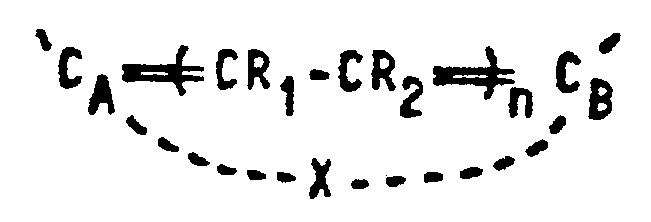


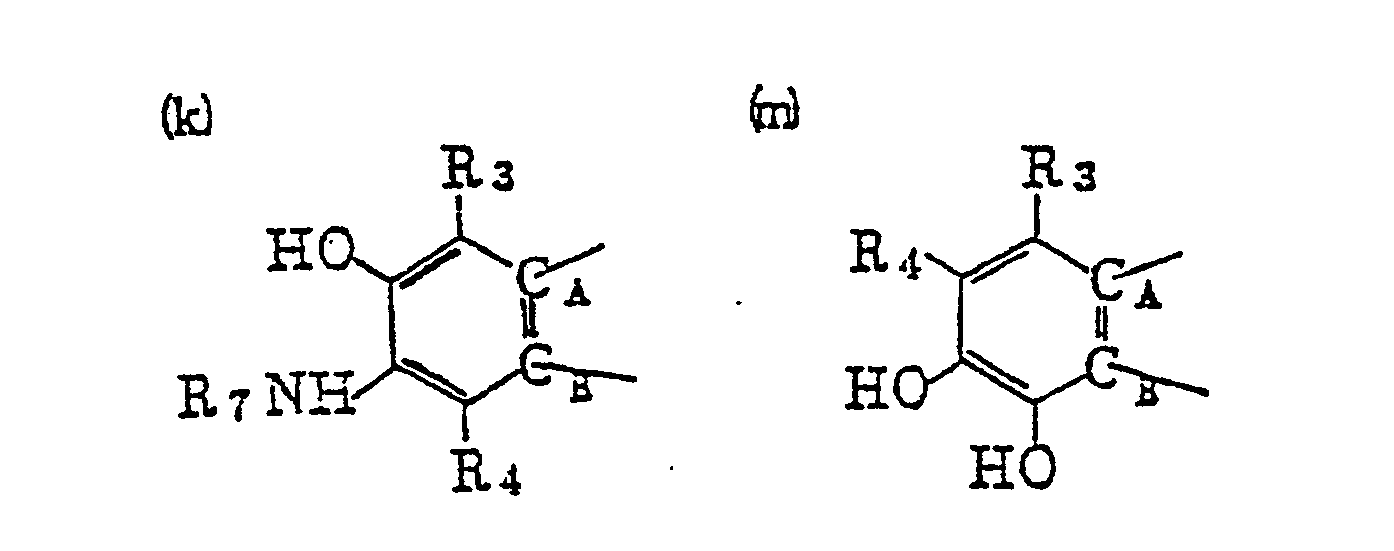


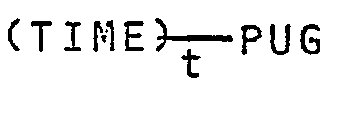


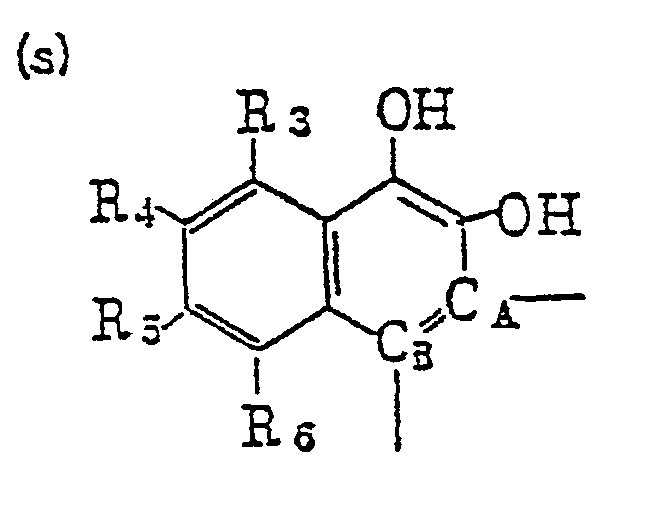
Applications Claiming Priority (2)
| Application Number | Priority Date | Filing Date | Title |
|---|---|---|---|
| JP77799/85 | 1985-04-12 | ||
| JP60077799A JPH0658512B2 (ja) | 1985-04-12 | 1985-04-12 | ハロゲン化銀写真感光材料 |
Publications (3)
| Publication Number | Publication Date |
|---|---|
| EP0198438A2 EP0198438A2 (de) | 1986-10-22 |
| EP0198438A3 EP0198438A3 (en) | 1986-12-17 |
| EP0198438B1 true EP0198438B1 (de) | 1989-10-18 |
Family
ID=13644047
Family Applications (1)
| Application Number | Title | Priority Date | Filing Date |
|---|---|---|---|
| EP86104977A Expired EP0198438B1 (de) | 1985-04-12 | 1986-04-11 | Lichtempfindliches photographisches Silberhalogenidmaterial |
Country Status (4)
| Country | Link |
|---|---|
| US (1) | US4770990A (de) |
| EP (1) | EP0198438B1 (de) |
| JP (1) | JPH0658512B2 (de) |
| DE (1) | DE3666515D1 (de) |
Families Citing this family (46)
| Publication number | Priority date | Publication date | Assignee | Title |
|---|---|---|---|---|
| JPS59199673A (ja) * | 1983-04-25 | 1984-11-12 | Sumitomo Chem Co Ltd | 含窒素複素環化合物、その製造法およびそれを有効成分とする有害生物防除剤 |
| JPH07117724B2 (ja) * | 1987-02-26 | 1995-12-18 | 富士写真フイルム株式会社 | ハロゲン化銀写真感光材料 |
| EP0280252B1 (de) * | 1987-02-26 | 1994-01-12 | Fuji Photo Film Co., Ltd. | Photographisches Silberhalogenidmaterial und Verfahren zur Herstellung eines kontrastreichen Bildes mit diesem Material |
| JPS63246740A (ja) * | 1987-04-01 | 1988-10-13 | Fuji Photo Film Co Ltd | ハロゲン化銀カラ−写真感光材料 |
| EP0285176B1 (de) * | 1987-04-02 | 1994-06-08 | Fuji Photo Film Co., Ltd. | Farbphotographisches Silberhalogenidmaterial |
| JPH07119984B2 (ja) | 1987-04-30 | 1995-12-20 | 富士写真フイルム株式会社 | 写真感光材料 |
| JPS63271258A (ja) * | 1987-04-30 | 1988-11-09 | Fuji Photo Film Co Ltd | カラ−感光材料 |
| JPS63271257A (ja) * | 1987-04-30 | 1988-11-09 | Fuji Photo Film Co Ltd | 銀塩拡散転写による画像形成方法 |
| JPH087404B2 (ja) * | 1987-04-30 | 1996-01-29 | 富士写真フイルム株式会社 | ハロゲン化銀感光材料 |
| JPS6426842A (en) * | 1987-04-30 | 1989-01-30 | Fuji Photo Film Co Ltd | Silver halide photographic sensitive material |
| JPS63271343A (ja) * | 1987-04-30 | 1988-11-09 | Fuji Photo Film Co Ltd | ハロゲン化銀感光材料 |
| JPH07113757B2 (ja) * | 1987-05-20 | 1995-12-06 | 富士写真フイルム株式会社 | カラ−感光材料 |
| JPS63287857A (ja) * | 1987-05-20 | 1988-11-24 | Fuji Photo Film Co Ltd | 感光性平版印刷版 |
| US4774181A (en) * | 1987-06-25 | 1988-09-27 | Eastman Kodak Company | Imaging element containing fluorescent dye-releasing coupler compound |
| JPH0769586B2 (ja) * | 1987-09-25 | 1995-07-31 | 富士写真フイルム株式会社 | ハロゲン化銀写真感光材料 |
| JPH07117726B2 (ja) * | 1987-12-17 | 1995-12-18 | 富士写真フイルム株式会社 | ハロゲン化銀感光材料 |
| US5213942A (en) * | 1987-12-22 | 1993-05-25 | Fuji Photo Film Co., Ltd. | Silver halide color reversal photographic maerial having silver halide emulsions with different grain diameters |
| US5132201A (en) * | 1988-04-21 | 1992-07-21 | Fuji Photo Film Co., Ltd. | Silver halide photographic material with redox releaser |
| JP2553907B2 (ja) * | 1988-04-21 | 1996-11-13 | 富士写真フイルム株式会社 | ハロゲン化銀写真感光材料 |
| JPH0339954A (ja) * | 1989-04-17 | 1991-02-20 | Fuji Photo Film Co Ltd | ハロゲン化銀カラー写真感光材料 |
| JP2899624B2 (ja) * | 1989-04-26 | 1999-06-02 | 富士写真フイルム株式会社 | 超硬調ネガ型ハロゲン化銀写真感光材料 |
| JP2887368B2 (ja) * | 1989-05-23 | 1999-04-26 | 富士写真フイルム株式会社 | ハロゲン化銀写真感光材料 |
| US5278025A (en) * | 1989-05-17 | 1994-01-11 | Fuji Photo Film Co., Ltd. | Method for forming images |
| JP2640273B2 (ja) * | 1989-05-26 | 1997-08-13 | 富士写真フイルム株式会社 | ハロゲン化銀写真感光材料 |
| JP2627195B2 (ja) * | 1989-08-09 | 1997-07-02 | 富士写真フイルム株式会社 | ハロゲン化銀写真感光材料 |
| US5258259A (en) * | 1989-09-14 | 1993-11-02 | Fuji Photo Film Co., Ltd. | Image forming method with redox development inhibitor |
| JP2889962B2 (ja) * | 1989-11-08 | 1999-05-10 | 富士写真フイルム株式会社 | ハロゲン化銀写真感光材料 |
| JP2881221B2 (ja) * | 1989-09-19 | 1999-04-12 | 富士写真フイルム株式会社 | ハロゲン化銀写真感光材料 |
| JPH03110544A (ja) * | 1989-09-26 | 1991-05-10 | Fuji Photo Film Co Ltd | ハロゲン化銀写真感光材料 |
| JPH03213855A (ja) * | 1989-11-02 | 1991-09-19 | Fuji Photo Film Co Ltd | ハロゲン化銀カラー写真感光材料の処理方法 |
| JP2879110B2 (ja) * | 1989-11-16 | 1999-04-05 | 富士写真フイルム株式会社 | ハロゲン化銀写真感光材料 |
| US5230983A (en) * | 1990-04-13 | 1993-07-27 | Fuji Photo Film Co., Ltd. | Silver halide photographic material |
| JP2832394B2 (ja) * | 1990-06-28 | 1998-12-09 | 富士写真フイルム株式会社 | ハロゲン化銀写真感光材料およびイミダゾール誘導体 |
| JPH0497347A (ja) * | 1990-08-15 | 1992-03-30 | Fuji Photo Film Co Ltd | ハロゲン化銀写真感光材料 |
| JP2722152B2 (ja) * | 1992-02-24 | 1998-03-04 | 富士写真フイルム株式会社 | 拡散転写型ハロゲン化銀写真感光材料 |
| US5380633A (en) * | 1993-01-15 | 1995-01-10 | Eastman Kodak Company | Image information in color reversal materials using weak and strong inhibitors |
| GB9312853D0 (en) * | 1993-06-22 | 1993-08-04 | Euro Celtique Sa | Chemical compounds |
| US5922751A (en) * | 1994-06-24 | 1999-07-13 | Euro-Celtique, S.A. | Aryl pyrazole compound for inhibiting phosphodiesterase IV and methods of using same |
| US5591776A (en) * | 1994-06-24 | 1997-01-07 | Euro-Celtique, S.A. | Pheynl or benzyl-substituted rolipram-based compounds for and method of inhibiting phosphodiesterase IV |
| US6025361A (en) * | 1994-12-13 | 2000-02-15 | Euro-Celtique, S.A. | Trisubstituted thioxanthines |
| EP0814809B1 (de) * | 1994-12-13 | 2003-08-13 | Euroceltique S.A. | Arylthioxanthine |
| JP2001523213A (ja) * | 1994-12-13 | 2001-11-20 | ユーロ−セルティーク,エス.エイ. | 三置換チオキサンチン類 |
| US6166041A (en) * | 1995-10-11 | 2000-12-26 | Euro-Celtique, S.A. | 2-heteroaryl and 2-heterocyclic benzoxazoles as PDE IV inhibitors for the treatment of asthma |
| US6075016A (en) * | 1996-04-10 | 2000-06-13 | Euro-Celtique S.A. | 6,5-fused aromatic ring systems having enhanced phosphodiesterase IV inhibitory activity |
| JP4119615B2 (ja) | 2001-02-02 | 2008-07-16 | 富士フイルム株式会社 | ハロゲン化銀カラー写真感光材料およびその処理方法 |
| EP2451461A4 (de) | 2009-07-06 | 2013-05-29 | Ontorii Inc | Neuartige nukleinsäure-prodrugs und verwendungsverfahren dafür |
Family Cites Families (12)
| Publication number | Priority date | Publication date | Assignee | Title |
|---|---|---|---|---|
| US3725062A (en) | 1971-07-06 | 1973-04-03 | Eastman Kodak Co | Color diffusion processes utilizing hydroquinones which provide dye image materials upon oxidation in alkaline conditions |
| JPS5339138B2 (de) * | 1974-04-08 | 1978-10-19 | ||
| US4248962A (en) * | 1977-12-23 | 1981-02-03 | Eastman Kodak Company | Photographic emulsions, elements and processes utilizing release compounds |
| US4205987A (en) * | 1978-11-15 | 1980-06-03 | Eastman Kodak Company | Sulfonamido phenol scavenger compounds |
| JPS56114946A (en) * | 1980-02-15 | 1981-09-09 | Konishiroku Photo Ind Co Ltd | Silver halide photographic sensitive material |
| JPS56153342A (en) * | 1980-04-30 | 1981-11-27 | Fuji Photo Film Co Ltd | Development inhibitor releasing type compound for photography |
| JPS58140740A (ja) * | 1982-02-15 | 1983-08-20 | Konishiroku Photo Ind Co Ltd | ハロゲン化銀写真感光材料 |
| US4434225A (en) * | 1982-02-24 | 1984-02-28 | Konishiroku Photo Industry Co., Ltd. | Light-sensitive silver halide color photographic material |
| JPS59170840A (ja) * | 1983-02-25 | 1984-09-27 | Fuji Photo Film Co Ltd | ハロゲン化銀カラ−写真感光材料 |
| JPS6024546A (ja) * | 1983-07-20 | 1985-02-07 | Konishiroku Photo Ind Co Ltd | ハロゲン化銀カラ−写真感光材料 |
| DE3506805A1 (de) * | 1984-02-29 | 1985-09-12 | Fuji Photo Film Co., Ltd., Minami-Ashigara, Kanagawa | Photographisches, lichtempfindliches silberhalogenidmaterial |
| EP0167168B2 (de) * | 1984-04-04 | 1997-07-02 | Fuji Photo Film Co., Ltd. | Photographisches Silberhalogenidmaterial |
-
1985
- 1985-04-12 JP JP60077799A patent/JPH0658512B2/ja not_active Expired - Fee Related
-
1986
- 1986-04-11 DE DE8686104977T patent/DE3666515D1/de not_active Expired
- 1986-04-11 EP EP86104977A patent/EP0198438B1/de not_active Expired
- 1986-04-14 US US06/852,044 patent/US4770990A/en not_active Expired - Lifetime
Also Published As
| Publication number | Publication date |
|---|---|
| DE3666515D1 (en) | 1989-11-23 |
| JPS61236549A (ja) | 1986-10-21 |
| US4770990A (en) | 1988-09-13 |
| JPH0658512B2 (ja) | 1994-08-03 |
| EP0198438A2 (de) | 1986-10-22 |
| EP0198438A3 (en) | 1986-12-17 |
Similar Documents
| Publication | Publication Date | Title |
|---|---|---|
| US4770990A (en) | Silver halide photographic light-sensitive material containing a compound capable of imagewise releasing a photographically useful group during development | |
| EP0220746B1 (de) | Photographische Silberhalogenidmaterialien | |
| US4740453A (en) | Silver halide photosensitive material containing a compound capable of releasing a photographically useful group | |
| US4659651A (en) | Silver halide photographic materials containing a blocked photographic reagent | |
| EP0118087A2 (de) | Farblichtempfindliches Silberhalogenidmaterial | |
| US5134055A (en) | Silver halide photographic materials | |
| JP2529822B2 (ja) | ハロゲン化銀写真感光材料 | |
| EP0286840A1 (de) | Photographische Silberhalogenid-Materialien | |
| JPH0456967B2 (de) | ||
| US5196291A (en) | Silver halide photographic material | |
| JPS6346450A (ja) | ハロゲン化銀写真感光材料 | |
| US5145765A (en) | Silver halide photographic material | |
| US4891304A (en) | Silver halide photographic materials | |
| EP0395069B1 (de) | Photographische Silberhalogenidmaterialien | |
| US5132201A (en) | Silver halide photographic material with redox releaser | |
| EP0393721B1 (de) | Photographisches Silberhalogenidmaterial | |
| EP0280252A2 (de) | Photographisches Silberhalogenidmaterial und Verfahren zur Herstellung eines kontrastreichen Bildes mit diesem Material | |
| JPH0693082B2 (ja) | ハロゲン化銀写真感光材料 | |
| US5006444A (en) | Silver halide photographic material | |
| US4840887A (en) | Silver halide photographic materials | |
| US5204213A (en) | Silver halide photographic material | |
| JP2553907B2 (ja) | ハロゲン化銀写真感光材料 | |
| JPH087404B2 (ja) | ハロゲン化銀感光材料 | |
| JP2879110B2 (ja) | ハロゲン化銀写真感光材料 | |
| JP2714706B2 (ja) | ハロゲン化銀写真感光材料 |
Legal Events
| Date | Code | Title | Description |
|---|---|---|---|
| PUAI | Public reference made under article 153(3) epc to a published international application that has entered the european phase |
Free format text: ORIGINAL CODE: 0009012 |
|
| AK | Designated contracting states |
Kind code of ref document: A2 Designated state(s): DE FR GB NL |
|
| PUAL | Search report despatched |
Free format text: ORIGINAL CODE: 0009013 |
|
| AK | Designated contracting states |
Kind code of ref document: A3 Designated state(s): DE FR GB NL |
|
| 17P | Request for examination filed |
Effective date: 19870223 |
|
| 17Q | First examination report despatched |
Effective date: 19870911 |
|
| GRAA | (expected) grant |
Free format text: ORIGINAL CODE: 0009210 |
|
| AK | Designated contracting states |
Kind code of ref document: B1 Designated state(s): DE FR GB NL |
|
| REF | Corresponds to: |
Ref document number: 3666515 Country of ref document: DE Date of ref document: 19891123 |
|
| ET | Fr: translation filed | ||
| PLBE | No opposition filed within time limit |
Free format text: ORIGINAL CODE: 0009261 |
|
| STAA | Information on the status of an ep patent application or granted ep patent |
Free format text: STATUS: NO OPPOSITION FILED WITHIN TIME LIMIT |
|
| 26N | No opposition filed | ||
| REG | Reference to a national code |
Ref country code: GB Ref legal event code: IF02 |
|
| PGFP | Annual fee paid to national office [announced via postgrant information from national office to epo] |
Ref country code: GB Payment date: 20020410 Year of fee payment: 17 Ref country code: FR Payment date: 20020410 Year of fee payment: 17 |
|
| PGFP | Annual fee paid to national office [announced via postgrant information from national office to epo] |
Ref country code: DE Payment date: 20020417 Year of fee payment: 17 |
|
| PGFP | Annual fee paid to national office [announced via postgrant information from national office to epo] |
Ref country code: NL Payment date: 20020426 Year of fee payment: 17 |
|
| PG25 | Lapsed in a contracting state [announced via postgrant information from national office to epo] |
Ref country code: GB Free format text: LAPSE BECAUSE OF NON-PAYMENT OF DUE FEES Effective date: 20030411 |
|
| PG25 | Lapsed in a contracting state [announced via postgrant information from national office to epo] |
Ref country code: NL Free format text: LAPSE BECAUSE OF NON-PAYMENT OF DUE FEES Effective date: 20031101 Ref country code: DE Free format text: LAPSE BECAUSE OF NON-PAYMENT OF DUE FEES Effective date: 20031101 |
|
| NLV4 | Nl: lapsed or anulled due to non-payment of the annual fee |
Effective date: 20031101 |
|
| GBPC | Gb: european patent ceased through non-payment of renewal fee |
Effective date: 20030411 |
|
| PG25 | Lapsed in a contracting state [announced via postgrant information from national office to epo] |
Ref country code: FR Free format text: LAPSE BECAUSE OF NON-PAYMENT OF DUE FEES Effective date: 20031231 |
|
| REG | Reference to a national code |
Ref country code: FR Ref legal event code: ST |