EP0207165B1 - Polypeptidverabreichender vektor, mikroorganismen vom vektor transformiert, verfahren zur herstellung von polypeptiden mittels derselben - Google Patents
Polypeptidverabreichender vektor, mikroorganismen vom vektor transformiert, verfahren zur herstellung von polypeptiden mittels derselben Download PDFInfo
- Publication number
- EP0207165B1 EP0207165B1 EP86900256A EP86900256A EP0207165B1 EP 0207165 B1 EP0207165 B1 EP 0207165B1 EP 86900256 A EP86900256 A EP 86900256A EP 86900256 A EP86900256 A EP 86900256A EP 0207165 B1 EP0207165 B1 EP 0207165B1
- Authority
- EP
- European Patent Office
- Prior art keywords
- dna sequence
- polypeptide
- vector
- signal peptide
- dna
- Prior art date
- Legal status (The legal status is an assumption and is not a legal conclusion. Google has not performed a legal analysis and makes no representation as to the accuracy of the status listed.)
- Expired - Lifetime
Links
Images
Classifications
-
- C—CHEMISTRY; METALLURGY
- C12—BIOCHEMISTRY; BEER; SPIRITS; WINE; VINEGAR; MICROBIOLOGY; ENZYMOLOGY; MUTATION OR GENETIC ENGINEERING
- C12N—MICROORGANISMS OR ENZYMES; COMPOSITIONS THEREOF; PROPAGATING, PRESERVING, OR MAINTAINING MICROORGANISMS; MUTATION OR GENETIC ENGINEERING; CULTURE MEDIA
- C12N15/00—Mutation or genetic engineering; DNA or RNA concerning genetic engineering, vectors, e.g. plasmids, or their isolation, preparation or purification; Use of hosts therefor
-
- C—CHEMISTRY; METALLURGY
- C07—ORGANIC CHEMISTRY
- C07K—PEPTIDES
- C07K14/00—Peptides having more than 20 amino acids; Gastrins; Somatostatins; Melanotropins; Derivatives thereof
- C07K14/005—Peptides having more than 20 amino acids; Gastrins; Somatostatins; Melanotropins; Derivatives thereof from viruses
-
- C—CHEMISTRY; METALLURGY
- C07—ORGANIC CHEMISTRY
- C07K—PEPTIDES
- C07K14/00—Peptides having more than 20 amino acids; Gastrins; Somatostatins; Melanotropins; Derivatives thereof
- C07K14/435—Peptides having more than 20 amino acids; Gastrins; Somatostatins; Melanotropins; Derivatives thereof from animals; from humans
- C07K14/475—Growth factors; Growth regulators
- C07K14/485—Epidermal growth factor [EGF], i.e. urogastrone
-
- C—CHEMISTRY; METALLURGY
- C07—ORGANIC CHEMISTRY
- C07K—PEPTIDES
- C07K14/00—Peptides having more than 20 amino acids; Gastrins; Somatostatins; Melanotropins; Derivatives thereof
- C07K14/435—Peptides having more than 20 amino acids; Gastrins; Somatostatins; Melanotropins; Derivatives thereof from animals; from humans
- C07K14/575—Hormones
-
- C—CHEMISTRY; METALLURGY
- C12—BIOCHEMISTRY; BEER; SPIRITS; WINE; VINEGAR; MICROBIOLOGY; ENZYMOLOGY; MUTATION OR GENETIC ENGINEERING
- C12N—MICROORGANISMS OR ENZYMES; COMPOSITIONS THEREOF; PROPAGATING, PRESERVING, OR MAINTAINING MICROORGANISMS; MUTATION OR GENETIC ENGINEERING; CULTURE MEDIA
- C12N15/00—Mutation or genetic engineering; DNA or RNA concerning genetic engineering, vectors, e.g. plasmids, or their isolation, preparation or purification; Use of hosts therefor
- C12N15/09—Recombinant DNA-technology
- C12N15/11—DNA or RNA fragments; Modified forms thereof; Non-coding nucleic acids having a biological activity
- C12N15/62—DNA sequences coding for fusion proteins
- C12N15/625—DNA sequences coding for fusion proteins containing a sequence coding for a signal sequence
-
- C—CHEMISTRY; METALLURGY
- C07—ORGANIC CHEMISTRY
- C07K—PEPTIDES
- C07K2319/00—Fusion polypeptide
- C07K2319/01—Fusion polypeptide containing a localisation/targetting motif
- C07K2319/02—Fusion polypeptide containing a localisation/targetting motif containing a signal sequence
-
- C—CHEMISTRY; METALLURGY
- C07—ORGANIC CHEMISTRY
- C07K—PEPTIDES
- C07K2319/00—Fusion polypeptide
- C07K2319/01—Fusion polypeptide containing a localisation/targetting motif
- C07K2319/035—Fusion polypeptide containing a localisation/targetting motif containing a signal for targeting to the external surface of a cell, e.g. to the outer membrane of Gram negative bacteria, GPI- anchored eukaryote proteins
-
- C—CHEMISTRY; METALLURGY
- C07—ORGANIC CHEMISTRY
- C07K—PEPTIDES
- C07K2319/00—Fusion polypeptide
- C07K2319/70—Fusion polypeptide containing domain for protein-protein interaction
- C07K2319/74—Fusion polypeptide containing domain for protein-protein interaction containing a fusion for binding to a cell surface receptor
- C07K2319/75—Fusion polypeptide containing domain for protein-protein interaction containing a fusion for binding to a cell surface receptor containing a fusion for activation of a cell surface receptor, e.g. thrombopoeitin, NPY and other peptide hormones
-
- C—CHEMISTRY; METALLURGY
- C12—BIOCHEMISTRY; BEER; SPIRITS; WINE; VINEGAR; MICROBIOLOGY; ENZYMOLOGY; MUTATION OR GENETIC ENGINEERING
- C12N—MICROORGANISMS OR ENZYMES; COMPOSITIONS THEREOF; PROPAGATING, PRESERVING, OR MAINTAINING MICROORGANISMS; MUTATION OR GENETIC ENGINEERING; CULTURE MEDIA
- C12N2730/00—Reverse transcribing DNA viruses
- C12N2730/00011—Details
- C12N2730/10011—Hepadnaviridae
- C12N2730/10111—Orthohepadnavirus, e.g. hepatitis B virus
- C12N2730/10122—New viral proteins or individual genes, new structural or functional aspects of known viral proteins or genes
Definitions
- the present invention relates to vectors for expression and secretion of a polypeptide, microorganisms transformed by the vector, and preparation of the polypeptide with use of the microorganism.
- the translation of the gene into the polypeptide usually takes place first at the start codon ATG, so that the polypeptide expressed has a formylmethionine residue at its N terminus.
- Natural polypeptides are not very likely to have formylmethionine at the N terminus, and accordingly, this method is not usable for preparing polypeptides having other N terminus.
- the formylmethionine residue can be removed from the polypeptide by a chemical reaction using cyanogen bromide, but when the polypeptide has other methionine residues at positions other than the N terminus, the polypeptide chain itself is cut at the position when the above method is resorted to. It is therefore impossible to obtain the desired polypeptide.
- a method is also known in which the gene coding for the desired polypeptide is linked with the gene coding for some other polypeptide to express a fused polypeptide.
- the fusion polypeptide obtained should be treated with enzymes such as trypsin or chemically treated using cyanogen bromide to separate the desired polypeptide from the fused product.
- the desired polypeptide chain includes amino acid sequence which is a target for the enzyme or chemical used, the peptide chain is cut at the position of the amino acid sequence with the result that the method fails to afford the desired polypeptide.
- the isolation of the desired polypeptide usually requires two purification steps, i.e., the step of separating the fused polypeptide from the resulting crude cell extract and the step of separating the desired polypeptide from the reaction mixture containing the separated fused polypeptide. These steps need cumbersome procedures and invariably result in a low yield.
- An object of the present invention is to provide an improved process, as desired in the art, for directly producing from host cells a polypeptide which is exactly identical with the natural one.
- Another object of the present invention is to provide a novel vector and a microorganism having the vector, for practicing this process.
- the present invention provides a vector for expression and secretion of a polypeptide by directly joining a DNA sequence coding for a signal peptide to a DNA sequence coding for the desired polypeptide, the vector being characterized in that it contains the DNA sequence coding for the signal peptide, the vector containing a DNA sequence coding for a fused polypeptide comprising the DNA sequence coding for the signal peptide and the DNA sequence coding for the desired polypeptide directly joined thereto, a microorganism transformed by the vector, and a process for producing the polypeptide by growing the microorganism and collecting the polypeptide secreted therefrom.
- signal peptide refers to an amino acid sequence which acts to secrete a polypeptide produced within the cell.
- the polypeptides produced by all cells which are not limited to the cells of microorganisms include those remaining within the cell to perform the contemplated function and those secreted from the cell.
- the polypeptide to be secreted from the cell is first produced within the cell in the form of a precursor which possesses a signal peptide as an N-terminal extension of more than ten to several tens of amino acid residues.
- the precursor then passes through the cell membrane by the aid of its signal peptide, whereupon the signal peptide is cleaved by signal peptidase, with the result that only the polypeptide free from any unnecessary amino acid residues is secreted from the cell.
- the polypeptide thus screted from the cell will hereinafter be referred to as "mature polypeptide."
- E.coli ⁇ -lactamase is first produced within the cell as pre- ⁇ -lactamase, i.e. a precursor of ⁇ -lactamase with N-terminal extension of 23 amino acid residues as a signal peptide.
- the protein is passed through the inner membrane and secreted into the periplasm, i.e.
- the signal peptide is cleaved by signal peptidase, permitting a mature polypeptide, namely active form of ⁇ -lactamase, to be accumulated in the periplasm as is already known (J.G. Sutcliffe, Proc. Natl. Acad. Sci., U.S.A., 75 , 3737-3741 (1978)).
- the vector of the present invention for expression and secretion of the desired polypeptide harbors a DNA sequence coding for a signal peptide which is so designed as to have directly joined thereto a DNA sequence coding for the desired polypeptide. Accordingly, the DNA sequence coding for the desired polypeptide can be directly joined to the DNA sequence of the vector coding for the signal peptide.
- the expression vector thus obtained is introduced into host cells, which are then grown, whereby the desired polypeptide can be secreted or produced as a mature polypeptide outside the cells or in the periplasm.
- the DNA sequence coding for a signal peptide which is an essential constituent of the vector of the present invention can be any of those heretofore known and coding for signal peptides. Typical of such signal peptides is, for example, the one for the ⁇ -lactamase of E.coli . This signal peptide has the amino acid sequence of the formula (1) below.
- the DNA sequence coding for the signal peptide can be optionally designed because anyone of the degenerated codons for each amino acid shown below is allowable for the sequence.
- Each of the nucleotides may be modified by methylation or the like.
- the DNA sequence coding for the signal peptide and possessed by the vector of the present invention basically comprises such a specific DNA sequence as exemplified above and further includes restriction endonuclease recognition sequences in the vicinity of the 3' end thereof to which a DNA sequence coding for the contemplated polypeptide is to be joined, preferably within 10-base sequence from the end, or in the DNA sequence of up to 10 bases added to the 3' end. This is essentially required for directly joining the DNA sequence coding for the desired polypeptide to the DNA sequence coding for the signal peptide. While any of the known restriction endonuclease is useful as the enzyme for recognizing the restriction endonuclease recognition sequence, preferable are those recognizing a sequence of not smaller than five bases. The DNA sequence in the vicinity of the 3' end can be altered as desired depending on the enzyme to be used.
- the signal peptide for ⁇ -lactamase exemplified above.
- GCC codon for the amino acid Ala at the C terminus
- the three-base sequence GGC may be linked to this sequence.
- the six-base sequence GCCGGC is thus formed and it can be recognized by the restriction endonuclease Nae I.
- the DNA sequence coding for the signal peptide is cleaved at the center of the above sequence by Nae I, whereby DNA is obtained wherein the 3' end is GCC (corresponding to the amino acid Ala at the C end of the signal peptide).
- the desired DNA sequence coding for the contemplated polypeptide can be directly linked to this DNA immediately thereafter.
- the seven-base sequence TTCGCGA can be obtained by adding adenine (A) to the 3' end.
- TCGCGA included in this sequence can be recognized and cleaved at the center by the restriction endonuclease Nru I, giving a DNA sequence having TTCG at its 3' end.
- the DNA sequence obtained by the digestion with Nru I of the above DNA sequence can be linked to the DNA sequence coding for the desired polypeptie with additional two-bases, CT, CC, CA or CG, to the 5' end, whereby a DNA sequence is obtained which codes for the desired fused polypeptide.
- the six-base sequence CAGCTG included in the linked sequence can be recognized and cleaved at the center by Pvu II, giving a DNA sequence which includes the DNA sequence coding for the signal peptide and additional seven-base sequence AACTCAG attached to the 3' end thereof.
- the first three-base sequence AAC codes for Asn
- the next three-base sequence TCA codes for Ser
- the last base guanine (G) can be the first base of codons for Ala, Gly, Val, Asp or Gln.
- the sequence obtained by the digestion with Nru I of the above DNA sequence coding for the signal peptide can be linked to the DNA sequence coding for a polypeptide, such as ⁇ -urogastrone, having the amino acid sequence Asn-Ser-Asp at the N terminus, when the seven-base sequence (e.g. AACTCAG) at the 5' end is removed from the latter sequence, whereby a DNA sequence can be readily obtained which codes for the desired fused polypeptide (of the signal peptide and ⁇ -urogastrone).
- a polypeptide such as ⁇ -urogastrone
- DNA sequence coding for the signal peptide as a component of the vector of the present invention
- another preferred example that is usable is a sequence obtained by adding a DNA sequence of up to ten bases to the above sequence.
- the formula (3) below represents such an example of DNA sequence having the above-mentioned ten additonal bases.
- the DNA sequence coding for the signal peptide of the present invention or DNA sequences including the sequence can be readily produced by various known methods, for example, by a method of cutting off and isolating the sequence from the DNA of microorganisms or plasmids or the like isolated thereof, e.g. preferably pBR322 or the like, using restriction endonuclease, by a method of chemically synthesizing the DNA sequence, or by the combination of such methods.
- the DNA sequence coding for the signal peptide can be linked or attached to the DNA sequence coding for the desired polypeptide also by various known methods, for example, by an enzymatic reaction using T4 DNA ligase or the like.
- the vector of the present invention containing the DNA sequence coding for the signal peptide thus obtained can be prepared by incorporating the DNA sequence into various vectors heretofore used for cloning foreign genes, such as plasmids, viral DNA and cosmids (e.g. pJB8, Ish-Horowicz, D. and Burke, J.F., Nucleic Acids Res., 9 , 2989 (1981)).
- suitable vectors for incorporating the DNA sequence include the above-mentioned plasmid pBR322 and the following.
- the DNA sequence coding for the signal peptide can be introduced into the origin vector by the same procedure as conventionally used for incorporating such foreign genes into vectors, as already exemplified.
- the polypeptide secretion vector of the invention thus obtained and containing the DNA sequence coding for the signal peptide of course needs to have incorporated therein the DNA sequence coding for the desired polypeptide before being actually introduced into host cells for the expression and secretion of the desired polypeptide.
- the vector must contain a promoter, a ribosome binding site, a stop codon and the other regulatory DNA sequences such as terminater.
- the original vector contains such factors.
- the regulatory factors for expression of ⁇ -lactamase derived from the origin vector pBR322, for example, are usable as such.
- DNAs derived from other known microorganisms or viruses also usually contain these regulatory factors, which are therefore usable.
- useful factors are promoters such as those of E . coli lactose operon, tryptophan operon and ⁇ phage PL, ribosome binding sites such as SD sequence of ⁇ -galactosidase, and terminators such as ⁇ phage t L1.
- the three base sequences of TAA, TAG and TGA are usable as stop codons.
- Such regulatory factors can be separated by a usual method from DNA containing them, and the desired factors can be introduced into a suitable vector by a usual method.
- Examples of vectors of the present invention having especially preferred regulatory factors and the DNA sequence for the signal peptide include pGH54 and pGH55 constructed from the origin vector pBR322.
- One of the plasmids, pGH54 has the promoter and ribosome binding site of ⁇ -lactamase and the subsequent DNA sequence coding or the signal peptide of ⁇ -lactamase.
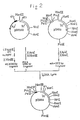
- the plasmid has at the 3' end of the DNA sequence the recognition sequences for the restriction endonucleases Nru I and Pvu II. The characteristics of the plasmid are shown in Fig. 2, which also schematically shows the production procedure therefor.
- pGH54 is characterized by the illustrated restriction endonuclease cleavage map.
- pGH54 has about 3.9 kb as determined by 1.0% agarose gel electrophoresis.
- the E . coli strain HB101 harboring the plasmid pGH54 has been deposited with the designation "HB101 [pGH54]" and deposition number FERM BP-679 in Fermentation Research Institute, Agency of Industrial Science and Technology, MITI.
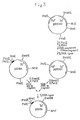
- pGH55 is in common with pGH54 in that the plasmid has the promoter and the ribosome binding site of ⁇ -lactamase and the subsequent DNA sequence coding for the signal peptide of ⁇ -lactamase, but is devoid of about 0.64 kb DNA of pGH54 containing a Pvu II restriction site and has another Pvu II restriction site in the vicinity of the 3' end of the DNA sequence coding for the signal peptide.
- the characteristics of the plasmid and the outline of production procedure therefor are shown in Fig. 3.
- pGH55 is characterized by the illustrated restriction endonuclease cleavage map and has about 3.3 kb as determined by the same method as above.
- the E . coli strain HB101 harboring the plasmid pGH55 has been deposited with the designation "HB101 [pGH55]" and deposition number FERM BP-680 in Fermentation Research Institute, Agency of Industrial Science and Technology, MITI.
- the vector of the present invention for expression and secretion of the desired polypeptide contains various regulatory factors mentioned above and has the DNA sequence coding for the signal peptide and the DNA sequence directly attached thereto and coding for the desired polypeptide.
- This vector is constructed in the same manner as the vector of the invention described above. The invention provides this vector for expression and secretion of the desired mature polypeptide.
- polypeptide as well as the DNA sequence thereof, to be contained in the mature polypeptide secretion vector of the present invention, as an DNA sequence attached to the DNA sequence coding for the signal peptide to code for a fused polypeptide can be any of desired polypeptides and DNA sequences coding therefor.
- polypeptides examples include epidermal growth factor, somatostatin, insulin, GIP, R-MSA, thymosin ⁇ 4, growth hormone, growth hormone-releasing factor and like hormones and growth factors, interferons, interleukin 2, tumor necrosis factor and like lymphokines and immuno-regulatory substances, serum albumin, plasminogen activator, apolipoproteins and like blood constituent substances, hepatitis B virus surface antigen and like antigen proteins for vaccines, etc.
- the DNA sequences coding for these polypeptides may be extracted and isolated from cells or the like containing them by usual methods, or can be chemically synthesized according to the amino acid sequence of the polypeptide concerned.
- the DNA sequence for the polypeptide can be attached to the DNA sequence for the signal peptide by introducing the former sequence into the polypeptide secretion vector of the invention having the latter sequence, by the foregoing methods, for example, by an enzymatic reaction using restriction endonucleases and an enzymatic reaction using T4 DNA ligase.
- the DNA base sequence coding for a fused polypeptide of the signal peptide and desired polypeptide is chemically synthesized and then introduced into a vector in the same manner as the introduction of the DNA sequence for signal peptide.
- the polypeptide secretion vector of the present invention which has the DNA sequence coding for the fused polypeptide.
- the vector has a promoter and ribosome binding site upstream of the DNA sequence coding for the fused polypeptide, and a stop codon immediately after the DNA sequence of the desired polypeptide constituting the above sequence.
- the vector transforms the cell to express and secrete the polypeptide.
- Plasmid pUG201 is a preferred example of polypeptide secretion vector.
- pUG201 includes the promoter and ribosome binding site of ⁇ -lactamase, the DNA sequence for signal peptide of ⁇ -lactamase, the DNA sequence for ⁇ -urogastrone (desired polypeptide) and a stop codon therefor as accurately arranged in this order. This sequence is shown in Table 4 in the example to follow.
- the E . coli strain HB101 harboring the plasmid pUG201 has been deposited with the designation "HB101 [pUG201]" and deposition number FERM BP-681 in the Fermentation Research Institute, Agency of Industrial Science and Technology, MITI.
- the polypeptide secretion vector of the present invention can be introduced into host cells by various known methods.
- the host cell to be used is not limited specifically but can be any of various known ones.
- useful host cells are gram-negative bacteria such as E . coli , gram-positive bacteria such as Bacillus subtilis , actinomycetes, yeast, etc. Especially preferable among these are the strain HB101 and the other strains derived from E . coli K12.
- These host cells have signal peptidase as one of the machineries for secreting polypeptides such as extracellular proteins and outer membrane proteins which are required for maintaining the normal function of the cell. It is known that there is little or no difference in substrate specificity among the signal peptidases derived from various microorganisms. (D. Perlman and H.O. Halvorson, J. Mol. Biol., 167 , 391 (1983)).
- the vector can be introduced into host cells, for example, by treating the host cells in an aqueous solution containing calcium chloride at a low temperature, and adding the vector to the solution (E. Lederberg, S. and Cohen, J., Bacteriol., 119 , 1072 (1974)).
- a fused polypeptide is produced within the cells, and a mature polypeptide is subsequently secreted extracellularly or into the periplasm and accumulated.
- mRNA is first transcribed from the gene on the vector coding for the fused polypeptide by the action of the transcription regulatory factors of the vector and various factors in the host cell.
- the fused polypeptide is produced from the mRNA by the action of the translation regulatory factors and various factors in the host cell and is secreted extracellularly or into the periplasm by the aid of the signal peptide.
- the signal peptide is cleaved from the fused polypeptide by signal peptidase. Consequently, a mature polypeptide which is free from the signal peptide or any other unnecessary amino acid residues is secreted and accumulated extracellularly or into the periplasm.
- the mature polypeptide thus secreted and accumulated can be separated off and further purified by usual methods.
- the polypeptide can be separated off from the culture supernatant or from a periplasmic fraction prepared by the osmotic shock method and purified, for example, by a suitable combination of gel filtration, adsorption chromatography, ion-exchange chromatography, high performance liquid chromatography, etc.
- the desired polypeptide obtained according to the present invention is a secreted product and therefore has the advantage of being easy to separate off and purify.
- reaction buffers prepared by diluting the concentrated buffer with water is admixed with an aqueous solution (or buffer solution) or pellet of DNA, a restriction endonuclease is then added to the mixture, and the resulting mixture is allowed to stand in a water bath at 37°C for 3 hours for reaction.
- the standard amount of restriction endonuclease to be used is one unit per microgram of DNA in 10 ⁇ l of the reaction mixture.
- This extraction method is practiced after the completion of the enzymatic reaction to inactivate the enzyme and terminate the reaction.
- TE-saturated phenol phenol saturated with 10 mM tris-HCl (pH 8.0) containing 1 mM EDTA
- the resulting mixture is centrifuged to collect the buffer layer containing the DNA.
- 3 M sodium acetate buffer pH 5.0
- the mixture is stirred and allowed to stand at -20°C for at least one hour.
- the DNA is collected as a pellet, whereby the phenol is completely removed.
- the DNA is dissolved in an aqueous solution containing 40 mM potassium phosphate (pH 7.4), 6 mM magnesium chloride, 1 mM ⁇ -mercaptoethanol, 1 mM ATP, and 1 mM of each of dATP, dCTP, dGTP and dTTP.
- DNA polymerase I Klenow fragment, product of Takara Shuzo Co., Ltd. is added to the solution in an amount of one unit per microgram of DNA, followed by reaction at 12°C for 30 minutes.
- the DNA fragments are ligated (circularized) by reacting the fragments with T4 DNA ligase (product of Takara Shuzo Co., Ltd.) in an amount of 3 units per microgram thereof at 12°C for at least 5 hours in an aqueous solution containing 66 mM tris-HCl (pH 7.5), 6.6 mM magnesium chloride, 10 mM dithiothreitol, 1 mM ATP, and 0.01% bovine serum albumin.
- T4 DNA ligase product of Takara Shuzo Co., Ltd.
- the strain HB101 derived from E . coli K12 is used as the host cell.
- the strain HB101 is grown in LB medium (1% bacto trypton, 0.5% bacto yeast extract and 0.5% sodium chloride) at 37°C until an absorbance at 610 nm reaches 0.25.
- the culture 40 ml is centrifuged (6000 r.p.m. for 10 minutes) to collect the cells, which are then ice-cooled.
- the cells are washed with 20 ml of 0.1 M magnesium chloride, suspended in 20 ml of ice-cooled solution of 0.1 M calcium chloride and 0.05 M magnesium chloride and ice-cooled for one hour, followed by centrifugation (6000 r.p.m. for 10 minutes).
- the cells collected are suspended again in 2 ml of 0.1 M calcium chloride and 0.05 M magnesium chloride.
- the transformant to be obtained is selected by the following procedure according to antibiotic resistance, i.e. by spreading 0.3 ml portions of the reaction mixture over a plate medium prepared by adding 50 ⁇ g/ml of ampicillin or 20 ⁇ g/ml of tetracycline to LB medium containing 1.5% agar, followed by incubation at 37°C overnight. The growing E . coli colonies are isolated.
- the strain harboring plasmids is grown at 37°C in 500 ml of LB medium containing 50 ⁇ g/ml of ampicillin or 20 ⁇ g/ml of tetracycline, until an absorbance at 610 nm reaches about 0.6.
- the culture is added to 80 mg of chloramphenicol and further incubated with shaking at 37°C for 12 to 16 hours.
- the culture is centrifuged (6000 r.p.m.
- the resutling mixture is centrifuged (25000 r.p.m. for 90 minutes) to collect the supernatant.
- a 9.0 g quantity of cesium chloride is dissolved in 8.2 ml of the supernatant, and 0.8 ml of 1% ethidium bromide is further added thereto.
- the mixture is centrifuged (2000 r.p.m. for 10 minutes) to remove the suspended matter.
- the solution is ultracentrifuged (50000 r.p.m. for 15 hours).
- the resulting product is irradiated with ultraviolet rays to separate the plasmid portion emitting fluorescence.
- This portion is subjected to extraction five to six times using isopropanol saturated with 5 M sodium chloride solution to remove the ethidium bromide. Finally, the portion is dialysed against 10 mM tris-HCl (pH 8.0) and 1 mM EDTA to remove the cesium chloride.
- An oligonucleotide is synthesized by the following solid-phase method (solid-phase phosphotriester method). (H. Ito et al., Nucleic Acids Research, 10 , 1755-1769 (1982)).
- a resin prepared by aminomethylating 1% crosslinked polystyrene resin S-X1 (200 to 400 mesh, product of BIO.RAD Laboratories) is first reacted with monosuccinic acid ester of 5'-o-dimethoxytritylnucleoside to obtain a nucleoside supporting resin.
- the following procedure is carried out using a DNA synthesizer produced by Bachem Inc.
- the above resin (40 mg) is placed into a reactor and treated with a solution of 1 M zinc bromide in dichloromethane-isopropanol (85:15) to remove the dimethoxytrityl group at the 5, position.
- a completely protected dinucleotide (prepared by the method of C. Broka et al., Nucleic Acids Research, 8 , 5461-5471 (1980)) in the form of a triethylammonium salt (50 mg) is added to the resin, and the mixture is subjected to condensation using a condensation agent (mesitylene-5-nitrotriazole).
- a condensation agent mesitylene-5-nitrotriazole
- the protected oligonucleotide is removed from the resin using a solution of 0.5 M pyridine aldoximate in pyridine-water (1:1).
- the removed compound is purified by a Sephadex G-50 column (2 x 100 cm, product of Pharmacia) and further by high performance liquid chromatography (pump: Model 6000A, product of Waters Associates, detector: Model 440 Detector, column: Micro-Bondapak C18, eluent: (5 ⁇ 40%) acetonitrile-aqueous solution of triethylammonium acetate (0.1 M).
- the compound is subsequently treated with 80% acetic acid for the removal of the protective group and subjected to high performance liquid chromatography again until a single peak is obtained.
- This high performance liquid chromatography is conducted under the same conditions as above except that the eluent used is (5 ⁇ 25%) acetonitrile-aqueous solution of triethylammonium acetate (0.1 M).
- the DNA sequence is analyzed in the following manner according to the method of Messing (M13 method, Methods Enzymol., 101 , 20 (1983)).
- a DNA fragment is digested by one or two restriction endonucleases and separated by 1% agarose gel electrophoresis.
- the DNA fragment is cloned on the vector M13mp8RF (product of Pharmacia).
- the recombinant phage DNA obtained is used to transfect E . coli strain JM107 by the method of Mandel and Higa (J. Mol. Biol., 53 , 154 (1970)).
- One of the colorless plaques is collected by a Pasteur pipette and added to 1 ml of 2xTY medium along with 0.01 ml of culture of JM103 strain, followed by incubation with shaking at 37°C for about 5 hours to proliferate the recombinant phage.
- the resulting culture is centrifuged to remove the cell, 0.2 ml of 20% polyethylene glycol 6000 is admixed with the supernatant, and the mixture is allowed to stand at room temperature for at least 15 minutes and thereafter centrifuged.
- the phage sediment is collected, from which a single stranded DNA is extracted using phenol.
- the extract is used as a template single stranded DNA.
- the template single stranded DNA and a primer (M13 15-base primer, product of Takara Shuzo Co., Ltd.), each in an amount of 0.5 pmol, are mixed together, heated at 60°C for 20 minutes and then slowly cooled.
- To the mixture are then added 2 ⁇ l of [ ⁇ 32P]-dCTP (400 Ci/mmol, product of Pharmacia) and 2 units of DNA polymerase I (Klenow fragment, product of Takara Shuzo Co., Ltd.). After thoroughly stirring the mixture, 3.2 ⁇ l portions thereof are placed into reaction tubes containing four kinds of dNTP-ddNTP mixtures listed in Table 2 individually in an amount of 2 ⁇ l.
- each of the mixtures is reacted at room temperature for 20 minutes, and further reacted for 20 minutes with addition of chase reaction solution (1 mM of each of dATP, dCTP, dGTP and dTTP).
- chase reaction solution (1 mM of each of dATP, dCTP, dGTP and dTTP).
- formamide stop solution 95% v/v formamide, 0.1% xylene cyanol and 0.1% bromophenol blue).
- the mixture is heated at 95°C for 3 minutes and then rapidly cooled.
- a 2 ⁇ l portion of the sample is electrophoresised on 6% or 8% polyacrylamide gel (1800 V, 30 mA, 2-3 hours), and the gel is transferred to filter paper (Whatman 3MM), dried in a dryer and autoradiographed to read the DNA sequence.
- Table 2 Composition of dNTP-ddNTP mixture ( ⁇ l) A C G T 0.5 mM dGTP 20 15 1 20 0.5 mM dATP 1 15 20 20 0.5 mM dTTP 20 15 20 1 100 mM tris-HCl (pH 7.5) 20 15 20 20 + 1 mM EDTA H2O 45 (ddA) 45 (ddC) 50 (ddG) 30 (ddT) 1.0 mM ddNTP 15 15 10 30 Total 121 120 121 121
- ddA stands for dideoxyadenosine
- ddC for dideoxycytidine
- ddG for dideoxyguanosine
- ddT dideoxythymidine
- Agarose gel electrophoresis as well as separation of DNA fragments from the resulting gel, is conducted according to the method described in the manual of Schleif and Wensink ("Practical Methods in Molecular Biology” (1981), Springer-Verlag, pp. 114-125), using the power supply of Atto Corporation, Consta power Model SJ1065, a plastics water container, 12 x 15 cm (equipped with platinum electrodes), as the electrophoresis apparatus, Agarose I (product of Dojin Chemical Lab.) and 40 mM tris-HCl (containing 5 mM sodium acetate and 1 mM EDTA, pH 7.9) as the electrophoresis buffer.
- Polyacrylamide gel electrophoresis and separation of DNA fragments from the resulting gel are conducted according to the methods described in the above manual, pp. 78-87 and pp. 114-125.
- the electrophoresis is conducted using the power supply of Atto Corporation, Consta power Model SJ1065, the electrophoresis apparatus of the same company, Model SJ11060SD, an aqueous solution of acrylamide and N,N'-methylenebisacrylamide (29:1) as the acrylamide solution, N,N,N',N'-tetramethylethylenediamine as a polymerization accelerator ammonium persulfate as a polymerization catalyst and 90 mM tris-borate buffer (pH 8.3) containing 2.5mM EDTA as the electrophoresis buffer.
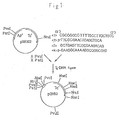
- Fig. 1 schematically shows the series of steps.
- Fig. 1 shows the process for preparing the plasmid pGH53 by insertion of the synthetic oligonucleotides [1], [2], [3] and [4] in the origin vector pBR322, and also the characteristics of pGH53.
- the rectangular block shown represents the DNA sequence originated from the synthetic oligonucleotides.
- the plasmid pGH53 obtained was found to have a size of 4.3 kb by 1.0% agarose gel electrophoresis.
- Analysis by the M13 method revealed that the DNA sequence of the plasmid was devoid of the sequence between Pst I and Pvu I restriction sites of pBR322 and had, in place of this sequence, the oligonucleotides [1], [2], [3] and [4] inserted as shown below.
- the plasmid pGH53 has been deposited with the designation "HB101 [pGH53]" and deposition number FERM BP-678 in Fermentation Research Institute, Agency of Industrial Science and Technology, MITI.
- the DNA sequence analysis of pGH54 by the M13 method revealed that the plasmid had the promoter and ribosome binding site of ⁇ -lactamase, a DNA sequence coding for the signal peptide thereof, and restriction sites for Nru I and Pvu II upstream and downstream from the 3' end of this sequence, respectively.
- Fig. 2 schematically shows the series of the foregoing steps.
- Fig. 2 is a diagram showing the process for preparing the polypeptide secretion vector pGH54 of the present invention from pGH53 and pBR322, and the characteristics of the vector pGH54 obtained.
- the solid rectangular block shown represents the DNA sequence coding for the signal peptide.
- pGH54 has a size of about 3.9 kb and is characterized by the restriction endonuclease map shown in Fig. 2.
- the DNA sequence analysis by the M13 method revealed that the plasmid had the DNA sequence coding for ⁇ -lactamase signal peptide as shown by the formula (3).
- Fig. 3 shows the series of steps schematically.
- Fig. 3 is a diagram showing the process for preparing the polypeptide secretion vector pGH55 of the invention from pGH54 and pBRH02 which was obtained from pBR322, and the characteristics of pGH55.
- pGH55 is characterized by the restriction endonuclease map of Fig. 3 and was found to have a size of about 3.3 kb by 1.0% agarose gel electrophoresis.
- the DNA sequence analysis of pGH55 by the M13 method revealed that the plasmid was similar to pGH54 except that it was devoid of part of the DNA sequence of pGH55 having about 0.64 kb and including a Pvu II restriction site and that another Pvu II restriction site thereof was present in the vicinity of the 3' end of the DNA sequence coding for a signal peptide.
- the strain HB101 harboring the plasmid pUG3 has been deposited with the designation "HB101 [pUG3]" and deposition number FERM BP-543.
- pUG3 obtained by the process (B) was digested with the restriction endonuclease Hinf I, and the resulting DNA fragment was inserted into pGH55 at the Pvu II restriction site thereof to obtain an secretion vector, pUG201, containing a DNA sequence coding for the fused polypeptide of signal peptide and ⁇ -urogastrone.
- This process is as follows.
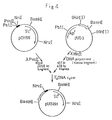
- Fig. 4 schematically shows the series of steps.
- Fig. 4 is a diagram showing the process for preparing pUG201 from pGH55 and pUG3.
- pUG201 is the polypeptide secretion vector of the present invention which contains a DNA sequence coding for the fused polypeptide of signal peptide and desired polypeptide ( ⁇ -urogastrone).
- the blank arrow shown represents the gene of ⁇ -urogastrone.
- pUG201 was found to have a size of about 3.7 kb by 1.0% agarose gel electrophoresis.
- the vector When cleaved with Bam HI or Hind III, the vector provides two kinds of DNA fragments. This indicates that pUG201 contains the gene of ⁇ -urogastrone. The size of the fragments checked shows that pUG201 is the desired plasmid.
- the part of the DNA sequence of pUG201 from the promoter region of ⁇ -lactamase to the ⁇ -urogastrone gene inclusive was analysed by the M13 method.
- Table 4 shows the DNA sequence identified, indicating that pUG201 contains the promoter, ribosome binding site, DNA sequence coding for ⁇ -lactamase signal peptide and for ⁇ -urogastrone (DNA sequence coding for the fused polypeptide) as arranged accurately in this order. Table 4 also shows the amino acid sequence corresponding to the DNA sequence.
- the E . coli strain HB101 harboring pUG201 has been deposited with the designation "HB101 [pGH201]" and deposition number FERM BP-681 in Fermentation Research Institute, Agency of Industrial Science and Technology, MITI.
- a modified culture medium of the following composition was used.
- Modified E medium composition per liter
- Magnesium sulfate ⁇ 7H2O 0.2 g
- Citric acid ⁇ 1H2O 2.0
- Potassium phosphate dibasic (anhydrous) 10.0
- Sodium ammonium hydrogenphosphate ⁇ 4H2O 3.5
- Glucose 2.0
- Casamino acid 1.0 g L-Proline 0.23 g L-Leucine 3.9.5 mg
- Thiamine hydrochloride 16.85 mg Tetracycline hydrochloride 20.0 mg
- HB101 harboring pUG201 was precultured and 1 ml of the culture was inoculated into a flask containing 200 ml of the modified E medium and incubated with shaking at 37°C for 24 hours.
- the culture obtained by the procedure (A) was centrifuged (6000 r.p.m. for 10 minutes) to collect the cells, which were washed with a buffer (10 mM tris-HCl and 30 mM sodium chloride, pH 8.0) in 0.5 times the amount of the culture.
- a periplasmic fraction was extracted from the washed cells by the osmotic shock method (H.C. Neu and L.A. Heppel, J. B. C., 240 , 3685-3692 (1965)).
- H.C. Neu and L.A. Heppel, J. B. C., 240 , 3685-3692 (1965) For the extraction, one g of wet cells were suspended in 80 ml of 30 mM tris-HCl buffer (pH 8.0) containing 20% sucrose.
- the suspension was agitated in a rotary shaker at 24°C and 180 r.p.m. for 10 minutes and then centrifuged (9000 r.p.m. for 10 minutes) to collect the cells. Subsequently, the cells were resuspended in 80 ml of water cooled with ice. The suspension was allowed to stand in ice for 10 minutes with occasional stirring and centrifuged (9000 r.p.m. for 10 minutes) to obtain a supernatant separated from the cells. The supernatant obtained is the periplasmic fraction.
- the cells separated from the periplasmic fraction was washed with the same washing buffer as above and then suspended in 6 ml of PBS (20 mM sodium phosphate (pH 7.0) containing 150 mM sodium chloride).
- the suspension was treated by a sonicator (Model 5202, product of Ohtake Works Co., Ltd.) at an output of 100 W three times, for 30 seconds each time, and centrifuged (18000 r.p.m. for 20 minutes) to obtain a supernatant, which was a cytoplasmic fraction.
- the fractions obtained by the procedure (B) were checked for the presence of ⁇ -urogastrone by ⁇ -urogastrone specific radioimmunoassay.
- the assay was conducted by the following method. Rabbits were immunized with purified human ⁇ -urogastrone as an antigen to obtain antiserum. The ⁇ -urogastrone (300 ⁇ g) was dissolved in 0.2 ml of distilled water, 1.5 ml of 50% polyvinylpyrrolidone was added to the solution, and the mixture was stirred for 2 hours at room temperature. Complete Freund's adjuvant (2.0 ml) was added to the mixture to obtain an emulsion, which was subcutaneously injected into the chest portion of three rabbits. After repeating the immunization four times every two weeks, 50 ⁇ g of the antigen was further intravenously injected, the whole blood was collected 3 days thereafter, and the serum was separated.
- the following assay conditions were determined in view of the titration curve for determining the dilution degree of the antiserum for the assay, incubation time for optimizing the assay conditions, method of separating the antibody-bound labeled antigen (bound) from the free labeled antigen (free), and etc.
- the diluting solution used was a 10 mM phosphate buffer (pH 7.4) containing 0.5% of bovine serum albumin (BSA), 140 mM sodium chloride and 25 mM disodium EDTA.
- BSA bovine serum albumin
- the diluting solution (400 ⁇ l), 100 ⁇ l of the sample or standard human ⁇ -urogastrone and 100 ⁇ l of antihuman ⁇ -urogastrone serum were mixed together. After the mixture was incubated for 24 hours at 4°C, 100 ⁇ l of 125I-labeled human ⁇ -urogastrone solution (about 5000 cpm) was added to the mixture.
- Table 5 reveals that although substantially no ⁇ -urogastone immunoreactive substance is detected from the extract of the E . coli strain (HB101[pGH55]) harboring a plasmid containing the DNA sequence coding for a signal peptide only or of the E . coli strain (HB101[pUG3]) having a plasmid containing the DNA sequence coding for ⁇ -urogastrone only, remarkable ⁇ -urogastrone immunoreactivity is detected from the extract of E .
- coli strain (HB101[pUG210]) harboring the mature polypeptide secretion vector of the invention which contains a DNA sequence coding for the fused polypeptide of signal peptide and ⁇ -urogastrone, and a promoter and ribosome binding site linked to the upstream of the sequence.
- the result obtained by growing the microorganism transformed by the vector of the present invention indicates that the ⁇ -urogastrone immunoreactive substance is almost entirely (99.8%) distributed in the periplasm. This shows that ⁇ -urogastrone is secreted into the periplasm through the cell membrane according to the present invention utilizing the DNA sequence of the fused polypeptide of signal peptide and ⁇ -urogastrone.
- the ⁇ -urogastrone immunoreactive substance in the periplasmic extract was purified until a single polypeptide was obtained, by adsorption chromatography using Butyl-Toyopearl (product of Toyo Soda Mfg. Co., Ltd.), ion-exchange chromatography using CM-Toyopearl (product of Toyo Soda Mfg. Co., Ltd.) or high performance liquid chromatography using a PepRPC column (product of Pharmacia).
- polypeptide purified was found to be identical with the purified ⁇ -urogastrone isolated from human urine, by all the results of polyacrylamide gel electrophoresis, SDS-polyacrylamide gel electrophoresis, amino acid analysis and N-terminal analysis.
Landscapes
- Health & Medical Sciences (AREA)
- Chemical & Material Sciences (AREA)
- Life Sciences & Earth Sciences (AREA)
- Genetics & Genomics (AREA)
- Organic Chemistry (AREA)
- Engineering & Computer Science (AREA)
- Molecular Biology (AREA)
- Zoology (AREA)
- Biophysics (AREA)
- Biochemistry (AREA)
- General Health & Medical Sciences (AREA)
- Gastroenterology & Hepatology (AREA)
- Biomedical Technology (AREA)
- Wood Science & Technology (AREA)
- Medicinal Chemistry (AREA)
- General Engineering & Computer Science (AREA)
- Biotechnology (AREA)
- Bioinformatics & Cheminformatics (AREA)
- Proteomics, Peptides & Aminoacids (AREA)
- Toxicology (AREA)
- Microbiology (AREA)
- Plant Pathology (AREA)
- Physics & Mathematics (AREA)
- Virology (AREA)
- Endocrinology (AREA)
- Preparation Of Compounds By Using Micro-Organisms (AREA)
- Micro-Organisms Or Cultivation Processes Thereof (AREA)
- Saccharide Compounds (AREA)
Claims (5)
- Vektor zur Darstellung und nachfolgenden Absonderung eines Polypeptids, das sich zuerst in dem Periplasma ansammelt, der eine erste DNS-Sequenz hat, welche so beschaffen ist, daß sie direkt mit einer zweiten DNS-Sequenzcodierung für das angestrebte reife Polypeptid verbunden ist, bei welcher der Vektor das Plasmid pGH54 ist (Hinterlegungsnummer FERM BP-679) und gekennzeichnet ist durch die in Fig. 2 gezeigte Abbildung der Restriktions-Endonuclease-Spaltung, und das etwa 3,9 kb hat, bestimmt durch 1,0%-Agarosegel-Elektrophorese, umfaßt den Promotor und die Ribosom-Bindungsstelle von b-Lactamase und die nachfolgende DNS-Sequenzcodierung für das Signalpeptid der b-Lactamase, und besitzt zwei Erkennungssequenzen für die Restriktions-Endonucleasen NruI und PvuII am 3'- Ende der DNS-Sequenz.
- Plasmid pGH55 (Hinterlegungsnummer FERM BP-680), welches gekennzeichnet ist durch die in Fig. 3 gezeigte Abbildung der Restriktions-Endonucleasespaltung und das etwa 3,3 kb hat, bestimmt durch 1,0%-Agarosegel-Elektrophorese, umfaßt den Promotor und Ribosom-Bindungsstelle von b-Lactamase und die nachfolgende DNS-Sequenzcodierung für das Signalpeptid der b-Lactamase, und besitzt zwei Erkennungssequenzen für die Restriktions-Endonucleasen NruI und PvuII in der Nähe des 3'-Endes der DNS-Sequenz.
- Plasmid pUG 201 (Hinterlegungsnummer FERM BP-681), welches gekennzeichnet ist durch die in Fig. 4 gezeigte Abbildung der Restriktions-Endonucleasespaltung und das etwa 3,7 kb hat, bestimmt durch 1,0%-Agarosegel-Elektrophorese, umfaßt den Promotor und Ribosom-Bindungsstelle von b-Lactamase, die DNS-Sequenzcodierung für das Signalpeptid der b-Lactamase, die DNS-Sequenzcodierung für b-Urogastron und ein Stop-Codon, die genau in dieser Reihenfolge angeordnet sind.
- E. coli, welches durch das Plasmid nach Anspruch 3 transformiert ist.
- Verfahren zur Herstellung eines Polypeptids durch Züchten der E. coli nach Anspruch 4 und sammeln des von diesem Mikroorganismus abgesonderten Polypeptids.
Applications Claiming Priority (2)
| Application Number | Priority Date | Filing Date | Title |
|---|---|---|---|
| JP59271206A JP2549504B2 (ja) | 1984-12-21 | 1984-12-21 | Dna塩基配列、ポリペプチド分泌発現ベクター及び形質転換微生物 |
| JP271206/84 | 1984-12-21 |
Publications (3)
| Publication Number | Publication Date |
|---|---|
| EP0207165A1 EP0207165A1 (de) | 1987-01-07 |
| EP0207165A4 EP0207165A4 (de) | 1988-07-04 |
| EP0207165B1 true EP0207165B1 (de) | 1993-04-21 |
Family
ID=17496824
Family Applications (1)
| Application Number | Title | Priority Date | Filing Date |
|---|---|---|---|
| EP86900256A Expired - Lifetime EP0207165B1 (de) | 1984-12-21 | 1985-12-19 | Polypeptidverabreichender vektor, mikroorganismen vom vektor transformiert, verfahren zur herstellung von polypeptiden mittels derselben |
Country Status (6)
| Country | Link |
|---|---|
| US (1) | US5545564A (de) |
| EP (1) | EP0207165B1 (de) |
| JP (1) | JP2549504B2 (de) |
| KR (1) | KR870700094A (de) |
| AU (1) | AU582416B2 (de) |
| WO (1) | WO1986003779A1 (de) |
Families Citing this family (7)
| Publication number | Priority date | Publication date | Assignee | Title |
|---|---|---|---|---|
| JPH069516B2 (ja) * | 1986-01-31 | 1994-02-09 | ア−ス製薬株式会社 | β−ウロガストロンの製造方法 |
| US4743679A (en) * | 1986-02-24 | 1988-05-10 | Creative Biomolecules, Inc. | Process for producing human epidermal growth factor and analogs thereof |
| CA1297435C (en) * | 1986-09-12 | 1992-03-17 | Stephen D. Gillies | Messenger rna stabilization in animal cells |
| US5011772A (en) * | 1988-02-05 | 1991-04-30 | Public Health Research Institute Of The City Of N.Y. | High yield protein production system |
| GB9106185D0 (en) * | 1991-03-22 | 1991-05-08 | Wellcome Found | Biological control agents |
| AU692152B2 (en) * | 1993-03-17 | 1998-06-04 | Government Of The United States Of America, As Represented By The Secretary Of The Department Of Health And Human Services, The | Immunogenic chimeras comprising nucleic acid sequences encoding endoplasmic reticulum signal sequence peptides and at least one other peptide, and their uses in vaccines and disease treatments |
| KR100473443B1 (ko) * | 1994-09-07 | 2005-06-23 | 다이이찌 산토리 파마 가부시키가이샤 | 단백질의 생산방법 |
Citations (1)
| Publication number | Priority date | Publication date | Assignee | Title |
|---|---|---|---|---|
| JPS59205997A (ja) * | 1983-04-25 | 1984-11-21 | チロン・コ−ポレイシヨン | ヒト−インシユリン様成長因子の製造方法 |
Family Cites Families (10)
| Publication number | Priority date | Publication date | Assignee | Title |
|---|---|---|---|---|
| US4338397A (en) * | 1980-04-11 | 1982-07-06 | President And Fellows Of Harvard College | Mature protein synthesis |
| US4624926A (en) * | 1981-01-02 | 1986-11-25 | The Research Foundation Of State University Of New York | Novel cloning vehicles for polypeptide expression in microbial hosts |
| EP0108132A1 (de) * | 1982-05-06 | 1984-05-16 | Applied Molecular Genetics Inc. | Herstellung und expression von genen für urogastron und dessen polypeptidanalogen |
| DK172738B1 (da) * | 1983-04-07 | 1999-06-21 | Chiron Corp | Fremgangsmåde til at udtrykke modent insulin og DNA-struktur til anvendelse ved fremgangsmåden |
| US4588684A (en) * | 1983-04-26 | 1986-05-13 | Chiron Corporation | a-Factor and its processing signals |
| JPS6030687A (ja) * | 1983-08-01 | 1985-02-16 | Wakunaga Seiyaku Kk | Dνa遺伝子,その製造法およびそれを含むプラスミド |
| DE3587205T2 (de) * | 1984-07-30 | 1993-08-26 | Wakunaga Seiyaku Kk | Verfahren zur herstellung eines proteins und dafuer zu verwendender vektor, rekombinante dns und transformierte zelle. |
| JP2674327B2 (ja) * | 1991-01-23 | 1997-11-12 | 荒川化学工業株式会社 | 印刷インキ用バインダーおよび印刷インキ組成物 |
| JPH06115691A (ja) * | 1991-07-16 | 1994-04-26 | Daiyamondo Eng Kk | 粉体流量分配制御方法 |
| JPH0630687A (ja) * | 1992-07-17 | 1994-02-08 | Kao Corp | 小麦粉組成物 |
-
1984
- 1984-12-21 JP JP59271206A patent/JP2549504B2/ja not_active Expired - Lifetime
-
1985
- 1985-12-19 KR KR1019860700591A patent/KR870700094A/ko not_active Ceased
- 1985-12-19 AU AU53095/86A patent/AU582416B2/en not_active Ceased
- 1985-12-19 EP EP86900256A patent/EP0207165B1/de not_active Expired - Lifetime
- 1985-12-19 WO PCT/JP1985/000696 patent/WO1986003779A1/ja not_active Ceased
-
1995
- 1995-02-24 US US08/396,282 patent/US5545564A/en not_active Expired - Fee Related
Patent Citations (1)
| Publication number | Priority date | Publication date | Assignee | Title |
|---|---|---|---|---|
| JPS59205997A (ja) * | 1983-04-25 | 1984-11-21 | チロン・コ−ポレイシヨン | ヒト−インシユリン様成長因子の製造方法 |
Also Published As
| Publication number | Publication date |
|---|---|
| JP2549504B2 (ja) | 1996-10-30 |
| AU5309586A (en) | 1986-07-22 |
| AU582416B2 (en) | 1989-03-23 |
| EP0207165A4 (de) | 1988-07-04 |
| WO1986003779A1 (fr) | 1986-07-03 |
| EP0207165A1 (de) | 1987-01-07 |
| KR870700094A (ko) | 1987-02-28 |
| US5545564A (en) | 1996-08-13 |
| JPS61149089A (ja) | 1986-07-07 |
Similar Documents
| Publication | Publication Date | Title |
|---|---|---|
| US4356270A (en) | Recombinant DNA cloning vehicle | |
| US4366246A (en) | Method for microbial polypeptide expression | |
| US4425437A (en) | Microbial polypeptide expression vehicle | |
| US4431739A (en) | Transformant bacterial culture capable of expressing heterologous protein | |
| US4704362A (en) | Recombinant cloning vehicle microbial polypeptide expression | |
| US5583013A (en) | Method and means for microbial polypeptide expression | |
| EP0001929B1 (de) | Plasmid zur Transformation eines bakteriellen Wirts um ihn zu Polypeptid Expression fähig zu machen | |
| US5221619A (en) | Method and means for microbial polypeptide expression | |
| CA1341240C (en) | Dna encoding human tumor necrosis factor and human tumor necrosis factor polypeptide | |
| EP0001930B1 (de) | Verfahren zur Polypeptid-Herstellung unter Einbeziehung der Expression eines heterologen Gens; rekombinanter mikrobieller Cloning Vector welcher dieses Gen enthält und durch diesen Cloning Vector transformierte bakterielle Kultur | |
| CA1201668A (en) | Synthetic dna and method therefor | |
| US5643758A (en) | Production and purification of a protein fused to a binding protein | |
| KR920007439B1 (ko) | 하이브리드 인간 백혈구 인터페론 | |
| CA1340173C (en) | Production and purification of a protein fused to a binding protein | |
| US4624926A (en) | Novel cloning vehicles for polypeptide expression in microbial hosts | |
| US4563424A (en) | Method and means for somatostatin protein conjugate expression | |
| AU599003B2 (en) | Novel beta-urogastrone gene, corresponding recombinant plasmids, corresponding transformants and preparation thereof and of beta-urogastrone | |
| US5028531A (en) | IGF-I fusion proteins; protection of IGF-I from degradation by host cell; and processes for the production thereof | |
| US4571421A (en) | Mammalian gene for microbial expression | |
| US5545564A (en) | Vector for expression and secretion of polypeptide microorganism transformed by the vector and production of polypeptide with the same microorganism | |
| CA1339464C (en) | ¬leu13| motilin, dnas coding for same and methods for producing same | |
| IE57976B1 (en) | Vectors for expressing bovine growth hormone derivatives | |
| US4812554A (en) | Somatostatin peptide conjugate | |
| EP0212531A1 (de) | Derivat des Rinderwachstumshormon freisetzenden Faktors | |
| US6018037A (en) | DNA coding for (Leu13) motilin |
Legal Events
| Date | Code | Title | Description |
|---|---|---|---|
| PUAI | Public reference made under article 153(3) epc to a published international application that has entered the european phase |
Free format text: ORIGINAL CODE: 0009012 |
|
| 17P | Request for examination filed |
Effective date: 19860820 |
|
| AK | Designated contracting states |
Kind code of ref document: A1 Designated state(s): CH FR GB IT LI NL SE |
|
| A4 | Supplementary search report drawn up and despatched |
Effective date: 19880704 |
|
| 17Q | First examination report despatched |
Effective date: 19901016 |
|
| GRAA | (expected) grant |
Free format text: ORIGINAL CODE: 0009210 |
|
| AK | Designated contracting states |
Kind code of ref document: B1 Designated state(s): CH FR GB IT LI NL SE |
|
| ITF | It: translation for a ep patent filed | ||
| ET | Fr: translation filed | ||
| PLBE | No opposition filed within time limit |
Free format text: ORIGINAL CODE: 0009261 |
|
| STAA | Information on the status of an ep patent application or granted ep patent |
Free format text: STATUS: NO OPPOSITION FILED WITHIN TIME LIMIT |
|
| 26N | No opposition filed | ||
| EAL | Se: european patent in force in sweden |
Ref document number: 86900256.8 |
|
| REG | Reference to a national code |
Ref country code: GB Ref legal event code: IF02 |
|
| PGFP | Annual fee paid to national office [announced via postgrant information from national office to epo] |
Ref country code: FR Payment date: 20031127 Year of fee payment: 19 |
|
| PGFP | Annual fee paid to national office [announced via postgrant information from national office to epo] |
Ref country code: GB Payment date: 20031129 Year of fee payment: 19 |
|
| PGFP | Annual fee paid to national office [announced via postgrant information from national office to epo] |
Ref country code: SE Payment date: 20031204 Year of fee payment: 19 |
|
| PGFP | Annual fee paid to national office [announced via postgrant information from national office to epo] |
Ref country code: NL Payment date: 20031223 Year of fee payment: 19 |
|
| PGFP | Annual fee paid to national office [announced via postgrant information from national office to epo] |
Ref country code: CH Payment date: 20040330 Year of fee payment: 19 |
|
| PG25 | Lapsed in a contracting state [announced via postgrant information from national office to epo] |
Ref country code: GB Free format text: LAPSE BECAUSE OF NON-PAYMENT OF DUE FEES Effective date: 20041219 |
|
| PG25 | Lapsed in a contracting state [announced via postgrant information from national office to epo] |
Ref country code: SE Free format text: LAPSE BECAUSE OF NON-PAYMENT OF DUE FEES Effective date: 20041220 |
|
| PG25 | Lapsed in a contracting state [announced via postgrant information from national office to epo] |
Ref country code: LI Free format text: LAPSE BECAUSE OF NON-PAYMENT OF DUE FEES Effective date: 20041231 Ref country code: CH Free format text: LAPSE BECAUSE OF NON-PAYMENT OF DUE FEES Effective date: 20041231 |
|
| PG25 | Lapsed in a contracting state [announced via postgrant information from national office to epo] |
Ref country code: NL Free format text: LAPSE BECAUSE OF NON-PAYMENT OF DUE FEES Effective date: 20050701 |
|
| EUG | Se: european patent has lapsed | ||
| GBPC | Gb: european patent ceased through non-payment of renewal fee |
Effective date: 20041219 |
|
| REG | Reference to a national code |
Ref country code: CH Ref legal event code: PL |
|
| PG25 | Lapsed in a contracting state [announced via postgrant information from national office to epo] |
Ref country code: FR Free format text: LAPSE BECAUSE OF NON-PAYMENT OF DUE FEES Effective date: 20050831 |
|
| NLV4 | Nl: lapsed or anulled due to non-payment of the annual fee |
Effective date: 20050701 |
|
| REG | Reference to a national code |
Ref country code: FR Ref legal event code: ST |