EP0287009A1 - Verfahren zur Herstellung von Poly(arylensulfidketon) mit Wasserzugabe - Google Patents
Verfahren zur Herstellung von Poly(arylensulfidketon) mit Wasserzugabe Download PDFInfo
- Publication number
- EP0287009A1 EP0287009A1 EP88105713A EP88105713A EP0287009A1 EP 0287009 A1 EP0287009 A1 EP 0287009A1 EP 88105713 A EP88105713 A EP 88105713A EP 88105713 A EP88105713 A EP 88105713A EP 0287009 A1 EP0287009 A1 EP 0287009A1
- Authority
- EP
- European Patent Office
- Prior art keywords
- alkali metal
- poly
- molar ratio
- sulfide ketone
- hydrosulfide
- Prior art date
- Legal status (The legal status is an assumption and is not a legal conclusion. Google has not performed a legal analysis and makes no representation as to the accuracy of the status listed.)
- Withdrawn
Links
- -1 poly(arylene sulfide ketone Chemical class 0.000 title claims abstract description 107
- XLYOFNOQVPJJNP-UHFFFAOYSA-N water Substances O XLYOFNOQVPJJNP-UHFFFAOYSA-N 0.000 title claims abstract description 53
- 238000004519 manufacturing process Methods 0.000 title claims description 10
- 238000000034 method Methods 0.000 claims abstract description 33
- 229910052977 alkali metal sulfide Inorganic materials 0.000 claims abstract description 31
- 239000011541 reaction mixture Substances 0.000 claims abstract description 24
- 239000000155 melt Substances 0.000 claims abstract description 15
- HEMHJVSKTPXQMS-UHFFFAOYSA-M Sodium hydroxide Chemical compound [OH-].[Na+] HEMHJVSKTPXQMS-UHFFFAOYSA-M 0.000 claims description 57
- 229910052783 alkali metal Inorganic materials 0.000 claims description 37
- 150000008044 alkali metal hydroxides Chemical class 0.000 claims description 25
- HYHCSLBZRBJJCH-UHFFFAOYSA-M sodium hydrosulfide Chemical compound [Na+].[SH-] HYHCSLBZRBJJCH-UHFFFAOYSA-M 0.000 claims description 20
- SECXISVLQFMRJM-UHFFFAOYSA-N N-Methylpyrrolidone Chemical compound CN1CCCC1=O SECXISVLQFMRJM-UHFFFAOYSA-N 0.000 claims description 18
- 238000006116 polymerization reaction Methods 0.000 claims description 13
- 239000000203 mixture Substances 0.000 claims description 12
- 150000002894 organic compounds Chemical class 0.000 claims description 7
- 239000011575 calcium Substances 0.000 claims description 5
- 229910052791 calcium Inorganic materials 0.000 claims description 5
- 239000000835 fiber Substances 0.000 claims description 4
- 238000005191 phase separation Methods 0.000 claims description 4
- 239000003495 polar organic solvent Substances 0.000 claims description 3
- 229910052751 metal Inorganic materials 0.000 claims 1
- 239000002184 metal Substances 0.000 claims 1
- 229920000642 polymer Polymers 0.000 description 49
- 238000006243 chemical reaction Methods 0.000 description 8
- OKISUZLXOYGIFP-UHFFFAOYSA-N 4,4'-dichlorobenzophenone Chemical compound C1=CC(Cl)=CC=C1C(=O)C1=CC=C(Cl)C=C1 OKISUZLXOYGIFP-UHFFFAOYSA-N 0.000 description 7
- 238000002360 preparation method Methods 0.000 description 5
- 230000000694 effects Effects 0.000 description 4
- WMFOQBRAJBCJND-UHFFFAOYSA-M Lithium hydroxide Chemical compound [Li+].[OH-] WMFOQBRAJBCJND-UHFFFAOYSA-M 0.000 description 3
- KWYUFKZDYYNOTN-UHFFFAOYSA-M Potassium hydroxide Chemical compound [OH-].[K+] KWYUFKZDYYNOTN-UHFFFAOYSA-M 0.000 description 3
- 239000007864 aqueous solution Substances 0.000 description 3
- 238000001914 filtration Methods 0.000 description 3
- 238000005259 measurement Methods 0.000 description 3
- 238000002844 melting Methods 0.000 description 3
- 230000008018 melting Effects 0.000 description 3
- 239000000047 product Substances 0.000 description 3
- UGVRJVHOJNYEHR-UHFFFAOYSA-N 4-chlorobenzophenone Chemical compound C1=CC(Cl)=CC=C1C(=O)C1=CC=CC=C1 UGVRJVHOJNYEHR-UHFFFAOYSA-N 0.000 description 2
- IJGRMHOSHXDMSA-UHFFFAOYSA-N Atomic nitrogen Chemical compound N#N IJGRMHOSHXDMSA-UHFFFAOYSA-N 0.000 description 2
- OYPRJOBELJOOCE-UHFFFAOYSA-N Calcium Chemical compound [Ca] OYPRJOBELJOOCE-UHFFFAOYSA-N 0.000 description 2
- 229940043430 calcium compound Drugs 0.000 description 2
- 150000001674 calcium compounds Chemical class 0.000 description 2
- 239000002131 composite material Substances 0.000 description 2
- 230000003247 decreasing effect Effects 0.000 description 2
- KZTYYGOKRVBIMI-UHFFFAOYSA-N diphenyl sulfone Chemical compound C=1C=CC=CC=1S(=O)(=O)C1=CC=CC=C1 KZTYYGOKRVBIMI-UHFFFAOYSA-N 0.000 description 2
- JBKVHLHDHHXQEQ-UHFFFAOYSA-N epsilon-caprolactam Chemical compound O=C1CCCCCN1 JBKVHLHDHHXQEQ-UHFFFAOYSA-N 0.000 description 2
- 238000001125 extrusion Methods 0.000 description 2
- 239000004615 ingredient Substances 0.000 description 2
- 238000000465 moulding Methods 0.000 description 2
- 238000010943 off-gassing Methods 0.000 description 2
- 239000000376 reactant Substances 0.000 description 2
- CPRMKOQKXYSDML-UHFFFAOYSA-M rubidium hydroxide Chemical compound [OH-].[Rb+] CPRMKOQKXYSDML-UHFFFAOYSA-M 0.000 description 2
- RLUFBDIRFJGKLY-UHFFFAOYSA-N (2,3-dichlorophenyl)-phenylmethanone Chemical compound ClC1=CC=CC(C(=O)C=2C=CC=CC=2)=C1Cl RLUFBDIRFJGKLY-UHFFFAOYSA-N 0.000 description 1
- AVQQQNCBBIEMEU-UHFFFAOYSA-N 1,1,3,3-tetramethylurea Chemical compound CN(C)C(=O)N(C)C AVQQQNCBBIEMEU-UHFFFAOYSA-N 0.000 description 1
- CYSGHNMQYZDMIA-UHFFFAOYSA-N 1,3-Dimethyl-2-imidazolidinon Chemical compound CN1CCN(C)C1=O CYSGHNMQYZDMIA-UHFFFAOYSA-N 0.000 description 1
- GWCFTYITFDWLAY-UHFFFAOYSA-N 1-ethylazepan-2-one Chemical compound CCN1CCCCCC1=O GWCFTYITFDWLAY-UHFFFAOYSA-N 0.000 description 1
- MFGOFGRYDNHJTA-UHFFFAOYSA-N 2-amino-1-(2-fluorophenyl)ethanol Chemical compound NCC(O)C1=CC=CC=C1F MFGOFGRYDNHJTA-UHFFFAOYSA-N 0.000 description 1
- ZCYVEMRRCGMTRW-UHFFFAOYSA-N 7553-56-2 Chemical compound [I] ZCYVEMRRCGMTRW-UHFFFAOYSA-N 0.000 description 1
- WKBOTKDWSSQWDR-UHFFFAOYSA-N Bromine atom Chemical compound [Br] WKBOTKDWSSQWDR-UHFFFAOYSA-N 0.000 description 1
- ZAMOUSCENKQFHK-UHFFFAOYSA-N Chlorine atom Chemical compound [Cl] ZAMOUSCENKQFHK-UHFFFAOYSA-N 0.000 description 1
- RWSOTUBLDIXVET-UHFFFAOYSA-N Dihydrogen sulfide Chemical compound S RWSOTUBLDIXVET-UHFFFAOYSA-N 0.000 description 1
- PXGOKWXKJXAPGV-UHFFFAOYSA-N Fluorine Chemical compound FF PXGOKWXKJXAPGV-UHFFFAOYSA-N 0.000 description 1
- 150000001408 amides Chemical class 0.000 description 1
- GDTBXPJZTBHREO-UHFFFAOYSA-N bromine Substances BrBr GDTBXPJZTBHREO-UHFFFAOYSA-N 0.000 description 1
- 229910052794 bromium Inorganic materials 0.000 description 1
- HUCVOHYBFXVBRW-UHFFFAOYSA-M caesium hydroxide Inorganic materials [OH-].[Cs+] HUCVOHYBFXVBRW-UHFFFAOYSA-M 0.000 description 1
- IBSGAWQJFSDRBJ-UHFFFAOYSA-M cesium sulfanide Chemical compound [SH-].[Cs+] IBSGAWQJFSDRBJ-UHFFFAOYSA-M 0.000 description 1
- 239000007795 chemical reaction product Substances 0.000 description 1
- 239000000460 chlorine Substances 0.000 description 1
- 229910052801 chlorine Inorganic materials 0.000 description 1
- 150000001875 compounds Chemical class 0.000 description 1
- 238000001816 cooling Methods 0.000 description 1
- VDQVEACBQKUUSU-UHFFFAOYSA-M disodium;sulfanide Chemical compound [Na+].[Na+].[SH-] VDQVEACBQKUUSU-UHFFFAOYSA-M 0.000 description 1
- 229920003247 engineering thermoplastic Polymers 0.000 description 1
- 239000012467 final product Substances 0.000 description 1
- 229910052731 fluorine Inorganic materials 0.000 description 1
- 239000011737 fluorine Substances 0.000 description 1
- GNOIPBMMFNIUFM-UHFFFAOYSA-N hexamethylphosphoric triamide Chemical compound CN(C)P(=O)(N(C)C)N(C)C GNOIPBMMFNIUFM-UHFFFAOYSA-N 0.000 description 1
- 229910000037 hydrogen sulfide Inorganic materials 0.000 description 1
- 238000011065 in-situ storage Methods 0.000 description 1
- 239000011630 iodine Substances 0.000 description 1
- 229910052740 iodine Inorganic materials 0.000 description 1
- 239000007791 liquid phase Substances 0.000 description 1
- HXQGSILMFTUKHI-UHFFFAOYSA-M lithium;sulfanide Chemical compound S[Li] HXQGSILMFTUKHI-UHFFFAOYSA-M 0.000 description 1
- 239000000463 material Substances 0.000 description 1
- 238000002156 mixing Methods 0.000 description 1
- 239000000178 monomer Substances 0.000 description 1
- 229910052757 nitrogen Inorganic materials 0.000 description 1
- 239000008188 pellet Substances 0.000 description 1
- ZOCLAPYLSUCOGI-UHFFFAOYSA-M potassium hydrosulfide Chemical compound [SH-].[K+] ZOCLAPYLSUCOGI-UHFFFAOYSA-M 0.000 description 1
- HNJBEVLQSNELDL-UHFFFAOYSA-N pyrrolidin-2-one Chemical compound O=C1CCCN1 HNJBEVLQSNELDL-UHFFFAOYSA-N 0.000 description 1
- 230000035484 reaction time Effects 0.000 description 1
- 238000009877 rendering Methods 0.000 description 1
- 229920005989 resin Polymers 0.000 description 1
- 239000011347 resin Substances 0.000 description 1
- 230000000717 retained effect Effects 0.000 description 1
- LXOXXUIVMOYGST-UHFFFAOYSA-M rubidium(1+);sulfanide Chemical compound [SH-].[Rb+] LXOXXUIVMOYGST-UHFFFAOYSA-M 0.000 description 1
- 239000002904 solvent Substances 0.000 description 1
- 229910001220 stainless steel Inorganic materials 0.000 description 1
- 239000010935 stainless steel Substances 0.000 description 1
- 239000000126 substance Substances 0.000 description 1
- HXJUTPCZVOIRIF-UHFFFAOYSA-N sulfolane Chemical compound O=S1(=O)CCCC1 HXJUTPCZVOIRIF-UHFFFAOYSA-N 0.000 description 1
- 150000003457 sulfones Chemical class 0.000 description 1
- QAOWNCQODCNURD-UHFFFAOYSA-N sulfuric acid Substances OS(O)(=O)=O QAOWNCQODCNURD-UHFFFAOYSA-N 0.000 description 1
- 238000010998 test method Methods 0.000 description 1
- 238000005303 weighing Methods 0.000 description 1
Images
Classifications
-
- C—CHEMISTRY; METALLURGY
- C08—ORGANIC MACROMOLECULAR COMPOUNDS; THEIR PREPARATION OR CHEMICAL WORKING-UP; COMPOSITIONS BASED THEREON
- C08G—MACROMOLECULAR COMPOUNDS OBTAINED OTHERWISE THAN BY REACTIONS ONLY INVOLVING UNSATURATED CARBON-TO-CARBON BONDS
- C08G75/00—Macromolecular compounds obtained by reactions forming a linkage containing sulfur with or without nitrogen, oxygen, or carbon in the main chain of the macromolecule
- C08G75/02—Polythioethers
- C08G75/0204—Polyarylenethioethers
- C08G75/0236—Polyarylenethioethers containing atoms other than carbon or sulfur in a linkage between arylene groups
- C08G75/024—Polyarylenethioethers containing atoms other than carbon or sulfur in a linkage between arylene groups containing carbonyl groups
-
- C—CHEMISTRY; METALLURGY
- C08—ORGANIC MACROMOLECULAR COMPOUNDS; THEIR PREPARATION OR CHEMICAL WORKING-UP; COMPOSITIONS BASED THEREON
- C08G—MACROMOLECULAR COMPOUNDS OBTAINED OTHERWISE THAN BY REACTIONS ONLY INVOLVING UNSATURATED CARBON-TO-CARBON BONDS
- C08G75/00—Macromolecular compounds obtained by reactions forming a linkage containing sulfur with or without nitrogen, oxygen, or carbon in the main chain of the macromolecule
- C08G75/02—Polythioethers
- C08G75/0204—Polyarylenethioethers
- C08G75/025—Preparatory processes
- C08G75/0259—Preparatory processes metal hydrogensulfides
-
- C—CHEMISTRY; METALLURGY
- C08—ORGANIC MACROMOLECULAR COMPOUNDS; THEIR PREPARATION OR CHEMICAL WORKING-UP; COMPOSITIONS BASED THEREON
- C08G—MACROMOLECULAR COMPOUNDS OBTAINED OTHERWISE THAN BY REACTIONS ONLY INVOLVING UNSATURATED CARBON-TO-CARBON BONDS
- C08G75/00—Macromolecular compounds obtained by reactions forming a linkage containing sulfur with or without nitrogen, oxygen, or carbon in the main chain of the macromolecule
- C08G75/14—Polysulfides
Definitions
- the invention relates to a method for preparing poly(arylene sulfide ketone)s. This invention also relates to melt stable high molecular weight poly(arylene sulfide ketone)s. The invention in another aspect relates to fibers and other articles of manufacture prepared from these poly(arylene sulfide ketone)s.
- Poly(arylene sulfide ketone)s PASK are useful engineering thermoplastics for film, fiber, molding, and composite applications because of their high melting points.
- One process for producing poly(arylene sulfide ketone)s involves the reaction of a polyhalobenzophenone such as dichlorobenzophenone with an alkali metal sulfide in a polar organic solvent.
- the alkali metal sulfide can be added as such or can be prepared from the reaction of an alkali metal hydrosulfide with an alkali metal hydroxide using an equal molar amount of the alkali metal hydrosulfide with respect to the alkali metal hydroxide.
- a major disadvantage is that the poly(arylene sulfide ketone)s so produced are of low molecular weight and low melt stability.
- Poly(arylene sulfide ketone)s of high molecular weight are desirable because they possess good mechanical properties. If an excess amount of alkali metal hydrosulfide is present during the polymerization reaction, poly(arylene sulfide ketone)s of high molecular weight can be produced. This means that a molar excess of alkali metal hydrosulfide with respect to the alkali metal hydroxide is present when the alkali metal sulfide is prepared, or that some alkali metal hydrosulfide is added with the alkali metal sulfide.
- processability is another desirable property that poly(arylene sulfide ketone)s should possess.
- Processability means that a polymer is able to be processed by conventional means and, therefore, can be commercially useful.
- the processability of a polymer depends upon the polymer's melt stability. This means that if a polymer is melt stable it will generally also be processable.
- Poly(arylene sulfide ketone)s produced by prior methods are not very melt stable and, therefore, are not processable. Even high molecular weight poly(arylene sulfide ketone)s produced with excess alkali metal hydrosulfide are not very melt stable.
- novel melt stable, high molecular weight poly(arylene sulfide ketone)s are prepared by contacting in a reaction mixture a polyhalobenzophenone, an alkali metal hydrosulfide, an alkali metal hydroxide, a polar organic compound, and water, where the amount of water employed is the amount sufficient to improve the melt stability of the polymer but yet not sufficient to cause a molecular weight limiting phase separation.
- the molar ratio of water to alkali metal hydrosulfide is within the range of about 3.5:1 to about 7:1.
- the polymers prepared according to the present invention are novel since prior to the present invention melt stable poly(arylene sulfide ketone)s were unknown.
- poly(arylene sulfide ketone)s are prepared by contacting in a reaction mixture a polyhalobenzophenone, an alkali metal sulfide, a polar organic compound, and water, under polymerization conditions effective for producing the poly(arylene sulfide ketone)s.
- the alkali metal sulfide is prepared by bringing together an alkali metal hydrosulfide with an alkali metal hydroxide at a molar ratio within the range of about 0.95:1 to about 1.05:1.
- the water with respect to the alkali metal hydrosulfide is present in the amount sufficient to improve the melt stability of the polymer but yet not sufficient to cause a molecular weight limiting phase separation.
- effective amount is a molar ratio within the range of about 3.5:1 to about 7:1 water:alkali metal hydrosulfide.
- Poly(arylene sulfide ketone)s produced according to this invention also exhibit improvements in at least one or more of the following flexibility, strength, toughness, decreased outgassing, and a more homogeneous appearance when compared to poly(arylene sulfide ketone)s produced from methods not employing the ratios of these compounds in the reaction mixtures.
- Poly(arylene sulfide ketone)s produced according to the present invention also exhibit an improvement in color (particularly after processing) which is a property that seems to be unrelated to molecular weight and melt stability.
- a dihalobenzophenone such as 4,4 ⁇ -dichlorobenzophenone
- an alkali metal sulfide prepared from an alkali metal hydrosulfide, such as sodium hydrosulfide, and an alkali metal hydroxide, such as sodium hydroxide, and water, in a polar organic compound, such as N-methyl-2-pyrrolidone, so as to form a poly(phenylene sulfide ketone) of "n" repeating units of phenylene sulfide ketone
- a polar organic compound such as N-methyl-2-pyrrolidone
- the molar ratio of alkali metal hydrosulfide to alkali metal hydroxide can vary somewhat, it is important, however, that the molar ratio be about 1:1.
- the molar ratio of alkali metal hydrosulfide to alkali metal hydroxide will be within the range of about 0.95:1 to about 1.05:1, preferably in the range of about 1:1 to about 1.01:1. It is more preferred that the alkali metal hydrosulfide be present in slight molar excess to the alkali metal hydroxide, most preferably about 1.005:1.
- the alkali metal sulfide When the alkali metal sulfide is prepared from alkali metal hydrosulfide and alkali metal hydroxide one mole of water is produced for each mole of alkali metal sulfide produced. This means that when the alkali metal sulfide is prepared by this method some water, in addition to the added water, is already present. The water produced in this reaction is not included in the calculation of ratios since the amount of water is calculated with respect to alkali metal hydrosulfide prior to making alkali metal sulfide and water. If the ratios were to be reported as water with respect to alkali metal sulfide, one mole would need to be added to the water side of the ratio.
- the molar excess of water to alkali metal hydrosulfide can vary somewhat, generally the molar ratio of water to alkali metal hydrosulfide (prior to making alkali metal sulfide and water) will be within the range of about 3.5:1 to about 7:1, preferably about 4.5:1 to about 6:1, more preferably about 4.7:1 to about 5.7:1. It is more preferred that the molar ratio of water to the alkali metal hydrosulfide be about 5:1, with 5.13:1 being preferred. It is important, however, that too much water not be present during polymerization or there could be a phase separation which would separate reactants, thereby slowing the polymerization and limiting the molecular weight of the polymer.
- alkali metal hydrosulfide in addition to using excess water, it is also preferred, but not necessary, that an excess of alkali metal hydrosulfide to alkali metal hydroxide be present in the reaction mixture. It is, however, important in our invention that the molar ratio of alkali metal hydrosulfide to alkali metal hydroxide be within the range of about 0.95:1 to about 1.05:1 when the alkali metal sulfide is prepared from these two reactants.
- the polymers produced in the presence of excess water, according to our invention be further treated with calcium to incorporate calcium cations into the polymer.
- This treatment with calcium further melt stabilizes the polymers rendering them even more processable. Any process whereby calcium cations contact the polymer is envisioned to be within this preferred further treatment; such as melt mixing a calcium compound with the polymer or treating the polymer with an aqueous solution of a calcium compound.
- PASK poly(arylene sulfide ketone)s
- a melt stable PASK can have any molecular weight desired depending upon the properties of the final product. It is preferred, however, that the polymers of the present invention be high molecular weight PASK.
- the polymer molecular weight is indicated by its inherent viscosity. High inherent viscosity indicates that a polymer has a high molecular weight. The inherent viscosity is determined according to ASTM D 2857 of 30°C in concentrated sulfuric acid.
- the poly(arylene sulfide ketone)s prepared according to our process will have a high molecular weight, as indicated by the inherent viscosity. These poly(arylene sulfide ketone)s will generally be expected to have an inherent viscosity of at least about 0.3, preferably at least about 0.4, most preferably about 0.5 to 1, deciliters per gram (dl/g).
- Melt flow is an additional measure of the molecular weight of the polymer.
- Melt flow can also indicate the melt stability of a polymer by noting the change in melt flow between melt flow measurements taken at different times. Melt stable means that the melt flow of the polymer does not change significantly over the time between one melt flow measurement to the next melt flow measurement.
- Poly(arylene sulfide ketone)s prepared according to the method of the present invention are of present interest for film, fiber, molding, and composite applications because of their high melting points, high molecular weight, and melt stability.
- Our process employs a polyhalobenzophenone.
- Our process preferably employs a dihalobenzophenone.
- Our process more preferably employs a dihalobenzophenone of the formula: wherein X is selected from the group consisting of a chlorine, bromine, fluorine, and iodine.
- the presently preferred polyhalobenzophenone due to its effectiveness and commercial availability, is 4,4 ⁇ -dichlorobenzophenone.
- the amount of polyhalobenzophenone employed depends upon the amount of alkali metal sulfide employed (prepared in-situ or added) but generally they will both be present in about equal molar amounts.
- the preferred molar ratio of polyhalobenzophenone to alkali metal sulfide is within the range of about 0.95:1 to about 1.05:1.
- the polymer can be endcapped by cooling down the reactor contents and adding an endcapping monomer such as 4,4 ⁇ -dichlorobenzophenone (DCBP) or 4-chlorobenzophenone (CBP).
- DCBP 4,4 ⁇ -dichlorobenzophenone
- CBP 4-chlorobenzophenone
- the alkali metal sulfides can be prepared by reacting about 1 mole hydrogen sulfide with about 2 moles of an alkali metal hydroxide.
- the alkali metal sulfides can also be prepared from the reaction product of an alkali metal hydrosulfide with an alkali metal hydroxide in an aqueous solution.
- the alkali metal hydrosulfides include lithium hydrosulfide, sodium hydrosulfide, potassium hydrosulfide, rubidium hydrosulfide, cesium hydrosulfide, and mixtures thereof.
- the alkali metal hydroxides include lithium hydroxide, sodium hydroxide, potassium hydroxide, rubidium hydroxide, cesium hydroxide, and mixtures thereof.
- the preferred alkali metal hydrosulfide due to its effectiveness, is sodium hydrosulfide (NaSH).
- the preferred alkali metal hydroxide due to its effectiveness, is sodium hydroxide (NaOH).
- the preferred alkali metal sulfide that is produced is sodium sulfide (Na2S).
- the polar organic compounds which can be used with polyhalobenzophenone and alkali metal sulfide in the production of poly(arylene sulfide ketone)s include amides and sulfones. Examples include hexamethyl phosphoramide, tetramethylurea, N,N ⁇ -ethylenedipyrrolidone, 1,3-dimethyl-2-imidazolidinone, N-methyl-2-pyrrolidone (NMP), pyrrolidone, caprolactam, N-ethylcaprolactam, sulfolane, N,N ⁇ -dimethylacetamide diphenylsulfone, and the like, and mixtures thereof.
- the preferred polar organic compound due to its effectiveness and commercial availability, is NMP.
- the molar ratio of polar organic compound used in our invention is generally about 4:1 to 24:1, preferably about 12:1, with respect to the amount of alkali metal sulfide in the reaction mixture.
- the order of addition of the ingredients used to prepare the poly(arylene sulfide ketone)s can be varied as desired.
- the alkali metal hydrosulfide, such as NaSH, the alkali metal hydroxide, such as NaOH, the dihalobenzophenone, such as 4,4 ⁇ -dichlorobenzophenone, and water can be added to a reactor vessel in any order.
- the polar organic solvent, such as NMP will generally be added to the reaction mixture following the addition of the aforementioned ingredients to the reaction vessel.
- reaction temperature at which the polymerization is conducted can vary over a wide range, generally it will be within the range of about 125°C to about 450°C, preferably about 175°C to about 350°C, most preferably about 225°C to about 275°C.
- the reaction time can vary widely, depending in part on the reaction temperatures, but generally will be within the range of about 10 minutes to about 72 hours, preferably about 1 hour to about 20 hours.
- the pressure should be sufficient to maintain the reaction mixture substantially in the liquid phase.
- the pressure will generally be in the range of about 0 psig to about 400 psig, preferably about 150 psig to about 250 psig.
- the polymer can be recovered as desired, preferably by removing the polymerization solvent and precipitated products of polymerization from a cooled reactor and recovering the polymer by filtering through a filtration apparatus. The polymer will subsequently be washed with water and dried in a vacuum oven.
- the melt stability of the polymer treated according to our invention can be assessed by noting its changes in the rate of melt flow with time after being retained in a barrel of a melt index apparatus, based on ASTM test method D1238, for a time ranging from about five minutes to about thirty minutes at 371°C (700°F).
- the standard test conditions of ASTM D 1238 as used herein are modified by increasing the operating temperature to 371°C which is above the melting point of poly(arylene sulfide ketone) resins.
- Melt flow at arbitrarily selected times is determined by adding a five kilogram (kg) weight to the piston in the barrel of the melt index apparatus and weighing the cooled extrudate.
- melt flow a change in the rate of polymer extrusion (melt flow) of more than about ⁇ 50 percent, comparing the 10 minute melt flow to the five minute melt flow, is arbitrarily deemed to be not acceptable (the polymer is not melt stable).
- the reactor was sealed and flushed several times with 100 psig N2 and then vented to remove air while the reaction mixture was stirred at room temperature.
- the reactor mixture was then heated to a temperature of about 250°C. This temperature was maintained for about 4 hours, while a pressure of about 180 psig was established.
- the reactor was then cooled to about 200°C, and 0.025 moles (6.27 grams) of 4,4 ⁇ -dichlorobenzophenone (DCBP) were charged to the reactor. 700cc of N-methyl-2-pyrrolidone were further charged to the reactor for end capping the formed PPSK with DCBP.
- the system was heated an additional hour at 250°C, and cooled overnight to room temperature.
- PPSK prepared from this procedure exhibited fair melt stability (gelled after five minutes on a hot bar at 371°C (700°F) with a minimum of gassing), and had a relatively low molecular weight (inherent viscosity of 0.42 dl/g).
- the molar ratio of H2O to NaSH was 2.2:1 (Run 1).
- This example describes the preparation of PPSK employing a ratio of NaSH to NaOH of about 1.005:1, essentially in accordance with Example I.
- This example further illustrates the preparation of PPSK by adding about 5.2 moles of water per mole NaSH to the reaction mixture so as to increase inherent viscosity and improve melt stability of the formed polymer, essentially in accordance with Example I.
- the excess water will be added to the reactor vessel in conjunction with the NaOH; NaSH and DCBP.
- the order of water addition is not critical in the preparation of the polymer.
- Runs 6 through 14 are at the preferred ratio of water to NaSH. These runs indicate that the polymers produced at this ratio are more melt stable and have higher molecular weights than the polymers produced at a less preferred ratio of water to NaSH. These runs also demonstrate that when a small molar excess of NaSH to NaOH is employed in conjunction with an optimum molar ratio of water to NaSH, the resultant product exhibit a high inherent viscosity and good melt stability, when compared to a poly(arylene sulfide ketone) produced from a method not employing the addition of water in the reaction mixture.
- the addition of the amount of water of the present invention to the process for preparing the poly(arylene sulfide ketone)s produces melt stable, high molecular weight poly(arylene sulfide ketone)s.
- Poly(arylene sulfide ketone)s of the present invention also exhibit improvement in at least one or more of the following: flexibility, strength, toughness, color, decreased outgassing, and a homogeneous appearance when compared to poly(arylene sulfide ketone)s produced from a method not employing the additional amount of the present invention water in the reaction mixture.
- the result above indicates that polymers produced according to the present invention have improved properties and can be processed.
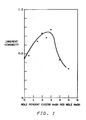
- the preparation of PPSK is essentially in accordance with Example I except that the ratio of NaSH to NaOH is varied to show the effect of this ratio on molecular weight (inherent viscosity).
- these reactions were run using a double helical stirrer and an equimolar ratio of DCBP to NaOH and NaSH, and heated to 250°C, held @ 250°C for 3 hours and "end capped" with 3g of DCBP.
Landscapes
- Chemical & Material Sciences (AREA)
- Health & Medical Sciences (AREA)
- Chemical Kinetics & Catalysis (AREA)
- Medicinal Chemistry (AREA)
- Polymers & Plastics (AREA)
- Organic Chemistry (AREA)
- Polymers With Sulfur, Phosphorus Or Metals In The Main Chain (AREA)
Applications Claiming Priority (2)
| Application Number | Priority Date | Filing Date | Title |
|---|---|---|---|
| US07/038,692 US4812552A (en) | 1987-04-15 | 1987-04-15 | Process for preparing poly(arylene sulfide ketone) with water addition |
| US38692 | 1987-04-15 |
Publications (1)
| Publication Number | Publication Date |
|---|---|
| EP0287009A1 true EP0287009A1 (de) | 1988-10-19 |
Family
ID=21901361
Family Applications (1)
| Application Number | Title | Priority Date | Filing Date |
|---|---|---|---|
| EP88105713A Withdrawn EP0287009A1 (de) | 1987-04-15 | 1988-04-11 | Verfahren zur Herstellung von Poly(arylensulfidketon) mit Wasserzugabe |
Country Status (4)
| Country | Link |
|---|---|
| US (1) | US4812552A (de) |
| EP (1) | EP0287009A1 (de) |
| JP (1) | JPH0717749B2 (de) |
| CA (1) | CA1298679C (de) |
Cited By (6)
| Publication number | Priority date | Publication date | Assignee | Title |
|---|---|---|---|---|
| EP0270955A3 (de) * | 1986-11-28 | 1989-08-23 | Phillips Petroleum Company | Verstärkter Kunststoff |
| EP0385299A1 (de) * | 1989-02-27 | 1990-09-05 | Phillips Petroleum Company | Herstellung aromatischer Sulfid/Keton-Polymere |
| US5097003A (en) * | 1988-06-07 | 1992-03-17 | Tosoh Corporation | Process for producing polyphenylene sulfide ketone polymers |
| EP0450635A3 (en) * | 1990-04-06 | 1993-02-17 | Phillips Petroleum Company | Process for preparing branched poly(arylene sulfide ketone) |
| EP0568366A1 (de) * | 1992-04-30 | 1993-11-03 | Kureha Kagaku Kogyo Kabushiki Kaisha | Hoch schmelzstabile Polyarylenthioetherketone und Verfahren zu ihrer Herstellung |
| US5286814A (en) * | 1988-06-13 | 1994-02-15 | Kureha Kagaku Kogyo K. K. | Heat-resistant stretched film and production process thereof |
Families Citing this family (15)
| Publication number | Priority date | Publication date | Assignee | Title |
|---|---|---|---|---|
| US5210213A (en) | 1983-06-17 | 1993-05-11 | The Boeing Company | Dimensional, crosslinkable oligomers |
| US5714566A (en) | 1981-11-13 | 1998-02-03 | The Boeing Company | Method for making multiple chemically functional oligomers |
| US5512676A (en) | 1987-09-03 | 1996-04-30 | The Boeing Company | Extended amideimide hub for multidimensional oligomers |
| US5705598A (en) | 1985-04-23 | 1998-01-06 | The Boeing Company | Polyester sulfone oligomers and blends |
| US5693741A (en) | 1988-03-15 | 1997-12-02 | The Boeing Company | Liquid molding compounds |
| US5969079A (en) | 1985-09-05 | 1999-10-19 | The Boeing Company | Oligomers with multiple chemically functional end caps |
| US5516876A (en) | 1983-09-27 | 1996-05-14 | The Boeing Company | Polyimide oligomers and blends |
| US5618907A (en) | 1985-04-23 | 1997-04-08 | The Boeing Company | Thallium catalyzed multidimensional ester oligomers |
| JPS6454031A (en) * | 1987-05-15 | 1989-03-01 | Kureha Chemical Ind Co Ltd | Highly heat-stable polyarylene thioether ketone and its production |
| US5817744A (en) | 1988-03-14 | 1998-10-06 | The Boeing Company | Phenylethynyl capped imides |
| US5008368A (en) * | 1989-08-03 | 1991-04-16 | Phillips Petroleum Company | Preparation of poly(arylene sulfide/sulfone) polymer with addition of water after polymerization is initiated |
| US5089596A (en) * | 1990-05-22 | 1992-02-18 | Phillips Petroleum Company | Production of aromatic sulfide/ketone polymers with separation agent |
| US5109102A (en) * | 1990-10-31 | 1992-04-28 | Phillips Petroleum Company | Preparation of arylene sulfide ketone polymers |
| US5266674A (en) * | 1990-12-24 | 1993-11-30 | Phillips Petroleum Company | Process for preparing arylene sulfide copolymers |
| JPH04335065A (ja) * | 1991-05-10 | 1992-11-24 | Kureha Chem Ind Co Ltd | 高耐熱性樹脂組成物 |
Citations (4)
| Publication number | Priority date | Publication date | Assignee | Title |
|---|---|---|---|---|
| DE1620923A1 (de) * | 1965-09-24 | 1970-05-27 | Ici Ltd | Verfahren zur Herstellung von aromatischen Polymeren |
| EP0241815A2 (de) * | 1986-04-04 | 1987-10-21 | Phillips Petroleum Company | Verfahren zur Herstellung von Polyarylensulfidzusammensetzungen und damit hergestellter Gegenstand |
| EP0244187A2 (de) * | 1986-04-28 | 1987-11-04 | Kureha Kagaku Kogyo Kabushiki Kaisha | Verfahren zur Herstellung von Polyarylensulfiden |
| US4716212A (en) * | 1986-09-05 | 1987-12-29 | Phillips Petroleum Company | Preparation of a high molecular weight poly(arylene sulfide ketone) |
Family Cites Families (7)
| Publication number | Priority date | Publication date | Assignee | Title |
|---|---|---|---|---|
| US4232142A (en) * | 1965-09-24 | 1980-11-04 | Imperial Chemical Industries Limited | Production of polyarylene ether sulphones and ketones |
| US3876591A (en) * | 1973-11-19 | 1975-04-08 | Phillips Petroleum Co | Arylene sulfide polymers |
| US4361693A (en) * | 1981-07-08 | 1982-11-30 | Raychem Corporation | Preparation of poly(arylene ketones) using thio- and dithiocarbonic acid derivatives |
| US4418029A (en) * | 1982-05-11 | 1983-11-29 | Phillips Petroleum Company | Stabilized polyphenylene sulfide fiber |
| US4415729A (en) * | 1982-06-04 | 1983-11-15 | Phillips Petroleum Company | Recovering granular poly(arylene sulfide) particles from a poly(arylene sulfide) reaction mixture |
| DE3312254A1 (de) * | 1983-04-05 | 1984-10-11 | Bayer Ag, 5090 Leverkusen | Verfahren zur herstellung von gegebenenfalls verzweigten polyarylensulfiden |
| US4698415A (en) * | 1984-12-18 | 1987-10-06 | Idemitsu Petrochemical Co., Ltd. | Method for the preparation of polyarylene sulfide with aqueous polyethylene glycol mixture |
-
1987
- 1987-04-15 US US07/038,692 patent/US4812552A/en not_active Expired - Fee Related
-
1988
- 1988-03-23 CA CA000562267A patent/CA1298679C/en not_active Expired - Lifetime
- 1988-04-11 EP EP88105713A patent/EP0287009A1/de not_active Withdrawn
- 1988-04-12 JP JP63090157A patent/JPH0717749B2/ja not_active Expired - Lifetime
Patent Citations (4)
| Publication number | Priority date | Publication date | Assignee | Title |
|---|---|---|---|---|
| DE1620923A1 (de) * | 1965-09-24 | 1970-05-27 | Ici Ltd | Verfahren zur Herstellung von aromatischen Polymeren |
| EP0241815A2 (de) * | 1986-04-04 | 1987-10-21 | Phillips Petroleum Company | Verfahren zur Herstellung von Polyarylensulfidzusammensetzungen und damit hergestellter Gegenstand |
| EP0244187A2 (de) * | 1986-04-28 | 1987-11-04 | Kureha Kagaku Kogyo Kabushiki Kaisha | Verfahren zur Herstellung von Polyarylensulfiden |
| US4716212A (en) * | 1986-09-05 | 1987-12-29 | Phillips Petroleum Company | Preparation of a high molecular weight poly(arylene sulfide ketone) |
Non-Patent Citations (1)
| Title |
|---|
| PATENT ABSTRACTS OF JAPAN, vol. 9, no. 188 (C-295)[1911], 3rd August 1985; & JP-A-60 058 435 (TORAY K.K.) 04-04-1985 * |
Cited By (8)
| Publication number | Priority date | Publication date | Assignee | Title |
|---|---|---|---|---|
| EP0270955A3 (de) * | 1986-11-28 | 1989-08-23 | Phillips Petroleum Company | Verstärkter Kunststoff |
| US5097003A (en) * | 1988-06-07 | 1992-03-17 | Tosoh Corporation | Process for producing polyphenylene sulfide ketone polymers |
| US5286814A (en) * | 1988-06-13 | 1994-02-15 | Kureha Kagaku Kogyo K. K. | Heat-resistant stretched film and production process thereof |
| EP0385299A1 (de) * | 1989-02-27 | 1990-09-05 | Phillips Petroleum Company | Herstellung aromatischer Sulfid/Keton-Polymere |
| US5071944A (en) * | 1989-02-27 | 1991-12-10 | Phillips Petroleum Company | Production of aromatic sulfide/ketone polymers |
| EP0450635A3 (en) * | 1990-04-06 | 1993-02-17 | Phillips Petroleum Company | Process for preparing branched poly(arylene sulfide ketone) |
| EP0568366A1 (de) * | 1992-04-30 | 1993-11-03 | Kureha Kagaku Kogyo Kabushiki Kaisha | Hoch schmelzstabile Polyarylenthioetherketone und Verfahren zu ihrer Herstellung |
| US5312894A (en) * | 1992-04-30 | 1994-05-17 | Kureha Kagaku Kogyo K.K. | Granular high-melt-stable poly(arylene thioether-ketone) and production process thereof |
Also Published As
| Publication number | Publication date |
|---|---|
| JPH0717749B2 (ja) | 1995-03-01 |
| US4812552A (en) | 1989-03-14 |
| CA1298679C (en) | 1992-04-07 |
| JPS63295635A (ja) | 1988-12-02 |
Similar Documents
| Publication | Publication Date | Title |
|---|---|---|
| EP0258866B1 (de) | Herstellung von Polyarylensulfidketonen mit hohem Molekulargewicht | |
| US4812552A (en) | Process for preparing poly(arylene sulfide ketone) with water addition | |
| US4774276A (en) | Melt stabilization of poly(arylene sulfide sulfone)s | |
| US7767783B2 (en) | Poly (arylene sulfide) and production process thereof | |
| US8183336B2 (en) | Poly (arylene sulfide) | |
| EP0039508B1 (de) | Verfahren zur Herstellung von Alkalisalzen von Aminosäuren und deren Verwendung | |
| US5328980A (en) | Method of preparing poly(arylene sulfide) polymers, polymers and polymer blends | |
| US4795799A (en) | Production of aromatic sulfide/ketone polymers with alkali metal carbonate | |
| US5071944A (en) | Production of aromatic sulfide/ketone polymers | |
| US5015702A (en) | Treatment of poly(arylene sulfide/sulfone) polymers | |
| JP3050568B2 (ja) | アリーレンチオエーテル系ポリマーの製造方法 | |
| JPH02102228A (ja) | 高分子量ポリフェニレンサルファイド樹脂の製造方法 | |
| JPH03258833A (ja) | 高分子量ポリアリーレンスルフィドの製造法 | |
| EP0285874A1 (de) | Stabilisierung der Schmelze von Polymeren | |
| USRE33545E (en) | Preparation of a high molecular weight poly(arylene sulfide ketone) | |
| US5298573A (en) | Poly(arylene sulfide sulfone)/poly(arylene sulfide ketone) block copolymers and preparation thereof | |
| JPH0132851B2 (de) | ||
| EP0565269A1 (de) | Verfahren zur Darstellung von Polyarylensulfiden die Phthalsäureanhydridgruppen enthalten | |
| JPH069780A (ja) | 無水フタル酸基含有ポリアリーレンチオエーテルの製造方法 | |
| JPH01124A (ja) | ポリマーの溶融安定性改良方法 | |
| JPH0629322B2 (ja) | ポリアリ−レンスルフイドの製造方法 | |
| JPH0565343A (ja) | 芳香族コポリマーおよびその製造方法 |
Legal Events
| Date | Code | Title | Description |
|---|---|---|---|
| PUAI | Public reference made under article 153(3) epc to a published international application that has entered the european phase |
Free format text: ORIGINAL CODE: 0009012 |
|
| AK | Designated contracting states |
Kind code of ref document: A1 Designated state(s): AT BE CH DE ES FR GB GR IT LI LU NL SE |
|
| 17P | Request for examination filed |
Effective date: 19890322 |
|
| 17Q | First examination report despatched |
Effective date: 19910926 |
|
| STAA | Information on the status of an ep patent application or granted ep patent |
Free format text: STATUS: THE APPLICATION IS DEEMED TO BE WITHDRAWN |
|
| 18D | Application deemed to be withdrawn |
Effective date: 19920407 |