EP0319442A2 - Système automatique pour le déclenchement de production - Google Patents
Système automatique pour le déclenchement de production Download PDFInfo
- Publication number
- EP0319442A2 EP0319442A2 EP88480077A EP88480077A EP0319442A2 EP 0319442 A2 EP0319442 A2 EP 0319442A2 EP 88480077 A EP88480077 A EP 88480077A EP 88480077 A EP88480077 A EP 88480077A EP 0319442 A2 EP0319442 A2 EP 0319442A2
- Authority
- EP
- European Patent Office
- Prior art keywords
- release
- user
- production release
- orders
- recited
- Prior art date
- Legal status (The legal status is an assumption and is not a legal conclusion. Google has not performed a legal analysis and makes no representation as to the accuracy of the status listed.)
- Granted
Links
Images

Classifications
-
- G—PHYSICS
- G06—COMPUTING OR CALCULATING; COUNTING
- G06Q—INFORMATION AND COMMUNICATION TECHNOLOGY [ICT] SPECIALLY ADAPTED FOR ADMINISTRATIVE, COMMERCIAL, FINANCIAL, MANAGERIAL OR SUPERVISORY PURPOSES; SYSTEMS OR METHODS SPECIALLY ADAPTED FOR ADMINISTRATIVE, COMMERCIAL, FINANCIAL, MANAGERIAL OR SUPERVISORY PURPOSES, NOT OTHERWISE PROVIDED FOR
- G06Q10/00—Administration; Management
- G06Q10/06—Resources, workflows, human or project management; Enterprise or organisation planning; Enterprise or organisation modelling
-
- G—PHYSICS
- G06—COMPUTING OR CALCULATING; COUNTING
- G06Q—INFORMATION AND COMMUNICATION TECHNOLOGY [ICT] SPECIALLY ADAPTED FOR ADMINISTRATIVE, COMMERCIAL, FINANCIAL, MANAGERIAL OR SUPERVISORY PURPOSES; SYSTEMS OR METHODS SPECIALLY ADAPTED FOR ADMINISTRATIVE, COMMERCIAL, FINANCIAL, MANAGERIAL OR SUPERVISORY PURPOSES, NOT OTHERWISE PROVIDED FOR
- G06Q10/00—Administration; Management
- G06Q10/08—Logistics, e.g. warehousing, loading or distribution; Inventory or stock management
- G06Q10/087—Inventory or stock management, e.g. order filling, procurement or balancing against orders
-
- G—PHYSICS
- G05—CONTROLLING; REGULATING
- G05B—CONTROL OR REGULATING SYSTEMS IN GENERAL; FUNCTIONAL ELEMENTS OF SUCH SYSTEMS; MONITORING OR TESTING ARRANGEMENTS FOR SUCH SYSTEMS OR ELEMENTS
- G05B2219/00—Program-control systems
- G05B2219/30—Nc systems
- G05B2219/32—Operator till task planning
- G05B2219/32301—Simulate production, process stages, determine optimum scheduling rules
-
- Y—GENERAL TAGGING OF NEW TECHNOLOGICAL DEVELOPMENTS; GENERAL TAGGING OF CROSS-SECTIONAL TECHNOLOGIES SPANNING OVER SEVERAL SECTIONS OF THE IPC; TECHNICAL SUBJECTS COVERED BY FORMER USPC CROSS-REFERENCE ART COLLECTIONS [XRACs] AND DIGESTS
- Y02—TECHNOLOGIES OR APPLICATIONS FOR MITIGATION OR ADAPTATION AGAINST CLIMATE CHANGE
- Y02P—CLIMATE CHANGE MITIGATION TECHNOLOGIES IN THE PRODUCTION OR PROCESSING OF GOODS
- Y02P90/00—Enabling technologies with a potential contribution to greenhouse gas [GHG] emissions mitigation
- Y02P90/02—Total factory control, e.g. smart factories, flexible manufacturing systems [FMS] or integrated manufacturing systems [IMS]
-
- Y—GENERAL TAGGING OF NEW TECHNOLOGICAL DEVELOPMENTS; GENERAL TAGGING OF CROSS-SECTIONAL TECHNOLOGIES SPANNING OVER SEVERAL SECTIONS OF THE IPC; TECHNICAL SUBJECTS COVERED BY FORMER USPC CROSS-REFERENCE ART COLLECTIONS [XRACs] AND DIGESTS
- Y10—TECHNICAL SUBJECTS COVERED BY FORMER USPC
- Y10S—TECHNICAL SUBJECTS COVERED BY FORMER USPC CROSS-REFERENCE ART COLLECTIONS [XRACs] AND DIGESTS
- Y10S706/00—Data processing: artificial intelligence
- Y10S706/902—Application using ai with detail of the ai system
- Y10S706/903—Control
- Y10S706/904—Manufacturing or machine, e.g. agricultural machinery, machine tool
Definitions
- the present invention generally relates to a computer based production release system and, more particularly, to a plant floor production release system which automatically interfaces a production release tool to a plant floor monitoring system to provide an integrated approach to a manufacturing software design.
- the system according to the invention is a conceptual tool that uses a top down release process which involves creating an order list of production orders to be released to the manufacturing floor for which all components have been allocated and are available for release.
- the invention provides an easy to use user friendly interface for the production planner on a split screen format to assist the production planner in releasing orders based on defined management criteria where the system automatically sets up select priorities for release based on the management criteria.
- Expert systems are a branch of computer science, generally referred to as artificial intelligence, which exhibits characterisitics normally associated with human behavior including learning, reasoning, solving problems, and so forth. More specifically, an expert system or “knowledge-based” system uses certain rules and a database to provide a user interactive environment in the form of a "consultation dialog", just as the user would interact with a human expert.
- the automated interface to project management tool described in application S.N. 07/115,073 employs a conceptual design tool to generate the manufacturing details by item in the product structure.
- the system prompts the user to select items of the product structure which are critical.
- the system orders the selected items according to lead times from manufacturing detail gathered by the conceptual design tool.
- the ordered data is then formatted in a file of the project management tool.
- the formatted file is then imported into the project management tool.
- data modified in the project management tool can later be formatted for export to the conceptual design tool to allow the design process to continue with updated project data.
- the production planner after receiving a list of shop orders that are ready to be released, based only on component availability from a Material Requirement Planning (MRP) system or similar project management tool, needs to specify only the priority of the three basic management criteria; namely, increased throughput, reduced work-in-process inventory, and reduced cycle time.
- MRP Material Requirement Planning
- the system automatically performs the remaining analysis and provides the planner with recommended priorities of orders to be released to the floor.
- the system is also flexible enough so that if the planner chooses a priority value for a given shop order, it will re-calculate the priority values of all other orders based on the selected criteria.
- the system will give a list of the results and the reasons for the recommendations.
- the process begins with the traditional planning process where the production planner receives demand data of the manufactured parts from the customer set. All data is loaded into the planning system. A typical MRP system will explode the requirements of the end item into its sub-components and establish the order sequence based on earliest due dates. This invention takes over from then on.
- the system requirements for the invention include a simulation system for the manufacturing floor, although the specific simulation system and the language in which the simulation system is written is not critical to the practice of the invention.
- FIG. 1 there is shown in functional block diagram form the normal set of processes that take place in a typical manufacturing environment from the time of planning through production and shipment.
- the key parts of this system are the master schedule planning 10, where items are planned at the completed item level, the material requirement planning system 20, where requirements of completed items are exploded into sub-components and planned, and the production release system 30, where shop orders planned at the MRP level 20 are set for releasing to the manufacturing shop floor.
- the remaining two systems are the manufacturing floor control system 40 and the shipping systems 50.
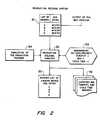
- Figure 2 illustrates the production release system 30 in more detail.
- the list of orders and their due dates as received from the planning system 20 are input to the production release system at function block 31 and reviewed for further analysis in function block 32.
- the production release system displays the management criteria priority as a default set or as input during a previous use and requests the user to input the current priorities.
- the user responds and provides this input at block 33.
- the system then invokes the common function simulation program of the shop manufacturing floor in block 34, calculates the various combinations of order release and dispatching rules as set out in List 1 below for the orders under evaluation and generates a recommended revised sequence and priorities in block 35 based on the results of the analysis.
- the system automatically sets up management reports in block 36 which can be printed upon request.
- Dispatching rules are used to establish the order in which orders are processed at a particular workstation.
- Figure 3 illustrates the key parts of the system from the user point of view.
- the key parts are the database 60 and the query system 70.
- the database can be any of several products currently available, but for purposes of this preferred embodiment, IBM's DataBase 2 (DB2) is used.
- DB2 is a relational database management system, but it will be understood by those skilled in the art that other databases, including hierarchical databases, could be used.
- General information on IBM's DB2 can be had with reference to publication GC26-4073- 2 published by IBM Corp.
- the query system can be an expert system, but for purposes of the preferred embodiment, IBM's Restructured Extended Executor (REXX) language is used. A description of the REXX language is provided in "Virtual Machine/Systems Product, System Product Interpreter User's Guide", Release 4, publication SC24-5238-2 published by IBM Corp.
- REXX Restructured Extended Executor
- the user 80 can query the current status, completion date and the priority sequence of any job in question using the query system 70.
- the query system 70 interfaces with the production release system 30 which accesses data in database 60 and provides a preferred sequence of orders 90.
- the data base as defined has the capability to capture the decision variables tested and the results obtained for each test. The user can access the results using the query facility at a later date, if needed. This enhances the analysis capability of future test data. This also provides an additional enhancement to the system.
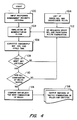
- the flow chart of Figure 4 illustrates in detail the functional logic of the release analysis system.
- the process begins in function block 100 where the user input preferred management priority criteria is received by the system.
- the simulation of the manufacturing floor is invoked in function block 102.
- the simulation in turn has an additional input derived from the list of order relationships and dispatching rules, i.e., List 1, as indicated in block 104.
- the result of the simulation in block 106 is the expected throughput, work-in-process inventory and cycle time.
- a test is made in decision block 108 to determine if the result of the simulation meets management criteria. If it does, a further test is made in decision block 110 to determine if all combinations of the rules have been tested.
- function block 112 receives as its input List 1 from block 104.
- function block 112 a new sequence of order relationships and combination of dispatching rules is generated to control the simulation of the manufacturing floor in function block 102.
- the best result of the various combination of rules is selected in function block 114 and reports of the tested combination of rules and criteria is output in function block 116.
- GEMS II Generalized Manufacturing Simulator published by Loadestone-II, Inc. of Bryan, Texas. This software package has the natural orientation to modeling manufacturing environments.
- GEMS II is a network based technique such that its model is largely represented in a graphical format which resembles both manufacturing process flow diagrams and a PERT (Program Evaluation and Review Technique) chart.
- the model consists of boxes or nodes which, in general, represent various manufacturing and decision activities of the system, and arcs which show the procedural relationships among the activities.
- the logic of GEMS II recognizes queues (in-process inventories, production backlogs, etc.) and assembly processes. Further, it recognizes competition among activities for limited resources, such as tools, fixtures, space and manpower.
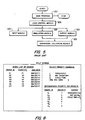
- the functional flow diagram of the GEMS II simulator program is shown in Figure 5.
- the simulator consists of a main program 120 and a plurality of subroutines. Its design incorporates the interaction of five components; data input via the input module 122, logic control via the logic control module 124, statistical data collection via the statistical collection moducle 126, simulation via the simulation module 128, and output via the output module 130.
- the main program 122 initiates the program, initializes variables, and transfers control of the program to the several operational modules.
- the logic control module 124 is the executive routine which organizes the execution sequence of the other four modules.
- the data input module 122 reads the input data and constructs the simulation data base.
- the simulation module 128 provides the support for systems including simulation, generation of random numbers and deviates for each simulation run.
- the statistical data collection module 126 collects and maintains relevant statistics.
- the output module 130 writes the report of the simulation.
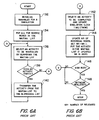
- FIGS. 6A and 6B taken together, are a simplified flow chart of the basic logic of the GEMS II simulation.
- the process begins in function block 132 where variables are initialized for simulation. All the GEMS II source boxes are then put in the waiting list in function block 134.
- the transactions in the waiting list are scanned in function block 136 to select an activity to be scheduled. The activity selected is the one which is feasible to schedule and has the highest priority level.
- a test is made in decision block 138 to determine if the selected activity exists, and if it does, it is transferred from the waiting list to the in-process list in function block 140. When a transaction is enetered into the waiting list, it is associated with a particular list location.
- each location Associated with each location is a box number, a pointer to the next transaction in the list, and a series of attributes.
- the transaction is transferred from the waiting list to the in-process list, all that actually occurs is that the pointers in both lists are updated. The procedure is repeated until no feasible transaction are found in the waiting list. At this time, the test in decision block, at which time control goes to connector A in Figure 6B.
- the activity whose completion time is the smallest is selected from the in-process list.
- the activity (transaction) is then deleted from the in-process list and TNOW is set to the completion time of the activity, as indicated in function block 142.
- the number releases (NR) of the follower boxes of the activity are updated in function block 144. If NR reaches zero, the follower box activity is entered into the waiting list.
- a single simulation run is completed when the specified number of sink box completions have occurred or the requested simulation completion time has been reached, as determined by the tests in decision blocks 146 and 148. An exception to this occurs when segmentable boxes are used in the system model.
- Segmentable boxes are those for which an activity can be stopped temporarily for a specified period of time, in which case the in-process list is scanned to determine if segmentable activities are in process. If some segmentable activities are in process, the waiting list is scanned a second time to determine if any of the activities in the waiting list have a higher priority level than the segmentable boxes' priority levels. If not, the process proceeds as before; otherwise, all segmentable boxes with priority levels less than the waiting activities priority level are preempted and transferred to the waiting list from the in-process list.
- function block 112 causes the re-sequencing of order release and dispatching rules. After a simulation is conducted with using one order release rule and a dispatch rule, a simulation is next conducted using the next rule which has not been tested. In other words, block 112 acts as a rule changing block which becomes the next test case for simulation analysis.
- the logical flow describes the procedure to test all possible combinations of order release and dispatching rules before the test is completed and results analyzed.
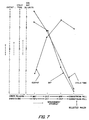
- Figure 7 is a graph showing a sample result.
- the downstream pull rule of order release and dispatching provides the least amount of work-in-process inventory and cycle time.
- the output value is less than that of the value with the order release rule as MRP and critical ratio as the dispatching rules.
- the preferred management criteria priority is set to work-in-process inventory reduction as highest priority followed by cycle time reduction and throughput, the selected order release and dispatching rules would be downstream pull. If output required the highest priority, the selected rule would be MRP followed by cirtical ratio as order release and dispatching rules, respectively. Based on the system selected rules, the system automatically sets priorities for the shop orders in question for release.
- Figure 8 illustrates the split screen format adopted for orders planned and recommended priority for release.
- the split screen display of the manufacturing manager's management criteria alongside the effects due to the priority input is a valuable tool for the planner/user. This is very practical for the user as he or she can immediately see the effect of a priority sequence.
- the system will also be able to define priority sequence of orders among the list after a specific order or sets of orders are pre-defined. The user can make modifications to management priority and see what it does to the priority sequence of the remaining orders.
- This split screen concept is very user friendly and provides improved decision making capabilities to the user. This analysis thus provides an element of artificial intelligence to the system.
- block 100 the input requirement from management regarding the priority settings is specified.
- block 102 the simulation function of the manufacturing shop floor. This capability to be able to simulate any environment is assumed as a requirement of the system according to the invention.
- the system uses the list of orders to be released and the list of order release and dispatch rules (List 1), the system calculates varying different possible results. After a thorough search of the results, the order sequence that provides the desired throughput, work-in-process inventory and cycle time for a selected set of order release and dispatching rules is selected.
- This capability for selecting the desired order release sequence for a given management objective is the artificial intelligence that the system according to the invention provides.
Landscapes
- Business, Economics & Management (AREA)
- Engineering & Computer Science (AREA)
- Economics (AREA)
- Human Resources & Organizations (AREA)
- Strategic Management (AREA)
- Entrepreneurship & Innovation (AREA)
- Operations Research (AREA)
- General Physics & Mathematics (AREA)
- Theoretical Computer Science (AREA)
- Marketing (AREA)
- Development Economics (AREA)
- Quality & Reliability (AREA)
- Tourism & Hospitality (AREA)
- Physics & Mathematics (AREA)
- General Business, Economics & Management (AREA)
- Game Theory and Decision Science (AREA)
- Educational Administration (AREA)
- Accounting & Taxation (AREA)
- Finance (AREA)
- Management, Administration, Business Operations System, And Electronic Commerce (AREA)
- General Factory Administration (AREA)
- Control By Computers (AREA)
- Multi-Process Working Machines And Systems (AREA)
Applications Claiming Priority (2)
| Application Number | Priority Date | Filing Date | Title |
|---|---|---|---|
| US07/127,334 US4887218A (en) | 1987-12-01 | 1987-12-01 | Automated production release system |
| US127334 | 1987-12-01 |
Publications (3)
| Publication Number | Publication Date |
|---|---|
| EP0319442A2 true EP0319442A2 (fr) | 1989-06-07 |
| EP0319442A3 EP0319442A3 (en) | 1990-09-19 |
| EP0319442B1 EP0319442B1 (fr) | 1996-05-15 |
Family
ID=22429580
Family Applications (1)
| Application Number | Title | Priority Date | Filing Date |
|---|---|---|---|
| EP88480077A Expired - Lifetime EP0319442B1 (fr) | 1987-12-01 | 1988-11-22 | Système automatique pour le déclenchement de production |
Country Status (6)
| Country | Link |
|---|---|
| US (1) | US4887218A (fr) |
| EP (1) | EP0319442B1 (fr) |
| JP (1) | JPH01166202A (fr) |
| BR (1) | BR8806296A (fr) |
| CA (1) | CA1304516C (fr) |
| DE (1) | DE3855295D1 (fr) |
Cited By (6)
| Publication number | Priority date | Publication date | Assignee | Title |
|---|---|---|---|---|
| EP0425405A3 (en) * | 1989-10-23 | 1992-01-22 | International Business Machines Corporation | An automated customer order promising and confirming method |
| EP0458284A3 (en) * | 1990-05-23 | 1993-12-22 | Fujitsu Ltd | Production/purchase management processing system and method |
| EP0487419A3 (fr) * | 1990-11-21 | 1994-03-02 | Seiko Epson Corp | |
| WO1997043726A1 (fr) * | 1996-05-14 | 1997-11-20 | Autosystems Limited | Procede et appareil de controle du traitement d'articles |
| EP0488246B1 (fr) * | 1990-11-28 | 1998-05-20 | Hitachi, Ltd. | Système de planification de fabrication |
| EP1164522A3 (fr) * | 2000-05-31 | 2004-01-07 | Kabushiki Kaisha Toshiba | Méthode de commerce électronique pour des produits semi-conducteurs, commerce électronique associé, système de fabrication, méthode de fabrication, système de conception, méthode de conception et méthode de fabrication de l'équipement de fabrication |
Families Citing this family (77)
| Publication number | Priority date | Publication date | Assignee | Title |
|---|---|---|---|---|
| US5170355A (en) * | 1988-12-14 | 1992-12-08 | Siemens Corporate Research, Inc. | Apparatus and a method for controlling the release of jobs from a pool of pending jobs into a factory |
| JPH02232152A (ja) * | 1989-03-03 | 1990-09-14 | Mitsubishi Electric Corp | 生産システムシミュレータ生成装置 |
| US5050088A (en) * | 1989-03-29 | 1991-09-17 | Eastman Kodak Company | Production control system and method |
| US5216619A (en) * | 1989-10-13 | 1993-06-01 | The Foxboro Company | Path management for a process system |
| EP0425406A3 (en) * | 1989-10-23 | 1991-12-27 | International Business Machines Corporation | An automated system for engineering change implementation to minimize wastage of obsoleted items |
| JP2678073B2 (ja) * | 1989-11-29 | 1997-11-17 | 株式会社日立製作所 | パターン学習型受注装置およびcad装置 |
| US5177688A (en) * | 1989-12-01 | 1993-01-05 | Texas Instruments Incorporated | Assembly line balancer |
| US5155679A (en) * | 1989-12-18 | 1992-10-13 | Hewlett-Packard Company | Set-up optimization for flexible manufacturing systems |
| US5233533A (en) * | 1989-12-19 | 1993-08-03 | Symmetrix, Inc. | Scheduling method and apparatus |
| US5126945A (en) * | 1990-02-14 | 1992-06-30 | Granco Clark, Inc. | Nonferrous extrusion process control system |
| CA2046147C (fr) * | 1990-07-10 | 1996-07-09 | Kazushi Tsujimoto | Automatisme pour installation de stockage |
| US5191534A (en) * | 1990-08-21 | 1993-03-02 | International Business Machines Corporation | Engineering and manufacturing change control mechanism |
| JPH04195461A (ja) * | 1990-11-28 | 1992-07-15 | Hitachi Ltd | 日程表作成システム |
| US5119472A (en) * | 1990-12-10 | 1992-06-02 | Fuji Xerox Co., Ltd. | Printer control device |
| US5249120A (en) * | 1991-01-14 | 1993-09-28 | The Charles Stark Draper Laboratory, Inc. | Automated manufacturing costing system and method |
| JP2773489B2 (ja) * | 1991-09-27 | 1998-07-09 | 澁谷工業株式会社 | 物品処理システムの運転状況表示装置 |
| US5285392A (en) * | 1991-11-27 | 1994-02-08 | Mckinsey & Company, Inc. | Parallel manufacturing system |
| JP3020699B2 (ja) * | 1991-12-04 | 2000-03-15 | キヤノン株式会社 | 印刷装置 |
| JPH05165842A (ja) * | 1991-12-13 | 1993-07-02 | Toyota Central Res & Dev Lab Inc | 工程時間の見積り装置 |
| US6006199A (en) * | 1991-12-31 | 1999-12-21 | International Business Machines Corporation | Method and system for automated payment within a computer integrated manufacturing system |
| FR2696853B1 (fr) * | 1992-10-12 | 1994-12-23 | Bull Sa | Procédé d'aide à l'optimisation d'une requête d'un système de gestion, de base de données relationnel et procédé d'analyse syntaxique en résultant. |
| JPH0689314A (ja) * | 1992-04-16 | 1994-03-29 | Hitachi Ltd | 設計支援方式および装置 |
| US5341302A (en) * | 1992-04-23 | 1994-08-23 | International Business Machines Corporation | Job configuration for semiconductor manufacturing |
| JPH0619920A (ja) * | 1992-06-30 | 1994-01-28 | Mitsui Eng & Shipbuild Co Ltd | 命令制御モジュール |
| US5559710A (en) * | 1993-02-05 | 1996-09-24 | Siemens Corporate Research, Inc. | Apparatus for control and evaluation of pending jobs in a factory |
| WO1994020918A1 (fr) * | 1993-03-11 | 1994-09-15 | Fibercraft/Descon Engineering, Inc. | Systeme de gestion de projet d'etude et d'ingenierie |
| US5586039A (en) * | 1993-03-29 | 1996-12-17 | Texas Instruments Incorporated | Computer-aided manufacturing support method and system for specifying relationships and dependencies between process type components |
| JP2546159B2 (ja) * | 1993-08-05 | 1996-10-23 | 日本電気株式会社 | 生産管理システム |
| US6141647A (en) * | 1995-10-20 | 2000-10-31 | The Dow Chemical Company | System and method for integrating a business environment, a process control environment, and a laboratory environment |
| US5463555A (en) * | 1993-09-28 | 1995-10-31 | The Dow Chemical Company | System and method for integrating a business environment with a process control environment |
| US6345259B1 (en) | 1993-09-28 | 2002-02-05 | The Dow Chemical Company | System and method for integrating business and manufacturing environments |
| US5515269A (en) * | 1993-11-08 | 1996-05-07 | Willis; Donald S. | Method of producing a bill of material for a configured product |
| US5511150A (en) | 1993-11-29 | 1996-04-23 | Eastman Kodak Company | Copier/printer with improved productivity |
| US6240328B1 (en) * | 1994-01-10 | 2001-05-29 | Motorola, Inc. | Manufacturing method for assembling products by generating and scheduling dynamically assembly instructions |
| US5841659A (en) * | 1994-05-26 | 1998-11-24 | Matsushita Electric Industrial Co., Ltd. | Production plan generating method and apparatus |
| JP3334400B2 (ja) * | 1995-02-02 | 2002-10-15 | トヨタ自動車株式会社 | 仕掛計画立案装置 |
| JPH0938848A (ja) * | 1995-07-27 | 1997-02-10 | Nec Corp | 生産管理システム |
| US6004021A (en) * | 1995-09-28 | 1999-12-21 | Chaos, L.L.C. | Toy system including hardware toy pieces and toy design software for designing and building various toy layouts using the hardware toy pieces |
| US5719796A (en) * | 1995-12-04 | 1998-02-17 | Advanced Micro Devices, Inc. | System for monitoring and analyzing manufacturing processes using statistical simulation with single step feedback |
| US6074269A (en) * | 1996-09-24 | 2000-06-13 | Choas, L.L.C. | Kinetic toy |
| US5785573A (en) * | 1996-09-24 | 1998-07-28 | Chaos, L.L.C. | Kinetic toy |
| US5709581A (en) * | 1996-09-24 | 1998-01-20 | Chaos, L.L.C. | Kinetic toy |
| US5884300A (en) * | 1997-05-01 | 1999-03-16 | At&T Wireless Services Inc. | Inventory pipeline management system |
| EP0983564A1 (fr) * | 1997-05-21 | 2000-03-08 | Khimetrics, Inc. | Procede d'optimisation controlee de modeles de planification d'entreprise |
| US6988076B2 (en) | 1997-05-21 | 2006-01-17 | Khimetrics, Inc. | Strategic planning and optimization system |
| US5971585A (en) * | 1997-09-09 | 1999-10-26 | International Business Machines Corporation | Best can do matching of assets with demand in microelectronics manufacturing |
| US5943484A (en) * | 1997-09-26 | 1999-08-24 | International Business Machines Corporation | Advanced material requirements planning in microelectronics manufacturing |
| US6453209B1 (en) | 1999-09-01 | 2002-09-17 | Daimlerchrysler Corporation | Computer-implemented method and apparatus for integrating vehicle manufacturing operations |
| US6711450B1 (en) * | 2000-02-02 | 2004-03-23 | Advanced Micro Devices, Inc. | Integration of business rule parameters in priority setting of wafer processing |
| JP2001283067A (ja) * | 2000-03-29 | 2001-10-12 | Seiko Epson Corp | 在庫引き当て管理方法および在庫引き当て管理システム |
| CN1194381C (zh) * | 2000-05-09 | 2005-03-23 | 东京毅力科创株式会社 | 半导体制造系统及其控制方法 |
| JP2002023823A (ja) * | 2000-07-12 | 2002-01-25 | Mitsubishi Electric Corp | 生産管理システム |
| US6895908B2 (en) * | 2000-10-12 | 2005-05-24 | Kabushiki Kaisha Moric | Exhaust timing controller for two-stroke engine |
| US7079266B1 (en) | 2000-11-03 | 2006-07-18 | Xerox Corporation | Printshop resource optimization via the use of autonomous cells |
| US7065567B1 (en) | 2000-11-03 | 2006-06-20 | Xerox Corporation | Production server for automated control of production document management |
| US7064848B2 (en) | 2000-12-12 | 2006-06-20 | Xerox Corporation | System and method for converting print jobs stored in printshop job description language files into printshop workflow |
| US6805502B2 (en) | 2001-01-23 | 2004-10-19 | Xerox Corporation | Method for determining optimal batch sizes for processing print jobs in a printing environment |
| US6633790B2 (en) * | 2001-01-29 | 2003-10-14 | Xerox Corporation | Systems and methods for optimizing a production facility |
| US6763277B1 (en) * | 2001-07-16 | 2004-07-13 | Advanced Micro Devices, Inc. | Method and apparatus for proactive dispatch system to improve line balancing |
| US20030018485A1 (en) * | 2001-07-19 | 2003-01-23 | Kaye Sullivan | Publication distribution method |
| US7783506B2 (en) * | 2001-08-17 | 2010-08-24 | Expedia, Inc. | System and method for managing reservation requests for one or more inventory items |
| US7707075B2 (en) * | 2001-08-17 | 2010-04-27 | Expedia, Inc. | System and method for managing inventory |
| US6847858B2 (en) | 2001-12-05 | 2005-01-25 | Dell Products L.P. | System and method for managing release of goods for packaging |
| US6731999B1 (en) | 2002-01-02 | 2004-05-04 | Taiwan Semiconductor Manufacturing Company | Wafer start order release algorithm in a foundry fab |
| TW200410109A (en) * | 2002-12-13 | 2004-06-16 | Hon Hai Prec Ind Co Ltd | Production capability simulating system and method |
| US7840449B2 (en) * | 2004-09-07 | 2010-11-23 | International Business Machines Corporation | Total inventory management |
| US20070005167A1 (en) * | 2005-06-30 | 2007-01-04 | George Roumeliotis | System and method for pro-active manufacturing performance management |
| EP1785921A1 (fr) * | 2005-11-10 | 2007-05-16 | Sap Ag | Système d'attribution automatique d'une quantité entrante de marchandises en réponse à un événement, procédé implémenté par ordinateur, terminal utilisateur et support d'enregistrement lisible par ordinateur |
| US20100249969A1 (en) * | 2009-03-26 | 2010-09-30 | Dell Products L.P. | Work Content Variation Control System |
| US8326447B2 (en) * | 2010-04-30 | 2012-12-04 | Honda Motor Co., Ltd. | Advanced planning system |
| US9443215B2 (en) * | 2011-09-01 | 2016-09-13 | Sap Se | Next generation sequencing management |
| US9665668B2 (en) * | 2012-02-29 | 2017-05-30 | Applied Materials, Inc. | Configuring a dispatching rule for execution in a simulation |
| US20150046231A1 (en) * | 2013-08-09 | 2015-02-12 | Level 3 Communications, Llc | Systems and methods for quality order tracking |
| US10657298B2 (en) | 2016-06-15 | 2020-05-19 | International Business Machines Corporation | Release cycle optimization based on significant features values simulation |
| CN114676976B (zh) * | 2022-01-27 | 2024-10-18 | 广州博依特智能信息科技有限公司 | 一种生产物料管控方法、系统及可读存储介质 |
| CN116523262B (zh) * | 2023-06-02 | 2023-12-22 | 深圳普菲特信息科技股份有限公司 | 基于大数据的生产计划智能规划方法、系统和介质 |
| CN120822785B (zh) * | 2025-08-05 | 2026-02-24 | 河北一片金电力工程有限公司 | 一种基于强化学习的绿色建材智能调度方法及系统 |
Family Cites Families (13)
| Publication number | Priority date | Publication date | Assignee | Title |
|---|---|---|---|---|
| JPS5628650B2 (fr) * | 1973-06-18 | 1981-07-03 | ||
| US4408291A (en) * | 1979-06-15 | 1983-10-04 | M. Wile & Company, Inc. | Point-of-manufacture data acquisition system |
| US4459663A (en) * | 1981-07-02 | 1984-07-10 | American Business Computer | Data processing machine and method of allocating inventory stock for generating work orders for producing manufactured components |
| JPS58107962A (ja) * | 1981-12-22 | 1983-06-27 | Fujitsu Ltd | スケジユ−リング方式 |
| JPS6077260A (ja) * | 1983-10-05 | 1985-05-01 | Mitsubishi Electric Corp | 情報処理システム |
| JPH0778810B2 (ja) * | 1983-11-18 | 1995-08-23 | 株式会社日立製作所 | 製造工程の信頼性分析システム |
| JPS60114495A (ja) * | 1983-11-28 | 1985-06-20 | 飯田工業株式会社 | 長尺木材の木取り装置 |
| US4591983A (en) * | 1984-07-09 | 1986-05-27 | Teknowledge, Inc. | Hierarchical knowledge system |
| JPH06101005B2 (ja) * | 1984-12-07 | 1994-12-12 | 三菱電機株式会社 | 個別生産における加工工程計画作成装置 |
| US4719587A (en) * | 1985-04-16 | 1988-01-12 | Combustion Engineering, Inc. | Future behavior equipment predictive system |
| JPS6285301A (ja) * | 1985-10-11 | 1987-04-18 | Hitachi Ltd | 指令支援方法およびシステム |
| US4796194A (en) * | 1986-08-20 | 1989-01-03 | Atherton Robert W | Real world modeling and control process |
| US4807108B1 (en) * | 1987-08-10 | 1995-03-28 | Bell Telephone Labor Inc | Product realization method |
-
1987
- 1987-12-01 US US07/127,334 patent/US4887218A/en not_active Expired - Fee Related
-
1988
- 1988-10-05 CA CA000579393A patent/CA1304516C/fr not_active Expired - Lifetime
- 1988-10-18 JP JP63260717A patent/JPH01166202A/ja active Pending
- 1988-11-22 EP EP88480077A patent/EP0319442B1/fr not_active Expired - Lifetime
- 1988-11-22 DE DE3855295T patent/DE3855295D1/de not_active Expired - Lifetime
- 1988-11-30 BR BR888806296A patent/BR8806296A/pt not_active Application Discontinuation
Cited By (8)
| Publication number | Priority date | Publication date | Assignee | Title |
|---|---|---|---|---|
| EP0425405A3 (en) * | 1989-10-23 | 1992-01-22 | International Business Machines Corporation | An automated customer order promising and confirming method |
| EP0458284A3 (en) * | 1990-05-23 | 1993-12-22 | Fujitsu Ltd | Production/purchase management processing system and method |
| EP0487419A3 (fr) * | 1990-11-21 | 1994-03-02 | Seiko Epson Corp | |
| EP0488246B1 (fr) * | 1990-11-28 | 1998-05-20 | Hitachi, Ltd. | Système de planification de fabrication |
| WO1997043726A1 (fr) * | 1996-05-14 | 1997-11-20 | Autosystems Limited | Procede et appareil de controle du traitement d'articles |
| US6188990B1 (en) * | 1996-05-14 | 2001-02-13 | Autosystems Limited | Method and apparatus for monitoring the processing of articles |
| EP1164522A3 (fr) * | 2000-05-31 | 2004-01-07 | Kabushiki Kaisha Toshiba | Méthode de commerce électronique pour des produits semi-conducteurs, commerce électronique associé, système de fabrication, méthode de fabrication, système de conception, méthode de conception et méthode de fabrication de l'équipement de fabrication |
| US6788985B2 (en) | 2000-05-31 | 2004-09-07 | Kabushiki Kaisha Toshiba | Electronic commerce method for semiconductor products, electronic commerce thereof, production system, production method, production equipment design system, production equipment design method, and production equipment manufacturing method |
Also Published As
| Publication number | Publication date |
|---|---|
| CA1304516C (fr) | 1992-06-30 |
| DE3855295D1 (de) | 1996-06-20 |
| BR8806296A (pt) | 1989-08-15 |
| US4887218A (en) | 1989-12-12 |
| JPH01166202A (ja) | 1989-06-30 |
| EP0319442B1 (fr) | 1996-05-15 |
| EP0319442A3 (en) | 1990-09-19 |
Similar Documents
| Publication | Publication Date | Title |
|---|---|---|
| US4887218A (en) | Automated production release system | |
| US4866628A (en) | Automated production dispatch system with feedback control | |
| US5099431A (en) | Automated re-work shop order scheduling system | |
| Bauer | Shop floor control systems: from design to implementation | |
| US5544348A (en) | Simulation method and apparatus | |
| Hoitomt et al. | A practical approach to job-shop scheduling problems | |
| US6609100B2 (en) | Program planning management system | |
| Nof et al. | Control and decision support in automatic manufacturing systems | |
| EP0323383A2 (fr) | Système automatisé pour l'évaluation fine des frais d'inventaire dus aux fluctuations de la demande | |
| Khadem | Efficacy of lean metrics in evaluating the performance of manufacturing system | |
| EP0323382A2 (fr) | Système automatisé pour estimer l'influence sur les frais d'inventaire dus à un changement technique à une partie composante | |
| Turban et al. | Applications of decision support and expert systems in flexible manufacturing systems | |
| Li | Proposing an architectural framework of a hybrid knowledge‐based system for production rescheduling | |
| Artiba et al. | An architecture of a multi-model system for planning and scheduling | |
| Christenson et al. | A simulation generator for dual-card Kanban-controlled flow shops | |
| Koh et al. | Database driven simulation/simulation-based scheduling of a job-shop | |
| Gupta et al. | Expert scheduling system for a prototype flexible manufacturing cell: a framework | |
| Wichmann | Simulation-based production schedule generation | |
| Schunk | Modeling with the micro saint simulation package | |
| Adiga et al. | An object-oriented architecture for knowledge-based production scheduling systems | |
| Qi-Zhi | Expert simulation for online production control | |
| Bard | Benchmarking simulation software for use in modeling postal operations | |
| Abedinnia | New solution approaches for scheduling problems in production and logistics | |
| Attaran et al. | CBMFIS: CORE OF THE “FACTORY OF THE FUTURE” | |
| Jagdev | Design of a generalized job shop control system and pm packages |
Legal Events
| Date | Code | Title | Description |
|---|---|---|---|
| PUAI | Public reference made under article 153(3) epc to a published international application that has entered the european phase |
Free format text: ORIGINAL CODE: 0009012 |
|
| AK | Designated contracting states |
Kind code of ref document: A2 Designated state(s): DE FR GB IT |
|
| 17P | Request for examination filed |
Effective date: 19891011 |
|
| PUAL | Search report despatched |
Free format text: ORIGINAL CODE: 0009013 |
|
| AK | Designated contracting states |
Kind code of ref document: A3 Designated state(s): DE FR GB IT |
|
| 17Q | First examination report despatched |
Effective date: 19930322 |
|
| GRAH | Despatch of communication of intention to grant a patent |
Free format text: ORIGINAL CODE: EPIDOS IGRA |
|
| GRAA | (expected) grant |
Free format text: ORIGINAL CODE: 0009210 |
|
| AK | Designated contracting states |
Kind code of ref document: B1 Designated state(s): DE FR GB IT |
|
| PG25 | Lapsed in a contracting state [announced via postgrant information from national office to epo] |
Ref country code: IT Free format text: LAPSE BECAUSE OF FAILURE TO SUBMIT A TRANSLATION OF THE DESCRIPTION OR TO PAY THE FEE WITHIN THE PRE;WARNING: LAPSES OF ITALIAN PATENTS WITH EFFECTIVE DATE BEFORE 2007 MAY HAVE OCCURRED AT ANY TIME BEFORE 2007. THE CORRECT EFFECTIVE DATE MAY BE DIFFERENT FROM THE ONE RECORDED.SCRIBED TIME-LIMIT Effective date: 19960515 Ref country code: FR Effective date: 19960515 |
|
| REF | Corresponds to: |
Ref document number: 3855295 Country of ref document: DE Date of ref document: 19960620 |
|
| PG25 | Lapsed in a contracting state [announced via postgrant information from national office to epo] |
Ref country code: DE Effective date: 19960817 |
|
| EN | Fr: translation not filed | ||
| PG25 | Lapsed in a contracting state [announced via postgrant information from national office to epo] |
Ref country code: GB Effective date: 19961122 |
|
| PLBE | No opposition filed within time limit |
Free format text: ORIGINAL CODE: 0009261 |
|
| STAA | Information on the status of an ep patent application or granted ep patent |
Free format text: STATUS: NO OPPOSITION FILED WITHIN TIME LIMIT |
|
| 26N | No opposition filed | ||
| GBPC | Gb: european patent ceased through non-payment of renewal fee |
Effective date: 19961122 |