EP0373941B1 - Oberflächenmodifizierte, sphärische feine Partikel auf der Basis von Polymethylsilsesquioxanen und Verfahren zu deren Herstellung - Google Patents
Oberflächenmodifizierte, sphärische feine Partikel auf der Basis von Polymethylsilsesquioxanen und Verfahren zu deren Herstellung Download PDFInfo
- Publication number
- EP0373941B1 EP0373941B1 EP89313098A EP89313098A EP0373941B1 EP 0373941 B1 EP0373941 B1 EP 0373941B1 EP 89313098 A EP89313098 A EP 89313098A EP 89313098 A EP89313098 A EP 89313098A EP 0373941 B1 EP0373941 B1 EP 0373941B1
- Authority
- EP
- European Patent Office
- Prior art keywords
- group
- fine particles
- polymethylsilsesquioxane
- spherical fine
- mol
- Prior art date
- Legal status (The legal status is an assumption and is not a legal conclusion. Google has not performed a legal analysis and makes no representation as to the accuracy of the status listed.)
- Expired - Lifetime
Links
- 239000010419 fine particle Substances 0.000 title claims description 77
- 229920003217 poly(methylsilsesquioxane) Polymers 0.000 title claims description 72
- 238000000034 method Methods 0.000 title claims description 16
- -1 acryloxy group Chemical group 0.000 claims description 22
- 239000007900 aqueous suspension Substances 0.000 claims description 22
- 238000006243 chemical reaction Methods 0.000 claims description 15
- 125000000217 alkyl group Chemical group 0.000 claims description 12
- 125000003277 amino group Chemical group 0.000 claims description 12
- 125000004432 carbon atom Chemical group C* 0.000 claims description 12
- 239000003513 alkali Substances 0.000 claims description 10
- 239000003054 catalyst Substances 0.000 claims description 9
- 239000002245 particle Substances 0.000 claims description 9
- 125000003700 epoxy group Chemical group 0.000 claims description 8
- 125000003342 alkenyl group Chemical group 0.000 claims description 7
- 125000001997 phenyl group Chemical group [H]C1=C([H])C([H])=C(*)C([H])=C1[H] 0.000 claims description 6
- 125000005843 halogen group Chemical group 0.000 claims description 4
- 239000012798 spherical particle Substances 0.000 claims description 4
- 125000003545 alkoxy group Chemical group 0.000 claims description 3
- 238000004519 manufacturing process Methods 0.000 claims description 3
- 125000000962 organic group Chemical group 0.000 description 22
- 239000000843 powder Substances 0.000 description 22
- 238000003756 stirring Methods 0.000 description 14
- XLYOFNOQVPJJNP-UHFFFAOYSA-N water Substances O XLYOFNOQVPJJNP-UHFFFAOYSA-N 0.000 description 13
- QTBSBXVTEAMEQO-UHFFFAOYSA-N Acetic acid Chemical compound CC(O)=O QTBSBXVTEAMEQO-UHFFFAOYSA-N 0.000 description 12
- OKKJLVBELUTLKV-UHFFFAOYSA-N Methanol Chemical compound OC OKKJLVBELUTLKV-UHFFFAOYSA-N 0.000 description 12
- NKSJNEHGWDZZQF-UHFFFAOYSA-N ethenyl(trimethoxy)silane Chemical compound CO[Si](OC)(OC)C=C NKSJNEHGWDZZQF-UHFFFAOYSA-N 0.000 description 9
- ZCYVEMRRCGMTRW-UHFFFAOYSA-N 7553-56-2 Chemical compound [I] ZCYVEMRRCGMTRW-UHFFFAOYSA-N 0.000 description 8
- 229920001971 elastomer Polymers 0.000 description 8
- 229910052740 iodine Inorganic materials 0.000 description 8
- 239000011630 iodine Substances 0.000 description 8
- 239000005060 rubber Substances 0.000 description 8
- 239000000725 suspension Substances 0.000 description 8
- 125000000391 vinyl group Chemical group [H]C([*])=C([H])[H] 0.000 description 8
- 238000012986 modification Methods 0.000 description 7
- 230000004048 modification Effects 0.000 description 7
- HEMHJVSKTPXQMS-UHFFFAOYSA-M Sodium hydroxide Chemical compound [OH-].[Na+] HEMHJVSKTPXQMS-UHFFFAOYSA-M 0.000 description 6
- BFXIKLCIZHOAAZ-UHFFFAOYSA-N methyltrimethoxysilane Chemical compound CO[Si](C)(OC)OC BFXIKLCIZHOAAZ-UHFFFAOYSA-N 0.000 description 6
- 239000011259 mixed solution Substances 0.000 description 6
- 238000002360 preparation method Methods 0.000 description 6
- JLGNHOJUQFHYEZ-UHFFFAOYSA-N trimethoxy(3,3,3-trifluoropropyl)silane Chemical compound CO[Si](OC)(OC)CCC(F)(F)F JLGNHOJUQFHYEZ-UHFFFAOYSA-N 0.000 description 6
- 239000000203 mixture Substances 0.000 description 5
- 239000000243 solution Substances 0.000 description 5
- AXCZMVOFGPJBDE-UHFFFAOYSA-L calcium dihydroxide Chemical compound [OH-].[OH-].[Ca+2] AXCZMVOFGPJBDE-UHFFFAOYSA-L 0.000 description 4
- 239000000920 calcium hydroxide Substances 0.000 description 4
- 229910001861 calcium hydroxide Inorganic materials 0.000 description 4
- 150000001875 compounds Chemical class 0.000 description 4
- 238000009833 condensation Methods 0.000 description 4
- 238000001035 drying Methods 0.000 description 4
- 238000001228 spectrum Methods 0.000 description 4
- 238000005133 29Si NMR spectroscopy Methods 0.000 description 3
- 239000004593 Epoxy Substances 0.000 description 3
- KWYUFKZDYYNOTN-UHFFFAOYSA-M Potassium hydroxide Chemical compound [OH-].[K+] KWYUFKZDYYNOTN-UHFFFAOYSA-M 0.000 description 3
- QVGXLLKOCUKJST-UHFFFAOYSA-N atomic oxygen Chemical compound [O] QVGXLLKOCUKJST-UHFFFAOYSA-N 0.000 description 3
- 230000015572 biosynthetic process Effects 0.000 description 3
- 230000000052 comparative effect Effects 0.000 description 3
- 238000005259 measurement Methods 0.000 description 3
- 125000002496 methyl group Chemical group [H]C([H])([H])* 0.000 description 3
- 229910052760 oxygen Inorganic materials 0.000 description 3
- 239000001301 oxygen Substances 0.000 description 3
- NLKNQRATVPKPDG-UHFFFAOYSA-M potassium iodide Chemical compound [K+].[I-] NLKNQRATVPKPDG-UHFFFAOYSA-M 0.000 description 3
- 239000011541 reaction mixture Substances 0.000 description 3
- 229920002379 silicone rubber Polymers 0.000 description 3
- 238000012360 testing method Methods 0.000 description 3
- WYTZZXDRDKSJID-UHFFFAOYSA-N (3-aminopropyl)triethoxysilane Chemical compound CCO[Si](OCC)(OCC)CCCN WYTZZXDRDKSJID-UHFFFAOYSA-N 0.000 description 2
- QGZKDVFQNNGYKY-UHFFFAOYSA-N Ammonia Chemical compound N QGZKDVFQNNGYKY-UHFFFAOYSA-N 0.000 description 2
- IJGRMHOSHXDMSA-UHFFFAOYSA-N Atomic nitrogen Chemical compound N#N IJGRMHOSHXDMSA-UHFFFAOYSA-N 0.000 description 2
- ROSDSFDQCJNGOL-UHFFFAOYSA-N Dimethylamine Chemical compound CNC ROSDSFDQCJNGOL-UHFFFAOYSA-N 0.000 description 2
- LFQSCWFLJHTTHZ-UHFFFAOYSA-N Ethanol Chemical compound CCO LFQSCWFLJHTTHZ-UHFFFAOYSA-N 0.000 description 2
- QZRGKCOWNLSUDK-UHFFFAOYSA-N Iodochlorine Chemical compound ICl QZRGKCOWNLSUDK-UHFFFAOYSA-N 0.000 description 2
- VYPSYNLAJGMNEJ-UHFFFAOYSA-N Silicium dioxide Chemical compound O=[Si]=O VYPSYNLAJGMNEJ-UHFFFAOYSA-N 0.000 description 2
- 125000000484 butyl group Chemical group [H]C([*])([H])C([H])([H])C([H])([H])C([H])([H])[H] 0.000 description 2
- 238000005384 cross polarization magic-angle spinning Methods 0.000 description 2
- 125000001495 ethyl group Chemical group [H]C([H])([H])C([H])([H])* 0.000 description 2
- 238000001914 filtration Methods 0.000 description 2
- 150000003944 halohydrins Chemical class 0.000 description 2
- 230000007062 hydrolysis Effects 0.000 description 2
- 238000006460 hydrolysis reaction Methods 0.000 description 2
- 239000012779 reinforcing material Substances 0.000 description 2
- GETQZCLCWQTVFV-UHFFFAOYSA-N trimethylamine Chemical compound CN(C)C GETQZCLCWQTVFV-UHFFFAOYSA-N 0.000 description 2
- VZSRBBMJRBPUNF-UHFFFAOYSA-N 2-(2,3-dihydro-1H-inden-2-ylamino)-N-[3-oxo-3-(2,4,6,7-tetrahydrotriazolo[4,5-c]pyridin-5-yl)propyl]pyrimidine-5-carboxamide Chemical compound C1C(CC2=CC=CC=C12)NC1=NC=C(C=N1)C(=O)NCCC(N1CC2=C(CC1)NN=N2)=O VZSRBBMJRBPUNF-UHFFFAOYSA-N 0.000 description 1
- WZFUQSJFWNHZHM-UHFFFAOYSA-N 2-[4-[2-(2,3-dihydro-1H-inden-2-ylamino)pyrimidin-5-yl]piperazin-1-yl]-1-(2,4,6,7-tetrahydrotriazolo[4,5-c]pyridin-5-yl)ethanone Chemical compound C1C(CC2=CC=CC=C12)NC1=NC=C(C=N1)N1CCN(CC1)CC(=O)N1CC2=C(CC1)NN=N2 WZFUQSJFWNHZHM-UHFFFAOYSA-N 0.000 description 1
- BBMMYRPBNQOFGU-UHFFFAOYSA-N 3-chloropropyl-tri(propan-2-yloxy)silane Chemical compound CC(C)O[Si](OC(C)C)(OC(C)C)CCCCl BBMMYRPBNQOFGU-UHFFFAOYSA-N 0.000 description 1
- 238000005004 MAS NMR spectroscopy Methods 0.000 description 1
- CTQNGGLPUBDAKN-UHFFFAOYSA-N O-Xylene Chemical compound CC1=CC=CC=C1C CTQNGGLPUBDAKN-UHFFFAOYSA-N 0.000 description 1
- 229910020487 SiO3/2 Inorganic materials 0.000 description 1
- 229920002472 Starch Polymers 0.000 description 1
- RMKZLFMHXZAGTM-UHFFFAOYSA-N [dimethoxy(propyl)silyl]oxymethyl prop-2-enoate Chemical compound CCC[Si](OC)(OC)OCOC(=O)C=C RMKZLFMHXZAGTM-UHFFFAOYSA-N 0.000 description 1
- 238000010521 absorption reaction Methods 0.000 description 1
- 150000008044 alkali metal hydroxides Chemical class 0.000 description 1
- 150000001412 amines Chemical class 0.000 description 1
- 229910021529 ammonia Inorganic materials 0.000 description 1
- 239000012736 aqueous medium Substances 0.000 description 1
- 239000011230 binding agent Substances 0.000 description 1
- 125000004369 butenyl group Chemical group C(=CCC)* 0.000 description 1
- SXPLZNMUBFBFIA-UHFFFAOYSA-N butyl(trimethoxy)silane Chemical compound CCCC[Si](OC)(OC)OC SXPLZNMUBFBFIA-UHFFFAOYSA-N 0.000 description 1
- 239000011248 coating agent Substances 0.000 description 1
- 238000000576 coating method Methods 0.000 description 1
- 238000007796 conventional method Methods 0.000 description 1
- 239000002537 cosmetic Substances 0.000 description 1
- KPUWHANPEXNPJT-UHFFFAOYSA-N disiloxane Chemical class [SiH3]O[SiH3] KPUWHANPEXNPJT-UHFFFAOYSA-N 0.000 description 1
- LBAQSKZHMLAFHH-UHFFFAOYSA-N ethoxyethane;hydron;chloride Chemical compound Cl.CCOCC LBAQSKZHMLAFHH-UHFFFAOYSA-N 0.000 description 1
- SBRXLTRZCJVAPH-UHFFFAOYSA-N ethyl(trimethoxy)silane Chemical compound CC[Si](OC)(OC)OC SBRXLTRZCJVAPH-UHFFFAOYSA-N 0.000 description 1
- 238000011156 evaluation Methods 0.000 description 1
- 239000000945 filler Substances 0.000 description 1
- 125000000524 functional group Chemical group 0.000 description 1
- 238000001879 gelation Methods 0.000 description 1
- 125000004435 hydrogen atom Chemical group [H]* 0.000 description 1
- 239000000413 hydrolysate Substances 0.000 description 1
- 230000003301 hydrolyzing effect Effects 0.000 description 1
- 150000004679 hydroxides Chemical class 0.000 description 1
- 125000002887 hydroxy group Chemical group [H]O* 0.000 description 1
- 239000000976 ink Substances 0.000 description 1
- 125000001449 isopropyl group Chemical group [H]C([H])([H])C([H])(*)C([H])([H])[H] 0.000 description 1
- VTHJTEIRLNZDEV-UHFFFAOYSA-L magnesium dihydroxide Chemical compound [OH-].[OH-].[Mg+2] VTHJTEIRLNZDEV-UHFFFAOYSA-L 0.000 description 1
- 239000000347 magnesium hydroxide Substances 0.000 description 1
- 229910001862 magnesium hydroxide Inorganic materials 0.000 description 1
- 239000000463 material Substances 0.000 description 1
- GBMDVOWEEQVZKZ-UHFFFAOYSA-N methanol;hydrate Chemical compound O.OC GBMDVOWEEQVZKZ-UHFFFAOYSA-N 0.000 description 1
- 238000000465 moulding Methods 0.000 description 1
- 238000006386 neutralization reaction Methods 0.000 description 1
- 229910052757 nitrogen Inorganic materials 0.000 description 1
- 239000003960 organic solvent Substances 0.000 description 1
- 125000001147 pentyl group Chemical group C(CCCC)* 0.000 description 1
- 239000004033 plastic Substances 0.000 description 1
- 229920003023 plastic Polymers 0.000 description 1
- 238000012643 polycondensation polymerization Methods 0.000 description 1
- 125000004368 propenyl group Chemical group C(=CC)* 0.000 description 1
- 125000001436 propyl group Chemical group [H]C([*])([H])C([H])([H])C([H])([H])[H] 0.000 description 1
- 238000010992 reflux Methods 0.000 description 1
- 238000007142 ring opening reaction Methods 0.000 description 1
- 238000010008 shearing Methods 0.000 description 1
- 125000005372 silanol group Chemical group 0.000 description 1
- 239000000377 silicon dioxide Substances 0.000 description 1
- 239000004945 silicone rubber Substances 0.000 description 1
- AKHNMLFCWUSKQB-UHFFFAOYSA-L sodium thiosulfate Chemical compound [Na+].[Na+].[O-]S([O-])(=O)=S AKHNMLFCWUSKQB-UHFFFAOYSA-L 0.000 description 1
- 235000019345 sodium thiosulphate Nutrition 0.000 description 1
- 239000008107 starch Substances 0.000 description 1
- 235000019698 starch Nutrition 0.000 description 1
- 125000001424 substituent group Chemical group 0.000 description 1
- INUOIYMEJLOQFN-UHFFFAOYSA-N tributoxy(phenyl)silane Chemical compound CCCCO[Si](OCCCC)(OCCCC)C1=CC=CC=C1 INUOIYMEJLOQFN-UHFFFAOYSA-N 0.000 description 1
- ZLGWXNBXAXOQBG-UHFFFAOYSA-N triethoxy(3,3,3-trifluoropropyl)silane Chemical compound CCO[Si](OCC)(OCC)CCC(F)(F)F ZLGWXNBXAXOQBG-UHFFFAOYSA-N 0.000 description 1
- JXUKBNICSRJFAP-UHFFFAOYSA-N triethoxy-[3-(oxiran-2-ylmethoxy)propyl]silane Chemical compound CCO[Si](OCC)(OCC)CCCOCC1CO1 JXUKBNICSRJFAP-UHFFFAOYSA-N 0.000 description 1
- HQYALQRYBUJWDH-UHFFFAOYSA-N trimethoxy(propyl)silane Chemical compound CCC[Si](OC)(OC)OC HQYALQRYBUJWDH-UHFFFAOYSA-N 0.000 description 1
- BPSIOYPQMFLKFR-UHFFFAOYSA-N trimethoxy-[3-(oxiran-2-ylmethoxy)propyl]silane Chemical compound CO[Si](OC)(OC)CCCOCC1CO1 BPSIOYPQMFLKFR-UHFFFAOYSA-N 0.000 description 1
- 238000005406 washing Methods 0.000 description 1
- 239000008096 xylene Substances 0.000 description 1
Images

Classifications
-
- C—CHEMISTRY; METALLURGY
- C08—ORGANIC MACROMOLECULAR COMPOUNDS; THEIR PREPARATION OR CHEMICAL WORKING-UP; COMPOSITIONS BASED THEREON
- C08J—WORKING-UP; GENERAL PROCESSES OF COMPOUNDING; AFTER-TREATMENT NOT COVERED BY SUBCLASSES C08B, C08C, C08F, C08G or C08H
- C08J3/00—Processes of treating or compounding macromolecular substances
- C08J3/12—Powdering or granulating
-
- C—CHEMISTRY; METALLURGY
- C08—ORGANIC MACROMOLECULAR COMPOUNDS; THEIR PREPARATION OR CHEMICAL WORKING-UP; COMPOSITIONS BASED THEREON
- C08G—MACROMOLECULAR COMPOUNDS OBTAINED OTHERWISE THAN BY REACTIONS ONLY INVOLVING UNSATURATED CARBON-TO-CARBON BONDS
- C08G77/00—Macromolecular compounds obtained by reactions forming a linkage containing silicon with or without sulfur, nitrogen, oxygen or carbon in the main chain of the macromolecule
- C08G77/04—Polysiloxanes
- C08G77/06—Preparatory processes
-
- C—CHEMISTRY; METALLURGY
- C08—ORGANIC MACROMOLECULAR COMPOUNDS; THEIR PREPARATION OR CHEMICAL WORKING-UP; COMPOSITIONS BASED THEREON
- C08J—WORKING-UP; GENERAL PROCESSES OF COMPOUNDING; AFTER-TREATMENT NOT COVERED BY SUBCLASSES C08B, C08C, C08F, C08G or C08H
- C08J3/00—Processes of treating or compounding macromolecular substances
- C08J3/12—Powdering or granulating
- C08J3/128—Polymer particles coated by inorganic and non-macromolecular organic compounds
-
- C—CHEMISTRY; METALLURGY
- C08—ORGANIC MACROMOLECULAR COMPOUNDS; THEIR PREPARATION OR CHEMICAL WORKING-UP; COMPOSITIONS BASED THEREON
- C08J—WORKING-UP; GENERAL PROCESSES OF COMPOUNDING; AFTER-TREATMENT NOT COVERED BY SUBCLASSES C08B, C08C, C08F, C08G or C08H
- C08J2383/00—Characterised by the use of macromolecular compounds obtained by reactions forming in the main chain of the macromolecule a linkage containing silicon with or without sulfur, nitrogen, oxygen, or carbon only; Derivatives of such polymers
- C08J2383/04—Polysiloxanes
-
- C—CHEMISTRY; METALLURGY
- C08—ORGANIC MACROMOLECULAR COMPOUNDS; THEIR PREPARATION OR CHEMICAL WORKING-UP; COMPOSITIONS BASED THEREON
- C08J—WORKING-UP; GENERAL PROCESSES OF COMPOUNDING; AFTER-TREATMENT NOT COVERED BY SUBCLASSES C08B, C08C, C08F, C08G or C08H
- C08J2383/00—Characterised by the use of macromolecular compounds obtained by reactions forming in the main chain of the macromolecule a linkage containing silicon with or without sulfur, nitrogen, oxygen, or carbon only; Derivatives of such polymers
- C08J2383/04—Polysiloxanes
- C08J2383/06—Polysiloxanes containing silicon bound to oxygen-containing groups
-
- C—CHEMISTRY; METALLURGY
- C08—ORGANIC MACROMOLECULAR COMPOUNDS; THEIR PREPARATION OR CHEMICAL WORKING-UP; COMPOSITIONS BASED THEREON
- C08L—COMPOSITIONS OF MACROMOLECULAR COMPOUNDS
- C08L2207/00—Properties characterising the ingredient of the composition
- C08L2207/53—Core-shell polymer
-
- Y—GENERAL TAGGING OF NEW TECHNOLOGICAL DEVELOPMENTS; GENERAL TAGGING OF CROSS-SECTIONAL TECHNOLOGIES SPANNING OVER SEVERAL SECTIONS OF THE IPC; TECHNICAL SUBJECTS COVERED BY FORMER USPC CROSS-REFERENCE ART COLLECTIONS [XRACs] AND DIGESTS
- Y10—TECHNICAL SUBJECTS COVERED BY FORMER USPC
- Y10T—TECHNICAL SUBJECTS COVERED BY FORMER US CLASSIFICATION
- Y10T428/00—Stock material or miscellaneous articles
- Y10T428/29—Coated or structually defined flake, particle, cell, strand, strand portion, rod, filament, macroscopic fiber or mass thereof
- Y10T428/2982—Particulate matter [e.g., sphere, flake, etc.]
- Y10T428/2991—Coated
- Y10T428/2998—Coated including synthetic resin or polymer
-
- Y—GENERAL TAGGING OF NEW TECHNOLOGICAL DEVELOPMENTS; GENERAL TAGGING OF CROSS-SECTIONAL TECHNOLOGIES SPANNING OVER SEVERAL SECTIONS OF THE IPC; TECHNICAL SUBJECTS COVERED BY FORMER USPC CROSS-REFERENCE ART COLLECTIONS [XRACs] AND DIGESTS
- Y10—TECHNICAL SUBJECTS COVERED BY FORMER USPC
- Y10T—TECHNICAL SUBJECTS COVERED BY FORMER US CLASSIFICATION
- Y10T428/00—Stock material or miscellaneous articles
- Y10T428/31504—Composite [nonstructural laminate]
- Y10T428/31652—Of asbestos
- Y10T428/31663—As siloxane, silicone or silane
Definitions
- This invention relates to surface-modified polymethylsilsesquioxane spherical fine particles and a process of preparing the same.
- Polymethylsilsesquioxane spherical fine particles have been hitherto used to improve properties such as lubricity and water repellency, in the fields of rubbers, plastics, coating materials, inks, cosmetics, etc. For example, they are added in rubber as a reinforcing material of addition-type silicone rubbers.
- the polymethylsilsesquioxane spherical fine particles hitherto used have no functional group capable of forming a linkage with a siloxane skeleton of silicone rubbers and hence can form no strong linkage with rubber. For this reason, the strength of rubber can not be improved so much, bringing about the problem that the resulting rubbers have a low strength.
- the invention is concerned with a surface-modified polymethylsilsesquioxane spherical particle having a diameter in the range 0.2 to 5.0 micrometre, consisting of a polymethylsilsesquioxane spherical particle and a polyorganosilsesquioxane having at least one member selected from the group consisting of an alkyl group having two or more carbon atoms, an alkenyl group, a phenyl group, an epoxy group, an acryloxy group, and an amino group, which group may be substituted with a halogen atom(s), an amino group(s), an alkoxy group(s), a glycidoxy group(s), or an acryloxy group(s), and bonded to said polymethylsilsesquioxane spherical particle through siloxane linkage; and it is the object of the invention to provide a process for preparing such fine particles.
- the invention comprises the step of carrying out reaction in the presence of an alkali catalyst while dropwise adding to an aqueous suspension of polymethylsilsesquioxane particles having a particle diameter in the range 0.2 to 5.0 micrometre an organotrialkoxysilane represented by the general formula: R 1 Si(OR 2 ) 3 wherein R 1 represents at least one member selected from the group consisting of an alkyl group having two or more carbon atoms, an alkenyl group, a phenyl group, an epoxy group, an acryloxy group, and an amino group, which group may be substituted with a halogen atom(s), an amino group(s), an alkoxy group(s), a glycidoxy group(s), or an acryloxy group(s); and R 2 represents an alkyl group having 1 to 4 carbon atoms; wherein (i) the concentration of polymethylsilsesquioxane spherical fine particles in the aqueous suspension thereof is such as to give from 1 to 3 mol
- the surface-modified polymethylsilsesquioxane spherical fine particles of this invention comprise a polymethylsilsesquioxane spherical fine particle serving as a nucleus, and at least one member selected from the group consisting of an alkyl group having two or more carbon atoms, an alkenyl group, a phenyl group, an epoxy group, an acryloxy group, and an amino group (these specified groups are hereinafter called simply "organic group” unless any confusion is caused, although the unsubstituted amino group (-NH 2 ) is not an organic group), bonded to its surface.
- the organic group including these is present as an organic group possessed by a polyorganosilsesquioxane bonded to the surface of a polymethylsilsesquioxane spherical fine particle.
- the polymethylsilsesquioxane spherical fine particles used as nuclei of the surface-modified spherical fine particles of this invention are spherical fine particles comprising a polymethylsilsesquioxane represented by the average unit formula (I): CH 3 SiO 3/2 (I)
- the average particle diameter of the spherical fine particles can be appropriately selected depending on the purpose for which the resulting surface-modified polymethylsilsesquioxane spherical fine particles are used. In usual instances, it may range from 0.2 to 5.0 micrometers.
- the polymethylsilsesquioxane spherical fine particles can be prepared by a known process as exemplified by the process as disclosed in Japanese Patent Publication No. 39808/1981 or Japanese Pre-examination Patent Publication No. 13813/1985. More specifically, it can be prepared by hydrolyzing in an aqueous medium a methyltrialkoxysilane represented by the general formula (II): CH 3 Si(OR) 3 (II) wherein R represents an alkyl group having 1 to 4 carbon atoms and/or a partial hydrolysate thereof in the presence of an alkali catalyst, followed by condensation polymerization.
- a methyltrialkoxysilane represented by the general formula (II): CH 3 Si(OR) 3 (II) wherein R represents an alkyl group having 1 to 4 carbon atoms and/or a partial hydrolysate thereof in the presence of an alkali catalyst, followed by condensation polymerization.
- the organic group bonded to the surface of the nucleus polymethylsilsesquioxane spherical fine particle includes at least one member selected from the group consisting of an alkyl group having two or more carbon atoms, an alkenyl group, a phenyl group, an epoxy group, an acryloxy group, and an amino group.
- the alkyl group having two or more carbon atoms includes, for example, an ethyl group, a propyl group, a butyl group, and a pentyl group.
- the alkenyl group includes a vinyl group, a propenyl group, and a butenyl group.
- organic groups may be those in which part or all of hydrogen atoms of the organic group may be substituted with a halogen atom(s), an amino group(s), a glycidoxy group(s), or an acryloxy group(s).
- the organic group having such a substituent(s) may include a 3,3,3-trifluoropropyl group, a 3-chloropropyl group, a gamma-aminopropyl group, an acryloxypropyl group, and a gamma-glycidoxypropyl group.
- the organic group as described above is, as previously briefly described, present as the group possessed by a polyorganosilsesquioxane bonded to the surface of a polymethylsilsesquioxane spherical fine particle. In usual instances, it may preferably be present in a proportion of from 0.05 to 0.15 mol per mol of the polymethylsilsesquioxane unit represented by the average unit formula (I).
- An excessively large amount of this organic group may make it necessary to use the organoalkoxysilane, which is expensive, in a large quantity in order to prepare the surface-modified spherical fine particles, bringing about economical disadvantages.
- an excessively small amount of the organic group may sometimes result in no satisfactory exhibition of the function to be obtained by the introduction of the organic group.
- the surface-modified polymethylsilsesquioxane spherical fine particles of this invention can be prepared, for example, by a process comprising the step of carrying out reaction in the presence of an alkali catalyst while dropwise adding in an aqueous suspension of polymethylsilsesquioxane fine particles an organotrialkoxysilane represented by the general formula (III) : R 1 Si(OR 2 ) 3 (III) wherein R 1 represents the group corresponding to the organic group possessed on the polymethylsilsesquioxane particles, i.e.
- R 2 represents an alkyl group having 1 to 4 carbon atoms.
- this reaction can be represented by the following formula: and it is presumed that the OH group on the end of the polymetylsilsesquioxane skelton is polycondensed with the organotrialkoxysilane to produce the surface-modified polymethylsilsesquioxane spherical fine particle to which the above organic group R 1 has been bonded.
- the organic group R 1 corresponds to the organic group previously described and is introduced onto the surface of the polymethylsilsesquioxane fine particle nucleus in the form of an organic group contained in the polyorganosilsesquioxane.
- R 2 represents an alkyl group having 1 to 4 carbon atoms, including, for example, a methyl group, an ethyl group, an isopropyl group, and a butyl group.
- organotrialkoxysilane may include ethyltrimethoxysilane, propyltrimethoxysilane, butyltrimethoxysilane, vinyltrimethoxysilane, 3,3,3-trifluoropropyltriethoxysilane, 3-chloropropyltriisopropoxysilane, gamma-aminopropyltriethoxysilane, phenyltributoxysilane, acryloxypropyltrimethoxysilane, and gamma-glycidoxypropyltrimethoxysilane.
- organotrialkoxysilanes can be used alone or as a mixture of two or more kinds.
- the amount of the organotrialkoxysilane used there are no particular limitations on the amount of the organotrialkoxysilane used. In usual instances, it may preferably be dropwise added in the suspension in an amount of from 0.01 to 0.3 mol, and more preferably from 0.04 to 0.15 mol, per mol of the polymethylsilsesquioxane average unit represented by the formula (I), of the nucleus polymethylsilsesquioxane fine particle.
- An excessively small amount of the organotrialkoxysilane makes it difficult to sufficiently modify the surfaces of the polymethylsilsesquioxane spherical fine particles.
- the aqueous suspension of the polymethylsilsesquioxane spherical fine particles used in the above preparation, may be formed by suspending the polymethylsilsesquioxane spherical fine particles in an aqueous alkali solution.
- the aqueous suspension obtained when the polymethylsilsesquioxane spherical fine particles are prepared as previously described may be used as it is.
- the concentration of the polymethylsilsesquioxane spherical fine particles in the aqueous suspension may, in usual instances, preferably be a concentration that gives from 1 to 3 mol/lit., and more preferably from 1 to 1.5 mol/lit., of the polymethylsilsesquioxane average unit.
- aqueous suspension having an excessively high concentration tends to cause melt-adhesion between particles in the steps of carrying out the reaction while dropwise adding the organotrialkoxysilane, making it difficult to obtain monodisperse fine particles.
- use of an aqueous suspension having an excessively low concentration makes it necessary to use a large-scale apparatus in the manufacture, bringing about economical disadvantages.
- the organotrialkoxysilane may preferably be slowly added in the aqueous suspension in a time sufficiently taken in order to prevent the self-condensation of the organotrialkoxysilane.
- the rate of dropwise addition may preferably be so controlled that the ratio (v/V) of the rate of dropwise addition v [ml/min] of the organotrialkoxysilane to the sum total V of the quantities of the aqueous suspension of the polymethylsilsesquioxane spherical fine particles and the organotrialkoxysilane to be dropwise added may be always not more than 1.0.
- an excessively large ratio in other words, an excessively high rate of the dropwise addition may cause self-condensation of the organotrialkoxysilane, which turns into a binder that causes melt-adhesion between polymethylsilsesquioxane spherical fine particles, making it difficult to obtain fine-particle powder with a good fluidity.
- the alkali catalyst used in the above preparation includes, for example, alkali metal hydroxides such as sodium hydroxide and potassium hydroxide, alkaline earth hydroxides such as calcium hydroxide and magnesium hydroxide, ammonia, and amines such as dimethylamine and trimethylamine.
- this alkali catalyst is previously mixed in the aqueous suspension of the polymethylsilsesquioxane. It may be used in a concentration ranging from 0.01 to 0.05 mol/lit., and preferably from 0.02 to 0.03 mol/lit. in the aqueous suspension.
- An excessively low concentration of the alkali catalyst tends to cause melt-adhesion between fine particles, making it liable to cause gelation of the aqueous suspension.
- An excessively high concentration may result in so high a rate of the hydrolysis of the organotrialkoxysilane that an amorphous gel is liable to be formed.
- the reaction may, in usual instances, be carried out at a temperature of from about 0 to 80°C, and preferably from 10 to 30°C.
- An excessively low reaction temperature makes it liable for the suspension to freeze.
- An excessively high reaction temperature may result in so high a rate of the hydrolysis of the organotrialkoxysilane that an amorphous gel is liable to be formed.
- the reaction mixture may preferably be slowly stirred at 1000 r.p.m. or less.
- the polyorganosilsesquioxane having the above organic group tends not to be bonded to the surfaces of the polymethylsilsesquioxane spherical fine particles, resulting in the formation of an amorphous gel.
- post-stirring should be carried out for not less than about 1 hour in order to complete the reaction.
- neutralization of the alkali catalyst, washing, dewatering, and drying may be carried out according to conventional methods, so that a powder comprising the surface-modified polymethylsilsesquioxane spherical fine particles can be obtained.
- the preparation process as described above makes it possible to obtain the surface-modified spherical fine particles of this invention in a relatively short time with ease, without causing the discharge of an organic solvent in a large quantity.
- the surface-modified polymethylsilsesquioxane spherical fine particles of this invention having various organic groups on their surfaces, are useful in a variety of purpose.
- the surface-modified polymethylsilsesquioxane spherical fine particles of this invention that have a vinyl group as the organic group when added in an addition-type silicone rubber as a reinforcing material, can achieve a linkage of the vinyl group with a siloxane skeleton in the rubber.
- a rubber with a high strength can be obtained.
- the surface-modified spherical fine particles that have a 3,3,3-trifluoropropyl group as the organic group bonded to the surface can promise an improvement in release properties as a molding rubber filler.
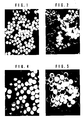
- Polymethylsilsesquioxane spherical fine particles were collected from this aqueous suspension by filtration, and a scanning-type electron microscope photograph thereof (5,000 magnifications) was taken, which was as shown in Fig. 1.
- a Wijs solution a 0.2N iodine monochloride/acetic acid solution
- the suspension is left for 2 hours in the dark kept at a constant temperature of 25°C, so that the reaction of the iodine with the vinyl groups is carried out.
- 15 ml of an aqueous 20 wt.% potassium iodide solution and 100 ml of water are added, and the iodine liberated is titrated in a 0.1N sodium thiosulfate until the starch end-point is indicated. The quantity of consumed iodine is thus measured.
- the powder of the fine particles obtained in the above was also refluxed in xylene at 130°C for 2 hours, followed by drying. Thereafter, iodine values were measured as the indeces of a vinyl-group content, in the same manner as the above. As a result, there was found no difference in the iodine values before and after the reflux. This showed that vinylsilsesquioxane was firmly bonded to the surfaces of the fine particles obtained.
- Example 1 was repeated to give powders comprised of surface-modified polymethylsilsesquioxane spherical fine particles, except that the mixtures of compounds with the composition as shown in Table 1 (total molar number: 0.138 and 0.144, respectively) were each used in the modification of the surfaces of fine particles in place of the vinyltrimethoxysilane used in the step 2) in Example 1.
- the resulting reaction mixture was an aqueous suspension of polymethylsilsesquioxane spherical fine particles.
- Polymethylsilsesquioxane spherical fine particles were collected from this aqueous suspension by filtration, and a scanning-type electron microscope photograph thereof (5,000 magnifications) was taken, which was as shown in Fig. 4.
- a limit methanol concentration at which the powder is not wetted at all with a mixed-solution layer after the shaking is completed and the test tube is allowed to stand is assumed as value M, which is used as the index of the water repellency.
- the mixed solution becomes slightly opaque.
- the evaluation on whether or not the powder is wetted can be made with ease.
- the value M is regarded as 0.
- the value M is regarded as "none".
- Example 4 was repeated to give powders comprised of surface-modified polymethylsilsesquioxane spherical fine particles, except that the mixtures of compounds with the composition as shown in Table 2 (total molar number: 0.0583 and 0.0684, respectively) were each used in the modification of the surfaces of fine particles in place of the 3,3,3-trifluoropropyltrimethoxysilane used in the step 2) in Example 4.
- Example 1 was repeated to give a powder comprised of surface-modified polymethylsilsesquioxane spherical fine particles, except that gamma-aminopropyltriethoxysilane was used in place of vinyltrimethoxysilane.
- Nitrogen content of the resulting powder was measured using a CHN elementary analyzer (026 Type; manufactured by Hitachi, Ltd.) to reveal that it was 1.85 % by weight and the amino group was calculated to be in a proportion of 0.141 mol per mol of the polymethylsilsesquioxane unit represented by the average unit formula (I).
- Example 1 was repeated to give a powder comprised of surface-modified polymethylsilsesquioxane spherical fine particles, except that 3-glycidoxypropyltriethoxysilane was used in place of vinyltrimethoxysilane.
- Epoxy group-type oxygen content of the resulting powder was measured by the following halohydrin formation method to reveal that it was 1.0 % by weight and the epoxy group was calculated to be in a proportion of 0.047 mol per mol of the polymethylsilsesquioxane unit represented by the average unit formula (I).
- a fine-particle powder sample is added and suspended in 25 ml of a 0.2M HCl-Et 2 O mixed solution, and the suspension is left at room temperature for 3 hours to make the ring opening reaction of epoxy groups proceed. Thereafter, 50 ml of 95 % EtOH is added, and the quantity of excessive HCl is measured using an aqueous 0.1N sodium hydroxide solution.
- the epoxy group-type oxygen content can be calculated since there is consumed 1 mol of HCl per mol of epoxy group-type oxygen.
Landscapes
- Chemical & Material Sciences (AREA)
- Health & Medical Sciences (AREA)
- Chemical Kinetics & Catalysis (AREA)
- Medicinal Chemistry (AREA)
- Polymers & Plastics (AREA)
- Organic Chemistry (AREA)
- Inorganic Chemistry (AREA)
- Silicon Polymers (AREA)
- Processes Of Treating Macromolecular Substances (AREA)
Claims (3)
- Verfahren zur Herstellung von oberflächenmodifizierten, sphärischen feinen Partikeln auf der Basis von Polymethylsilsesquioxanen, dadurch gekennzeichnet, daß man die Stufe der Durchführung der Reaktion in Gegenwart eines alkalischen Katalysators vornimmt, während tropfenweise zu einer wäßrigen Suspension von Polymethylsilsesquioxanteilchen mit einem Teilchendurchmesser im Bereich von 0,2 bis 5,0 µm ein Organotrialkoxysilan der allgemeinen Formel:
R1Si(OR2)3
zugegeben wird, worin R1 wenigstens ein Mitglied ausgewählt aus der Gruppe bestehend aus einer Alkylgruppe mit zwei oder mehr Kohlenstoffatomen, einer Alkenylgruppe, einer Phenylgruppe, einer Epoxygruppe, einer Acryloxygruppe und einer Aminogruppe bedeutet, wobei die Gruppe auch mit einem oder mehreren Halogenatomen, einer oder mehreren Aminogruppen, einer oder mehreren Alkoxygruppen, einer oder mehreren Glycidoxygruppen oder einer oder mehreren Acryloxygruppen substituiert sein kann und R2 eine Alkylgruppe mit 1 bis 4 Kohlenstoffatomen bedeutet, wobei (i) die Konzentration an sphärischen feinen Teilchen auf der Basis von Polymethylsilsesquioxan in der wäßrigen Suspension davon so ist, daß sich 1 bis 3 Mol/Liter der Durchschnittseinheit an Polymethylsilsesquioxan ergibt und (ii) die Reaktion bei einer Temperatur< von 0 bis 80 °C durchgeführt wird. - Verfahren nach Anspruch 1, dadurch gekennzeichnet, daß das Organotrialkoxysilan in einer Menge von 0,01 bis 0,3 Mol pro Mol Polymethylsilsesquioxan Durchschnittseinheit zugesetzt wird.
- Verfahren nach Anspruch 1 oder 2, dadurch gekennzeichnet, daß der Alkalikatalysator in einer Menge von 0,01 bis 0,05 Mol/Liter der wäßrigen Suspension vorliegt.
Applications Claiming Priority (2)
| Application Number | Priority Date | Filing Date | Title |
|---|---|---|---|
| JP317539/88 | 1988-12-15 | ||
| JP63317539A JPH0655828B2 (ja) | 1988-12-15 | 1988-12-15 | 表面変性ポリメチルシルセスキオキサン球状微粒子及びその製造方法 |
Publications (3)
| Publication Number | Publication Date |
|---|---|
| EP0373941A2 EP0373941A2 (de) | 1990-06-20 |
| EP0373941A3 EP0373941A3 (de) | 1991-06-26 |
| EP0373941B1 true EP0373941B1 (de) | 1997-03-05 |
Family
ID=18089381
Family Applications (1)
| Application Number | Title | Priority Date | Filing Date |
|---|---|---|---|
| EP89313098A Expired - Lifetime EP0373941B1 (de) | 1988-12-15 | 1989-12-14 | Oberflächenmodifizierte, sphärische feine Partikel auf der Basis von Polymethylsilsesquioxanen und Verfahren zu deren Herstellung |
Country Status (4)
| Country | Link |
|---|---|
| US (1) | US5149748A (de) |
| EP (1) | EP0373941B1 (de) |
| JP (1) | JPH0655828B2 (de) |
| DE (1) | DE68927822T2 (de) |
Families Citing this family (29)
| Publication number | Priority date | Publication date | Assignee | Title |
|---|---|---|---|---|
| JPH0699634B2 (ja) * | 1989-09-28 | 1994-12-07 | 信越化学工業株式会社 | 熱硬化型シリコーンゴム組成物 |
| JPH0791473B2 (ja) * | 1990-08-17 | 1995-10-04 | 信越化学工業株式会社 | 硬化性シリコーンゴム組成物及び硬化物 |
| JP3059776B2 (ja) * | 1991-05-27 | 2000-07-04 | 東レ・ダウコーニング・シリコーン株式会社 | シリコーンゴム粉状物の製造方法 |
| JP2630894B2 (ja) * | 1992-07-03 | 1997-07-16 | 信越化学工業株式会社 | ウェザーストリップ用のコーティング組成物 |
| WO1994017091A2 (en) * | 1993-01-21 | 1994-08-04 | Hybridon Inc. | Foldback triplex-forming oligonucleotides |
| JP2832143B2 (ja) * | 1993-12-28 | 1998-12-02 | 信越化学工業株式会社 | シリコーン微粒子およびその製造方法 |
| US5936031A (en) * | 1998-01-30 | 1999-08-10 | Eastman Kodak Company | Preparation of polyalkylsilsesquioxane particles |
| JP2003096197A (ja) * | 2001-09-20 | 2003-04-03 | Ge Toshiba Silicones Co Ltd | 着色球状シリコーン微粒子およびその製造方法 |
| US7799276B2 (en) | 2003-10-27 | 2010-09-21 | Michigan Molecular Institute | Functionalized particles for composite sensors |
| DE602004021085D1 (de) * | 2004-03-11 | 2009-06-25 | Corning Inc | Keramikzusammensetzung mit einem Silsesquioxanpolymer |
| JPWO2006059719A1 (ja) | 2004-12-03 | 2008-06-05 | 株式会社カネカ | シリコーン系重合体粒子およびそれを含有するシリコーン系組成物 |
| JP4606866B2 (ja) * | 2004-12-15 | 2011-01-05 | モメンティブ・パフォーマンス・マテリアルズ・ジャパン合同会社 | 毛髪化粧料組成物 |
| JP4667851B2 (ja) * | 2004-12-15 | 2011-04-13 | モメンティブ・パフォーマンス・マテリアルズ・ジャパン合同会社 | 皮膚用液体洗浄剤 |
| WO2007007403A1 (ja) * | 2005-07-13 | 2007-01-18 | Miyoshi Kasei, Inc. | 表面処理粉体及びこれを含有する化粧料 |
| KR101077274B1 (ko) * | 2007-05-28 | 2011-10-27 | 코오롱인더스트리 주식회사 | 폴리알킬실세스퀴옥산 미립자 및 그 제조방법 |
| DE102007045097B4 (de) * | 2007-09-20 | 2012-11-29 | Heraeus Quarzglas Gmbh & Co. Kg | Verfahren zur Herstellung von co-dotiertem Quarzglas |
| KR101226888B1 (ko) * | 2007-11-23 | 2013-01-28 | 제일모직주식회사 | 소수성 및 내알칼리성이 우수한 실리콘계 미립자, 그 제조방법 및 이를 이용한 코팅액 |
| JP2009275140A (ja) * | 2008-05-15 | 2009-11-26 | Kaneka Corp | シリコーン系重合体粒子 |
| EP2444450A1 (de) | 2010-10-19 | 2012-04-25 | Hinterwaldner Consulting & Partner (Gbr) | Zusammensetzungen zur Herstellung abhäsiver Beschichtungen |
| US10066123B2 (en) | 2013-12-09 | 2018-09-04 | 3M Innovative Properties Company | Curable silsesquioxane polymers, compositions, articles, and methods |
| EP3095805B1 (de) * | 2014-01-14 | 2018-10-24 | Tokuyama Corporation | Hydrophobisierte sphärische poly(alkyl-silsesquioxan)-mikropartikel, externes additiv für einen toner, trockenelektrofotografietoner sowie verfahren zur herstellung der hydrophobisierten sphärischen poly(alkyl-silsesquioxan)-mikropartikel |
| US10392538B2 (en) | 2014-06-20 | 2019-08-27 | 3M Innovative Properties Company | Adhesive compositions comprising a silsesquioxane polymer crosslinker, articles and methods |
| CN106661228A (zh) * | 2014-06-20 | 2017-05-10 | 3M创新有限公司 | 包括倍半硅氧烷聚合物芯和倍半硅氧烷聚合物外层的可固化聚合物及方法 |
| WO2015195391A1 (en) | 2014-06-20 | 2015-12-23 | 3M Innovative Properties Company | Adhesive compositions comprising a silsesquioxane polymer crosslinker, articles and methods |
| WO2016048736A1 (en) | 2014-09-22 | 2016-03-31 | 3M Innovative Properties Company | Curable polymers comprising silsesquioxane polymer core silsesquioxane polymer outer layer, and reactive groups |
| US9957416B2 (en) | 2014-09-22 | 2018-05-01 | 3M Innovative Properties Company | Curable end-capped silsesquioxane polymer comprising reactive groups |
| CN104530711A (zh) * | 2014-12-31 | 2015-04-22 | 上海工程技术大学 | 一种阻燃室温硫化硅橡胶复合材料及其制备方法 |
| EP3819327B1 (de) * | 2018-07-03 | 2024-10-23 | Tokuyama Corporation | Sphärische polymethylsilsesquioxanteilchen |
| US20240287307A1 (en) * | 2021-09-07 | 2024-08-29 | Dow Global Technologies Llc | Functionalized core-shell polysilsesquioxane particles |
Family Cites Families (17)
| Publication number | Priority date | Publication date | Assignee | Title |
|---|---|---|---|---|
| CA1046681A (en) * | 1974-06-25 | 1979-01-16 | Union Carbide Corporation | Mercapto-silane coupler-inorganic powder mixtures |
| JPS5639808A (en) * | 1979-08-31 | 1981-04-15 | Kawasaki Heavy Ind Ltd | Edge preparation method for welding |
| US4424297A (en) * | 1982-07-08 | 1984-01-03 | Dow Corning Corporation | Colloidal silesquioxanes |
| EP0110322A1 (de) * | 1982-11-24 | 1984-06-13 | Western Electric Company, Incorporated | Füllstoff-Polymerzusammensetzungen |
| JPS6013813A (ja) * | 1983-07-05 | 1985-01-24 | Toshiba Silicone Co Ltd | ポリメチルシルセスキオキサンの製造方法 |
| US4818614A (en) * | 1985-07-29 | 1989-04-04 | Shiseido Company Ltd. | Modified powder |
| JPS6243424A (ja) * | 1985-08-20 | 1987-02-25 | Shin Etsu Chem Co Ltd | シルセスキオキサン乳濁液の製造方法 |
| JPS6256956A (ja) * | 1985-09-06 | 1987-03-12 | Fujitsu Ltd | 耐熱性絶縁パタ−ンの製造方法 |
| DE3616133A1 (de) * | 1985-09-25 | 1987-11-19 | Merck Patent Gmbh | Kugelfoermige sio(pfeil abwaerts)2(pfeil abwaerts)-partikel |
| JPH0751634B2 (ja) * | 1986-10-20 | 1995-06-05 | 東芝シリコ−ン株式会社 | 表面処理された真球状ポリメチルシルセスキオキサン粉末 |
| JP2504005B2 (ja) * | 1986-11-17 | 1996-06-05 | 東ソー株式会社 | 充填剤およびその製法 |
| US4705725A (en) * | 1986-11-28 | 1987-11-10 | E. I. Du Pont De Nemours And Company | Substrates with sterically-protected, stable, covalently-bonded organo-silane films |
| GB8707638D0 (en) * | 1987-03-31 | 1987-05-07 | Btr Plc | Organosilicon coupling agents |
| JPH01185367A (ja) * | 1988-01-18 | 1989-07-24 | Toshiba Silicone Co Ltd | 表面処理されたポリメチルシルセスキオキサン粉末の製造方法 |
| JP2514227B2 (ja) * | 1988-04-19 | 1996-07-10 | 東芝シリコーン株式会社 | 表面処理されたポリオルガノシルセスキオキサン微粉末 |
| JP2532124B2 (ja) * | 1988-04-19 | 1996-09-11 | 東芝シリコーン株式会社 | 海棲生物付着防止剤 |
| JP2514244B2 (ja) * | 1988-12-02 | 1996-07-10 | 東芝シリコーン株式会社 | 表面処理されたポリメチルシルセスキオキサン粉末 |
-
1988
- 1988-12-15 JP JP63317539A patent/JPH0655828B2/ja not_active Expired - Fee Related
-
1989
- 1989-12-14 US US07/450,822 patent/US5149748A/en not_active Expired - Lifetime
- 1989-12-14 EP EP89313098A patent/EP0373941B1/de not_active Expired - Lifetime
- 1989-12-14 DE DE68927822T patent/DE68927822T2/de not_active Expired - Fee Related
Non-Patent Citations (3)
| Title |
|---|
| Database WPIL, no. 88-164225, Derwent Pablications Ltd., London;& JP-A-63 101 855 * |
| Database WPIL, no. 88-164227, Derwent Publications Ltd., London & JP-A-61 101 857 * |
| Silane Coupling Agents, E.P.Pluedemann, Plenum Press, 1982 * |
Also Published As
| Publication number | Publication date |
|---|---|
| EP0373941A2 (de) | 1990-06-20 |
| US5149748A (en) | 1992-09-22 |
| DE68927822T2 (de) | 1997-07-31 |
| JPH0655828B2 (ja) | 1994-07-27 |
| EP0373941A3 (de) | 1991-06-26 |
| DE68927822D1 (de) | 1997-04-10 |
| JPH02163127A (ja) | 1990-06-22 |
Similar Documents
| Publication | Publication Date | Title |
|---|---|---|
| US5149748A (en) | Process of preparing surface-modified polymethylsilsesquioxane spherical fine particles | |
| KR930006260B1 (ko) | 폴리오르가노시르세스키옥산 미립자 및 그 제조방법 | |
| US5538793A (en) | Silicone rubber particles coated with silicone resin | |
| US5650474A (en) | Process for preparing organic functional group-containing organopolysiloxanes, organopolysiloxanes obtained by the process and novel mercapto group and alkoxy group-containing organopolysiloxanes and preparation thereof | |
| EP0647672B1 (de) | Vernetztes Silikonen-Pulver und Herstellungsverfahren davon | |
| JPH0588907B2 (de) | ||
| JPH07103238B2 (ja) | ポリオルガノシルセスキオキサン微粒子の製造方法 | |
| JPH06207020A (ja) | オルガノシラン重縮合物、その製造方法、該重縮合物の希釈水溶液を安定化する方法および該重縮合物からなる付着媒介物 | |
| JPH0660239B2 (ja) | 珪素樹脂粉末の製造方法 | |
| CA2030958C (en) | Polydimethylsiloxane terminated at one end with a branched aminoalkyl group and preparation thereof | |
| JPS636062A (ja) | シリカ微粉末の表面改質方法 | |
| JPS63101857A (ja) | 表面処理された真球状ポリメチルシルセスキオキサン粉末 | |
| JP2000509761A (ja) | 貯蔵安定性の、永久水湿潤性加硫物を生じるポリシロキサン材料 | |
| KR920007763B1 (ko) | 제4급 암모늄기 함유 실리콘 수지 미분말 | |
| JPH11116213A (ja) | シラノール基含有ポリオルガノシロキサン被膜でコーティングされた窒化アルミニウム粉末およびその製造方法 | |
| JPH08134219A (ja) | メルカプト基及び加水分解性基を含有するオルガノポリシロキサン及びその製造方法 | |
| JP4536162B2 (ja) | 有機官能化エーロゲルの製造法 | |
| JPH07107137B2 (ja) | 液状シリコ−ンゴム用オルガノポリシロキサン組成物 | |
| JP2514244B2 (ja) | 表面処理されたポリメチルシルセスキオキサン粉末 | |
| JPH0633334B2 (ja) | シリコーン粉末の製造方法 | |
| JPH0347840A (ja) | 球状ポリオルガノシルセスキオキサン微粒子及びその製造方法 | |
| KR102746472B1 (ko) | 구형 폴리메틸실세스퀴옥산 입자 | |
| US5338817A (en) | Method for the preparation of a silicone resin | |
| JPS6243457B2 (de) | ||
| JPS638146B2 (de) |
Legal Events
| Date | Code | Title | Description |
|---|---|---|---|
| PUAI | Public reference made under article 153(3) epc to a published international application that has entered the european phase |
Free format text: ORIGINAL CODE: 0009012 |
|
| AK | Designated contracting states |
Kind code of ref document: A2 Designated state(s): DE FR GB |
|
| 17P | Request for examination filed |
Effective date: 19901214 |
|
| PUAL | Search report despatched |
Free format text: ORIGINAL CODE: 0009013 |
|
| AK | Designated contracting states |
Kind code of ref document: A3 Designated state(s): DE FR GB |
|
| 17Q | First examination report despatched |
Effective date: 19930218 |
|
| GRAG | Despatch of communication of intention to grant |
Free format text: ORIGINAL CODE: EPIDOS AGRA |
|
| GRAH | Despatch of communication of intention to grant a patent |
Free format text: ORIGINAL CODE: EPIDOS IGRA |
|
| GRAH | Despatch of communication of intention to grant a patent |
Free format text: ORIGINAL CODE: EPIDOS IGRA |
|
| GRAA | (expected) grant |
Free format text: ORIGINAL CODE: 0009210 |
|
| AK | Designated contracting states |
Kind code of ref document: B1 Designated state(s): DE FR GB |
|
| REF | Corresponds to: |
Ref document number: 68927822 Country of ref document: DE Date of ref document: 19970410 |
|
| ET | Fr: translation filed | ||
| PLBE | No opposition filed within time limit |
Free format text: ORIGINAL CODE: 0009261 |
|
| STAA | Information on the status of an ep patent application or granted ep patent |
Free format text: STATUS: NO OPPOSITION FILED WITHIN TIME LIMIT |
|
| 26N | No opposition filed | ||
| PGFP | Annual fee paid to national office [announced via postgrant information from national office to epo] |
Ref country code: GB Payment date: 20011212 Year of fee payment: 13 Ref country code: FR Payment date: 20011212 Year of fee payment: 13 |
|
| REG | Reference to a national code |
Ref country code: GB Ref legal event code: IF02 |
|
| PGFP | Annual fee paid to national office [announced via postgrant information from national office to epo] |
Ref country code: DE Payment date: 20020109 Year of fee payment: 13 |
|
| PG25 | Lapsed in a contracting state [announced via postgrant information from national office to epo] |
Ref country code: GB Free format text: LAPSE BECAUSE OF NON-PAYMENT OF DUE FEES Effective date: 20021214 |
|
| PG25 | Lapsed in a contracting state [announced via postgrant information from national office to epo] |
Ref country code: DE Free format text: LAPSE BECAUSE OF NON-PAYMENT OF DUE FEES Effective date: 20030701 |
|
| GBPC | Gb: european patent ceased through non-payment of renewal fee |
Effective date: 20021214 |
|
| PG25 | Lapsed in a contracting state [announced via postgrant information from national office to epo] |
Ref country code: FR Free format text: LAPSE BECAUSE OF NON-PAYMENT OF DUE FEES Effective date: 20030901 |
|
| REG | Reference to a national code |
Ref country code: FR Ref legal event code: ST |