EP0408945A1 - Plasmides, leur préparation et leur utilisation pour obtenir un activateur de plasminogène - Google Patents
Plasmides, leur préparation et leur utilisation pour obtenir un activateur de plasminogène Download PDFInfo
- Publication number
- EP0408945A1 EP0408945A1 EP90112400A EP90112400A EP0408945A1 EP 0408945 A1 EP0408945 A1 EP 0408945A1 EP 90112400 A EP90112400 A EP 90112400A EP 90112400 A EP90112400 A EP 90112400A EP 0408945 A1 EP0408945 A1 EP 0408945A1
- Authority
- EP
- European Patent Office
- Prior art keywords
- plasmid
- coli
- pbf
- rscu
- plasmids
- Prior art date
- Legal status (The legal status is an assumption and is not a legal conclusion. Google has not performed a legal analysis and makes no representation as to the accuracy of the status listed.)
- Granted
Links
Images




Classifications
-
- C—CHEMISTRY; METALLURGY
- C12—BIOCHEMISTRY; BEER; SPIRITS; WINE; VINEGAR; MICROBIOLOGY; ENZYMOLOGY; MUTATION OR GENETIC ENGINEERING
- C12N—MICROORGANISMS OR ENZYMES; COMPOSITIONS THEREOF; PROPAGATING, PRESERVING, OR MAINTAINING MICROORGANISMS; MUTATION OR GENETIC ENGINEERING; CULTURE MEDIA
- C12N15/00—Mutation or genetic engineering; DNA or RNA concerning genetic engineering, vectors, e.g. plasmids, or their isolation, preparation or purification; Use of hosts therefor
- C12N15/09—Recombinant DNA-technology
- C12N15/11—DNA or RNA fragments; Modified forms thereof; Non-coding nucleic acids having a biological activity
- C12N15/52—Genes encoding for enzymes or proenzymes
-
- C—CHEMISTRY; METALLURGY
- C12—BIOCHEMISTRY; BEER; SPIRITS; WINE; VINEGAR; MICROBIOLOGY; ENZYMOLOGY; MUTATION OR GENETIC ENGINEERING
- C12N—MICROORGANISMS OR ENZYMES; COMPOSITIONS THEREOF; PROPAGATING, PRESERVING, OR MAINTAINING MICROORGANISMS; MUTATION OR GENETIC ENGINEERING; CULTURE MEDIA
- C12N9/00—Enzymes; Proenzymes; Compositions thereof; Processes for preparing, activating, inhibiting, separating or purifying enzymes
- C12N9/14—Hydrolases (3)
- C12N9/48—Hydrolases (3) acting on peptide bonds (3.4)
- C12N9/50—Proteinases, e.g. Endopeptidases (3.4.21-3.4.25)
- C12N9/64—Proteinases, e.g. Endopeptidases (3.4.21-3.4.25) derived from animal tissue
- C12N9/6421—Proteinases, e.g. Endopeptidases (3.4.21-3.4.25) derived from animal tissue from mammals
- C12N9/6424—Serine endopeptidases (3.4.21)
- C12N9/6456—Plasminogen activators
- C12N9/6462—Plasminogen activators u-Plasminogen activator (3.4.21.73), i.e. urokinase
-
- C—CHEMISTRY; METALLURGY
- C12—BIOCHEMISTRY; BEER; SPIRITS; WINE; VINEGAR; MICROBIOLOGY; ENZYMOLOGY; MUTATION OR GENETIC ENGINEERING
- C12N—MICROORGANISMS OR ENZYMES; COMPOSITIONS THEREOF; PROPAGATING, PRESERVING, OR MAINTAINING MICROORGANISMS; MUTATION OR GENETIC ENGINEERING; CULTURE MEDIA
- C12N15/00—Mutation or genetic engineering; DNA or RNA concerning genetic engineering, vectors, e.g. plasmids, or their isolation, preparation or purification; Use of hosts therefor
- C12N15/09—Recombinant DNA-technology
- C12N15/63—Introduction of foreign genetic material using vectors; Vectors; Use of hosts therefor; Regulation of expression
- C12N15/67—General methods for enhancing the expression
-
- C—CHEMISTRY; METALLURGY
- C12—BIOCHEMISTRY; BEER; SPIRITS; WINE; VINEGAR; MICROBIOLOGY; ENZYMOLOGY; MUTATION OR GENETIC ENGINEERING
- C12N—MICROORGANISMS OR ENZYMES; COMPOSITIONS THEREOF; PROPAGATING, PRESERVING, OR MAINTAINING MICROORGANISMS; MUTATION OR GENETIC ENGINEERING; CULTURE MEDIA
- C12N15/00—Mutation or genetic engineering; DNA or RNA concerning genetic engineering, vectors, e.g. plasmids, or their isolation, preparation or purification; Use of hosts therefor
- C12N15/09—Recombinant DNA-technology
- C12N15/63—Introduction of foreign genetic material using vectors; Vectors; Use of hosts therefor; Regulation of expression
- C12N15/70—Vectors or expression systems specially adapted for E. coli
-
- C—CHEMISTRY; METALLURGY
- C12—BIOCHEMISTRY; BEER; SPIRITS; WINE; VINEGAR; MICROBIOLOGY; ENZYMOLOGY; MUTATION OR GENETIC ENGINEERING
- C12Y—ENZYMES
- C12Y304/00—Hydrolases acting on peptide bonds, i.e. peptidases (3.4)
- C12Y304/21—Serine endopeptidases (3.4.21)
- C12Y304/21073—Serine endopeptidases (3.4.21) u-Plasminogen activator (3.4.21.73), i.e. urokinase
Definitions
- plasminogen activators play an important role. It has been known since around the beginning of the 1950s that a proteolytic enzyme is present in human urine which effects the conversion of plasminogen into plasmin, ie into the enzyme which cleaves fibrin into soluble polypeptides and thus the breakdown of closures caused by fibrin causes. This plasminogen activator was called urokinase and it was found that different forms of urokinase actually exist.
- scu-PA s ingle c hain rinary u p lasminogen a ctivator
- rscu-PA recombinant scu-PA
- Seruplase free name
- Procaryotes are used to produce the unglycosylated plasminogen activator rscu-PA, for which some information has already been given in the literature.
- the previously known production processes for the rscu-PA are based on the expression of the structural gene of the scu-PA isolated from human tissues.
- Unfortunately only low expression rates are achieved, which do not allow an economical production of the desired product in large quantities.
- European patent application 92 182 A2 and Holmes et al. 10 the expression rates achieved are not specified. When this information was reworked, however, less than 2% of the bacterial protein of rscu-PA was obtained in various strains.
- the rscu-PA also occurs in the cell as a denatured inclusion body - which is referred to hereinafter as "precursor protein” - which, after intermediate isolation, has the correct tertiary structure by protein chemistry of the rscu-PA must be folded back.
- precursor protein a denatured inclusion body
- the product obtained in this way can then be used to determine the amount of rscu-PA z.
- rtcu-PA two-chain unglycosylated urokinase
- bacteria transformed with the plasmids according to the invention yielded an expression rate many times higher than the identical host strains transformed with plasmids known from the prior art.
- the plasmids according to the invention are accordingly more suitable than all previously known plasmids for obtaining rscu-PA or its precursor protein.
- the rtcu-PA can also be obtained on a technical scale in a manner known per se using the cleavage of the rscu-PA already mentioned above for analytical purposes, for example with plasmin, after, on the basis of the present invention, the rscu-PA became easily accessible.
- the plasmids according to the invention are further distinguished by the fact that their operon has an adjustable, optionally synthetic promoter, a Shine-Dalgarno sequence which acts as a ribosome binding site, a start codon, a synthetic structural gene for scu-PA and at least one terminator downstream of the structural gene.
- the regulatable promoter is in particular the Trp promoter or the Tac promoter.
- the distance between the Shine-Dalgarno sequence and the start codon is 6-12, preferably 8-10 nucleotides.
- the base sequences coding for the respective amino acids listed in the following table are preferably incorporated. Not all of these characteristics have to be fulfilled at the same time in the structural gene.
- codon to avoid amino acid ATA Isoleucine GTC Valine CCC Proline AAG Lysine AGG, AGA, CGG, CGA Arginine GGA, GGG Glycine
- oligonucleotides are first synthesized in single-stranded sections of 40-80 bases. Appropriately, these are on a 1 ⁇ mol scale according to the solid phase method of Adams et al. (7) using a DNA synthesizer (model Biosearch 8600 from New Brunswick Scientific Co.). The commercially available ⁇ -cyanoethyl-protected diisopropylamino-phosphoramidites of the deoxyribonucleosides required in each case are used as monomeric synthons.
- the terminally still trityl-protected strands are desalted and pre-cleaned by gel filtration under sterile conditions and then subjected to a first separation by "reversed phase” HPLC in two runs.
- the respective main product is detritylated and after two further “reversed phase” HPLC purification steps gives the desired oligonucleotide in high purity, as the gel electrophoretic analysis (PAGE) shows.
- the construction of the plasmids according to the invention is preferably based on the commercially available plasmid pBR 322 (4363 bp).
- the nic / bom region and / or the tetracycline resistance gene is preferably eliminated from this. It is not necessary to completely remove the tetracycline resistance gene, rather it is sufficient if this only happens to the extent that the plasmid no longer confers resistance to tetracycline to the bacterial strains transformed with it.
- These measures result in a so-called "high-security plasmid”.
- the preferred strategy for constructing a plasmid according to the invention starting from the plasmid pBR 322 modified as described above (or another of the known plasmids mentioned herein) sees the next step as the incorporation of a synthetic "multi clo ning site "between the interfaces Eco RI and Hind III.
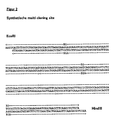
- This multi-cloning site (see FIG. 2) has a fixed sequence of interfaces, the bases in between are chosen arbitrarily with the exception of the sequence between Xba I and Nde I, the contains the ribosome binding site (Shine-Dalgarno sequence) from the B. subtilis xyl operon 5′-AAGGAG-3 ′ (4) and a fixed distance between the SD sequence and the start codon ATG.
- the bases GAAAT following the SD sequence are taken from (4) and connected to CATATG, an Nde I interface, so the distance between the SD sequence and ATG is 8 base pairs.
- the distances between the individual interfaces of the multi-cloning site should be at least about 20 nucleotides long , which facilitates the removal of the intermediate fragments.
- interfaces are introduced into the plasmid which - expediently after the installation of a transcription terminator - the successive installation of partial sequences of the scuPA structural gene, preferably starting from the C-terminus of the desired protein, i.e. from the 3'-terminus of the DNA -Strands of the structural gene to be produced, and the installation z.
- B a synthetic or one isolated from another plasmid or commercially available Trp promoter.
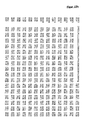
- the complete nucleotide sequence of the scu-PA structural gene thus obtained is shown in FIG. 15 with the amino acids corresponding to the individual codons.
- plasmids according to the invention can be made from a plasmid constructed as described above, e.g. B. obtained by cutting the cuts with Eco RI and Hind III, the synthetic scuPA structural gene with all regulatory units and then in another, in Enterobacteriaceen, in particular in E. coli, plasmid autonomously reproducible, which for this purpose by cuts with Eco RI and Hind III was linearized and shortened.
- plasmid constructed as described above, e.g. B. obtained by cutting the cuts with Eco RI and Hind III, the synthetic scuPA structural gene with all regulatory units and then in another, in Enterobacteriaceen, in particular in E. coli, plasmid autonomously reproducible, which for this purpose by cuts with Eco RI and Hind III was linearized and shortened.
- the Trp promoter against the Tac promoter (and vice versa) in one of the plasmids according to the invention.
- Plasmids according to the invention with an extended distance between the Shine-Dalgarno sequence and the start codon ATG can be obtained by using a plasmid constructed as described above in which the distance mentioned is e.g. B. is 8 nucleotides, cuts with Nde 1, fills the resulting interfaces and then ligates the resulting blunt ends, whereby a plasmid according to the invention is formed in which the distance between the S.D. sequence and the start codon z. B. is 10 nucleotides.
- bacteria transformed with the plasmids according to the invention produce an expression rate many times higher than that which can be achieved with transformation with the plasmids known from the prior art.
- Suitable competent host organisms are transformed in a manner known per se.
- Host organisms which are particularly suitable for the expression of the plasmids according to the invention are strains of the type E. coli and related enterobacteriaceae, such as, for. B. strains of Pseudomonas, Salmonella, Enterobacter, Klebsiella or Serratia.
- Preferred host organisms are strains of the type E. coli such as. B. E. coli GRT-1 and in particular E. coli strains of subgroup K12 such as. BEcoli K12 JM101 (ATCC 33876), E.coli K12 JM103 (ATCC 39403), E.coli K12 JM105 (DSM 4162), the E.coli K12 strain ATCC 31446 or E.coli K12 DH1 (ATCC 33849) .
- Expression initiation in E. coli expression systems containing the Tac promoter can e.g. B. by adding lactose or glucose, but preferably by adding isopropyl- ⁇ -D-thiogalactopyranoside.
- the Trp promoter is present in the plasmid, the induction is preferably carried out with indole acrylic acid, acetic acid or propionic acid.
- Other known inductors can of course be used in the same way.
- the cells After induction and reaching a certain predetermined cell density, the cells are centrifuged off and the centrifugation residue after slurrying in an aqueous salt solution, for. B. transferred to a homogenizer in which the cells are burst by pressure differences.
- the precursor protein of rscu-PA is obtained in the residue in addition to water-insoluble cell debris, etc.
- the precursor protein goes into solution by treatment with guanidine hydrochloride solution, and after centrifuging again, the supernatant solution is treated with a redox system (containing, for example, reduced and oxidized glutathione). whereby the formation of the natural conformation, i.e. H. the formation of the desired rscu-PA is effected.
- This is then in dissolved form in the reaction mixture and can be isolated in pure form by conventional purification steps (e.g. chromatography and subsequent freeze-drying).
- the procedure is expediently that the E. coli strains transformed with the plasmid to be examined are fermented and, after a predetermined optical density of the cell suspension has been reached, the expression of the rscu-PA precursor protein is induced with a suitable inductor. After an appropriate fermentation period, aliquots are removed and the cells centrifuged from them are then disrupted with lysozyme (1 mg lysozyme per ml 50 mM trishydrochloride buffer with pH 8.0, 50 mM EDTA and 15% sucrose).
- the homogenate of the lysed cells is solubilized in 4-5 M guanidinium hydrochloride solution and, after dilution to 1.2 M guanidinium hydrochloride with the addition of a reducing agent (glutathione, mercaptoethanol or cysteine), subjected to the refolding reaction for 2-5 hours (see also e.g. Winkler et al. in (11)).
- a reducing agent gluta, mercaptoethanol or cysteine
- the single-chain rscu-PA thus obtained is converted by adding plasmin into two-chain rtcu-PA, the activity of which is then cleaved with the substrate S2444 (pyroGlu-Gly-Arg-p-nitroanilide; Kabi Diagnostika, Sweden), which is only cleaved by two-chain active urokinases is determined.
- This activation of the rscu-PA with plasmin takes place in 50 mM Tris buffer, 12 mM sodium chloride, 0.02% Tween 80 at pH 7.4 and 37 ° C.
- the ratio rscu-PA to plasmin should be approximately 100 to 1500 to 1 , based on molarity, or about 8,000 to 36,000 to 1, based on enzyme units.
- test incubation is carried out in 50 mM Tris buffer, 38 mM sodium chloride at pH 8.8 in counter were from 0.36 ⁇ M aprotinin (to inhibit the plasmin) and 0.27 mM S 2444 at 37 ° C.
- the reaction after 5-60 minutes incubation by adding 50% acetic acid stopped and the absorbance measured at 405 nm.
- an absorbance change of 0.05 per minute at 405 nm means an activity of 25 Ploug units / ml test solution in this procedure.
- FIGS. 10, 12 and 14 The yields of rscu-PA obtained from precursor protein obtained in various bacteria using different plasmids according to the invention are shown in FIGS. 10, 12 and 14.
- the plasmids according to the invention preferably cause the formation of the rscu-PA precursor protein with an expression rate of 10 to 25 percent by weight in strains of E. coli , in particular 14 to 20 percent by weight of the total protein formed.
- the expression rate when using the plasmids according to the invention is at least 10 to 15 times higher than that with known plasmids, such as. B. pUK 54 trp 207-1 achievable.
- restriction enzymes used in the exemplary embodiments are commercially available (cf., for example, Nachr. Chem. Techn. Lab. 35 , 939, 1987).
- the culture medium used in the examples for the selection of the clones contains per liter: 7.8 g peptone from meat, 7.8 g peptone from casein, 10 g yeast extract, 5.6 g sodium chloride and 10 g glucose. This medium is mixed with 10 g of agar per liter in the heat and poured out into plates.
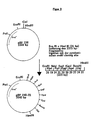
- a 31 nucleotide fragment is removed from pBF 158 by cutting with Eco RI x Hind III and a synthetic multi-cloning site, the sequence of which is shown in FIG. 2, is ligated into the gap. After transformation of the ligation mixture into E. coli K12 JM103 and cultivation on medium with 150 ⁇ g ampicillin / ml, those clones are selected which contain the plasmid pBF 158-01. This differs from pBF 158 by the additional singular interfaces Xba I, Nde I, Sac I, Eag I, Kpn I, Spe I and a second Pst I interface (FIG. 3).
- the Cla I x Hind III fragment of the multi-cloning site is removed from pBF 158-01 and by the Cla I x Hind III fragment from pRT 61 (5), on which the tet A / orf L terminator from Tn 10 (6) is replaced.
- the sequence of the Trp promoter described in (9) is adopted up to the Xba I interface and extended at the 5'-end by the sequence 5'-AATTCTGAAAT-3 '. This creates an Eco RI interface. (Fig. 8, fragment M 1).
- the single strands 021 and 021 A. are annealed and ligated into the Eco RI x Xba I cut plasmid pBF 158-08 T (FIG. 9).
- E. coli K12 JM 103 After transformation in E. coli K12 JM 103 and cultivation on medium with 150 ⁇ g ampicillin / ml, those clones are selected which contain pBF 160.
- the plasmid pBF 160 differs from all of the precursors described above in that E. coli bacterial strains transformed therewith express the precursor protein of the rscu-PA upon addition of indolacrylic acid.
- E. coli strains transformed with the plasmid pBF 160 e.g. BEcoli GRT-1, E.coli K12 JM103 and E.coli K12 ATCC 31446 are, under the same conditions in each case, in a of 38 mM ammonium sulfate, 56 mM phosphate buffer pH 7.0, 1 mM magnesium sulfate, 1% yeast extract, 1% glucose existing medium containing 150 mg ampicillin per liter, fermented and with 62 mg indolacrylic acid / l the expression of the precursor protein of rscu-PA is induced.
- the above-mentioned strains are transformed with a plasmid described above, which contains the gene for human prourokinase from a cDNA library, obtained from Detroit 562 cell MRNA (10), and which is called pUK 54 trp 207-1 then fermented under the same conditions and subjected to induction.
- a plasmid described above which contains the gene for human prourokinase from a cDNA library, obtained from Detroit 562 cell MRNA (10), and which is called pUK 54 trp 207-1 then fermented under the same conditions and subjected to induction.
- cells corresponding to 1 ml of a cell suspension with an optical density (OD) of 1 are centrifuged at 578 nm and used for testing the expression rate.
- the centrifuged cells are digested with lysozyme as described hereinabove and then the Ho mogenate of the lysed cells used for activity determination as described above.
- the expression rates determined in this way after measuring the activity of the rtcu-PA formed from the rscu-PA (obtained from the precursor protein) are shown in FIG. 10. It can be seen from this that the strains of E. coli which were transformed with the plasmid pBF 160 gave a 10-15 times higher expression yield than the same E. coli strains transformed with the plasmid pUK 54 trp 207-1 (10) known from the literature . In addition, it follows that the expression yield in all strains, depending on the plasmid used for the transformation, is approximately the same, i. H. that in particular the strains transformed with the plasmid pBF 160 (regardless of the individual E. coli strain) always produced an expression rate many times higher than the identical strains transformed with the known plasmid pUK 54 trp 207-1.
- the plasmid pBR 322 is cut with Eco RI and Hind III. The resulting 31 nucleotide fragment is separated by preparative agarose gel electrophoresis. The remaining portion of pBR 322 is eluted from the gel by electroelution and purified by chromatography on DE 52.
- the plasmid pBF 160 (Example 1f) is also cut with Eco RI and Hind III and the 1684 nucleotide long Eco RI x Hind III fragment, which contains the synthetic scu-PA gene with all regulatory units (Trp promoter), is separated by agarose gel electrophoresis and eluted and purified as described above.
- the fragments thus obtained are treated in the usual way with T4 ligase ligated and then transformed into E.coli K12 JM 103. After culturing on medium with 150 ⁇ g ampicillin / ml, those clones are selected which contain a 1684 nucleotide Eco RI x Hind III fragment and which produce rscu-PA precursor protein after the addition of indolacrylic acid. These clones contain plasmid pBF 161.
- E.coli GRT-1, E.coli K12 JM 103 and E.coli K 12 ATCC 31 446 are transformed with pBF 161 and then fermented as described in Example 1g) and the expression result is tested.
- the yields of rscu-PA precursor protein determined as rtcu-PA activity 1-6 hours after induction are comparable to the yield values shown in FIG. 10 for the use of plasmid pBF 160 for transformation.
- the cell pellet obtained by centrifugation analogously to Example 1gi) can also be broken down by boiling in 0.25M Tris HCl buffer, pH 8.0 with 4% SDS, 1% mercaptoethanol and 20% glycerol.
- the proteins dissolved in this way are separated by SDS-PAGE and made visible by Coomassieblue staining (12).
- the colored gels are evaluated densitometrically and the areas under the peaks are integrated.
- the proportion of the rscu-PA precursor protein formed after induction with indolacrylic acid is determined by subtracting the area of the band identified as precursor protein before induction from that obtained after induction.
- FIG. 11 shows a densitogram for proteins obtained from E. coli K 12 JM 103 cells.
- the proportion of rscu-PA precursor protein after induction is 17.9 percent by weight of the total bacterial protein. Further examples are given in Table 1. Table 1 Share of rscu-PA precursor protein in total protein (in percent) E. coli strain transformed with pBF 161 pUK54 trp 207-1 (10) K 12 ATCC 31446 14 1.5 K 12 JM 103 17.9 1.9 GRT-1 17.8 1.7
- the plasmid pBR 322 is cut with Eco RV and Nru I.
- the resulting 787 nucleotide fragment is removed by agarose gel electrophoresis, the remaining portion of pBR 322 is eluted from the gel by electroelution and purified using DE 52.
- the blunt ends of the pBR 322 Eco RV x Nru I residue are ligated in the usual way with T4 ligase.
- those clones are selected, of which an aliquot does not grow on the medium after transfer to a medium with 25 ⁇ g tetracycline / ml, i. H. has no tetracycline resistance.
- the clones contain the plasmid pBR 322 del, which differs from pBR 322 in that it is 787 nucleotides smaller and can no longer be cut by Eco RV and Nru I.
- pBR 322 del is cut with Eco RI and Hind III. The resulting 31 nucleotide fragment is separated by preparative agarose gel electrophoresis, the remaining portion of pBR 322 del is eluted from the gel by electroelution and purified using DE 52.
- the 1684 nucleotide Eco RI x Hind III fragment which contains the synthetic scu-PA gene with all regulatory units (Trp promoter), is obtained in the same way from pBF 160.
- Both fragments are ligated in the usual way with T4 ligase and then transformed into E. coli K12 JM 103 cells. After cultivation on medium with 150 ⁇ g ampicillin / ml, the clones are selected which contain a 1684 bp long Eco RI x Hind III fragment and which produce rscu-PA precursor protein after the addition of 62 ⁇ g indolacrylic acid / ml. These clones contain plasmid pBF 162.
- E.coli GRT-1 is transformed with pBF 162 and then fermented as described in Example 1g) and the expression result is tested.
- the yield of rscu-PA precursor protein determined as rtcu-PA activity 6 hours after induction is 1300 PU / ml of a cell suspension with optical density 1 and is comparable to that in FIG. 10 for the expression after transformation of E. coli GRT -1 yield values shown with the plasmid pBF 160.
- the plasmid pBF 161 is cut with Eco RI and Xba I.
- the resulting 74 nucleotide fragment is separated by preparative agarose gel electrophoresis, the remaining portion of the plasmid is eluted by electroelution and then purified using DE 52.
- the Eco RI x Xba I fragment which contains the Tac promoter is isolated from the plasmid ptac SDT (DSM 5018).
- ptac SDT is cut with Eco RI x Xba I and the fragment separated by preparative PAGE.
- the fragment is eluted from the mechanically comminuted polyacrylamide by heating to 65 ° C. in ammonium acetate / SDS buffer, pH 8.0 and purified by repeated extraction with phenol, which is saturated with 1 M Tris buffer, pH 8.
- Both fragments obtained in this way are ligated in the usual way with T4 ligase and then transformed into E. coli K 12 JM 103. After culturing on medium with 150 ⁇ g ampicillin / ml, the clones are selected which produce rscu-PA precursor protein after the addition of IPTG. These clones contain the plasmid pBF 171.
- E.coli K 12 JM 103 is transformed with pBF 171, and then fermented as described in Example 1g) and the expression result tested. However, induction takes place with IPTG (final concentration 0.5 mM).
- rscu-PA precursor protein determined as rtcu-PA activity 1-6 hours after induction. They are comparable to the yield values shown in FIG. 10 for the use of plasmid pBF 160 in the same E. coli strain.
- the plasmid pBR 322 del (see Example 3a) is cut with Eco RI x Hind III. The resulting 31 nucleotide fragment is separated by a preparative agarose gel electrophoresis, the pBR 322 del residual portion is eluted from the gel by electroelution and then purified via DE 52.
- the Eco RI x Hind III fragment which contains the synthetic scu-PA gene with all regulatory units (Tac promoter), is obtained in the same way from pBF 171 (Example 4a).
- Both fragments thus obtained are ligated with T4 ligase in the usual way and then transformed into E. coli K 12 JM 103 cells. After culturing on medium with 150 ⁇ g ampicillin / ml, the clones are selected which produce rscu-PA precursor protein in the presence of 0.5 mM IPTG. These clones contain the plasmid pBF 172.
- E.coli K12 JM 103 is transformed with pBF 172 and then fermented as described in Example 1g) and the expression result is tested. However, induction takes place with IPTG (final concentration 0.5 mM).
- the yields of rscu-PA precursor protein determined as rtcu-PA activity are 1-6 hours after induction about 1100 PU / ml cell suspension with optical density 1 and are comparable to the yield values shown in FIG. 10 for the use of plasmid pBF 160 in the same E. coli strain.
- the start codon ATG in all of the constructions described in Examples 1-5 is part of an Nde I interface -CATATG-.
- Nde I cuts behind the first A of the hexanucleotide sequence and provides 5′-ends that protrude by two bases. If you fill in the 3'-end, d. H. if you construct blunt ends and then ligate again, the sequence in question is extended by 2 base pairs. At the same time, the Nde I site is eliminated. As can be seen from FIG. 13, in the example shown there the distance from the S.D. sequence to the start codon is extended from 8 to 10 base pairs. The experimental procedure is explained in an example below:
- the plasmid pBF 161 is cut with Nde I, and then the protruding ends are filled in with the Klenow fragment of DNA polymerase I (2).
- the DNA is then ligated as usual with T4 ligase and then transformed into E. coli K 12 JM 103.
- the clones which contain the plasmid pBF 163 are selected. This differs from pBF 161 in that there is no Nde I site and in the additional bases -TA- in the area of the earlier Nde I site (see FIG. 13).
- E.coli GRT-1 is transformed with the plasmid pBF 163 and then fermented as described in Example 1g) and the expression result is tested.
- the yields of rscu-PA precursor protein, determined after refolding and activation as rtcu-PA activity pro ml of cell suspension with optical density 1 one to six hours after induction with 62 mg indolacrylic acid / l are shown in FIG. 14. They are comparable to the yield values shown in FIG. 10 for the use of plasmid pBF 160 in the same strain of E. coli.
Landscapes
- Health & Medical Sciences (AREA)
- Genetics & Genomics (AREA)
- Life Sciences & Earth Sciences (AREA)
- Engineering & Computer Science (AREA)
- Chemical & Material Sciences (AREA)
- Organic Chemistry (AREA)
- Bioinformatics & Cheminformatics (AREA)
- Wood Science & Technology (AREA)
- Zoology (AREA)
- Biomedical Technology (AREA)
- General Engineering & Computer Science (AREA)
- Biotechnology (AREA)
- General Health & Medical Sciences (AREA)
- Biochemistry (AREA)
- Molecular Biology (AREA)
- Microbiology (AREA)
- Physics & Mathematics (AREA)
- Biophysics (AREA)
- Plant Pathology (AREA)
- Medicinal Chemistry (AREA)
- Enzymes And Modification Thereof (AREA)
- Medicines That Contain Protein Lipid Enzymes And Other Medicines (AREA)
- Preparation Of Compounds By Using Micro-Organisms (AREA)
- Micro-Organisms Or Cultivation Processes Thereof (AREA)
- Saccharide Compounds (AREA)
- Peptides Or Proteins (AREA)
Applications Claiming Priority (2)
| Application Number | Priority Date | Filing Date | Title |
|---|---|---|---|
| DE3923866 | 1989-07-19 | ||
| DE3923866 | 1989-07-19 |
Publications (2)
| Publication Number | Publication Date |
|---|---|
| EP0408945A1 true EP0408945A1 (fr) | 1991-01-23 |
| EP0408945B1 EP0408945B1 (fr) | 1995-12-13 |
Family
ID=6385369
Family Applications (1)
| Application Number | Title | Priority Date | Filing Date |
|---|---|---|---|
| EP90112400A Expired - Lifetime EP0408945B1 (fr) | 1989-07-19 | 1990-06-29 | Plasmides, leur préparation et leur utilisation pour obtenir un activateur de plasminogène |
Country Status (29)
| Country | Link |
|---|---|
| US (1) | US5637503A (fr) |
| EP (1) | EP0408945B1 (fr) |
| JP (1) | JP3236284B2 (fr) |
| KR (1) | KR0167761B1 (fr) |
| AT (1) | ATE131534T1 (fr) |
| AU (1) | AU631662B2 (fr) |
| CA (1) | CA2020656C (fr) |
| DD (1) | DD298426A5 (fr) |
| DE (2) | DE4020438A1 (fr) |
| DK (1) | DK0408945T3 (fr) |
| ES (1) | ES2083399T3 (fr) |
| FI (1) | FI102386B (fr) |
| GR (1) | GR3019294T3 (fr) |
| HR (1) | HRP920596B1 (fr) |
| HU (1) | HU214243B (fr) |
| IE (1) | IE901849A1 (fr) |
| IL (1) | IL94529A (fr) |
| LT (1) | LT3611B (fr) |
| LV (1) | LV10120B (fr) |
| MT (1) | MTP1063B (fr) |
| NO (1) | NO304952B1 (fr) |
| NZ (1) | NZ234542A (fr) |
| PL (1) | PL166199B1 (fr) |
| PT (1) | PT94776B (fr) |
| RU (1) | RU2073720C1 (fr) |
| SI (1) | SI9011347B (fr) |
| SK (1) | SK306790A3 (fr) |
| YU (1) | YU48371B (fr) |
| ZA (1) | ZA904006B (fr) |
Cited By (2)
| Publication number | Priority date | Publication date | Assignee | Title |
|---|---|---|---|---|
| EP0496327A1 (fr) * | 1991-01-22 | 1992-07-29 | Grünenthal GmbH | Polypeptides ayant l'activité de la prourokinase, plasmides codant pour les polypeptides, leur production et utilisation |
| US6133011A (en) * | 1994-11-30 | 2000-10-17 | Gruenenthal Gmbh | Chimeric proteins having fibrinolytic and thrombin-inhibiting properties |
Families Citing this family (11)
| Publication number | Priority date | Publication date | Assignee | Title |
|---|---|---|---|---|
| FR2067226A1 (fr) * | 1969-11-27 | 1971-08-20 | Cefilac | |
| DE4440892A1 (de) * | 1994-11-17 | 1996-05-23 | Gruenenthal Gmbh | Proteine mit fibrinolytischen und gerinnungshemmenden Eigenschaften |
| KR100467034B1 (ko) * | 1996-12-27 | 2006-04-07 | 주식회사 엘지생활건강 | 압축성형타입오일케익화장료및그의제조방법 |
| KR100372233B1 (ko) * | 1997-03-12 | 2003-06-11 | 주식회사 코리아나화장품 | 미백 파우더, 그의 제조방법 및 그를 함유하는 메이크업 미백 화장료 |
| RU2140453C1 (ru) * | 1999-04-06 | 1999-10-27 | Общество с ограниченной ответственностью Научно-производственное предприятие "Техноген" | Рекомбинантная плазмидная днк p ua bc22, кодирующая модифицированный активатор плазминогена урокиназного типа, нетранслируемый днк-элемент - искусственная межгенная последовательность мгп14 и штамм бактерий escherichia coli - продуцент модифицированного активатора плазминогена урокиназного типа |
| KR100341638B1 (ko) * | 2000-03-17 | 2002-06-22 | 유상옥,송운한 | 기능성 표면처리 분체의 제조 방법 및 이를 함유하는메이크업 화장료 조성물 |
| JP4124639B2 (ja) | 2002-12-17 | 2008-07-23 | 株式会社日本触媒 | 大腸菌を用いたs−ヒドロキシニトリルリアーゼの製造方法 |
| US7906276B2 (en) * | 2004-06-30 | 2011-03-15 | Kimberly-Clark Worldwide, Inc. | Enzymatic detection techniques |
| UA100692C2 (ru) | 2007-05-02 | 2013-01-25 | Мериал Лимитед | Днк-плазмиды, имеющие повышенную экспрессию и стабильность |
| RU2553533C2 (ru) * | 2013-10-23 | 2015-06-20 | Общество с ограниченной ответственностью "Международный биотехнологический центр "Генериум" ("МБЦ "Генериум") | Способ выделения и очистки рекомбинантной человеческой проурокиназы м5 |
| CN104555732A (zh) * | 2015-01-18 | 2015-04-29 | 河南省中原起重机械总厂 | 一种多功能门式起重机 |
Citations (3)
| Publication number | Priority date | Publication date | Assignee | Title |
|---|---|---|---|---|
| EP0210279A1 (fr) * | 1985-01-25 | 1987-02-04 | Sagami Chemical Research Center | Prourokinase humaine stabilisee |
| EP0236209A1 (fr) * | 1986-02-21 | 1987-09-09 | Genetica | Préparation par voie microbiologique de l'activateur tissulaire humain du plasminogène (t-PA) et conversion de l'enzyme ainsi obtenue en sa forme active |
| WO1989003886A1 (fr) * | 1987-10-30 | 1989-05-05 | Oncogen, A Limited Partnership | Systemes d'expression destines a la preparation de polypeptides dans des cellules procaryotiques |
Family Cites Families (6)
| Publication number | Priority date | Publication date | Assignee | Title |
|---|---|---|---|---|
| US4370417A (en) * | 1980-04-03 | 1983-01-25 | Abbott Laboratories | Recombinant deoxyribonucleic acid which codes for plasminogen activator |
| US4558010A (en) * | 1980-04-03 | 1985-12-10 | Abbott Laboratories | Recombinant deoxyribonucleic acid which codes for plasminogen activator and method of making plasminogen activator protein therefrom |
| FI88932C (fi) * | 1982-04-15 | 1993-07-26 | Genentech Inc | Framstaellning av funktionellt maenskligt urokinasprotein |
| US4710464A (en) * | 1984-09-27 | 1987-12-01 | Eli Lilly And Company | Transcription terminators |
| FI100106B (fi) * | 1986-12-05 | 1997-09-30 | Novartis Ag | Menetelmä plasminogeenin yksisäikeisen yhdistelmäaktivaattorin valmist amiseksi |
| HU208712B (en) * | 1987-08-10 | 1993-12-28 | Lepetit Spa | Method for preparing single or double strained glycolised human urokinase and pharmaceutical composition comprising same |
-
1990
- 1990-05-22 IE IE184990A patent/IE901849A1/en not_active Application Discontinuation
- 1990-05-23 ZA ZA904006A patent/ZA904006B/xx unknown
- 1990-05-28 IL IL94529A patent/IL94529A/xx not_active IP Right Cessation
- 1990-06-19 NO NO902720A patent/NO304952B1/no not_active IP Right Cessation
- 1990-06-20 SK SK3067-90A patent/SK306790A3/sk unknown
- 1990-06-25 HU HU903970A patent/HU214243B/hu not_active IP Right Cessation
- 1990-06-27 DE DE4020438A patent/DE4020438A1/de not_active Withdrawn
- 1990-06-28 MT MT1063A patent/MTP1063B/xx unknown
- 1990-06-29 ES ES90112400T patent/ES2083399T3/es not_active Expired - Lifetime
- 1990-06-29 DE DE59009961T patent/DE59009961D1/de not_active Expired - Fee Related
- 1990-06-29 EP EP90112400A patent/EP0408945B1/fr not_active Expired - Lifetime
- 1990-06-29 AT AT90112400T patent/ATE131534T1/de not_active IP Right Cessation
- 1990-06-29 DK DK90112400.8T patent/DK0408945T3/da active
- 1990-07-06 CA CA002020656A patent/CA2020656C/fr not_active Expired - Fee Related
- 1990-07-09 AU AU58832/90A patent/AU631662B2/en not_active Ceased
- 1990-07-11 YU YU134790A patent/YU48371B/sh unknown
- 1990-07-11 SI SI9011347A patent/SI9011347B/sl unknown
- 1990-07-12 US US07/551,907 patent/US5637503A/en not_active Expired - Fee Related
- 1990-07-17 NZ NZ234542A patent/NZ234542A/xx unknown
- 1990-07-17 PL PL90286087A patent/PL166199B1/pl unknown
- 1990-07-18 FI FI903640A patent/FI102386B/fi not_active IP Right Cessation
- 1990-07-18 RU SU4831114/13A patent/RU2073720C1/ru not_active IP Right Cessation
- 1990-07-18 KR KR1019900010860A patent/KR0167761B1/ko not_active Expired - Fee Related
- 1990-07-18 DD DD90342894A patent/DD298426A5/de not_active IP Right Cessation
- 1990-07-18 JP JP18816990A patent/JP3236284B2/ja not_active Expired - Fee Related
- 1990-07-19 PT PT94776A patent/PT94776B/pt not_active IP Right Cessation
-
1992
- 1992-09-29 HR HRP-1347/90A patent/HRP920596B1/xx not_active IP Right Cessation
- 1992-11-13 LV LVP-92-204A patent/LV10120B/lv unknown
-
1993
- 1993-07-12 LT LTIP776A patent/LT3611B/lt not_active IP Right Cessation
-
1996
- 1996-03-13 GR GR960400698T patent/GR3019294T3/el unknown
Patent Citations (3)
| Publication number | Priority date | Publication date | Assignee | Title |
|---|---|---|---|---|
| EP0210279A1 (fr) * | 1985-01-25 | 1987-02-04 | Sagami Chemical Research Center | Prourokinase humaine stabilisee |
| EP0236209A1 (fr) * | 1986-02-21 | 1987-09-09 | Genetica | Préparation par voie microbiologique de l'activateur tissulaire humain du plasminogène (t-PA) et conversion de l'enzyme ainsi obtenue en sa forme active |
| WO1989003886A1 (fr) * | 1987-10-30 | 1989-05-05 | Oncogen, A Limited Partnership | Systemes d'expression destines a la preparation de polypeptides dans des cellules procaryotiques |
Non-Patent Citations (3)
| Title |
|---|
| AGRICULTURAL AND BIOLOGICAL CHEMISTRY, Band 52, Nr. 2, Februar 1988, Seiten 329-336; Y. HIBINO et al.: "Enhanced expression of human pro-urokinase cDNA in Escherichia coli" * |
| JOURNAL OF BIOCHEMISTRY, Band 101, 1987, Seiten 525-534; T. SATO et al.: "New approaches for the high-level expression of human interleukin-2 cDNA in Escherichia coli" * |
| NUCLEIC ACIDS RESEARCH, Band 10, Nr. 21, 1982, Seiten 6639-6657; J.D. WINDASS et al.: "The construction of a synthetic Escherichia coli trp promoter and its use in the expression of a synthetic interferon gene" * |
Cited By (2)
| Publication number | Priority date | Publication date | Assignee | Title |
|---|---|---|---|---|
| EP0496327A1 (fr) * | 1991-01-22 | 1992-07-29 | Grünenthal GmbH | Polypeptides ayant l'activité de la prourokinase, plasmides codant pour les polypeptides, leur production et utilisation |
| US6133011A (en) * | 1994-11-30 | 2000-10-17 | Gruenenthal Gmbh | Chimeric proteins having fibrinolytic and thrombin-inhibiting properties |
Also Published As
Similar Documents
| Publication | Publication Date | Title |
|---|---|---|
| DE3751128T2 (de) | Rekombinante gereinigte Protease, Nexin. | |
| DE3786767T3 (de) | Neues Polypeptid. | |
| DE3316297C2 (fr) | ||
| DE3687651T2 (de) | Analoge des gewebespezifischen plasminogenaktivators. | |
| DE3382760T2 (de) | Herstellung von funktionellen menschlichen Urokinasepolypeptiden. | |
| EP0408945B1 (fr) | Plasmides, leur préparation et leur utilisation pour obtenir un activateur de plasminogène | |
| EP1472346A2 (fr) | Procede pour produire des proteines de recombinaison dans des micro-organismes | |
| EP0373365B1 (fr) | Procédé d'expression d'un gène recombinant | |
| DE3537176C2 (de) | Gewebeplasminogenaktivator und Verfahren zu seiner Herstellung | |
| EP0242836A1 (fr) | Dérivé de l'activateur tissulaire du plasminogène (tPA) et sa production | |
| DE3752008T2 (de) | Hybride Plasminogenaktivatoren | |
| DE69024382T2 (de) | Fledermausspeichel-Plasminogenaktivator vPA-alpha 1 | |
| DE69010096T2 (de) | Expression und Sekretion von reifem menschlichem beta-Interleukin-1 in Bacillus subtilis und Mittel und Verfahren zu deren Ausführung. | |
| EP0496327B1 (fr) | Procédé pour la préparation de polypeptides ayant l'activité de la prourokinase | |
| DE68922859T2 (de) | Trombolytischer wirkstoff mit modifikation der domäne der kringle. | |
| DD274053A5 (de) | Verfahren zur Produktion eines menschlichen, einkettigen Plasminogenaktivators | |
| EP0244627A2 (fr) | Vecteurs d'expression pour la production de polypeptides | |
| DE3780199T2 (de) | Modifiziertes enzym. | |
| DE3877197T2 (de) | Verfahren zur herstellung von hirudin. | |
| EP0544293B1 (fr) | Procédé pour la préparation de bêta-NGF biologiquement actif par génie génétique | |
| WO1990003436A1 (fr) | POLYPEPTIDES ANALOGUES AU tPA, LEUR FABRICATION ET LEUR UTILISATION | |
| EP0368342B1 (fr) | Procédé de préparation et utilisation d'un ADN et son application pour augmenter la productivité d'expression de gènes recombinants | |
| DE69013403T2 (de) | Polypeptid mit thrombin-inhibierender Wirkung und Verfahren zu dessen Herstellung. | |
| EP0312942A2 (fr) | Polypeptides ayant l'activité de la prourokinase, leur production et utilisation | |
| EP0662126A1 (fr) | Serine-proteases de type subtilisine mutees |
Legal Events
| Date | Code | Title | Description |
|---|---|---|---|
| PUAI | Public reference made under article 153(3) epc to a published international application that has entered the european phase |
Free format text: ORIGINAL CODE: 0009012 |
|
| 17P | Request for examination filed |
Effective date: 19900629 |
|
| AK | Designated contracting states |
Kind code of ref document: A1 Designated state(s): AT BE CH DE DK ES FR GB GR IT LI LU NL SE |
|
| 17Q | First examination report despatched |
Effective date: 19931202 |
|
| GRAA | (expected) grant |
Free format text: ORIGINAL CODE: 0009210 |
|
| AK | Designated contracting states |
Kind code of ref document: B1 Designated state(s): AT BE CH DE DK ES FR GB GR IT LI LU NL SE |
|
| REF | Corresponds to: |
Ref document number: 131534 Country of ref document: AT Date of ref document: 19951215 Kind code of ref document: T |
|
| GBT | Gb: translation of ep patent filed (gb section 77(6)(a)/1977) |
Effective date: 19951213 |
|
| REF | Corresponds to: |
Ref document number: 59009961 Country of ref document: DE Date of ref document: 19960125 |
|
| REG | Reference to a national code |
Ref country code: CH Ref legal event code: NV Representative=s name: ANDRE BRAUN PATENTANWALT VSP |
|
| ET | Fr: translation filed | ||
| ITF | It: translation for a ep patent filed | ||
| REG | Reference to a national code |
Ref country code: DK Ref legal event code: T3 |
|
| REG | Reference to a national code |
Ref country code: ES Ref legal event code: FG2A Ref document number: 2083399 Country of ref document: ES Kind code of ref document: T3 |
|
| REG | Reference to a national code |
Ref country code: GR Ref legal event code: FG4A Free format text: 3019294 |
|
| PLBE | No opposition filed within time limit |
Free format text: ORIGINAL CODE: 0009261 |
|
| STAA | Information on the status of an ep patent application or granted ep patent |
Free format text: STATUS: NO OPPOSITION FILED WITHIN TIME LIMIT |
|
| 26N | No opposition filed | ||
| REG | Reference to a national code |
Ref country code: GB Ref legal event code: IF02 |
|
| PGFP | Annual fee paid to national office [announced via postgrant information from national office to epo] |
Ref country code: DE Payment date: 20020422 Year of fee payment: 13 |
|
| PGFP | Annual fee paid to national office [announced via postgrant information from national office to epo] |
Ref country code: LU Payment date: 20020430 Year of fee payment: 13 |
|
| PGFP | Annual fee paid to national office [announced via postgrant information from national office to epo] |
Ref country code: FR Payment date: 20020517 Year of fee payment: 13 |
|
| PGFP | Annual fee paid to national office [announced via postgrant information from national office to epo] |
Ref country code: AT Payment date: 20020625 Year of fee payment: 13 |
|
| PGFP | Annual fee paid to national office [announced via postgrant information from national office to epo] |
Ref country code: NL Payment date: 20020628 Year of fee payment: 13 Ref country code: CH Payment date: 20020628 Year of fee payment: 13 |
|
| PGFP | Annual fee paid to national office [announced via postgrant information from national office to epo] |
Ref country code: GR Payment date: 20030422 Year of fee payment: 14 |
|
| PGFP | Annual fee paid to national office [announced via postgrant information from national office to epo] |
Ref country code: BE Payment date: 20030603 Year of fee payment: 14 |
|
| PGFP | Annual fee paid to national office [announced via postgrant information from national office to epo] |
Ref country code: SE Payment date: 20030604 Year of fee payment: 14 |
|
| PGFP | Annual fee paid to national office [announced via postgrant information from national office to epo] |
Ref country code: DK Payment date: 20030618 Year of fee payment: 14 |
|
| PGFP | Annual fee paid to national office [announced via postgrant information from national office to epo] |
Ref country code: GB Payment date: 20030625 Year of fee payment: 14 |
|
| PG25 | Lapsed in a contracting state [announced via postgrant information from national office to epo] |
Ref country code: LU Free format text: LAPSE BECAUSE OF NON-PAYMENT OF DUE FEES Effective date: 20030629 Ref country code: AT Free format text: LAPSE BECAUSE OF NON-PAYMENT OF DUE FEES Effective date: 20030629 |
|
| PG25 | Lapsed in a contracting state [announced via postgrant information from national office to epo] |
Ref country code: LI Free format text: LAPSE BECAUSE OF NON-PAYMENT OF DUE FEES Effective date: 20030630 Ref country code: CH Free format text: LAPSE BECAUSE OF NON-PAYMENT OF DUE FEES Effective date: 20030630 |
|
| PGFP | Annual fee paid to national office [announced via postgrant information from national office to epo] |
Ref country code: ES Payment date: 20030702 Year of fee payment: 14 |
|
| PG25 | Lapsed in a contracting state [announced via postgrant information from national office to epo] |
Ref country code: NL Free format text: LAPSE BECAUSE OF NON-PAYMENT OF DUE FEES Effective date: 20040101 Ref country code: DE Free format text: LAPSE BECAUSE OF NON-PAYMENT OF DUE FEES Effective date: 20040101 |
|
| REG | Reference to a national code |
Ref country code: CH Ref legal event code: PL |
|
| PG25 | Lapsed in a contracting state [announced via postgrant information from national office to epo] |
Ref country code: FR Free format text: LAPSE BECAUSE OF NON-PAYMENT OF DUE FEES Effective date: 20040227 |
|
| NLV4 | Nl: lapsed or anulled due to non-payment of the annual fee |
Effective date: 20040101 |
|
| REG | Reference to a national code |
Ref country code: FR Ref legal event code: ST |
|
| PG25 | Lapsed in a contracting state [announced via postgrant information from national office to epo] |
Ref country code: GB Free format text: LAPSE BECAUSE OF NON-PAYMENT OF DUE FEES Effective date: 20040629 |
|
| PG25 | Lapsed in a contracting state [announced via postgrant information from national office to epo] |
Ref country code: SE Free format text: LAPSE BECAUSE OF NON-PAYMENT OF DUE FEES Effective date: 20040630 Ref country code: ES Free format text: LAPSE BECAUSE OF NON-PAYMENT OF DUE FEES Effective date: 20040630 Ref country code: DK Free format text: LAPSE BECAUSE OF NON-PAYMENT OF DUE FEES Effective date: 20040630 Ref country code: BE Free format text: LAPSE BECAUSE OF NON-PAYMENT OF DUE FEES Effective date: 20040630 |
|
| BERE | Be: lapsed |
Owner name: *GRUNENTHAL G.M.B.H. Effective date: 20040630 |
|
| PG25 | Lapsed in a contracting state [announced via postgrant information from national office to epo] |
Ref country code: GR Free format text: LAPSE BECAUSE OF NON-PAYMENT OF DUE FEES Effective date: 20050105 |
|
| REG | Reference to a national code |
Ref country code: DK Ref legal event code: EBP |
|
| EUG | Se: european patent has lapsed | ||
| EUG | Se: european patent has lapsed | ||
| GBPC | Gb: european patent ceased through non-payment of renewal fee |
Effective date: 20040629 |
|
| PG25 | Lapsed in a contracting state [announced via postgrant information from national office to epo] |
Ref country code: IT Free format text: LAPSE BECAUSE OF NON-PAYMENT OF DUE FEES Effective date: 20050629 |
|
| REG | Reference to a national code |
Ref country code: ES Ref legal event code: FD2A Effective date: 20040630 |